
Paestum is one of the best places in Italy to see Greek ruins. Home to three ancient Greek temples dating back to 450 BC, this UNESCO World Heritage Site is often an overlooked destination in Italy.
We visited Paestum in October, stopping here in the morning during our drive from Castelmezzano to the Amalfi Coast. After a few hours at the site, we continued on to Positano, passing through Salerno and a few Amalfi Coast towns along the way. The ancient city sits just south of Salerno, making it an easy add-on whether you’re road-tripping through southern Italy or based on the Amalfi Coast.
In this guide, we cover what you need to know to visit, why it’s worth it, and what to expect once you’re there.
The Essentials
LOCATION | Campania, about 40 km south of Salerno
BEST FOR | Greek & Roman ruins, history and archaeology lovers
HOW TO GET THERE | By car, train, or bus — an easy day trip from the Amalfi Coast
TIME NEEDED | 2 to 3 hours
ENTRANCE FEE | €15 (March–November), €10 (December–February)
HOURS | 8:30 am–7:30 pm in peak season, shorter in winter; hours shift monthly, so check ahead
GOOD TO KNOW | UNESCO World Heritage Site; ticket includes the museum and the Archaeological Park of Elea-Velia
August 2026 Update: We’ve added more detail on our own visit as part of our October 2022 Amalfi Coast trip, plus an at-a-glance box for quick trip planning.
Is Paestum Worth It?
Paestum contains some of the best-preserved Greek ruins on the mainland of Italy and it is well worth it for those with an interest in archaeological and historical sites.
We aren’t usually big on archaeological sites, but we enjoyed Paestum more than we expected. We visited on a warm October morning, arriving shortly after opening, and had the site nearly to ourselves thanks to the low crowds. The temples are remarkably preserved, and since much of the ancient city’s layout still exists, you really get a feel for what Paestum once looked like. A few of the temples can be entered, which lets you appreciate their scale up close and get a real sense of the size of the columns. That was our favorite part of the visit.
If you have been to Athens and toured the archaeological sites there, such as the Ancient Agora and the Temple of Hephaestus and the Roman Agora, a visit to Paestum is very similar.
In Sicily, the Valley of the Temples is another place to see amazingly well-preserved Greek temples in Italy.
What is Paestum?
Beginning in the 8th century BC, the southern portion of Italy (mainly Campania, Sicily, and Calabria) was colonized by the Greeks. The town of Paestum, which was called Poseidonia at the time, was founded sometime around 600 BC. It gets its name for the Greek god of the sea.
Poseidonia was a thriving Greek city. The agora, a series of roads, and several temples were built in town. After the Pyrrhic War, Poseidonia became the Roman city of Paestum in 273 BC. Roman structures were built on top of some of the Greek sites, such as a Roman amphitheater and Roman Forum.
Paestum went into decline and then was abandoned during the Middle Ages. The area was rediscovered in the 16th century and recently was listed as a UNESCO World Heritage Site.
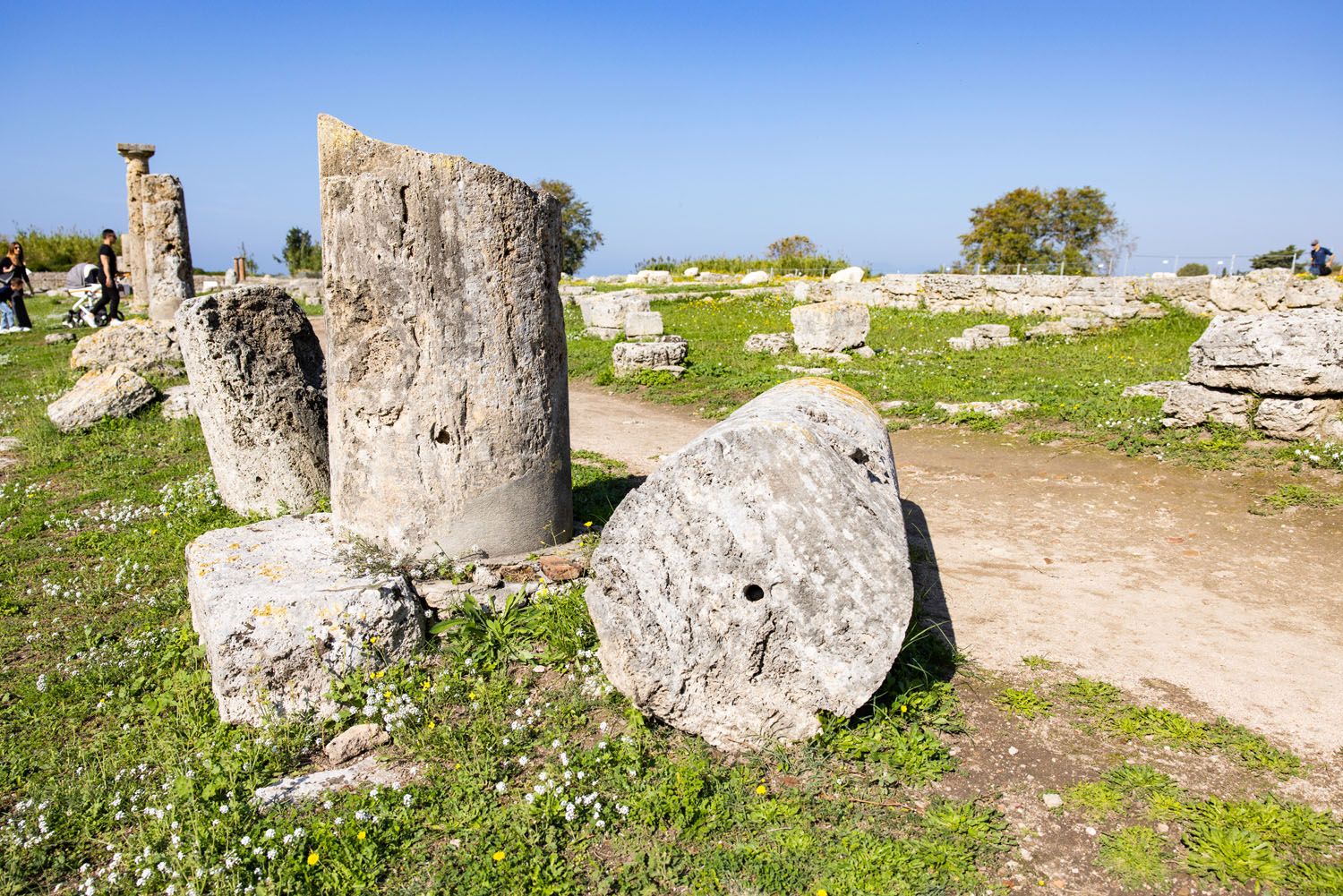
What remains today are three well-preserved Greek temples as well as the amphitheater, the remains of thermal baths and houses, and the roads that run through the city.
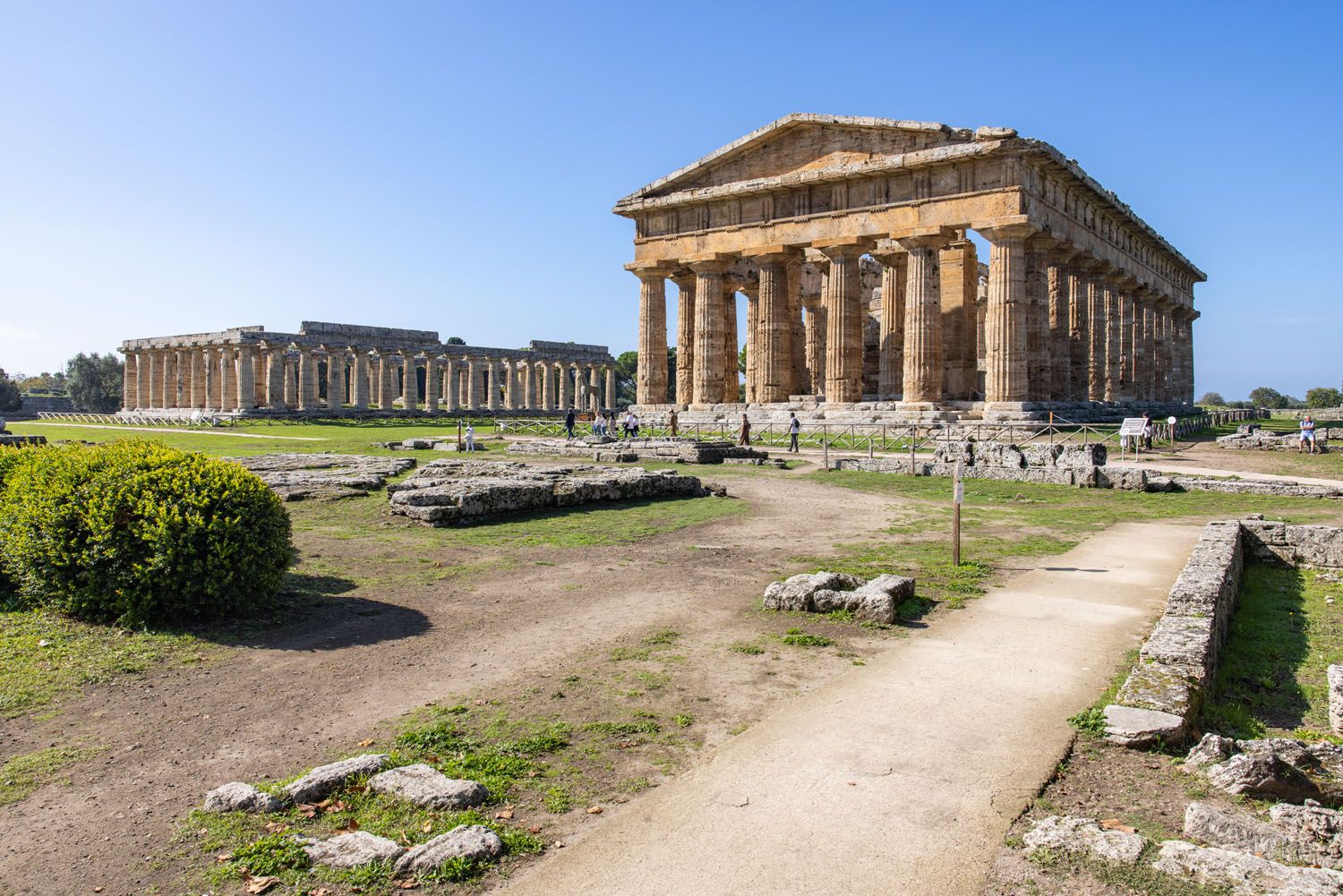
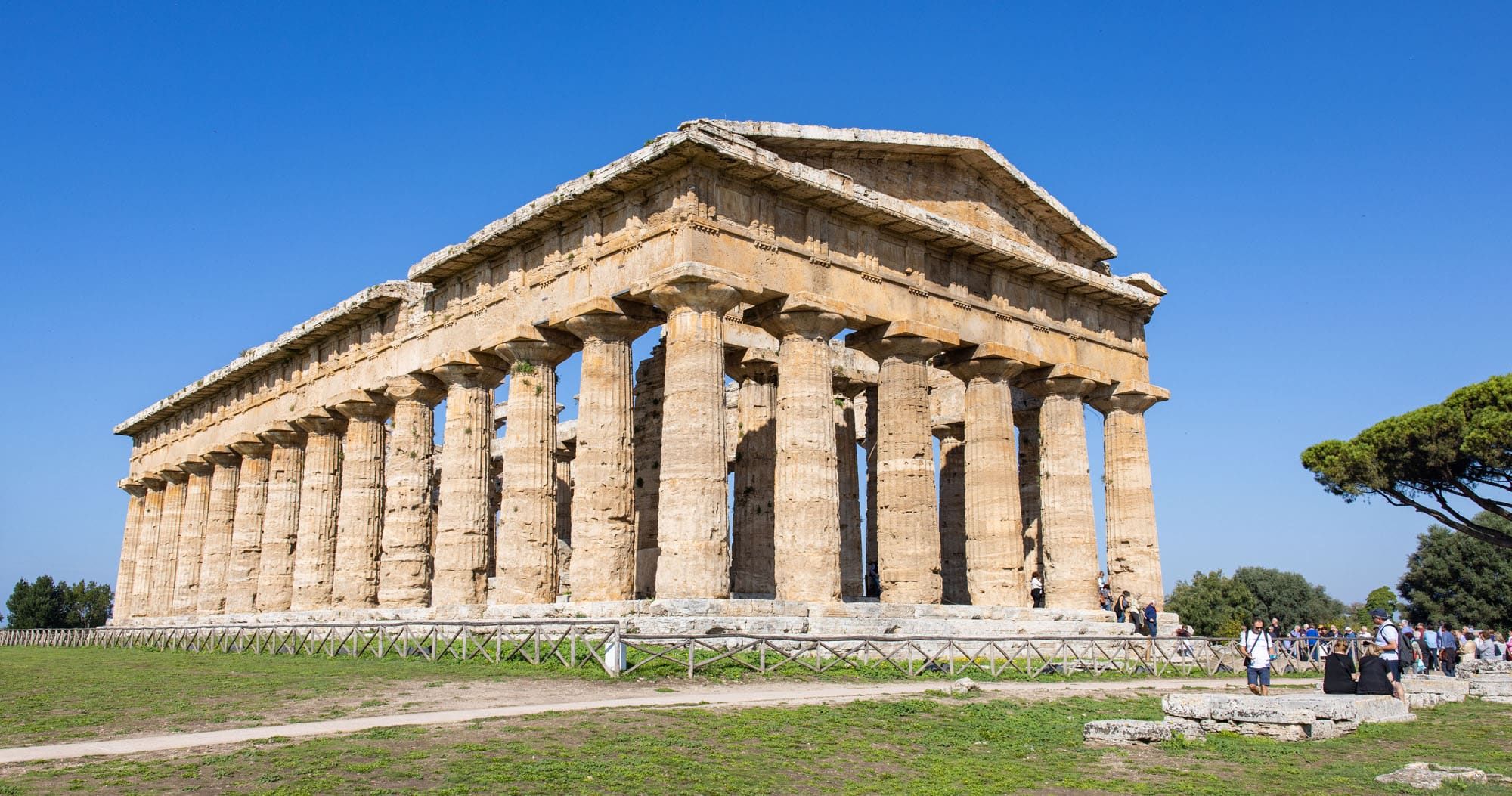
Our first view of Paestum from the entrance gate. The Temple of Neptune is on the right and the Temple of Hera is to the left.
How to Visit Paestum
How to Get to Paestum
Paestum is located in Campania, about 40 km south of Salerno.
By Train
The closest train station is the Paestum station on the Naples-Reggio Calabria line. This station sits just to the east of the archaeological site and it is a 10 minute walk to get to the main entrance. Check timetables here.
By Bus
There are several buses that connect Paestum with Salerno and Naples: SITA, CSTP, and Giuliano Bus.
By Car
By car, you can get to Paestum by taking A3 and exiting at Battipaglia onto SS18 and then follow signs to Paestum. We drove to Paestum and parked at “Parking da Matteo Zona Archeologica,” at the intersection of Via Magna Graecia and Via Porta Giustizia. From this parking lot, it is a 5-minute walk to the main entrance.
We had a car, using it for a road trip through Tuscany, Puglia, and the Amalfi Coast. Tim and I drove from Castelmezzano to Paestum in the morning and parked at the parking lot listed above. We had luggage in our car, and we were concerned about theft, but took our chances and fortunately, had no issues. But we have heard that theft from cars can occur in southern Italy, so it is something to be aware of.
Entrance Fee and Hours
Entrance Fee: €15 March through November; €10 December through February
Hours of Operation: 8:30 am to 7:30 pm in peak season (last admission 6:30 pm), with shorter hours and an earlier close in the winter months. Hours shift month to month, so check the official website for exact times before you go.
Tickets can be purchased online in advance or at the entrance gate. The entrance fee includes the archaeological site, the museum, and the Archaeological Park of Elea-Velia.
Get updated hours and pricing on the official website.
Guided Tours of Paestum
You have the option to tour Paestum with an archaeologist. A guided tour typically takes 2 hours.
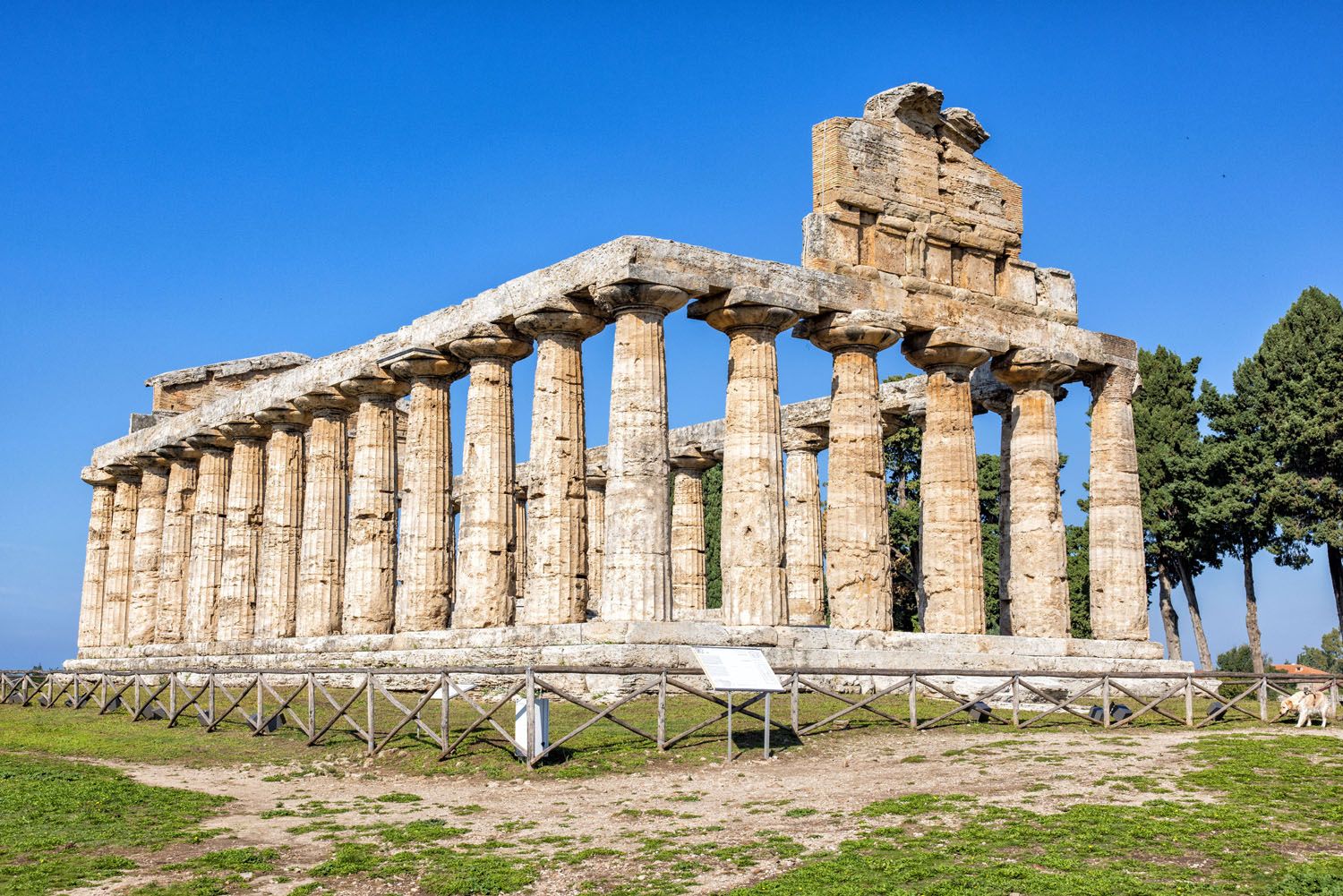
Temple of Athena
Things to Do at Paestum
Views of Temples of Paestum
SP276 is a pedestrian road that runs along the east side of the Paestum archaeological park. This road is free to visit and offers great views of the three temples.
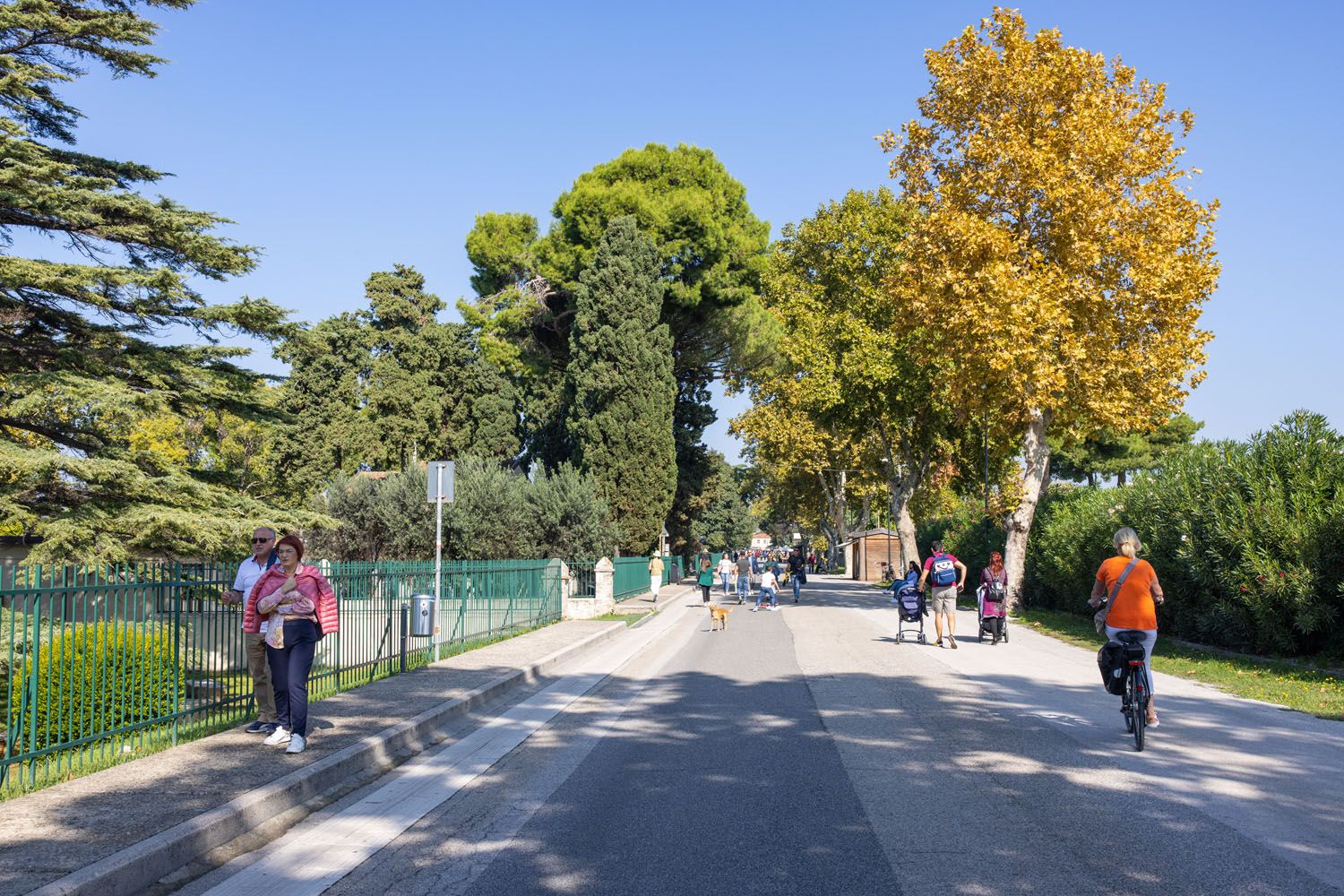
The pedestrian street that runs along Paestum
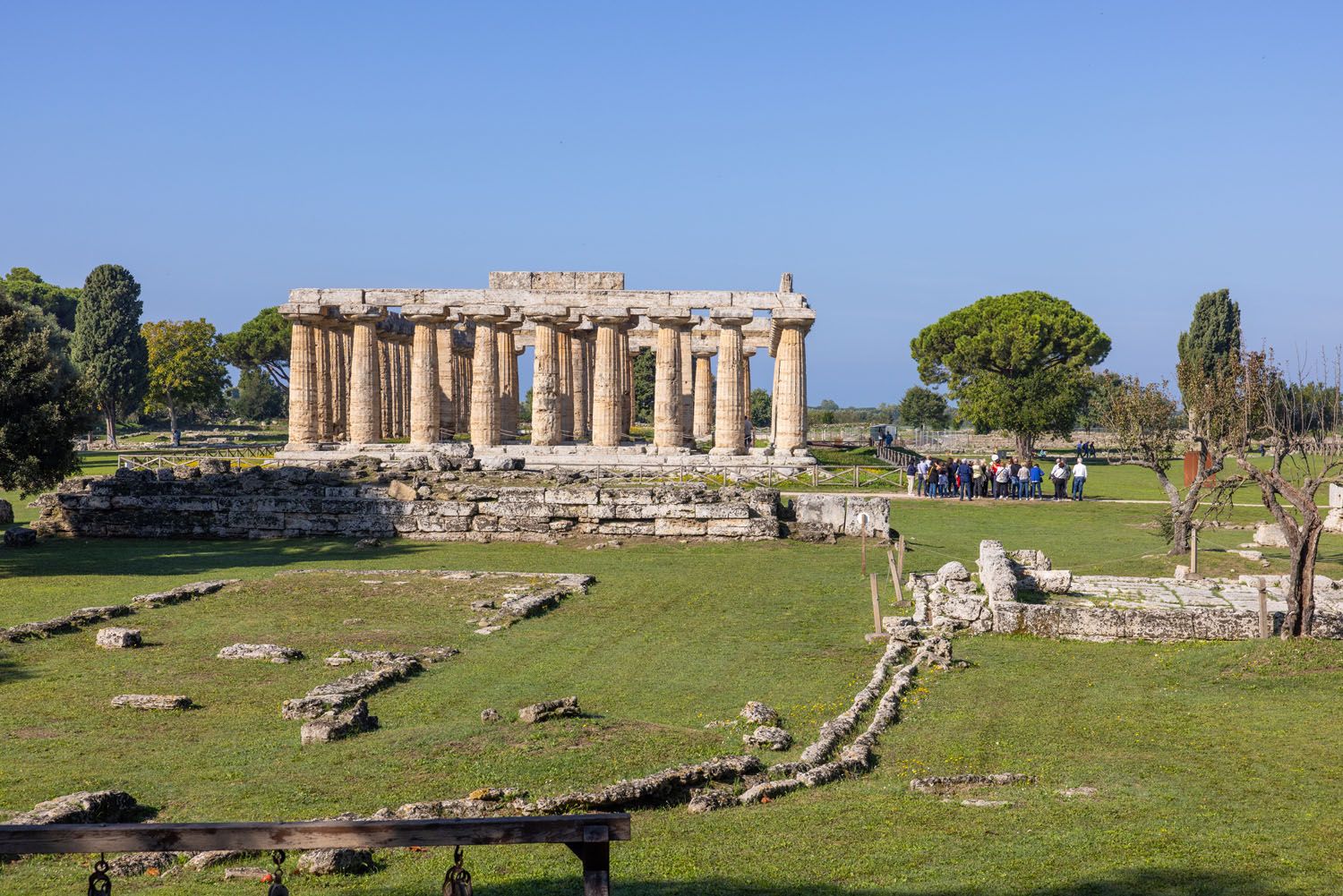
The view of Paestum from the pedestrian road.
If you want to see the three temples of Paestum and don’t want to pay the entrance fee, walk along this road and you will easily be able to see the Temple of Poseidon, the Temple of Hera, and the Temple of Athena.
Halfway along SP276 is the entrance to the archaeological park and the entrance into the museum. There are also several restaurants and souvenir shops on this road, making it the most convenient place to get some food or drink.
PRO TRAVEL TIP: If you aren’t taking a guided tour of Paestum, consider purchasing one of the guidebooks that are for sale at the ticket booth. We bought a copy of Paestum, The City of Three Temples, a Vision Roma book by Emanuele Greco. This detailed guide has drawings of the temples and structures with overlays of what they originally looked like after construction. It also has a map labeling all of the sites in the park.
Temple of Neptune (Poseidon)
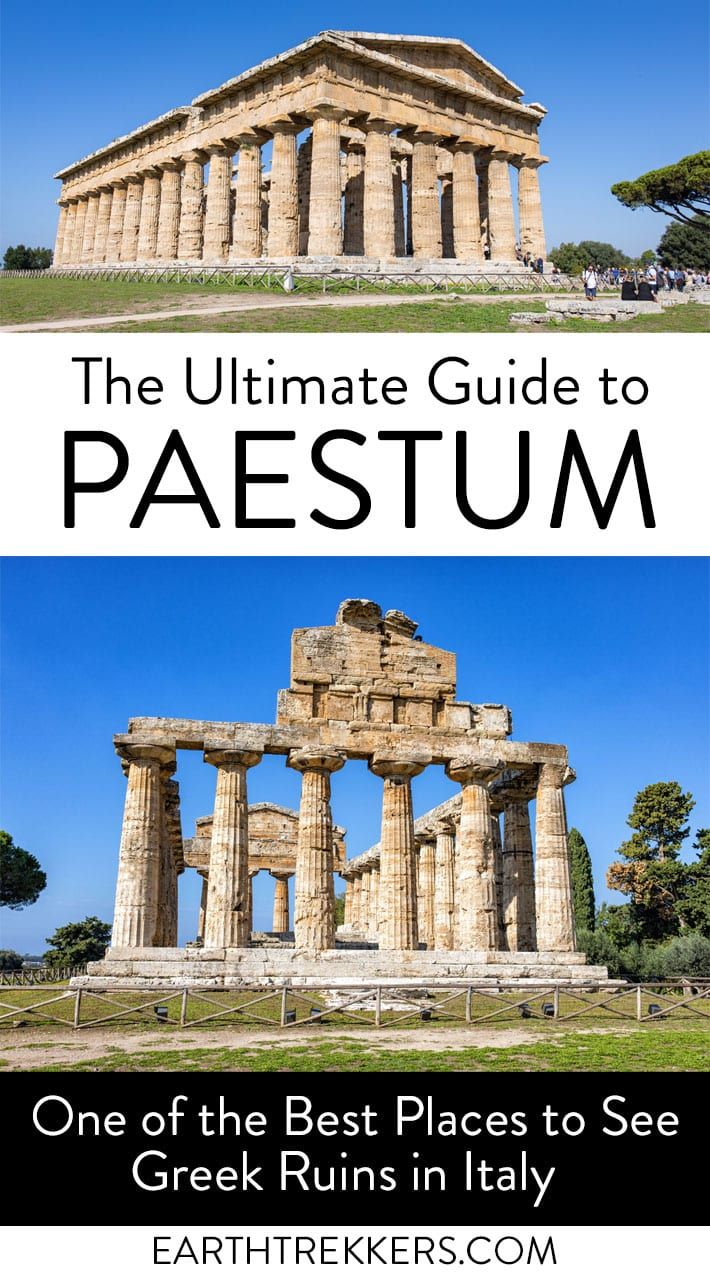
Once you enter the park, your first view is of the Temple of Neptune, also called the Temple of Poseidon. This is the youngest and grandest temple in Paestum. It was constructed in 450 BC and it is considered to be the most perfect example of Doric architecture in Italy and Greece.
In the 18th century, scholars thought this temple was built to honor the god Neptune/Poseidon, but more recent studies now state that it may have been built to honor Apollo.
You are permitted to enter the temple. Only a small number of people are allowed to enter at a time, so you may have to wait in line for a few minutes. Crowds were light when we did this, so we had no wait to enter the temple.
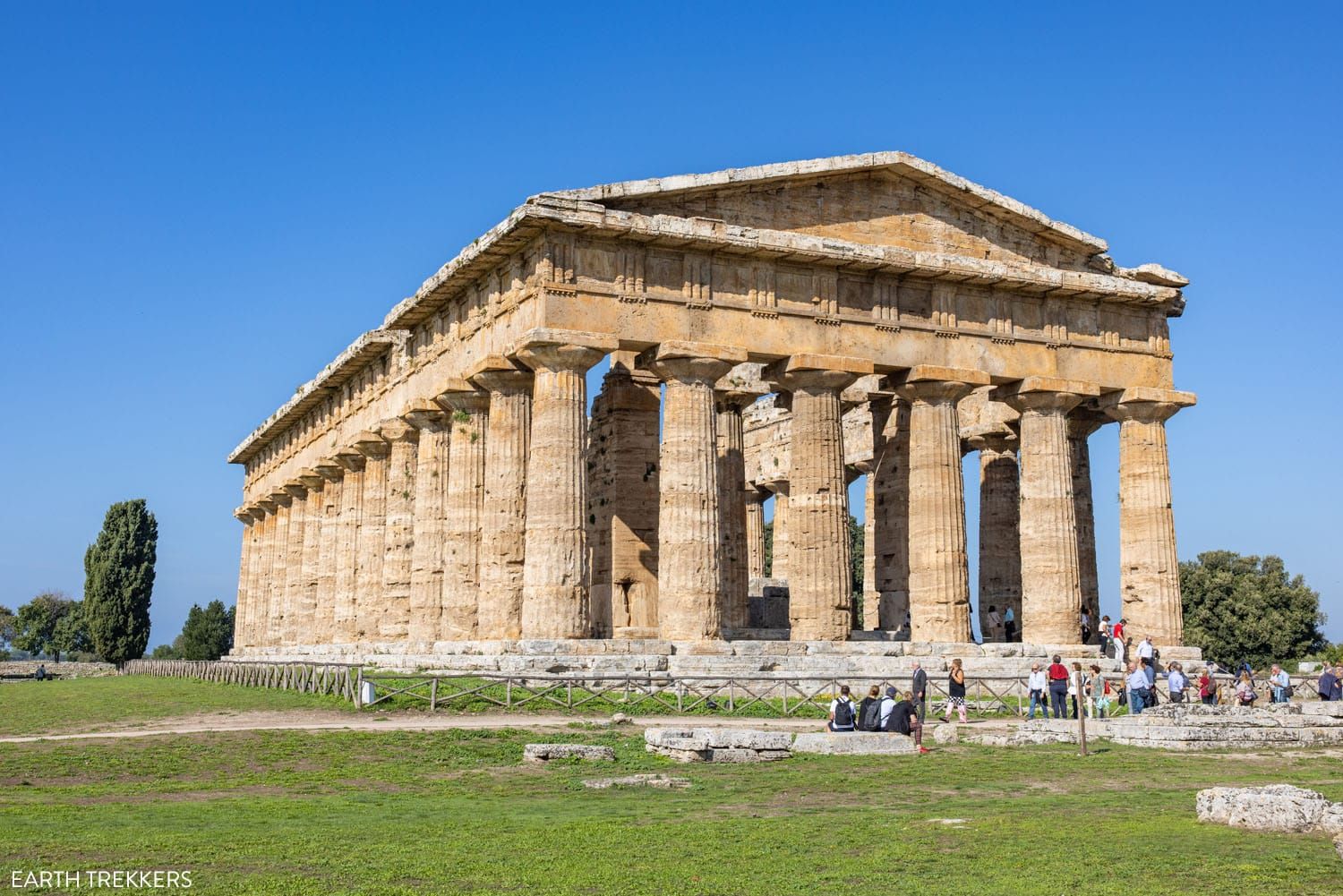
Temple of Neptune
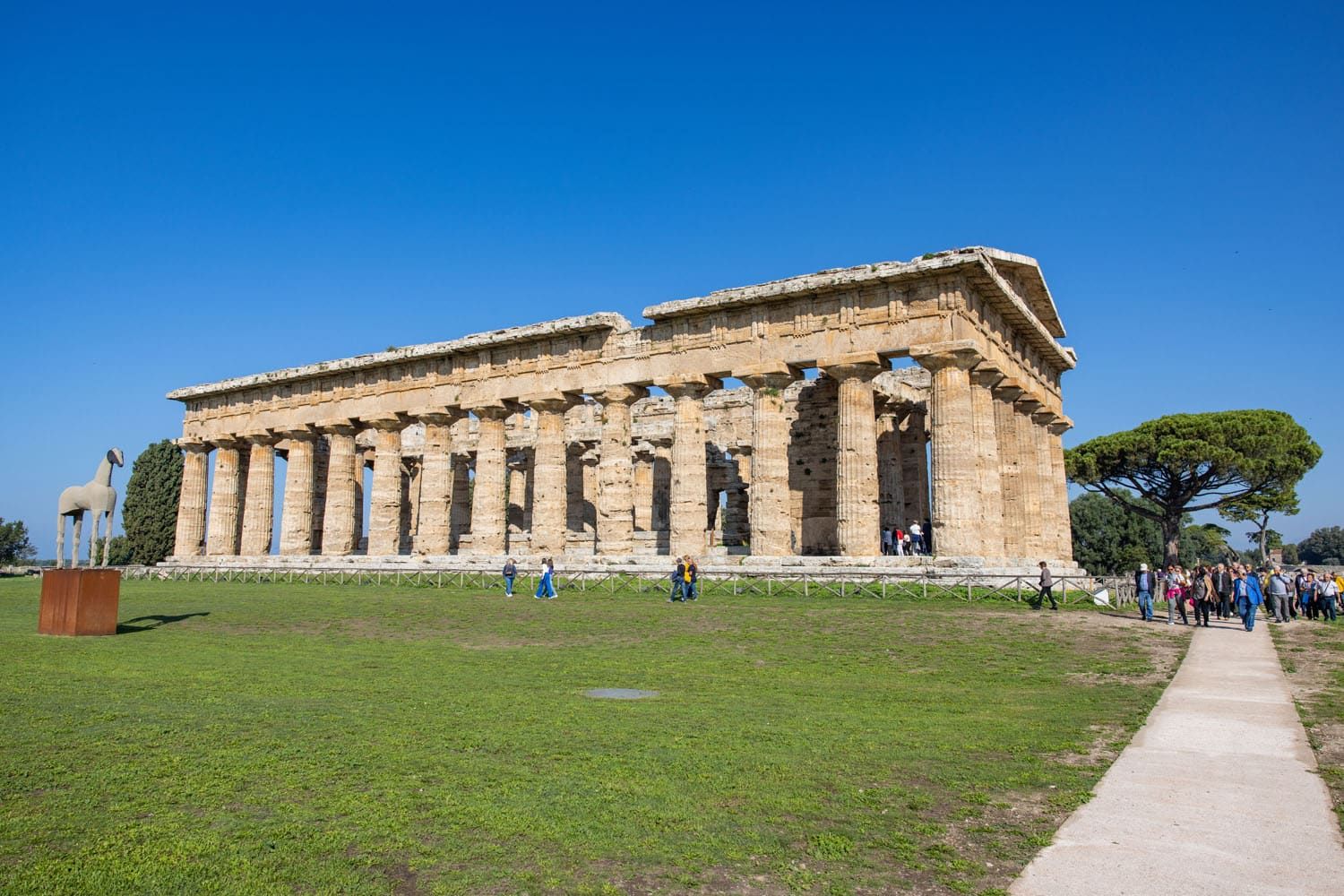
Another view of the Temple of Neptune
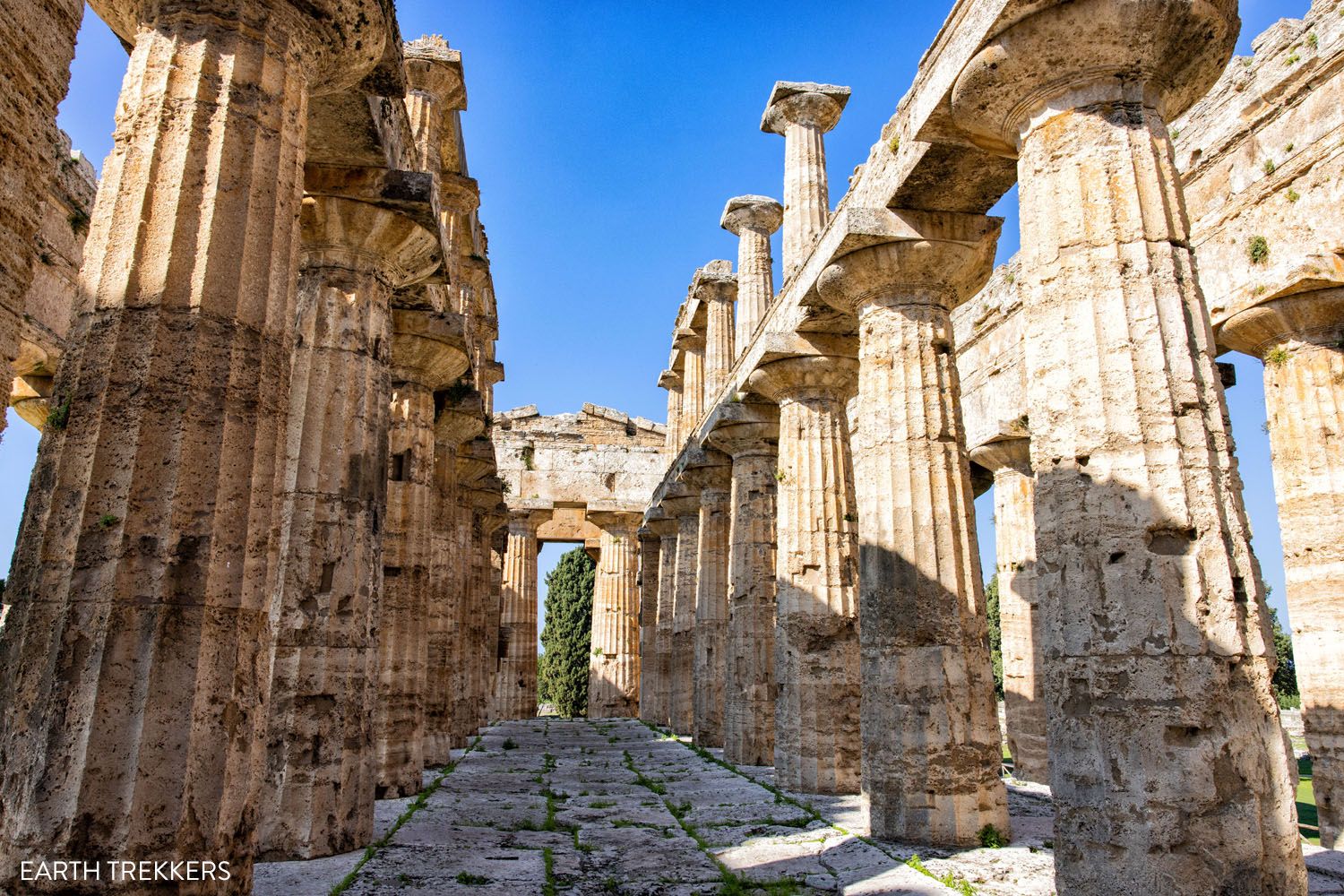
Inside the Temple of Neptune
The Temple of Hera
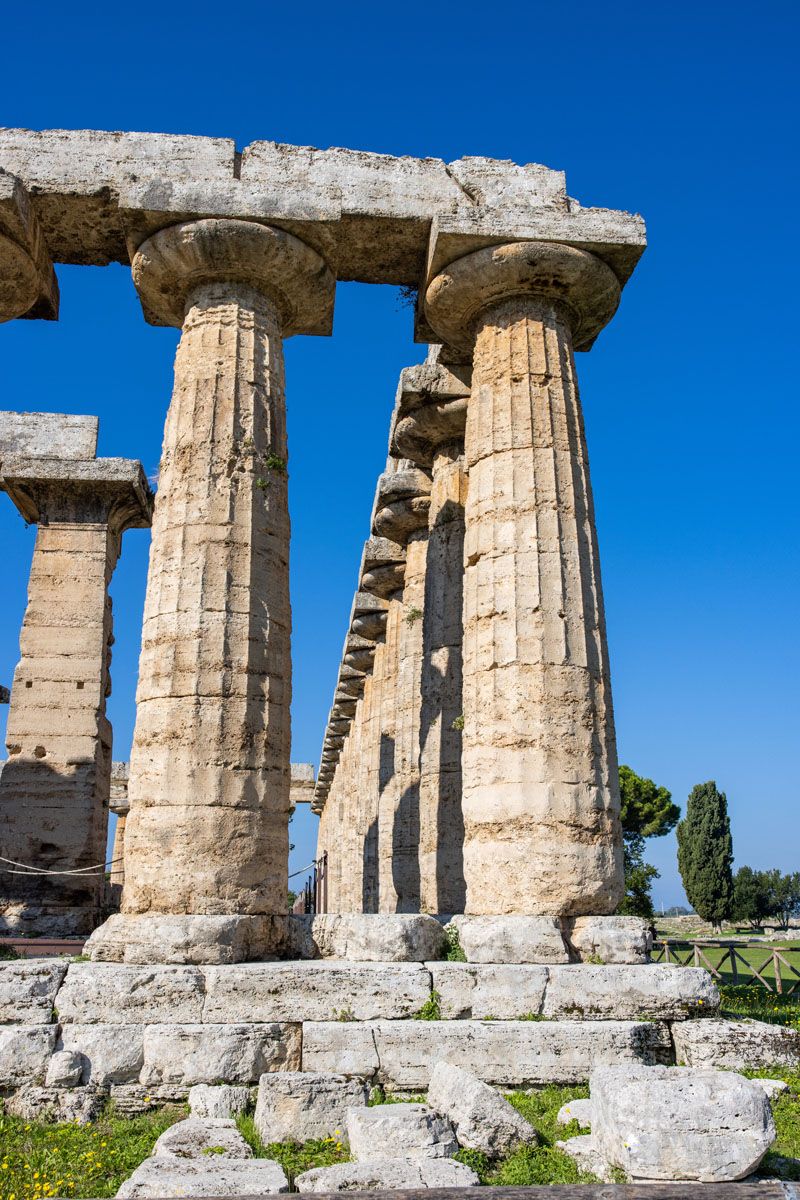
The Temple of Hera, also known as Basilica, sits just to the left of the Temple of Neptune. This temple is smaller than the Temple of Neptune, another fine example of Doric architecture, and was built in the middle of the 6th century BC. This is another temple that you can enter.
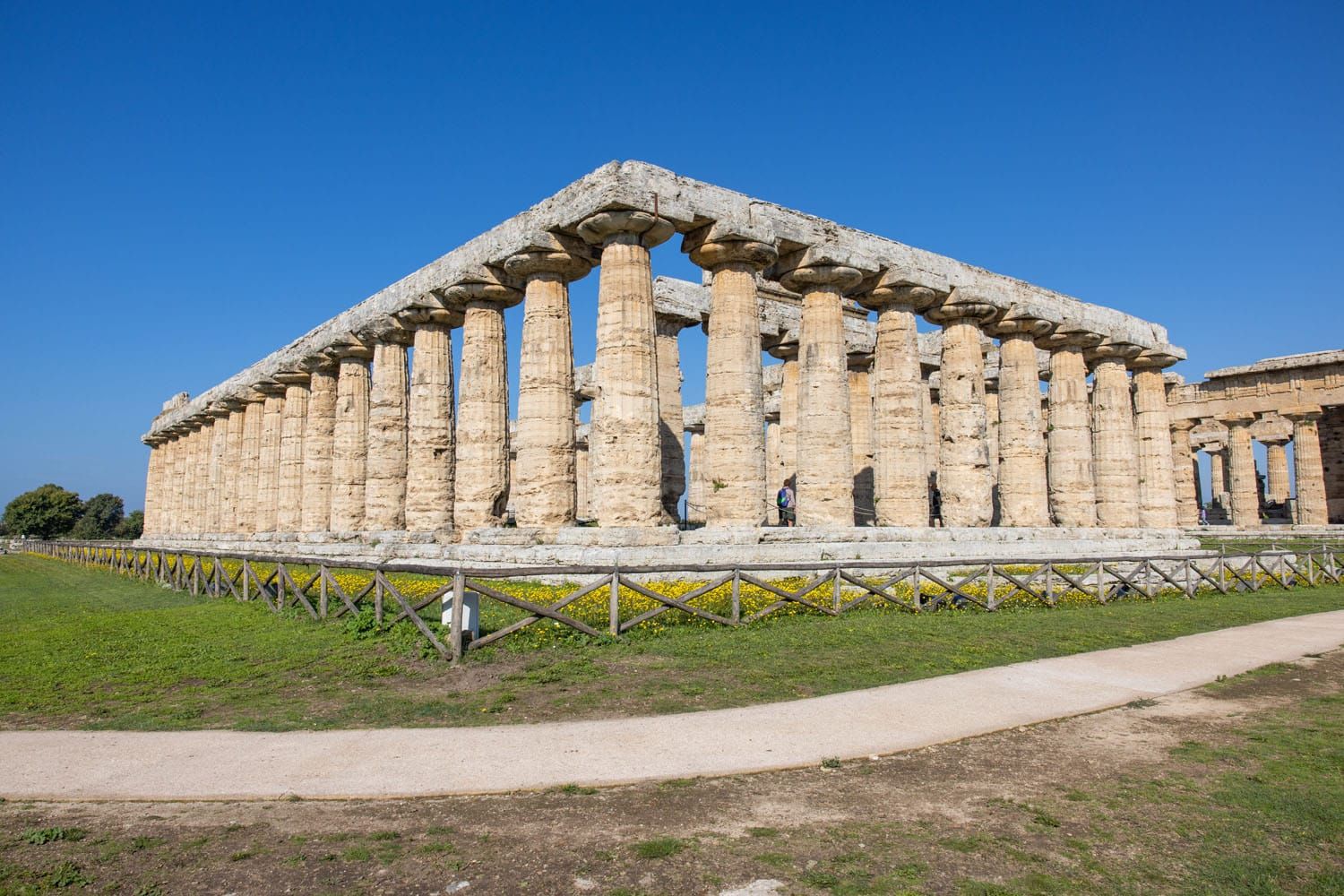
Temple of Hera
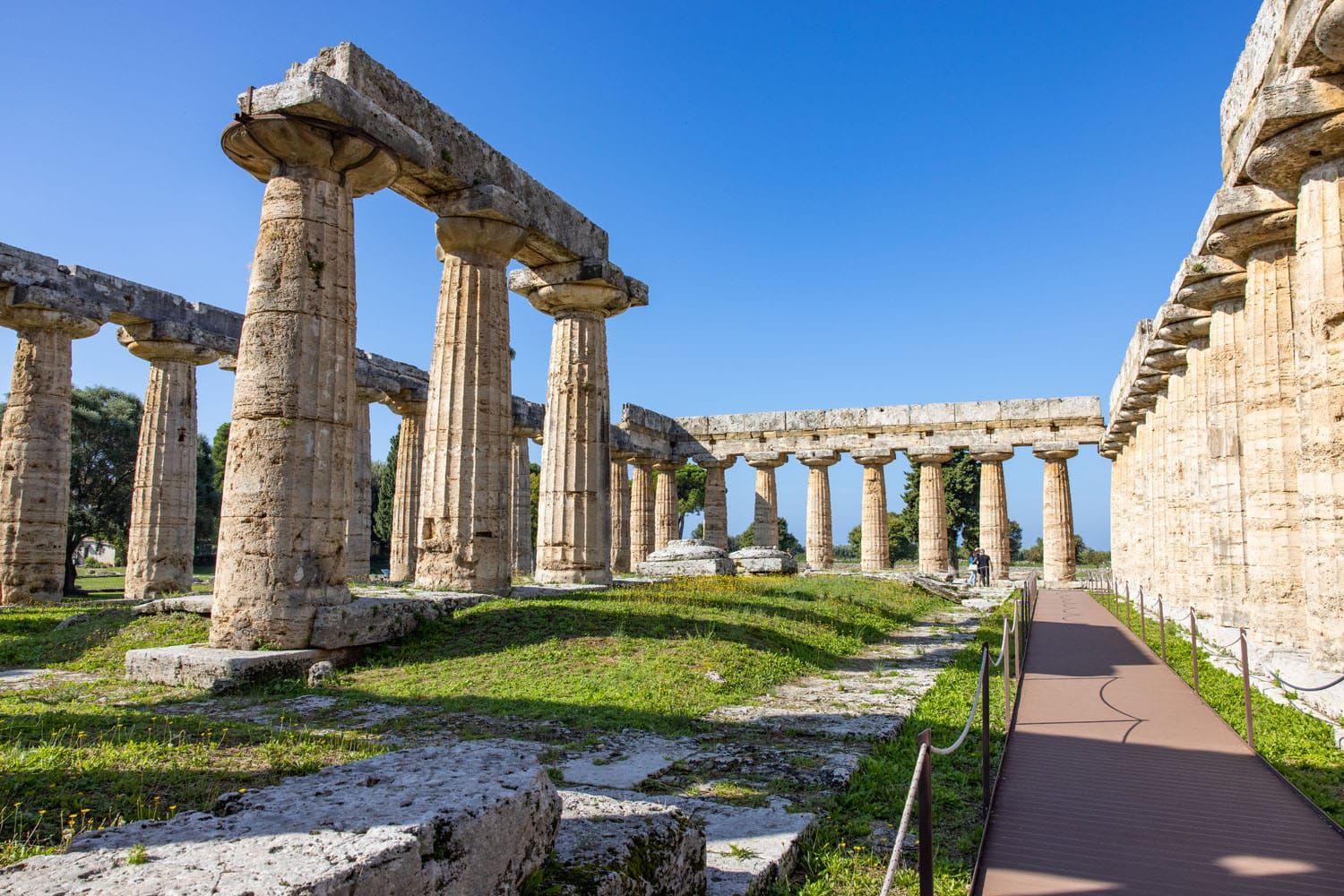
Inside the Temple of Hera
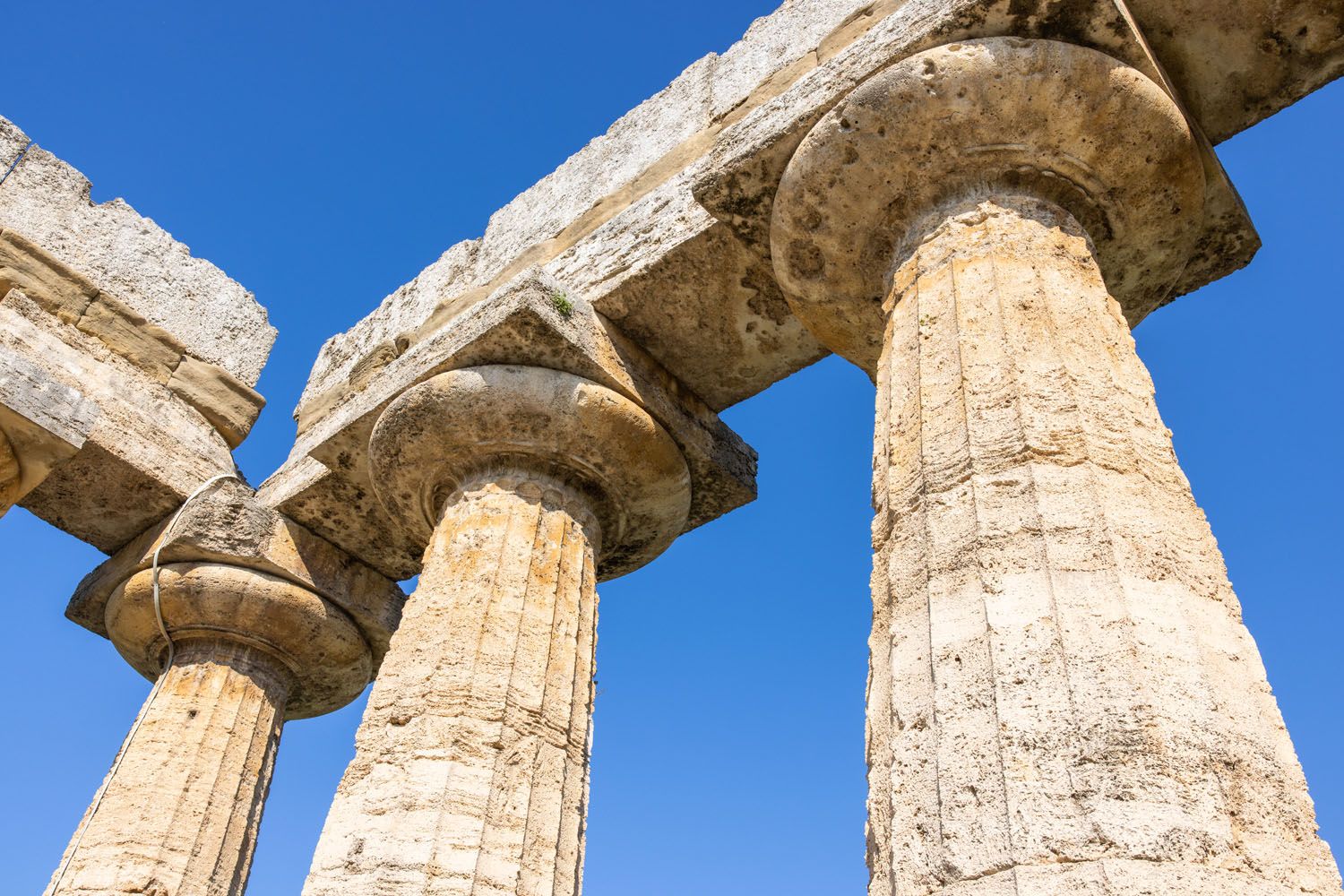
Columns in the Temple of Hera
Roman Forum
After visiting the Temple of Neptune and Temple of Hera, head north to the Roman Forum. This was added once the town became a Roman city. The forum was surrounded by shops and civic buildings and you can still see some of the remaining foundations.
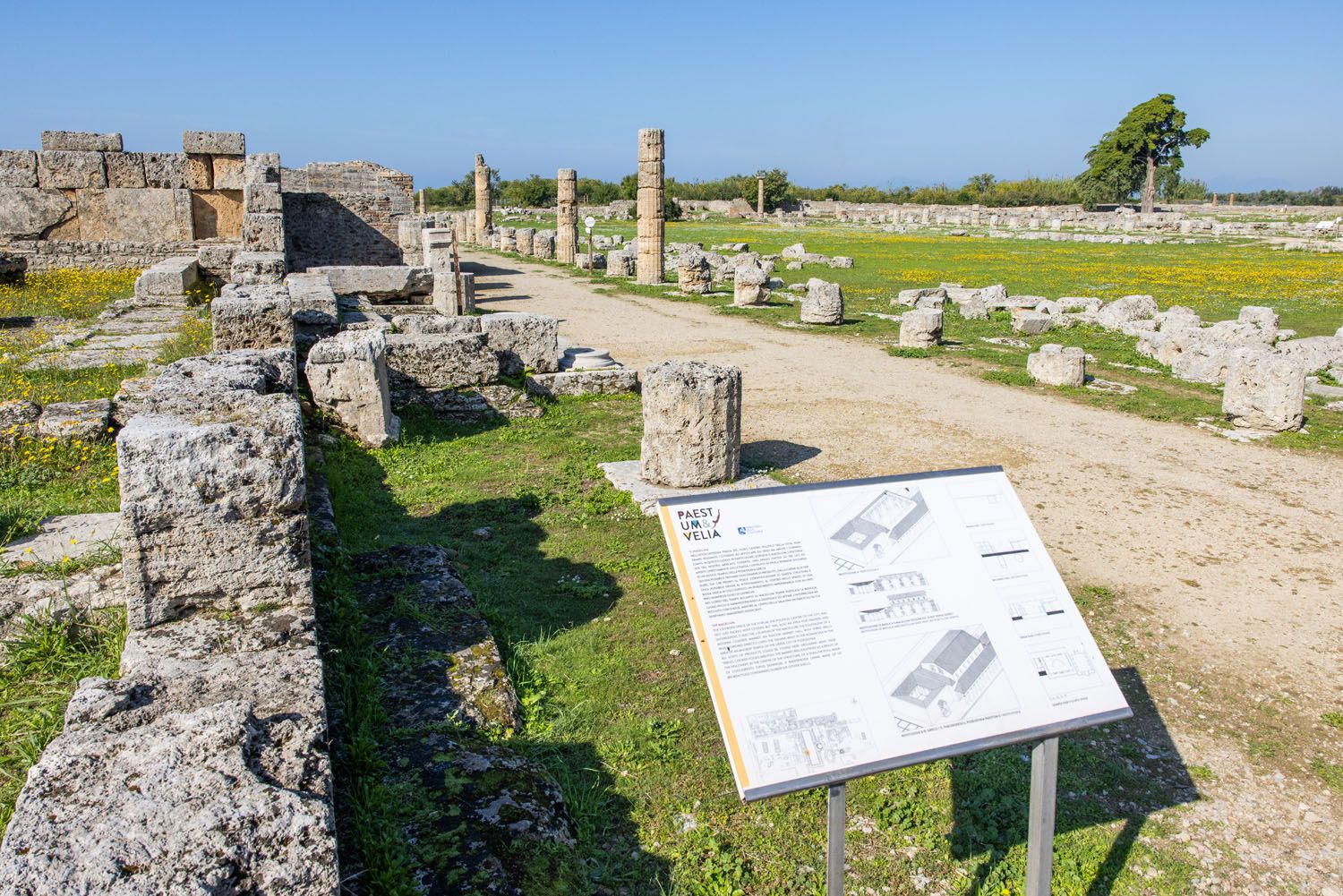
Roman Forum
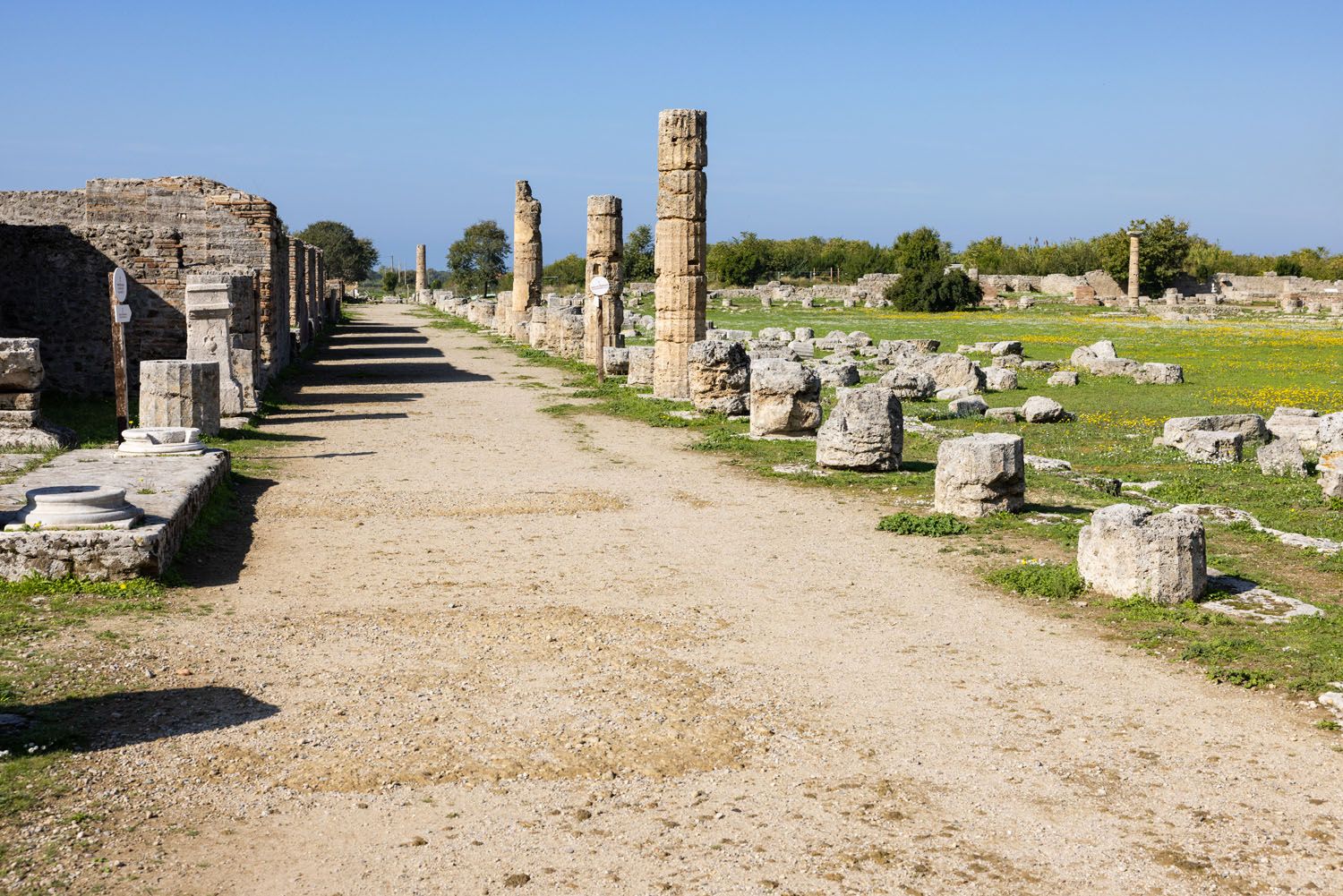
Roman Forum
The Amphitheater
The Amphitheater dates back to 50 BC but over the centuries it was gradually enlarged. Now, only a portion of it can be seen. About half of the Amphitheater is unexcavated and sits underneath the modern pedestrian road, just outside of the fence line.
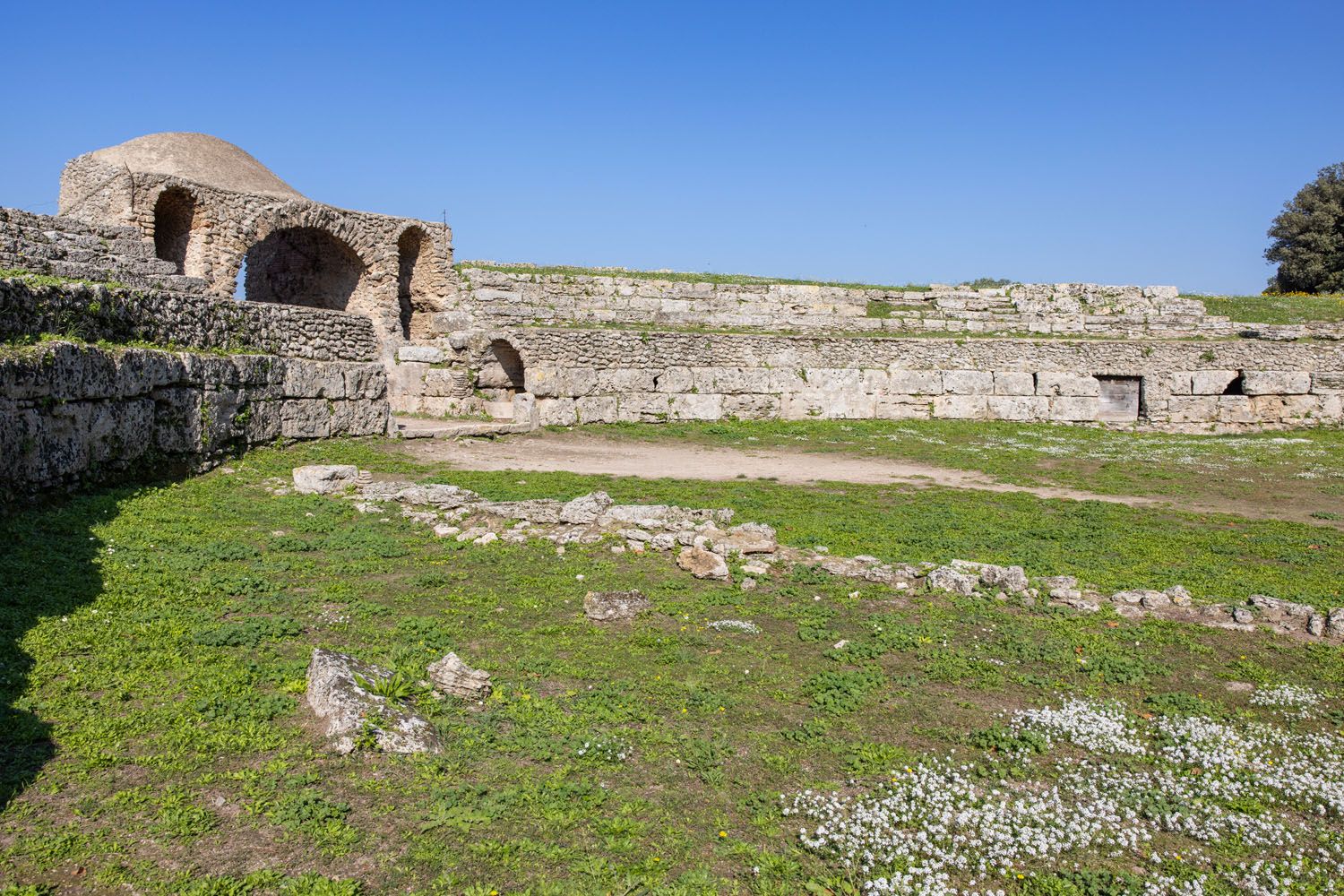
The Amphitheater
The Ekklesiasterion
This was an important building in Poseidonia’s agora. The ekklesiasterion was the building where meetings were held by the male citizens in town who participated in the city politics.
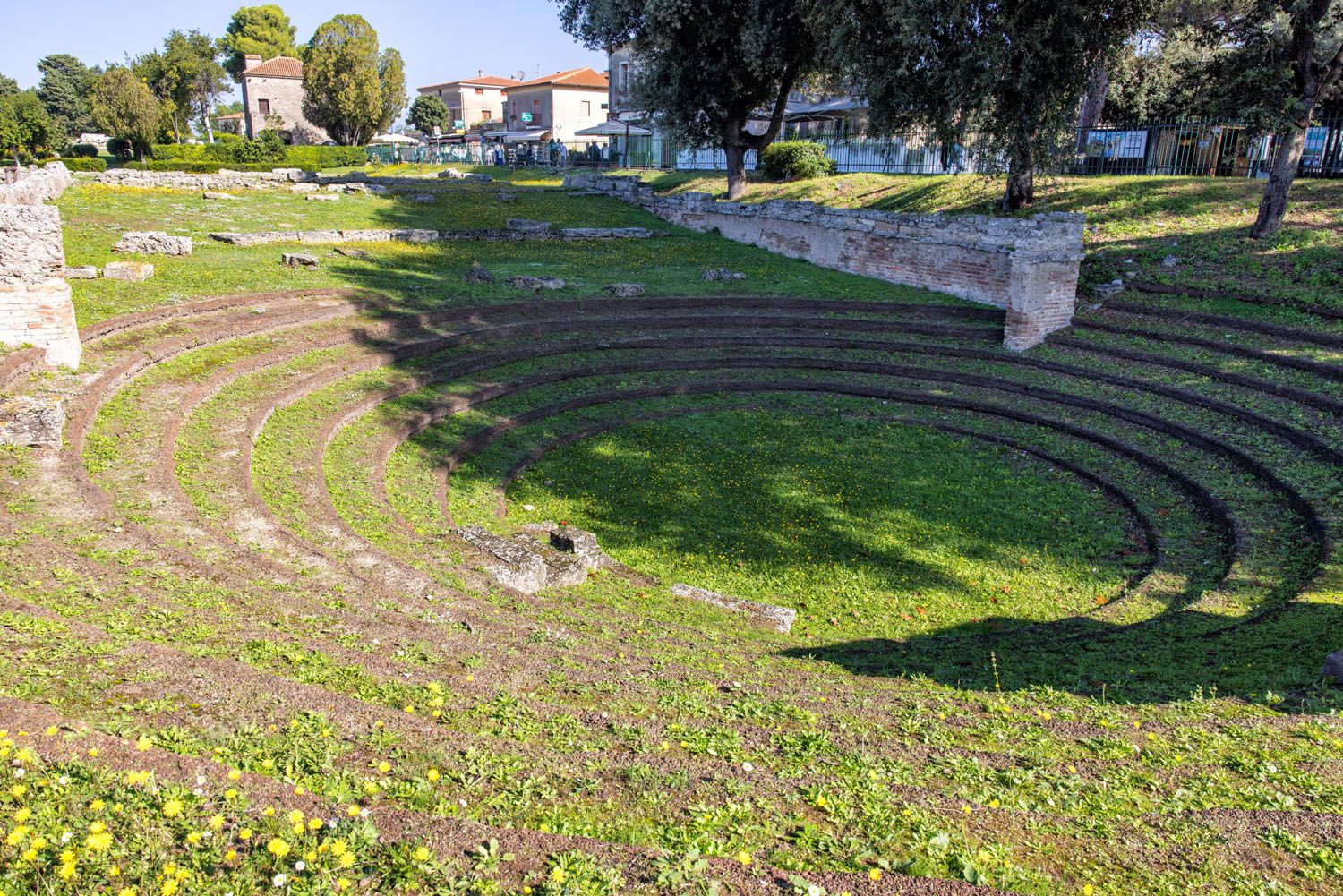
The Ekklesiasterion
Temple of Athena (Ceres)
The Temple of Athena, also known as the Temple of Ceres, sits on the far north end of the archaeological park. This temple was built in 500 BC, in between the construction of the Temple of Hera and the Temple of Neptune.
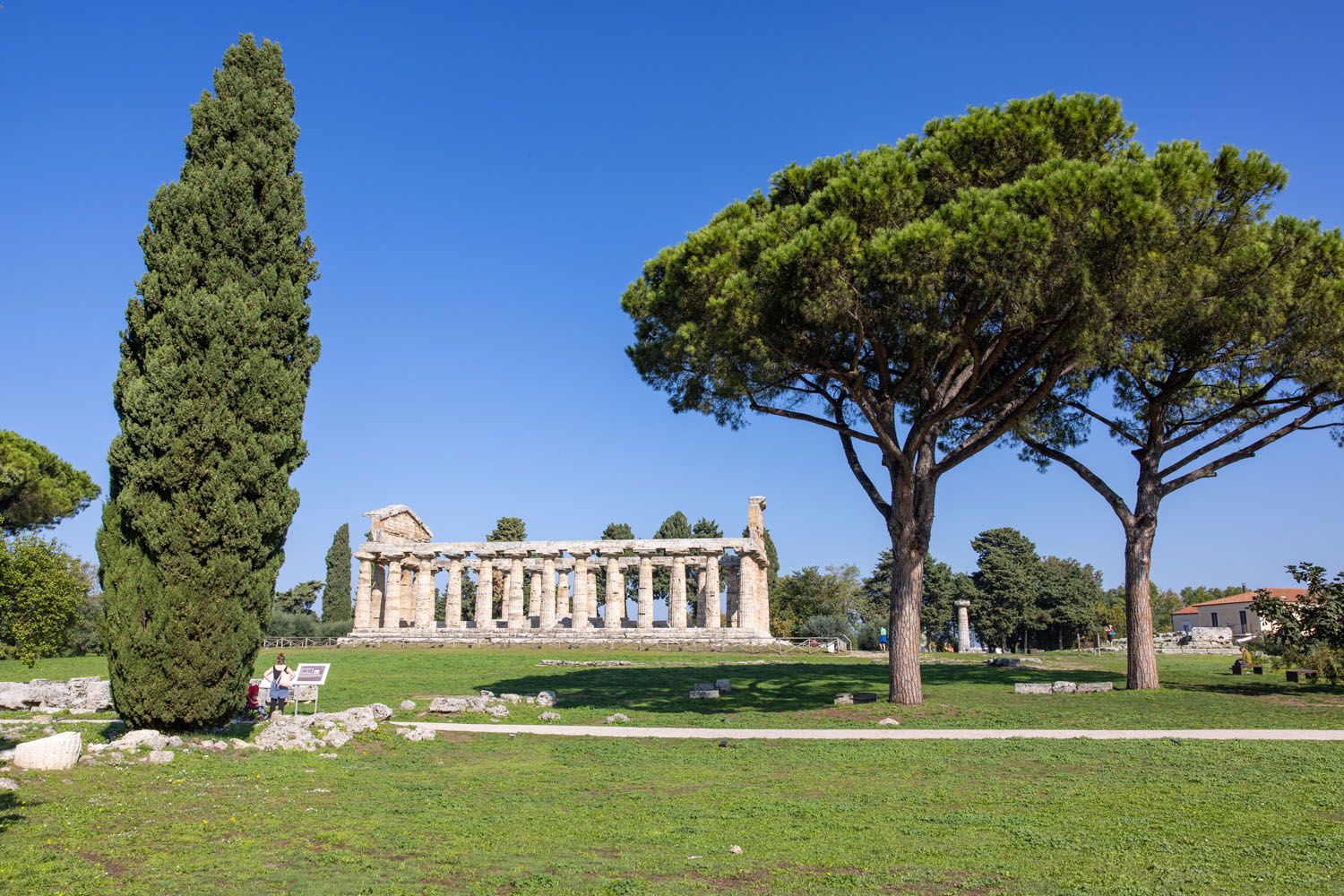
Temple of Athena
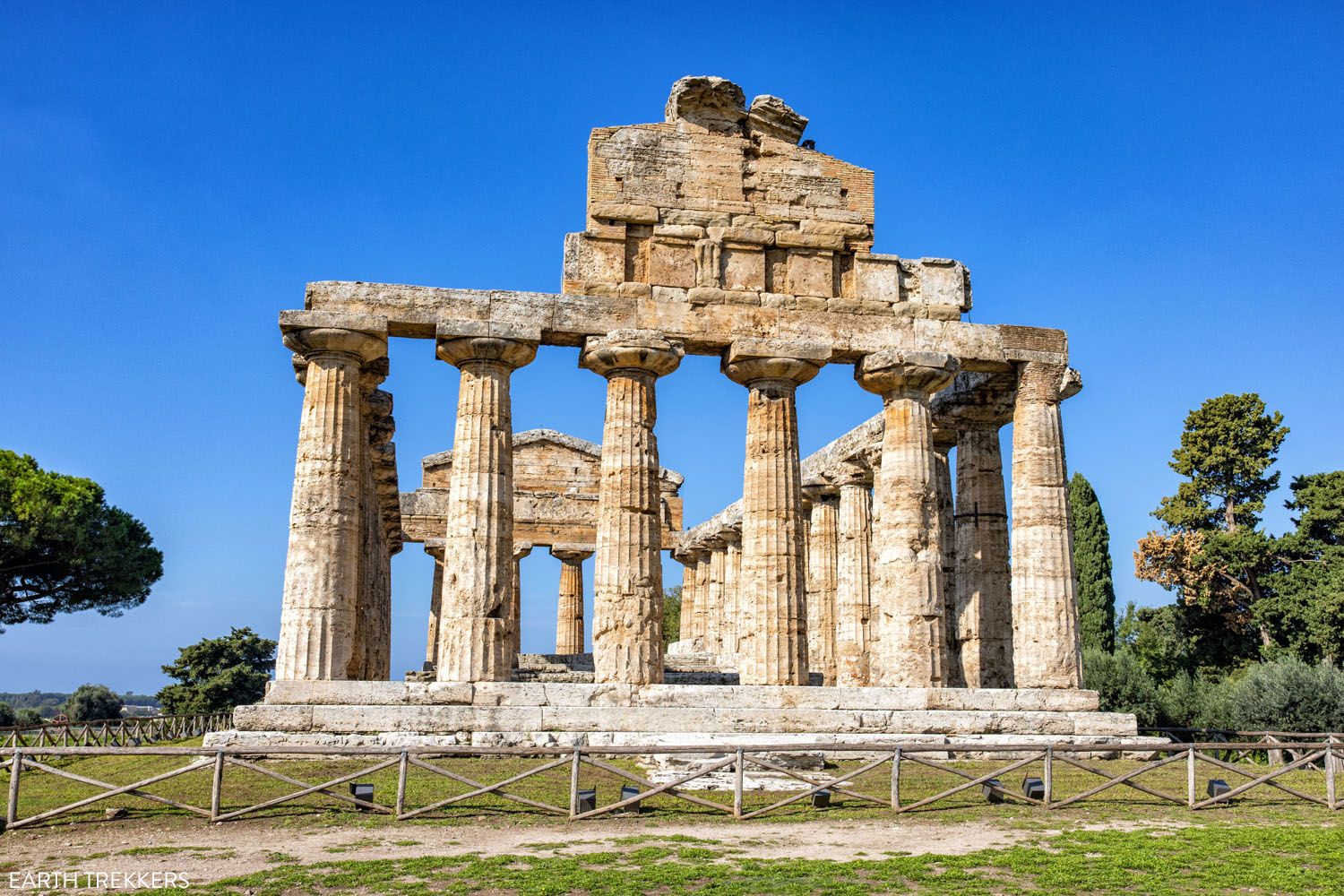
Temple of Athena
Houses of Paestum
There are several houses that still retain some unique features. Near the Roman Forum is a house that still has its original marble floor. There is also a house that has its original mosaic floor and house that has a pool. These are all labeled on the map of the Paestum, The City of Three Temples book mentioned earlier.
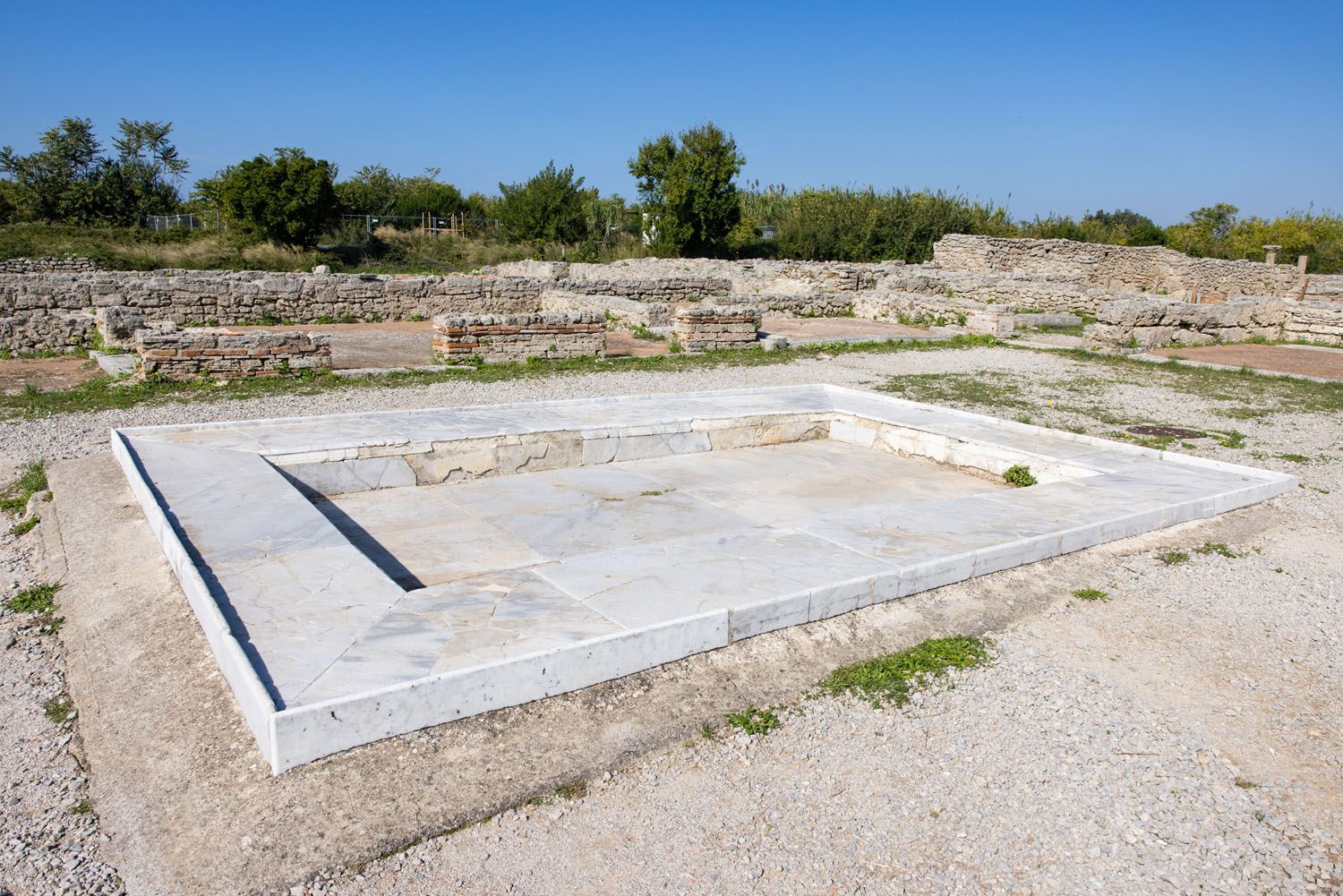
Marble floor in one of the houses
The Pool
The pool was constructed in the 3rd century BC and it is one of the largest known examples of this structure. The pool and the surrounding structures are part of the gymnasium, which was used both for gymnastic competitions and for worship of the female goddess of fertility.
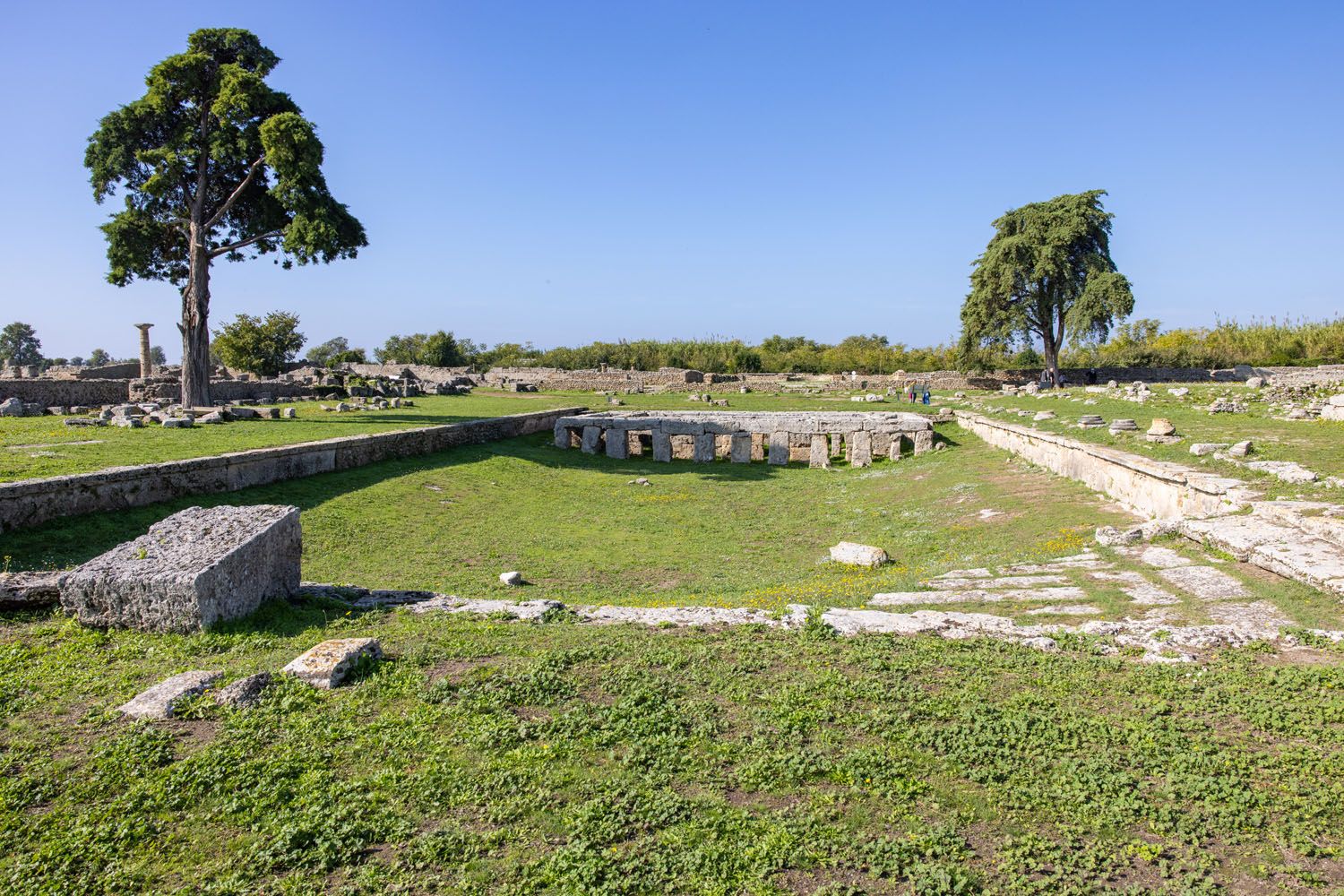
The Pool
The Museum
Located just outside of the archaeological park is the National Archaeological Museum of Paestum. In this museum, you can see the Tomb of the Diver (painted slabs of a man diving into the water, symbolizing the transition from life to death), exhibits about the history and reconstruction of the sites within the park, and funerary paintings from tombs from the 4th century BC.

How Much Time Do You Need at Paestum?
To walk through the archaeological site and visit the museum, plan on spending two to three hours at Paestum.
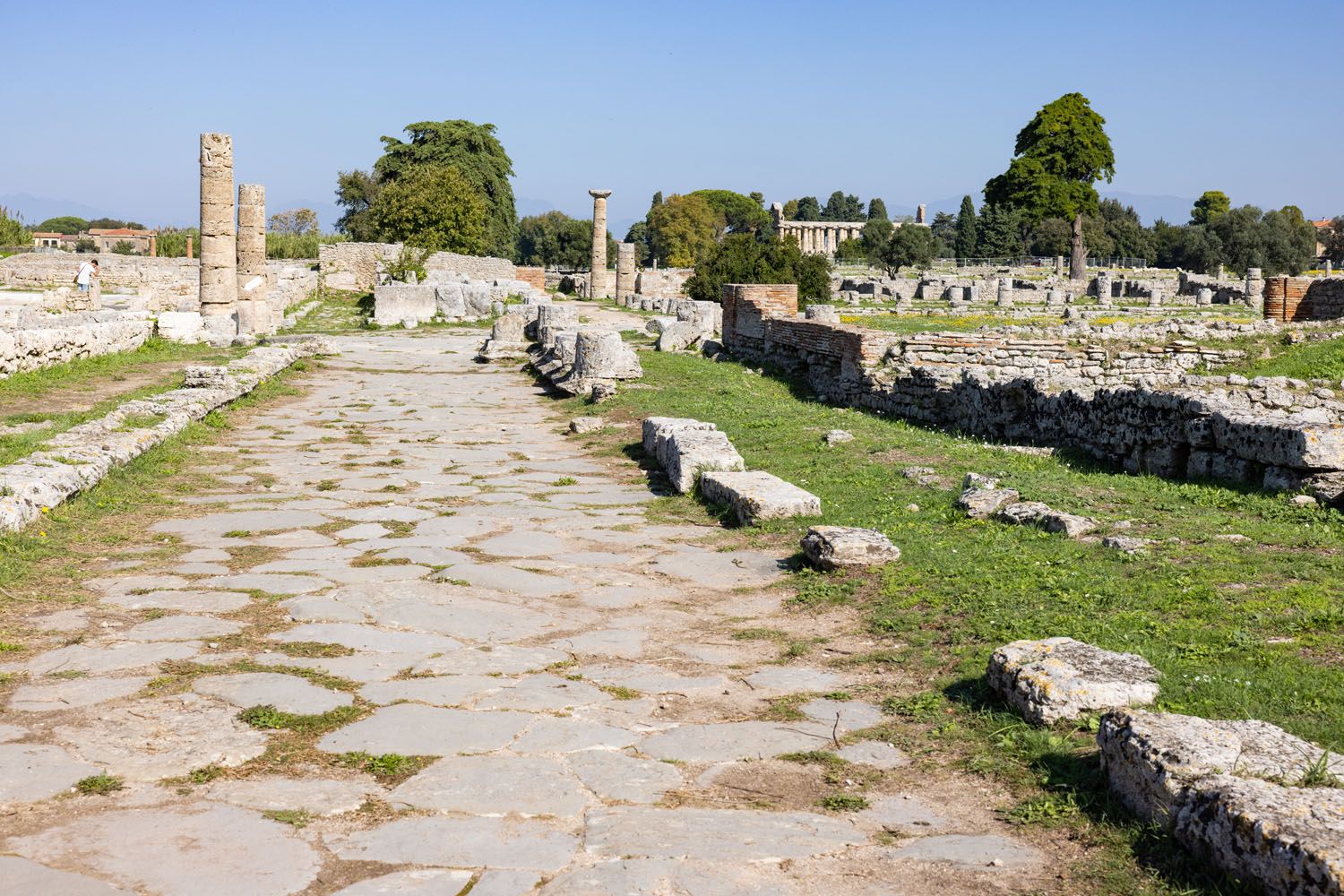
The Sacred Way (Via Sacra)
Tours of Paestum
If you prefer to take a guided tour of Paestum, you have several options. You can also visit Paestum on a guided tour from Naples and this includes a mozzarella tasting.
Tours of Paestum
Plan Your Trip to Southern Italy
- Have plans to visit Pompeii? Our Rome to Sorrento, Capri & the Amalfi Coast guide covers how to visit Pompeii when traveling between Rome and the Amalfi Coast.
- Want to see more ancient Greek temples? Our Valley of the Temples guide covers Sicily’s equally impressive Greek ruins.
- Combining Paestum with the coast? Our Best Things to Do on the Amalfi Coast guide covers the essentials for your trip.
- Building a full road trip? Our Southern Italy Itinerary guide covers Paestum, the Amalfi Coast, Matera, and Puglia.
- Still deciding where to go in Italy? Our 25 Best Places to Visit in Italy guide covers how to choose.
- Planning your broader Italy trip? Our Italy Travel Guide covers everything from Rome to Sicily.
If you have any questions about how to visit Paestum, let us know in the comment section below.
More Places to Visit in Italy
How to Plan the Perfect Amalfi Coast Itinerary
Pinterest Facebook Flipboard Visits to beautiful coastal towns, wine tastings, dinner and drinks with a view, shopping, boat tours, relaxing on the beach…these are all the wonderful experiences you can have on the Amalfi Coast. The itinerary that works best for you comes down to one key decision: do you stay in Sorrento, or in […]
Is Ravello Worth Visiting? Best Things to Do & Travel Tips
Ravello is one of the most beautiful towns on the Amalfi Coast, perched high in the hills above Amalfi and Minori with sweeping coastal views and centuries-old villa gardens. Unlike Positano, Amalfi, or Atrani, Ravello sits well above sea level, so it takes a bit more effort to reach, but the views from Villa Rufolo […]
Path of the Gods: The Most Beautiful Hike on the Amalfi Coast
Located high above the coastal towns of Positano and Praiano, the Path of the Gods, known in Italian as the Sentiero degli Dei, is one of the most beautiful walks in Italy. This is the most popular hike on the Amalfi Coast, and it’s famous for its jaw-dropping views over Positano and the Sorrento Peninsula. […]
Driving the Amalfi Coast: Is It Worth It? (Our Honest Take)
Driving the Amalfi Coast is one of the most romanticized road trips in Italy, with cliffside views, colorful towns like Positano and Ravello tumbling down to the sea, and the freedom to stop wherever the view demands it. At least, that’s the promise. We’ve been to the Amalfi Coast twice. On our first trip, we […]
Visiting the Amalfi Coast in October: Why It’s Our Favorite Time to Visit
When is the best time to visit the Amalfi Coast? If you want warm weather, thinner crowds, and a far easier time getting around, October is one of the best months to go. We’ve visited the Amalfi Coast twice, once in early July, and once for 10 days in mid-to-late October, and the two trips […]
How to Travel from Rome to Sorrento, Capri & the Amalfi Coast
How to travel from Rome to Sorrento, Capri, and the Amalfi Coast can be confusing at first. There’s no single train that takes you from Rome all the way to Positano or Sorrento. Getting there involves a mix of trains, transfers, and sometimes a rental car, depending on your budget and how much flexibility you […]
Southern Italy Itinerary: Amalfi Coast, Matera, Alberobello & Puglia
This southern Italy itinerary includes some of Italy’s most popular places to visit as well as some hidden gems. Spend your first few days on the Amalfi Coast, visiting Sorrento, Capri, Pompeii, and several Amalfi Coast towns. From here, visit Castelmezzano and Pietrapertosa. You may not have heard of these towns before, but they could […]
One Day in Palermo | Best of Palermo in 24 Hours
Planning a trip to Sicily and only have one day in Palermo? Palermo, the capital of Sicily, is one of the largest cities in Italy. It is famous for its churches, its vibrant nightlife, and seaside setting. With its nearby international airport, it is also makes it a popular starting and/or ending point for a […]
The Ultimate Two Week Sicily Road Trip Itinerary
This two week Sicily itinerary is done as a road trip, making one loop around the island. On this itinerary, explore Sicily’s most beautiful cities, climb Mount Etna, explore ancient Greek temples, stroll through picturesque hill towns, taste Modica’s famous chocolate, and spend some time on the beach. We spent just over two and a […]
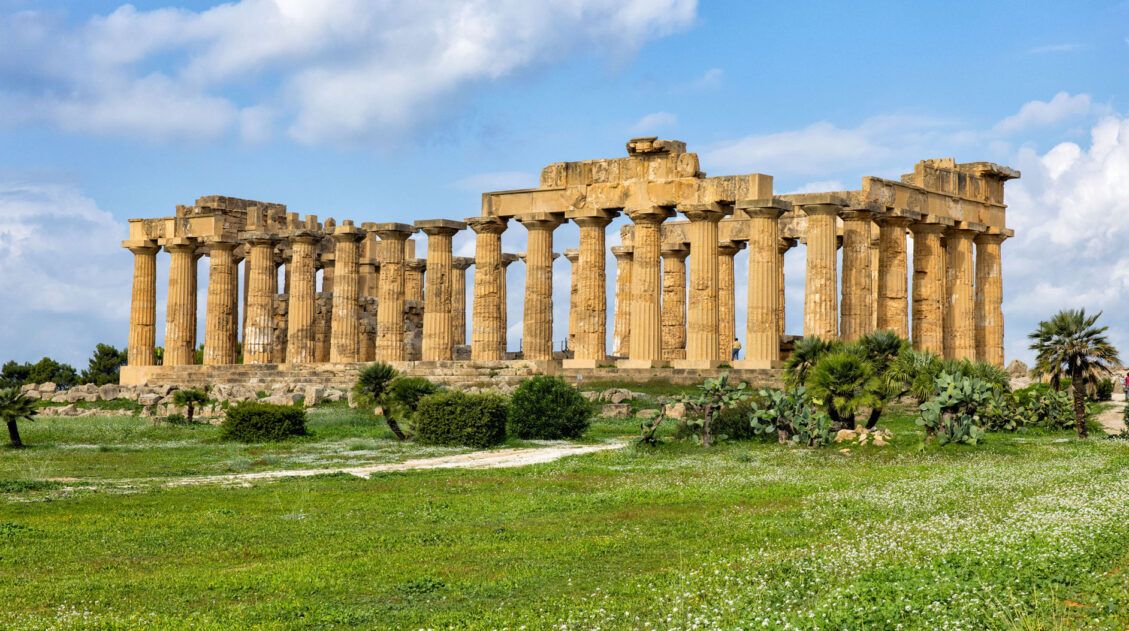
Selinunte and Segesta Archaeological Parks: Are They Worth It?
Selinunte and Segesta are two archaeological parks in Sicily, Italy. Both were ancient Greek cities, founded well over 2,000 years ago, and what remains are the temples, acropoli, and excavations of these cities. The Greek civilization flourished and around 750 BC, it began expanding beyond the Greek mainland, establishing other colonies throughout the Mediterranean (called […]
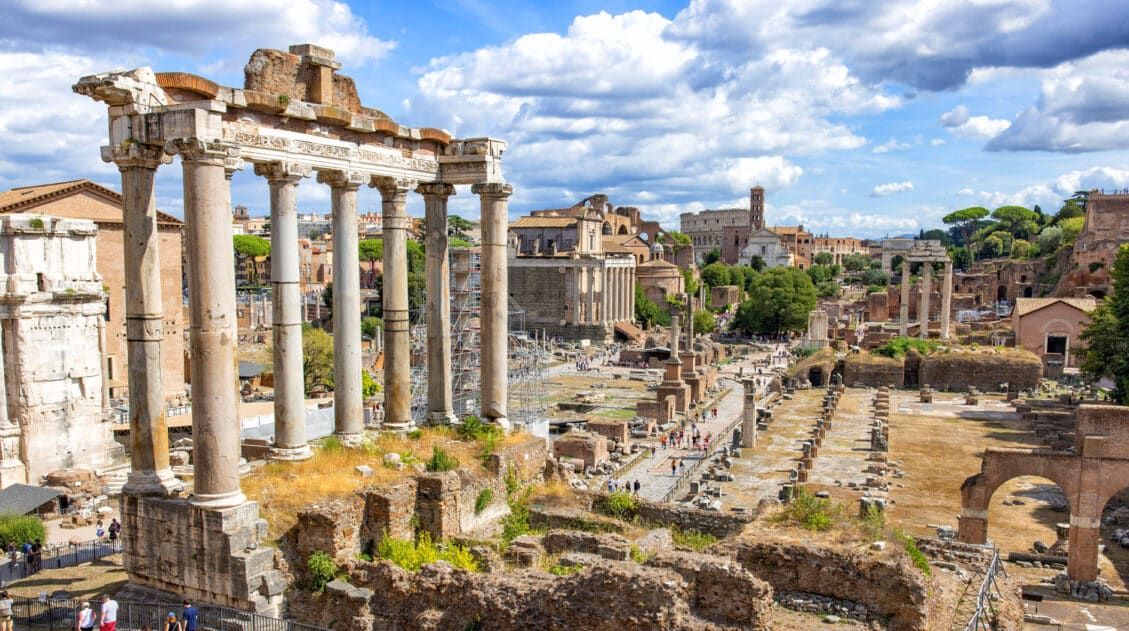
3 Days in Rome: The Ultimate Rome Itinerary
Visit the Colosseum, stroll through the historic heart of Rome, tour the Vatican Museums, climb to the top of the dome on St. Peters’ Basilica, cycle the Appian Way, have an aperitif with a spectacular view of Rome, dine on gelato and pizza by the slice…these are all things you can with 3 days in […]
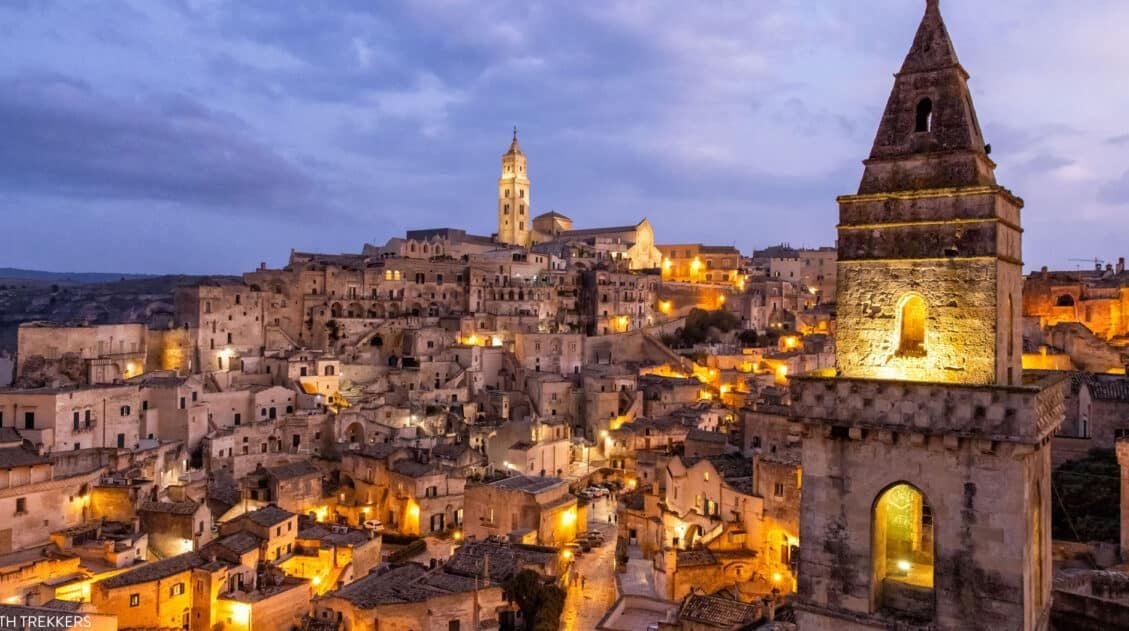
Matera Bucket List: 25 Best Things to Do in Matera
Matera is a city with a long and fascinating history. A complex of cave dwellings, stone buildings, and churches sit on the rolling hillsides, creating one of the most photogenic cities in Italy. Matera has recently been featured in numerous films, increasing its popularity. Strolling the picturesque streets, sleeping in a cave hotel, trying traditional […]
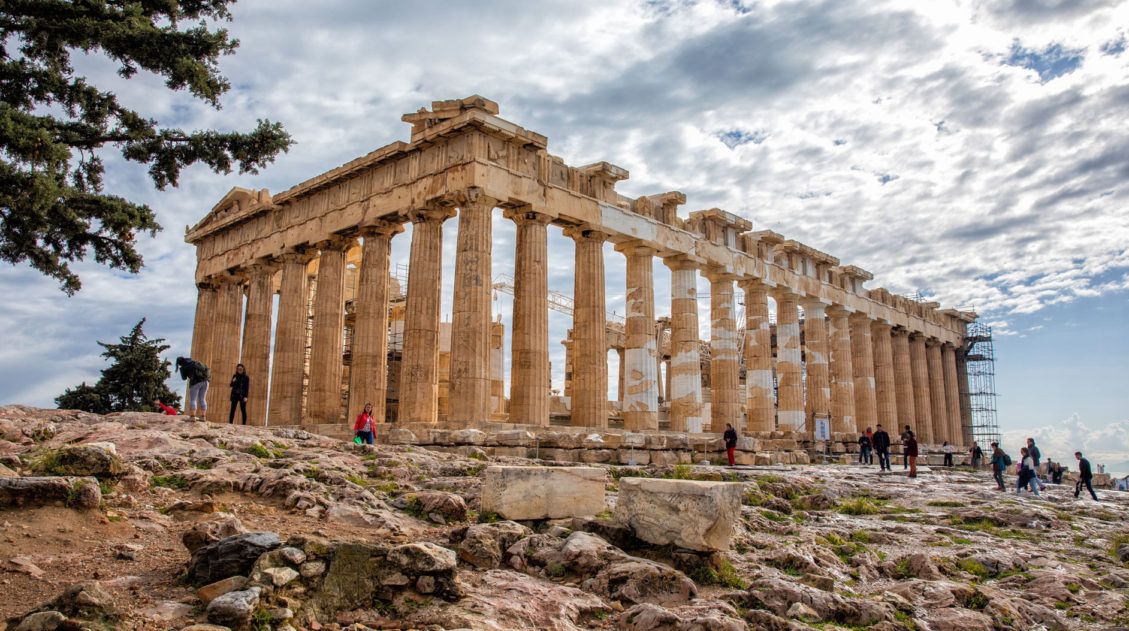
How to Visit the Acropolis & Parthenon (Updated for 2026)
The Acropolis is the centerpiece of Athens. Rising up from the city center is a rocky, fortified, limestone plateau, topped with the Parthenon and several other ancient monuments. For most visitors to Athens, a visit to the Acropolis tops the list of things to do, making this a very popular place to visit. If you […]


Comments 5