
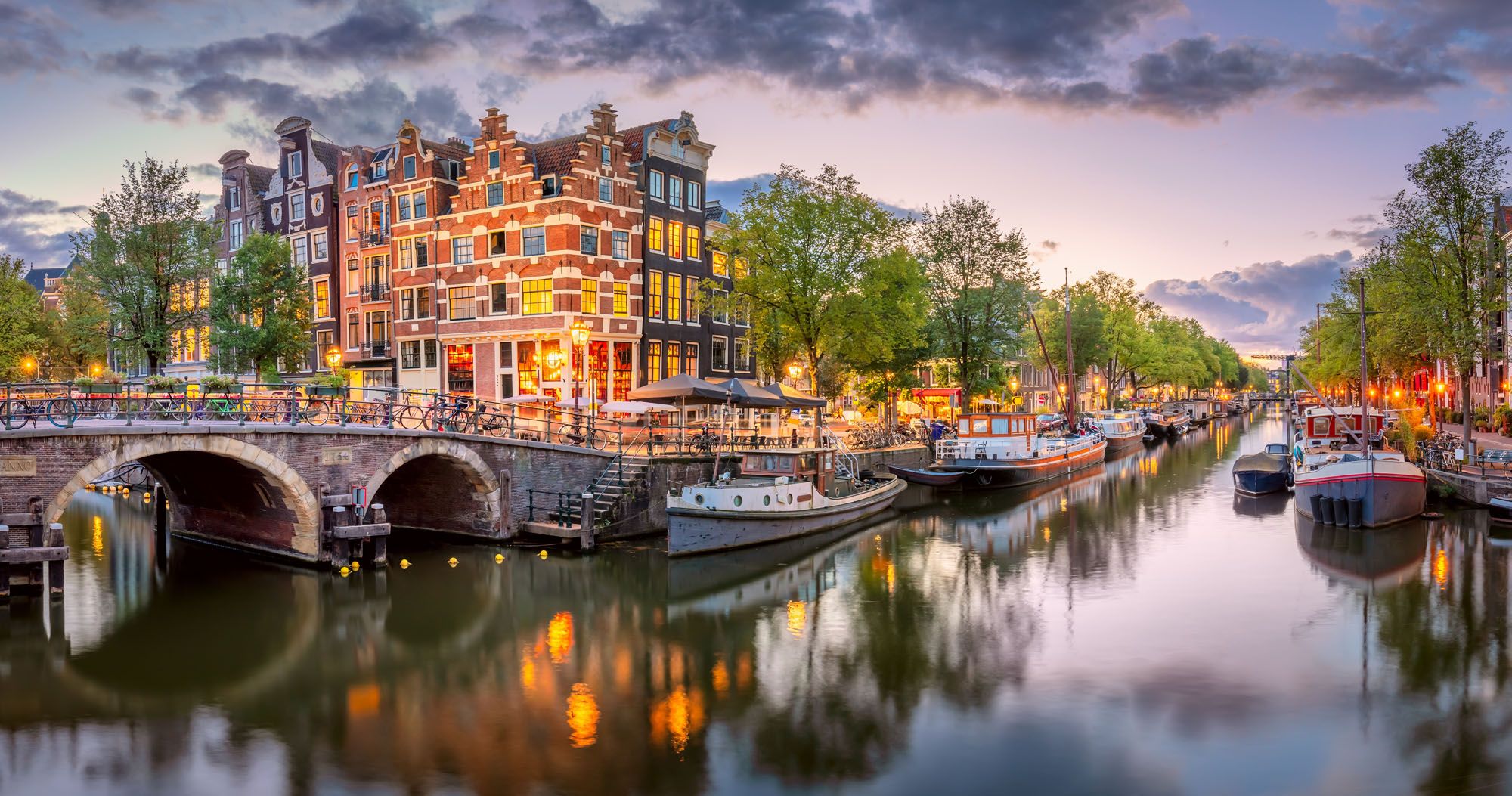

Amsterdam was the very first city Tim and I ever visited in Europe. We landed bleary-eyed and jet-lagged, hauled an enormous suitcase up four flights of stairs to our hotel room (a classic first-timer mistake; pack light!), and stumbled out into the city that afternoon in a wonderful stupor. Everything felt magical and a little disorienting at the same time: the language barriers, the bike traffic coming from every direction, the narrow canal houses leaning gently toward the street. That first evening we found a tiny, cozy restaurant and had one of the most memorable meals of our lives, not because the food was extraordinary, but because it was our first real European dinner.
We made all the classic mistakes. We ordered three pancakes each at a local breakfast spot the next morning, expecting American-style pancakes. Dutch pancakes are enormous, about the size of a dinner plate, and we were left with a small mountain of uneaten food and a lesson we’ve never forgotten.
We’ve been back since, the second time bringing Tyler and Kara along for their first Amsterdam experience. By that trip, we had enough travel under our belts to slow down and appreciate the city differently. It was less about ticking off museums, more about wandering the canals, popping into neighborhood cafés, and day-tripping to Utrecht and Haarlem.
Between those two visits, we’ve landed on what we think are the true must-dos for a first-time visitor. Rather than overwhelming you with a list of 40 things, here are the 10 experiences we’d send every first-timer straight to.
June 2026 Update: All prices, hours, and links verified. Added updated information about the Museumkaart.
At a Glance: Top 10 Things to Do in Amsterdam
📍Best For: First-time visitors
🕐 Minimum Time: 2 days (3 days if adding Keukenhof)
🌷 Best Time to Visit: Late April–early May (tulip season); also great in summer and fall
💶 Budget Tip: Buying tickets individually for the Rijksmuseum (€25), Van Gogh Museum (€25), and Anne Frank House adds up fast; consider purchasing the Museumkaart
⚠️ Book in Advance: Anne Frank House and Van Gogh Museum tickets sell out; reserve before your trip
| # | Experience | Cost | Book Ahead? |
| 1 | Stroll the Canal Ring & Nine Streets | Free | No |
| 2 | Anne Frank House | €16.50 (adults) | Yes — online only, up to 6 weeks ahead |
| 3 | Rijksmuseum | €25 (adults) | Recommended |
| 4 | Van Gogh Museum | €25 (adults) | Yes — online only, sells out fast |
| 5 | Bike the City | €10–20/day rental | No |
| 6 | Canal Cruise | €15–50+ | Recommended in peak season |
| 7 | Vondelpark Picnic | Free | No |
| 8 | Keukenhof (spring only) | €25 (garden entry) | Yes — sells out, especially April weekends |
| 9 | A’dam Lookout | €17.50 (adults) | No |
| 10 | Historic City Center & Ons’ Lieve Heer op Solder | €15 (museum) | No |
Best Things to Do in Amsterdam
1. Walk the Canal Ring (and the Nine Streets)
Without a doubt, the single best thing you can do in Amsterdam is simply walk the canals. No ticket required. No reservation needed. Just put on comfortable shoes and wander.
Fanning out from the city center are a series of horseshoe-shaped canals, an area called Grachtengordel, or the Canal Ring. Singel is the innermost of these and was originally the moat surrounding the old city. Three more canals form the heart of the ring: Herengracht, Keizersgracht, and Prinsengracht. They’re bisected by smaller streets and bridges, creating an intricate, beautiful maze that’s endlessly walkable.
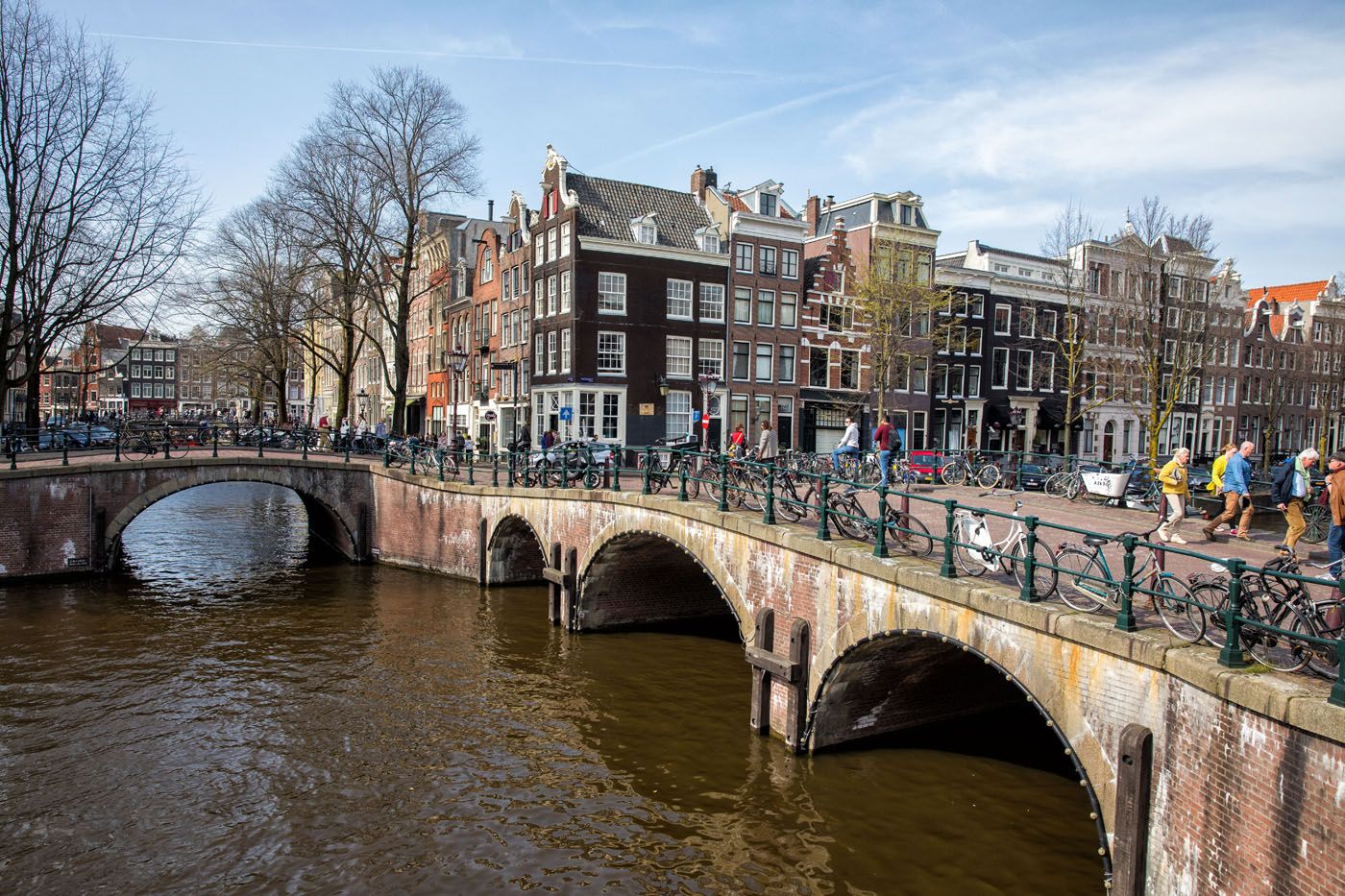
The western section of the canal ring is the most scenic, and our favorite area to explore. This is where you’ll find De 9 Straatjes, The Nine Streets, a cluster of nine charming lanes lined with boutique shops, independent cafés, art galleries, and restaurants. Even if shopping isn’t your priority, the canal houses and cobblestones here are worth every step.
On our first trip, Tim and I spent hours just walking the canal ring, not really going anywhere in particular. On our second trip, we did the same thing. It never gets old.
Where are The Nine Streets? The Nine Streets are located just to the south of the Anne Frank House. This area is bordered by Prinsengracht and Singel. The Nine Streets are Reestraat, Hartenstraat, Gasthuismolensteeg, Oude Spiegelstraat, Wolvenstraat, Berenstraat, Runstraat, Huidenstraat, and Wijde Hiesteeg.
2. Tour the Anne Frank House
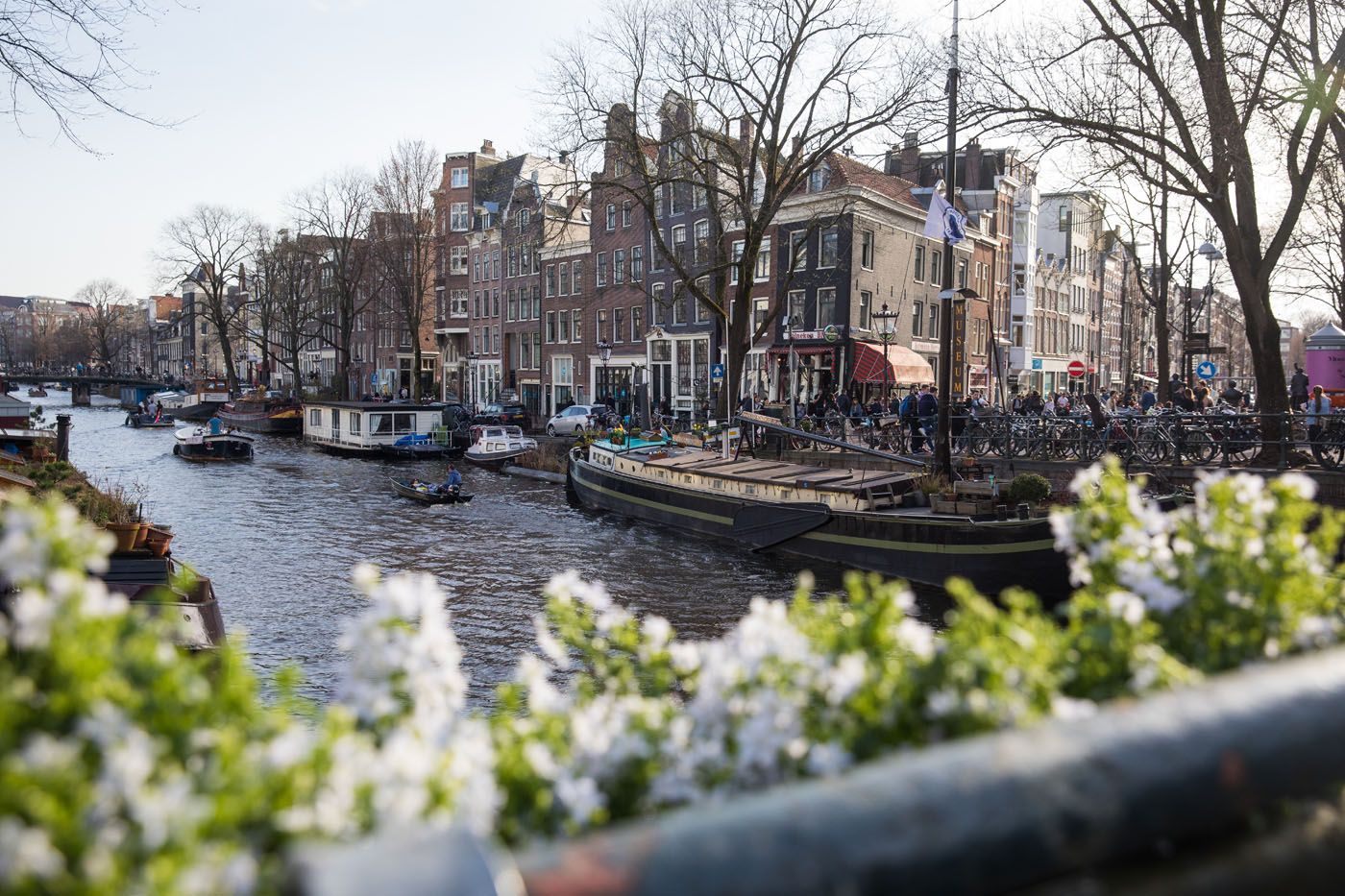
The Anne Frank House is one of the most emotionally powerful museums in Europe, and for a first-time visitor to Amsterdam, it is unmissable.
During World War II, Anne Frank and her family hid for two years and one month in a secret annex above a canal house on Prinsengracht, a space of only about 450 square feet shared between eight people. During that time, Anne kept a journal that would become one of the most significant historical documents of the 20th century. The family was eventually discovered, arrested, and sent to concentration camps. Only Anne’s father, Otto, survived.
Walking through the museum, you pass through the movable bookcase that concealed the entrance to the hiding space and step into the rooms where they lived. It’s a quiet, sobering experience, and the weight of what happened there is palpable even in a crowd. We visited on our first Amsterdam trip and it’s stayed with us ever since.
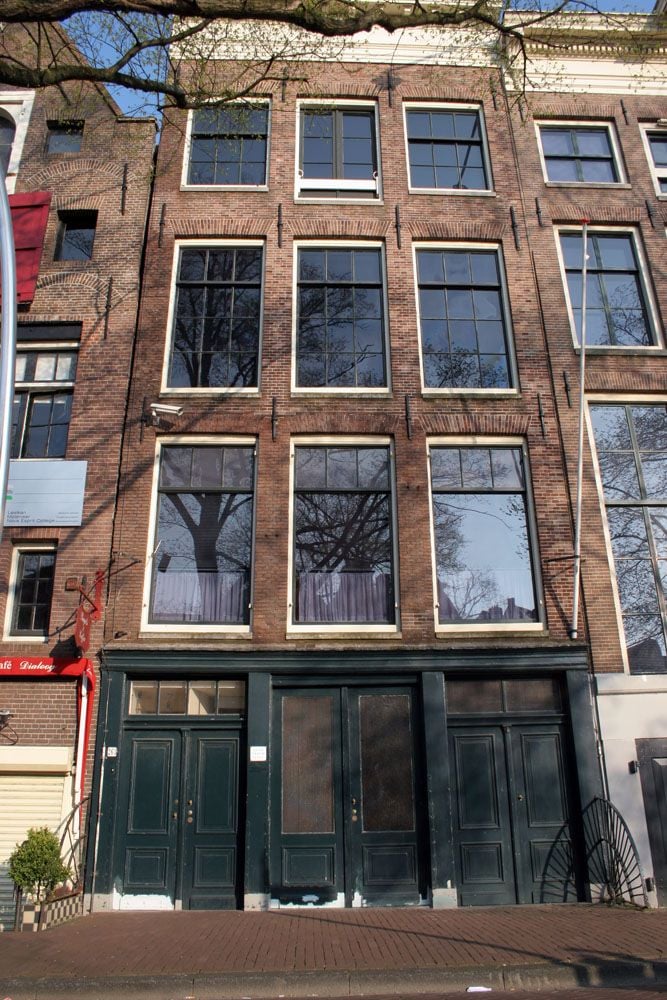
Photo of the Anne Frank House. The entire museum complex now encompasses several canal houses and stretches to the right of this building.
How to Visit the Anne Frank House
Tickets must be purchased online in advance. They cannot be bought at the door. Tickets are released six weeks in advance and sell out quickly, especially for peak-season mornings. Book as early as possible. You’ll reserve a specific time slot, which means no waiting in line.
We strongly recommend reading The Diary of Anne Frank before your visit. It puts everything you see, the tiny rooms, the photos, and the newspaper clippings, into a human context that makes the experience far more meaningful.
3. Spend a Morning at the Rijksmuseum
The Rijksmuseum is the Netherlands’ national museum, and it’s one of the great museums of the world. The building itself, a grand 19th-century structure that reopened after a decade-long renovation in 2013, is a masterpiece before you even walk through the door.
Inside, 8,000 works of art and historical objects span the Dutch Golden Age and beyond: Rembrandt, Vermeer, Frans Hals, Jan Steen. The centerpiece is Rembrandt’s The Night Watch, an enormous painting that dominates its own gallery and commands every person who walks in.
A visit can last as little as an hour if you stick to the highlights, or most of a day if you want to go deep. We’d recommend at least two hours on a first visit.
Why Visit the Rijksmuseum: The museum is a must-see for art and history lovers, offering a deep dive into the Dutch Golden Age and beyond.
Things to See at the Rijksmuseum:
- The Night Watch: Rembrandt’s famous masterpiece and the #1 work of art to see in the musuem.
- The Milkmaid: A stunning painting by Johannes Vermeer.
- Works by Dutch Masters: Works of art by artists like Frans Hals and Jan Steen.
- Historical Artifacts: Delftware, ship models, and decorative arts from Dutch history.
- The Rijksmuseum Library: A breathtaking 19th-century reading room that looks straight out of a movie.
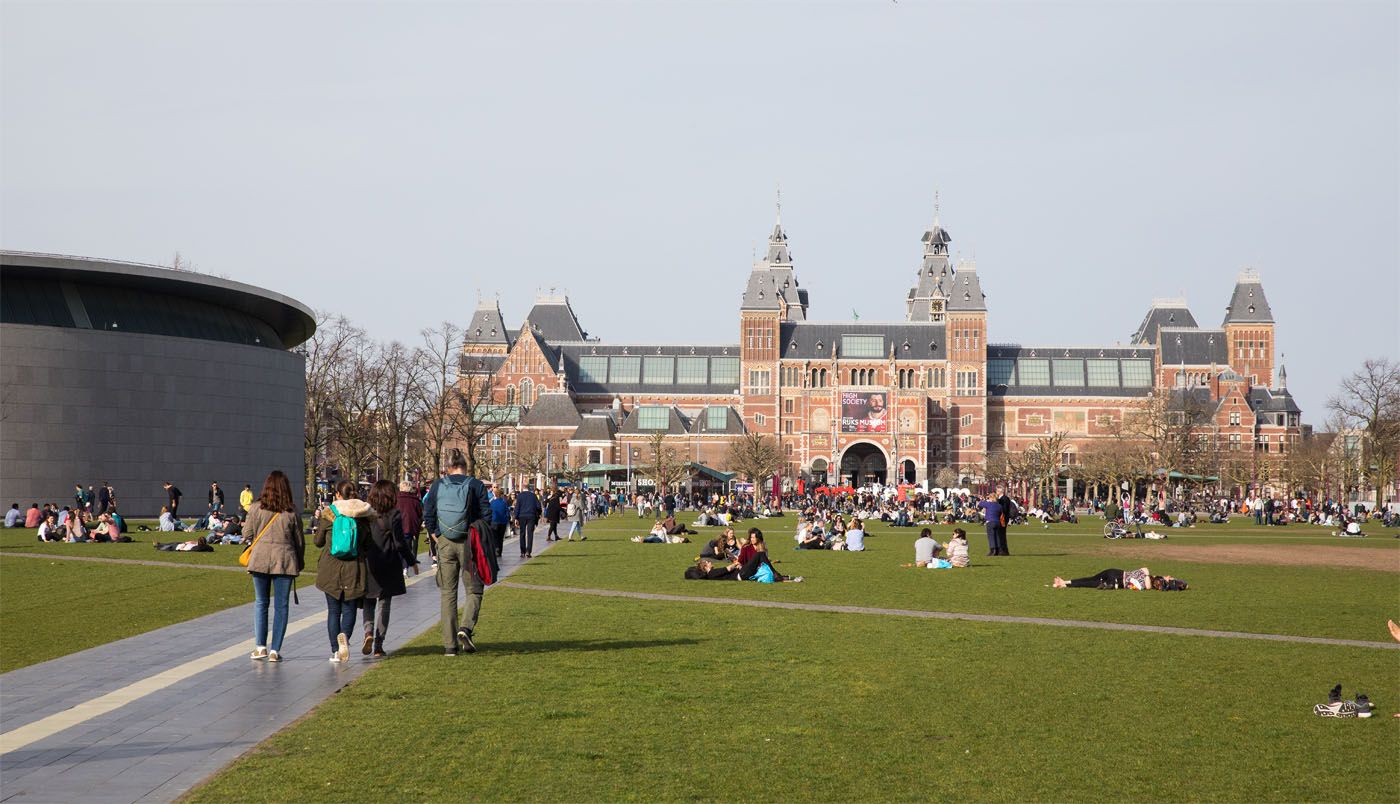
Along with the Van Gogh Museum, the Rijksmuseum is located on Museumplein, an open green space which is a popular picnic and hangout spot when the weather is warm.
How to Visit the Rijksmuseum
A visit here can last as little as an hour, if you just see the highlights. If you have an interest in Dutch art, plan on spending at least half of a day here.
Website: Get updated hours and pricing here.
Tickets: With the e-ticket and the Museumcard, you can skip the ticket line (saving you 20 to 30 minutes during busy times). If you have the I Amsterdam Card, you still have to collect a ticket in the ticket line. Tickets can also be purchased in advance through GetYourGuide.
4. Walk Through Van Gogh’s Life and Art
If the Rijksmuseum is the grand monument of Dutch art history, the Van Gogh Museum is the intimate counterpart. It’s smaller, easier to navigate, and houses the largest collection of Van Gogh’s work anywhere in the world.
The museum traces Van Gogh’s life and artistic evolution chronologically, from the dark, earthy tones of his early Dutch work to the vivid, expressive paintings he created in Arles and Saint-Rémy. Seeing pieces like Sunflowers, The Bedroom, and The Potato Eaters in person, rather than in a textbook, is something else entirely.
Plan about 90 minutes to two hours here.
Things to See at the Van Gogh Museum:
- Sunflowers: One of Van Gogh’s most famous works of art.
- The Bedroom: A colorful depiction of his simple living space in Arles.
- The Potato Eaters: A dark and moody painting showcasing Van Gogh’s early style.
- Personal Letters: Letters between Van Gogh and his brother Theo, revealing his thoughts and emotions.
- Self-Portraits: A fascinating look at how Van Gogh saw himself over time.
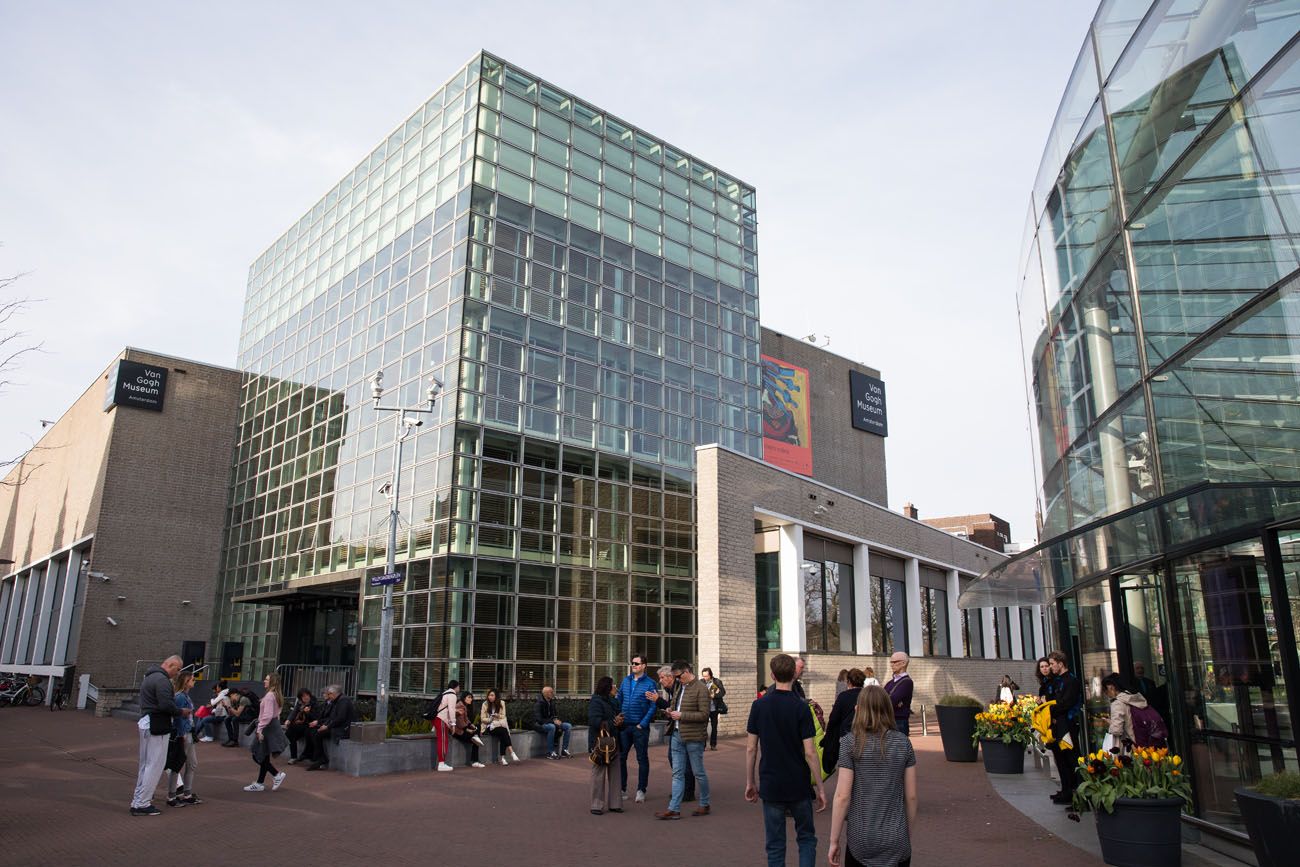
How to Visit the Van Gogh Museum
You can only purchase your tickets online, which you can do on the official website or through GetYourGuide. Do this in advance of your trip because they can sell out days in advance. You will pick a time slot and can enter the museum within a half hour of your reserved time. This eliminates waiting in line to enter the Van Gogh Museum.
Visit the Van Gogh Museum official website to get pricing and hours of operation.
5. Explore Amsterdam by Bike
In Amsterdam, there are more bikes than people. Dedicated cycling lanes run along nearly every street. Traffic lights have separate signals for cyclists. And the Rijksmuseum has a passageway through its base that cyclists use as a shortcut through the city, making Amsterdam the only place in the world where you can literally bike through an art museum.
On our first trip, Tim and I rented bikes and spent an afternoon cycling the canal ring. It’s genuinely one of the best ways to feel like a local, and it gets you around the compact city quickly and joyfully.
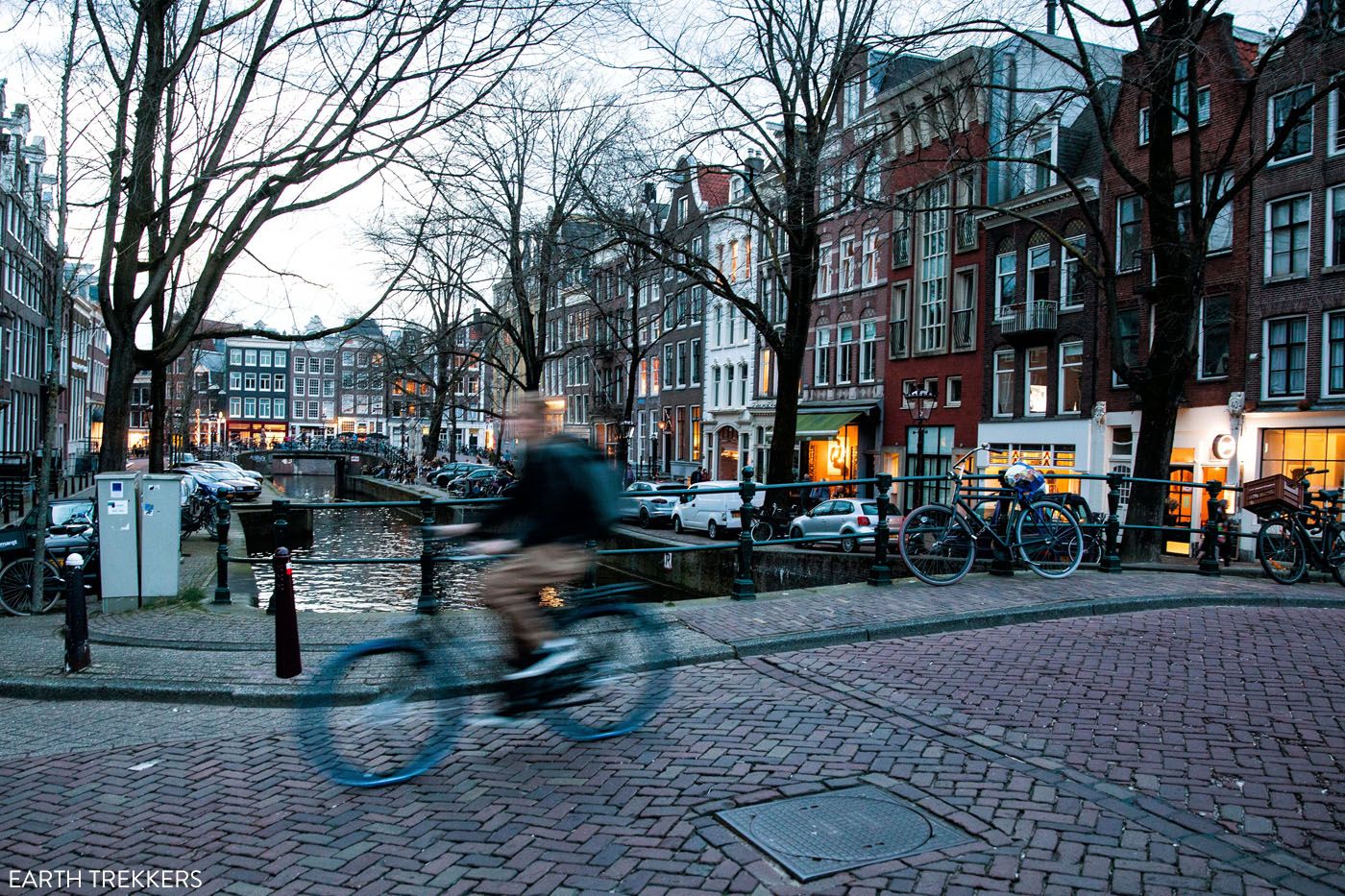
A few practical notes: Amsterdam cycling traffic is real and fast. Stay in the bike lanes, watch for trams, and don’t ride on the pedestrian paths. If you’re not confident on a bike in traffic, a canal boat tour (see #6) is an equally wonderful way to see the city from the water.
Bike Rental: MacBike is one of the largest rental companies in the city, with locations near Central Station and around the city center. Many hotels also offer rentals.
6. Take a Canal Cruise
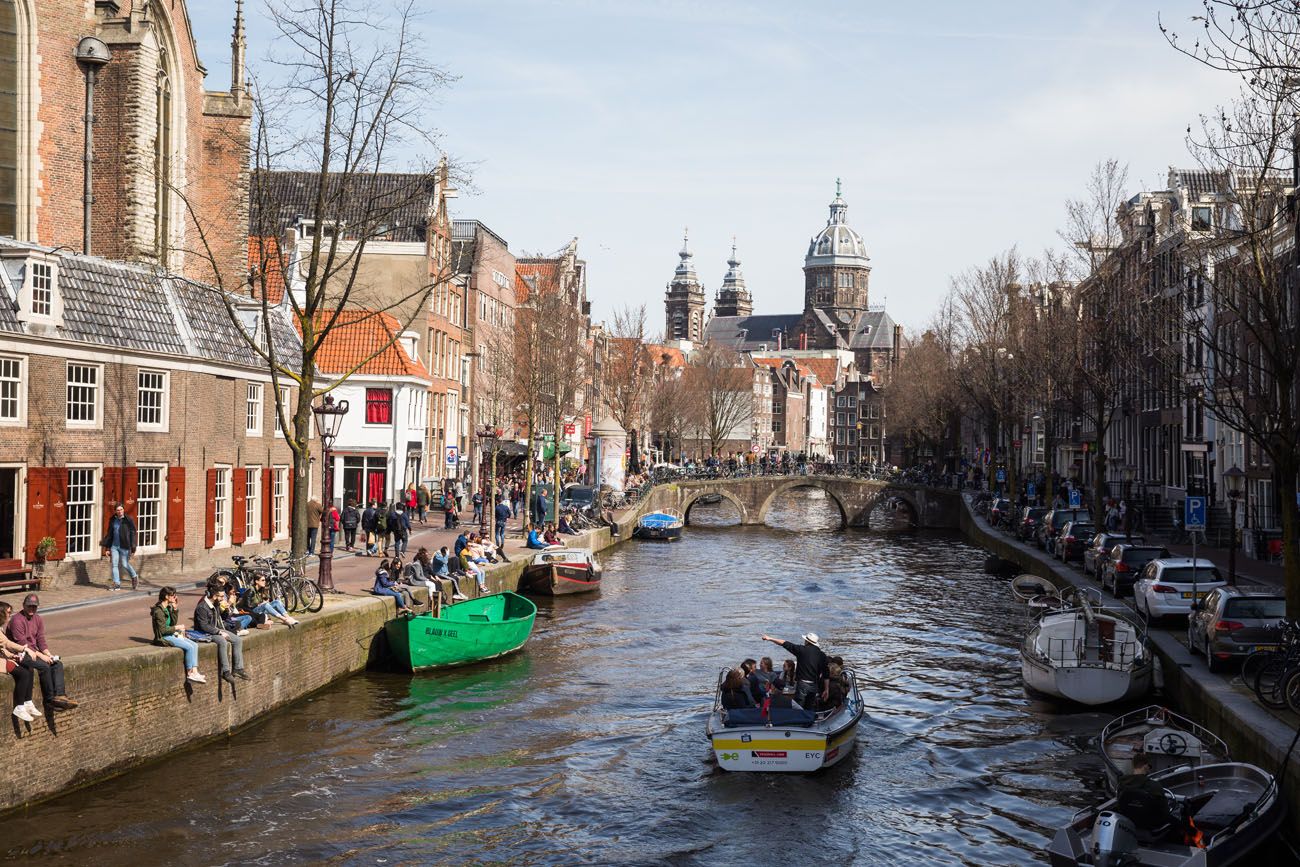
Seeing Amsterdam from the water is a completely different experience than walking the streets, and it’s one we’d recommend to every first-time visitor. The canal houses look different from a boat: taller, more dramatic, the reflections shifting with the light.
Options range from large, enclosed group boats (affordable, cheerful, busy) to smaller open boats to private tours. If you’d rather not be sandwiched in with strangers, pay a bit more for a smaller boat. It’s worth it.
Most tours run 60 to 75 minutes. Large group cruises start around €15–18 per person; private cruises from around €50 per person.
One tip: evening canal cruises, especially in summer when it stays light until 10 pm, are spectacular.
Amsterdam Boat Tours
7. Picnic in Vondelpark
Vondelpark is Amsterdam’s largest green space, sitting right next to the Rijksmuseum and Van Gogh Museum on Museumplein. After a morning in the museums, it’s the perfect place to decompress.
When the weather is warm, Vondelpark fills with locals: picnicking families, cyclists, joggers, people reading on the grass. It has a laid-back, genuinely local feel that’s a nice contrast to the busier tourist areas. If you’re exploring by bike, the wide paths here make for a lovely, relaxed ride. We cycled through Vondelpark on our first visit to Amsterdam and it was another one of the highlights from this visit.
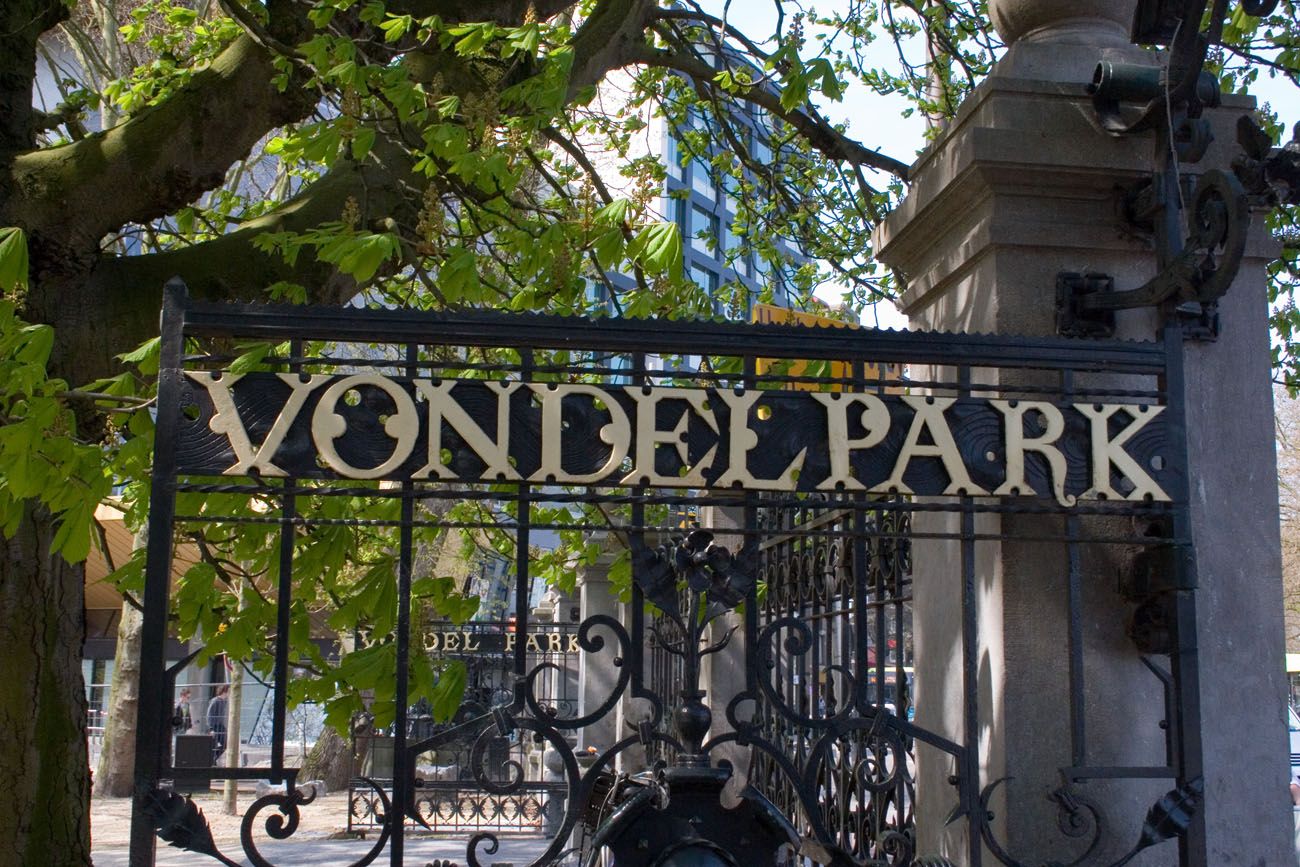
If you are getting around by bike in Amsterdam, this park, with its wide paths, is lots of fun to explore.
8. See the Tulips at Keukenhof
This one is seasonal; skip ahead if you’re not visiting in spring.
Visiting Keukenhof was one of the most memorable things we did on our first trip to Amsterdam. Tim and I debated whether it was worth the hassle of figuring out public transportation, since we were still very much learning the rope, and it absolutely was. Walking through field after field of color, the deep purples giving way to soft pinks and almost-neon oranges, is something we still talk about. I came away with an album of photos I still love to this day.
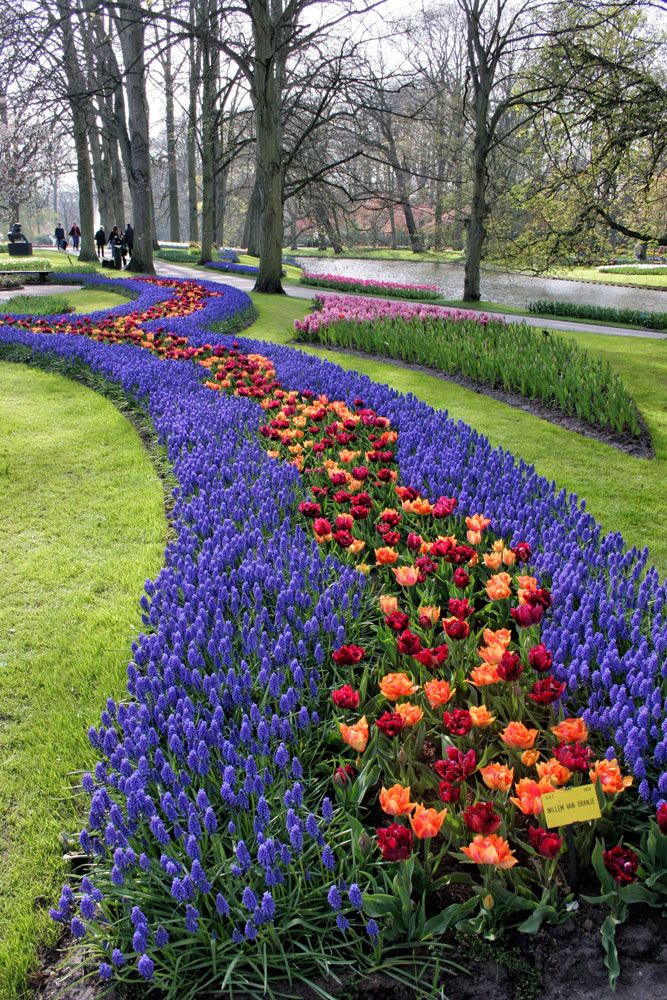
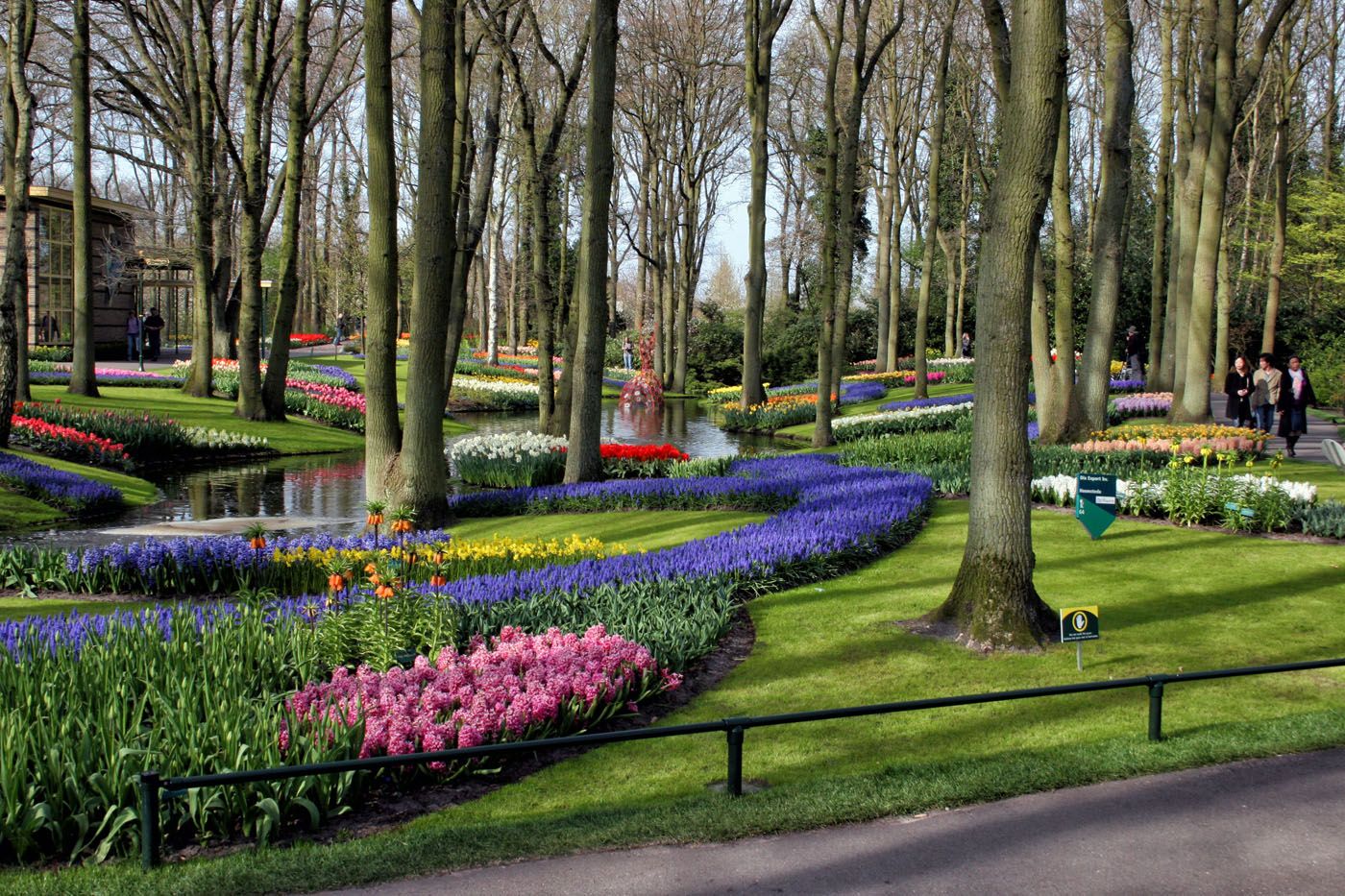
If your trip falls in April or early May, Keukenhof is worth every effort to get there. The garden displays more than seven million tulip bulbs across 32 hectares, along with daffodils, hyacinths, and other spring flowers. In late April, when the tulips hit peak bloom, it’s one of the most jaw-dropping sights in all of Europe.
We visited during our first April trip, and walking through fields of color after color, with the deep purples, the soft pinks, and the almost-neon oranges, is something we still talk about.
When to Go: Peak tulip season is mid-April to early May. If you visit before April 10, you’ll see early-season blooms (daffodils, hyacinths, early tulips) but fewer tulips overall. The Flower Parade on April 18, 2026 is the single busiest day of the season, so expect big crowds.
2026 Dates: March 19 – May 10, 2026, daily 8 am – 7:30 pm (last entry 6 pm). Check the official website for future season dates.
How to Get There: The easiest option is the direct shuttle bus from near Amsterdam Central Station. Take the free GVB ferry from Central Station to the north bank of the IJ river (direction Buiksloterweg), then walk two minutes to the A’DAM Tower/This is Holland departure point. Buses depart every 30 minutes from 8 am.
Alternatively, bus line 852 (KeukenhofBuzz) departs from Amsterdam RAI/Europaplein (metro line 52).
PRO TIP: Purchase a Combi Ticket, which includes your round-trip transportation and Keukenhof entrance in one booking. Advance booking is required. Tickets sell out quickly, especially for April weekends.
Here are tours to Keukenhof from Amsterdam. These make good options if you want to take the hassle out of arranging your transportation and/or if you like the idea of taking a guided tour of Keukenhof.
9. Take in the View from A’dam Lookout
The A’dam Lookout is a relative newcomer to the Amsterdam skyline and one of the best spots to get your bearings on the city’s layout.
From the observation deck, you get sweeping 360-degree views over the canal ring, the harbor, and the patchwork of neighborhoods spreading out in every direction. For the adrenaline-seekers: Over the Edge, Europe’s highest swing, puts you 100 meters above the ground, swinging out over the edge of the tower.
There’s also a rooftop bar, a great option for a late-afternoon drink with a view.

A’dam Lookout Tower
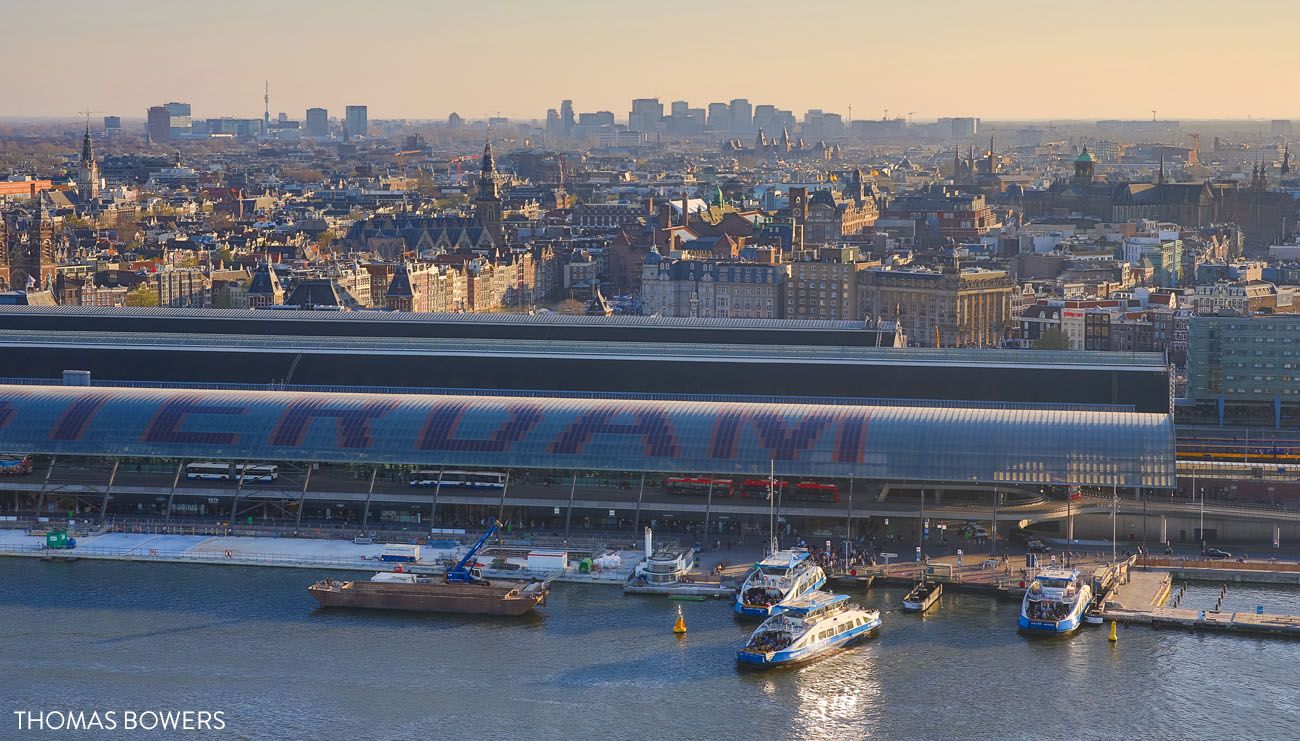
This is the view from the A’dam Lookout Tower in the afternoon. This time of day, photography can be challenging as you are looking towards the sun.
Getting Here: A’dam Lookout is in northern Amsterdam. Take the free GVB ferry from Central Station to Buiksloterweg. It drops you right next door.
Get hours and pricing on the official website.
10. Visit the Historic City Center of Amsterdam
The oldest parts of Amsterdam, and some of the most rewarding to simply walk through, are found in the Centrum district, anchored by Dam Square.
Dam Square is the heart of the city, home to the Royal Palace (originally built as a town hall in the 17th century), the Nieuwe Kerk (New Church, dating to 1409), and the National Monument. It’s lively, central, and the natural starting or ending point for a day of exploring.
Nearby, the Oude Kerk (Old Church) is Amsterdam’s oldest building, consecrated in 1306 and sitting somewhat improbably in the middle of the Red Light District. The Bloemenmarkt, the world’s only floating flower market, its stalls sitting on houseboats along the Singel canal, is worth a wander even if you’re not shopping.
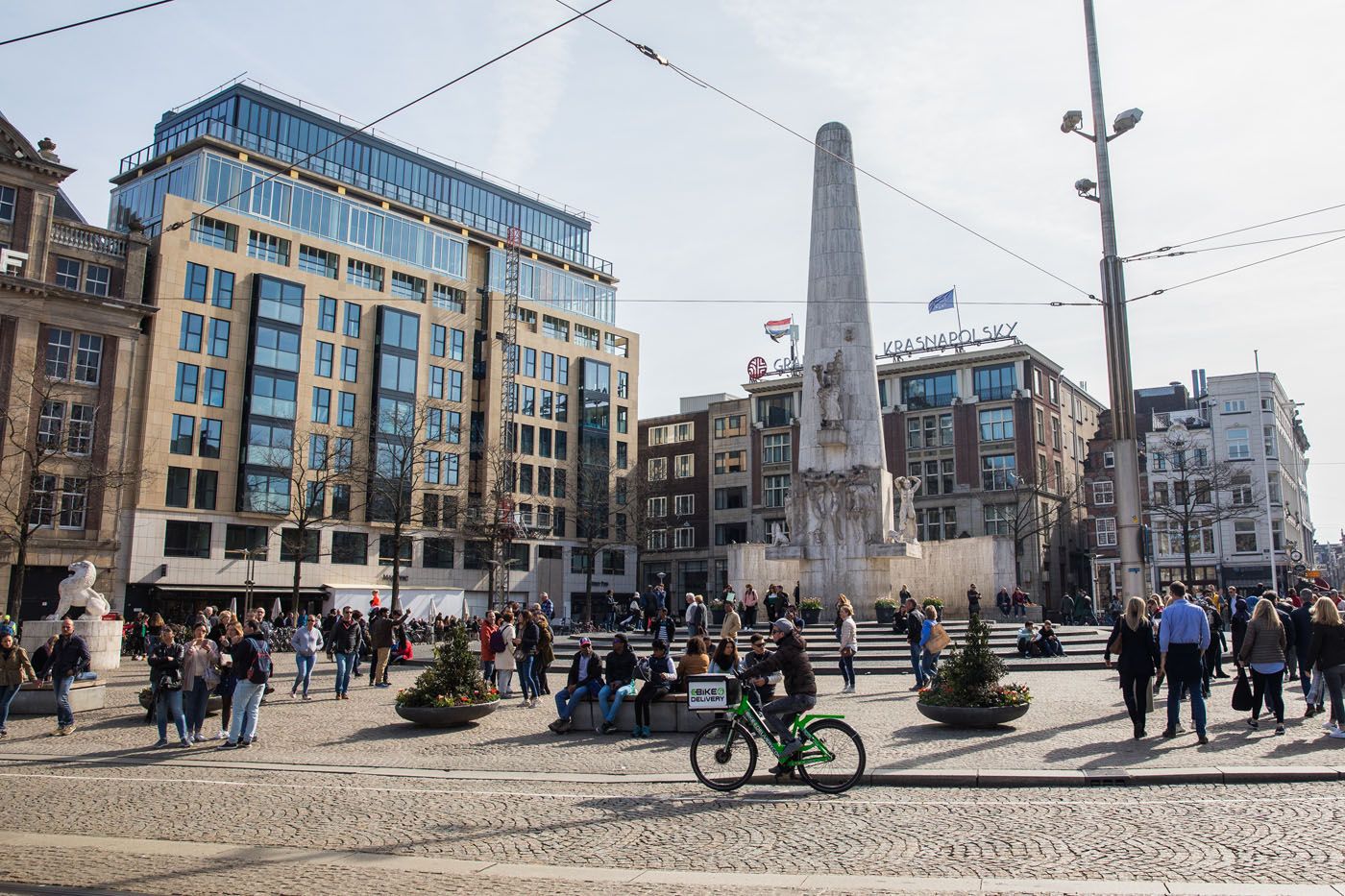
Dam Square
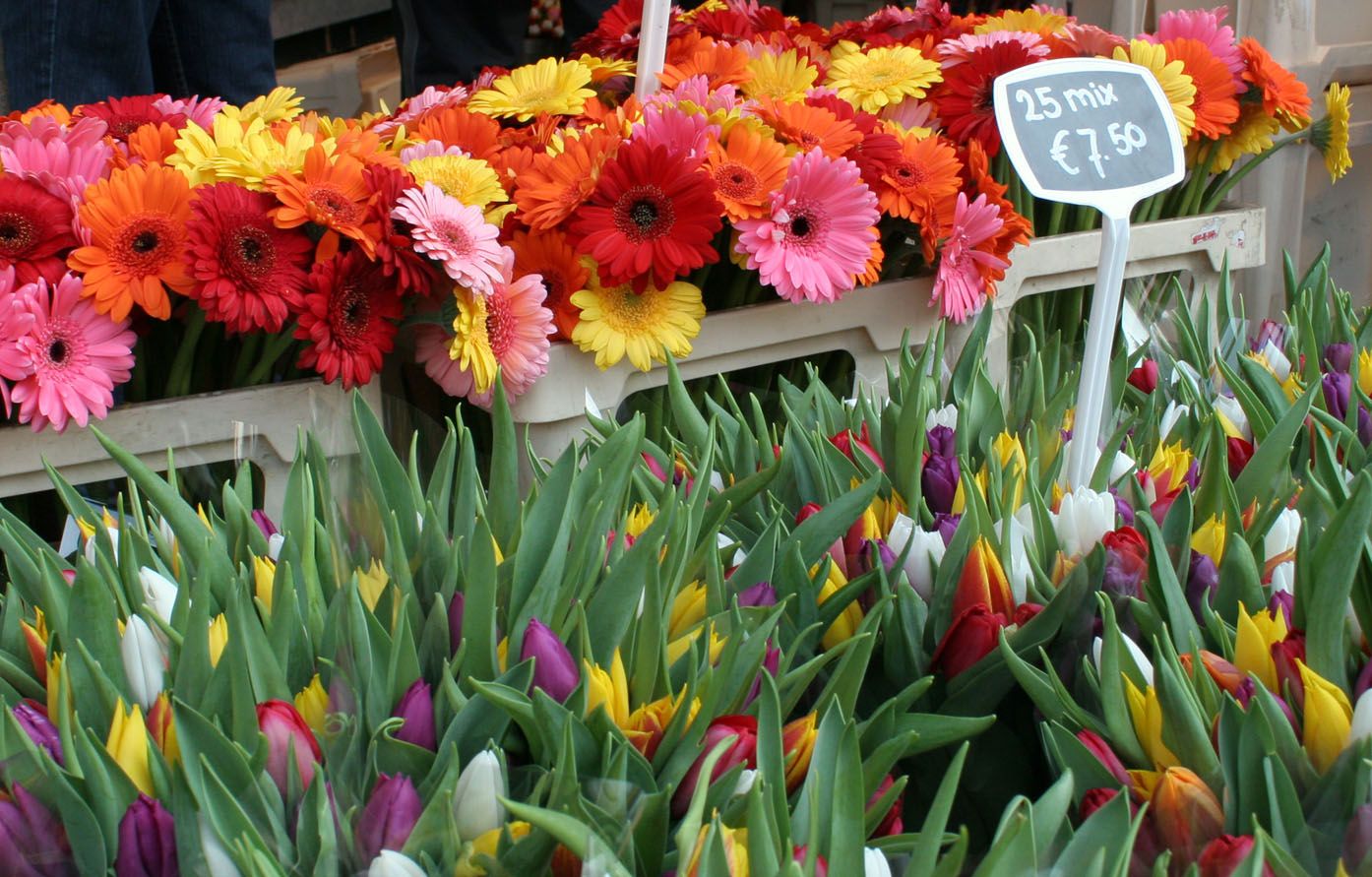
Bloemenmarkt
One hidden gem worth seeking out: the Buiksloterpassage, a passageway near Dam Square whose walls, floor, and ceiling are covered in a tiled mosaic artwork called Amsterdam Oersoep by artists Arno and Iris. It’s on our map below. It’s easy to walk right past, impossible to forget once you’ve found it.
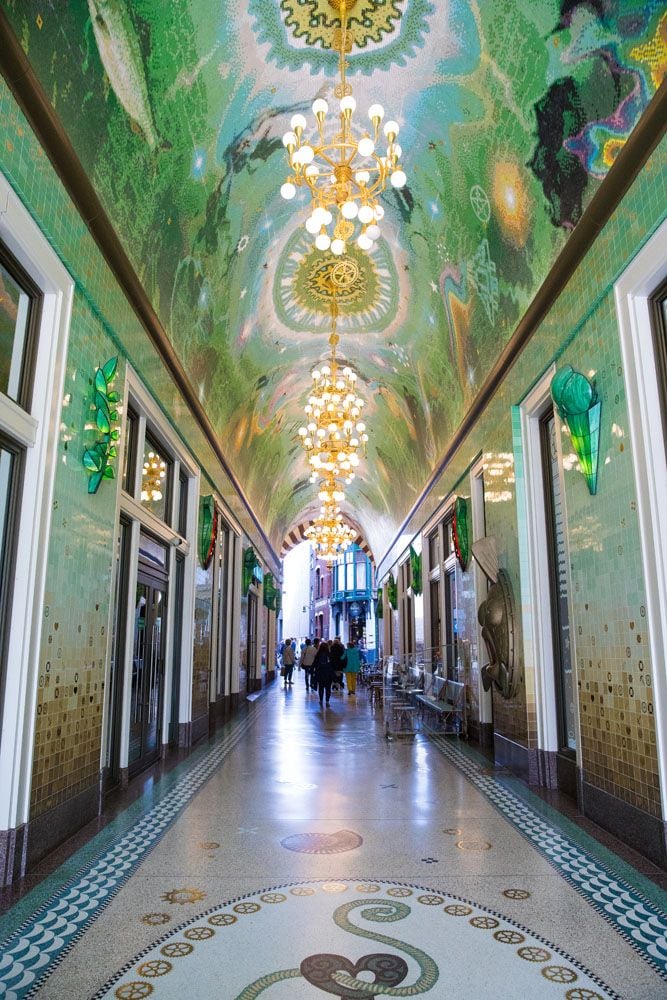
Buerspassage
Don’t miss the Museum Ons’ Lieve Heer op Solder (Our Lord in the Attic) nearby. This 1630 canal house looks unremarkable from the street, but a fully preserved secret Catholic church is hidden on its upper floors. It was built during a period when Catholicism was banned in Amsterdam. The audio tour is one of the best history lessons in the city.
We loved this museum. It’s educational, thought-provoking, and genuinely surprising in a way that the bigger museums sometimes aren’t.
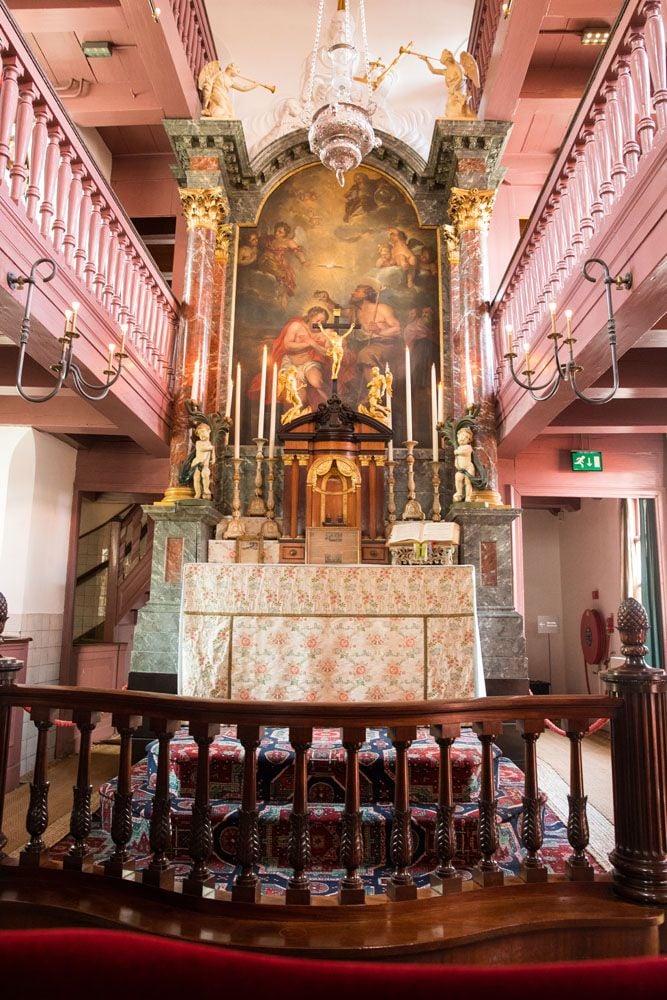
Our Lord in the Attic
Best of Amsterdam: On a Map
How to Use This Map: Click the icons on the map to get more information about each point of interest. To take this map with you, click the star next to the title of the map which adds it to your Google account. Next, within your Google Maps app, select ‘Saved’ and then select ‘Maps’. This map title will now appear in your list.
Is the Museumkaart Worth It for a First-Time Visitor?
Yes. The four museums on this list that accept the Museumkaart add up to €81.50 in individual tickets: Anne Frank House (€16.50) + Rijksmuseum (€25) + Van Gogh Museum (€25) + Ons’ Lieve Heer op Solder (€15). The Temporary Museumkaart costs €75 for adults, so you’re already saving €6.50 on those four alone, plus you get fast-track entry past the ticket line at the Rijksmuseum.
The card becomes an even easier decision if you plan to visit a fifth museum anywhere in the Netherlands, whether that’s another Amsterdam museum like the Rembrandt House or NEMO, or a museum on a day trip to Utrecht, The Hague, or Haarlem. It covers 450+ museums across the entire country.
A few things to know before you buy:
- The Temporary Museumkaart is valid for 31 days and a maximum of 5 museum visits total. The museum where you buy it activates it on the spot, counting as visit #1, so you leave with 4 visits remaining. Buy it at whichever of the four museums you visit first.
- The full annual Museumkaart (unlimited visits, one year) is only purchasable online with Dutch internet banking and delivered to a Dutch address. It is not accessible to most international visitors.
- The Anne Frank House charges a €1 booking fee even for Museumkaart holders.
- Even with a Museumkaart, you must still reserve a time slot in advance for the Van Gogh Museum and Anne Frank House.
Bottom line: For a standard two-day first-timer hitting these four museums, the card pays for itself. If you’re adding a fifth museum anywhere in the Netherlands, it’s a no-brainer.
How to Get Around Amsterdam
Amsterdam is relatively small so it is possible to walk to most of Amsterdam’s sights. However, you can also take advantage of the trams and the metro to save some steps.
A GVB ticket covers unlimited transportation on buses, trams, and the metro during its period of validity. Single tickets, valid for one hour, cost €3.40. You can also purchase multi-day tickets, which are more economical and save you the hassle of visiting the ticket machines whenever you want to take the tram, bus, or metro. Once you activate the ticket (use it for the first time) the period of validity begins.
- 24 hours: €10
- 48 hours: €16
- 72 hours: €21.50
You can purchase the single and multi-day tickets at GVB service points, in metro stations and at tram stops. You can also purchase it in advance through GetYourGuide. Once in Amsterdam, you will take your voucher to a service point in the city to pick up your chip card.
You can also get around Amsterdam by bicycle. Hotels and small shops throughout the city rent bikes by the hour or by the day. MacBike is one of the top shops in Amsterdam that rents bicycles. It’s a great to do if you just want to have fun for an hour, or you can use the bike as your mode of transportation during your entire visit to Amsterdam.
Best Time to Visit Amsterdam
We’ve visited Amsterdam in late April (our first trip) and early April (our second), and both were wonderful, though in different ways.
Late April was the sweet spot. The skies were clear and sunny, the tulips were in full bloom at Keukenhof, and the city had a warm, celebratory energy (King’s Day falls on April 27, so the whole city goes orange). Early April was cooler and slightly more overcast. The unusual cold snap that year meant the Keukenhof bulbs were barely open, but the city was noticeably less crowded, and wandering the canal ring with fewer tourists felt like a gift.
If you have flexibility, aim for late April to early May. If you’re visiting outside of spring, Amsterdam is genuinely enjoyable year-round. Each season has its own character.
- Spring (March–May): Peak tulip season, Keukenhof, King’s Day festivities, long days — this is the classic Amsterdam experience. Crowds and prices peak in April and May.
- Summer (June–August): Warm and lively, with outdoor festivals, packed terraces, and the longest daylight hours. Busiest and most expensive season.
- Fall (September–November): Fewer tourists, comfortable temperatures, beautiful autumn light on the canals. A lovely time to visit if you want a more local feel.
- Winter (December–February): Cold and grey, but Amsterdam’s Christmas markets and holiday lights on the canals are genuinely magical. Lowest prices and smallest crowds.
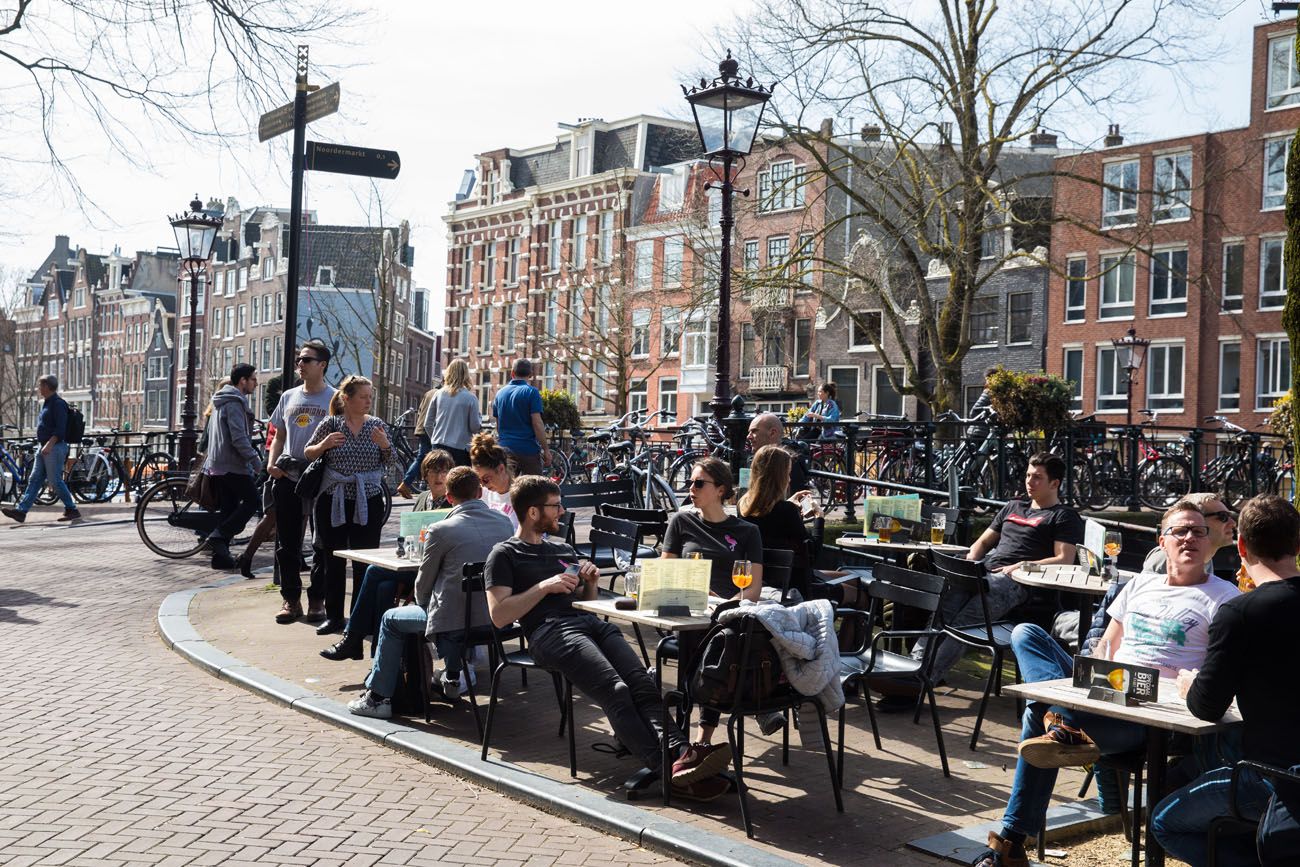
Amsterdam in April
FAQ: Planning Your First Trip to Amsterdam
Do I need to book tickets in advance?
Yes, for two key attractions, advance booking is non-negotiable. Tickets for the Anne Frank House are online-only and released six weeks in advance. They sell out fast, especially for morning slots. Book the moment you know your travel dates. Tickets for the Van Gogh Museum are also available online-only and sell out days or weeks ahead during peak season. Book before your trip.
How much time do I need in Amsterdam?
Two days in Amsterdam is the sweet spot for a first visit. This is enough time to see the main museums, walk the canals thoroughly, and have a relaxed meal or two. Three days gives you space for a day trip to Keukenhof (April/May), Haarlem, or Utrecht.
Where is the Best Place to Stay in Amsterdam?
The Canal Ring (Grachtengordel) and Jordaan neighborhoods put you within steps of the best of the city. The Centrum district is convenient but busier. For hotel recommendations by neighborhood and budget, see our full Where to Stay in Amsterdam guide.
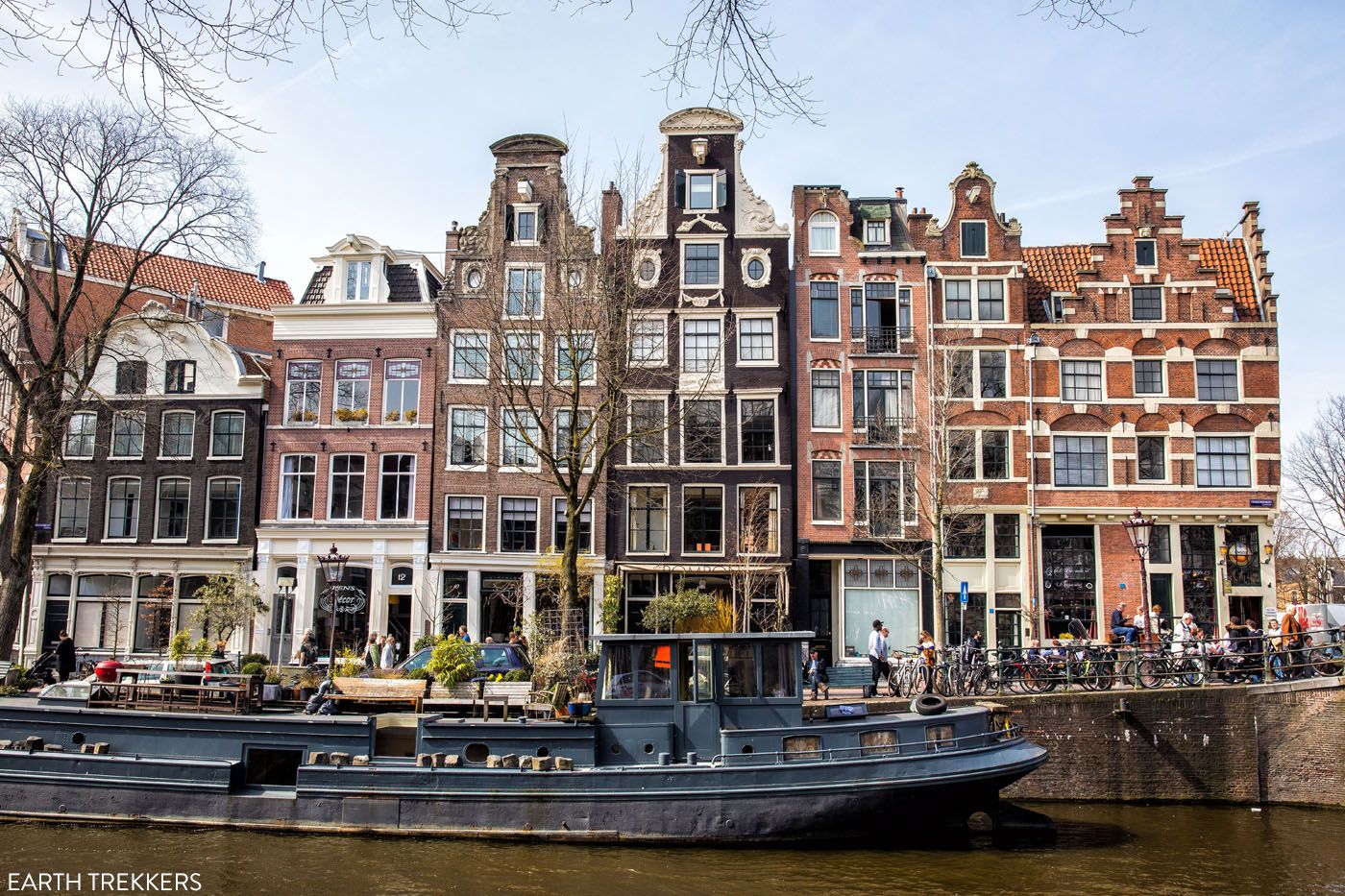
Plan Your Trip to Amsterdam
Ready to put it all together? Our 2-Day Amsterdam Itinerary walks you through two days hour by hour, combining the top museums with canal time, meals, and neighborhoods.
If Amsterdam is part of a longer Europe trip, our 10-Day Amsterdam, Brussels & Paris Itinerary shows you how to connect three of Europe’s great cities by train.
For the full picture on the Netherlands, including Utrecht, Haarlem, The Hague, and train travel tips, visit our Netherlands Travel Guide.
Have fun exploring Amsterdam!
If you have any questions about the best things to do in Amsterdam, or if you want to share your favorite experiences, let us know in the comment section below.
More Information for Your Trip to Europe
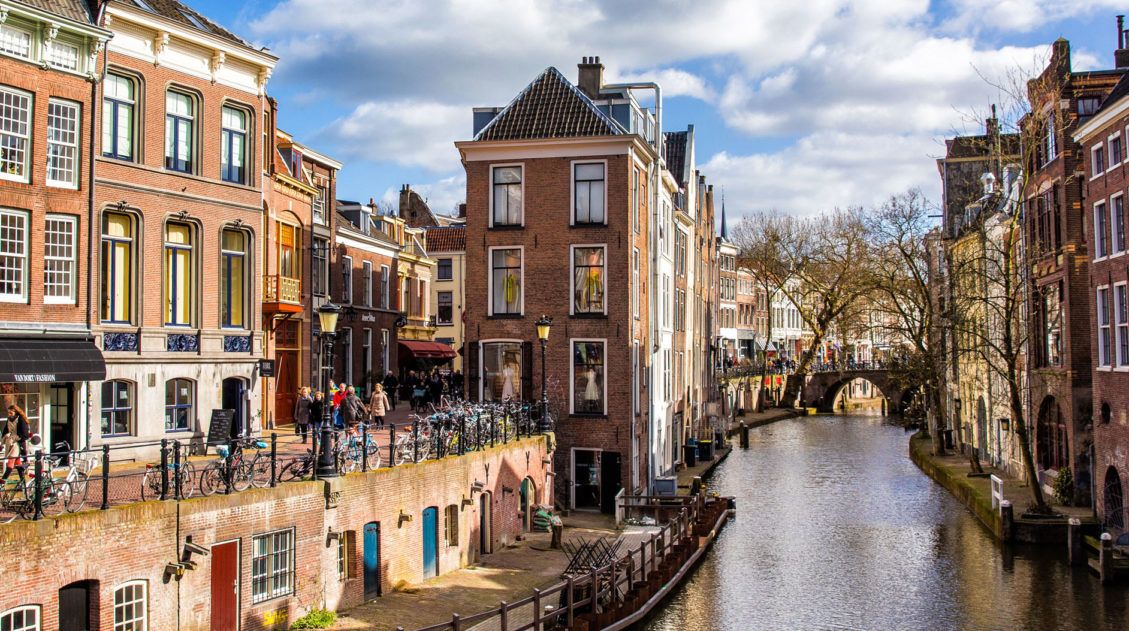
One Perfect Day in Utrecht, the Netherlands
Pinterest Facebook Flipboard Utrecht has all the charm of Amsterdam with a fraction of the crowds. Here’s how to spend one perfect day in Utrecht on a day trip from Amsterdam. Utrecht doesn’t get nearly the attention it deserves. Less than 30 minutes by train from Amsterdam, it offers the same picture-perfect canals, centuries-old architecture, […]
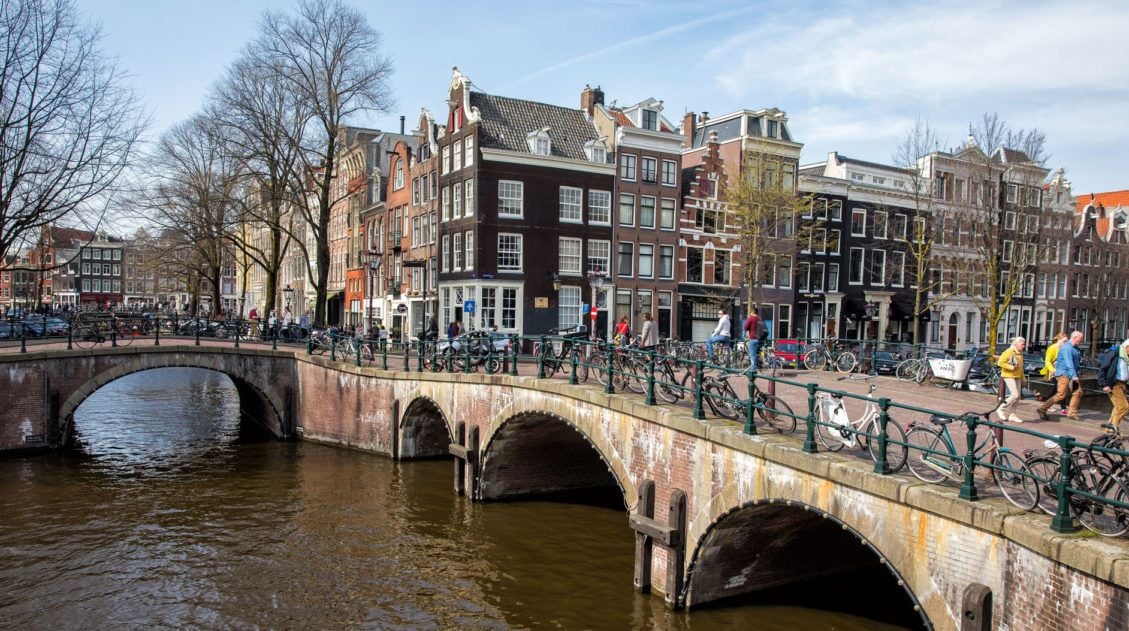
10 Day London Amsterdam Paris Itinerary
A trip to London, Amsterdam, and Paris…sounds nice, right? With 10 days you have just enough time to visit these three cities, although it will be a bit of a whirlwind tour. There is a lot to see and do here, and our London Amsterdam Paris itinerary will help you manage your time so you […]
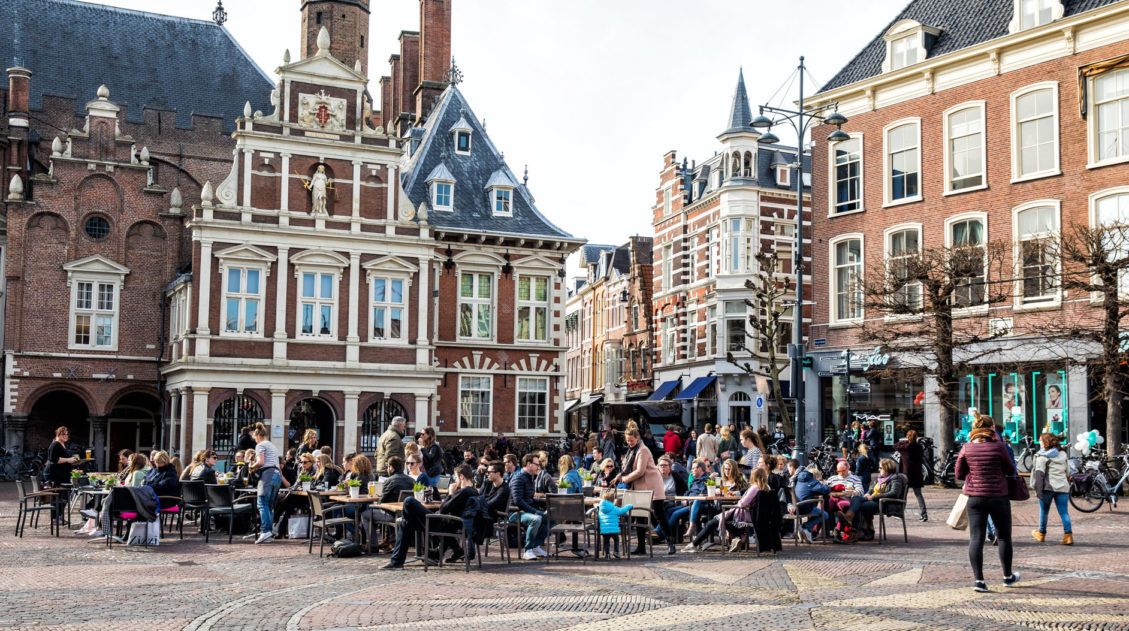
6 Reasons Why You Should Take a Day Trip to Haarlem
Haarlem is one of the best day trips from Amsterdam, just 15 minutes by train and a world away from the crowds. Haarlem is a small city that sits just west of Amsterdam, and it might be the most underrated stop in the Netherlands. With cobblestoned lanes, a soaring Gothic cathedral, a windmill on the […]
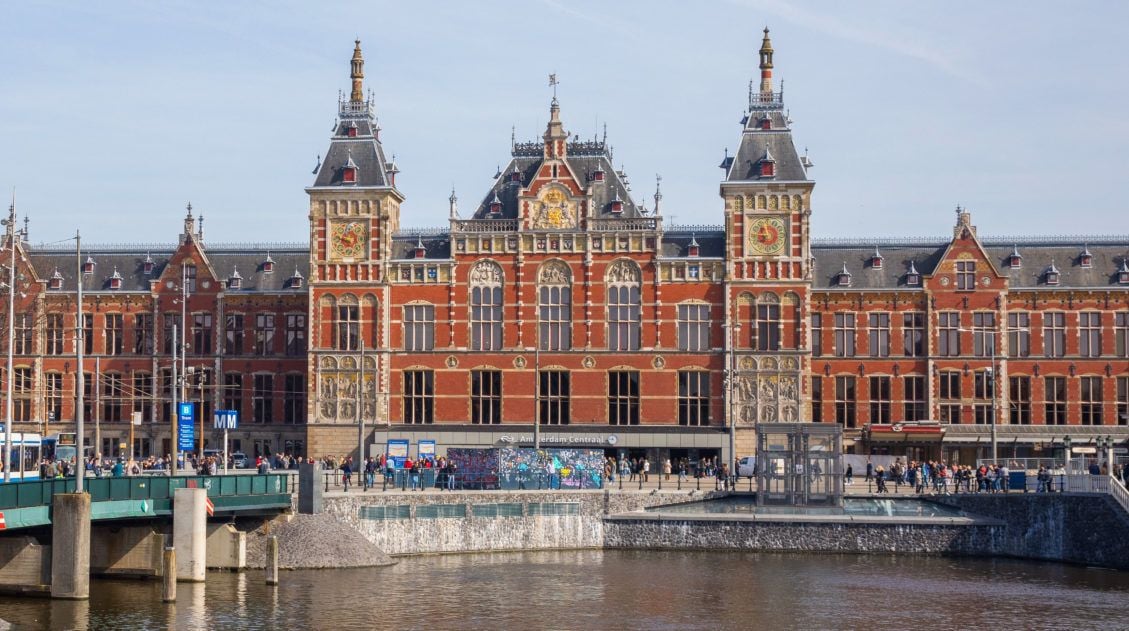
Netherlands Train Travel: How to Book Your Tickets and Use the Trains
The Netherlands is one of the easiest countries in Europe to navigate by train, making it ideal for day trips from Amsterdam to cities like Haarlem, Utrecht, and The Hague. We traveled the Netherlands by train on a trip that took us from Amsterdam to Haarlem, Utrecht, and The Hague, and we loved how seamless […]
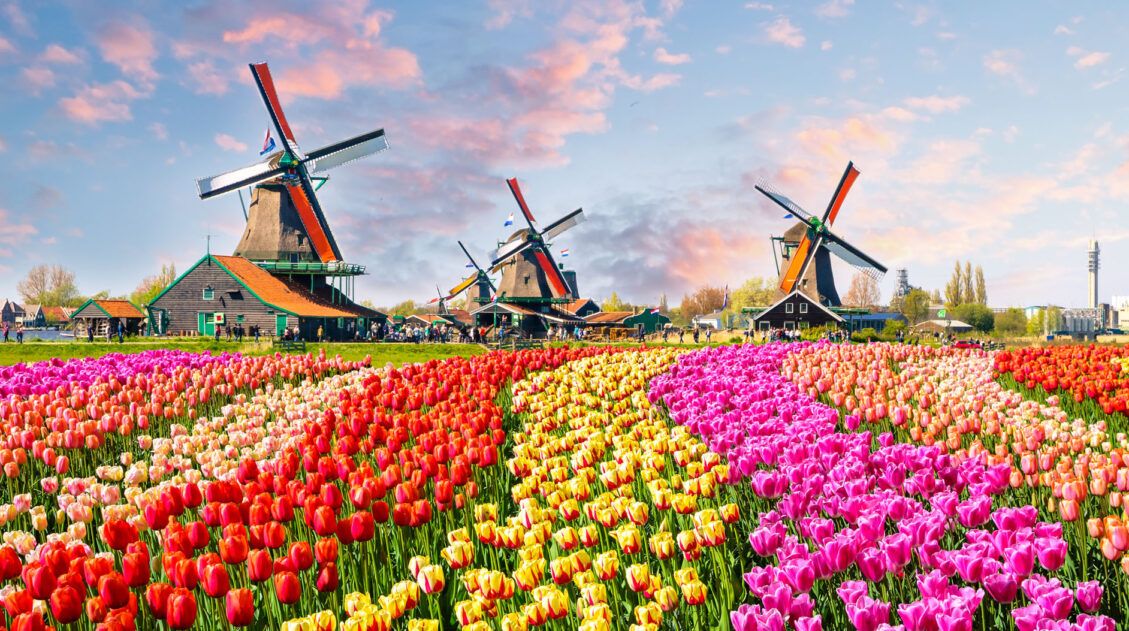
Netherlands Travel Guide: How to Plan the Perfect Trip
Netherlands Travel Guide We’ve visited the Netherlands several times now, and it’s the kind of place that keeps drawing us back. There’s a quiet charm to this country, with the canal light at dusk, the tulip fields in bloom, the simple pleasure of a 45-minute train ride landing you somewhere that feels like a completely […]

One Perfect Day in The Hague, the Netherlands
The Hague (Den Haag in Dutch) doesn’t get nearly as much attention as Amsterdam, but it deserves a spot on every Netherlands itinerary. With one day in The Hague, you can see a Vermeer masterpiece up close, stand inside a 360° panoramic painting, walk past a working royal palace, and still have time to grab […]
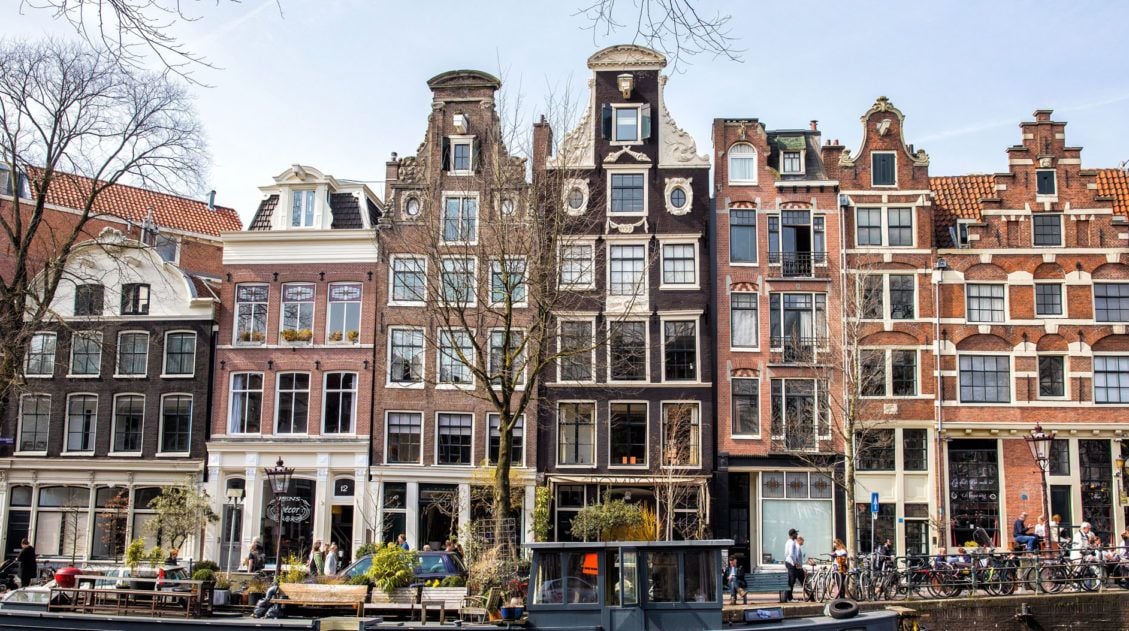
2 Days in Amsterdam: The Perfect First-Timer’s Itinerary
Two days in Amsterdam is the perfect amount of time for a first visit. You can cover the essential museums, both the Rijksmuseum and the Van Gogh Museum, visit the Anne Frank House, wander the Jordaan’s canal streets, browse the Nine Streets, and still have time left over to sit at a café and simply […]
The Perfect 10 Day Amsterdam Brussels Paris Itinerary
Planning an Amsterdam, Brussels, and Paris itinerary? This 10-day route connects three of Western Europe’s most iconic cities entirely by train, making it one of the easiest and most rewarding first trips to Europe you can take. Start with three days in Amsterdam exploring the canals, world-class museums, and charming Jordaan neighborhood. Move on to […]

How to Do a Brussels Chocolate Tour On Your Own
When in Brussels, what are the best things to do? See the dazzling Grand Place with its opulent guildhalls and Town Hall, visit the funky Atomium, and of course, indulge on chocolate. For many people, this involves taking a Brussels chocolate tour. But what if you don’t want to go on a tour? What if […]
The Perfect One Day Bruges and Ghent Itinerary (2026 Guide)
Bruges and Ghent are two of the most beautiful towns in Belgium and you don’t have to choose between them. With a well-planned day trip from Brussels, you can experience the highlights of Bruges and Ghent in one unforgettable day. We did this trip from Brussels, and the key to making it work is strategy. […]

3 Days in Paris: The Perfect Itinerary for Your First Visit
In this guide, we’ll show you how to spend 3 memorable days in Paris. Visit the highlights, including the Eiffel Tower, the Louvre, Montmartre, and Notre Dame Cathedral, plus day trip to Versailles. Learn how to skip the lines, save some money, and make the most of your time in Paris. Welcome to one of […]
Travel Itineraries: Europe, Asia, Africa, Americas & Oceania
Let us take the guesswork out of planning your next trip. Here are sample itineraries from some of the most popular destinations around the world.



Comments 2