
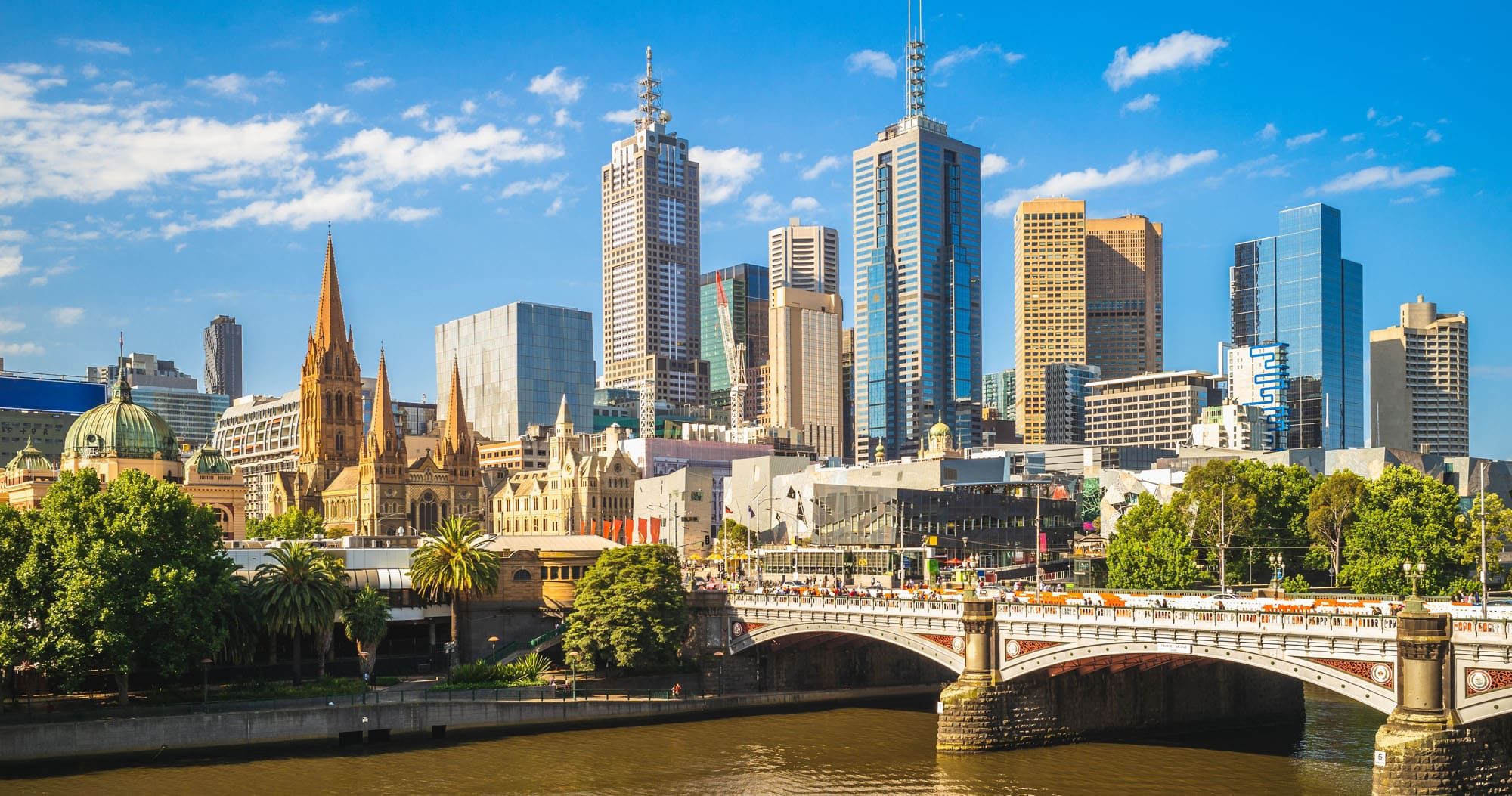
Melbourne blends world-class coffee, vibrant street art, and historic arcades into one of Australia’s most exciting cities. From sipping cappuccinos at legendary cafés to watching Aussie Rules football at the MCG, here are the best things to do in Melbourne.
Melbourne is one of Australia’s most exciting cities, known for its world-class coffee culture, vibrant street art, historic arcades, and buzzing food scene. During our trip around Australia, Melbourne quickly became one of our favorite cities thanks to its laid-back vibe, incredible cafés, and endless list of things to see and do.
In this guide, we share the best things to do in Melbourne, from iconic attractions like the Melbourne Cricket Ground and Hosier Lane to scenic spots like St. Kilda Beach and the Royal Botanic Gardens. Along the way, you’ll also find a few unique experiences, like sipping cappuccinos at Melbourne’s famous cafés and exploring the city’s hidden laneways.
Melbourne was one of our favorite stops while traveling through Australia. For more ideas on planning your trip, read our Australia Travel Guide.
The Essentials
WHERE | Victoria, Australia
DON’T MISS | Melbourne Cricket Ground (MCG), laneways and arcades, Royal Botanic Gardens, St. Kilda Beach, and Melbourne’s cafes
BEST DAY TRIP | Great Ocean Road
WHEN TO GO | September to November and March to May
HOW LONG | 2 to 3 days
GET AROUND | Walk or take the free City Circle Tram
WHERE TO STAY | The CBD (Central Business District)
Map of the Best Things to Do in Melbourne
Here is a map showing the best places to visit in Melbourne, from the MCG to its famous laneways.
How to Use This Map: Click the tab in the top left corner of the map to see a list of the points of interest and to turn layers on/off. Click the icons on the map to get more information about each point of interest.
To take this map with you, click the star next to the title of the map which adds it to your Google account. Next, within your Google Maps app, select ‘Saved’ and then select ‘Maps’. This map title will now appear in your list.
Best Things to Do in Melbourne
1. Experience Melbourne’s Famous Coffee Culture
If you consider yourself a coffee lover, Melbourne might ruin you for everywhere else.
While in Italy, Julie’s obsession with coffee began. She quickly became a cappuccino addict. As we traveled around the world, she sampled cappuccinos from everywhere possible. Nothing even came close to the coffee of Italy. Not until Melbourne.
Within the first morning she knew this city was different. The coffee here isn’t just good, it’s taken seriously in a way that’s almost philosophical. Melburnians have strong opinions about their beans, their roasters, their preferred cafe, and the exact ratio of espresso to milk in their cup. That obsession filters down into every cup you order, no matter where you walk in.
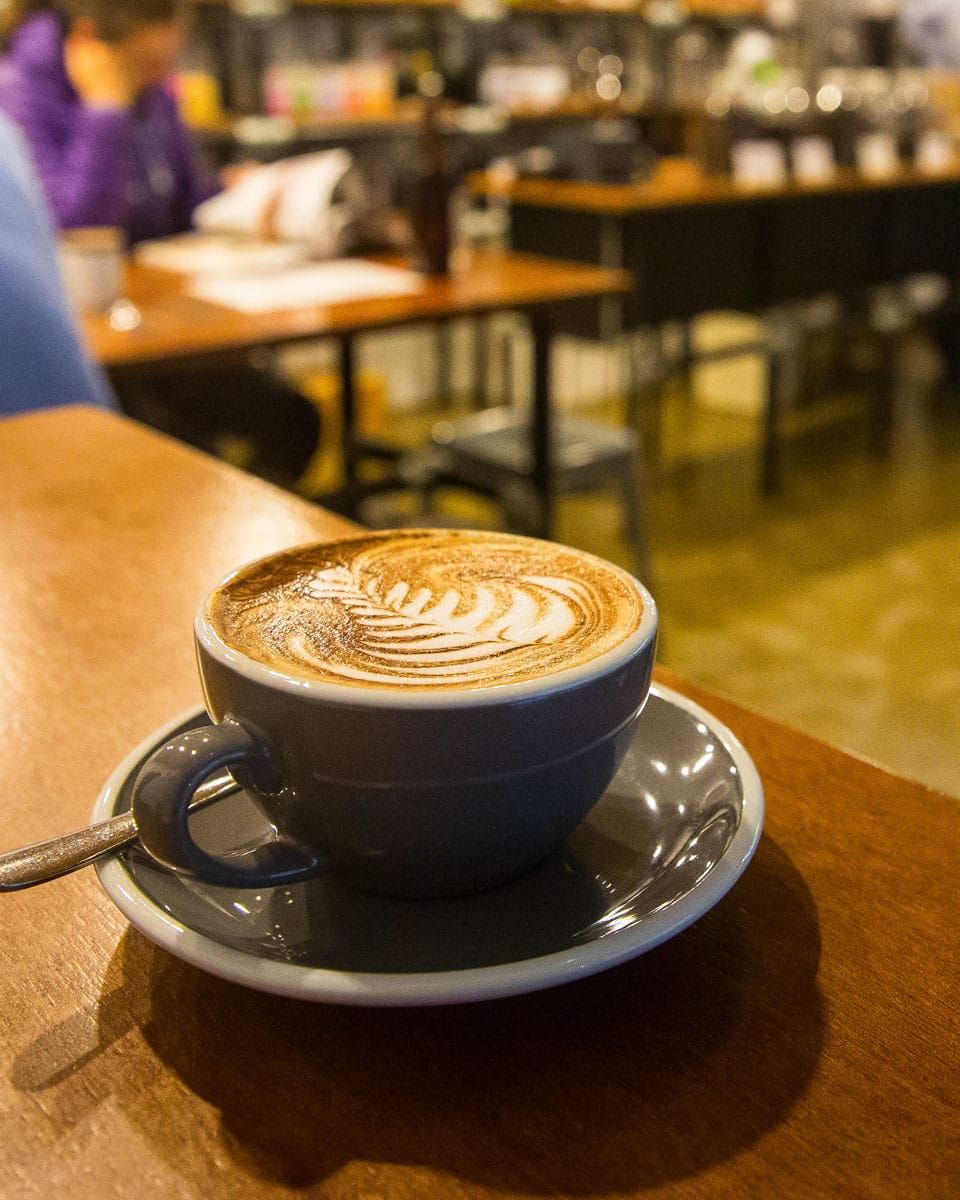
Her search for the perfect cappuccino ended at League of Honest Coffee, a small, no-fuss cafe where the focus is entirely on what’s in the cup. It’s the kind of place that makes you sit down, slow down, and actually taste what you’re drinking.
A few other cafes worth seeking out:
- Brother Baba Budan — a tiny, iconic space in the CBD known for its single origin filter coffee and chairs suspended from the ceiling
- Patricia Coffee Brewers — standing room only, which tells you everything about how good it is
- Dukes Coffee Roasters — a Melbourne institution with multiple locations and consistently excellent espresso
- Little Rogue — a small, beautifully designed cafe perfect for a quiet morning cup
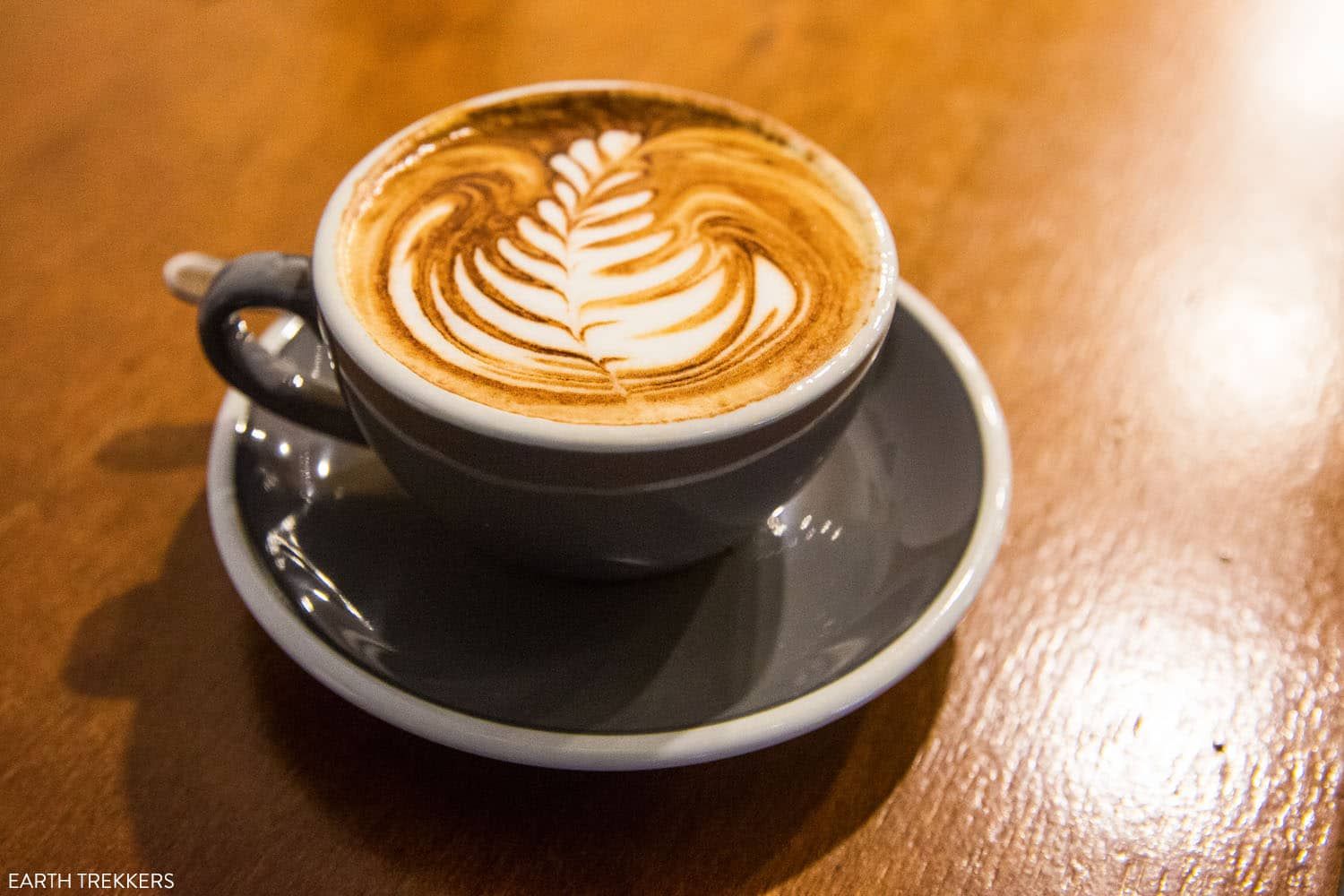
One practical note for first-timers: don’t ask for a “regular coffee” in Melbourne. Order by name — flat white, long black, or cappuccino. And if someone offers you oat milk without charging extra, you’re in a good cafe.
Fair warning: enjoying coffee at home after this trip will be a genuine disappointment.
2. Explore Melbourne’s Laneways & Street Art Scene
One of the things that surprised us most about Melbourne was how much of its personality lives in its laneways.
Hosier Lane is the most famous and the place to start. This cobblestoned alley is one of the most photographed spots in Australia, and we kept coming back to it throughout our visit, sometimes just to see what had changed overnight. That’s the thing about Hosier Lane that photos don’t convey: it’s never the same twice. A mural that stopped you in your tracks on Monday might be partially painted over by Wednesday, with something new emerging in its place. The whole alley is in a constant state of becoming.
Every surface, the walls, doors, downpipes, even the pavement, is fair game. The layers of work build up over time into something that feels less like vandalism and more like a living archive of the city’s creative energy. If you’re lucky, you’ll catch an artist mid-work, which is absolutely worth stopping to watch.
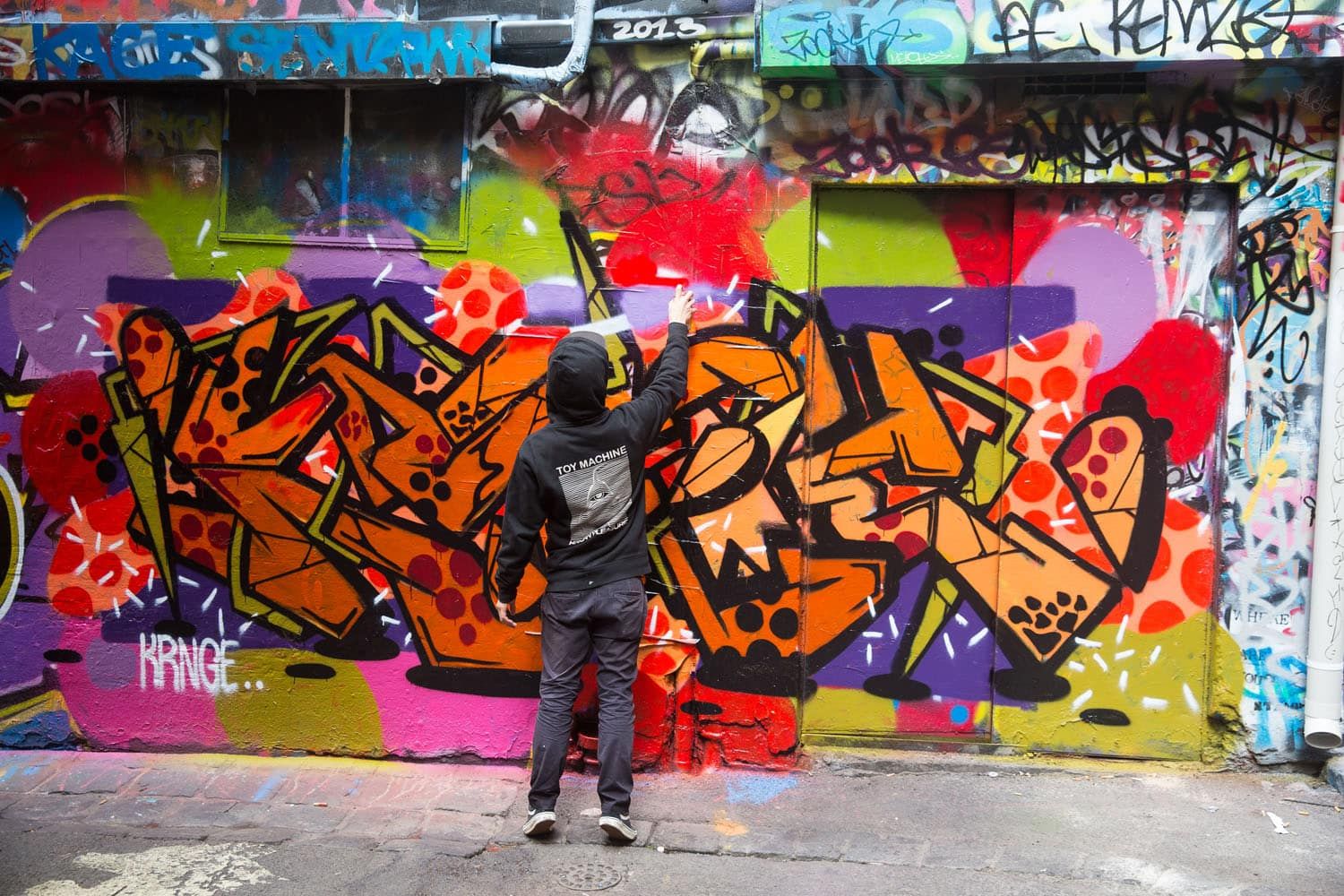
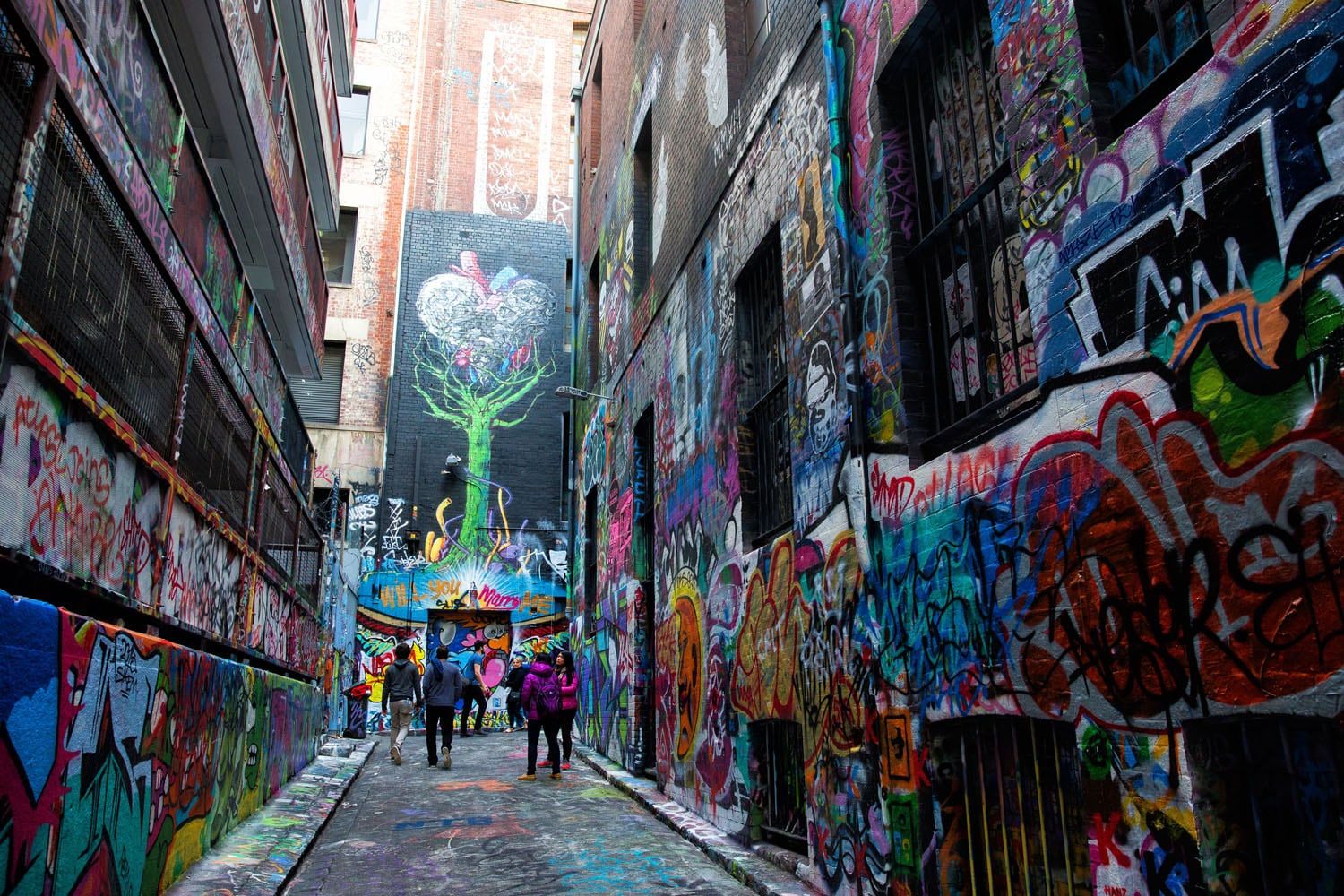
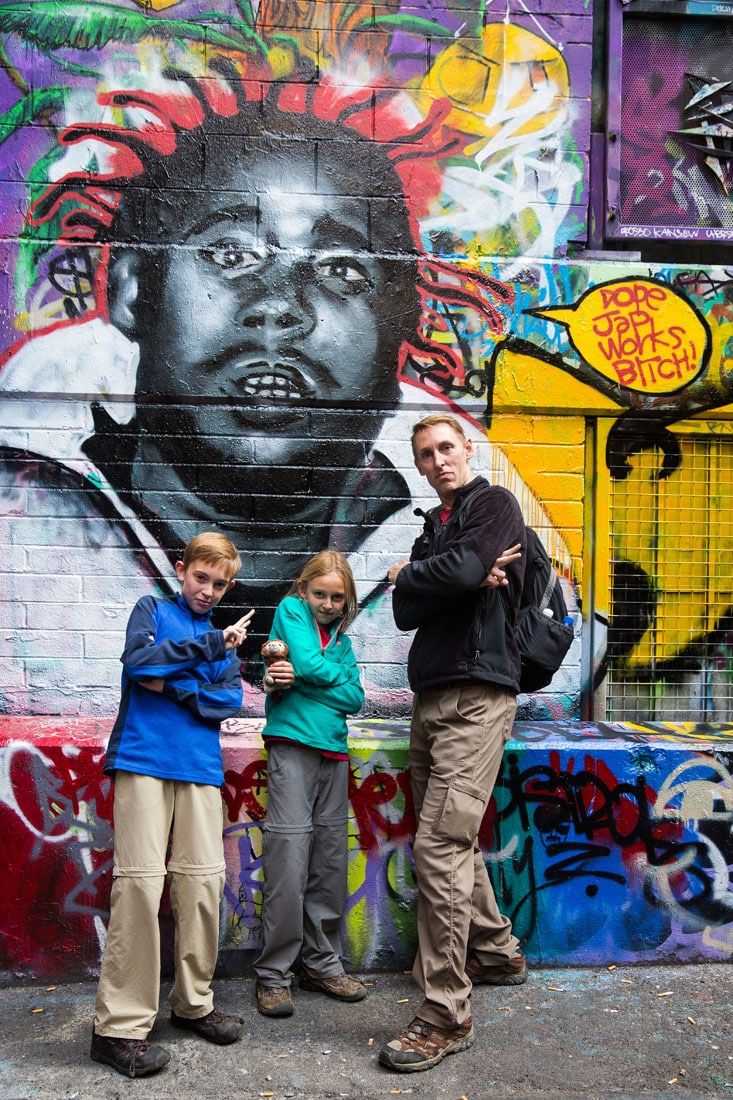
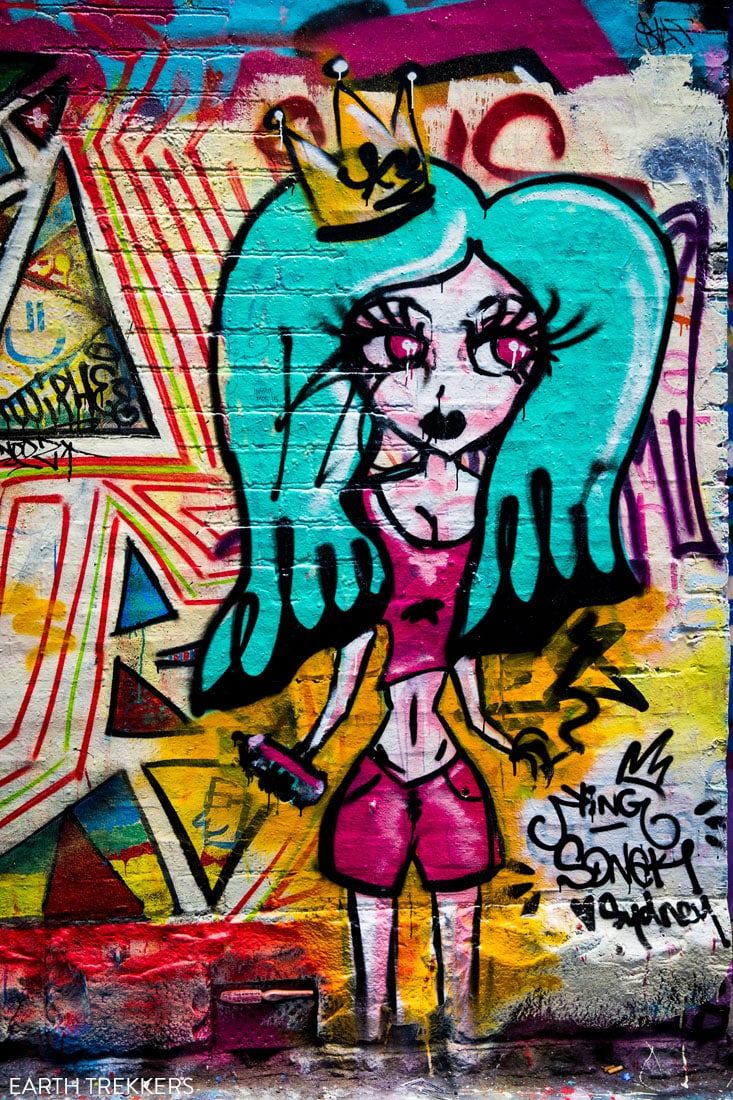
We took more selfies here than anywhere else in Melbourne. The constantly changing backdrop means every photo feels current and specific to the moment you were there, which is part of what makes it so addictive to return to.
But don’t stop at Hosier Lane. The laneway culture runs much deeper than one alley.
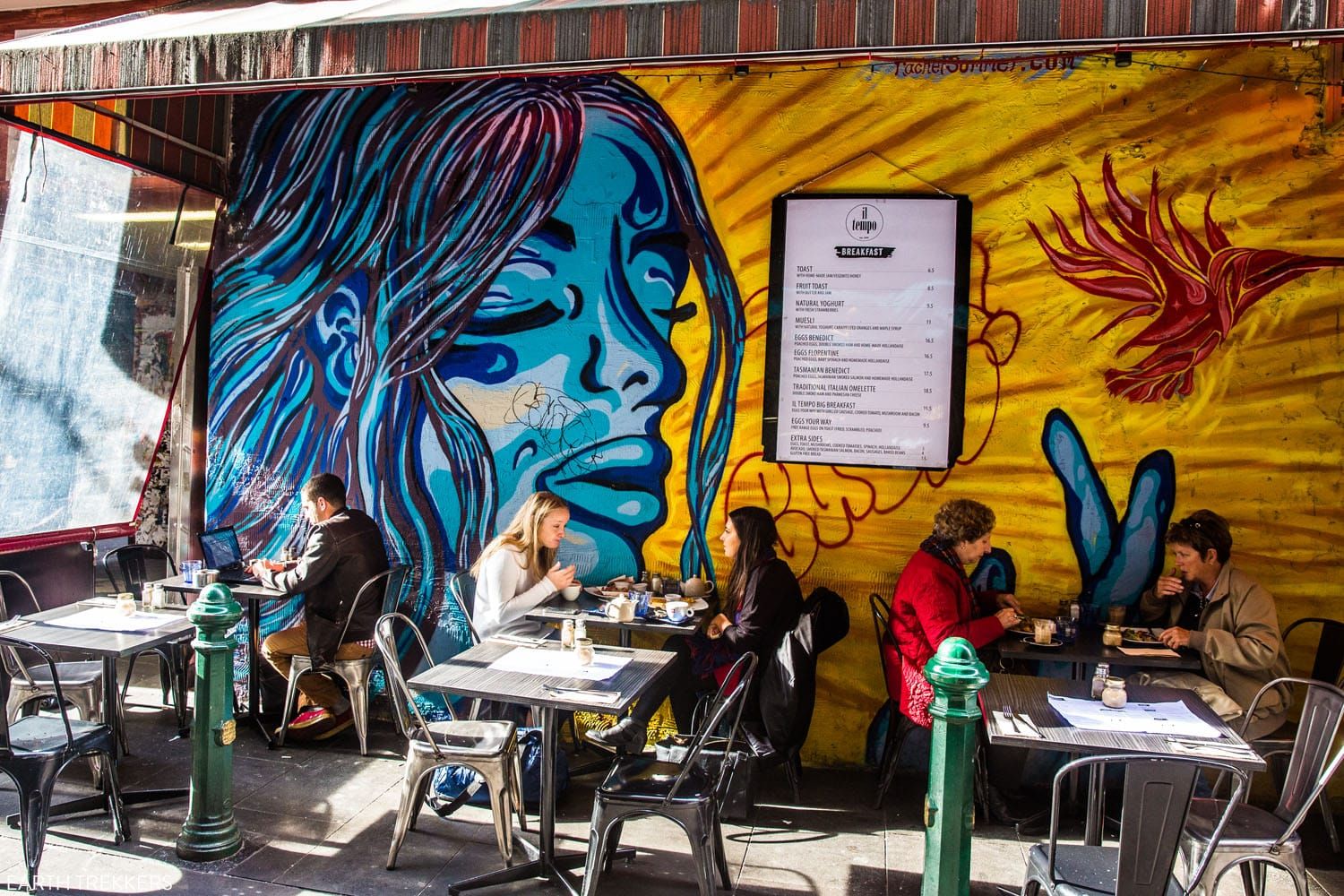
Centre Place and Degraves Street run parallel to each other between Flinders Lane and Collins Street and together form the heart of Melbourne’s cafe laneway scene. Chairs spill onto the cobblestones, the coffee is exceptional, and the whole stretch feels like a city that has figured out how to slow down in the middle of a busy day. This is where you want to stop for that morning coffee.
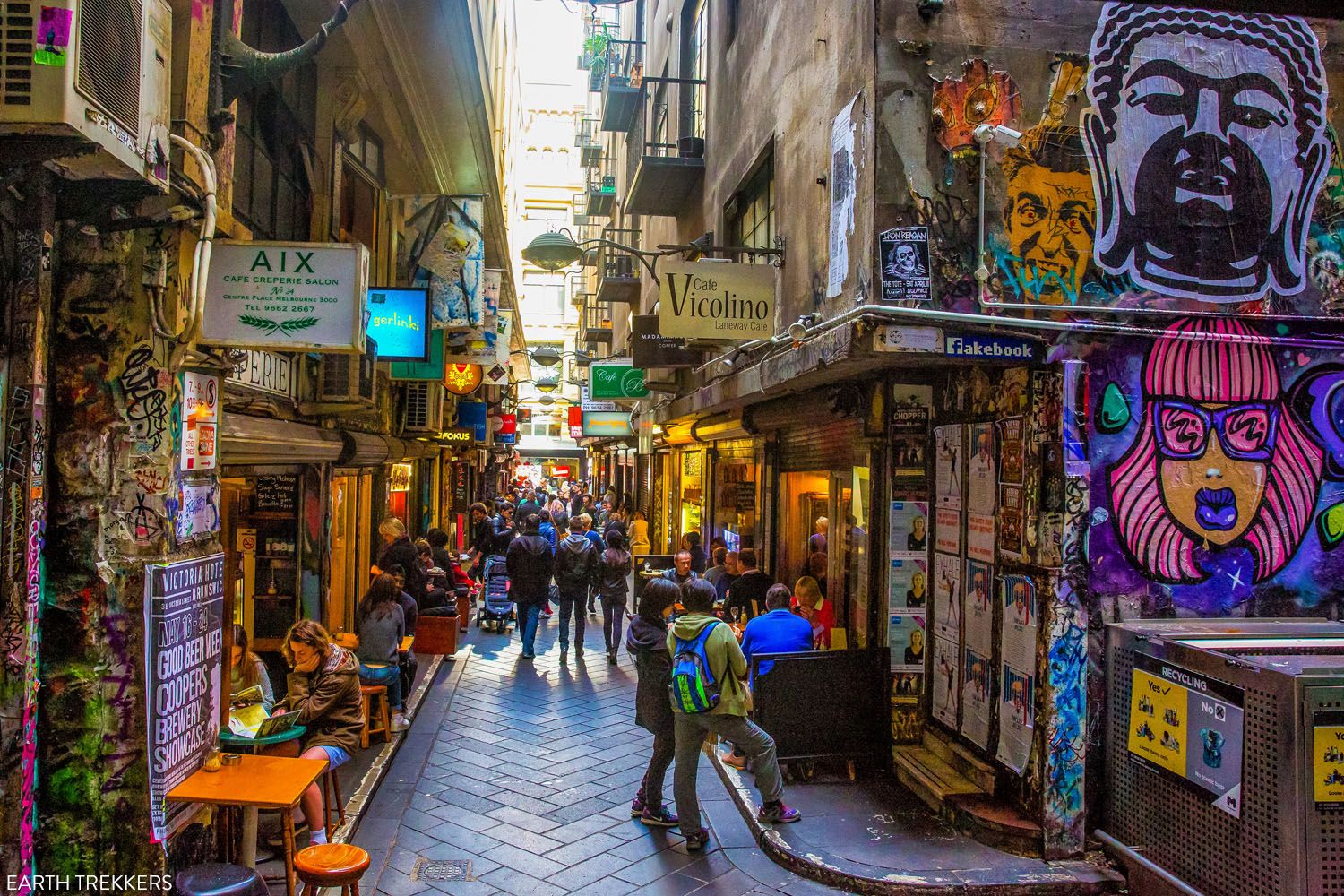
Centre Place
AC/DC Lane, yes, named after the band, is a darker, grittier alley near Flinders Street with a completely different character. More rock and roll, less Instagram. Worth a quick detour.
Caledonian Lane and Tattersalls Lane are quieter discoveries that reward wandering. They are smaller, less visited, but full of the same creative energy.
Discover Melbourne’s speakeasy culture: On this guided tour, visit four Melbourne bars to explore the city beyond the usual tourist spots.
3. Shop Melbourne’s Markets, Arcades & Neighborhood Streets
From sprawling outdoor markets to historic arcades, Melbourne has no shortage of great places to shop. Whether it’s fresh produce, handmade crafts, or high-end fashion, chances are high you’ll be leaving with a souvenir.
Queen Victoria Market
Queen Victoria Market is Melbourne’s largest outdoor market and one of its most visited landmarks. Spreading across two city blocks, it’s part fresh produce market, part souvenir bazaar, part street food destination.
Most first-timers put it on their list, and most will tell you it’s worth seeing at least once. We’ll be honest, it wasn’t our favorite stop in Melbourne. The tourist-facing sections felt crowded and a little generic, and we found better food and atmosphere elsewhere in the city.
That said, the fresh produce halls are genuinely impressive and if you’re staying somewhere with a kitchen, it’s a great place to stock up. Go early on a weekday if you want the real market experience rather than the tourist one.
The Block Arcade
The Block Arcade is the complete opposite experience, and one of our genuine highlights in Melbourne.
Built in 1891, this ornate covered arcade runs between Collins and Elizabeth Streets and feels like stepping into another century. The mosaic tile floors, the soaring ceilings, the old-world shopfront makes it beautiful in a way that has nothing to do with what’s for sale. Even if you don’t buy anything, walk through it. The Hopetoun Tea Rooms inside have been serving Melburnians since 1892 and are worth a stop for afternoon tea if you can get a table.
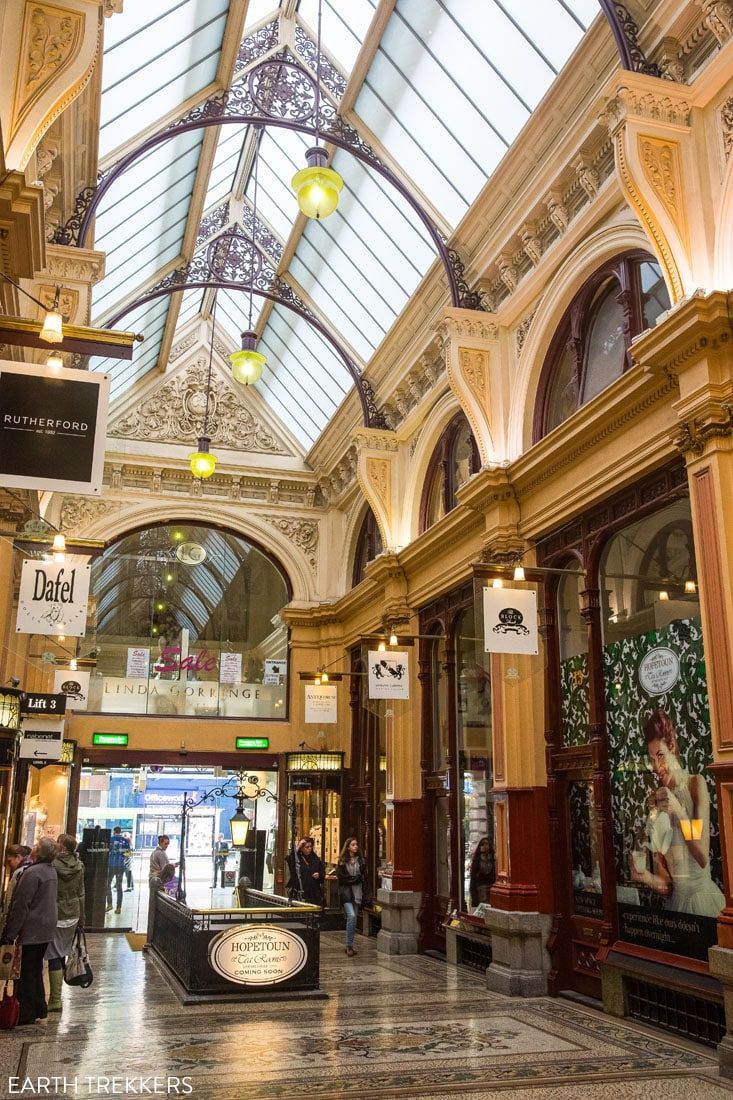
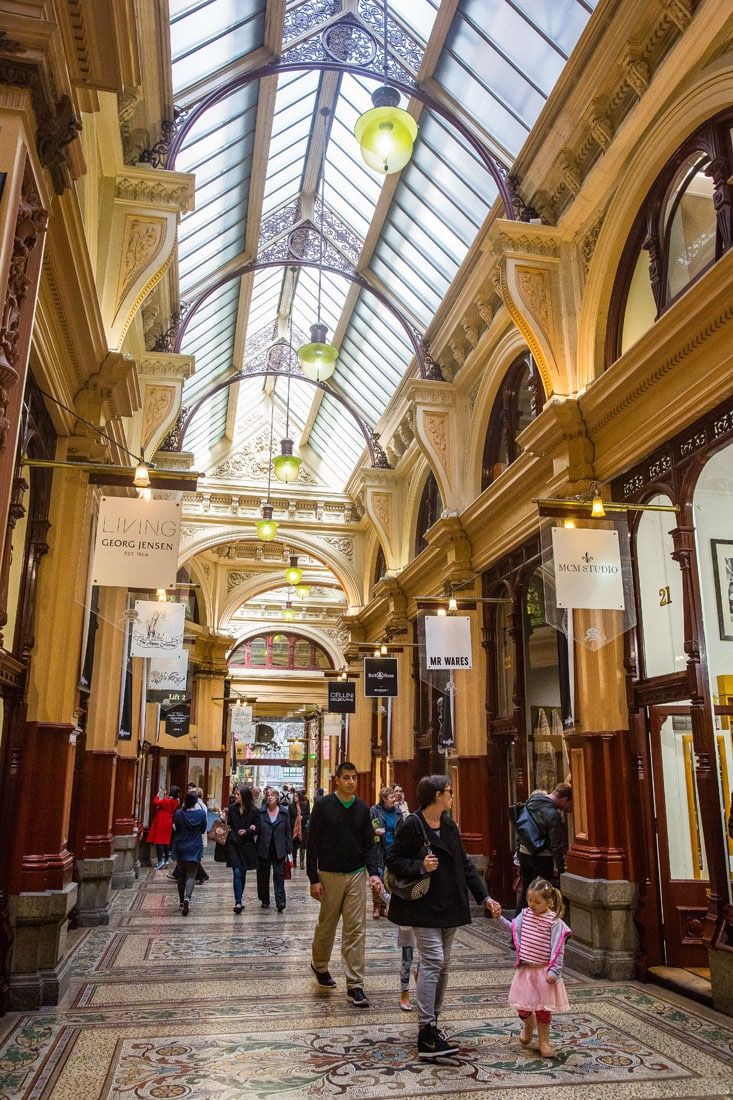
Block Arcade
The Royal Arcade
The Royal Arcade is similar in character. This historic covered walkways connect the main CBD streets through a quieter, more atmospheric route. It is smaller than the Block Arcade but equally charming, and most visitors walk straight past it without knowing it exists. Look for the entrances on Bourke Street.
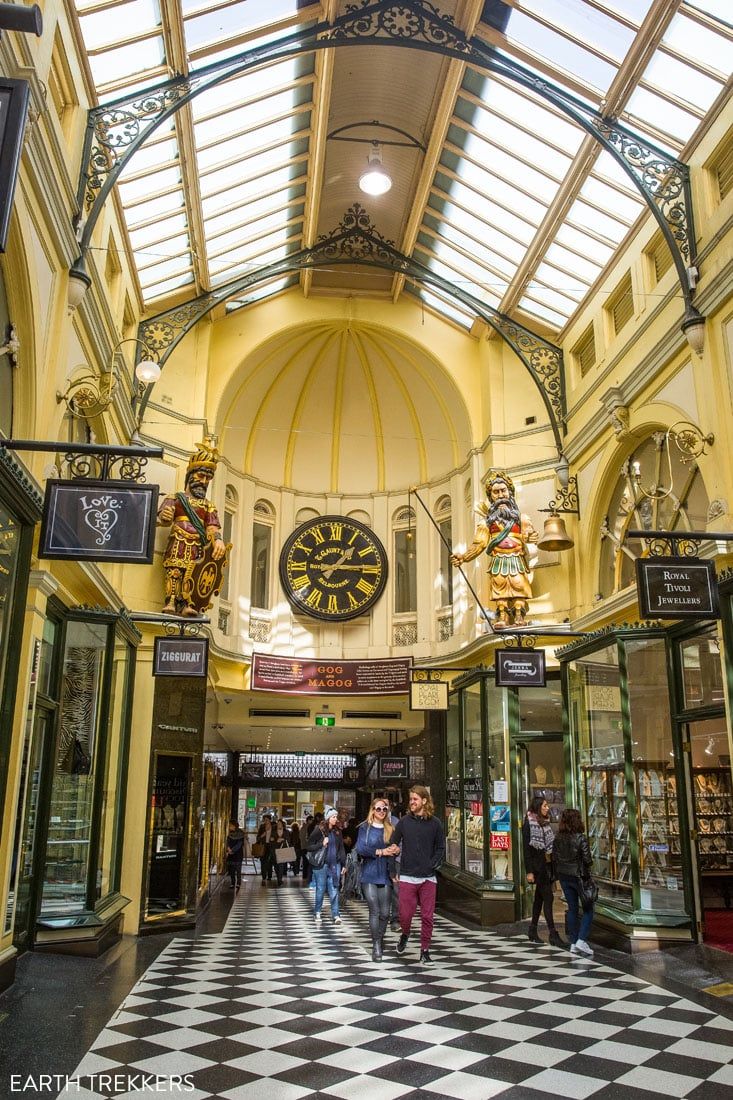
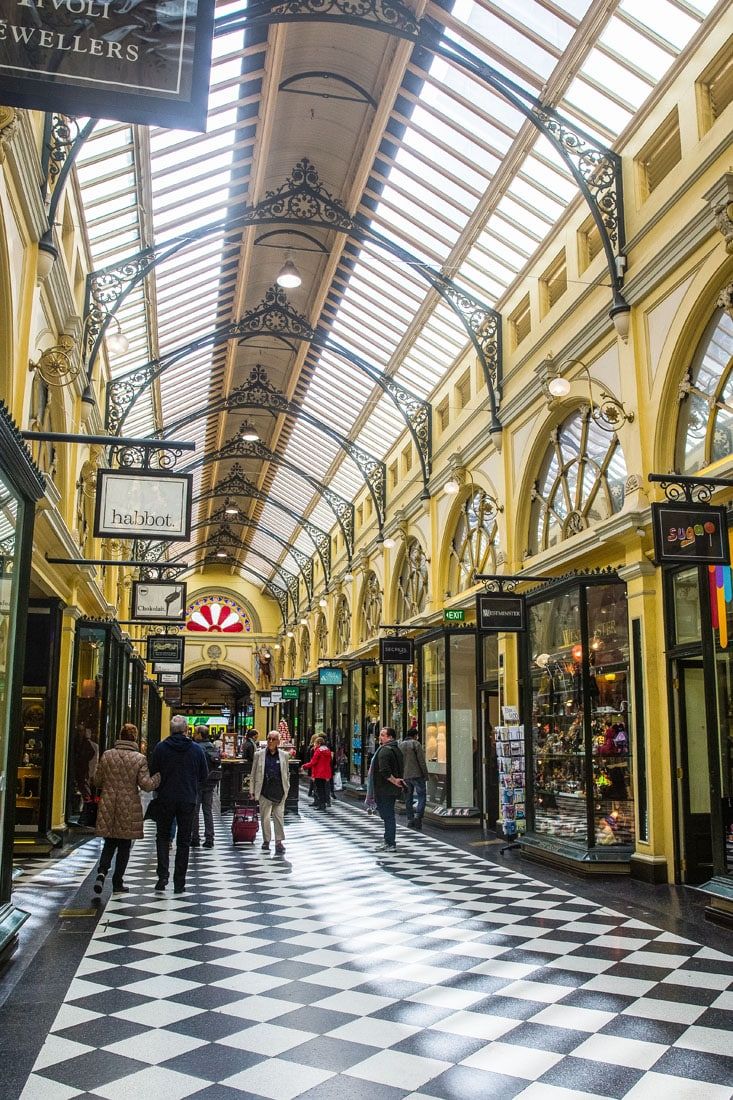
Royal Arcade
More Streets to Visit
For a completely different shopping experience, head to Melbourne’s inner-city neighborhoods.
Chapel Street in South Yarra is the city’s main fashion strip. It’s a mix of high street and independent boutiques, busy on weekends, and great for people watching.
Brunswick Street in Fitzroy has a grittier, more independent character: vintage stores, bookshops, local designers, and some of the best cafe stops in the city.
These two streets alone give you a good sense of how dramatically Melbourne’s neighborhoods differ from each other.

4. Watch Aussie Rules Football at the Melbourne Cricket Ground
Before arriving in Melbourne, Tim would ask the Australians we met, “What should we do in Melbourne?” The universal answer was “watch a game of footy at the MCG.” So, we did.
And every single person who told us to go was right.
The Melbourne Cricket Ground, the MCG, is one of the largest stadiums in the world, with a capacity of nearly 100,000 people. On a big match day it fills up, and when it fills up, the atmosphere is unlike anything we’ve experienced in sport anywhere in the world. The noise, the energy, the collective intensity of a crowd that has grown up caring deeply about this game — it hits you the moment you walk through the gates.
Australian rules football, known locally as footy or Aussie rules, is hard to explain and easy to love once you’re watching it live. It’s fast, physical, and played on an oval field so large that the action never really stops.
Don’t worry if you don’t understand the rules going in. The crowd will make it obvious when something important happens, and by the third quarter, you’ll have a rough sense of what’s going on. Half the fun is figuring it out.
If there is a match scheduled during your visit, make it a priority. This was by far our favorite experience in Melbourne.
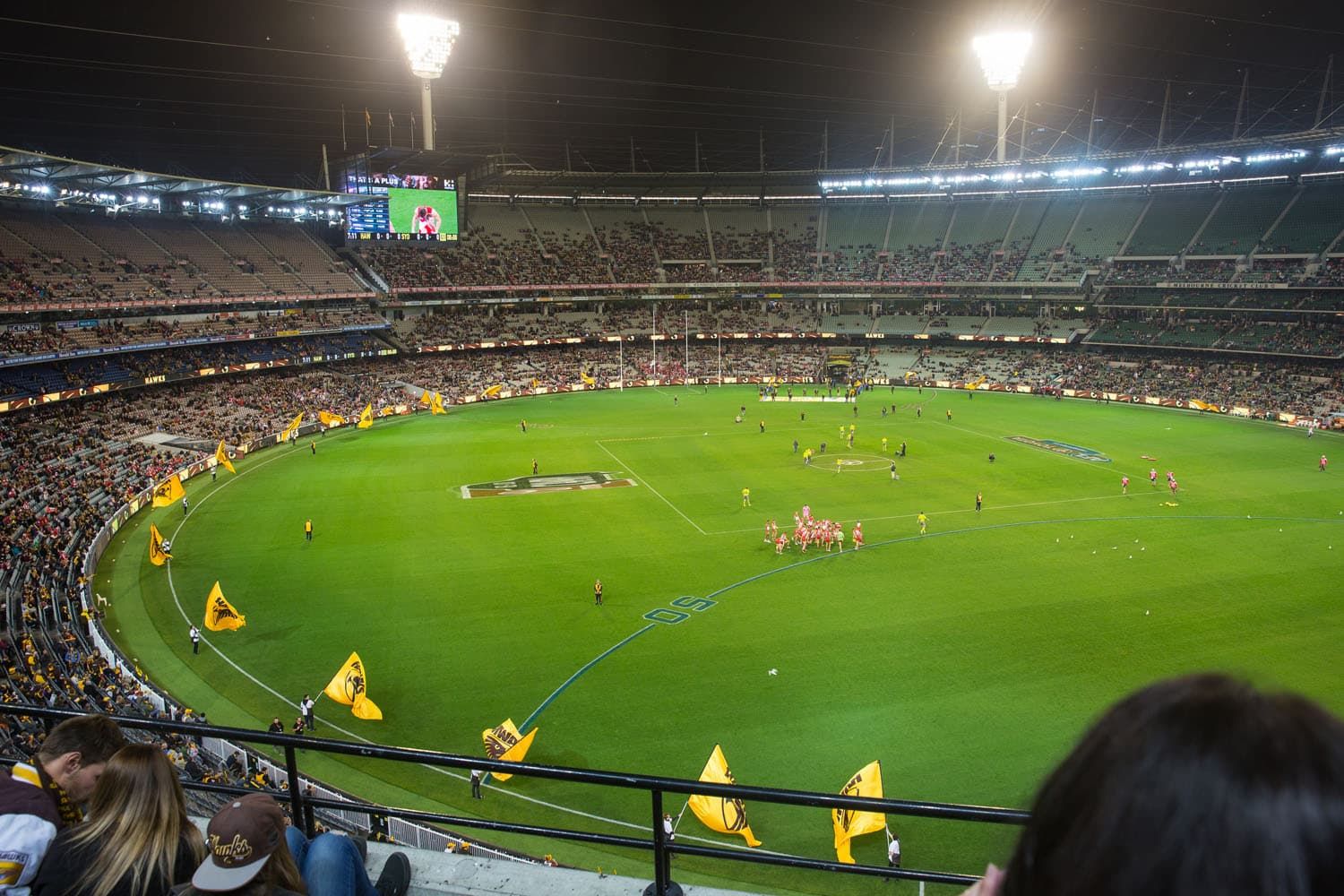
Practical information: The AFL season runs from March through September, with the Grand Final held in late September. The MCG is a short walk from Flinders Street Station or a direct tram ride from the CBD. Tickets range from affordable general admission to premium reserved seating. Even the cheaper seats deliver a great view and the full atmosphere.
5. Visit the Australian Center for the Moving Image
The Australian Centre for the Moving Image (ACMI) is one of the most visited museums in Australia. We are not big fans of museums, but this one we liked.
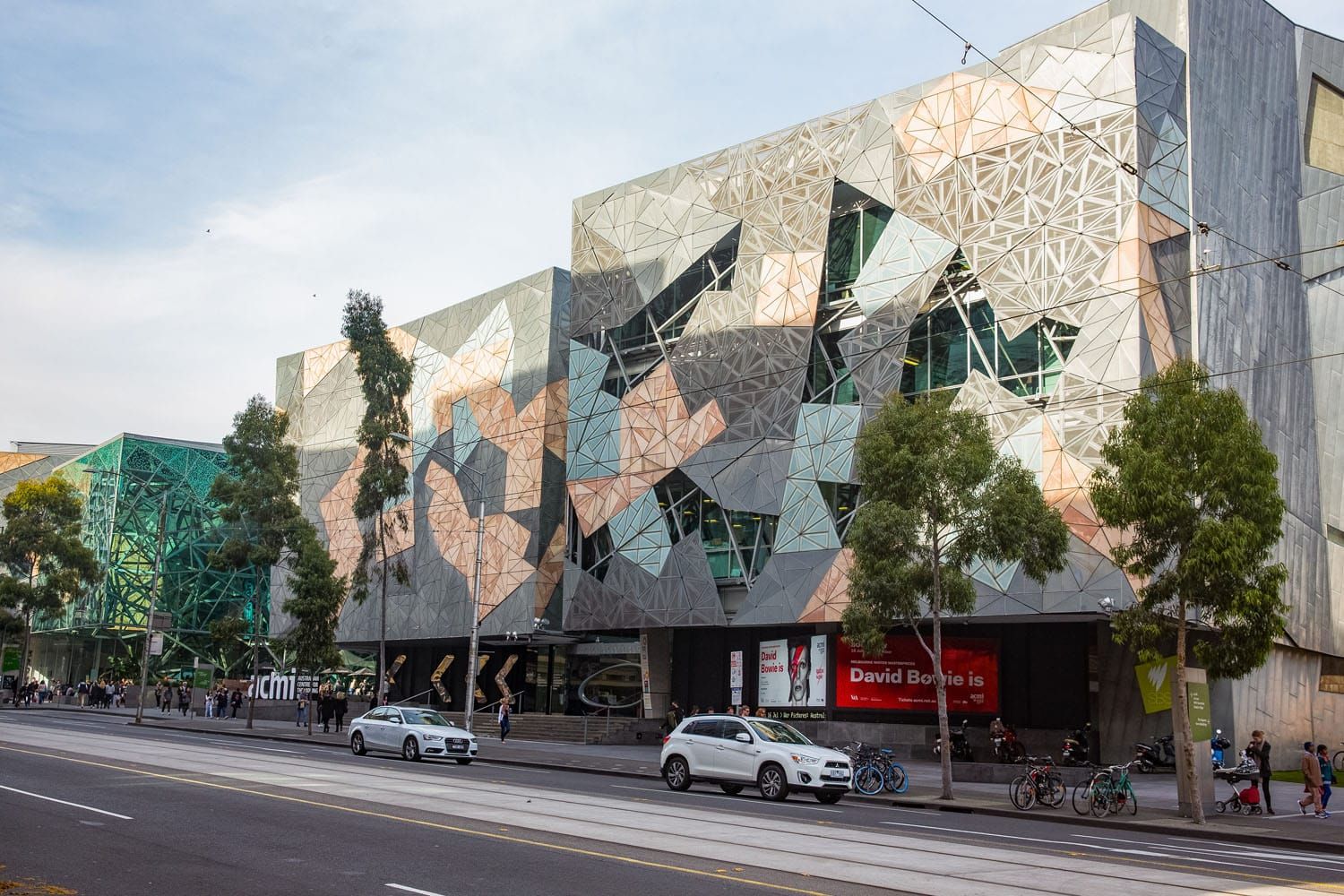
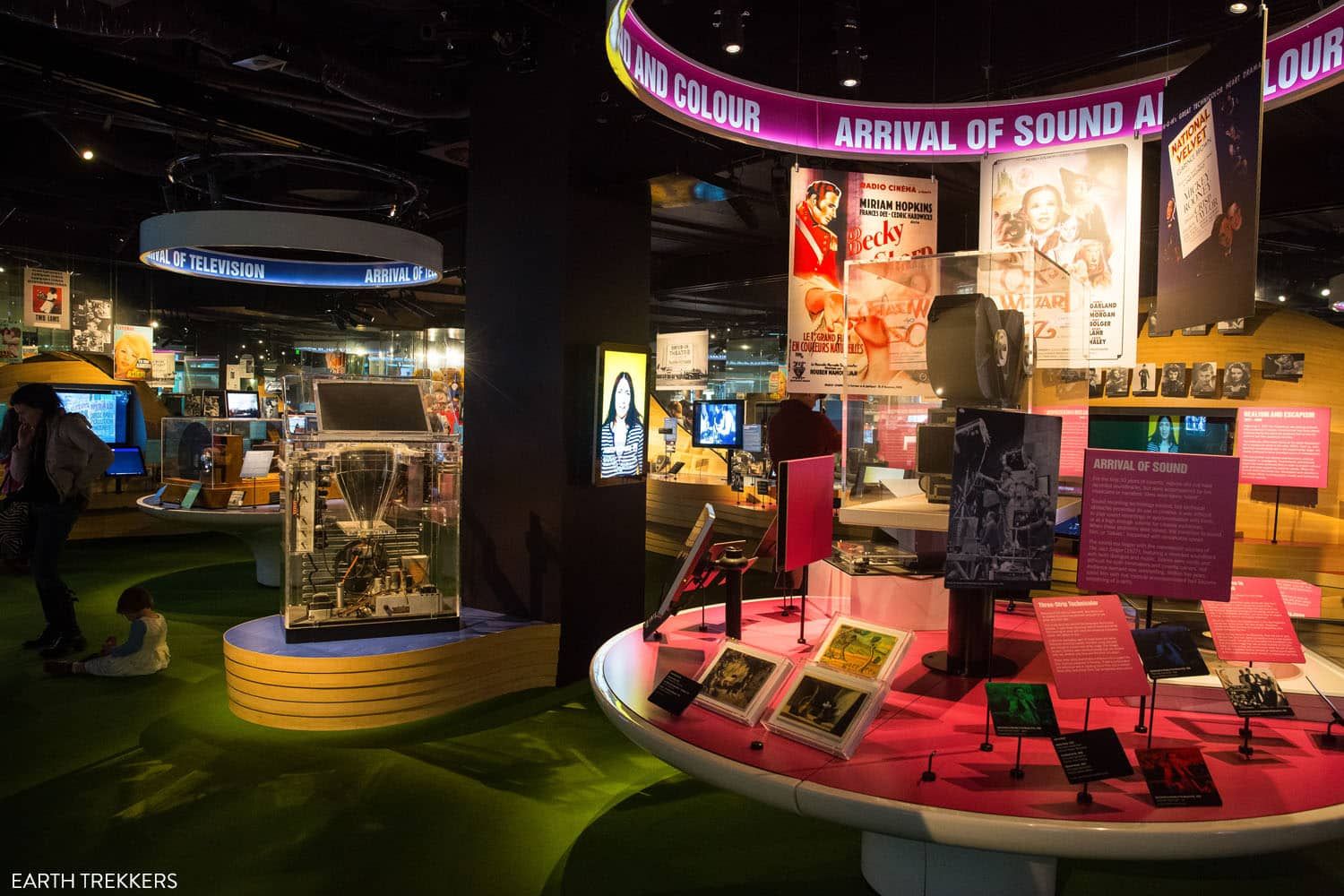
This museum is dedicated to Australian and International film, TV, and video games. So yes, kids may even like this museum. Did you know that there are video games to play and movies to watch?
And what is even more fantastic is entry into the ACMI is free! There is a fee for special exhibitions and to watch the feature films.
If you are visiting the ACMI with kids, do not miss the TY the Tasmanian Tiger Zoetrope. Watch TY dance around using strobe lights and special effects, while a catchy tune plays in the background. It is enthralling. Sure, it is an exhibit for kids, but I found it to be strangely captivating.
6. Ride the Free City Circle Tram
Melbourne has one of the largest urban tram networks in the world, and for first-timers it’s the most practical and most enjoyable way to get around the city. We used it constantly, including riding it out to the MCG on match day, which felt like exactly the right way to arrive.
The best thing to know upfront: the entire Melbourne CBD is a free tram zone. If you’re traveling within the city centre you simply board and ride without paying anything. No ticket, no app, no card needed.
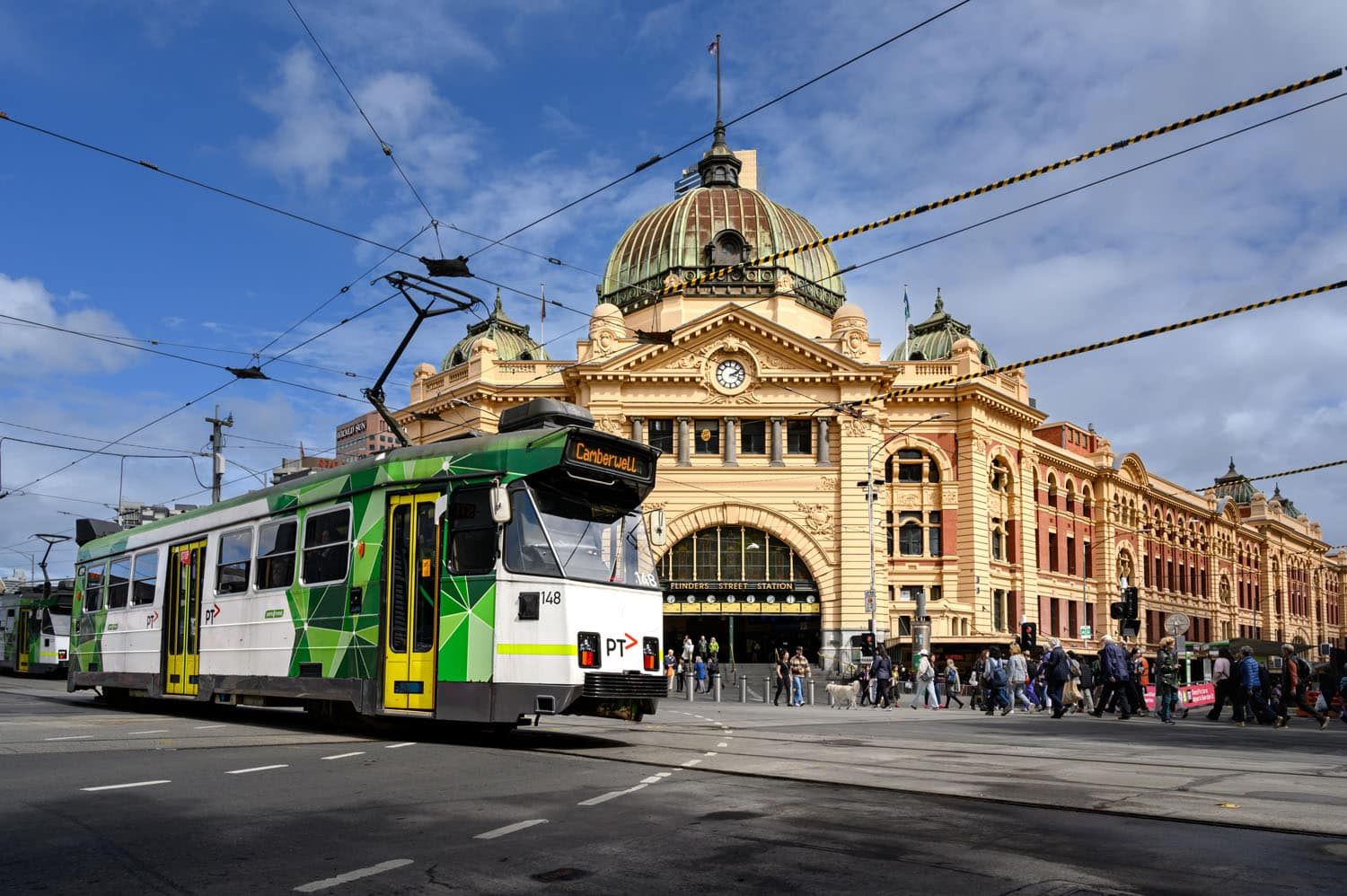
City Circle Tram and Flinders Street Station | shutterstock.com
The City Circle Tram is the tourist-friendly version. This free loop service runs around the perimeter of the CBD and stops near most major landmarks. It’s a great introduction to the city’s layout on your first day, with trams arriving roughly every 12 minutes and completing the full circuit in about an hour.
Beyond the City Circle, the broader network extends into Melbourne’s inner neighbourhoods, St Kilda, Fitzroy, South Yarra, making it easy to explore beyond the CBD without renting a car. Pick up a myki card for travel outside the free zone; they’re available at 7-Eleven stores and at Flinders Street Station.
Practical tip: Download the PTV app before you arrive for live tram times and route maps. And one etiquette note: always yield your seat to elderly passengers.
7. Stroll through the Royal Botanic Gardens
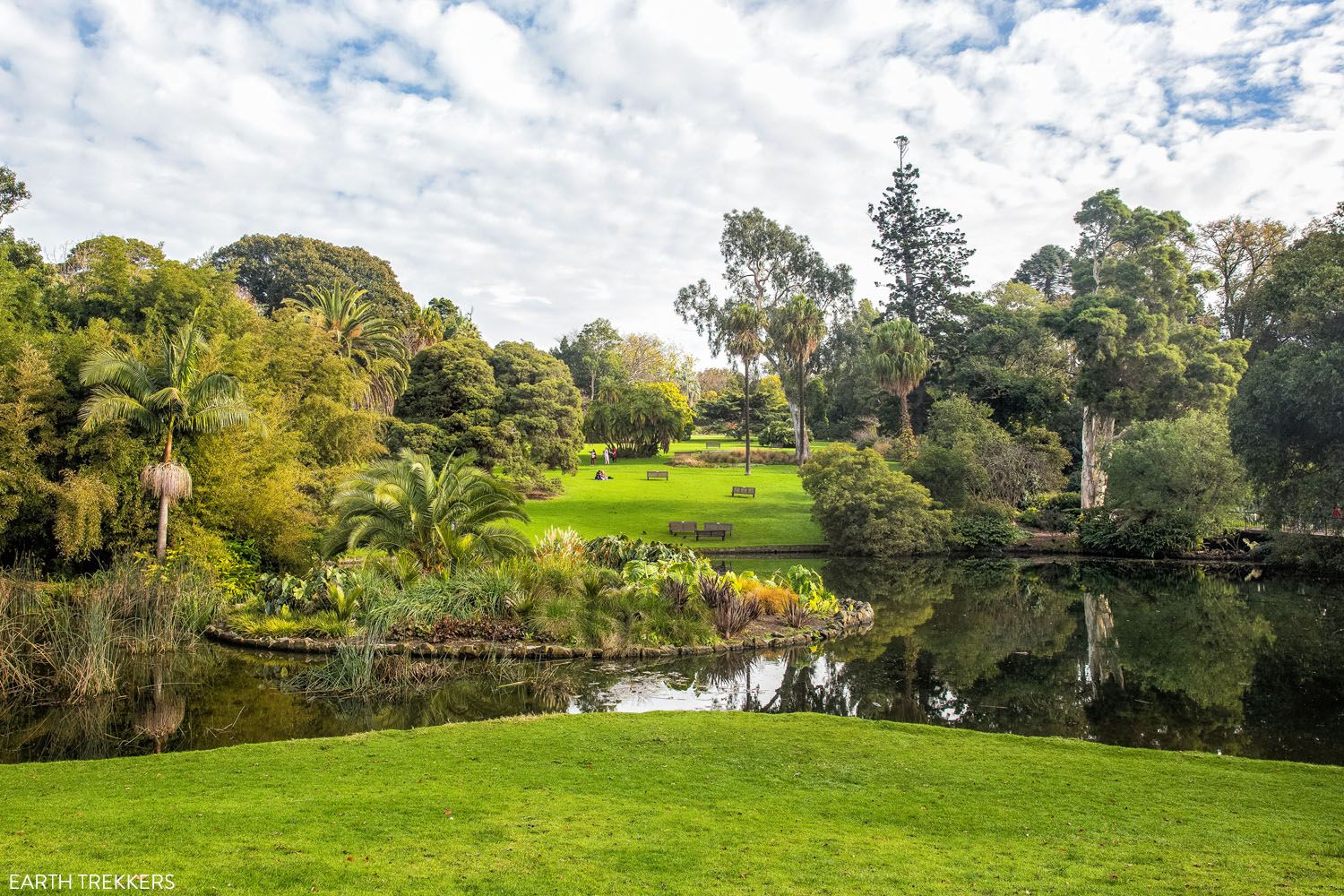
If you like gardens, or just feel like getting “out of the city”, visit the Royal Botanic Gardens in Melbourne. The gardens are located along the Yarra River, just outside of Melbourne’s Central Business District (CBD). You’ll find diverse collections of flora from around the world, with more than 8,500 plant species across 38 hectares. You could easily spend hours strolling through this area, not to mention that a visit here is entirely free!
To learn more about Melbourne’s Royal Botanic Gardens, visit the official website here.
8. Visit the Shrine of Remembrance
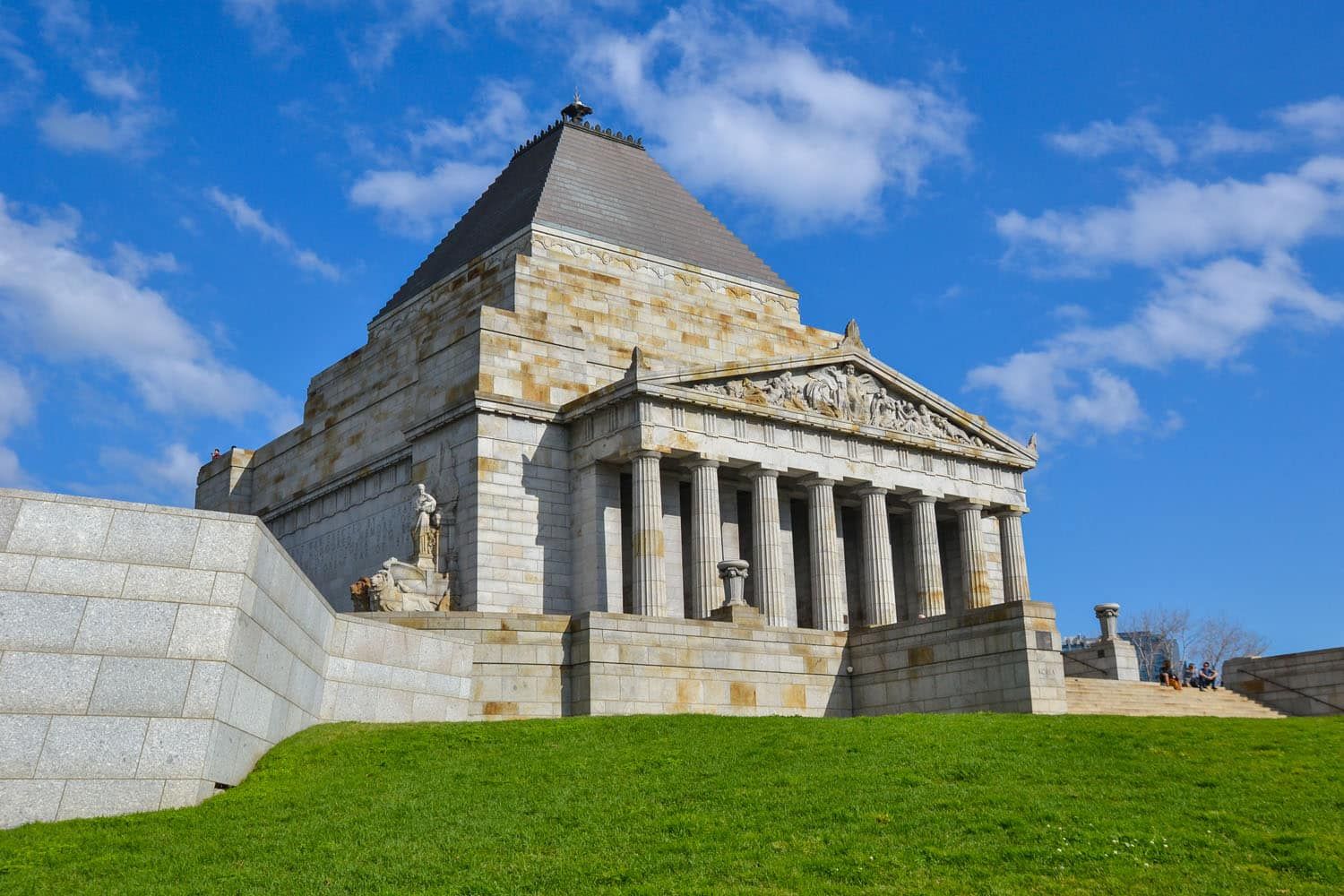
Visitors to Melbourne may be surprised to see what appears to be a Greek temple just outside the city’s CBD. Based on classical Greek architecture, the Shrine of Remembrance was built to honor the Australians who served in WWI, and now honors those who served in any war since.
Located within the Shrine is the main sanctuary, featuring the Stone of Remembrance. Once per year, on Remembrance Day (November 11th) at 11:00 am, a natural ray of sunlight will shine through a slot in the roof, highlighting the word ‘love’ engraved upon the stone. It’s a neat spectacle to witness, but for those unable to visit at this exact time, the phenomenon is recreated daily using artificial light every 30 minutes.
While here, tour the Crypt and the Galleries, which showcase war stories and artifacts collected since WWI. You can also make your way up to the balcony for a stunning view over the surrounding park space and Melbourne’s skyline.
How to Visit: The Shrine is located next to Melbourne’s Royal Botanic Gardens, and a visit here is free. To help plan your visit, see the official website here.
9. Tour the State Library Victoria
Australia’s oldest public library, the State Library Victoria is notable for its grand architecture and extensive literary works. The library is located within Melbourne’s CBD, making it an easy site to reach.
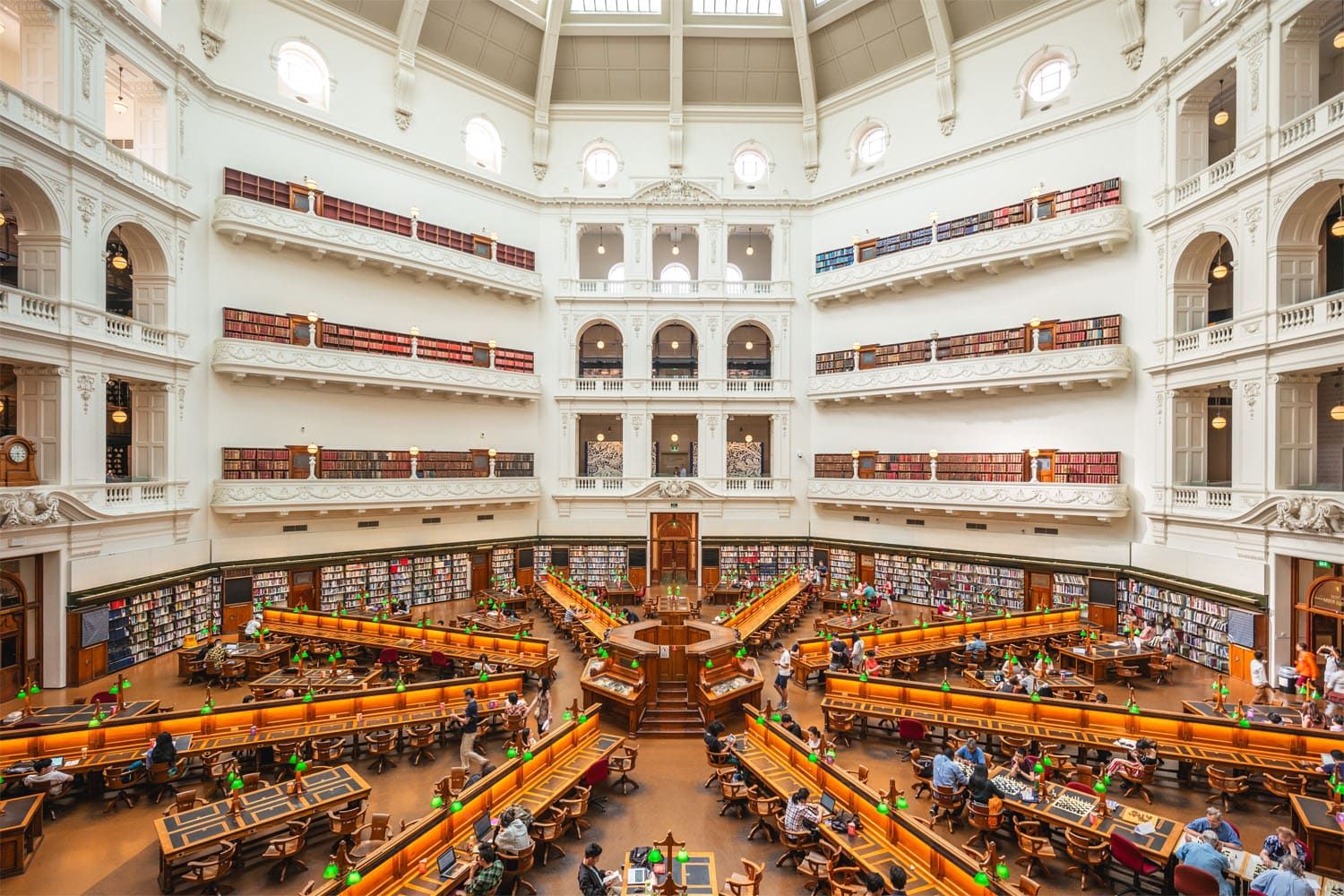
State Library Victoria | shutterstock.com
Why Visit This Library: Wander the pristine halls lined with towering columns and intricate ceilings. Marvel at the iconic La Trobe Reading Room, a domed, octagonal study hall with symmetric desk spaces and bookshelves lining the multi-story walls. This is one of Melbourne’s most photographed spaces and is best captured from several stories up.
The State Library Victoria also has an area for kids, where they can find books tailored to their interests, as well as spaces to learn and play.
Whether you’d like to walk the halls and admire the architecture or spend an afternoon in a quiet spot to read, the State Library Victoria is definitely worth a visit.
10. Tour the Old Melbourne Gaol
Once a jailhouse, the Old Melbourne Gaol has been transformed into a museum where visitors can experience what life was like behind bars.
Built in the mid-1800’s, this was originally Victoria’s oldest prison, and housed some of Australia’s most notorious criminals, such as bushranger Ned Kelly. The site housed short-term prisoners before they were either released, transported, or executed.
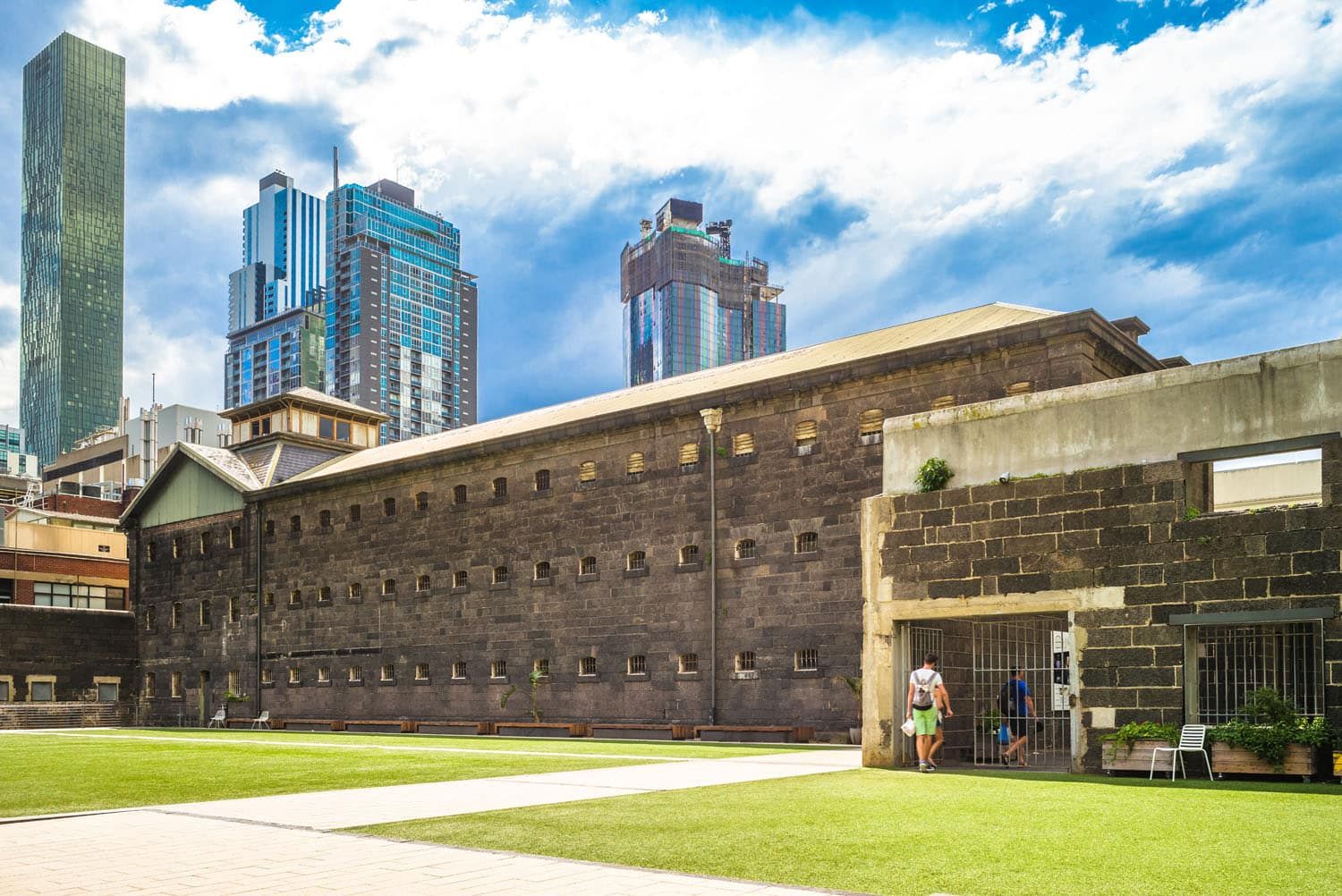
Things to Do: Today, visitors can tour the prison and learn what life was like for the men and women who lived and died on these grounds. You have the option to take a self-guided tour (included in the entrance fee) or join one of several different specialty tours. These include an interactive experience where guests are ‘arrested’, as well as late-night ghost tours of the prison.
Plan Your Visit: The Old Melbourne Gaol is a block away from the State Library Victoria, located in Melbourne’s CBD. To plan your visit to this historic prison, visit their official website here.
11. Get a History Lesson at the Melbourne Museum
The Melbourne Museum is the largest museum for natural and cultural history in the state of Victoria.
From dinosaur fossils to Aboriginal artifacts, to a full-blown forest complete with a waterfall and small animal life, the Melbourne Museum has it all. This is a great spot to take your kids, but even if you’re not visiting with family, you’re bound to learn something new and have fun doing it.
12. Enjoy the View from the Melbourne Skydeck
For a bird’s eye view of the city, you can’t miss a visit to the Melbourne Skydeck. Located across the Yarra River from downtown Melbourne, the Skydeck is the tallest observation deck in the southern hemisphere, and one of the best things to see in Melbourne. Enjoy the view from the 88th floor of Melbourne’s Eureka Tower, where you can look down on all of Melbourne’s iconic landmarks.
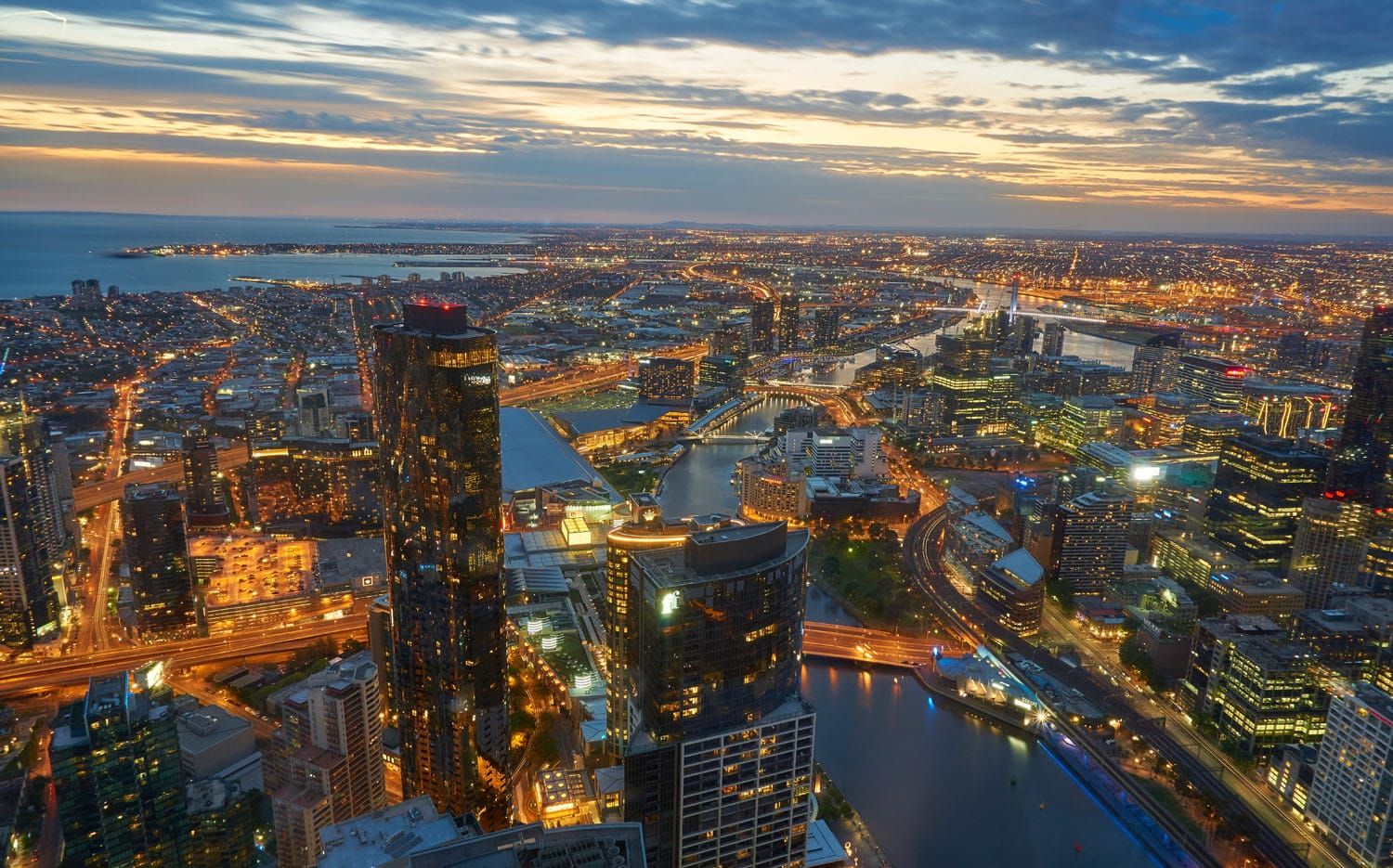
Visitors also have the option to throw on additional experiences while at the Eureka Tower. Enjoy a meal at Eureka 89, the tower’s fine-dining restaurant. Add on an immersive VR experience or take thrills to new heights with the Edge Experience.
The EDGE Experience: For roughly $10 extra on top of general admission, embark on the Edge Experience. Thrill seekers will enter a small glass cube, which then extends three meters out from the Skydeck. You’re left hanging in the air, with views through the glass door looking straight down at the bustling city streets below.
In our opinion, the Edge is very much a gimmick. However, it’s not too much extra in terms of price, so if this sounds interesting to you, we recommend adding it on to your visit. There are not many observation decks in the world where you’ll get the same experience.
A visit to the Melbourne Skydeck is perfect for either the start or end of your trip. From so high up, you can get a lay of the land before beginning your journey through the city, or at the end of your trip, make it a game and try to spot everywhere that you’ve been the past few days.
To learn more about a visit to the Melbourne Skydeck, visit the official website here.
13. Visit the National Gallery of Victoria
Australia’s oldest and most visited art museum is a genuine world-class institution, and one that catches many first-timers off guard with just how good it is.
The NGV’s permanent collection spans everything from European Old Masters to Australian colonial painting, Asian decorative arts, and one of the finest collections of Indigenous Australian artwork you’ll find anywhere.
The building itself is worth noting. The St Kilda Road entrance features a striking water wall that cascades across the full width of the facade. Walk through it on a hot Melbourne afternoon and you’ll understand why locals love this place beyond its art.
Entry to the permanent collection is free, which makes it an easy addition to any itinerary. Major ticketed exhibitions rotate throughout the year and tend to sell out. Check the NGV website before your visit if you want to catch something specific.
Practical tip: The NGV is split across two buildings, the Ian Potter Centre at Federation Square handles Australian art, while the main St Kilda Road building covers international collections. If your time is limited, pick one rather than rushing through both.
14. Relax at St. Kilda Beach
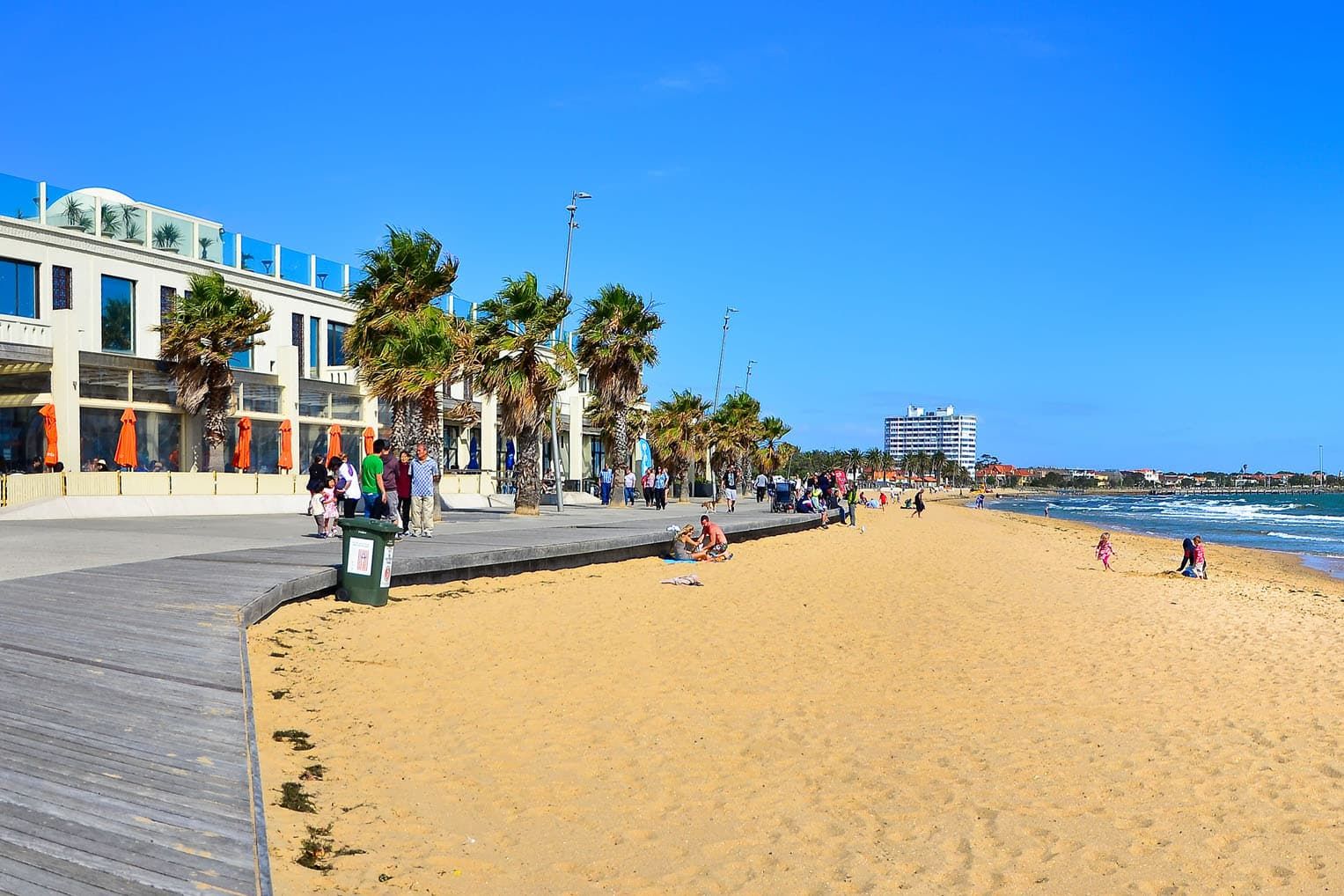
If you’re visiting Melbourne for the first time, chances are that beaches aren’t the first thing that comes to mind. That reputation usually goes to Sydney and the Gold Coast. So, what if you were told that, just 20 minutes south of downtown Melbourne, you’d have access to beautiful, white sandy beaches?
St. Kilda is home to open park spaces lined with palm trees, and plenty of beachfront restaurants. You’ll find a buzzing, lively atmosphere that feels like a fresh escape from the bustle of Melbourne’s city center and offers a great change of scenery. St. Kilda feels quite similar to Santa Monica out in California.
At St. Kilda, unwind on the beach and take a dip in the ocean. Make a visit to Luna Park, the nearby amusement park with the iconic smiling clown face entrance. You can also spend your evening walking the pier to watch the local colony of penguins come ashore.
There are also bike paths that run from St. Kilda to the beaches that lie further south. One of the best things to do during a visit to Melbourne is to rent a bike at St. Kilda and cycle along the coast, taking in the fresh ocean breeze, and spend some time visiting these other beaches.
15. Photograph the Brighton Beach Boxes
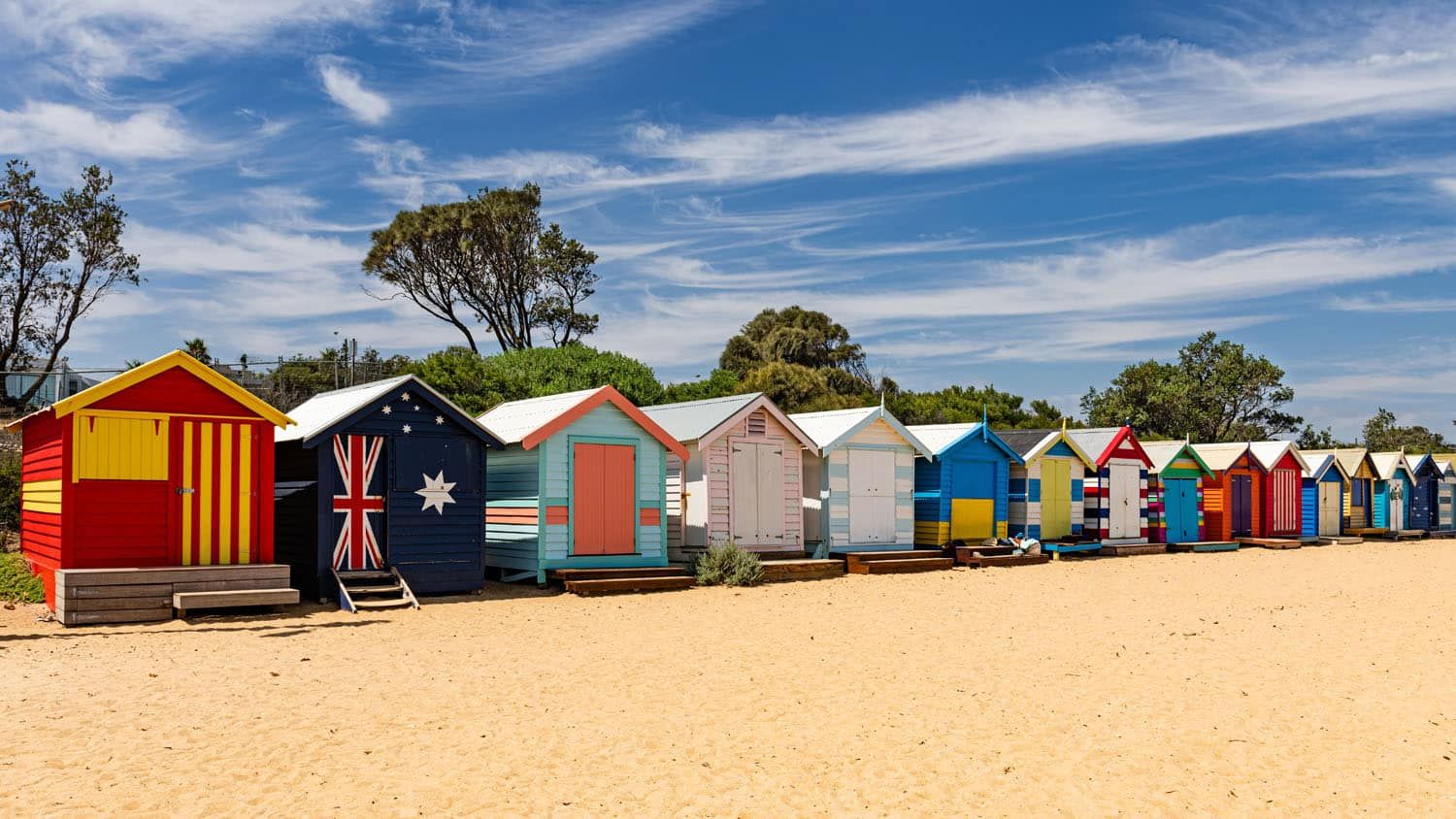
At Brighton Beach you will find colorful beach boxes, also known as bathing boxes. These are old storage sheds and changing rooms that have been painted with bright colorful designs. While here, enjoy the beach and the view of Melbourne’s skyline off in the distance.
Located 6 km (3.7 miles) south of St. Kilda Beach, this can be combined with your St. Kilda experience. And if you are renting a bike at St. Kilda to explore Melbourne’s southern coast then make this one of your stops.
Day Trip Ideas from Melbourne
Drive the Great Ocean Road
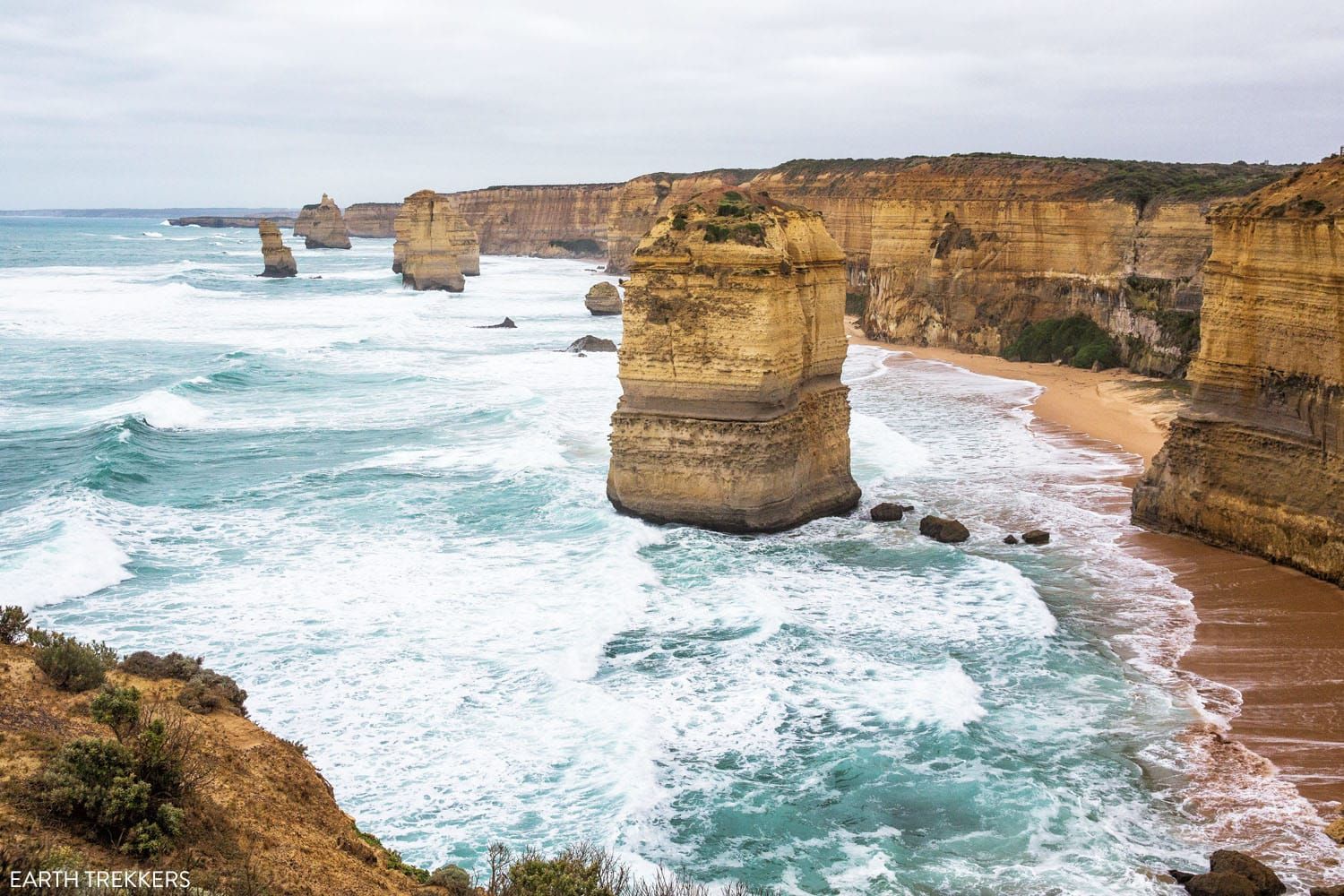
The Great Ocean Road is one of Australia’s great drives, and one of the most popular day trip activities from Melbourne. Spanning 240 km (150 mi), spend your day driving along southern Australia’s dramatic coastline, taking breaks to marvel at the waves crashing against the rocky coast. And pull over to admire iconic sites such as the Twelve Apostles.
Note that, although you can see the full Great Ocean Road in a single day from Melbourne, it’s going to be a very long day with a lot of driving. So, it is best to break up the route into multiple days or join a tour. If you are on a road trip in Australia then include this experience as you travel between Melbourne and Adelaide.
Penguins on Phillip Island
Phillip Island hosts a wonderland of wildlife encounters and majestic beaches. The island is most famous for its Penguin Parade where you can watch hundreds of penguins waddle onto shore.
Travelers can also meet furry friends at the Koala Conservation Park and take a walk along Cape Woolamai’s jagged coastline. Phillip Island is only a 2-hour drive from Melbourne, making this destination a perfect day trip from the city. You can also combine Phillip Island with Brighton Beach on this tour.
Dandenong Ranges
For an escape out into the jungle, take a day trip to the Dandenong Ranges. Just a short drive west of Melbourne, this vibrant mountain range is full of great hiking trails, waterfalls, and adventure. Make sure to ride the Puffing Billy Steam Train, the world’s oldest surviving steam locomotive, as it winds through the southern foothills of the Dandenong Ranges.
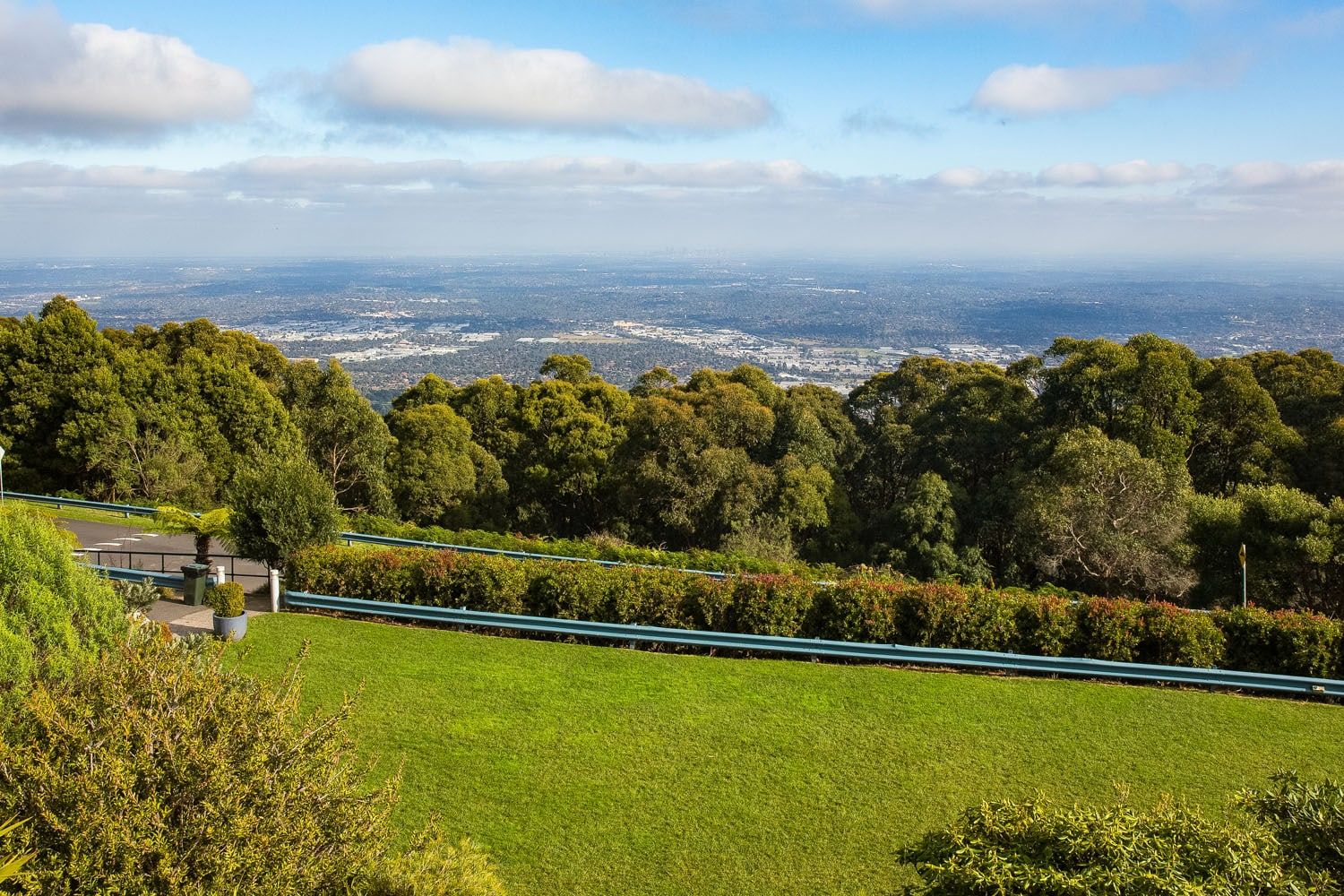
The view looking towards Melbourne from SkyHigh Mount Dandenong
Yarra Valley
Just an hour east of Melbourne, the Yarra Valley is one of Australia’s premier wine regions and the most popular day trip from the city. The valley is best known for its cool-climate wines, particularly Pinot Noir and Chardonnay, and is home to more than 80 cellar doors, ranging from boutique family estates to large well-known producers like Domaine Chandon and Yering Station.
We didn’t have time for this on our first trip to Melbourne, but as wine aficionados, it’s high on our list on a return visit.
Eat and drink your way through Yarra Valley on this small group tour that includes Chandon, cheese tastings, a chocolaterie, and a chance to see kangaroos.
This day trip tour gets near perfect reviews and includes multiple cellar doors plus a visit to the Yarra Valley Chocolaterie.
Practical tip: If wine is the focus, consider booking a guided tour from Melbourne so you can drink without worrying about driving. Several operators run full and half day Yarra Valley wine tours that include transport and multiple cellar door stops.
How Many Days Do You Need in Melbourne?
With so much to see and do, we recommend spending 2 to 3 days in Melbourne. This gives you enough time to explore the city’s top attractions, wander the famous laneways, visit a few museums, and experience Melbourne’s incredible café culture.
If you plan to take a day trip along the Great Ocean Road, visit Phillip Island to see the penguins, or explore the Dandenong Ranges, add one or two extra days to your itinerary.
Melbourne is also a city best enjoyed at a slower pace. Plan time to relax at a café, stroll through the Royal Botanic Gardens, and explore the historic arcades and laneways that make the city so unique.
Cafe on Degraves Street
Is Melbourne Better than Sydney?
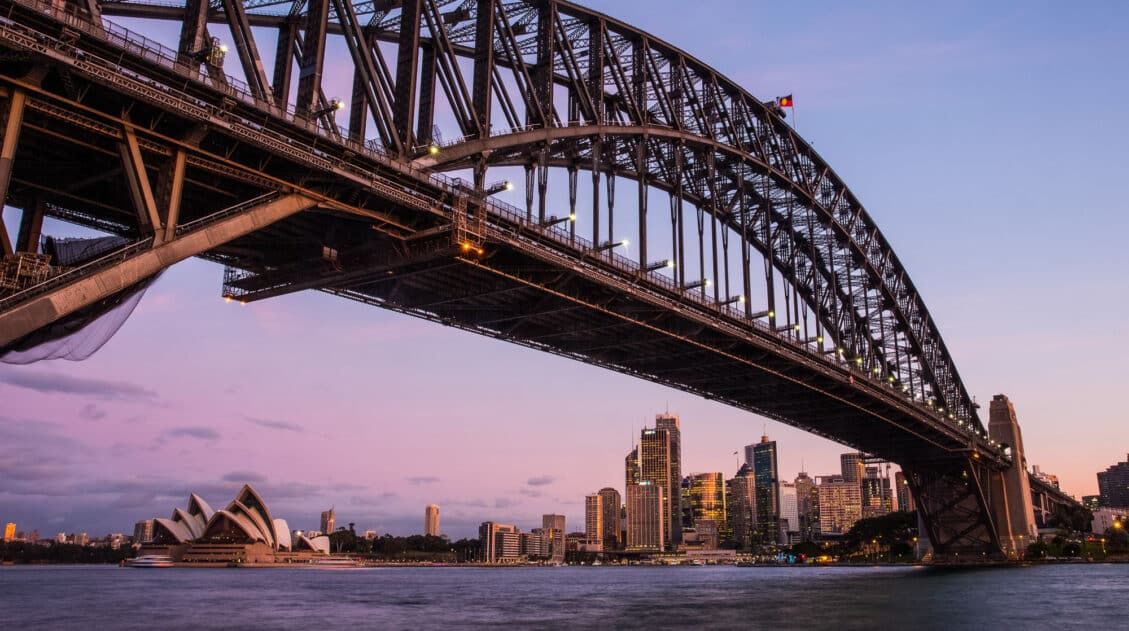
As someone who spent several months living in Sydney during college, I’m probably not the most objective person to answer this. Sydney holds a special place for me, with its iconic landmarks like the Opera House and harbor, surfing at the Sydney beaches, and the friendships I made there. That bias is real and I’ll own it.
But here’s what I’ll say: Melbourne surprised me. The two cities are genuinely different in character and the comparison is less useful than it sounds.
Sydney dazzles you immediately. It’s one of the most visually spectacular cities in the world and it knows it.
Melbourne earns you over time. The coffee culture, the laneway street art, the food scene, the live music, the neighborhoods that each feel like a different city — it’s a place that rewards curiosity in a way that’s harder to photograph but just as hard to forget.
If you’re choosing between them for a first Australia trip, my honest advice is to visit both if you possibly can. But if you only have time for one and you’re drawn to arts, culture, food, and a city with genuine local character, Melbourne might just edge it.
If you are planning to visit both, don’t miss our article on the Best Things to Do in Sydney and our 3 Days in Sydney Itinerary.
Best Time to Visit Melbourne
The best time to visit Melbourne is during spring (September to November) and fall (March to May). During these months, the weather is mild, crowds are smaller, and it’s comfortable for exploring the city on foot. Expect daytime temperatures around 18°C to 23°C (65°F to 73°F).
Summer (December to February) is the busiest time to visit Melbourne. The weather is warm and the city hosts many festivals and sporting events, but temperatures can occasionally spike above 35°C (95°F).
Winter (June to August) is cooler and quieter, with average highs around 14°C (57°F). While it’s not ideal for beach visits, winter can still be a great time to explore Melbourne’s museums, cafés, and indoor attractions.
Getting Around Melbourne
Melbourne is a very walkable city, especially within the Central Business District (CBD), where many of the top attractions sit just a few blocks apart. We explored most of the city on foot and enjoyed wandering the laneways, historic arcades, and café-lined streets.
Melbourne also has an excellent tram network, which is one of the easiest ways to get around. The City Circle Tram is free and loops around the CBD, stopping near many major attractions. Other tram routes can take you further out to places like St. Kilda Beach.
For destinations farther from the city center, you can take a train, tram, or use rideshare services like Uber.
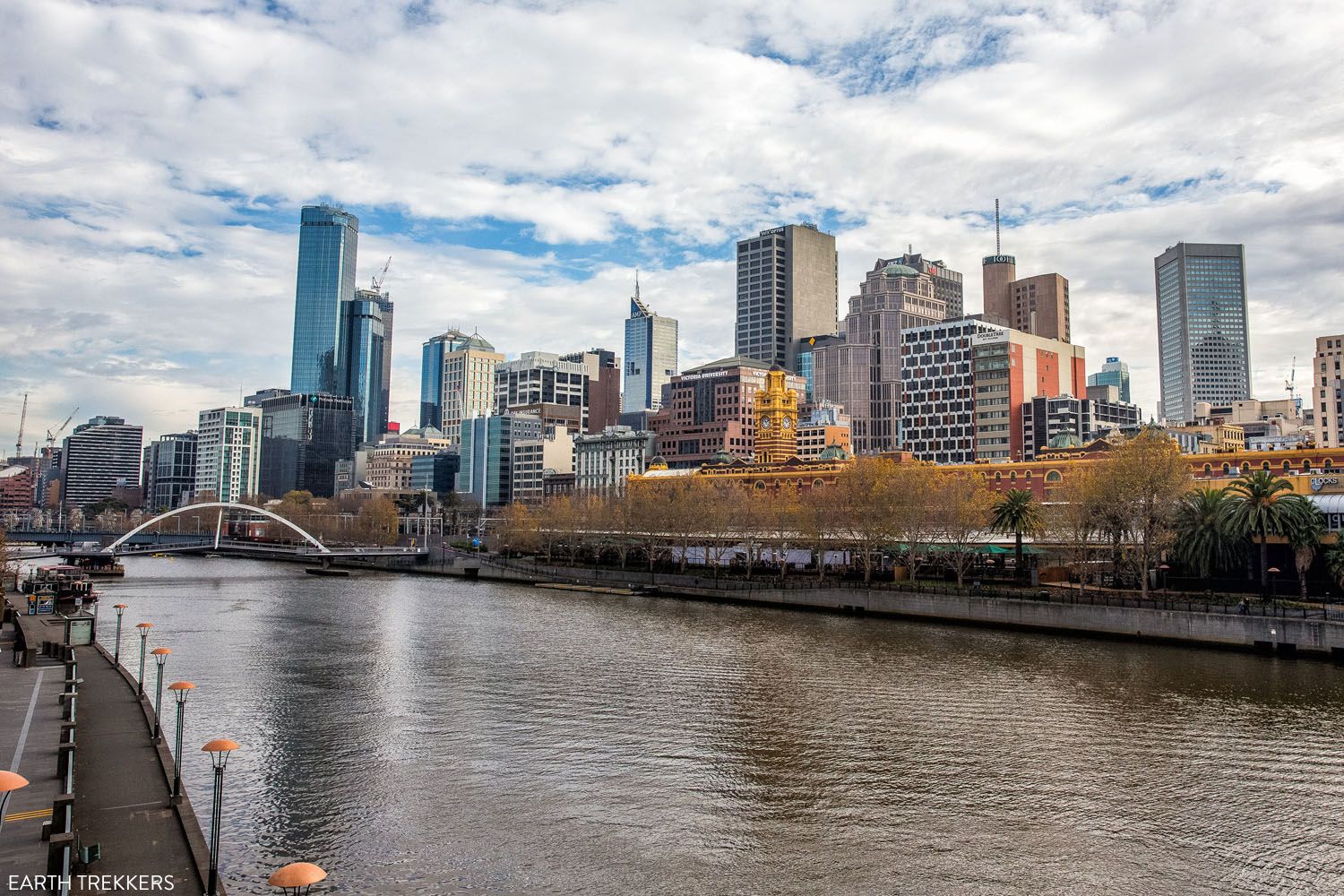
The Yarra River
Where to Stay in Melbourne
It is challenging to find mid-range properties in Melbourne that get good reviews. We listed some of the best below, but this is a city where booking an upscale property (a 4-star hotel) could be worth the extra money.
Mid-Range (3-star):
- The Victoria Hotel (central location in the CBD)
- Ibis Melbourne Central (good location in the CBD)
Upscale (4-star):
- Collins House Apartments by CLLIX (beautiful, spacious apartments in the city center)
- Melbourne Lifestyle Apartments (1, 2, and 3-bedroom apartments in the Docklands)
- The Savoy Hotel on Little Collins (gorgeous hotel with onsite bar and restaurant)
Luxury (5-star):
- The Ritz-Carlton (the ultimate in luxury, conveniently located in the CBD)
- W Melbourne (stylish hotel with indoor pool, 3 restaurants and 2 bars)
Budget:
- Space Hotel (hostel slightly outside the city center)
- The Mansion Melbourne (hostel located a short walk from the main sites in the city center)
Tours of Melbourne
Here are a few more ideas of unique things to do in Melbourne, from walking tours to day trip ideas.
Tours & Day Trips
Frequently Asked Questions
What is Melbourne famous for?
Melbourne is famous for its coffee culture, street art, historic laneways, and thriving arts scene. The city is also known for major sporting events, including Australian Rules Football matches at the Melbourne Cricket Ground and the Australian Open tennis tournament.
Is Melbourne worth it?
Absolutely. Melbourne was one of our favorite Australian cities we’ve visited, closely tied with Sydney for the top spot. From a welcoming community, great array of museums, and its vast collection of quaint cafes and restaurants, Melbourne is a spot that we’ve been itching to return to. If we were to ever settle down somewhere abroad, Melbourne would be a top contender.
What’s the best way to spend one day in Melbourne?
If you only have one day in Melbourne, start your morning with coffee at one of the city’s famous cafés and then explore the historic arcades and laneways in the Central Business District. Visit Hosier Lane to see Melbourne’s famous street art and stop by the State Library Victoria or Federation Square. In the afternoon, ride the City Circle Tram or walk along the Yarra River, then visit the Royal Botanic Gardens or the Shrine of Remembrance. End your day with sunset views from the Melbourne Skydeck or take the tram to St. Kilda Beach for dinner and a stroll along the waterfront.
Explore More of Australia
From Melbourne, go on a road trip, driving the Great Ocean Road to Adelaide. Once in Adelaide, spend several days touring the amazing wineries of South Australia in Barossa, McLaren Vale, and Clare Valley.
You can also fly north to Sydney, venture into the Red Centre of Australia and visit Uluru, or spend a few days in Cairns, Brisbane, and the Great Barrier Reef.
To learn more about these places, take a look at our Australia Travel Guide.
If you have any questions about the best things to do in Melbourne, let us know in the comment section below.
Explore More of Australia
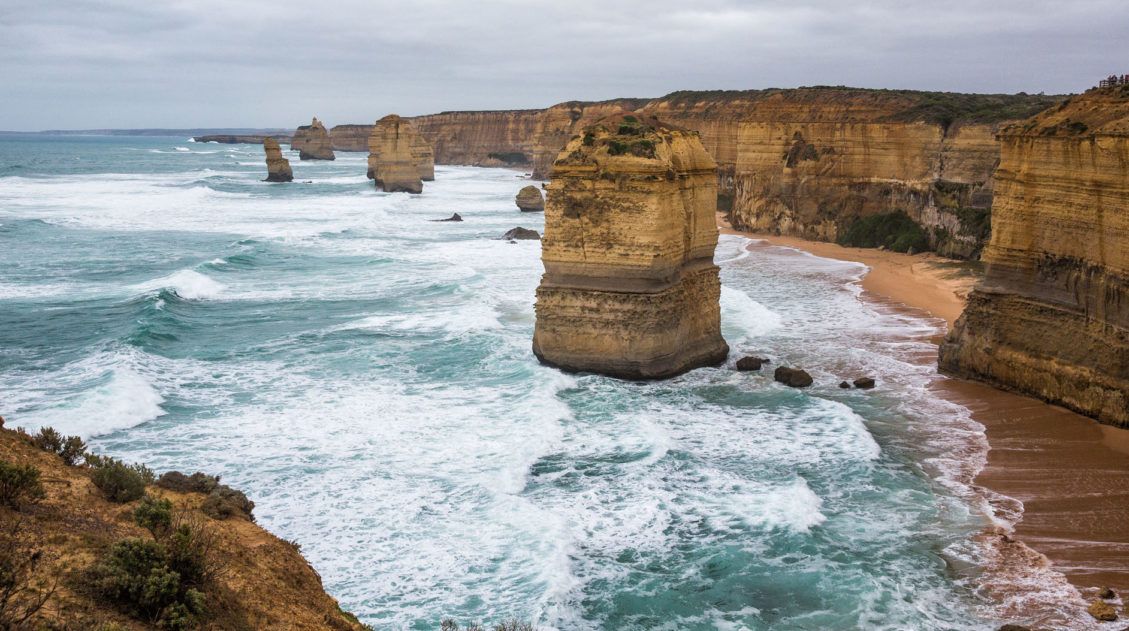
One Day Road Trip on the Great Ocean Road, Australia
The Great Ocean Road is one of Australia’s great drives. It is comparable to Big Sur in California with coastal views, winding roads, and many, many scenic viewpoints. For many people, the Great Ocean Road is a highlight when visiting Australia. There’s a lot to see and do along the way. In this post, we […]

McLaren Vale Uncorked: A Guide to 18 Exceptional Wineries in the Region
McLaren Vale…welcome to one of our favorite places in Australia. The wine that is produced in this region is outstanding…big, bold Shirazes, fruity Cabernet Sauvignons, and full-bodied Chardonnays. We have traveled to wine regions throughout the world, including France, Italy, South Africa, Argentina, Chile, New Zealand, and the USA. South Australia is by far one […]
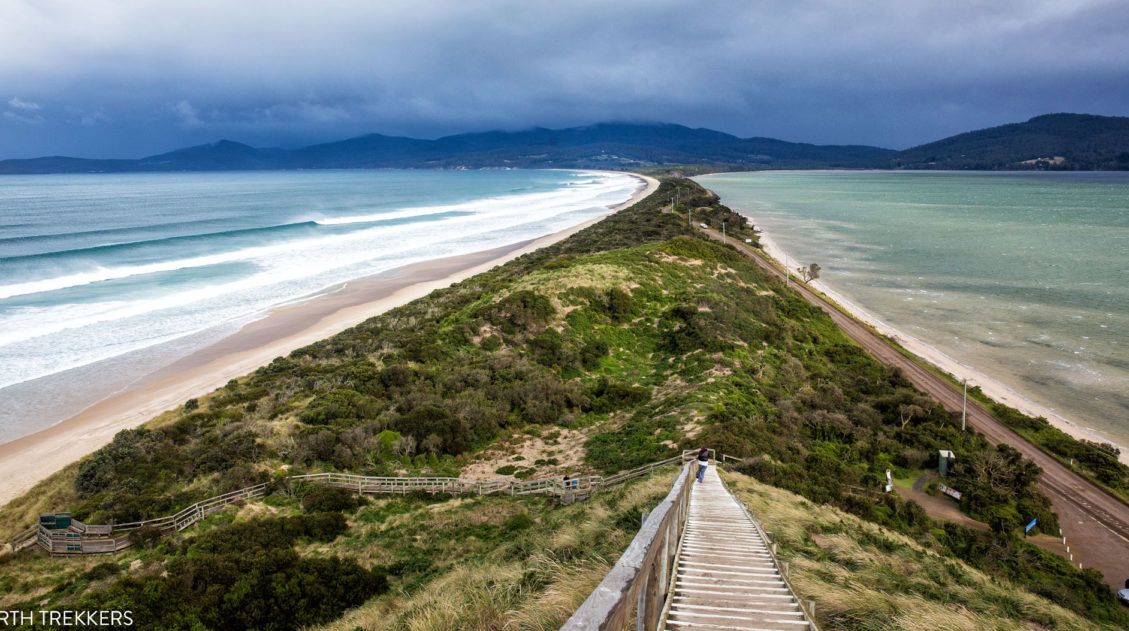
6 Must-Have Experiences on Bruny Island, Tasmania
Bruny Island is one of Tasmania’s southernmost islands. Covered in eucalyptus forests with long stretches of rocky coastlines and beaches, this island feels rugged and remote. But it is just a twenty minute ferry ride away from the mainland of Tasmania. Bruny Island is really two islands connected by a thin isthmus of sand. Approximately […]
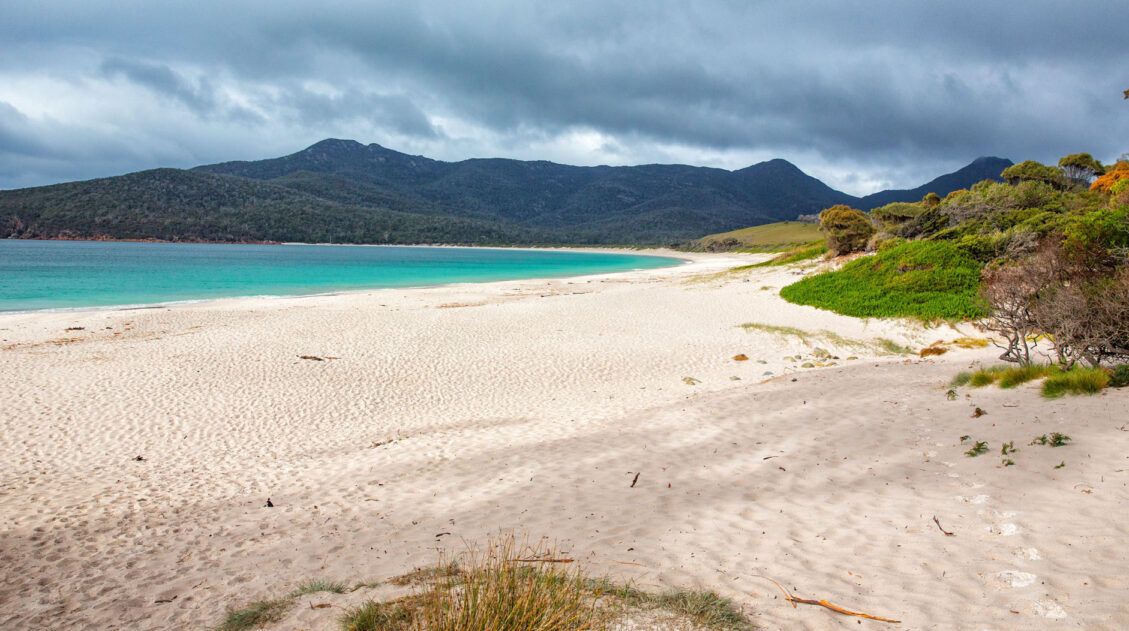
How to Hike the Wineglass Bay and Hazards Beach Circuit | Tasmania, Australia
In Norway and Italy we were hikers. In Nepal we were trekkers. In New Zealand we were trampers. Once we visited Australia and successfully hiked the Wineglass Bay Circuit, we can call ourselves bushwalkers. We had a week to spend in Tasmania, and like always, we were on the lookout for some of the best […]
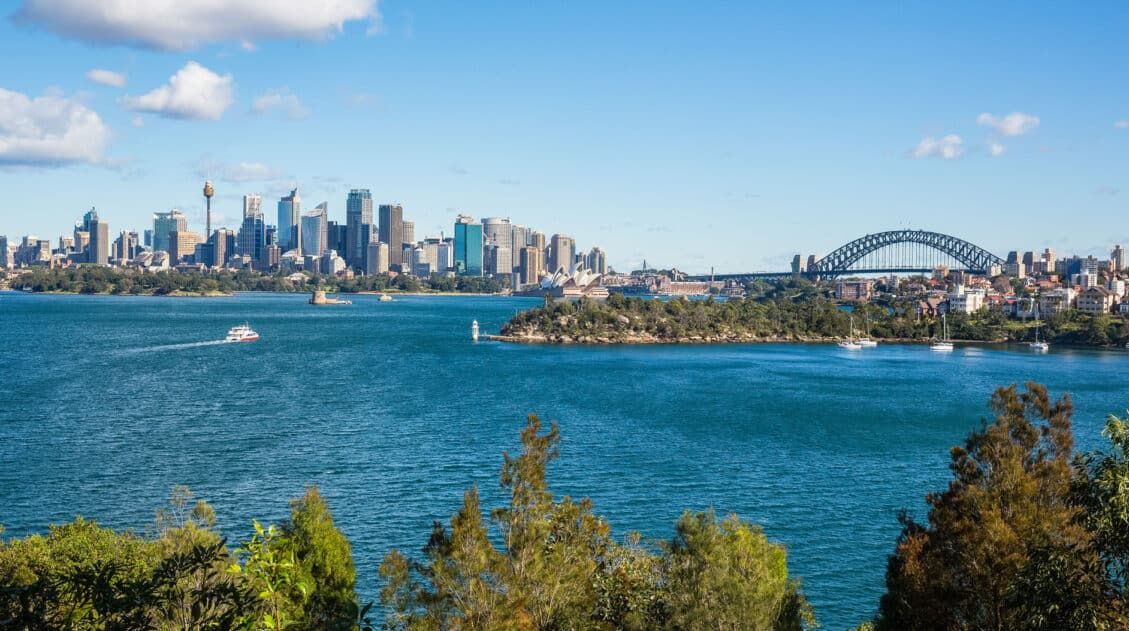
2 Days in Sydney: Best Itinerary for First-Time Visitors
2 days in Sydney is the perfect amount of time to see all the top attractions without hurry. From the Opera House, the Sydney Harbour Bridge, Bondi Beach, and much more, you’re bound to check off some bucket-list destinations. In this guide, we lay out a 2-day itinerary for visiting Sydney. We cover the best […]
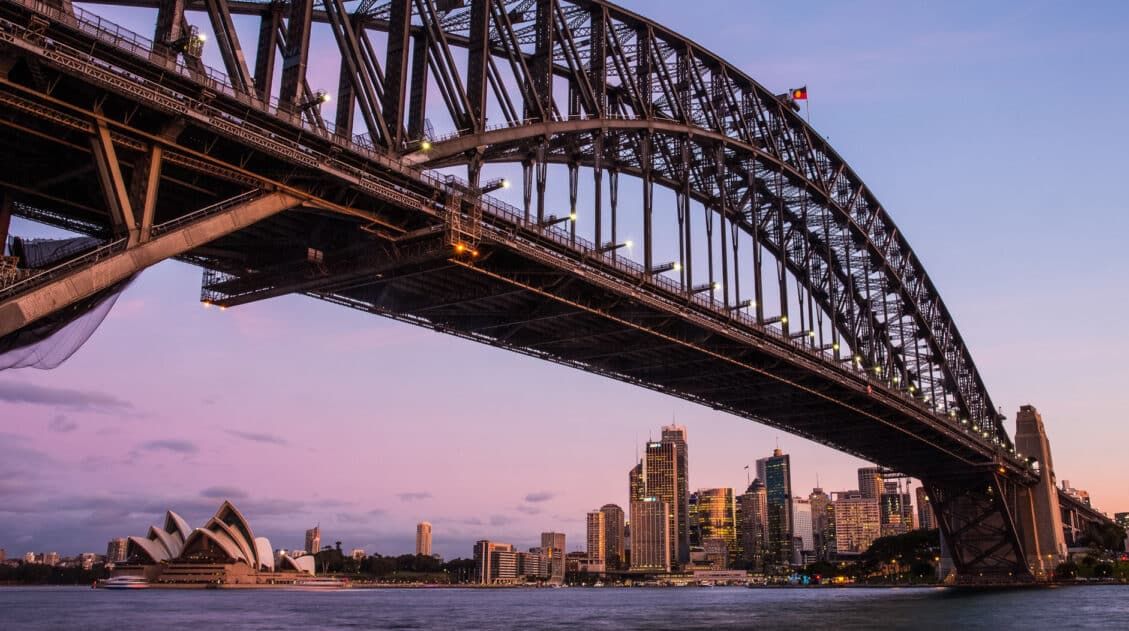
Sydney Bucket List: 40 Epic Things to Do in Sydney, Australia
Sydney is the largest city in Australia. It is world-renowned for its landmarks such as the Opera House and Sydney Harbour Bridge, its beautiful harbor, and its vast range of entertainment and fine dining. 40 things to do in Sydney sounds like a lot, and it is, but there are many more places we could […]
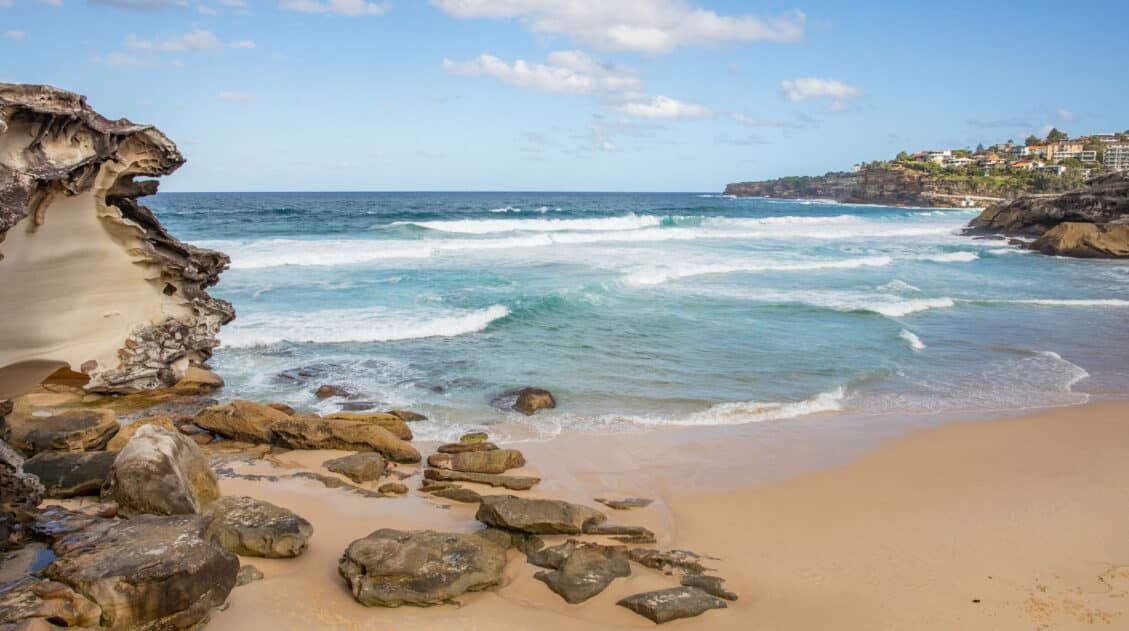
The Coogee to Bondi Coastal Walk: Map, Photos & Is It Worth It?
Looking for a relaxing coastal walk between two of Sydney’s most iconic beaches? Want to experience some great views of the coastline and take a dip in the water along the way? If the answer is yes, you will love the Coogee to Bondi Coastal Walk. Not only will you visit two of Sydney’s best […]
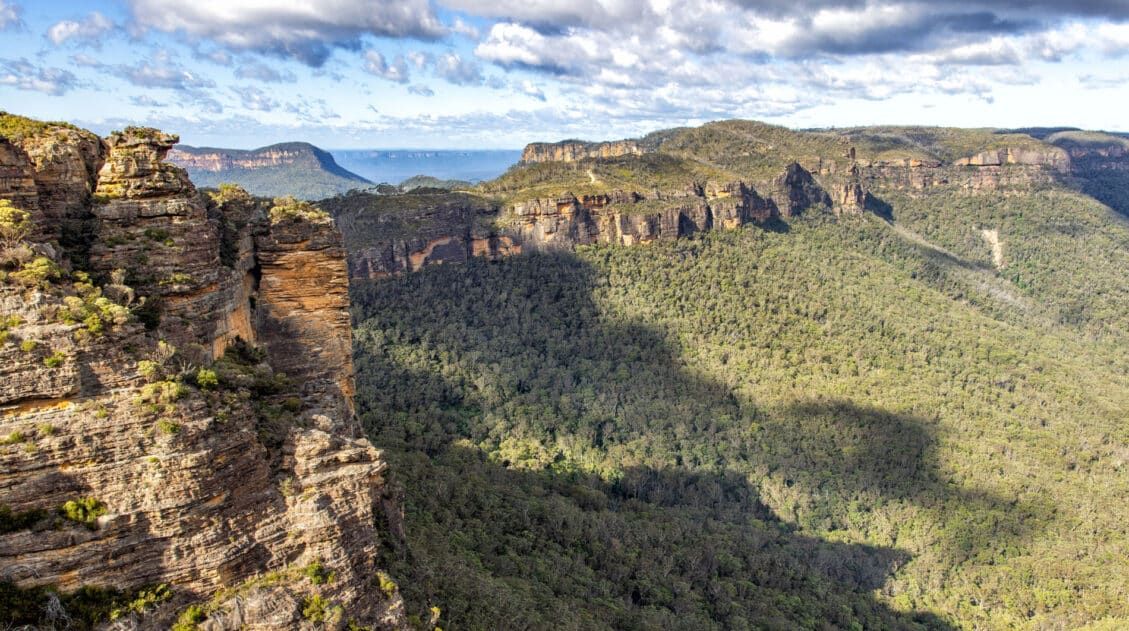
22 Amazing Things to Do in the Blue Mountains, Australia
With sandstone cliffs, hiking trails that lead to towering waterfalls and viewpoints, cable car and gondola rides, and views of unique rock formations, the Blue Mountains are a joy to explore. In this guide, learn about the best things to do in the Blue Mountains with tips to help you plan your visit. Best Things […]
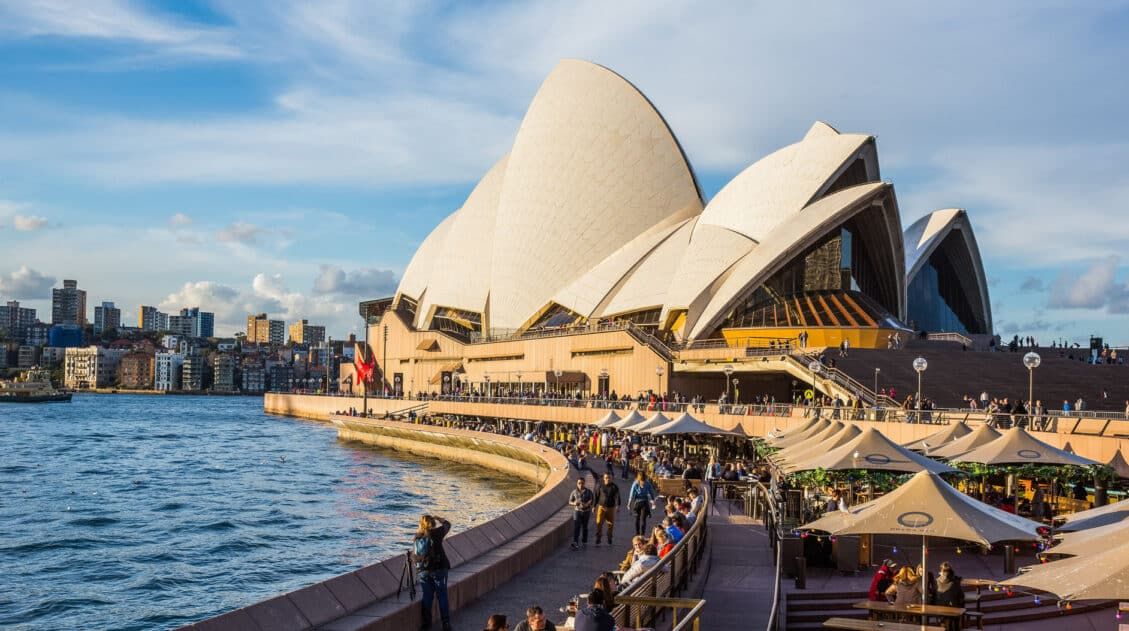
A Taste of Sydney: 20 Restaurants & Bars to Add to Your Itinerary
Where should you eat and drink in Sydney? With fine dining restaurants, rooftop cafes, wine bars, and restaurants and bars that boast big views of the Opera House and Harbour Bridge, your choices may seem overwhelming. In this guide, we list some of the top bars and restaurants in Sydney. Ranging from cheap eats to […]

Skydiving in Sydney, Australia: What to Expect & Recommended Companies
Jumping out of a plane at 15,000 feet isn’t traditionally a normal way to have “fun.” Falling through the sky with nothing but a backpack with some rolled-up fabric may seem mind-numbingly dangerous to most people. However, for the few that are unwilling to live without experiencing such thrills, you may find yourself booking a […]
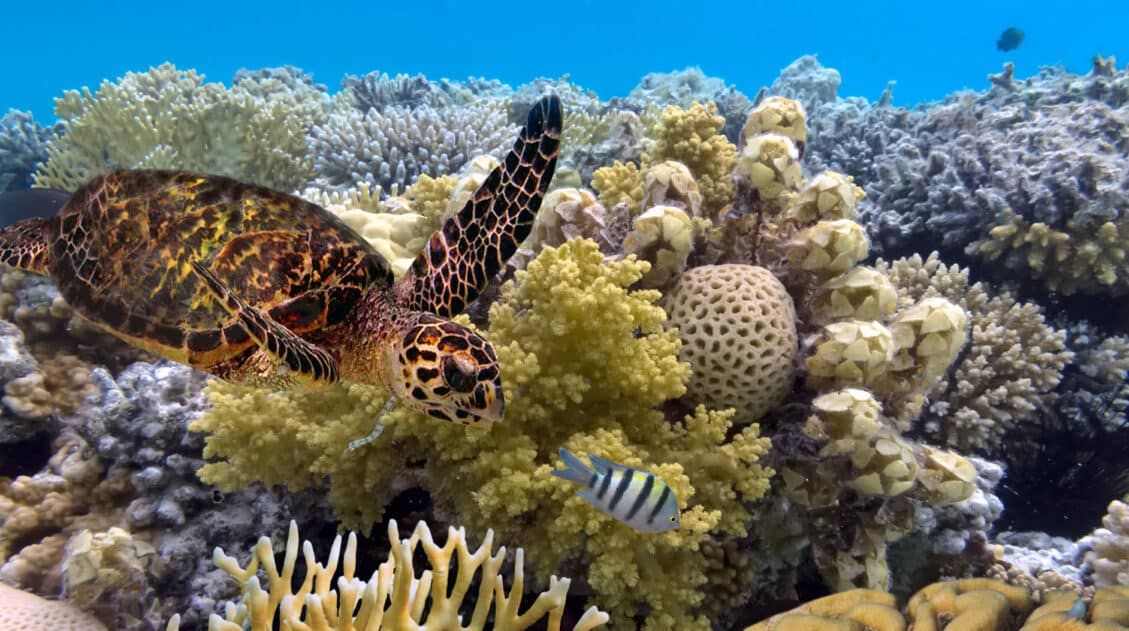
Liveaboard Tours of the Great Barrier Reef: The Best Way to Experience the GBR
The Great Barrier Reef is a fascinating bucket list destination for many around the world. Whether it be for a quick snorkel trip or a multi-day scuba tour, there are a variety of ways to explore this massive natural wonder. From impressive coral reefs to hidden shipwrecks, divers can truly see it all here. But […]
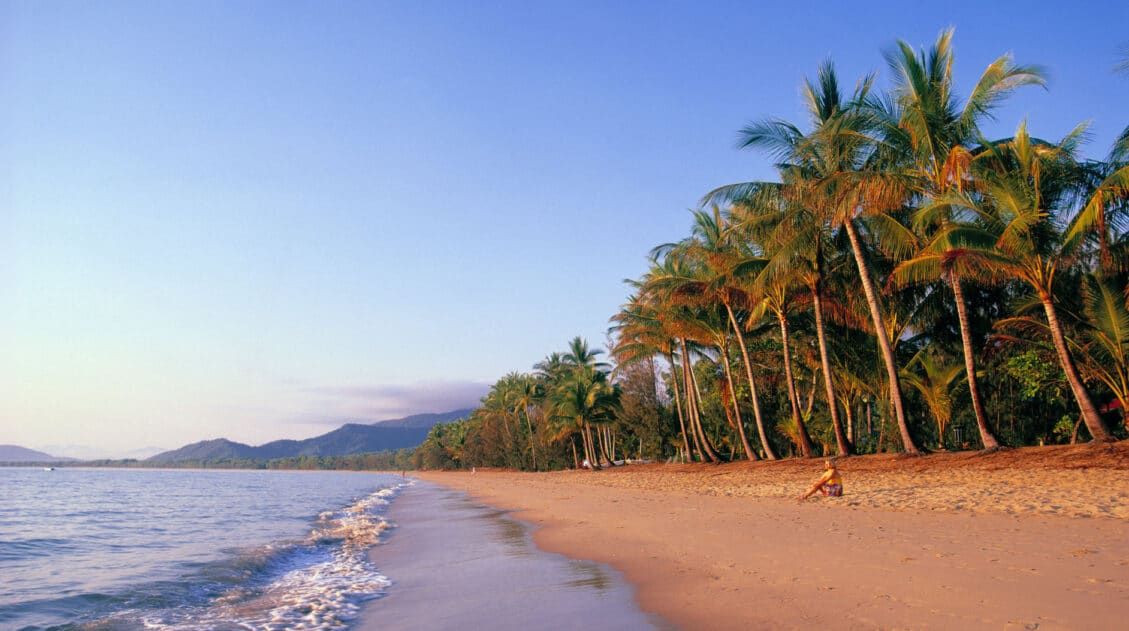
15 Thrilling Things to Do in Cairns, Australia
Visit Mission Beach, day trip to the Great Barrier Reef, and explore Daintree Rainforest…these all top the list of the best things to do in Cairns, Australia. Cairns, one of the largest cities in North Tropical Queensland, is known as the gateway to the Great Barrier Reef. Situated only a 40-minute boat ride from the […]
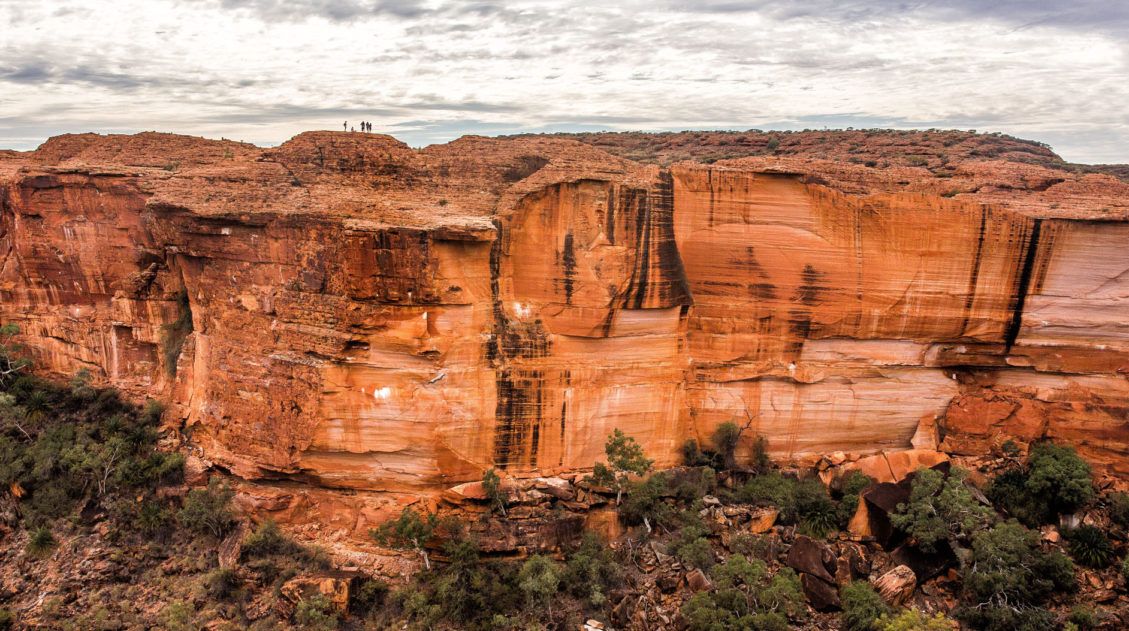
How to Hike the Rim Walk at Kings Canyon, Australia
Many people who travel to Australia visit Uluru. How can you miss seeing Australia’s most popular natural attraction? But there is a lot more out here than just a large, red rock plunked down in the outback. It can be hard to justify flying all the way to the Red Centre, only to spend a […]
Plan the Perfect Visit to Uluru-Kata Tjuta
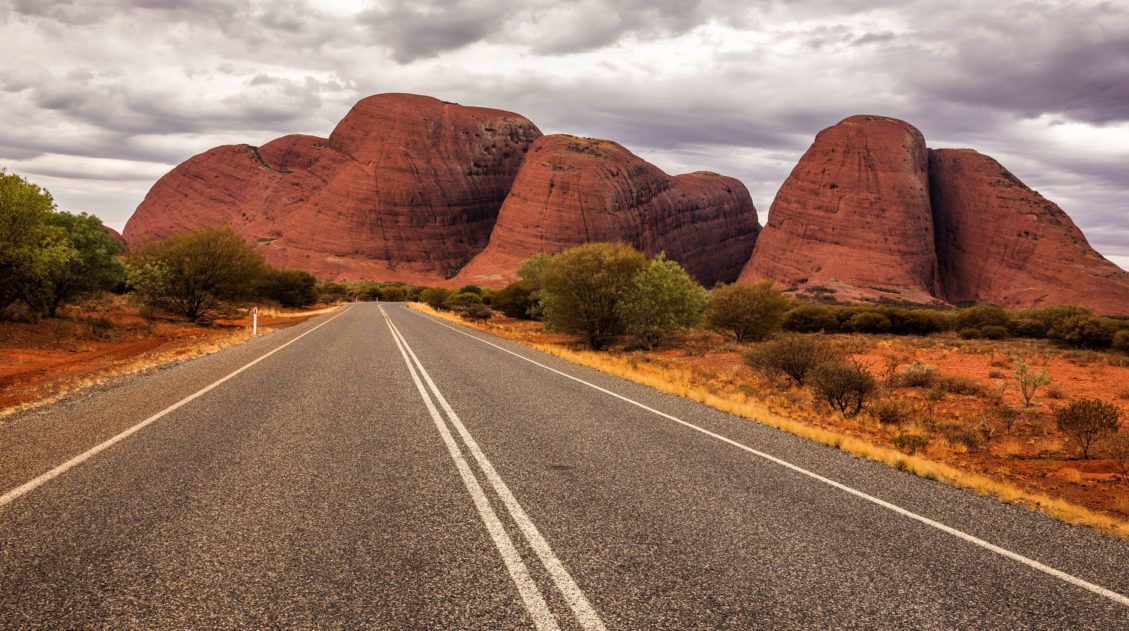
For most people, a trip to Australia just would not be complete without a visit to Uluru (aka Ayers Rock). There are a lot of must-have experiences in Australia…Sydney Harbour, the Great Barrier Reef, and seeing those crazy kangaroos, but Uluru also makes it high on the list. There is a lot more to do […]

Leave a Comment