
The hike to Amphitheater and Surprise Lakes is one of the most popular day hikes in Grand Teton National Park. It’s a tough hike, but your reward is two stunning alpine lakes tucked into the mountains.
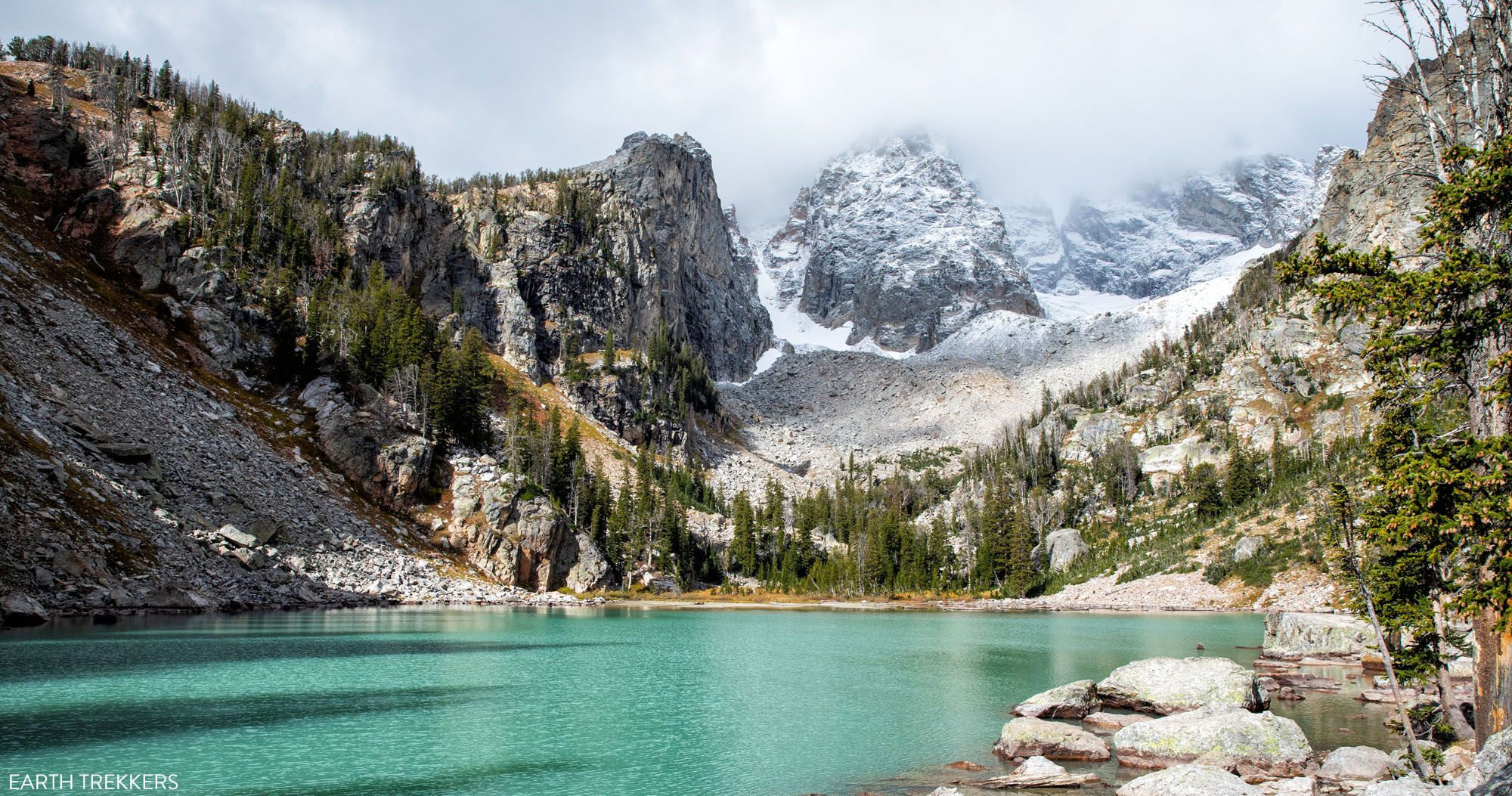
On this hike, you have the option to add on a third lake, Delta Lake. What was once a lightly-visited, off-trail destination has exploded in popularity over the past several years, fueled largely by social media and hiking apps like AllTrails. Delta Lake is now one of the most photographed spots in the park, and once you see it, you’ll understand why.
Delta Lake has become so popular that most people we met on the trail were hiking only to Delta Lake, with no plans to continue up to Surprise and Amphitheater Lakes (though they’re worth it!). Expect big crowds, especially by mid-morning.
Our Grand Teton Hiking Experience: We hiked to Surprise, Amphitheater, and Delta Lakes on our third trip to Grand Teton National Park, during a dedicated hiking trip. We’ve hiked extensively throughout Grand Teton and across the US national park system and we’ve now visited 56 of the 63 US national parks. All of the photos in this guide are our own, taken on the trail.
August 2026 Update: We refreshed this guide with the newest trail conditions. This summer, the Access Fund and Grand Teton National Park completed the first phase of a multi-year project to stabilize and define the unofficial route to Delta Lake, while intentionally preserving its rugged, backcountry character. We’ve noted below where this affects the trail description, though since the work just wrapped, some of the exact footing may differ slightly from our boulder-field photos below.
Is Delta Lake Worth It?
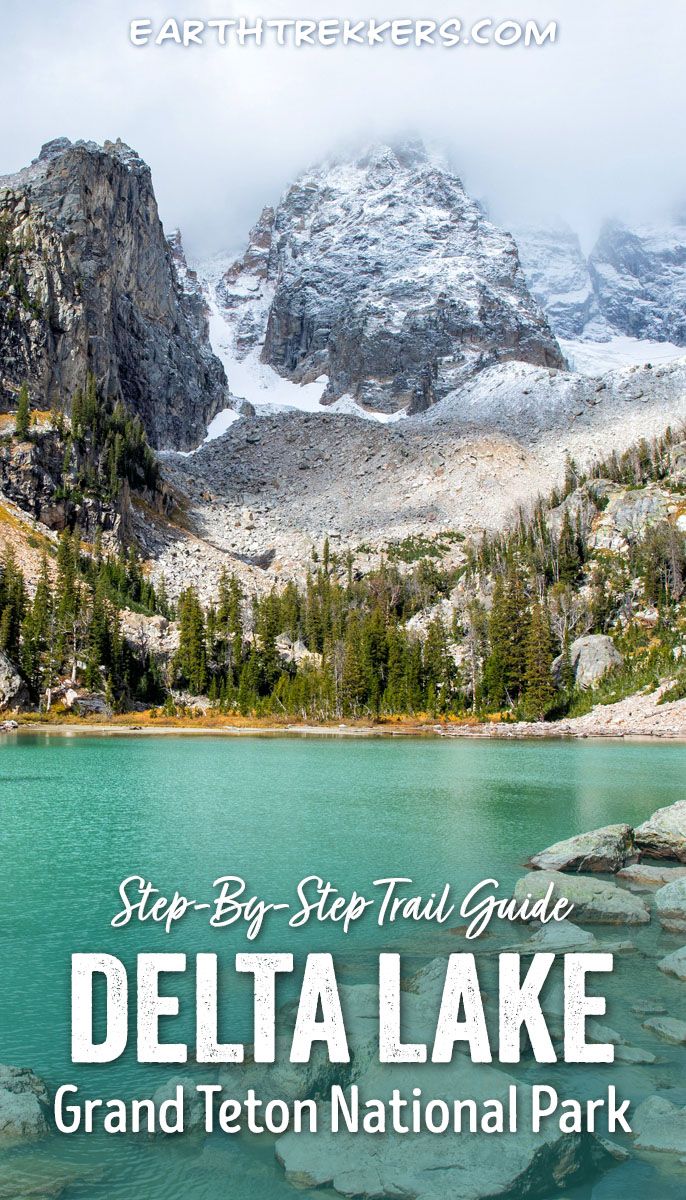
Yes. Delta Lake is one of the most rewarding short add-ons in Grand Teton National Park. The lake sits in a glacial bowl directly beneath the east face of the Grand Teton, and the turquoise color of the water (fed by snowmelt and glacial sediment) is genuinely unlike anything else nearby.
It’s a half-mile, steep off-trail scramble each way from the main Surprise/Amphitheater trail, so it’s not for everyone. But if you have solid footing and don’t mind boulder fields, it’s worth the detour.
Surprise, Amphitheater & Delta Lake Hiking Stats
These hiking stats are for the round-trip hike to all three lakes starting at the Lupine Meadows trailhead.
Distance: 11.5 miles (18.5 km) round trip
Difficulty: Strenuous
Total Elevation Gain: 3,800 feet (1,150 m)
Starting Elevation: 6,750 feet (2,050 m)
Highest Elevation (Amphitheater Lake): 9,700 feet (2,950 m)
Length of Time: 5.5 to 7.5 hours
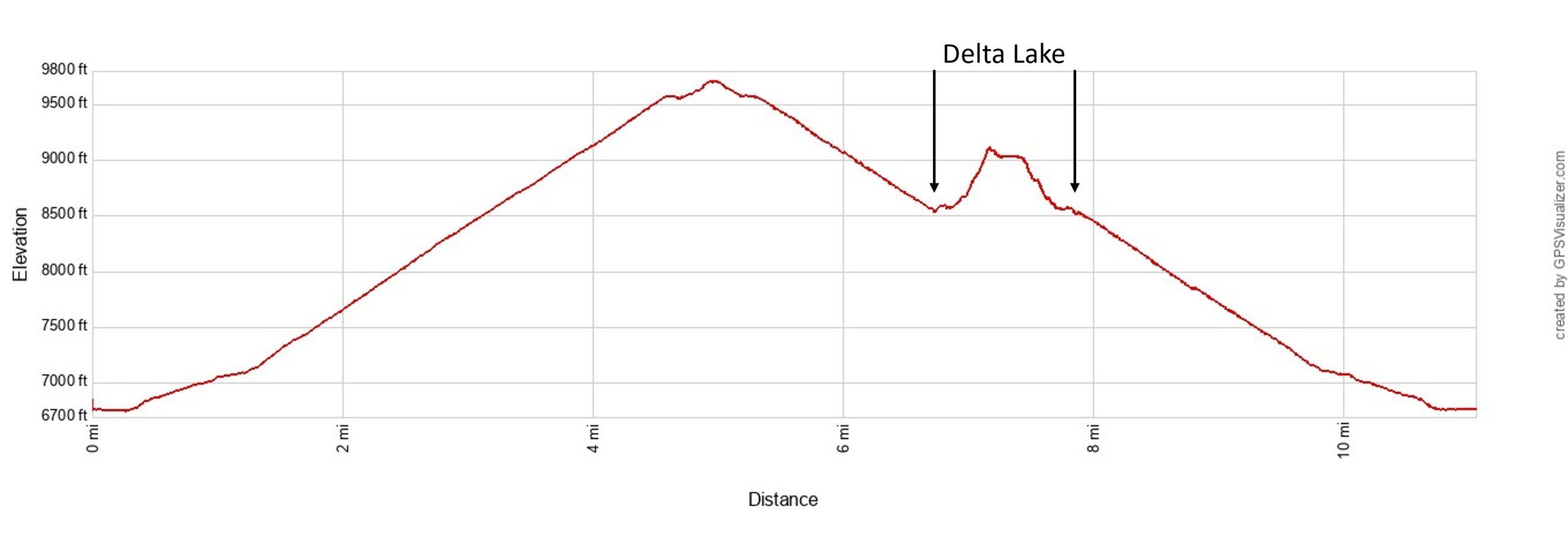
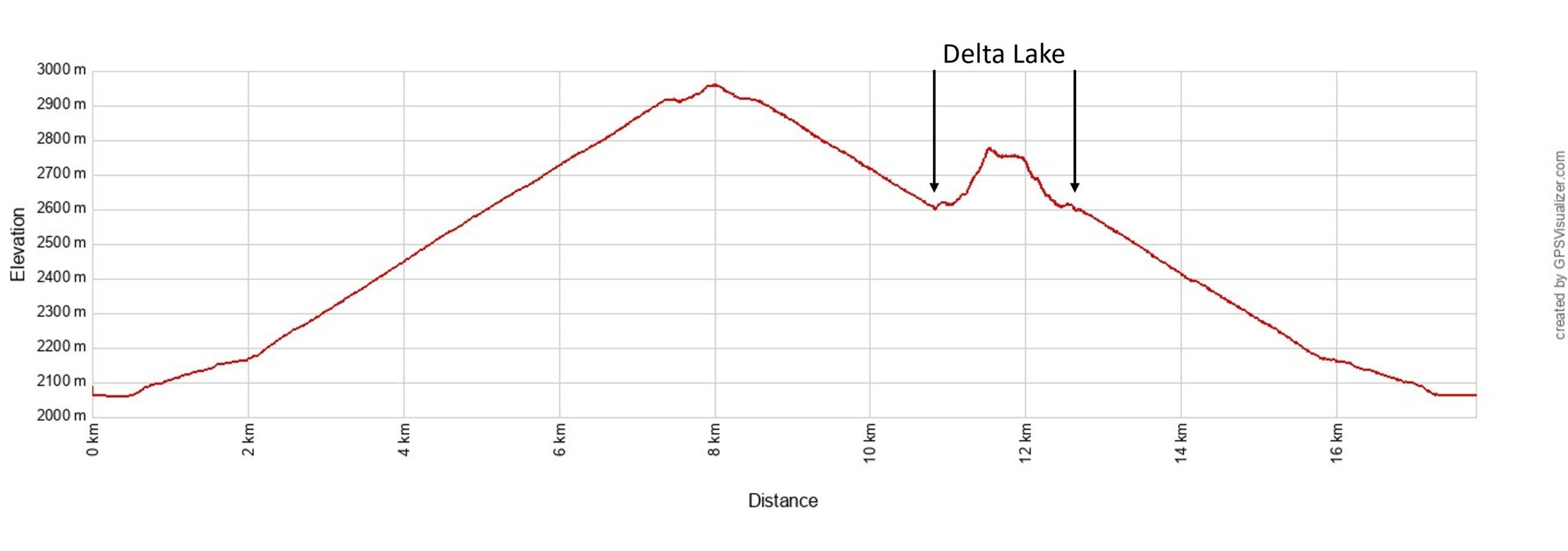
Elevation profile for Surprise, Amphitheater and Delta Lake
Surprise & Amphitheater Lake Hiking Stats
These hiking stats are for the round-trip hike to Surprise and Amphitheater Lakes from the Lupine Meadows trailhead.
Distance: 10.3 miles (16.5 km) round trip
Difficulty: Strenuous
Total Elevation Gain: 3,100 feet (945 m)
Length of Time: 4 to 6 hours
Delta Lake Hiking Stats
These hiking stats are for the round-trip hike to Delta Lake from the Lupine Meadows trailhead.
Distance: 8.75 miles (14 km) round trip
Difficulty: Strenuous
Total Elevation Gain: 2,400 feet (730 m)
Length of Time: 3.5 to 5.5 hours
Please practice the seven principles of Leave No Trace: plan ahead, stay on the trail, pack out what you bring to the hiking trail, leave areas as you found them, minimize campfire impacts, be considerate of other hikers, and do not approach or feed wildlife.
Getting to the Trailhead: Directions & Parking
The hike starts at the Lupine Meadows Trailhead, located inside Grand Teton National Park just south of Jenny Lake.
From the Moose Entrance Station: Head north on Teton Park Road for 6.2 miles, then turn left (west) onto Lupine Meadows Road. Follow this gravel road for 1.5 miles to its end, where the trailhead and parking lot are located. Total drive time is about 16 minutes (7.7 miles).
From Jackson, WY: Drive north on Highway 191 for about 12 miles to Moose Junction, then follow the directions above.
Lupine Meadows Road is gravel but fine for a standard car but expect a few easy-to-dodge potholes.
Parking: The lot holds around 50 cars, with overflow parking along Lupine Meadows Road once it fills. Lupine Meadows is one of the busiest trailheads in the park, largely because of Delta Lake’s popularity. In peak season, the lot can fill before sunrise, so plan to arrive early (by 7 am, as we noted below).
Surprise, Amphitheater, and Delta Lake Hike: Step-By-Step Trail Guide
Hiking to Surprise and Amphitheater Lakes
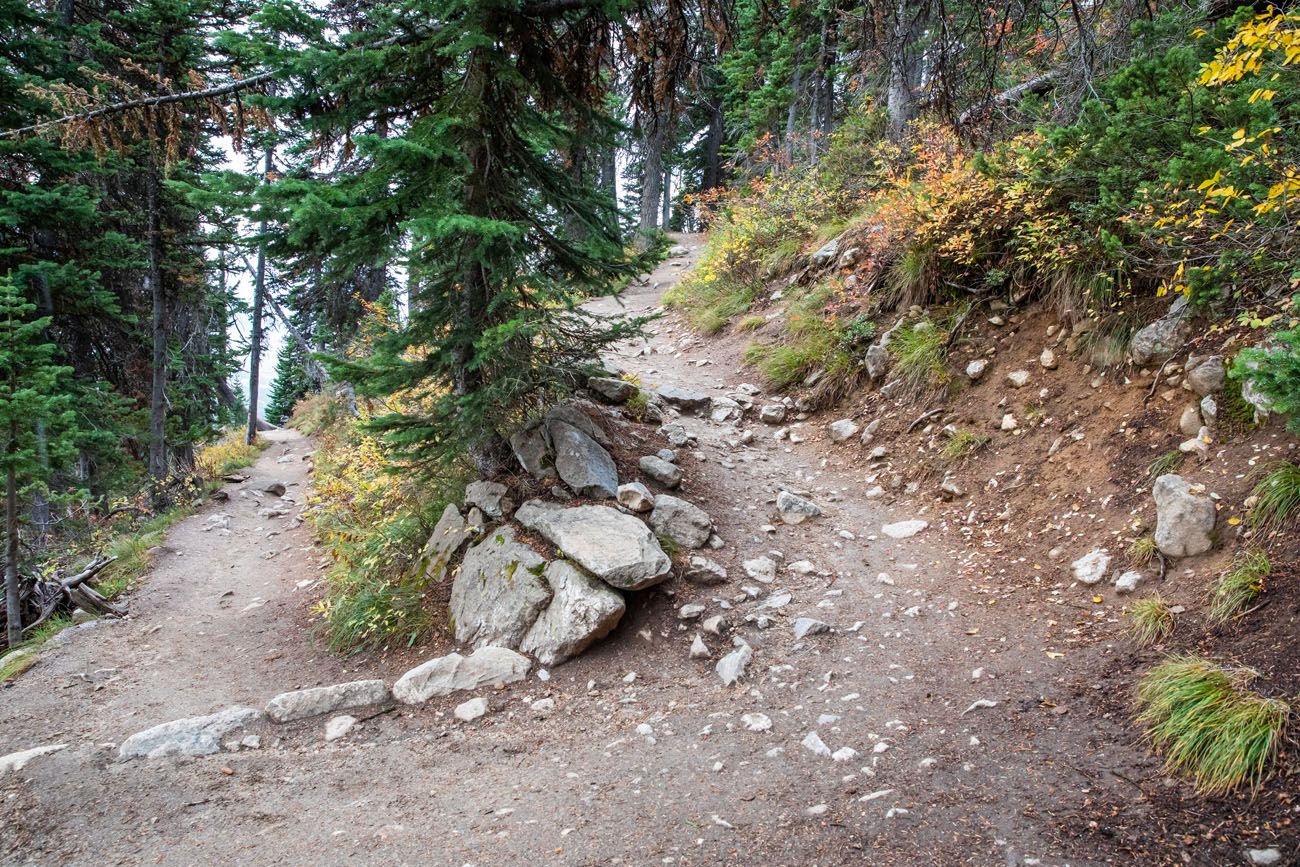
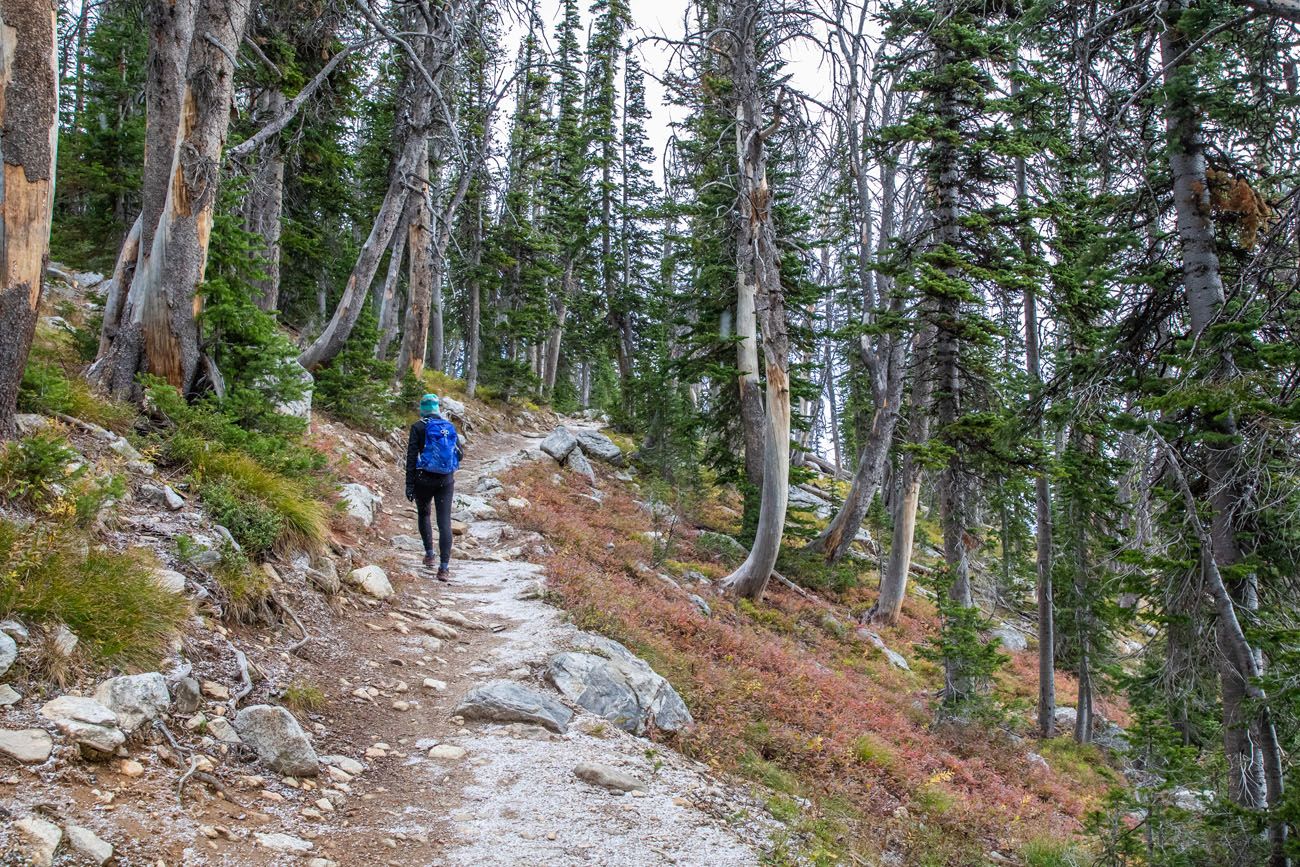
At first, it’s an easy hike. The trail starts off flat and then gradually gains elevation, but it is nothing too strenuous. For the most part, you are hiking through meadows and forests and occasionally have views out over Bradley and Taggart Lakes.
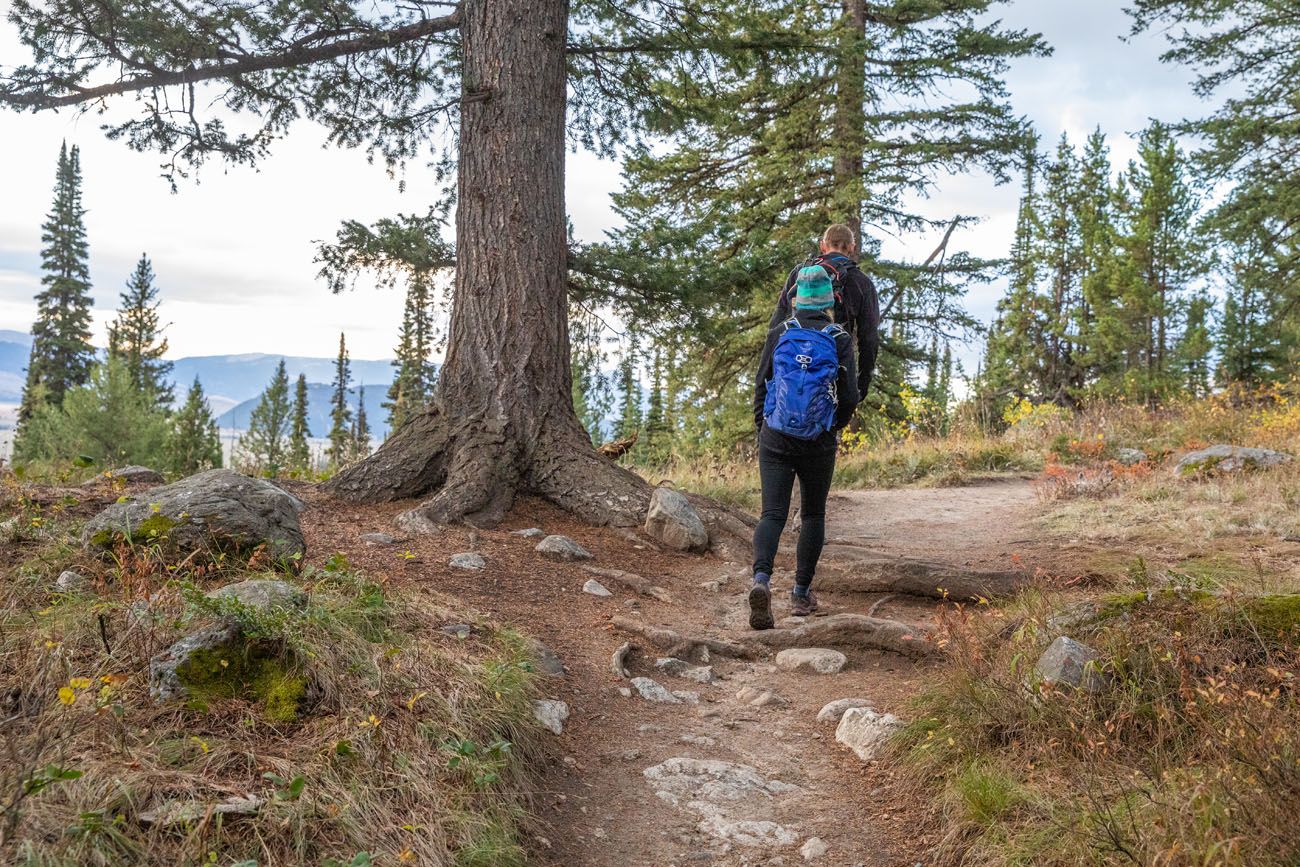
Once the trail turns towards the mountains, the hike becomes more challenging. Now, you are heading up a moderate incline and the trail almost never seems to level out.
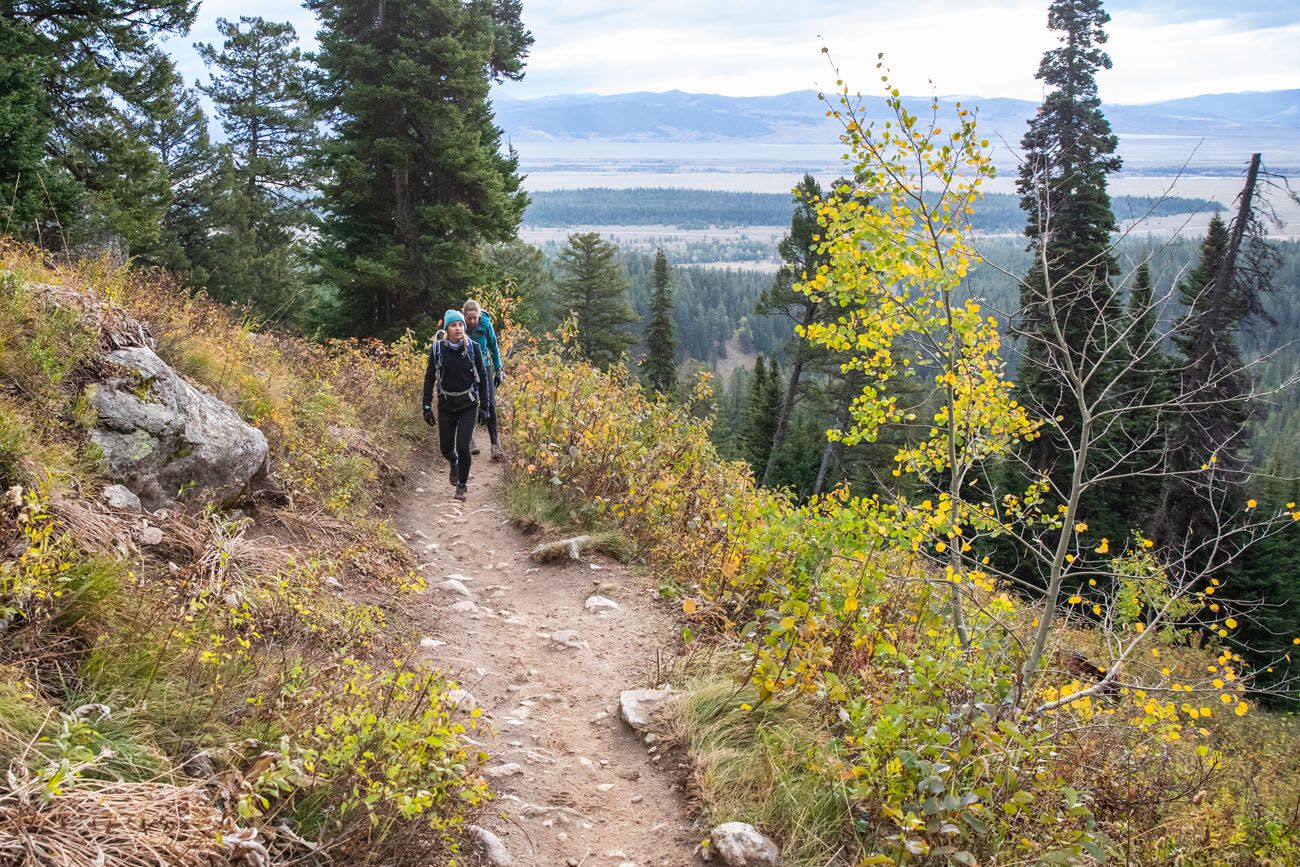
Almost 2 miles into the hike, you reach a fork in the trail. Continue straight to hike to Surprise and Amphitheater Lakes. If you take the trail to the left you go to Bradley and Taggart Lakes.
It also at this point where the switchbacks begin. As you steadily gain elevation, you get wonderful views over both Bradley and Taggart Lakes.
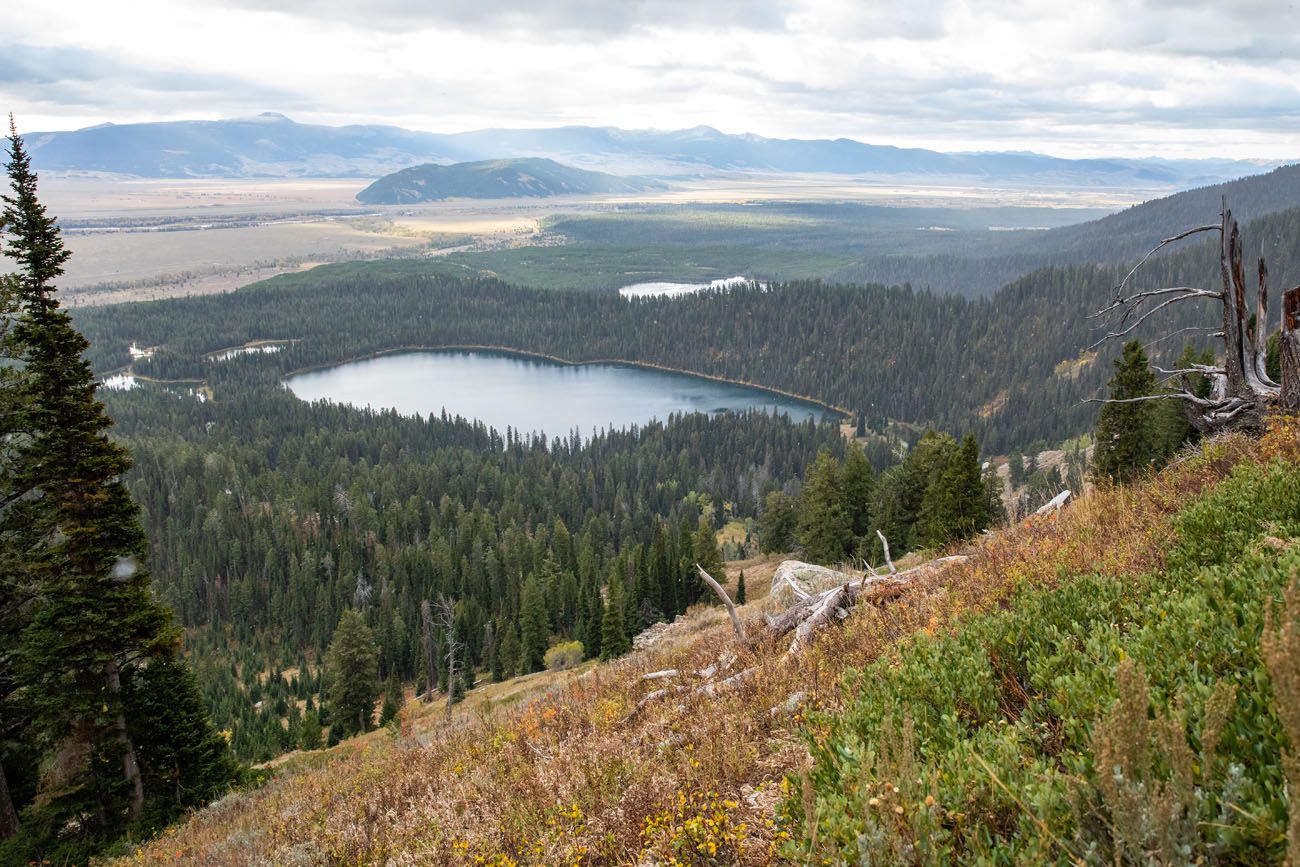
3 miles into the hike you reach another split in the trail. This is where hikers can take the trail to head into Garnet Canyon. To reach Surprise and Amphitheater Lakes, continue up the switchbacks. Yay!
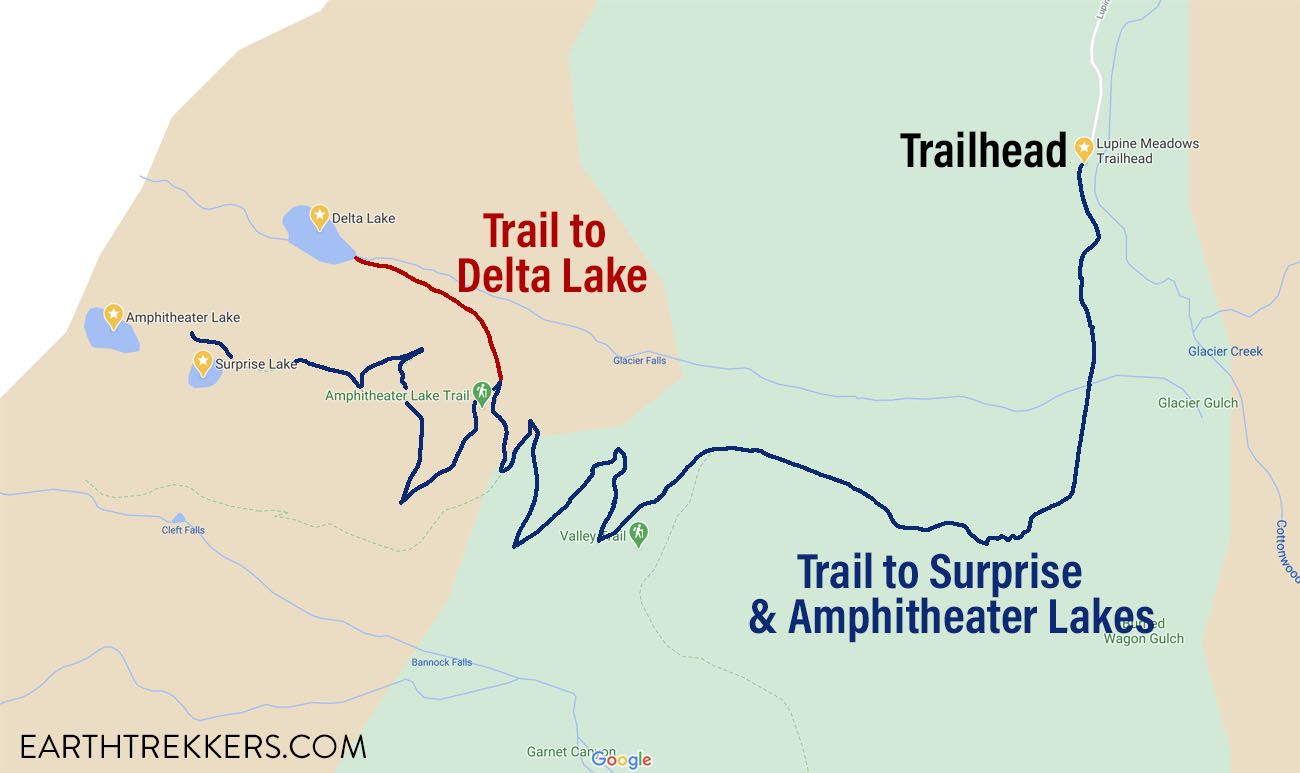
At the very next switchback is the trail to Delta Lake. If you have plans to hike Delta Lake, you can do so now, or add it in after hiking Surprise and Amphitheater Lakes. We chose to hike to Surprise and Amphitheater Lakes first, to get the majority of the climbing over with early in the hike. Plus, since Surprise and Amphitheater Lakes get fewer visitors than Delta, we were able to have both lakes all to ourselves early in the morning.
From the trail split to Delta Lake, you still have one mile of hiking with 1,000 feet of elevation gain to get to Surprise and Amphitheater Lakes.
Surprise Lake is the first lake that you will come to. Take the short trail to the lake. Grand Teton, the highest mountain in the Teton range, forms the backdrop of the lake.
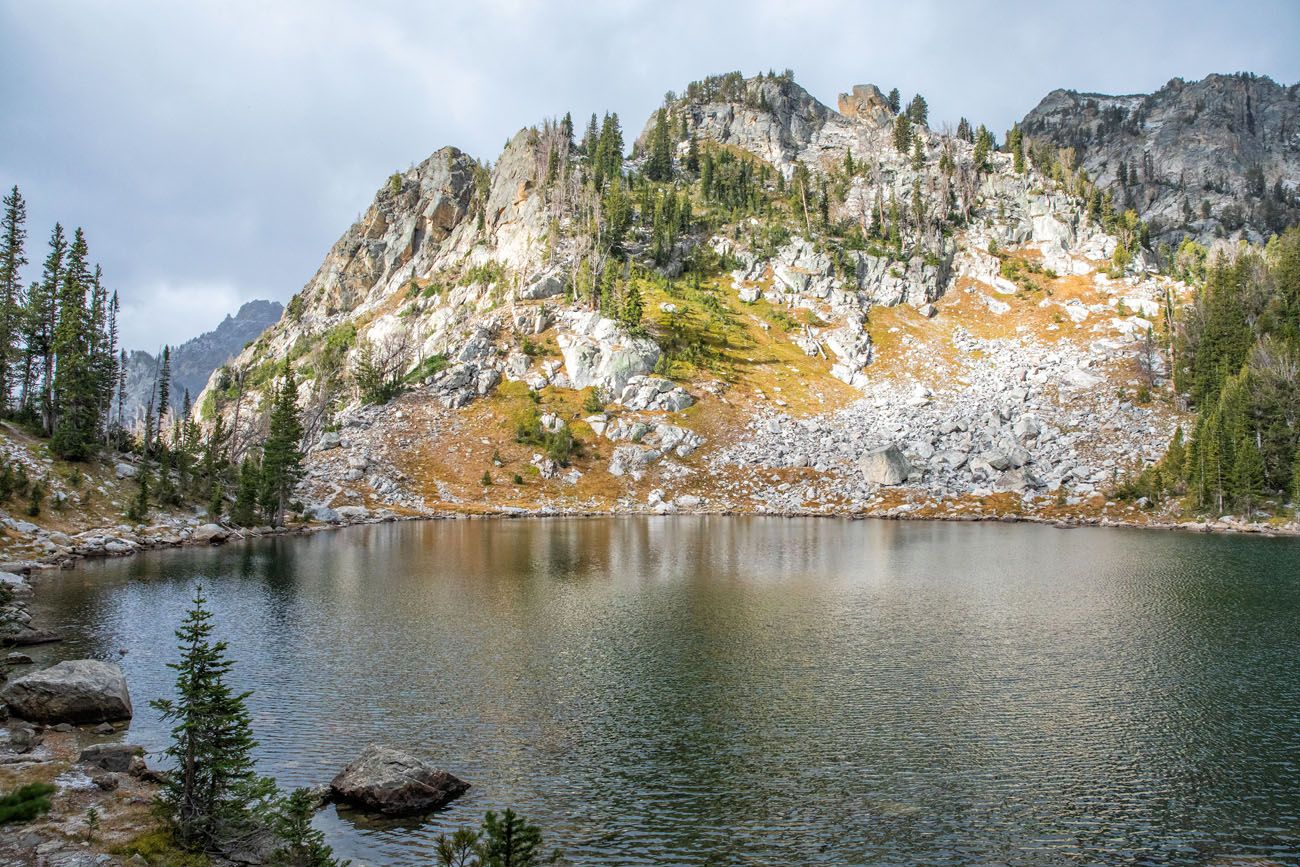
Surprise Lake
It’s a short walk to Amphitheater Lake, just 5 to 10 minutes total. This lake is larger than Surprise Lake and is surrounded by several of the largest mountains in the Teton Range: Middle Teton, Disappointment Peak, and Grand Teton.
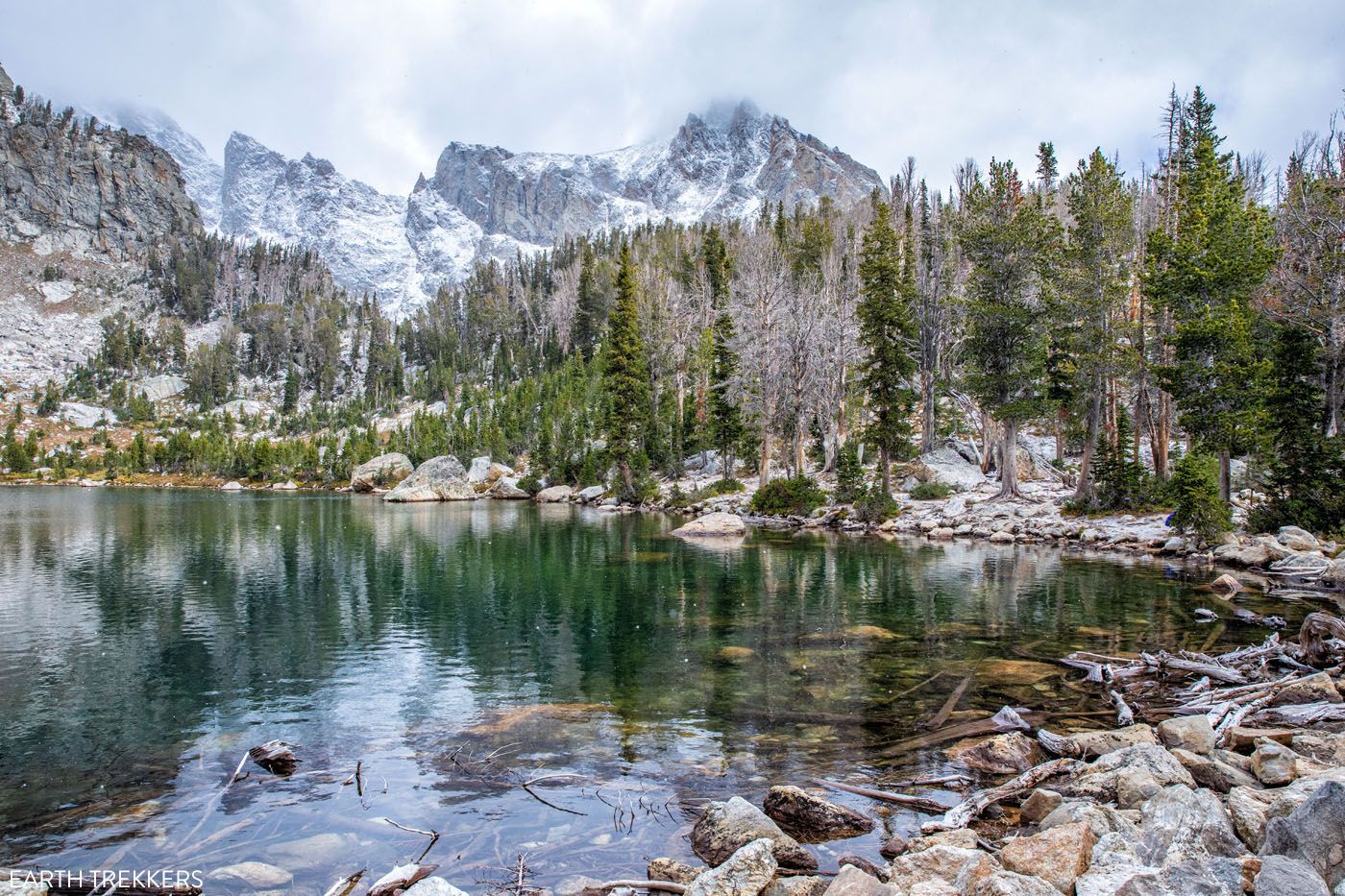
Amphitheater Lake
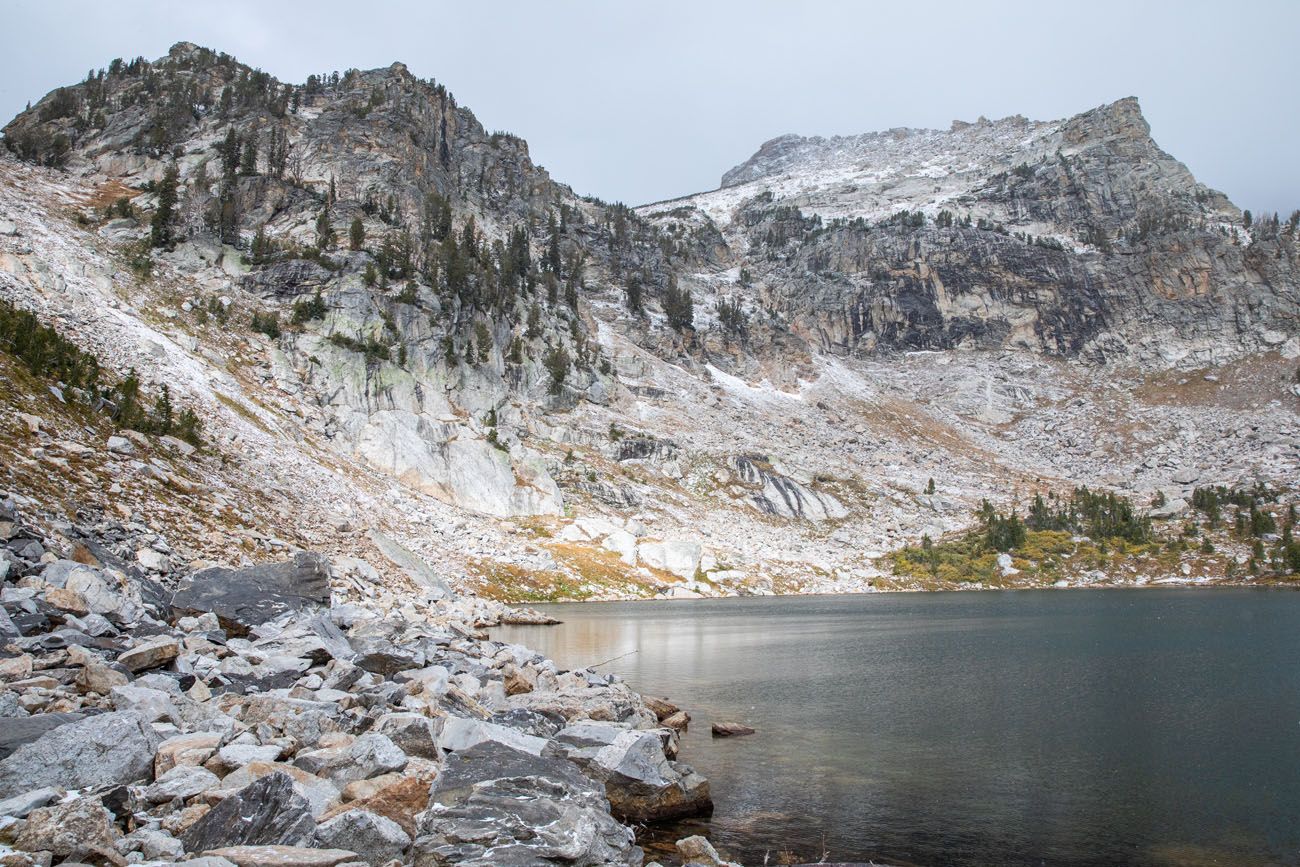
Amphitheater Lake
To get back to your car, retrace your steps. If you plan to hike to Delta Lake, look for the turn off about a mile from Amphitheater Lake.
How to Hike to Delta Lake
The trail to Delta Lake is an unofficial, unmarked route in Grand Teton National Park. It’s historically been rough, rugged, and easy to lose. The hikers in front of you might not even be on the correct path, as we saw firsthand.
In summer 2026, the Access Fund and Grand Teton National Park completed the first phase of a project to stabilize and better define this route, by widening sections, reducing erosion, and cutting down the tangle of competing “social trails” that had formed over the years. The goal was to make it safer and more sustainable while intentionally keeping its rugged, off-trail character intact.
A note on our photos below: they were taken before this summer’s trail work, so some sections may look a bit different on the ground now: wider, more defined, or slightly rerouted in places. We’ll update this guide as we’re able to get back out there ourselves, but if you’ve hiked it recently and have tips or updated details to share, we’d love to hear them in the comments below!
The Trail to Delta Lake
To get to Delta Lake, you will cross boulder fields and hike up a very steep, slippery, dirt trail. It’s tough to get to Delta Lake and you should only do this if you have prior hiking experience.
The trail to Delta Lake is unmarked. On the Amphitheater Lake Trail, one switchback past the turn-off to Garnet Canyon, look for the steep, dirt trail that leads down to Delta Lake.
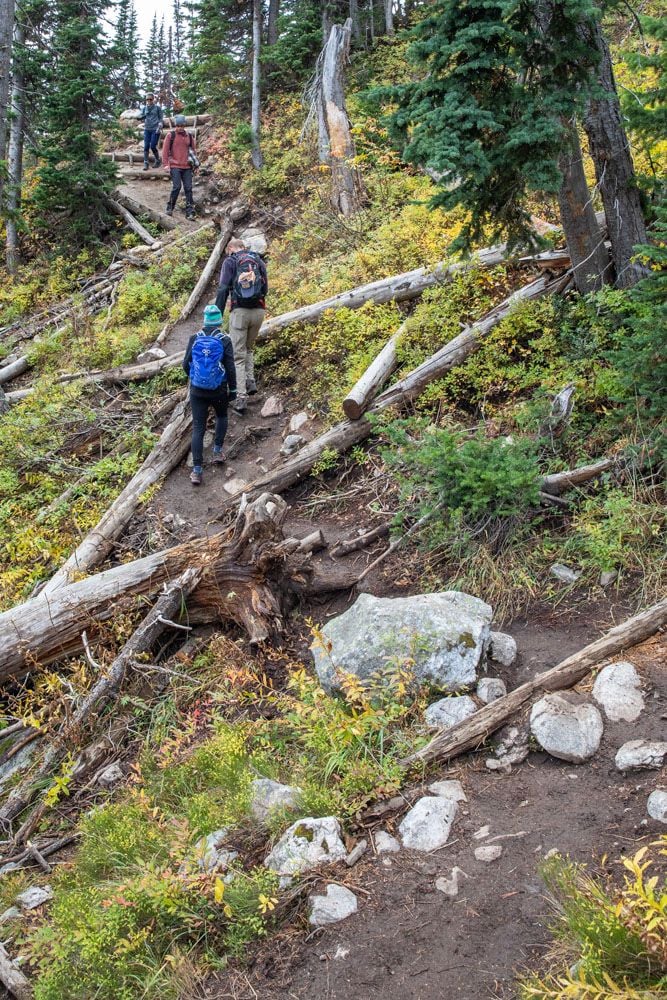
It is a half-mile, challenging climb up to the lake. After the first steep descent, it’s mostly uphill to the lake, and at times, the trail will be very steep. At first, you will hike up a narrow dirt trail and climb over several fallen trees.
At the first boulder field, head directly across to the other side, where you will reach another dirt trail. This dirt trail heads steeply up the mountain, before reaching a second boulder field.
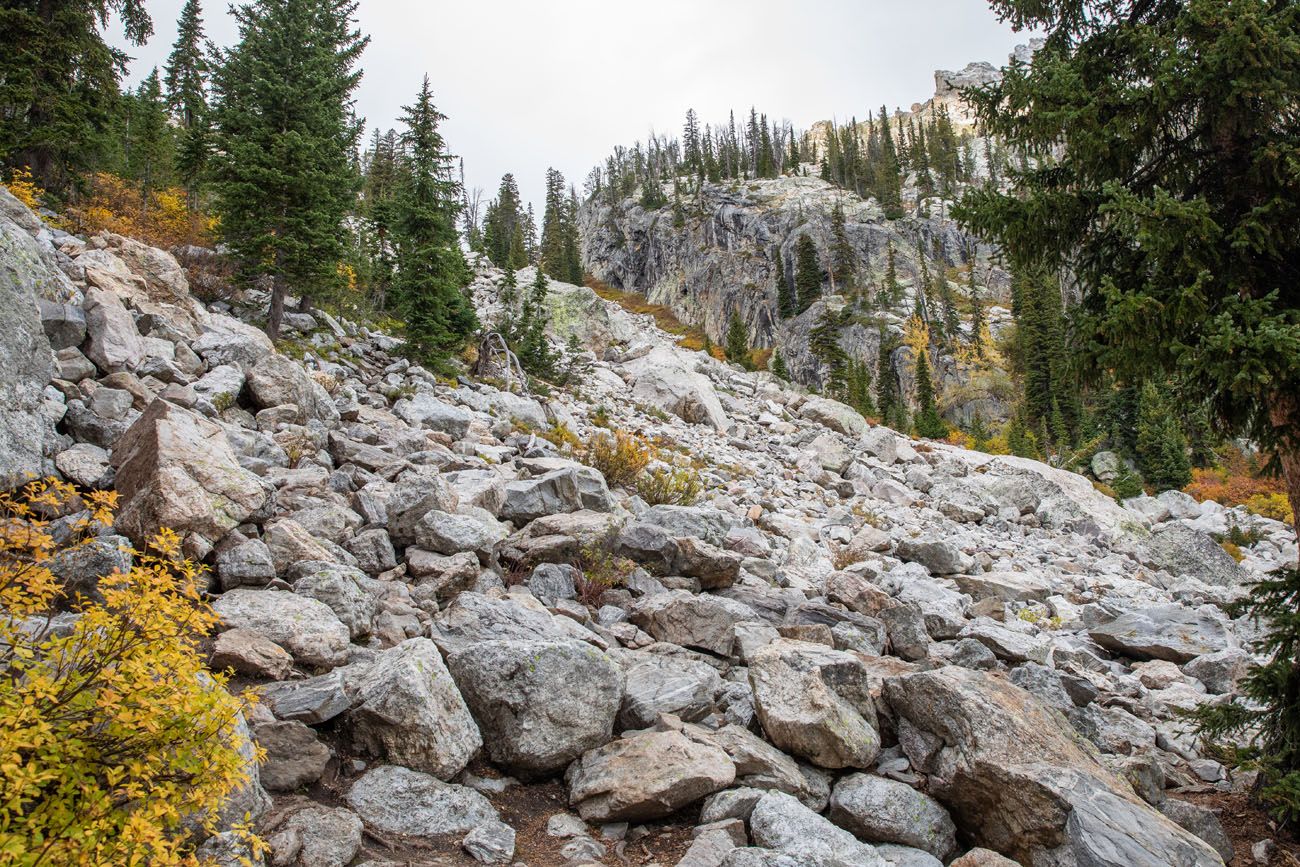
Looking across the first boulder field
At the second boulder field, stay to the right and head for the trees on the opposite side. This is the correct trail. You may see a line of hikers climbing up the boulder field…they are not on the trail. They will end up on a ridge high above the lake and will have to traverse down the boulder field to get down to Delta Lake, making their hike longer and more difficult than it needs to be.
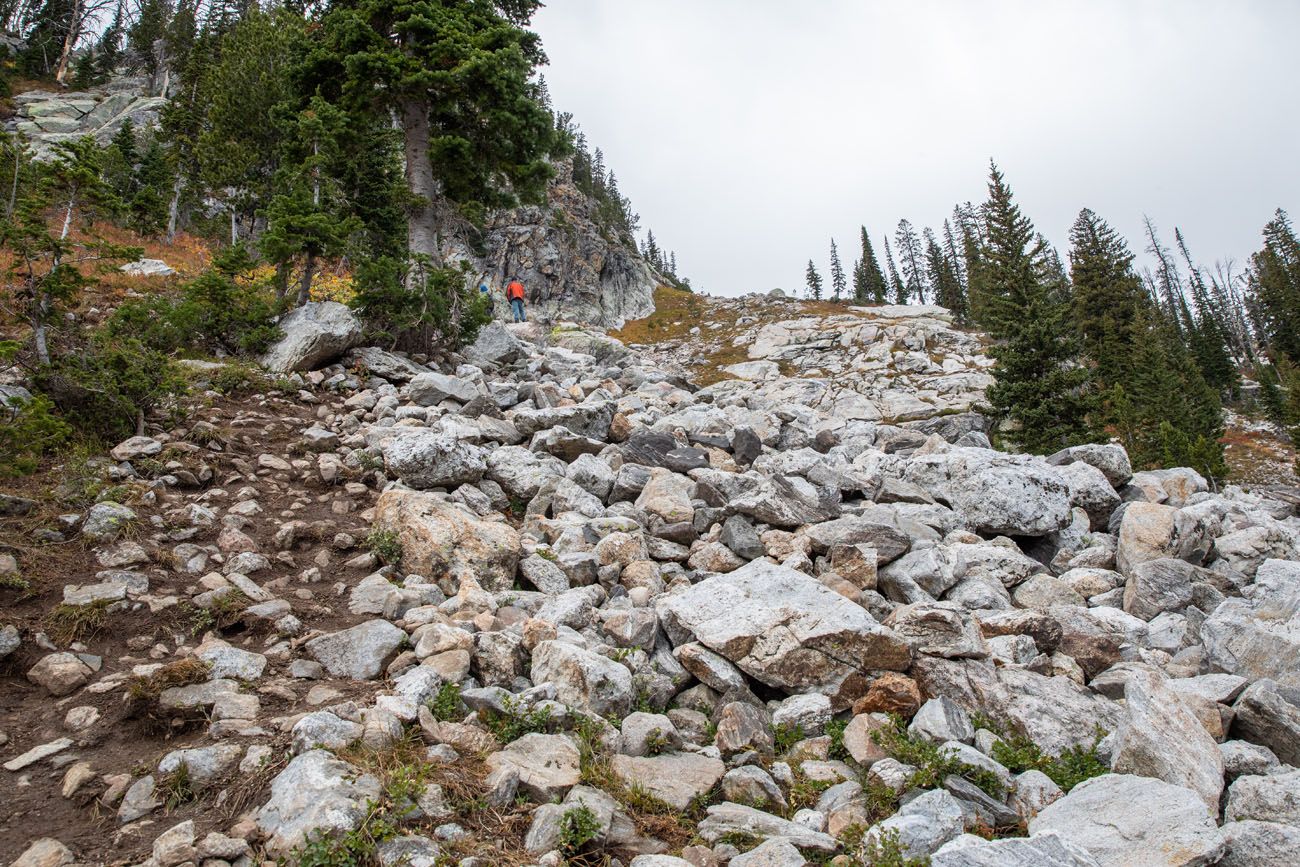
This is the second boulder field. On the left hand side of this photo you can see a sketchy trail that leads uphill. This is NOT the correct trail.
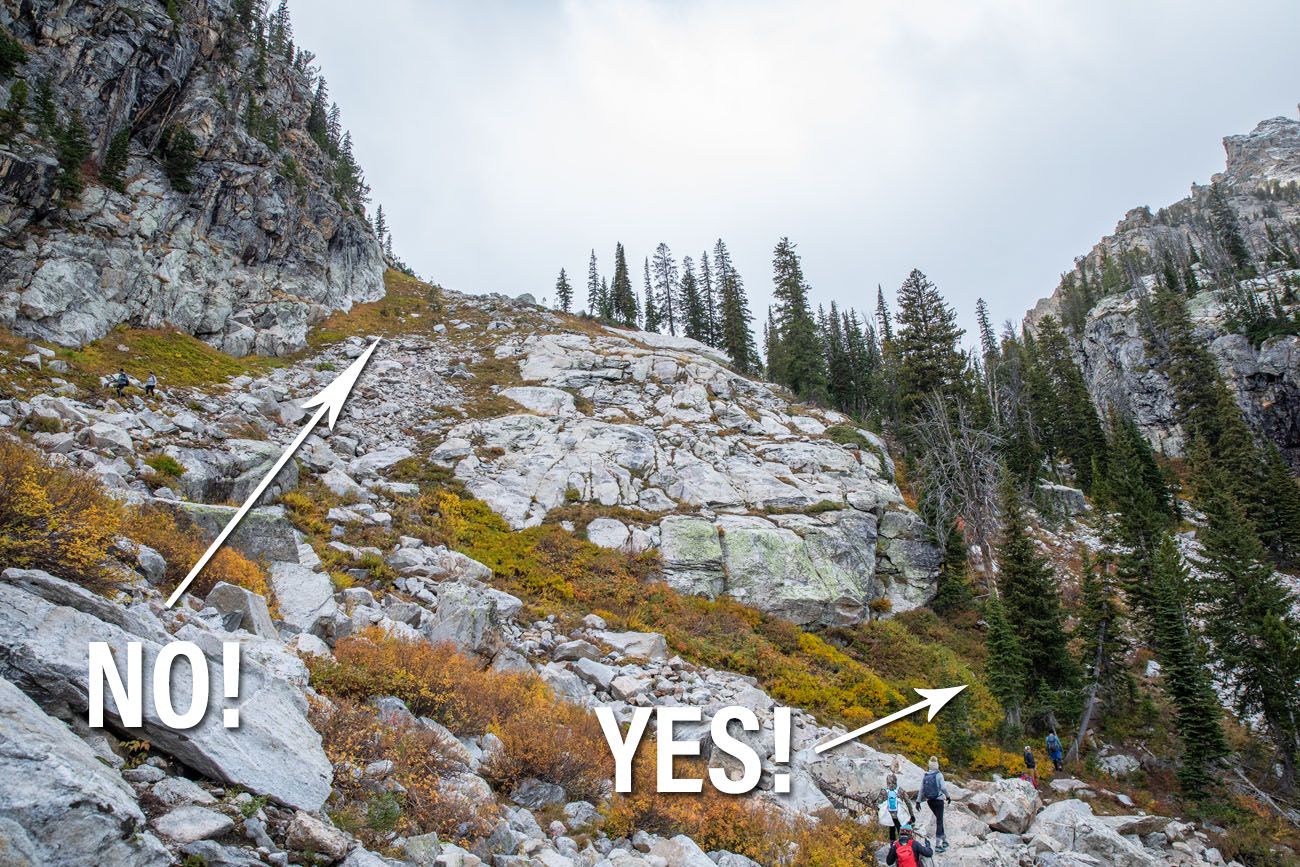
Go straight across the second boulder field. Do not hike up the hill.
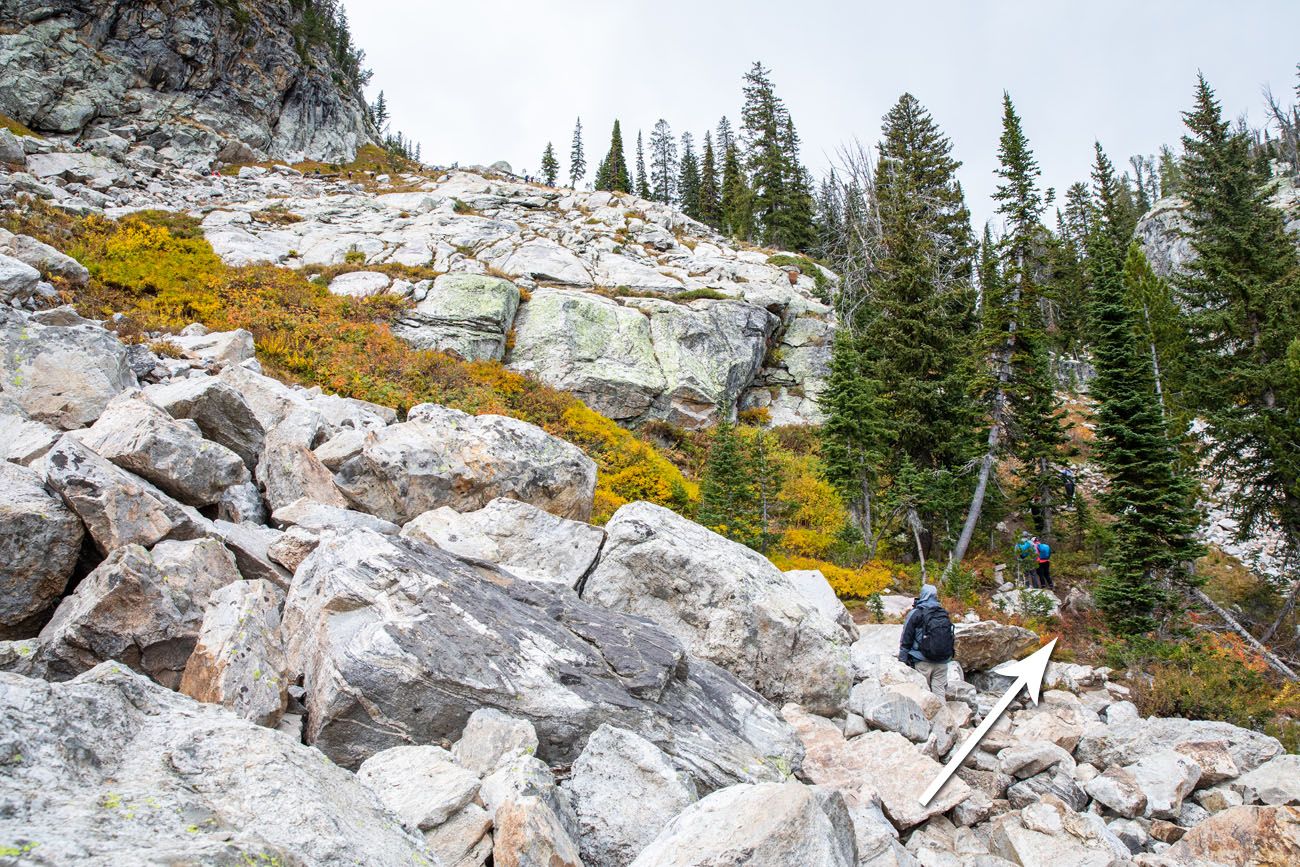
One last view of the boulder field. Once you enter the trees, you will hike up a steep, dirt path.
From the far side of the second boulder field, it is one last, steep climb up a dirt trail to Delta Lake.
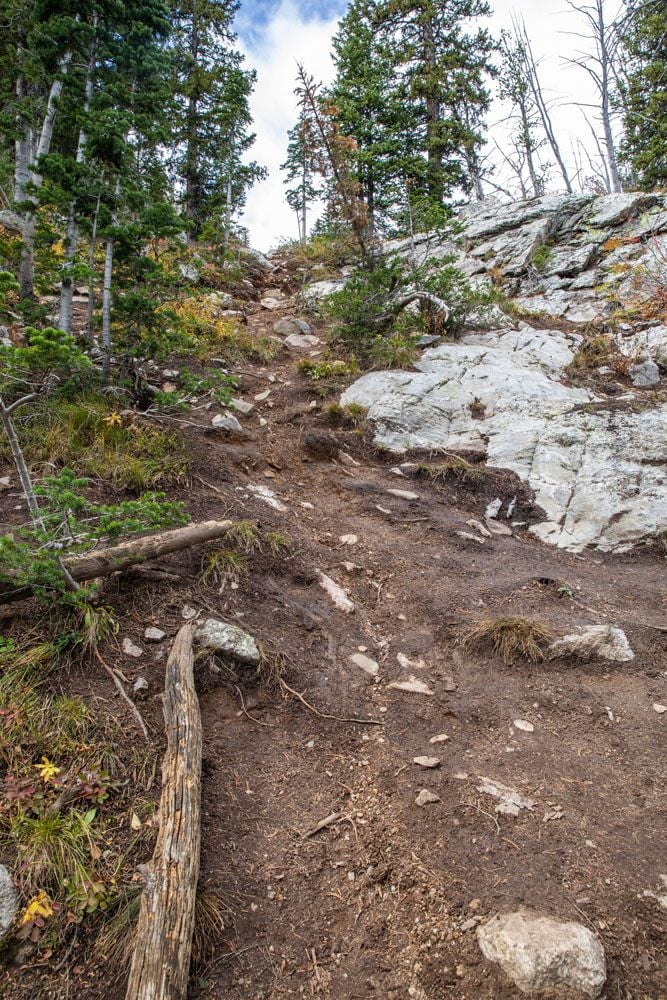
Dirt trail to Delta Lake.
Once at Delta Lake, enjoy the view! It’s worth it.
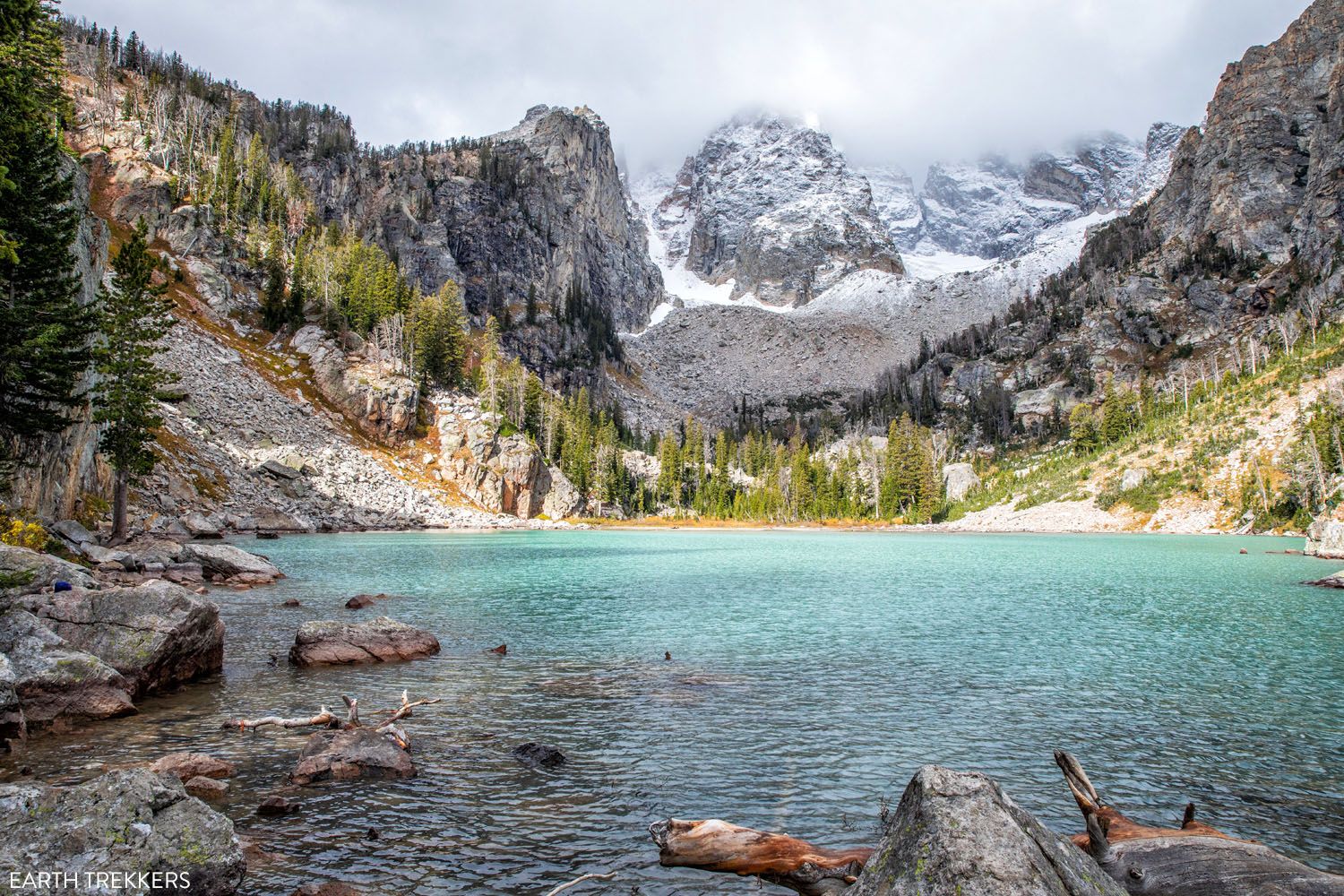
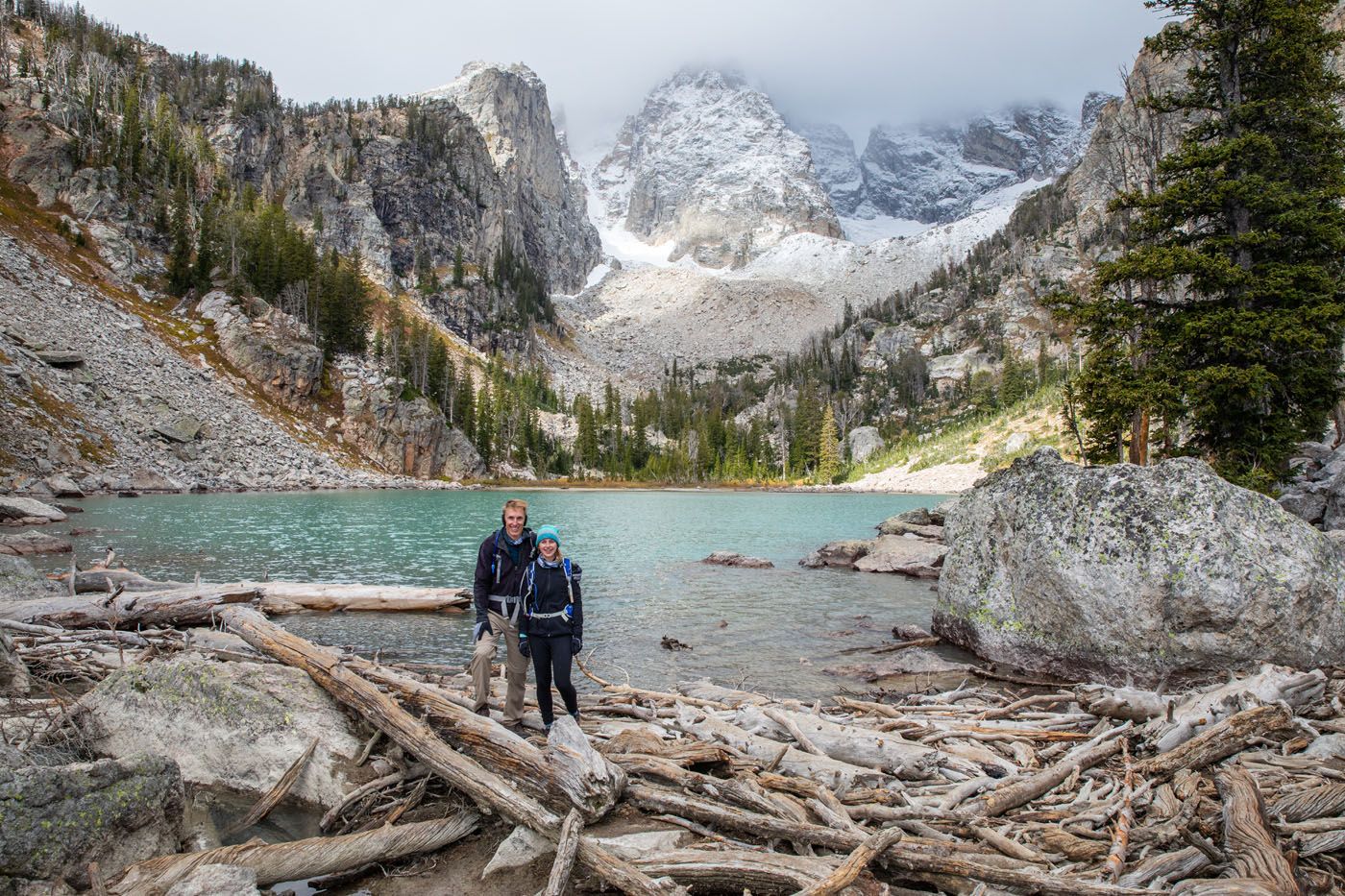
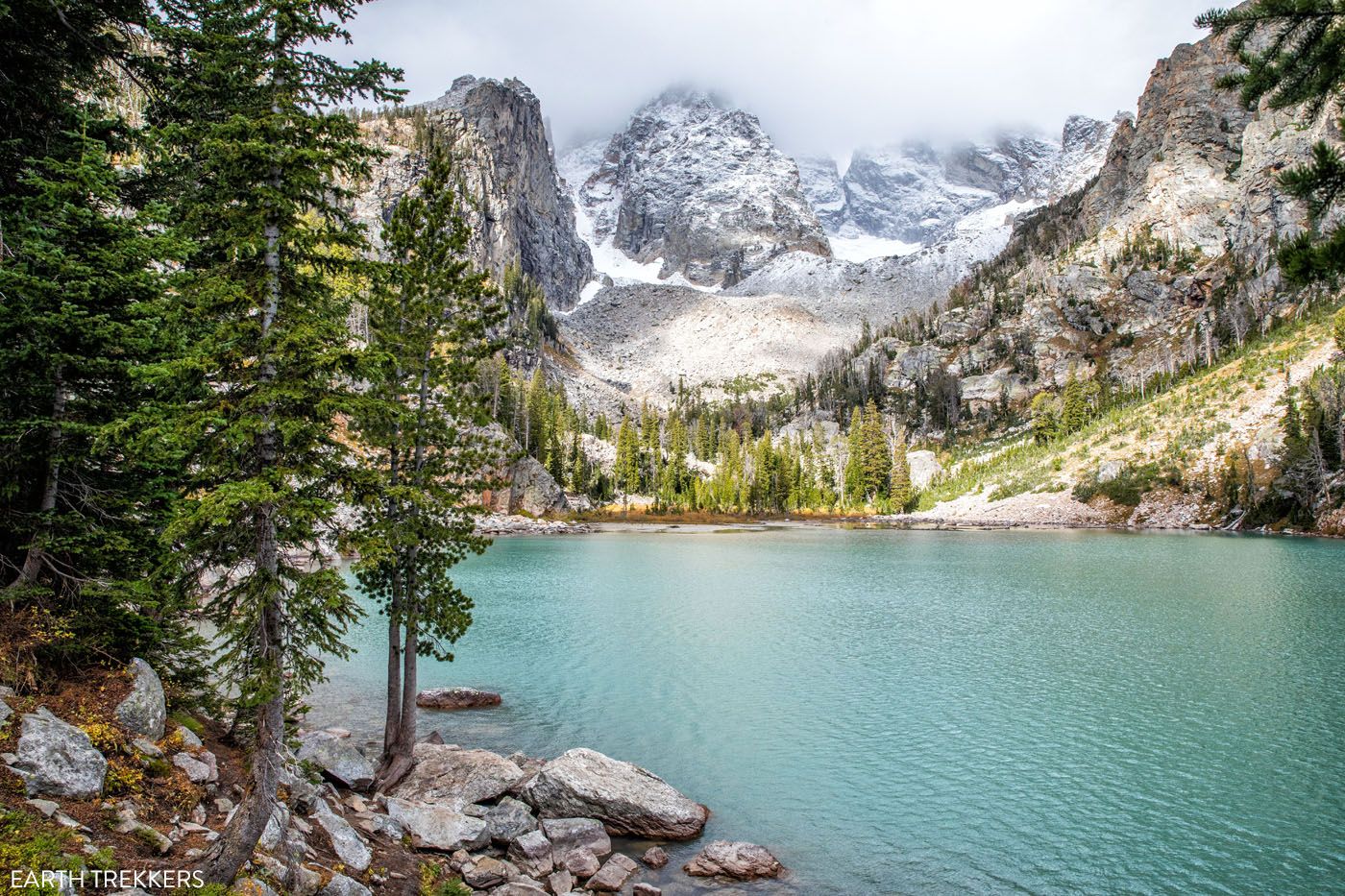
You can walk around the lake for different views.
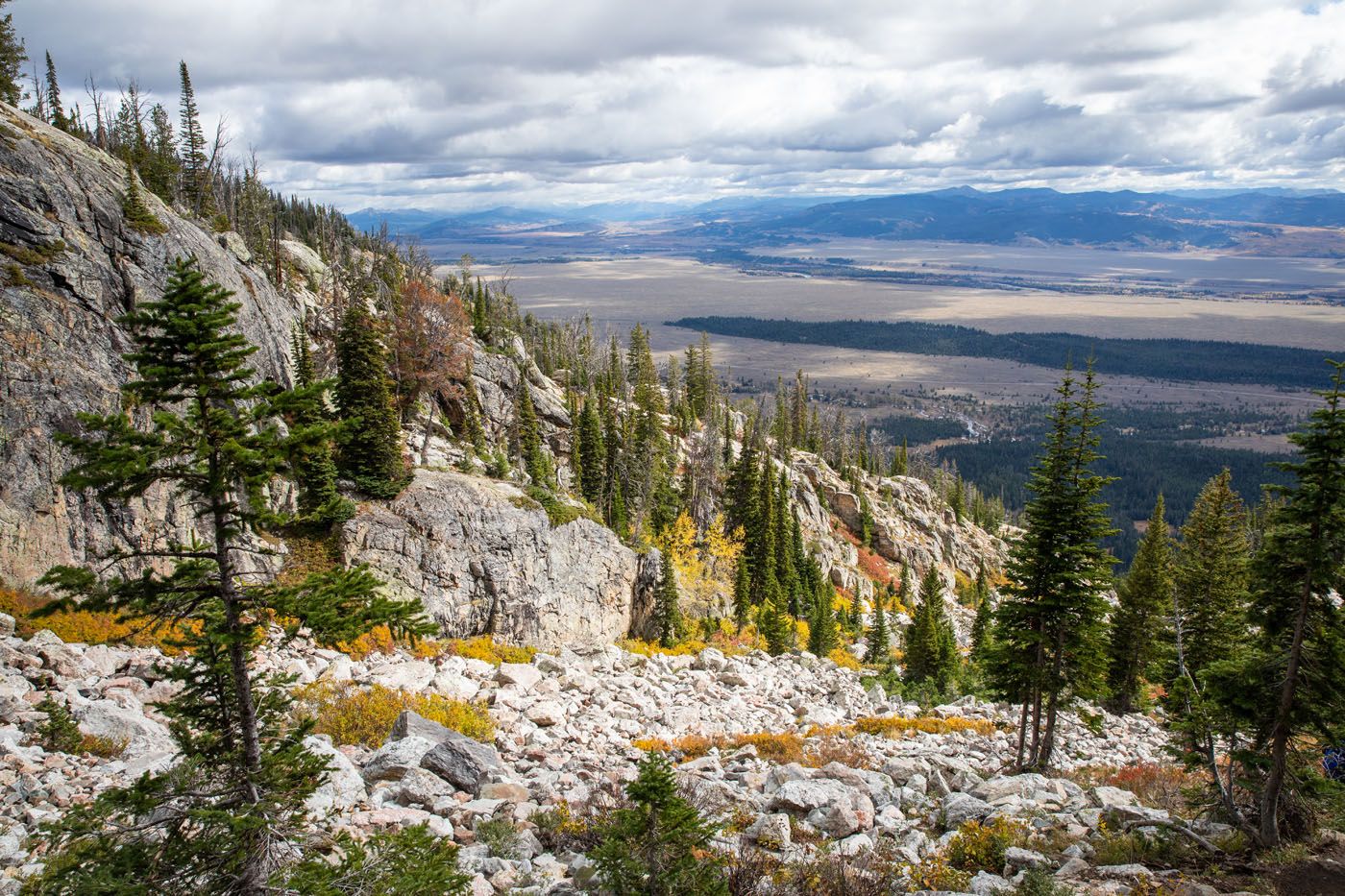
View from the top of the trail near Delta Lake.
Tips to Have the Best Experience
Start the hike early, ideally by 7 am. This gets you a parking spot and some solitude before the crowds arrive, and it also gets you off the exposed switchbacks before the afternoon thunderstorms that are common in the Tetons during summer.
Carry bear spray, and know how to use it. This is grizzly bear country, and bears are regularly active around Lupine Meadows and along this trail. Travel in a group, make noise, and stay especially alert on the off-trail scramble to Delta Lake, where visibility is limited.
Leave no trace. When you are in the park, practice the seven principles of Leave No Trace. This includes packing out what you bring into the park, being considerate of other hikers, staying on the trail, and not removing anything from the park.
What to Bring on the Hike
Hiking shoes. If you only plan to hike to Surprise and Amphitheater Lakes, hiking shoes are ideal but a good pair of walking shoes is sufficient, as long as there is no snow or ice on the trail. For Delta Lake, don’t wear anything other than hiking shoes or boots, since the trail is slippery and you will need good traction.
Hiking poles. Hiking poles take the stress off of your legs and help to ease leg pain and fatigue.
Bear spray. This is grizzly bear country and bears are commonly active in this area, including right around the Lupine Meadows trailhead. Carry bear spray, know how to use it, and make noise on the trail.
Water and snacks. At least 2 liters of water in the summer.
Sunscreen, hat, and sunglasses. For more than half of this hike you will be exposed to the sun, with very little shade.
Camera. Even a smartphone will do. The lakes are a great place to use the panorama feature.
Rain jacket or fleece. It’s chilly at these lakes, especially Amphitheater Lake. We had snowshowers while we did this hike (in late September). Pack a rain jacket and/or fleece and even another layer of clothing.
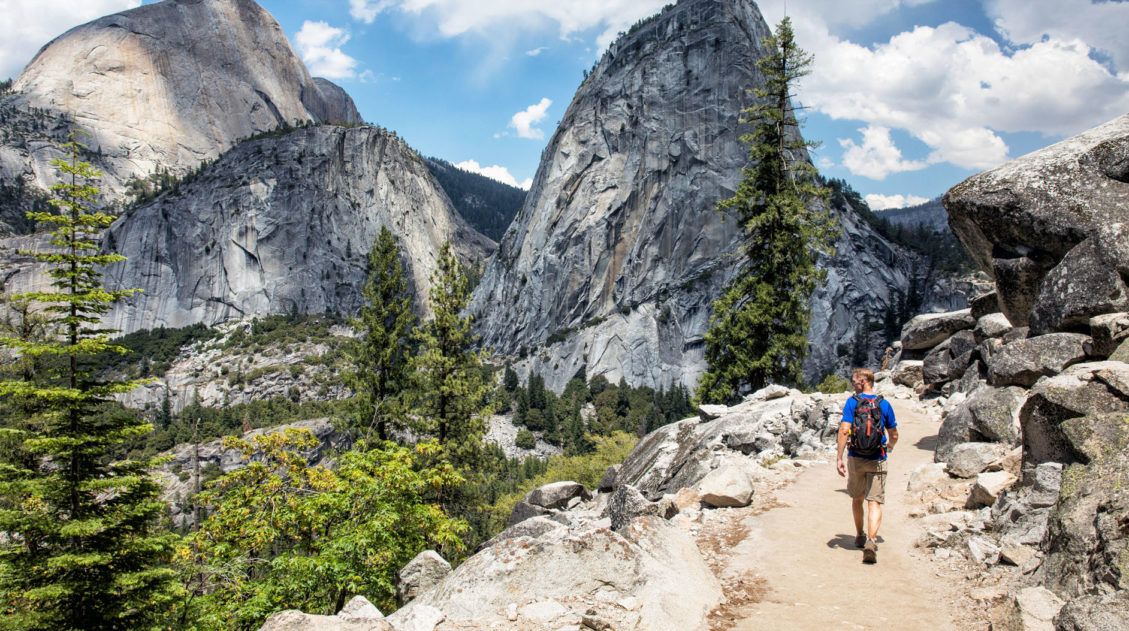
Essential Hiking Gear: What Should You Bring on a Day Hike?
If you are new to hiking or are curious about what you should bring on a hike, check out our Hiking Gear Guide. Find out what we carry in our day packs and what we wear on the trails.Delta Lake FAQ
How long is the hike to Delta Lake?
Round trip from the Lupine Meadows Trailhead, Delta Lake alone is 8.75 miles (14 km) with 2,400 feet (730 m) of elevation gain; typically 3.5 to 5.5 hours.
Is the trail to Delta Lake maintained?
No. It’s an unofficial, unmarked route. In summer 2026, the Access Fund and Grand Teton National Park completed the first phase of a project to stabilize and better define the route, but it remains a rugged, off-trail scramble, not a maintained park trail.
When is the best time to hike to Delta Lake?
Late July through September is your best window. Snow can linger on the trail well into July at this elevation, and the boulder-field sections are considerably harder and more dangerous to navigate with snow or ice on them.
Can you hike to Delta Lake without doing Surprise and Amphitheater Lakes?
Yes. The turnoff to Delta Lake comes before the final push to Surprise and Amphitheater, so you can hike to Delta Lake alone and skip the other two lakes if you’re short on time or energy.
Do you need a permit to hike to Delta Lake?
No day-hiking permit is required for Delta Lake. You’ll only need a backcountry permit if you plan to camp overnight in the area.
Plan Your Trip to Grand Teton National Park
- Want more hiking options in the park? Our guide to the Best Hikes in Grand Teton National Park covers trails for every skill level.
- Only have one day to explore? Our One Perfect Day in Grand Teton itinerary covers how to see the park’s best sights in a single day.
- Combining Grand Teton with Yellowstone? Our Ultimate Yellowstone & Grand Teton Itinerary covers how to plan both parks in one trip.
- Looking beyond hiking? Our Best Things to Do in Grand Teton guide covers the top sights and activities in the park.
- Planning where to stay or how to get here? Our Wyoming Travel Guide covers logistics for the whole trip.
- Deciding which parks to add to your itinerary? Our guide to all 63 US National Parks covers where to go next.
If you have any questions about hiking to Surprise, Amphitheater, or Delta Lakes, or if you want to share your experience, let us know in the comment section below.
More Information for Your Trip to Wyoming
The Ultimate Grand Teton National Park Travel Guide
Pinterest Facebook Flipboard Grand Teton National Park Jagged mountain peaks, lush meadows, scenic lakes, the winding Snake River, wildlife, historical sites, and miles and miles of hiking trails…this is Grand Teton National Park. There is something here for everyone. Families will love the short, easy, scenic hiking trails, a boat ride across Jenny Lake, plus […]
Paintbrush Canyon Cascade Canyon Loop Trail | Grand Teton National Park
The Paintbrush Canyon – Cascade Canyon Loop is one of the best hikes to do in Grand Teton National Park. In just one hike, you can visit a handful of the park’s top spots: Jenny Lake, Inspiration Point, Lake Solitude, Cascade Canyon, and Paintbrush Canyon. Throw in panoramic views across the Teton mountain range and […]
How to Hike Death Canyon to the Static Peak Divide | Grand Teton National Park
There are several reasons to hike to the Static Peak Divide. Early on in the hike, you have beautiful views over Phelps Lake. The walk through Death Canyon is gorgeous and this is a great place to spot wildlife. Bear and moose are frequently seen here. We didn’t see bear when we did this hike, […]
Grand Teton Itinerary: Plan Your Dream Trip to Grand Teton
How many days do you need in Grand Teton National Park? How do you plan the perfect Grand Teton itinerary? The answer to these questions depends on two big factors. How much time do you have? And how much do you like to go hiking? For those who just want to see the main highlights, […]
20 Epic Hikes in the US National Parks
With 63 national parks and thousands of miles of hiking trails, your options are endless for exploring the American national parks. We narrowed down the list for you to 20 of the best hikes in the US national parks, 20 amazing ways to explore this beautiful country. Hike to the tallest peaks, through massive canyons, […]
Ultimate Hiking Guide: Europe, Asia, Africa, Americas & Oceania
Are you looking for the perfect hike? With hikes on six continents ranging from a few miles to multi-day adventures, explore some of the best hikes from around the world.
14 Best US National Parks to Visit in September
September is one of the best months of the year to visit the national parks. The weather is fantastic across much of the USA, the busy summer season is coming to an end, and, in some parks, you can see the first of the fall colors. In this guide, we list 14 of the best […]
Yellowstone, Devils Tower, and Mount Rushmore: 10 Day Road Trip Itinerary
With 10 days, you can road trip from Grand Teton and Yellowstone all the way to Mount Rushmore, adding on Devils Tower, Badlands National Park, Wind Cave National Park, and Custer State Park along the way. That’s four national parks, two national monuments, one incredible state park, and some of the best scenic drives in […]
23 Best Things to Do in Yellowstone National Park
Yellowstone National Park is a wonderland of geothermal activity, dramatic landscapes, and abundant wildlife. Steam hisses from the ground beside wooden boardwalks, bison bring traffic to a standstill on the park roads, and technicolor hot springs amaze even the most seasoned travelers. In this guide, we cover the best things to do in Yellowstone National […]
10 Best Hikes in Glacier National Park (Easy Walks to Epic Day Hikes)
Looking for the best hikes in Glacier National Park? From the breathtaking Highline Trail and the scenic walk to Hidden Lake Overlook to the unforgettable hike to Grinnell Glacier, Glacier National Park is home to some of the most spectacular trails in the United States. We’ve visited Glacier National Park multiple times, hiking trails across […]
United States Travel Guide: Places to Visit in the USA
Plan your visit to the United States. Learn about the best things to do, how to plan your time, road trip ideas, and sample itineraries.


Comments 13