
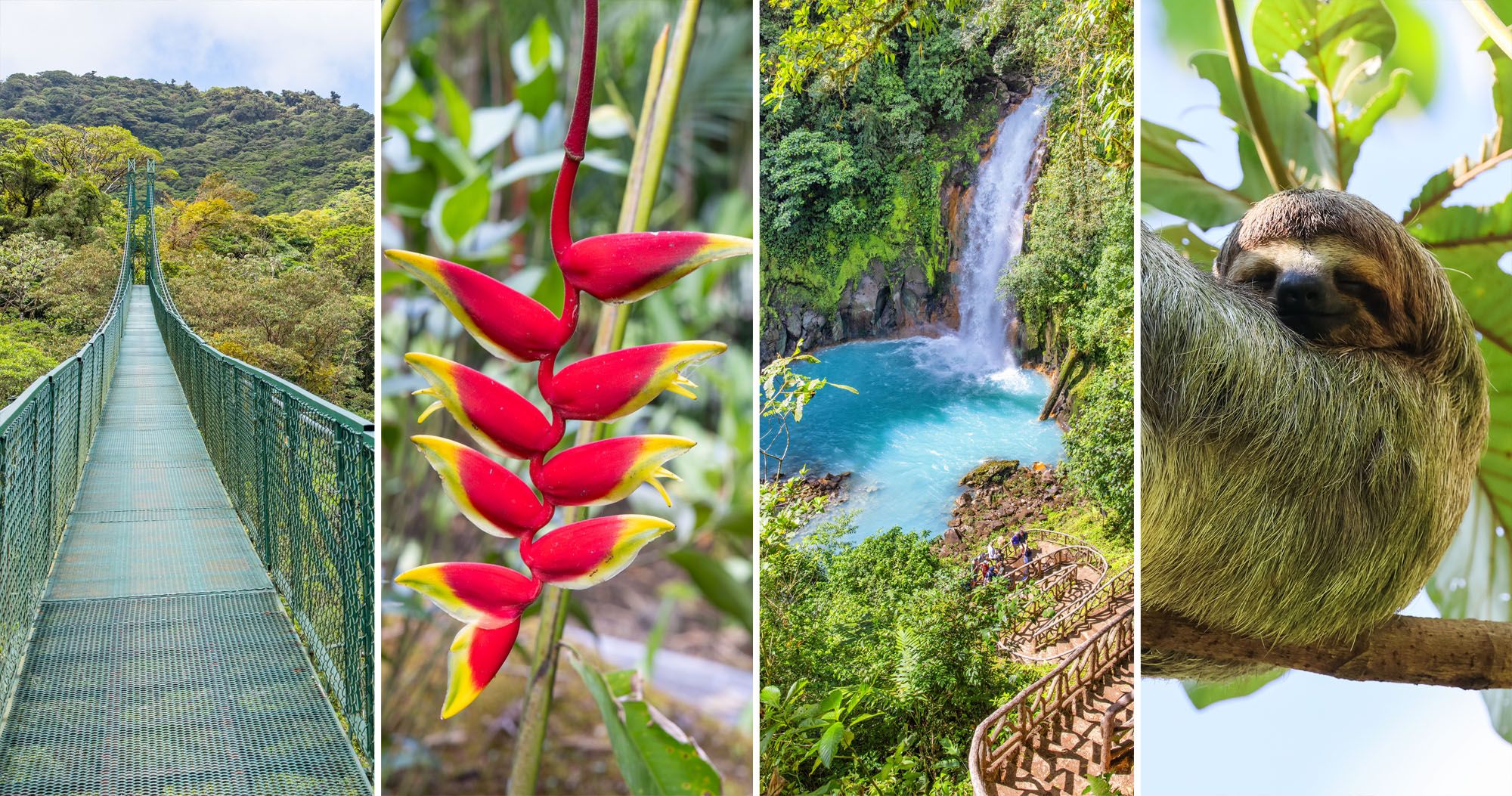

We flew to Costa Rica in late February 2025 and spent two weeks driving a loop from San Jose to Manuel Antonio, through the cloud forests of Monteverde, and up to La Fortuna at the base of Arenal Volcano. This 10-day Costa Rica itinerary is almost exactly how we did it, and we came home with a long list of highlights.
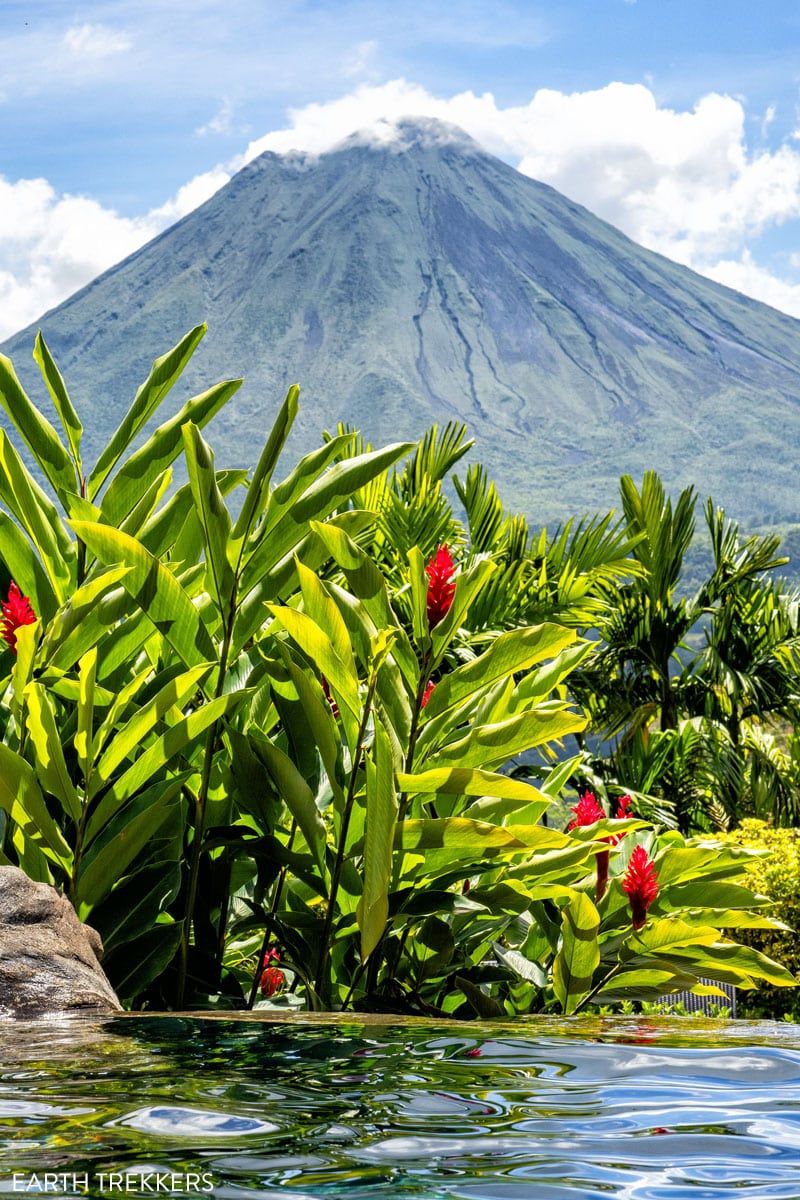
The route keeps getting better as you go. Manuel Antonio is gorgeous, with one of the most stunning national parks in Central America. Monteverde is unlike anywhere else on the itinerary. There’s nothing quite like walking across a hanging bridge through the cloud forest canopy at dawn. And La Fortuna (Arenal) was our favorite place in all of Costa Rica: hiking through lava fields with an active volcano in full view, soaking in hot springs at sunset, rappelling down waterfalls for the first time. We didn’t want to leave.
We’ve written this as a 10-day itinerary because that’s the most realistic timeframe for most travelers. If you have a full two weeks, we have options at the end of this guide to extend the trip further south toward Uvita and Corcovado, or north to Rio Celeste. If you only have 7 days, we’ll tell you exactly what to cut.
Everything in this guide is based on what we actually did, what we’d skip, and what we’d do differently. Scroll down for the full day-by-day plan, or use the At a Glance box below to get a quick overview.
At a Glance: 10-Day Costa Rica Itinerary
ROUTE | San Jose → Manuel Antonio → Monteverde → La Fortuna → San Jose
STARTS/ENDS | San Jose Airport (SJO)
NIGHTS | Manuel Antonio (3) · Monteverde (2) · La Fortuna (3) · Near airport (1, optional)
CAR | Recommended but not required
HIGHLIGHTS | Manuel Antonio National Park · Monteverde cloud forest · Arenal Volcano · La Fortuna hot springs
BEST FOR | First-time visitors to Costa Rica; wildlife lovers; adventure travelers
BEST TIME | November–April (dry season); we went late February and had sun 95% of the time
ACTIVITY LEVEL | Moderate: expect hiking, optional ziplining, canyoning, and hot springs
Why This Costa Rica Itinerary Works So Well for a First Trip
Costa Rica can feel overwhelming to plan. There are a lot of destinations, the driving distances are longer than they look on a map, and it’s easy to either pack in too much or miss the best parts entirely. This itinerary solves all of that.
It covers the three destinations that define Costa Rica for most first-time visitors. Manuel Antonio, Monteverde, and La Fortuna are the classic trio for good reason, each one offers something completely different. You get beaches and wildlife, then cloud forest and canopy adventure, then volcano hiking and hot springs. By the end of the trip, you’ll have a real sense of how diverse this country is.
The route is a loop, starting and ending at San Jose Airport. This keeps logistics simple and eliminates drop fees if you’re renting a car. You won’t backtrack, and no single drive is more than four hours.
The pacing is forgiving. Three nights in Manuel Antonio, two in Monteverde, three in La Fortuna. This is enough time in each place to slow down, do a second hike, or spend an afternoon in the hot springs without feeling rushed.
It builds as it goes. We say this throughout the guide: Manuel Antonio is great, Monteverde is amazing, and we LOVED La Fortuna.
It works with or without a rental car. We drove the whole route and recommend it, but shuttle services run between every destination on this itinerary. We’ve included car-free options throughout each day.
10-Day Costa Rica Itinerary Overview
Day 1: Arrive in Costa Rica, drive to Manuel Antonio
Day 2: Manuel Antonio National Park
Day 3: Kayaking or Ziplining + Rainmaker Park
Day 4: Drive to Monteverde, Ziplining or Hanging Bridges
Day 5: Guided wildlife walk, Cataratas El Tigre
Day 6: Guided wildlife walk, drive to La Fortuna
Day 7: Místico Arenal Hanging Bridges, hiking trails, hot springs
Day 8: Fortuna Waterfall, sloth walk, afternoon excursion
Day 9: La Paz Waterfall and Poas Volcano
Day 10: Fly home
10 Day Costa Rica Itinerary
Day 1: Arrive in Costa Rica, Drive to Manuel Antonio
Driving Distance & Time: 160 km/100 miles, 3 to 4 hours
We took a morning flight from Maryland to Juan Santamaría International Airport (SJO) in San Jose. Once in the airport, the customs line was long and moved rather slowly (we were here on an early afternoon on a Saturday) and it took us about one hour to get through this line. Hopefully it won’t take that long when you arrive, but be prepared, just in case.
Renting a car is optional for this itinerary. Having a car gives you more freedom and flexibility to get around and makes it a little easier to going out to dinner in the towns, but it is possible to do this itinerary without a car. There are shuttles and buses you can hire, to get you from town to town. Many tours and excursions include transportation, so renting a car is unnecessary. Throughout this itinerary, we will give you options for how to get around without a rental car.
If you plan to rent a car, we recommend Adobe Car Rental. We rented a car through Adobe Car Rental. As you exit baggage claim, you will be met with a barrage of people holding signs, and it’s a bit overwhelming. We found the attendant for Adobe Car Rental, it was a 15-minute drive in their shuttle to their office, and they quickly and efficiently got us into our rental car.
It took us about an hour and 45 minutes to exit the airplane and get into our rental car.
From the airport, it can take as ‘little’ as 3 hours to drive to Manuel Antonio. There were a lot of slowdowns along this route, and it took us 4 hours to make the drive, putting our arrival time into Manuel Antonio at 6:30 pm. Not so bad, but we felt a bit worn out by the time we got to our hotel.
If you do not plan to rent a car, you can use this private transfer service.
This evening, get settled into your hotel, have dinner, and get some rest. We have hotel recommendations and lots of amazing restaurants listed in our article Things to Do in Manuel Antonio ↓. You will stay in Manuel Antonio for three nights.
18 Best Things to Do in Manuel Antonio, Costa Rica
In this guide, we cover where to stay, the top restaurants, and things to do in Manuel Antonio, including how to pick a ziplining company and day trips from Manuel Antonio.Using GetYourGuide
There are lots of opportunities in Costa Rica for excursions, such as guided wildlife walks, ziplining, canyoning, and transfer shuttle services. We booked almost all of our excursions in advance through GetYourGuide, versus official websites, for several reasons:
- You only have to enter your credit card information into one website, instead of the website for each excursion.
- Many excursions on GetYourGuide allow to you reserve your spot now and pay a few days before the excursion. Most official websites take payment at the time of booking.
- Many tours on GetYourGuide allow you to cancel up to 24 hours before your activity and still get a full refund.
- Cancellation is super easy to do, either on the GetYourGuide website or within their mobile app. It is just the press of a couple of buttons and there is no need to contact the tour operator and track down your refund.
- All of your reservation details are in the GetYourGuide mobile app that you can take with you.
Throughout this itinerary, we provide the links to both the official website and the tour we used on GetYourGuide.
Day 2: Manuel Antonio National Park
Today, visit Manuel Antonio National Park in the morning. In the afternoon, take your pick between beach time, visiting a wildlife rescue reserve, or ziplining.
Morning: Manuel Antonio National Park
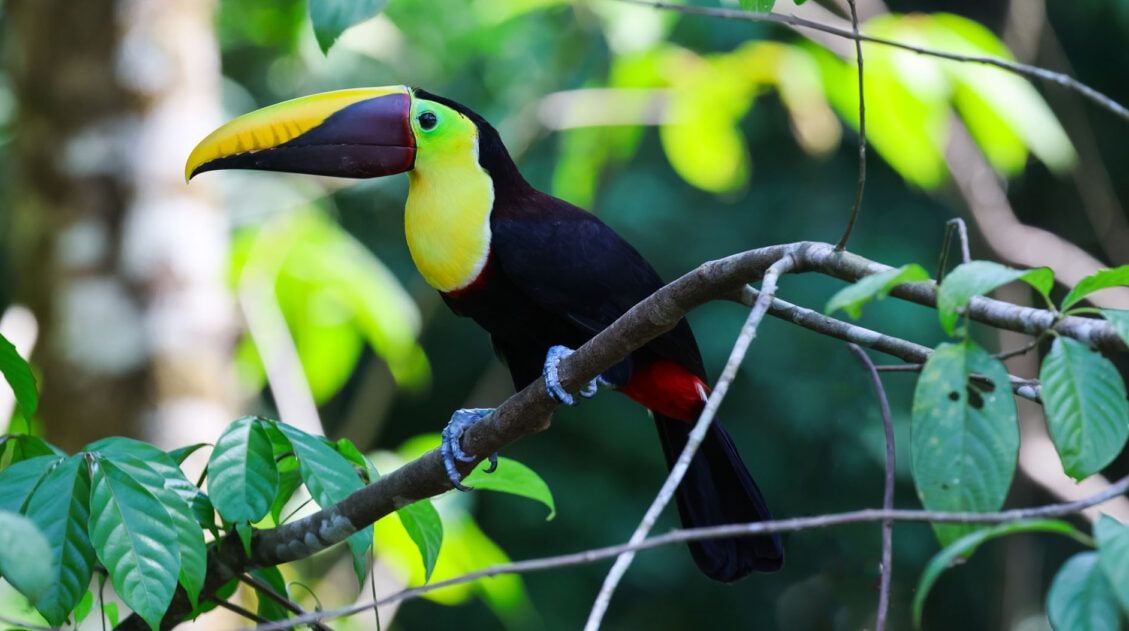
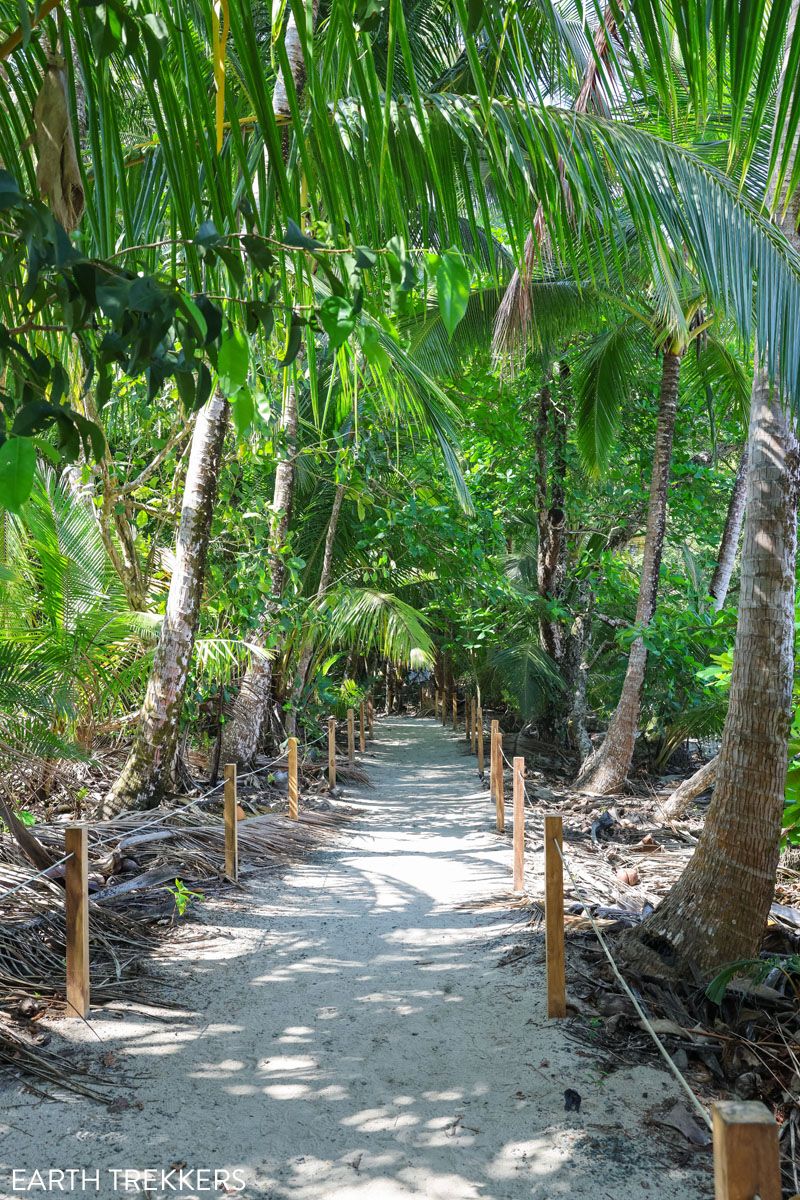
Welcome to one of Costa Rica’s most popular national parks, the place where the rainforest meets the beach. Taking a guided wildlife walk to see howler monkeys, sloths, and exotic birds, is the most popular thing to do here, but you can also go hiking and spend some time on several gorgeous beaches.
The #1 thing to know is that you must purchase your entrance ticket in advance on the SINAC website. You can’t just show up and purchase a ticket. It has to be done online in advance and tickets are limited.
The #2 thing to know is that the park is CLOSED ON TUESDAYS. When planning your itinerary, if day falls on a Tuesday, swap with tomorrow.
Manuel Antonio is a park where we highly recommend that you hire a guide. Unless you’ve done lots of wildlife walks in other places around the world and are a wizard at spotting wildlife, you will see very little on your own. It gets easier with practice, but if you are like us, on your first morning in Costa Rica, it can be extremely difficult to spot something like a sloth without some practice.
We took this 2-hour guided wildlife walk and it can be upgraded to a private tour. There is the option to pay a little extra for the flexibility to cancel up to 1 hour before the tour starts. We did this just in case there were any delays with getting to Costa Rica, since we flew into San Jose and drove to Manuel Antonio the day before (and if you follow this itinerary, you will too). Note: We also had to purchase our entrance tickets in advance.
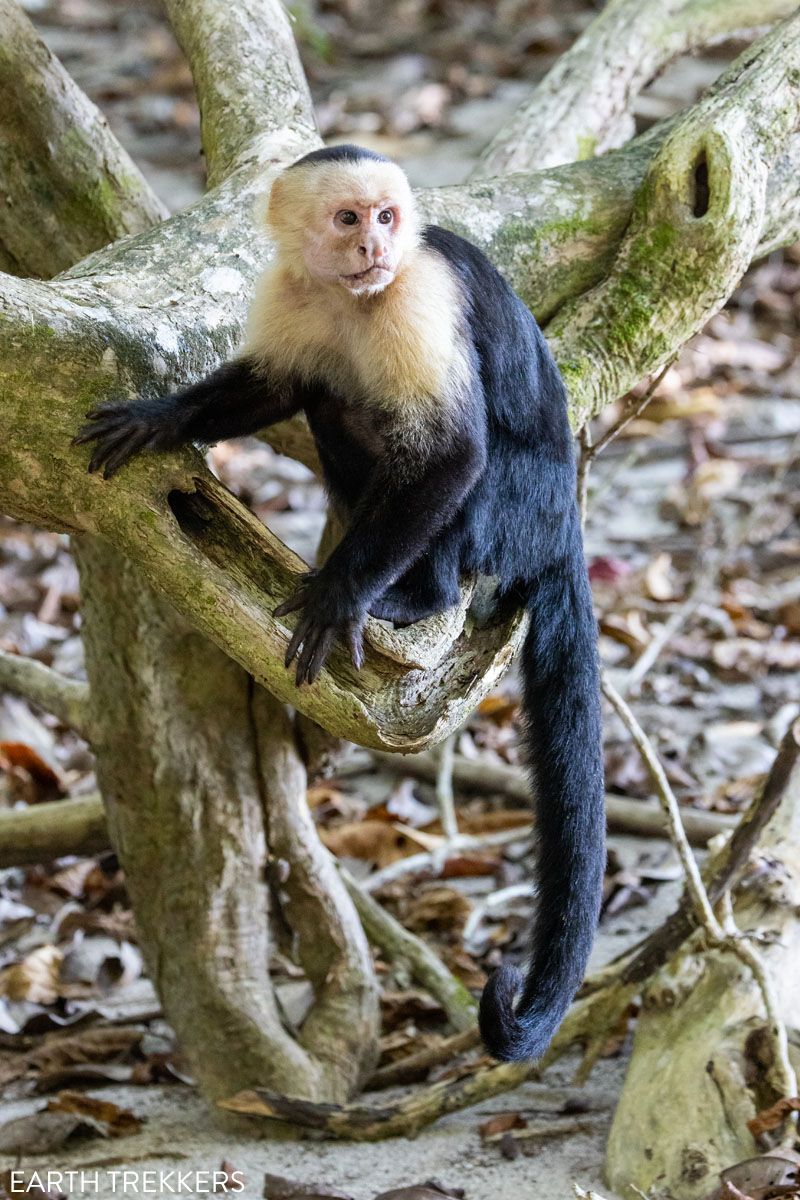
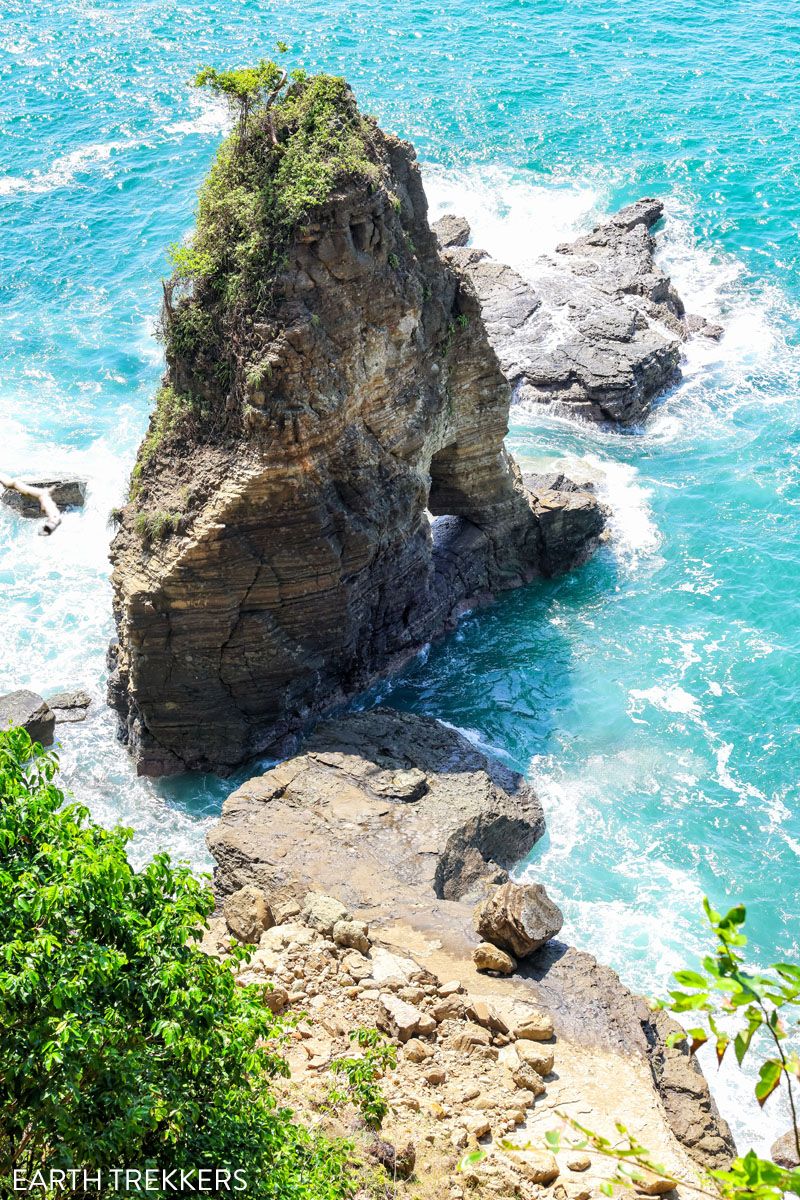
7:30 am is the ideal start time. That might sound early, but temperatures are still cool and the wildlife is more active than it will be midday. Starting this early also gets you a little bit ahead of the crowds.
At the end of the tour, which will be around 9:30 am, you have plenty of time to hike a trail or two or spend some time on one of the beaches.
In our Guide to Manuel Antonio ↓, we cover everything to do in the park, where to park, more guided tour options, and lots of helpful tips.
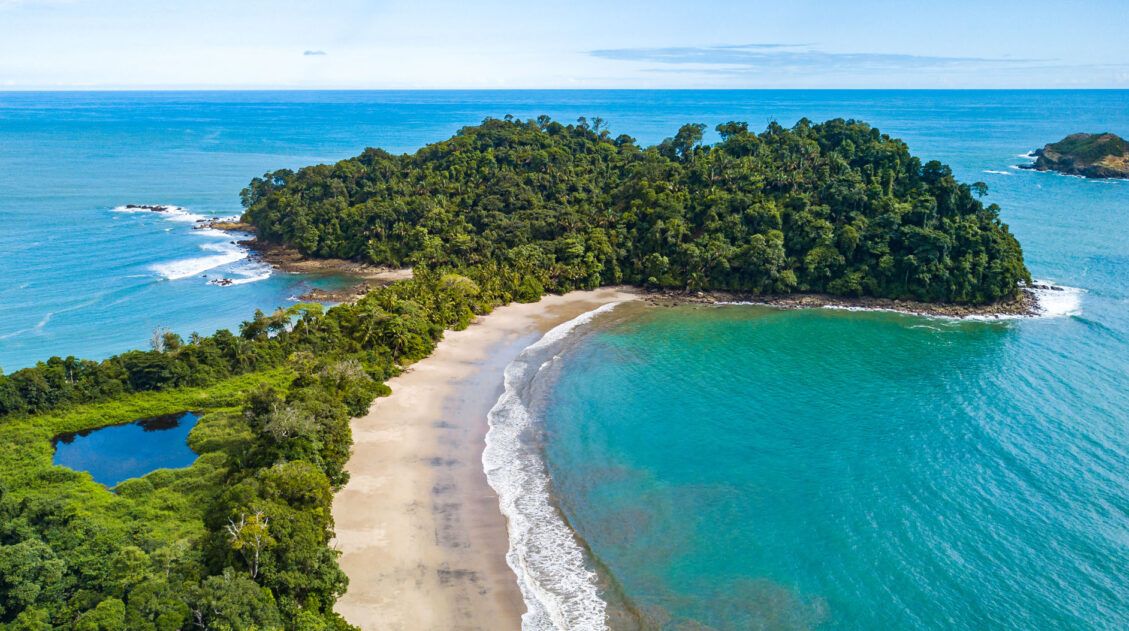
Manuel Antonio National Park: Complete Guide for First Time Visitors
Everything you need to know to plan your visit to Manuel Antonio National Park.Afternoon: Beach Time, KSTR, or Ziplining
This afternoon, there are several different ways to spend your time. We do this frequently throughout this Costa Rica itinerary, giving you different options for things to do. Not everyone has the same interests, and this allows you to customize the itinerary to your preferences. Be aware that excursions like ziplining will also show up in Monteverde and La Fortuna, since it is so popular and we wanted to give you several opportunities to do it.
Option #1: Beaches in Manuel Antonio
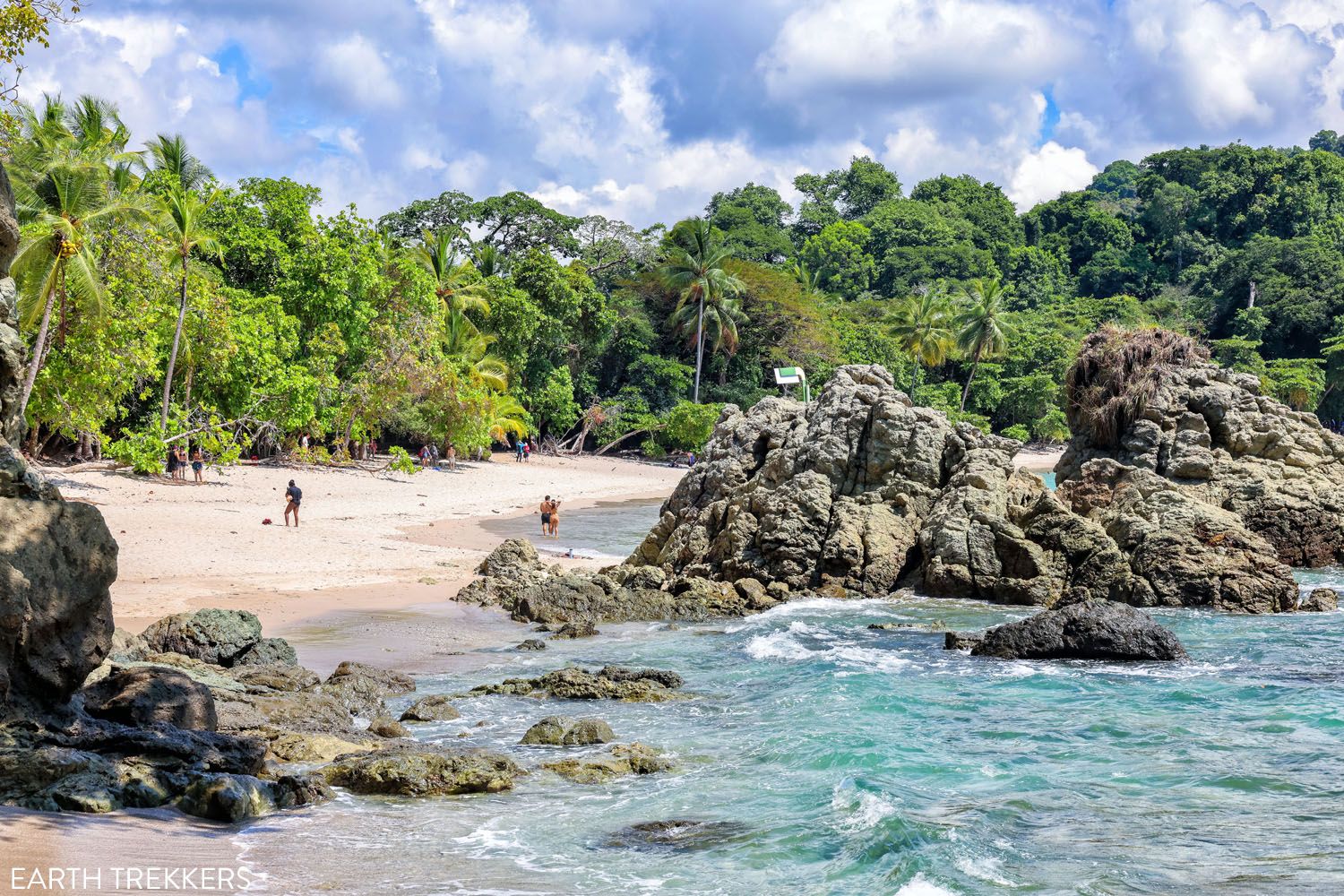
For those who love relaxing on the beach and swimming, this is the best time to do it, on this itinerary. Manuel Antonio has several of the most beautiful beaches in Costa Rica (we cover these in more detail in our guide to Manuel Antonio National Park):
- Manuel Antonio Beach – popular, a bit crowded, but great for swimming
- Playa Espadilla Sur – long stretch of sand, less crowded, not a good swimming option because currents are strong
- Playa Las Gemelas – small, lovely, more remote beach
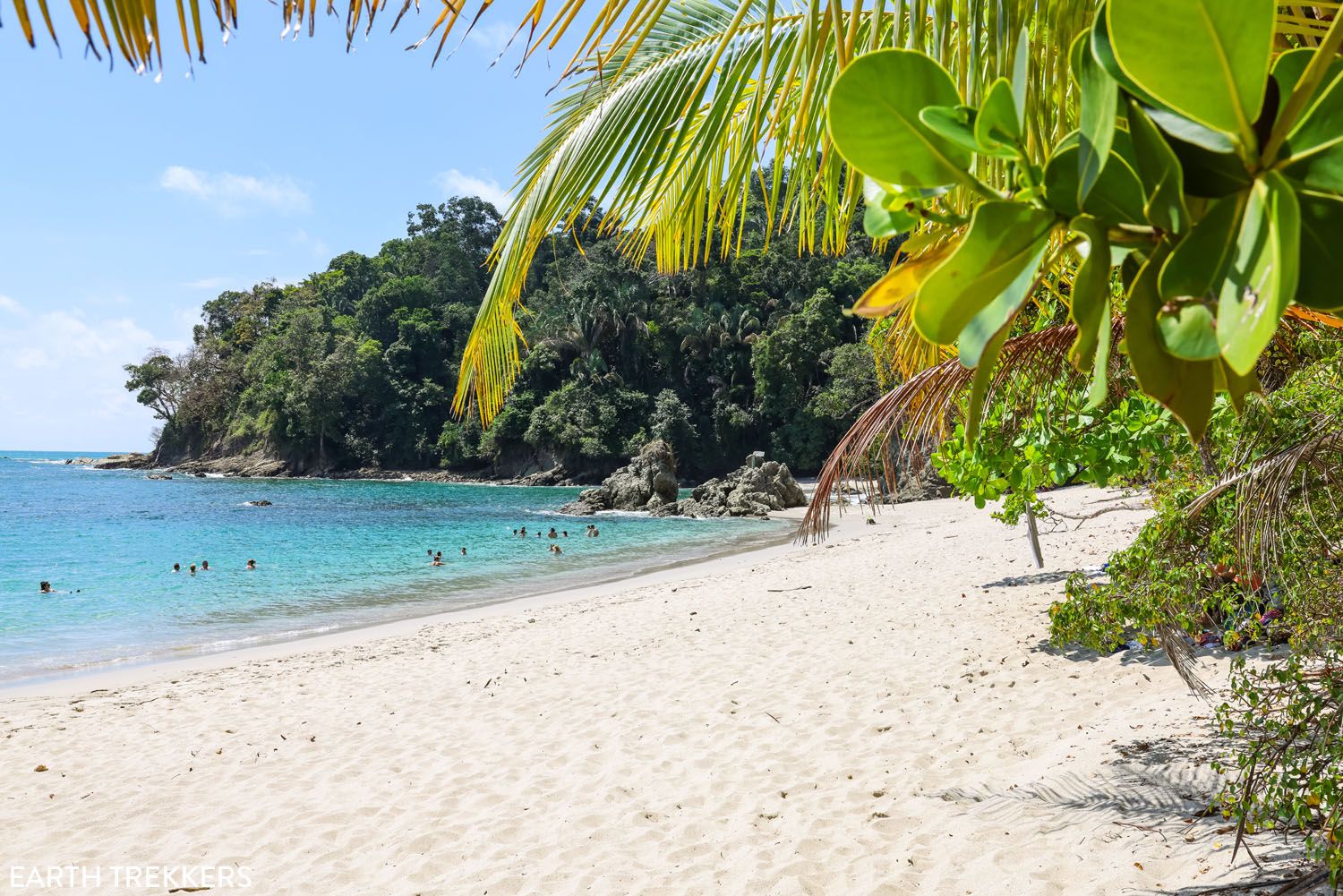
Manuel Antonio Beach
Be aware that once inside of the national park, you can’t exit and then reenter. There is a small café where you can purchase lunch, but there could be a long line (you cannot bring any food into the park). And you will have to carry your towels, swimsuits, etc. on the guided wildlife walk.
Outside of the national park, Biesanz Beach is public beach in Manuel Antonio. It sits in a protected cove and is surrounded by rainforests and rocky cliffs. It’s about a 10 to 15 minute on a hiking trail to get here.
For rent are lounge chairs and umbrellas. Vendors were selling coconut water and non-alcoholic drinks. We saw two sloths in the trees right next to the beach. Learn more in our article Best Things to Do in Manuel Antonio.
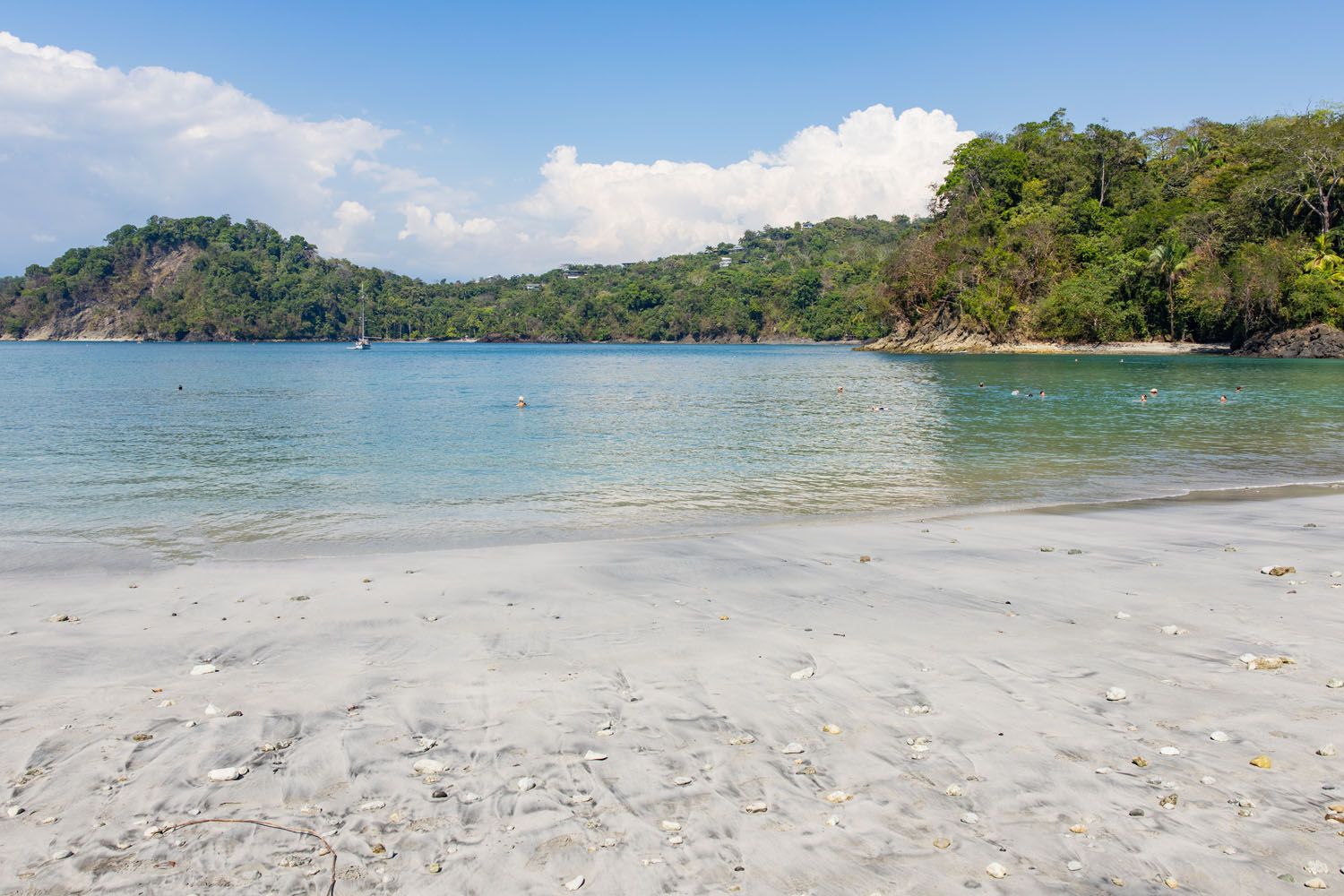
Biesanz Beach
Option #2: Kids Saving the Rainforest
For lunch, we recommend Emilio’s Café (casual restaurant that serves great food and has an elevated view overlooking Manuel Antonio National Park) or Manuel Antonio Falafel Bar (small, casual restaurant that serves falafel, hummus, and shawarma platters).
Kids Saving the Rainforest (KSTR) is a rescue center in Manuel Antonio. KSTR rescues animals that are injured or orphaned, rehabilitate them, and then release them back to the wild.
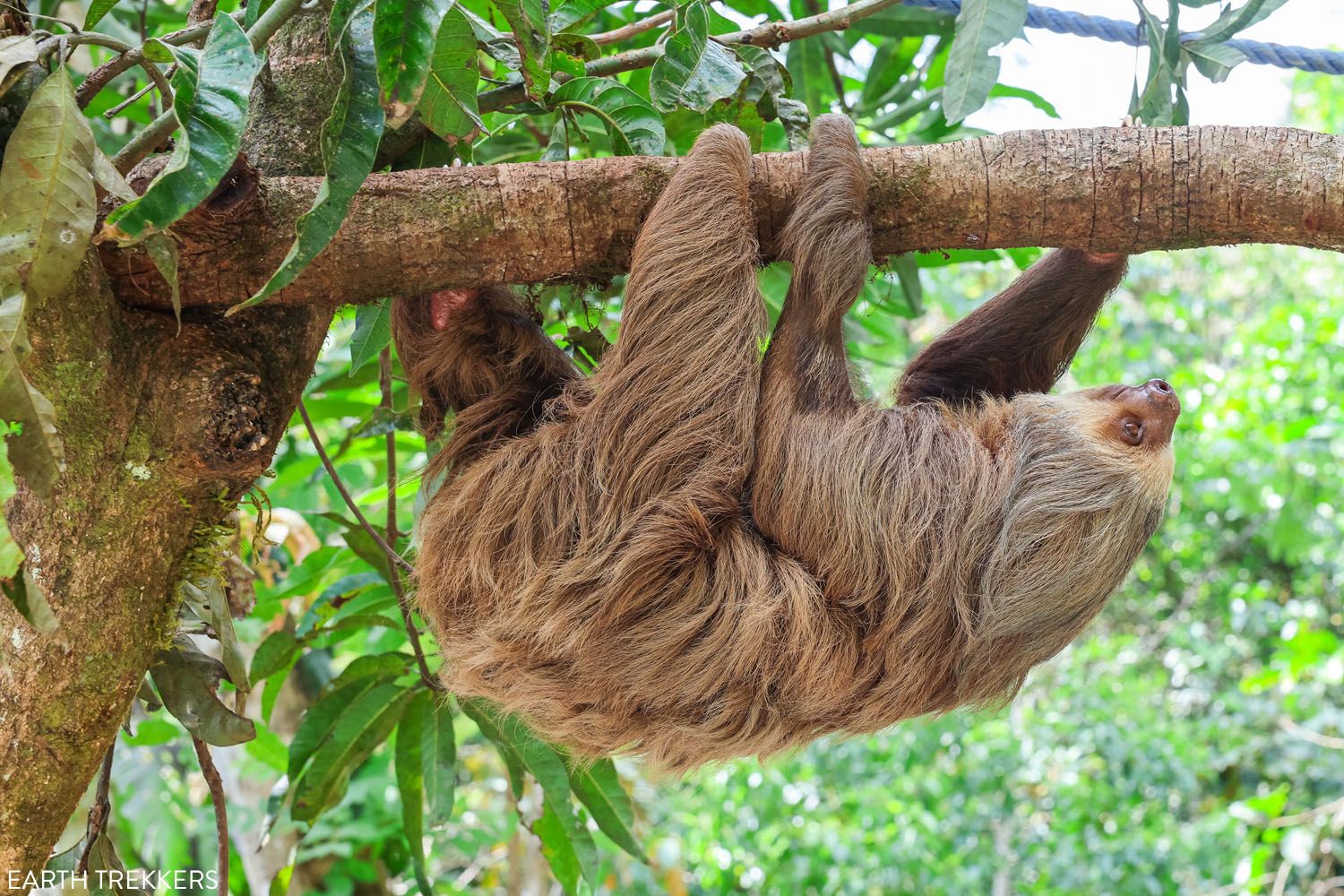
To visit KSTR, take a tour of the facility, to learn about the rehabilitation of the animals and how the animals are cared for on their property. Seeing sloths up close is a nice perk.
Learn more about KSTR on their official website. We purchased our ticket through GetYourGuide.
Getting Here: KSTR is roughly a 20-to-30-minute drive from Manuel Antonio. The final part of this drive is on a rough gravel road, so it is best to have an SUV. They do not offer transportation, so if you don’t plan to rent a car, you will have to skip this experience.
Option #3: Ziplining
Exit Manuel Antonio National Park and have lunch at Emilio’s Café or the Manuel Antonio Falafel Bar. Spend the afternoon on a ziplining tour. We used El Santuario Canopy Adventure and had a great experience, but ADR Adventure Park is another popular option.
Evening: Dinner
Our favorite restaurant in Manuel Antonio is Le Papillon Restaurante. It has an outdoor patio with stunning views overlooking Manuel Antonio National Park and the Pacific Ocean. It’s worth dining here at least once. We also really liked Karolas Restaurant in the Los Altos Resort.
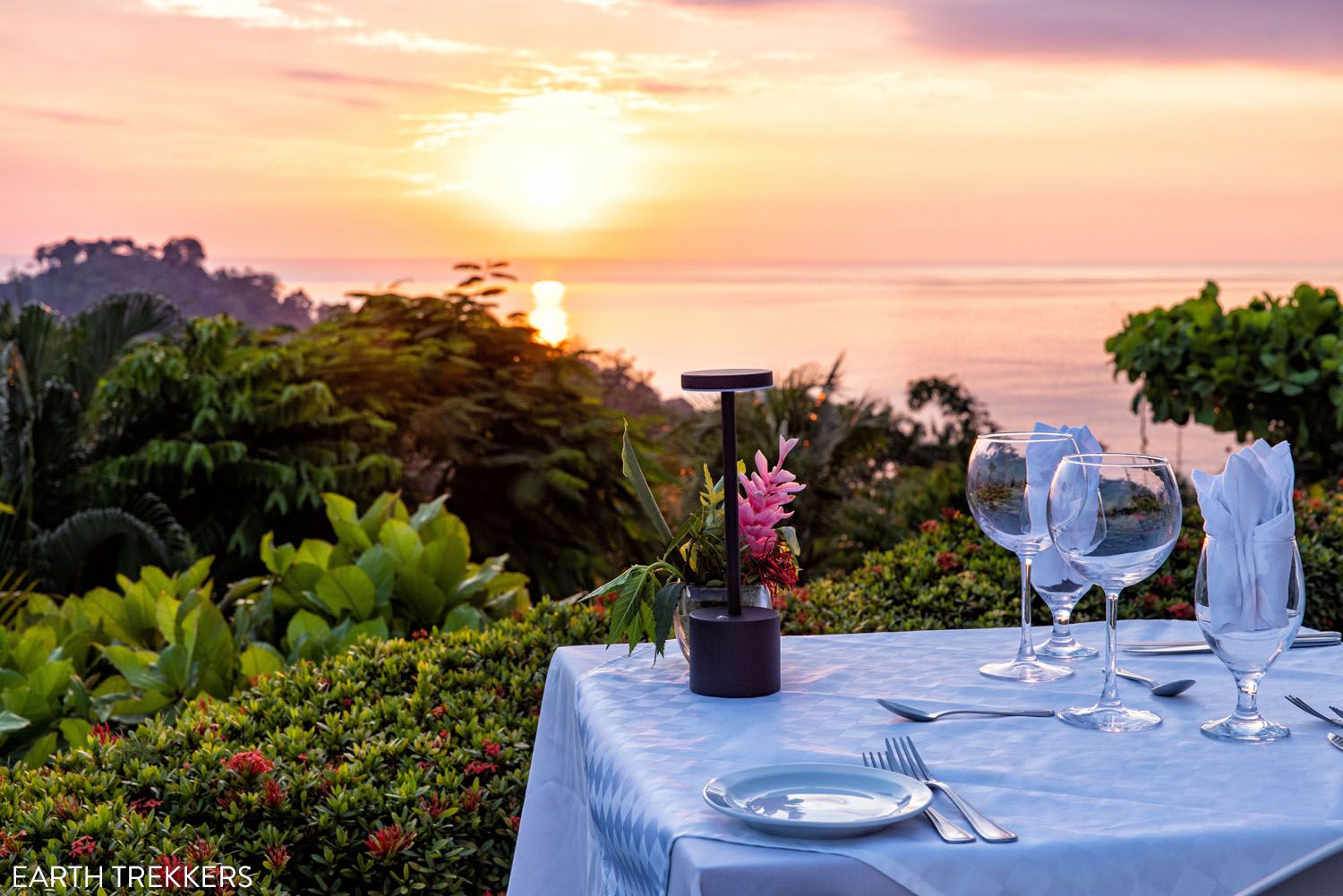
Le Papillon Restaurante
Day 3: Kayaking or Ziplining + Rainmaker Park
Morning: Kayaking or Ziplining
Take your pick between kayaking or ziplining (if you didn’t do that yesterday).
Damas Grove Mangrove Tour
One of the best things to do in Manuel Antonio is to take a boat tour to Damas Island, one of the last remaining mangroves in Costa Rica. You can do this either as a kayaking tour or on a boat cruise.
On the excursion, there’s a good chance you’ll see more wildlife, including crocodiles, iguanas, basilisks, macaws, King Fishers, capuchin monkeys, crabs, snakes, and other lizards.
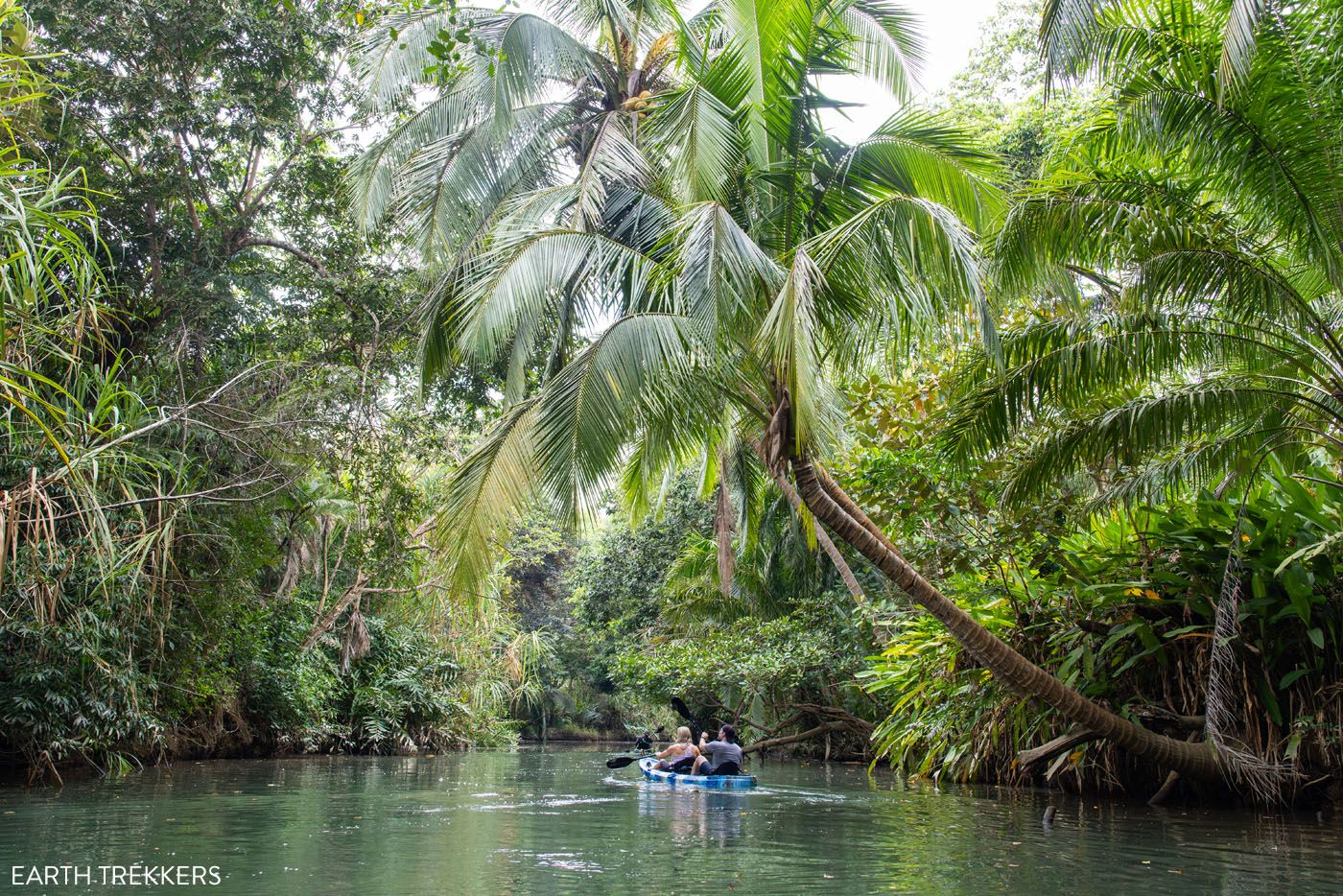
We took this 2-hour kayaking tour. There is some variability with tour times, as the tours are run at or near high tide. When booking your tour, be aware that the time could change.
If you prefer to go by boat (no paddling necessary!), this is a 2-hour tour that gets very good reviews, and this is a 4-hour tour (it’s longer because it also includes transportation and lunch…perfect for those not planning to rent a car).
Ziplining
If you prefer to go ziplining, we recommend El Santuario Canopy Adventure (who we used), but you can see a longer list in our article Things to Do in Manuel Antonio.
We did a ziplining tour in Manuel Antonio in the morning, which has two advantages over doing it in the afternoon: temperatures are cooler and the group size is the smallest of the day (our tour had 15 people; midday there could be 30 to 50 people on a tour).
Afternoon: Rainmaker Park
Before driving out to Rainmaker Park, return to Quepos or Manuel Antonio for lunch. There is a small kitchen at Rainmaker Park but I don’t know how good the food is. If you took a ziplining tour, it may include lunch.
Rainmaker Park is a private reserve with hiking trails, gorgeous waterfalls, and several hanging bridges that run through the tree canopies. A visit here requires a bit of hiking, but what you get in return are amazing views of the forest, the opportunity to go swimming, plus the chance to spot wildlife.
A visit here is very much like walking through the forests in Monteverde, with the hanging bridges and lush rainforest landscapes.
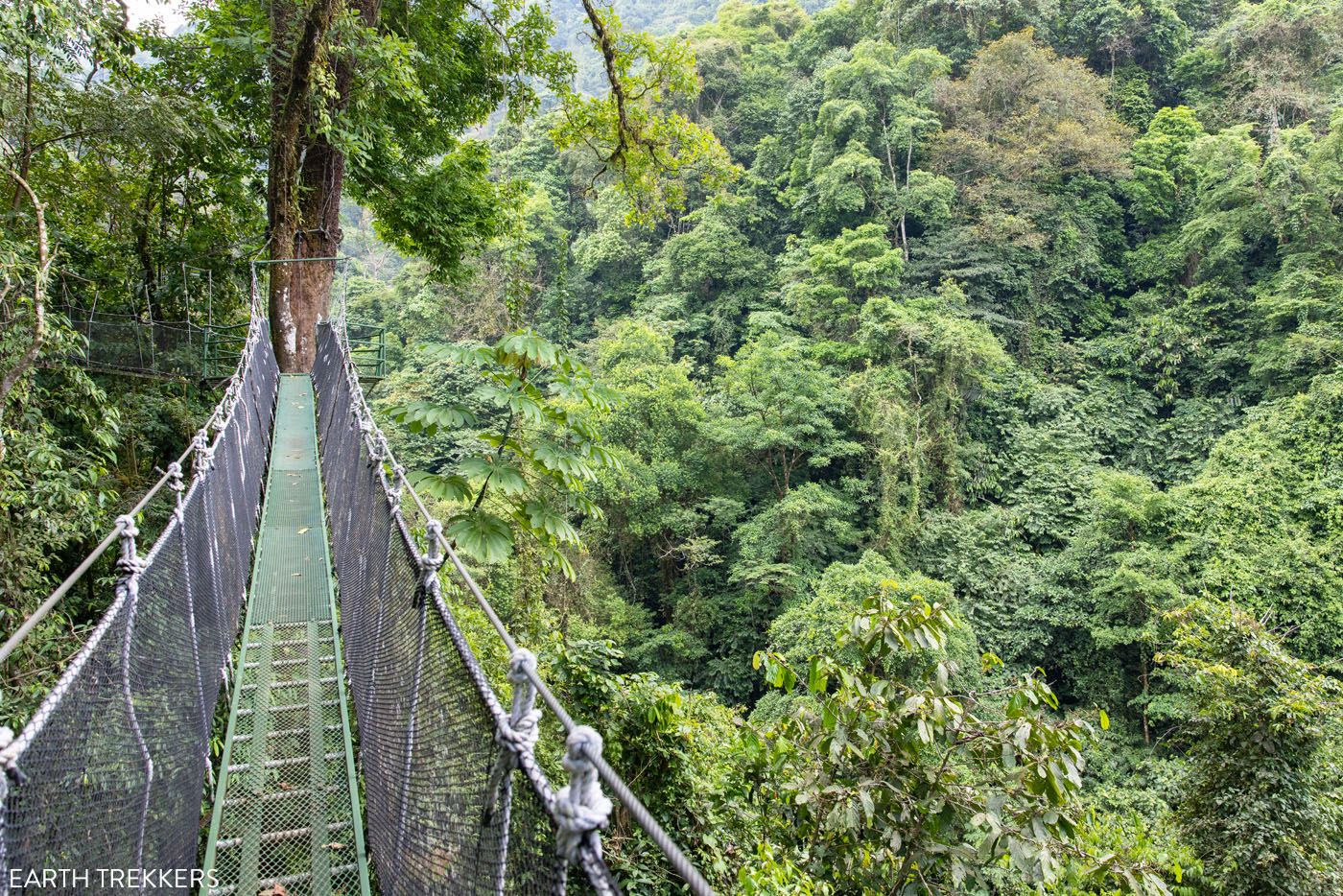
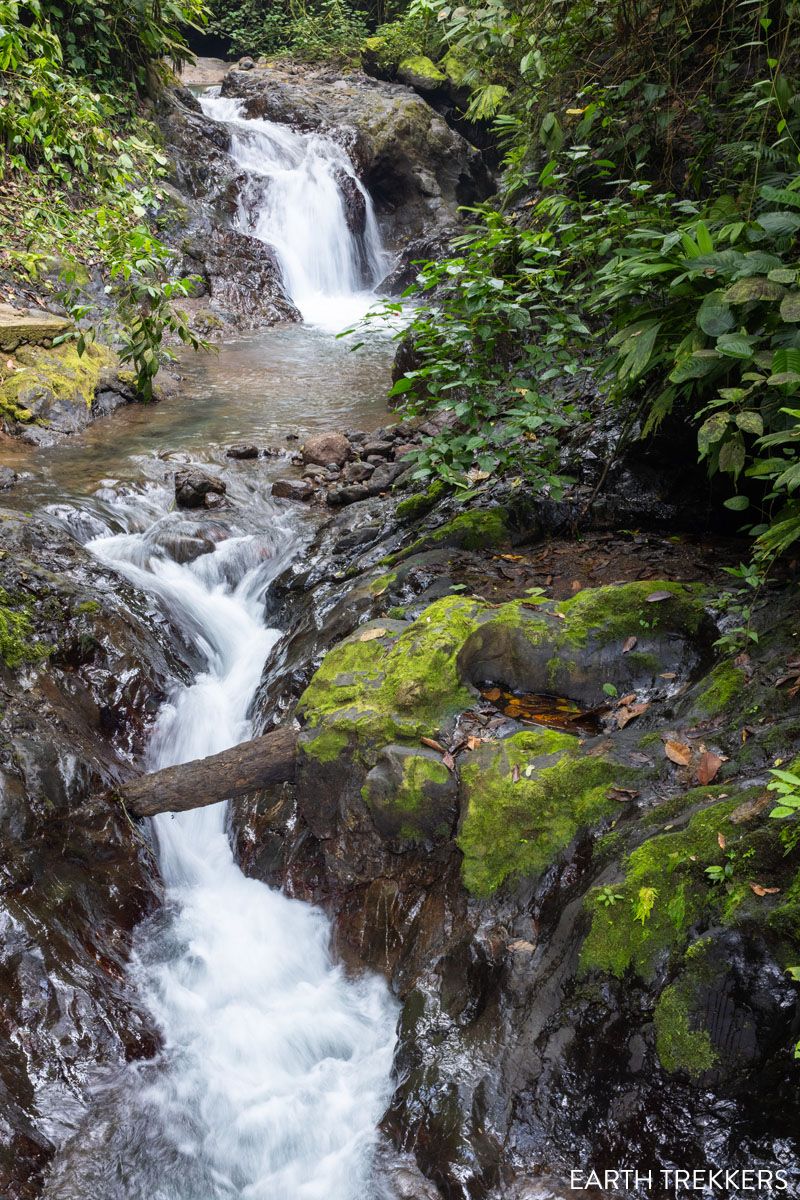
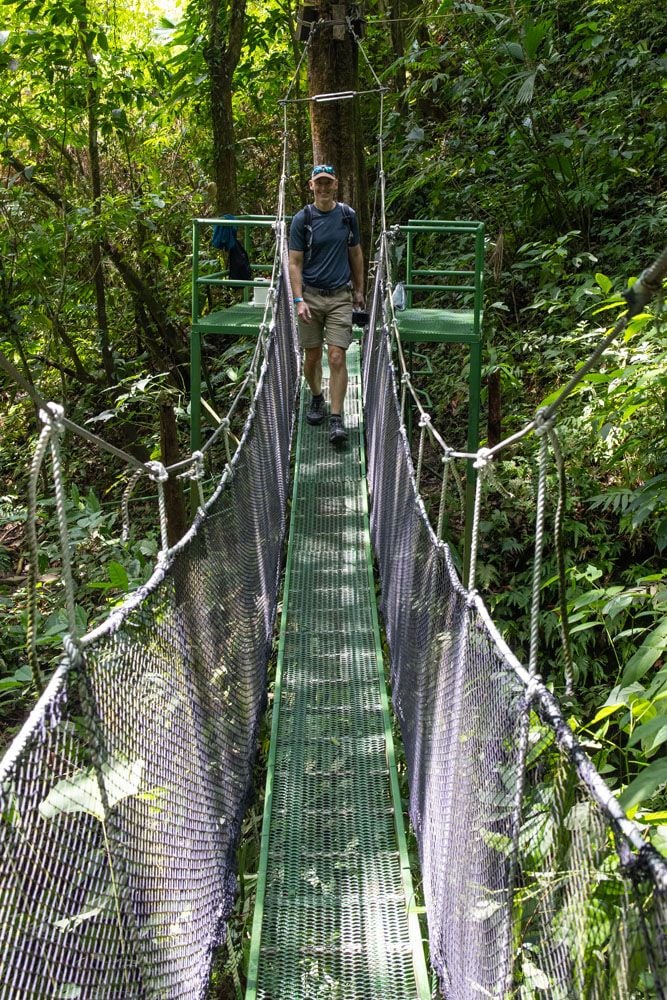
To get here, it is a 30-minute drive from Manuel Antonio. There are two stretches of road that are unpaved, so having an SUV is ideal. Bring cash to pay the entrance fee (credit cards are not accepted).
The main thing to do here is to walk the trail through the reserve. This trail is a 1.5-mile loop that is easy to moderate in difficulty. On the first half of the loop, you will climb a series of hills and stairs to get up into the tree canopy. After walking a series of suspension bridges, you will descend to the river and walk a trail alongside the river. During this section, you have the option to go swimming.
If you want to see wildlife, sign up for a guided wildlife walk. It is possible to see sloths, squirrel monkeys, lizards, poison dart frogs, and snakes. We did the walk unguided and only saw butterflies and a few lizards.
This tour of Rainmaker Park includes a guided hike plus transportation.
Evening: Dinner
Have dinner in Manuel Antonio or at your hotel.

Day 4: Drive to Monteverde, Ziplining or Hanging Bridges
Driving Distance & Time: 190 km, 3 hour 30 minutes to 4 hours
In our experience, the drive from Manuel Antonio to Monteverde was much more pleasant than the drive from San Jose. It’s a pretty drive, with fewer traffic jams and slow downs along the way. The drive is paved the entire way, but make sure you take Route 606 into Monteverde, to stay on the paved roads.
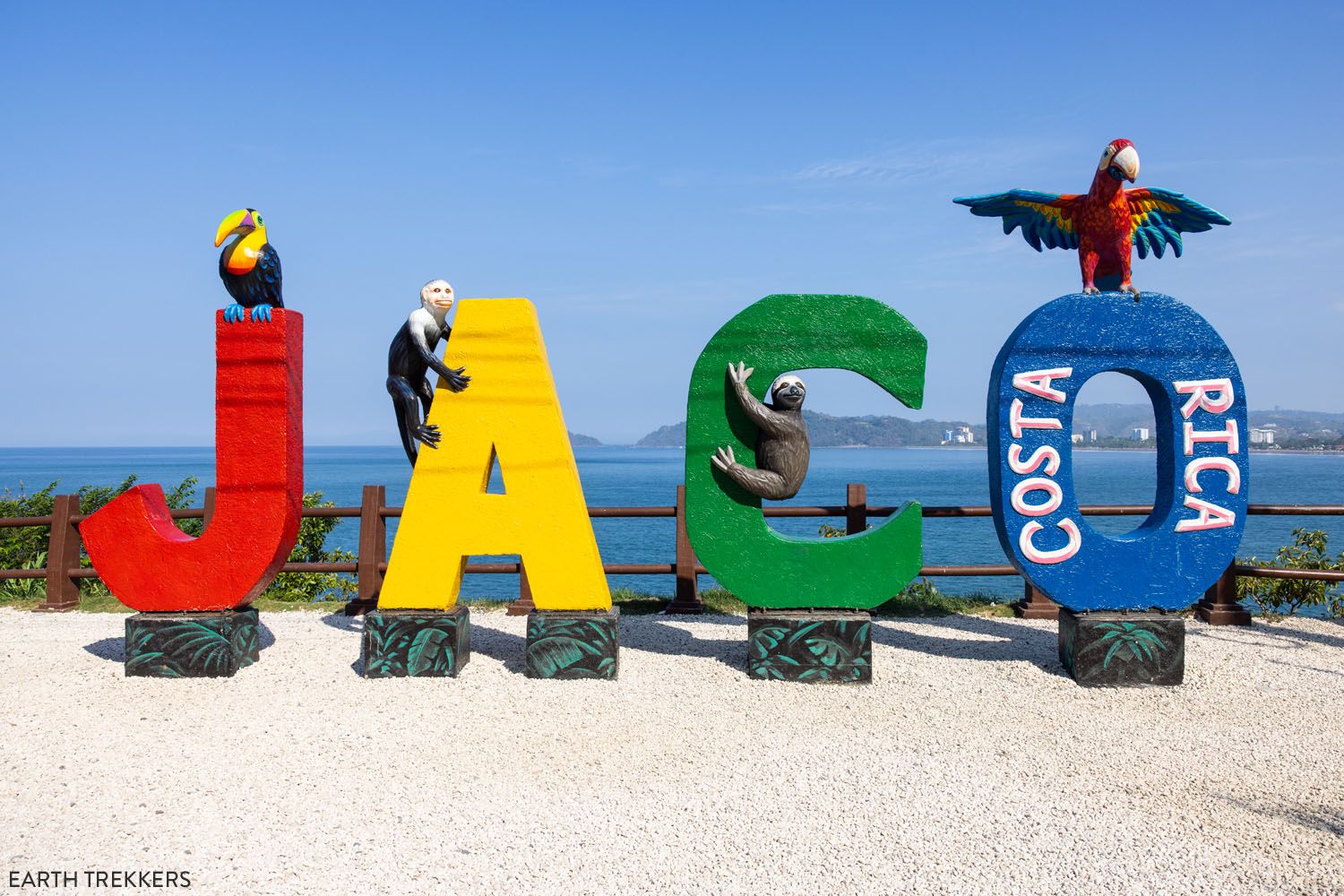
As you head north from Manuel Antonio, there are two quick things to see and photograph, if you like. The first is the very colorful Jaco sign. The second is Crocodile Bridge. On route 34, the road crosses over River Tarcoles and from here there is a very good chance that you will spot a few crocodiles lounging in the river.
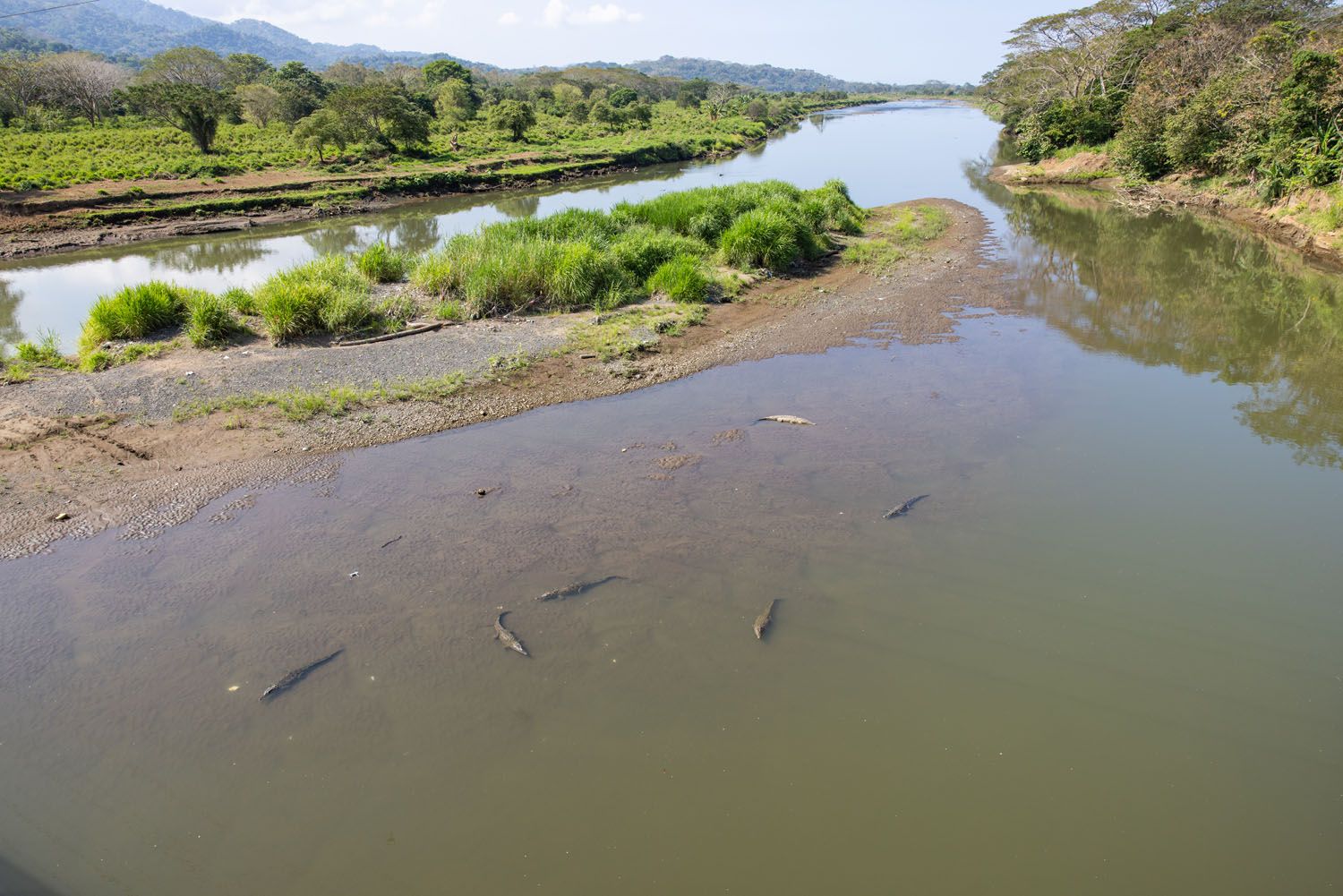
The view from Crocodile Bridge
If you don’t have plans to rent a car, here is a shared shuttle service that runs from Manuel Antonio to Monteverde.
Lunch in Monteverde
If you leave Manuel Antonio at 8 am, you have time for lunch before this afternoon’s excursion. We had a great lunch at Taco Taco Monteverde.
Afternoon: Ziplining or Hanging Bridges
Monteverde is famous for its cloud forest, a high-altitude ecosystem that supports different flora and fauna than what you will find throughout the rest of Costa Rica. The best things to do here are ziplining, walking the hanging bridges through the tree canopies, and guided wildlife walks. It’s a lot cooler here, so make sure you pack some warm clothes.
In our Guide to Monteverde, we cover the best ziplining companies and private reserves to visit, where to stay, and where to eat.
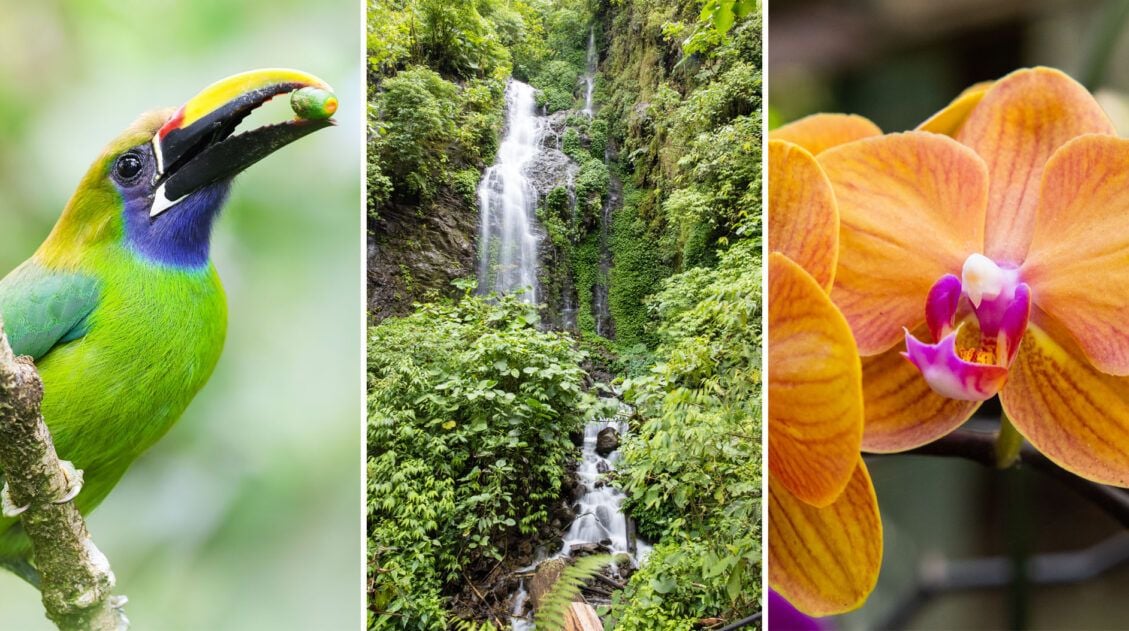
Best Things to Do in Monteverde: Cloud Forests, Ziplining & Waterfalls
Detailed guide to Monteverde, covering things to do, recommended hotels, and our favorite restaurants.Option #1: Ziplining
We weren’t joking when we said ziplining would show up a lot on this itinerary.
Since exploring the tree canopies is one of the best things to do in Monteverde, doing it by zip line is a must-have experience. If you only go ziplining once on this Costa Rica itinerary, this is where we recommend doing it.
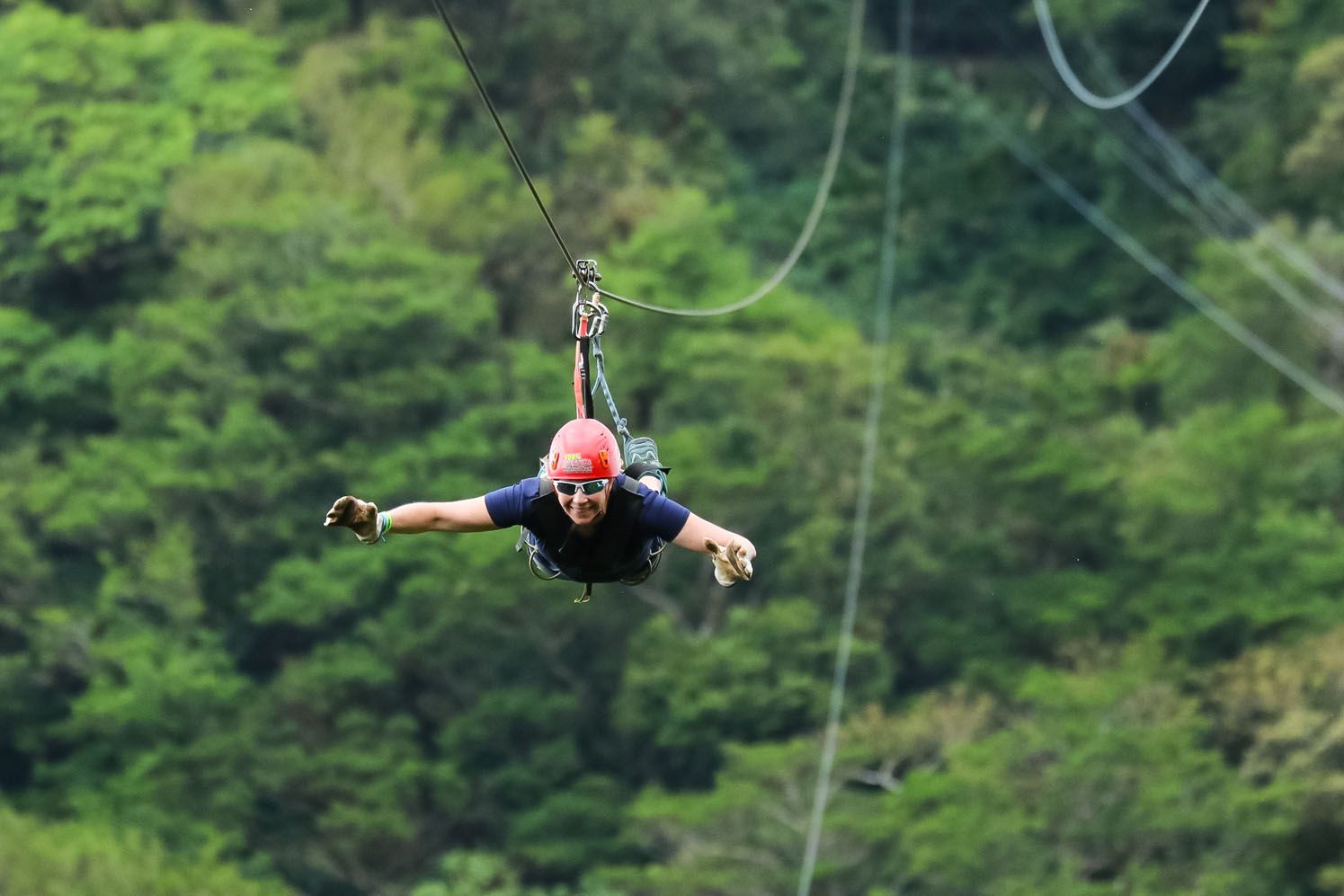
On our first afternoon in Monteverde, we took this ziplining tour with 100% Aventura. We picked 100% Aventura because they have the longest zip line in Costa Rica and you can do it superman-style.
There are several other companies that also get great reviews, and we cover this in a lot more detail in our guide to Monteverde.
Option #2: Hanging Bridges
If ziplining is not your thing, or you already did it in Manuel Antonio, this afternoon you can walk the hanging bridges in Monteverde. Selvatura Adventure Park is the best place in Monteverde to do this.
The Treetop Walkway is a 1.9-mile trail that runs through the forest. On this trail are eight hanging bridges, ranging from 170 feet to 560 feet in length. You literally walk through the treetops, putting you eye level with sloths, birds, and other wildlife. It takes 1 to 1.5 hours to do this walk.
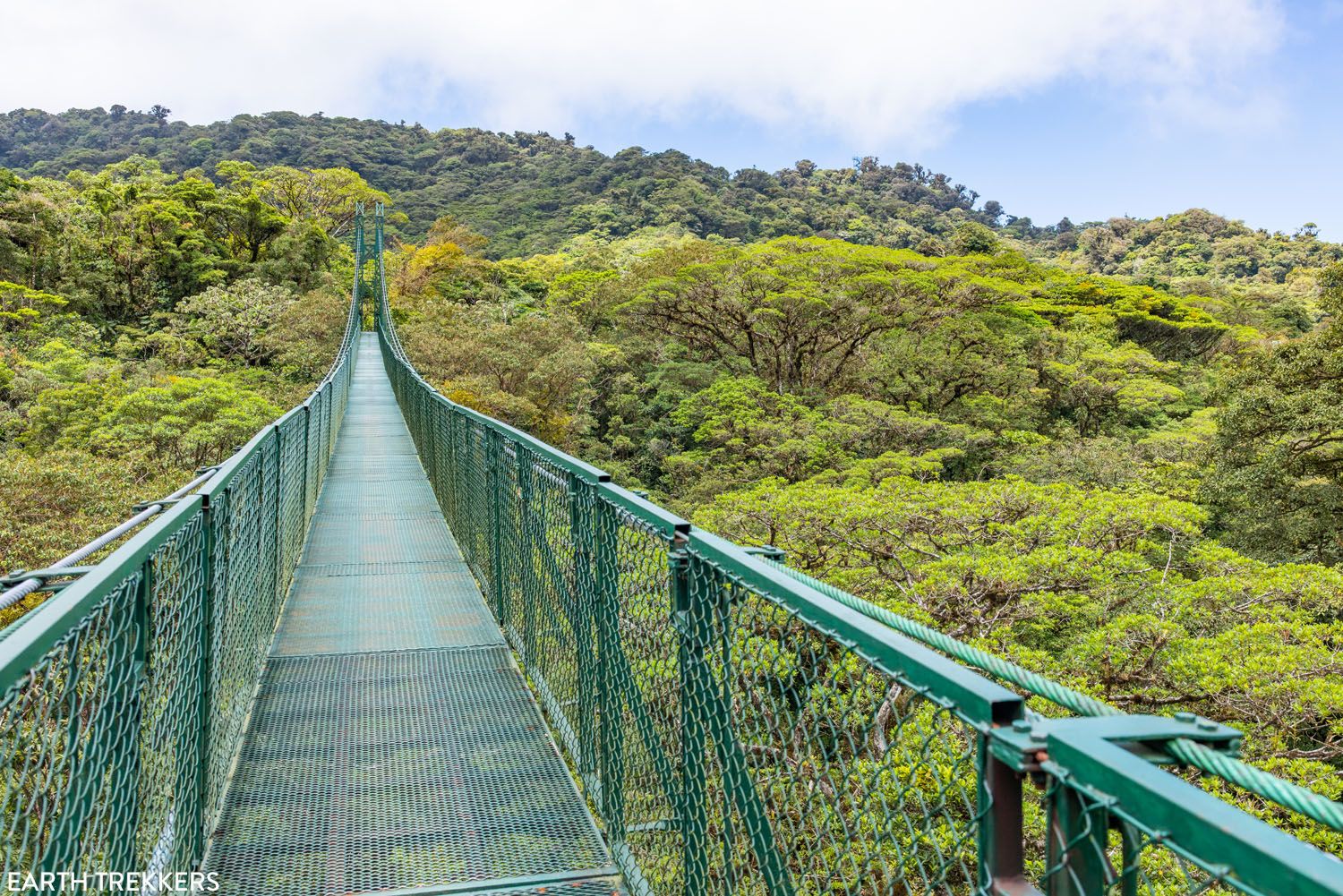
You can do this walk guided or unguided. We did it unguided and never saw any wildlife, but it was still a very interesting walk. This guided tour also includes your transportation, making it a good option for those who do not plan to rent a car.
At Selvatura Adventure Park, there is also the option to ziplining, so some people in your group could zipline while others walk the hanging bridges.
Evening: Dinner
We had an awesome time at Natu Speakeasy, which is a cocktail bar and restaurant. They create classic cocktails with a Costa Rican spin plus small plates (tapas) that are excellent.
Restaurant El Jardín, San Lucas Treetop Dining Experience (a unique dining experience in pods in forest canopy), Restaurante Kiré, and Restaurante El Sapo at Senda Monteverde are more restaurants to try.
Where to Stay in Monteverde
We had a wonderful experience at Hotel Belmar, which has made the list of the best hotels in Central America on both Travel + Leisure and Condé Nast.
For more hotel recommendations, take a look at our article Things to Do in Monteverde. You will stay in Monteverde for two nights.
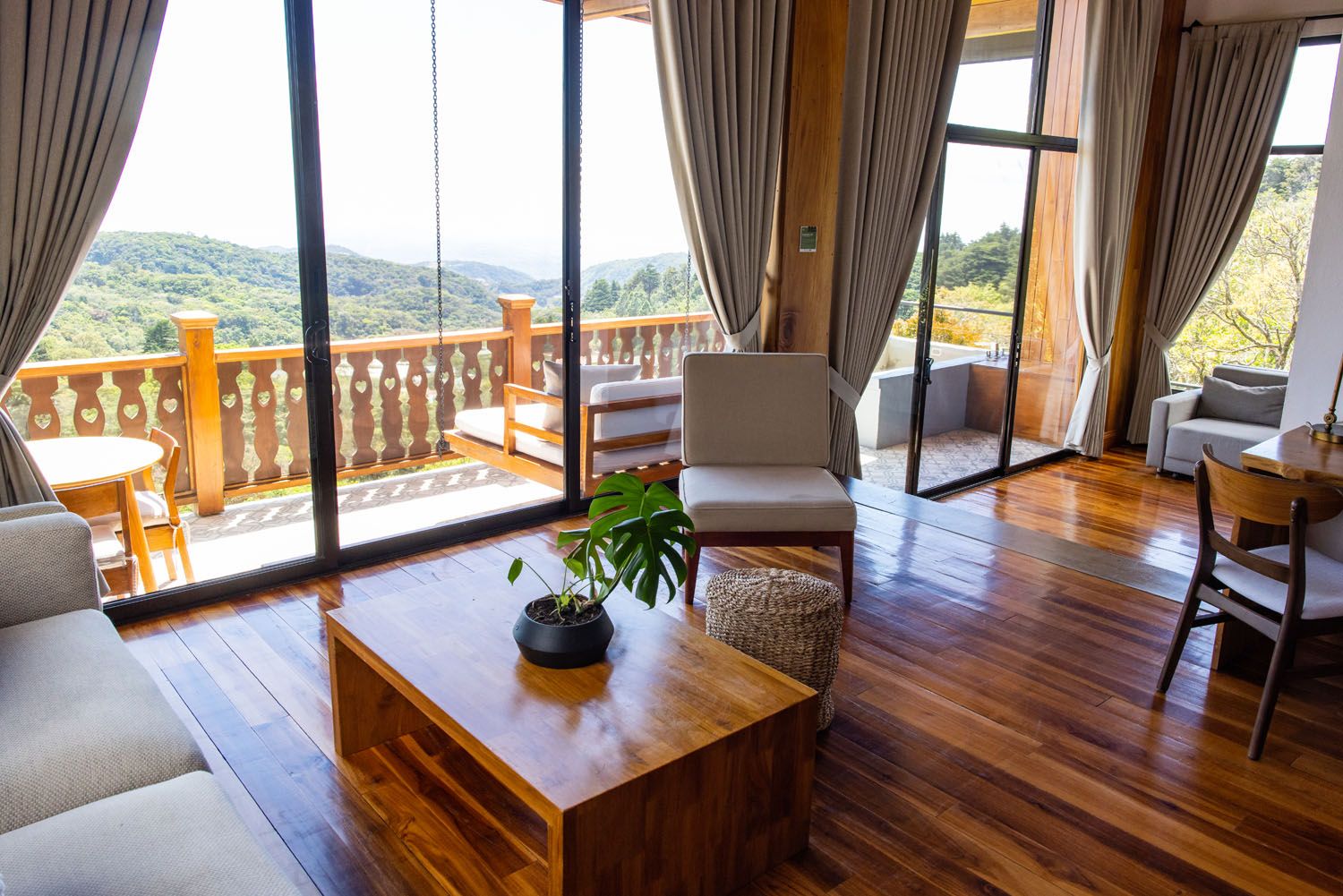
Hotel Belmar
Day 5: Guided Wildlife Walk, El Tigre Waterfall Hike or Hanging Bridges
Start the day on a wildlife walk through the Monteverde Cloud Forest and in the afternoon, go on a wonderful hike to see several gorgeous waterfalls.
Morning: Guided Wildlife Walk
Going on a guided walk through a private reserve is a must-have experience in Monteverde. Morning is a great time to do this, when the animals are more active.
There are several reserves to choose from. We recommend Curi Cancha, since it is one of the easiest spots to see the Resplendent Quetzal, since the forest is less dense.
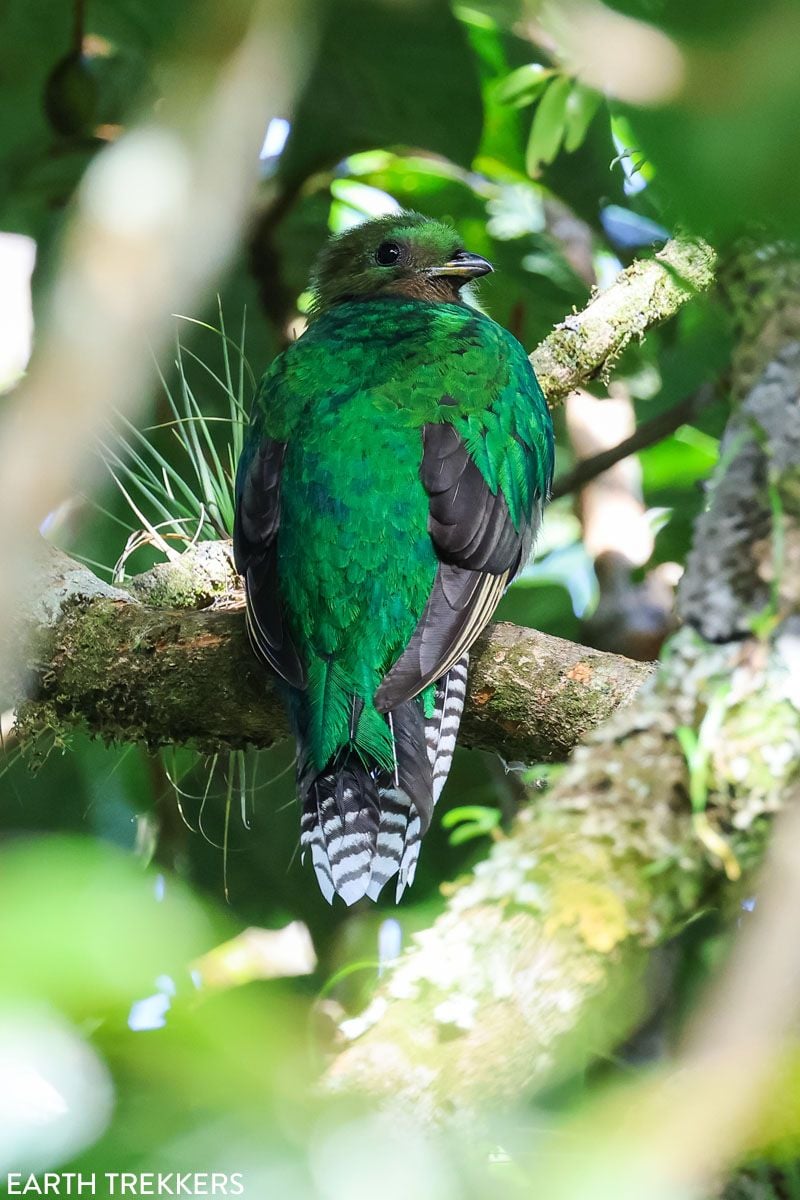
A female Resplendent Quetzal
The reserve offers several different guided tours. We took this guided tour through GetYourGuide, which is a shorter tour than what is offered by Curi Cancha and our guide was incredible. The tour started at 7:30 am and ended at 10 am. We saw both a male and female quetzal plus lots of other birds and wildlife.
Afternoon: Cataratas El Tigre or Hanging Bridges
Again, you have a choice to make. This afternoon, you can either hike the Cataratas El Tigre trail (our favorite hike in Costa Rica) or visit the Selvatura Hanging Bridges, if you did not do that yesterday.
It’s possible to do both (we did) but you have to move FAST and this becomes a big day. Since the morning tour ends at 10:00 am, it is possible to drive to and walk the Selvatura Hanging Bridges, if you walk the trail at a fast pace. Ideally, you need to leave Selvatura by 12:00 pm, to give yourself enough time to drive to Cataratas El Tigre, have lunch, and do the hike.
Cataratas El Tigre
Cataratas El Tigre, also called the El Tigre Waterfall Hike, is a hiking loop that crosses numerous rickety hanging bridges with views of multiple waterfalls. Along the way, it is also possible to spot all kinds of wildlife.
We loved this hike, and if you are a hiker, it’s a must-do while in Monteverde. We cover this in great detail in our article Things to Do in Monteverde, which is worth referring to, since there are multiple ways to do this hike.
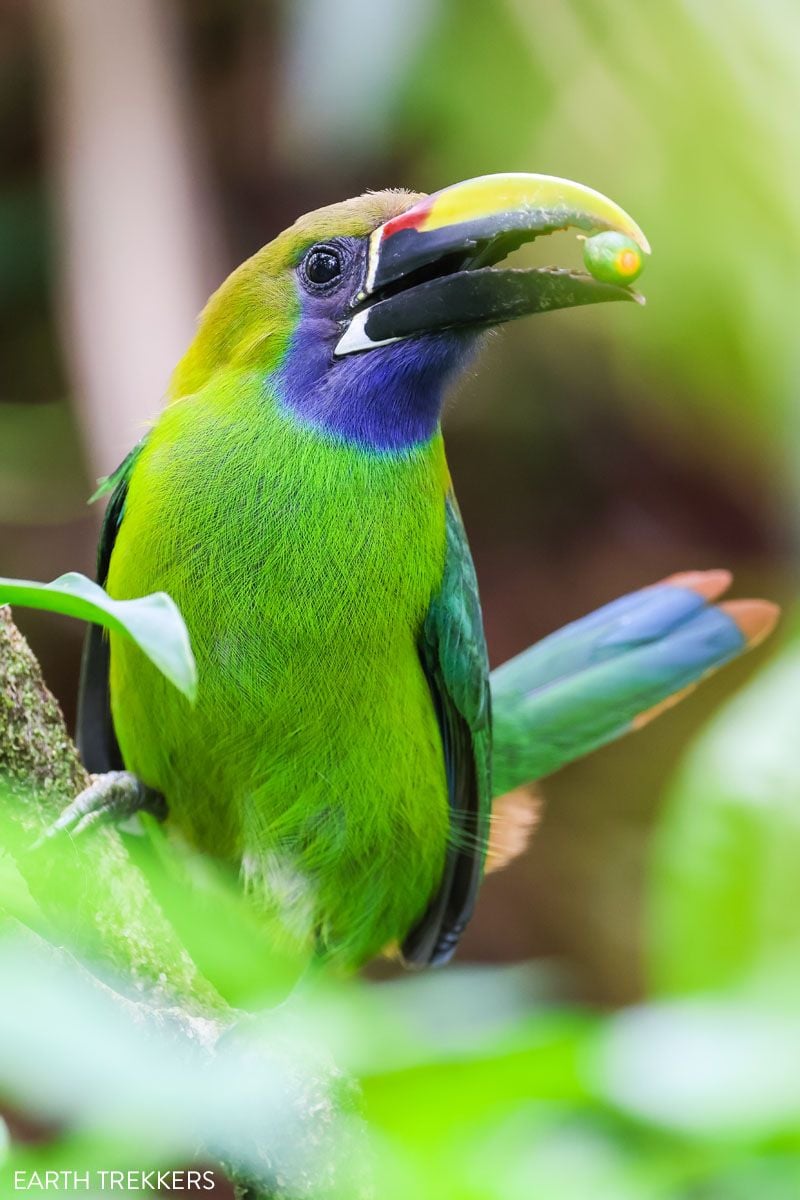
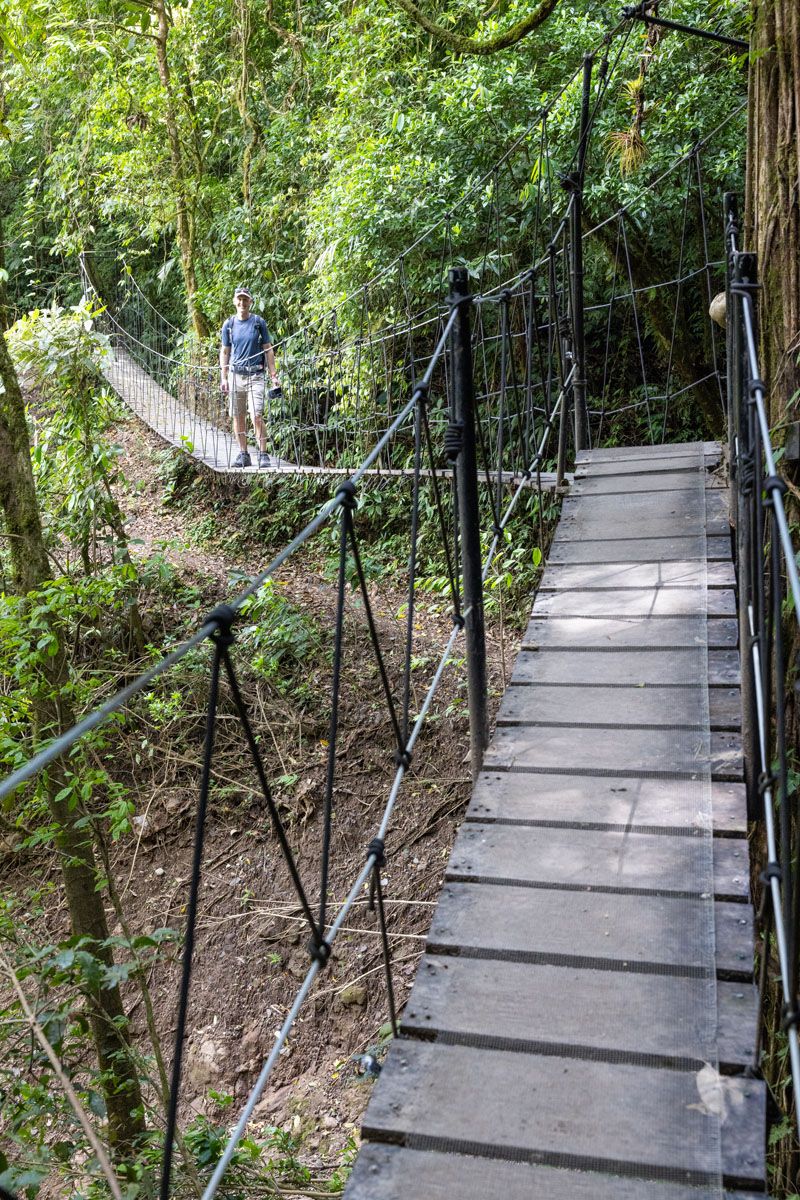
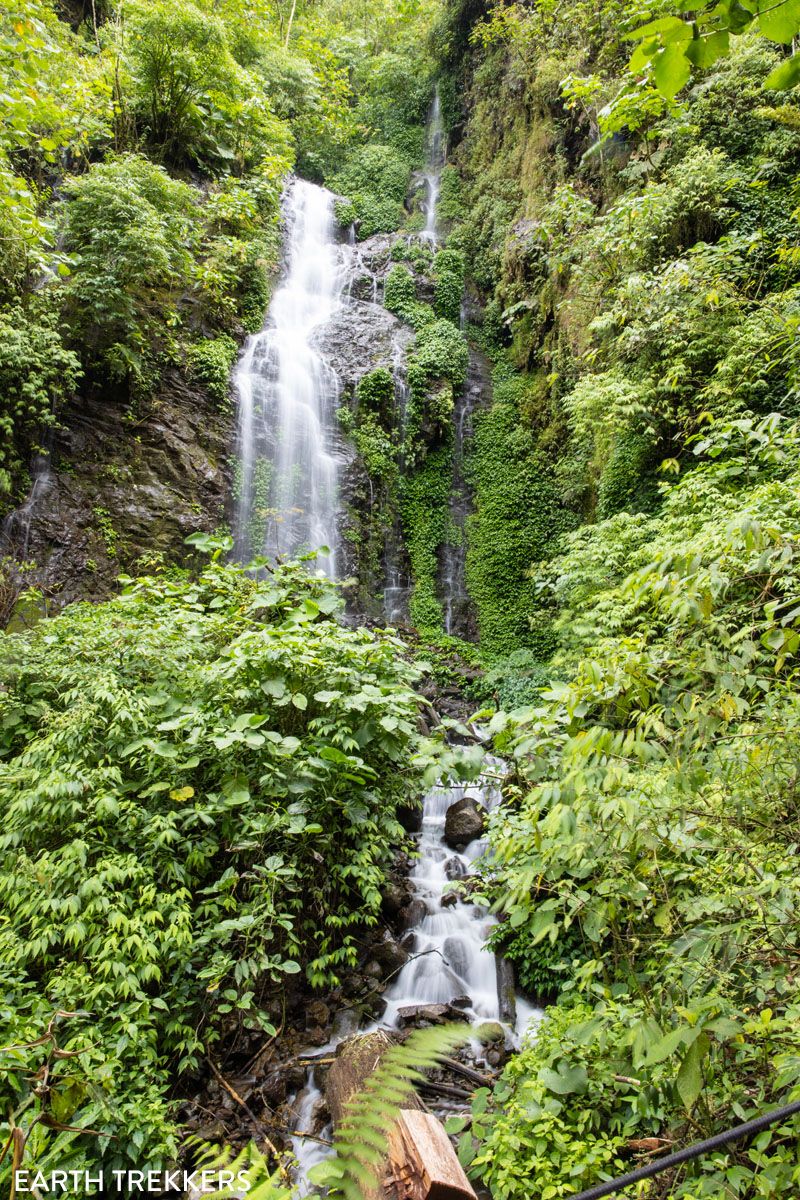
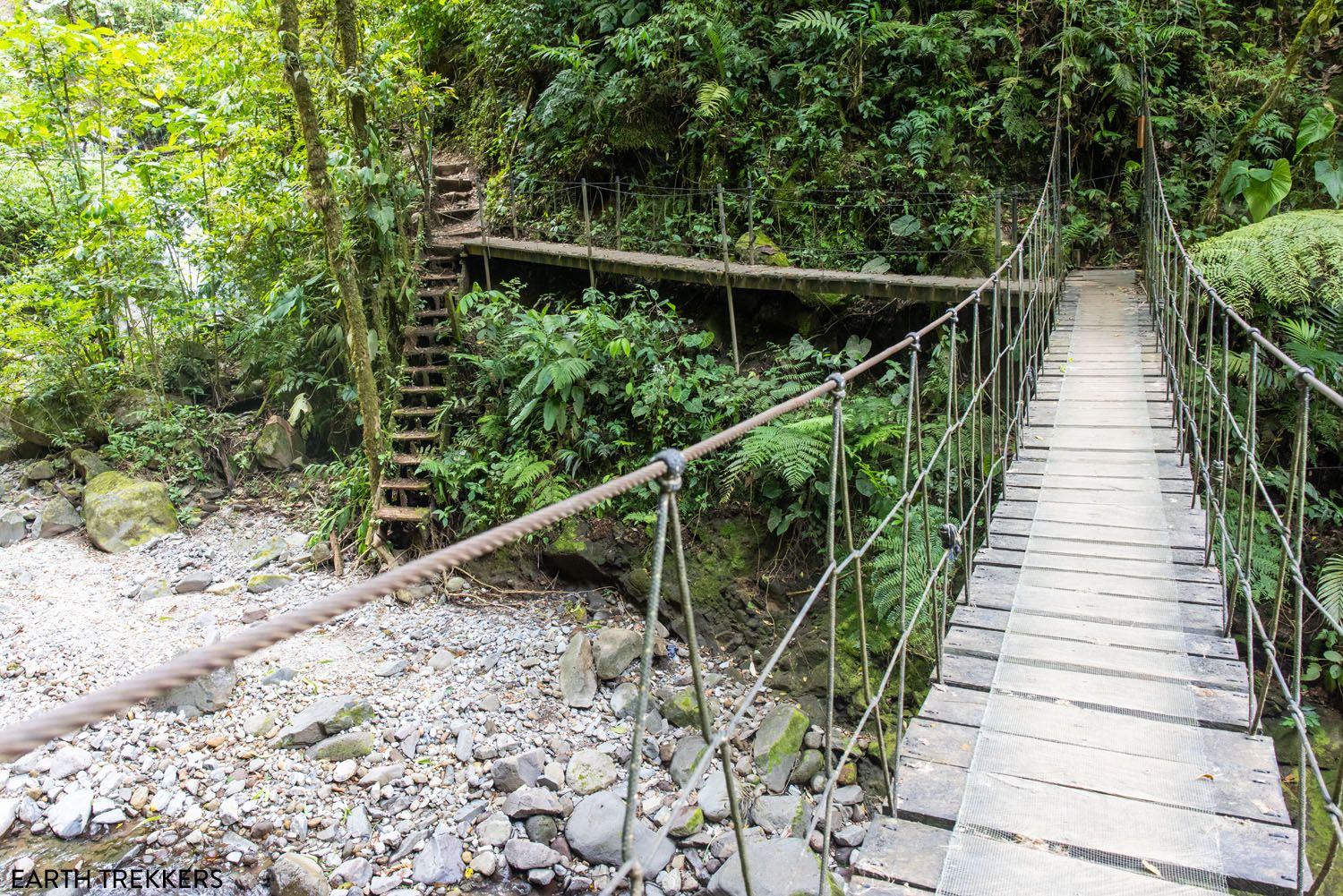
We did the “Full Package,” which includes lunch, hiking the main trail past the waterfalls (for a total distance of 5 km/3.1 miles), and a 4×4 ride up the hill to the starting point. You can also do this as a horseback ride. On average, this takes three and a half hours.
Getting Here: The hike starts at the El Tigre Waterfalls Restaurant, which is located on Monte de los Olivos Road. This gravel road is rough in some spots and a SUV is ideal for getting here. From town, it is a 9.5 km drive which takes about 25 minutes. From Selvatura, it is an 11 km drive that takes about 35 minutes. You can arrange transportation via the official website.
Before you go, purchase your tickets on the official website.
Day 6: Guided Wildlife Walk, Drive to La Fortuna
Start the day with another wildlife walk in Monteverde and, in the afternoon, drive to La Fortuna.
Morning: Tour a Reserve in Monteverde
There are multiple reserves to visit in Monteverde. We had our best experience at Curi Cancha, which you visited yesterday. But if you are a birdwatcher or really enjoy seeing Costa Rica’s wildlife, doing another guided walk this morning is well worth it. We have two to recommend.
Monteverde Cloud Forest Reserve
This reserve is located just outside of town. We took the Natural History Walk Tour, reserving it directly through the official website, since the timing worked best for our schedule. This tour on GetYourGuide gets very good reviews and has an option for a morning visit.
In this reserve, we saw male quetzals, hummingbirds and a nest, coati, exotic birds, and some lizards. It’s also possible to see spider monkeys. One of the highlights of our visit were seeing the hummingbirds at the feeders at Café Colibri, which is located just outside of the park entrance.
La Reserva Bosque Nuboso Santa Elena
This reserve has a more remote location. It is a short drive past Selvatura Adventure Park. 12 km (7.5 miles) of trails run through the reserve, ranging from well-groomed, easy to walk trails to more rugged, remote trails. The reserve offers a variety of guided walks, which you can see on their website.
If you like the idea of visiting another reserve but don’t want to take a guided tour, this one is a good option. We did not take a tour here, we just walked the trails. The highlight for us was seeing Arenal Volcano from the Observation Tower (keep your fingers that skies are clear). That’s where you are headed next.
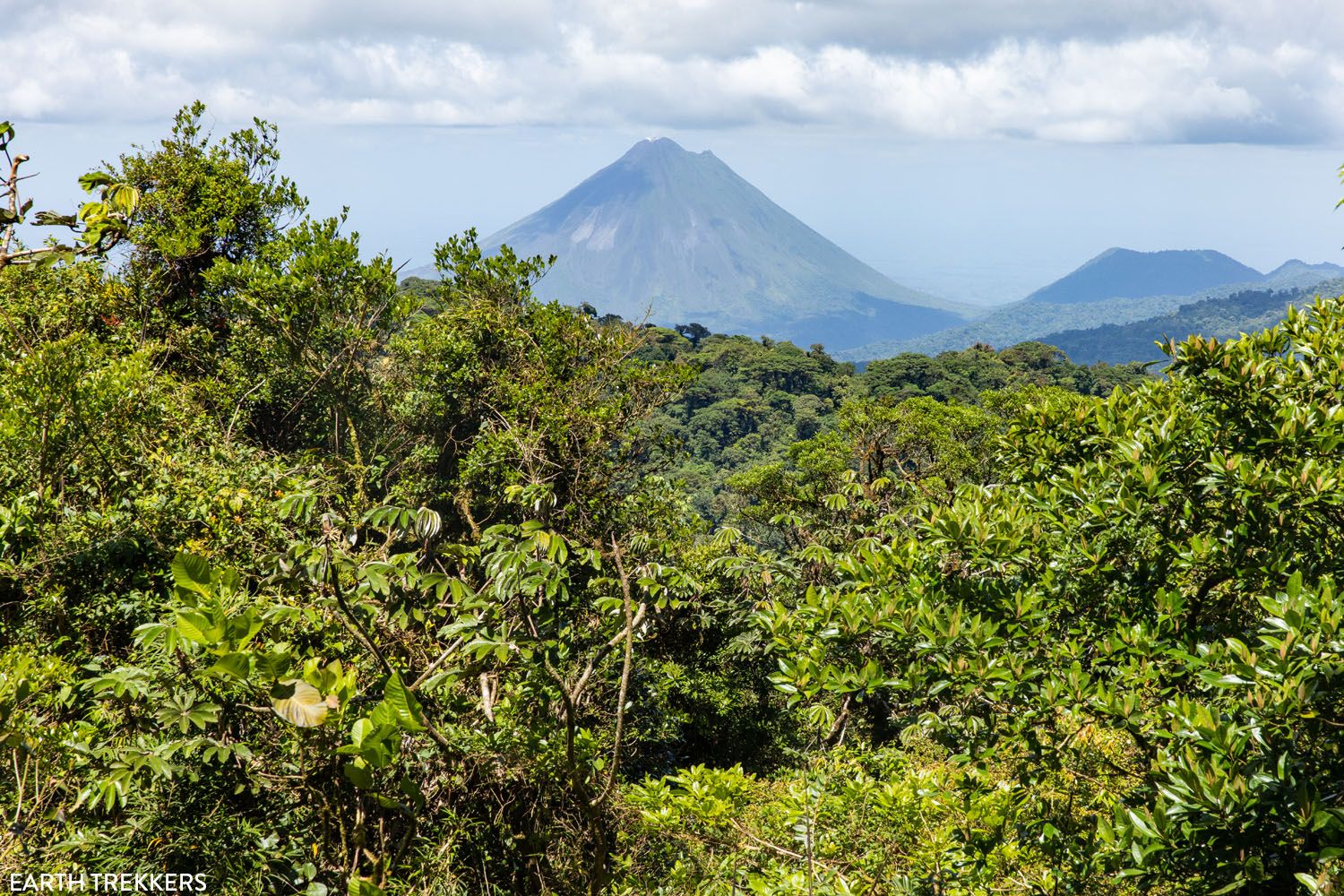
The view of Arenal Volcano from the Observation Tower
Lunch
Return to your hotel and pick up your luggage. Have lunch in Monteverde, fill the car with gas, and then start the drive to La Fortuna.
Afternoon: Drive to La Fortuna
Driving Distance & Time: 115 km/71 miles, 3 hours
This drive may not be very long in terms of distance, but it’s slow going. The roads between La Fortuna and Monteverde are very windy, with many one lane bridges.
The best route is Route 606 → Route 145 → Route 142. Make sure you go through Tilaran, not around it.
The first part of the drive, right after you leave Monteverde, is the most challenging. There are a few unpaved sections, which aren’t too bad to drive. It was the paved sections that were in terrible condition. When we did this in 2025, Route 606 was covered in potholes, some of them looking more like small craters. Once you get on Route 145, road conditions get better. And the drive along Lake Arenal is gorgeous, especially if there aren’t any clouds around Arenal Volcano.
If you don’t have plans to rent a car, I found this shuttle service, which includes a crossing of Lake Arenal by boat. Another option is to take the public bus to Tilaran and transfer to the public bus to La Fortuna.
Once in La Fortuna, check into your hotel and then have dinner.
We stayed at the absolutely amazing Nayara Springs Resort (on our final night in La Fortuna we spent one night in the Nayara Tented Camp). This is one of the best places we have ever stayed in, which is saying a lot. If this fits in your budget, it’s well worth the splurge.
We have more hotel recommendations in our guide to La Fortuna. You will stay in La Fortuna for three nights.
16 Best Things to Do in La Fortuna, Costa Rica
This guide covers where to stay, the best things to do in La Fortuna, and the top day trip options.Day 7: Místico Arenal Hanging Bridges, Hiking trails, Hot Springs
Welcome to La Fortuna!
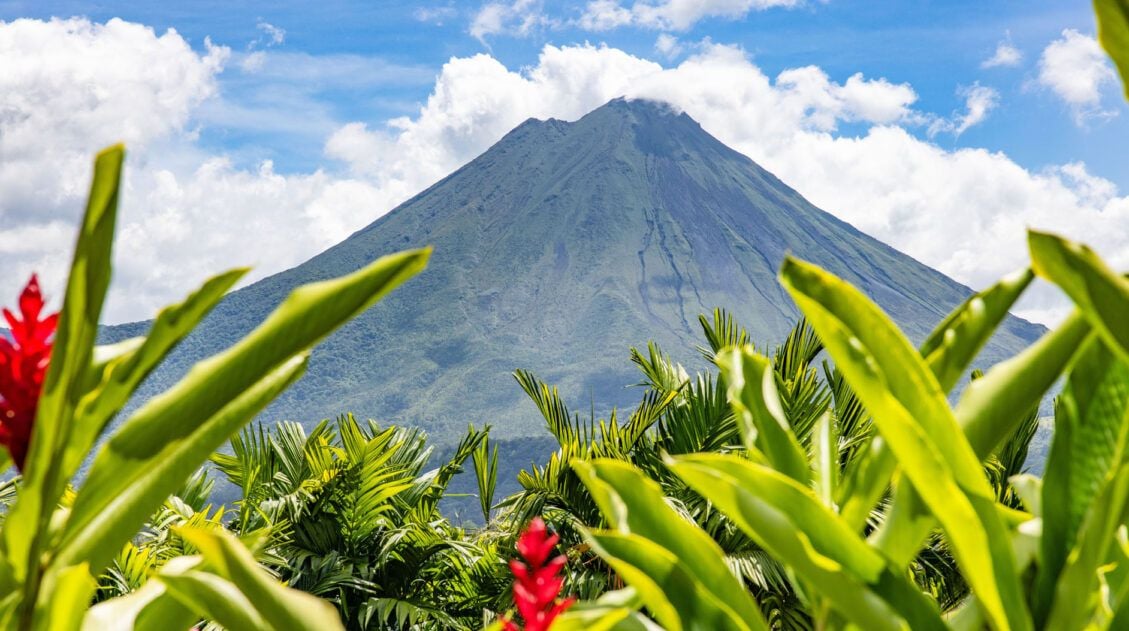
This was our favorite place in Costa Rica. We loved the wonderful mix of hiking trails, adventure activities, and hot springs. The views of Arenal Volcano are stunning and this is all around a fun place to visit.
Morning: Místico Arenal Hanging Bridges
At Místico Hanging Bridges, a network of trails and hanging bridges runs through the rainforest. This is a great spot to see more wildlife and get a spectacular view of Arenal Volcano, if skies are clear.
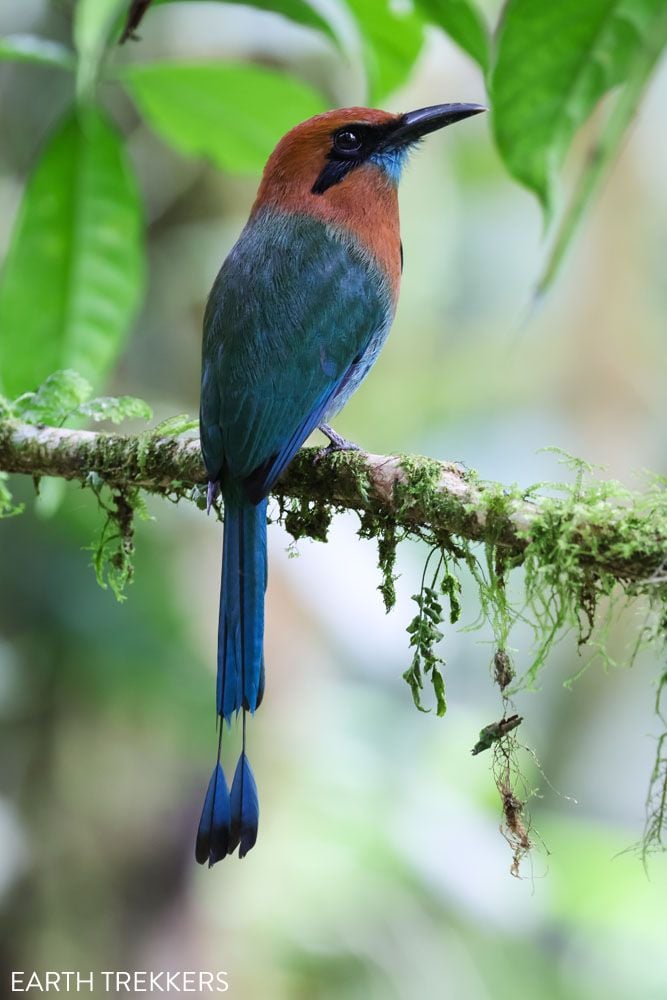
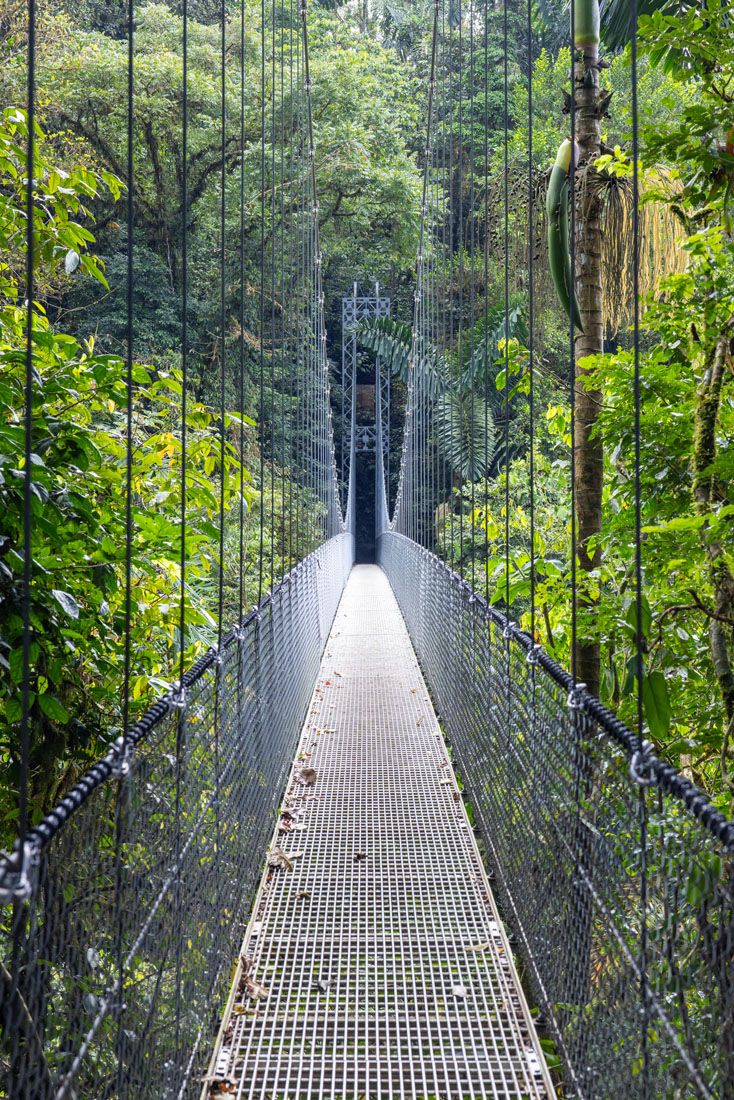
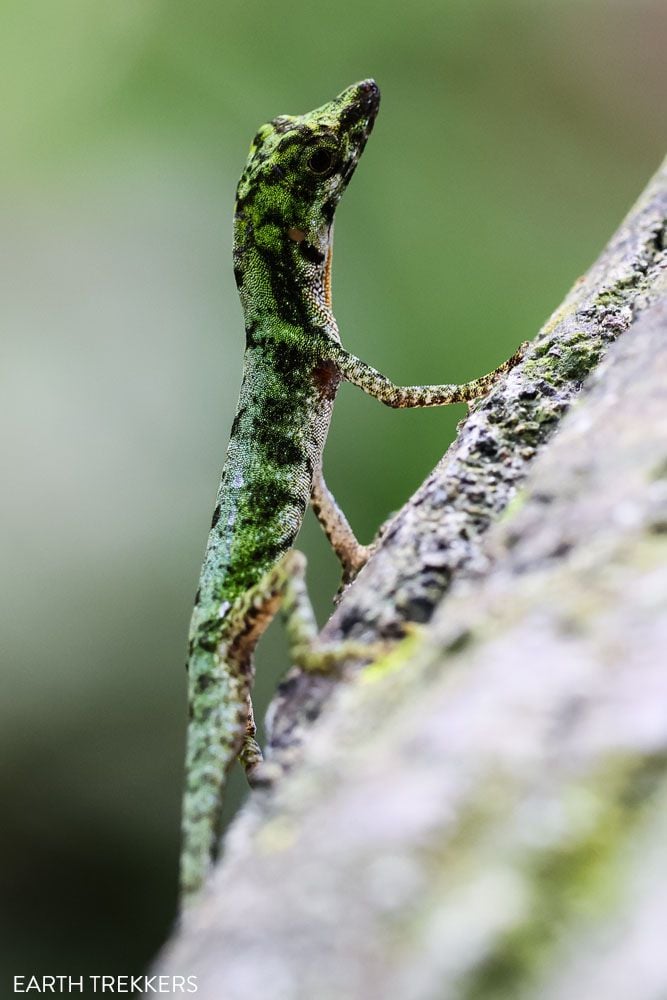
We took a guided tour of the park, which ran from 7 am to 9 am. Our guide was incredible and we saw a lot of wildlife that we didn’t get to see in Monteverde or Manuel Antonio: spider monkeys, pit vipers, lots of exotic birds, howler monkeys, and we heard quite a few poison dart frogs. Without a guide, we would have seen very little in terms of wildlife, but walking the trails and the hanging bridges still would have been very nice.
Entry Tickets: Whether you plan to take a guided or self-guided tour of the park, it is best to book your tickets online in advance. This can be done on the official website. The official website also offers tickets on GetYourGuide, if you prefer to use this platform to manage your tickets and tours in Costa Rica. If you don’t have plans to rent a car, this guided tour also includes transportation from La Fortuna.
Midday: Hike through Lava Fields
One of the best things to in La Fortuna is to hike the trails that run through the 1968 lava fields and get a view of Arenal Volcano. There are several private reserves where you can do this. We cover these in great detail in our article Best Things to Do in La Fortuna.
Mirador El Silencio: Hike a rugged, slightly challenging trail through the lava fields for an awesome view of Arenal Volcano. This was Julie’s favorite hike in La Fortuna and this is the cheapest private reserve to visit.
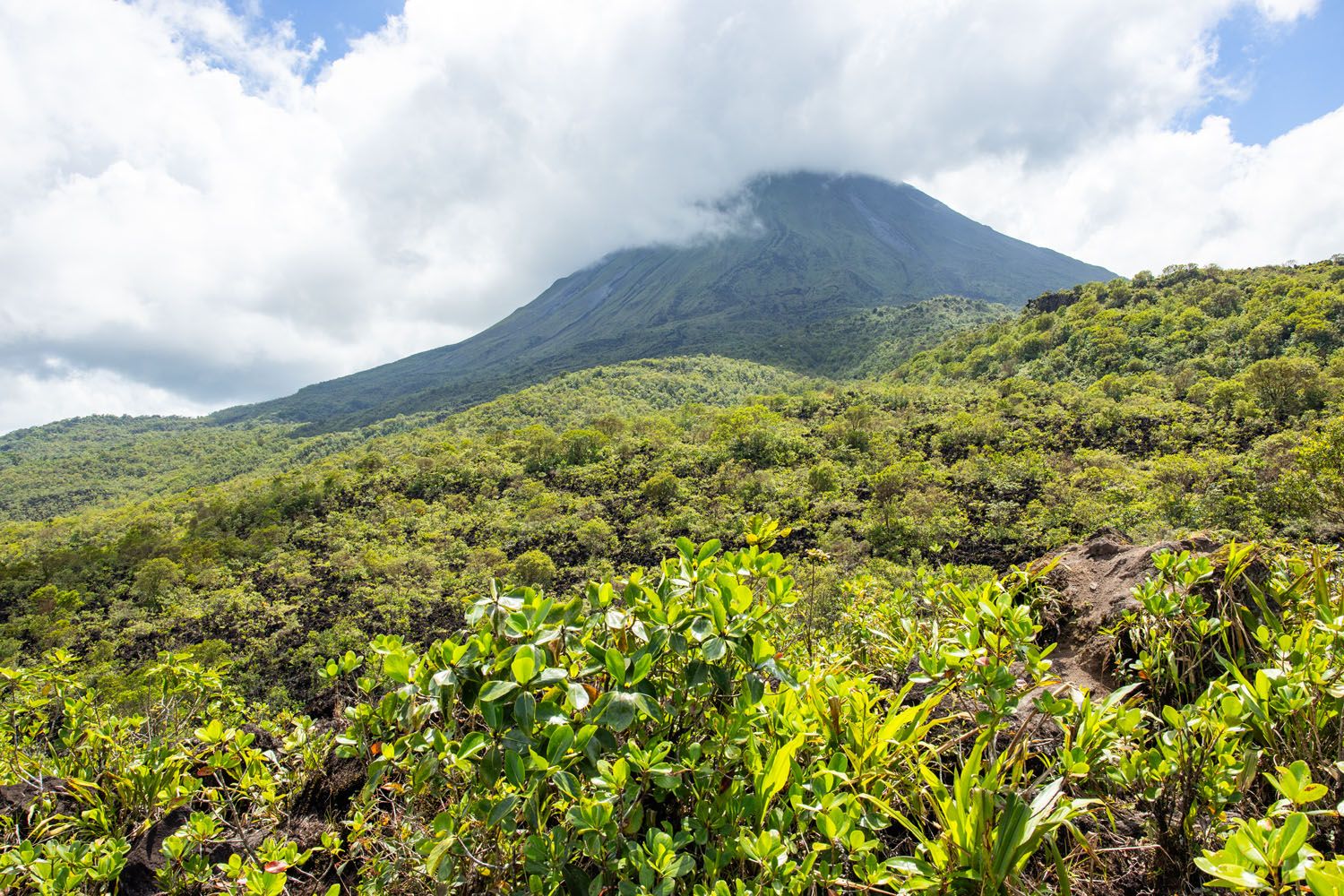
The view from Mirador El Silencio
Arenal Volcano Park 1968: This was my favorite hike in La Fortuna. A portion of the trail runs through the lava fields. The café at the end of the hike has panoramic views of the volcano.
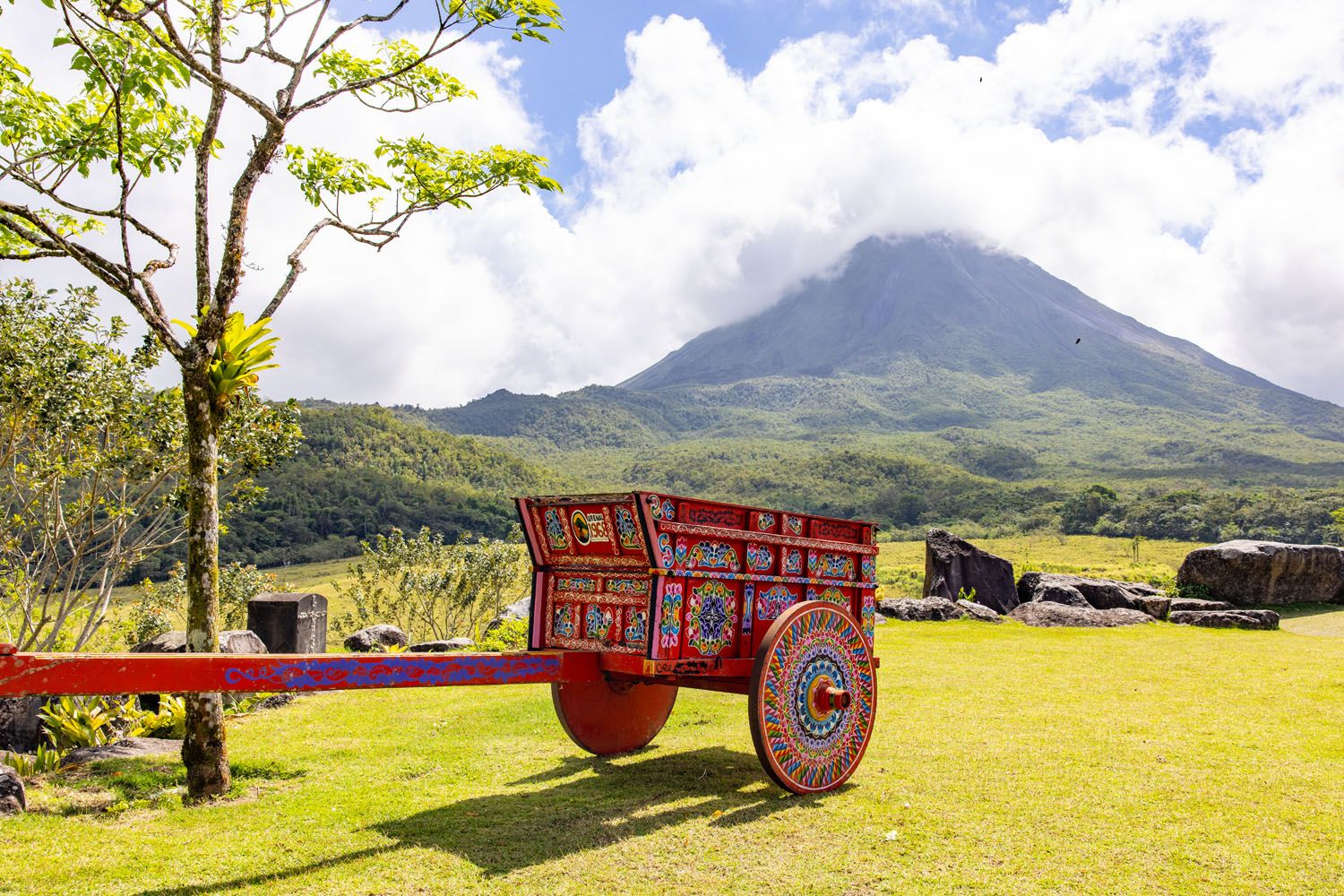
Arenal Volcano Park 1968
Arenal Observatory Lodge: If you want lunch with a view of Arenal Volcano and Lake Arenal, make the journey out this way. The lodge has a restaurant with a huge deck and this is our favorite view of the volcano. Plus, there are bird feeders that attract some very interesting birds, including the Montezuma Oropendola. There are some short trails to walk, if you are interested, plus a very tall, rickety observation tower to climb for an even better view. This is the most remote reserve to get to, and the final part of the drive is on a rough, potholed gravel road.
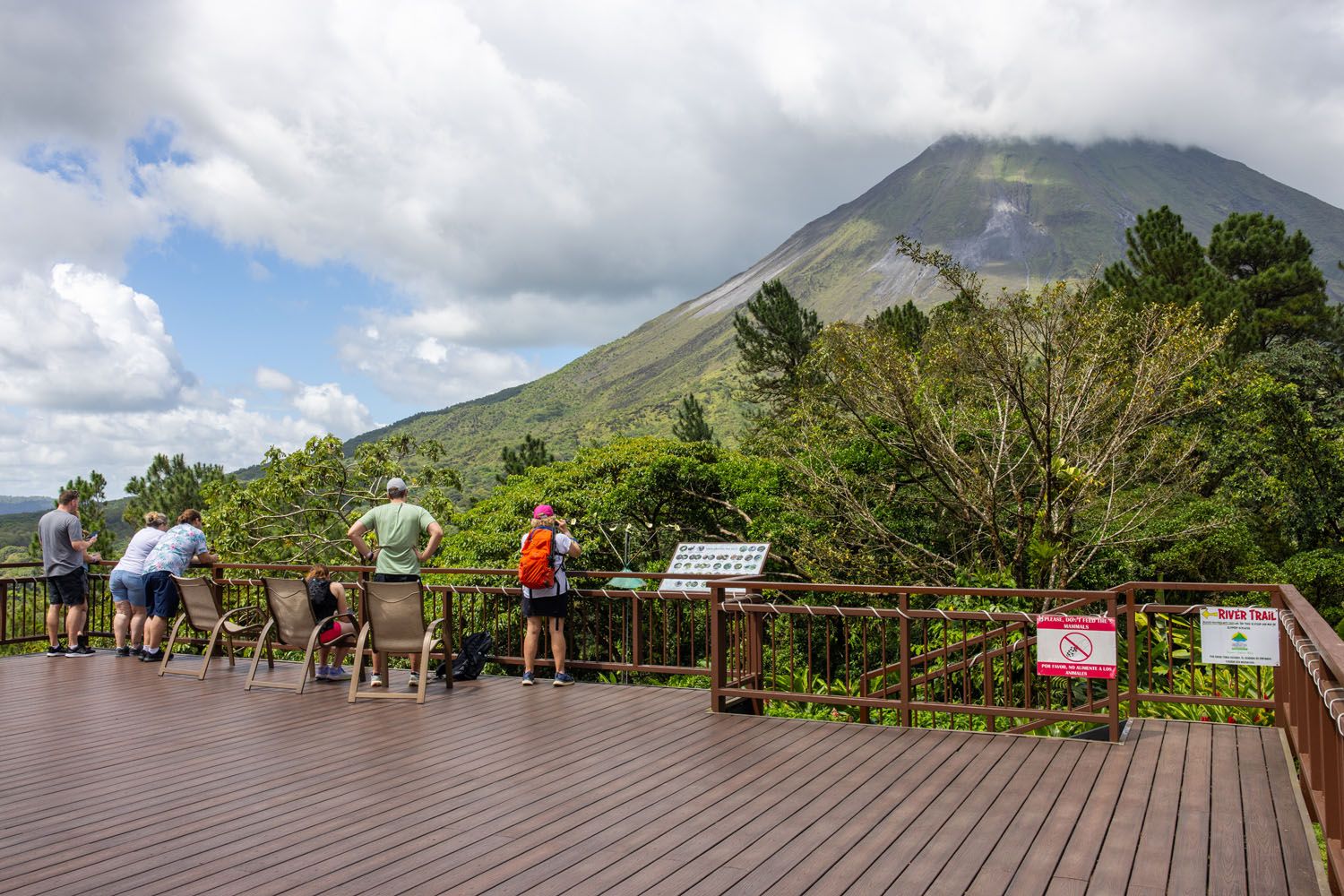
Arenal Observatory Lodge
Afternoon: Hot Springs
Now it is time to relax. Spending an afternoon at the hot springs is a must-have experience while in La Fortuna. The hot springs typically have restaurants and swim up bars, so you could have lunch or dinner here.
There is a long list of hot springs to visit. Again, we cover these in detail in our article Things to Do in La Fortuna.
Our favorite is the Springs Resort Hot Springs. We loved hanging out at the swim up bar, having lunch and cocktails, with an incredible view of Arenal Volcano. Tabacón Thermal Resort & Spa is a good pick for couples and adults who want a quieter, more natural experience. Baldi Hot Springs is a great pick for families. If you are on a budget, take a look at Los Laureles or Paradise Hot Springs.
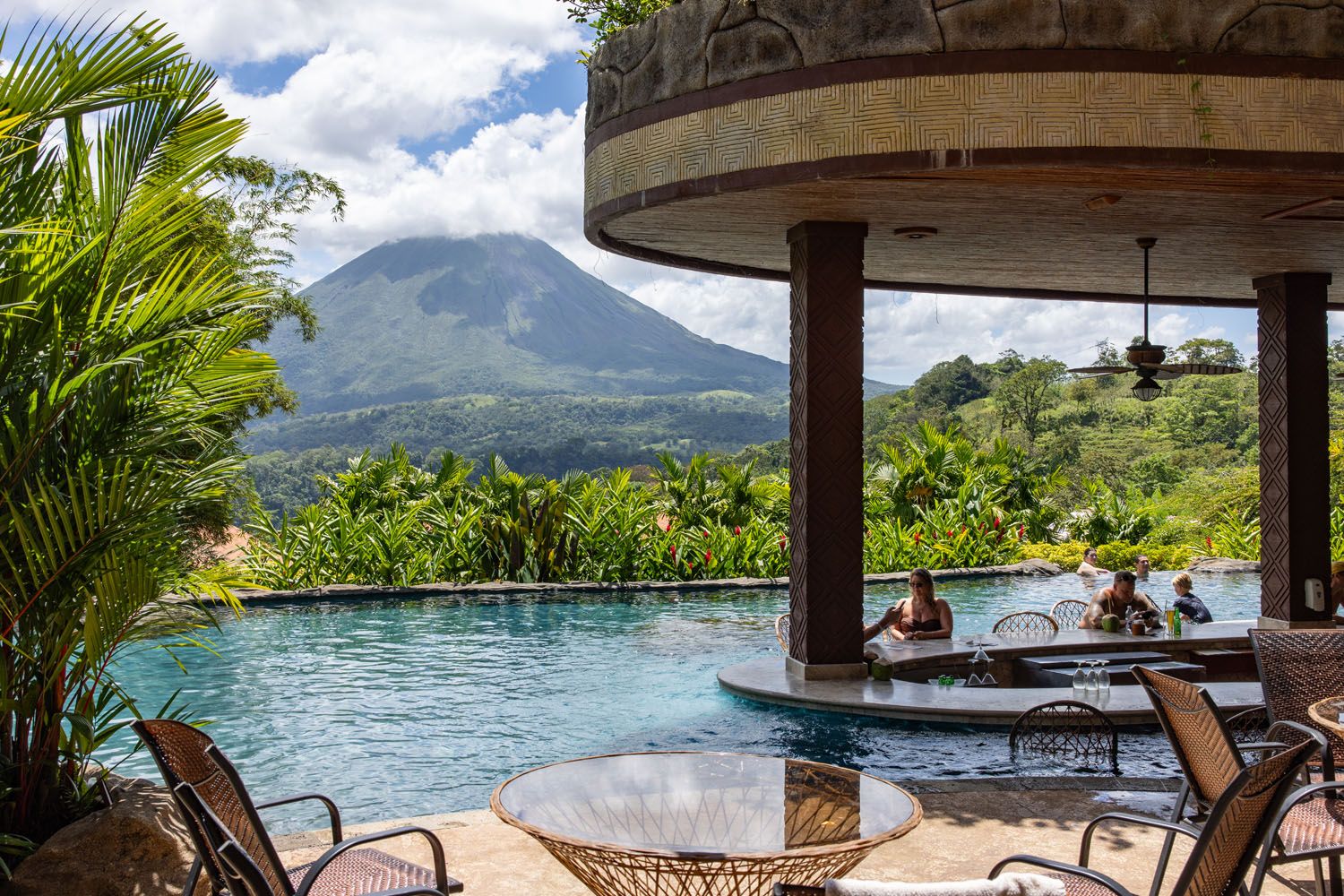
The Springs Resort
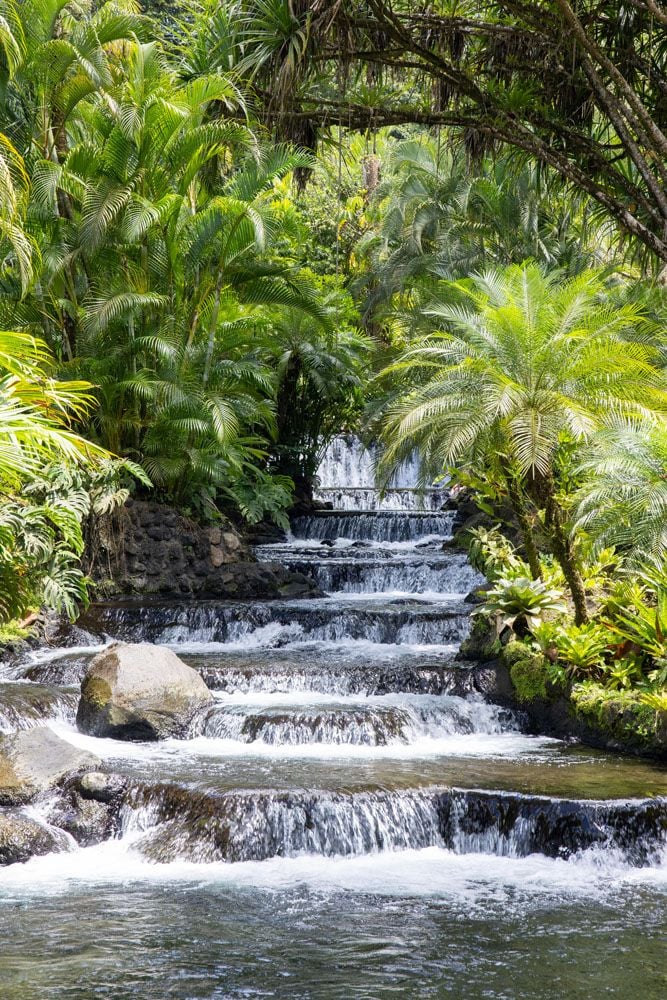
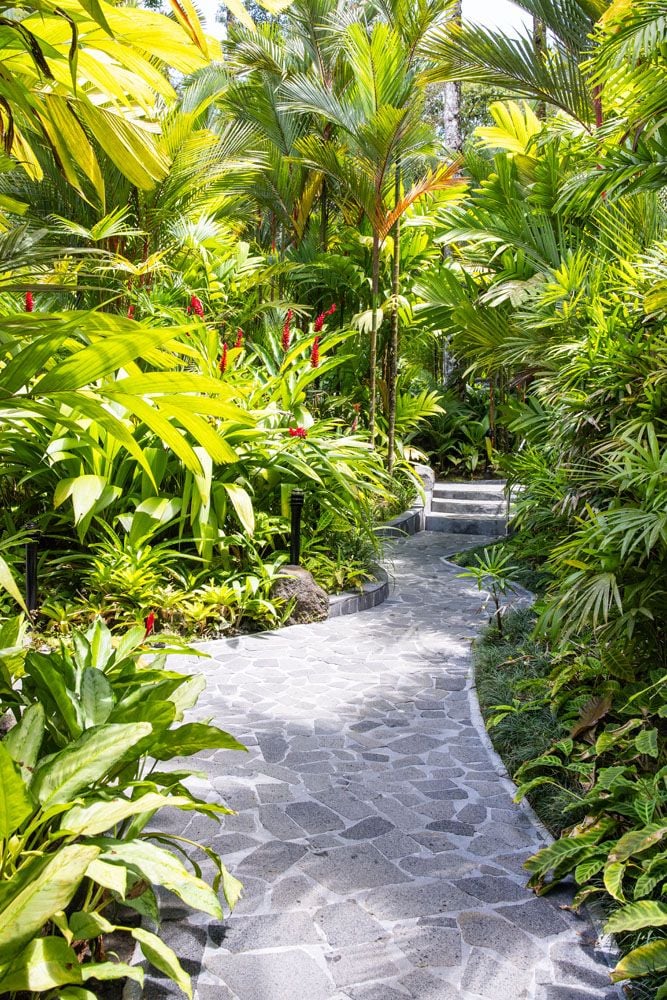
Tabacón Thermal Resort & Spa
PRO TRAVEL TIP: Some of these are quite expensive, costing $100 per adult for a day pass. If you really want to get your money’s worth, you can skip the Místico Hanging Bridges, start the day with a hike, then spend the rest of the day at one of these hot springs. The bigger ones, like Baldi and Springs Resort, have a lot to do, so you could easily spend half to most of a day here.
Day 8: La Fortuna Waterfall, Sloth Walk, Afternoon Excursion
Morning: La Fortuna Waterfall
This is La Fortuna’s most famous waterfall and it is a popular swimming and photography spot.
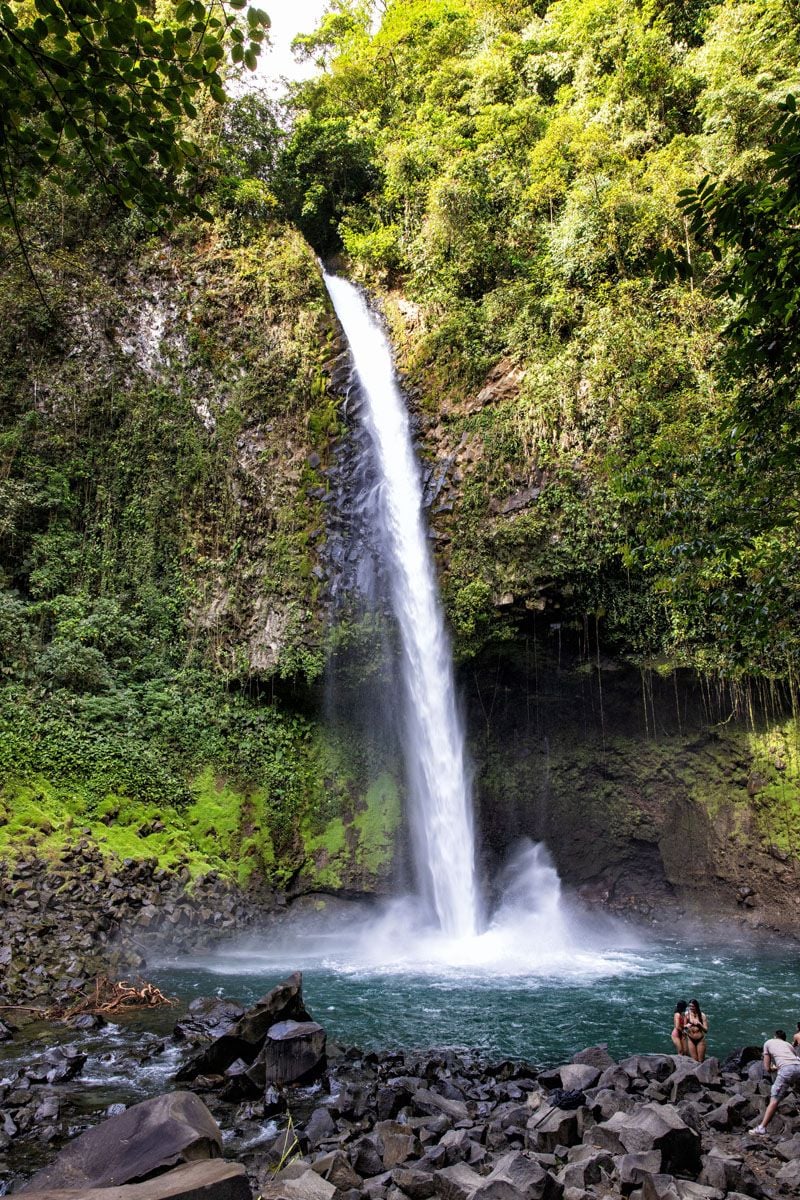
The waterfall opens at 8 am. We got here right at opening time and were one of the first ones at the waterfall. To get to the base of the waterfall, you’ll walk down roughly 530 steps. Once in front of the waterfall, there are a few viewpoints, plus several swimming areas.
Tickets can be purchased on the official website or through GetYourGuide. There is a restaurant, bathrooms, showers, and gift shop at the entrance. Get hours and pricing on the official website before you go.
Midday: Go on a Sloth Walk
There are a few nature parks with trails that weave through the forests in La Fortuna, increasing your odds of spotting a sloth. If you haven’t spotted a sloth yet on your trip, it is best to hire a guide. But you can walk the trails unguided, testing out your sloth spotting skills. Here are two options:
The Bogarin Trail: This was our favorite sloth walk in La Fortuna. 2.5 km of trails run through the forest, creating two loops. We did spot a sloth here. A highlight is the birdfeeders next to the entrance.
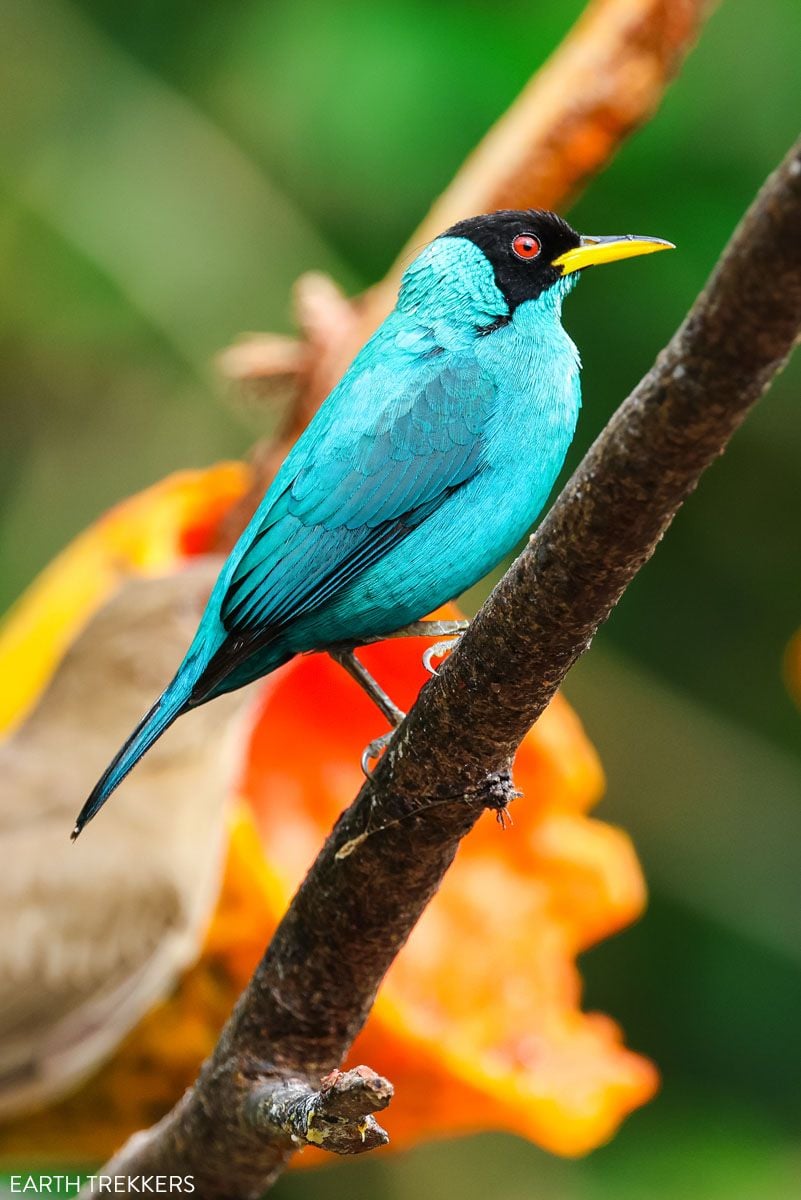
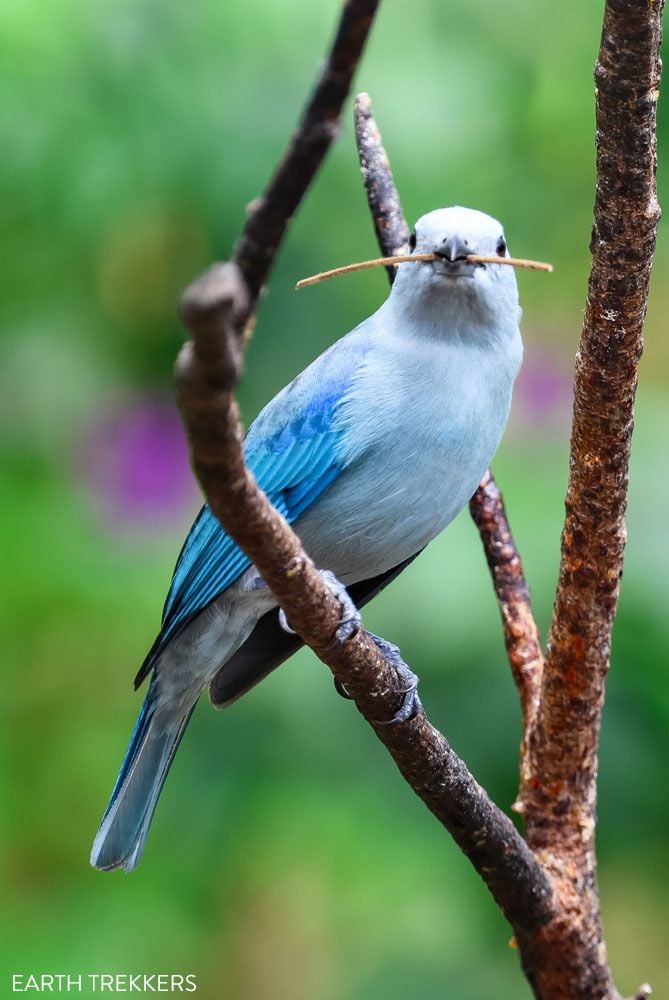
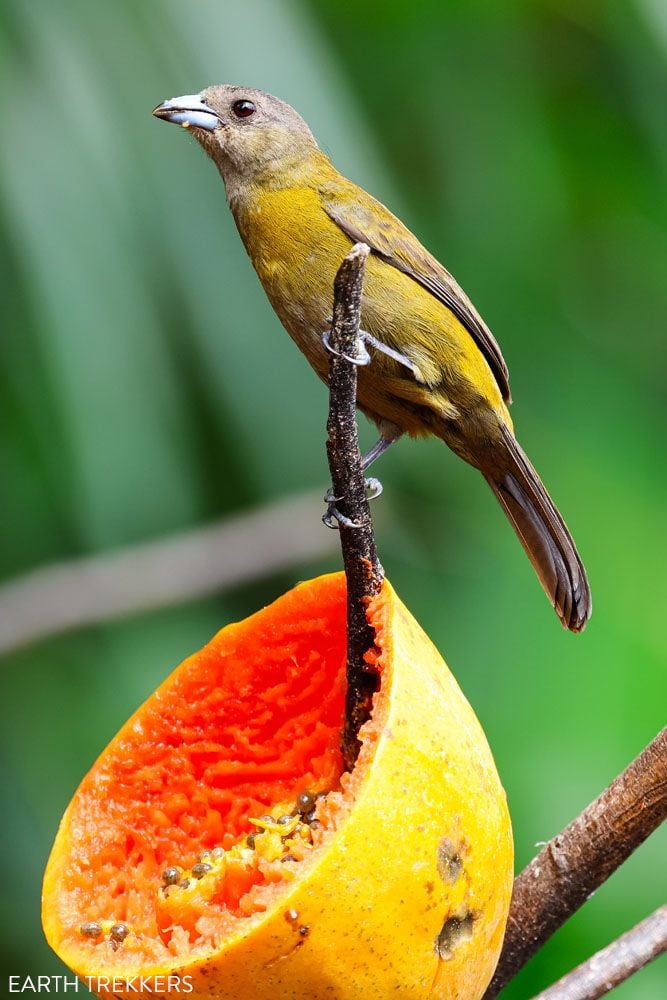
Just a few of the birds at the Bogarin Trail birdfeeders
La Fortuna Hikes and Trails: This park is a short drive from La Fortuna and feels a little more wild and remote than the Bogarin Trail. There are no birdfeeders here, but the walking paths are beautiful and run past a few small ponds, which makes it more likely to see frogs and lizards. This park puts flags in the ground where sloths have been spotted recently.
Afternoon: Choose Your Adventure
This afternoon, take your pick between these different activities:
Canyoning: This was our favorite experience in La Fortuna. We went canyoning with Maquique Adventure and it was a blast from start to finish. This was our first time canyoning, so no prior experience is necessary.
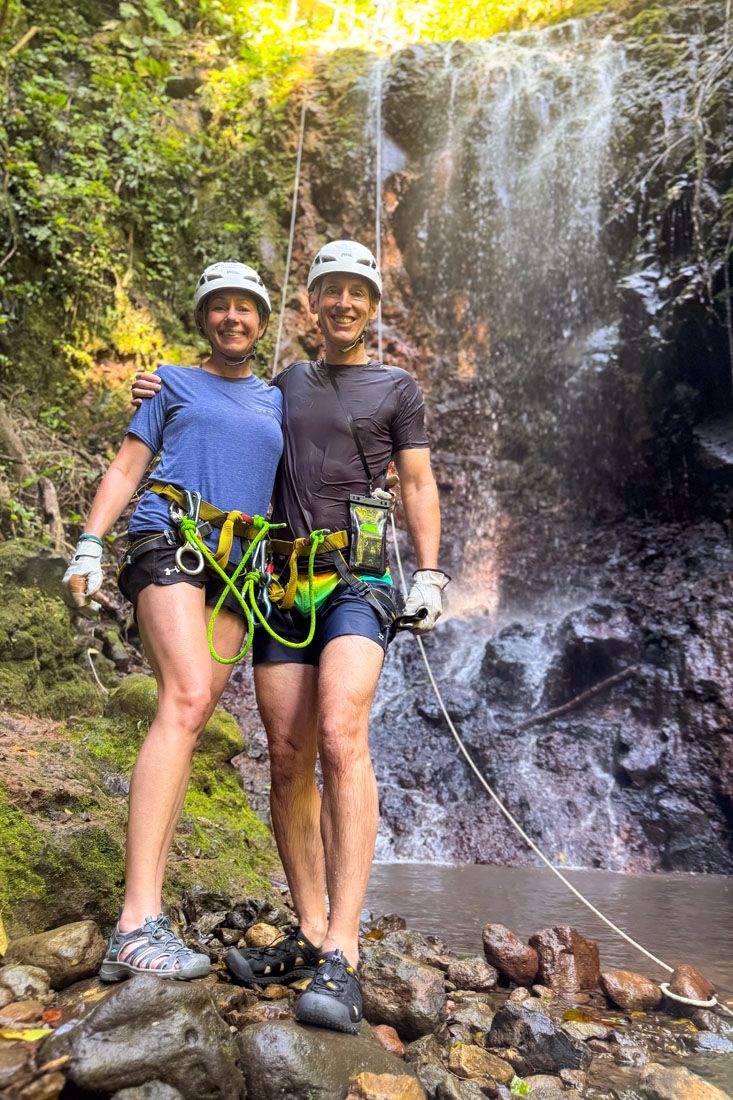
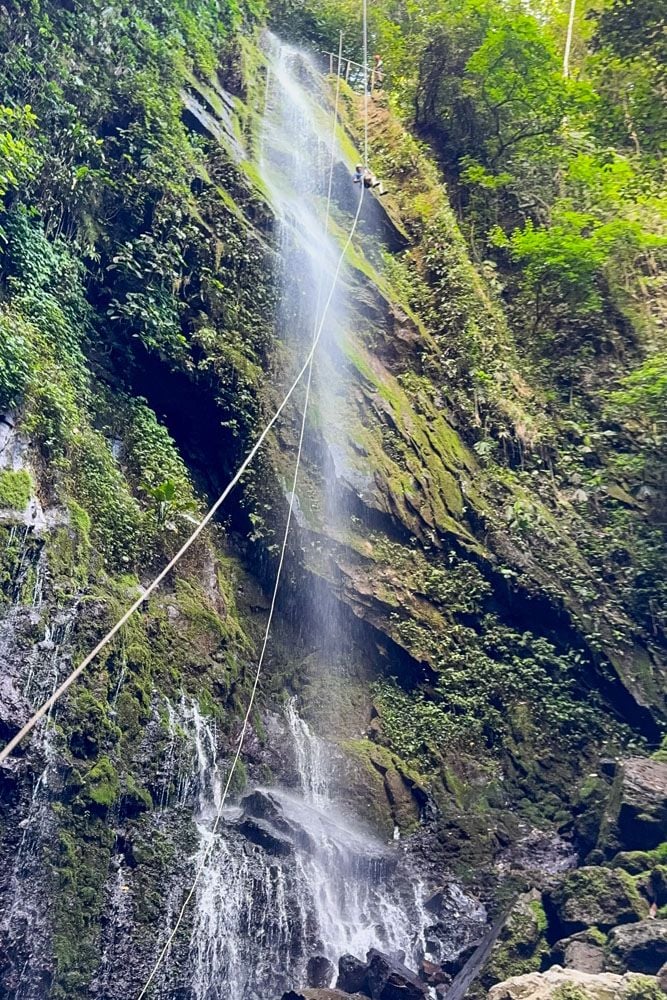
Chocolate and Coffee Tour: There are several places to take chocolate and coffee tours in La Fortuna, with Don Juan being the most popular and Rainforest Chocolate being smaller with a hands on approach on their tours.
Hot Springs: Choose a new hot spring to visit or return to yesterday’s spring. The Springs Resort admission pass is good for two days (confirm this in case rules have changed) so you could spend another afternoon here.
It’s also possible to go ziplining, white water rafting (these tours are usually offered in the morning so would have to rearrange this day), or take a float trip on the Peñas Blancas River.
Day 9: La Paz Waterfall and Poas Volcano
Today it is time to say goodbye to La Fortuna and start heading towards the airport. You can do one of two things: spend the day in La Fortuna and in the evening, drive to San Jose OR visit Poas Volcano and the La Paz Waterfall Gardens.
Option #1: More Time in La Fortuna
Spend the day in La Fortuna. If you have a late flight tomorrow, you could drive to the airport on the morning of day 10 (120 km, 2 hours 30 mintues), but give yourself lots of contingency time, for traffic and delays.
If you choose to head towards the airport, we have hotel options listed next.
Option #2: Poas Volcano & La Paz Waterfall Gardens
Morning: La Paz Waterfall
In the morning, drive from La Fortuna to La Paz Waterfall Gardens (85 km, 1 hour 45 minutes). On this drive, just before you get to La Paz Waterfall Gardens, you will see La Paz Waterfall from the road.
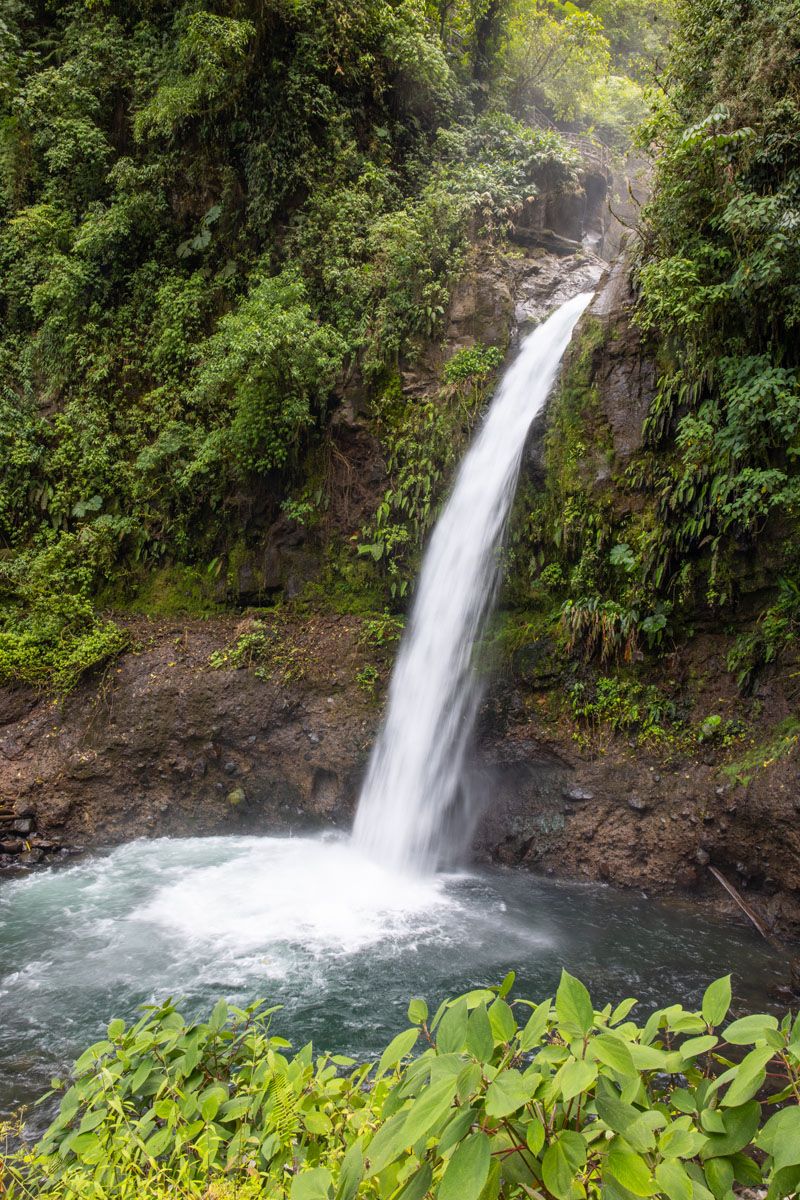
Midday & Afternoon: Poas Volcano & La Paz Waterfall Gardens
This involves some back-and-forth driving, and a reservation at the Peace Lodge, but it is the best way to see Poas Volcano and La Paz Waterfall Gardens and keep your luggage safe.
Poas Volcano: Poas Volcano is an active volcano near San Jose. To visit the volcano, you will have to purchase timed entry tickets in advance (you can’t show up and buy a ticket). It’s common for the volcano to get clouded in in the afternoon, so the earlier in the day you can get here, the better. A visit here lasts about 2 hours, which includes a mandatory safety video. It’s also best not to leave luggage in your car.
To make this work, spend the night tonight at the Peace Lodge, which is on the La Paz Waterfall Gardens property. After seeing La Paz Waterfall, check in, drop off your luggage, and drive to Poas Volcano (35 minute drive). Visit the volcano, return to the lodge, and spend the afternoon exploring the La Paz Waterfall Gardens. There is an onsite restaurant at the lodge which is very good.
We did this exact plan. Our arrival time to Poas Volcano was 1 pm, and it had just clouded in. For the best chance to see the volcano, plan an earlier visit (before noon is ideal, but there is no guarantee that you will see the volcano).
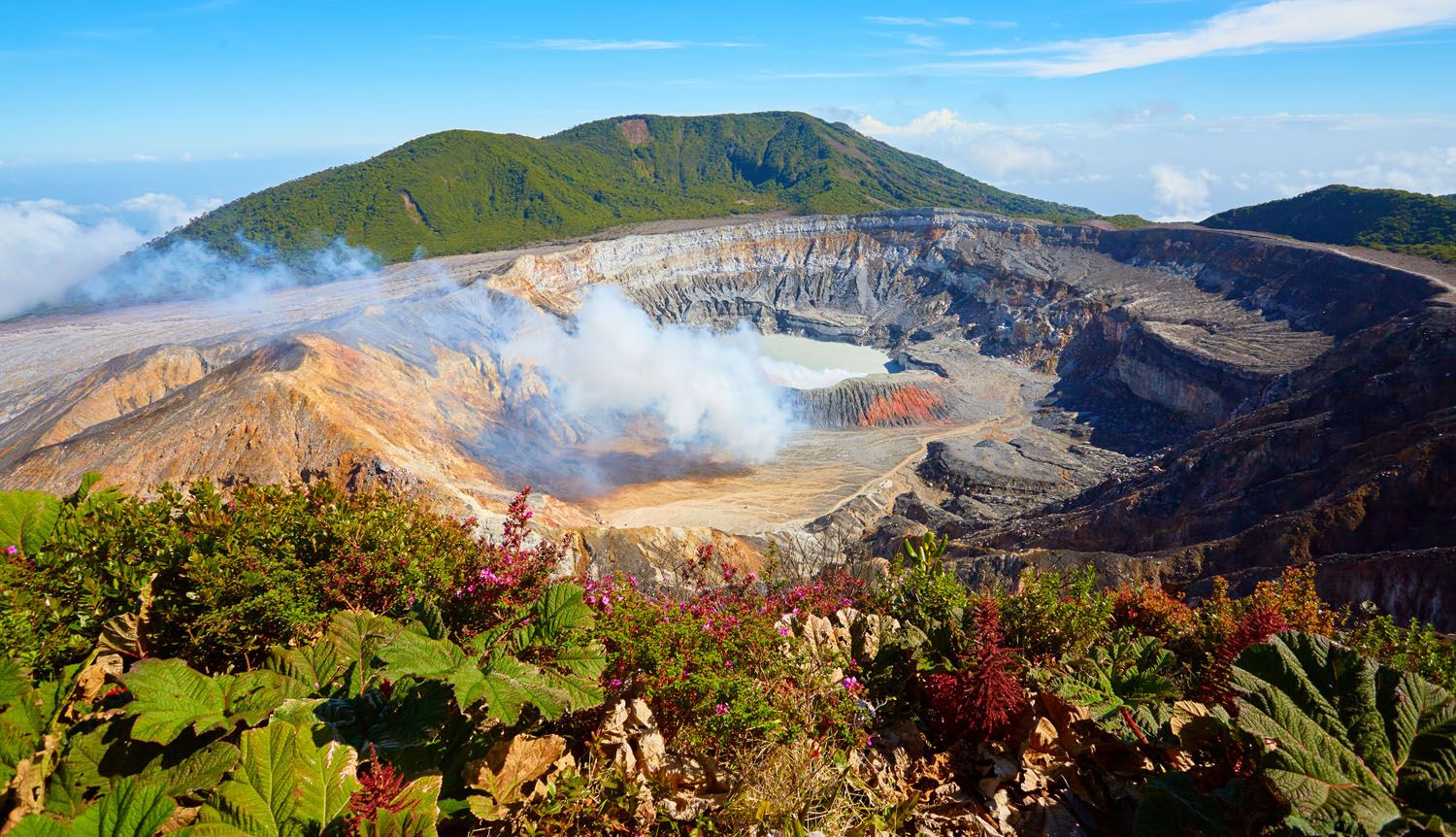
Poas Volcano | shutterstock.com
The La Paz Waterfall Gardens are very nice to see. There are enclosures where you can see macaws, toucans, jaguars, sloths, butterflies, and frogs up close. Many of these animals were once pets, and are now living here, since they can’t be returned to the wild. If you stay at the Peace Lodge, the entrance fee is included.
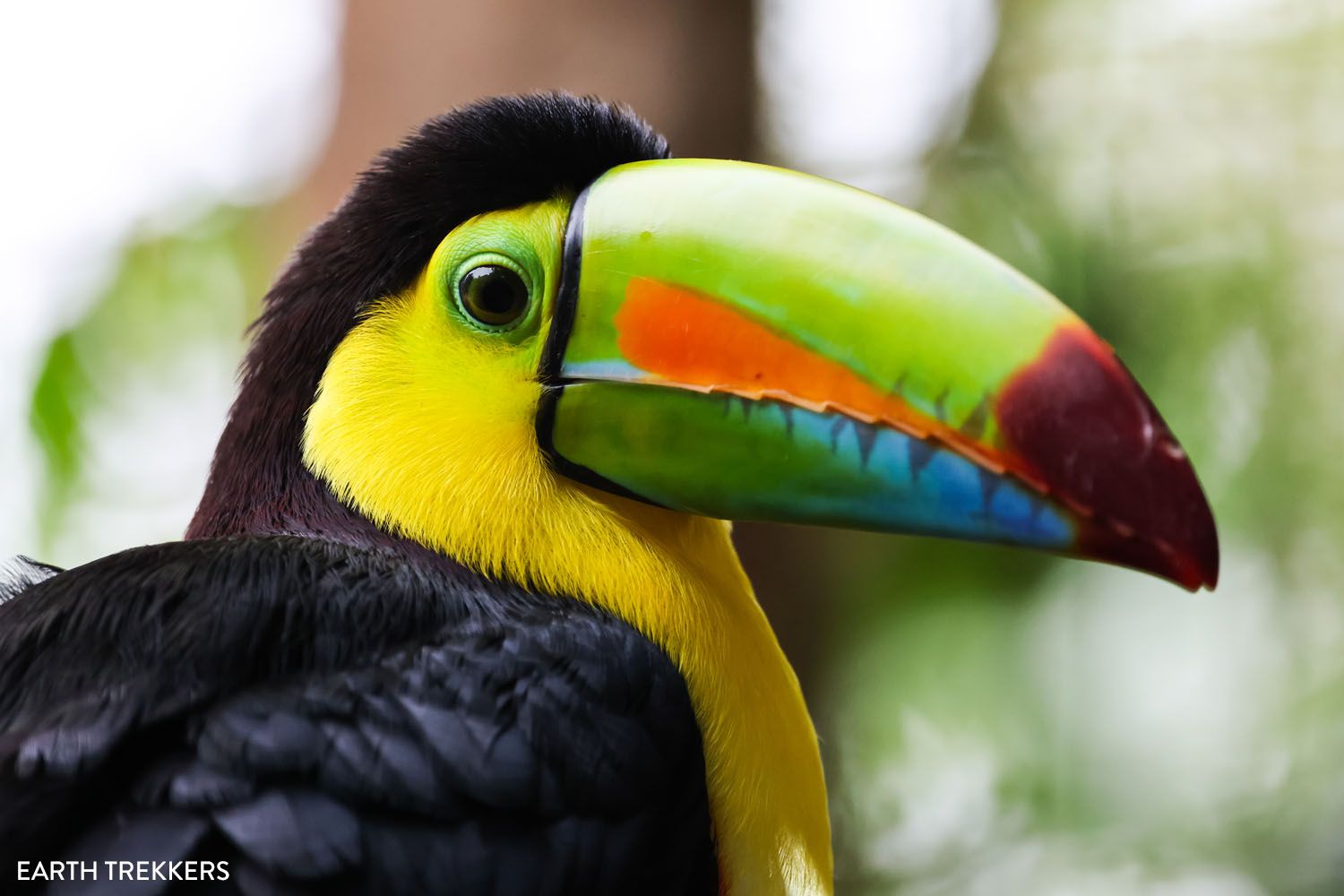
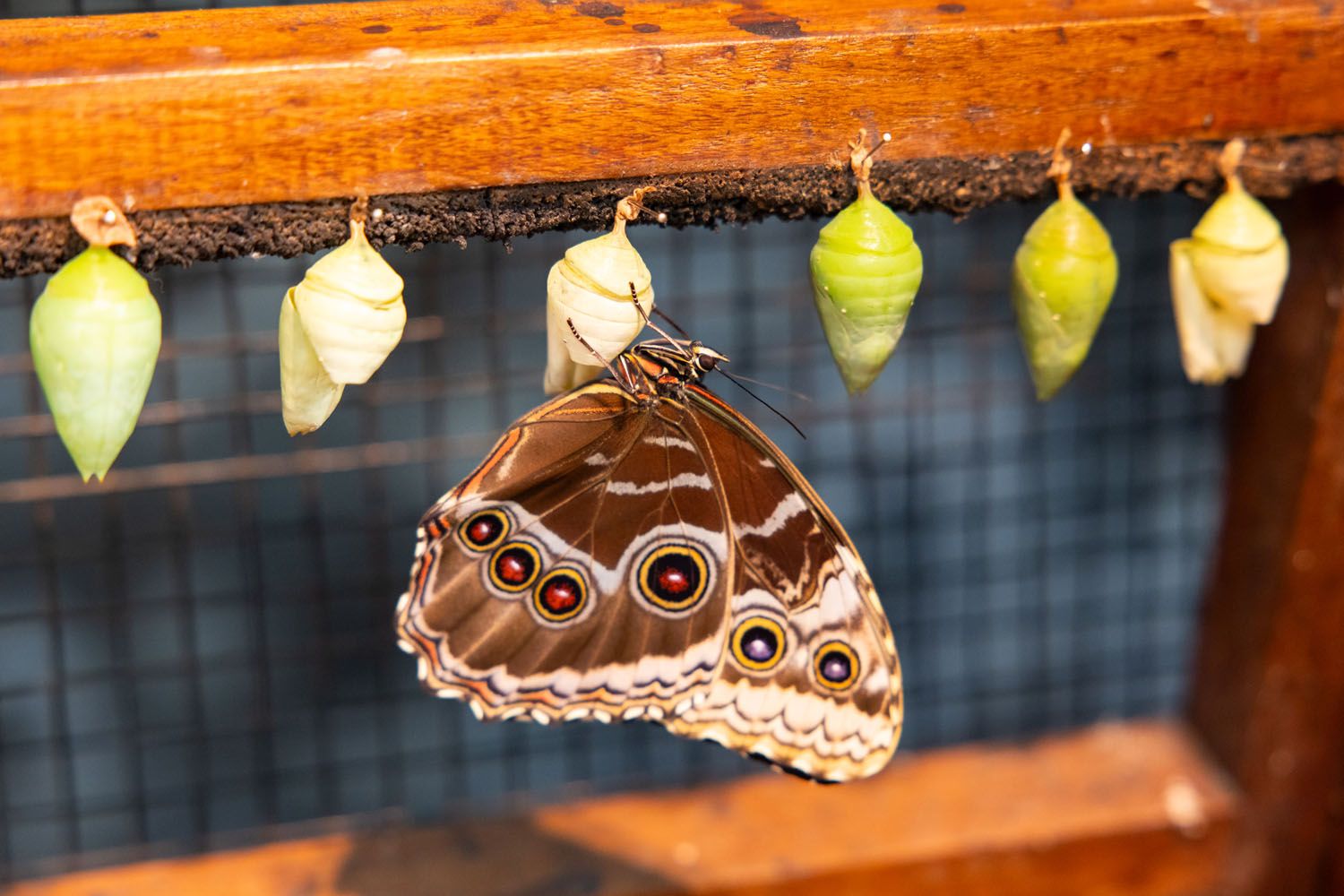
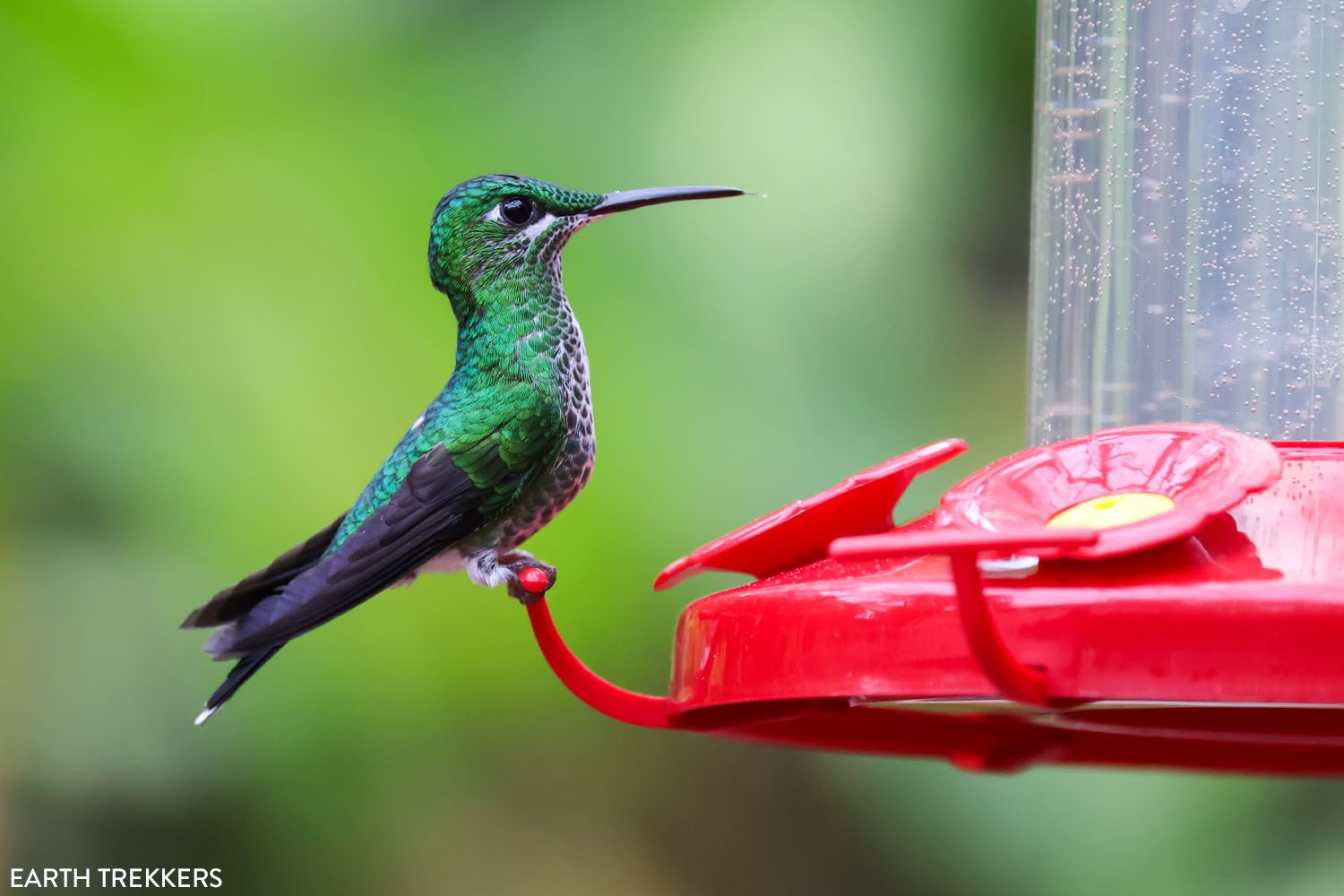

If you don’t want to stay at the Peace Lodge, you can visit the gardens and the volcano on the drive to San Jose, just be aware that theft from cars is an issue in Costa Rica, so don’t leave any luggage or bags in view in your cars while visiting these sites.
Tonight, stay at the Peace Lodge. Other hotel options include Xandari Resort & Spa (30 minutes from the San Jose airport) or the Costa Rica Marriott Hotel Hacienda Belen (10 minutes from the airport).
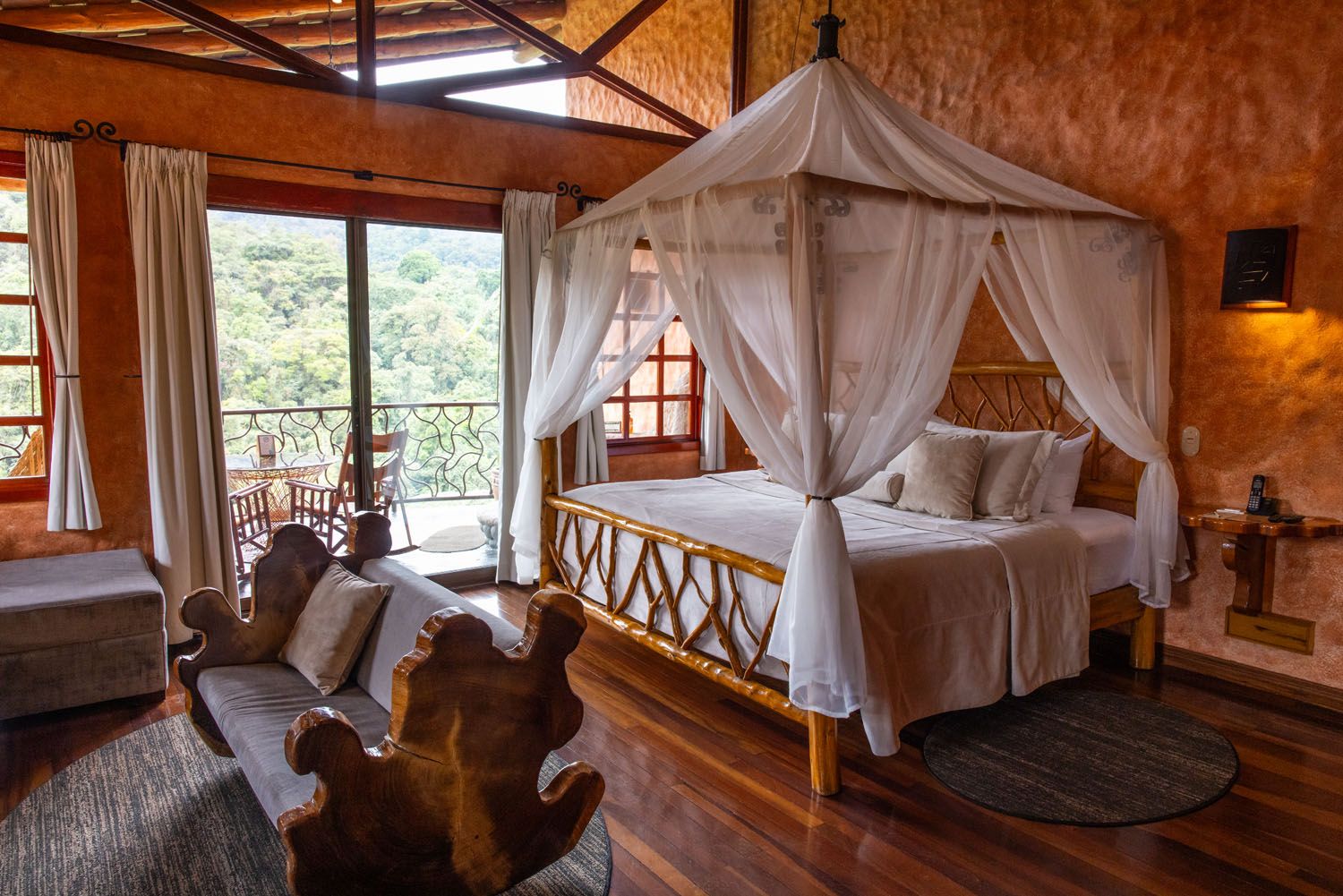
Peace Lodge
Day 10: Fly home
Today, drive to San Jose, drop off your rental car, if you have one, and fly home.
Doing this Itinerary in the Opposite Direction
This Costa Rica itinerary can be reversed but there are a few things to know.
We don’t recommend driving from Manuel Antonio to San Jose airport the day of your flight. The drive times are too unpredictable due to traffic, getting stuck behind slow moving vehicles, delays at the toll booths, etc. Therefore, if you reverse the itinerary, we recommend leaving Manual Antonio the afternoon/evening before your flight and staying near the airport.
Driving between Monteverde and La Fortuna is along a mountainous road, a portion of which is unpaved. Reversing this itinerary means you will be driving up the unpaved mountain road instead of driving down the unpaved mountain road. This might not be a big deal for most, but some people may have a preference in this regard.
Day 1: Arrive in Costa Rica, drive to La Fortuna, option to see Poas Volcano or La Paz Waterfall Gardens on the drive
Day 2: La Fortuna
Day 3: La Fortuna
Day 4: Drive to Monteverde, afternoon in Monteverde
Day 5: Monteverde
Day 6: Morning in Monteverde, afternoon drive to Manuel Antonio
Day 7: Manuel Antonio
Day 8: Manuel Antonio
Day 9: Morning in Manuel Antonio, afternoon drive to San Jose
Day 10: Fly home
Can You Do This Costa Rica Itinerary Without a Rental Car?
Yes, this 10-day Costa Rica itinerary can be done without renting a car. A rental car gives you the most flexibility, especially for restaurants, hotels outside town centers, and quick stops along the way. But if you do not want to drive in Costa Rica, you can connect San José, Manuel Antonio, Monteverde, and La Fortuna with private transfers, shared shuttles, and tours that include hotel pickup.
For the easiest no-car version, stay in hotels near the main towns or within walking distance of restaurants, book transfers between destinations in advance, and choose tours that include transportation.
Things to Do with More Time
Uvita, Nauyaca Waterfalls & Marino Ballena National Park
This is the natural extension of Manuel Antonio, heading further south down the Pacific coast, and we did it as a day trip from Manuel Antonio. The highlight was the Nauyaca Waterfalls, a hike through the jungle to a pair of spectacular waterfalls with a swimming hole at the base. We have a full guide to the Nauyaca Waterfalls if you plan to do this.
On the same day, we also walked out onto the whale tail at Marino Ballena National Park, a naturally occurring sandbar shaped like a whale’s tail that extends into the ocean, and passed through the small surf town of Dominical. All of this is doable in one long day from Manuel Antonio, but adding a night in Uvita gives you more breathing room. We cover this in our Things to Do in Manuel Antonio guide.
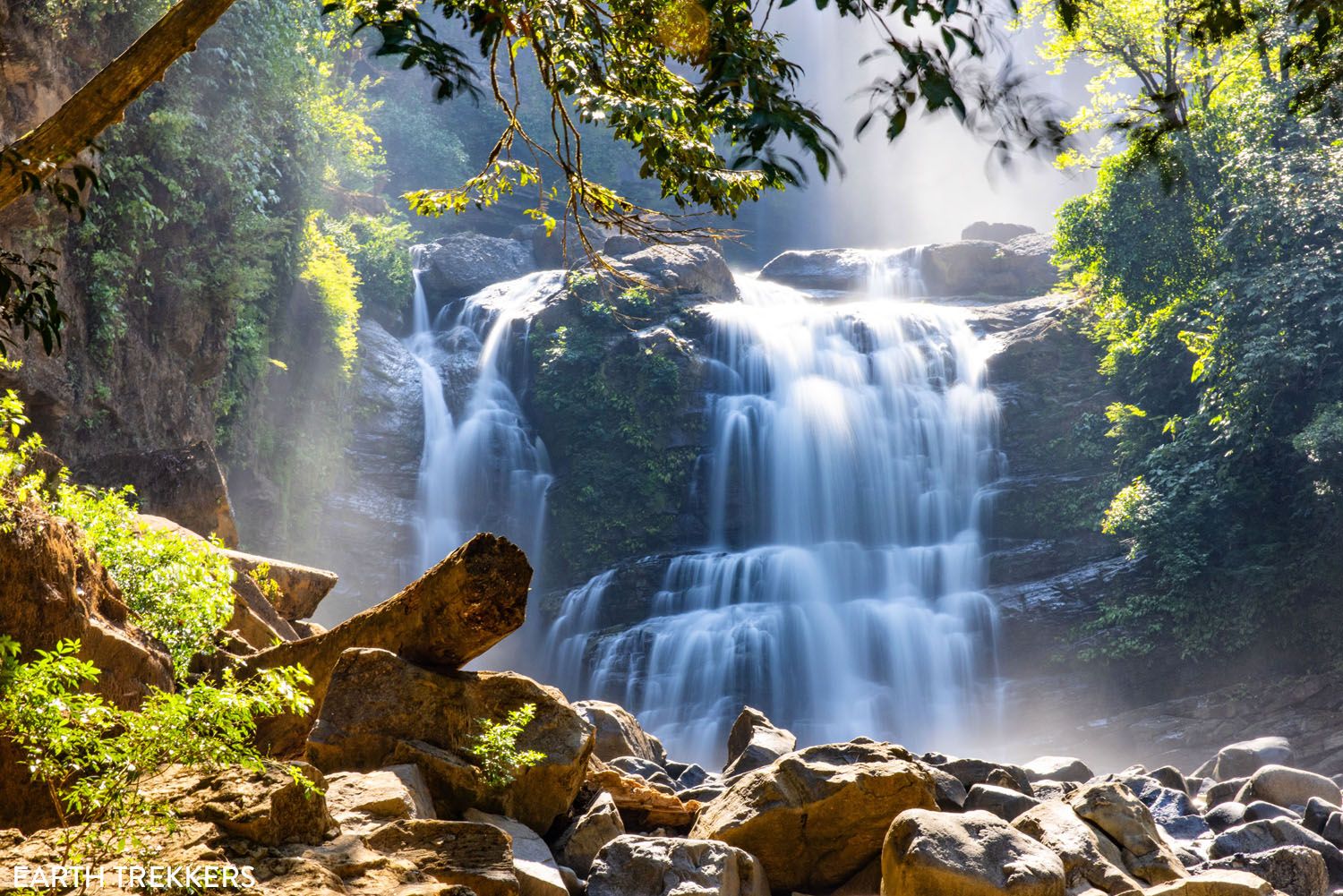
Nauyaca Waterfalls
Corcovado National Park
We didn’t make it to Corcovado on this trip, but it came up repeatedly in conversations with friends, family, and readers of Earth Trekkers as one of the most extraordinary places in Costa Rica. National Geographic has called it the most biologically intense place on Earth. Getting here requires either a flight or a long drive to the Osa Peninsula, plus an overnight stay. Plan on adding at least two to three days to your itinerary.
Caño Island
Like Corcovado, this one didn’t fit into our schedule, but we heard consistently good things. Caño Island is a biological reserve off the southern Pacific coast with some of the best coral reef snorkeling on Costa Rica’s Pacific side. It’s done as a day trip from Uvita or Manuel Antonio and is a strong addition if you’re already spending extra time in that part of the country.
Adding in the driving time from Manuel Antonio (it takes about one hour to drive from Manuel Antonio to Uvita), you are looking at one full day to visit Caño Island, as a day trip from Manuel Antonio.
Tenorio Volcano National Park & Rio Celeste
We did this as a day trip from La Fortuna and it’s genuinely wonderful, with a hike through the jungle to a waterfall where the river runs a vivid, almost unreal shade of blue. The color comes from a natural chemical reaction where two rivers meet, and seeing it in person is one of those moments that doesn’t quite look real.
That said, on this 10-day itinerary we’d only recommend adding Rio Celeste if you’re extending your time in La Fortuna. With three nights there, the hanging bridges, lava field hikes, hot springs, La Fortuna Waterfall, and sloth walk already fill the days well. Rio Celeste is popular and the drive is long enough that it takes up a full day. It’s better to do it justice with an extra night in La Fortuna than to swap it for something closer. Get the full details in our guide Things to Do in La Fortuna.
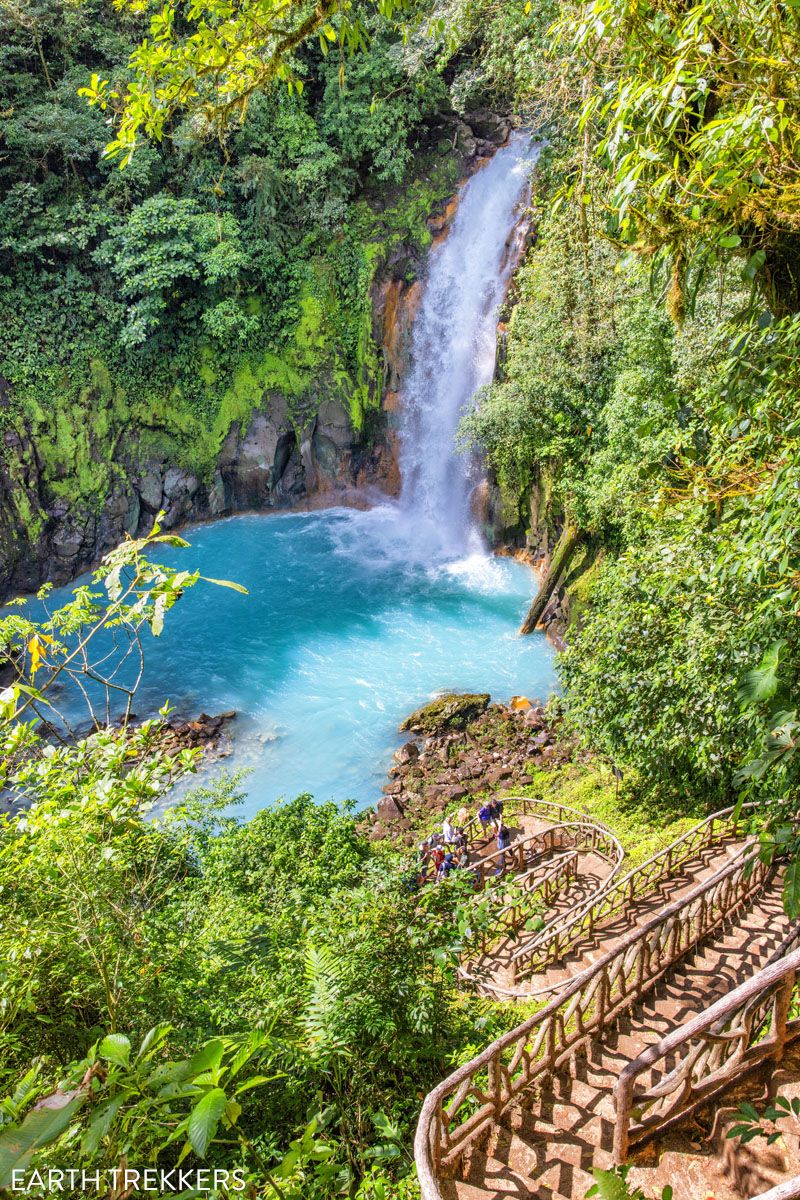
Rio Celeste Waterfall
Caño Negro Wildlife Refuge
The Caño Negro Wildlife Refuge is a protected area in northern Costa Rica, near the border with Nicaragua. It is one of the country’s most important wetlands, and a great place to see herons, storks, caiman, sloths, and aquatic species. This is done as a day trip from La Fortuna. This full day tour includes transportation from La Fortuna plus a boat tour of the refuge.
With Less Time
If you have less time, we recommend eliminating one of the three places to visit on this itinerary (Manuel Antonio, Monteverde, or La Fortuna). That saves about three days, turning this into a 7-day itinerary.
7, 10, or 14 Days in Costa Rica: Which Itinerary Is Best?
How much time you have shapes everything about a Costa Rica trip. Here’s a look at what each timeframe gets you and what you’ll have to leave for next time.
| 7 Days | 10 Days | 14 Days | |
| Destinations | La Fortuna + Manuel Antonio | Manuel Antonio + Monteverde + La Fortuna | Manuel Antonio + Monteverde + La Fortuna + Uvita or Rio Celeste |
| What You’ll See | Arenal Volcano, hot springs, hanging bridges at Místico, Manuel Antonio National Park, Pacific beaches, mangrove kayaking, hanging bridges at Rainmaker Park | All of the above, plus Manuel Antonio National Park, Pacific beaches, mangrove kayaking | All of the above, plus Nauyaca Waterfalls, Marino Ballena National Park, or the vivid blue waters of Rio Celeste |
| What You’ll Miss | Monteverde cloud forest, El Tigre waterfall hike, quetzal sightings | Southern Costa Rica, Corcovado, Guanacaste beaches, Caribbean coast | Caribbean coast, Guanacaste, Osa Peninsula (unless you prioritize these over the classic route) |
| Best For | First taste of Costa Rica on a tight schedule | First-time visitors who want the full classic experience | Nature enthusiasts, repeat visitors, or anyone who wants to go deeper |
| Pace | Busy — two destinations with shorter stays | Comfortable — enough time to slow down in each place | Relaxed — room to add day trips and rest days |
7 days is doable, but something has to go. We’d keep La Fortuna and Manuel Antonio and cut Monteverde. Manuel Antonio National Park is a must-see on a first trip, and you won’t miss the hanging bridge experience as much as you’d think. Místico Arenal Hanging Bridges in La Fortuna and Rainmaker Park in Manuel Antonio both deliver that canopy walk experience that Monteverde is known for. Save the cloud forest for a return trip.
10 days is the sweet spot. It’s the minimum time needed to do justice to all three regions without feeling rushed, and it’s manageable for most people to take off work. This is the itinerary we’re covering in this guide.
14 days opens up the southern Pacific coast, which is spectacular and far less visited than the classic circuit. Uvita and the Nauyaca Waterfalls are the natural extension of Manuel Antonio, and Rio Celeste is the best day trip from La Fortuna. We cover both options in the extensions section below.
Best Time to Visit Costa Rica
We went in late February and into early March, right in the heart of the dry season, and the timing was nearly perfect. Skies were sunny and blue almost every day, and in ten days we had meaningful rain only once or twice, briefly. Temperatures in Manuel Antonio and La Fortuna were warm and humid, think mid-80s, while Monteverde was noticeably cooler and misty, which is part of what makes the cloud forest feel so different from the rest of the trip.
Crowds were present but manageable. Manuel Antonio National Park sells timed entry tickets and caps visitors, so it never felt overwhelmed. La Fortuna was busy but not in a way that got in the way. If you can travel in February or March, we’d recommend it without hesitation.
- December–April (Dry Season): The best time to visit. Sunny skies, minimal rain, and the most reliable road conditions. Peak season runs December through March, so expect higher hotel prices and advance booking required for popular tours and accommodations.
- May–June (Early Rainy Season): Rain picks up, especially in the afternoons, but it’s manageable and the landscape is lush and green. Crowds thin out and prices drop noticeably.
- July–August: Wetter, but Costa Rica experiences a mid-summer dry spell called the veranillo, a brief return of drier weather in late July and early August that can make this a reasonable time to visit.
- September–October: The wettest months. Some roads, particularly between Monteverde and La Fortuna, can become difficult to pass. Not recommended for first-time visitors.
- November (Shoulder Season): Rain tapers off and the dry season begins. A good option for travelers who want fewer crowds and lower prices with decent weather.
Planning Your First Trip to Costa Rica
Don’t miss our guide below that has lots of important things to know as you plan your trip, addressing how to rent a car, should you rent a car, tipping, currency, SIM cards, and more.
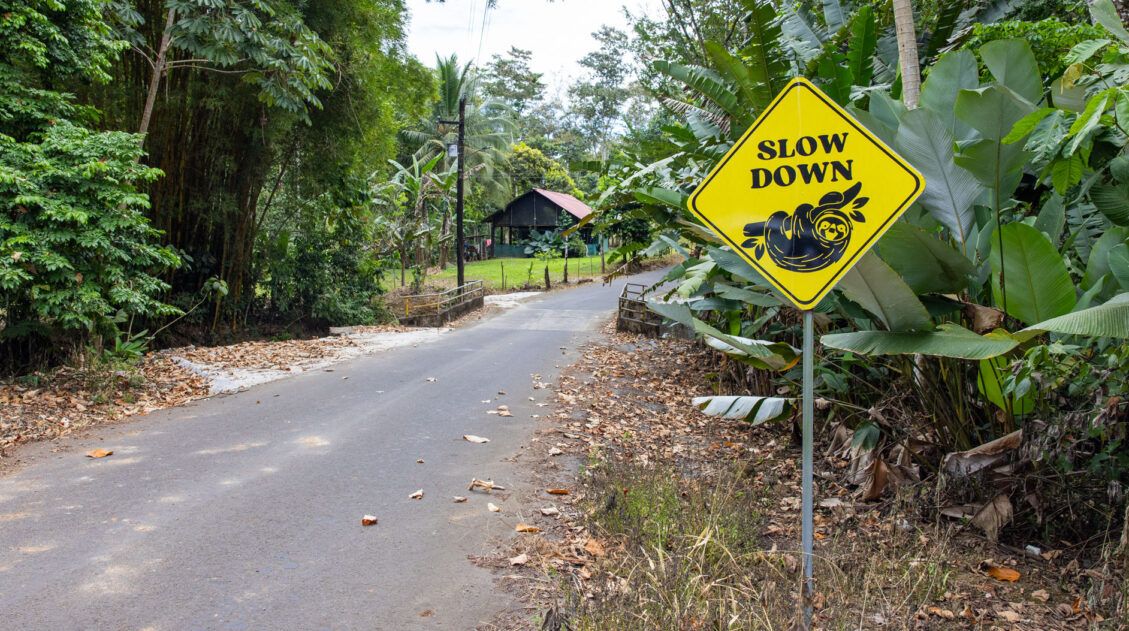
First Trip to Costa Rica: 18 Things to Know Before You Go
In this guide, we answer questions you have about how to visit Costa Rica, with lots of tips so you have the best experience.Frequently Asked Questions
Is 10 days enough to see Costa Rica?
Ten days is the sweet spot for a first trip. It gives you enough time to visit Manuel Antonio, Monteverde, and La Fortuna without feeling rushed, and still leaves room for a slow morning or an extra hike. You won’t see everything, because Costa Rica rewards multiple trips, but you’ll come home with a genuine sense of the country. If you have 7 days, see our comparison above for what to keep and what to cut.
Manuel Antonio or La Fortuna: Which should you visit?
Choose Manuel Antonio if you want beaches alongside your wildlife and jungle. Manuel Antonio National Park is where the rainforest meets the Pacific, and it’s one of the most beautiful national parks in Costa Rica. Choose La Fortuna if you want pure adventure. Hiking through lava fields with Arenal Volcano looming overhead, soaking in natural hot springs, canyoning down waterfalls; La Fortuna has a relentless energy that’s hard to match. It was our favorite stop on the entire trip, and it’s where we’d go if we could only visit one place in Costa Rica.
Do I need a 4×4 in Costa Rica?
Not for this itinerary, but it helps. The main roads between destinations are paved, but several of the best experiences, Rainmaker Park, Kids Saving the Rainforest, the drive into Monteverde, and the road to Cataratas El Tigre, involve unpaved stretches that are easier in an SUV. A standard car will get you through most of it; a 4×4 gives you peace of mind.
Do I need to book tours and activities in advance?
Yes, for the most important ones. Manuel Antonio National Park sells a limited number of timed entry tickets online and sells out; you cannot buy at the gate. Poas Volcano also requires advance tickets. For guided wildlife walks and excursions like ziplining and canyoning, booking ahead ensures availability and often allows free cancellation. We booked almost everything through GetYourGuide for flexibility.
What wildlife can I expect to see on this itinerary?
Quite a lot, especially with a guide. On our trip we saw howler monkeys, white-faced capuchin monkeys, spider monkeys, three-toed sloths, both male and female resplendent quetzals, pit vipers, a wide variety of exotic birds, and dozens of species of frogs and lizards. The key is hiring a guide for wildlife walks, because without one, you will walk past most of it without ever knowing it was there.
Is Costa Rica safe for tourists?
Generally yes. Costa Rica is one of the safer countries in Central America, and we felt comfortable throughout the trip. The main thing to be aware of is theft from rental cars. Don’t leave bags, cameras, or luggage visible inside a parked car, even for a short stop. In cities and at tourist sites, keep an eye on your belongings as you would anywhere.
Is this itinerary good for families with kids?
Yes, with some adjustments. Manuel Antonio National Park, the hot springs, wildlife walks, and the La Paz Waterfall Gardens are all excellent for families. Some activities, such as canyoning, certain ziplining tours, and longer hikes, have age or weight restrictions, so check those in advance. The driving distances are manageable, and most days have a flexible enough structure to adapt to younger travelers.
Plan Your Trip to Costa Rica
For a deeper dive into each destination on this itinerary, we have dedicated guides to the best things to do in Manuel Antonio, the best things to do in Monteverde, and the best things to do in La Fortuna. Each one covers where to stay, where to eat, and how to plan your time in more detail than we can fit into a 10-day itinerary.
If you’re extending your time on the Pacific coast, don’t miss our guide to the Nauyaca Waterfalls near Manuel Antonio.
Still in the early planning stages? Our Costa Rica Travel Guide is the best place to start, and our 18 tips for first-time visitors covers everything from renting a car to tipping to staying safe.
Packing for the trip? Our Costa Rica packing list covers everything you need for hiking, wildlife walks, and beach days.
If you have any questions about this 10 day Costa Rica itinerary, let us know in the comment section below.
Explore Costa Rica & Beyond
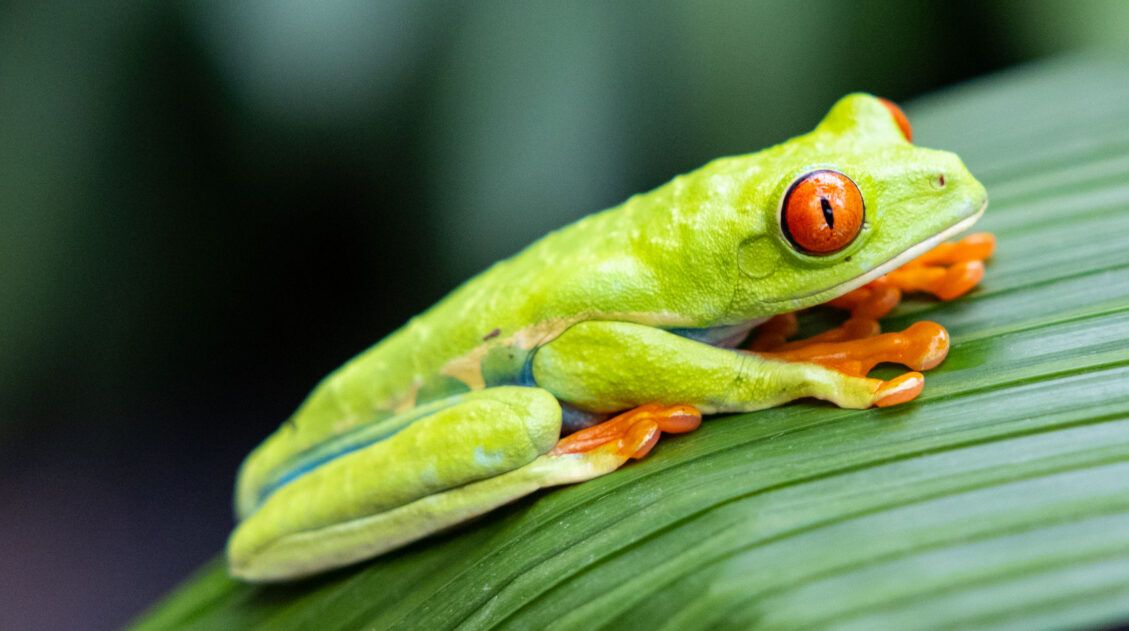
Costa Rica Travel Guide: How to Plan a Trip to Costa Rica
Pinterest Facebook Flipboard Costa Rica Travel Guide Few countries pack this much variety into such a small footprint: volcanoes, cloud forests, rainforest wildlife, Pacific beaches, and natural hot springs, all within a few hours of each other. We spent two weeks in Costa Rica at the end of February, experiencing sunny skies, almost no rain, […]
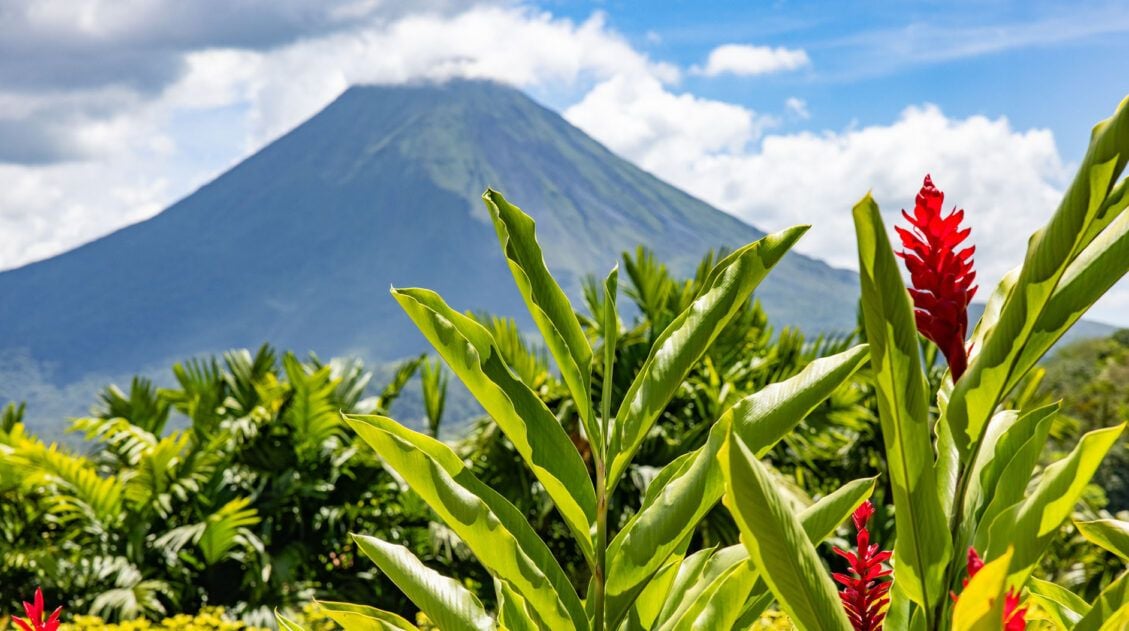
Costa Rica Packing List: What We Used & What to Skip
So, your itinerary is finalized, your flights are booked, your hotel reservations are made, and you’ve picked out which tours you plan to do. Now comes the question, what do I pack for a trip to Costa Rica?! Many trips to Costa Rica include some beach time, a few adventure activities such as ziplining and […]
Manuel Antonio National Park: Complete Guide for First Time Visitors
Manuel Antonio National Park was the first stop on our two-week Costa Rica road trip and it set the bar high. In a single morning, we spotted sloths, white-faced capuchin monkeys, squirrel monkeys, iguanas, and a rainbow of birds, all with the help of a guide whose scope turned a tangle of branches into a […]
18 Best Things to Do in Manuel Antonio, Costa Rica
Manuel Antonio was our first stop on a two-week Costa Rica road trip, and it set the tone for everything that followed. We heard a toucan before we even left the hotel property, that distinctive, almost cartoon-like call coming from somewhere in the trees above us. By the time we spotted it from our room […]
Best Things to Do in Monteverde: Cloud Forests, Ziplining & Waterfalls
Spotting a male and female Resplendent Quetzal in the same morning. Soaring above the cloud forest canopy on what felt like an endless zipline. Walking through misty, moss-draped trails without another soul around. Monteverde delivered some of the most memorable moments on our two-week trip through Costa Rica. But here’s what nobody tells you before […]
16 Best Things to Do in La Fortuna, Costa Rica
La Fortuna sits at the base of Arenal Volcano in Costa Rica’s northern lowlands, and it’s home to some of the best things to do in La Fortuna, from rappelling waterfalls and hiking lava fields to spotting sloths on guided rainforest walks and soaking in geothermal hot springs. Few places balance adrenaline and relaxation quite […]
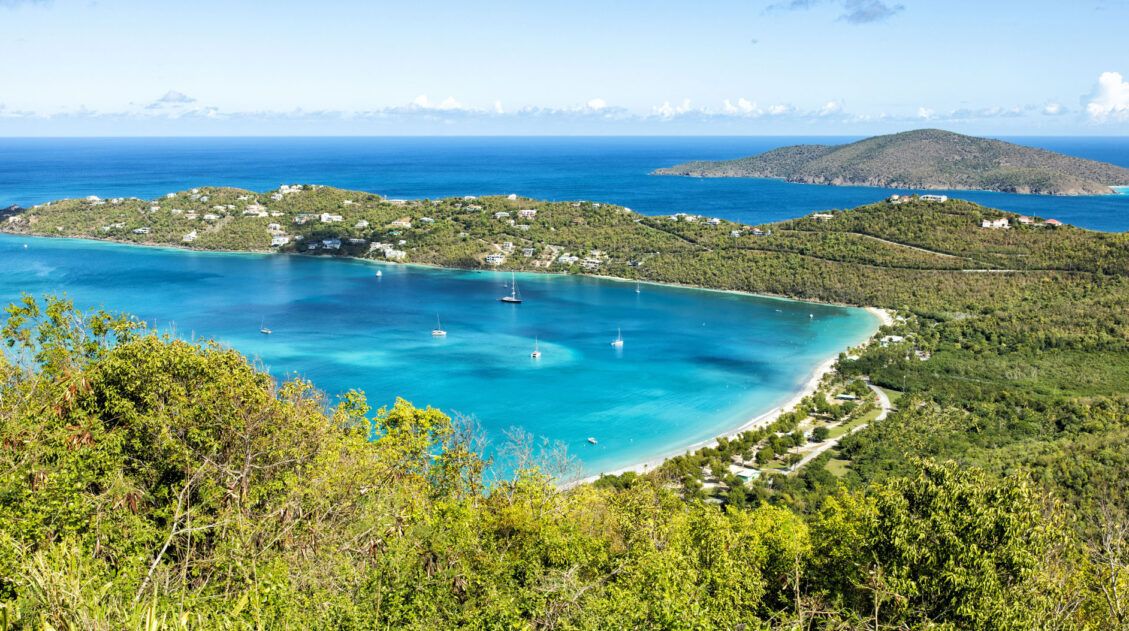
7 Day US Virgin Islands Itinerary: St. Thomas & St. John
St. Thomas and St. John are two of the three main US Virgin Islands. These two islands sit side by side and are connected by a short ferry ride, and together they make a fantastic Caribbean getaway. On this US Virgin Islands itinerary, learn how to plan the perfect one week trip to these two […]

Florida Keys Bucket List: 25 Awesome Things in the Florida Keys
The Florida Keys are one of the best spots in the US to go on a road trip. In just 100 miles, hop from key to key, go snorkeling, dine at seafood restaurants, try key lime pie, go shopping, and enjoy endless views of brilliant aquamarine water. It’s a gorgeous drive with lots to do. […]
Travel Itineraries: Europe, Asia, Africa, Americas & Oceania
Let us take the guesswork out of planning your next trip. Here are sample itineraries from some of the most popular destinations around the world.
10 Day Peru Itinerary: Machu Picchu, Sacred Valley, & the Amazon
Peru is an extraordinary travel destination. With this Peru itinerary, you can visit the historic city of Cusco, tour several small towns in the Andes Mountains, walk on the famous Inca trail, spend a day at magical Machu Picchu, and even explore the steamy Amazon jungle. Peru still remains one of our favorite travel destinations. […]
Best Things to Do in Aruba on Your First Visit
So, you are planning a trip to Aruba? Just so you know, there is more to Aruba than sipping tropical drinks in the shade of a palm tree (although that alone would make for a great vacay). Go snorkeling, learn to kitesurf, explore Aruba’s gorgeous beaches, and take an UTV tour of the island. Whether […]
10 Winter Vacation Ideas Perfect for the Holiday Season
It’s nice to spend the holiday season at home, visiting with family and enjoying the low-key end to the year. But what if you want to get away? With two weekends and two days off of work for Christmas and New Year’s, it’s possible to swing a 10-day getaway without taking too many vacation days. […]


Comments 14