
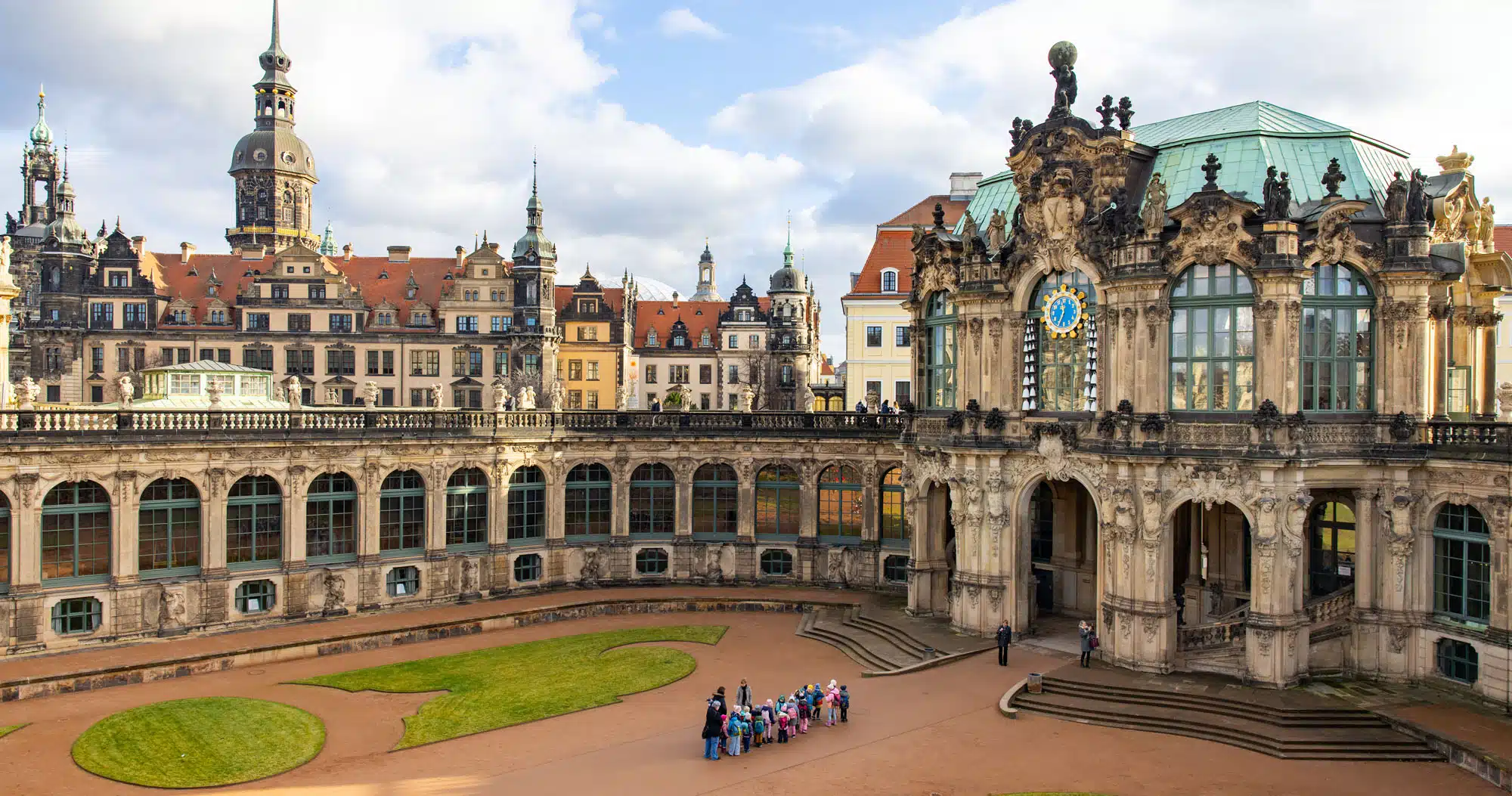

Discover the best things to do in Dresden, Germany, from historic sites in the Old Town to a few unique, off-the-beaten-path destinations. We’ll also cover where to eat and where to stay.
Dresden is a historic city in eastern Germany known for its stunning Old Town filled with churches, a royal palace, an opera house, a historic bridge, cobblestone alleyways, and elegant Baroque architecture. Much of the city’s grand appearance reflects the legacy of Augustus the Strong, whose vision in the eighteenth century helped shape Dresden into one of Europe’s cultural capitals.
We visited Dresden on a winter trip through northern Germany and Poland’s Christmas markets, traveling from Berlin to Wrocław, then on to Dresden, Cologne, and Frankfurt.
We spent two days in Dresden exploring the Christmas markets and wandering through the Old Town, and it quickly became our favorite stop of the entire trip. The city’s dramatic architecture, walkable historic center, and beautifully designed markets made it stand out.
We have visited Christmas markets in Bavaria, Prague, Vienna, and London, but Dresden’s Christmas markets rank among our all-time favorites, making December an especially wonderful time to visit. That said, even without the holiday season, Dresden impressed us with how much there is to see and explore year-round.
In this guide, we cover the top experiences in Dresden, with tips that we learned to help you have the best experience. We cover the Dresden Christmas Markets in a separate guide.
The Essentials
LOCATION | Saxony, eastern Germany
BEST TIME TO VISIT | May–September for warm weather and fewer crowds; December (Christmas markets)
TIME NEEDED | 1–2 days
GETTING THERE | Train from Berlin (~1h 40m), Prague (~2h 15m), or Frankfurt (~4h)
DAY TRIP FROM BERLIN? | Yes, easily doable in a day
MUST-SEE SIGHTS | Frauenkirche, Dresden Zwinger, Royal Palace (Historic Green Vault), Brühl Terrace
TOP FREE THINGS TO DO | Zwinger courtyard & walls, Brühl Terrace, Procession of Princes, Schlossplatz
BOOK IN ADVANCE | Yes. Historic Green Vault timed-entry tickets sell out; book before your trip
Our 5 Favorite Things to Do in Dresden
If you are here on a quick visit and just want to see the highlights, here are the must-have experiences in Dresden:
- Go for a scenic stroll through the Old Town, visiting Neumarkt, Altmarkt, Stallhof, the Procession of Princes, and Brühl Terrace.
- Visit the Dresden Zwinger: Walk the walls for free, and the quickest visit; those who enjoy seeing art and porcelain can spend several hours touring the museums
- Visit Frauenkirche Dresden and climb the dome for a view of the city
- Tour the Royal Palace (don’t forget to purchase your timed-entry ticket in advance for the Historic Green Vault)
- Cross the Elbe River on the Augustus Bridge
Best Things to Do in Dresden
Here is a map of the best things to do in Dresden featured in this guide, plus recommendations on where to eat and where to stay.
How to Use This Map: Click the icons on the map to get more information about each point of interest. To take this map with you, click the star next to the title of the map which adds it to your Google account. Next, within your Google Maps app, select ‘Saved’ and then select ‘Maps’. This map title will now appear in your list.
1. Visit Altmarkt Square
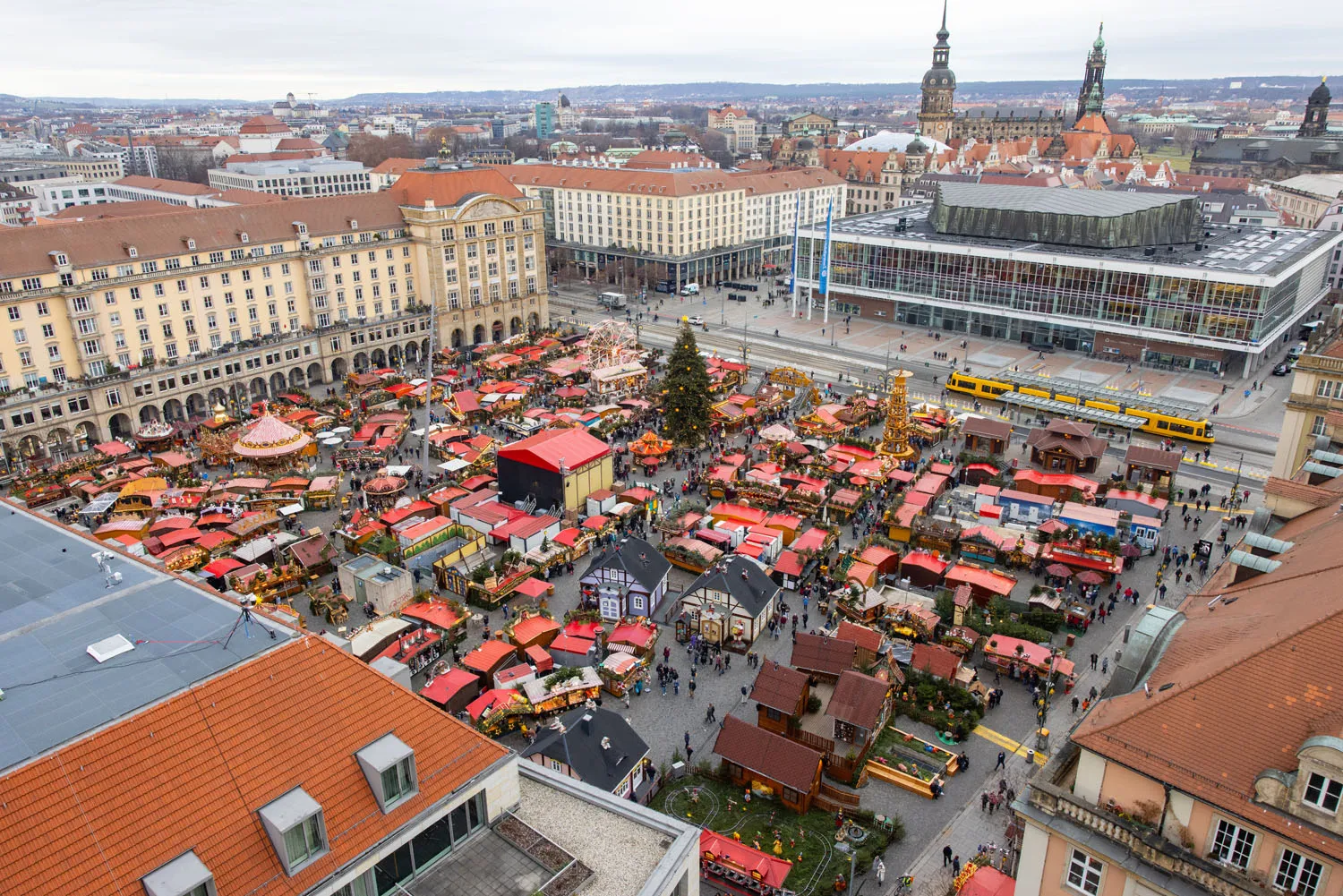
Altmarkt Square has hosted markets, tournaments, festivals, and public events for nearly 700 years. Although it was destroyed during World War II, it was rebuilt in the Baroque style to retain its historic charm.
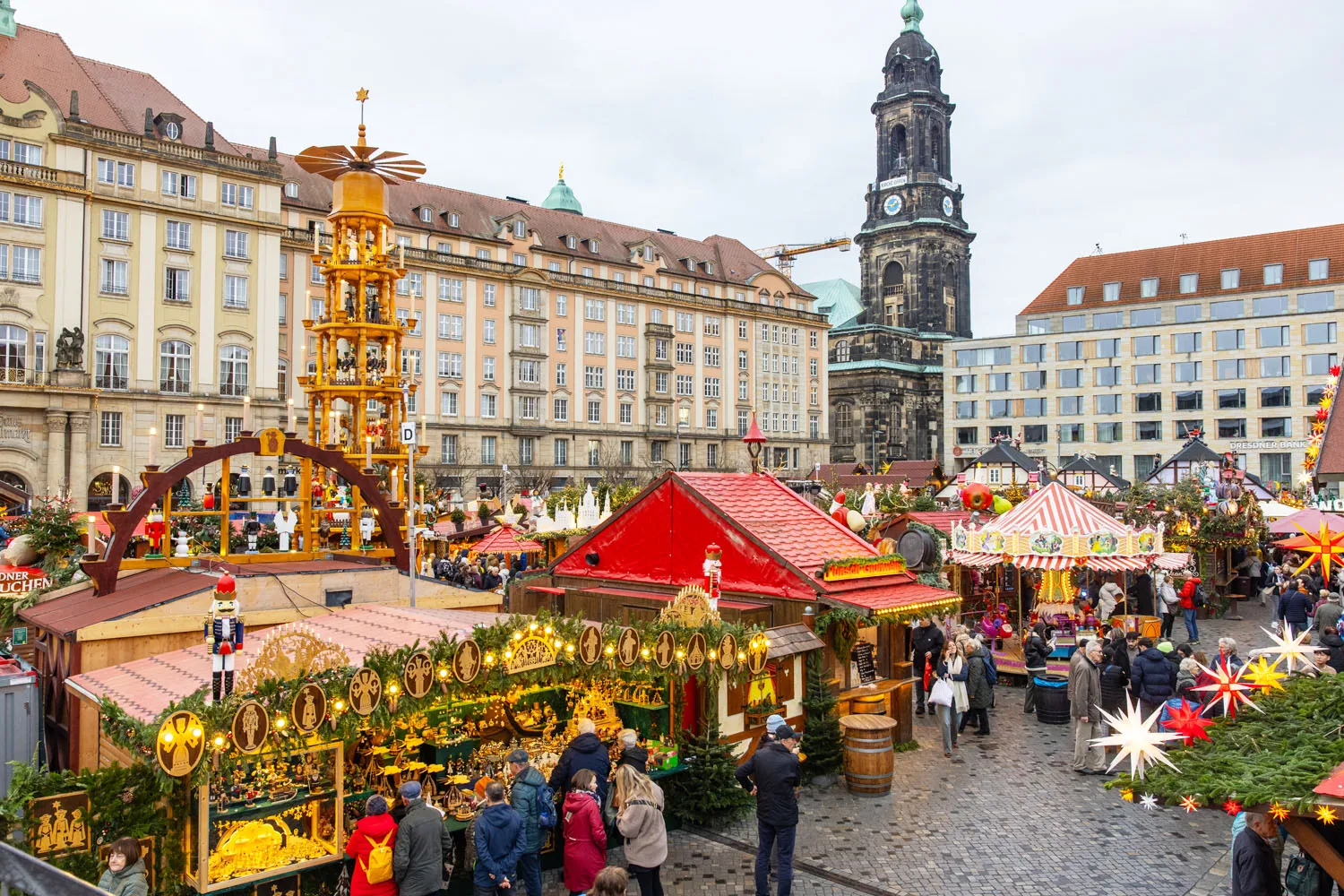
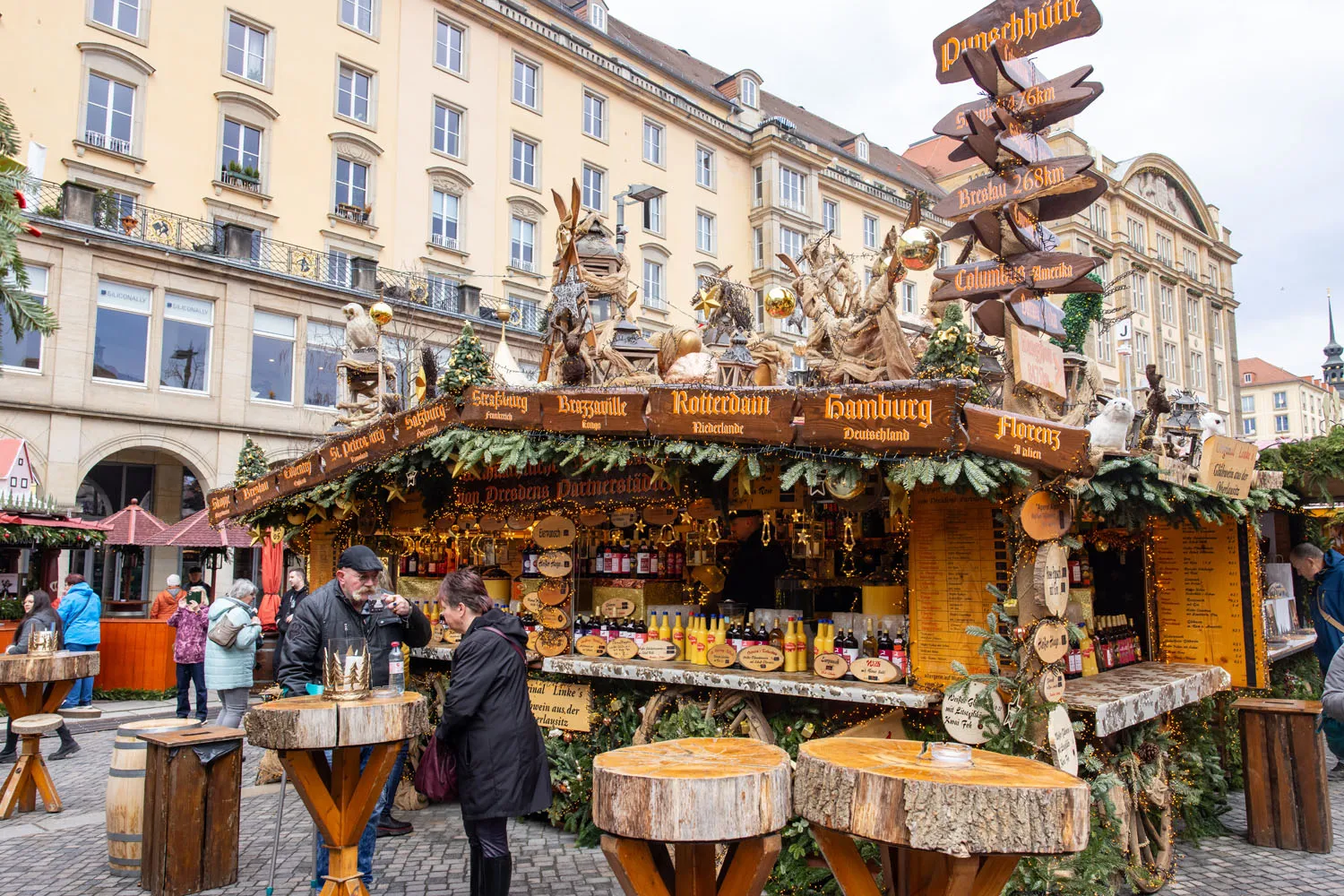
In December, the square hosts Germany’s oldest Christmas market, the Striezelmarkt, filled with festive decorations, glühwein, and handmade goods. The Striezelmarkt is one of our favorite Christmas markets of all time and makes visiting Dresden in December a great time to visit.
Here are a few photos of Altmarkt Square and the Striezelmarkt. You can see more photos in our guide to the Dresden Christmas Markets.
2. Enjoy the View from the Kreuzkirche
The Kreuzkirche (Church of the Holy Cross) was originally built in the thirteenth century and dedicated to Saint Nicholas, the patron saint of merchants and boatmen. Over time, it was expanded and altered. Today, the church’s tower stands 92 meters tall.
For a small fee (about €7), visitors can climb 260 steps to the viewing platform for excellent views over Altmarkt Square and Dresden’s historic center. We climbed to the top for a view over the Striezelmarkt, Dresden’s Christmas Market, but we also enjoyed the view over the whole city.
Get updated hours and pricing on the official website.
3. Tour the Royal Palace
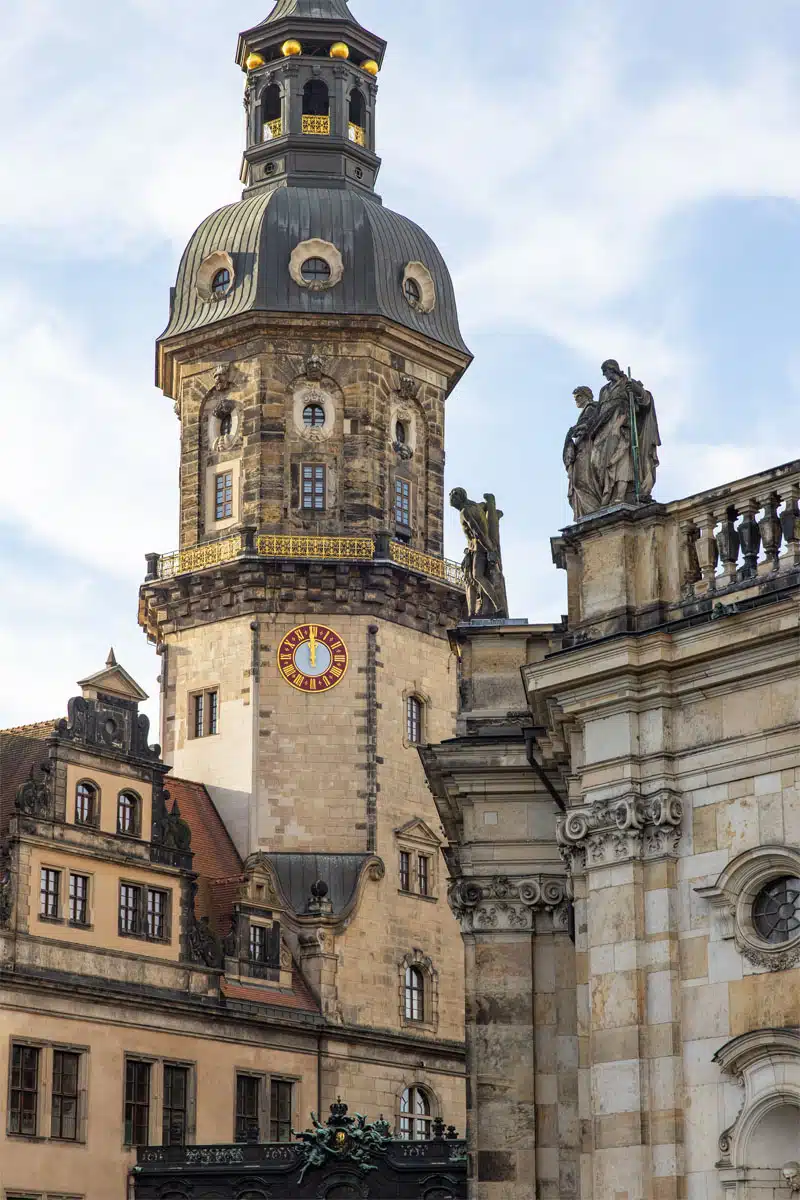
The Royal Palace (aka Dresden Castle and Dresdner Residenzschloss) once served as the seat of power for Saxon kings. It was destroyed during air raids in the final months of World War II and later reconstructed as a museum complex dedicated to art and history.
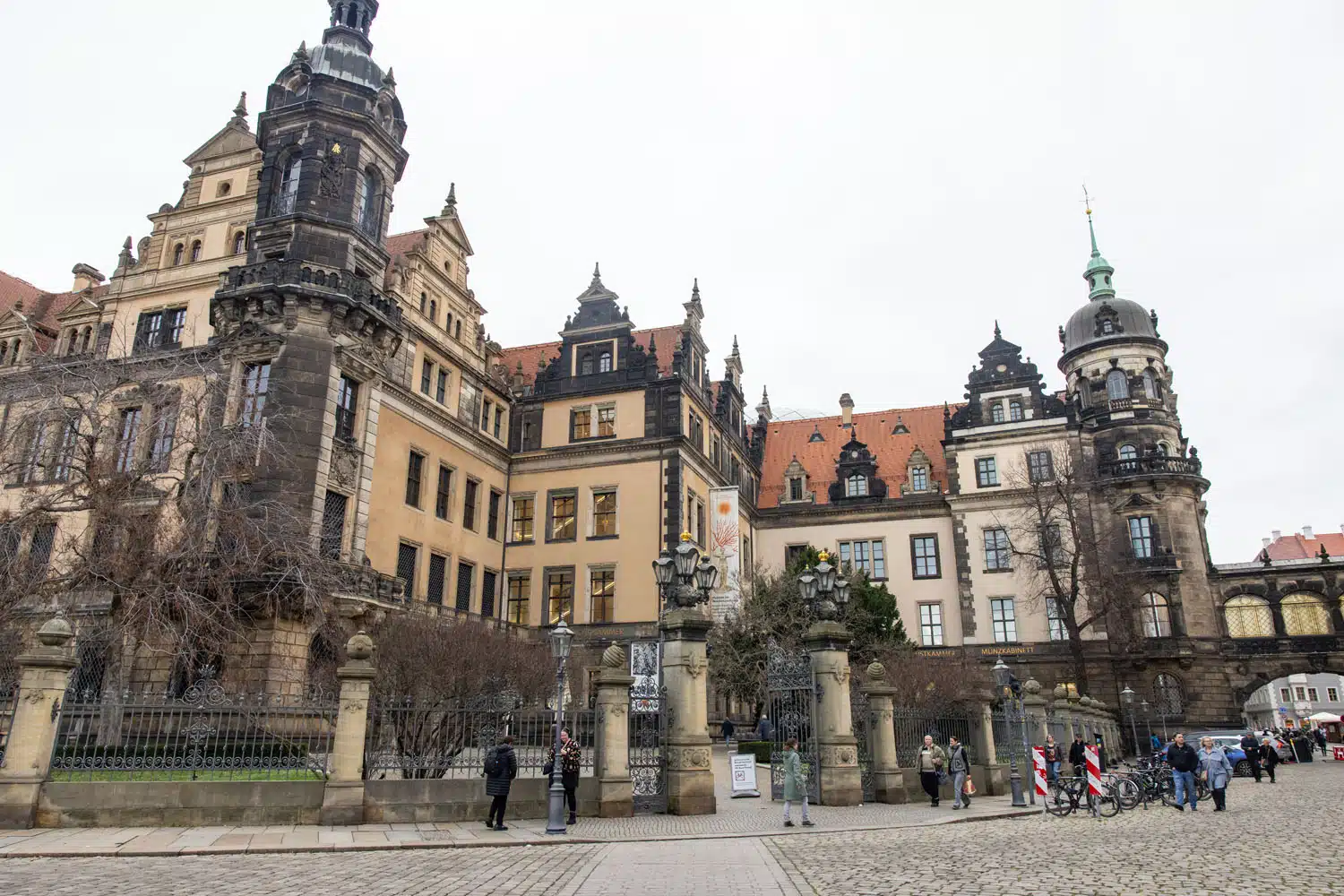
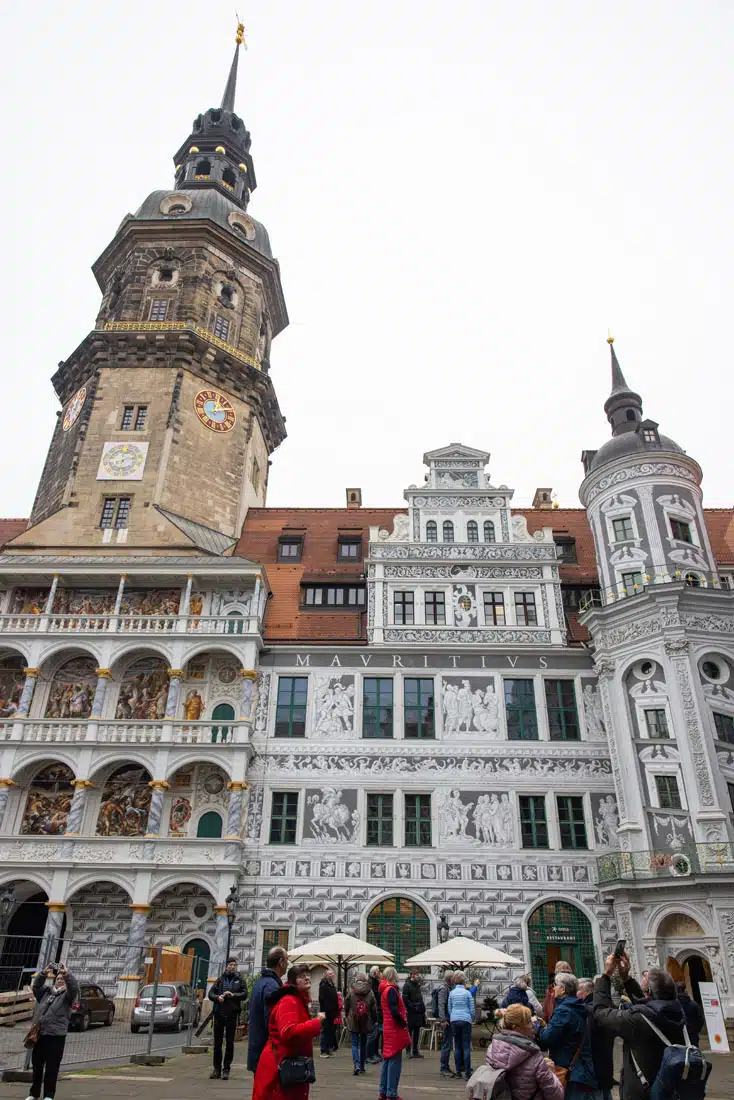
Dresden Royal Palace Courtyard
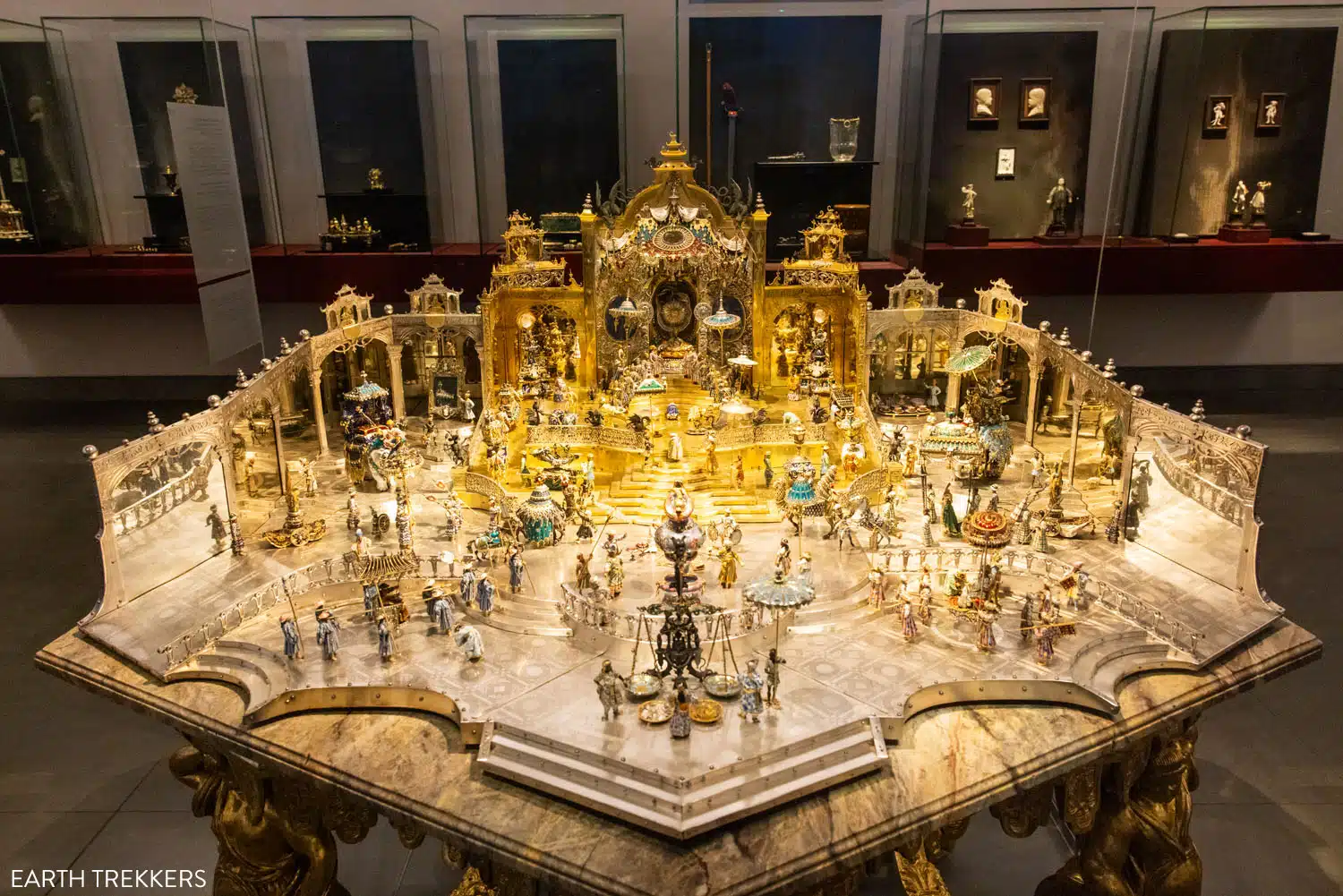
Today, the palace houses the Historic Green Vault, New Green Vault, Armoury, Coin Cabinet, and several other exhibitions showcasing art from the Middle Ages and the Renaissance.
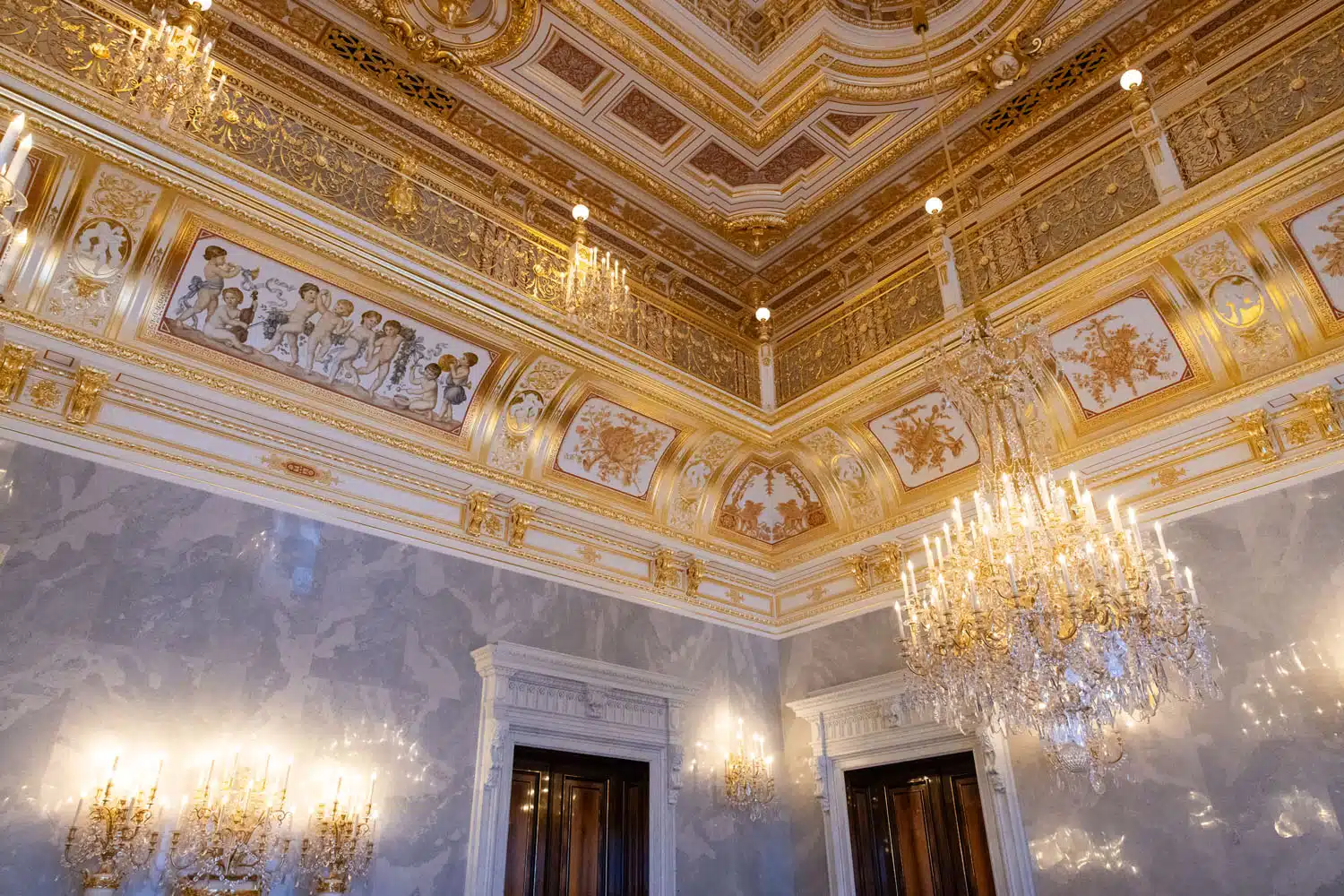
The Historic Green Vault requires a timed entry ticket and showcases Augustus the Strong’s treasury of gold, gemstones, and elaborate objects, including items made from ostrich eggs. These treasures have been displayed for exclusive audiences since 1724 and are housed in gilded rooms that are works of art.
PRO TRAVEL TIP: Photography inside the Historic Green Vault is not allowed. All coats, jackets, and bags, even small ones, must be dropped off at the coat check before entering.
The New Green Vault focuses on fine art and sculpture, including the largest green diamond ever discovered and an intricately carved ivory frigate. Many of the sculptures are covered in gemstones and are so finely created that it is an impressive collection to see.
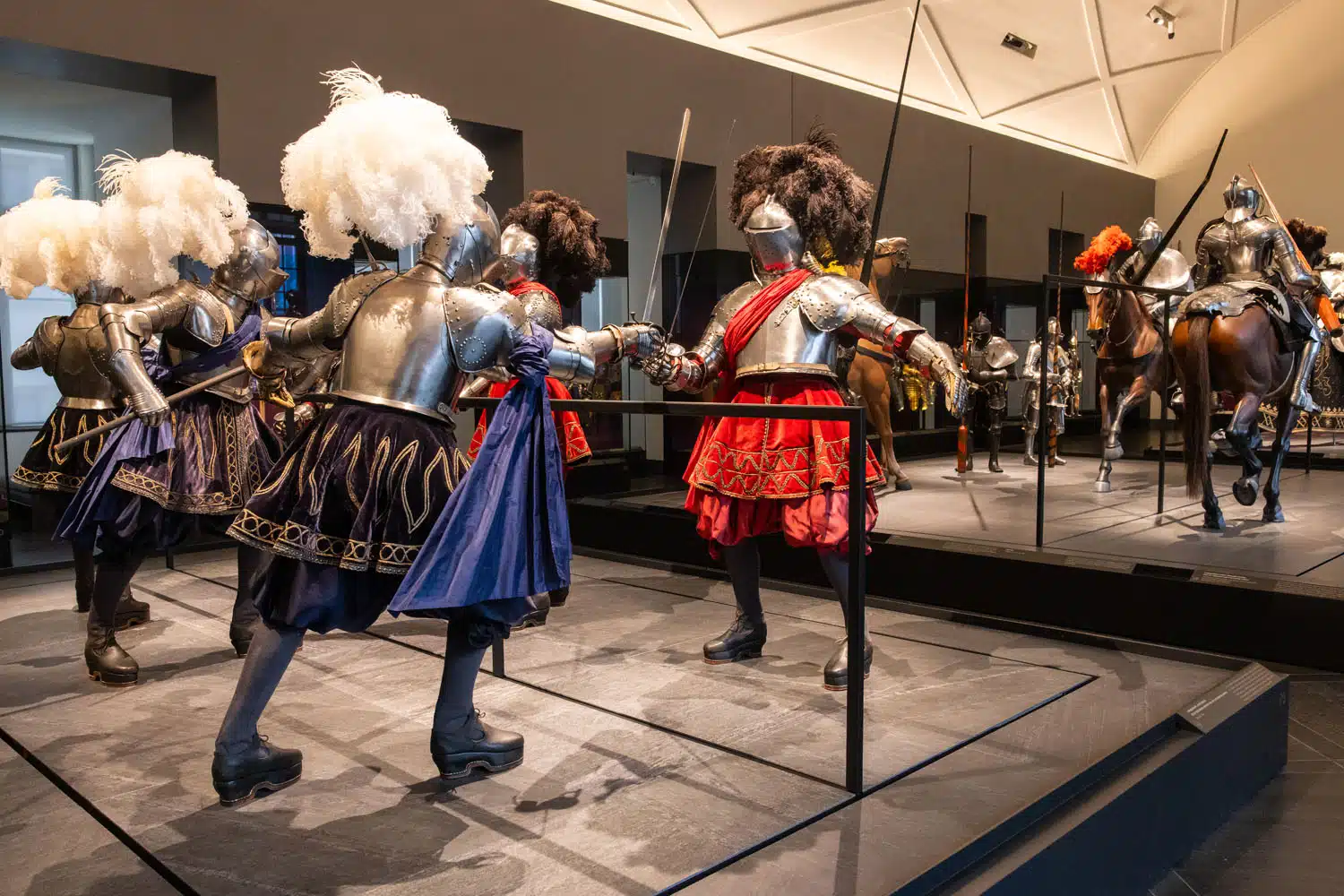
The Armoury (aka the Rüstkammer and the Hall of Giants) has on display suits of armor and weapons from the fifteenth to seventeenth centuries, including life-sized jousting figures. This hall is pretty impressive to see the scale, weight, and fine decorations of the armor knights and kings used to wear.
The Hausmann Tower is closed in winter, but in warmer months it offers panoramic views of the Old Town.
The Turkish Chamber was not open during our visit, but it houses more than 600 objects of art from the Ottoman Empire, making it one of the largest collections of Ottoman-era art outside of Turkey.
Plan Your Visit
Tickets: Royal Palace €18 (does not include the Historic Green Vault); Timed entry ticket for the Historic Green Vault €18
Tickets for the Historic Green Vault can sell out in advance so we recommend purchasing these before your visit to Dresden.
Hours: 10 am to 5 pm daily; closed on Tuesdays
Website: skd.museum
4. Step Back in Time in Stallhof
Once used for medieval tournaments, this enclosed Renaissance courtyard feels like stepping back in time, with its arcaded walls and the striking Fürstenzug mural running along one side. It sits next to the Royal Palace.
In December, Stallhof hosts one of Dresden’s most charming Christmas markets, complete with medieval-style stalls and mulled wine. Outside the holiday season, its quiet, historic setting makes it a lovely place to wander, and its colonnade is one of Dresden’s most photogenic spots.
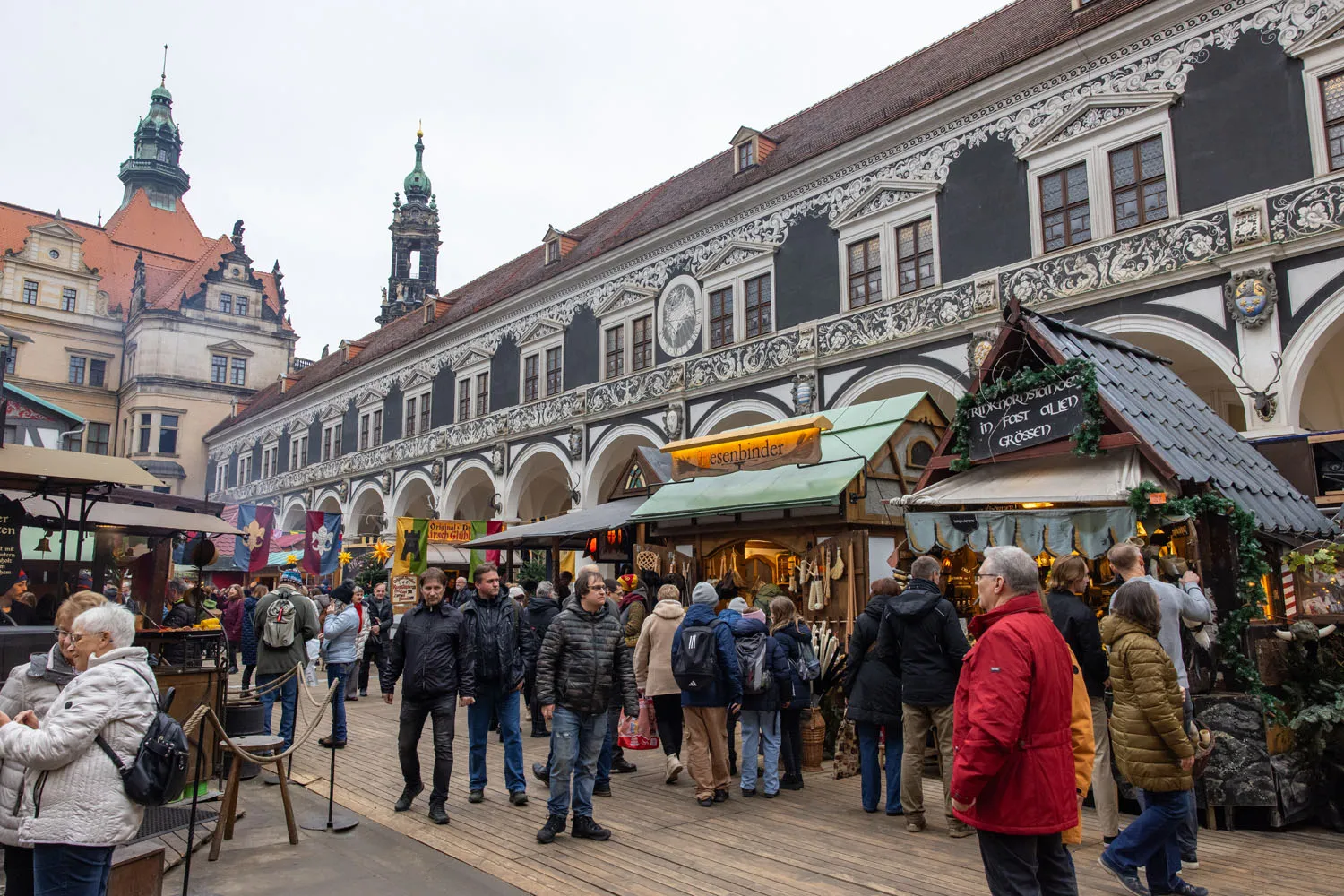
Stallhof and the medieval Christmas market
5. See the Procession of Princes (Fürstenzug)
Stretching along Augustusstraße, just outside the Royal Palace, is the Procession of Princes. This massive mural was made from Meissen porcelain tiles, which allowed it to survive the heavy bombing of World War II largely intact. It depicts 35 rulers from the Wettin dynasty along with scientists, artisans, craftsmen, and farmers. The mural was created to celebrate the family’s 800-year reign.
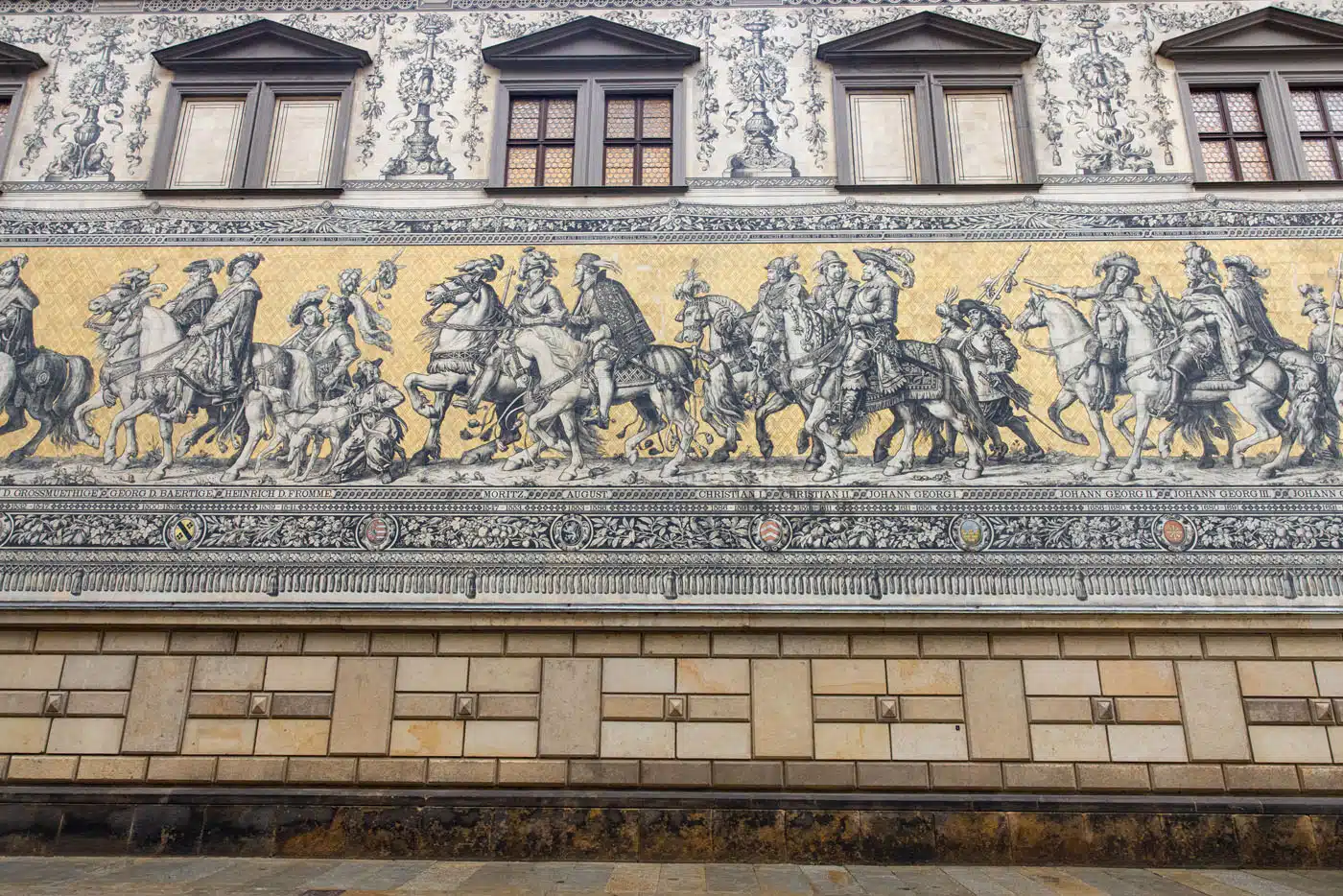
Because it’s outdoors and free to visit, it’s a must-see, even if you’re limited on time, when walking between the Residenzschloss and the Cathedral.
6. Enjoy the Views at Schlossplatz and the Brühl Terrace
Schlossplatz offers one of the best views in Dresden. Surrounded by the Royal Palace, the Catholic Court Church, and the Saxon State Parliament Building, the square showcases the architectural beauty of the Old Town.
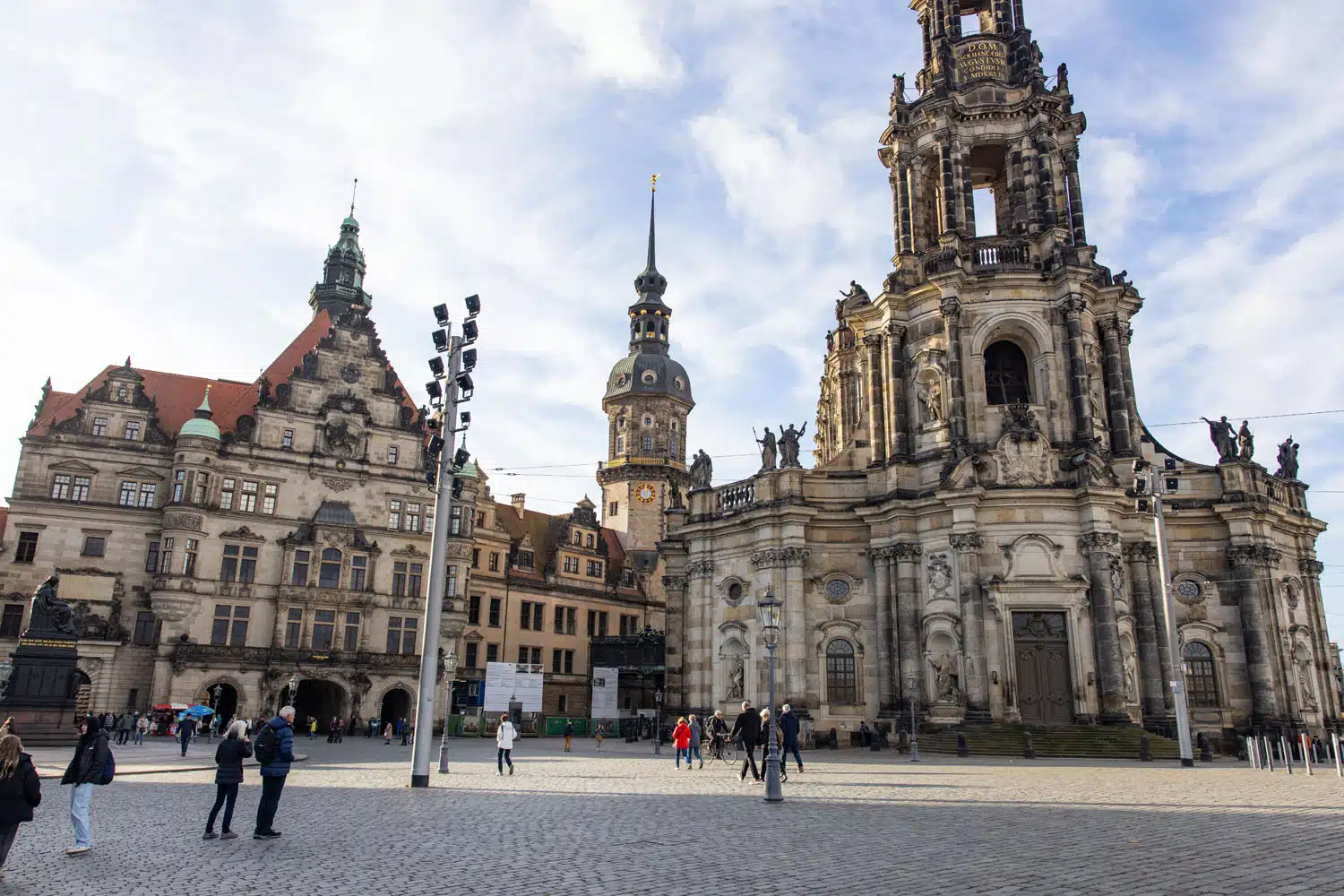
Schlossplatz
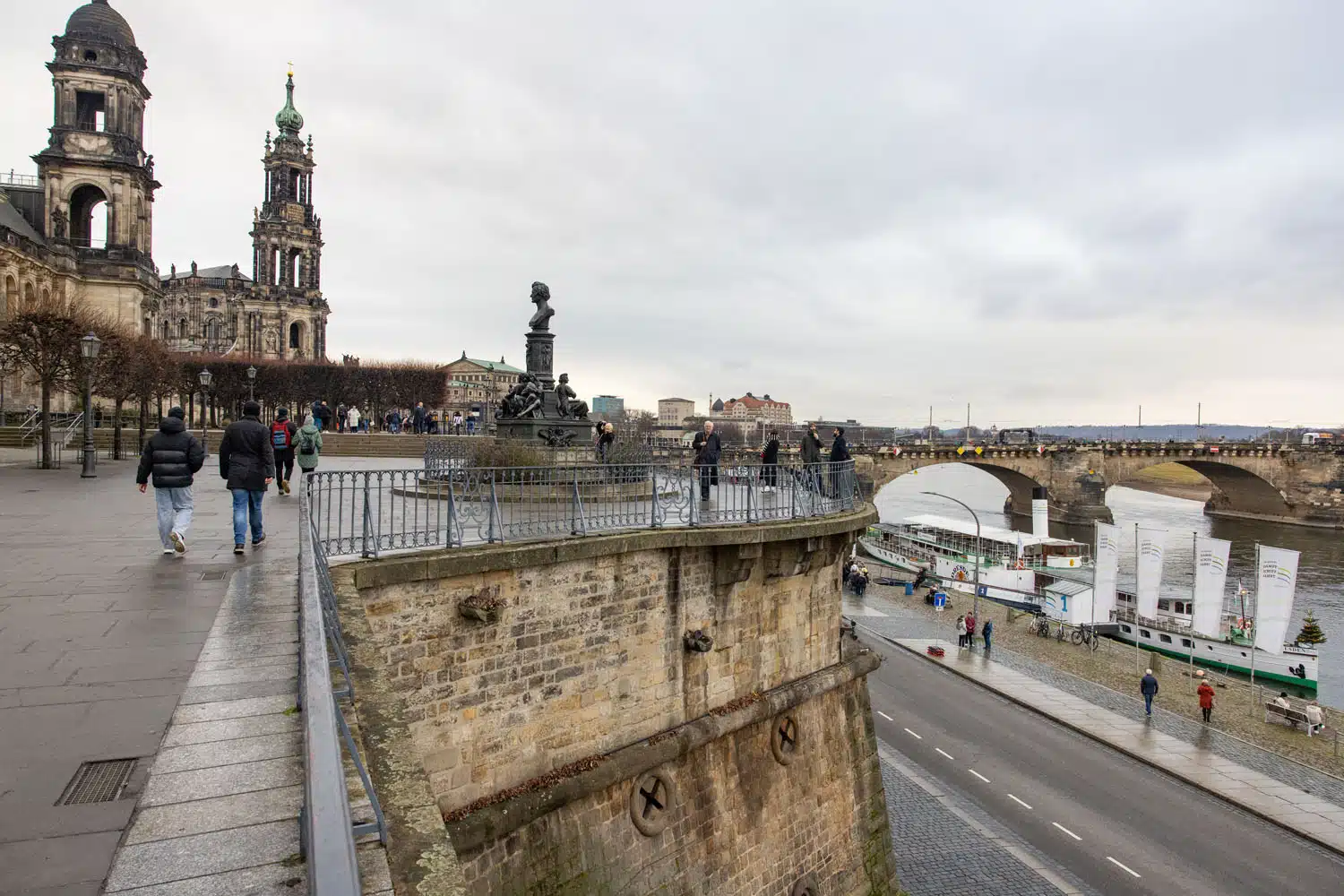
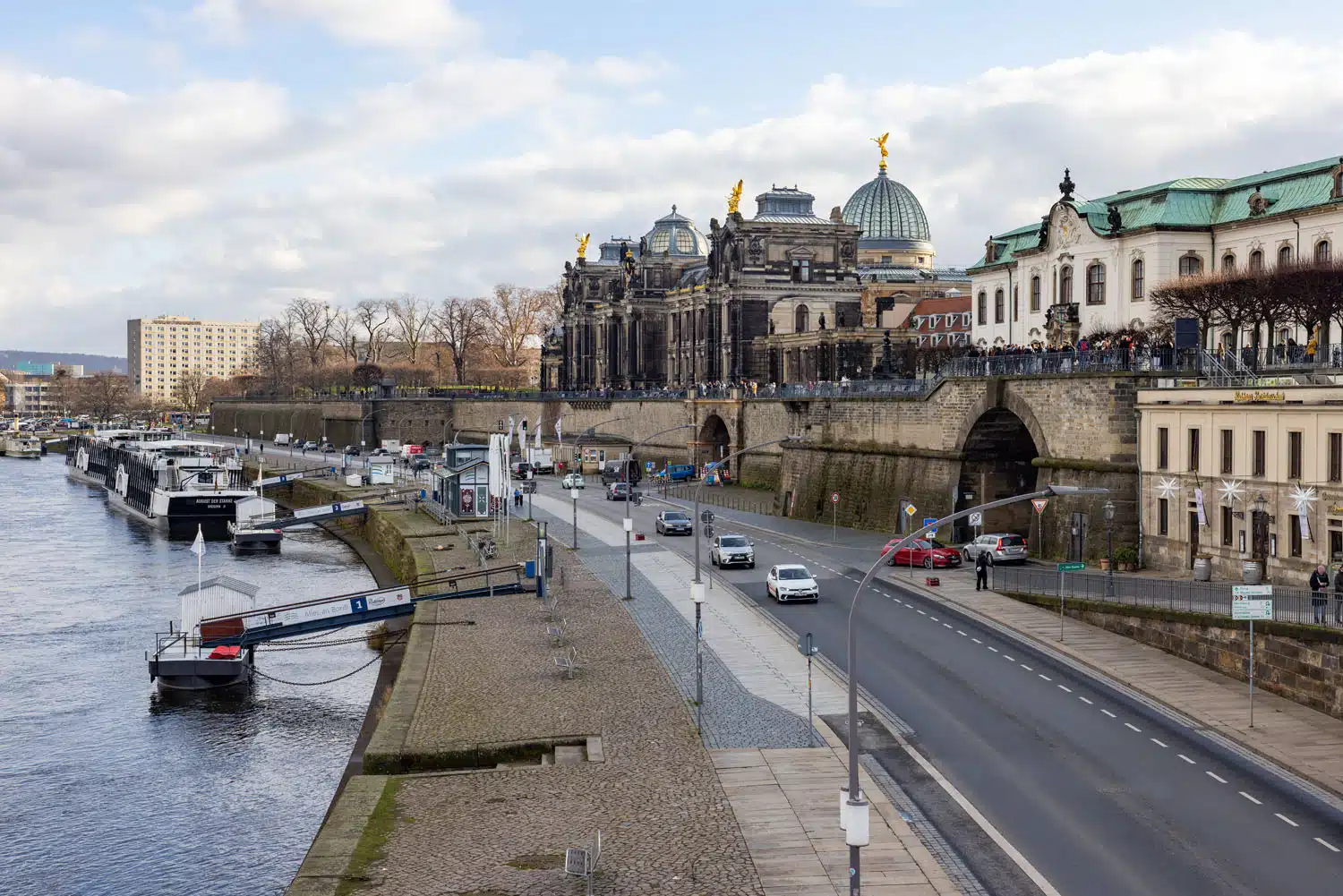
From Schlossplatz, steps lead up to the Brühl Terrace. Also called the “balcony of Europe,” this terrace provides beautiful views of the Elbe River and Augustus Bridge.
It is free to visit and open all day.
7. The Albertinum
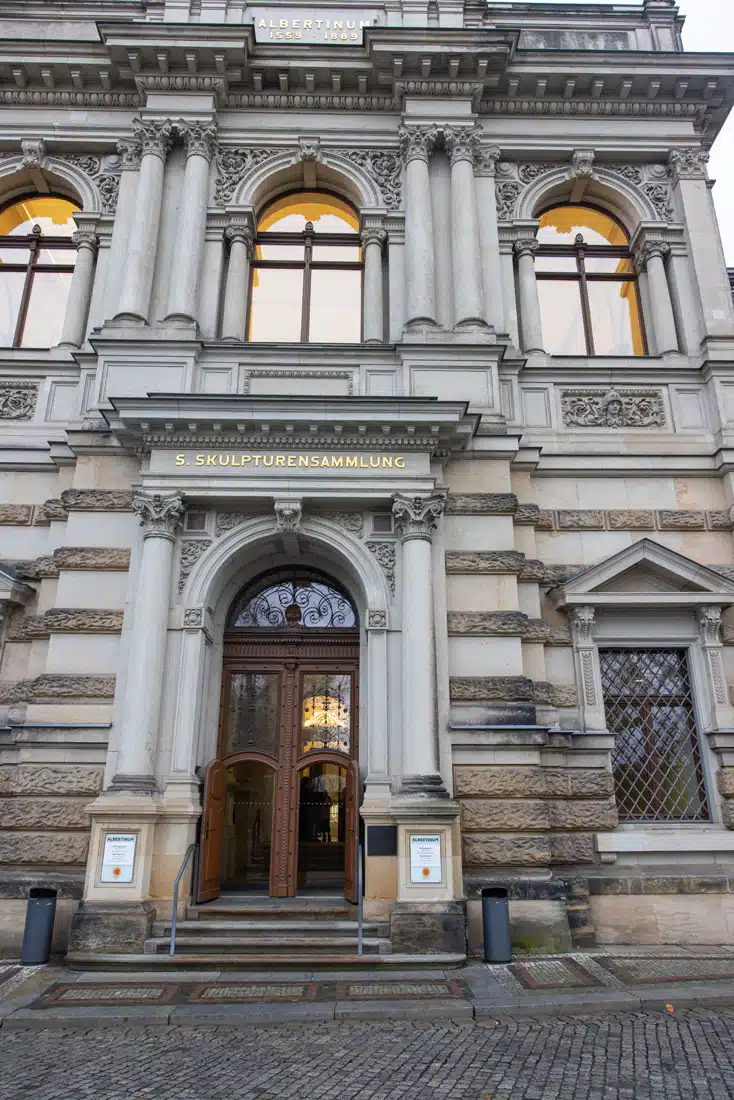
The Albertinum is Dresden’s home for art from the nineteenth century to the present day, with collections spanning Romanticism, Impressionism, Expressionism, and beyond.
It sits right on the Brühl Terrace, so it’s easy to combine with a walk along the terrace and the views over the Elbe. We didn’t make it inside on our visit (two days in Dresden fills up fast), but if modern and contemporary art is your thing, this is the spot. The museum is particularly well regarded for its German Romantic collection, including works by Caspar David Friedrich, whose dramatic landscapes are closely associated with the Dresden region.
8. Visit Frauenkirche Dresden (Church of Our Lady)
Built in the eighteenth century and designed by city architect George Bähr, the Frauenkirche became the defining symbol of Dresden. It was completely destroyed during World War II and left in ruins as a memorial for decades before reconstruction began. The church was rebuilt between 1994 and 2005.
It is now one of Dresden’s most important landmarks.
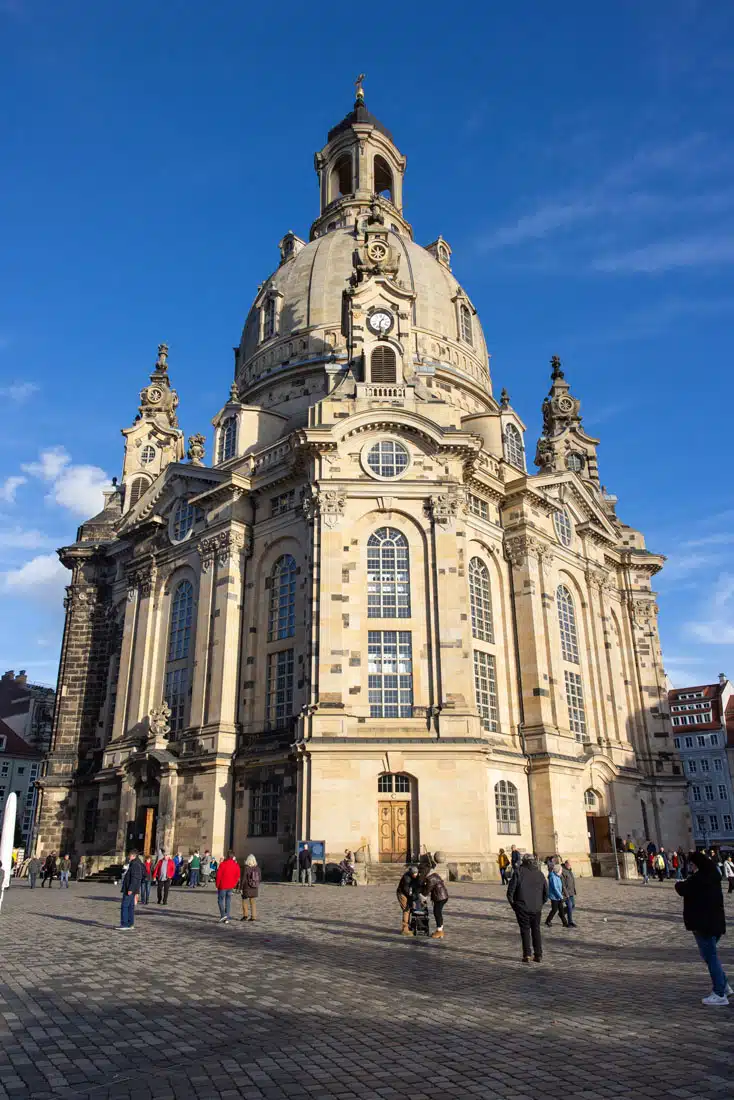
Visitors can enter the church free of charge, and for a small fee, climb to the top of the dome for sweeping views over the city. The climb starts with a 174 steps followed by a spiraling ramp. Climb two more sets of stairs to reach the viewing platform and one of the most unique views of Dresden.
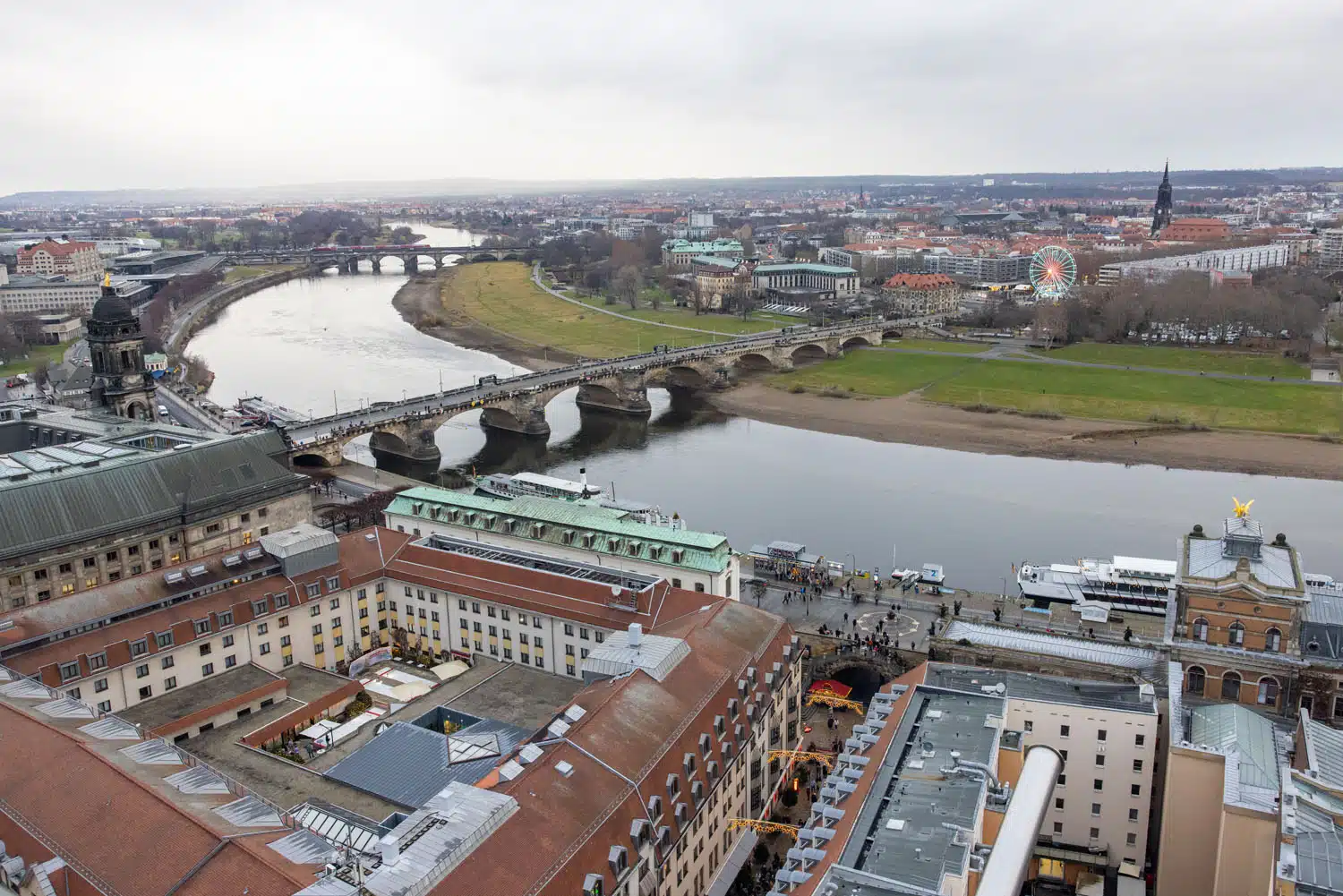
The Elbe River and Augustbrücke
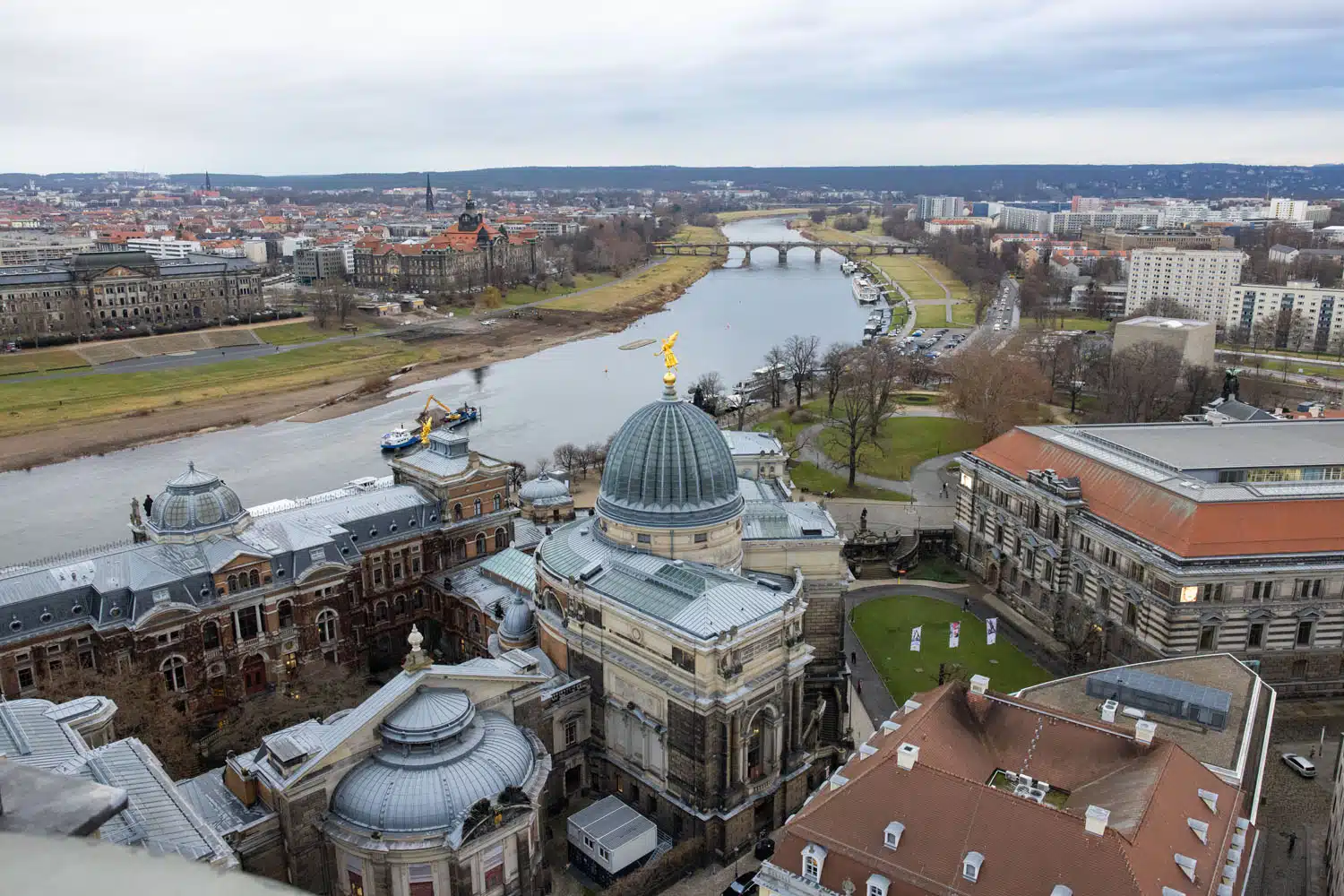
Hours vary by season and day of the week, which you can see on the official website. It costs €12 to climb the dome.
9. Spend Some Time in Neumarkt
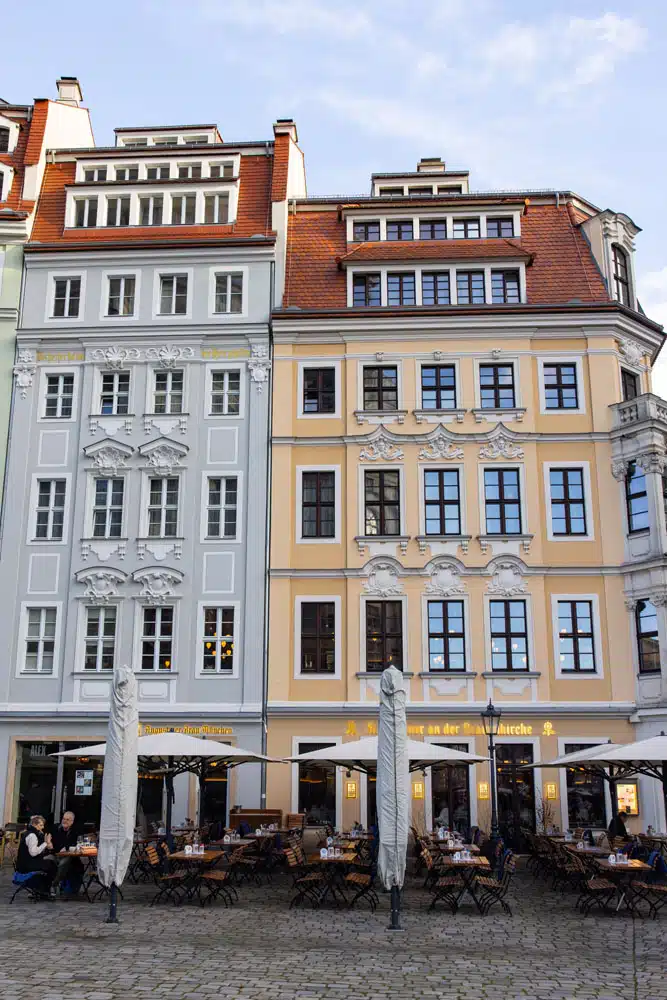
The Neumarkt is the historic heart of Dresden’s Old Town and one of the city’s most beautiful squares. Once completely destroyed during World War II, Neumarkt has been meticulously rebuilt to reflect its original Baroque appearance, with pastel-colored townhouses and elegant façades surrounding the iconic Frauenkirche.
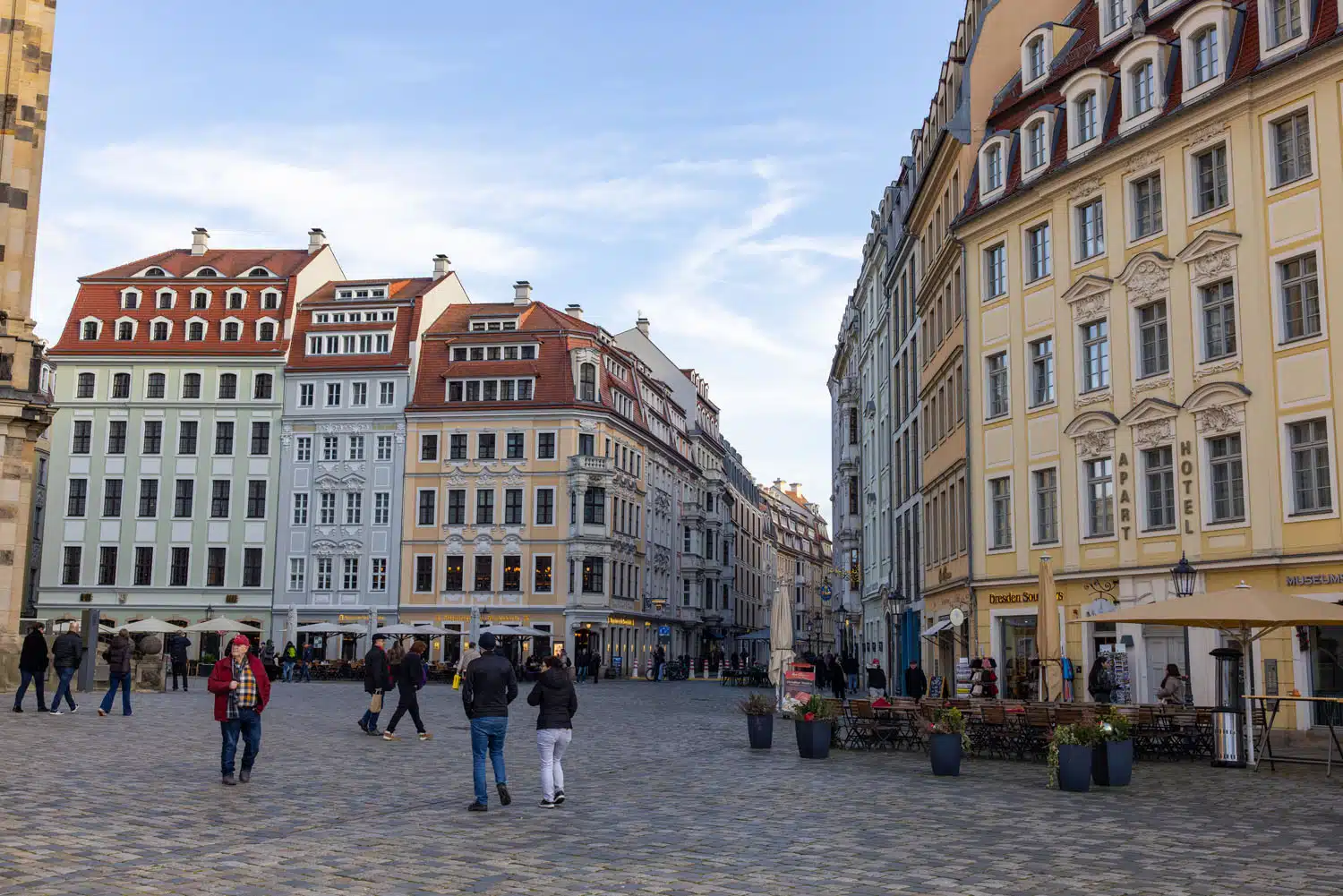
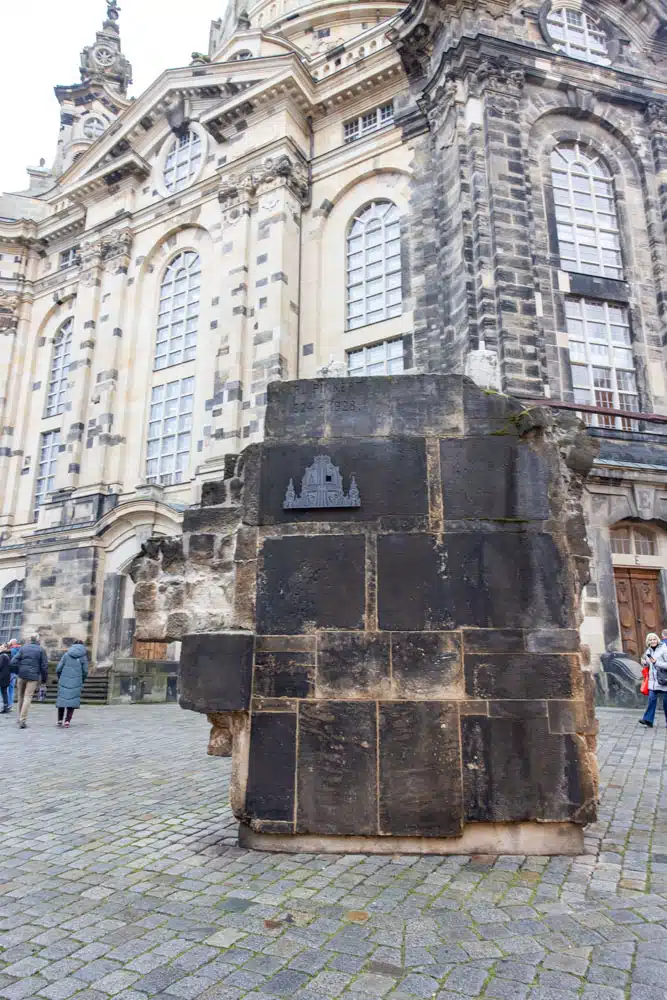
A piece of the original Frauenkirche still stands on Neumarkt
Also on this square is the Martin Luther Statue, the founder of the Protestant Church.
In December, Neumarkt hosts a lively Christmas market, filled with stalls selling food, drinks, and crafts.
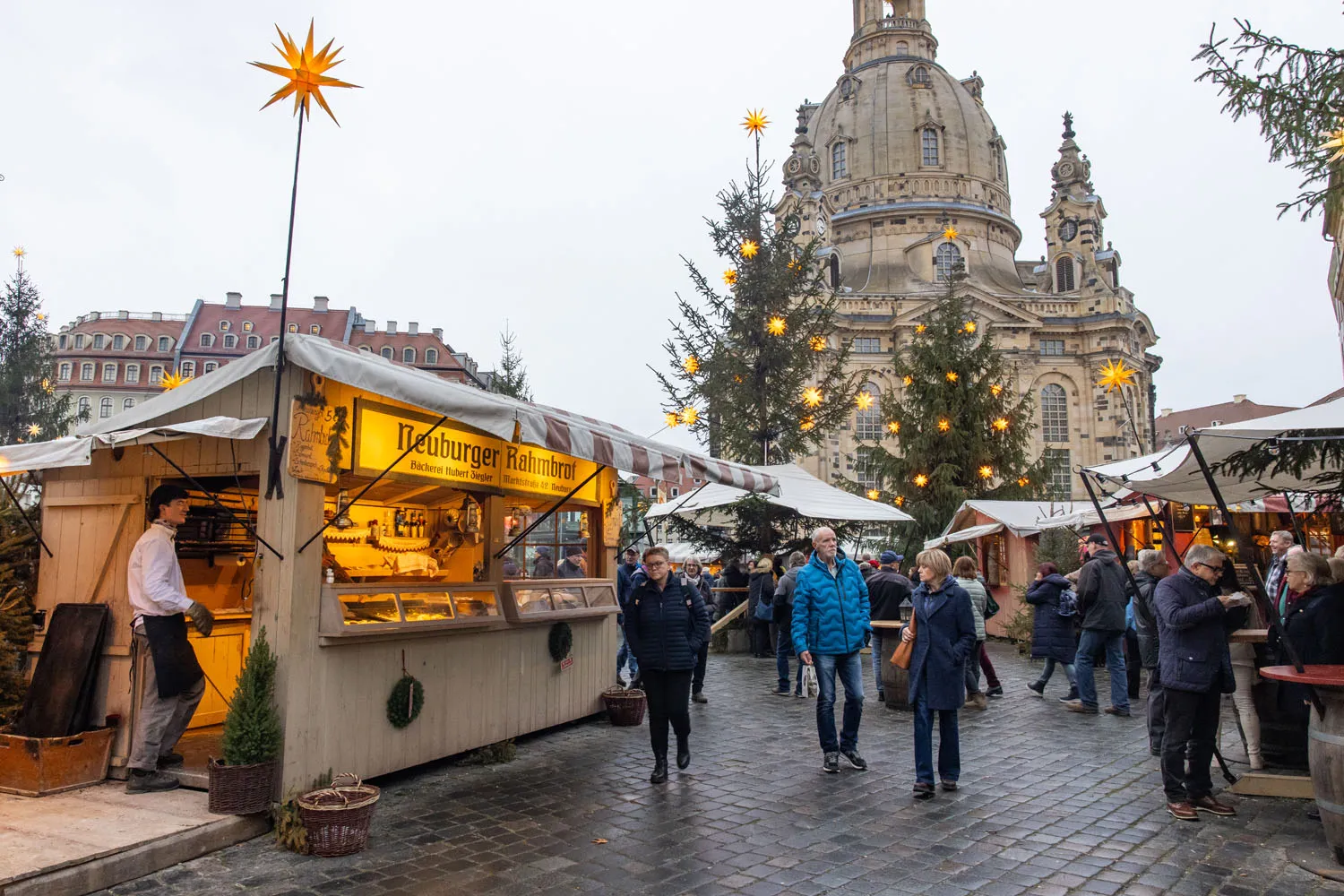
We stayed at the Steigenberger Hotel, which is located right on Neumarkt. This is a great, central location in Dresden, and easy to walk to most of the main sites in town.
10. Go Shopping on Prager Street
Prager Street is Dresden’s main shopping street, connecting the main train station to Altmarkt Square. It features a mix of socialist-era architecture and modern shopping centers, reflecting the city’s postwar reconstruction and growth.
11. The Cathedral of the Holy Trinity
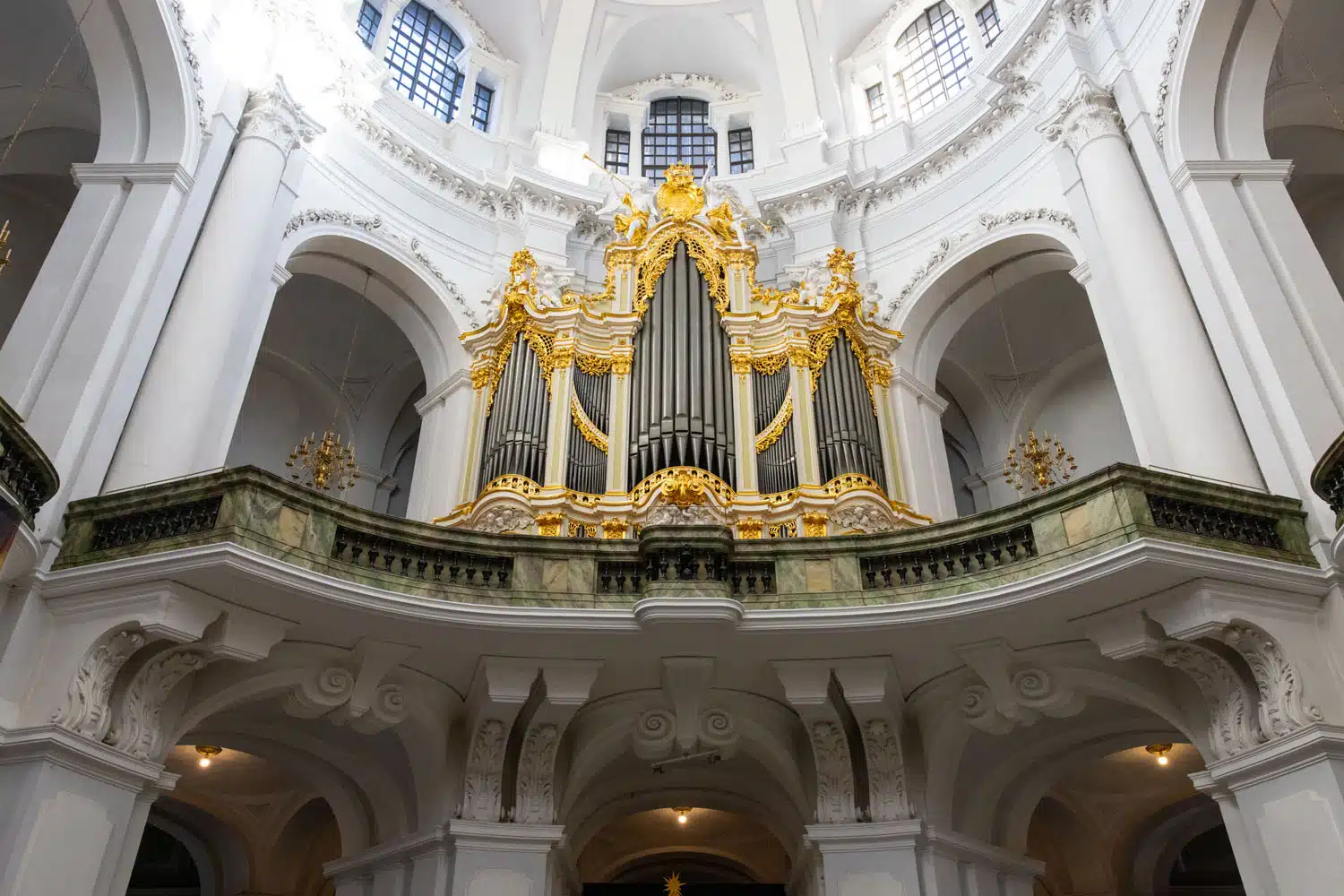
The Cathedral of the Holy Trinity is a Baroque-style cathedral built in the eighteenth century. Inside, the golden organ is a highlight. The cathedral also serves as the burial place of the heart of Augustus the Strong and many members of the Wettin dynasty. The crypt can only be visited on a guided tour.
12. Visit the Opera House on Theaterplatz
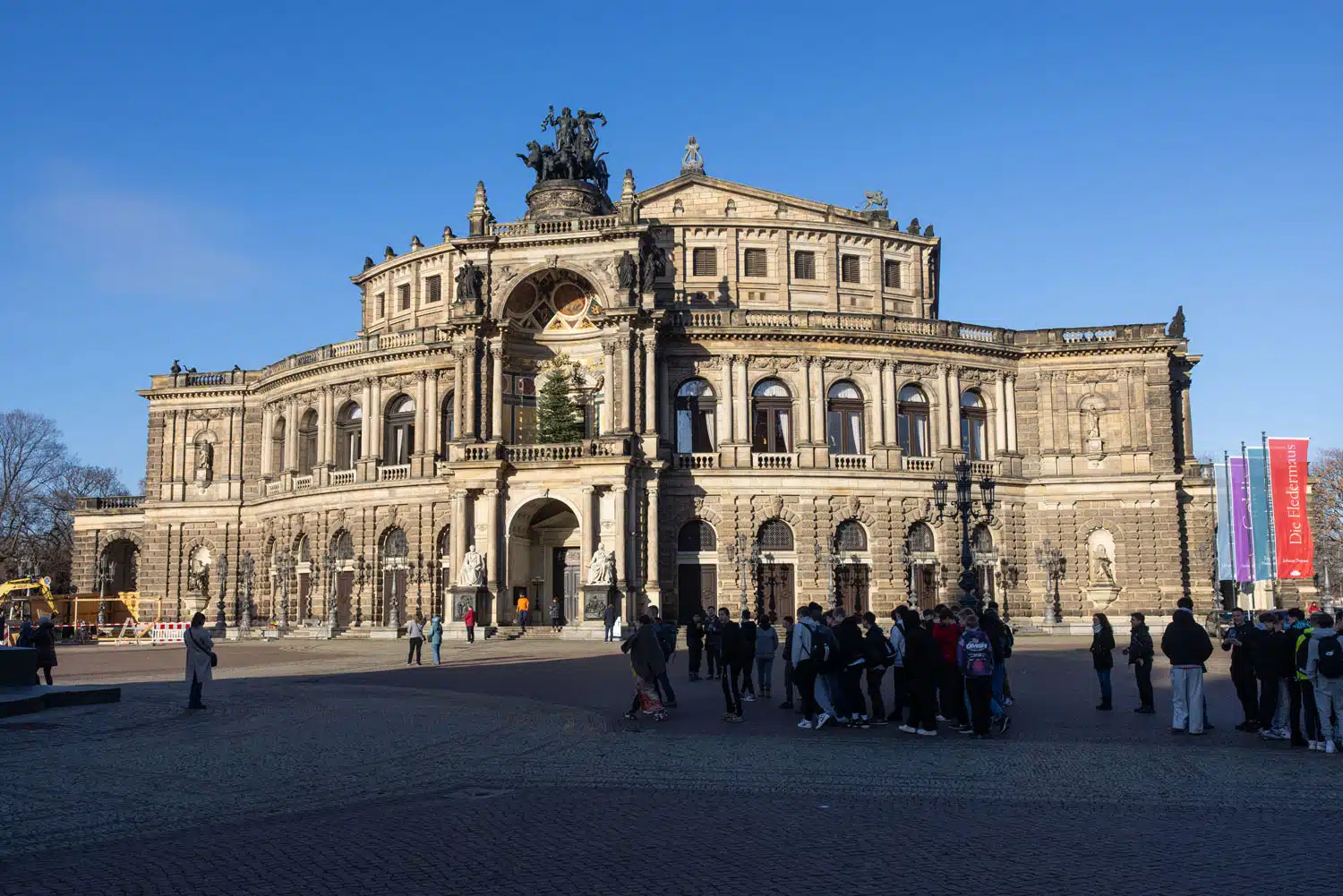
Theaterplatz is a historic square along the Elbe River, surrounded by major landmarks including the Semper Opera House, the Cathedral of the Holy Trinity, the Zwinger Palace complex, and the Royal Palace.
For a few euros, you can visit the Semper Opera House, to see and photograph its opulent interior.
13. Spend a Few Hours at the Dresden Zwinger
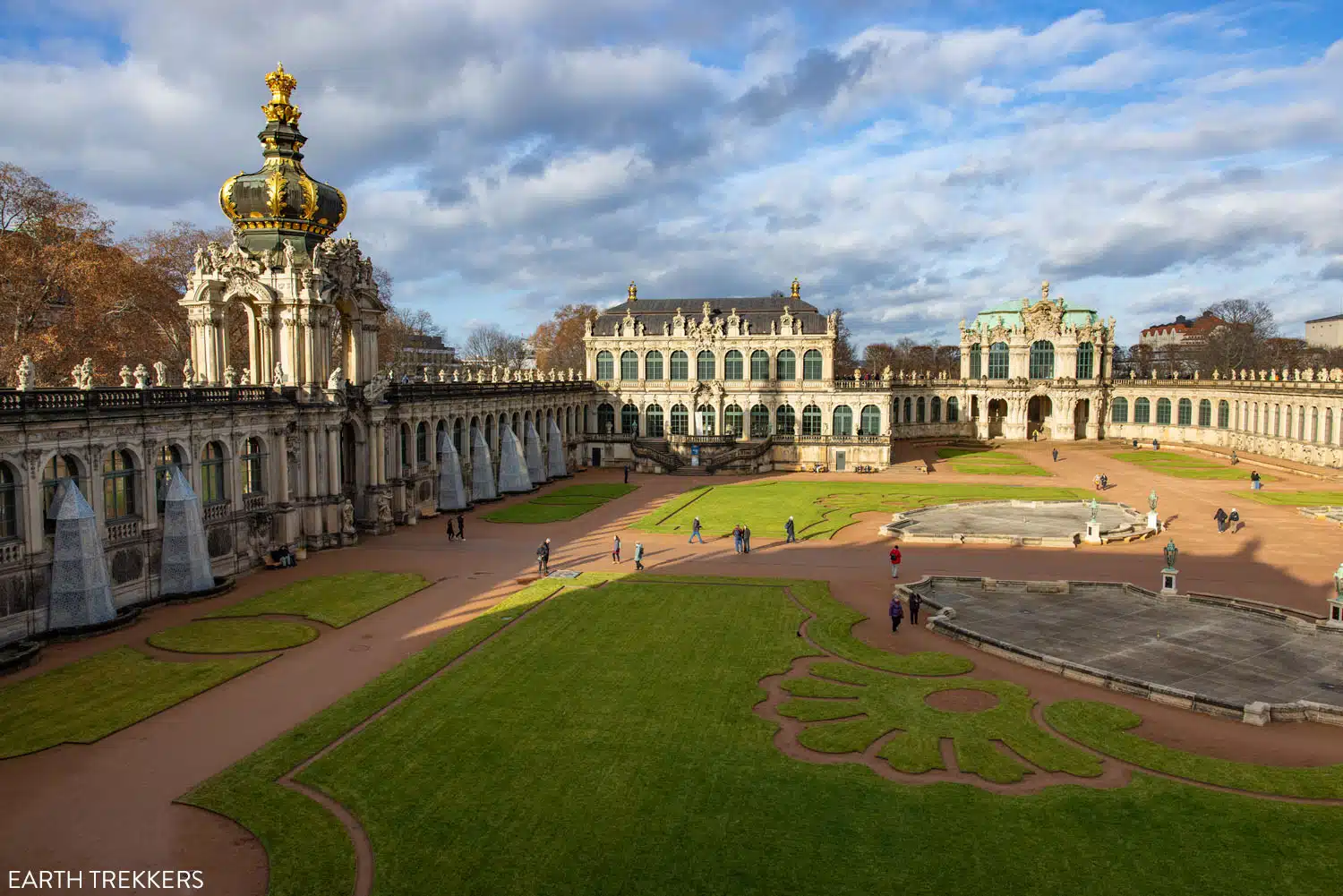
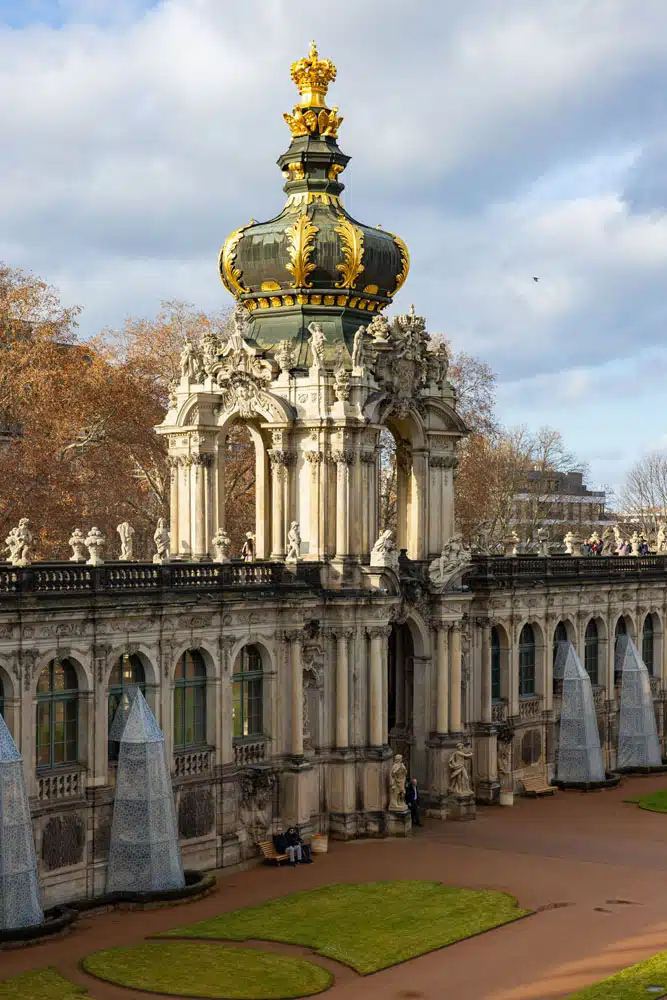
The Dresden Zwinger is one of the best things to do in Dresden. The courtyard can be visited for free but there is an entry fee to enter its complex of buildings.
The Dresden Zwinger was constructed in the early eighteenth century as a festival ground for the Saxon court. It hosted weddings, tournaments, and celebrations that showcased the power of Augustus the Strong.
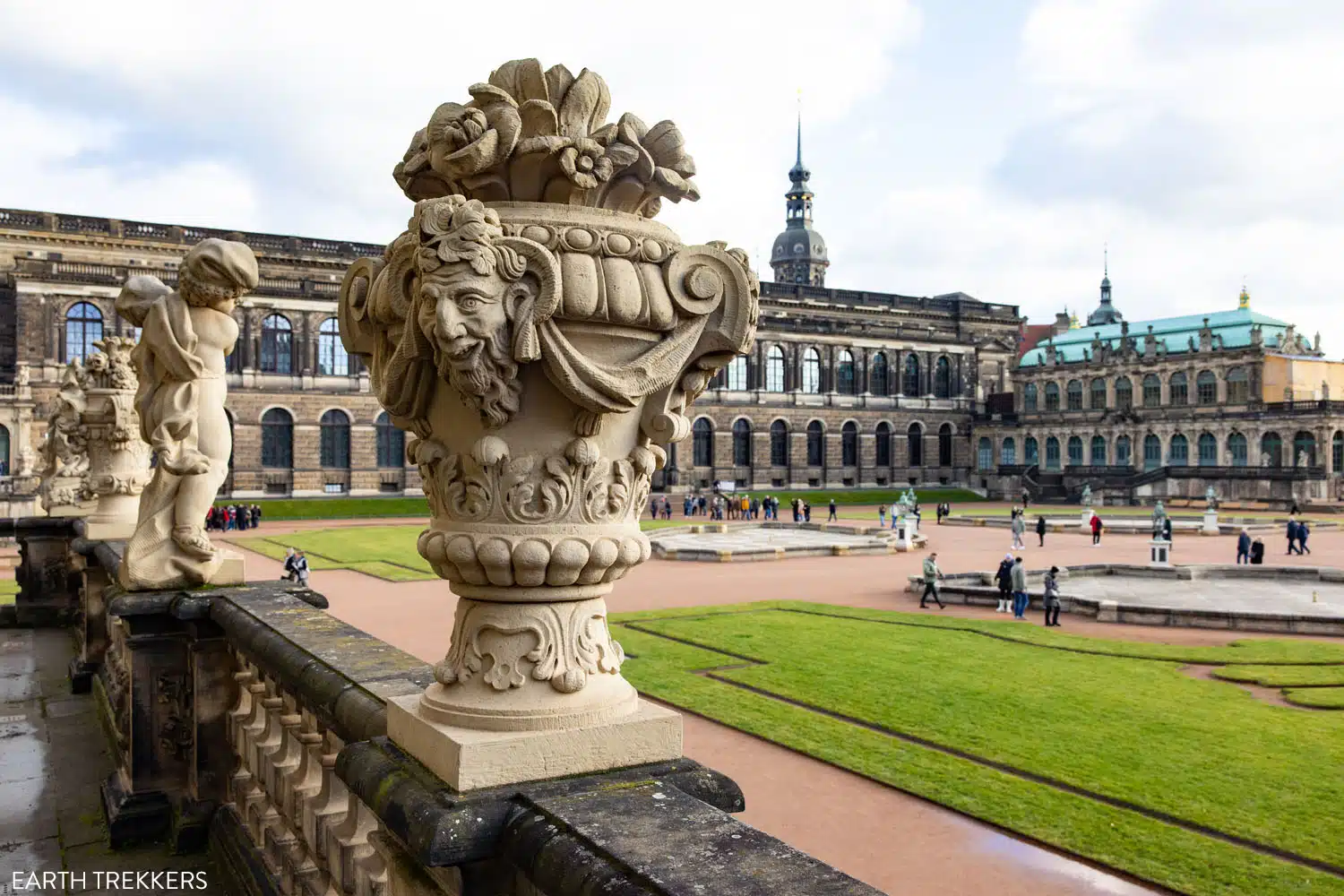
Today, the Zwinger houses several important collections, including the Old Masters Picture Gallery, the Porcelain Collection, and the Royal Cabinet of Mathematical and Physical Instruments. Visitors can also experience the Zwinger Experience, a virtual reality presentation that brings the palace’s history to life.
For us, the highlights of the visit were seeing paintings of Dresden in the 18th century in the Picture Gallery and beautifully painted and sculpted Japanese porcelain in the Porcelain Collection.
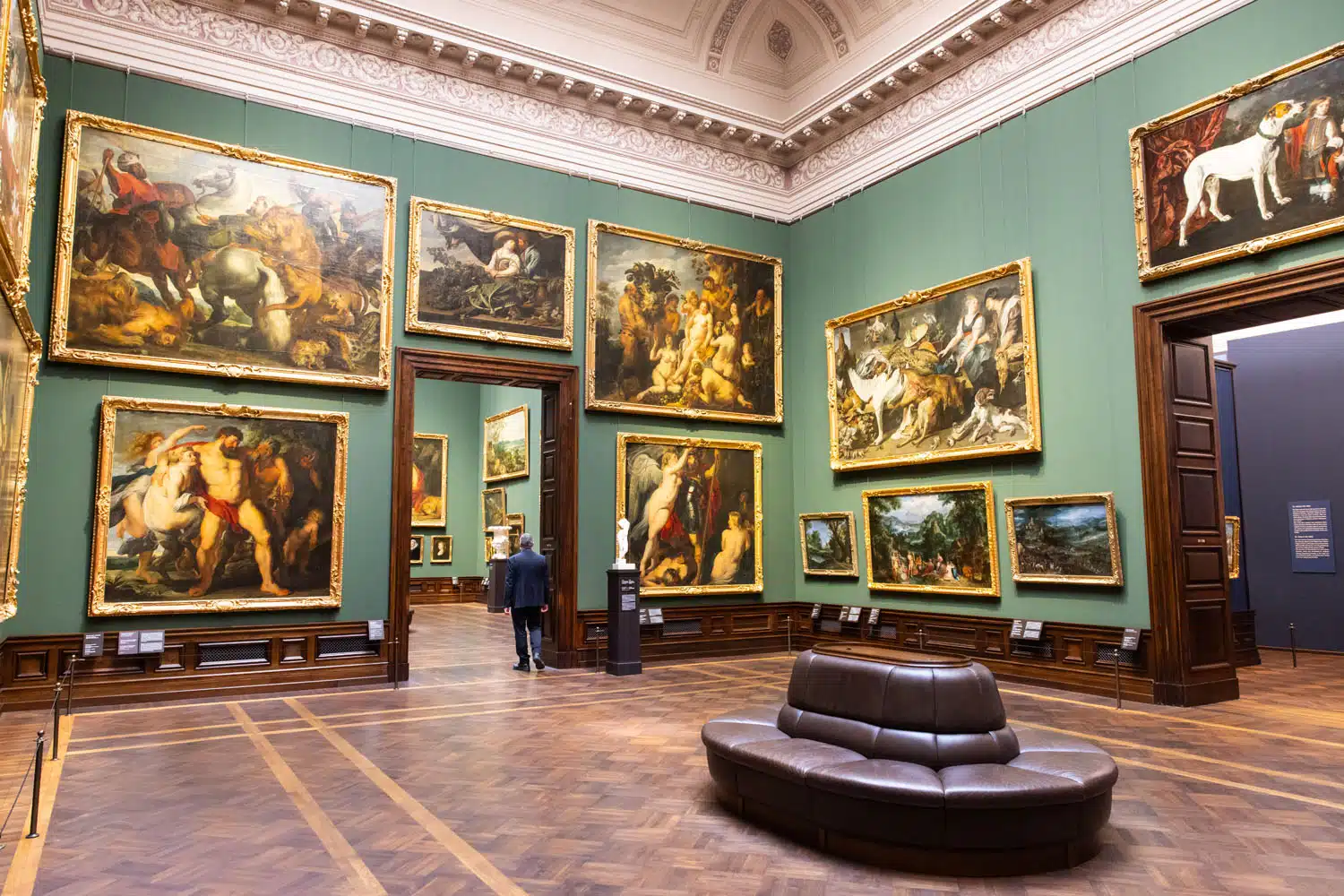
Old Masters Picture Gallery
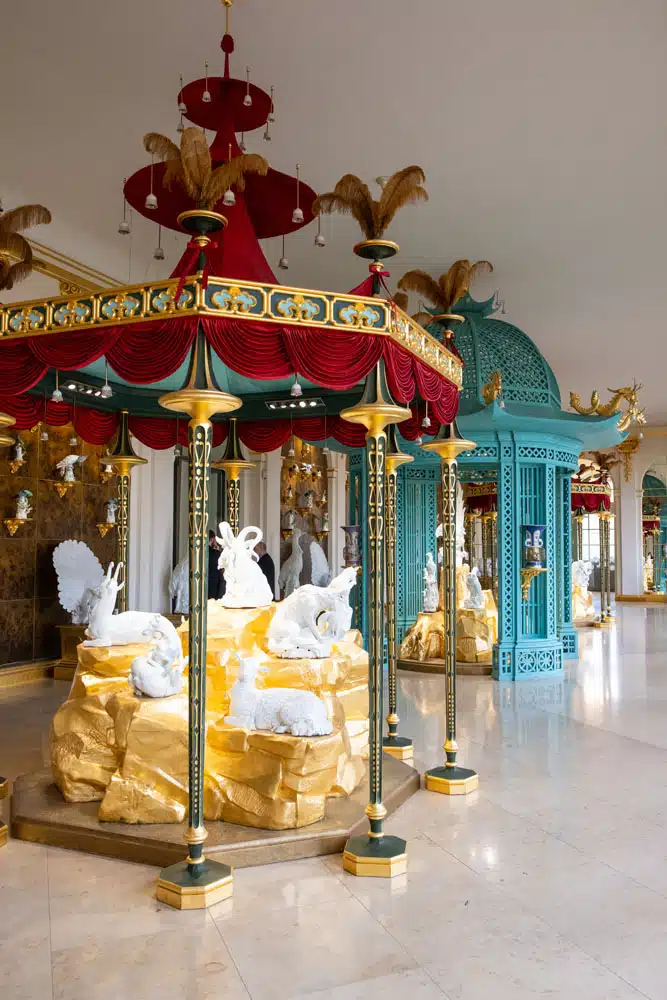
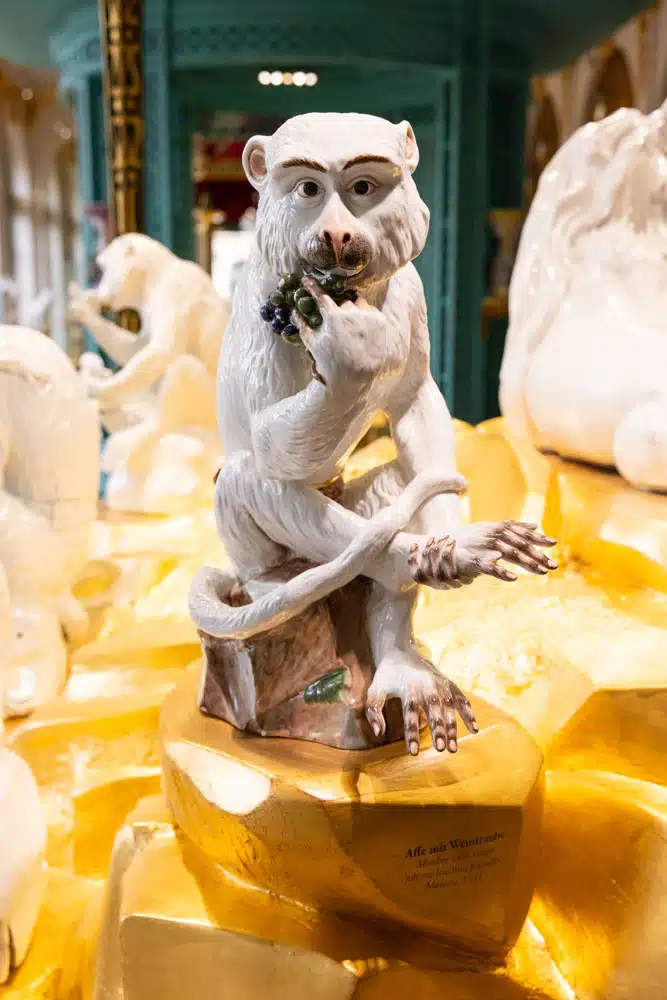
Porcelain Collection
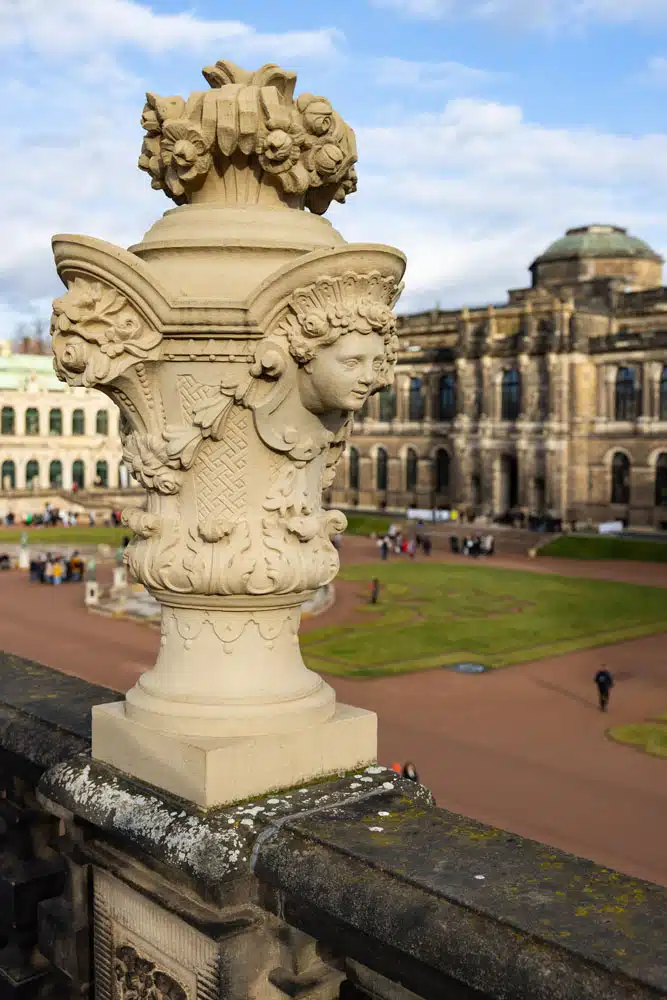
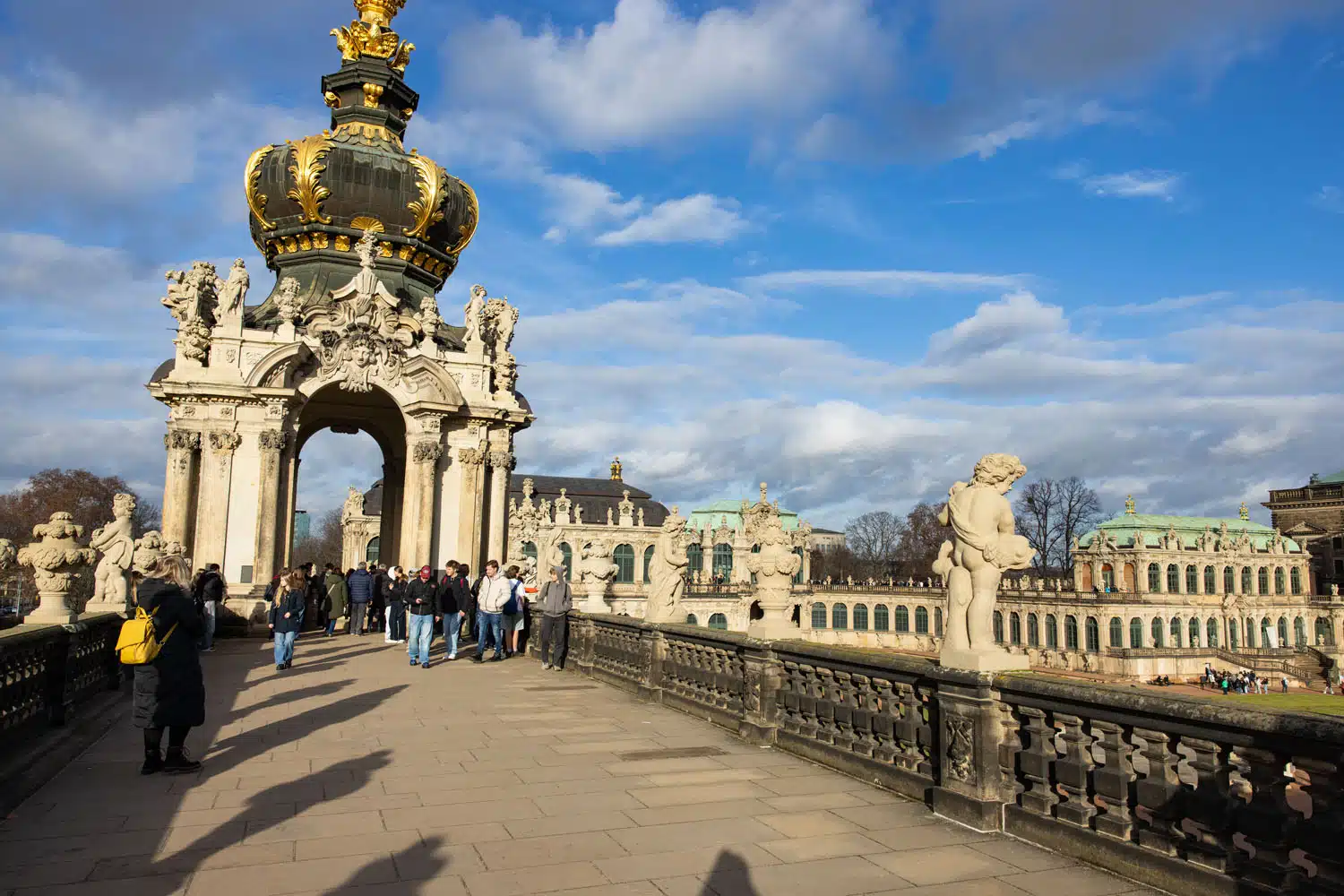
Walking along the Zwinger walls provides beautiful views over the palace grounds. This is free to do and not to be missed on a visit to Dresden.
Plan Your Visit
Tickets: €18, can be purchased online in advance through the skd.museum website; this includes the Old Masters Picture Gallery and Sculpture Collection, Porcelain Collection, and the Mathematical-Physical Salon. The courtyard is free to visit
Hours: The museums open between 10 am and 11 am and close at 5 pm, closed Mondays. Some museums have closings for several during the weeks of the year. The courtyard is open from 6 am to 8 pm daily. Get updated hours here before your visit.
How Long Does a Visit Last: If you just visit the courtyard and walk the walls, plan on spending about 30 minutes here. To visit the three museums, budget 30 to 60 minutes for each of them.
14. Stroll Across Augustus Bridge
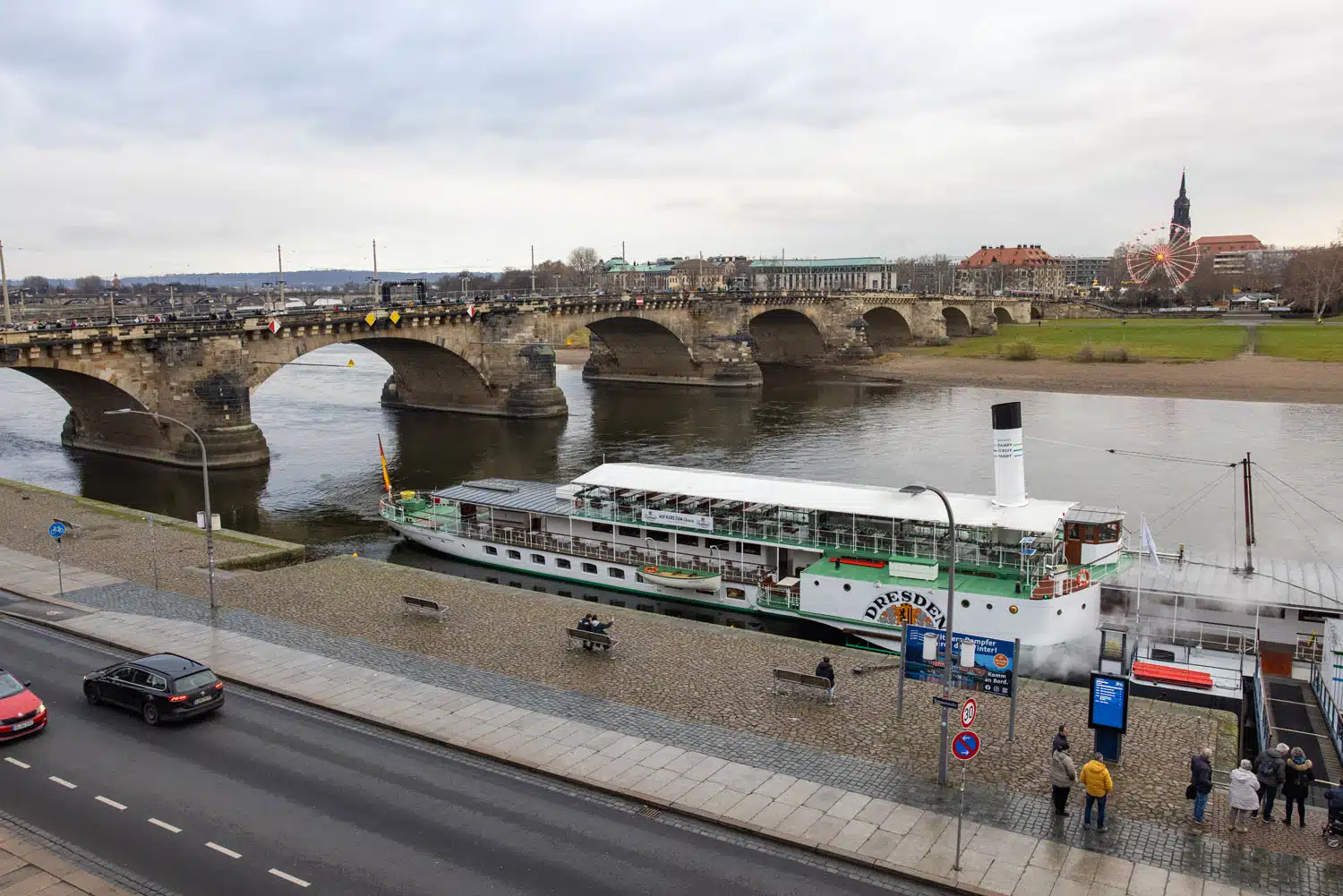
The Augustus Bridge spans the Elbe River and connects the Old Town with the New Town. Originally built as a wooden drawbridge in 1287, it later became a stone bridge and was widened during Augustus the Strong’s reign. The bridge has been rebuilt multiple times due to floods and war damage.
15. Do a Cheese Tasting at Pfunds Café
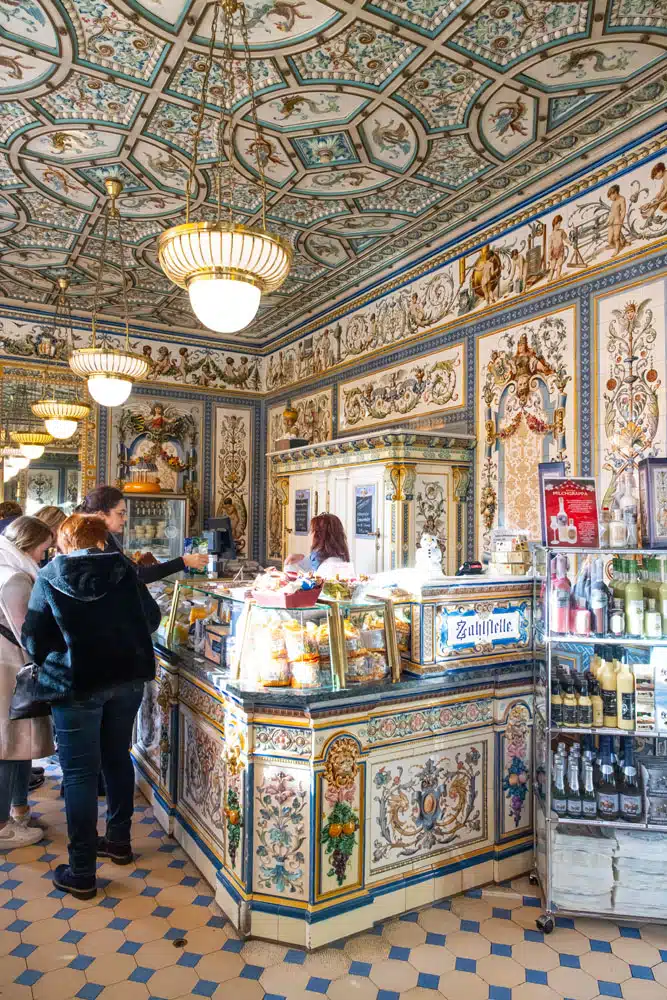
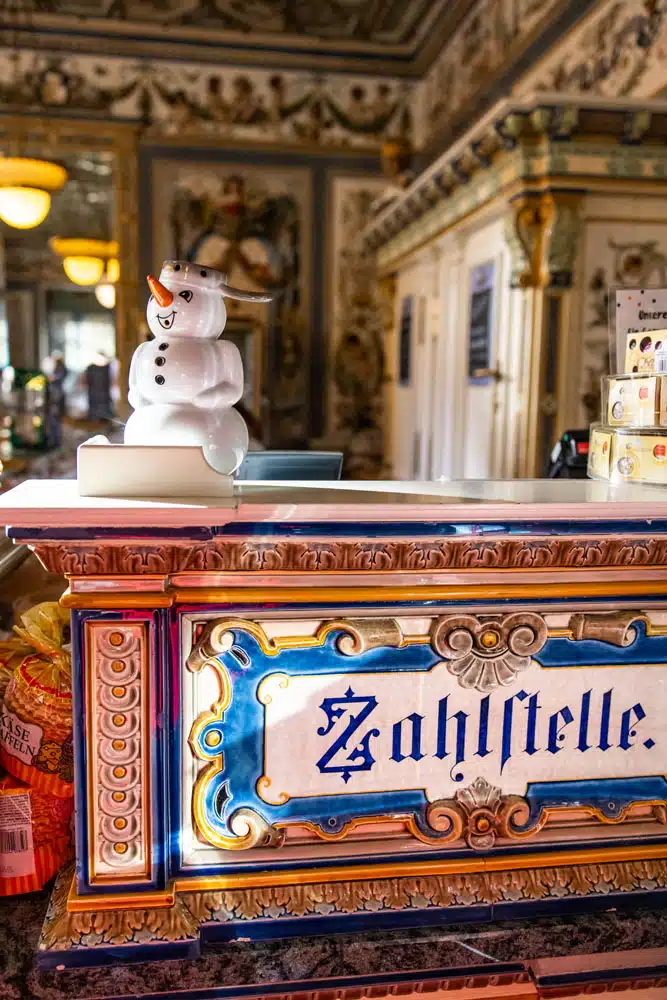
Pfunds Molkerei is a beautifully tiled shop covered in hand-painted ceramic tiles. Originally founded in the late nineteenth century to supply Dresden with fresh milk, it now sells cheese, milk, cakes, spirits, and local specialties.
It is a popular stop for photos and unique souvenirs. During our visit, the café was packed with visitors taking selfies and photos of the interior.
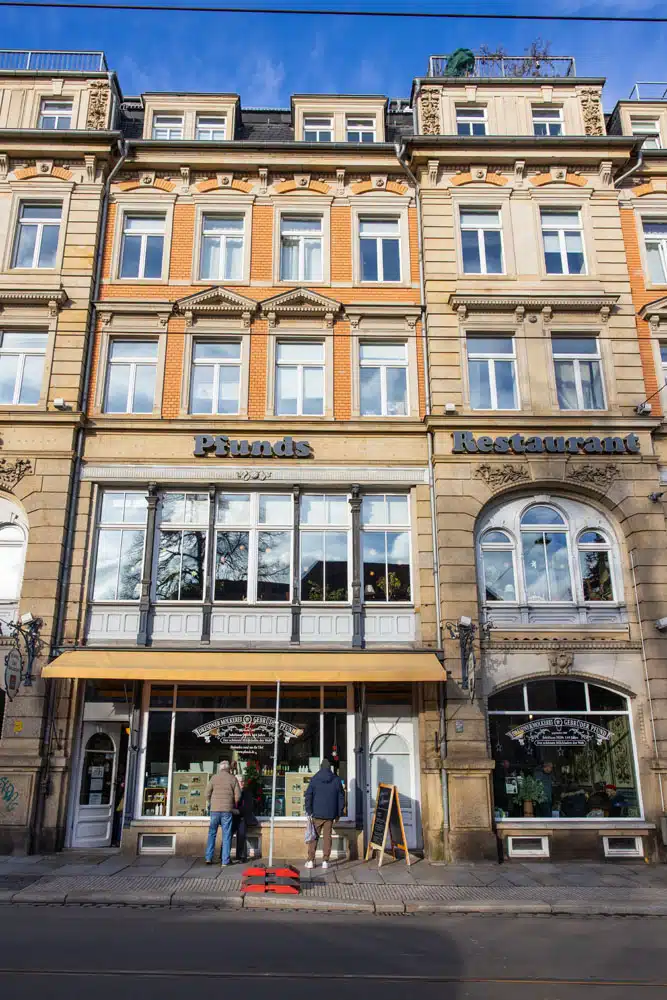
This activity is out of the way from all of the other sites, requiring either a tram or a long walk to reach it. It also gets very crowded inside and is a small space. We found this destination to be skippable if you are not interested in trying any of their dairy products.
16. The Dresden Panometer
The Dresden Panometer offers one of the most unique cultural experiences in the city. Housed inside a former gasometer, this immersive attraction features enormous 360-degree panoramic artworks by artist Yadegar Asisi that bring historical and natural scenes vividly to life. Visitors can walk through the space and even climb a viewing platform to fully take in the scale and detail of the exhibit, which changes every few years.
It is located 5 km outside of the city center. Purchase your tickets online in advance before visiting. Because of its location, we couldn’t fit this into our schedule, but it does look like a unique thing to do in Dresden.
17. Photograph the Kunsthof Passage
This also sits a bit outside of the city center, but it is another unique Dresden experience. Tucked away in the trendy Neustadt district, this collection of interconnected courtyards is famous for its artistic façades, with each courtyard designed around a different theme, most notably the whimsical “Singing Drain Pipes,” which gurgle and whistle during rainfall.
18. Escape the City at the Grand Garden of Dresden
The Grand Garden of Dresden (Großer Garten) is the city’s largest and most beautiful green space, offering a peaceful escape just outside the historic center.
Laid out in a Baroque style, the park features wide, tree-lined paths that radiate from the elegant Palais Großer Garten at its center. With ponds, sculptures, and even a miniature railway, the Grand Garden is a lovely place to slow down and enjoy a more relaxed side of Dresden.
How Much Time Do You Need in Dresden?
You can explore all the highlights of Dresden in just one to two days. The main attractions are clustered in the Old Town, which makes it quick and easy to walk from one site to another. This makes it possible to see everything in a day, or two if you prefer a slower pace or want to visit some attractions outside the Old Town.
We spent two days in Dresden. Our main focus were the amazing Christmas markets, but we also toured the palaces, museums, and cathedrals, to round out our visit (and write this guide!).
How to Get to Dresden
Dresden is well-connected by train to many major European cities, such as Berlin, Leipzig, Prague, and Frankfurt.
Buses also run to Dresden from other major cities on operators like FlixBus, making this another option to reach Dresden.
Can You Day Trip to Dresden from Berlin?
Dresden is a perfect day trip from Berlin. The train ride is about 1 hour and 40 minutes in one direction, and the Old Town of Dresden can be explored in one day. Dresden’s train station is a 20-minute walk from Altmarkt in the old town, making it easy to see the city solely on foot (you can also take a tram, which saves a lot of walking).
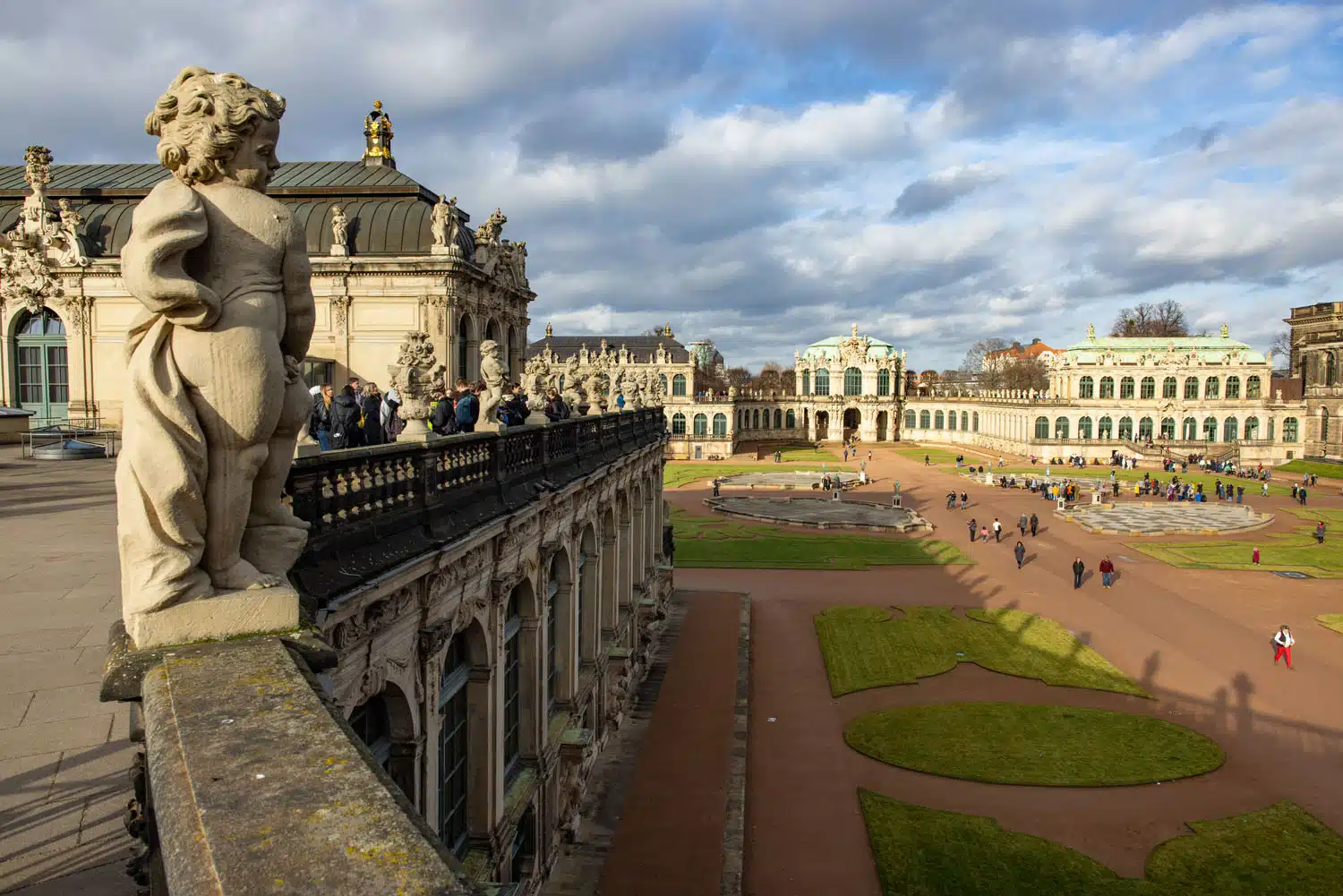
The Dresden Zwinger courtyard, one of the best free things to do in Dresden.
When is the Best Time to Visit Dresden?
We visited Dresden in December, and it was nothing short of magical. The Christmas markets transformed the Old Town into something straight out of a storybook, with glühwein and Christmas lights in Altmarkt Square, the Frauenkirche glowing above Neumarkt, and medieval stalls filling the courtyard at Stallhof. If you have any interest in Christmas markets, December in Dresden belongs near the top of your list.
That said, Dresden is a year-round destination. The palaces, museums, and churches are just as impressive outside the holiday season, and the compact Old Town makes it easy to explore on foot regardless of when you go.
Summer brings long days and lively outdoor spaces; spring and fall offer mild weather and thinner crowds. Winter outside of the Christmas market weeks can be cold and grey, but the indoor attractions, such as the Historic Green Vault, the Zwinger museums, and the Frauenkirche, make it perfectly worthwhile.
One practical note: the Hausmann Tower inside the Royal Palace is closed in winter, so if panoramic views from the tower are on your list, plan for a warmer-month visit.
- Spring (March–May): Mild temperatures, blooming parks, and fewer tourists than summer. A great time to explore the Old Town at a relaxed pace.
- Summer (June–August): The most popular season, with warm weather, long daylight hours, and a lively atmosphere along the Elbe. Book accommodations in advance.
- Fall (September–November): Comfortable temperatures and smaller crowds. A lovely time to visit before the Christmas market season begins in late November.
- Winter (December–February): December is peak season for the Christmas markets and one of the best times to visit Dresden overall. January and February are quieter and cold, but the indoor museums are excellent.
Where to Eat in Dresden
The old town has many great international restaurants, each with excellent reviews. The following are the ones we tried while in Dresden.
Augustiner an der Frauenkirche or Hofbräu zur Frauenkirche Restaurants
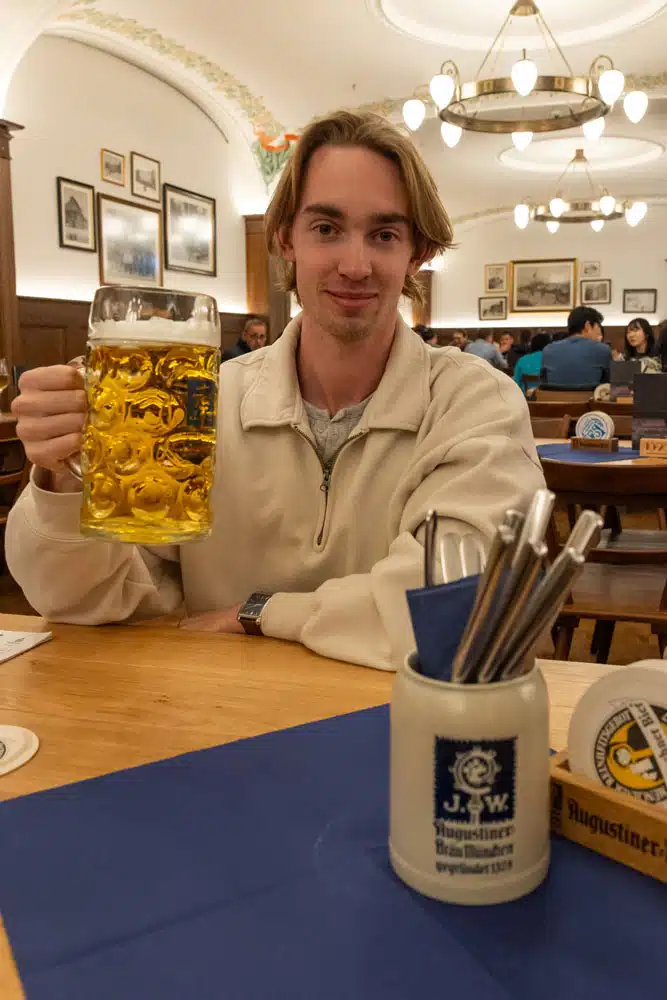
Augustiner an der Frauenkirche and Hofbräu zur Frauenkirche are great places for a hearty German meal. Expect generous portions, traditional Bavarian dishes, and large steins of beer, perfect after a day of sightseeing. We dined at Augustiner an der Frauenkirche and loved it. It’s a bit touristy but we loved drinking German beer and local foods. For us, it is a must-do at least once while visiting Germany.
Mamma Mia Italian Restaurant
Mamma Mia is an Italian restaurant just off of Altmarkt that creates homemade pasta with authentic recipes and fresh ingredients. We loved our experience and delicious meal here.
Dresden 1900 Museumsgastronomie
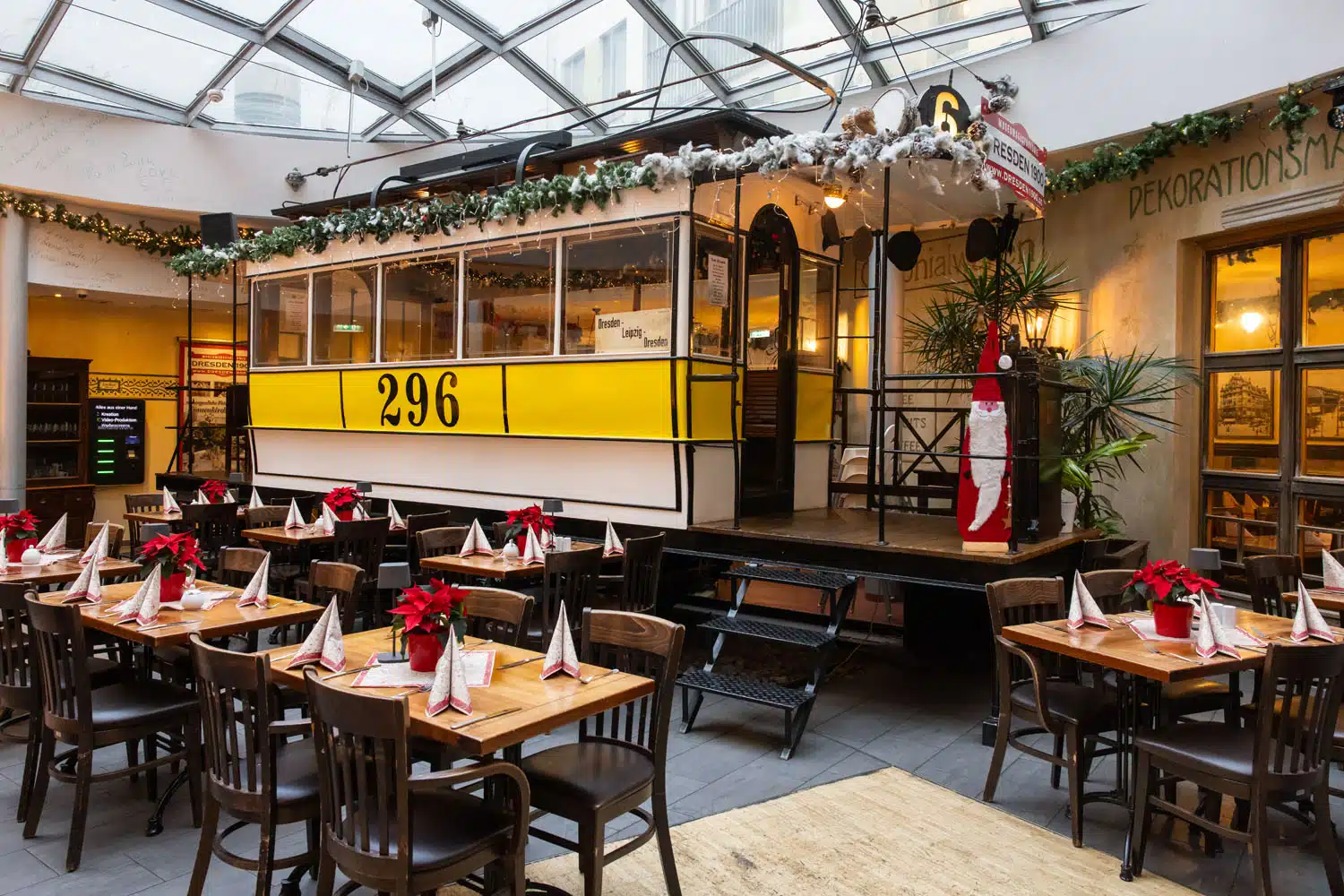
Dresden 1900 is a one-of-a-kind breakfast spot built around a vintage train car inside the restaurant. We enjoyed a wide spread of breakfast options here, and with lunch and dinner service plus outdoor seating in warmer months, it works for any meal of the day.
Tapas Barcelona
We had a wonderful time at Tapas Barcelona, enjoying a variety of meats, fish, potatoes, and vegetables. Every dish we tried was absolutely delicious, making our experience truly enjoyable.
Rauschenbach
During our visit to Dresden, we stopped at Rauschenbach for breakfast and enjoyed their fresh eggs, avocado toast, and a delicious granola bowl with coconut yogurt. The restaurant also offers lunch and dinner, providing fresh and healthy food all day.
Where to Stay in Dresden
We stayed at Steigenberger Hotel de Saxe which is located on Neumarkt. This hotel has a fantastic location, next to one of Dresden’s best Christmas markets, and it is a 5-minute walk to Altmarkt and the Elbe River.
We considered staying at NH Collection Dresden Altmarkt, which sits on Altmarktwe . However, we were concerned about noise at night, so stayed at Steigenberger instead.
Other hotels in the city center are Townhouse Dresden, Aparthotel Neumarkt, and Aparthotel Münzgasse An der Frauenkirche (3-star hotel with apartments, perfect for families).
Frequently Asked Questions about Dresden
Is Dresden worth visiting?
Absolutely. Dresden quickly became our favorite stop on a winter trip through northern Germany and Poland. The Old Town is walkable, strikingly beautiful, and packed with history. Whether you visit in December for the Christmas markets or in summer for the architecture and museums, it’s a city that more than justifies a stop.
How many days do you need in Dresden?
One to two days is enough to cover the main highlights. The Old Town is compact and walkable, so motivated sightseers can hit the Frauenkirche, Zwinger, Royal Palace, Brühl Terrace, and Procession of Princes in a single day. Two days gives you a more relaxed pace and room to explore a museum or two in depth.
What is Dresden best known for?
Dresden is known for its stunning Baroque Old Town, which was largely destroyed in World War II and painstakingly rebuilt. Key landmarks include the Frauenkirche (Church of Our Lady), the Dresden Zwinger, the Royal Palace with its Historic Green Vault, and the Semper Opera House. The city is also famous for its Meissen porcelain and its role as a cultural capital under Augustus the Strong in the eighteenth century.
What is the best area to stay in Dresden?
The Old Town (Altstadt) puts you within walking distance of virtually every major attraction. Neumarkt is especially convenient. It’s right next to the Frauenkirche and a 5-minute walk to Altmarkt. We stayed at the Steigenberger Hotel de Saxe on Neumarkt and loved the location. If you want to be right on the main Christmas market square, consider NH Collection Dresden Altmarkt.
Is Dresden safe for tourists?
Yes, Dresden is generally very safe for tourists. The Old Town and main tourist areas are well-lit and well-traveled. As with any city, normal precautions apply: keep an eye on your belongings in crowded markets and on public transport.
What language do they speak in Dresden?
German is the official language, but English is widely spoken in tourist areas, hotels, and restaurants. You’ll have no trouble getting around as an English speaker.
Plan Your Trip to Germany
Planning a trip to Germany? These guides cover everything you need to know, from building your itinerary to exploring individual cities in depth.
Start with our Germany Travel Guide for an overview of the country’s top destinations, logistics, and tips for planning your trip.
If you’re visiting Dresden in December, our Dresden Christmas Markets guide goes deep on every market in the city: what to expect at the Striezelmarkt, the Neumarkt market, and the medieval stalls at Stallhof, along with tips for making the most of your time there.
Not far from Dresden are the Bastei Bridge and the Rakotzbrücke, two hidden gems in Germany.
Dresden pairs naturally with Berlin to the north and Prague to the south. Our Berlin itinerary and guide to Berlin’s Christmas markets are great starting points if you’re extending your trip to the capital, just 1 hour 40 minutes away by train. For Prague, our things to do in Prague and Prague Christmas market guide cover everything you need for a stop in one of Central Europe’s most beautiful cities, about 2 hours south by train.
For a broader overview of the best markets across the continent, don’t miss our guide to Europe’s Christmas markets.
If you have any questions about the best things to do in Dresden, let us know in the comment section below.
Plan Your Trip to Germany
Below are our guides on more places to visit in Germany, plus a few nearby destinations and Christmas markets.
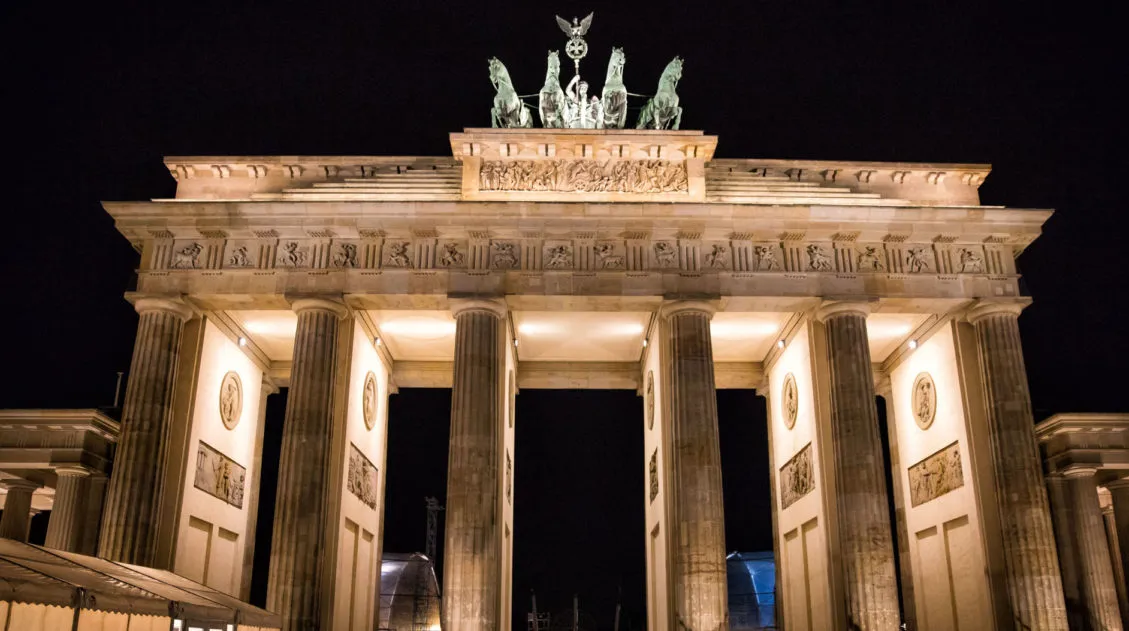
Best Things to Do in Berlin: From the Berlin Wall to Hidden Gems
Pinterest Facebook Flipboard Discover the best things to do in Berlin, from the Berlin Wall to its world-class museums, iconic landmarks, and quirky spots like Teufelsberg and Flughafen Tempelhof. We’ll also cover when to go, how much time you’ll need, plus a great day trip to several interesting places near Berlin. Before traveling to Berlin, […]
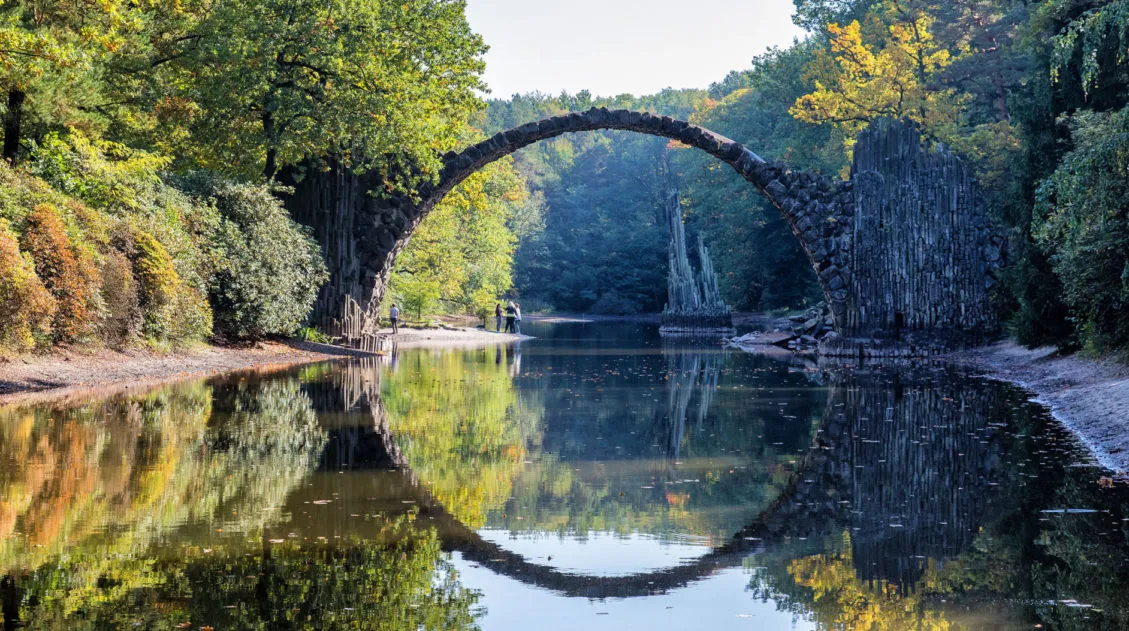
Rakotzbrücke: A Fairytale Bridge in Saxony, Germany
Rakotzbrücke, also called the Devil’s Bridge, looks like something that belongs in a fairytale. This unique looking bridge is tucked away in a small park in Saxony, Germany. Getting here can be a challenge, since Rakotzbrücke is not located near any major city. However, if you combine a trip here with other nearby destinations, you […]
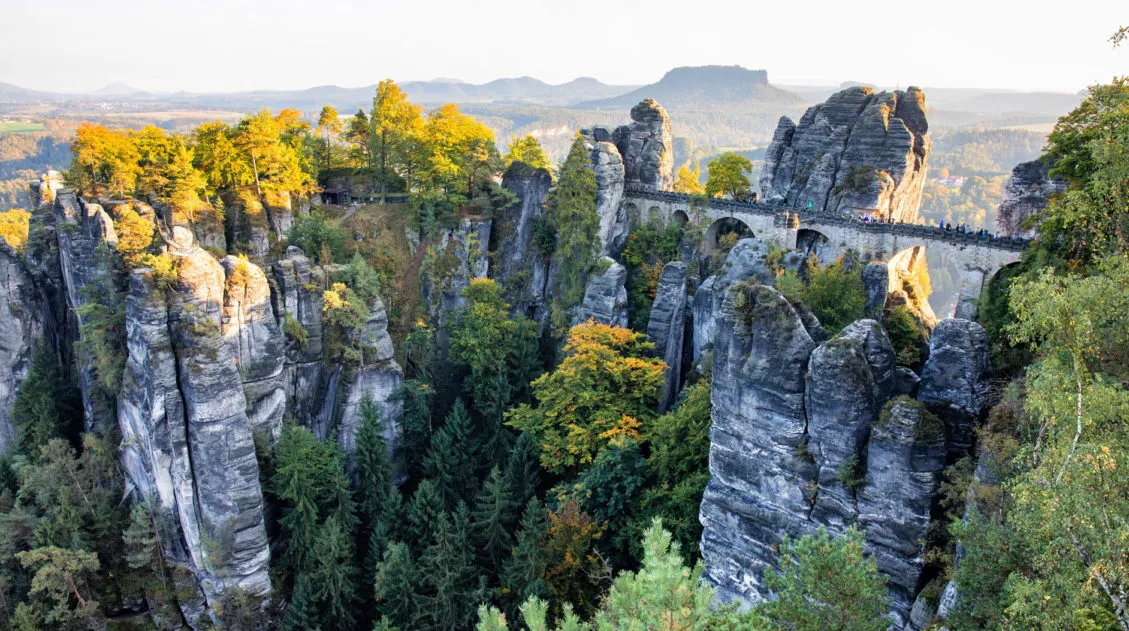
The Perfect Day Trip to the Bastei Bridge in Germany
The Bastei is one of Germany’s most unique landscapes. Giant pinnacles of sandstone rock tower over the Elbe River and the green countryside. Spanning these pinnacles is a stone bridge, dramatic in its appearance, as it connects these towers of rock and then seems to lead nowhere. We visited the Bastei on a day trip […]
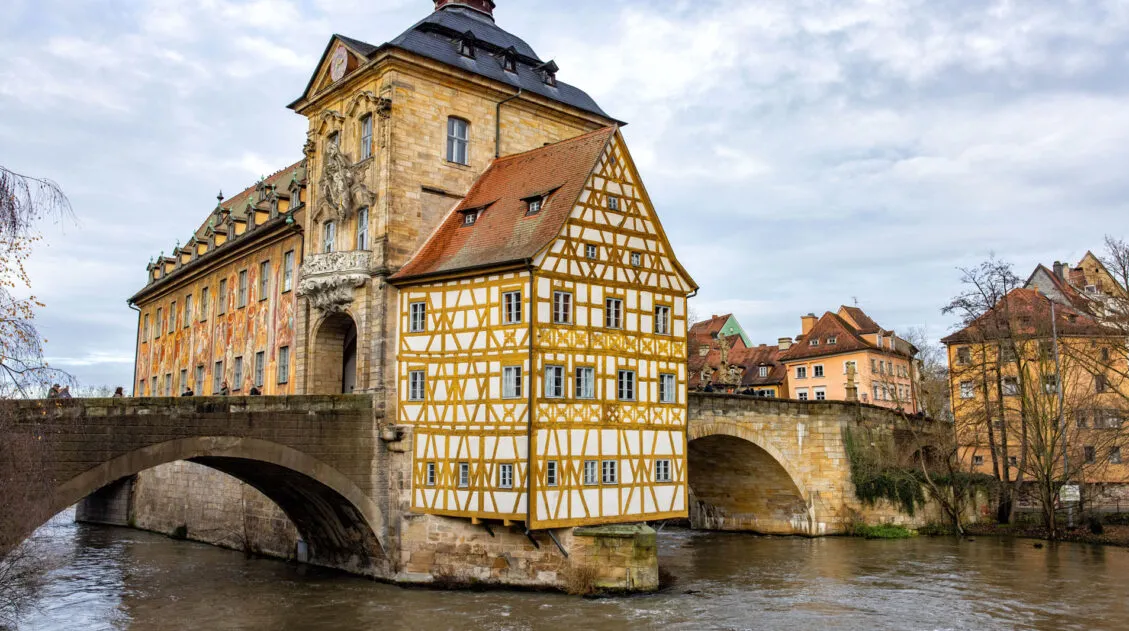
One Day in Bamberg: Top Things to Do & Bamberg’s Christmas Market
With its colorful timbered houses, medieval streets, and stunning setting on the Regnitz River, Bamberg is one of Germany’s most photogenic cities. This small town simply oozes charm. And come the month of December, add in a Christmas market and holiday decorations and Bamberg becomes a magical place to visit. Bamberg is listed as a […]
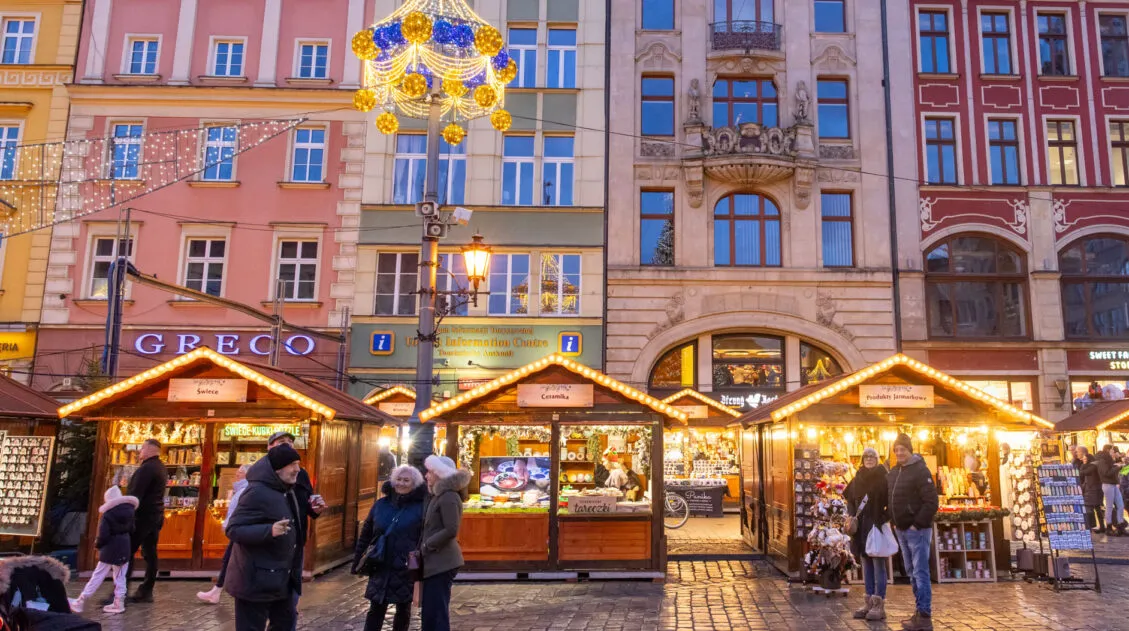
Wrocław Christmas Market: One of Europe’s Most Underrated?
The Wrocław Christmas Market is regarded as one of the best Christmas markets to visit in Poland, thanks to its massive size, festive atmosphere, and stunning old town setting. Held in Wrocław’s historic Market Square, this traditional Polish Christmas market attracts visitors from across Europe with its charming stalls and picturesque setting. We visited Wrocław […]
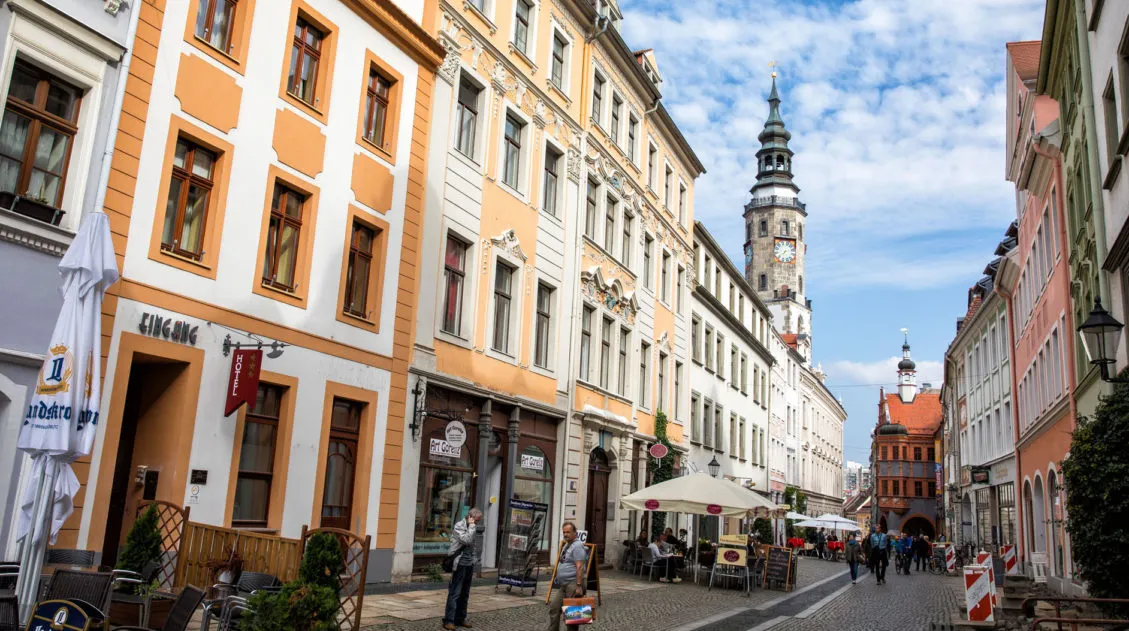
17 Photos That Will Make You Want to Visit Görlitz, Germany
Germany is a country that appears on many travelers’ bucket lists. And why not? It has fairytale castles, beautiful Bavaria, Oktoberfest, and amazing cities to visit. But have you ever heard of Görlitz? We hadn’t. At least not until we planned a trip to Berlin. I “discovered” Görlitz when I was searching for unique day […]
Europe Travel Itineraries: Find Your Perfect Trip to Europe
Europe Itineraries We’ve spent years exploring Europe, hiking the fjords of Norway, road tripping through Italy, island-hopping in Greece, and wandering the Christmas markets of Bavaria. Along the way, we’ve turned every trip into a detailed itinerary so you don’t have to start from scratch. Browse the guides below and find the one that fits […]
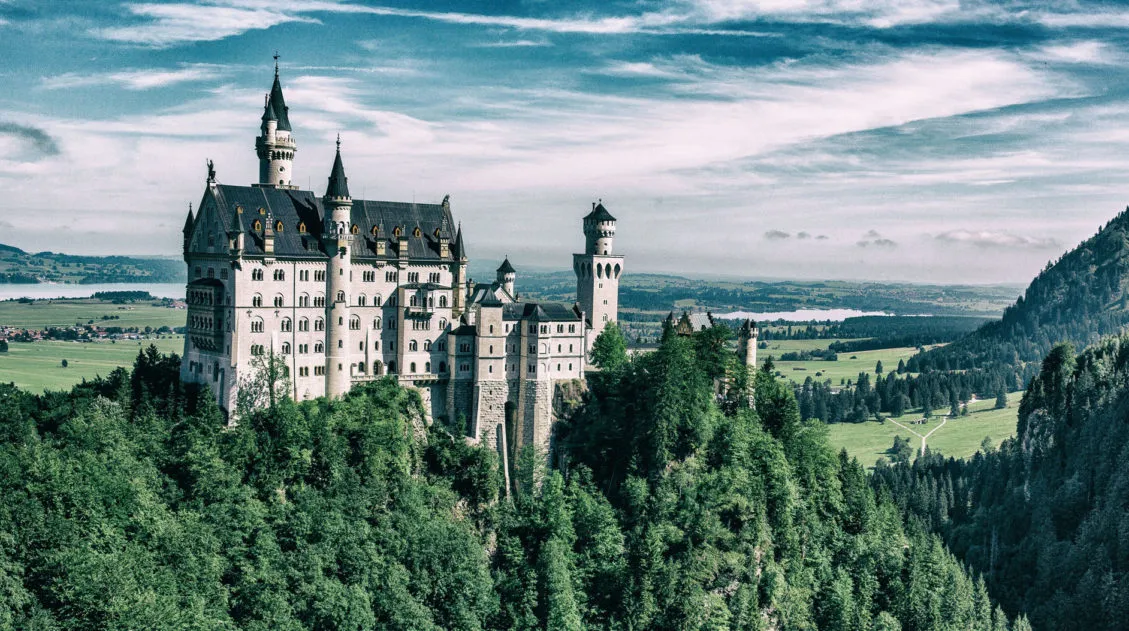
10 Day Bavaria Itinerary & Road Trip Guide
Bavaria is the southeast region of Germany, the land of fairytale castles, Oktoberfest, and lederhosen. With the Alps to the south and idyllic towns dotting its hillsides, Bavaria is a beautiful and romantic destination. View the Alps from Germany’s highest peak at Zugspitze, tour crazy King Ludwig II’s storybook castle Neuschwanstein, learn about WWII history […]
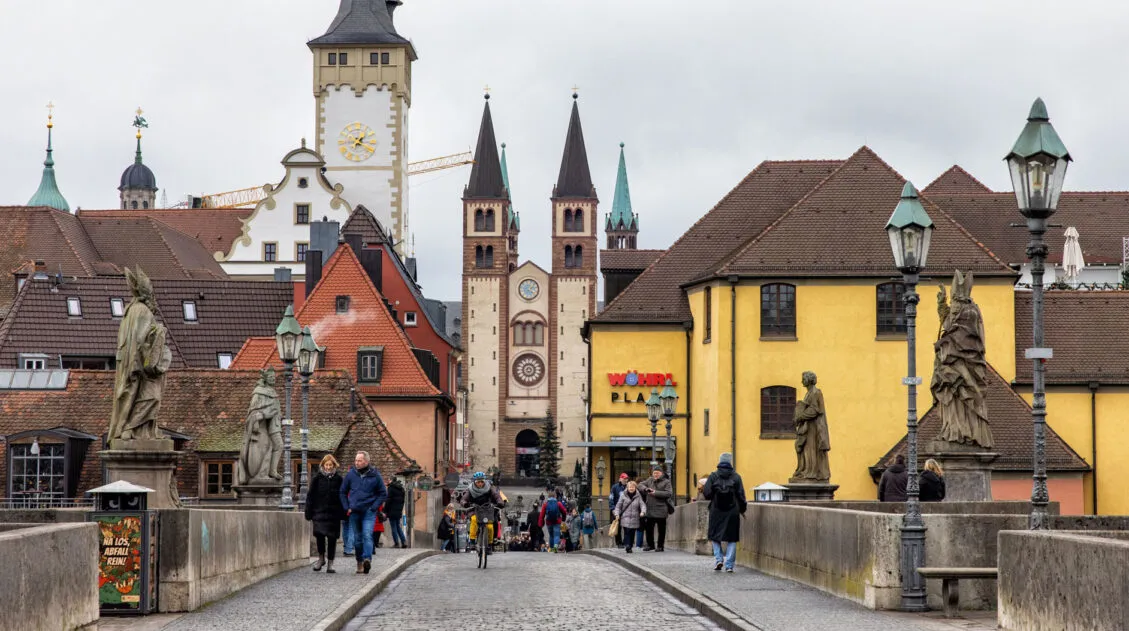
Würzburg in a Day: Top Things to Do + Christmas Market Guide
Würzburg, a small city nestled in Bavaria’s picturesque wine region, is a historic gem that makes for an unforgettable day trip on any southern Germany itinerary. This charming city is packed with stunning landmarks. Highlights include the imposing Marienberg Fortress perched above the city, the iconic Old Main Bridge adorned with statues of saints, the […]
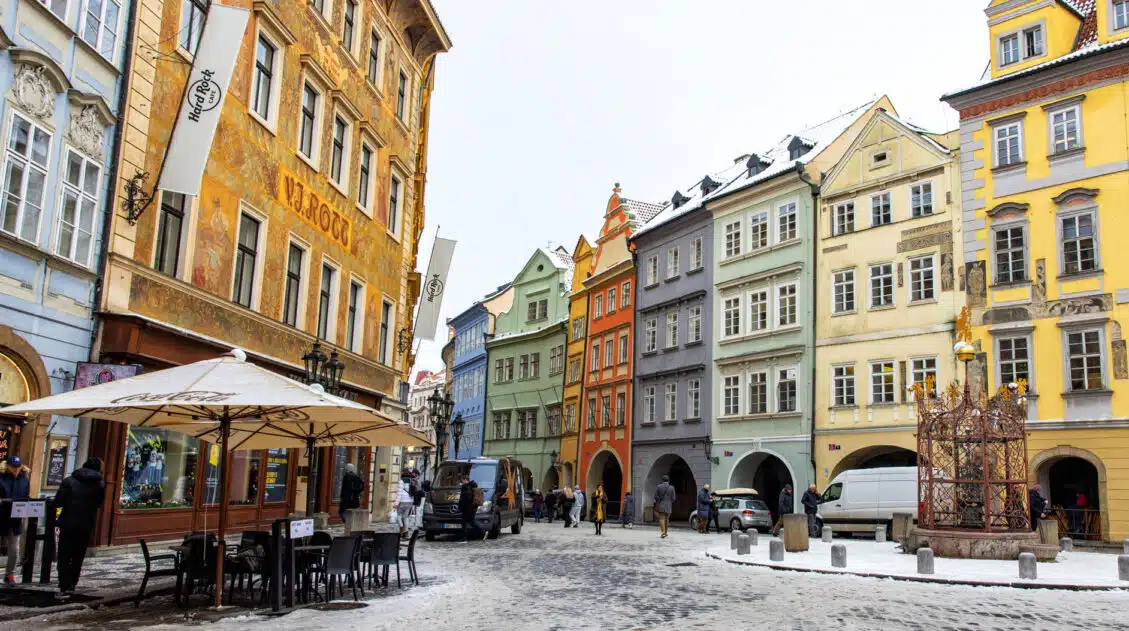
2 Days in Prague: How to Plan the Perfect Prague Itinerary
Stroll across Charles Bridge, gaze across Prague from its Gothic towers, stroll through the Old Town and Mala Strana, visit Prague Castle, and try a few Czech foods. With 2 days in Prague, you have just enough time to visit this city’s must-see attractions and landmarks. We want to help you plan the best visit […]
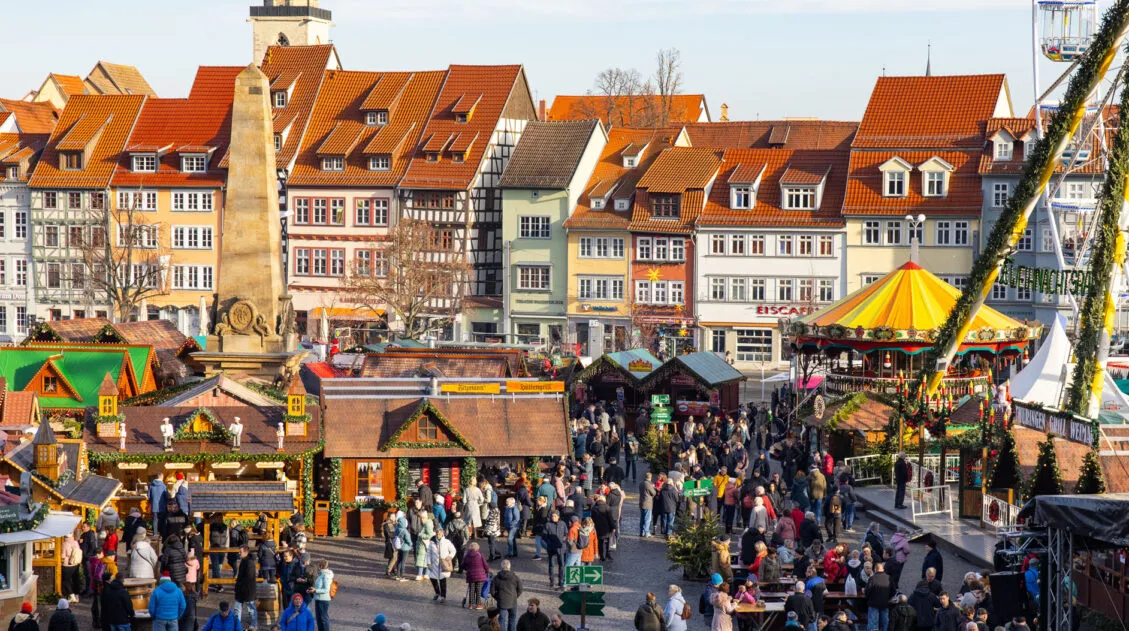
Erfurt Christmas Market in Germany: Why It’s One of the Best
For us, the Erfurt Christmas Market exceeded our expectations. And to think we almost skipped it. While researching which Christmas markets to visit in Germany, we put Erfurt high on our list, but we couldn’t quite work it into our itinerary. That changed when we had some extra time on the drive from Dresden to […]


Leave a Comment