
This Northern California and Oregon road trip is one of the best in the USA. With 10 days, you can visit Lassen Volcanic, Crater Lake, and Redwood National and State Parks, but that’s not all. Add on a scenic drive along the Oregon coast, explore underground caves, and drive the amazing Avenue of the Giants.
If you have more than 10 days, there’s also the option to spend some time in San Francisco, Yosemite, or California wine country (Napa, Sonoma, and Paso Robles).
Tim, Tyler, and I did this road trip in September 2025. We are on a quest to visit all 63 US national parks, and this road trip brought our count to 55!
Our road trip spanned 12 days, which gave us little more time to explore the national parks in depth. All three of these national parks amazed us. Lassen Volcanic is an underrated gem of a national park, Crater Lake is dazzling with its vibrant blue water, and at Redwood National and State Parks, you can wander among some of the tallest and oldest trees on Earth.
This itinerary is the perfect way to see the highlights of these three national parks, in one big loop, and it follows the route the National Park Service officially calls the Circle of Discovery, a road trip connecting seven parks across Northern California and Southern Oregon. We’ve focused on the three crown jewels of that loop.
Get ready for an unforgettable road trip!
The Essentials
DURATION | 10 days
PARKS | Lassen Volcanic, Crater Lake, Redwoods National and State Parks
BONUS STOPS | Samuel H. Boardman State Scenic Corridor, Avenue of the Giants, McArthur-Burney Falls (optional)
HIGHLIGHTS | Bumpass Hell, Lassen Peak, Crater Lake rim, Stout Memorial Grove, Fern Canyon, Founders Grove
BEST AIRPORTS | San Francisco, Sacramento, Reno, Medford (OR)
BEST TIME TO GO | July through September
TOTAL DRIVING | ~ 1,500 miles
10-Day Northern California & Oregon Road Trip
Day 1: Arrive in Lassen Volcanic National Park
Day 2: Lassen Volcanic National Park
Day 3: Lassen Volcanic, drive to Crater Lake
Day 4: Crater Lake National Park
Day 5: Crater Lake National Park, drive to Oregon coast
Day 6: Oregon Coast, drive to Redwood National and State Parks
Day 7: Redwood National and State Parks
Day 8: Redwood National and State Parks
Day 9: Avenue of the Giants
Day 10: Fly home
Here is a map of the top places to visit in each park plus the driving loop, starting and ending in San Francisco.
How to Use This Map: Click the tab in the top left corner of the map to see a list of the points of interest and to turn layers on/off. Click the icons on the map to get more information about each point of interest.
To take this map with you, click the star next to the title of the map which adds it to your Google account. Next, within your Google Maps app, select ‘Saved’ and then select ‘Maps’. This map title will now appear in your list.
Why This Road Trip Works
Three national parks. Three completely different worlds.
Lassen Volcanic, Crater Lake, and the Redwood parks have almost nothing in common except that they’re each extraordinary, and that geography has arranged them in a nice loop through Northern California and southern Oregon. This road trip exists because of that fortunate accident of location.
You’ll start in a park that most people have never heard of and quickly understand why that’s a mistake. Lassen Volcanic is one of the most underrated national parks in the country. It’s a place of boiling mud pots, steaming fumaroles, alpine lakes, and a towering summit that rewards those willing to climb it. Two full days here barely scratches the surface.
From Lassen, the drive north takes you to Crater Lake, one of the most visually dramatic national parks in the American West. The blue color of the lake is breathtaking, and no photograph prepares you for it.
After Crater Lake, you drop into the Oregon coast for one of the most spectacular stretches of shoreline in the Pacific Northwest, before the road delivers you into the ancient forests of the Redwood parks, where trees that were saplings a thousand years ago stand 300 feet overhead.
Each destination is so different from the last that the trip never feels repetitive. The variety is exactly the point. And with flexible entry and exit airports, including San Francisco, Sacramento, Reno, or Medford, the logistics bend to fit where you’re coming from.
Lassen Volcanic, Crater Lake, and Redwood Itinerary
This road trip is written in a counterclockwise direction, since that’s how we did it. But you can do it in the opposite direction (Redwoods to Crater Lake to Lassen Volcanic).
BEST TIME FOR THIS ROAD TRIP: Plan this trip for mid-July through mid-October. Highway 89 in Lassen and Rim Drive at Crater Lake are both closed by snow for much of the year. To hike the best trails and have full access to both parks, mid-July through September is the sweet spot.
RENTAL CAR: You will need a rental car for this road trip. A standard vehicle is sufficient, as most of the roads in all three parks are paved. There are a few places where you may drive a gravel road; some of these are optional (such as driving to the Cinder Cone Trail in Lassen Volcanic), and some are a must-do (such as visiting the Jedediah State Park in Redwoods). In our experience, these gravel roads were suitable for a standard car.
CRATER LAKE BOAT TOURS: Boat tours of Crater Lake will not be offered until 2028, at the very earliest. The trail to the boat dock, the Cleetwood Cove Trail, and the boat docks are undergoing a massive restoration project. This is planned to start the summer of 2026 and last at least 2 years. It’s possible that boat tours may not be offered until 2029 or later.
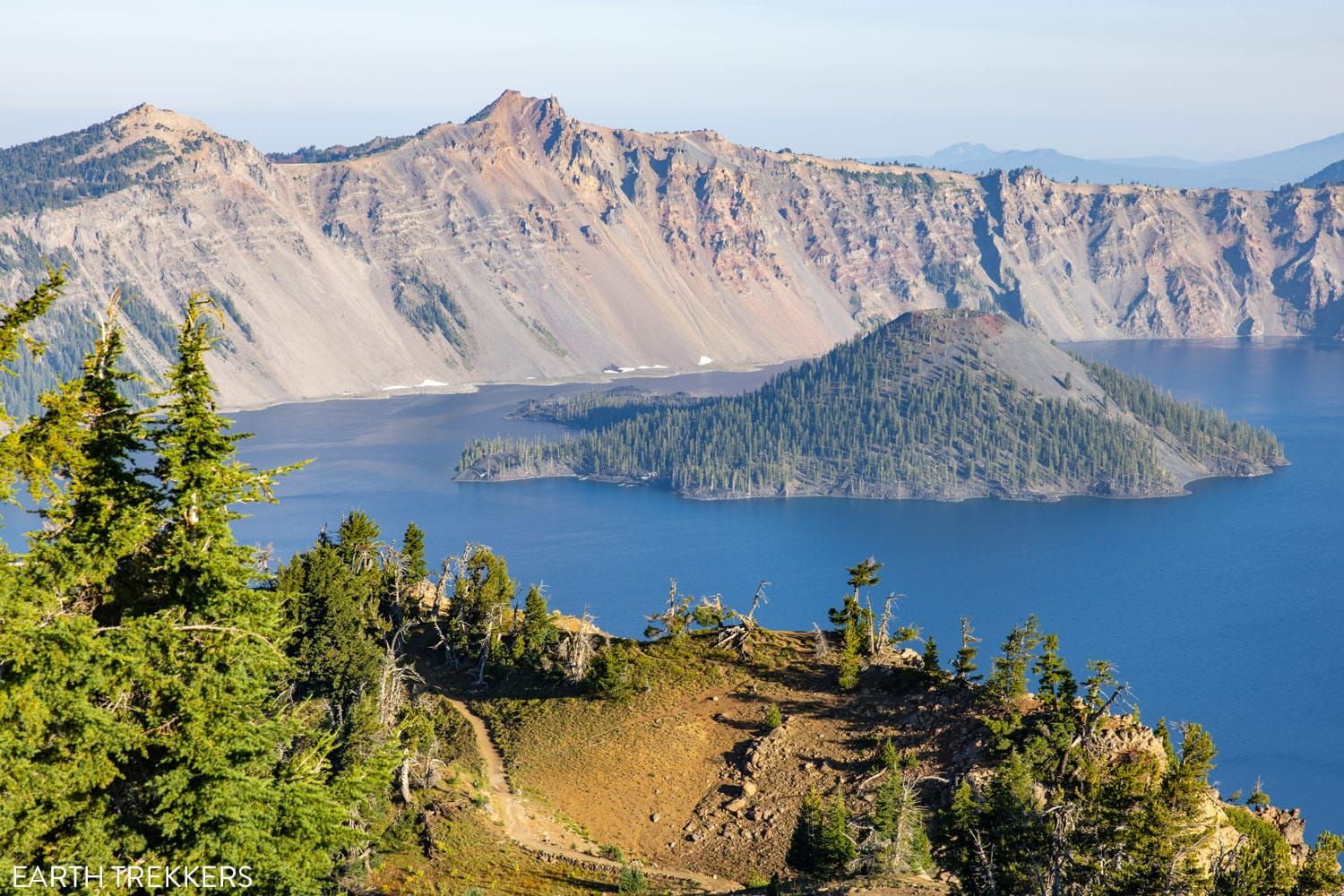
Crater Lake (photo taken from Garfield Peak)
Day 1: Arrive in Lassen Volcanic National Park
Today, travel to Lassen Volcanic National Park. Most likely, this will be a full day, with a flight plus driving time.
This itinerary is done as a loop. If you are flying into the area, there are four potential starting points:
San Francisco: The largest airport in the region. We found the best flight options here, so this was the starting and ending point for our road trip. It’s a good option for those who want to add on a few days in San Francisco or wine country. The downside is the longer drive time to “get on the loop.”
Sacramento: This is another great option, a relatively large, international airport with lots of flight options. It is also closer to the national parks, so you will do a little less driving.
Medford: This is the most convenient airport, as it is located between Crater Lake and Redwood National and State Parks. However, it’s also the smallest airport, so flight options are limited.
Reno, Nevada: It’s also worth checking flight options to Reno. It will be a relatively short drive to start the loop (starting at Lassen Volcanic), but it will be a longer drive at the end of the itinerary to get back to Reno. You could turn it into a point-to-point itinerary, starting at Reno and ending in San Francisco or Sacramento (just be aware that there most likely will be a big drop fee for the rental car).
Here are the driving distances and times from each airport to Chester, California (Chester is the best home base for exploring Lassen Volcanic):
- San Francisco: 270 miles, 4 hours 15 minutes
- Sacramento: 150 miles, 3 hours
- Medford: 230 miles, 4 hours
- Reno: 125 miles, 2 hours 30 minutes
PRO TRAVEL TIP: Stock Up in Red Bluff. If you’re driving from San Francisco or Sacramento, Red Bluff is a convenient stop for groceries and supplies before you head into the mountains. We stopped at Raley’s to pick up snacks for the park. Chester has a small grocery store, but selection is limited and prices are higher. Red Bluff is your last chance to stock up at a full-size store before reaching Chester.
Where to Stay
Inside of Lassen Volcanic National Park, there is lodging at the Manzanita Lake Cabins and at Drakesbad Guest Ranch (in Warner Valley). There are eight campgrounds scattered throughout the park.
Outside of the park, the best place to stay is Chester, a small town located east of Lassen Volcanic National Park. From Chester, it’s a 30-mile, 40-minute drive to the Kohm Yah-mah-nee Visitor Center.
We stayed at the Best Western Rose Quartz Inn and had a good experience here. This Best Western was clean, very quiet, and had a homey feel to it. We would not hesitate to stay here again.
Antlers Inn is another highly rated hotel in Chester. In Lake Almanor, the Cedar Ridge Retreat is a 4-bedroom house perfect for families and small groups.
Where to Eat in Chester
Our favorite restaurant is Timber House Brewery (great food, rustic ambience, good beer, and wine). We ate dinner twice at Mi Casita (Mexican), a restaurant that was always busy. Lola’s Family Restaurant is open for breakfast and lunch.
Lassen Volcanic Guides
Here are a few guides on Lassen Volcanic National Park, covering the best things to do, the best hikes, and our trail guide for Bumpass Hell.
14 Best Things to Do in Lassen Volcanic National Park
Pinterest Facebook Flipboard In this guide, we will cover the best things to do in Lassen Volcanic National Park. Discover the best hiking trails, scenic drives, and a few hidden gems that are definitely worth your time. We’ll also provide information on where to stay, how to plan your time, and the ideal time of […]
Top 10 Hikes in Lassen Volcanic (+ Our Favorites)
In this guide, we will uncover the 10 best hikes in Lassen Volcanic, from popular trails to a few hidden gems. These are located along Highway 89 (the heart of the park) and in more remote regions such as Warner Valley and Butte Lake. Stroll through bubbling hydrothermal areas, summit volcanoes like Cinder Cone and […]
2 Days in Lassen Volcanic | The Perfect Itinerary for Your First Visit
Planning 2 days in Lassen Volcanic National Park? Two days is the ideal window for a first visit. It’s long enough to cover the park’s greatest hits without feeling rushed, and short enough to keep the pace enjoyable. We spent three days exploring Lassen Volcanic (park #53 out of 63!), hiking both Lassen Peak and […]
Day 2: Lassen Volcanic National Park
On the Road: 115 miles, 3 hours (from Chester via Highway 89 in both directions)
Your first full day in Lassen Volcanic National Park is spent driving Highway 89, the park’s 30-mile scenic road, from south to north. This is a gorgeous drive, and from the southwest entrance, the road climbs into the mountains, twisting through forests (some fire-scarred, some lush), with Lassen Peak and Brokeoff Mountain making dramatic appearances above the treeline. We drove this corridor multiple times over our visit, in rain, in clouds, and in brilliant sunshine, and it was beautiful every single time.
Start no later than 8:00 am. Afternoon clouds regularly roll in and obscure the high peaks, and trailhead parking fills faster than you’d expect for a park this uncrowded.
Morning: Sulphur Works & Bumpass Hell
Enter from the southwest entrance and make your first stop at Sulphur Works, just one mile inside the park. Fumaroles hiss and mud pots bubble right alongside the road. It’s a 10-minute stop, but an excellent first taste of what makes Lassen Volcanic so unusual.
Continue up Highway 89 to the Bumpass Hell Trailhead. This is the single most important stop of the day, and arguably the best experience in the park. This 3-mile round-trip hike descends into the park’s largest hydrothermal basin: 16 acres of boiling mud pots, steaming fumaroles, and scalding pools that look like another planet.
We hiked Bumpass Hell on a cloudy, moody afternoon and were completely blown away. The overcast skies actually suited it; the steam hung low and the whole basin had an otherworldly, almost eerie quality. Tyler loved it so much that on our final day in the park, under brilliant blue skies, he trail ran back out to Bumpass Hell just to see it in the sunshine. Budget 1.5 to 2 hours.
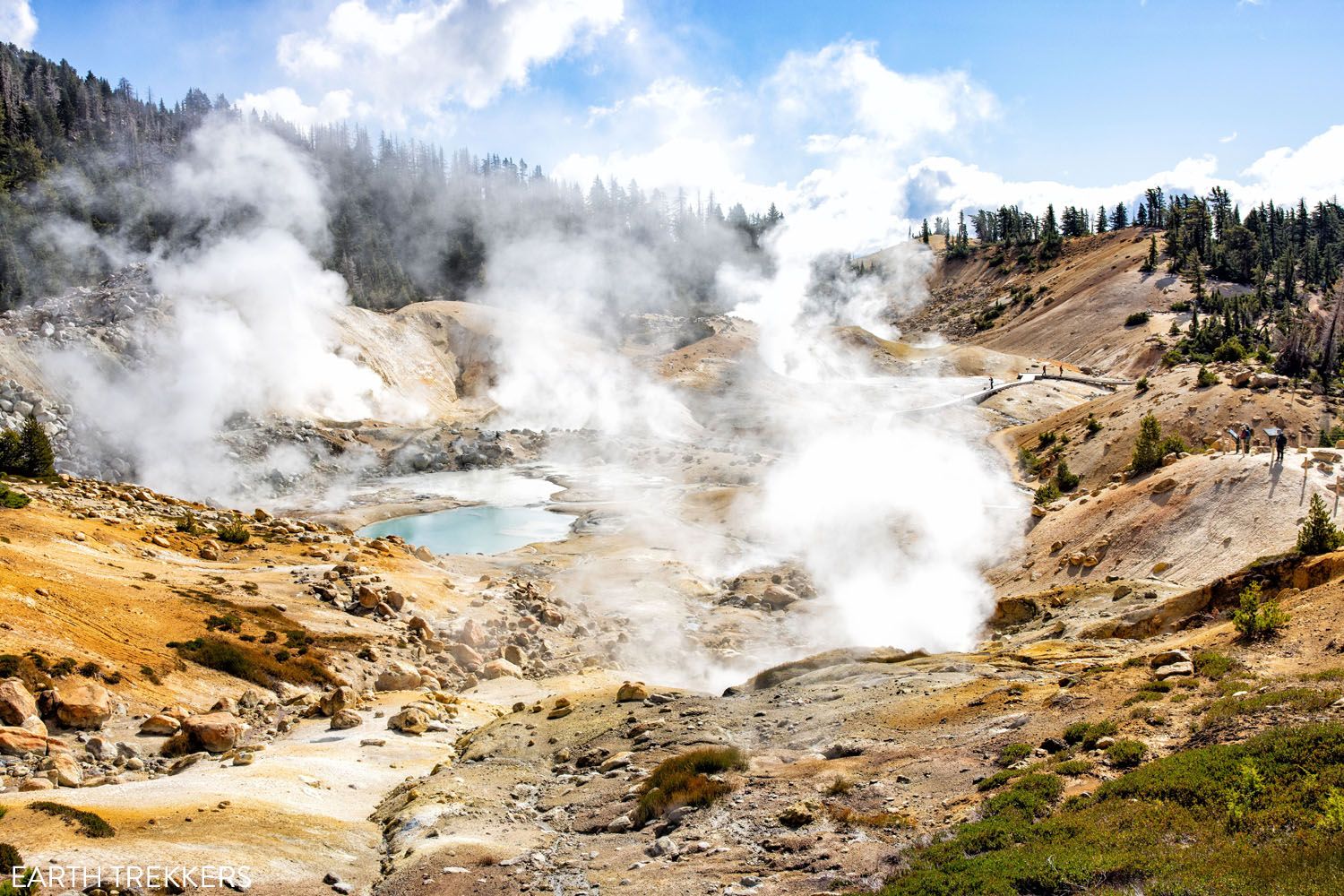
Bumpass Hell
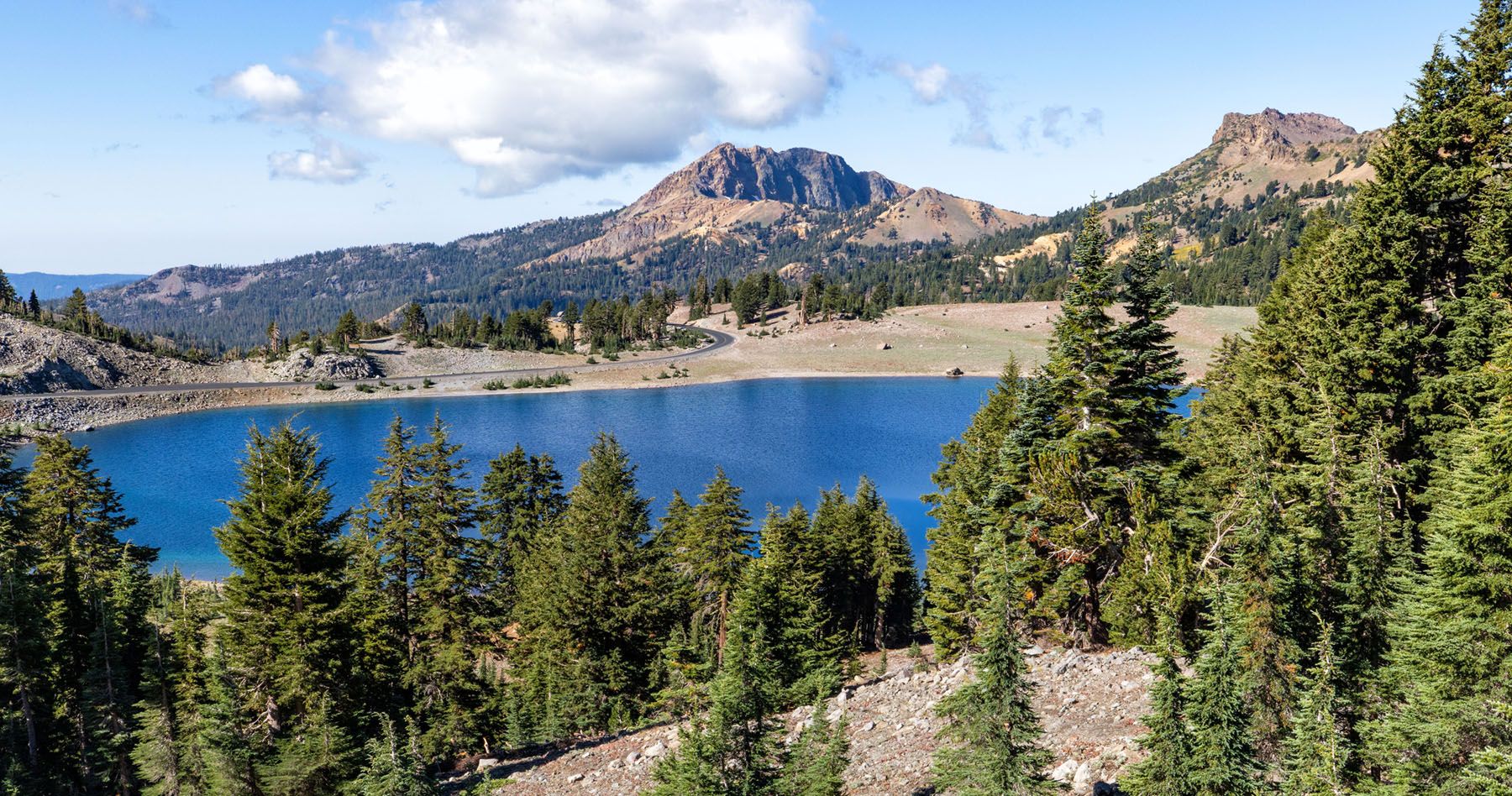
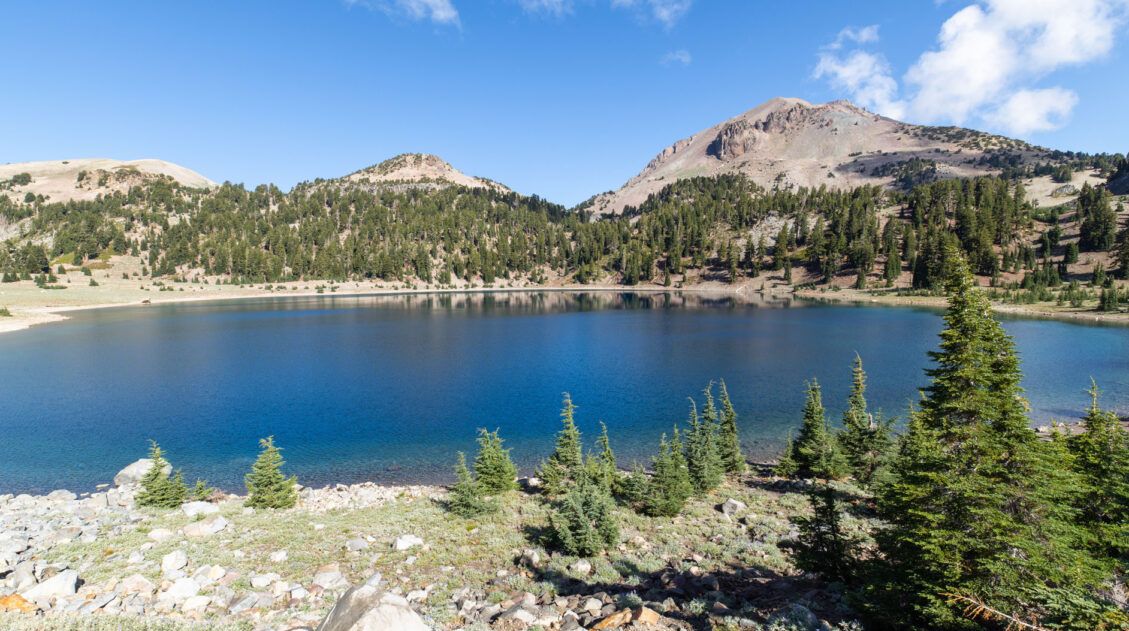
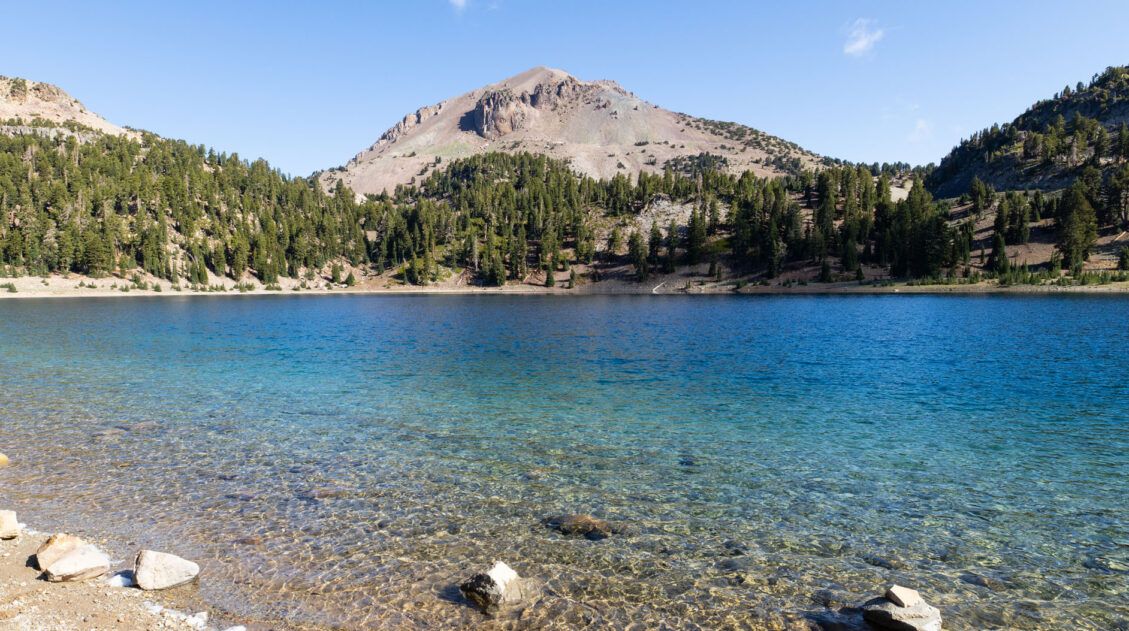
After the hike, stop at Lake Helen, just a few minutes down the road. This brilliant blue alpine lake sits at the base of Lassen Peak and is the ideal spot for a picnic lunch, and iconic photos of the park. Pack food in from Chester. There’s a parking pullout and the views are hard to beat.
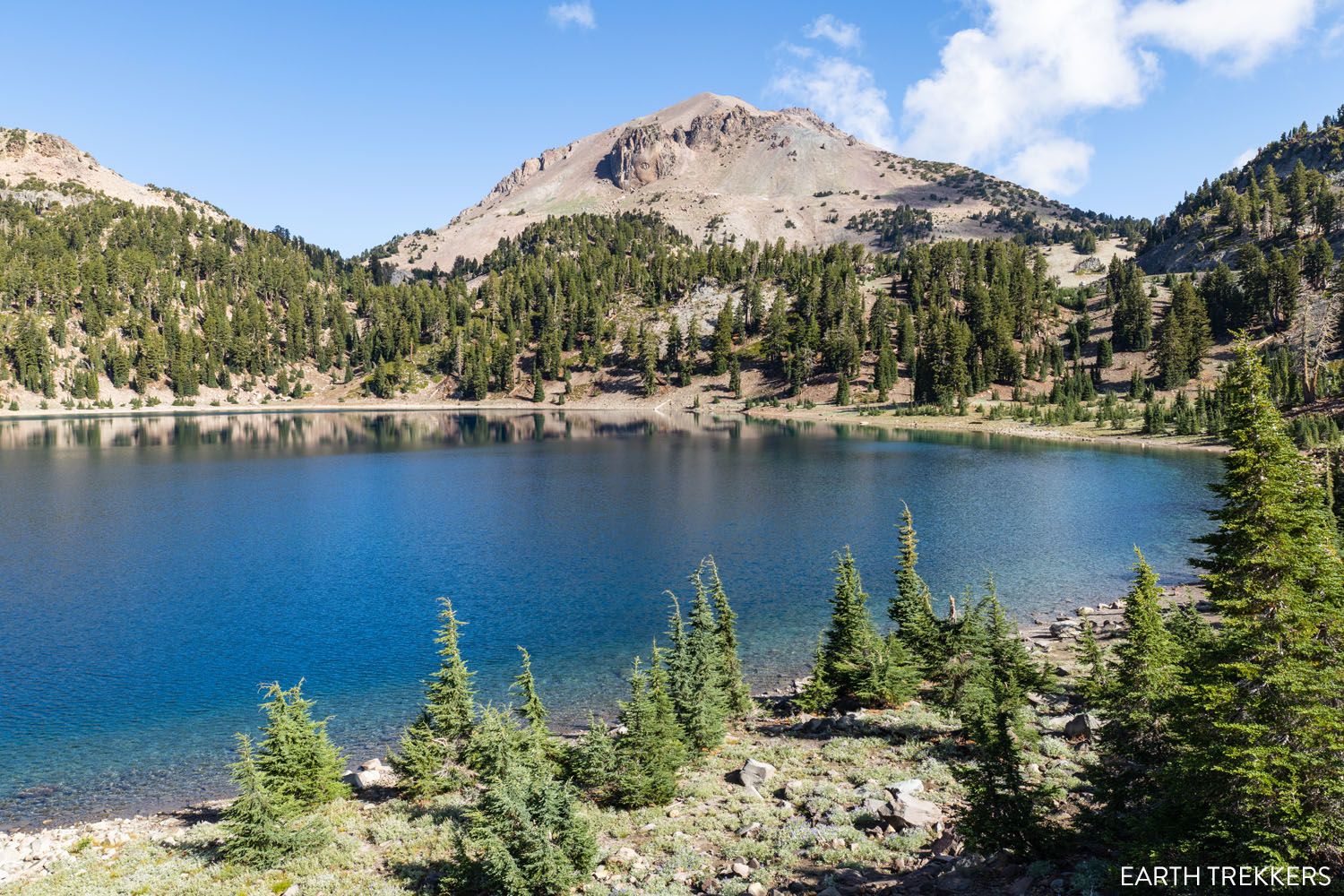
Lake Helen with Lassen Peak in the background
Afternoon: Kings Creek Falls, Devastated Area & Manzanita Lake
From Lake Helen, drive south to the Kings Creek Falls trailhead. This 2.5-mile loop is deceptively challenging. The trail feels manageable on the way down, but all the elevation comes at the very end on the return, a steep stone staircase that will make your legs burn. Budget about 1.5 hours.
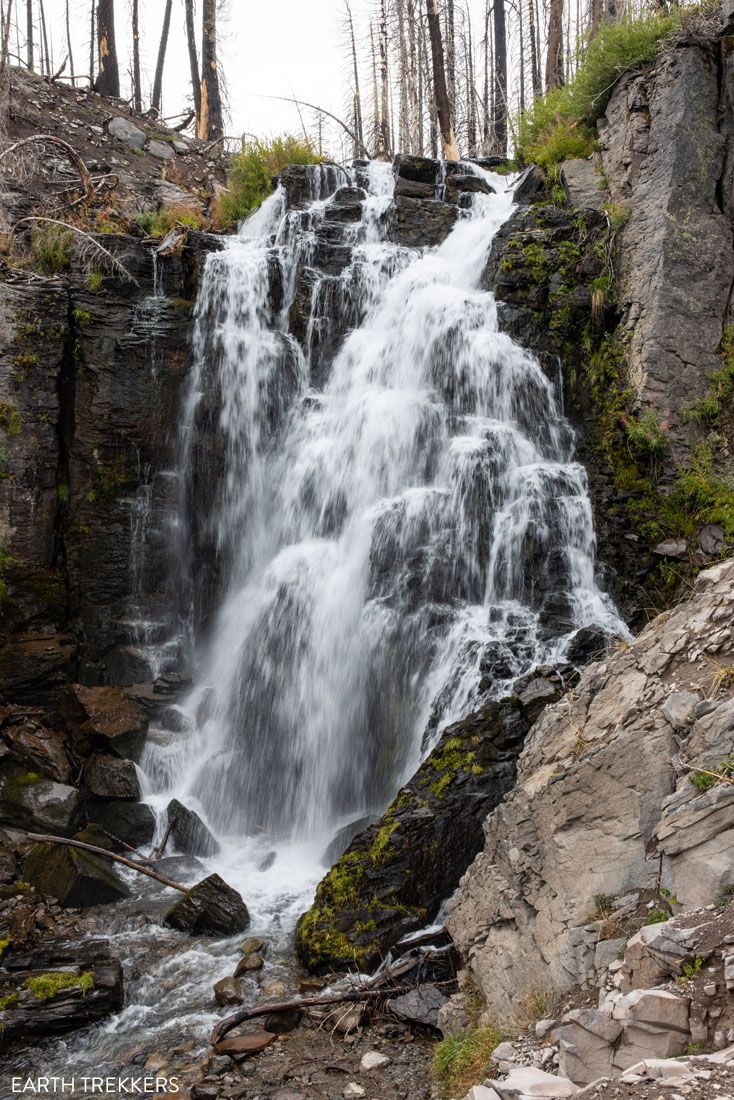

Kings Creek Falls
Back on Highway 89 heading north, make quick stops at the Devastated Area Interpretive Trail (a flat 0.3-mile loop past boulders hurled by the 1915 eruption) and Hot Rock, a massive volcanic boulder still warm to the touch days after that same eruption.
End the day at Manzanita Lake and Reflection Lake near the park’s northwest entrance. If energy is low, go straight to Reflection Lake, because it is a shorter walk with views of Lassen Peak that are just as good, in our opinion.
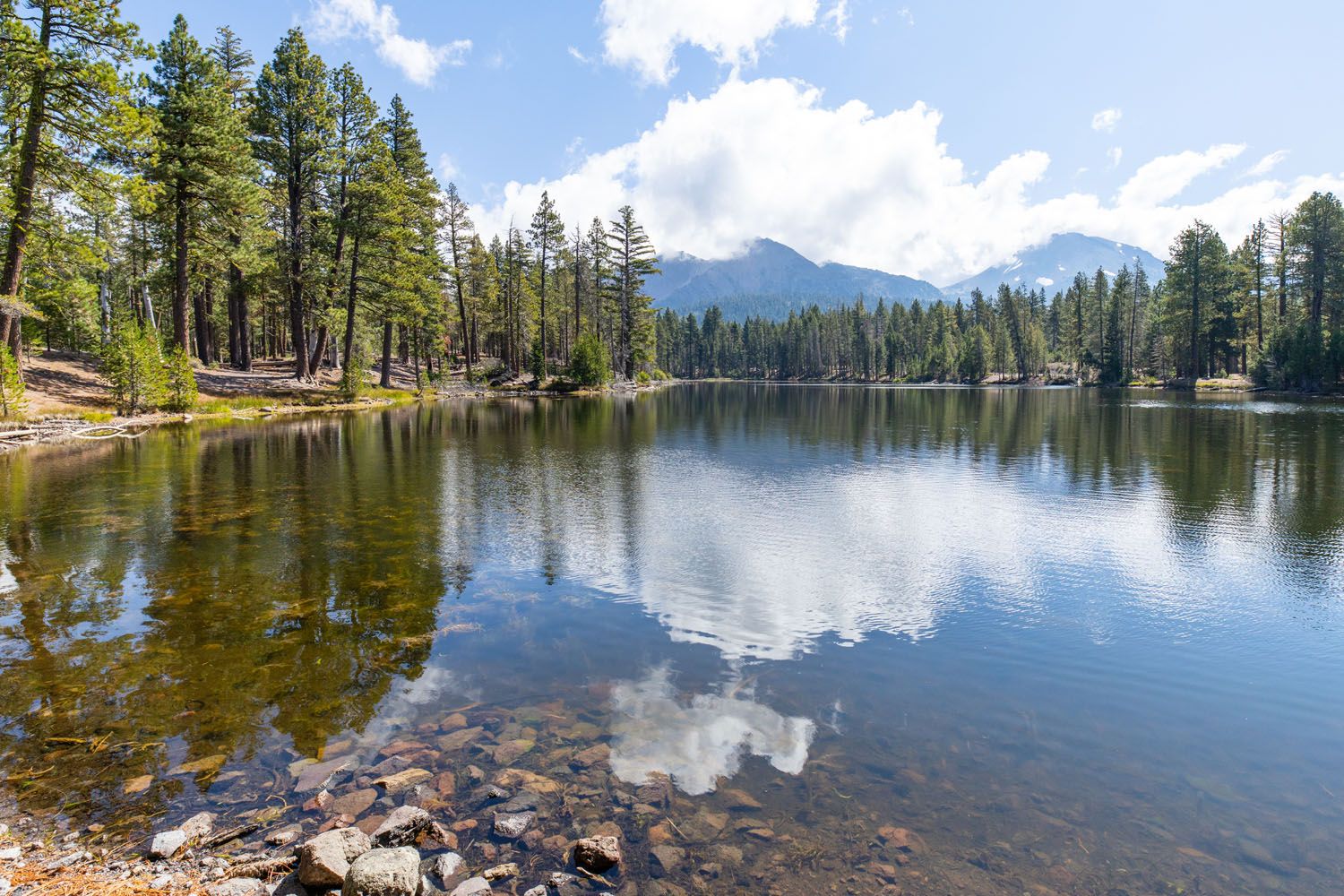
Reflection Lake
Where to Stay
You’ll spend a second night in Chester. See the Day 1 hotel recommendations above.
For more detail on everything covered today, including full trail guides and tips for each stop, see our 2-Day Lassen Volcanic Itinerary (coming soon) and Best Things to Do in Lassen Volcanic.

Day 3: Lassen Volcanic, Drive to Crater Lake
On the Road: 250 to 285 miles (5 to 6.5 hours)
Today is your biggest day logistically: a summit hike at dawn, an afternoon stop or two on the drive north, and your first look at Oregon. Start by 7:00 am. The summit of Lassen Peak clouds over by mid-morning, and you’ll need the full day.
Morning: Lassen Peak (or Brokeoff Mountain)
Start at 7:00 am. The day we hiked Lassen Peak, we had sunny skies for the hike, but by 10:30 am that same day, clouds had moved in and covered the peak entirely.
Lassen Peak is the bucket-list hike of the park and our top recommendation for today.
At 10,457 feet, it’s the highest point in Lassen Volcanic. The trail is 5 miles round-trip with 2,000 feet of elevation gain. There’s no technical difficulty, just a sustained, steep climb on a well-marked trail, with panoramic views the entire way up over Lake Helen, Brokeoff Mountain, and the valleys below. Budget 3 to 4 hours.
This is Tim and Tyler’s favorite hike in the park. The views are incredible, and they start the moment you set foot on the trail. We stopped to take tons of photos, both on the way up and the way down. And the view from the summit is worth the effort. We had views of Mount Shasta and the entirety of the national park.
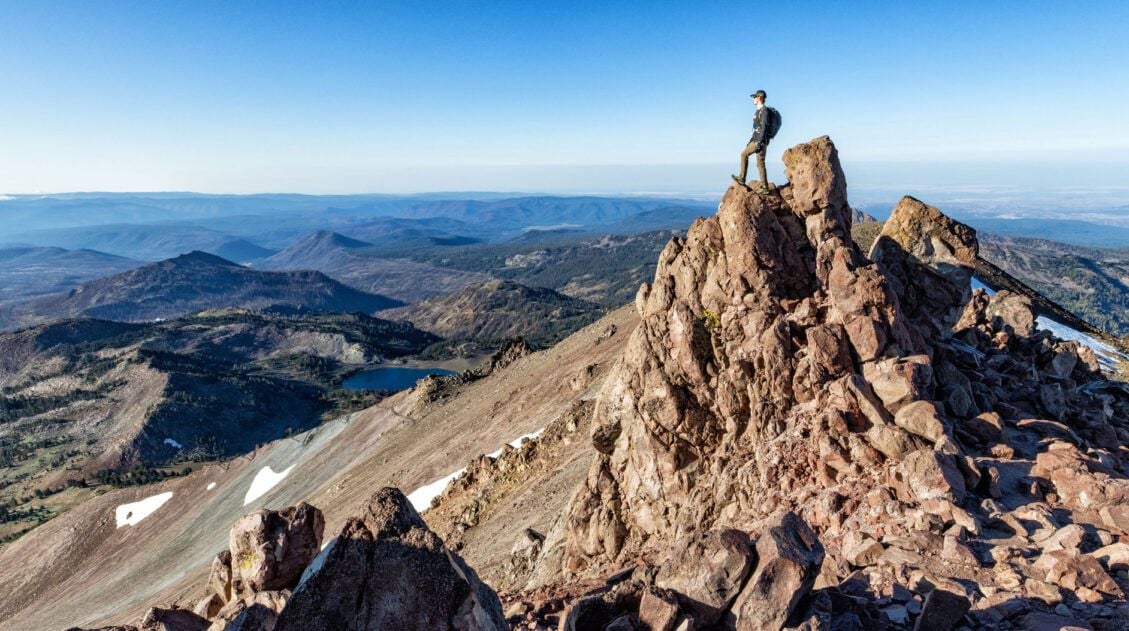
Step-By-Step Trail Guide for Lassen Peak
Exactly how to hike Lassen Peak, with trail stats, photos, and expert tips.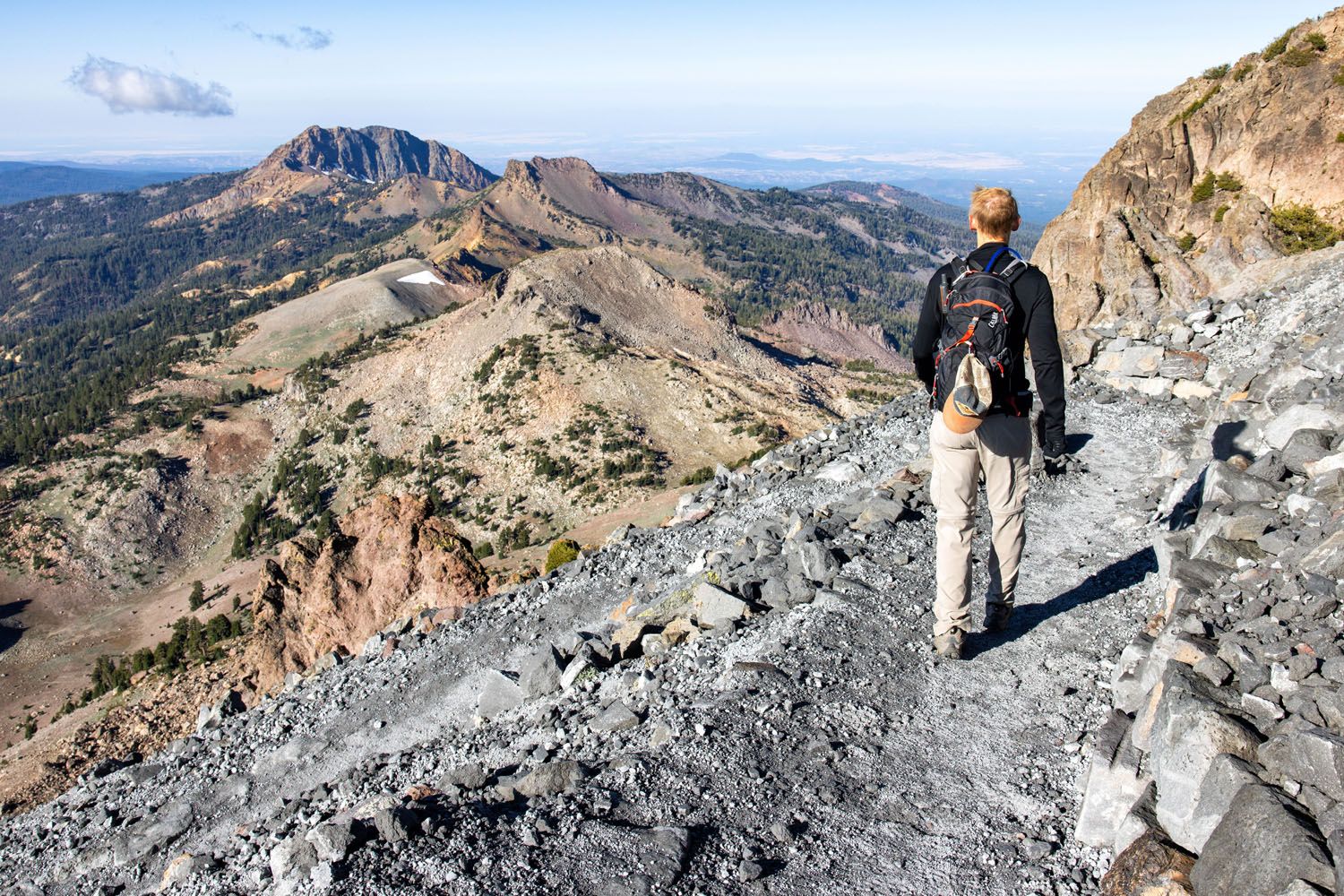
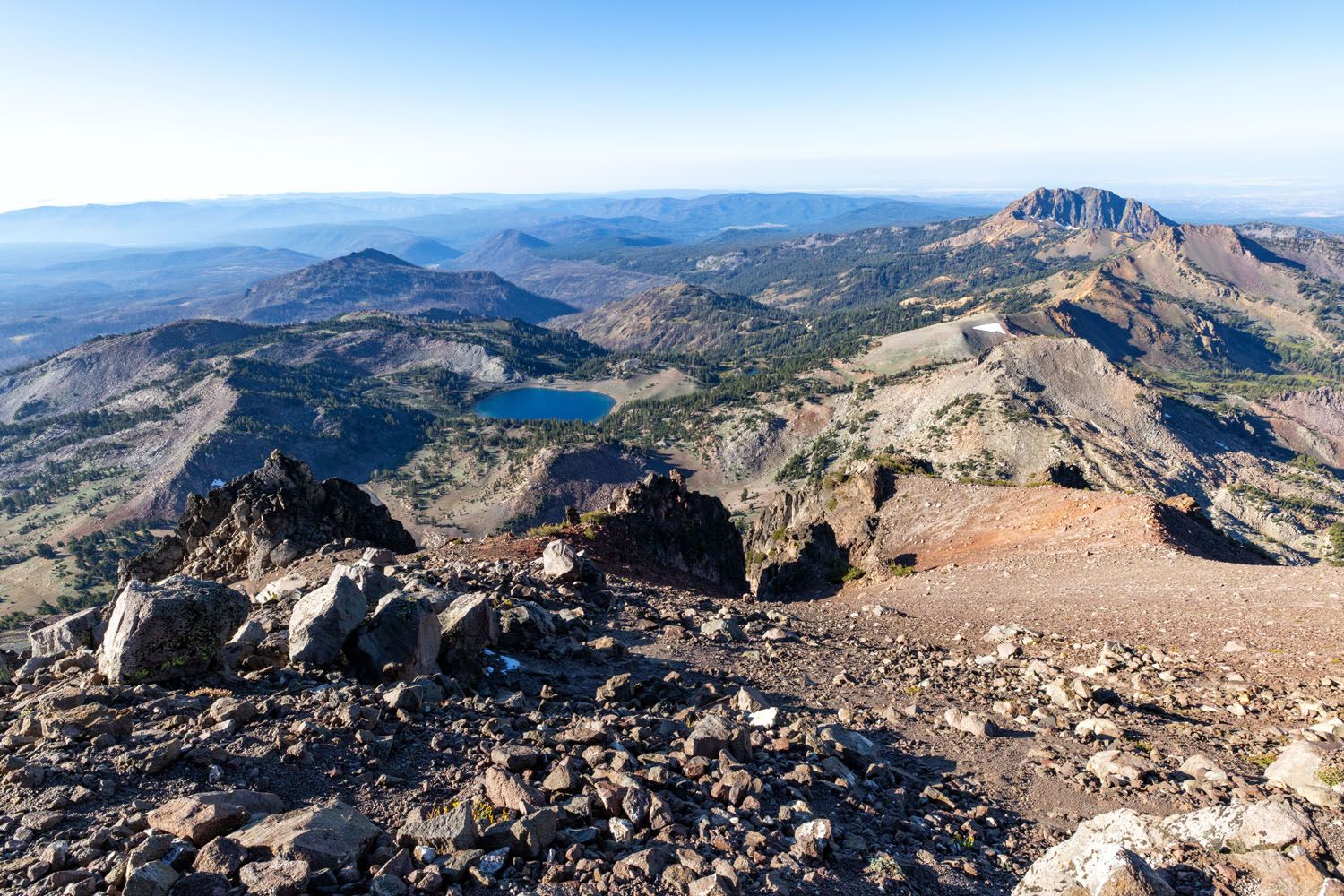
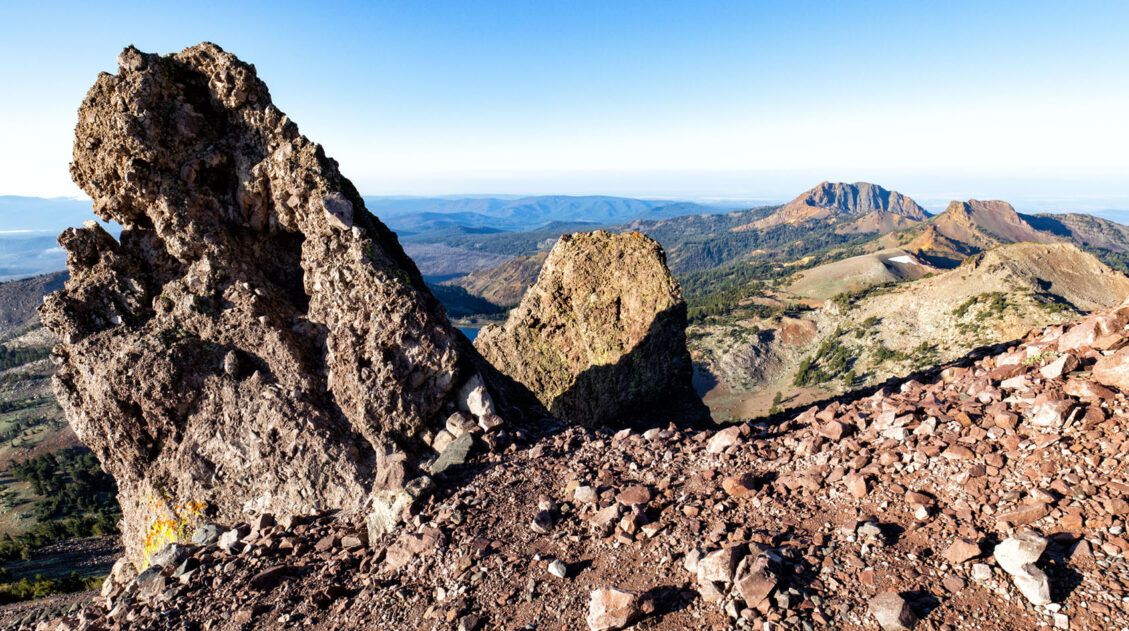
The view from the Lassen Peak Trail
PRO TRAVEL TIP: It’s best to save this hike (and Brokeoff Mountain) for day 2 in Lassen Volcanic. That first day in the park gives you time to acclimate to the higher altitude. You’ll really feel it on this trail, since you’ll be starting the hike at about 8,500 feet.
Alternative: Brokeoff Mountain. If you prefer a quieter trail with fewer people, Brokeoff Mountain is the better choice. The 7.4-mile round-trip trail climbs through moss-covered old-growth forest and open glens before reaching a summit at 9,235 feet with a jaw-dropping view of Lassen Peak directly across the valley. It’s longer and rated more strenuous, but the variety of terrain makes the journey just as rewarding as the destination. This was my personal favorite hike in the park. Budget 3 to 6 hours depending on your pace.
For full trail details on both hikes, see our Best Hikes in Lassen Volcanic.
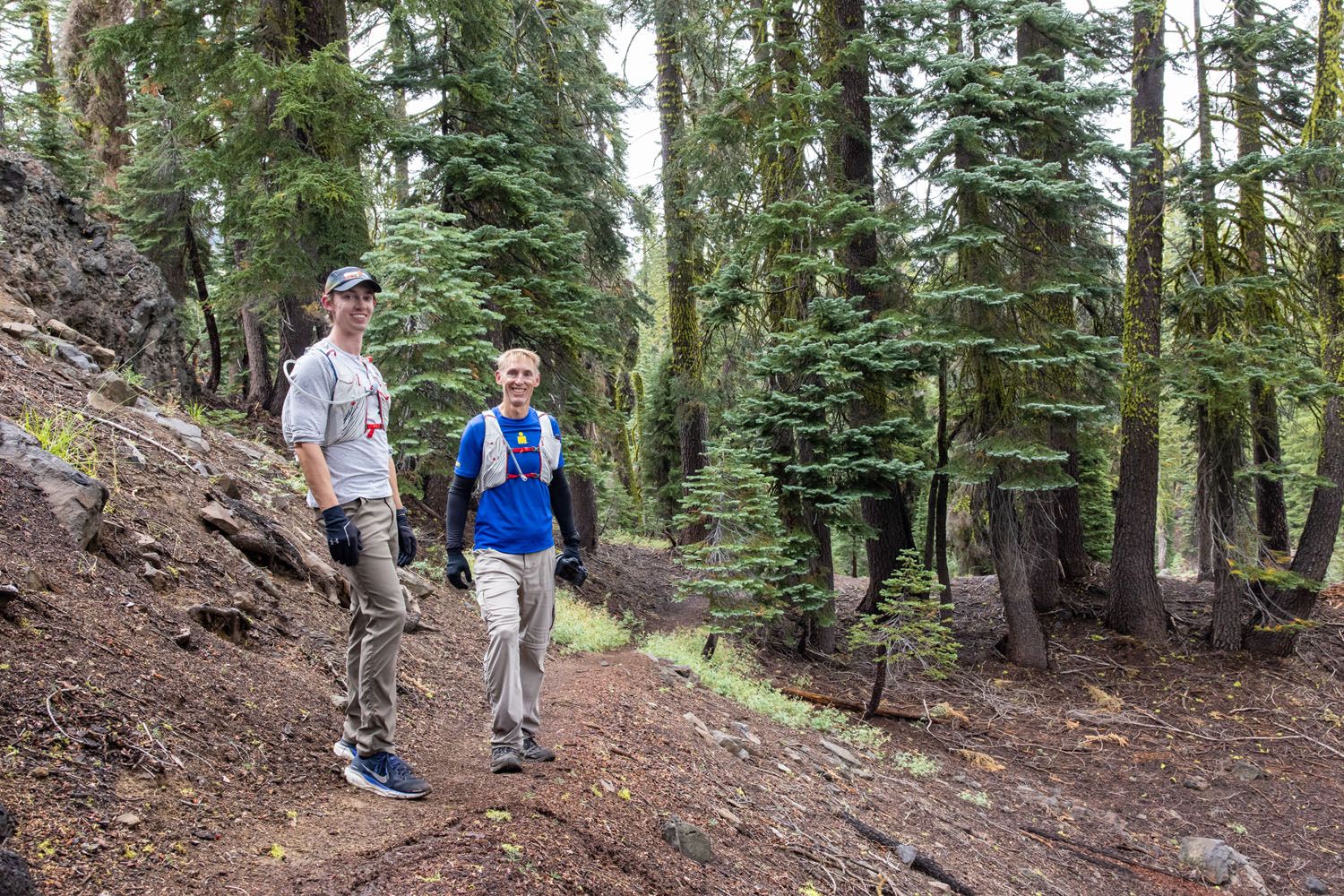
Tyler and Tim on the Brokeoff Mountain Trail
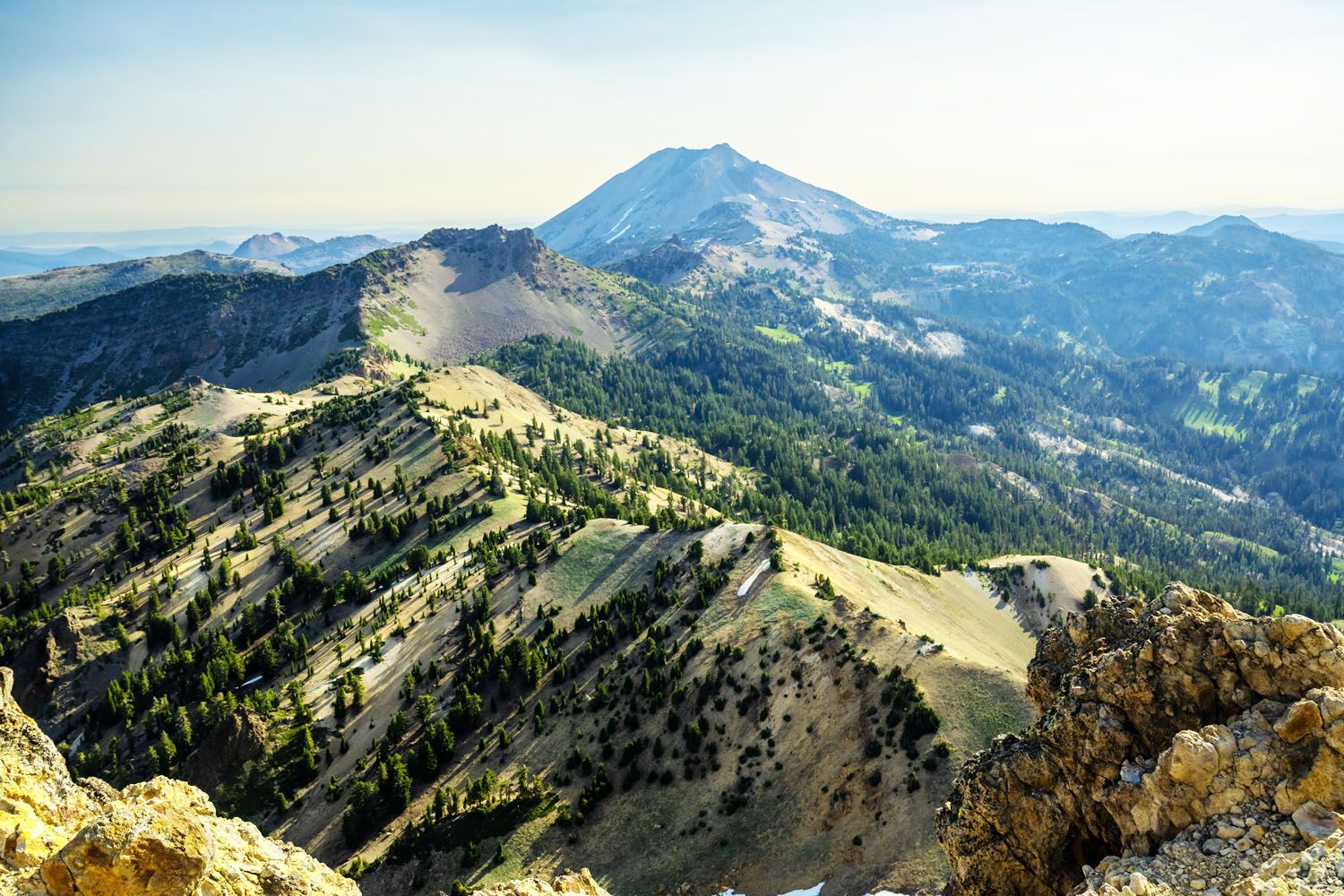
The view from Brokeoff Mountain (shutterstock.com); we had a lot of clouds at the summit and zero view, so this photo gives you an idea of that to expect
Optional: Subway Cave
Just north of the park boundary on Highway 89 sits Subway Cave, a short lava tube you can walk through in about 15 minutes. Bring a headlamp and expect a cool, dark passageway carved by ancient lava flows. We thought it was just OK and wouldn’t call it a must-see, but if you’re intrigued by lava tubes and have a few minutes to spare, it’s right on your route.

Afternoon: Choose Your Stop
You have two options here depending on your energy level and interests.
Option A: Cinder Cone (for Avid Hikers)
If you’re a strong hiker and can complete Lassen Peak by 10:30 or 11:00 am, Cinder Cone is one of the most unique experiences in the entire park and the one we’d most recommend for hikers who want more.

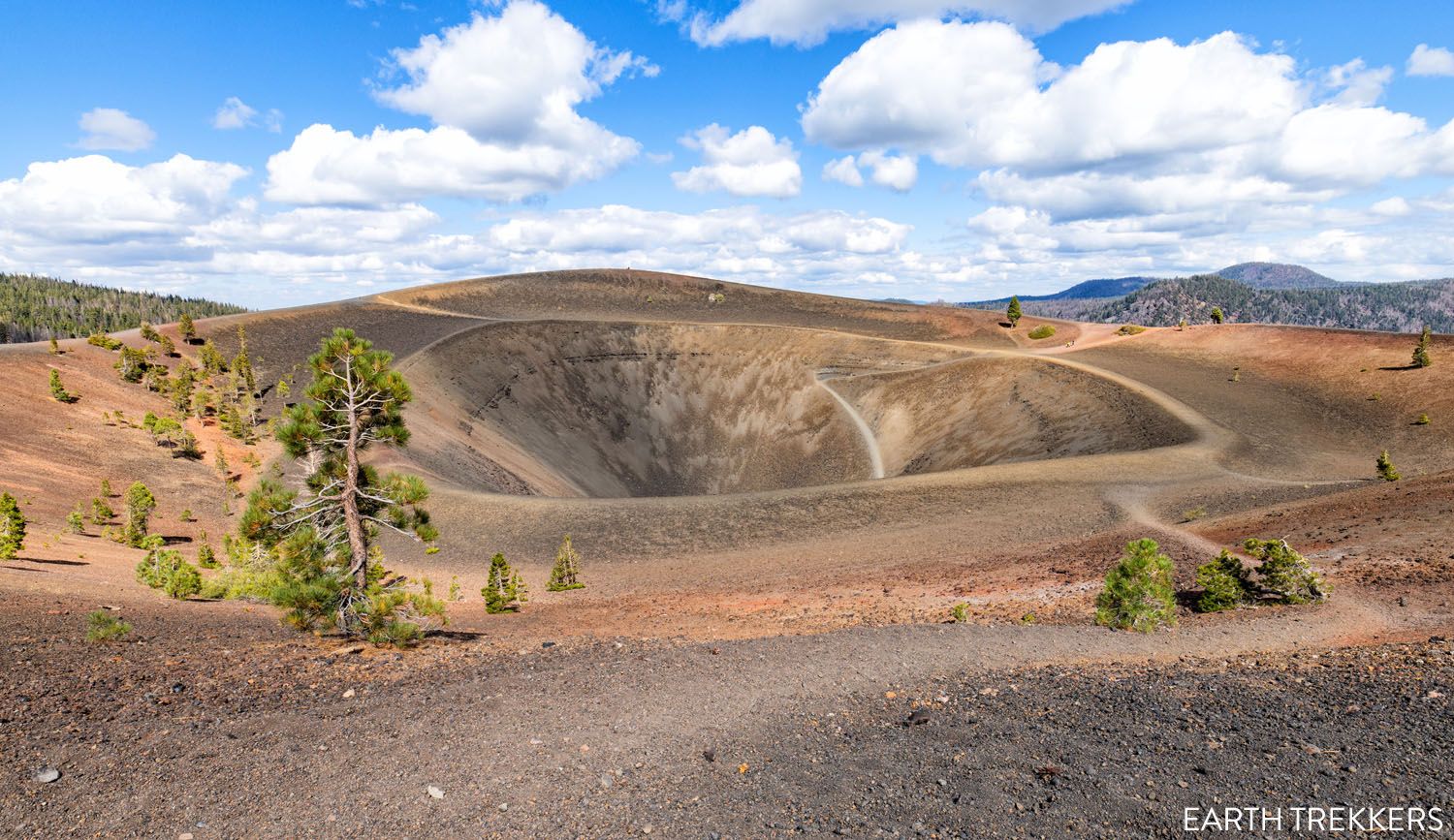
Cinder Cone is located in Butte Lake, a remote corner on the north side of the park, accessible on a 6.6 mile gravel road. The climb is steep and loose — think thick, gravelly sand — but the reward is a view into the crater, across the Fantastic Lava Beds, and out over Butte Lake and Snag Lake. There’s nowhere else quite like it.
After spending a day hiking Lassen Peak (a plug dome volcano) and now Cinder Cone (a cinder cone volcano), you’ll have stood on top of two completely different types of volcanoes in the same day. That’s pretty remarkable.
We loved Cinder Cone. Tyler called it one of the best hikes of the trip and worth going out of the way for. For the full trail guide, see our Cinder Cone Trail Guide. Budget 2 to 3 hours including driving.
Option B: McArthur-Burney Falls (+ Optional Stand By Me Bridge)
McArthur-Burney Falls is a 129-foot waterfall that Theodore Roosevelt reportedly called the eighth wonder of the world. It’s a beautiful and dramatic stop. The falls thunder year-round, fed by underground springs that seep from the basalt cliff face. We visited it and thought it was nice, but not an absolute must-see. Many visitors love it, and if you’ve never seen it, it’s certainly impressive. Budget 45 minutes to an hour.
Important: Day-use reservations are now required. Book in advance at parks.ca.gov before your visit.
On the drive to or from the falls, fans of the film Stand By Me can make a quick detour to the Stand By Me Bridge, a historic railroad trestle near the falls area. It’s fast, free, and a fun stop if you know the movie and easy to skip if you don’t.
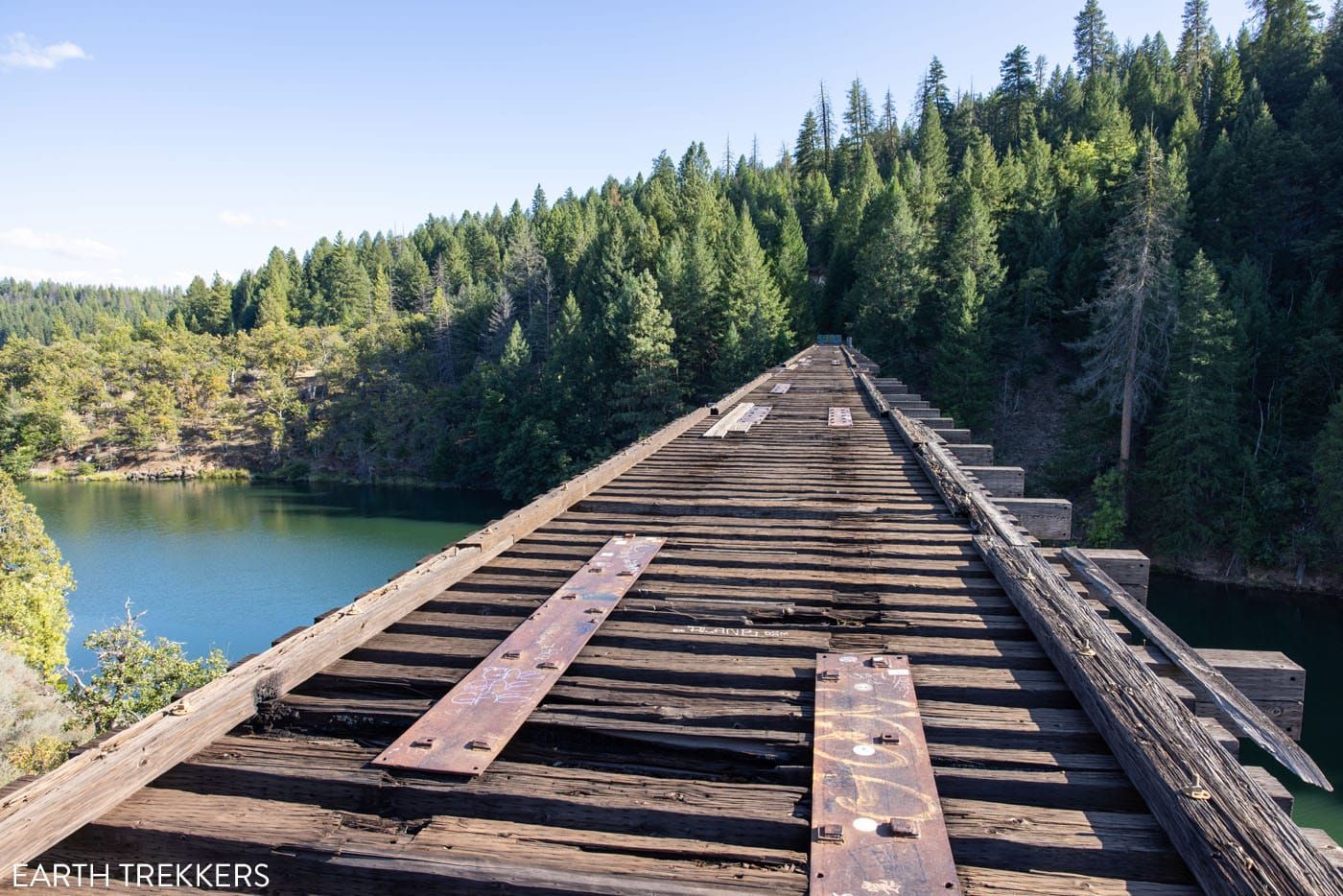
Stand By Me Bridge
Drive to Crater Lake
After your afternoon stop, head north toward Crater Lake. The drive takes roughly 3 to 4 hours depending on your route and how long you lingered. You’ll cross into Oregon and the landscape opens up into high desert and ponderosa pine forests.
Where to Stay in Crater Lake
You will spend two nights in or around Crater Lake National Park.
The Crater Lake Lodge is the best place to stay, with its location on the south rim of Crater Lake. In the park, Mazama Village Cabins and Campground is another option.
We stayed in Chiloquin at the Sleep Inn and Suites. It’s a 50-minute drive to Rim Village. Aspen Inn is a 40-minute drive to Rim Village. It is a small, basic hotel that gets solid review scores.
Crater Lake Guides
Here are a few guides on Crater Lake National Park, covering the best things to do and our one day itinerary for Crater Lake.
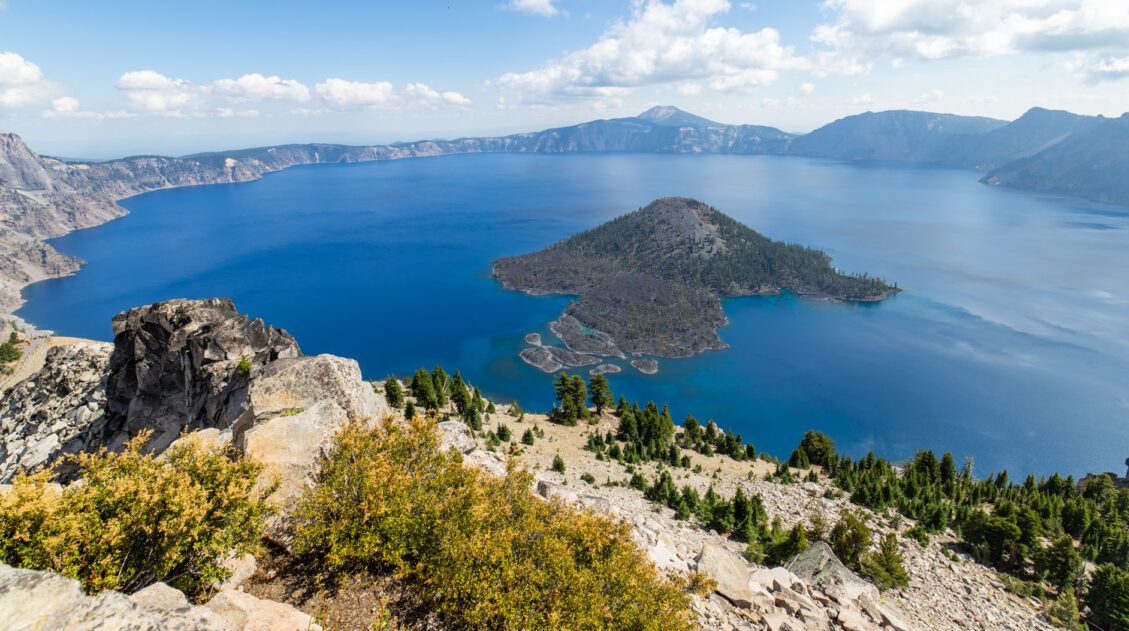
16 Best Things to Do in Crater Lake National Park
Discover the best things to do in Crater Lake National Park, including its top viewpoints, scenic drives, and hiking trails. One day is enough to see the highlights, but more time allows you to hike another trail or two. Home to the deepest lake in the United States, Crater Lake amazes visitors every year with […]
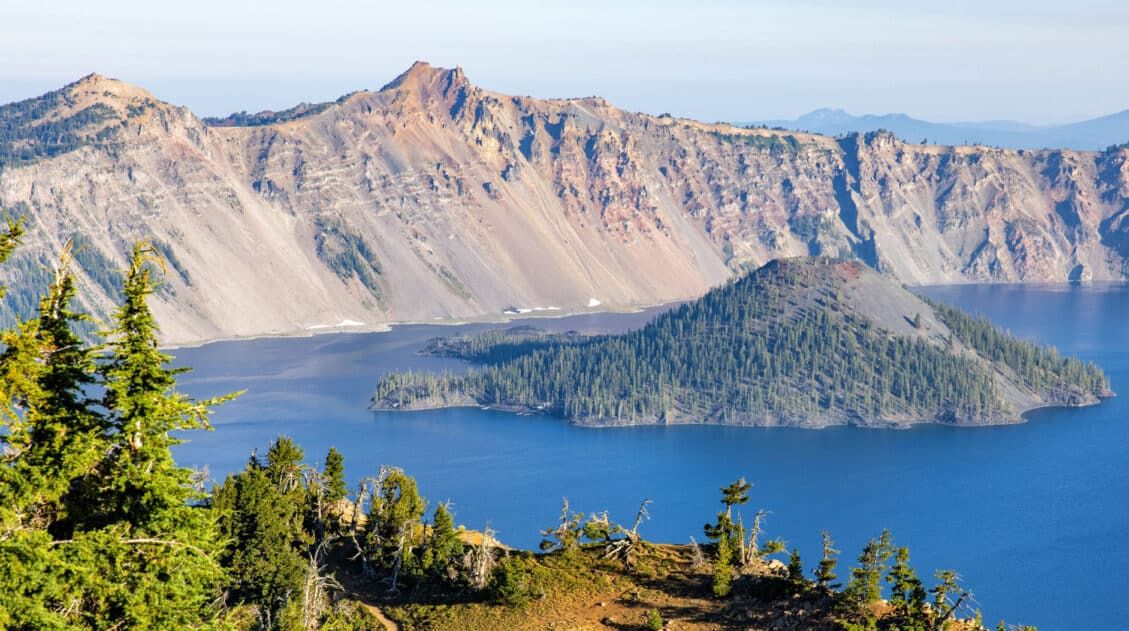
One Day in Crater Lake National Park: The Perfect Itinerary
Planning one day in Crater Lake National Park? In just 24 hours, you can hike to breathtaking viewpoints, drive the full caldera rim with stops at the park’s best overlooks, visit Wizard Island, and even watch the sunset from a historic fire tower. With smart planning, Crater Lake delivers an unforgettable experience in a single, […]
Day 4: Crater Lake National Park
On the Road: 40 to 160 miles (1.5 to 4 hours) depending on where you stay
Today is filled with short hikes, scenic drives, and endless views of the brilliantly blue color of Crater Lake. The first time you crest the rim and look down into the caldera, it’s genuinely breathtaking. Plan to arrive at Rim Village by 8:30 am to make the most of the day.
Morning: Garfield Peak & Rim Village
Start with the Garfield Peak Trail, the best hike in the park for rim views. This 3.3-mile round-trip hike climbs steadily along the south rim with panoramic views of the lake nearly the entire way. Budget 1.5 to 3 hours, depending on your pace.
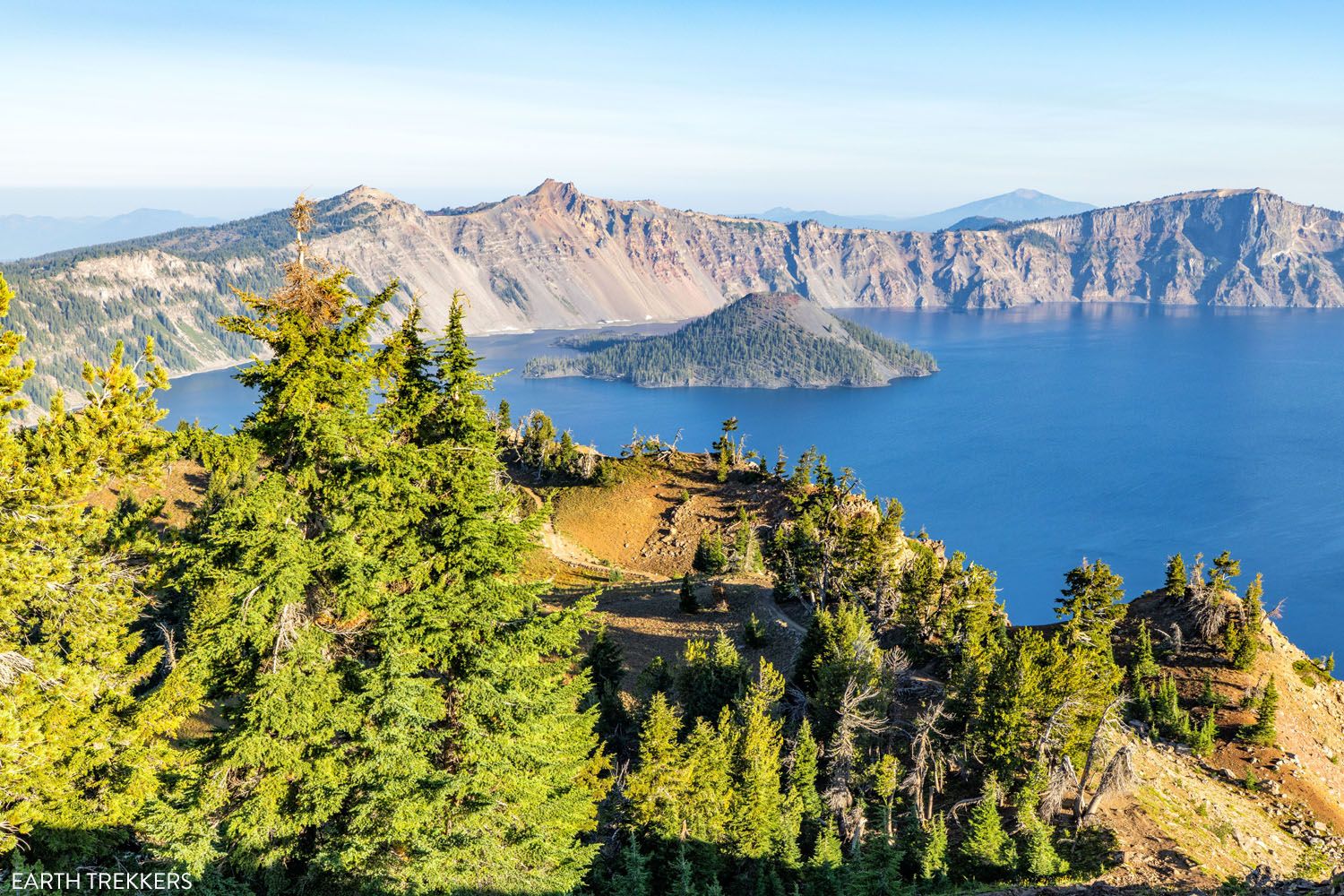
The view from Garfield Peak
After the hike, walk the Rim Village Promenade and stop at the Sinnott Memorial overlook. It’s one of the best vantage points in the park.
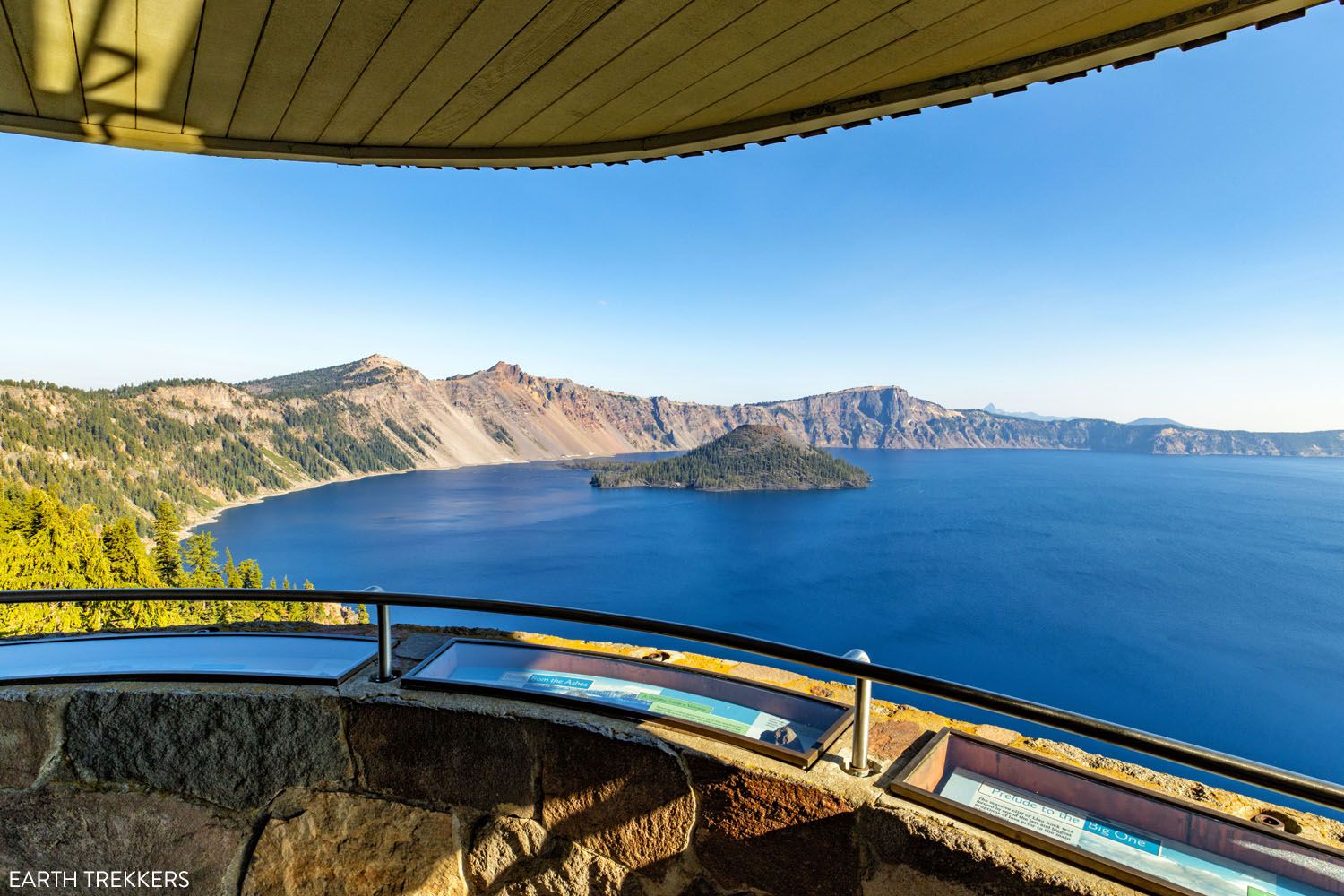
The view from Sinnott Memorial Overlook
Grab lunch at the Crater Lake Lodge, a historic 1915 lodge with a back patio overlooking the lake. The food is average but the setting is worth it.
Afternoon: Rim Drive, Watchman Peak & Sunset
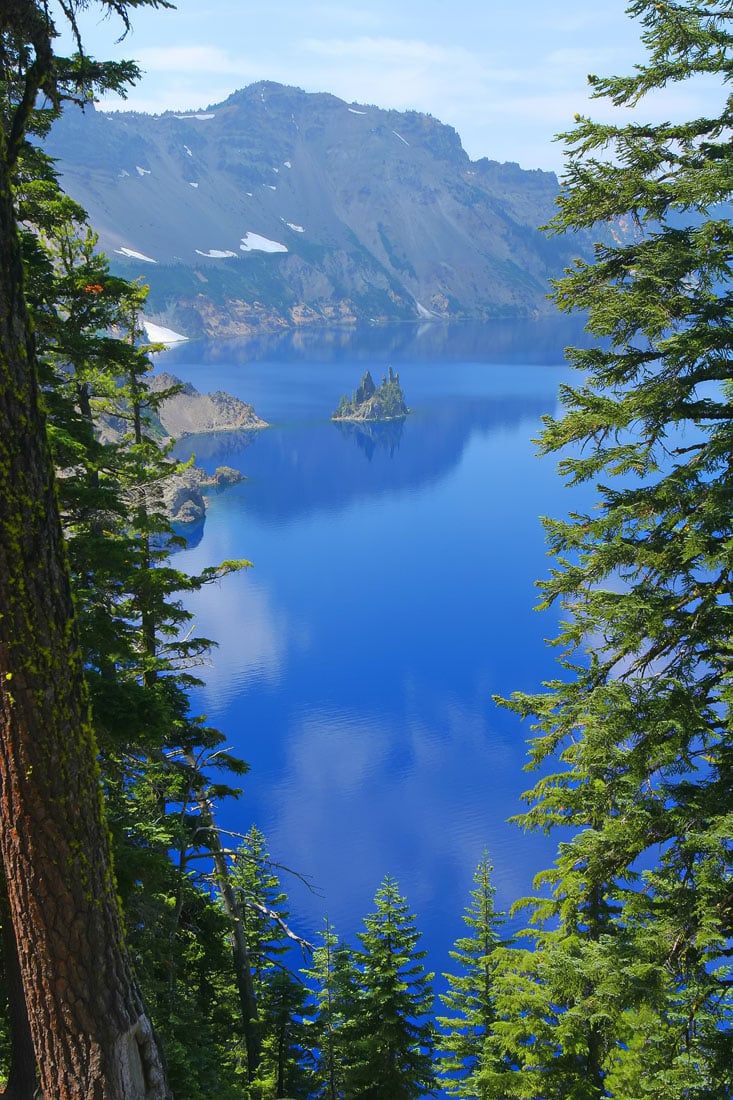
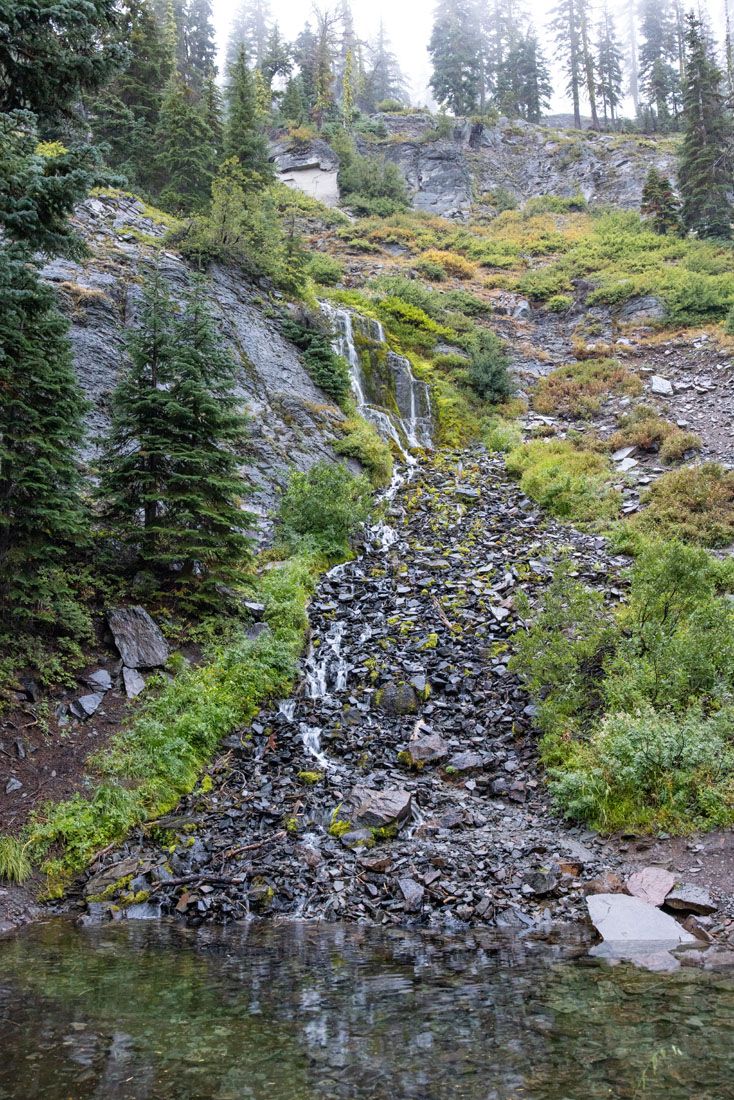
Spend the afternoon driving Rim Drive, the 33-mile loop around the caldera. Stop at the key overlooks: Vidae Falls, Phantom Ship Overlook (look for the small rocky island rising from the lake), Cloudcap, and Merriam Point. Each pull-out gives you a different perspective on the lake, and the color seems to shift depending on the light.
End the day with the Watchman Peak Trail, a short but steep hike to a historic fire tower on the west rim. This is the best sunset viewpoint in the park. The lake turns gold as the sun drops, and on a clear evening, you’ll understand why people drive hours just to see Crater Lake.
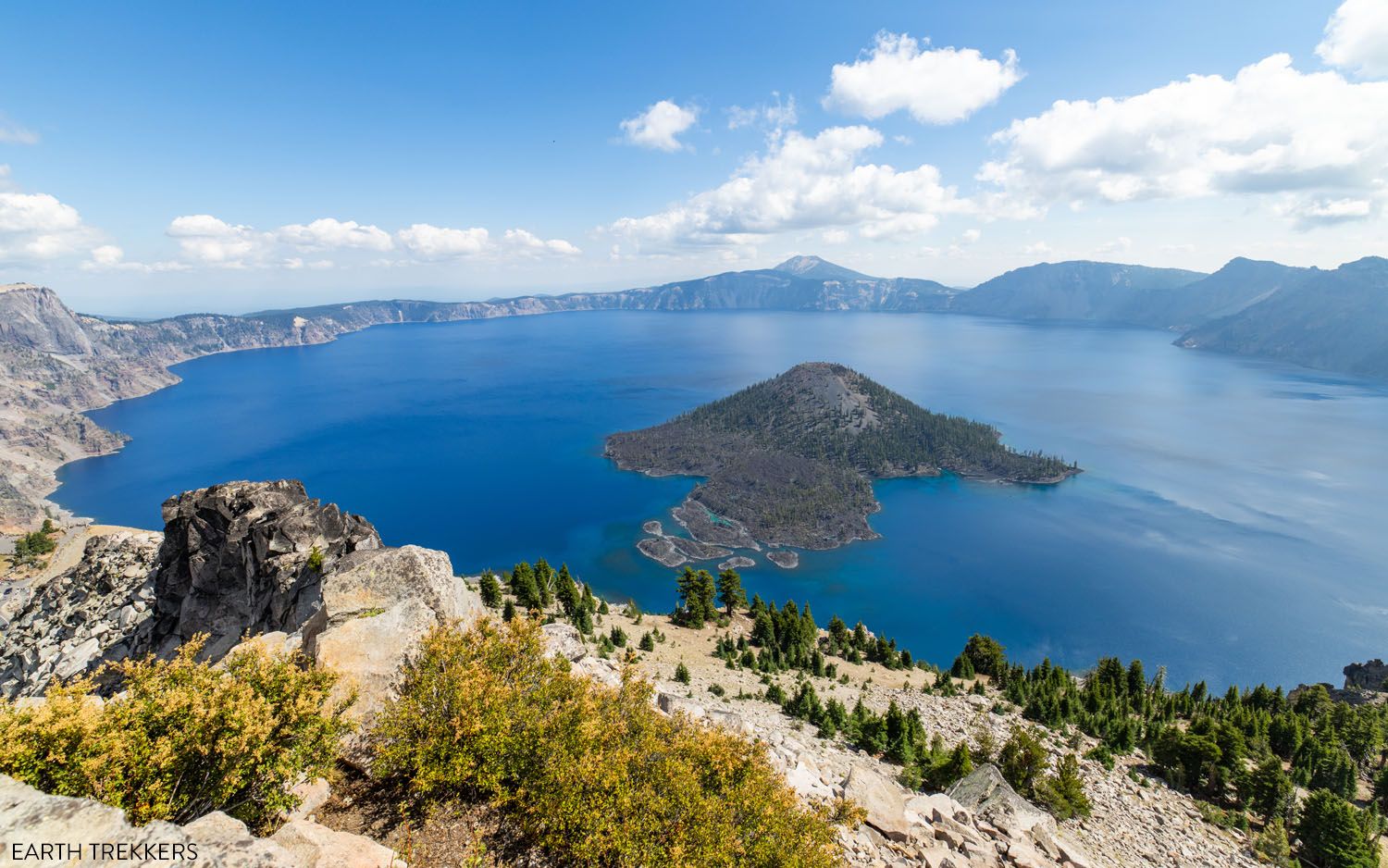
The view from Watchman Peak
Note on boat tours: As mentioned earlier in this guide, boat tours of Crater Lake are suspended until 2028 at the earliest due to construction on the Cleetwood Cove Trail. Visiting Wizard Island was one of our favorite experiences in the park. If that’s on your bucket list, keep an eye on the NPS website for updates.
Where to Stay
Stay in Crater Lake National Park, Chiloquin, or Klamath Falls.
For more detail on everything covered today, including full trail guides and tips for each stop, see our One Day in Crater Lake Itinerary.
Day 5: Crater Lake National Park, Drive towards Oregon coast
On the Road: 70 to 215 miles (1.5 to 4.5 hours)
Today has a different rhythm than the days before it. The morning is yours to spend however you like at Crater Lake: a final hike, a slow coffee with a view of the lake, or simply soaking in what is genuinely one of the most beautiful places in the United States. The afternoon is a driving day, positioning you for tomorrow’s exploration of the Oregon coast. There’s an optional stop worth considering along the way, and several good options for where to spend the night.
Morning: Contingency Time at Crater Lake
Use this morning as a buffer, for extra time at Crater Lake, a slower breakfast, or anything you didn’t get to yesterday. If the weather cooperated on Day 4, consider this a relaxed start. If clouds or rain cut things short yesterday, today is your chance to revisit.
For those who want one more hike, Mount Scott is the best option. At 8,929 feet, it’s the highest point in the park. This hike was high on our list, but we had to skip it, since the peak was covered in clouds on our visit. The trail is 5 miles round-trip with steady elevation gain, and the summit delivers a 360-degree view of the caldera, the surrounding peaks, and on clear days, far into the Oregon wilderness. Budget 3 to 4 hours.
For something shorter, the Sun Notch Trail (1 mile round-trip) offers a great view of Phantom Ship Island from the east rim and takes less than an hour.
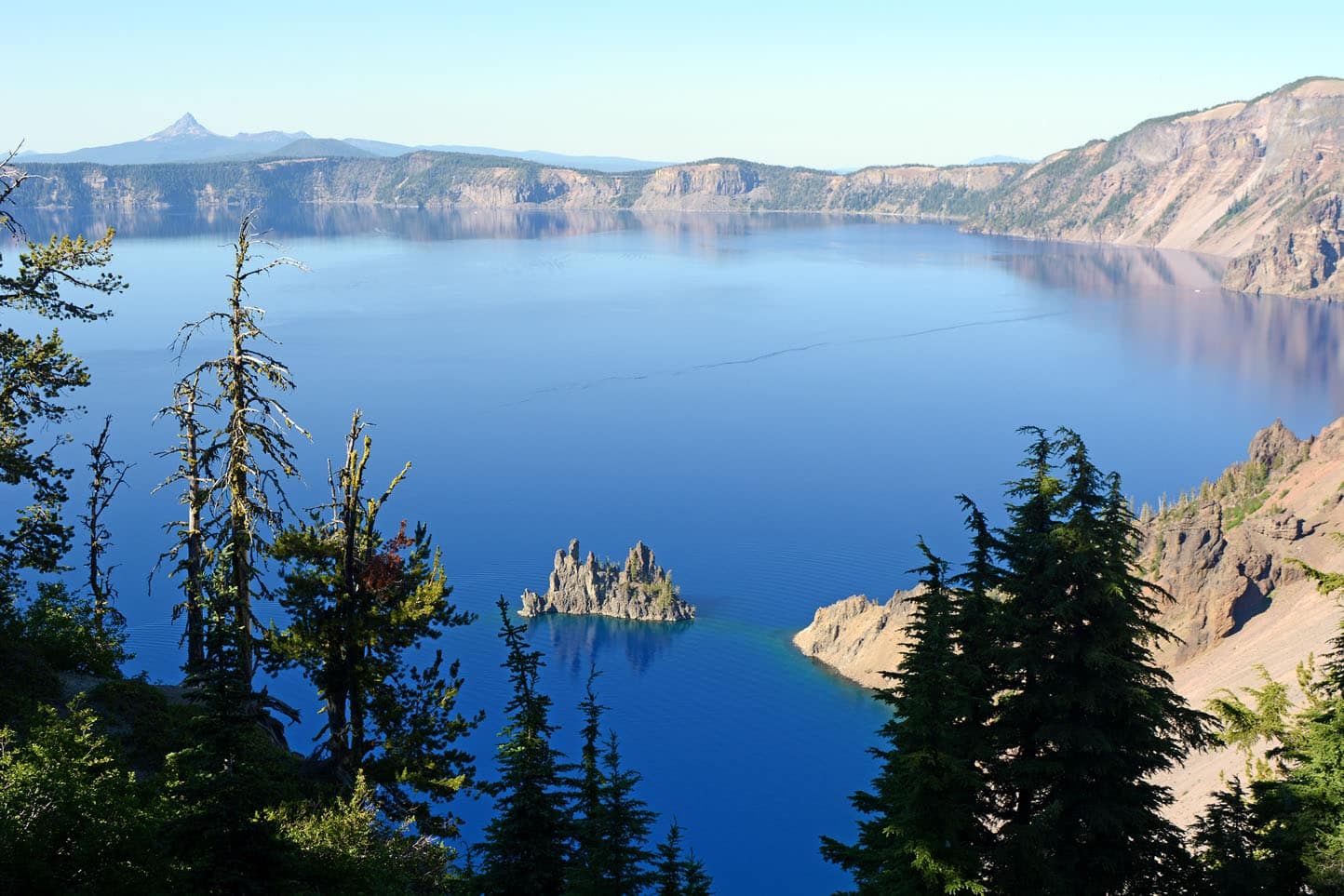
The view of Phantom Ship from Sun Notch
Afternoon: Optional Stop — Oregon Caves National Monument
On the drive toward the coast, cave enthusiasts may want to detour to Oregon Caves National Monument, a marble cave system in the Siskiyou Mountains that has been drawing visitors since 1874. The guided cave tour runs 90 minutes and takes you through stalactites, stalagmites, flowstones, and narrow marble passages. Reviews are consistently strong and the ranger-led experience is well regarded.
Worth knowing before you go: This is not a quick pull-off. The drive from Cave Junction to the monument takes at least 60 minutes on a narrow, winding road, and you must check in at the visitor center at least 30 minutes before your tour. Advance reservations are available through Recreation.gov and recommended. We didn’t visit Oregon Caves on this trip, so we can’t speak to it firsthand, but if caves and geology are your thing, the detour is worth considering.
If you skip Oregon Caves, use the extra time to explore Medford or grab a meal before settling in for the night.
Afternoon: Drive Toward the Oregon Coast
From Crater Lake, head west and south toward the Oregon coast. The drive winds through the Siskiyou Mountains and drops into the valleys of southern Oregon, a scenic transition that sets you up nicely for tomorrow.
Where to Stay
You have several options depending on how far you want to drive today and where you want to be for tomorrow’s coast exploration. Medford and Grants Pass are both solid mid-route choices with good dining and lodging options.
Eagle Point, just outside Medford, is a quieter alternative. We stayed at the Eagle Point Golf Club and had a good experience.
If you want to get a head start on tomorrow and don’t mind a longer drive today, push all the way to Crescent City, California, which puts you right on the doorstep of the Oregon coast and Redwood parks.
Make the cities a booking link.
Day 6: Oregon Coast: Samuel H. Boardman Scenic Corridor, Drive to Redwoods
On the Road: 100 to 200 miles (2 to 4 hours), depending on where you spent the night
Today is the most relaxed day of the trip, a leisurely coastal drive along one of the most spectacular stretches of shoreline in the Pacific Northwest, followed by a gentle arrival into the Redwood country. Don’t rush it.
The Samuel H. Boardman State Scenic Corridor
The centerpiece of today is the Samuel H. Boardman State Scenic Corridor, a 12-mile stretch of the Oregon Coast Highway dotted with sea stacks, rugged cliffs, hidden beaches, and viewpoints that rank among the best on the entire Oregon coast. It’s free to visit, and the stops are so close together, most just one to three minutes apart, that the drive feels more like an afternoon of wandering than a road trip.
Give yourself at least three hours here, more if you want to linger at a beach. Our favorite stops are: Secret Beach, Natural Bridges, Arch Rock, and House Rock Viewpoint. For the full breakdown of every viewpoint, which ones to prioritize, and which to skip, see our complete guide to the Samuel H. Boardman State Scenic Corridor.
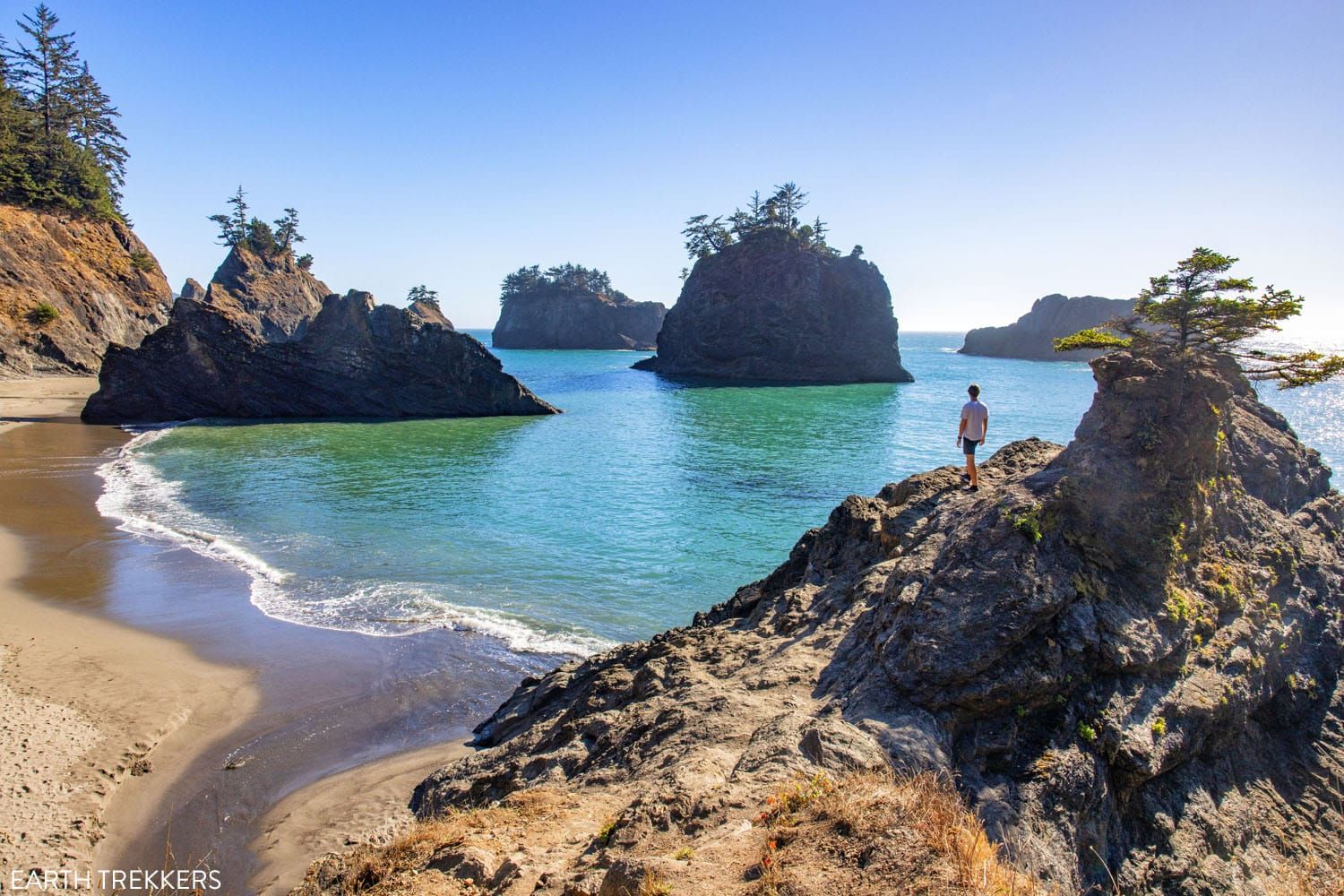
Secret Beach
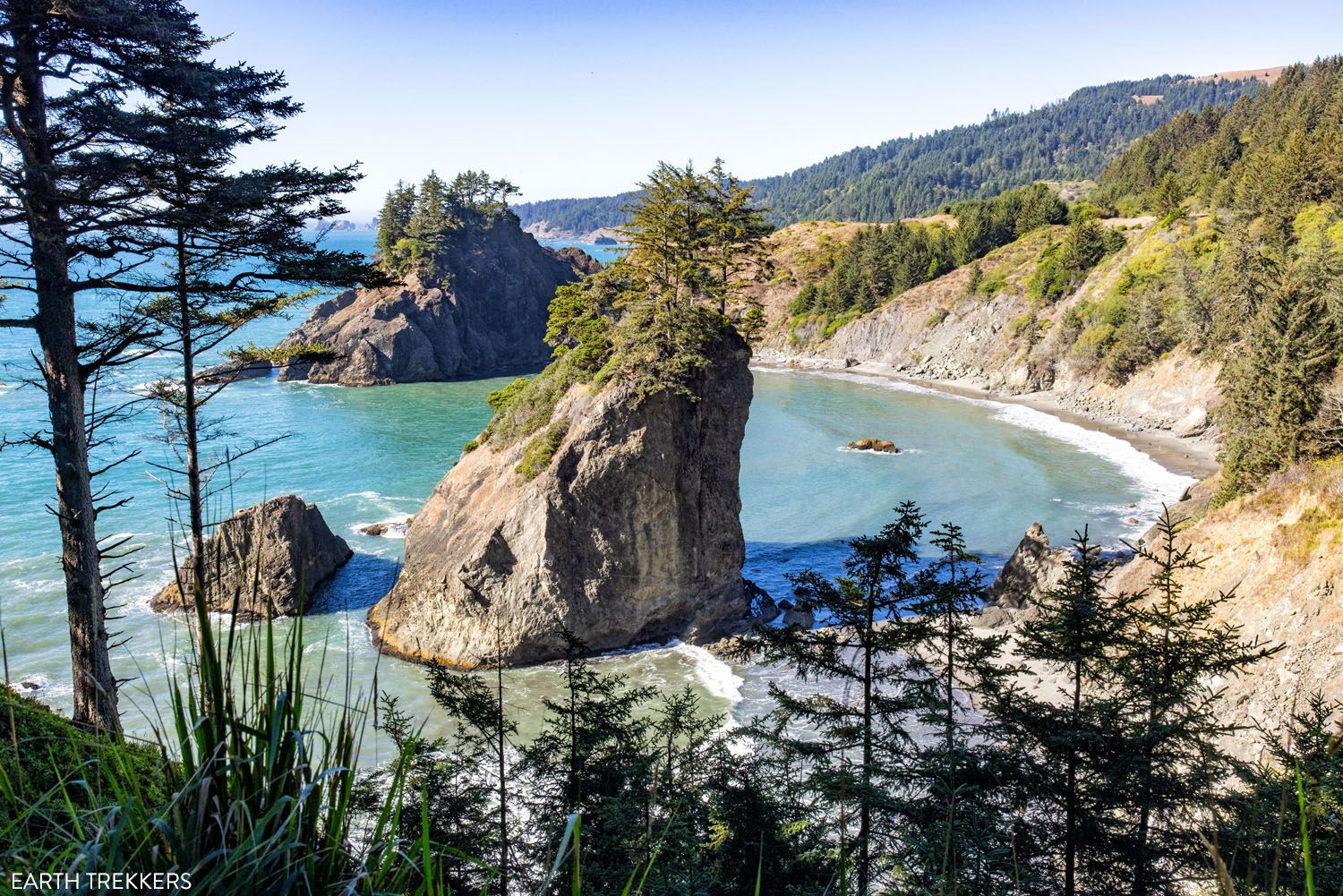
Arch Rock State Park
Optional: First Taste of the Redwoods
If you arrive in the Crescent City area with daylight to spare, consider an early introduction to the Redwood parks. Two easy options:
Simpson Reed Trail: a short, flat loop through one of the most beautiful old-growth groves in Jedediah Smith Redwoods State Park. It’s quiet, accessible, and a perfect first look at what the next two days hold.
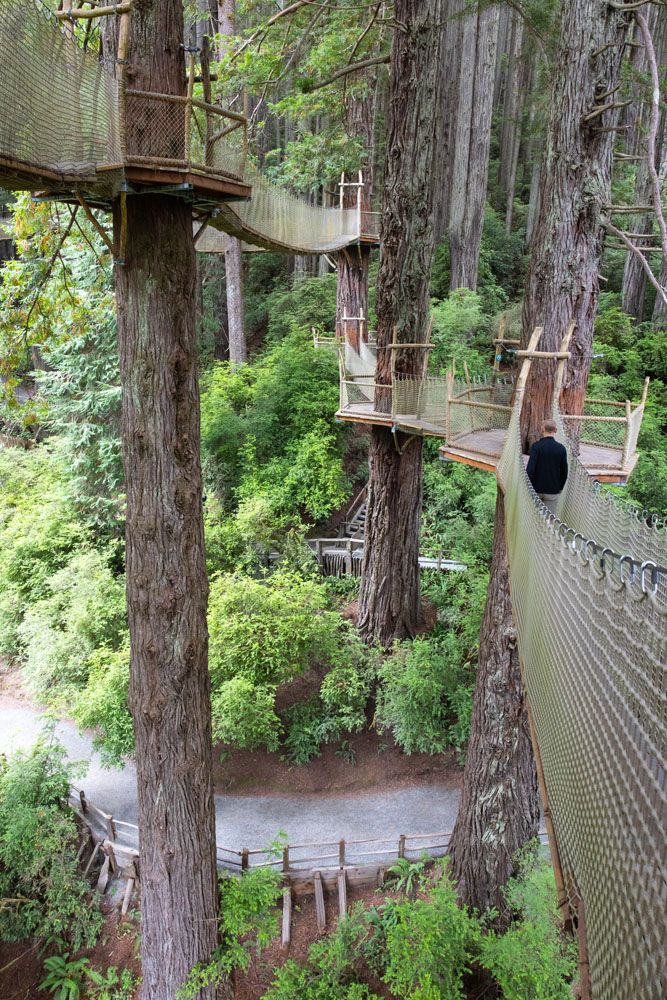
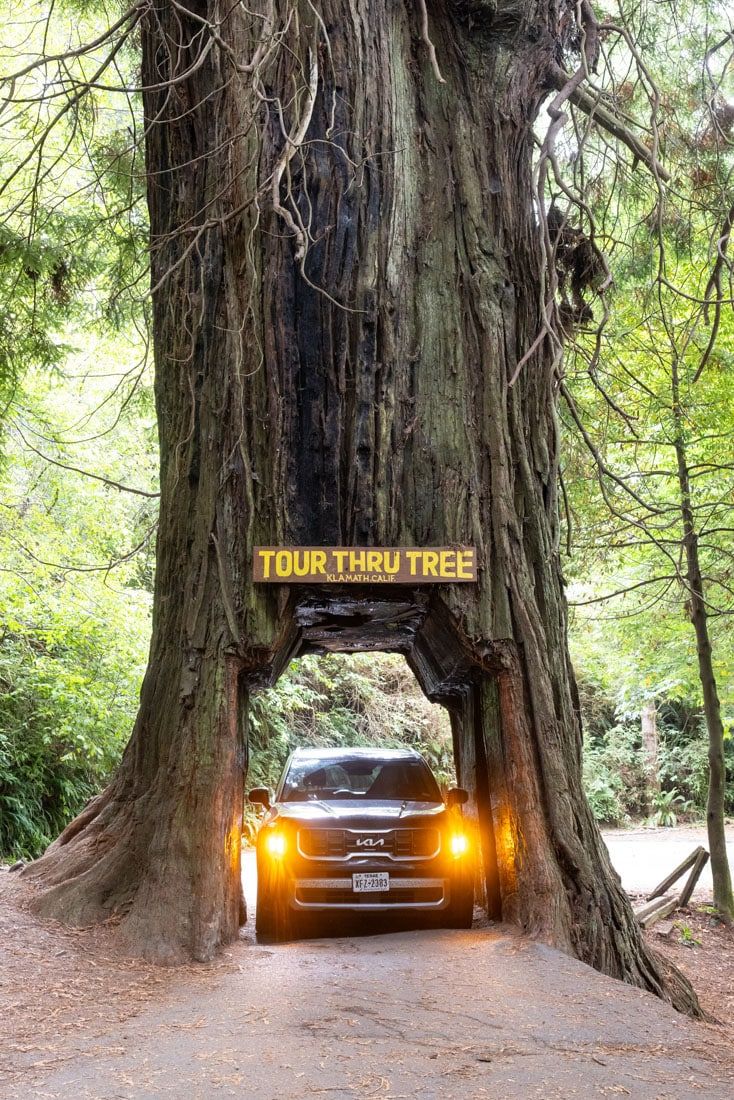
Trees of Mystery + Klamath Tour-Thru Tree: a fun option if you’re traveling with kids. The Trees of Mystery is a classic roadside attraction with a gondola ride through the redwood canopy. The Klamath Tour-Thru Tree is exactly what it sounds like, a redwood big enough to drive your car through.
Where to Stay
We stayed at the Holiday Inn Express in Klamath, which put us in an ideal position for exploring all of the Redwood parks over the next two days. The hotel was so-so but the location is excellent. Crescent City and Hiouchi are also excellent bases. You will stay here for 2 nights.
Redwoods Guides
Here are a few guides on Redwoods National and State Parks, covering Jedediah Smith and Del Norte Coast Redwoods.
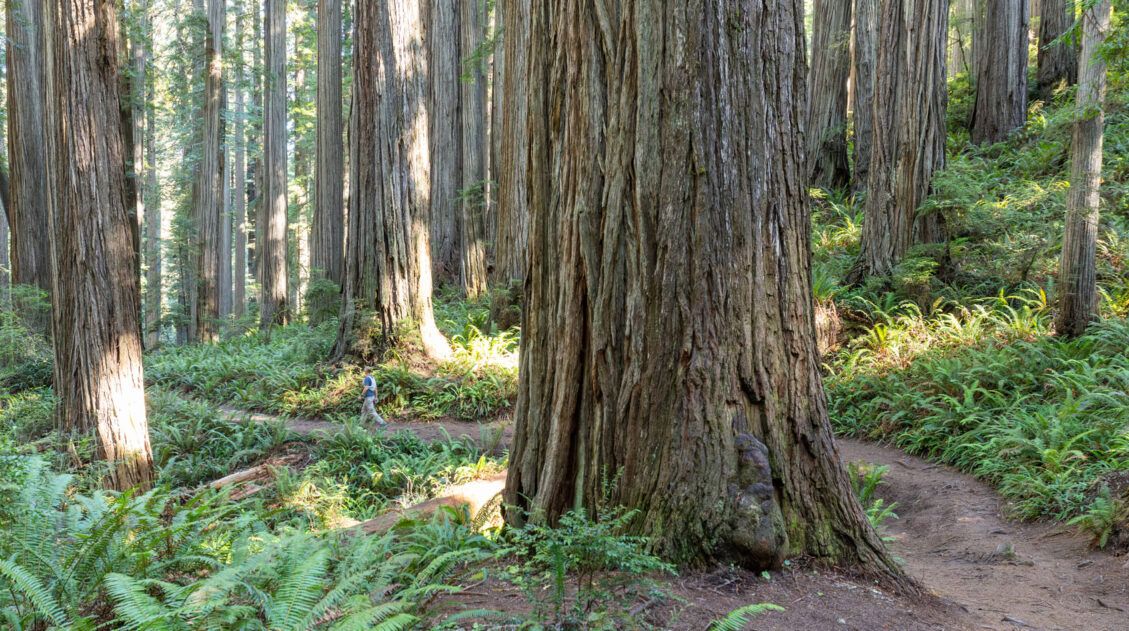
5 Amazing Things to Do in Jedediah Smith Redwoods State Park
Jedediah Smith Redwoods State Park is our favorite of the Redwood National and State Parks. In this guide, we’ll share our must-do hikes and scenic drives, plus how to see the best of the park with a one day itinerary. Jedediah Smith Redwoods is one of the four parks that make up Redwoods National and […]
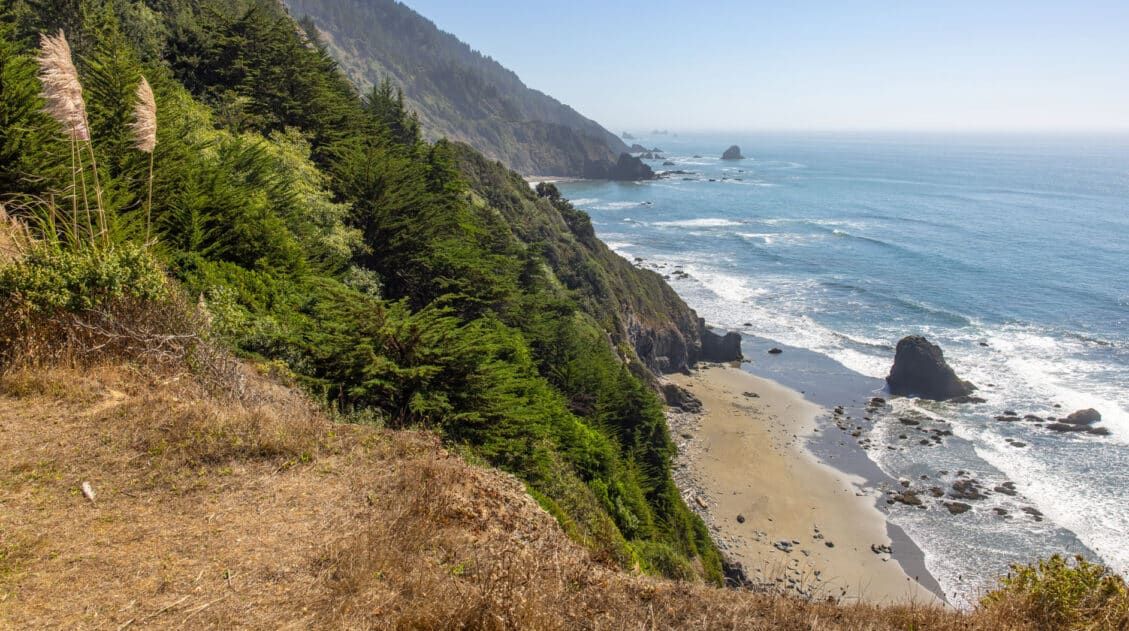
Complete Guide to Del Norte Coast Redwoods State Park
Discover the best things to do in Del Norte Coast Redwoods State Park, including a one-day itinerary covering the top spots and nearby attractions. Welcome to Del Norte Coast, a California state park that features ancient redwood trees and dramatic coastlines. As part of the Redwoods National and State Parks, you can get up close […]
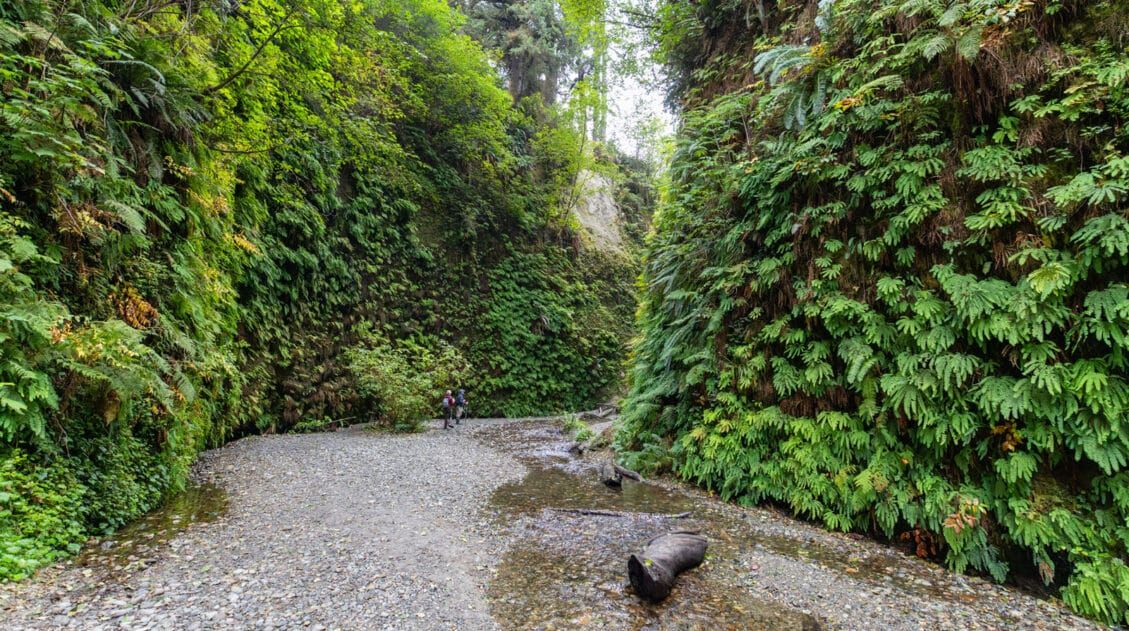
Complete Guide to Prairie Creek Redwoods State Park
If you’re looking for one of the easiest yet most rewarding ways to see California’s redwoods, Prairie Creek Redwoods State Park is hard to beat. Tucked along the northern California coast, this park protects over 14,000 acres of towering old-growth forest, fern-filled canyons, and sandy beaches. It’s one of the most compact and visitor-friendly parks […]
Day 7: Jedediah Smith Redwoods State Park
On the Road: 60 miles (2 hours) – staying in Klamath; significantly less driving from Crescent City
If Lassen Volcanic surprised you and Crater Lake dazzled you, Jedediah Smith will move you. This is our favorite of the four parks that make up Redwood National and State Parks — and the moment we stepped into our first old-growth grove, we understood why people come to the redwoods and never quite get over them.
Start early. The park is best experienced in the quiet of the morning, and the most popular trailheads fill fast.
Morning: Howland Hill Road & the Groves
Begin with Howland Hill Road, a narrow, unpaved road that winds through the heart of Jedediah Smith. The drive itself is an experience. You’re squeezing past enormous redwoods, and the scale of the trees dwarfs the car in a way that makes you feel genuinely small. It’s unlike any road you’ll drive on this trip.
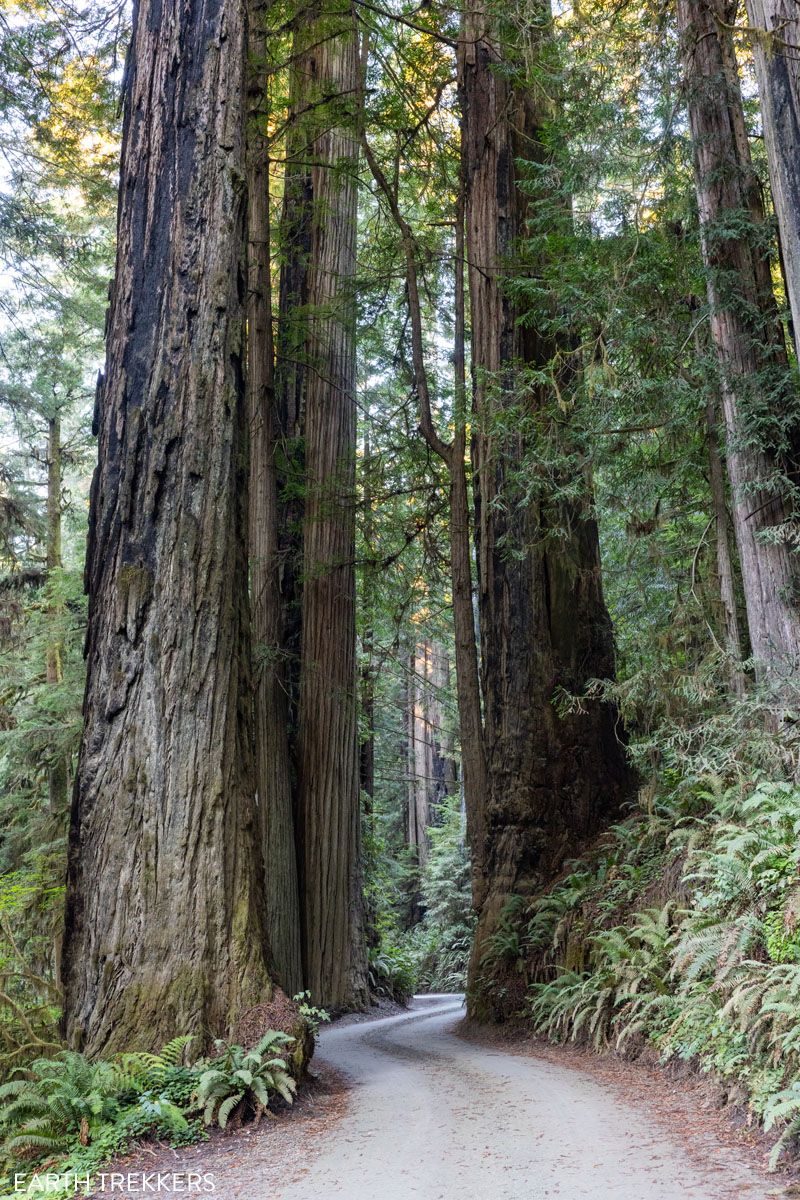
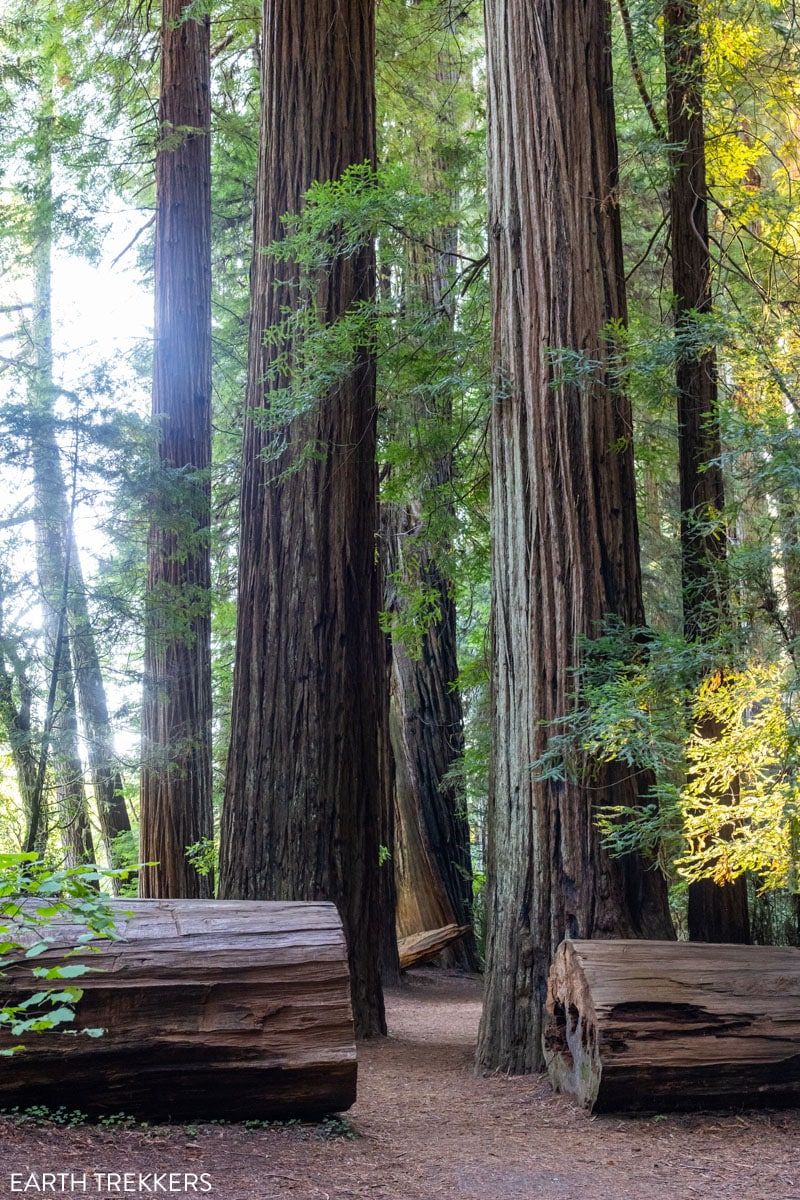
Your first stop on Howland Hill Road is Stout Memorial Grove, and for us it was one of the highlights of the entire road trip. This short 0.75-mile loop winds through a cathedral of old-growth redwoods: trees that are 500 to 1,000 years old, rising over 250 feet overhead.
We arrived at 8:00 am and shared the trail with just one other couple. Walking among those ancient giants, just the three of us, was one of the most profound moments of the entire trip. Get here early and you may have the same experience. For photos and a full trail guide, see our Stout Memorial Grove guide.
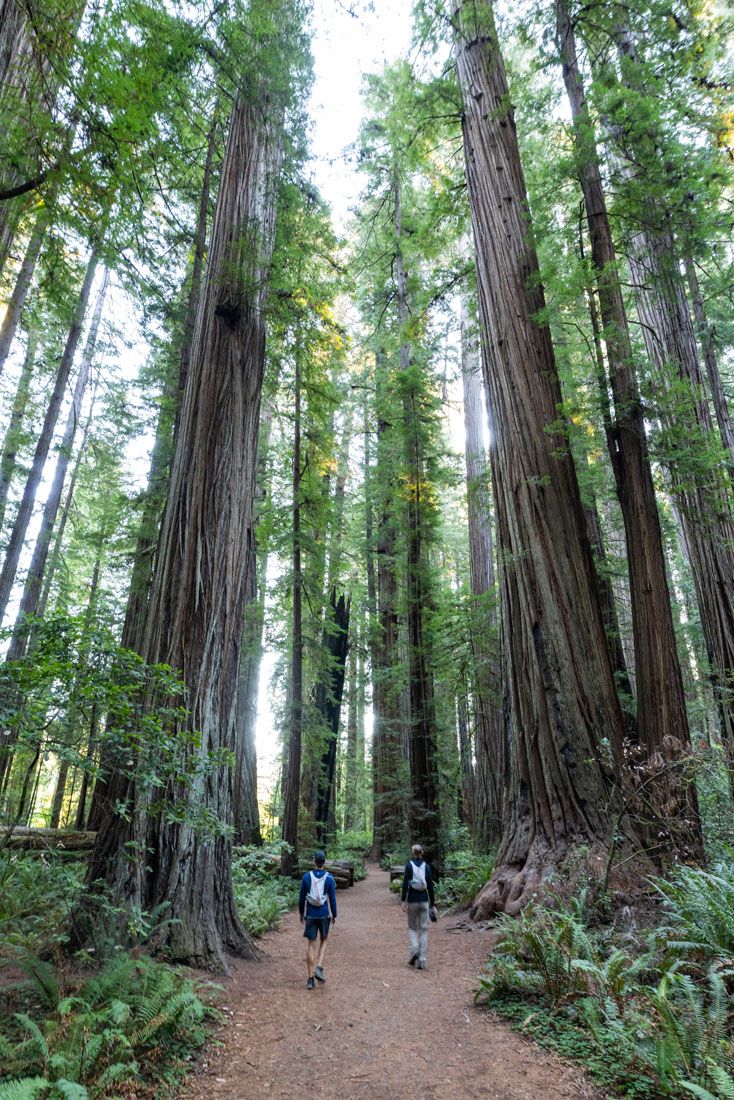
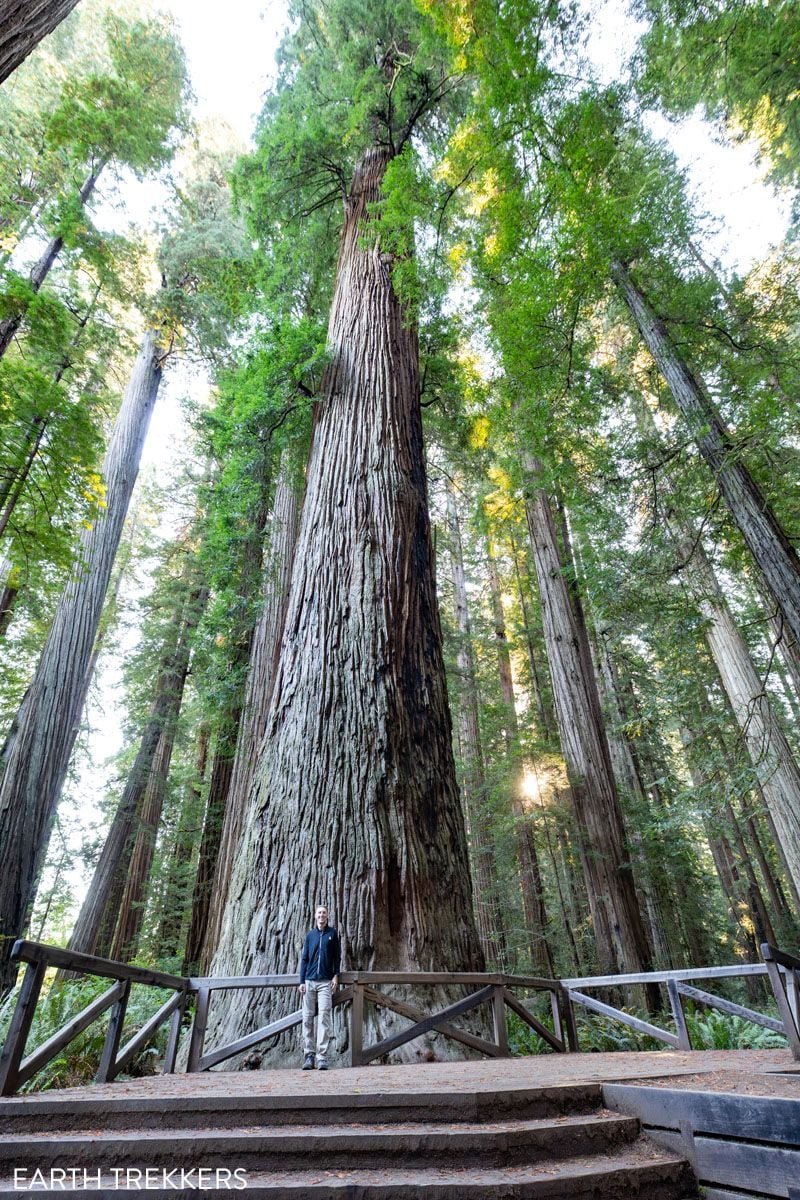
From Stout, continue to the Grove of Titans, which is home to some of the largest trees by volume in the world. Grove of Titans is worth visiting, though we’ll be honest: our experience at Stout was more magical, likely because we had it to ourselves.
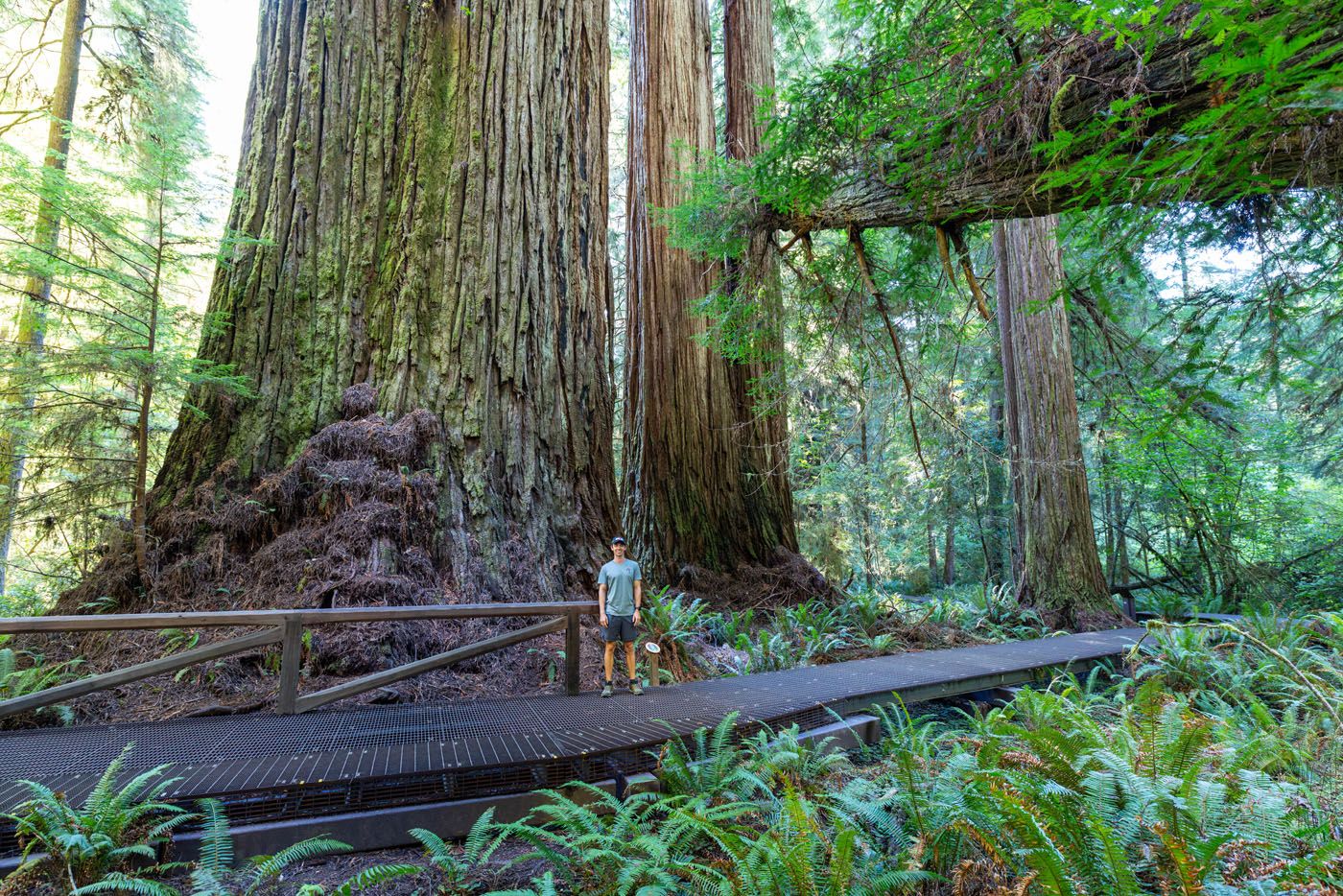
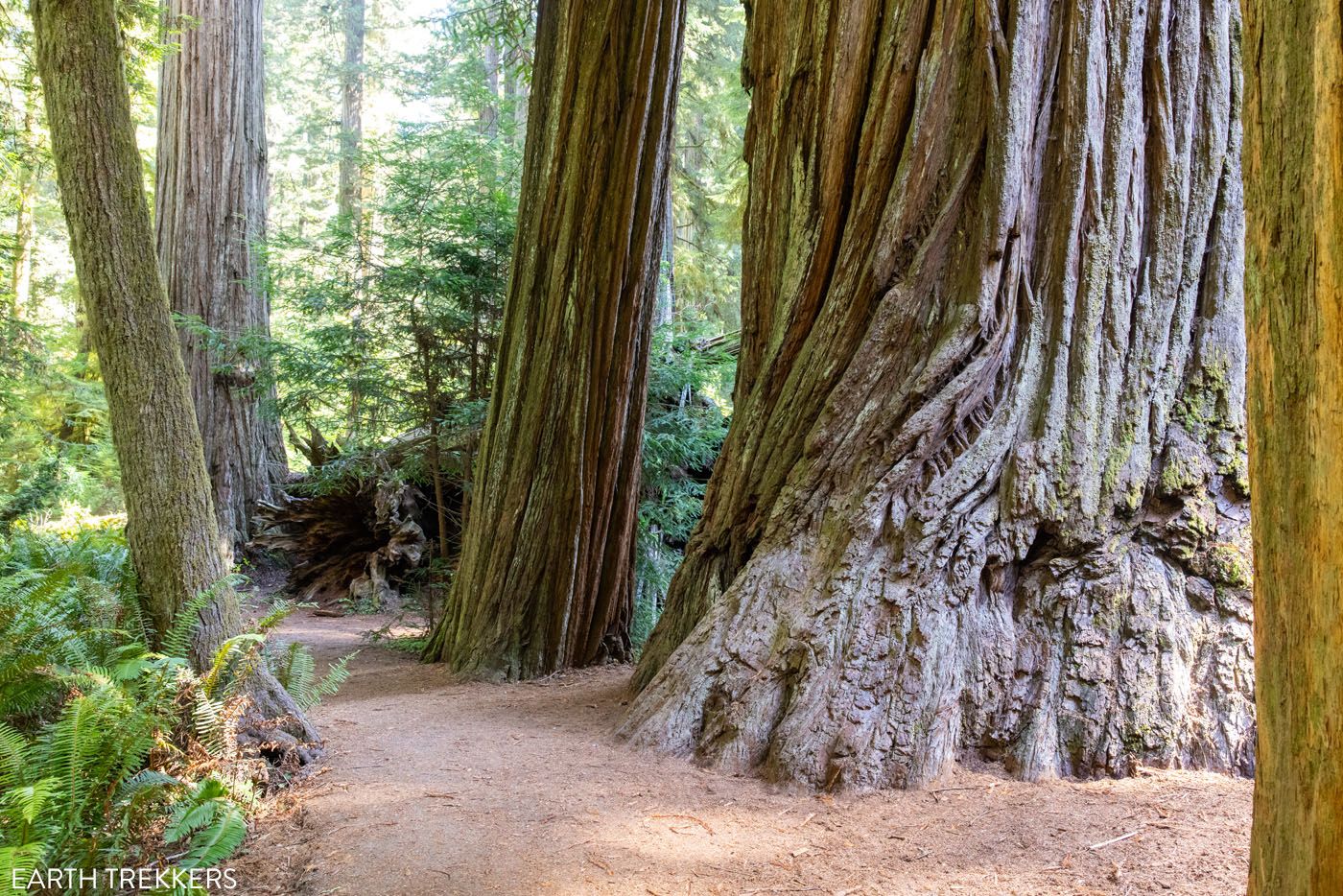
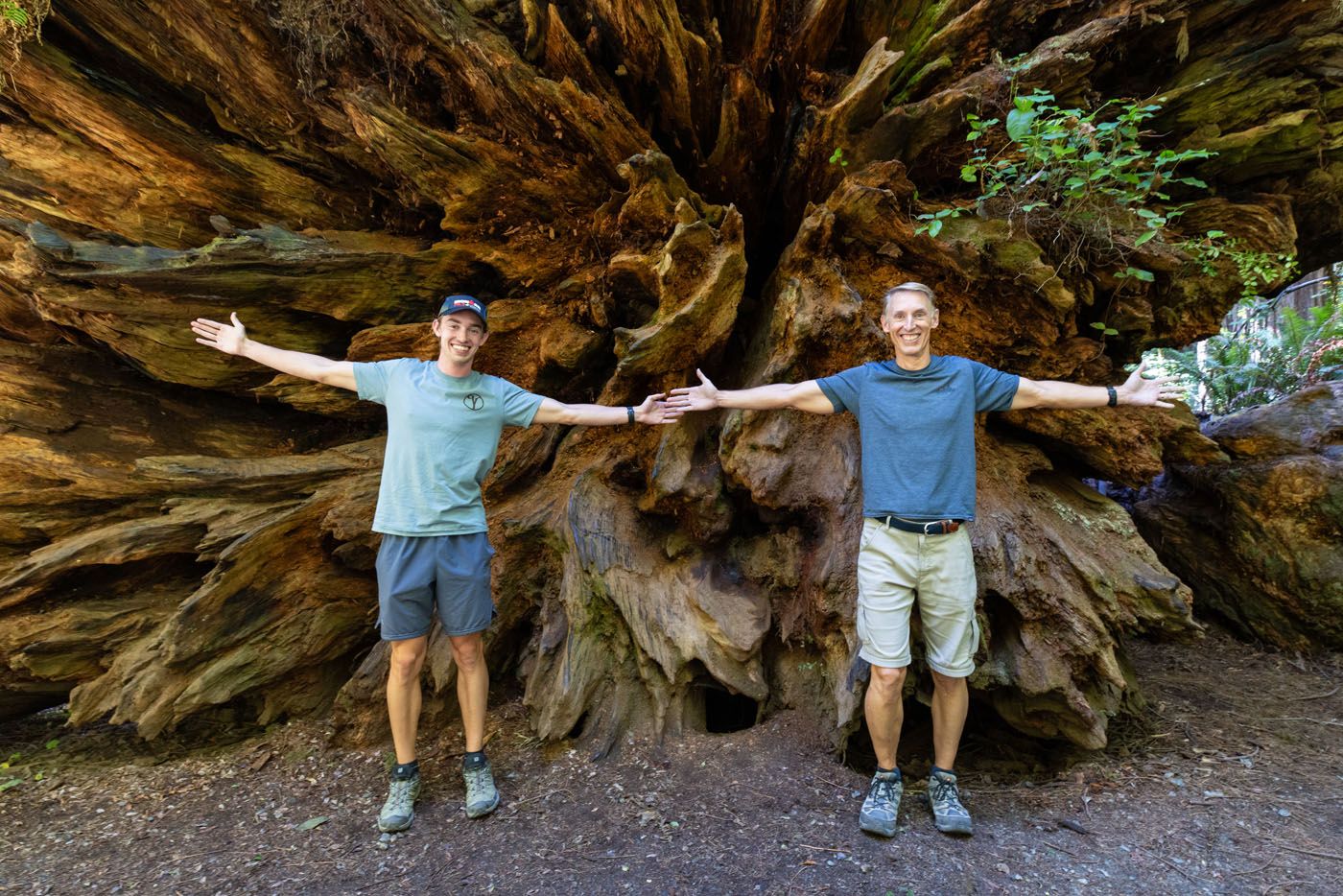
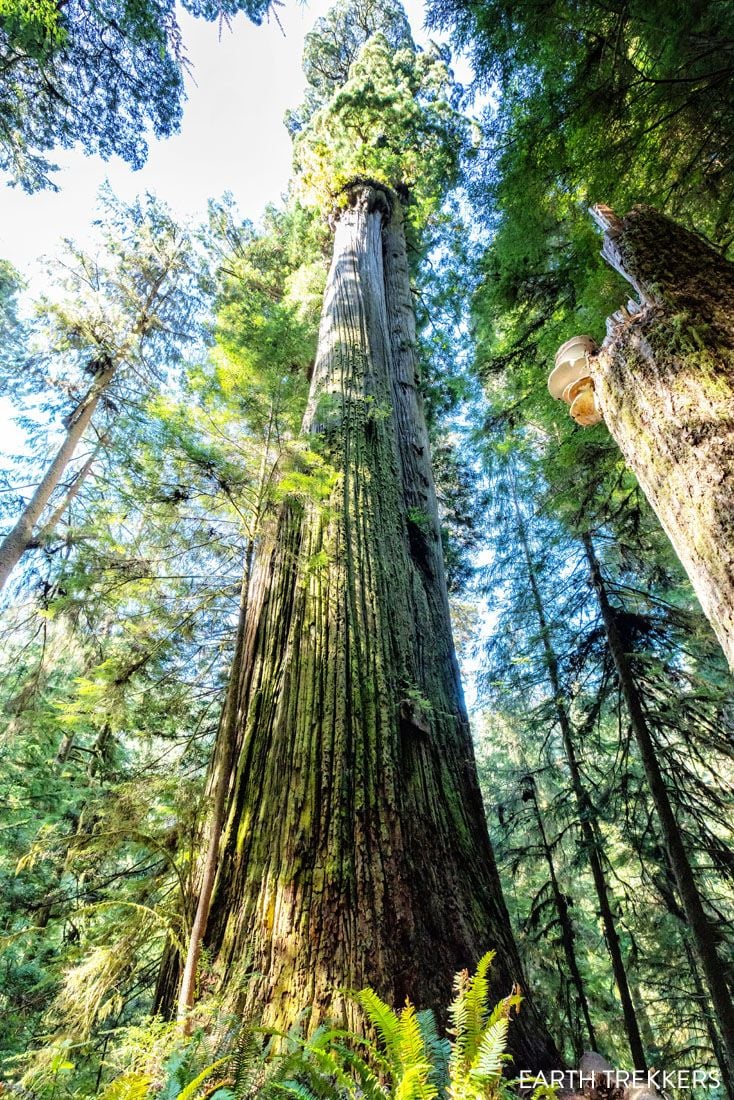
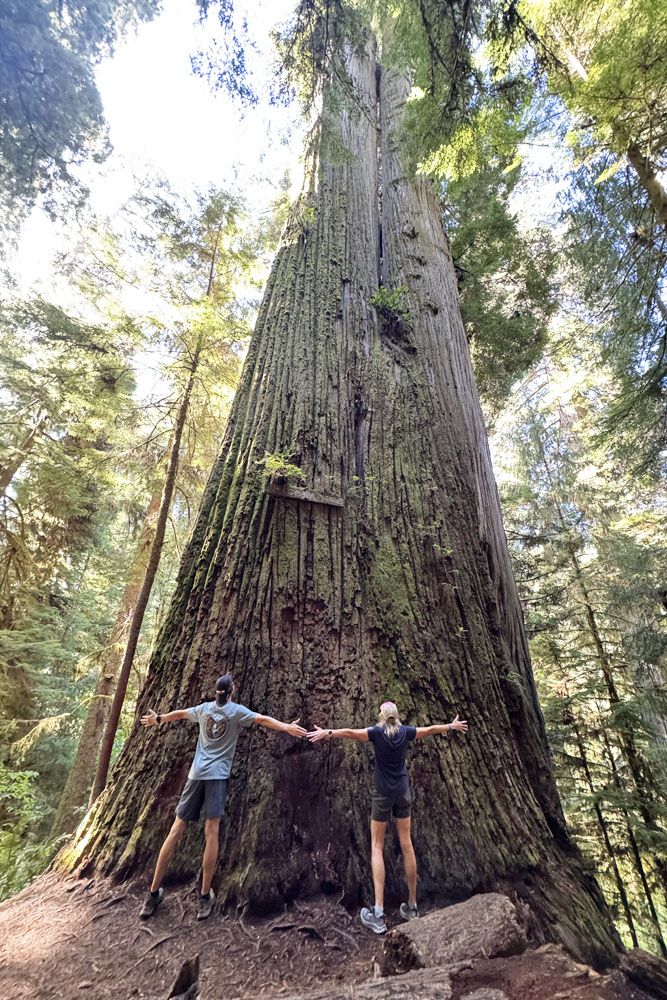
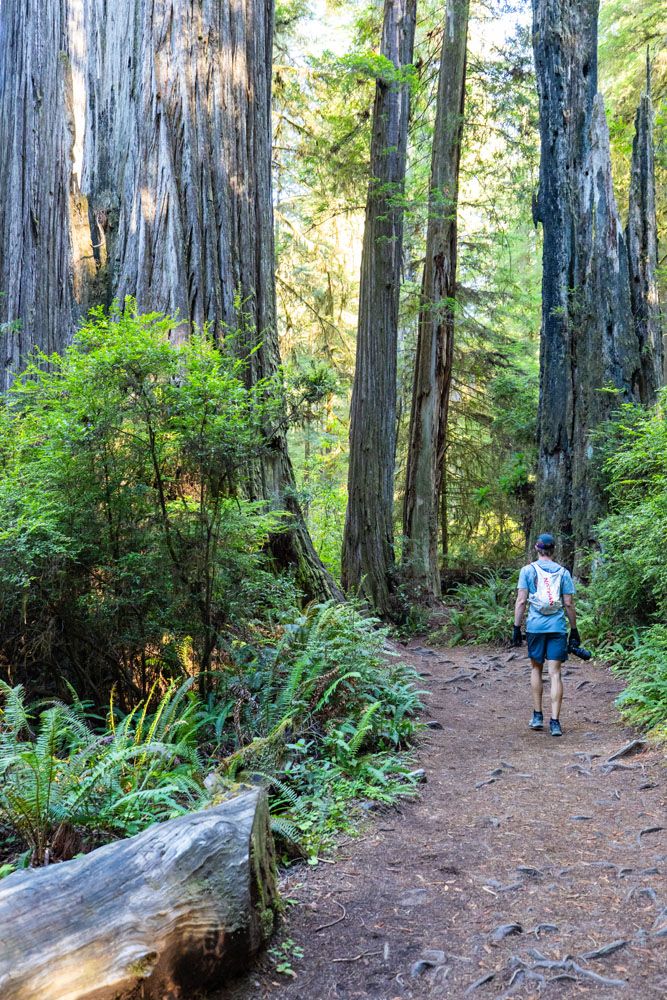
For something quieter with equally impressive trees, the Boy Scout Tree Trail is an underrated gem. Longer and more remote, it sees far fewer visitors than Grove of Titans and rewards those willing to go the extra mile. Here are a few photos we took along the trail ↓
Afternoon: Lunch at Hiouchi & Endert Beach
After the stops along Howland Hill Road, stop for lunch at the Hiouchi Restaurant in the small town of Hiouchi. With hearty food and a great location right near the park, this is our top restaurant recommendation in the area.
After refueling at Hiouchi Restaurant, head to Endert Beach for a complete change of scenery. This wild, rugged stretch of Northern California coastline offers a peaceful afternoon contrast to the forest.
Evening
We recommend dinner at Sea Quake Brewing in Crescent City. We ate there twice, since dining options near Klamath are limited. It’s got a great vibe and it is a popular spot, among both locals and tourists.
Day 8: Prairie Creek Redwoods & Redwood National Park
On the Road: 70 miles (1.5 hours); starting in Klamath and ending in Eureka
Today shifts south to Prairie Creek Redwoods State Park, home to one of the most iconic experiences in all of RNSP: Fern Canyon. It’s a very different feel from Jedediah Smith: more dramatic, more varied, and with a good chance of spotting Roosevelt elk.
Morning: Newton B. Drury Scenic Parkway & Big Tree Wayside
Start with a drive along the Newton B. Drury Scenic Parkway, the park’s 10-mile scenic road through old-growth forest. This is one of the great scenic drives in Northern California. Pull over at the trailheads and overlooks as you go.
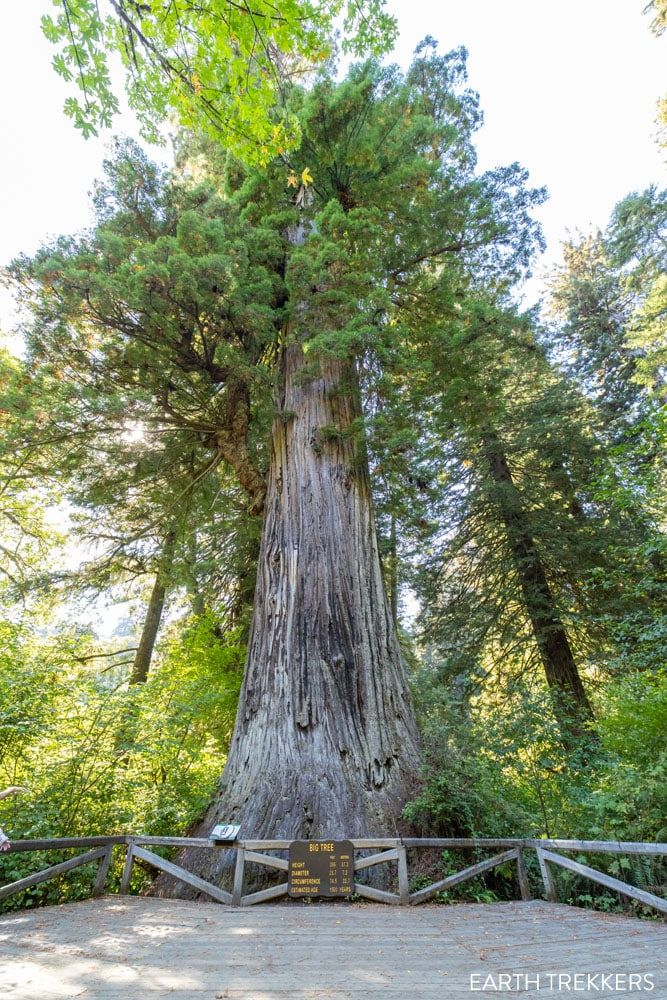
Big Tree Wayside
Stop at Big Tree Wayside to stand next to one of the largest trees in the park. It’s a short walk from the parking area and the scale of the tree is genuinely jaw-dropping.
Keep your eyes open for Roosevelt elk along the parkway. Elk Prairie, near the visitor center, is the best spot. Early morning gives you the best chance of a sighting.
Afternoon: Gold Bluffs Beach & Fern Canyon
The afternoon belongs to Gold Bluffs Beach and Fern Canyon, two of the most spectacular places in the Redwood parks. Drive Davison Road (unpaved, but suitable for standard vehicles) down to the coast.
Gold Bluffs Beach is a wild, remote stretch of coastline backed by golden bluffs and old-growth forest. It’s stunning and worth time to walk and explore.
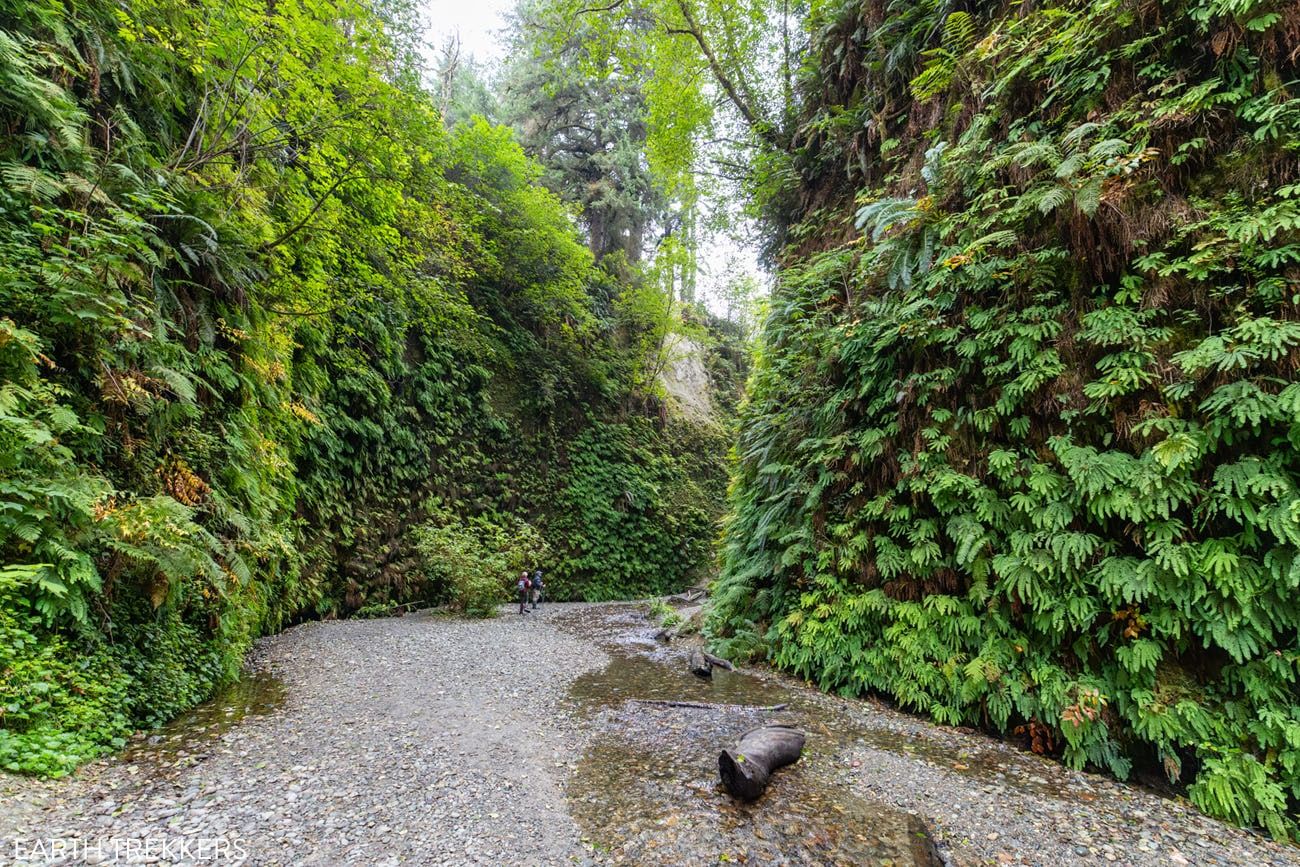
Fern Canyon is unforgettable. A narrow canyon with 50-foot walls draped entirely in five-finger ferns, with a small stream running through the floor. It looks prehistoric, which is fitting, since scenes from Jurassic Park 2 were filmed here. The hike is short (about a mile) but completely unlike anything else on this trip. Note that a reservation is required to drive Davison Road in peak season, so book in advance.
For the full guide to Prairie Creek, including trail details and tips, see our Prairie Creek Redwoods guide.
Optional: Lady Bird Johnson Grove — Redwood National Park
If time and energy allow, end the day with a visit to Lady Bird Johnson Grove in Redwood National Park. This 1.4-mile loop through old-growth and second-growth redwoods is the most popular trail in the national park. It’s flat, accessible, and beautiful. It’s a fitting final redwood experience before tomorrow’s long drive south.
Where to Stay
We stayed in Eureka, which set us up nicely to visit Avenue of the Giants on day 9. We stayed at the Home2 Suites by Hilton Eureka, a relatively new hotel that gets very good reviews. Other options include Carter House Inns and Holiday Inn Express & Suites Eureka.
Day 9: Avenue of the Giants
On the Road: 150 to 250 miles (4 to 6 hours), depending on your airport location and how far you choose to drive today
Today has two parts: a beautiful final morning in the redwoods, and an afternoon of driving that sets you up comfortably for tomorrow’s flight.
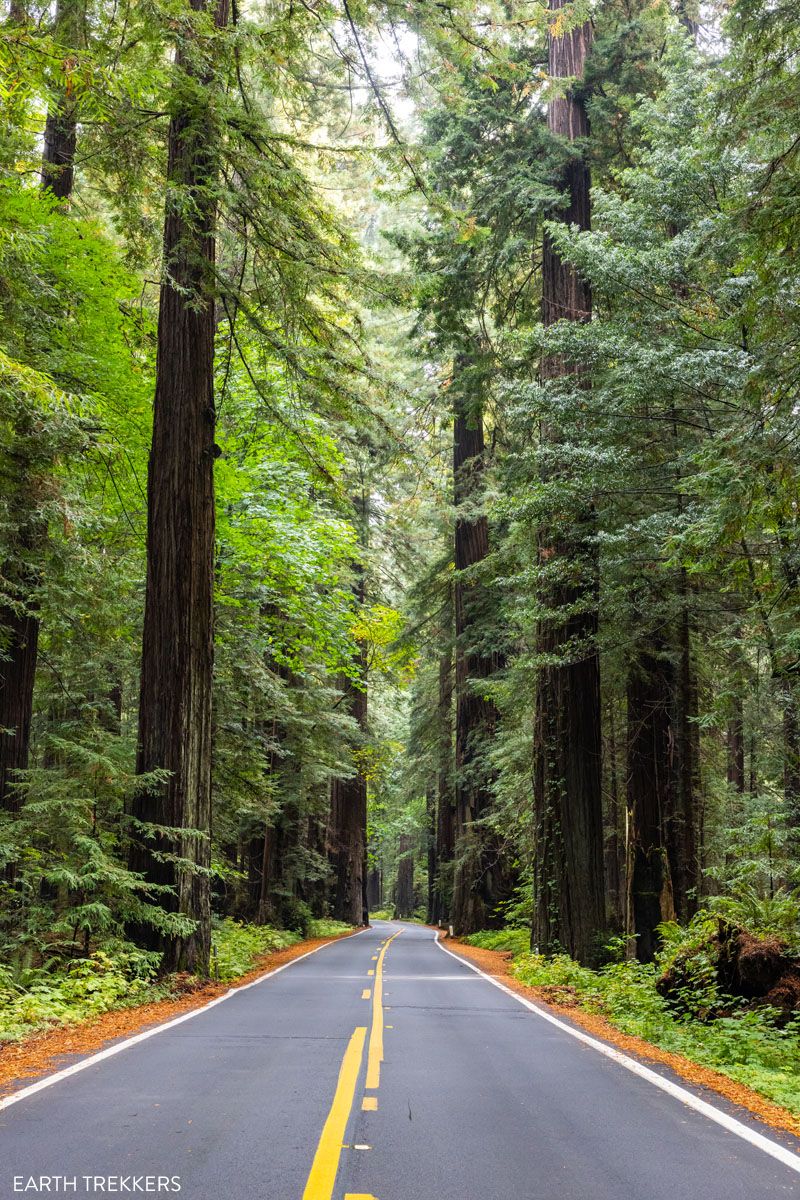
Avenue of the Giants
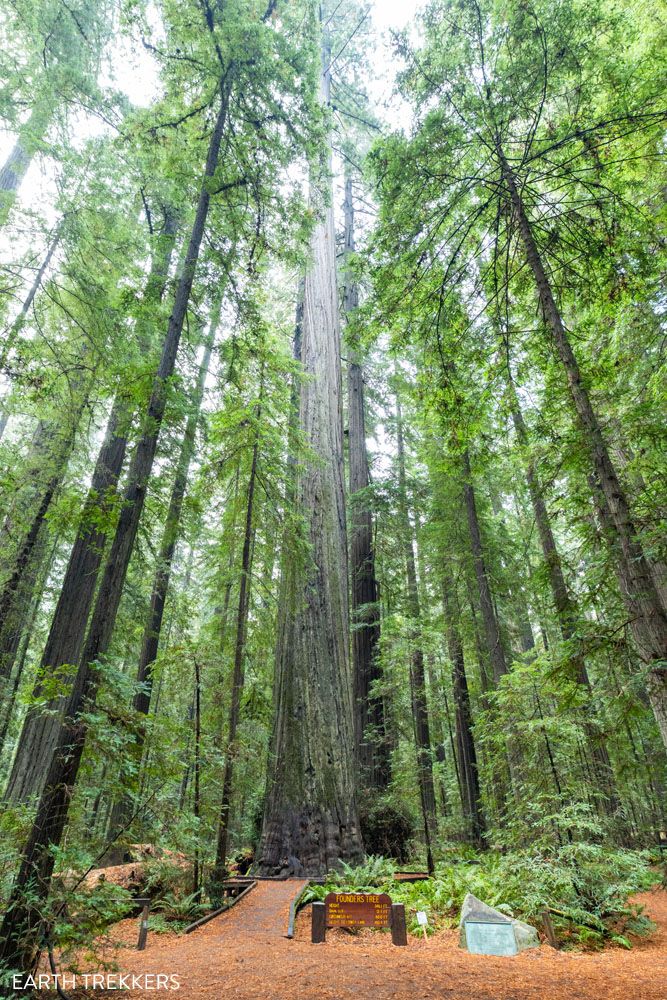
The Avenue of the Giants is a 31-mile scenic road through Humboldt Redwoods State Park, running parallel to Highway 101 through groves of some of the tallest redwoods on Earth. It’s free to drive, and even after days in the Redwood parks, these trees don’t stop impressing. We were on day five of seeing redwoods when we drove through it, and Founders Grove still stopped us in our tracks.
Give yourself two to three hours. Here are the highlights:
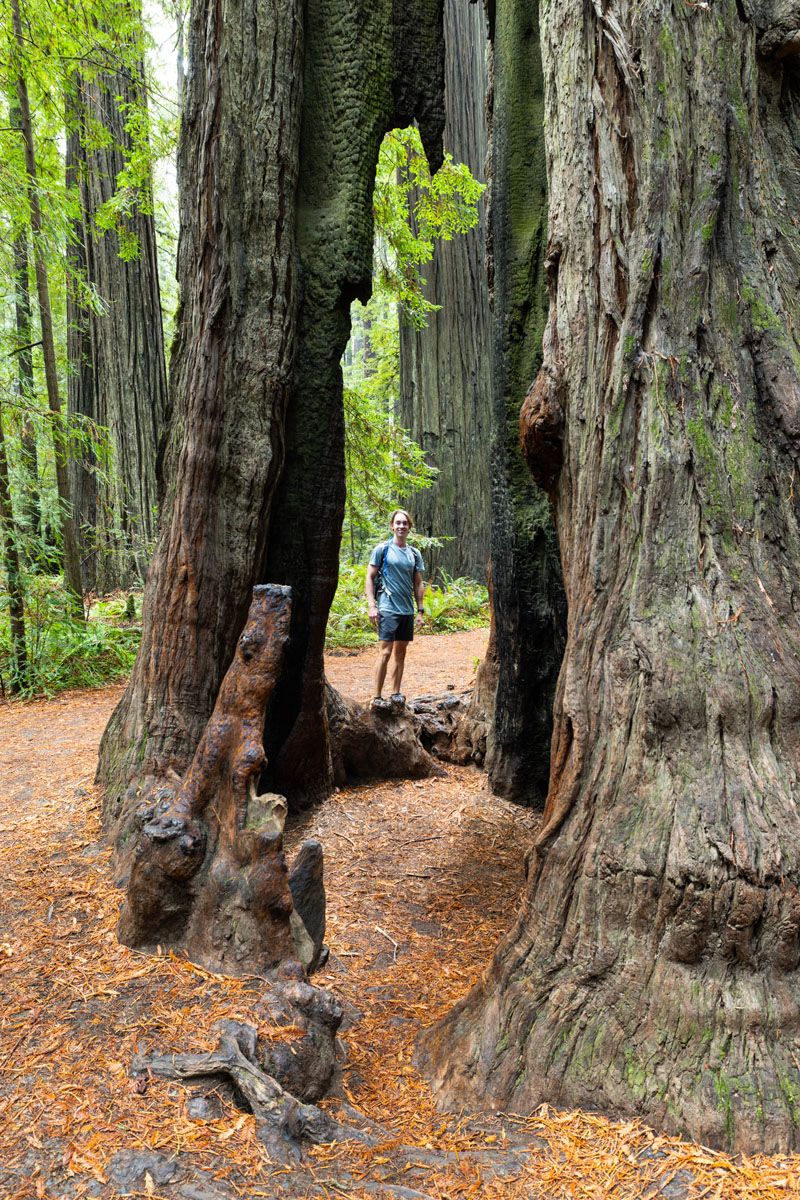
- Founders Grove Nature Loop Trail is the must-do. This flat, 0.5-mile trail loops through old-growth forest and it was our favorite stop along the entire avenue. You’ll pass the Founders Tree and the Dyerville Giant, two trees that once held the record for tallest in the world. Short, easy, and spectacular.
- Immortal Tree is a quick five-minute stop. This is a 1,000-year-old redwood that has survived lightning, logging, fire, and flooding.
- Shrine Drive-Thru Tree is exactly what it sounds like. A little kitschy, absolutely fun.
For the full guide including a map, see our Avenue of the Giants guide.
Afternoon & Evening: Drive Toward the Airport
After the Avenue of the Giants, get back on Highway 101 south and start making miles. Here’s how to think about where to stop for the night, based on where you’re flying home from:
- Flying from San Francisco or Sacramento: From the southern end of Avenue of the Giants, it is a 230 mile (4 hour) drive to San Francisco International Airport and a 220 mile (4 hour) drive to Sacramento International Airport. You can do it all today, or spend the night in Napa or Sonoma Valley. This would be a wonderful way to end the trip. Have dinner at a winery or a great restaurant, stay somewhere comfortable, and then it is a leisurely morning drive to the airport on Day 10.
- Flying from Medford: Head north on Highway 101 and aim to get close to Medford tonight. You’ll be well-positioned for an easy drive to the airport tomorrow morning.
- Flying from Reno: It is a 360-mile, 6-hour drive from the Avenue of the Giants to Reno. Break up the drive by spending the night in Sacramento.
Day 10: Fly Home
Complete the drive to the airport, return your rental car, and fly home.
How to Modify This Itinerary
If You Have Less Time: 8 or 9 Days
The easiest way to trim a day or two is to cut the Avenue of the Giants on Day 9. It’s a wonderful bonus, but it’s not a national park, and skipping it simply means driving straight from the Redwood parks to your airport city on Day 9. You’ll still have experienced the full loop across all three national parks.
If you need to cut more significantly, consider dropping Cinder Cone and McArthur-Burney Falls from Day 4 to make it a pure drive day, or condensing the Crater Lake days to a single full day instead of a day and a half.
If You Only Have a Week: 7 Days
A week isn’t enough time to do all three parks justice. Our recommendation is to choose two parks and do them well rather than rushing through all three.
The best two-park pairing depends on your airport. Lassen Volcanic and Redwood work exceptionally well together, because they’re within easy driving distance of each other, and both are accessible from San Francisco, Sacramento, or Reno. Crater Lake can be saved for a separate Oregon road trip, where it pairs naturally with the Oregon coast and the Columbia River Gorge.
If you’re flying through Medford, Crater Lake and Redwood is a logical two-park combination with minimal driving.
If You Have More Time: 11 to 14 Days
There’s plenty to add.
One extra day in Lassen is worth it for hikers. Brokeoff Mountain and the Warner Valley hydrothermal area are all excellent and didn’t make it into the 10-day version as primary recommendations.
Lava Beds National Monument fits naturally between Lassen Volcanic and Crater Lake. This lava tube cave system continues the volcanic theme of the first half of the trip. Add one day between Days 3 and 4.
Oregon Caves National Monument pairs with Day 5 as described in the itinerary, but if you want to do it properly rather than as a rushed stop, an extra afternoon makes the visit more relaxed.
Adding those stops brings you closer to the full seven-park Circle of Discovery loop (Lassen Volcanic, Crater Lake, Redwoods, Lava Beds, Tule Lake, Whiskeytown, and Oregon Caves), the NPS’s official road trip for this region.
One extra day in the Redwood parks is genuinely rewarding. We spent four full days in the Redwood parks and didn’t run out of things to do. A third day gives you room to explore Del Norte Coast Redwoods State Park, hike the Damnation Creek Trail, or slow down and truly let the forests sink in. Three days in the Redwoods feels ideal for most visitors; four is for those who love it and want more.
California Wine Country makes an excellent add-on at the start or end of the trip for those flying through San Francisco or Sacramento. Spend two or three days in Napa or Sonoma before heading north to Lassen, or wind down the trip with wineries and a good meal before your flight home. For those who want to add on time in the city, see our guide to the Best Things to Do in San Francisco.
When is the Best Time for This Road Trip?
This itinerary works best from mid-July through September. Both Crater Lake and Lassen Volcanic are at very high elevations. Snow can linger on the roads and the trails well into July. In Crater Lake, boat tours only operate in the summer. To be able to hike the best trails, August and September are the very best months to do this road trip.
Here are a few things to be aware of:
- Lassen Volcanic Road Road Opening & Closing Dates: Highway 89, the main road through the park, typically opens between mid-May and early July, depending on the amount of snowfall the park receives. The highway usually closes between late October and late November. You can see opening and closing dates here.
- Hiking in Lassen Volcanic: Snow can linger on the trails well into late summer. We hiked Lassen Peak in mid-September and there was still snow on the trail. One of the top trails in the park, the Bumpass Hell Trail, tends to open mid-to-late July.
- Crater Lake Road Opening & Closing Dates: Crater Lake typically gets 30 to 50 feet of snow each winter. The North Entrance and West Rim Drive typically opens mid-May to mid-June (although in 2023 it opened June 30). East Rim Drive typically opens mid-June to mid-July. The North Entrance, West Rim Drive, and East Rim Drive typically close sometime between mid-October and November 1. You can see opening and closing dates here.
- Crater Lake South Entrance and Rim Village: This very small portion of the park is open all year, except in cases of very heavy snowfall, so it is possible to visit Crater Lake even in the winter (you will just be very limited in what you can do).
- Crater Lake Boat Tours: Taking a boat tour of Crater Lake is one of the top experiences in the park. Boat tours run from mid-July through mid-September. Important: Due to construction on the Cleetwood Cove Trail, boat tours aren’t being offered; these could resume in 2029 or later.
- Crater Lake Ride the Rim: Two Saturdays in September, a portion of Rim Drive closes for the Ride the Rim event. Thousands of cyclists ride around the rim. We were here on one of these Saturdays and the park is a zoo. I recommend avoiding these dates, as you won’t have full access to the park and finding parking spots is a nightmare. Get dates here. Note: This will not be held in 2026 due to construction projects in the park.
- Redwood National Park: This park remains open all year, but campgrounds operate on a seasonal basis.
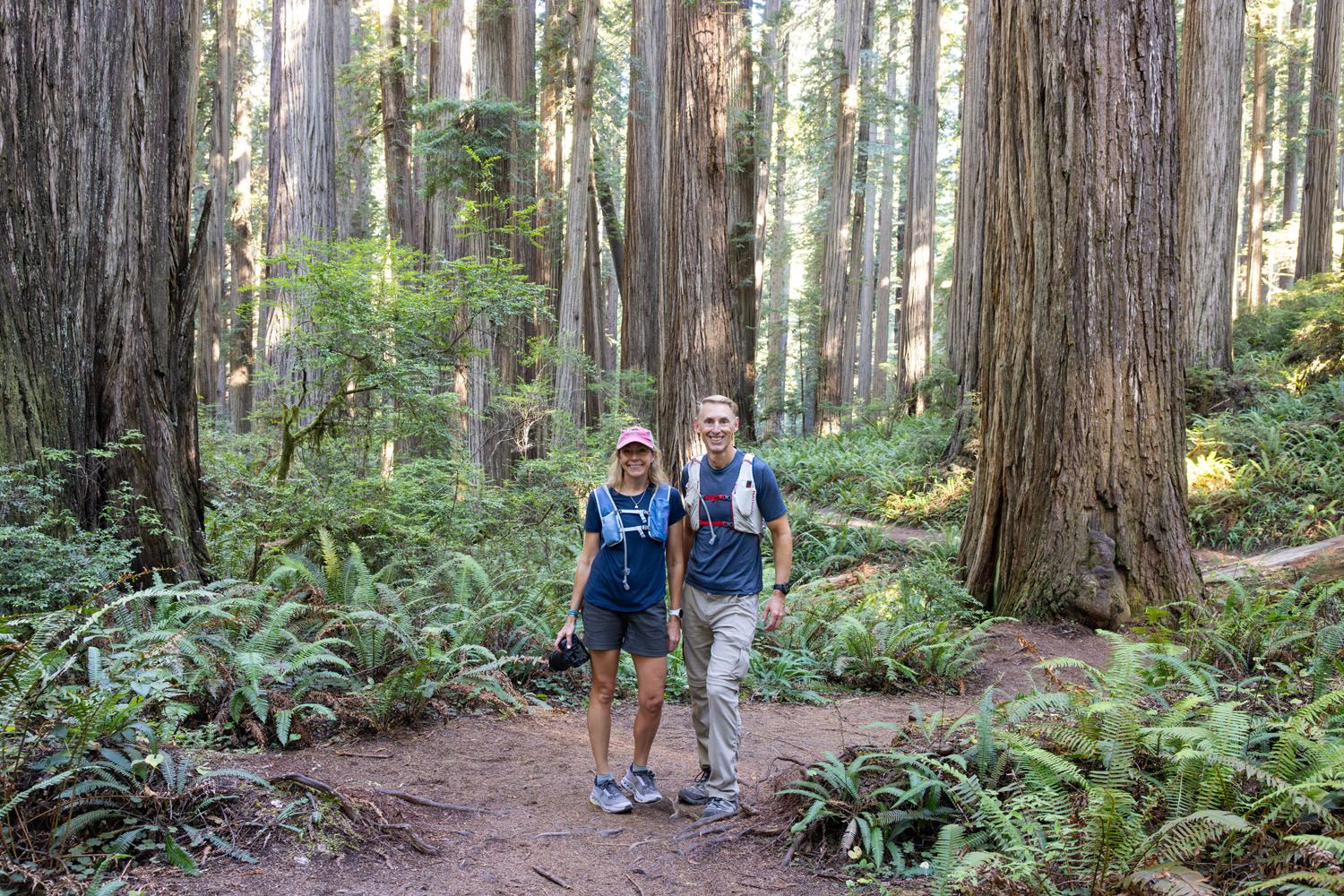
On the Boy Scout Tree Trail in Jedediah Smith
Frequently Asked Questions
Is an America the Beautiful Pass worth it for this road trip?
Yes, without question. The America the Beautiful Annual Pass costs $80 and covers entrance fees at all federal lands, including Lassen Volcanic, Crater Lake, and Redwood National and State Parks. Each park charges between $15 and $35 per vehicle for a single entry, so the pass pays for itself on this trip alone. Buy it at the first park entrance or in advance at store.usgs.gov.
Do I need to make reservations in advance?
Yes, for several things. Crater Lake Lodge and campsite reservations book up months in advance so reserve as early as possible if you want to stay inside the park. Fern Canyon in Prairie Creek Redwoods requires a vehicle reservation in peak season. McArthur-Burney Falls State Park now requires day-use reservations. For the parks themselves, timed-entry reservations are not currently required.
Can I do this road trip in reverse: clockwise instead of counterclockwise?
Yes. Starting from the Redwood parks and finishing at Lassen works just as well logistically. The advantage of the counterclockwise direction (as written) is that you build toward the Redwood parks as a finale, and the Avenue of the Giants makes a natural closing chapter. But if your flights work better the other way, reverse it without hesitation.
Are boat tours available at Crater Lake?
No, boat tours of Crater Lake are suspended until 2028 at the earliest due to major construction on the Cleetwood Cove Trail and boat docks. Taking a boat out to Wizard Island is one of the best experiences in the park, so if that’s important to you, check the NPS website for the latest updates before booking your trip.
Is this road trip suitable for families with children?
Yes, with some adjustments. Children will love the Avenue of the Giants, Stout Memorial Grove, Fern Canyon, and the Crater Lake rim drive. Bumpass Hell in Lassen is accessible and genuinely fascinating for kids. The Lassen Peak summit hike is not recommended for young children. The Trees of Mystery and Klamath Tour-Thru Tree on Day 6 are specifically worth adding if you’re traveling with kids.
Can I camp on this road trip?
Absolutely, and camping is a wonderful way to experience all three parks. Lassen Volcanic, Crater Lake, and the Redwood parks all have campgrounds, some inside the park, some nearby. Book early, especially for Crater Lake, which fills months in advance in peak season. This itinerary is written around hotel lodging, but the day structure works equally well for campers.
Plan Your California Oregon Road Trip
Lassen Volcanic National Park → This road trip only scratches the surface of what Lassen Volcanic has to offer. For a deeper dive into the park, see our Lassen Volcanic National Park Travel Guide (which has links to all of our guides) and our guide to the best things to do in Lassen Volcanic National Park.
Crater Lake National Park → For a complete day in Crater Lake, including Garfield Peak, Rim Drive, and the Watchman Peak sunset, see our One Day in Crater Lake guide. For those planning a future visit when boat tours resume, our Crater Lake Travel Guide and Wizard Island guide are essential reading.
Redwood National and State Parks → Our Redwood National and State Parks guide is the best starting point for planning your time in the parks. From there, dive into the dedicated guides: Jedediah Smith Redwoods, Prairie Creek Redwoods, Del Norte Coast Redwoods, and Redwood National Park.
Bonus Stops → For everything you need to know about the Oregon coast stretch on Day 6, our Samuel H. Boardman State Scenic Corridor guide covers every viewpoint worth stopping at. For the Avenue of the Giants finale on Day 9, see our Avenue of the Giants guide.
Broader Trip Planning → If you’re adding days to either end of this road trip, our Best Things to Do in San Francisco and California Travel Guide are good places to start. And for inspiration on where to go next, browse our full US National Parks guide.
If you have any questions about this California Oregon road trip itinerary, let us know in the comment section below. We read and answer every one.
Explore More of California & Oregon
US National Park Itineraries & Road Trip Ideas
National Park Itineraries The national parks are best experienced as a road trip and with 56 parks visited between us, we’ve done a lot of them. Whether you’re dreaming of a two-week American Southwest loop, a classic Yellowstone and Grand Teton combo, or a deep dive into Utah’s Mighty 5, we’ve put together detailed itineraries […]
16 Best Things to Do in Crater Lake National Park
Discover the best things to do in Crater Lake National Park, including its top viewpoints, scenic drives, and hiking trails. One day is enough to see the highlights, but more time allows you to hike another trail or two. Home to the deepest lake in the United States, Crater Lake amazes visitors every year with […]
Top 10 Hikes in Lassen Volcanic (+ Our Favorites)
In this guide, we will uncover the 10 best hikes in Lassen Volcanic, from popular trails to a few hidden gems. These are located along Highway 89 (the heart of the park) and in more remote regions such as Warner Valley and Butte Lake. Stroll through bubbling hydrothermal areas, summit volcanoes like Cinder Cone and […]
Damnation Creek Trail: Photos, Trail Stats & Step-By-Step Guide
The Damnation Creek Trail is our favorite hike in Del Norte Coast Redwoods State Park. It’s a short but challenging hike, with a trail running through old-growth redwood forests out to a picturesque beach. We hiked the Damnation Creek Trail on a September morning, and it quickly became one of our favorite experiences in Redwood […]
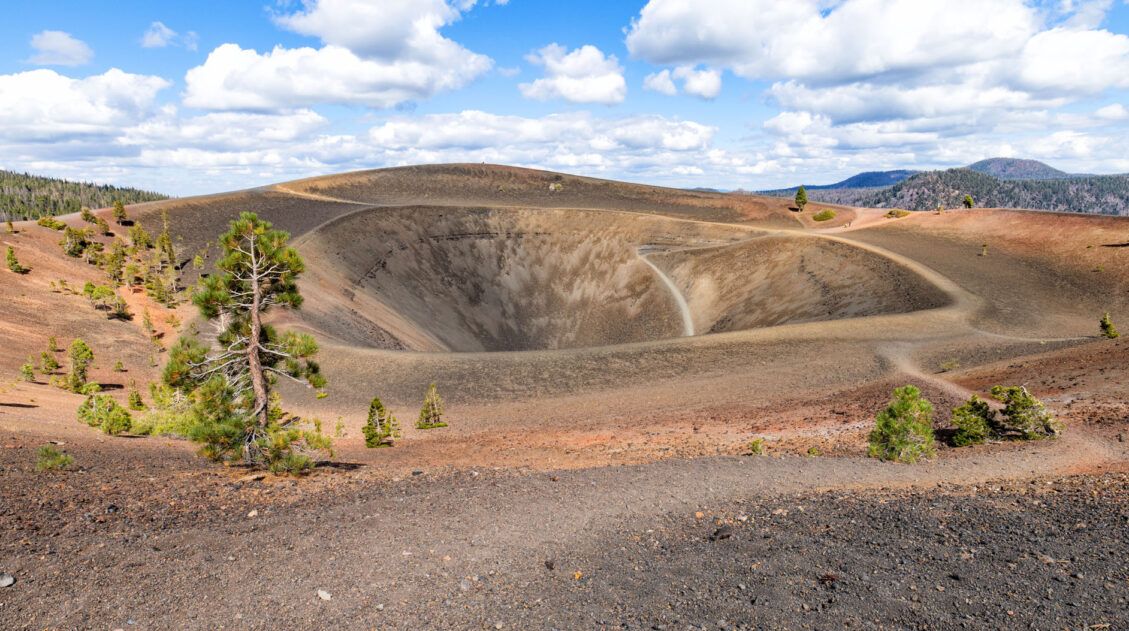
Cinder Cone Trail, The Coolest Hike in Lassen Volcanic
In Lassen Volcanic National Park, there’s no shortage of volcanoes to see. Highlights include the iconic Lassen Peak, massive lava rocks, and steaming hydrothermal features like Bumpass Hell. For a less crowded hike that highlights historic lava flows and offers sweeping views from an extinct volcano, put the Cinder Cone Trail on your list. This […]
Lassen Peak Trail: Step-By-Step Trail Guide, Photos & Stats
The Lassen Peak Trail is not only one of the most popular hikes in Lassen Volcanic National Park, but it also leads to the tallest point in the park at 10,457 feet (3,187 meters). The trail to the top is just 2.4 miles one way, but with a steady ascent and high elevation, this hike […]
30 Epic Things to Do in Yosemite for First-Timers
Yosemite National Park is packed with famous landmarks, awesome hikes, and breathtaking views. If you are planning your first trip to Yosemite, how do you know what to do? I am a big fan of lists (and photos!). In this post, I list the best things to do in Yosemite: the best landmarks to visit, […]
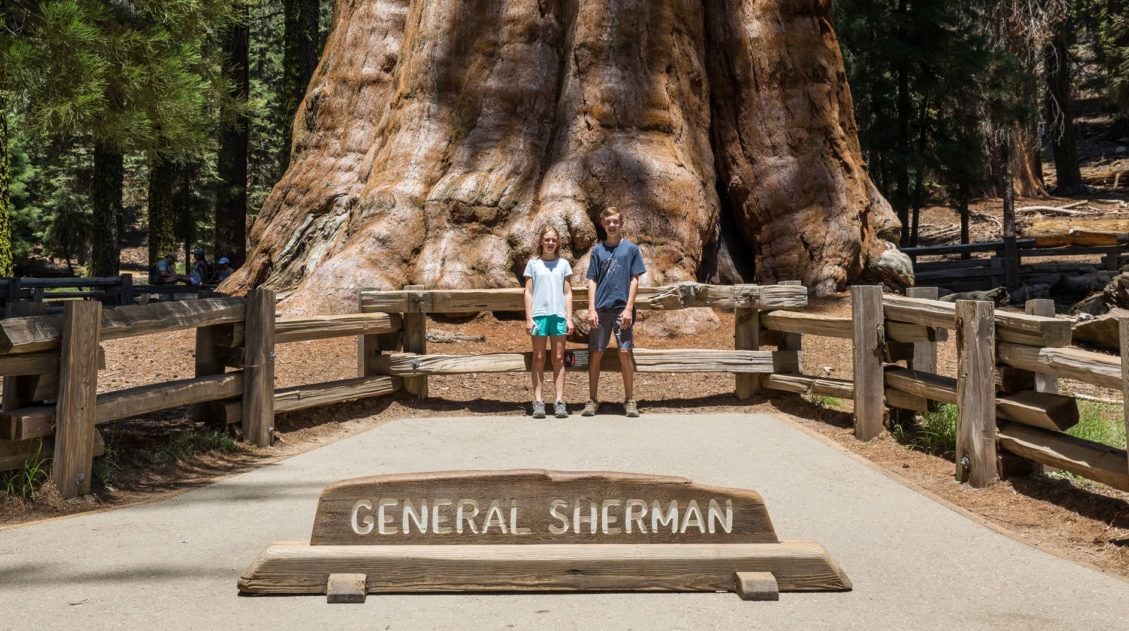
One Day Itinerary for Kings Canyon and Sequoia National Parks
Kings Canyon and Sequoia National Parks sit side by side in central California. Filled with alpine peaks, deep canyons, and the largest trees in the world, you could spend several days here. However, if you only have one day, you have just enough time to visit the highlights of both parks. We visited Kings Canyon […]
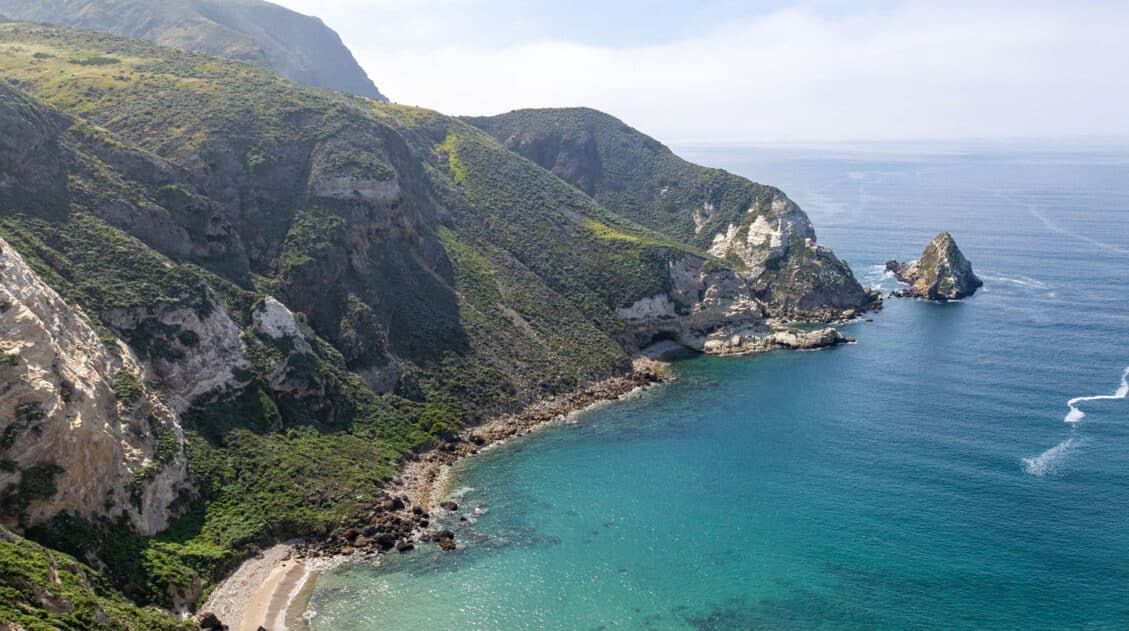
How to Plan a Trip to Channel Islands National Park
Channel Islands National Park Most national parks, you drive up, show your pass, and you’re in. Channel Islands doesn’t work that way. To reach this park — our 56th of 63 US national parks — Tim and I had to book a ferry months in advance, pack every meal and drop of water we’d need […]
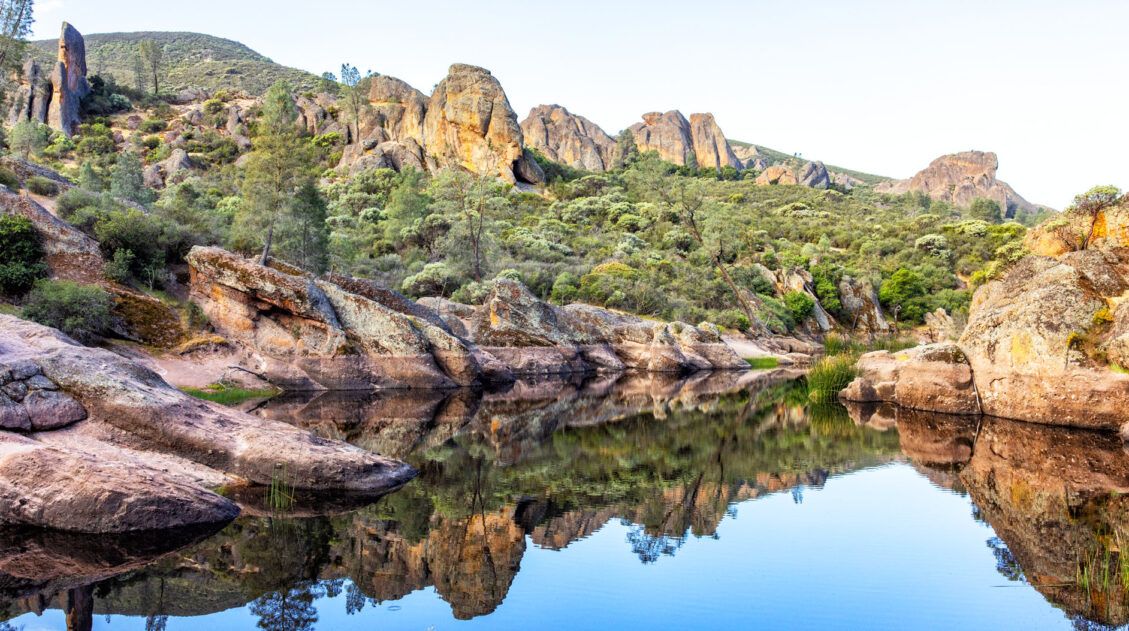
Best of Pinnacles: 5 Thrilling Things to Do in Pinnacles National Park
Pinnacles National Park is one of the smallest and least visited national parks in the United States. The list of things to do in Pinnacles National Park is relatively short and unexpectedly awesome. We loved this park, with its thrilling, unique hiking trails, its gorgeous reservoir and caves, and a chance to spot California Condors. […]
United States Travel Guide: Places to Visit in the USA
Plan your visit to the United States. Learn about the best things to do, how to plan your time, road trip ideas, and sample itineraries.
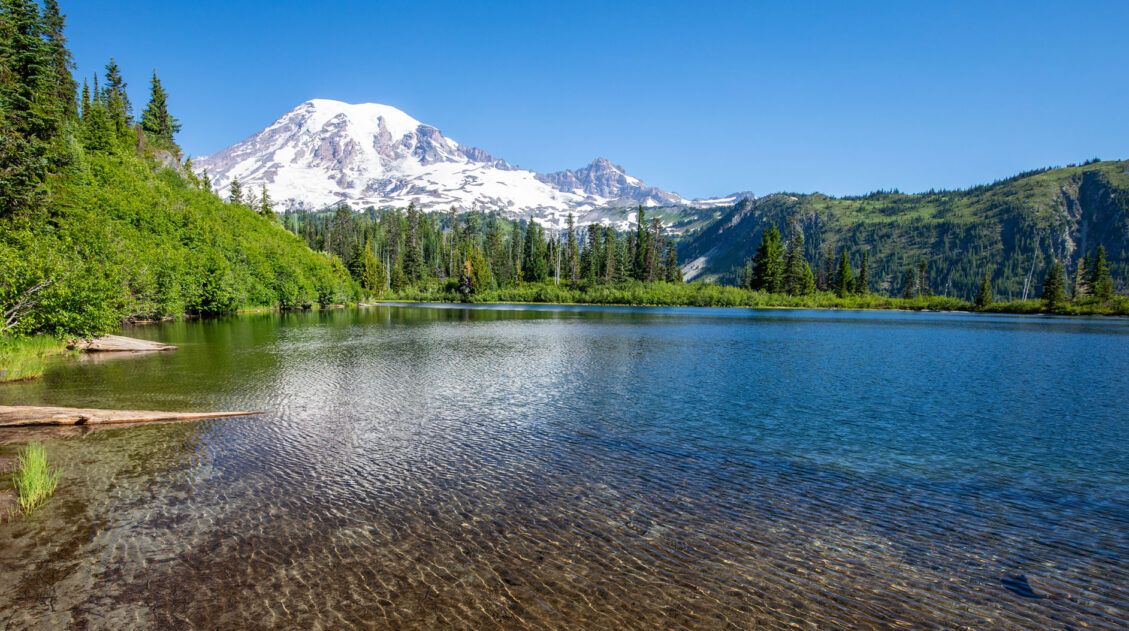
US National Parks List: All 63 Parks, Map & Free Printable Checklist
There are 63 national parks in the United States, and we’ve visited 56 of them, from the remote wilderness of Denali to the coral reefs of the Virgin Islands. We’re a family of avid hikers who have spent over a decade exploring these parks, from multi-day backcountry trips to scenic drives with kids in tow. […]
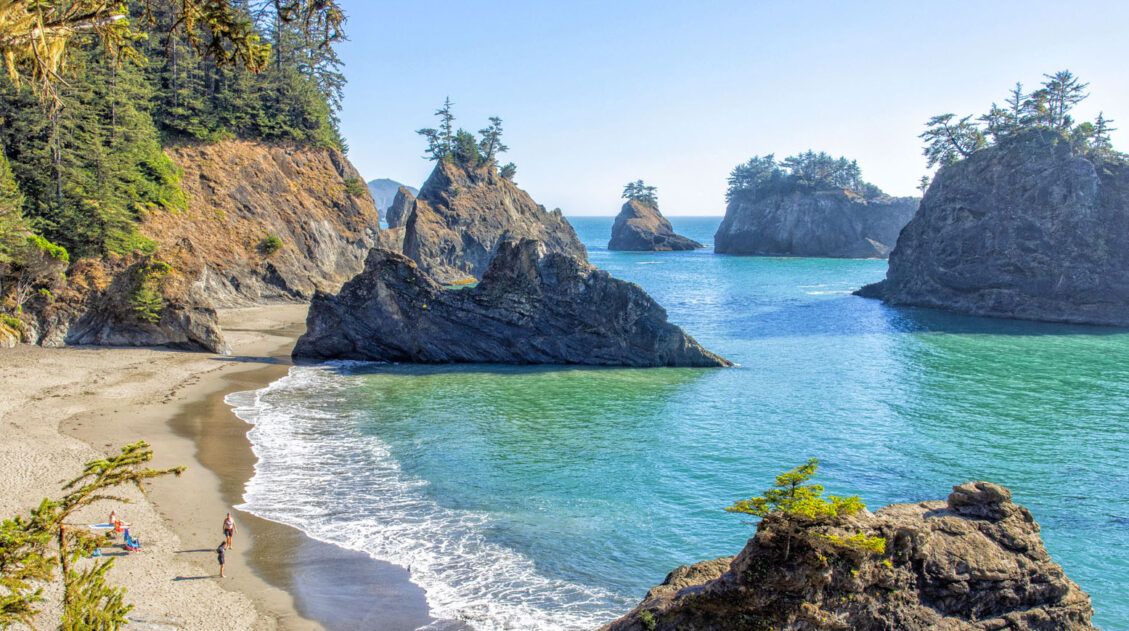
Oregon Travel Guide: Places to Visit in Oregon
Oregon Travel Guide Oregon is one of America’s most beautiful nature retreats, offering destinations ranging from the rugged coastline of the Pacific Ocean to the majestic peaks of the Cascade Mountains. Outdoor enthusiasts will love Oregon’s scenic hiking trails, serene lakes, impressive waterfalls, and excellent skiing opportunities. If you enjoy nature, outdoor activities, or taking […]

Comments 4