
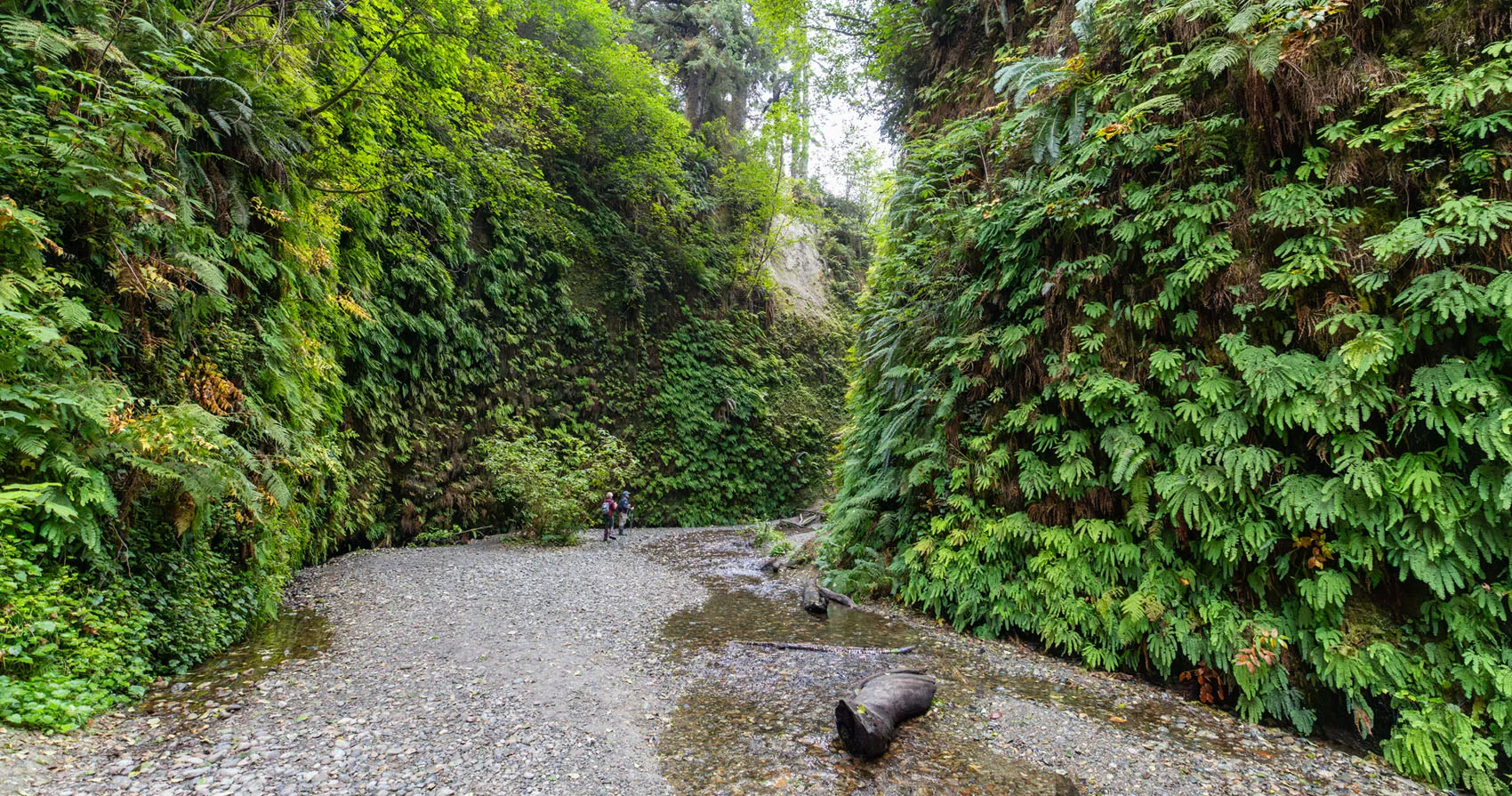

If you’re looking for one of the easiest yet most rewarding ways to see California’s redwoods, Prairie Creek Redwoods State Park is hard to beat. Tucked along the northern California coast, this park protects over 14,000 acres of towering old-growth forest, fern-filled canyons, and sandy beaches. It’s one of the most compact and visitor-friendly parks in the entire Redwood region, making this a great park for first-time visitors.
In September 2025, we worked our way south through the Redwood parks, spending four full days exploring all of them. Prairie Creek was one of our favorites.
We enjoyed the variety of things to see and do, the compact nature of the park, and of course, hiking amongst the redwoods. We spent 24 hours here and got the chance to see all the park’s highlights. Some of our favorite things were seeing Big Tree Wayside, hiking through Fern Canyon, and driving the Newton B. Drury Scenic Parkway.
Prairie Creek Redwoods State Park is a great park for those who want to easily see old-growth redwoods and complete a short hike or two. If you’re planning a trip to Redwood National and State Parks, this state park is not to be missed.
The Essentials
WHERE | Northern California, between Crescent City and Eureka
DON’T MISS | Fern Canyon, Newton B. Drury Scenic Parkway, Big Tree Wayside, Karl Knapp Loop
HOW MUCH TIME | Half to a full day
BOOK IN ADVANCE | Fern Canyon & Gold Bluffs Beach (mid-May through mid-September visits)
STAY | Campground in the park, Klamath, Crescent City, or Eureka
Things to Do in Prairie Creek Redwoods State Park
From scenic drives, sandy beaches, and hikes past towering redwoods and through lush canyons, our list below details the top things to do in Prairie Creek Redwoods State Park.
For those who only want to see the highlights, here are our top 3 must-do experiences within Prairie Creek Redwoods State Park:
- Big Tree Wayside – This is one of the tallest redwood trees you’ll see within the state park and is easily accessible. Extend your visit with a few hiking options.
- Newton B. Drury Scenic Parkway – This 9-mile-long scenic avenue is lined with old-growth redwood groves. Many of the park’s highlights also lie along this road.
- Fern Canyon – Enjoy a short but fun adventure hike as you carefully navigate stream crossings in a lush, fern-filled canyon.
1. Drive the Newton B. Drury Scenic Parkway
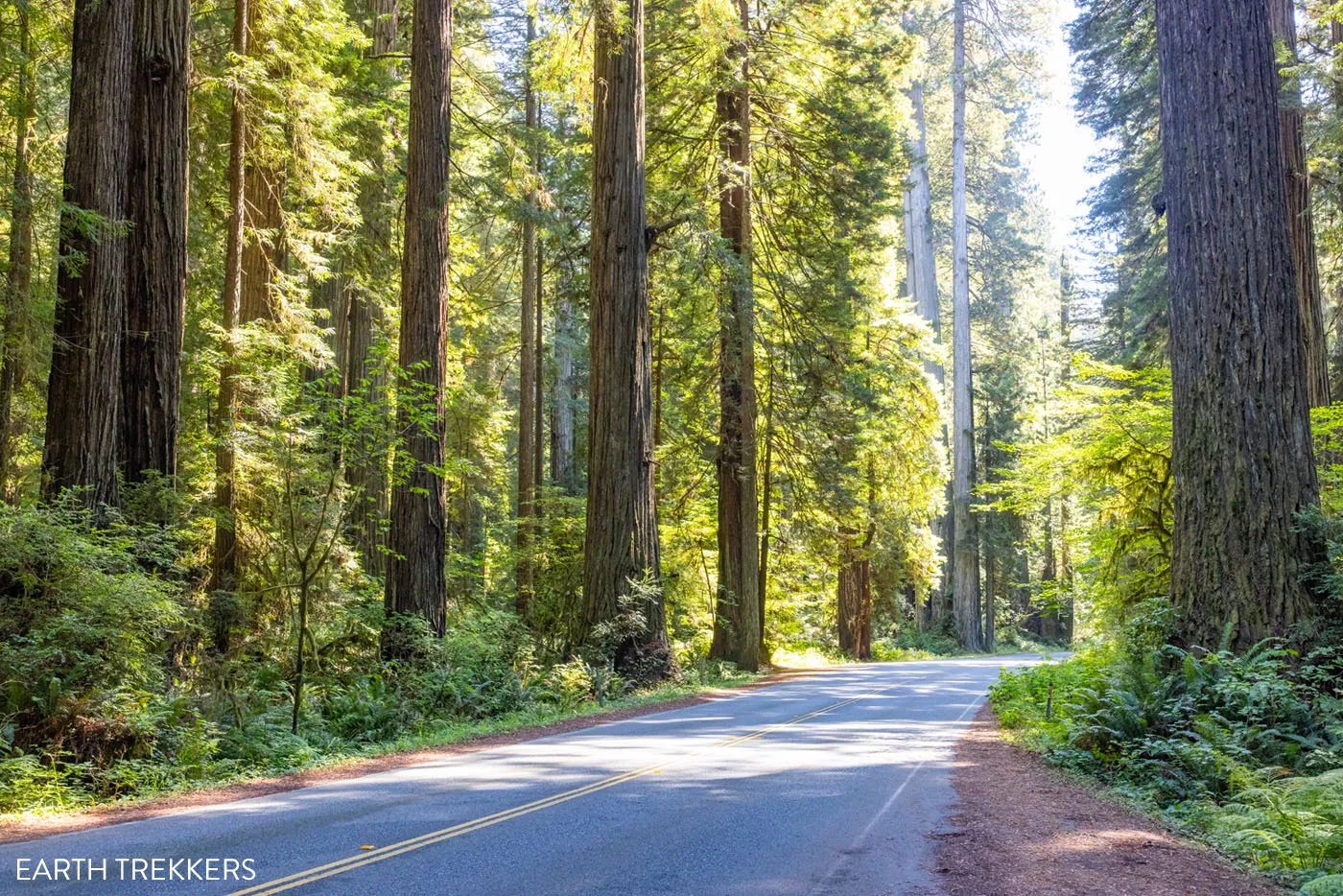
This is the main highway leading through Prairie Creek. Redwood trees tower over the parkway, lining the road in spectacular fashion.
This will be most visitors’ introduction to the park, and this scenic drive doesn’t disappoint. Plus, you’ll find many of the park’s highlights along this road, such as Corkscrew Tree, Big Tree Wayside, and the Prairie Creek Visitor Center.
The parkway is only 9 miles long but it’s scenic the entire way. This was one of our favorite scenic drives in all of Redwoods National and State Parks. The grove you drive through is very impressive, and there are plenty of spots along the road where you can pull off and take pictures.
The parkway is closed on the first Saturday of each month from October through May for a “Hike and Bike Day.” This provides a great chance to walk through old-growth redwood groves without the noise of motorized vehicles. However, you won’t be able to drive between many of the sites along this main road.
2. Take a Photo with Big Tree Wayside
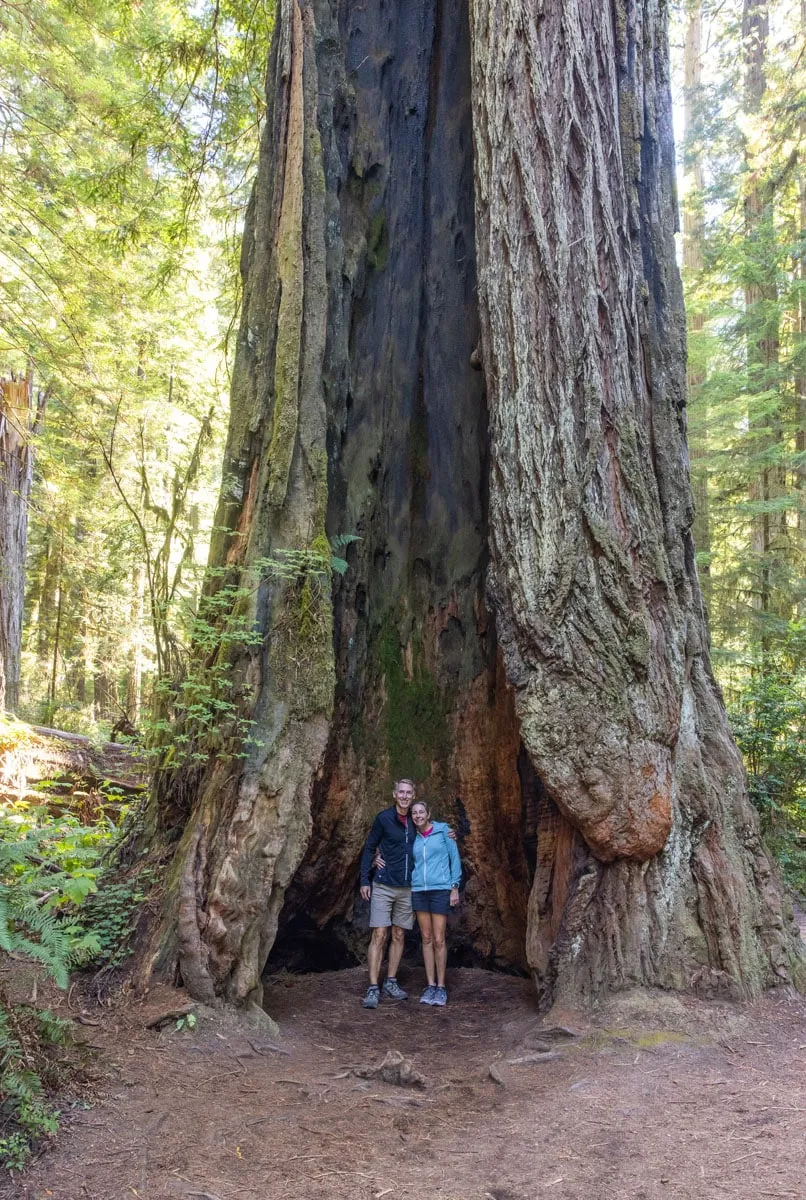
This massive redwood tree stands out amongst the surrounding giants. Estimated to be 1,500 years old, Big Tree Wayside is 286 feet tall (87 meters) and 23.9 feet (7.3 meters) wide, making it one of the largest trees in the state park. Big Tree Wayside is easy to visit and a spectacular sight to see, making it one of the best things to do in Prairie Creek Redwoods.
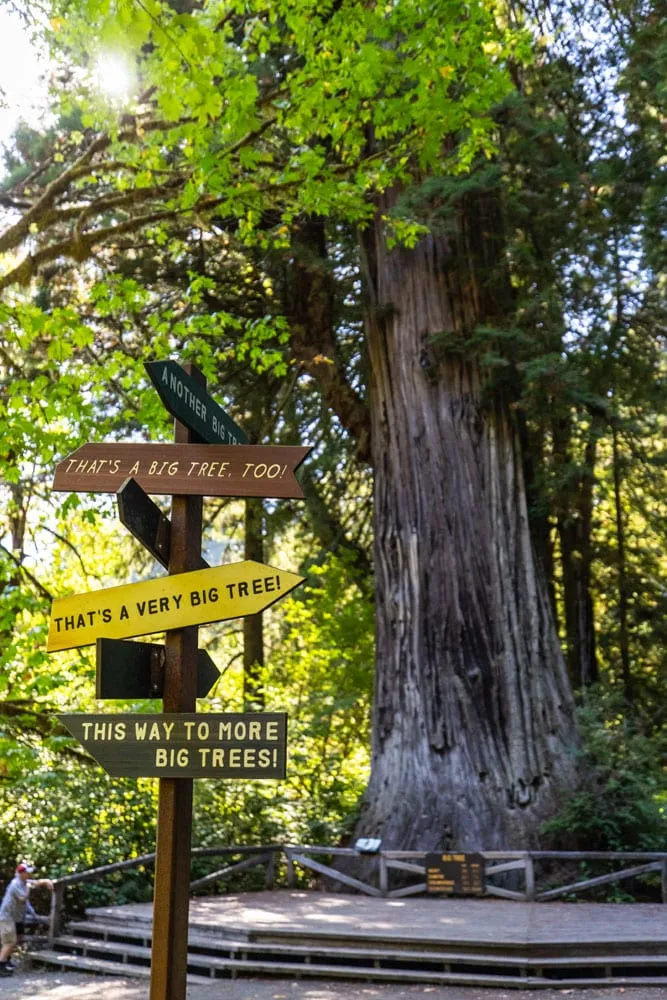
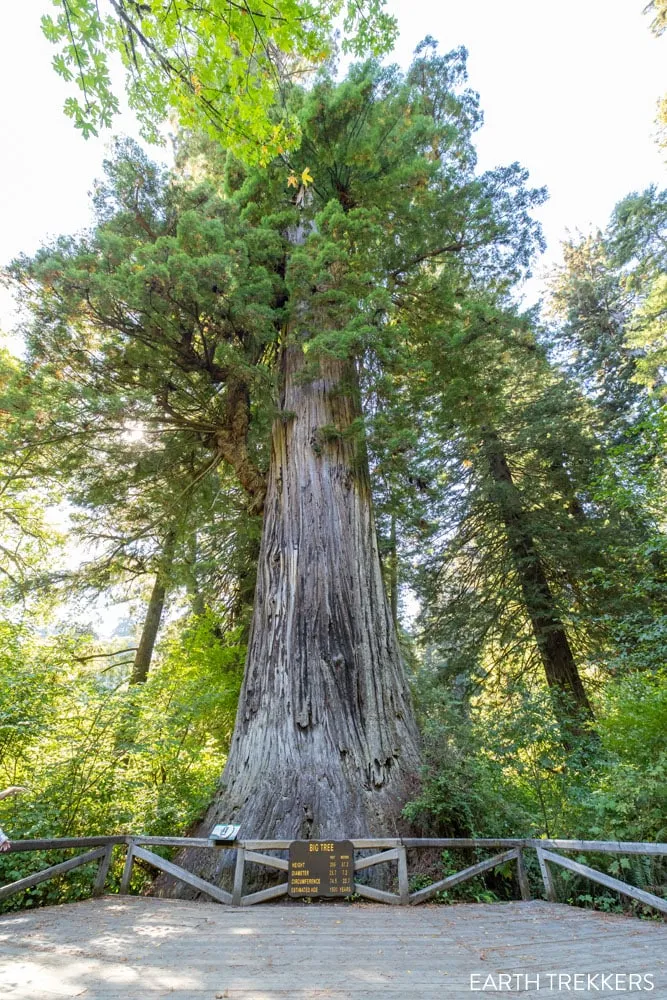
There are multiple ways to see Big Tree Wayside.
How to See It: The easiest of which is to park in the paved lot next to Big Tree Wayside and complete the 2-minute walk out to the tree. Extend your visit by hiking along the Karl Knapp Trail, looping to Big Tree Wayside along either the Foothill Trail or Cathedral Trees Trail. Both loops are similar in distance and offer a chance to see more of the park’s old-growth redwoods.
Best For: We found that Big Tree Wayside is great for those who want to get up-close with a massive redwood tree but are short on time or don’t want to hike. This is one of the easiest sites to see in the state park, and also one of the best. There’s a wooden platform at the base where you can take photos.
Very Short Hike: If a short hike interests you, consider walking the Circle Trail. Just 0.3 miles long, this flat trail loops past both Big Tree Wayside and other towering redwoods. Going slow, this full loop will only take 15 minutes. This is perfect for those who want a little hiking but don’t want to spend over an hour along the Karl Knapp Trail.
Parking for Big Tree Wayside is located along Newton B. Drury Scenic Parkway. Traveling north from U.S. Highway 101, a paved parking lot will be on your right, just a 5-minute drive up the road. There are also a few pullouts along the parkway where you can find extra parking.
3. Hike the Karl Knapp Trail Loop
Previously known as the Prairie Creek Trail, this hike loops through old-growth redwood forests and out to Big Tree Wayside. The Karl Knapp Trail Loop is an easy hike, is mostly flat, and very popular with visitors. It’s only 2.5-miles long and doable for most people.
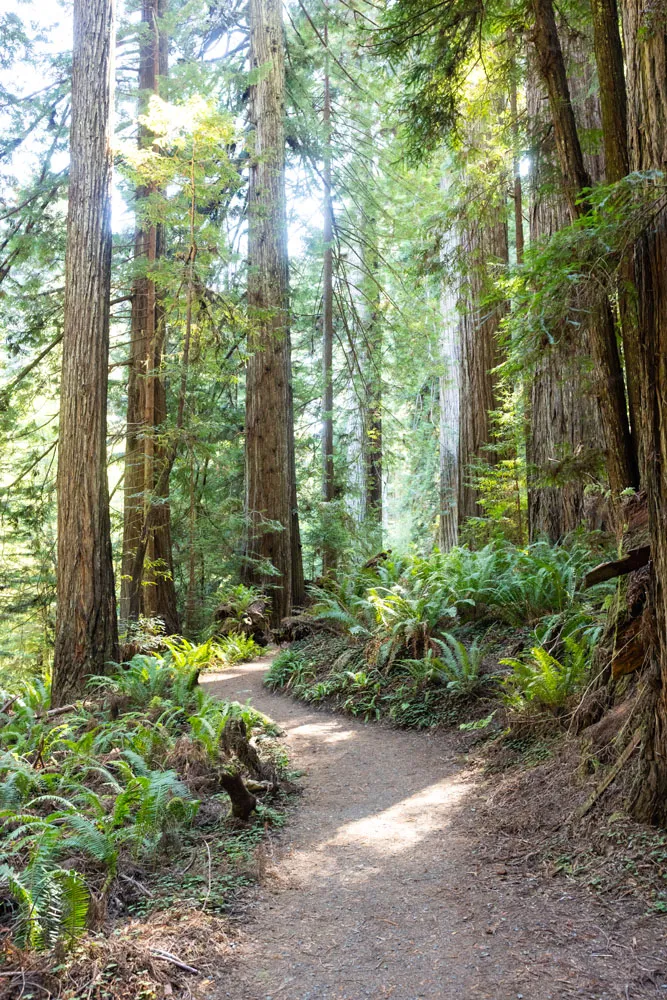
This hike passes through an impressive section of old-growth redwood forest. Giant redwoods and lush ferns line this dirt trail that winds along the forest floor. Get ready to have a sore neck as you’ll undoubtedly spend a lot of time looking up at the distant canopies.
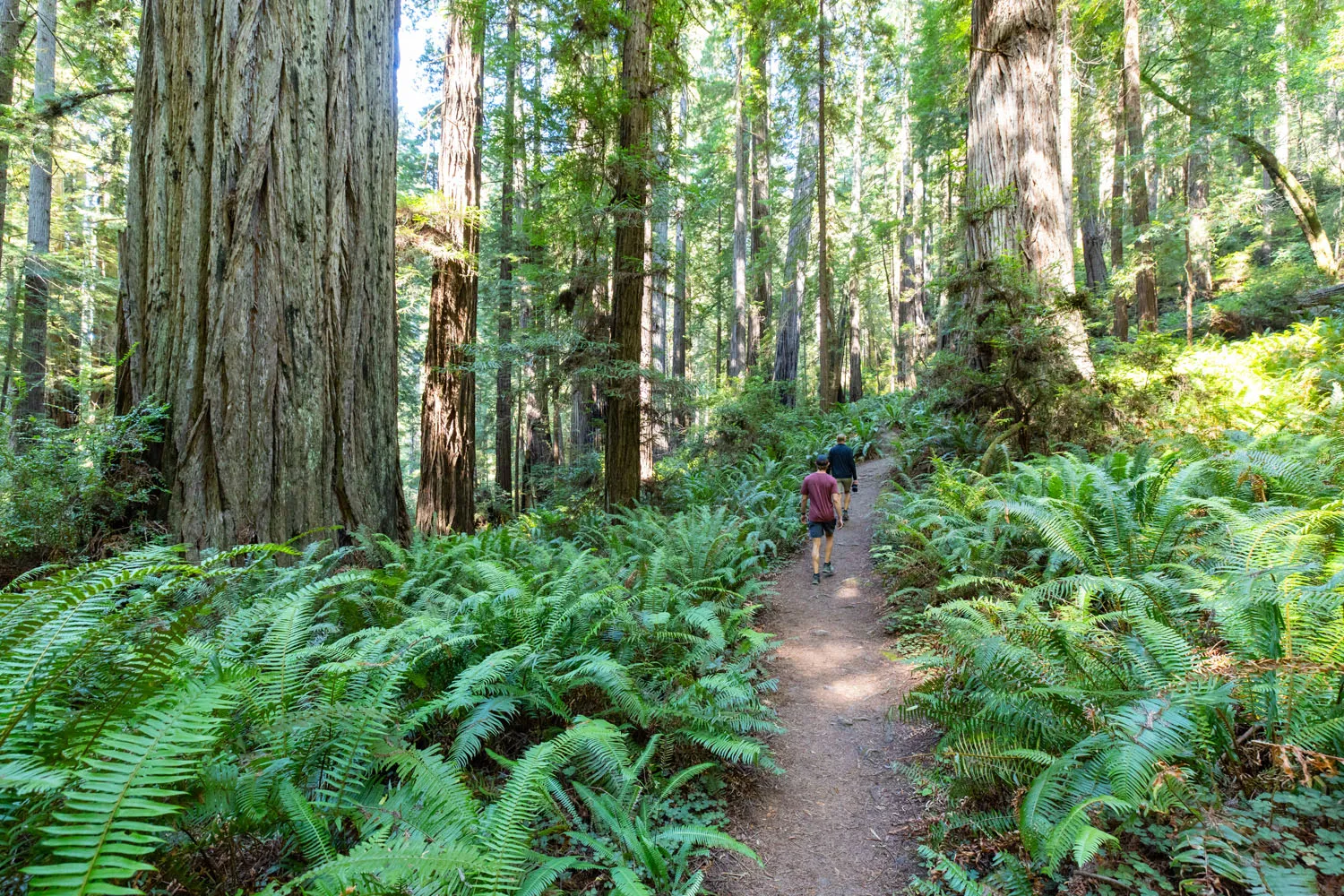
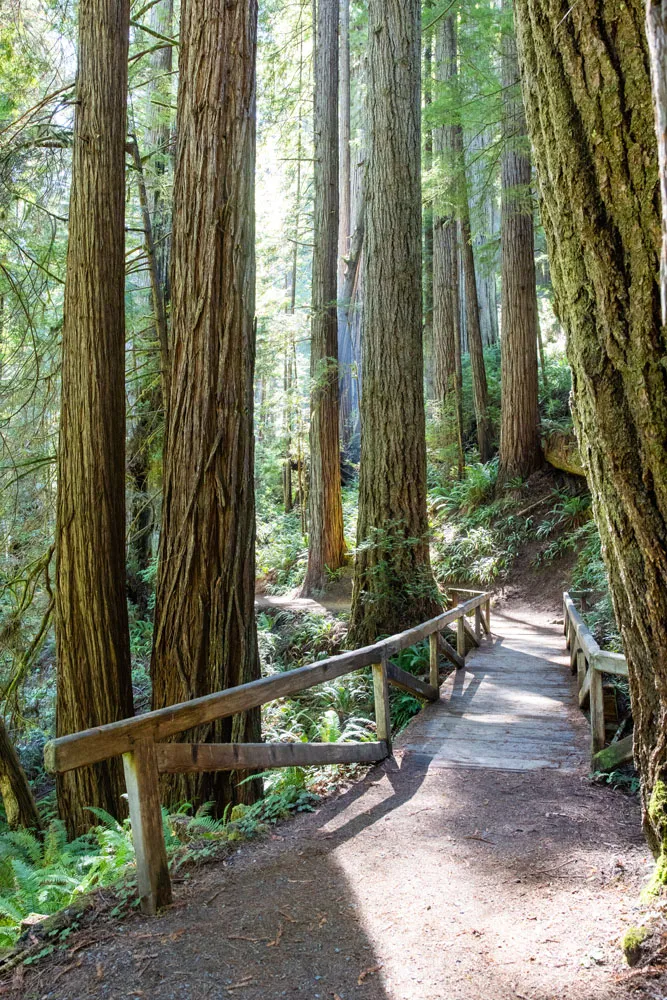
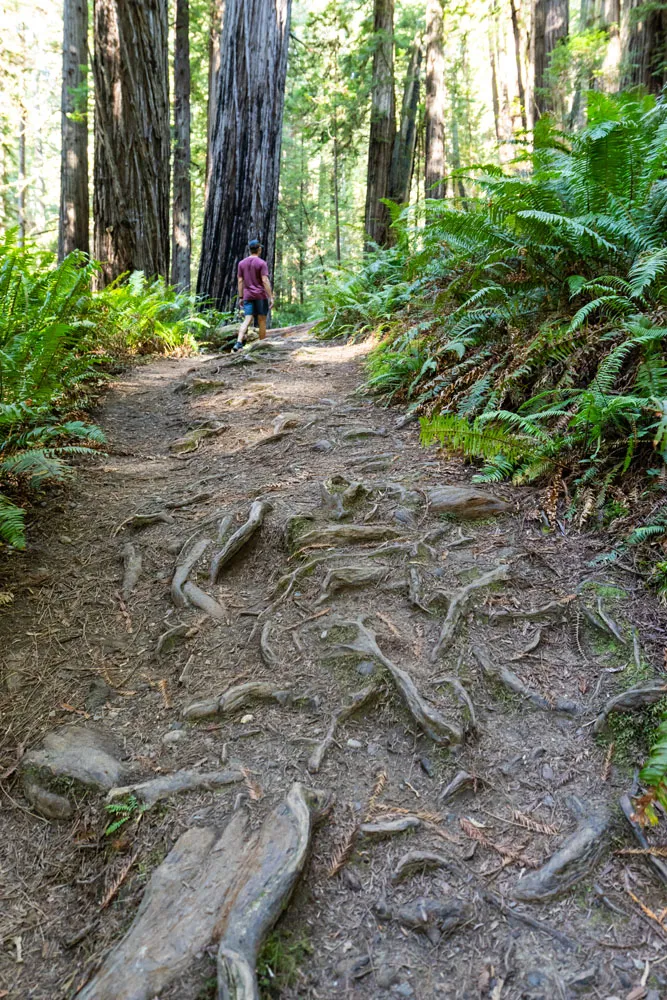
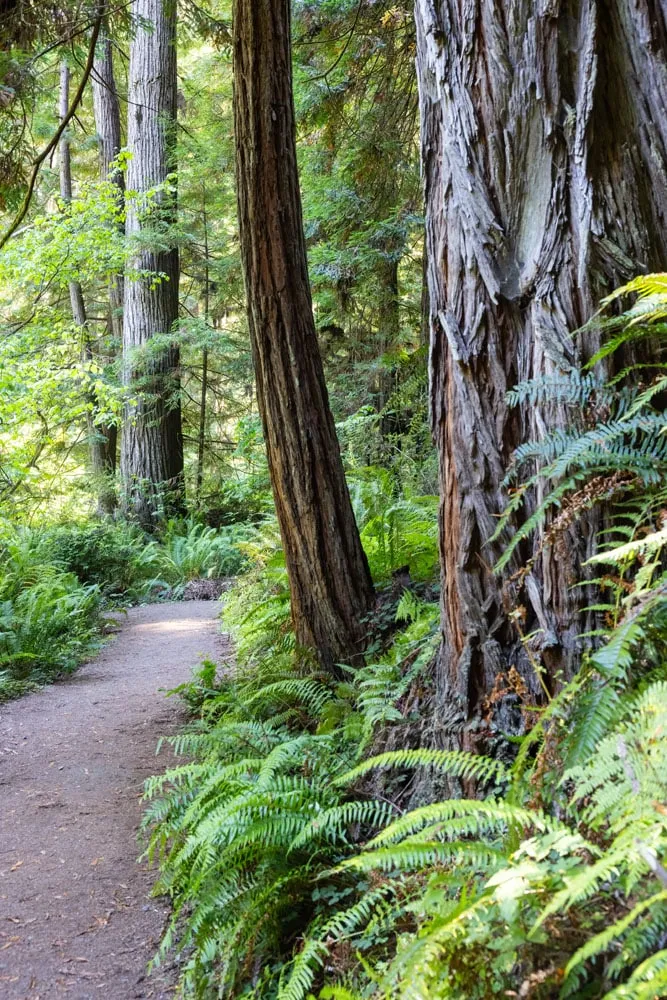
There are two different ways to do this hike. From the Prairie Creek Visitor Center, choose either the Foothill Trail Loop or the Cathedral Trees Trail. These two trails run parallel with each other, are similar in distance, and provide two different options on how to reach Big Tree Wayside. Regardless of which loop you choose, both will end at Big Tree Wayside. From here, you’ll cross over the Newton B. Drury Scenic Parkway onto the Karl Knapp Trail and follow this south back to the visitor center.
We chose to hike along the Cathedral Trees Trail as it led deeper into the redwood forest. This adds on an extra 0.5 miles of hiking than if you chose the Foothill Trail Loop, but we believe it to be worth it. The views of massive redwood trees were great, and we enjoyed the secluded nature of this quiet, less-traveled trail. The trail does get much more rugged with some elevation change as you near Big Tree Wayside.
4. Go for a Scenic Drive along Cal Barrel Road
Enjoy a rugged, scenic drive through a redwood forest. This 3-mile-long road snakes around towering trees and offers a much more adventurous drive than the scenic parkway. At times, we felt we could reach out and brush the ferns that lined the road.
Cal Barrel Road leads deep into old-growth forests. There are plenty of great opportunities to snap pictures out your window of this vast stretch of forest. This is a great way to enjoy the secluded reaches of the forest from the comfort of your own car.
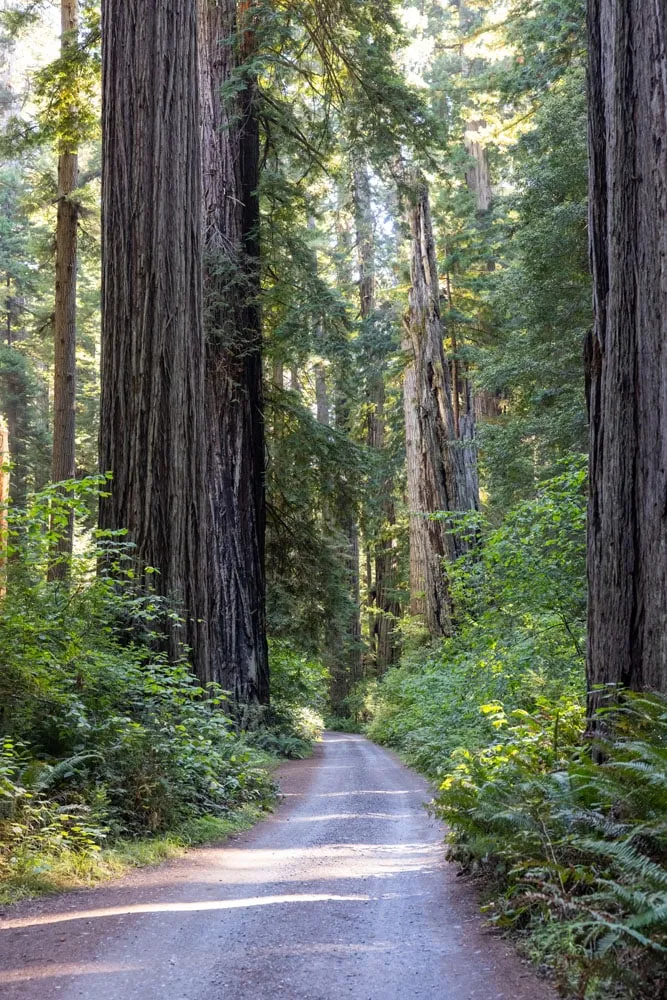
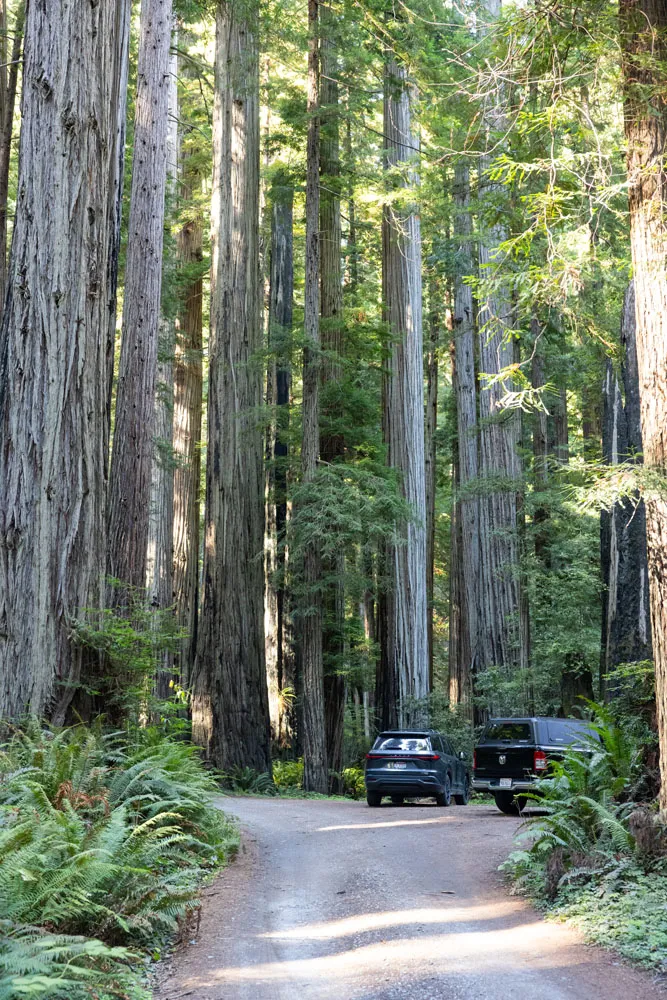
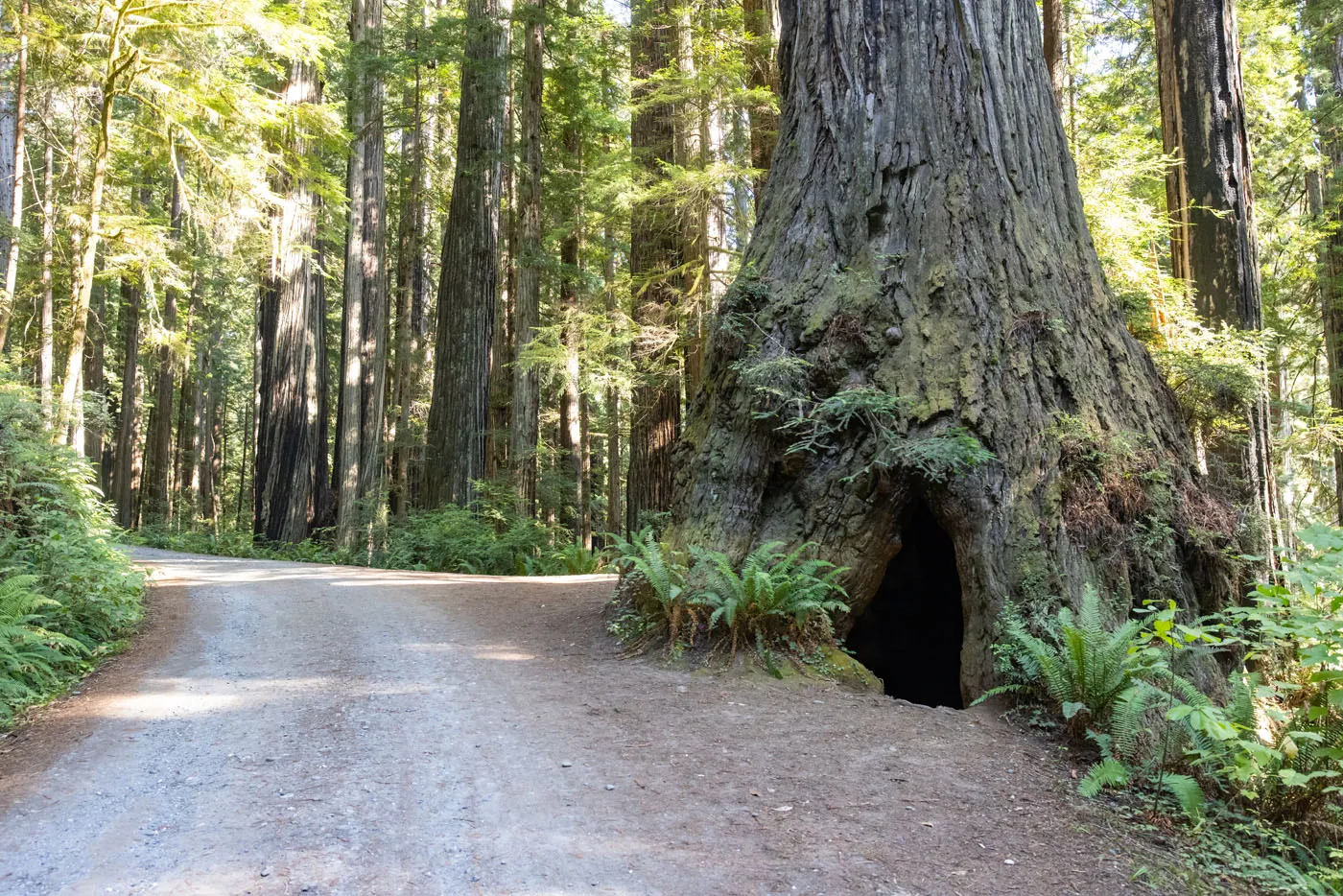
What to Expect: Expect two-way traffic on this narrow, one lane dirt road. The drive ends with a dead end, so you’ll have to turn around and return the way you came. Only do this if you feel comfortable navigating a car on narrow roads with two-way traffic. It’s a rough road to drive, so we recommend driving this with an SUV or a truck. No trailers are allowed along Cal Barrel Road.
Where is It: The start of Cal Barrel Road is just south of Big Tree Wayside. The road actually cuts across both the Foothill Trail Loop and the Cathedral Trees Trail, two trails that you’ll hike if doing the Karl Knapp Trail Loop. You can also hike Cal Barrel Road instead of driving it.
5. See the Corkscrew Tree
Corkscrew Tree is not one but multiple intertwined redwoods that have wrapped around each other. It’s believed that these trees all grew from a single stump and over time have twisted to make room for the others to grow.
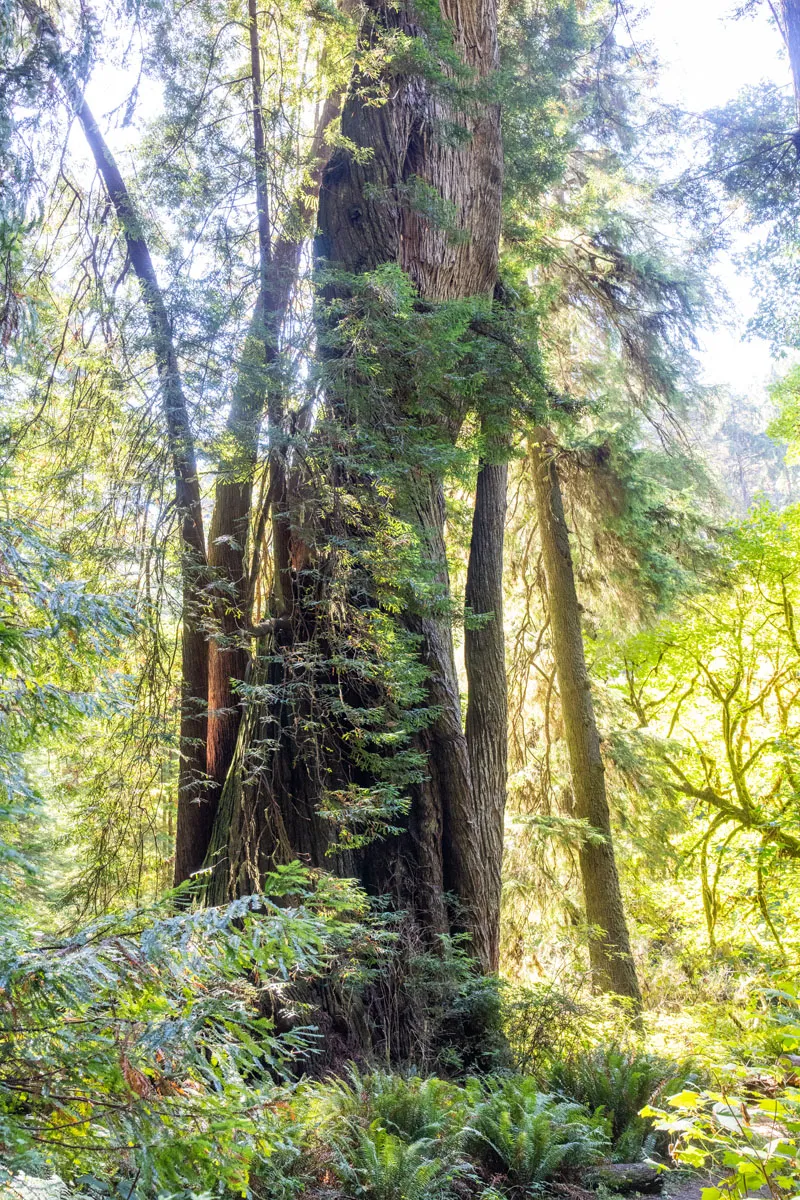
We didn’t find this as impressive as the name makes it sound. Although a giant redwood tree, Corkscrew Tree wasn’t as twisty or eye-catching as we had expected. However, it’s very easy to reach and worth a quick visit if this interests you.
Where is It: You’ll find Corkscrew Tree along Newton B. Drury Scenic Parkway. Driving north along the parkway from U.S. Highway 101, Corkscrew Tree is 2.3 miles up the road. There will be a small pullout for parking and a trail sign to the left of the road. It’s a short, 1-minute walk to Corkscrew Tree.

6. Fern Canyon: One of the Most Unique Experiences in the Redwood Parks
Enjoy a short adventurous hike along a creek and past walls of lush green ferns. This was one of the most enjoyable experiences we had throughout Redwoods National and State Parks.
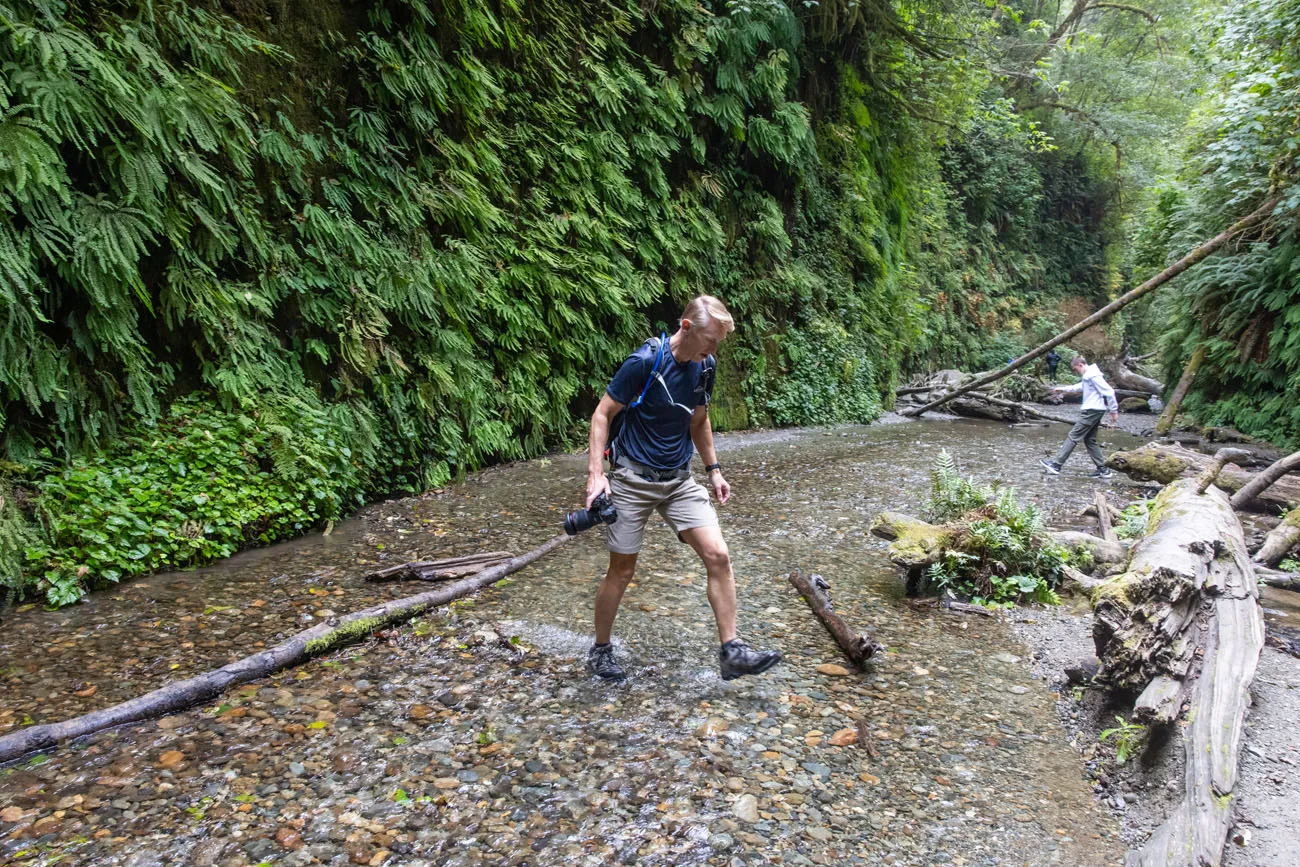
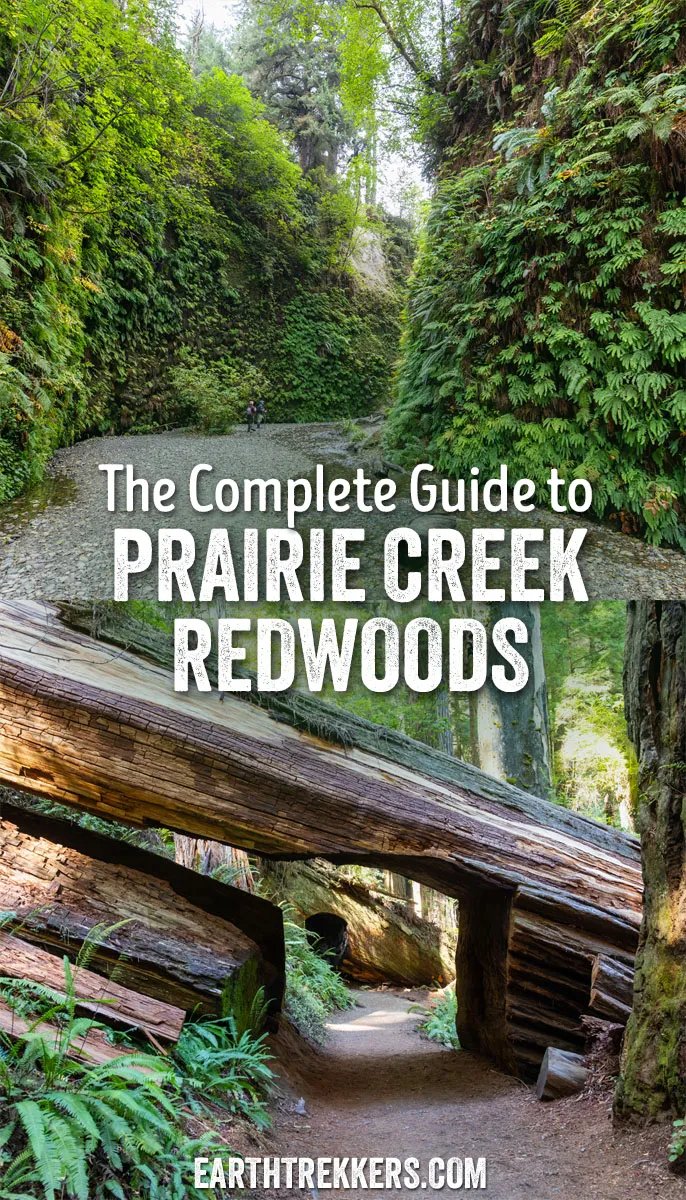
With numerous stream crossings and trying to jump between dry logs, all within a scenic canyon, this is a great hike if you want a fun change of pace. Plus, it’s quite short, only one mile long, and is a great hike for families. Fern Canyon was also used as a filming location for The Lost World: Jurassic Park.
The trail leads through Fern Canyon as you walk through and along a stream. The trail gets more rugged the deeper into the canyon you go, with more overturned trees and thicker foliage to walk through. The stream also gets deeper the further you hike. Be prepared to end the hike with soggy feet.
We found the first part of the canyon to be the best. The trail is much wider and more scenic, and there’s plenty of small stream crossings over logs that keep things entertaining.
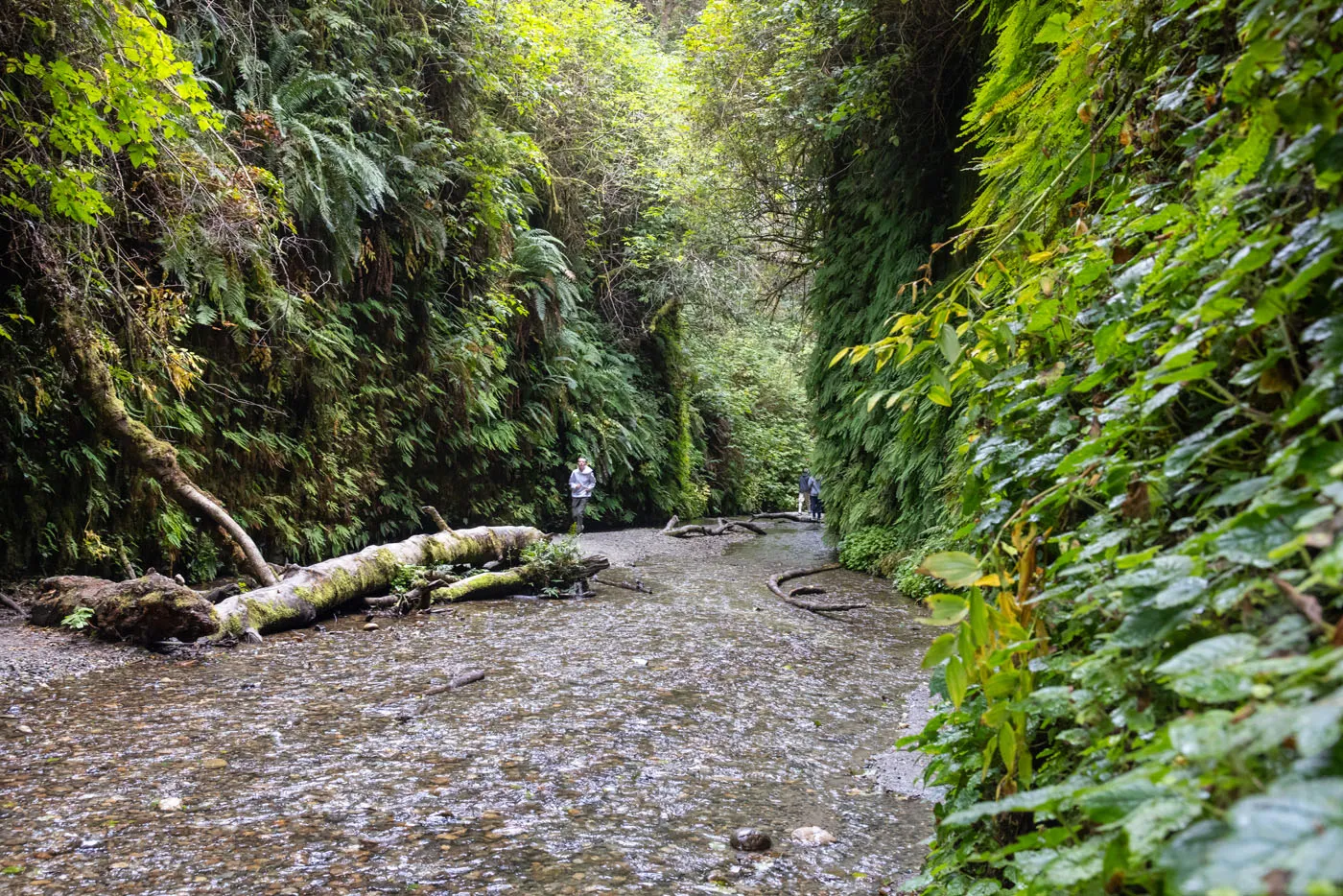
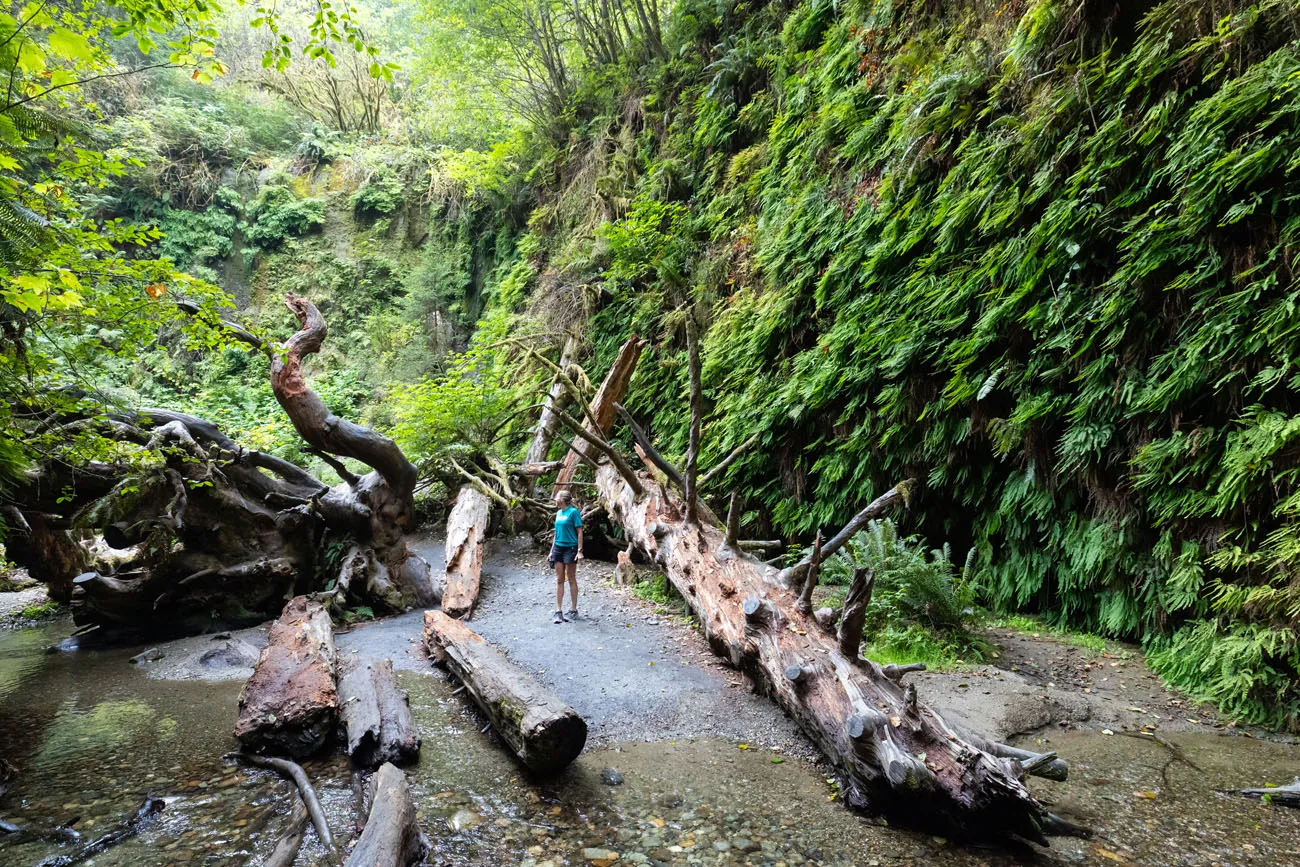
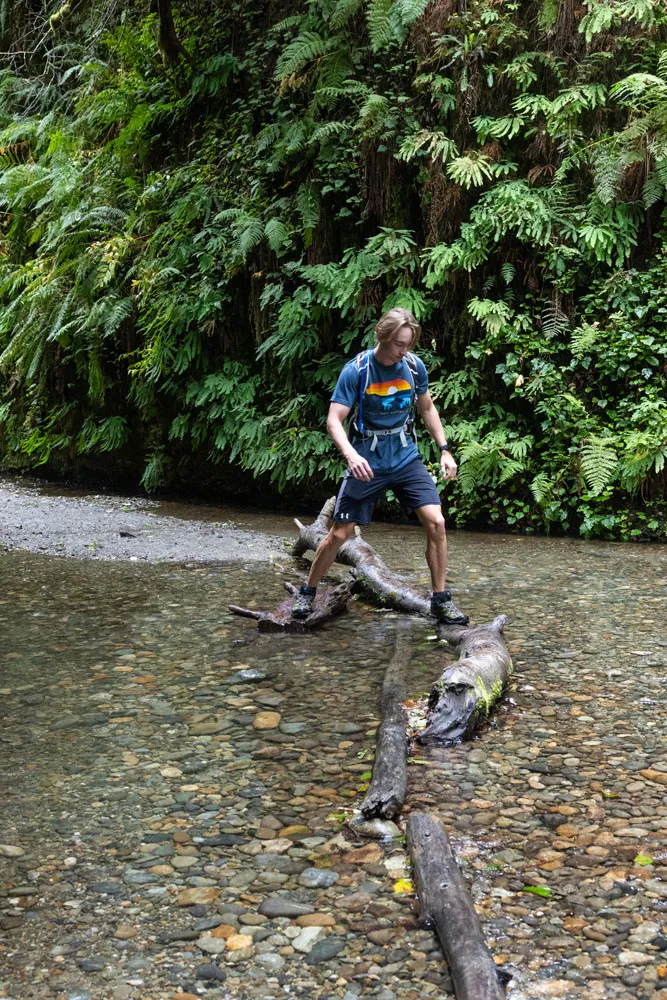
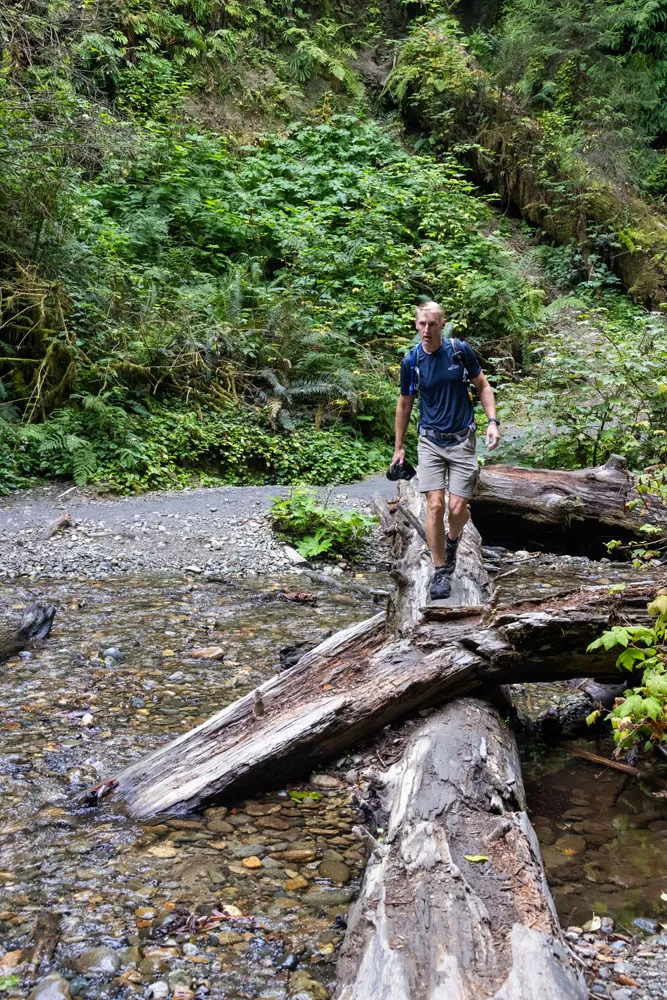
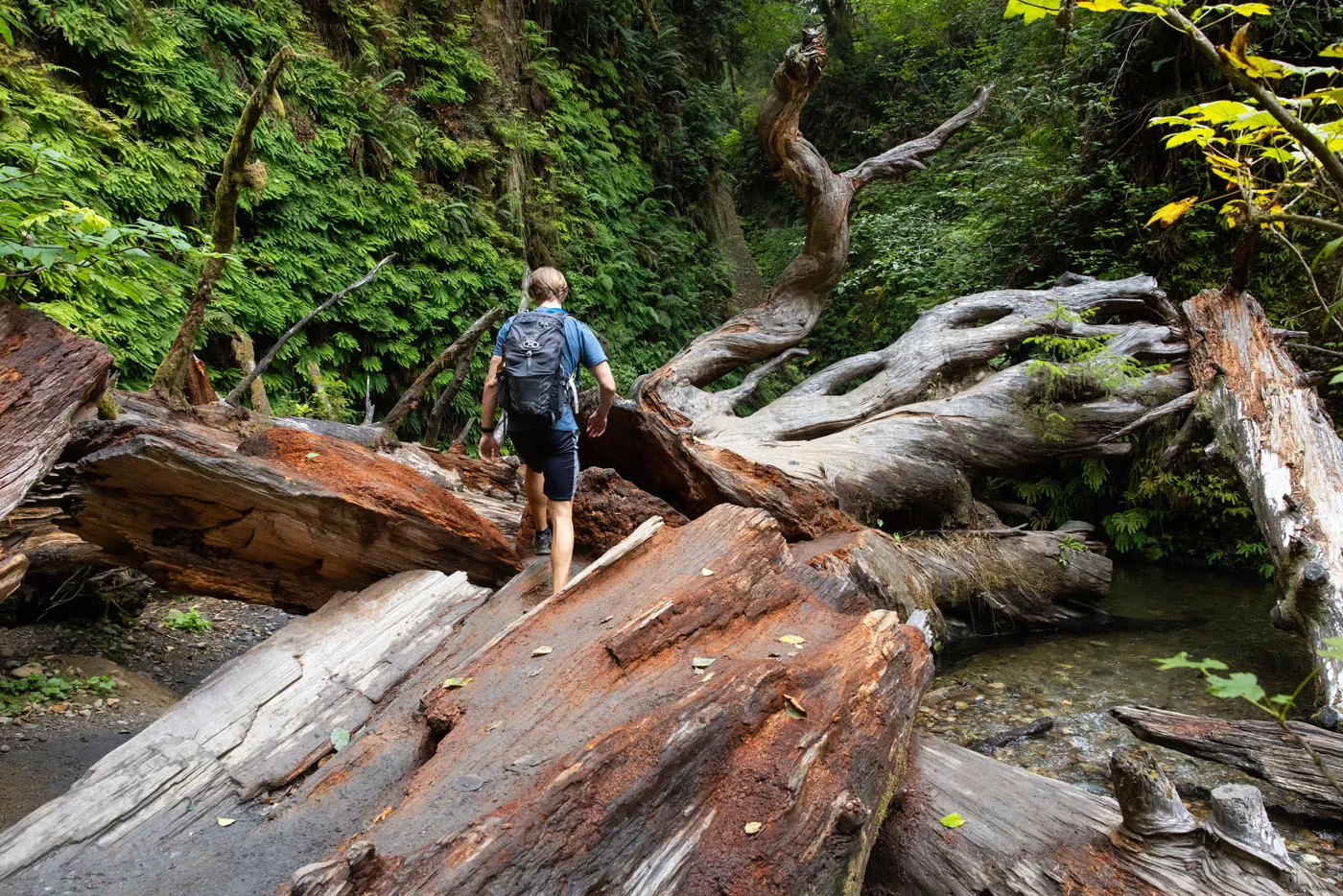
We highly recommend packing waterproof shoes for this hike. With the numerous stream crossings, you’re almost guaranteed to get wet shoes at some point, even more so as you hike further into the canyon. A pair of waterproof shoes can be the difference between dry or soggy socks for the rest of your day.
GETTING HERE & ADVANCE RESERVATIONS FOR FERN CANYON: Fern Canyon is located at the end of Davison Road. You will need a reservation to drive to Fern Canyon from May 15th through September 15th. This reservation is for driving the section of Davison Road down by Gold Bluffs Beach. You can learn more about reservations on the official website.
Davison Road is a roughly paved asphalt road that leads through a redwood grove and out along the coast. Expect a bumpy ride and a few stream crossings. You’ll want a vehicle with high clearance, such as an SUV or truck, to drive out to Fern Canyon and Gold Bluffs Beach.
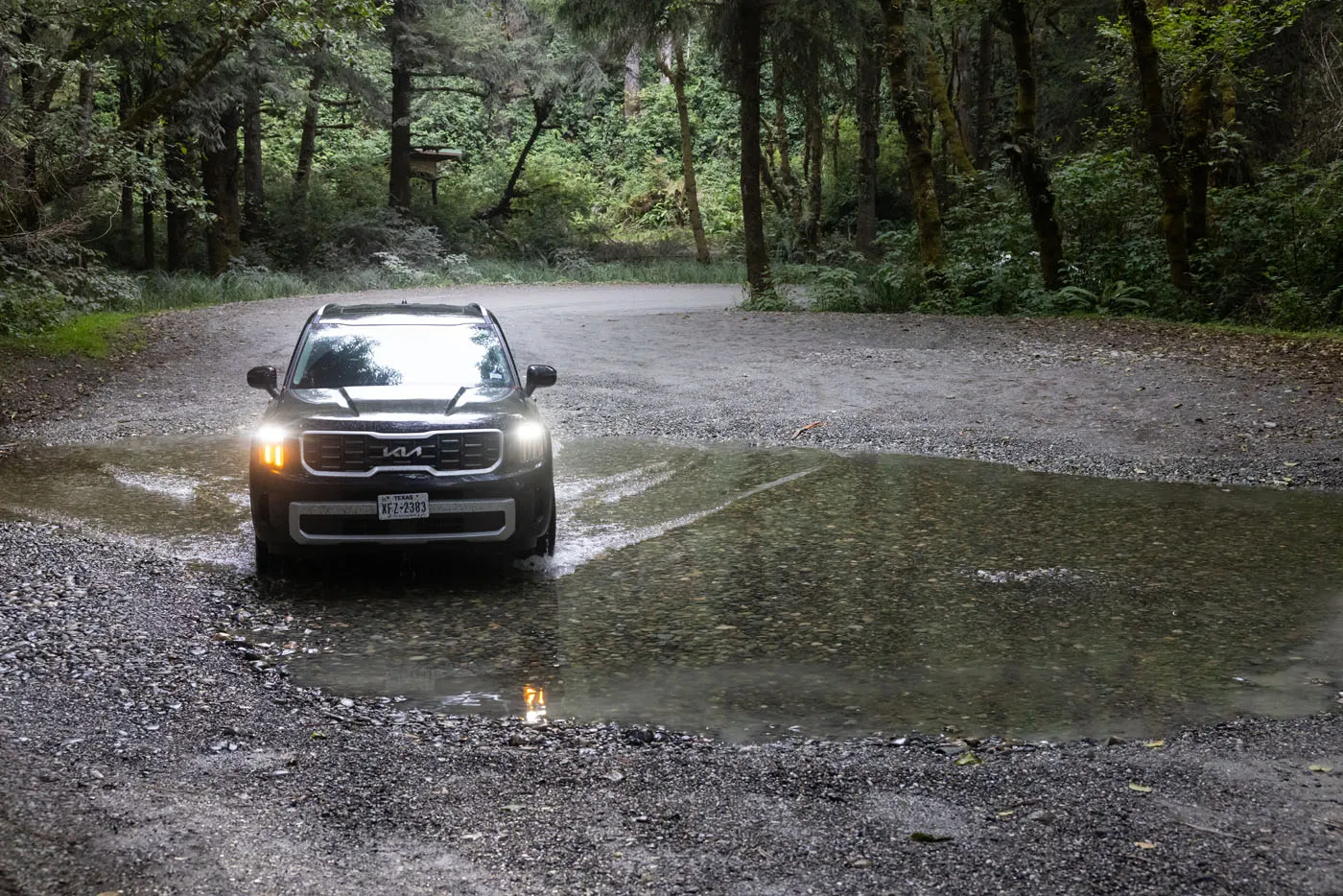
Creek crossing along Davison Road
7. Visit Gold Bluffs Beach
Gold Bluffs Beach is a 10-mile stretch of wide, sandy beach at the end of Davison Road. Behind the beach, tree-covered cliffs rise, dramatically framing the coast. Enjoy a quick visit here to admire the view or stay longer to relax in the sand.
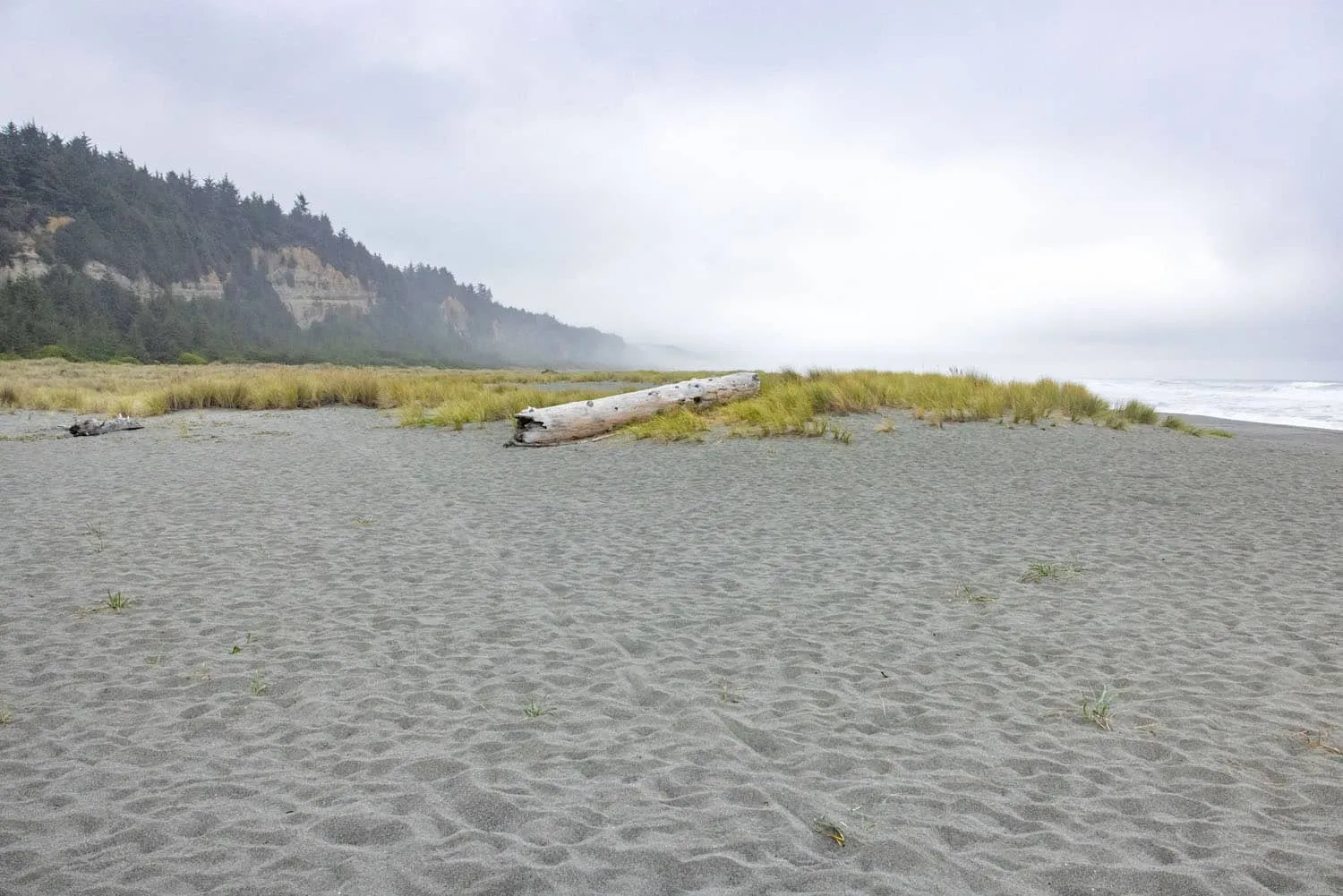
We found the beach itself to be just okay. It’s spacious and scenic, and the tall cliffs add some character. Unfortunately, we were unlucky with the weather and visited on a cloudy, dreary day. I’m sure if it were sunny, this area would look much more picturesque.
Getting Here: The best way to access the beach is from the Gold Bluffs Beach Campground. To get here, drive along Davison Road and look for a group of picnic tables and a sign that points out to the shore. You’ll find a somewhat large parking area along with bathrooms.
Good to Know: The National Park Service advises against swimming at Gold Bluffs Beach. Ocean currents here can be dangerous, water temperatures can be low, and there’s no lifeguard on duty. Leave your swimsuit at home. However, this is a great spot to unwind on the sand and get some tanning in over the summer.
Gold Bluffs Beach is just 2 miles from Fern Canyon. If you’re unable to find parking to hike through Fern Canyon, the campground makes a good alternative for parking.
Advance Reservations: Just like Fern Canyon, you will need a reservation to drive here from May 15th through September 15th. You can learn more about reservations on the official website.
Please practice the seven principles of Leave No Trace: plan ahead, stay on the trail, pack out what you bring to the hiking trail, leave areas as you found them, minimize campfire impacts, be considerate of other hikers, and do not approach or feed wildlife.
One Day in Prairie Creek Redwoods State Park
One day in Prairie Creek Redwoods gives you enough time to see all the top sites and complete a few hikes. With plenty to do, however, expect to have a busy day. For this reason, we recommend getting an early start to maximize what you can see and do in one day.
Morning
Start your day along the Newton B. Drury Scenic Parkway. Take your time and snap some pictures of the scenic road in the soft morning glow.
Make your first stop at Big Tree Wayside and hike the Karl Knapp Trail Loop. If you’re hiking here before 9:00 am, you may only find a few other hikers along the trail. After your hike, you can also choose to drive Cal Barrel Road for a short scenic drive.
Midday
Enjoy an early packed lunch or picnic at Elk Prairie, where you may spot herds of elk. We passed through here on two different days but unfortunately never saw any elk; hopefully you will be luckier than us! There are no restaurants within the state park, so you’ll have to pack your own lunch.
Early Afternoon
After your meal, drive south to the entrance of Davison Road.
Here we recommend a short hike out to Trillium Falls. Although it’s officially within Redwood National Park, you’ll drive right past the trailhead on your way to Gold Bluffs Beach, so it’s worth a short visit. The Trillium Falls trail leads past old-growth redwoods, lush ferns, and trillium flowers, and a small waterfall. The best part of the trail is the segment leading out to the waterfall, which makes a good turnaround point.
Mid-Afternoon
End your day in Prairie Creek Redwoods with a drive down Davison Road, a short visit to Gold Bluffs Beach, and a hike through Fern Canyon.
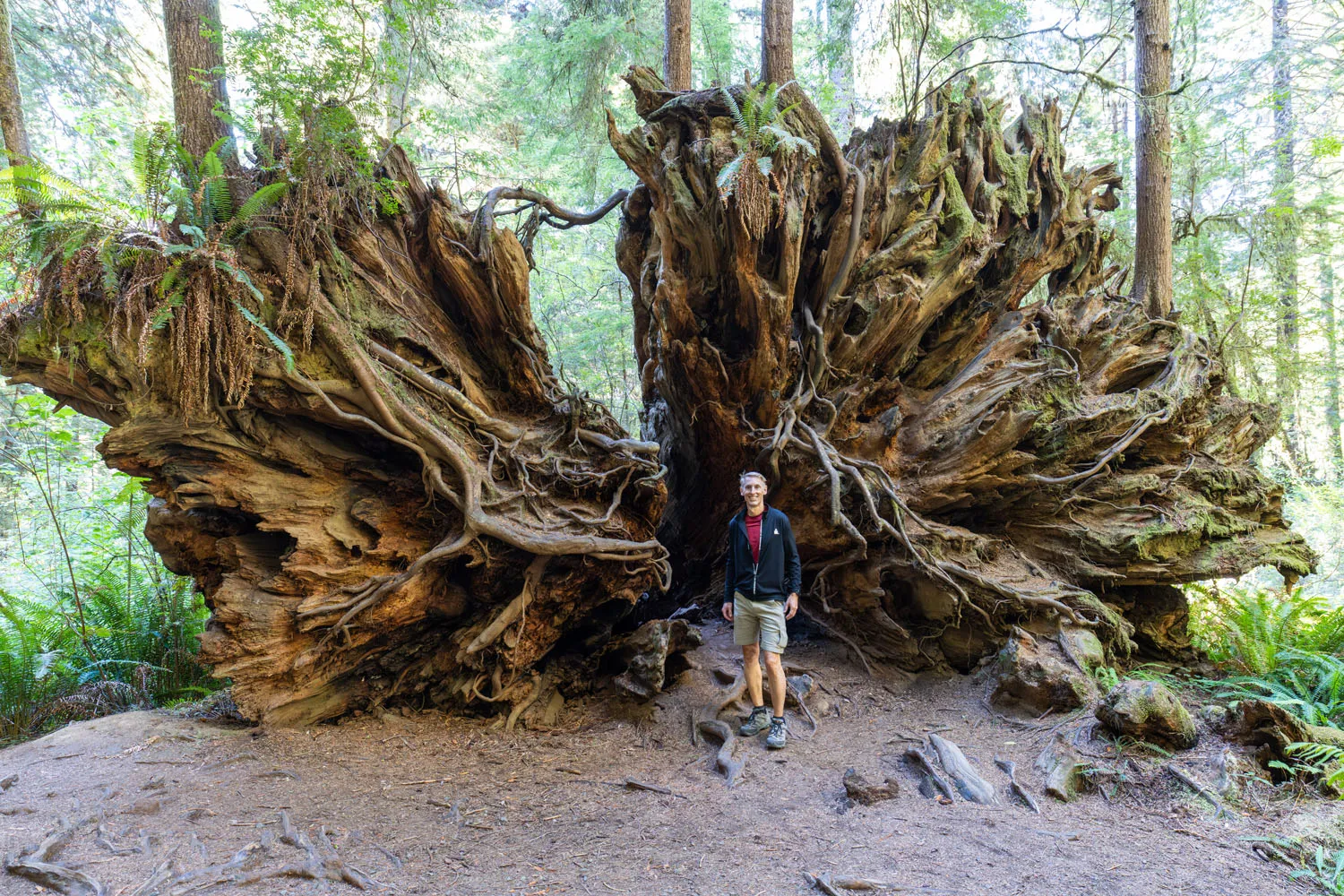
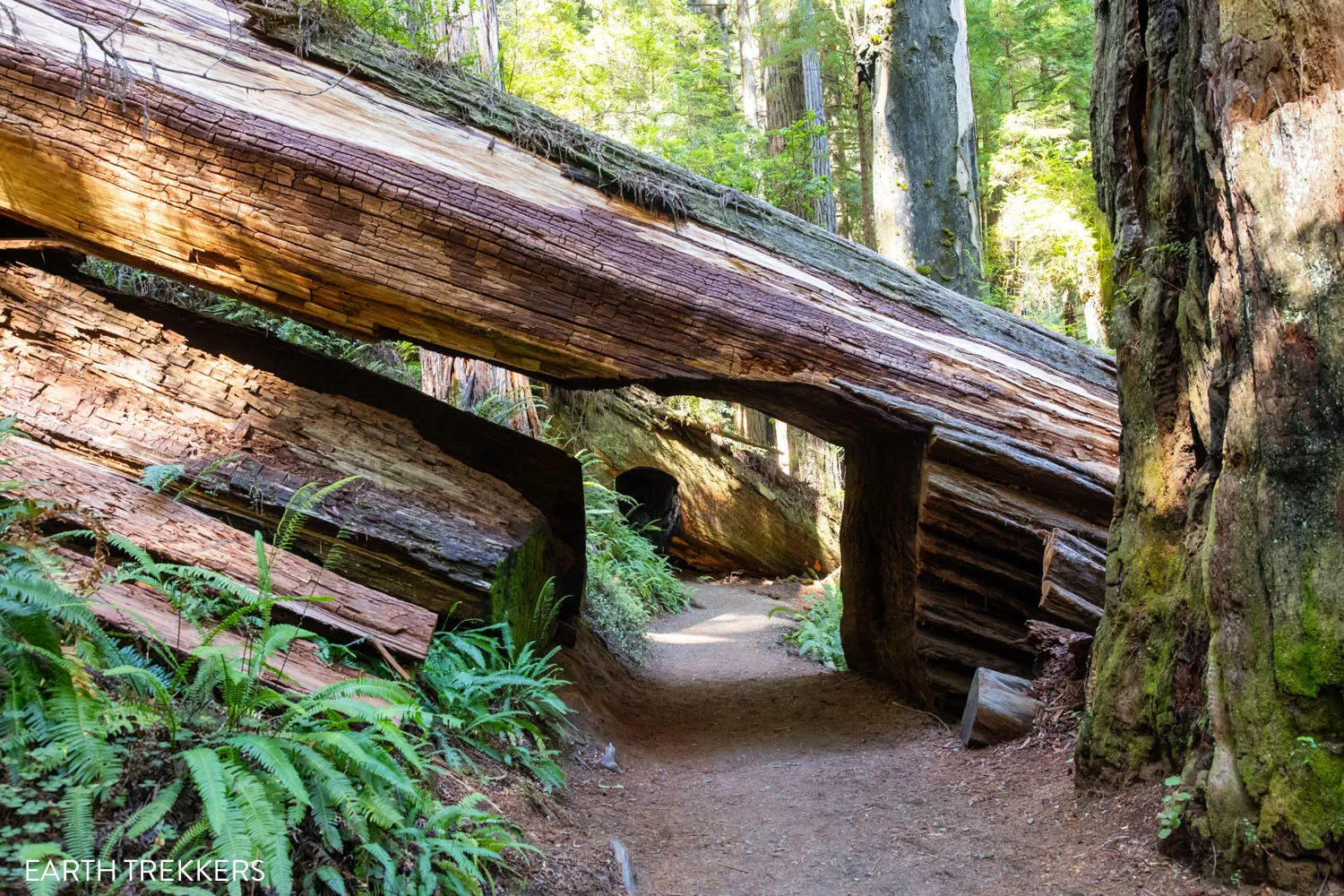
Fallen tree along the Karl Knapp Loop Trail
How to Get to Prairie Creek Redwoods State Park
Prairie Creek Redwoods is located in northwestern California and is an hour’s drive away from the border with Oregon. The state park protects a large section of old-growth redwoods along with Californian coastlines.
You can reach the state park from several nearby towns and cities. The small town of Klamath is the closest, being just a 10-minute drive north. Crescent City, another popular town for visitors to the Redwoods parks, is a 40-minute drive north. Finally, you’ll find more options for hotels and restaurants in the city of Eureka, which is an hour’s drive south of the park.
The state park is bordered by several of the Redwoods National and State Parks. Prairie Creek shares a southern border with Redwoods National Park, and the two are very easy to visit on a joint day trip. To the north, across the Klamath River, is Del Norte Coast Redwoods State Park. Here you can enjoy a mix of dramatic redwood forests and scenic, rocky shorelines.
Best Time to Visit Prairie Creek Redwoods State Park
We visited Prairie Creek in September and couldn’t have asked for better hiking weather. Mornings were cool and foggy, especially along the coast at Gold Bluffs Beach and Fern Canyon, with the mist burning off as the day progressed. We wore shorts, a t-shirt, and a jacket, and usually shed the jacket by midday.
Our day at Prairie Creek was overcast, which actually worked in our favor; the soft light makes the ferns and forest floor far more photogenic than harsh midday sun. Crowds were manageable, and the trails felt peaceful even at the most popular spots.
Spring and fall are generally the sweet spots for visiting, and Prairie Creek appears in our US National Parks by Month guide as a top pick for April, May, July, and September.
- Spring (April–May): Lush, green forest after the wet season; mild temperatures and lighter crowds
- Summer (June–August): Warmest and driest conditions; best for the coast and Fern Canyon but expect more crowds
- Fall (September–October): Excellent hiking weather, fewer tourists, and moody, photogenic light in the forest
- Winter (November–March): Quiet and uncrowded but rainy; trails can be muddy and Davison Road may be impassable
Where to Stay
Camping
There are two campgrounds in Prairie Creek Redwoods State Park: Elk Prairie and Gold Bluffs Beach. These need to be reserved in advance, which you can do here.
Crescent City
Crescent City is 25 miles north of Prairie Creek Redwoods State Park (about a 30-minute drive).
Hotels in Crescent City get decent reviews. Several of the highest-rated options include Oceanview Inn and Suites, the Lighthouse Inn, and the Hiouchi Motel. The Crescent Beach Motel has a nice setting right on the beach.
Klamath
We stayed in Klamath, since it is more centrally located between the state and national parks. Klamath is just a 5-minute drive from the park.
We stayed at the Holiday Inn Express Klamath, which receives decent reviews. The hotel is quite dark and dreary, and the WiFi went out one night while we were there. Regarding restaurants, there aren’t many in Klamath. There is a restaurant in the nearby casino, but it was closed one evening during our visit, so we ate in Crescent City a few times. I know I’m not selling this place, but the location is conveniently central to the parks.
The Historic Requa Inn gets better reviews. It is located on the Klamath River, just north of Klamath.
Plan Your Visit
Cost: It is free to visit Prairie Creek Redwoods State Park, except for a few key areas. It costs $8 per vehicle for a day-use spot at the park’s campgrounds. You will also need to book advance reservations to drive down to Gold Bluff’s Beach and Fern Canyon, which cost $12.
Hours of Operation: Prairie Creek Redwoods State Park is open year-round.
Get Updates: Before you go, check the California State Parks website for park conditions and updates on road closures and trail closures.
Frequently Asked Questions
Are there restaurants in Prairie Creek Redwoods State Park?
No, there are no restaurants within the state park. It’s recommended that you pack all the necessary food and water you need for your visit ahead of time. You can always refuel on water at the Prairie Creek Visitor Center, and there are several small towns nearby where you can grab a bite.
Do I need a reservation for Fern Canyon?
Yes, from May 15 through September 15 you need a reservation to drive Davison Road down to Fern Canyon and Gold Bluffs Beach. You can book through the Redwood Parks Conservancy website. Outside of that window, no reservation is required.
How long do you need at Prairie Creek Redwoods?
One full day is enough to see all the highlights, including Big Tree Wayside, the Newton B. Drury Scenic Parkway, and Fern Canyon. If you only have a few hours, Big Tree Wayside and a drive along the parkway are the easiest wins.
Can you see elk in Prairie Creek Redwoods?
Yes, Prairie Creek is one of the best places in California to spot Roosevelt elk. Elk Prairie, near the visitor center, is the most reliable viewing area. Early morning and late afternoon are your best chances.
Is Prairie Creek Redwoods dog-friendly?
Dogs are allowed in Prairie Creek but with restrictions. They are permitted in parking areas, on paved roads, and at campgrounds, but are not allowed on most trails. If you’re bringing a dog, plan your visit around the scenic drives rather than the hikes.
Is there cell service in Prairie Creek Redwoods?
Cell service is limited and unreliable throughout the park, particularly along Newton B. Drury Scenic Parkway and on Davison Road. Download offline maps before you arrive.
Explore More of Redwood National and State Parks
Prairie Creek is just one of four remarkable parks that make up Redwood National and State Parks. For a complete picture, our Redwood National and State Parks Guide covers all four parks, top experiences, and how to plan your time.
Jedediah Smith Redwoods State Park — Our favorite of the four parks, an hour north of Prairie Creek. Home to some of the best trails and the impressive Howland Hill Road scenic drive.
Del Norte Coast Redwoods State Park — Just north of Prairie Creek, this park pairs ancient redwood forests with dramatic rocky coastlines.
Redwood National Park — Despite it being a national park, there are just a few things to do here. Seeing the Lady Bird Johnson Grove is the most popular, but we really liked the Tall Trees Trail (a permitted trail with low crowds and some of the most massive trees in the area) and the Trillium Falls Trail (fun hike through old growth forests).
Avenue of the Giants — A famous 31-mile scenic drive through Humboldt Redwoods State Park, worth adding if you’re road-tripping south.
Looking for a road trip idea? Combine Crater Lake with Lassen Volcanic and Redwoods National Parks on this 10-day road trip through Northern California and Oregon.
Planning to visit more national parks? Our US National Parks guide covers the best parks across the country, with itineraries, hiking guides, and trip planning tips.
Are you looking to continue exploring Redwoods National and State Parks? For more information on the other parks, check out these articles below.
More California Adventures
Redwoods is just one of many reasons to explore California. Browse all of our California travel content or check out these popular destinations:
Damnation Creek Trail: Photos, Trail Stats & Step-By-Step Guide
Pinterest Facebook Flipboard The Damnation Creek Trail is our favorite hike in Del Norte Coast Redwoods State Park. It’s a short but challenging hike, with a trail running through old-growth redwood forests out to a picturesque beach. We hiked the Damnation Creek Trail on a September morning, and it quickly became one of our favorite […]

A Walk through the Stout Memorial Grove in Photos
The Stout Memorial Grove Trail is a top-rated hike in Jedediah Smith Redwoods State Park. It’s short, easy to access, and winds through an impressive section of old-growth redwood forest. Just 0.6 miles long, the trail offers plenty of sights and photo opportunities. Among the park’s trails, this one provides the biggest “bang for your […]
One Day Itinerary for Kings Canyon and Sequoia National Parks
Kings Canyon and Sequoia National Parks sit side by side in central California. Filled with alpine peaks, deep canyons, and the largest trees in the world, you could spend several days here. However, if you only have one day, you have just enough time to visit the highlights of both parks. We visited Kings Canyon […]
How to Plan the Perfect Pinnacles National Park Itinerary
When planning a trip to Pinnacles National Park, one of the biggest questions you may have is “how much time do I need?” We’re here to answer that question and help you plan the perfect Pinnacles National Park itinerary. For most people, a half to a full day is all the time you need to […]
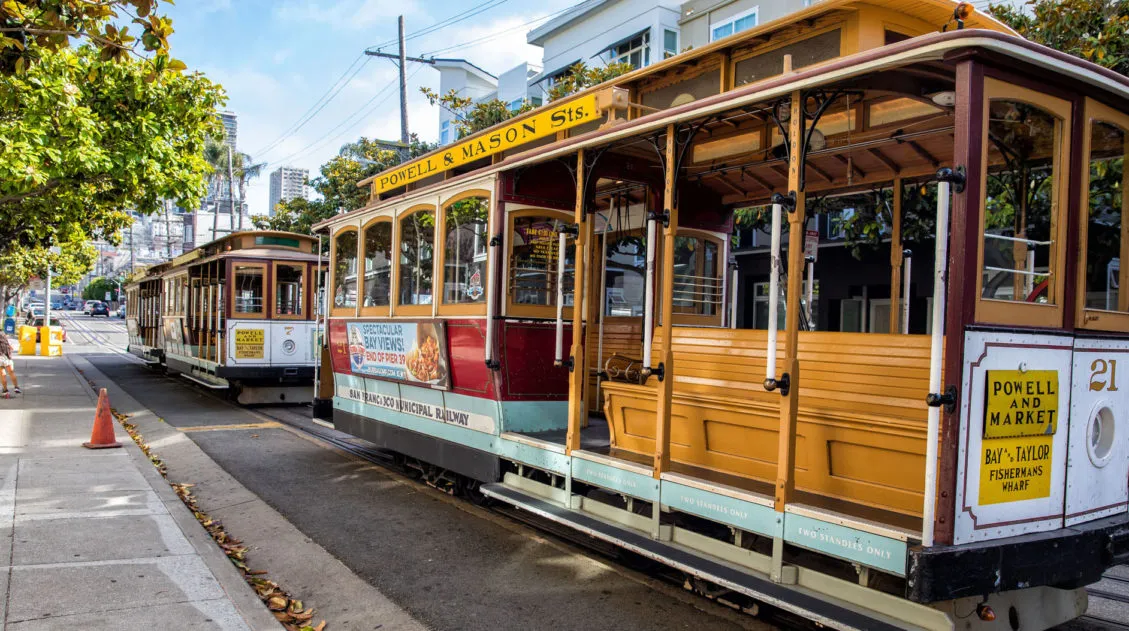
25 Best Things to Do in San Francisco
What’s the first thing that comes to your mind when you think of San Francisco? The Golden Gate Bridge? The legend and the stories of Alcatraz? Cable cars climbing up and down the steep hills of the city? San Francisco is a big city, filled with lots of things to do. It has a colorful […]
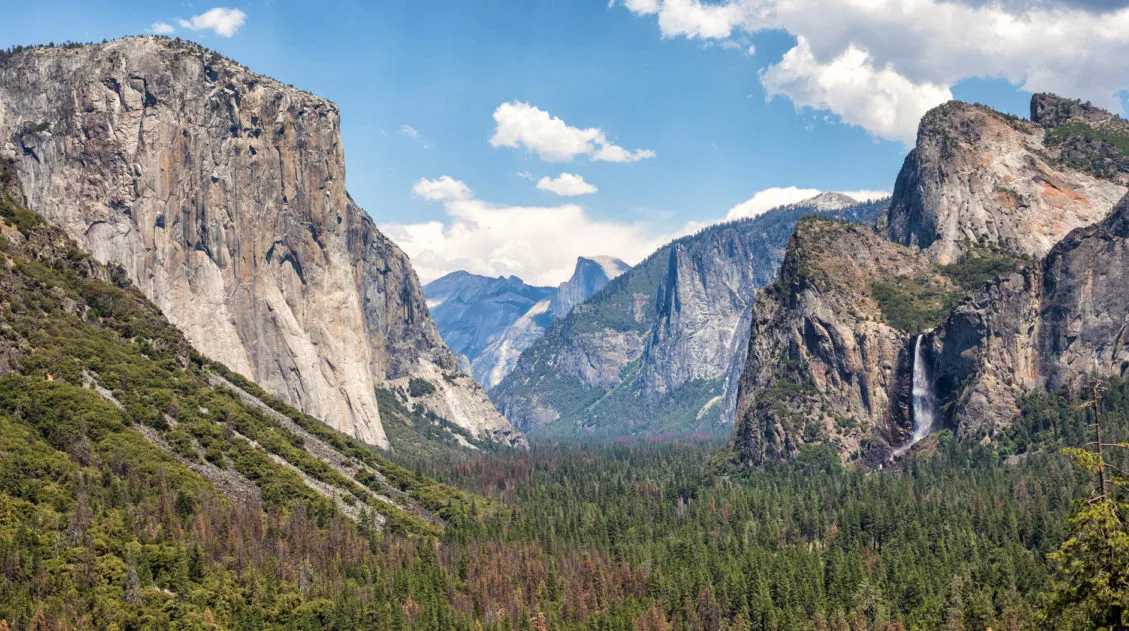
30 Epic Things to Do in Yosemite for First-Timers
Yosemite National Park is packed with famous landmarks, awesome hikes, and breathtaking views. If you are planning your first trip to Yosemite, how do you know what to do? I am a big fan of lists (and photos!). In this post, I list the best things to do in Yosemite: the best landmarks to visit, […]
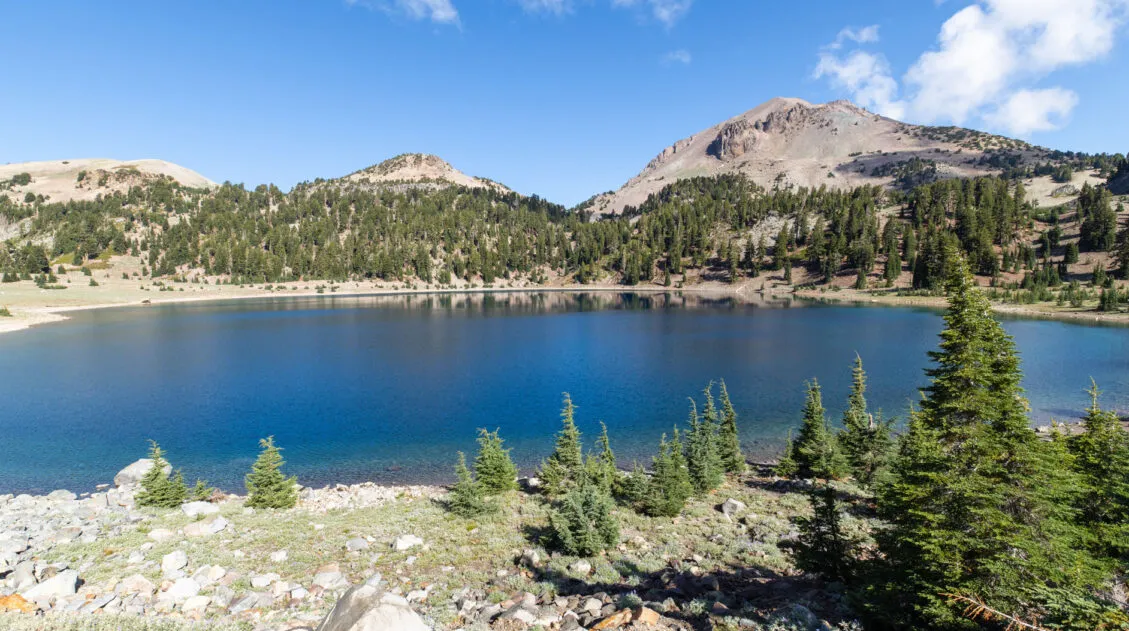
14 Best Things to Do in Lassen Volcanic National Park
In this guide, we will cover the best things to do in Lassen Volcanic National Park. Discover the best hiking trails, scenic drives, and a few hidden gems that are definitely worth your time. We’ll also provide information on where to stay, how to plan your time, and the ideal time of year to visit. […]
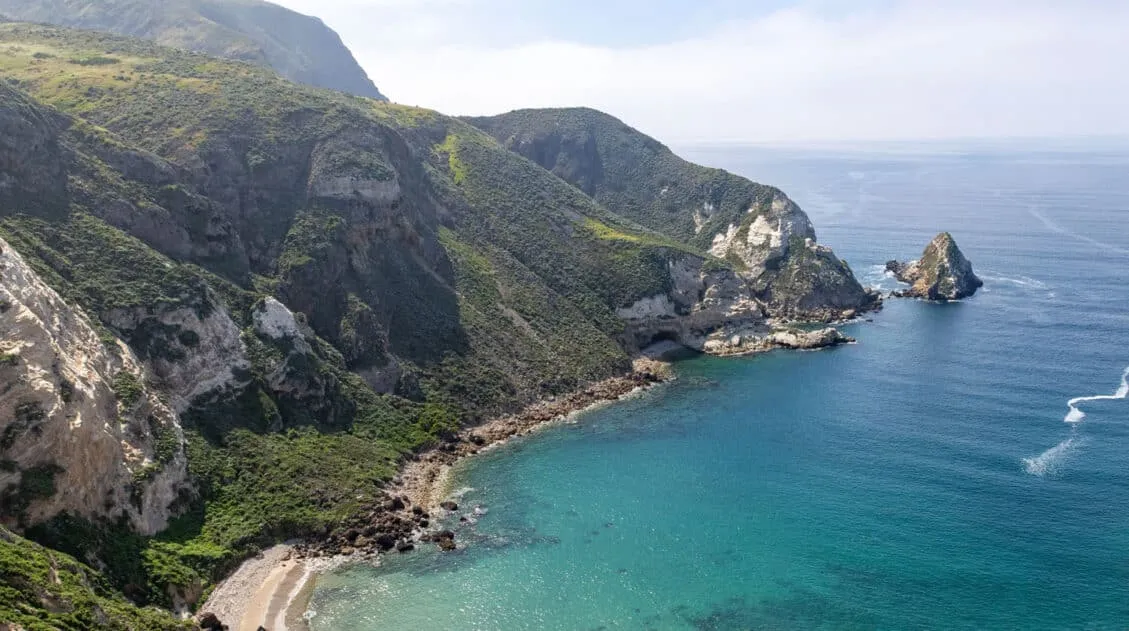
How to Plan a Trip to Channel Islands National Park
Channel Islands National Park Most national parks, you drive up, show your pass, and you’re in. Channel Islands doesn’t work that way. To reach this park — our 56th of 63 US national parks — Tim and I had to book a ferry months in advance, pack every meal and drop of water we’d need […]
One Day in Crater Lake National Park: The Perfect Itinerary
Planning one day in Crater Lake National Park? In just 24 hours, you can hike to breathtaking viewpoints, drive the full caldera rim with stops at the park’s best overlooks, visit Wizard Island, and even watch the sunset from a historic fire tower. With smart planning, Crater Lake delivers an unforgettable experience in a single, […]
10 Things to Do in Joshua Tree National Park on Your First Visit
With its desert scenery, hiking trails, rock climbing routes, hidden oases, scenic drives, and trees that look like they have been plucked from the pages of a Dr. Seuss book, Joshua Tree National Park is a joy to explore. In this guide, learn about the best things to do in Joshua Tree National Park on […]
United States Travel Guide: Places to Visit in the USA
Plan your visit to the United States. Learn about the best things to do, how to plan your time, road trip ideas, and sample itineraries.
Our 15 Favorite US National Parks: A Few May Surprise You
Stretching from the South Pacific, across the United States and into the Caribbean, are 63 national parks. These national treasures are filled with scenic drives, hundreds of miles of hiking trails, wildlife, historic sites, and endless opportunities for adventure. In this guide, we cover 15 of the best national parks in the USA and what […]

Leave a Comment