
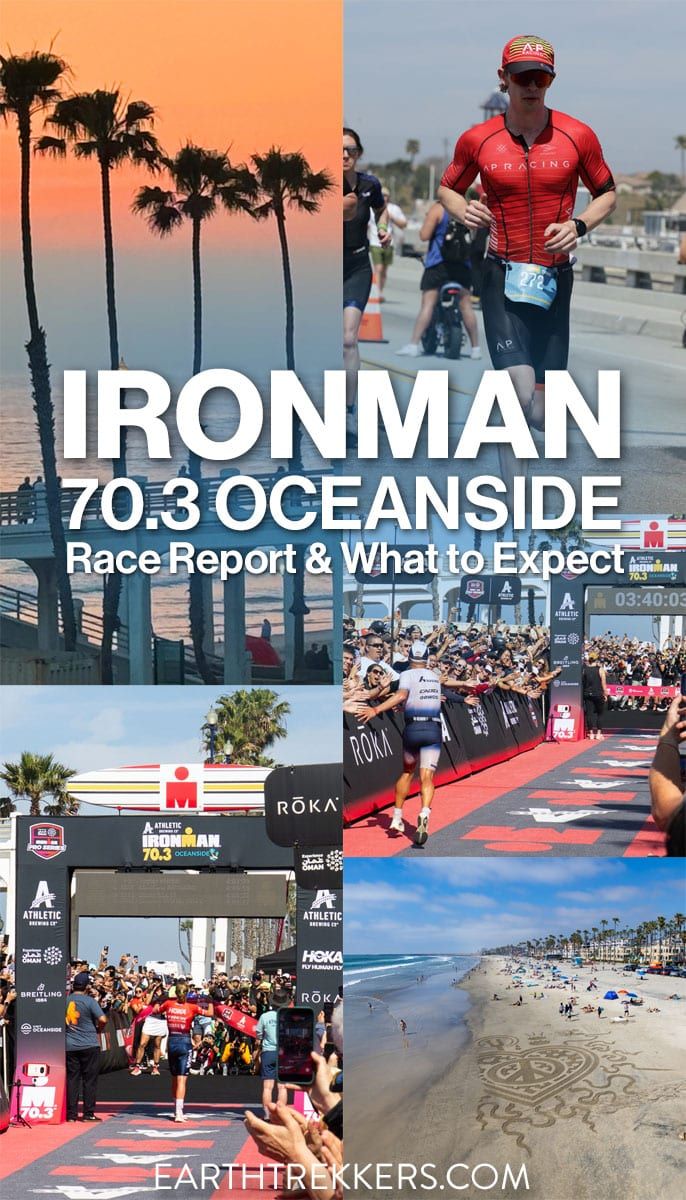
What better way to kick off your triathlon racing series for the year than with IRONMAN 70.3 Oceanside? Swim in the calm, chilly waters of Oceanside Harbor, cycle through the rolling hills of Camp Pendleton, and run along the stunning Southern California coastline, all while racing alongside some of the best professional triathletes in the world.
Oceanside is widely regarded as one of the premier 70.3 events in North America. Every spring, the race draws a stacked professional and amateur field akin to Championship-level races like IRONMAN 70.3 Worlds. Whether you’re a seasoned age grouper chasing PRs or a first-timer looking for a world-class race experience, you’re going to walk away with something memorable.
Julie and I completed IRONMAN 70.3 Oceanside in March 2026 as the opening race of what is shaping up to be a big year. We have about five races on the calendar, including the IRONMAN 70.3 World Championships this September. Between the two of us, we’ve raced a lot of 70.3s and full 140.6s over the years, and I also competed at the World Championships in 2024. We don’t say that to brag. We say it because it means we have plenty of races to compare this one to, and Oceanside stands out as one of the best.
Whether you’re targeting strong early-season results or simply want to experience the energy of a premier 70.3 event, IRONMAN 70.3 Oceanside deserves a spot on your triathlon bucket list. In this guide, we share our race report along with tips on how to have the best experience.
IRONMAN 70.3 Oceanside: At a Glance
WHERE | Oceanside, Southern California
WHEN | Late March or early April
SWIM | Marina; average water temperature in the high 50’s
BIKE | Hilly; one of the more challenging bike courses in North America
RUN | Flat; 2 loops through Oceanside and along the beach
BEST FOR | Strong cyclists; those who don’t mind a cold swim; those looking for a fun early season race
GOOD TO KNOW | This race typically draws a big Pro field, so here’s your chance to race alongside some of the biggest names in the sport
What Makes IRONMAN 70.3 Oceanside Unique?
Here are five things that set IRONMAN 70.3 Oceanside apart from other races.
#1 The Swim Is Cold. Like, Really Cold
With average water temperatures around 57°F, Oceanside features one of the coldest swims in North America. That said, conditions can vary. When we raced in 2026, we got a relatively toasty 63.5°F. Don’t count on that. Plan for sub-60°F water.
#2 The Road Conditions Are… Not Great
Fair warning: much of the bike course is rough. We’re talking potholes, debris, and pavement that will rattle your teeth. I flatted around mile 5, and we counted at least 40 people on the side of the road changing tires throughout the day. Some sections are so bad they’re designated no-passing zones, and by mid-morning the course is littered with water bottles and gel packets that didn’t survive the bumps. Check your tire pressure and bring a solid flat kit.
#3 The Bike Course Has Some Real Climbing
There are two notable climbs on the course. The first, often called Hell Hill, is short but brutally steep. Steep enough that plenty of athletes end up walking their bikes to the top, and there’s zero shame in it. The second climb is much longer but more gradual, so it’s a lot more manageable once you know it’s coming.
#4 You’ll Ride Through an Active Military Base
This one is genuinely unlike anything else in the 70.3 series. A big chunk of the bike course winds through Camp Pendleton, an active Marine Corps base. Marines line the route cheering cyclists on, and it’s completely normal to hear artillery fire in the distance while you’re grinding through. Seeing “Tank Crossing” signs painted on the road mid-race never gets old.
#5 The Run Course Is a Highlight
The run is two loops along the beach, split between an upper road level and a lower beachfront path, connected by short punchy climbs and descents near the pier. It’s harder than it looks on paper (those little connectors add up), but the crowd energy is fantastic and running along the Pacific is just beautiful. Honestly, it’s one of our favorite run courses in the entire 70.3 series.
Pre-Race in California
Prior to the race, we participated in a week-long training camp with the AP Racing Team (the best team in tri!) at the nearby Chula Vista Elite Training Center. Led by coaches Daniel Brienza and former professional triathlete Andy Potts, we swam, cycled, and ran our way across sunny southern California and made plenty of new friends along the way. If we weren’t training, we were eating, and we had built up a crazy level of fitness over that week. It was time to put it to the test.
Camp ended one week before IRONMAN 70.3 Oceanside, which gave us some free time before the race. Tim, Julie, and I drove up to Ventura, where Tim and Julie explored the Channel Islands while I worked remotely from the hotel room.
We arrived in Oceanside on Wednesday, giving us four days to prepare and familiarize ourselves with the area. It was more than enough time to settle in, get a few ocean swims in, and handle all the pre-race logistics.
We spent four nights in the Seabird Ocean Resort & Spa by Hyatt. It’s one of the more expensive hotels in the area, but the location and amenities make it more than worth it. The rooms are clean and spacious, service was excellent, and guests also have access to an outdoor swimming pool and a modern gym. There’s also an open-air restaurant overlooking the ocean (which made the perfect spot for post-race celebratory drinks).
This is also where the pros stayed, so we frequently saw Taylor Knibb, Solveig Løvseth, Kristian Blummenfelt, Casper Stornes, and Mirinda Carfrae.
IRONMAN 70.3 Oceanside Race Report
Julie and I raced Ironman 70.3 Oceanside in 2026. This was the first time either of us had raced this course. This is my race report, but you’ll see photos of Julie and me throughout this post. You’ll also see pros from 2026, taken by Tim.
Historical Weather Data
2026: High temperature: 72°F; Low Temperature: 60°F; Water Temperature: 63.5°F
2025: High temperature: 66°F; Low Temperature: 48°F; Water Temperature: 57°F
2024: High temperature: 66°F; Low Temperature: 47°F; Water Temperature: 57°F
Race Morning
My alarm went off at 4:00 am and I jumped out of bed ready to race. I had all my gear organized the night before, so all I needed to do was pack my bag and fuel up. I fought the morning pre-race nerves as I struggled to get my breakfast down.
Our hotel, the Seabird, was one mile from transition. Even though it was only a 20-minute walk away, we opted to take the shuttle between downtown and transition to save our legs. Big mistake. Instead, we were packed like sardines into a school bus, sweating, and making no forward progress as we were stuck in race-day traffic. The shuttle ended up taking longer than if we had just walked, and added extra unnecessary stress. Next time we’ll walk.
PRO TIP: On race morning, there’s a shuttle running between downtown Oceanside and transition at the Harbor, about a mile apart. Our advice: skip it if you can. The lines are long, buses are limited, and traffic congestion near the Harbor means the shuttle may not even get you all the way there. When we raced, our bus got stuck and dropped us off a half-mile short of transition. It actually cost us about 10 extra minutes compared to just walking. Save yourself the stress and walk it.
We gave ourselves plenty of time race morning to make sure we could line up at a top spot in the swim corral. Athletes line up in a long, narrow chute that, once packed, can make it difficult to push up through the line. Simply put, if you get in line 5 minutes before the swim starts, you’ll be stuck in the back with the slow swimmers.
By getting there early, we lined up about 25 minutes before race start and had no issues navigating the line.
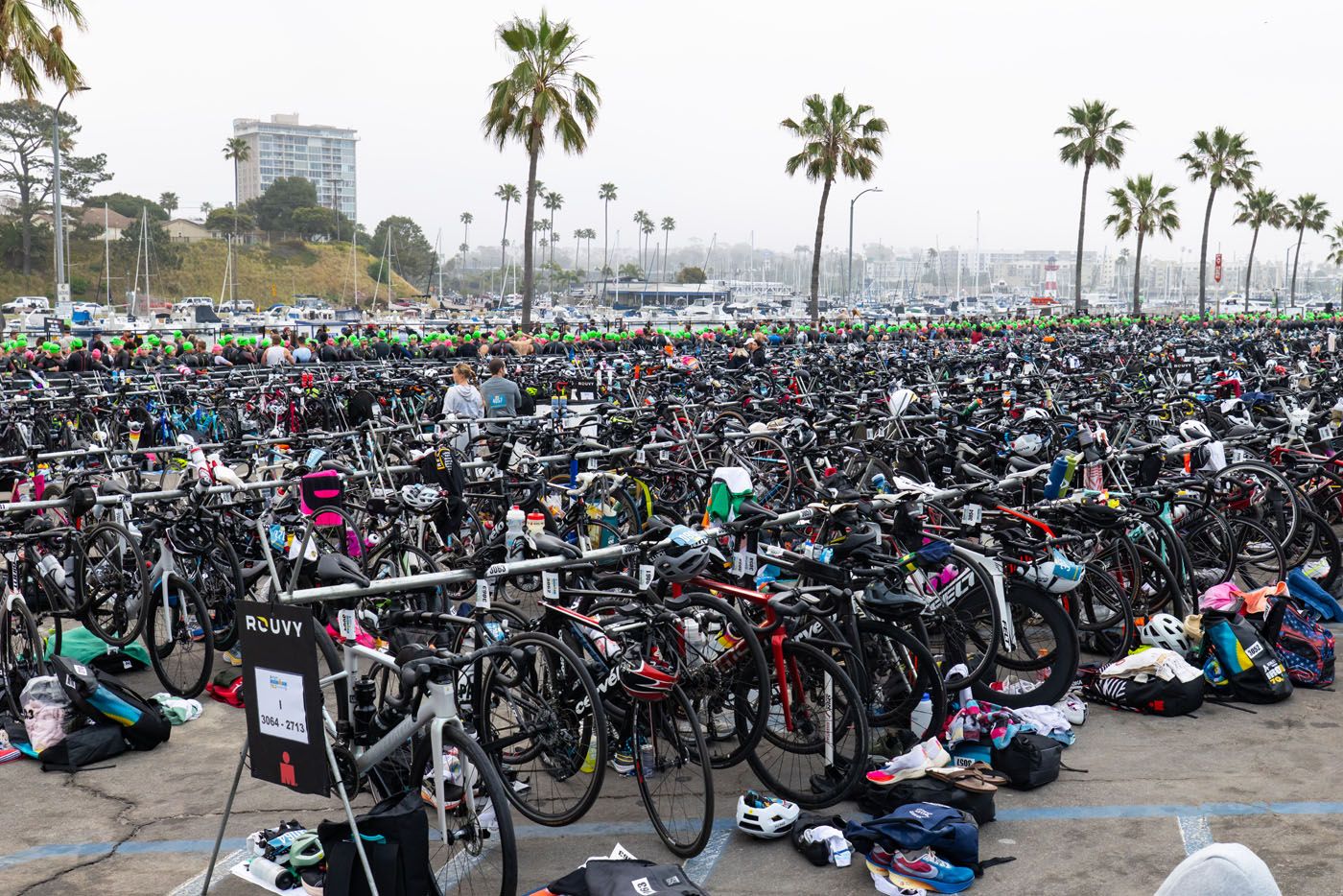
The transition area. You can also see the long line of green and pink swim caps, the athletes waiting to get into the water.
Swim: 1.2 Miles
Lucky for us this year, water temperature was not a problem. Historically, Oceanside has pretty cold water temps around 57°F. This year was an exception, with a crazy heat wave that bumped water temps up by almost 10 degrees. The official Ironman reading had the water temperature in the harbor as 63°F, but it felt much closer to 68°F. Having done two practice swims prior to racing, one of which was without a wetsuit (and very cold!), getting in the water on race day was no problem.
GOOD TO KNOW: It’s also typical to have cloudy, foggy conditions first thing in the morning. Today was no different. The “marine layer,” a dense layer of fog, lingered over the harbor. This fog was an advantage, as it blocked the sun, which can be brutal for sighting on the return leg of the swim. Some years this marine layer can burn off before the swim finish, so be prepared that you might have to sight directly into the sun for the last 500 meters of the course.
At 6:40 am we watched the pros start in a flurry, and 10 minutes later the first age groupers began their race. I was seeded at the very top of the 30-minute swim group. It was a few minutes faster than my goal, but my experience racing has taught me that everyone seeds themselves too high, so I wanted to get around the slower swimmers.
I was in the water just before 7:00 am. Maybe it was the spacing with other athletes, but it felt like I was constantly fighting other swimmers in my pack, more so than usual. I had faster swimmers behind me coming on my feet, and slower swimmers ahead of me that I struggled to get around. A bit frustrating, but I used the first few minutes to relax and warm up into it.
Swimming past each buoy was a battle, more so than in other races. Buoys ended up turning into areas of high traffic, with athletes slowing down and aggressively fighting to get around each other. This is more prominent with the turn buoys, but even the standard sighting buoys were areas of congestion.
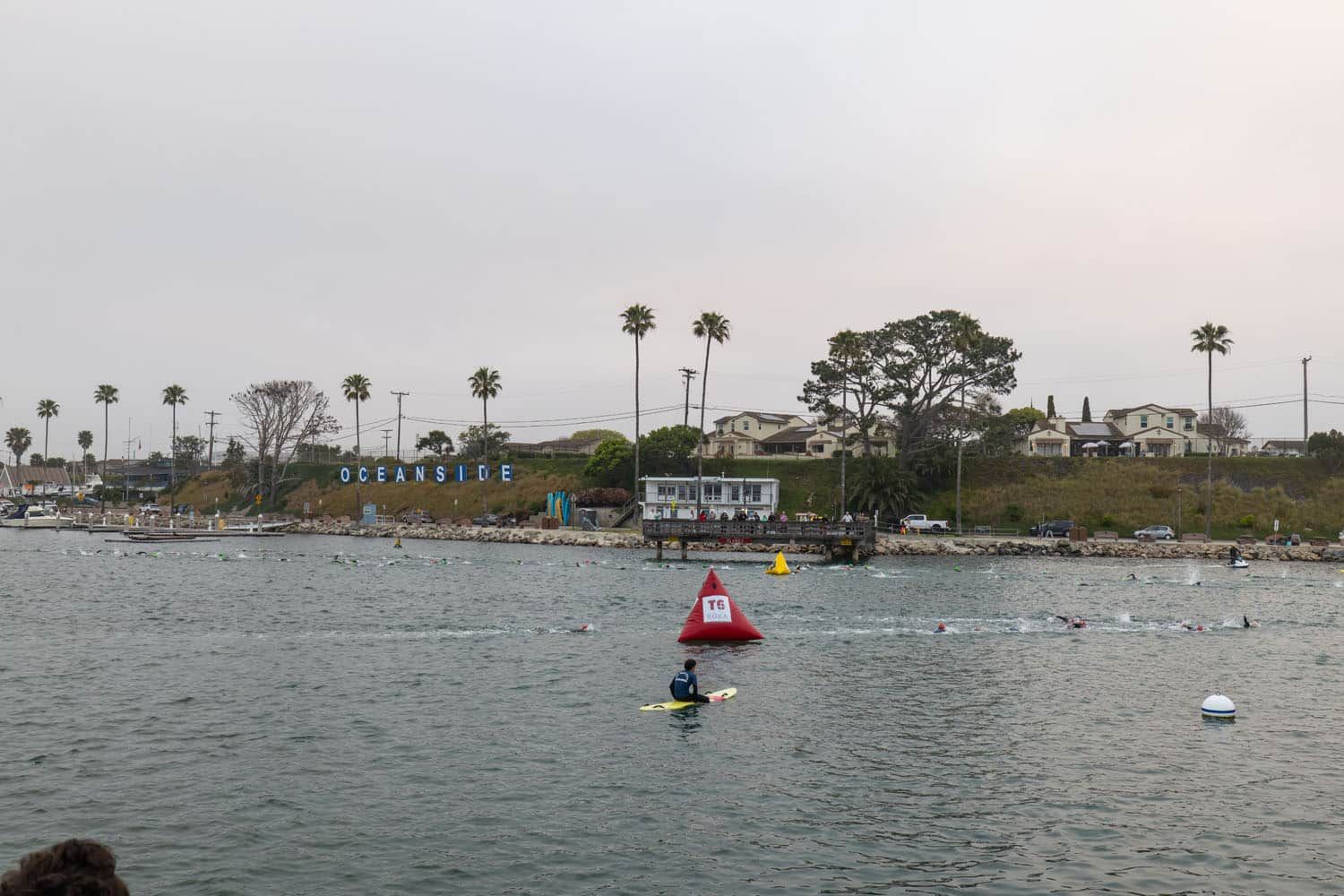
About halfway through the swim, you’ll transition from the harbor into the ocean. You might not be able to see a difference, but you may feel it. The water gets a bit colder and you may feel this strange change in depth. You’re not here for too long before you loop back into the marina the way you came, finishing off the swim loop.
I finished the swim with a time of 34:19. Even though I didn’t feel the best and felt like I was swimming in traffic, I still surprised myself with my swim. Having a wetsuit always helps!
T1
Oceanside features a long run through transition. After exiting the water, athletes will run through a narrow, carpeted chute along the far length of transition, then circle back into transition itself. It’s about 2-3 full minutes of running before reaching your bike, and that’s if you’re keeping a strong pace.
Wetsuit strippers helped me out of my wetsuit, and with wet hands, struggled to get my gloves and arm warmers on. I don’t do well with cold rides, so the extra minute to get this gear on was worth it. I had slid the arm warmers around my wrists so that I could fully yank them up my arm while riding.
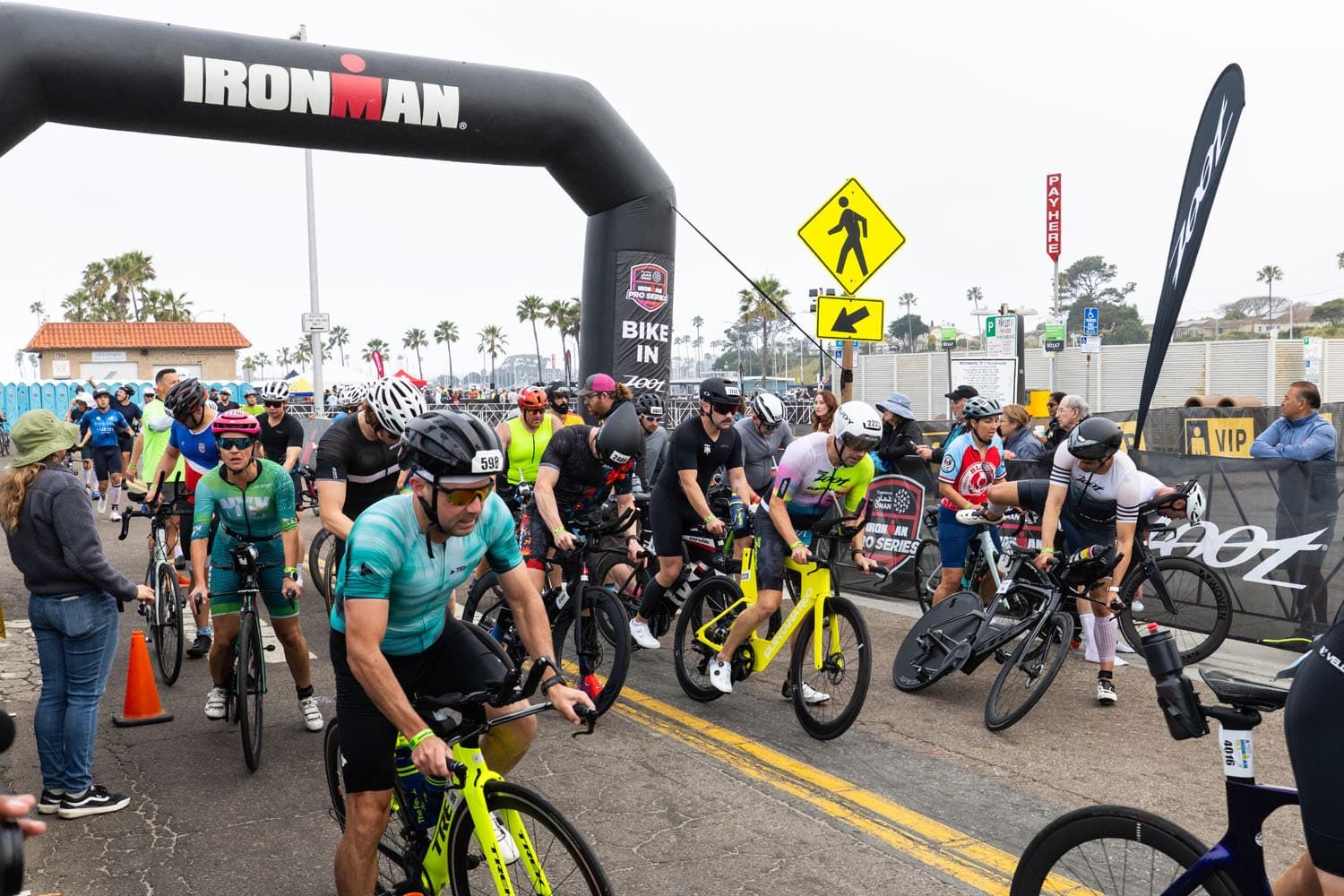
Tim photographed the race from start to finish, and spent quite a bit of time at the bike out area. There were times when huge waves of people would hit the bike-out area all at once, creating scenes like this one. So, be expected for a potentially crowded bike start.
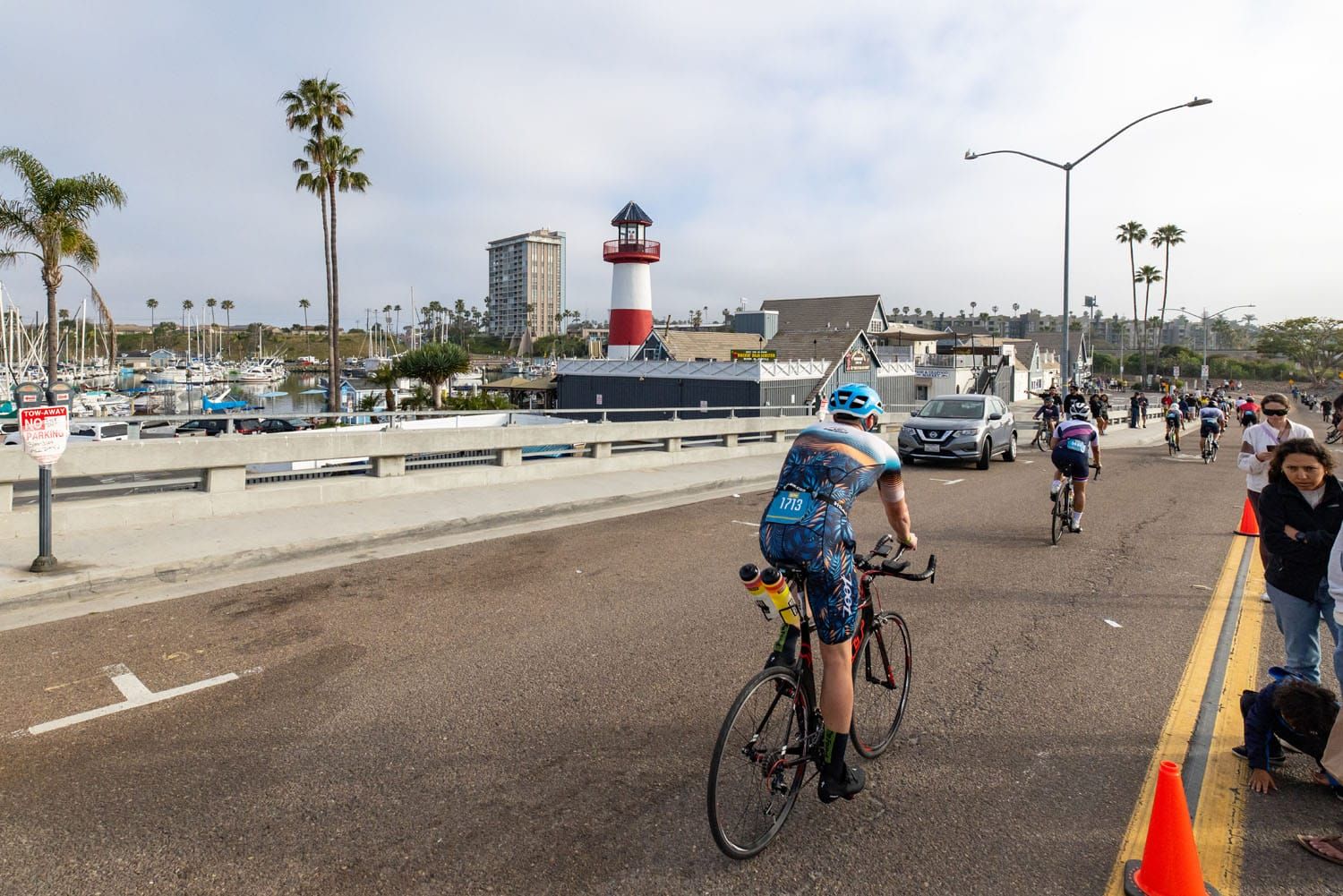
Start of the bike course
Bike: 56 Miles
I was finally on the bike and ready to rip. Unfortunately, the first five miles are pretty slow. Lots of narrow roads with high traffic, some hills, and even a no-pass zone at mile 3. I took the time to ease into the ride, roll my arm sleeves up, and get a few sips of water in. That swim was salty!
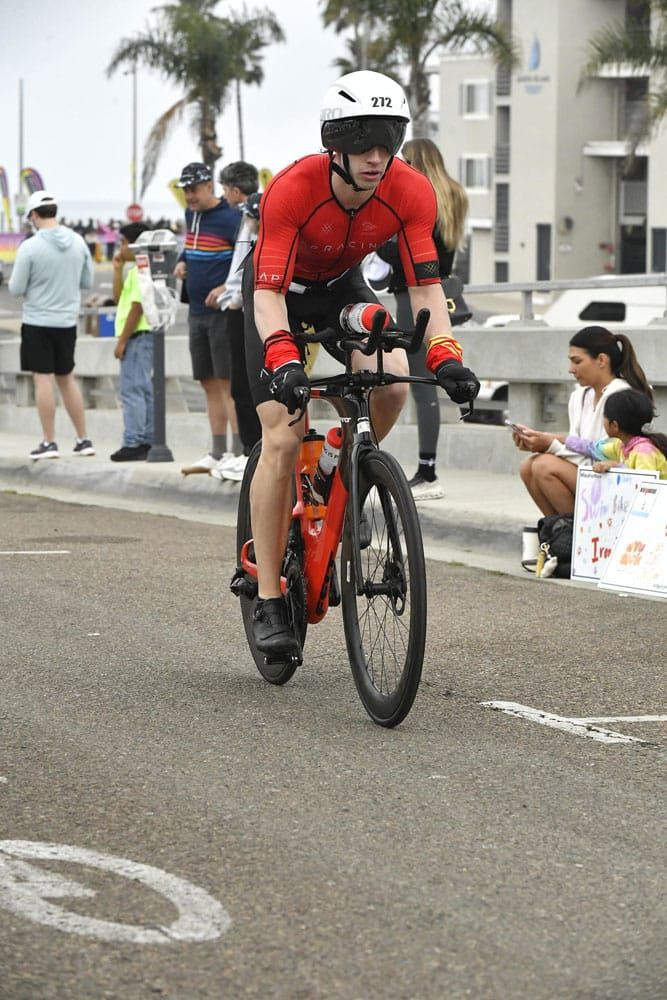
Get ready to bike on some torn-up roads! Most of the bike course is in and around Camp Pendleton, a Marine Corps base. Not only will you be riding along stereotypical California roads, but these same roads are also used by tanks. Safe to say, you’ll pass a lot of bumps and potholes.
I got up close with one of these potholes at mile 5. The course was super congested with slower riders, which was a surprise as I had seeded myself fairly high at the start of the race. I was busy navigating around other athletes and my eyes weren’t focused on the road 10 feet in front of me. I felt a large “THUMP” and knew instantly what I was in for.
It took a few minutes for my tire to show signs, but I had the feeling I just got a pinch flat. I pulled off the road to check and sure enough, there was no air in my back tire. Ah crap. Instantly, I knew my race for the podium was over, but I didn’t let that ruin my attitude. A marine was standing nearby, so he offered to hail one of the bike technicians on course.
I struggled to get my flat changed on my own, having only done it twice in practice. Another athlete also flatted right by me, so we sat and chatted while we waited for the bike technician. A whopping 40 minutes later he made it to us. The reason: he was busy changing 5 other flat tires…and the race had just started!
The bike technician was super helpful and got the flat fully changed within minutes. I thanked him and wished the other athlete well, and was finally off again on my bike…50 minutes later!
I knew my goals for overall time and a fast bike split were over, so I made it my new mission to hit a run PR. I would still go for a strong bike, but my main focus was now on the run.
The struggle with having been stuck with a flat for 50 minutes meant I now had to ride past over 1,000 athletes, none of which were holding a pace near mine. The remaining 51 miles I would have to bob around athletes and be up on my brakes. I lost track of how many times I shouted, “On your left!”
I could never settle into a high-power zone the first 25 miles. You ride along a mix of road and narrow bike paths, and since I was now in the back of the pack, I had larger masses of athletes to navigate around. This is another reason to get out ahead early on the swim.
I was able to stay aero about 95% of the ride, only coming out on the climbs. Prior to the race, I expected the course to be much hillier. In reality, there’s two major hill climbs, but everything else is either flat or a slight gradient.
With the hills, you’ll be treated to a short but steep kicker at mile 28, and a longer climb at mile 35.
The first, referred to as Hell Hill, is a 3-minute, half-mile climb with an average grade of about 9%. I put the power down and broke the hill into 3rds. A few athletes were walking their bikes up or really struggling to keep moving. Coming off of our training camp, where we cycled up mountains day after day, this felt like nothing. However, it is not to be underestimated. This is the toughest climb of the bike course, and many people find it to be quite challenging.
The 2nd climb is about 3 miles long and took me 10 minutes. It starts gradually and ends similarly to the short kicker. I didn’t even recognize the climb had started until I got to the final steep section. The first 2 miles are a slow 2% grade, and I was riding along in aero without a problem. The final half-mile was similar to the short kicker from before, but not as steep. Again, I flew over the top, blazing past the athletes and getting some cheers of encouragement.
Next comes a nice, long, steep descent as a reward. In prior years, there was a speed limit here, but since then the road has been re-paved, that rule no longer stands. That being said, I got lower and blazed down that hill at 40+ mph. It felt like I was flying!
As you turn right out of Camp Pendleton, you’ll have 10 miles to go. Usually, you can expect to have headwinds here, but this year was another exception. Fine by me! It would be a fast day for racing, so I emptied the tank and, on the final few miles, mentally walked through my transition into the run.
T2
The very end of the ride snakes through T2 along what felt like an F1 track. You’ll actually ride the same path that you ran as you exited the water hours before. Expect a slow ride, especially if you have other cyclists around.
I ran my bike to the rack, and since I was out on the course longer than expected, I ate half of a Fig Bar to get some solid food in my system. While I chewed on it, I swapped my shoes and got my run gear on fast!
Run: 13.1 Miles
The run felt phenomenal the entire way through. This ended up being my best run split to date, and also the best I felt mentally.
My goal was to break the run into quarters. Start out the first ¼ with nothing special, just run at a pace I naturally settle into. Then slowly make each following quarter a bit faster.
I found my run legs instantly. I felt fast, loose, and strong. My main focus these first few miles was form. Quick and light turnover, relaxed upper body, and strong core. Solid form translated to fast running.
The run course makes two loops. From transition, you’ll run roughly 3.5 miles south, either along the water or on wide neighborhood roads. The run is flat and fast, with a few short hills as you change levels (when you jump from water-level to neighborhood). However, don’t expect any shade. Luckily since the race is in late March, it’s never too hot on the course, but there’s no relief from the sun. Consider putting on sunscreen during T2.
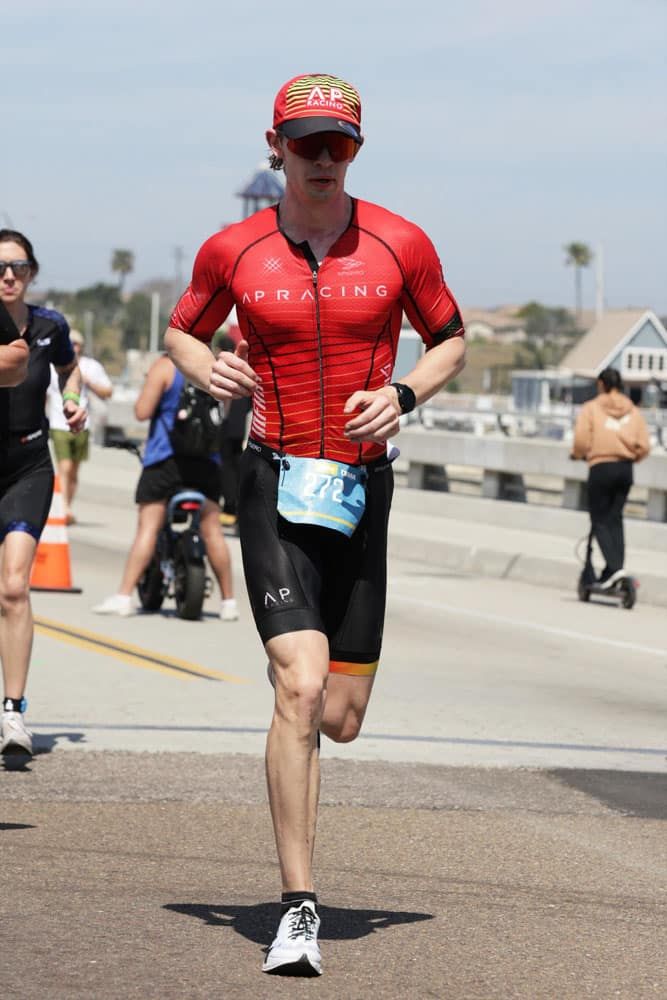
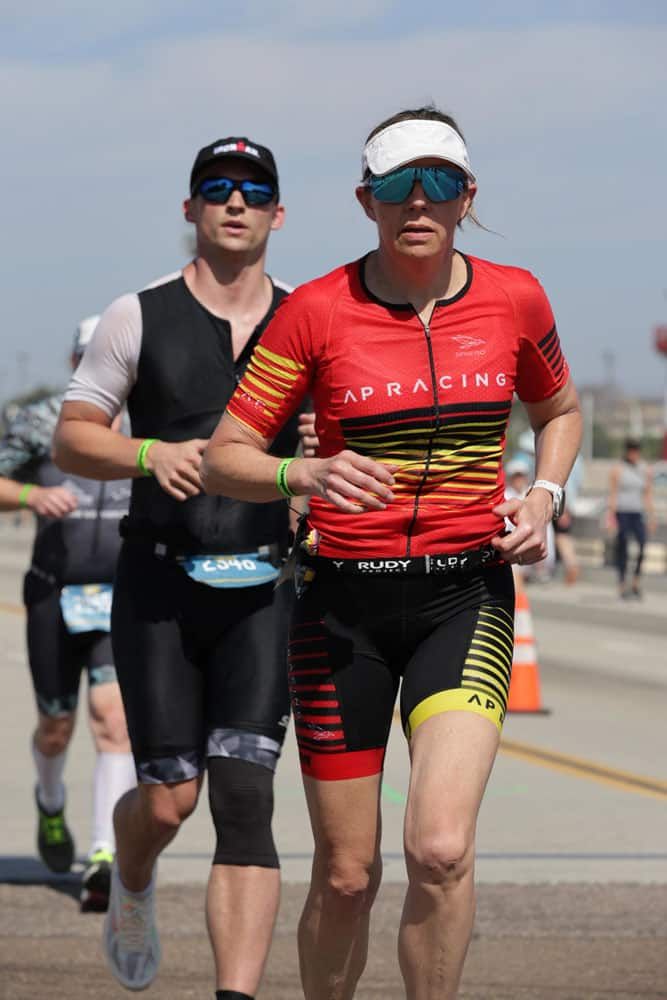
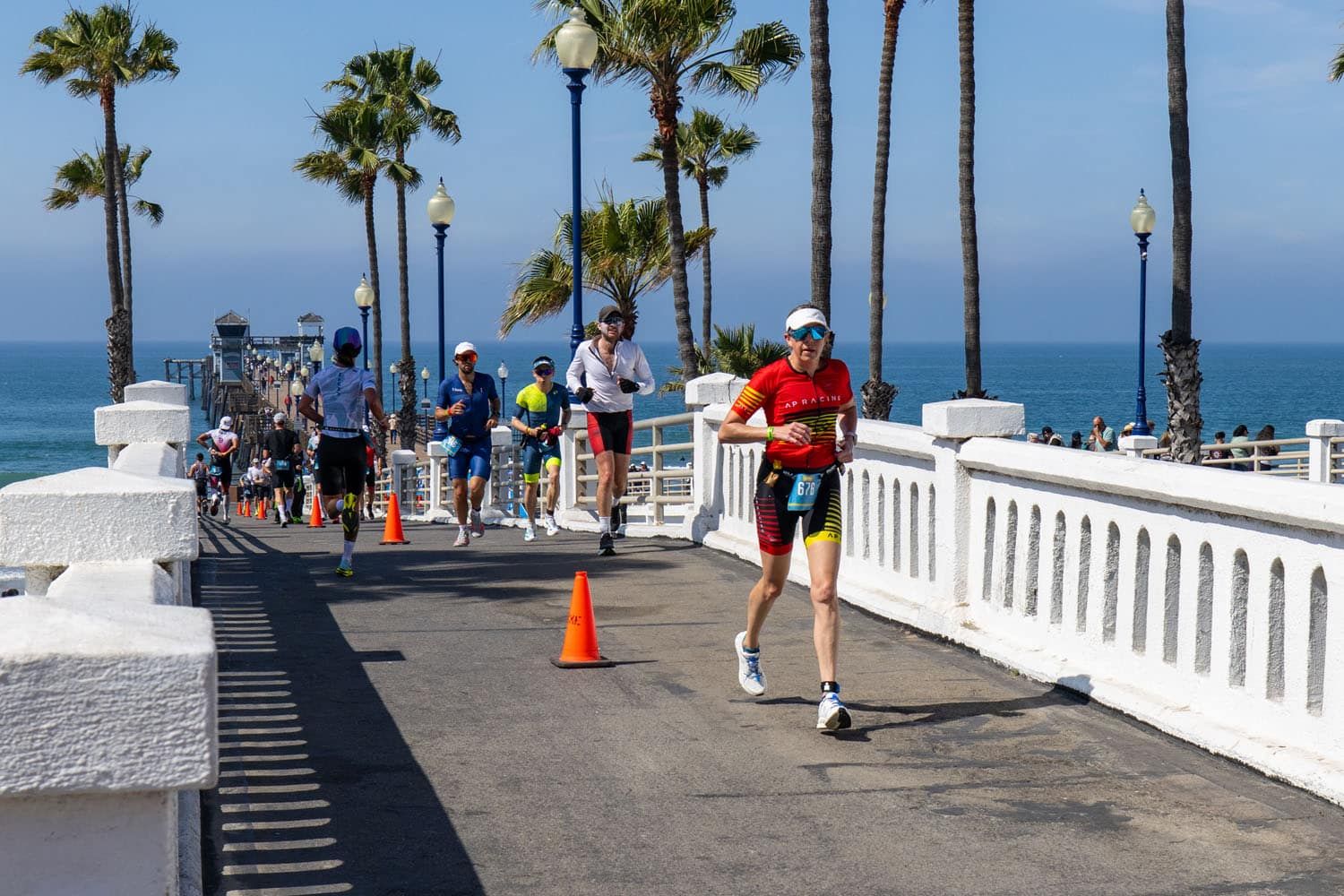
There are aid stations roughly every mile. These come equipped with volunteers handing out water, ice, cola, electrolyte mix, some solid food and gels, and maybe even a hose to cool off.
I was lucky enough to cross paths with some of my AP Racing teammates on the run course. Each time I bumped into someone I knew, it was an instant morale boost. It also always kept me busy looking out for them and cheering them on, which kept my mental state high.
Most of all, having coaches Andy and Daniel cheer me on for the run was unbelievable. Here we have Andy Potts, 5-time winner of Oceanside, cheering for me. I passed them multiple times and would get an instant morale boost. They always said exactly what I needed to hear, whether it was words of encouragement or simply correcting my form. Another thing to look forward to.
Volunteer and crowd support was also solid throughout the entire run course. It was easily the best run support of any race I’ve done. You’ve got the masses of people on the Strand, families playing music from their houses further out on the course, and pretty much fans every step of the way. It made it so much easier to stay strong.
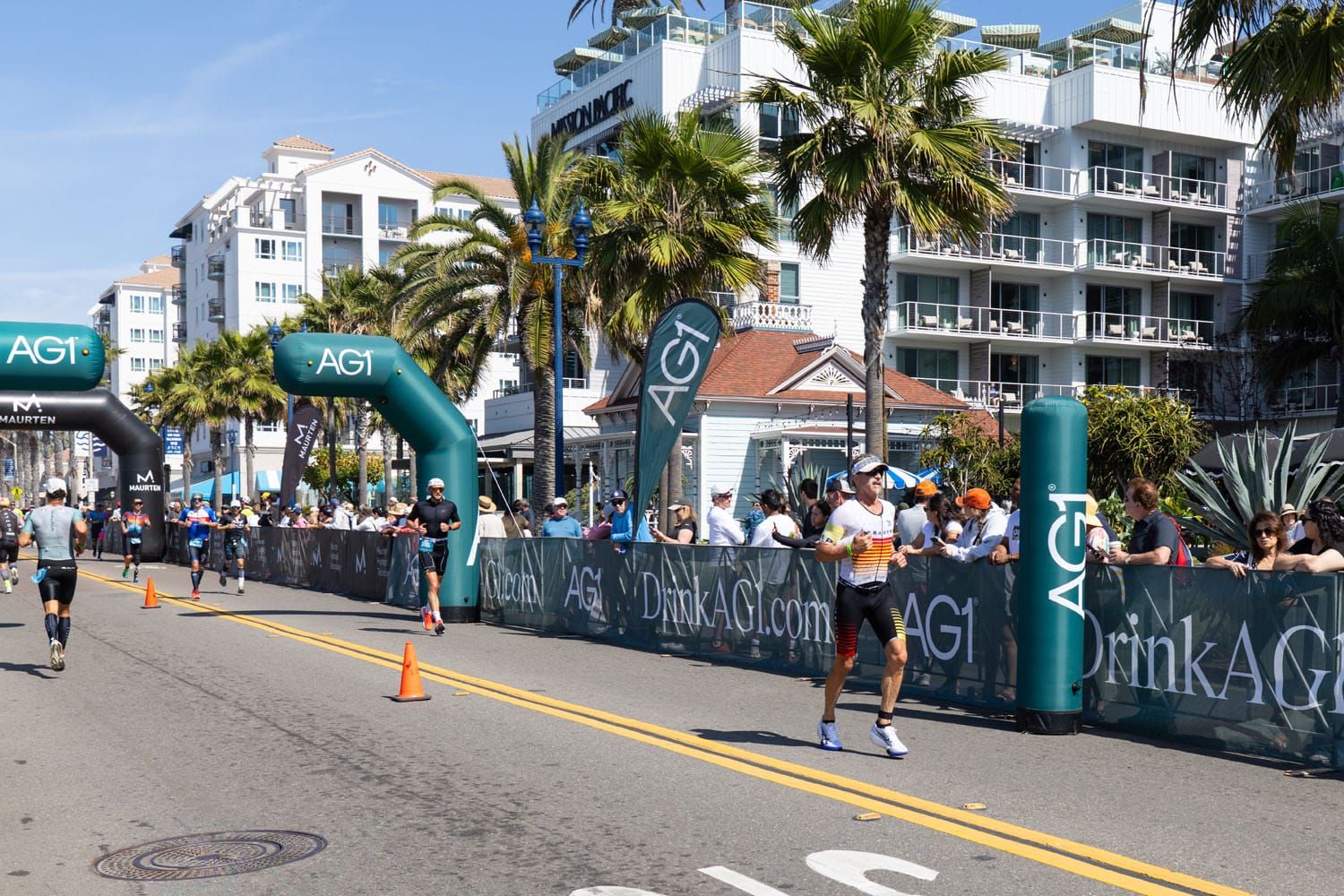
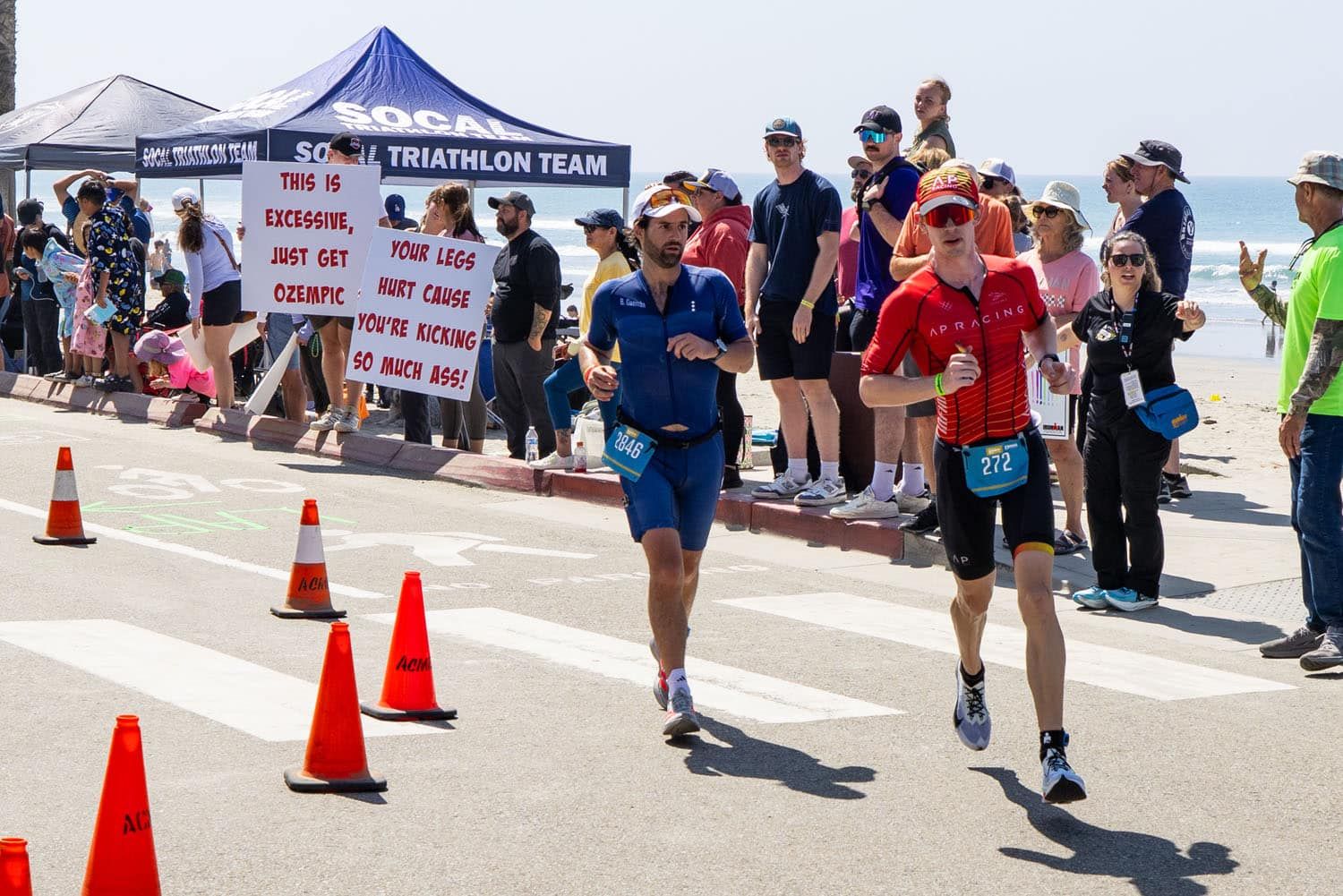
Mentally, I was having a blast almost the entire way. I was knocking down the miles, my pace was way faster than I’d ever run before (but still what I expected for my fitness), and it was just a beautiful day to be racing. A high of 72 and sunny, and along a beautiful course.
The final 4 miles were a lot harder. My legs were now pretty heavy with fatigue, I had been racing for a while, and I was eager to cross the finish line. But I had less than 30 minutes to go. The caffeine kicked in from my gels and I turned it into high gear to finish strong.
The short climbs that I had crushed previously felt a lot tougher now (these climbs are short but steep!). I just focused on quick turnover and getting up comfortably. I slowly worked to drop my pace little by little each remaining mile and slowly squeeze out some extra intensity.
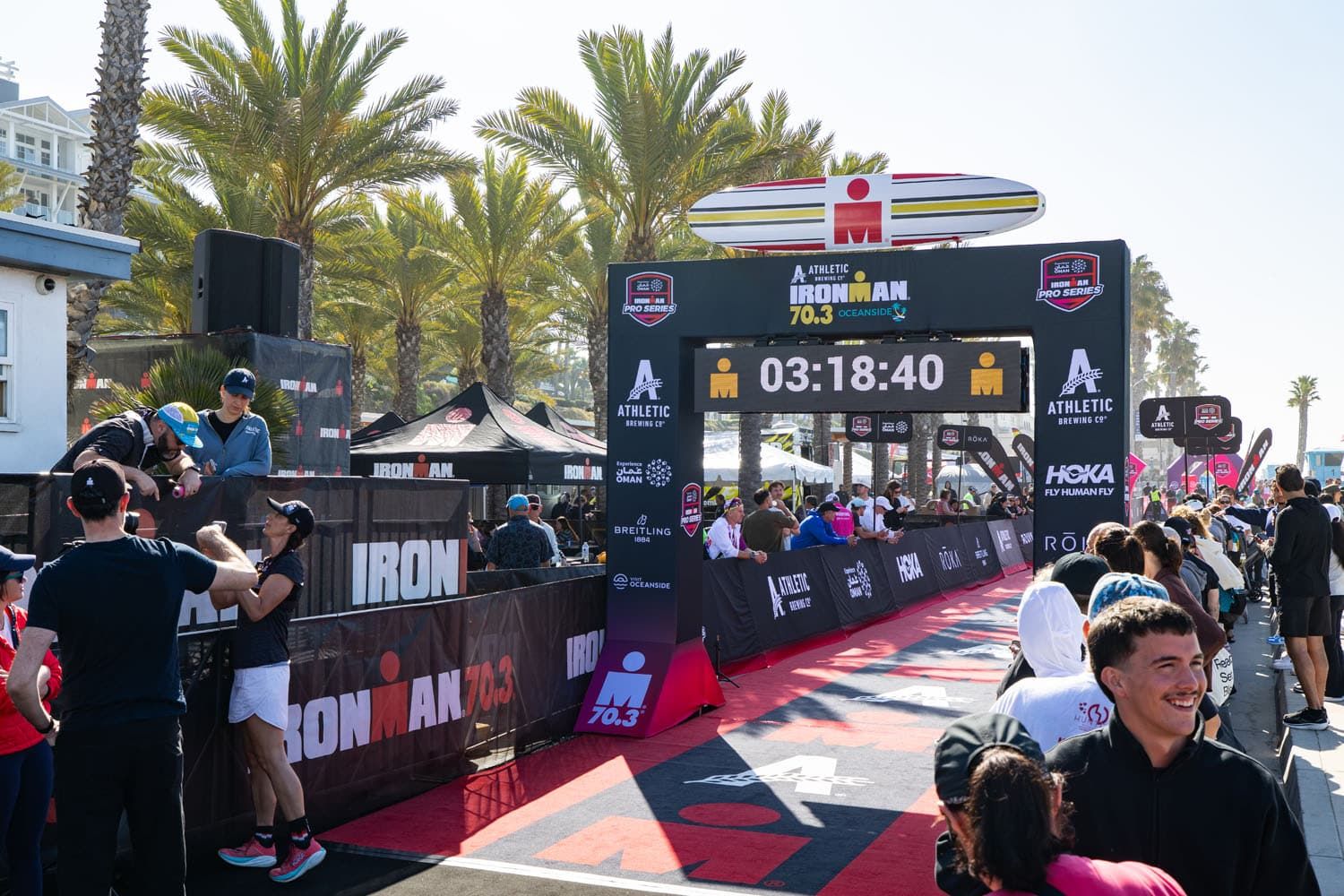
I flew down the final hill and booked it to the finish. From the final turn, you’ll have a visual on the finish line (you can use the pier as a reference), with a half-mile to go. With everything I had, I picked up my stride and kept my eyes on the pier. The sidewalks were packed with spectators cheering us on the entire way through to the finish.
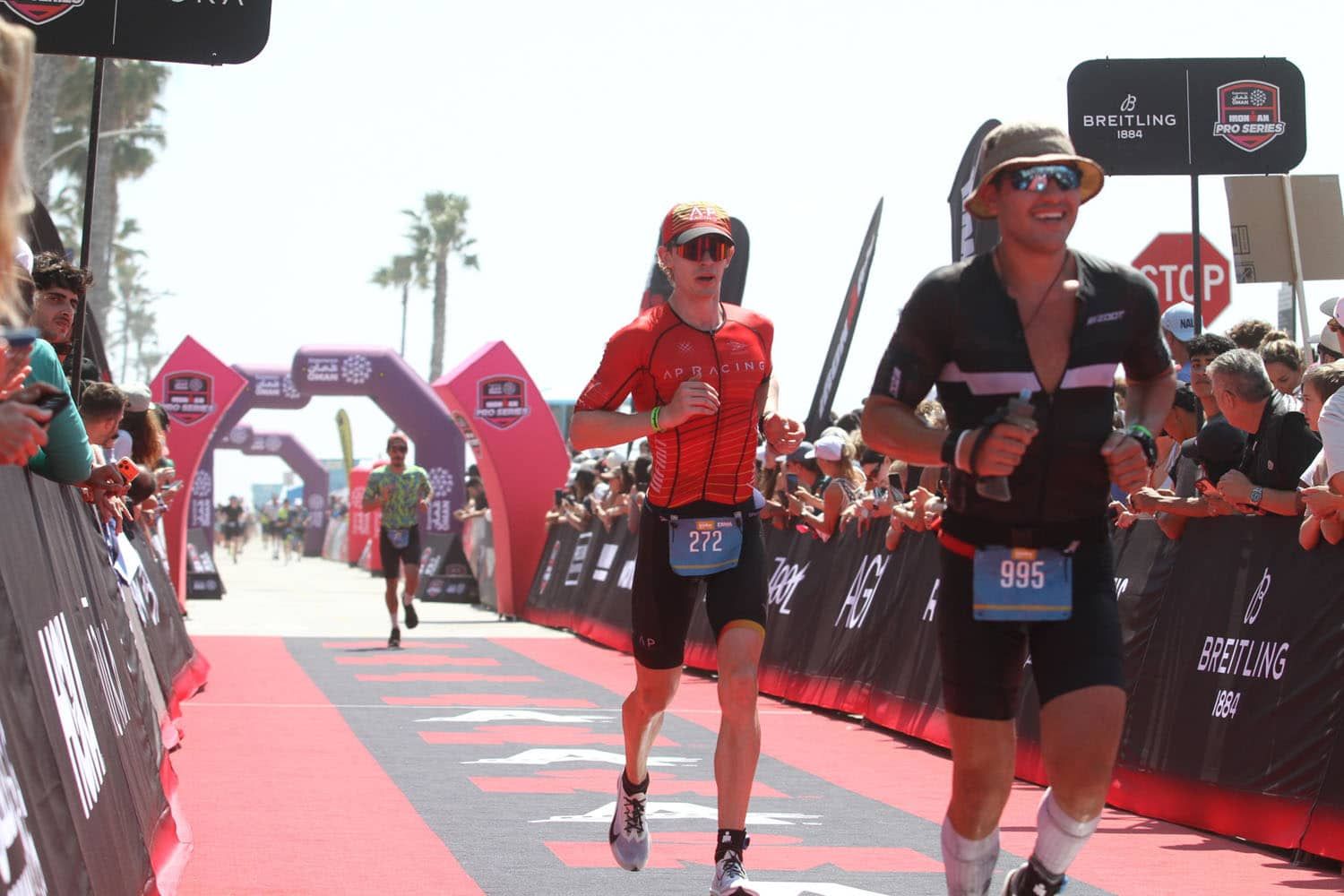
I strided through the finish chute, finishing with a run time of 1:24:04, a 7-minute PR in the half-marathon, and a total time of 5:33. Not a bad overall time considering I spent 50 minutes on the bike course with a flat tire!
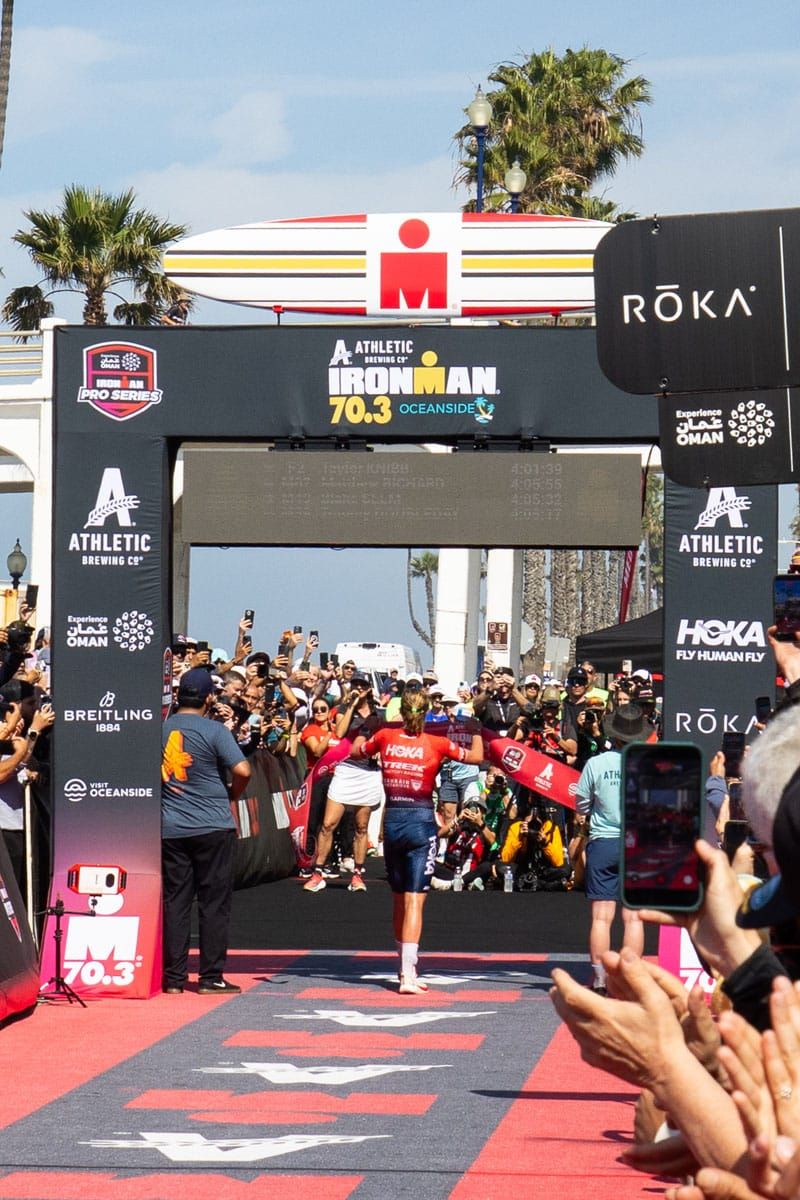
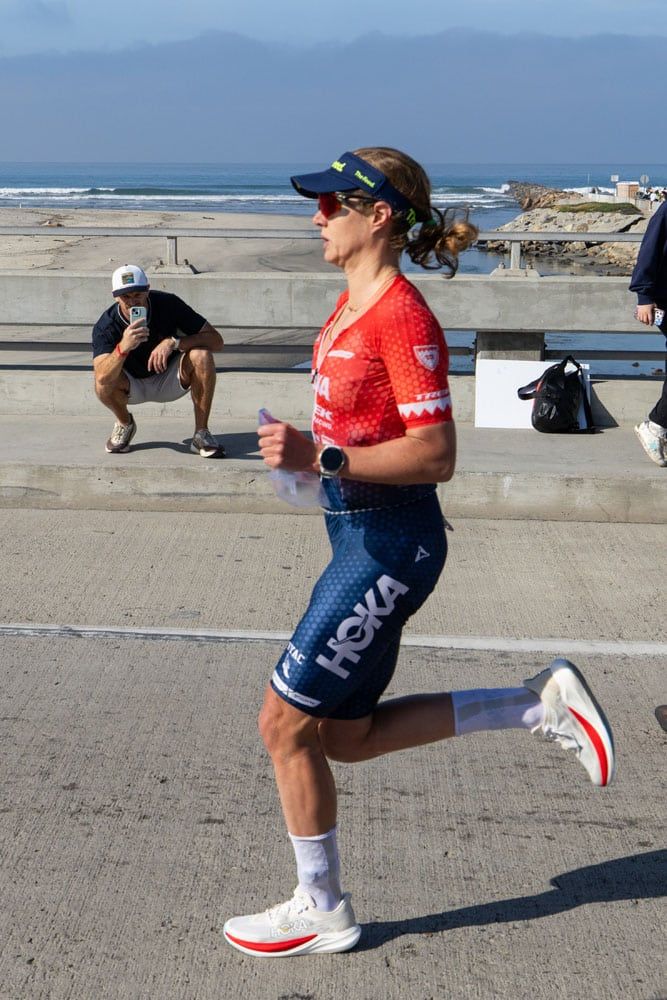
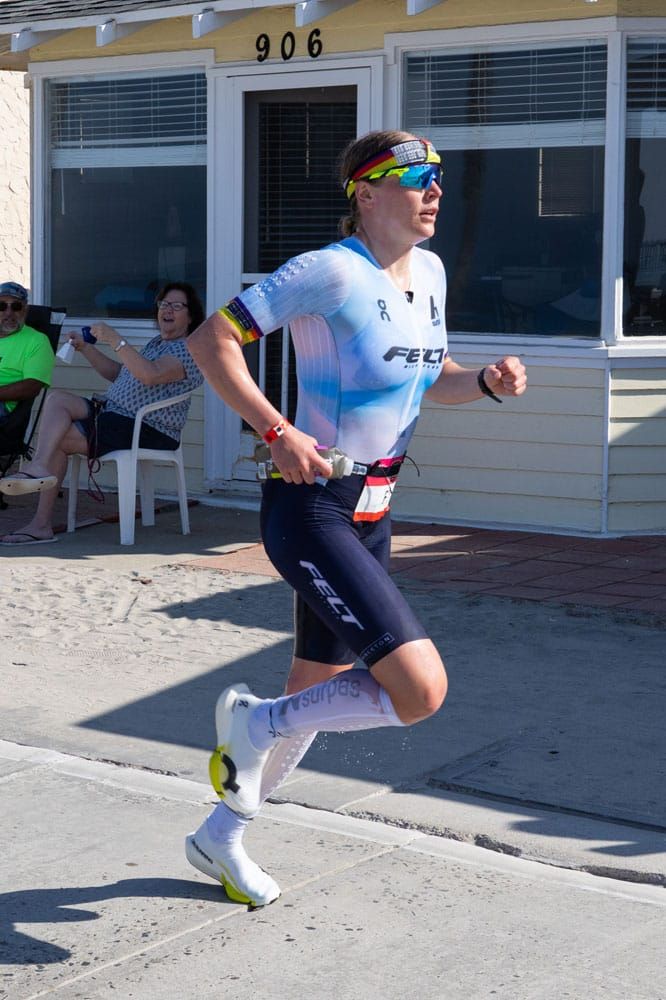
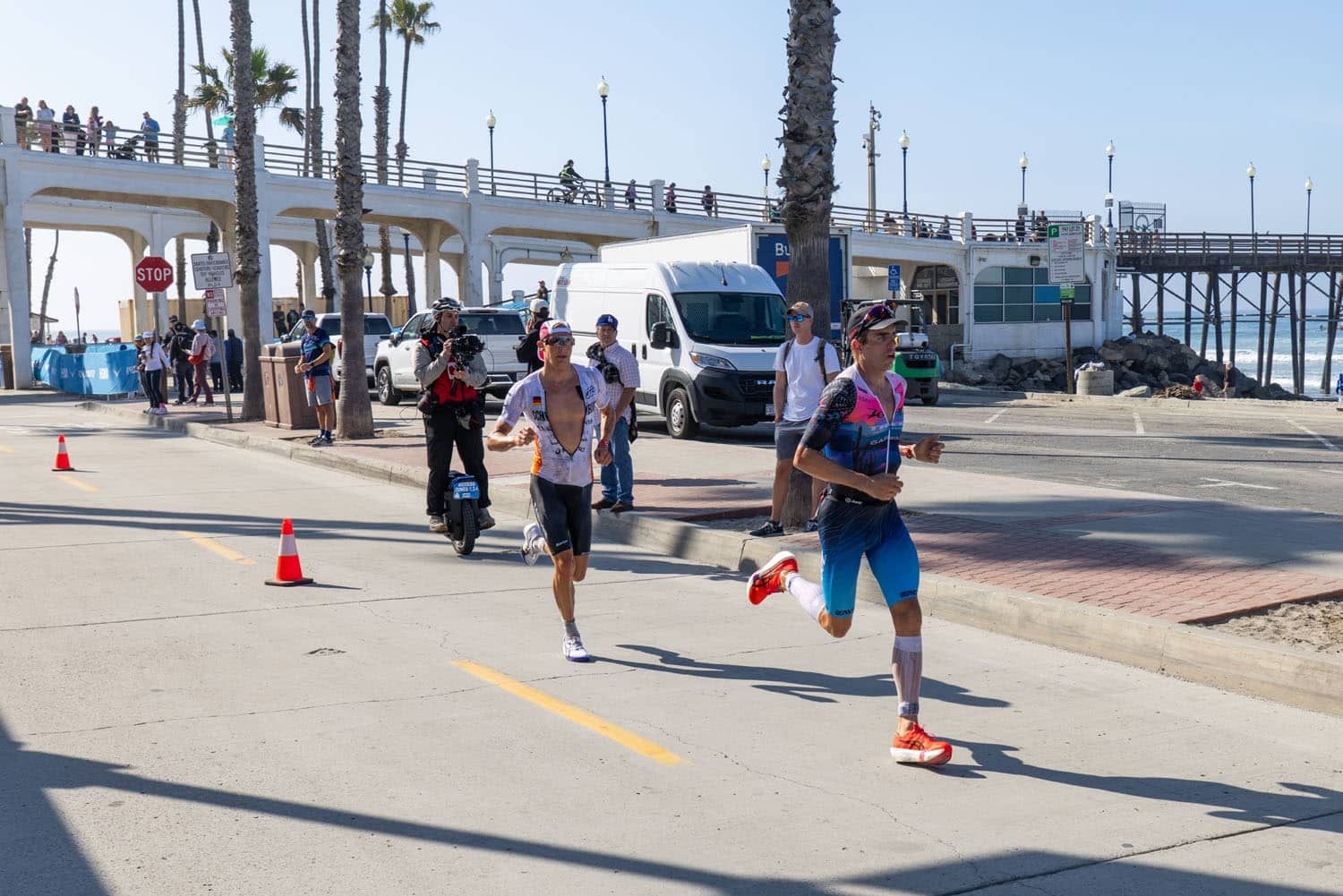
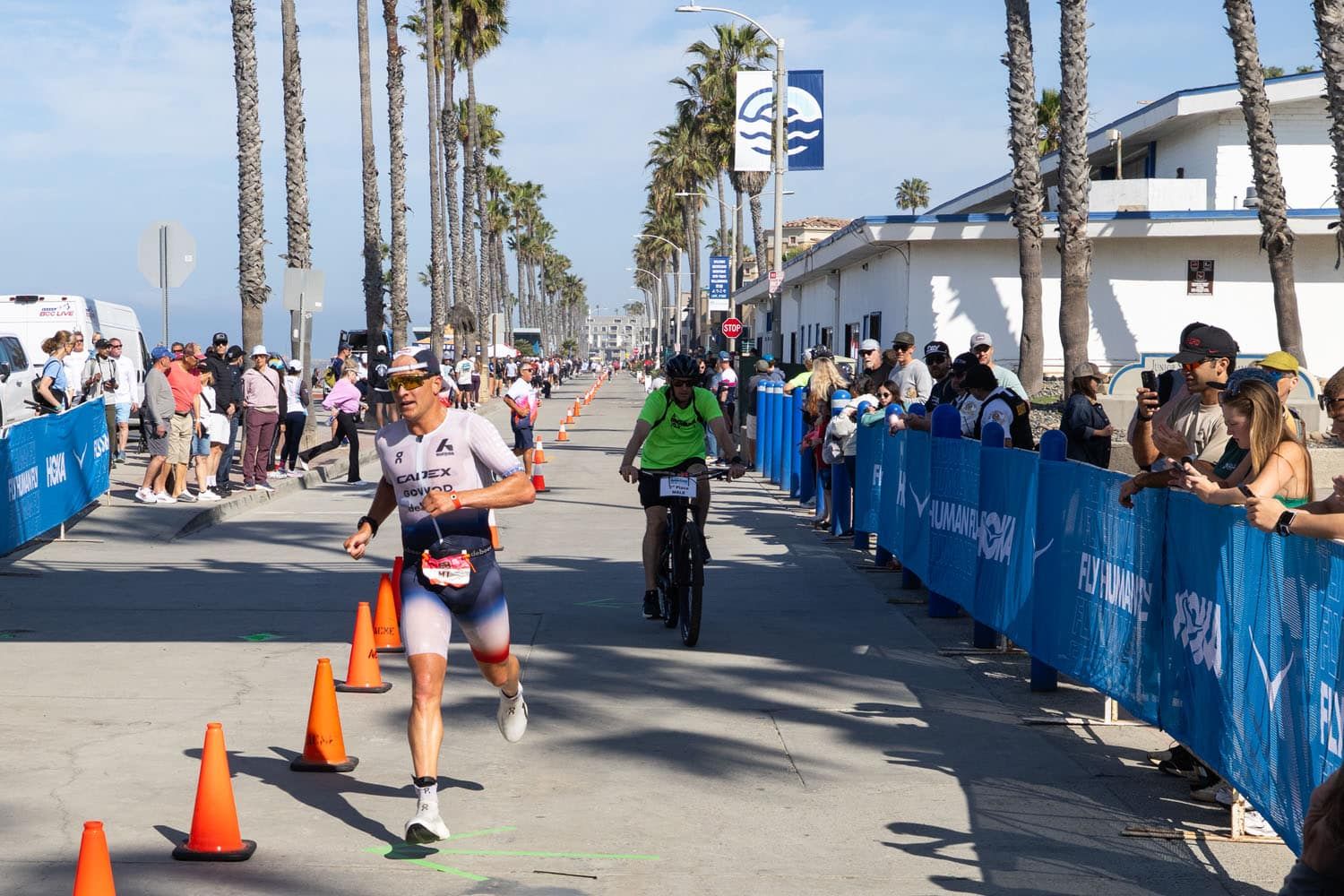
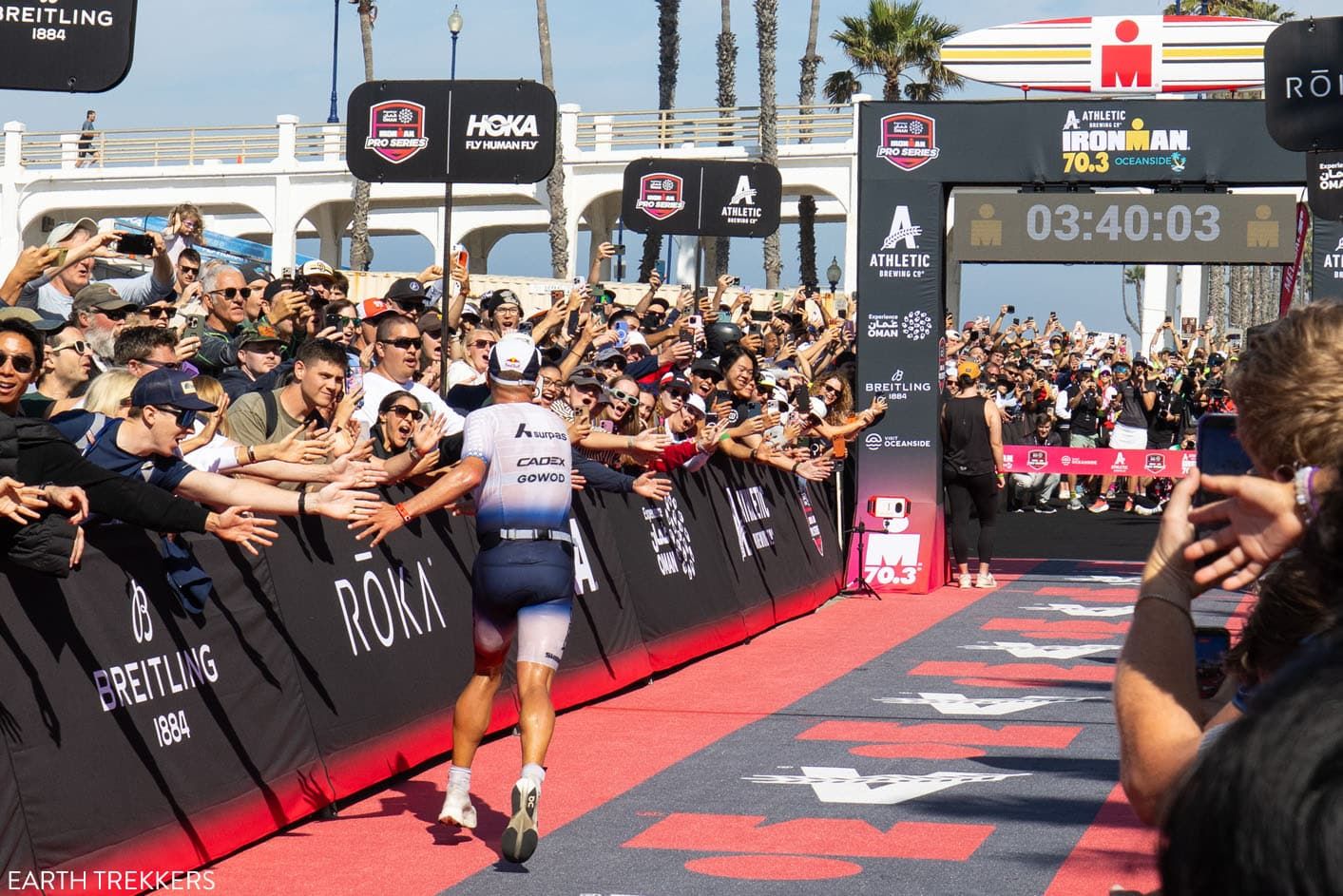
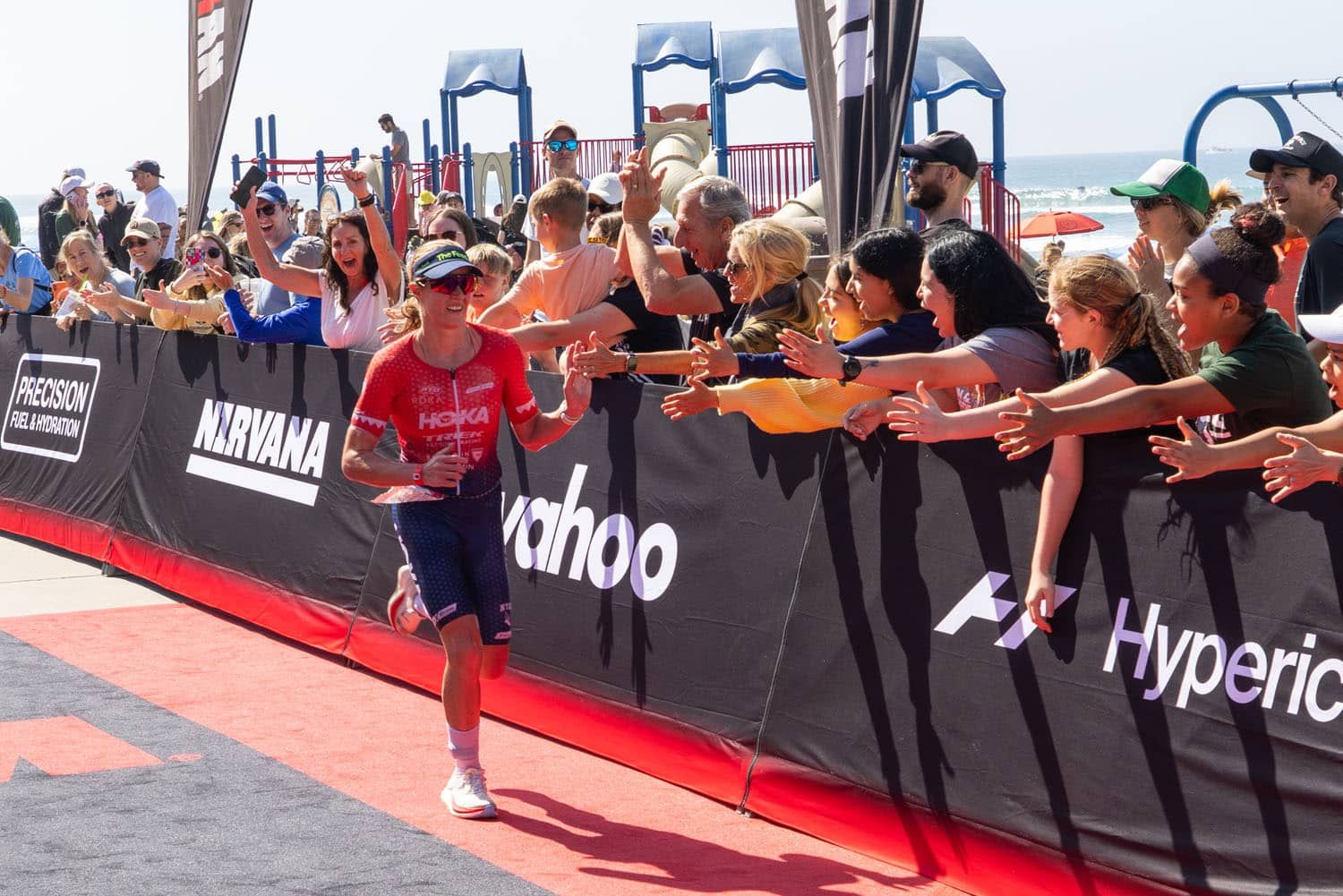
And here are a few photos of the pros in 2026.
Ironman 70.3 Oceanside Race Summary
Looking back, 70.3 Oceanside was a race we enjoyed far more than we had initially expected. With the lively beachfront setting, a fast run with amazing crowd support, and a stacked field of both amateurs and professionals, this is an event we’d love to race again.
Although I didn’t have the overall race I’d hoped for, I was able to bring it back on the run and finish stronger than ever, crushing my half-marathon PR.
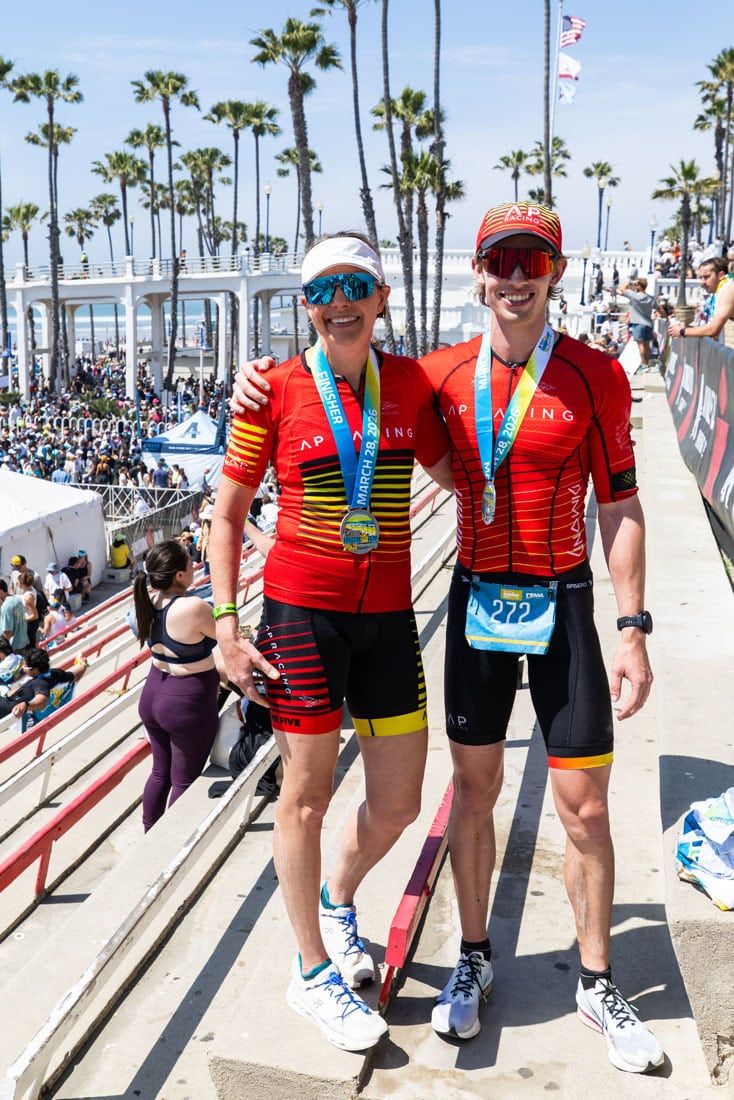
Meanwhile, Julie had a fantastic race that only got better as the day went on, smashing her goals and finishing in 5:41! For her, Oceanside ended up being one of her best half-Ironman performances.
The conditions can make the course challenging, with a frigid swim, a hilly bike course (most years with a headwind on the final 10 miles). The road conditions on the bike course are also a huge problem, with multiple pros and countless age groupers suffering from flat tires. Yet apart from this, Oceanside exceeded our expectations and is a top choice for those looking for an early-season race.
Things to Do in Oceanside
Oceanside is a laid-back Southern California beach town with more charm than you might expect, and if you’re arriving a day or two before the race, it’s worth taking some time to explore. Just keep your legs fresh!
Oceanside Pier
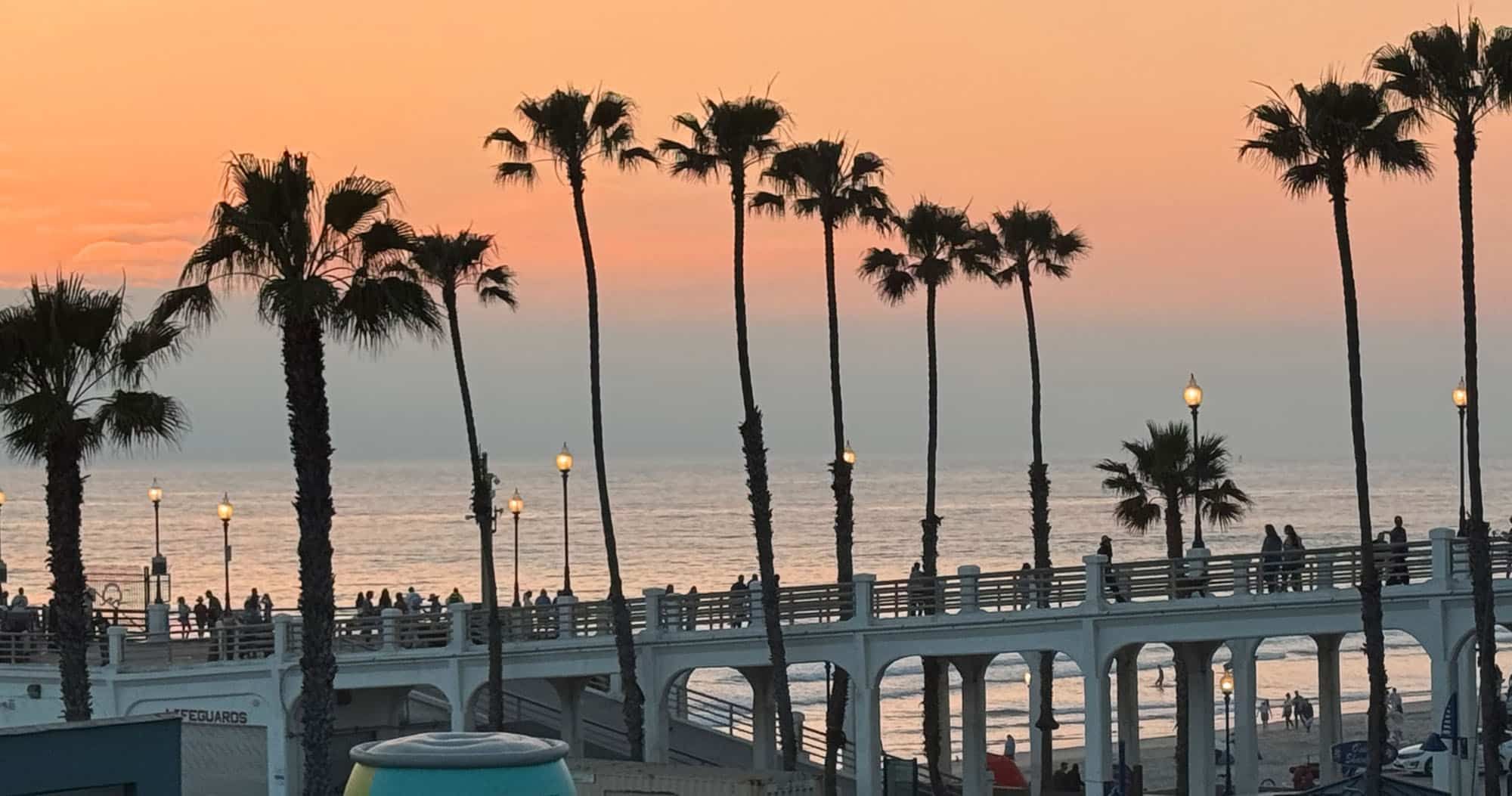
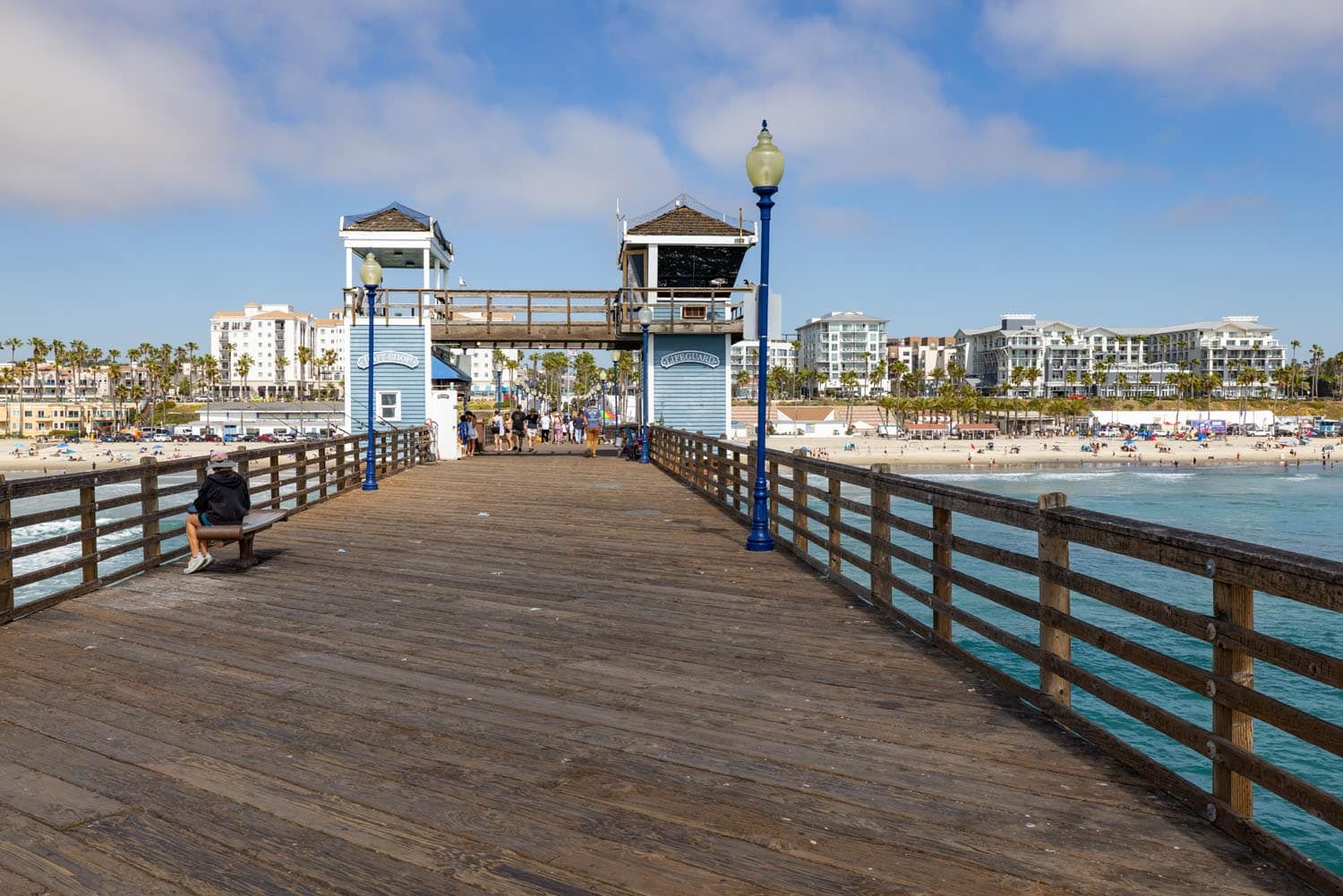
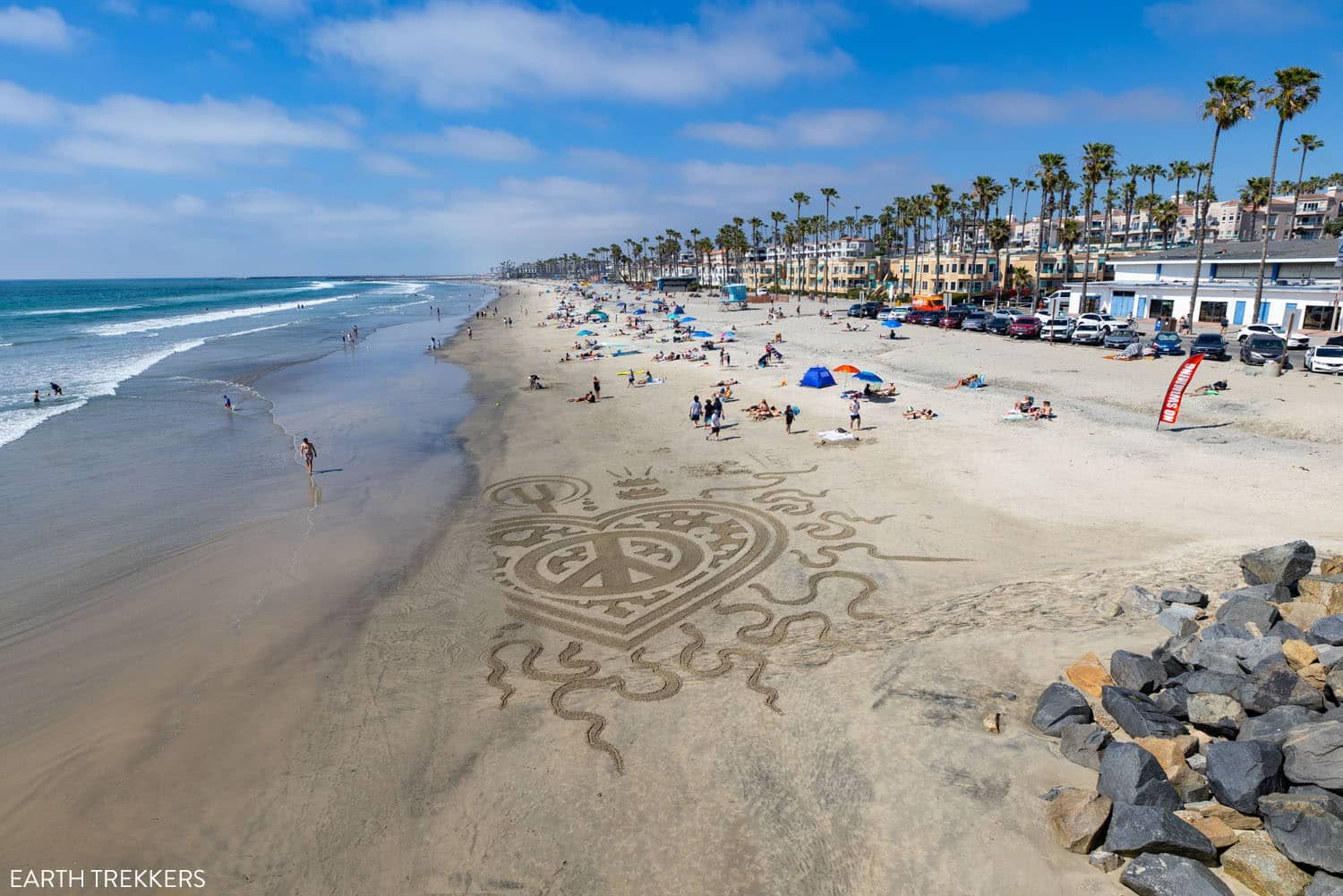
One of the longest wooden piers on the West Coast, the Oceanside Pier is an easy and enjoyable walk, especially at sunset. The views back toward the beach and the city skyline are beautiful, and the vibe is classic California. It’s a perfect low-key activity the evening before the race when you want to get out of your hotel room but don’t want to overdo it on your feet.
California Surf Museum
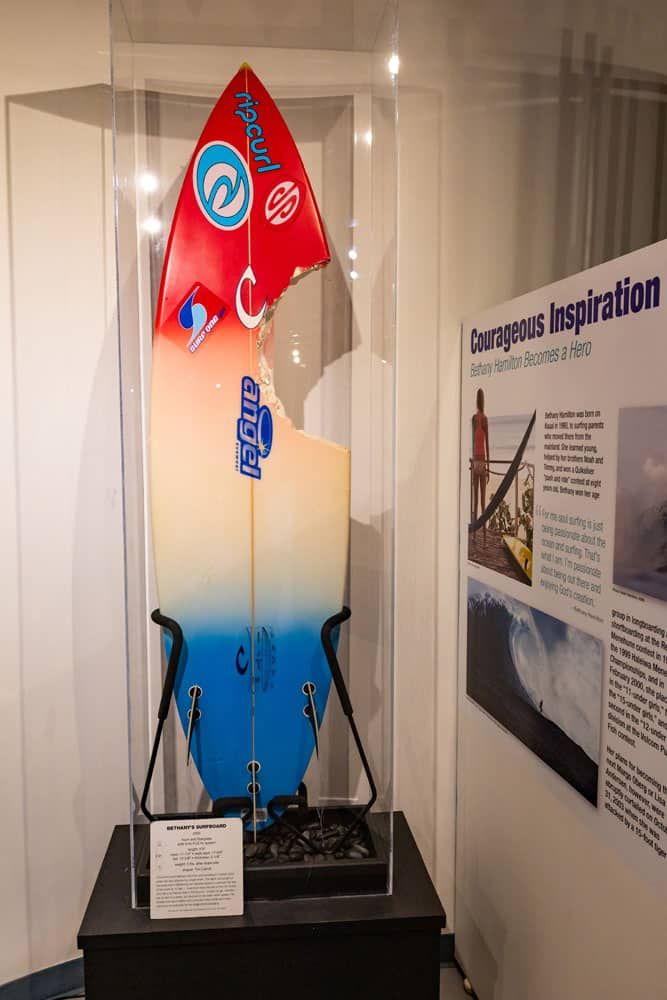
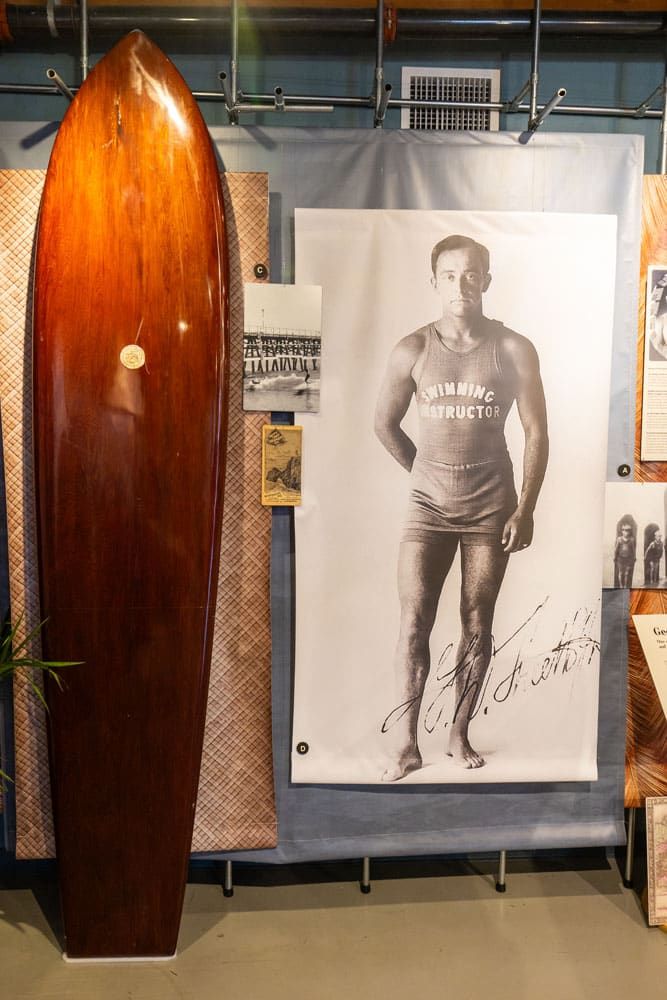
A fun stop if you have an hour to spare. The museum is small and the admission is a bit pricey for what it is, but it’s genuinely interesting. The highlight is the actual surfboard Bethany Hamilton was riding in 2003 when a tiger shark bit off her arm. You have to see it in person to appreciate just how real and jarring it is. A nice little slice of California surf culture history.
Top Gun House
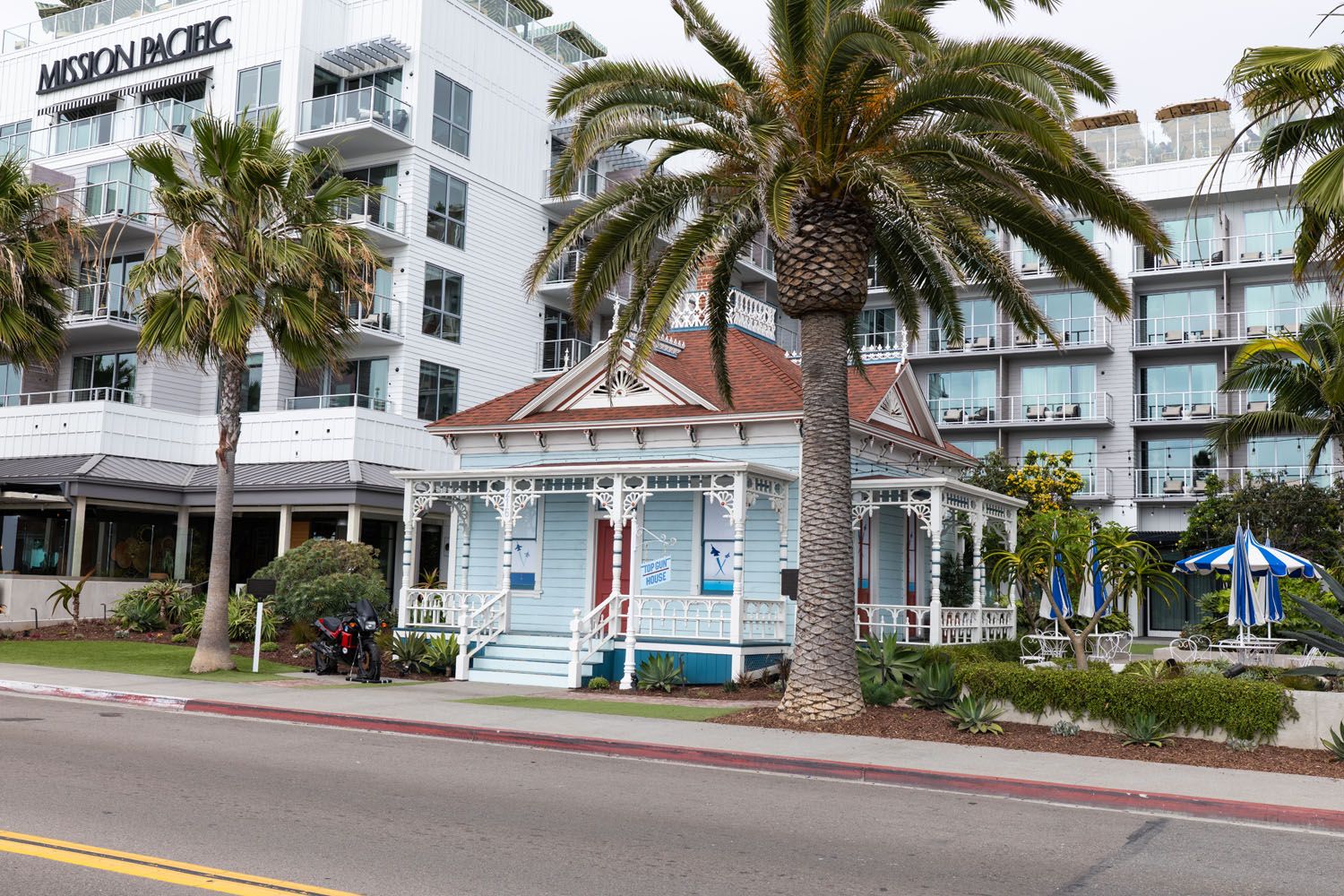
Fans of the original Top Gun will want to swing by this iconic blue Victorian cottage, which served as Charlie’s house in the 1986 film. It’s right across from the pier with great ocean views and Top Gun memorabilia inside. Note that when we visited in March 2026, it was closed. The pie shop that previously operated there had just shuttered, and a new gelato concept was set to take over by summer 2026. Check current hours before visiting, as the tenant situation has been in flux.
Sunset Market
If you’re arriving on a Thursday, the Sunset Market is worth checking out. Every Thursday from 5–9 PM, Pier View Way in downtown Oceanside comes alive with international food vendors, live music, arts and crafts, and a great local atmosphere. It’s a fun way to spend an evening — just confirm it’s running that week, as it occasionally gets cancelled due to weather.
Where to Eat in Oceanside
Oceanside has a solid food scene, and we ate very well during race weekend. Here’s what we’d recommend based on our own experience.
Swami’s Café: Our go-to for pre-race morning fuel. We did a team breakfast here the day before the race and loaded up on blueberry pancakes and coffee. Swami’s is open for breakfast and lunch only, so plan accordingly.
Blade 1936: We had dinner here three nights in a row for carb loading, and we kept coming back because the pasta was genuinely that good. If you’re racing, this is your spot, but make a reservation in advance, as it fills up quickly.
Amalfi Cucina Italiana: Another excellent Italian option if you can’t get into Blade 1936 or want to mix it up. Great for pre-race pasta night.
Odie’s Pizza: A solid choice for lunch or a casual dinner. We stopped here for lunch before the race and it hit the spot. Good pizza without any fuss.
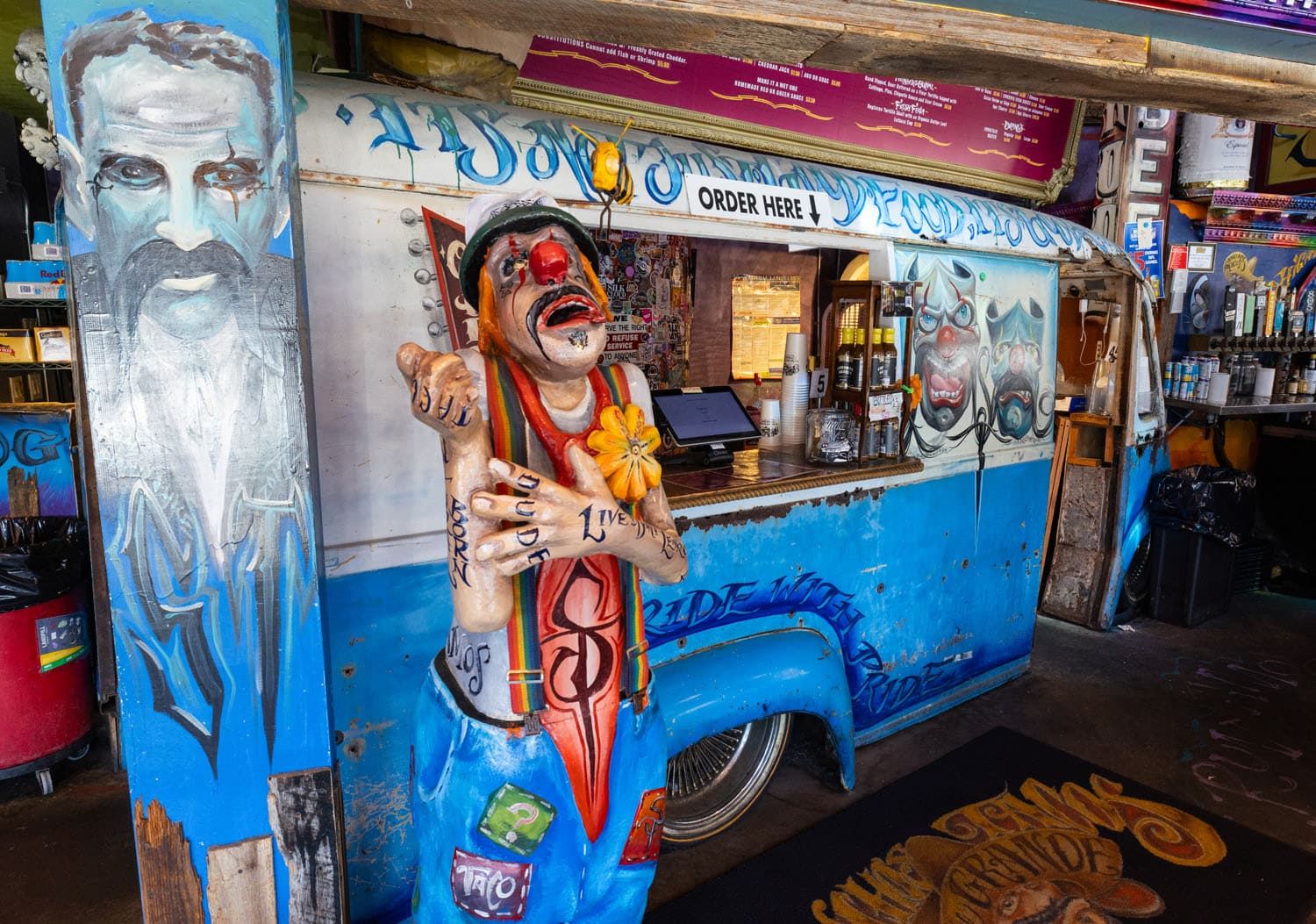
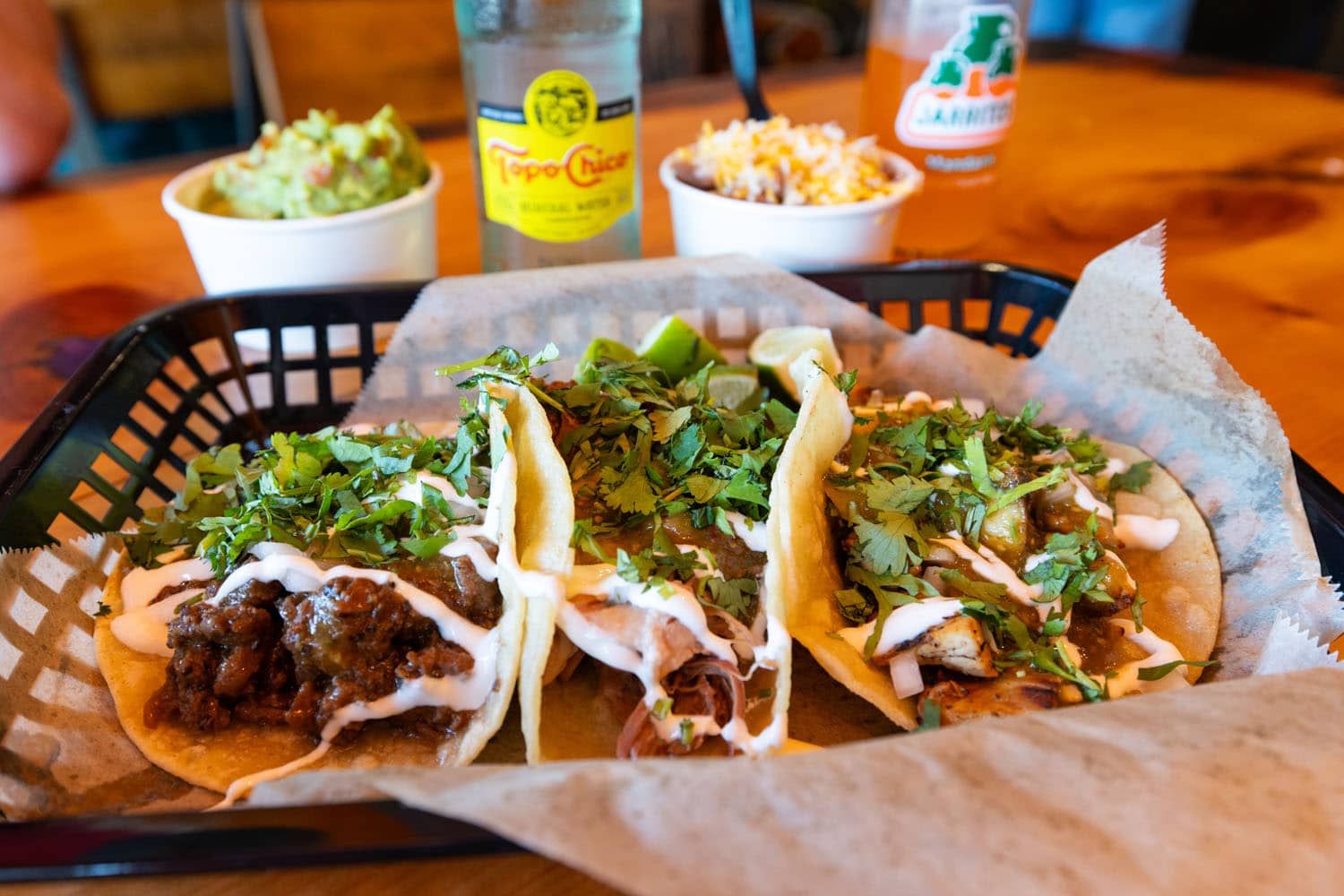
Sancho’s Tacos: A must-visit for tacos and enchiladas. The vibe alone is worth the trip. The interior features colorful graffiti-style murals, and you order at a food truck set up inside the restaurant. Fun, casual, and delicious.
Stone Brewing Tap Room: Save this one for after the race. With both indoor seating and a shady outdoor patio, it’s a great place to decompress, celebrate, and enjoy a well-earned post-race beer.
Where to Stay
Ironman Village, athlete check-in, and the race finish are all next to the Oceanside Pier.
Transition and swim start is next to the Oceanside Harbor, roughly 1 mile north of the pier.
Both of these areas are good places to stay, with pros and cons for both.
We chose to stay at the Seabird Ocean Resort & Spa, which is across the street from the pier and the expo. Not only does this hotel have an unbeatable location, but it also has a pool, onsite restaurants, and a gym. We could walk to the race venue plus many other restaurants in Oceanside.
We preferred staying in this area, to be near restaurants and the beach, for practice swims leading up to the race. The downside is getting to transition three times: for bike drop off, race morning, and to pick up your bike after the race.
We strongly considered saying near the marina, to make it easier on race morning (it is congested and can be hard to get to, by car and shuttle), but in the end, we are glad we stayed in the heart of Oceanside, since our hotel was fantastic and it’s a much better location for beach and restaurant access.
The year we did this, many of the top pros were staying at our hotel, so “pro spottings” were a nice bonus.
Hotels Near the Pier:
- The Seabird Ocean Resort & Spa – where we stayed
- Mission Pacific Beach Resort – next to the Seabird and also across the street from the pier
- Club Wyndham Oceanside Pier Resort – sits next to the train tracks so request a room on the side of the hotel that does not face the tracks
- Springhill Suites by Marriott Oceanside Beach – also sits next to the train tracks so request a room on the side of the hotel that does not face the tracks
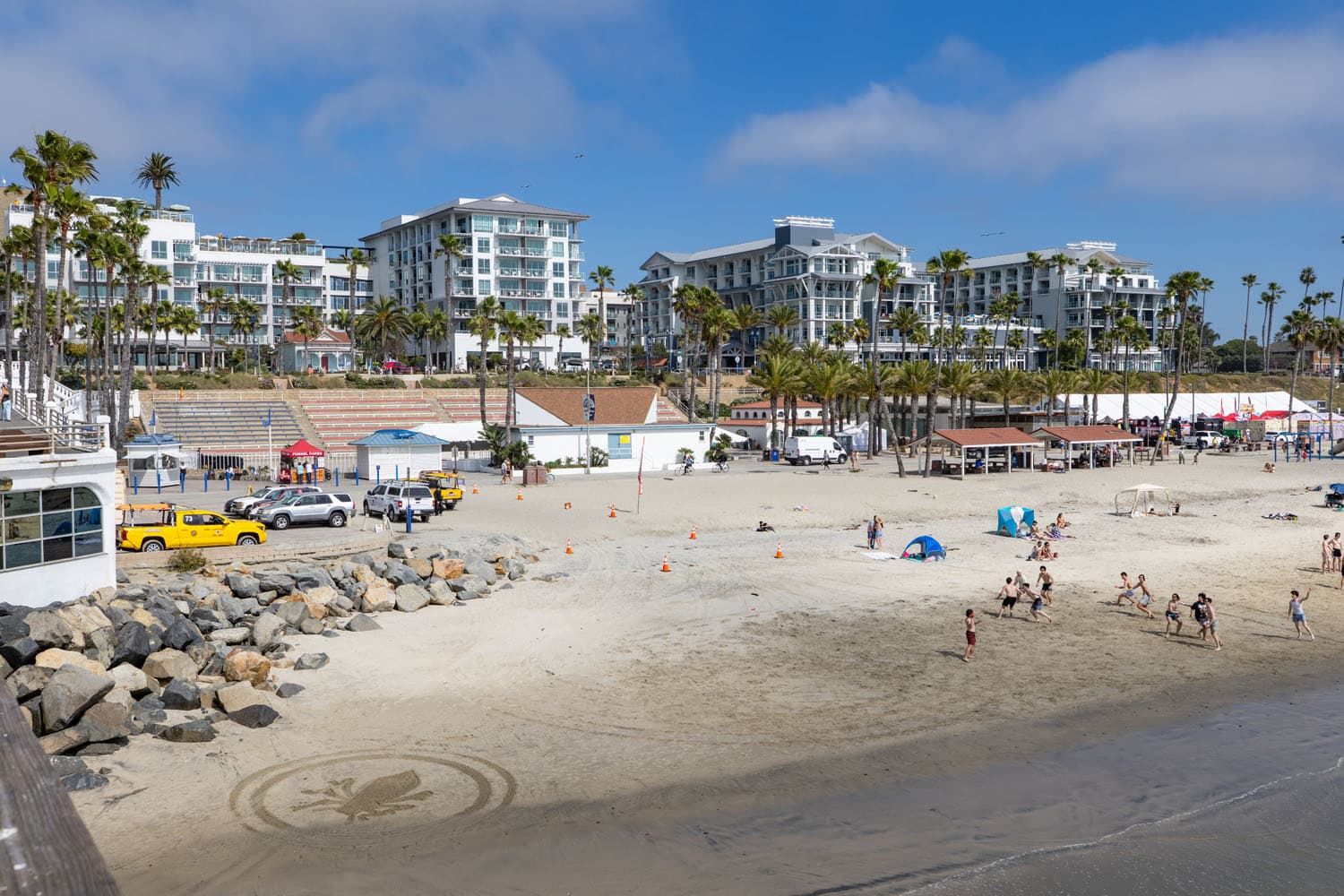
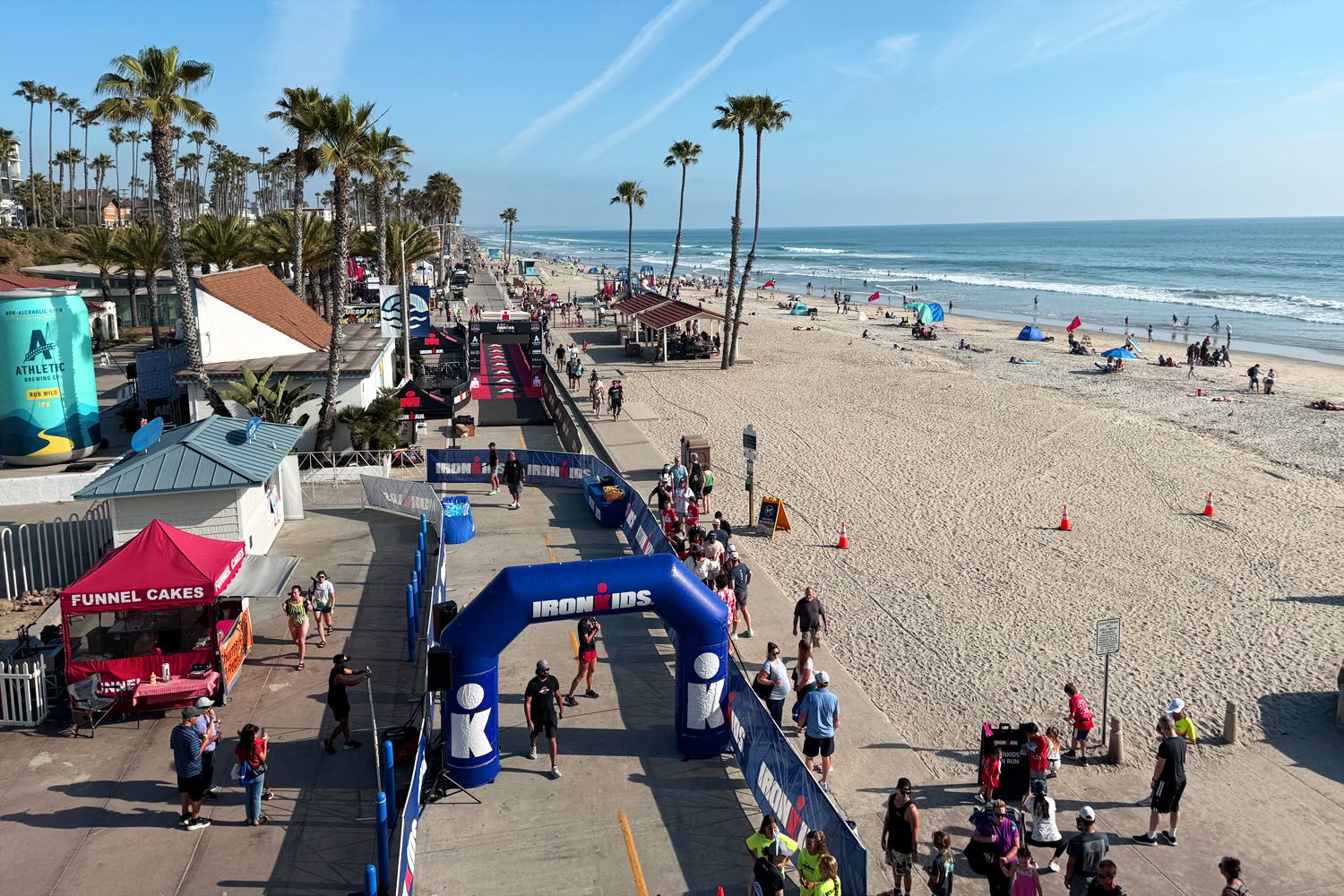
Photo taken from the pier. Mission Pacific is on the left and the Seabird is on the right. Between the beach and the hotels is the Ironman expo area and race finish line.
Hotels Near the Harbor:
Official Race Website
To register for the race, get detailed course information, and more, visit the official Ironman website.
More IRONMAN Race Reports
We’ve raced IRONMAN 70.3 Eagleman six times and keep coming back for its flat as a pancake bike and run. This race is held in early June and makes a great race to kick off the summer and it’s perfect for first-timers.
IRONMAN 70.3 Musselman is located in New York and features a lake swim, rolling bike course through farms and vineyards, and a rolling run course. IRONMAN 70.3 Wisconsin takes place in September and is also a fast course.
In 2024, I raced the IRONMAN 70.3 World Championships in New Zealand.
At the end of 2025, Tim and I raced IRONMAN Florida. We’ve done this race a total of three times and it is a great Ironman distance race for first-timers and those who prefer a flat course.
We have links to more of our race reports below.
If you have any questions about racing IRONMAN 70.3 Oceanside or if you want to share your experience, let us know in the comment section below.
More Triathlons & Travel Ideas
California Travel Guide: Places to Visit in California
Pinterest Facebook Flipboard California Travel Guide California is home to some of the world’s tallest trees, breathtaking mountains, stunning desert landscapes, gorgeous beaches, and bustling cities. There are countless adventures worth having here, whether it be wine-tasting in Napa, hiking to the top of Half Dome, or exploring its long list of national parks. California […]
IRONMAN 70.3 Cap Cana: 2026 Race Report, Tips & Racecation Ideas
IRONMAN 70.3 Cap Cana is a beautiful but hot race held in the Dominican Republic. Swim in the crystal-clear waters of the Caribbean, bike along a straight, mostly flat highway closed to cars, and end with a flat, scenic run through the Cap Cana Marina. We’ve now raced a lot of half Ironman distance races, […]
Racing IRONMAN Barcelona: Race Report
Tim and I have been competing in triathlon races for years. The farthest we ventured from home was Florida, competing in IRONMAN Florida in 2009 (Julie) and 2010 (Tim). Both of us have dreamed about racing in Europe. But it seems so far to travel, just for a triathlon. In the summer of 2015, Tim expressed […]
Racing IRONMAN Italy Emilia-Romagna: Race Report
Ironman Italy is destination racing at its finest. Swim in the Adriatic Sea, cycle past pink flamingoes and through Sangiovese vineyards, and then run through a charming coastal town. What a spectacular setting for a race! Add in its location near popular spots like Venice, San Marino, and Florence, and this makes a great destination […]
IRONMAN 70.3 Louisville: Race Report & Race-cation Ideas
Swim down the Ohio River, cycle past horse farms, and run through the heart of downtown Louisville. What’s not to love about racing IRONMAN 70.3 Louisville? This race offers a scenic course with its own mix of challenges, from hill climbs to hot weather. When we raced in 2025, we even got the chance to […]
One Perfect Day in Anza-Borrego Desert State Park
Anza-Borrego Desert State Park is a gem of a state park. With desert landscapes, slot canyons and dirt roads to explore, and hidden oases, this is a great place to add to your itinerary, if you will be visiting southern California. In this guide, we cover how to spend one day in Anza-Borrego Desert State […]
10 Best Things to Do in San Diego, California
San Diego is famous for its beautiful beaches, family friendly activities, and its near perfect year-round weather. Tour an aircraft carrier, say hello to the elephants at the world famous San Diego Zoo, go on a day trip to La Jolla, and take your pick of numerous bars and restaurants in the Gaslamp Quarter. San […]
One Day in Channel Islands National Park: Santa Cruz Island
When Tim and I decided to add Channel Islands to our California trip, we knew we had exactly one day. We were in the area for IRONMAN 70.3 Oceanside, and Channel Islands was close enough to check off park number 56 of the US national parks, but our race gear filled every bag we had, […]
10 Things to Do in Joshua Tree National Park on Your First Visit
With its desert scenery, hiking trails, rock climbing routes, hidden oases, scenic drives, and trees that look like they have been plucked from the pages of a Dr. Seuss book, Joshua Tree National Park is a joy to explore. In this guide, learn about the best things to do in Joshua Tree National Park on […]
Las Vegas to San Diego 10 Day Road Trip Itinerary
If you are planning a road trip from Las Vegas to San Diego, there are several different ways to do it. Go on a national park road trip, visiting both Death Valley National Park and Joshua Tree National Park on the drive. Or, you can spend some time in the Mojave National Preserve, which is […]
US National Park Itineraries & Road Trip Ideas
National Park Itineraries The national parks are best experienced as a road trip and with 56 parks visited between us, we’ve done a lot of them. Whether you’re dreaming of a two-week American Southwest loop, a classic Yellowstone and Grand Teton combo, or a deep dive into Utah’s Mighty 5, we’ve put together detailed itineraries […]
20 Epic Things to Do in Death Valley National Park
Death Valley…just the name inspires a sense of wonder and mystery. With barren salt flats, towering mountains, mysterious sailing stones, shifting sand dunes, rainbow-colored mountains, and canyons to explore, there is a lot to do here. In this post, learn about the best things to do in Death Valley National Park, with suggestions on how […]


Leave a Comment