
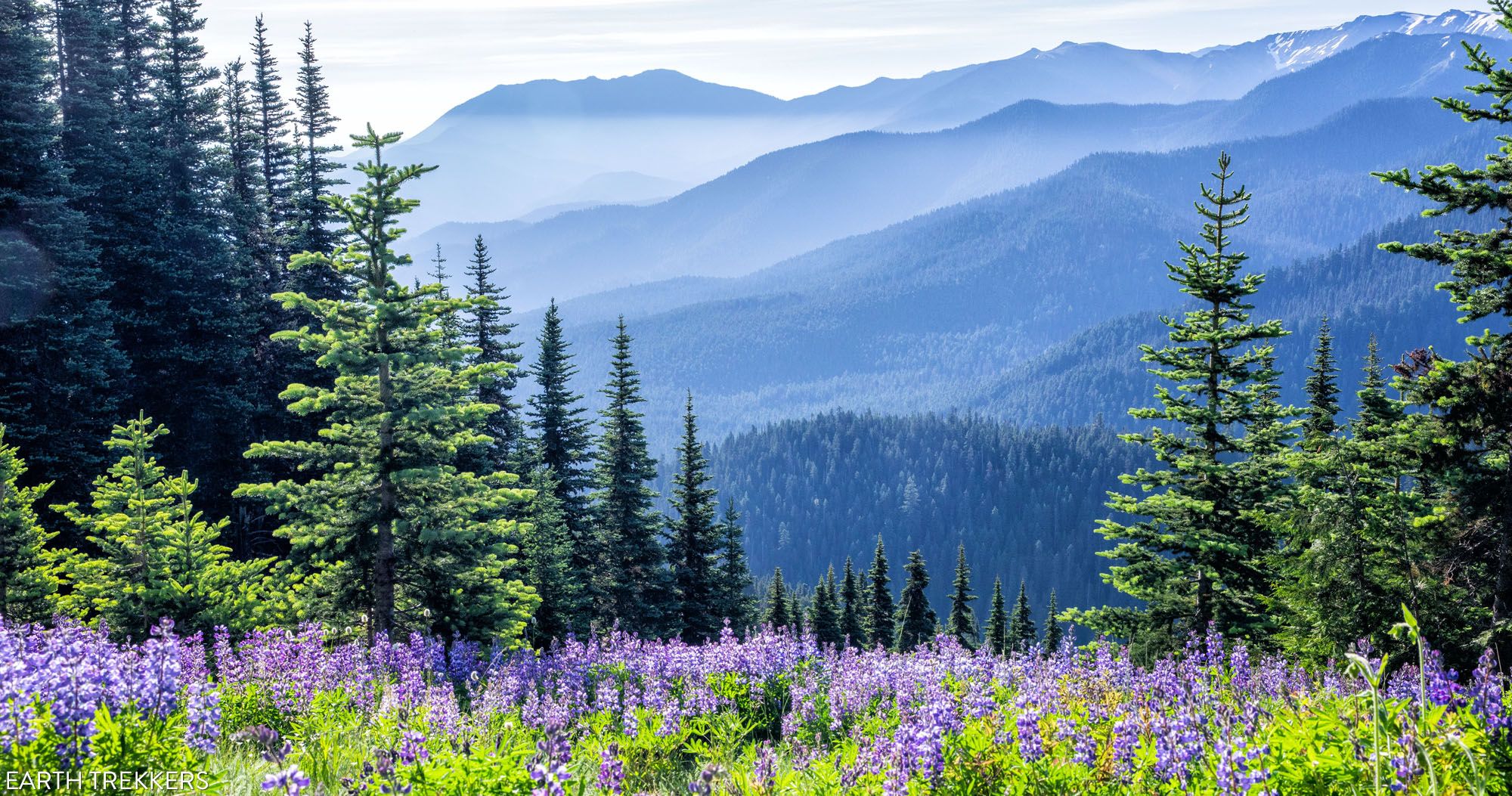
Discover the best things to do in Olympic National Park, from Hurricane Ridge to the amazing Hoh Rainforest to the wild and rugged Pacific coast.
Olympic National Park might be the most diverse national park in the United States. In a single visit, you can stand on a windswept alpine ridge looking out over snowcapped peaks, disappear into an ancient rainforest where moss drapes from trees hundreds of years old, and then stand on a wild Pacific coastline where sea stacks rise from the surf like ancient sentinels. Three completely different worlds, all inside one national park.
We visited Olympic on a four-day road trip at the end of July, driving the loop around the Olympic Peninsula and exploring all four regions of the park. It was one of the most varied national park experiences we’ve ever had.
In this post, we cover the best things to do in Olympic National Park, organized by area, along with practical tips to help you plan your visit.
If you are in the early planning stages, start with our Olympic National Park Travel Guide and our Olympic National Park Itinerary for recommendations on how to plan your time.
Olympic National Park: At a Glance
LOCATION | Washington state
DON’T MISS | Hurricane Ridge, Hoh Rain Forest, Rialto Beach, Sol Duc Falls, Mount Storm King
BEST AREA FOR FIRST TIMERS | Hurricane Ridge and Hoh Rain Forest
OUR FAVORITE VIEW | Mount Angeles
BEST EASY WALK | Hoh Rain Forest
MINIMUM TIME | 2 days for the highlights; 3 to 4 days is ideal
BEST TIME TO VISIT | July through September
2026 Update: The Staircase area of Olympic National Park is currently closed due to post-fire hazards from the Bear Gulch Fire, which burned over 20,000 acres in this area in the summer of 2025. The closure is in effect through at least October 1, 2026. Rialto Beach will be inaccessible via Mora Road from July 8 through October 15 due to construction. Check current conditions on the NPS website before your visit.
If You Only Do 3 Things in Olympic National Park
Olympic National Park is one of the most geographically diverse national parks in the country, and its size means most visitors can’t see it all in a single trip. If your time is limited, these three experiences cut straight to the heart of what makes Olympic so extraordinary.
Together, they take you through three completely different ecosystems and each one is accessible and rewarding for first-timers, solo travelers, and families with kids alike.
1. Hike Hurricane Ridge
Hurricane Ridge is the easiest and most dramatic introduction to the mountain region of Olympic National Park.
Drive 18 miles up from Port Angeles and you arrive at a world of snow-capped peaks, sweeping ridgelines, and views that stretch to Mount Rainier on a clear day.
Even if you only walk the short High Ridge Trail, the scenery is stunning. For something more ambitious, the Klahhane Ridge Trail to Mount Angeles is one of our favorite hikes in the entire park.
Hurricane Ridge works for everyone. Casual visitors can simply take in the view from the parking lot, while hikers can push as far as they like.
2. Walk through the Hoh Rainforest
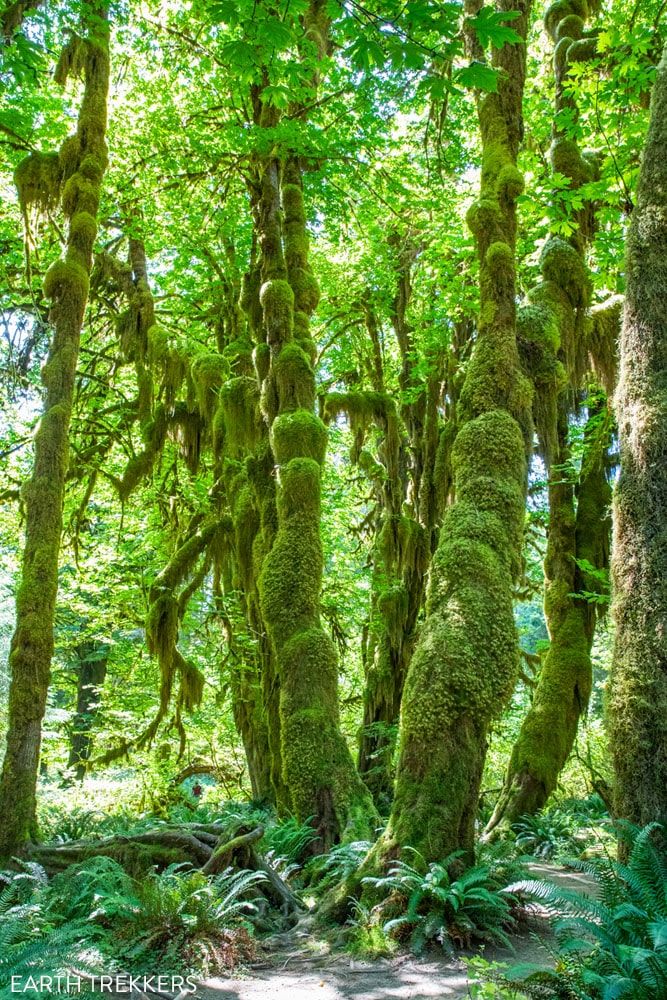
Visiting the Hoh Rainforest is unlike anything else in the United States. Ancient trees draped in thick moss tower overhead, the forest floor is carpeted in ferns, and the whole place feels like it exists outside of time.
The Hall of Mosses Trail is just 0.8 miles and is flat enough for young kids and anyone who doesn’t want a strenuous hike. The Spruce Nature Trail (1.2 miles) adds a loop along the Hoh River and tends to be quieter. Budget at least a couple of hours here because it’s the kind of place you don’t want to rush.
3. Explore Rialto Beach
Olympic’s wild Pacific coastline is one of the most dramatic in North America, and Rialto Beach is the most accessible stretch of it. Park, walk out to the beach, and you’re immediately surrounded by enormous sea stacks, driftwood piles, and the moody, crashing Pacific.
For the best experience, walk north along the beach to Hole-in-the-Wall (3.5 miles round trip), a sea arch carved through a rocky headland that you can walk through at low tide. This one is great for kids, photographers, and anyone who just wants to stand somewhere that feels genuinely wild.
2026 Update: From July 8 to October 15, Rialto Beach will not be accessible on Mora Road because of a construction project. Get updates on the National Park Service website.
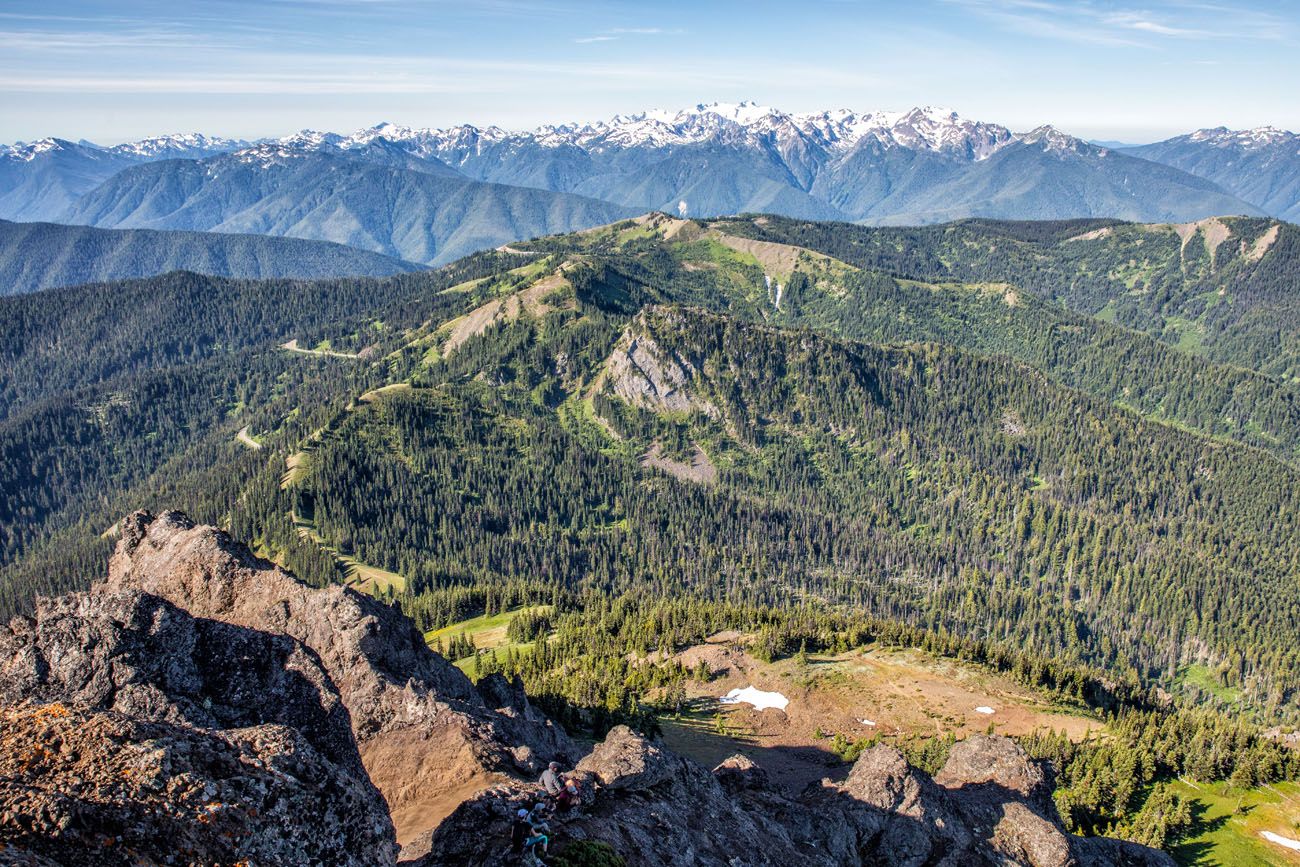
The view over Hurricane Ridge from Mount Angeles
Maps of Olympic National Park
Unlike most national parks, Olympic doesn’t have a central hub or a single road that connects all the highlights. The park is located on the Olympic Peninsula, with roads forming a loose loop around the perimeter and short access roads cutting inward toward the mountains.
There are four main regions: the northern section, home to Hurricane Ridge, Lake Crescent, and Sol Duc Valley; the Pacific coastline, with its wild beaches and sea stacks; the temperate rainforest on the wet western side of the peninsula; and the Staircase region in the southeast, with old-growth forests and quieter trails.
Use the map below to get oriented before you dive in — it will make planning your visit much easier.
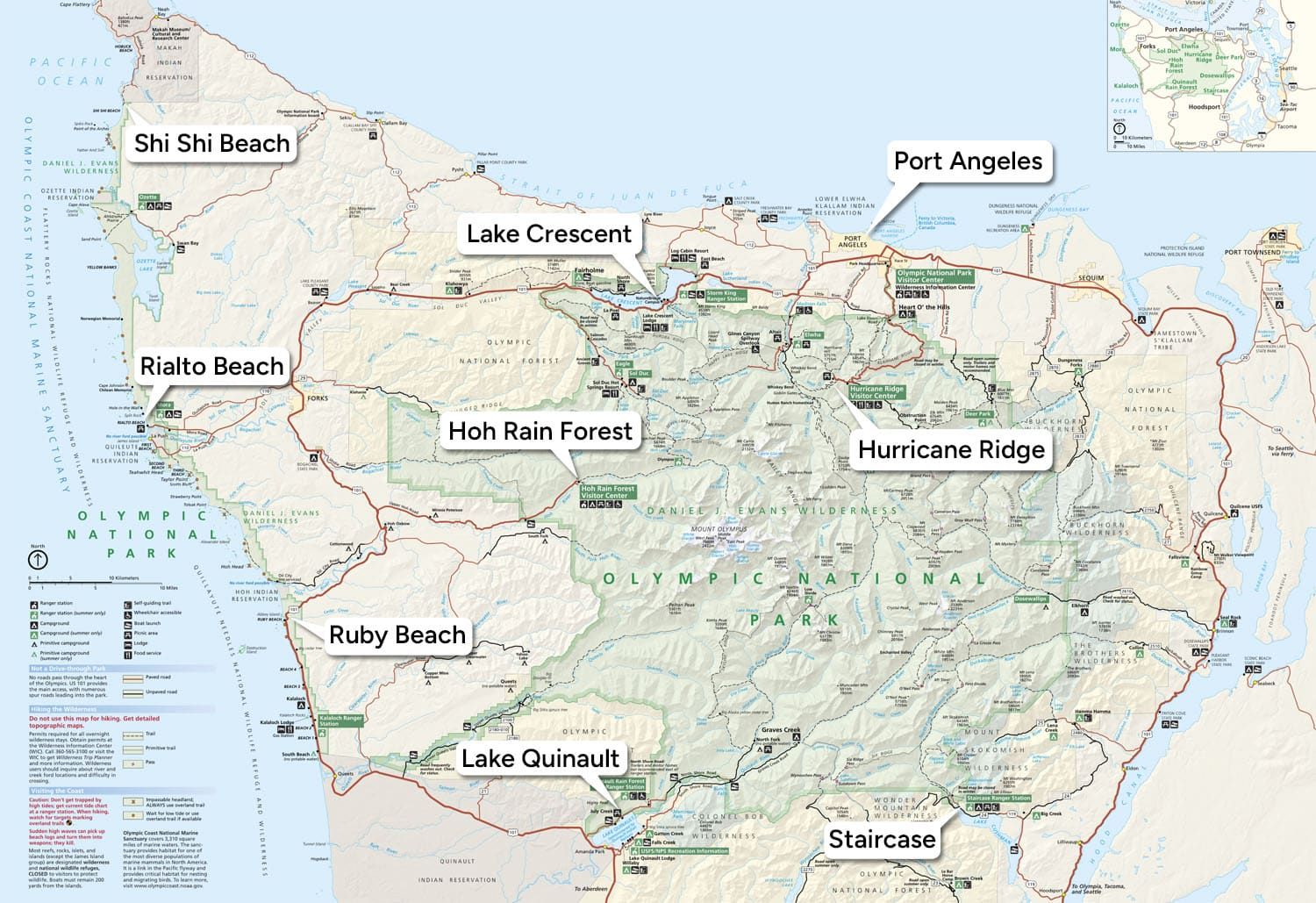
Here is a map with the best things to do in Olympic National Park color coded by geographical area.
How to Use This Map: Click the icons on the map to get more information about each point of interest. To take this map with you, click the star next to the title of the map which adds it to your Google account. Next, within your Google Maps app, select ‘Saved’ and then select ‘Maps’. This map title will now appear in your list.
Best Things to Do in Olympic National Park
This list of things to do in Olympic National Park is organized by geographical area. We’ll start in the north, at Hurricane Ridge and Lake Crescent, and work counterclockwise around the peninsula, to the Pacific Coastline, the temperate rainforest, ending at Staircase.
Things to Do in Hurricane Ridge
Hurricane Ridge is the most popular area, offering sweeping views of the Olympic Mountains from an alpine ridge just 18 miles above Port Angeles. When exploring this part of the park, the best place to stay is in the town of Port Angeles.
Hike a Trail or Two on Hurricane Ridge
If you want panoramic views of the Olympic mountain range with very little effort, this is the place to go. The views from Hurricane Ridge, where you will look out over snow-capped mountains, forests of evergreen trees, and Mount Olympus, is one of the best experiences in Olympic National Park.
To get here, you will drive 18 miles (about 30 minutes) on Hurricane Ridge Road from Port Angeles. This winding road climbs from the coastline into the mountains. The closer you get to Hurricane Ridge, the better the view.
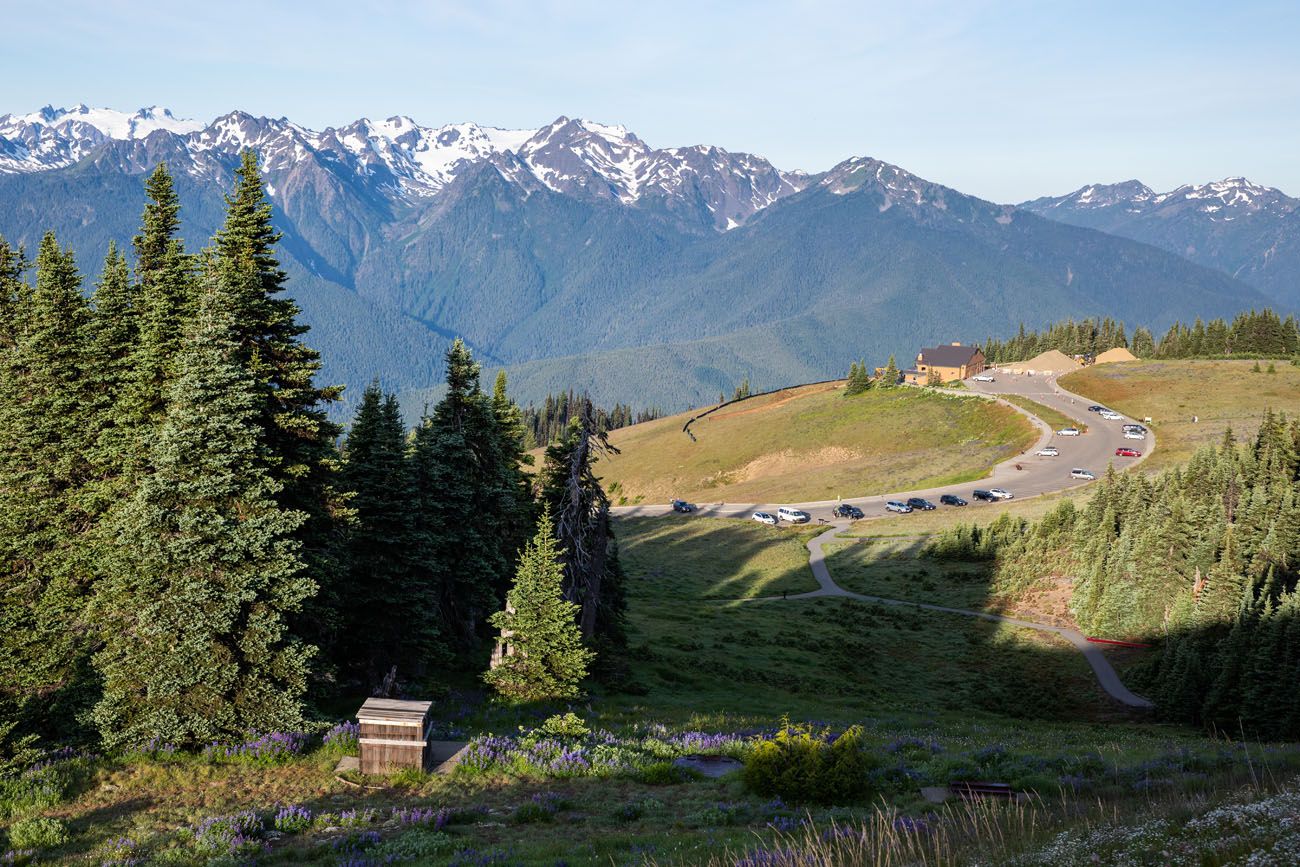
Hurricane Ridge Parking Lot, photo taken from the High Ridge Trail
The road dead-ends at a large parking lot and the Hurricane Ridge Visitor Center. From here, you can simply enjoy the view. If you want to go a little higher, which I strongly recommend, hike one of the short trails that start at the parking lot.
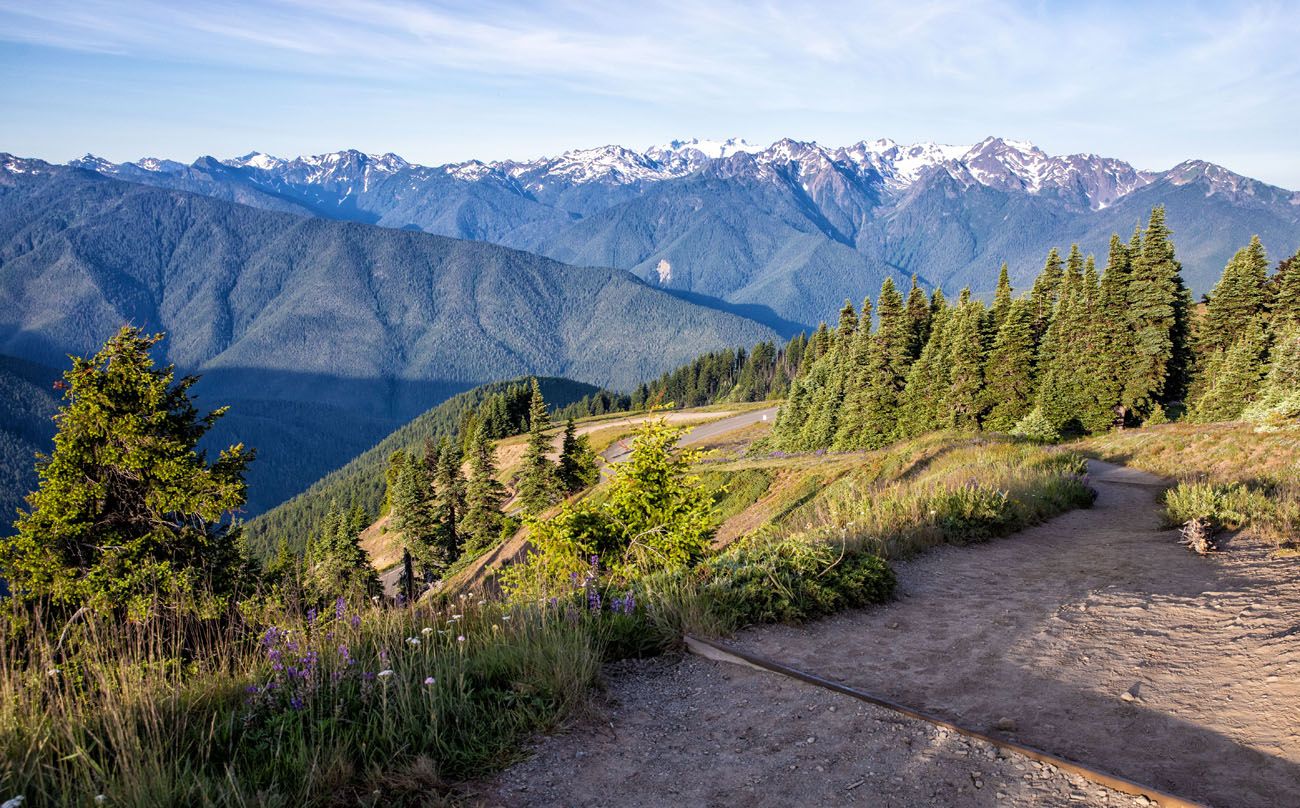
High Ridge Trail
For a short walk, hike the High Ridge Trail. This paved trail turns to dirt just before a spectacular viewpoint. The views get even better as you walk farther along the trail.
Hike to Mount Angeles
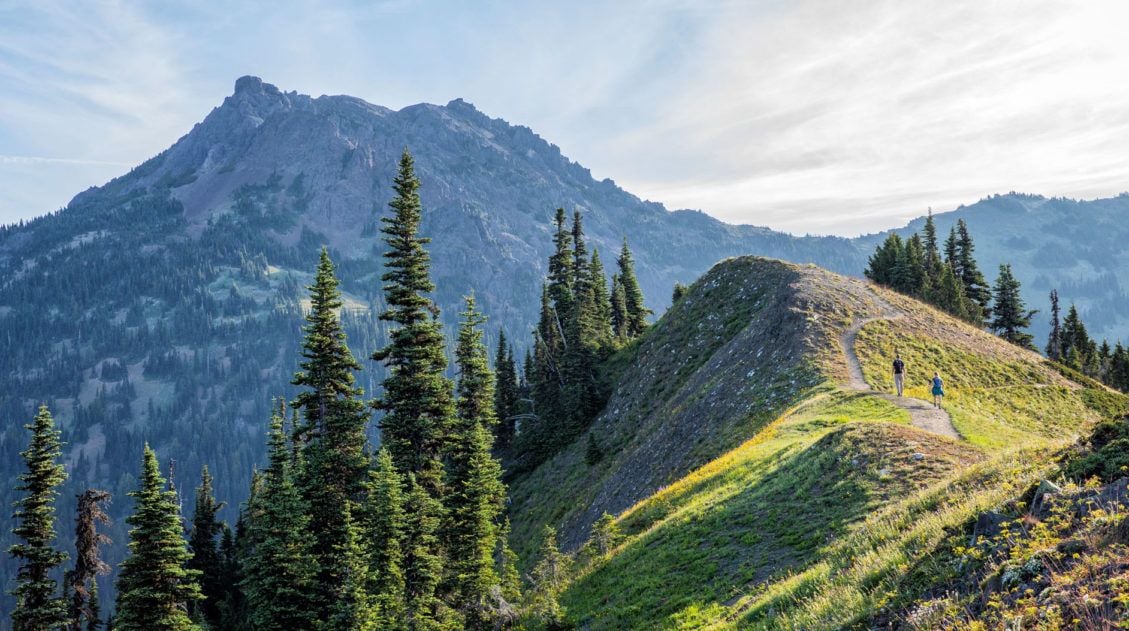
For a real adventure, hike to the peak of Mount Angeles, where you will have 360° views of Olympic National Park, Puget Sound, and Mount Rainier.
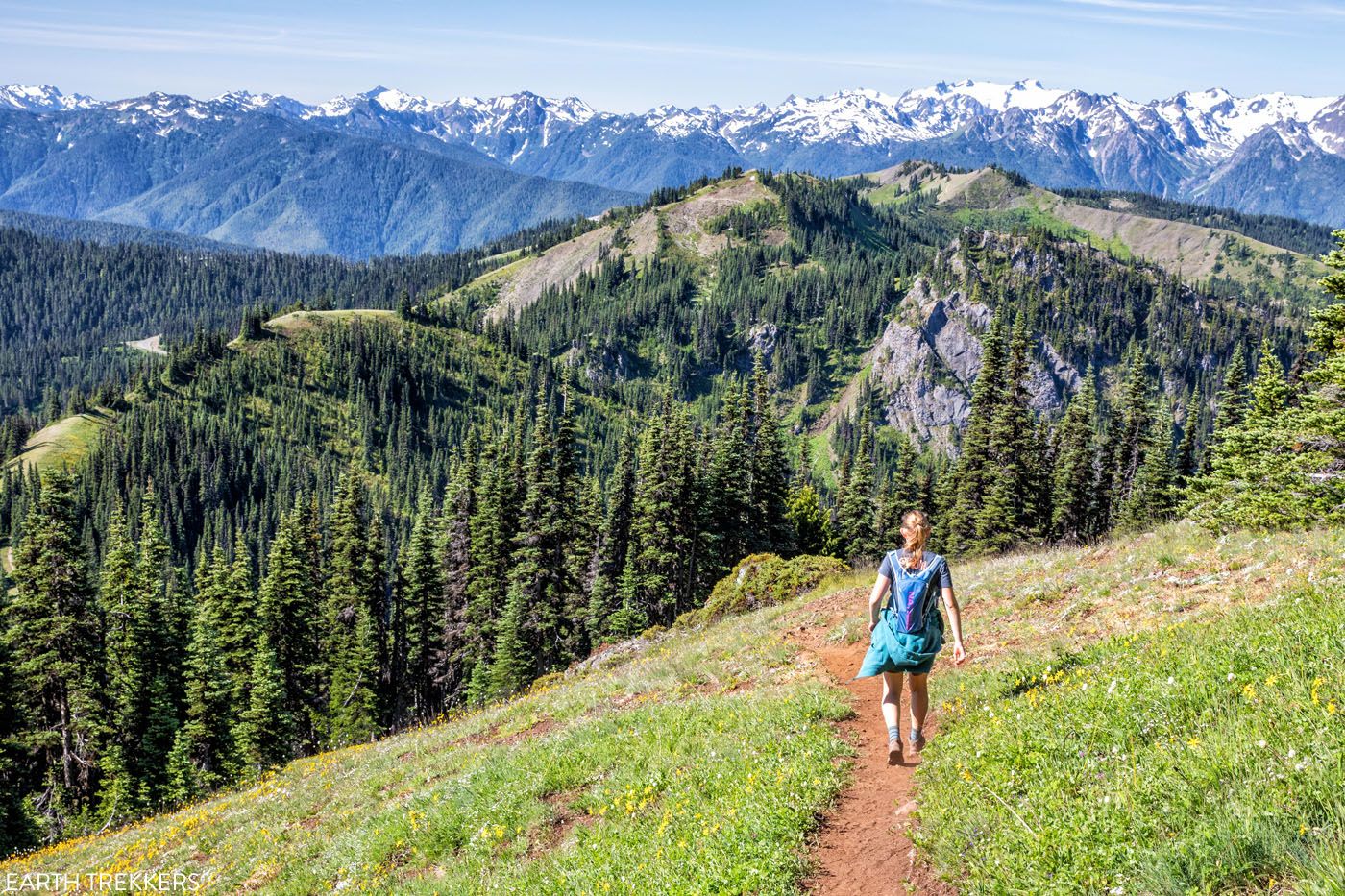
Klahhane Ridge Trail
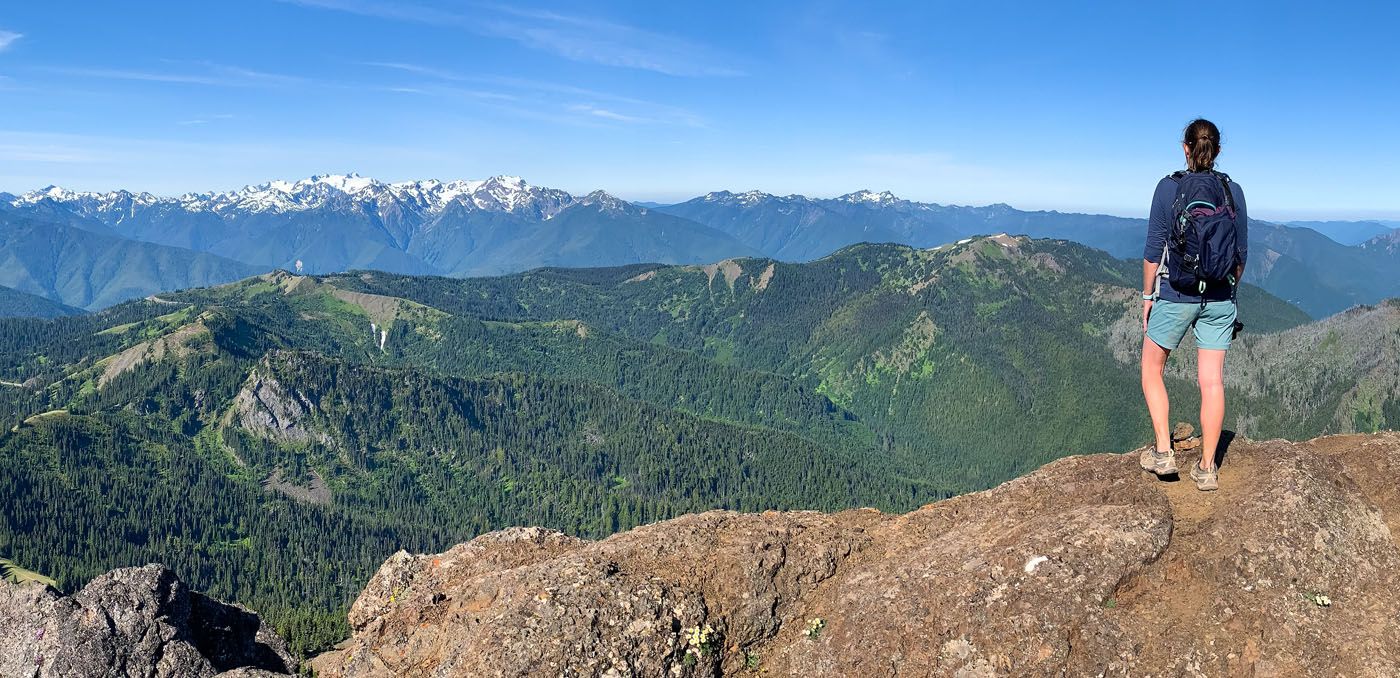
View of Hurricane Ridge from Mount Angeles
The hike to Mount Angeles is our favorite in Olympic National Park. Learn more in our Klahhane Ridge Trail hiking guide →
How to Hike the Klahhane Ridge Trail to Mount Angeles
Step-by-step trail guide for hiking along Hurricane Ridge to the Mount Angeles summit.PRO TRAVEL TIP: Hurricane Ridge is open on weekends during the winter months. If you like snow shoeing, downhill or cross-country skiing, this is a great place to go. I read that Hurricane Ridge gets over 30 feet of snow per year! Learn more here.
Drive Obstruction Point Road
Obstruction Point Road is frequently called Washington’s scariest road. This gravel, alpine road starts at the Hurricane Ridge parking lot and ends at Obstruction Point at an elevation of 6,150 feet.
It’s narrow, it has steep drop-offs at a few spots, and has some tight turns as it travels through the mountains. But along the entire drive the views are phenomenal.
Once at Obstruction Point, you can take your pick from the trails that head further into the mountains. Grand Ridge Trail is one of the highest trails in Olympic National Park. It is 15 miles round trip and rated as strenuous. The Deer Park Trail is a popular hike to do from Obstruction Point (14 miles round trip, strenuous).
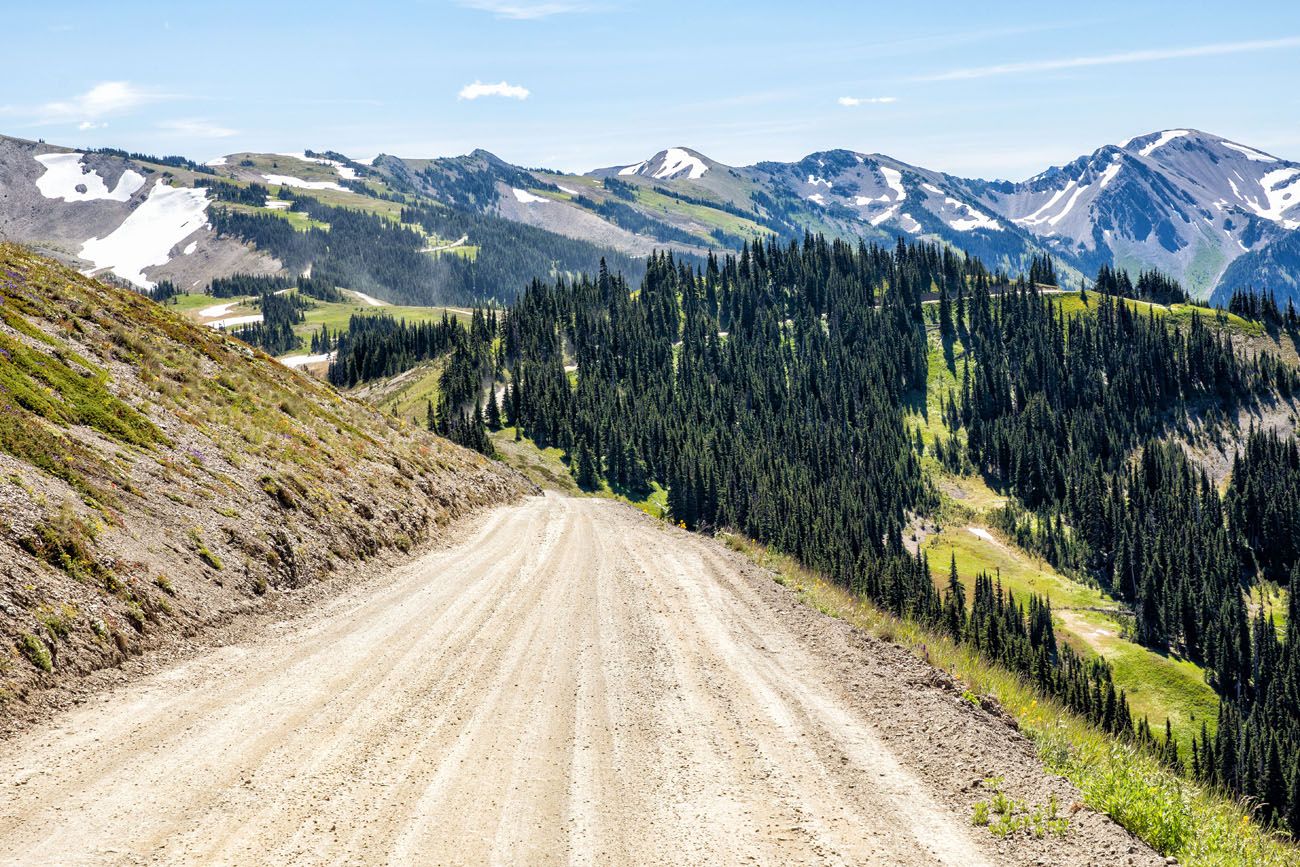
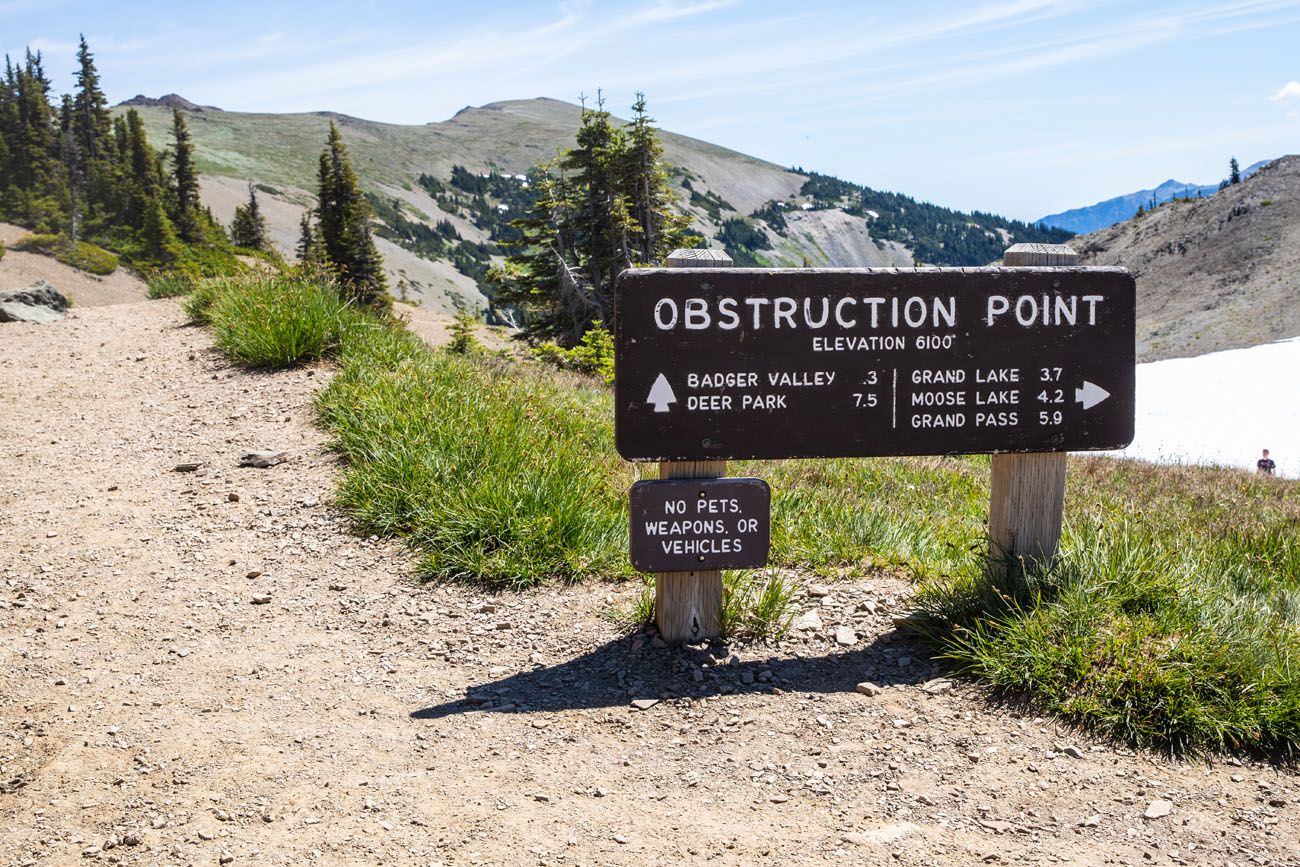
Important Note: This road is generally open from mid-July through October. A standard car is suitable for this drive but RV’s and trailers are not permitted on this road.
Things to Do at Lake Crescent
Lake Crescent is a stunning glacially carved lake along Highway 101, known for its deep blue-green water and the historic Lake Crescent Lodge on its shore.
Go Canoeing or Kayaking on Lake Crescent
This glacially carved lake is a great place to go canoeing or kayaking. Fishing is permitted but as catch-and-release-only.
Lake Crescent Lodge is a historic lodge, built in 1916, that sits right on the lakeshore and is one of the most scenic places to stay in the park. Even if you’re not staying here, stopping for a meal or a drink on the porch with views over the impossibly blue water is worth it. Kayaks and canoes are available through the lodge during the summer months.
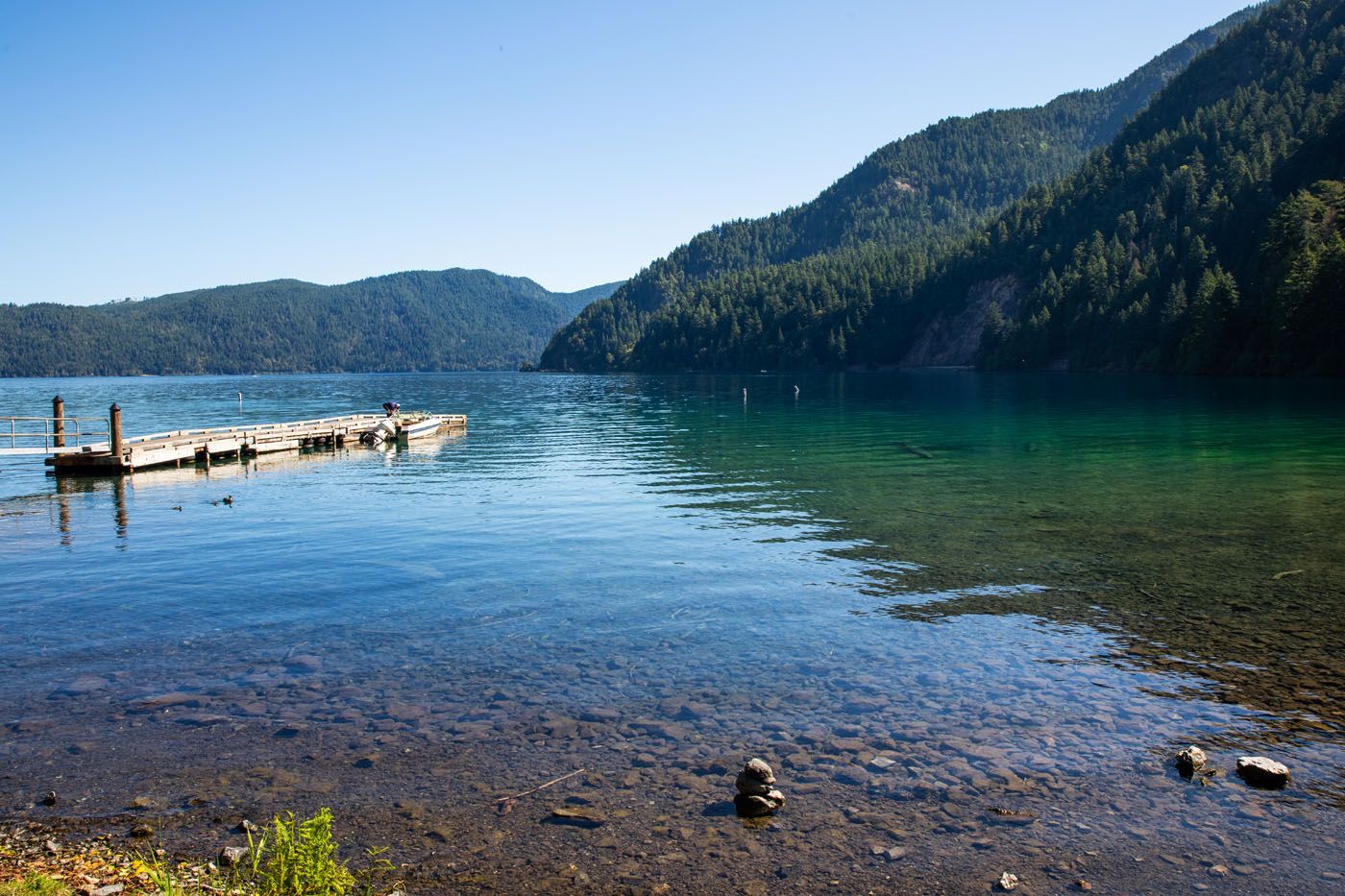
Did You Know? Lake Crescent is unusually deep (over 600 feet) and low in nitrogen, which gives the water a striking blue-green clarity unlike typical Pacific Northwest lakes. It’s genuinely jaw-dropping.
Hike Mount Storm King
Several great hikes start from this lake. Hiking to the top of Mount Storm King is one of the best things to do in Olympic National Park. The views over Lake Crescent are unbeatable.
This is a tough hike, basically an uphill walk almost the entire way, capped off with a series of ropes to help pull yourself up through the steepest section. It’s not for everyone, and you don’t really get a good view until you’re almost at the summit. This hike is best for fit hikers with prior experience.
We loved the view from the top, but it is a tough hike to get here. Our favorite summit climb in the park is Mount Angeles from Hurricane Ridge.
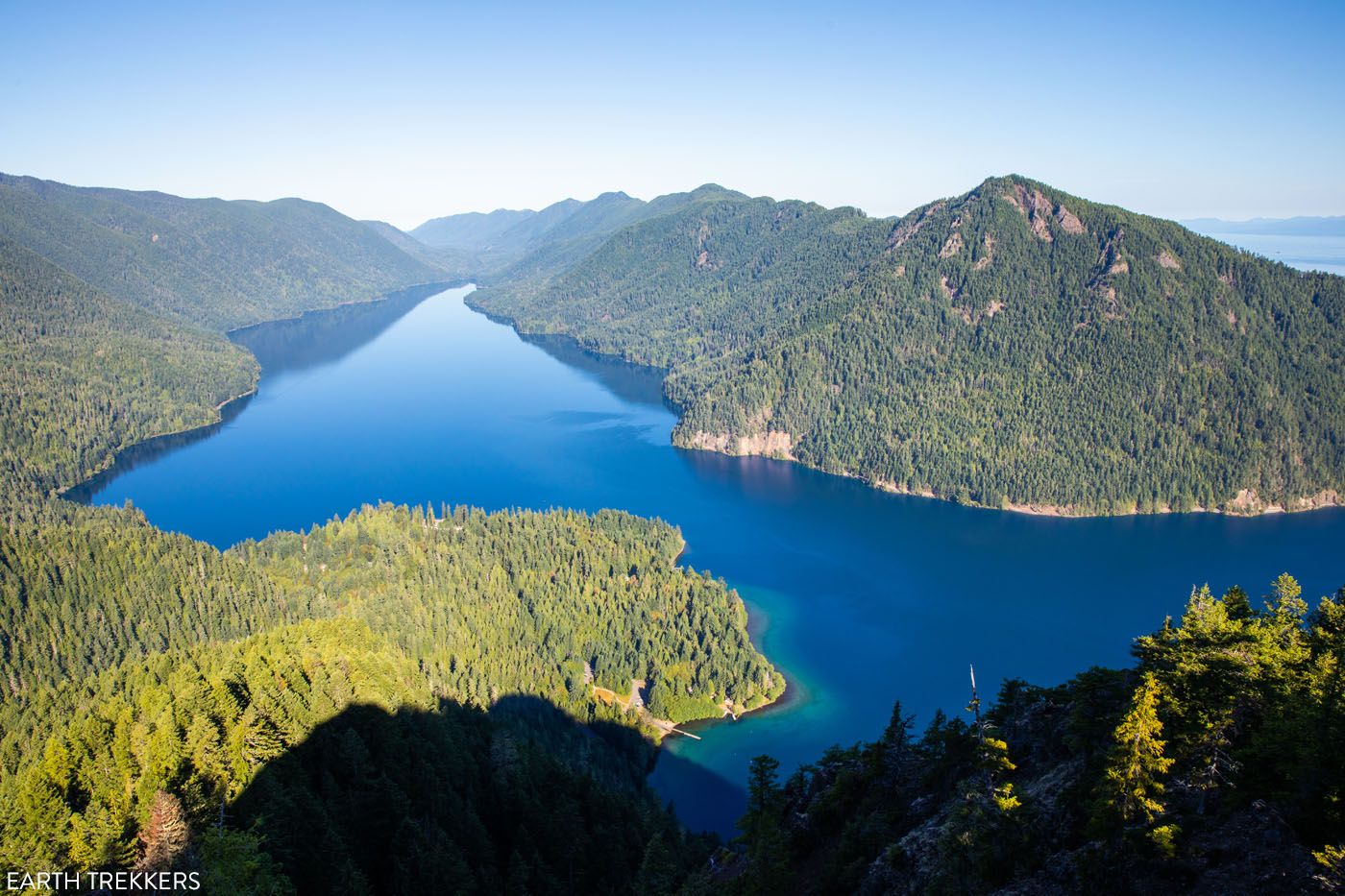
The view of Lake Crescent from Mount Storm King
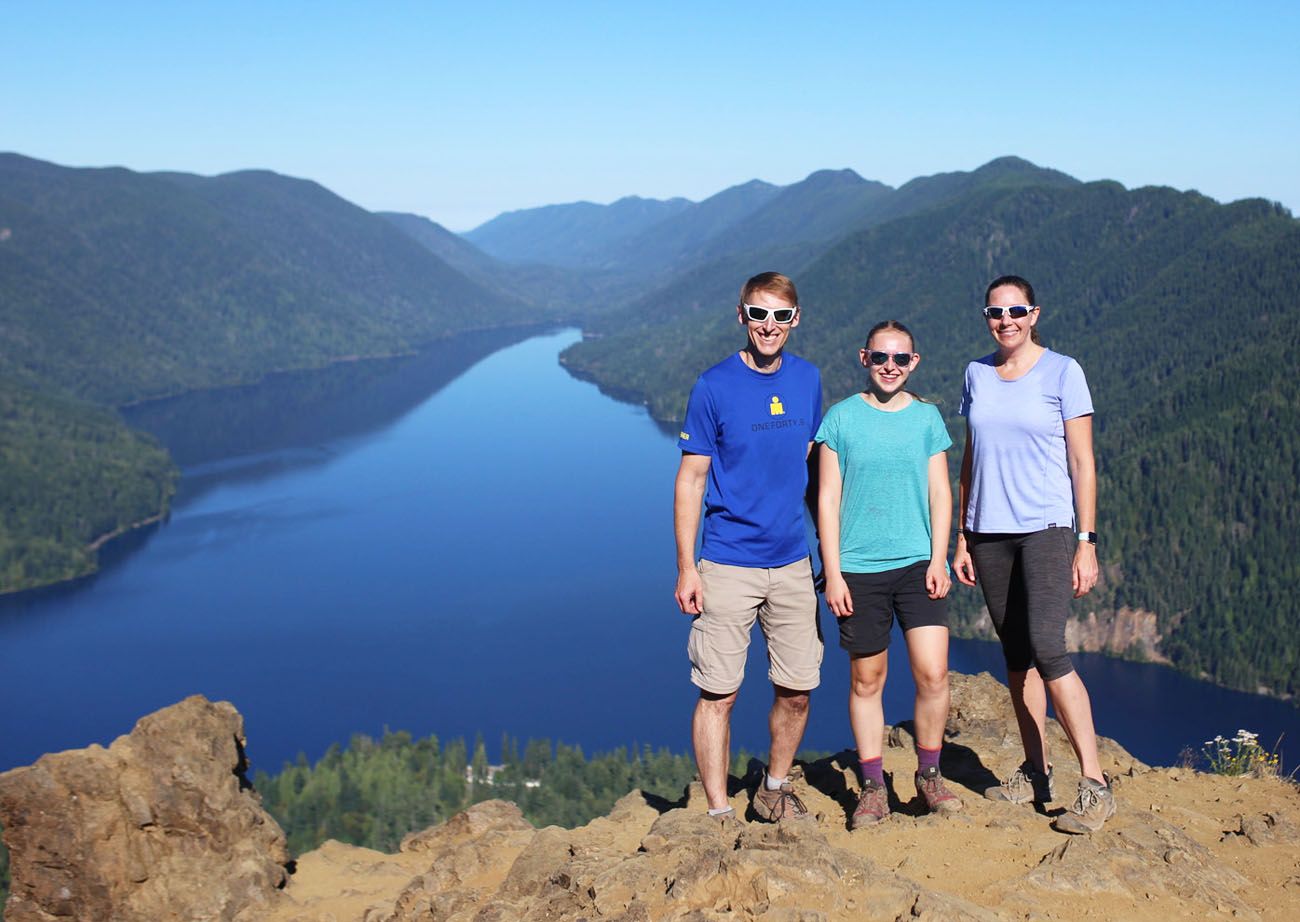
If you want to learn more about the hike, plus see the trail and the ropes section in photos, take a look at our Mount Storm King trail guide →
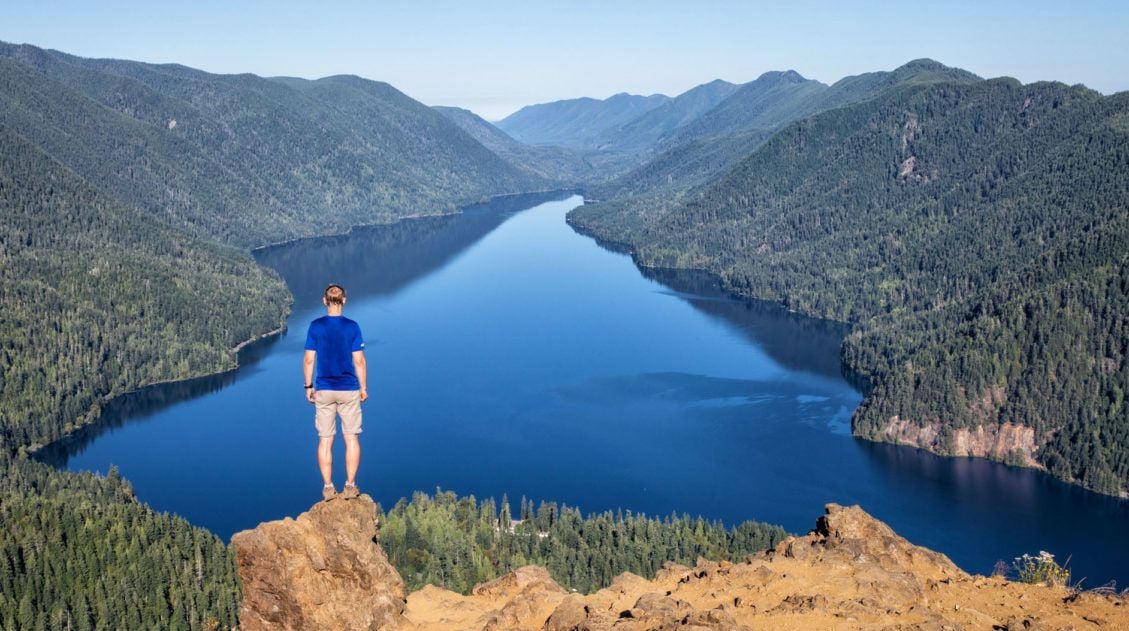
Mount Storm King Hike: Is It Worth the Brutal Climb?
Exactly how to hike Mount Storm King, a step-by-step trail guide.Marymere Falls
This beautiful waterfall is tucked away in an old growth forest. It’s a mostly flat, easy walk to get here (just under 2 miles round trip). The last portion of trail climbs some steps to get you to the viewpoint of the waterfall.
I don’t know what we liked more…walking amidst the giant spruce trees or the view of Marymere Falls.
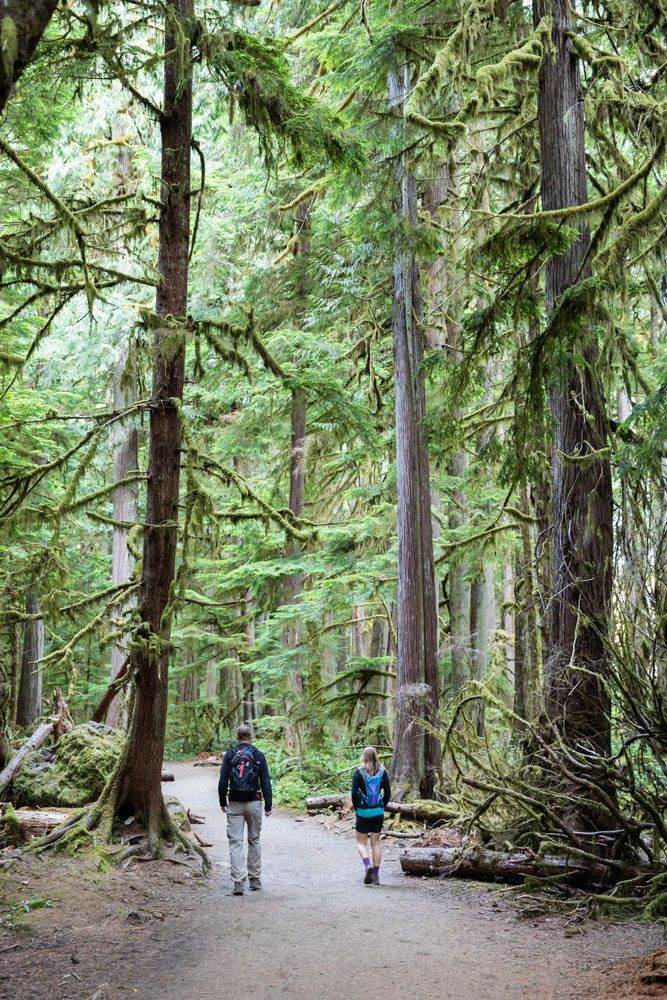
Trail to Marymere Falls and Mount Storm King
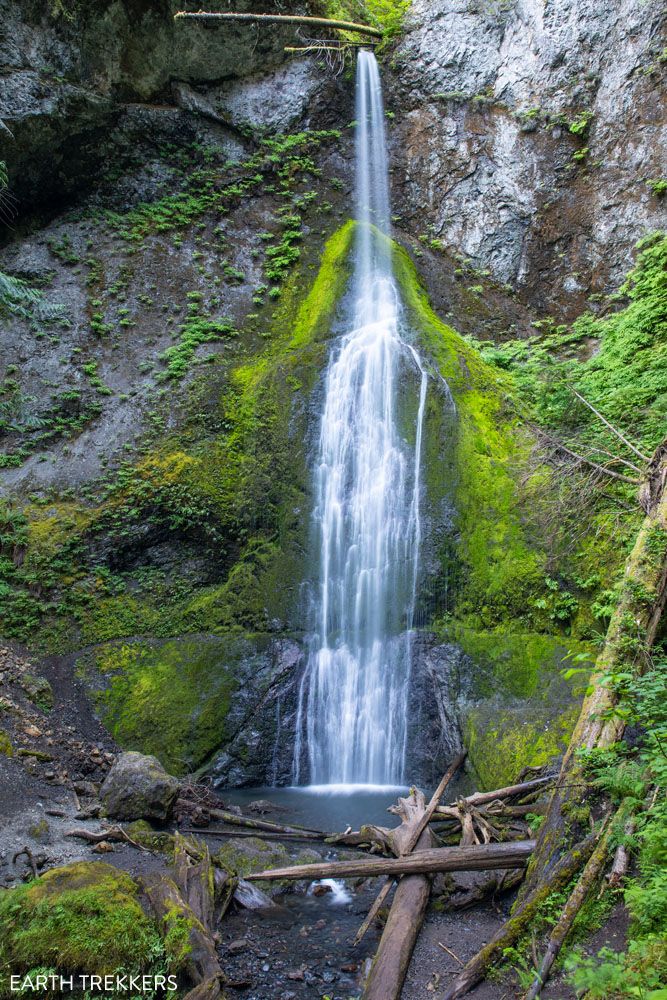
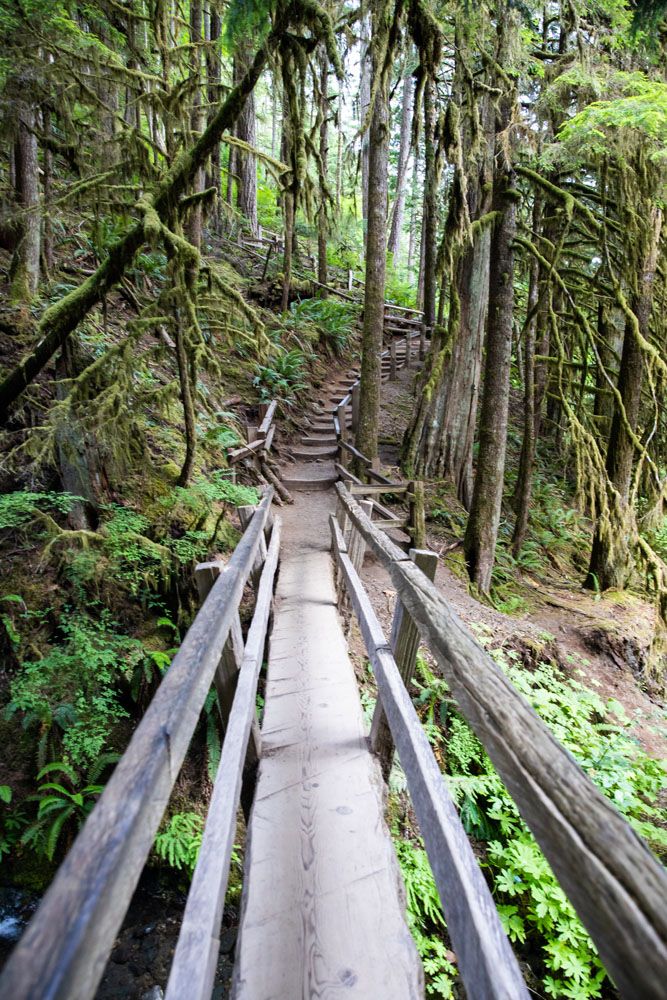
Marymere Falls and the trail to Marymere Falls

Things to Do in Sol Duc Valley
Sol Duc Valley is home to old-growth forest, Sol Duc Falls, and a natural hot springs resort, which is a great base for exploring the northwest corner of the park. This valley is located between Lake Crescent and the Pacific Coast.
Hike to Sol Duc Falls
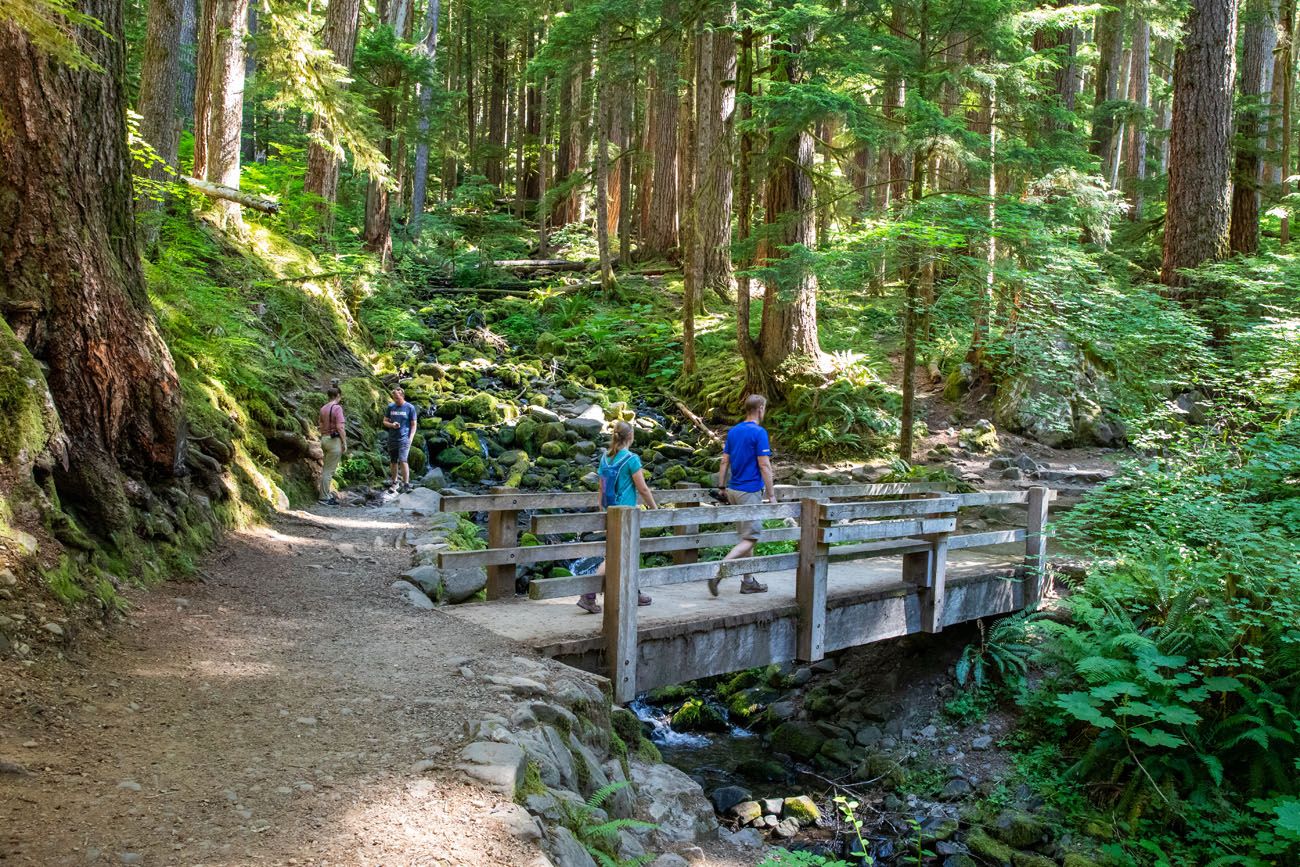
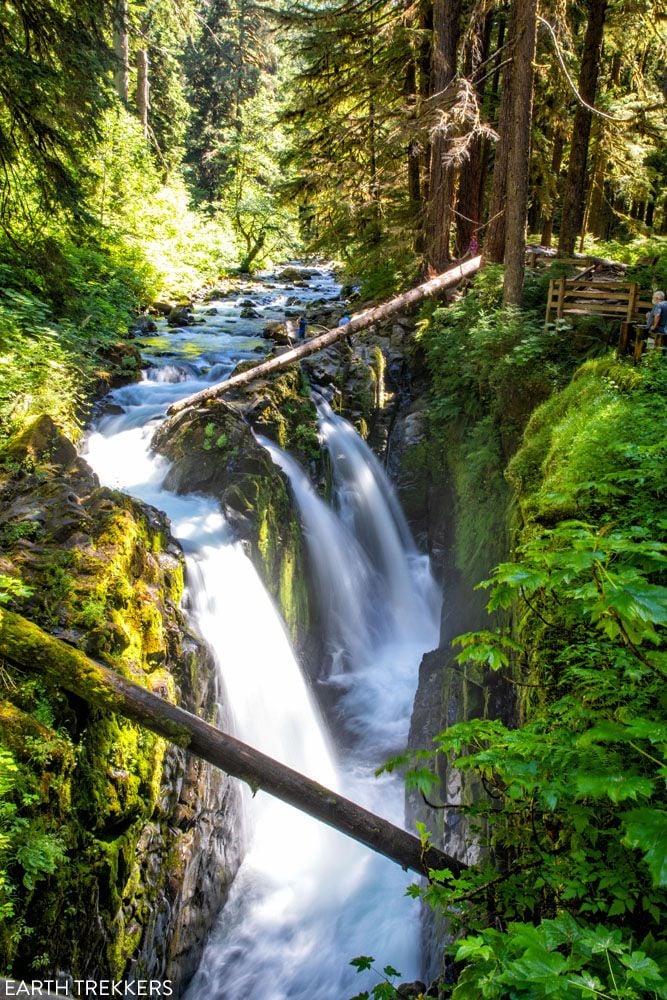
Sol Duc Falls is a waterfall that is located in the temperate rainforest of Olympic National Park.
To get here, take Sol Duc Road to the end. From the parking lot, it is an easy 2.25 mile round trip walk to the waterfall.
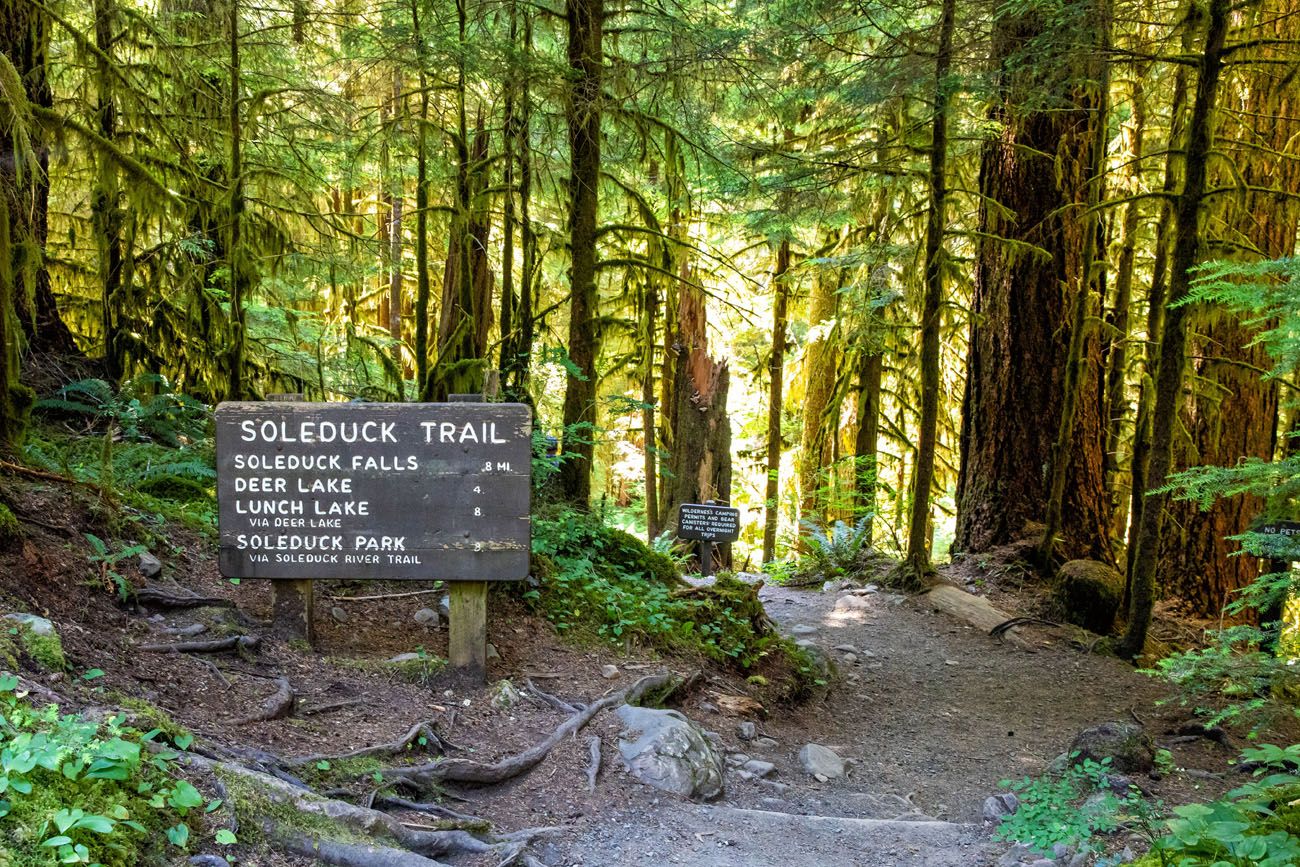
Sol Duc Falls
Relax in Sol Duc Hot Springs
After hiking to Sol Duc Falls, a soak at the Sol Duc Hot Springs Resort is one of the more unique experiences in Olympic National Park. The resort features three hot spring-fed soaking pools and one freshwater pool, ranging in temperature from about 98°F to 104°F. Day use is available for non-guests, making it an easy add-on to your visit to this part of the park.
PRO TRAVEL TIP: The pools can get busy on summer weekends. Arriving early in the morning or later in the afternoon tends to mean fewer crowds. The resort also offers cabins and glamping-style accommodations if you want to base yourself here for a night.
Things to Do Along the Pacific Coast
The Pacific Coast stretches for over 70 miles of wild, rugged coastline with sea stacks, tide pools, and driftwood beaches. Ruby Beach, Rialto Beach, and Shi Shi Beach are the most visited spots.
Hike to Shi Shi Beach
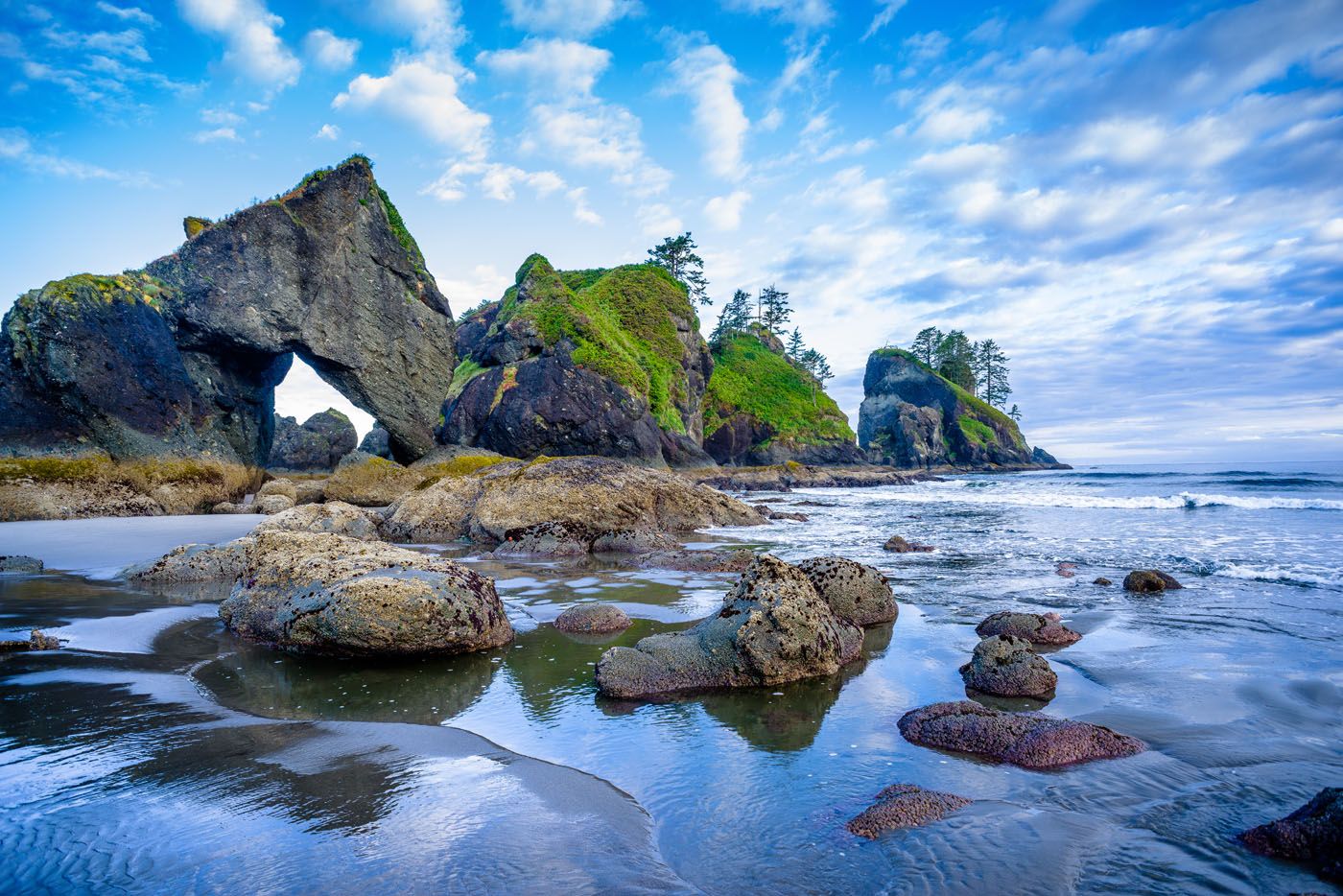
Shi Shi Beach is one of the most beautiful beaches in Olympic National Park. It is here that you will see tide pools and the rocky pinnacles that make this beach so unique.
william p teed/shutterstock.com
To get here, you will need to do some hiking…6 to 10 miles round trip, depending on how far down the beach you will go.
The beach is located in Olympic National Park but access to the beach is on the Makah Reservation. To visit Shi Shi Beach, not only do you need to pay the Olympic National Park fee but you will also need a Makah Recreation Pass.
Shi Shi Beach is great as a long day hike or as an overnight camping experience.
Go for a Stroll on Rialto Beach
This stretch of beach allows you to explore more of Olympic National Park’s rocky coastline. It is easier to get to than Shi Shi Beach and it is not located on a reservation, so there is no additional fee, other the national park fee, to visit this beach.
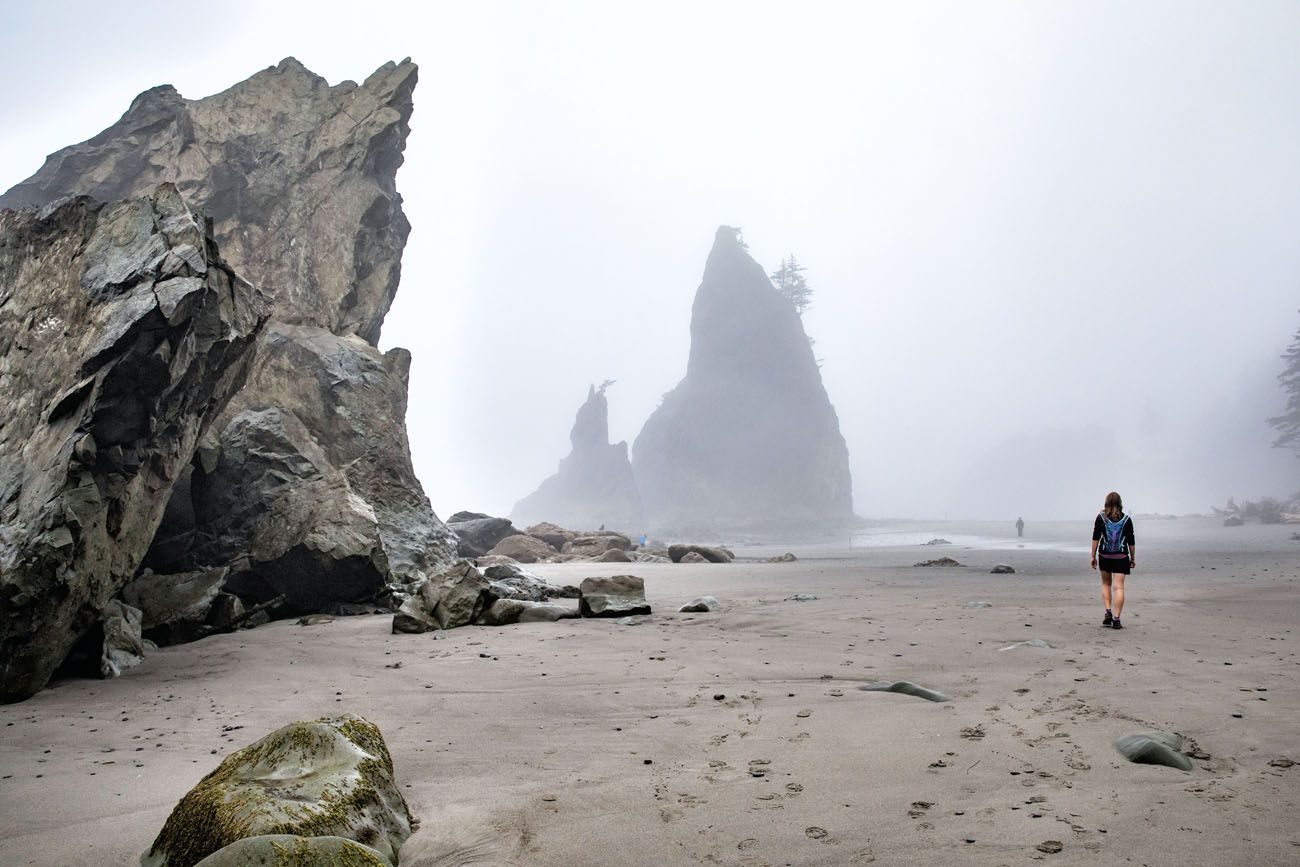
To visit Rialto Beach, park at the Rialto Beach parking area, which is located next to the beach, and then walk right out to the beach. You can walk in either direction but the best direction to go is north, where you get to see the sea stacks sitting along the coastline.
For the best experience, walk to Hole-in-the-Wall, a 3.5 mile round trip stroll where the beach is the hiking trail.
This is a cool hike, and great for all ages and ability levels. We did this on a foggy morning, which gave Rialto Beach an almost mystical appearance.
2026 Update: From July 8 to October 15, Rialto Beach will not be accessible on Mora Road because of a construction project. Get updates on the National Park Service website.
Rialto Beach
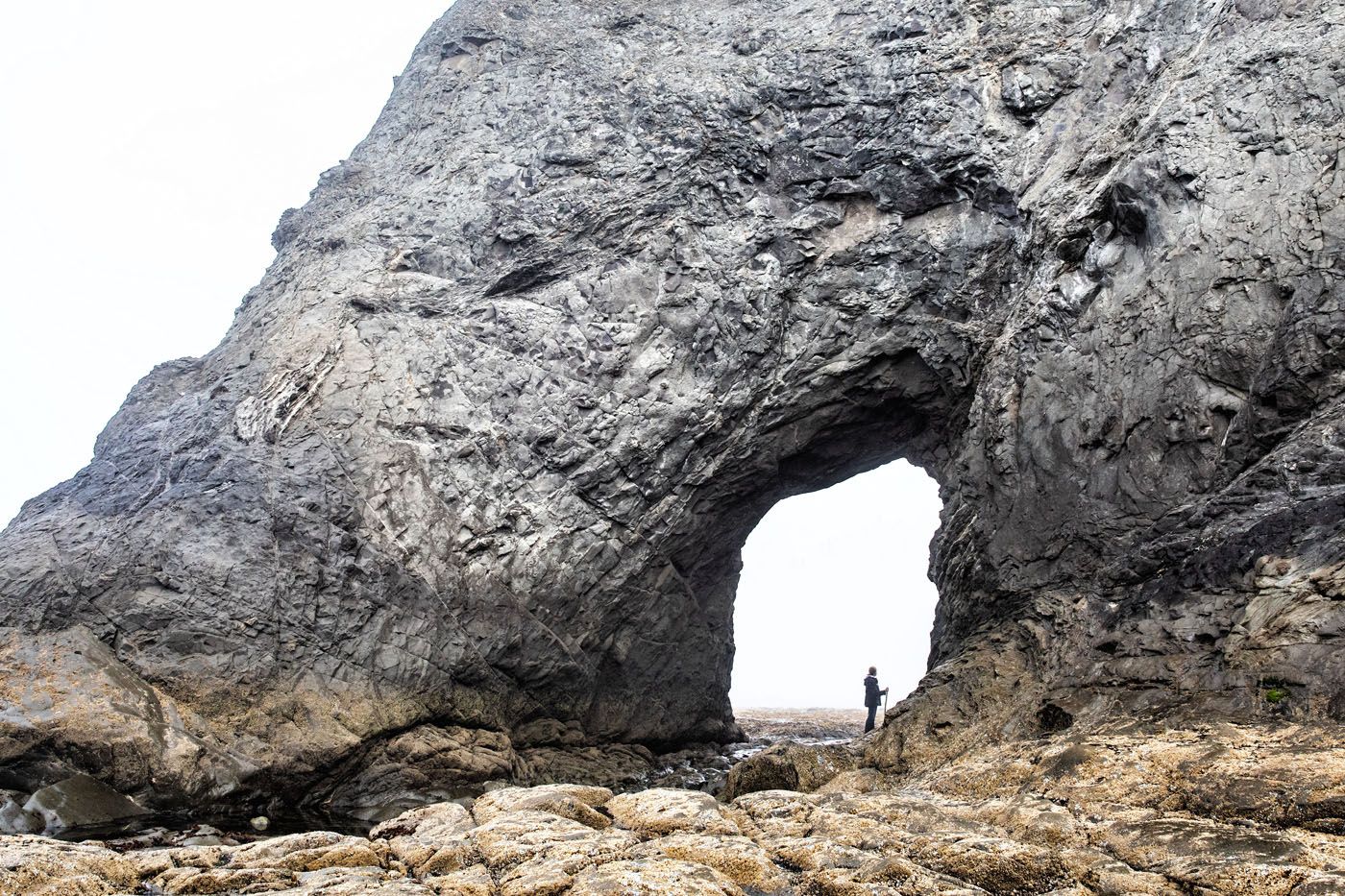
Hole in the Wall
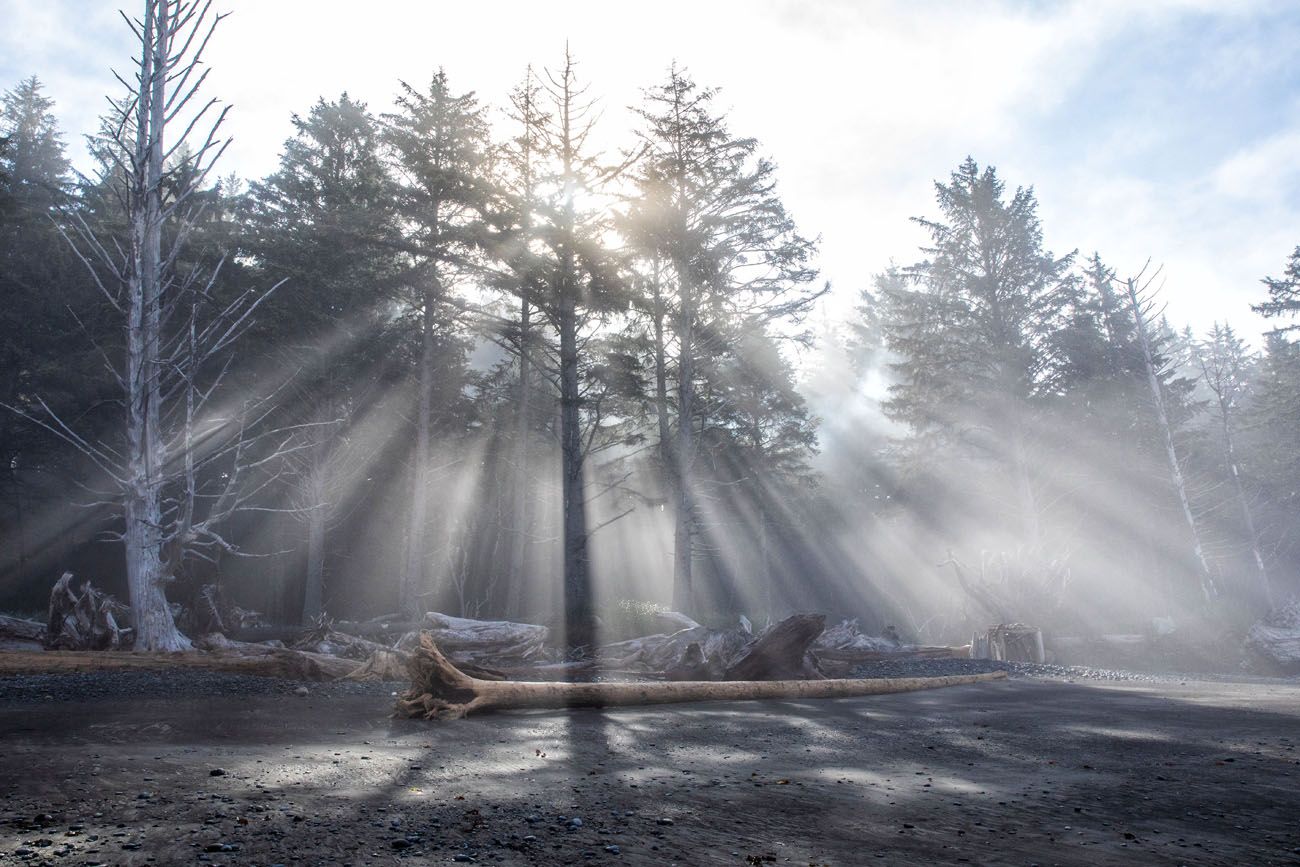
Visit the La Push Beaches
The La Push Beaches are a group of three beaches located near the Quileute community of La Push, about 20 minutes west of Forks. Each one is hemmed in by dramatic bluffs and headlands, and you can’t hike from one to the next. The headlands block the way, so you’ll need to drive to each beach separately.
First Beach is the most accessible of the three and it’s the only beach you can reach directly by vehicle, without hiking. It sits on Quileute tribal land and is not part of Olympic National Park. The crescent-shaped beach is great for simply sitting and taking in the moody Pacific scenery, and the views of James Island just offshore are striking.
Second Beach is the standout of the three for most visitors. It’s reached by a trail through old-growth Sitka spruce and then the beach opens up before you. The north end of the beach features a natural arch, and its tide pools are among the best in Olympic National Park. Second Beach and Third Beach are part of Olympic National Park, so your park pass covers entry.
Third Beach is the most remote of the La Push beaches. To get here, it is a 1.6-mile one-way hike through a forest. For the most part, it is a flat, easy hike, but we found it rather monotonous.
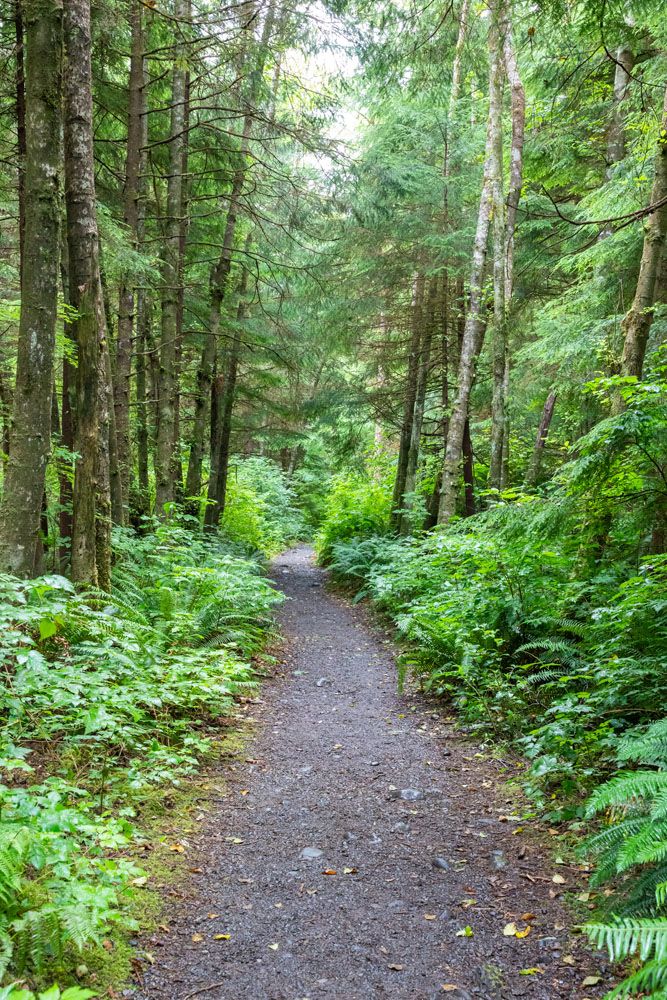
Here is the view once you get to the beach.
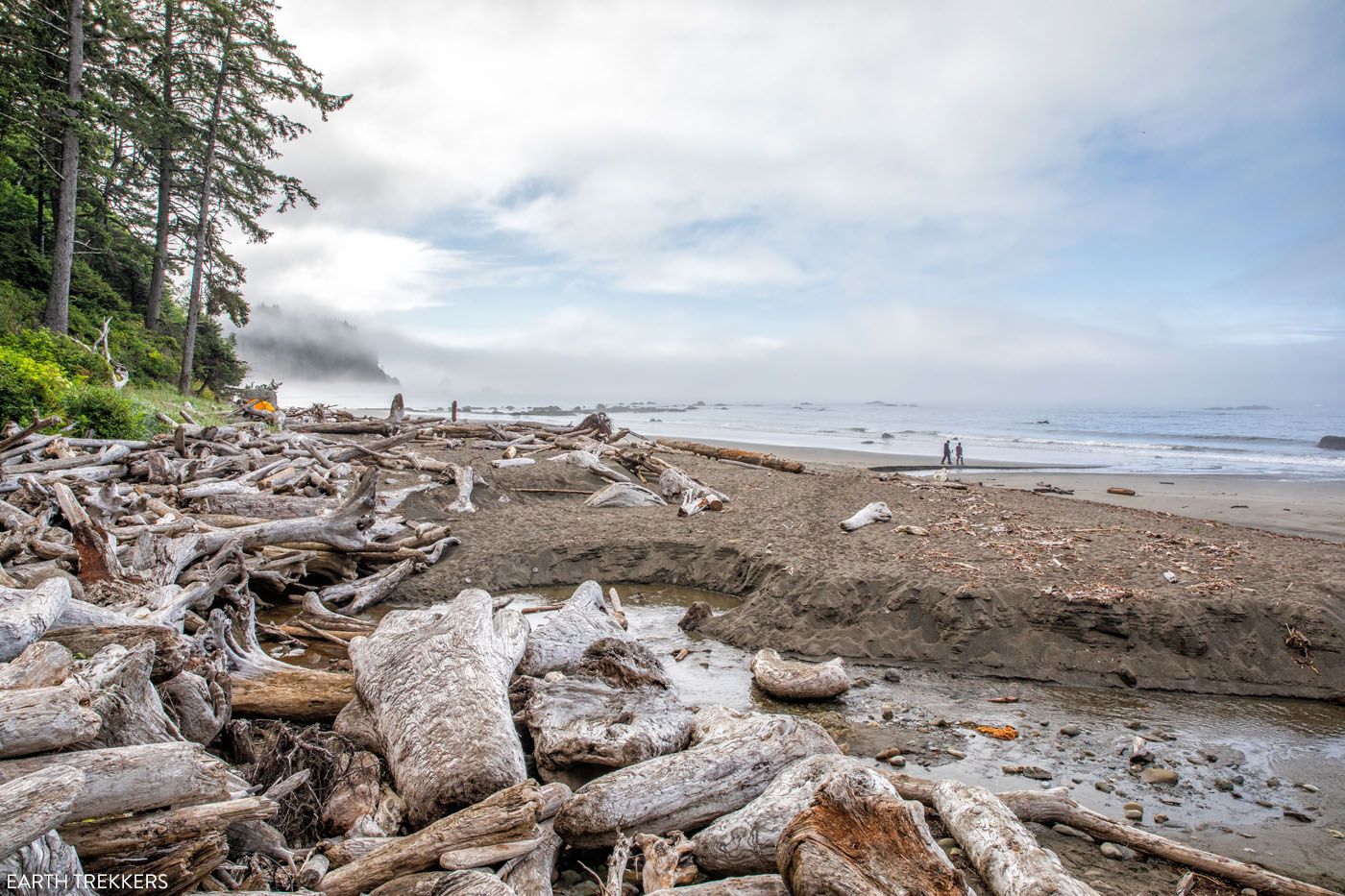
If you only have time for one beach stroll, we recommend Rialto Beach and the walk to Hole-in-the-Wall.
See the Sea Stacks and Driftwood on Ruby Beach
This easily accessible beach is a very popular destination and one of the best things to do in Olympic National Park. It gets its named from the ruby-colored crystals in the sand.
To visit Ruby Beach, park in the large parking area and then it is a downhill walk to the beach. You can either explore this stretch of coastline or hike north to the Hoh River (6 miles round trip).
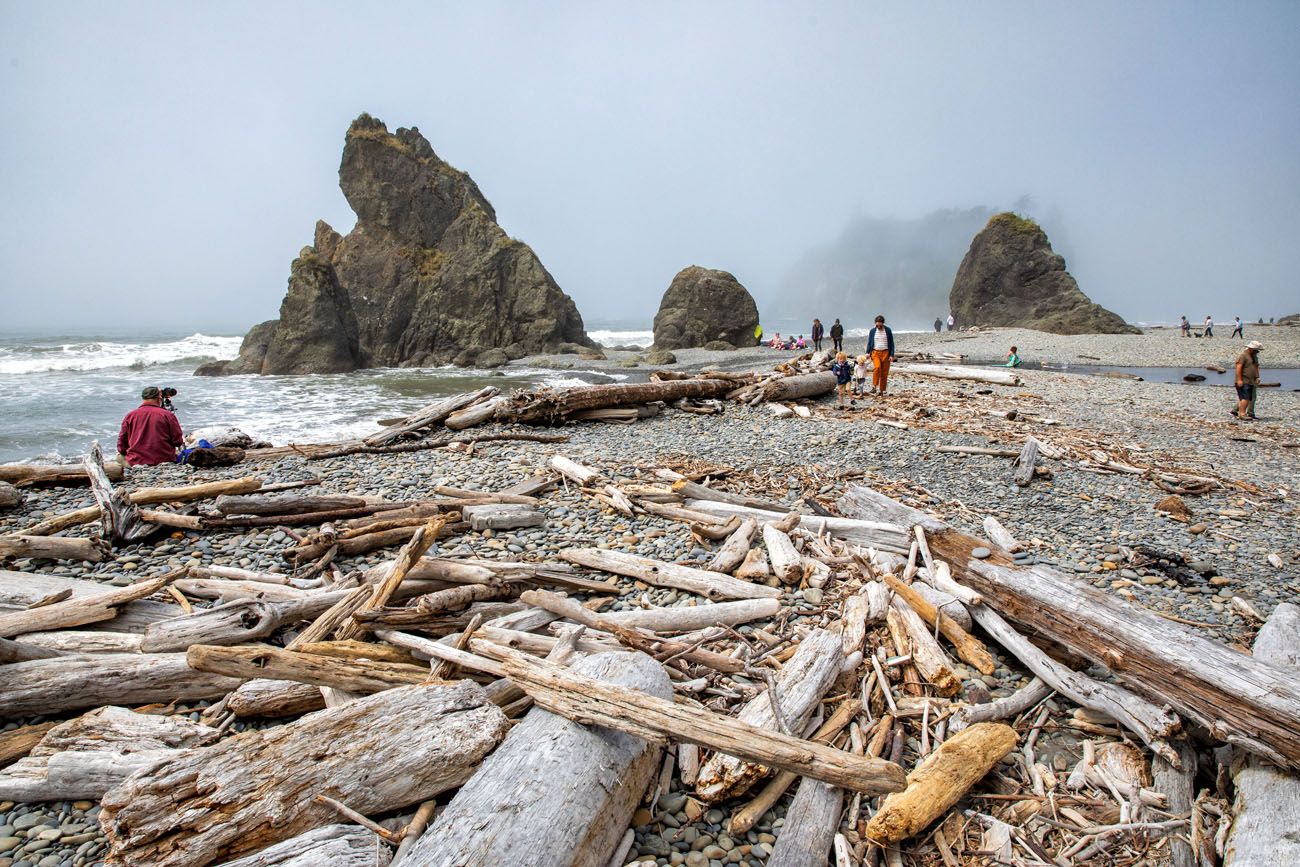
Ruby Beach
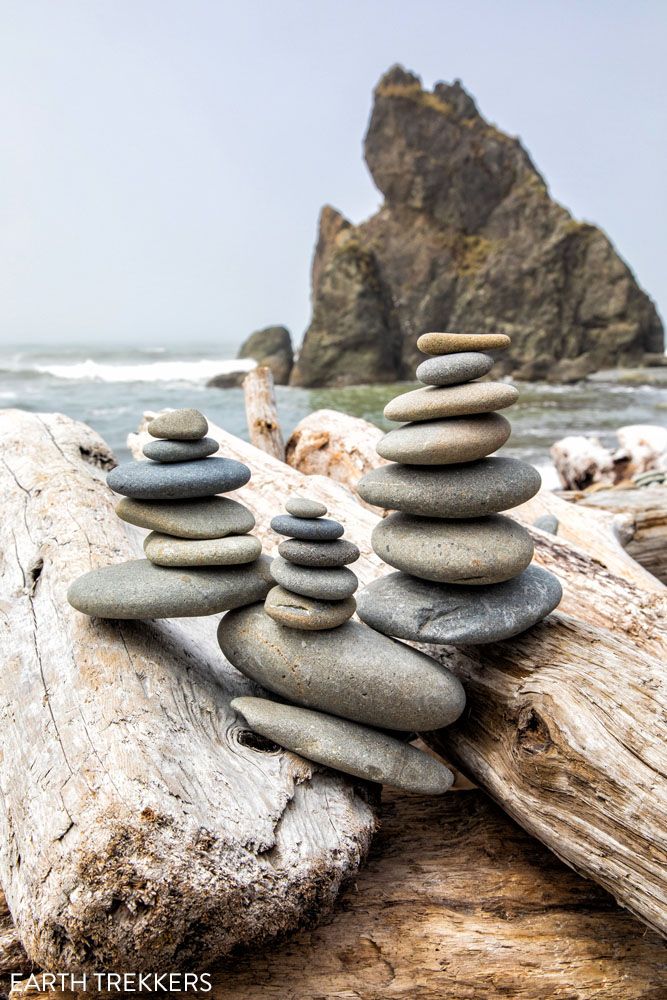
Rock cairns on Ruby Beach
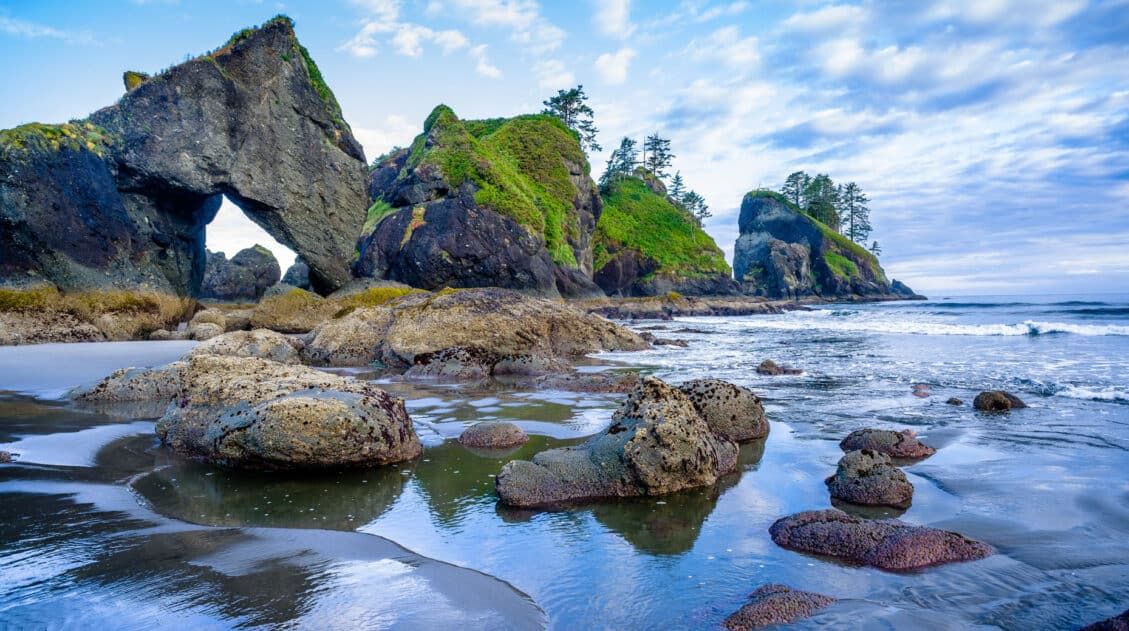
Things to Do in the Temperate Rainforest and Western Olympic National Park
The temperate rainforest is found on the wetter, western section of Olympic National Park. These old growth forests are home to trees that are over 700 years old. Just imagine the history that has unfolded during the lifetime of some of these trees. To stand in their presence is both humbling and mind boggling.
When visiting this part of the park, the best place to stay is in the Quinault Valley, the Kalaloch Lodge, Forks, or Aberdeen.
Visit the Amazing Hoh Rainforest
Visiting the Hoh Rainforest is one of the best things to do in Olympic National Park. For some, this is the main reason for visiting Olympic National Park.
When you walk through the Hoh Rainforest you feel like you are journeying back in time, when dinosaurs ruled the planet. Moss drips from trees that are over 250 feet tall and hundreds of years old. The understory is filled with fallen trees, saplings, and ferns. Keep an eye for deer, the northern spotted owl, elk, raccoon, and black bear. The Hoh rainforest is cool and damp, quiet, and it smells wonderful.
The Hoh Rainforest gets between 12 to 14 feet of rain each year. Most of this falls in the winter months. But to put this into perspective, Mount Waialeale in Kauai, Hawaii receives 32 feet of rain each year (10,000 mm) and Mawsynram, India receives almost 40 feet of rain a year (11,900 mm)!
To get here, drive Upper Hoh Road/Hoh Valley Road to the end. There are two trails to walk here. Both are short, easy strolls.
The Hall of Mosses is 0.8 miles round trip. It loops through some of the oldest trees in the area. As its name implies, it is also one of the best places to capture the moss hanging from the trees.
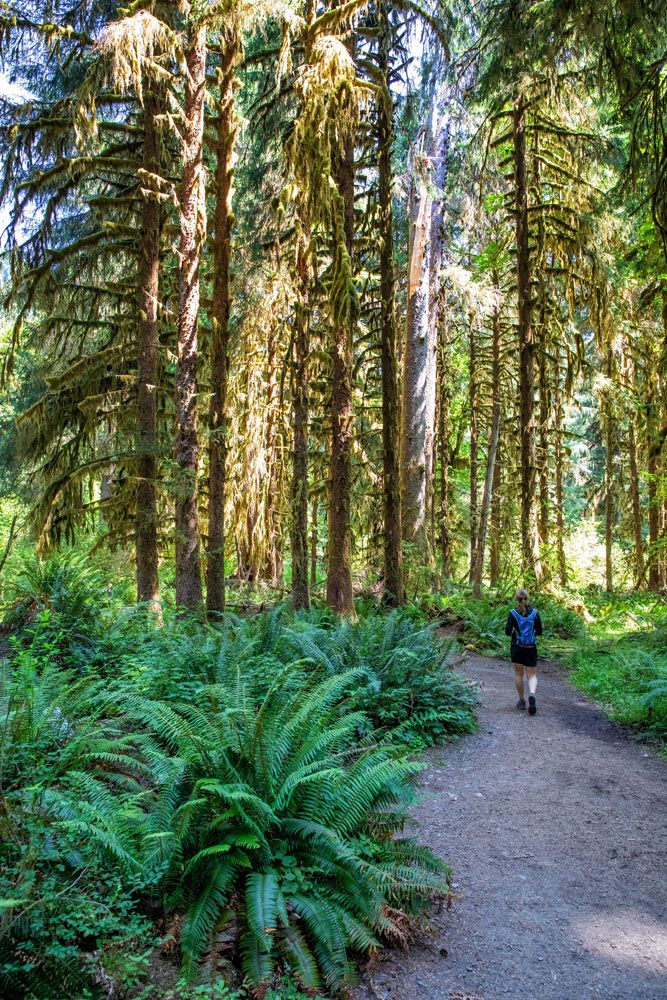
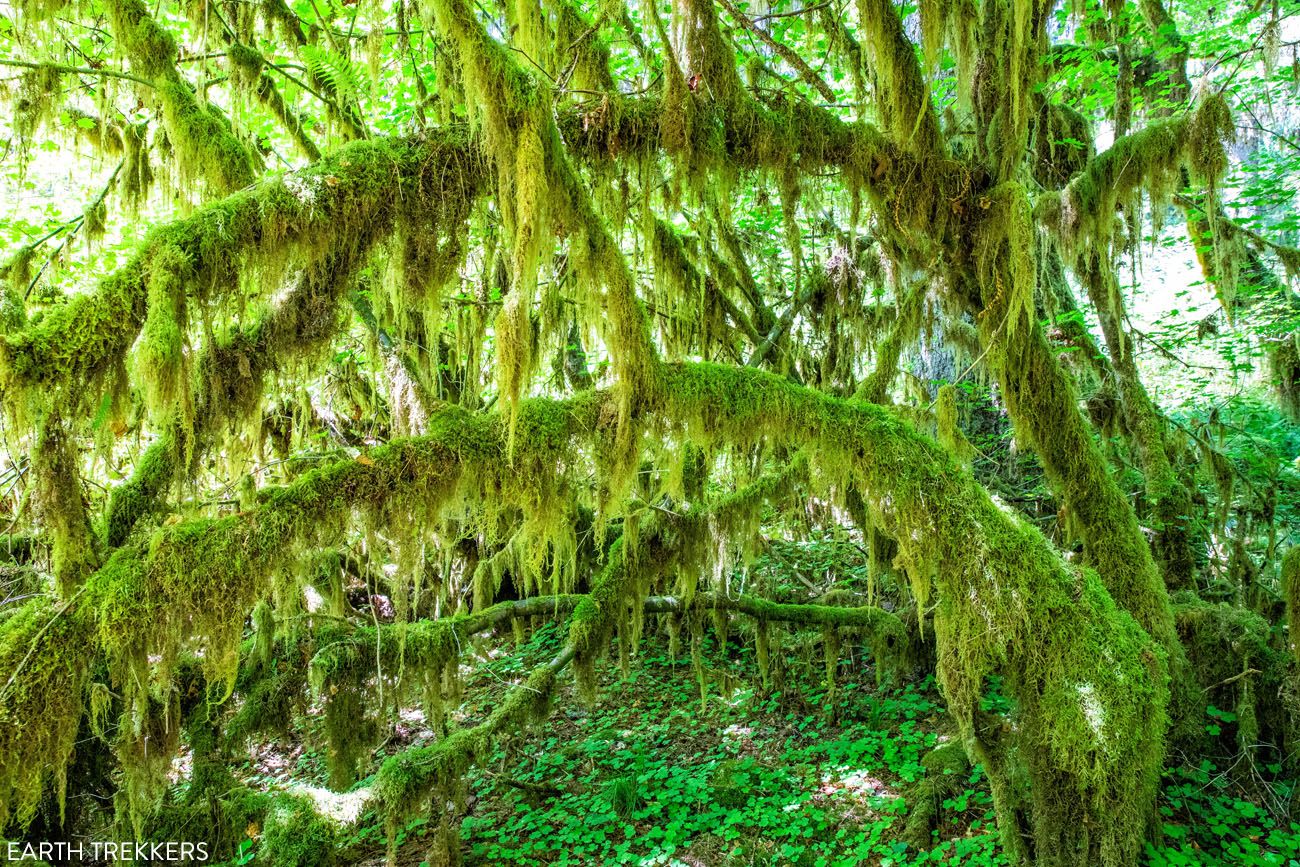
Hall of Mosses
The Spruce Nature Trail is a 1.2 mile loop which features more views of the rainforest and the Hoh River. This trail tends to be less crowded than the Hall of Mosses. We spotted a black bear on this trail.
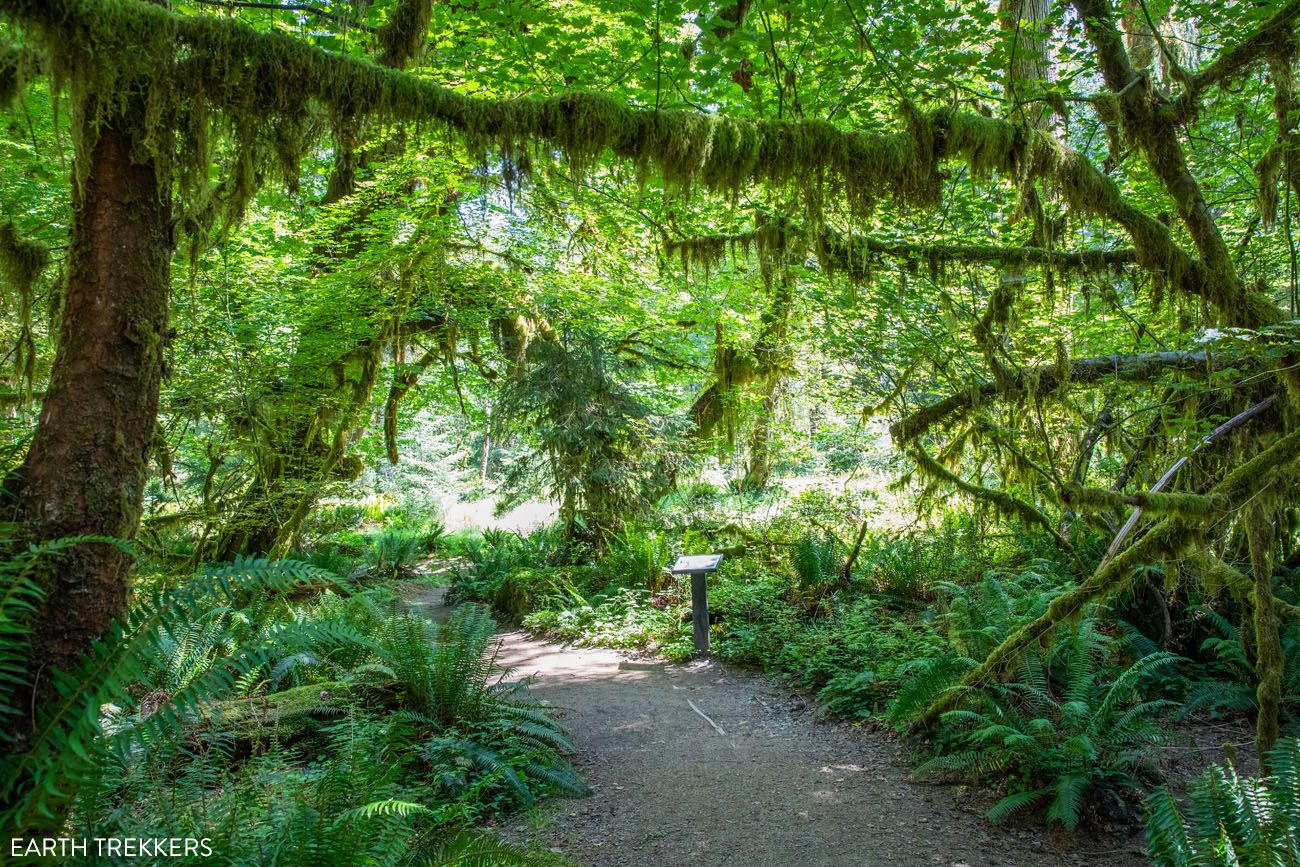
Spruce Nature Trail
Visit Lake Quinault
Lake Quinault is a very pretty lake that is located in southwestern Olympic National Park. You can see the world’s largest Sitka Spruce, walk the short trails near the lakeshore, and walk the Quinault Rainforest Nature Trail.
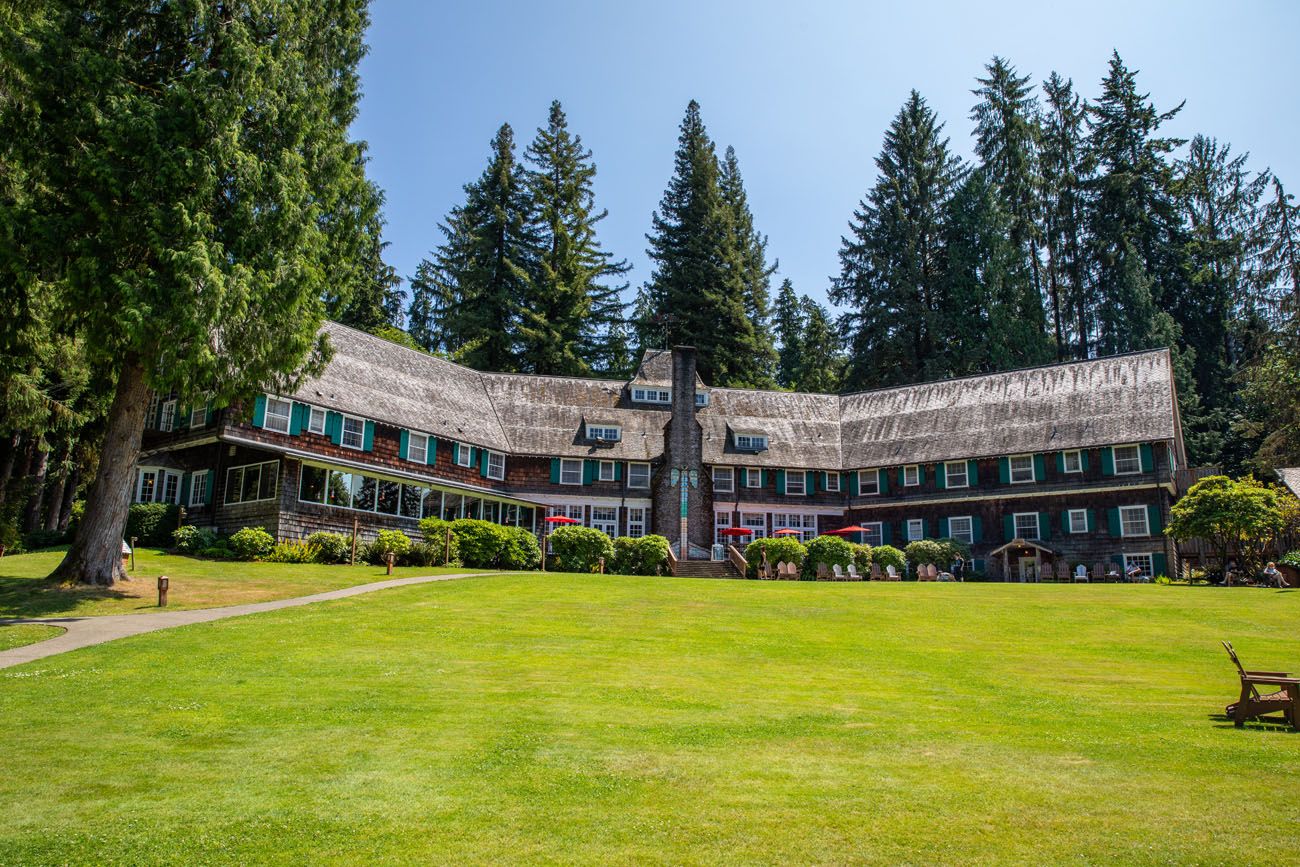
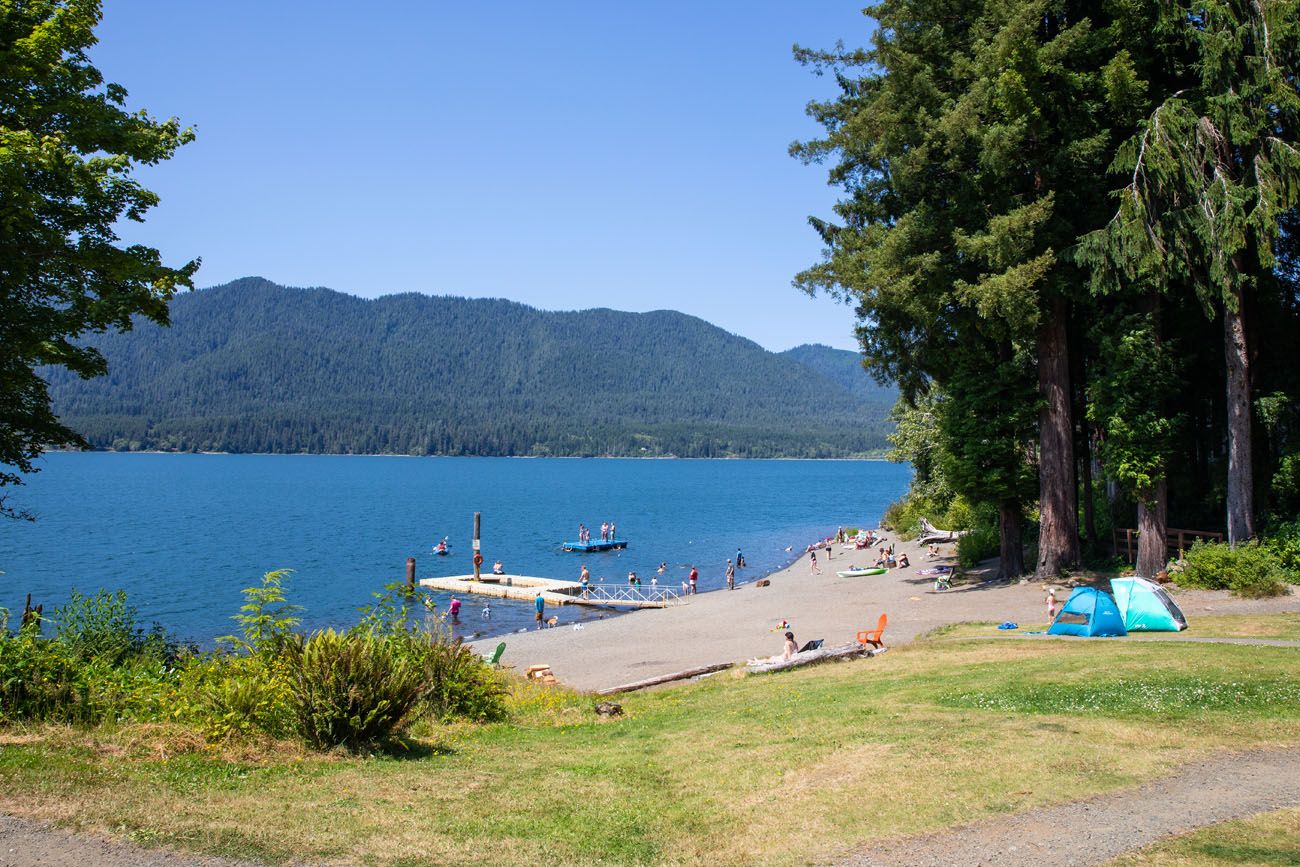
The Lake Quinault Lodge is a historic lodge that was built in 1926. This is a great place to stay for exploring the Pacific coastline and the western side of the park.
Enchanted Valley
Hike to the historic Enchanted Valley Chalet on an overnight backpacking trip.
This trek starts near Lake Quinault. For 13 miles, you will hike the East Fork Quinault River Trail through old growth forests until you reach the chalet. Bear, elk, coyote, mountain lion, and deer can sometimes be spotted along the trail.
This is typically done as an overnight backpacking trip. With a permit, you can camp at Enchanted Valley, Pyrites Creek, O’Neil Creek, or Pony Bridge.
Note: The National Park Service is considering dismantling and removing the chalet. Learn more here.
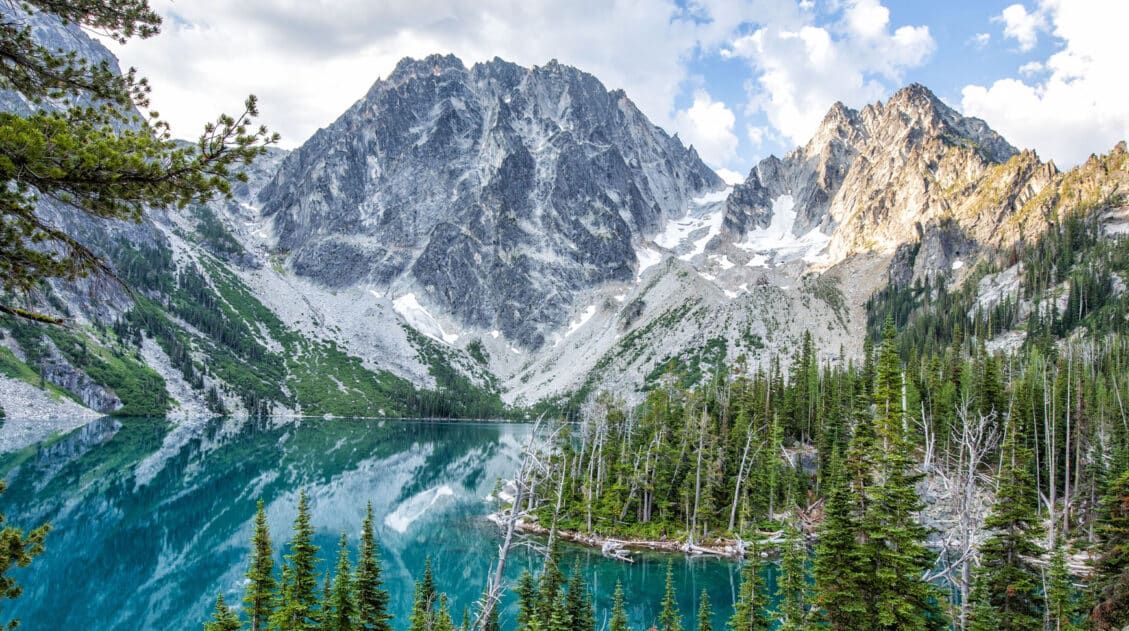
Things to Do in Staircase & Eastern Olympic National Park
The Staircase region is located in the southeastern corner of Olympic National Park. This is where you will find more old growth forests and some of the best hikes in the park. This area, because of its location, is often overlooked by many visitors and tends to be less crowded.
When visiting this part of the park, the best place to stay is Olympia or Skokomish.
BEFORE YOU GO: The Staircase area of Olympic National Park is currently closed due to a wildfire that ignited in July 2025. The fire ultimately burned over 20,000 acres, the largest wildfire on the Olympic Peninsula since 1951, and was declared 100% contained on November 12, 2025. As of October 2025, Forest Road NF-24 (the only access road to Staircase) and surrounding trailheads remain closed through at least October 1, 2026 due to ongoing hazards including rockfall, treefall, and landslides in the burn area. Before planning your visit, check the Olympic National Park conditions page and the Olympic National Forest alerts page for the latest status.
Hike the Staircase Rapids Loop
Just under 3 miles long, this trail loops up and around Staircase Rapids. With waterfalls, dense forests, and fallen trees, this is a beautiful place to explore.
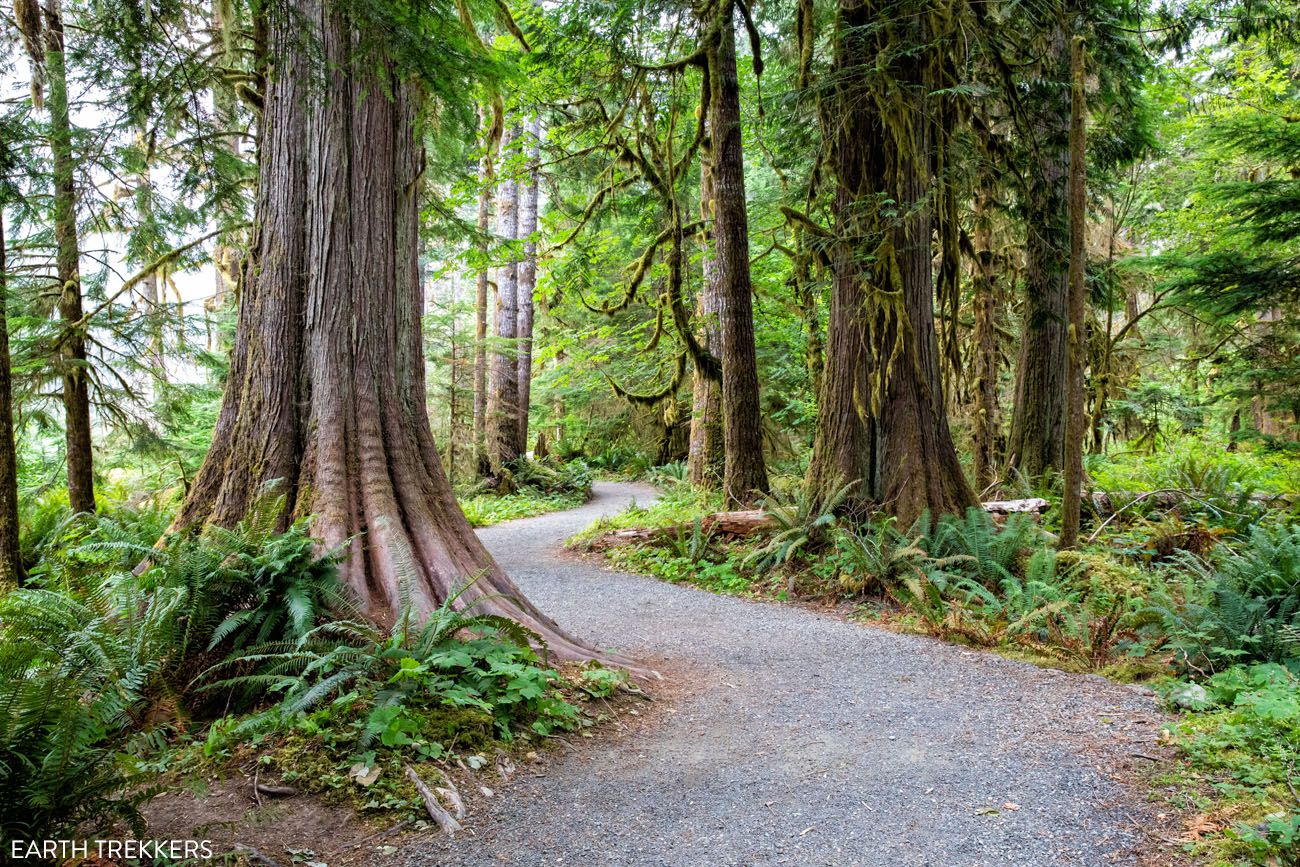
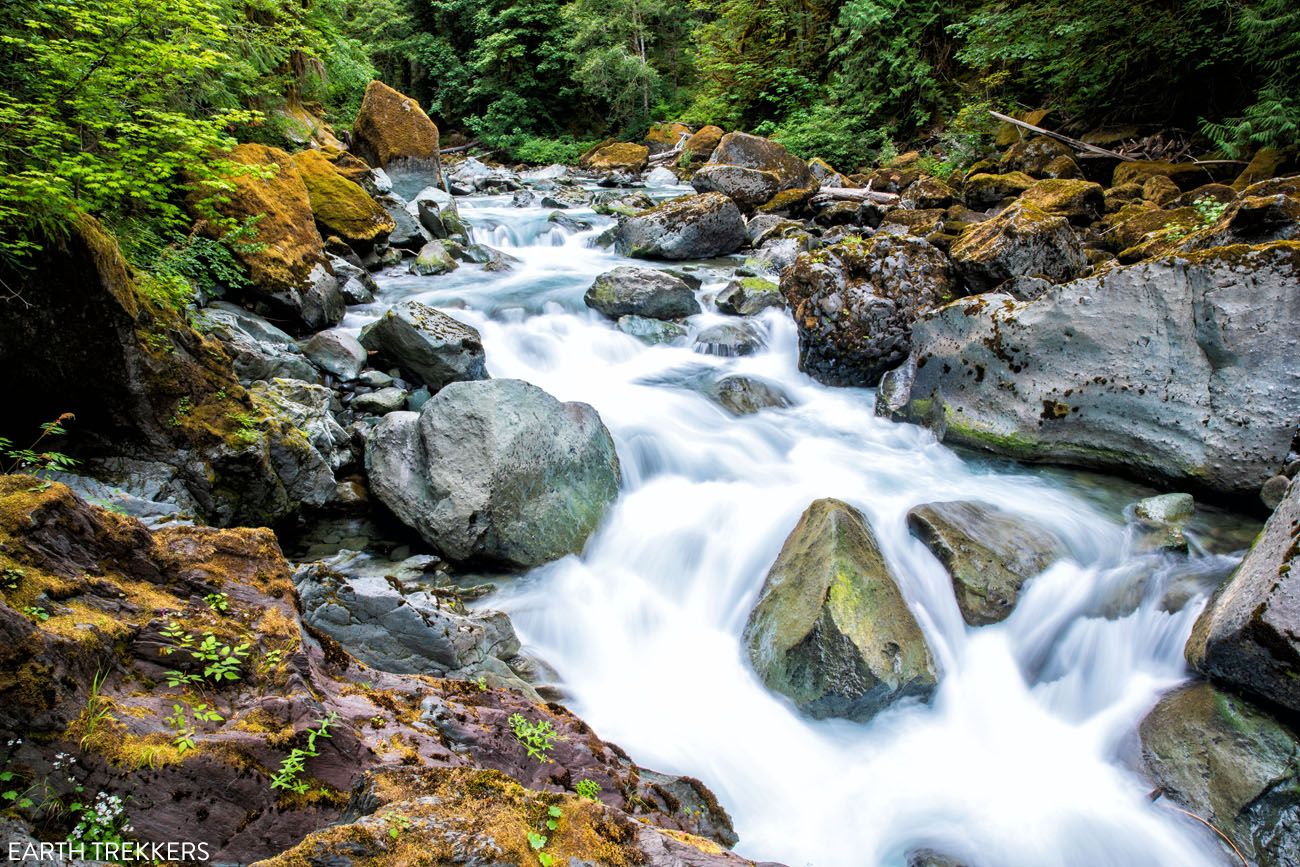
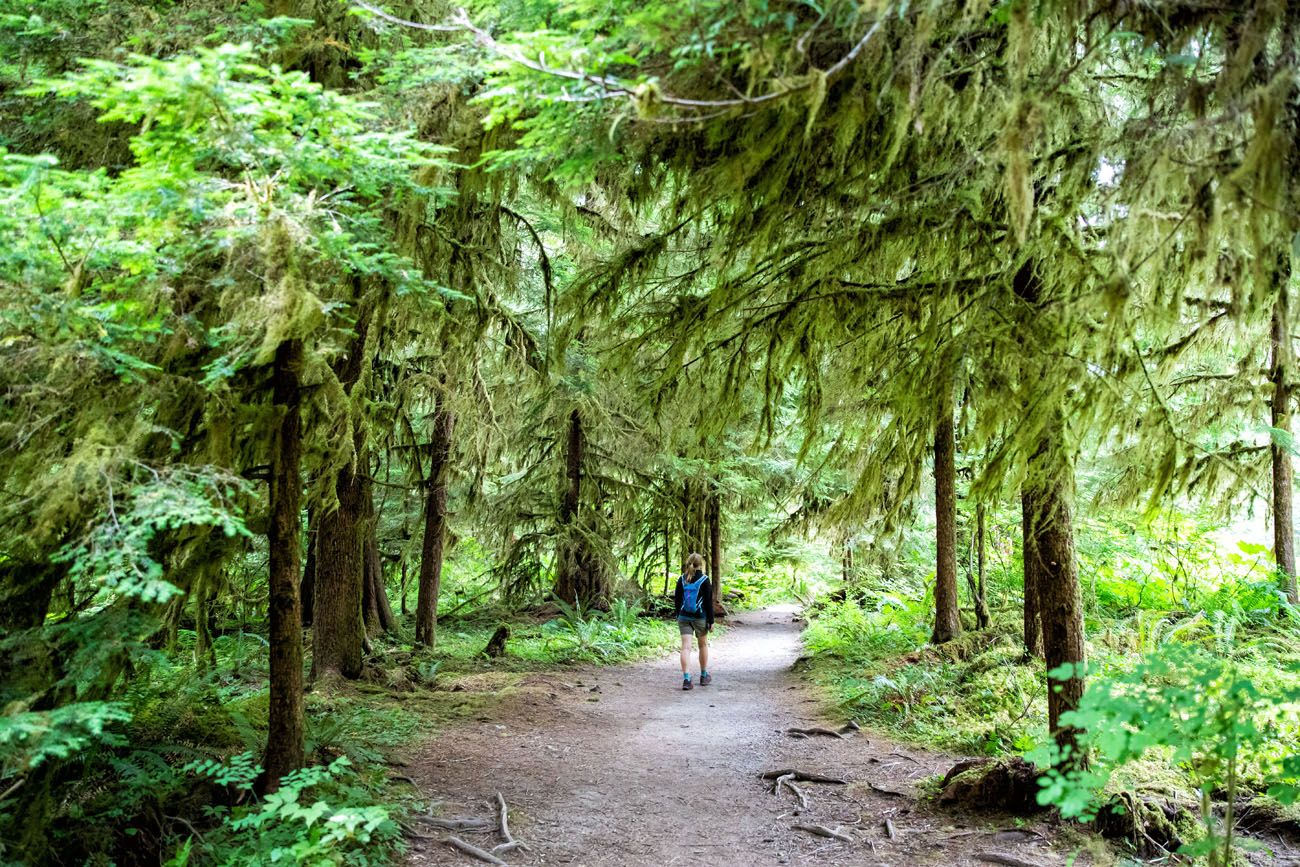
We loved this hike. When we did this, we saw just one other family. The views are similar to what you get at the Hoh Rainforest, with enormous trees covered in moss and lichen, but with far fewer people, this was a much more enjoyable experience.
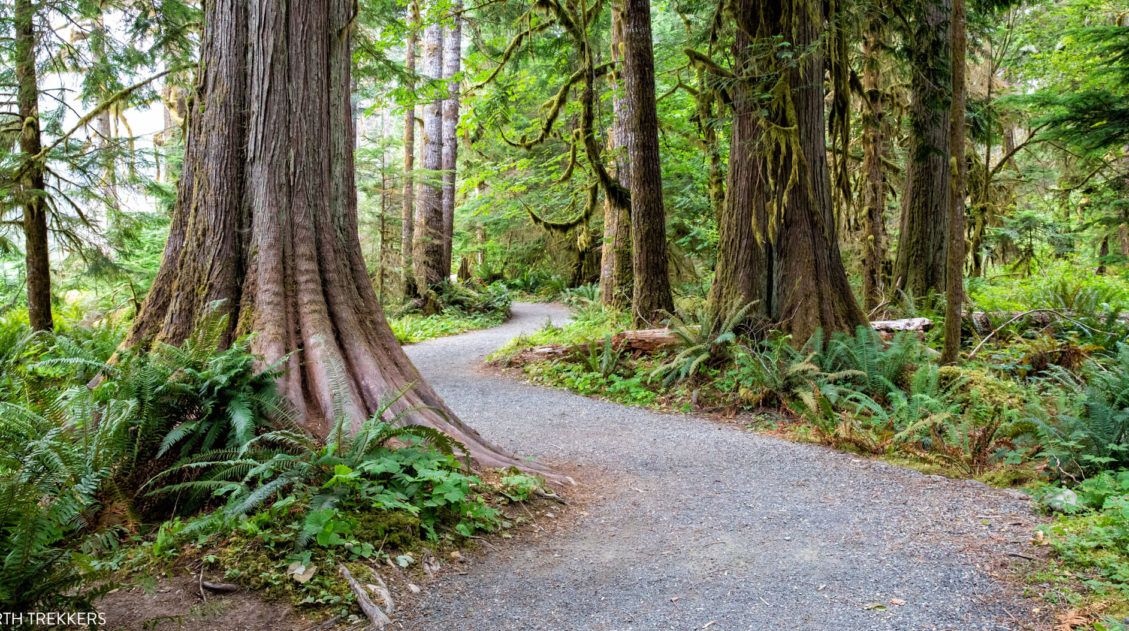
Staircase Rapids Loop: A Hidden Gem Hike in Olympic National Park
A step-by-step trail guide for the Staircase Rapids Loop.Hike to the Summit of Mount Ellinor
This was a hike that was high on our to-do list, but drizzly weather and low-lying clouds created unfavorable conditions. We have learned from past experiences that if clouds cover the mountain peaks, you might as well as stay in bed and pull the covers over your head, because you’ll have the same view.
Mount Ellinor is one of the tallest mountains on the eastern side of Olympic National Park. This hike is 6.2 miles round trip with 3,300 feet of elevation gain. Your reward is panoramic views over the Olympic Peninsula and out to Mount Rainier and Mount Baker.
High Steel Bridge
This is a bit off-the-beaten-path, but it’s worth the quick visit, if you like the idea of seeing something different than a hiking trail or waterfall.
The High Steel Bridge spans the south fork of the Skokomish River. It was built in 1929 as a rail line for logging on the Olympic Peninsula. In 1964, it was converted to a roadway and it continues to be used for logging.
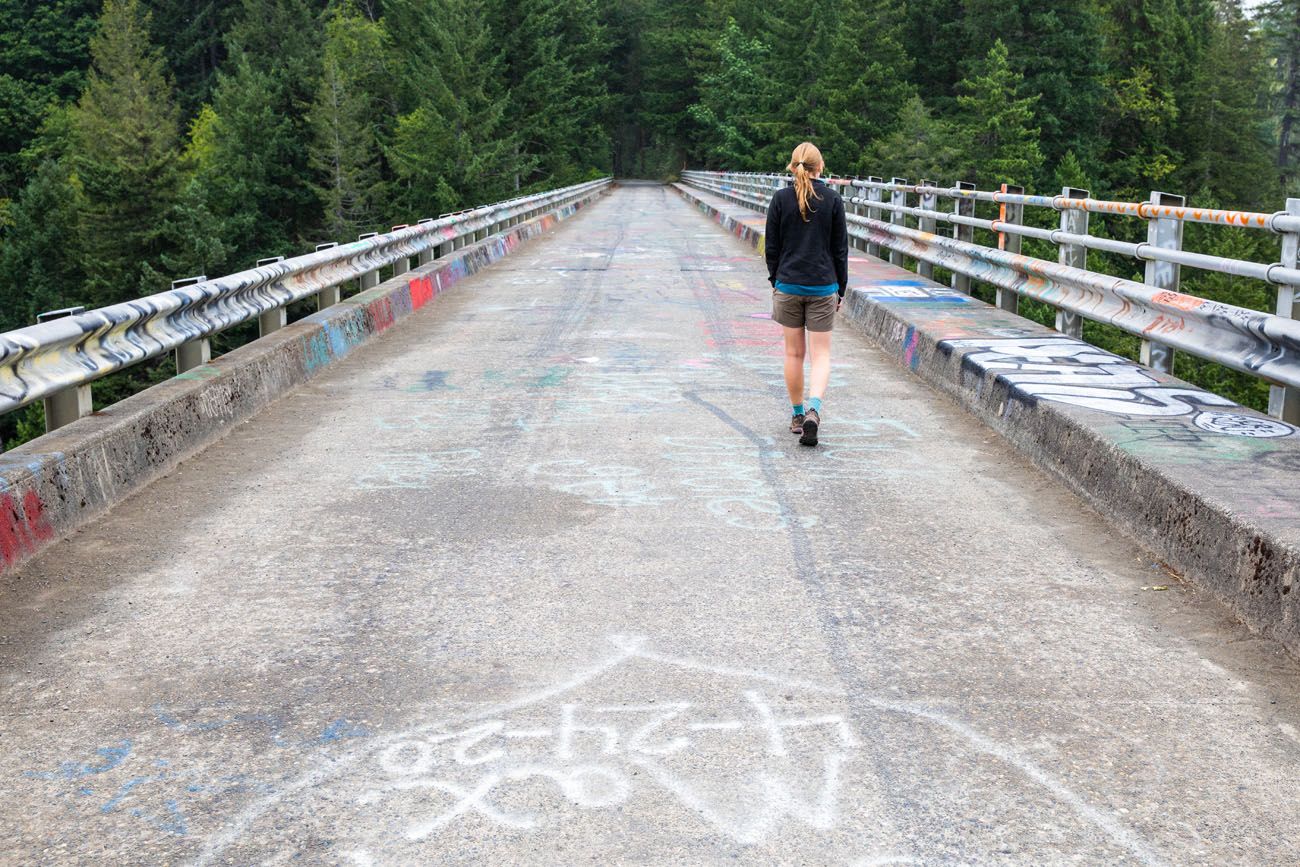
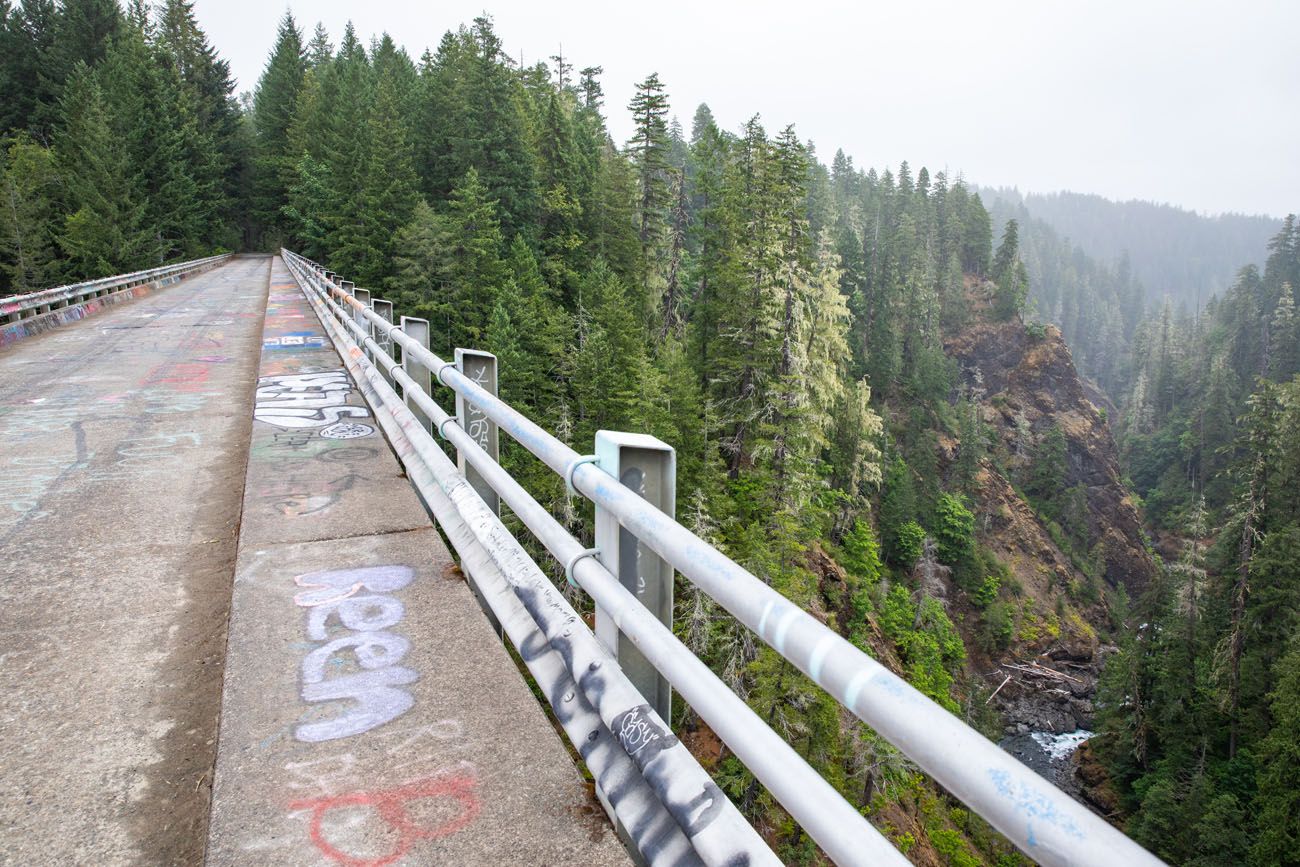
Maybe it was the cloudy, foggy conditions, but our visit here felt a bit creepy. It is eerily quiet here, except when a logging truck passes, which can be quite alarming, especially while standing on this narrow bridge.
Things to Do Near Olympic National Park
Here are two places worth knowing about. They aren’t located in Olympic National Park, but there are nearby, and worthwhile additions if you want to explore more of the area.
Cape Flattery
Cape Flattery is the northwesternmost point in the contiguous United States, where the Pacific Ocean meets the Strait of Juan de Fuca. It’s a spectacular spot, with sea stacks covered in lush green moss and trees rise from the water, and on a clear day the views are unlike anything else on the peninsula.
The hike itself is easy, just 1.2 miles round trip, with a mix of gravel path, boardwalks, and three viewpoints that look out over the water. The final platform overlooks Tatoosh Island and its historic lighthouse.
Important to know: Cape Flattery is not part of Olympic National Park. It sits on the Makah Reservation, and you will need to purchase a Makah Recreation Pass before visiting. The pass costs $20 per vehicle and is valid for one year. It does not count as your national park entry fee.
Wildlife: Sea lions can typically be seen and heard from the trail year round. Between March and May there is a good chance of spotting gray whales, orca, and humpback whales. Tufted puffins also nest here, and are best spotted in summer.
Our take: Cape Flattery is gorgeous, but the drive from Port Angeles is long, about 44 miles from Highway 101 on a road that isn’t always easy going. We’d recommend it for visitors who have at least three days in the park and want to explore beyond the main highlights. If you’re short on time, prioritize elsewhere.
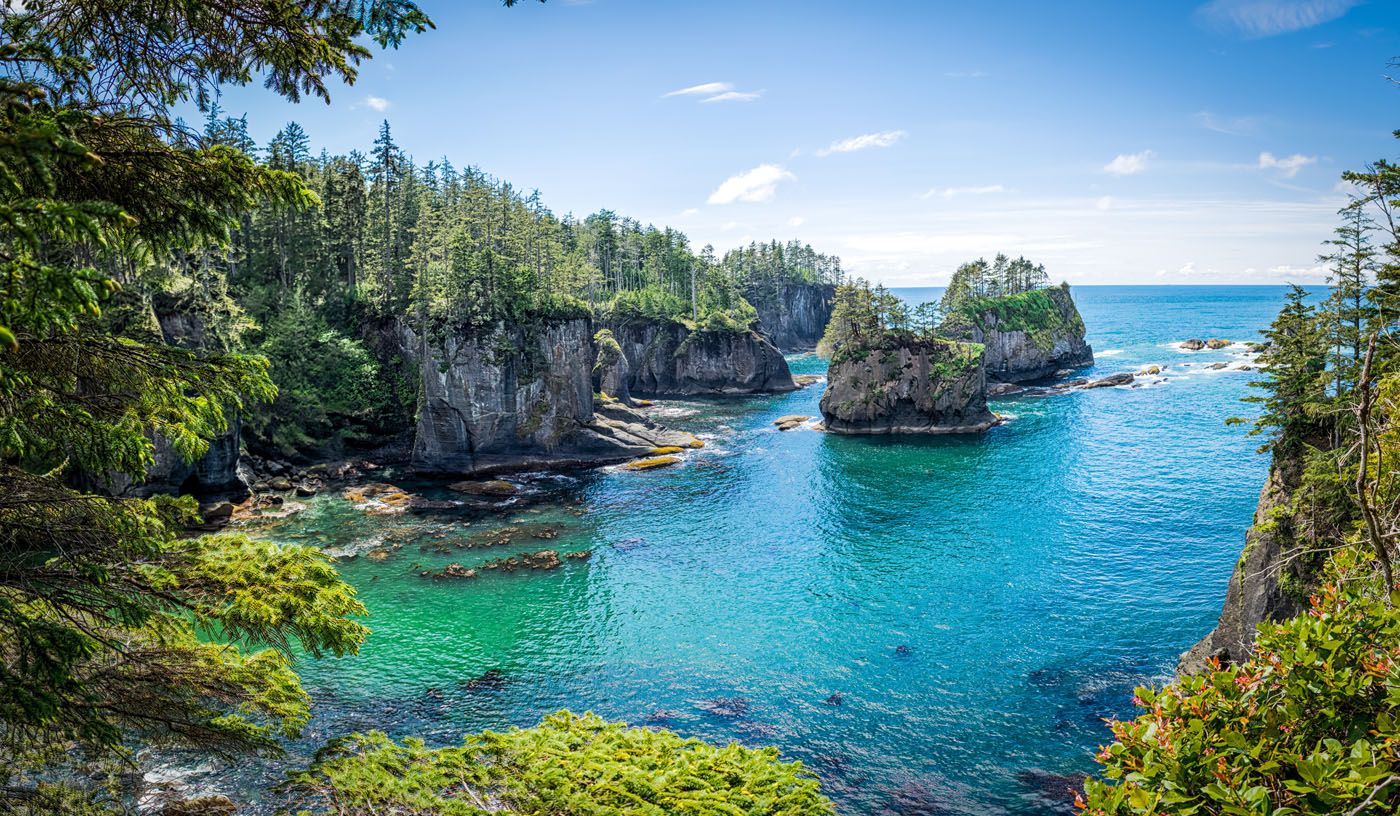
mabahamo/shutterstock.com
Dungeness Spit Wildlife Refuge
This long spit of sand starts on the Olympic Peninsula and juts out into the Strait of Juan de Fuca. It is the longest natural spit in the United States.
The Dungeness Spit is a 30 minute drive from Port Angeles. Park in the parking lot and then it is a half-mile walk through a forest to get to the coastline. Just before reaching the beach, you will have a nice view along the spit.
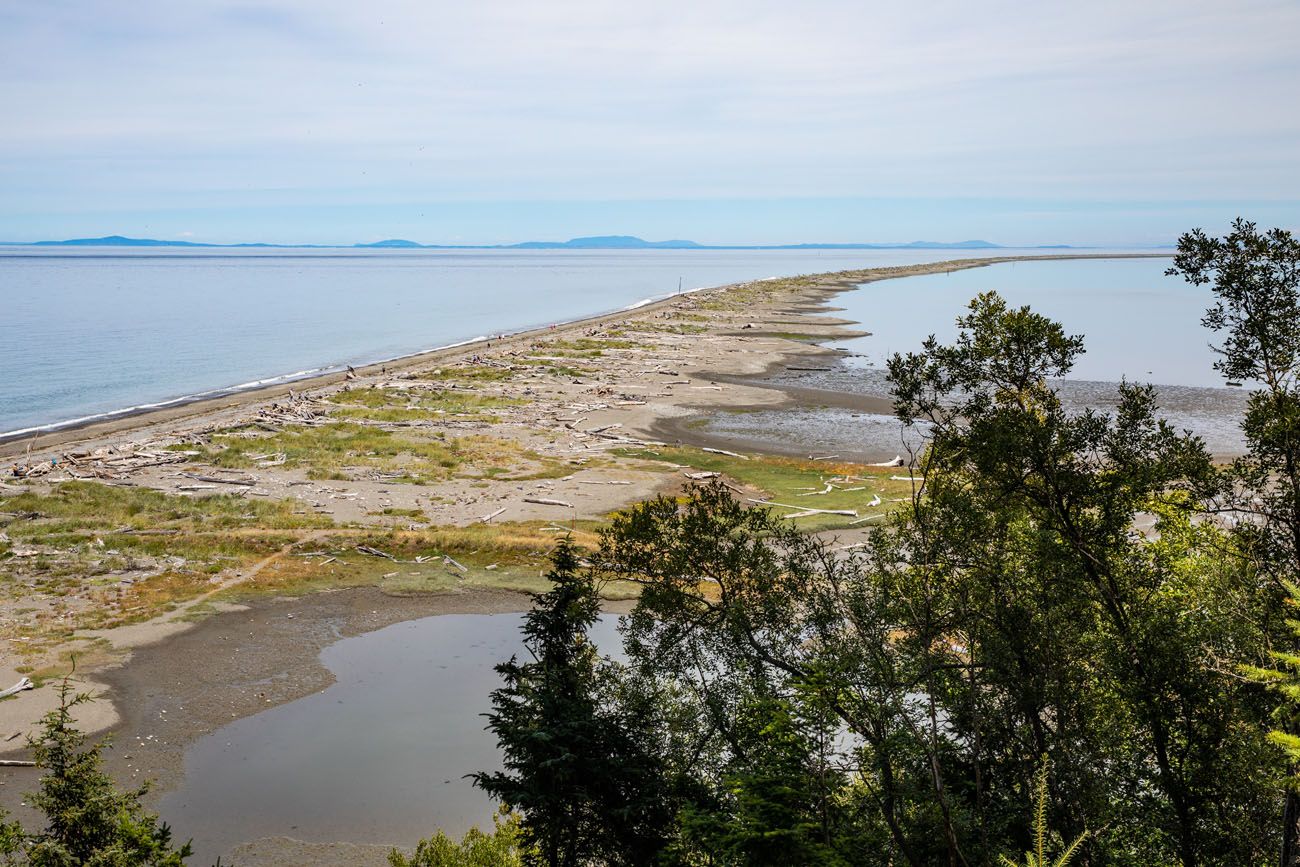
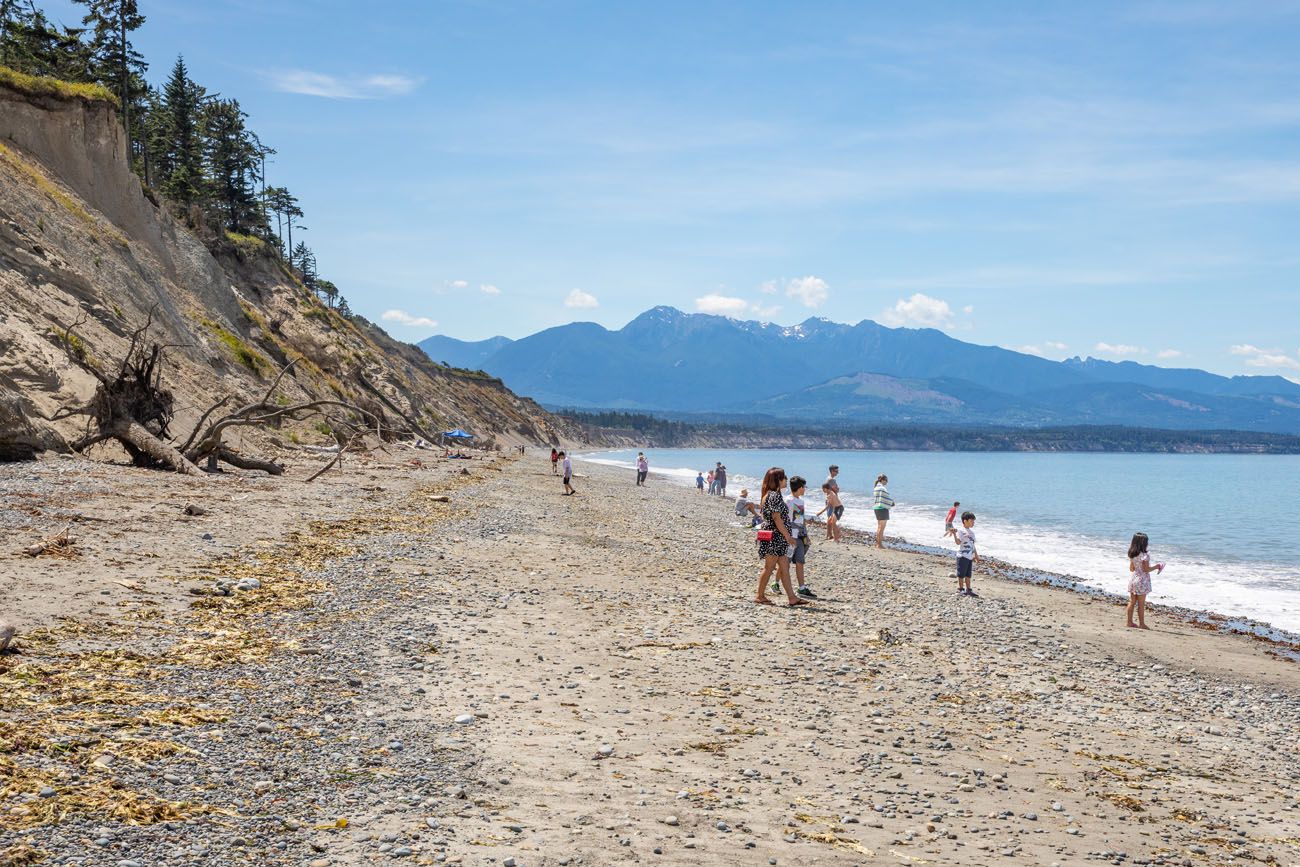
The view looking towards Port Angeles and the mountains of Olympic National Park.
Many people come here to relax on the beach. You can also walk 10 miles round trip on the spit to visit the Dungeness Spit Lighthouse.
We liked this but did not love it. It’s quick and easy to visit, but with so many varied experiences in the national park, it’s better to make sure you see Hurricane Ridge, Hoh Rain Forest, and the wild Pacific coastline before doing this.
The Dungeness Spit is a good option for those who will be staying in Port Angeles, have some free time on their hands, and would like to spend it on a beach.
Please practice the seven principles of Leave No Trace: plan ahead, stay on the trail, pack out what you bring to the hiking trail, leave areas as you found them, minimize campfire impacts, be considerate of other hikers, and do not approach or feed wildlife.
How Much Time Do You Need in Olympic National Park?
At a minimum, you need two full days in Olympic National Park, if you want to visit Hurricane Ridge, the Pacific Coastline, and the temperate rainforests. However, more time is better, as it allows you to hike more trails and it gives you some contingency time should it rain or snow, which is entirely possible.
On the quickest of visits, with one or two days, stay in Port Angeles and visit Hurricane Ridge and the western section of the park. Just note that you could be driving an hour and a half one-way to get to places like the Hoh Rainforest and Ruby Beach.
With three or more days, you can road trip around the peninsula. Hop from Port Angeles to Forks to Quinault or Aberdeen to Olympia, visiting the sights along the way.
If you want to thoroughly explore the park, and hike its long list of trails, from Shi Shi Beach to Mt. Ellinor, plan to spend 5 to 7 days in Olympic National Park.
In our Olympic National Park itinerary, we give suggestions on how to plan your time, ranging from 2 to 4 days, perfect for those who also plan to include Washington’s other amazing national parks and sights on their road trip.
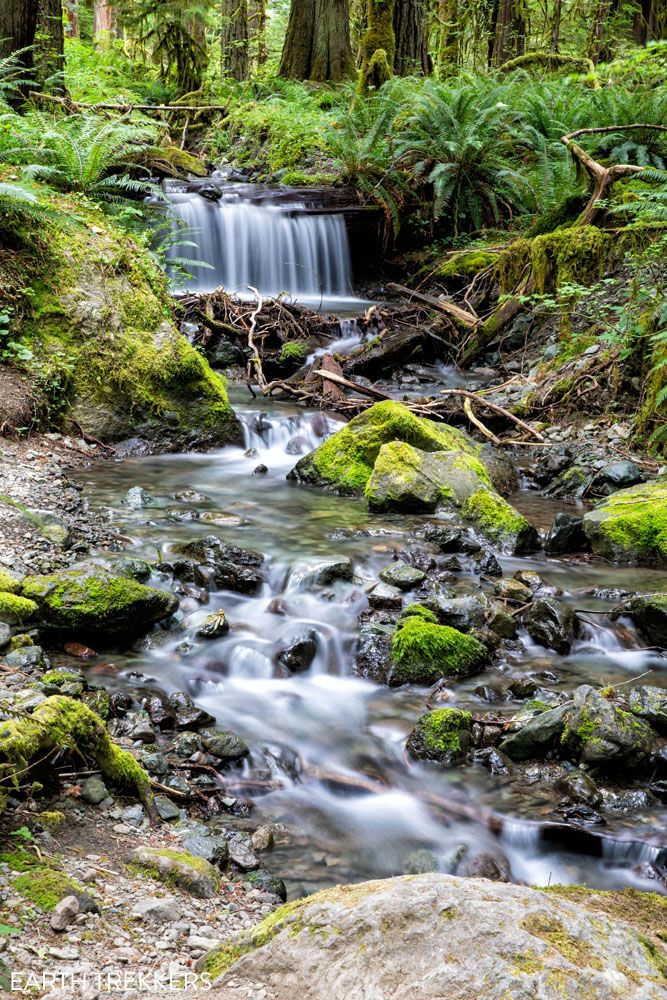
Waterfall along the Staircase Rapids Loop
When is the Best Time to Visit Olympic National Park?
Spring is a wonderful time to visit Olympic National Park. Temperatures are warming up and by April, the wet season is ending. Springtime is one of the best times of the year to see wildlife, where animals like bear and elk become active in the river valleys.
The most popular time to visit Olympic National Park is during the summer, when all of the roads are open, the weather is warm, and rainfall chances are relatively low. This is also when the park is the most crowded.
Autumn is another great time for wildlife viewing. September is mating season for the elk. Snow and wetter weather arrives in October. Some campgrounds and roads will close during this time.
Winter is the wet season. This means huge amounts of rainfall in the rainforests and snow in the alpine regions. Hurricane Ridge can get 30 feet of snow per year. Hurricane Ridge is usually open, making this part of the park a great place to visit if you like cross country skiing, tubing, or snow shoeing.
Olympic National Park appears in our Best US National Parks in June, Best US National Parks in July, and Best National Parks in August articles. For more information about the best times to visit the national parks, check out our Best National Parks Month-by-Month Guide.
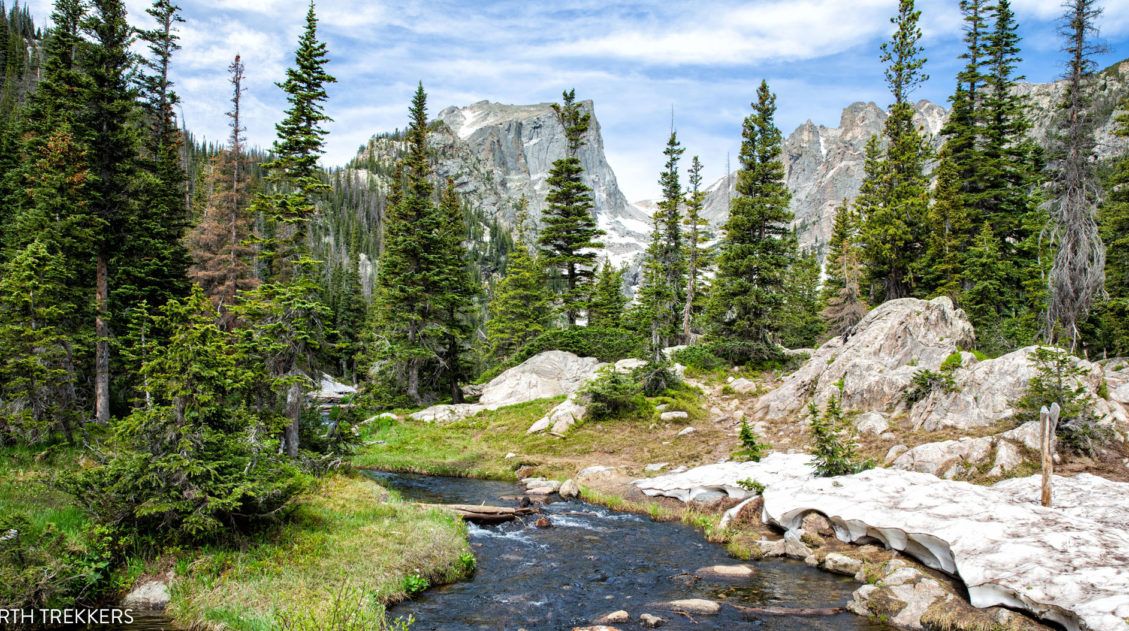
15 Best US National Parks to Visit in June
Pinterest Facebook Flipboard The list of US national parks to visit in June is wonderfully long and diverse. Visit the North Rim of the Grand Canyon, go hiking in the Rocky Mountains, spend some time in the tranquil forests in Olympic and Sequoia National Parks, and explore one of the most underrated US national parks, […]
15 Best US National Parks to Visit in July
Which are the best national parks to visit in July? In this guide, we list 15 great parks to visit in the USA. Go hiking in Mount Rainier and Glacier National Parks, go whale watching in the Channel Islands, and venture into Alaska for some amazing adventures. About this National Park Series This article is […]
15 Best US National Parks to Visit in August
Planning a trip to the US national parks in August and don’t know which ones to visit? August is a busy time to visit the national parks, but crowd levels aren’t quite at their peak (that typically happens in July for many parks). In this guide, we list some popular summertime parks to visit plus […]
Practical Information for Visiting Olympic National Park
Park Hours: Park entrances are open 24 hours a day, 365 days per year.
Park Fee: $30 per vehicle, valid for 7 days. If you’re visiting multiple national parks, the America the Beautiful Pass ($80) covers entrance fees at all national parks for one year and is excellent value.
Timed-Entry Permits: As of our last update, Olympic National Park does not require timed-entry permits. However, this can change. Check the National Park Service website before your visit.
Trail & Road Conditions: Several roads and trails in the park are subject to seasonal closures, weather-related closures, and ongoing maintenance. The Staircase area in particular has been affected by road damage in recent years. Always check the NPS conditions page before heading out.
Cell Service: Cell service is limited or nonexistent in many parts of Olympic National Park, especially on the west side. Download offline maps before you go.
Plan Your Trip to Olympic National Park
Start with our Olympic National Park Travel Guide, where you can see all of our guides on Olympic National Park.
If you want help organizing your time, read our Olympic National Park Itinerary, which includes sample itineraries for one to several days in the park.
If hiking is your priority, don’t miss our guide to the Best Hikes in Olympic National Park, where we cover the park’s top trails with trail stats, photos, and tips.
If Olympic is part of a bigger trip to Washington, check out our Washington Road Trip Itinerary, which also includes Mount Rainier and North Cascades National Parks, plus the Enchantments.
If you have any questions about the best things to do in Olympic National Park, let us know in the comment section below. We read and answer every one.
Explore More of Olympic National Park & Washington
If this is part of a bigger road trip through the USA, visit our United States Travel Guide and our Washington Travel Guide for more inspiration and travel planning tips.
Klahhane Ridge Trail to Mount Angeles: A Complete Hiking Guide
Not every hike makes you work for the view, but the ones that do are always the most memorable. The Klahhane Ridge Trail to Mount Angeles is that kind of hike. The Klahhane Ridge Trail to Mount Angeles was the very first hike we did in Olympic National Park, and it ended up being our […]
Mount Storm King Hike: Is It Worth the Brutal Climb?
Mount Storm King earns its dramatic name. This short but relentlessly steep trail in Olympic National Park climbs over 2,000 feet in just over two miles, ending with a rope-assisted scramble to a rocky outcropping with sweeping views over the impossibly blue waters of Lake Crescent. We hiked this in July on a clear summer […]
Hiking the Enchantments in One Day: A Step-By-Step Trail Guide
Over 19.25 miles, climb Aasgard Pass, wander through a surreal landscape of turquoise alpine lakes and jagged peaks, then descend nearly 7,000 feet to the Snow Lakes trailhead. Hiking the Enchantments in one day is a long, hard challenge, but one you’ll never forget. If you are a hiker, the Enchantments are a destination that […]
Our 15 Favorite US National Parks: A Few May Surprise You
Stretching from the South Pacific, across the United States and into the Caribbean, are 63 national parks. These national treasures are filled with scenic drives, hundreds of miles of hiking trails, wildlife, historic sites, and endless opportunities for adventure. In this guide, we cover 15 of the best national parks in the USA and what […]
Cascade Pass and Sahale Arm: The Best Day Hike in North Cascades
We’ve hiked in more than 50 national parks across the United States, and the Cascade Pass and Sahale Arm hike is one that still stands out. We did this hike as part of a six-week road trip through the national parks of Colorado and Washington, and it was the perfect way to end the trip. […]
Best Things to Do in Mount Rainier National Park (2026 Guide)
Discover the best things to do in Mount Rainier National Park, from iconic hikes like the Skyline Trail and Mount Fremont Fire Lookout to scenic viewpoints, waterfalls, and easy walks that are perfect for first-time visitors. We’ve visited Mount Rainier National Park twice: once on a 6-day deep dive where we hiked trail after trail […]
North Cascades National Park: How to Plan Your Visit
Plan your visit to North Cascades National Park. Learn about the best things to do, the best hikes and viewpoints, and get sample itineraries and travel tips.
Mount Fremont Lookout Trail Guide | Mount Rainier National Park
Few hikes in Mount Rainier National Park deliver so much scenery for so little effort. The Mount Fremont Fire Lookout Trail offers nearly nonstop views of Mount Rainier, sweeping alpine landscapes, and the chance to stand on one of the park’s historic fire lookout towers. This was the very first hike we did in Mount […]
The Ultimate Guide to the 63 US National Parks
Stretching from the South Pacific, across the United States to the Caribbean, are 63 national parks. These national treasures preserve iconic landscapes, majestic mountains, primordial forests, arid deserts, misty coastlines, immense canyons, wildlife, and historic landmarks. We have visited 56 of the 63 US national parks, from the towering granite walls of Yosemite and the […]
Maple Pass Loop Hiking Guide 2026 | North Cascades, WA
The Maple Pass Loop, also known as the Heather-Maple Pass Loop, is one of the best day hikes in the North Cascades, and one that’s surprisingly accessible for the views it delivers. In early August, Tim, Kara, and I completed this hike and came away genuinely impressed. It’s not our favorite hike in the area […]
15 Best US National Parks to Visit in August
Planning a trip to the US national parks in August and don’t know which ones to visit? August is a busy time to visit the national parks, but crowd levels aren’t quite at their peak (that typically happens in July for many parks). In this guide, we list some popular summertime parks to visit plus […]
2 Days in Vancouver for First-Timers: What to Do, See & Eat
On this 2 day Vancouver itinerary, spend the first day in downtown Vancouver and the second day exploring sights just beyond the city center: Capilano, Lynn Canyon, and Grouse Mountain. We’ll also cover where to stay and where to eat, plus helpful tips to ensure you have the best experience. One of Canada’s most scenic […]

Comments 36