
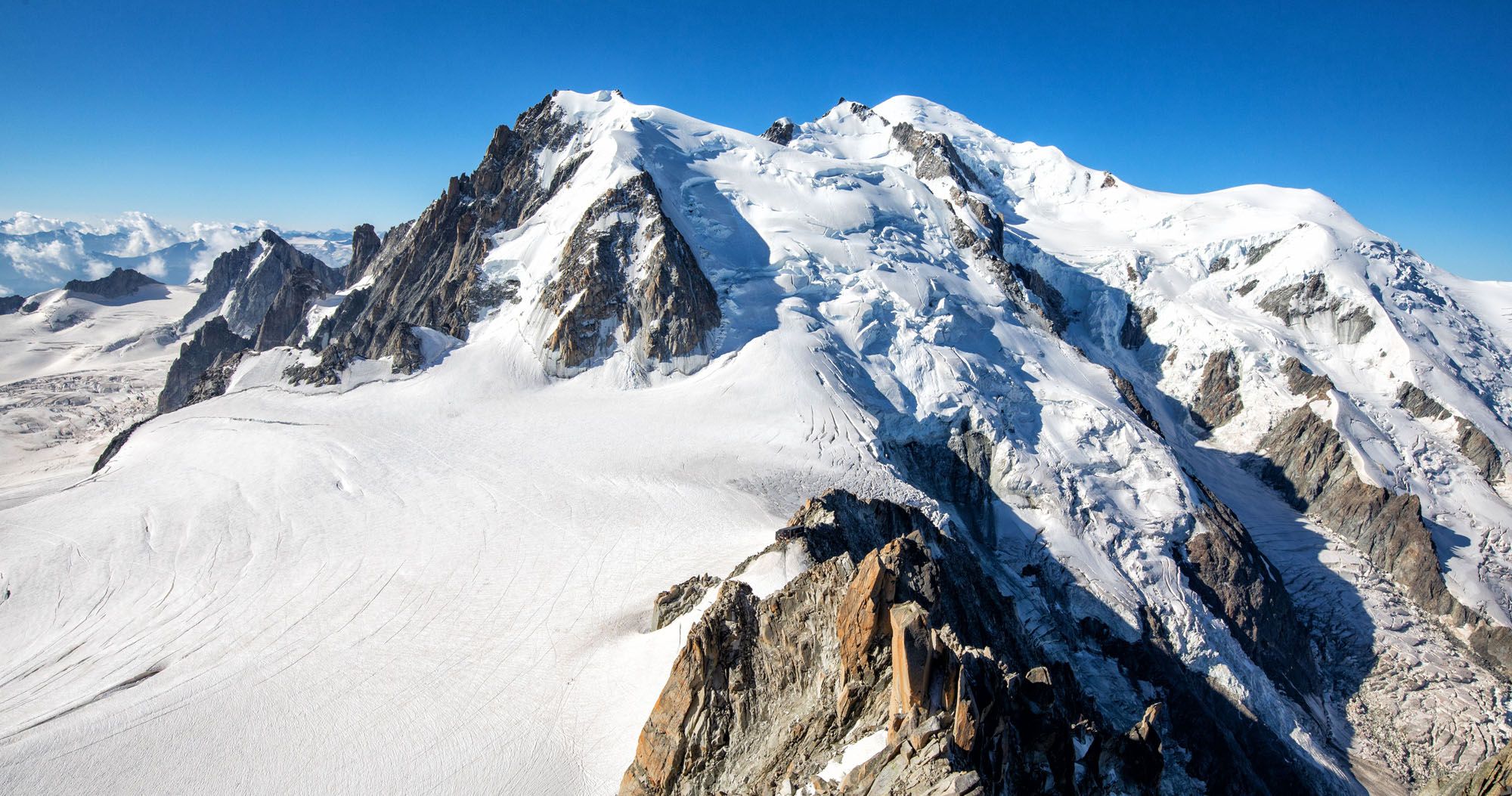

Chamonix is one of the best places in the French Alps for a summer itinerary packed with cable car rides, glacier views, high alpine hikes, and jaw-dropping views of Mont Blanc. With 1 day, you can ride to Aiguille du Midi and see one of the most famous views in Europe; with 3 days, you can add Lac Blanc and another classic Chamonix experience; and with 5 days, you can build a fantastic hiking-focused trip.
We spent 5 days in Chamonix in July before starting the Walker’s Haute Route, and it was the perfect amount of time to hike several trails, ride the major cable cars, visit Aiguille du Midi, and get to know the town. This Chamonix itinerary is written for summer and early fall, when the trails are mostly snow-free and the lifts are running.
Below, we cover exactly how to spend 1, 2, 3, 4, or 5 days in Chamonix, with options for hikers, non-hikers, first-time visitors, and travelers who need to adjust their plans around mountain weather.
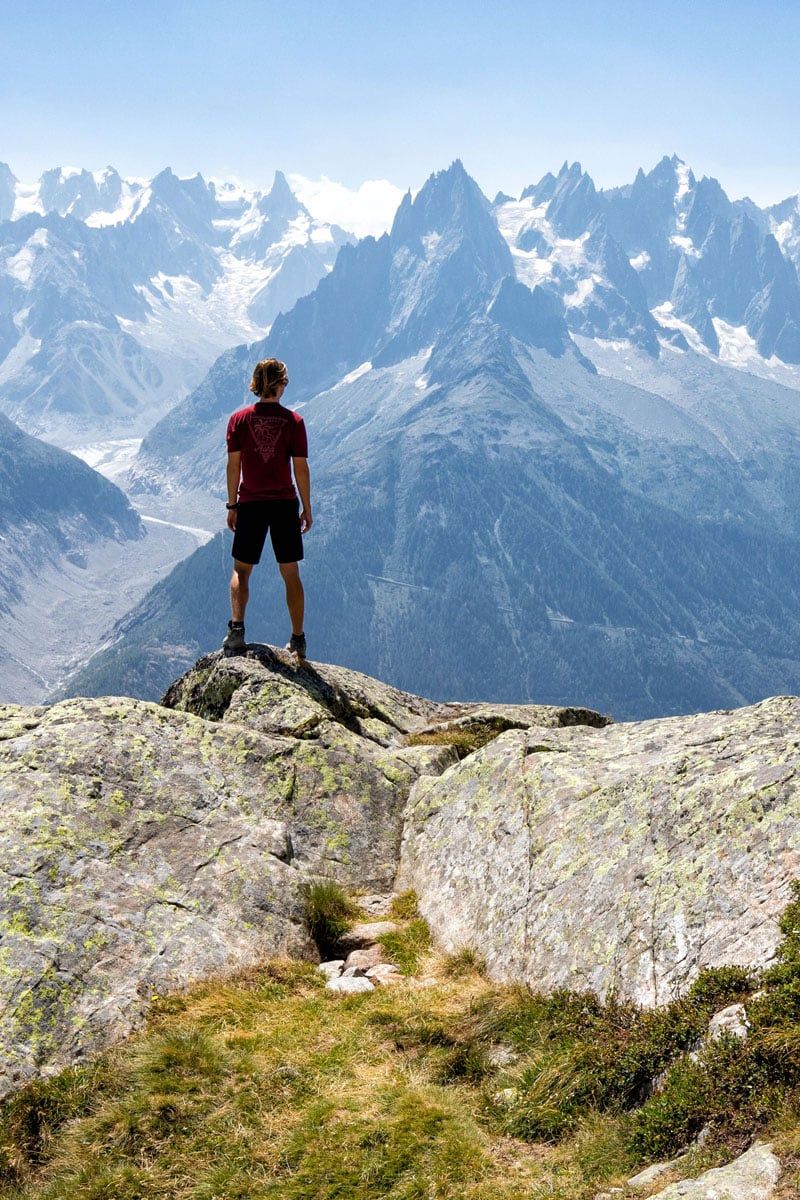
Chamonix Summer Itinerary: At a Glance
RECOMMENDED STAY | 3 to 5 days
BEST TIME TO VISIT | July through September
PERFECT FOR | Hikers, mountain lovers, photographers, and travelers who want big alpine views
DON’T MISS | Aiguille du Midi, Lac Blanc, Grand Balcon Nord, Brévent, and Mer de Glace
BEST HIKE | Lac Blanc or Grand Balcon Nord
GETTING AROUND | Train and cable cars; no car needed
MONEY SAVING PASS | Mont Blanc Multipass
STARTING POINT FOR | Tour du Mont Blanc, Walker’s Haute Route
Updated May 2026: Restructured daily itinerary options, expanded multi-day itineraries for 1–5 days, added Best Time to Visit section, updated Argentière Glacier access note for 2026 construction.
How Many Days Do You Need in Chamonix?
We spent five days in Chamonix and it was the right amount of time. It was enough to hike the best trails, ride the cable cars, and explore the town without feeling rushed. That being said, Chamonix rewards however many days you can give it.
One or two days is enough to hit the highlight reel: Aiguille du Midi plus one solid hike. Three to four days lets you add Lac Blanc, the Brévent cable car, and the Mer de Glace ice cave without sacrificing pace. Five days is the sweet spot for summer. You can cover all the best things to do in Chamonix and still have a leisurely morning or two to just enjoy the town.
Here is a map showing the top experiences in Chamonix, along with recommended restaurants.
How to Use This Map: Click the tab in the top left corner of the map to see a list of the points of interest and to turn layers on/off. Click the icons on the map to get more information about each point of interest.
To take this map with you, click the star next to the title of the map which adds it to your Google account. Next, within your Google Maps app, select ‘Saved’ and then select ‘Maps’. This map title will now appear in your list.
Next is a quick look at how to structure each trip length.
Best Chamonix Itinerary by Number of Days
| Time in Chamonix | Best Itinerary |
| 1 day | Aiguille du Midi + Chamonix town, or Grand Balcon Nord if you want to hike |
| 2 days | Aiguille du Midi + Grand Balcon Nord; Lac Blanc |
| 3 days | Aiguille du Midi, Lac Blanc, Brévent |
| 4 days | Add Tramway du Mont Blanc or Argentière Glacier |
| 5 days | The ideal summer itinerary: Aiguille du Midi, Lac Blanc, Grand Balcon Nord, Brévent, Tramway du Mont Blanc, Glacier des Bossons, and Argentière Glacier |
Why This Chamonix Itinerary Works
This itinerary is built around three realities of visiting Chamonix in summer.
First, weather matters. Aiguille du Midi, Lac Blanc, Brévent, and the glacier viewpoints are best on clear days, so it helps to keep your itinerary flexible.
Second, the lifts shape your day. Many of the best experiences in Chamonix depend on cable cars, trains, and gondolas, so grouping nearby sights saves time and money.
Third, not every traveler wants the same trip. Some visitors want big hikes, others want easy viewpoints, and many want a mix of both. That is why we give you daily itinerary options first, then show you how to combine them into a 1, 2, 3, 4, or 5 day Chamonix itinerary.
How to Plan Your Days in Chamonix
Each itinerary listed below is a one day itinerary for Chamonix. From these, pick your favorites and them string them together to create the Chamonix itinerary that fits your travel style and available time.
Note: These itineraries are written for a visit to Chamonix from mid-June through mid-September, when the cable cars are running and the trails are (mostly) free of snow. Be aware that in some years snow can linger on the higher trails into early July. Cable cars are not open all year, typically closing in spring and fall for maintenance. The Aiguille du Midi cable car closes for maintenance in November.
DAY #1 Aiguille du Midi (Grand Balcon Nord Optional)
Every Chamonix itinerary starts here. Aiguille du Midi is the #1 experience in Chamonix. This cable car ride to 3,842 meters (12,605 feet) for an up-close view of Mont Blanc that you simply can’t get from anywhere else in Chamonix. We have ridden many cable cars in Europe and this is one of the best.
Plan this for your first clear-weather day and book your tickets at least a few days in advance. It is also best to visit Aiguille du Midi in the morning. Clouds and thunderstorms frequently occur in the afternoon, so it is best to plan your visit as early in the day as possible.
We cover ticket options, things to do at Aiguille du Midi, whether or not it is worth it add on the Panoramic-Mont Blanc cable car, and lots of helpful tips in our Guide to Aiguille du Midi ↓
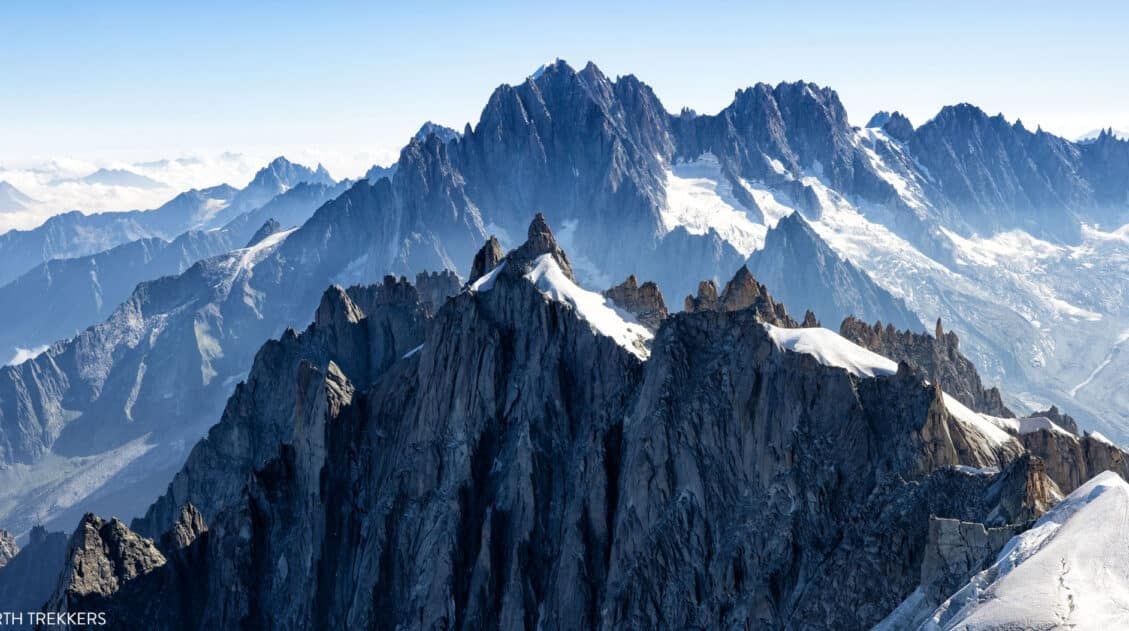
A visit here lasts 2 to 3 hours. If you add on the Panoramic-Mont Blanc cable car, add on another 2 to 3 hours.
The question isn’t whether to go, it’s what to add on. Below are three ways to plan this day, from a lighter visit to a full mountain adventure.
Option A: Aiguille du Midi + Chamonix Town
Best for: Arrival days, families, or anyone who wants a more relaxed pace
Spend the morning at Aiguille du Midi, aiming for the earliest cable car you can get. A visit here takes 2 to 3 hours, or up to 5 to 6 hours if you add on the Panoramic Mont-Blanc cable car to Pointe Helbronner at the Italian border.
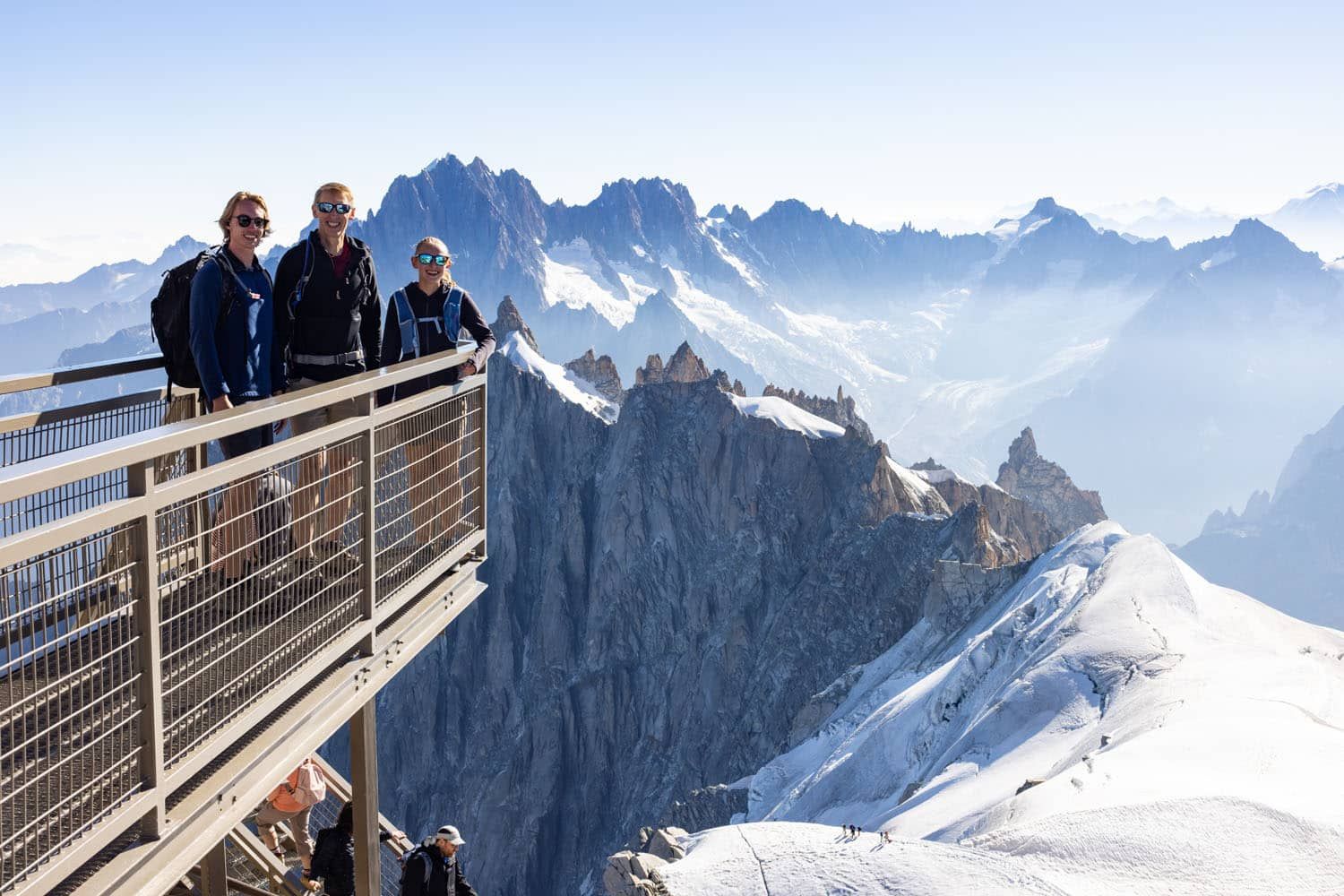
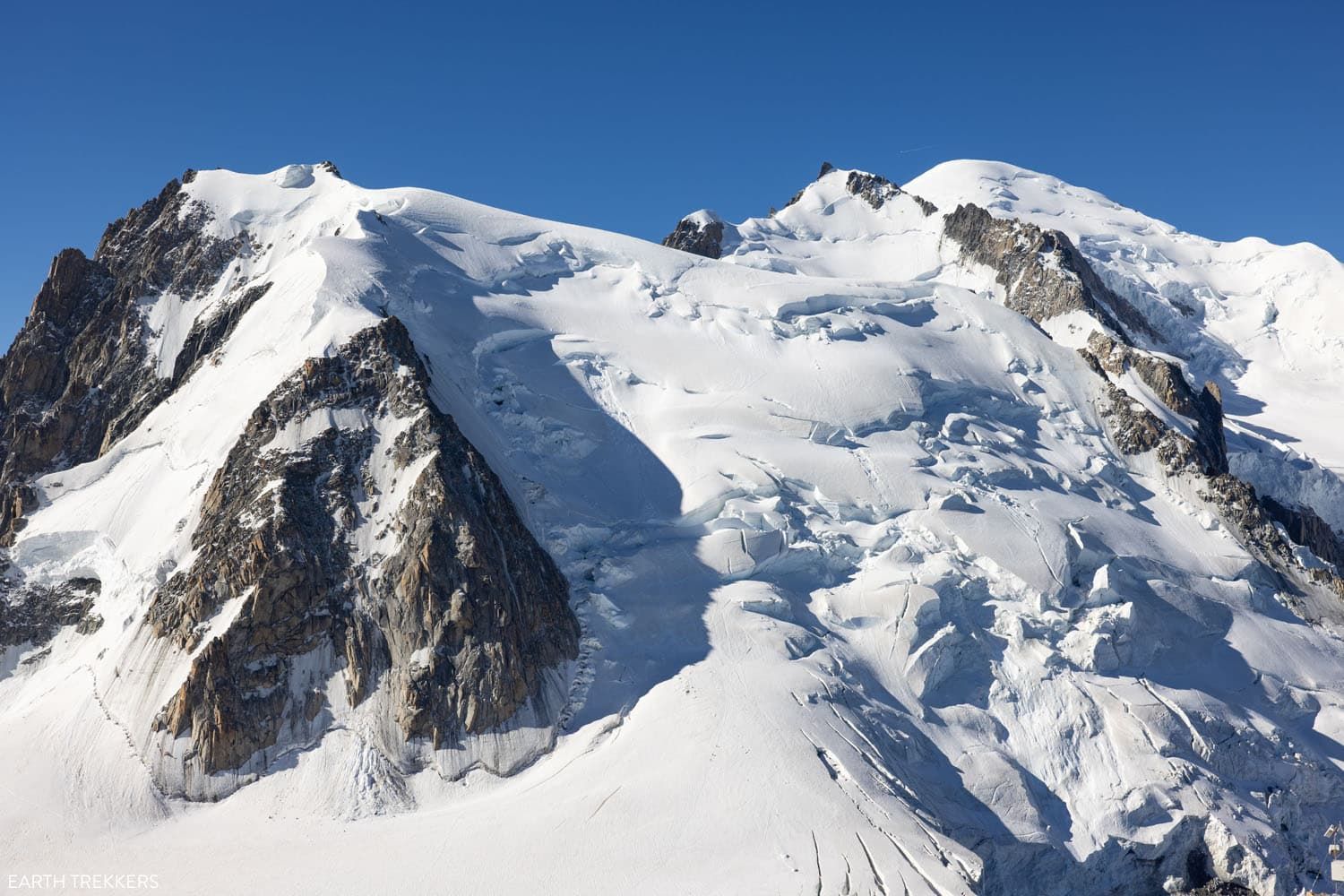
Mont Blanc
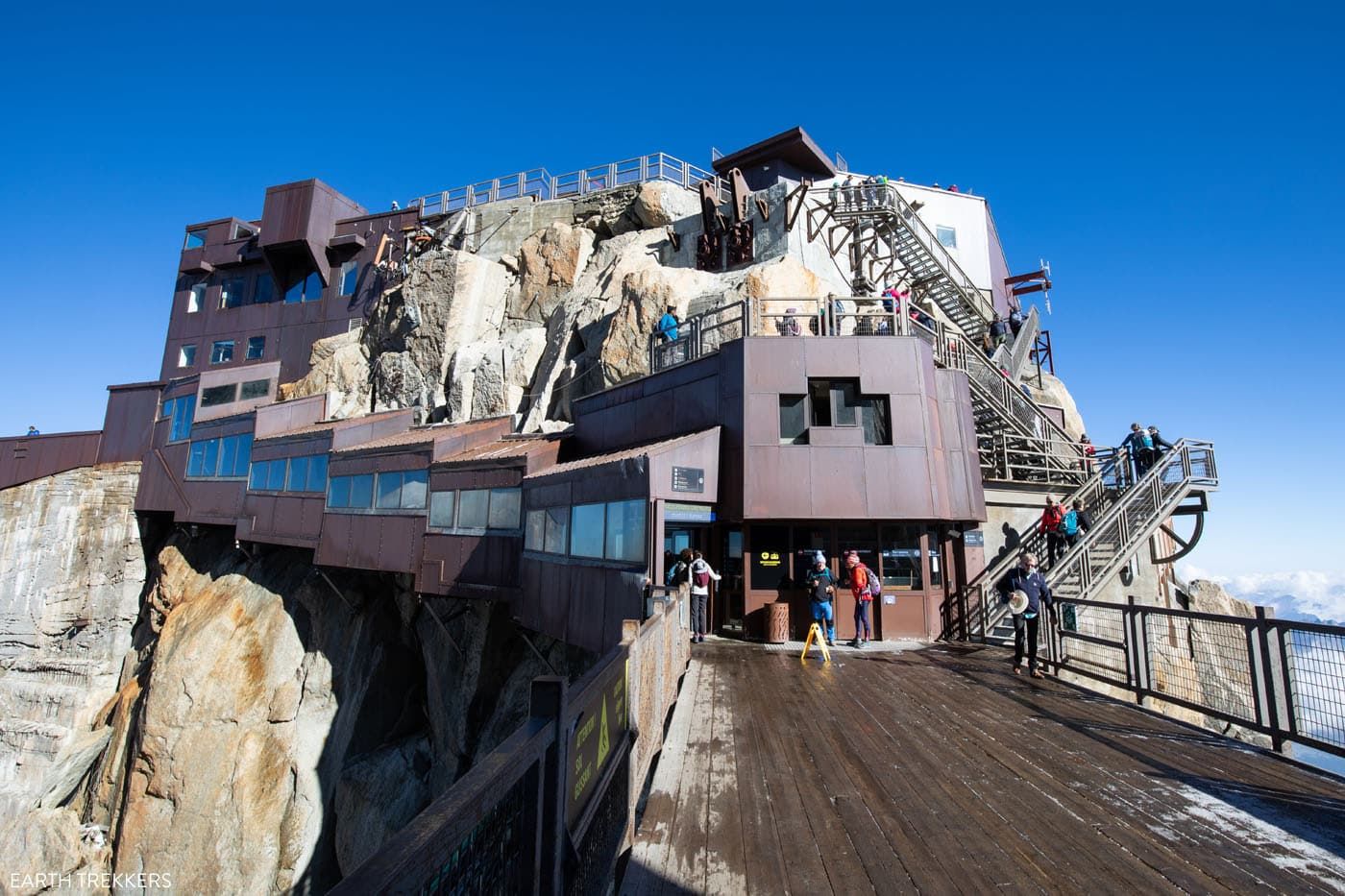
Aiguille du Midi Mountain Station
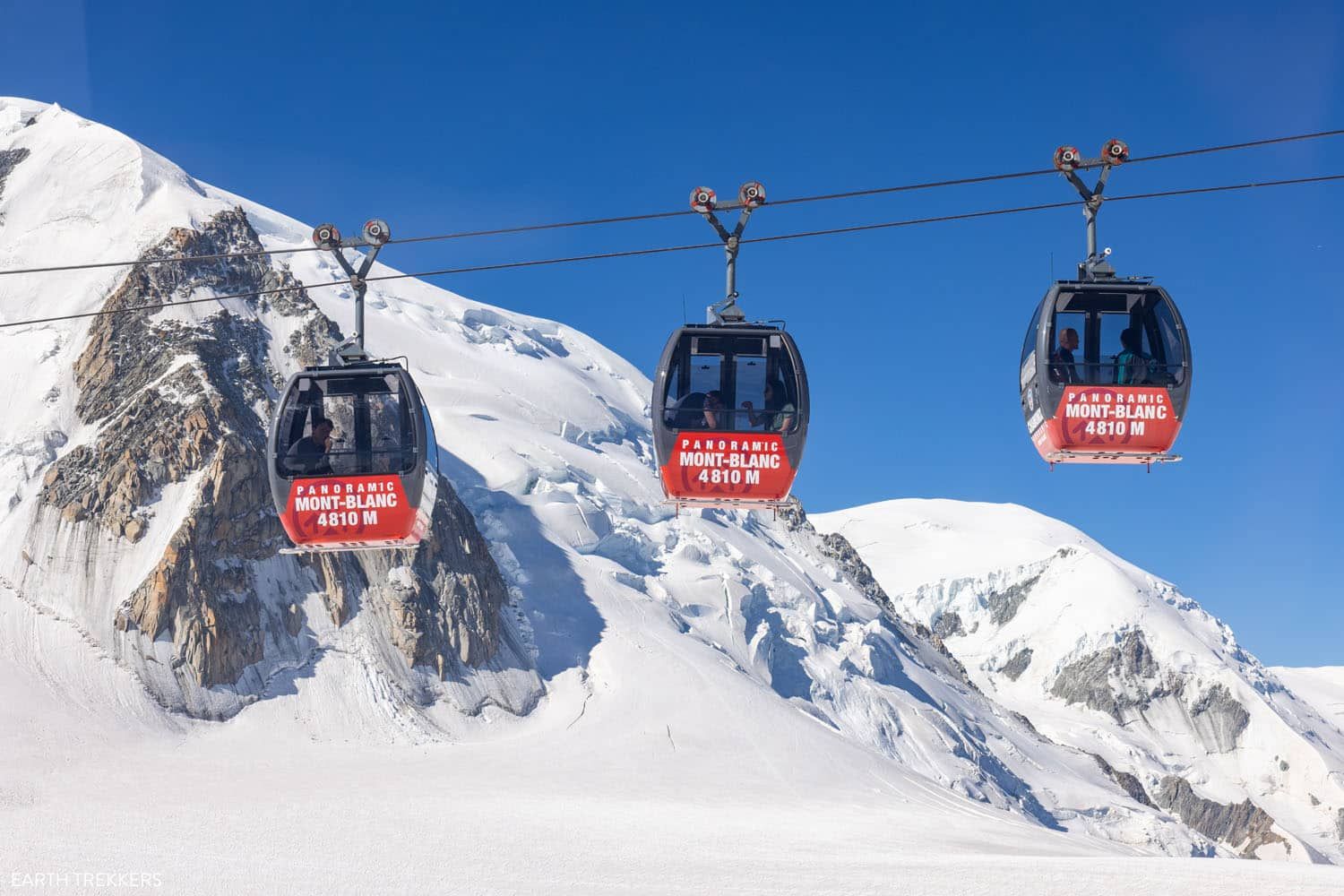
Panoramic Mont-Blanc
On your way back down, consider stopping at Plan de l’Aiguille, which is the transfer station between Chamonix and Aiguille du Midi. You can have lunch at Bar de Plan de l’Aiguille. The views of Mont Blanc from here are excellent and it’s a more relaxed setting than the summit.
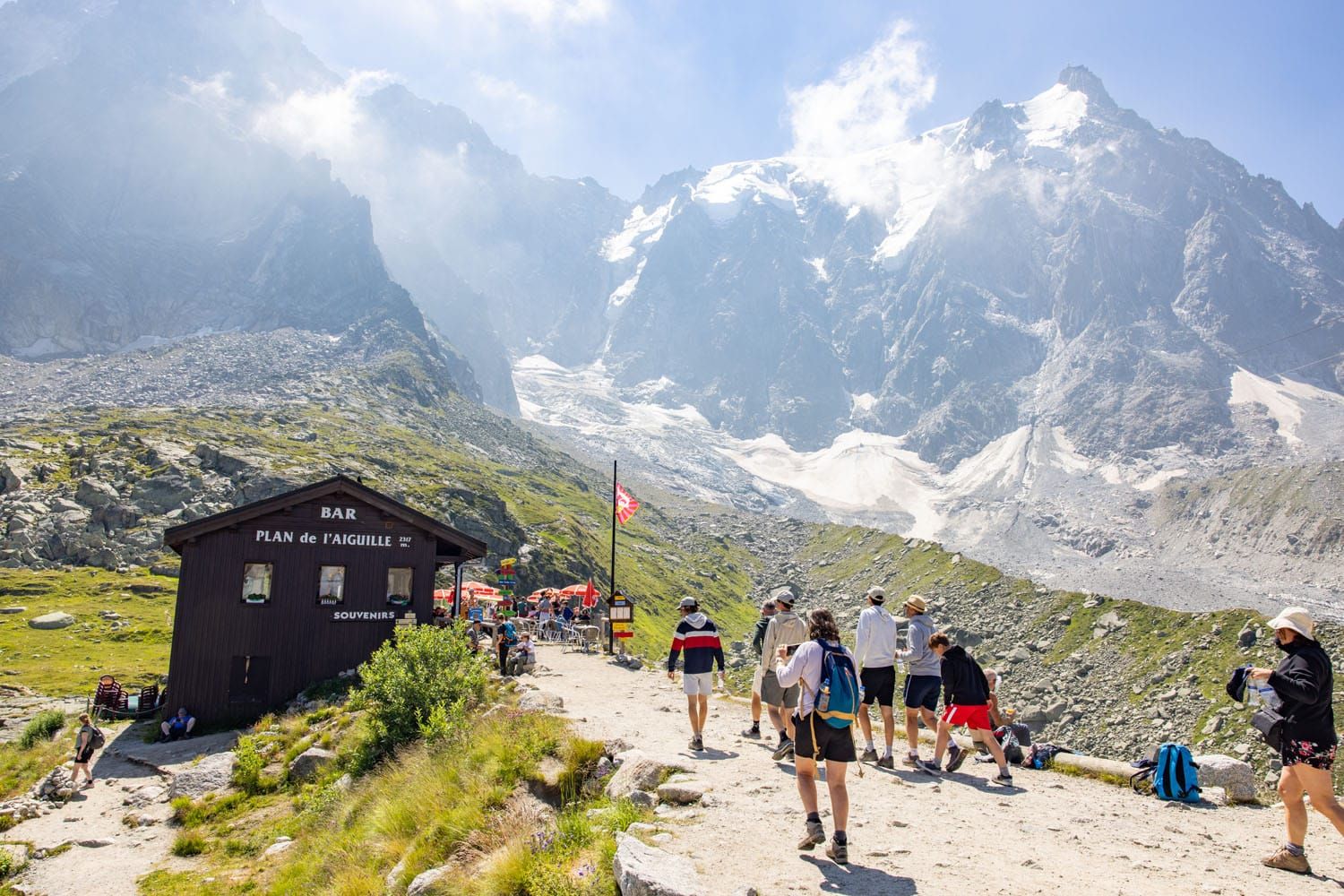
Bar de Plan de l’Aguille
Spend the remainder of day in Chamonix town. There are several museums to visit, you can go shopping, and kids will love a ride on the alpine coaster. Chamonix is a beautiful town and if the skies stay clear, you will still have great views of Mont Blanc.
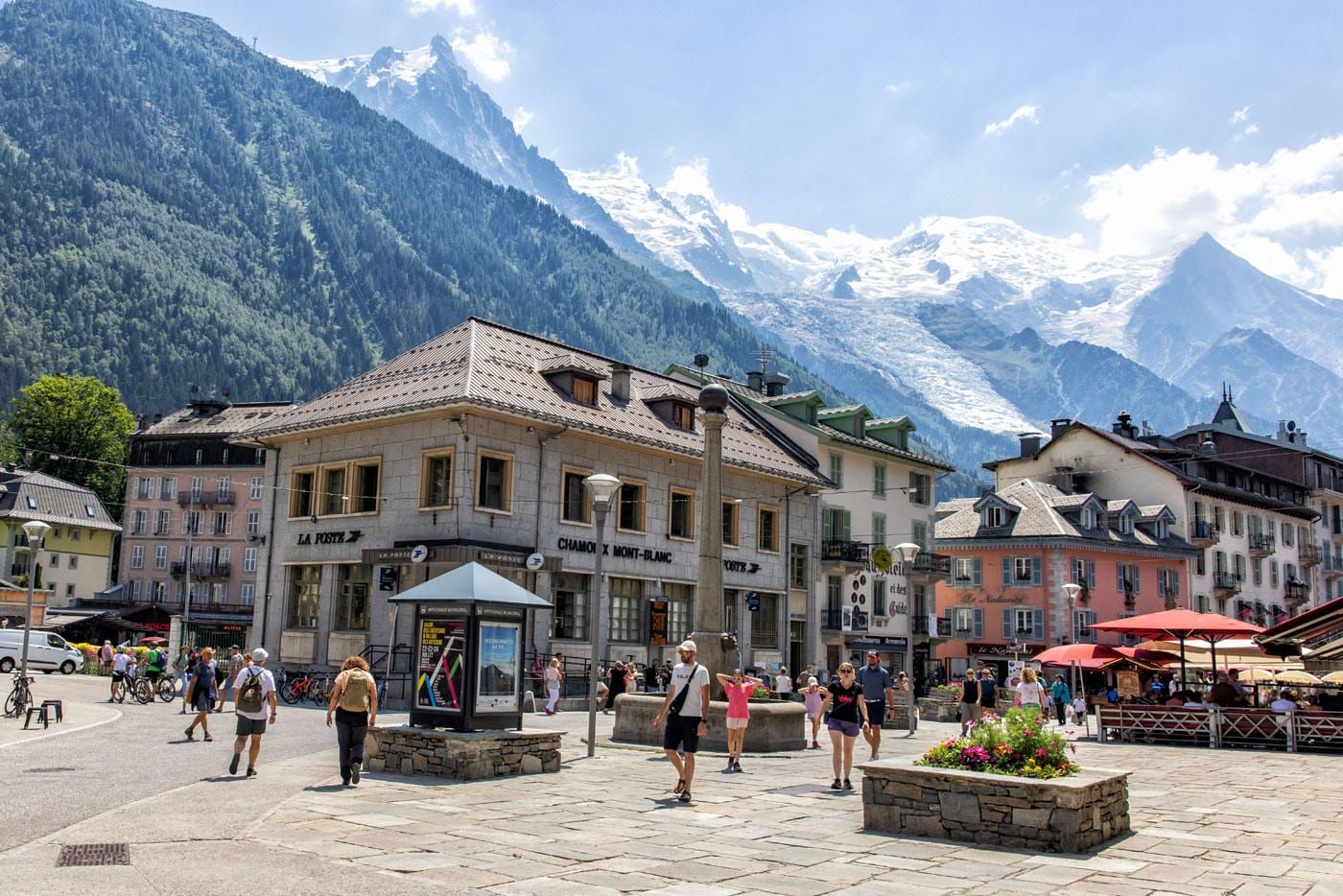
Chamonix
Option B: Aiguille du Midi + Grand Balcon Nord Hike
Best for: Most visitors — our top recommendation
Today combines two of our favorite things to do in Chamonix: a visit to Aiguille du Midi plus a spectacular point-to-point hike.
Visiting Aiguille du Midi and hiking the Grand Balcon Nord trail back-to-back is one of the best combinations in Chamonix. It saves you the time and cost of a separate cable car reservation, and the hike delivers some of the best views of Mont Blanc and the valley you’ll find anywhere.
Ride an early cable car to Aiguille du Midi, no later than 8 am if possible, to leave enough time for the hike. After your visit, ride back down to Plan de l’Aiguille, have lunch at Bar de Plan de l’Aiguille, and start the hike from there.
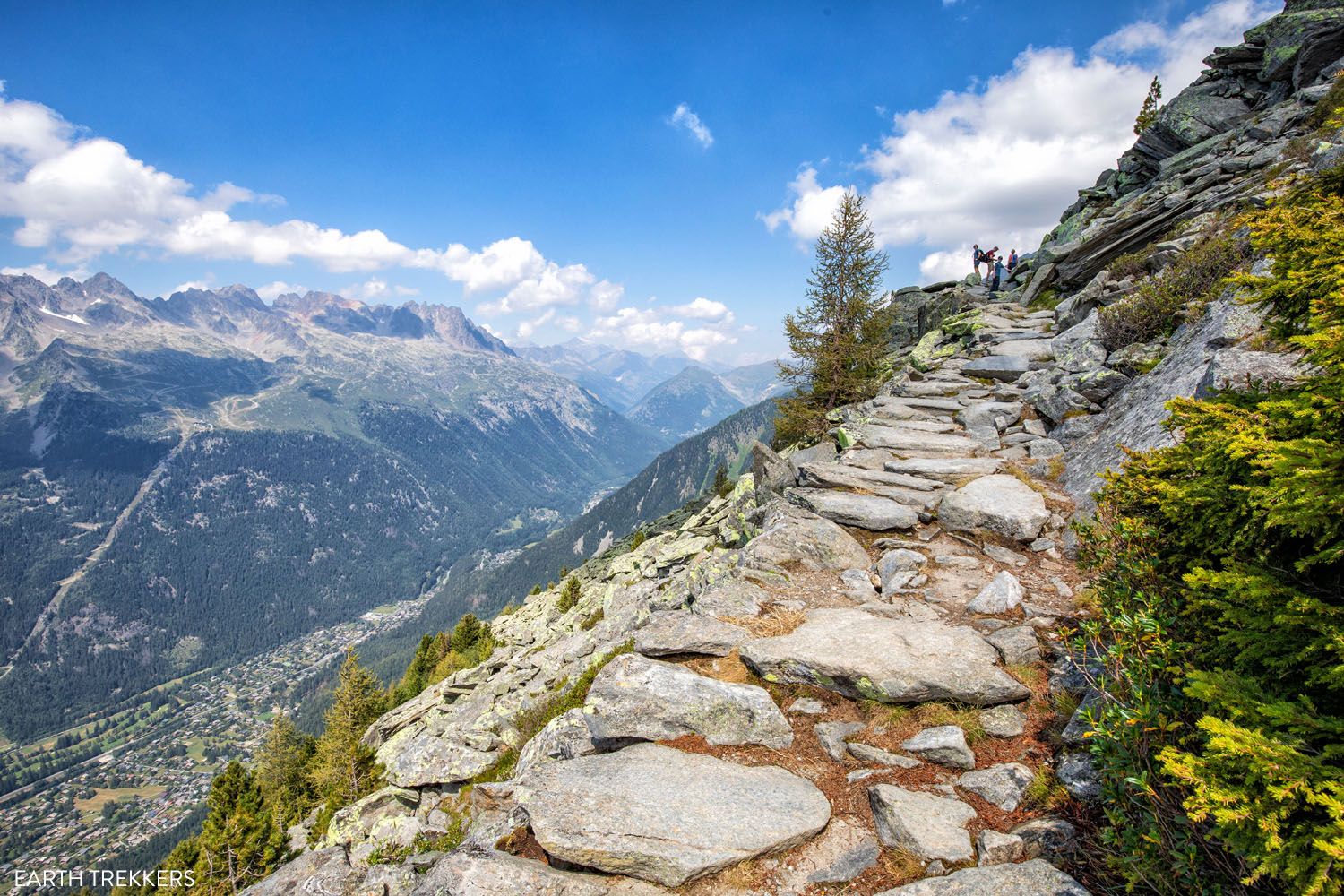
The Grand Balcon Nord trail is 6.8 km (4.2 miles) point-to-point, mostly downhill in this direction, and takes 2 to 4 hours. It ends in Montenvers, where you catch the train back to Chamonix.
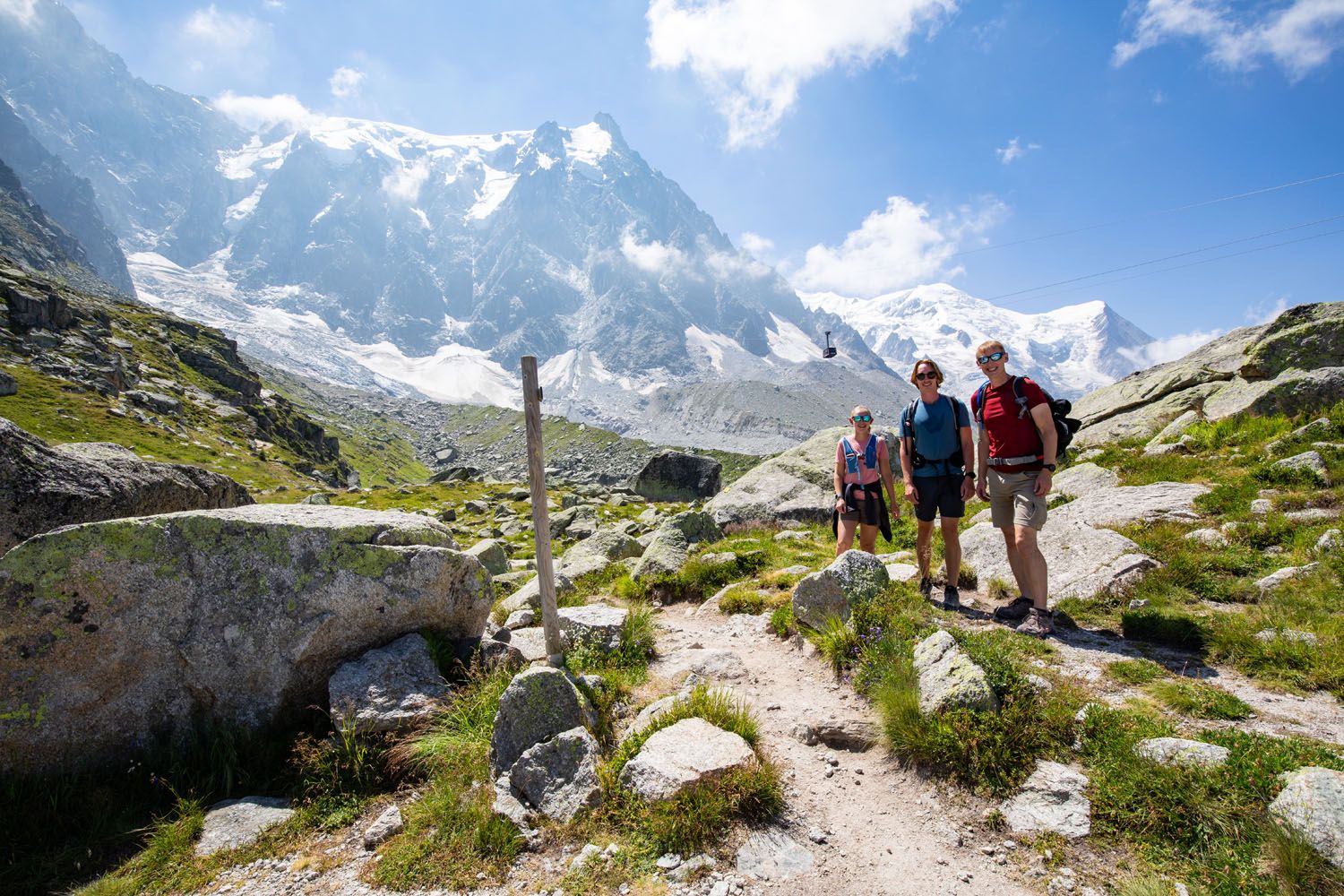
At the start of the hike. In the background is Mont Blanc and the cable car to Aiguille du Midi.
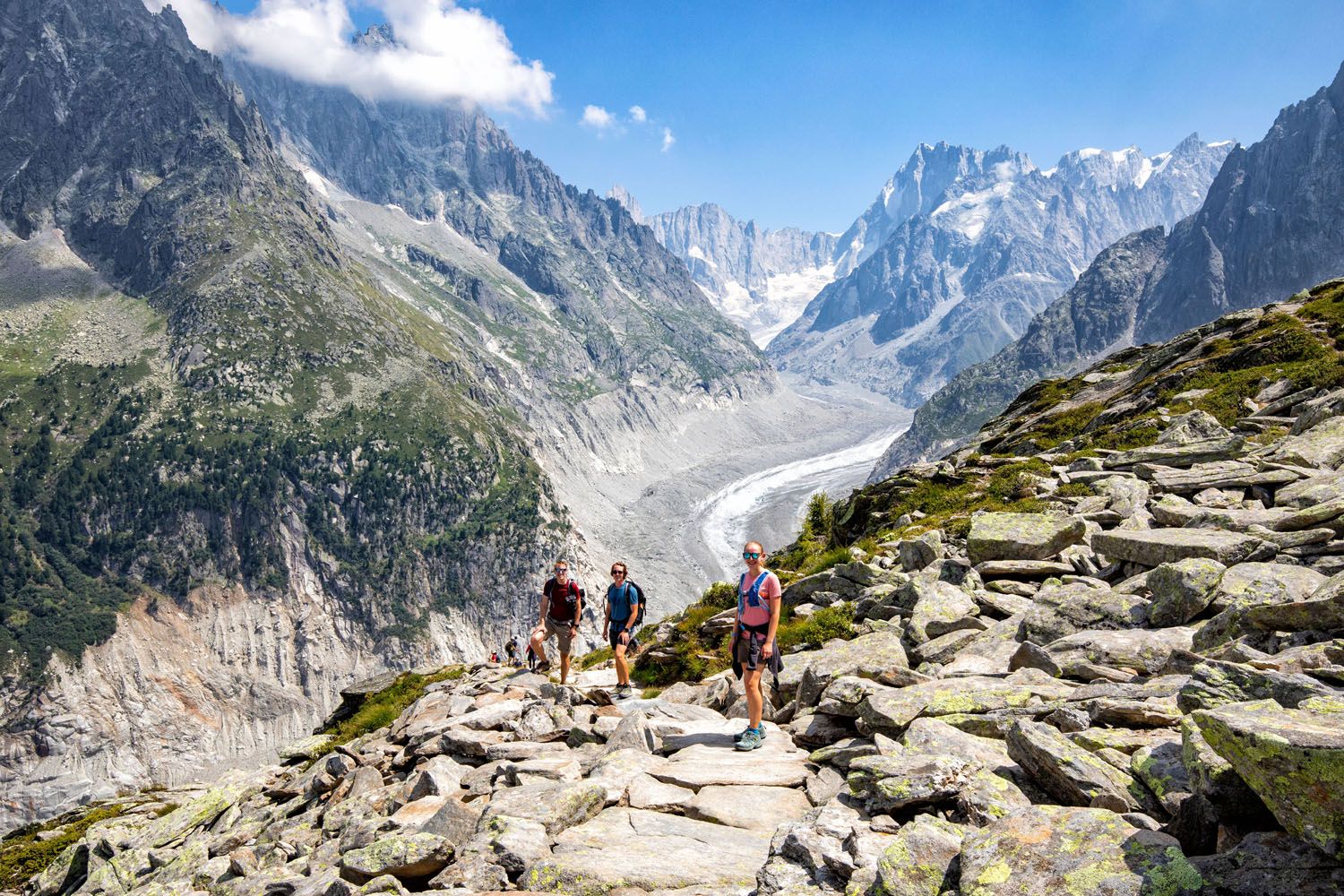
Mer de GlaceMont Blanc
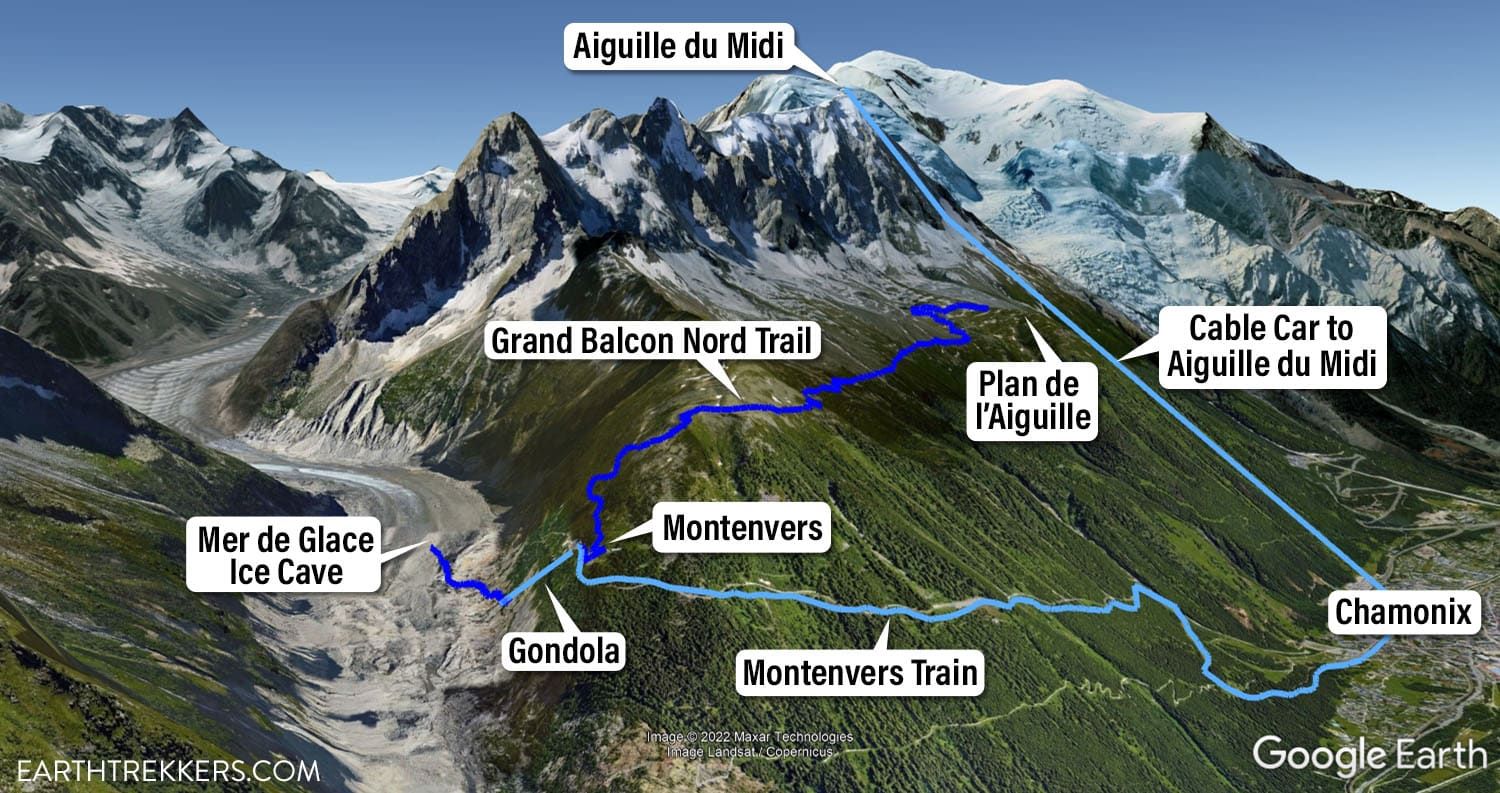
Map of the Grand Balcon Nord Trail and the cable car to Aiguille du Midi
Trail Guide: We cover exactly how to do this hike in our Grand Balcon Nord Hiking Guide, with maps, elevation profiles, photos, and helpful tips ↓
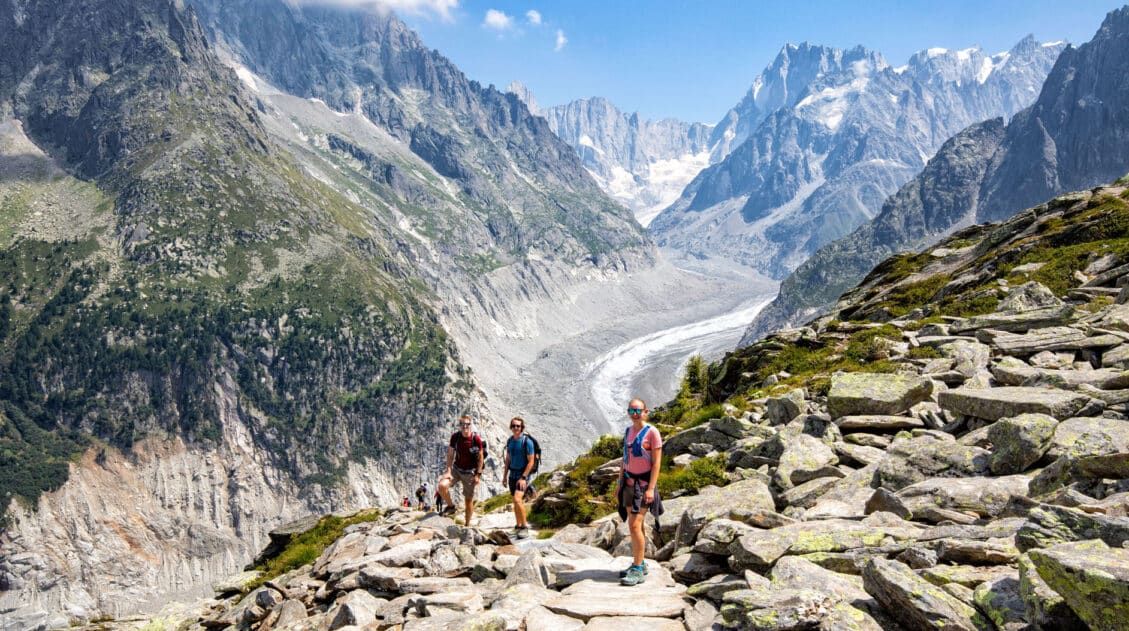
Grand Balcon Nord Hike: Best Direction, Hiking Stats & Tips
A step-by-step guide to the Grand Balcon Nord Trail.Once in Montenvers, ride the train to Chamonix. The final train is at 5 or 5:30 pm, depending on the date. Get the updated schedule and confirm the final time of the train before you do this hike.
Option C: Aiguille du Midi + Grand Balcon Nord + Mer de Glace
Best for: Fast hikers with an early start who want to pack everything into one day
This is a massive day as it combines three experiences into a huge day of sightseeing and hiking.
This is not for everyone. You have to start early and hike fast, to make it to Montenvers in time for the final train. This is what we did, and here is our timeline (we are very fast hikers and we were just about to start the Walker’s Haute Route, one of the toughest multi-day treks in Europe):
8:20 am: Aiguille du Midi and Panoramic Mont-Blanc
12:30 pm: Lunch at Plan de l’Aiguille
1:00 pm: Grand Balcon Nord Hike
3:00 pm: Mer de Glace ice cave
4:00 pm: Train to Chamonix
Mer de Glace is the largest glacier in France. A gondola whisks you to the terminus of the glacier, where you can then visit the ice cave. Budget an hour to an hour and a half for this experience, which accounts for some time waiting in line to ride the gondola.
The key to making this day work is to start early, do the Panoramic Mont-Blanc as soon as it opens, and hike at a relatively fast pace. If you miss the train to Chamonix, you will have a long, downhill hike into town. I recommend starting at 7 am (8:20 am was the earliest we could get when we booked our Aiguille du Midi tickets).
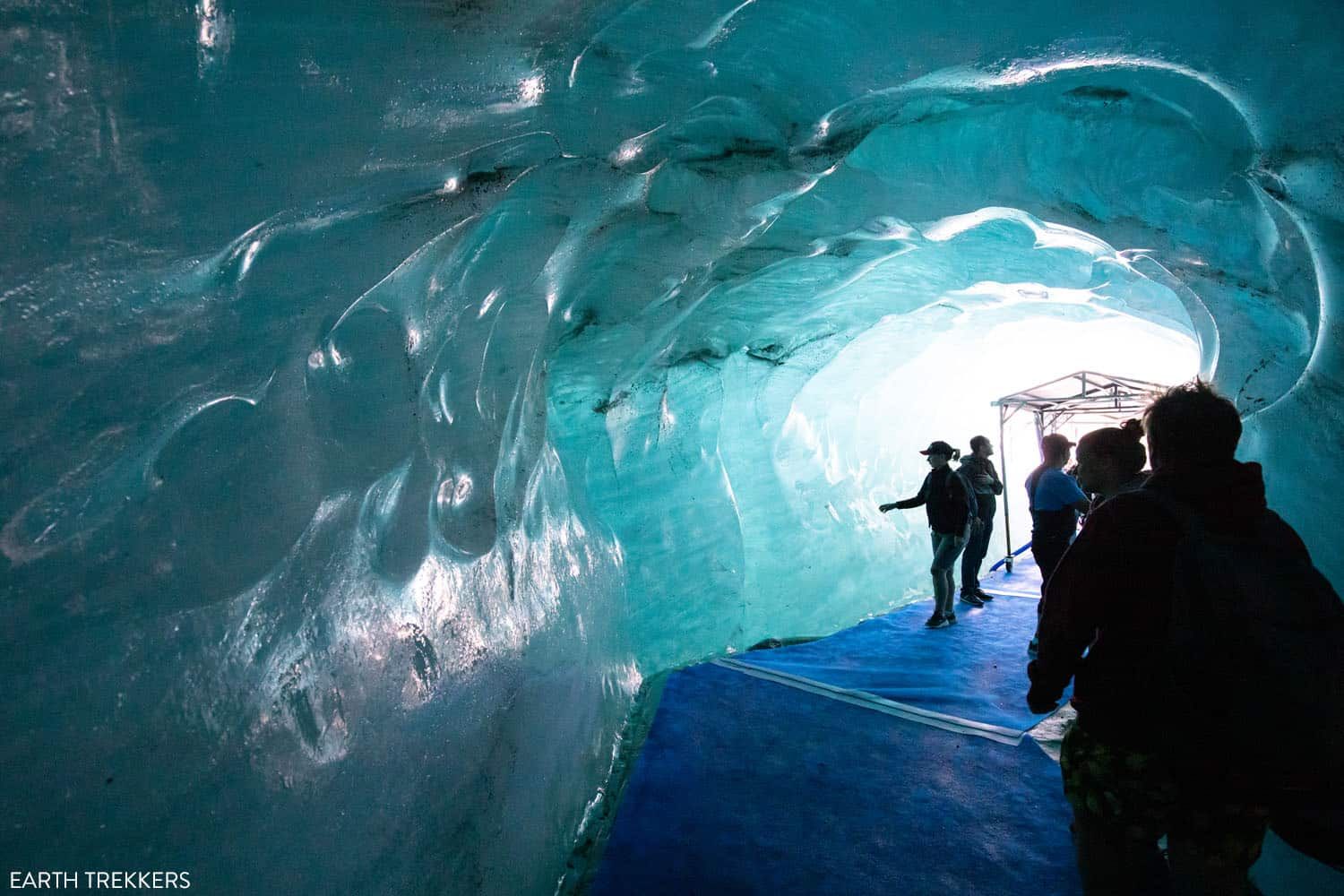
Mer de Glace Ice Cave
DAY #2 Mer de Glace Ice Cave & Grand Balcon Nord Hike
If you like the idea of hiking the Grand Balcon Nord trail and visiting the Mer de Glace ice cave, but don’t want to combine it with Aiguille du Midi, you can split Aiguille du Midi and the hike into two different days.
The Grand Balcon Nord hike is a point-to-point hike and it can be done in either direction.
Starting at Plan de l’Aiguille
If you start at Plan de l’Aiguille (the transfer station between Chamonix and Aiguille du Midi), it is an overall downhill walk, so it is much easier in this direction.
The big downside is that you are walking away from Mont Blanc, so you will periodically have to turn around to see it. The second issue is that you will be boarding the cable car with those traveling to Aiguille du Midi, so you will have to make another cable car reservation, even though you are not going all of the way up the mountain.
In this direction, ride the cable car to Plan de l’Aiguille, hike the Grand Balcon Nord trail, visit the ice cave, and ride the train from Montenvers to Chamonix.
Starting in Montenvers
If you start in Montenvers, this hike becomes a mostly uphill walk. You will have views of Mont Blanc for most of this hike, but with that you will climb roughly 600 meters (2,000 feet), so this hike becomes moderate to strenuous in difficulty.
However, transportation is easier, with a train ride to Montenvers and a cable car ride to Chamonix, no advance reservations are necessary.
In this direction, ride the train from Chamonix to Montenvers, visit the ice cave, hike the Grand Balcon Nord trail, and ride the cable car from Plan de l’Aiguille to Chamonix.
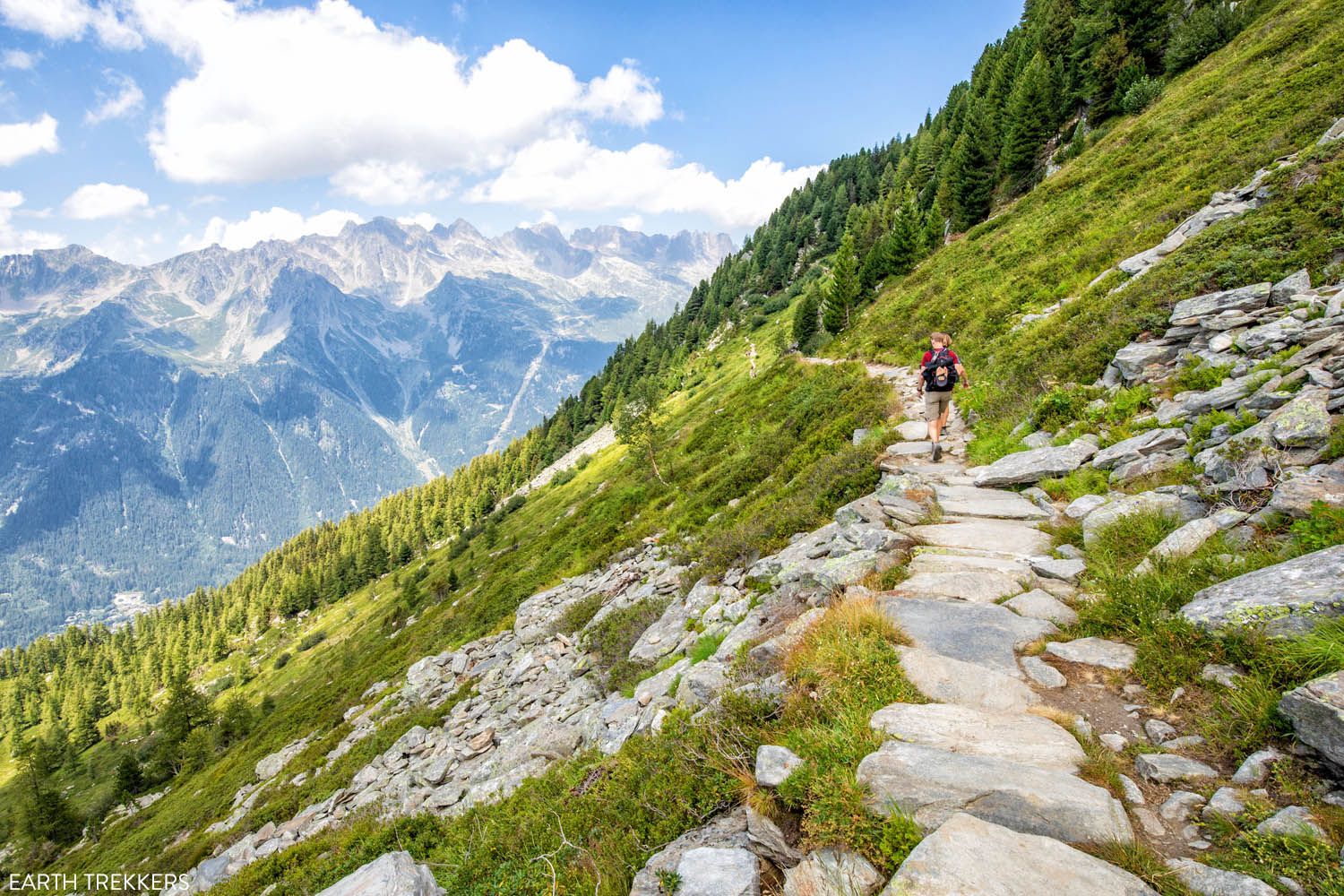
Grand Balcon Nord Trail
Day #3 Lac Blanc Hike
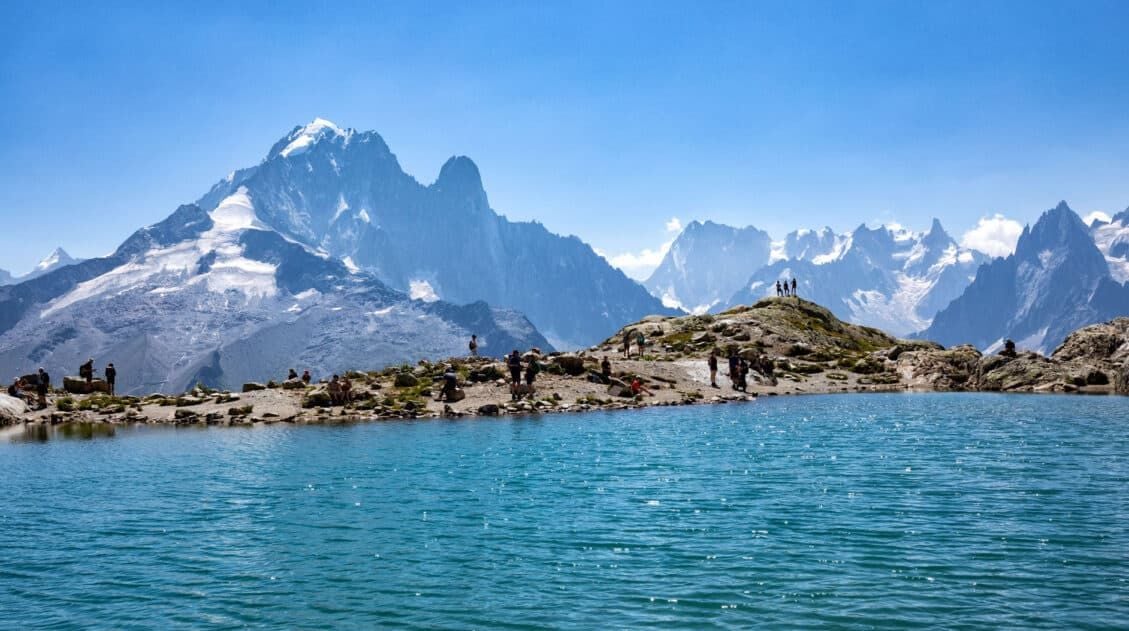
Hiking to Lac Blanc is another must-have experience in Chamonix. This hike is shorter than the Grand Balcon Nord, offers stunning views of Mont Blanc, plus you get a scenic ride on a cable car + chairlift combo.
This hike is similar to the Grand Balcon Nord, as it is a high alpine trail. However, this one is located on the opposite side of Chamonix, so the views are a little bit different.
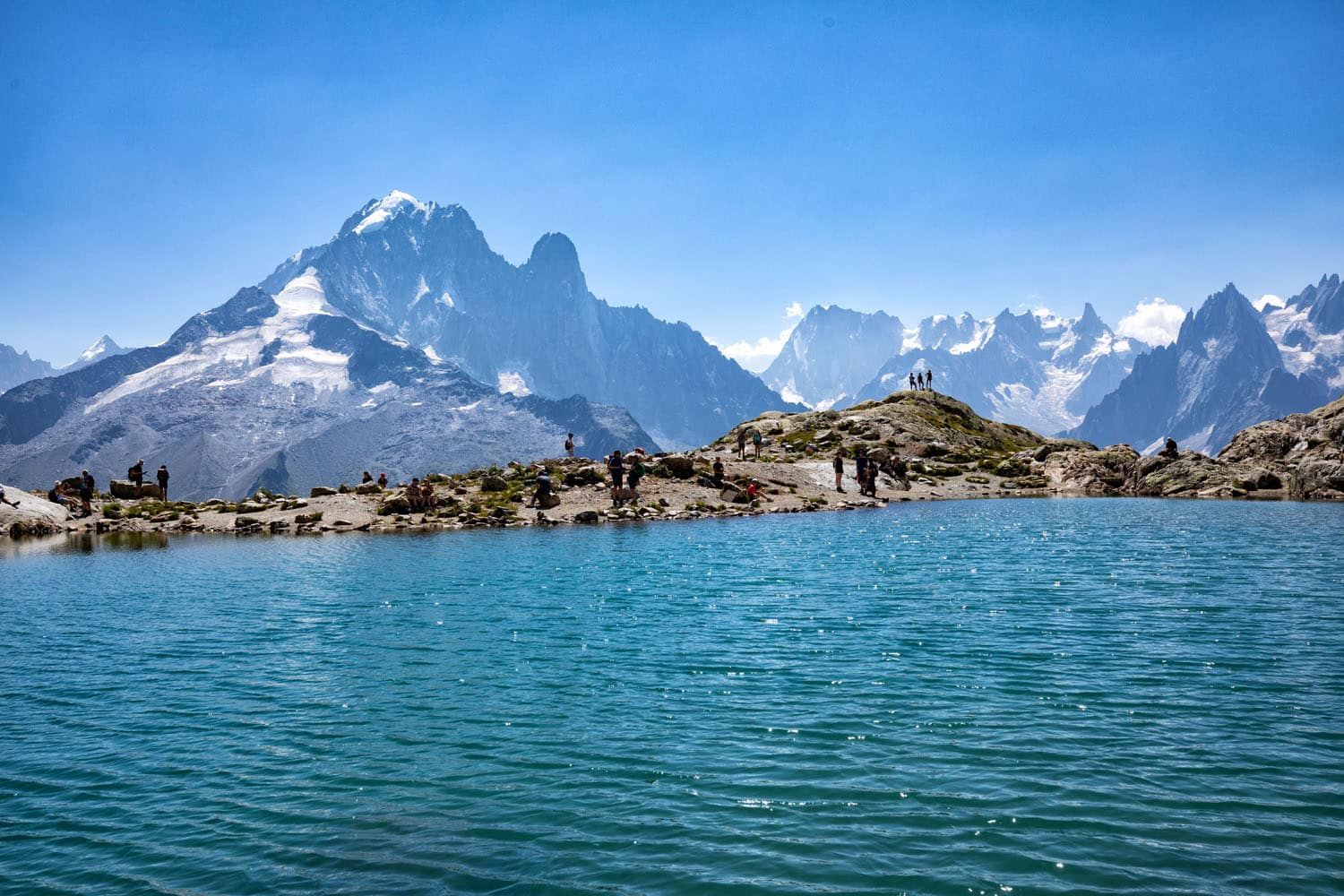
Lac Blanc
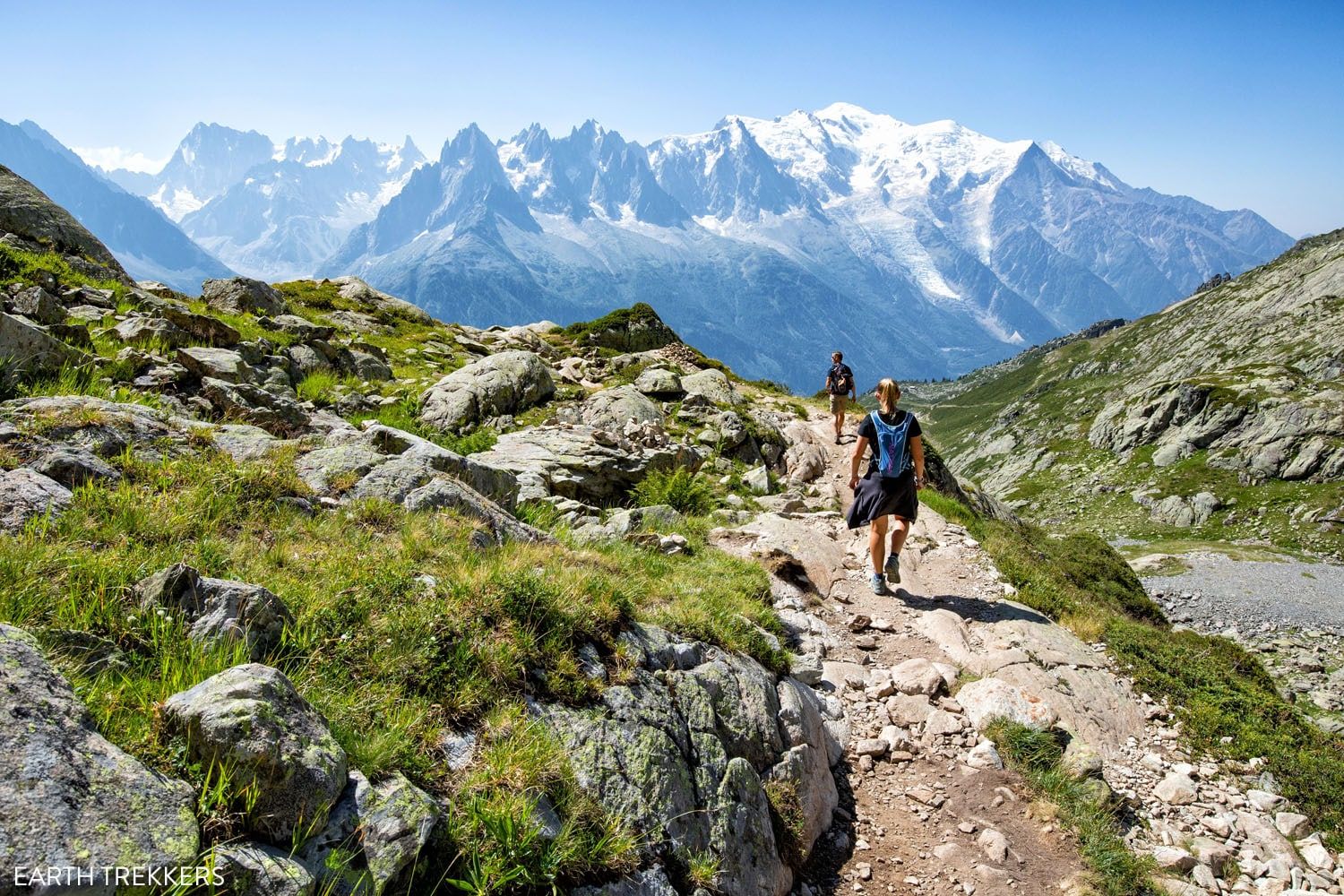
On this hike, you get some amazing views of Mont Blanc
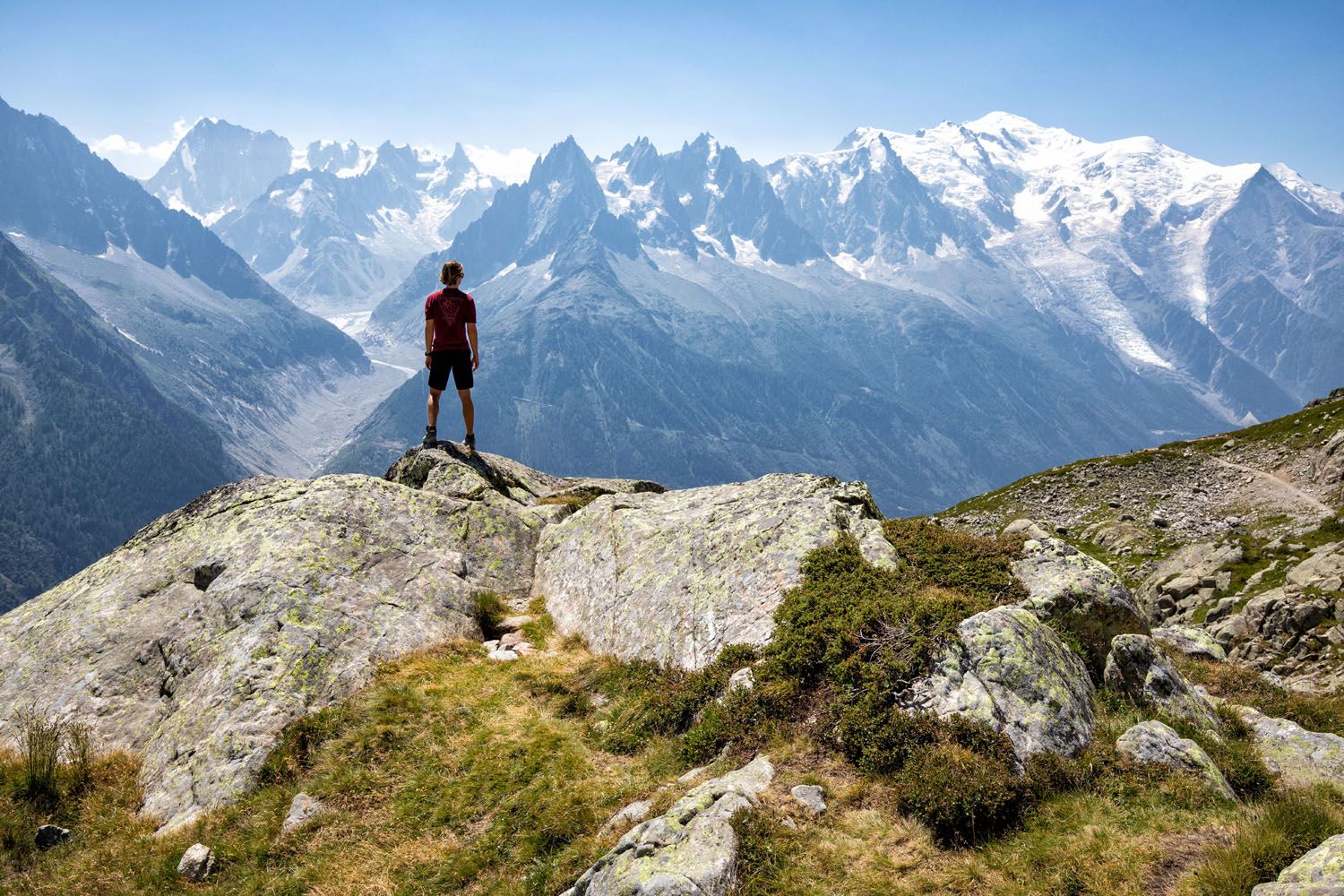
Lac Blanc Hiking Stats: This hike is 6.1 km/3.8 miles out-and-back. It has 360 meters (1,180 feet) of total ascent, placing it between easy and moderate in difficulty. It takes about 2 to 4 hours to do the hike. The entire experience will take 4 to 6 hours, which accounts for transportation to and from Chamonix and the cable car and chairlift rides.
When to Do this Hike: The best time to do this hike is in the afternoon, when Mont Blanc is illuminated by the afternoon sun. In the morning, you will be looking towards the sun to see Mont Blanc, and the sun glare can take away from the view and make photography difficult. However, crowds will be lowest in the morning and highest in the afternoon.
Starting Point: This hike starts in Les Praz, which is a small town near Chamonix. Take the train from Chamonix to Les Praz and then ride the Les Praz cable car and L’Index chairlift to get to the trailhead.
How to Hike to Lac Blanc, Chamonix (Photos, Stats & Map)
We cover how to do this hike, including photos, a map of the hike + gondola route, a detailed trail guide.In the morning today, spend some leisurely time at your hotel, go shopping or go for stroll through Chamonix, or even sit down to lunch before heading out to Les Praz. We had a great lunch at Chalet Hotel Le Castel Chamonix, which is located between the gondola station and the train station in Les Praz.
Day #4 Brévent Cable Car & Chamonix
Morning: Brévent Cable Car
The Brévent Cable Car takes riders to one of the highest viewpoints over Chamonix. It is located on the opposite side of the valley from Mont Blanc and from here you get panoramic views of this mighty mountain and Chamonix.
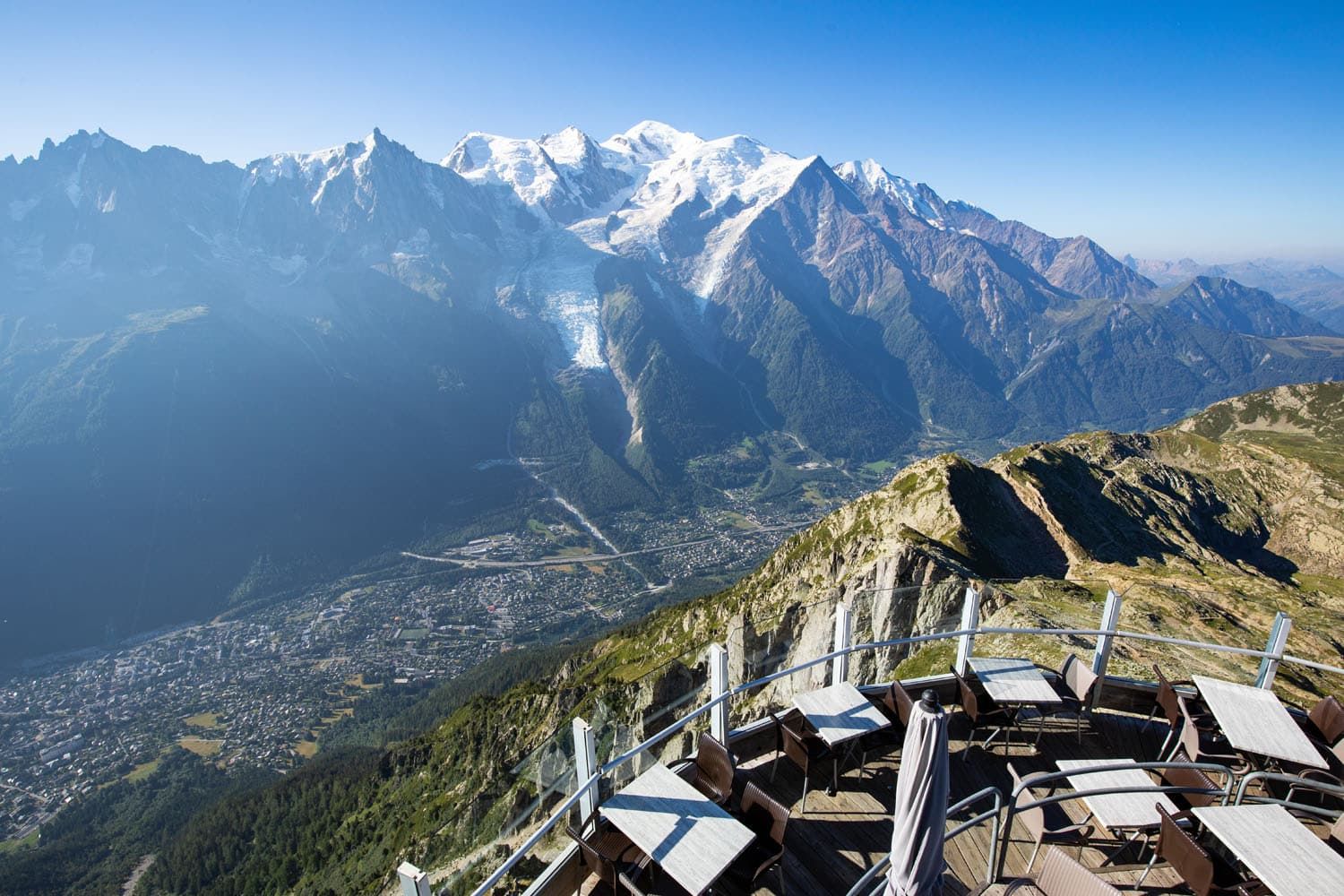
This cable car ride starts right in Chamonix. Ride the gondola to Plan Praz and then transfer to the cable car to Brévent. At this point, you will be standing at 2,525 meters and the views are extraordinary.
A visit here can be very quick. You can simply enjoy the view, which is one of the best in Chamonix. Dine at La Panoramic, a restaurant that is famous for its amazing views of Mont Blanc. Those who are active and adventurous can spend the rest of the day up here, hiking to Lac Cornu or Aiguillette des Houches.
Afternoon: Chamonix
If you do not plan on hiking from Brévent, your visit will be rather quick. That will give you all afternoon in Chamonix. There are a lot of things to do in Chamonix that don’t require a cable car ride or hiking (see the full list in our article Best Things to Do in Chamonix) and here are some ideas for this afternoon:
Visit the Merlet Animal Park. This animal park is home to Sika deer, marmots, chamois, and ibex. A visit here lasts 2 to 4 hours and visits require an advance reservation.
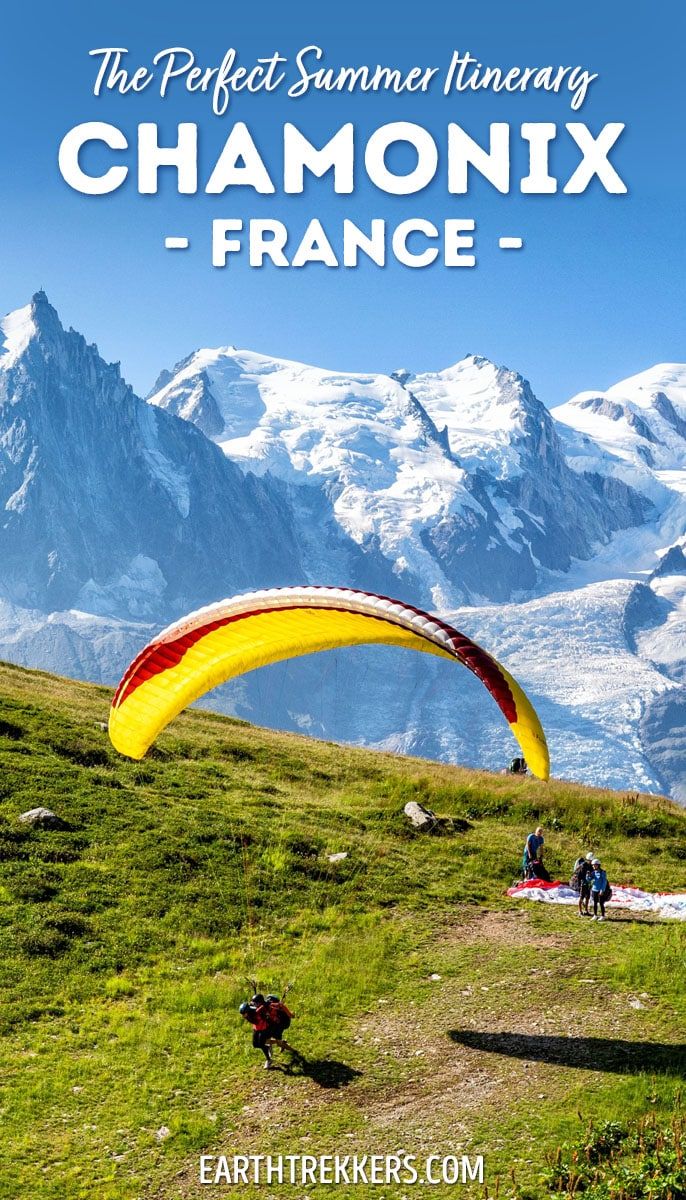
Go paragliding. One of the best things to do in Chamonix in the summer is go paragliding. Imagine soaring over these mountains with views of Mont Blanc. There are several companies that offer tandem paragliding flights.
Ride the Alpine Coaster. This is a great activity for kids. It is located in the Chamonix Amusement Park.
Go white water rafting. Go white water rafting or riverboarding in the Arve River.
Visit a museum in Chamonix. Learn about the history of Chamonix and the first attempts to summit Mont Blanc at the Alpine Museum. The Crystal Museum has on display crystals from the Alps, France, Europe and other places around the world.
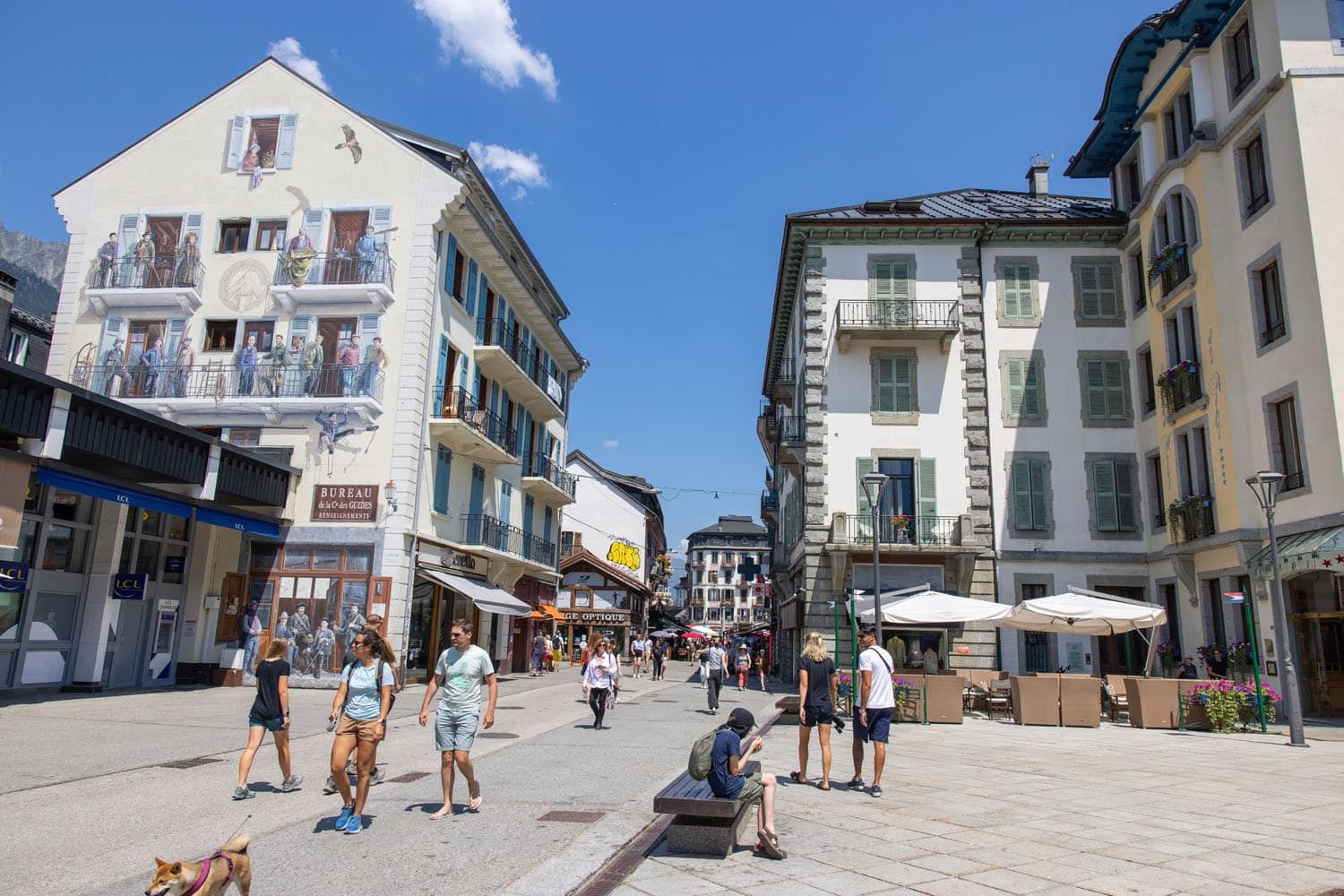
Chamonix
Day #5 Tramway du Mont Blanc & Glacier des Bossons
Morning & Midday: Tramway du Mont Blanc
Riding the Tramway du Mont Blanc is an experience that takes 3 to 4 hours. This is the highest cogwheel train in France and it makes several stops, delivering passengers to mountain huts, restaurants, hiking trails, and viewpoints of the Bionnassay Glacier.
The highlight is the view of the Bionnassay Glacier from Nid d’Aigle (the Eagle’s Nest). Nid d’Aigle is the starting point for the summit up Mont Blanc.
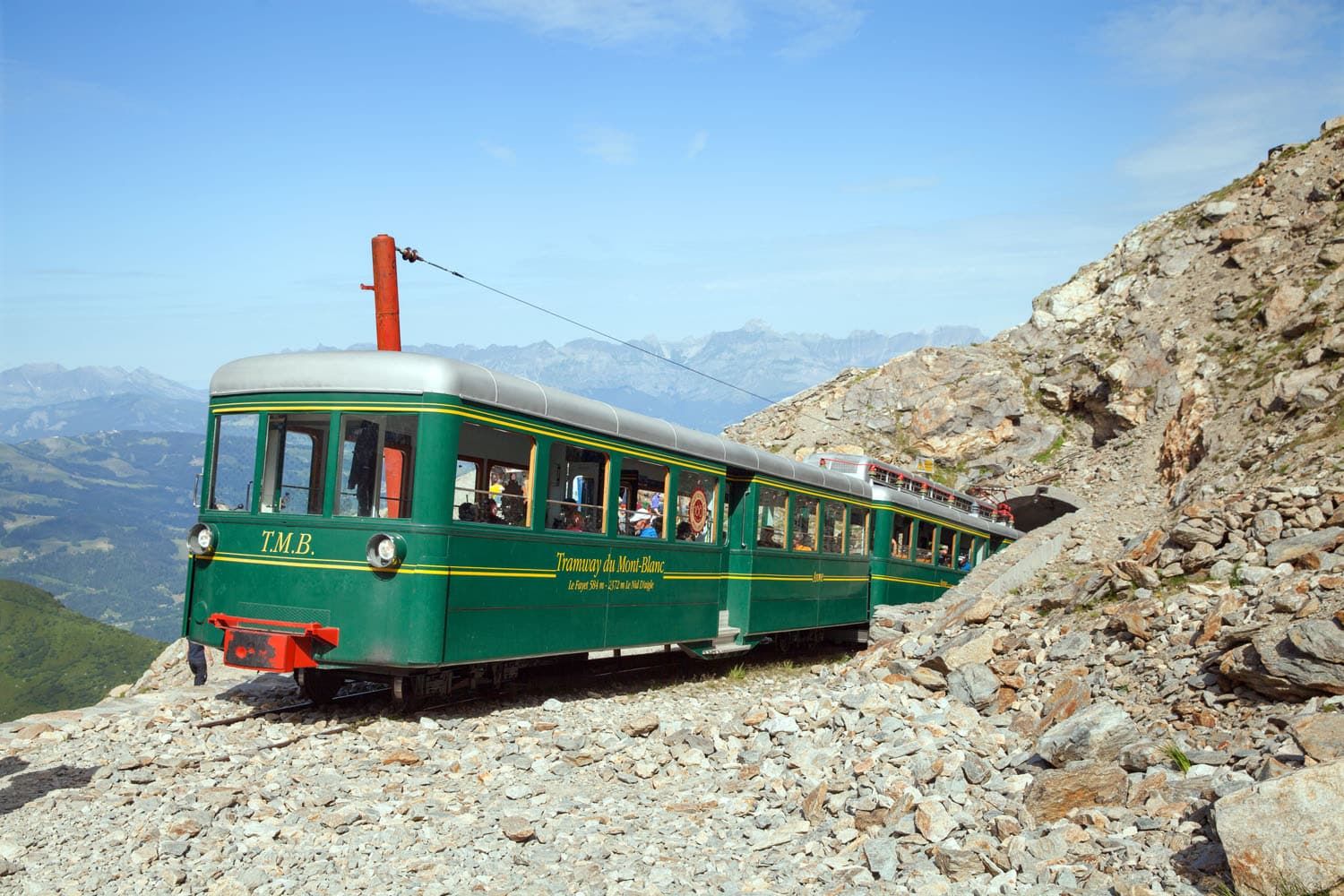
Tramway du Mont Blanc | Julia Kuznetsova/shutterstock.com
Board the tramway in either Le Fayet or Saint-Gervais, two towns located west of Chamonix. To get here, take the train from Chamonix.
Learn more about the experience here and get timetables here.
Afternoon: Glacier des Bossons
Glacier des Bossons is a glacier that runs down the mountain from Mont Blanc.
To get a view of this glacier, ride the chairlift (Télésiège Glacier Des Bossons) to a viewpoint of the glacier.
This is a great activity to do on your way back into Chamonix. To get here, ride the train to Gare de Les Bossons and it is a 15-minute walk to the bottom chairlift station. Once finished, it is a quick train ride to Chamonix.

Day #6 Hike to the Argentière Glacier
For jaw-dropping views of an active glacier, this is a great hike to add to your Chamonix itinerary.
This hike starts in Argentière, a neighboring town of Chamonix. Again, ride a cable car high up into the mountains and then it is a beautiful walk to get to viewpoints of the glacier.
Note for 2026 visitors: The Grands Montets gondola is closed for construction, and trail access may also be affected. Without the cable car, the only option is a steep, strenuous hike up from Argentière, and frankly, we don’t think it’s worth it for most visitors when Chamonix has so many excellent lift-served alternatives. We’d recommend skipping this hike in 2026 unless you are a fit, experienced hiker with extra days to spare. Check the official Grands Montets page for the latest before you go.
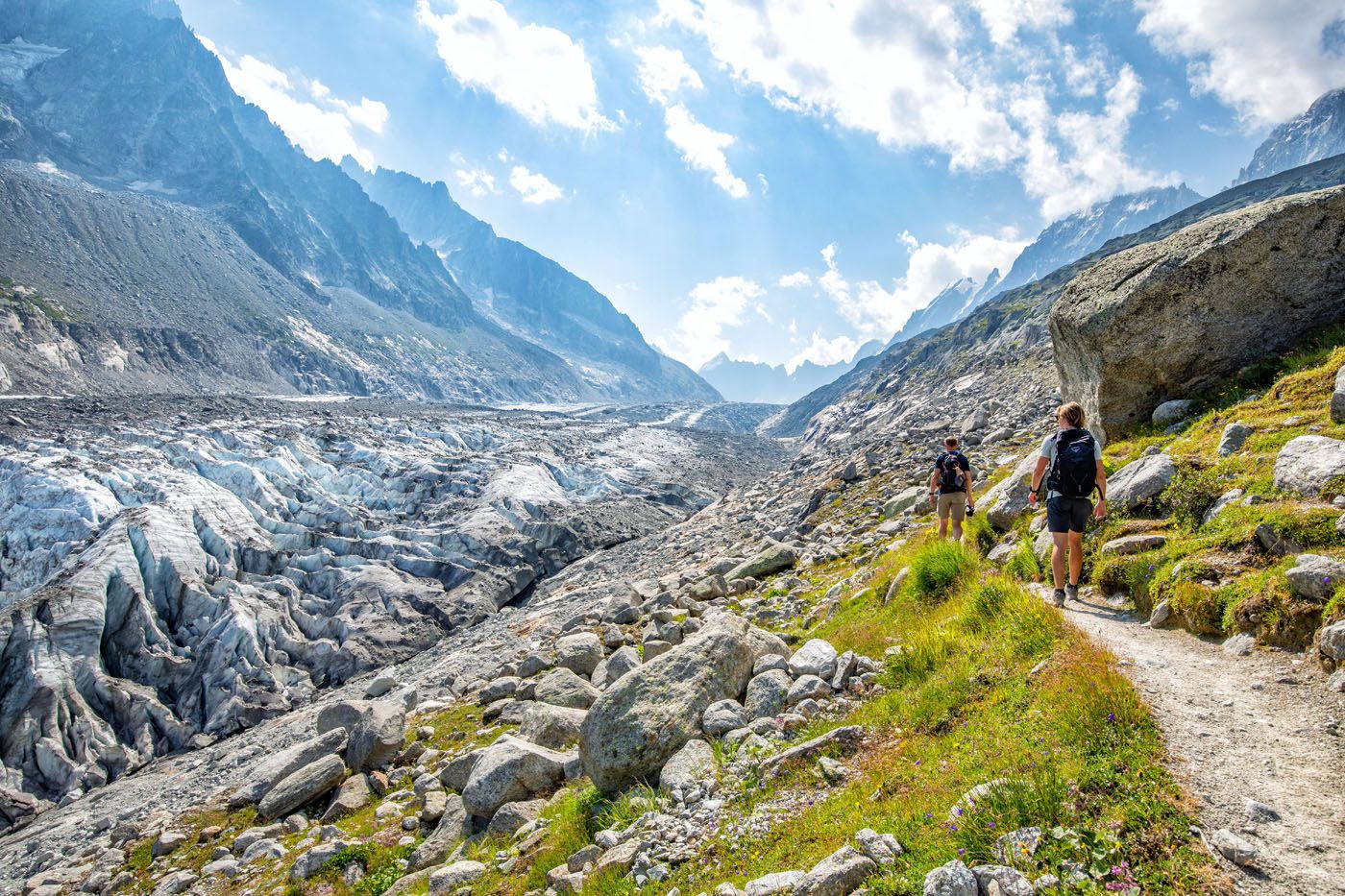
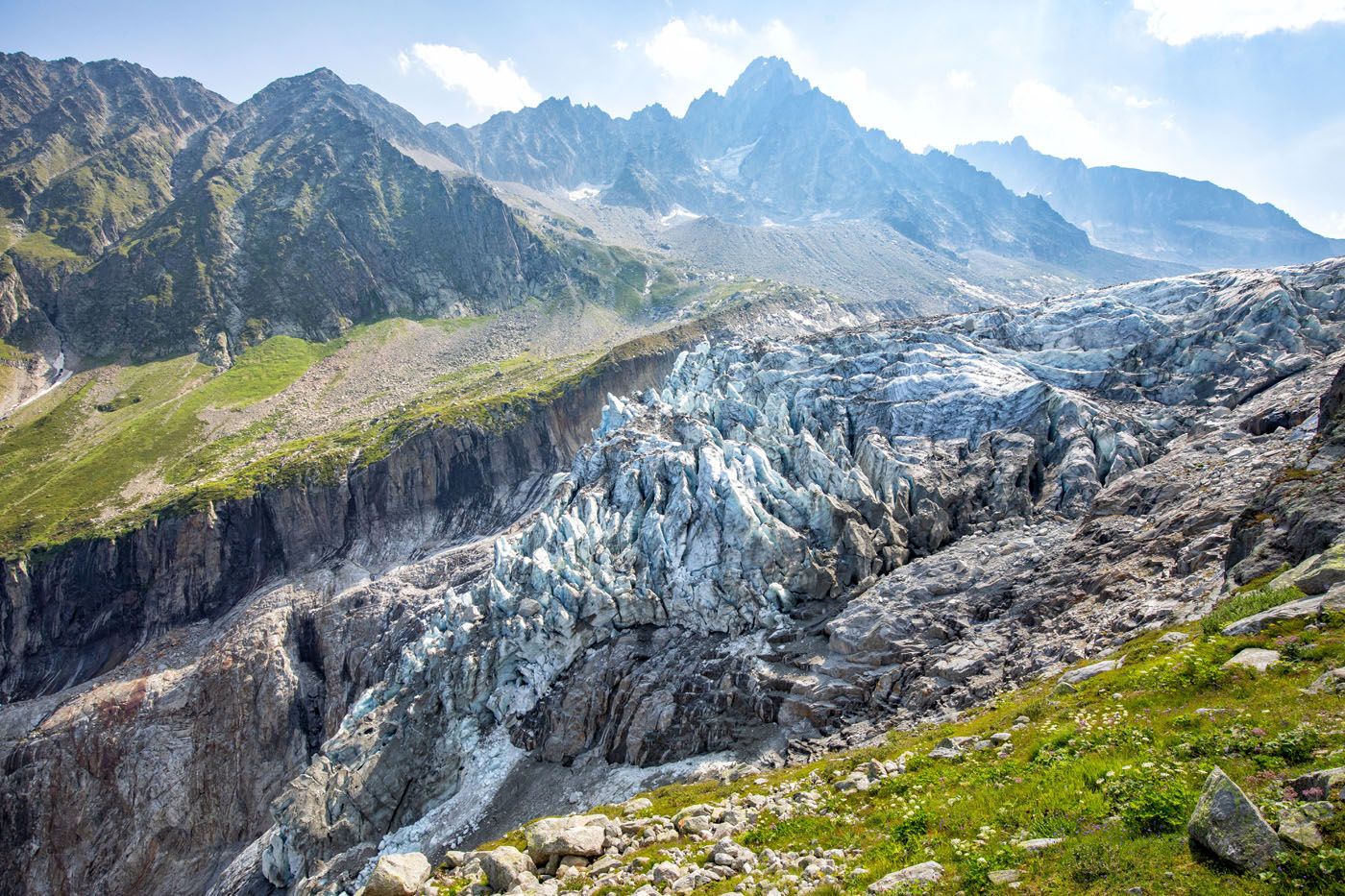
For full details on the hike, refer to our Argentière Glacier Hiking Guide, which covers the logistics of getting here and what to expect on the hike ↓
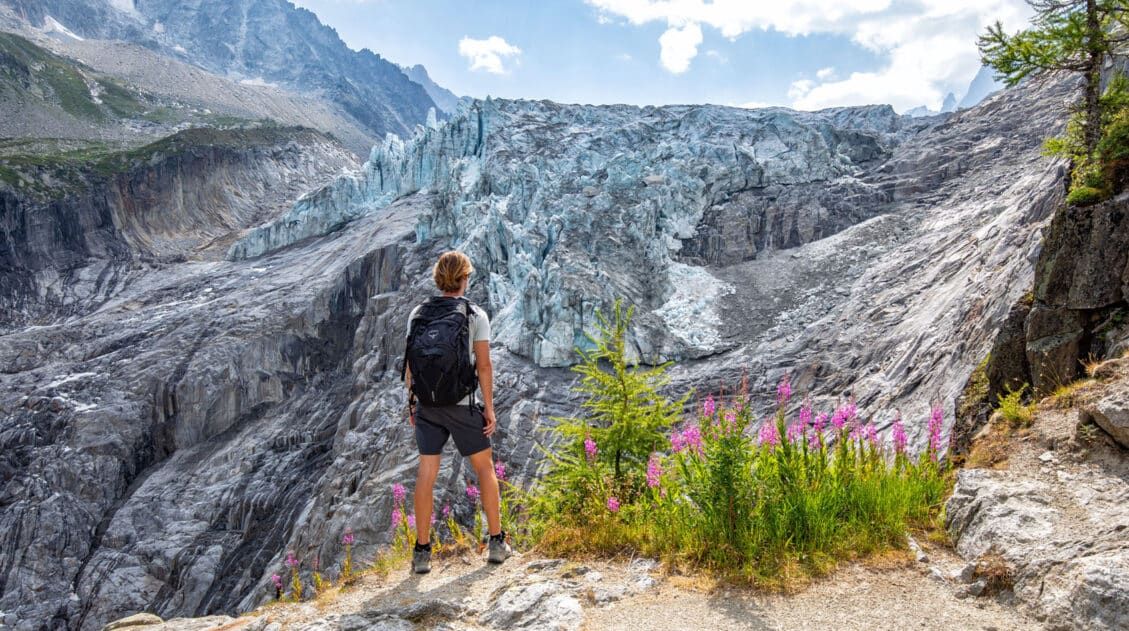
Argentière Glacier Hike: One of the Best Day Hikes Near Chamonix
A step-by-step trail guide to hiking to Argentière Glacier.We recommend doing this hike in the morning, planning your start about the time that the Joran cable car starts running.
In the afternoon, ride the alpine coaster, visit the Merlet Animal Park, go white water rafting, or do something in and around Chamonix that you didn’t have time for earlier on this trip.
Chamonix Itinerary: 1 to 5 Days
Not sure how to put it all together? Below are sample itineraries for 1 to 5 days in Chamonix, built from the daily options above.
One Day in Chamonix
One day is tight, so keep it simple: Aiguille du Midi is the non-negotiable, and everything else depends on how much energy you have after.
Book the earliest cable car you can get and plan your visit for a clear-weather day. Aiguille du Midi is too expensive and too spectacular to waste on clouds.
If you have the time and legs for it, add on the Grand Balcon Nord trail in the afternoon (Option B), which starts right at the cable car’s transfer station and ends in Montenvers. It’s the most efficient way to combine two of Chamonix’s best experiences in a single day.
If you’d rather take it easier, ride back down to Chamonix and spend the afternoon exploring town (Option A).
Two Days in Chamonix
Two days gives you enough time to do Chamonix’s two best experiences properly, without rushing either one.
Day One: Aiguille du Midi. Follow Option A, B, or C depending on your pace. If the weather is good and you’re feeling strong, Option B (adding the Grand Balcon Nord hike) is the move. It’s the best combination of experiences you can pack into a single day here.
Day Two: Hike to Lac Blanc. This is the best hike on the opposite side of the valley, with a cable car and chairlift to the trailhead and stunning views of Mont Blanc reflected in an alpine lake. Do this one in the afternoon when the light hits Mont Blanc directly. Mornings work too if you prefer fewer crowds.
With two solid days, you’ll leave having seen Chamonix from every angle that matters: the summit, the high alpine trails, and from town.
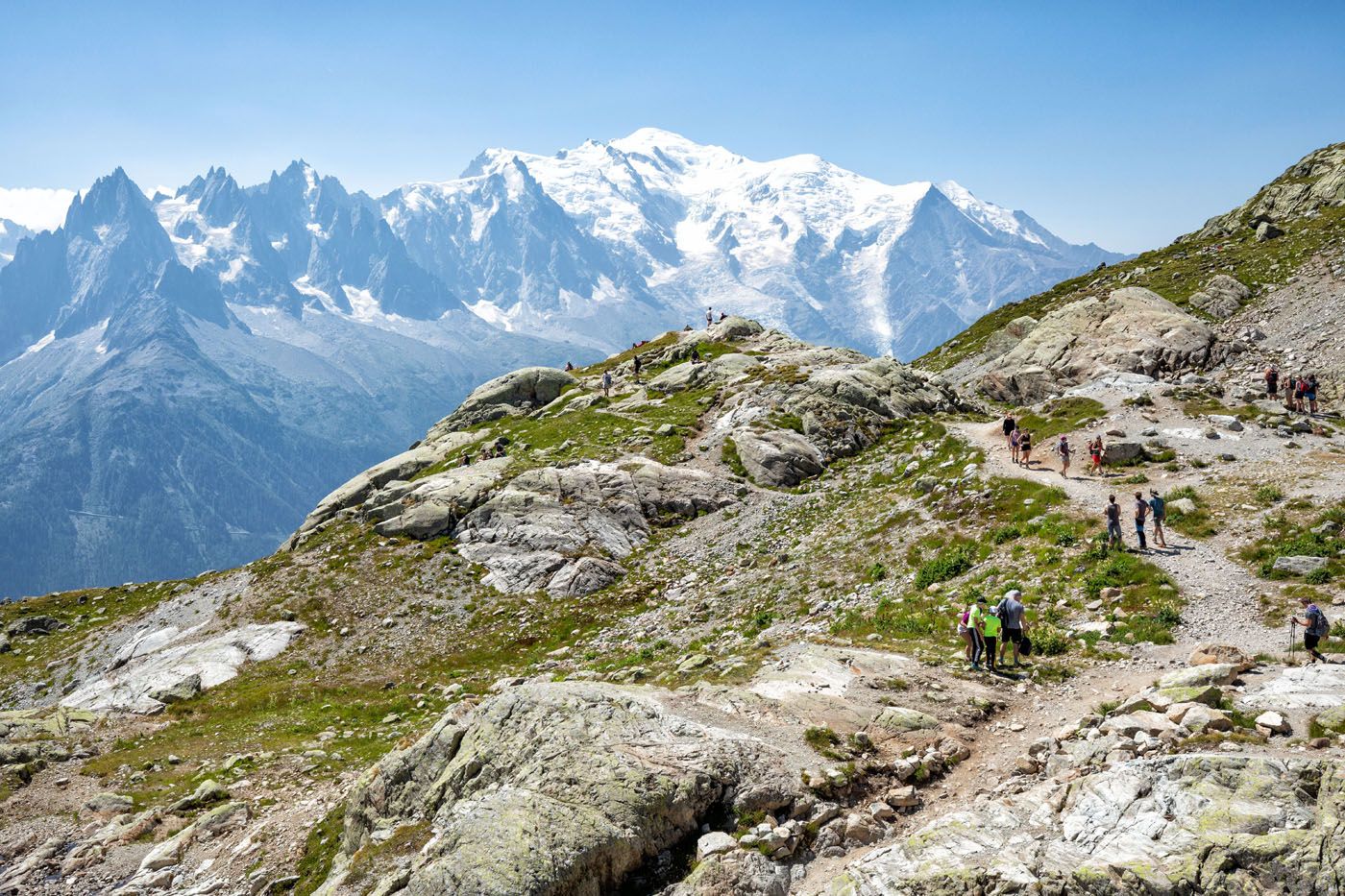
Lac Blanc hike
Three Days in Chamonix
Three days is the minimum we’d recommend for a proper summer visit. You have enough time to cover the highlights without feeling like you’re racing through them.
Day One: Aiguille du Midi (Option A, B, or C). Prioritize this on your first clear-weather day. If clouds roll in on Day One, swap it with Day Two and come back to Aiguille du Midi when skies clear.
Day Two: Lac Blanc hike. Plan this for the afternoon when the light on Mont Blanc is at its best. Use the morning for a leisurely breakfast and a stroll through town.
Day Three: Brévent cable car in the morning for panoramic views of Mont Blanc from the opposite side of the valley, followed by an afternoon in Chamonix. Visit the Alpine Museum, go shopping, or grab a long lunch at one of the restaurants on the main square.
If the Aiguille du Midi cable car is sold out on your preferred day, the Brévent cable car requires no advance booking and makes a solid backup for Day One.
Four Days in Chamonix
Four days gives you room to breathe. You can cover all the major experiences and still have time to slow down and actually enjoy the town.
Day One: Aiguille du Midi (Option A, B, or C). Book this for your first clear-weather day.
Day Two: Lac Blanc hike. Afternoon start for the best light on Mont Blanc.
Day Three: Brévent cable car in the morning, afternoon in Chamonix town.
Day Four: Choose based on your interests. The Tramway du Mont Blanc combined with the Glacier des Bossons chairlift makes for a full and rewarding day. It’s a different experience from the other cable cars and a good way to round out the trip. Alternatively, if Argentière Glacier access has been restored by the time you visit, that hike is worth adding here.
With four days you also have a natural buffer day built in. If Aiguille du Midi is closed for weather on Day One, you have enough flexibility to shift everything without losing anything.
Five Days in Chamonix
Five days is the sweet spot for a summer visit and it’s exactly how long we spent here, and we left feeling like we’d done Chamonix properly without rushing a single day.
Day One: Aiguille du Midi (Option A, B, or C). Book this for your first clear-weather morning.
Day Two: Lac Blanc hike. Afternoon start for the best light.
Day Three: Brévent cable car in the morning, afternoon in Chamonix town.
Day Four: Tramway du Mont Blanc combined with the Glacier des Bossons chairlift on the way back into town.
Day Five: Hike to Argentière Glacier, but check access conditions before your trip. If the gondola isn’t running and you’d rather skip it, use this day to revisit a favorite, go paragliding, or simply enjoy a slower morning in Chamonix before heading out.
With five days you can also split the Aiguille du Midi experience across two days, visiting the summit on one day and hiking the Grand Balcon Nord on a separate day, which takes some of the time pressure off and lets you linger longer at the top.
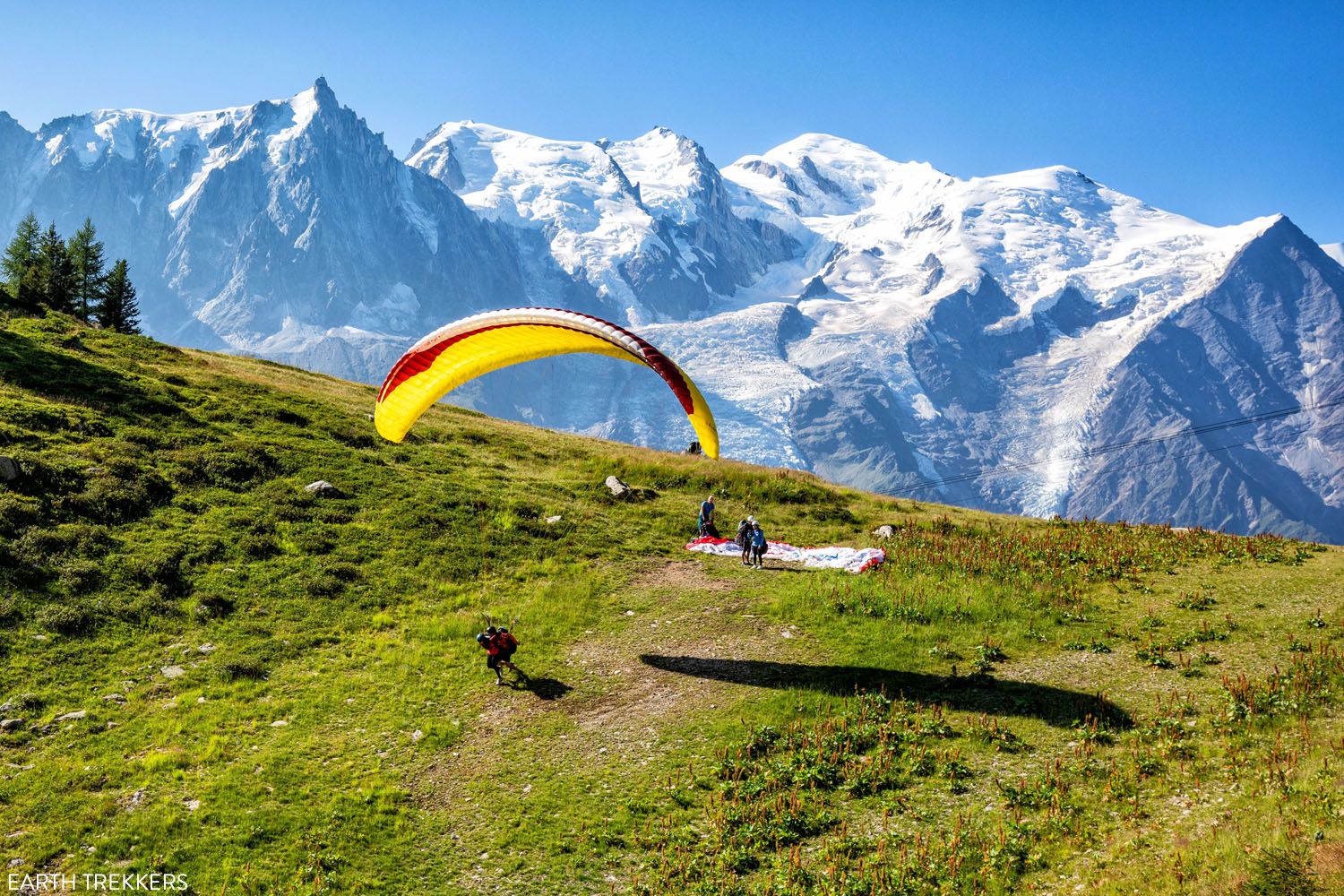
Best Time to Visit Chamonix
We visited in July and landed in the middle of a European heat wave. Temperatures repeatedly hit 32°C (90°F) in the valley, and afternoon thunderstorms rolled in almost every day like clockwork. Even so, it was a spectacular week. The trails were in perfect condition, the cable cars were running, and the views on clear mornings were extraordinary. If you visit in July, get your big days started early and plan lower-key activities for the afternoons.
The summer season runs from mid-June through mid-September and is by far the best time to visit for hiking and cable cars. That said, snow can linger on the higher trails into early July in some years, so check conditions before you go if you’re visiting in June. August is the busiest month; accommodation fills quickly and Aiguille du Midi tickets sell out well in advance.
Outside of summer, Chamonix transforms into one of Europe’s premier ski destinations from December through March. Spring and fall are shoulder seasons. This is a quieter and cheaper time to visit, but many cable cars close for maintenance during these periods, which limits what you can do.
- Spring (April–May): Quiet and affordable, but cable car closures limit access to the mountains
- Summer (June–September): Best time for hiking and cable cars; mid-June to mid-September is the sweet spot
- Fall (October–November): Fewer crowds, but lift closures begin and snow arrives at elevation
- Winter (December–March): World-class skiing; a completely different trip from the summer experience
How to Get to Chamonix
By Train
The best way to get to Chamonix is by train. It is easy to get to Chamonix from other cities in France and Europe by a high-speed rail network. Once you are in Chamonix, there is little need for a car, because it is very easy to get around by train, cable car, and gondola.
To check travel times, timetables, and pricing, visit the SNCF.com website or RailEurope.com.
By Plane
The closest airport is Geneva, Switzerland. From Geneva, take the train or a shared shuttle to Chamonix. It takes about an hour and a half to travel from Geneva to Chamonix.
By Car
If you have a rental car, you can drive to Chamonix, but once here, you won’t need it.
We had a rental car since prior to our visit we were hiking in the Dolomites. It was faster for us to travel to Chamonix by car than transfer multiple times by train. Once in Chamonix, we never used the car, choosing to get around by train instead, which was faster and more environmentally friendly.
We drove through the Aosta Valley in Italy, a gorgeous drive, entering Chamonix by way of the Tunnel du Mont Blanc, which is almost 12 km (7.2 miles) long. In our direction, from Italy into France, we didn’t have any traffic. But on several days while in Chamonix, we saw huge backups from France into Italy, so keep that in mind if you have plans to travel with a car and later enter Italy.
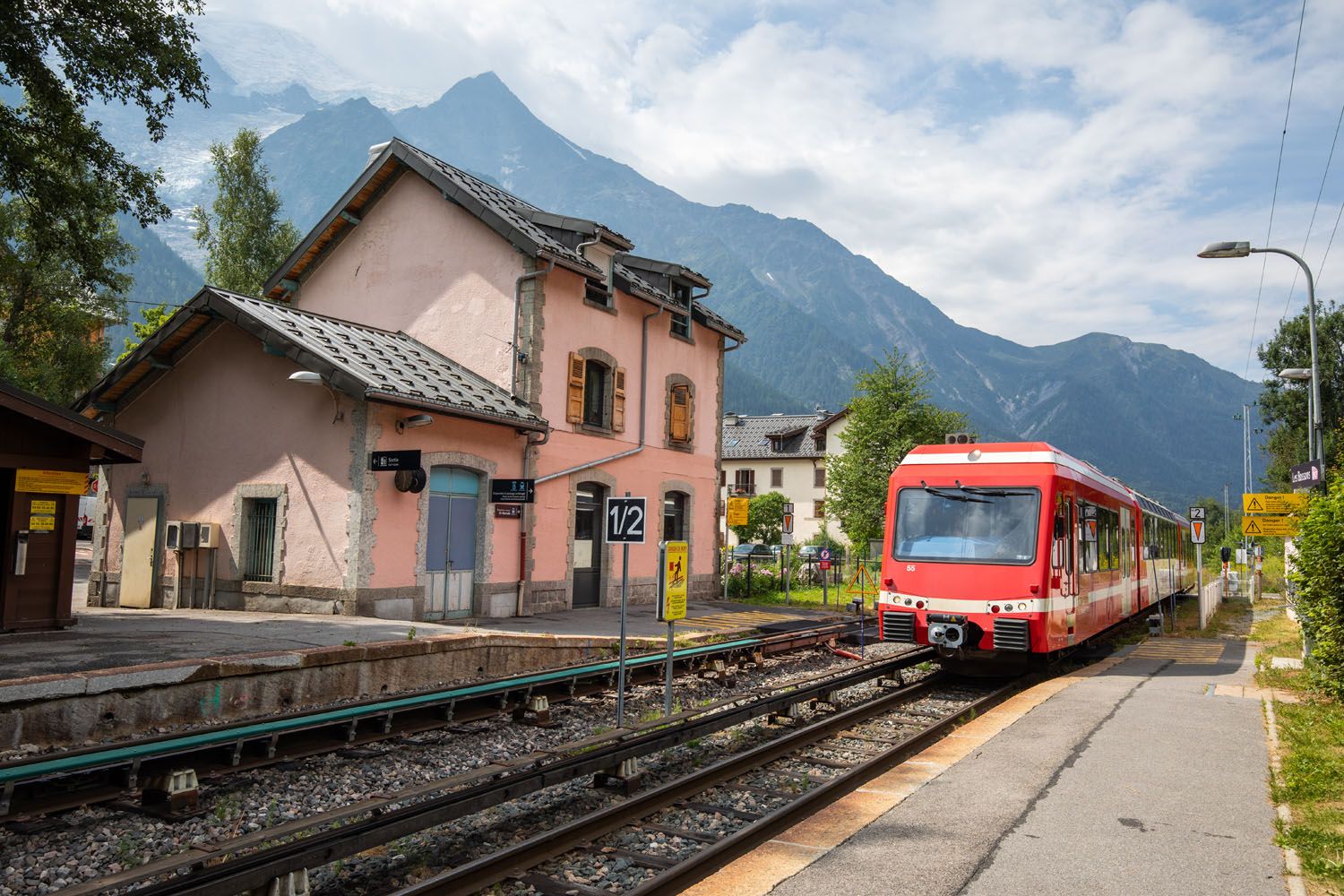
Gare de Les Bossons
How to Get Around Chamonix
The best way to get around Chamonix is by train. The train links Chamonix to the nearby small towns (Les Praz, Argentiére, Les Houches, Le Fayet, and Saint-Gervais) quickly and efficiently. Traveling by train is cheaper, more eco-friendly, and more convenient than driving and parking in and around Chamonix.
The Mont Blanc Multipass
The Mont Blanc Multipass is a money saving pass that includes most of the cable cars, gondolas, chairlifts, and tramways in and around Chamonix.
Included on the Mont Blanc Multipass:
- Aiguille du Midi
- Tramway du Mont Blanc
- Train to Montenvers
- La Flegere Cable Car and L’Index Chairlift
- Brévent Cable Car
- Glacier des Bossons Chairlift
You can see the full list of what is included on the official website.
The Multipass is sold by the number of days of your visit. With the pass, you will still need to reserve your time slot for Aiguille du Midi and the Tramway du Mont Blanc in advance. At places like the Brévent cable car, you simply scan your card to enter and get on the next available car. Not only does the pass save you money, it also saves you a lot of visits to ticket booths.
Get the full details, including pricing, on the official website.
Where to Eat in Chamonix
Our favorite restaurant was Chez Constant, which serves wonderful cheese fondue and French dishes. Make your reservation in advance.
Le Comptoir des Alpes is a Michelin-starred restaurant that gets rave reviews. We ate here on a night when the entire town lost power due to thunderstorm but they were still able to put together a fantastic dinner for us, despite the lack of power.
Josephine Restaurant is located on the main square in Chamonix. They serve traditional French cuisine in an outdoor and indoor setting.
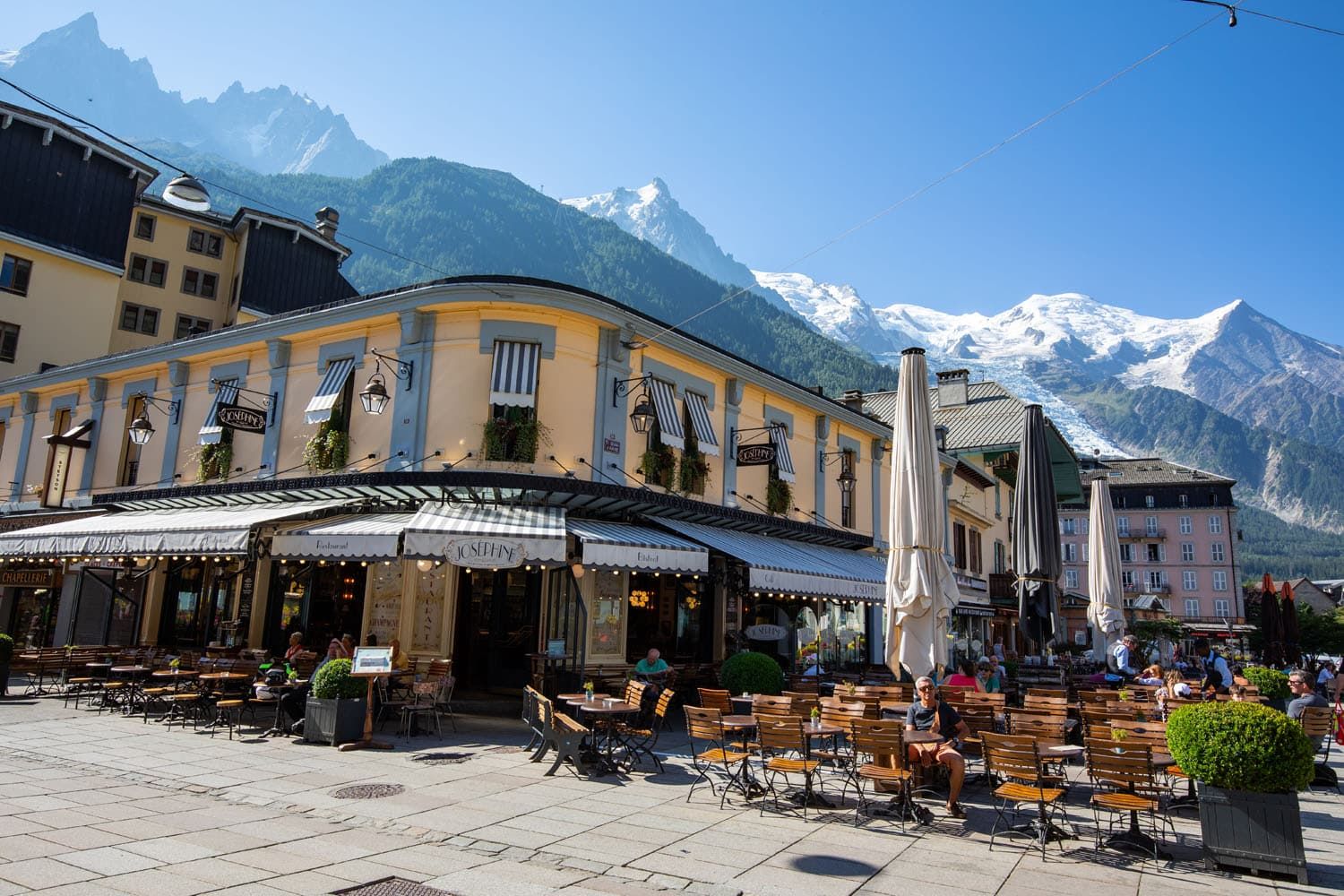
Josephine Restaurant
Every morning we got coffee and pastries at La Fournil Chamoniard and this place always had a line out the door.
Other places to try are Annapurna, Poco Loco, and Joia by Pizzeria Des Moulins.
Where to Stay in Chamonix
Be aware that many hotels in Chamonix do not have air conditioning. Normally that is not an issue, since the average daytime high in the summer is 21°C (70°F). During our visit in July, Europe was experiencing a heat wave and daytime temperatures repeatedly reached 32°C (90°F). If you find a hotel with air conditioning, that is a huge bonus.
LUXURY: Residence Le Cristal de Jade. This property offers suites as well as 1, 2 and 3 bedroom apartments with living areas and kitchenettes. There are washing machines onsite as well as a pool and spa. This is where we stayed and we loved it here, although without air conditioning, it was very warm in our room. It is located across the street from the Aiguille du Midi station and a short walk into the heart of Chamonix.
UPSCALE: Appart’hotel Bellamy Chamonix. This property also offers studios and 1, 2 and 3-bedroom apartments plus air conditioning! It is located a short distance outside of the Chamonix city center, with a 6-minute walk to the Aiguille du Midi station and a 10 minute walk into the town center.
MID-RANGE: Mont Blanc 43. This one bedroom apartment sleeps four people and comes with a kitchen, washing machine, and terrace with a view of Mont Blanc. It is located just outside the city center so it is a quick walk to everything.
MID-RANGE: Chalet Oryx. If you are traveling as a family or small group, this is a property to consider. There are two apartments to choose from, both with three bedrooms that can sleep six people. Each apartment has a kitchen, living area, and washing machine. This property sits a short walk outside of the Chamonix city center.
BUDGET: La Chaumière Mountain Lodge. This mountain lodge is a 10-minute walk from the city center and located near the train station. Rooms range from single to quadruple rooms.
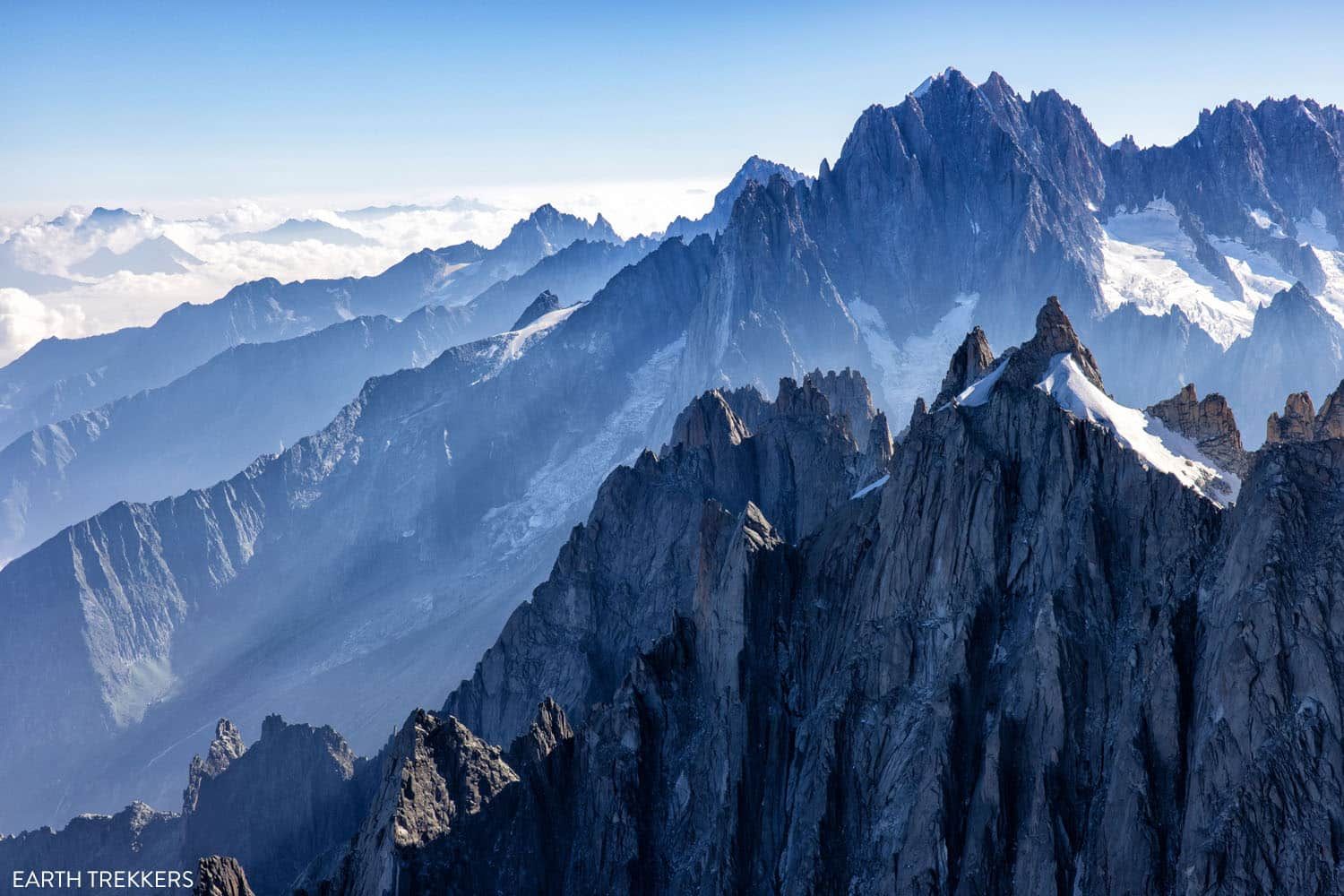
The view from Aiguille du Midi
Frequently Asked Questions
What are the best things to do in Chamonix in summer?
The best things to do in Chamonix in the summer are to visit Aiguille du Midi, ride the Panoramic Mont Blanc Cable Car, hike the Grand Balcon Nord trail, hike to Lac Blanc, ride the Tramway du Mont Blanc, visit Montenvers and the Mer de Glace ice cave, ride the Brévent Cable Car, and hike to Argentière Glacier.
When is the best time to go hiking in Chamonix?
The best time to go hiking in Chamonix is from July through mid-September, when the trails are free from snow and all of the cable cars and chairlifts are running.
How many days do you need in Chamonix?
Ideally, plan on spending at least three days in Chamonix. This gives you enough time to visit Aiguille du Midi, hike a few trails, and ride the cable cars and tramway to viewpoints of glaciers and Chamonix. 5 days is the perfect amount of time for a summer visit to Chamonix, so you can visit the top spots and hiking trails at a leisurely pace.
What is the best one day Chamonix itinerary?
Spend the morning at Aiguille du Midi. Book the earliest cable car available and plan your visit for the clearest weather day. If you have the energy, add on the Grand Balcon Nord hike in the afternoon, which starts at the cable car’s transfer station at Plan de l’Aiguille and ends in Montenvers. From there, take the train back to Chamonix. If you’d rather take it easier, ride back down into town and spend the afternoon exploring. See Option A and Option B above for the full details on how to plan this day.
Is Chamonix worth it?
Chamonix is a spectacular outdoor destination in Europe. In the summer, there are several relatively short and easy hikes that offer extraordinary views of Mont Blanc and Chamonix. In winter, this area is one of the best places to go skiing in Europe. Chamonix is also the starting point for the Tour du Mont Blanc and the Walker’s Haute Route, making it a must-visit spot for active, adventurous travelers.
Is the Panoramic Mont-Blanc cable car worth it?
Yes, if you have the time and budget for it. The Panoramic Mont-Blanc is a gondola that runs from Aiguille du Midi across the glacier to Pointe Helbronner on the Italian border. It’s one of the most spectacular cable car journeys we have ever taken. The views of the glaciers below and the Mont Blanc massif are unlike anything else in Chamonix. It adds 2 to 3 hours to your Aiguille du Midi visit, so plan accordingly. We cover the full details, pricing, and tips in our guide to Aiguille du Midi and the Panoramic Mont-Blanc.
Can you do Chamonix as a day trip from Geneva?
Technically yes, but we wouldn’t recommend it. The journey from Geneva takes about 1.5 hours each way, which eats into an already short day. If you’re set on a day trip, keep it simple: visit Aiguille du Midi in the morning and spend an hour or two in town before heading back. But if you can manage even one or two nights in Chamonix, you’ll get far more out of it. The town itself is worth experiencing, and the best hikes require a full day.
Plan Your Trip to Chamonix and France
For deeper planning on the individual experiences covered in this itinerary, we have dedicated guides to Aiguille du Midi and the Panoramic Mont-Blanc, the Lac Blanc hike, the Grand Balcon Nord trail, and the Argentière Glacier hike. For a broader overview of everything Chamonix has to offer, visit our guide to the best things to do in Chamonix.
If you’re using Chamonix as a starting point for a longer alpine adventure, our Walker’s Haute Route guide covers everything you need to plan one of the best long-distance treks in Europe.
For everything else you need to plan a trip to France, start with our France Travel Guide.
If you have any questions about how to plan your Chamonix itinerary, let us know in the comment section below and we would be happy to help!
Explore More of France & the Alps
France Travel Guide: How to Plan a Trip to France
Travel information and advice for France. Best things to do in France with itineraries for Paris, the French Riviera, and the Alsace wine region.
20 Amazing Things to Do in Zermatt, Switzerland
Pinterest Facebook Flipboard Zermatt is an idyllic mountain village tucked away in the Swiss Alps. The mighty Matterhorn dominates the skyline, creating one of the most unique alpine landscapes in Europe. Explore the hiking trails, journey up higher into the mountains by cable car and train, stroll the scenic streets of Zermatt, and go skiing […]
15 Surprising Things to Do in the Dolomites That Aren’t Hiking
We have traveled to the Dolomites twice, spending 12 days exploring alpine lakes, mountain passes, and hiking trails. This guide features the very best things to do in the Dolomites that require minimal or no hiking, based on our personal experiences. It’s no secret that the Dolomites are a great place to go hiking. But […]
20 Amazing Things to Do in the Jungfrau Region of the Bernese Oberland
Towering mountains, alpine meadows, soaring cable cars, historic cogwheel trains, scenic walking trails, quaint villages and hamlets…this is the Jungfrau region of the Bernese Oberland. In this guide, we cover the very best things to do in the Jungfrau region, ranging from scenic cable car rides to hiking some of the most beautiful trails in […]
How to Hike to Lac Blanc, Chamonix (Photos, Stats & Map)
There are several reasons why the hike to Lac Blanc is one of the best in Chamonix. For one thing, this alpine lake is beautiful. A series of gondolas and chair lifts lop off the first big climb, making this hike doable for most ages and ability levels. But one of the best reasons to […]
Argentière Glacier Hike: One of the Best Day Hikes Near Chamonix
The hike to Argentière Glacier is one of the best day hikes near Chamonix, with trails leading to multiple viewpoints of the glacier at different elevations. Depending on how you access the mountain, this can be either a moderate out-and-back of about 4.7 km or a challenging full-day loop of 14 km with over 1,100 […]
Walker’s Haute Route Stages: An Overview of All 14 Stages
The Walker’s Haute Route is a multi-day trek from Chamonix, France to Zermatt, Switzerland. On this walk, hikers will cross 10 mountain passes, walk through small towns and through rugged, remote landscapes, and get to experience a less touristy side of the Swiss Alps. There are several routes that take hikers from Chamonix to Zermatt. […]
Complete Guide to the Hörnlihütte Hike (Map, Trail Stats & Photos)
The Hörnlihütte (Hörnli Hut) is a lodge built at the base of the Matterhorn. For thrill seeking rock-climbers, the Hörnlihütte marks the start of the ascent up to the peak of the Matterhorn. Even if you do not wish to stand on top of the Matterhorn, simply hiking to and from the Hörnlihütte makes for […]
Is Jungfraujoch Worth the Price and Time? An Honest Review
A trip up to Jungfraujoch is one of the most popular things to do in the Bernese Oberland. Stand on one of the highest points in the Swiss Alps, walk through an ice cave, play in the snow, get panoramic views over the Alps, and hike out to Mönchsjochhütte. In this guide, we cover what […]
3-Day Alsace Itinerary: Colmar, Fairytale Villages & Strasbourg
The Alsace Wine Route is one of our favorite road trips in France, with colorful villages, vineyard-covered hills, medieval castles, excellent food, and plenty of opportunities for wine tasting. With 3 days in Alsace, you have enough time to explore Colmar, visit several of the prettiest towns along the Wine Route, tour Haut-Koenigsbourg Castle, and […]
40 Things to Do in Paris: Top Attractions & Hidden Gems
In this guide, we cover the top things to do in Paris, from iconic sights like the Eiffel Tower, Louvre Museum, and Notre‑Dame Cathedral, to charming neighborhoods such as Le Marais and Montmartre, as well as food and café culture, and a few hidden gems we’ve discovered during our trips to Paris. Paris rewards repeat […]
30 Beautiful Places to Visit in Europe (+ Our Favorites)
It is no secret that Europe is home to some of the world’s most beautiful destinations. From grand historic cities and charming fairytale towns to soaring mountain ranges and sun-soaked beaches, there is a seemingly endless list of gorgeous places to explore. Whether you are planning your next trip to Europe, or just trying to […]
Essential Hiking Gear: What Should You Bring on a Day Hike?
In this post, find out what we carry with us on day hikes. Whether you are a new hiker, shopping for a friend or family member, or just curious about what hiking gear you should bring on a day hike, we have a lot of great information to share with you. We have hiked thousands […]


Comments 30