
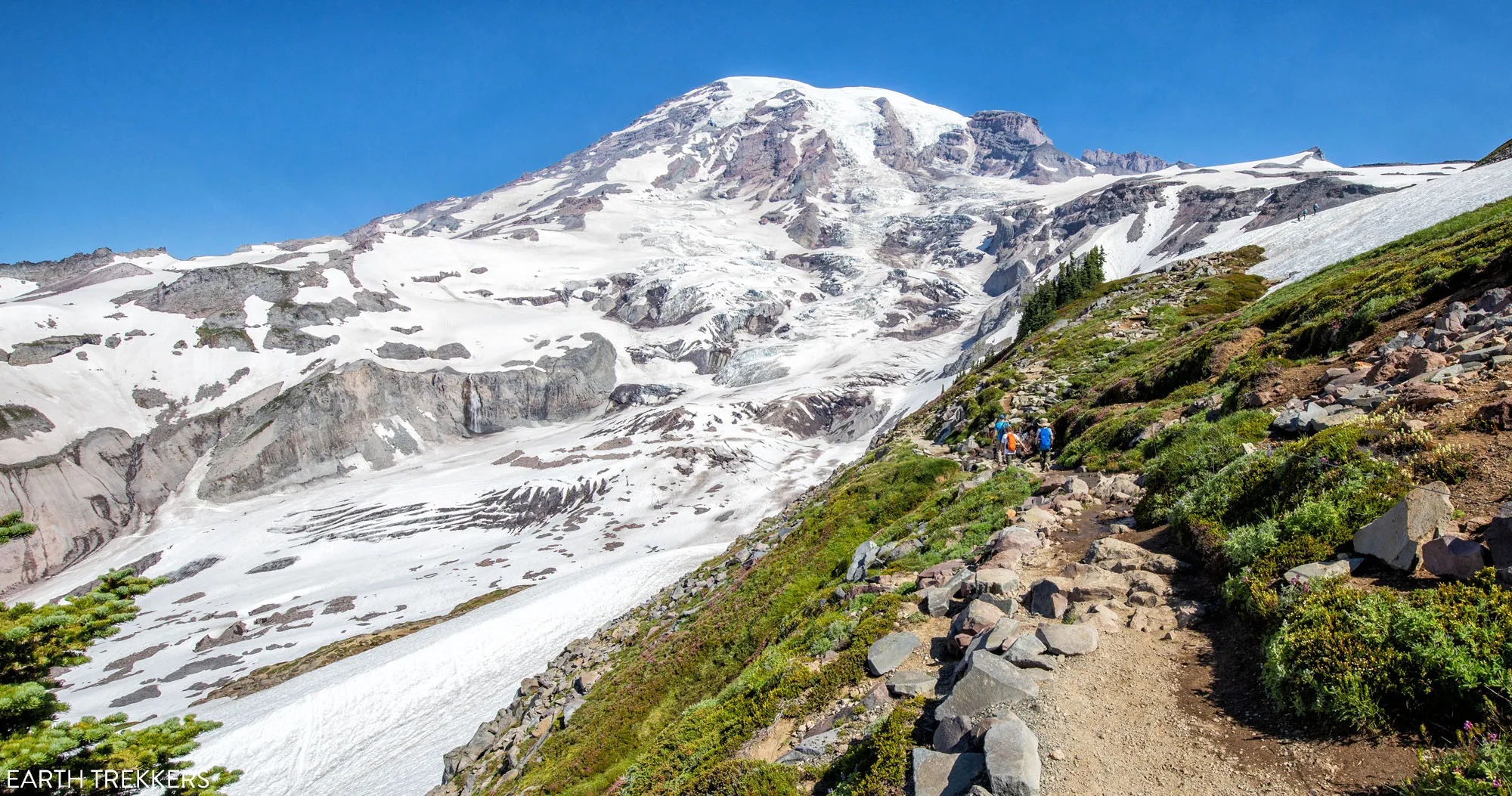
Discover the best things to do in Mount Rainier National Park, from iconic hikes like the Skyline Trail and Mount Fremont Fire Lookout to scenic viewpoints, waterfalls, and easy walks that are perfect for first-time visitors.
We’ve visited Mount Rainier National Park twice: once on a 6-day deep dive where we hiked trail after trail and explored every corner of the park, and again on a day trip from Seattle when we had just a few hours to work with. Both trips taught us something different about this place and together they shaped everything in this guide.
What surprised us most, especially on that first visit, is how accessible the best of this park really is. You don’t have to be a serious hiker to be completely blown away. Some of the most jaw-dropping views of Mount Rainier are just a short walk from the parking lot. But if you do want to push yourself, the longer trails here are among the best we’ve hiked in any national park in the country.
Below, we cover the best things to do in Mount Rainier National Park, drawn from both a week-long visit and a quick day trip, so whether you have one day or six, you’ll know exactly how to spend your time.
If you are planning a trip to the park, don’t miss our Mount Rainier National Park Travel Guide to see all of our articles.
The Essentials
LOCATION | Washington state
DON’T MISS | Skyline Trail, Sunrise and Paradise, Reflection Lake, Mount Fremont Fire Lookout
BEST AREA FOR FIRST TIMERS | Paradise (iconic views of Mount Rainier and easily accessible)
OUR FAVORITE VIEW | Crystal Mountain
BEST EASY WALK | Myrtle Falls
MINIMUM TIME | 1 day for the highlights; 3 to 4 days is ideal
BEST TIME TO VISIT | July through September
Things to Know Before Visiting Mount Rainier in 2026
2026 Construction Projects
There is a construction project planned for 2026 that may impact travel within the park, and some areas may have limited access. Ohanapecosh Campground is currently closed, which affects access to the Silver Falls Loop. It is expected to reopen in spring or early summer 2026. Before your visit, check the National Park Service website for the latest updates on road access and closures.
Timed Entry Permits
Timed entry permits will NOT be required for Mount Rainier in 2026. However, this could change in future years, so it’s still a good idea to check the National Park Service website before your visit.
Seasonal Road Closures
Many roads in Mount Rainier close during the winter and reopen in late spring or early summer.
Typical opening periods include:
- Sunrise Road: late June or early July to late September or early October
- Stevens Canyon Road: summer through early fall
- Chinook Pass & Cayuse Pass: generally Memorial Day through mid-November
Road opening dates vary each year depending on snowfall.
Mowich Lake Road Closure
Mowich Lake Road is closed to all vehicle, bicycle, and pedestrian traffic until further notice due to closure of the SR165/Fairfax Bridge. This is the road that leads into the Mowich Lake/Carbon River area of the park and the Tolmie Peak Fire Lookout.
This area of the park is inaccessible by car. The only way in is by backpacking the Wonderland Trail.
Check the official National Park Service website for the latest road status updates. You can also read about proposals to repair or replace the bridge on the WSDOTblog website.
Please practice the seven principles of Leave No Trace: plan ahead, stay on the trail, pack out what you bring to the hiking trail, leave areas as you found them, minimize campfire impacts, be considerate of other hikers, and do not approach or feed wildlife.
If You Only Do 5 Things in Mount Rainier National Park
We’ve spent a combined seven days in this park across two visits, and these are the five experiences we’d go back for without hesitation. If your time is limited, start here.
- Hike the Skyline Trail to Panorama Point. This is the best hike in the park, full stop. It’s so great that we did it twice, our first trip to Mount Rainier. The 6-mile loop out of Paradise takes you up onto the snowfields of Mount Rainier itself, with panoramic views of the Cascades that are hard to beat anywhere in the country.
- Hike to the Mount Fremont Fire Lookout. If the Skyline Trail is the most dramatic hike in the park, this one is the most quietly spectacular. We’ve also hiked this trail twice and it was the perfect way to experience the park on a day trip from Seattle. The 6-mile round trip from Sunrise ends at a historic fire lookout perched above the treeline, with Mount Rainier filling the entire horizon.
- Ride the Crystal Mountain Gondola. Not every highlight in this park requires a long hike. The gondola at Crystal Mountain takes you to the Summit House Restaurant, Washington’s highest elevation restaurant, where the outdoor patio has one of the best views of Mount Rainier you’ll find anywhere. Go on a clear day and bring a warm layer; it’s cold up there even in July.
- Stop at Reflection Lake. On a calm, clear morning, Mount Rainier reflects perfectly in the surface of this small lake just off Stevens Canyon Road. It’s a 10-minute drive from Paradise and takes almost no effort, but the photo opportunity is one of the most iconic in the park.
- Enjoy the view from Sunrise Point. The name isn’t a coincidence. Positioned on the final hairpin turn before you reach the Sunrise area, this overlook delivers an unobstructed view of Mount Rainier bathed in early morning light, with Mount Adams visible in the distance.
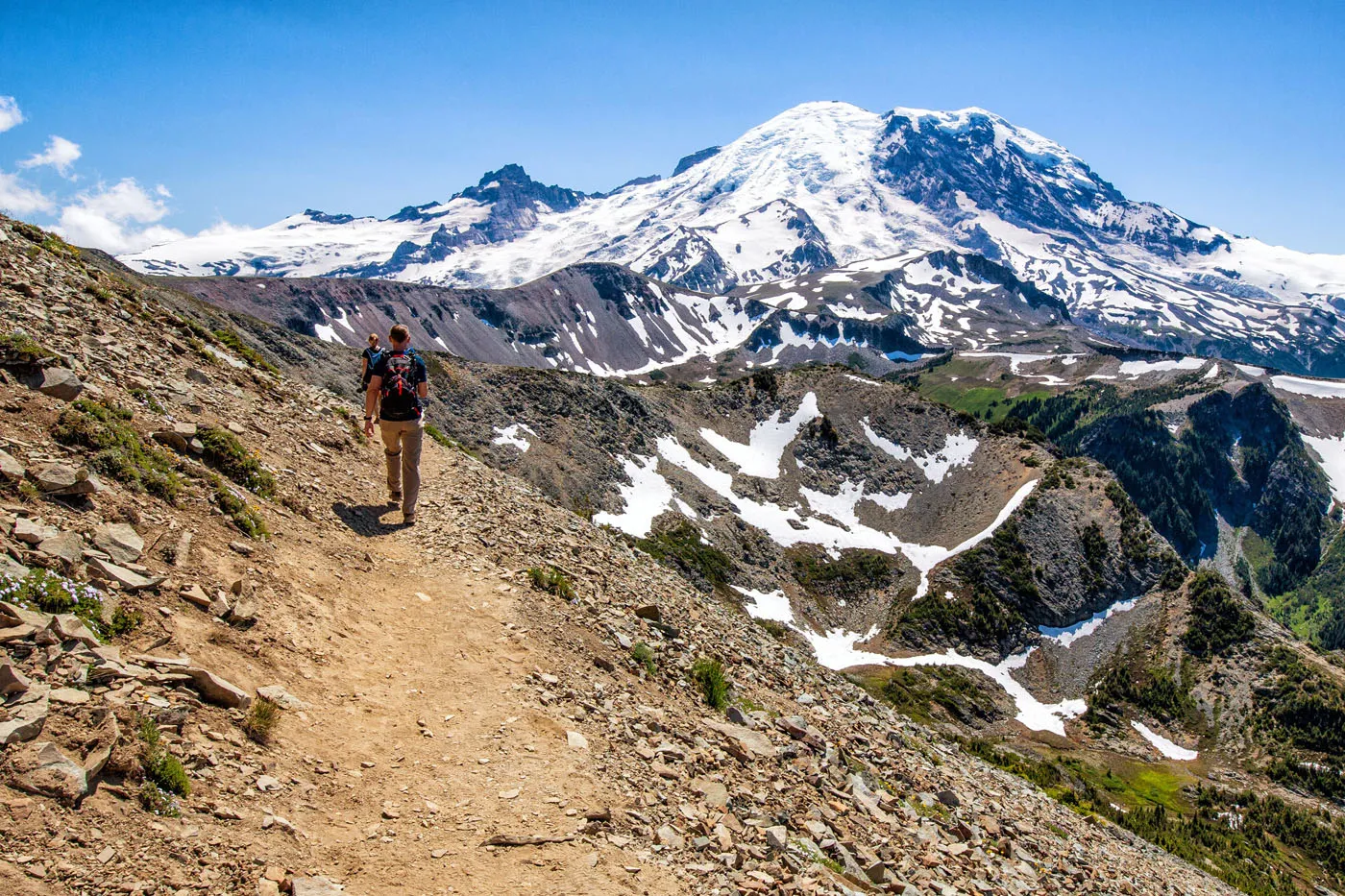
The view of Mount Rainier from the Mount Fremont Lookout Trail
What Makes Mount Rainier National Park Special?
Before you dive into planning, it helps to understand just how remarkable this mountain actually is.
At 14,411 feet, Mount Rainier is the tallest peak in Washington state and the most topographically prominent mountain in the entire contiguous United States. That last fact matters more than it sounds — it means the mountain rises higher above its surrounding terrain than any other peak in the lower 48. When you’re standing at Paradise or Sunrise looking up at it, that prominence is exactly what you feel. It doesn’t just sit among other mountains. It dominates everything around it.
We got our first glimpse of Rainier from the airplane as we descended into Sea-Tac, and it genuinely made us catch our breath. The mountain just appears out of nowhere above the clouds, enormous and white and completely alone on the horizon. Nothing prepares you for the scale of it.
Mount Rainier is also the most heavily glaciated peak in the contiguous United States, with 26 active glaciers that feed five major rivers. And yes — it’s an active volcano, considered one of the most potentially dangerous in the world due to the sheer volume of ice on its slopes and its proximity to the Seattle metro area. We found that detail oddly thrilling rather than alarming. It adds a layer to the experience that most national parks simply don’t have.
One more thing worth knowing: the mountain was called Tahoma by the Puyallup people long before European colonization, and there is an ongoing movement to restore that name — similar to the successful rename of Mount McKinley to Denali in 2015. It’s a conversation worth being aware of as you visit.
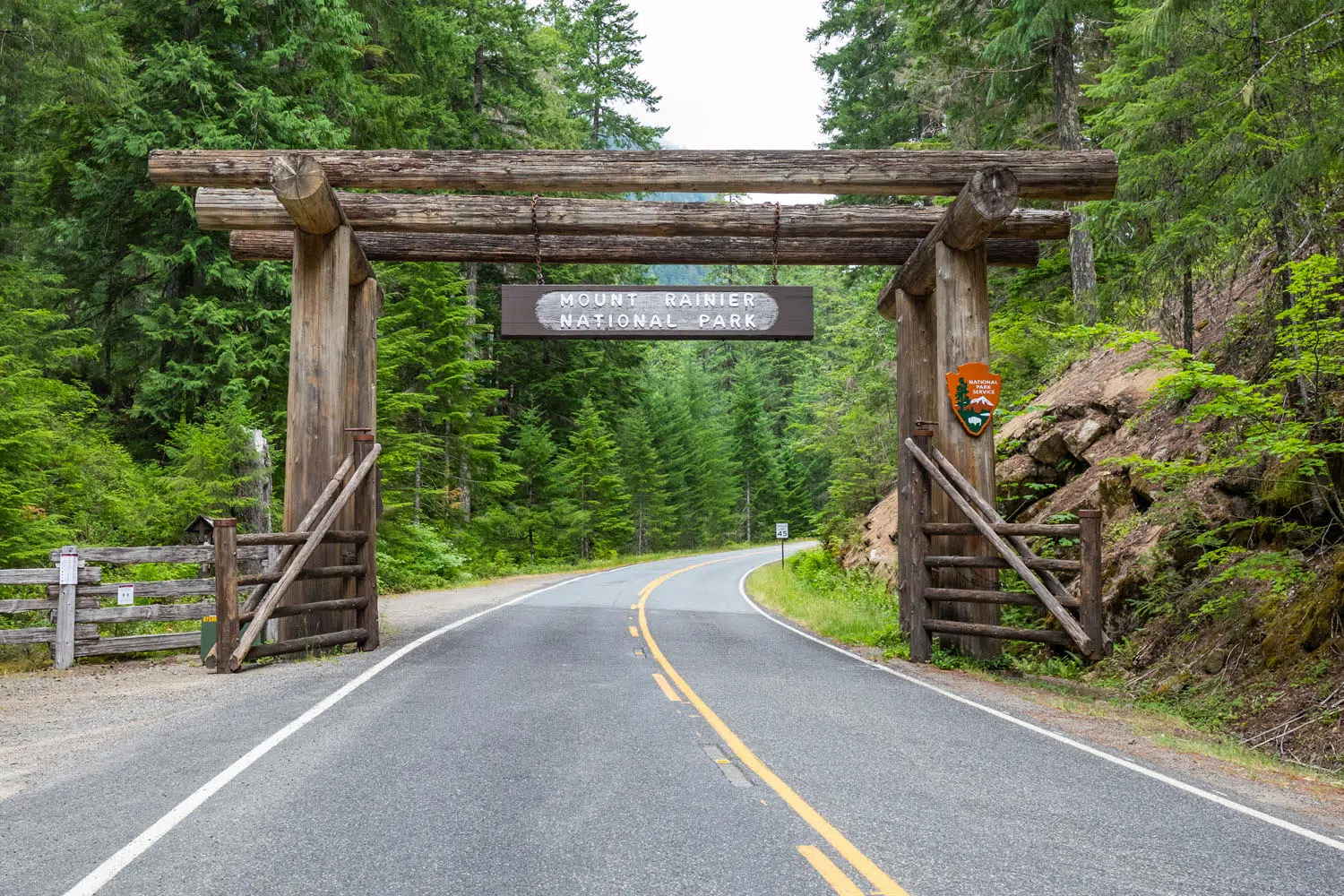
Mount Rainier National Park Entrance
Understanding the Layout of Mount Rainier National Park
Before we dive into the best things to do in Mount Rainier National Park, I think it helps to have a quick geography lesson.
Mount Rainier is located centrally within the national park. Due to its massive size, snow fields, and forested lower slopes, no roads cut across the center of the park. To visit Mount Rainier National Park, you will drive the roads that circumnavigate around the mountain and take the short access roads to get closer to Mount Rainier.
Below is a map of Mount Rainier National Park from the National Park Service. I labeled the main areas of the park where most visitors will spend their time.
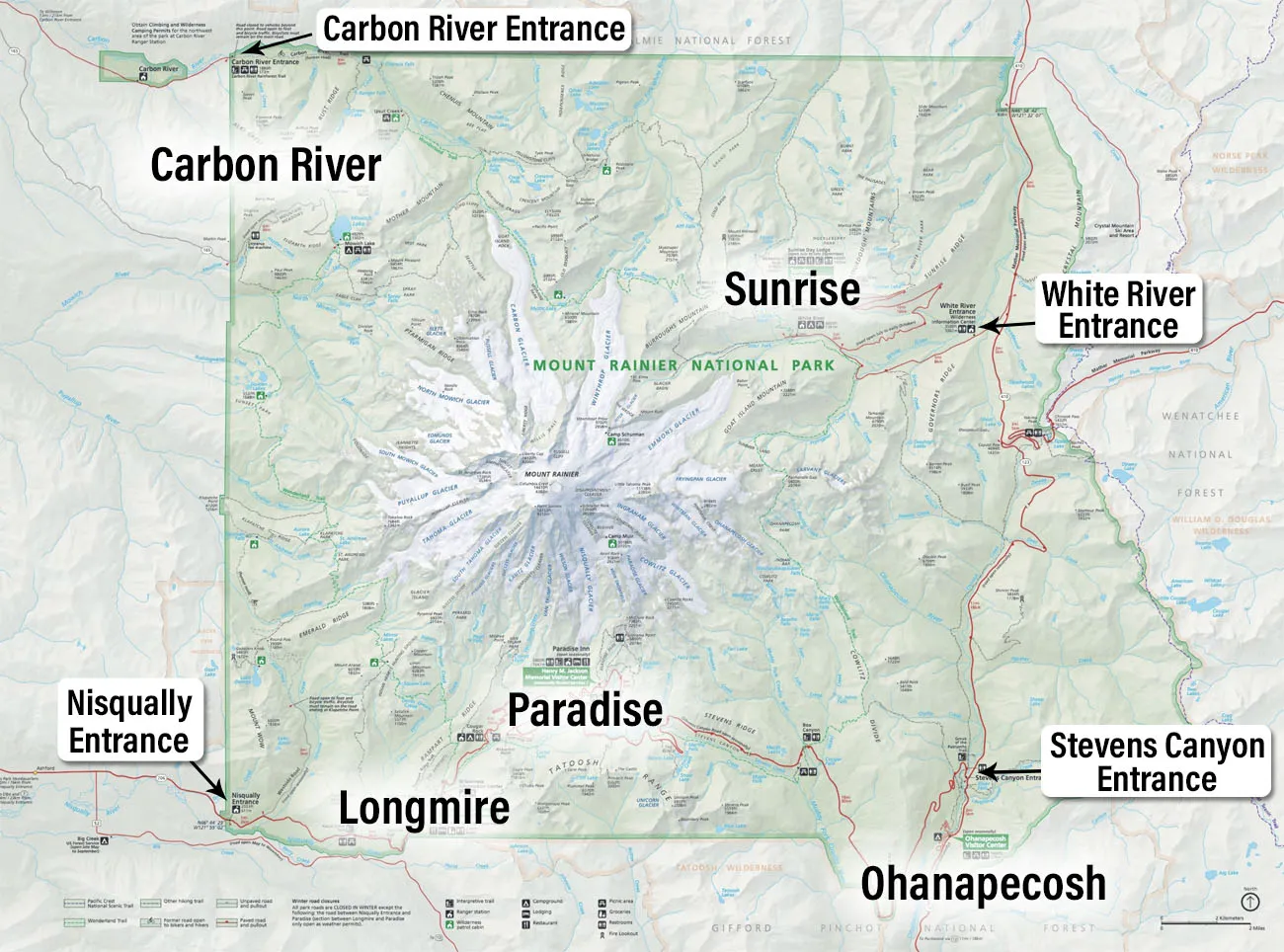
There are four entrances into the park: the Nisqually entrance (in the southwest), the Stevens Canyon entrance (in the southeast), the White River entrance (in the northeast), and the Carbon River entrance (in the northwest).
Paradise, which is located on the southern slopes of Mount Rainier, is one of the most heavily visited areas of the park. Numerous hiking trails are found here, including the spectacular Skyline Trail, and nearby, you can also hike to numerous lakes and waterfalls.
Longmire, which is located just west of Paradise, is now a historic district as this was once the gateway into to the park.
At Ohanapecosh, which is on the southeastern corner, you are tucked away in the ancient forests. A visit here isn’t so much about big views of Mount Rainier. Instead, you can walk through forests of trees that are hundreds of years old.
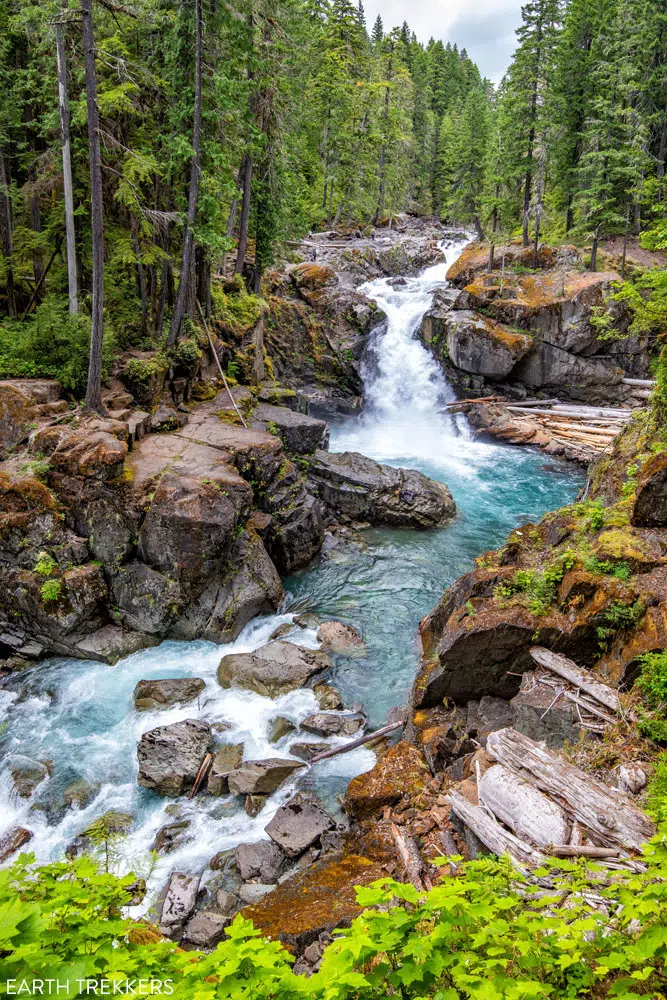
Silver Falls in Ohanapecosh
Highways 123 and 410, which run along the east side of the park, come together to create a beautiful scenic drive with great views of Mount Rainier.
Sunrise is similar to Paradise (don’t you just love the names?), with amazing views of Mount Rainier and a multitude of hikes to choose from, depending on your activity level.
Finally, the northeastern quadrant of the park, with the Carbon River, lakes and fire lookouts, is one of the quietest areas of Mount Rainier National Park to visit. It is more remote, so if you like the idea of hiking a quieter trail, it’s worth the extra time to get here.
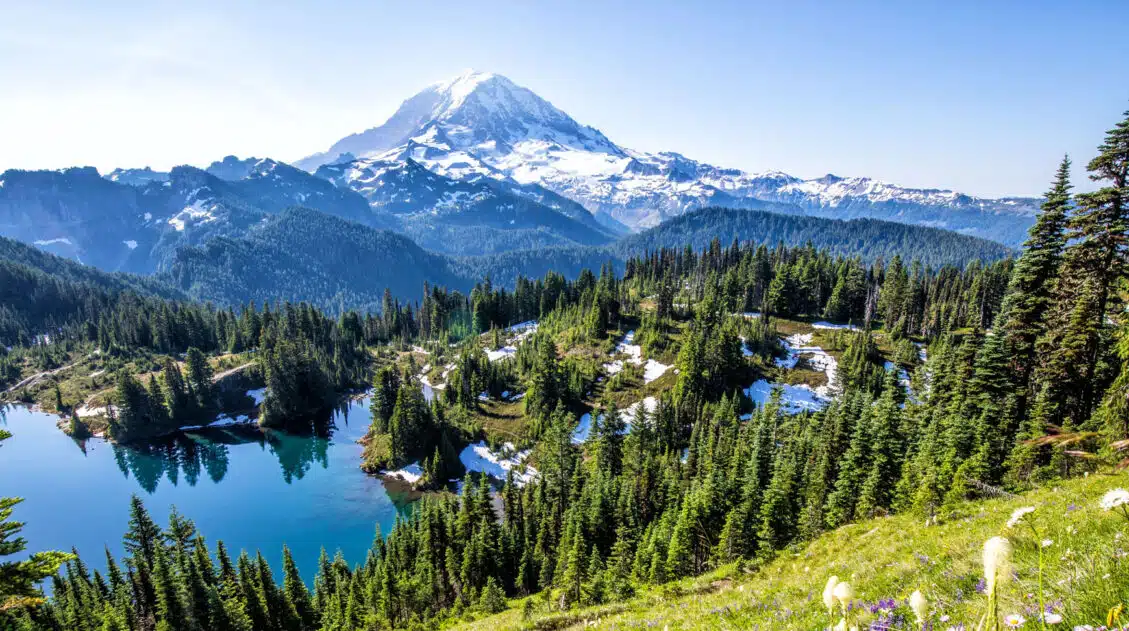
Best Things to Do in Mount Rainier National Park
Below are the best things to do in Mount Rainier National Park, from iconic hikes and scenic viewpoints to waterfalls, alpine lakes, and unforgettable viewpoints of the mountain. Some of these experiences take just a few minutes, while others involve longer hikes, but all of them showcase what makes Mount Rainier one of the most spectacular national parks in the United States.
1. Spend Some Time in Paradise
Paradise definitely lives up to its name. Situated on the southern slopes of Mount Rainier at around 5,400 feet, this is the most visited area of the park, and once you arrive, it’s easy to understand why.
When we pulled into the Paradise parking lot on a clear morning in late July, the scene was almost overwhelming: wildflowers blanketing the slopes in every direction, waterfalls cascading off the snowfields above, and Mount Rainier looming so close it felt like you could reach out and touch it. It’s one of those places that genuinely exceeds expectations.
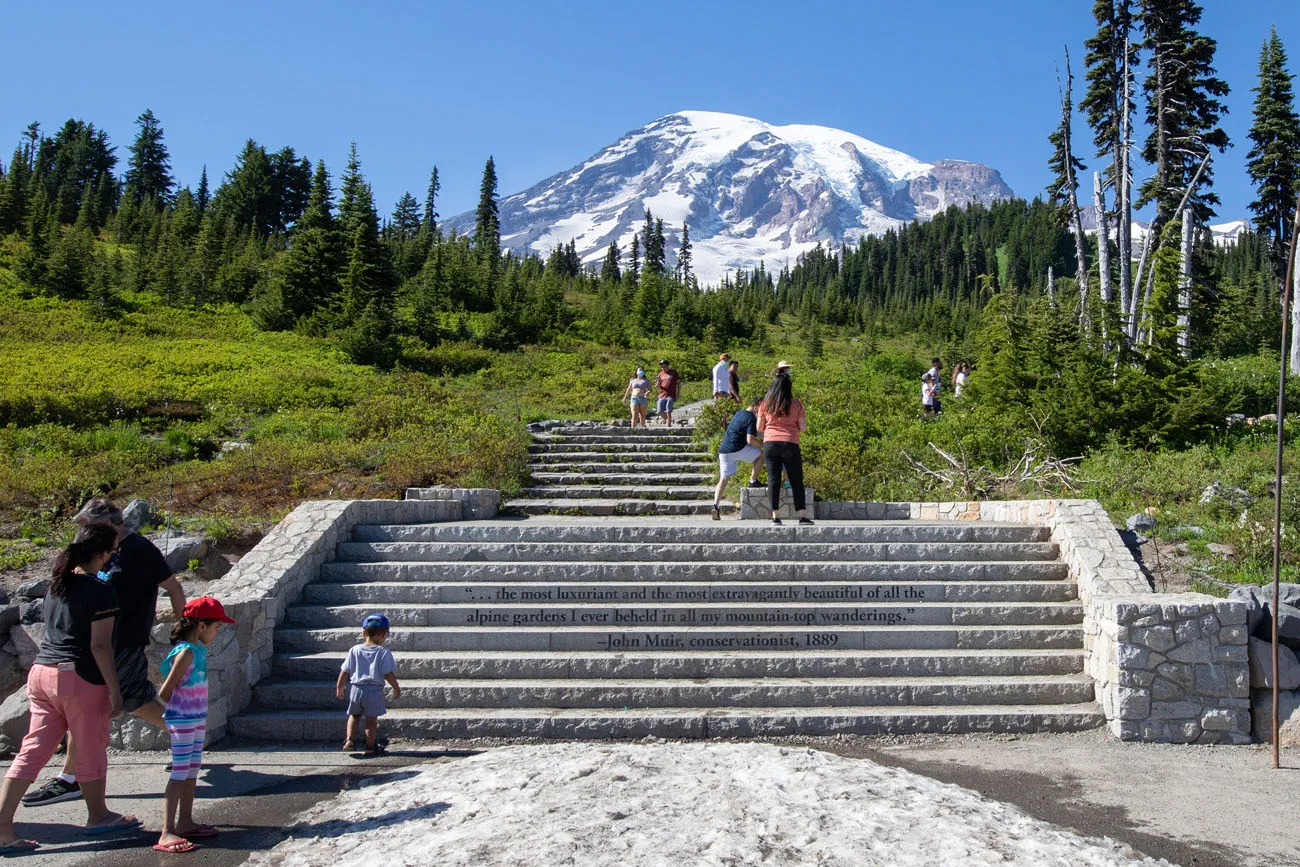
Paradise
A word on timing: Paradise gets crowded fast. We recommend arriving by 9am at the latest in summer, both to beat the crowds and to catch the morning light on the mountain. By midday, the parking lot is often full and the main trails get busy.
Our recommended way to spend a day here: start with brunch at the Paradise Inn, then head straight up the Skyline Trail to Panorama Point while your legs are fresh. The afternoon is perfect for the shorter, easier stops nearby. Narada Falls, Reflection Lake, and Snow Lake are all within a short drive.
For the trails themselves, the shorter options like the Alta Vista Trail (1.7 miles) and Nisqually Vista Trail (1.2 miles) offer solid views with relatively little effort. They are good choices if you’re hiking with kids or want something relaxed.
Paradise is also the location of the Skyline Trail to Panorama Point (and the next entry on our list).
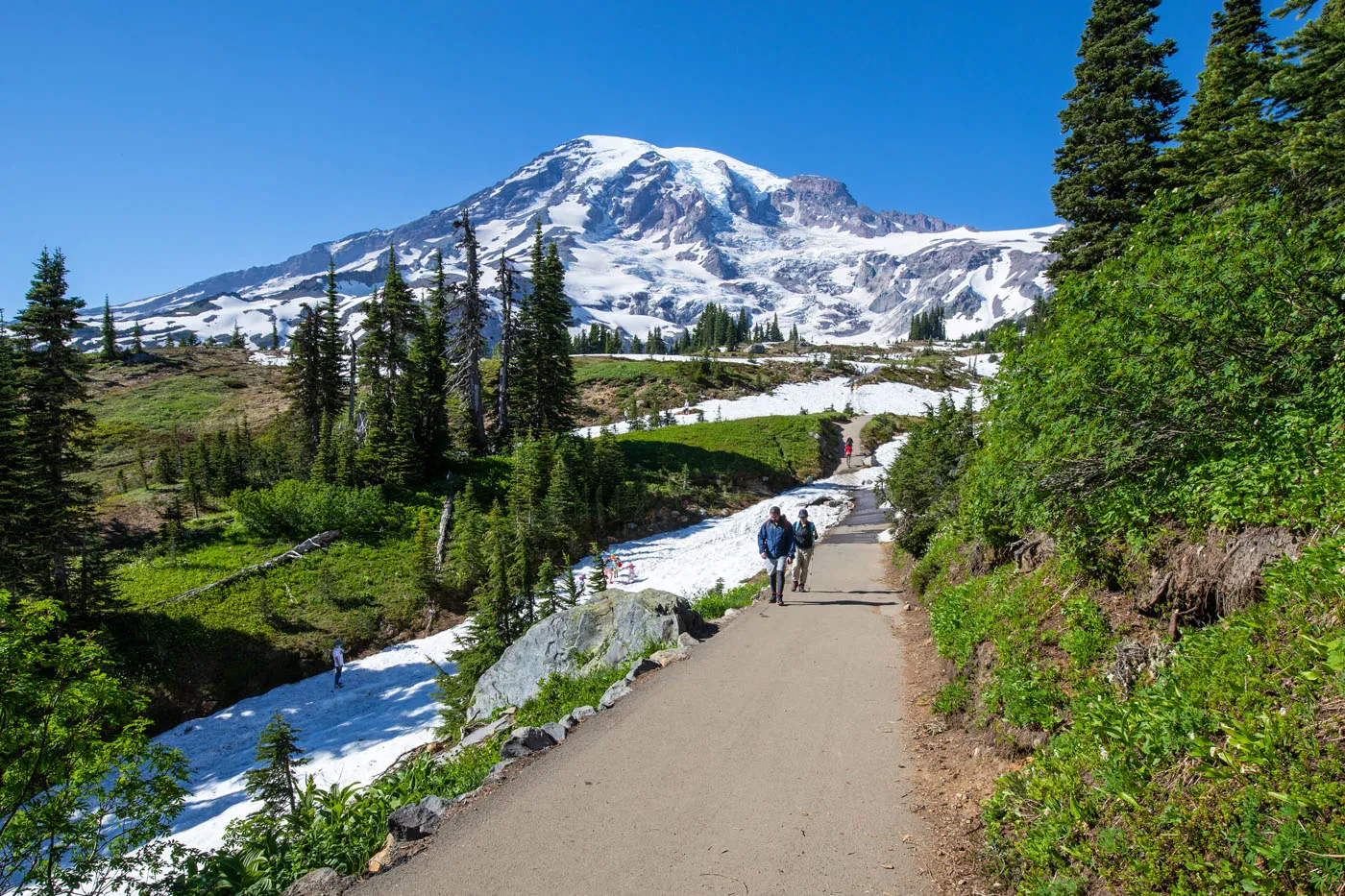
The start of the Skyline Trail in Paradise
2. Hike the Jaw-Dropping Skyline Trail Loop
If you only do one hike in Mount Rainier National Park, make it the Skyline Trail.
This spectacular loop begins in the Paradise area and climbs through wildflower-filled meadows, past waterfalls, and up to Panorama Point for sweeping views of Mount Rainier and the surrounding Cascade Range.
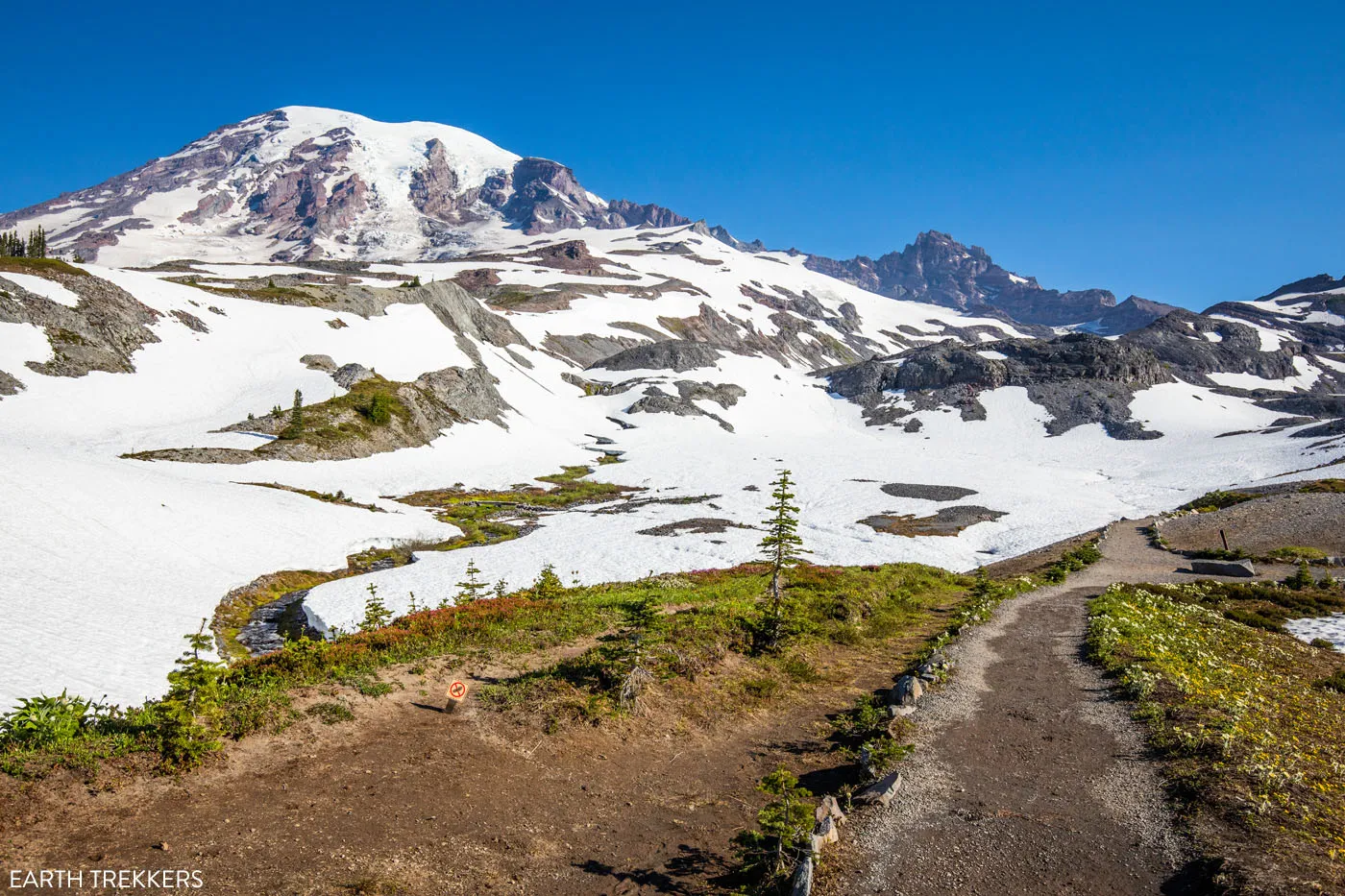
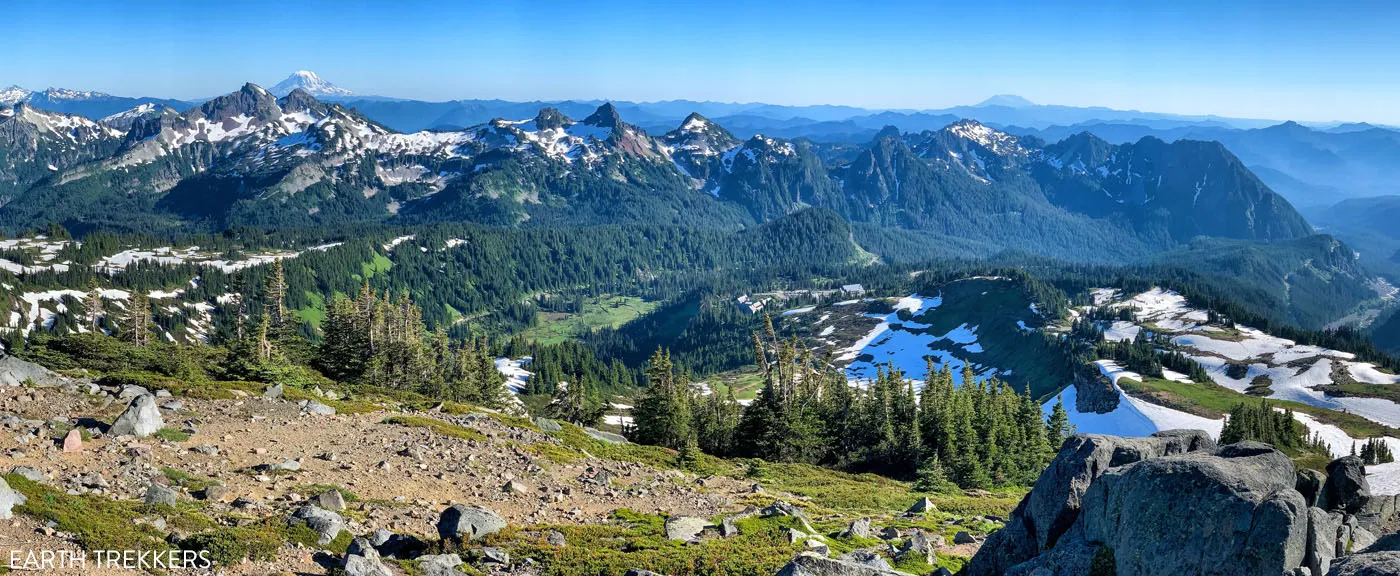
The view of Paradise from the Skyline Trail
Along the trail, you’ll get incredibly close views of the mountain, with glaciers and snowfields towering above you.
The Skyline Trail is about 6 miles long and typically takes 3 to 4 hours to complete. While the climb to Panorama Point is moderately strenuous, the views along the way make every step worth it.
This hike is done as a loop. We’ve done it twice, hiking the trail in both directions. In our guide to the Skyline Trail Loop, we cover which direction is best, plus provide more photos, a map, and a step-by-step trail guide.
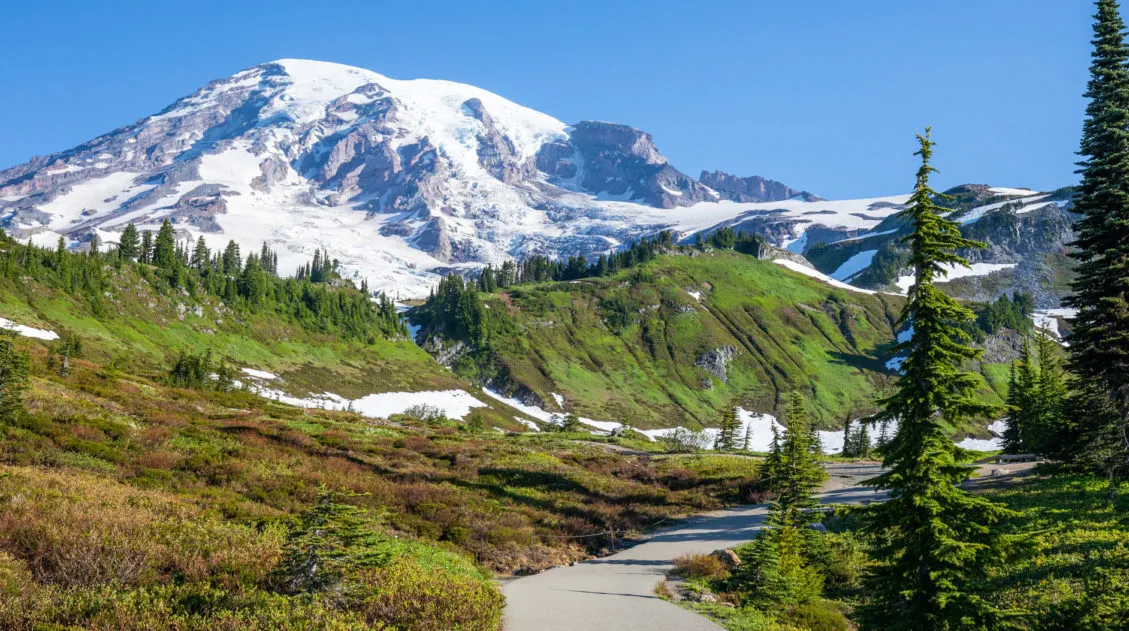
3. Visit Myrtle Falls
For one of the prettiest and easiest viewpoints in Mount Rainier National Park, put the short walk to Myrtle Falls on your list.
Located in the Paradise area, this 1-mile round-trip walk leads to a beautiful waterfall with Mount Rainier rising in the background. It’s one of the most photographed spots in the park and a great option if you want a spectacular view without a long hike.
Take the staircase down to the viewpoint for this view:
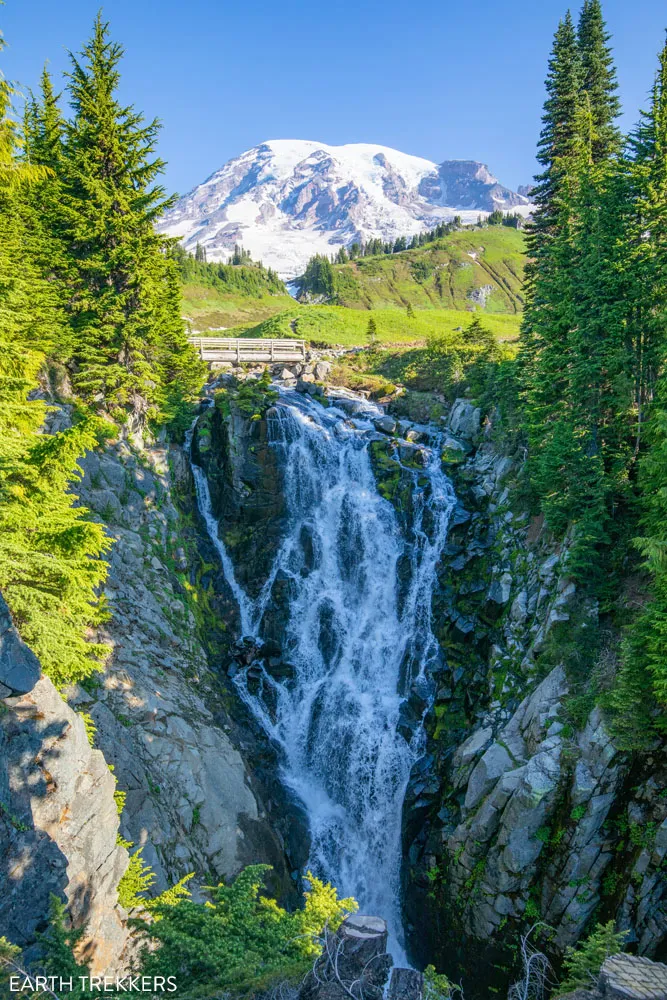
Myrtle Falls
Then walk to the bridge that crosses Edith Creek for this view:
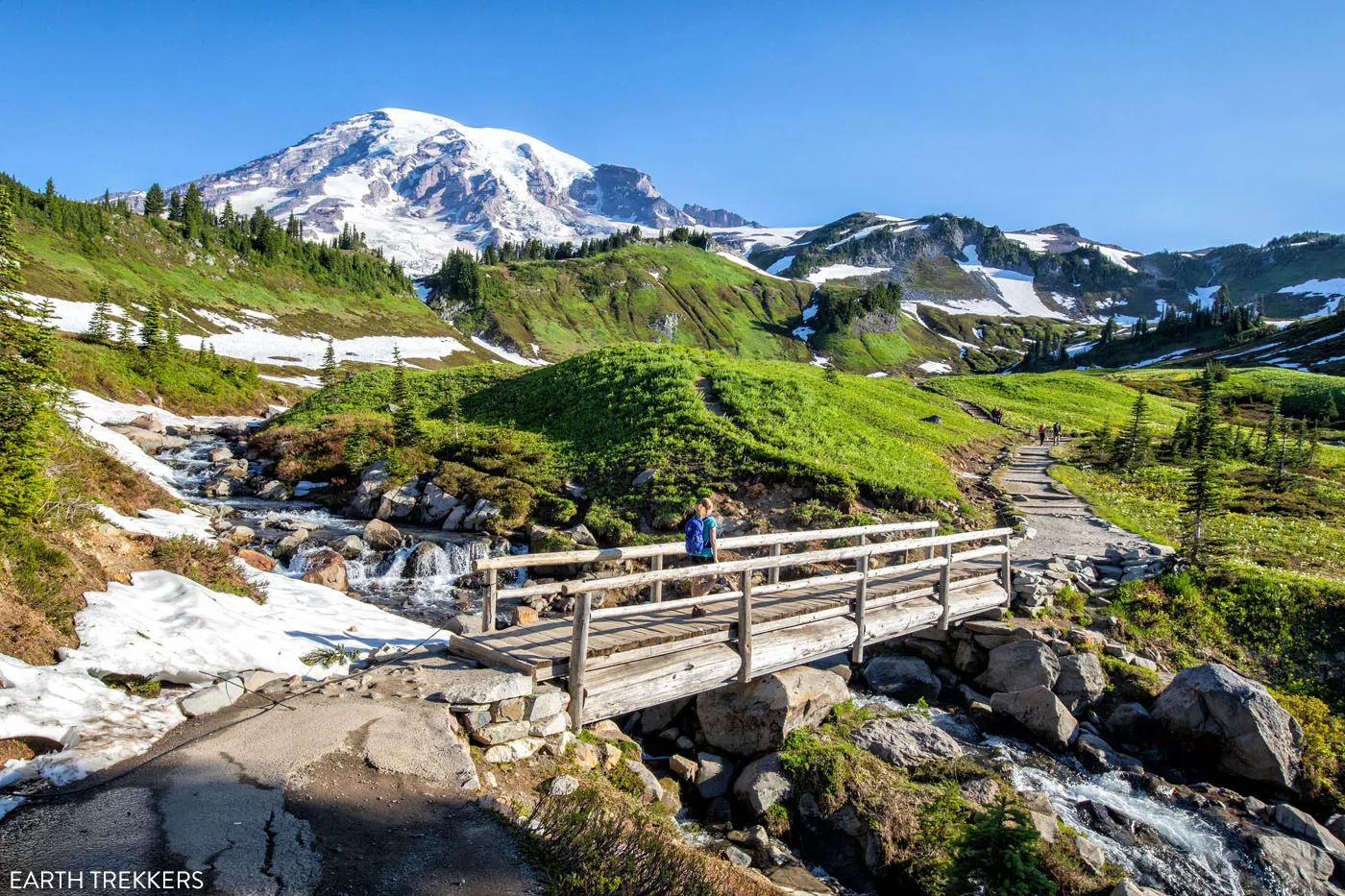
GOOD TO KNOW: If you have plans to hike the Skyline Trail, you’ll go right past this viewpoint.
4. Have Brunch at the Paradise Inn
If you want a break from hiking while still enjoying incredible views of Mount Rainier, consider stopping for brunch at the Paradise Inn.
Built in 1916, the Paradise Inn is one of the most historic buildings in Mount Rainier National Park. The massive stone fireplace, rustic wood beams, and cozy lodge atmosphere make it feel like stepping back into the early days of the national parks.
The restaurant serves breakfast, lunch, and dinner, but brunch is a particularly nice treat after a morning hike in the Paradise area. Grab a table near the windows and enjoy views of Mount Rainier while you refuel.
After brunch, you can continue exploring the Paradise area by hiking the Skyline Trail, walking to Myrtle Falls, or visiting nearby Reflection Lake.
5. Take a Photo at Reflection Lake
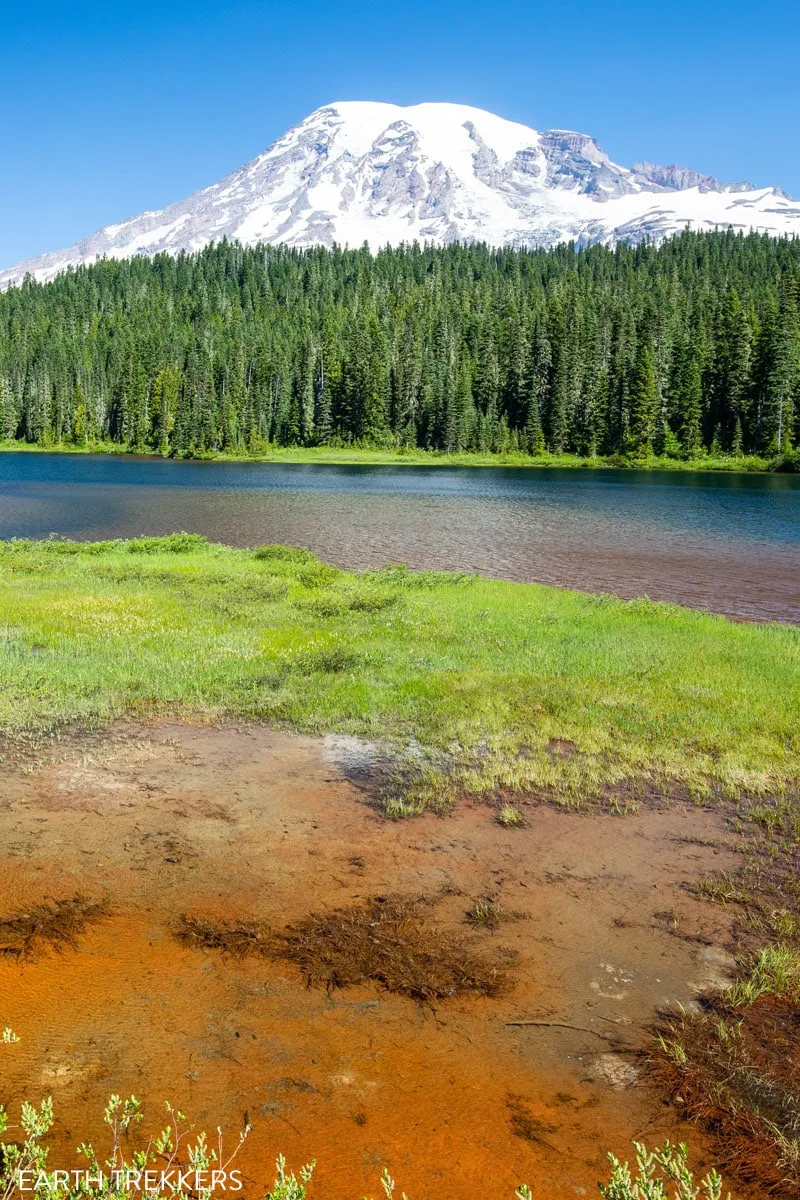
Reflection Lake is one of the most famous photo spots in Mount Rainier National Park. On calm days, Mount Rainier reflects perfectly in the water, creating one of the most iconic views in the park.
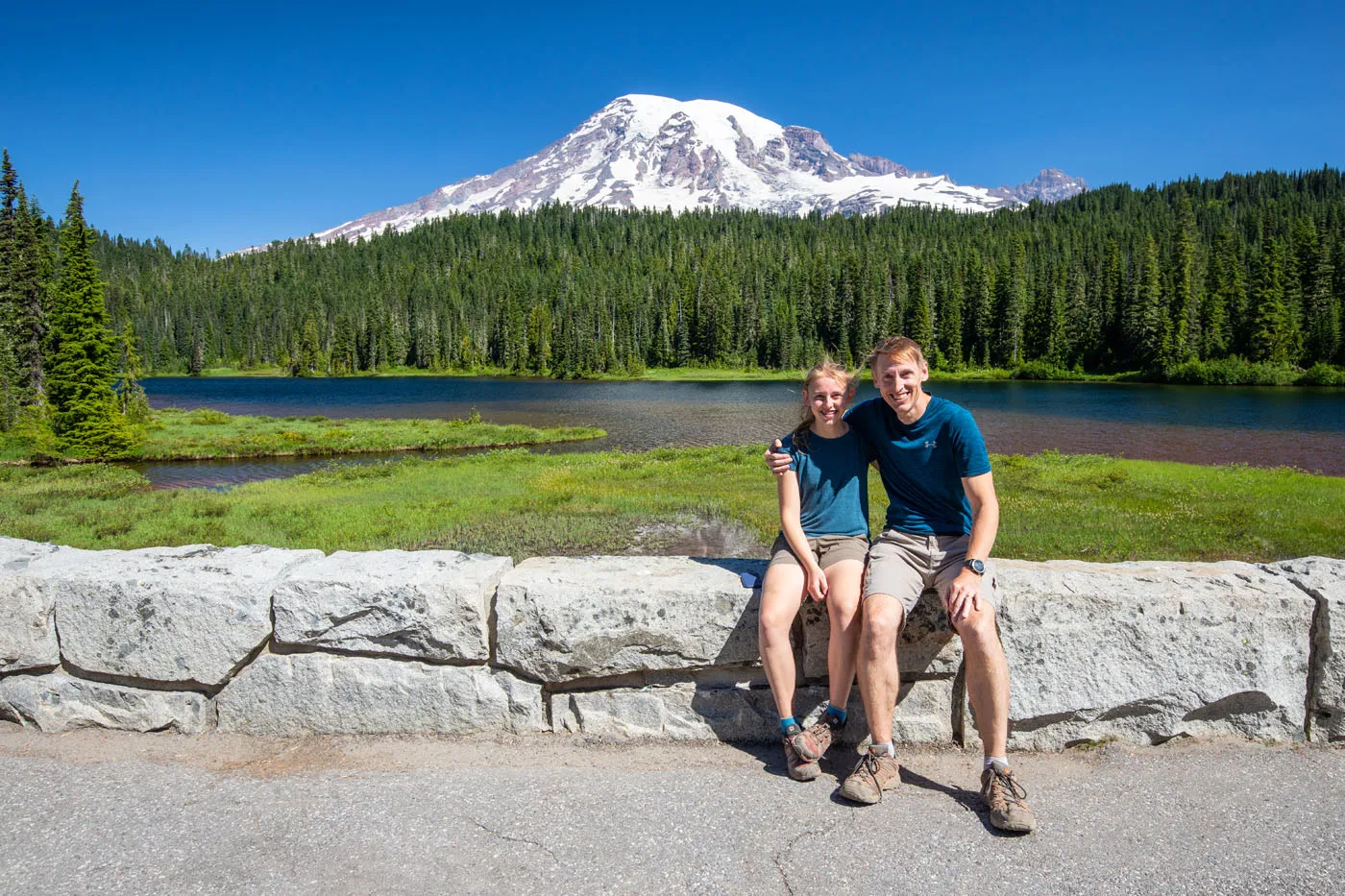
The lake sits just a short drive from Paradise along Stevens Canyon Road and is an easy stop while exploring the Paradise area. A small parking area sits right next to the lake, making this one of the easiest places in the park to enjoy a spectacular view of Mount Rainier.
For the best reflections, visit early in the morning or in the evening, when the water is calmer and the lighting is softer.
Reflection Lake is also a great starting point for the Bench and Snow Lakes hike, a short trail that leads to two beautiful alpine lakes.

6. See Narada Falls
Narada Falls is one of the most impressive and easiest-to-visit waterfalls in Mount Rainier National Park. Located along the road between Paradise and Longmire, it’s a quick and worthwhile stop while exploring the park.
From the parking area, it’s a short but steep walk (about 0.2 miles round trip) down to the main viewpoint. From here, you can watch the powerful waterfall plunge more than 150 feet into the rocky canyon below.
Narada Falls is also a great stop to combine with nearby sights in the Paradise area, such as Reflection Lake, Myrtle Falls, and the Skyline Trail.
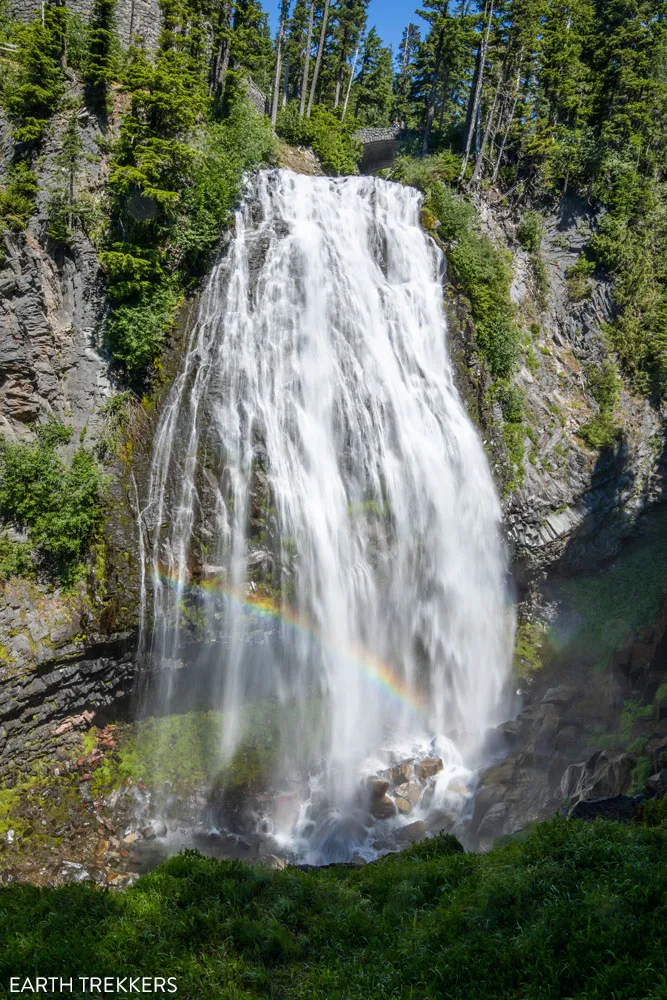
Narada Falls
7. Visit Longmire Historic District
Longmire was once the main gateway into Mount Rainier National Park and today it is designated as a National Historic District. Located between the Nisqually entrance and Paradise, it makes a convenient stop while driving into the park.
This area was originally developed in the early 1900s, and several historic buildings still remain today. The Longmire Museum, which was once the park’s headquarters, now offers exhibits about the early history of Mount Rainier and the people who helped establish the park.
From Longmire you can also take a short walk on the Trail of the Shadows, an easy loop trail that passes bubbling mineral springs and historic cabins.
GOOD TO KNOW: Longmire sits at a much lower elevation than Paradise or Sunrise, so it often has less snow and a longer visiting season, making it one of the few areas of the park that remains accessible in winter.
8. Visit Sunrise for More Great Views of Mount Rainier
Sunrise is one of the most spectacular places to visit in Mount Rainier National Park. At 6,400 feet, it is the highest point in the park that you can reach by car, and the views of Mount Rainier from here are incredible.
From Sunrise, you get a close-up view of the mountain along with sweeping views of the surrounding Cascade Range. On clear days, you can even see several other volcanoes in Washington, including Mount Adams.
We love Sunrise. This was the area of the park we visited on our first day in Mount Rainier and what an introduction! I sound like a broken record, but again, the views of Mount Rainier from here are spectacular. And if you hike, even just a little bit, the view gets even better.
On our second trip to the park, when picking out which area to visit, Sunrise was the winner. The views plus the easy hiking trails here make this a great spot for new hikers, families, and those who want to get in a walk, without it being overly strenuous.
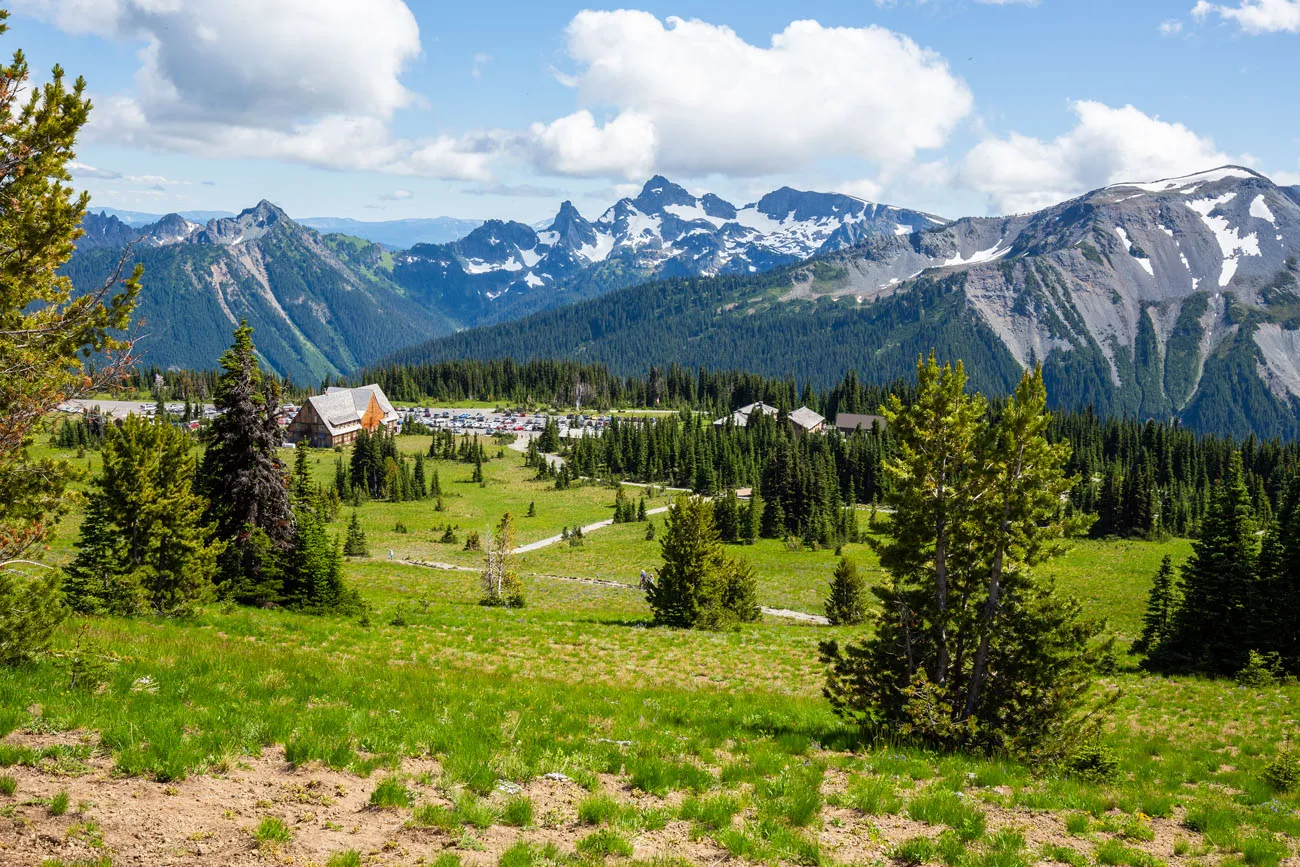
Sunrise
Hiking the Mount Fremont Lookout Trail
Sunrise is a fantastic starting point for hiking. Short trails like the Sunrise Nature Trail and Sourdough Ridge Trail offer big views with minimal effort, while longer hikes such as the Mount Fremont Fire Lookout Trail lead to some of the most spectacular viewpoints in the park.
In addition to hiking trails, Sunrise has a visitor center, lodge, gift shop, and food services, making it one of the most convenient places in the park to spend a few hours.
GOOD TO KNOW: Sunrise Road is typically only open from late June or early July through late September or early October, depending on snowfall.
9. Hike to the Mount Fremont Fire Lookout
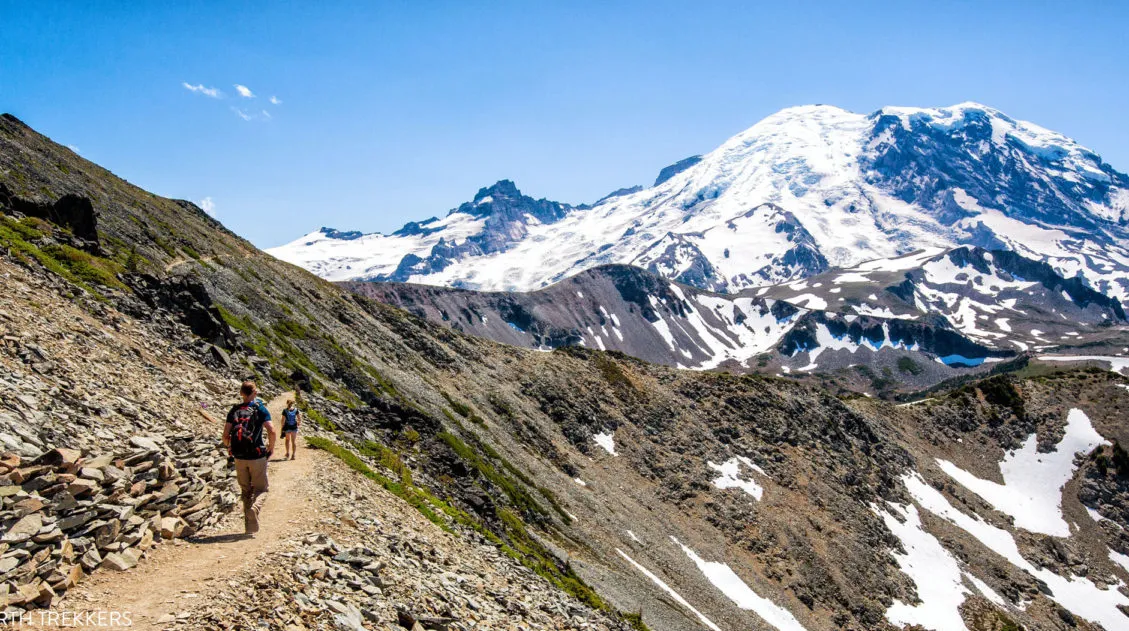
The Mount Fremont Lookout Trail is our favorite hike in Sunrise. It’s the biggest bang for your buck in this part of the park: an easy to moderate hike with views of Mount Rainer that will blow you away.
This trail begins near the Sunrise Visitor Center and follows the Sourdough Ridge Trail before branching off toward the historic fire lookout.
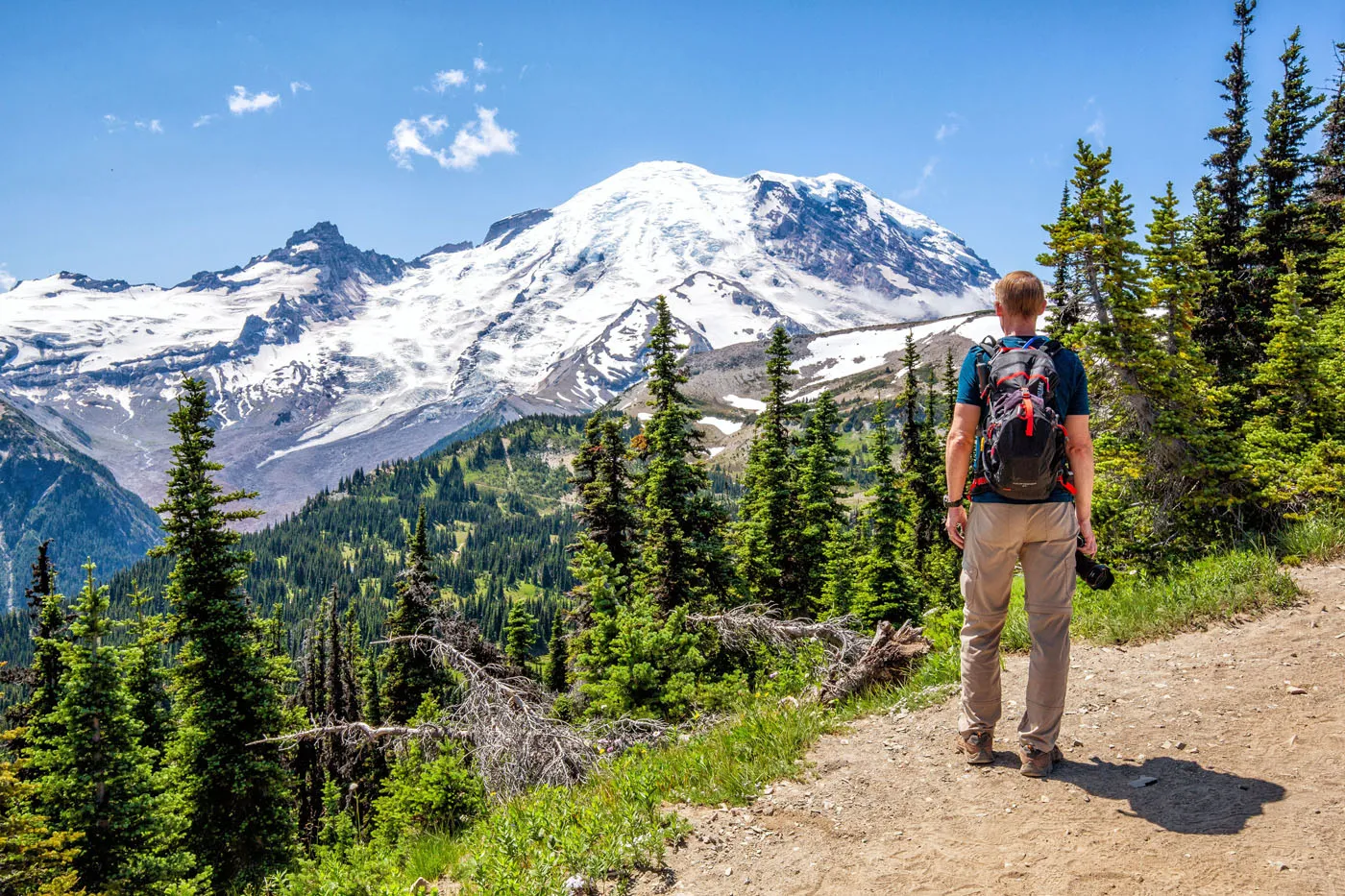
The view of Mount Rainier from the Sourdough Ridge Trail
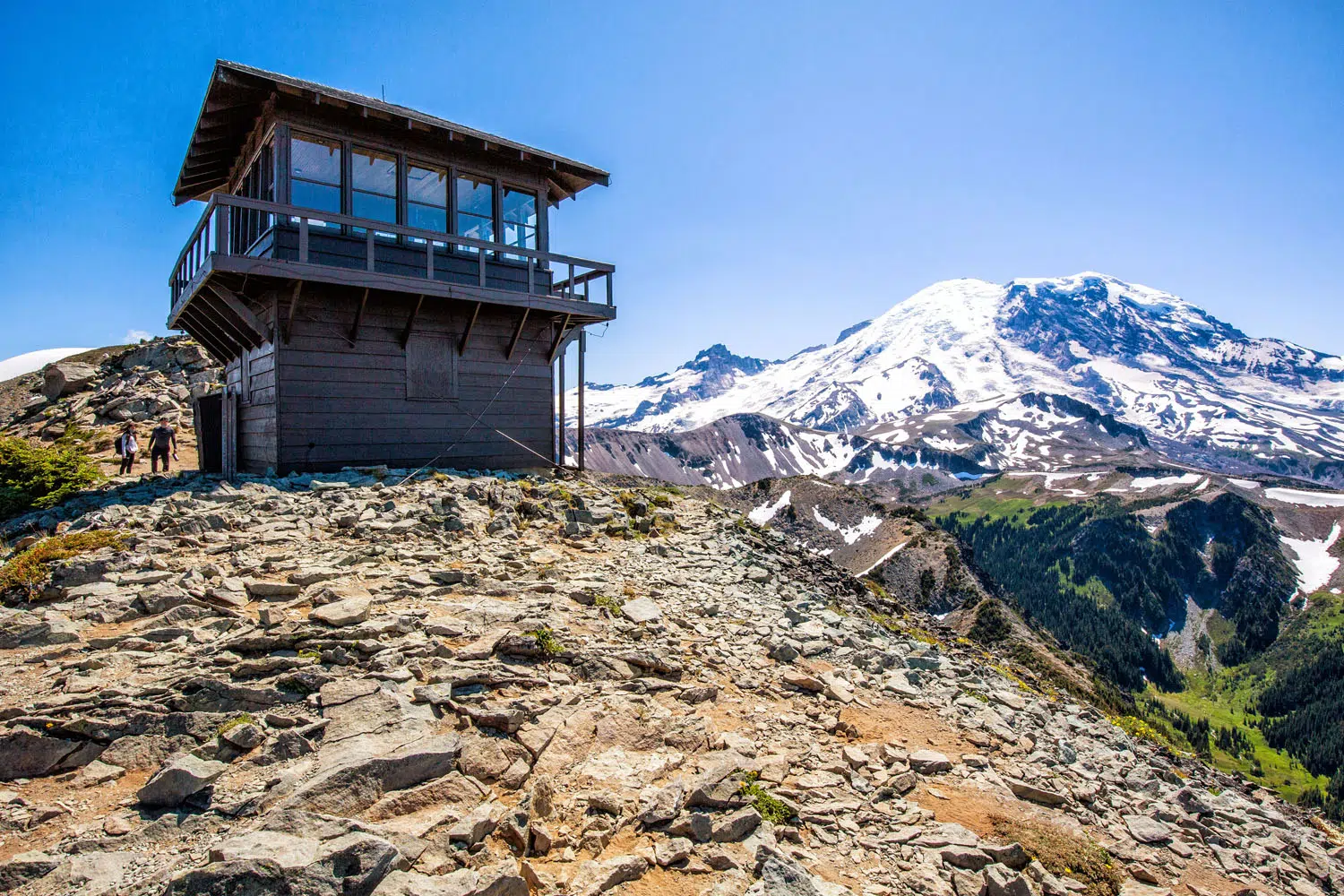
Mount Fremont Fire Lookout
The highlight of the hike is the Mount Fremont Fire Lookout, a historic structure perched on a ridge with sweeping views in every direction. From here you can see Mount Rainier up close, along with distant volcanoes like Mount Baker and Glacier Peak on clear days.
The hike is about 6 miles round trip and is moderately difficult, but the elevation gain is gradual and the incredible scenery makes it well worth the effort.
Keep an eye out for marmots and mountain goats, which are commonly spotted along this trail.
For step-by-step trail details, photos, and a map, read our full guide to the Mount Fremont Fire Lookout Trail.
10. Ride the Mount Rainier Gondola to Crystal Mountain
This is one of the best things to do in Mount Rainier if you want jaw-dropping views with very little effort.
We’ve seen this mountain from dozens of angles across two visits, from trail summits, from lakesides, from scenic overlooks, and the view from Crystal Mountain is genuinely among the best. There’s something about seeing the full mass of the mountain from this elevation, with nothing between you and it, that feels different from anything you get on the trails.
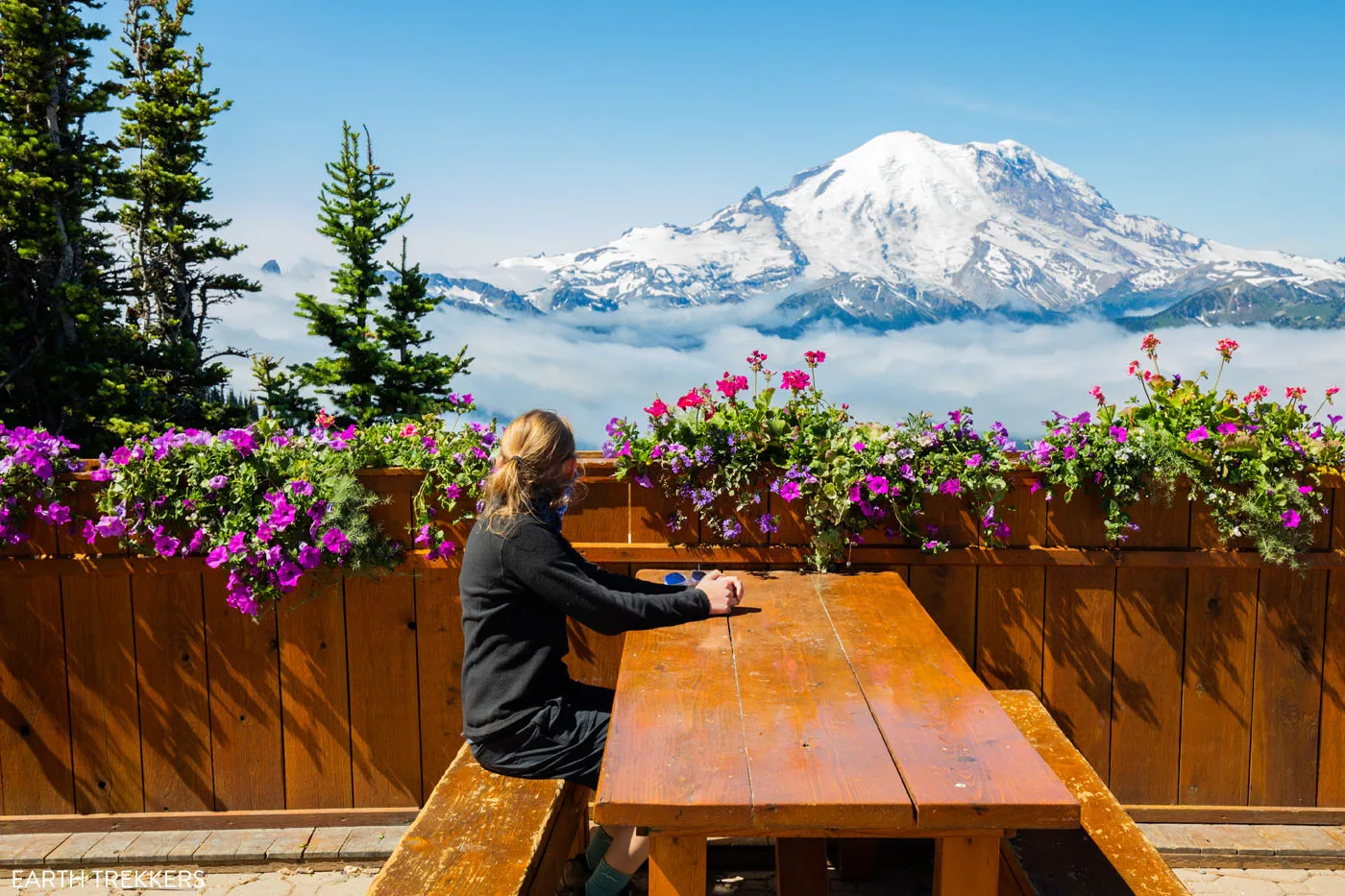
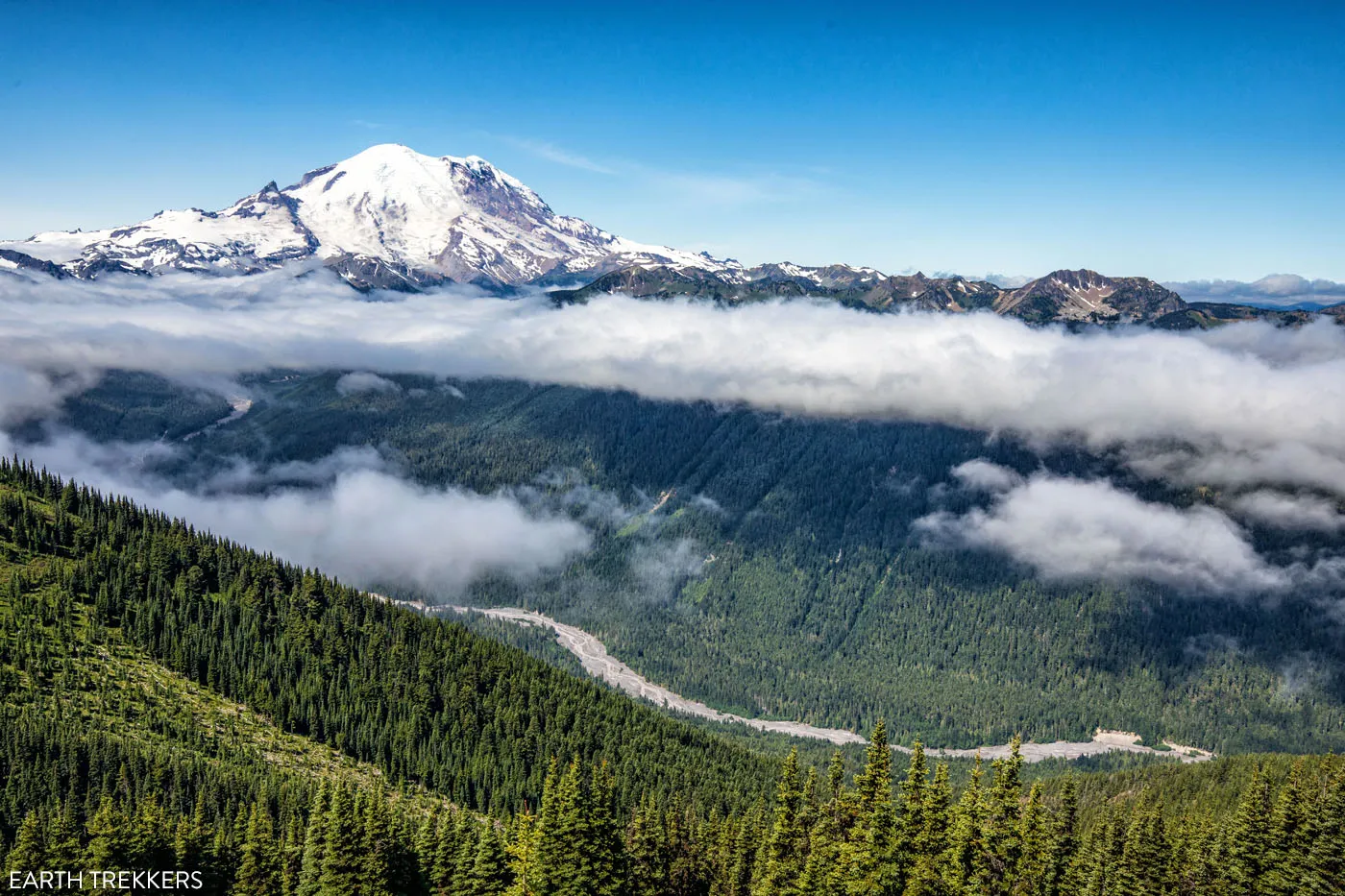
View of Mount Rainier from Crystal Mountain
The Summit House Restaurant sits right at the top, making it Washington’s highest elevation restaurant. We loved it up here. Grab a table on the outdoor patio if the weather allows, eating lunch with that view in front of you is one of those simple travel experiences you end up talking about for years. The food is good, but honestly this experience is more about the view than the meal.
A few practical notes: go on the clearest day you can manage, because clouds can roll in quickly and obscure the mountain entirely. Even on a warm summer day, bring an extra layer, it’s significantly colder at the summit than in the valley. And check the resort’s website for current gondola hours and pricing before you go, as these vary by season.
11. Cayuse Pass & Chinook Pass
Driving Chinook Pass and Cayuse Pass is one of the most scenic experiences near Mount Rainier National Park. This beautiful stretch of road runs along the eastern side of the park and offers sweeping views of Mount Rainier and the surrounding Cascade Mountains.
The Cayuse Pass is located at the junction of SR 123 and SR 410 and has an elevation of 4,675 feet. It is here that the road twists and turns up to Tipsoo Lake.
The Chinook Pass, at 5,430 feet, is located 3 miles east of the Cayuse Pass on SR 410.
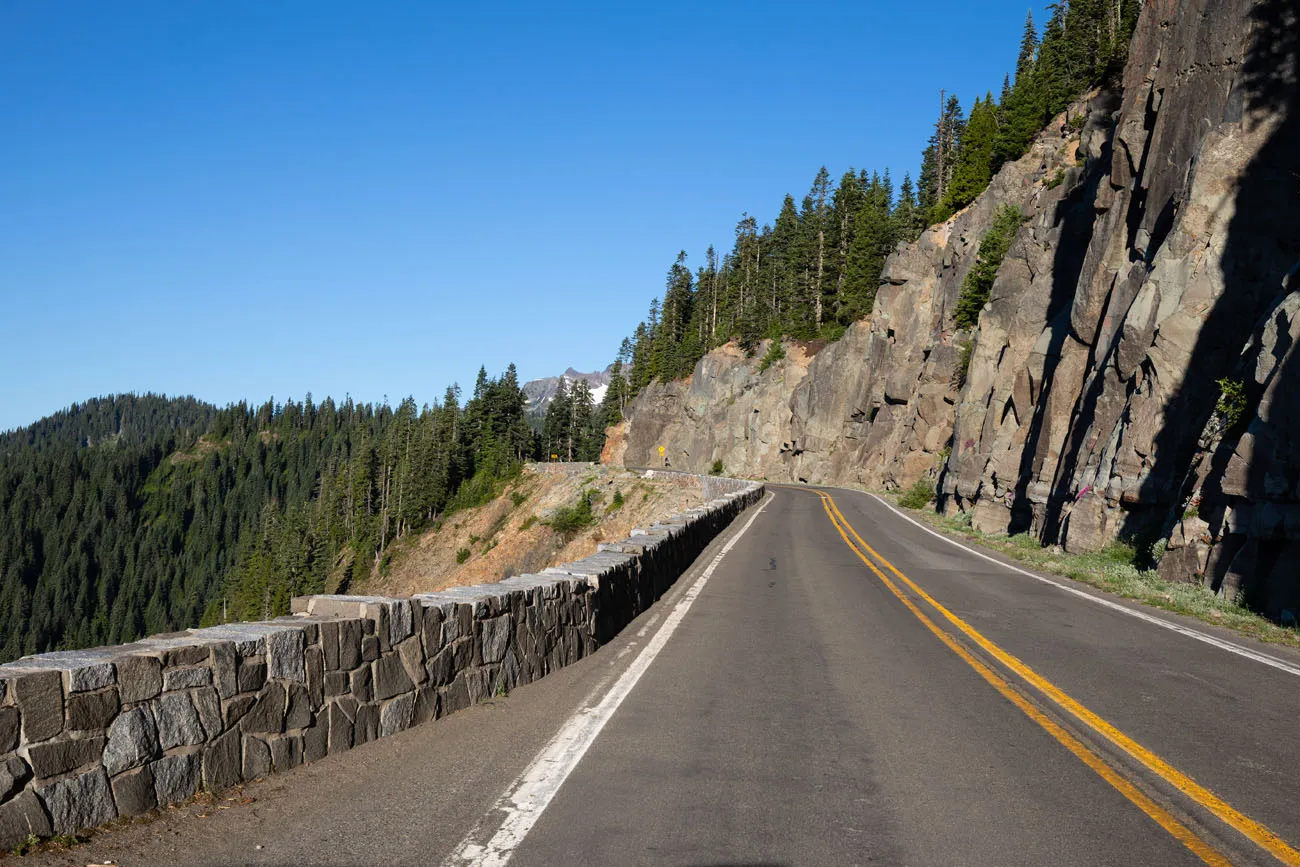
Chinook Pass
One of the best stops along the drive is Tipsoo Lake, a small alpine lake that sits just below Chinook Pass. On calm days, Mount Rainier reflects in the water, creating one of the most beautiful viewpoints in the area.
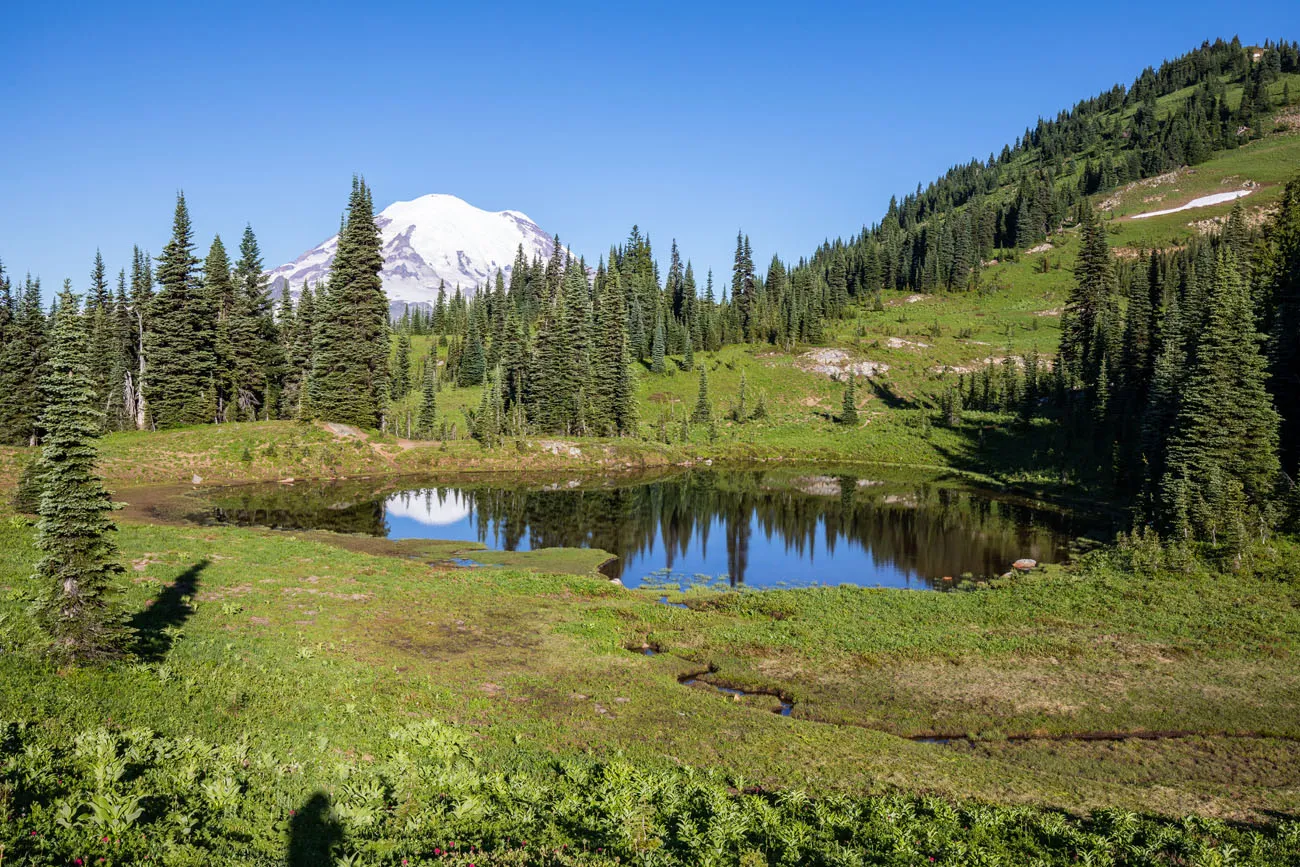
Naches Loop
In the summer months, the meadows around Tipsoo Lake often burst with wildflowers, making it a fantastic place for photography or a short walk. The Naches Peak Loop Trail also starts here, an easy to moderate hike that offers incredible views of Mount Rainier and the surrounding mountains.
PRO TRAVEL TIP: Chinook Pass and Cayuse Pass are generally open from Memorial Day through mid-November, depending on snowfall.
12. View Mount Rainier from a Scenic Overlook
There are several great places where you can get a view of Mount Rainier from the roadside. Here are our three favorites.
Sunrise Point
To get to Sunrise, you will drive Sunrise Park Road, a winding road that climbs up the slopes of Mount Rainier. There are several viewpoints and overlooks along this road. Our favorite is Sunrise Point, which is located on the final hairpin turn before you arrive in Sunrise.
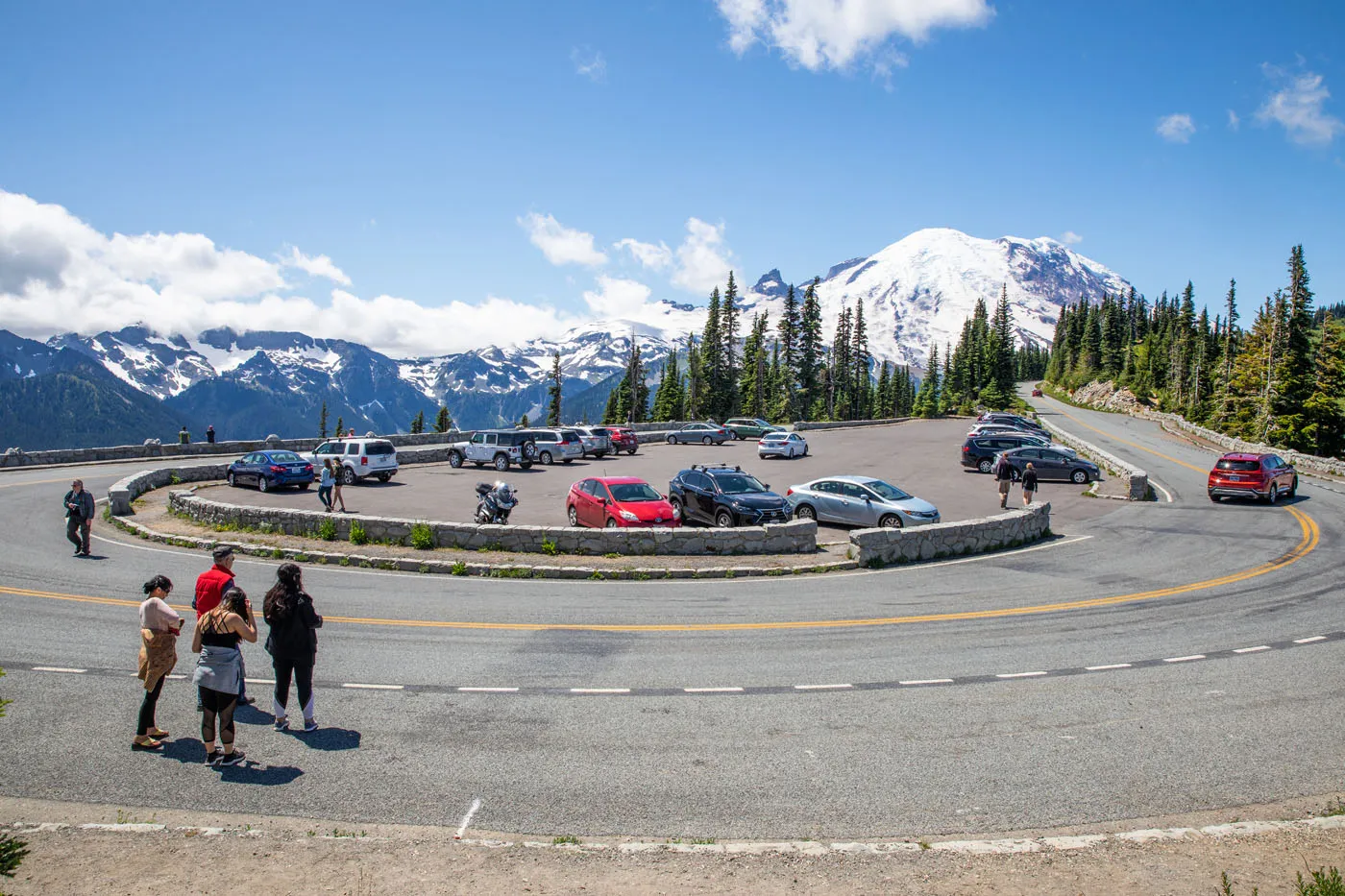
Sunrise Point
From Sunrise Point, not only do you get a great view of the peak of Mount Rainier, but you can also see Mount Adams, the second highest peak in Washington.
Ricksecker Point
From Ricksecker Point, you get a view of the south side of Mount Rainier. It is located on Ricksecker Point Road, not far from Paradise.
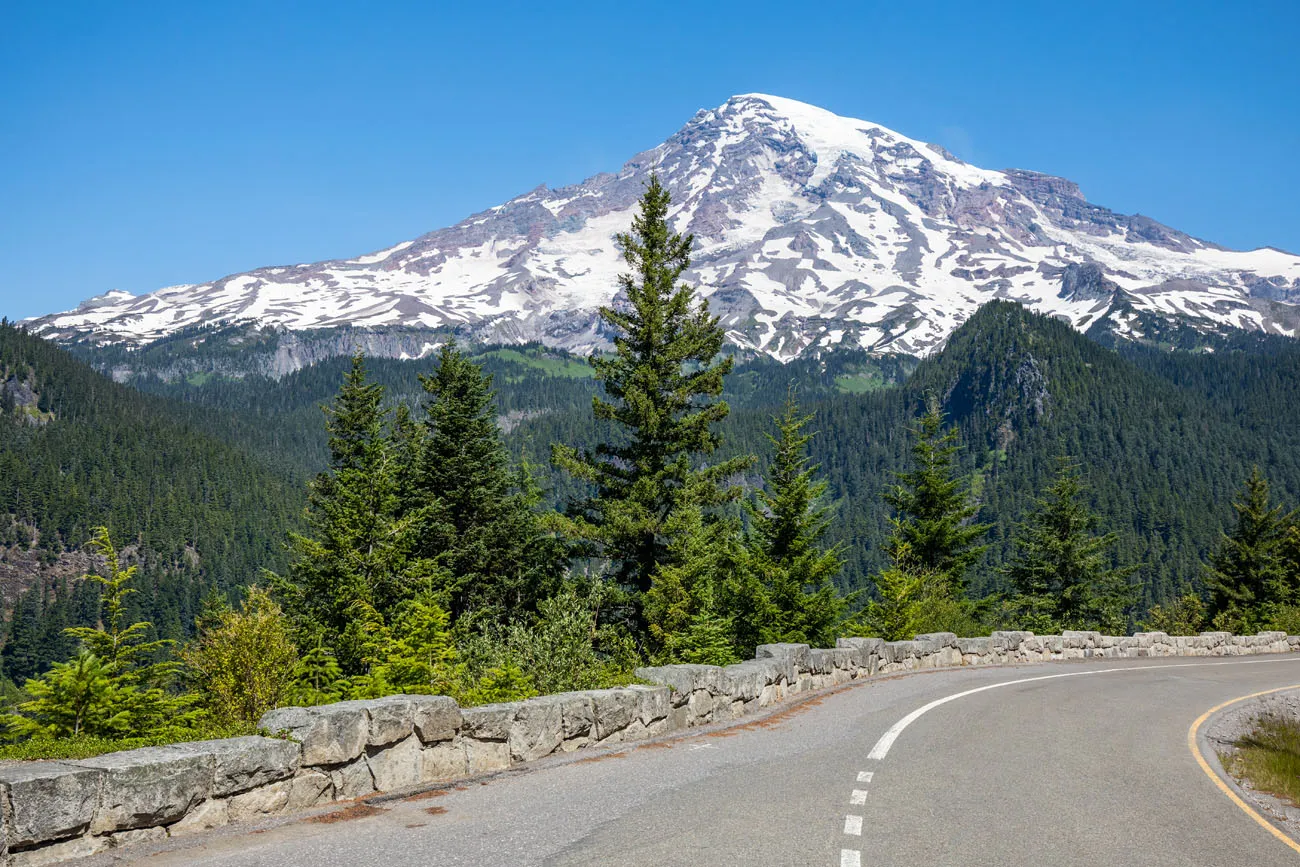
Ricksecker Point
Near the Trailhead for Bench and Snow Lakes
On Stevens Canyon Road, there is a hairpin turn just a short distance east of the trailhead for Bench and Snow Lakes. There is a turnout here (GPS: 46°45’50.789″ N 121°41’46.007″ W) that can hold one to two cars. Here is the view.
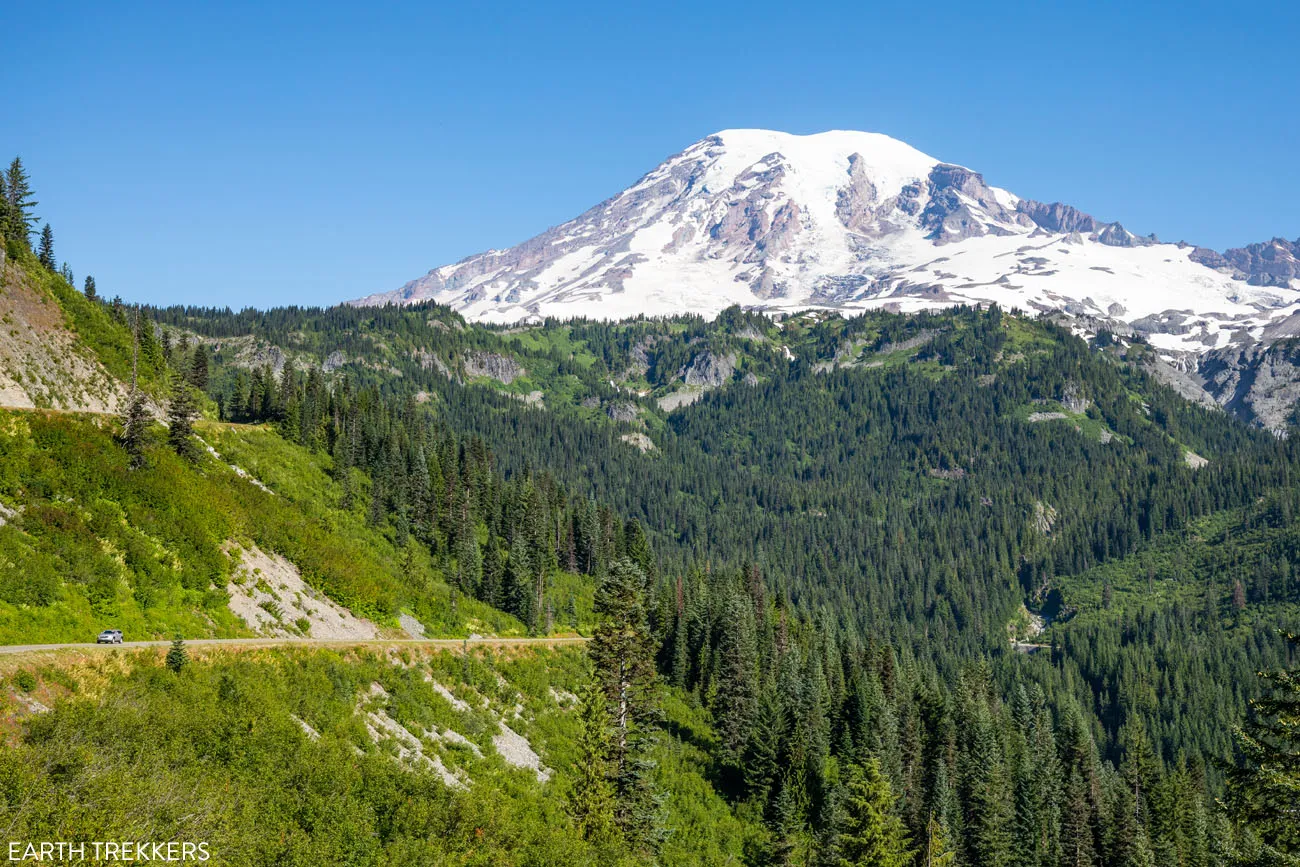
13. Hike the Park’s Most Beautiful Trails
Hiking is one of the best ways to experience Mount Rainier National Park. Trails wind through wildflower meadows, old-growth forests, alpine lakes, and high ridges with incredible views of the mountain.
There are hikes for every ability level, from short scenic walks to challenging day hikes that lead high onto the slopes of Mount Rainier. If you want to see the park’s most spectacular scenery, hitting the trails should be at the top of your list.
Some of the most popular hikes in Mount Rainier include:
- Skyline Trail – The park’s most iconic hike, with incredible views of Mount Rainier
- Naches Peak Loop – A beautiful wildflower hike with views of Mount Rainier and Tipsoo Lake
- Mount Fremont Fire Lookout – A scenic ridge hike leading to a historic fire lookout
- Tolmie Peak Fire Lookout – One of the best viewpoints in the park
- Summerland Trail to Panhandle Gap – A challenging hike through wildflower meadows and alpine terrain
- Bench and Snow Lakes – A short hike to two beautiful alpine lakes
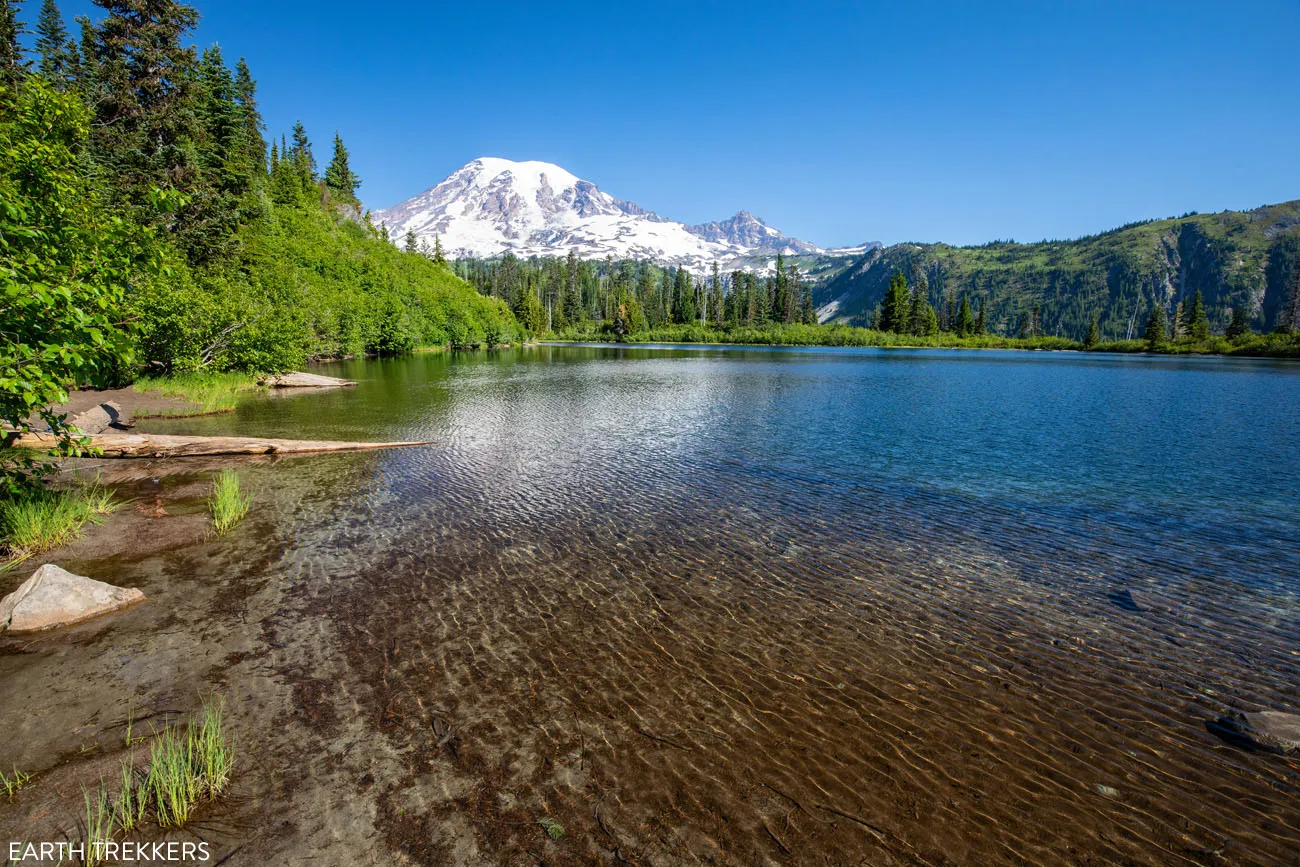
Bench Lake
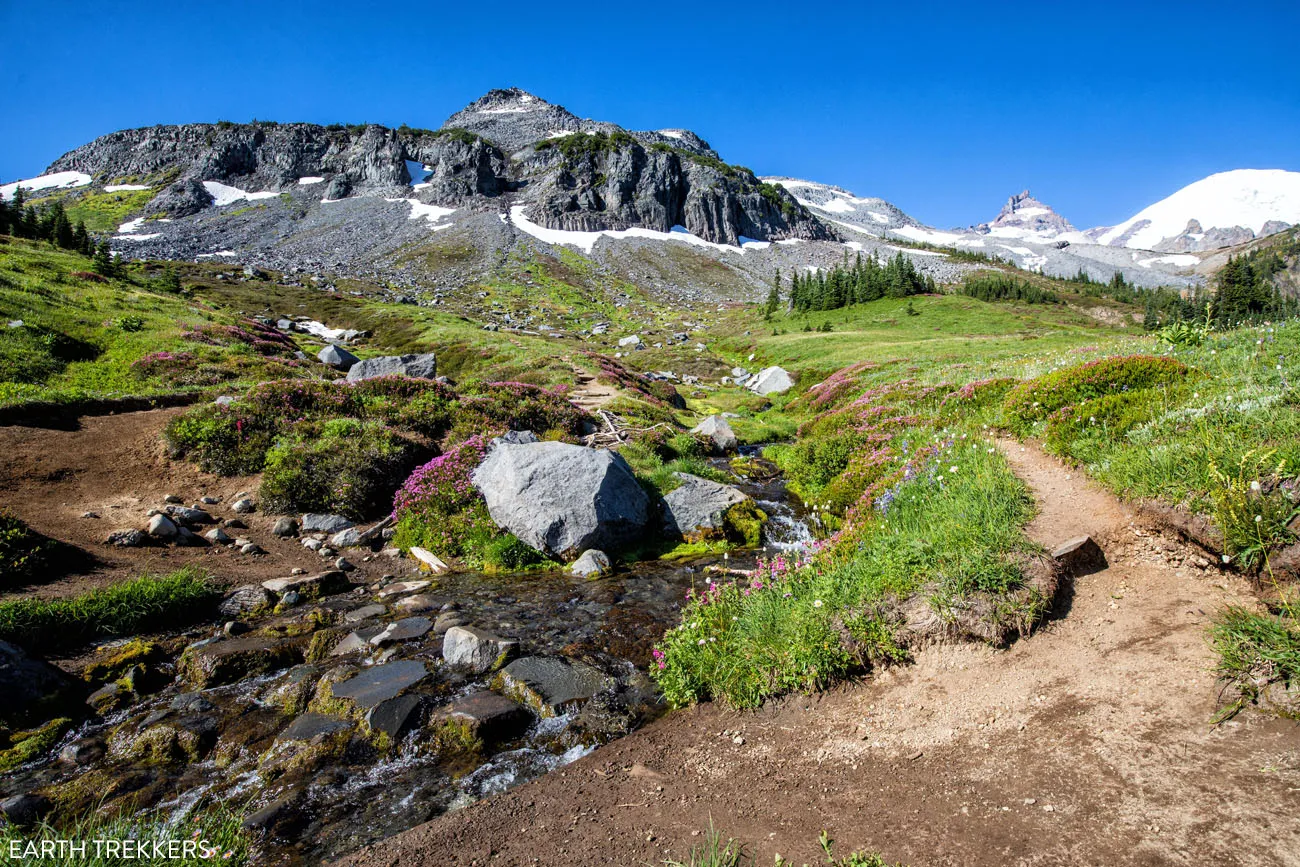
Summerland
For trail stats, photos, and tips on choosing the right hike for your visit, read our guide to the Best Hikes in Mount Rainier National Park.
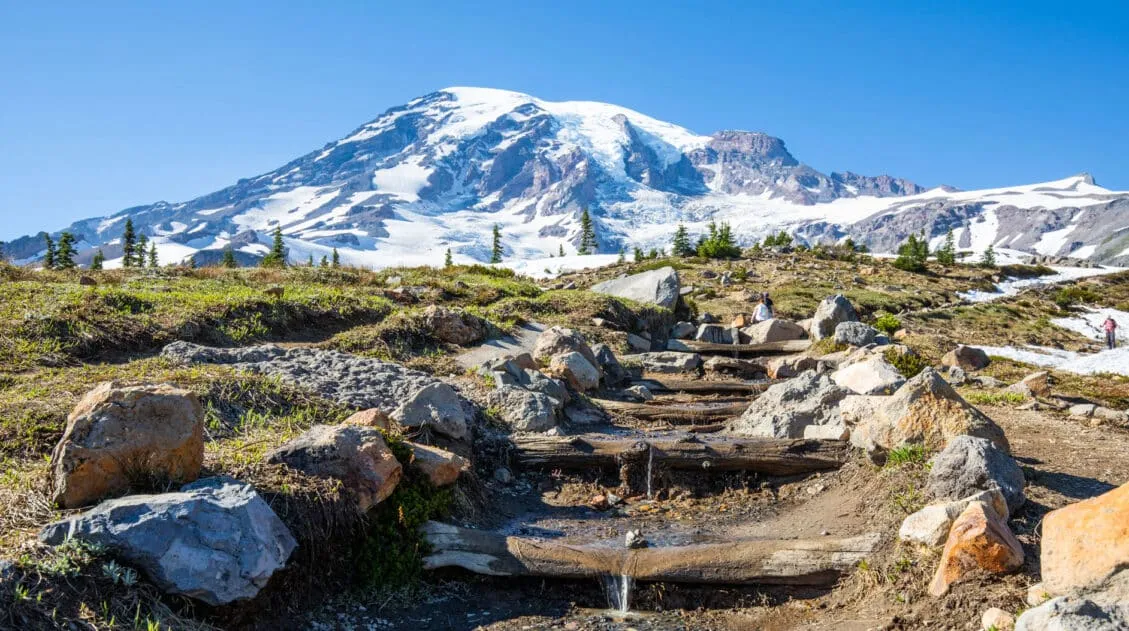
The Best Hikes in Mount Rainier National Park
Best hikes to do in Mount Rainier National Park, with photos, trail stats, and what to expect along the trails.14. Hike the Wonderland Trail
The Wonderland Trail is one of the most famous backpacking routes in the United States. This 93-mile trail circles Mount Rainier, giving hikers a chance to see the mountain from nearly every angle.
Along the route, hikers travel through old-growth forests, cross rushing rivers, climb high ridges with sweeping views of Mount Rainier, and pass through alpine meadows filled with wildflowers in the summer. It’s an unforgettable way to experience the park’s diverse landscapes.
Most people complete the Wonderland Trail as a multi-day backpacking trip, typically taking 9 to 13 days to hike the full loop. Because the trail is so popular, permits are required and can be difficult to secure during the summer months.
15. Climb to the Summit of Mount Rainier
This is another epic experience to have in Mount Rainier National Park. Wouldn’t it be incredible to stand on top of Mount Rainier?
Getting here is no easy task. It is a tough climb at a high altitude and it takes a lot of mental and physical preparation. On average, it takes 2 to 3 days to summit Mount Rainier. You will need a climbing permit and you should have experience mountaineering and hiking glaciated peaks before doing this climb. Many people do this with an experienced guiding company.
Two Places That Are Currently Closed
Mount Rainier has a few incredible places that are unfortunately closed or very difficult to access right now due to long-term trail or road closures. We’ve visited both of the places below and loved them, so we still wanted to include them here in case they reopen in the future.
The Grove of the Patriarchs Trail
The Grove of the Patriarchs Trail is located in Ohanapecosh, in the southeastern corner of the park.
This easy, 1.5-mile walking trail takes you past some of the largest and oldest trees in Mount Rainier National Park. These ancient Douglas firs, western red cedars, and western hemlocks are enormous. You will cross a suspension bridge and then walk on a series of boardwalk and dirt trails through the forest.
Unfortunately, the suspension bridge was damaged during flooding and the trail is currently closed with no announced reopening date. Learn more on the National Park Service website.
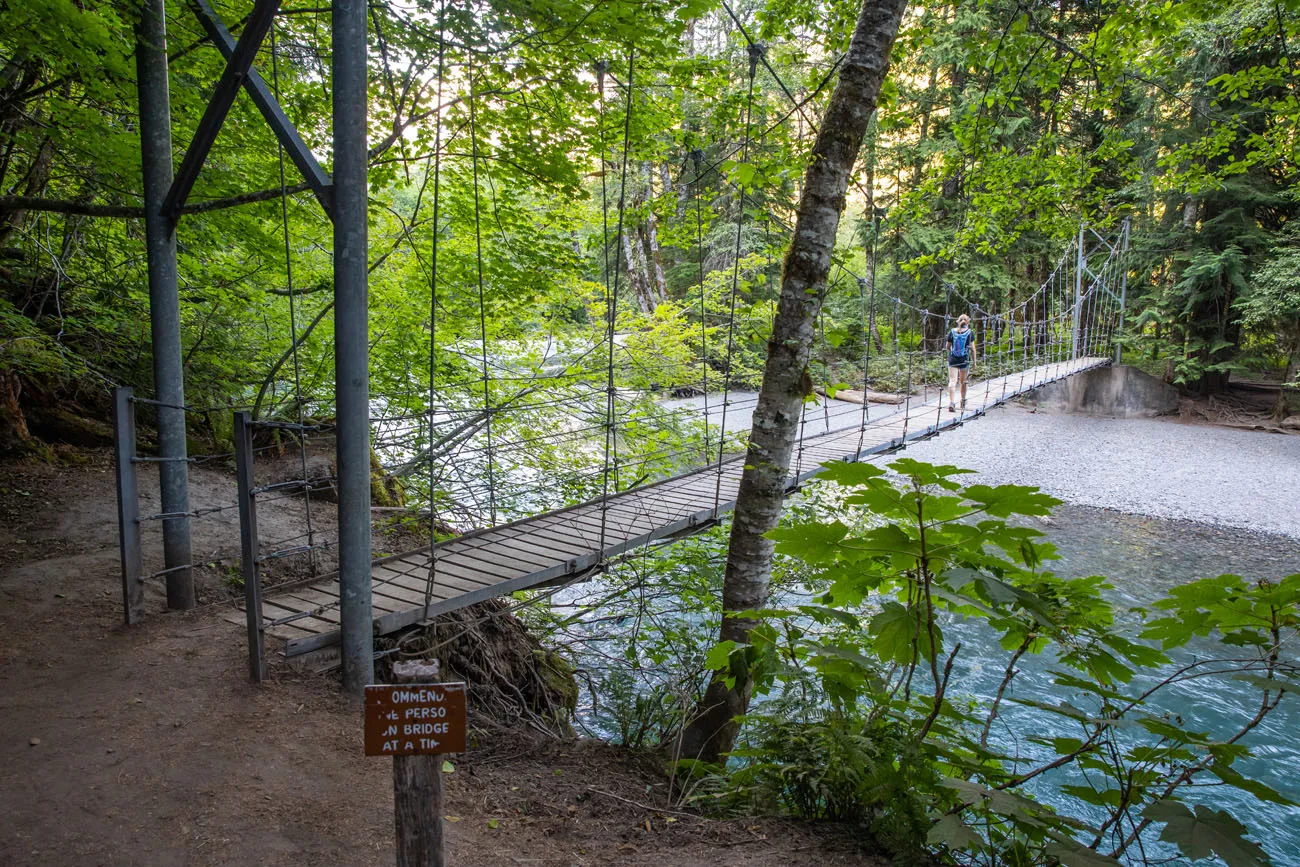
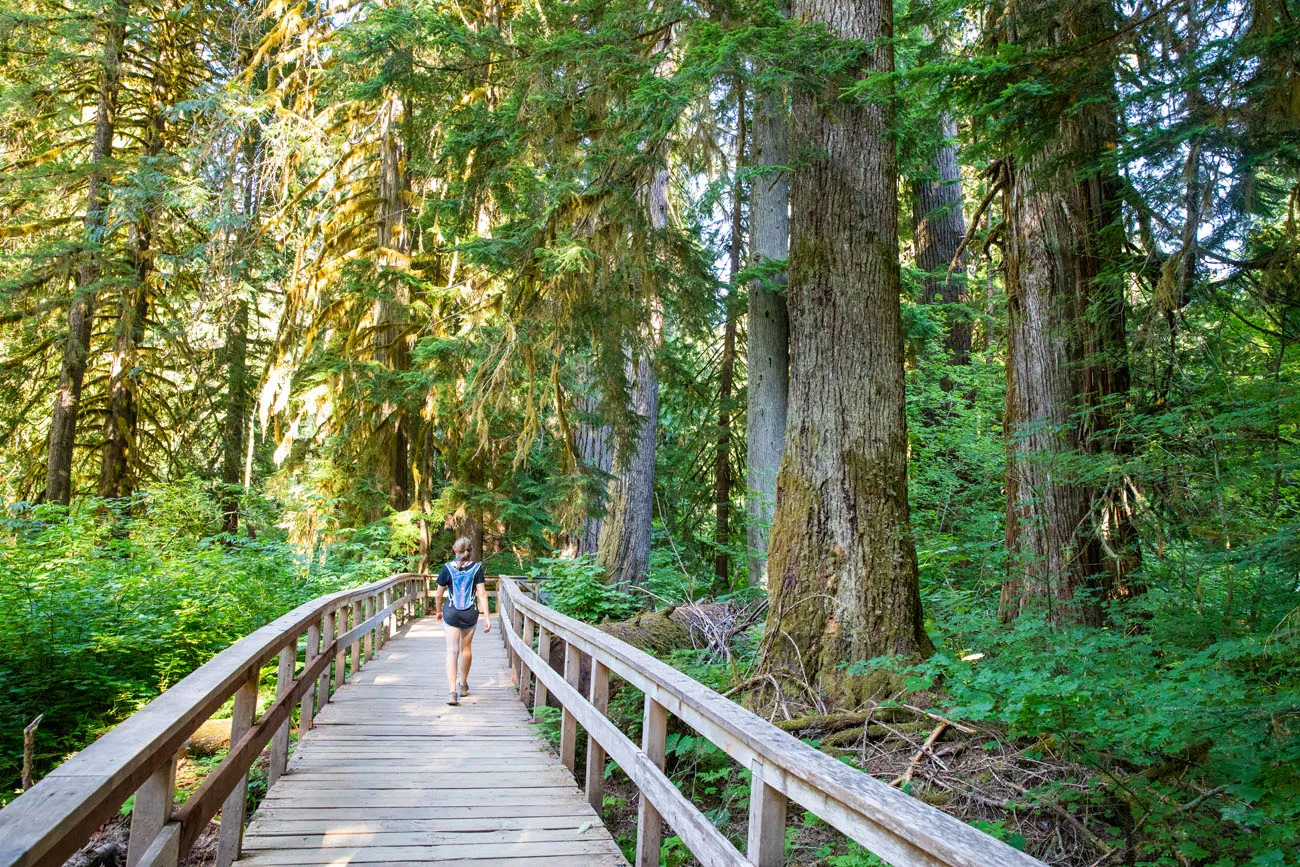
Grove of the Patriarchs Trail
The Grove of the Patriarchs is located on Stevens Canyon Road near the Stevens Canyon entrance. The parking lot has space for about 20 cars. It can be challenging to get a parking space here midday during the summer months.
Carbon River & Tolmie Peak Fire Lookout
The Carbon River area of Mount Rainier is one of the quietest and most remote parts of the park.
One of the highlights of this area is the hike to the Tolmie Peak Fire Lookout, which sits above Eunice Lake and offers one of the most spectacular views of Mount Rainier in the entire park. Spray Park is another popular hike, famous for its fields of wildflowers in the summer.
At the moment, road access to this area is extremely limited, making it impossible to reach without backpacking.
If access improves in the future, this is one of the best off-the-beaten-path adventures in Mount Rainier National Park.
Get updates on the official National Park Service website for the latest road status updates.
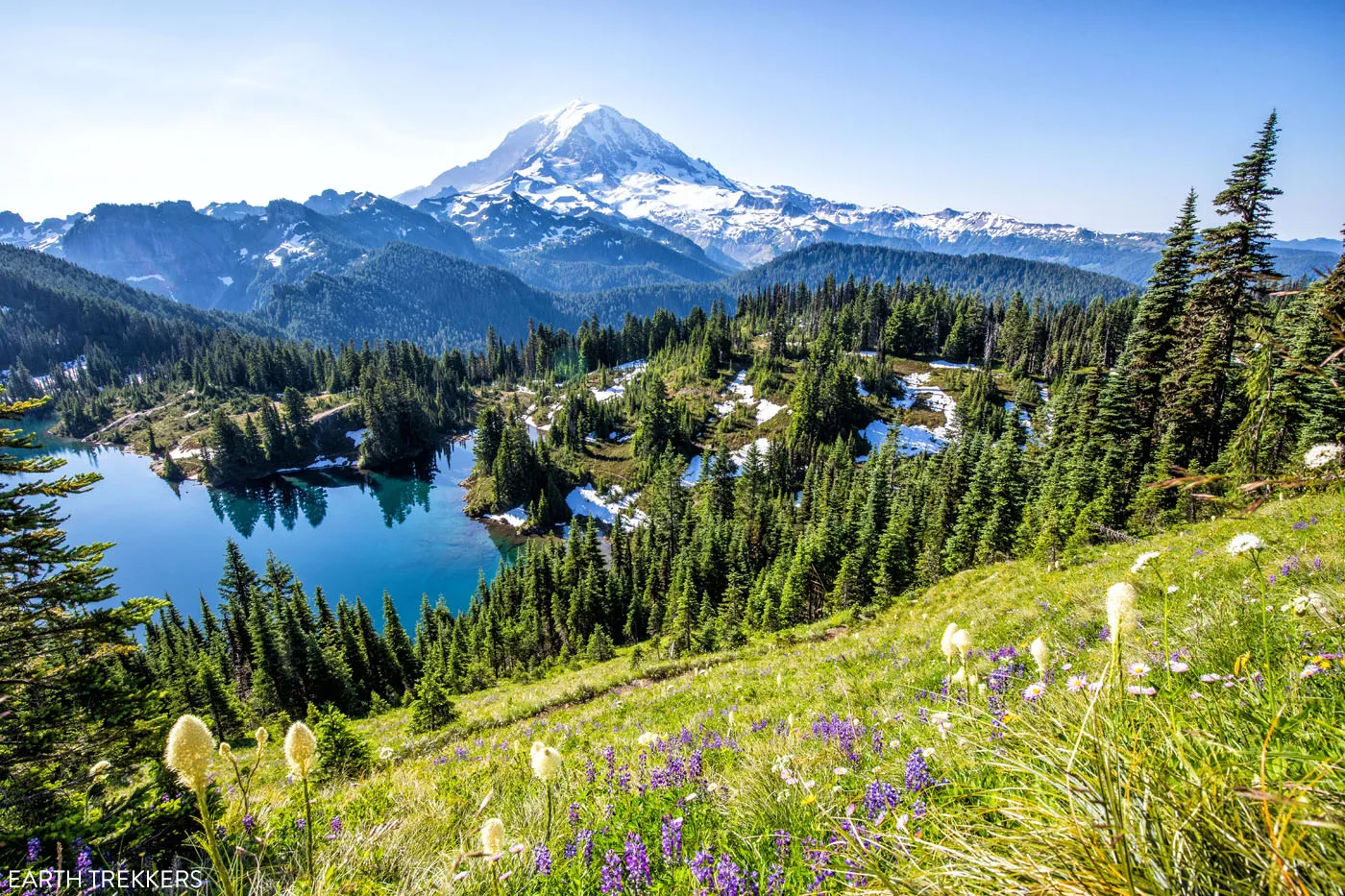
The view from Tolmie Peak Fire Lookout
Things to Do in Mount Rainier On a Map
How to Use This Map: Click the tab in the top left corner of the map to see a list of the points of interest and to turn layers on/off. Click the icons on the map to get more information about each point of interest.
To take this map with you, click the star next to the title of the map which adds it to your Google account. Next, within your Google Maps app, select ‘Saved’ and then select ‘Maps’. This map title will now appear in your list.
How Many Days Do You Need in Mount Rainier National Park?
As many as possible. 😉
With one day, you can visit one area of the park. I recommend choosing between Paradise and Sunrise. Which one you choose will depend on where you are coming from and where you are going. Personally, I don’t think that one is better than the other. You have lots of hiking options and spectacular views from both places.
Two days in Mount Rainier gives you enough time to visit Sunrise and Paradise.
Beyond two days, each additional day allows you to visit another area of the park, tackle a big hike, drive the scenic drives, and visit the lakes and waterfalls.
I recommend spending at least three days in Mount Rainier National Park (one day for Sunrise, one day for Paradise, and the third day to go hiking or visit another section of the park). Extra days gives you more time for hiking, for exploring quiet corners of the park, and gives you some contingency time just in case you get bad weather.
We spent six days here and still could have used more time. The hikes here are incredible and there are a lot to choose from.
In our Mount Rainier Itinerary, we cover the best way to plan your time, ranging from 2 to 6 days ↓
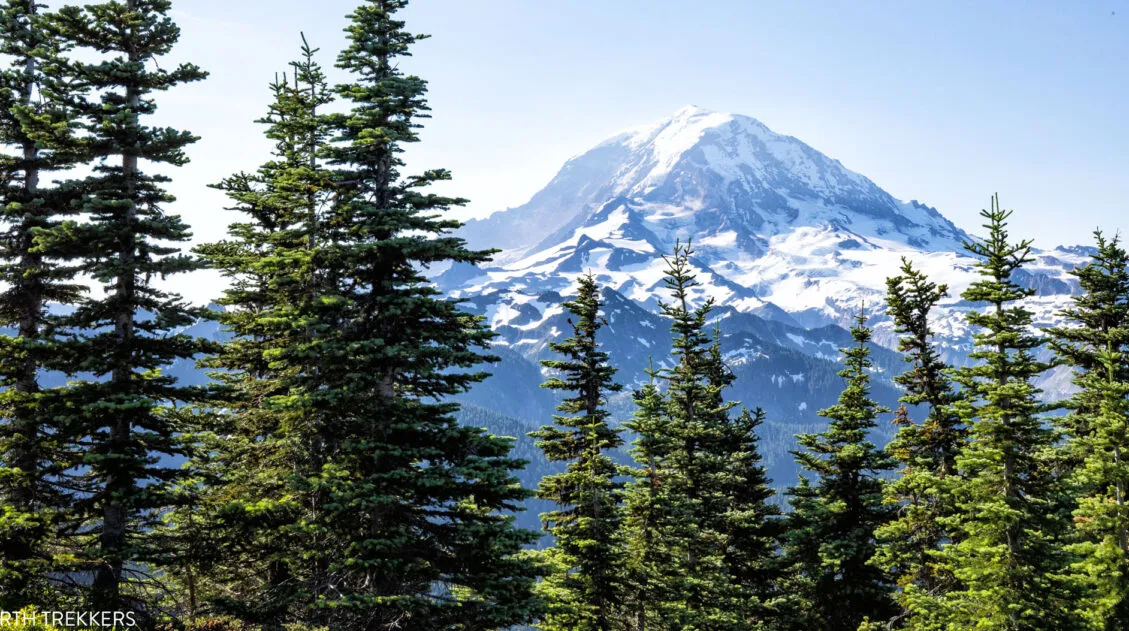
The Perfect Mount Rainier National Park Itinerary (2 to 6 Days)
Learn how to plan your Mount Rainier itinerary and get sample itineraries from two to six days.When is the Best Time to Visit Mount Rainier?
The summer and early fall are the best time to visit Mount Rainier National Park. This is when all of the roads will be open and many hiking trails will be free of snow. During the summer months, the weather is also the warmest and driest of the year.
The wildflowers typically bloom from mid-July through mid-August. If you want to see Mount Rainier during the peak blooming season, plan your visit for early August.
In the spring and fall, the weather is damp and chilly. During the winter months, massive amounts of snow can fall in the park. It is not unusual for Paradise to get over 50 feet of snow each winter.
During the winter months, you can visit Paradise and go snow shoeing, sledding, skiing, and snowboarding. Snowmobiling is permitted in the southwest corner of the park.
In early fall, several main roads close in the park and don’t reopen to mid to late-spring, cutting off access to some of the best places to visit in Mount Rainier.
Mount Rainier National Park appears in our Best US National Parks Month-By-Month series as a great park to visit in July, August, and September.
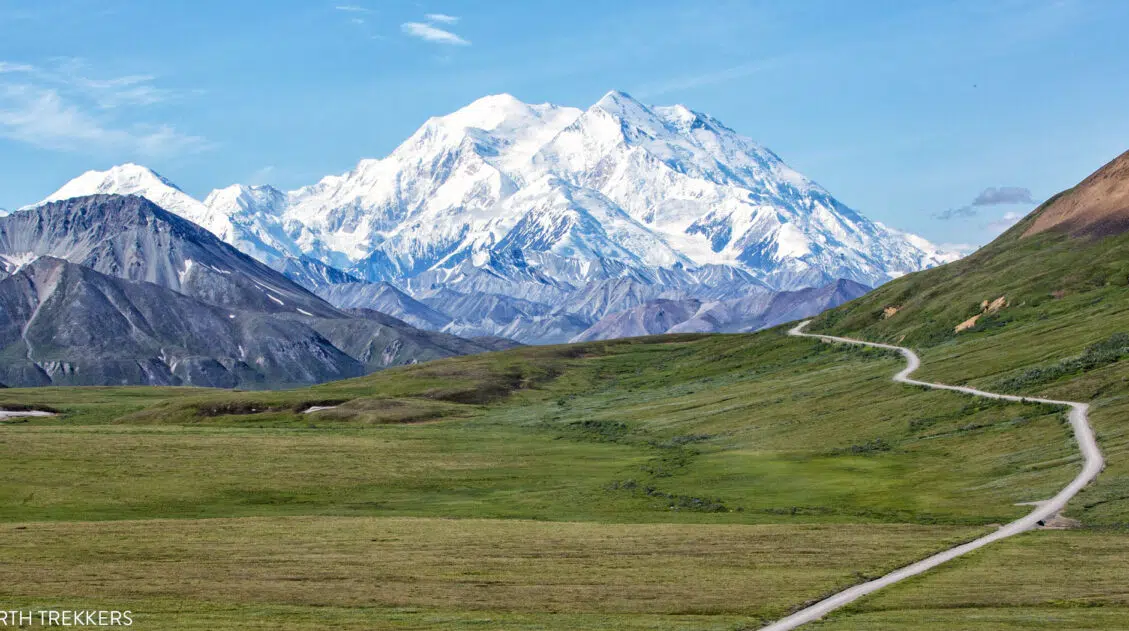
15 Best US National Parks to Visit in July
Pinterest Facebook Flipboard Which are the best national parks to visit in July? In this guide, we list 15 great parks to visit in the USA. Go hiking in Mount Rainier and Glacier National Parks, go whale watching in the Channel Islands, and venture into Alaska for some amazing adventures. About this National Park Series […]
15 Best US National Parks to Visit in August
Planning a trip to the US national parks in August and don’t know which ones to visit? August is a busy time to visit the national parks, but crowd levels aren’t quite at their peak (that typically happens in July for many parks). In this guide, we list some popular summertime parks to visit plus […]
14 Best US National Parks to Visit in September
September is one of the best months of the year to visit the national parks. The weather is fantastic across much of the USA, the busy summer season is coming to an end, and, in some parks, you can see the first of the fall colors. In this guide, we list 14 of the best […]
Mount Rainier in late July
Mount Rainier National Park: Fees, Hours & Entry
Park Hours: The park is open 24 hours a day, 365 days a year. Just be aware that large areas of the park will be closed due to road closures from winter weather.
Park Fee: $30 per vehicle, valid for 7 days. For a longer stay, purchase the Mount Rainier Annual Pass for $55 which gives you unlimited visits for one year.
If you plan to visit multiple national parks, purchase the America the Beautiful Pass ($80 and valid for all of the national parks for one year).
Get updates on trail and road closures and park conditions on the National Park Service website.
Where We Stayed
Over the course of our 6 day visit, we stayed in 3 different locations. We did this to minimize the amount of driving we did in the park, even though it was a minor hassle to pack and unpack several times.
We started off with 3 nights in Packwood, staying at the Cowlitz River Lodge. From Packwood, we visited the eastern side of the park: Sunrise, hiked the Summerland Trail, the Mount Rainier Gondola, Naches Peak, Silver Falls, and Grove of the Patriarchs.
Then we spent 2 nights in Ashford at the Nisqually Lodge. From here, we visited the sights in and around Sunrise.
Then we spent one night in Puyallup at the Fairfield Inn & Suites, using this as our home base to venture into the northwest corner of the park and hiking to Tolmie Peak.
Before our visit to Mount Rainier, we spent several days in Olympic National Park. After Mount Rainier, we traveled northeast to Leavenworth where we hiked the Enchantments (which are AMAZING!). Our Washington road trip ended with a several days in North Cascades National Park, which is also amazing.
We were in Washington in late July and early August.
Plan Your Trip to Mount Rainier National Park
Start with our Mount Rainier Travel Guide, where you can see all of our guides on Mount Rainier.
If you want help organizing your time, read our Mount Rainier Itinerary, which includes sample itineraries for one to several days in the park.
If hiking is your priority, don’t miss our guide to the Best Hikes in Mount Rainier National Park, where we cover the park’s top trails with trail stats, photos, and tips.
If Mount Rainier is part of a bigger trip to Washington, check out our Washington Road Trip Itinerary, which also includes Olympic and North Cascades National Parks, plus the Enchantments.
If you have any questions about the best things to do in Mount Rainier National Park, let us know in the comment section below.
More Information for Your Trip to Mount Rainier
Skyline Trail Loop: A Step-by-Step Guide to Rainier’s Most Iconic Views
The Skyline Trail Loop is the most iconic hike in Mount Rainier National Park, and we’ve hiked it twice in both directions to figure out exactly which way is better. Here’s everything you need to know, from snow crossings and trail conditions to the best direction for views of Mount Rainier. For jaw-dropping alpine scenery, […]
Summerland Trail to Panhandle Gap Hike | Mount Rainier National Park
The Summerland Trail to Panhandle Gap is a strenuous 12-mile adventure into the quieter side of Mount Rainier National Park. With panoramic views of Mount Rainier and fewer hikers than Paradise or Sunrise, it’s ideal for those craving a bigger, more rugged day on the trail. Hiking the Summerland Trail to Panhandle Gap is one […]
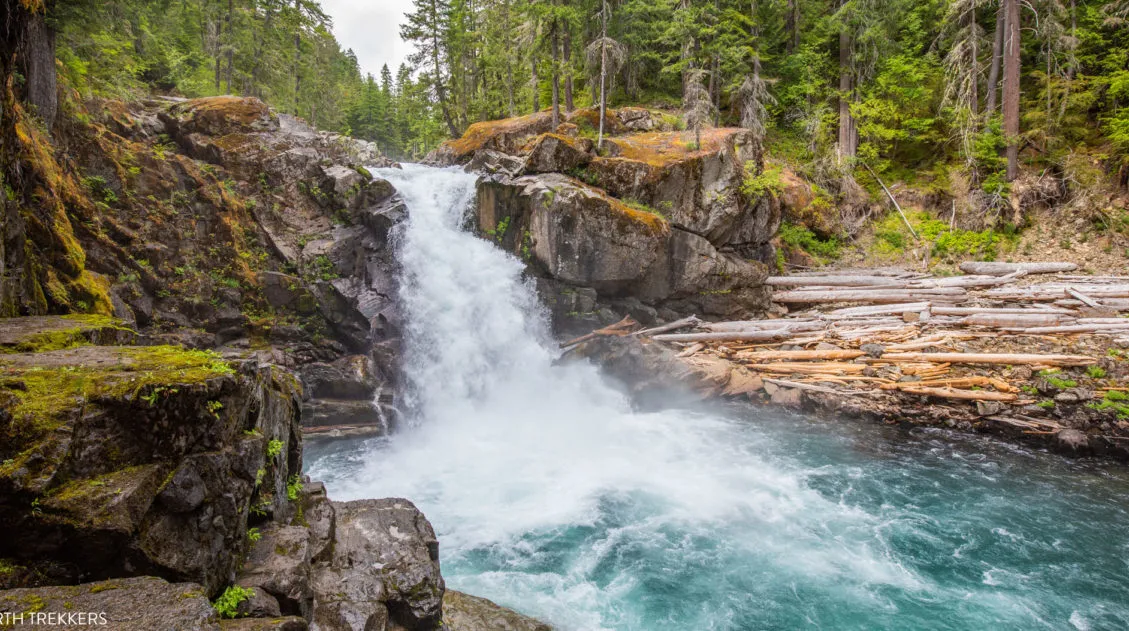
Silver Falls Loop Trail: An Underrated Hike in Mount Rainier
If you’re looking for a hike that quietly exceeds expectations, the Silver Falls Loop Trail is it. We hiked the Silver Falls Loop on our first trip to Mount Rainier at the end of July. The trail was wonderfully quiet even during peak summer; the old-growth forest along the Ohanapecosh River was stunning, and Silver […]
Mount Fremont Lookout Trail Guide | Mount Rainier National Park
Few hikes in Mount Rainier National Park deliver so much scenery for so little effort. The Mount Fremont Fire Lookout Trail offers nearly nonstop views of Mount Rainier, sweeping alpine landscapes, and the chance to stand on one of the park’s historic fire lookout towers. This was the very first hike we did in Mount […]
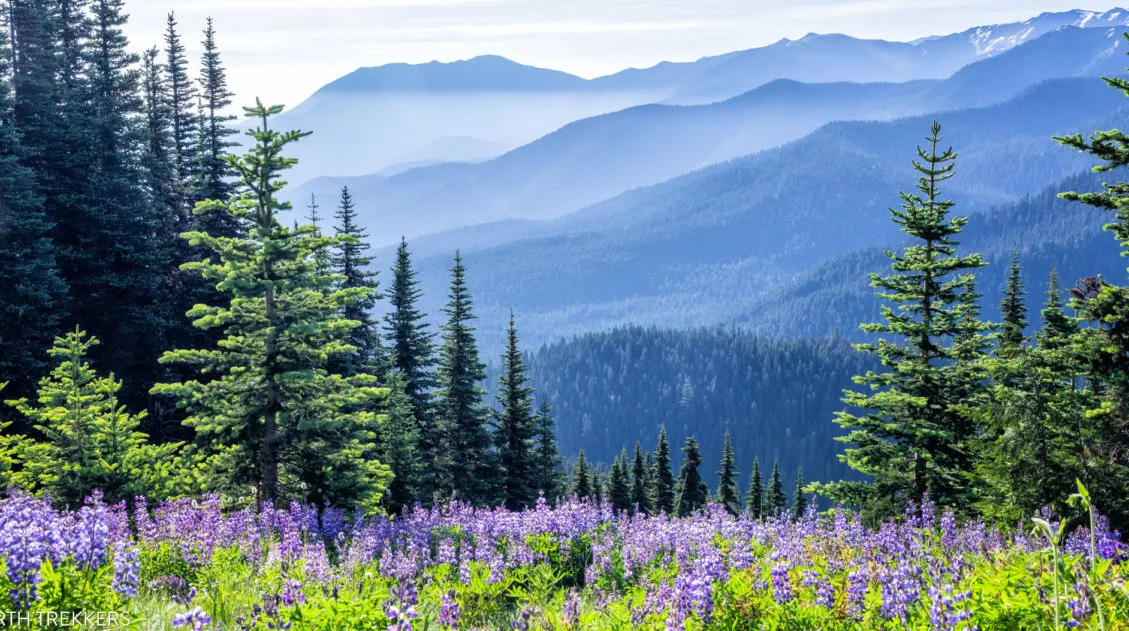
Best Things to Do in Olympic National Park (2026 Guide)
Discover the best things to do in Olympic National Park, from Hurricane Ridge to the amazing Hoh Rainforest to the wild and rugged Pacific coast. Olympic National Park might be the most diverse national park in the United States. In a single visit, you can stand on a windswept alpine ridge looking out over snowcapped […]
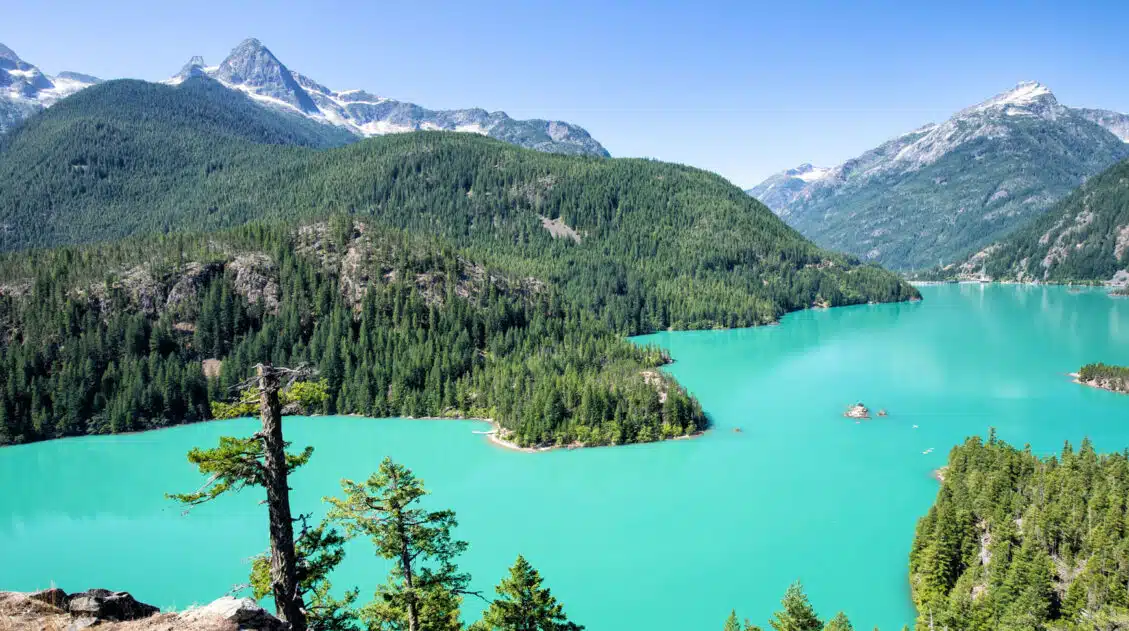
North Cascades National Park: How to Plan Your Visit
Plan your visit to North Cascades National Park. Learn about the best things to do, the best hikes and viewpoints, and get sample itineraries and travel tips.
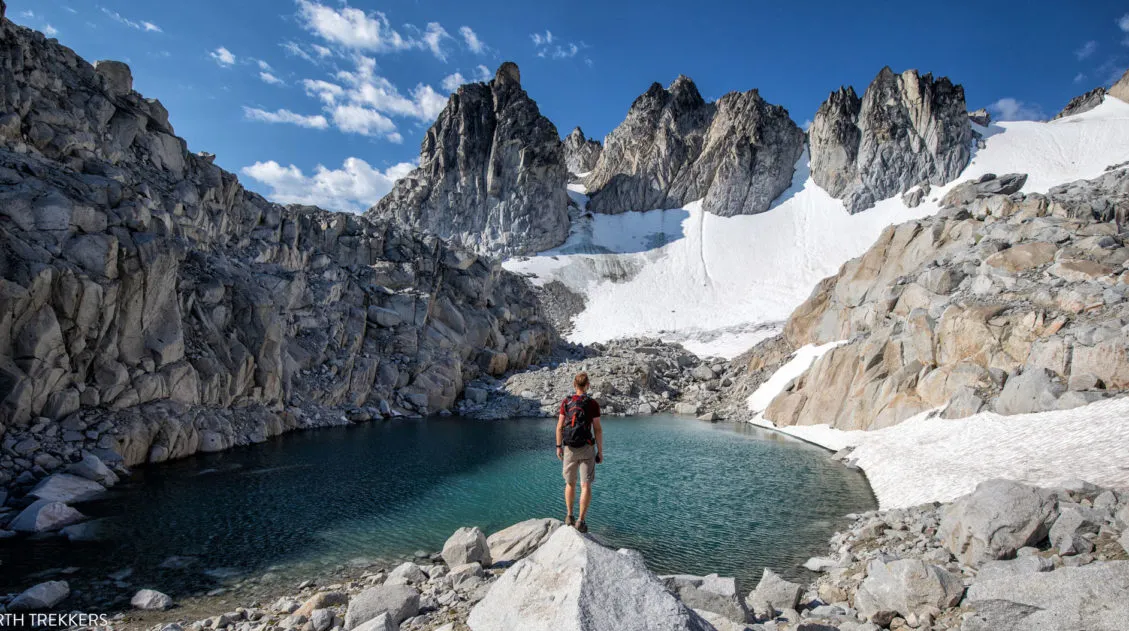
Hiking the Enchantments in One Day: A Step-By-Step Trail Guide
Over 19.25 miles, climb Aasgard Pass, wander through a surreal landscape of turquoise alpine lakes and jagged peaks, then descend nearly 7,000 feet to the Snow Lakes trailhead. Hiking the Enchantments in one day is a long, hard challenge, but one you’ll never forget. If you are a hiker, the Enchantments are a destination that […]
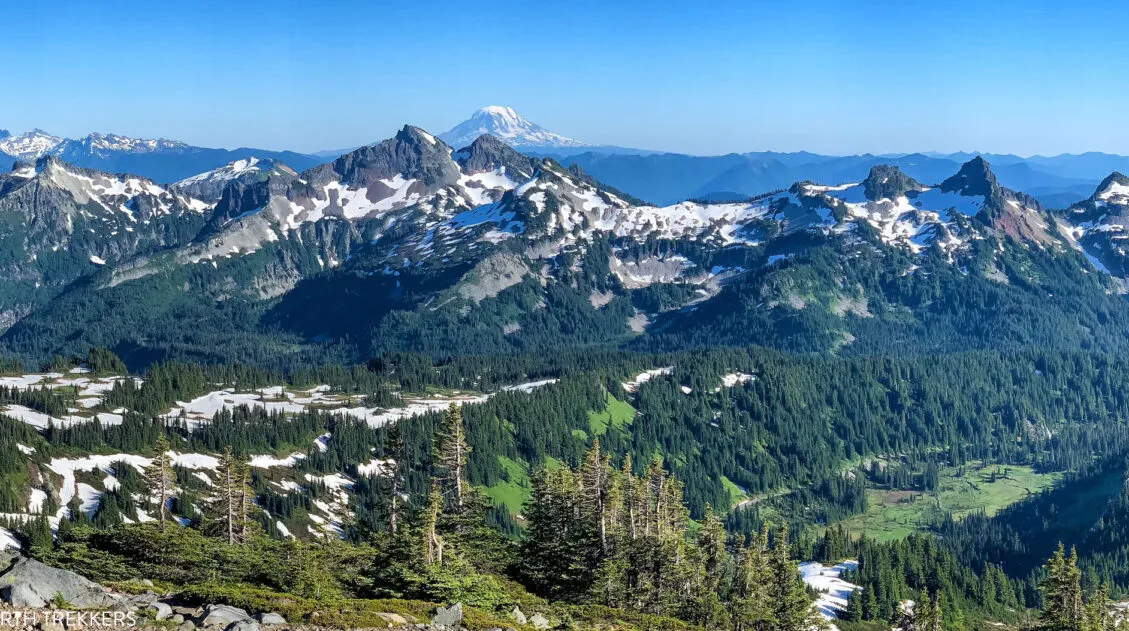
Washington Road Trip Itinerary: Olympic, Rainier & North Cascades (7–14 Days)
Washington state is one of the great road trip destinations in the United States, and this itinerary is the one we wish we’d had before our own trip. We spent several weeks exploring Washington’s three national parks—Olympic, Mount Rainier, and North Cascades—as well as Leavenworth, Lake Chelan, and the Enchantments. We then combined our top […]
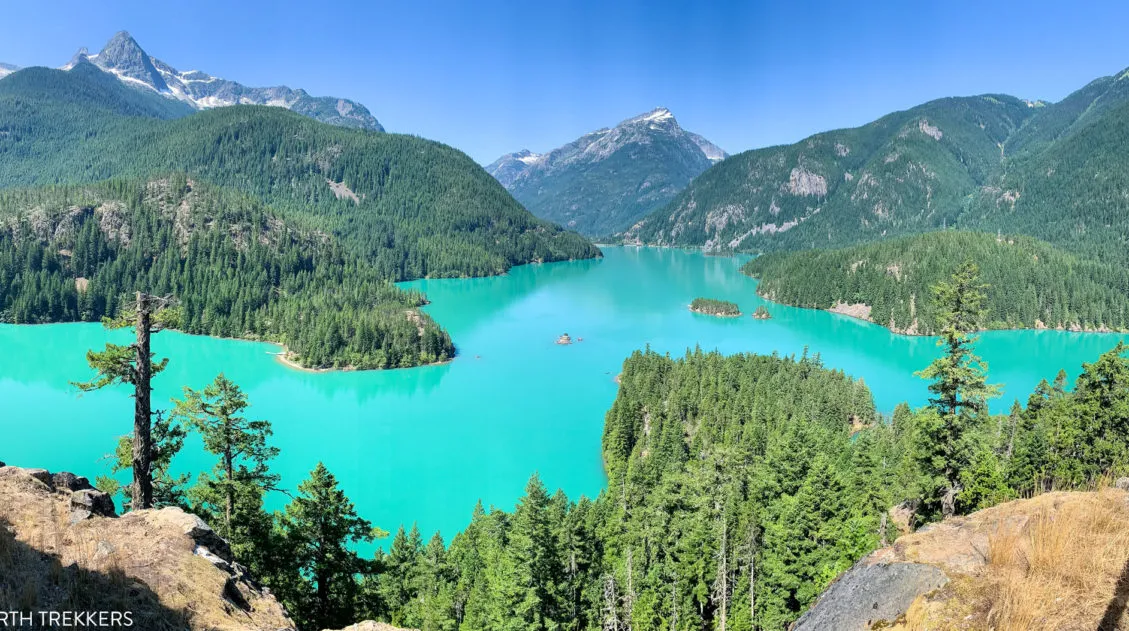
9 Amazing Things to Do in North Cascades National Park
Discover the best things to do in North Cascades National Park, from the stunning drive along Highway 20 to Diablo Lake, Washington Pass Overlook, and world-class hiking trails. North Cascades National Park gets a fraction of the visitors that flock to Olympic and Mount Rainier, and that’s exactly what makes it so good. We visited […]
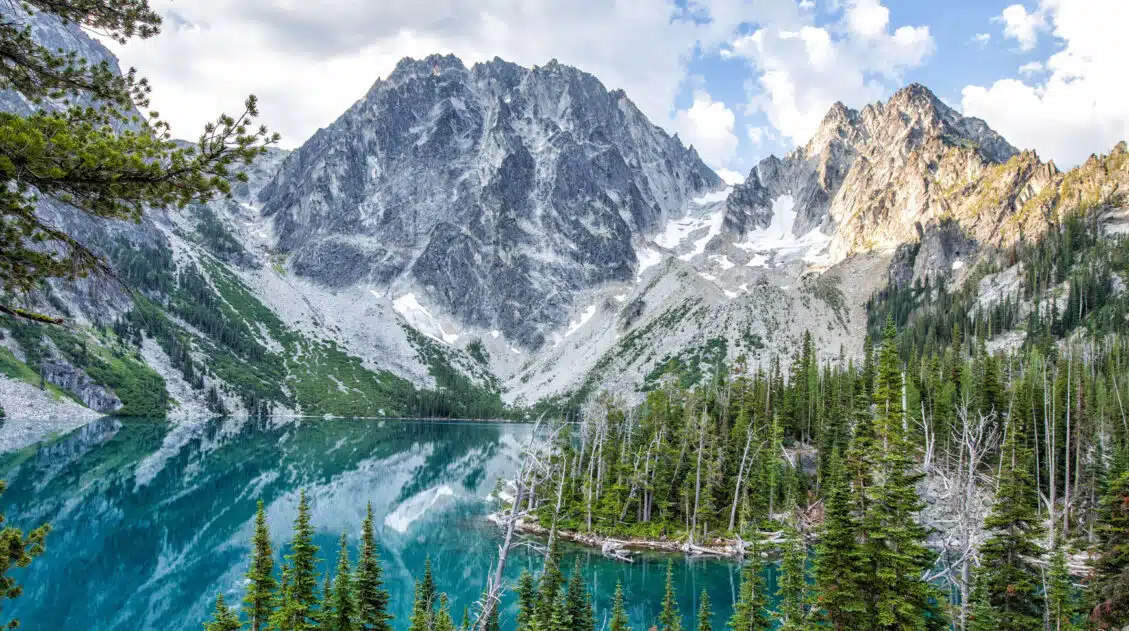
Washington Travel Guide: National Parks, Road Trips & Places to Visit
Washington Travel Guide Washington State packs an incredible range of landscapes into one destination, from glacier-covered volcanoes and alpine lakes to wild Pacific coastline and dense rainforests. If you love hiking, scenic drives, and national park adventures, Washington is one of the best outdoor destinations in the United States. We explored Washington on a three-week […]
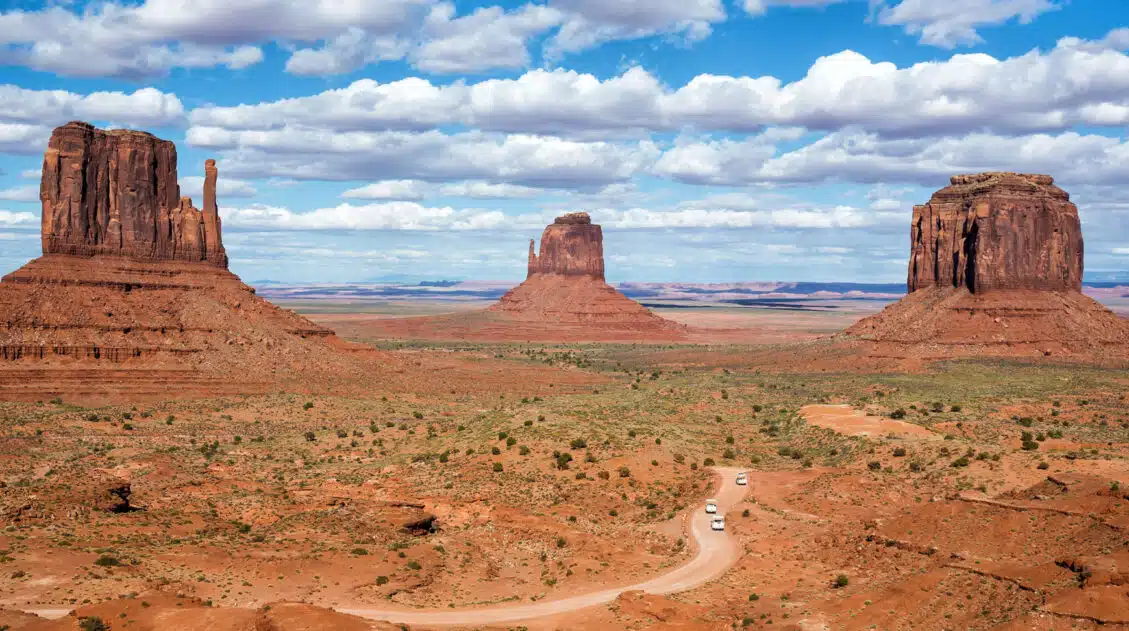
United States Travel Guide: Places to Visit in the USA
Plan your visit to the United States. Learn about the best things to do, how to plan your time, road trip ideas, and sample itineraries.
Our 15 Favorite US National Parks: A Few May Surprise You
Stretching from the South Pacific, across the United States and into the Caribbean, are 63 national parks. These national treasures are filled with scenic drives, hundreds of miles of hiking trails, wildlife, historic sites, and endless opportunities for adventure. In this guide, we cover 15 of the best national parks in the USA and what […]
The Ultimate Guide to the 63 US National Parks
Stretching from the South Pacific, across the United States to the Caribbean, are 63 national parks. These national treasures preserve iconic landscapes, majestic mountains, primordial forests, arid deserts, misty coastlines, immense canyons, wildlife, and historic landmarks. We have visited 56 of the 63 US national parks, from the towering granite walls of Yosemite and the […]


Comments 20