
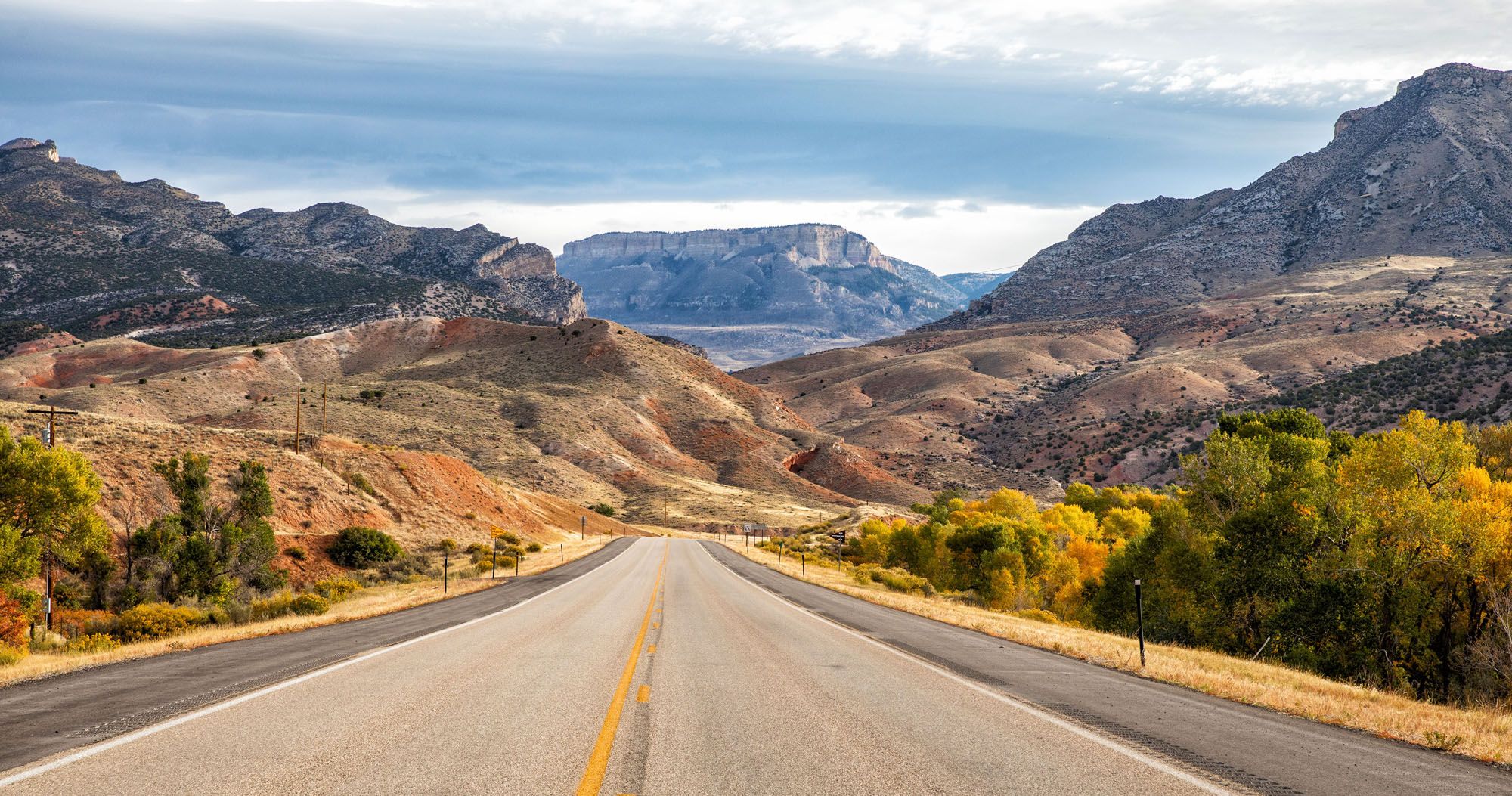
Yellowstone National Park is roughly 480 to 520 miles from Mount Rushmore, depending on the route you take and which Yellowstone entrance you use. Plan on at least 8 to 9 hours of driving without stops, but with Devils Tower, the Bighorn Mountains, Beartooth Highway, and several other worthwhile places along the way, this drive can easily become one of the highlights of your road trip.
There are three scenic ways to drive from Mount Rushmore to Yellowstone. Two cross the Bighorn Mountains before continuing through Cody to Yellowstone’s East Entrance, while the third travels through Red Lodge and over Beartooth Highway to the Northeast Entrance. We’ve driven all three, and each has its advantages. In this guide, we compare the routes, driving times, scenery, and stops along the way to help you choose the best one for your trip.
Our Experience: We’ve visited Yellowstone four times, Mount Rushmore twice, and Devils Tower once, and over the course of these trips we’ve driven all three routes between Mount Rushmore and Yellowstone. We’ve crossed the Bighorn Mountains on both the Bighorn Scenic Byway and Cloud Peak Skyway and driven the full length of Beartooth Highway, one of our favorite scenic drives in this part of the United States. Everything in this guide is based on our own experience driving these roads, including the photos and our recommendations on which route to choose.
How Far is Yellowstone from Mount Rushmore?
Yellowstone National Park is roughly 480 to 520 miles from Mount Rushmore, depending on the route you take and which park entrance you use. Without stops, plan on about 8 to 9 hours of driving.
The two most direct routes cross the Bighorn Mountains and enter Yellowstone through the East Entrance near Cody. A third option follows Beartooth Highway to Yellowstone’s Northeast Entrance. This route is longer, but it is also the most scenic of the three.
Mount Rushmore to Yellowstone Routes Compared
| Route | Distance | Drive Time | Best For |
| Bighorn Scenic Byway | ~490 miles | ~8.5 hours | Our favorite overall route |
| Cloud Peak Skyway | ~480 miles | ~8.5 hours | Easier mountain driving |
| Beartooth Highway | ~520 miles | 9+ hours | Most spectacular scenery |
Our pick: If we were making this drive again, we’d choose the Bighorn Scenic Byway for the best combination of scenery and efficiency. Beartooth Highway is the most spectacular drive of the three, but it adds more time and works best if you can devote a full day—or even two days—to the journey.
What is the Best Route from Mount Rushmore to Yellowstone?
The best route depends on how much time you have, how comfortable you are with mountain driving, and the time of year.
Choose the Bighorn Scenic Byway if you want the best overall route. This is our favorite way to drive from Mount Rushmore to Yellowstone. It combines beautiful Bighorn Mountain scenery with a relatively direct route to Cody and Yellowstone’s East Entrance. The road is steeper and more winding than Cloud Peak Skyway, so this is the better choice if scenery is more important to you than having the easiest drive.
Choose Cloud Peak Skyway if you want the easier mountain drive, particularly in the shoulder season. Both Cloud Peak Skyway and Bighorn Scenic Byway are generally maintained through the winter, although either can temporarily close during severe weather. Cloud Peak Skyway has gentler grades and fewer tight switchbacks, so we would favor this route if road conditions are less than ideal. Always check WYDOT road conditions before crossing the Bighorn Mountains in spring, fall, or winter.
Choose Beartooth Highway if spectacular scenery is your top priority. Of the three routes, this is the longest but also the most dramatic. It takes you through Red Lodge, over Beartooth Pass, and into Yellowstone through the Northeast Entrance. We recommend this route if you have plenty of time for the drive, or even better, can spend a night in Red Lodge and make Beartooth Highway part of the experience rather than simply a way to get to Yellowstone.
Time of year also matters. Beartooth Highway is a seasonal road and is generally only an option from late spring through early fall, with opening and closing dates dependent on weather and snow conditions. We drove Beartooth Highway on October 5, just two days before it closed for the season that year. Even when the road is officially open, temporary weather-related closures are possible. If you are traveling in the shoulder season, one of the two Bighorn Mountain routes may be the better choice, but always check current road conditions before your drive.
Mount Rushmore to Devils Tower
If you have the time, Devils Tower is well worth adding to the drive between Mount Rushmore and Yellowstone. It fits naturally into all three routes in this guide and gives you a chance to visit one more iconic landmark before continuing west toward the Bighorn Mountains or Beartooth Highway.
We visited Devils Tower on our road trip through this part of the country and recommend allowing enough time to walk at least part of the trail around the base. Even if you don’t do the full loop, seeing Devils Tower up close is much more impressive than simply viewing it from the road.
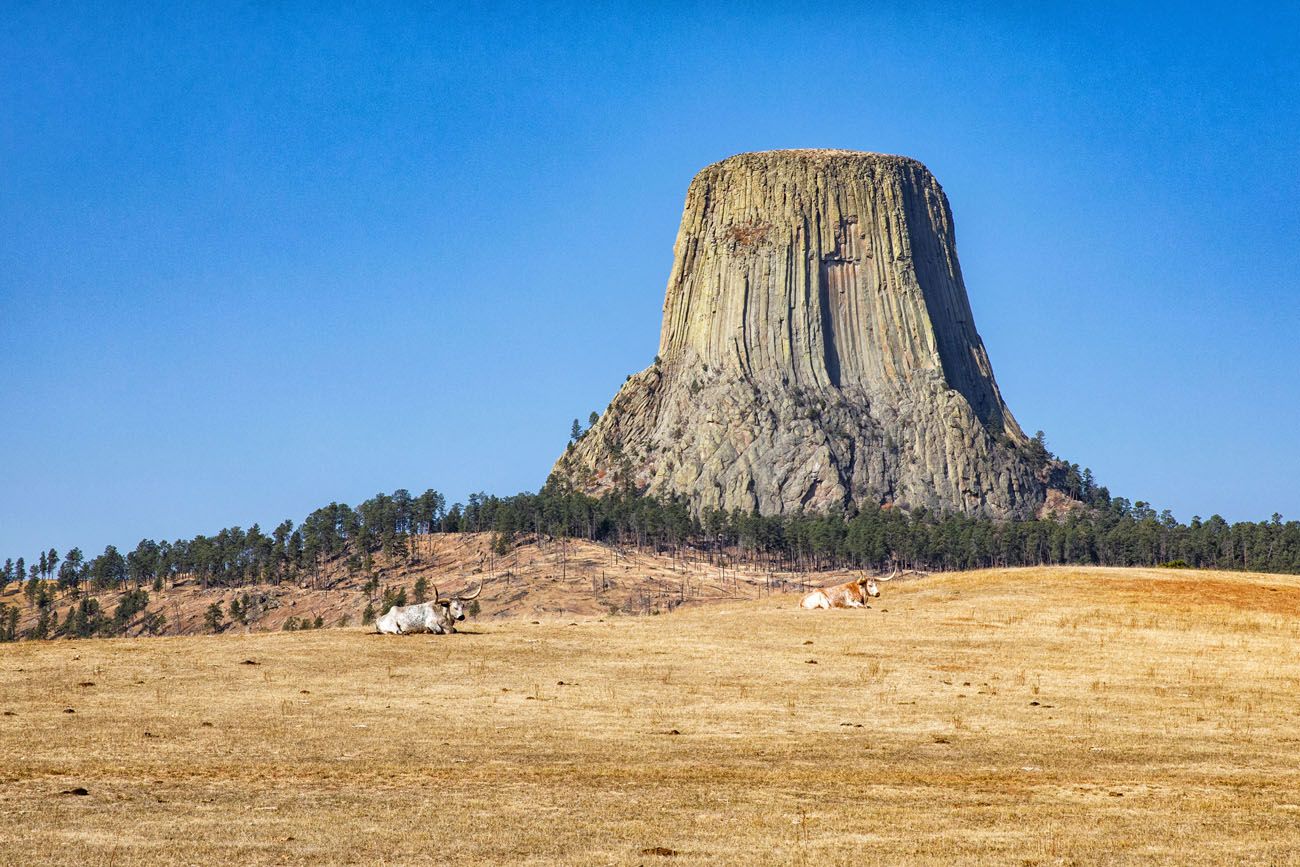
From Devils Tower, the three routes continue west before eventually splitting: two cross the Bighorn Mountains on the way to Cody and Yellowstone’s East Entrance, while the third continues toward Red Lodge and Beartooth Highway.
Allow about 1 to 2 hours for a quick visit, or longer if you walk the full Tower Trail. We cover how to plan your visit plus what to see and do in our Guide to Devils Tower ↓
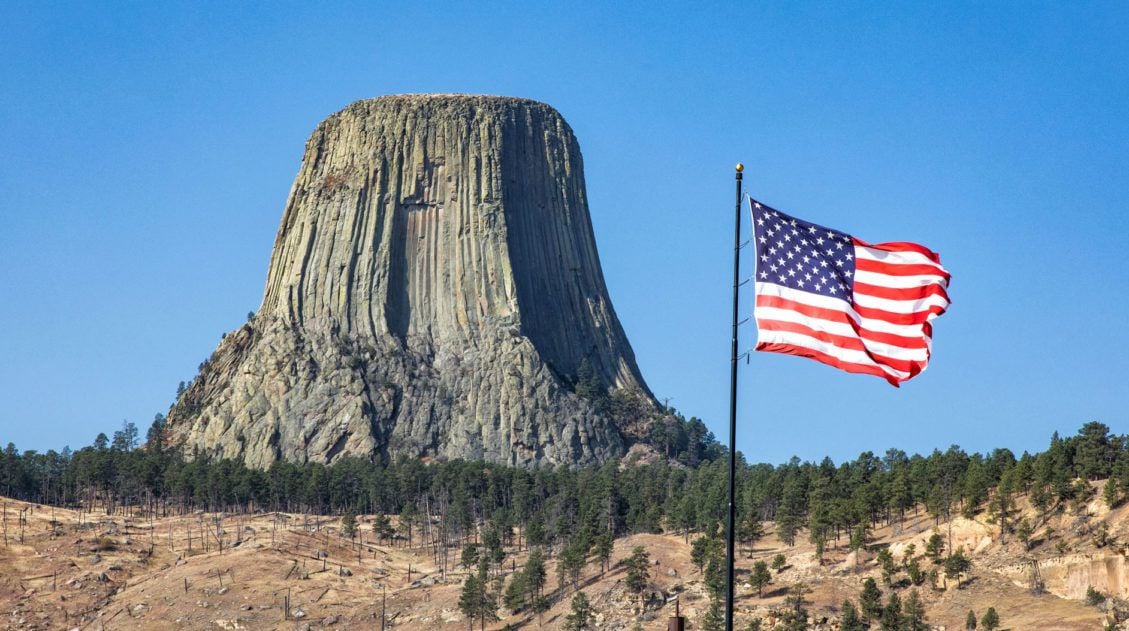
Complete Guide to Devils Tower: How to Plan Your Visit
Best hikes, things to do, parking, and how to plan your visit to Devils Tower.3 Ways to Drive from Mount Rushmore to Yellowstone
Here are three different ways to drive from Mount Rushmore to Yellowstone. For each of these routes, I recommend getting an early start, no later than 8 am. This gives you plenty of time to visit Devils Tower and other scenic stops along the drive.
Route #1: Mount Rushmore to Yellowstone via Bighorn Scenic Byway
Best for: The best overall combination of scenery and driving time
Route: Mount Rushmore → Devils Tower → Dayton → Bighorn Scenic Byway → Shell → Cody → Yellowstone’s East Entrance
Highlights: Sand Turn, Granite Pass, Shell Canyon, and Shell Falls
Our take: This is our favorite of the three routes for getting from Mount Rushmore to Yellowstone. Bighorn Scenic Byway has more dramatic scenery than Cloud Peak Skyway, with winding mountain roads, sweeping viewpoints, and the drive through Shell Canyon. If we were making this trip again and had just one day to get to Yellowstone, this is the route we would choose.
How to Use This Map: Click the tab in the top left corner of the map to see a list of the points of interest and to turn layers on/off. Click the icons on the map to get more information about each point of interest.
To take this map with you, click the star next to the title of the map which adds it to your Google account. Next, within your Google Maps app, select ‘Saved’ and then select ‘Maps’. This map title will now appear in your list.
Mount Rushmore to Devils Tower
There are several ways to reach Devils Tower from Mount Rushmore, so the fastest route will depend on where you are staying in the Black Hills or Rapid City. In general, plan on about 2 to 2.5 hours of driving before continuing west on your chosen route to Yellowstone.
Devils Tower to Dayton, Wyoming
From Devils Tower, it takes 3 hours to drive to Dayton (185 miles). Most of this drive is on Interstate 90 which is a large divided highway. Dayton is the gateway to the Bighorn Scenic Byway.
Bighorn Scenic Byway
Bighorn Scenic Byway is 57 miles long, running from Dayton to Shell, Wyoming, on US Highway 14. It is the northern route through the Bighorn Mountains.
From Dayton, take US-14 west into the Bighorn Mountains. There are a lot of twists and turns on this part of the drive, as the road snakes up into the Bighorn Mountains.
Stop at Sand Turn Interpretive Site (about 10 miles from Dayton) for a great view over the Tongue Valley.
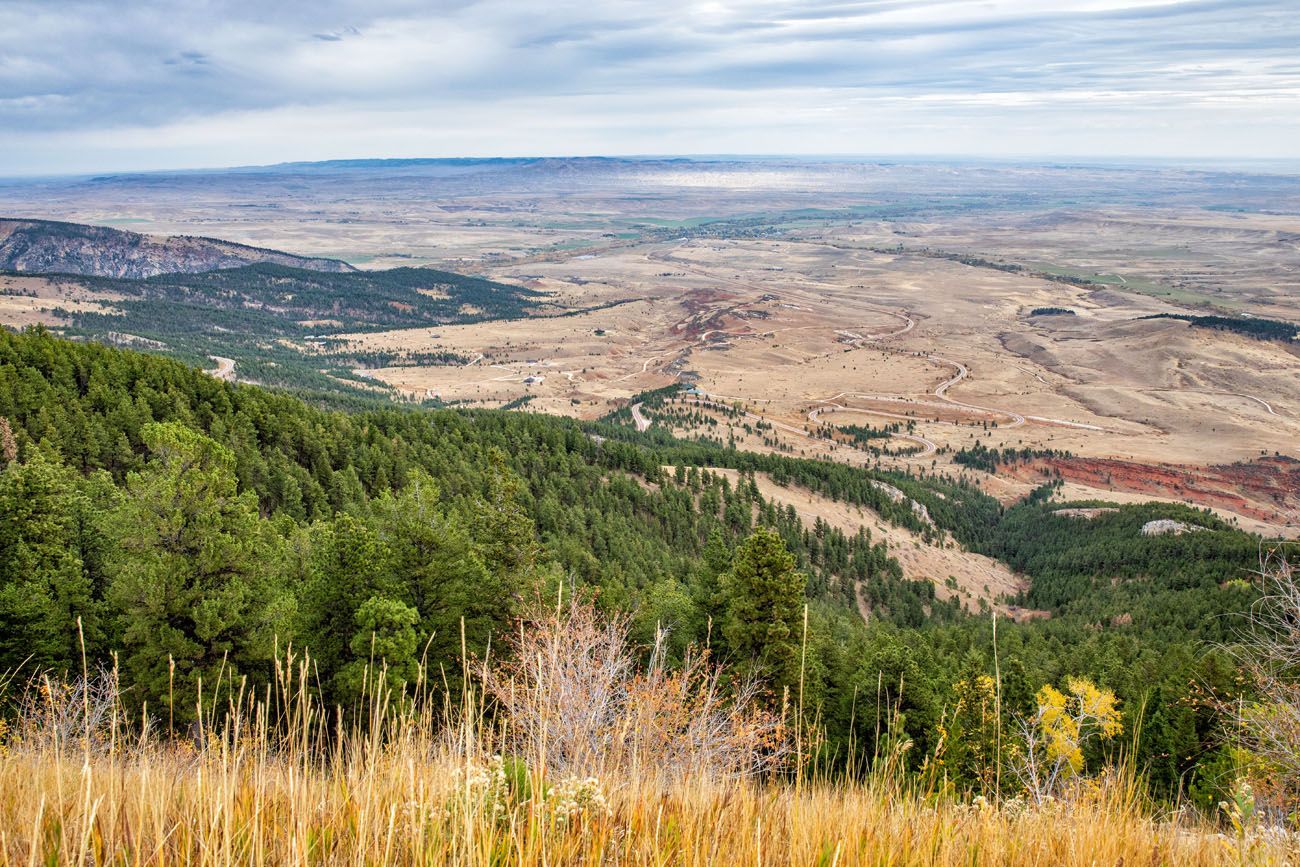
View from Sand Turn Interpretive Site
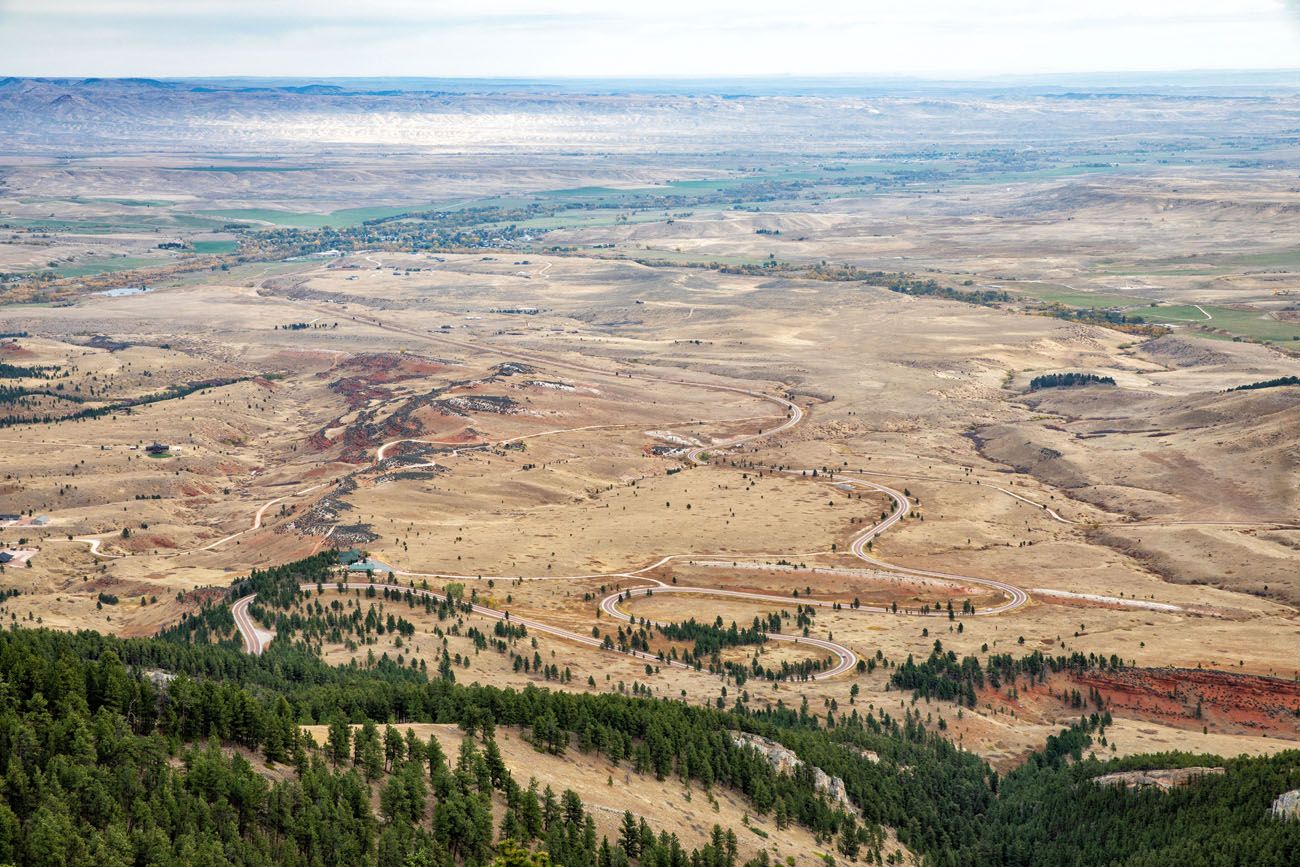
Closer view of Highway 14
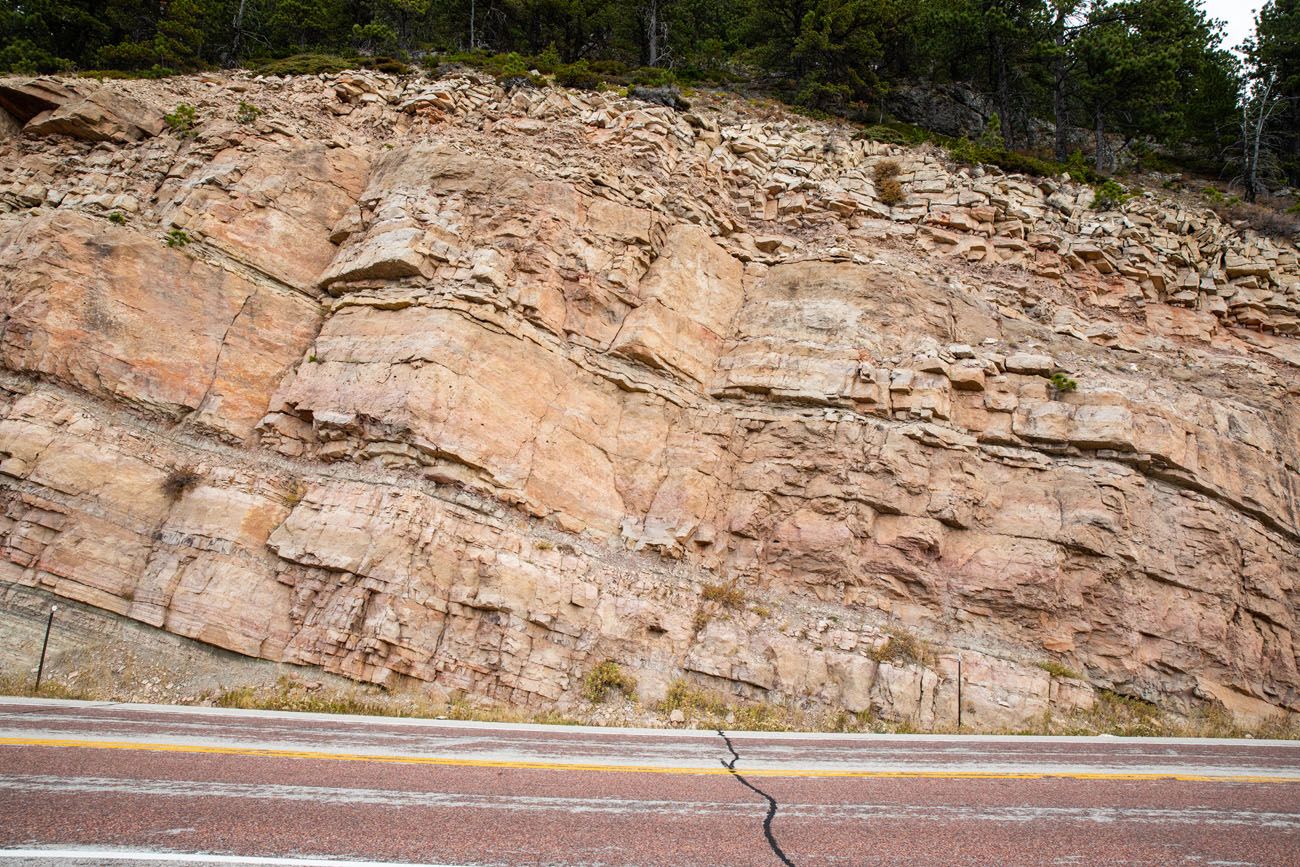
Beyond Sand Turn, Bighorn Scenic Byway enters a canyon and the views are beautiful. There are several pull outs along the road if you want to stop for photos. You can also see the sedimentary rock layers of the Bighorn Mountains.
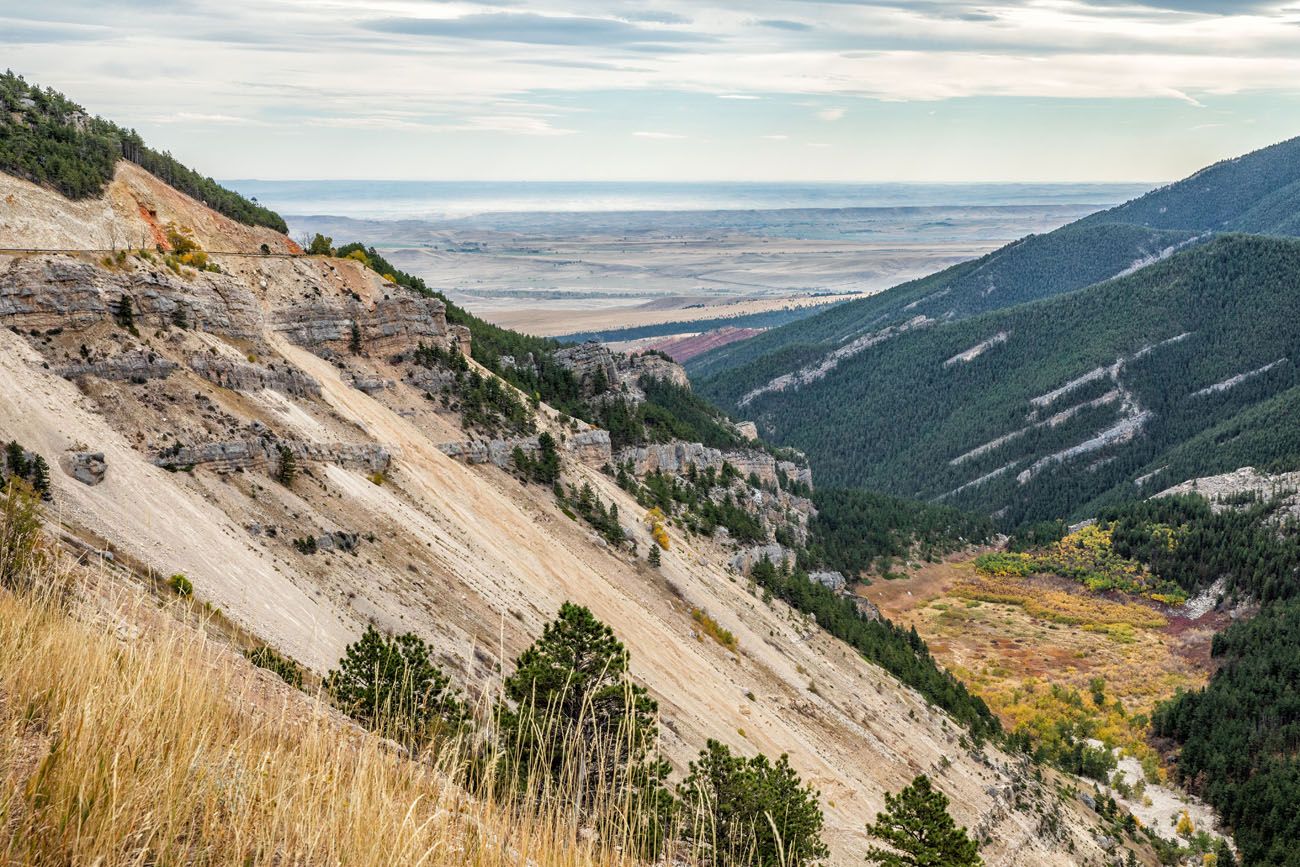
For a view of Steamboat Point, pull off at the small parking lot on the right hand side of the road (GPS coordinates: 44°48’8.808″ N 107°21’52.355″ W). You can also hike to the top of Steamboat Point (1.7 miles, moderate difficulty) but only if you are doing great on time.
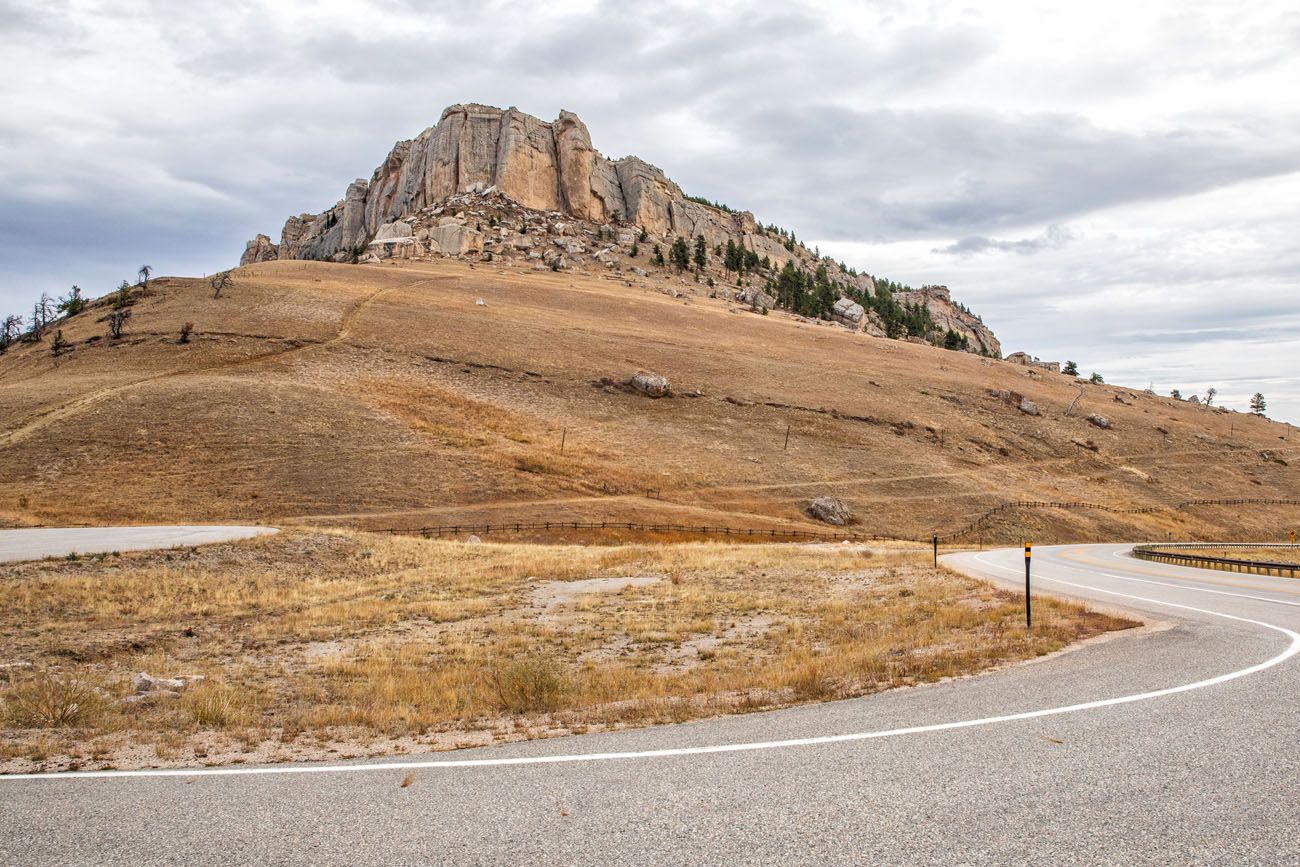
Steamboat Point
At Burgess Junction, turn left to continue on Bighorn Scenic Byway. If you are doing well on time, you can continue straight to drive US-14A to Medicine Wheel, an ancient stone circle that is sacred to Native Americans. This detour takes about one hour.
The Bighorn Scenic Byway reaches its highest point at Granite Pass (9,033 feet). And then comes the most thrilling part of this scenic byway.
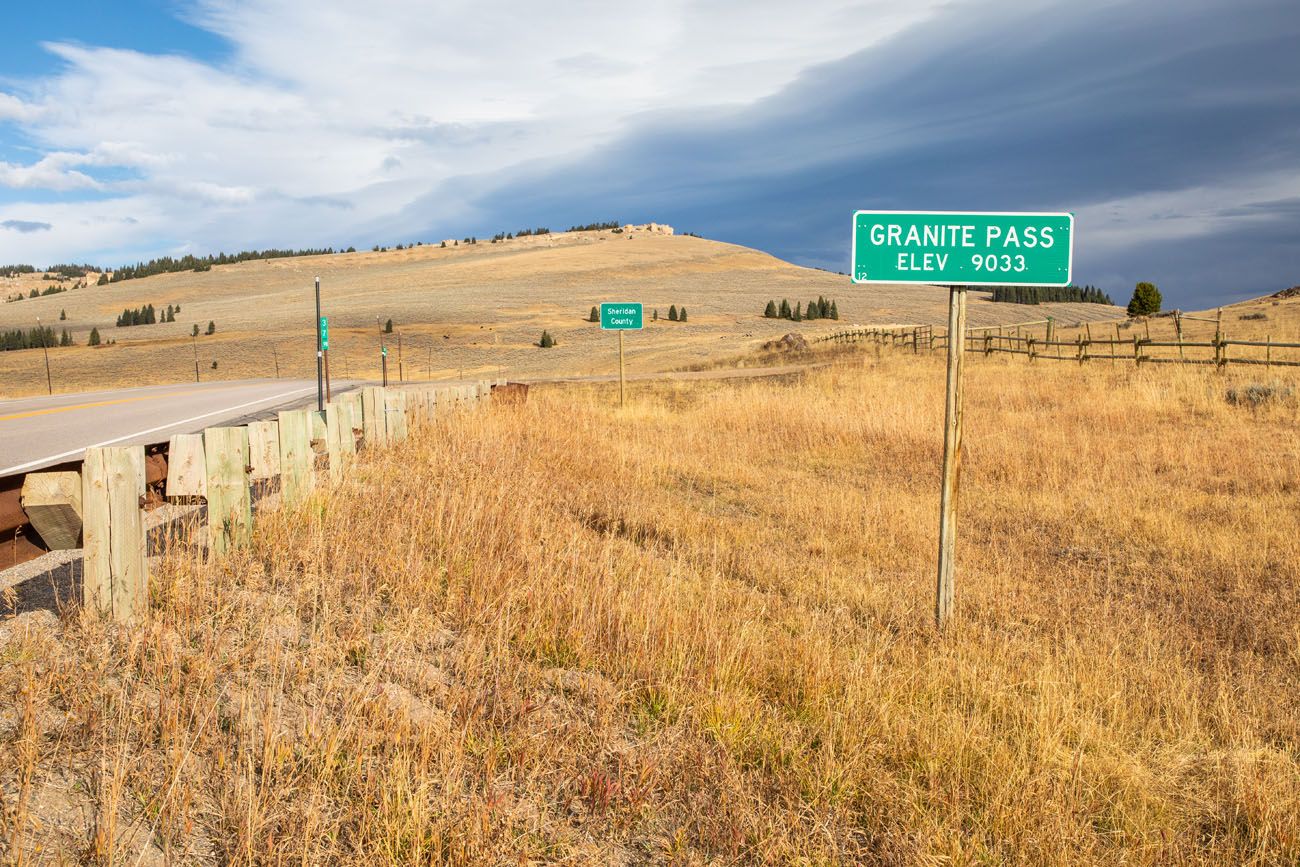
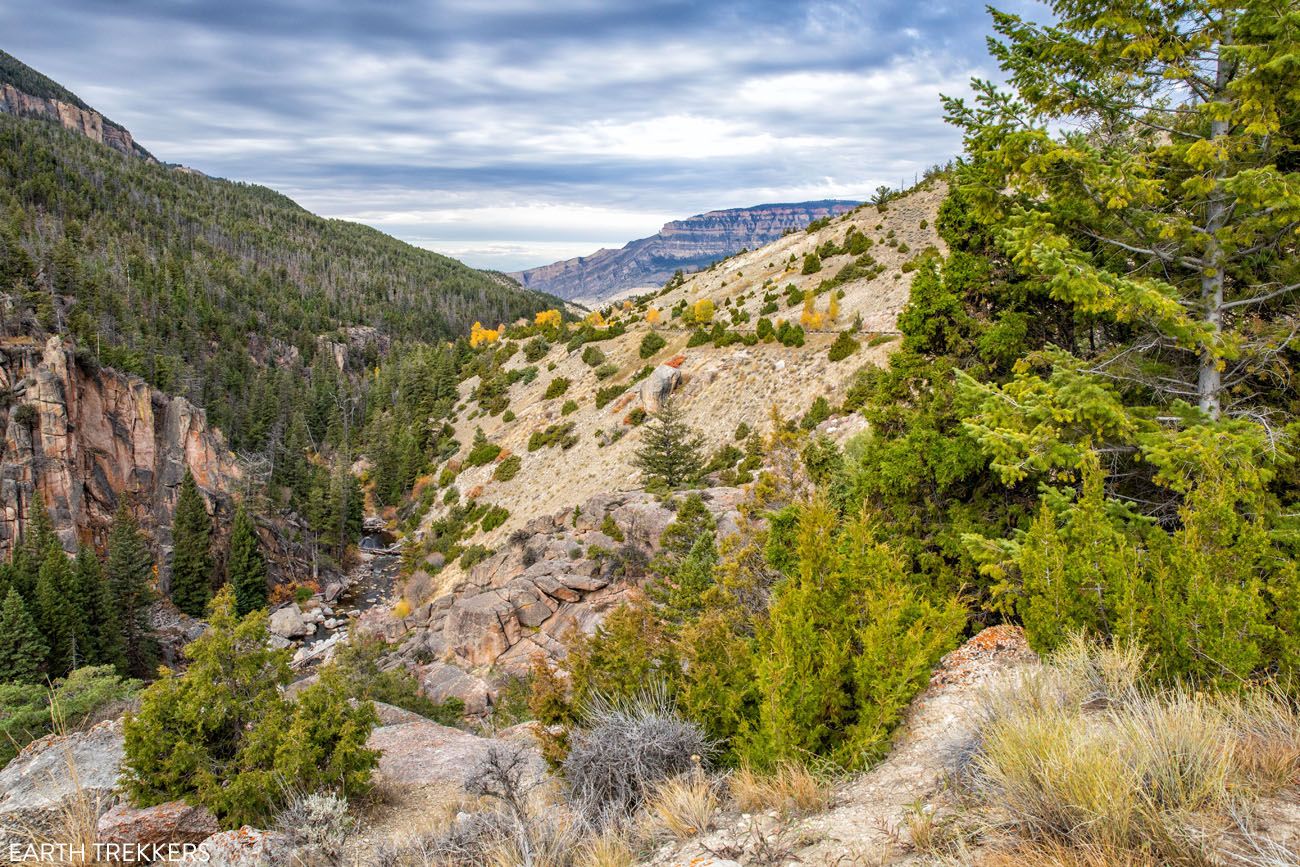
The road winds down into Shell Canyon. Here is the view along this part of the drive.
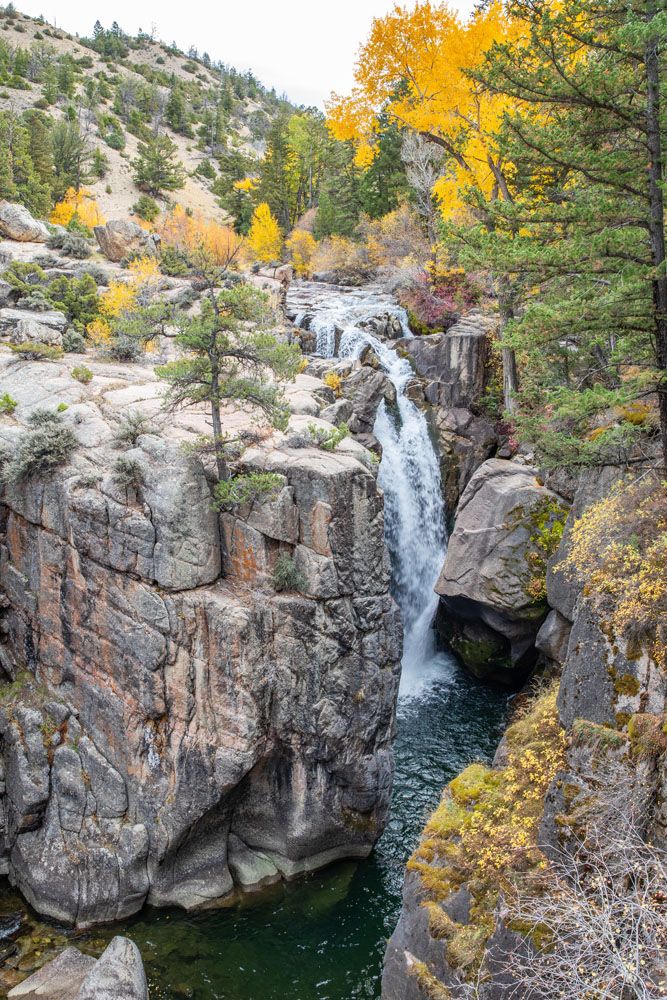
At Shell Falls Interpretive Site, several walking trails lead to overlooks of Shell Falls and Shell Canyon. This canyon gets its name from the shell fossils that are embedded in the granite walls.
Beyond Shell Falls, the road continues to descend into the canyon and the views keep getting better.
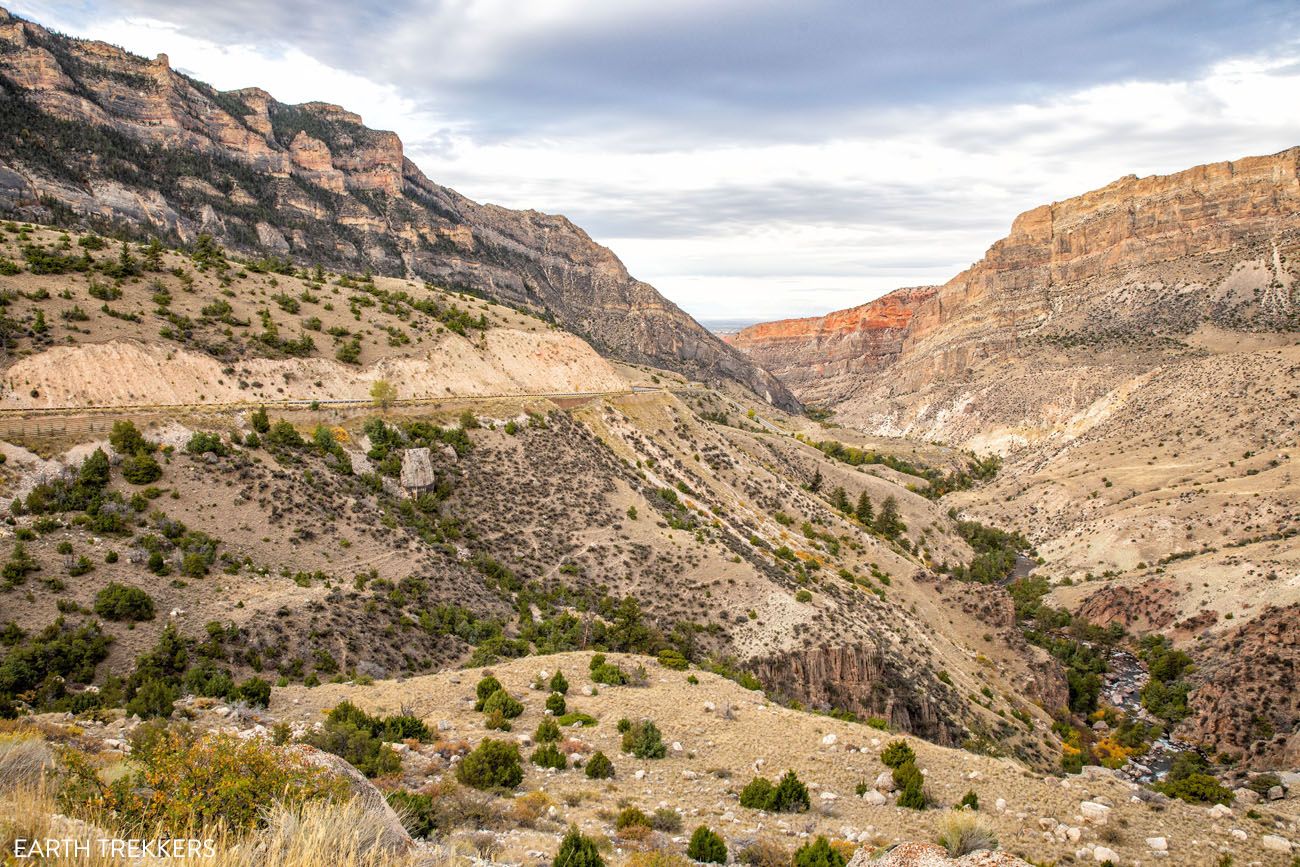
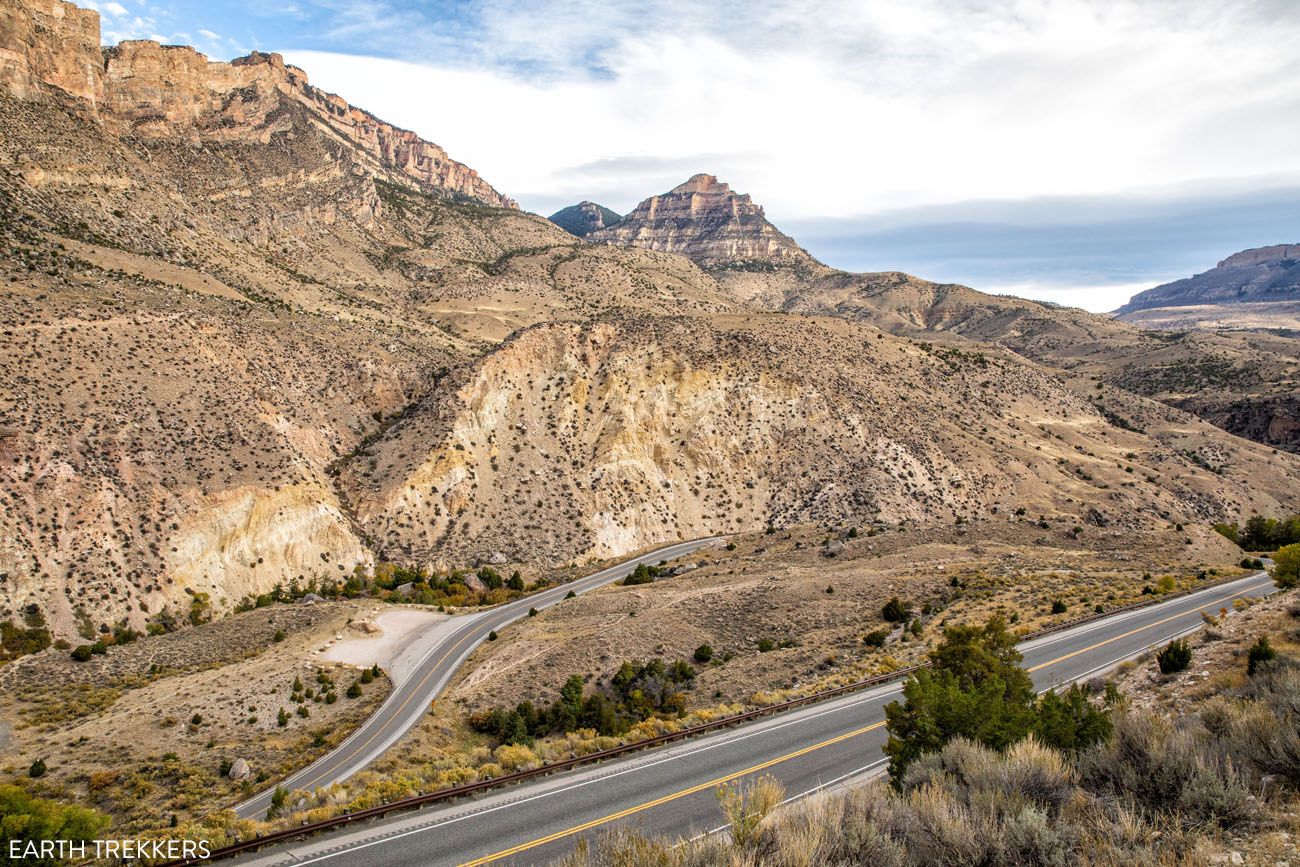
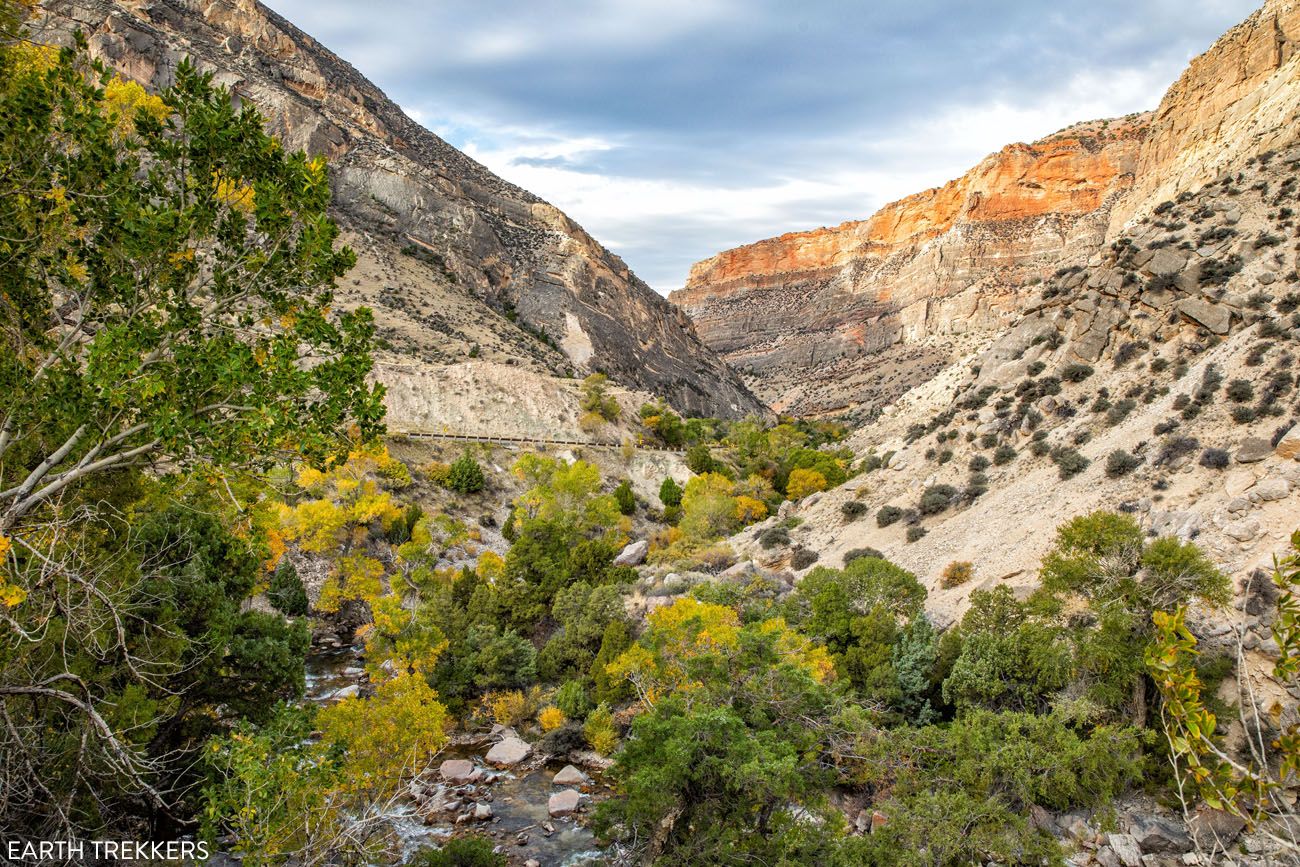
On the western edge of the Bighorn Mountains, the Bighorn Scenic Byway ends once you arrive in the town of Shell. Here is a view looking back at the mountains.
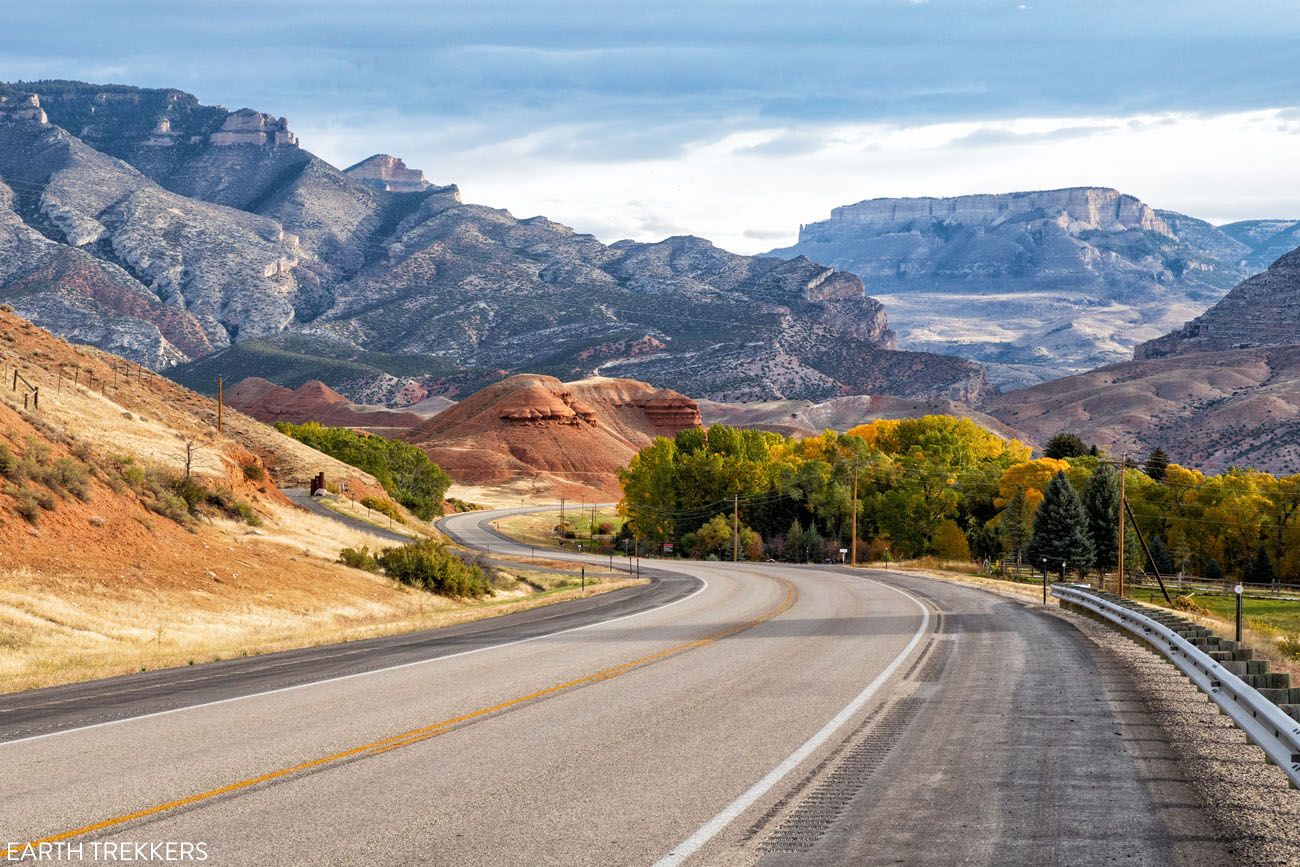
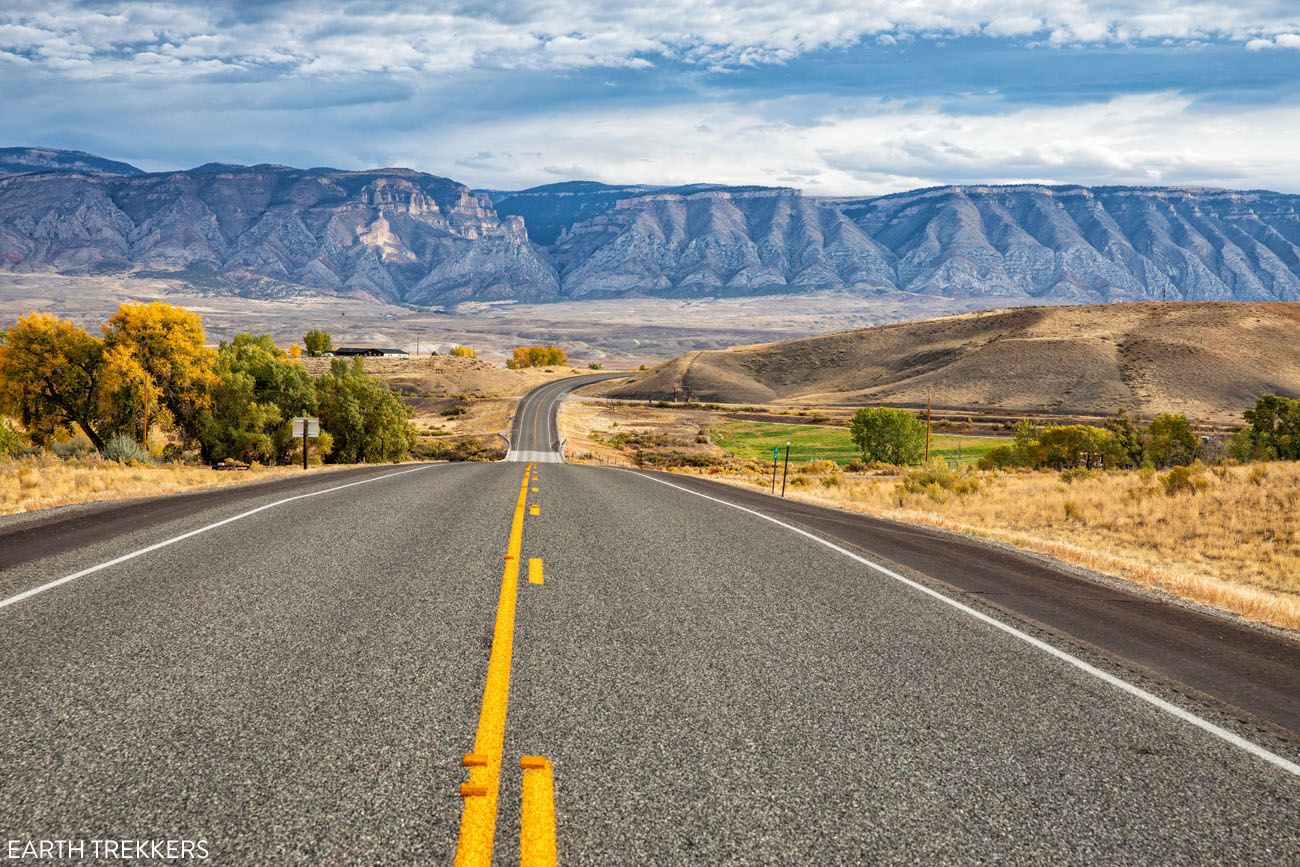
Shell to Cody to the East Entrance of Yellowstone
It takes just over an hour to drive from Shell to Cody on US-14.
If you have plans to stay in Yellowstone National Park, you will have at least one more hour of driving once you reach Cody. The drive from Cody to the east entrance of Yellowstone is also a very scenic drive on the Buffalo Bill Cody Scenic Byway.
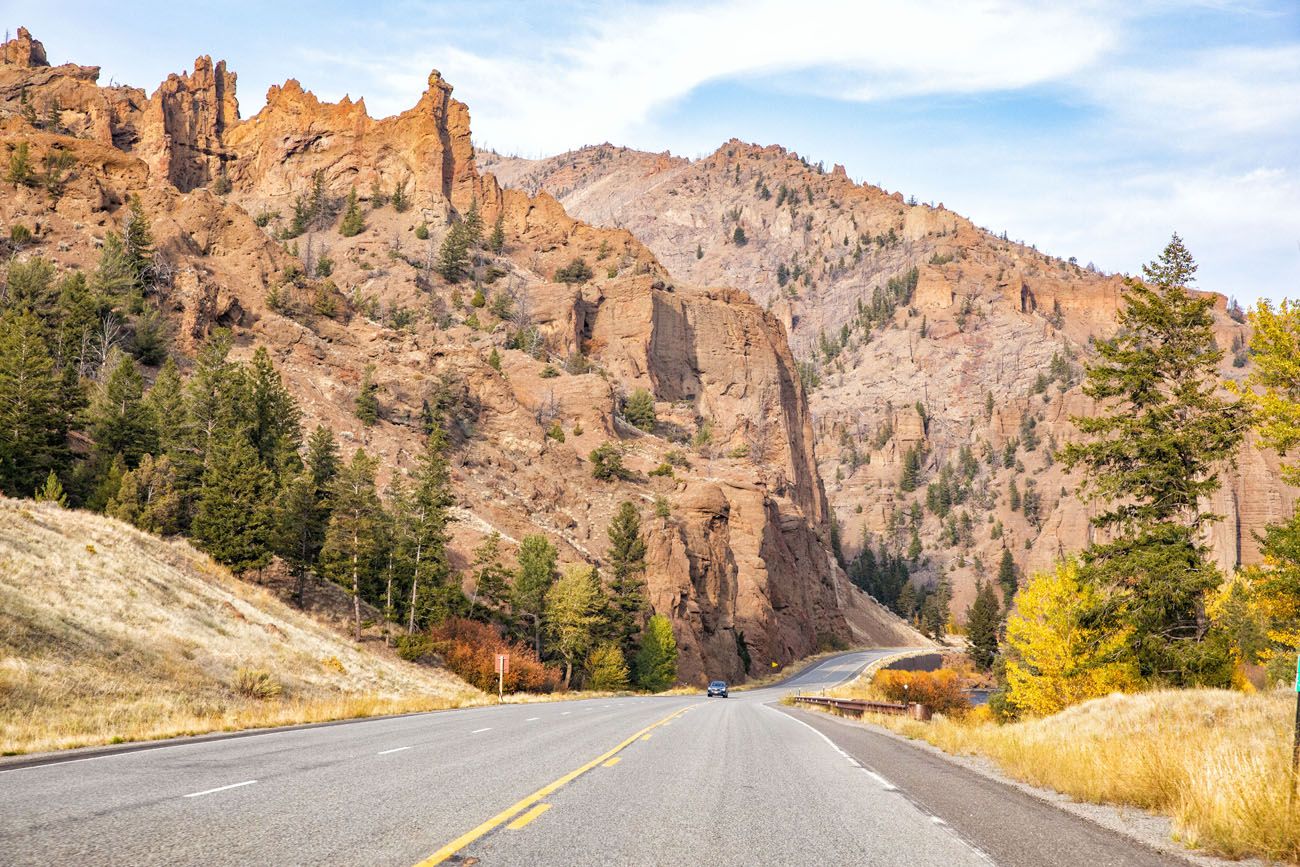
Buffalo Bill Cody Scenic Byway
Route #2: Mount Rushmore to Yellowstone via Cloud Peak Skyway
Best for: An easier drive through the Bighorn Mountains
Route: Mount Rushmore → Devils Tower → Buffalo → Cloud Peak Skyway → Ten Sleep → Cody → Yellowstone’s East Entrance
Highlights: Powder River Pass, Cloud Peak Wilderness, and Ten Sleep Canyon
Our take: Cloud Peak Skyway is still a beautiful drive, but we prefer the scenery along Bighorn Scenic Byway. The big advantage of this route is the drive itself: the grades are gentler and there are fewer tight switchbacks. Choose Cloud Peak Skyway if you want to cross the Bighorn Mountains but would rather avoid the steeper, more winding sections of Route #1.
Mount Rushmore to Devils Tower
To get to Devils Tower from Mount Rushmore, there are several different driving routes. The best route depends on where you will be staying in the Black Hills or Rapid City. You can use Google Maps to map out the quickest route. But in general, it takes 2 to 2.5 hours to get to Devils Tower.
Devils Tower to Buffalo, Wyoming
From Devils Tower, it takes 2 hours to drive to Buffalo (130 miles). Most of this drive is on Interstate 90 which is a large divided highway.
Cloud Peak Skyway
Cloud Peak Skyway is 47 miles long, running from Buffalo to Ten Sleep, Wyoming, on US Highway 16. It is the southern route through the Bighorn Mountains.
From Buffalo, US-16 gradually ascends into the Bighorn Mountains. It doesn’t enter the Bighorns as dramatically as the Bighorn Scenic Byway, since it lacks the switchbacks, tight turns, and canyon views. But it is still a very scenic drive, with views of ranches and the mountain peaks off in the distance.
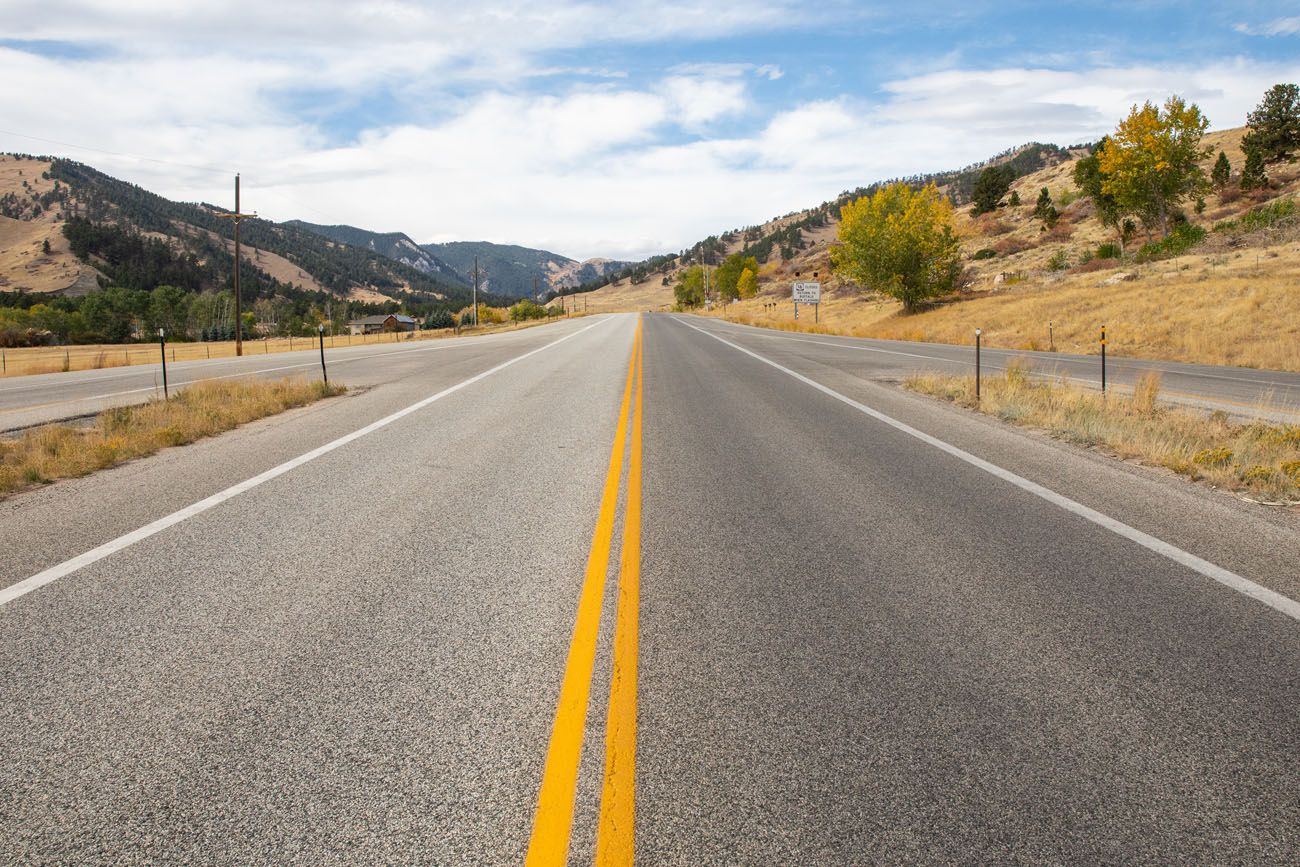
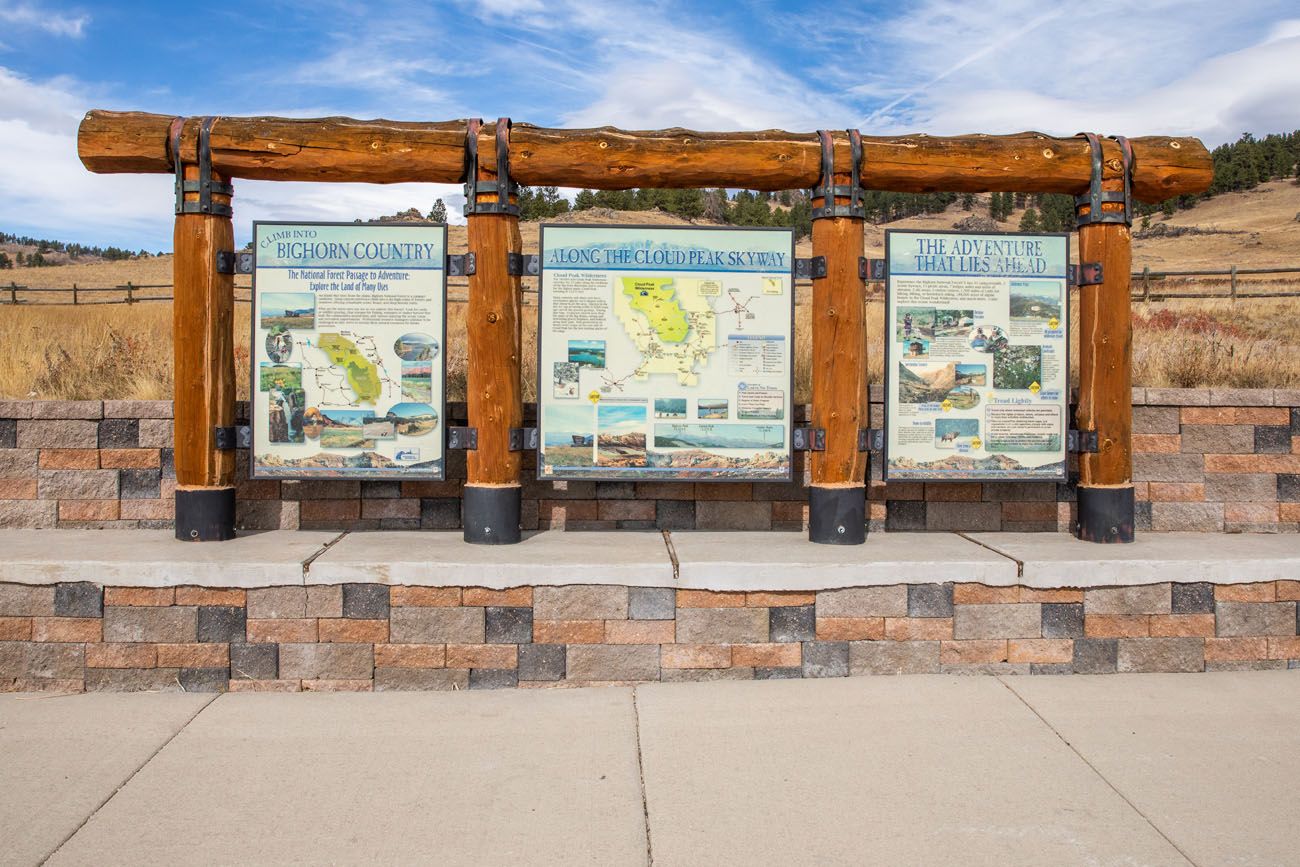
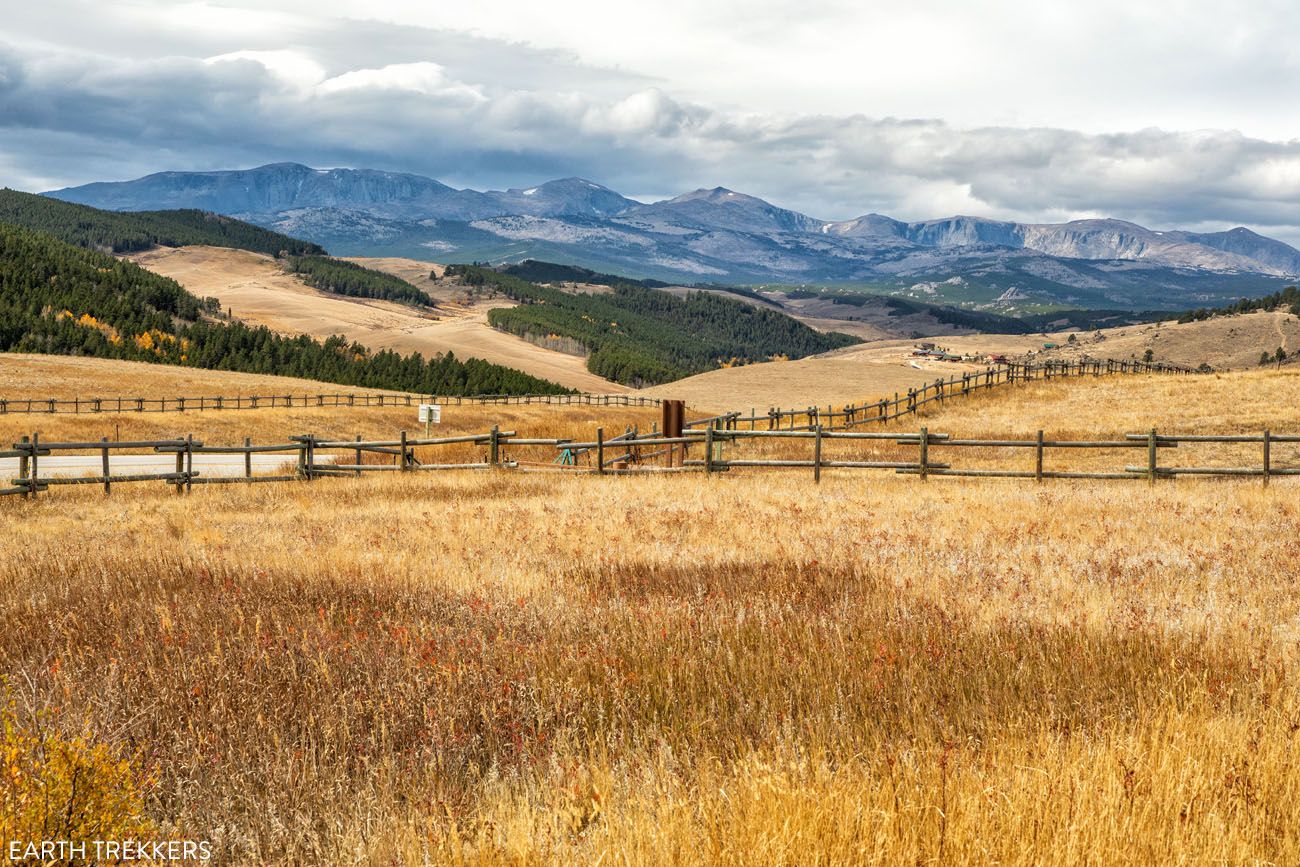
At Loaf Mountain Overlook you get a great view of the Cloud Peak Wilderness. This 189,000 acre wilderness is home to some of the tallest peaks in the Bighorn Mountains, including Cloud Peak and Black Tooth Mountain. In the photo below, you can see Loaf Mountain, Bighorn Peak, and Dayton Peak.
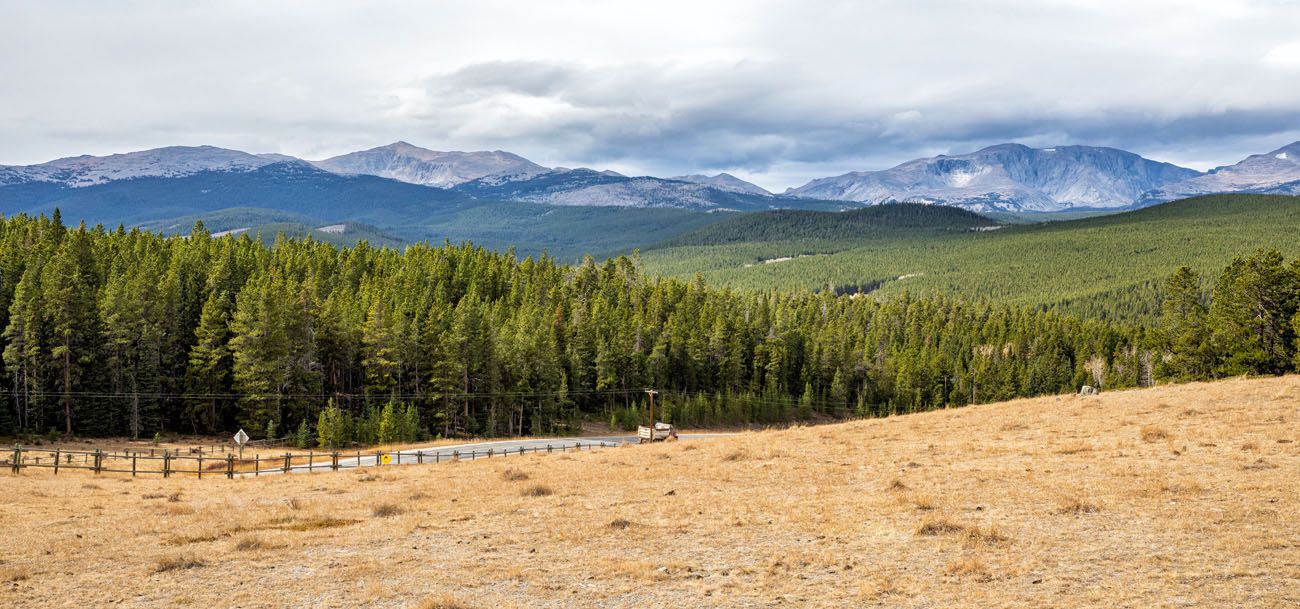
Loaf Mountain Overlook
Cloud Peak Skyway reaches its highest point at Powder River Pass (9,666 feet).
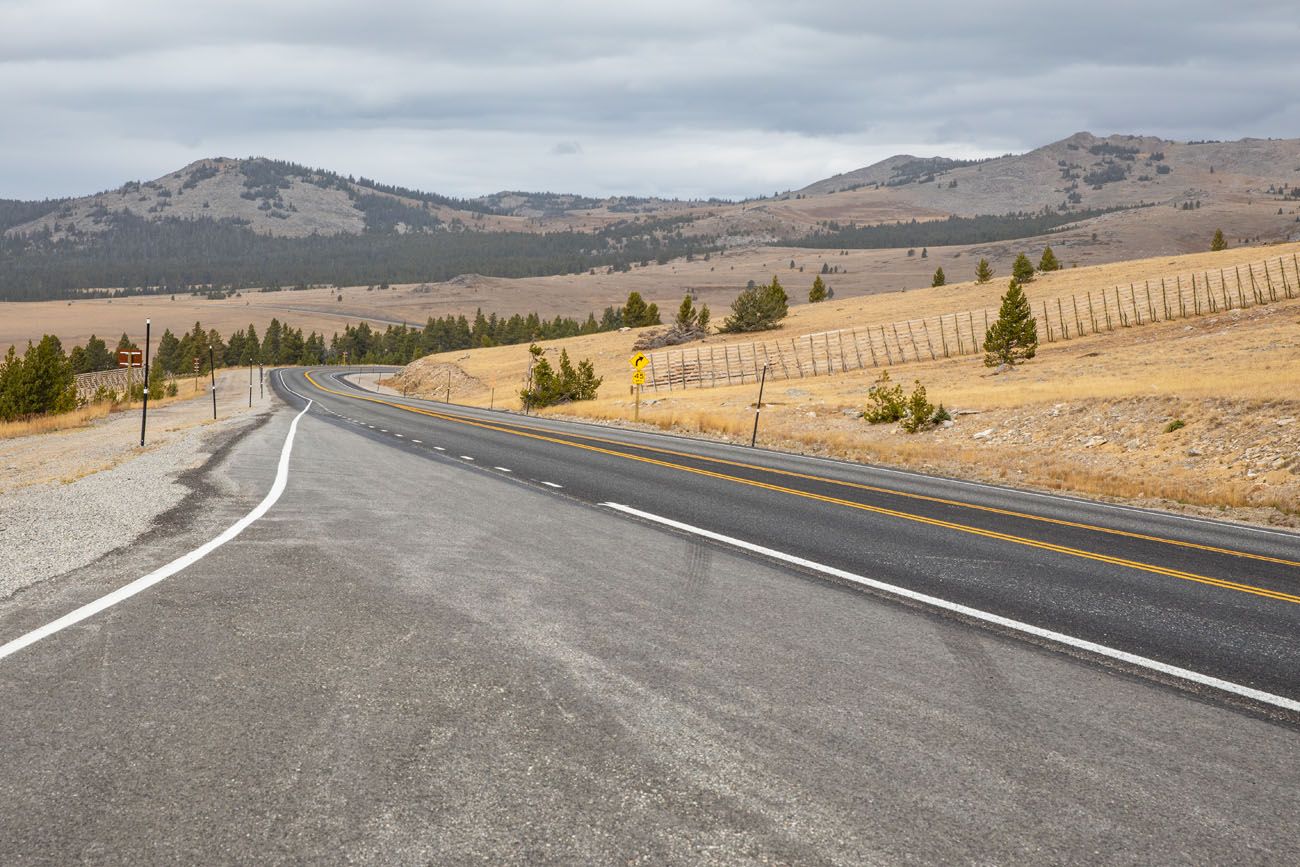
Powder River Pass Summit
As you continue west, the road drops down into a canyon. This was our favorite part of the Cloud Peak Skyway. Massive limestone mountains tower over the road. US-16 winds through this canyon for several miles and the views are beautiful.
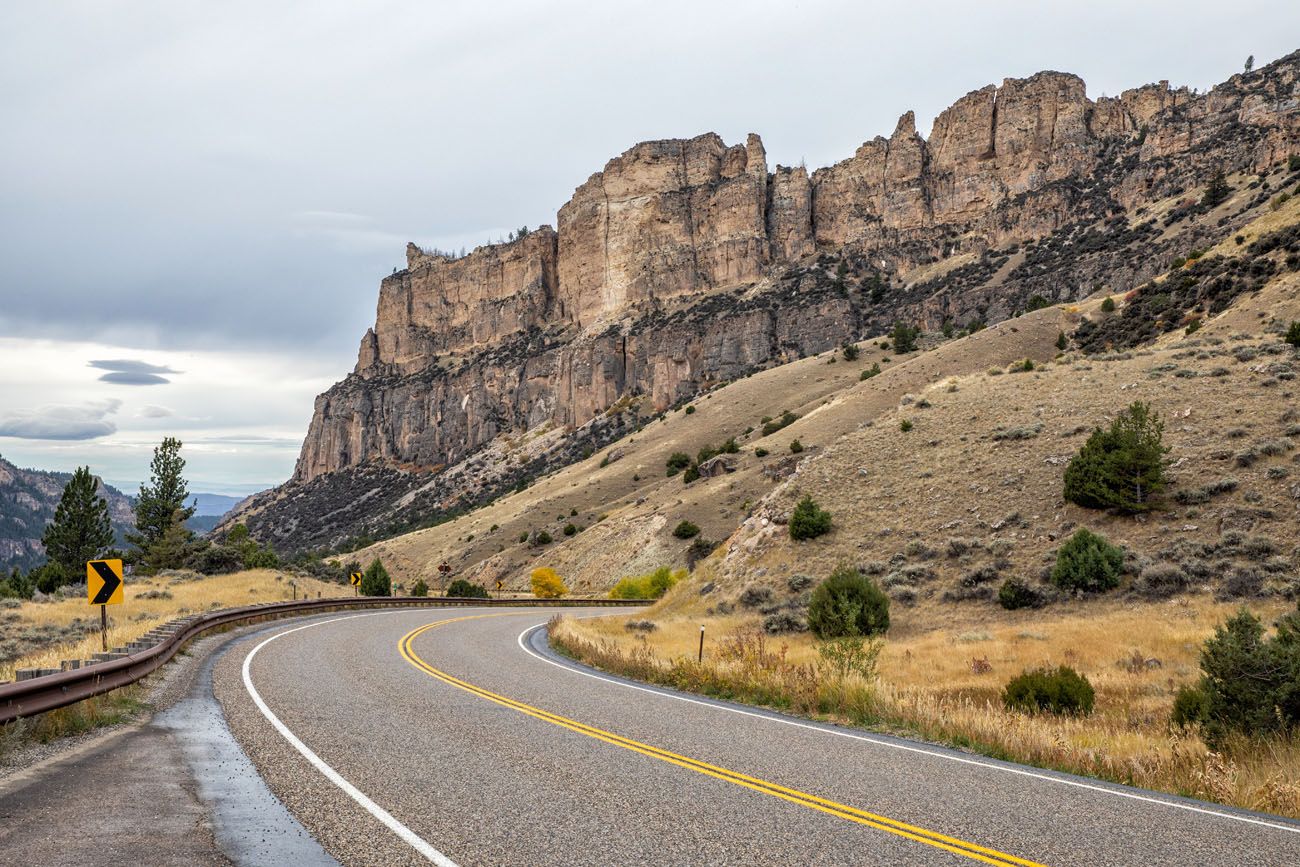
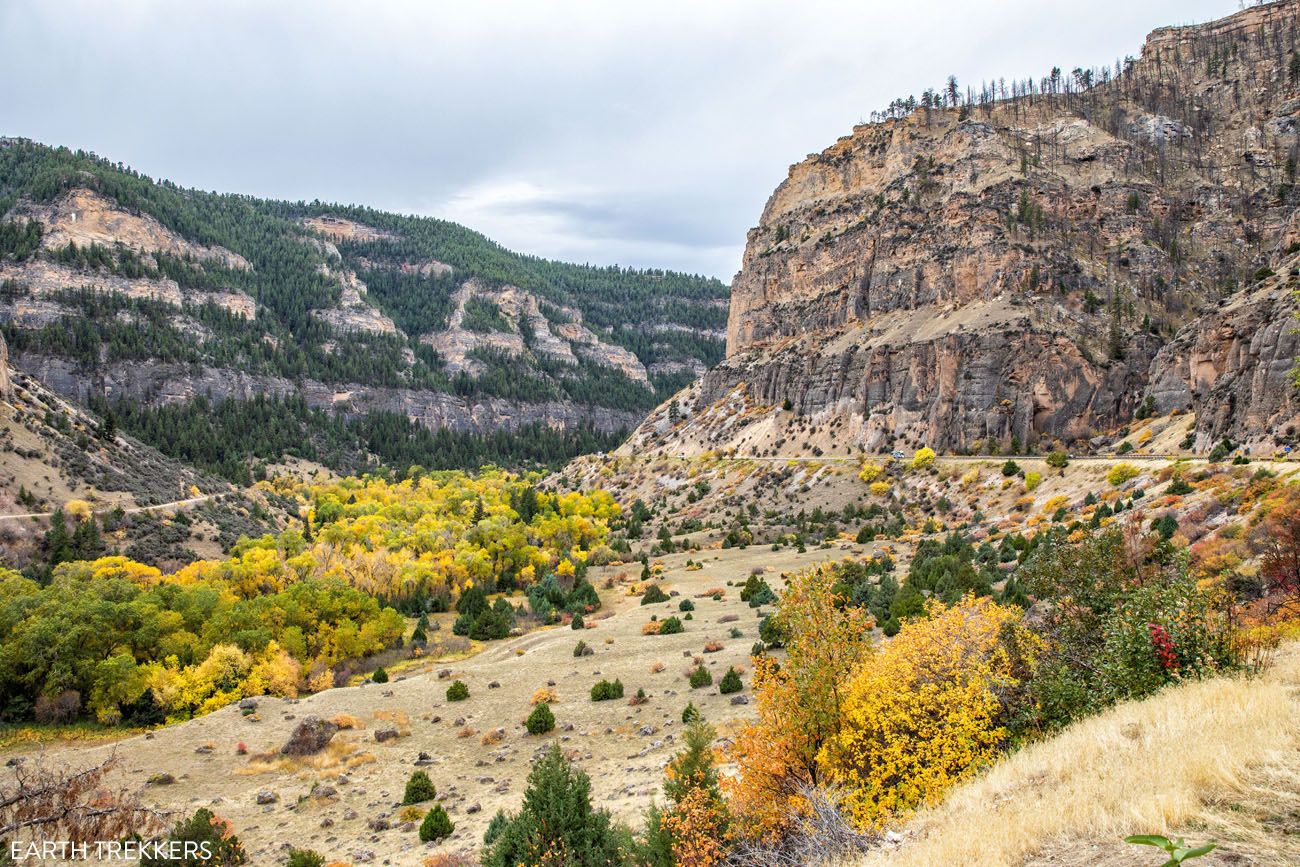
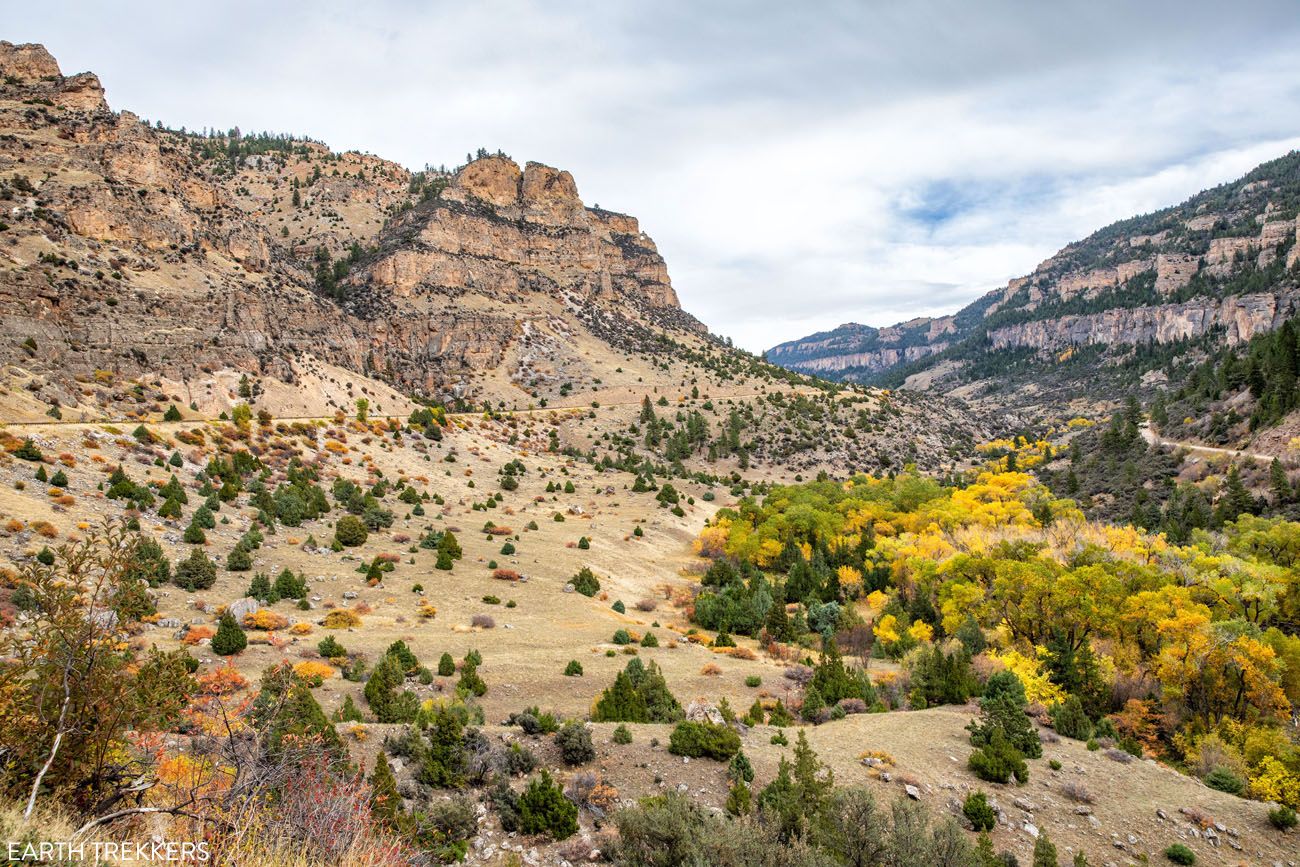
Cloud Peak Skyway comes to an end in Ten Sleep.
Ten Sleep to Cody to Yellowstone
From Ten Sleep, it takes just under two hours to drive to Cody (100 miles). From Cody, it is a 50-mile drive that takes just over an hour.
Route #3: Mount Rushmore to Yellowstone via Beartooth Highway
Best for: The most spectacular scenery and travelers with two days
Route: Mount Rushmore → Devils Tower → Bighorn Scenic Byway → Red Lodge → Beartooth Highway → Yellowstone’s Northeast Entrance
Overnight: Red Lodge, Montana
Highlights: Bighorn Scenic Byway, Beartooth Pass, alpine lakes, and Lamar Valley
Our take: If scenery is your top priority and you have two days, this is the most spectacular of the three options. Rather than treating the drive as a long travel day, spend the first night in Red Lodge and drive Beartooth Highway the following morning. You’ll enter Yellowstone through the Northeast Entrance, perfectly positioned to continue into Lamar Valley.
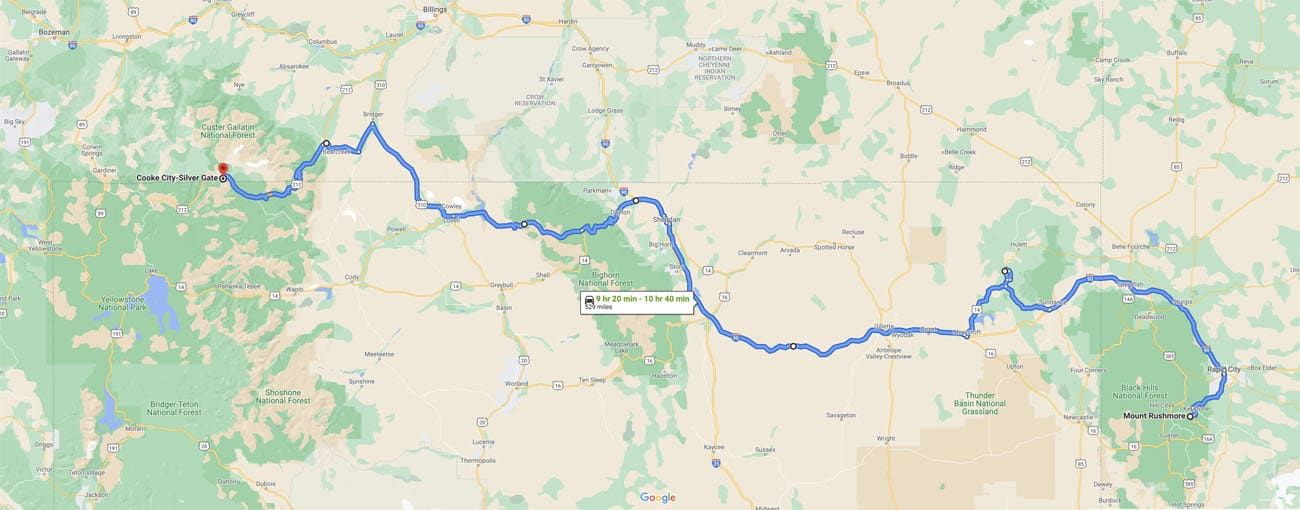
Starting at Mount Rushmore, visit Devils Tower and continue on to Red Lodge, Montana. Spend the night in Red Lodge. On the following day, drive Beartooth Highway in the morning and spend the afternoon in Lamar Valley, Yellowstone National Park.
If you want to enter Yellowstone National Park on one of the most scenic drives in the USA, Beartooth Highway, this is a route to consider. This is a longer route and there is a lot to see and do on Beartooth Highway, so this driving route takes two days.
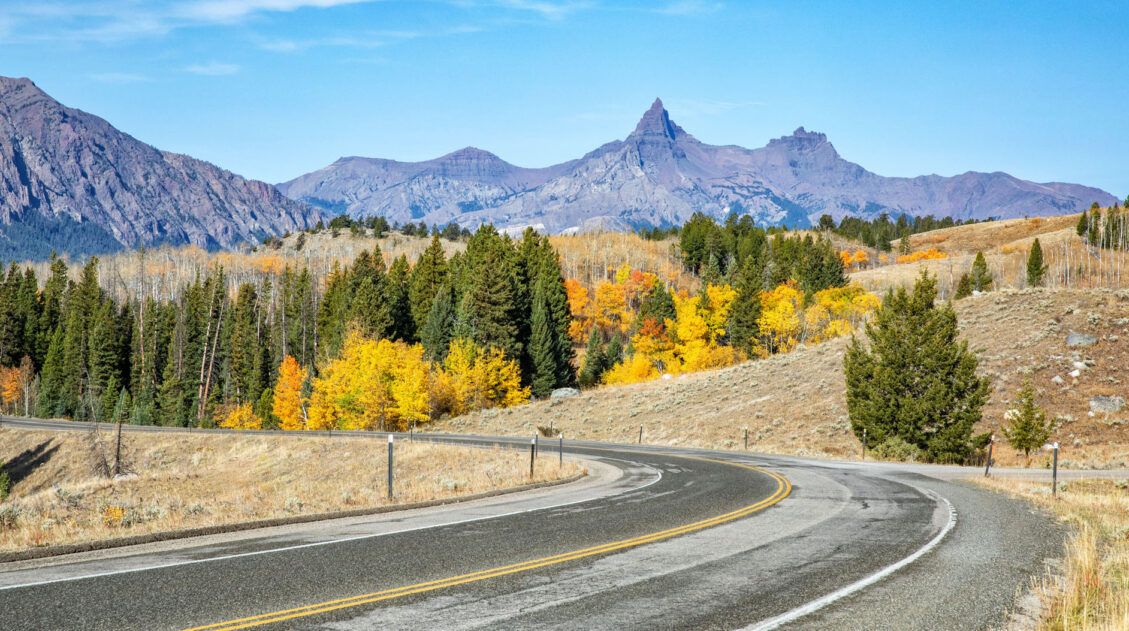
Beartooth Highway: Driving One of America’s Most Scenic Roads
What you need to know to drive Beartooth Highway: things to see along the drive, map, tips, when it is open, and more.Mount Rushmore to Devils Tower
To get to Devils Tower from Mount Rushmore, there are several different driving routes. The best route depends on where you will be staying in the Black Hills or Rapid City. You can use Google Maps to map out the quickest route. But in general, it takes 2 to 2.5 hours to get to Devils Tower.
Since you still have a lot of driving to do today, you won’t have a lot of time to spend at Devils Tower.
I recommend spending just an hour or two here. This gives you enough time to hike the Tower Trail (a 1.3 mile trail that loops around the base of Devils Tower) or the Red Beds Trail if you are a fast hiker (a 2.8 mile trail that makes a bigger loop around Devils Tower).
There are a few restaurants and general stores located at the entrance to Devils Tower National Memorial where you can get lunch and refill your gas tank.
Devils Tower to Red Lodge, Montana
There are several ways to drive from Devils Tower to Red Lodge. The most scenic is driving the Bighorn Scenic Byway.
From Devils Tower, drive the Bighorn Scenic Byway as it is written out earlier in this guide. Drive through Shell, Wyoming and then take US-310 north to Montana. Then take US-72 south to State Highway 308 to Red Lodge. The drive on this route from Devils Tower to Red Lodge is 360 miles long and takes 6 hours without stops.
Spend the night in Red Lodge. This is a quaint, historic town that is located at the foot of the Beartooth Mountains. We stayed in the Alpine Lodge and had dinner at Prerogative Kitchen. Other recommended restaurants are Carbon County Steakhouse, Piccola Cucina at Ox Pasture (Italian), Palmita Mexican Restaurant, and Red Lodge Pizza Company.
On the following day, drive Beartooth Highway in the morning and spend the afternoon in Yellowstone National Park.
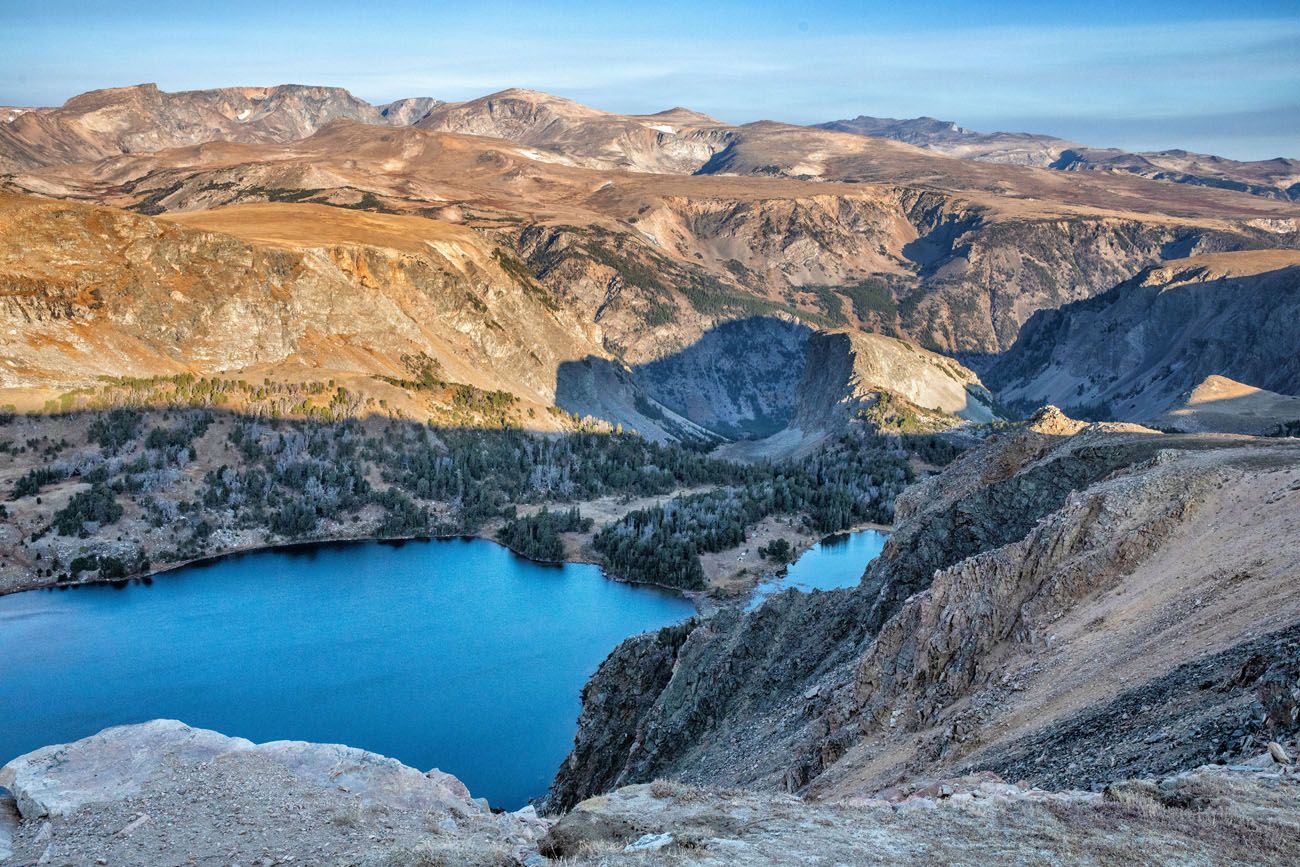
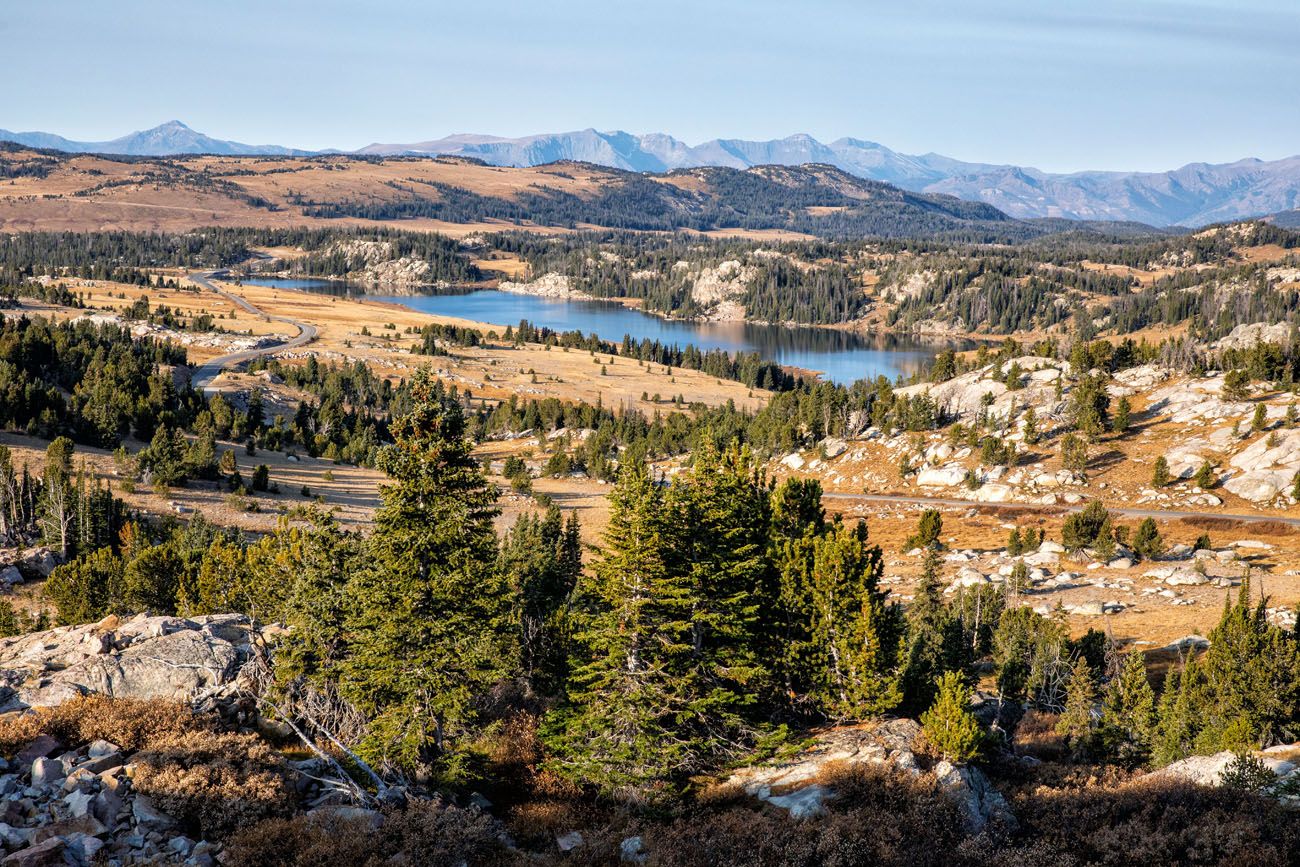
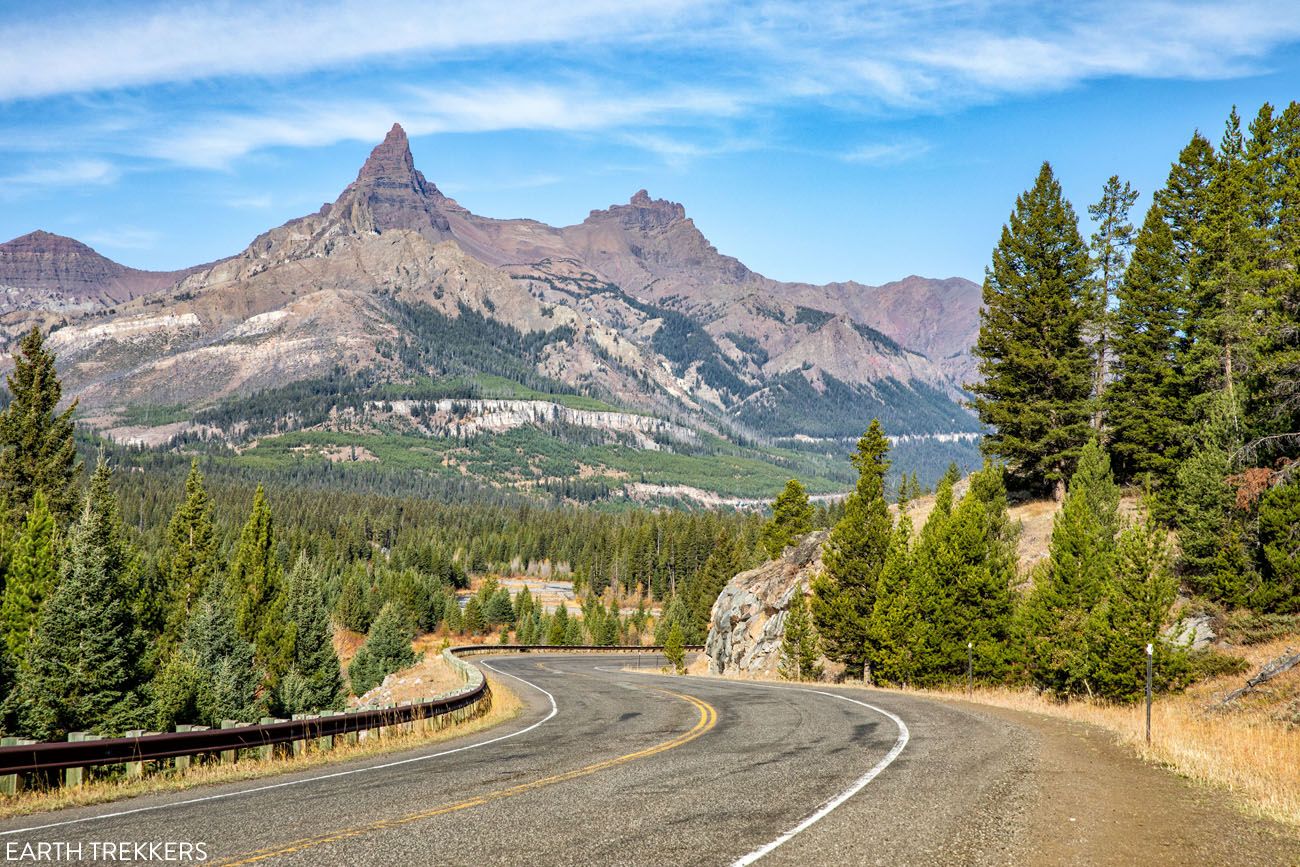
Here are a few of our photos from Beartooth Highway.
Where to Stay Between Mount Rushmore and Yellowstone
Where you stay depends on which route you choose.
Cody, Wyoming: If you are driving either the Bighorn Scenic Byway or Cloud Peak Skyway, Cody is the best place to spend the night before entering Yellowstone through the East Entrance. It also works well if you want to break this long drive into two days. We have a full list of recommended hotels in our guide to where to stay in and around Yellowstone.
Red Lodge, Montana: If you are driving Beartooth Highway, we recommend spending the night in Red Lodge and driving the highway the following morning. Tim and I stayed in a cabin at the Alpine Lodge and had a great experience. Staying in Red Lodge also lets you start Beartooth Highway early, when you have plenty of time for overlooks, short walks, and photo stops before continuing into Yellowstone.
When Can You Drive from Mount Rushmore to Yellowstone?
Late May through September is the best time to drive from Mount Rushmore to Yellowstone. During these months, Yellowstone’s roads and entrances are generally open and all three routes in this guide are usually possible, although mountain weather can always cause temporary closures.
If you are traveling in May or October, your route options become more weather dependent. The Bighorn Scenic Byway and Cloud Peak Skyway do not have a scheduled seasonal closure, but snow and ice can temporarily make travel difficult or close sections of these high-elevation roads. Yellowstone’s East Entrance is also seasonal, so check its status before choosing either Bighorn route.
Beartooth Highway has the shortest season of the three routes. It typically opens around Memorial Day and closes by mid-October, but exact dates vary each year with snowfall and road conditions. We drove Beartooth Highway on October 5, and just two days later, on October 7, it closed for the season because of incoming snow and ice. If you plan to drive Beartooth Highway in late May, June, September, or October, keep your plans flexible and check road conditions shortly before your trip.
From roughly November through April, the three routes described in this guide are not practical ways to enter Yellowstone by car because most Yellowstone park roads and entrances, including the East Entrance, close to regular vehicles for the winter.
Our recommendation: For the greatest flexibility, plan this road trip from June through September. In May and October, check Yellowstone, Wyoming, and Montana road conditions before deciding which route to take.
Mount Rushmore to Yellowstone FAQs
How far is Yellowstone from Mount Rushmore?
Yellowstone National Park is roughly 480 to 520 miles from Mount Rushmore, depending on the route you take and which Yellowstone entrance you use. The two routes through the Bighorn Mountains enter Yellowstone through the East Entrance, while the Beartooth Highway route enters through the Northeast Entrance.
How long does it take to drive from Mount Rushmore to Yellowstone?
Plan on about 8 to 9 hours of driving without stops. However, with a visit to Devils Tower, scenic overlooks, meals, and other stops along the way, this can easily become a 10- to 12-hour travel day. If you drive Beartooth Highway, we recommend splitting the trip into two days.
Can you drive from Mount Rushmore to Yellowstone in one day?
Yes. You can drive from Mount Rushmore to Yellowstone in one day using either the Bighorn Scenic Byway or Cloud Peak Skyway. It will be a long day, especially if you also visit Devils Tower, but it is very doable. For the Beartooth Highway route, we recommend spending the night in Red Lodge and continuing to Yellowstone the following day.
What is the best route from Mount Rushmore to Yellowstone?
For most travelers, we recommend the Bighorn Scenic Byway. It offers the best combination of beautiful scenery and a relatively direct drive to Cody and Yellowstone’s East Entrance. Choose Cloud Peak Skyway if you prefer an easier mountain drive, and Beartooth Highway if spectacular scenery is your top priority and you have two days for the journey.
Is Devils Tower on the way from Mount Rushmore to Yellowstone?
Devils Tower is not directly on the shortest route from Mount Rushmore to Yellowstone, but it is an easy and worthwhile addition to all three scenic routes in this guide. We recommend adding it if you have the time, especially if this is your first visit to the area.
Which route is easiest to drive through the Bighorn Mountains?
Cloud Peak Skyway (US 16) is the easier of the two Bighorn Mountain routes. It has gentler grades and fewer tight switchbacks than the Bighorn Scenic Byway (US 14), while still offering beautiful mountain scenery. If steep, winding roads make you uncomfortable, Cloud Peak Skyway is the better choice.
Plan Your Mount Rushmore to Yellowstone Road Trip
- Want to turn this drive into a road trip? → Our Yellowstone, Devils Tower & Mount Rushmore Road Trip Itinerary connects these destinations into one epic trip, with stops in Grand Teton, the Black Hills, and Badlands National Park.
- Planning your time in Yellowstone? → Our Yellowstone National Park Travel Guide covers the best things to do, sample itineraries, where to stay, and links to all of our Yellowstone guides.
- Exploring more of Wyoming? → Our Wyoming Travel Guide brings together our guides to Yellowstone, Grand Teton, Devils Tower, and more places to visit across the state.
- Visiting Mount Rushmore? → Our Guide to Mount Rushmore covers when to go, how long to spend here, what to see, and tips for avoiding the crowds.
- Adding Devils Tower to the drive? → Our Guide to Devils Tower covers the best things to do, hiking trails, and how to plan your visit.
- Spending more time in the Black Hills? → Our South Dakota Travel Guide has all of our guides to Mount Rushmore, Custer State Park, Badlands National Park, Wind Cave, and more.
If you have any questions about how to drive from Mount Rushmore to Yellowstone, or if you want to share your experience, let us know in the comment section below.
Explore More of Yellowstone, Wyoming, and South Dakota
23 Best Things to Do in Yellowstone National Park
Pinterest Facebook Flipboard Yellowstone National Park is a wonderland of geothermal activity, dramatic landscapes, and abundant wildlife. Steam hisses from the ground beside wooden boardwalks, bison bring traffic to a standstill on the park roads, and technicolor hot springs amaze even the most seasoned travelers. In this guide, we cover the best things to do […]
Best USA Road Trips: 18 Ideas for Your Next Big Adventure
One of the best ways to explore the USA is on a good old-fashioned road trip. Cruise along Route 66, road trip through the Florida Keys, explore the American Southwest, or even drive from coast to coast. In this guide, we share 18 of the best USA road trips…18 great ideas for your next big […]
The Perfect Yellowstone & Grand Teton Itinerary for First-Timers
Yellowstone and Grand Teton sit side by side in northwest Wyoming, and together they make one of the best national park trips in the country. Spend your days watching Old Faithful erupt and geysers bubble across Yellowstone’s thermal basins, then drive an hour south to hike beneath the jagged Teton Range, paddle Jenny Lake, and […]
Custer State Park: Best Hikes, Scenic Drives & Things To Do
Discover the best things to do in Custer State Park, from its wildlife sightings along Wildlife Loop Road to epic hikes to the highest points in the park. We will also provide a map, a detailed one-day itinerary, plus important tips to help you have the best experience. Tucked away in the Black Hills of […]
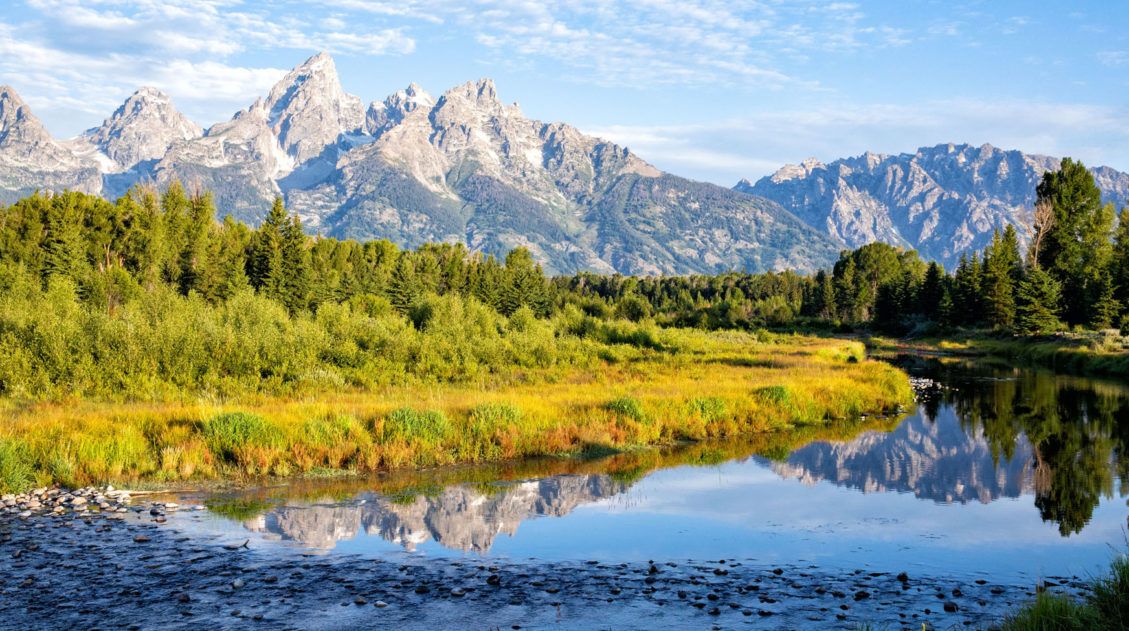
15 Best Things to Do in Grand Teton National Park
Jagged mountain peaks, lush meadows, scenic lakes, the winding Snake River, historical sites, and miles of hiking trails…this is Grand Teton National Park. If you are looking for the best things to do in Grand Teton National Park, we have lots of great information to share with you. There is something here for everyone. Families […]
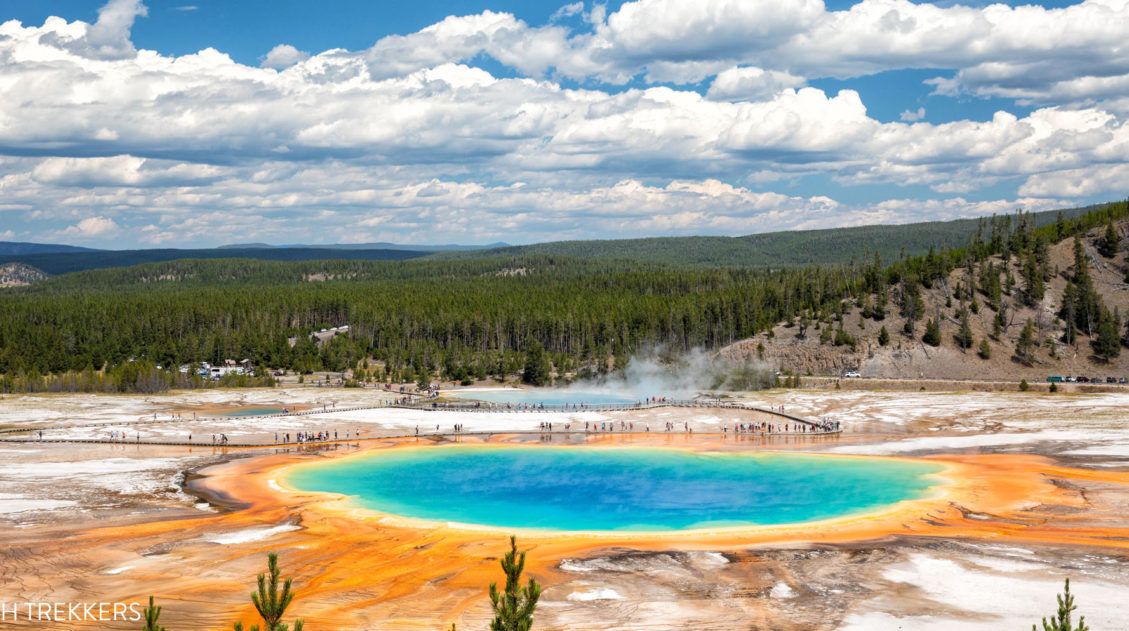
How to Visit Grand Prismatic Spring Overlook (+ Fairy Falls)
The Grand Prismatic Spring Overlook is one of our favorite photography spots in Yellowstone National Park. From above, you get the full kaleidoscope of colors in the spring, plus a great sense of scale, watching tiny people make their way along the boardwalks at Midway Geyser Basin. We’ve visited the overlook several times now, twice […]
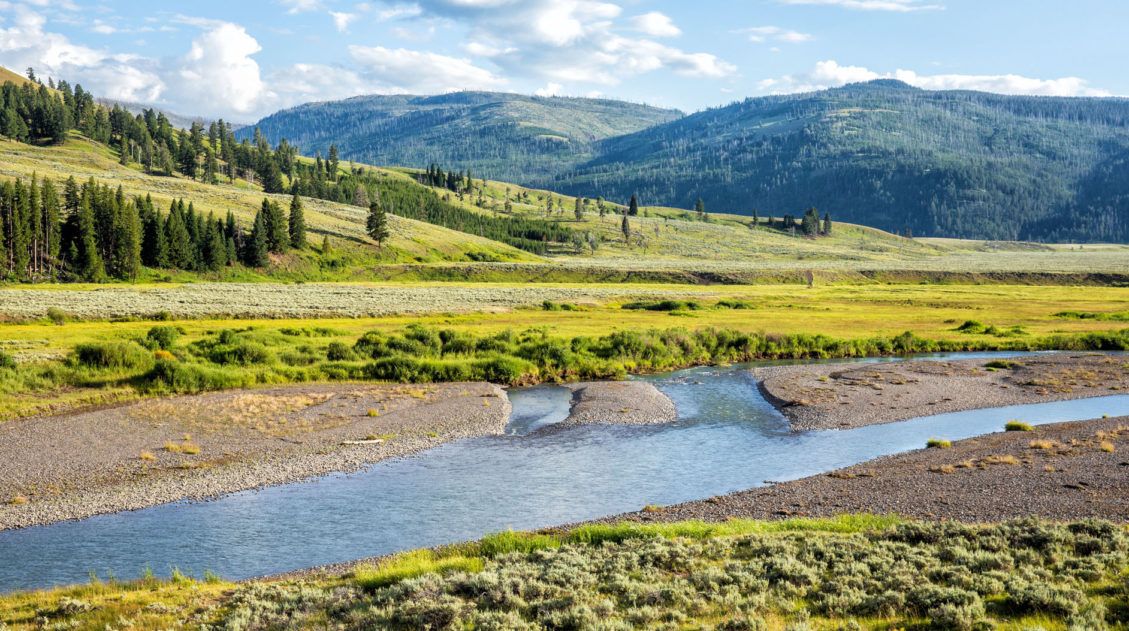
Yellowstone Itinerary: How to Spend 1 to 5 Days in Yellowstone
Planning a Yellowstone itinerary can be challenging. The park is enormous, drive times are long, and wildlife sightings and traffic jams can throw even the best-planned day off schedule. In this guide, we provide Yellowstone itineraries for 1 to 5 days, with the sights grouped into logical driving routes to help you make the most […]
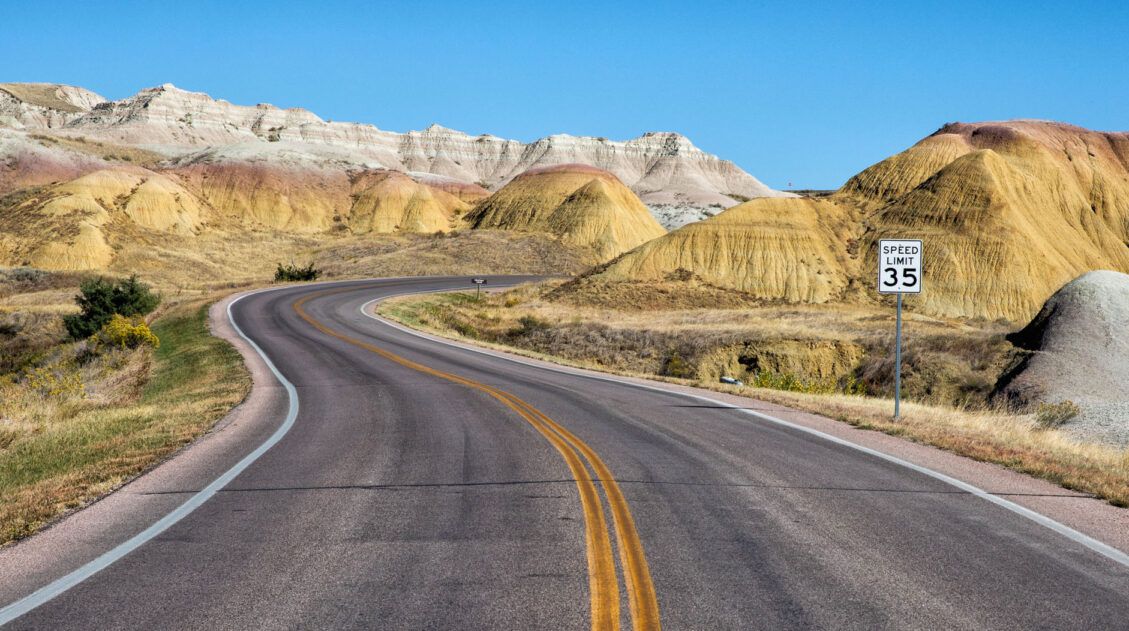
15 Things to Do in South Dakota near Mount Rushmore and Rapid City
The southwestern corner of South Dakota has a surprisingly long and wonderful list of things to do. Mount Rushmore, Badlands National Park, and Custer State Park are the big draws for many visitors to this part of the United States, but there is plenty more to keep you busy. In this post, we cover the […]
15 Amazing Things to Do in Badlands National Park (+ Map & Photos)
Discover the best things to do in Badlands National Park, in both the North and South units. We’ll also provide a map to help you plan your route, along with itinerary suggestions, where to stay, and helpful tips. Badlands National Park is one of the most highly underrated parks in the U.S. National Park system. […]
6 Great Things to Do in Wind Cave National Park
Discover the very best things to do in Wind Cave National Park, how to choose the best cave tour, and ideas for planning your time. This underrated park also has a few short, spectacular trails, with the chance to spot bison, elk, prairie dogs, and pronghorn. Wind Cave National Park gets its name for its […]
One Week South Dakota Itinerary: Black Hills & the Badlands
There are many different ways to spend one week in South Dakota. This itinerary focuses on the southwestern corner of the state, visiting sights located in and around the Black Hills. There is a long list of things to do in this part of South Dakota. Here are the things you will see on this […]
United States Travel Guide: Places to Visit in the USA
Plan your visit to the United States. Learn about the best things to do, how to plan your time, road trip ideas, and sample itineraries.
12 Best Things to Do in Theodore Roosevelt NP (+ 3 Day Itinerary)
Discover the absolute best things to do in Theodore Roosevelt National Park. This comprehensive guide covers top hikes, stunning overlooks, and wildlife spotting across the North, South, and Elkhorn Ranch Units, plus a perfect 3-day itinerary to see it all. Theodore Roosevelt National Park is a striking wilderness where rugged badlands meet vast, rolling grasslands. […]


Comments 24