
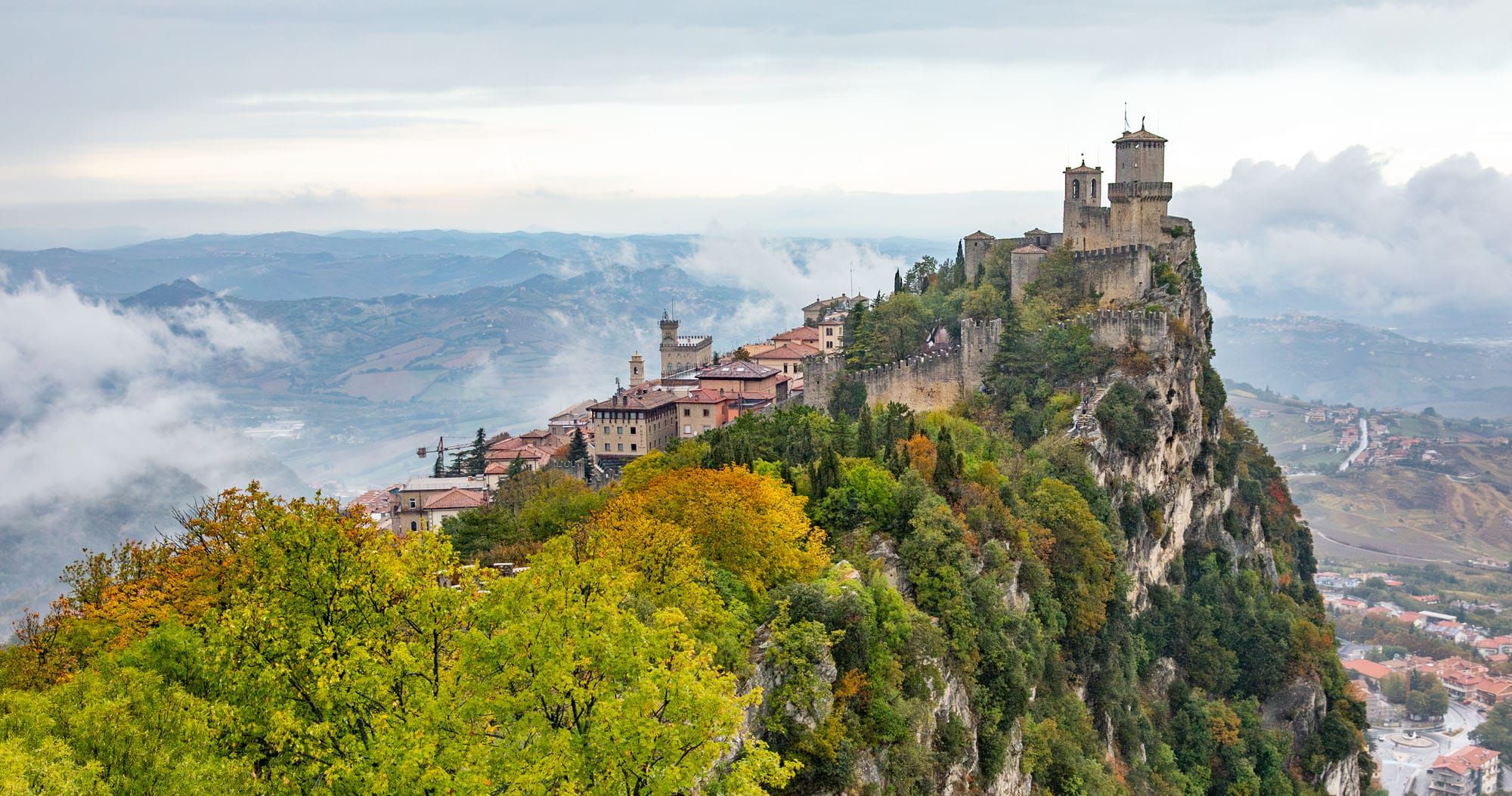
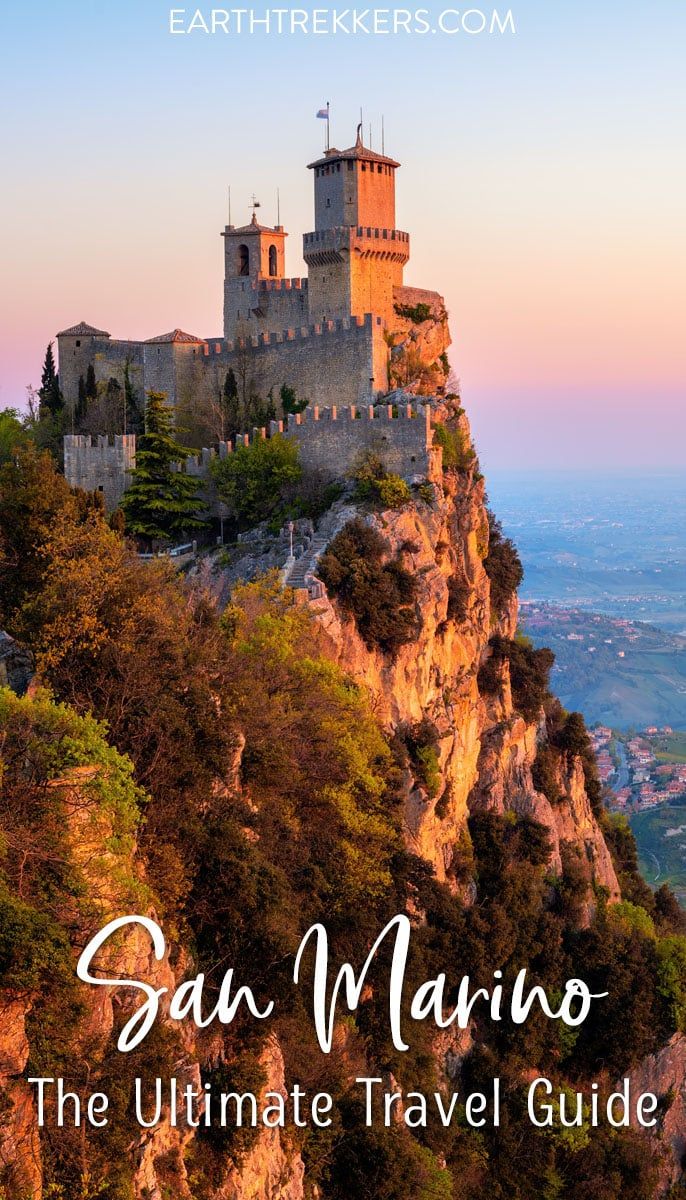
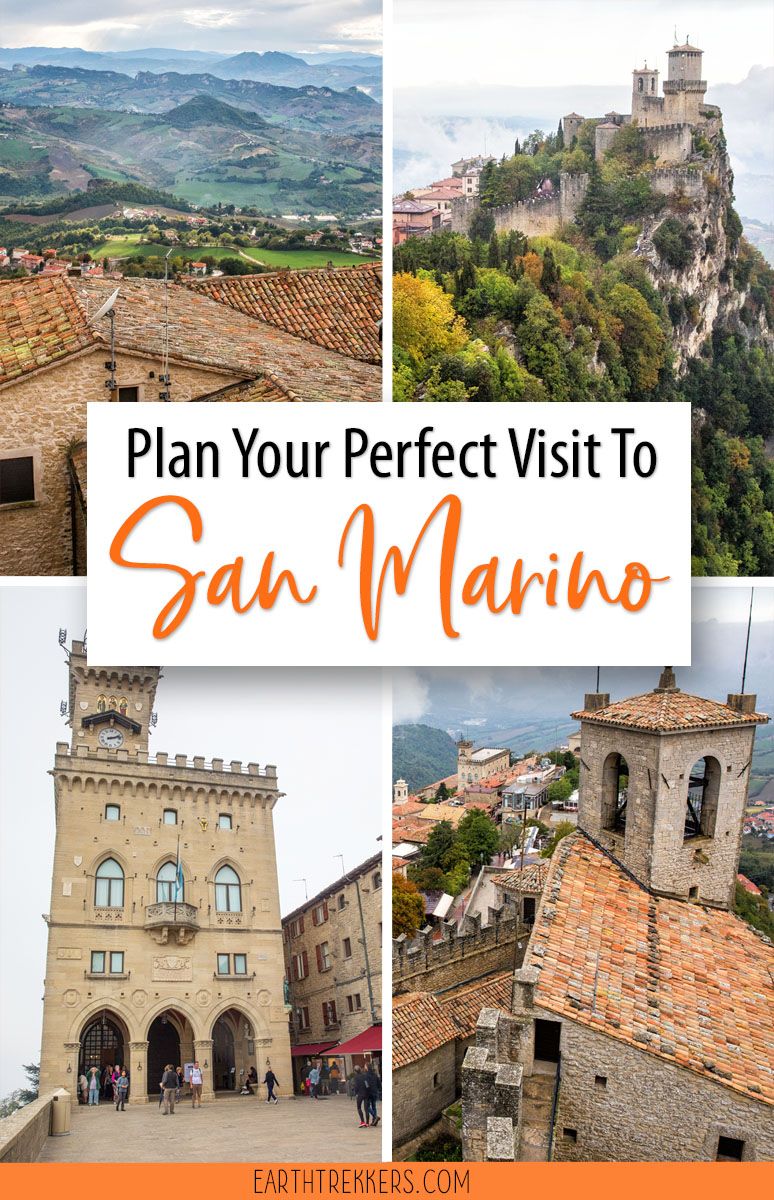
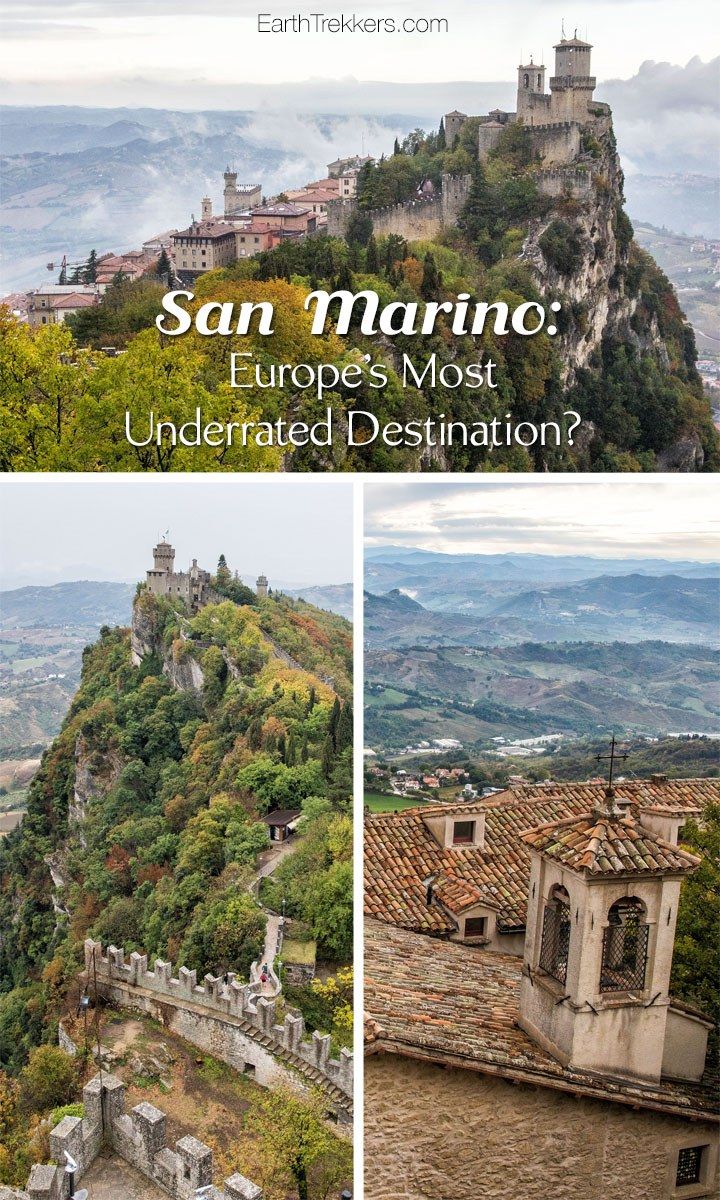
San Marino is a tiny, independent nation completely surrounded by Italy, perched high on the rocky summit of Monte Titano near the Adriatic coast. The capital city, also called San Marino, is a maze of medieval streets, stone towers, and hilltop piazzas with sweeping views over the Italian countryside below. In this guide, we cover the best things to do in San Marino, how to get here, and everything you need to plan your visit.
San Marino wasn’t on our radar for a long time. On our first trip to Italy, we spent nearly a month exploring the country and didn’t even consider it. It just doesn’t get the hype that Rome, Florence, and Venice do.
But on a later trip, based in nearby Cervia for Ironman Italy, we finally made the drive and San Marino completely won us over. The medieval streets are beautiful, the towers are genuinely fun to climb, and the views over the vineyards of the surrounding Italian countryside are breathtaking. We wish we had stayed the night.
If you’re planning a trip to Italy and San Marino is on your list, move it higher. This is one of those places that exceeds expectations.
San Marino At a Glance
LOCATION | Enclave within northeastern Italy, near Rimini
DON’T MISS | Climbing Guaita Tower for the views; walking the Passo delle Steghe (Witches Path) between the towers
BEST BASE | Rimini (30 min), Bologna (1.5 hrs), Cervia (1 hr)
HOW TO GET THERE | Car or bus from Rimini
TIME NEEDED | Half day to full day; overnight recommended
CURRENCY | Euro
LANGUAGE | Italian
Is San Marino Worth Visiting?
Yes, and it’s better than most people expect.
San Marino is one of those places that gets overlooked simply because it sits in the shadow of Italy’s bigger names. But that’s exactly what makes it worth visiting. The medieval old town is genuinely beautiful, the towers are fun to explore, and the views from Monte Titano over the surrounding Italian countryside are stunning.
Tim and I visited on a day trip from Cervia and came away wishing we had built in an overnight stay. The city is small enough to see in a few hours, but pretty enough that you’ll want to linger. If you’re already in the Emilia-Romagna region — based in Rimini, Bologna, or anywhere along the Adriatic coast — adding San Marino to your itinerary is an easy decision.
The one caveat: come on a clear day if you can. The views are the main draw, and fog or rain will diminish them significantly. We visited in late September and hit a rainstorm partway through. The city was still gorgeous, but we know we missed the full effect. On a sunny day, San Marino is jaw-dropping.
Bottom line: If you’re in the area, absolutely go. If you’re considering a long detour from Florence or Rome purely for San Marino, temper expectations slightly, but it will still surprise you.
Best Things to Do in San Marino
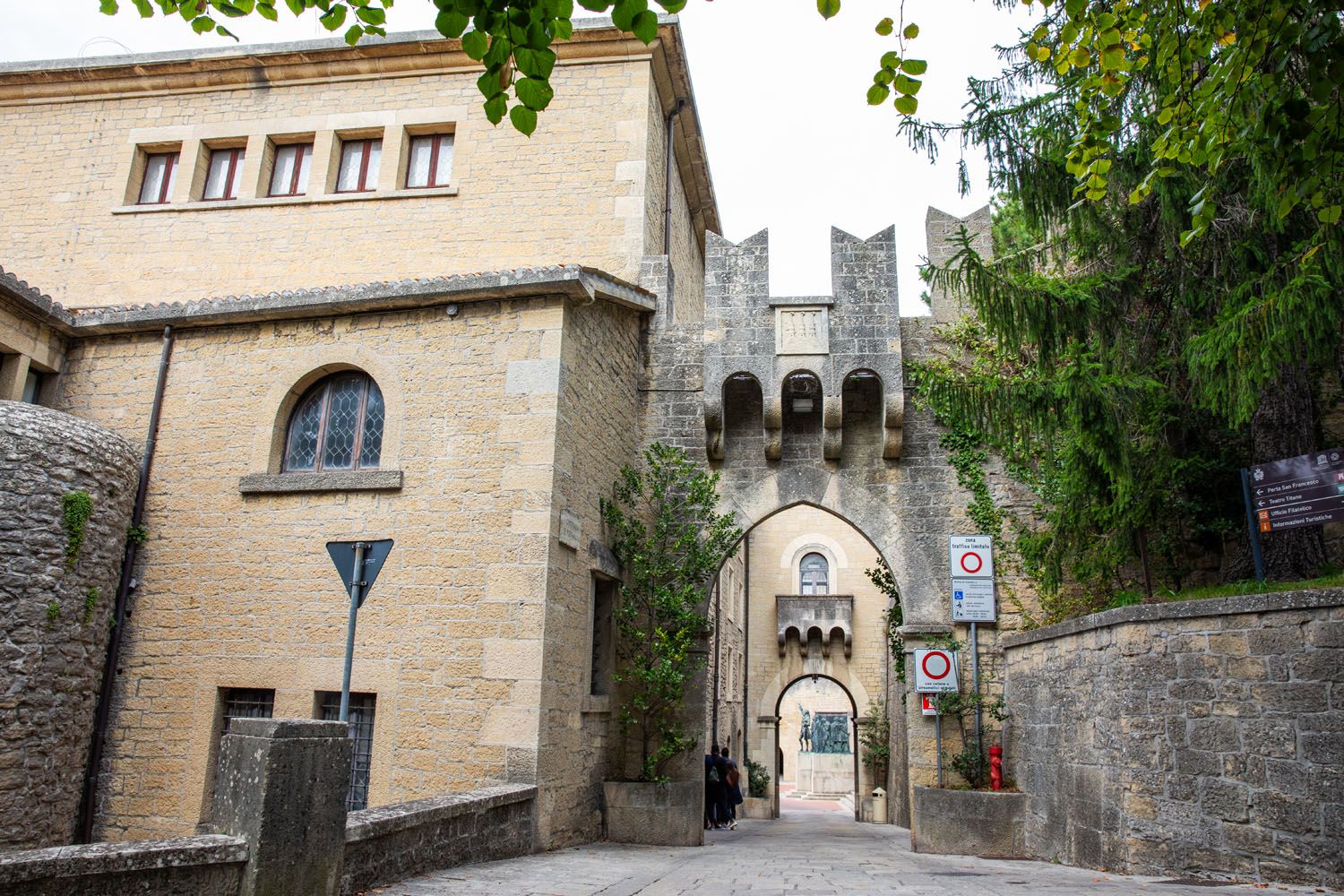
Stroll the City the Streets
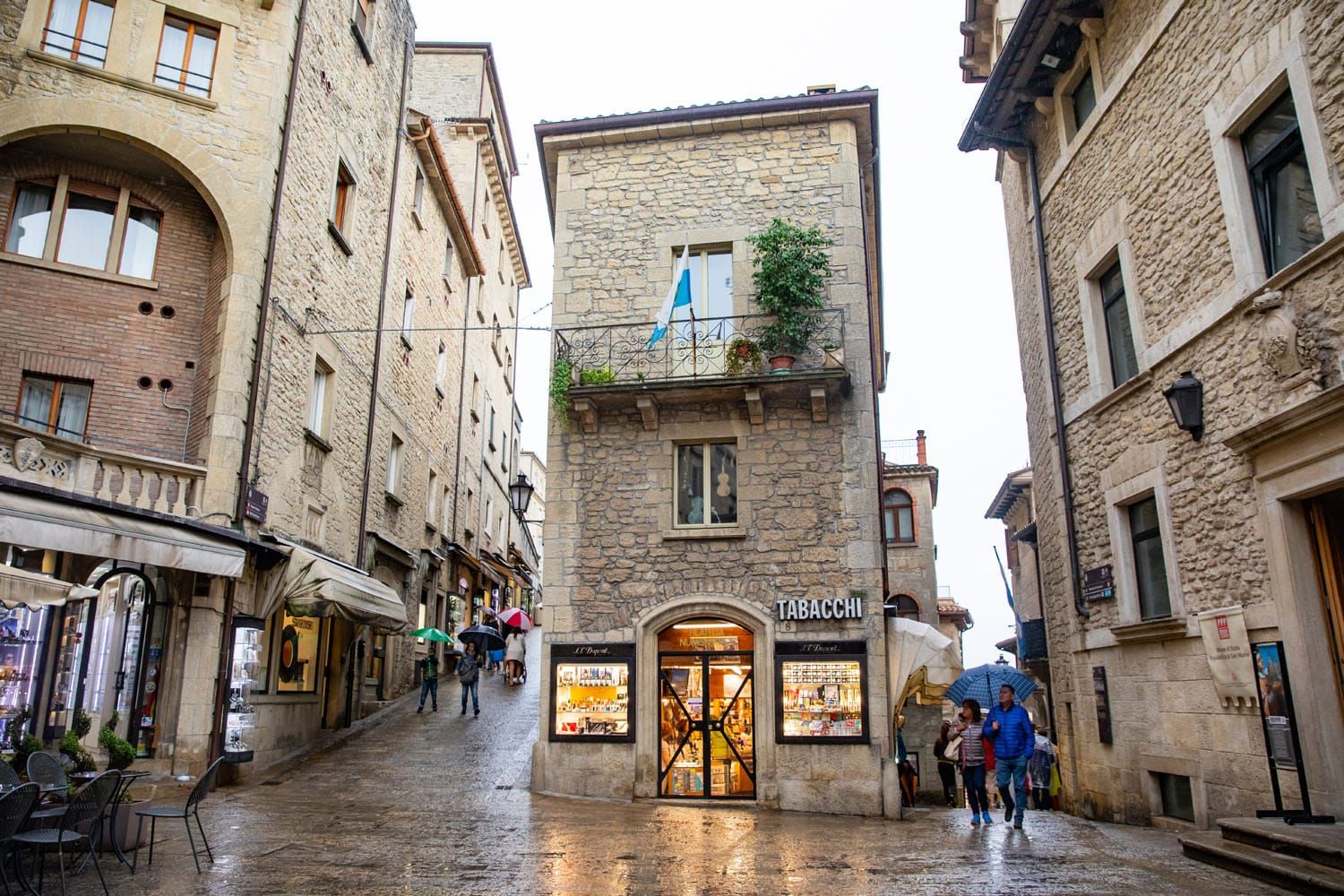
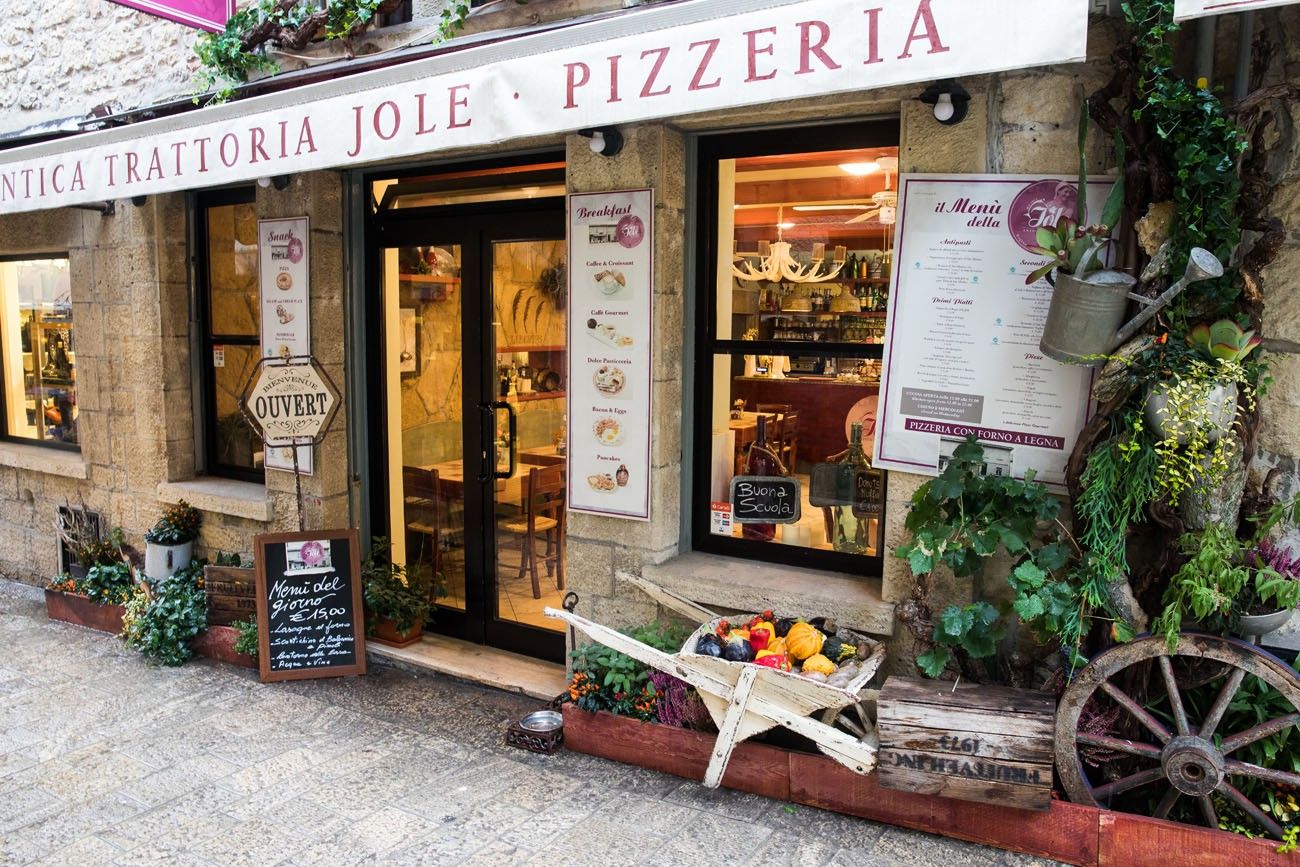
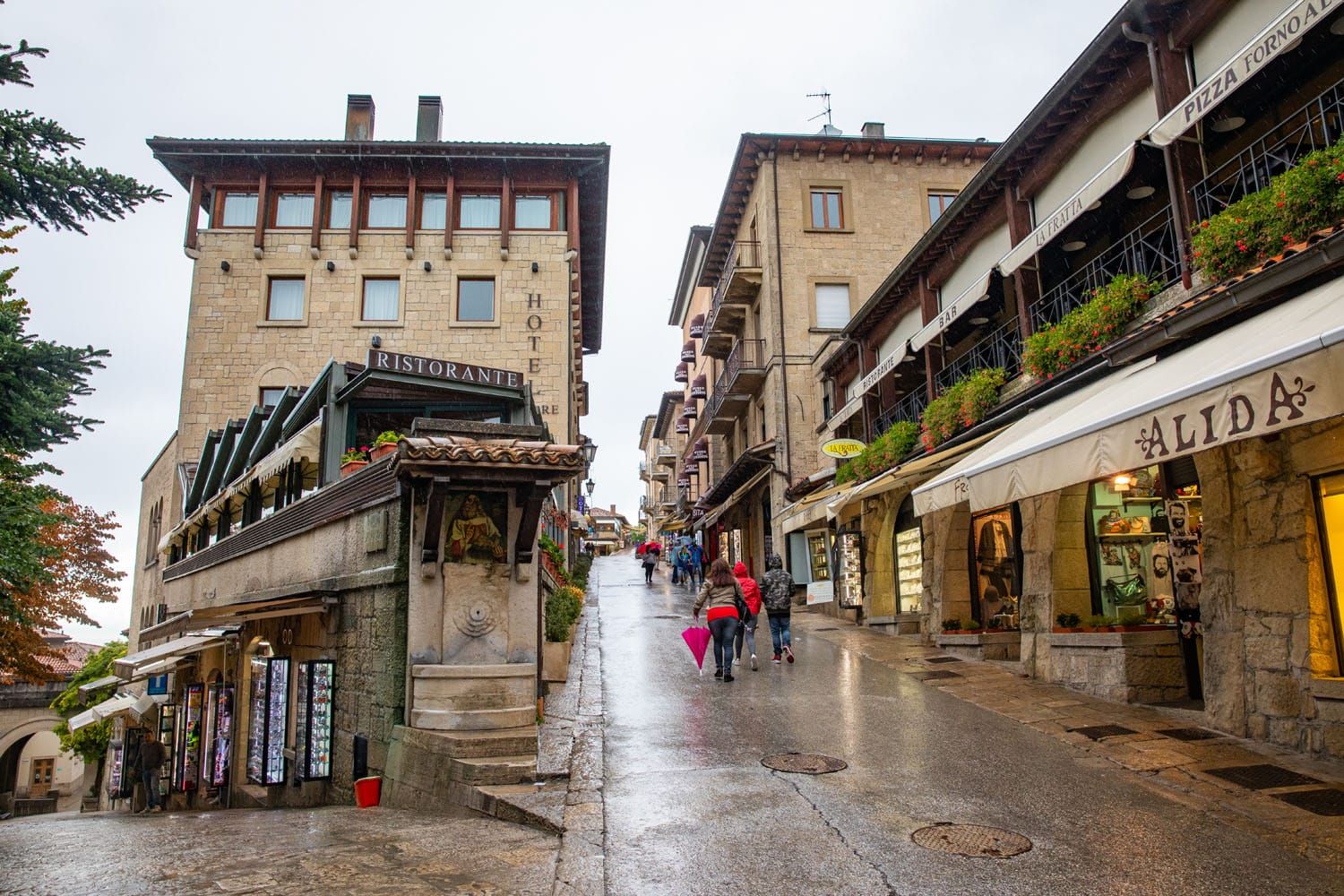
Simply wandering the city is one of the best things to do in San Marino. The old town is small and you can walk most of it in a couple of hours, but it’s so clean and so picturesque that Tim and I felt like we were walking through a movie set.
Stone buildings, narrow cobblestone lanes, and hilltop piazzas around every corner. Small shops are scattered throughout, selling everything from perfume and sunglasses to an entertaining assortment of weapons.
PRO TRAVEL TIP: Wear comfortable, supportive shoes. The cobblestones and steps can be steep and uneven in places.
Climb the Towers
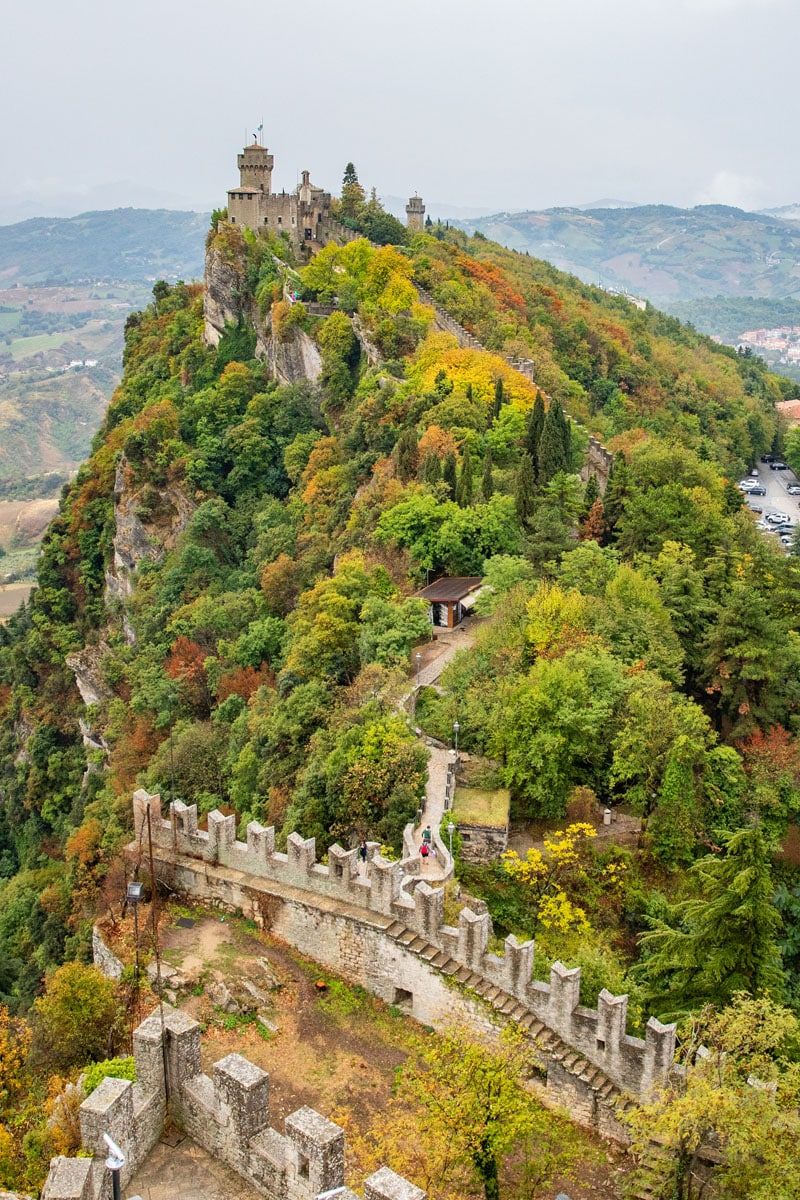
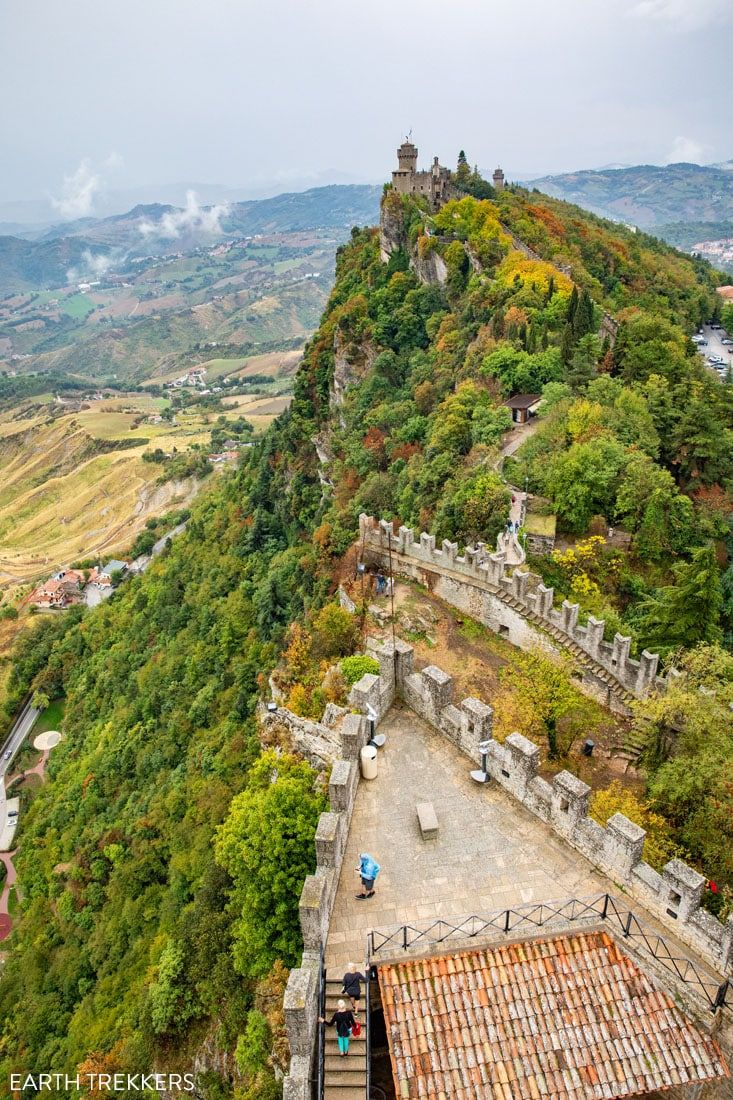
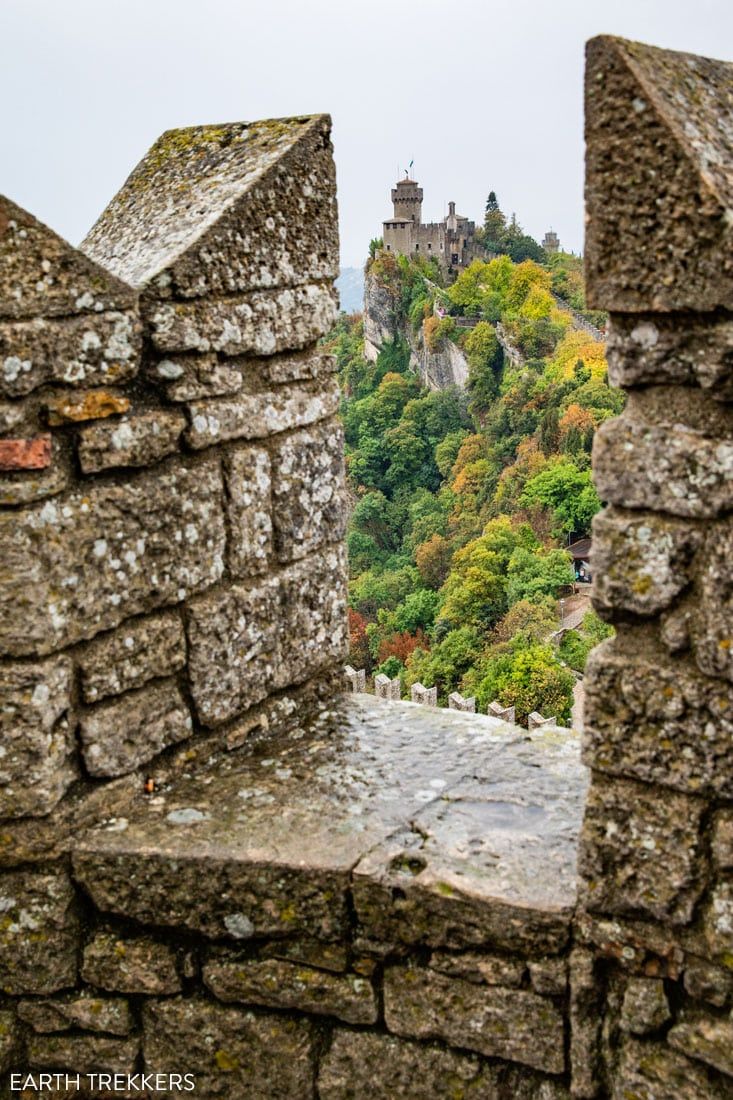
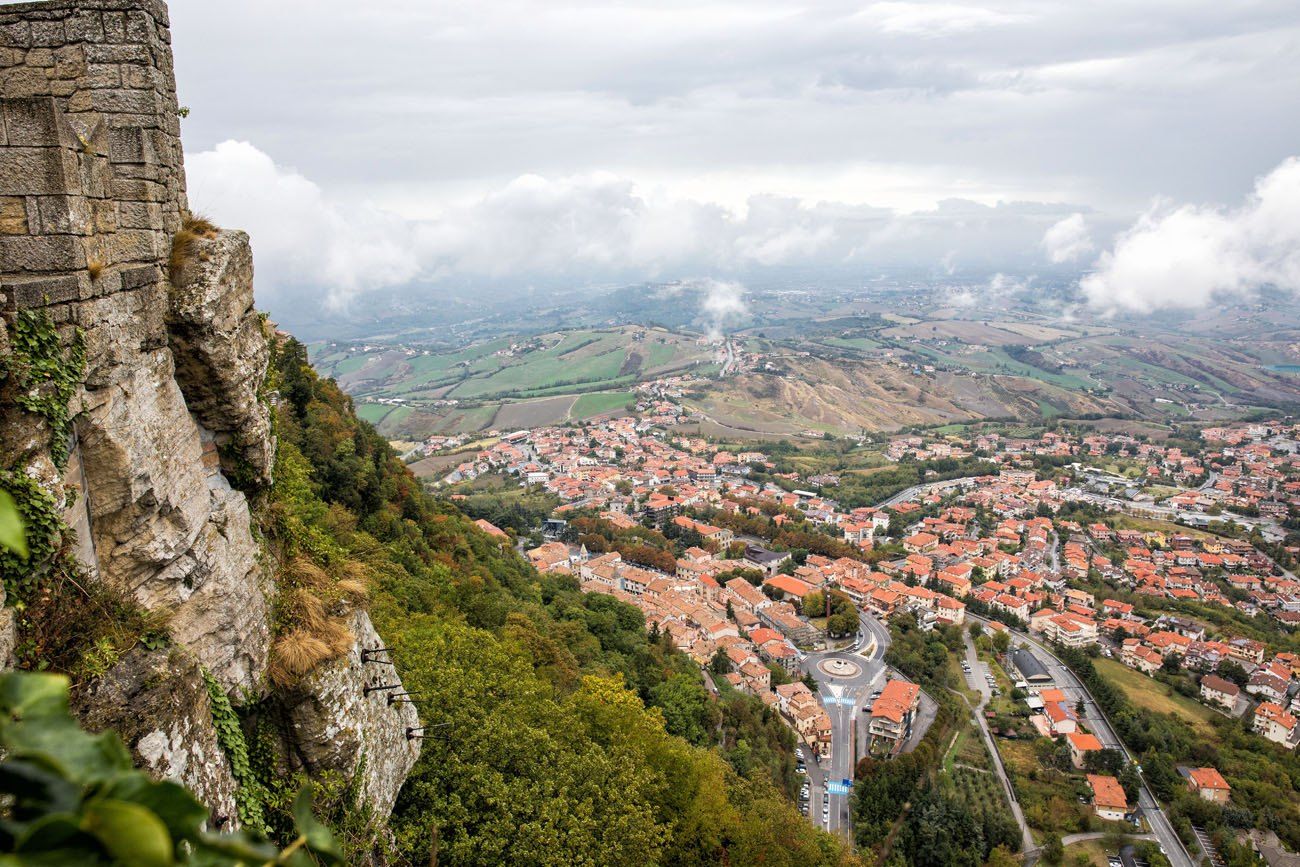
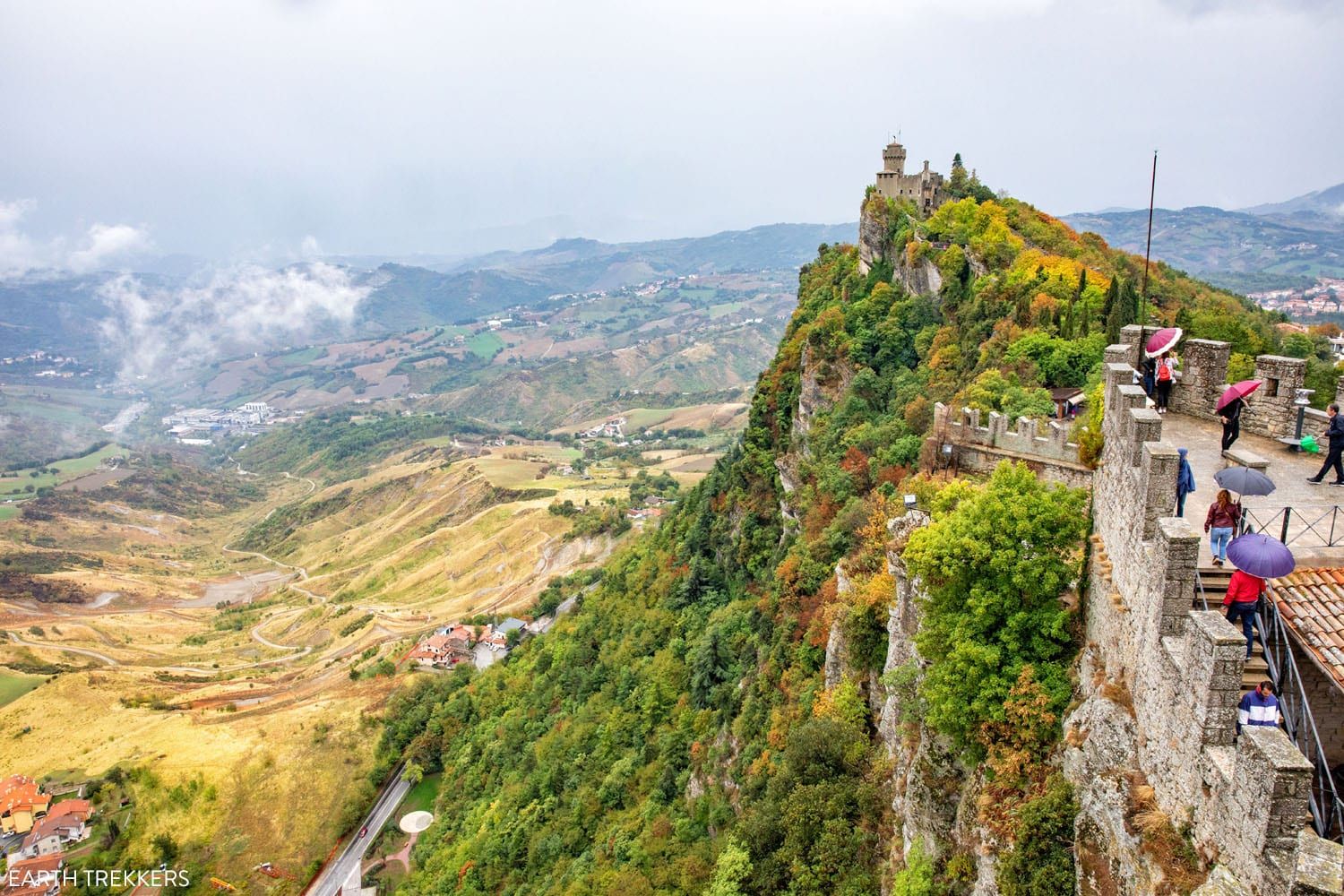
This was our favorite thing to do in San Marino. Three medieval towers sit along the ridge of Monte Titano, connected by stretches of fortress walls. They offer fabulous views over the Italian countryside, even on a rainy day like ours.
PRO TRAVEL TIP: A combined ticket gets you into both Guaita and Cesta towers, plus several museums, for €11. Towers only is €9.
Guaita
This is the oldest and grandest of the three towers and it was built in the 11th century. You can climb to the top and walk along the ramparts. Be prepared for a steep, narrow staircase near the summit, as it’s more ladder than staircase. The views from the top are worth every step.
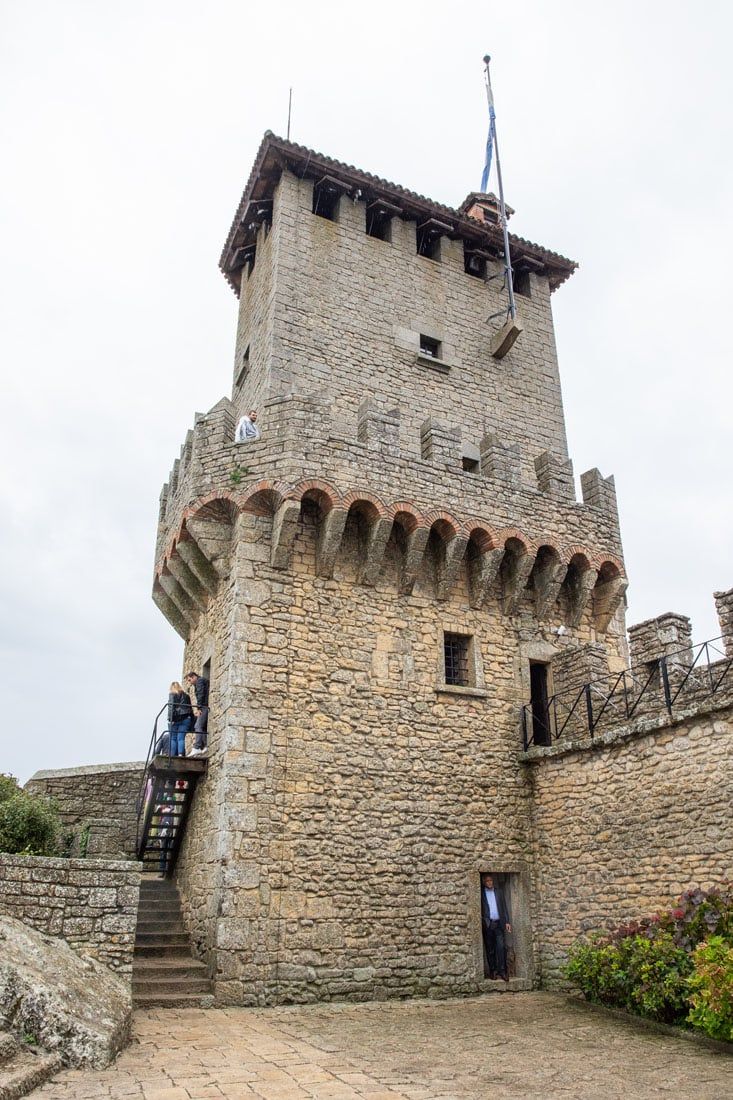
Guaita Tower
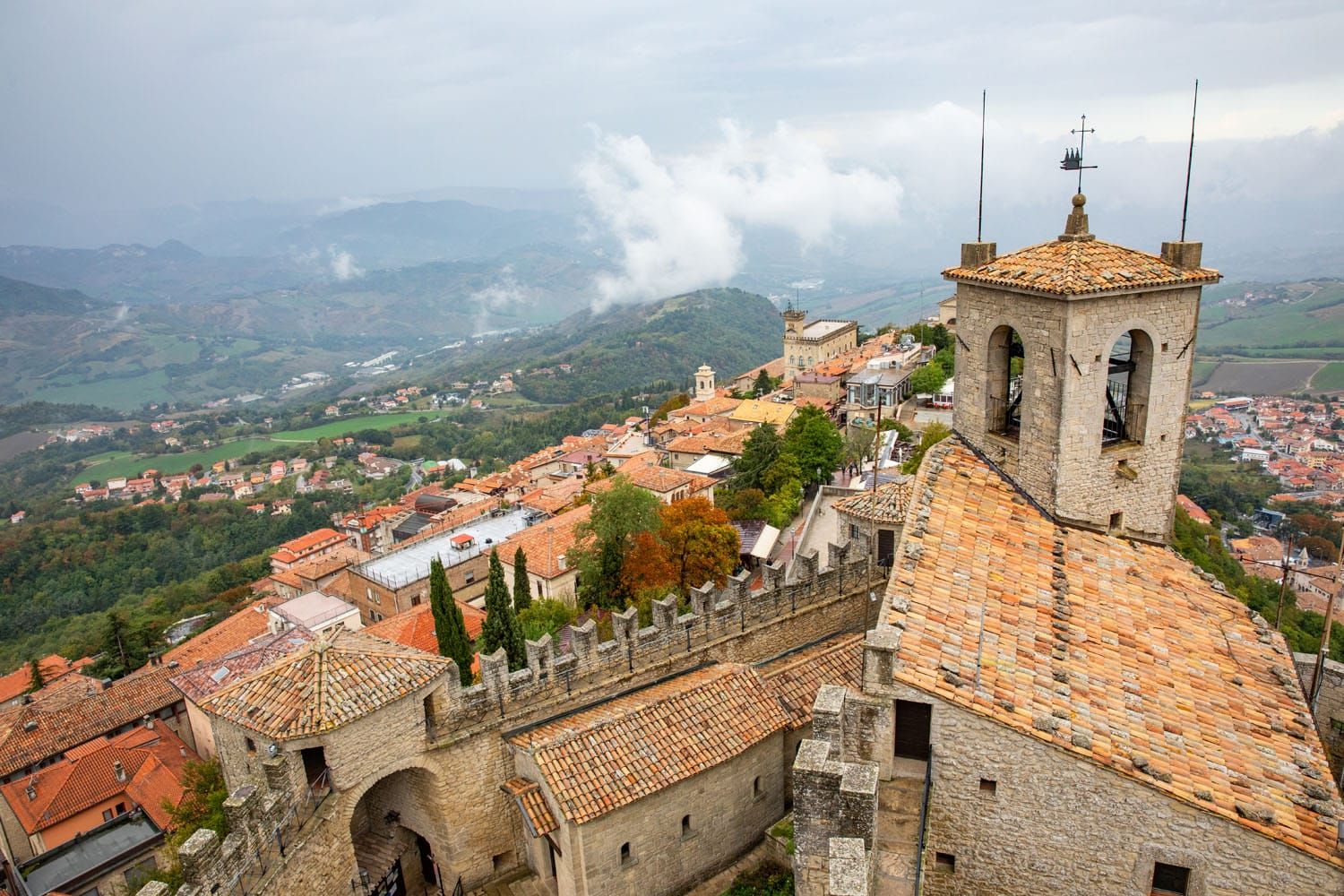
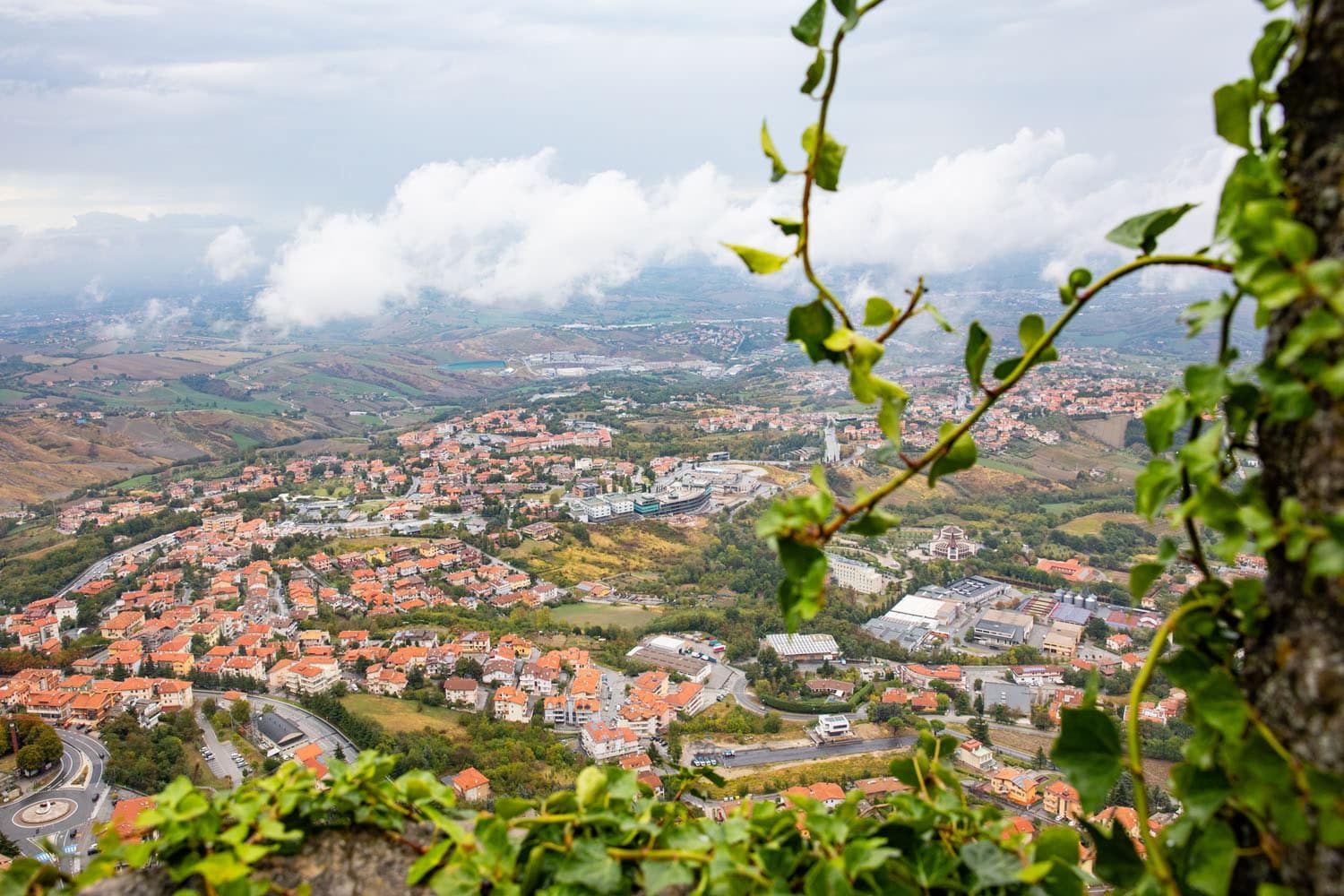
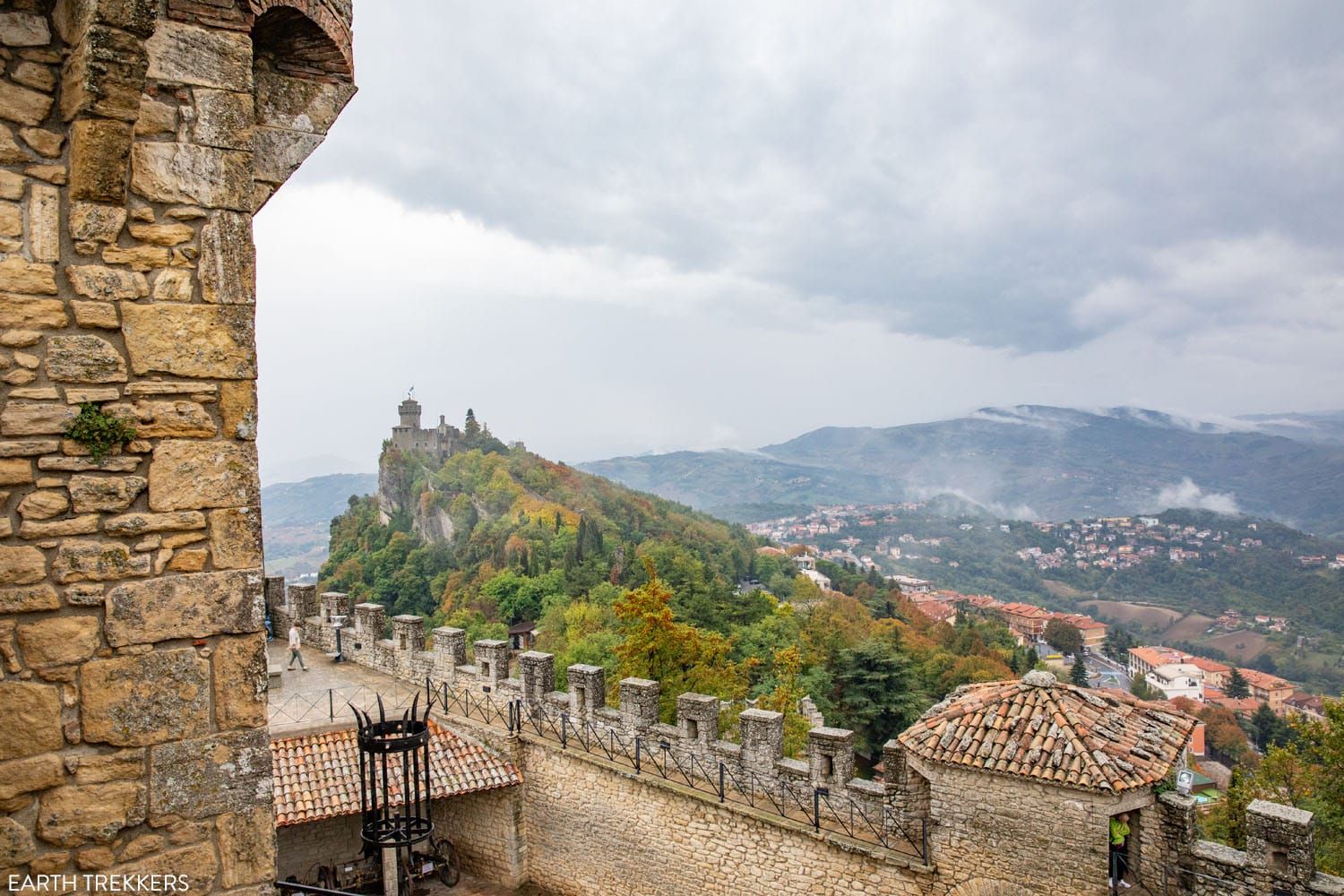
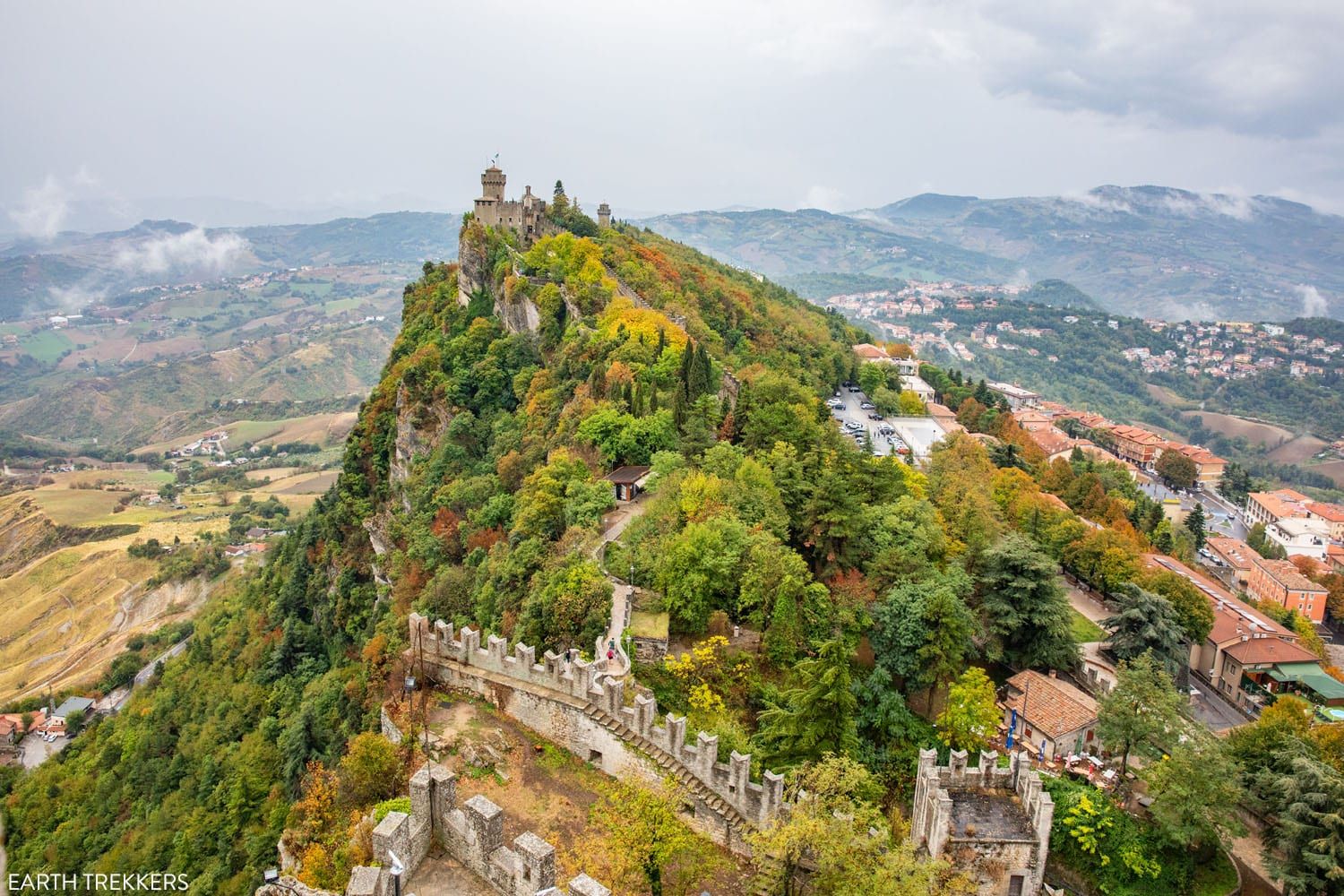
This is the view of Cesta Tower seen from Guaita Tower.
Cesta
Sitting on the highest peak of Monte Titano, Cesta houses the Museum of Ancient Arms. The view looking back toward Guaita from here is one of the best in San Marino.
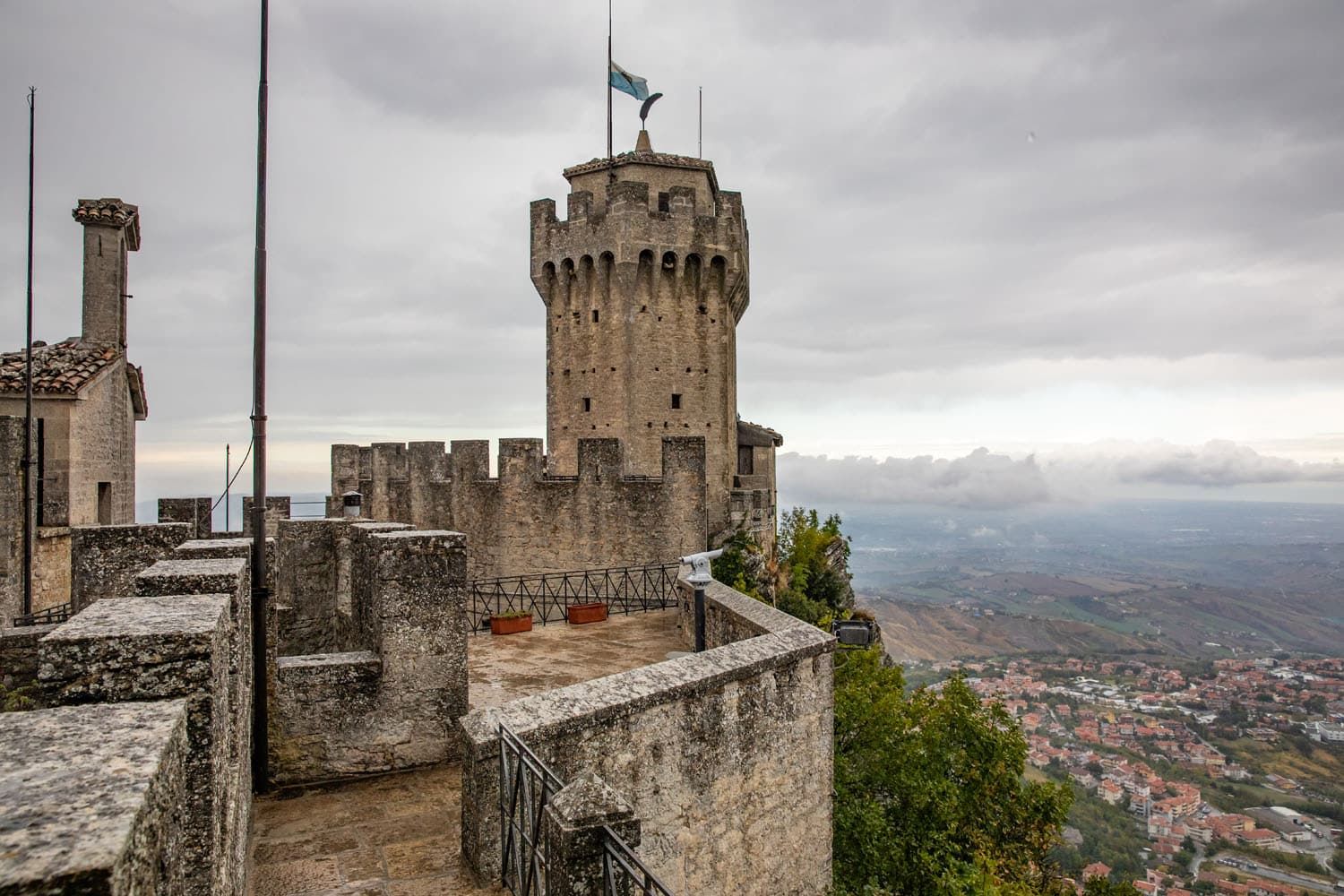
Cesta Tower
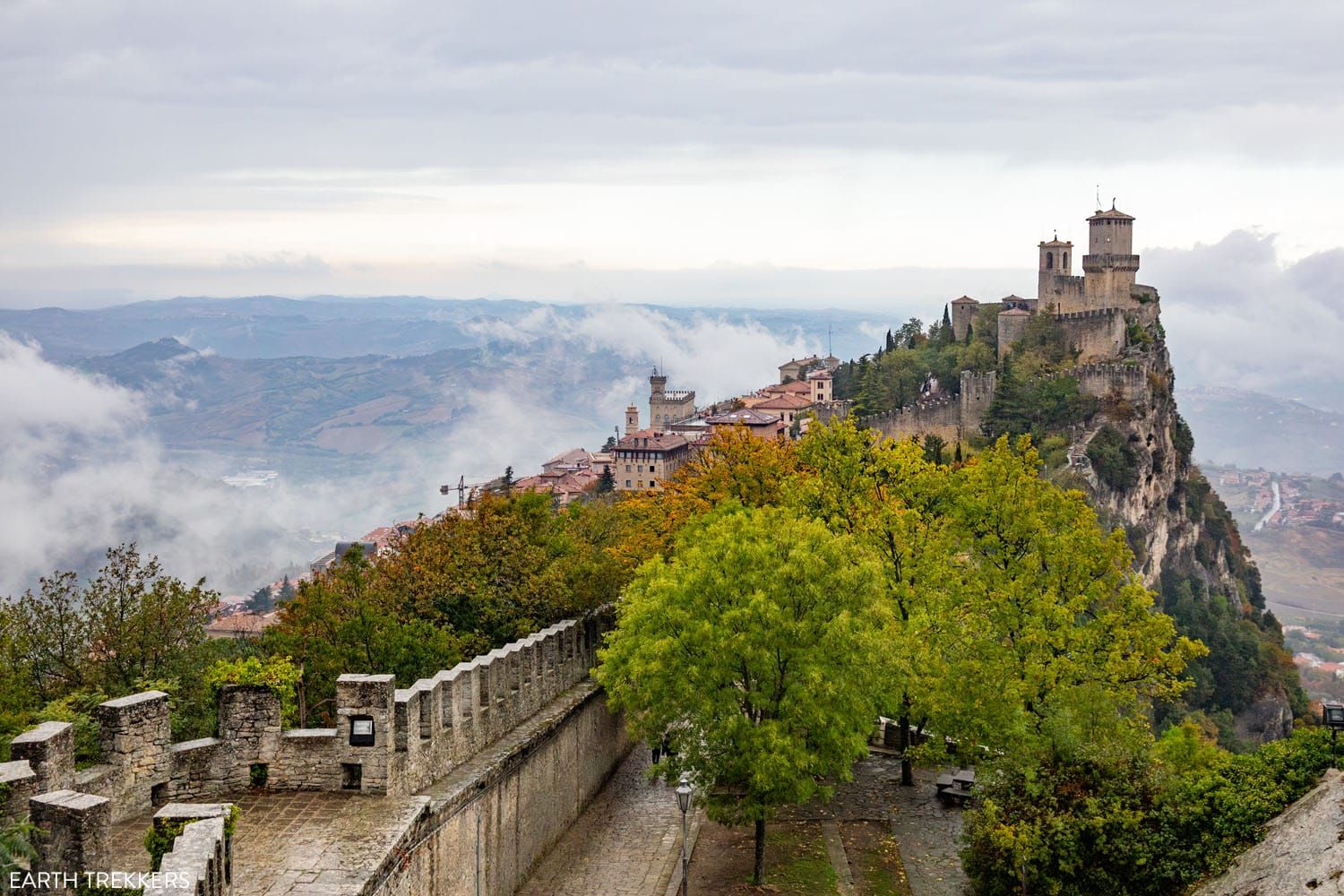
The photo above is the view back to Guaita Tower.
Montale
The third tower is not open to the public and requires a 10-minute walk down through the woods to reach. The views from Guaita and Cesta are significantly better. Skip it unless you have extra time.
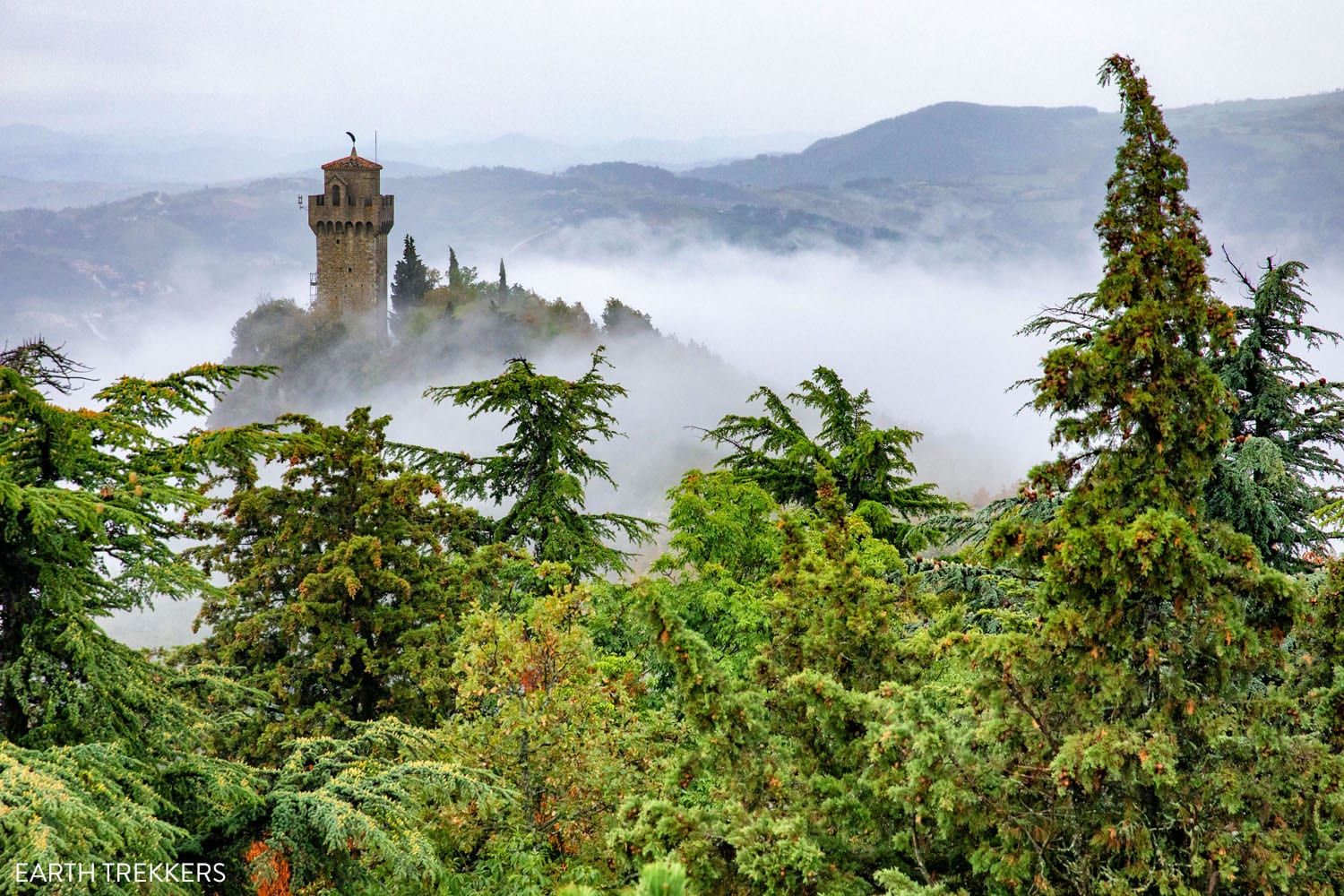
Montale (photo taken from Cesta Tower)
Walk the Passo delle Steghe (Witches Path)
Don’t miss this. The Passo delle Steghe, also known as the Witches Path, is the cobblestone walkway that runs between Guaita and Cesta towers along the ridge of Monte Titano.
It’s free to walk at any time of day and offers some of the most dramatic views in San Marino, with the tower rising above you on one side and the Italian countryside dropping away on the other.
It’s also the best spot in San Marino for photos. Walk it in the early morning or evening if you can, when the light is best and the day-trippers have thinned out.
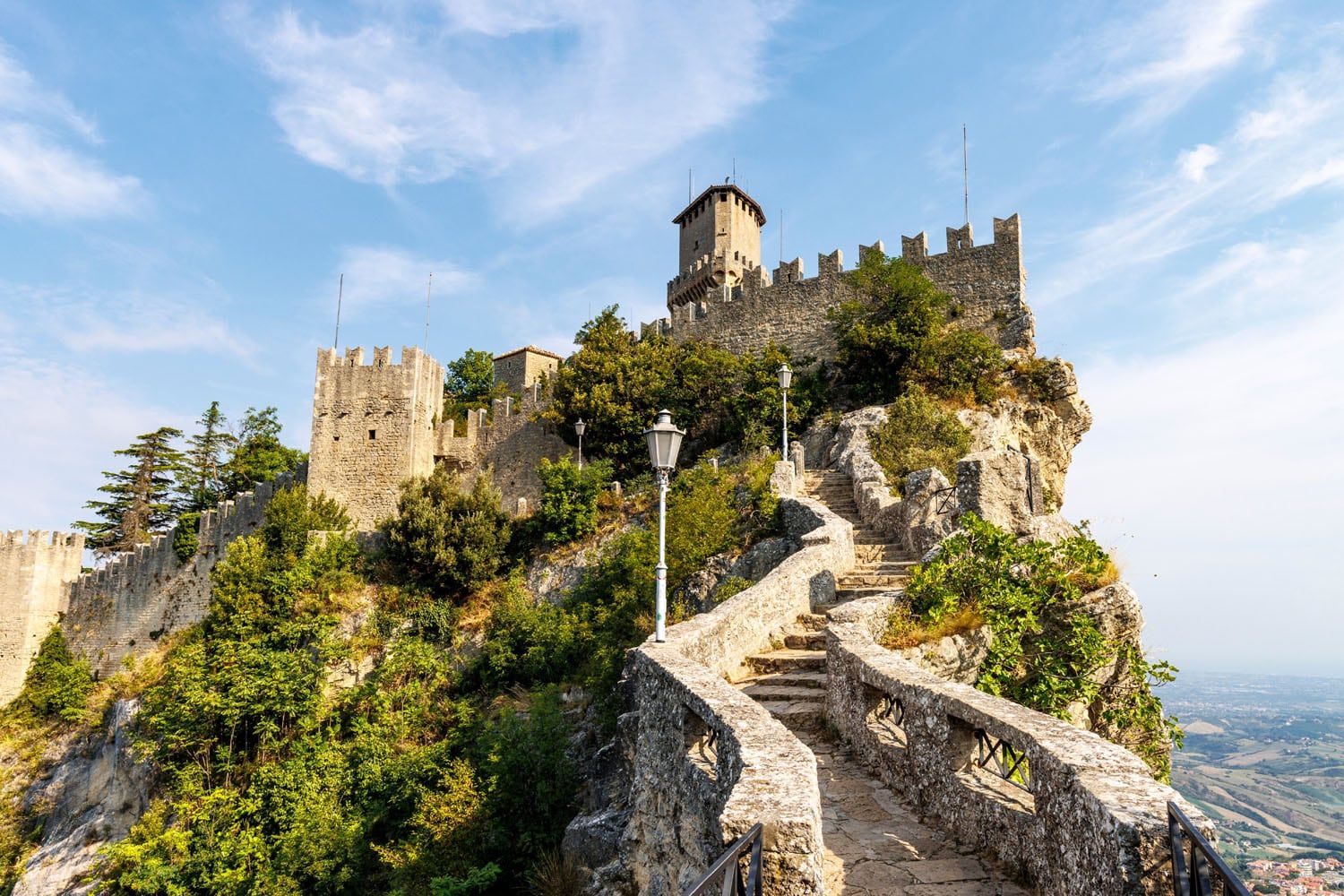
Piazza della Libertà
San Marino’s main public square is home to the Palazzo Pubblico, the city’s striking Gothic town hall and its most iconic building.
From the piazza, you can enjoy views over the countryside, watch the changing of the guard, and on days when the council is not in session, enter the Palazzo Pubblico to see the council chambers and the historic letter from Abraham Lincoln to San Marino.
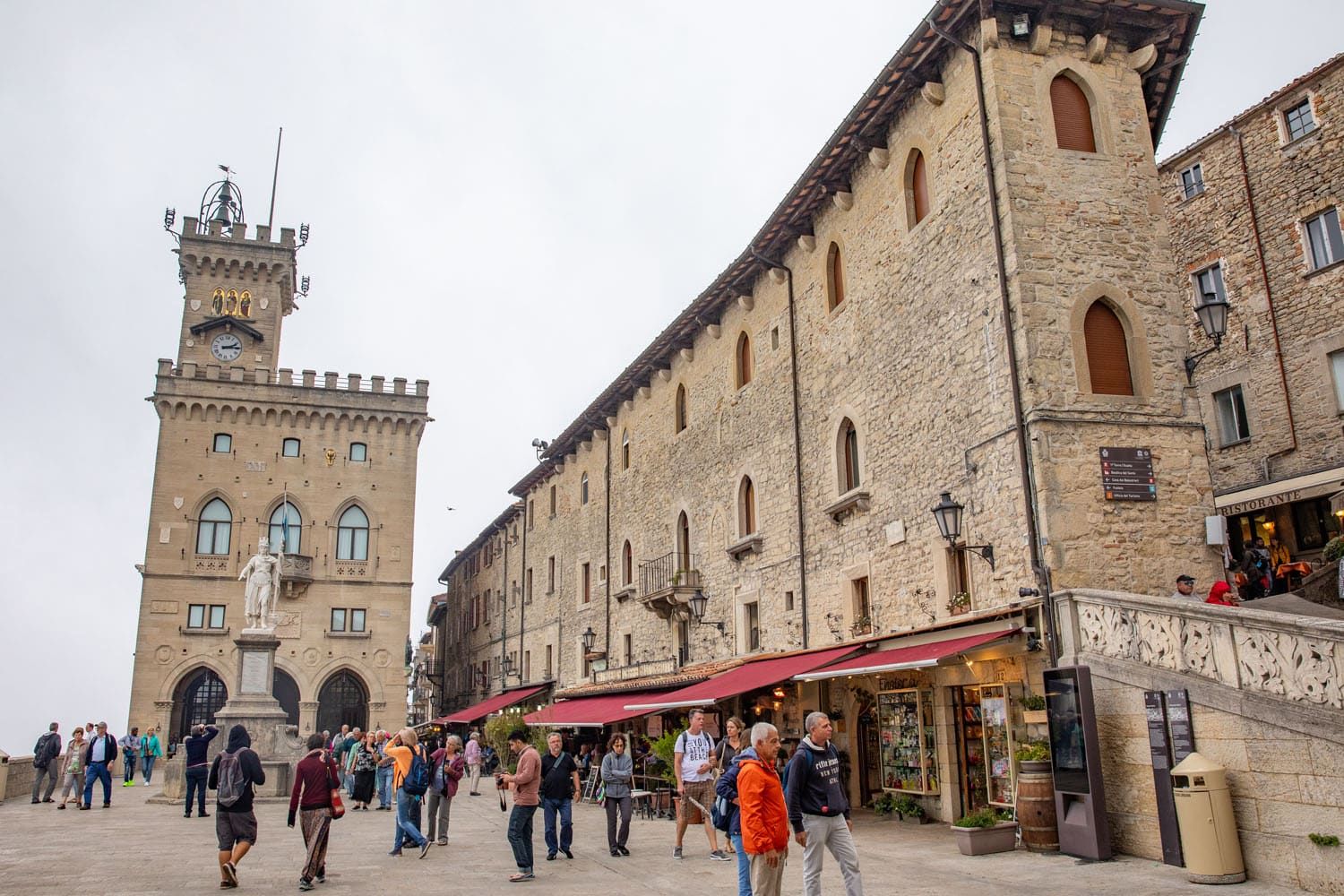
Piazza della Liberta
Visit the Basilica di San Marino
The Basilica di San Marino is the city’s main church, dedicated to Saint Marinus, the stonemason who founded the republic in 301 AD. It’s a neoclassical building with a beautiful interior and is worth a quick visit while you’re in the old town. Entry is free.
Take the Cable Car to Borgo Maggiore
If you’re arriving by bus or simply want a different perspective, consider taking the Funivia di San Marino, the cable car that connects the old town to the lower town of Borgo Maggiore at the base of Monte Titano.
The ride takes just a few minutes and the views on the way up or down are lovely. Borgo Maggiore has a quieter, more local feel than the tourist-heavy old town above.
Get a Souvenir Passport Stamp
San Marino’s tourist information office offers a souvenir passport stamp for €5. It’s not an official immigration stamp, but it makes a fun memento of visiting one of the world’s smallest countries. Just note that it’s a commemorative stamp, not a legal entry record.
Cava dei Balestrieri
If your timing is right, you may be able to watch the crossbow shooters perform at Cava dei Balestrieri. It’s one of those only-in-San-Marino experiences worth catching if you happen to be there at the right moment.
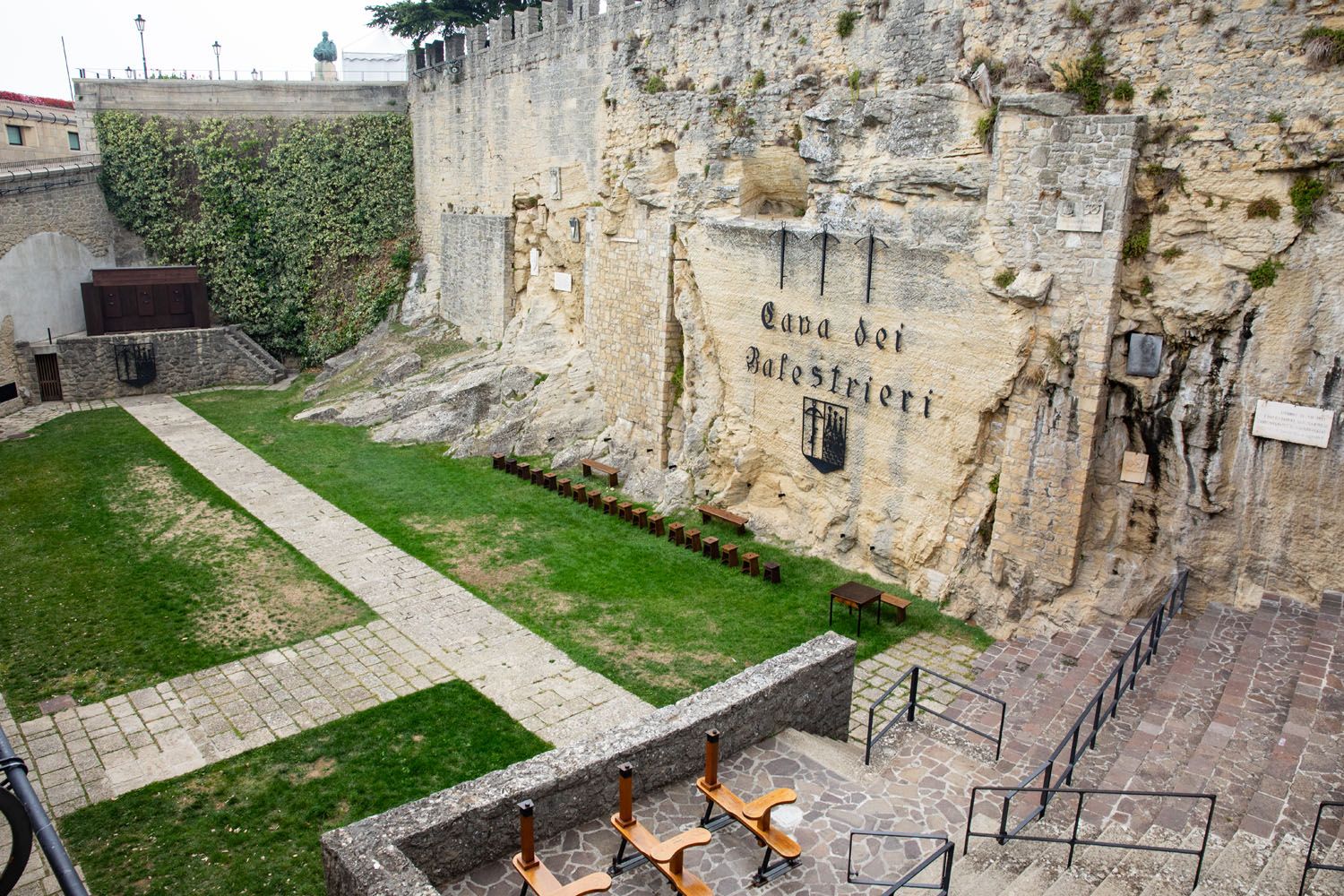
Cava dei Balestrieri
Explore the Quirky Museums
San Marino has a handful of small, quirky museums scattered through the old town.
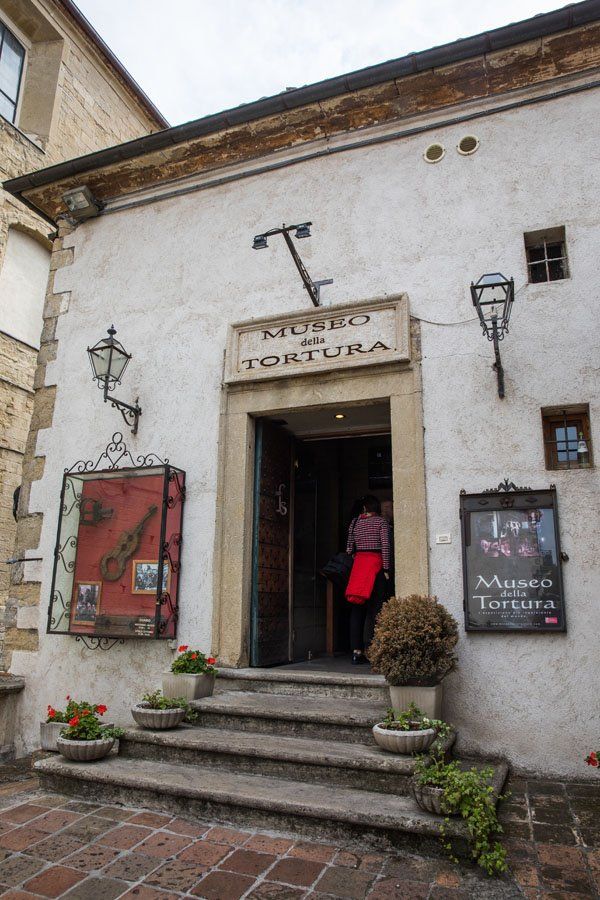
The Museum of Ancient Arms inside Cesta Tower is included with your tower ticket. Beyond that, options include the Torture Museum, the Museum of Curiosity, and the World of Leonardo. None are must-sees, but they’re easy to dip into if you have extra time or hit a rainstorm.
Best Time to Visit San Marino
Spring and fall are the best times to visit San Marino. The weather is comfortable and the crowds are manageable.
We visited in late September and had a mixed experience with the weather. The morning started bright and sunny with incredible views over the Italian countryside, but by early afternoon a storm rolled in and it poured for nearly two hours. Even in the rain, San Marino was gorgeous, but we know we missed the full effect of those views on a clear day.
If you have any flexibility, check the forecast and try to pick a day with good visibility because you can see all the way to Rimini and the Adriatic Sea on a clear day, and that’s not something you want to miss.
Summer brings the largest crowds, particularly in July and August when day-trippers arrive in force. If you’re visiting in summer, arrive early and consider staying into the evening after most visitors have left. Winter is quiet — very quiet — and some attractions may have limited hours, but there is a Christmas market if that’s your travel window.
- Spring (April–June): Mild temperatures, fewer crowds than summer, good visibility. One of the best times to visit.
- Summer (July–August): Hot and busy. Arrive early, stay late, and book accommodation in advance if overnighting.
- Fall (September–October): Our top pick. Comfortable weather, thinning crowds, and the countryside around Monte Titano is beautiful in early autumn.
- Winter (November–March): Cold and very quiet. Many shops and some attractions have reduced hours. The Christmas market adds some charm in December.
How Much Time Do You Need in San Marino?
On the quickest of visits, a few hours is all you need to stroll the city streets, climb the towers, and visit Piazza della Liberta.
The city of San Marino is small so a day is all that you need. You could visit San Marino as a day trip from Bologna (2 hour drive one way). From Florence and Tuscany it is also possible to do this as a day trip, but at 3 hours one way, expect to spend a lot of time in your car.
Although we did not do this, I think an overnight stay in San Marino would be a wonderful experience. Have a leisurely dinner, watch the sunset, and enjoy the quiet city streets after the day-trippers go home.
How to Get to San Marino
San Marino has no airport and no train station. The two options are car or bus.
By Car
Driving is the most convenient way to get to San Marino. You can drive directly into the city and there are several parking garages available as you climb toward the old town. If you’d prefer not to drive all the way up the winding hill road (it’s straightforward and not as challenging as it sounds), you can park in the lower town of Borgo Maggiore and take the cable car up to the old town instead.
Here are the driving distances and times from other locations in Italy:
- RIMINI: 22 km, 30 minutes
- RAVENNA: 82 km, 1 hour 15 minutes
- BOLOGNA: 130 km, 1 hour 45 minutes
- FLORENCE: 250 km, 3 hours
- ROME: 330 km, 4 hours 30 minutes
- VENICE: 280 km, 3 hours
By Bus
If you’re not driving, the easiest option is the Bonelli Bus from Rimini, which runs several times daily and drops you at the P2 parking area near the old town. The journey takes just under an hour. The bus stop in Rimini is located across from the train station. Check the schedule in advance as service is reduced on Sundays and public holidays, and note the time of the last return bus so you don’t get stranded.
Check the Bonelli Bus website for the latest schedule and prices.
Cable Car
Once in San Marino, the Funivia di San Marino cable car connects Borgo Maggiore at the base of Monte Titano to the old town above. It’s a quick, scenic ride and a nice alternative to driving all the way up,which is particularly useful if you’re arriving by bus and want a different perspective on the descent.
Where to Stay in San Marino
We visited San Marino as a day trip from Cervia and didn’t stay overnight, but we wished we had. The old town empties out once the day-trippers leave, and the idea of wandering those quiet medieval streets in the evening, watching the sunset from Monte Titano, and having the towers to yourself in the early morning is genuinely appealing.
If you do stay the night, book a hotel inside the old town itself. The city is small and walkable, so location matters less than in a larger destination, but staying within the historic center means you can enjoy the city at its best — early morning and evening — without rushing back to a hotel elsewhere.
Things to know when booking:
- Parking is generally included or easy to arrange at old town hotels
- The old town is pedestrian-only in most areas, so confirm logistics with your hotel when booking
- There are only a handful of hotels inside the historic center — options are limited, so book early if visiting in summer
Recommended Hotels:
- Hotel Titano – ⭐️⭐️⭐️⭐️ – panoramic views and central location
- Hotel La Rocca – ⭐️⭐️⭐️ – excellent reviews, located in city center
- Hotel Rosa – ⭐️⭐️⭐️ – near Guaita Tower and has parking
- Hotel Bellavista – ⭐️⭐️ – overlooks Cava dei Balestrieri and very close to the upper funicular station
For day trippers, Rimini is the most convenient base (30 minutes away), with a wide range of hotels at every price point. Bologna and Cervia are also easy bases if you’re combining San Marino with the broader Emilia-Romagna region.
About Our Experience
We were based in the Italian seaside town of Cervia for Ironman Italy. Our close proximity to San Marino made it much more convenient for Tim and I to get to San Marino during this visit to Italy. From Cervia, it was just an hour drive to get to San Marino.
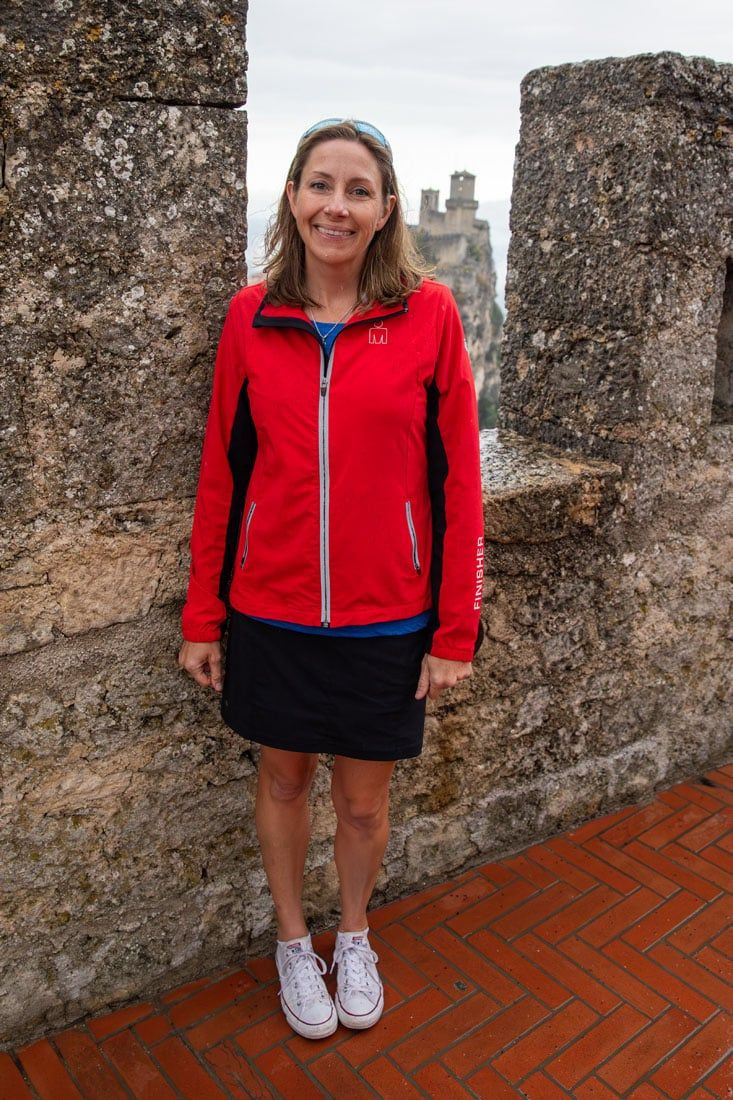
The day before our visit here I raced Ironman Italy. We could not have picked a hillier destination to walk around right after a big race. San Marino has tons of steps and some seriously steep hills to walk up and down, and my legs were very sore and tired. It was slow going for me today.
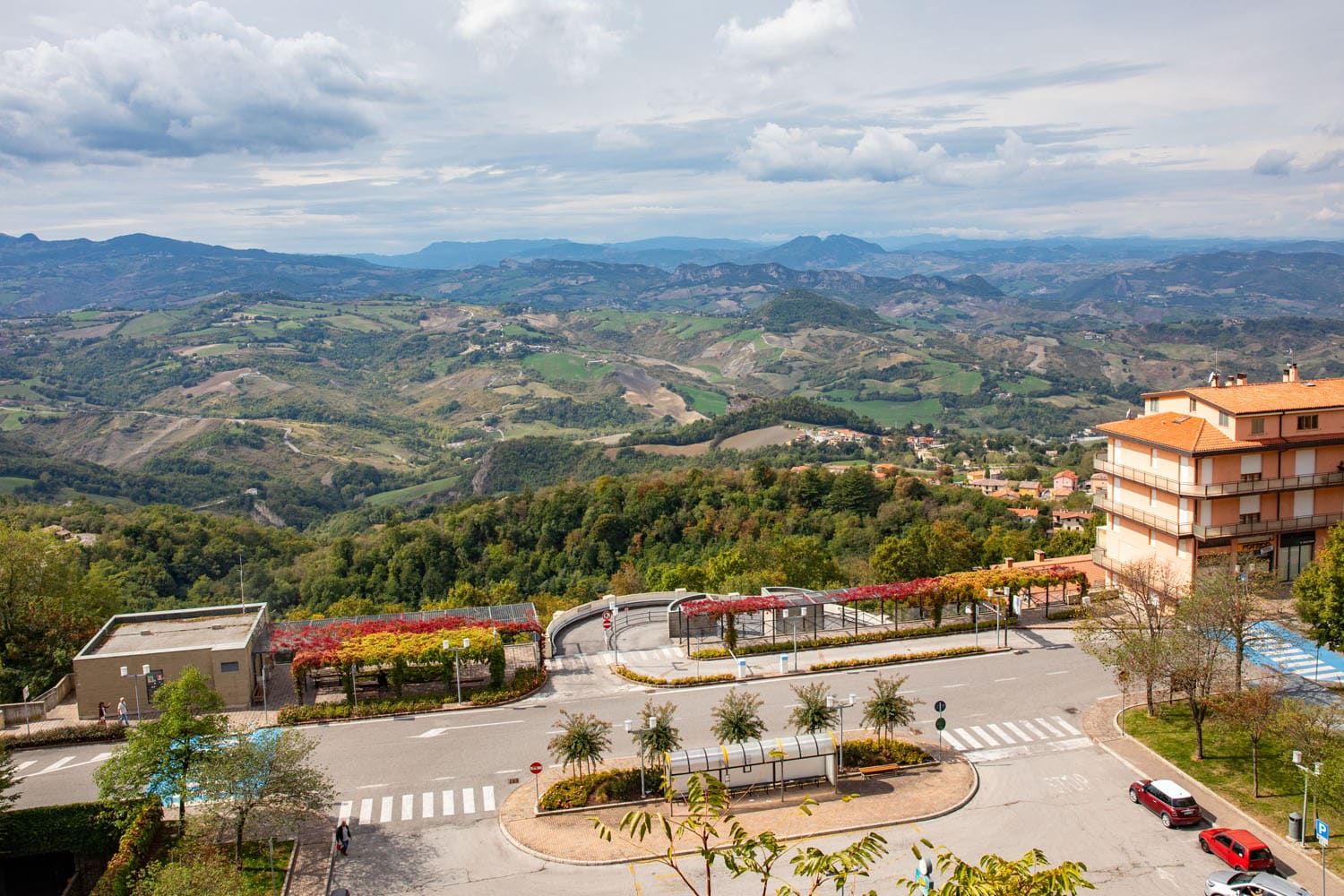
When we arrived in San Marino, the skies were bright and sunny. The views over the countryside are simply amazing. Why did we wait so long to see this?!
Another side effect of racing is a huge appetite the next day. Before walking the city streets, Tim and I sat down to a big Italian meal. Like many meals in Europe, it’s a long, leisurely experience, which would not be to our benefit today. As we dined on pasta and drank wine, rain clouds moved in.
Just as we hit the streets to start exploring, the skies opened up, and it thundered and poured buckets of rain for an hour and a half. Those gorgeous views…gone behind rain clouds and fog. It was so disappointing (and chillier now!!).
Despite the wet, foggy conditions, Tim and I walked through the town, climbed the towers, and took photos. Even in the rainy weather this is a gorgeous spot.
But trust me, if you are lucky enough to be here on a sunny day, San Marino is jaw dropping, and maybe one of the prettiest spots in Europe.
Frequently Asked Questions About Visiting San Marino
Is San Marino part of Italy?
No. San Marino is an independent republic completely surrounded by Italy, but it is its own sovereign nation. It is not part of the European Union, though it does use the euro as its currency. Do not call the locals Italians — they are Sammarinese, and they are proud of their independence.
Do you need a passport to visit San Marino?
There is no border control when entering San Marino from Italy, so you won’t go through passport control. However, you should carry a valid passport with you as it is technically a foreign country. For €5 at the tourist information office, you can get a souvenir commemorative stamp. It’s not an official immigration stamp, but a fun memento.
How long does it take to see San Marino?
A few hours is enough to cover the main highlights: stroll the old town, climb the towers, and visit Piazza della Libertà. A full day gives you time to explore at a relaxed pace and visit the museums. We’d recommend an overnight stay if your schedule allows, so you can experience the city after the day-trippers leave and catch the views at sunrise or sunset.
Is San Marino worth visiting as a day trip from Italy?
Yes, absolutely, especially if you’re already based in the Emilia-Romagna region. From Rimini it’s just 30 minutes by car. From Bologna it’s under two hours. Even from Florence it’s doable as a long day trip, though you’ll spend a lot of time driving. San Marino consistently exceeds expectations and is one of the more underrated stops on any Italy itinerary.
How much does it cost to visit San Marino?
Entry to San Marino itself is free. The main expense is the tower tickets: €9 gets you into both Guaita and Cesta towers, or €11 for a combo ticket that includes several museums. The souvenir passport stamp is €5. Budget a little extra for lunch and coffee in the old town.
What is San Marino famous for?
San Marino is the world’s oldest republic, founded in 301 AD by a stonemason named Marinus. It is one of the world’s smallest countries; only Vatican City and Monaco are smaller in Europe. The historic city center and Monte Titano are a UNESCO World Heritage Site. San Marino is also notable for having made Abraham Lincoln an honorary citizen, a gesture Lincoln acknowledged in a letter that is still displayed in the Palazzo Pubblico.
More Information for Your Trip to San Marino
San Marino sits in the heart of the Emilia-Romagna region, which makes it an easy addition to a broader Italy itinerary. Here are our most useful guides for planning the trip around it.
For a full overview of Italy — where to go, how long to spend, and how to get around — start with our Italy Travel Guide. If you’re trying to figure out how San Marino fits into a longer trip, our 10 Days in Italy guide includes a dedicated itinerary that pairs Venice, Bologna, San Marino, and Tuscany, which is a great option for those who’ve already done Rome and Florence.
Bologna is the most practical base for a San Marino day trip, and it’s a destination worth spending time in on its own. Our Things to Do in Bologna covers the highlights, and our 1 to 2 Day Bologna Itinerary shows exactly how to structure your time, where to eat, and where to stay.
Tuscany is also within range, and many travelers combine San Marino with a broader Tuscany trip. Our Tuscany Itinerary covers how to plan your time whether you have 3 days, 5 days, or a full week.
Does San Marino look like a place you would like to visit? Comment below if you have any questions about the best things to do in San Marino or how to plan your visit.
Continue Exploring Italy
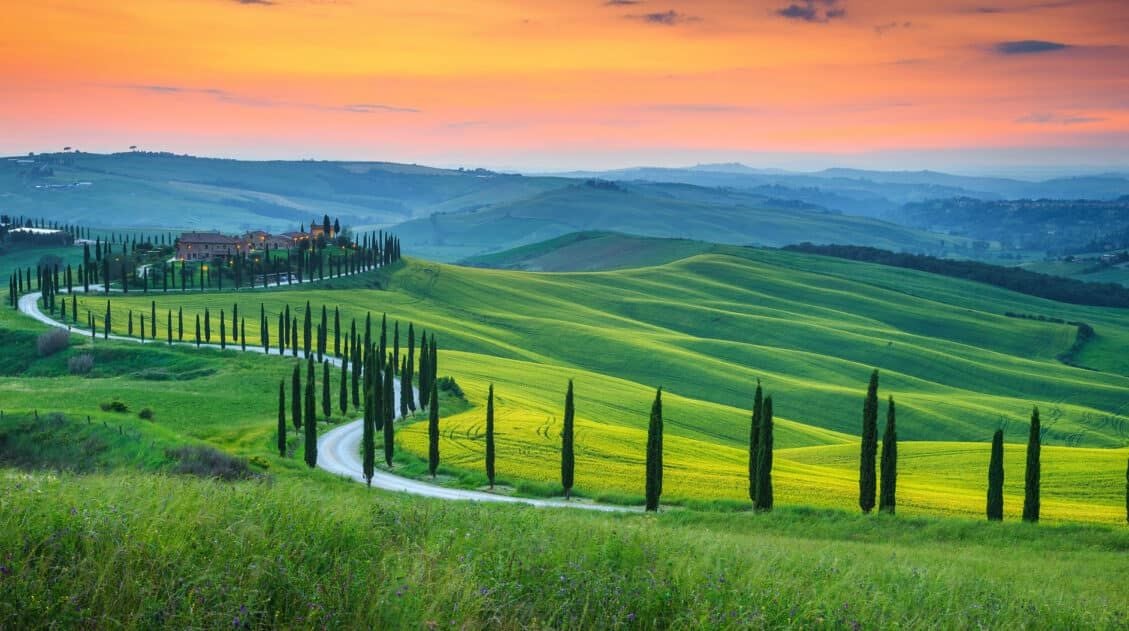
24 Best Things to Do in Tuscany, Italy: Cities, Hill Towns & Hidden Gems
Pinterest Facebook Flipboard From world-famous cities like Florence and Siena to quiet hill towns and scenic drives through vineyard-covered hills, Tuscany offers a wide range of experiences, but deciding what to do (and what to skip) can be overwhelming. We’ve explored Tuscany on two very different trips: a one-week highlights tour with our kids and […]
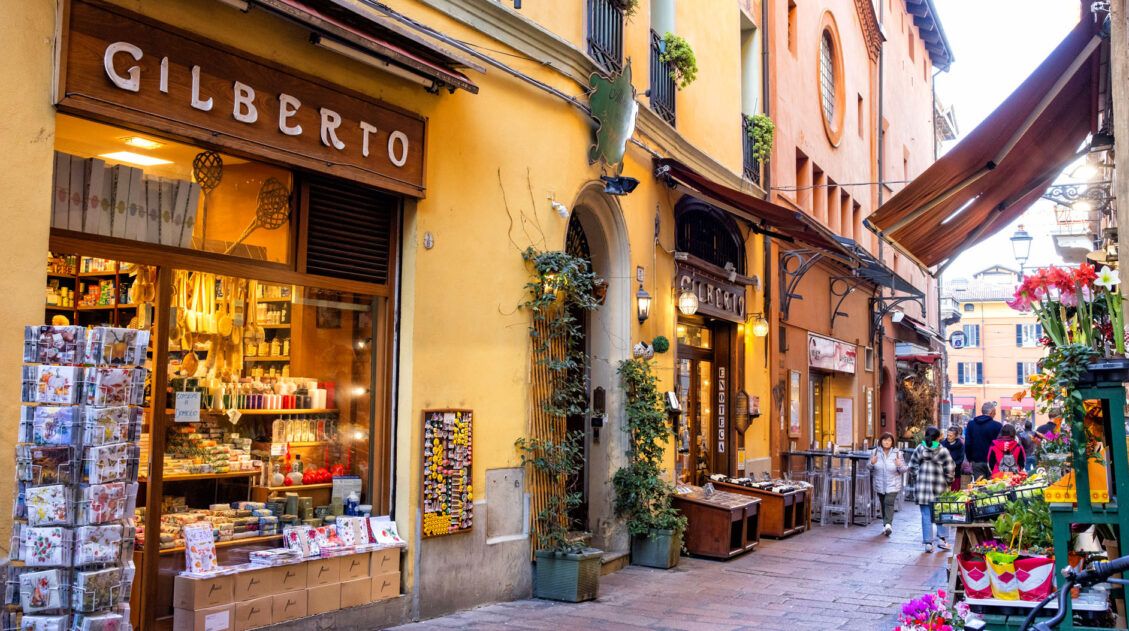
1 to 2 Days in Bologna: The Best Itinerary for First Timers
Bologna didn’t make it onto our Italy itinerary until our sixth trip. We’d visited Rome, Florence, Venice, the Amalfi Coast, Tuscany, and the Dolomites, and somehow kept skipping over this city in northern Italy. Once we finally arrived, Tim and I were instantly captivated: the busy, bustling Quadrilatero with its wine bars and shops overflowing […]
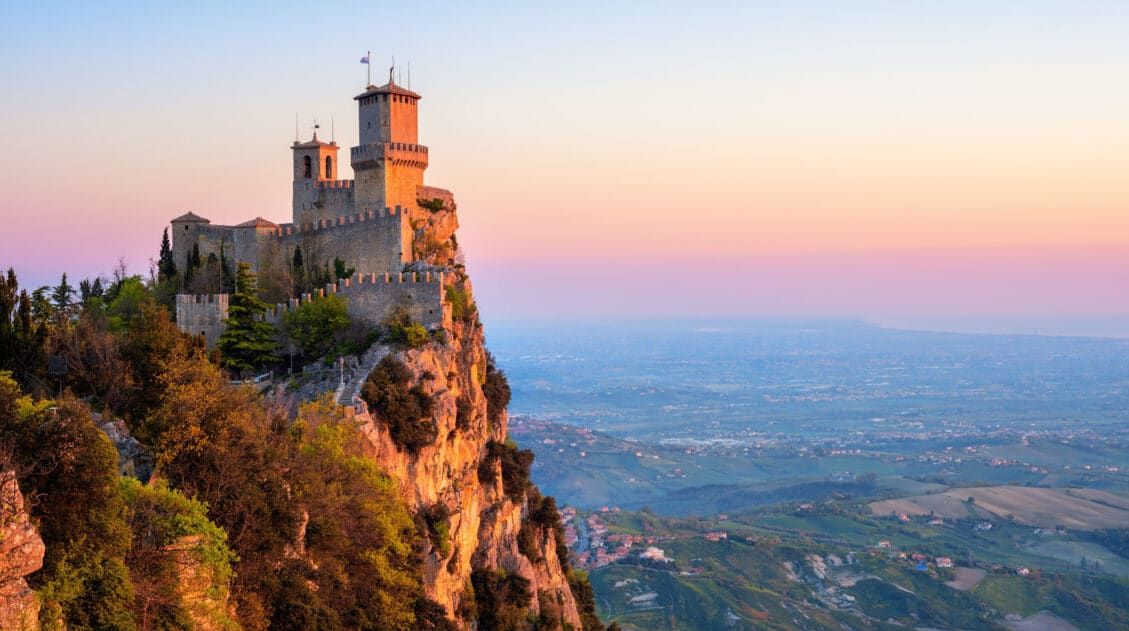
San Marino, Italy: Quick Facts & Planning Resources
Plan your visit to San Marino. Learn about the best things to do, how to plan your time, where to stay, and more.
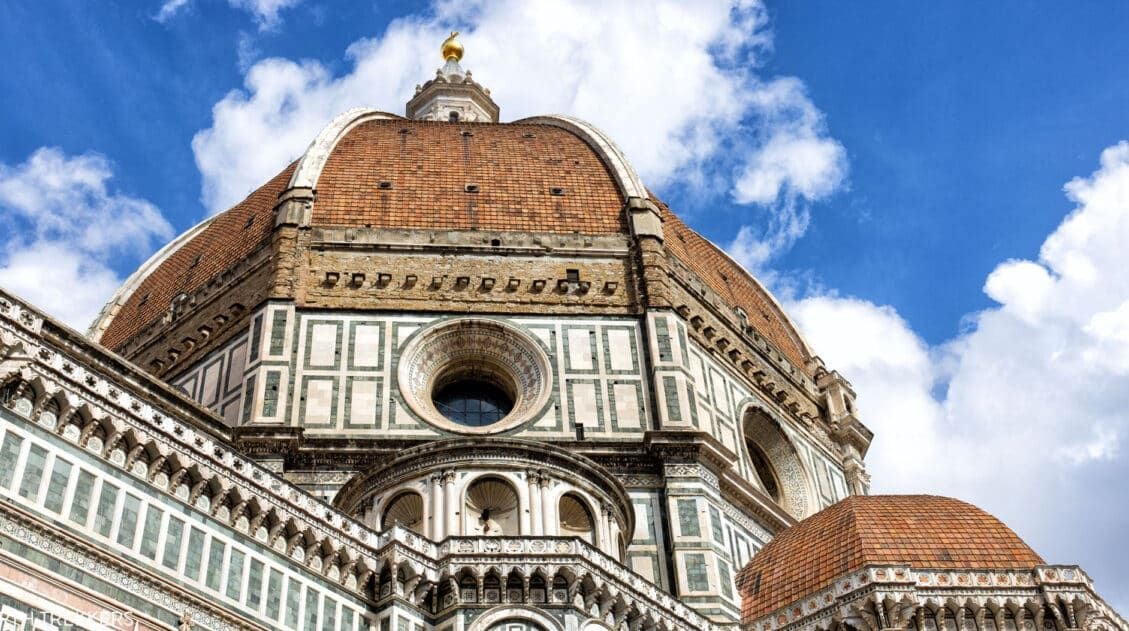
30 Best Things to Do in Florence, Italy (2026 Guide)
Florence is one of the most rewarding cities in Europe, and the best things to do in Florence range from climbing Brunelleschi’s iconic dome to watching the sunset from Piazzale Michelangelo. We know this firsthand, having visited Florence twice. Our first trip was a quick day and a half visit in July with our kids. […]
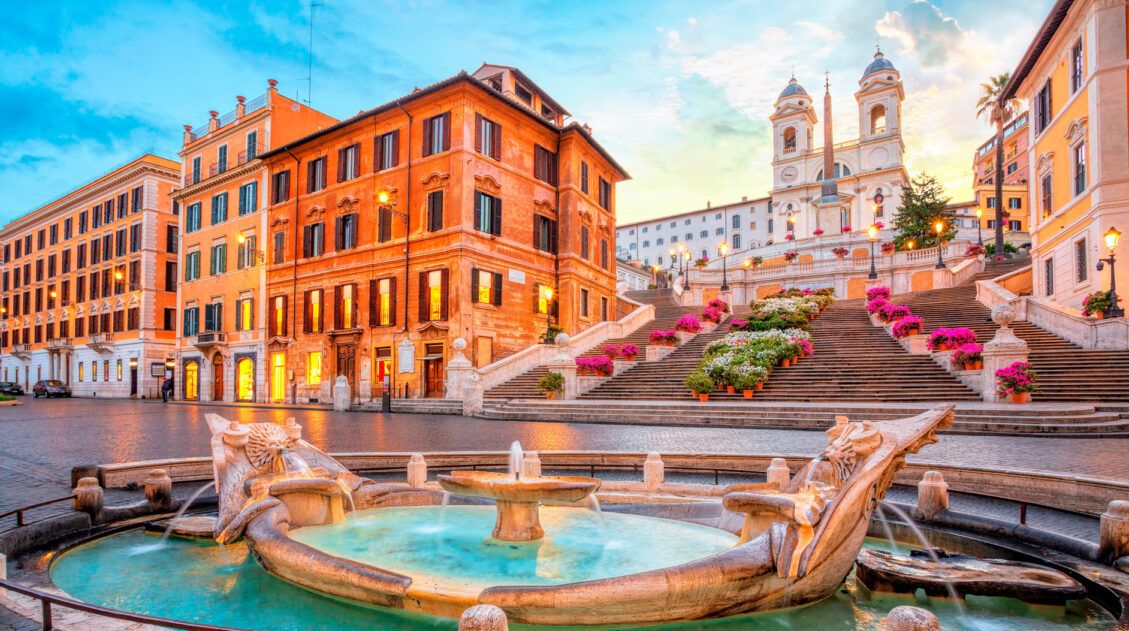
14 Day Italy Itinerary: Best Way to Spend Two Weeks in Italy
We have been to Italy six times, and this route — Rome, Pompeii, the Amalfi Coast, Florence, Tuscany, the Cinque Terre, and Venice — is the one we recommend above all others for a first visit. We’ve traveled every stretch of it firsthand and refined the planning advice in this post trip by trip. What […]
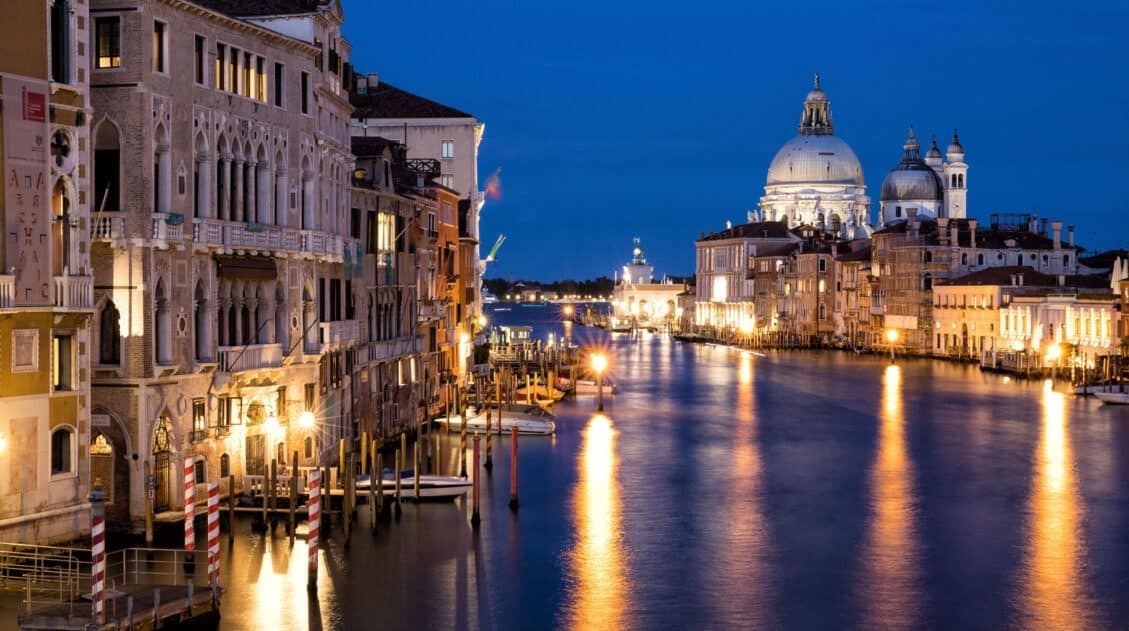
Italy Travel Guide: How to Plan a Trip to Italy
Italy Travel Guide From the ruins of ancient Rome to the hiking trails of the Dolomites, the trulli of Puglia to the hilltop villages of Tuscany, Italy is a country that rewards every kind of traveler, and keeps pulling you back. We’ve traveled to Italy six times, exploring the country from the lakes and mountains […]
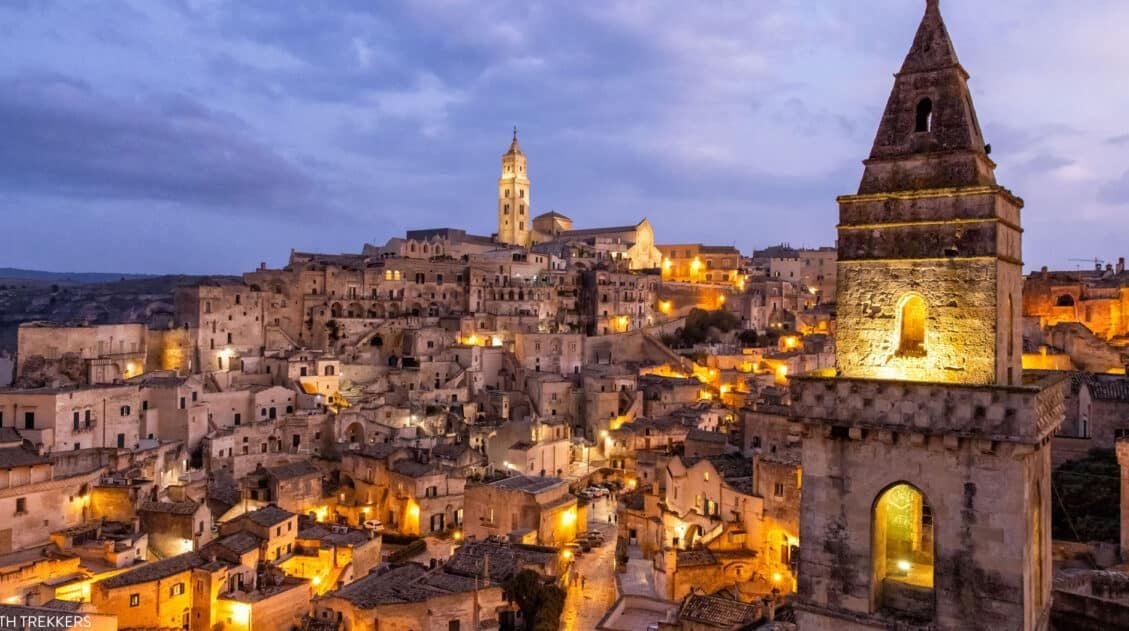
Matera Bucket List: 25 Best Things to Do in Matera
Matera is a city with a long and fascinating history. A complex of cave dwellings, stone buildings, and churches sit on the rolling hillsides, creating one of the most photogenic cities in Italy. Matera has recently been featured in numerous films, increasing its popularity. Strolling the picturesque streets, sleeping in a cave hotel, trying traditional […]
15 Beautiful Places to Visit in Puglia, Italy
Puglia, with its limestone cliffs, golden beaches, karst caves, vineyards, enormous groves of olive trees, and beautiful collection of coastal and hill towns, is one of Italy’s best road trip destinations. If you want to go off the beaten path and explore a quieter corner of Italy, put Puglia on your list. With some of […]
15 Best Hikes in the Dolomites (Easy to Challenging)
Jagged limestone peaks rise above green valleys, cable cars make it easy to reach the high mountains, and many trails lead to rifugios where you can stop for lunch with an incredible view. The Dolomites are one of the best hiking destinations in Europe, and this guide ranks the 15 best hikes in the Dolomites, […]

Racing IRONMAN Italy Emilia-Romagna: Race Report
Ironman Italy is destination racing at its finest. Swim in the Adriatic Sea, cycle past pink flamingoes and through Sangiovese vineyards, and then run through a charming coastal town. What a spectacular setting for a race! Add in its location near popular spots like Venice, San Marino, and Florence, and this makes a great destination […]
2 Days in Venice Itinerary: What 3 Trips Taught Us
Our 2-day Venice itinerary, refined over three visits and built for first-time visitors who want to see the highlights without wasting time in line. If you are planning your first trip to Venice, this itinerary is built for you. With 2 days in Venice, you have just enough time to visit the highlights of this […]
Cortona, Italy: Things to Do in This Underrated Hill Town
There’s a moment when you round a corner on one of Cortona’s side streets and the whole Val di Chiana valley opens up below you, and you think: how is this town not more famous? Tim and I had that moment during what was supposed to be a quick afternoon stopover between Arezzo and Assisi. […]
Lake Garda Itinerary: Best Way to Spend 1 to 4 Days in Lake Garda
Wondering how many days to spend in Lake Garda? In this Lake Garda itinerary, we’ll walk you through several different options, from quick one-day visits to a full week on Lake Garda. Lake Garda is long, beautiful, and bigger than it looks on a map. The towns that ring the lake span three provinces: Trentino […]
How to Spend 3 Days in Rome: A Realistic Itinerary
Visit the Colosseum, stroll through the historic heart of Rome, tour the Vatican Museums, climb to the top of the dome on St. Peters’ Basilica, cycle the Appian Way, have an aperitivo with a spectacular view of Rome, dine on gelato and pizza by the slice…these are all things you can with 3 days in […]
11 Amazing Things to Do in the Gargano, Italy
The Gargano is a small peninsula of land that juts into the Adriatic Sea. Located on the eastern coastline of Puglia, Italy, this small promontory is home to some of the most diverse landscapes in this region of Italy. White limestone cliffs plunge into the aquamarine sea, small towns sit on top of these cliffs, […]


Comments 22