
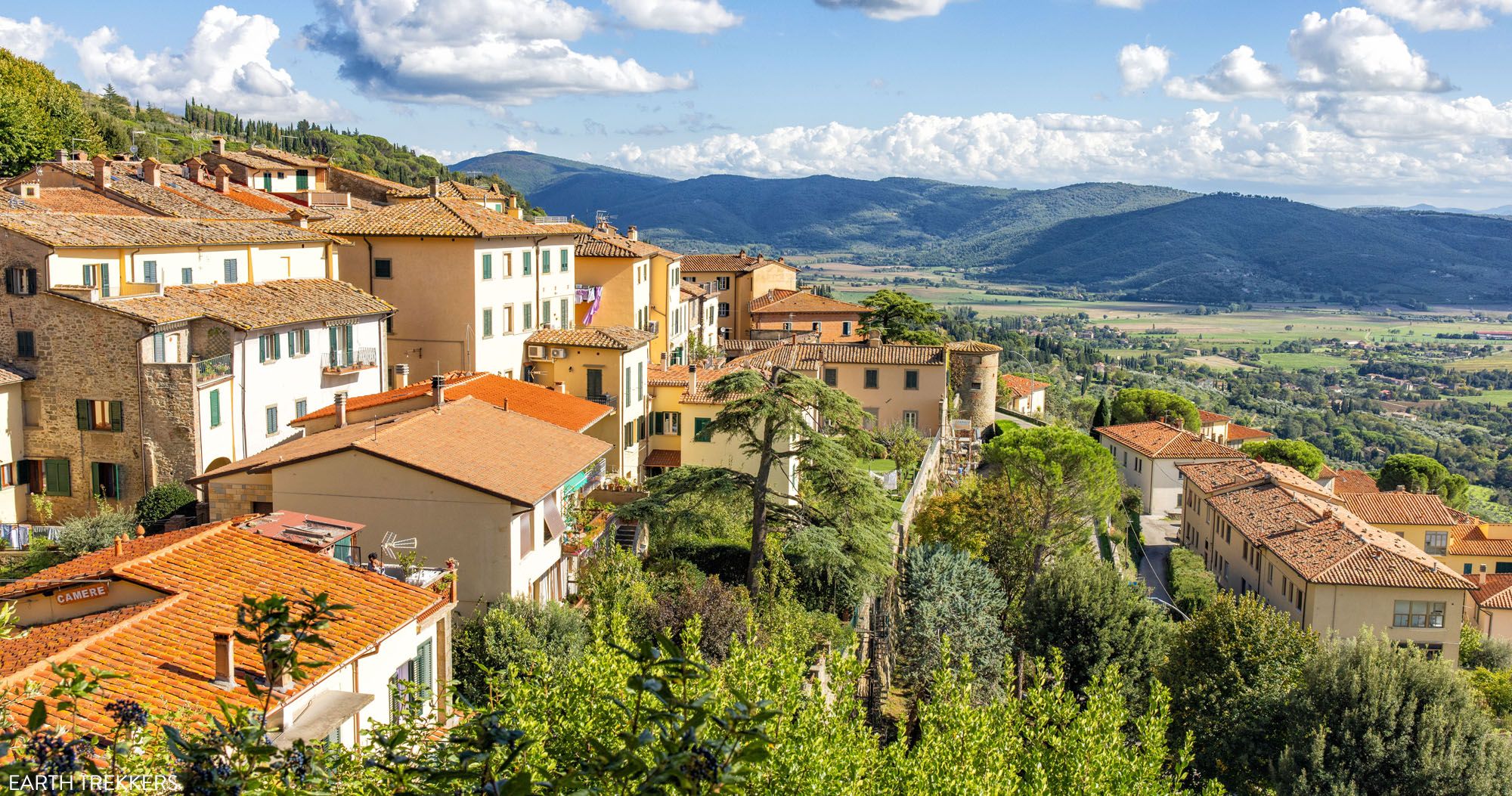
There’s a moment when you round a corner on one of Cortona’s side streets and the whole Val di Chiana valley opens up below you, and you think: how is this town not more famous? Tim and I had that moment during what was supposed to be a quick afternoon stopover between Arezzo and Assisi. We ended up staying longer than planned.
We walked the medieval streets, ducked into wine shops on Via Nazionale, stumbled into a small art gallery that we almost didn’t notice, and finished the day wine tasting at a vineyard just outside of town. Cortona is the kind of Tuscan hill town that rewards slow, aimless wandering, and it’s significantly quieter than the big-name stops on the tourist trail.
If it’s on your radar and you’re wondering whether to go — go. Here are the best things to do in Cortona, Italy. If you’re building a bigger trip, start with our Tuscany itinerary and Italy Travel Guide.
The Essentials
LOCATION | Southeastern Tuscany
BEST FOR | History lovers, wine tasting, photography, slow wandering
HOW MUCH TIME | 2–3 hours for the town center; full day with vineyards
GETTING THERE | Car strongly recommended; train to Camucia then bus/taxi
BEST TIME TO VISIT | Spring and fall
DON’T MISS | MAEC Etruscan Museum, Piazza Garibaldi views, wine tasting on Via Nazionale
NEAREST TOWNS | Arezzo (45 min), Montepulciano (40 min), Assisi (1 hr)
OUR VISIT | October 1 (afternoon)
April 2026 Updated: Did a major update, added new photos, added a Best Time to Visit section, expanded information for each entry, verified all links and tours, added links to our new Tuscany content. June 2026: Changed a few links.
Best Things to Do in Cortona
Below is a list of ten things to do in Cortona, within the city center. These are all within walking distance of each other.
1. Stroll along Via Nazionale
Via Nazionale is Cortona’s main pedestrian street, connecting Piazza Garibaldi at one end to Piazza della Repubblica at the other. It’s the natural spine of any visit to town and one of the most enjoyable stretches of street we walked in all of Tuscany.
What sets Via Nazionale apart from the main shopping streets in towns like San Gimignano or Montepulciano is the vibe. It’s quieter, more local-feeling, and the shops lean boutique rather than souvenir. You’ll find small art galleries, food shops, clothing boutiques, and wine bars mixed in with a handful of restaurants.
We did a wine tasting at Vini Di Toscana, a wine shop right on the street, where we sampled Super Tuscans, Brunello di Montalcino, and a Syrah produced right in Cortona called Bramasole — a perfect souvenir if you want to take a little of Cortona home with you.
If you like to photograph on your travels, bring your camera. The street itself is beautiful, and the side alleys branching off from it lead to some of the best shots in town.
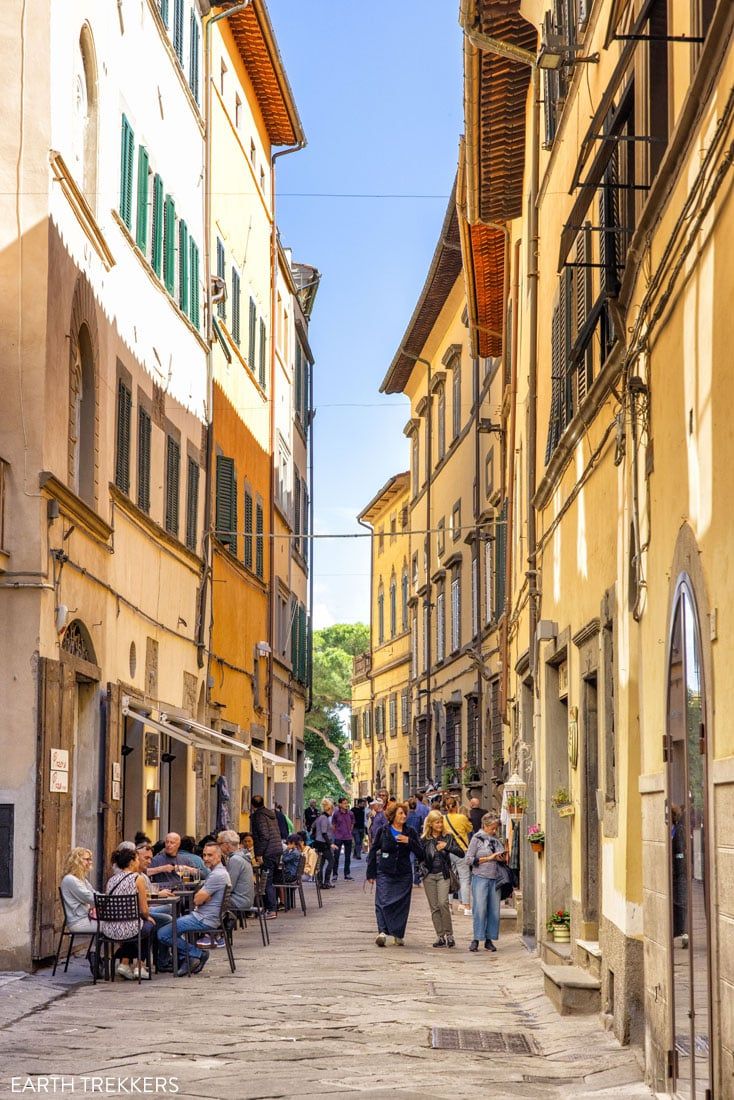
Via Nazionale
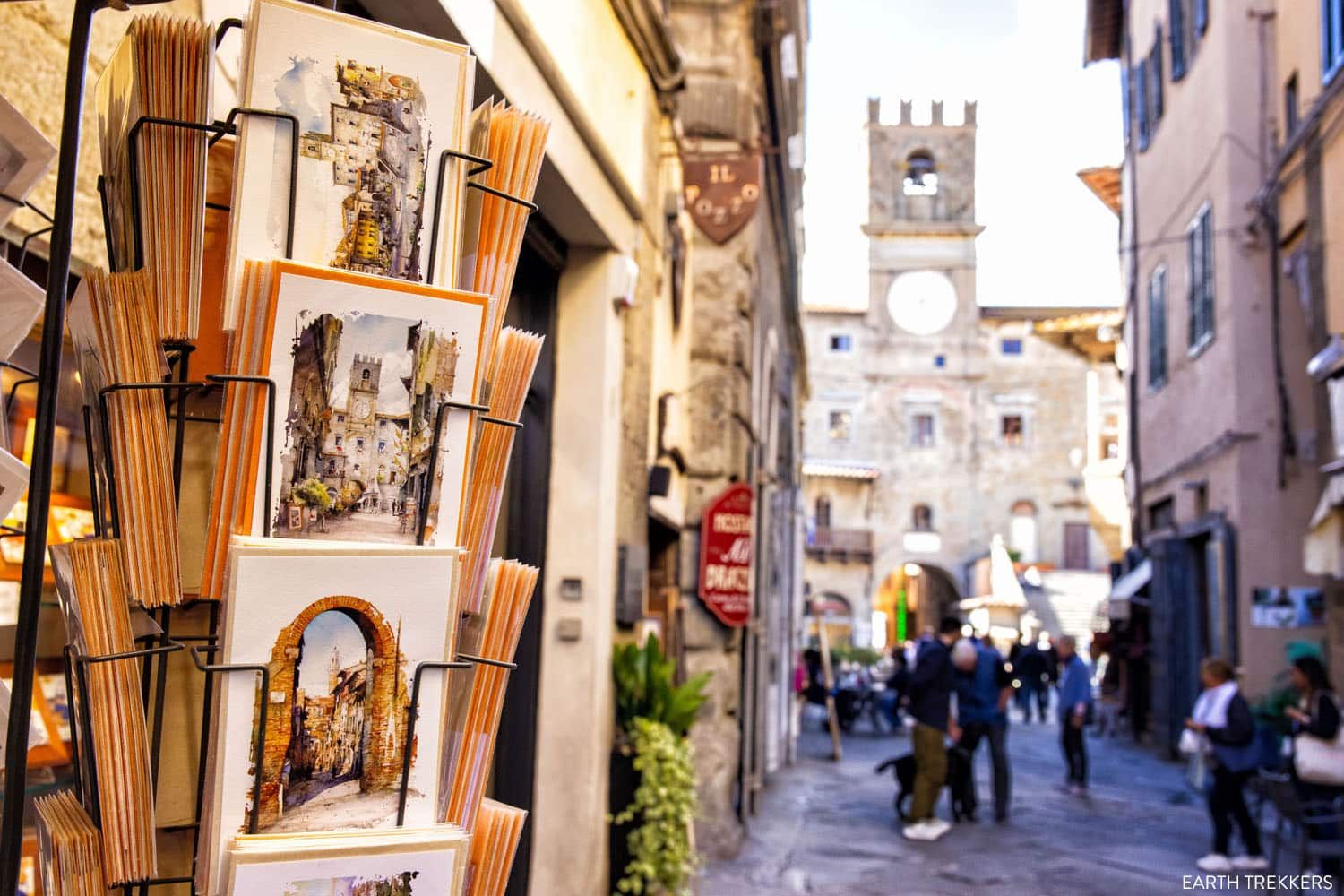
Via Nazionale
2. Visit Piazza della Repubblica
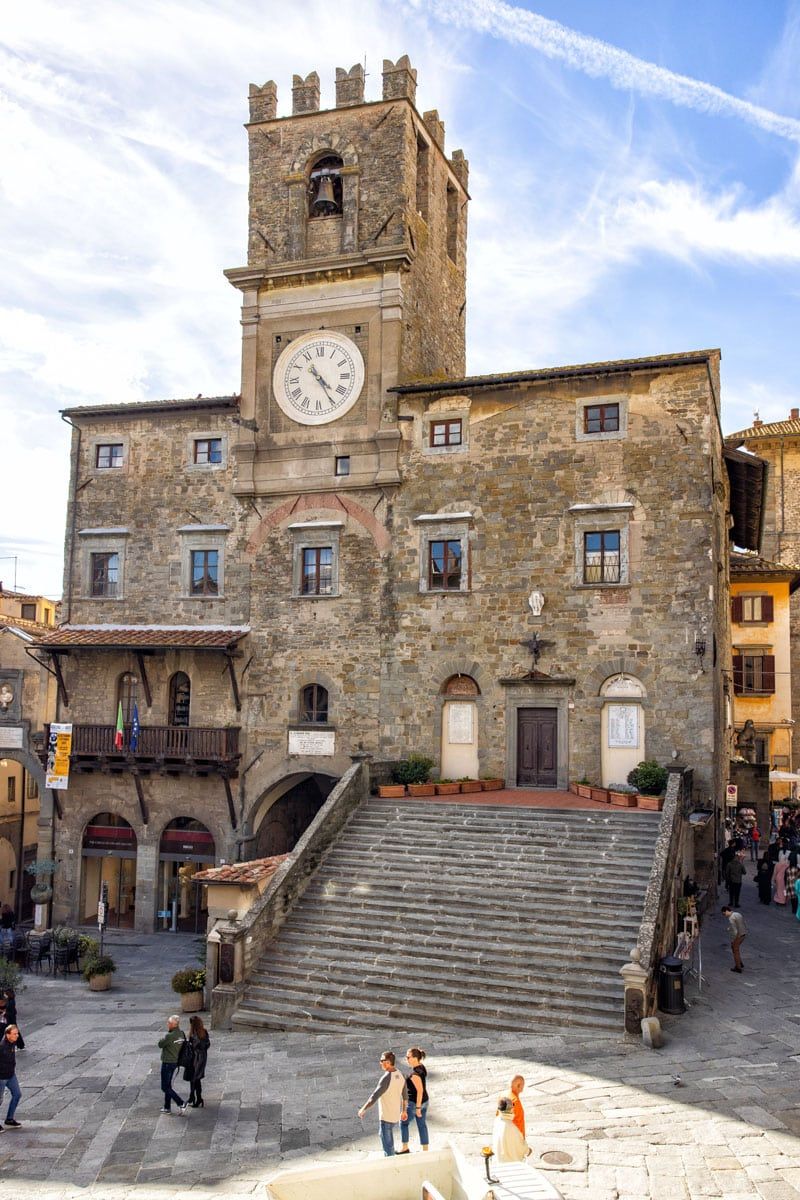
Piazza della Repubblica is the heart of Cortona. This is the main square where locals and visitors naturally converge, and the place you’ll most likely find yourself passing through multiple times.
Dominating the piazza is the Palazzo Comunale, the medieval town hall, with its distinctive clock tower and broad exterior staircase. Lining the edges are restaurants with outdoor seating, wine shops, and cafés, making this the perfect spot for a coffee or an aperitivo if you want to slow down and take it all in.
The square has been the center of Cortona since Roman times, when the forum stood on this very spot, which gives it a weight that you feel even if you don’t know the history.
We passed through several times during our afternoon, and it felt different each time. It got busier as the day went on, with a warm early-October light settling over the piazza by late afternoon that made it one of the most photogenic spots in town.
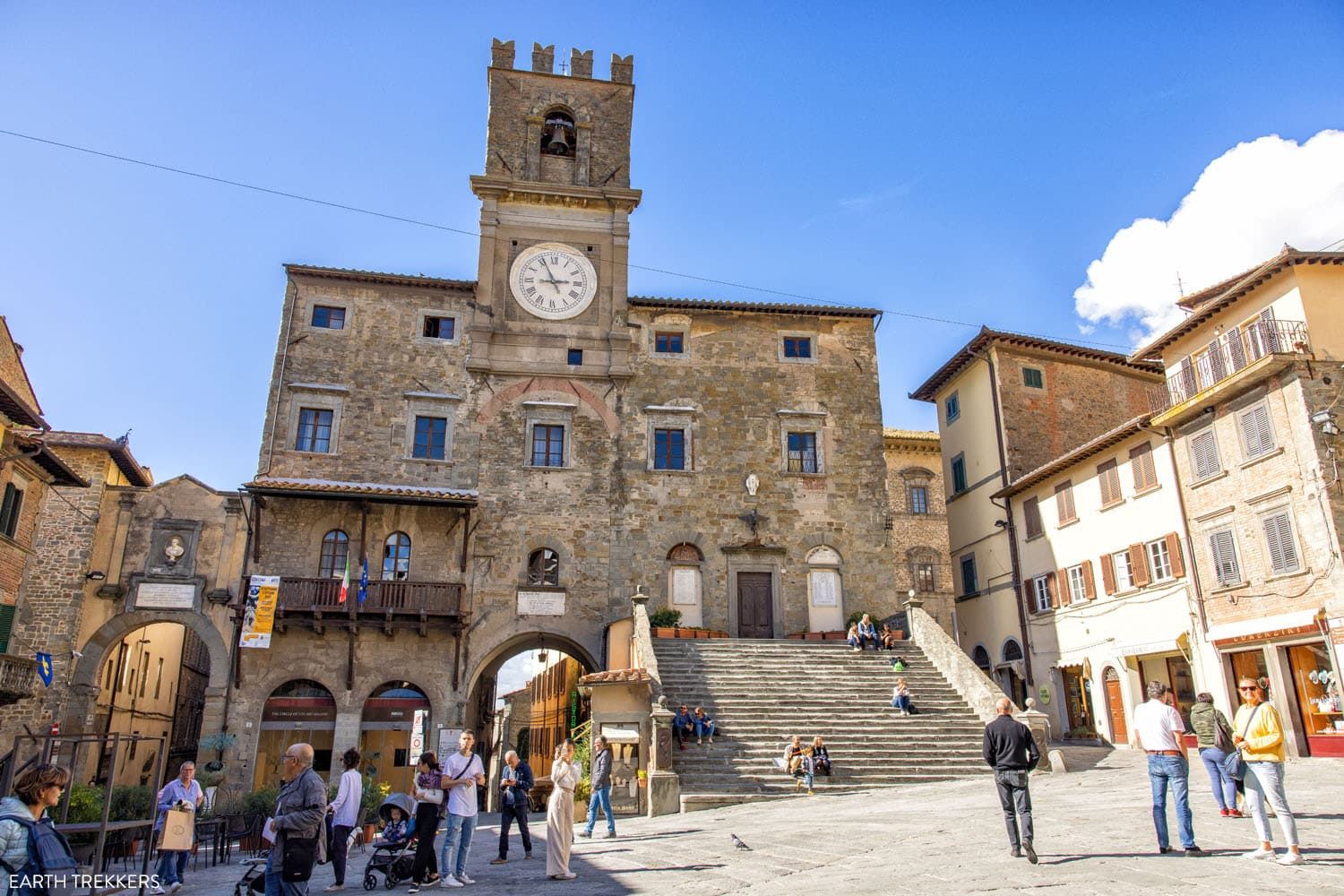
Piazza della Repubblica
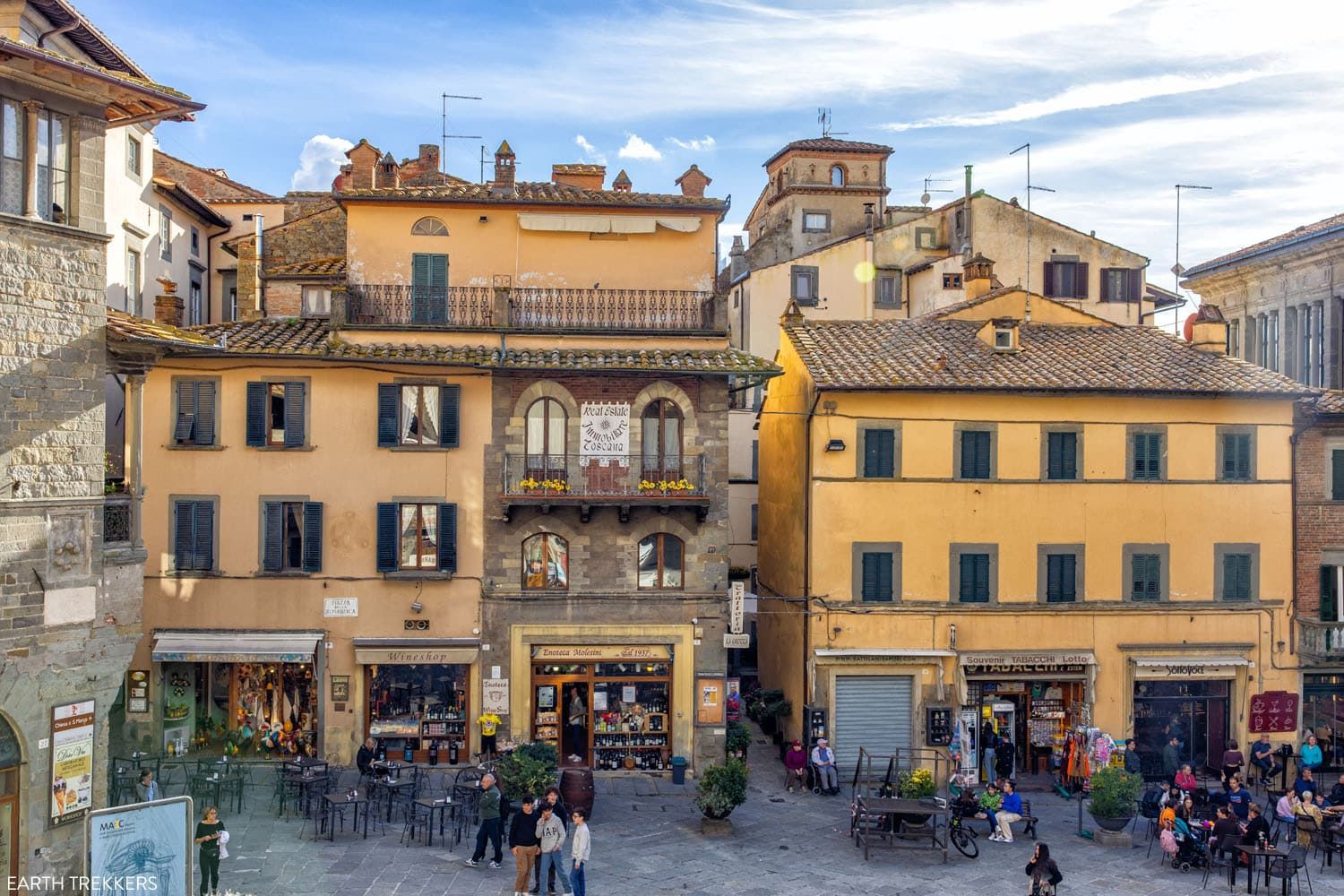
Piazza della Repubblica
3. Get a History Lesson at the Museo dell’Accademia Etrusca (MAEC)
Cortona was one of the twelve city-states of the ancient Etruscan civilization, and the MAEC is where that history comes to life. The museum spans several floors and houses one of the most important Etruscan collections in Italy, with artifacts ranging from pottery and jewelry to funerary urns and bronze work, some dating back to the 8th century BC.
The standout piece is the Tabula Cortonensis, a bronze tablet discovered near Cortona in 1992 and now considered the third longest Etruscan text ever found. Standing in front of something that old, inscribed in a language that took scholars decades to partially decode, is one of those quietly remarkable museum moments. Also worth seeking out is the Etruscan Chandelier, a 5th century BC bronze lamp that is both extraordinarily old and surprisingly beautiful.
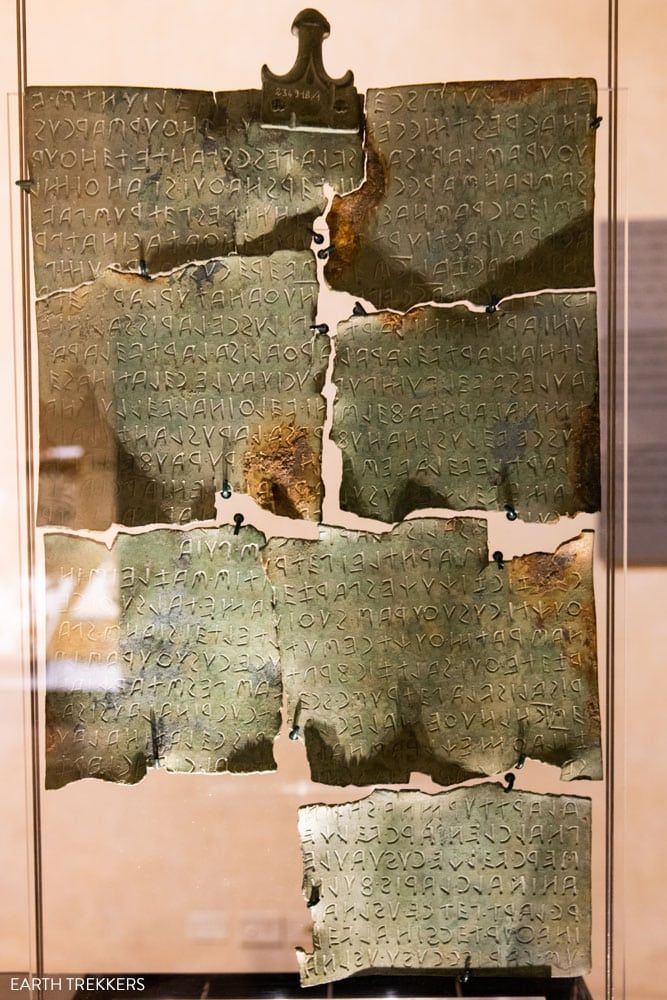
Tabula Cortonensis
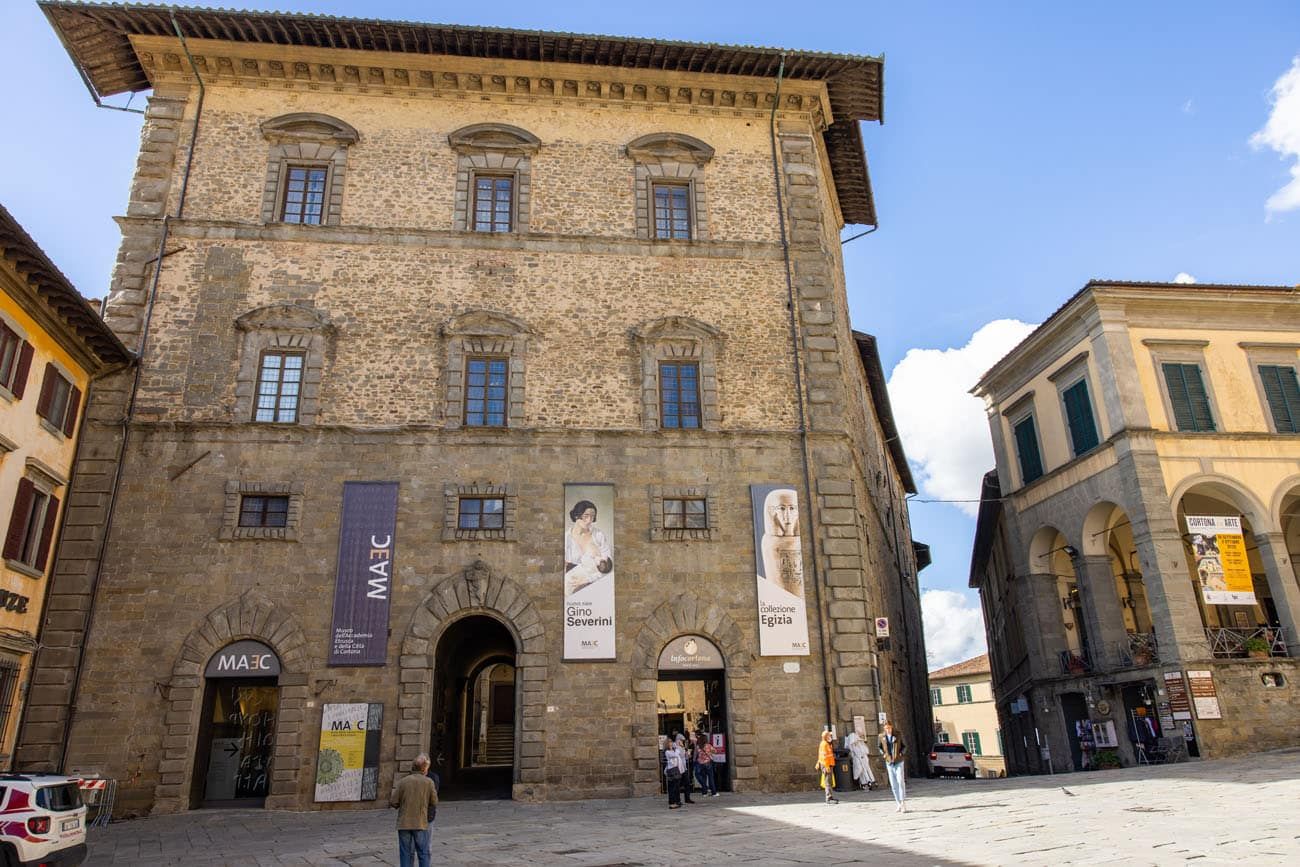
The MAEC
TWe spent about 30 minutes inside, which felt right for a visit that wasn’t purely museum-focused. History enthusiasts could easily spend an hour or more. The museum is located on Piazza Luca Signorelli, right in the city center, and is well organized and easy to navigate.
For hours and pricing, visit the official website.
4. Explore the Side Streets
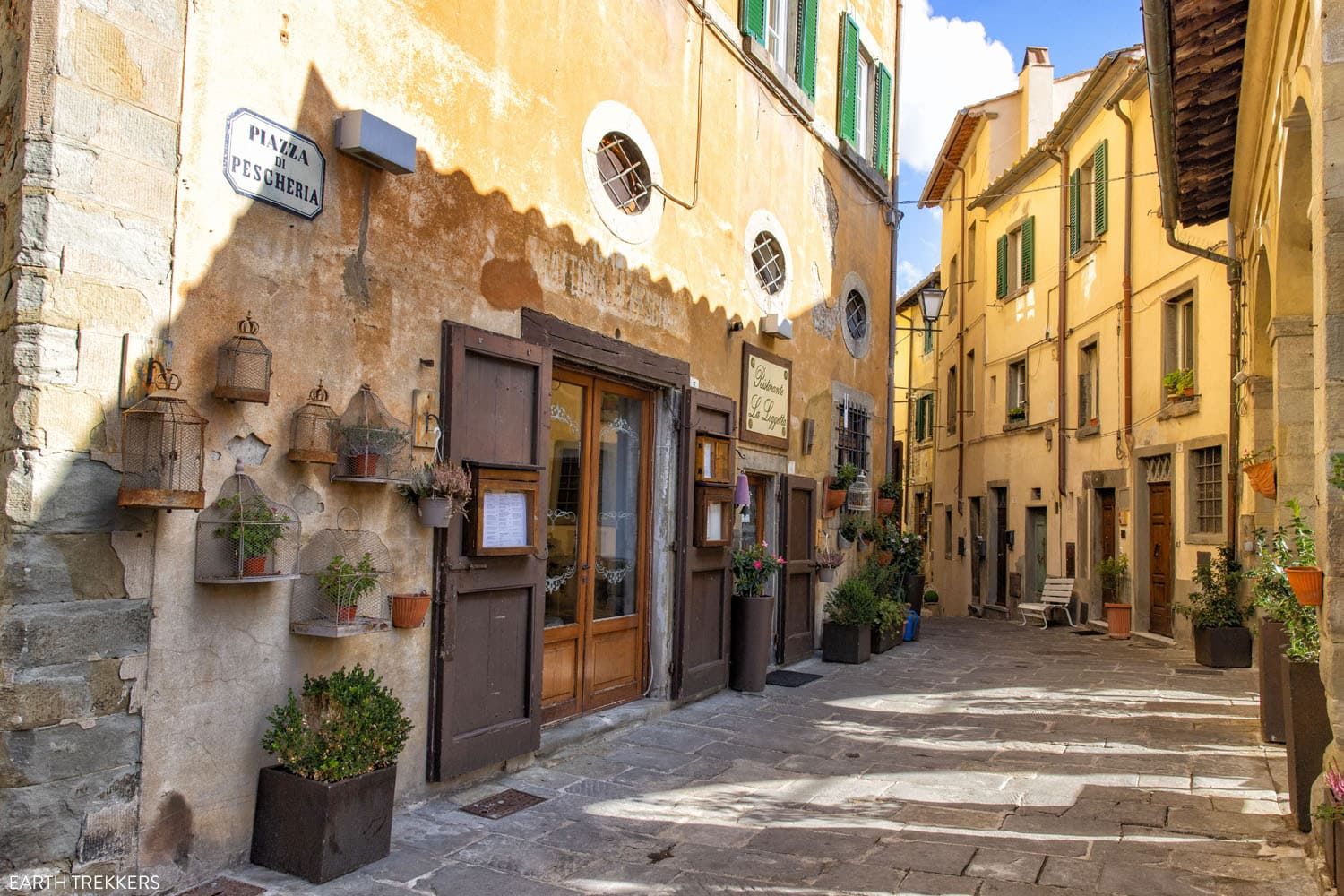
Some of the best moments in Cortona happen when you put the map away and just wander. The side streets branching off Via Nazionale and Piazza della Repubblica lead to quiet corners, hidden restaurants, small shops, and some of the most atmospheric photography in town.
Our favorite was Via del Gesú. Compared to the gentle bustle of Via Nazionale, Via del Gesú felt like stepping into a different century entirely – narrow, hushed, and lined with medieval buildings dating back to the 14th century. The architecture is remarkably well-preserved, the street was nearly empty when we walked it, and the way the light fell between the buildings made it one of the most photogenic spots of our entire afternoon. We lingered longer than we planned.
If you’re a photographer, make Via del Gesú a priority. And even if you’re not, give yourself at least 20 or 30 minutes to get deliberately lost in Cortona’s side streets. It’s one of those towns that rewards the people who slow down.
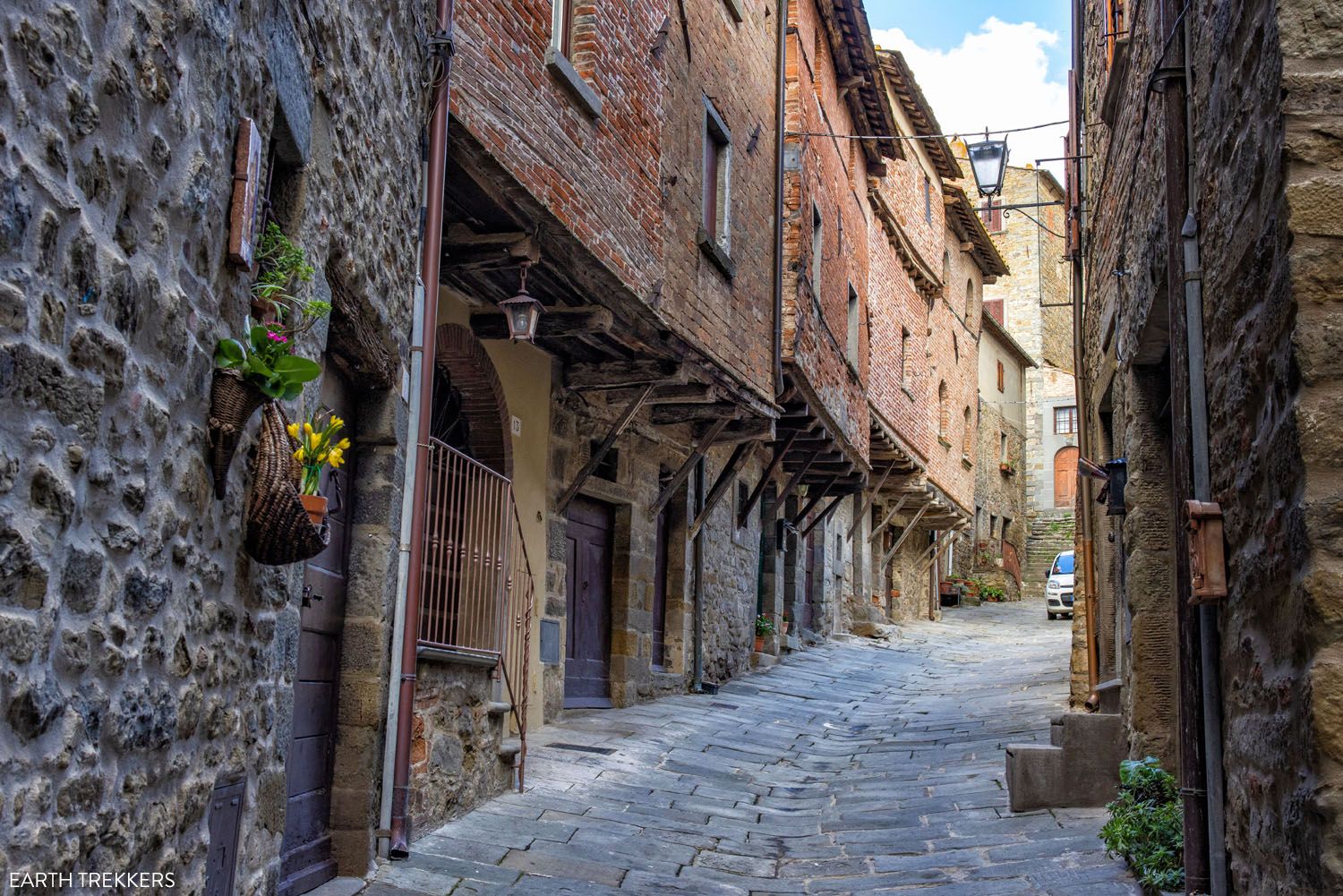
Via del Gesú
5. Enjoy the View from Piazza Garibaldi
Piazza Garibaldi sits at the western edge of the historic center, and the view from here is the one that stops you mid-sentence. The entire Val di Chiana valley spreads out below, a patchwork of vineyards, farmland, and cypress-lined roads that looks exactly like the Tuscany you imagined before you arrived.
This is also the spot that shows up in image search results for Cortona more than almost anywhere else in town, and for good reason. On a clear October afternoon, the light over the valley is extraordinary, and it’s the kind of view that makes you want to stand there far longer than you intended.
Note that Google Maps labels this spot “Belvedere di Cortona.” Search that if you want to drop a pin. It sits right where Via Nazionale meets the western edge of town, so it’s impossible to miss as you walk the main street.
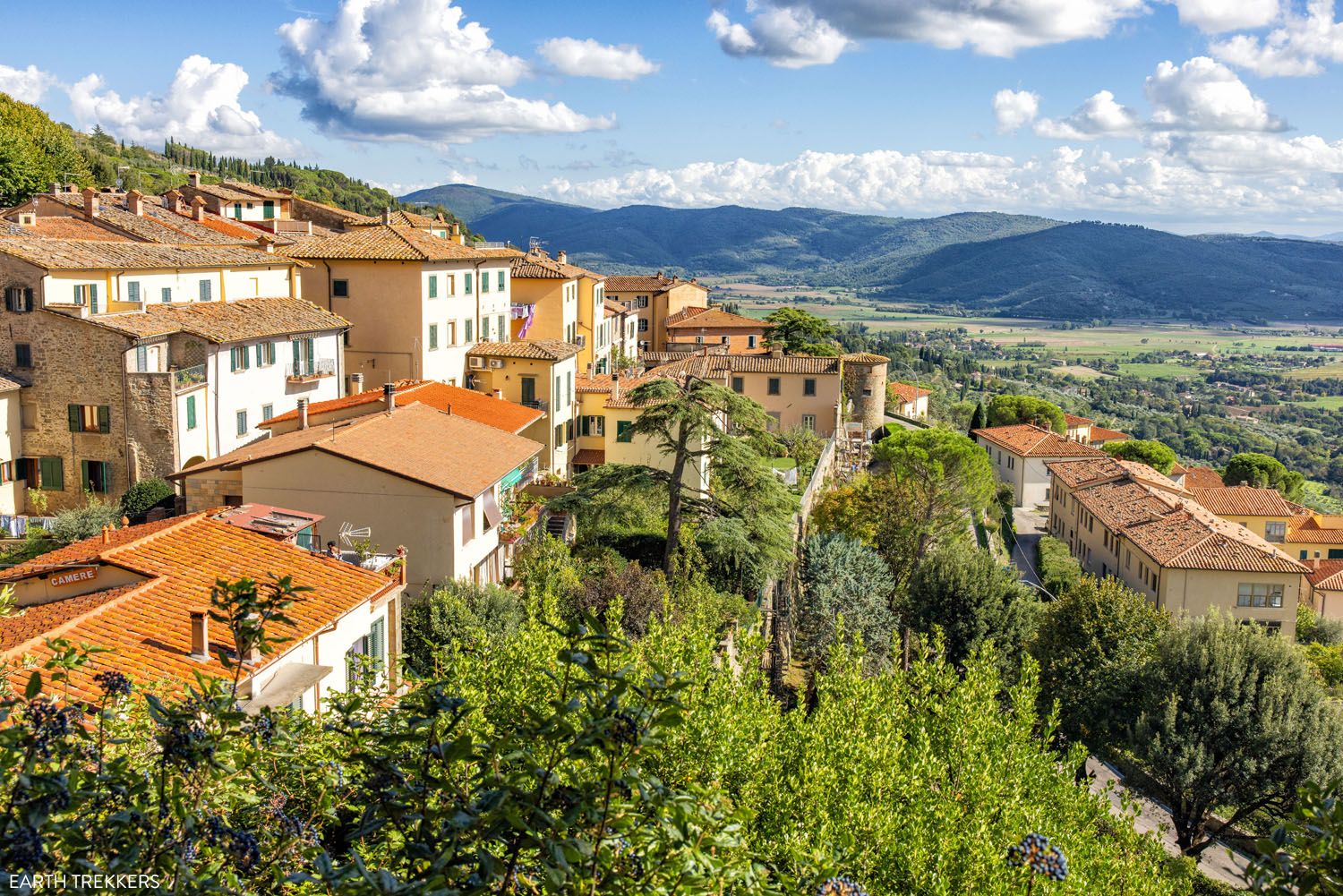
The view from Piazza Garibaldi
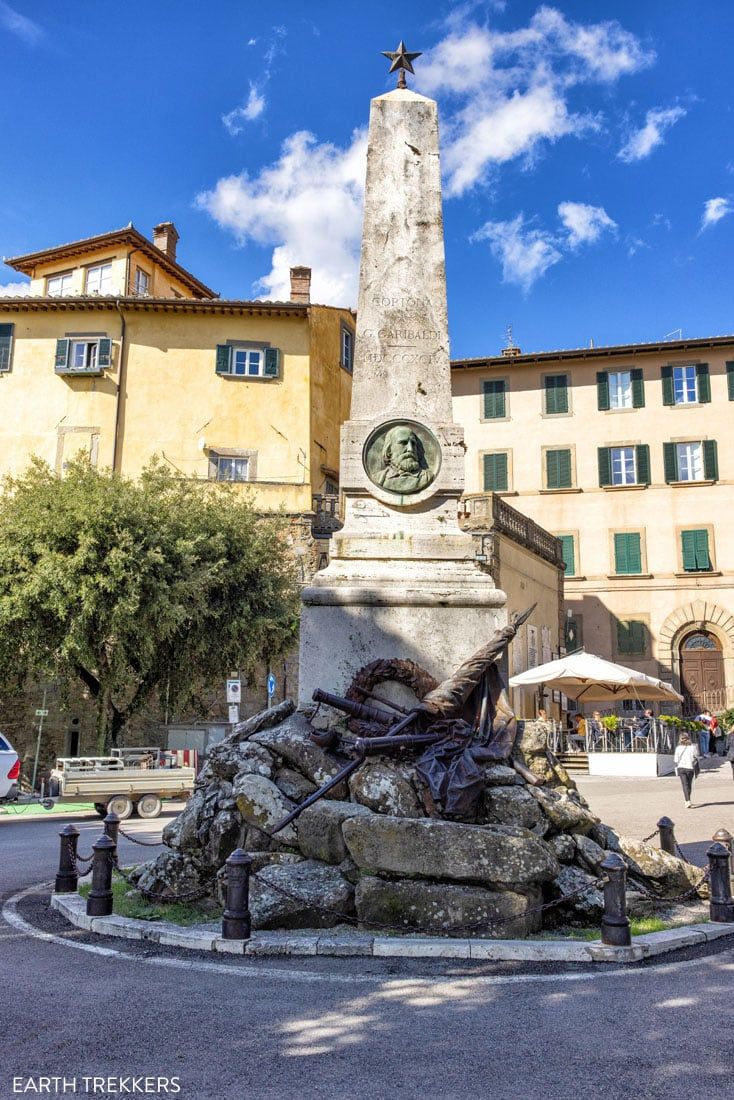
Piazza Garibaldi
6. Visit the Cortona Cathedral
The Cortona Cathedral, formally known as the Cathedral of Santa Maria Assunta, sits on Piazza del Duomo at the quieter eastern end of the historic center. It’s one of those churches that earns a stop even if you’ve been churched-out by the rest of Tuscany.
What makes it architecturally interesting is the layering of history. The Romanesque façade gives way to a Renaissance interior, and the whole structure was built on top of a pagan temple, so in a single building you’re standing on roughly two thousand years of religious history.
The interior space itself is what struck us most: wide, serene, and filled with a quality of light that made it feel genuinely peaceful rather than just impressive.
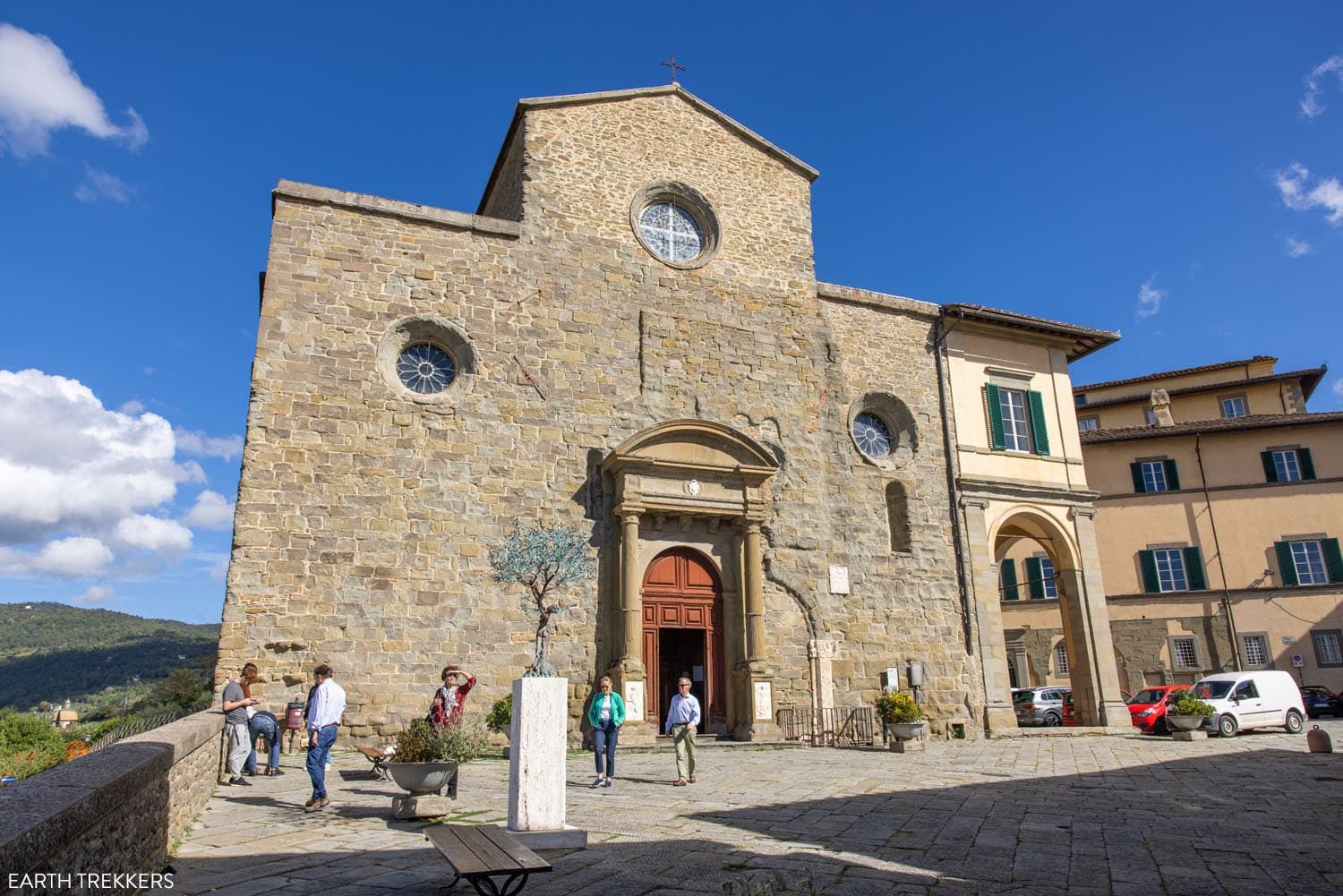
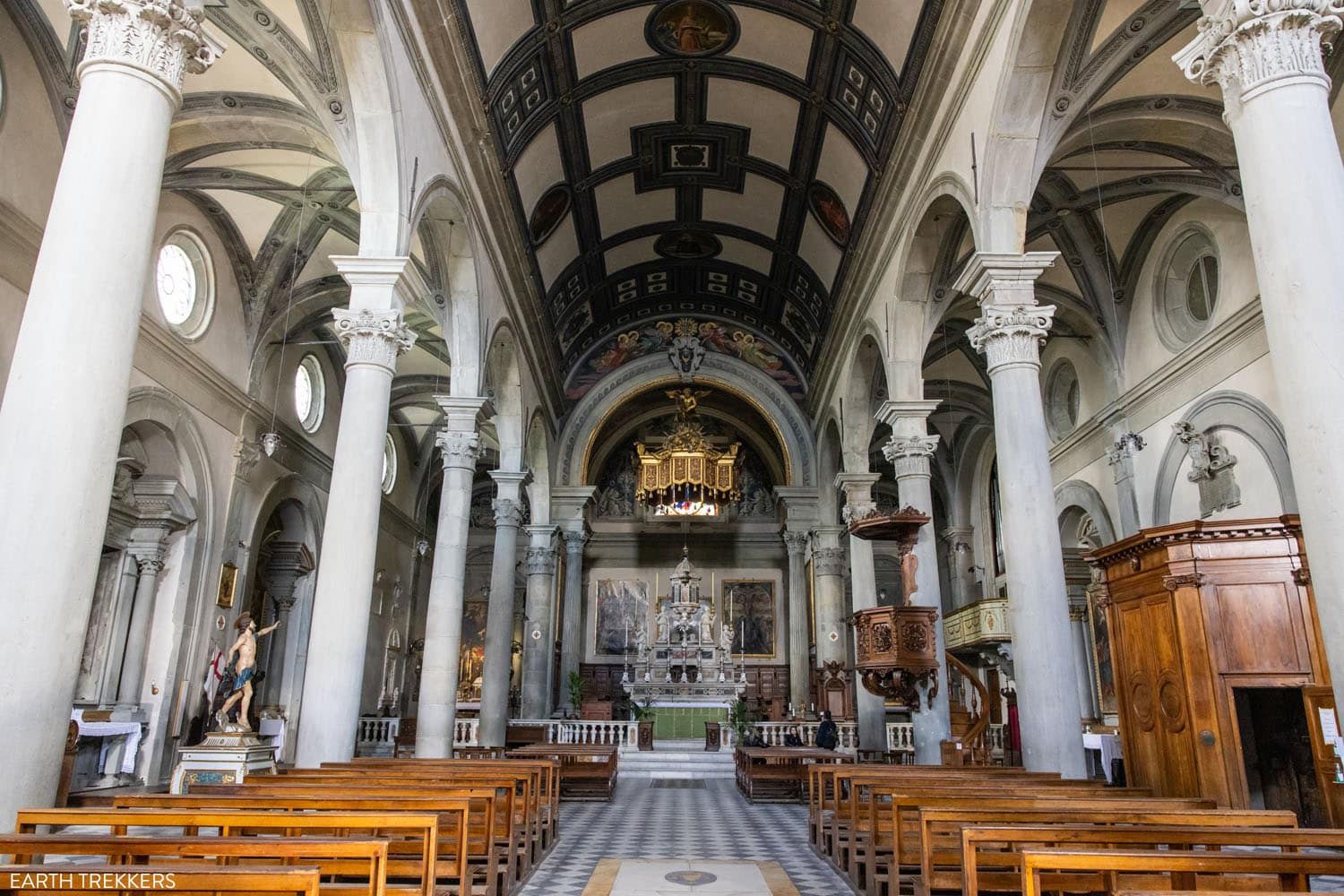
Inside the Cortona Cathedral
We spent about ten minutes inside, which felt like enough for a cathedral visit that wasn’t the main focus of our afternoon. If you’re interested in the artwork, note that several important paintings from the cathedral’s collection have been moved to the Diocesan Museum next door, so the two are worth visiting together.
7. Linger at Piazza del Duomo
Piazza del Duomo sits at the far eastern edge of the historic center, tucked away from the main flow of foot traffic on Via Nazionale. Most visitors walk here specifically to reach the Cathedral or the Diocesan Museum, but the piazza itself is worth pausing in, and the view from here caught us completely off guard.
From the edge of the square, you look out over the Cortona cemetery, the Cimitero della Misericordia, and beyond it the Tuscan countryside rolling away into the distance. It sounds like an odd thing to highlight, but the cemetery is beautifully kept, framed by cypress trees, and set against a backdrop of hills and farmland that makes the whole scene unexpectedly moving.
Combined with the Cathedral on one side and the Diocesan Museum on the other, Piazza del Duomo packs a lot into a small space. Give yourself time to stop and take it in rather than treating it purely as a throughway.
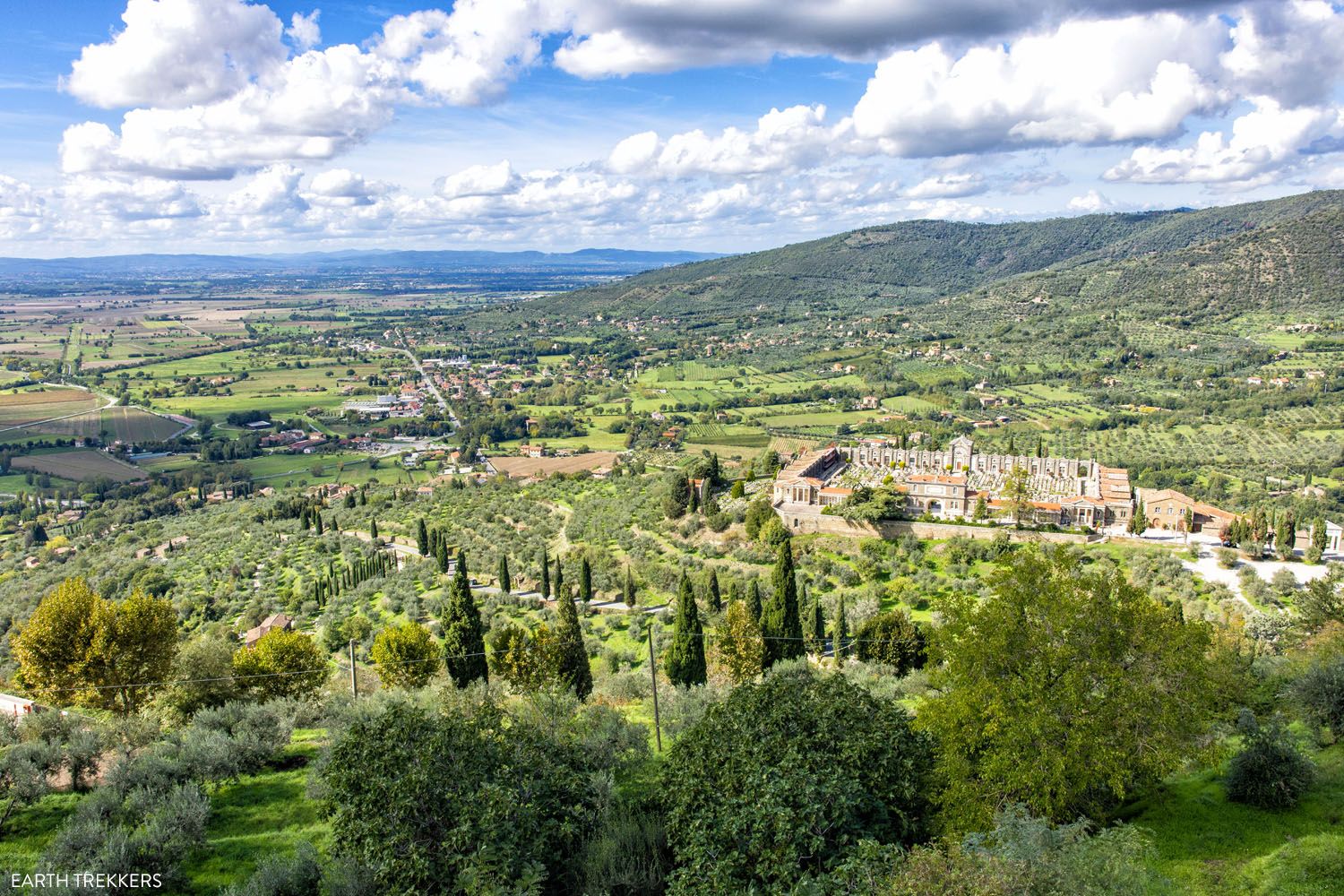
The view from Piazza del Duomo
8. Visit the Diocesan Museum
The Diocesan Museum sits directly opposite the Cathedral on Piazza del Duomo, housed in the former Church of Gesú. Art history enthusiasts will want to budget serious time here. The collection is small but genuinely significant, with works spanning the 12th to 17th centuries displayed across two intimate floors.
The standout piece is Fra Angelico’s Annunciation, one of the most celebrated works of the early Italian Renaissance. The collection also includes paintings by Pietro Lorenzetti, Luca Signorelli, and Sassetta, as well as a Roman marble sarcophagus that predates the rest of the collection by centuries.
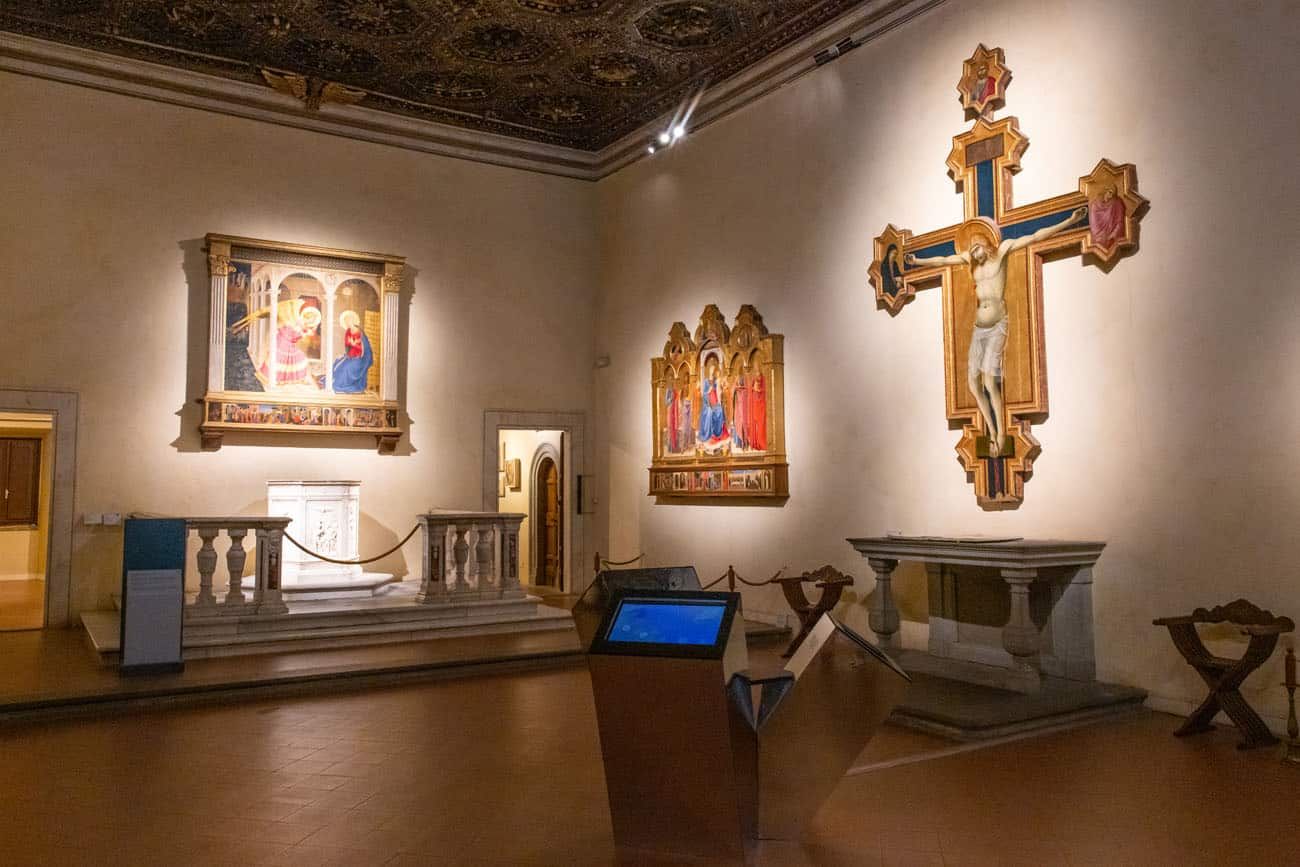
Diocesan Museum
Art museums aren’t really our thing, and we spent about 15 minutes inside. But if Renaissance painting is your passion, this is one of the better small museum collections in Tuscany. Given its location right on Piazza del Duomo, it’s easy to combine with the Cathedral and the piazza views without adding much time to your visit.
9. Visit the Church of San Francesco — Home of the Reliquary of the Holy Cross
The Church of San Francesco is easy to walk past without a second glance. It’s modest from the outside, tucked along a side street next to the Story of Life gallery. Don’t make that mistake. It turned out to be one of the most surprisingly moving stops of our entire afternoon in Cortona.
Built in 1245, this is one of the oldest Franciscan churches in Italy, and it holds two relics that are remarkable to encounter in person.
The first are relics of St. Francis of Assisi himself, brought here by Brother Elias of Cortona, one of Francis’s closest companions, who is buried inside the church.
The second is the Reliquary of the Holy Cross: a rectangular ivory tablet holding a gold cross said to contain a fragment of the Cross on which Jesus died.
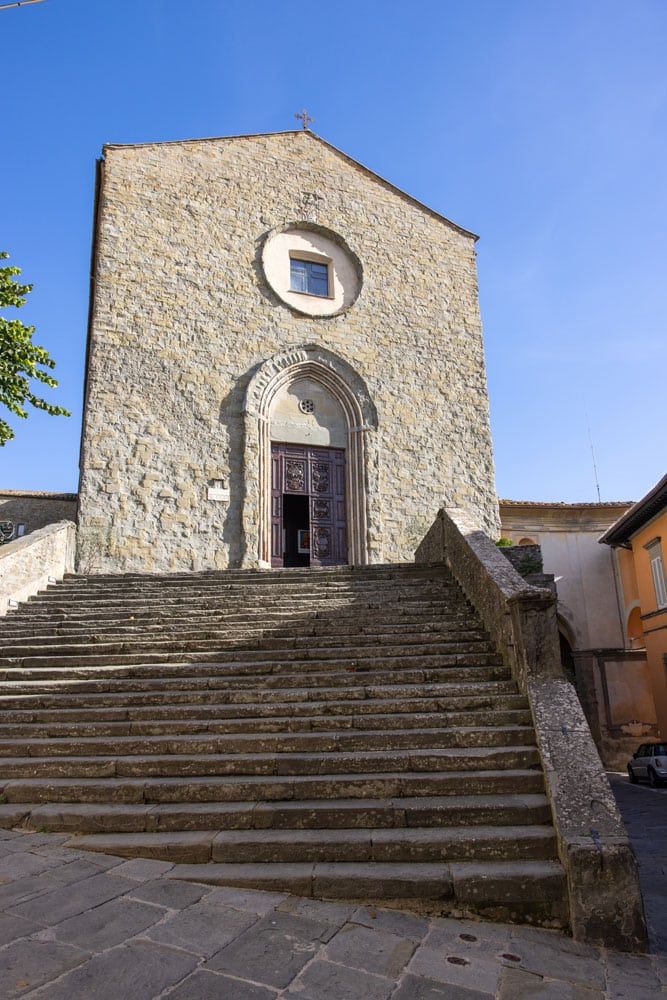
Church of San Francesco
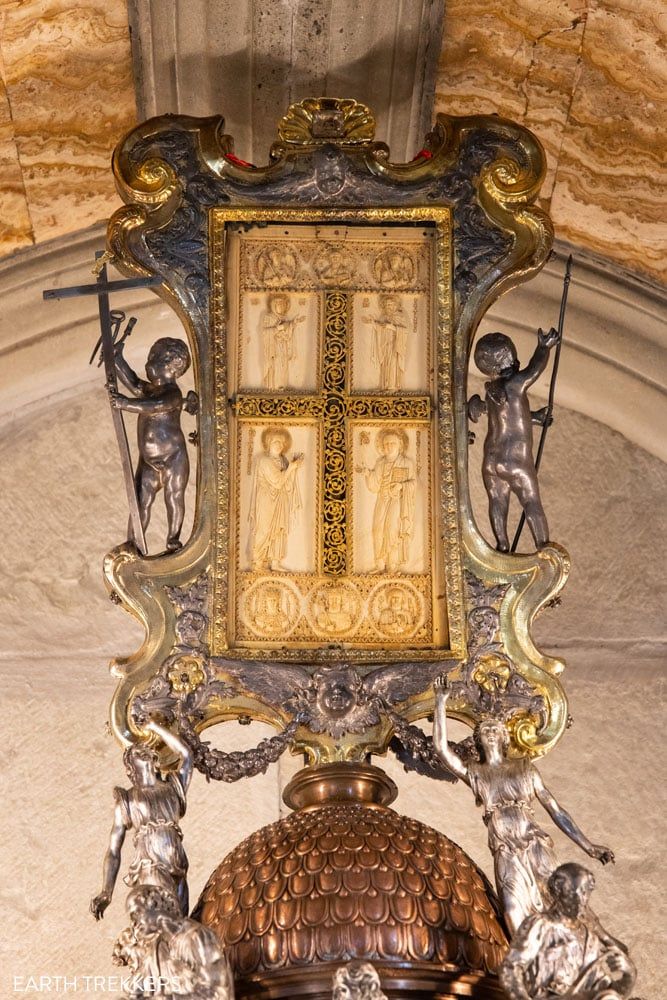
Reliquary of the Holy Cross
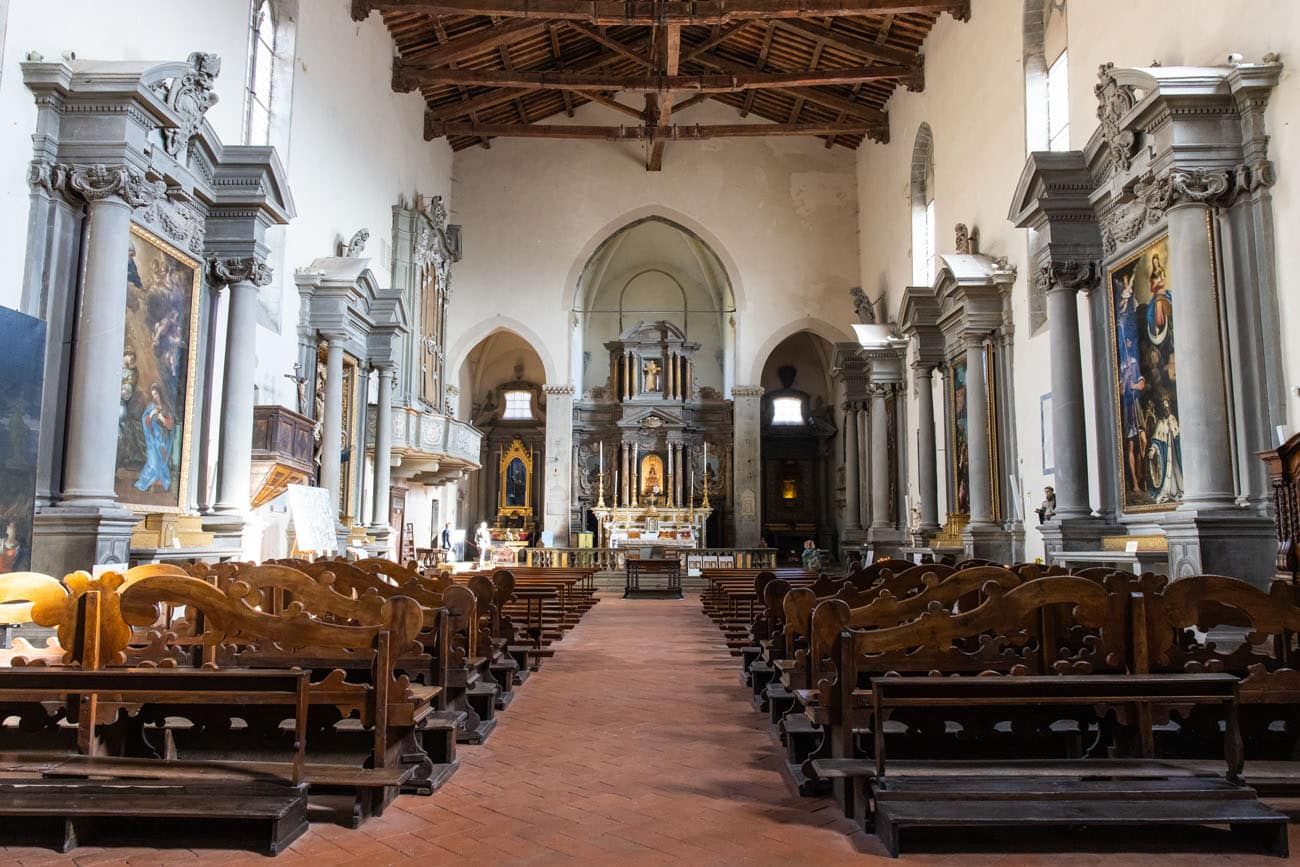
Inside the Church of San Francesco
Whether you’re religious or not, there’s something about standing in a 13th century church in front of objects this old and this significant that stops you in your tracks. Give it 15 to 20 minutes; it’s worth every one of them.
10. Go Shopping
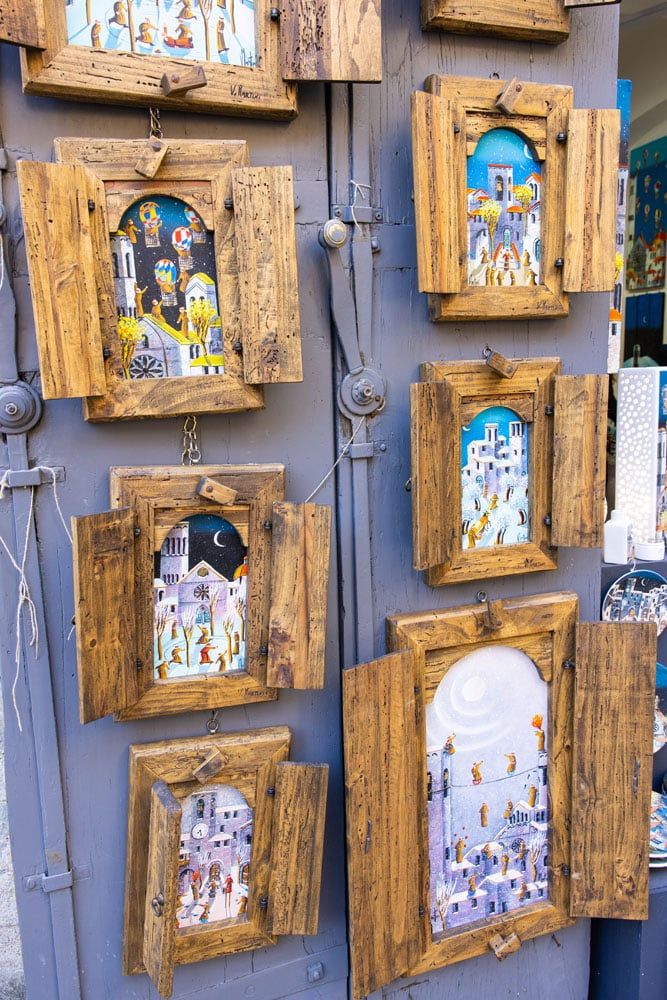
The shopping in Cortona is genuinely one of its best qualities, and one of the things that sets it apart from other Tuscan hill towns. You’ll find a few souvenir shops, but mostly the streets are lined with small boutiques, art galleries, food shops, and wine bars — the kind of places that feel like they exist for locals as much as for visitors.
The shop that stopped us in our tracks was Story of Life, a small gallery tucked next to the Church of San Francesco run by a husband and wife team. We almost walked past it. The sign at the entrance reads: “You are about to enter an extraordinary adventure, so forget who you are, what you do, where you come from and how old you are… love, emotions and dreams are ageless and live everywhere.” The artwork inside is original, beautiful, and surprisingly affordable. We bought journals and a painting for our daughter.
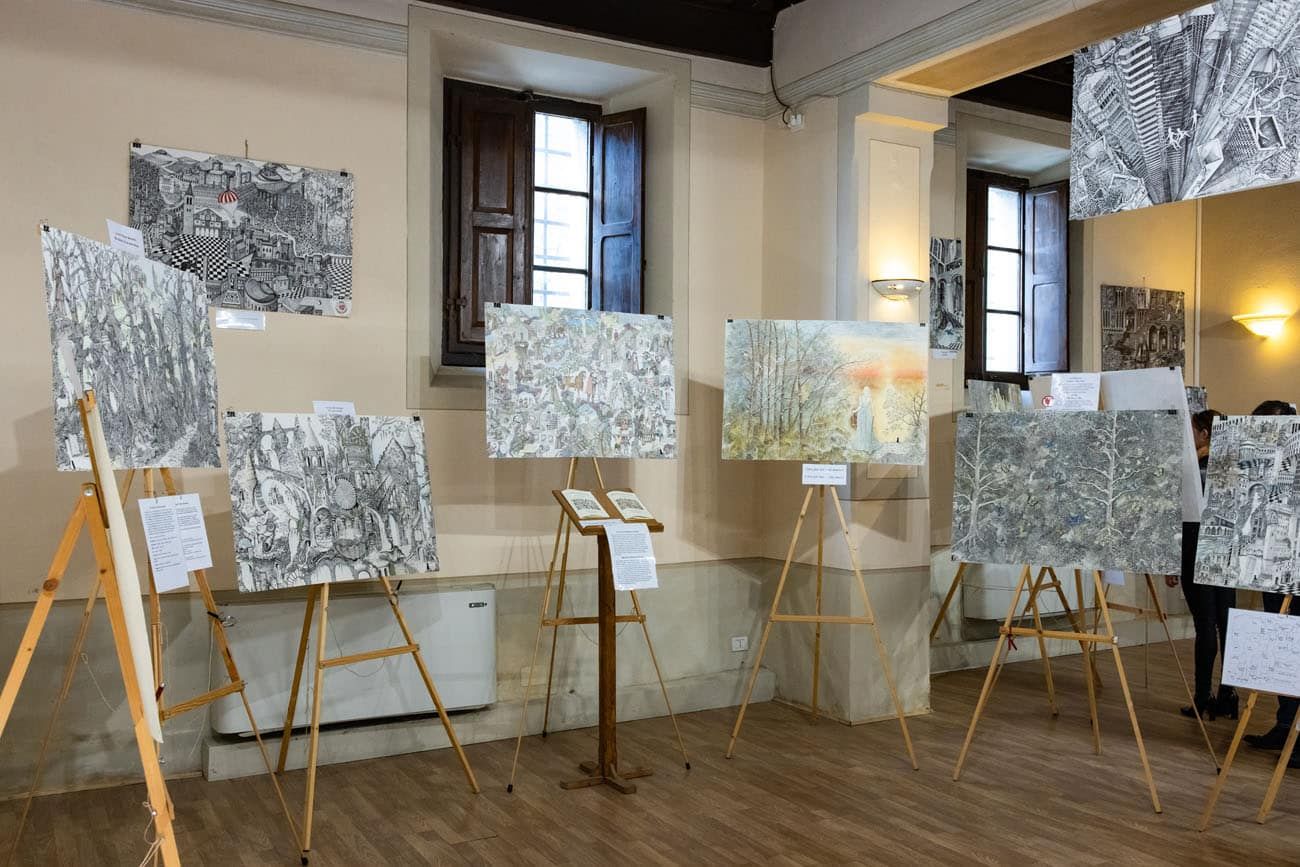
Story of Life
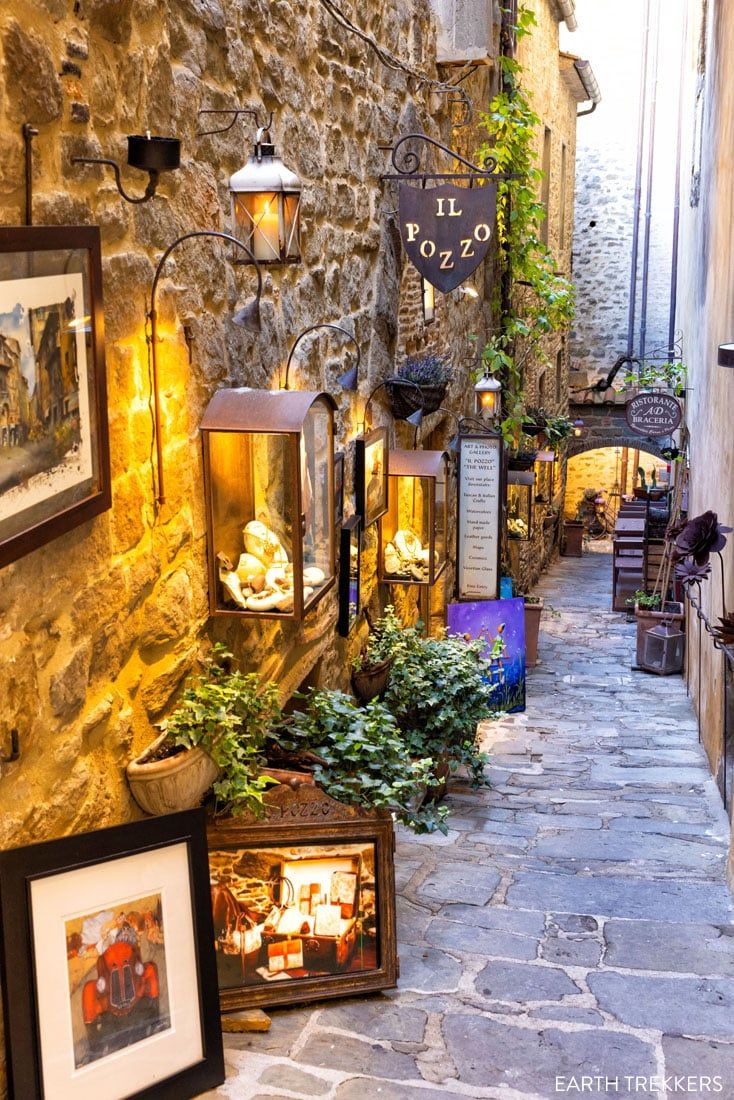
Also worth a browse is Il Pozzo, an art gallery on a side street off Via Nazionale, with a more traditional but equally beautiful collection.
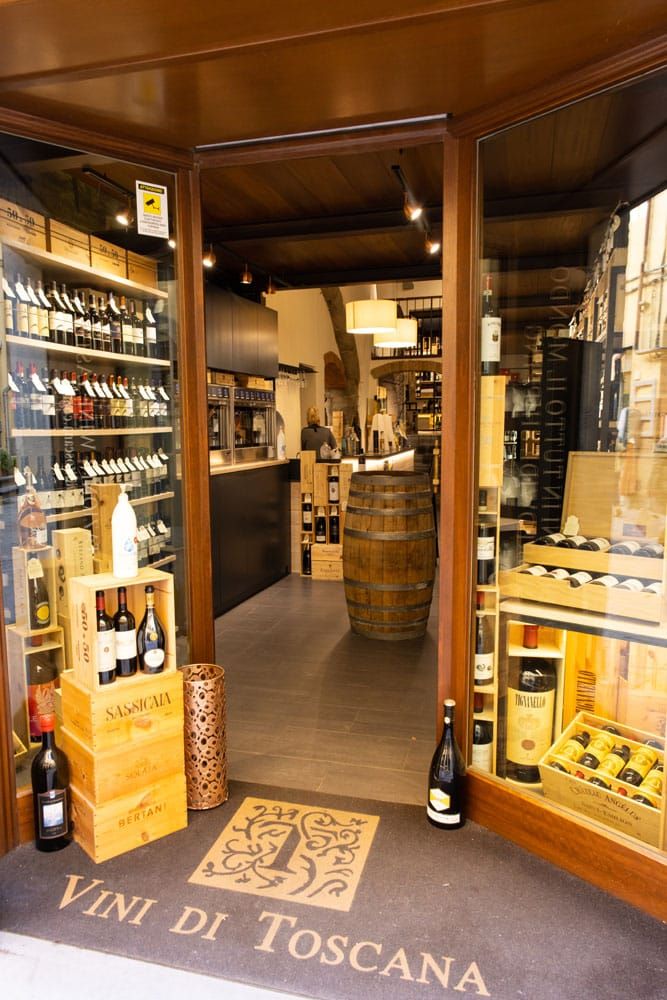
PRO TRAVEL TIP: Wine tasting counts as shopping in Cortona. Vini Di Toscana on Via Nazionale is where we tasted the Bramasole Syrah, which is produced right in Cortona and one of the best souvenirs you can take home.
Beyond the City Center
Here is a list of things to do just outside of Cortona. A few can be reached on foot from the city center (such as Villa Bramasole and the Girifalco Fortess), but for others, you will have to drive there.
1. Villa Bramasole: Is the Under the Tuscan Sun Villa Worth Visiting
Villa Bramasole is the villa made famous by the 2003 movie Under the Tuscan Sun, starring Diane Lane, and the reason many people put Cortona on their itinerary in the first place. It’s a private home, so you can’t go inside, but you can drive or walk past to see the gate and gardens.
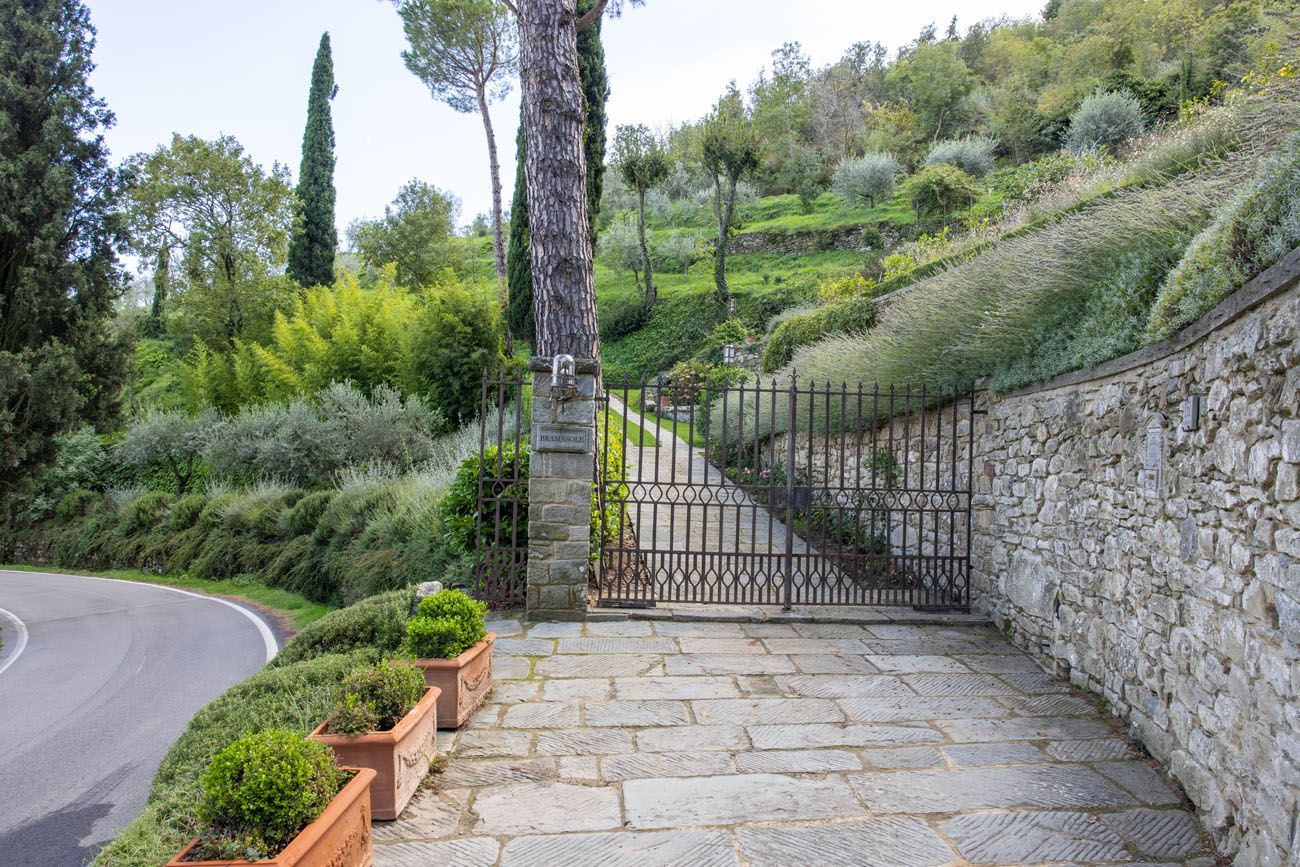
Villa Bramasole
Honestly? We did it out of curiosity and don’t think it’s worth the detour. The road is narrow, there’s nowhere to pull over properly, and you really only glimpse the gate and the roofline. You’ll get a better view by dropping Google Street View onto Localita Torreone than by making the trip in person. Your time is better spent in the Girifalco Fortress or at one of the wineries.
That said, if Under the Tuscan Sun is the reason you’re in Cortona at all, you’ll want to make the pilgrimage, we get it. Just keep your expectations in check.
PRO TRAVEL TIP: Montepulciano and Pienza make quite a few appearances in the movie, so if you also have plans to visit Montepulciano and Pienza (as well as Cortona), it may be worth watching Under the Tuscan Sun before or after your trip to Italy.
2. Girifalco Fortress & Basilica di Santa Margherita
The Girifalco Fortress sits on the hilltop directly above the city center and is one of the most historically layered sites in Cortona. The original walls date back to the 5th century BC when it was built by the Etruscans. The structure has been expanded, destroyed, and rebuilt multiple times over the centuries. What stands today dates largely to the 17th century, and its more recent history is equally fascinating: it served as a prison, then as a German observation post during WWII, before eventually opening to visitors.
The views from up here are among the best in the entire region, looking out over the Val di Chiana valley, Lake Trasimeno, and on clear days all the way to Umbria. Sitting just below the fortress is the Basilica di Santa Margherita, dedicated to the patron saint of Cortona and home to a silver casket containing her remains.
To get to the Girifalco Fortress and the Basilica, you can drive and park here (about a 10 minute drive ) from Cortona or walk here (about 15 minutes, 1 km).
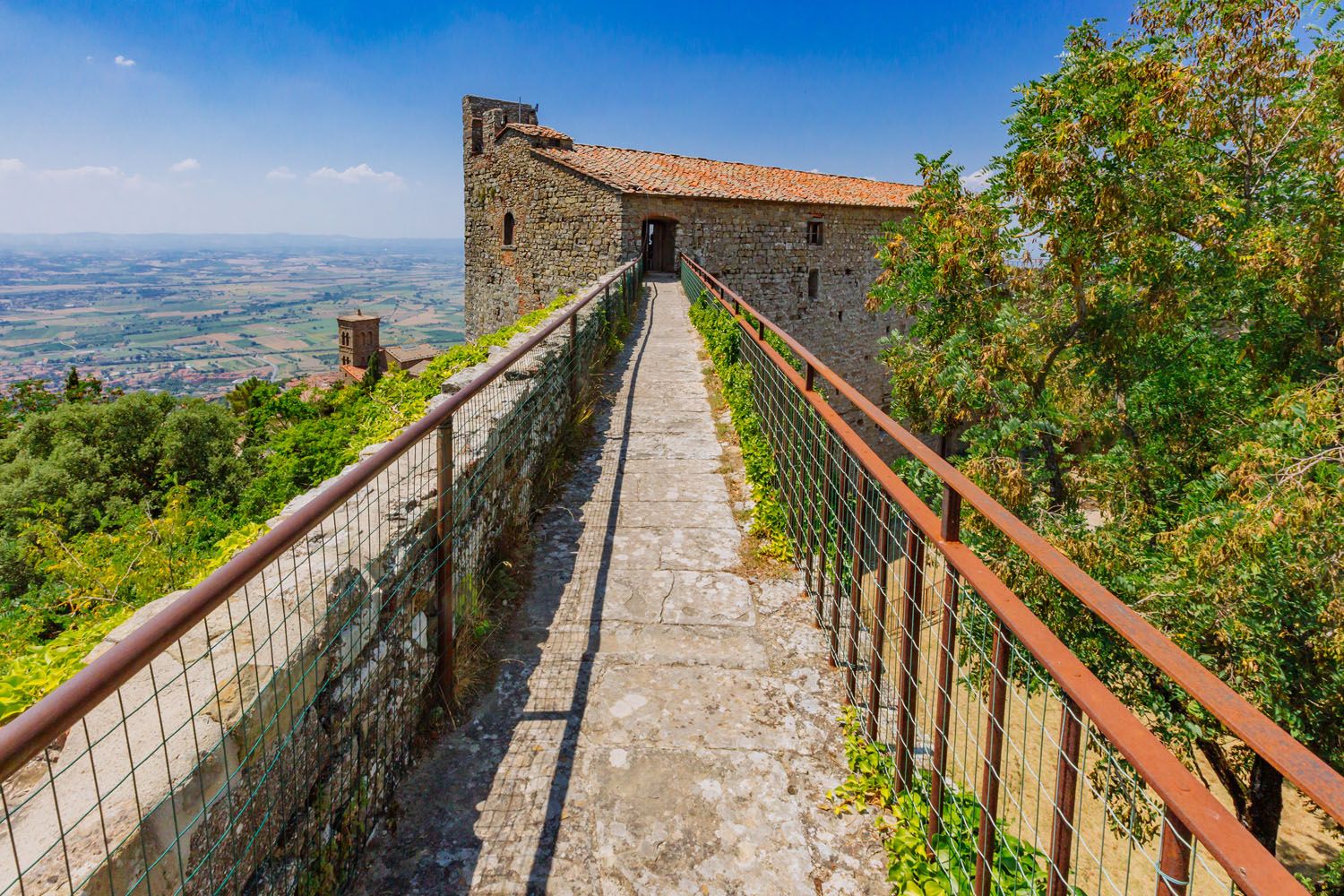
Girifalco Fortress | Mark Zhu/shutterstock.com
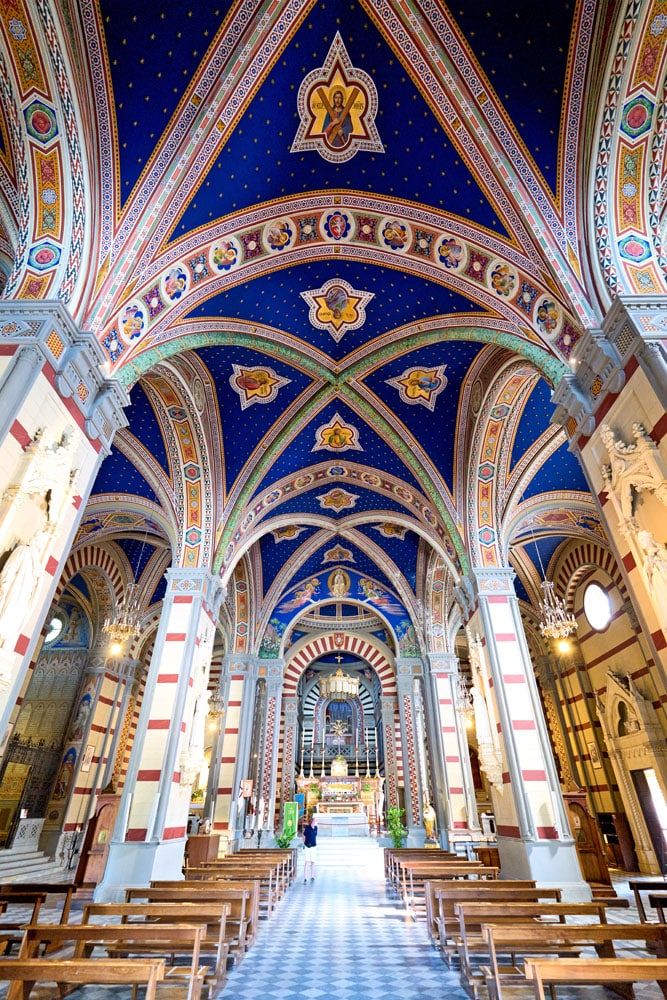
Basilica di Santa Margherita | marcobrivio.photo/shutterstock.com
3. Convent Le Celle
Convent Le Celle — also called Eremo Le Celle — is one of the most historically significant religious sites near Cortona, and one that tends to fly under the radar of first-time visitors. Built in 1211, it was the first monastery founded by St. Francis of Assisi, and was later visited by St. Anthony of Padua and St. Bonaventure. Brother Elias of Cortona, the same companion of St. Francis whose relics are housed in the Church of San Francesco in town, played a central role in its early history.
The monastery is still inhabited by Franciscan monks today and sits in a deeply peaceful wooded setting about 2 km from the city center — a 6-minute drive or a 30-minute walk one way. By all accounts it’s a genuinely moving place to visit, particularly if the Church of San Francesco resonated with you in town.
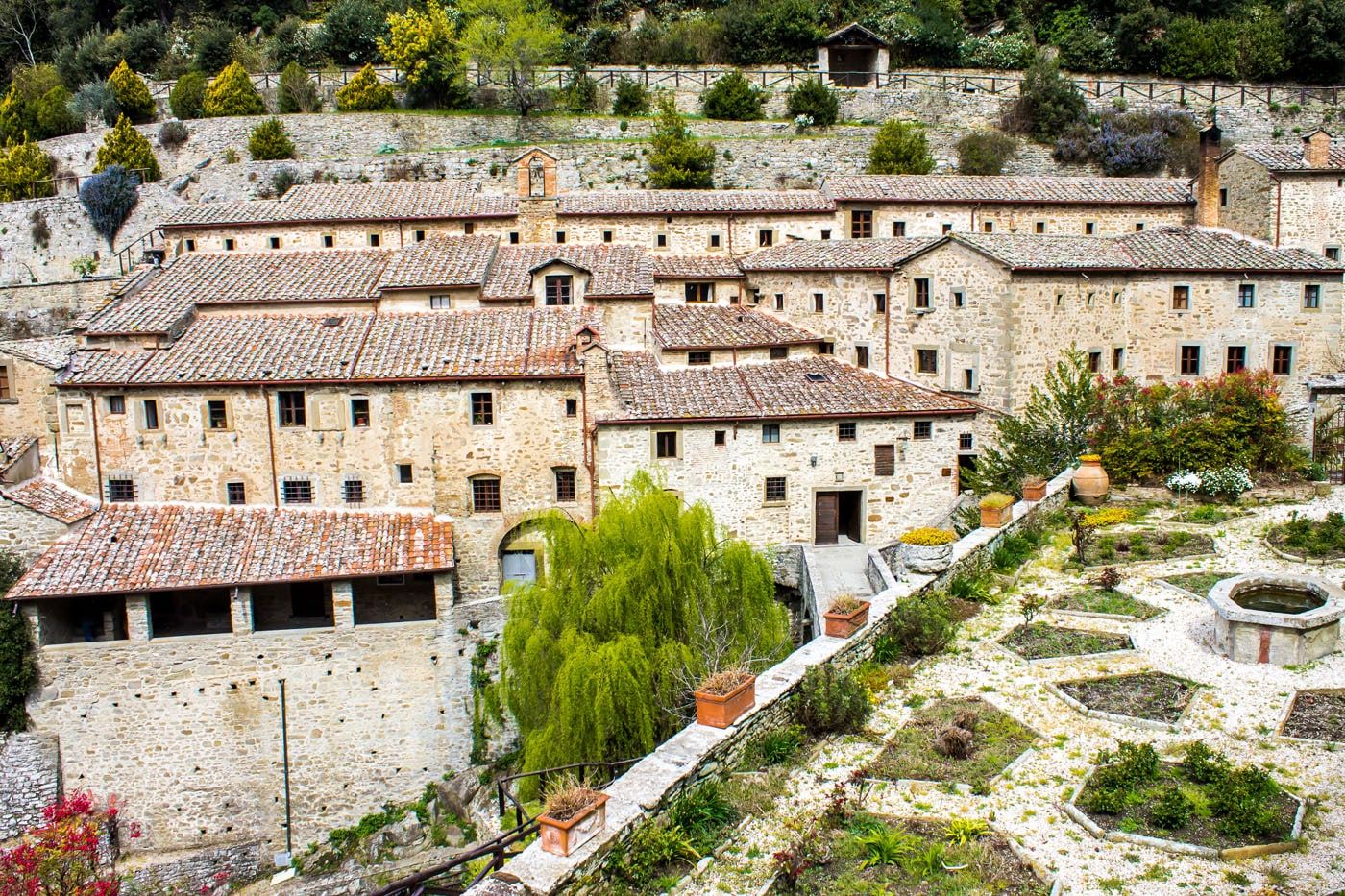
Photo credit: marcociannarel/shutterstock.com
4. Visit the Sanctuary of Santa Maria delle Grazie al Calcinaio
Just 2 km outside the walls of Cortona, the Sanctuary of Santa Maria delle Grazie al Calcinaio is one of the finest examples of Renaissance architecture in all of Tuscany, and one of the most under-visited. Designed by Francesco di Giorgio Martini and completed in 1513, the church was built on the site where a miraculous image of the Madonna was said to have appeared in the late 15th century. Tradition holds that the image began working miracles, and veneration grew to such an extent that the local community commissioned a church worthy of it.
The exterior is elegant and restrained, as the best Renaissance architecture tends to be, and the interior is noted for its harmonious proportions and beautiful stained glass. It sits in a quiet spot in the valley below Cortona, which makes the approach, with the hill town rising above you and the church ahead, genuinely scenic.
5. Taste Vin Santo at Avignonesi Winery
Avignonesi is about a 20-minute drive southwest of Cortona, and it was the perfect way to end our afternoon. We showed up without a reservation, hoped for the best, and were welcomed in for a tasting, though we’d recommend booking ahead to be safe, especially in peak season.
The setting alone is worth the drive. The estate sits among rolling hills and vineyards that look like a Tuscany painting rather than the real thing. Tim became an instant convert to their Vin Santo, a rich, amber-colored dessert wine that Avignonesi is particularly famous for. We worked our way through several other Tuscan varieties before reluctantly getting back in the car.
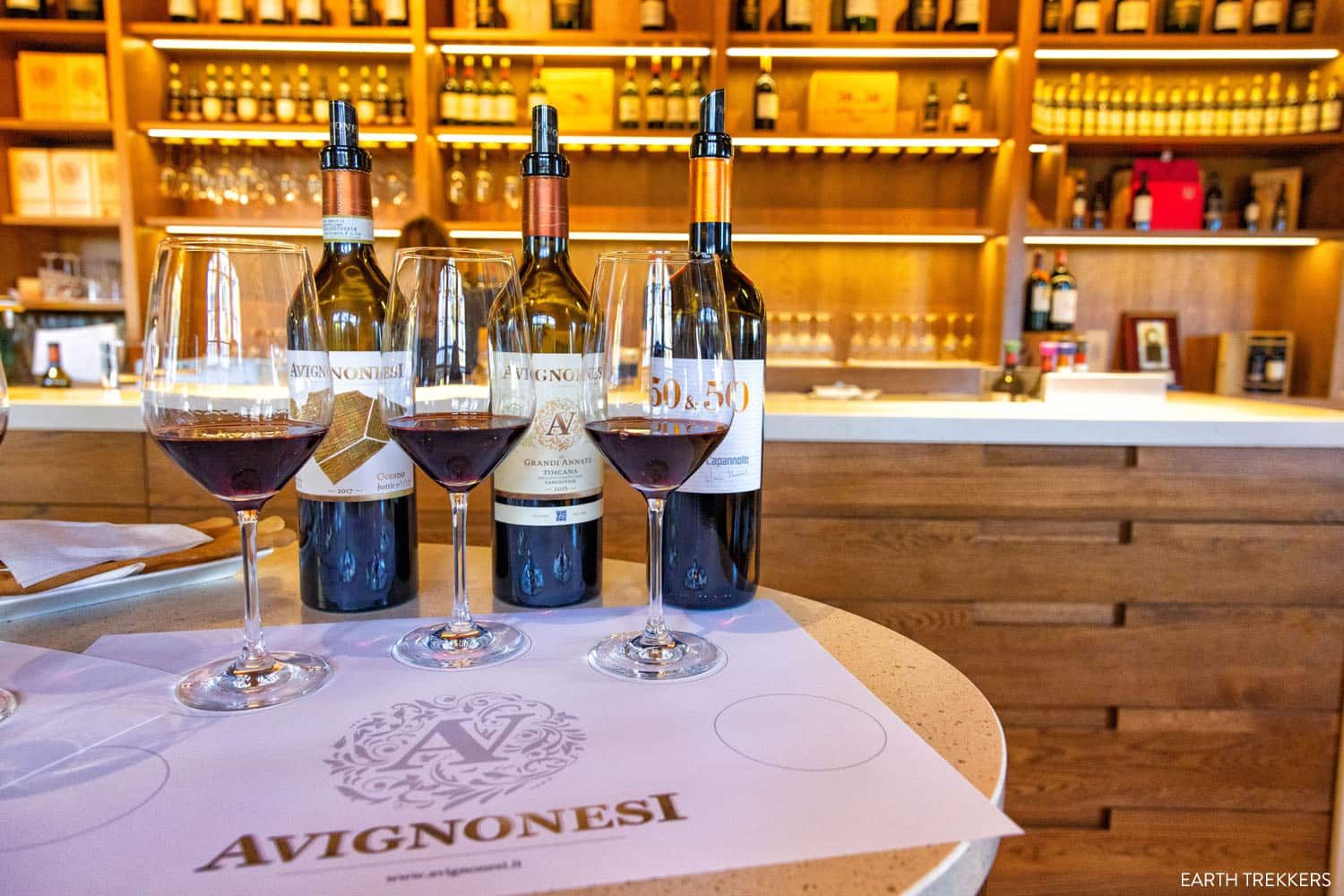
Avignonesi Winery
Beyond tastings, Avignonesi also offers cooking classes, private dinners, and a gourmet lunch with wine pairings on their outdoor terrace. If you have a full day in Cortona rather than just an afternoon, building a long lunch here into your plans would be well worth it.
For more information and reservations, visit the Avignonesi website.
6. Tenimenti Luigi d’Alessandro
Tenimenti Luigi d’Alessandro is one of the most celebrated wineries in the Cortona DOC zone, known particularly for its Syrah, a grape that thrives in the mineral-rich soils around Cortona in a way that surprises a lot of visitors expecting only Sangiovese and Brunello.
We didn’t make it here on our visit, but it’s been on our radar ever since. Beyond wine tastings, the estate offers dining at their restaurant and accommodation at Borgo Syrah Resort, a collection of apartments housed in historic stone buildings on the property. If you’re planning to base yourself near Cortona rather than just passing through, staying here would be a remarkable way to do it.
For more information and reservations, visit the Tenimenti Luigi d’Alessandro website.
Map of the Best Things to Do in Cortona
How to Use This Map: Click the icons on the map to get more information about each point of interest. To take this map with you, click the star next to the title of the map which adds it to your Google account. Next, within your Google Maps app, select ‘Saved’ and then select ‘Maps’. This map title will now appear in your list.
Is Cortona Worth It?
For the right traveler, absolutely. For others, it should sit lower on the priority list.
Cortona is a town that rewards slow wandering rather than sightseeing. The pleasures here are quieter ones: strolling medieval streets with almost no crowds, ducking into wine shops and art galleries, stumbling into a church that stops you in your tracks. There are museums and historical sites, but Cortona doesn’t have the blockbuster draws of Siena, San Gimignano, or Montepulciano. What it has instead is atmosphere and a genuinely less touristy vibe that feels increasingly rare in Tuscany.
We visited Cortona at the end of our second trip to Tuscany, after we had already seen all the main towns, some of them twice. In that context it was wonderful, a perfect final note to a region we’d fallen in love with. But if this is your first time in Tuscany, or you’re working through a tight itinerary, Siena, San Gimignano, and Montepulciano should come first, and our Things to Do in Tuscany guide covers all the must-sees. Cortona is for those who have already checked off the must-sees and are ready to go deeper.
Cortona is best for: Travelers on their second Tuscany trip, slow travelers who love wandering and wine tasting, anyone who wants to experience a Tuscan hill town without the crowds.
Consider skipping if: You’re on a tight itinerary, this is your first time in Tuscany, or you need a packed day of major landmarks to feel satisfied.
How Much Time Do You Need in Cortona?
For the city center alone, which includes strolling Via Nazionale, visiting a museum or two, exploring the side streets, and doing a wine tasting, plan on 2 to 3 hours. That’s roughly how long Tim and I spent in town, and it felt like the right amount of time to see the highlights without rushing.
If you want to go beyond the city center and add the Girifalco Fortress, the Sanctuary of Santa Maria delle Grazie al Calcinaio, or a winery visit, add another 2 to 3 hours. We ended our afternoon at Avignonesi Winery, which added about an hour to our day and was absolutely worth it.
A full day gives you the freedom to do it all at a comfortable pace: town in the morning, lunch in Piazza della Repubblica, vineyards or fortress in the afternoon.
When is the Best Time to Visit Cortona?
We visited on October 1st and the conditions were just about perfect. The temperature was comfortable for walking all afternoon without overheating, the light over the Val di Chiana valley was extraordinary, and the streets were noticeably quiet. If you can visit Cortona in early fall, do it.
Spring is our second recommendation. The hills around Cortona are green, the weather is mild, and crowds haven’t yet built to summer levels.
- Spring (April–June): Mild temperatures, green countryside, moderate crowds. One of the best times to visit.
- Summer (July–August): Hot temperatures and peak season crowds, though Cortona stays quieter than bigger Tuscan towns like Siena and San Gimignano. Book accommodation ahead.
- Fall (September–October): Our top recommendation. Cooler temperatures, golden light, harvest season at the vineyards, and noticeably fewer crowds.
- Winter (November–March): Cold and quiet. Some shops and restaurants may have reduced hours or close entirely. Best for travelers who want Cortona almost entirely to themselves.
Helpful Tips for Visiting Cortona
Wear comfortable walking shoes. Via Nazionale is flat, but every street branching off it goes either uphill or downhill. Cortona is hillier than it looks on a map, and you’ll cover a lot of ground on uneven cobblestones. Leave the fashionable footwear for the piazza.
Book winery visits in advance. We showed up at Avignonesi without a reservation and got lucky, but during peak season that’s a risk not worth taking. If a vineyard visit is on your list, book ahead.
Check the weather before you go. We use Meteo Italy for forecasts in Tuscany and have found it reliably accurate. There’s also an app version for your phone.
How to Get to Cortona
By Train
The two closest train stations to Cortona are the Terontola station (on the Terontola-Perugia-Assisi railway line and the Florence-Rome railway line) and the Camucia station (on the Florence-Rome railway line). Of the two, the Camucia station is the closest, being 3 km from the city center. From both stations, you can get to the city center by bus or taxi.
By Bus
The best way to get to Cortona by bus is to first take the train to the Camucia or Terontola stations and then take the bus from here. It’s also possible to travel to Cortona on the Tiemme SpA bus.
By Car
The easiest way to get to Cortona is to drive here.
Here are the driving distances and times from nearby destinations:
- Montepulciano: 31 km, 40 minutes
- Montalcino: 66 km, 1 hour 10 minutes
- Pienza: 50 km, 55 minutes
- Arezzo: 30 km, 45 minutes
- Assisi: 73 km, 1 hour
- Siena: 75 km, 1 hour
- Florence: 120 km, 1.5 hours
- Orvieto: 95 km, 1 hour 10 minutes
There are several parking lots outside of the city center. We parked at Parcheggio libero, which is a large, free parking lot that sits just a short walk from Porta Santa Maria. There is another large lot called Parcheggio dello Spirito Santo and from here it is an uphill walk to Piazza Garibaldi.
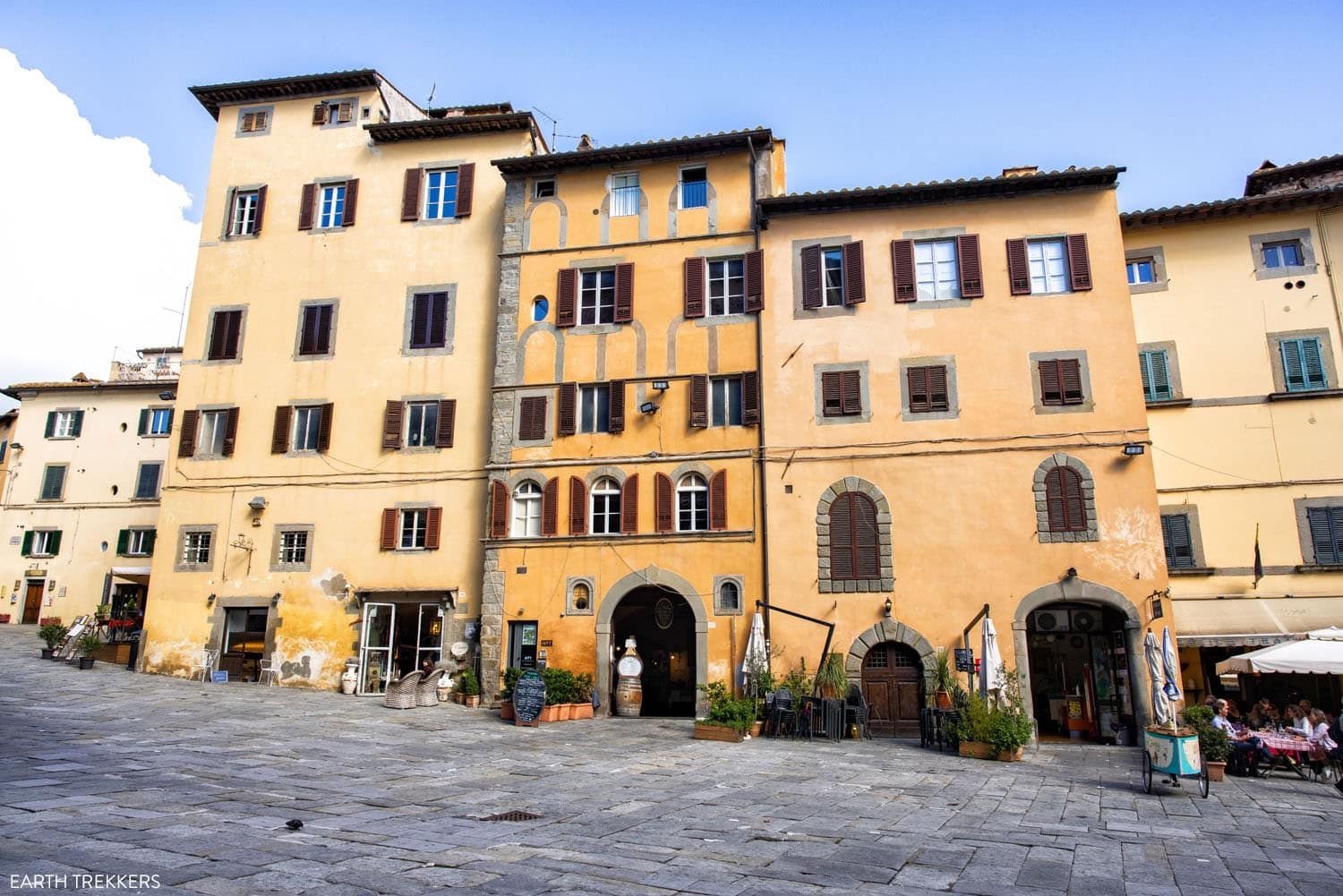
Piazza Luca Signorelli
Tours of Cortona
If you’d prefer to explore Cortona with a guide, or want to make the most of a short visit, there are several excellent options worth considering.
Cooking Class: Taking a cooking class is one of the most popular experiences in Cortona. Classes typically take place in a local chef’s kitchen and cover the full arc of a Tuscan meal: antipasto, handmade pasta, a main course, and dessert. Some classes include time in the garden with panoramic views of the Val di Chiana valley, with dinner served on the terrace and local wine included. If you’re spending more than a day in Cortona, this is one of the best ways to spend an evening.
Private Walking Tour: A 3-hour private walking tour of Cortona is a great option if you want the history and context of the town without doing the research yourself. Particularly useful if you’re combining Cortona with other towns in a single day.
From Florence: If you’re based in Florence and want to visit Cortona as a day trip, this tour combines Cortona and Montepulciano in a single day.
Tours of Cortona
Places to Visit Near Cortona
Cortona pairs well with several nearby towns, and its location in the southeastern corner of Tuscany makes it a natural stopping point on a longer Tuscany itinerary. Here are the towns worth combining with a Cortona visit.
Arezzo (45 minutes by car) — We drove from Arezzo to Cortona on the same day, and the combination worked beautifully. Arezzo is a larger, less-visited Tuscan city with a magnificent main piazza, a fortress with sweeping views, and a relaxed local atmosphere that feels worlds away from the tourist trail.
Montepulciano (40 minutes by car) — One of the crown jewels of Tuscany. Climb the tower for panoramic views over Val d’Orcia, tour the underground wine cellars, and go wine tasting in one of the most beautiful hill towns in Italy. Cortona and Montepulciano make an excellent one-day combination.
Pienza (55 minutes by car) — Small, charming, and easy to cover quickly. The pecorino cheese tasting and a stroll along the city walls are the highlights. Pienza works well as a half-day add-on rather than a full stop.
Assisi (1 hour by car) — Technically in Umbria rather than Tuscany, but an easy and deeply rewarding drive from Cortona. The birthplace of St. Francis, Assisi is filled with extraordinary churches, spiritual significance, and some of the most beautiful art we’ve seen in Italy. We ended our Cortona day here and it was the perfect close to the trip.
What We Did
We visited Cortona while driving between Florence and Assisi. In the morning, we first visited Arezzo, which is just a 40-minute drive north of Cortona. In the early afternoon, we drove to Cortona, spent the afternoon here, and then made it to Avignonesi vineyard just before closing time. Our day ended at Assisi, which sits in the region of Umbria.
Our visit was on October 1. By this time, tourist visitation begins to quiet down in Tuscany. However, just a few days before this, we spent some time in many of the other hill towns, such as Montepulciano, San Gimigano, Volterra, and Montalcino. Of all the towns we visited, Cortona was the quietest. And it was wonderful.
We weren’t expecting much from this town, we just wanted to quickly see it as we drove from Arezzo to Assisi. But we loved it here. Strolling the scenic streets, wine tasting, and shopping in the art galleries was a wonderful experience. If you have the time to add Cortona into your Tuscan itinerary, it’s well worth it if you want to visit a quieter town with a less touristy vibe.
Frequently Asked Questions
What is Cortona known for?
Cortona is known for its well-preserved medieval streets, Etruscan history, and stunning views over the Val di Chiana valley. It gained international fame as the setting for Frances Mayes’ memoir and the 2003 movie Under the Tuscan Sun. Today it’s also known for its wine, particularly Syrah produced under the Cortona DOC designation, and for being one of the quieter, less touristy hill towns in Tuscany.
How much time do you need in Cortona?
Plan on 2 to 3 hours for the city center, which is enough time to walk the main streets, visit a museum or church, and do a wine tasting. Add another 2 to 3 hours if you want to visit the Girifalco Fortress, the Sanctuary of Santa Maria delle Grazie al Calcinaio, or one of the nearby wineries. A full day gives you the freedom to do it all comfortably.
Is Cortona better than Montepulciano or Siena?
It’s a different experience rather than a better one. Siena and Montepulciano have more major landmarks and a higher concentration of must-see sights. Cortona is quieter, more boutique, and better suited to slow wandering than ticking off a list. If this is your first time in Tuscany, Siena and Montepulciano should come first. If you’ve already seen the main towns and want something less touristy, Cortona is the better choice.
What food is Cortona known for?
Cortona sits in the heart of Tuscany, so expect classic Tuscan cuisine: pici pasta, bistecca alla Fiorentina, ribollita, and local cheeses. The town is also surrounded by excellent wineries producing Syrah, Super Tuscans, and Vin Santo. For a memorable meal, look for restaurants on the side streets rather than the main piazza for better value and a more local atmosphere.
Can you visit Cortona without a car?
You can reach Cortona by train to Camucia station, followed by a bus or taxi into the historic center, but it requires multiple transfers and adds significant time to your journey. For the city center itself, everything is walkable. However, to visit the nearby wineries or the Sanctuary of Santa Maria delle Grazie al Calcinaio, a car is strongly recommended. If you’re already driving through Tuscany, Cortona makes a natural and easy stop.
How far is Cortona from Florence and Siena?
Cortona is approximately 120 km from Florence, about a 1.5 hour drive. From Siena it’s about 75 km, or roughly an hour by car. From Arezzo, the closest major city, it’s just 30 km and about 45 minutes. Its location in the southeastern corner of Tuscany makes it easiest to combine with Arezzo, Montepulciano, or Assisi rather than as a day trip from Florence.
Plan Your Tuscany Trip
Cortona sits in the southeastern corner of Tuscany, and it pairs beautifully with the towns and landscapes surrounding it. If you’re still building your itinerary, our Tuscany itinerary covers how to structure your time across the region, whether you have three days or a full week. For a broader overview of what the region has to offer, our guide to the best things to do in Tuscany is a good place to start.
If you’re combining Cortona with nearby towns, as most visitors do, our guides to Arezzo, Montepulciano, Pienza, and Assisi will help you plan each stop.
And if you’re still in the early stages of planning your Italy trip, our Italy Travel Guide covers everything you need to know.
If you have any questions about the best things to do in Cortona, or if you want to share your experience, let us know in the comment section below.
Explore More of Italy
Here are more guides on Tuscany, Florence, Umbria, and beyond.
14 Day Italy Itinerary: Best Way to Spend Two Weeks in Italy
Pinterest Facebook Flipboard We have been to Italy six times, and this route — Rome, Pompeii, the Amalfi Coast, Florence, Tuscany, the Cinque Terre, and Venice — is the one we recommend above all others for a first visit. We’ve traveled every stretch of it firsthand and refined the planning advice in this post trip […]
2 Days in Florence: Detailed Day-by-Day Itinerary
Two days in Florence is the sweet spot for a first visit. It’s enough time to see everything that matters, without the feeling that you’re sprinting from one landmark to the next. With two days, you can climb the dome of the Florence Cathedral, stand in front of Michelangelo’s David, spend a proper morning in […]
Best Things to Do in Montalcino, Italy (Wine Tastings & Our Favorite Experiences)
Perched on a hilltop in Tuscany’s Val d’Orcia, Montalcino is one of Italy’s most beautiful wine towns, famous for its Brunello wine, sweeping vineyard views, and charming medieval streets. Whether you’re here for a quick stop or a slow afternoon of wine tasting, this small town delivers one of the most memorable experiences in Tuscany. […]
Volterra, Italy: Best Things to Do, Map & Tips
Volterra, Italy is one of the most rewarding Tuscan hill towns to visit and one of the most underrated. We climbed the tower of Palazzo dei Priori for a 360° view of the countryside, walked a Roman theater that dates back to the 1st century AD, climbed Torre del Maschio with a guide and just […]
Best Day Trips from Florence: 15 Picks for Every Type of Traveler
Florence is one of the best home bases for exploring Tuscany and nearby cities. The most popular day trips from Florence are conveniently accessible by train, with destinations like Pisa, Lucca, Bologna, Arezzo, and Siena just one to two hours away. Renting a car or joining a guided tour provides access to Tuscan hill towns, […]
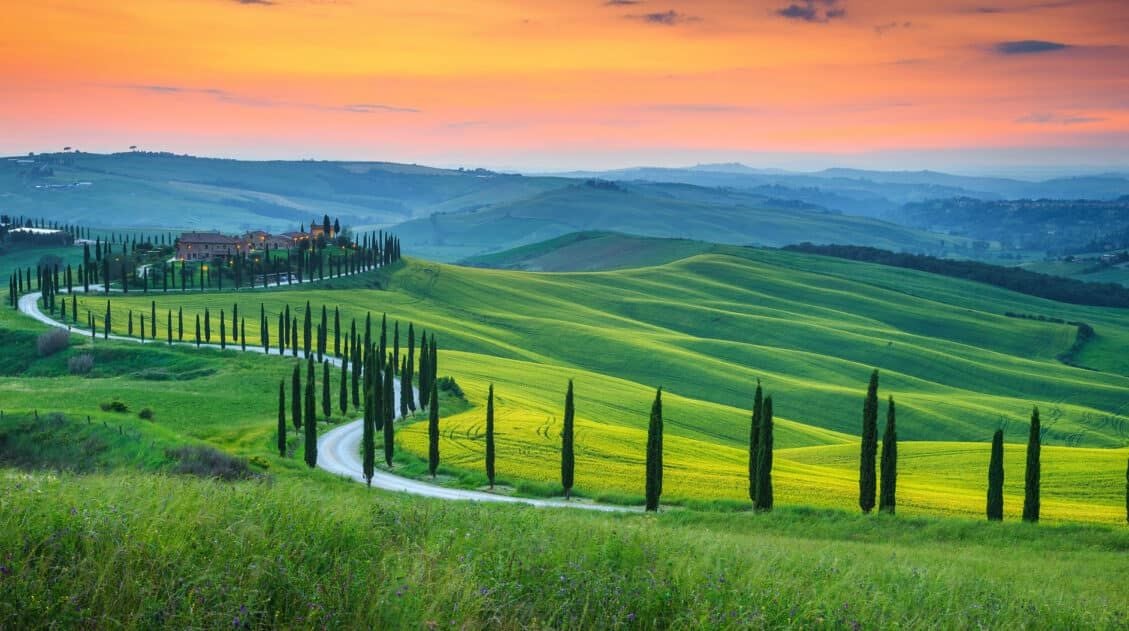
24 Best Things to Do in Tuscany, Italy: Cities, Hill Towns & Hidden Gems
From world-famous cities like Florence and Siena to quiet hill towns and scenic drives through vineyard-covered hills, Tuscany offers a wide range of experiences, but deciding what to do (and what to skip) can be overwhelming. We’ve explored Tuscany on two very different trips: a one-week highlights tour with our kids and a longer 10-day […]
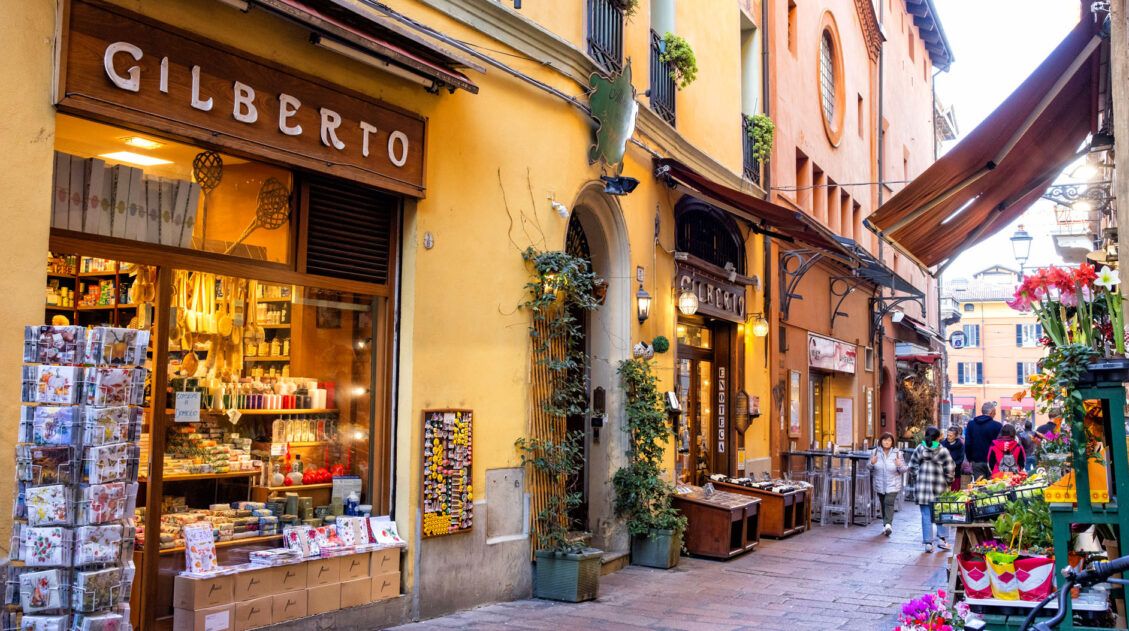
1 to 2 Days in Bologna: The Best Itinerary for First Timers
Bologna didn’t make it onto our Italy itinerary until our sixth trip. We’d visited Rome, Florence, Venice, the Amalfi Coast, Tuscany, and the Dolomites, and somehow kept skipping over this city in northern Italy. Once we finally arrived, Tim and I were instantly captivated: the busy, bustling Quadrilatero with its wine bars and shops overflowing […]
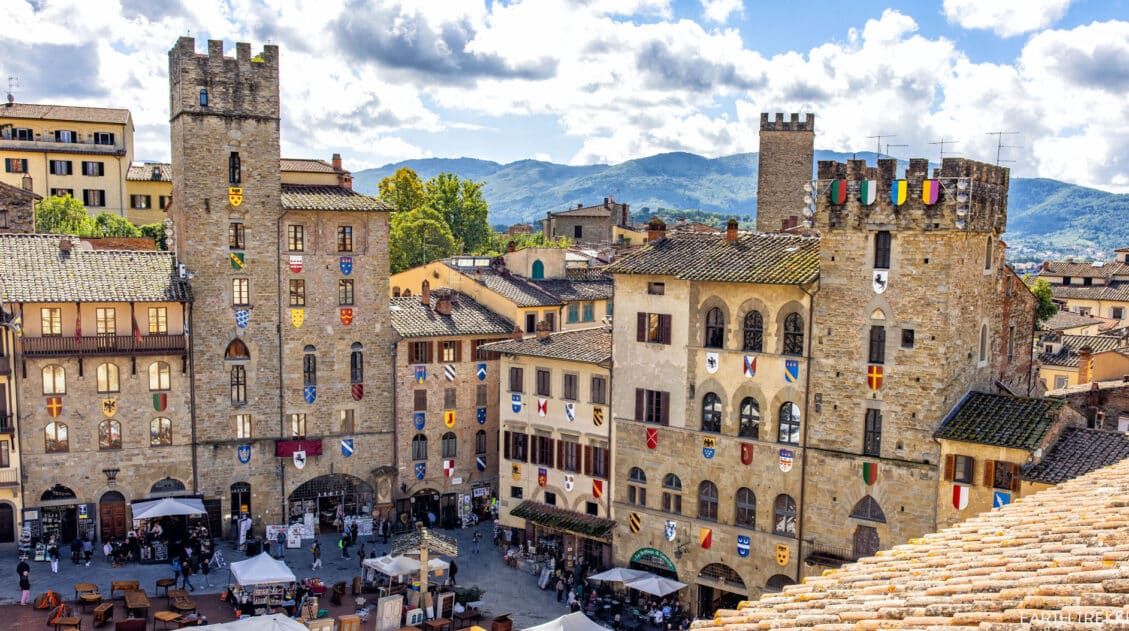
Best Things to Do in Arezzo, Tuscany (+ Map, Tips & Itinerary)
After two trips through Tuscany, we’ve visited a lot of hill towns, including Siena, Cortona, Montepulciano, Pienza, and a handful of smaller villages tucked into the countryside. Arezzo was one of the last ones we visited, and arriving on a Sunday in early October, we weren’t sure what to expect. What we found was one […]
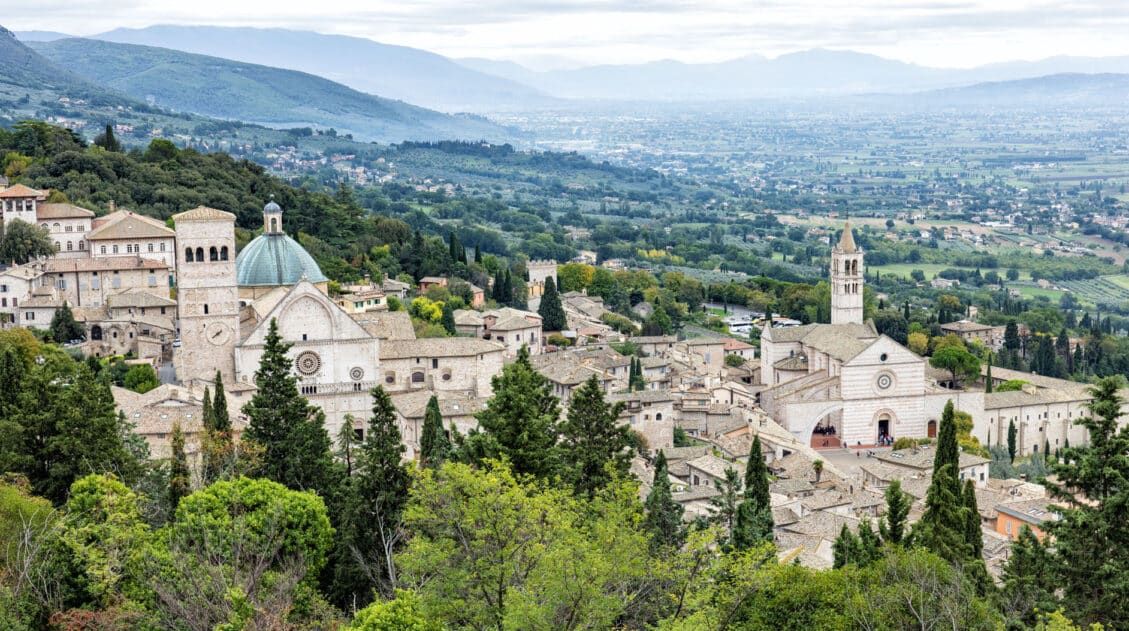
One Day in Assisi, Italy: Walking Tour & Itinerary
Discover the best of Assisi’s historic city center on this self-guided walking tour, covering the Basilica di San Francesco, Rocca Maggiore, and more in just five hours. Assisi is one of Italy’s most beautiful and undervisited cities. This UNESCO World Heritage Site is perched on the slopes of Monte Subasio, with a spiritual atmosphere, extraordinary […]
Italy Travel Guide: How to Plan a Trip to Italy
Italy Travel Guide From the ruins of ancient Rome to the hiking trails of the Dolomites, the trulli of Puglia to the hilltop villages of Tuscany, Italy is a country that rewards every kind of traveler, and keeps pulling you back. We’ve traveled to Italy six times, exploring the country from the lakes and mountains […]
Visiting Pienza, Italy: Best Things to Do, Tips & Travel Guide
Pienza is one of those Tuscan towns that earns its reputation. Perched above the Val d’Orcia, this tiny UNESCO World Heritage Site was redesigned in the 15th century by Pope Pius II as his vision of the ideal Renaissance city. Walking its perfectly proportioned streets, it’s hard to argue with his ambition. We’ve visited Pienza […]
The Perfect Tuscany Itinerary for 3 Days, 5 Days & One Week
Planning a trip to Tuscany? This guide covers everything you need to build the perfect itinerary, whether you have 3 days, 5 days, or a full week. How long should you spend here? Where should you stay? Should you rent a car? What towns are worth visiting? These are all questions that may be running […]


Comments 2