
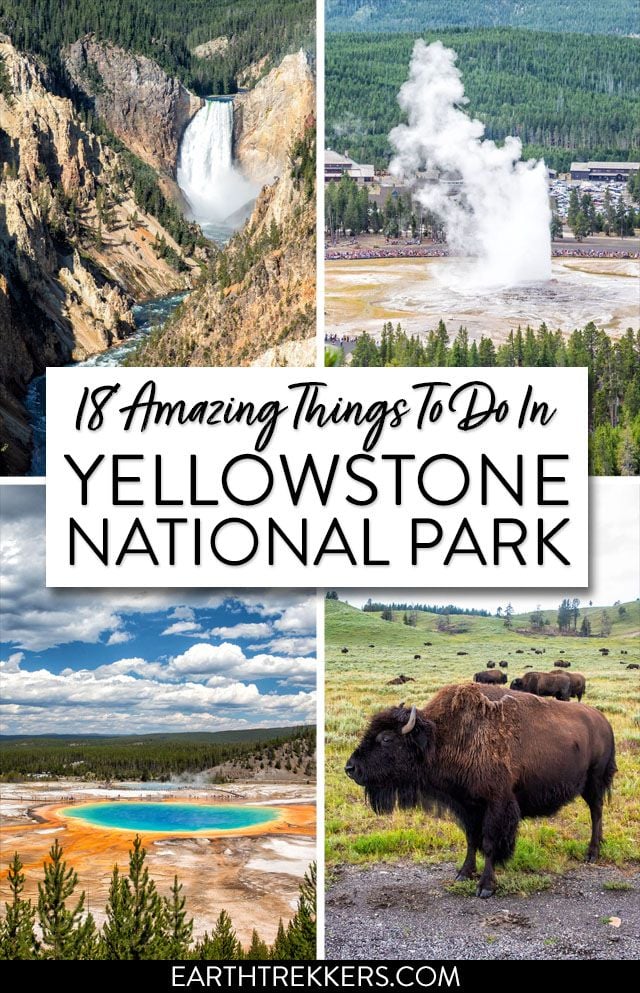
Yellowstone National Park is a wonderland of geothermal activity, dramatic landscapes, and abundant wildlife. Steam hisses from the ground beside wooden boardwalks, bison bring traffic to a standstill on the park roads, and technicolor hot springs amaze even the most seasoned travelers. In this guide, we cover the best things to do in Yellowstone National Park, from the sights every first-time visitor should prioritize to the quieter places worth adding if you have more time.
After several visits in August, late September, and early October, we think the five experiences no first-time visitor should miss are Grand Prismatic Spring, Old Faithful and the Upper Geyser Basin, the Grand Canyon of the Yellowstone, wildlife watching in Lamar or Hayden Valley, and Mammoth Hot Springs.
We have returned to many of Yellowstone’s most popular sights, and after visiting 56 of the 64 U.S. national parks, we will give you our honest advice about what deserves your time, and what you can skip.
For advice on where to stay, when to visit, getting around, and planning your trip, see our complete Yellowstone National Park travel guide.
Yellowstone Must-Sees at a Glance
If this is your first visit to Yellowstone, these are the experiences we would prioritize. The time estimates below include time for sightseeing but not long drives between areas.
| Yellowstone Experience | Time Needed | Area of the Park | Our Verdict |
| Grand Prismatic Spring | 1.5–2.5 hours | Midway Geyser Basin | Unmissable. See it from both the boardwalk and the overlook. |
| Old Faithful & Upper Geyser Basin | 2–4 hours | Old Faithful | Essential for a first visit. Old Faithful is just the beginning. |
| Grand Canyon of the Yellowstone | 2–4 hours | Canyon Village | One of Yellowstone’s most spectacular sights. |
| Wildlife Watching in Lamar or Hayden Valley | 2–4 hours | Northeast or central Yellowstone | Your best chance to see Yellowstone’s wildlife. |
| Mammoth Hot Springs | 1.5–3 hours | Mammoth | Unlike anything else in the park. |
| Norris Geyser Basin | 1.5–2.5 hours | Norris | The park’s most dramatic and otherworldly geyser basin. |
| West Thumb Geyser Basin & Yellowstone Lake | 1–1.5 hours | West Thumb | A beautiful and surprisingly memorable stop. |
| Old Faithful Inn | 30–60 minutes | Old Faithful | Worth stepping inside, even if you are not staying here. |
Maps of Yellowstone National Park
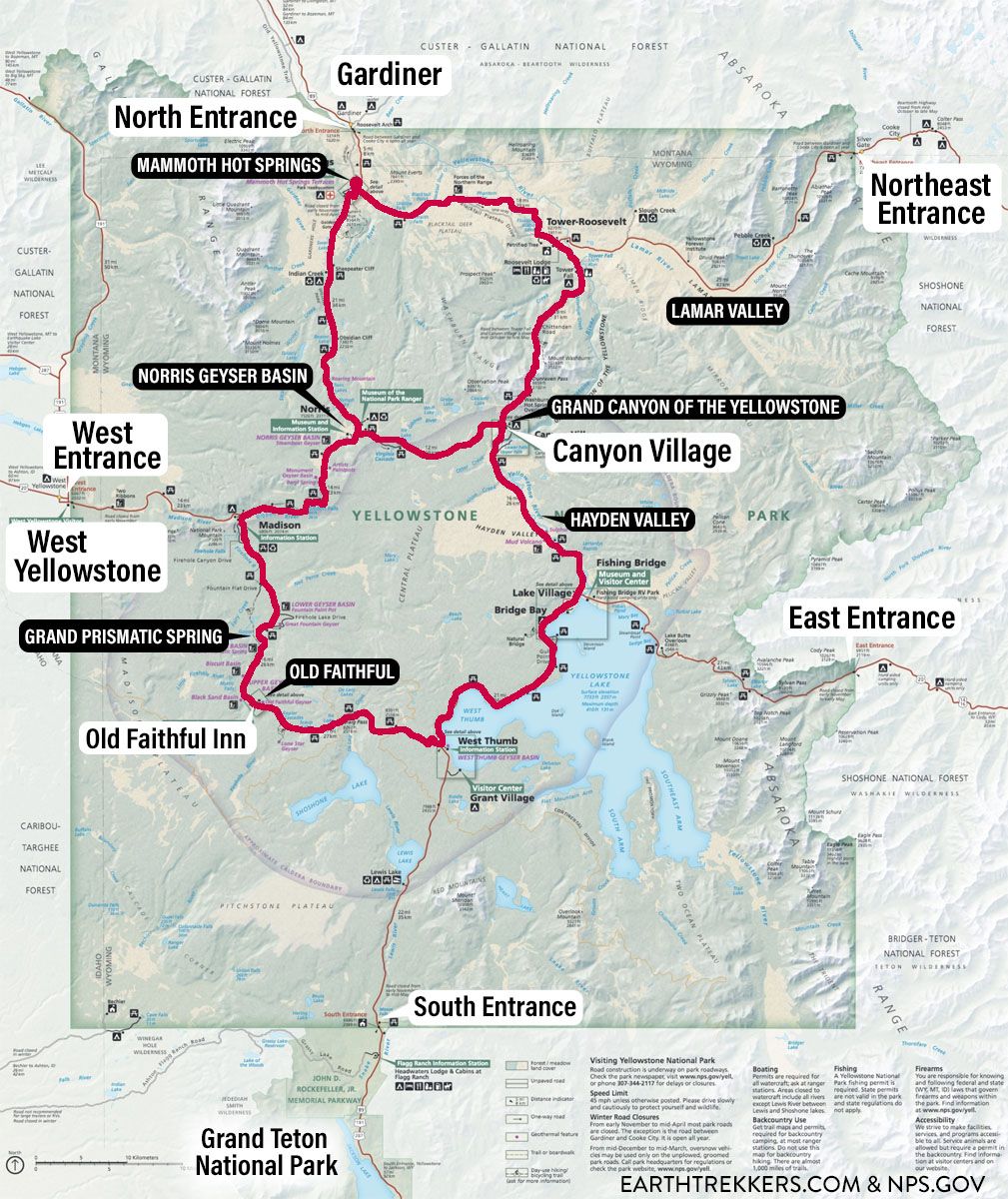
Below is a map of the Yellowstone National Park. The pink lines are Grand Loop Road and Norris Canyon Road. The park entrances and main areas of the park are also labeled to give you an idea where things are located.
Below is a Google map marking the best things to do in Yellowstone National Park.
How to Use This Map: Click the icons on the map to get more information about each point of interest. To take this map with you, click the star next to the title of the map which adds it to your Google account. Next, within your Google Maps app, select ‘Saved’ and then select ‘Maps’. This map title will now appear in your list.
Yellowstone’s Essential Experiences
These are the 10 best things to do in Yellowstone National Park, perfect for first-time visitors or anyone planning a quick trip through the park. Have more time to explore? We cover additional things to do further down in this post.
1. Watch Old Faithful Erupt and Explore Upper Geyser Basin
Area: Old Faithful / Upper Geyser Basin
Time Needed: 2 to 4 hours to do it justice
Best For: Every first-time visitor because this is the single most recognizable sight in the park
Skip It If: Never. Even with limited time, don’t skip Old Faithful.
What is the first thing you think of when you hear the name “Yellowstone?” For many people, that answer would be Old Faithful.
Old Faithful is the world’s most famous geyser. For decades, this geyser has been erupting on a very reliable schedule. So reliable, in fact, that you can even get expected eruption times online to help you plan your visit.
Old Faithful Eruption Schedule: Old Faithful geyser erupts roughly every hour and thirty minutes, give or take 10 minutes (although on rare occasions, it can take up to 2 hours for the next eruption). The eruption typically lasts 3 to 4 minutes. Get the next predicted eruption time here.
There are three different ways to view the eruption of Old Faithful.
1. Grab a seat on the boardwalk that surrounds the geyser. Plan to get here 20 to 30 minutes early because the boardwalk gets packed with visitors.
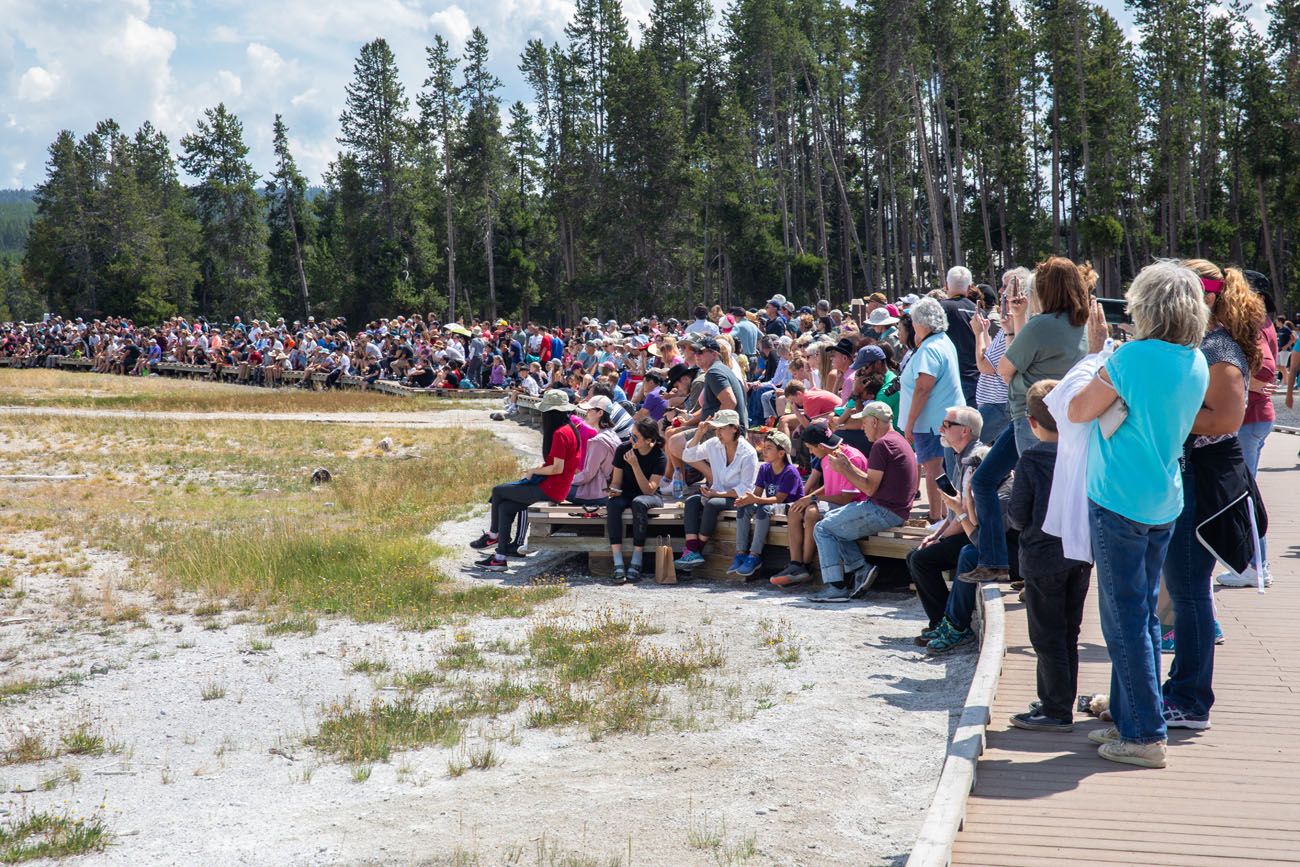
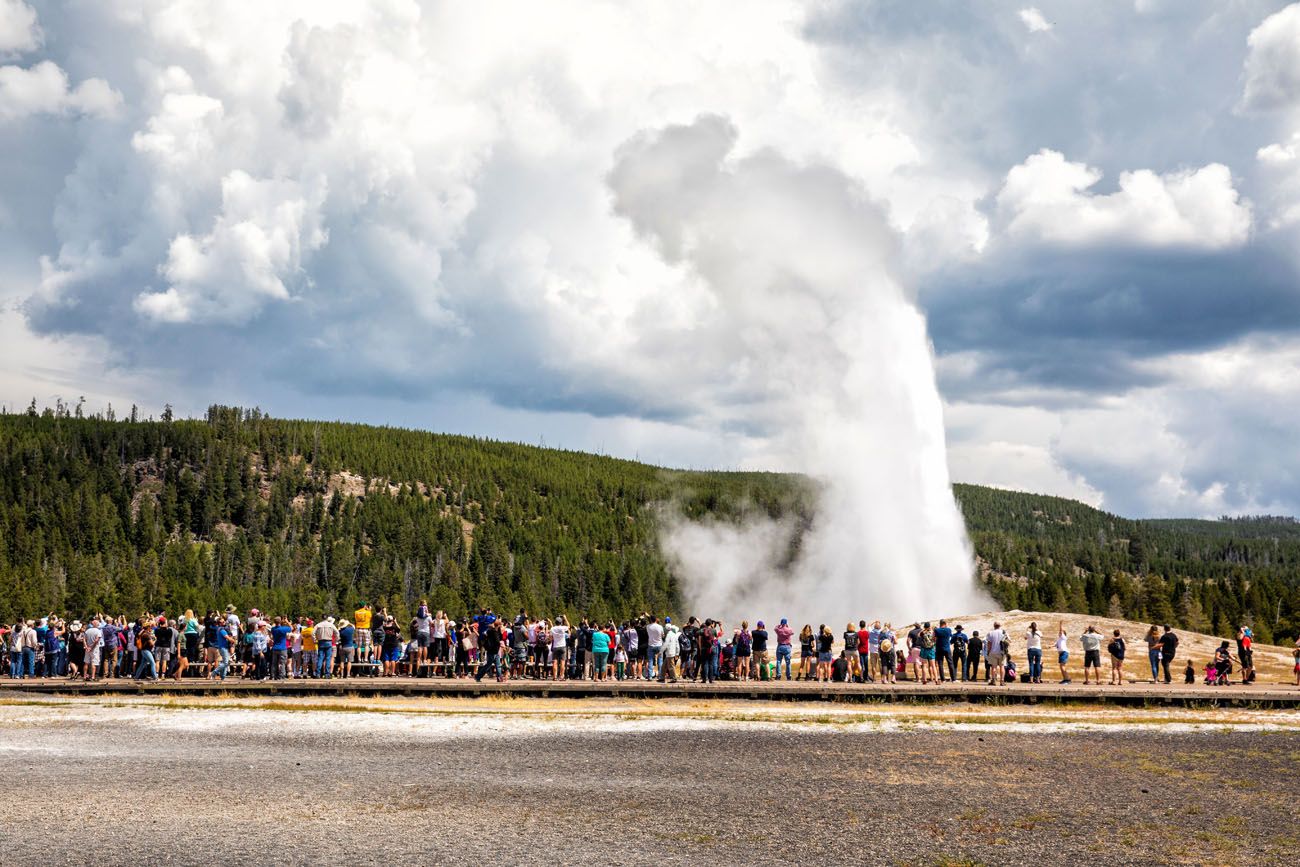
Old Faithful
2. Hike to Observation Point for a bird’s eye view of Old Faithful. It’s a 1.1-mile round trip, short but steep. We arrived 30 minutes before the predicted eruption and had a picnic while we waited. With just a handful of other people, it’s a great way to get the view without the crowds.
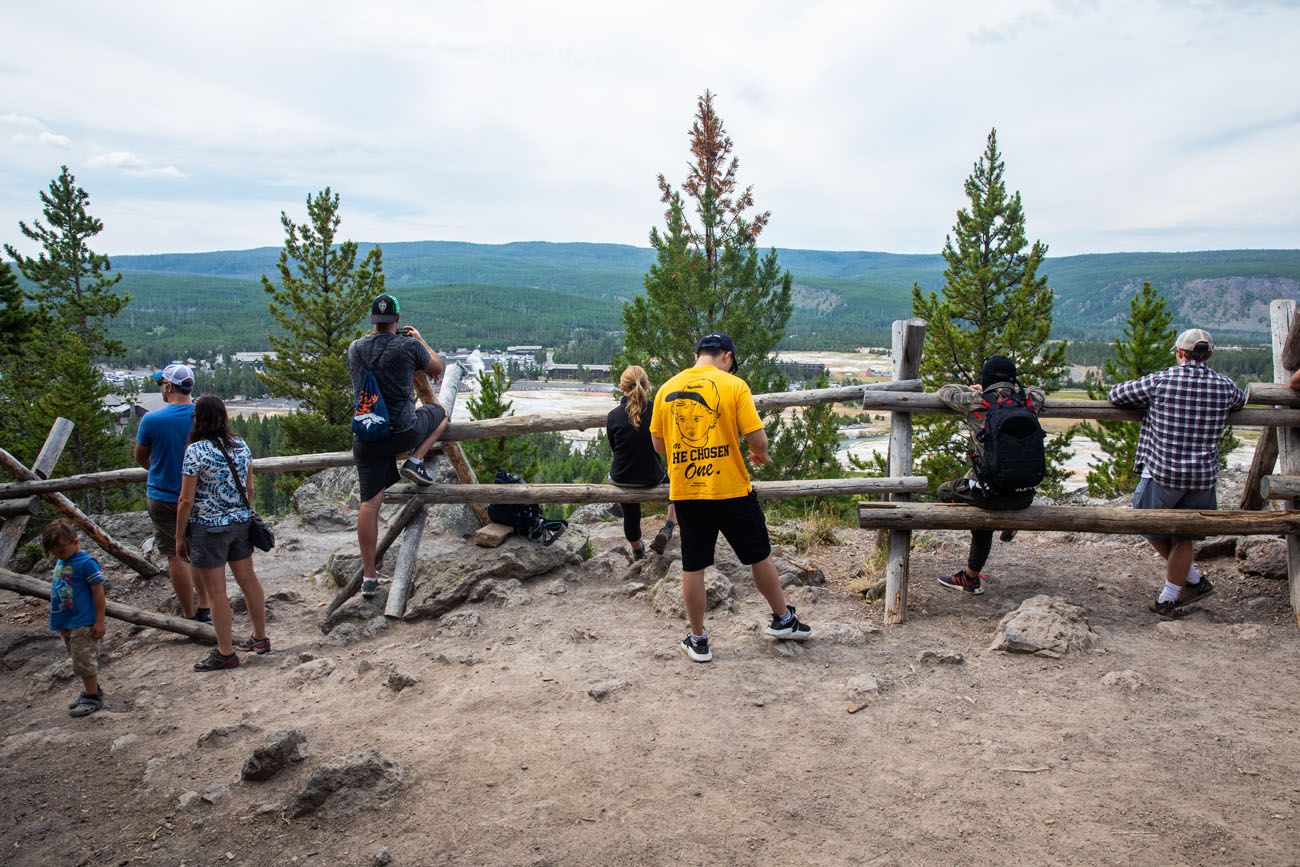
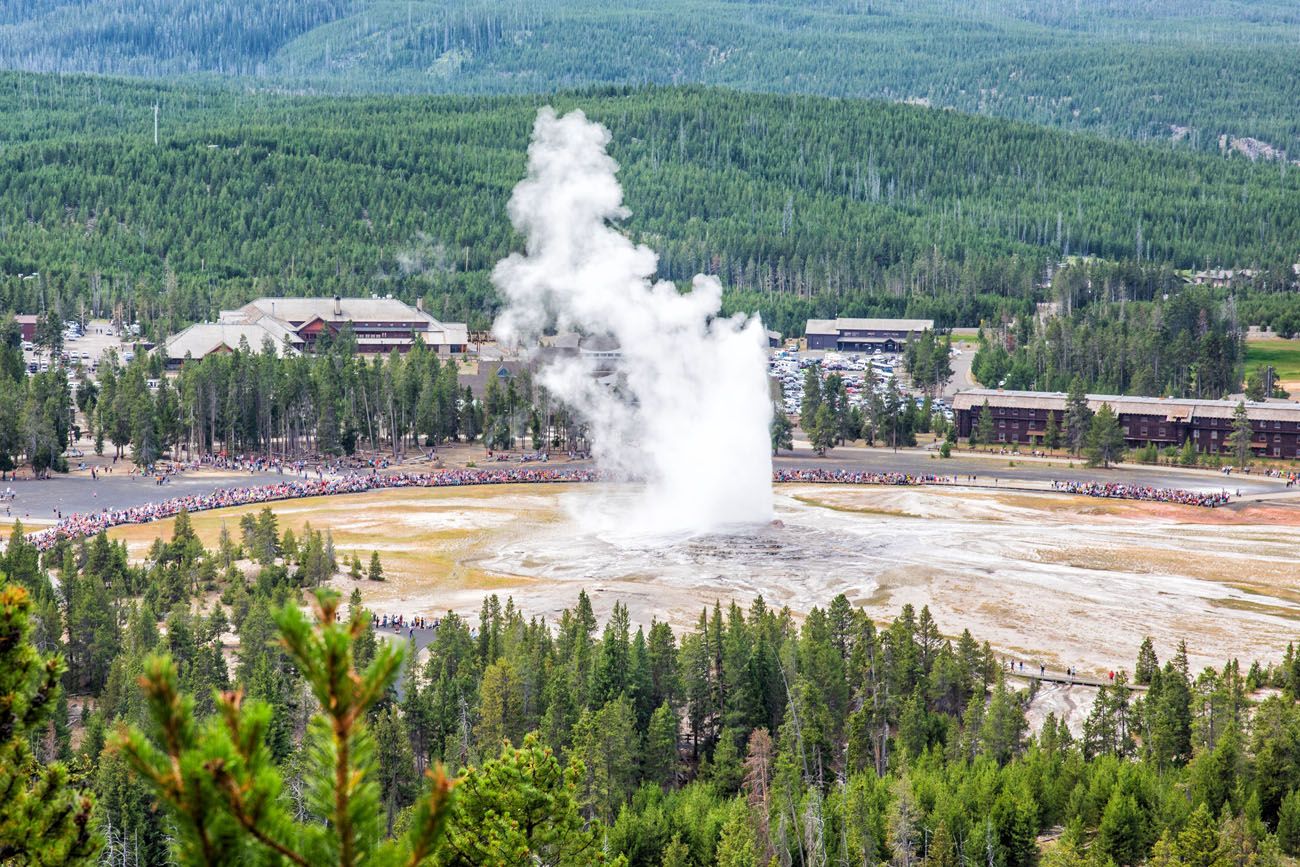
Old Faithful from Observation Point
3. Take a seat at the viewing deck at the Old Faithful Inn. Get a drink at the bar, have a seat, and enjoy the view.
How Much Time Do You Need?
If you get lucky, Old Faithful could erupt right when you get here. Or, you could get here within minutes of an eruption. So, a visit could last as little as 20 minutes or as long as two hours.
However, there is more to do here than just watch the eruption of Old Faithful. Check out the historic Old Faithful Inn, get lunch or a snack at one of several restaurants and general stores nearby, go to the visitor center, or explore the Upper Geyser Basin (mentioned next).
What We Did: We assembled a picnic lunch at the Old Faithful General Store, hiked to Observation Point, and had lunch while awaiting the eruption. Then, we hiked out to Solitary Geyser, walked through the Upper Geyser Basin, and visited the Old Faithful Inn. Kara and I watched a second eruption before leaving the Old Faithful area.
PARKING TIP: Exiting the parking lot right after an eruption is a nightmare, especially at midday. Budget extra time if you’re not planning to stick around.
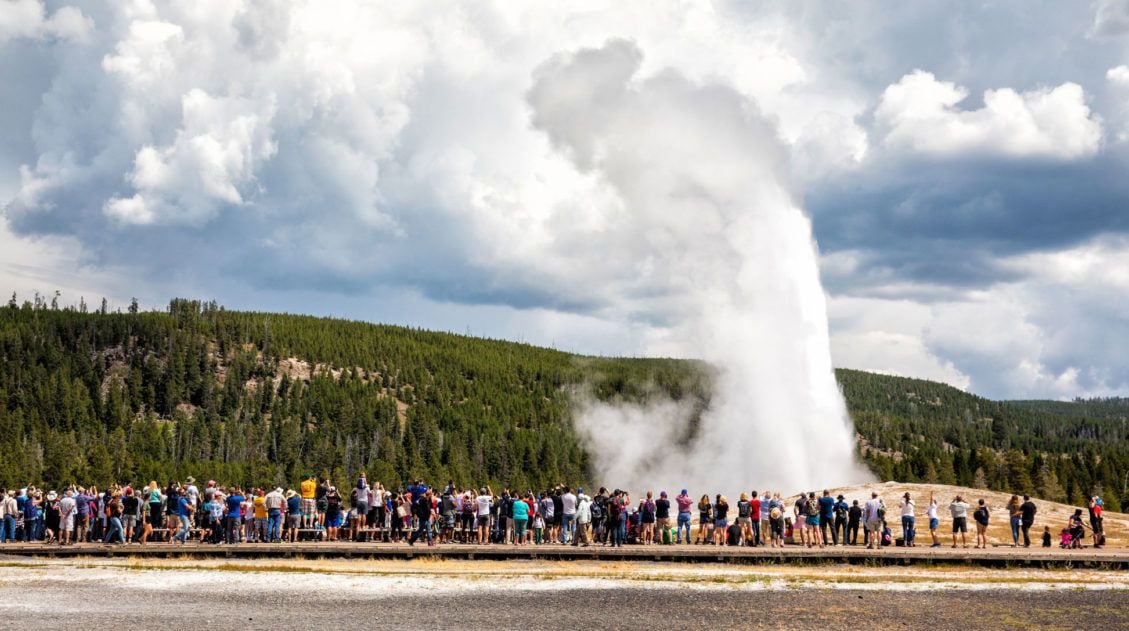
How to Visit Old Faithful in Yellowstone: Best Views, Timing & Tips
How to visit Old Faithful, with tips on how to avoid the crowds and how to plan your time.Upper Geyser Basin & Geyser Hill
Once you’ve seen Old Faithful erupt, don’t rush off. Upper Geyser Basin surrounds it, packing over 150 geothermal features into just one square mile, making it one of the best places in the park to see hot springs, geysers, and thermal pools up close. Walking the boardwalk trails and the hike out to Geyser Hill takes about two hours if you explore thoroughly; combined with watching an Old Faithful eruption, plan on two to three hours total here, more if you want to catch a second eruption.
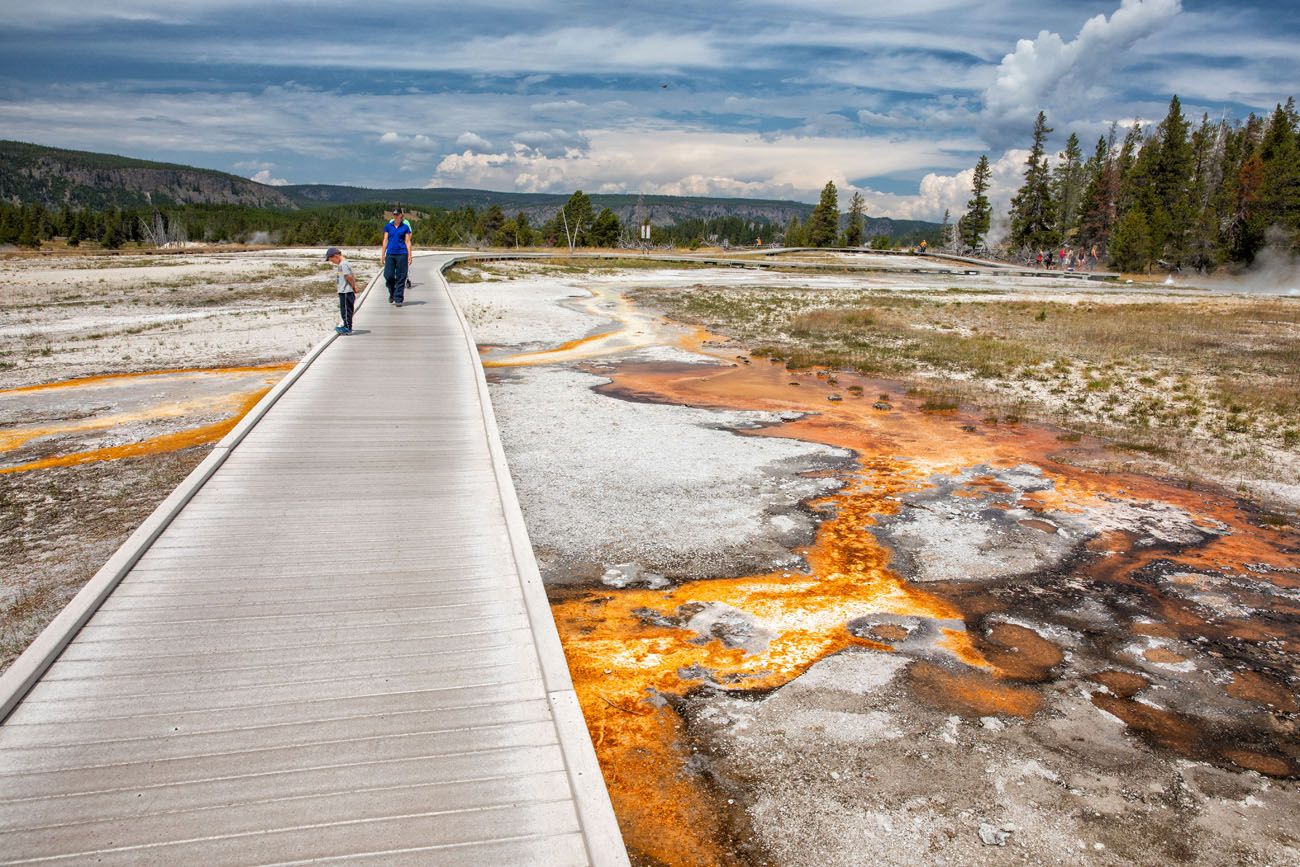
Upper Geyser Basin
Some of Our Favorite Geothermal Features:
Solitary Geyser. To get here, it is an uphill walk on a dirt trail from Old Faithful, or a short walk from Observation Point. Most eruptions occur 4 to 8 minutes apart and last 1 minute.
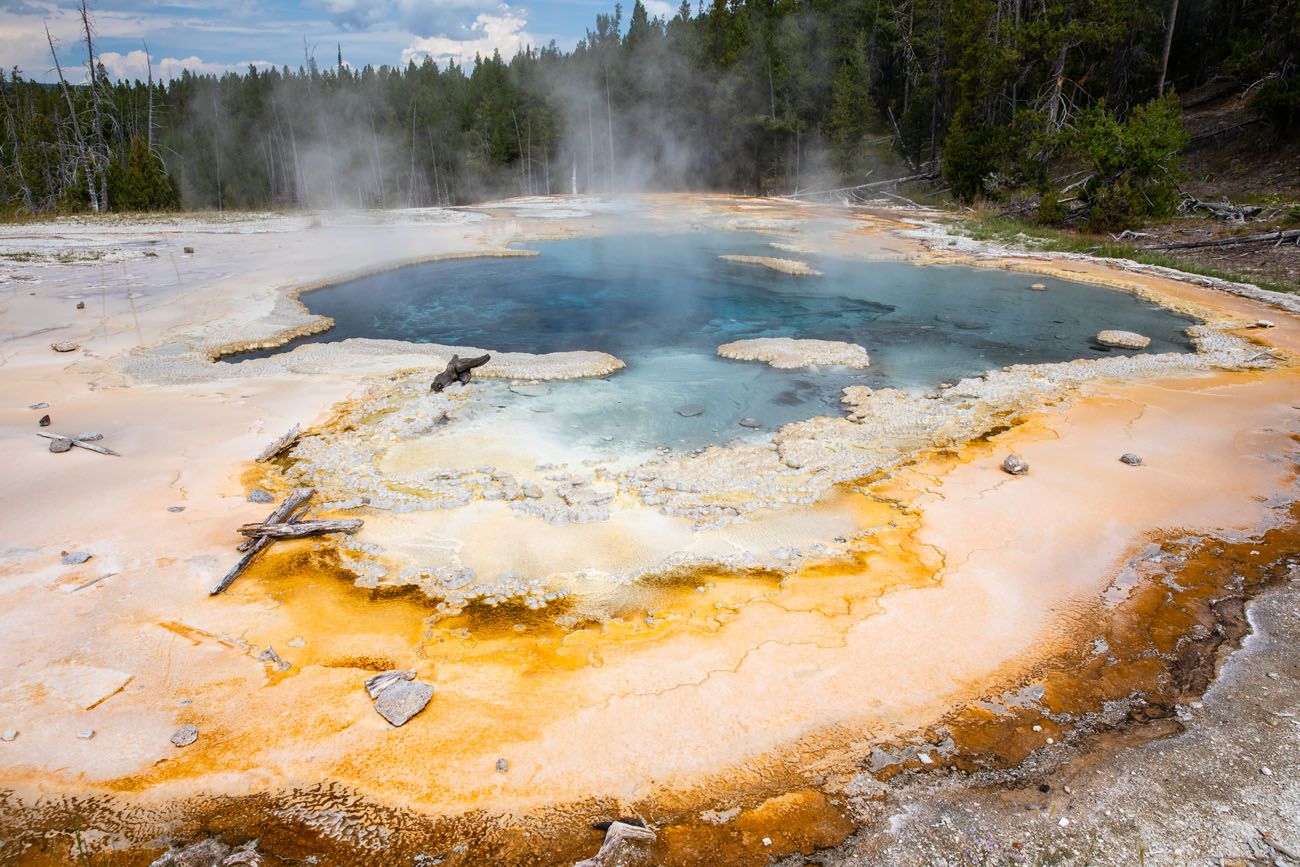
Solitary Geyser
Castle Geyser. This is a cone geyser that erupts every 10 to 12 hours and lasts about 20 minutes. We got very lucky and saw the eruption from a distance.
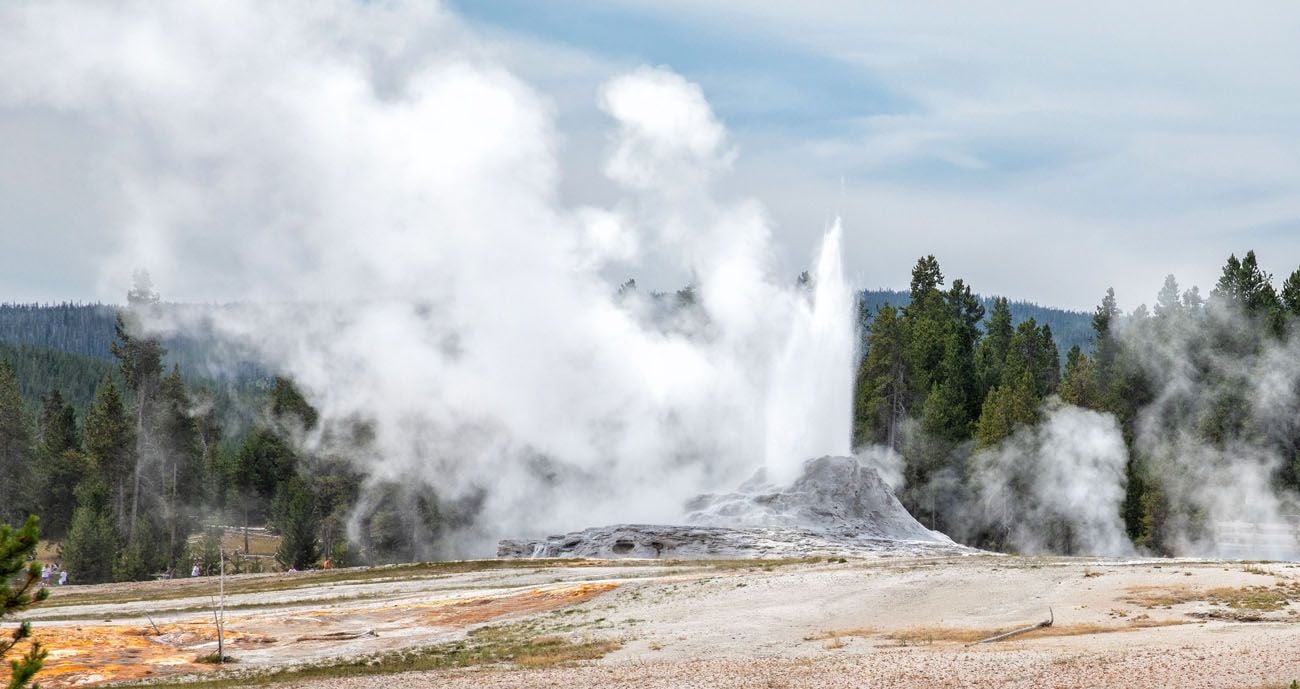
Castle Geyser
Morning Glory Pool. It’s a long walk to get here but worth it. This colorful pool is one of the prettiest features in the Upper Geyser Basin.
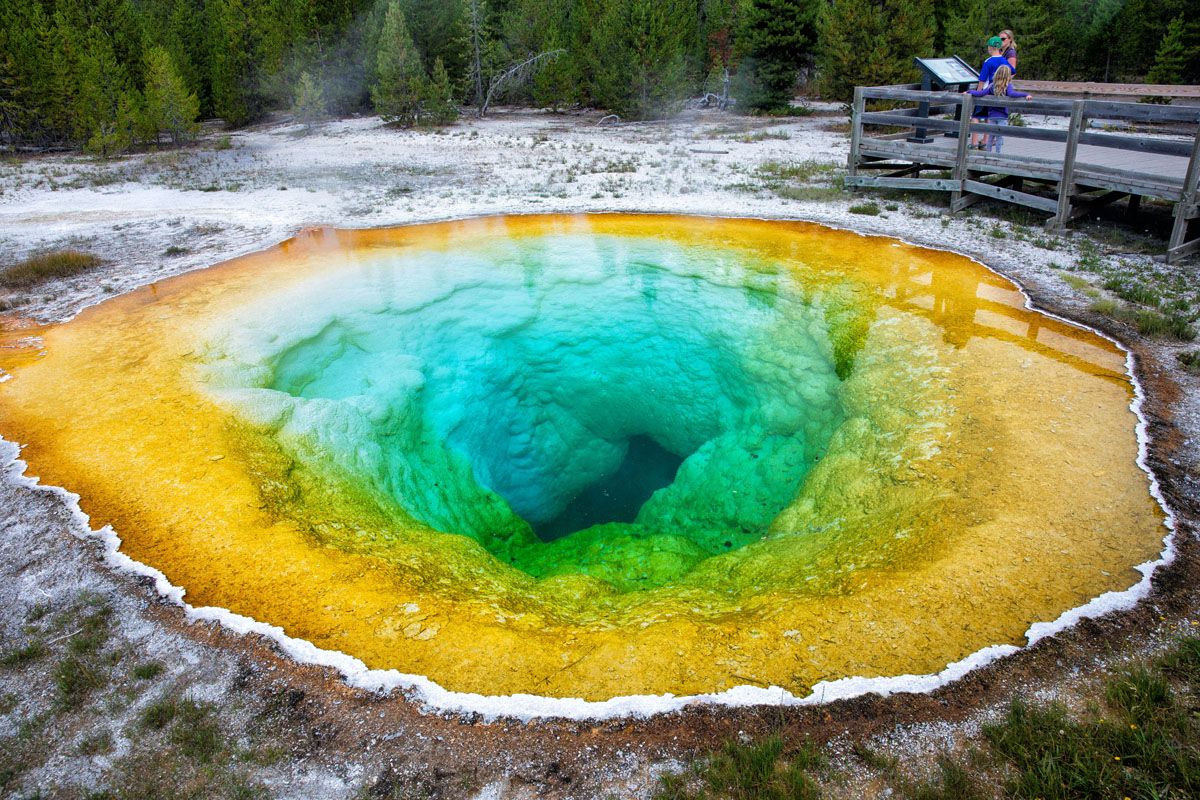
Morning Glory Pool
Grotto Geyser. Grotto Geyser only erupts every 8 hours, but once it gets going, the eruption can last anywhere from 10 minutes to several hours.
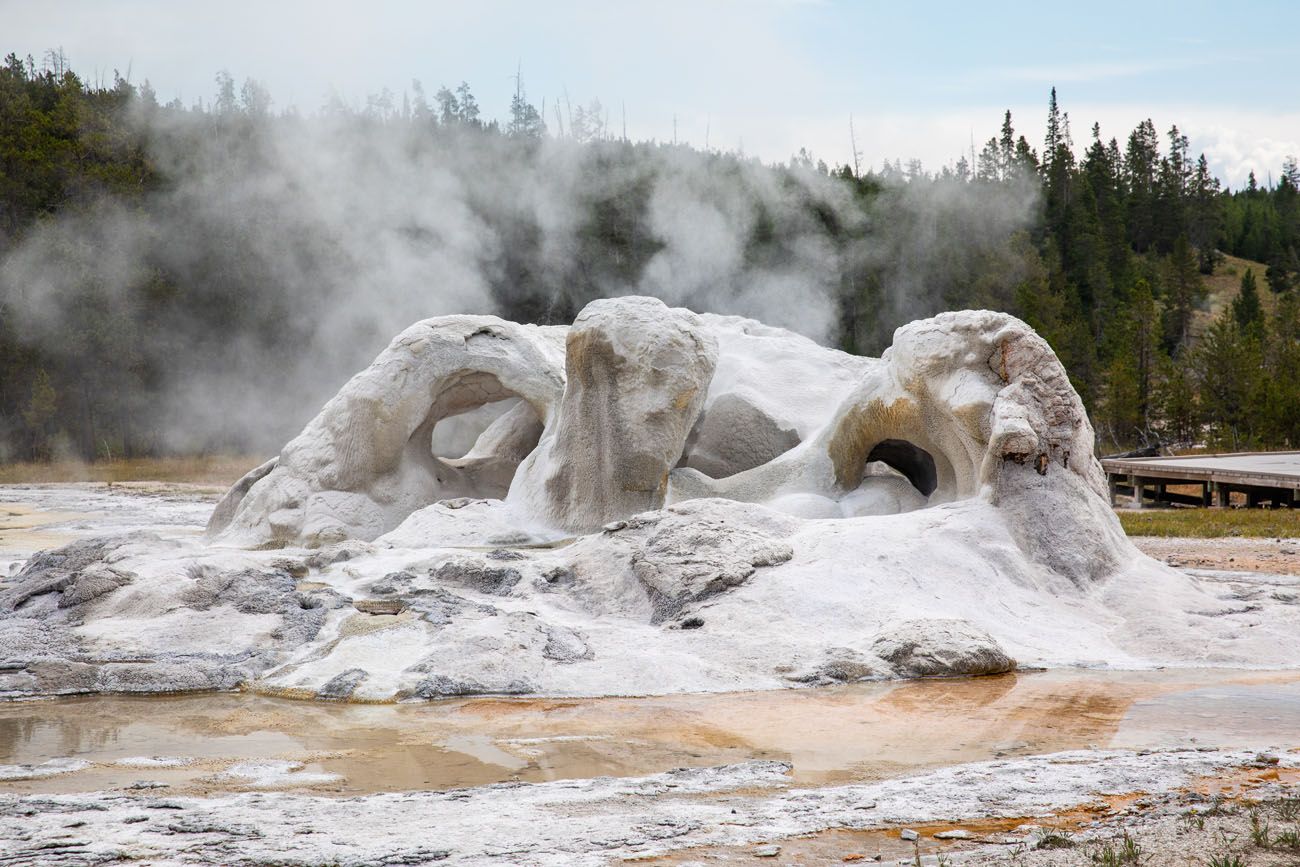
Grotto Geyser
RELATED: Guide to the Geyser Basins and Geysers in Yellowstone
2. Hike to the Grand Prismatic Spring Overlook
Area: Midway Geyser Basin, off the Fairy Falls Trailhead
Time Needed: 45 minutes to 1 hour round trip
Best For: Photographers and anyone who wants the classic bird’s-eye view. This is the shot you’ve seen in every Yellowstone photo
Skip It If: The uphill dirt climb is a problem for you physically; the Midway Geyser Basin boardwalk below gives you a flatter alternative
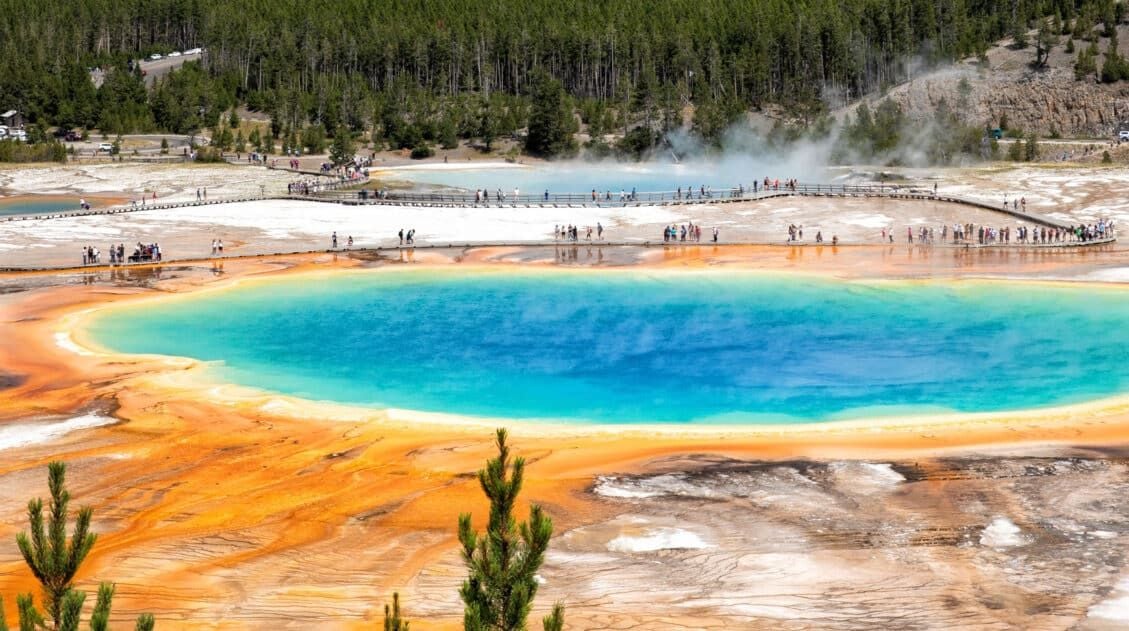
The overlook is what gives you that famous bird’s-eye view of Grand Prismatic Spring’s rainbow colors. On a sunny day, it’s genuinely jaw-dropping.
The Grand Prismatic Spring Overlook is our favorite viewpoint in Yellowstone National Park. We’ve visited it multiple times and during different seasons, and it’s looked different every time. On a sunny summer’s day, it’s genuinely jaw-dropping, with vibrant colors and minimal mist. In the mornings and cooler months, the spring has a more misty, steamy appearance.
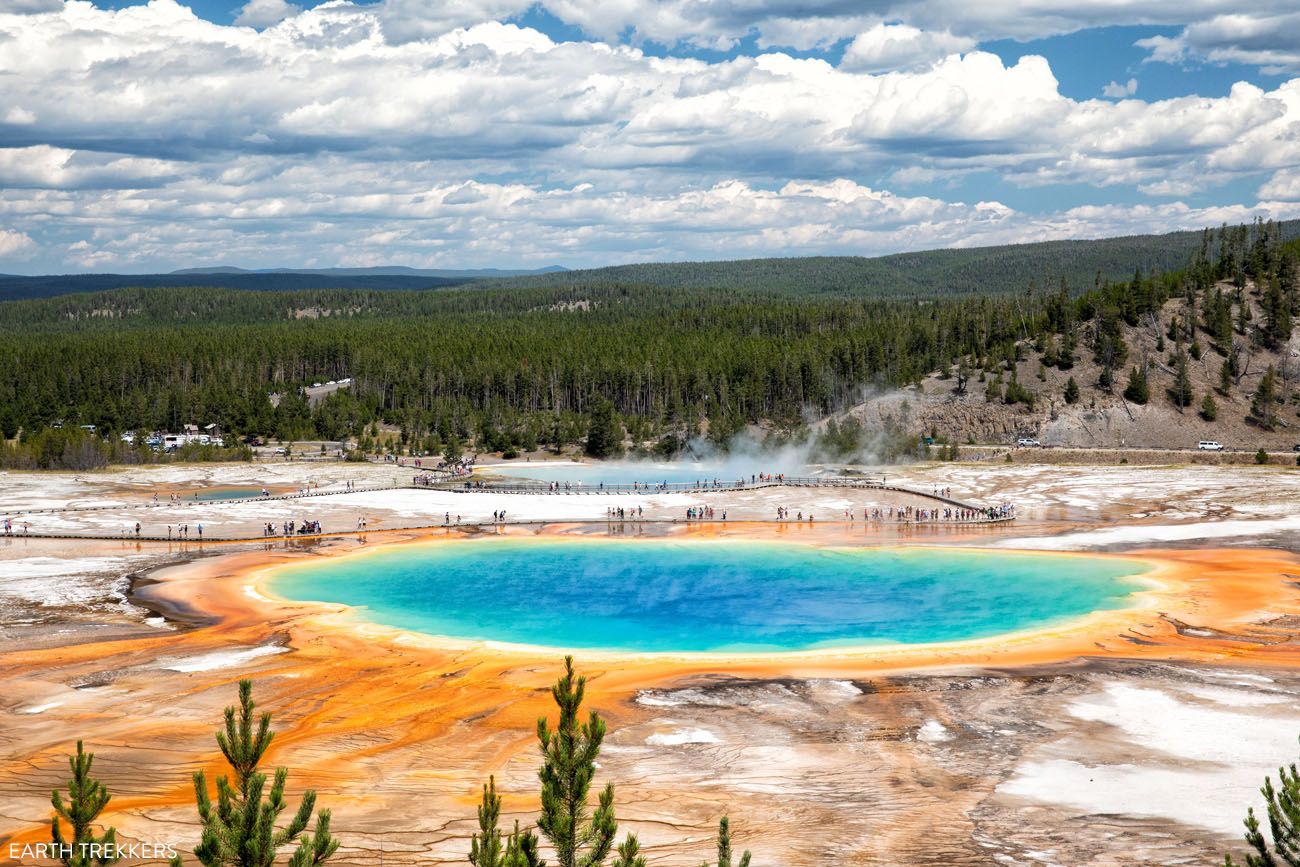
The view from Grand Prismatic Spring Overlook (midday in August)
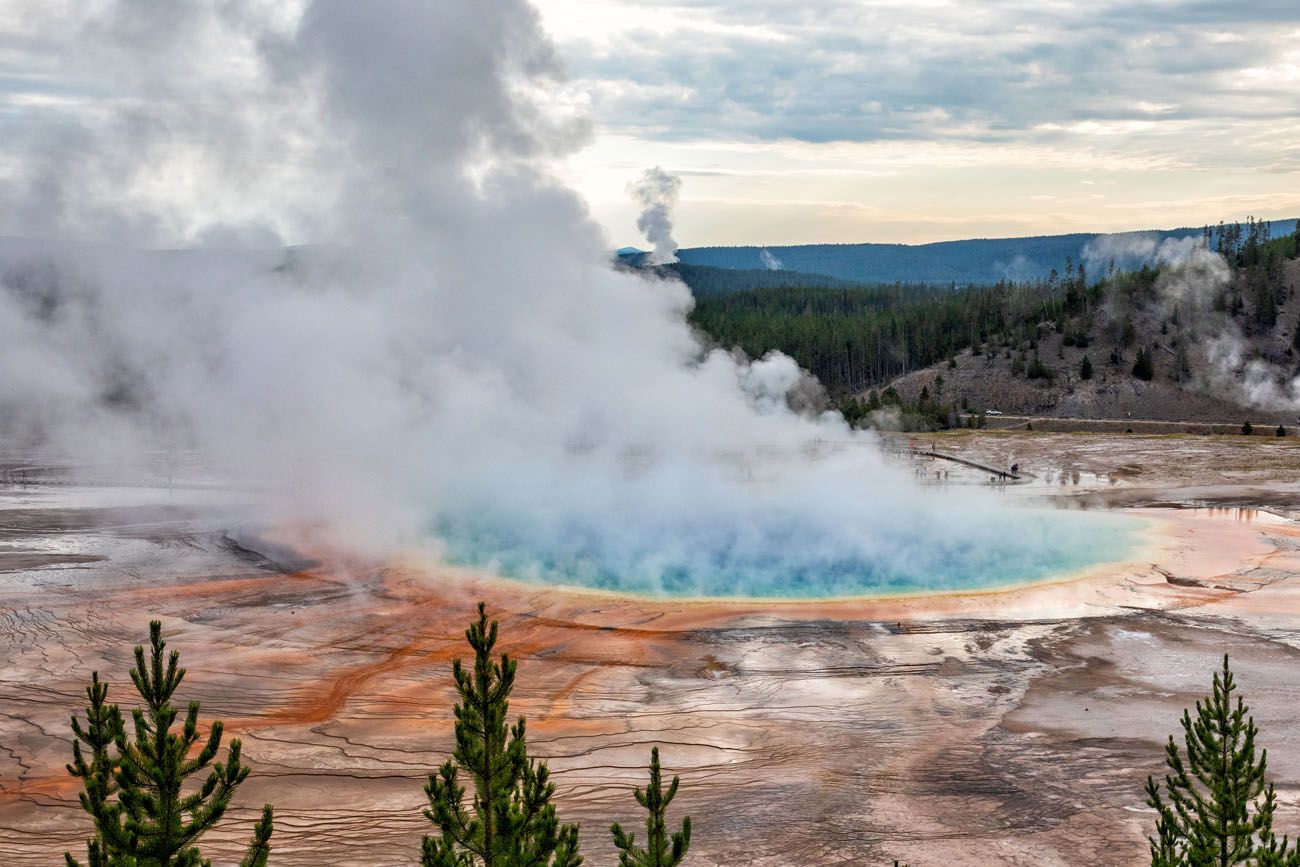
Grand Prismatic Spring in the morning, also in August.
Getting here: Park at the large Fairy Falls parking lot (RVs, buses, and trailers aren’t permitted here) and hike in. Most sources list the walk to the overlook as 0.6 miles, but we’ve measured it twice, on two different GPS devices, at 0.8 miles each time (1.6 miles round trip). Walking at a fast pace, it took us 15 minutes each way. The trail starts wide and flat before turning into a steeper, dirt climb for the final 0.2 miles. Budget about 45 minutes total for the round trip plus time at the overlook.
Best time to visit: Midday on a sunny day, once the morning mist has burned off and the colors are at their most vivid. This is also, unsurprisingly, the most crowded time to come. We think it’s worth fighting for a parking spot to see the spring in full color rather than visiting early and seeing it hidden under steam.
For more tips on visiting Grand Prismatic Spring Overlook ↓
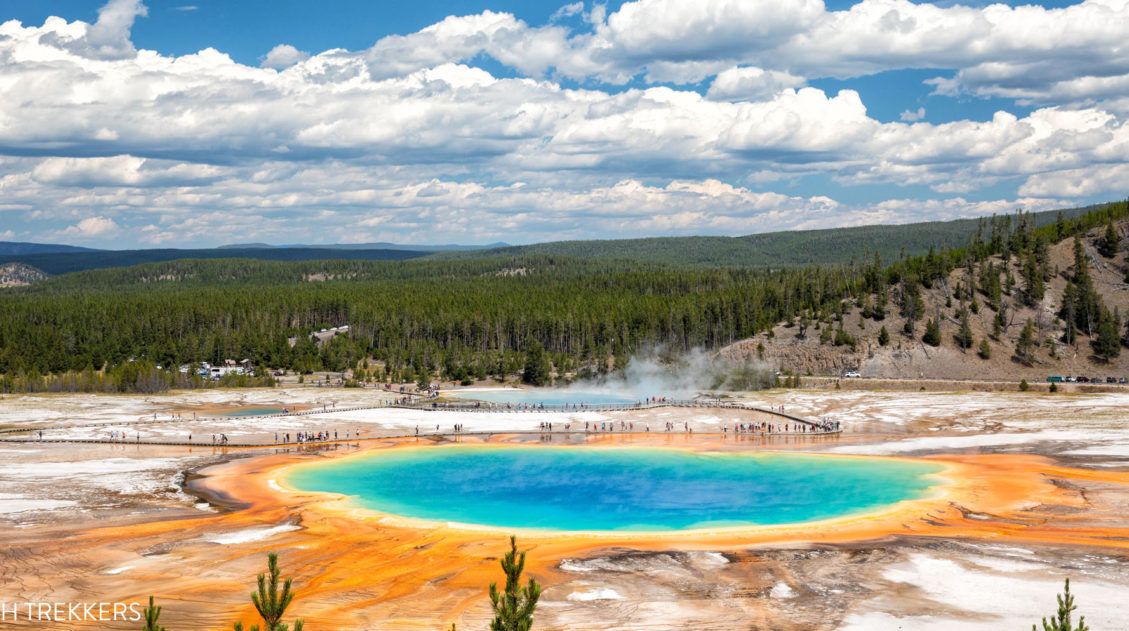
How to Visit Grand Prismatic Spring Overlook (+ Fairy Falls)
How to visit the Grand Prismatic Spring Overlook and how to add on the hike to Fairy Falls.3. Walk the Boardwalk Through Midway Geyser Basin
Area: Midway Geyser Basin, between Old Faithful and Madison
Time Needed: 30 to 45 minutes
Best For: Getting up close to Grand Prismatic Spring at eye level, plus a few smaller features along the way
Skip It If: You’re very short on time and can only do one. The overlook gives the more iconic, widely recognized photo
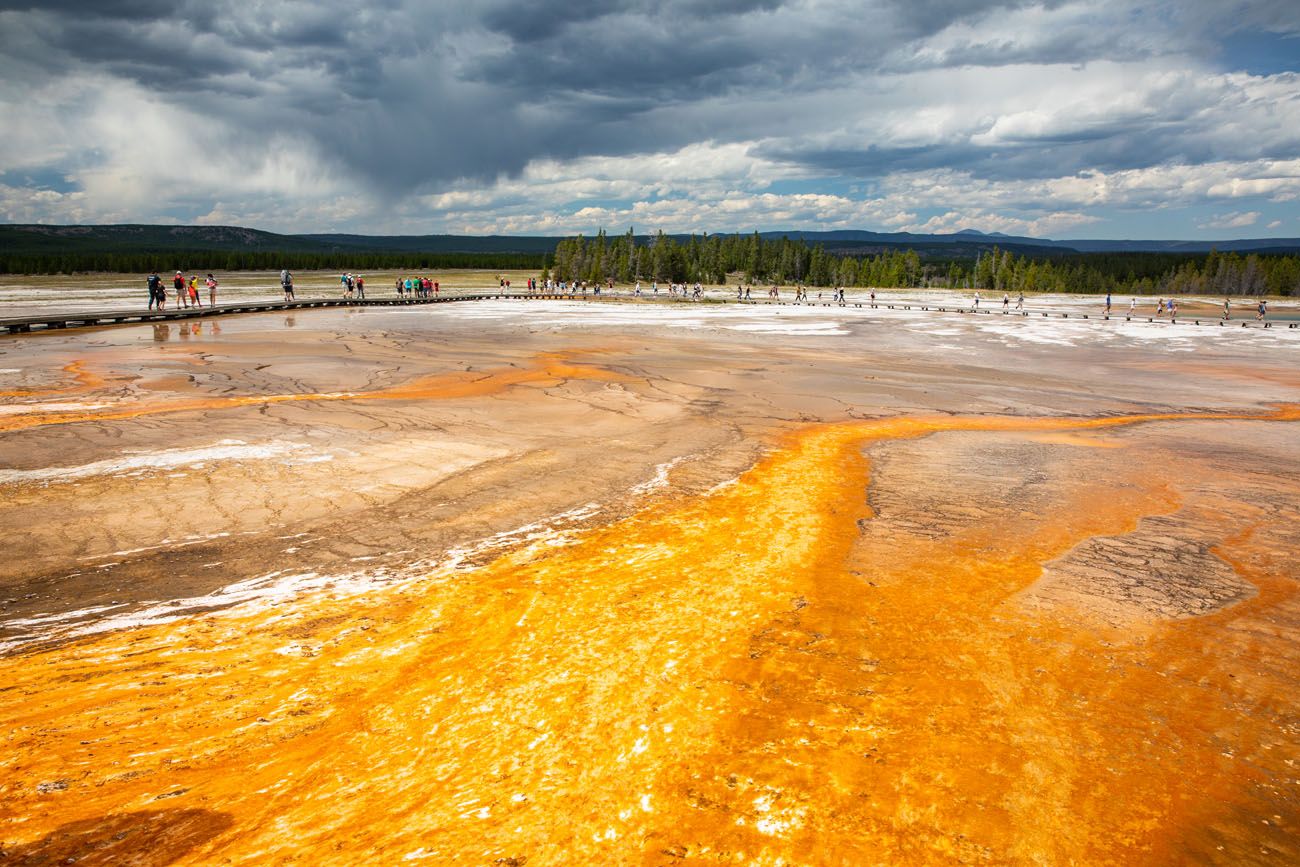
Walk the 0.8-mile, one-way boardwalk trail to get up close to Grand Prismatic Spring. Along the way, you’ll also pass a few smaller hot springs, including Excelsior Geyser Crater, Opal Pool, and Turquoise Pool.
PARKING: Finding a parking space between 9 am and 6 pm can be tough. The lot is far too small for the crowds this spring draws, and parking regularly spills out onto the park road. If the lot is full, use one of the large turnouts nearby rather than waiting it out.
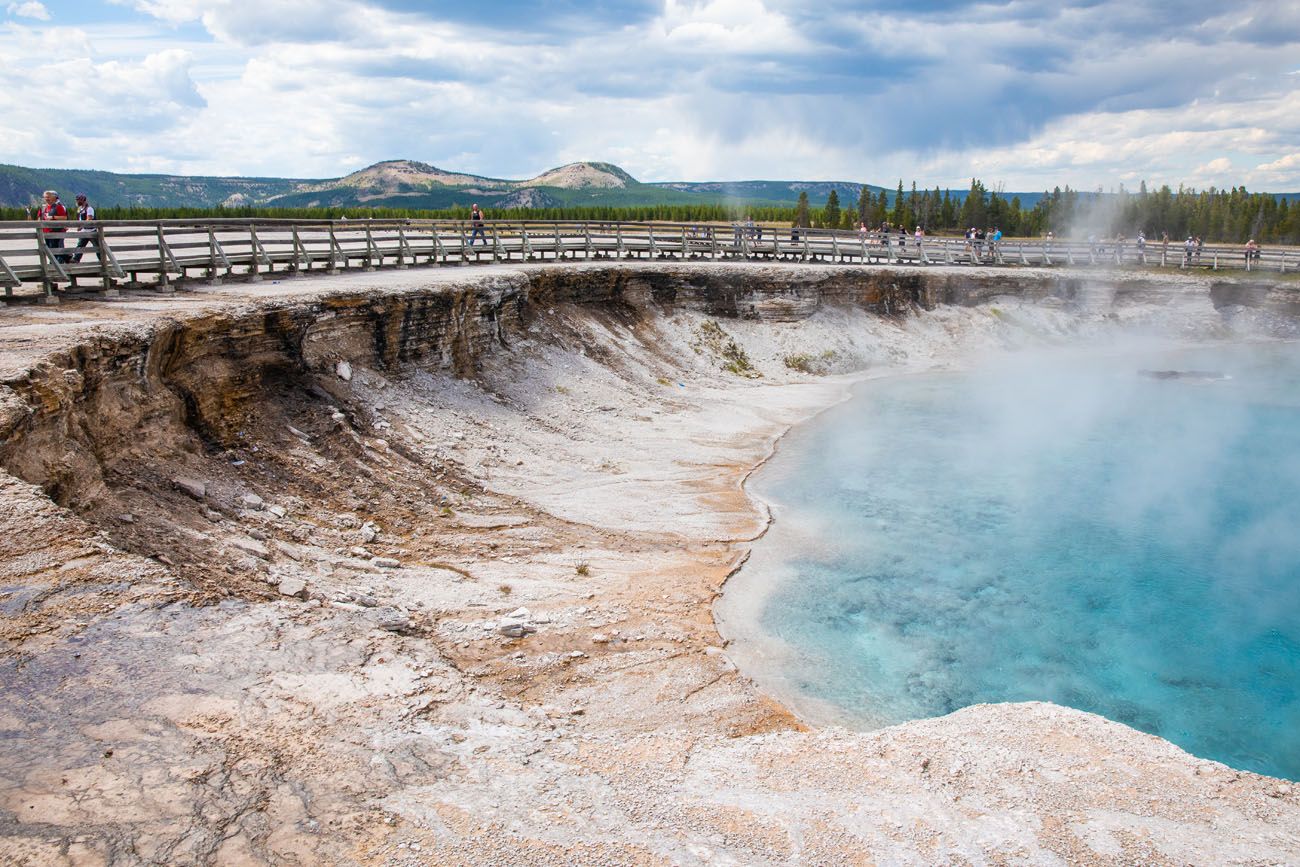
Midway Geyser Basin
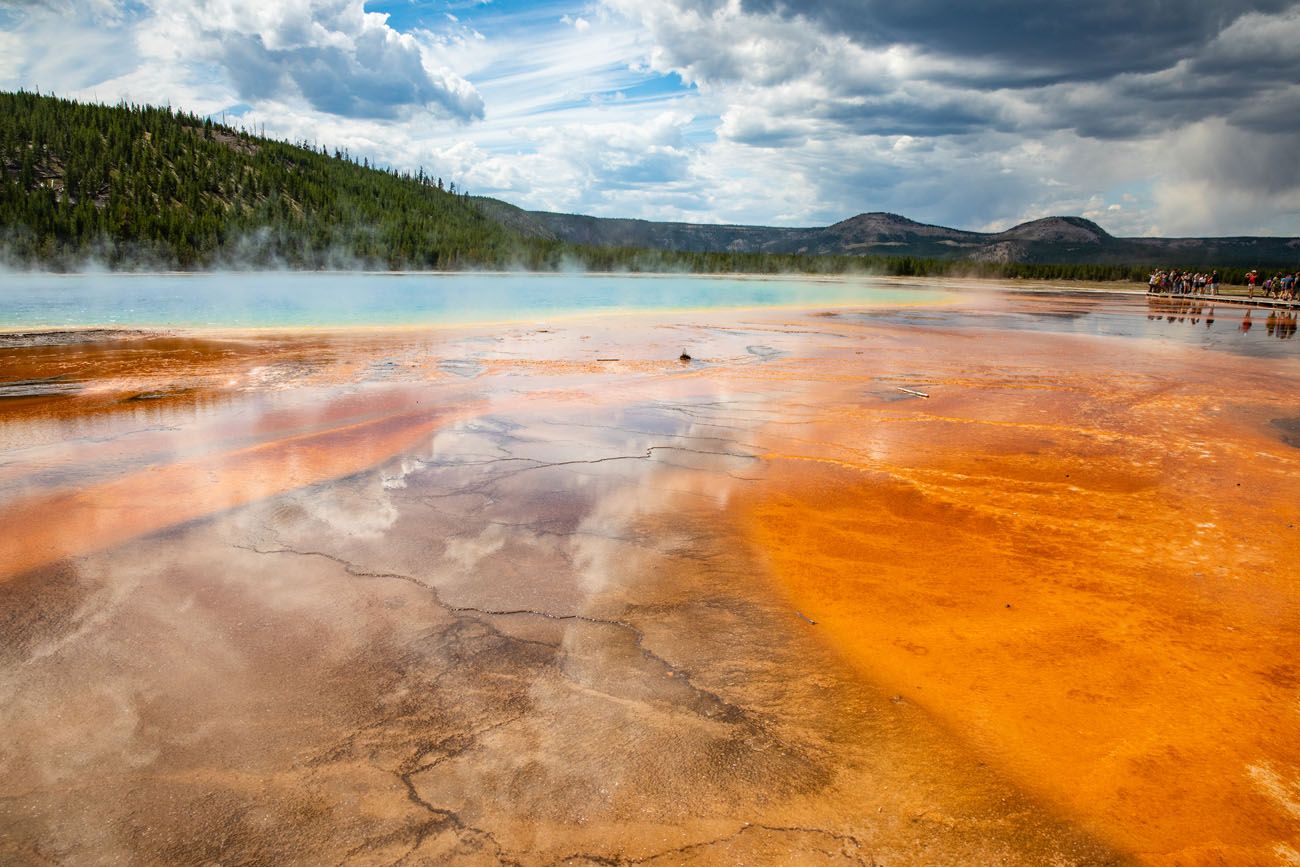
Grand Prismatic Spring
4. Visit Artist Point & Grand Canyon of the Yellowstone
Area: Canyon Village, along the Yellowstone River
Time Needed: Half a day to see both rims properly
Best For: Dramatic canyon views, waterfall photography, an easy walk to a big payoff
Skip It If: You’re only doing a quick drive-through of the park with no time to stop; otherwise, make time for at least the South Rim
For thousands of years, the Yellowstone River has been carving out this canyon, and it’s one of the park’s most rewarding stops. Numerous overlooks and short hiking trails make it easy to spend a half day here. The canyon has two rims, North and South, and each offers a different angle on the Upper and Lower Falls. We think it’s worth visiting both if you have the time.
On the North Rim, don’t miss Lookout Point for the best overall view of the Lower Falls, and Brink of the Lower Falls if you’re up for a steep, half-mile round trip down (and back up 600 feet of elevation gain) for an up-close view of the falls thundering over the edge.
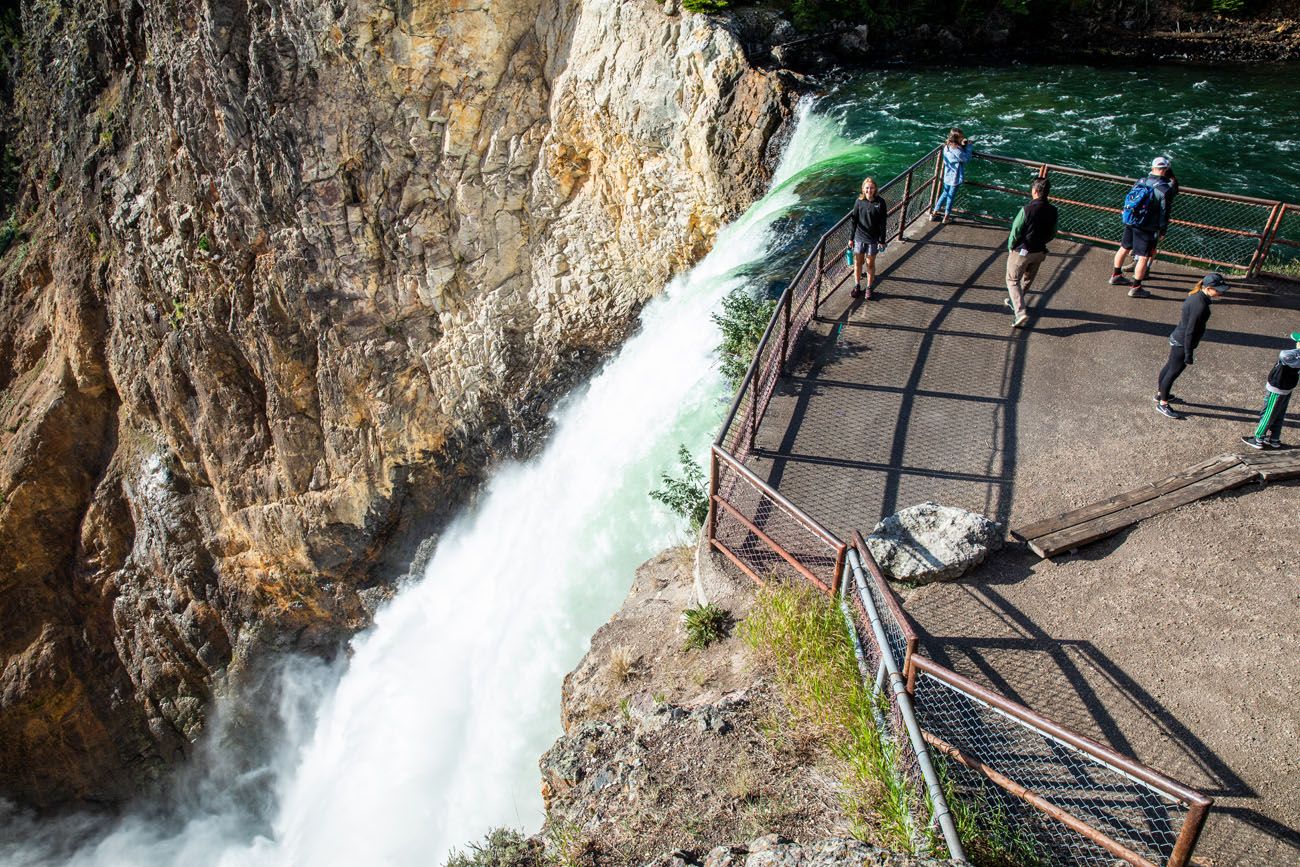
Brink of the Lower Falls
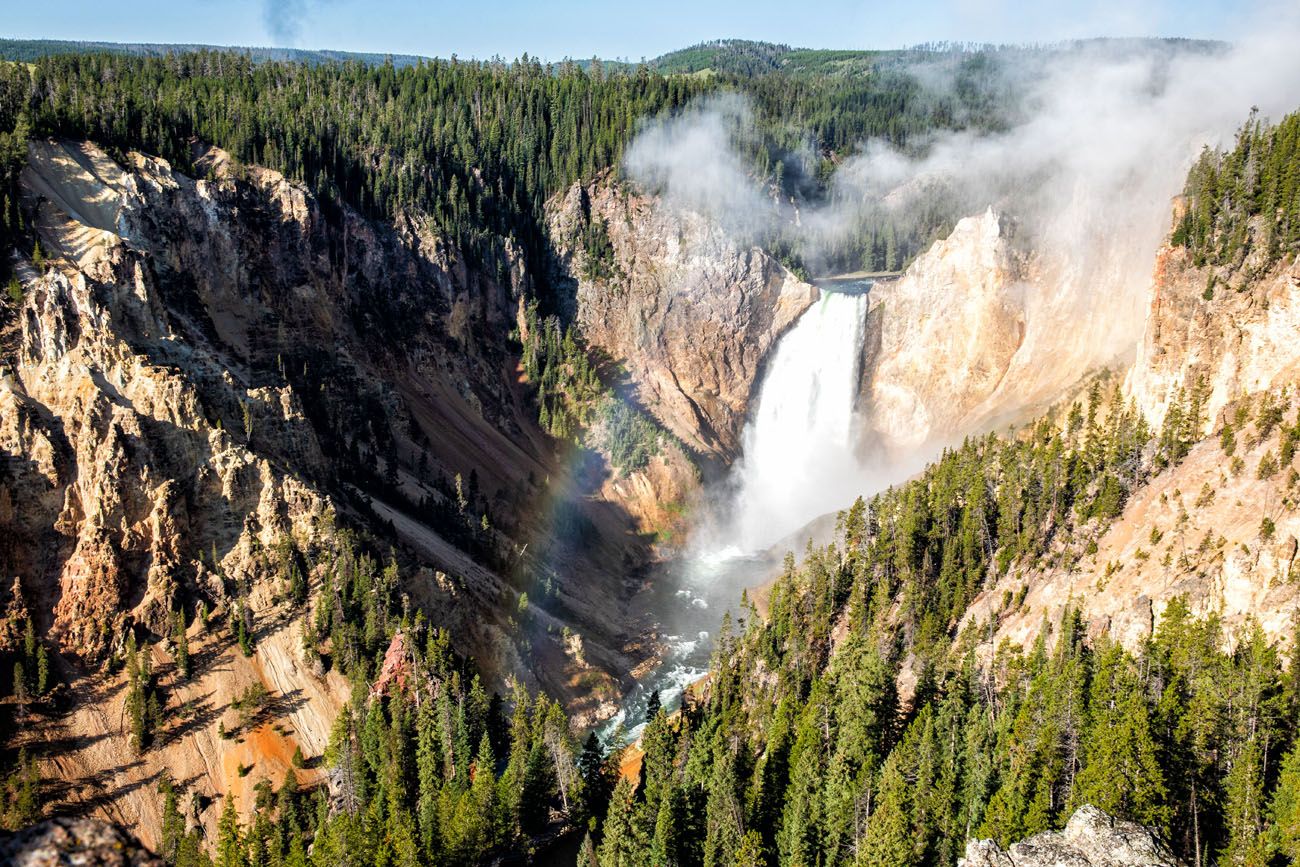
Lookout Point
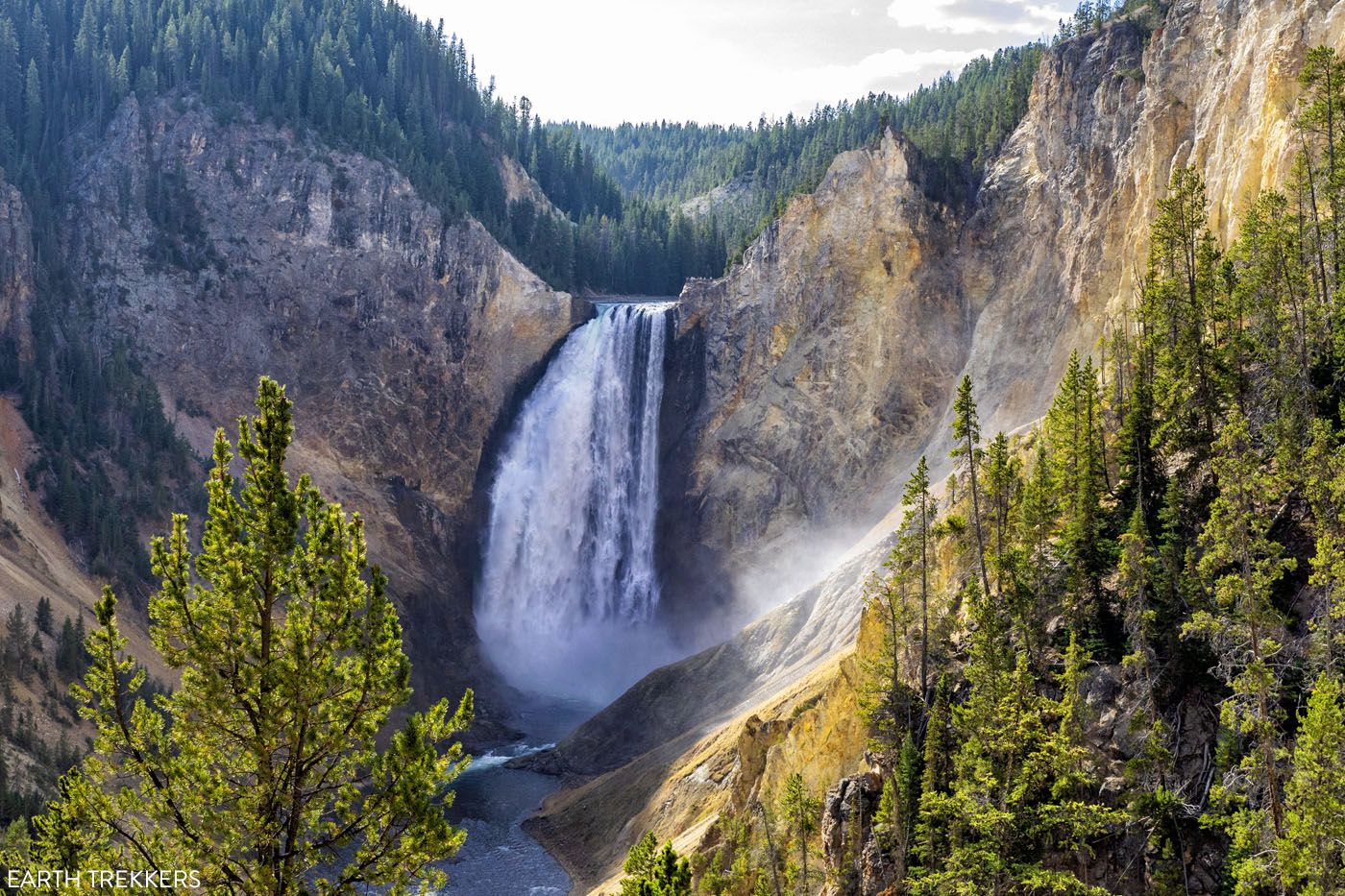
Red Rock Point
On the South Rim, Artist Point is the classic photo spot and one of the best things to do in Yellowstone, period. It’s a short, easy walk from a large parking lot to an iconic canyon view.
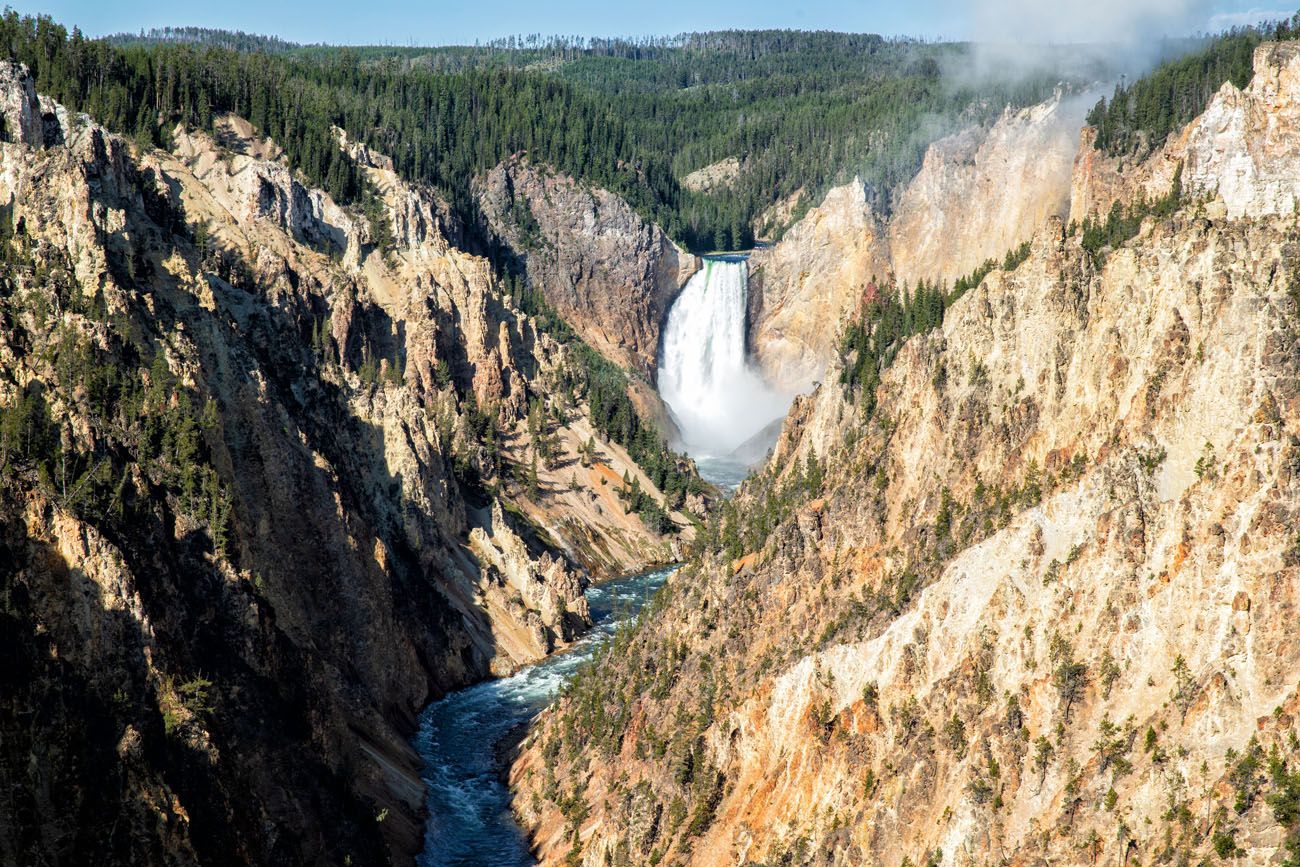
Artist Point
Note: Uncle Tom’s Trail, which once led down 328 steps to the base of the Lower Falls, has been permanently closed since 2019.
For the full breakdown of every viewpoint on both rims, parking tips, and which stops to skip if you’re short on time, see our dedicated guide:
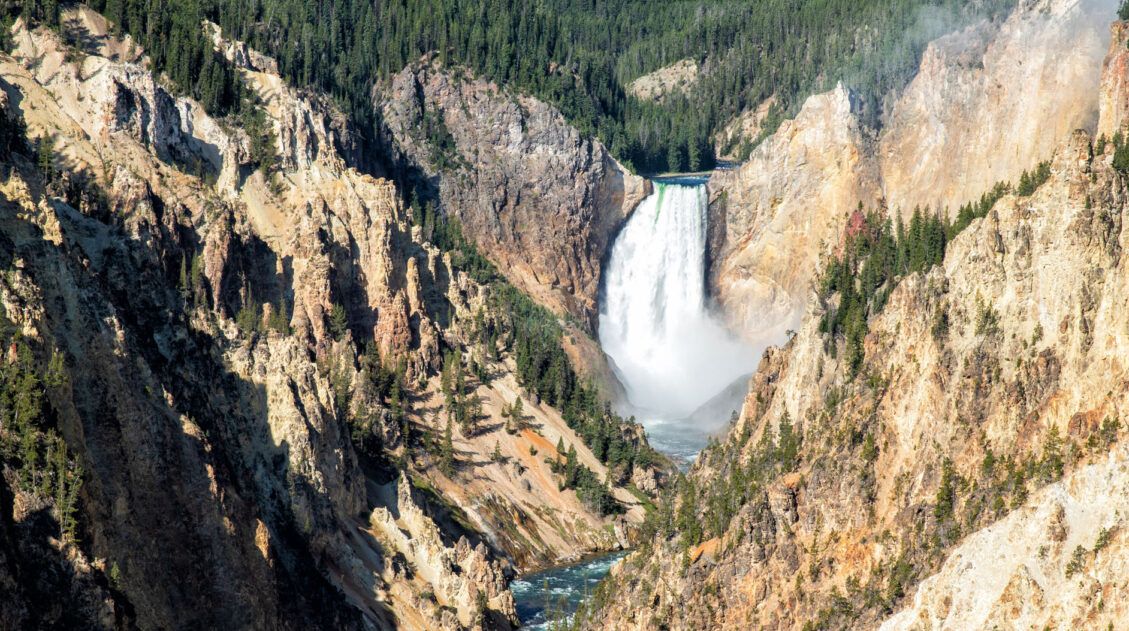
Exactly How to Visit the Grand Canyon of the Yellowstone
How to visit the North and South Rims of Grand Canyon of the Yellowstone, with maps, photos, and lots of helpful tips.5. Spot Wildlife in Lamar Valley
Area: Northeast Yellowstone, along the Lamar Valley corridor
Time Needed: 1 to 2+ hours
Best For: The best wildlife viewing in the park: bison, elk, bear, wolves, and more
Skip It If: You’re short on time or coming from the south — the drive out here is a real commitment
Lamar Valley is hailed as the best spot in Yellowstone to view wildlife. Bison, elk, pronghorn, bear, coyotes, and wolves are all known to make appearances, and the best viewing tends to be in the early morning and evening.
We have driven through Lamar Valley many times, and we always see wildlife. It’s not uncommon to see large herds of bison, but we’ve also seen elk, bear, and deer here.
We always make it a point to visit Lamar Valley on every trip to Yellowstone. The wildlife viewing is just that good.
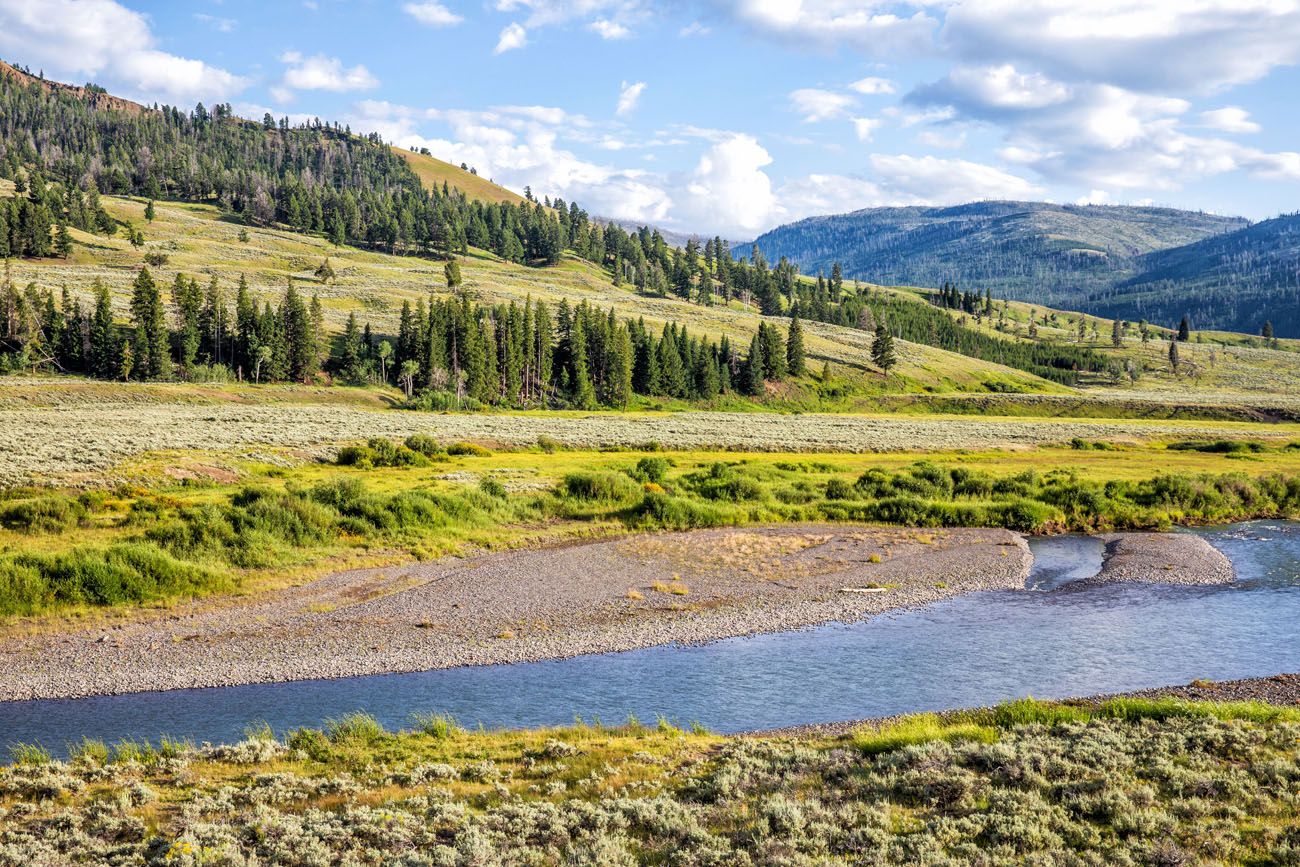
Lamar Valley
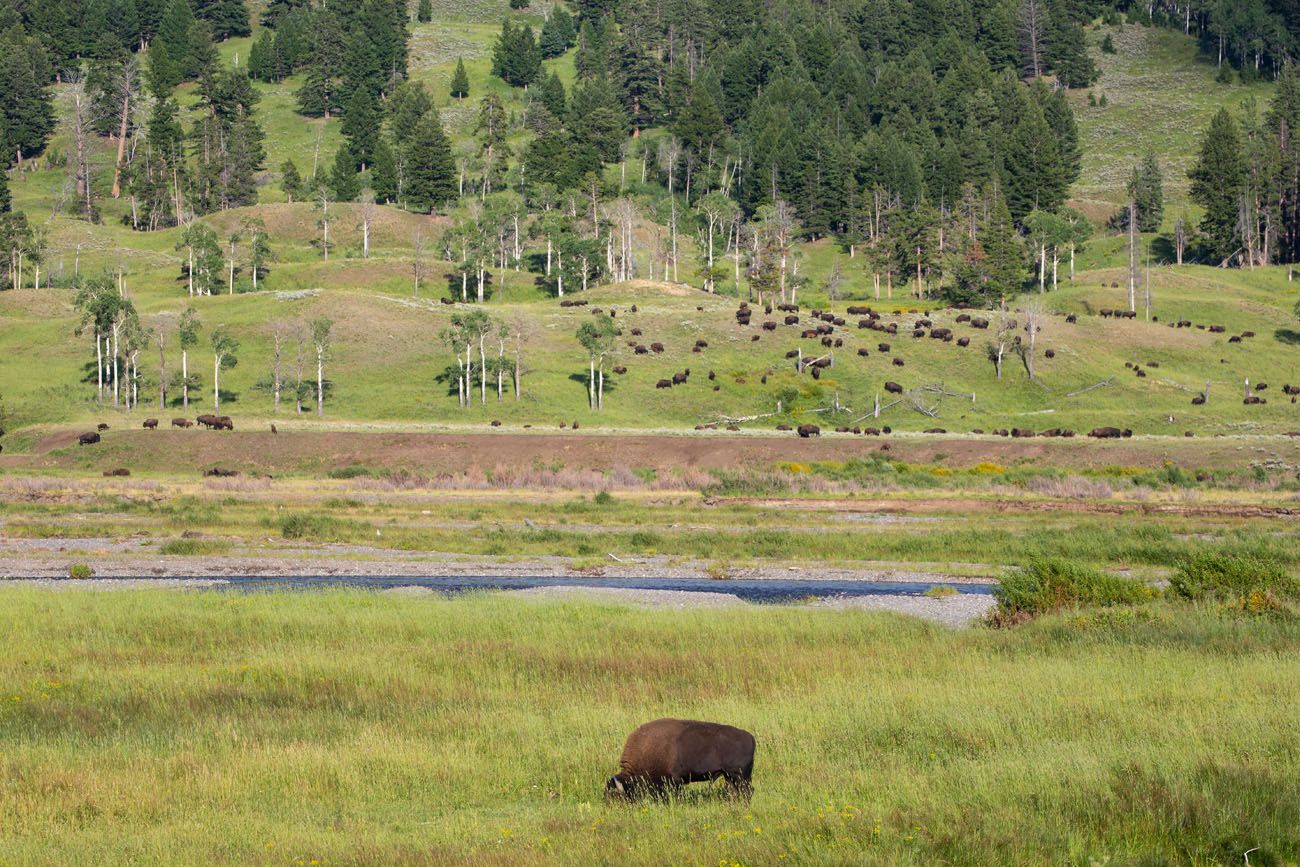
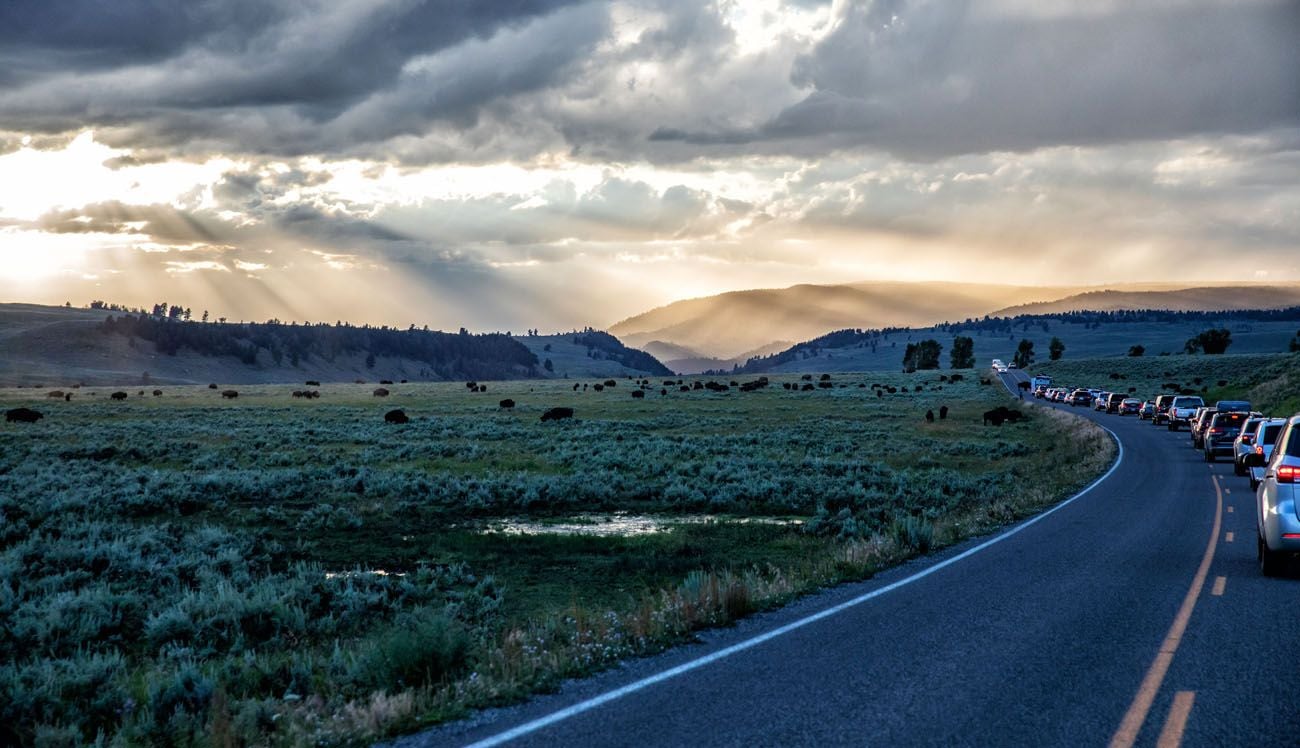
Lamar Valley at Sunset
Getting here: Lamar Valley sits in the far north of the park, and it’s a haul: about an hour from Mammoth Hot Springs and an hour from the Grand Canyon of the Yellowstone. It’s worth the drive if wildlife watching is a priority for your trip.
STAY SAFE: Never get out of your car for a closer look at wildlife. Animals here look slow but can move fast, and bison in particular have been known to charge. Pull into a turnout and watch from your car.
Bonus: Hike to Trout Lake
While you are in Lamar Valley, consider hiking to Trout Lake. It’s a very pretty lake and to get here it’s a short, uphill hike through a forest. Since this is in bear country, hike in groups and bring your bear spray. We did this hike hoping to see wildlife but weren’t that lucky. However, it was still very nice seeing this lake.
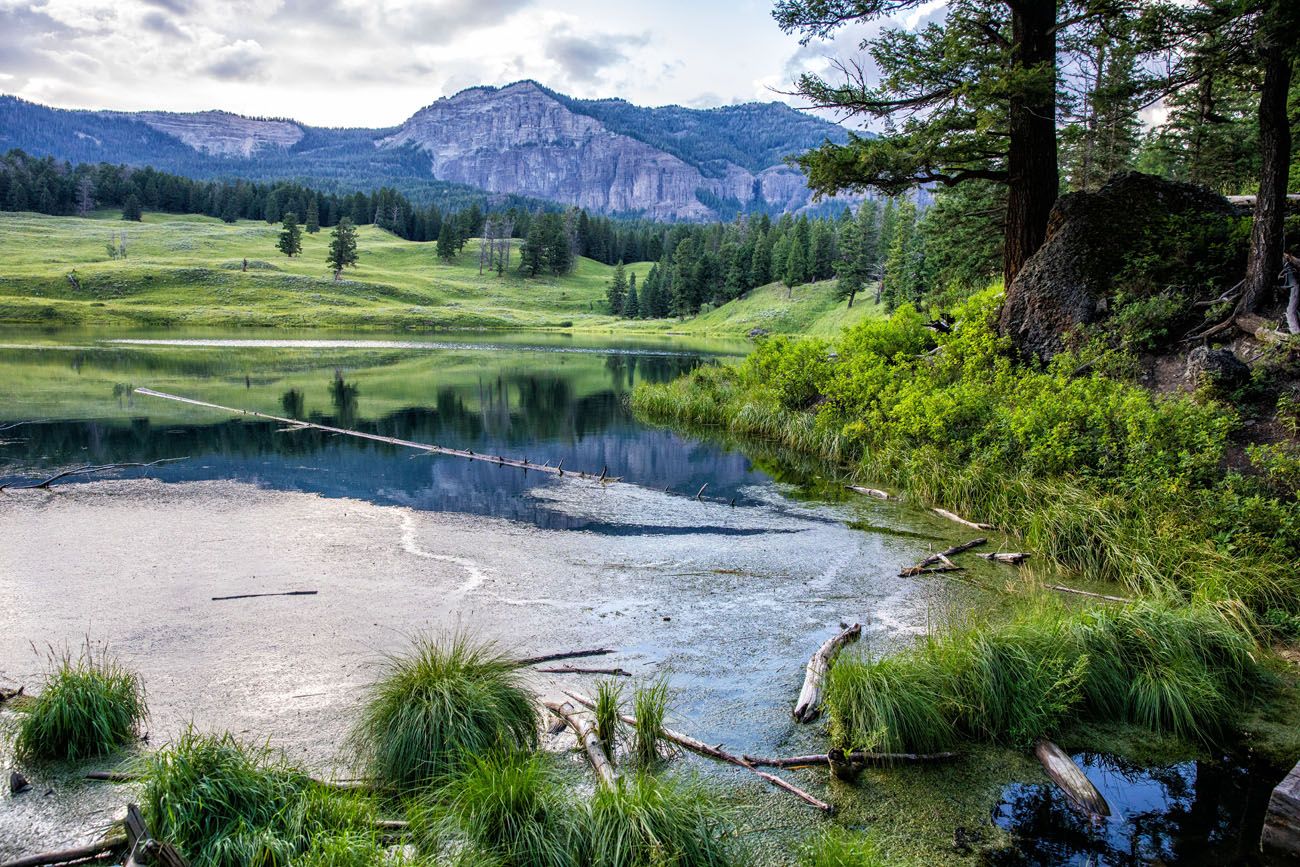
Trout Lake
6. Bison Sightings in Hayden Valley
Area: Between Canyon Village and Yellowstone Lake
Time Needed: 1 to 2+ hours, more if you hit a wildlife jam
Best For: Reliable bison sightings without the long drive Lamar Valley requires
Skip It If: You’re set on solitude; this valley sees far more traffic than Lamar
Hayden Valley is another reliable spot to see bison, and since it sits between the Grand Canyon of the Yellowstone and Yellowstone Lake, it’s far easier to work into a driving loop than Lamar Valley, though that also means more crowds.
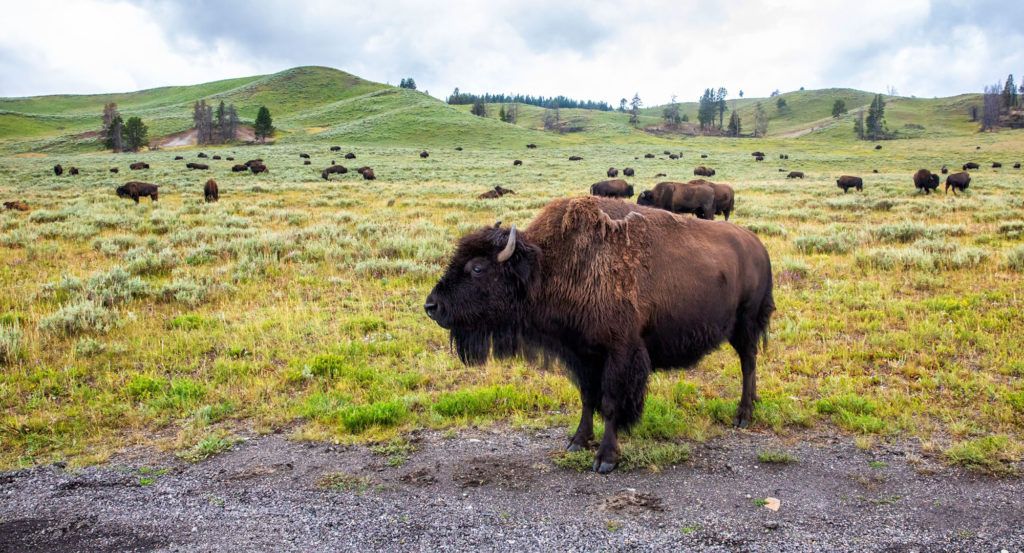
We’ve driven through Hayden Valley on multiple visits with very different results. On one pass, we saw only two bison and a small herd far off in the distance. On another, we hit the jackpot: a huge herd hanging out right along the roadside, and we ended up spending over an hour there just watching.
In our experience, wildlife sightings in Hayden Valley are less reliable than Lamar, but that doesn’t mean you should skip it. Just cross your fingers that the bison are hanging out roadside as you drive through. We’ve gotten lucky here more than once, including one visit where a huge herd was grazing right along the road. On another trip, just a mile up the road from Hayden Valley, we came across a grizzly bear guarding an elk carcass.
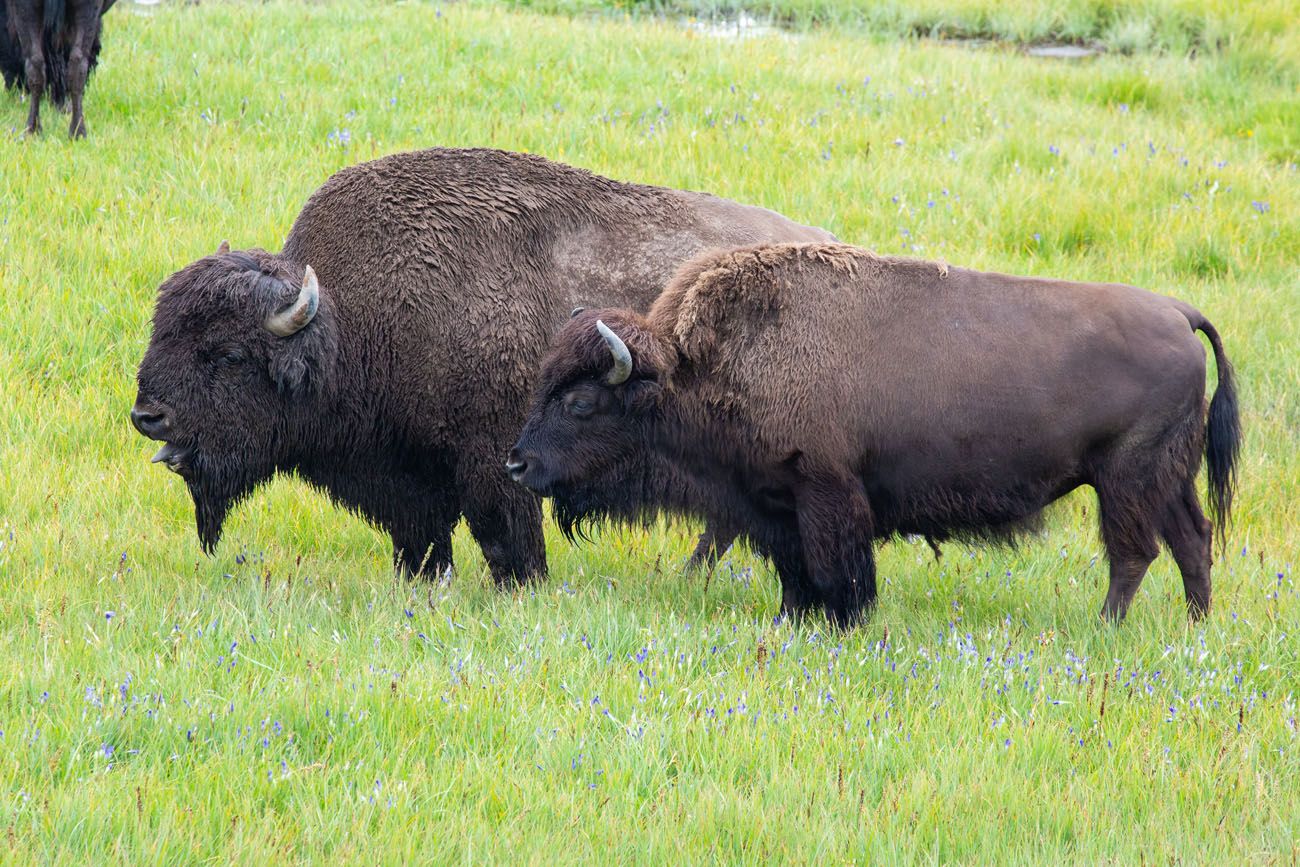
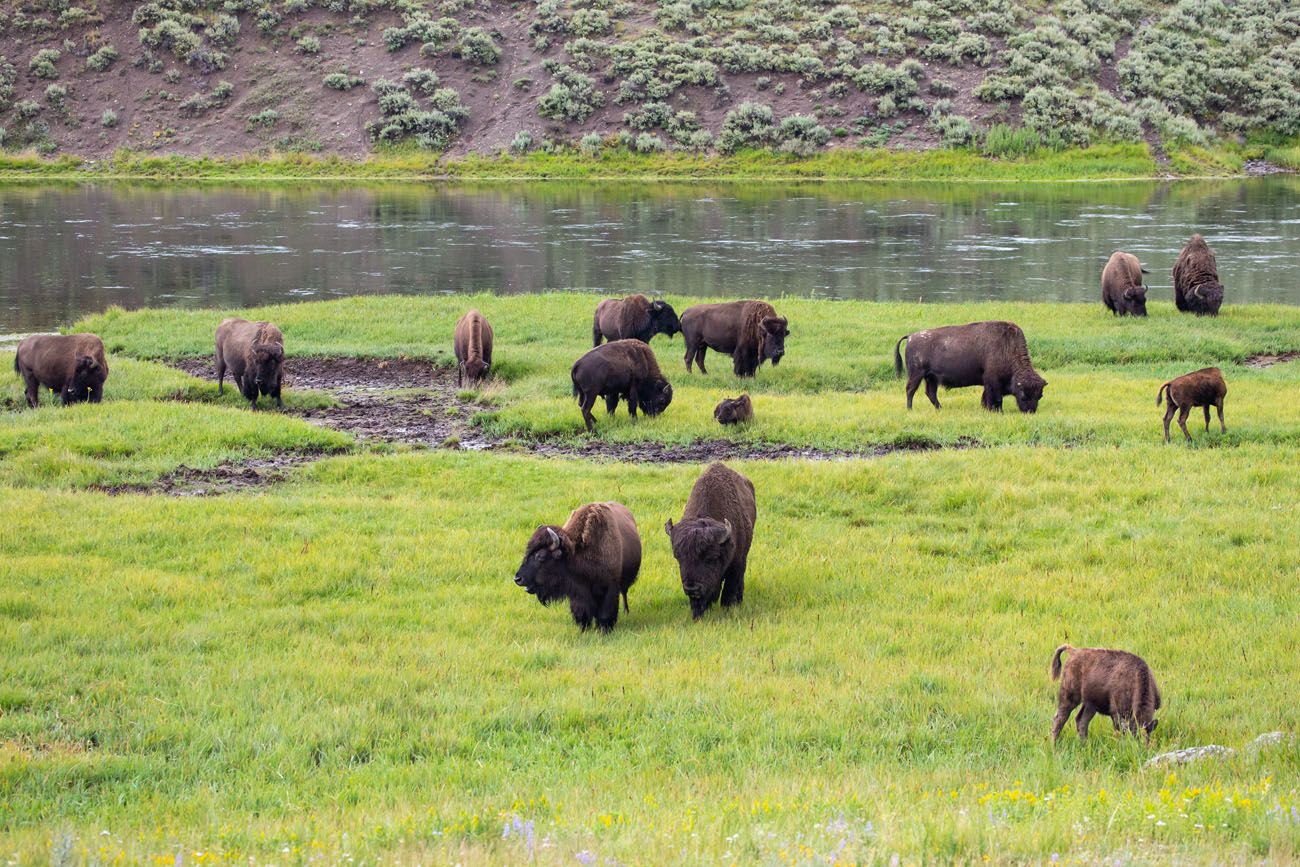
Bison in Hayden Valley
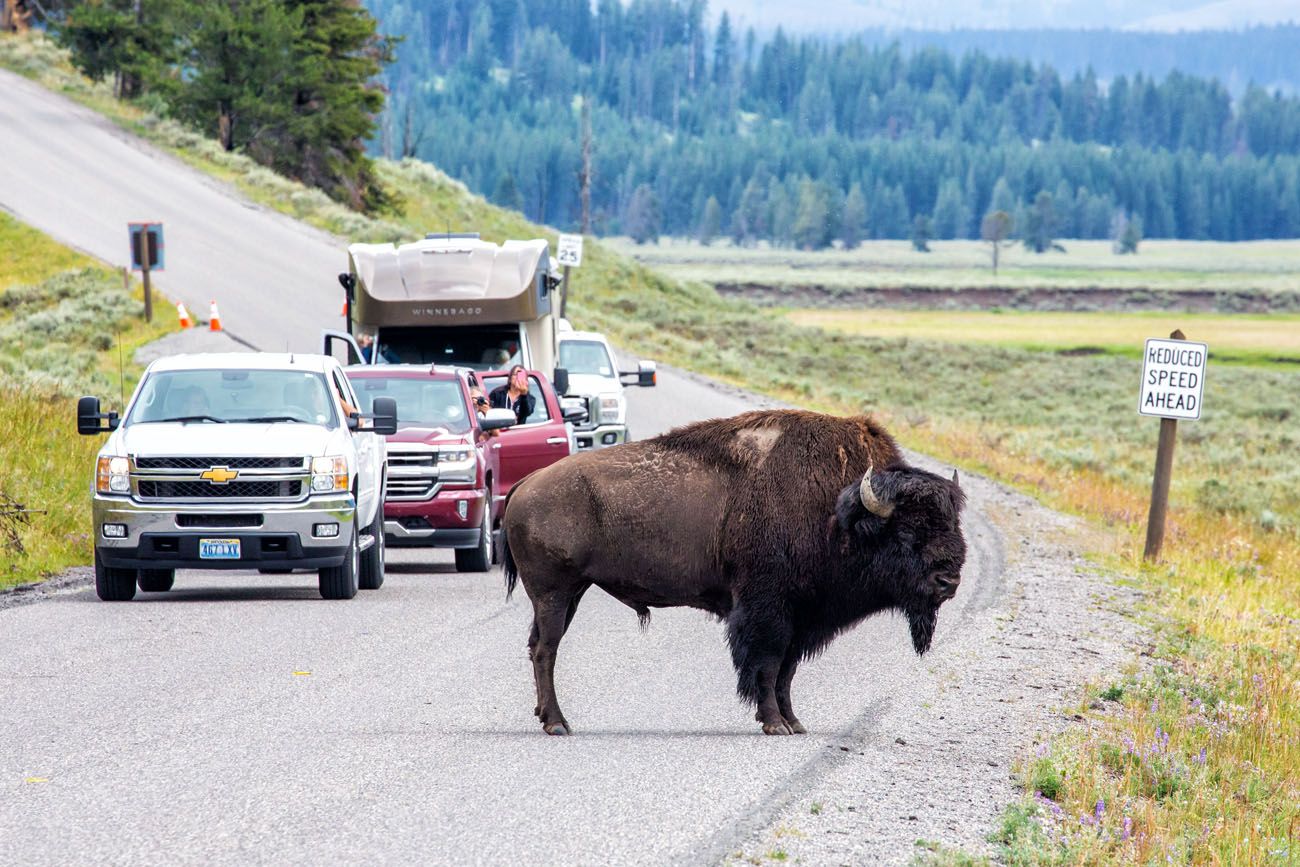
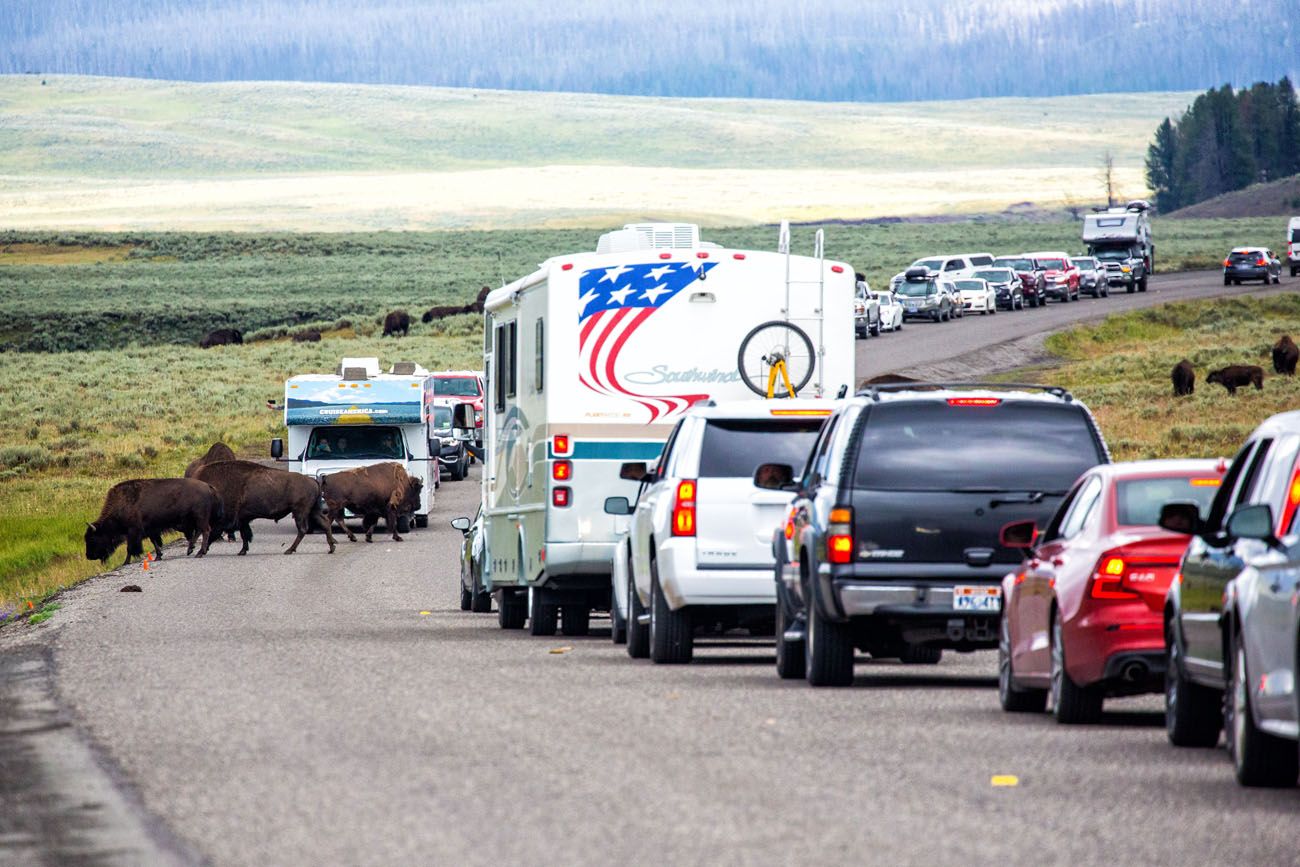
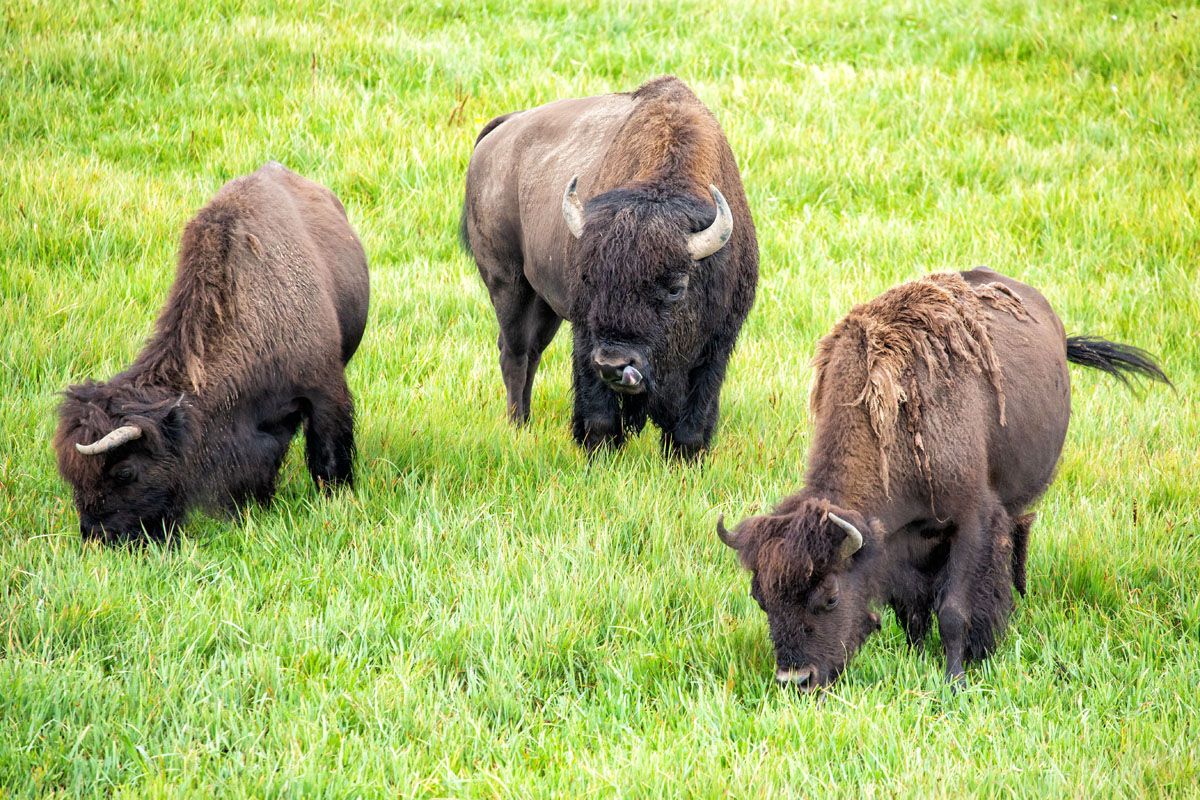
STAY SAFE: Never get out of your car for a closer look at the bison. They look slow but can move fast and have been known to charge. Pull into a turnout and view them from your car — you’ll stay safe and avoid blocking traffic. If you’ve got an SUV with a sunroof, popping your head out is a great way to get a better view without leaving the vehicle.
Traffic back-ups in Hayden Valley are very common. It could take 30 to 60 minutes to drive through the valley, especially if the bison are hanging out along the roadside.
7. Explore Mammoth Hot Springs
Area: North Yellowstone, near the North Entrance
Time Needed: 20 to 30 minutes for the lower boardwalks; a little over 2 hours to explore the full area
Best For: A completely different geothermal landscape than the geyser basins: travertine terraces instead of pools and spouts
Skip It If: You’ve already seen Norris or the geyser basins and are short on time; this is worthwhile but skippable if your schedule is tight
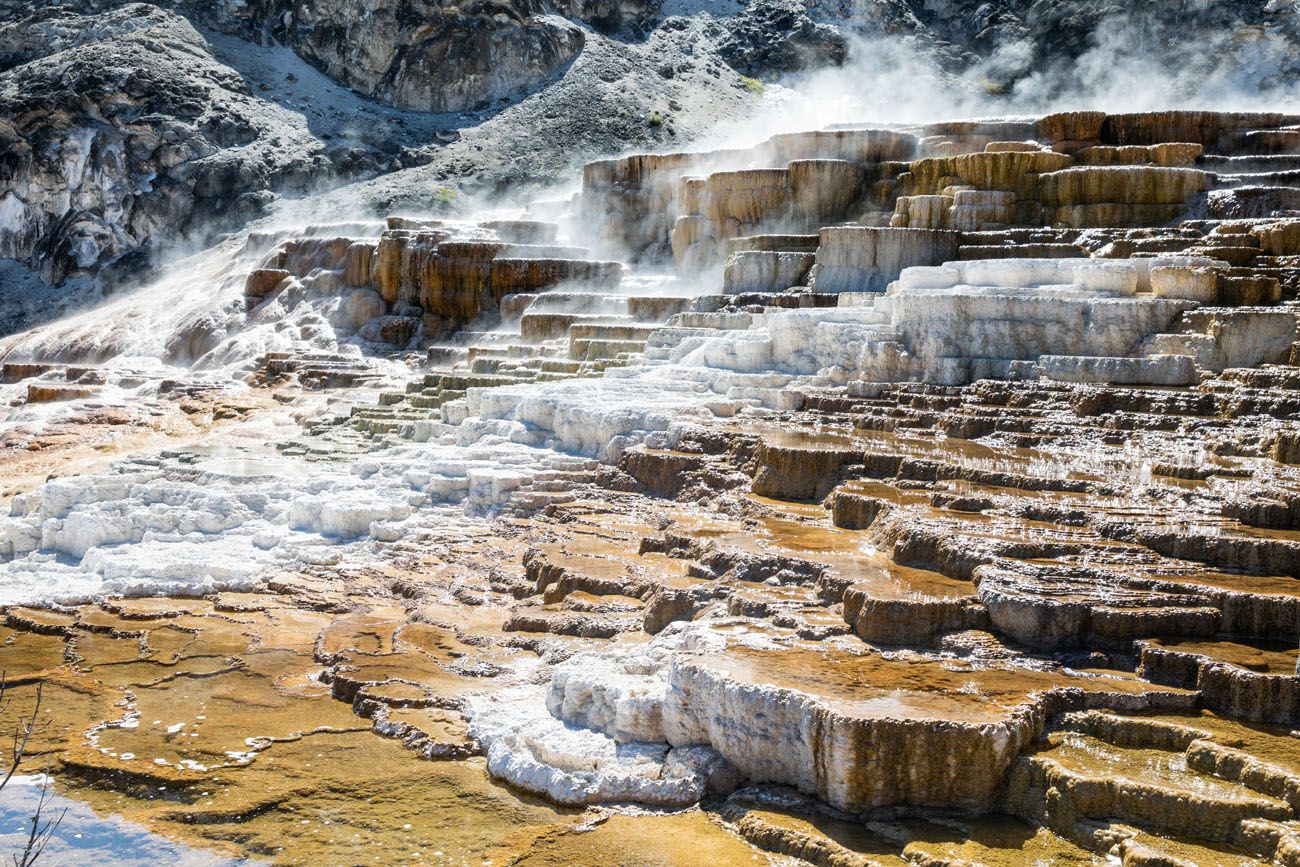
Mammoth Hot Springs is a large complex of hot springs in north Yellowstone, where hot, steaming water spills out over travertine terraces, making it one of the most unique geothermal areas in the park.
We’ve visited Mammoth at least three times now, and it’s felt different every visit. Midday is our favorite time to be here: the sunlight lights up the terraces and makes the rising steam easy to see, giving the whole area a different character than an overcast or early-morning visit.
A visit here can be as quick or as thorough as you want it. Walk the lower boardwalks past a couple of viewpoints in 20 to 30 minutes, or take your time exploring the full network of boardwalk trails and viewpoints, which takes a little over 2 hours.
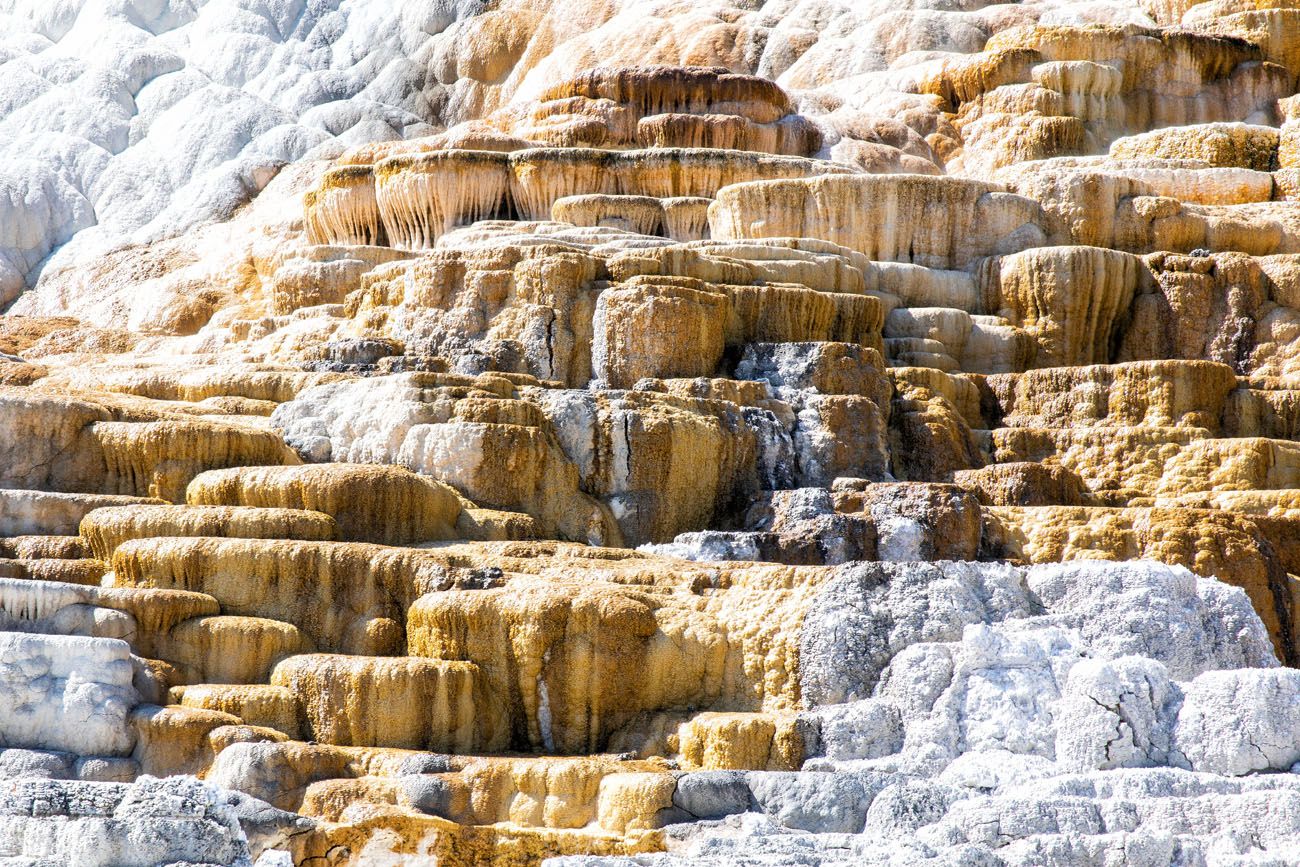
Mammoth Hot Springs
8. See the Hot Springs & Fumaroles at Norris Geyser Basin
Area: Norris, between Mammoth and Madison
Time Needed: 1.5 to 2 hours to see both basins
Best For: Photographers: the boardwalks wind past hot springs in a striking range of colors, and this is one of the most rapidly changing basins in the park
Skip It If: You’re already committed to Upper Geyser Basin and Midway Geyser Basin and need to cut something similar. Norris is fantastic but overlaps thematically with those stops
Similar to Upper Geyser Basin, Norris is another large collection of geothermal features and one of the most rapidly changing basins in the park. It’s also a fun place to photograph: the boardwalks run right along the hot springs, and the colors shift from pool to pool.
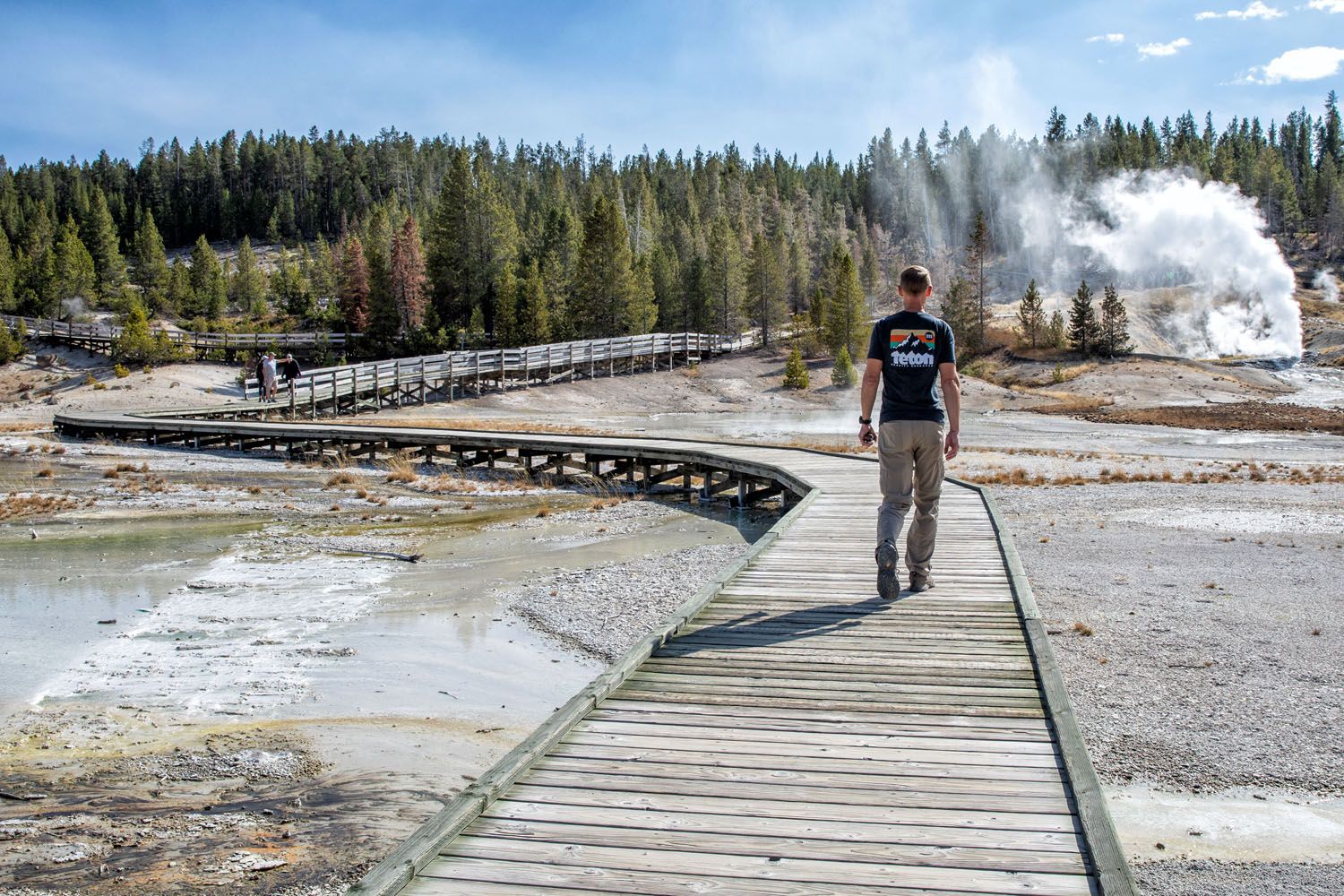
A visit here consists of seeing two basins: Back Basin and Porcelain Basin.
Back Basin
Back Basin is the larger basin.
It is here that you can see Steamboat Geyser, the world’s tallest active geyser. Major eruptions are very unpredictable but the geyser can spew hot, steaming water more than 300 feet in the air (for reference, Old Faithful eruptions are somewhere between 100 and 185 feet high).
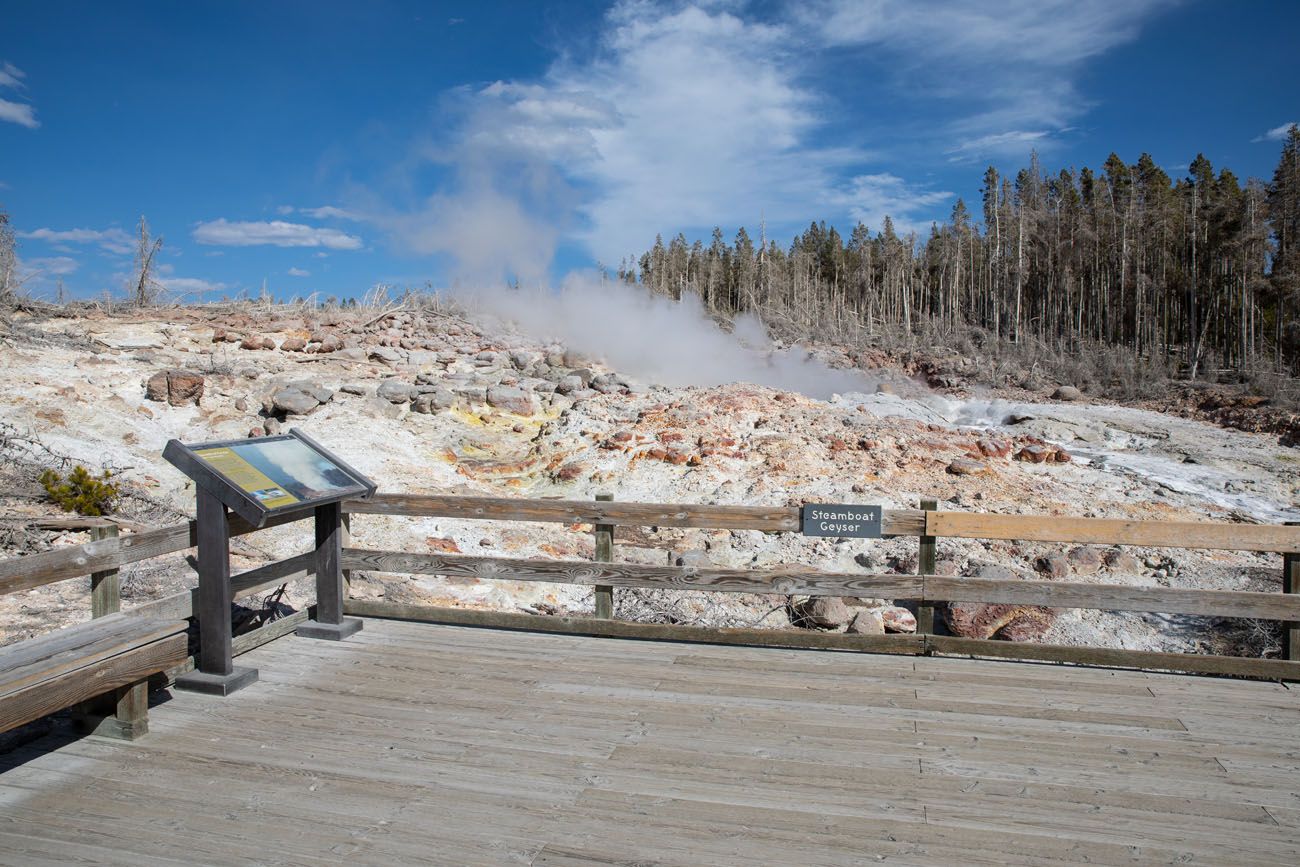
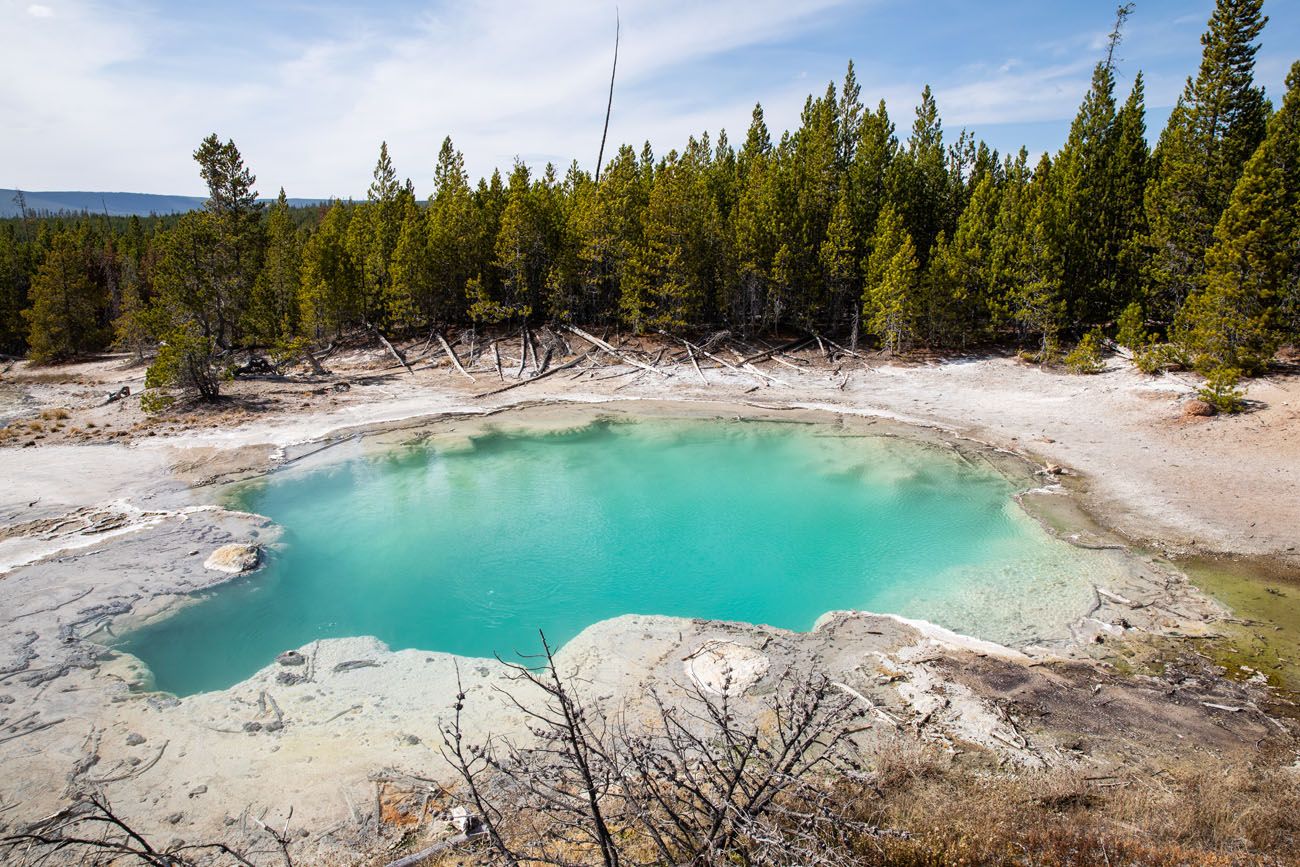
Emerald Spring
There are numerous other hot springs and geysers in Back Basin, including Emerald Spring, Green Dragon Spring, Porkchop Geyser, and Puff ‘N Stuff Geyser (our favorite named geyser).
Porcelain Basin
Unless you catch Steamboat Geyser in action, Porcelain Basin is more thrilling. There is a lot of activity here. Steaming hot springs, light blue thermal pools, and noisy fumaroles that really get your attention.
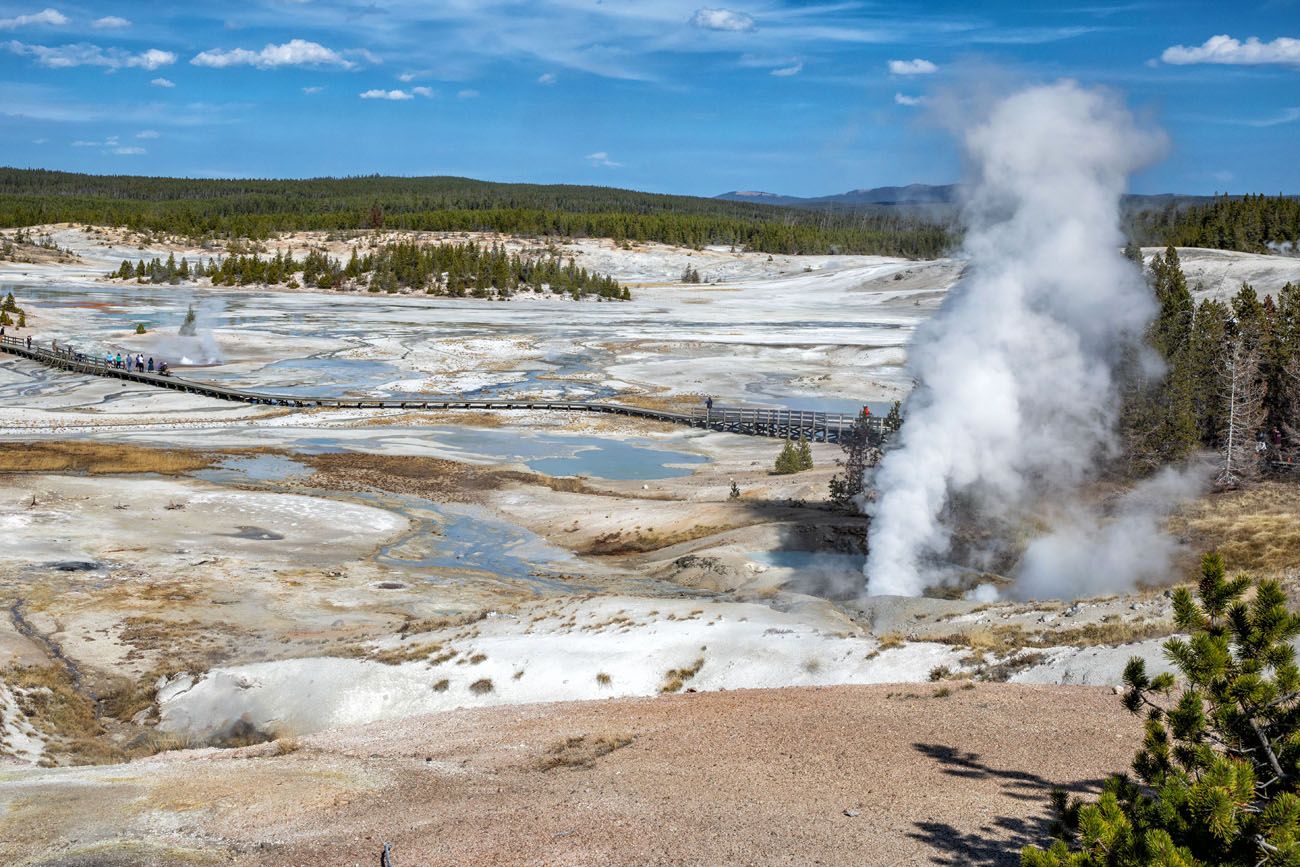
Porcelain Basin
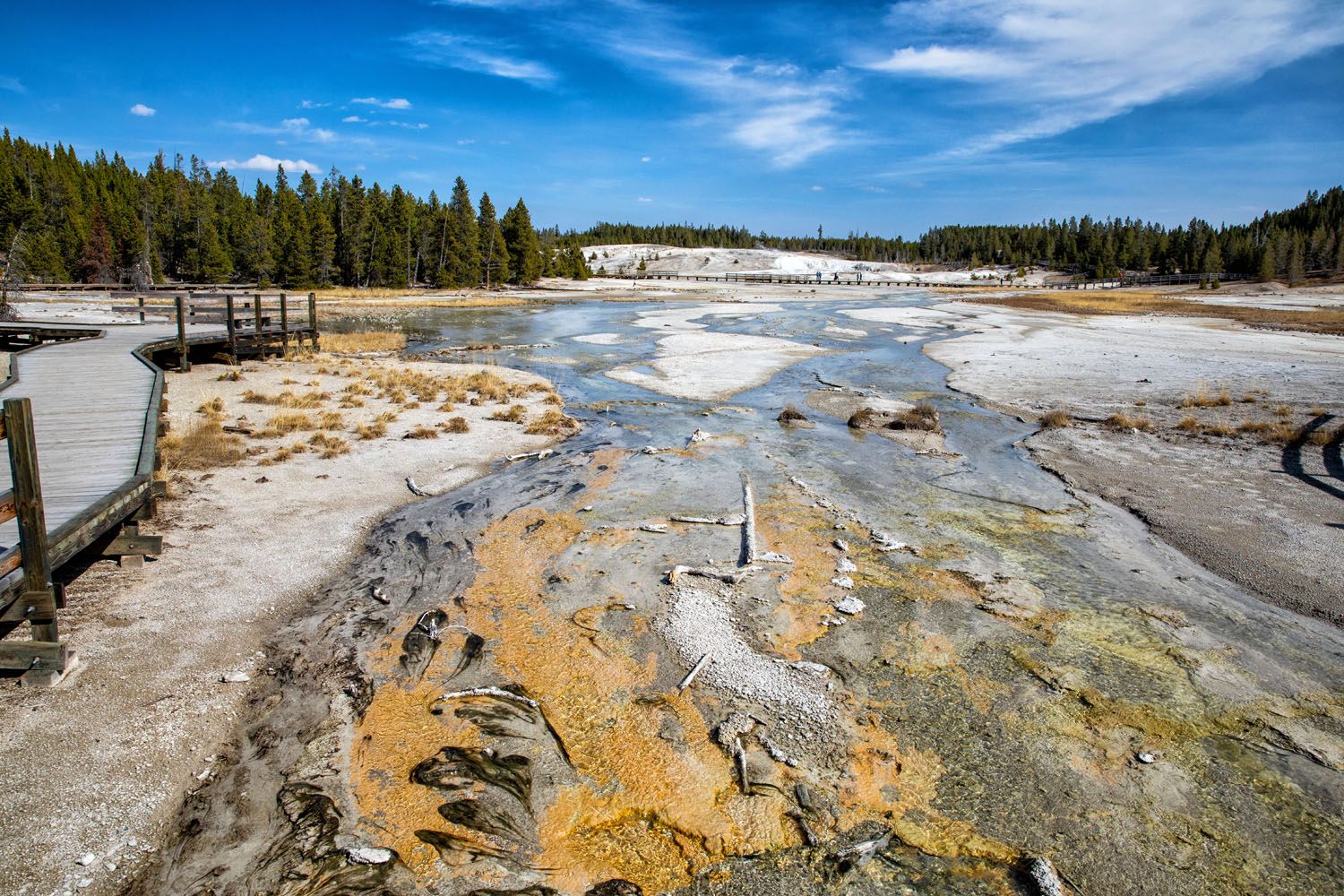
9. West Thumb Geyser Basin and Yellowstone Lake
Area: West Thumb, on the shore of Yellowstone Lake
Time Needed: About 30 minutes for the basin
Best For: Seeing geothermal activity and Yellowstone Lake in the same stop
Skip It If: You’ve hit your limit on hot springs and are prioritizing wildlife or hikes instead
Kara and I really liked this geyser basin. It’s quick to visit, about 30 minutes, and it gives you something none of the other basins do: brilliantly blue hot springs sitting right along the shore of Yellowstone Lake.
Abyss Pool is the highlight, but it’s the setting itself that makes West Thumb worth the stop: geothermal activity steaming right at the water’s edge is a combination you won’t see anywhere else in the park.
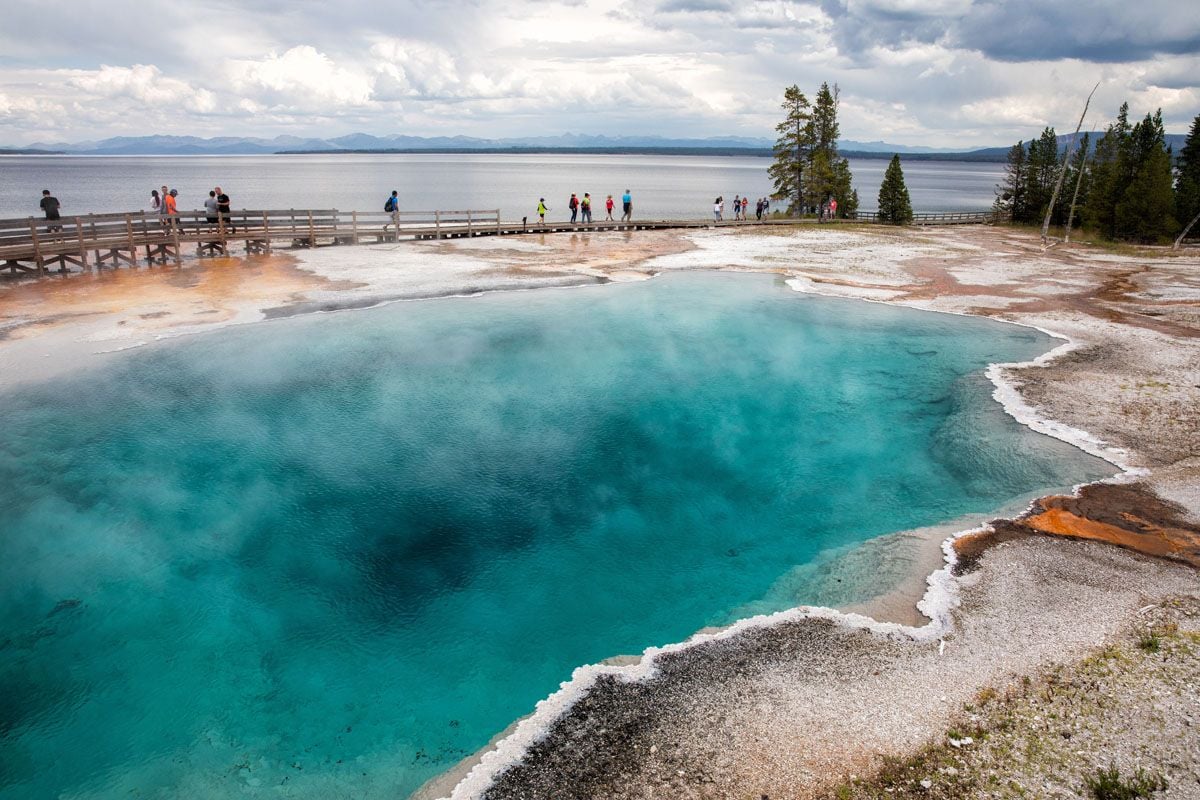
West Thumb Geyser Basin
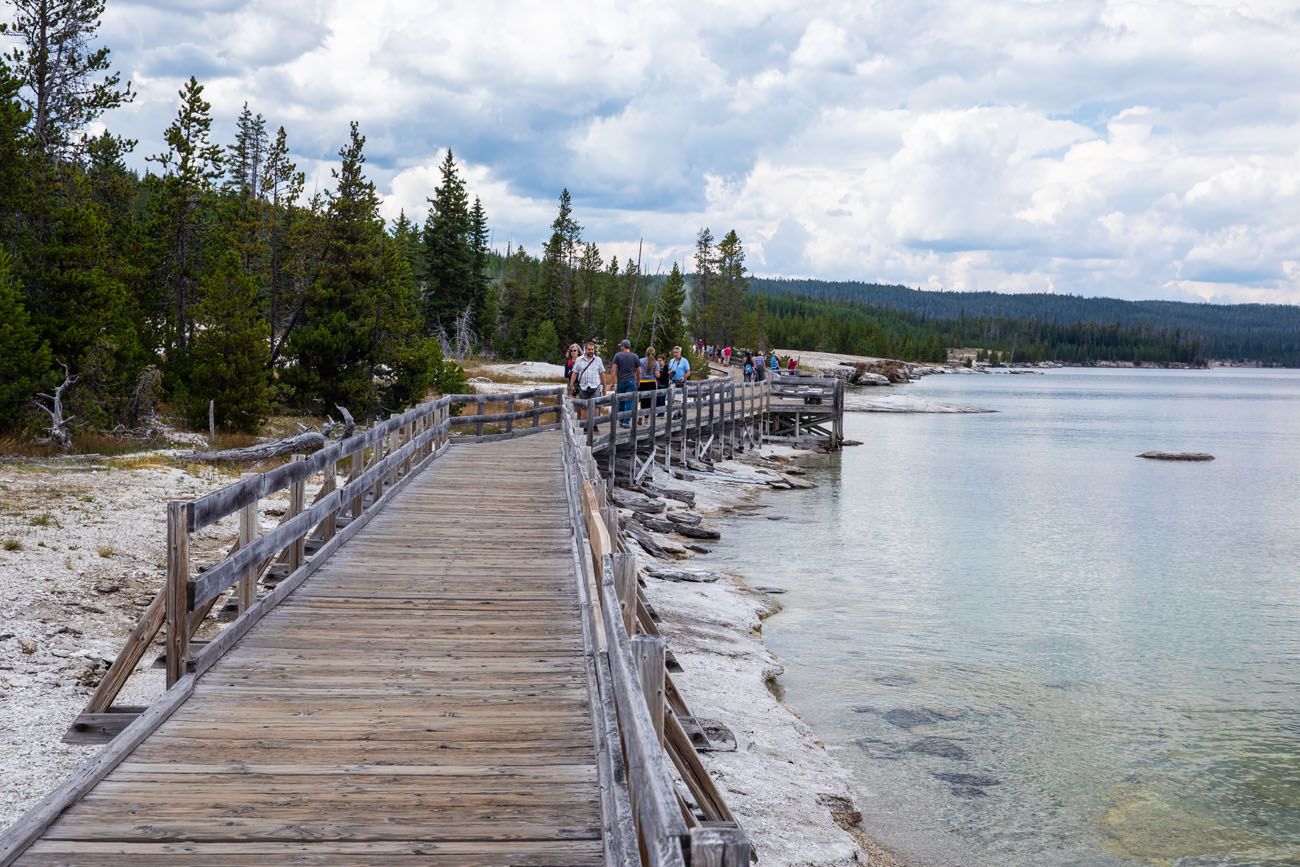
The West Thumb boardwalk and Yellowstone Lake
Yellowstone Lake itself is worth a mention beyond the basin. At over 130 square miles, it’s the largest high-elevation lake in North America, and its size is easy to appreciate from the West Thumb shoreline alone. If you have more time, the lake offers boat tours and rentals out of Bridge Bay Marina, and the historic Lake Yellowstone Hotel, the park’s oldest lodge, built in 1891, makes for a scenic stop even if you’re not staying there.
One important note: the lake’s water stays dangerously cold year-round, even in summer, so swimming isn’t recommended.
10. Have a Drink (or Stay) at the Old Faithful Inn
Area: Old Faithful / Upper Geyser Basin
Time Needed: 30 minutes to an hour, more if you linger
Best For: A unique vantage point on an Old Faithful eruption, plus a look at one of the most striking lodges in the National Park System
Skip It If: You’ve already watched an eruption from the boardwalk or Observation Point and are short on time; this is a bonus, not a replacement
The Old Faithful Inn is worth a stop even if you’re not staying the night. Built in 1903–1904 and designed by a then 29-year-old architect, Robert Reamer, it’s considered one of the largest log structures in the world, with a lobby that soars 76 feet up to the roofline and a massive stone fireplace anchoring the whole space.
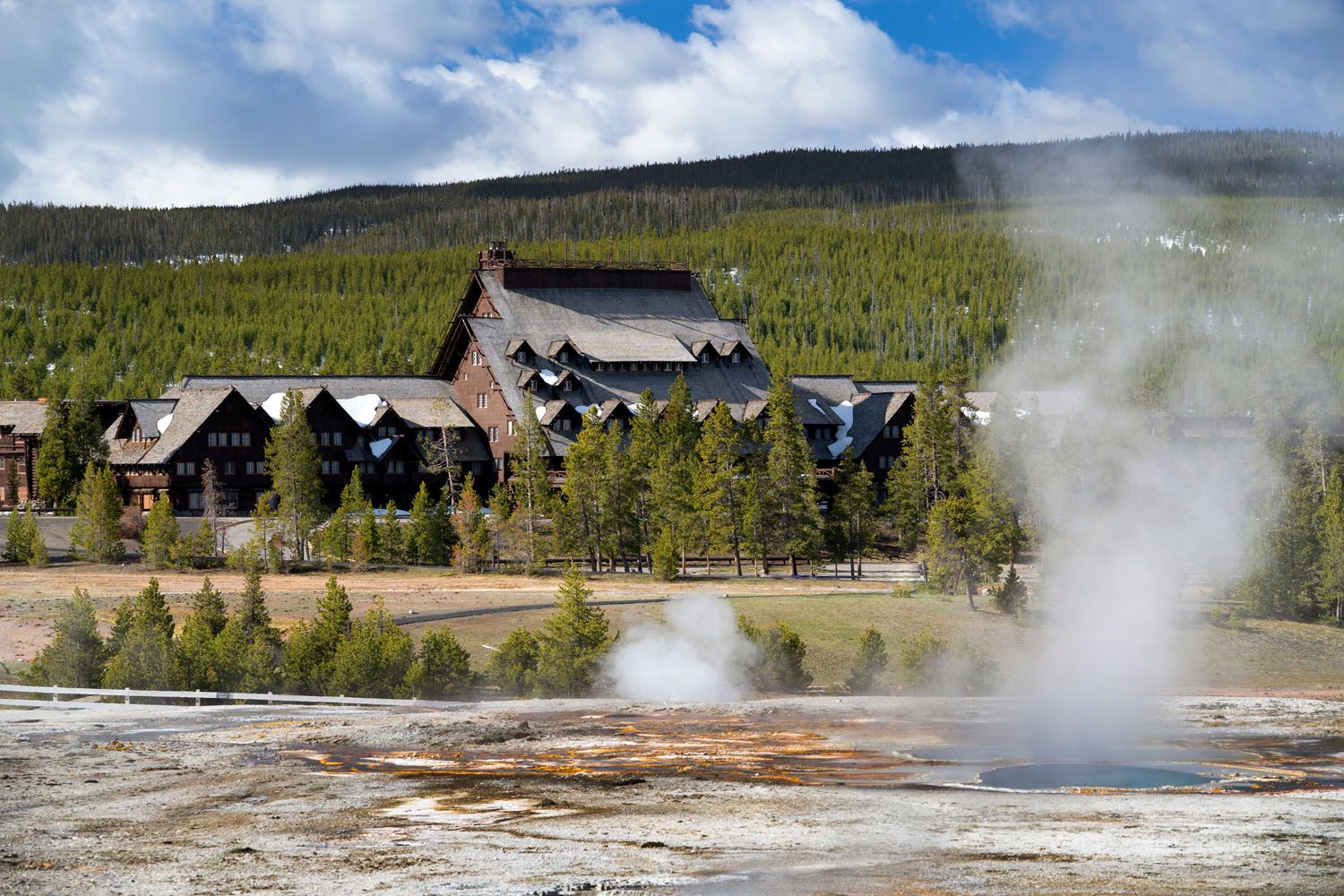
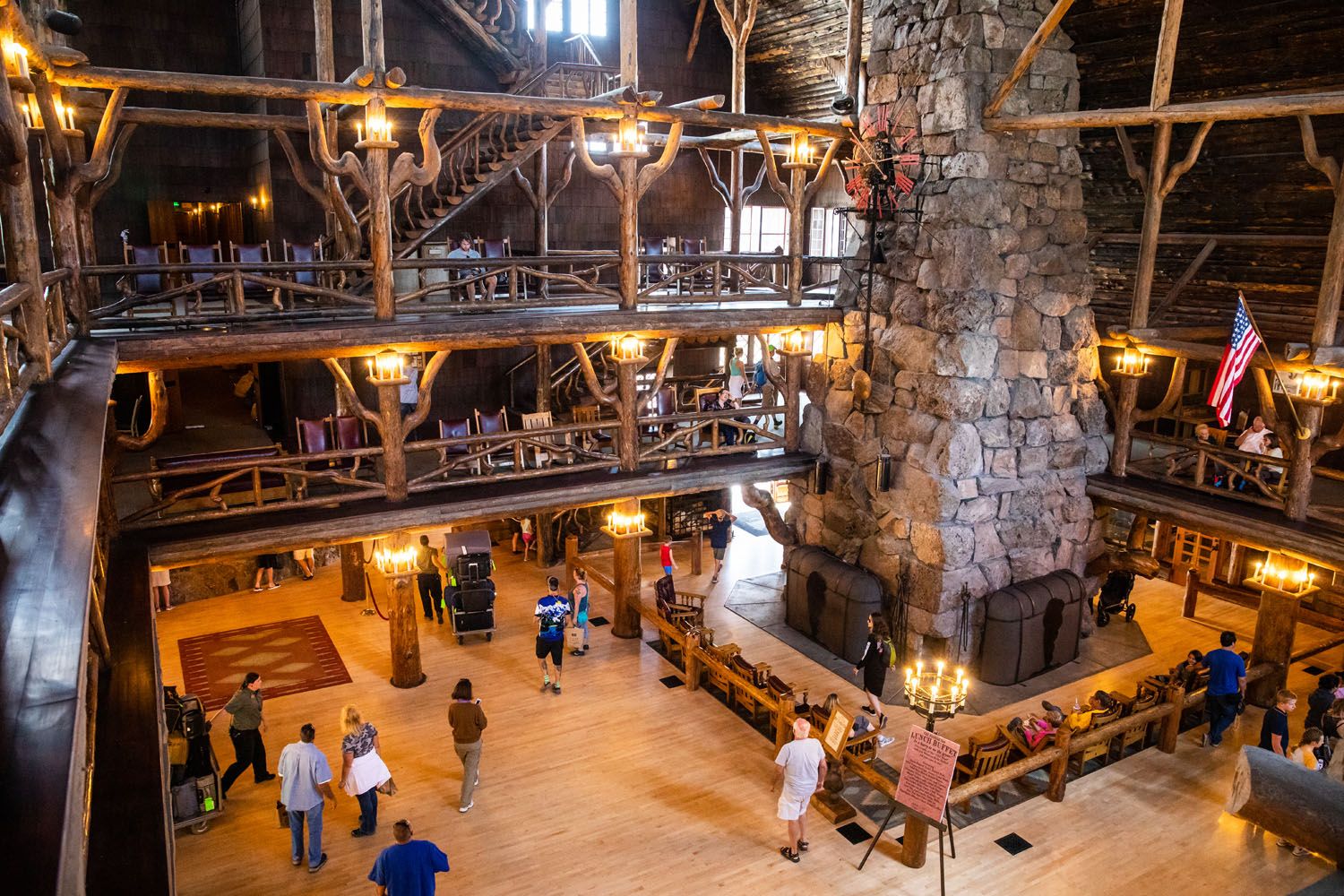
Kara and I got drinks and carried them out to the second-floor deck to watch an Old Faithful eruption from there and it’s one of our favorite ways we’ve experienced the geyser. You’re elevated just enough to get a different vantage point than the boardwalk crowds below, with the historic Inn at your back.
If you’re looking for a place to grab that drink, the Bear Pit Lounge just off the lobby has been serving guests since 1936, right after Prohibition ended, and still has some of its original hand-etched glass panels depicting cartoon bears. It’s a fun, low-key spot with real history behind it.
History buffs should also look for the Crow’s Nest, the small treehouse-like lookout perched near the roofline where a string quartet used to play for guests below. It’s been closed to the public since a 1959 earthquake left it structurally unstable, though we’ve read that a very limited, reservation-only tour with the bellman occasionally grants access. It’s worth asking about at the front desk if you’re curious, though don’t count on it.
Things to Do With More Time
Covered the essentials and still have room in your itinerary? These next stops round out the park with some of our favorite quieter spots, a couple of scenic drives, and a few features that are easy to miss if you don’t know to look for them. None of these are must-dos, but each earns its place on this list for a reason. Read the “best for” and “skip it if” notes below to see which ones fit your trip.
11. Hike to Artists Paintpots
Area: Gibbon Geyser Basin, about halfway between Norris and Madison
Time Needed: 45 minutes to an hour
Best For: Bubbling mud pots up close, without the crowds of the bigger basins
Skip It If: You’ve already spent a lot of time at Norris or Fountain Paint Pots and want variety instead of more of the same
Just south of Norris Geyser Basin, Artist Paint Pots is a small thermal area with several hot springs and colorful mud pots. It’s about a 1-mile round trip on a mostly flat trail that climbs briefly up a hillside. It can feel like a longer walk than it is, but it’s worth it.
We loved the vantage point from the upper boardwalk, looking down over the basin at the mix of orange, red, and white mineral deposits below. It’s a quieter stop than most of the bigger basins, and the elevated view gives you a different perspective than you get walking flat boardwalks elsewhere in the park.
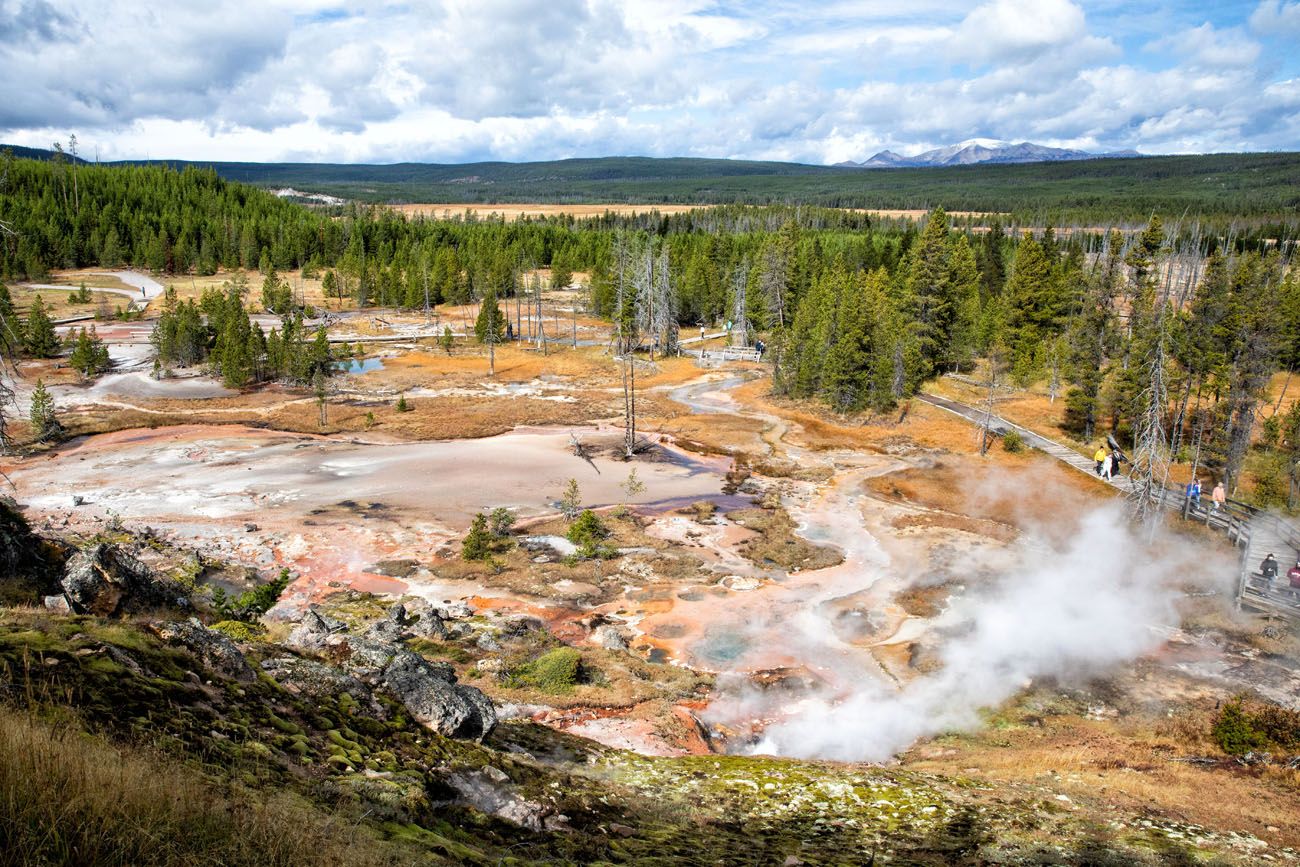
Artist Paintpots
12. Photograph Roosevelt Arch
Area: North Entrance, near Gardiner, Montana
Time Needed: 10 to 15 minutes
Best For: A quick, easy stop with historical significance. Good if you’re entering or exiting through the North Entrance.
Skip It If: You’re not passing through the North Entrance; it’s not worth a special detour
When Yellowstone first opened, the North Entrance was the park’s main gateway. Visitors would arrive by train in Gardiner, then continue into the park by horse-drawn carriage. This stone arch was erected in 1903, and its cornerstone was laid by President Theodore Roosevelt himself. The inscription at the top reads “For the Benefit and Enjoyment of the People.”
A visit here is quick. You can walk or drive right through the arch. Gardiner sits just around the corner, a good spot to grab a bite to eat or use as a home base for visiting the park.
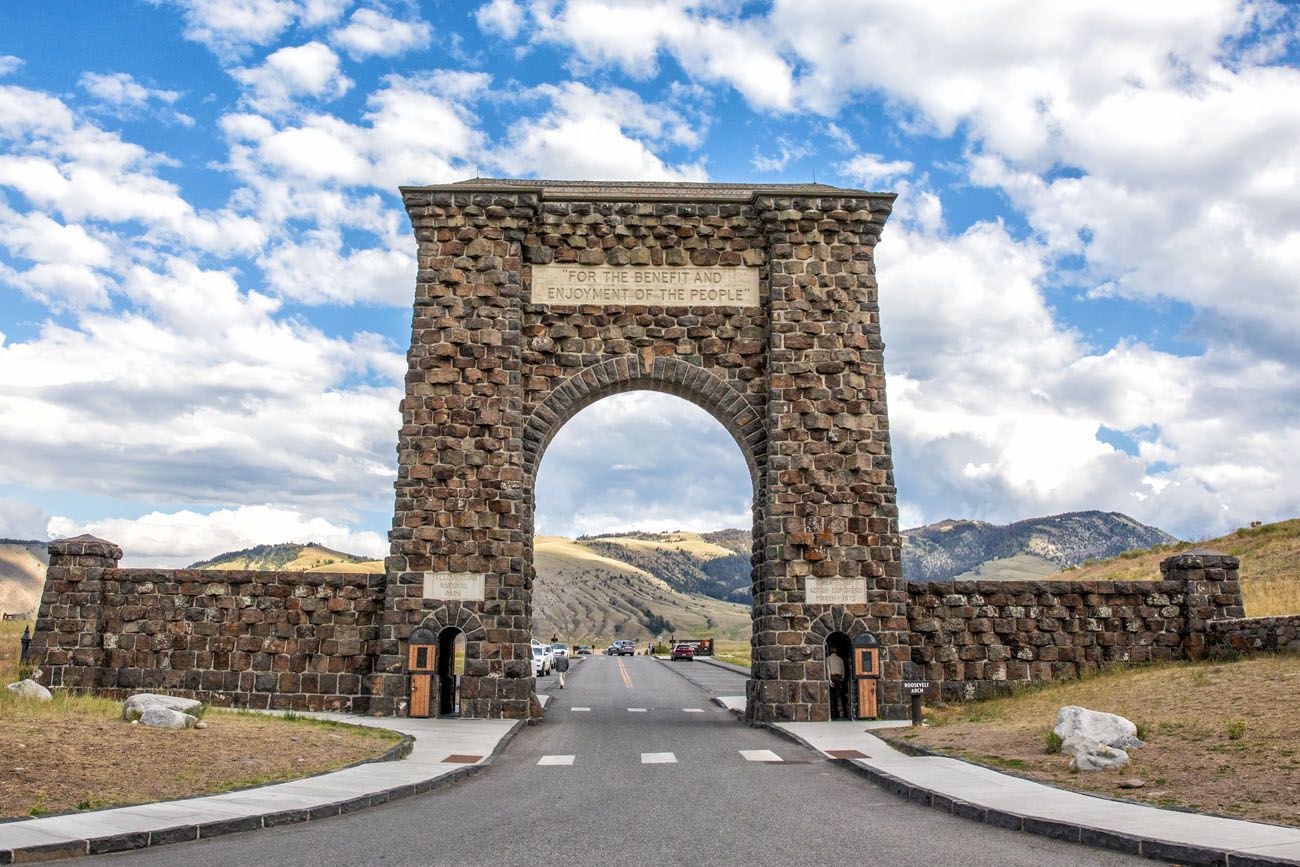
Roosevelt Arch
13. Watch the Mudpots at Mud Volcano
Area: Between Hayden Valley and Yellowstone Lake, along the Grand Loop Road
Time Needed: 20 to 45 minutes
Best For: A completely different kind of geothermal feature: sound and motion over color
Skip It If: A strong sulfur smell is a dealbreaker for you; this area is known for it
On paper, Mud Volcano doesn’t sound like much. It’s not colorful like Grand Prismatic, and it doesn’t erupt on a schedule like Old Faithful. But we’ve come back to this stop a few times now, and there’s something genuinely mesmerizing about it. The boiling mudpots pop and plop with small explosions and strange, gurgling sounds, and it’s surprisingly hard to look away.
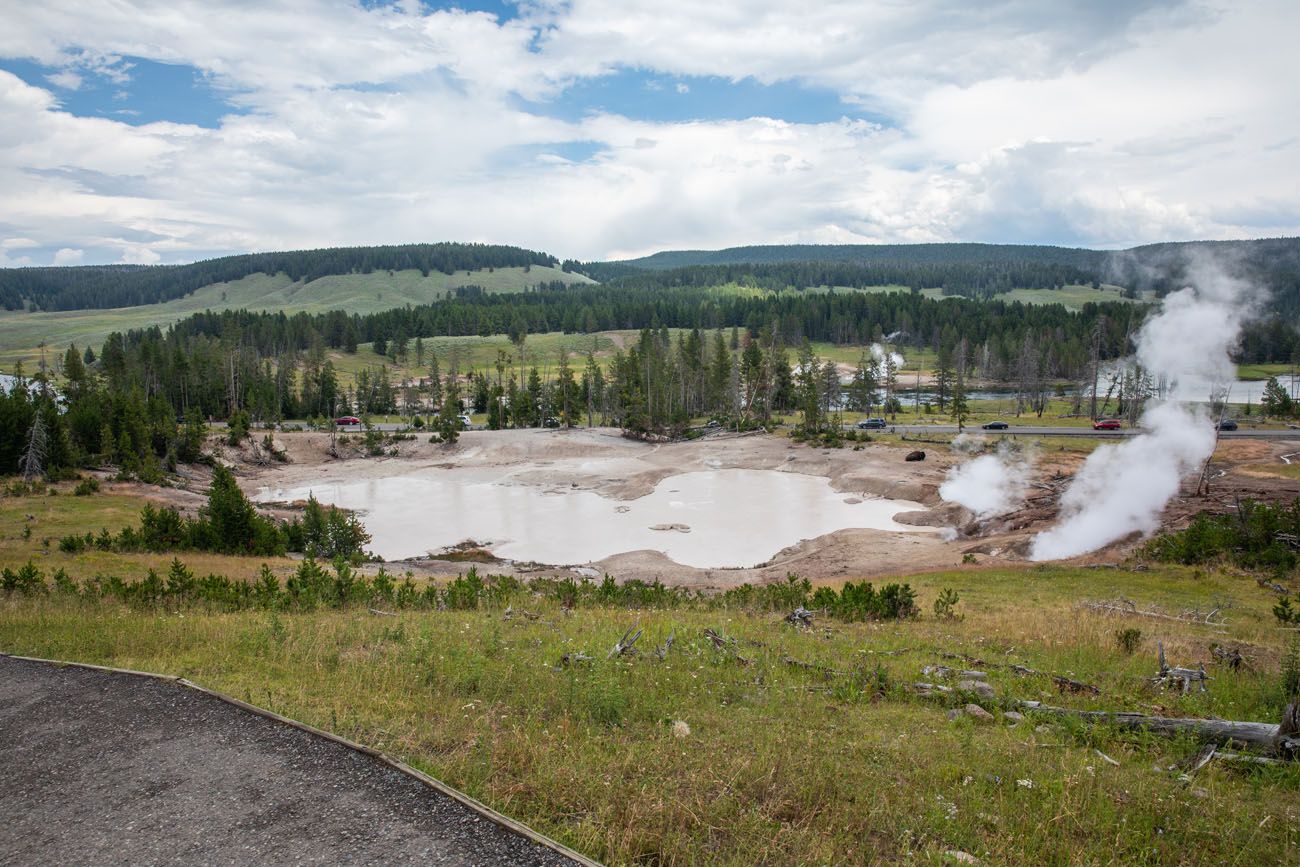
A short boardwalk loop (under a quarter mile) takes you past the two main attractions: Mud Volcano itself, and Dragon’s Mouth Spring, a churning cave-like pool where steam and water surge out with a booming, growling sound. Early explorers thought it sounded like a dragon breathing. If you have more time, a longer 0.7-mile loop continues on to features with equally fun names: Black Dragon’s Cauldron, Churning Cauldron, Sour Lake, and Sizzling Basin.
Fair warning: the whole area smells strongly of sulfur, courtesy of the hydrogen sulfide gas escaping the ground here. It’s worth tolerating for a few minutes to see (and hear) what’s going on.
14. Hike to Fairy Falls
Area: Midway Geyser Basin, from the Fairy Falls Trailhead
Time Needed: 2 to 3 hours for the shorter route
Best For: An easy hike to one of Yellowstone’s tallest waterfalls, especially if you’re already at the Fairy Falls parking lot for the Grand Prismatic Overlook
Skip It If: You’re not up for adding 5+ miles of hiking to your day on top of the overlook
Fairy Falls is one of Yellowstone’s tallest waterfalls. You can only get here by hiking and it is easy to combine a visit to Fairy Falls with the Grand Prismatic Spring Overlook. Both start from the same parking lot.
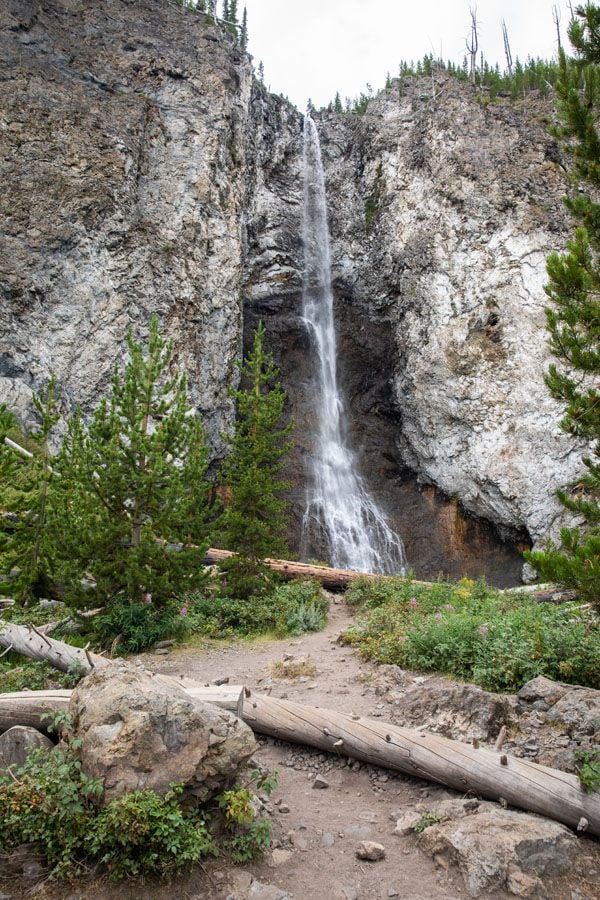
Fairy Falls
There are two ways to get here. From the Fairy Falls parking lot (the same parking lot used to visit the Grand Prismatic Spring Overlook) it is a 5.4 mile round trip, easy hike. You can also park at the end of Fountain Flat Drive for a 10-mile round trip hike.
Most of the hike is through a lodgepole forest. It is possible to encounter bear and other wildlife on the trail.
Fairy Falls is worth the visit if you are looking for an easy hike and want to see one of Yellowstone’s tallest waterfalls.
Please practice the seven principles of Leave No Trace: plan ahead, stay on the trail, pack out what you bring to the hiking trail, leave areas as you found them, minimize campfire impacts, be considerate of other hikers, and do not approach or feed wildlife.
15. Hike to the Peak of Mt. Washburn
Area: Between Tower-Roosevelt and Canyon Village, along the Dunraven Pass corridor
Time Needed: 3 to 5 hours round trip
Best For: Panoramic views over much of the park, plus it is one of the most popular day hikes in Yellowstone
Skip It If: The forecast calls for storms; this summit is fully exposed, and weather can turn fast at 10,000+ feet
For sweeping, panoramic views of Yellowstone National Park, hike to the summit of Mt. Washburn, at 10,219 feet. It’s one of the most popular day hikes in the park, and it’s easy to see why. On a clear day, you can pick out Yellowstone Lake, the Grand Canyon of the Yellowstone, and even the distant Tetons from the top.
There are two ways up. The more scenic route starts at the Dunraven Pass Trailhead on Grand Loop Road, a 6.2-mile round trip. You can also start from Chittenden Road, a narrow dirt road that ends at a parking area, for a shorter 5-mile round trip. Both trails are wide, well-maintained former service roads with a steady but manageable climb. There’s no scrambling or route-finding involved, just elevation and exposure to contend with.
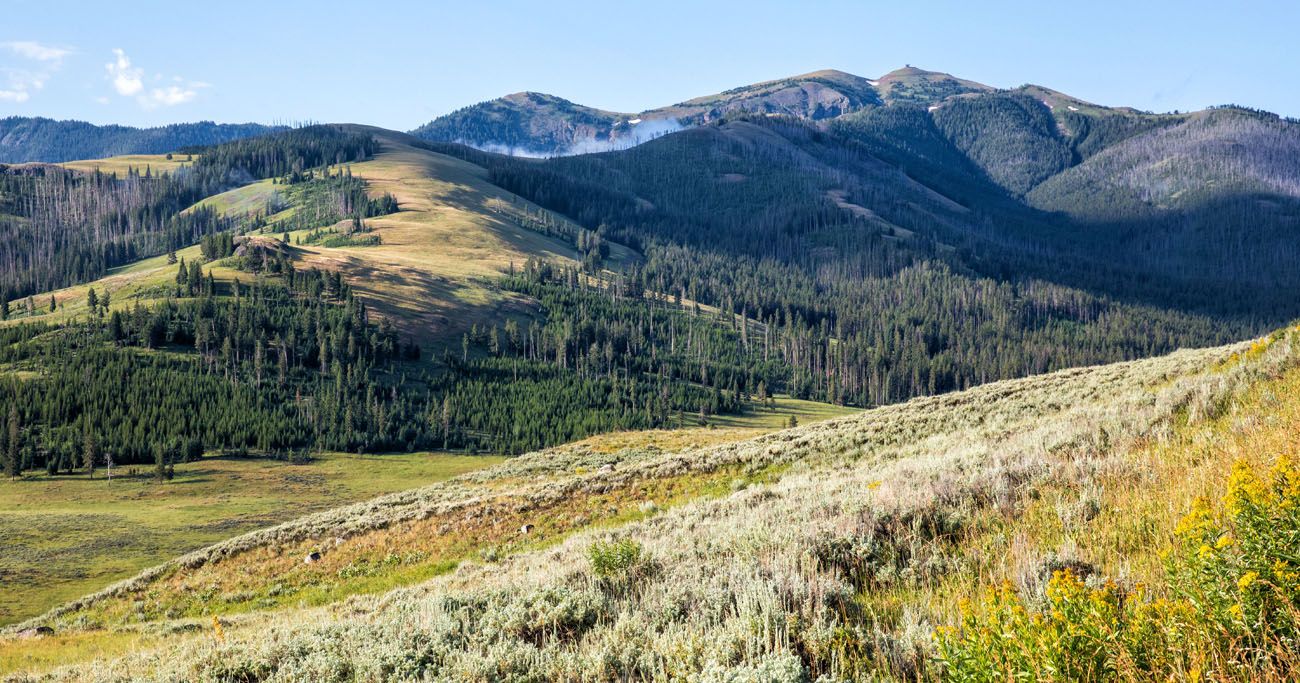
At the summit, you’ll find one of Yellowstone’s three fire lookout towers, still staffed during fire season, with an observation deck and interpretive exhibits open to visitors.
This is best done on a clear day. When we did this, a storm was moving in so the peak of Mt. Washburn was stuck in the clouds.
16. Drive Over Dunraven Pass
Area: Between Tower-Roosevelt and Canyon Village, at the base of Mt. Washburn
Time Needed: 20 to 30 minutes, more if you stop at the overlooks
Best For: A scenic stretch of driving with views over the park’s forests and rolling hills
Skip It If: You’re already hiking Mt. Washburn because the trailhead sits right along this road, so you’ll see much of the same scenery on foot
For gorgeous views of the park, drive over Dunraven Pass. There are numerous overlooks and turnouts along the way where you can pull off and take in the scenery.
We’ve driven this stretch a few times now, and it’s a genuinely scenic drive, with rolling hills and forest views that give you a different feel from the geyser basins and valleys elsewhere in the park. It’s a good drive any time of day, and while we haven’t personally gotten lucky with wildlife sightings here, it’s always a possibility, especially near dawn or dusk.
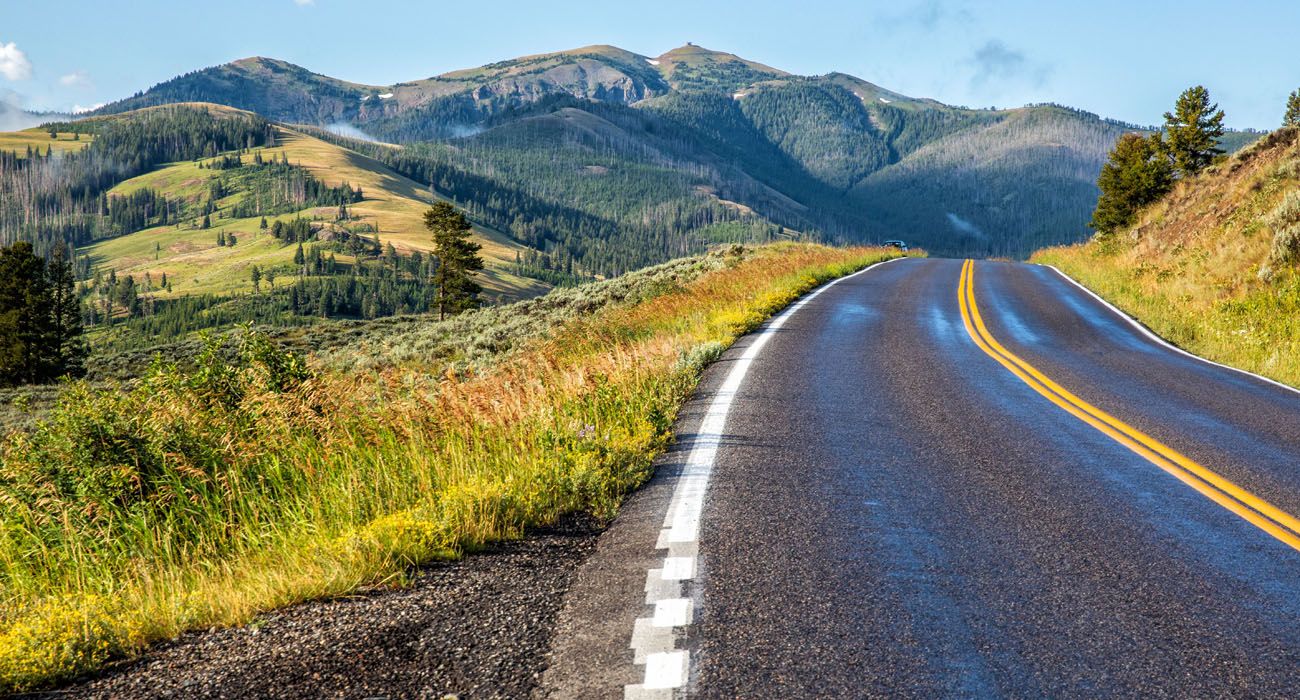
Dunraven Pass
17. Walk the Fountain Paint Pot Trail
Area: Lower Geyser Basin, near Firehole Lake Drive
Time Needed: 30 to 45 minutes
Best For: Seeing all four types of Yellowstone’s hydrothermal features in one short walk
Skip It If: You’ve already covered similar ground at Upper Geyser Basin or Norris and are pressed for time
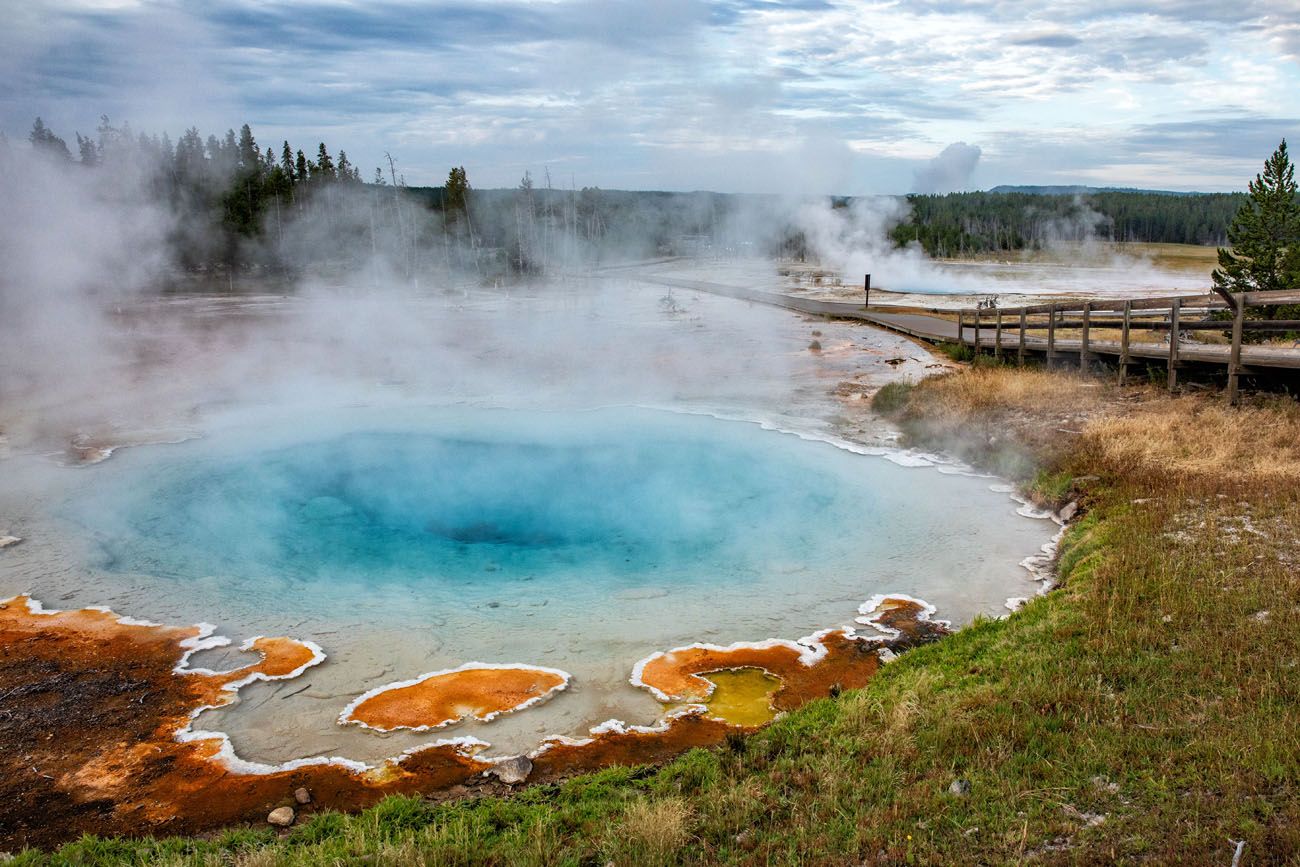
This short, half-mile boardwalk trail packs in all four major hydrothermal features found in the park: hot springs, geysers, mud pots, and fumaroles, a nice one-stop primer if you haven’t seen all of them elsewhere yet.
Kara and I visited one morning after hiking out to Fairy Falls, under overcast skies. The clouds muted the colors of the springs a bit, but the morning mist drifting across the basin gave the whole place an almost mystical feel.
18. Walk the Boardwalk at Black Sand Basin
Area: Upper Geyser Basin, about a mile north of Old Faithful
Time Needed: 20 to 30 minutes
Best For: A quiet, photogenic stop close to Old Faithful, without the crowds of the bigger basins
Skip It If: You’re already covering Upper Geyser Basin and Midway Geyser Basin and want to prioritize bigger, more active features instead
Black Sand Basin gets its name from the fragments of black obsidian sand scattered across the ground here. It’s a small offshoot of the larger Upper Geyser Basin, just a mile north of Old Faithful. It’s not the most active geothermal area in the park; in our experience, it’s quieter and less dramatic than the bigger basins nearby. But that’s part of the appeal.
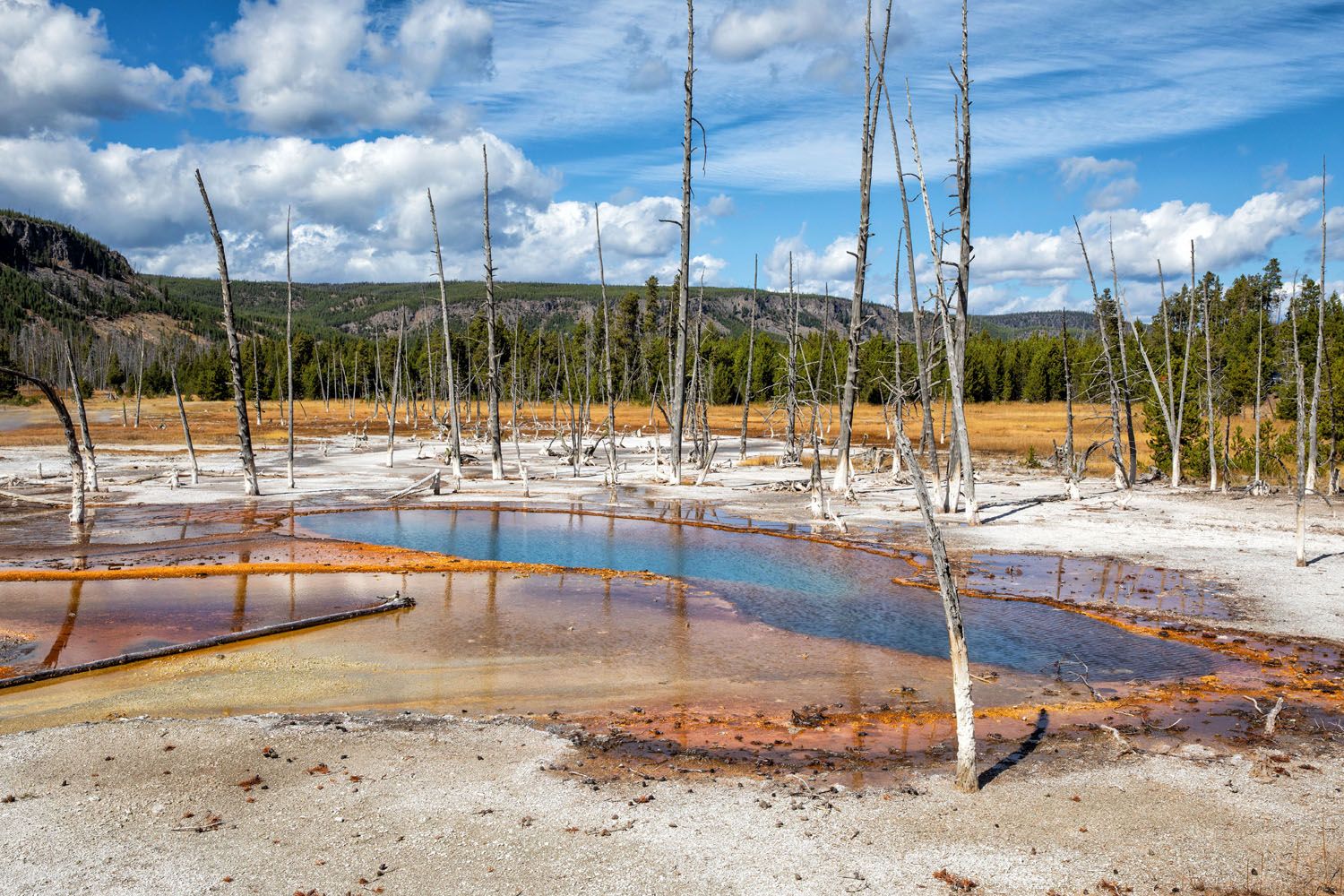
We visited on our most recent trip and had the boardwalk almost entirely to ourselves, a rare thing this close to Old Faithful. It’s quick, it’s genuinely photogenic, and the quiet made it a nice change of pace from the more crowded stops elsewhere in the park.
The short, mostly flat boardwalk loops past a handful of named features, including Emerald Pool, a deep green spring ringed with yellow and orange, and Cliff Geyser, which erupts unpredictably from the edge of Iron Spring Creek, sometimes reaching 30 to 40 feet.
19. Go Off the Beaten Path on Blacktail Plateau Drive
Area: North Yellowstone, between Mammoth and Tower, running parallel to the Grand Loop Road
Time Needed: About 30 minutes
Best For: A quieter, scenic alternative route with a chance at wildlife sightings
Skip It If: You’re visiting outside of June through September, when the road is closed
Blacktail Plateau Drive is lightly-trafficked scenic drive. This 7-mile, one-way dirt road heads parallel along the Grand Loop Road between Mammoth and Tower. If you get lucky, you can spot bison, elk, and bear (we were not so lucky). Even so, it’s a fun, enjoyable ride with beautiful scenery.
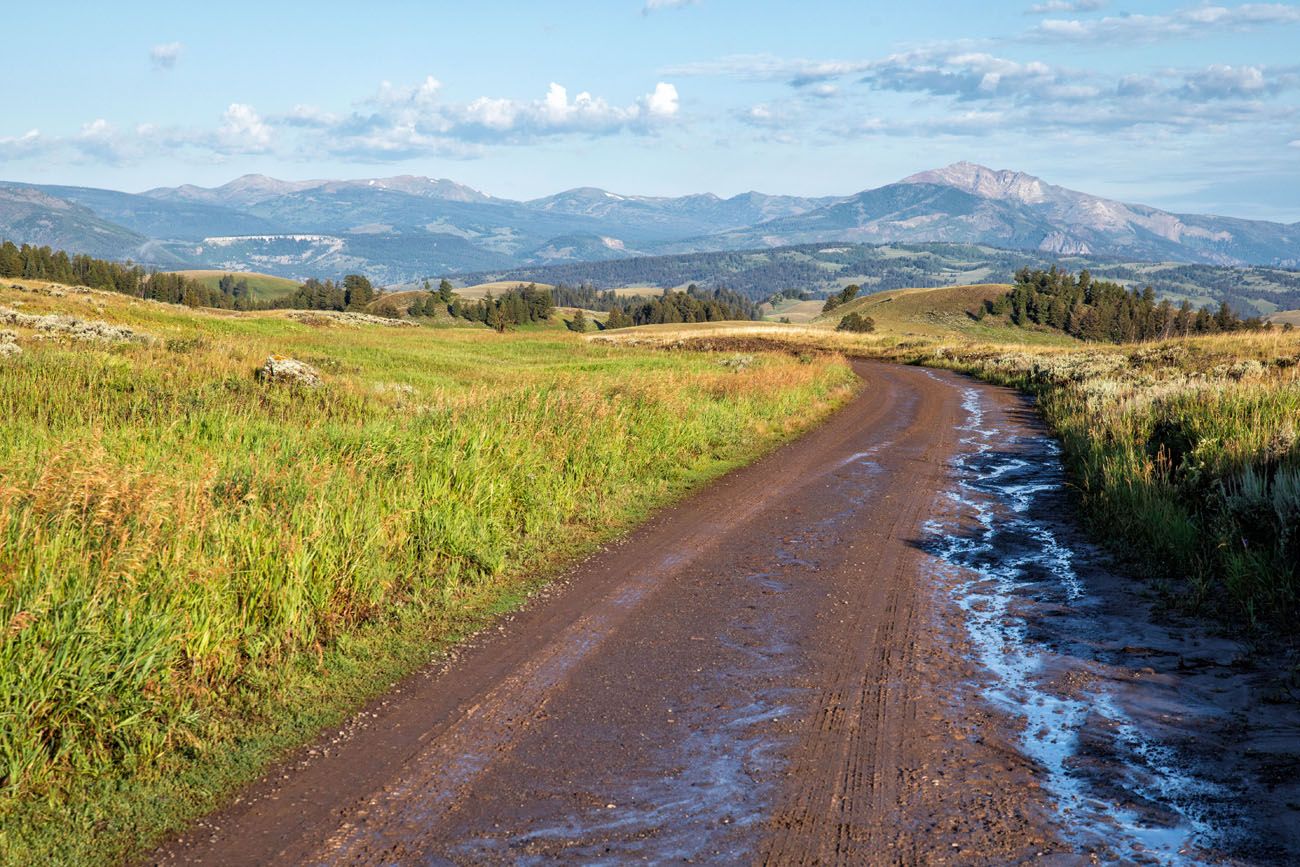
Blacktail Plateau Drive
It takes about 30 minutes to do this drive. A 4×4 is not necessary but it does make the drive easier. We saw minivans and sedans on this road. I drove a Jeep Compass. RV’s, buses, and trailers are not permitted on this road.
Blacktail Plateau Drive is open from June through September.
20. Drive Firehole Lake Drive
Area: Lower Geyser Basin, between Old Faithful and Madison
Time Needed: 30 to 45 minutes
Best For: Seeing several geysers up close from your car, with a quieter, less crowded feel than the major basins
Skip It If: You’re already visiting Fountain Paint Pot Trail and Midway Geyser Basin nearby and don’t have time for a third stop in the same stretch of road
Firehole Lake Drive is a 3-mile, one-way road through the Lower Geyser Basin, sandwiched between Fountain Paint Pot Trail to the north and Midway Geyser Basin to the south. It’s a good pick if you want to see several geothermal features without leaving your car much, and it tends to be quieter than the bigger-name basins nearby.
The highlight is Great Fountain Geyser, one of the park’s most powerful, with eruptions that can reach 100 to 200 feet, though intervals between eruptions run 8 to 15 hours, so catching one takes good luck. Check predicted eruption times at the Old Faithful Visitor Center before you go if you want a shot at seeing it.
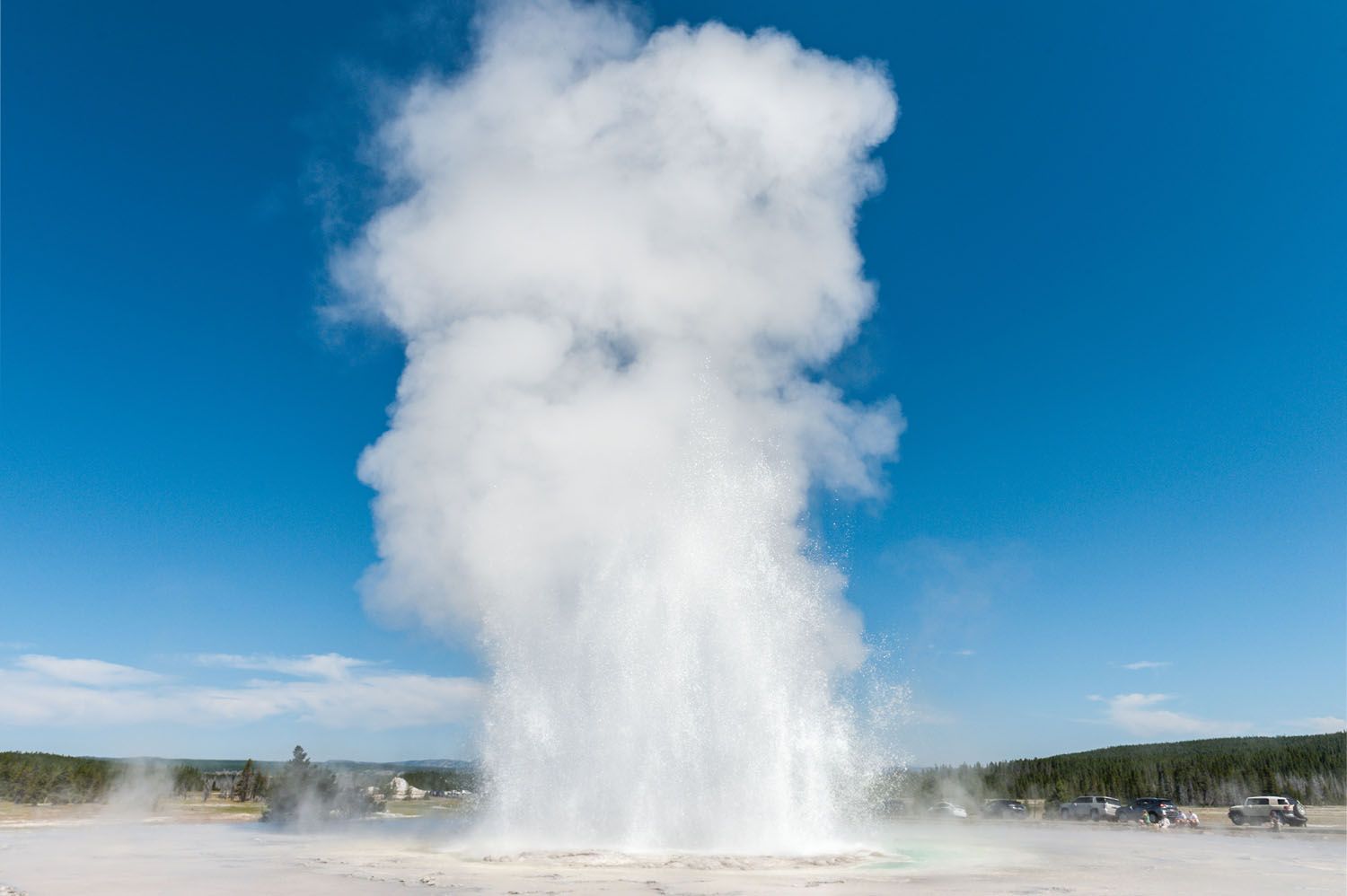
Great Fountain Geyser
Further along, White Dome Geyser erupts far more frequently, typically every 15 to 30 minutes, from one of the largest geyserite cones in the park. The drive continues past Firehole Lake itself, where a short boardwalk leads you along the steaming shoreline, before looping back to the Grand Loop Road.
21. Drive Firehole Canyon Drive and See Firehole Falls
Area: South of Madison Junction, off the Grand Loop Road
Time Needed: 20 to 30 minutes for the drive; longer if you stop to swim
Best For: A scenic detour with a waterfall and one of the only legal swimming spots in the park
Skip It If: You’re not interested in swimming and are already tight on time
Firehole Canyon Drive is a scenic, 2-mile, one-way road that splits off from the Grand Loop just south of Madison Junction, winding through a narrow canyon with steep lava-rock walls rising on either side.
About a mile in, a pullout gives you a view of Firehole Falls, a 40-foot waterfall tumbling through the canyon.
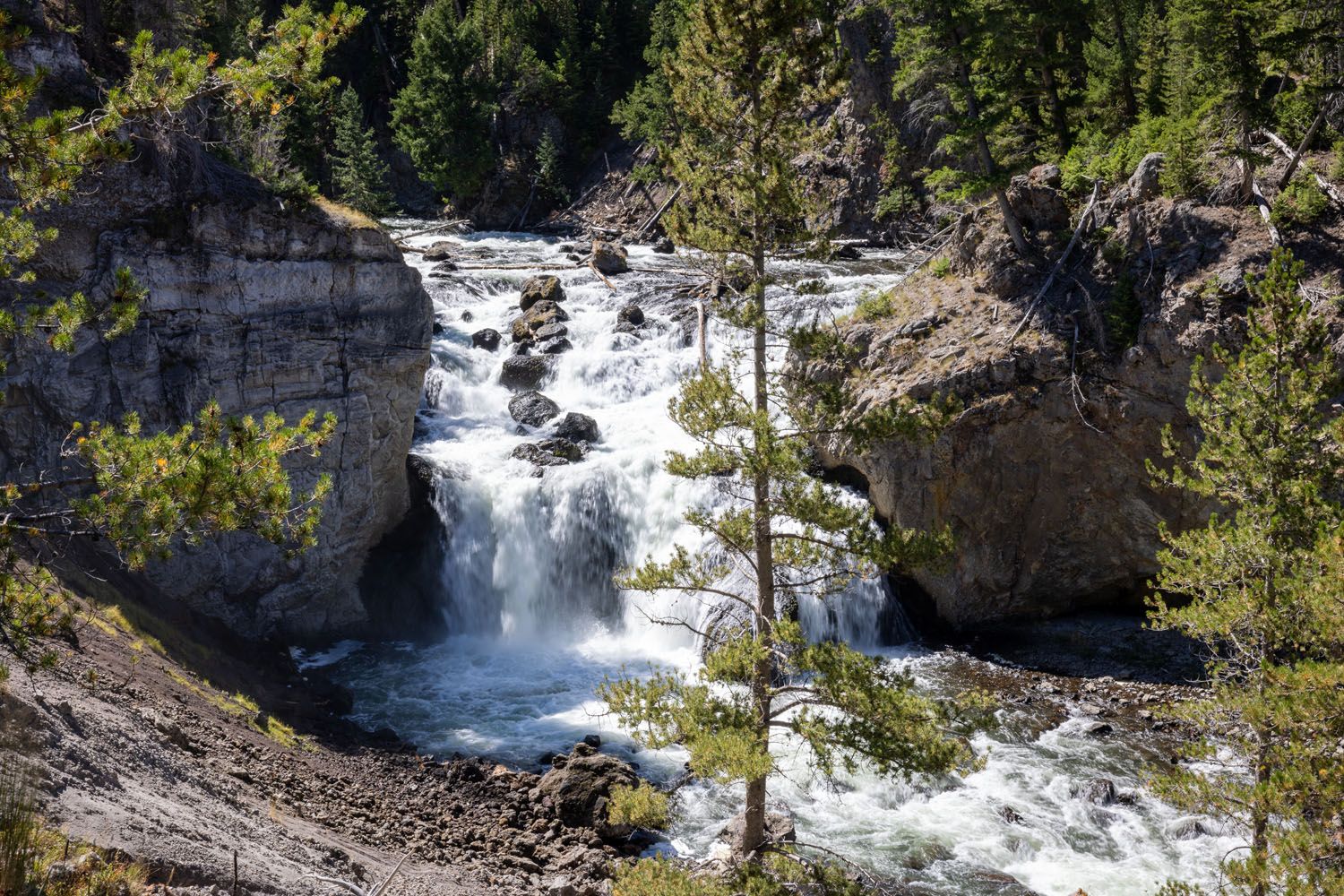
Firehole Falls
A little further along sits the Firehole Canyon Swimming Area, one of only two spots in the entire park where swimming is officially permitted (the other being Boiling River, which has been closed since the 2022 flood). The river here runs cooler than a hot spring, but it gets a boost from nearby geothermal features, making it one of the more comfortable places in the park to get in the water.
Expect a rocky beach and rocky riverbed, so water shoes are worth bringing, and note there’s no lifeguard on duty. The swimming area is open seasonally, typically in the warmer summer months.
22. Go Fishing in Yellowstone
Area: Throughout the park. The Madison, Firehole, Yellowstone, and Lamar Rivers are among the most popular.
Time Needed: Half a day or more, depending on how serious you want to get
Best For: Anglers. Yellowstone is a genuinely world-class fly-fishing destination.
Skip It If: Fishing isn’t already an interest
Yellowstone is one of the best fly-fishing destinations in the country, drawing anglers specifically for its rivers as much as for its geysers and wildlife. Cutthroat trout are the park’s native species, and there’s a strong conservation focus here — cutthroat, along with mountain whitefish and Arctic grayling, must generally be released, while some nonnative species (like lake trout in Yellowstone Lake) are required to be kept and reported to help protect native fish populations.
Popular waters include the Madison, Firehole, Yellowstone, and Lamar Rivers, along with Yellowstone Lake itself. The standard fishing season runs from the Saturday of Memorial Day weekend through the end of October, though a few stretches of the Madison and Gardner Rivers now stay open year-round.
What you’ll need: A separate Yellowstone National Park fishing permit is required for anyone 16 or older. A state fishing license from Montana, Wyoming, or Idaho does not substitute for it. Permit pricing and specific regional regulations change from year to year, so check the current NPS fishing regulations before you go.
If you’ve never fly-fished before, several outfitters based in the gateway towns offer guided trips and gear rentals for beginners.
23. See Tower Fall
Area: Tower-Roosevelt area, north Yellowstone
Time Needed: 10 to 15 minutes for the overlook; 30 to 45 minutes more if you add the river trail
Best For: A quick, easy stop if you’re already driving through the area
Skip It If: You’re tight on time. Of everything on this list, this is the one we’d cut first.
Tower Fall is a popular waterfall to visit since it sits almost right along the roadside. From the Tower parking lot, it’s a short, tenth-of-a-mile walk to the overlook.
We’ll be honest: a lot of people visit this waterfall, but in our opinion, it’s not all that thrilling. Since it’s so popular, we felt it was worth mentioning, but if you’re driving through the area anyway, it’s worth a quick look rather than a dedicated stop.
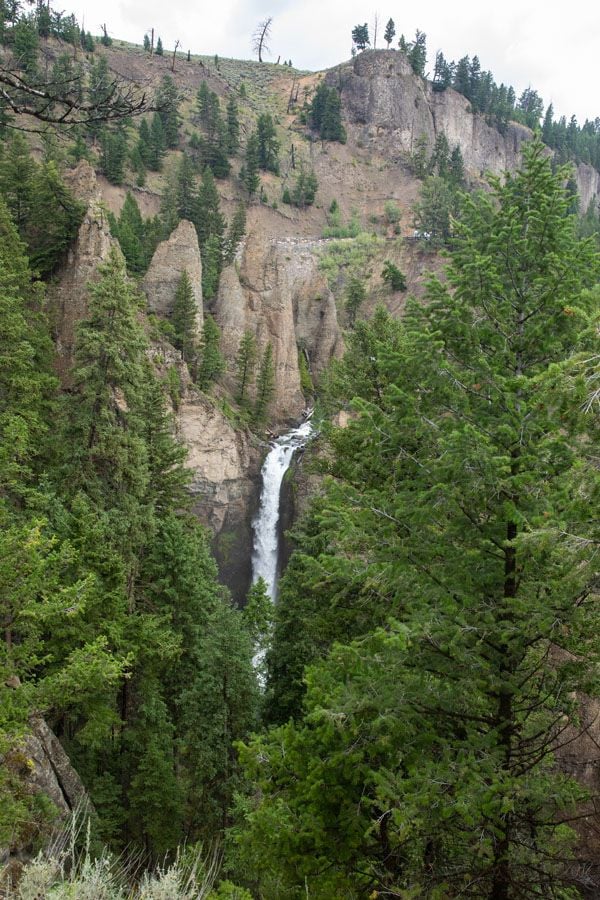
If you want to stretch your legs further, a roughly 1-mile round-trip trail continues past the overlook down toward the Yellowstone River. Worth knowing before you set out: this trail used to continue on to a viewing platform at the base of the falls, but that final stretch was washed out by slides back in 2004 and has remained closed ever since. So today, the hike gets you down to the river itself, but not a close-up view of the waterfall.
Bonus! Two Scenic Drives Outside of Yellowstone
These technically sits outside of Yellowstone, but there are two very scenic drives that sit right outside of Yellowstone National Park. If you have several days in the park, or will be traveling through the northeast or east entrance, these are worth adding to your things to do in Yellowstone list.
Beartooth Highway
Area: Northeast Entrance, connecting to Red Lodge, Montana
Time Needed: 2 to 3 hours one-way
Best For: One of the most scenic drives in America
Skip It If: Honestly, don’t skip it if you’re anywhere near the Northeast Entrance and enjoy scenic drives
Beartooth Highway is a 68-mile road that starts at Yellowstone’s northeast entrance and ends in Red Lodge, Montana. It’s incredible enough that we wrote an entire dedicated guide just for this drive. Along the way, you’ll pass through several national forests, take in the tallest peaks in Montana, see numerous alpine lakes, and have the option to add on short hikes to viewpoints and waterfalls. The road is typically open from June through early October.
We drove it from Red Lodge into the park one morning, which fed us straight into Lamar Valley. From there we spent the day working through Mammoth, Norris, Black Sand Basin, and Hayden Valley before exiting through Buffalo Bill Cody Scenic Byway, a very long day, but one of our favorites in the park. If you like scenic drives, Beartooth is genuinely worth the detour.
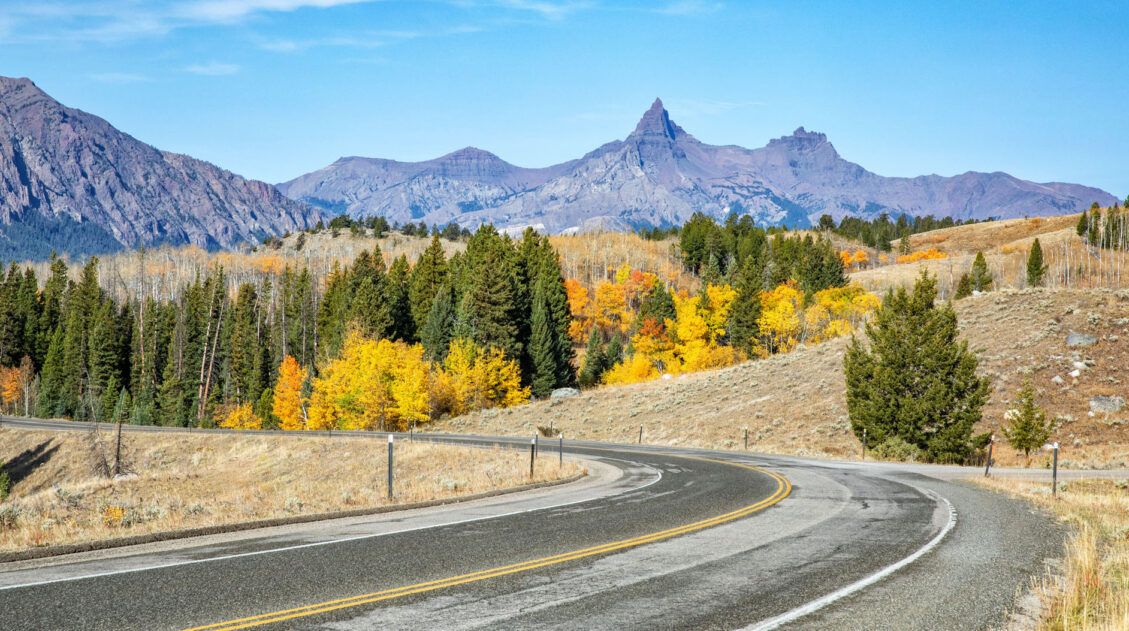
Beartooth Highway: Driving One of America’s Most Scenic Roads
Everything you need to know to drive the amazing Beartooth Highway.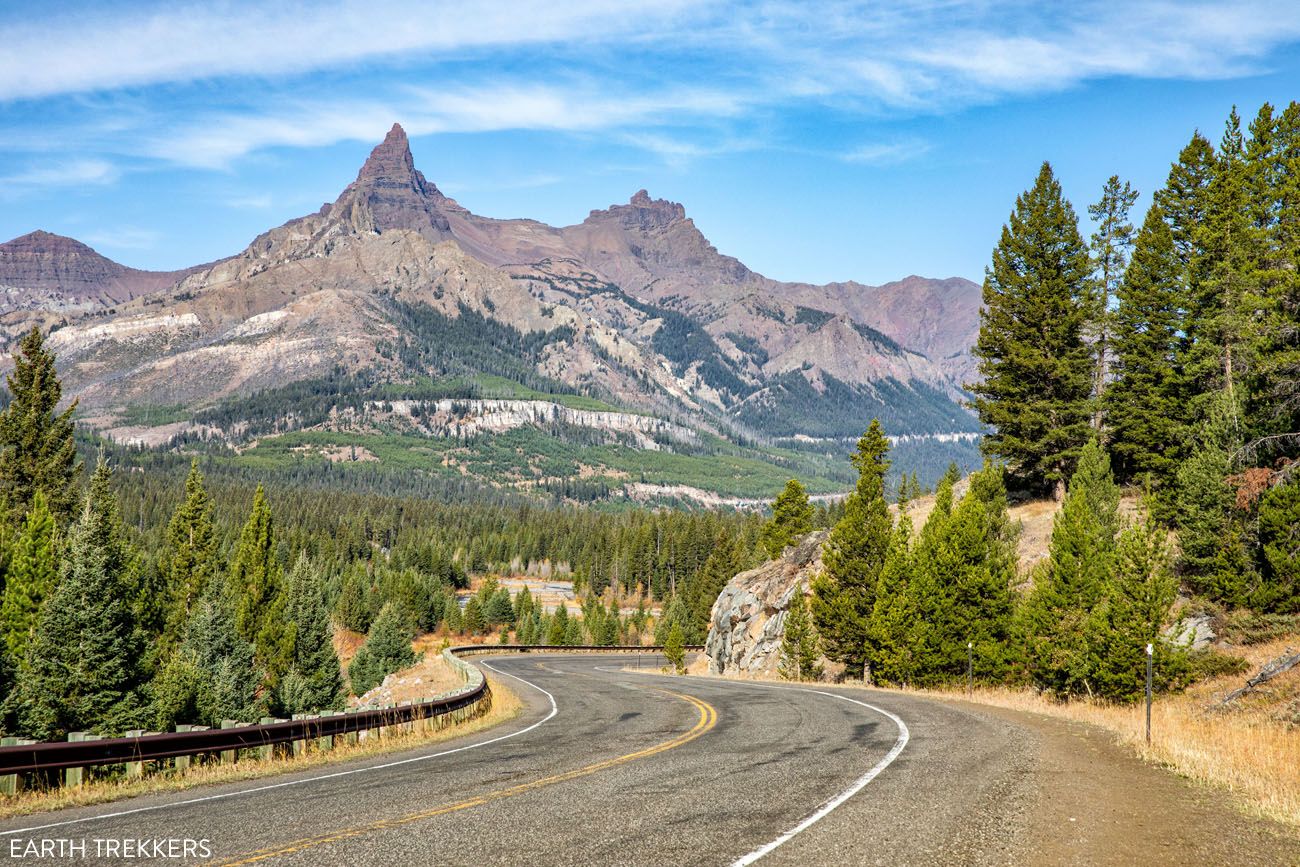
Beartooth Highway
Buffalo Bill Cody Scenic Byway
Area: East Entrance, connecting to Cody, Wyoming
Time Needed: 45 minutes to 1 hour one-way, more with stops
Best For: A scenic, direct route between Cody and Yellowstone’s East Entrance
Skip It If: You’re not already entering or exiting through the East Entrance; we wouldn’t recommend going out of your way for this one
The Buffalo Bill Cody Scenic Byway is a roughly 50-mile drive that runs alongside the North Fork of the Shoshone River, connecting Cody, Wyoming to Yellowstone’s East Entrance through the scenic Wapiti Valley.
We’ve driven this one too, and it’s a genuinely pretty drive, but it doesn’t compare to Beartooth. If your route takes you through the East Entrance anyway, enjoy the scenery, but we wouldn’t plan a special detour for it.
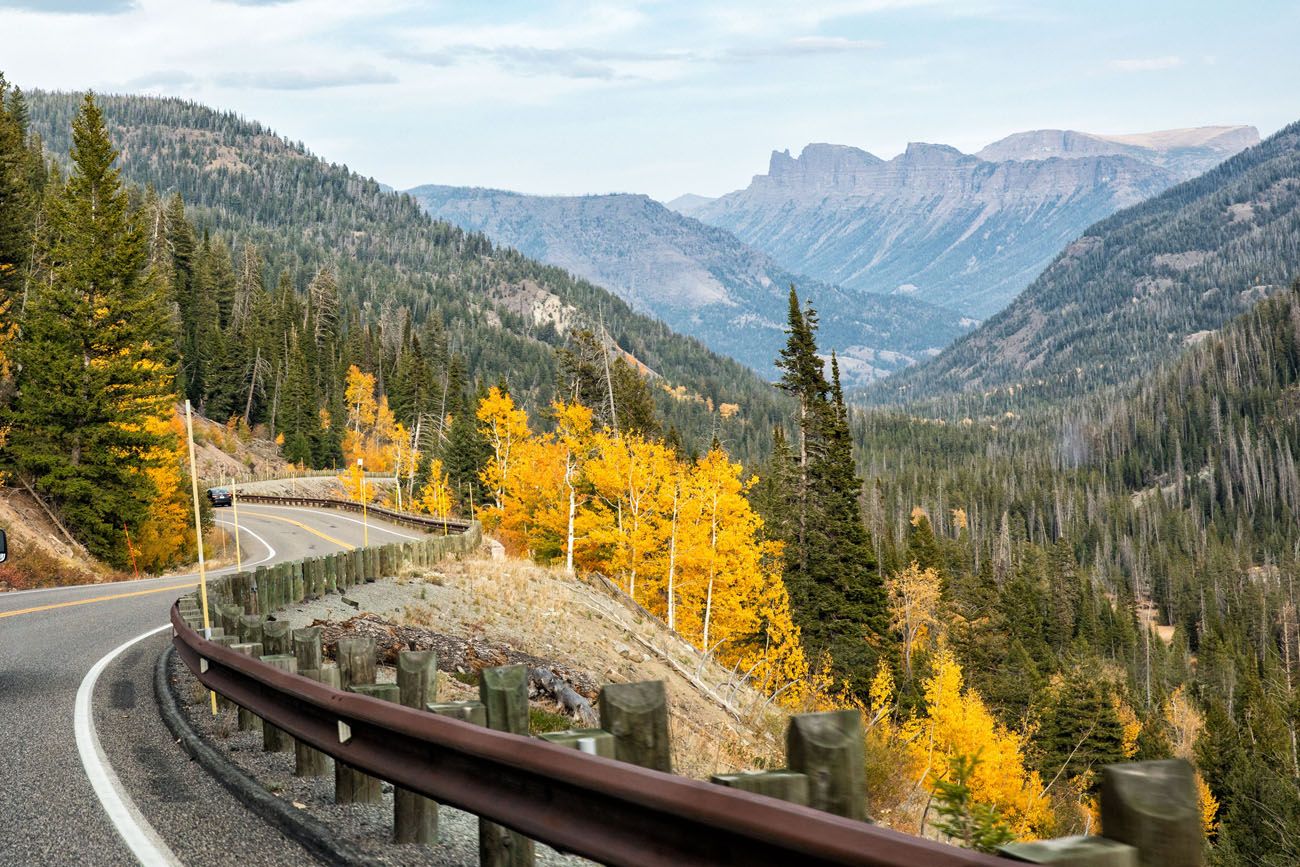
Buffalo Bill Cody Scenic Byway
How Many Days Do You Need in Yellowstone?
To see everything on this list, it takes three very busy days or four to five leisurely days. Yellowstone is enormous and with a max speed limit of 45 miles per hour, it can take a while to get from place to place. In peak season months of July and August, traffic jams and extra time waiting for a parking space can eat up more of your time. Learn how to plan your trip:
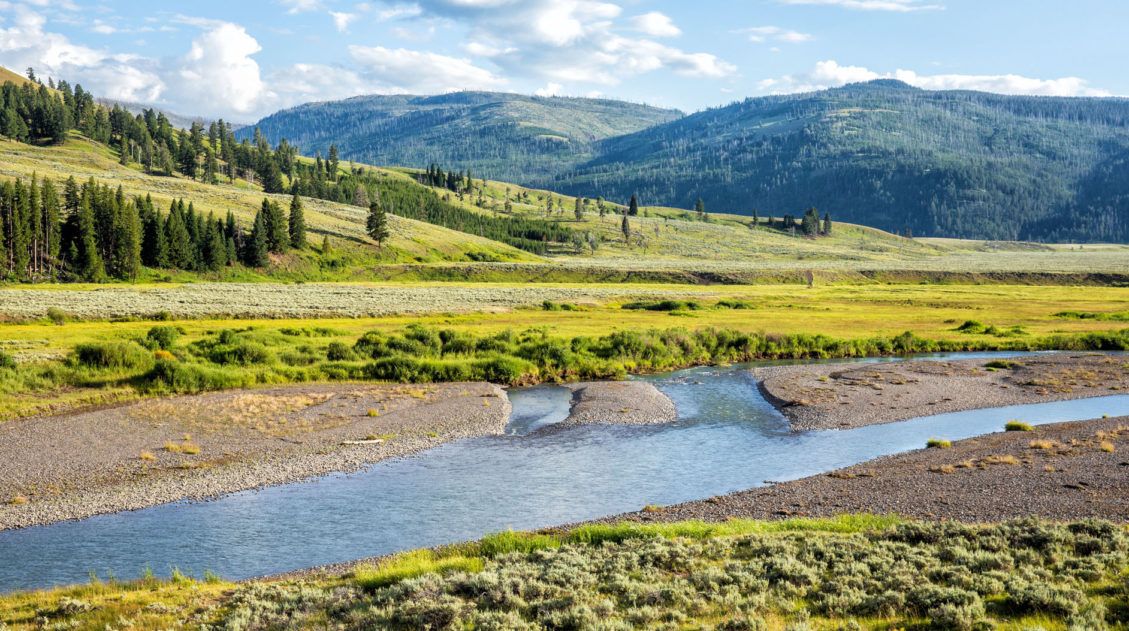
Yellowstone Itinerary: How to Spend 1 to 5 Days in Yellowstone
Learn how to plan a trip to Yellowstone, with sample itineraries ranging from 1 to 5 days.If you only have one day to spend in Yellowstone, what should you do? The answer to that depends on where you are coming from and where you are going next. With one day in Yellowstone, most likely you will be planning a road trip through the park and we have an article with six different routes through the park.
Best Time to Visit Yellowstone
Most of Yellowstone’s roads are open from late May or early June through October, though exact dates shift year to year depending on snowpack. It’s always worth checking current conditions before you go, since not every entrance or road opens on the same schedule.
Summer (June, July, August) brings the biggest crowds by far. This was one of our most crowded national park experiences, and we were here in early August. To beat the worst of it, we avoided sightseeing midday on all but one of our days. We’d wake up early and tour the park from 7 am to 11 am, spend the middle of the day back at our hotel, then head back out around 5 pm. It worked well. We saw most of what’s on this list with lower crowds, and had better luck spotting wildlife in the process. The only downside was a lot of extra driving to make the schedule work.
Fall (September and early October) is our favorite time to visit. Days get shorter and temperatures cool down, but the trade-off is well worth it: lower crowds and gorgeous golden fall colors across the park’s grasslands. We’ve visited during the last weekend of September and again in the first week of October, and both trips felt noticeably calmer than our summer visit, with plenty of great wildlife sightings along the way.
If lower crowds matter more to you than long daylight hours and full road access, aim for June or September rather than the peak of July and August.
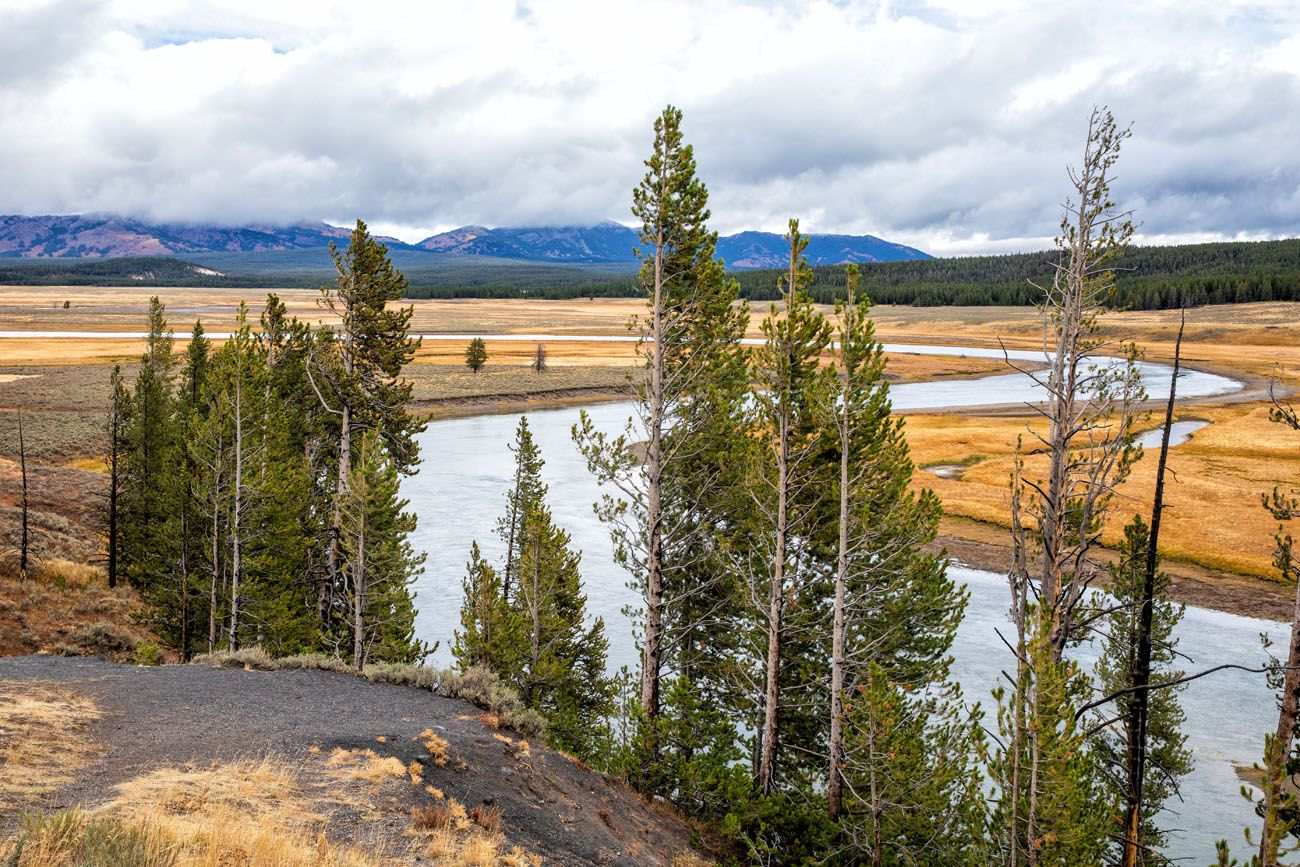
Hayden Valley in early October
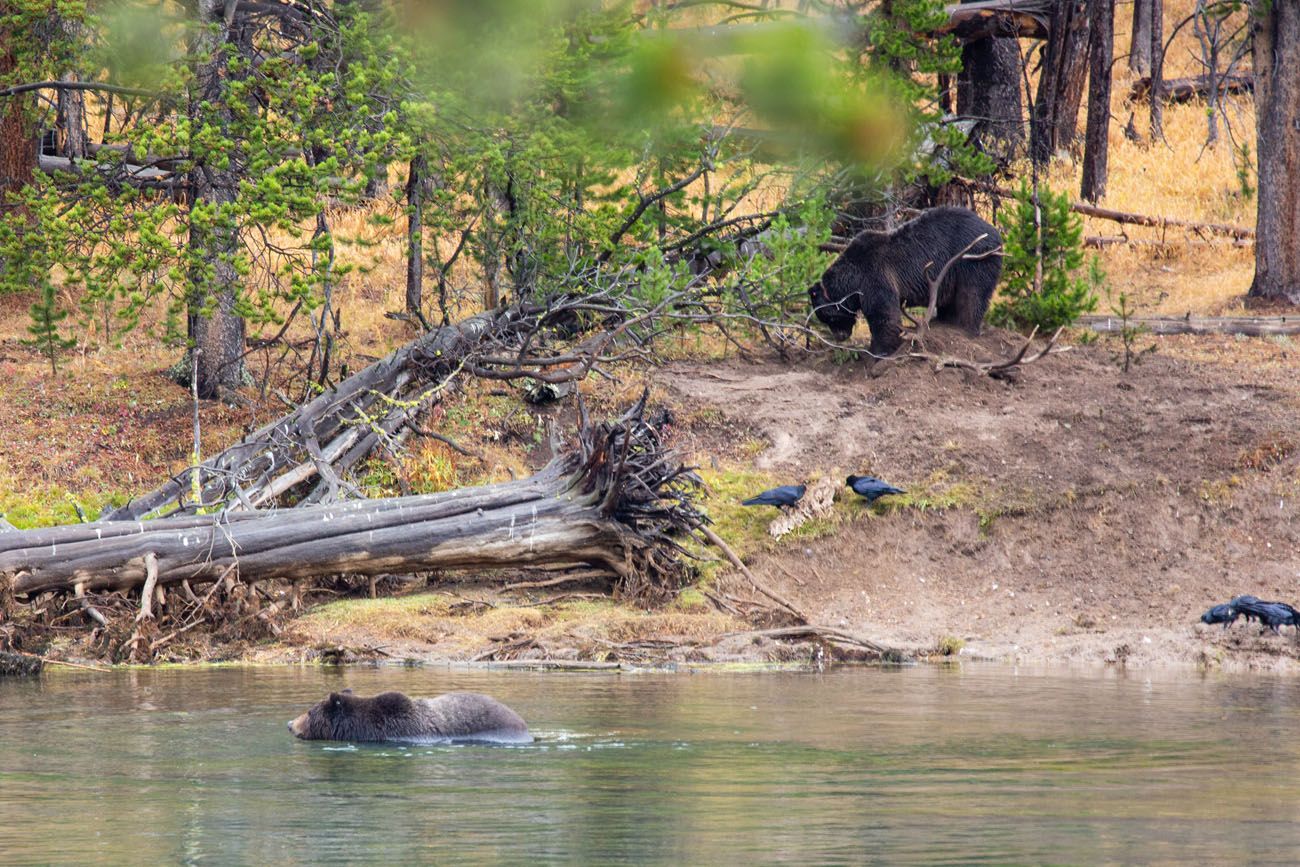
Two grizzly bears guarding an elk carcass (the elk is buried on the riverbank and you can see the antlers) – photo taken in early October
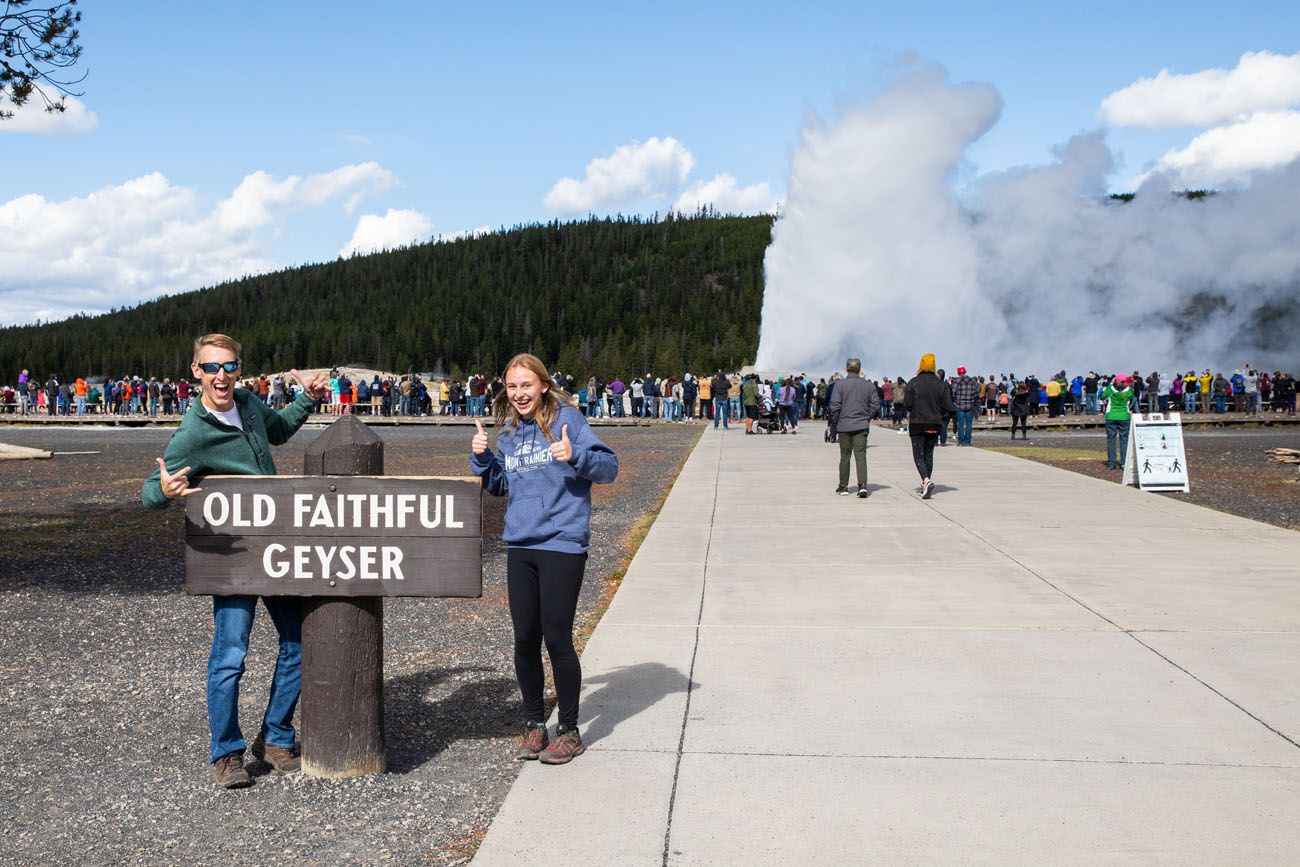
Tim and Kara at Old Faithful in September
Frequently Asked Questions
What are the four things you shouldn’t miss in Yellowstone?
If you only have time for a handful of highlights, prioritize Grand Prismatic Spring, wildlife watching in Hayden or Lamar Valley, the Grand Canyon of the Yellowstone, and Old Faithful. These four alone give you a strong sense of what makes Yellowstone special: colorful geothermal features, dramatic canyon views, and a real shot at spotting wildlife.
What Yellowstone attractions can you skip?
If you’re short on time, Tower Fall is the easiest to cut without much regret. The smaller geyser basins, such as, Black Sand Basin and Fountain Paint Pot Trail, are worth a stop if you have extra time, but skippable if you’ve already covered Upper Geyser Basin, Midway Geyser Basin, and Norris. Firehole Canyon Drive and Firehole Lake Drive are pleasant detours, not must-dos. And Fairy Falls, while a nice hike, is a bigger time commitment than most other stops on this list, so it’s one of the first things to drop on a tight schedule.
Is Boiling River still open in Yellowstone?
No. Boiling River has been closed since the historic 2022 flood, which shifted the geothermal vents feeding it and washed out the access trail. The water now runs around 140°F with no cool river water left to mix in, making it unsafe to soak. As of 2026, the National Park Service has no announced timeline to reopen it. If you’re looking for a legal place to swim in the park, the Firehole Canyon Swimming Area, along Firehole Canyon Drive, is your best bet.
Where is the best place to stay in Yellowstone?
The best place to stay in Yellowstone depends on your travel itinerary. Yellowstone is a very large national park, with 5 park entrances, multiple villages inside the park, and small towns that sit outside of the park boundary. If you have plans to spend several days in Yellowstone, we recommend that you stay in two different areas, in order to minimize how much driving you will do.
Plan Your Trip to Yellowstone
- Want the full picture before you go? → Our Yellowstone National Park Travel Guide covers trip planning, sample itineraries, and links to every article we’ve written about the park.
- Want to go deeper on Yellowstone’s geothermal features? → Our Guide to the Geyser Basins and Geysers in Yellowstone guide covers every major basin in the park, including several we didn’t have room to detail here.
- Figuring out where to base yourself? → Our Where to Stay in Yellowstone guide covers the best hotels and locations for every part of the park.
- Have more time and want to combine parks? → Our Grand Teton, Yellowstone and Glacier National Parks: 10 Day Road Trip Itinerary guide covers how to see all three in one epic trip.
- Deciding which national parks to visit next? → Our Ultimate Guide to the 64 US National Parks guide covers every park in the system, with tips on planning and prioritizing.
If you have questions about the best things to do in Yellowstone or if you want to share your experience, comment below!
More Yellowstone Travel Guides
Yellowstone Itinerary: How to Spend 1 to 5 Days in Yellowstone
Pinterest Facebook Flipboard Planning a Yellowstone itinerary can be challenging. The park is enormous, drive times are long, and wildlife sightings and traffic jams can throw even the best-planned day off schedule. In this guide, we provide Yellowstone itineraries for 1 to 5 days, with the sights grouped into logical driving routes to help you […]
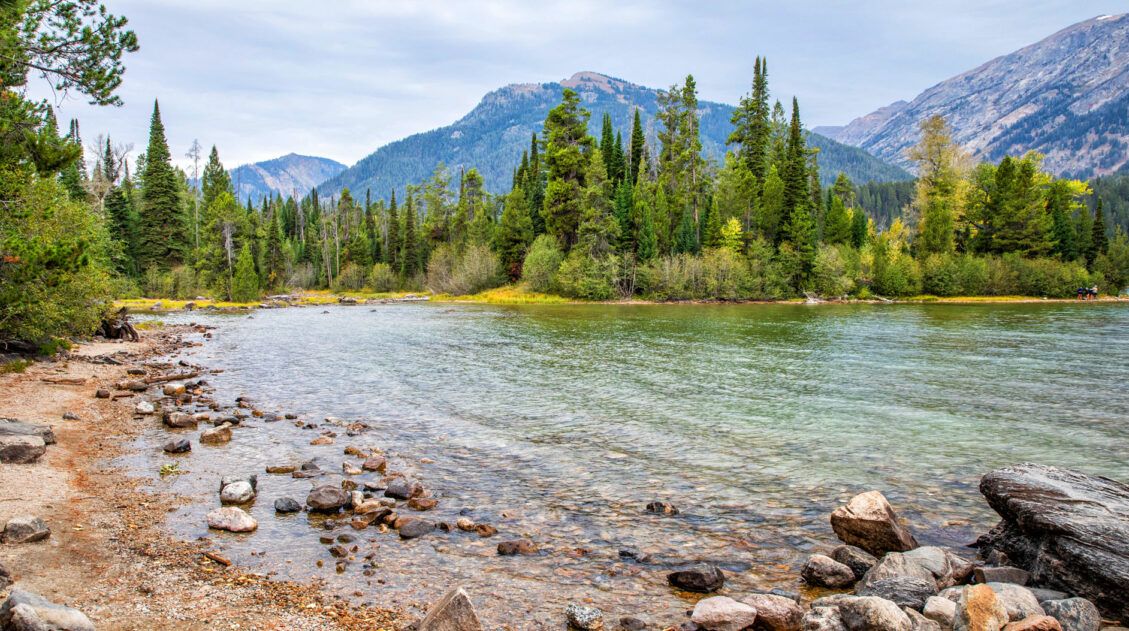
The Perfect Yellowstone & Grand Teton Itinerary for First-Timers
Yellowstone and Grand Teton sit side by side in northwest Wyoming, and together they make one of the best national park trips in the country. Spend your days watching Old Faithful erupt and geysers bubble across Yellowstone’s thermal basins, then drive an hour south to hike beneath the jagged Teton Range, paddle Jenny Lake, and […]
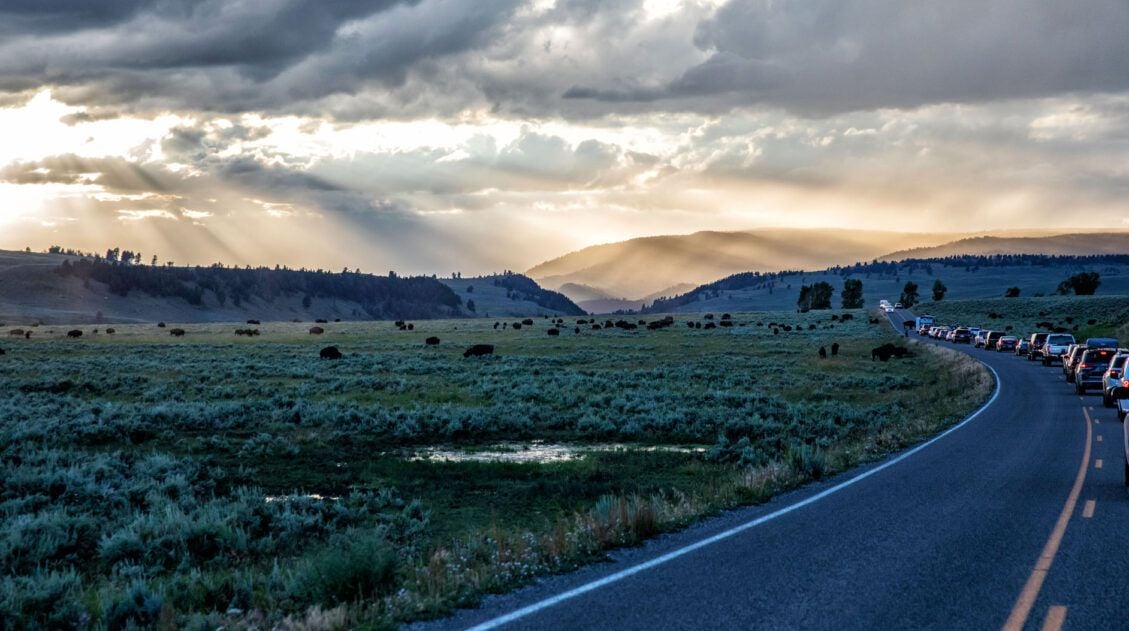
One Day in Yellowstone: 7 Epic Road Trip Itineraries
If you only have one day in Yellowstone National Park, what should you do? Yellowstone is massive, the second largest national park in the country outside of Alaska, with five entrances, dozens of geyser basins and canyons, and valleys full of wildlife. There’s no way to see it all in a single day. Most one-day […]
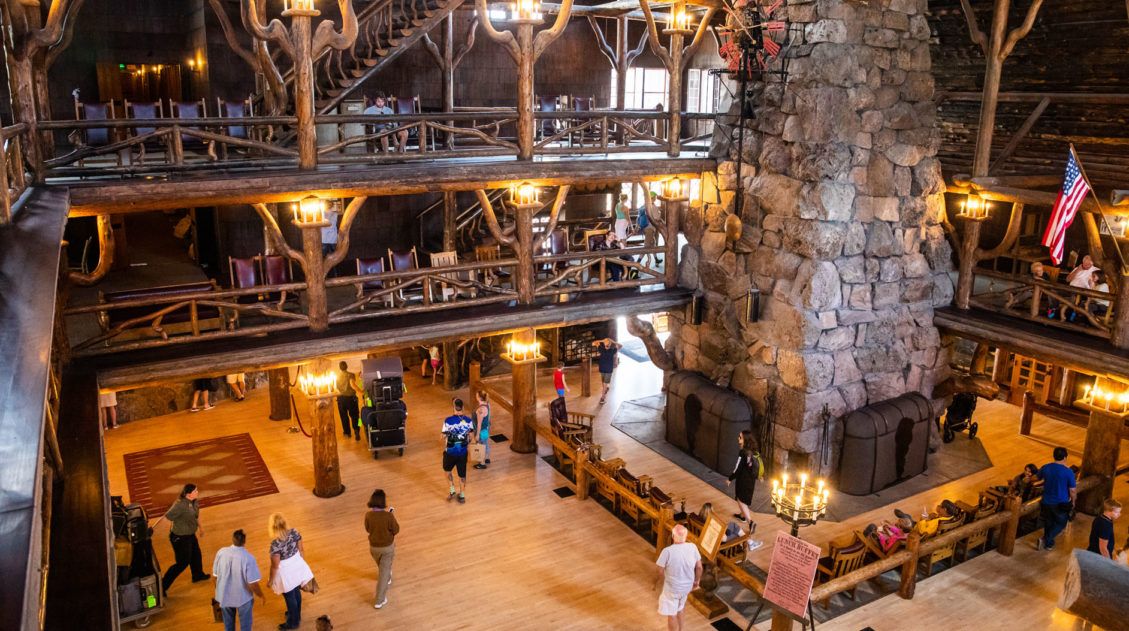
Where to Stay in Yellowstone: Best Hotels and Lodges By Area
We’ve visited Yellowstone four times, and where we stayed looked different nearly every trip. Our first visit was back in 2001, when we spent a few days exploring the park. Kara and I returned in 2019, but that time I planned the trip almost last minute (booking in June for an August visit), so in-park […]
How to Visit Old Faithful in Yellowstone: Best Views, Timing & Tips
Old Faithful is Yellowstone’s most famous geyser and one of the park’s must-see sights. But getting the best experience takes a little planning. Eruptions are predictable within a window, crowds build quickly around the main viewing area, and where you watch the eruption can make a surprisingly big difference. Most visitors should plan to spend […]
Mount Rushmore to Yellowstone: 3 Scenic Driving Routes Compared
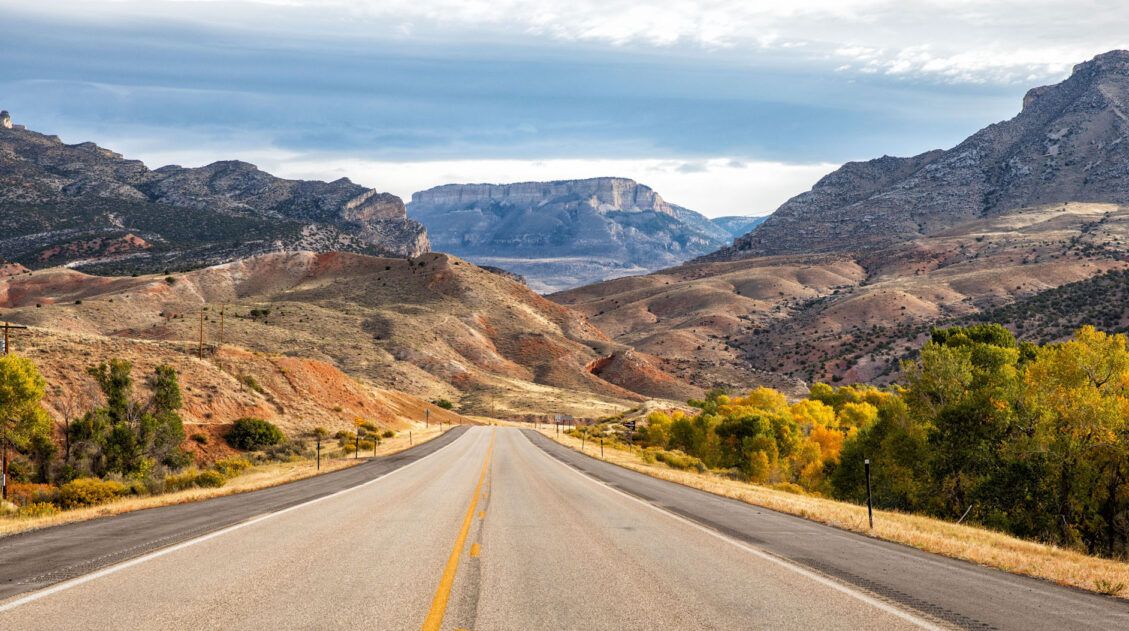
Yellowstone National Park is roughly 480 to 520 miles from Mount Rushmore, depending on the route you take and which Yellowstone entrance you use. Plan on at least 8 to 9 hours of driving without stops, but with Devils Tower, the Bighorn Mountains, Beartooth Highway, and several other worthwhile places along the way, this drive […]
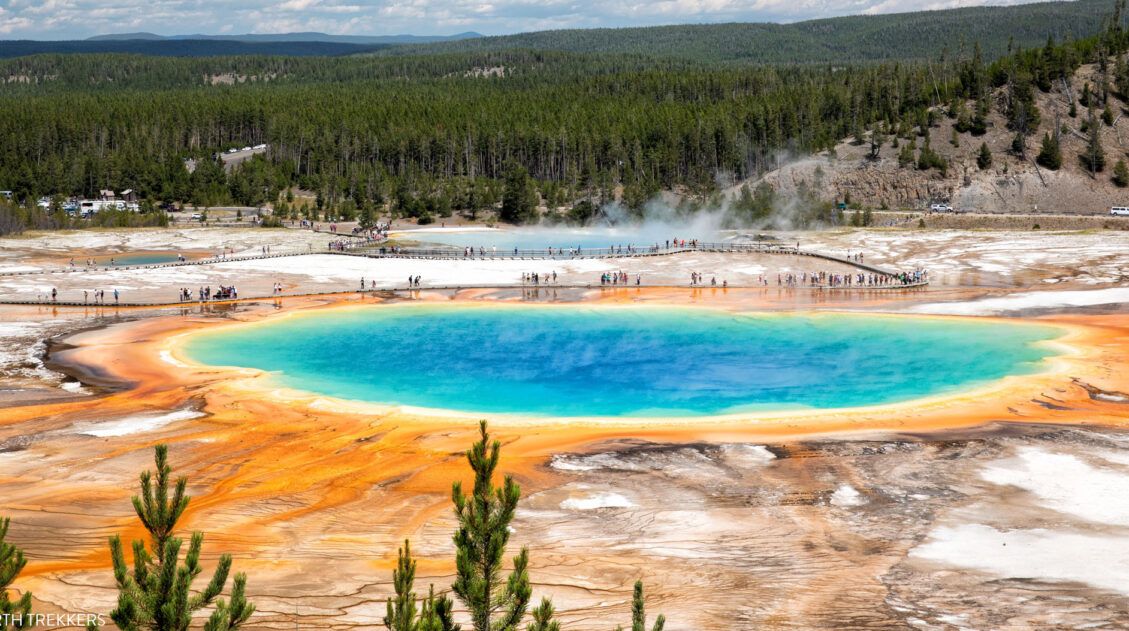
Yellowstone, Devils Tower, and Mount Rushmore: 10 Day Road Trip Itinerary
With 10 days, you can road trip from Grand Teton and Yellowstone all the way to Mount Rushmore, adding on Devils Tower, Badlands National Park, Wind Cave National Park, and Custer State Park along the way. That’s four national parks, two national monuments, one incredible state park, and some of the best scenic drives in […]
US National Park Itineraries & Road Trip Ideas
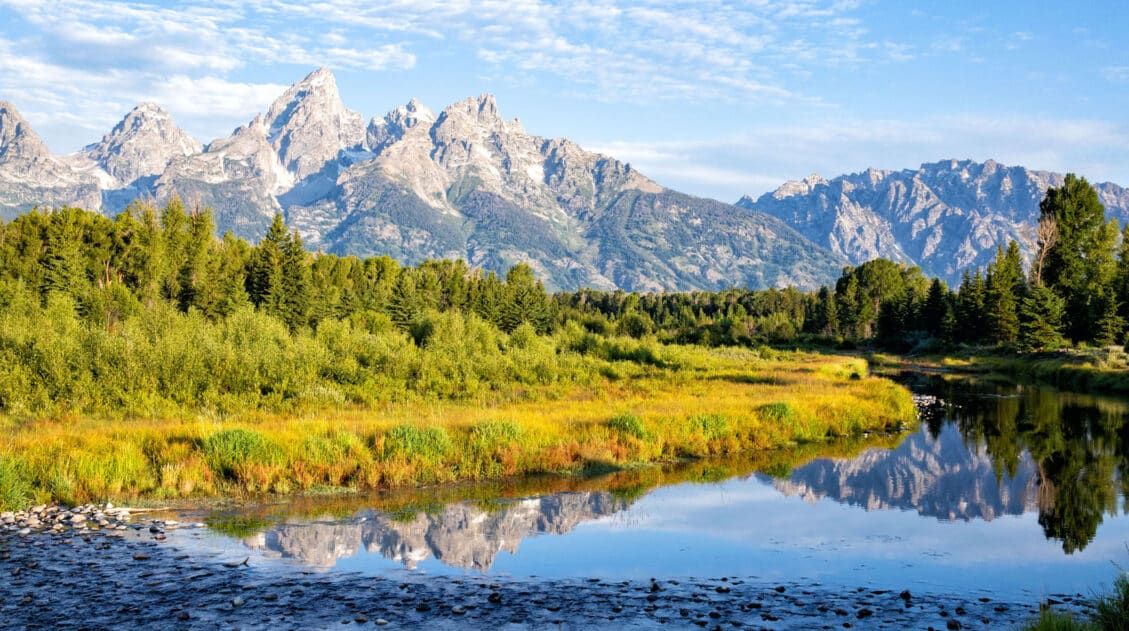
National Park Itineraries The national parks are best experienced as a road trip and with 56 parks visited between us, we’ve done a lot of them. Whether you’re dreaming of a two-week American Southwest loop, a classic Yellowstone and Grand Teton combo, or a deep dive into Utah’s Mighty 5, we’ve put together detailed itineraries […]
Grand Teton National Park Travel Guide: How to Plan Your Visit
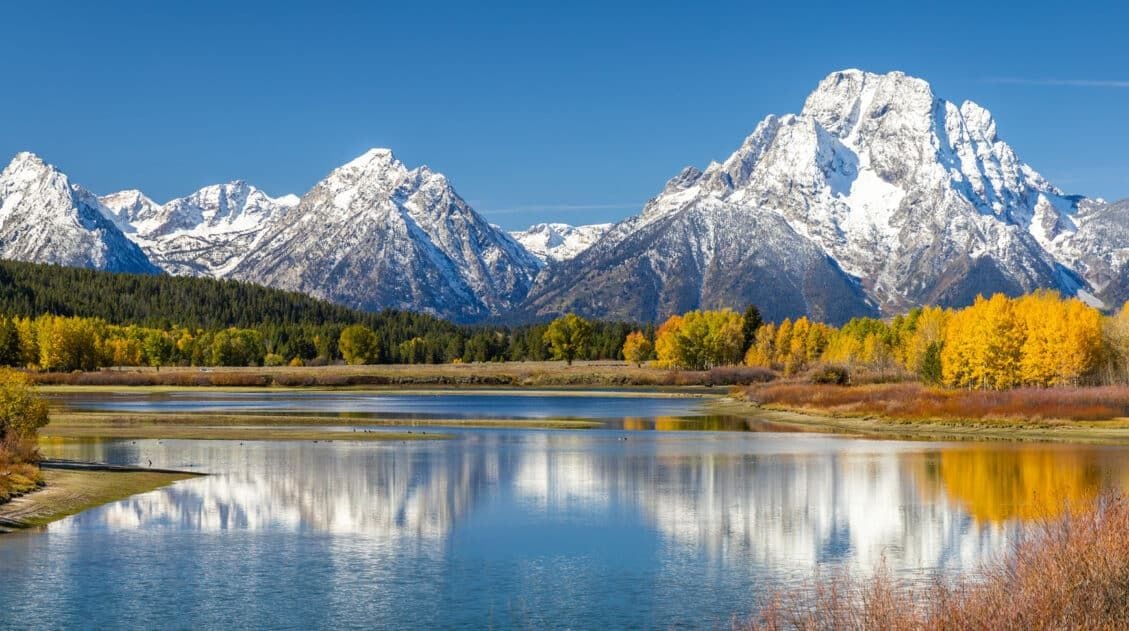
Grand Teton National Park Jagged mountain peaks, lush meadows, scenic lakes, the winding Snake River, wildlife, historical sites, and miles and miles of hiking trails…this is Grand Teton National Park. There is something here for everyone. Families will love the short, easy, scenic hiking trails, a boat ride across Jenny Lake, plus the possibility to […]
14 Best Hikes in Grand Teton National Park (All Hiked by Us)
Grand Teton National Park truly is a hiker’s paradise. Hike through picturesque canyons, around glacier-fed lakes, and up to the highest peaks. Wildlife sightings from the hiking trails are frequent, with elk, moose, and bear making regular appearances. If you want to add some adventure to your visit to Grand Teton, strap on your hiking […]
Glacier National Park Itinerary: 1 to 5 Days for First-Time Visitors
Looking for the best Glacier National Park itinerary? This step-by-step guide maps out the ideal way to spend 1, 2, 3, or more days exploring Going-to-the-Sun Road, Many Glacier, Logan Pass, and the park’s most iconic hikes. Glacier National Park is one of the most spectacular places to visit in the United States, but planning […]
United States Travel Guide: Places to Visit in the USA
Plan your visit to the United States. Learn about the best things to do, how to plan your time, road trip ideas, and sample itineraries.
12 Amazing National Parks for Your Next Family Adventure
We’ve visited 56 of the 64 U.S. national parks and almost every single one would make a fantastic family destination. With 64 parks to choose from, the options can feel overwhelming. After years of exploring the national parks, we’ve narrowed it down to 12 that hit the sweet spot for families. These parks are easy […]
Wyoming Travel Guide: Places to Visit in Wyoming
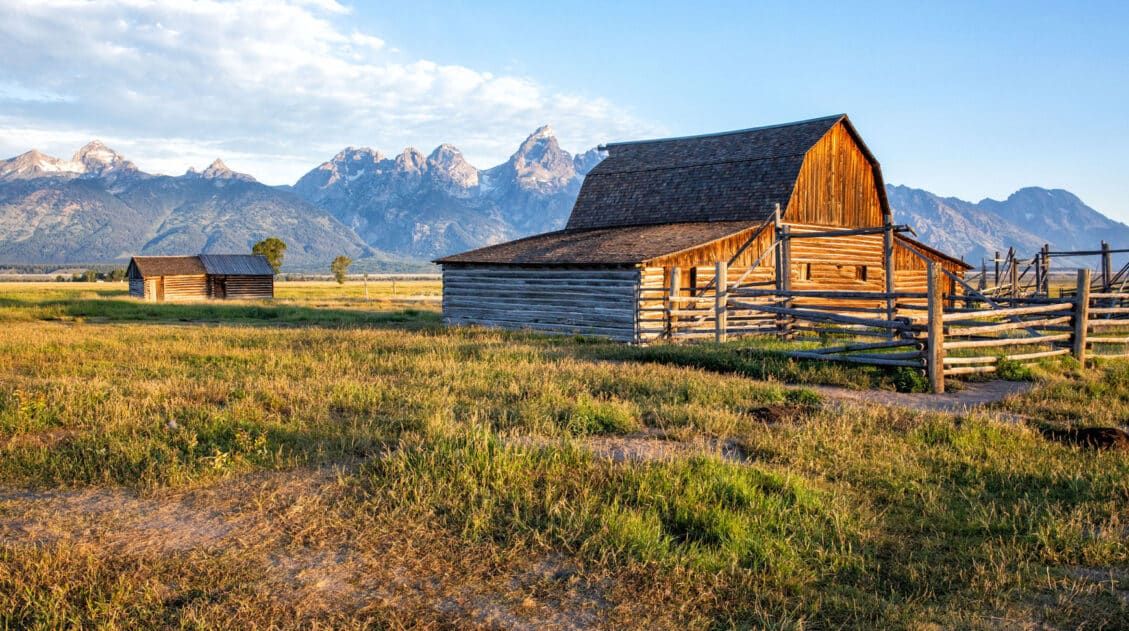
Wyoming Travel Guide Beautiful Wyoming… a land rich in wildlife, soaring mountains, roaring geysers, and technicolor hot springs. This state is the home to some of our favorite National Parks: Yellowstone and Grand Teton, and these parks sit directly next to each other, making it a perfect way to see both in one trip. You […]


Comments 47