
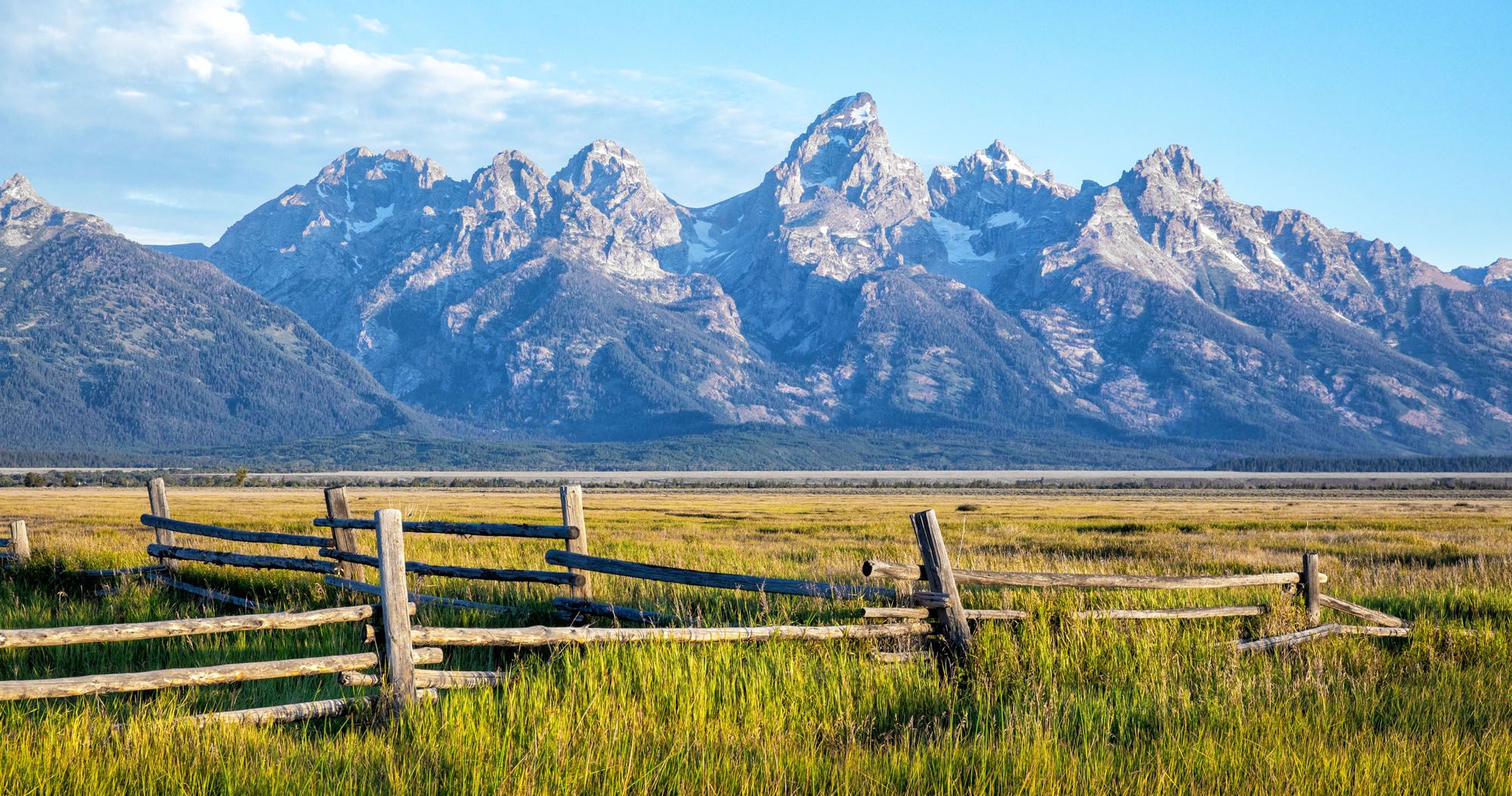
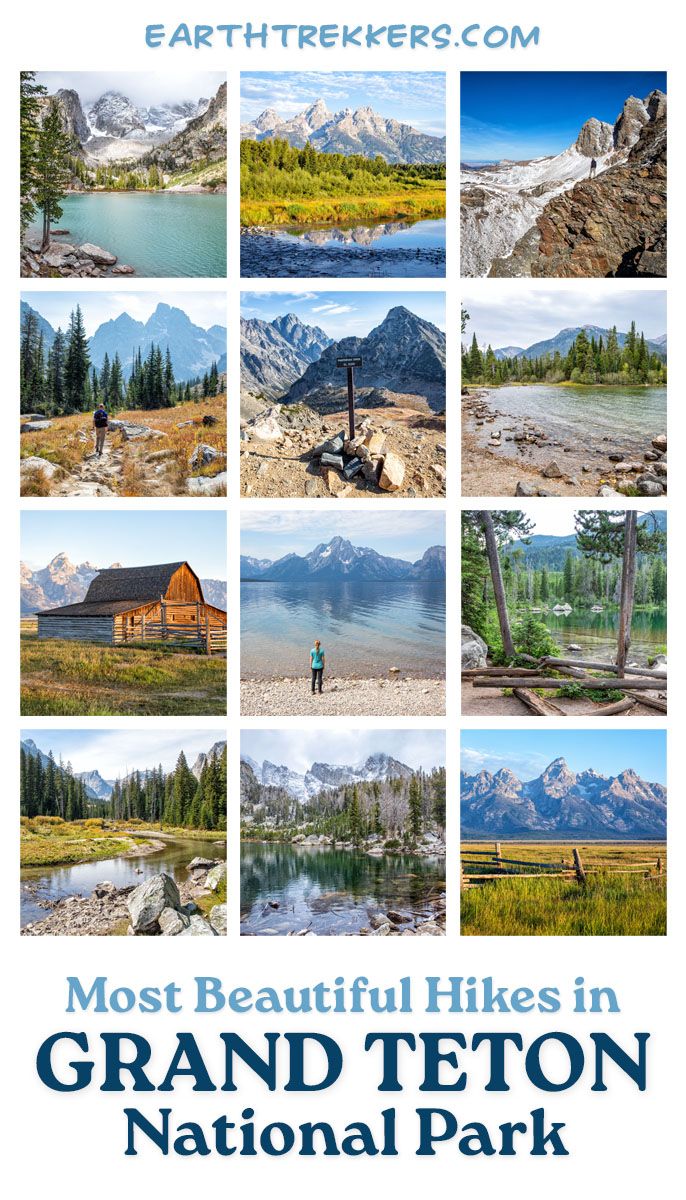
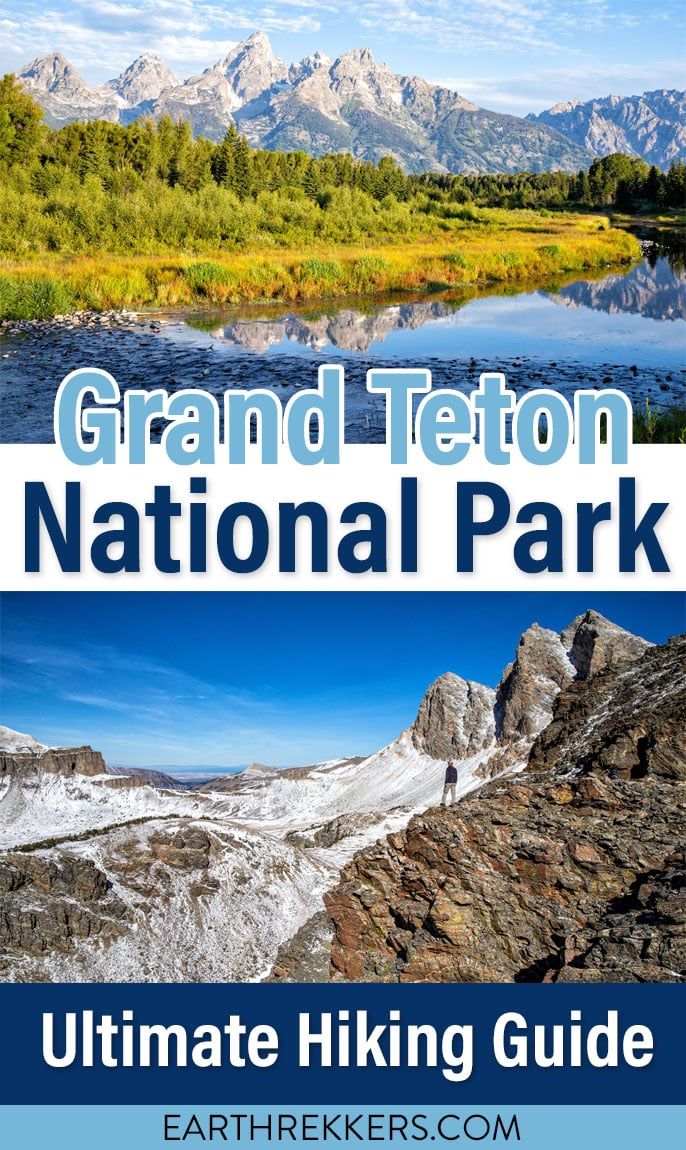
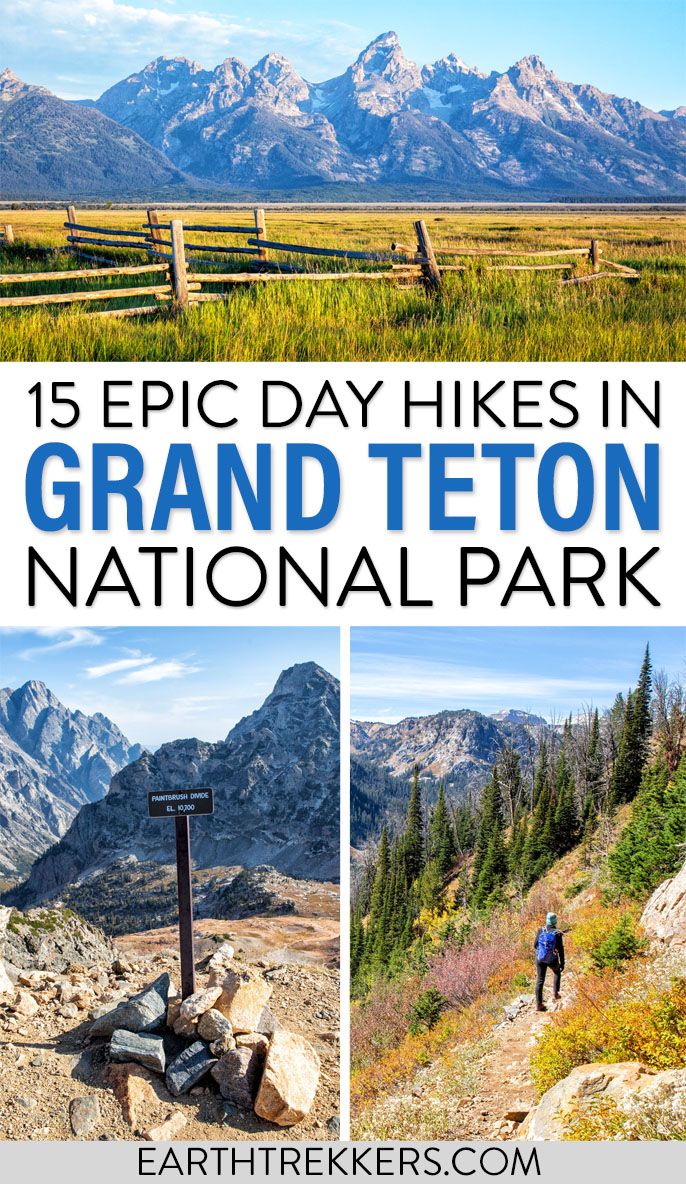
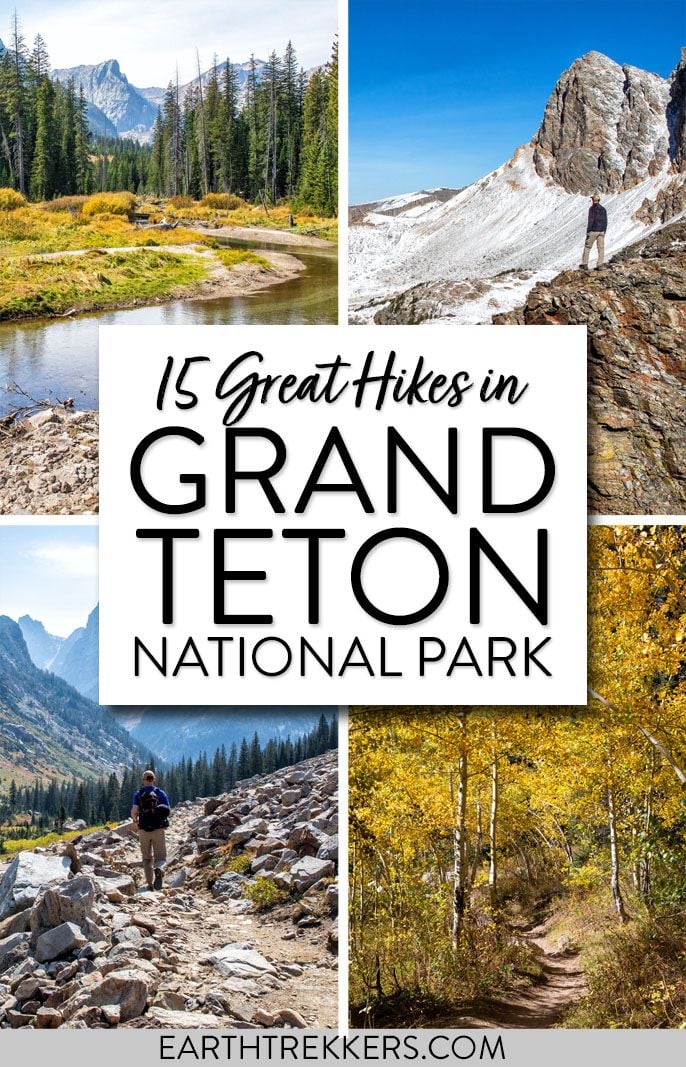
Grand Teton National Park truly is a hiker’s paradise. Hike through picturesque canyons, around glacier-fed lakes, and up to the highest peaks. Wildlife sightings from the hiking trails are frequent, with elk, moose, and bear making regular appearances. If you want to add some adventure to your visit to Grand Teton, strap on your hiking shoes and take your pick from this list of unforgettable trails. Here are the best day hikes in Grand Teton National Park.
This list starts with the easiest trails and progresses to the longer, more challenging hikes. Each hike can be completed in a single day, and all distances listed are round-trip. Many of the shorter hikes can also be combined into longer full-day adventures; we’ll point out the best combinations as you go.
The recommendations in this guide are based on our firsthand experience on these trails, including which hikes we would choose again and which ones we think are most worthwhile if you only have time for one or two.
Our Grand Teton Hiking Experience: We’ve visited Grand Teton National Park three times, including one trip in September dedicated entirely to hiking. We’ve now been to 56 of the 63 US national parks, and hiking-wise, Grand Teton is one of our all-time favorites. The landscapes here are incredible on their own, and wildlife sightings, like moose in the meadows and bears along the canyon trails, only make the hikes better. All photos are our own.
Which Grand Teton Hike Should You Choose?
With so many great trails in Grand Teton National Park, choosing just one or two can be difficult. These are our top picks based on what you are looking for.
| If you want… | We recommend… |
| Best overall hike | Paintbrush Canyon–Cascade Canyon Loop |
| Best hike for first-time visitors | Cascade Canyon |
| Best short hike | Taggart & Bradley Lakes |
| Best easy hike | String & Leigh Lakes |
| Best alpine lake hike | Delta Lake |
| Best hike for wildlife | Death Canyon |
| Best summit hike | Static Peak Divide |
| Best hike with a big payoff for relatively little effort | Inspiration Point |
| Best family-friendly hike | Taggart Lake |
| Best hike to escape the crowds | Death Canyon |
Our Top Picks
If you only have time for one hike: We recommend Cascade Canyon. You get classic Grand Teton scenery, a beautiful walk along Jenny Lake, mountain views, and a good chance of seeing wildlife without committing to an extremely strenuous day.
If you want the best hike in the park: For experienced hikers, our favorite is the Paintbrush Canyon–Cascade Canyon Loop. It is a long, challenging day, but the scenery is phenomenal from start to finish and it showcases some of the best landscapes in Grand Teton National Park.
If you want something shorter: Taggart and Bradley Lakes is our favorite shorter hike. It offers wonderful views of the Tetons and two beautiful alpine lakes without requiring an entire day.
If you are hiking with kids or want an easier trail: String and Leigh Lakes is a great choice. The trail is relatively flat, the lake views are beautiful, and you can turn around whenever you have had enough.
If you want a challenging adventure: Choose Delta Lake for an alpine lake or Static Peak Divide for sweeping high-elevation views.
There really isn’t one “best” hike for everyone. Your choice will depend on how much time you have, your hiking experience, and whether you want an easy walk, a classic Grand Teton experience, or a strenuous adventure into the mountains.
Map of the Hiking Trails in Grand Teton
Below is a map of the best hikes in Grand Teton. The blue markers indicate trailheads and hiking trails; the red markers indicate points of interest and nearby things to do.
How to Use This Map: Click the icons on the map to get more information about each point of interest. To take this map with you, click the star next to the title of the map which adds it to your Google account. Next, within your Google Maps app, select ‘Saved’ and then select ‘Maps’. This map title will now appear in your list.
About our ratings: Our ratings reflect the overall hiking experience, including scenery, wildlife, trail variety, and whether we think the hike is worth the time and effort. Difficulty does not affect the rating. A strenuous hike can earn five stars if we think the experience is worth it.
⭐️⭐️⭐️⭐️⭐️ Exceptional: One of the best hikes in Grand Teton; worth planning your day around.
⭐️⭐️⭐️⭐️ Very good: Highly recommended, especially for the right type of hiker.
⭐️⭐️⭐️ Good: Enjoyable, but we’d prioritize other trails if time is limited.
Best Easy Hikes in Grand Teton
Inspiration Point & Hidden Falls
Our Rating: ⭐️⭐️⭐️⭐️ The essential first-timer hike in the park. The boat shuttle and quick payoff to one of Grand Teton’s most iconic viewpoints make this a must, even if you only have time for one hike. It can be very crowded, though, so if you have more time and energy, we recommend continuing into Cascade Canyon.
Distance: 2 miles | Time: 1 to 2 hours | Difficulty: Easy to moderate | Total Ascent: 420 feet
This is an essential hike for first-timers to Grand Teton National Park. Ride the Jenny Lake boat shuttle across Jenny Lake and then hike up to one of the most famous viewpoints in the park, Inspiration Point. On the way, make the quick detour to Hidden Falls.
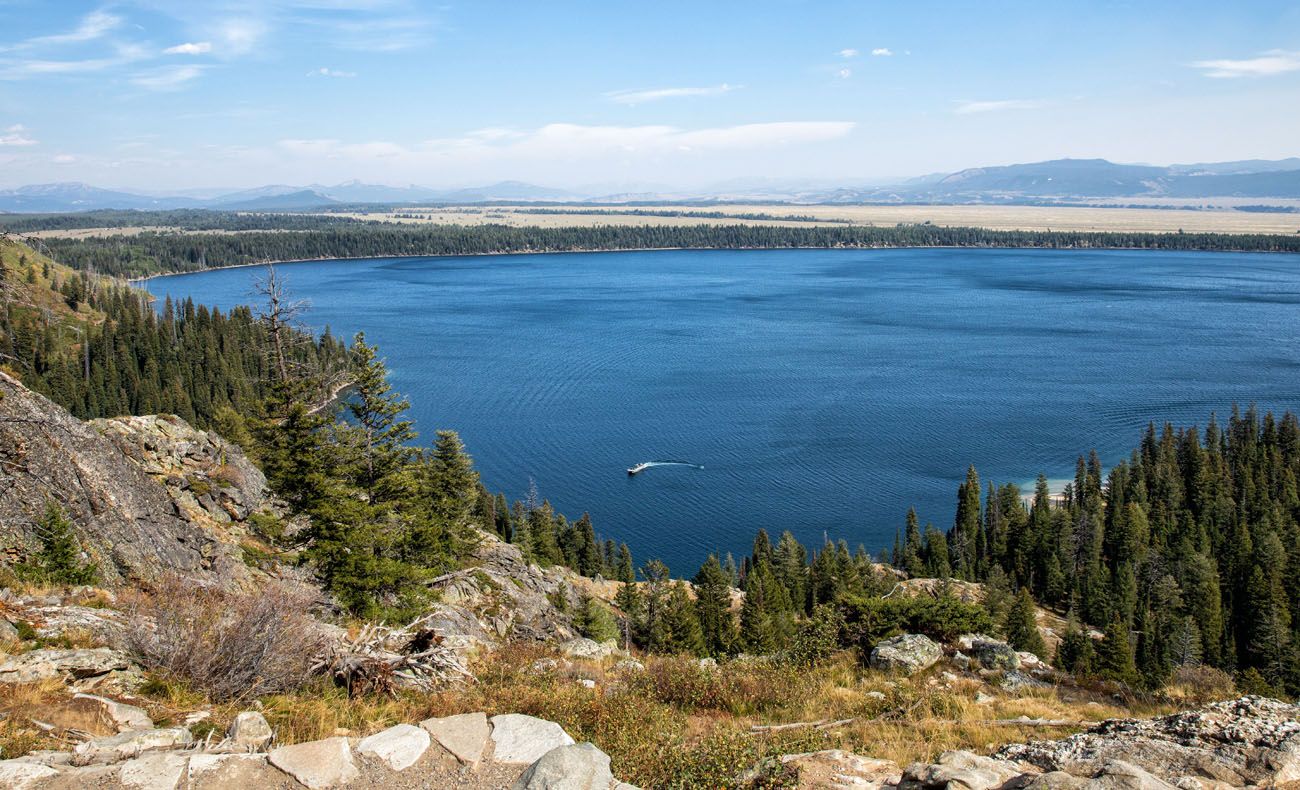
View from Inspiration Point
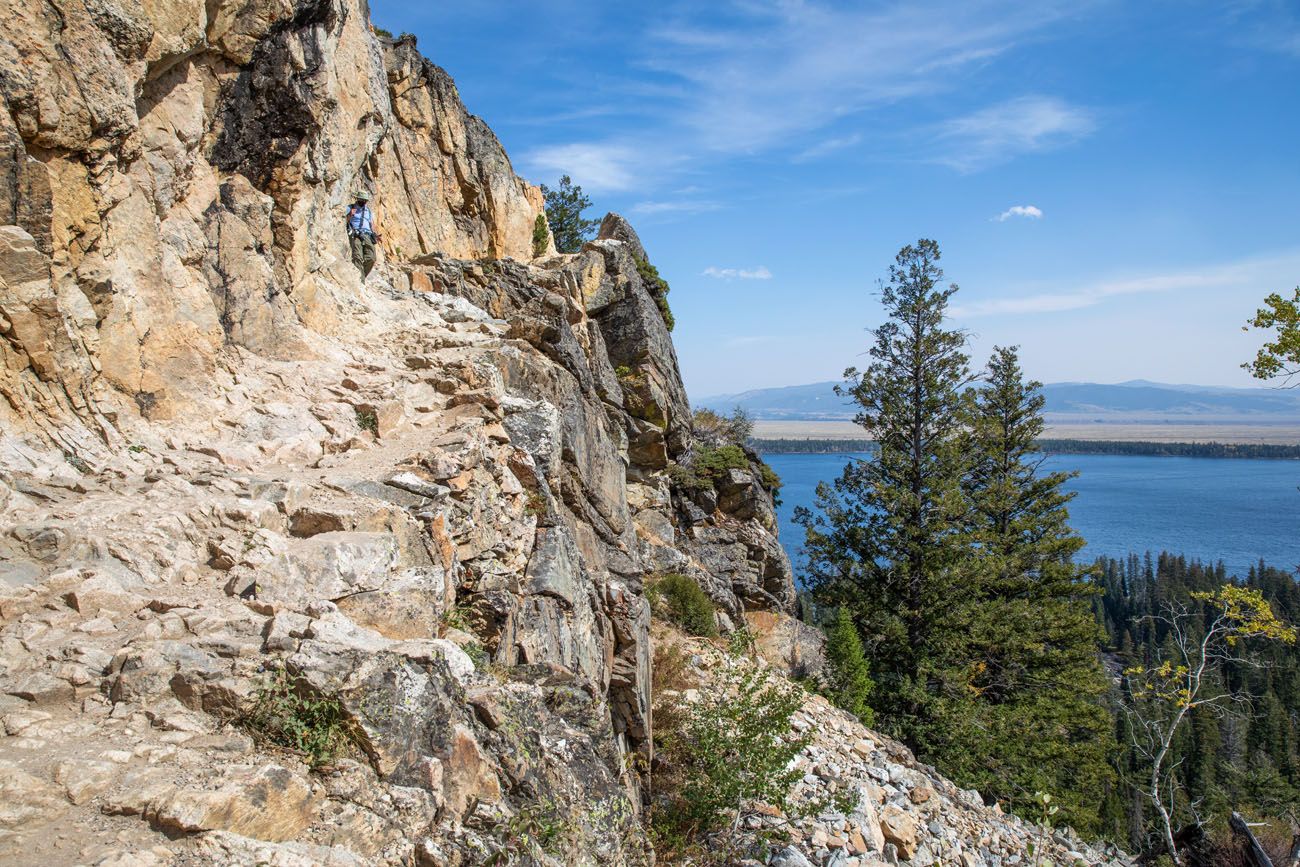
Trail to Inspiration Point
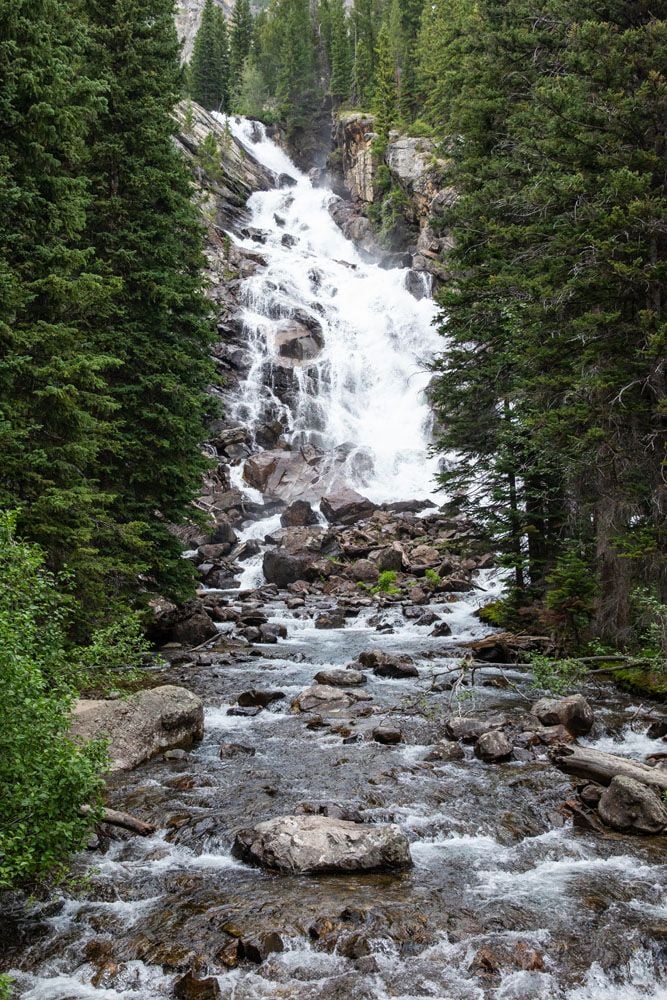
Hidden Falls
During the peak summer season, the Jenny Lake boat shuttle runs from 7 am to 7 pm, with shorter hours during shoulder season. Click here for pricing and hours of operation.
Once on the west shore of Jenny Lake, it is a 0.5-mile uphill walk to Hidden Falls. To continue to Inspiration Point, it is another 0.5-mile hike, only this time the trail is steeper and more difficult.
Getting Here: Park in the large lot at the Jenny Lake Visitor Center and walk out to the Jenny Lake boat dock. Tickets can be purchased here for the shuttle. The boat shuttle takes visitors to the opposite side of Jenny Lake, eliminating the extra walking distance around the lake. If you do not take the boat shuttle, it is a 2.4-mile walk from the Jenny Lake Visitor Center to the west shore of Jenny Lake.
String and Leigh Lakes
Our Rating: ⭐️⭐️⭐️⭐️ Kara and I loved this hike. It’s easy, peaceful, and the reflections of the Tetons in String Lake can be gorgeous. This is one of our favorite choices for families or anyone looking for a beautiful hike without much elevation gain.
Distance: 1.8 miles | Time: 1 to 2 hours | Difficulty: Easy | Total Ascent: Minimal
This lovely little hike takes you to String Lake and Leigh Lake. It’s flat, it’s easy, and it’s great for all ages and ability levels.
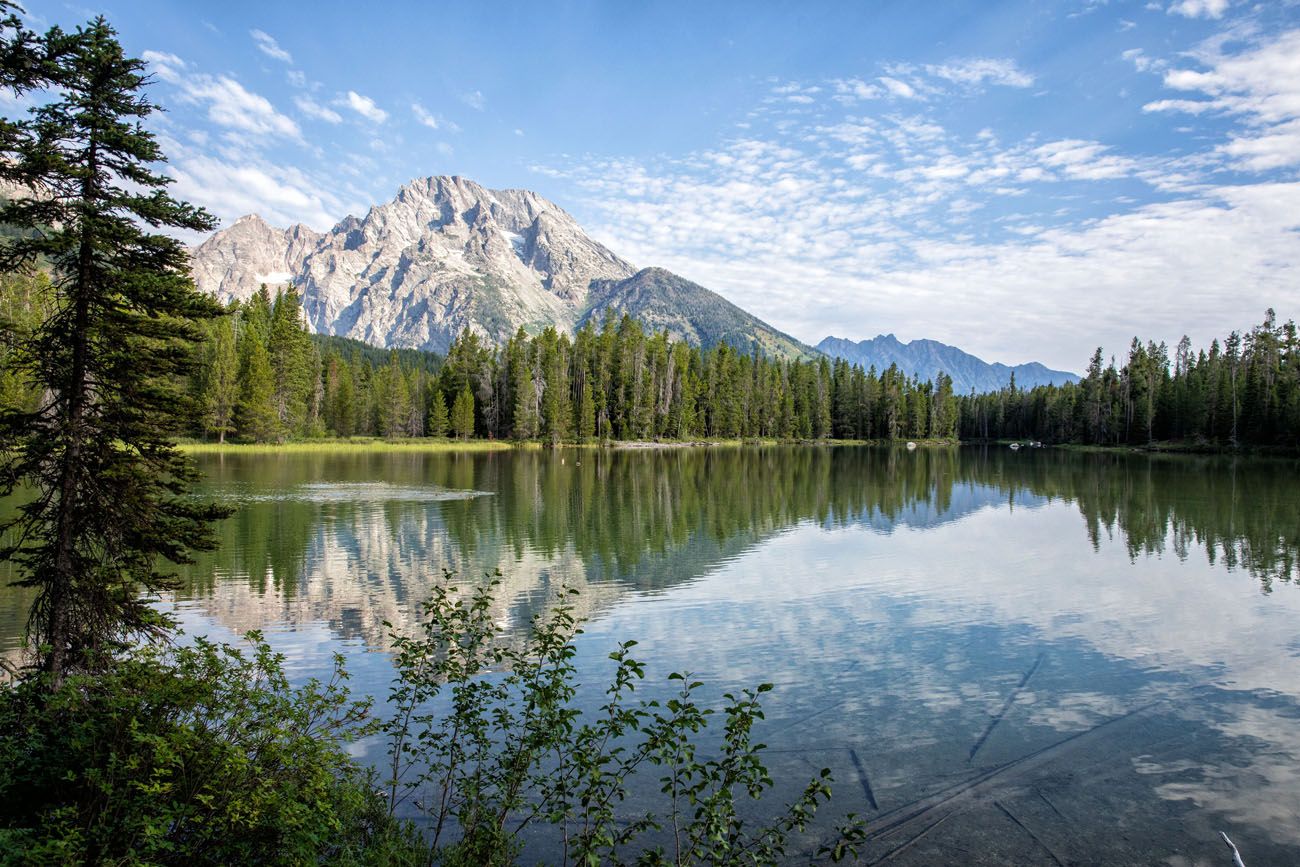
String Lake
Kara and I loved this hike. The view across String Lake, with the reflections of the mountains, is beautiful. Even during peak season, this trail doesn’t get that busy, so it feels more peaceful than many other hikes on this list.
Getting Here: Park in the parking lot at the end of String Lake Road. From Leigh Lake Trailhead, follow the String Lake Trail north along String Lake and Leigh Lake.
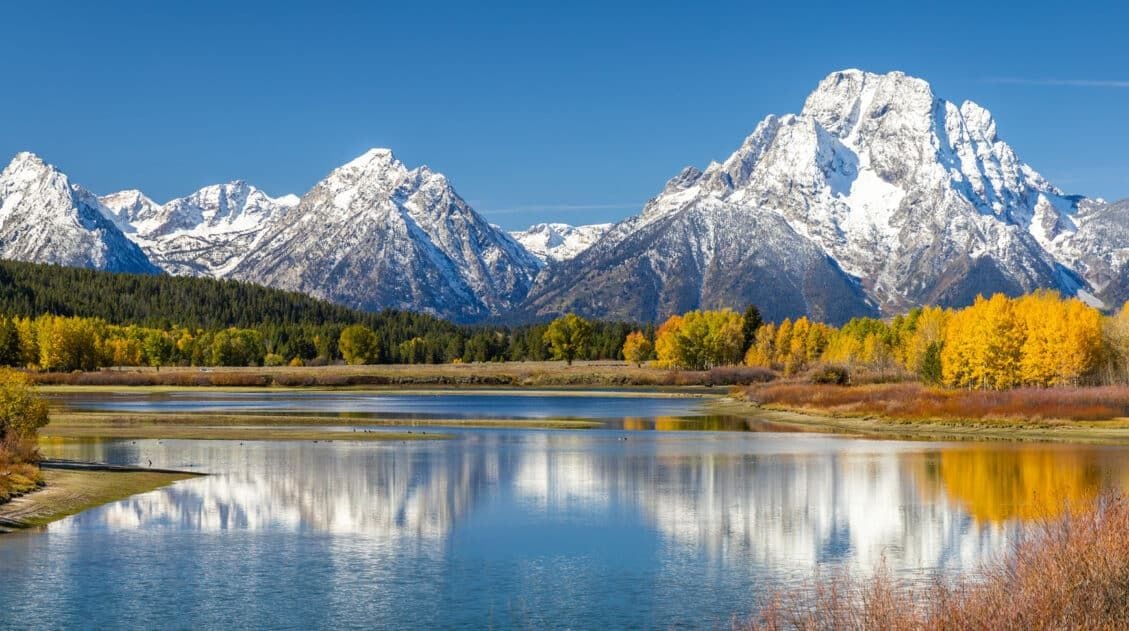
Phelps Lake Overlook
Our Rating: ⭐️⭐️⭐️⭐️ For relatively little effort, you get one of the best views of Phelps Lake. This is a great choice if you want a short hike, but we think it’s even better if you continue beyond the overlook and hike at least a short distance into Death Canyon.
Distance: 2 miles | Time: 1 hour | Difficulty: Easy to moderate | Total Ascent: 440 feet
For one of the best lake views in all of Grand Teton National Park, put this short, sweet hike to the Phelps Lake Overlook on your to-do list. With a minimal amount of elevation gain, this is a great hike for all ages and ability levels.
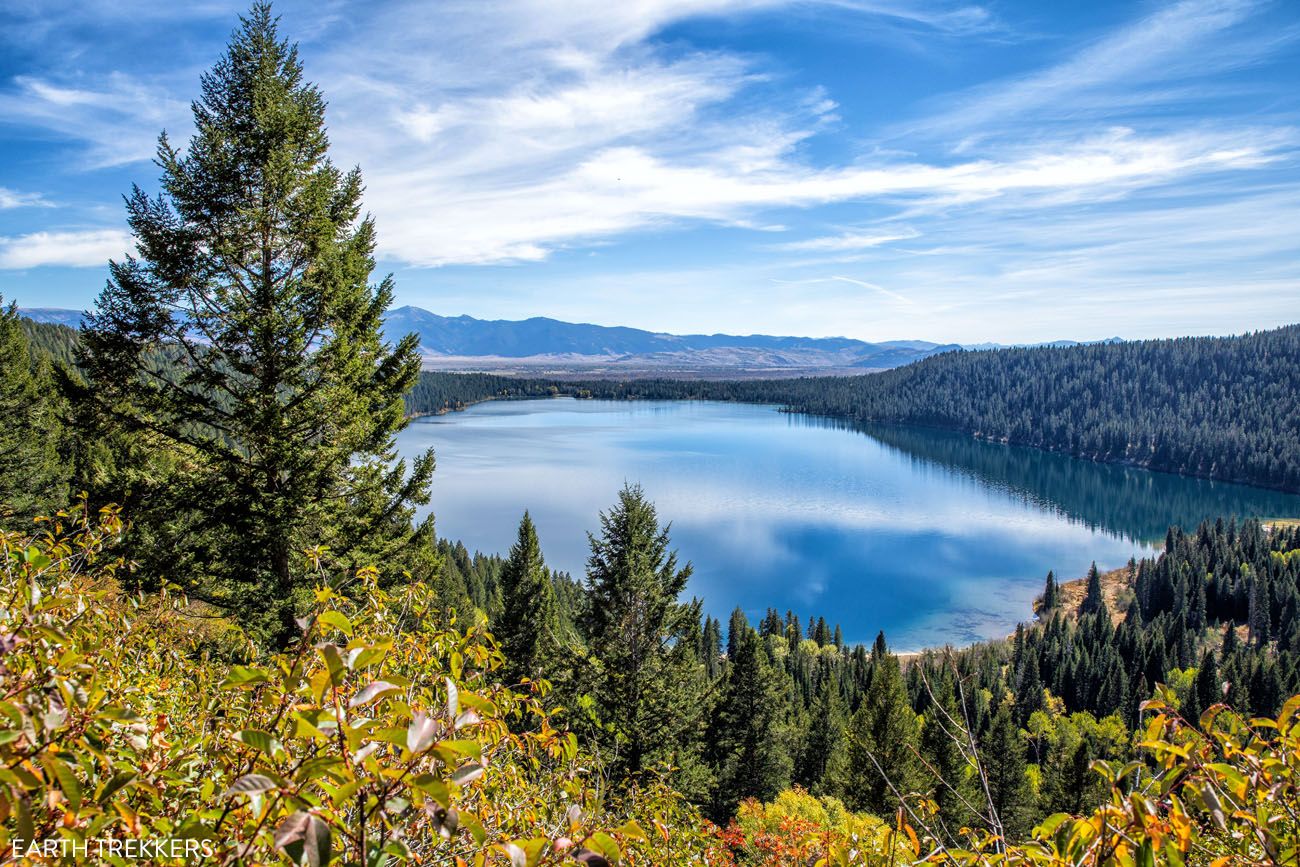
Phelps Lake Overlook
To get to the hiking trail, an SUV with 4WD is recommended, since you will drive on a rough gravel road to get to the trailhead (the Death Canyon Trailhead).
This hike can be combined with Death Canyon. In fact, I highly recommend adding on at least a little bit of Death Canyon onto this hike, if you have the time and the energy. Keep reading to find out how to do this.
Getting Here: The Death Canyon Trailhead, the usual starting point for this hike, is closed for construction from May 2026 through June 2027. Until it reopens, the way to reach the Phelps Lake Overlook is via the Phelps Lake Loop Trail from the Laurance S. Rockefeller Preserve. Once you’re on the far end of the lake, look for trail signs pointing to Death Canyon and the Phelps Lake Overlook. This detour adds 1.6 miles and 530 feet of elevation gain, round trip to the stats listed above. It’s a moderate, uphill walk, but well worth it for the view.
Once the Death Canyon Trailhead Construction is Completed
Once complete, the trailhead will reopen about a mile from its current location with a new 90-car parking lot, compost restrooms, and updated signage, and the notoriously rutted access road will be repaved. Check the NPS road construction page for the latest before planning a trip once it reopens.
Lakeshore Trail
Our Rating: ⭐️⭐️⭐️ A nice leg-stretcher if you’re already on the north end of the park at Colter Bay, but skip it if your time is limited and you have to choose.
Distance: 2 miles | Time: 1 hour | Difficulty: Easy | Total Ascent: Minimal
The Lakeshore Trail is a mostly flat trail that offers views across Jackson Lake to the Teton mountain range. This is a great place to get out and stretch your legs when visiting the north side of Grand Teton National Park.
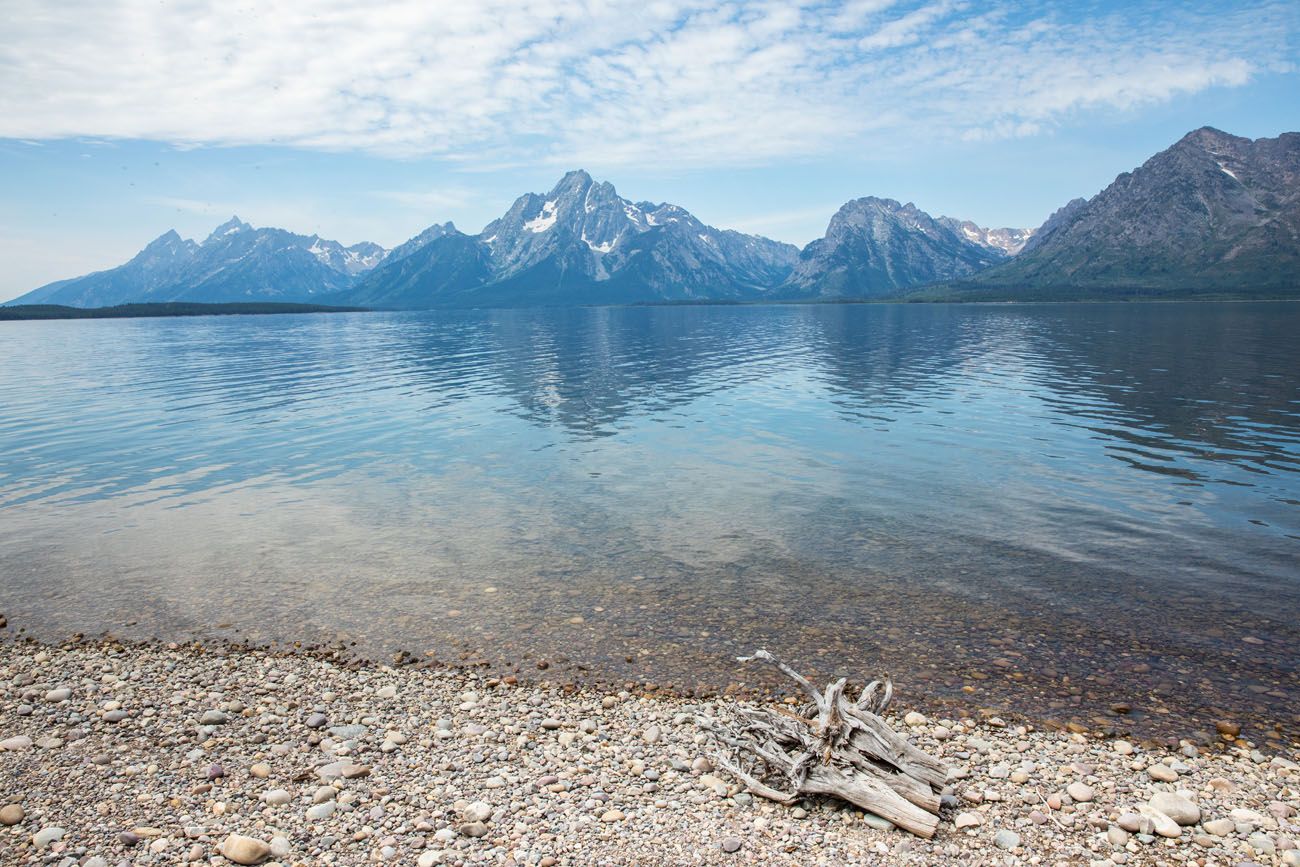
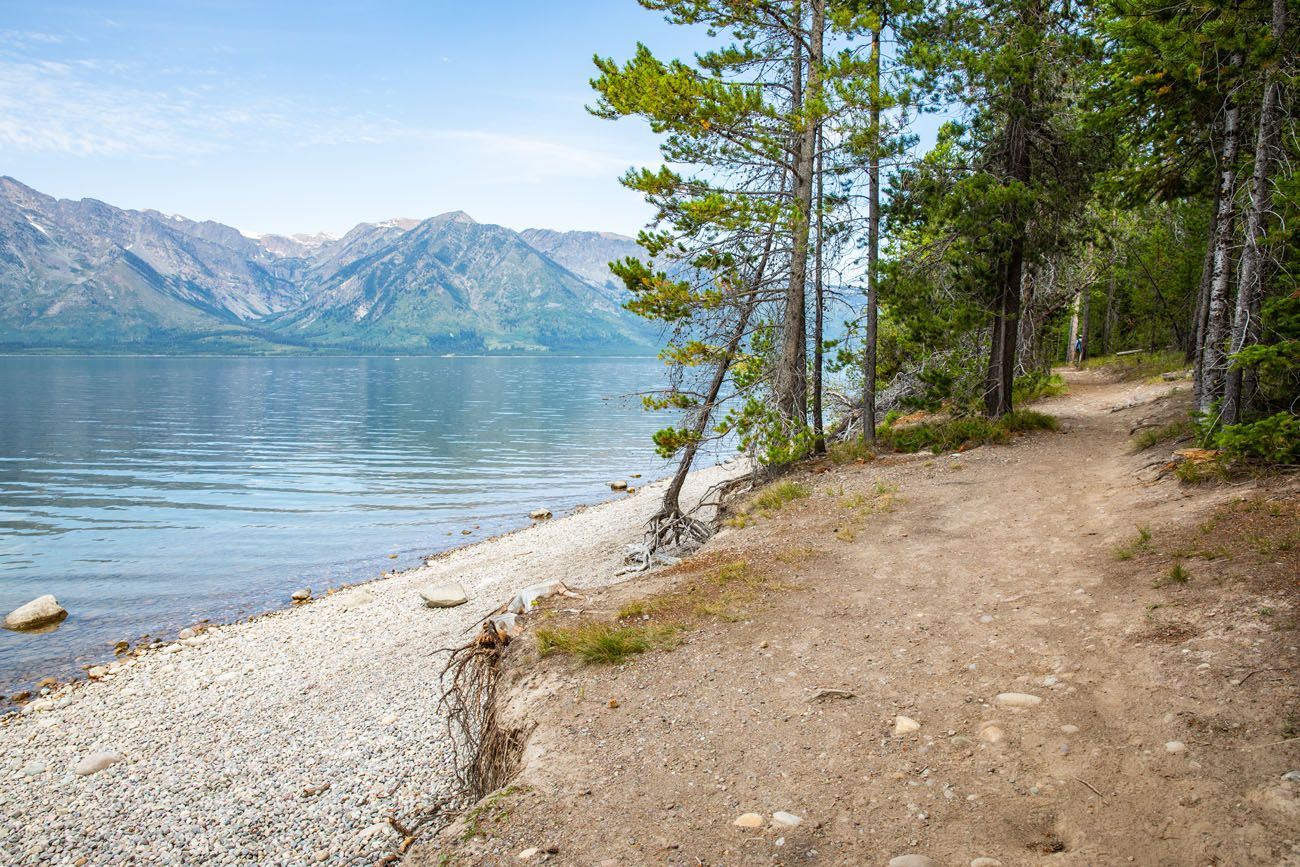
Lakeshore Trail
This hike is done as a loop and it starts and ends at the Colter Bay Visitor Center on Jackson Lake.
Location: Colter Bay Visitor Center
Best Moderate Hikes in Grand Teton
Taggart and Bradley Lakes
Our Rating: ⭐️⭐️⭐️⭐️⭐️ This is one of our favorite shorter hikes in Grand Teton. You visit two beautiful lakes, get spectacular views of the Tetons, and the hike is easy enough for many visitors. If you only have a few hours to hike, this would be one of our top choices.
Distance: 5.5 miles | Time: 2 to 3 hours | Difficulty: Easy to moderate | Total Ascent: 560 feet
Taggart and Bradley Lakes are two beautiful lakes with spectacular views of the Teton Range. Because of stunning views and the easy nature of this hike, this is an extremely popular hike in Grand Teton National Park. Start early or go late in the day to avoid the large crowds.
From the trailhead, it is an easy, uphill walk through a forest of evergreen trees and past horse corrals. Hike to Bradley Lake first and enjoy the view of Grand Teton, Middle Teton, and Teewinot Mountain from across the lake. On the hike back to the parking lot, take the trail to Taggart Lake, where similar views await.
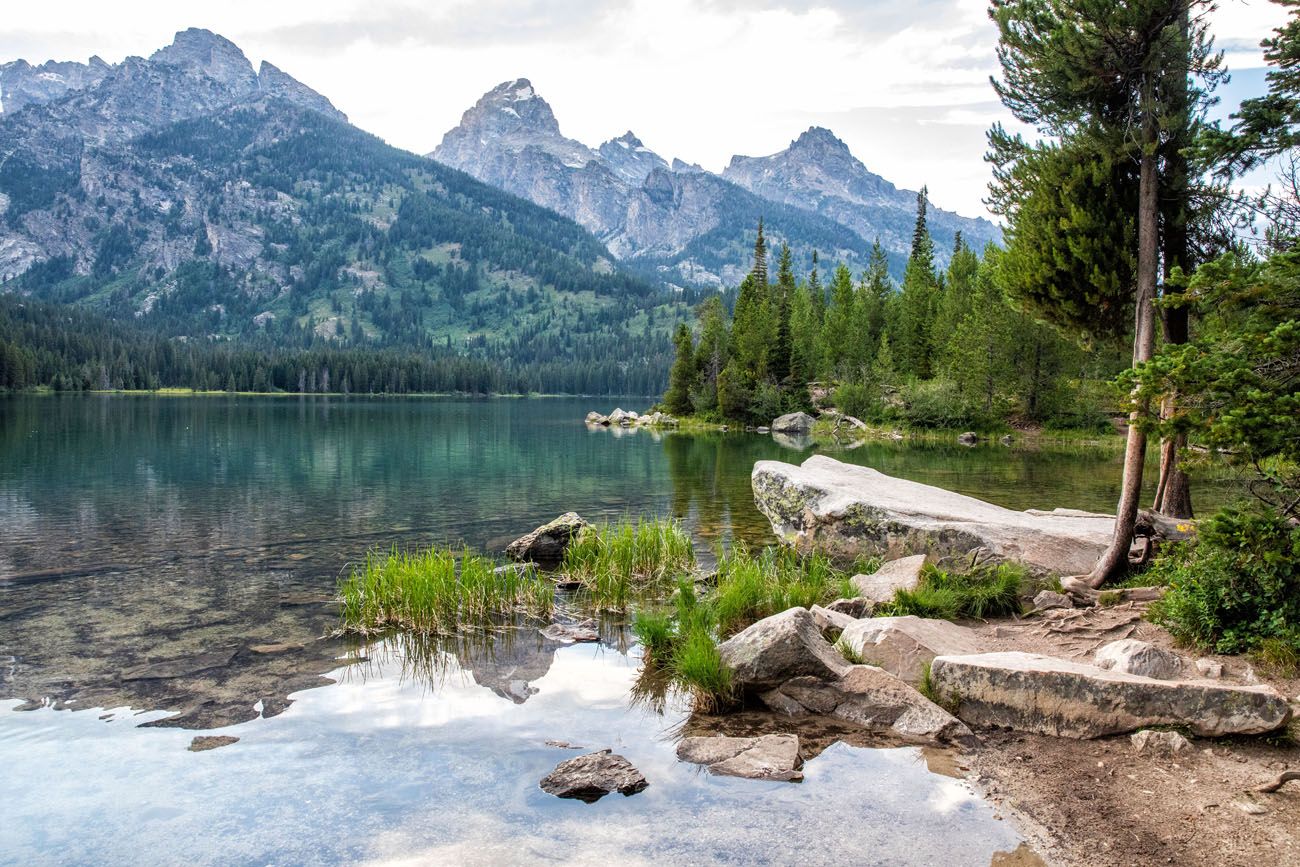
Taggart Lake
Getting Here: The Taggart Lake Trailhead is located on Teton Park Road south of Jenny Lake. There is a fairly large parking lot here but it typically fills by mid-morning.
Cascade Canyon
Our Rating: ⭐️⭐️⭐️⭐️⭐️ This is our top choice for first-time visitors who want a substantial hike into the Teton Range. The scenery gets better the farther you hike into the canyon, there’s a good chance of seeing wildlife, and you can turn around whenever you’ve had enough.
Distance: 10 miles | Time: 5 to 7 hours | Difficulty: Moderate | Total Ascent: 1,100 feet
Cascade Canyon is one of the best hikes in Grand Teton National Park. Not only do you get to walk through one of the most scenic canyons in the park, but you also get to see Inspiration Point, Hidden Falls, and Jenny Lake.
To do this hike, ride the Jenny Lake shuttle across Jenny Lake. Hike past Hidden Falls and enjoy the view from Inspiration Point, before heading into Cascade Canyon.
It’s a slightly uphill walk through the canyon but nothing too strenuous. Most likely, you won’t even notice that you are walking uphill, since you are treated to gorgeous views of the Cascade Canyon Creek, where moose and black bears are frequently spotted.
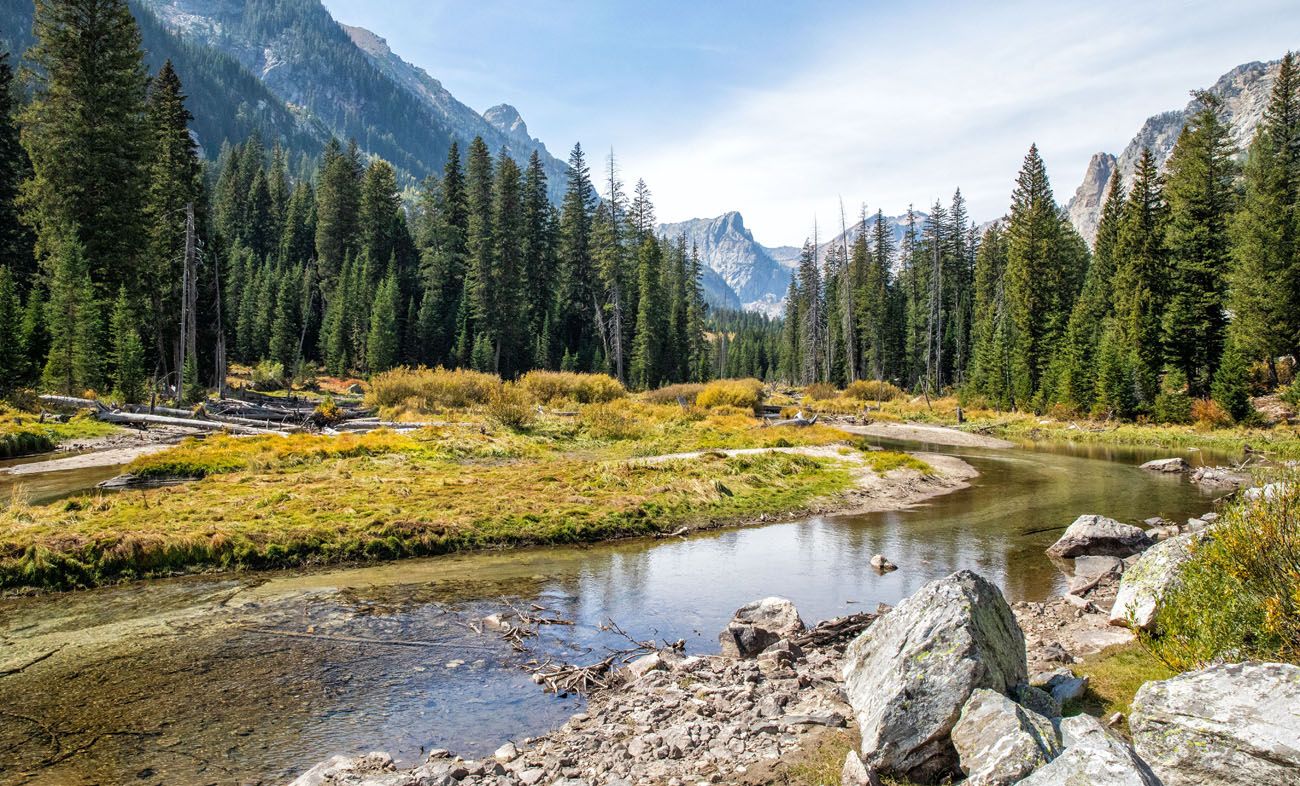
Cascade Canyon
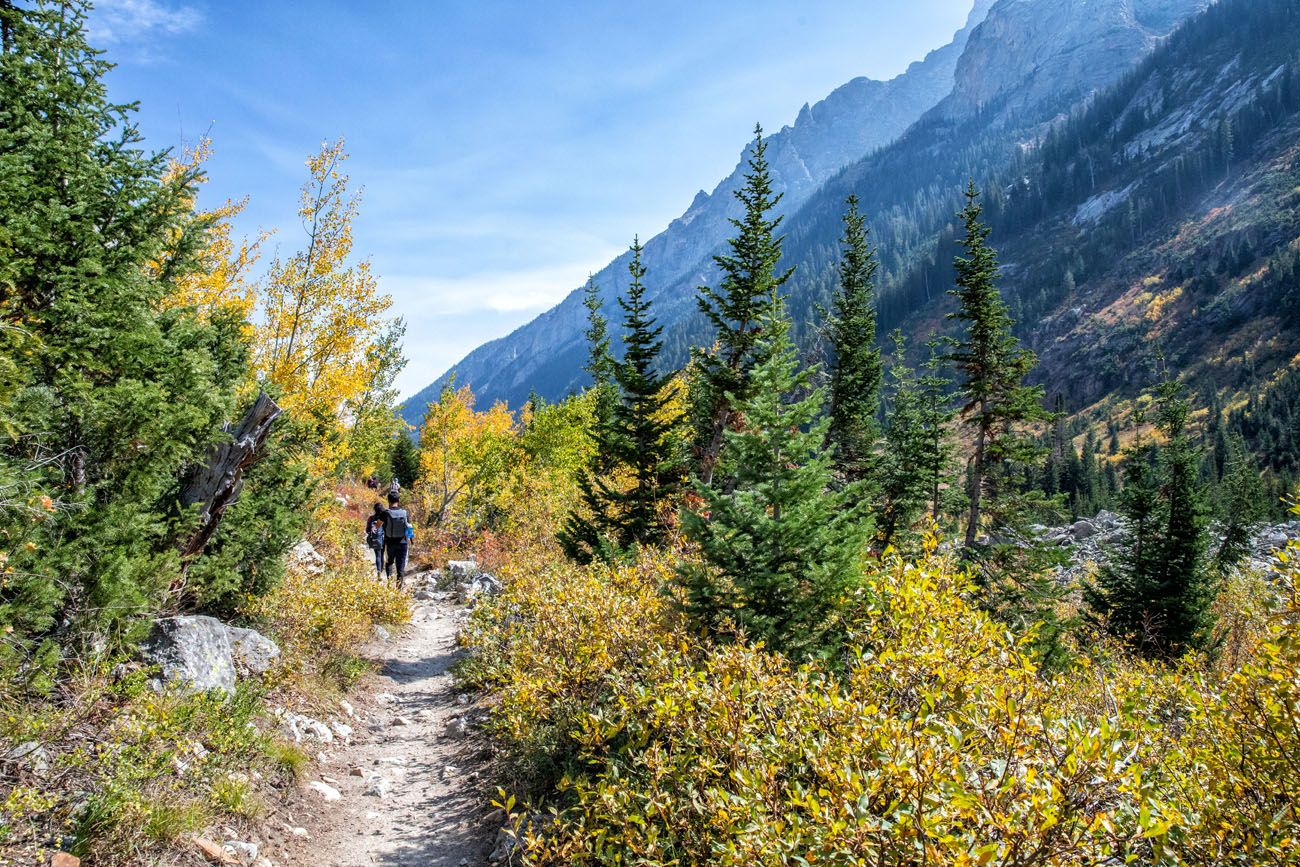
The canyon ends at the Forks of Cascade Canyon, where the trail splits. From here, you have the option to extend your hike, either going to Lake Solitude or Hurricane Pass and the Alaska Basin.
However, you don’t have to hike all of the way to the end of Cascade Canyon. If you just hike two miles past Inspiration Point, you get to see some of the best views of the Canyon, with Cascade Canyon Creek and craggy Tetons as a backdrop.
Getting Here: Park at the Jenny Lake Visitor Center and ride the shuttle to the West Shore Boat Dock.
Phelps Lake Loop
Our Rating: ⭐️⭐️⭐️⭐️ We really enjoyed this quieter alternative to the more popular lake hikes around Jenny Lake. Walking through the Laurance S. Rockefeller Preserve, circling Phelps Lake, and stopping at Huckleberry Point make this a wonderfully varied hike. We did it late in the day and saw only a handful of other hikers.
Distance: 7 miles | Time: 3 to 4 hours | Difficulty: Moderate | Total Ascent: 800 feet
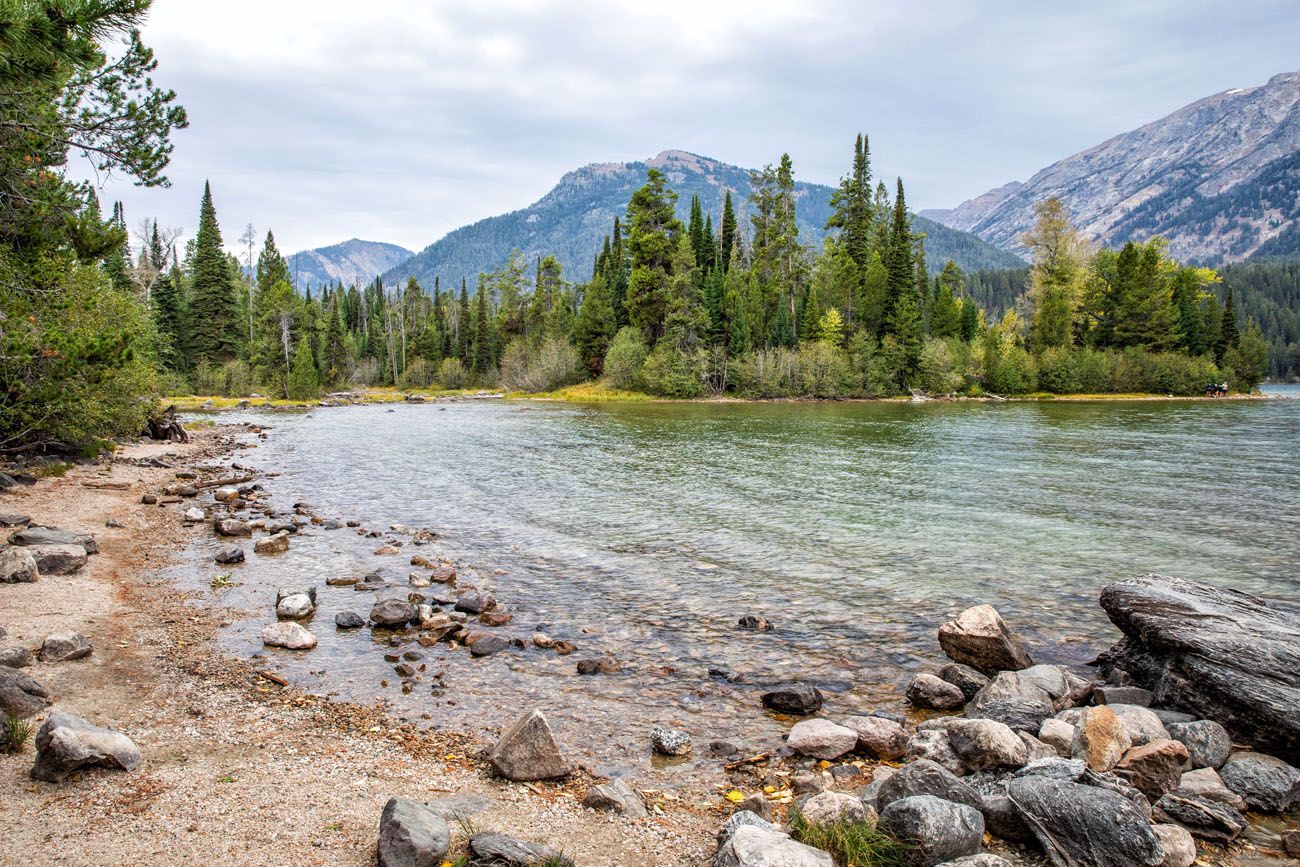
This is yet another lovely lake hike in Grand Teton National Park. What makes this one special is that, for part of the hike, you walk through the Laurance S. Rockefeller Preserve.
The Rockefellers once owned over 3,000 acres of land near the southern end of the park. Over the years, this land was donated to the national park service. In 2001, the final 1,106 acres was donated to the park and became the Preserve.
Limited parking at the Preserve helps keep crowds to a minimum. It’s still possible to hike to Phelps Lake from other parts of the park, but for a lake hike, the traffic on this trail is relatively low.
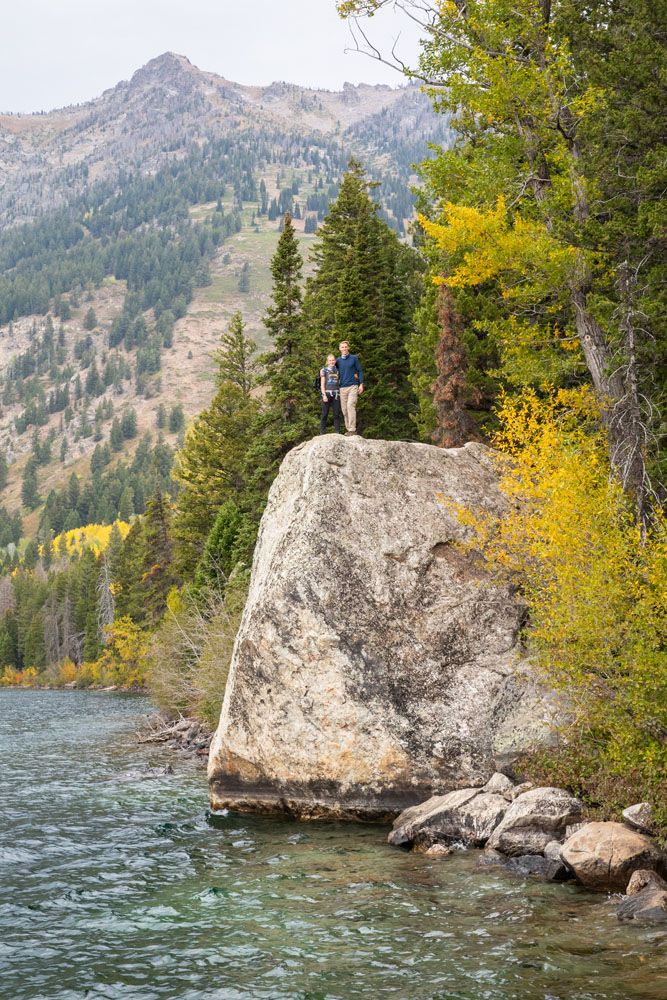
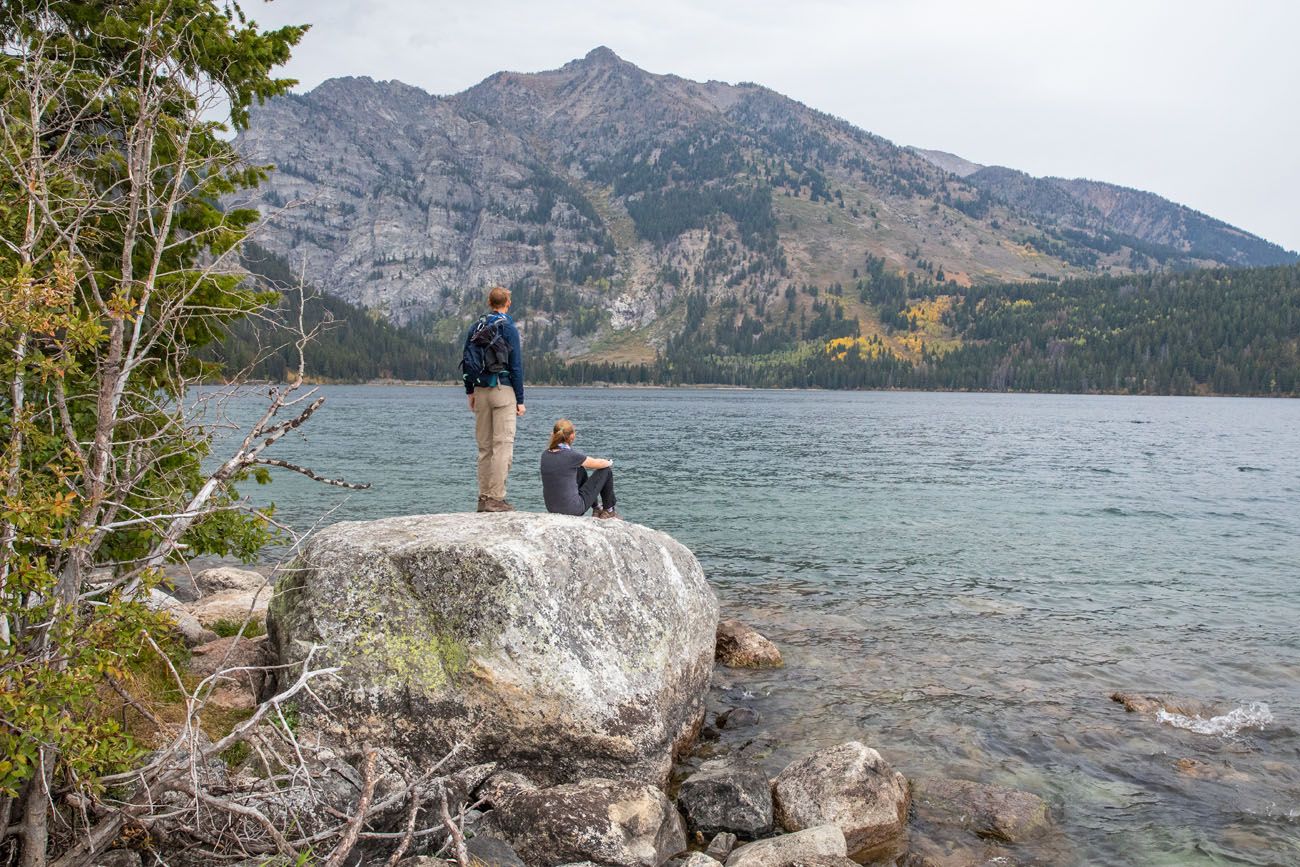
To do this as a loop, I recommend taking the Woodland Trail to the lake, walking counter-clockwise around the lake, and coming back to the Visitor Center on the Lake Creek Trail. Along the way, don’t miss the huge boulder that serves as a diving board in the summer months (on the east side of the lake) and Huckleberry Point for its view over the lake (on the west side of the lake). There is even a beach at the far end of the hike.
We did this hike at the very end of the day and only saw a handful of people on the trail.
Phelps Lake Loop
Huckleberry Point
Getting Here: Park at the Laurance S. Rockefeller Preserve. There is very limited parking here and it tends to fill up early, so plan on arriving early (before 8 am) or late (4 to 5 pm) for your best chance to get a parking space. It is a .1-mile walk to the Visitor Center, where this hike begins.
Jenny Lake Loop
Our Rating: ⭐️⭐️⭐️ Jenny Lake is beautiful, but at nearly 8 miles, we don’t think the full loop gives you as much bang for your buck as some of the other hikes in the park. If you have limited time, we would rather hike Hidden Falls and Inspiration Point and continue into Cascade Canyon.
Distance: 7.6 miles | Time: 3 to 5 hours | Difficulty: Easy | Total Ascent: 250 feet
This is another extremely popular hike in Grand Teton National Park. Jenny Lake is one of the iconic sights in the park, so it attracts many first-time visitors.
This is a long hike, almost 8 miles in length, but since it’s mostly flat, it’s a relatively easy trail.
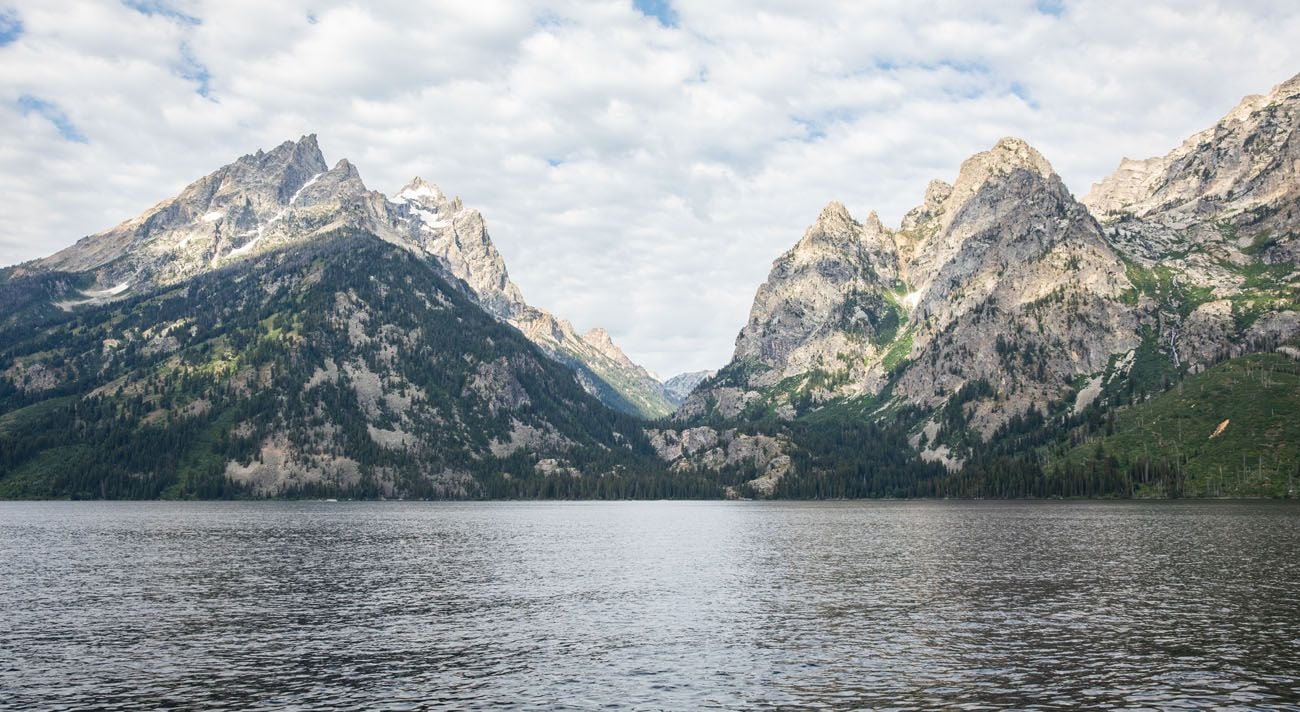
Jenny Lake
If you walk the trail in a clockwise direction, you save the best views for the end of the hike…the iconic views across Jenny Lake to the jagged Teton mountains.
This hike is perfect if you want great views of the Teton mountains without a lot of effort.
If you don’t want to hike the entire loop, take the Jenny Lake boat shuttle across the lake, and then hike the loop in a clockwise direction back to the Jenny Lake Visitor Center. The hike will be 5 miles long.
Getting Here: Park at the Jenny Lake Visitor Center and walk the perimeter of the lake from here.
Jenny Lake Loop + Hidden Falls and Inspiration Point
Park at the Jenny Lake Visitor Center and hike the Jenny Lake Loop in a counter-clockwise direction. The views across the lake, particularly from the Jenny Lake Overlook, is very nice in the morning hours. Once you arrive at the west shore boat dock, hike to Hidden Falls and Inspiration Point. Have a picnic lunch in the shade of the trees near Hidden Falls before catching the Jenny Lake shuttle back to the Visitor Center. This hike is 7 miles long and the entire experience will take approximately 5 hours.
Best Strenuous Hikes in Grand Teton
Surprise, Amphitheater & Delta Lakes
Our Rating: ⭐️⭐️⭐️⭐️ A tough, rewarding hike to three alpine lakes, though Delta Lake in particular now gets crowded since it’s no longer a secret.
Distance: 11.5 miles | Time: 5 to 7 hours | Difficulty: Strenuous | Total Ascent: 3,800 feet
The hike to Surprise, Amphitheater and Delta Lakes is a popular hike to do in Grand Teton National Park. It’s a tough hike but your reward is a visit to three stunning alpine lakes.
To get to the lakes, it is a tiring, uphill walk but along the way you will have a nice view out over Bradley and Taggart Lakes.
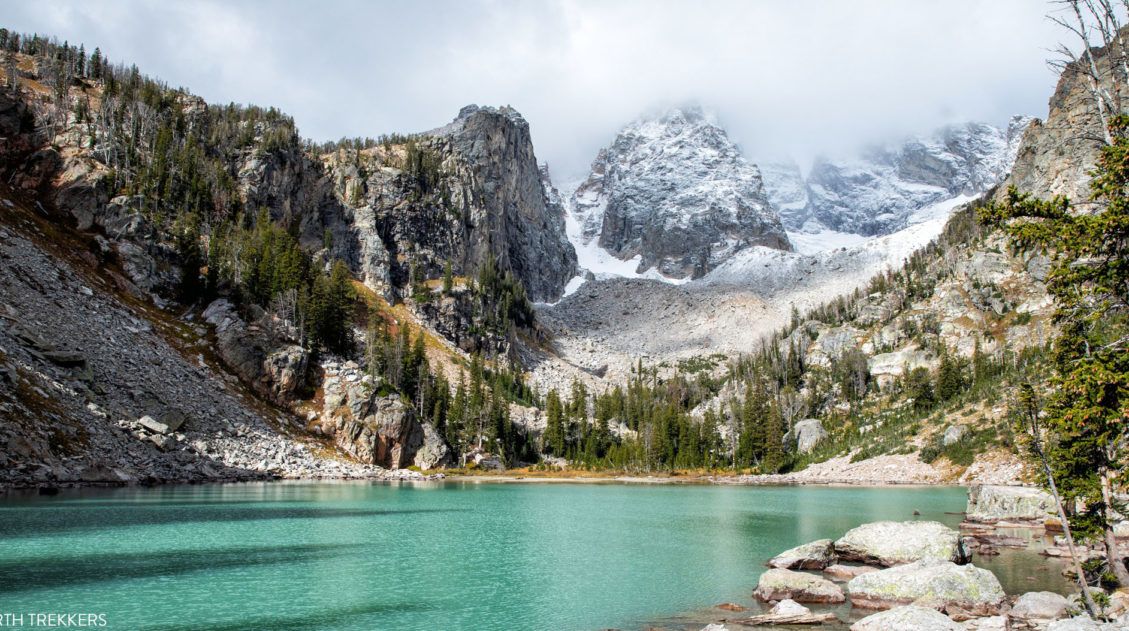
Surprise and Amphitheater Lakes sit almost next to one another. You’ll hike 5 miles to get here, and it’s uphill pretty much the entire way. But what a beautiful place!
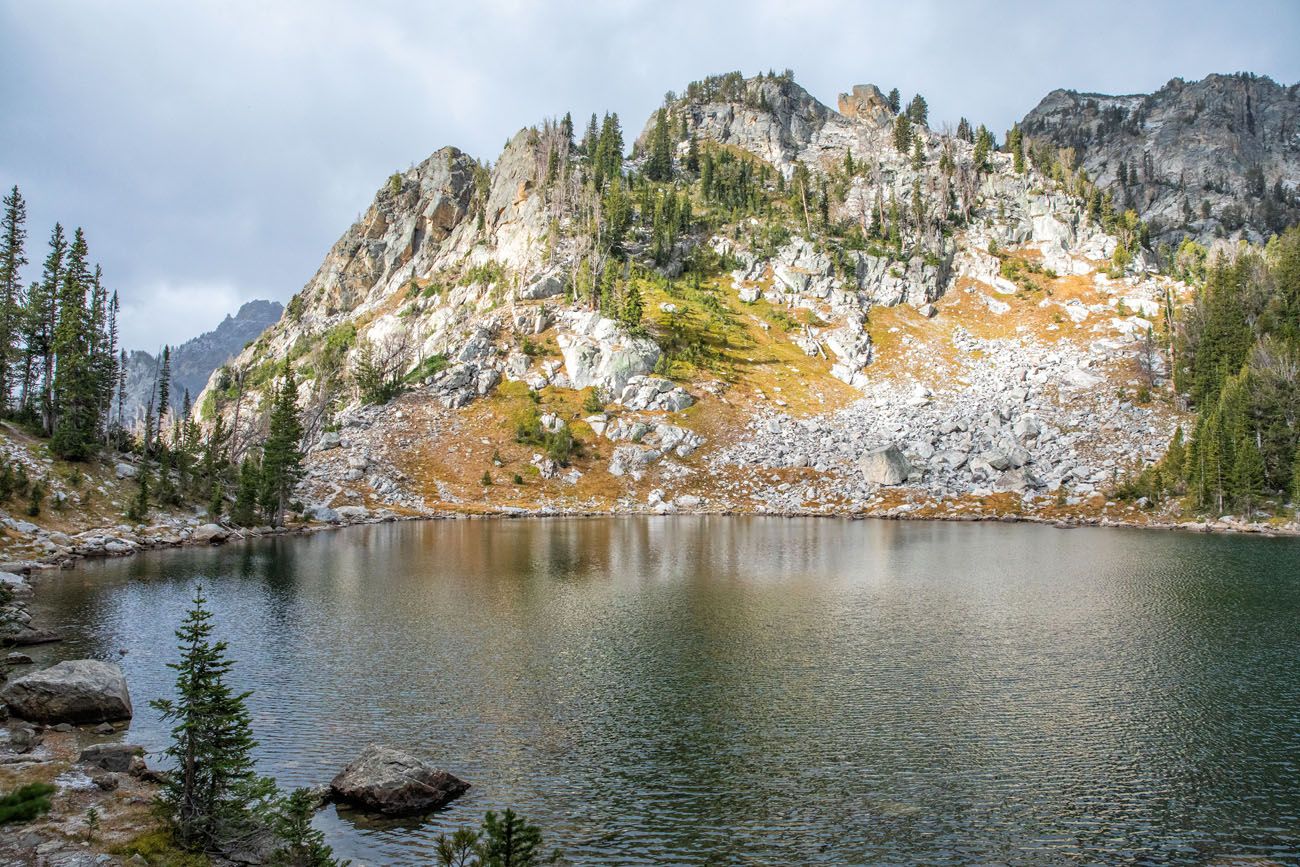
Surprise Lake
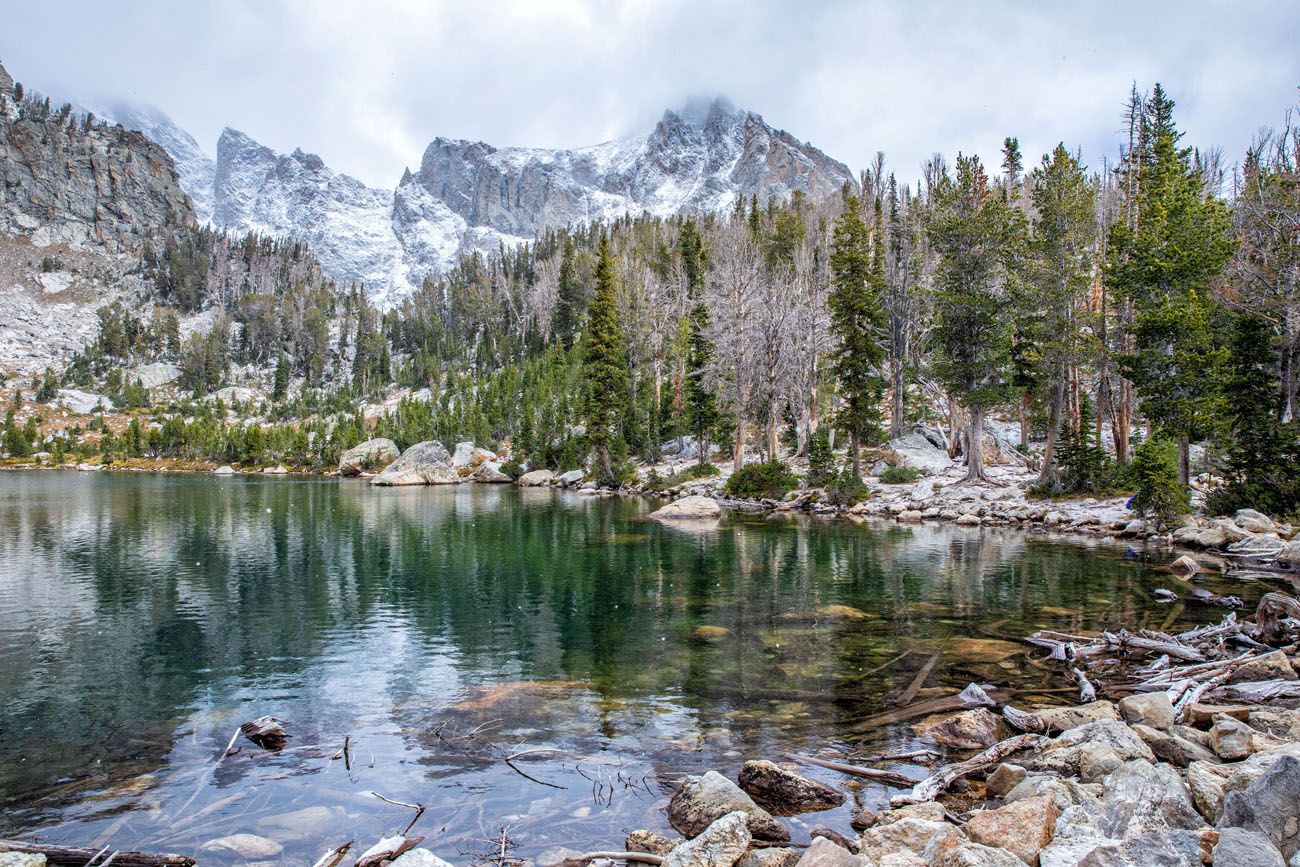
Amphitheater Lake
On the way down, you can add on Delta Lake. Delta Lake was once a hidden gem in Grand Teton National Park, but the secret is out. It’s now one of the most popular hiking destinations in the park. To get to the lake, you will hike an unmaintained trail, across boulder fields, and up a very steep, dirt trail. So, expect big crowds and a tough hike to get to Delta Lake.
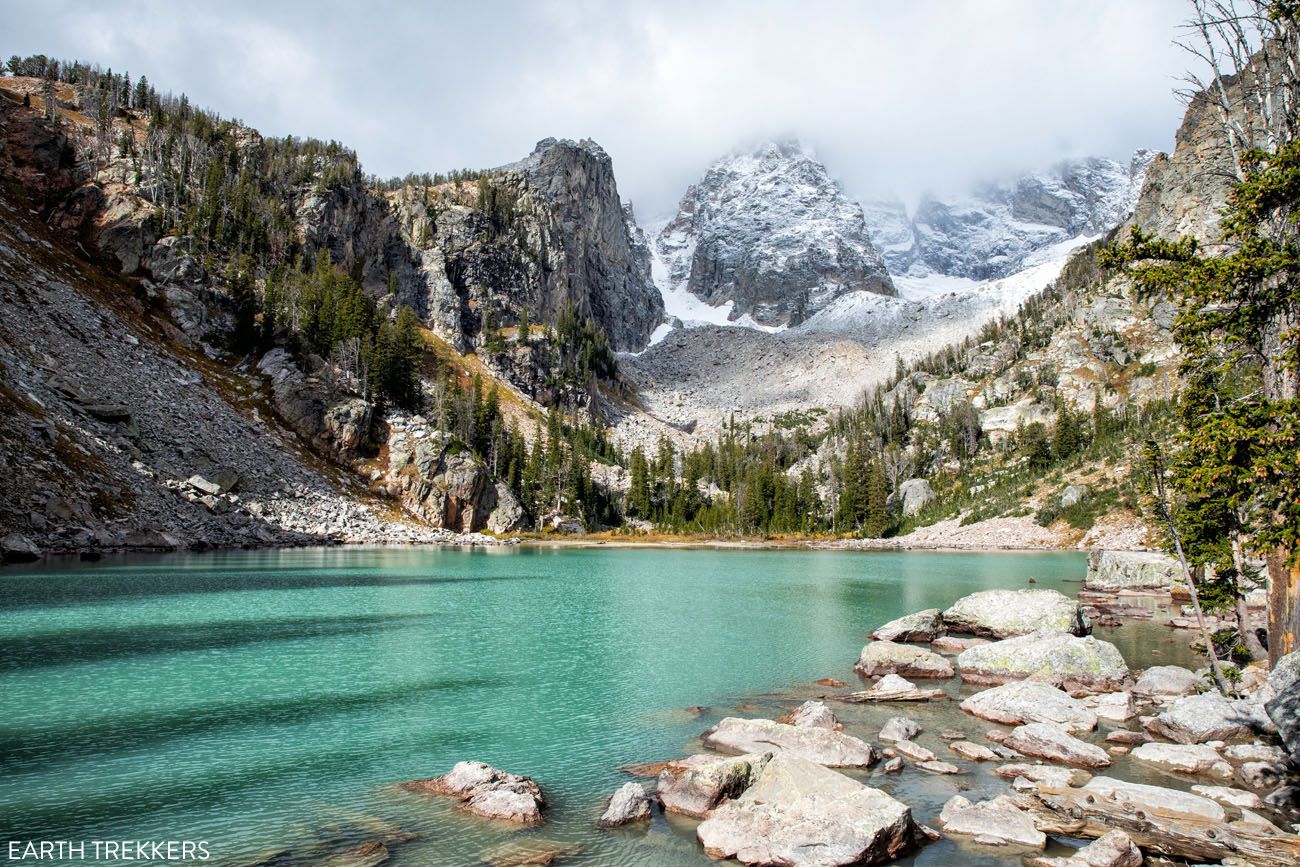
Delta Lake
Getting Here: The trail starts at the Lupine Meadows trailhead, which is located at the end of Lupine Meadows Road. Lupine Meadows Road is a gravel road that is suitable for most cars.
Surprise, Amphitheater & Delta Lake Hiking Guide
Hike to three alpine lakes with this step-by-step trail guide for the hike to Surprise, Amphitheater, and Delta Lakes.Death Canyon to the Patrol Cabin
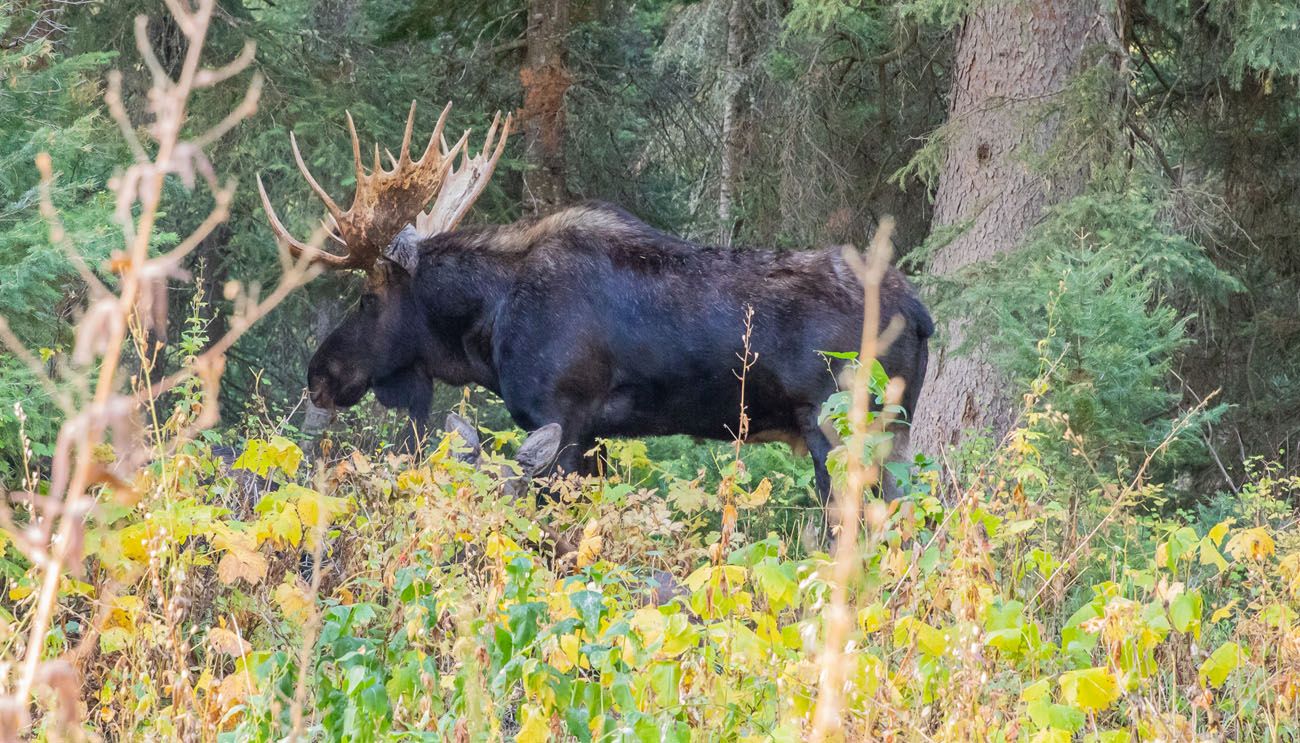
Our Rating: ⭐️⭐️⭐️⭐️⭐️ Death Canyon is one of our favorite places to hike in Grand Teton. The scenery is beautiful, the trail is much quieter than Cascade Canyon, and wildlife sightings can be excellent. We saw four moose here and only a few other hikers, making this one of our most memorable hiking experiences in the park.
Distance: 8 miles | Time: 4 to 6 hours | Difficulty: Strenuous | Total Ascent: 2,100 feet
Death Canyon is similar to Cascade Canyon and Paintbrush Canyon, with its scenic views and chance to see moose and bear. However, with fewer visitors, this trail feels much quieter. When we hiked this trail (on the way to the Static Peak Divide), we saw four moose and only a few people, making this one of our favorite hiking experiences in Grand Teton National Park. We didn’t even start all that early, with our feet hitting the trail at 8 am (late in September).
Starting at the Death Canyon Trailhead, you will first come to the Phelps Lake Overlook, then drop down towards Phelps Lake. However, you won’t see the lake from the shore, unless you add this short detour onto the hike. Once past Phelps Lake, the trail turns to the right and heads up into the canyon.
Once in Death Canyon, it becomes a moderate to strenuous hike on a rugged, rocky trail. You can turn around at the Patrol Cabin (4 miles from the trailhead) or continue all the way to the Teton Crest Trail (9.5 miles from the trailhead).
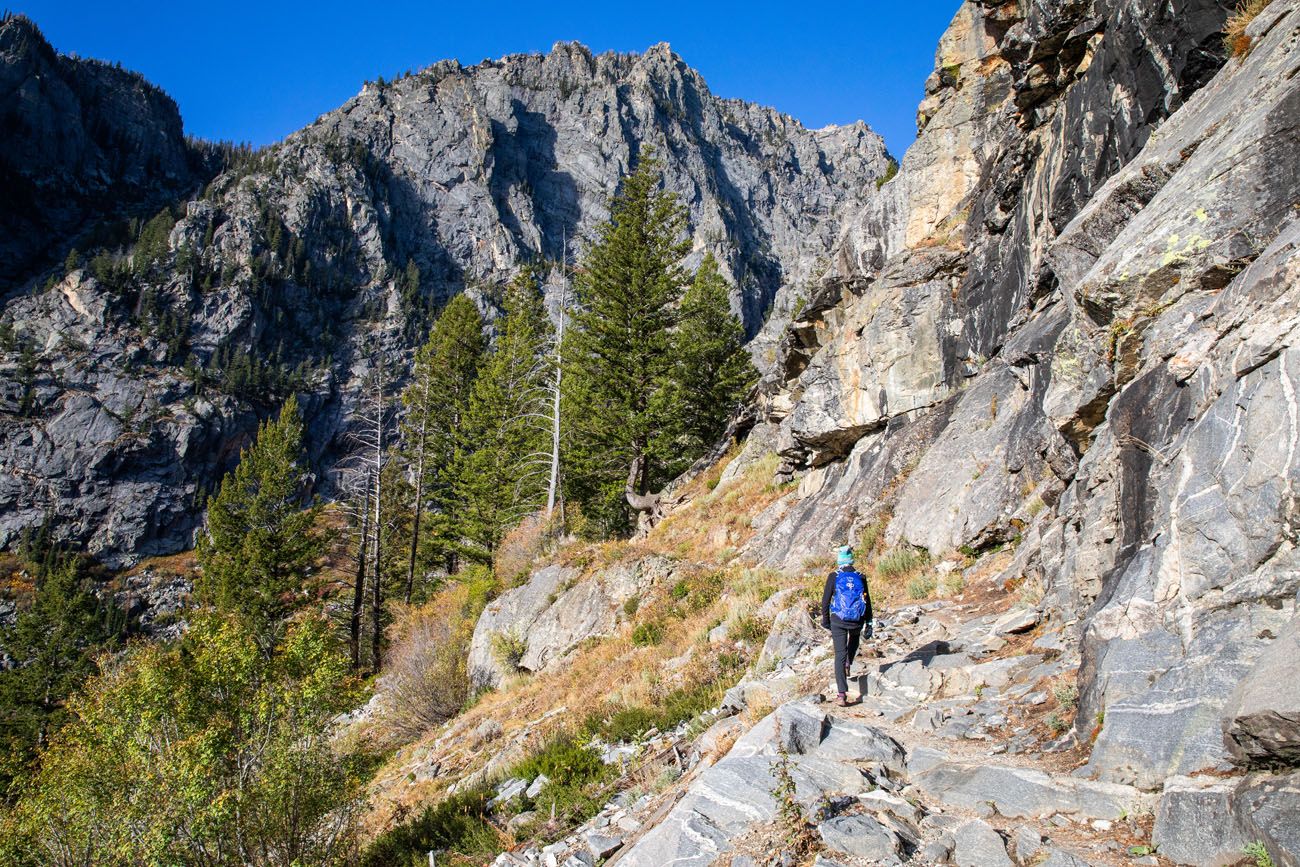
Death Canyon
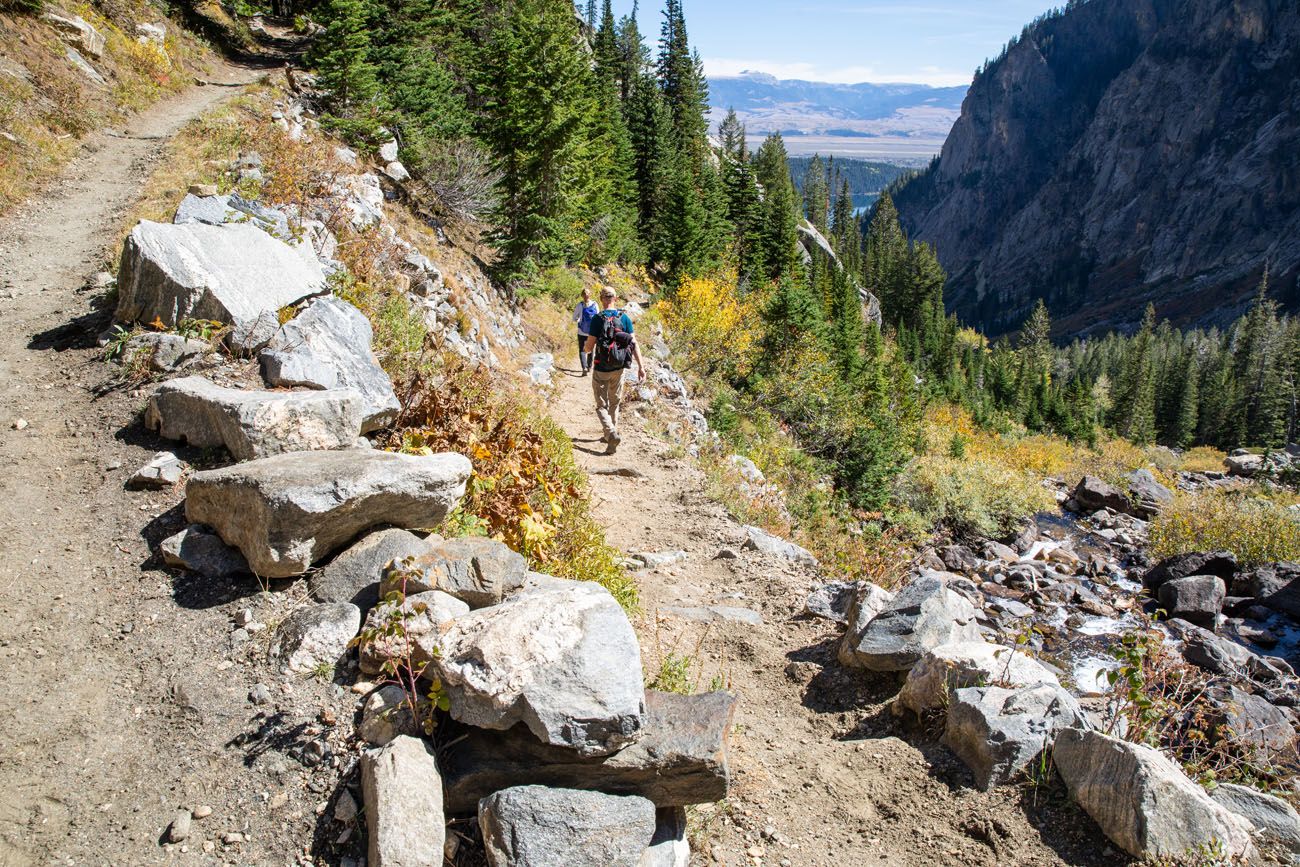
Getting Here: The Death Canyon Trailhead and the road leading to it are closed for construction from May 2026 through June 2027. This is a full closure, meaning no vehicle, bike, or foot access, so this hike is not doable via its usual trailhead this season. The National Park Service recommends hikers use alternate trailheads at the Laurance S. Rockefeller Preserve, Granite Canyon, or Teton Village instead.
Once complete, the trailhead will reopen about a mile from its current location with a new 90-car parking lot, compost restrooms, and updated signage, and the notoriously rutted access road will be repaved. Check the NPS road construction page for the latest before planning a trip once it reopens.
Lake Solitude
Our Rating: ⭐️⭐️⭐️⭐️ Worth the long haul for the scenery, just don’t expect actual solitude. This trail is busier than the name suggests.
Distance: 15 miles | Time: 8 to 12 hours | Difficulty: Strenuous | Total Ascent: 2,250 feet
Surrounded by some of the grandest mountain scenery in Grand Teton National Park, Lake Solitude is well worth the effort it takes to get here.
The most common route to Lake Solitude is through Cascade Canyon. Ride the Jenny Lake boat shuttle, hike past Hidden Falls and Inspiration Point, and then hike up Cascade Canyon to the Forks of Cascade Canyon. Take the trail to the right and continue on the moderate, uphill trail until you reach Lake Solitude.
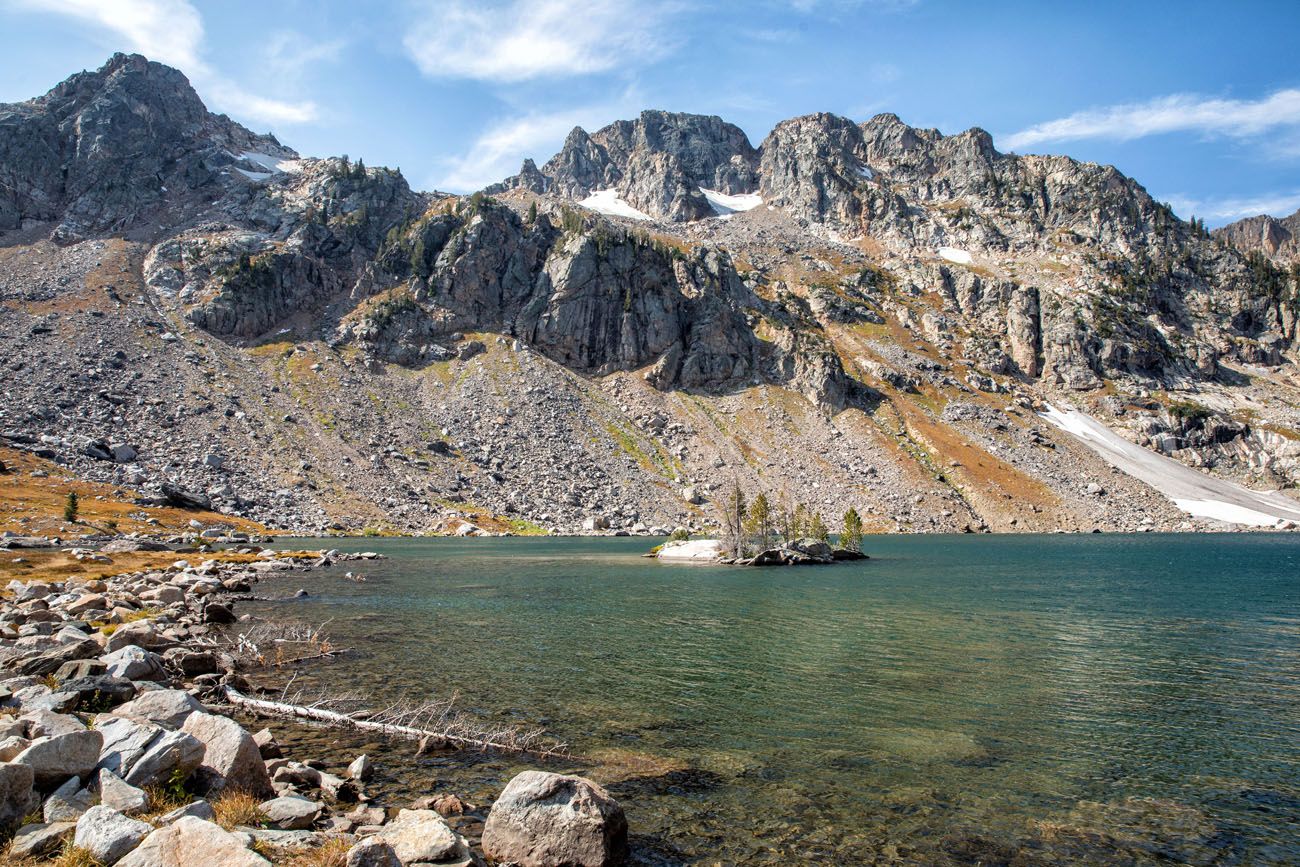
Lake Solitude
During peak season, this lake can be a busy place, so don’t let the name fool you. In fact, we were surprised to see so many people here, especially since it is a hefty hike to get here.
As you hike back towards Jenny Lake, enjoy the view of Grand Teton, which will be smack in front of you, before you make the turn down Cascade Canyon.
Getting Here: Park at the Jenny Lake Visitor Center and ride the shuttle to the West Shore Boat Dock.
Paintbrush Canyon and Paintbrush Divide
Our Rating: ⭐️⭐️⭐️⭐️ One of the best viewpoints in the park at 10,700 feet, and if you have the legs for it, this is the one to extend into the full loop below.
Distance: 16.8 miles | Time: 8 to 10 hours | Difficulty: Strenuous | Total Ascent: 4,000 feet
At 10,700 feet, Paintbrush Divide is one of the best viewpoints in Grand Teton National Park. The views from here are simply spectacular.
To get to the Paintbrush Divide, it is a strenuous, uphill walk through Paintbrush Canyon.
This hike starts at the String Lake Trailhead. At first, you get to enjoy the view over String and Leigh Lakes, before the trail takes a turn to the left and begins its ascent into Paintbrush Canyon.
Paintbrush Canyon is a beautiful canyon, especially in the fall months, when the trees and shrubs turn various shades of yellows, oranges and reds. On the way to the divide, you will pass lovely Holly Lake, and then it’s one last steep, strenuous ascent onto Paintbrush Divide.
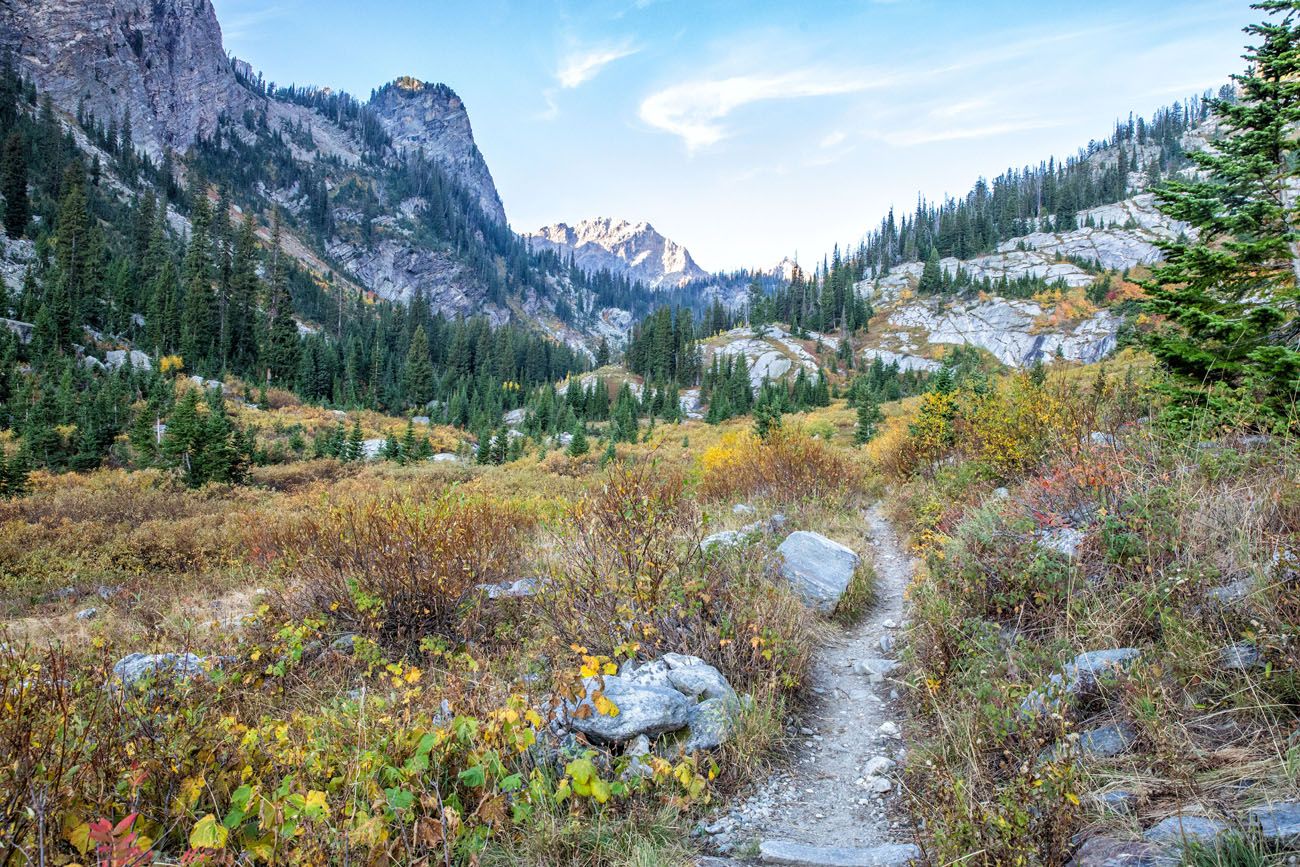
Paintbrush Canyon
From Paintbrush Divide, you will have views of Rockchuck Peak, Mt. Moran, Leigh Lake and Jackson Lake.
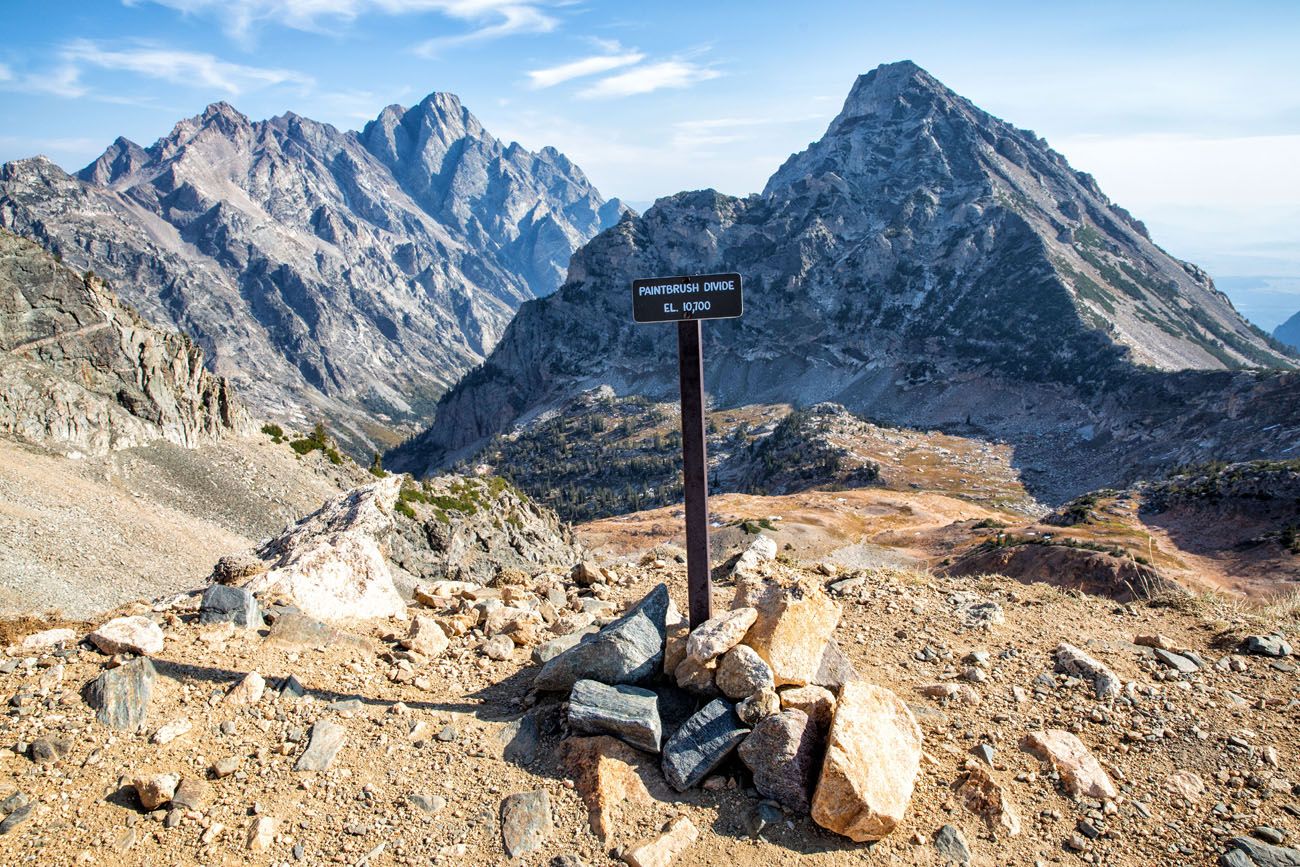
Extend This Hike: Turn this hike into an epic loop hike by adding on Solitude Lake and Cascade Canyon. Keep reading for the full details on how to do this (it’s our favorite hike in the park!).
Note: Snow can linger on this trail through mid-July, so if you plan to hike this trail in the early summer, you will need to bring special gear.
Getting Here: Park in the small lot at the String Lake Trailhead. This hike starts and ends at this trailhead. I recommend getting here no later than 7:30 am to ensure that you get a parking space.
Best Challenging Hikes in Grand Teton
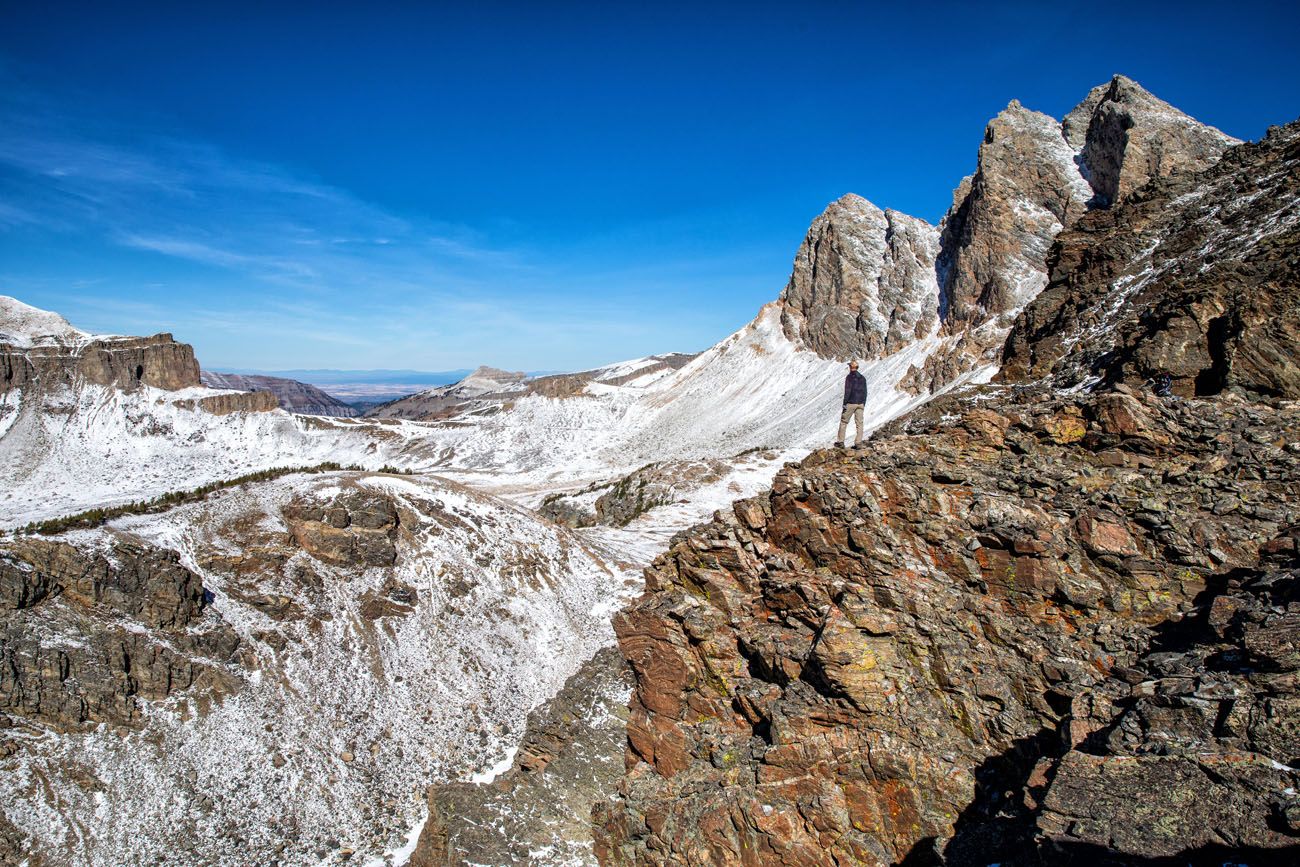
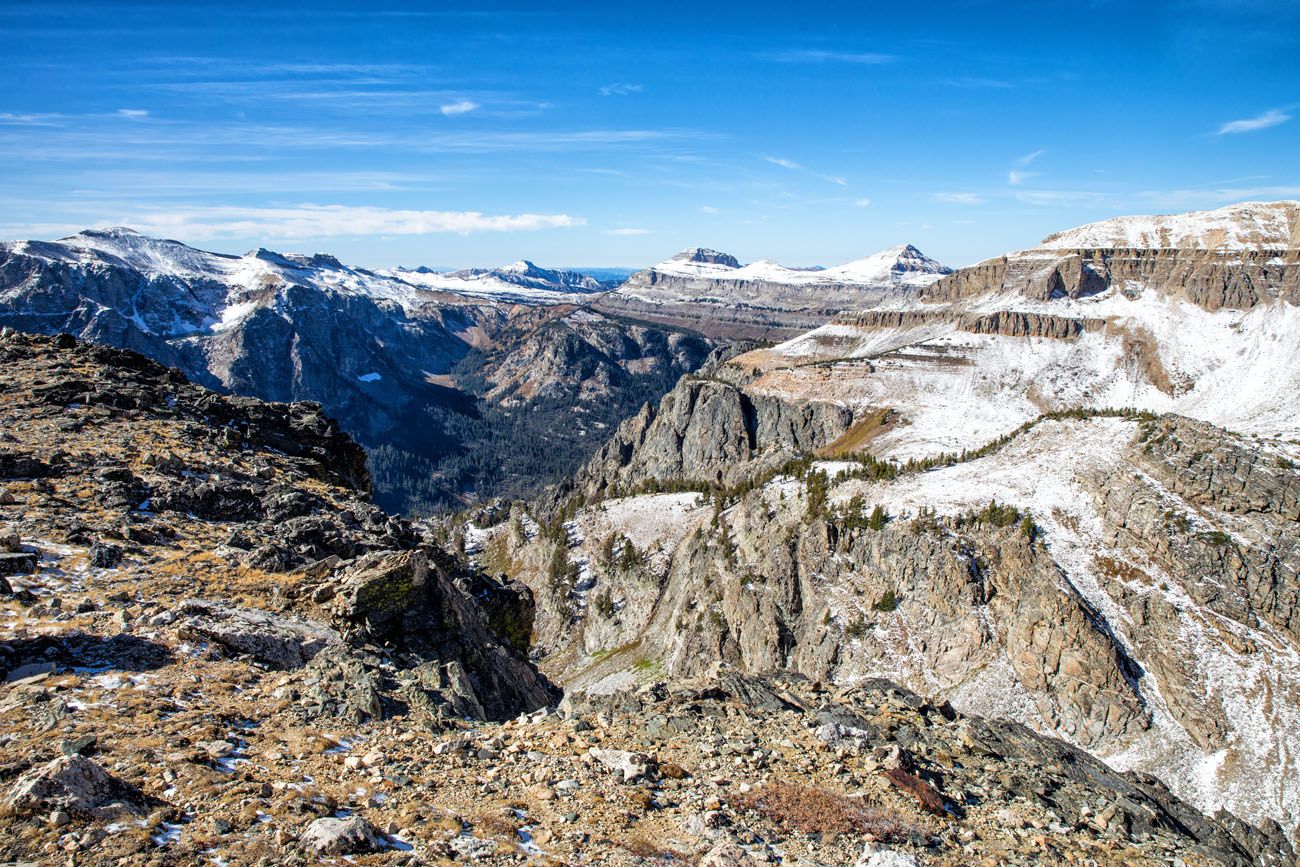
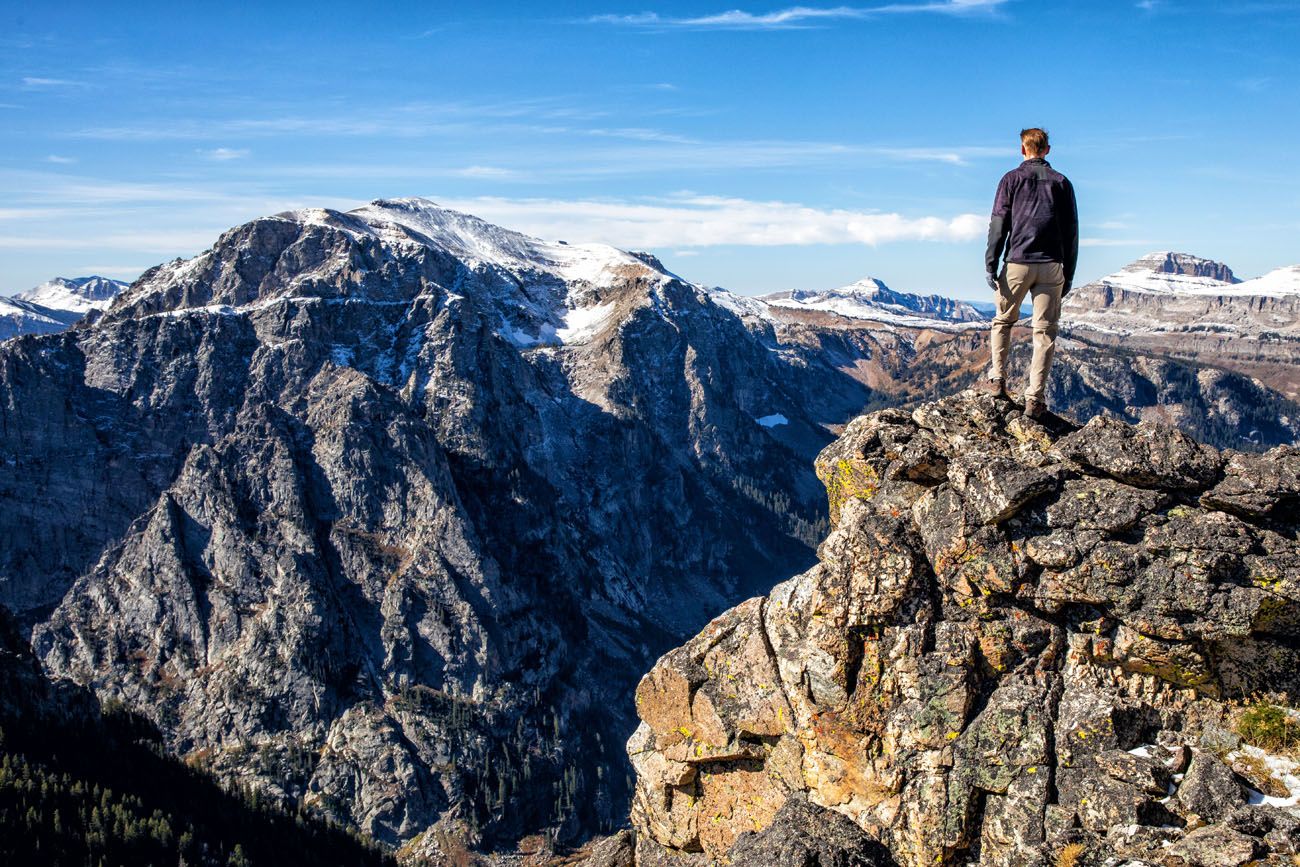
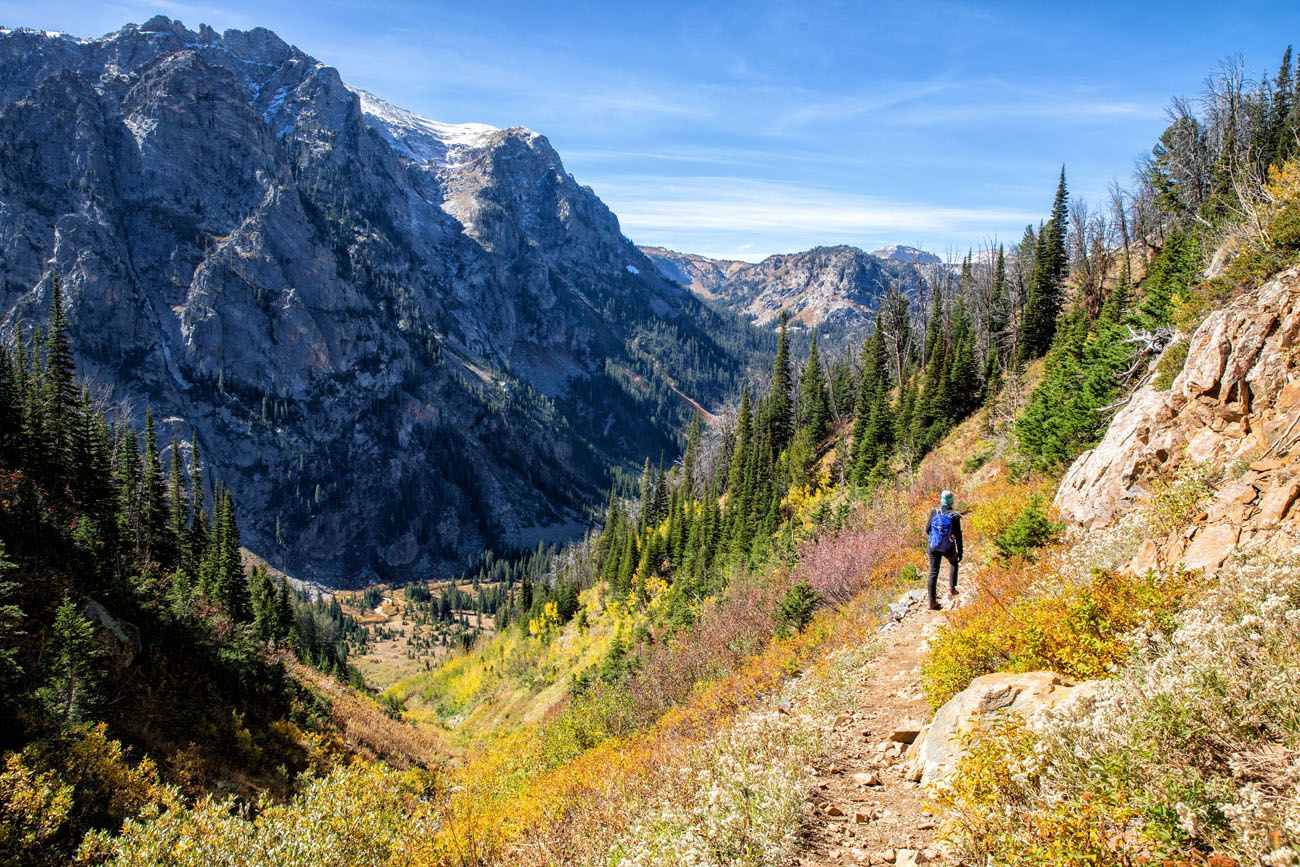
Static Peak Divide
Our Rating: ⭐️⭐️⭐️⭐️⭐️ We loved this hike. You get the wildlife and canyon scenery of Death Canyon followed by a huge climb to panoramic views from nearly 11,000 feet. The final ascent is demanding, but the views from Static Peak Divide are well worth the effort.
Distance: 16 miles | Time: 8 to 10 hours | Difficulty: Very Strenuous | Total Ascent: 5,000 feet
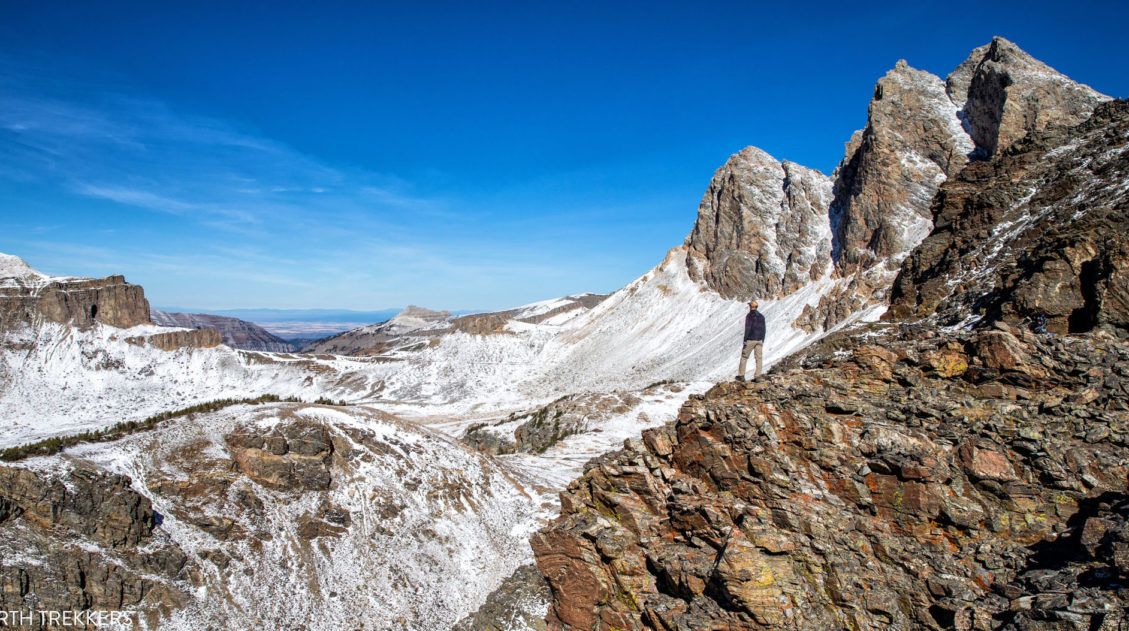
How to Hike Death Canyon to the Static Peak Divide | Grand Teton National Park
Detailed trail guide for the hike through Death Canyon to the Static Peak Divide.Panoramic views, wildlife, stunning canyon scenery, and the viewpoint over Phelps Lake makes this one of the best day hikes in Grand Teton National Park.
This is one of the longest, most difficult hikes on this list, but it includes several of the shorter hikes already mentioned.
First, you’ll hike past Phelps Lake Overlook and then hike through Death Canyon until you reach the Patrol Cabin. This is the halfway point. From here, it’s a long, strenuous climb up to the Static Peak Divide. It can be a thigh burning, monotonous climb, but once on the Divide, you’ll be standing at 10,790 feet with spectacular views of the park, Jackson Hole, and the Wind River Range off in the distance.
Getting Here: The Death Canyon Trailhead and the road leading to it are closed for construction from May 2026 through June 2027. This is a full closure, meaning no vehicle, bike, or foot access, so this hike is not doable via its usual trailhead this season. The National Park Service recommends hikers use alternate trailheads at the Laurance S. Rockefeller Preserve, Granite Canyon, or Teton Village instead.
Once complete, the trailhead will reopen about a mile from its current location with a new 90-car parking lot, compost restrooms, and updated signage, and the notoriously rutted access road will be repaved. Check the NPS road construction page for the latest before planning a trip once it reopens.
Paintbrush Canyon – Cascade Canyon Loop
Our Rating: ⭐️⭐️⭐️⭐️⭐️ This is our favorite hike in Grand Teton National Park. In one enormous day, you hike through two spectacular canyons, cross Paintbrush Divide, visit Lake Solitude, and get incredible views of the Teton Range. At 20 miles, it’s only for fit, experienced hikers, but if you’re up for the challenge, this is one of the best day hikes we’ve done in any national park.
Distance: 20 miles | Time: 8 to 12 hours | Difficulty: Extremely strenuous | Total Ascent: 4,700 feet
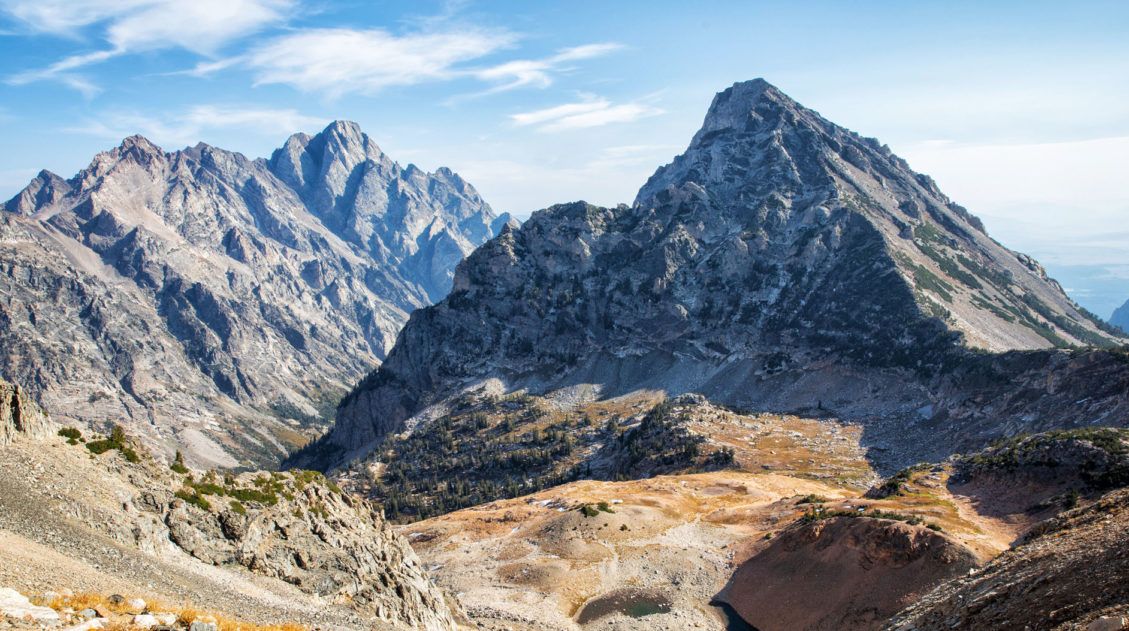
Paintbrush Canyon Cascade Canyon Loop Trail | Grand Teton National Park
Everything you need to know to hike the full Paintbrush Canyon + Cascade Canyon Loop.The Paintbrush Canyon – Cascade Canyon Loop is one of the best hikes to do in Grand Teton National Park. In just one hike, you can visit a handful of the park’s top spots: Jenny Lake, Inspiration Point, Lake Solitude, Cascade Canyon, and Paintbrush Canyon. Throw in panoramic views across the Teton mountain range and a few moose, and you have an unforgettable hike in Grand Teton National Park.
This hike is a big undertaking. At 20 miles, with over 4,000 feet of elevation gain, it’s a massive hike. Many people do this as a 2 or 3-day backpacking trip, but if you are fit and fast, the Paintbrush Canyon – Cascade Canyon Loop can be done as a day hike.
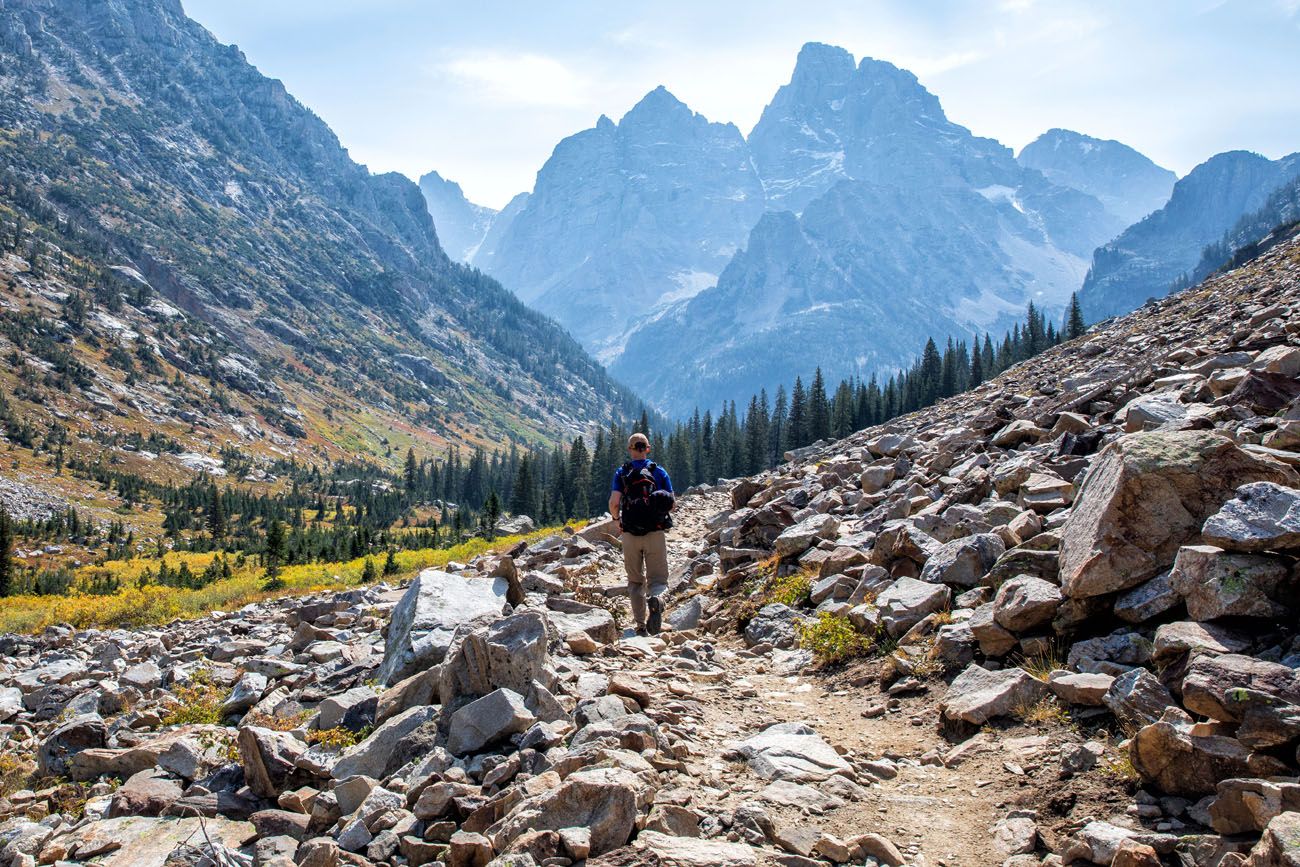
We LOVED this hike. Sure, it’s a big day, but this trail is gorgeous every step of the way. Since it is a loop, you never repeat any part of the trail twice. Every few miles the views and the terrain changes, so there is never a boring moment on this trail.
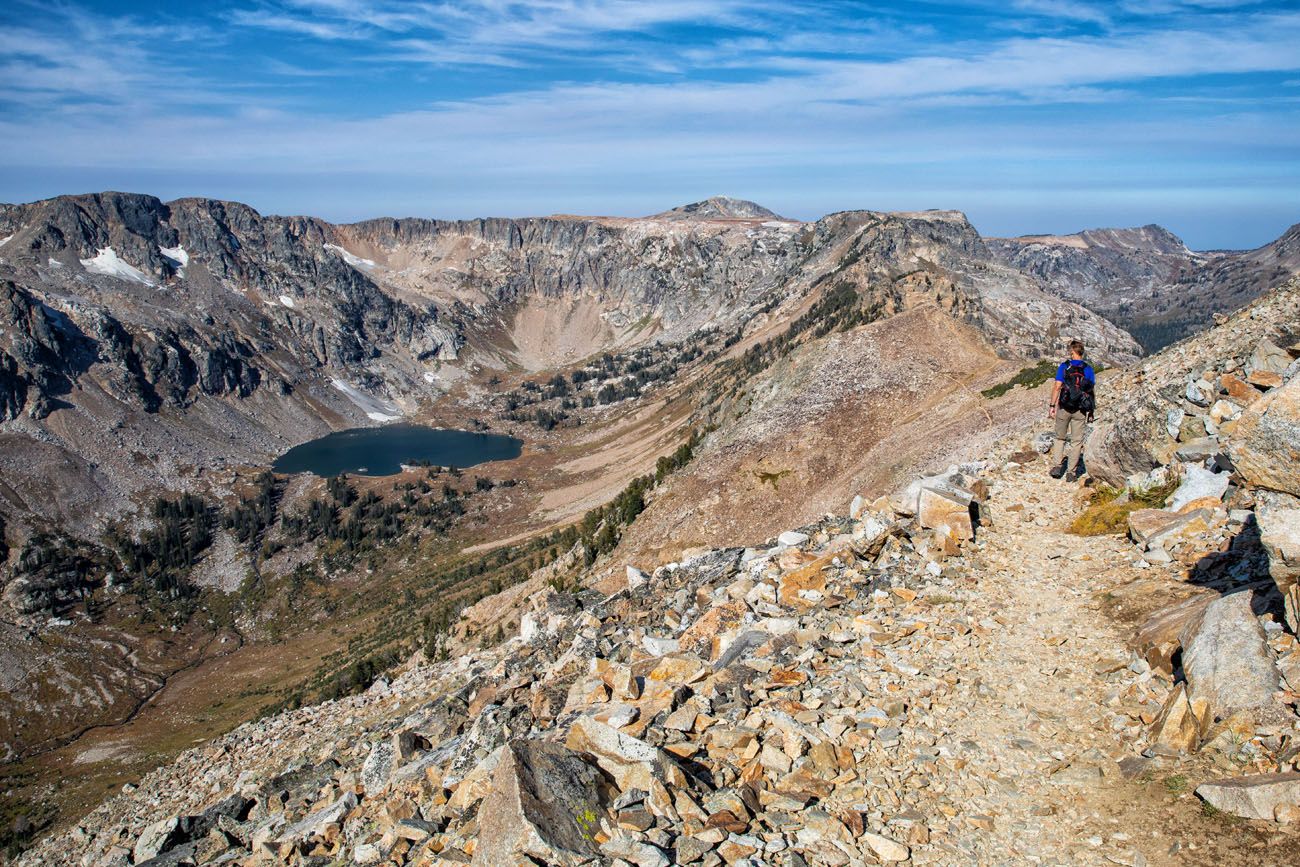
Hiking to Lake Solitude
Getting Here: Park in the small lot at the String Lake Trailhead. This hike starts and ends at this trailhead. I recommend getting here no later than 7:30 am to ensure that you get a parking space.
Grand Teton Hiking Guide eBook
Get a Digital Download of this Hiking Guide
Do you want a printer friendly version of this hiking guide? How about an eBook version that can be downloaded onto your computer or mobile device?
Our Grand Teton Hiking Guide eBook includes this full list of 15 hikes, with route descriptions, hiking stats, maps, and time estimates for each hike. It is a 23-page guide that contains all of the information in this article, plus our other Grand Teton hiking posts, that you can download to take with you or print at home.
Click here to purchase the eBook on Etsy.com.
When is the Best Time to Go Hiking in Grand Teton National Park?
The best time to hike in Grand Teton is from mid-June through early October, though the exact window depends heavily on elevation. Valley trails clear out first, while the park’s high alpine trails and passes can hold snow well into summer.
Here’s what to know before you go:
- June: Valley trails like String and Leigh Lakes, Taggart and Bradley Lakes, and the lower stretches of Cascade Canyon are hikeable, but higher-elevation trails and passes may still have snow and mud. This is also when wildflowers and newborn wildlife (elk calves, pronghorn fawns) are at their best.
- July and August: The entire trail network is open and snow-free, including high alpine routes like Paintbrush Divide, which typically doesn’t fully clear until mid-to-late July. This is also peak season, meaning the biggest crowds, the hottest temperatures (highs near 80°F), and frequent afternoon thunderstorms. Start alpine hikes early and plan to be off exposed ridges by early afternoon.
- September: Cooler temperatures, thinner crowds, and the start of the elk rut make this one of our favorite times to hike in the park, though snow becomes possible again later in the month.
Before you go, check the National Park Service’s trail conditions page for current closures and snow reports.
Our favorite time to hike in Grand Teton is in September. Trails were busy but not overly crowded and cooler temperatures made for much more comfortable hiking than the summer heat. We even had some snow flurries on the day we hiked Surprise, Amphitheather, and Delta Lake. Our two previous trips were in August. Crowds were high, parking lots at trailheads were full by 7 am, and early starts were a must, to stay ahead of the crowds and be off the mountains before afternoon thunderstorms moved in.
Please practice the seven principles of Leave No Trace: plan ahead, stay on the trail, pack out what you bring to the hiking trail, leave areas as you found them, minimize campfire impacts, be considerate of other hikers, and do not approach or feed wildlife.
Important Tips for Hiking in Grand Teton National Park
Hiking in Grand Teton National Park takes a little planning. Popular trailheads can fill early, many hikes reach high elevations, afternoon thunderstorms are common in summer, and both black bears and grizzly bears live throughout the park. These are the most important things to know before heading out on the trails.
Start Early
For the most popular hikes, an early start is one of the best things you can do. Parking lots at Jenny Lake, Taggart Lake, and the Laurance S. Rockefeller Preserve can fill quickly during the summer.
Starting early also gives you more time to complete longer hikes and, for high-elevation trails, helps you get off exposed ridges and mountain passes before afternoon thunderstorms develop.
For our longer hikes, such as Static Peak Divide and the Paintbrush Canyon–Cascade Canyon Loop, we prefer getting on the trail very early in the morning.
Carry Bear Spray
Grand Teton is home to both black bears and grizzly bears, and bear encounters are possible throughout the park.
Carry bear spray where you can reach it quickly, not buried inside your backpack, and know how to use it before starting your hike. Make noise as you hike, particularly in dense vegetation or areas with limited visibility.
We have had numerous moose sightings while hiking in Grand Teton, but so far, we haven’t seen bear. However, we hike with bear spray, and have had experience crossing paths with bear on trails multiple times, mainly in Glacier and Katmai National Parks. Seeing wildlife is one of the things we love most about hiking here, but always give animals plenty of space.
Give Yourself Time to Adjust to the Altitude
If you are arriving from sea level, we don’t recommend making one of Grand Teton’s highest and most strenuous hikes your first activity in the park.
Many of the hikes on this list climb well above 9,000 feet, and Static Peak Divide reaches nearly 11,000 feet. Even fit hikers can feel the effects of altitude.
Spend your first day on an easier or lower-elevation hike such as Taggart Lake, String and Leigh Lakes, or Inspiration Point. Save hikes such as Static Peak Divide and Paintbrush Divide for later in your trip, once you have had some time to acclimate.
Watch the Weather
Mountain weather can change very quickly in Grand Teton National Park, and afternoon thunderstorms are common during the summer.
This is particularly important on hikes that take you above tree line or onto exposed ridges and passes, including Static Peak Divide and Paintbrush Divide. Check the weather forecast before starting, begin early, and be prepared to turn around if conditions deteriorate.
Even on a warm summer day, carry a rain jacket and an extra layer.
Snow Can Linger Well into Summer
The hiking season in the mountains is shorter than you might expect. Valley trails are generally snow-free earlier in the season, but snow can remain on higher trails and mountain passes into July.
This can affect hikes such as Paintbrush Divide, Static Peak Divide, and other high-elevation routes. Snowfields can make these hikes significantly more difficult and dangerous.
If you are visiting in June or July, check current trail conditions before attempting a high-elevation hike.
Check Trail Conditions & Closures
Trail access can change because of construction, snow, weather, wildlife activity, or other temporary closures. Before heading out, check the Grand Teton National Park website for current trail and road conditions.
This is particularly important in 2026. The Death Canyon Road and Death Canyon Trailhead are closed for construction, and the north side of the Taggart Trail between the trailhead and Taggart Lake is also closed for reconstruction.
Have a Backup Hike
We think this is especially important in Grand Teton.
Parking, weather, wildlife closures, and trail conditions can all derail your original plan. Have one or two alternate hikes in mind, preferably in another part of the park.
For example, if parking at Jenny Lake is full, Taggart and Bradley Lakes may be a good alternative. If thunderstorms make a high-elevation hike unsafe, choose a lower trail around one of the park’s lakes instead.
Download Your Maps Before You Go
Cell service is unreliable in many parts of Grand Teton National Park, particularly once you hike into the canyons and mountains.
Download your trail map before leaving your hotel or campground. For the longer hikes, we recommend carrying an offline hiking map or GPS navigation in addition to knowing the basic route.
What to Bring on a Grand Teton Hike
For most hikes, we recommend carrying:
- Plenty of water
- Snacks or lunch
- Bear spray
- Rain jacket
- Extra layer
- Sun protection
- Sturdy hiking shoes
- Offline trail map or navigation
- Basic first-aid supplies
For longer hikes, bring extra food and water and be prepared for temperatures and weather conditions that can be very different from those in the valley.
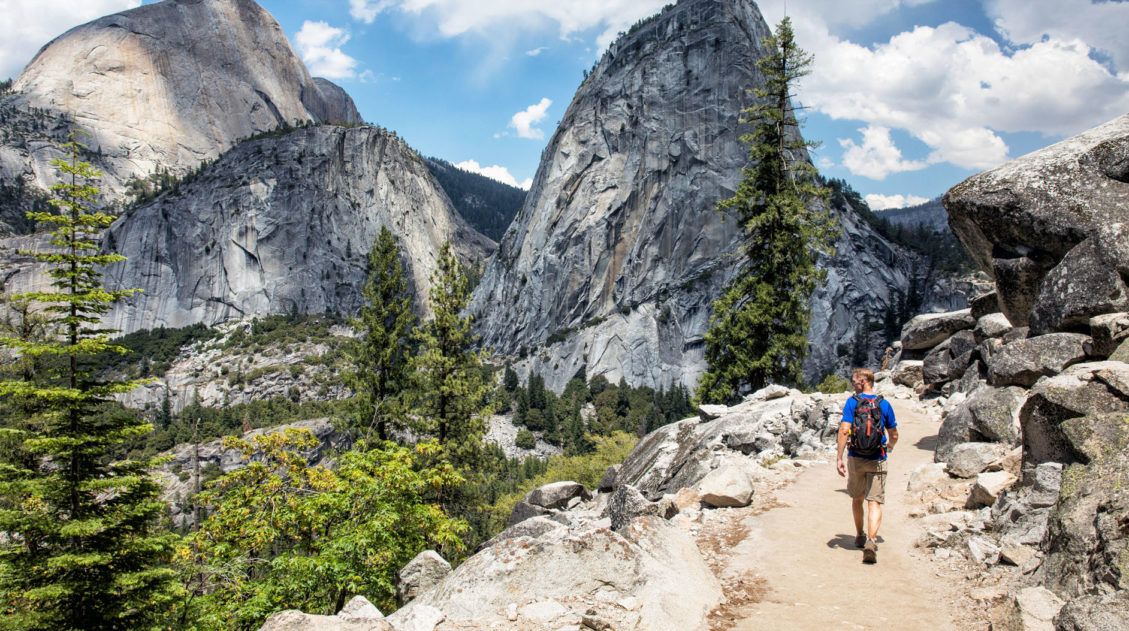
Essential Hiking Gear: What Should You Bring on a Day Hike?
If you are new to hiking or are curious about what you should bring on a hike, check out our Hiking Gear Guide. Find out what we carry in our day packs and what we wear on the trails.Plan Your Trip to Grand Teton National Park
Ready to start planning? Here are more of our guides to help:
- Want the full overview first? → Our Grand Teton National Park Travel Guide covers everything you need to plan your trip, with links to all of our in-depth guides.
- Wondering how many days you need? → Our Grand Teton Itinerary covers how to structure your visit, whether you have one day or a full week.
- Want to see more than just the trails? → Our 18 Best Things to Do in Grand Teton National Park guide covers scenic drives, boat tours, and other can’t-miss experiences.
- Pairing your trip with Yellowstone? → Our Grand Teton, Yellowstone, and Glacier National Parks Itinerary covers how to combine three parks into one unforgettable trip.
- Planning other national parks? → Our Ultimate Guide to the 63 US National Parks covers all of them, including recommendations for first-timers.
What do you think are the best day hikes in Grand Teton National Park? Let us know in the comment section below.
Where Are You Going Next?
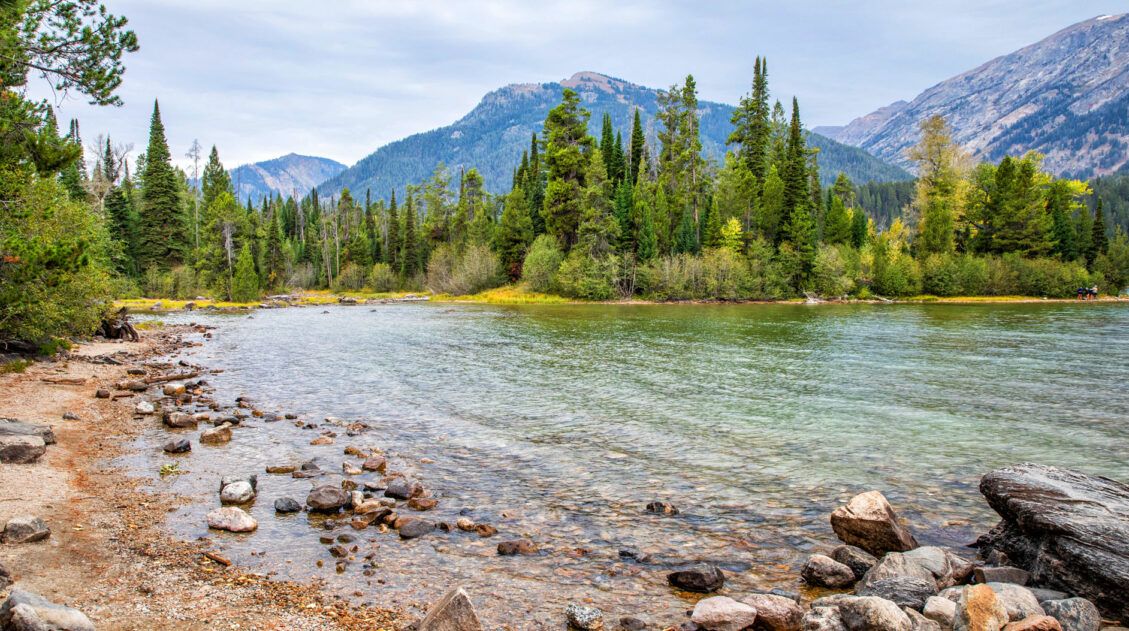
The Perfect Yellowstone & Grand Teton Itinerary for First-Timers
Pinterest Facebook Flipboard Yellowstone and Grand Teton sit side by side in northwest Wyoming, and together they make one of the best national park trips in the country. Spend your days watching Old Faithful erupt and geysers bubble across Yellowstone’s thermal basins, then drive an hour south to hike beneath the jagged Teton Range, paddle […]
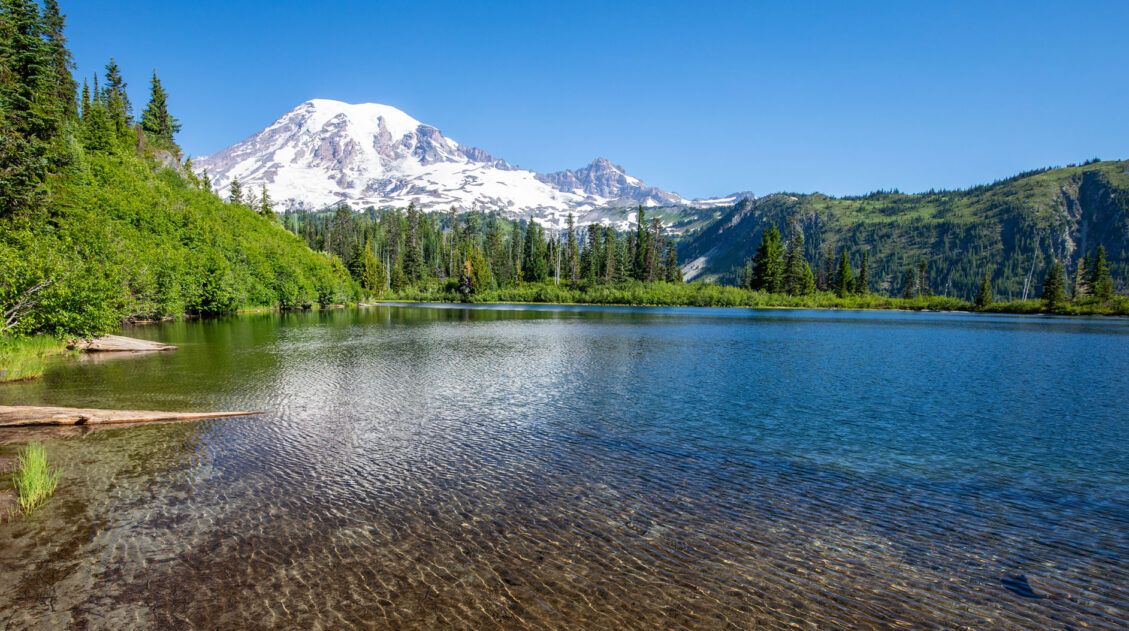
US National Parks List: All 63 Parks, Map & Free Printable Checklist
There are 63 national parks in the United States, and we’ve visited 56 of them, from the remote wilderness of Denali to the coral reefs of the Virgin Islands. We’re a family of avid hikers who have spent over a decade exploring these parks, from multi-day backcountry trips to scenic drives with kids in tow. […]
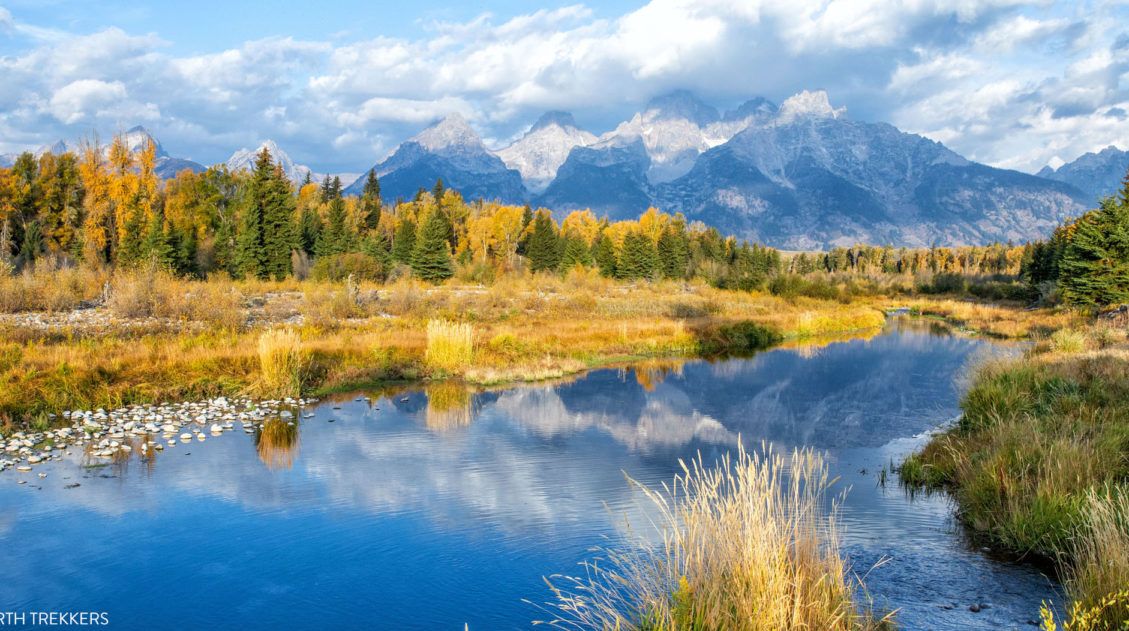
One Perfect Day in Grand Teton National Park
Grand Teton National Park has something for everyone. Hikers will love the long list of trails that head into the Teton mountain range. Photographers will love capturing sunrise at Mormon Row and Oxbow Bend. Families will love the easy-to-visit overlooks, crossing Jenny Lake by boat, and spotting moose and elk as you drive through the […]
Yellowstone Day Trip from Jackson Hole & Grand Teton: Our Itinerary
A Yellowstone day trip from Jackson Hole or Grand Teton National Park is a long day, but with an early start and a well-planned route, you can see many of Yellowstone’s most iconic sights. On this itinerary, you’ll drive Yellowstone’s Lower Loop, visiting Hayden Valley, the Grand Canyon of the Yellowstone, Grand Prismatic Spring, Old […]
23 Best Things to Do in Yellowstone National Park
Yellowstone National Park is a wonderland of geothermal activity, dramatic landscapes, and abundant wildlife. Steam hisses from the ground beside wooden boardwalks, bison bring traffic to a standstill on the park roads, and technicolor hot springs amaze even the most seasoned travelers. In this guide, we cover the best things to do in Yellowstone National […]
Wyoming Travel Guide: Places to Visit in Wyoming
Wyoming Travel Guide Beautiful Wyoming… a land rich in wildlife, soaring mountains, roaring geysers, and technicolor hot springs. This state is the home to some of our favorite National Parks: Yellowstone and Grand Teton, and these parks sit directly next to each other, making it a perfect way to see both in one trip. You […]
Our 15 Favorite US National Parks: A Few May Surprise You
Stretching from the South Pacific, across the United States and into the Caribbean, are 63 national parks. These national treasures are filled with scenic drives, hundreds of miles of hiking trails, wildlife, historic sites, and endless opportunities for adventure. In this guide, we cover 15 of the best national parks in the USA and what […]
Essential Hiking Gear: What Should You Bring on a Day Hike?
In this post, find out what we carry with us on day hikes. Whether you are a new hiker, shopping for a friend or family member, or just curious about what hiking gear you should bring on a day hike, we have a lot of great information to share with you. We have hiked thousands […]
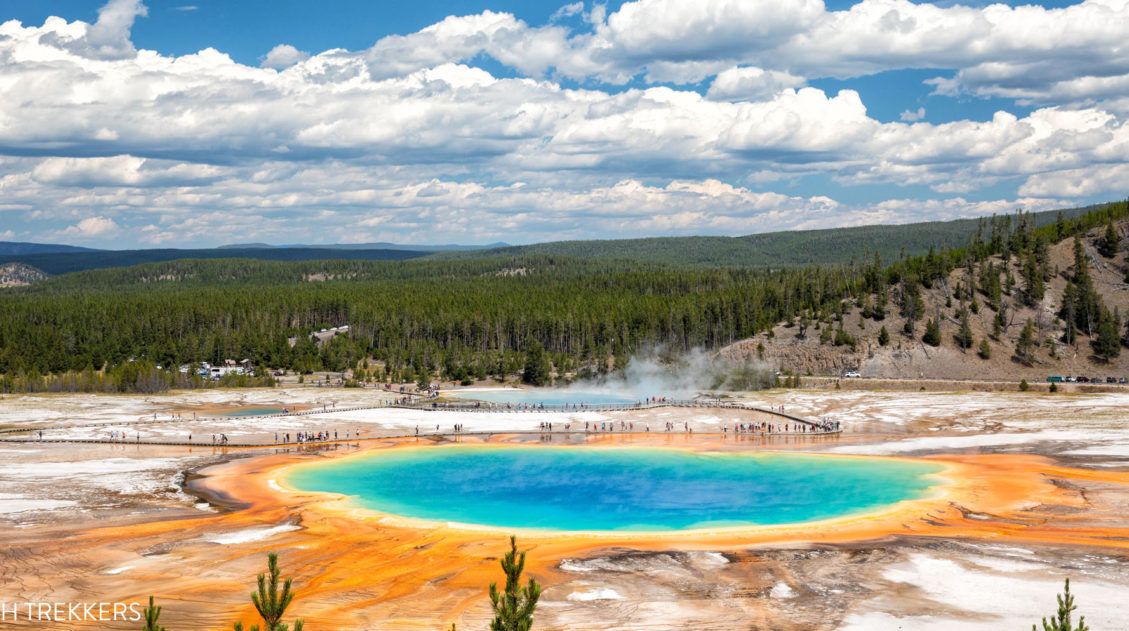
How to Visit Grand Prismatic Spring Overlook (+ Fairy Falls)
The Grand Prismatic Spring Overlook is one of our favorite photography spots in Yellowstone National Park. From above, you get the full kaleidoscope of colors in the spring, plus a great sense of scale, watching tiny people make their way along the boardwalks at Midway Geyser Basin. We’ve visited the overlook several times now, twice […]
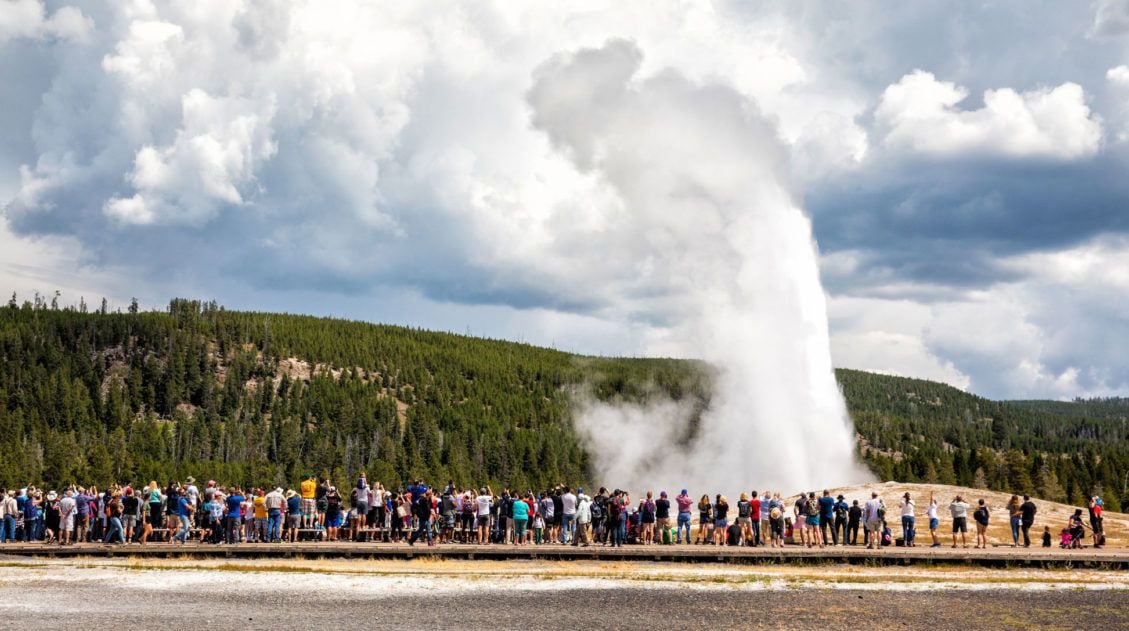
How to Visit Old Faithful in Yellowstone: Best Views, Timing & Tips
Old Faithful is Yellowstone’s most famous geyser and one of the park’s must-see sights. But getting the best experience takes a little planning. Eruptions are predictable within a window, crowds build quickly around the main viewing area, and where you watch the eruption can make a surprisingly big difference. Most visitors should plan to spend […]
United States Travel Guide: Places to Visit in the USA
Plan your visit to the United States. Learn about the best things to do, how to plan your time, road trip ideas, and sample itineraries.


Comments 26