


Biscayne National Park is one of the most unique national parks in the United States. With 95% of the park covered by water, exploring Biscayne means hopping on a boat to hike on tropical islands, snorkel over coral reefs and historic shipwrecks, paddle through mangrove forests, and cruise past the unusual houses of Stiltsville.
Located just south of Miami, Biscayne National Park protects a beautiful stretch of Biscayne Bay, the northern Florida Keys, and part of the Florida Reef. But unlike most national parks, you can’t explore the highlights by car. To experience the best of Biscayne, you’ll need to take a boat tour or hire a private charter.
In this guide, we cover the best things to do in Biscayne National Park, including our favorite experiences, which places are worth skipping, and how to plan your visit, whether you have a few hours or two full days.
Our Experience in Biscayne National Park
We’ve visited 56 of the 63 US national parks, and Biscayne is one of the most unique. We spent two days exploring the park, combining a guided paddleboarding tour through Jones Lagoon with a private boat charter. This let us visit several islands, snorkel at shipwrecks and coral reefs, explore Stiltsville, and see far more of the park than we could on a single tour. Having explored so much of Biscayne, we can help you decide which experiences are worth your time, which ones we’d skip, and how to make the most of your visit.
Biscayne National Park: The Essentials
LOCATION | South Florida, near Homestead and Miami
BEST EXPERIENCES | Snorkeling reefs and shipwrecks, Boca Chita Key, Jones Lagoon, and Stiltsville
TIME NEEDED | Half day for one guided tour; 1 to 2 days for a more complete experience
GETTING AROUND | Boat required to visit most of the park’s highlights
BEST TIME TO VISIT | November through April for milder temperatures; snorkeling conditions depend on weather and sea conditions
ENTRANCE FEE | Free; boat tours and private charters cost extra
OUR RECOMMENDATION | Book a snorkeling or sightseeing tour if you have one day. For a more thorough experience, combine guided tours or hire a private boat charter.
Please practice the seven principles of Leave No Trace: plan ahead, stay on the trail, pack out what you bring to the hiking trail, leave areas as you found them, minimize campfire impacts, be considerate of other hikers, and do not approach or feed wildlife.
What Makes Biscayne National Park So Unique?
Biscayne National Park is located in southern Florida. It is just 15 miles away from Miami, but it feels like an entirely different world.
This park protects Biscayne Bay, its offshore barrier reefs, and the northernmost section of the Florida Keys. There are over 250 square miles of water and very little land in this park.
What is a “key?” The term “key” comes from the Spanish word “cayo,” which means “small island.” Keys are formed on the surface of a coral reef. The Florida Keys stretch from Biscayne Bay to Dry Tortugas National Park. There are over 800 keys spanning 180 miles.
Four distinct ecosystems can be found in Biscayne National Park: the coral limestone keys, shoreline mangrove swamps, the offshore Florida reef, and the shallow waters of Biscayne Bay.
Manatees, green sea turtles, hawksbill sea turtles, sponges, numerous species of birds and fish, and even American crocodiles can be seen in Biscayne National Park.
The Glades people inhabited this area 10,000 years ago. In the 1500’s, the Spanish arrived and took control of this region. Shipwrecks occurred frequently, as ships hit the coral reefs and shallow waters just off the Florida coast.
In the 1800’s, the first settlements were on Elliott Key. Pineapples and key limes were grown here. During the early 1900’s, Cocolobo Cay Club was built on Adams Key. John F. Kennedy, Richard Nixon, and Lyndon Johnson all visited Adams Key in the mid-1900’s. Elliott Key was even used by the CIA for training after the Cuban Revolution of 1959.
In 1968, this area became a national monument and then officially became a national park on June 28, 1980.
Geography and Maps of Biscayne National Park
95% of Biscayne National Park is water. There are a few things you can do right from the Dante Fascell Visitor Center, but to truly explore this park, you are going to need a boat. This gives you access to the offshore reefs (great snorkeling and diving spots), the keys, and the Jones Lagoon mangrove swamp.
Below is a map from the National Park Service.

Here is our interactive map, highlighting the main things to do in Biscayne National Park.
How to Use This Map: Click the icons on the map to get more information about each point of interest. To take this map with you, click the star next to the title of the map which adds it to your Google account. Next, within your Google Maps app, select ‘Saved’ and then select ‘Maps’. This map title will now appear in your list.
Our Favorite Things to Do in Biscayne National Park
After two days exploring Biscayne National Park, these were our favorite experiences:
- Best overall experience: Snorkeling the reefs and shipwrecks. We particularly loved Fowey Rocks Lighthouse and the Mandalay shipwreck.
- Best island to visit: Boca Chita Key, with its beautiful lighthouse, tropical scenery, and waterfront views.
- Best adventure: Paddleboarding through the mangrove tunnels of Jones Lagoon. This was one of our most memorable experiences in the park.
- Best sightseeing experience: Cruising through Stiltsville to see the historic houses standing on stilts above Biscayne Bay.
- What we’d skip: The hiking trails on Adams and Elliott Keys. We tried both and found them much less rewarding than the activities on the water.
If you only have time for one activity, we recommend choosing a boat tour that gets you out onto the water, ideally with an opportunity to snorkel or visit Boca Chita Key.

Best Things to Do in Biscayne National Park
BBelow are 10 things to do in Biscayne National Park. Some were highlights of our visit, while others we think are worth skipping. We’ve included them all so you know what’s available and can decide which experiences are worth your time.
1. Walk the Convoy Point Jetty Trail
Distance: 0.8 miles | Difficulty: Easy | Time: 30 minutes
This easy walking trail is one of the few things you can do in Biscayne National Park without first hopping into a boat. Starting at the visitor center, you will walk out on a jetty to the Colonial Bird Protection Area.
This trail was closed for repairs during our visit but from what we saw, it looks like a very nice, easy walk through some mangrove trees with nice views of Biscayne Bay.
2. Visit Boca Chita Key
Boca Chita Key is the most visited key in the park. This is one of our favorite spots in the park and a visit here is one of the best things to do in Biscayne National Park.
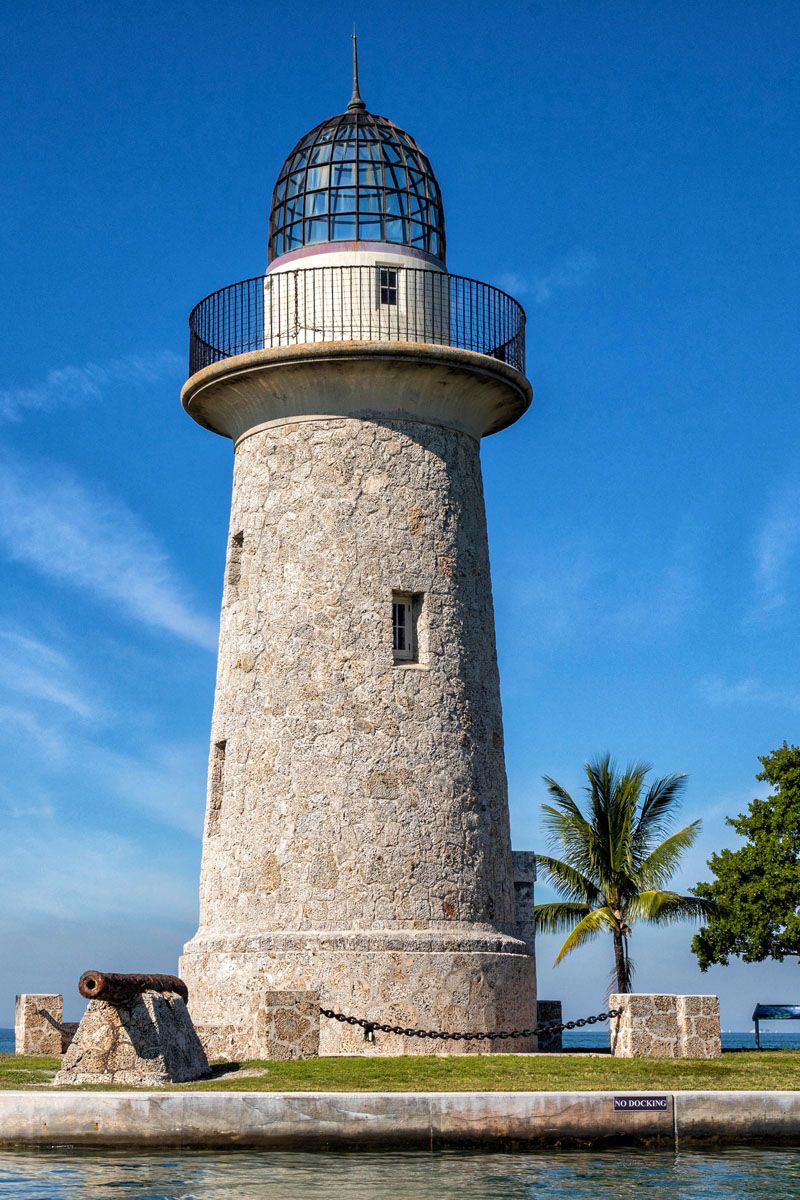
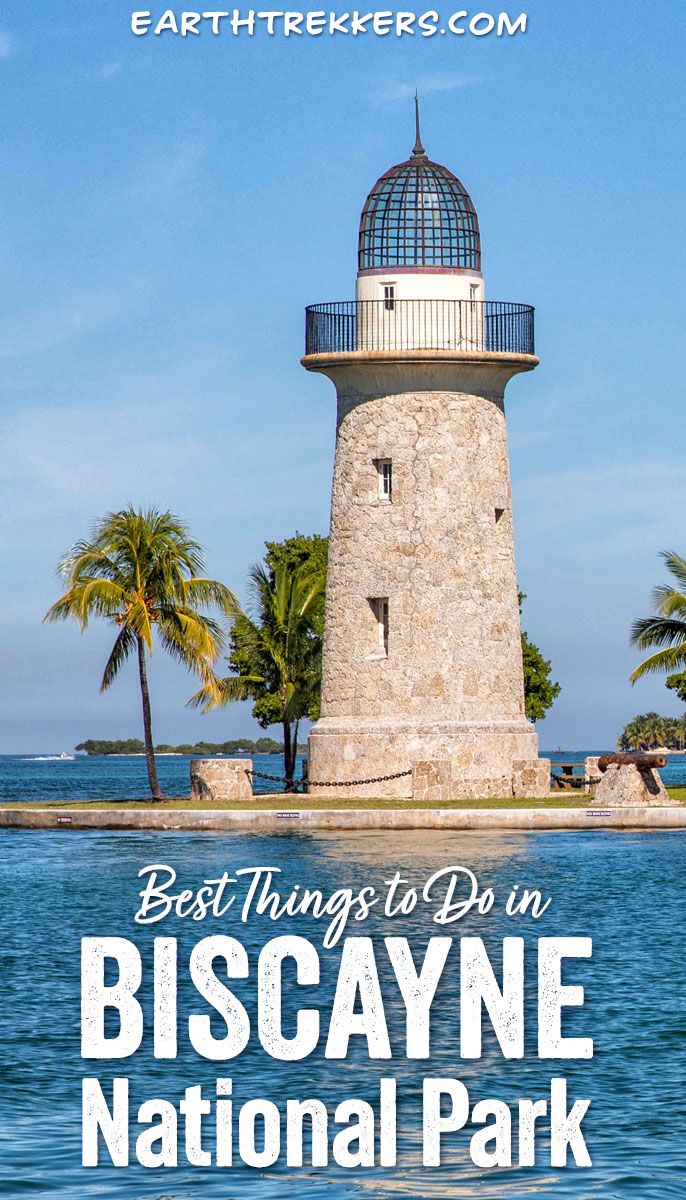
The only way to get here is by boat. As you pull into the harbor, you’ll be greeted by the iconic Boca Chita Lighthouse. Built in 1938 by Mark Honeywell, this 65-foot lighthouse is one of the most recognizable landmarks in Biscayne National Park.
The lighthouse reopened in June 2026 following more than two years of restoration. When park or Biscayne National Park Institute staff are available to open it, visitors can climb to the observation deck for beautiful views of Biscayne Bay, the surrounding islands, and the distant Miami skyline. Access is not guaranteed, so if climbing the lighthouse is important to you, check with your tour operator before booking.

Walk the half-mile trail that loops around the island. It is a very nice walk, with views of nearby Sands Key.

View of Sands Key from the hiking trail.

Hiking trail on Boca Chita.
There is also a picnic area and a small, beautiful beach that is worth the visit.
There are restrooms on Boca Chita Key, but no water. Pack out all trash and bring both sunblock and mosquito repellent. Mosquitoes are present all year.

Boca Chita Picnic area and campsites


Palm tree on Boca Chita
3. Visit Adams Key
Adams Key was a getaway for Presidents Nixon, Johnson, and Hoover, who were guests at the Cocolobo Club. Now, this very small key is day use area for visitors to the park.

There is a 1-mile hiking trail that loops around this key that we attempted to hike. We don’t recommend it. When we did this in 2021, most of the trail was overgrown and it dead-ended in a forest. There wasn’t anything fun or scenic about hiking this trail.

The hiking trail.
Adams Key is worth the visit if you want to see the historic buildings, but otherwise, I’d skip Adams Key and do some of the other things on this list.
4. Go Kayaking or Stand Up Paddle Boarding in Jones Lagoon
This is one of the best things to do in Biscayne National Park…just make sure you lather on the mosquito repellent!
This lagoon, which is on the National Register of Historic Places, is made up of Totten Key and Porgy Key, and the shallow waterways between them. In the 1800’s, the Jones family grew pineapples and key limes here.
The Jones family is long gone but this quiet spot is one of the best places in Biscayne National Park to go kayaking or SUP. Since these waterways are located away from the deeper canals and motorboat traffic, this is a peaceful experience.
To get here, you will cruise through Caesar Creek and then enter the lagoon via Hurricane Creek.
As you paddle through the mangrove swamps, keep a lookout for sharks, sea turtles, and fish.

Mangrove trees


Paddling through these tree tunnels is a lot of fun!
We did this with the Biscayne National Park Institute. Our 3.5-hour tour included transportation to and from the Dante Fascell Visitor Center by boat, our paddle boards, and a guide. We were the only ones on this tour, so it was just me, Tim, and our guide, paddling through mangrove swamps.
I loved the experience even though I got torn up by mosquitoes. We did this in December, and I underestimated how many mosquitoes would still be out and about. Unfortunately, I ended up covered in bites…Tim, not so much.
So, pro travel tip, lather on the mosquito repellent before visiting Jones Lagoon, or any of the keys, because we saw (and felt) these little guys everywhere.

Paddle boards on the Biscayne National Institute boat.
5. Explore the Maritime Heritage Trail
Biscayne National Park, with its shallow waters and reef system, is home to numerous shipwrecks, many of these from the late 1800’s and early 1900’s.
The Maritime Heritage Trail is a series of six of these shipwrecks that can be explored by snorkeling or scuba diving.
We snorkeled around the Mandalay shipwreck. The schooner Mandalay sank in 1966, so it is one of the newest shipwrecks on the trail. Not only did we see a portion of the sunken hull, but there are tons of fish and lots of coral here.

For more information about the Maritime Heritage Trail, visit the National Park Service website.
6. Snorkel at Fowey Rocks Lighthouse
Fowey Rocks Lighthouse, also called the “Eye of Miami,” is a historic lighthouse located in Biscayne National Park.


It was constructed in 1876 to mark the reef. A Fresnel lens was built in Paris and installed in this lighthouse in 1878. The original Fresnel lens is now on display at the US Coast Guard’s National Aids to Navigation Training Center in Yorktown, Virginia. Currently, a solar-powered light is installed in the lighthouse and can be seen up to 17 miles away.
Not only is this a historic spot to visit but the snorkeling is awesome. We saw an incredible number of fish here, clustered around the metal pilings. Fowey Rocks Lighthouse is one of our favorite places in Biscayne National Park.

7. Snorkel or Scuba Dive on the Off-Shore Reefs
The coral reefs that sit to the east of Boca Chita, Elliott, and Adams Keys are an excellent spot to go snorkeling or diving. Numerous shipwrecks, which I mentioned earlier as part of the Maritime Heritage Trail, can also be found along this reef.
In Florida, we have snorkeled at Biscayne National Park, Dry Tortugas National Park, and the John Pennecamp Coral Reef State Park. Biscayne is our favorite of these three locations.
In the park, there are a lot of spots to choose from. We snorkeled at Mandalay shipwreck, Fowey Rocks Lighthouse, and, on the reef, at Bache Shoal. Anniversary Reef also came highly recommended by the park rangers at the visitor center.

Bache Shoal
To go snorkeling, you can join one of many tours offered by the Biscayne National Park Institute. There is also a private charter that can take you around the park as well. If you have your own boat, you can use the mooring buoys located at the reefs. For a full list of snorkeling spots and mooring buoys (with GPS coordinates), visit the National Park Service website.
For more information about hiring a charter or joining a tour, skip ahead to the How to Get Around section of this guide.
8. Cruise through Stiltsville
In the 1930’s, when alcohol and gambling were illegal, small buildings were constructed offshore of Miami. These structures were home to clubs, bars, and gambling halls, forming an offshore getaway and party spot. At its height, there were a total of 27 buildings in Stiltsville.
Now, only a few remain. Hurricane Andrew left only seven buildings intact, and just recently, one caught fire and not much remains of it.


You can only visit the buildings if you have a permit. Otherwise, it’s a nice place to cruise through on a boat.
From here, you have wide open views of Biscayne National Park, and not too far off in the distance is Miami. You can also see Biscayne Key, pictured in the photo below. Biscayne Key is located right outside of the national park boundary.

9. Go Fishing
Fishing is one of the best things to do in Biscayne National Park. Our guide, who took us out to Jones Lagoon, said that one of the main reasons this park was created was to protect the fishing sites.
In order to fish in Biscayne National Park, you must have a Florida fishing license. There are a lot of rules and regulations about where and what you can fish for. Visit the National Park Service website for full details.
10. Visit Elliott Key
Elliott Key is the largest island in the park and the northernmost true key in the Florida Keys. This island was once home to a community of pineapple farmers.
In the 1960’s, there were two groups of people, with very different views of what this area should become. A small group of people envisioned a park that protected the reefs and keys and would be a haven for those needing an escape from city life. The second group wanted to build hotels and clubs in this area and would be called the City of Islandia.
Support for the national monument grew. In an attempt to spoil the park, those who wanted to build Islandia brought in bulldozers and carved out a wide, seven-mile-long road down the length of Elliott Key. This road is called Spite Highway.
The conservationists won and on October 18, 1968, President Johnson signed the bill creating Biscayne National Monument.
Now, Elliott Key is home to campgrounds, a short hiking trail, picnic tables, and places to go fishing. The scar of Spite Highway still remains, but it has mostly been filled in by trees since the 1960’s.

We hiked the one-mile loop trail through Elliott Key. For most of the time, you are in a forest without much of a view of anything. It was muddy, covered with spiderwebs, and despite lots of insect repellent (I learned my lesson in Jones Lagoon) we still got a few mosquito bites. For part of the trail, you get to walk a part of what remains of Spite Highway, and you also get to walk out to the beach on the opposite side of Elliott Key.
You can also hike the entire length of Spite Highway, but I think it would be one of the most boring hikes in the national park system.
We love hiking, but these are not hikes that I would recommend. Skip Elliott Key and put your time into the water activities…this is where the true beauty lies in Biscayne National Park.

Elliott Key Hiking Trail

Spite Highway
How to Get to Biscayne National Park
Biscayne National Park is in southern Florida. It sits just to the south of Miami and just to the north of Key Largo.
The best way to get here is by car. If you do not have a car, you can take the Homestead National Parks Trolley from Homestead. This trolley runs from late November through April.
Here are driving distances and times from nearby destinations:
- Miami: 40 miles, 50 minutes
- Miami International Airport: 34 miles, 45 minutes
- Ft.-Lauderdale International Airport: 63 miles, 1.25 hours
- Homestead: 10 miles, 20 minutes
- Everglades National Park: 20 miles, 30 minutes
- Key Largo: 40 minutes, 1 hour
- Key West: 136 miles, 3 hours
How to Get Around Biscayne National Park
One of the biggest questions we had while planning our trip is “how do you get around Biscayne National Park?” This park is not like Arches or Acadia, where you can just show up in your car and drive to everything. To get around a park with 250 square miles of water, you need a boat.
If you have your own boat, you can access the park from one of several marinas. There are a lot of regulations and things to know before you go, so visit the National Park Service website for more information.
Here is a list of the marinas:
- Homestead Bayfront: This marina is located just to the south of the Dante Fascell Visitor Center.
- Black Point: This marina is located on the mainland on the central portion of the park.
- Matheson Hammock: This marina is located at the northern end of the park.
- Crandon: This marina is located on Key Biscayne near Stiltsville.
Choosing the Best Boat Tour of Biscayne National Park
If you don’t have a boat, taking a boat tour is the best way to experience this park, but not all tours are the same. Some focus on snorkeling, others visit the islands, and some take you into the shallow waterways and mangrove forests.
The best tour for you depends on what you want to see and do, how much time you have, and your budget.
Guided Snorkeling Tour
BEST FOR | Seeing the underwater world of Biscayne National Park
If you enjoy snorkeling, this is our top recommendation. Biscayne protects part of the Florida Reef, one of the largest coral reef systems in the world. Snorkeling here gives you the opportunity to see colorful fish, coral reefs, and even historic shipwrecks.
The Biscayne National Park Institute offers guided snorkeling tours to reefs, shipwrecks, and other underwater sites. The exact location depends on weather and water conditions, so you may not be able to choose which sites you visit.
We snorkeled at several locations in Biscayne National Park, including the Mandalay shipwreck, Bache Shoal, and Fowey Rocks Lighthouse. These were some of our favorite experiences in the park.
Island Sightseeing Tour
BEST FOR | First-time visitors, families, and those who prefer to stay out of the water
An island sightseeing cruise is a great way to experience Biscayne National Park without getting in the water. These tours typically cruise across Biscayne Bay and visit one of the park’s keys, where you can get off the boat, explore the island, and learn about its history.
Boca Chita Key is our favorite island in Biscayne National Park. It has a picturesque lighthouse, a short walking trail, and beautiful views across the bay.
The Biscayne National Park Institute offers island cruises, including a tour to Boca Chita Key that departs from Coconut Grove and passes through Stiltsville. Other cruises depart from the Dante Fascell Visitor Center area.
Our recommendation: Choose a tour that visits Boca Chita Key. We think it’s the most interesting and scenic of the islands we visited, and it makes a great introduction to the park.
Paddling Adventure
BEST FOR | Active travelers, wildlife enthusiasts, and those who want a quieter experience
For something completely different, join a kayaking or stand-up paddleboarding tour through the mangrove forests and shallow waterways of Biscayne National Park.
We took the Jones Lagoon Eco-Paddle Tour with the Biscayne National Park Institute, and it was one of our favorite experiences. After a boat ride into the park, we paddled through peaceful, shallow waters and mangrove tunnels, far from the busier boating areas.
It’s a wonderful way to experience another side of Biscayne, particularly if you’re interested in wildlife and exploring places that larger boats cannot reach.
Private Boat Charter
BEST FOR | Visiting multiple destinations, creating a custom itinerary, and getting a more thorough experience of the park
If you want to see as much of Biscayne National Park as possible, hiring a private boat charter is your best option. This gives you the flexibility to visit several snorkeling spots, cruise past Stiltsville, and spend time on the islands, all in one trip.
This is what we did. We hired a private boat for six hours, which allowed us to visit Boca Chita Key, Adams Key, Elliott Key, several snorkeling locations, Fowey Rocks Lighthouse, and Stiltsville. It was a fantastic way to explore the park, and we saw far more than we could have on a single group tour.
The biggest drawback is the cost. Private charters are significantly more expensive than group tours, but they can be worth it if you want a customized experience or are traveling with a group.
Our recommendation: If your budget allows, this is the best way to get a comprehensive experience of Biscayne National Park. Make sure to discuss your priorities with the captain beforehand, since where you can go will depend on weather, water conditions, and the length of your charter.
Tour Operators and Authorized Companies
If you don’t have a boat, you will have to join a tour of some sort. You can choose between group tours and private charters.
Biscayne National Park Institute
Biscayne National Park Institute is the main authorized tour company for Biscayne National Park. They run a wide variety of tours, from snorkeling and scuba diving tours, kayaking or SUP tours to Jones Lagoon, and visits to Boca Chita, Adams and/or Elliott Keys.
We took the Jones Lagoon Eco-Adventure-Paddle Tour and had a great experience.
Click here to visit their website.

Biscayne National Park Institute boat (at Boca Chita).
Other Authorized Companies
In order to keep boat traffic low and the park pristine, the National Park Service limits the number of companies that can lead tours in the park.
For the most up-to-date list of authorized companies, click here.
On this list, we used Aboard Biscayne Adventures. We wanted to take a private tour with a custom itinerary, so we could visit lots of different places in this park (and write this guide). Hiring a private charter is expensive, but if you want a custom itinerary, it’s your best option, if you don’t have your own boat. Prices have doubled since we did this. Currently, prices start at $1,200 for a 4 hour tour of Biscayne National Park (click the link above for updated pricing). We spent 6 hours touring Biscayne National Park (other than the Jones Lagoon tour with Biscayne National Park Institute).
IMPORTANT: Jet skis are not allowed in Biscayne National Park.
What We Did
Day 1: Arrive in Miami, afternoon Jones Lagoon Eco Tour with Biscayne National Park Institute. Sleep in Homestead.
Day 2: Full day in Biscayne National Park with Aboard Biscayne Adventures. Sleep in Homestead.
Day 3: Florida Keys road trip to Key West.

How Many Days Do You Need in Biscayne National Park?
One Day in Biscayne National Park
From the Homestead Bayfront Marina, which is located near the Dante Fascell Visitor Center, you can do a loop by boat around the park. Start at Jones Lagoon (go kayaking or SUP here), then snorkel at a few offshore spots (Mandalay shipwreck and Bache Shoal were the two we visited), followed by a visit to Boca Chita Key, then Fowey Rocks Lighthouse. Cruise through Stiltsville and then head back to the marina.
This loop covers the highlights of the park and would be an awesome day in Biscayne National Park.
Two or More Days in Biscayne National Park
If you have more time, you can camp on one of the islands and split these activities into two days. More time is well worth it if you really like to snorkel or scuba dive.

Boca Chita
Best Time to Visit Biscayne National Park
Biscayne National Park can be visited all year.
November through April is the dry season. Temperatures are cooler than the summer months, but it never really gets cold here. Even in January, the average high temperature is 76 degrees Fahrenheit (24°C). It’s a bit chilly to get out on the water and go snorkeling, but if you live someplace with cold winters, 74 degrees in January feels quite balmy.
During the winter months, the seas can get rougher, making it temporarily difficult or impossible to visit the offshore reefs and shipwrecks.
We visited Biscayne National Park in early December. Mosquitoes were a major issue on Elliott Key, in Jones Lagoon, and on the short hike around Boca Chita Key. I also got stung by a jellyfish while snorkeling at the Mandalay shipwreck.
If you want to visit the park when mosquitoes are the lowest, plan your visit for February.
May through October is the wet season. High temperatures typically approach 90°F, rain is common, and mosquito levels are high. The hurricane season runs from July through November, so it is possible travel plans could be disrupted during this time.
Planning a road trip through the Florida Keys? Learn how to plan your road trip in our Florida Keys Road Trip Itinerary. Visit Miami, Biscayne and Everglades National Parks, road trip through Florida Keys to Key West, and visit Dry Tortugas National Park.
Where to Stay & Eat
Camping is permitted on Boca Chita Key and Elliott Key. The overnight fee is $60, which includes $35 for camping and $25 for docking. For day visitors arriving by private boat, the docking fee is $25 on Fridays through Mondays and federal holidays.
Campsites and docking spaces are available on a first-come, first-served basis; reservations are not accepted. Fees are paid through the Recreation.gov app using the Scan & Pay feature, so download the app before arriving. Visit the National Park Service website for current fees and regulations.

Campsite on Boca Chita. Pretty sweet, right?!
Outside of the park, Homestead is the most convenient place to stay. This also makes a great home base for exploring Everglades National Park, which is very close to Biscayne National Park.
In Homestead, we have stayed at both the TownePlace Suites by Marriott Miami Homestead and the Courtyard by Marriott Miami Homestead, and both are great. The Speedway Blvd Townhouse is a two-bedroom townhouse that can accommodate up to six people and gets excellent reviews.
There are no restaurants in the park. The closest place to grab a bite to eat is in Homestead.
We ate at the Mamma Mia Pizzeria 2 (good Italian food) and Bangkok Cuisine (good Thai and Southeast Asian food). Schnebly Redland’s Winery & Brewery was highly recommended but they were closed during our visit. This winery is located to the west of Homestead so you will do some extra driving to get here but it really looks great.
Plan Your Visit
Entrance Fee: There is no fee to enter Biscayne National Park.
Hours of Operation: The park is open 24 hours a day, 365 days per year.
Pets: Pets are only allowed at Convoy Point and Elliott Key. Pets are not allowed in the Dante Fascell Visitor Center or at Boca Chita (even in a boat docked in the harbor). For more information, click here.
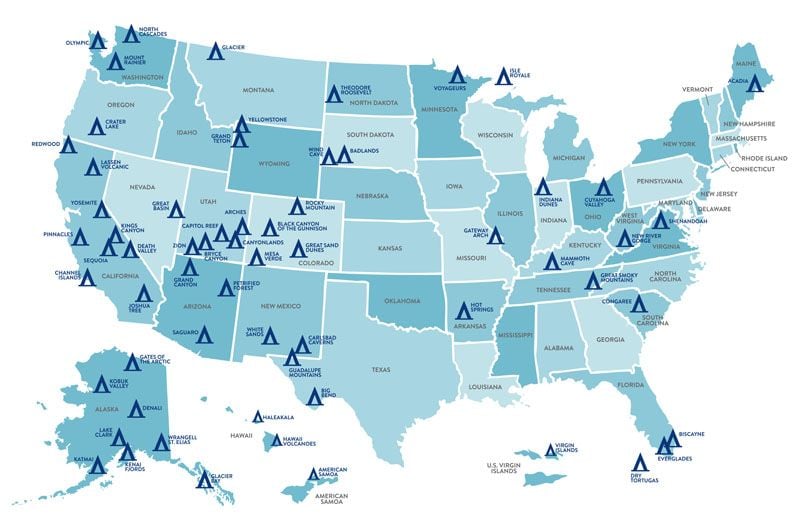
Plan Your Trip to Florida
- Planning a Florida vacation? → Our Florida Travel Guide has our favorite destinations, national parks, road trips, and travel tips to help you plan your visit.
- Want to visit all three Florida national parks? → Follow our 7 to 10-Day Florida Keys Itinerary, which includes Biscayne, Everglades, Dry Tortugas, Miami, and Key West.
- Visiting the Everglades? → Our One Day in Everglades National Park Itinerary covers the best places to see wildlife, scenic walks, and how to make the most of your time.
- Exploring another national park by boat? → Our Dry Tortugas Travel Guide covers how to get there by ferry or seaplane, the best things to do, and essential planning tips.
- Heading to Key West? → Discover the Best Things to Do in Key West, from sunset celebrations and historic sights to snorkeling, beaches, and unique experiences.
If you have any questions about how to visit Biscayne National Park or the best things to do in Biscayne National Park, let us know in the comment section below.
More Places to Visit in Florida & Beyond
7 Awesome Things to Do in Dry Tortugas National Park
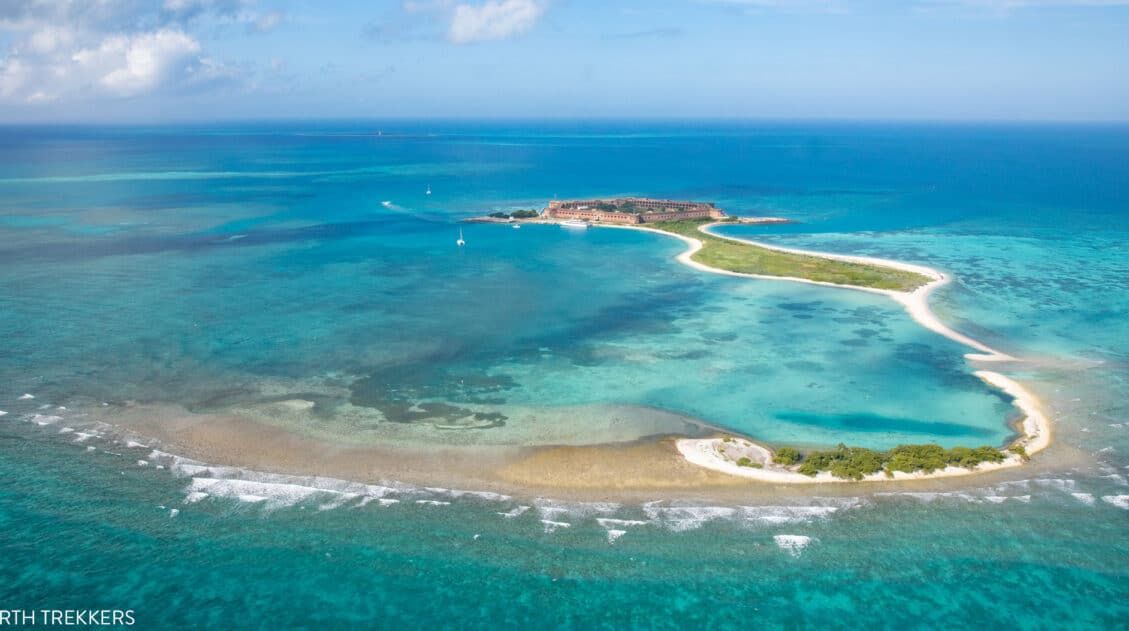
Pinterest Facebook Flipboard Sitting seventy miles west of Key West is the last group of islands in the Florida Keys. This is the location of Dry Tortugas National Park, an underrated gem in the national park system. In this guide we cover everything you need to know on how to visit Dry Tortugas National Park, […]
Florida Keys Bucket List: 25 Awesome Things in the Florida Keys
The Florida Keys are one of the best spots in the US to go on a road trip. In just 100 miles, hop from key to key, go snorkeling, dine at seafood restaurants, try key lime pie, go shopping, and enjoy endless views of brilliant aquamarine water. It’s a gorgeous drive with lots to do. […]

Cruising around Key West on a Tiki Boat
Looking for something fun and unique to do in Key West? How about cruising around the island on a floating tiki bar? Imagine sipping a tropical drink, listening to your favorite music, and taking in the views of Key West, all while seated at a tiki bar that’s actually a boat. We’ve done this twice, […]

Best Restaurants in Key West: 20 Great Places to Eat & Drink
Many people travel to Key West for the beaches, sunsets, and nightlife, but Key West is also home to many great restaurants. In fact, one of the best things to do in Key West is eat. Key lime pie, conch fritters, Cuban food, coffee, fresh seafood, lobster rolls…the choices are endless. In this post, we […]
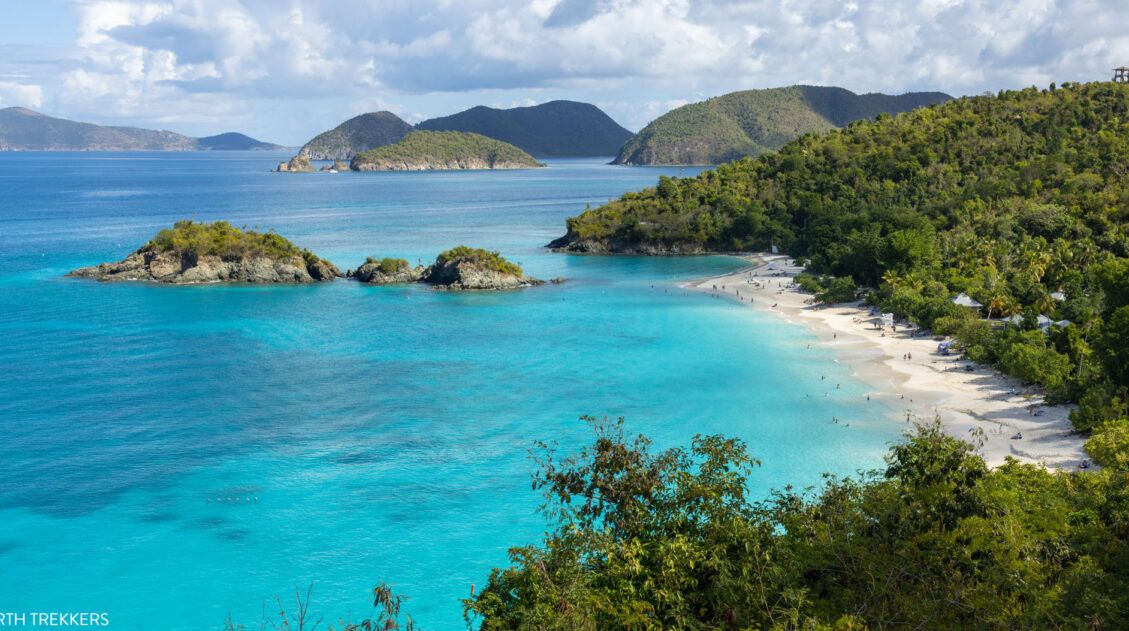
Top 10 Things to Do in Virgin Islands National Park
Discover the top things to do in Virgin Islands National Park, along with what you need to know to plan your trip, including how to get there, the best time to visit, where to stay, and tips for organizing your time. Virgin Islands National Park is one of the most beautiful national parks we have […]

7 Awesome Things to Do in Saint John, USVI
This guide covers the best things to do in Saint John, including activities in Virgin Islands National Park and must-have experiences outside the park, such as kayaking spots and scenic dining options. We also include key travel details like where to stay, how to get there, and the best time to visit, complete with weather […]

How to Get to Dry Tortugas National Park: Ferry, Seaplane & Private Charter
Dry Tortugas National Park is one of the most remote national parks in the USA. There are two ways to get here: by boat or by seaplane. Both come with their advantages and disadvantages, and which one you choose depends on cost, how much time you have, if you plan to camp on Garden Key, […]
10 Best US National Parks to Visit in December
Which are the best national parks to visit in December? In this guide, we list 10 beautiful national parks in the USA. Whether you are planning a family getaway during winter break or a vacation before the holiday season rolls around, we have lots of great ideas for you. Go hiking in Utah, gaze across […]
The Ultimate Guide to the 63 US National Parks
Stretching from the South Pacific, across the United States to the Caribbean, are 63 national parks. These national treasures preserve iconic landscapes, majestic mountains, primordial forests, arid deserts, misty coastlines, immense canyons, wildlife, and historic landmarks. We have visited 56 of the 63 US national parks, from the towering granite walls of Yosemite and the […]
United States Travel Guide: Places to Visit in the USA
Plan your visit to the United States. Learn about the best things to do, how to plan your time, road trip ideas, and sample itineraries.
US National Park Itineraries & Road Trip Ideas
National Park Itineraries The national parks are best experienced as a road trip and with 56 parks visited between us, we’ve done a lot of them. Whether you’re dreaming of a two-week American Southwest loop, a classic Yellowstone and Grand Teton combo, or a deep dive into Utah’s Mighty 5, we’ve put together detailed itineraries […]


Comments 8