
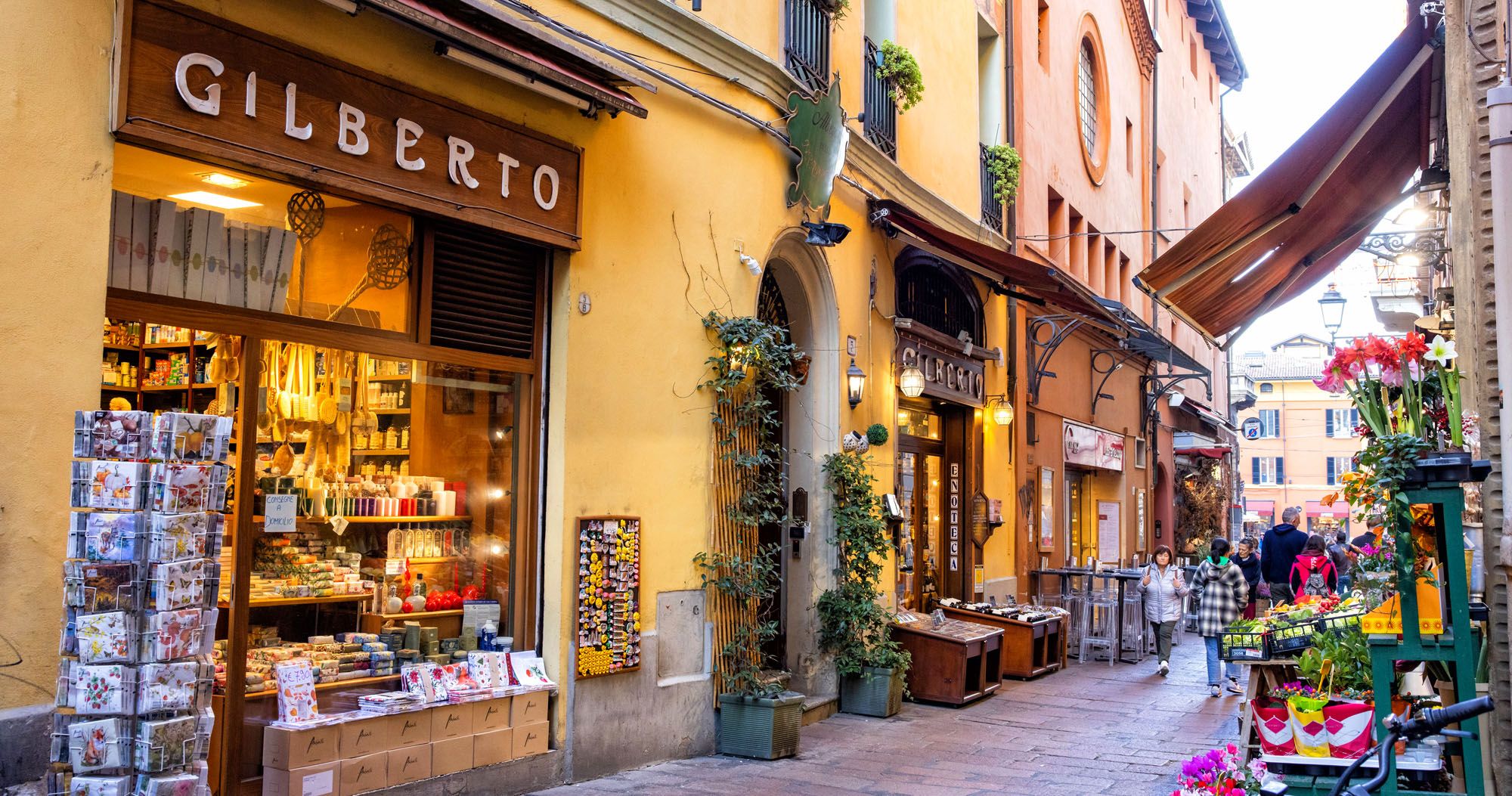
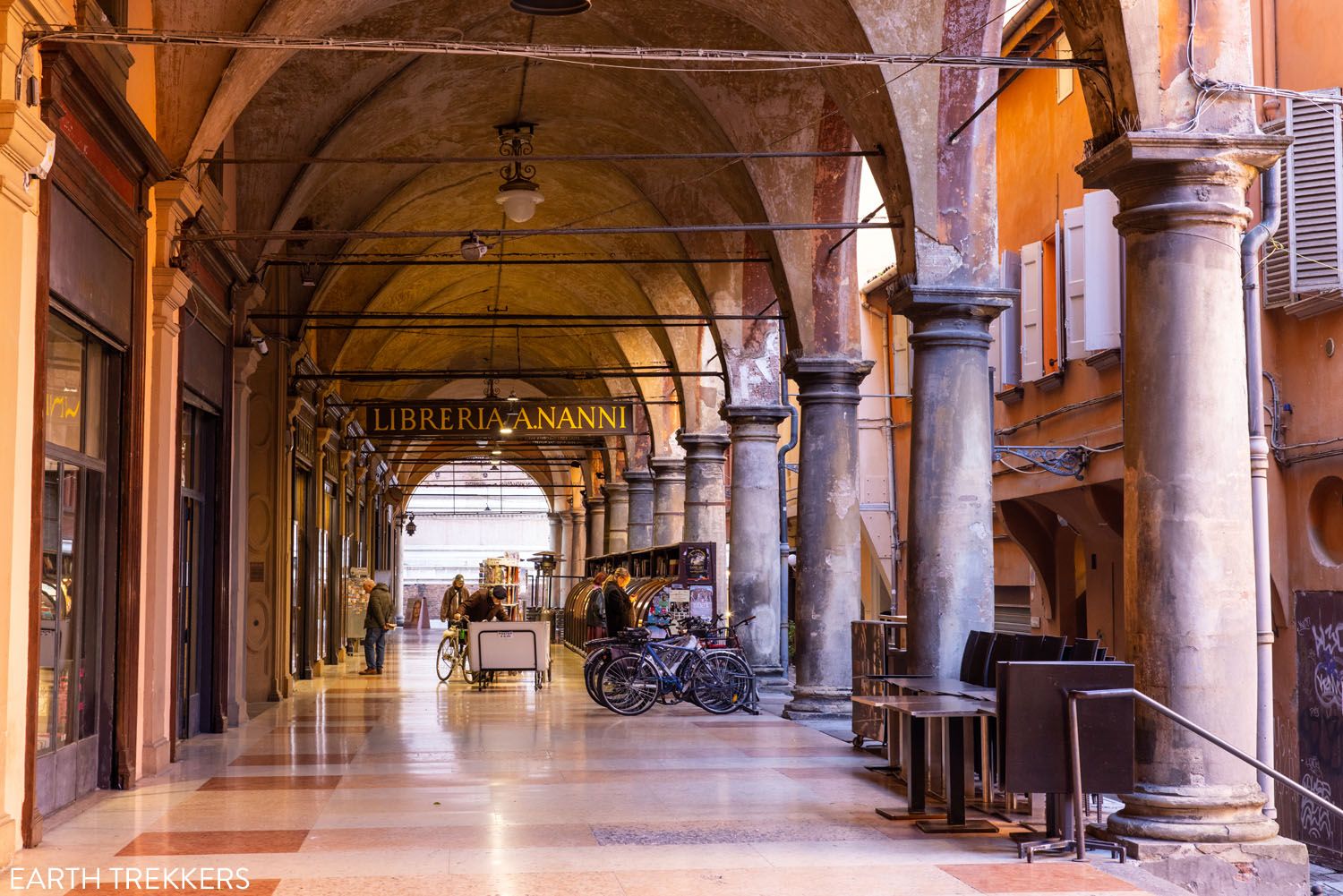
Bologna didn’t make it onto our Italy itinerary until our sixth trip. We’d visited Rome, Florence, Venice, the Amalfi Coast, Tuscany, and the Dolomites, and somehow kept skipping over this city in northern Italy. Once we finally arrived, Tim and I were instantly captivated: the busy, bustling Quadrilatero with its wine bars and shops overflowing with fresh pasta, the kilometers of beautiful porticoes winding through the medieval city center, and a food scene that made us wonder how we’d ever overlooked it.
We spent three days in Bologna, touring its top attractions, taking a cooking class, trying as many wine bars and restaurants as possible, and day tripping to the Ferrari, Lamborghini, and Pagani museums. We learned a lot along the way.
In this guide you’ll find a detailed one-day Bologna itinerary that takes you through the city’s essential highlights: Piazza Maggiore, the Basilica of San Petronio, the Quadrilatero, a tower climb, and a cooking class or food tour. This is all structured by time of day so you can follow it without overthinking.
For those with two days in Bologna, we cover two great options: spending more time exploring the city, or taking a day trip to the Ferrari, Lamborghini, and Pagani museums, or to the Parmigiano Reggiano and balsamic vinegar producers of the Emilia-Romagna countryside.
We also cover where to eat, where to stay, and the best time to visit, and everything you need to plan a first trip to Bologna with confidence.
For a broader look at planning your time in Italy across multiple destinations, visit our Italy Travel Guide.
At a Glance: Bologna Itinerary
DURATION | 1 to 2 days
DAY 1 HIGHLIGHTS | Piazza Maggiore, Basilica of San Petronio, the Complex of Seven Churches, the Quadrilatero, the Archiginnasio, and a cooking class
DAY 2 OPTIONS | Explore more of the city OR take a day trip to the Ferrari, Lamborghini & Pagani museums or Parmigiano Reggiano and balsamic vinegar factories
GETTING THERE | High-speed train from Florence (35 min), Venice (1hr 20 min), Milan (1hr), Rome (2hrs)
GETTING AROUND | The historic center is compact, flat, and walkable
WHERE TO STAY | Historic center, within walking distance of Piazza Maggiore
Is Bologna Worth It?
It took us six trips to Italy to finally visit Bologna and within hours of arriving, we understood exactly what we’d been missing. The Quadrilatero, the porticoes, the cooking class, the wine bars the more local vibe….we loved it, and we think most travelers will too.
That said, we want to be honest with you about where Bologna fits on a first trip to Italy.
If you’re planning a 10-day itinerary, Rome, Florence, and Venice are still the non-negotiables. They offer a depth and scale of experience that Bologna doesn’t match, and we wouldn’t sacrifice any of them to fit it in.
But if you’re planning 14 days or more, and you are a foodie, Bologna becomes a compelling addition. It sits perfectly between Venice and Florence on the high-speed rail line. Bologna is just 35 minutes from Florence and about an hour and 20 minutes from Venice, making it one of the easiest cities in Italy to slot into a longer itinerary without adding logistical complexity.
Our Verdict: Worth it for foodies, repeat Italy visitors, and anyone with 14 or more days. Save it for your second trip if you’re working with 10 days or less.
How Many Days Do You Need in Bologna?
We spent three days in Bologna and felt we used our time well: one day for the city highlights, one day for the car museums day trip, and a third day to eat more, wander more, and revisit the Quadrilatero one last time. For most first-time visitors, one to two days is the right amount.
With one day in Bologna, you have just enough time to explore the medieval city center, take a food tour or cooking class, and climb a tower for a view over the city. It’s a full day but a doable one, and it works well as a day trip from Florence.
With two days, you can explore Bologna at a comfortable pace and add a day trip into the Emilia-Romagna countryside. The car museums, a Parmigiano Reggiano factory, or a balsamic vinegar tasting in Modena are all good options. This is our recommended minimum for anyone who wants to experience Bologna’s food scene properly.
For those who want to do both — thoroughly explore the city and take a day trip — three days is ideal.
For a full breakdown of everything Bologna has to offer beyond this itinerary, see our 20 Best Things to Do in Bologna ↓
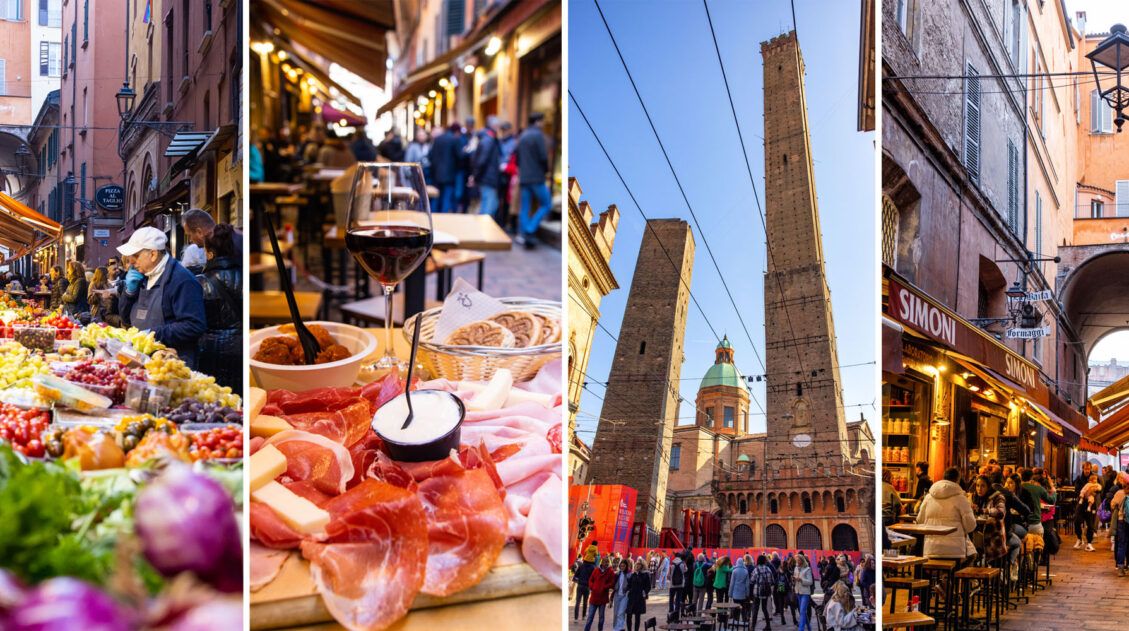
Best Things to Do in Bologna, Italy
Here are 20 amazing things to do in Bologna, Italy.One Day in Bologna Itinerary
This one day itinerary focuses on the medieval city center of Bologna. It can be done as a day trip from Florence, if you arrive early in Bologna.
Highlights: Piazza Maggiore, the Basilica of San Petronio, the Quadrilatero, the Complex of Seven Churches (the Santo Stefano Complex), the Archiginnasio and Anatomical Theater, Asinelli Tower, and a food tour or cooking class
Note: The times listed are rough estimates, just to give you an idea about timing throughout the day. Your times may differ, based on queues and how much time you decide to spend at each place. I did my best to anticipate waiting times and visiting times, but on very busy days (or very quiet days) these times can differ.
I have also provided links to official websites, so you can check times and pricing before your visit to Bologna.
Below is a map with things to do in Bologna, recommended restaurants and hotels, plus a walking route for day 1 of this Bologna itinerary.
How to Use This Map: Click the tab in the top left corner of the map to see a list of the points of interest and to turn layers on/off. Click the icons on the map to get more information about each point of interest.
To take this map with you, click the star next to the title of the map which adds it to your Google account. Next, within your Google Maps app, select ‘Saved’ and then select ‘Maps’. This map title will now appear in your list.
9:00 am: Piazza Maggiore
Piazza Maggiore is Bologna’s main square. This is the perfect starting point for a visit to Bologna, as several of the city’s most interesting places to visit are located right here, or just a short walk from this spot.
If you do a 360° spin in Piazza Maggiore, you will see some of the most important buildings in the city: the Basilica of San Petronio, Palazzo Comunale, Palazzo del Podestà, and Palazzo dei Notai.
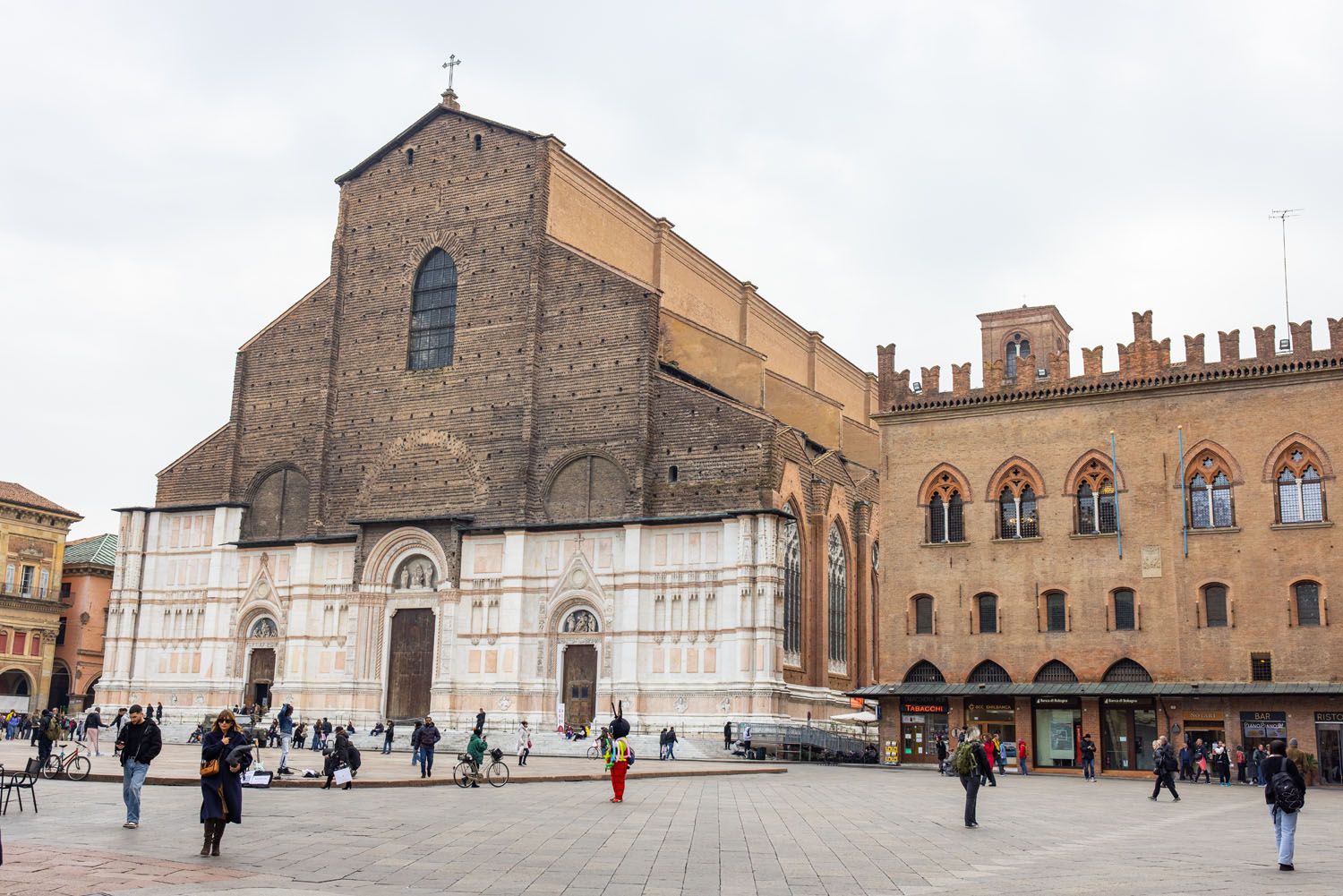
Piazza Maggiore and the Basilica of San Petronio
This early in the day, Piazza Maggiore is a rather quiet spot. But that will quickly change, as you’ll see.
Sitting next to Piazza Maggiore is Neptune’s Fountain, aka Fontana del Nettuno. This statue has a rather interesting story. It was commissioned by Pope Pius IV in the 16th century and sculpted by Giambologna. Once finished, the pope was not happy with size of Neptune’s genitals, so he asked Giambologna to downsize them. Giambologna grudgingly agreed but got his revenge by changing the position of Neptune’s arm. If you look at the statue from an angle, the arm looks like something else…
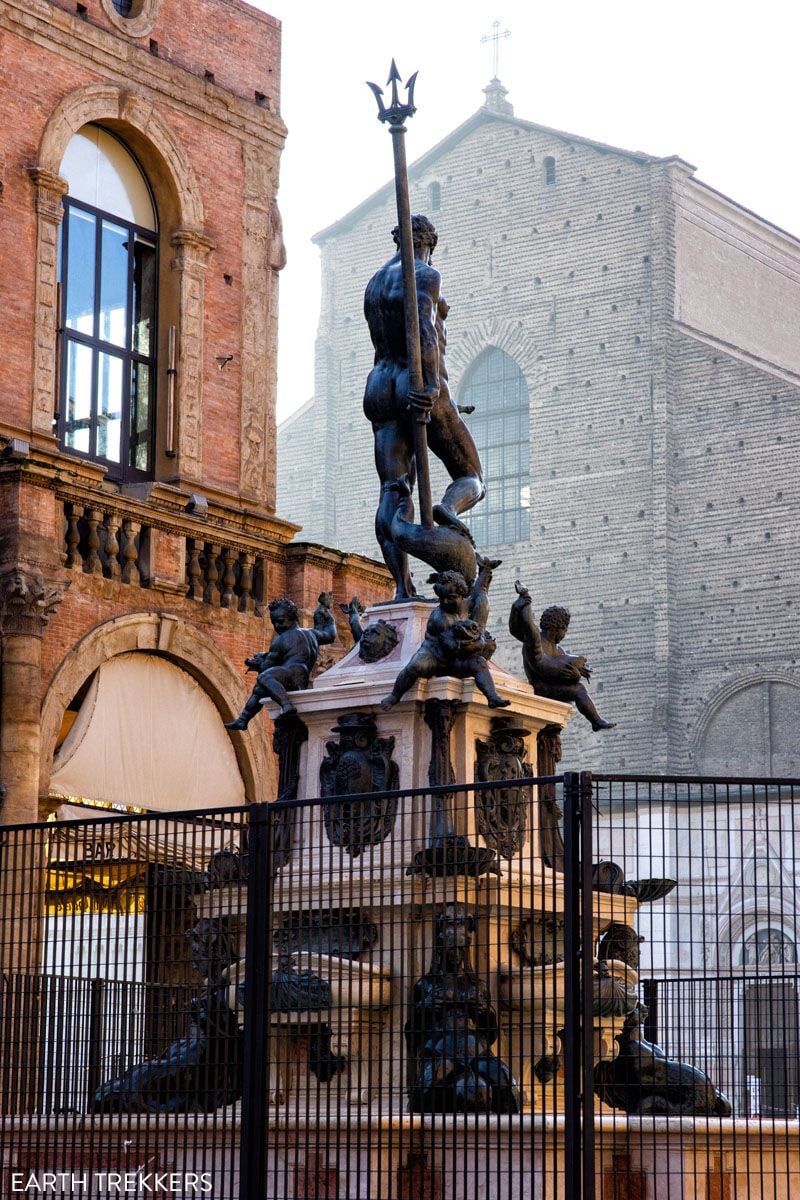
Neptune’s Fountain
9:15 am: Basilica of San Petronio
This basilica sits right on Piazza Maggiore. It is the largest Gothic church in the world made from brick. Marble adorns its bottom half but it was never completed, which is why there is still exposed brick on the top half of the basilica’s façade.
The basilica is free to visit. Inside, you can see the famous meridian line, which helped Cassini prove that the Earth’s orbit is elliptical. Midday is the best time to visit the basilica if you want to see the sunlight on the meridian line, so you can return later in the day if this is something you want to see.
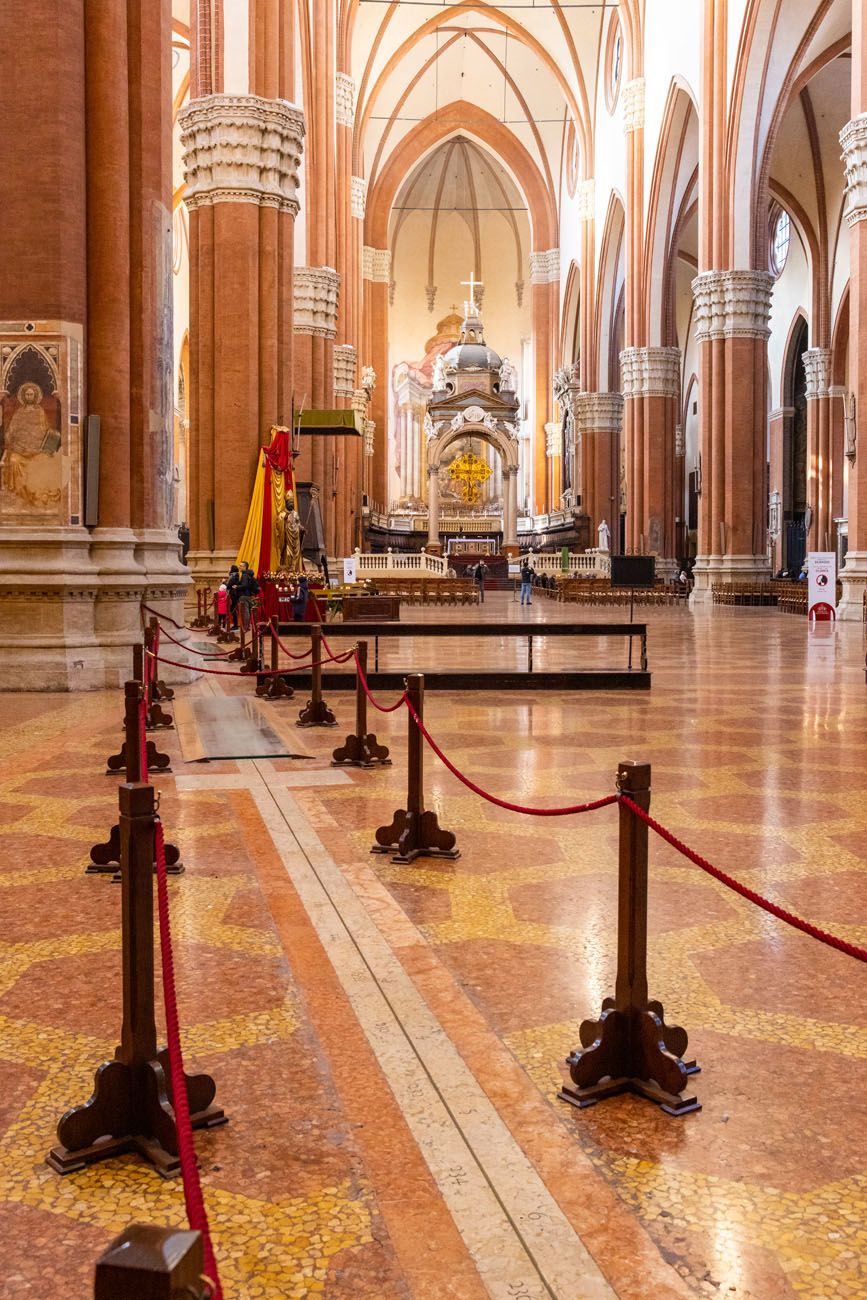
Meridian line
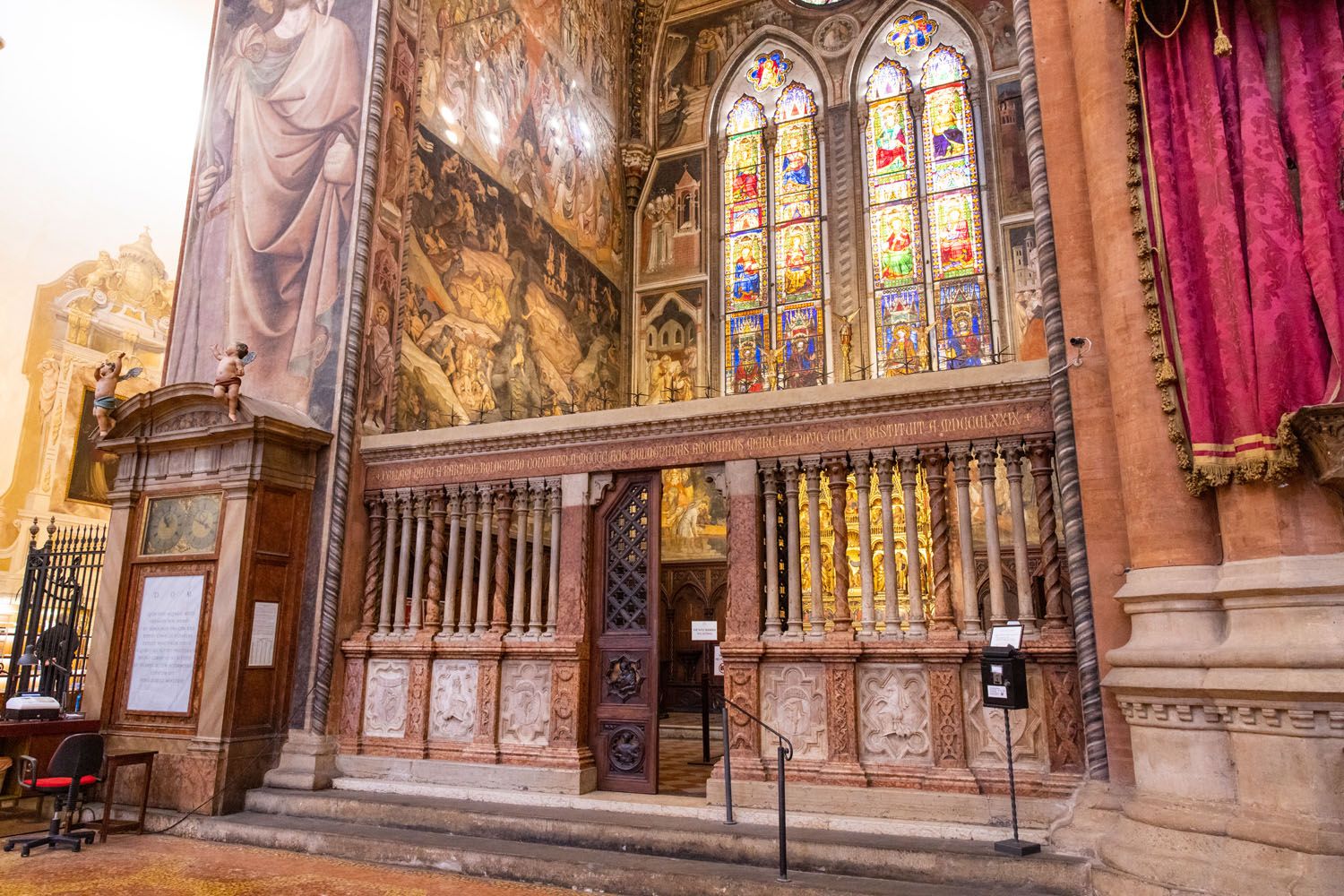
Chapel of Re Magi
For a small fee, there are three side chapels that are very interesting to visit. The Chapel of Re Magi has amazing Dante-like frescoes representing Heaven and Hell, plus a beautiful stained-glass window that dates back to the 15th century.
The Chapel of Sant’Abbondio was the site of the basilica’s first Holy Mass in 1392. And the Chapel of San Petronio holds the head and body of Saint Petronio.
For updated hours of the basilica, visit the official website.
10:00 am: Clock Tower (Optional)
This is optional, because if you only climb one tower today, Asinelli Tower gets our vote, as it is the tallest medieval tower in Bologna. However, it is currently closed (get updates about its reopening here, just in case it reopens before I update this article) and it is a massive 498 steps to the top, so it is not for everyone. The Clock Tower is a much shorter climb (just over 100 steps), and the view is still very nice.
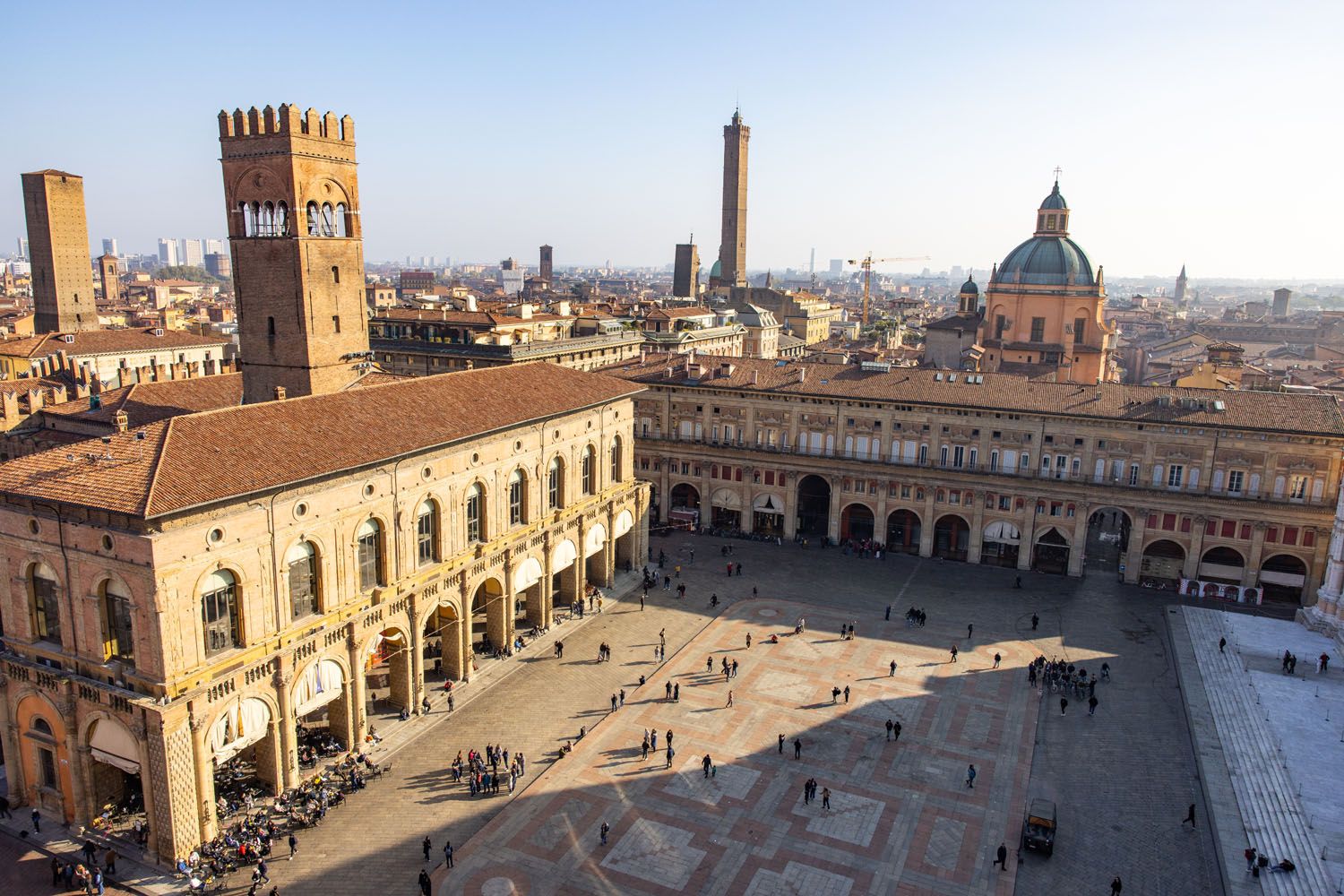
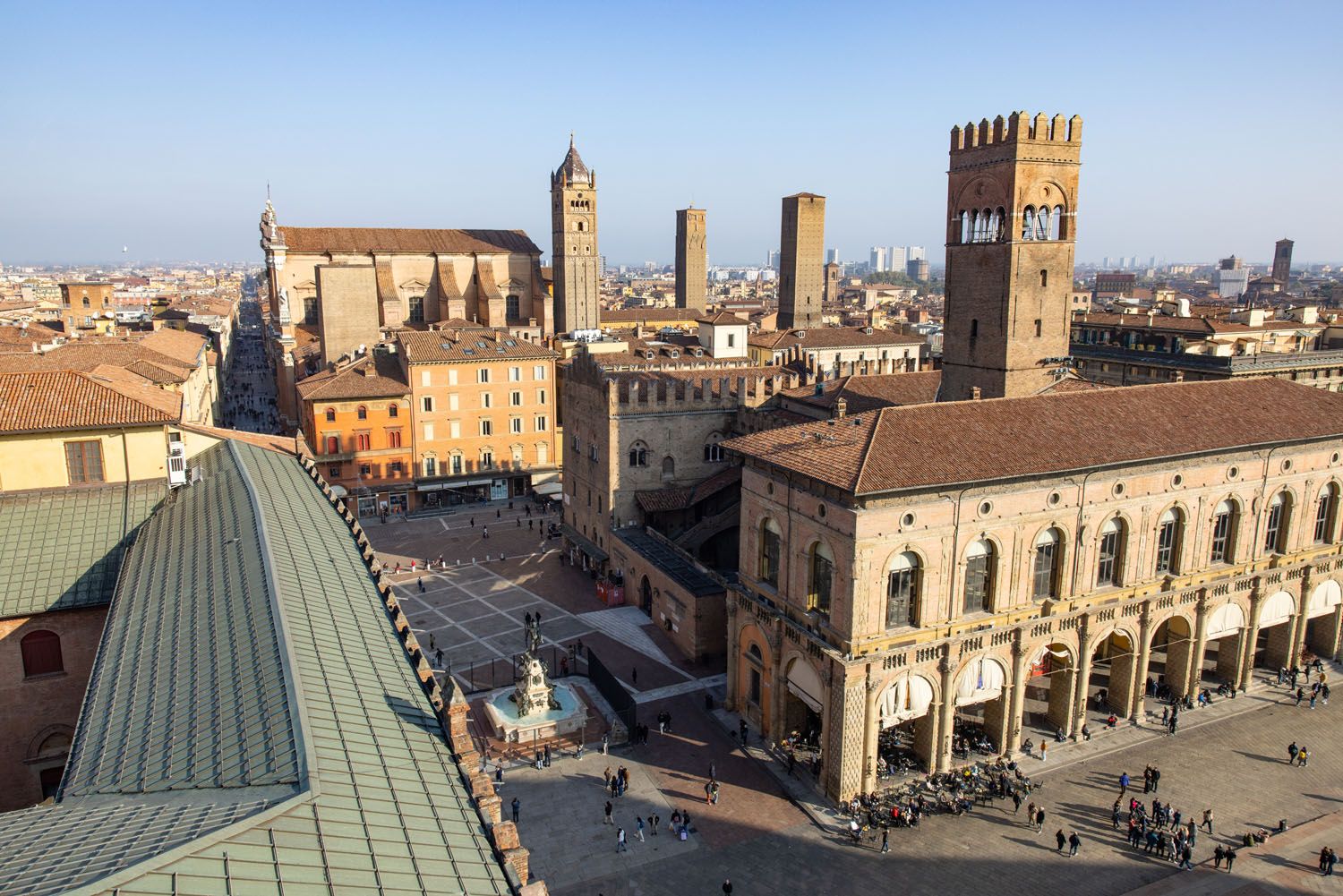
The Clock Tower (Torre dell’Orologico) is part of Palazzo Comunale (which is also called Palazzo d’Accursio). It is located right on Piazza Maggiore. To visit the Clock Tower, you will have to book a time slot in advance. The tower opens at 10 am, so we recommend booking the first time slot of the day. Your ticket also includes a visit to the Municipal Art Collections.
From the Clock Tower, here is the view over Piazza Maggiore.
10:45 am: The Complex of Seven Churches
This complex of churches, also called the Santo Stefano Complex, is one of the most important religious sites in Bologna. The churches and chapels are all built right next to each other, connected by doorways and outdoor courtyards, so even though it sounds like a lot to see here, a visit can still be rather quick.
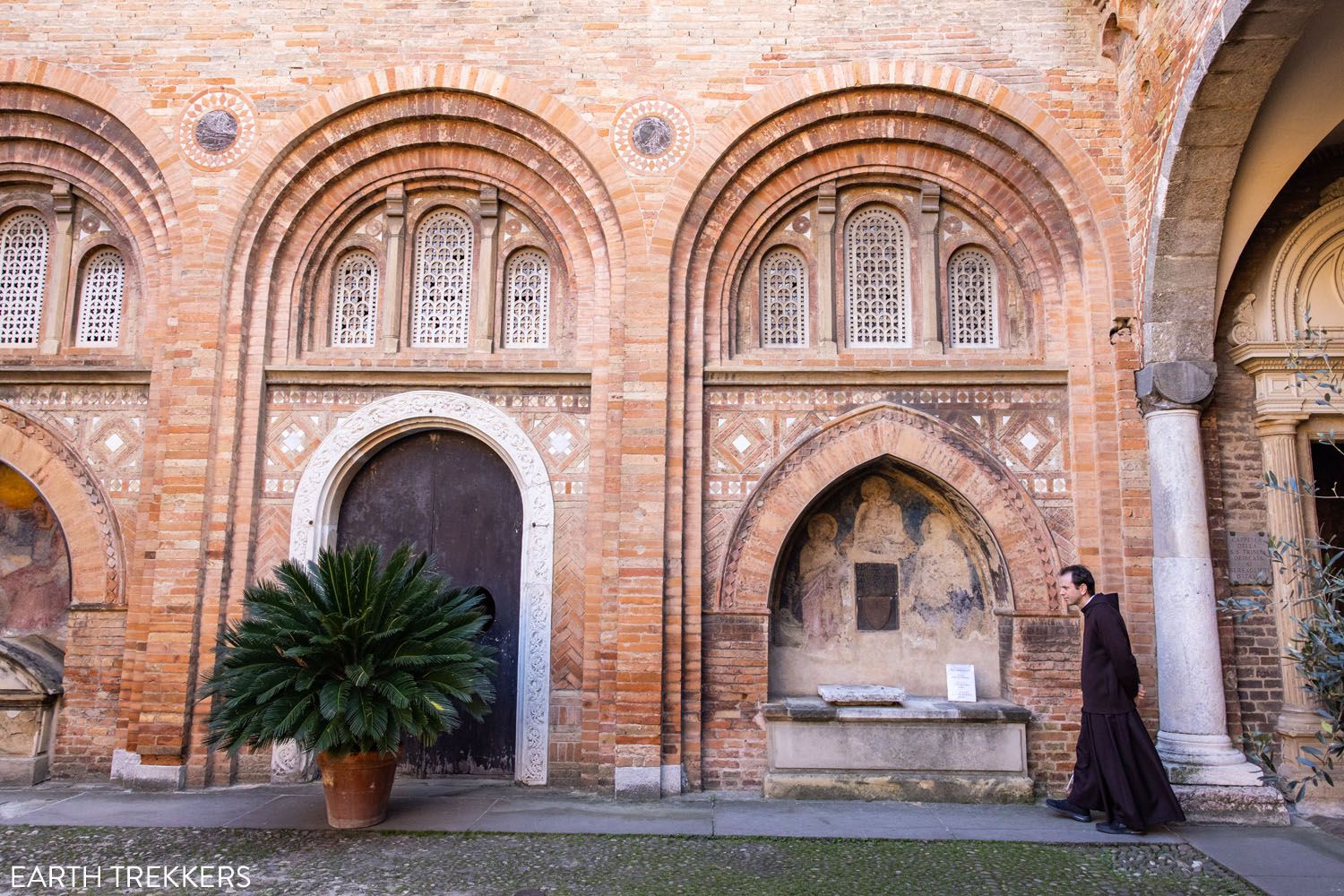
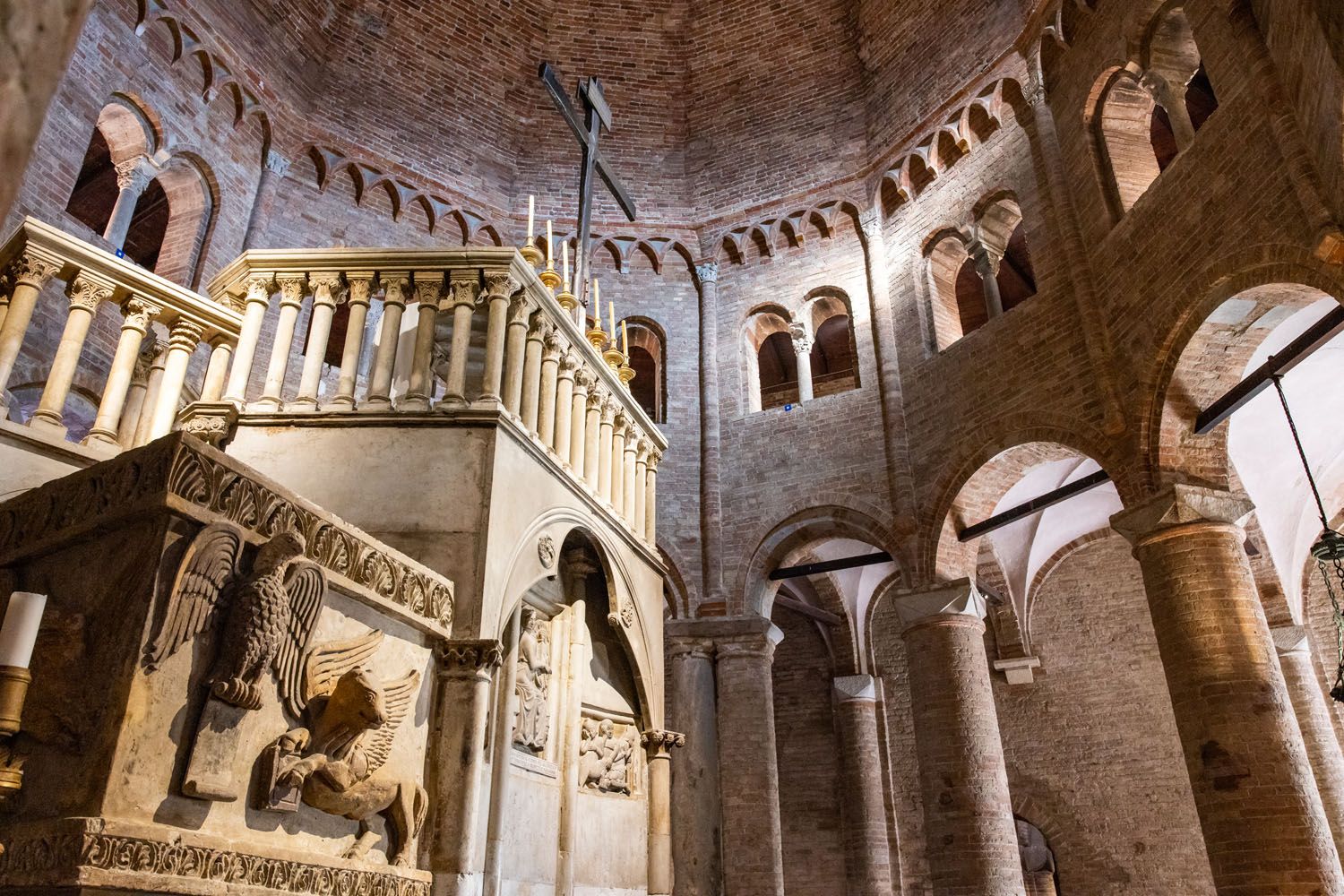
The oldest building here is the Church of the Holy Sepulchre, which dates back to the 5th century, and is a smaller version of the Church of the Holy Sepulchre in Jerusalem. Two churches (the Church of Saint Stephen and the Church of the Saints Vitale and Agricola) are also very old but have since been rebuilt. Also part of the complex is the Church of the Trinity, the Chapel of the Bandage, and the Courtyard of Pilate.
The Santo Stefano Complex is free to visit. Get hours here before you go (it is open in the morning and afternoon but closes for a few hours midday).
Getting Here: To walk here from Piazza Maggiore, you’ll walk through the Quadrilatero. You can quickly explore this area, but you’ll be back later today, so no need to linger too long, although it may be tempting. It is a 7-minute walk to get from Piazza Maggiore to the Santo Stefano Complex.
12:00 pm: Asinelli Tower (Optional)
Asinelli Tower is Bologna’s tallest tower. It is a leaning medieval tower and during our visit, it was closed for maintenance. It was planned to reopen sometime in 2025, but as of April 2026, it remains closed (so maybe it will reopen soon??). If it is open, you can climb the 498 steps to the top for panoramic views over Bologna.
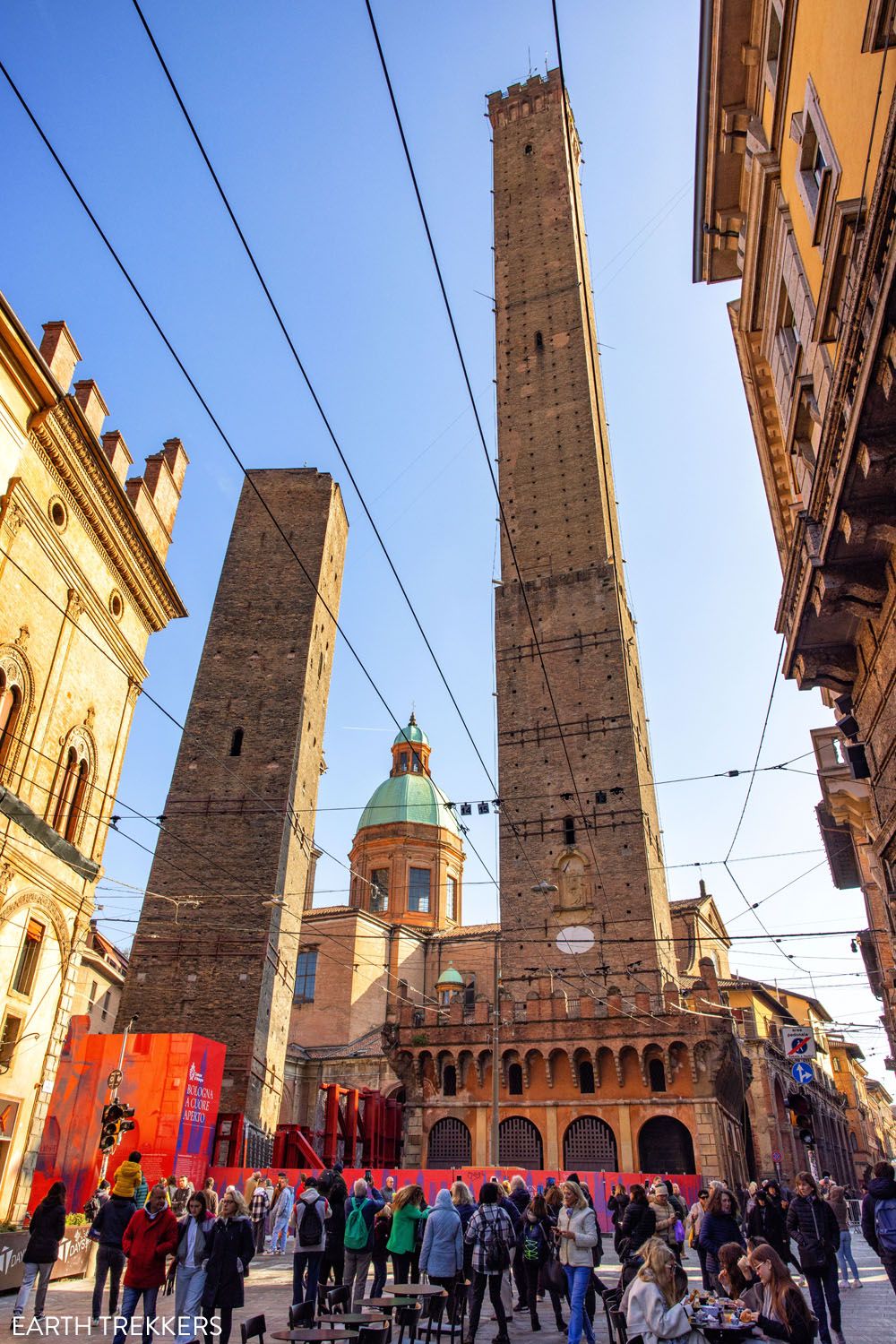
Get hours, pricing, book your tickets, and updates about its reopening here. This is a 5-minute walk from the Santa Stefano Complex.
12:45 pm: The Quadrilatero
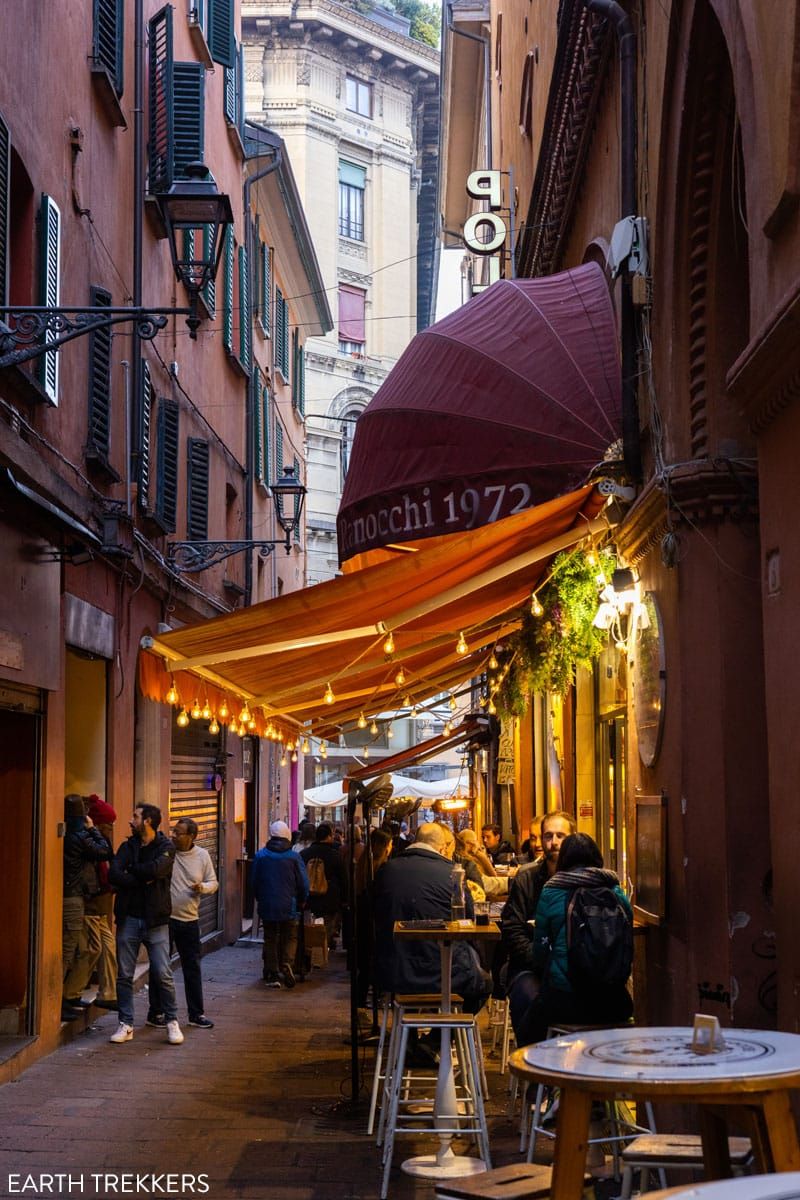
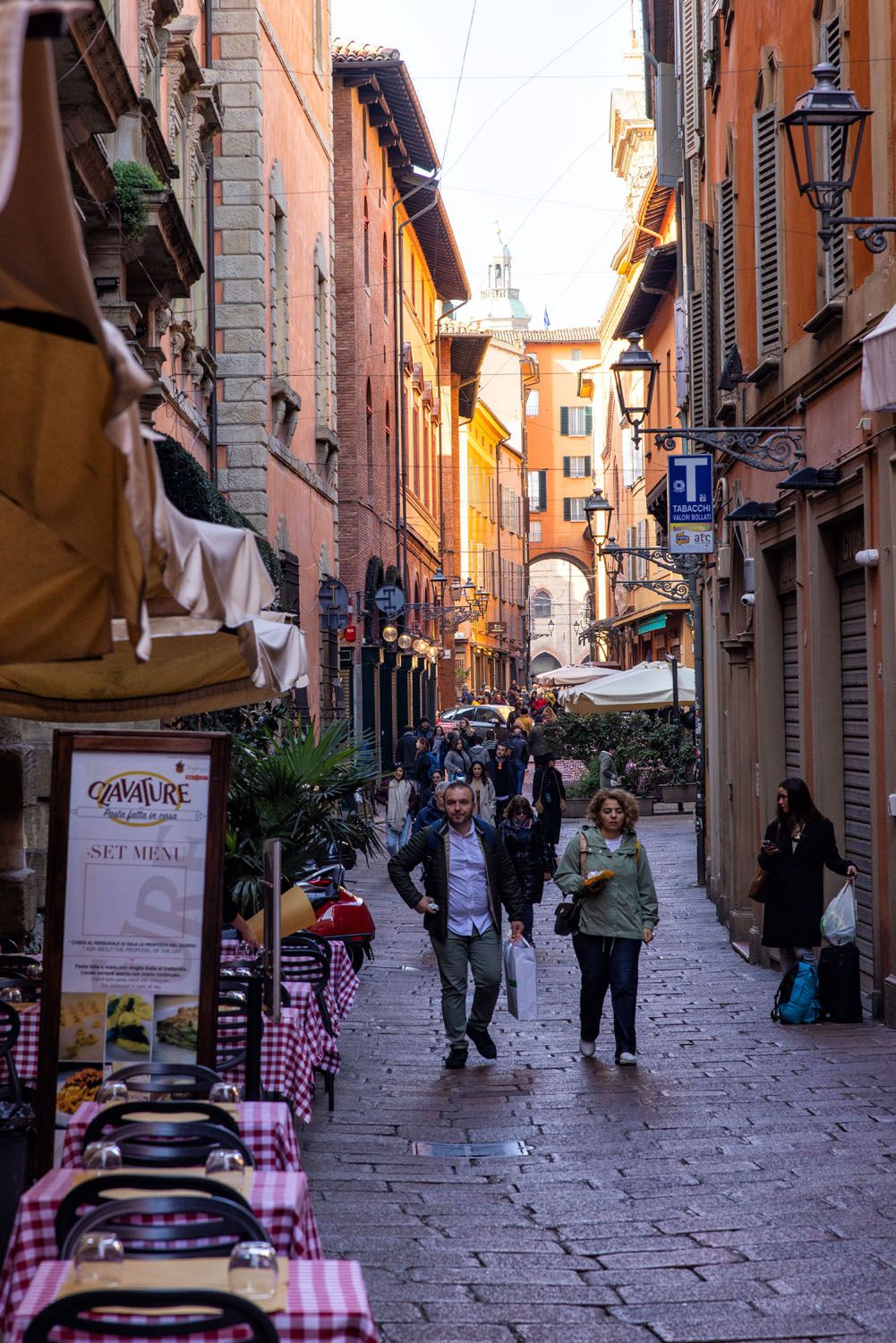
The Quadrilatero is a small grid of narrow streets that are lined with small grocery stores, shops, outdoor cafes, and wine bars. This was once the old market of Bologna. Now, it is a bit touristy, but it is also a lot of fun to explore.
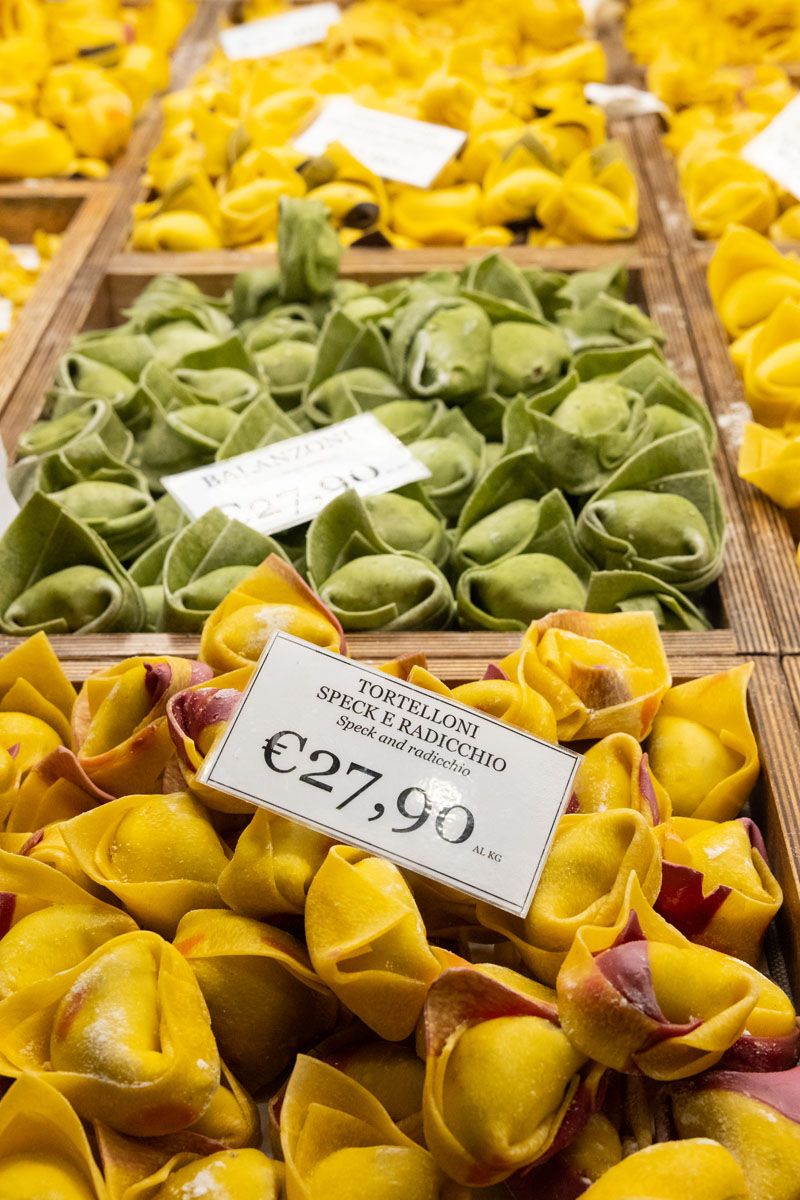
Cases of fresh pasta and aged Parmesan cheeses sit on display. Wine bars overflow onto the city streets. Small grocery stores, with cured meats hanging from the rafters and shelves of gourmet condiments are just waiting to be explored. There are also shops selling fresh fish, colorful flowers, and all your kitchen needs, whether it be new knives (check out Antica Aguzzeria del Cavallo), cookware, or ceramic dishes.
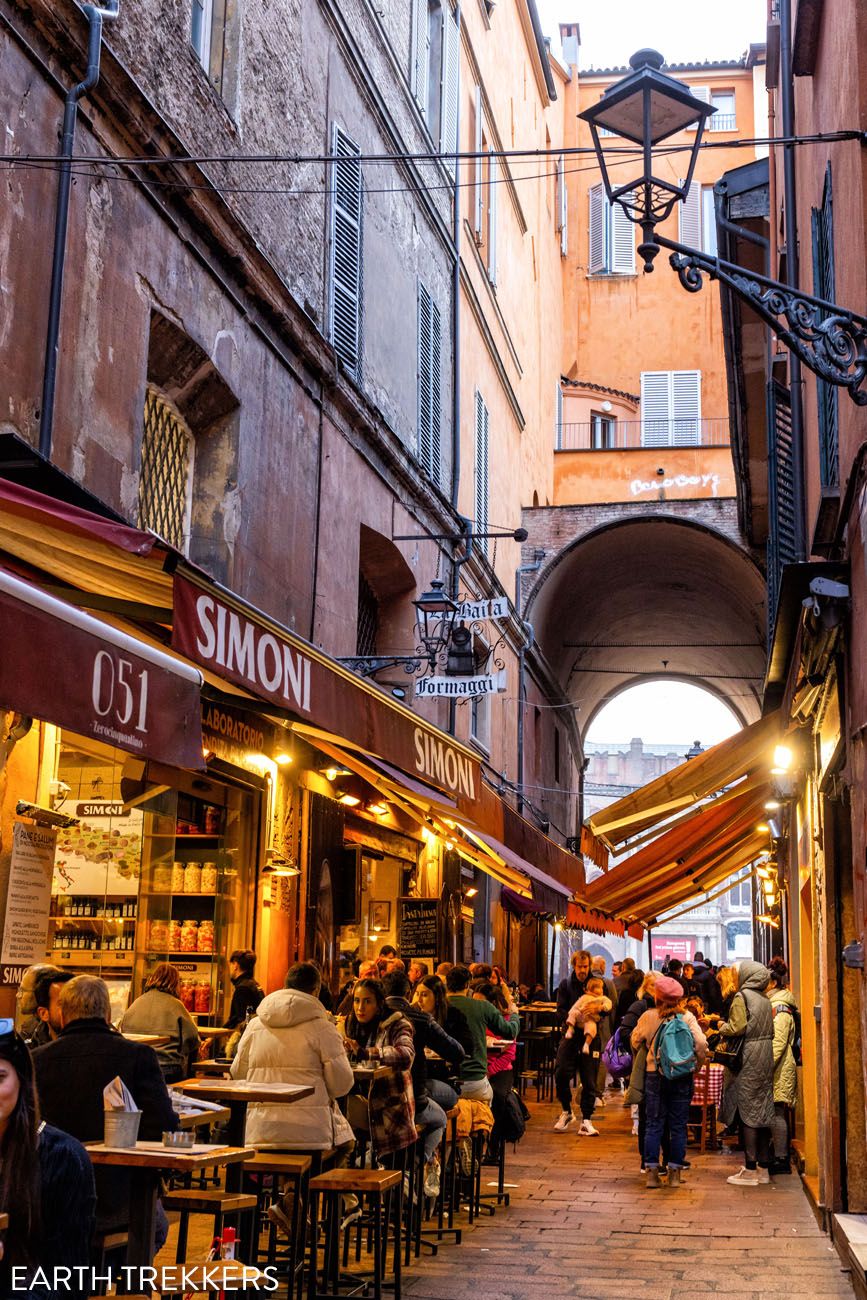
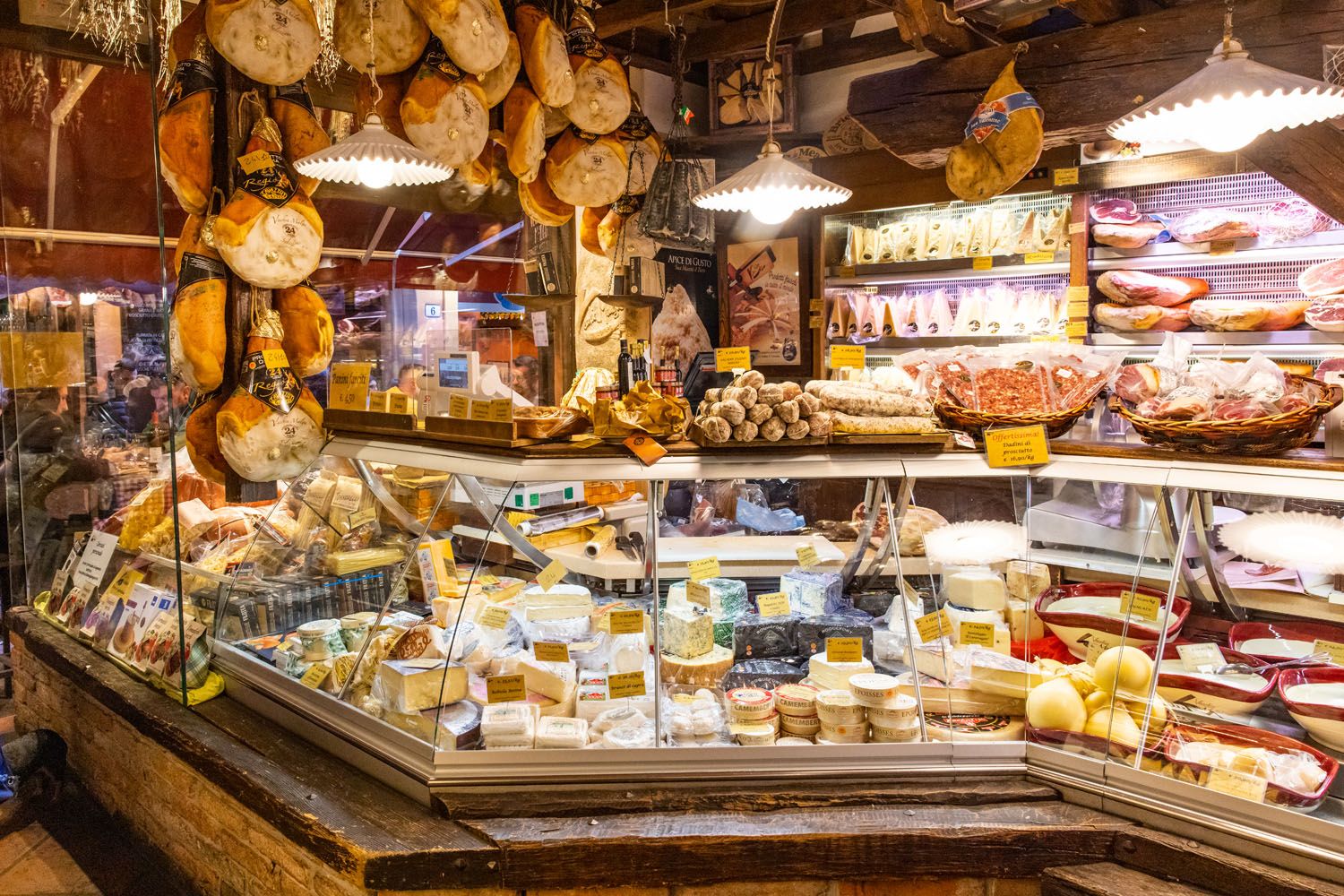
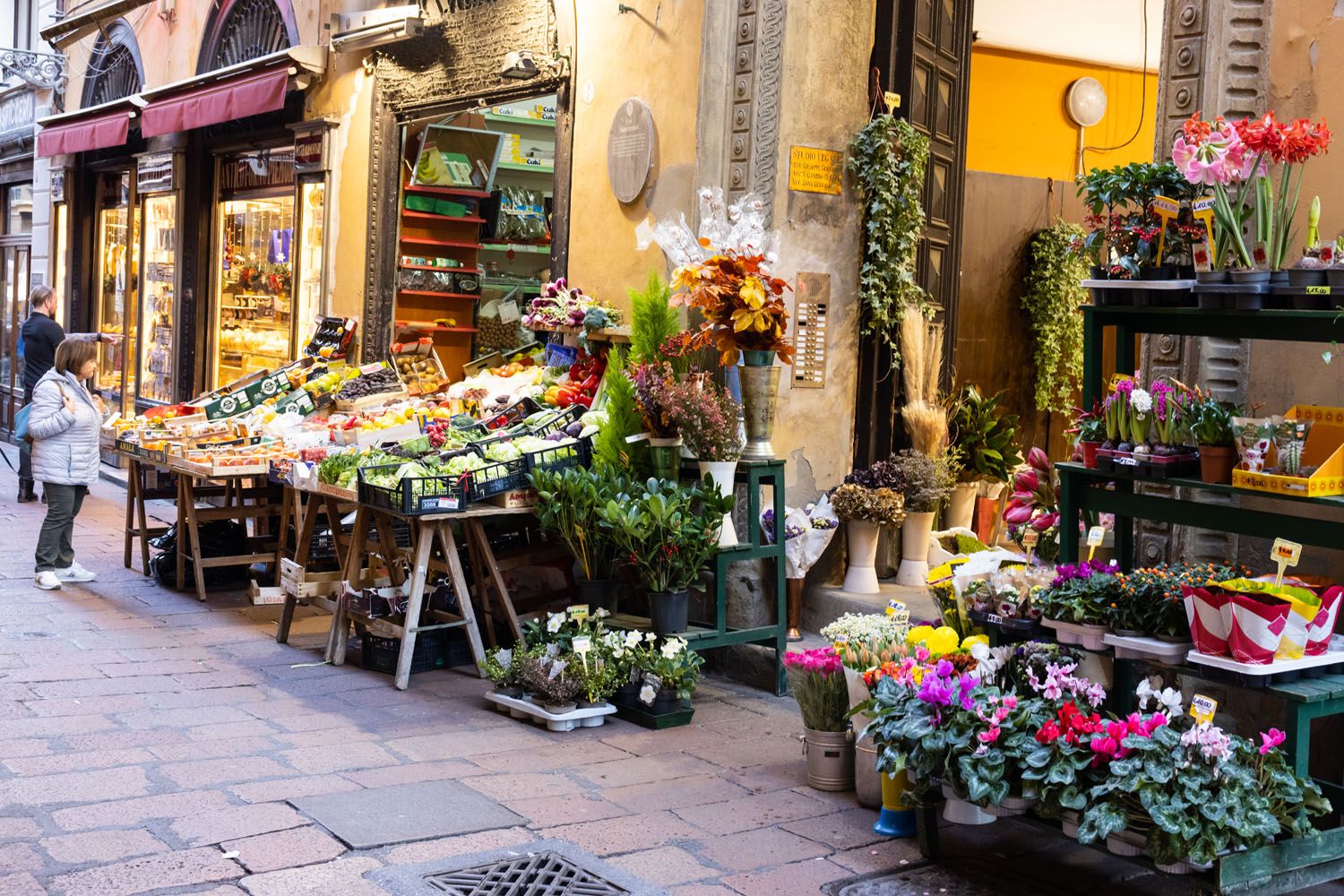
Several streets make up the Quadrilatero, with the most interesting being Via Pescherie Vecchie. There are two restaurants here that are perfect for lunch or a quick snack. Salumeria Simoni gets slightly better reviews, but it can be harder to get a table here. Zerocinquantuno is located right next to it and it also gets great reviews.
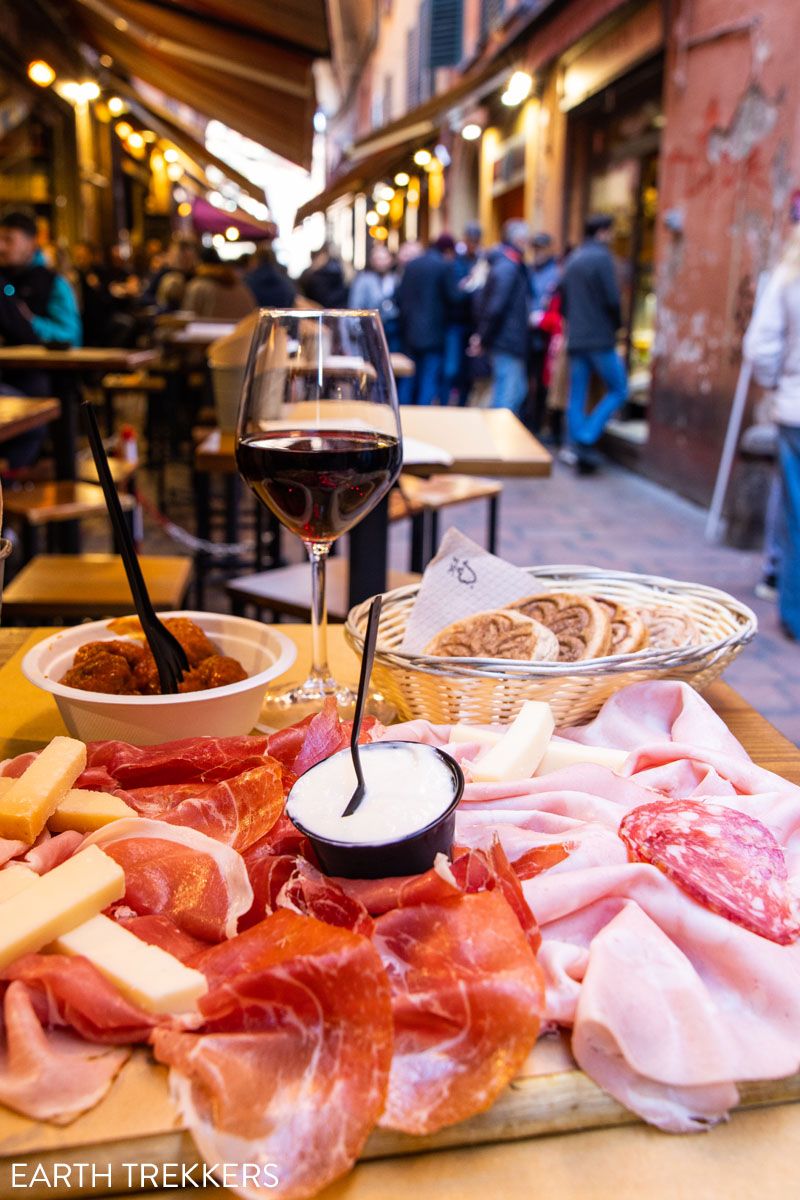
If you want a less overwhelming experience (the wine bars on Via Peschieri Vecchie can be crowded and you and your food will get ogled by the hundreds of people walking up and down this street), Osteria Angolo degli Orefici is a restaurant in the Quadrilatero with table service and a less overwhelming atmosphere.
2:30 pm: Piazza Cavour & Bologna’s Porticos
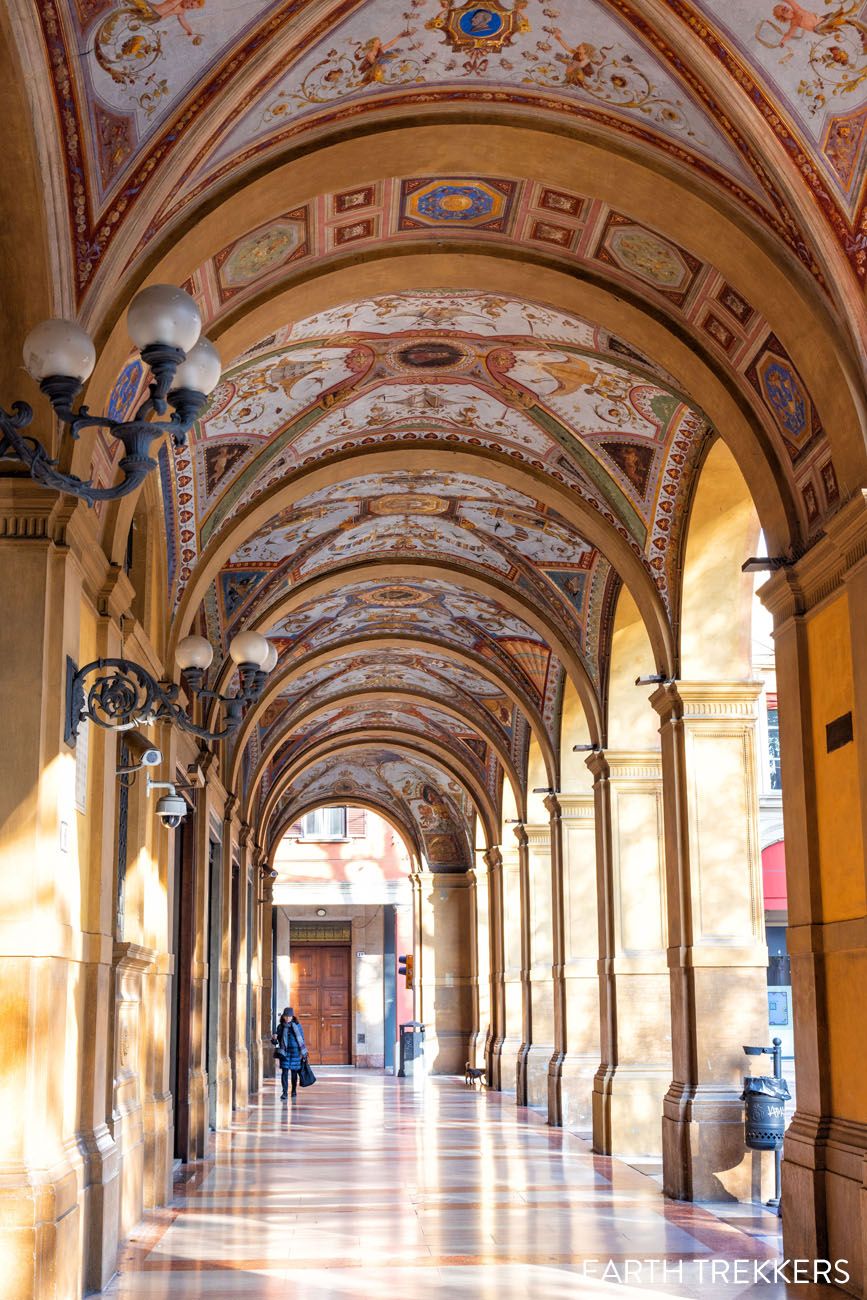
After lunch, go for a very short stroll along Via dell’Archiginnasio, which runs alongside the Basilica of San Petronio, out to Piazza Cavour. There is a portico that runs along Piazza Cavour that is one of the prettiest in Bologna. It’s worth the short walk and the short detour.
2:45 pm: The Archiginnasio & the Anatomic Theater
This is a hidden gem in Bologna and one of our favorite experiences here.
The Archiginnasio is a palace that was built in the 16th century as the seat of the university. Now, it is a library and has a few historic rooms to visit.
The entrance is on Via dell’Archiginnasio, which is to the left of the Basilica of San Petronio. Look for the Biblioteca dell’Archiginnasio sign, walk through the small hallway, and you will be in the courtyard. Lining the courtyard are porticos and adorning the walls are many colorful coats of arms. Climb the steps to the second levels for more views of the coats of arms (I thought these were amazing!).
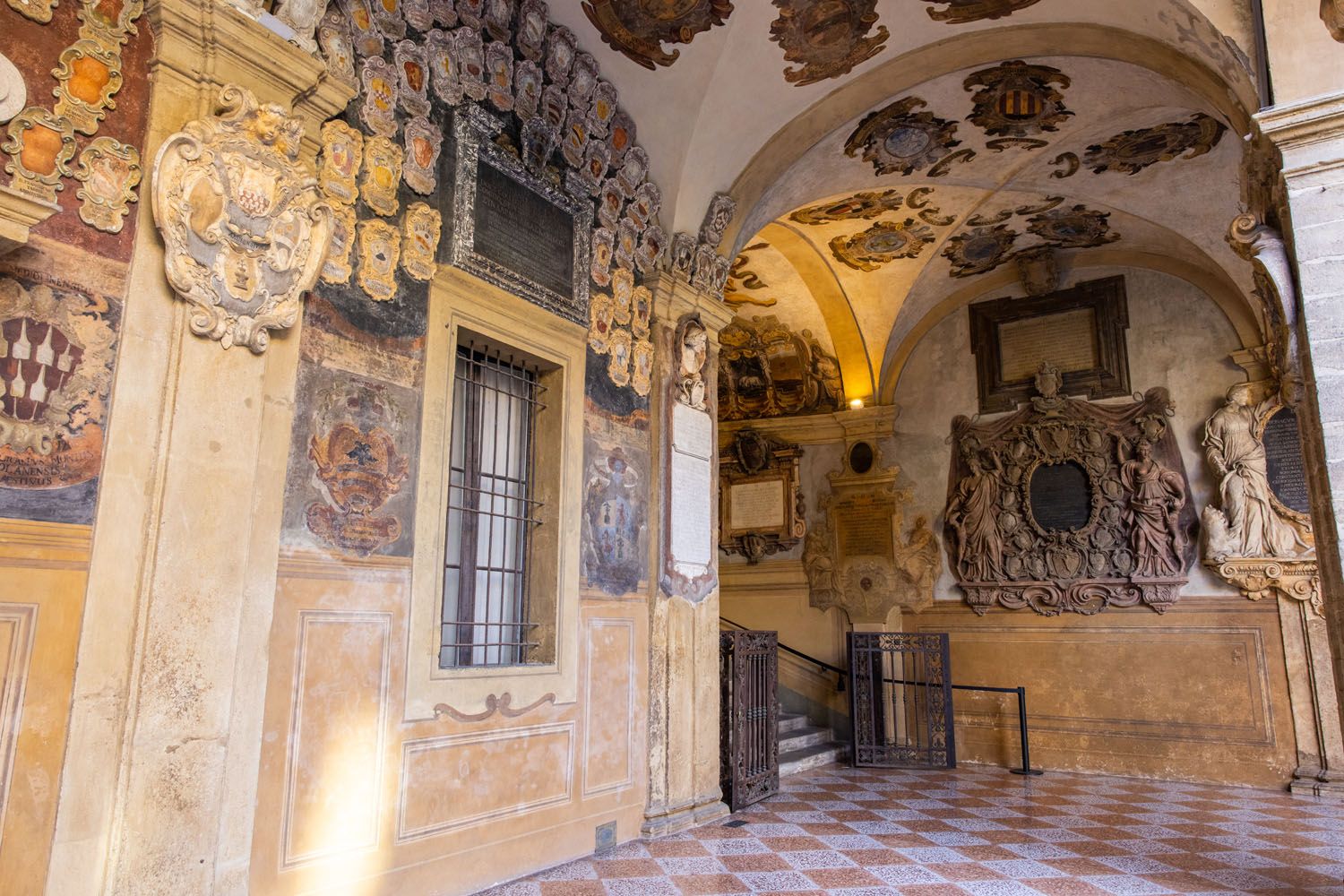
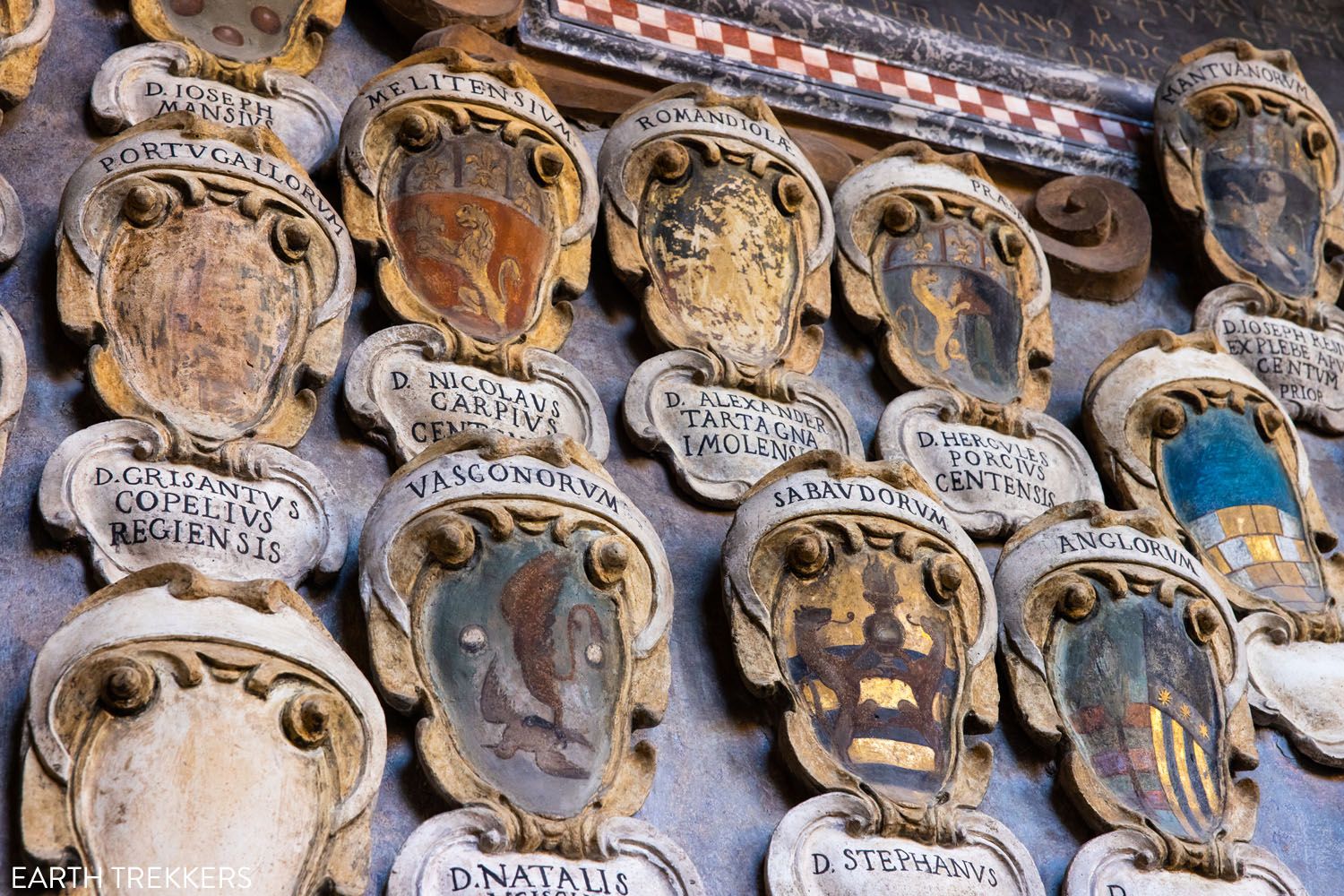
It’s free to see the porticos and coats of arms. The library is not open to tourists.
To enter the Anatomical Theater and Stabat Mater Room, it costs just a few euros. This can be purchased in the palace but if you are here on a Saturday, advance reservations are required. The Archiginnasio is CLOSED on Sunday.
The Anatomical Theater was designed in 1637 and numerous statues decorate the room. The two statues that sit on either side of the demonstrator’s chair are skinned, called Pellati. This room suffered extensive damage during WWII but it was immediately rebuilt using the original wood.
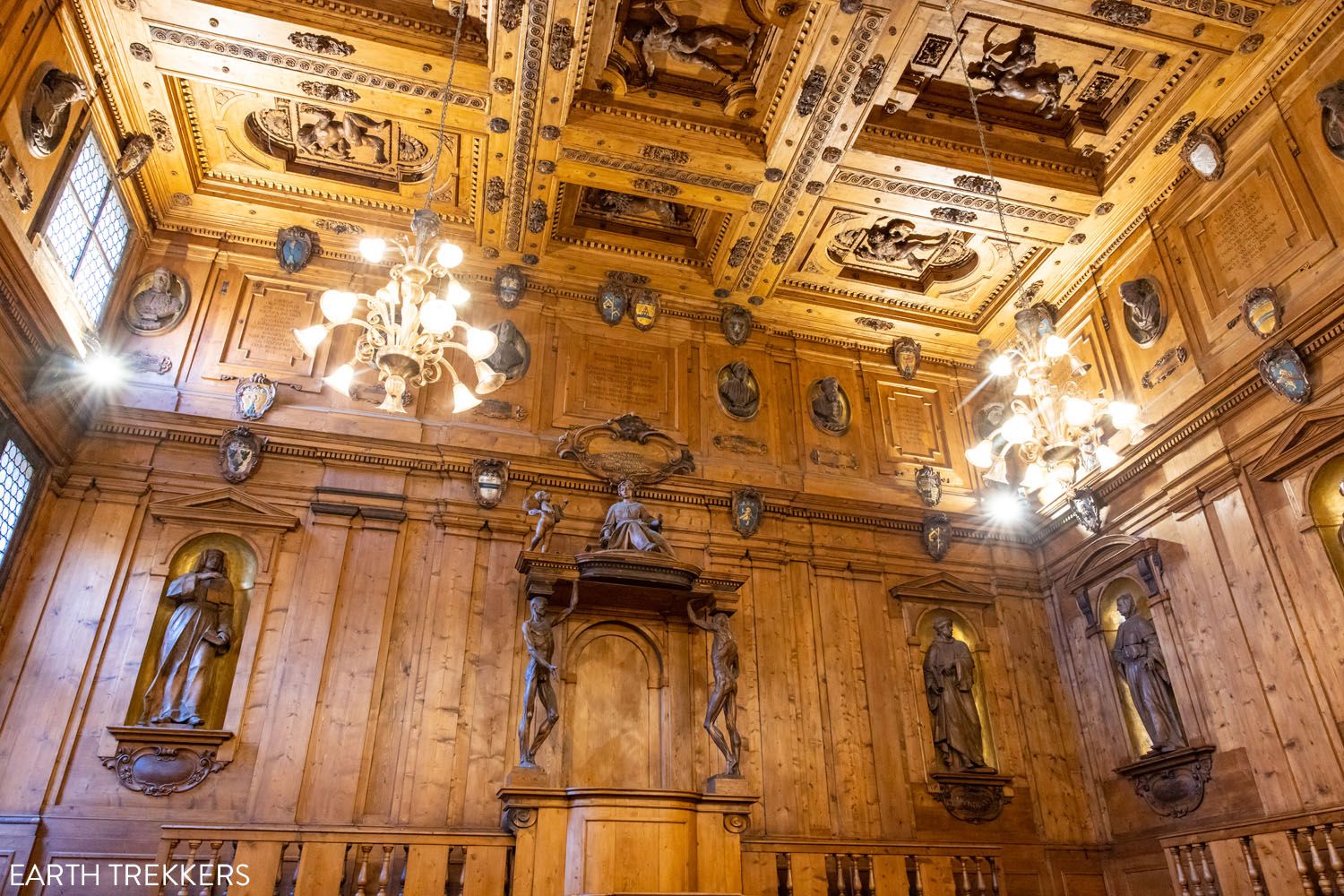
Anatomical Theater
The Stabat Mater Room is the auditorium where law students gathered. The fresco of the Virgin and Child dates back to 1569. From this room, there is a window with a view into the library.
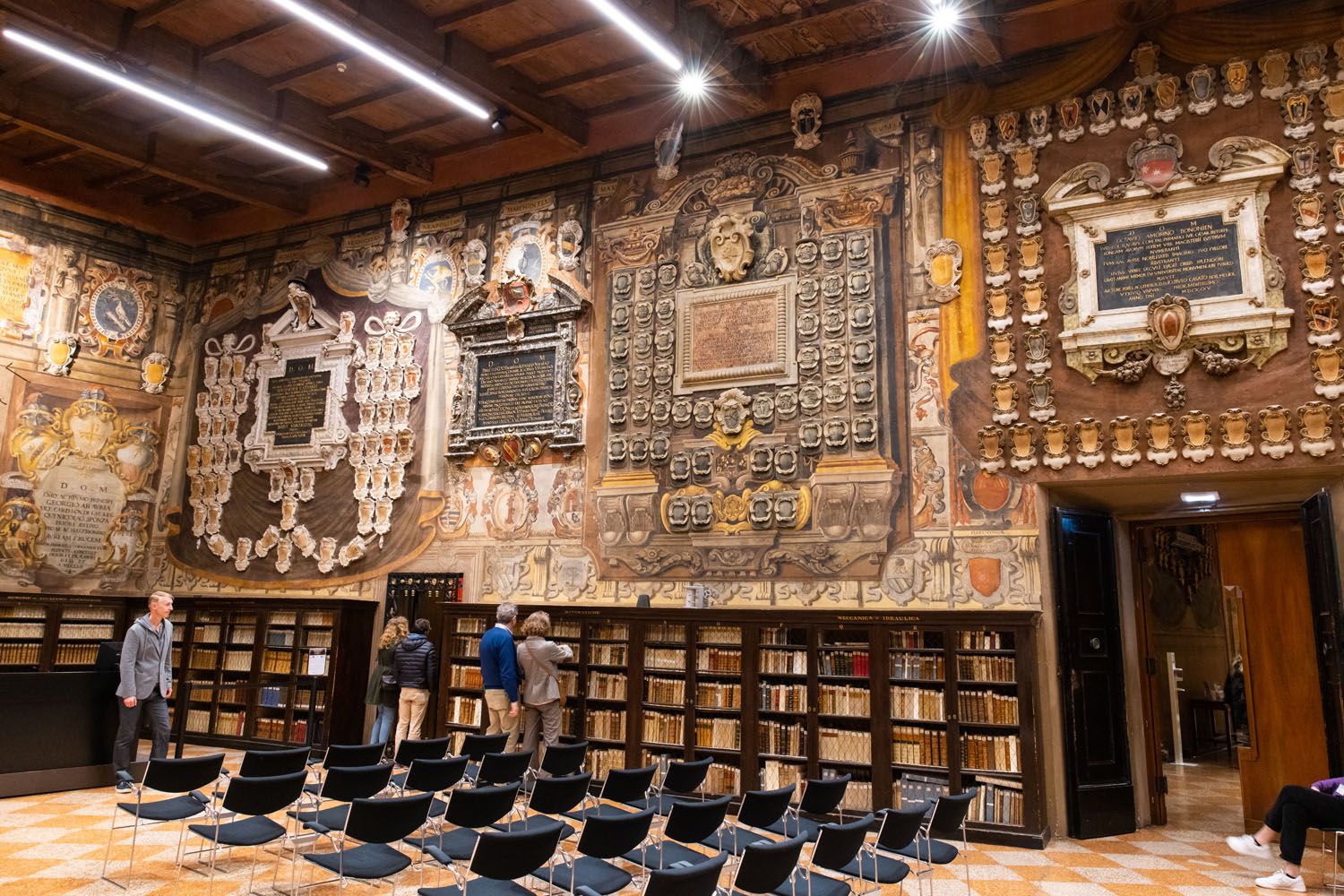
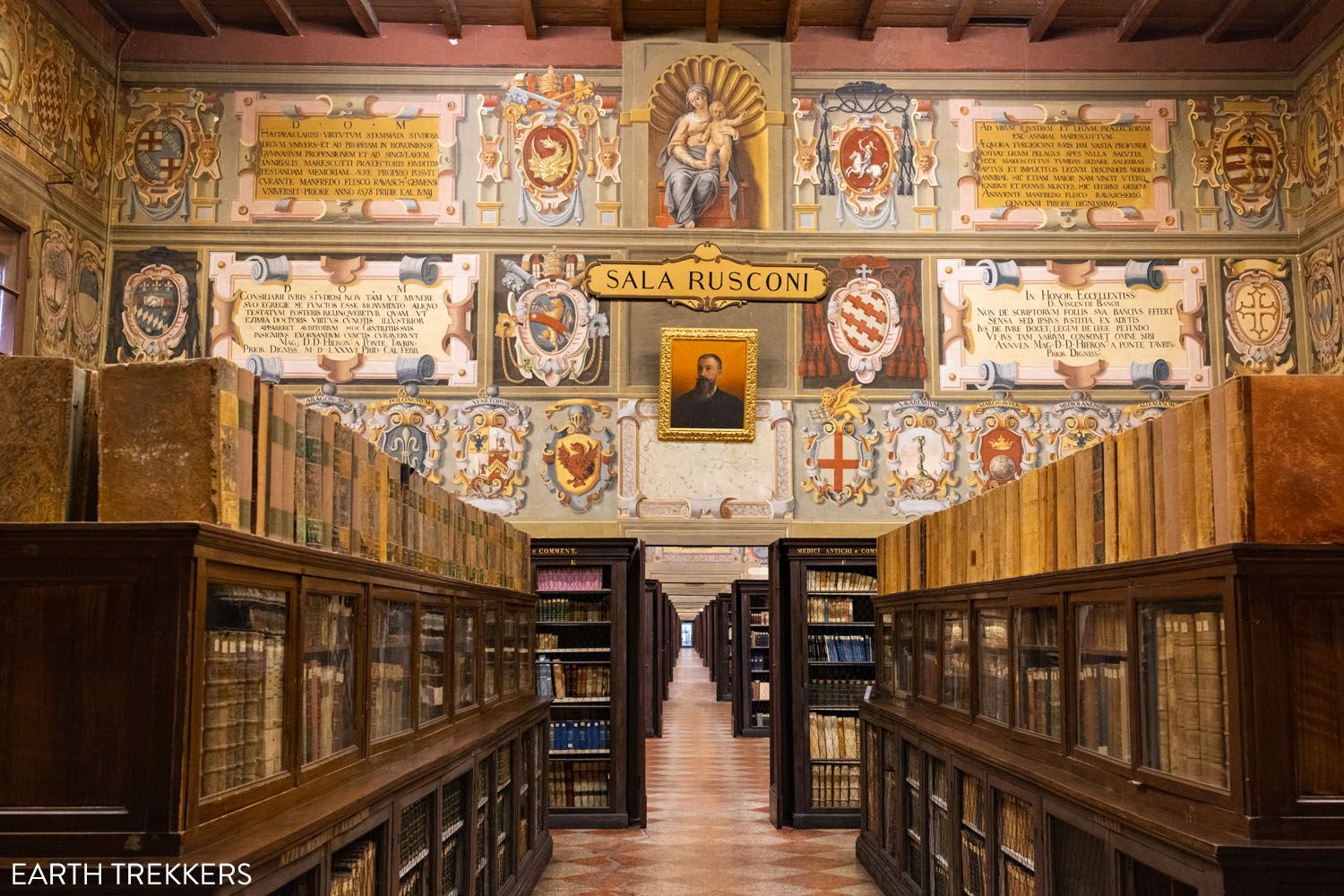
The view into the library from the Stabat Mater Room
5:00 pm: Cooking Class or Food Tour
Spend the afternoon and evening taking a cooking class or a food tour of Bologna.
We took this cooking class. You’ll learn how to make a spritz and then you’ll make your own tagliatelle pasta, which you will enjoy with freshly made ragu sauce (made by the staff). This laid-back cooking class is lots of fun and well worth it if you want to learn how to make homemade pasta.
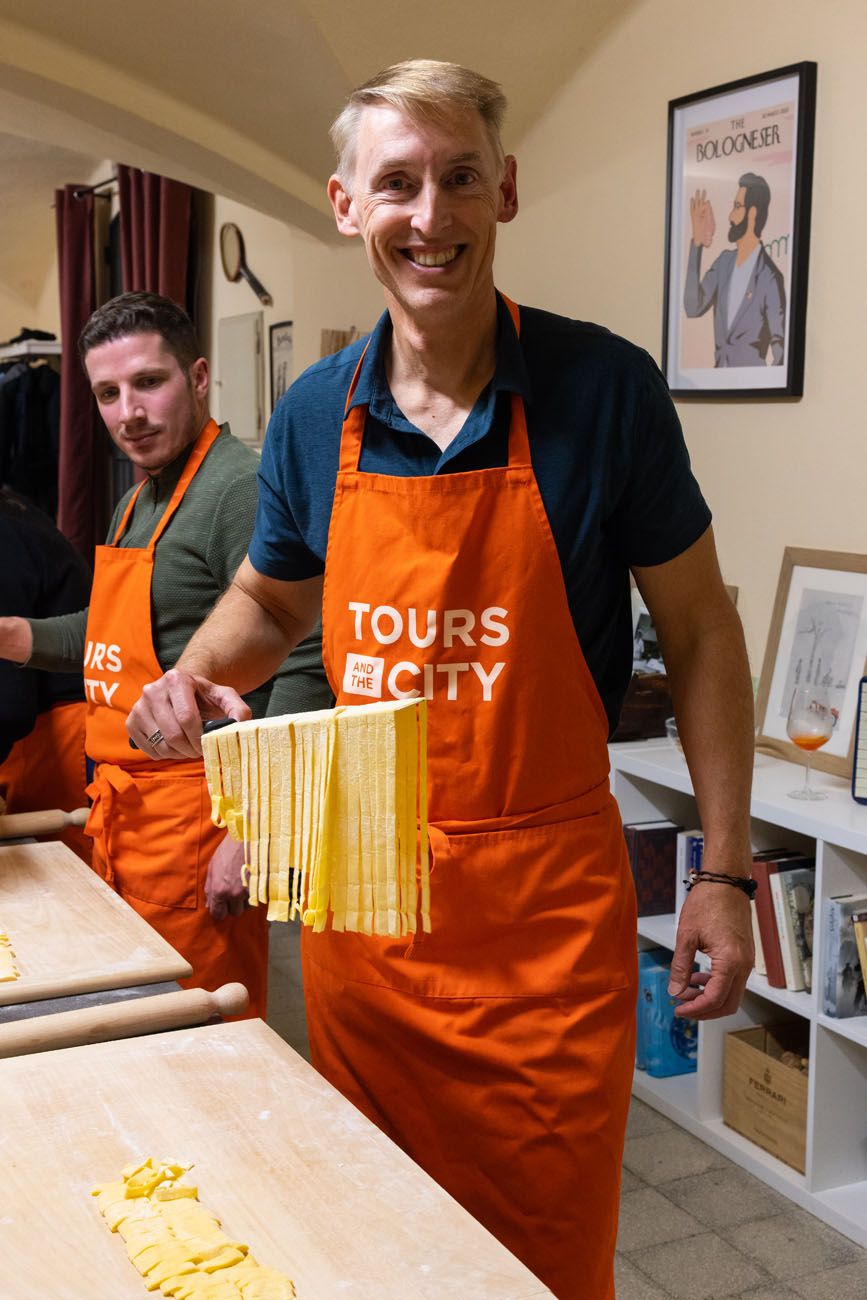
There are also quite a few food tours in Bologna. Many start in the afternoon, although some are offered at lunch, so if you decide to take one of those, you will have to adjust this itinerary.
This food tour has start times of 4 pm and 5 pm and gets near perfect reviews on GetYourGuide.
Food Tours & Cooking Classes in Bologna
2 Days in Bologna Itinerary
For your first day in Bologna, follow the itinerary above.
With a second day in Bologna, you can either explore more of the city sights or take a day trip to Parma, Modena, and/or the luxury car manufacturers. Staying in the city is perfect for those who want to visit a few museums or those looking to take another cooking class or food tour of the city, if you didn’t do that yesterday.
Option #1: A Second Day in Bologna
If you’d rather spend your second day exploring more of the city, here’s how we’d structure it.
10:45 am: Bologna Cathedral & a Morning Wander
From Piazza Maggiore, walk down Via dell’Indipendenza to the Bologna Cathedral (Cattedrale Metropolitana di San Pietro). The baroque interior is worth a quick stop. It’s free to enter and far less crowded than San Petronio. If the bell tower is open (Saturdays and some Sundays from around 2:00 pm), note it for later in the day.
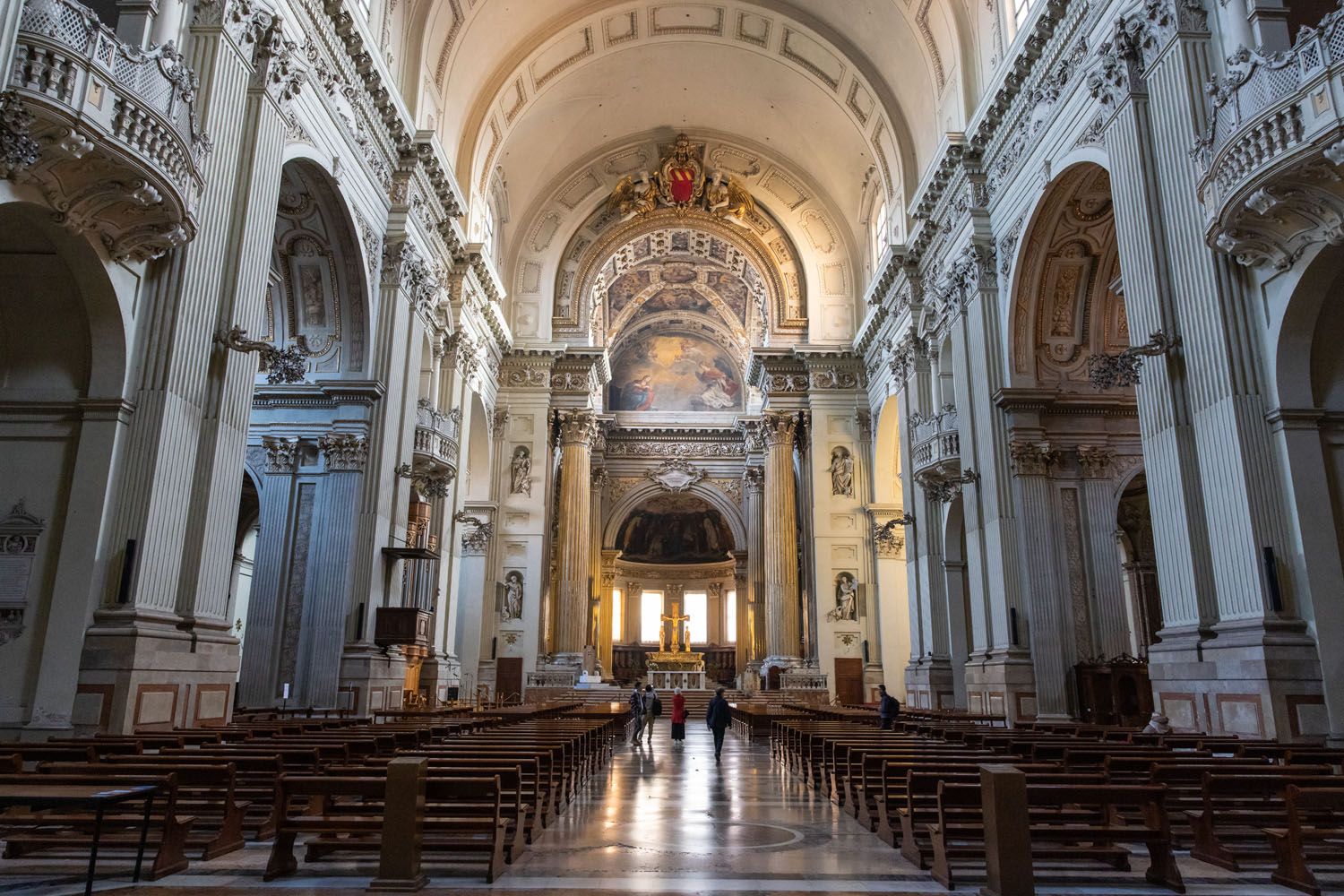
Inside the Bologna Cathedral
After the cathedral, give yourself time to wander without an agenda. Head back toward the Quadrilatero and explore the streets you might have rushed through on Day 1. Duck into a wine shop or linger over a coffee.
10:30/11:30 am: Food Tour
A food tour is the best introduction to Bologna’s extraordinary food culture — a local guide handles all the decisions, takes you off the beaten path, and makes sure you taste everything from fresh tagliatelle and mortadella to aged Parmigiano and local Lambrusco.
This is the anchor of your second day. We recommend booking either the 10:30 am food tour (3 hours, finishing around 1:30 pm or the 11:30 am food tour (2 hours, finishes around 1:30 pm). Both wrap up at roughly the same time, and lunch is taken care of. Either way, you’ll finish well-fed and ready for an afternoon of exploring.
If you took a cooking class on Day 1, this is your chance to do the food tour instead, or vice versa. Both are worth doing if you have the time.
Afternoon: Choose Your Own Adventure
With a satisfied stomach and the rest of the afternoon ahead, you have two good options:
Option A — Walk to the Sanctuary of San Luca
The Portico di San Luca is the longest covered walkway in the world, stretching 3.8 kilometers with 666 arches up to the Sanctuary of the Madonna di San Luca.
The full walk out and back is a 3-to-4 hour commitment. In our opinion, the sanctuary itself is pleasant but not remarkable, and the views from the hilltop are more modest than you’d expect. We’d recommend this for anyone who wants the exercise and the experience of walking the portico, or those who would have FOMO leaving Bologna without doing it.
If you don’t want to walk the full route, the San Luca Express tourist train departs from Piazza Maggiore and is a good alternative.
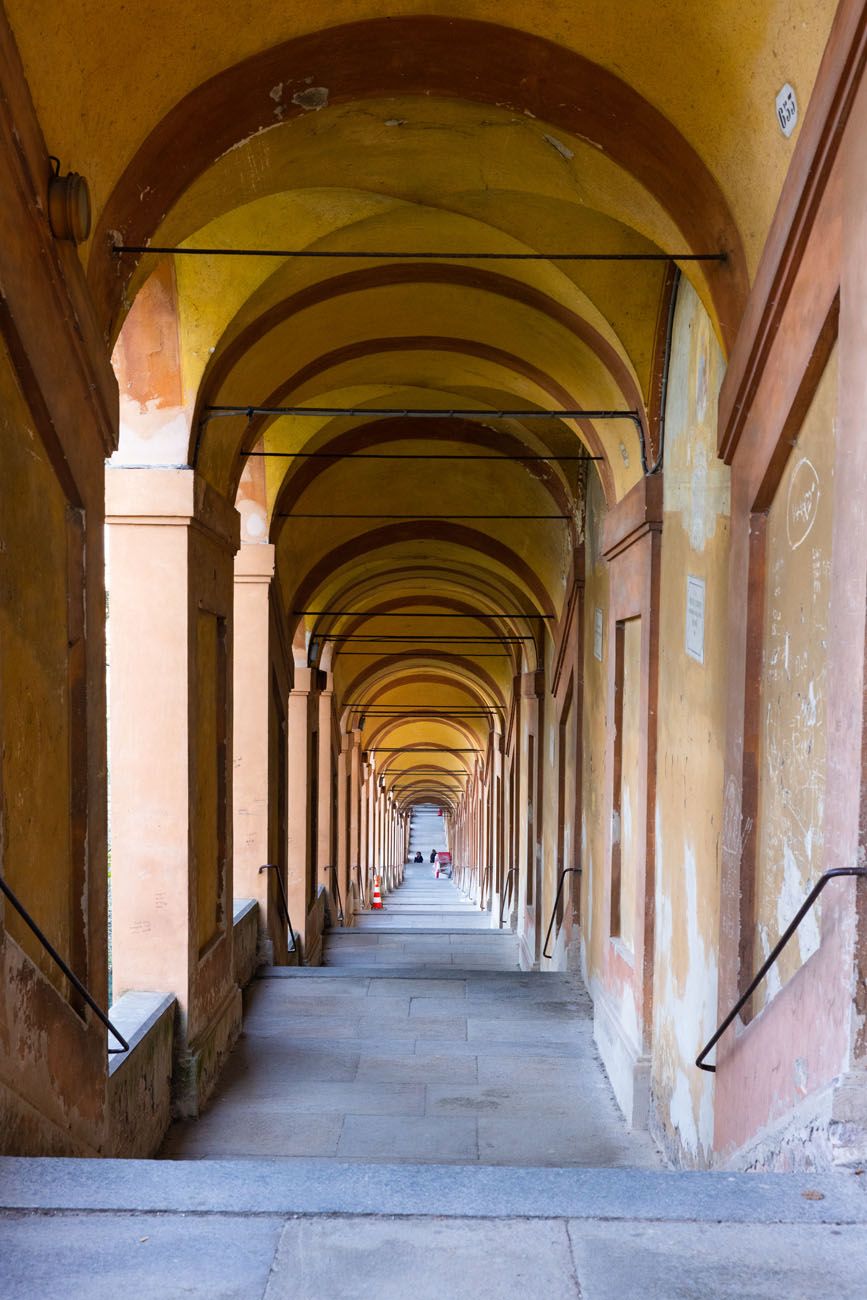
Portico di San Luca
Option B — Visit a Museum
If culture is more your speed, Bologna has a handful of worthwhile museums.
The Archiginnasio (if you didn’t visit on Day 1) is our top pick. This 17th-century Anatomical Theater is one of the most unusual rooms in Italy and costs just a few euros to enter.
The National Art Gallery of Bologna (Pinacoteca Nazionale) houses a strong collection of Emilian paintings from the 13th to 18th century. MAMbo (Museo d’Arte Moderna di Bologna) is the city’s modern art museum, housed in a former bread bakery, and worth an afternoon for contemporary art lovers.
Evening: Dinner & Wine
End your second day the way Bologna deserves, with a long, unhurried dinner and a glass or two of wine. A few of our favorites:
Marsalino is our top pick for pasta. The Bolognese here was the best we had in the city. It’s small and fills up quickly, so make a reservation in advance.
The Gallery Pizzart Food & Drink is one of the most creative pizza restaurants we’ve ever eaten at. If you didn’t go on Day 1, this is a great option for something a little different.
Zerocinquantuno on Via Pescherie Vecchie is perfect if you want to end the day back in the Quadrilatero atmosphere. Think meat and cheese boards, good wine, and a lively crowd.
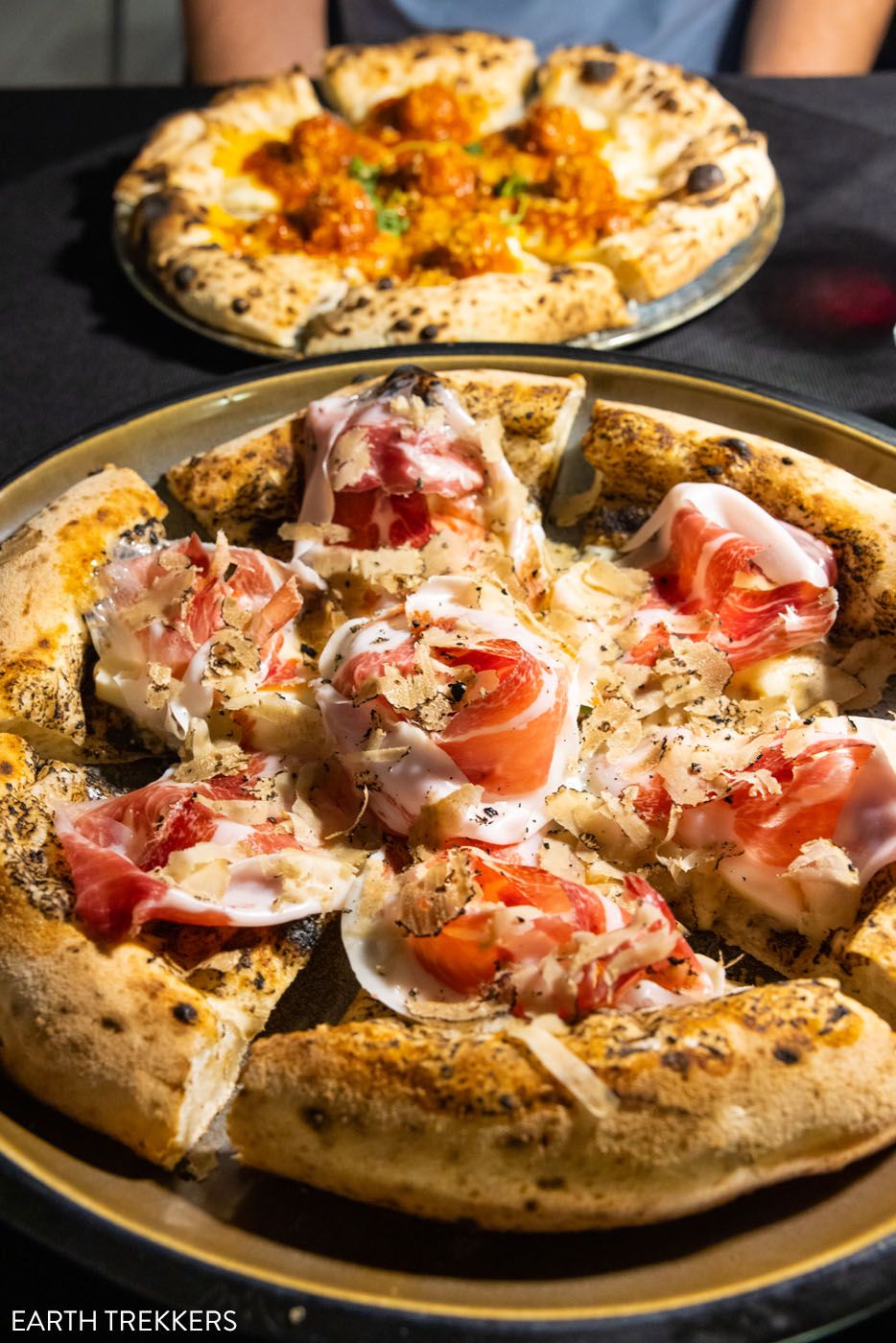
The Gallery Pizzart
Option #2: A Day Trip from Bologna
Of all the questions we get from readers planning trips to Italy, and we hear from travelers almost every day, some of the most enthusiastic are from people who have built their entire Bologna visit around the day trips. We understand why.
The combination of world-famous supercar museums, Parmigiano Reggiano factories, and balsamic vinegar producers in the surrounding Emilia-Romagna countryside is unlike anything else you can do in Italy. If you’re a car enthusiast or a serious foodie, this day trip alone may be reason enough to add Bologna to your itinerary.
There are three popular options, all of which can be done independently with a rental car or on an organized tour:
- Tour the luxury car museums — Ferrari, Lamborghini, Pagani, and Ducati all have museums within an hour of Bologna
- Visit a Parmigiano Reggiano cheese factory
- Taste traditional balsamic vinegar in Modena
These can be done independently or on a tour. If you plan to go independently, we recommend renting a car. Public transportation to most of these museums and factories is either very limited or impractical. If you’d prefer not to drive, several well-organized tours handle all transportation from Bologna.
Luxury Car Museums
We spent a full day touring Lamborghini, Pagani, and Ferrari and it was one of the main reasons we visited Bologna in the first place. It took us about 6 hours in total, including driving time to and from the city. A few honest takeaways before you plan your day:
By the time we reached Ferrari (our third museum), the visits were starting to feel repetitive. If you’re a true car enthusiast, a full day across all three is absolutely worth it. If you’re more casually interested, picking one or two museums — ideally Pagani and Ferrari — gives you the highlights without the fatigue.
If you don’t have a car, this small group tour includes Ferrari, Lamborghini, and Pagani, plus lunch.
Lamborghini
We started at Lamborghini, which has a rather small museum. On display are cars that were produced over the past several decades. There’s not much information on display about each car and a visit here is more about seeing the cars and taking a few selfies with them. You have the option to take a tour to see the production line, but this is best reserved in advance.
Get more information, pricing, hours, and the link to make a tour reservation on the official website.
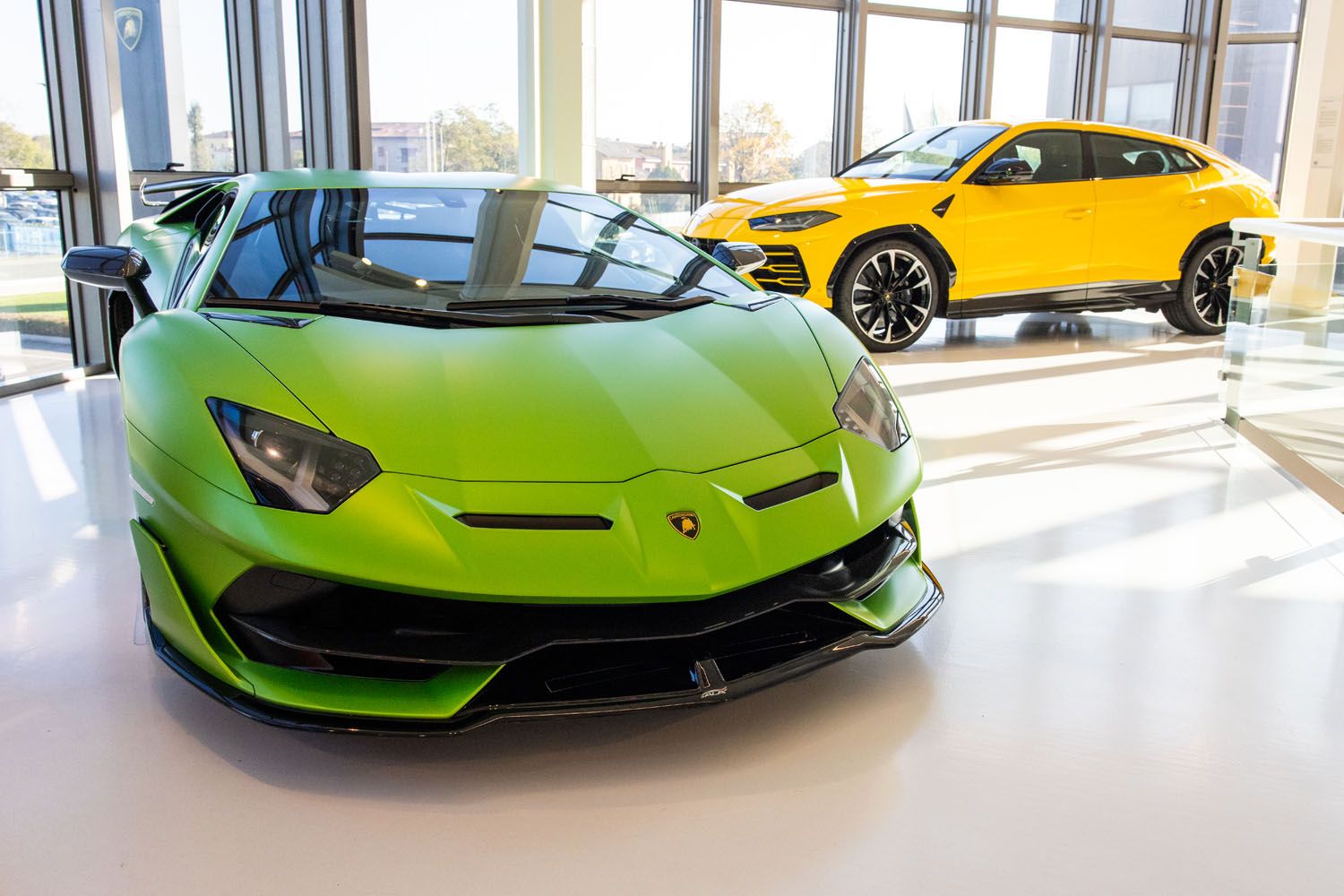
Lamborghini Museum
Horacio Pagani Museum
The Horacio Pagani Museum was the second car manufacturer we visited and it was our favorite. Pagani is more of a boutique luxury car manufacturer, compared to Ferrari or Lamborghini. The museum is very small, with just a few cars on display, but there are a lot of exhibits around the room that tell the history of Pagani and why each car is unique.
If you only have time for one museum, this is the one we’d choose. Parking was easy and the crowds were minimal even in November. Get pricing, hours, and schedule your factory tour on the official website.
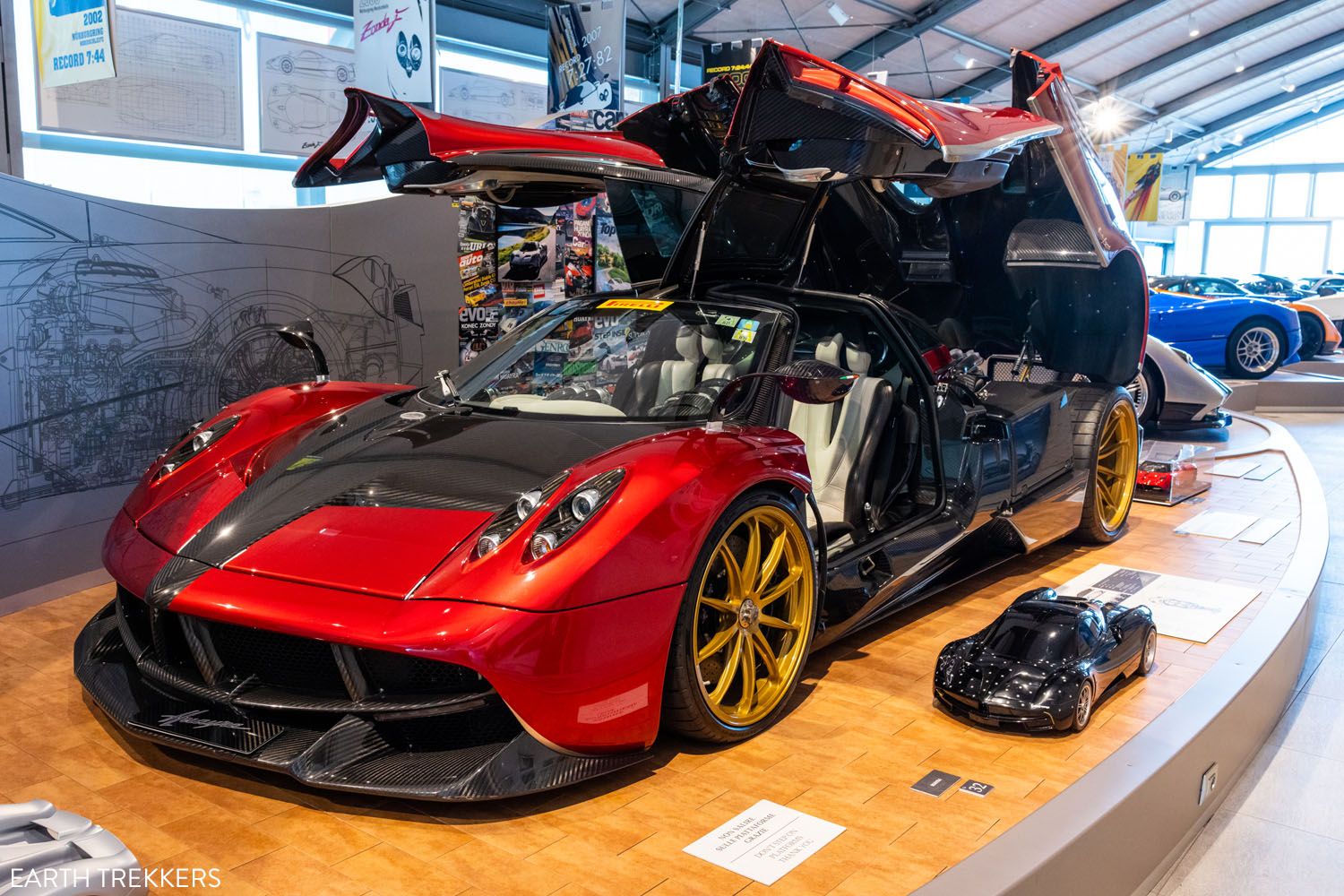
Pagani Museum
Ferrari Maranello
Ferrari is the biggest, busiest museum we visited. The entry fee is the highest of the three museums we visited, but the museum is a lot larger with many displays about the Ferrari brand, history, and facts about the cars on display. Taking a factory tour here would be very interesting.
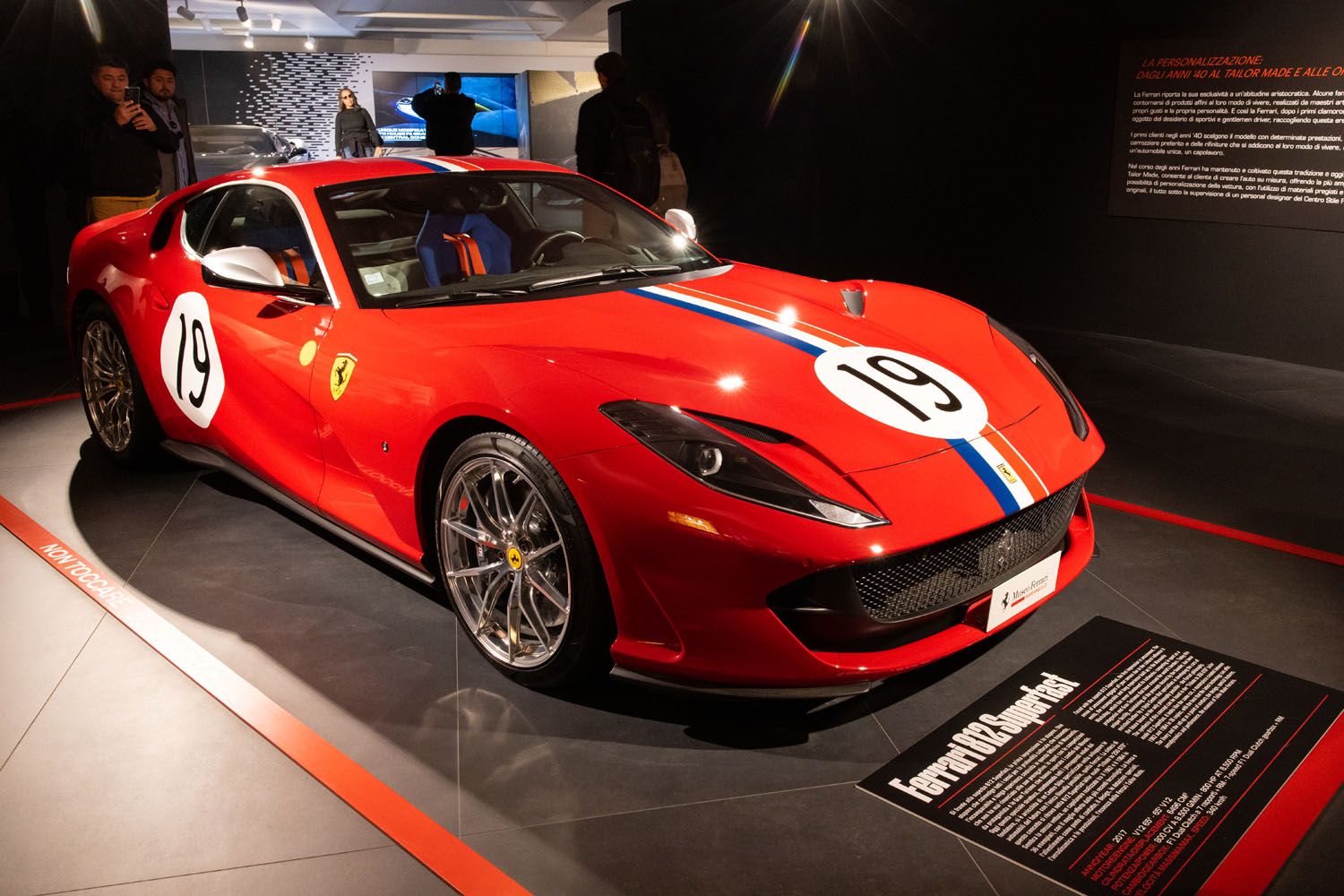
There are also private companies throughout the town that offer rides in Ferrari cars, if you like the idea of riding in one or driving one.
Parking can be challenging even in the off-season; we circled the lots for 15 minutes on a quiet November day. A factory tour here would be fascinating, but slots are very limited and should be booked well in advance.
Get more information on the Ferrari website.
Museo Ducati
Ducati produces high end motorcycles. The museum is located just outside of Bologna, making it easy to add on to the car museums already listed. Learn more on the official website.
Tours of the Luxury Car Museums
If you don’t have a car, this small group tour includes Ferrari, Lamborghini, and Pagani, plus lunch.
Parmesan Cheese Factories & Balsamic Vinegar Tastings
A Parmigiano Reggiano factory tour may be even more popular than the car museums. Watching the wheels of cheese being made, aged, and tested, and tasting several varieties at the end, is a genuinely memorable experience that gives you a completely different appreciation for one of Italy’s most iconic ingredients.
Bertinelli is located right outside of Parma (about an hour and a half drive from Bologna). They have a restaurant, offer guided tours of the factory, and even have an inn where you can spend the night.
Caseificio Bio Reggiani is closer to Bologna (about an hour drive) and near the Pagani and Lamborghini Museums. They also offer guided tours of their cheese factory.
Modena is where balsamic vinegar is produced and taking a day trip to Modena to tour a balsamic vinegar factory is also an option.
Day Trips from Bologna
Best Time to Visit Bologna
We visited Bologna in November and loved it. Crowds were low, the pace was relaxed, and midday was pleasant for walking. That said, the cold mornings, short days, and early sunsets are real trade-offs worth knowing about.
Our top recommendation is mid-September through October, with warm days, thinning crowds, and long evenings. May and June are also excellent, with mild weather and a lively atmosphere. Summer (July and August) can be genuinely hot and humid in the Po Valley, so if you visit then, plan outdoor sightseeing for early morning and take advantage of the porticoes for shade. Winter is quiet and cold, aa good time to visit for seasoned travelers but not ideal for most first timers.
How to Get to Bologna
Bologna is one of the best-connected cities in Italy, sitting at the crossroads of the country’s high-speed rail network. For most visitors, the train is the easiest and most practical way to arrive.
By Train
Bologna Centrale is a major hub on Italy’s high-speed Frecciarossa network, with frequent daily connections from all the major cities. Florence is just 35 minutes away, making Bologna one of the most natural additions to a Tuscany-based itinerary. Venice is about 1 hour 20 minutes, Milan just over an hour, and Rome approximately 2 hours. Trains run frequently throughout the day and tickets can be booked on the Trenitalia website or app. We recommend booking in advance, especially in summer, to secure your preferred departure time and the best prices.
By Plane
Bologna Guglielmo Marconi Airport (BLQ) is located just 6 km from the city center. The fastest way into the city is the Marconi Express monorail, which connects the airport to Bologna Centrale station in under 8 minutes. A one-way ticket costs around €10. Taxis are also available and cost roughly €20-30 to the city center.
By Car
Bologna sits at the intersection of several major Italian highways, making it easy to reach by car from most directions. That said, driving in the city center is restricted. Most of the historic center is a ZTL (Zona Traffico Limitato), meaning only residents can drive there. If you’re arriving by car, park outside the ZTL and explore on foot. If you’re planning a day trip to the car museums or food factories, a rental car picked up from the airport or train station is the most practical option.
How to Get Around Bologna
Aside from the day trips, everything we listed in the Bologna itineraries are located within the city center, making it extremely easy to get around on foot. This is a very compact, flat city center and you will do less walking here than in a city like Venice, Rome, or Florence.
Where to Eat in Bologna
Bologna rewards every meal. Here are our top picks across different dining styles — for full details and more recommendations, see our 20 Best Things to Do in Bologna.
- Marsalino — our favorite restaurant in the city, best pasta and Bolognese we had. Reserve in advance.
- The Gallery Pizzart — the most creative pizza we’ve ever eaten. Don’t skip it.
- Zerocinquantuno — great wine bar on Via Pescherie Vecchie, perfect for a casual lunch or late dinner.
- Salumeria Simoni Laboratorio — the best charcuterie boards in the Quadrilatero.
- Medulla Vini — our favorite wine bar, staff go the extra mile to find you the right glass.
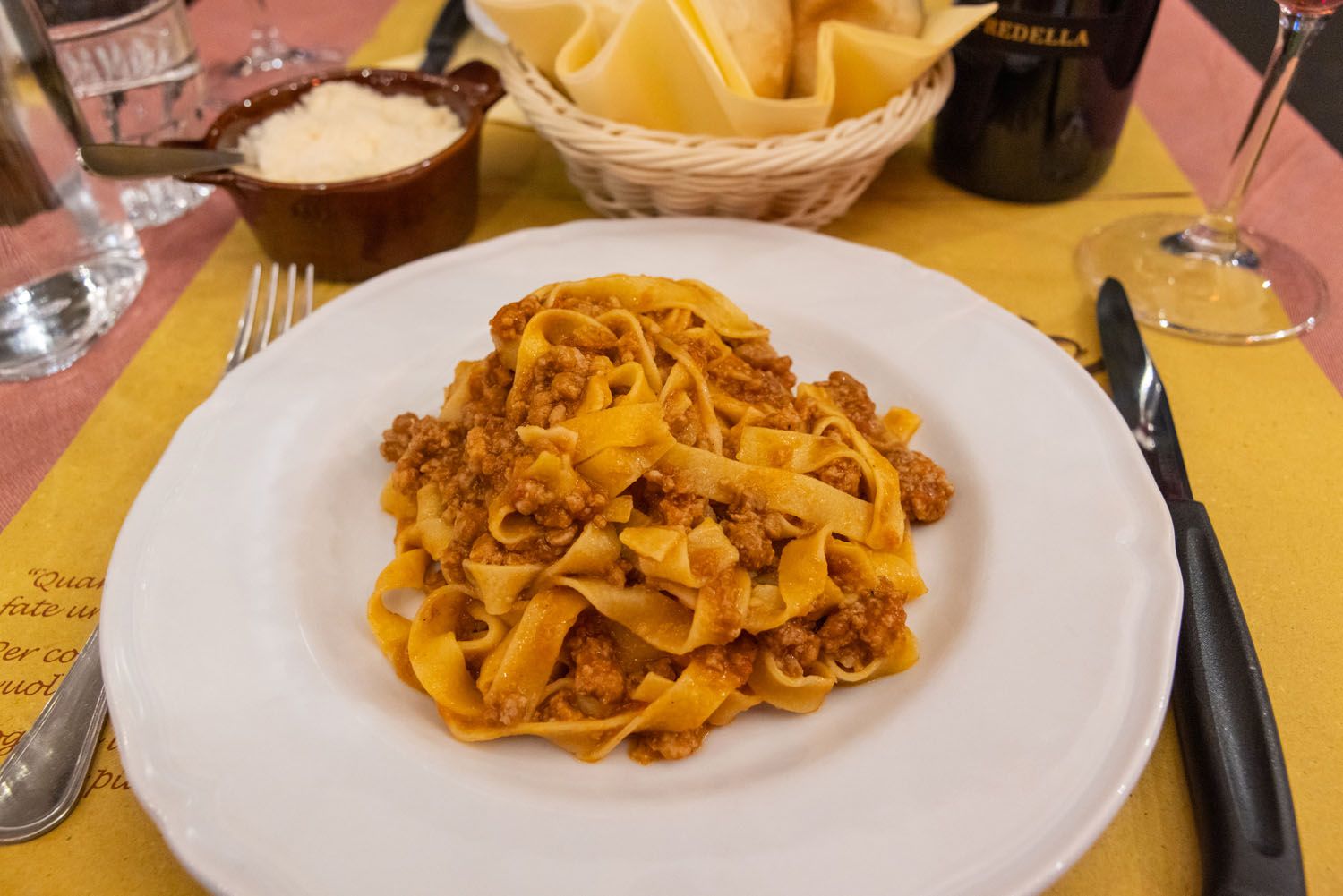
Tagliatelle al ragù
Where to Stay in Bologna
The best location is in or near the city center, as everything will be in walking distance of your hotel.
Highly rated mid-range hotels include Cuore di Bologna Suites (studio and two-bedroom apartments in the Quadrilatero), Hotel Cavour (double, triple, and quadruple rooms with an excellent location), Suites Indipendenza 58 (this property gets rave reviews and is located just outside of the city center), and Galliera Residence B&B (also gets fantastic reviews, is located between the city center and the train station).
If you prefer a two-bedroom apartment that can accommodate four people, take a look at Panorama Apartment, which has an excellent location in the city center.
For luxury travelers, the Grand Hotel Majestic gia’Baglioni is located on Via Indipendenza, right across the street from the Bologna Cathedral.
For budget travelers, Dopa Hostel is located within walking distance of the city center and gets great reviews by prior guests.
Frequently Asked Questions
Is Bologna worth visiting?
Yes, without hesitation. Bologna is one of Italy’s most underrated cities. The food alone is worth the trip, but add in the medieval architecture, the porticoes, and the genuinely local atmosphere, and Bologna stands apart from the more tourist-heavy cities on a standard Italy itinerary. We loved every minute of our three days here.
How many days do you need in Bologna?
One day is enough to see the highlights, but two days is our recommended minimum for first timers who want to experience the food scene properly and add a day trip. We spent three days and used every hour to the fullest. See our full breakdown in the How Many Days section above.
Is Bologna a good day trip from Florence?
Yes, at just 35 minutes by high-speed train, Bologna is one of the easiest and most rewarding day trips from Florence. You’ll have enough time to explore Piazza Maggiore, the Quadrilatero, and the Archiginnasio, and still squeeze in a cooking class or food tour in the afternoon. That said, if your schedule allows an overnight stay, we’d strongly recommend it, because Bologna rewards a slower pace. We cover this in detail in our Day Trips from Florence guide.
How do you get to Bologna?
Bologna is exceptionally well connected by Italy’s high-speed train network. Florence is just 35 minutes away, Venice is about 1 hour 20 minutes, Milan is just over an hour, and Rome is approximately 2 hours. Bologna Centrale station is a major hub with frequent connections throughout the day. If you’re flying, Bologna Guglielmo Marconi Airport is about 6 km from the city center, with the Marconi Express monorail connecting the airport to Bologna Centrale in under 8 minutes.
Is Bologna safe?
Yes. We felt completely safe throughout our visit, including in the evenings. Bologna is a lively university city with an active street life well into the night, which makes it feel energetic rather than unsafe after dark. As with any European city, keep an eye on your belongings in crowded areas like the Quadrilatero and Piazza Maggiore, but we had no concerns at any point during our stay.
Do you need a car in Bologna?
Not for the city itself. Bologna is compact, flat, and almost entirely walkable. The historic center puts virtually everything on this itinerary within easy reach on foot. However, if you’re planning a day trip to the car museums or a Parmigiano Reggiano factory, a rental car makes the logistics significantly easier. Public transportation to most of these destinations is limited or impractical, and having a car gives you the flexibility to combine multiple stops in one day the way we did.
More Information for Your Trip to Italy
For a full overview of planning a trip to Italy, including where to go, how long to spend, and what to know before you arrive, visit our Italy Travel Guide. If you’re building a longer Italy itinerary that includes Bologna, our 10 Days in Italy Itinerary features a Road Less Traveled route that takes you beyond the standard tourist trail — Bologna included.
For everything to see and do during your time in the city, our 20 Best Things to Do in Bologna covers all the highlights plus honest verdicts on what’s worth your time and what isn’t.
And if you’re combining Bologna with nearby destinations, we have detailed guides on Florence (35 minutes by train), Venice (1 hour 20 minutes away), and Tuscany — all natural pairings with a Bologna visit. If you’re considering Bologna as a day trip, our Day Trips from Florence guide covers exactly how to make it work.
If you have any questions about how to spend 1 to 2 days in Bologna, let us know in the comment section below.
Continue Exploring Italy
The Perfect Tuscany Itinerary for 3 Days, 5 Days & One Week
Pinterest Facebook Flipboard Planning a trip to Tuscany? This guide covers everything you need to build the perfect itinerary, whether you have 3 days, 5 days, or a full week. How long should you spend here? Where should you stay? Should you rent a car? What towns are worth visiting? These are all questions that […]
30 Best Things to Do in Florence, Italy (2026 Guide)
Florence is one of the most rewarding cities in Europe, and the best things to do in Florence range from climbing Brunelleschi’s iconic dome to watching the sunset from Piazzale Michelangelo. We know this firsthand, having visited Florence twice. Our first trip was a quick day and a half visit in July with our kids. […]
14 Day Italy Itinerary: Best Way to Spend Two Weeks in Italy
We have been to Italy six times, and this route — Rome, Pompeii, the Amalfi Coast, Florence, Tuscany, the Cinque Terre, and Venice — is the one we recommend above all others for a first visit. We’ve traveled every stretch of it firsthand and refined the planning advice in this post trip by trip. What […]
Best Things to Do in San Gimignano (Tips from Two Visits)
San Gimignano is famous for its medieval towers, and yes, you should climb one. But a great visit here goes beyond the main piazzas and the gelato line at Dondoli. On our first trip, we arrived by bus from Siena on a busy morning with our kids, climbed to the top of Torre Grossa, ate […]
Best Day Trips from Florence: 15 Picks for Every Type of Traveler
Florence is one of the best home bases for exploring Tuscany and nearby cities. The most popular day trips from Florence are conveniently accessible by train, with destinations like Pisa, Lucca, Bologna, Arezzo, and Siena just one to two hours away. Renting a car or joining a guided tour provides access to Tuscan hill towns, […]
Best Things to Do in Montepulciano: Wine Cellars & Beyond
Planning your list of things to do in Montepulciano? This hilltop town in southern Tuscany is one of the most atmospheric places in the region, known for its Renaissance architecture, sweeping views over the Val d’Orcia, and its famous Vino Nobile wine. Perched on a hilltop in Val d’Orcia, Montepulciano is compact but packed with […]
The Best Things to Do in Siena, Italy
Some cities in Italy overwhelm you with options. Siena does the opposite, and that’s exactly what we loved about it. The historic center is compact and entirely walkable, the main sights are clustered within easy reach of each other, and the city has a pace that makes it easy to slow down. The things to […]
Dolomites Travel Guide: How to Plan a Trip to the Dolomites
Dolomites Travel Guide The Dolomites are one of the most breathtaking mountain destinations in Europe. Jagged pinnacles of rock soar into the sky, mountain huts and cabins dot the green, rolling hills, cable cars whisk hikers and skiers to the highest mountain peaks, and hiking trails connect small hamlets and towns. We’ve spent 12 days […]
Planning to Hike the Cinque Terre? Here’s What to Know for 2026
The Cinque Terre is one of Italy’s most iconic coastal hikes, connecting five colorful villages by cliffside trails overlooking the Mediterranean. Here’s exactly how to hike the Cinque Terre from Riomaggiore to Monterosso, including trail closures, ticket costs, one-way rules, and what to expect in 2026. We hiked the entire route as a family. Our […]
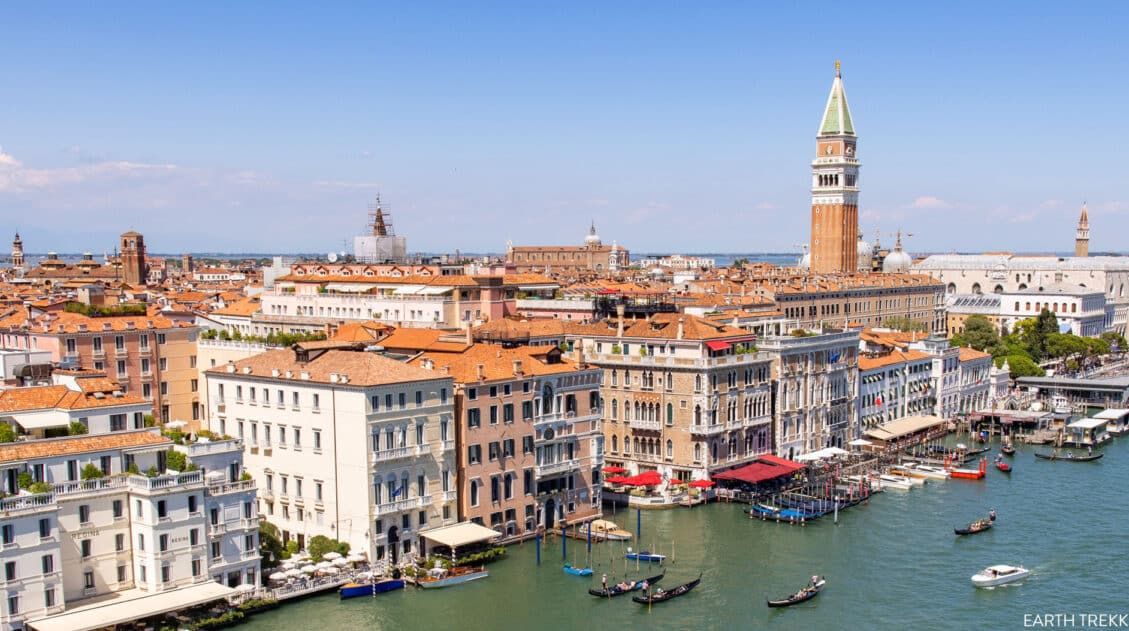
20 Best Things to Do in Venice, Italy (2026 Guide)
Discover 20 things to do in Venice, Italy, from strolling its canals and island-hopping to Murano and Burano, to visiting St. Mark’s Basilica and the Rialto Bridge. Venice is one of our favorite spots in Italy. With its winding canals and centuries-old architecture, it’s an easy place to fall in love with, and small enough […]
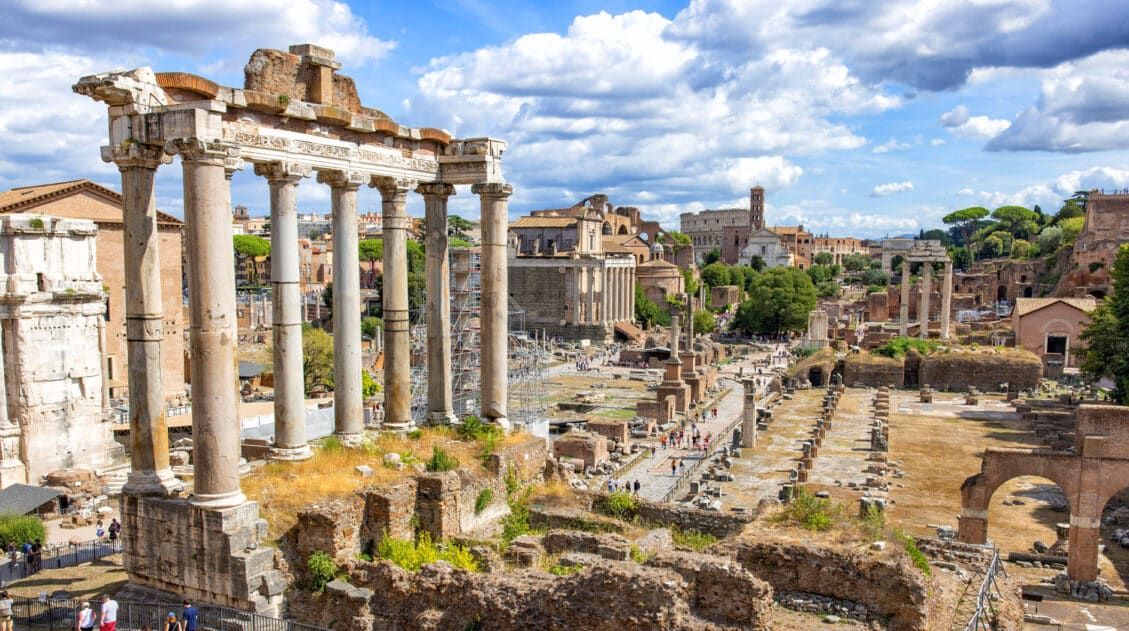
3 Days in Rome: The Ultimate Rome Itinerary
Visit the Colosseum, stroll through the historic heart of Rome, tour the Vatican Museums, climb to the top of the dome on St. Peters’ Basilica, cycle the Appian Way, have an aperitif with a spectacular view of Rome, dine on gelato and pizza by the slice…these are all things you can with 3 days in […]
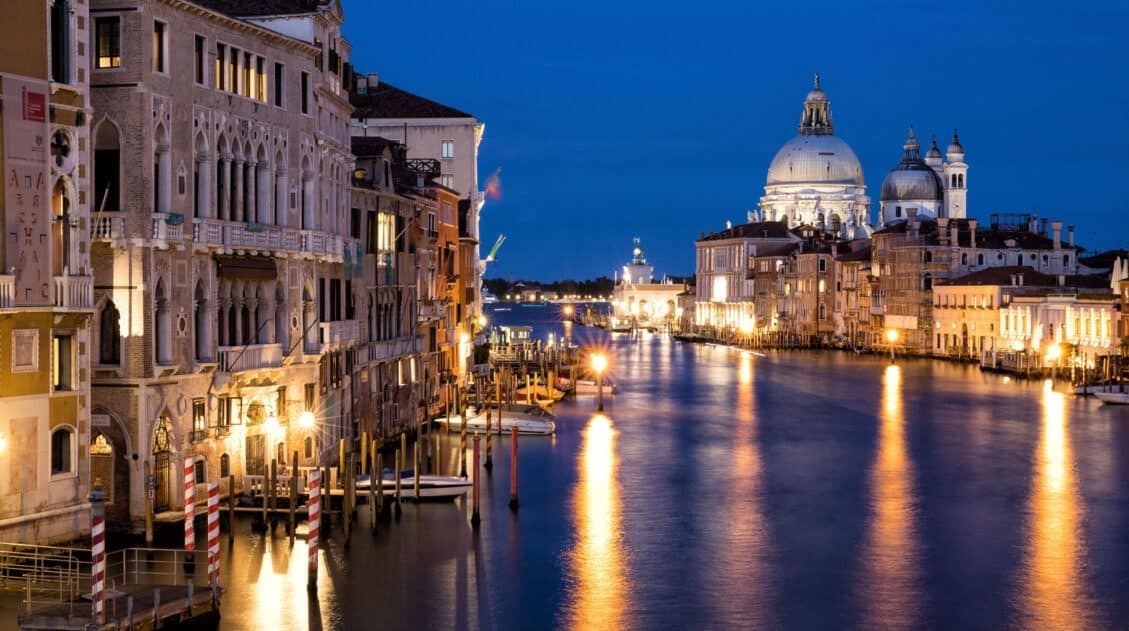
Italy Travel Guide: How to Plan a Trip to Italy
Italy Travel Guide From the ruins of ancient Rome to the hiking trails of the Dolomites, the trulli of Puglia to the hilltop villages of Tuscany, Italy is a country that rewards every kind of traveler, and keeps pulling you back. We’ve traveled to Italy six times, exploring the country from the lakes and mountains […]
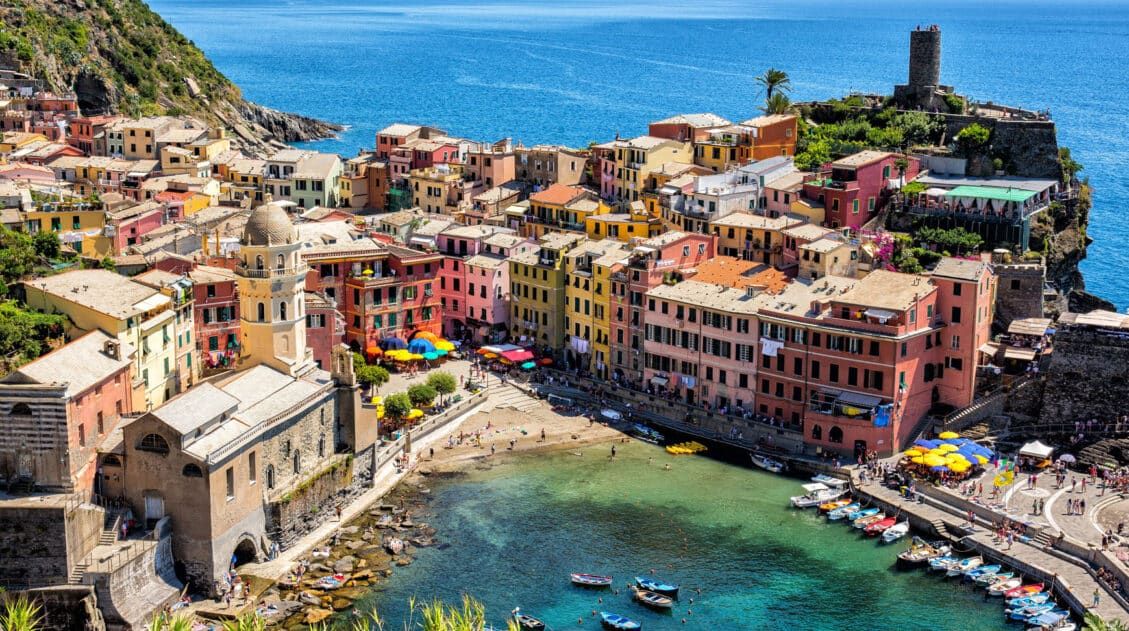
Europe Travel Itineraries: Find Your Perfect Trip to Europe
Europe Itineraries We’ve spent years exploring Europe, hiking the fjords of Norway, road tripping through Italy, island-hopping in Greece, and wandering the Christmas markets of Bavaria. Along the way, we’ve turned every trip into a detailed itinerary so you don’t have to start from scratch. Browse the guides below and find the one that fits […]


Comments 6