
Five national parks in 10 days? In California, it’s possible, and this road trip itinerary shows you exactly how to do it.
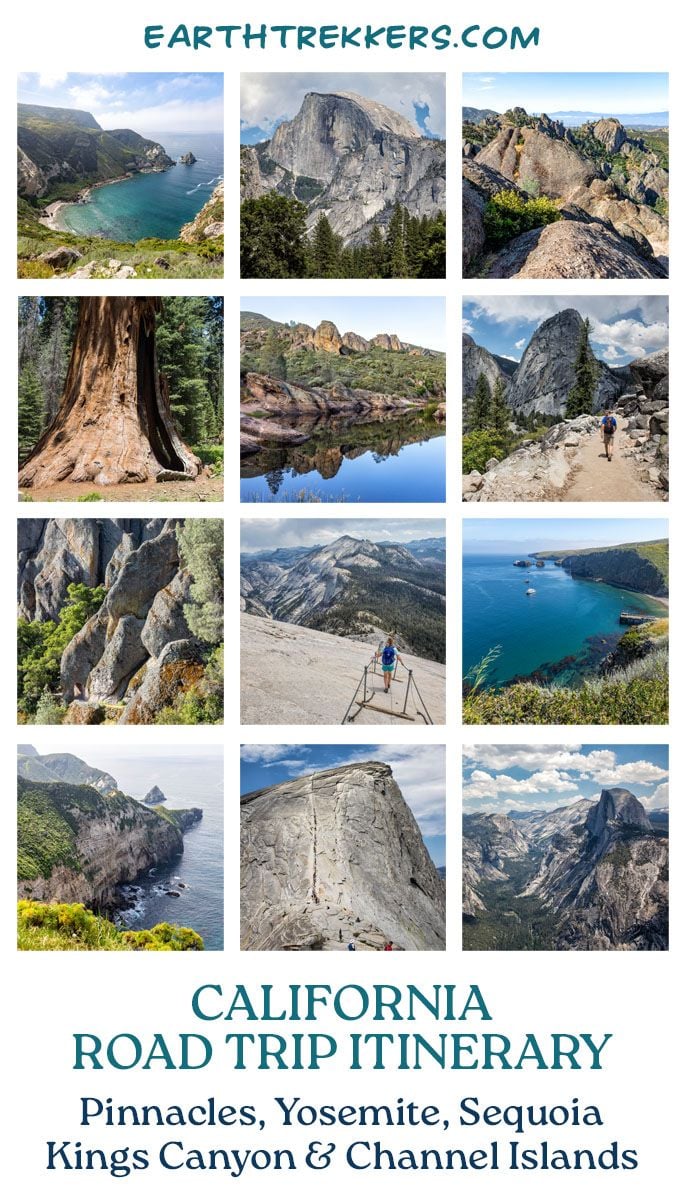
This 10-day California national parks itinerary takes you from the rock formations and caves of Pinnacles National Park to Yosemite’s towering granite cliffs and waterfalls, the giant sequoias of Kings Canyon and Sequoia, and the remote, windswept islands of Channel Islands National Park. Along the way, you’ll hike some spectacular trails, stand beneath the world’s largest trees, and have the chance to spot California condors, island foxes, and dolphins.
Starting in San Francisco, this road trip travels through central California, connecting five very different national parks in one efficient route. At the end, you have a choice: spend a day exploring Los Angeles or drive the legendary Pacific Coast Highway through Big Sur, returning to San Francisco.
This is a fast-paced itinerary designed for travelers who want to maximize their time in the national parks. There’s no time built in for San Francisco sightseeing, but if you have a few extra days, it’s an easy addition.
We’ve personally visited all five national parks on this itinerary, including multiple trips to Yosemite. While we haven’t driven this exact 10-day route in one trip, we’ve combined our firsthand experiences with current travel logistics to create a road trip that makes the most of your time.
Our Experiences in California: We’ve visited all five national parks featured in this itinerary, exploring their hiking trails, scenic drives, and top attractions. Our visit to Channel Islands National Park in 2026 brought our total to 56 of the 64 US national parks. We’ve also visited San Francisco and Los Angeles multiple times, and Tim and I have driven Highway 1 through Big Sur. This itinerary brings together our experiences from several California trips into one national-parks-focused road trip.
The Essentials
DURATION | 10 days
NATIONAL PARKS | Pinnacles, Yosemite, Kings Canyon, Sequoia, and Channel Islands
START | San Francisco International Airport (SFO)
FINISH | Los Angeles International Airport (LAX) or San Francisco International Airport (SFO)
HIGHLIGHTS | High Peaks Trail, Yosemite Valley, Glacier Point, General Grant Tree, General Sherman Tree, Santa Cruz Island sea cave kayaking, and Potato Harbor
BONUS EXPERIENCES | Highway 1 through Big Sur or a day in Los Angeles
BEST TIME TO GO | June through early October, with September into early October offering a good compromise between Sierra Nevada road access and temperatures at Pinnacles
TOTAL DRIVING | Approximately 1,200 to 1,500 miles
10-Day California National Parks Road Trip
Day 1: Arrive in Pinnacles National Park
Day 2: Pinnacles National Park, drive to Yosemite
Day 3: Yosemite National Park
Day 4: Yosemite National Park
Day 5: Yosemite National Park
Day 6: Kings Canyon & Sequoia National Parks
Day 7: Drive to Oxnard, optional coastal sights
Day 8: Channel Islands National Park
Day 9: Los Angeles or Big Sur to San Francisco
Day 10: Fly home from Los Angeles or San Francisco
Here is a map of the national parks, places to visit, where to stay, and the driving route.
How to Use This Map: Click the tab in the top left corner of the map to see a list of the points of interest and to turn layers on/off. Click the icons on the map to get more information about each point of interest.
To take this map with you, click the star next to the title of the map which adds it to your Google account. Next, within your Google Maps app, select ‘Saved’ and then select ‘Maps’. This map title will now appear in your list.
Why This Road Trip Works
Five national parks. Ten days. And an incredible variety of landscapes.
California is home to some of the most diverse national parks in the United States. In just 10 days, you can hike among volcanic spires, gaze up at Yosemite’s granite cliffs, walk beneath giant sequoia trees, and kayak through sea caves on an island off the Pacific Coast.
The route is designed to minimize unnecessary backtracking, moving from the San Francisco Bay Area through the Sierra Nevada and then south to the coast. Yosemite gets the most time, with two full days plus a morning, while Pinnacles, Kings Canyon, Sequoia, and Channel Islands can be explored on shorter visits.
The itinerary also gives you flexibility at the end. You can finish in Los Angeles, which involves less driving, or return to San Francisco via Highway 1 and Big Sur for a spectacular coastal finale.
It’s a busy 10 days, but for travelers who want to visit as many national parks as possible without sacrificing Yosemite’s major highlights, this is a fantastic California road trip.
Explore All 9 of California’s National Parks
We’ve visited all 9 national parks in California. To help you explore these incredible parks, we’ve put together three 10-day road trip itineraries that, together, cover every national park in the state.
- Northern California & Oregon: Our Lassen Volcanic, Crater Lake & Redwood Road Trip explores two of California’s northern national parks, plus Crater Lake in Oregon. Best from July through September.
- Central California: The 10-day itinerary in this guide visits Pinnacles, Yosemite, Kings Canyon, Sequoia, and Channel Islands National Parks. Best from June through early October.
- Southern California & the Desert: Our Las Vegas to San Diego Road Trip includes Death Valley and Joshua Tree, with options to visit other spectacular desert landscapes. Best from November through March.
Whether you’re planning your first California national park adventure or working toward visiting all nine, these itineraries will help you choose the best route for your trip.
10 Day California National Parks Itinerary
This itinerary can be done as a loop, starting and ending in San Francisco, or point-to-point, starting in San Francisco and ending in Los Angeles.
BEST TIME FOR THIS ROAD TRIP: The best time for this California national parks road trip is June through early October, when the high-elevation roads in Yosemite and Kings Canyon are generally open. We recommend September for the best overall combination of weather, road access, and opportunities for outdoor activities. July and August are also good months, but expect high temperatures in Pinnacles National Park and larger crowds in Yosemite.
RENTAL CAR: You will need a rental car for this road trip. A standard vehicle is sufficient and there is no need for a 4×4, unless you plan to make detours off of this itinerary.
CHANNEL ISLANDS RESERVATIONS: To visit Channel Islands National Park, you’ll need to reserve round-trip ferry transportation to Santa Cruz Island with Island Packers. If you plan to follow our itinerary and kayak through the sea caves, you’ll also need to book a guided kayaking tour with Channel Islands Adventure Company. We recommend securing these reservations before finalizing the rest of your road trip.
Day 1: Arrive in San Francisco or San Jose, Drive to Hollister
On the Road: 50 to 80 miles, 1 to 1.5 hours
Welcome to California! Today, fly into San Francisco or San Jose, pick up your rental car, and drive to Hollister, your home base for visiting Pinnacles National Park tomorrow.
You have two airports to choose from:
- San Francisco International Airport (SFO): The larger airport, with an extensive selection of domestic and international flights and rental cars. It’s a great starting point for this road trip, particularly if you plan to finish in San Francisco.
- San Jose Mineta International Airport (SJC): A smaller airport that is closer to Pinnacles National Park. We flew into San Jose when we visited Pinnacles, and it saves a little driving time on the first day.
We recommend comparing flights and rental car prices at both airports. San Jose is more convenient, but San Francisco may have better flight options, depending on where you’re coming from.
Here are the approximate driving distances and times to Hollister:
- San Francisco International Airport: 82 miles, 1 hour 30 minutes
- San Jose Mineta International Airport: 50 miles, 1 hour
Tonight, stay in Hollister, a small town located about 45 minutes from the east entrance of Pinnacles National Park. It has several hotels and restaurants, making it a convenient place to spend the night before exploring the park.
Where to Stay in Hollister
We stayed at the Holiday Inn Express & Suites Hollister and had a great experience. It’s a comfortable, modern hotel and our top pick for an overnight stay in Hollister.
Another option is the Fairfield Inn & Suites, also located in Hollister.
Where to Eat
We have two restaurant recommendations from our visit:
- La Catrina Mexican Grill: Right in downtown Hollister, this Mexican restaurant is an easy choice for dinner. We ate here on Cinco de Mayo and had a nice experience.
- The 19th Hole: Our favorite restaurant in the area. This western-style steakhouse looks like an old saloon and is located in Tres Pinos, a small town just south of Hollister. It’s worth the short detour if you arrive with enough time for dinner.
Get a good night’s sleep. Tomorrow, you’ll explore national park #1 of the road trip.

Day 2: Pinnacles National Park, Drive to Yosemite
On the Road: 184 miles, 4 hours to Mariposa; 230 miles, 5 hours to Yosemite Village
Today, visit your first national park of this road trip, Pinnacles National Park. Spend the morning hiking among its dramatic rock formations, exploring caves, and watching for California condors. In the afternoon, make the drive to Yosemite National Park.
Spend the Morning in Pinnacles National Park
Get an early start and drive 45 minutes from Hollister to the east entrance of Pinnacles National Park. We recommend arriving by 8 am, especially during the summer, when temperatures can soar and parking lots fill up.
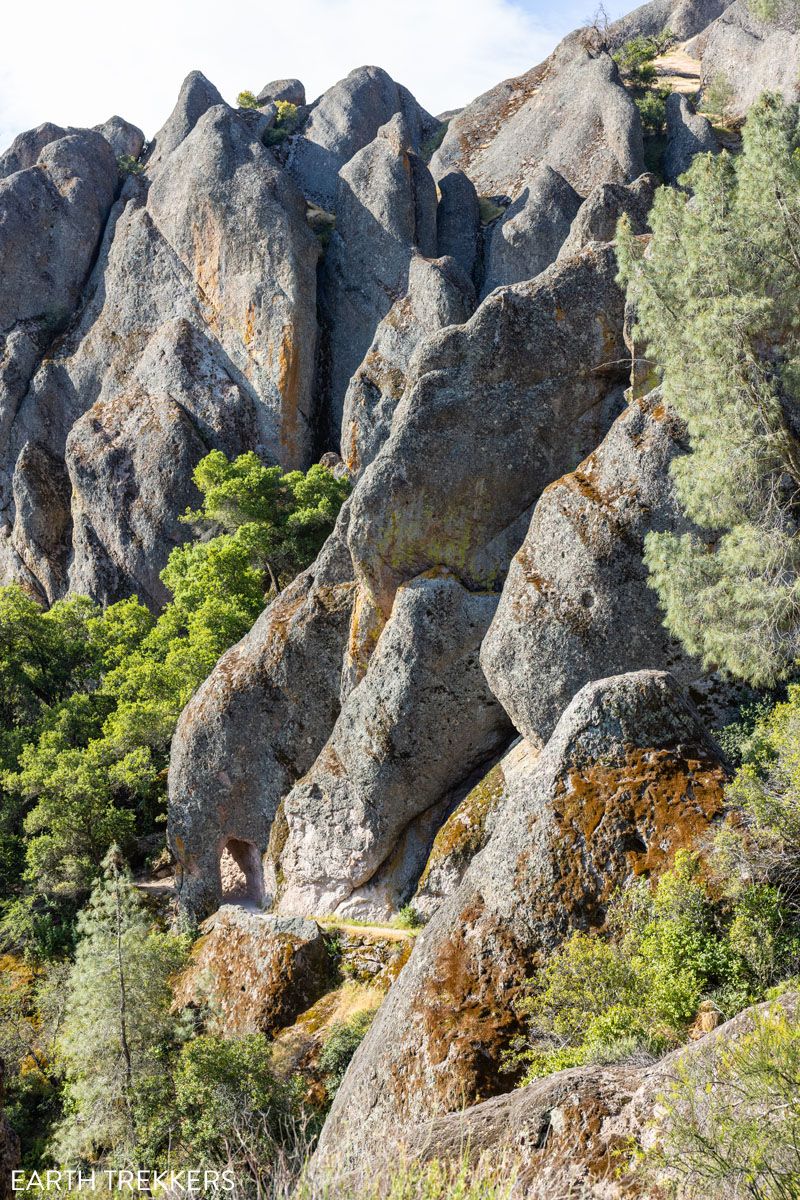
Our number one recommendation is to hike the High Peaks Trail Loop. This is one of our favorite national park hikes, and what makes it so special is that you get to see nearly all of Pinnacles’ highlights on one trail.
This 5.6-mile loop starts at the Bear Gulch Day Use Area. You’ll hike through the Bear Gulch Caves (when open), visit the beautiful Bear Gulch Reservoir, and climb into the High Peaks, where narrow trails and staircases carved into the rock wind between towering pinnacles. Along the way, you’ll have spectacular views across the park and a chance to spot California condors soaring overhead.
The hike takes 3 to 4.5 hours and is moderately strenuous, with some steep climbs and sections that may be challenging if you have a fear of heights. But if you’re up for the adventure, it’s an incredible experience and the best way to spend your time in Pinnacles.

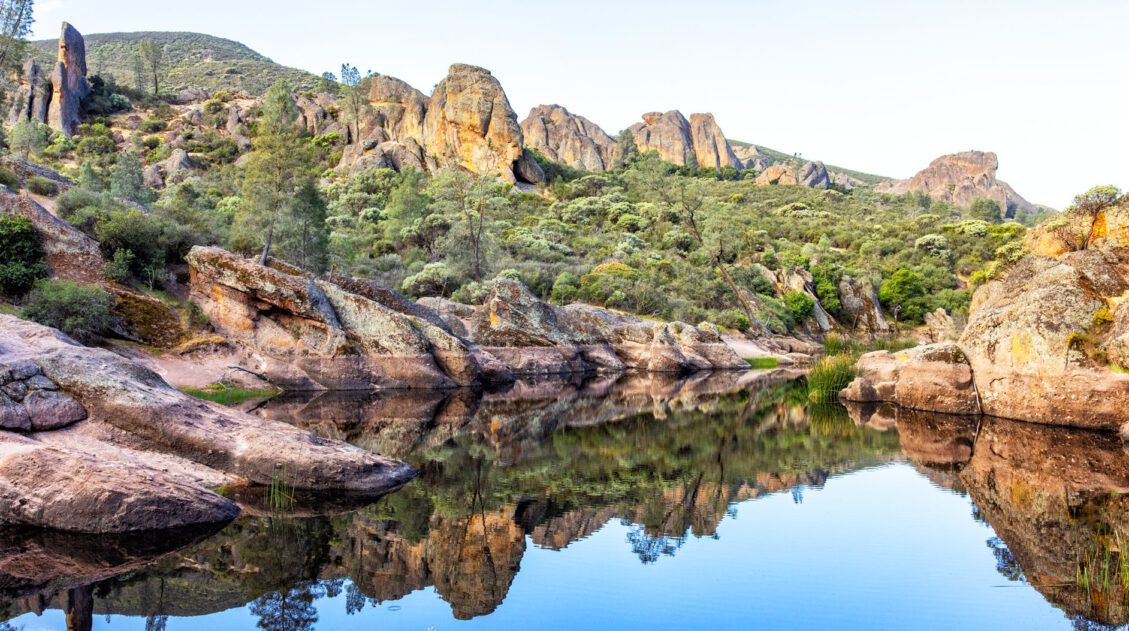
Bear Gulch Reservoir
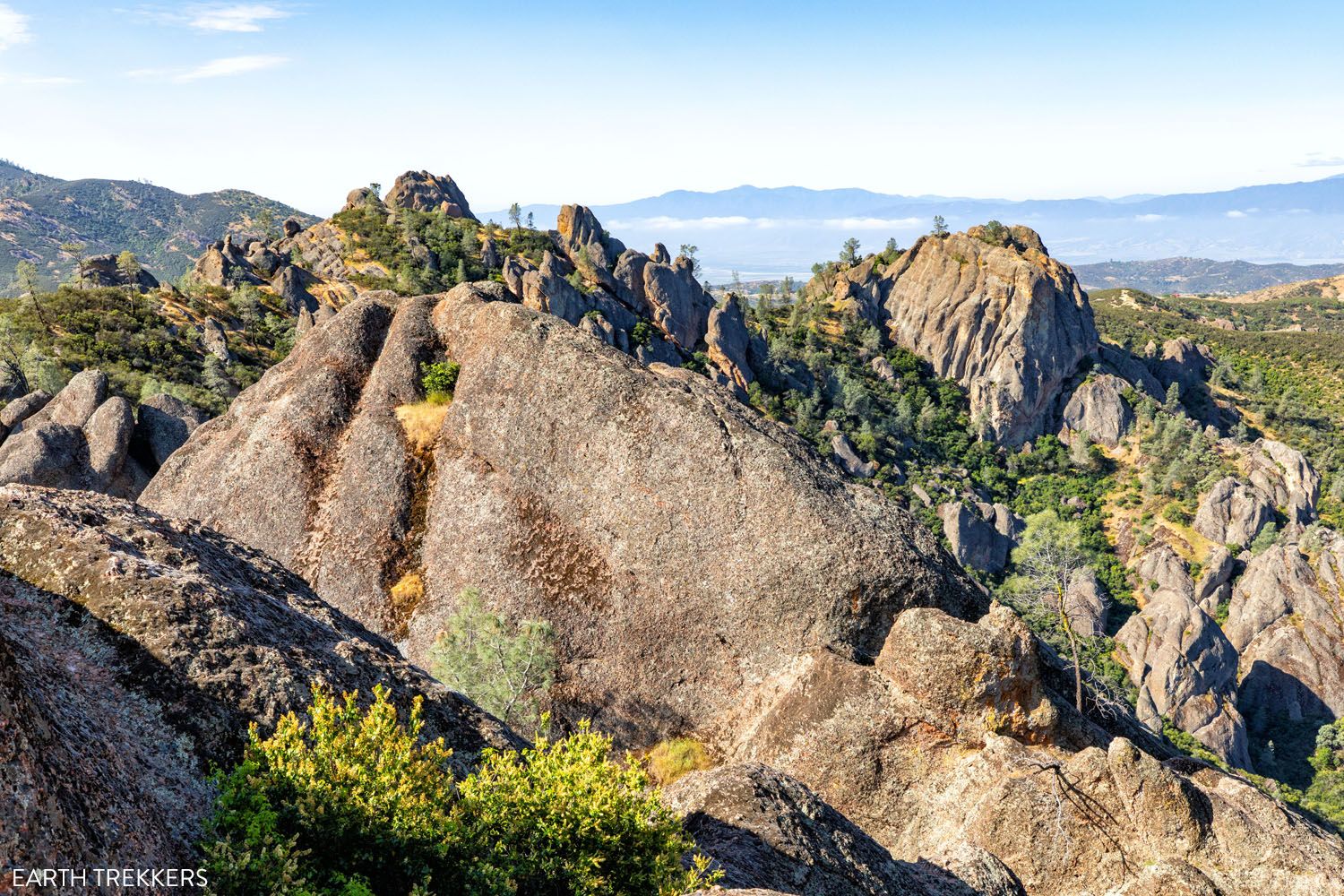
The view from the High Peaks Trail
For those who prefer less hiking, we recommend the shorter hike to Bear Gulch Reservoir. This 2-mile hike takes approximately 2 hours and includes the Bear Gulch Caves, when open. It’s a wonderful way to experience Pinnacles without committing to the longer High Peaks Trail.
Important: The lower section of Bear Gulch Cave is generally open from mid-July through mid-May. The cave closes for bat protection from mid-May through mid-July, and additional closures are possible throughout the year. If the caves are closed, take the Moses Spring Trail to the reservoir instead. Check the National Park Service website for current cave conditions before your visit.
Plan to finish your hike by midday or early afternoon. Have a picnic lunch, then begin the drive toward Yosemite.
Plan Your Trip to Pinnacles
Here are a few guides on Pinnacles National Park, covering the best things to do, how to plan your time, and our trail guide for the High Peaks Trail.
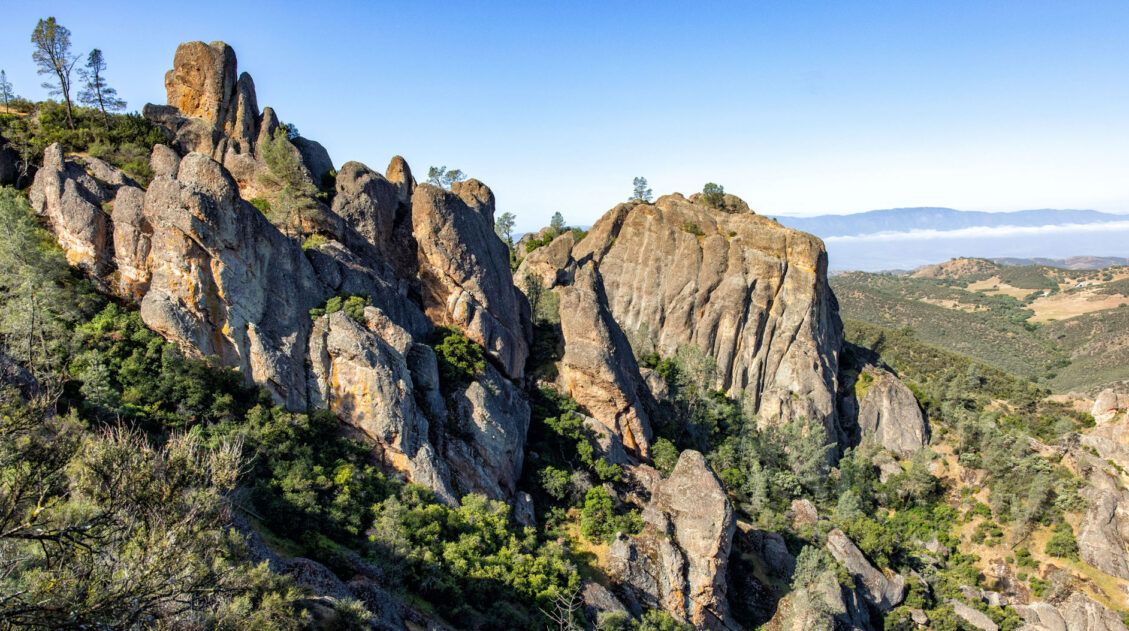
How to Plan the Perfect Pinnacles National Park Itinerary
When planning a trip to Pinnacles National Park, one of the biggest questions you may have is “how much time do I need?” We’re here to answer that question and help you plan the perfect Pinnacles National Park itinerary. For most people, a half to a full day is all the time you need to […]
Best of Pinnacles: 5 Thrilling Things to Do in Pinnacles National Park
Pinnacles National Park is one of the smallest and least visited national parks in the United States. The list of things to do in Pinnacles National Park is relatively short and unexpectedly awesome. We loved this park, with its thrilling, unique hiking trails, its gorgeous reservoir and caves, and a chance to spot California Condors. […]

High Peaks Trail Loop: The Best Hike in Pinnacles NP
The High Peaks Trail Loop in Pinnacles National Park is an underrated adventure in the US national parks. From start to finish, this hike offers nonstop excitement, with panoramic viewpoints, thrilling climbs up rock ladders and along ledges, and the chance to spot California Condors flying overhead. On this trail, hikers can also rock scramble […]
Drive to Yosemite National Park
In the afternoon, drive to Mariposa or Yosemite Valley, where you’ll spend the next three nights.
Mariposa is the more affordable and flexible option, with a good selection of hotels and restaurants. Yosemite Valley is more convenient for sightseeing, but accommodations are limited, expensive, and often sell out months in advance.
If you stay in Mariposa, expect about four hours of driving from Pinnacles. Continuing to Yosemite Village adds approximately another hour.
Where to Stay in Yosemite
Our recommendation is to stay inside Yosemite Valley if possible. You’ll be close to many of Yosemite’s top attractions, and you won’t have to spend time driving into the park and waiting at the entrance station each morning. With only a few days in Yosemite, this is a major advantage.
The downside is that accommodations inside the park book up very far in advance, particularly during the summer. If you can’t find lodging inside Yosemite, Mariposa is a good alternative.
Staying in Mariposa
On our most recent visit to Yosemite, we stayed in Mariposa because we hadn’t planned far enough in advance to secure lodging inside the national park.
We stayed at the Best Western Plus Yosemite Way Station Motel. It was a very basic hotel, nothing particularly special, but it was comfortable enough and worked well for our visit.
Other hotels in Mariposa to consider include:
- Mariposa Lodge: Comfortable, renovated rooms in downtown Mariposa, within walking distance of restaurants and shops.
- Mariposa Hotel Inn: A small, historic inn with individually decorated rooms, ideal for travelers who prefer a property with more character.
- 5th Street Inn: A small inn in downtown Mariposa with a variety of rooms and suites.
From Mariposa, it’s approximately a 1 hour and 15-minute drive to Yosemite Valley, not including delays at the park entrance. During busy summer months, those delays can be substantial (1 to 3 hours).
If you stay in Mariposa, plan to leave very early each morning to beat the crowds and find parking in Yosemite Valley. Our visit was in July. We left the hotel before sunrise, arriving in the park by 7 am, and we had no issues with wait times at the entrance booth or finding parking.
Staying Inside Yosemite National Park
For the most convenient experience, book a room or cabin in Yosemite Valley. The main options are:
- Yosemite Valley Lodge: Our top choice for its central location, comfortable rooms, and proximity to Yosemite Falls.
- Curry Village: A more rustic option with cabins and canvas tent cabins, located near several popular hiking trails.
- The Ahwahnee: Yosemite’s historic luxury hotel, with beautiful architecture and a spectacular setting.
Lodging reservations inside Yosemite can be made up to 366 days in advance, and we recommend booking as early as possible.
Yosemite Entrance Reservations: Yosemite did not require vehicle entrance reservations in 2026, but the policy can change from year to year. Check the National Park Service website for the latest requirements before your trip.
Tomorrow, you’ll spend your first full day in Yosemite National Park, arguably the main attraction of this entire road trip.

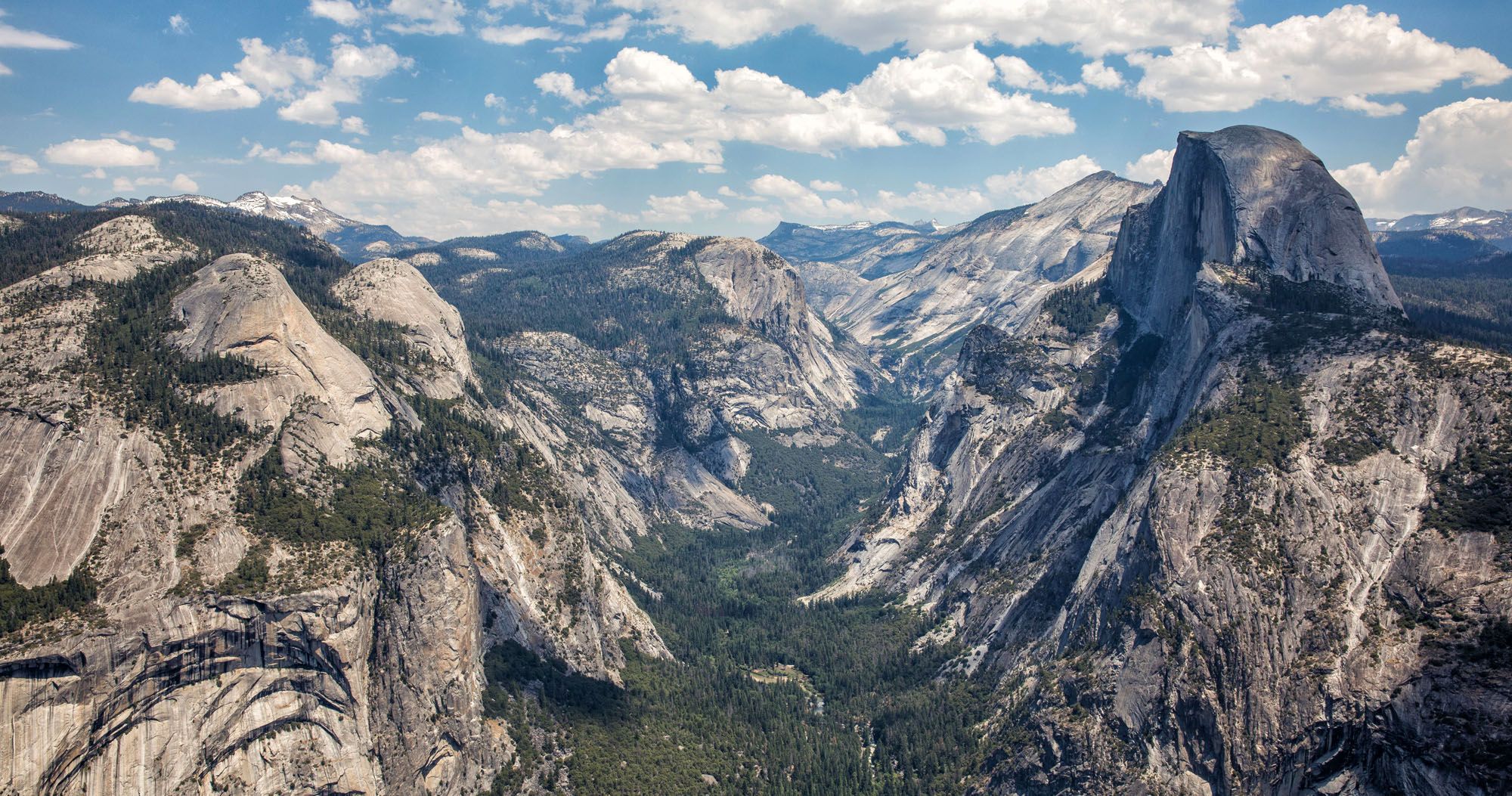
Half Dome in Yosemite National Park
Day 3: Explore Yosemite Valley
Today, spend your first full day in Yosemite National Park, exploring Yosemite Valley. This is the heart of Yosemite, where towering granite cliffs, waterfalls, and scenic viewpoints make it one of the most beautiful places in the United States.
We recommend starting early, especially if you’re staying outside the park. Once you find parking in Yosemite Valley, leave your car there and explore on foot or use the free park shuttle.
Spend the Day in Yosemite Valley
Start with a visit to Lower Yosemite Fall, one of Yosemite’s most famous waterfalls. The short, easy walk to its base offers spectacular views when the waterfall is flowing. From here, walk through Cook’s Meadow for more views of Yosemite Falls, Half Dome, and the surrounding granite cliffs.
Other highlights to include today are:
- El Capitan Meadow: One of the best places to appreciate the sheer size of El Capitan, the massive granite cliff that rises above Yosemite Valley.
- Sentinel Bridge: A favorite photography location, with a beautiful view of Half Dome and its reflection in the Merced River.
- Mirror Lake: An easy hike to a small seasonal lake with views of Half Dome and the surrounding cliffs.
- Ansel Adams Gallery: Located in Yosemite Village, this gallery showcases the work of Ansel Adams and other photographers. We visited during our most recent trip and really enjoyed seeing the photographs of Yosemite.
Have lunch at one of the restaurants in Yosemite Valley or bring a picnic. In the afternoon, continue sightseeing, take a longer walk along the Valley Loop Trail, or simply enjoy the views. Part of the magic of Yosemite is spending time in the valley, looking up at the enormous cliffs that surround you.
For avid hikers: Consider hiking to Upper Yosemite Falls and Yosemite Point. We did this on the first day of our most recent visit to Yosemite, and it was spectacular. This strenuous, 8.7-mile hike climbs approximately 3,700 feet from Yosemite Valley to Yosemite Point. Along the way, you’ll have close-up views of Upper Yosemite Fall, panoramic views of Yosemite Valley, and an incredible view of Half Dome from Yosemite Point.

Yosemite Falls
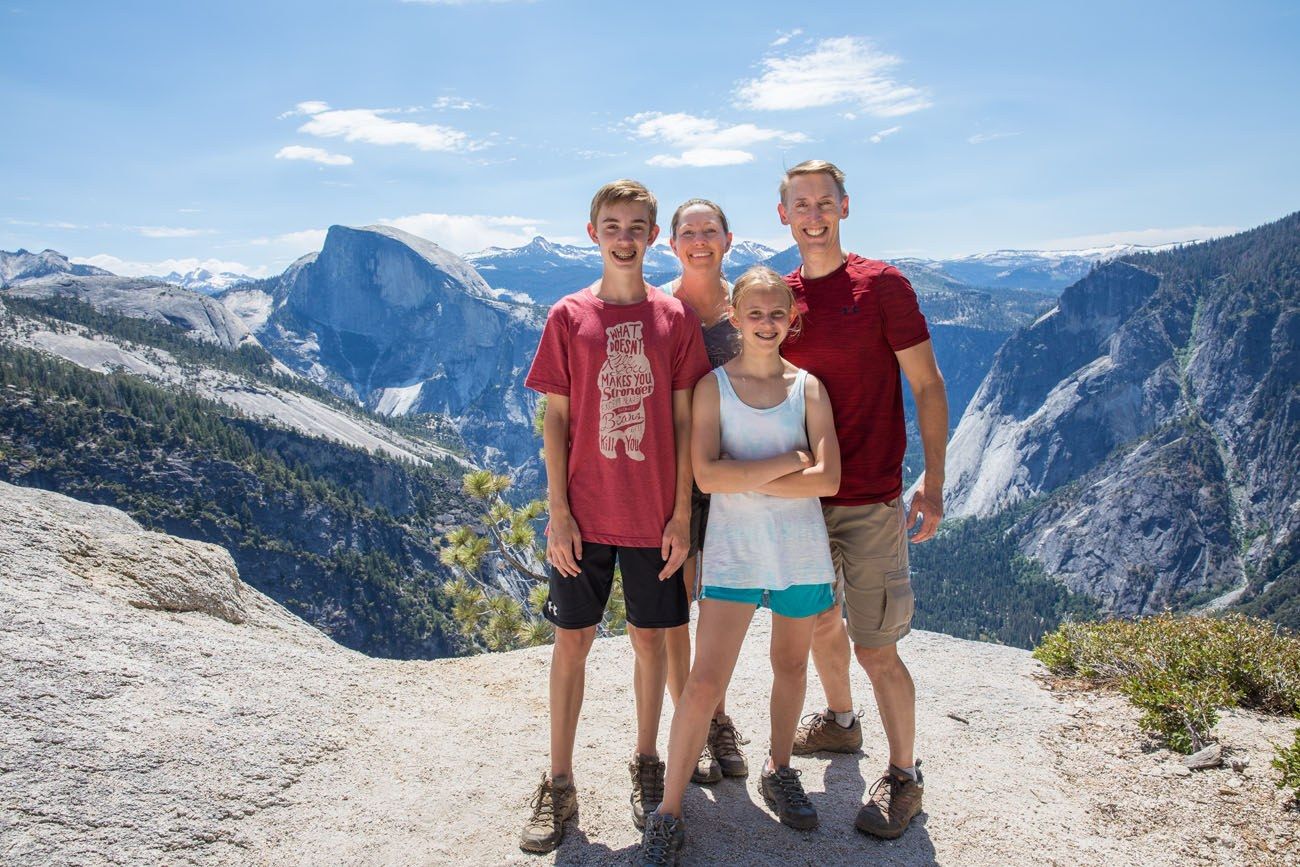
At Yosemite Point
It’s a challenging hike, taking roughly 6 to 8 hours, but one we highly recommend for experienced hikers. You’ll still have some time to explore Yosemite Valley in the afternoon, although you may want to keep things relatively relaxed after the hike.
Read our Upper Yosemite Falls and Yosemite Point Hiking Guide for trail details and photos.
Seasonal Note: Yosemite’s waterfalls are most impressive in spring and early summer. By August or September, Yosemite Falls can have very little water or be completely dry. The valley is still beautiful, but if waterfalls are a priority, an earlier summer visit is better.
Spend another night in Yosemite Valley or Mariposa.
Day 4: Yosemite National Park
Today, you have another full day in Yosemite National Park. We recommend choosing between hiking the Mist Trail to Vernal and Nevada Falls or driving Tioga Road into Yosemite’s high country.
If you are an avid hiker, we recommend hiking Half Dome. It is one of the toughest but most famous hikes in the US National Parks. We did it on the second day of our visit to Yosemite (our legs were a bit sore from hiking to Yosemite Point the day before) and it takes advance planning (you must have a permit that is awarded by lottery in the spring), but this is one of our all time favorite national parks experiences.
Option 1: Hike the Mist Trail to Vernal and Nevada Falls
The Mist Trail is one of Yosemite’s most popular hikes and for good reason. It takes you alongside two spectacular waterfalls, Vernal Fall and Nevada Fall, with beautiful views of Yosemite Valley and the surrounding mountains.
There are several ways to hike this trail, depending on how much time and energy you have.
For a shorter hike, walk to the Vernal Fall Footbridge. Continue to the top of Vernal Fall for a more challenging adventure, or hike all the way to Nevada Fall for the full experience. The longer hike is strenuous, covering roughly 7 miles or more, depending on your route.
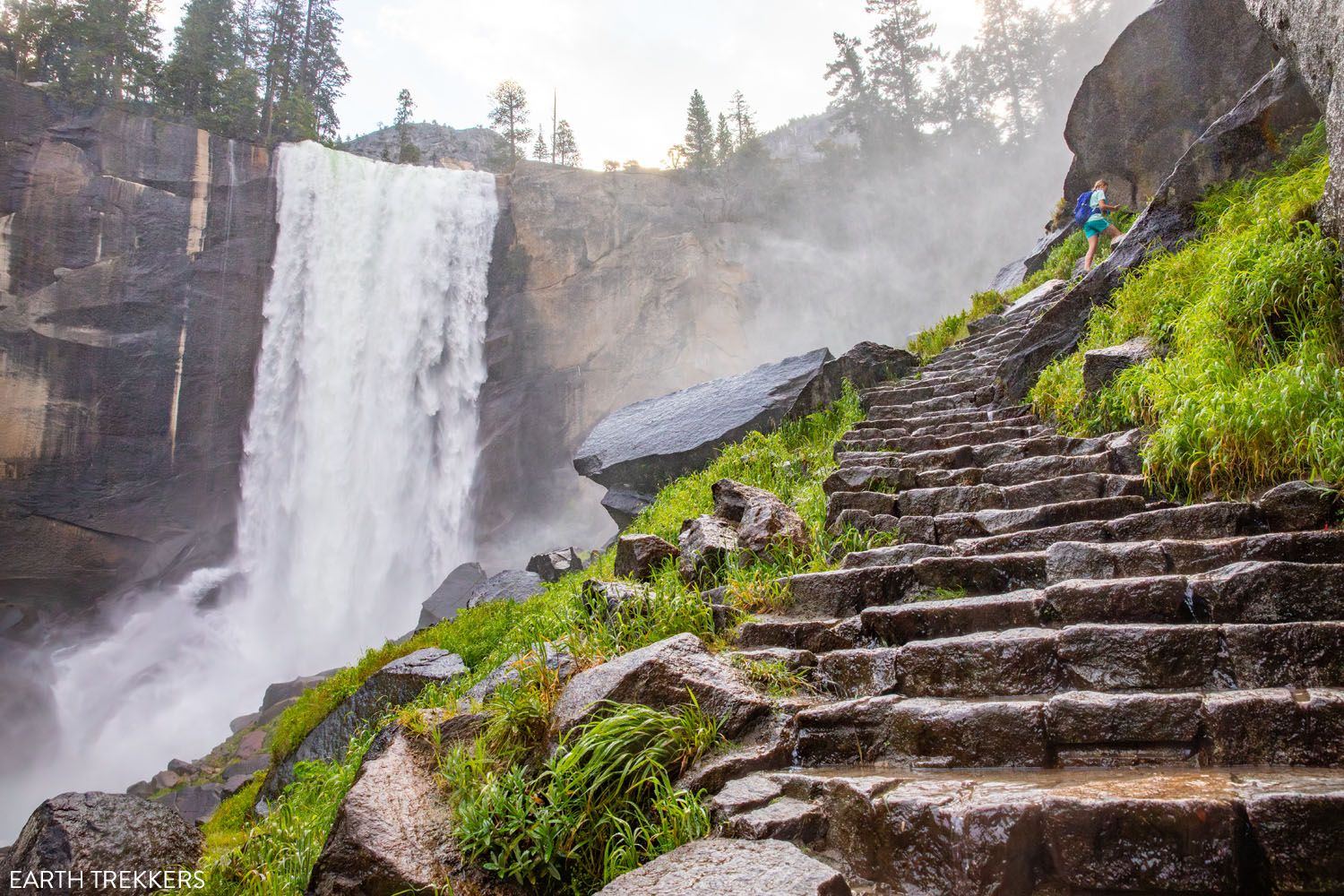
Mist Trail

John Muir Trail
We recommend hiking up the Mist Trail and returning via the John Muir Trail, which offers different views of the waterfalls and surrounding mountains.
See our Mist Trail vs. John Muir Trail Guide for hiking distances, photos, and advice on choosing the best route.
Option 2: Drive Tioga Road
If you’d rather spend the day sightseeing than hiking, drive Tioga Road (Highway 120), one of Yosemite’s most scenic roads.
This road climbs into Yosemite’s high country, taking you past granite domes, alpine lakes, and beautiful meadows. It’s a completely different landscape from Yosemite Valley and well worth seeing if the road is open.
We recommend making these stops along the drive:
- Olmsted Point: One of our favorite stops, with a unique view of Half Dome from the east.
- Tenaya Lake: A beautiful alpine lake surrounded by granite mountains. It’s a great place to stop for a picnic or a short walk along the shore.
- Tuolumne Meadows: A gorgeous alpine landscape with meadows, mountains, and hiking trails. This is also a nice place to escape the crowds of Yosemite Valley.

Tuolumne Meadows
Allow at least half a day for this drive, or longer if you want to add a hike. Remember that Tioga Road is a round-trip drive from Yosemite Valley, since you’ll be heading south out of the park tomorrow.
Tioga Road typically opens in late May or June and closes sometime in the fall, depending on snowfall.
For Avid Hikers: Hike Half Dome
This is a bucket list hike in the US National Parks. We did it in July, when Tyler and Kara were just 14 and 12.
The hike takes you past Vernal and Nevada Falls, through Little Yosemite Valley, and up the steep slopes of the Subdome. The final challenge is climbing the famous Half Dome cables to reach the summit, where the views are absolutely incredible.

The cables on Half Dome

We took this photo from the top of Half Dome

Our hike was 17 miles round trip, with approximately 5,500 feet of elevation gain, and took most of the day. It’s extremely strenuous, and we only recommend it for very experienced, well-prepared hikers who are comfortable with heights and exposed terrain. Our kids already had a lot of long-distance hiking experience, including trekking to Everest Base Camp, about 4 years before we did this hike.
A permit is required to hike Half Dome when the cables are up. Permits are awarded through a lottery, and securing one can be difficult. If Half Dome is on your bucket list, apply for a permit before planning the rest of your trip.
Our Guides to Half Dome
We have not one, but three guides on Half Dome: how to get your permit, what to expect on the Half Dome cables, and a detailed trail guide.
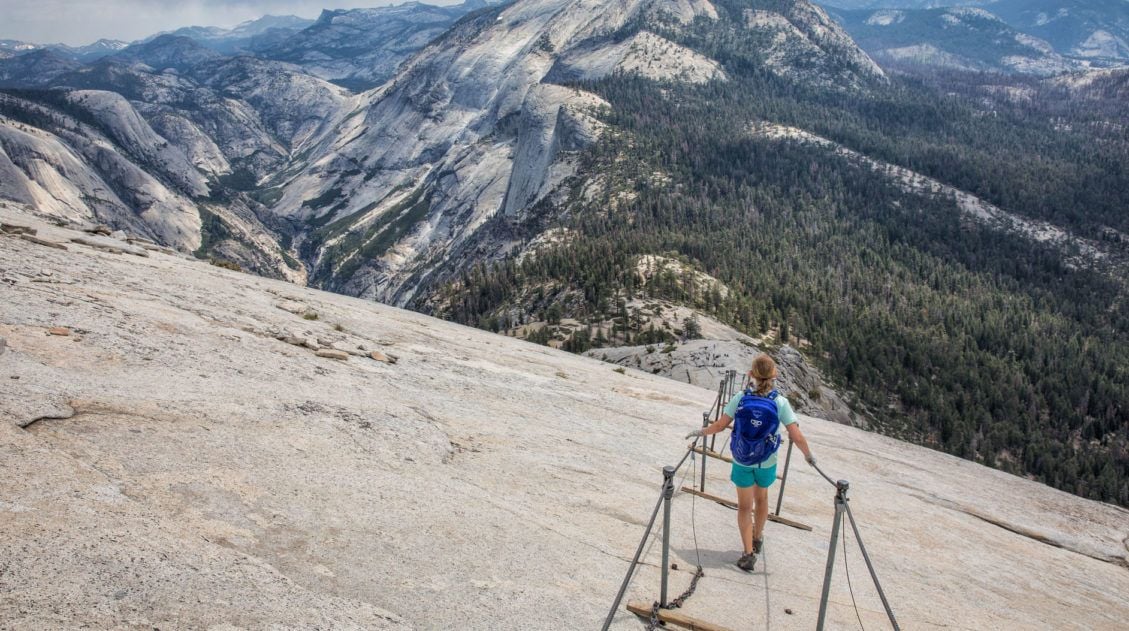
Climbing the Half Dome Cables: A Journey in 18 Photos
Have you ever wondered what it is like to climb the Half Dome cables? Did you even know that hiking Half Dome was something you could do? I will admit it, when I saw my first photos of people clinging to the steel cables on Half Dome, climbing one of Yosemite’s most famous icons, this […]
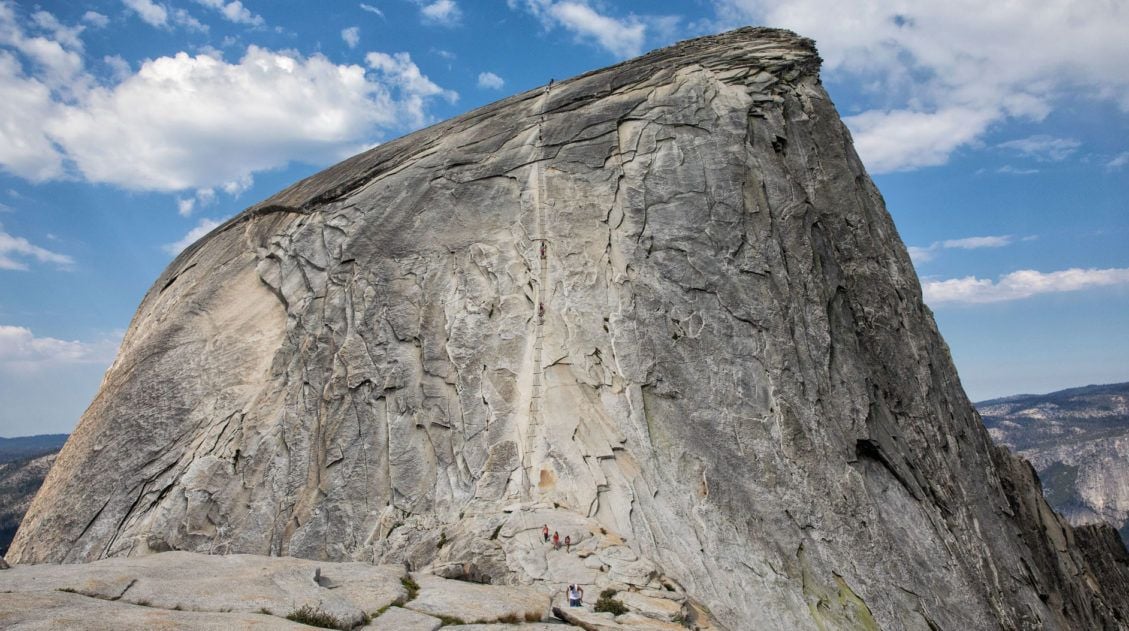
Half Dome 2026, A Step-by-Step Hiking Guide
The hike to Half Dome is one of Yosemite’s most challenging and most memorable hikes. On this hike you get to walk on some of Yosemite’s most popular hiking trails, view the Vernal and Nevada waterfalls, and walk through shady forests of Sequoia trees. But the best part of the trail is the final climb […]

The Half Dome Permit: How to be One of the Lucky Lottery Winners
If you have plans to hike to Half Dome, you must have a Half Dome permit. A maximum of 300 permits are awarded per day in a lottery system. In this guide, we cover why you need a permit and how to get one. Why Do You Need a Permit? Since 2010, the National Park […]
Our Experience in Yosemite: We’ve visited Yosemite three times so far. On our most recent trip, a three-day visit in early July, we hiked Upper Yosemite Falls and Yosemite Point on our first day, Half Dome on our second day, and then drove Tioga Road and visited Glacier Point on our third day. It was an unforgettable three days, but those back-to-back hikes were exhausting. For most travelers, we recommend choosing just one of these big hikes and spending the rest of your time sightseeing.
Spend your final night in Yosemite Valley or Mariposa.
Day 5: Yosemite, Drive to Kings Canyon/Sequoia
On the Road: 95 to 140 miles; approximately 2 hours 15 minutes from Yosemite Valley to Fresno, or 3 hours to Visalia, not including the detour to Glacier Point, sightseeing stops, or traffic.
This morning, visit two of Yosemite’s most spectacular viewpoints, Tunnel View and Glacier Point. In the afternoon, leave Yosemite and drive south to Fresno or Visalia, where you’ll spend the night before visiting Kings Canyon and Sequoia National Parks.
Visit Tunnel View and Glacier Point
Get an early start and make your way to Tunnel View. This is one of Yosemite’s most famous viewpoints, where you can see El Capitan, Half Dome, Bridalveil Fall, and the length of Yosemite Valley from one location.
It’s an incredible view and an essential stop on any first visit to Yosemite.

Tunnel View
From Tunnel View, continue along Wawona Road and turn onto Glacier Point Road. Follow this winding mountain road to Glacier Point, our favorite viewpoint in Yosemite National Park.
From Glacier Point, you’re standing more than 3,000 feet above Yosemite Valley, looking directly toward Half Dome. You can also see Yosemite Falls, Vernal Fall, Nevada Fall, and the peaks of the Sierra Nevada.

Glacier Point
We absolutely love this viewpoint. It’s one of the most dramatic panoramas in the national parks, and you don’t have to hike to experience it.
If you have extra time, consider hiking to Sentinel Dome or Taft Point. Both are relatively short hikes, about 2 miles round trip, and offer more spectacular views of Yosemite.
Important: Glacier Point Road is seasonal and generally opens in May or June, closing in the fall when snow makes travel unsafe. Check road conditions before your visit.
Drive South Toward Kings Canyon and Sequoia
After visiting Glacier Point, return to Wawona Road and continue south on Highway 41 toward Fresno.
Tomorrow, you’ll visit Kings Canyon and Sequoia National Parks, following our one-day itinerary that starts in Kings Canyon, travels south along Generals Highway through Sequoia, and ends near Three Rivers or Visalia.
For this itinerary, we recommend spending tonight in Fresno or Visalia.
Where to Stay Near Kings Canyon and Sequoia National Parks
For this part of the road trip, you have three main options: Fresno, Visalia, and Three Rivers.
- Fresno: Best for the night before visiting Kings Canyon, since it puts you closest to the park’s western entrance.
- Visalia: A good choice before and after visiting the parks. It has plenty of hotels and restaurants, and it’s convenient for continuing south toward the coast.
- Three Rivers: Best for the night after visiting Sequoia National Park. This small town sits just outside the park’s southern entrance, with vacation rentals and small properties surrounded by beautiful scenery. However, there are some great properties here, and it could be worth a little extra driving on day 5 for a 2-night stay in this area.
Hotels in Fresno
Fresno is a convenient place to spend the night before visiting Kings Canyon and Sequoia National Parks. It has a large selection of hotels and restaurants, and you’ll be about an hour from the Big Stump Entrance to Kings Canyon National Park.
Here are three properties we recommend:
- Homewood Suites by Hilton Fresno: This recently renovated hotel offers spacious suites with fully equipped kitchens, complimentary breakfast, and an outdoor swimming pool. A great choice for families who want a little extra space.
- Holiday Inn Express & Suites Fresno Airport: A modern hotel near Fresno Yosemite International Airport, with comfortable rooms, complimentary breakfast, and an outdoor pool. A good option for a convenient overnight stay.
- The Cedar Tree (formerly Updated Spacious Home): A renovated vacation home with a full kitchen, garden, and plenty of space to spread out. This is a wonderful option for families or groups who prefer a private home over a traditional hotel.
Hotels in Visalia
We spent the night in Visalia after exploring Kings Canyon and Sequoia National Parks. We stayed at a Holiday Inn and found Visalia to be a convenient place to end our long day of sightseeing.
Other hotels to consider include:
- JD Hyde Historic Inn: A beautifully restored Victorian home dating to the 1880s, with elegant rooms and historic charm. This would be our pick for a more memorable, boutique-style stay.
- Hilton Garden Inn Visalia: A modern hotel with spacious rooms, a restaurant, and an outdoor pool. A reliable choice for travelers who prefer a familiar hotel brand.
- Lamp Liter Inn Visalia: A more budget-friendly option with landscaped gardens and an outdoor swimming pool. It’s an older property, so check recent reviews before booking.
Places to Stay in Three Rivers
Three Rivers is a smaller, more scenic alternative to Visalia, with vacation homes, cabins, and unique accommodations. These three properties stood out to us:
- Soleil Luna 2 Miles from Sequoia Park Entrance: A beautiful, modern two-bedroom home with a fully equipped kitchen, private outdoor space, and a convenient location just two miles from the park entrance. A great choice for families or two couples traveling together.
- Sequoia Studio Suites: Unique dome-style accommodations with beautifully furnished suites, kitchenettes, and outdoor hot tubs. A wonderful option for couples looking for something special.
- 4 Kings Log Cabin 150 Acres Spectacular Views: A spacious five-bedroom log cabin with a large deck, mountain views, and plenty of privacy. This is a great option for larger families or groups traveling together.
Our Recommendation: Stay in Fresno on Day 5 so you can get an early start in Kings Canyon National Park. After exploring both parks on Day 6, spend the night in Visalia or Three Rivers. Visalia is more convenient for the drive to Oxnard on Day 7, while Three Rivers offers a more scenic setting.
Day 6: Kings Canyon and Sequoia National Parks
On the Road: 200 miles, 6 hours (staying in Visalia)
Today, you’ll visit two national parks in one day, Kings Canyon and Sequoia. It’s a busy day, but you’ll have enough time to see the highlights of both parks, including some of the largest trees in the world.
Get an early start, aiming to arrive in Kings Canyon by 8 or 9 am. Start at General Grant Grove, then drive the Kings Canyon Scenic Byway into the heart of Kings Canyon, visiting Zumwalt Meadows along the way.

General Grant tree
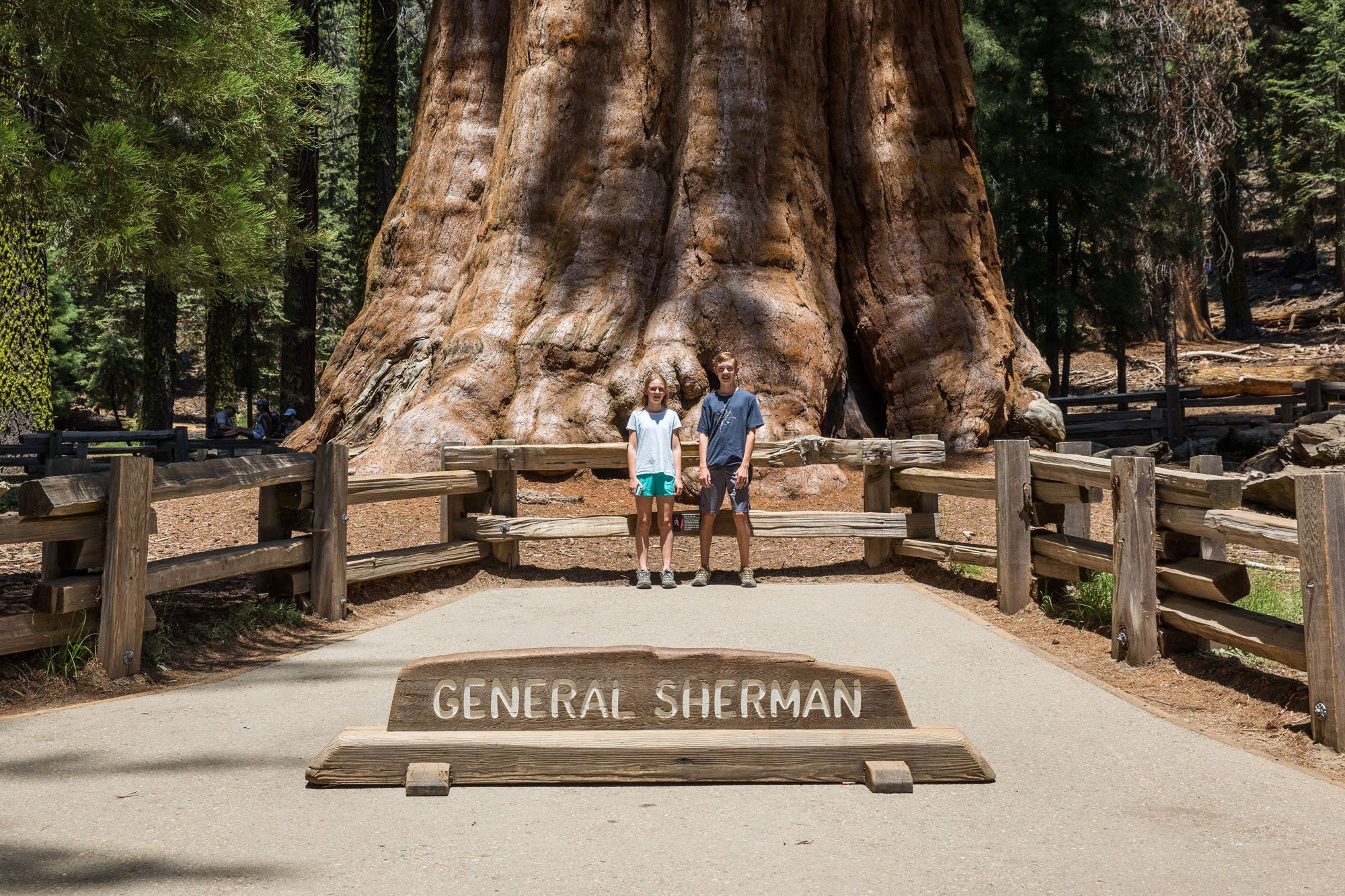
In the afternoon, drive Generals Highway into Sequoia National Park. Visit the General Sherman Tree, the largest tree in the world by volume, climb the steps to the top of Moro Rock for spectacular views, and see Tunnel Log and Crescent Meadow.

Moro Rock
This is the exact route we followed during our visit, and it makes for an amazing day in these two parks.
For the full schedule, driving directions, and tips for visiting both parks in one day, see our One Day Kings Canyon and Sequoia Itinerary.
Tonight, stay in Visalia or Three Rivers. Tomorrow, you’ll head to the California coast.
Day 7: Drive to Oxnard, Explore the California Coast
On the Road: 190 miles, 3.5 to 4 hours from Visalia; 205 miles, approximately 4 hours from Three Rivers
Today, drive to Oxnard, a coastal city in Southern California that will be your home base for visiting Channel Islands National Park tomorrow.
This is a relatively easy day, giving you some time to relax after several busy days in the national parks. We stayed in Oxnard during our visit to Channel Islands and really liked it. It’s a convenient place to stay, with plenty of hotels and restaurants, and easy access to the ferries departing from Oxnard and nearby Ventura.
If you arrive early and want to do some sightseeing, here are a few options:
- Oxnard’s Beaches: Spend some time at Hollywood Beach or Mandalay Beach, two beautiful stretches of sand that are perfect for a walk, relaxing by the water, or watching the sunset.
- Point Mugu State Park: For more coastal scenery, drive south along Highway 1 to Point Mugu State Park, approximately 15 miles from Oxnard. This section of coastline features dramatic cliffs, rocky headlands, sandy beaches, and wonderful ocean views.
- Visit Santa Barbara: Santa Barbara is a beautiful coastal city about 45 minutes from Oxnard. Spend a few hours strolling along Stearns Wharf, exploring the shops and restaurants on State Street, or relaxing at the beach. Santa Barbara is known for its Spanish-style architecture, beautiful waterfront, and laid-back atmosphere. We recommend this option only if you plan to finish your road trip in Los Angeles. If you’re driving Highway 1 north to San Francisco on Day 9, you’ll pass through Santa Barbara, so there’s no need to make a separate trip today.
Where to Stay in Oxnard
We spent three nights at the TownePlace Suites by Marriott Ventura Oxnard and had a great experience. The hotel was comfortable, and we loved being able to walk to restaurants, Whole Foods, and Starbucks. It was especially convenient for stocking up on food and snacks before our day on Santa Cruz Island.
For dinner, we recommend Larsen’s Grill or Lazy Dog Restaurant & Bar. We ate at both, and liked Lazy Dog so much that we went back a second time.
For more hotel recommendations, including beachfront properties in Oxnard and Ventura, see our Channel Islands National Park Travel Guide.
Before Tomorrow: Confirm your ferry departure location and time, and pack everything you’ll need for the day. There are no restaurants or stores on Santa Cruz Island, so bring your lunch, snacks, and plenty of water.
Spend the night in Oxnard.
Day 8: Channel Islands National Park
Today, visit your fifth and final national park of this California road trip, Channel Islands National Park!
We recommend spending the day on Santa Cruz Island, combining a guided sea cave kayaking tour with a hike to Potato Harbor. This is exactly what we did during our visit, and it was an unforgettable experience.
Catch the morning ferry from Ventura or Oxnard Harbor to Scorpion Anchorage on Santa Cruz Island. Start with a guided kayaking tour through the island’s incredible sea caves, then spend the afternoon hiking to Potato Harbor, where you’ll have spectacular views of the island’s rugged coastline.

Scorpion Anchorage

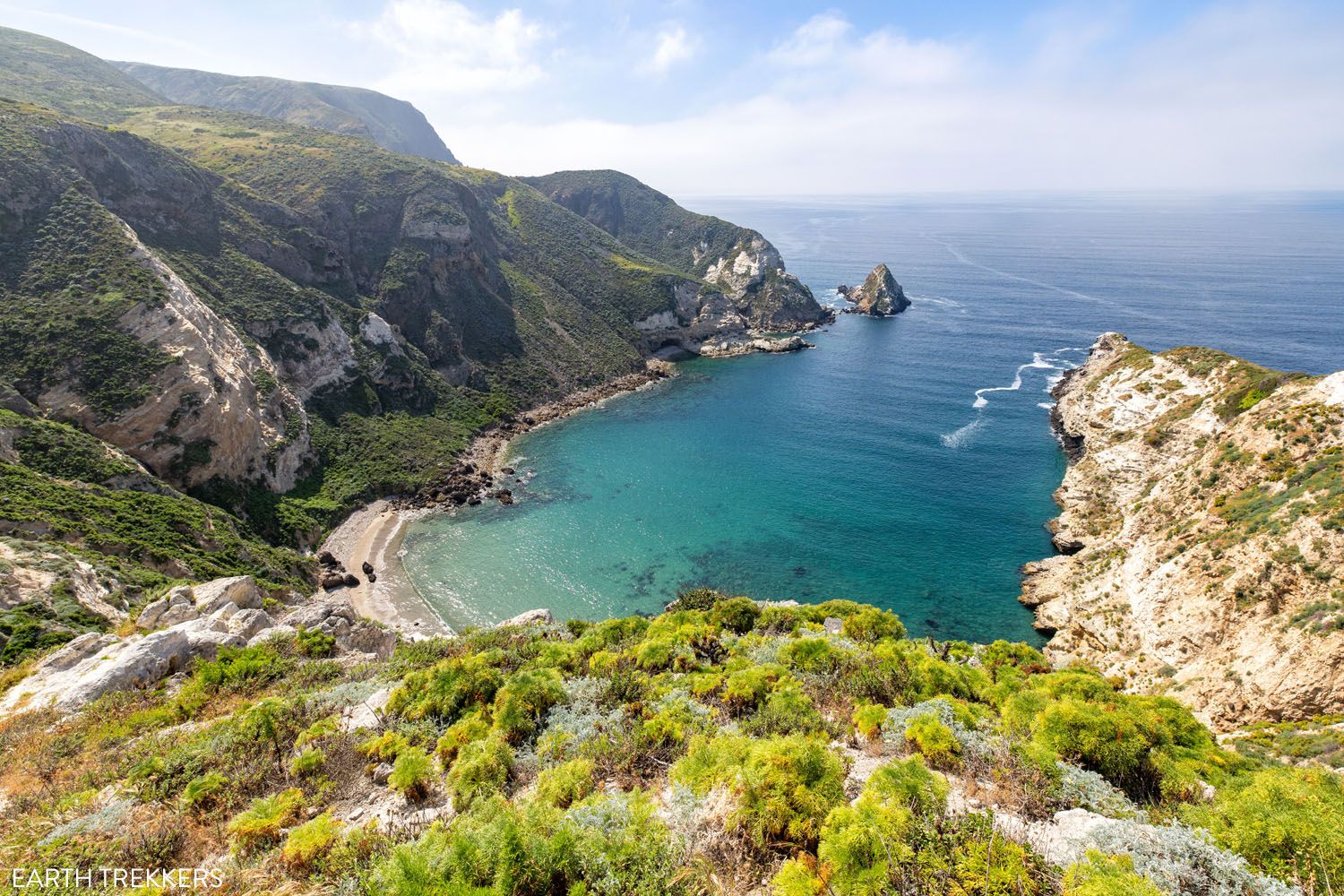
Potato Harbor
Keep an eye out for island foxes and the Santa Cruz Island scrub-jay, two species found nowhere else in the world. You may also spot dolphins during the ferry crossing.
For the complete schedule, kayaking reservations, hiking details, and packing tips, see our One Day in Channel Islands National Park itinerary.
Return to the mainland in the late afternoon or early evening and spend another night in Oxnard.
Day 9: Los Angeles or Drive Highway 1 to San Francisco
Today, you have two options for finishing this California road trip. You can spend the day sightseeing in Los Angeles or drive north along Highway 1, one of the most scenic coastal roads in the United States, ending in San Francisco.
We’ve done both, and our vote goes to the Highway 1 drive. It’s a long day, but the coastal scenery is spectacular and you’ll get to experience some of California’s most iconic landscapes.
Option 1: Spend the Day in Los Angeles
On the Road: Approximately 1–2 hours, depending on destination and traffic
If this is your first trip to Los Angeles, you may want to spend today seeing some of the city’s most famous sights.
Drive south from Oxnard to Los Angeles, which takes approximately 1 to 2 hours, depending on your destination and traffic. With one day, we recommend choosing a few attractions rather than attempting to see everything.
Some places to consider are Santa Monica Pier, Venice Beach, Griffith Observatory, the Hollywood Walk of Fame, and the Getty Center.
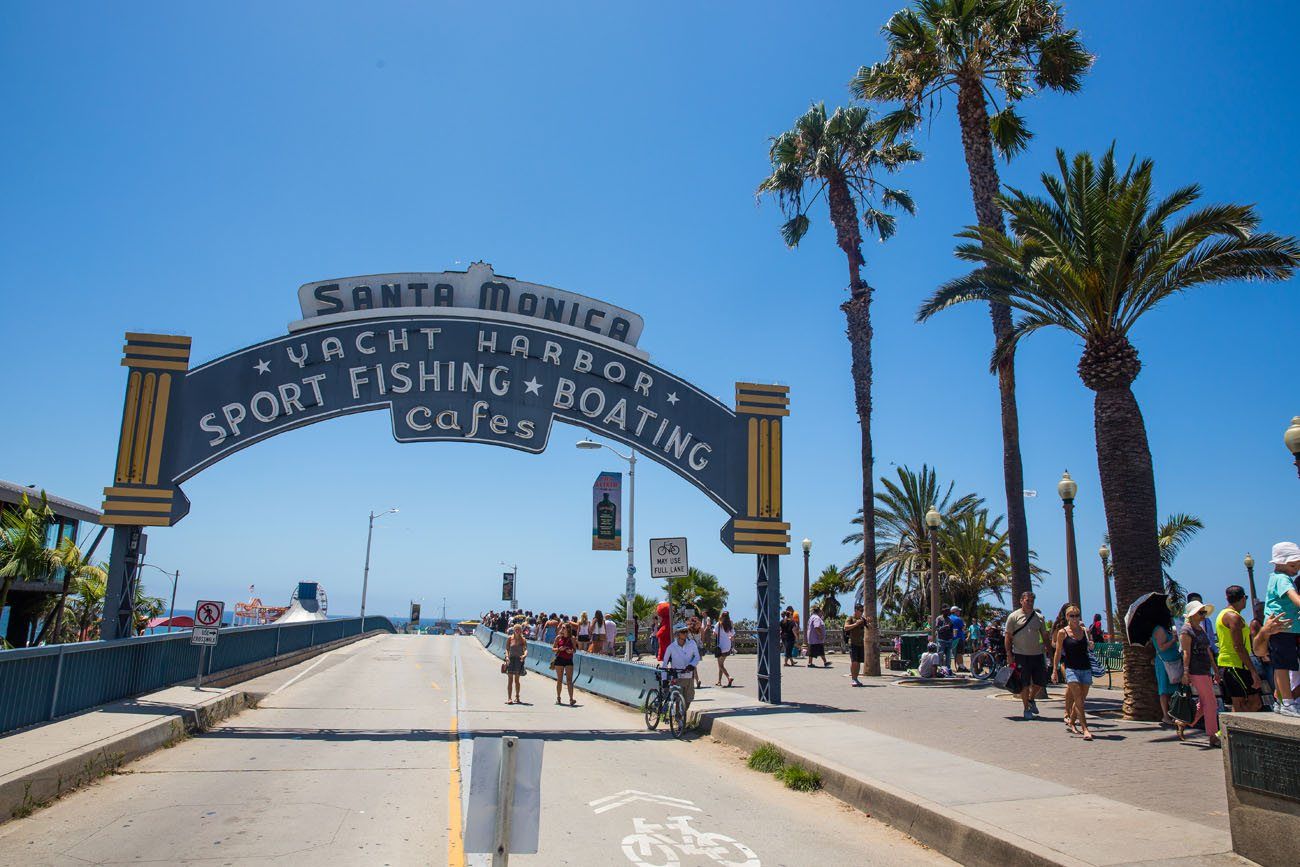
We’ve visited Los Angeles multiple times and, while it has some interesting attractions, we personally prefer spending our time exploring California’s natural scenery. But if you’ve never been to LA, this is a good opportunity to see a few of its highlights.
Spend the night in Los Angeles, ideally somewhere convenient for your flight home tomorrow.
Option 2: Drive Highway 1 to San Francisco (Our Recommendation)
On the Road: 400 miles; approximately 8–9 hours of driving; allow 10–12 hours with sightseeing stops
If you love spectacular coastal scenery, we highly recommend driving Highway 1 through Big Sur to San Francisco.
This is one of the most beautiful coastal drives in the United States, with winding roads perched above the Pacific Ocean, rugged cliffs, beaches, and dramatic viewpoints.
Tim and I drove Highway 1 from San Francisco to Los Angeles in one day. It was a long drive, but the scenery was unforgettable, and we’d happily do it again.
For this itinerary, you’ll drive the route in the opposite direction, starting in Oxnard and heading north toward San Francisco.
Here are a few highlights along the drive, listed from south to north:
- Santa Barbara: A beautiful coastal city with Spanish-style architecture, beaches, shops, and restaurants. Stop for breakfast or a short stroll along Stearns Wharf.
- Morro Bay: See Morro Rock, the enormous volcanic landmark rising beside the harbor.
- Cambria and Moonstone Beach: A charming coastal town with scenic ocean views and a beautiful shoreline.
- Piedras Blancas Elephant Seal Rookery: Stop to see elephant seals resting on the beach. It’s free to visit, and the viewing platforms are just a short walk from the parking area.
- Big Sur: The highlight of the drive. Follow Highway 1 along the rugged coastline, stopping at designated viewpoints to admire the cliffs and Pacific Ocean.
- Bixby Creek Bridge: One of California’s most iconic landmarks, with a graceful concrete arch spanning a dramatic coastal canyon. Enjoy the view as you drive across the bridge.
- Carmel-by-the-Sea and Monterey: Two beautiful coastal towns near the northern end of Big Sur. If time permits, stop for a short walk or dinner before continuing to San Francisco.
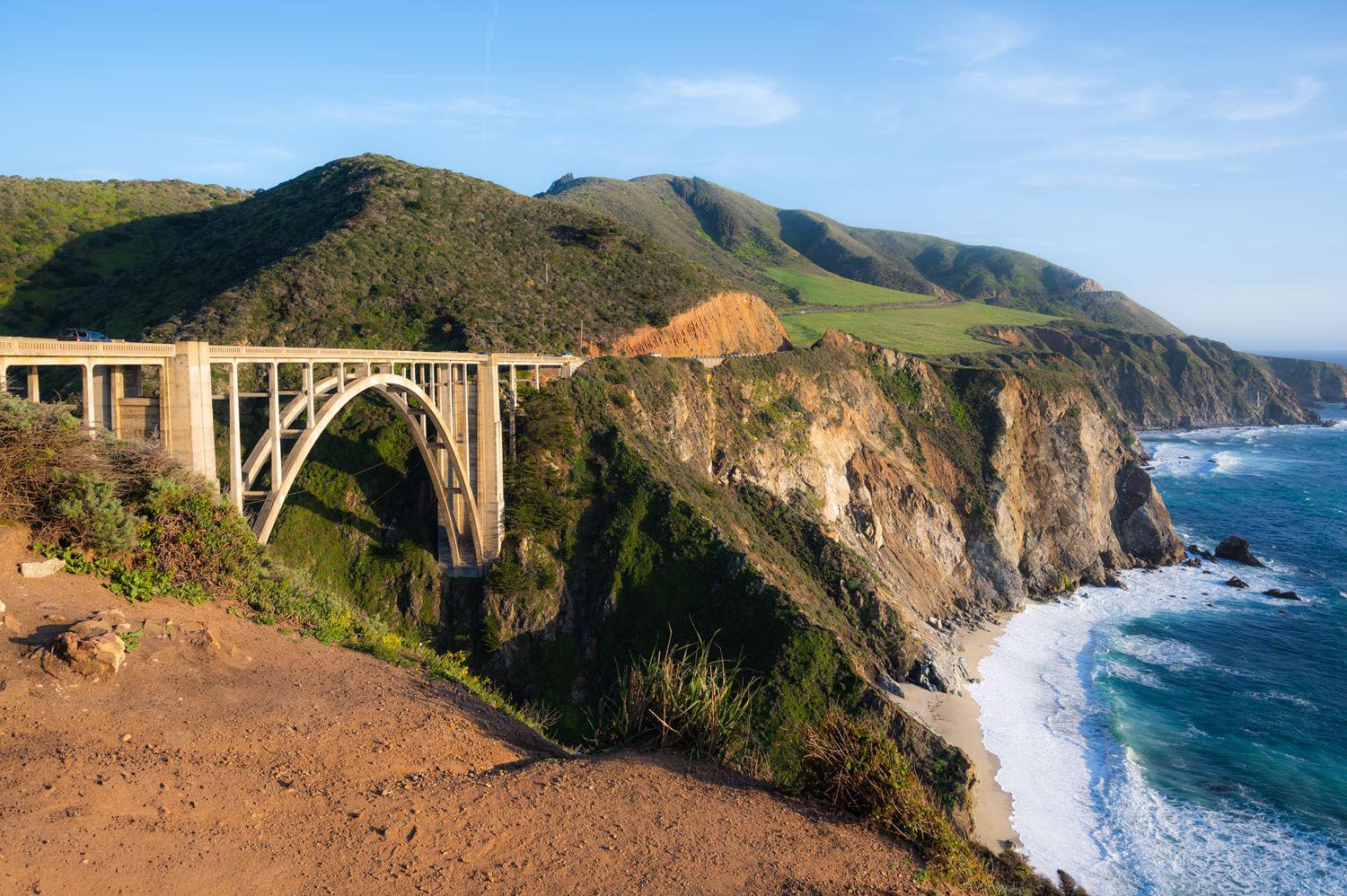
This is a very long driving day, so get an early start and choose just a few stops. We recommend prioritizing the Big Sur coastline over spending too much time in the towns along the way.
After reaching Monterey, continue north toward San Francisco. Spend the night in San Francisco or near SFO if you have an early flight tomorrow.
Important: Highway 1 through Big Sur is occasionally closed due to landslides, storms, and road repairs. Check Caltrans highway conditions before starting this drive. If the road is closed, you may need to use Highway 101 instead.
Day 10: Fly Home
Today, your 10-day California national parks road trip comes to an end. Return your rental car and fly home from Los Angeles International Airport (LAX) or San Francisco International Airport (SFO), depending on which option you chose for Day 9.
If you have a later flight, you may have some time for a little sightseeing, but we recommend keeping your schedule flexible, particularly if you need to navigate traffic in Los Angeles or San Francisco.
Over the past 10 days, you’ve visited five national parks, hiked among towering rock formations and giant sequoias, explored Yosemite’s spectacular scenery, and traveled to one of California’s remote islands. And if you chose the Highway 1 route, you’ve experienced some of the state’s most beautiful coastal scenery, too!
It’s an amazing amount to see in just 10 days and a fantastic introduction to California’s national parks.
How to Modify This California National Parks Itinerary
This 10-day itinerary is designed to visit five of California’s national parks as efficiently as possible. It’s a busy trip, and while there are a few ways to shorten it, adding an extra day or two will give you more time to explore the parks or enjoy the California coast.
How to Shorten This Itinerary
With 8 or 9 days, you’ll need to eliminate a national park or reduce your time in Yosemite. Here are your options:
- Skip Pinnacles National Park: This is the easiest way to save a day while keeping the rest of the itinerary intact. Drive directly from San Francisco to Yosemite on Day 1, then continue with the itinerary as written.
- Spend less time in Yosemite: You could eliminate one of the Yosemite days, but we don’t recommend it. Yosemite is one of the highlights of this road trip, and two full days plus a morning already goes by quickly.
- Skip Channel Islands National Park: If you have even less time, consider ending your road trip after visiting Kings Canyon and Sequoia. From Visalia, drive back to San Francisco the following day to return your rental car and fly home. This creates a shorter road trip that visits Pinnacles, Yosemite, Kings Canyon, and Sequoia, eliminating the drive to Southern California.
If you’re trying to squeeze all five national parks into fewer than 10 days, we’d recommend reconsidering. You’ll spend a considerable amount of time driving and have very little flexibility for unexpected delays.
How to Extend This Itinerary
If you have 11 to 14 days, there are several wonderful ways to extend this California road trip.
- Spend more time in Yosemite: Yosemite has enough hiking trails, scenic drives, and viewpoints to keep you busy for a week. Add another day or two to hike more trails, explore Tuolumne Meadows, or spend more time in Yosemite Valley.
- Add a day to Kings Canyon and Sequoia: Rather than squeezing both parks into one day, spend a full day in each. This gives you more time for hiking, exploring the giant sequoia groves, and enjoying the scenery along the Kings Canyon Scenic Byway.
- Explore San Francisco: There is no time built into this itinerary for San Francisco sightseeing. Add one or two days at the beginning or end of your road trip to see the Golden Gate Bridge, visit Alcatraz, ride a cable car, and explore the city’s neighborhoods. See our guide to the best things to do in San Francisco for more ideas.
- Break up the Highway 1 drive: Rather than driving from Oxnard to San Francisco in one day, spend a night in Cambria, Big Sur, or Monterey. This gives you more time to enjoy the coastal viewpoints, explore charming seaside towns, and visit attractions such as Hearst Castle or Point Lobos State Natural Reserve.
Our Recommendation: If you have just one extra day, we’d use it to break up the Highway 1 drive or spend another day in Yosemite. With two or more additional days, consider adding time to Kings Canyon and Sequoia or exploring San Francisco.

San Francisco cable cars
Best Time for This California National Parks Road Trip
The best time for this 10-day California national parks road trip is June through early October, with September being our top pick.
Choosing when to take this road trip can be a little tricky. Yosemite, Kings Canyon, and Sequoia are located in the Sierra Nevada, where snow can close high-elevation roads from late fall into spring. Meanwhile, Pinnacles National Park has extremely hot summers, with temperatures frequently exceeding 100°F (38°C). Channel Islands National Park is open year-round, but late summer and early fall typically offer some of the best ocean conditions for kayaking.
Here are the advantages and disadvantages of visiting during each season.
| Time of Year | What to Expect | Our Take |
| May–early June | Yosemite’s waterfalls are spectacular, but Tioga Road, Glacier Point Road, and some high-elevation roads and trails may still be closed due to snow. | Possible, but not ideal for this exact itinerary. |
| Late June | Most roads are generally open, Yosemite’s waterfalls may still be flowing well, and temperatures are warming up at Pinnacles. | A very good time if the mountain roads are open. |
| July–August | Excellent access to mountain roads and hiking trails. However, Yosemite is crowded, and Pinnacles can exceed 100°F. | Good for hiking in the Sierra Nevada, but less ideal for Pinnacles. |
| September | Most mountain roads remain open, Pinnacles begins cooling down, and Channel Islands often has calmer seas. Yosemite’s waterfalls are much smaller or dry. | Our top pick for this road trip. |
| Early October | Cooler temperatures at Pinnacles, generally lighter crowds, and potentially good kayaking conditions. However, early snowstorms can affect high-elevation roads. | Another excellent option, with slightly more weather risk. |
| Late October–April | Winter storms and seasonal road closures can limit access to Yosemite and Kings Canyon. | Not recommended for this itinerary as written. |
Our Recommendation: September
If we were planning this road trip, we’d aim for mid to late September. By this time, temperatures at Pinnacles are generally more comfortable for hiking, while the higher-elevation roads and trails in Yosemite, Kings Canyon, and Sequoia are usually still accessible.
September is also one of the best months for Channel Islands National Park. Ocean conditions tend to be calmer in late summer and early fall, making this an especially appealing time for kayaking through the sea caves on Santa Cruz Island.
The biggest tradeoff is Yosemite’s waterfalls. By September, Yosemite Falls is often dry, and other waterfalls have significantly reduced flow. If seeing Yosemite’s waterfalls at their best is a priority, consider visiting in June instead, once the high-elevation roads on this itinerary have opened.
One more thing to consider: Late summer and fall are wildfire season in California. Smoke can affect visibility and air quality in the national parks, particularly in the Sierra Nevada. We recommend checking current park conditions and air quality alerts before your trip.
More California & National Park Travel Planning
- Explore More of California → Our California Travel Guide has everything you need to plan your trip, including national park guides, scenic drives, hiking trails, and more California road trip ideas.
- Visit More US National Parks → Check out our US National Parks Guide for travel guides, itineraries, and planning tips for all 64 US national parks.
- Explore Northern California & Oregon → Our 10-Day Lassen Volcanic, Crater Lake & Redwood Road Trip takes you through volcanic landscapes, ancient redwood forests, and along the spectacular Oregon coast.
- Explore Southern California’s Desert Parks → Our 10-Day Las Vegas to San Diego Road Trip includes Death Valley, Joshua Tree, and Anza-Borrego Desert State Park, with several routes to choose from.
- Plan a National Parks Road Trip → Our US National Parks Itineraries page features road trips and itineraries across the United States, from quick weekend getaways to epic multi-park adventures.
If you have any questions about this California parks road trip itinerary, let us know in the comment section below.
Explore More of California
Best USA Road Trips: 18 Ideas for Your Next Big Adventure
One of the best ways to explore the USA is on a good old-fashioned road trip. Cruise along Route 66, road trip through the Florida Keys, explore the American Southwest, or even drive from coast to coast. In this guide, we share 18 of the best USA road trips…18 great ideas for your next big […]

25 Best Things to Do in San Francisco
What’s the first thing that comes to your mind when you think of San Francisco? The Golden Gate Bridge? The legend and the stories of Alcatraz? Cable cars climbing up and down the steep hills of the city? San Francisco is a big city, filled with lots of things to do. It has a colorful […]
Best US National Parks to Visit Month-By-Month
Best National Parks to Visit Month-By-Month Most national park planning advice tells you the “best” month to visit a park without showing you the full picture. This guide does both. We’ve visited 56 of the 64 US national parks, many of them multiple times and in different seasons, and timing is consistently one of the […]
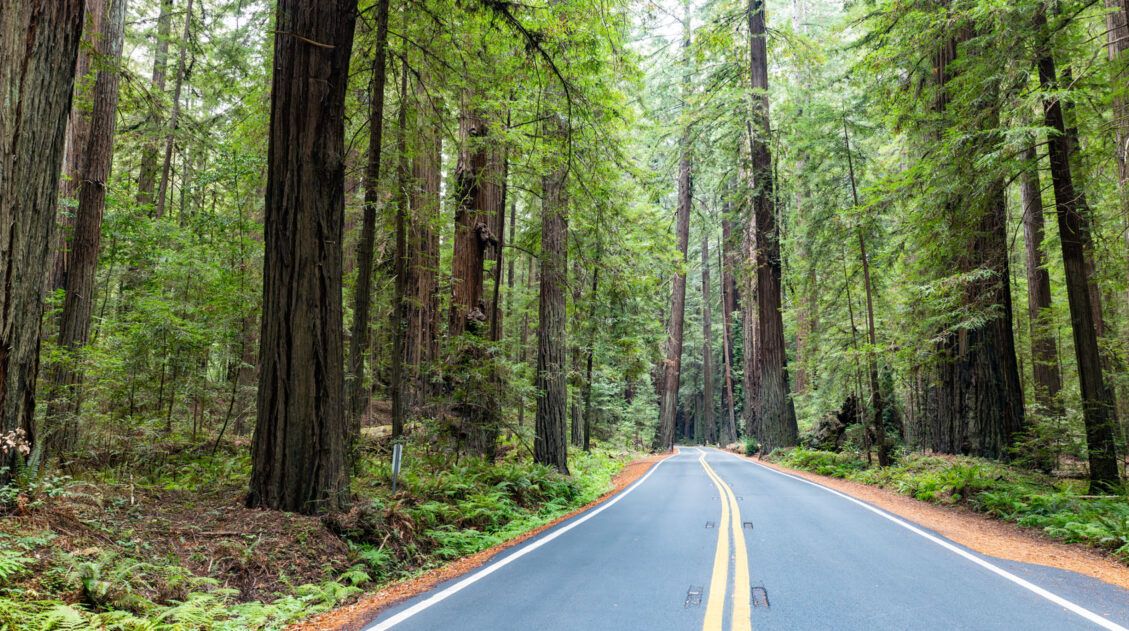
Avenue of the Giants: Best Things to Do, Photos & Helpful Tips
Discover the best things to do along the Avenue of the Giants, complete with a map and photos. The Founders Grove is not to be missed, but you can also drive through a redwood tree and go off the beaten path, walking quieter, lesser-known trails through the old-growth forests. Avenue of the Giants is one […]
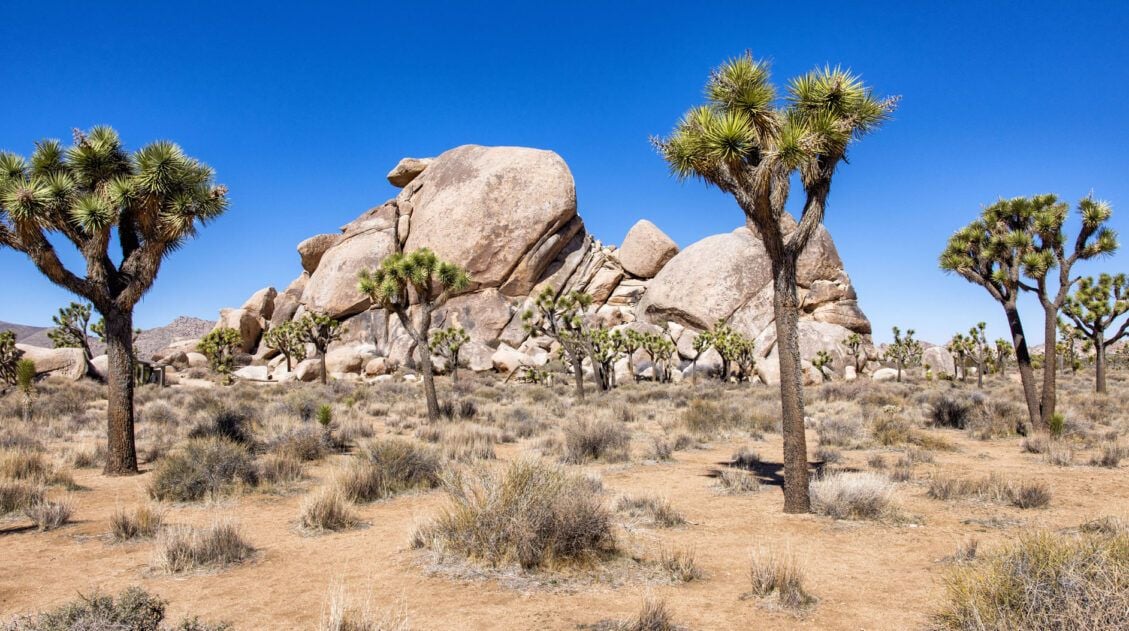
10 Things to Do in Joshua Tree National Park on Your First Visit
With its desert scenery, hiking trails, rock climbing routes, hidden oases, scenic drives, and trees that look like they have been plucked from the pages of a Dr. Seuss book, Joshua Tree National Park is a joy to explore. In this guide, learn about the best things to do in Joshua Tree National Park on […]
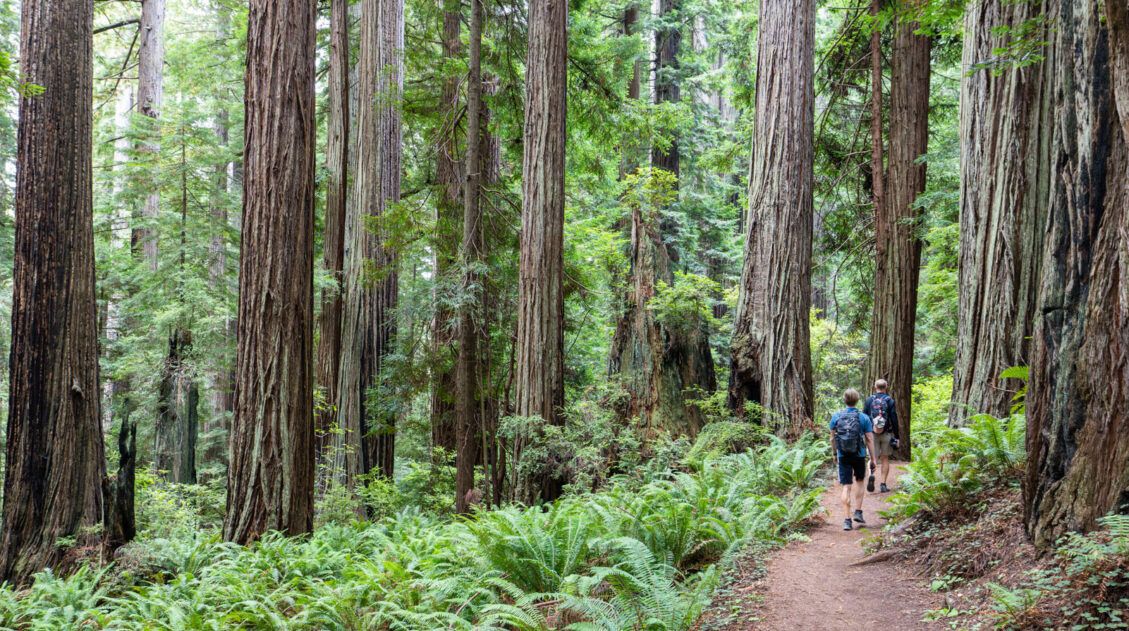
15 Best Things to Do in Redwood National and State Parks
Redwood National and State Parks is home to some of the tallest trees on Earth, and after four days exploring every corner of the complex, here’s what we recommend most. This is one of the easiest national parks to enjoy right from the car. Scenic drives wind through groves of towering redwoods, and Howland Hill […]
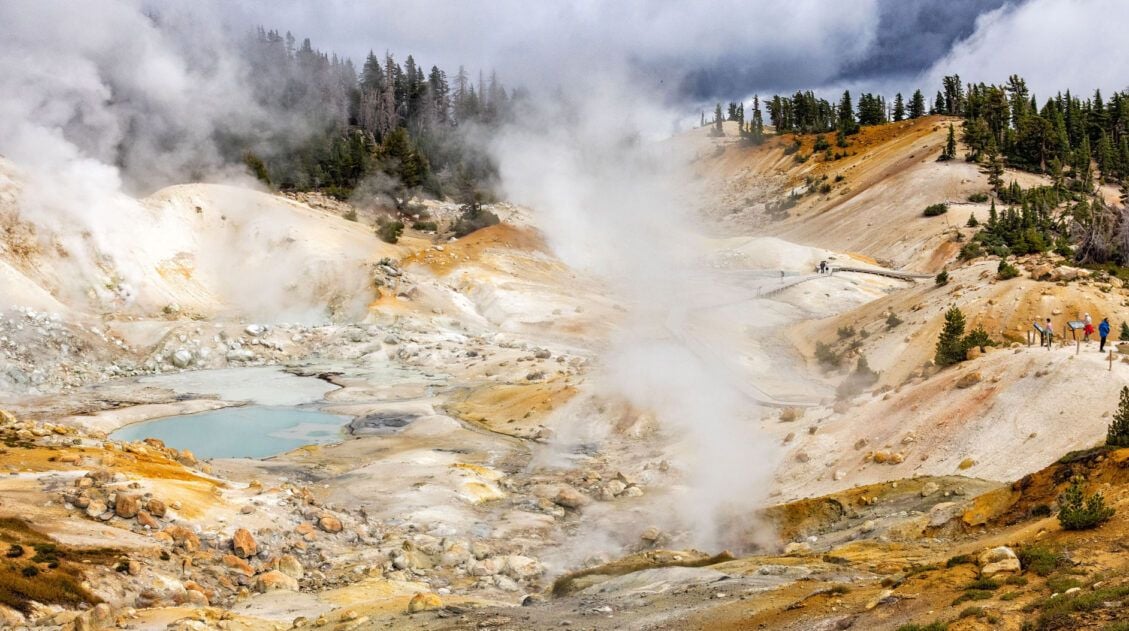
The Bumpass Hell Trail, An Essential Hike in Lassen Volcanic
Welcome to Bumpass Hell, a dynamic thermal region with an unforgettable name. The largest hydrothermal area within Lassen Volcanic National Park, Bumpass Hell amazes visitors with its giant steam vents, bubbling mud pots, and colorful, otherworldly landscapes. The Bumpass Hell Trail is one of the most popular trails in Lassen Volcanic National Park. It’s easy […]

The Ultimate Guide to Lassen Volcanic National Park
Lassen Volcanic National Park With steaming fumaroles, boiling hot springs, and volcanoes galore, Lassen Volcanic is an underrated gem amongst Californian national parks. Here you can hike to the summit of active volcanoes, wander through bubbling hydrothermal basins, and explore landscapes carved by lava flows. Lassen Volcanic is a paradise for hikers, photographers, and road […]
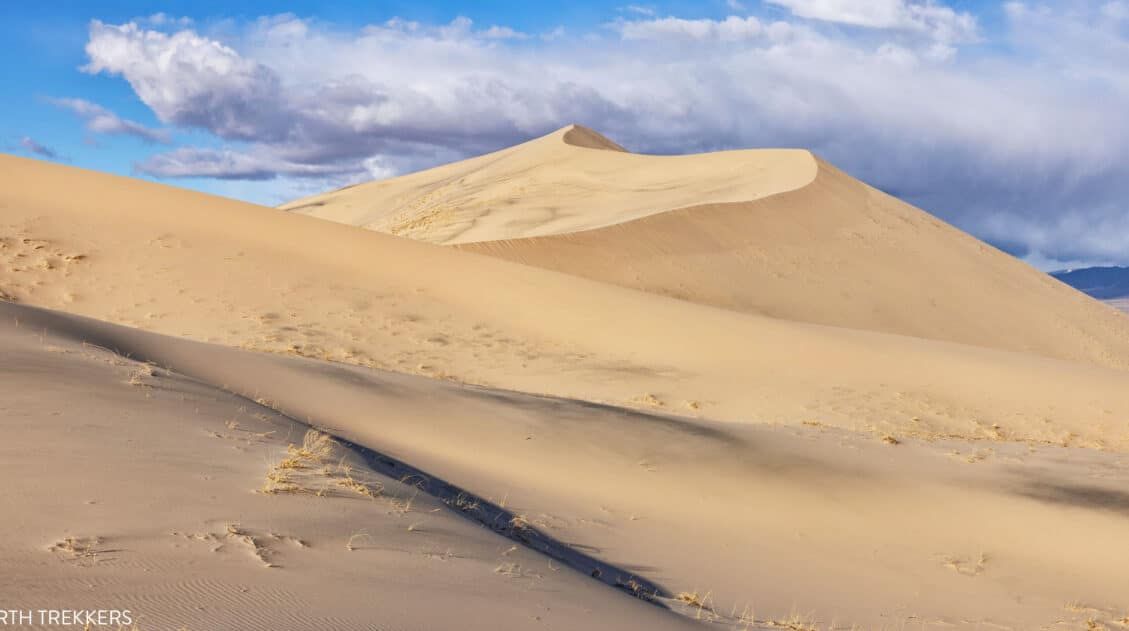
10 EPIC Things to Do in Mojave National Preserve
With enormous sand dunes, cinder cones, lava beds, and the densest population of Joshua Trees in the world, Mojave National Preserve is home to a wide variety of landscapes. This is a fun place to explore and makes a great addition to a southern California road trip. In this guide, we cover the best things […]

IRONMAN 70.3 Oceanside – 2026 Race Report & Course Tips
What better way to kick off your triathlon racing series for the year than with IRONMAN 70.3 Oceanside? Swim in the calm, chilly waters of Oceanside Harbor, cycle through the rolling hills of Camp Pendleton, and run along the stunning Southern California coastline, all while racing alongside some of the best professional triathletes in the […]
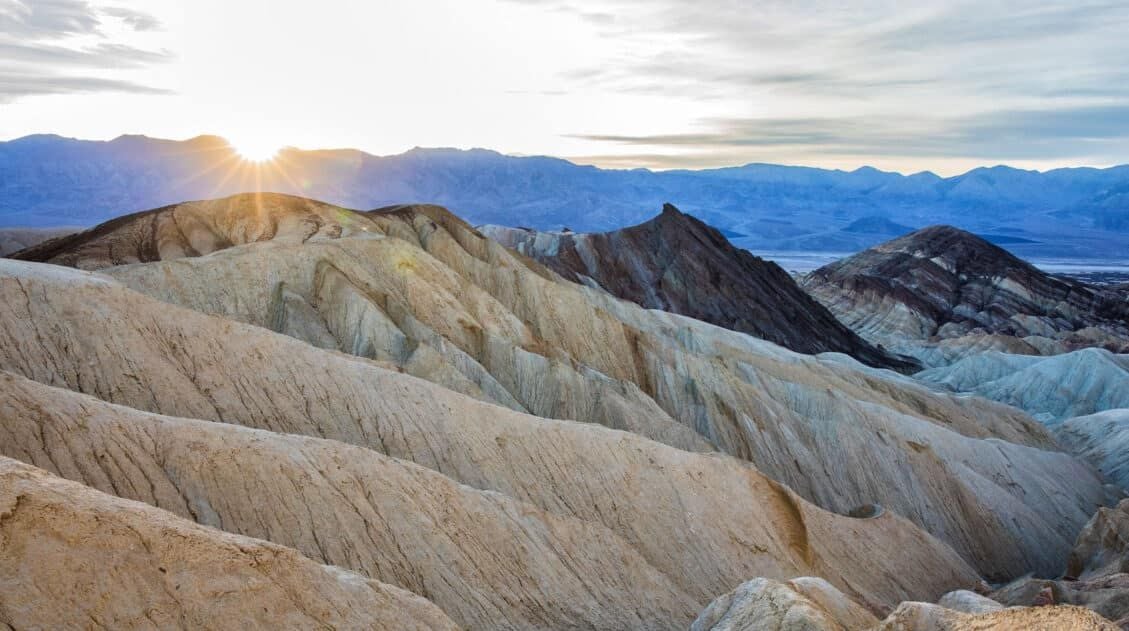
Death Valley National Park Travel Guide
Death Valley National Park Death Valley is the hottest, driest, and lowest place in the United States. But don’t let its mysterious name and seemingly barren landscape discourage you from planning a trip here. This park is full of wonderful surprises. With barren salt flats, towering mountains, mysterious sailing stones, shifting sand dunes, rainbow-colored mountains, […]
United States Travel Guide: Places to Visit in the USA
Plan your visit to the United States. Learn about the best things to do, how to plan your time, road trip ideas, and sample itineraries.

Leave a Comment