
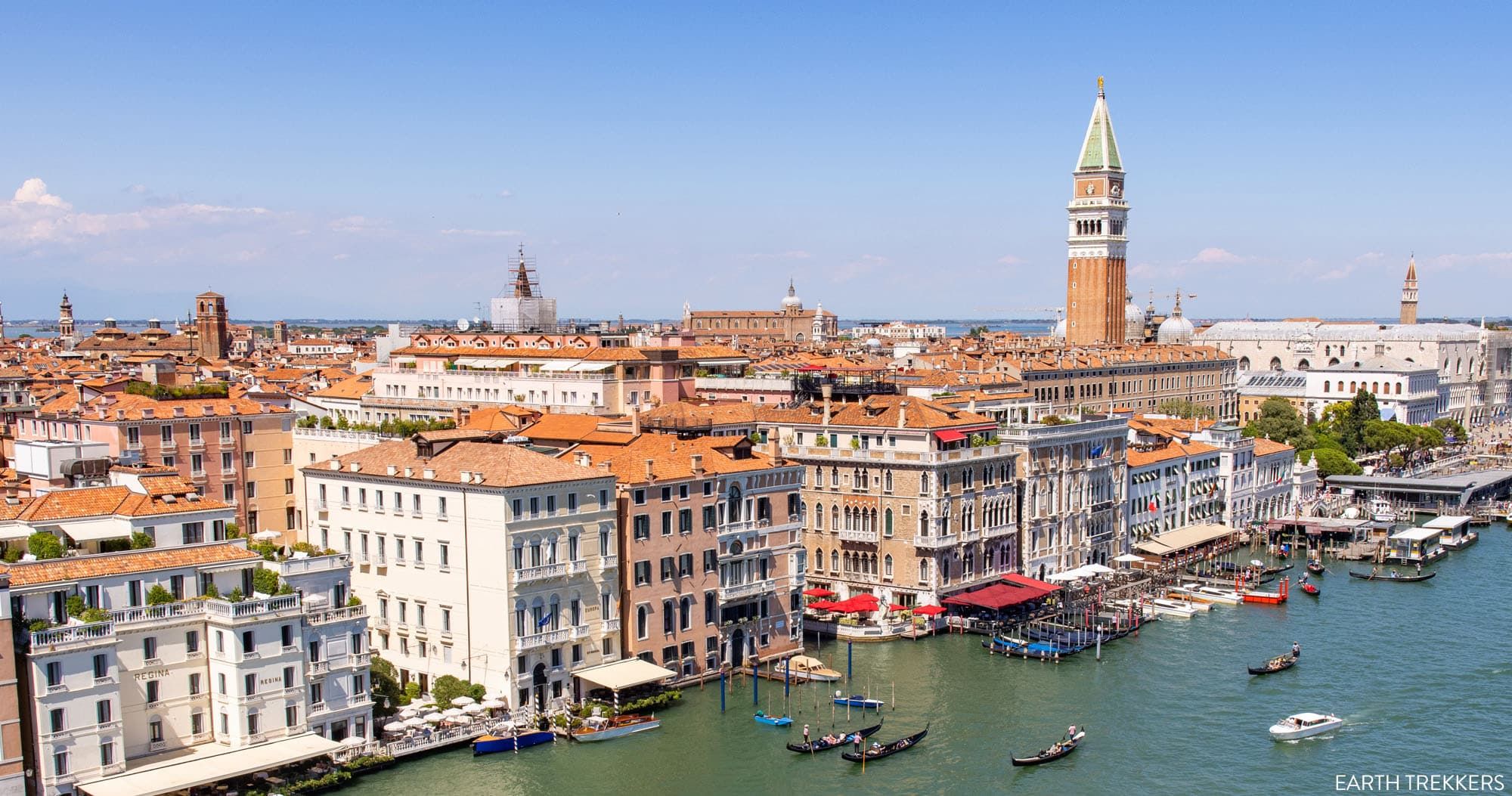
Discover 20 things to do in Venice, Italy, from strolling its canals and island-hopping to Murano and Burano, to visiting St. Mark’s Basilica and the Rialto Bridge.
Venice is one of our favorite spots in Italy. With its winding canals and centuries-old architecture, it’s an easy place to fall in love with, and small enough to explore properly in just a few days.
We wrote the first version of this guide in 2016, after our first trip to Venice, when we only had nine things worth putting on the list. We’ve been back twice since and the list has grown every time.
Every time we’ve visited, we’ve loved it. Seeing the Grand Canal for the first time is breathtaking. You already know what it looks like, since you’ve seen it in hundreds of photos, but standing on the Rialto Bridge watching the dance of gondolas, boats, and vaporettos below is something else entirely.
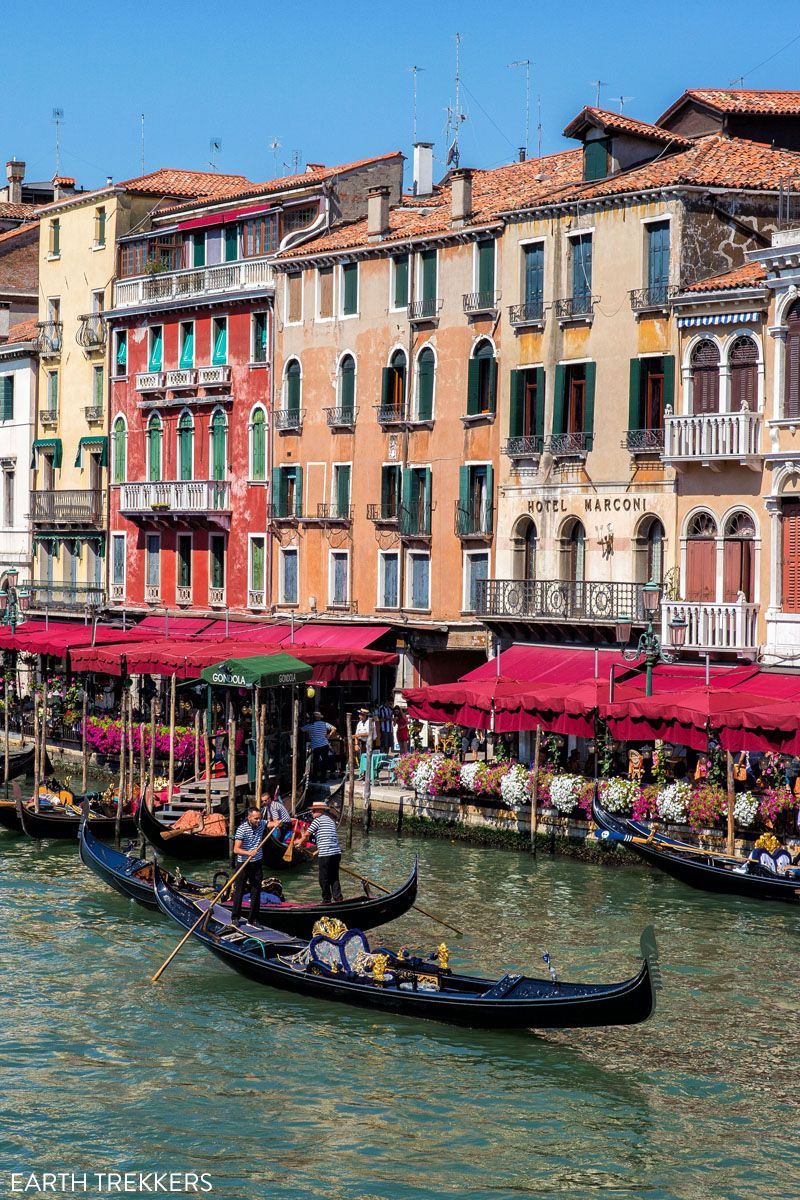
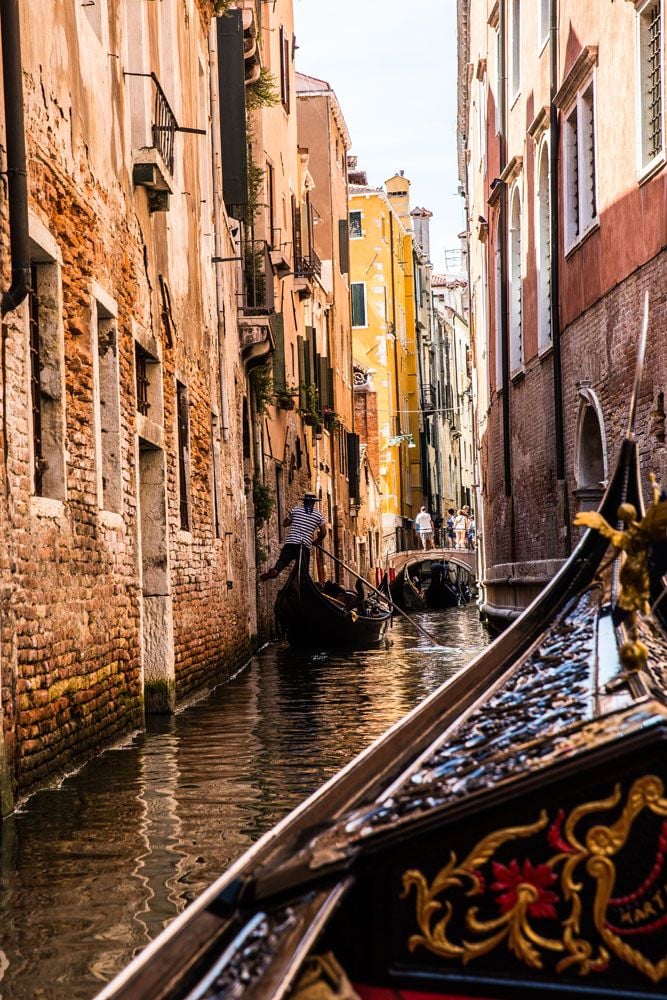
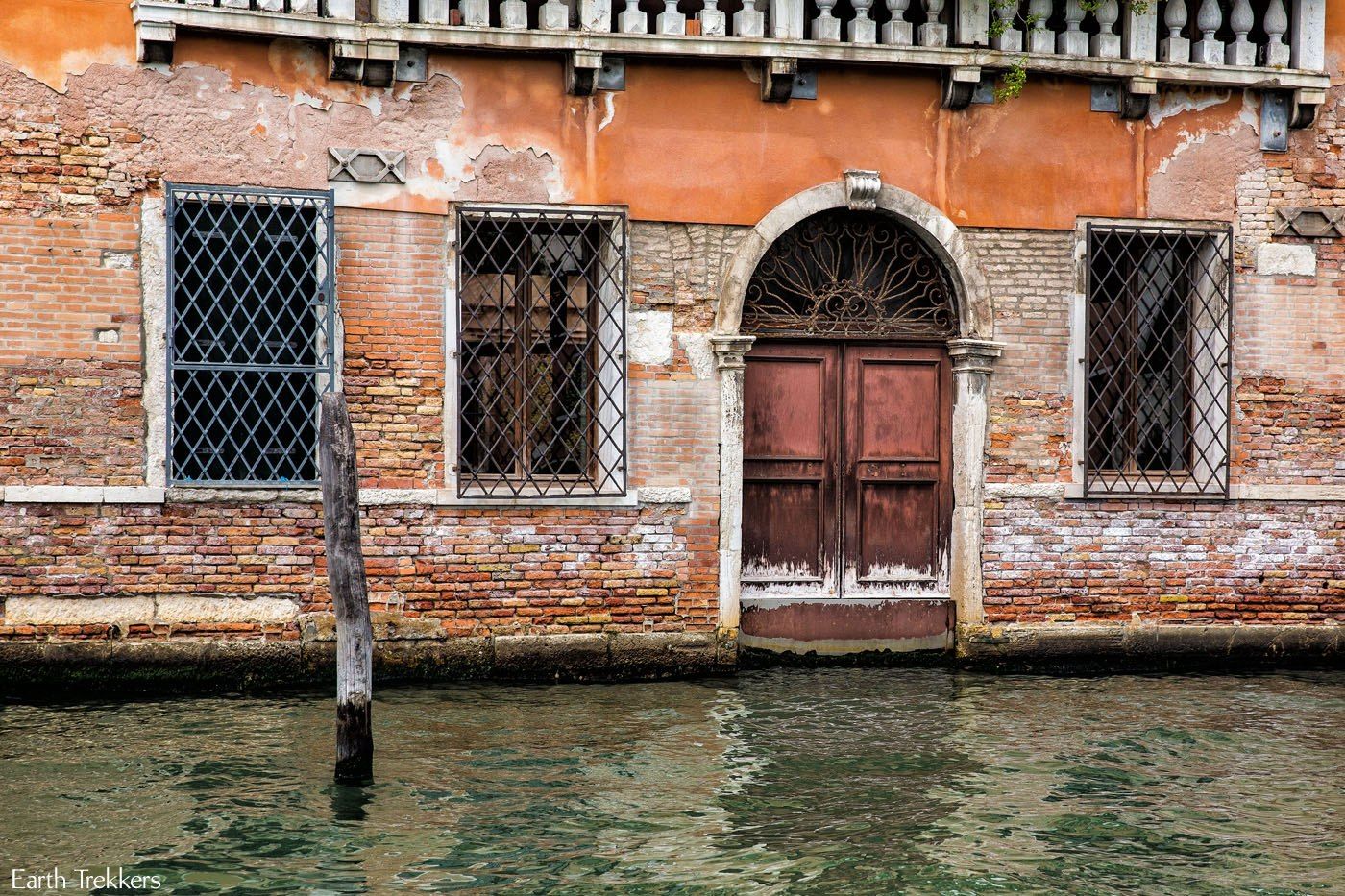
Even though it’s touristy, we love seeing Venice from a gondola: silently drifting through the canals puts you eye level with decaying brickwork, colorful doors, and the smaller, quieter canals that are some of the most photogenic corners of the city.
The big sites aren’t to be missed either. St. Mark’s Basilica (we took a nighttime tour and saw the interior fully illuminated, which we’d recommend to anyone) and Doge’s Palace both earn their reputations. But in a city like Venice, the city itself is the main attraction. The canals and bridges are unlike anywhere else in Italy, and it’s worth setting aside real time just to simply walk through and take it in.
This guide covers 20 of our favorite experiences in Venice: the icons you shouldn’t skip, a handful of quieter spots most first-time visitors miss, and a few things we only found because we kept coming back.
The Essentials
WHERE | Veneto, Italy
GETTING AROUND | On foot & by vaporetto (no cars)
BEST TIME TO VISIT | April–June or September–October
TIME NEEDED | 2–3 days
TOP PICKS | St. Mark’s Basilica, Rialto Bridge, a gondola ride, Ponte dell’Accademia at sunset
DAY TRIPS | Murano, Burano, Lido
WHERE TO STAY | San Marco (central), San Polo (central), Dorsoduro (quieter, less touristy), or Santa Croce (budget-friendly, easy to get to)
July 2026 Update: We gave this guide a full refresh. The list is now organized into categories to make it easier to navigate, we swapped out the T Fondaco Terrace (now permanently closed) for a new pick, the Jewish Ghetto, and we added more of our own firsthand experiences throughout, including our favorite spot for photography and a surprise find at the Basilica della Salute.
Tourist Entry Fee
Venice charges a day-trip entry fee on select high-traffic days, typically weekends and holidays in the spring and summer months. It only applies to day-trippers. If you’re staying overnight in Venice, you’re exempt from the fee, though you’ll still need to register your visit online in advance either way.
Check the official Venice Access Fee website before your trip for exact dates and current pricing, since both shift from year to year.
Icons & Must-See Landmarks
1. Wander the Canals & Explore the Neighborhoods
Put down your map and just wander. Forget the big, popular sites (we will get to those soon). The smaller canals off of the main tourist trail are perfect for wandering.
Our favorite thing to do in Venice is to simply explore the city on foot, strolling the canals and exploring its neighborhoods. Each has a different personality. Venice is small enough that wandering without a real plan is one of the best ways to experience it, and every wrong turn tends to lead somewhere worth seeing.
San Marco, the sestiere (neighborhood) that includes the Rialto Bridge and St. Mark’s Square, is the touristy heart of the city. It’s beautiful but crowded, especially in the middle of the day.
For a quieter feel, cross into Dorsoduro or Cannaregio. Both are more residential, with narrower canals, fewer crowds, and a much better sense of what daily life in Venice actually looks like. Dorsoduro has the university crowd and a handful of great small museums; Cannaregio, home to the Jewish Ghetto (more on that below), has some of the prettiest and least-visited canals in the city.
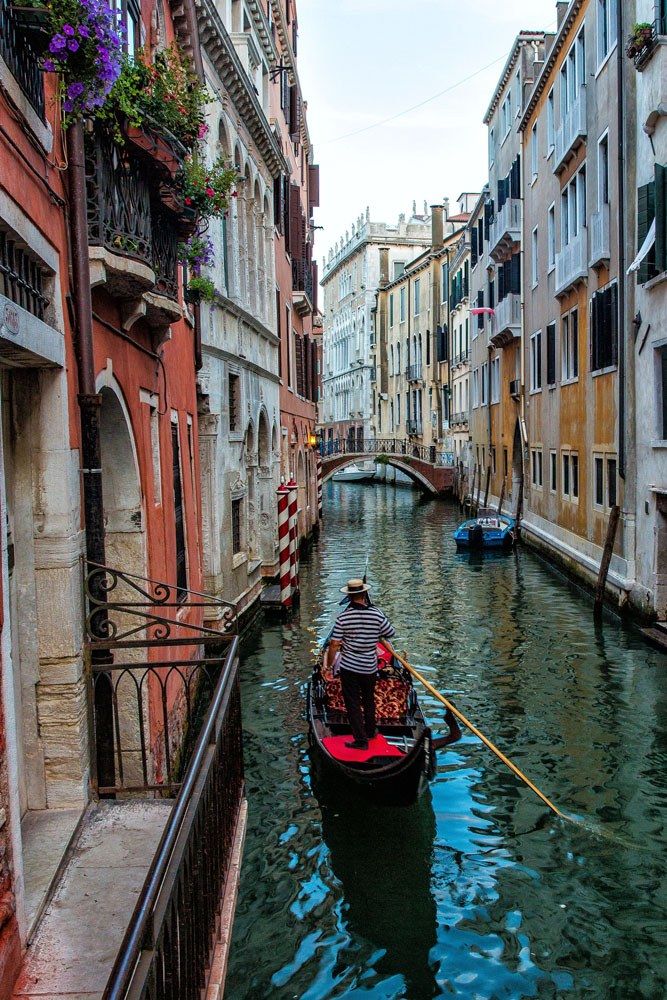
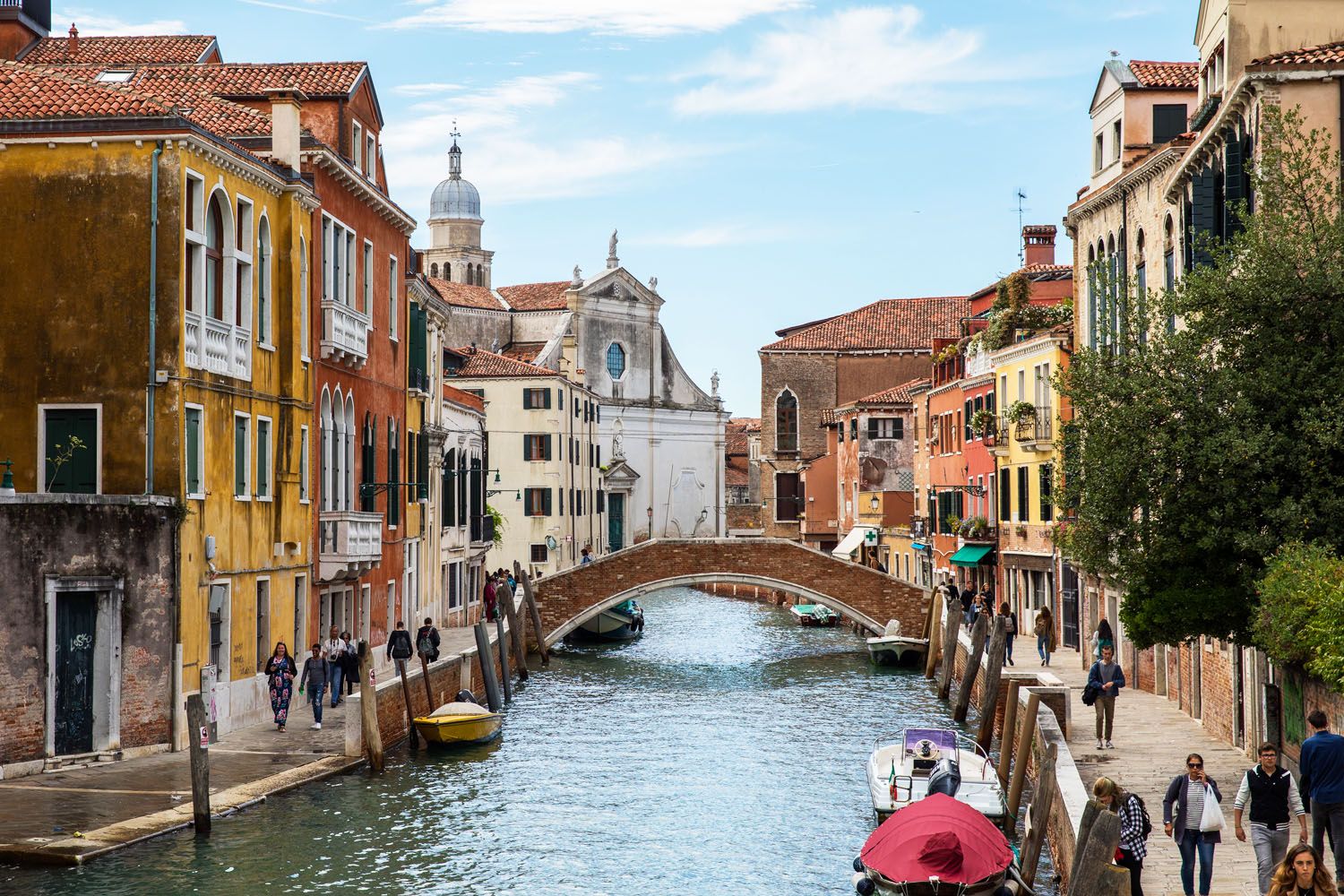
Dorsoduro, Venice
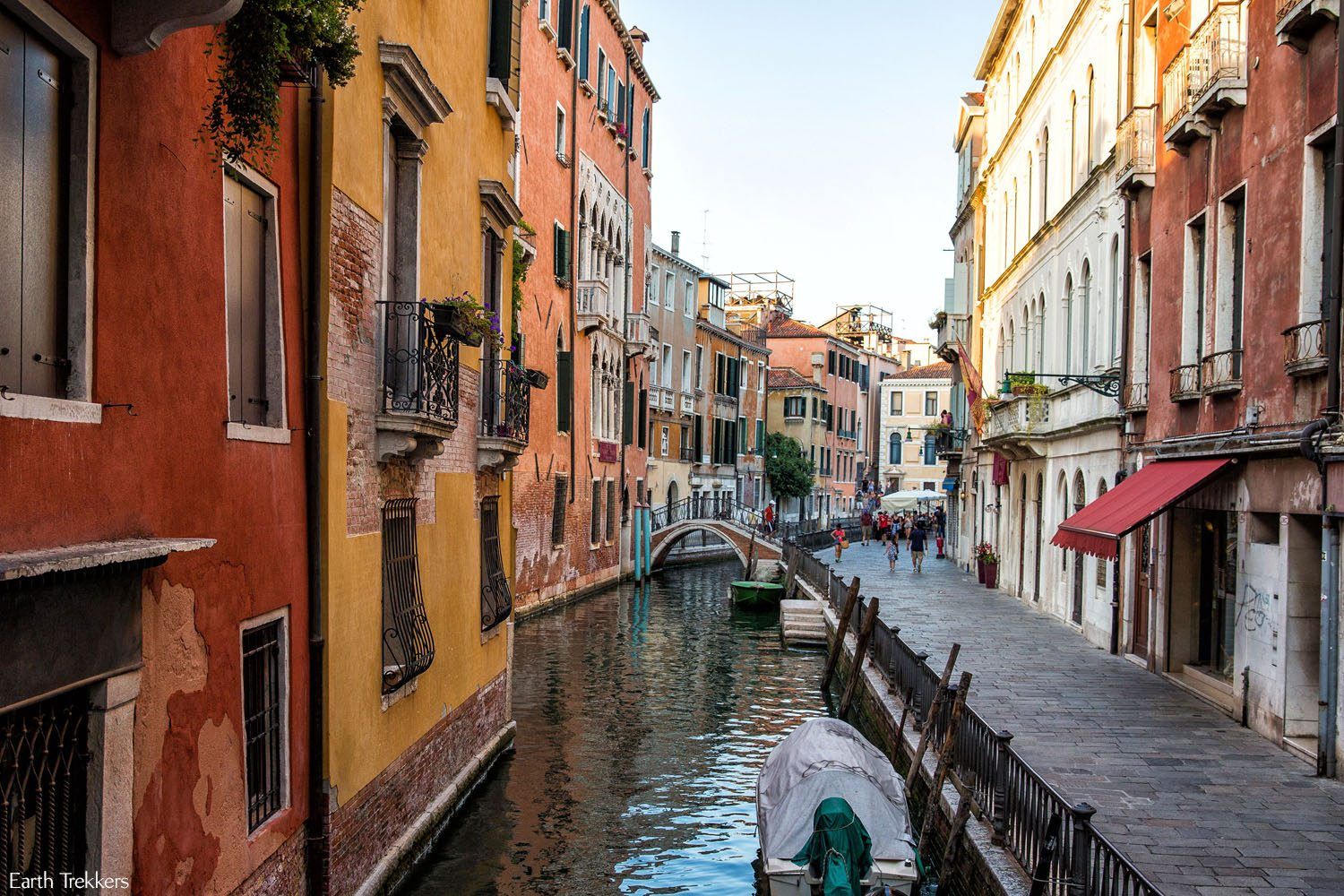
Venice canal
2. Get Your Bearings in St. Mark’s Square
St. Mark’s Square (Piazza San Marco) is the heart of Venice and the natural starting point for a visit.
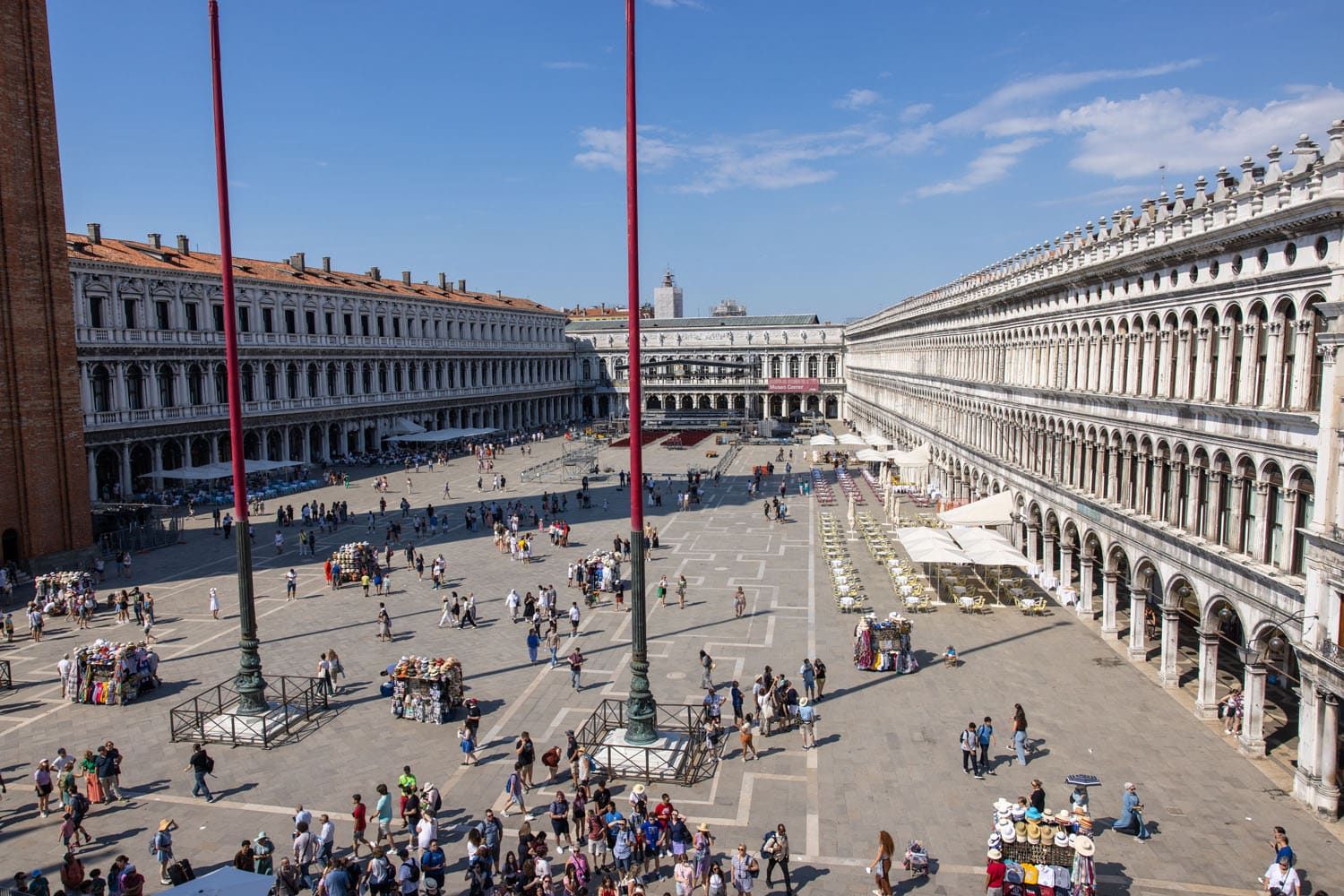
St. Mark’s Square from the terrace of St. Mark’s Basilica
St. Mark’s Basilica and the Campanile anchor the eastern end of the square, with the Doge’s Palace just around the corner. Arcades line the rest of the piazza, where the offices and residences of Venetian officials once stood; today they hold shops, cafés, and the occasional orchestra performing outside Caffè Florian, one of the oldest cafés in Europe.
We visited Caffè Florian for a coffee break one morning after visiting St. Mark’s Basilica. We dined on pastries, espresso, and fancy coffees, all while people watching and having a gorgeous view of St. Mark’s Basilica.
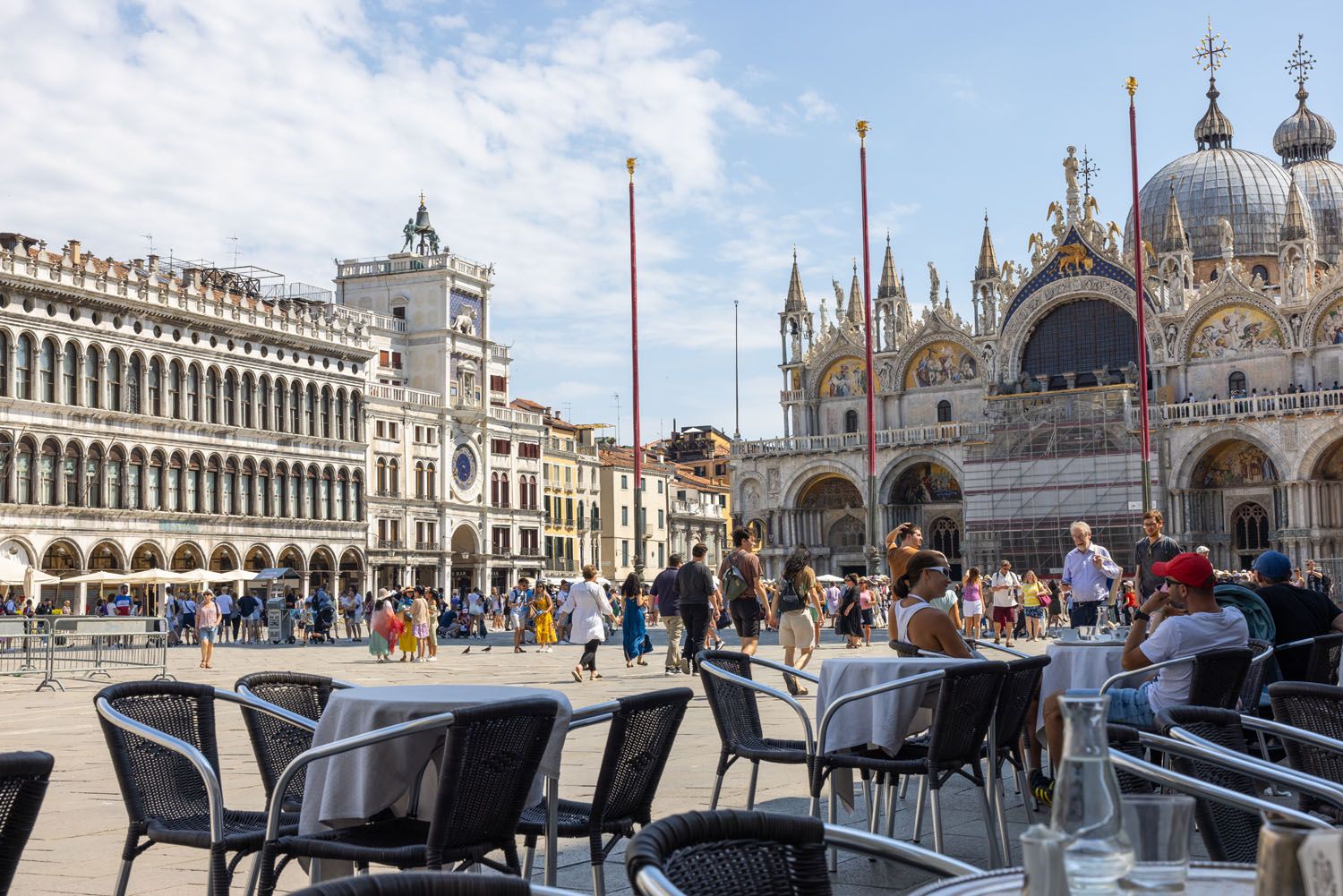
The view from our table at Caffé Florian
It’s worth taking your time in the square rather than rushing straight to the Basilica. Watch the crowds, take in the scale of the square, and remember that this was the political and social center of the Venetian Republic for over a thousand years, and it still functions as exactly that today.
3. Marvel at St. Mark’s Basilica
St. Mark’s Basilica is one of Venice’s unmissable sights, and one we’ve returned to more than once. On our most recent trip, we visited twice within 24 hours: first for an evening tour, when the basilica’s golden mosaics were fully illuminated (an incredible experience if it fits into your itinerary), and again the next morning, to revisit the interior in daylight and take in the view from the terrace.
The basilica dates back to the 9th century, built to house the relics of St. Mark, and its Byzantine mosaics and marble floors still show the wealth Venice commanded at its height. Lines here are legendary, so plan ahead: book a timed-entry ticket in advance or take a guided tour, which gets you in without the wait and adds context you’d otherwise miss.
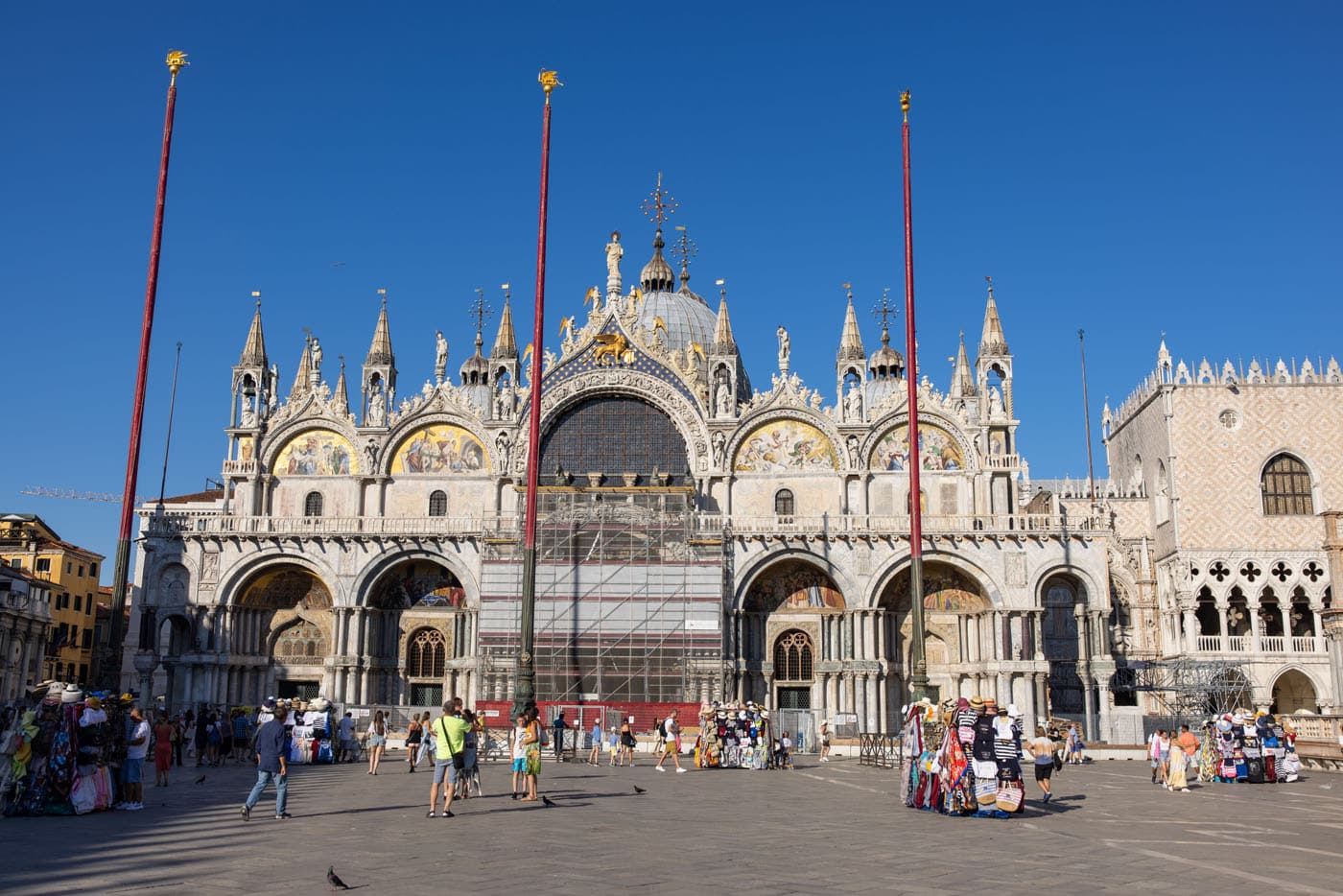
St. Mark’s Basilica
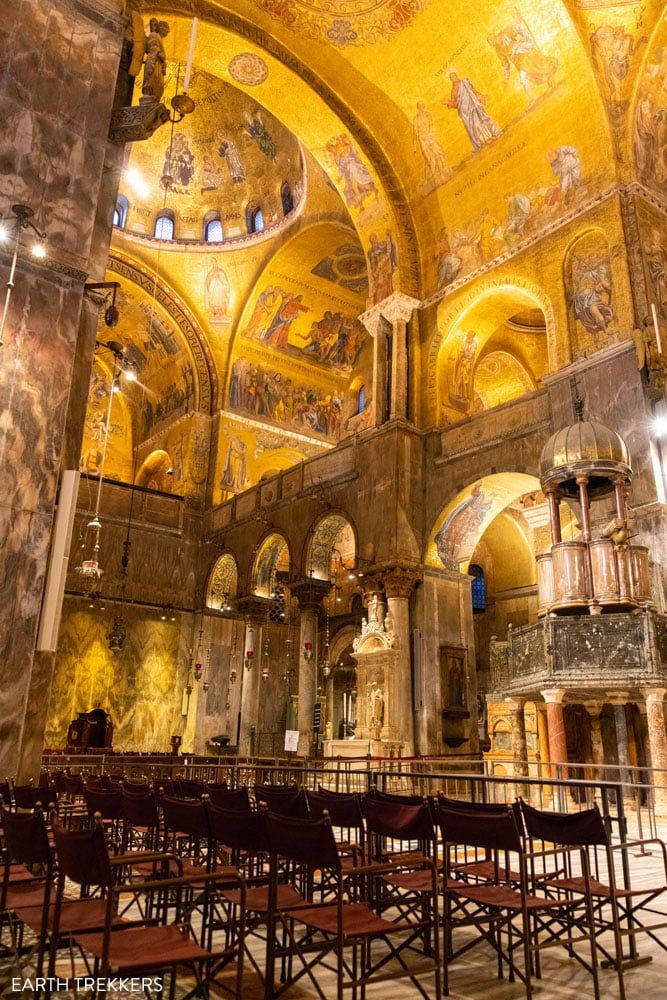
Inside St. Mark’s Basilica, during a nighttime small group tour
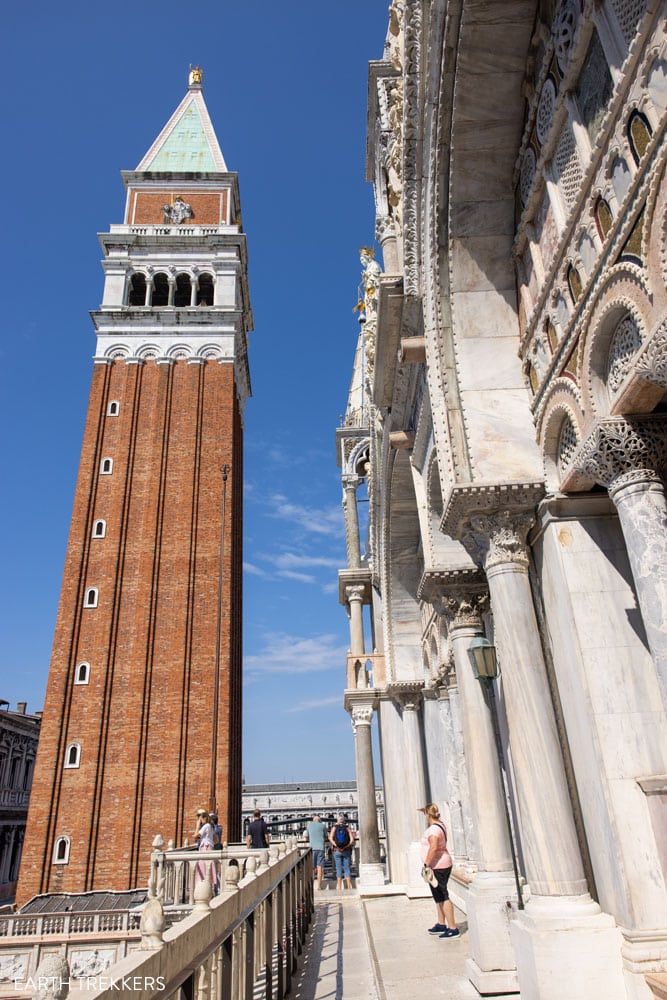
The view of the Campanile from the terrace of St. Mark’s Basilica
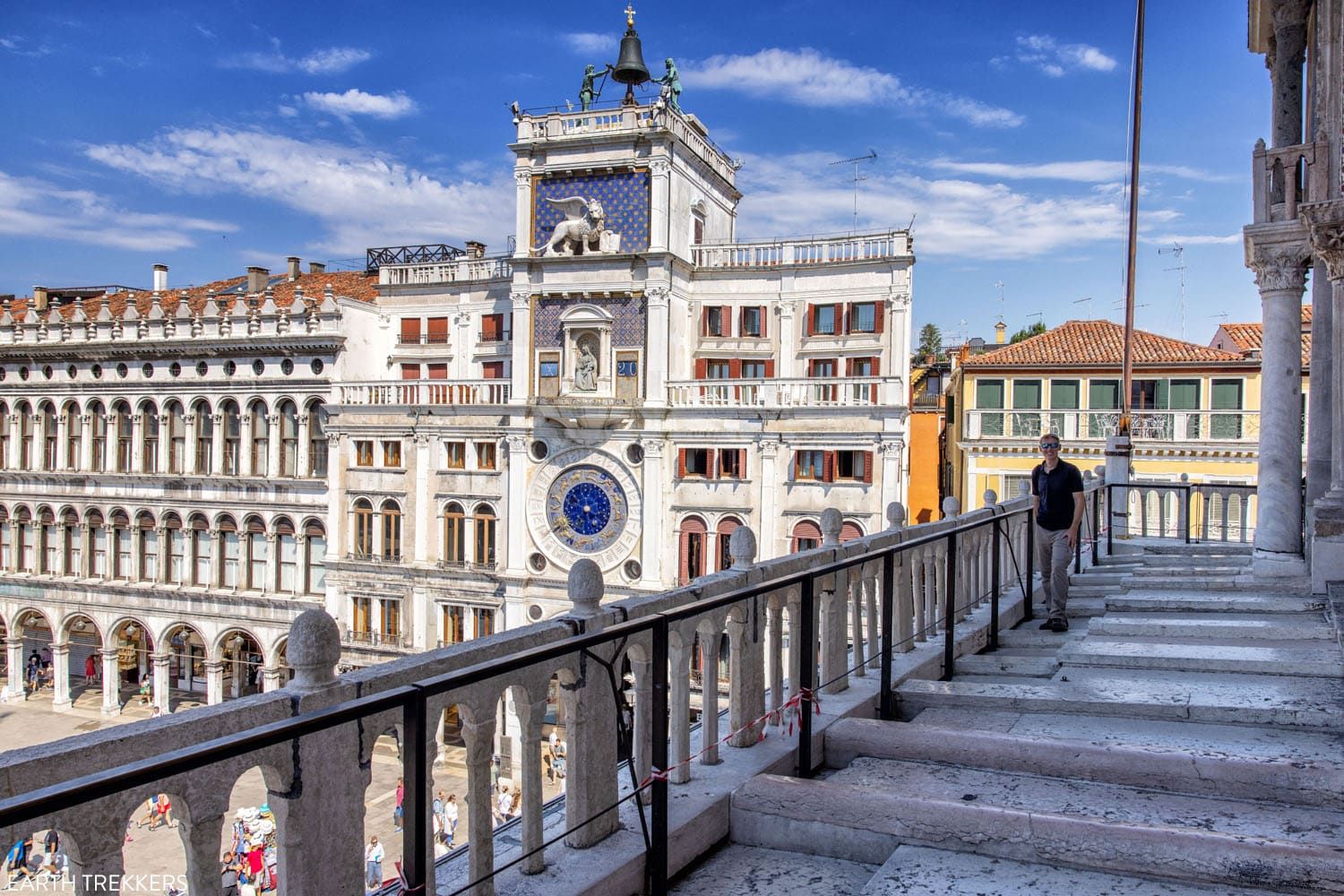
On the terrace of St. Mark’s Basilica
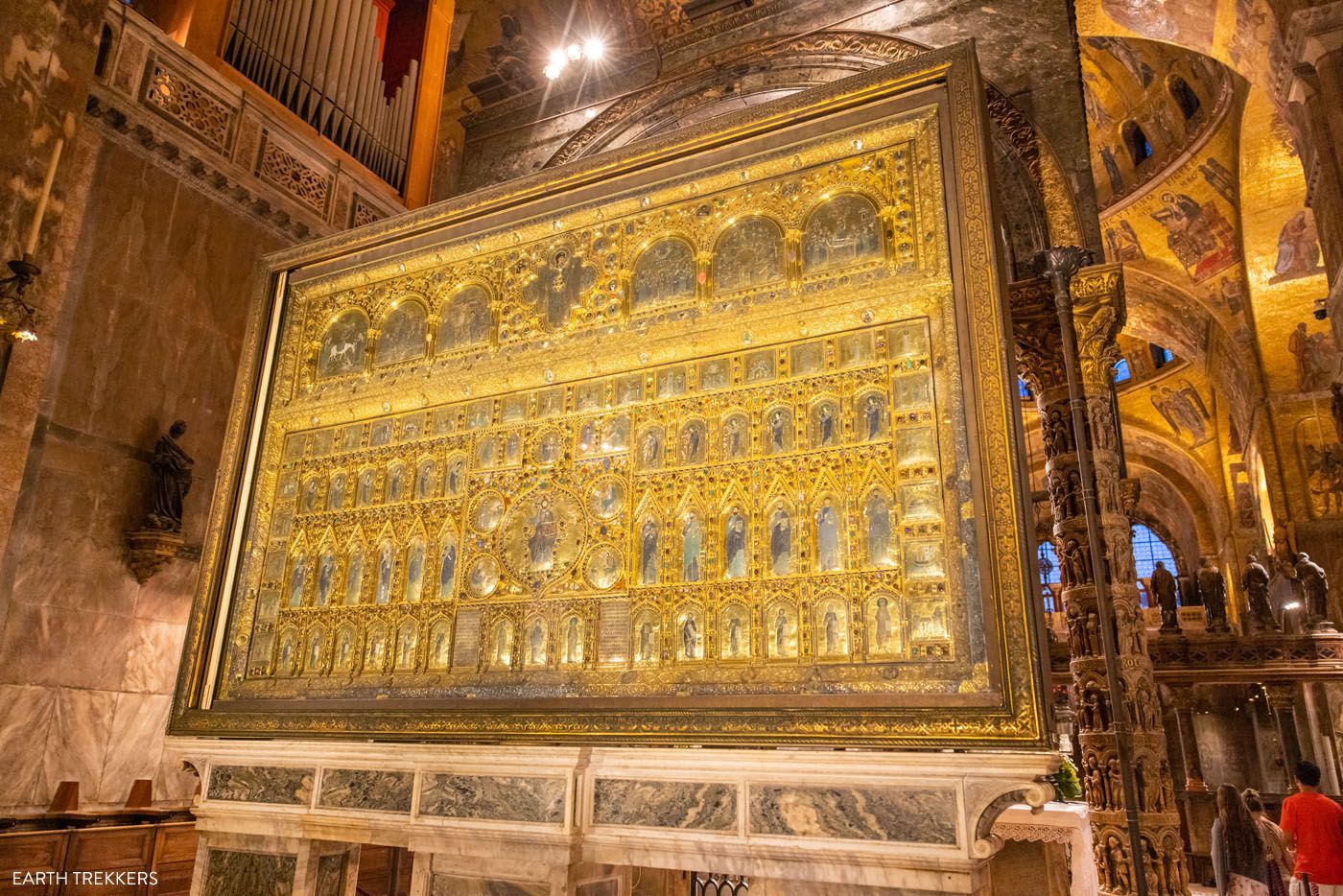
Pala d’Oro
How to Visit St. Mark’s Basilica
On a visit to St. Mark’s Cathedral, you will pay €10 to enter the basilica. For an additional fee, you can add on the Pala d’Oro, the Loggia dei Cavalli, and look out over St. Mark’s Square from the terrace.
We cover each of these sites and their cost in much more detail in our guide How to Visit St. Mark’s Basilica. This also includes tips to help you have the best experience, lots of photos both inside and outside of the basilica, and information on how to skip the line.
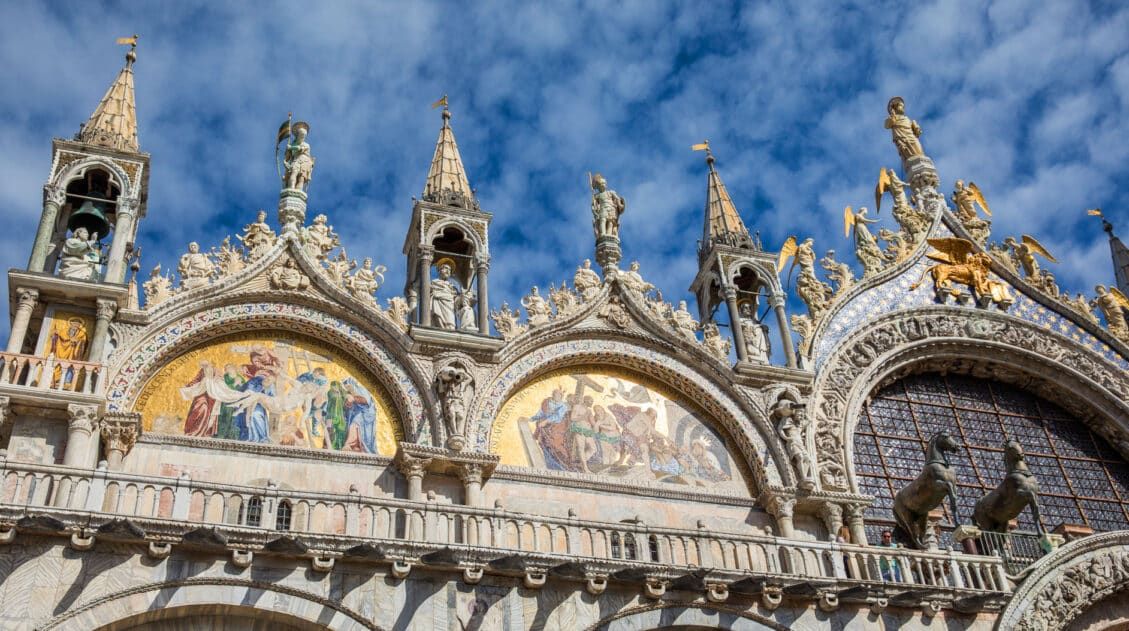
St. Mark’s Basilica: Cost, Tickets & Is It Worth It
Exactly how to visit St. Mark’s Basilica, how to skip the line, and is a night tour worth it?Hours: 9:30 am to 5:15 pm Monday to Saturday; Sunday 2 pm to 5:15 pm; last admission at 4:45 pm
Cost: €10 online in advance; Pala d’Oro, the Museum, and Loggia dei Cavalli have additional fees which you can see here.
Website: Get updated hours and pricing on the official website
Skip-the-Line: This tour has skip-the-line access and includes a visit to the St. Mark’s terrace for great views of the city.
Nighttime Tour of St. Mark’s Basilica: If you like the idea of visiting the Basilica with low crowds, consider taking a nighttime tour of St. Mark’s Basilica. Offered after closing time, this small group tour allows you to visit the Basilica without the crowds and you get to see the Basilica illuminated at night. We took this tour and it was amazing! To tour the Basilica without the crowds and see it illuminated was an incredible experience and much better than visiting it during the day, in my opinion (we have done both).
Skip-the-line at St. Mark’s Basilica plus Doge’s Palace: This 3-hour skip-the-line tour includes both St. Mark’s Basilica and the Doge’s Palace. This is a great tour to consider since it includes both of these sights and you get to tour them with a knowledgeable guide.
4. Tour Doge’s Palace
Doge’s Palace was the political and residential heart of the Venetian Republic for centuries, home to the elected Doge and the seat of Venice’s government and courts. The Gothic façade alone is worth the visit, but the interior gives a real sense of just how much wealth and power passed through Venice in its prime.
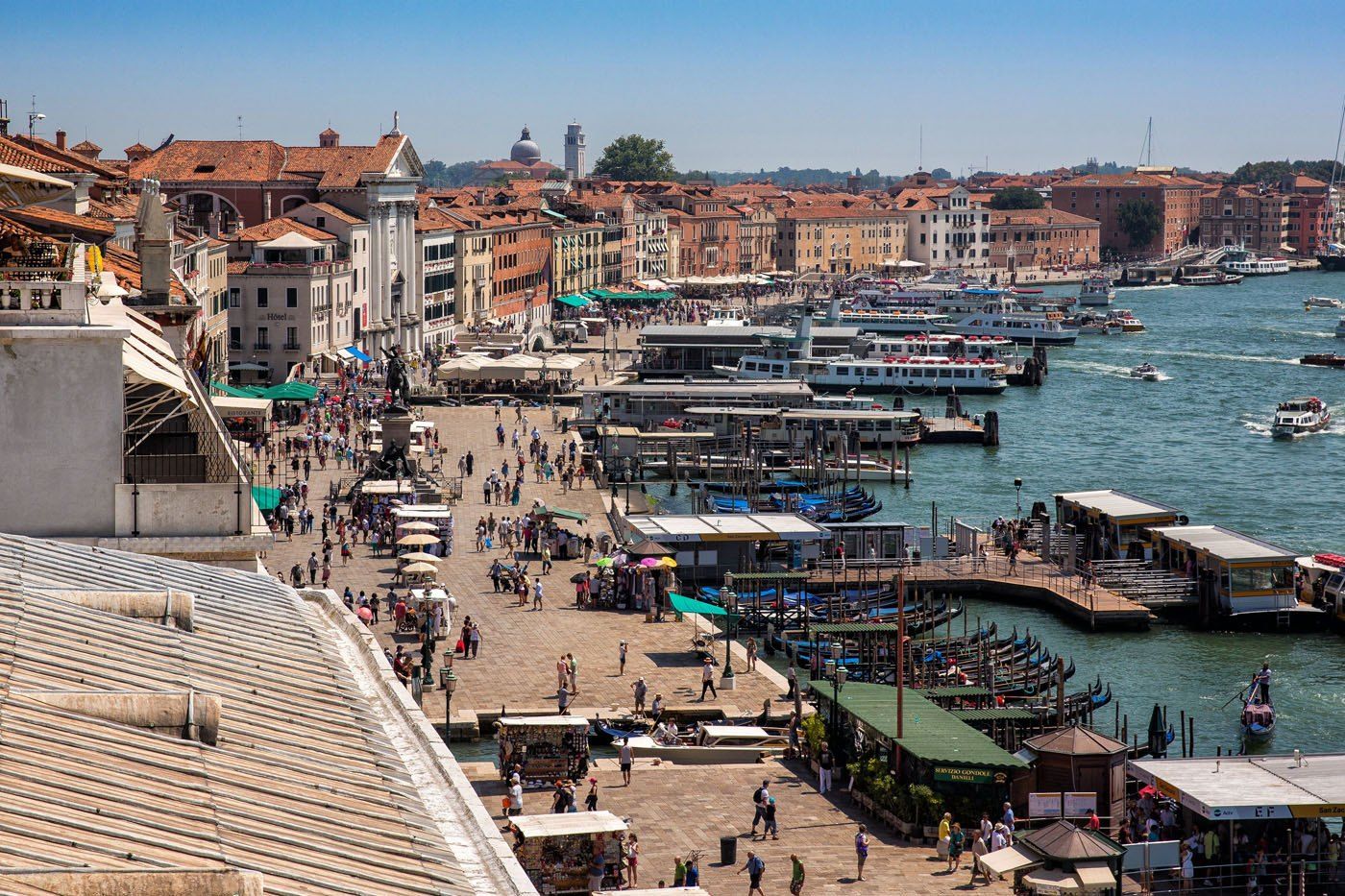
View from the Doge’s Palace
From inside the palace, you’ll cross the Bridge of Sighs, the enclosed marble bridge connecting the Doge’s Palace to the old prisons. It’s named for the sighs of prisoners taking their final look at Venice through its windows on the way to their cells.
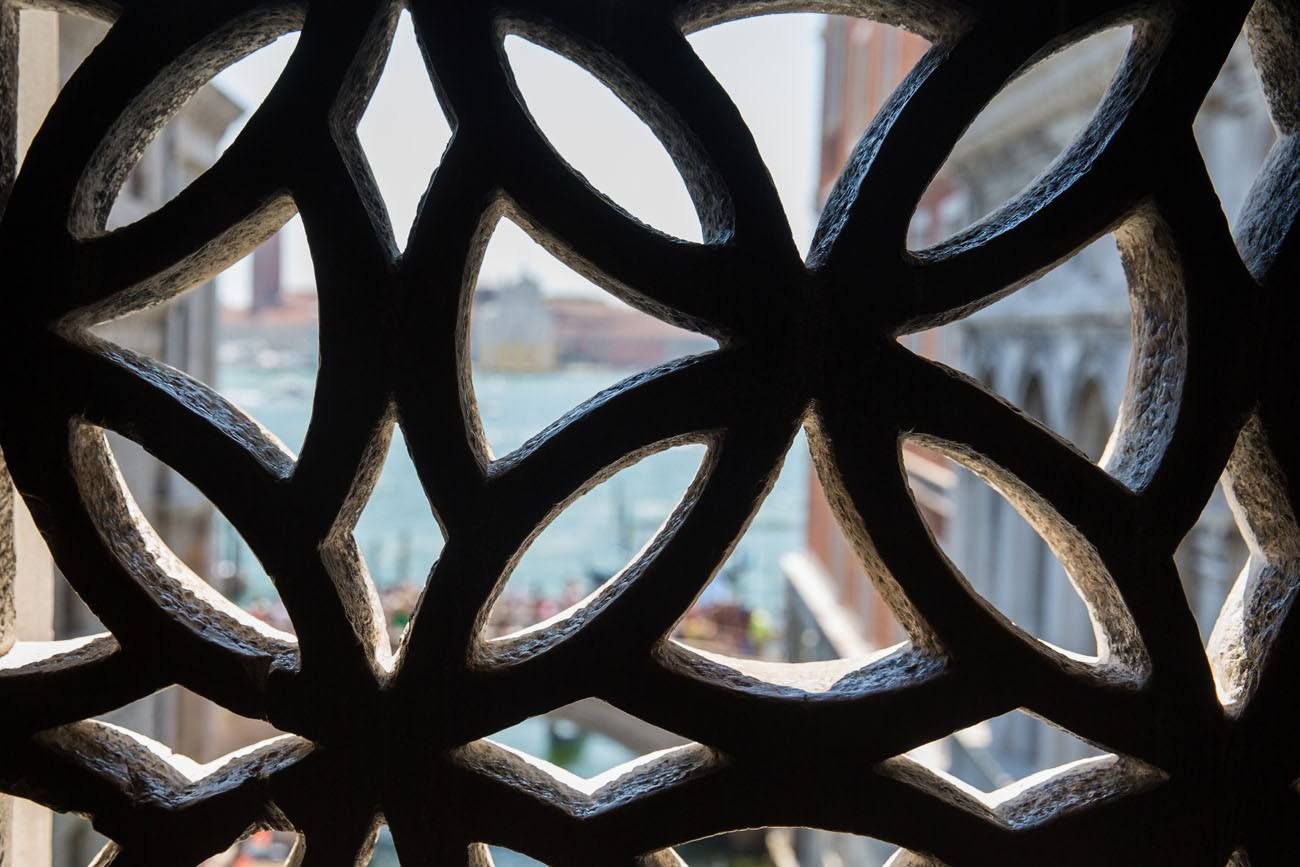
View from the Bridge of Sighs
Doge’s Palace and St. Mark’s Basilica sit right next to each other, so most visitors pair them in a single morning or afternoon.
Website: Get updated pricing, learn about the Secret Itineraries tour, and book your tickets in advance on the official website.
5. Photograph the Bridge of Sighs
So, you walked across the Bridge of Sighs from the Doges’ Palace. Now it is time to view the Bridge of Sighs from outside the Doges’ Palace.
Go for a stroll along Riva degli Schiavoni, which is a wide promenade that runs along the Venetian Lagoon near Doge’s Palace. As you cross Ponte della Paglia look down the canal for the iconic view of the Bridge of Sighs.
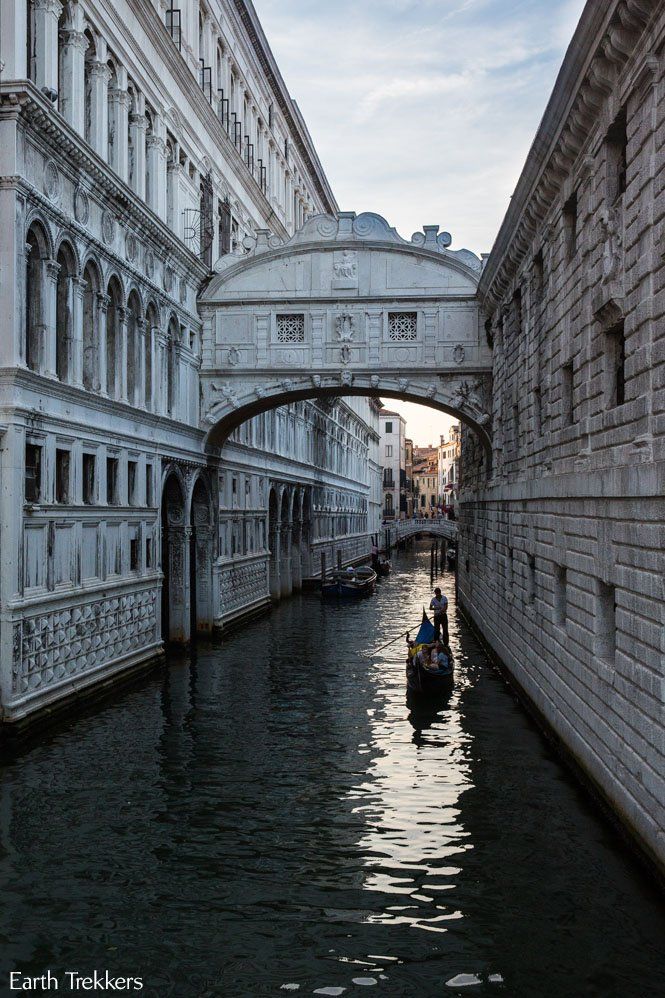
Bridge of Sighs
6. Enjoy the View from Campanile di San Marco
The Campanile is the bell tower that has anchored Venice’s skyline for centuries. The original tower dates back to the 9th century and served as both a lighthouse and a watchtower; it collapsed unexpectedly in 1902 and was rebuilt exactly as it stood, brick by brick, over the following decade.
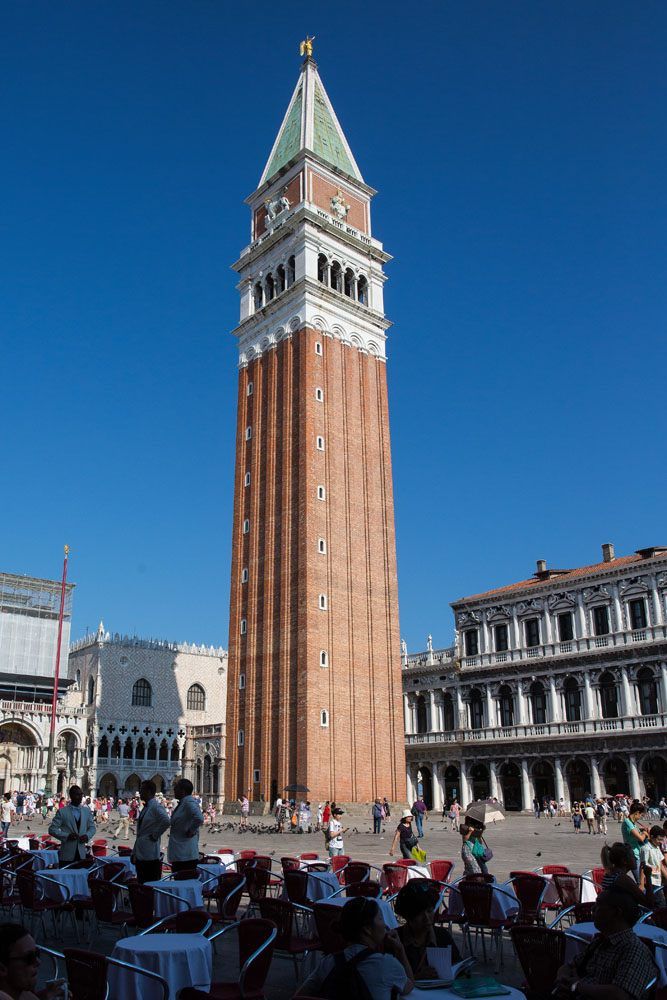
The Campanile
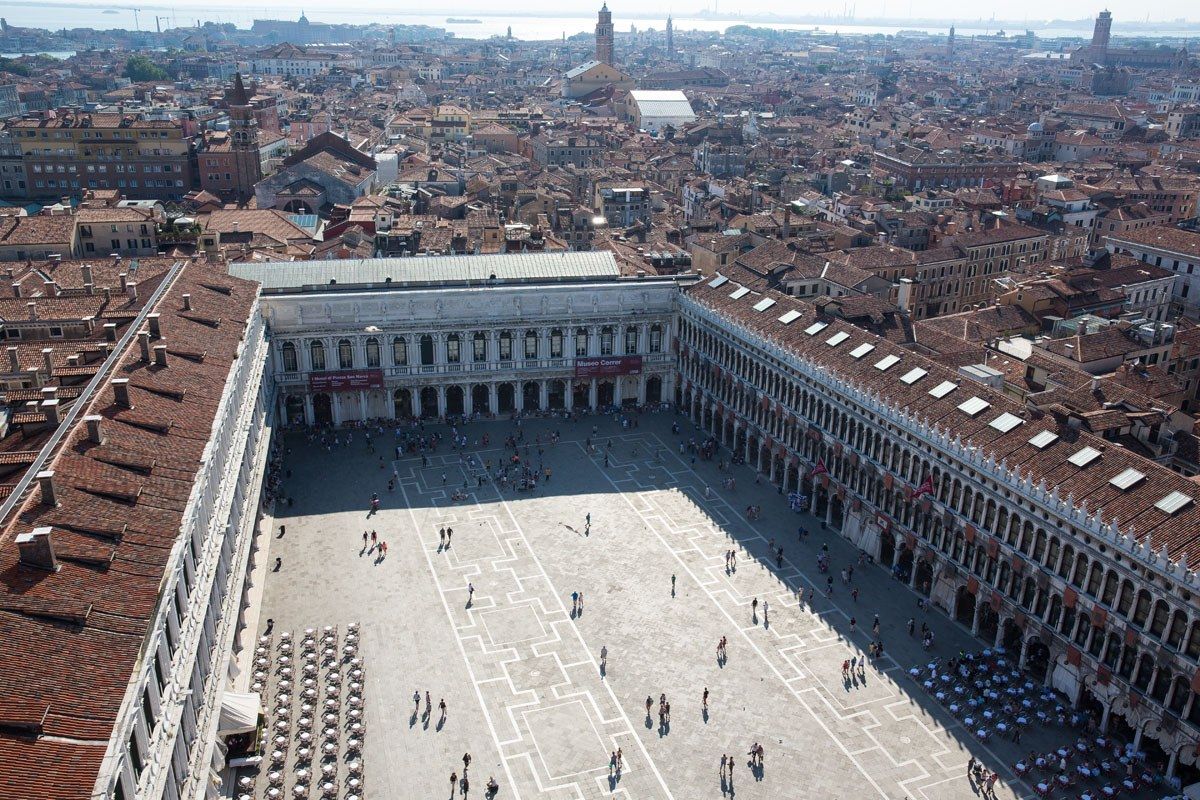
View from the Campanile
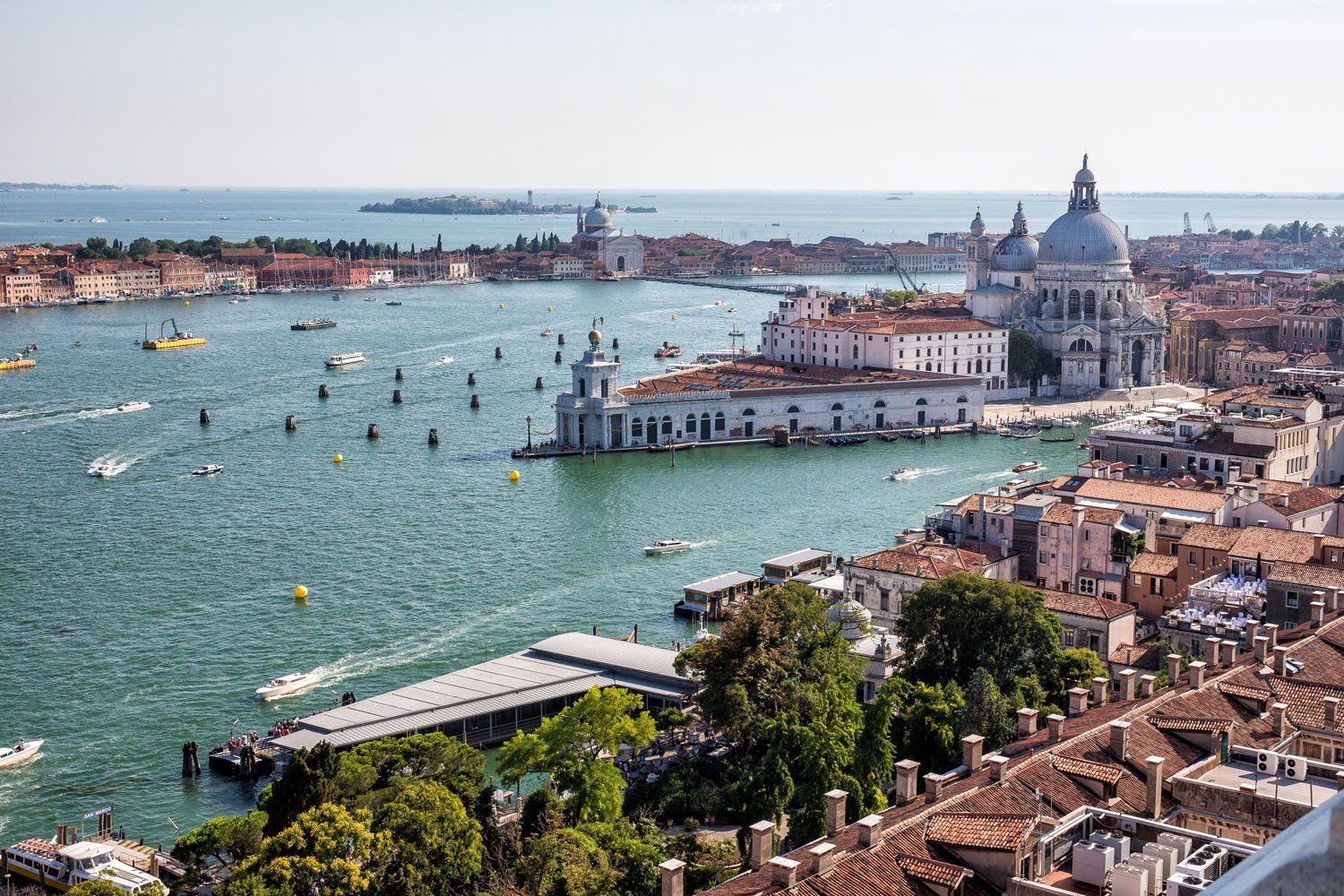
Another view from the Campanile
An elevator takes you to the top, where you can see the bells up close and get your bearings over the rooftops of Venice. (For a full rundown of the views from up here and elsewhere in the city, see our guide to the best views of Venice.)
Important: During adverse weather conditions (high winds, cold temperatures) the campanile will close.
PRO TRAVEL TIP: Lines can be long to enter the bell tower. Before your visit to Venice, book a time slot on the official St. Mark’s Basilica website. Only 30 tickets are available for each time slot so I recommend you make your reservation as soon as you know your dates of travel to Venice.
7. Take a Photo from the Rialto Bridge
The Rialto Bridge is the oldest of the four bridges that cross the Grand Canal, and for centuries it was the only way to cross on foot. We have a soft spot for it. Some of our favorite family photos from our first trip to Venice in 2014 were taken right here, with the Grand Canal behind us.
Beyond the photo op, it’s simply a great place to stand still for a few minutes. Gondolas, water taxis, and vaporettos all funnel through this stretch of the Grand Canal, and watching the traffic from the bridge is one of the more entertaining, low-effort things to do in Venice.
The bridge itself is lined with small shops selling jewelry, leather goods, and souvenirs, dating back to its stone reconstruction in the 1590s.
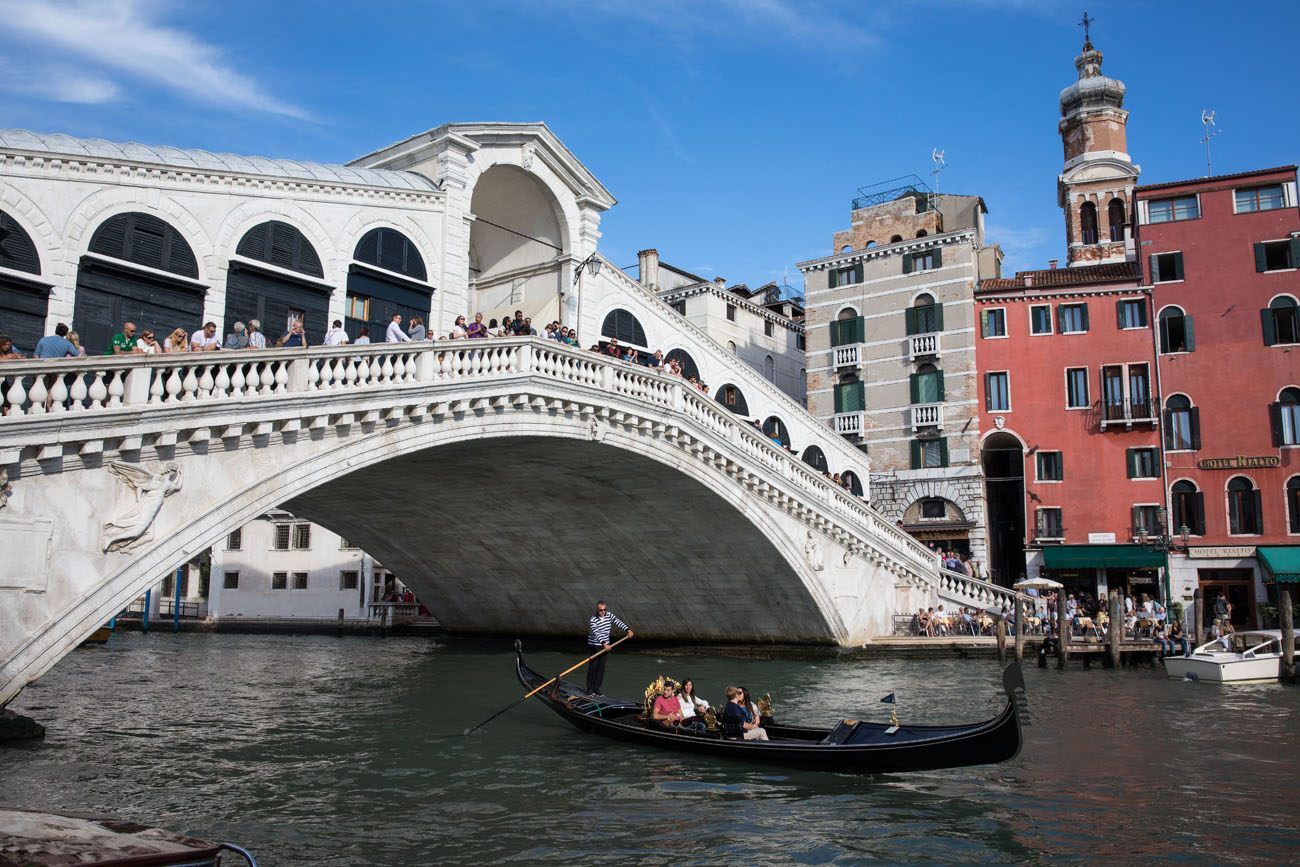
Rialto Bridge
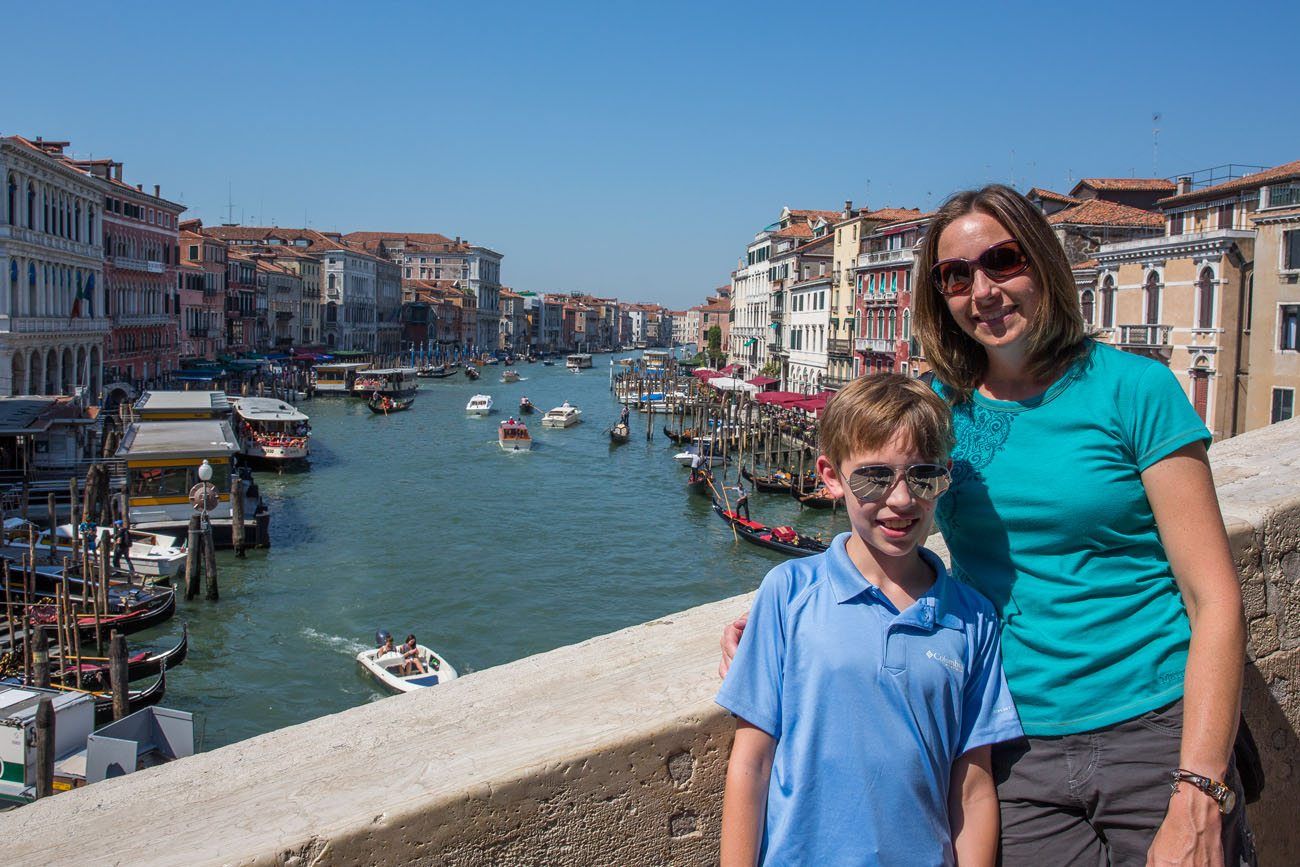
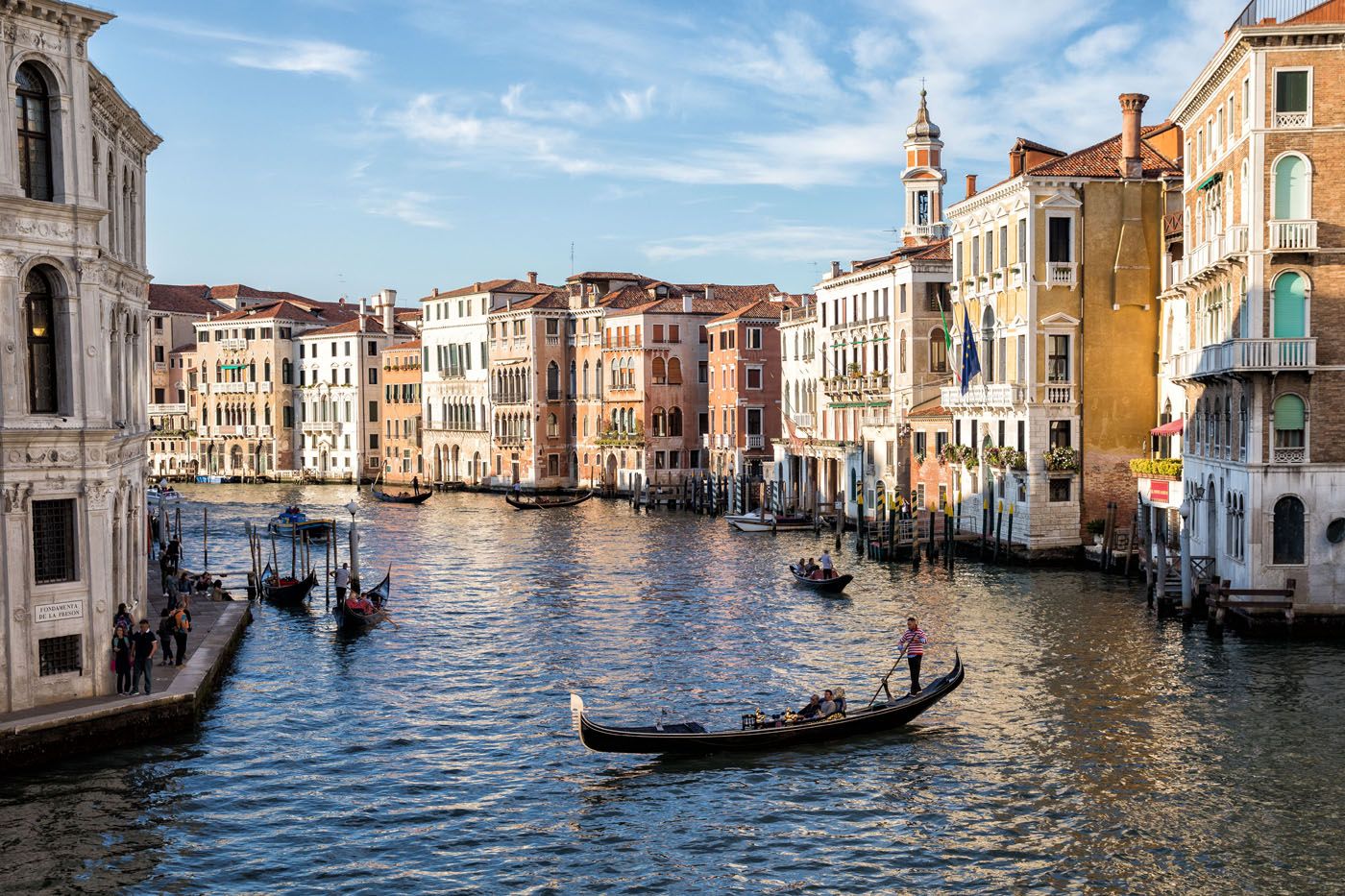
View from the Rialto Bridge
8. Watch the Sunset from Ponte dell’Accademia
Ponte dell’Accademia is our favorite spot in Venice for photography, and we make a point of crossing it several times on every visit, at different times of day.
This wooden bridge over the Grand Canal isn’t the most ornate in the city, but the view from the middle is one of the best: look east and you’ll see the Basilica di Santa Maria della Salute anchoring the canal, with gondolas, water buses, and taxis drifting past below.
During the day, it’s a good spot to pause and watch the boat traffic. But it’s at sunset and in the evening that this bridge becomes something else entirely, when the Grand Canal is illuminated and the light shifts over the water. If you only cross it once, make it near sunset.
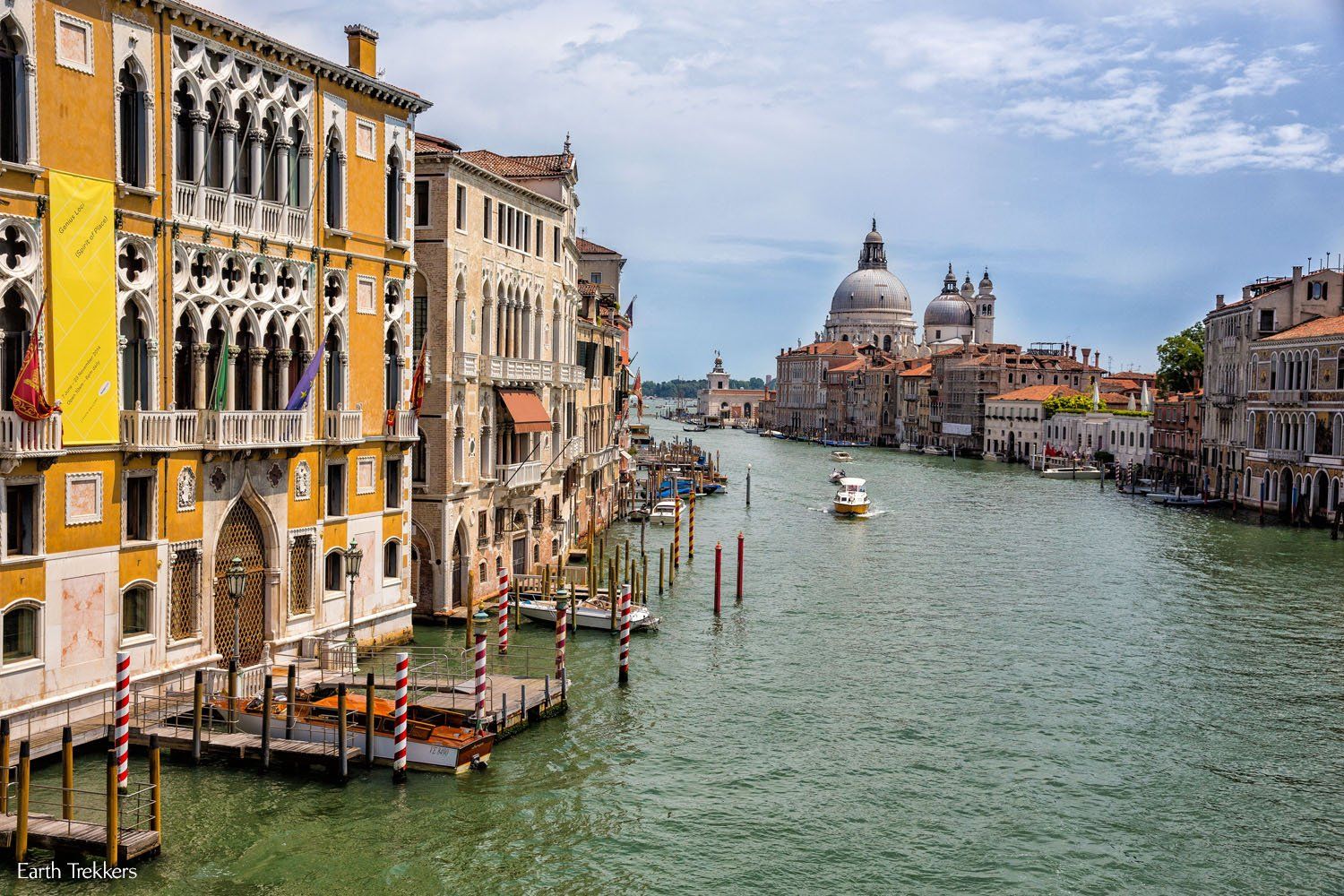
View from Ponte dell’Accademia
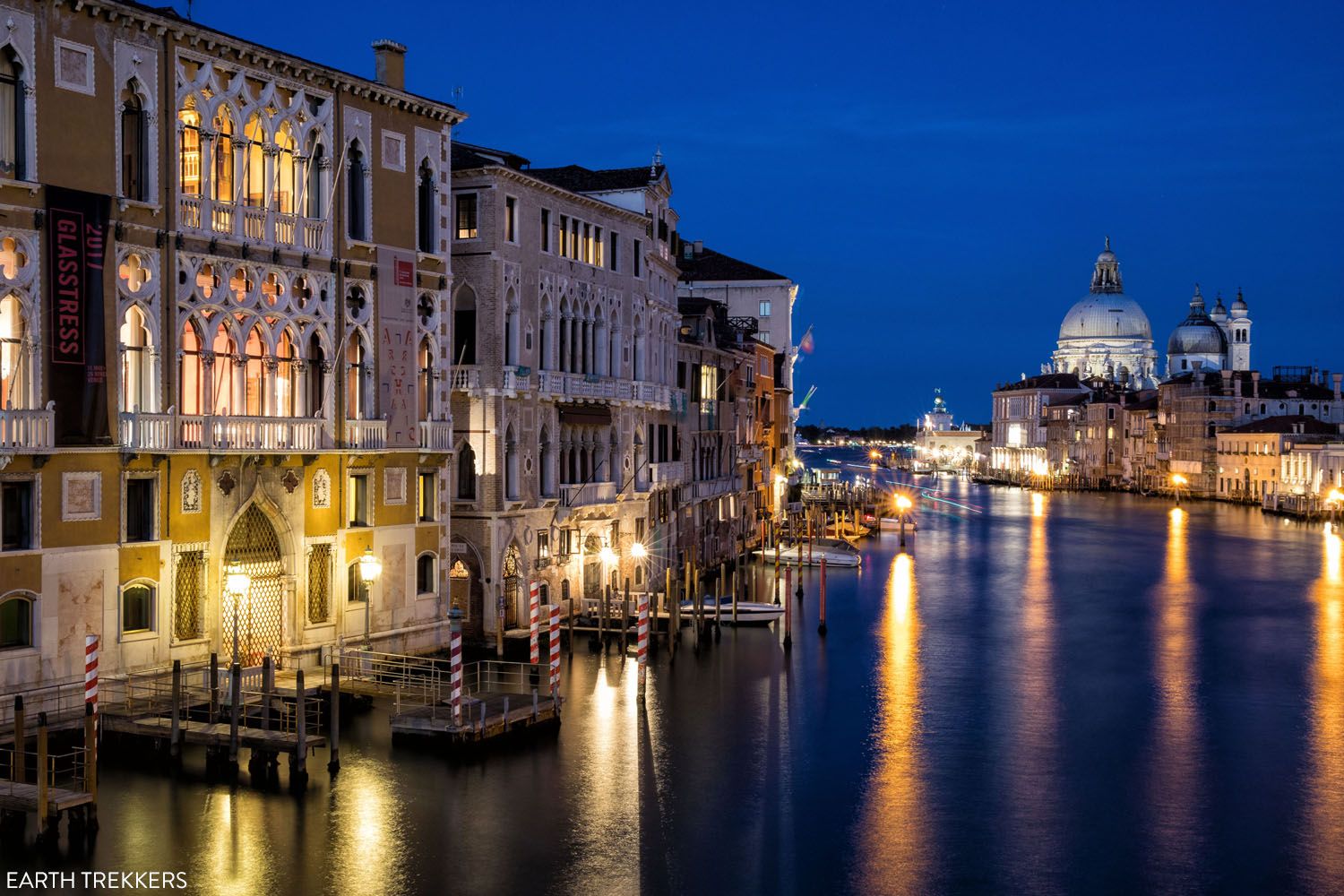
The same view in the evening

Things to Do on the Water
9. Glide through the Canals on a Gondola
A gondola ride is touristy, and it’s one of the pricier things you’ll do in Venice. There’s no getting around either of those facts. But nothing else gets you into Venice’s smaller canals quite the same way: gliding at water level, close enough to take in the peeling paint and old brick on either side, with none of the noise of a vaporetto or water taxi. It’s a completely different pace than walking the city, and a completely different angle than you get from any bridge.
Skip the stretch along the busy part of the Grand Canal if you can, and ask your gondolier to take the smaller, quieter canals instead. That’s where the ride earns what you paid for it.
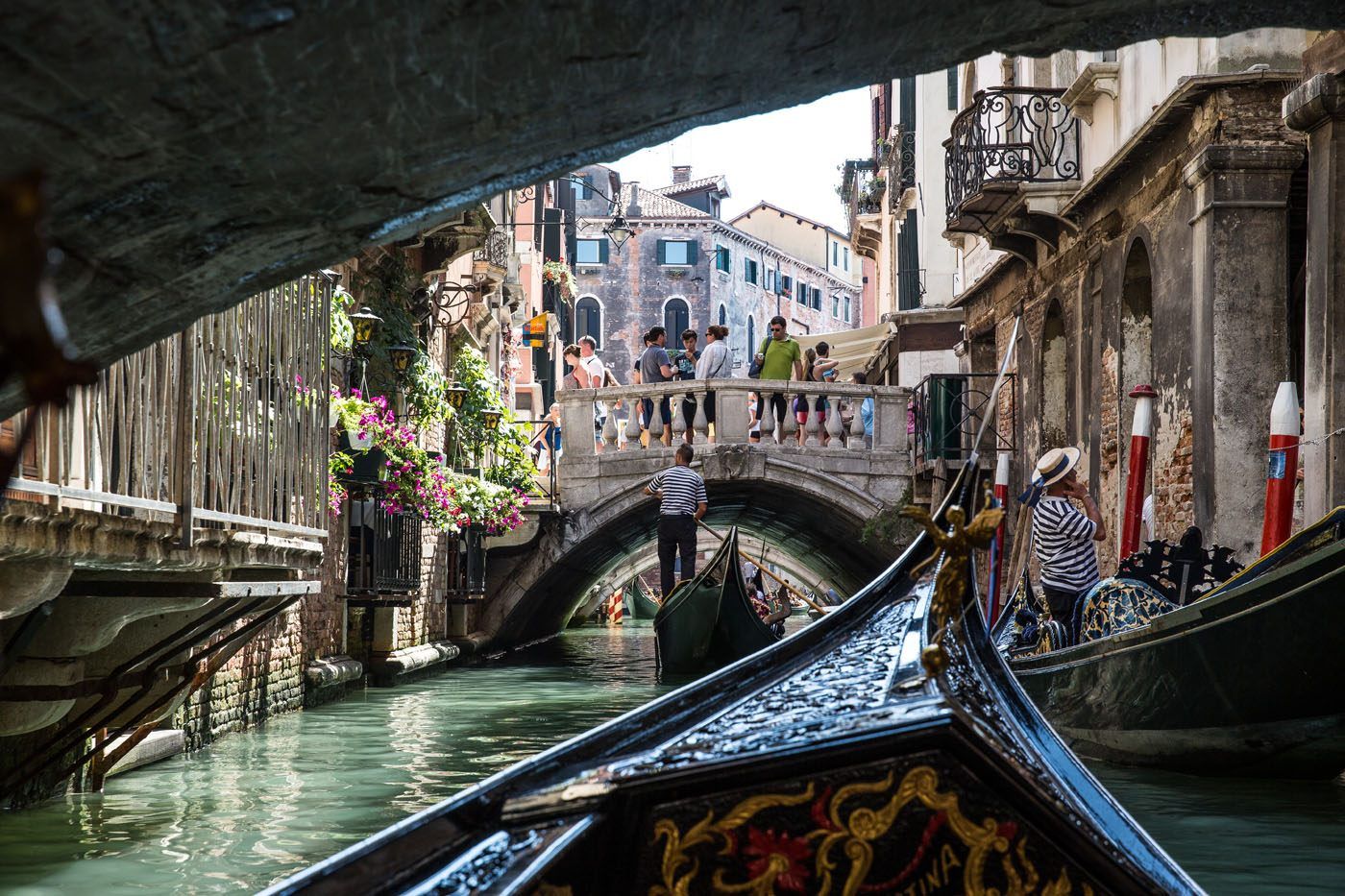
View from a gondola ride
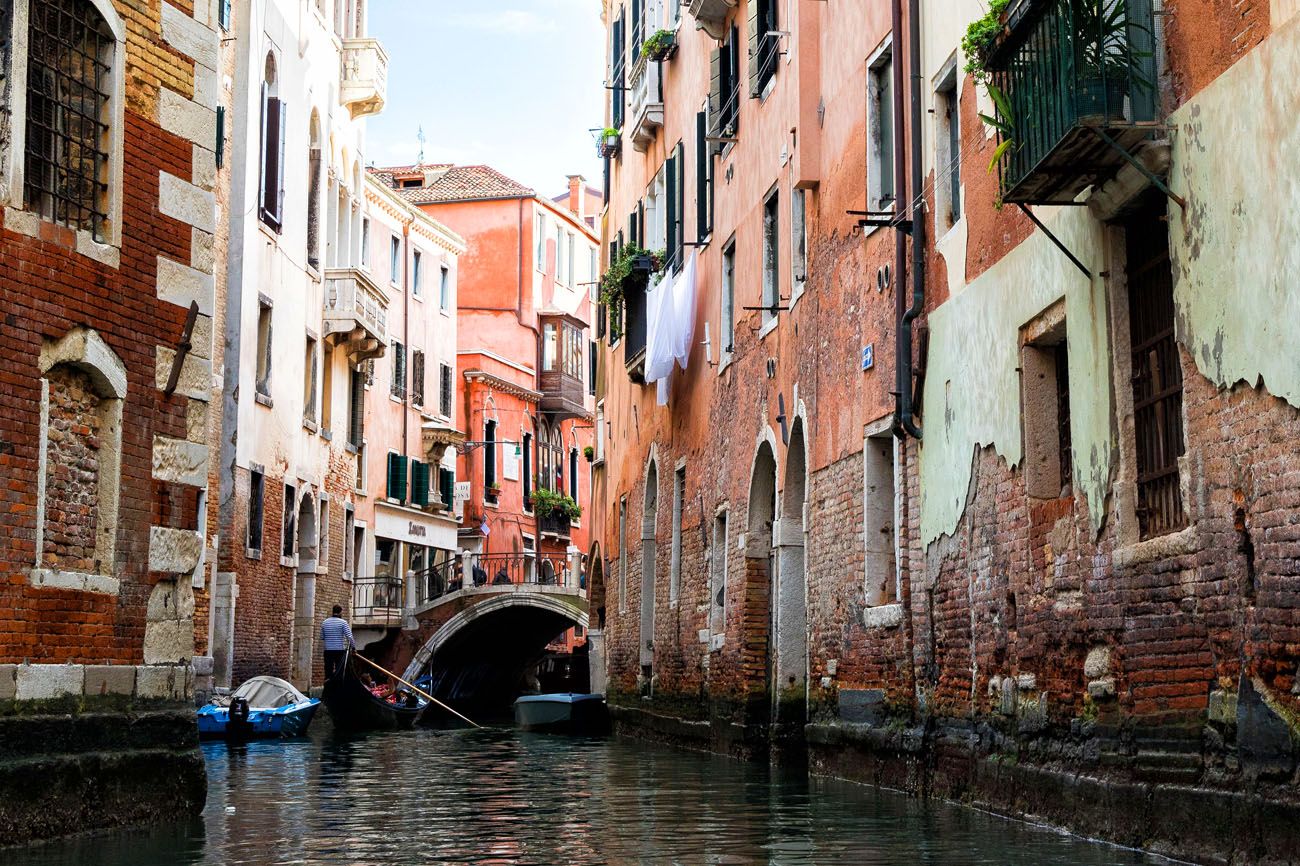
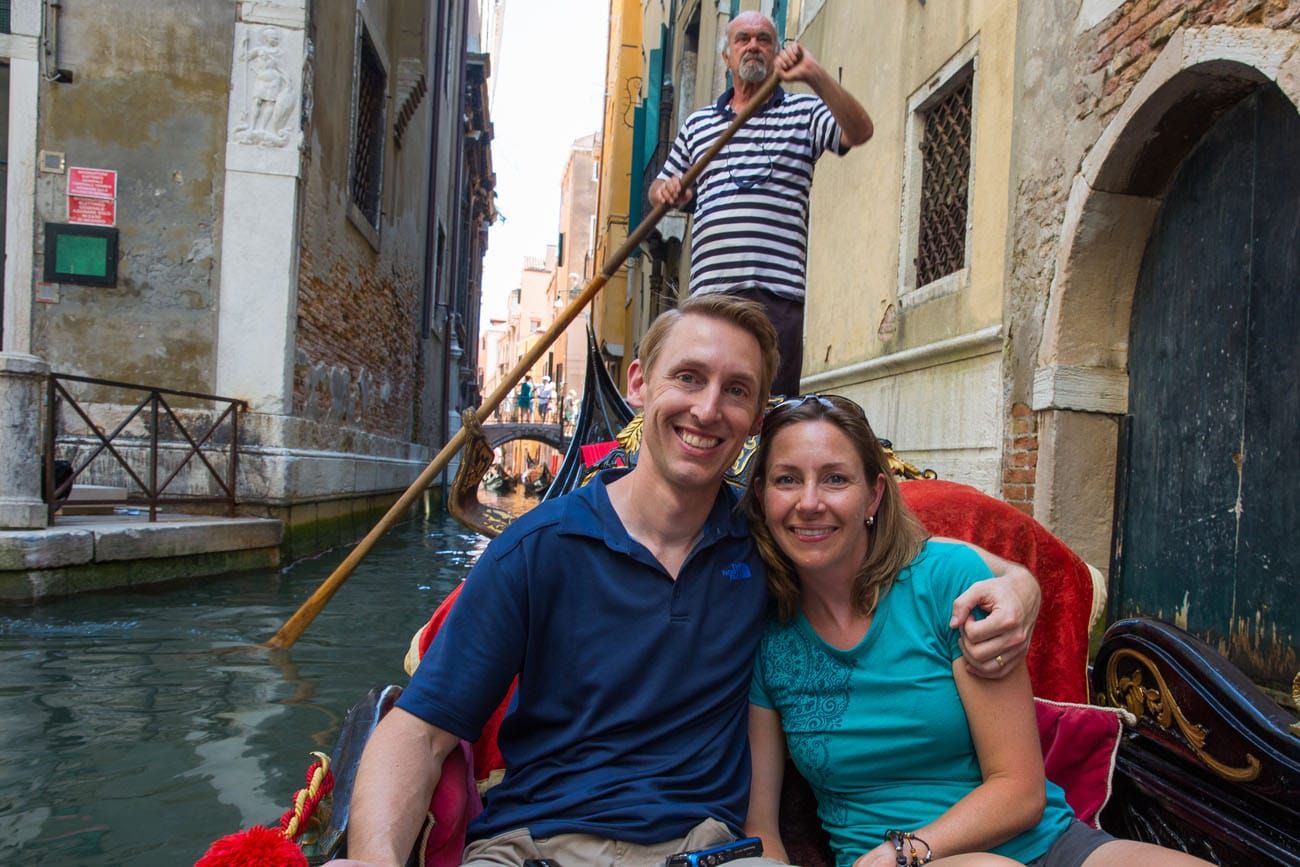
How Much Does a Gondola ride cost? That’s a good question. The city of Venice sets the rate at €90 per 40 minutes (€110 after 7 pm) but that doesn’t mean that’s the rate you will get. You will have to negotiate with your gondolier before you ride. Make sure you agree on the price and the length of time you will ride before you get in the gondola. And if you would like him to sing, that will cost extra. Here is a great article if you want to learn more.
10. Cruise the Grand Canal by Vaporetto
The vaporetto, Venice’s public water bus, is one of the best cheap thrills in the city.
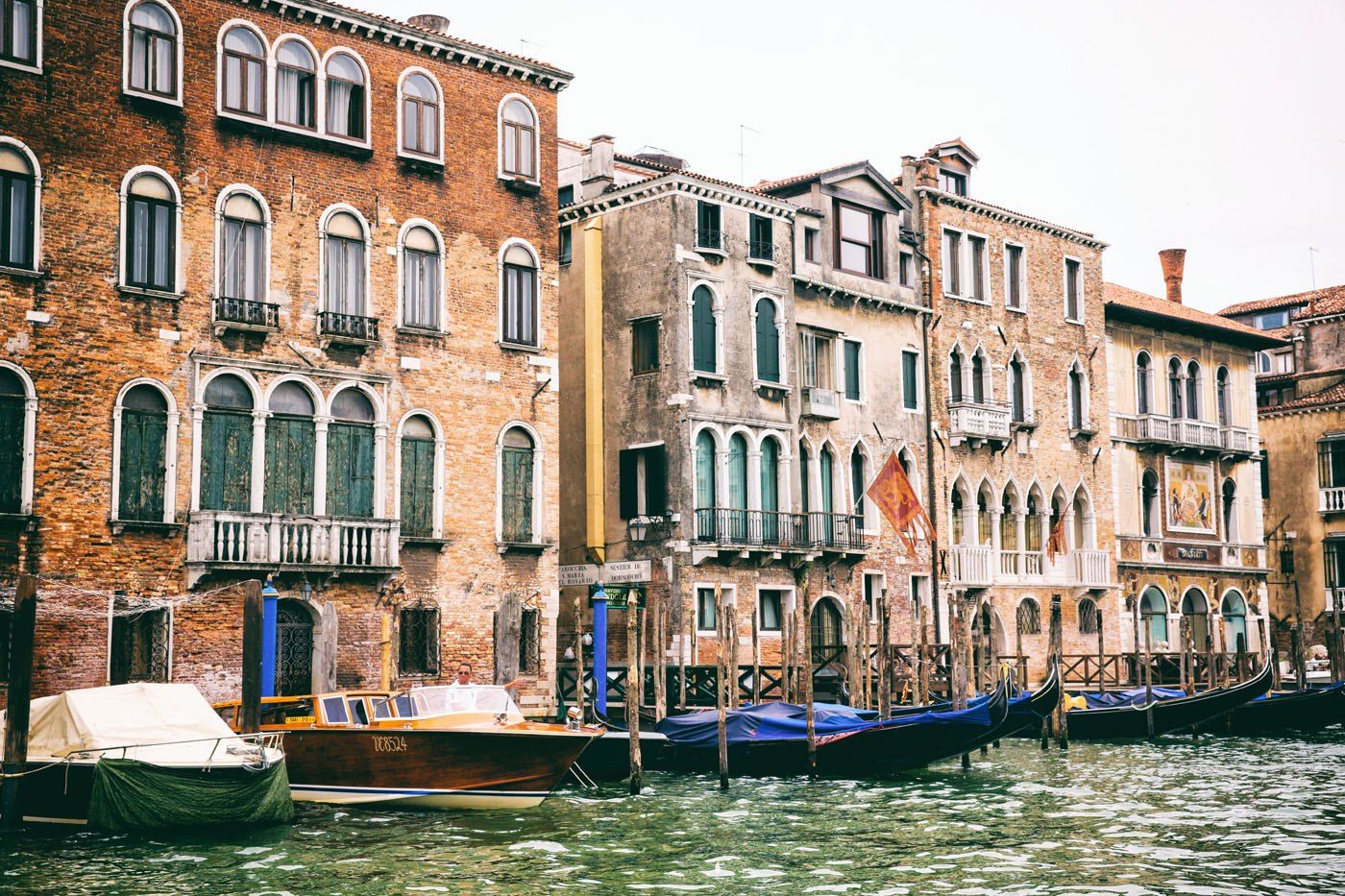
On our first trip to Venice, we treated a ride down the Grand Canal as a sightseeing cruise, and came away with some of our favorite photos from that entire trip. For the cost of a public transit ticket, you get a slow-moving tour past centuries of Venetian palazzos, with a much better vantage point than you’d get on foot.
It’s also just a good excuse to sit down. Venice is a walking city, and after a few hours of bridges and narrow streets, a vaporetto ride is a welcome break. Find a seat, or stand at the back for the view, and let the city go by for a while. Line 1 runs the full length of the Grand Canal and is the one to take if sightseeing is the goal.
Hidden Gems & Local Favorites
11. Climb to the Cupola of Basilica di Santa Maria della Salute
There are two reasons why visiting the Basilica di Santa Maria della Salute is one of the best things to do in Venice: it is a beautiful basilica, both inside and out, and the views from the cupola are one of the best in the city.
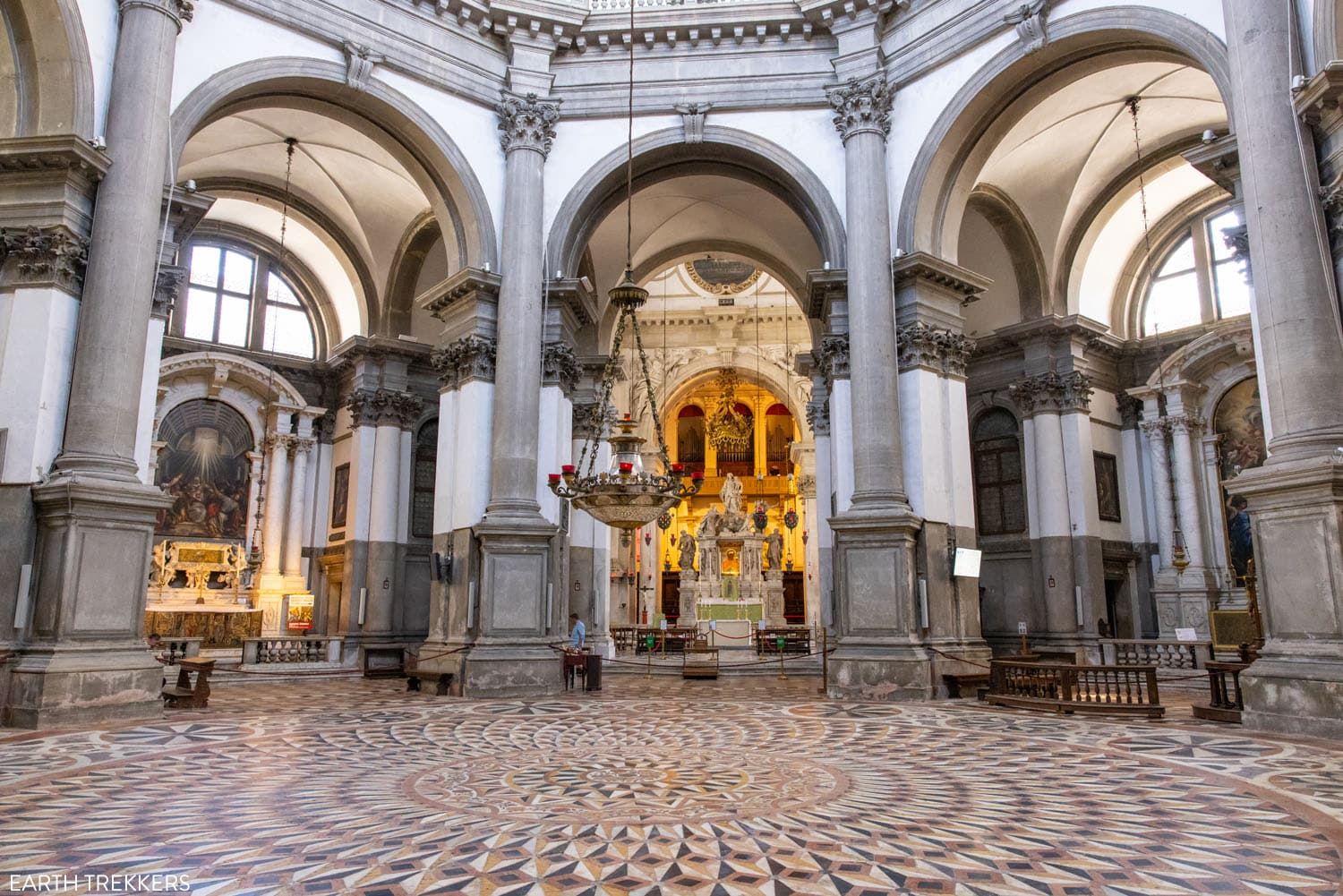
Inside Basilica di Santa Maria della Salute
Basilica di Santa Maria della Salute was one of the best surprises of our most recent trip to Venice. We went in to see the interior, and noticed a sign near the entrance about climbing up to the cupola. We had no idea this was even possible.
Visiting the Cupola
There is an 8€ fee per person to climb the steps to the cupola (the dome). We purchased our tickets from the attendant but here is a link to purchase them online.
It turned out to be offered only in small groups, so it ended up being just the two of us, our guide, and one other couple climbing a narrow, winding staircase that got tighter as we went.
At the top, the reward was one of the best views we’ve had in Venice: a sweeping look out over the Grand Canal and the rest of the city. Stumbling onto that experience, completely unplanned, was one of the highlights of the entire trip.
When you enter the Basilica, follow the signs to the cupola. When we did this, the attendant was about 5 minutes late, so if he/she doesn’t appear right on time, it’s worth waiting a few extra minutes.
There are 150 steps to the cupola. This is on a spiral staircase and it is very narrow at times. If you suffer from claustrophobia, or don’t think you can climb a tight, twisting staircase, skip this activity.
You can visit the cupola on the hour and the half hour and a visit lasts 30 minutes.
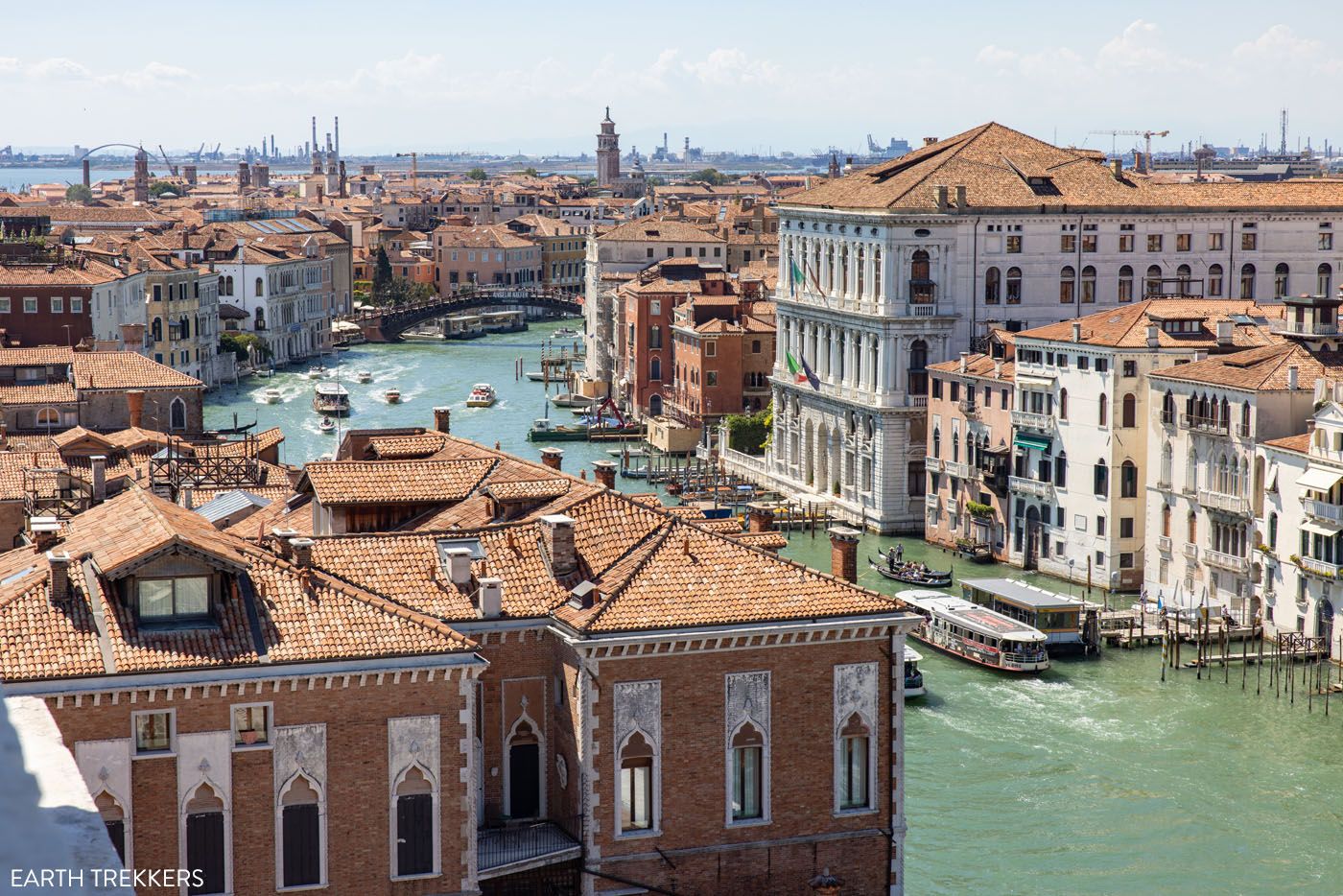
Here is the view from the cupola:
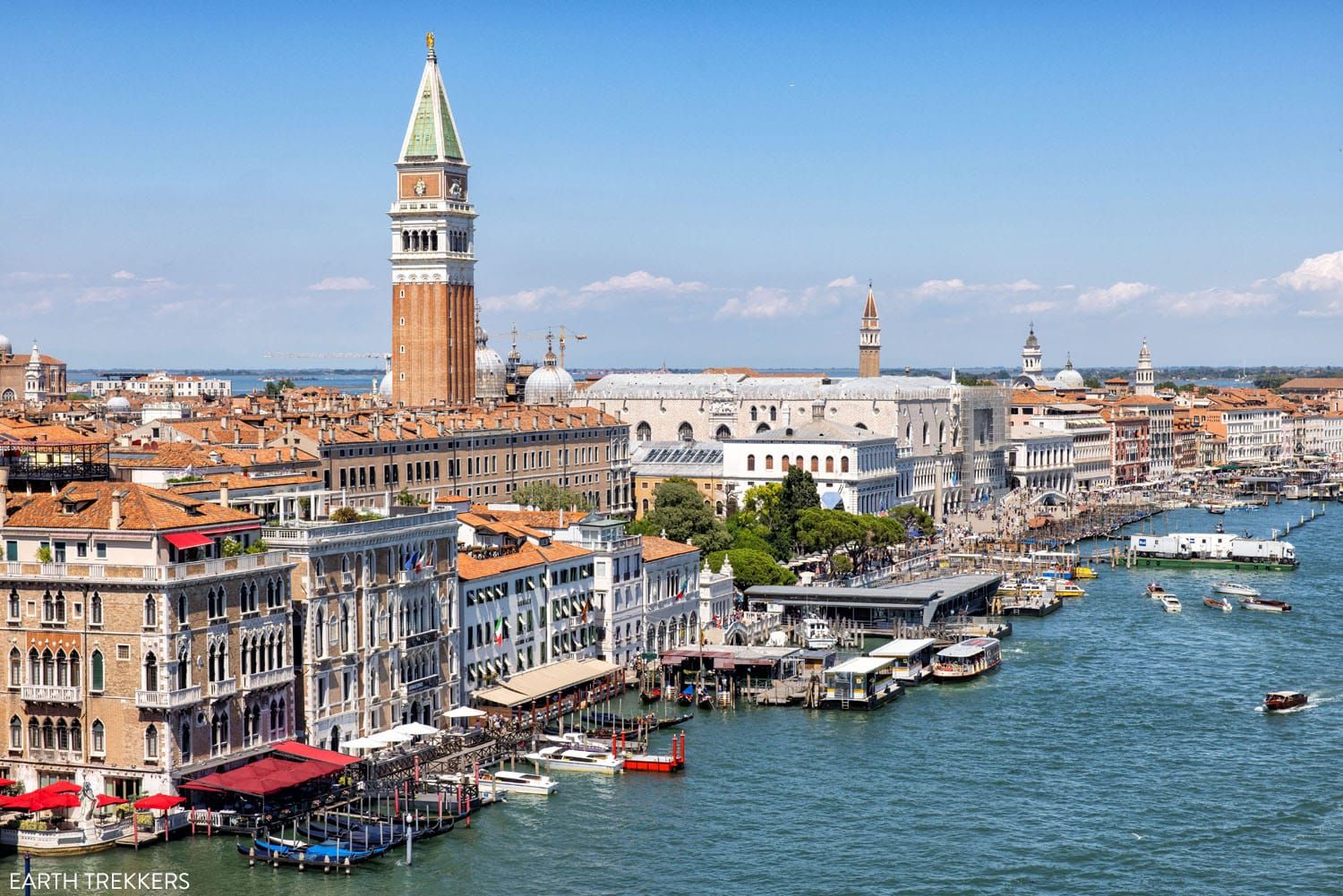
View from the cupola
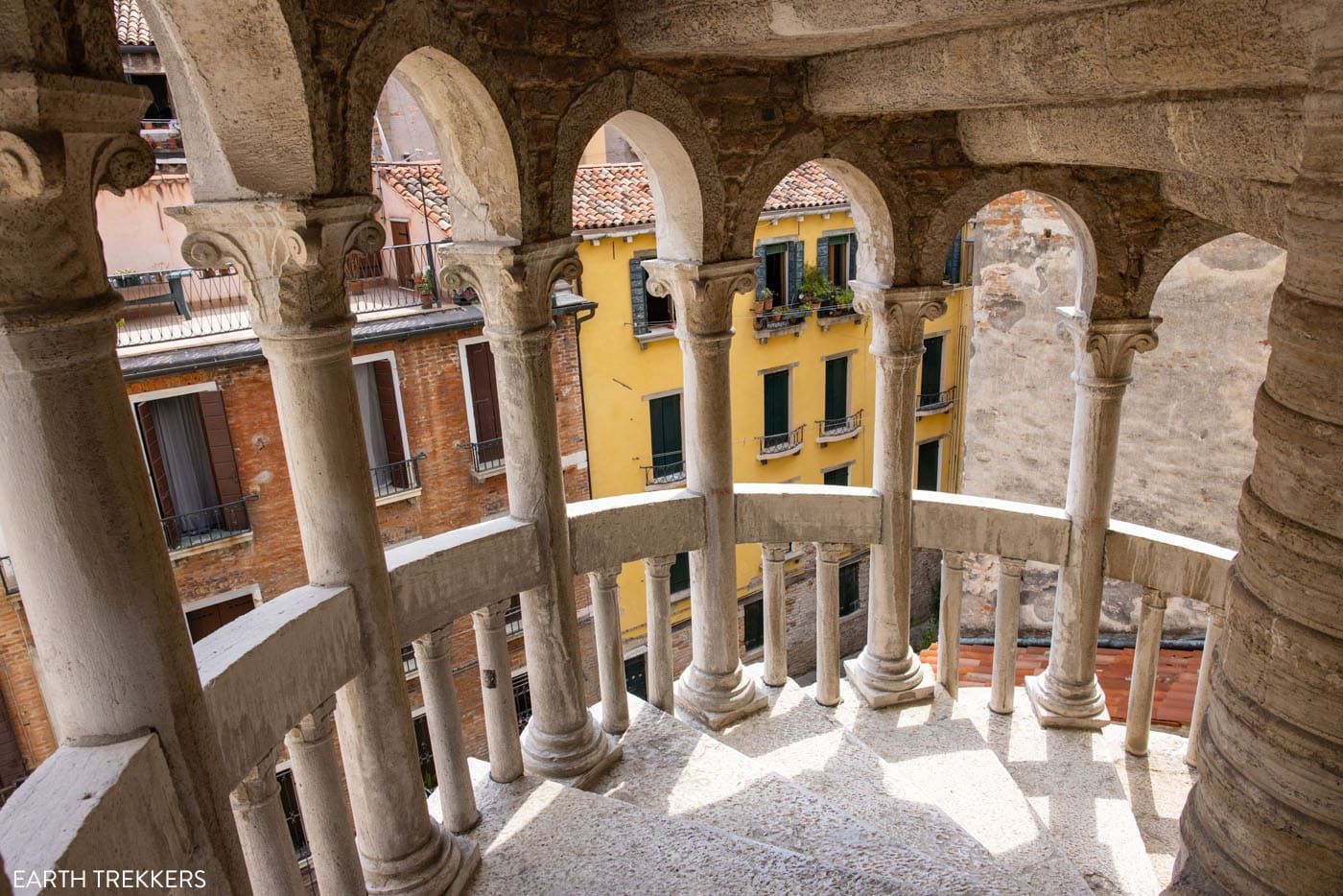
12. Climb the Spiral Staircase at Scala Contarini del Bovolo
The Scala Contarini del Bovolo is a small, spiral, outdoor staircase tucked into a quiet courtyard just off the main tourist path. It’s easy to walk right past if you don’t know to look for it. It winds its way up the side of a modest 15th-century palazzo to a small terrace, and it’s a nice way to get another interesting view over the rooftops of San Marco, away from the crowds at St. Mark’s or the Campanile.
It won’t be the most dramatic view you get in Venice, but it’s an easy, quick stop, and the staircase itself is worth a look even before you reach the top.
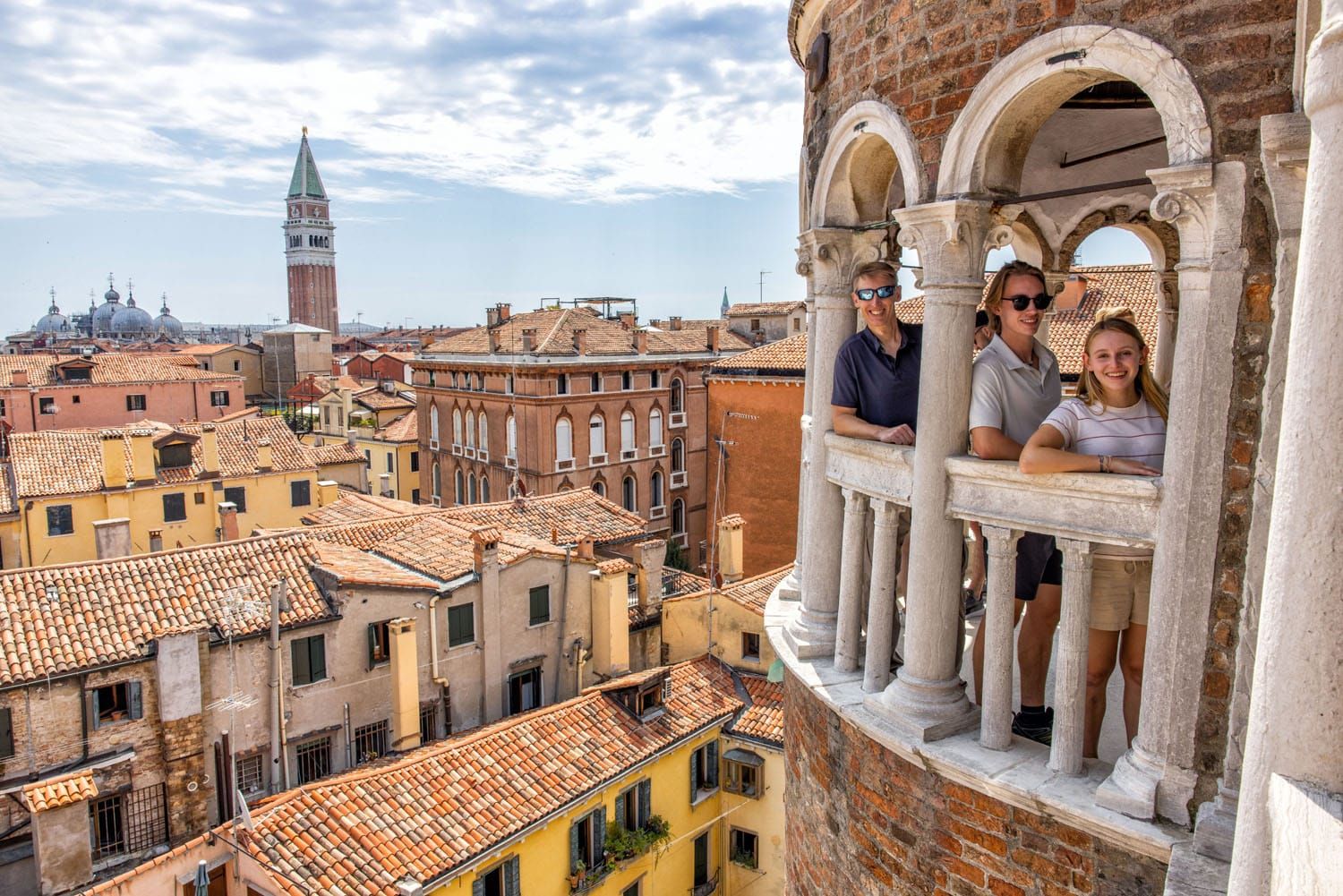
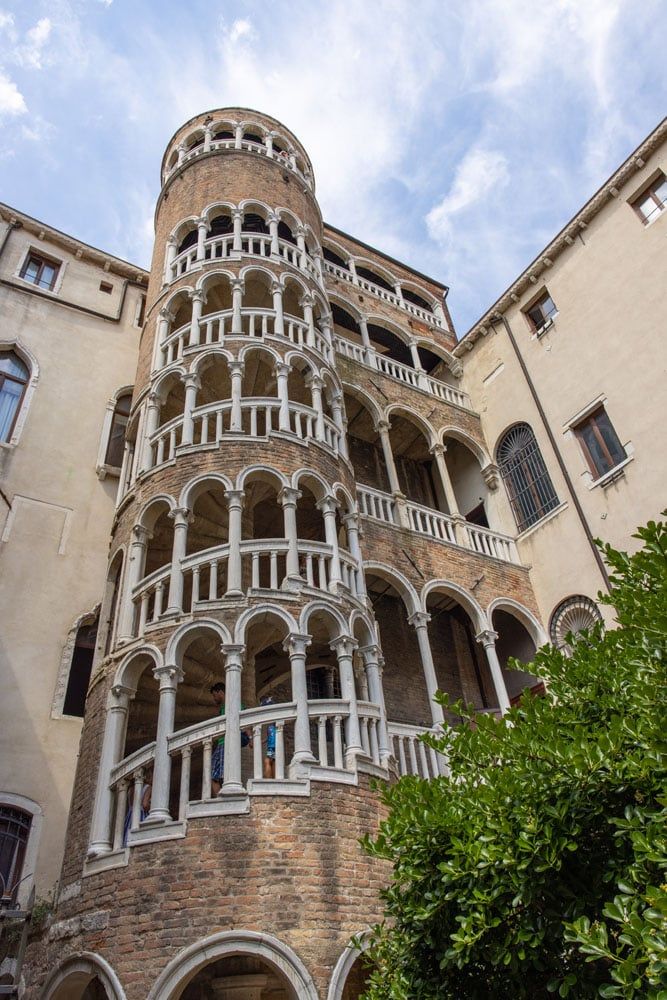
Scala Contarini del Bovolo
13. Escape the Crowds at the Church of San Giorgio Maggiore
San Giorgio Maggiore sits on its own small island directly across the lagoon from St. Mark’s Square. It’s near enough that you’ll see its dome and bell tower in nearly every photo you take from Riva degli Schiavoni, but far enough that almost nobody makes the short vaporetto trip over. That alone makes it worth the visit.
The church itself is one of Andrea Palladio’s masterpieces, all clean white lines and classical proportions, a deliberate contrast to the ornate, Byzantine style of St. Mark’s just across the water.
The views from the island and the bell tower are wonderful. From here, you look across the lagoon to the Doge’s Palace, the St. Mark Campanile, St. Mark’s Basilica, and Riva degli Schiavoni.
Not many people venture out this way, so this is a great activity to do if you want to escape the crowds and get an amazing view of Venice.
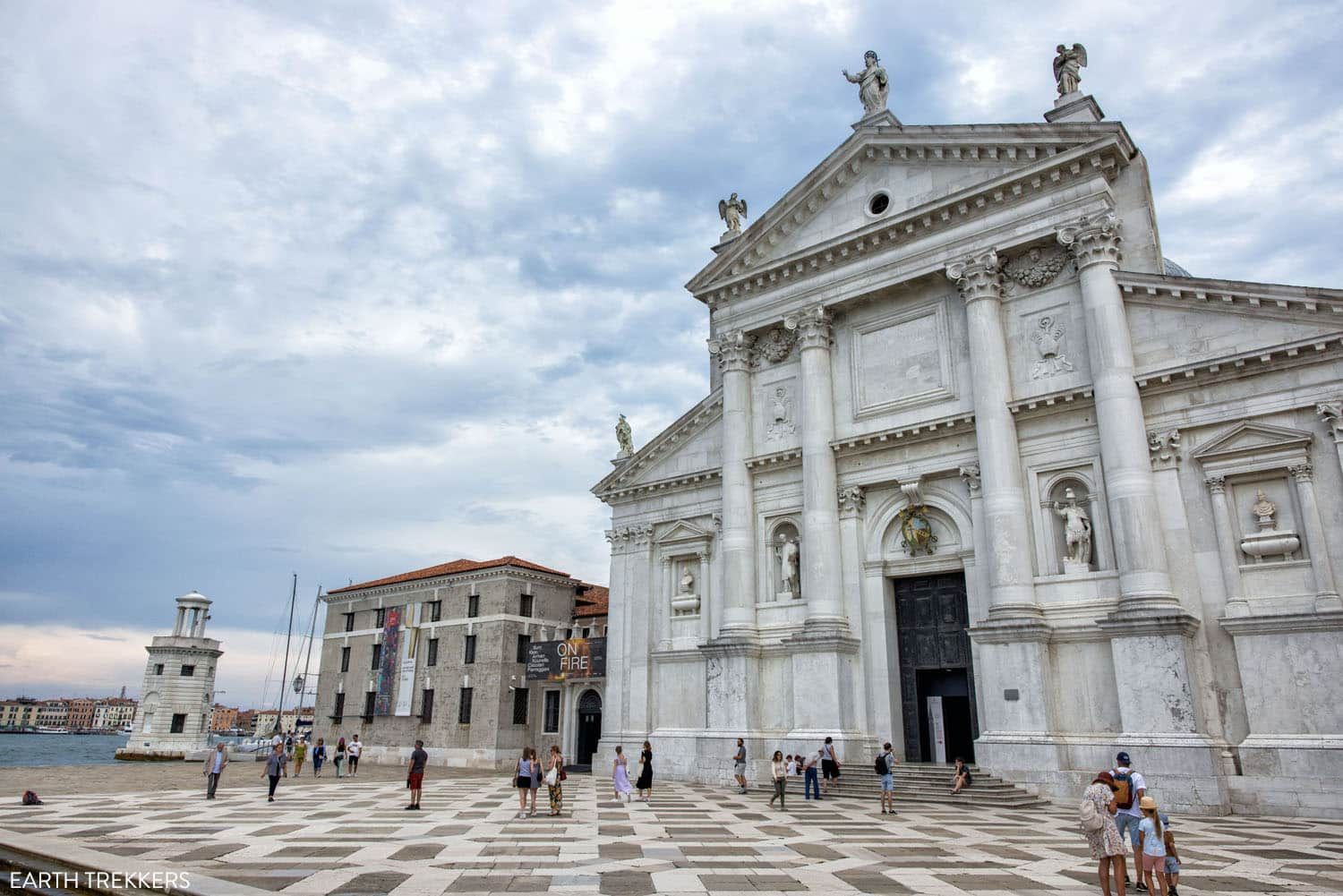
Church of San Giorgio Maggiore
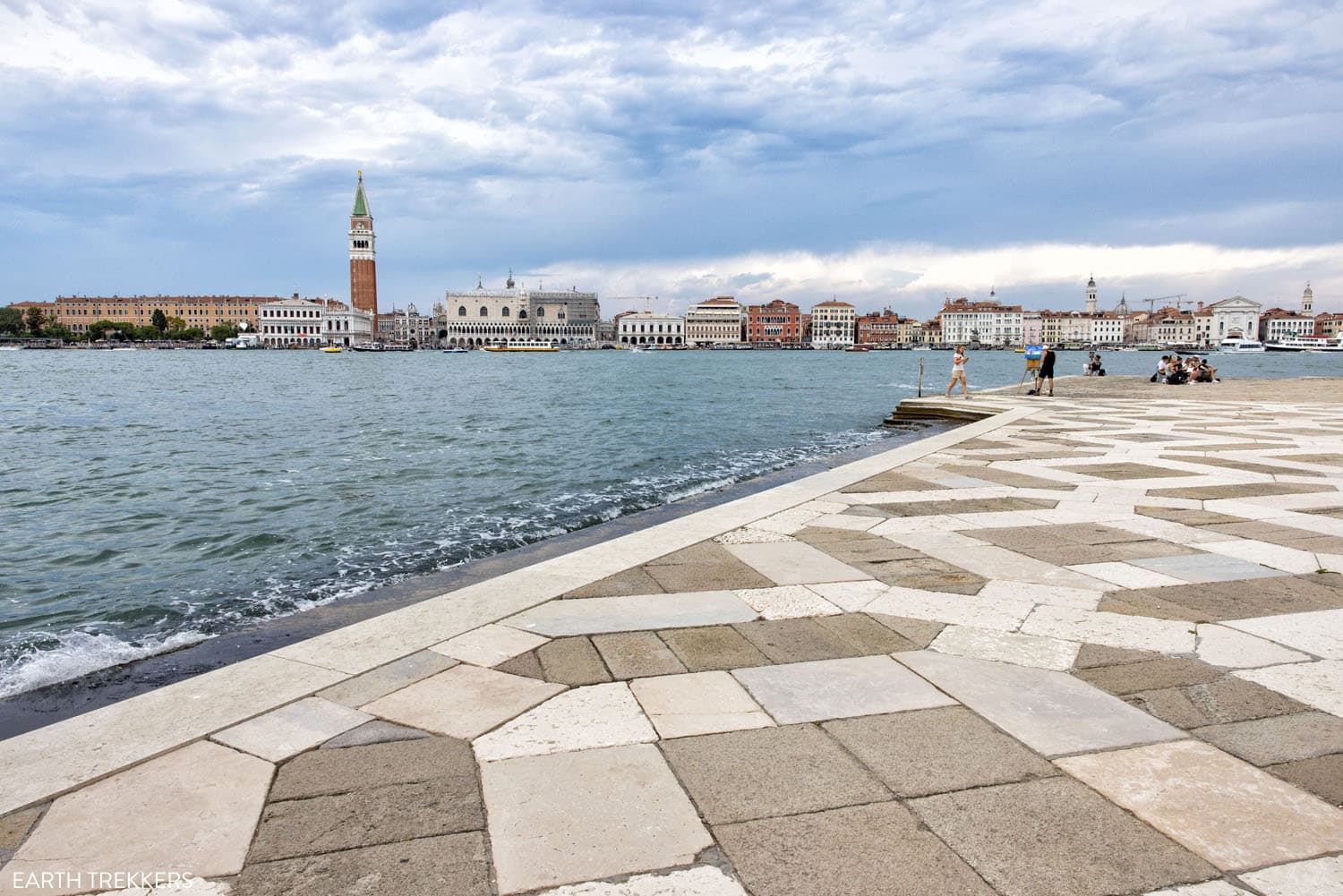
View from the terrace in front of San Giorgio Maggiore
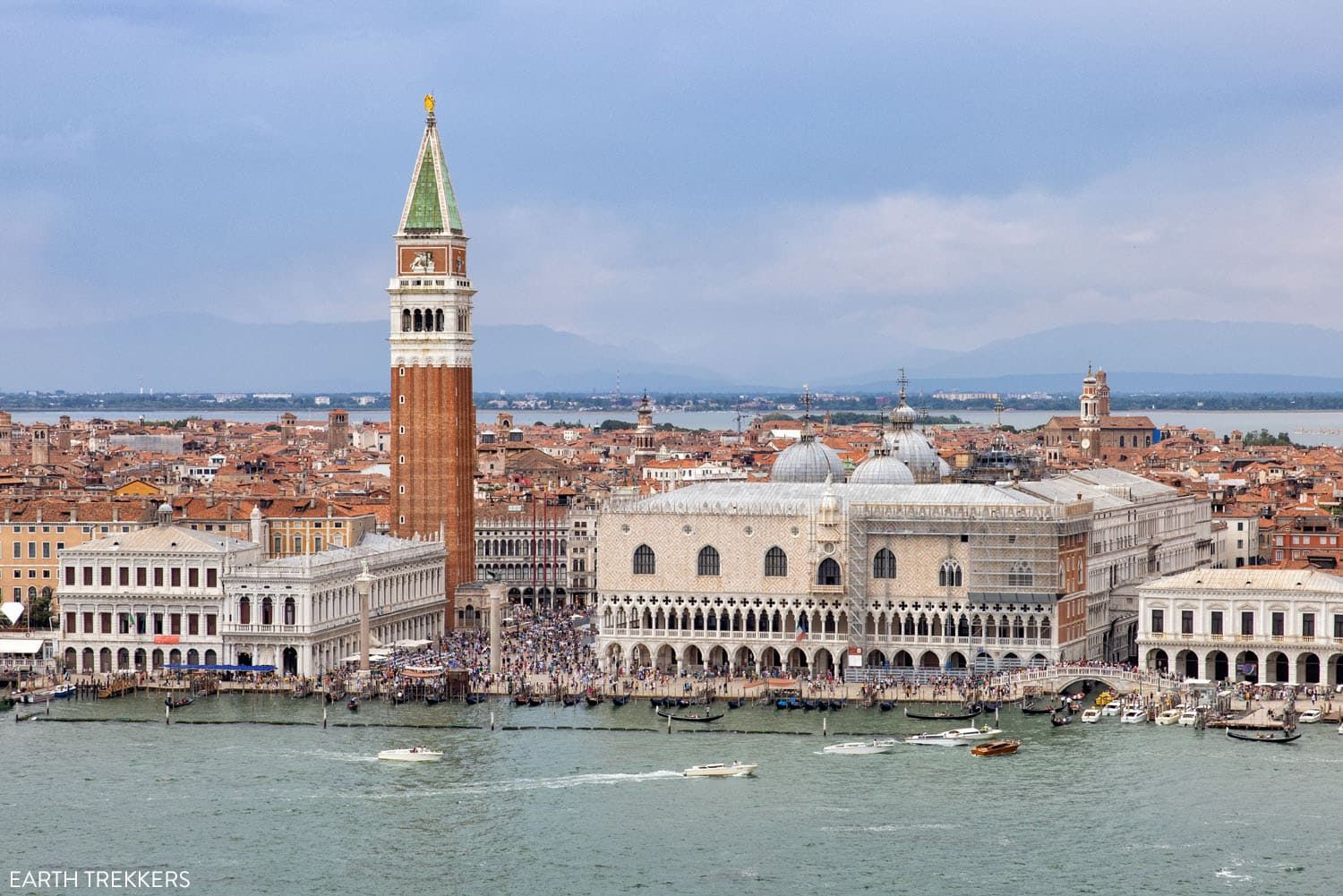
View from the bell tower
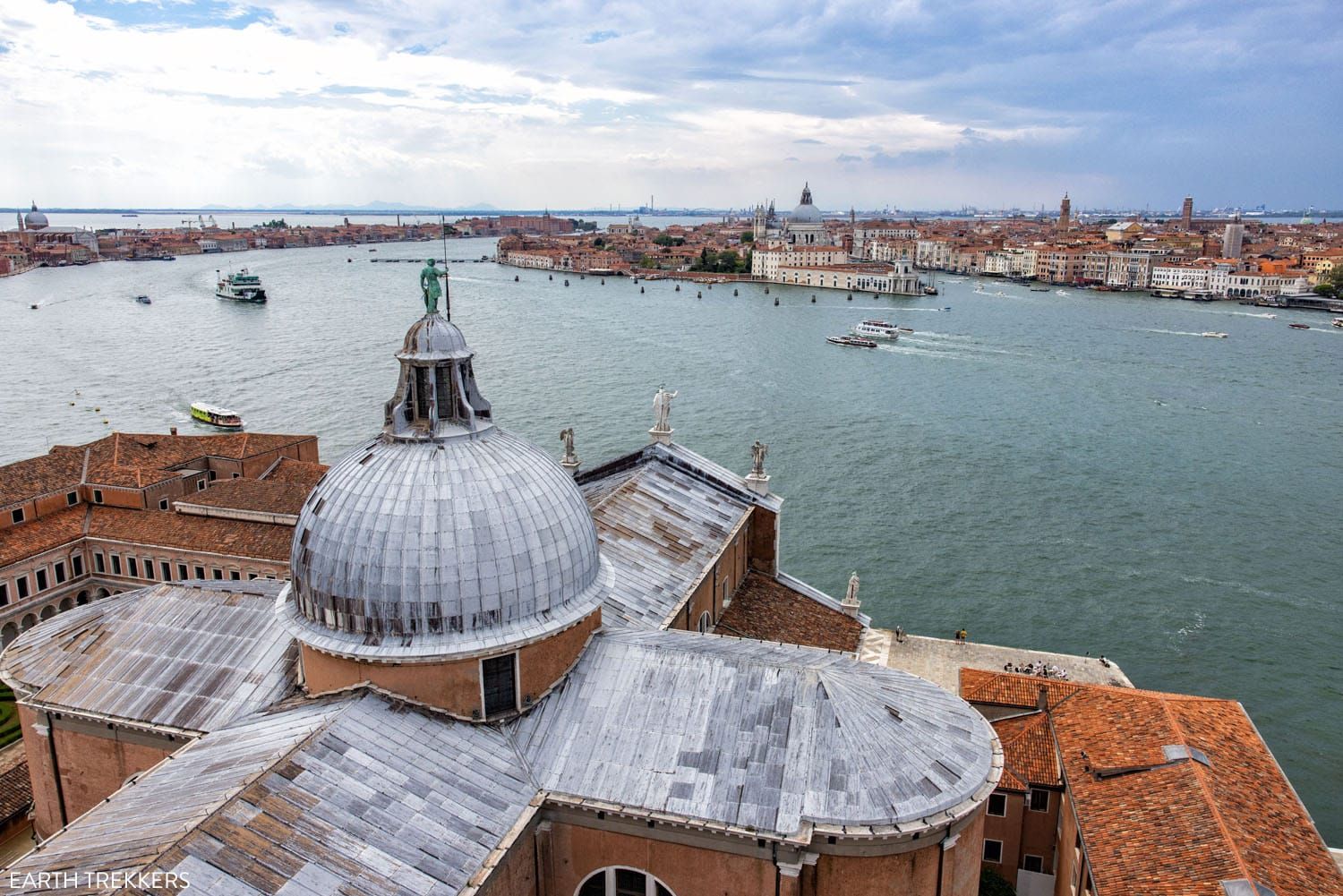
Another view from the bell tower
How to Visit the Church of San Giorgio Maggiore
It is free to visit the church but you will pay approximately €8 per person to visit the bell tower. When we did this, payment was by cash only.
To get to the top of the bell tower, no steps are required. An elevator zips you to the top in just a matter of seconds. And once at the top, you get 360° views of the area.
Getting Here: Take the water bus (vaporetto lines 2 and N). It’s best to purchase a daily pass, since your total visit could be longer than 75 minutes. There is no ticket machine for the vaporetto on San Giorgio Maggiore island. You can also take a water taxi, but getting back will be more challenging, since water taxis don’t regularly visit this island.
14. Tour the Opera House at Teatro La Fenice
Teatro La Fenice is Venice’s opera house, and one of the most famous in Italy. The name means “The Phoenix,” fitting for a theater that’s burned down and been rebuilt multiple times since it first opened in 1792. The current interior, gold leaf and red velvet, dates to a meticulous 1990s reconstruction after the most recent fire.
If you can catch a performance while you’re in Venice, that’s the best way to experience it. If not, daytime tours let you see the auditorium and get some of the history without needing tickets to a show.
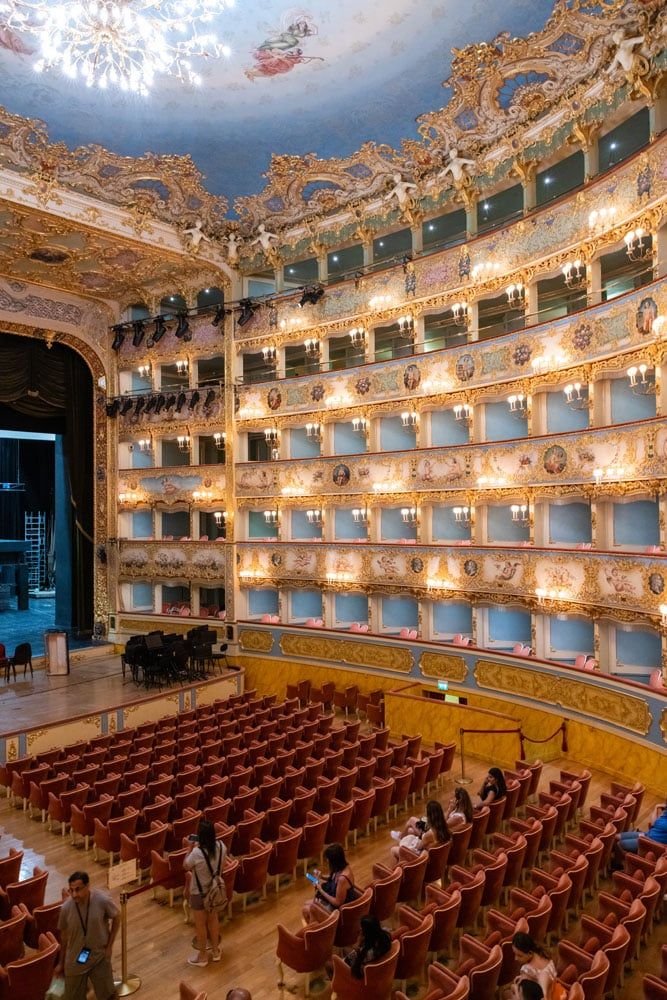
Teatro La Fenice
Website: Get updated hours and pricing here.
Other Ticket Sellers: We purchased our ticket in advance through GetYourGuide, which allowed us to select a morning ticket or an afternoon ticket, so we were not locked into one set time.
15. Browse the Peggy Guggenheim Collection
The Peggy Guggenheim Collection is one of the best modern art museums in Italy, housed in Peggy Guggenheim’s former home right on the Grand Canal. It’s an incredible collection, with works of art by Picasso, Pollock, Kandinsky, Magritte, and if you’re a museum person, it’s worth setting aside time for.
One of our favorite parts of this museum is the terrace on the Grand Canal. From here, you have a nice view of Ponte dell’Accademia.
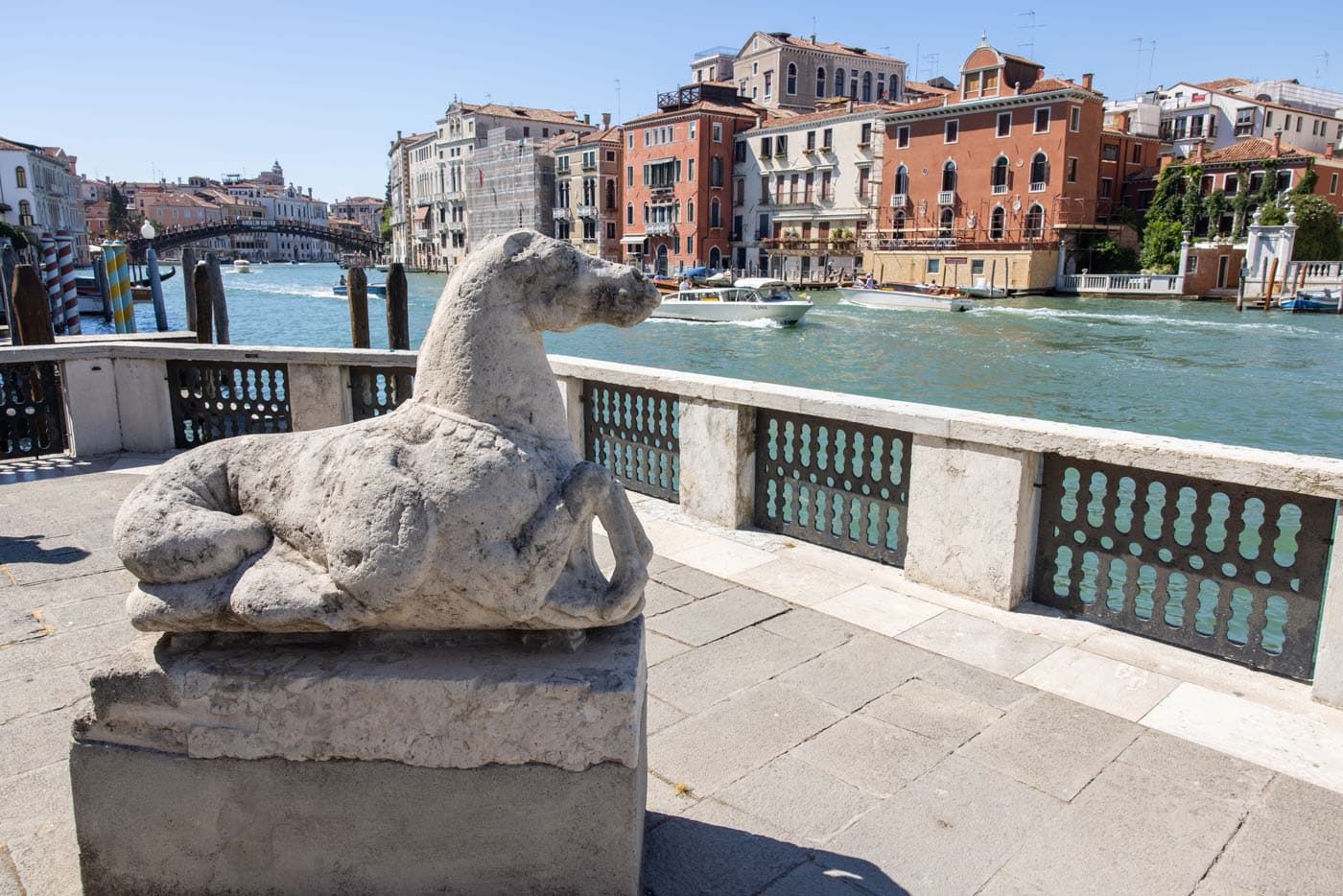
Peggy Guggenheim Museum
Website: Get updated hours and pricing on the official website. Purchase your ticket online in advance to avoid waiting in line.
16. Snap a Photo at Libreria Acqua Alta
Libreria Acqua Alta is one of the most photographed bookshops in the world, with gondolas and bathtubs stacked full of books, and a staircase built from waterlogged hardcovers leading up to a canal-side view. It shows up on nearly every Venice list for a reason.
Our honest take: it’s overrated. It’s a real, functioning bookshop, and there’s nothing wrong with a quick stop if you’re in the neighborhood, but don’t go out of your way for it or expect it to be the highlight of your day. Go in with modest expectations, snap your photo, and move on.
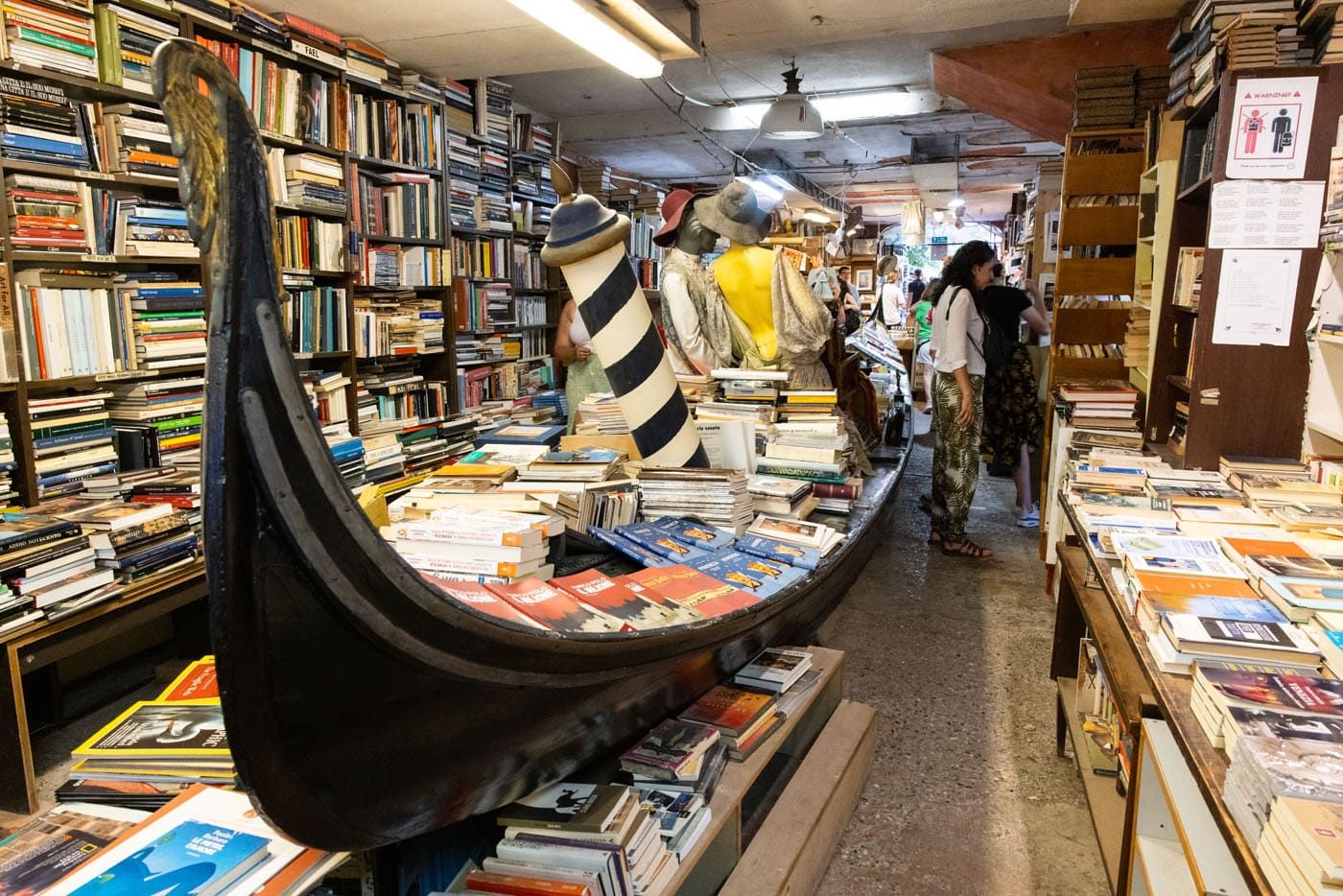
At the back of the store, you can exit out onto a small terrace and climb the stacks of books for a view of a canal, but it’s not any more scenic than other canals you will see in Venice.
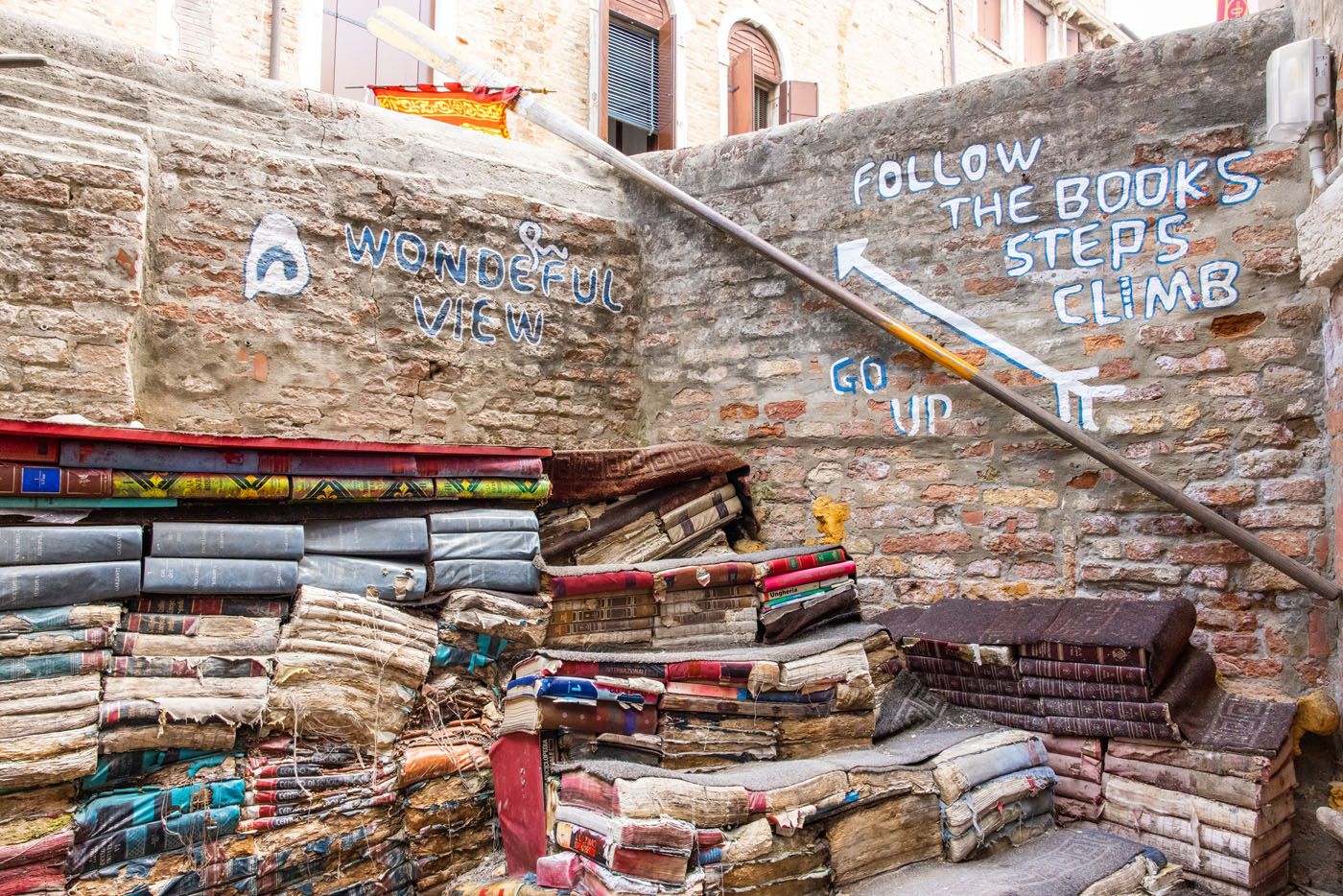
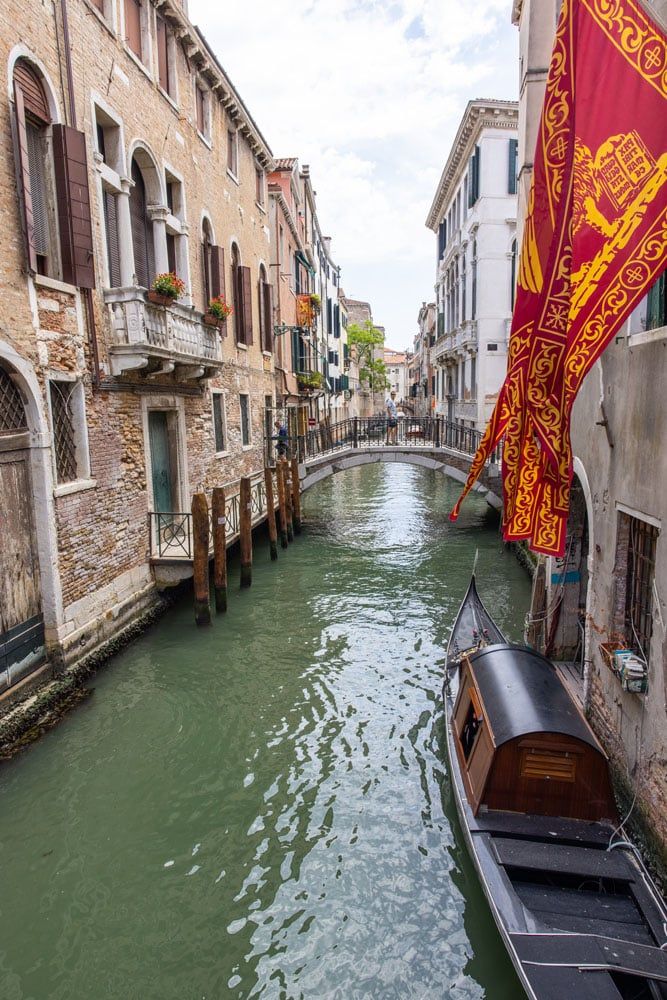
View from Libreria Acqua Alta
And there is a small patio with colorful books piled up against the walls, which makes a nice spot to take a photo.
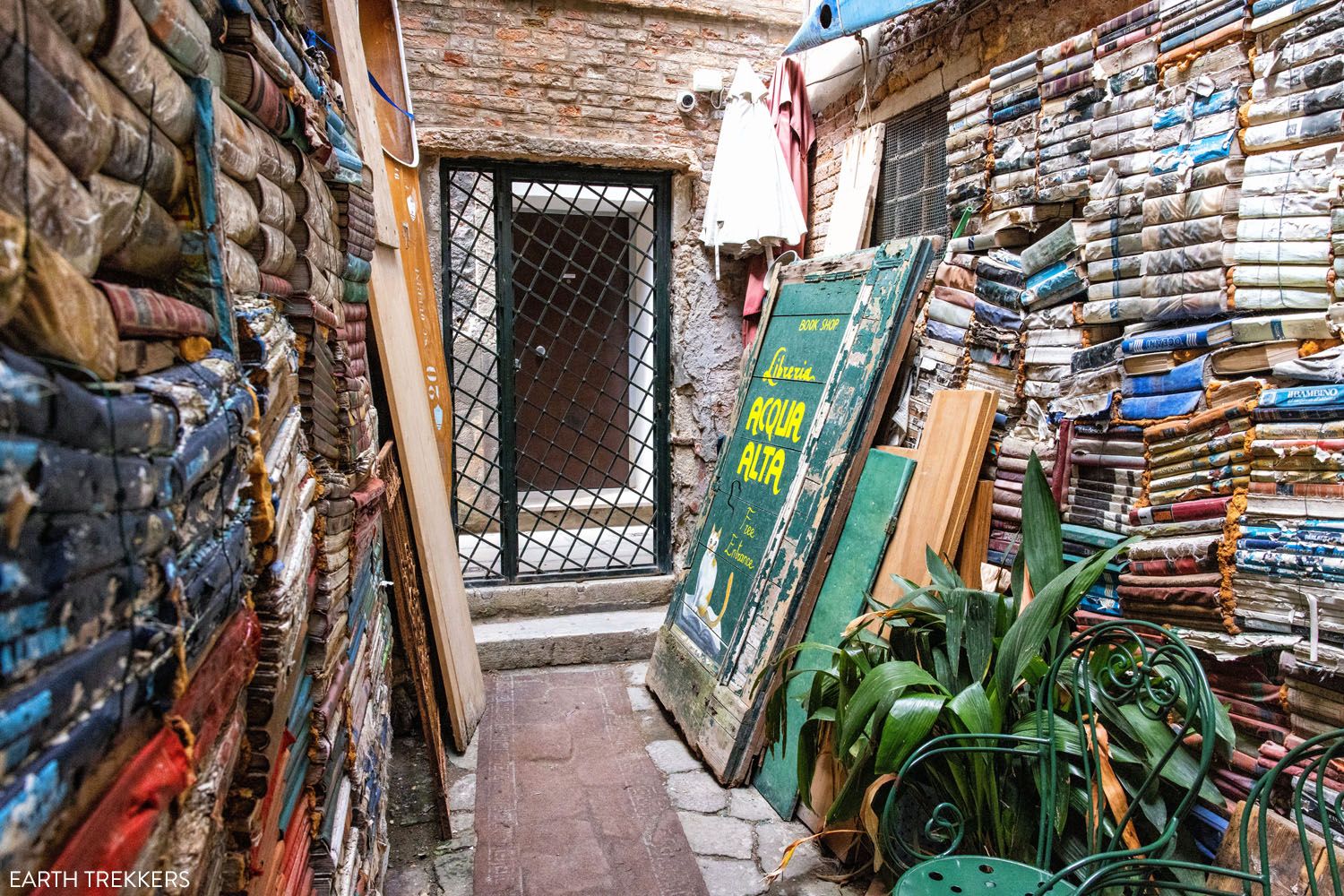
Libreria Acqua Alta
If you have limited time in Venice (a day or two), I think your time is better spent in other places in the city. But if you are curious and want to check this place out, it is free and quick to visit (it just takes some time to walk here).
17. Explore the Jewish Ghetto
The Jewish Ghetto, in the Cannaregio neighborhood, is the oldest Jewish ghetto in the world. It was established by decree in 1516, centuries before the word took on the meaning it has today. It’s also where the word itself comes from: this stretch of Cannaregio was the site of an old foundry, or “geto” in Venetian dialect, and the name stuck to the neighborhood long after the foundry was gone.
It’s easy to walk through without realizing what you’re looking at: a quiet campo, tall old buildings, a few shops. But there’s a lot here if you slow down: five historic synagogues, some hidden behind unmarked doors on the upper floors of ordinary-looking buildings, and the Jewish Museum, which runs guided tours into several of them.
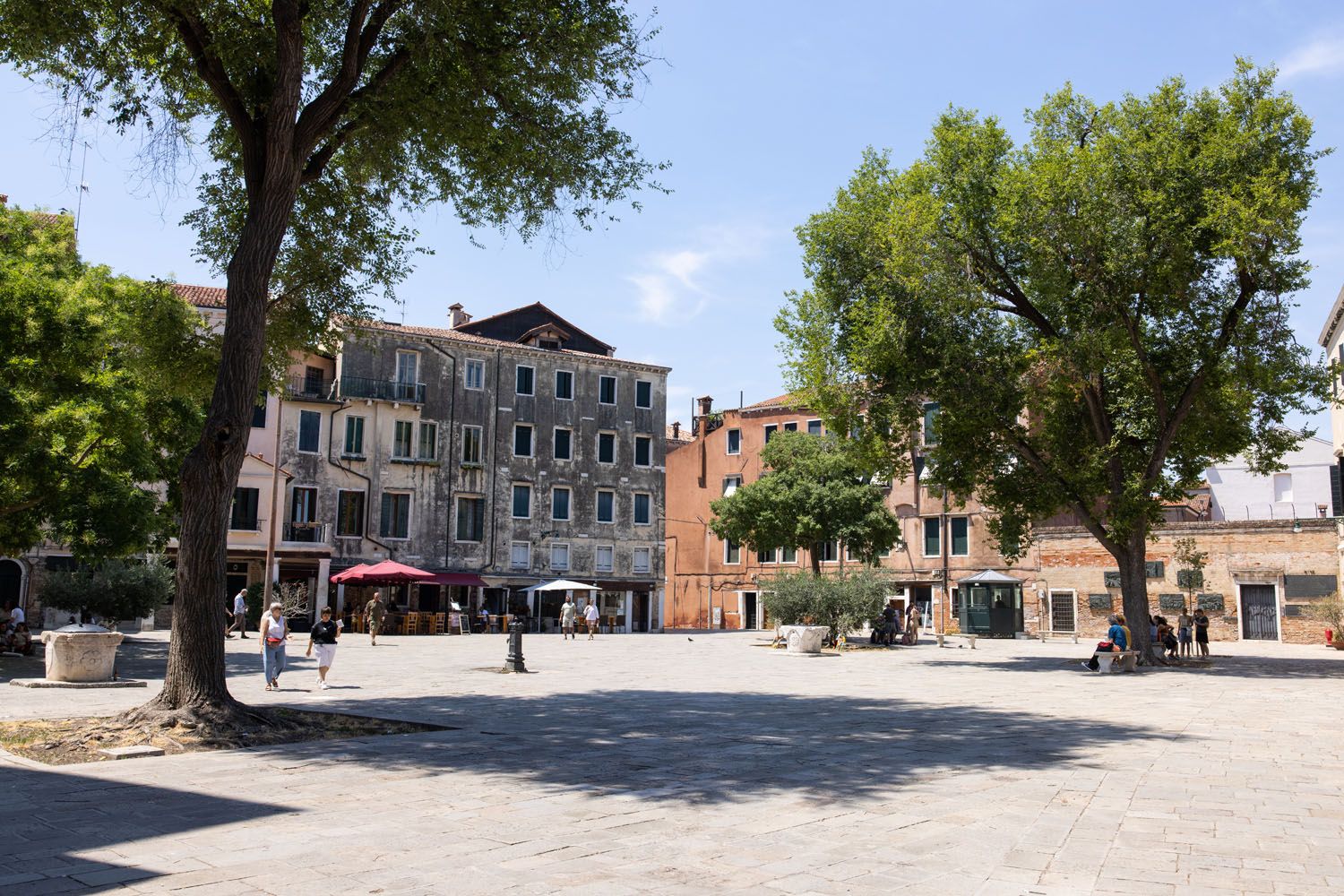
In the main square, Campo del Ghetto Nuovo, bronze memorial reliefs commemorate the Venetian Jews deported during World War II.
Even without a museum ticket, it’s worth the walk for the atmosphere. It’s one of the quietest, most residential corners of Cannaregio, and a world away from the crowds around St. Mark’s.
Food & Local Culture
18. Try Cicchetti at a Bacaro
Cicchetti are Venice’s answer to tapas: small plates of food, meant to be eaten standing up at a bar, in one or two bites, paired with a glass of wine. You’ll find them at Bacari, which are small, no-frills wine bars tucked into nearly every neighborhood. The cicchetti are piled high on the counter and changing throughout the day as one round gets replaced by the next.
The classics are seafood-heavy: baccalà mantecato (whipped salt cod) on a slice of bread, sarde in saor (sweet-and-sour sardines), tiny meatballs, marinated vegetables, various things on toothpicks. Order a few plates, pair them with an ombra, a small glass of local wine, the traditional cicchetti pour, and move on to the next bar when you’re ready. It’s less a sit-down meal than a running snack crawl, and it’s one of the most authentically Venetian things you can do with an evening.
Cannaregio and the streets around the Rialto Bridge have some of the highest concentrations of good bacari, and a cicchetti crawl through either neighborhood is a great way to eat dinner without ever sitting down.
19. Take a Walking (or Food) Tour
A guided walking tour is one of the best ways to get oriented in Venice, especially on a first visit. The city’s layout doesn’t follow any grid, addresses are notoriously unhelpful, and a good guide will get you past a lot of what you’d otherwise miss on your own: the history behind a random doorway, an unmarked shortcut, why a particular bridge looks the way it does.
Food-focused tours are especially worth considering here, since so much of Venice’s food culture (the bacari, the cicchetti, the specific ordering etiquette) isn’t obvious to a first-time visitor. A guide who takes you bar to bar can cover in an evening what would otherwise take several trips of trial and error to figure out on your own.
Whatever theme you pick, book a small-group or private tour if you can. Venice’s streets are narrow enough that a large group tour can turn into a lot of standing around waiting for everyone to squeeze through.
The walking tour with a local guide can be customized for how much time you have and what you want to see and do in Venice.
This street food tour combines a guided walk through the city center with a visit to a local market and cicchetti tastings.
This 2 hour walking tour takes you to the must-see sights in Venice.
20. Day Trip to Murano, Burano, and Lido
Murano, Burano, and Lido are a series of islands that sit in the Venetian Lagoon and make a great day trip from Venice.
Murano & Burano
Murano and Burano are two of the most popular day trips from Venice, and it’s easy to see why on paper: Murano is famous for centuries of glassblowing tradition, with working studios you can watch in action, and Burano is known for its rows of brightly painted fishermen’s houses, one of the most photographed streets in Italy.
Our honest experience: we visited both and came away a little underwhelmed. It didn’t quite live up to the hype for us. That said, they’re wildly popular for a reason, and plenty of visitors count them among the best parts of their trip, so we don’t want to talk you out of going. If glass artistry or a genuinely unique, colorful island are on your list, it’s worth seeing for yourself. Just don’t expect either island to be quiet. Both get busy with day-trippers, especially by midday.
Burano is famous for its colorful buildings and lacemaking. Murano is famous for its glass making. And Lido is a long, thin island with a beach. One of our favorite memories in Venice was day tripping to Lido and cycling around the island on a 4-person surrey.
Cycle Around Lido Island
Lido is a long, narrow barrier island between Venice and the open Adriatic, and it feels like a different world entirely, with actual streets, cars, a beach, and none of the canals or crowds of the city center.
On our first trip to Venice, we spent an afternoon here renting one of the four-person surrey bikes, the big, boxy pedal buggies you’ll see lined up near the ferry dock, and cycling around the island as a family. It ended up being the kids’ favorite experience of the entire trip.
Lido doesn’t have the postcard landmarks the rest of Venice does, and that’s kind of the point. It’s a good half-day option if you want a break from sightseeing, especially if you’re traveling with kids who need to run off some energy, or if you just want to see a slower, more residential side of the lagoon.
Tours & Tickets
Map of Things to Do in Venice
How to Use This Map: Click the icons on the map to get more information about each point of interest. To take this map with you, click the star next to the title of the map which adds it to your Google account. Next, within your Google Maps app, select ‘Saved’ and then select ‘Maps’. This map title will now appear in your list.
How Many Days Should You Spend in Venice?
Ideally, plan on spending two or more days in Venice.
With 2 days in Venice, you have just enough time to visit the highlights of Venice and stroll the canals. It will be a busy but wonderful 2 days in Venice.
With 3 days in Venice, spend two days visiting the highlights in Venice and on the third day, day trip to Murano and Burano and/or Lido. Even more time allows you to slow down and explore the quieter neighborhoods of Venice.
If you only have one day in Venice, it will be a whirlwind, but you can visit a few of the more popular sites in the morning (such as Doge’s Palace and St. Mark’s Basilica) and explore the canals in the afternoon.
One Day in Venice: 3 Different Ways to Plan Your Itinerary
Pinterest Facebook Flipboard One day in Venice itinerary: 3 different ways to plan your time, whether you want the top sights, the quiet canals, or a mix of both. If you are planning to spend one day in Venice, there are several ways to do it. Do you want to spend the day visiting the […]
2 Days in Venice Itinerary: What 3 Trips Taught Us
Our 2-day Venice itinerary, refined over three visits and built for first-time visitors who want to see the highlights without wasting time in line. If you are planning your first trip to Venice, this itinerary is built for you. With 2 days in Venice, you have just enough time to visit the highlights of this […]
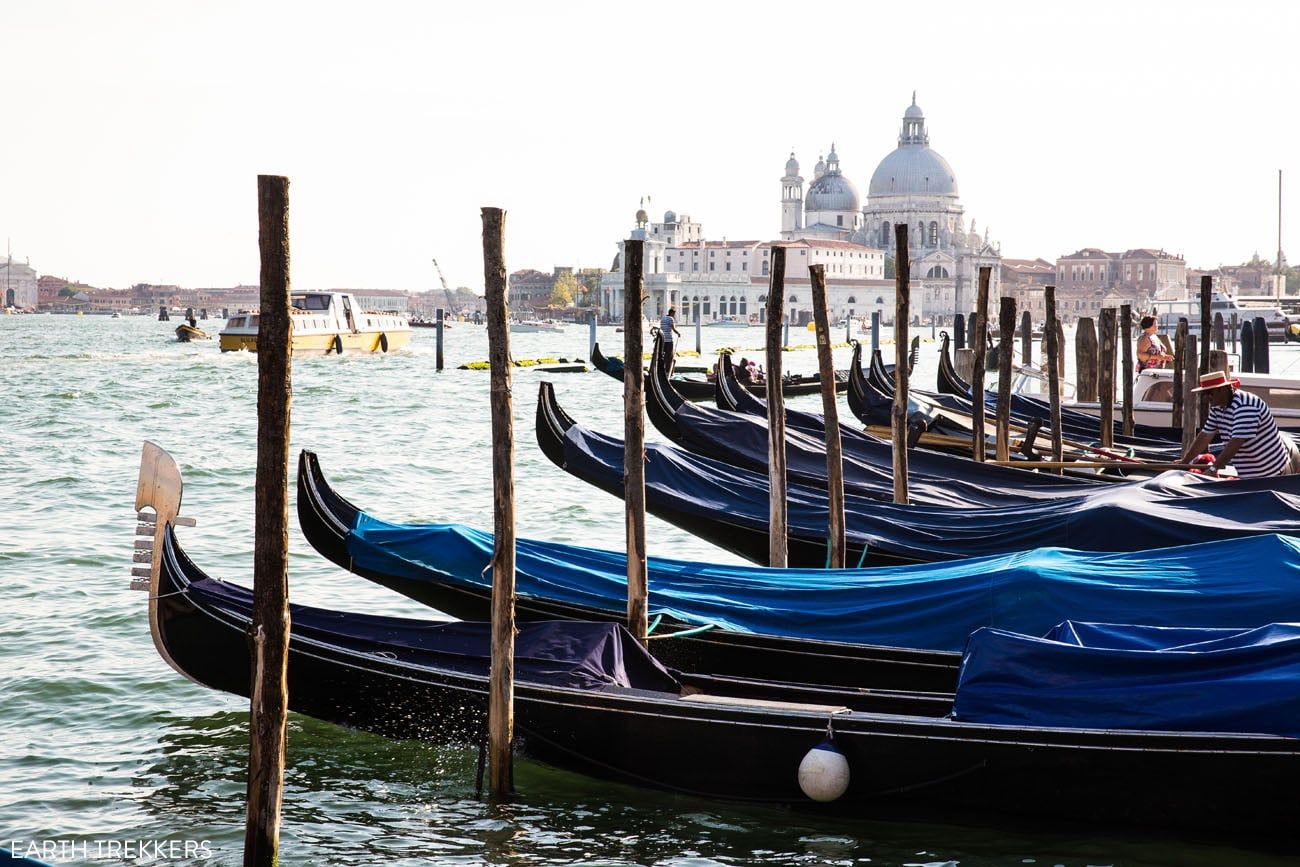
Gondolas on the lagoon
Best Time to Visit Venice
In general, spring and fall are the best times of the year to visit Venice. During this time, the weather is great for sightseeing and crowds tend to be lower than the busy summer months. But here is a breakdown by season of what you can expect in Venice:
WINTER: It’s cold in Venice during the winter months. Daytime high’s average around 7°C (in the mid-40’s) and it can get down to freezing at night. However, this is the driest time of the year. Crowds are also at their lowest, so if you want to visit Venice without the crowds, this is the time to go…just pack your winter coat. Carnavale is one of Venice’s biggest festivals and takes place at the end of February, ending on Mardi Gras.
SPRING: As the weather warms up in the spring, rain chances also go up. Spring is one of the wettest seasons to visit Venice, but not quite as rainy as the fall months. In early spring, the high temperature is 13°C (55°F) and it continues to get warmer week by week, reaching an average high of 27°C (80°F) by June.
SUMMER: Expect big crowds and hot weather during the summer months. Daily high temperatures average 29°C (84°F) but can get up much higher than this (sometimes getting over 35°C/95°F). However, rainfall is low. Summer is the most popular time to visit Venice, so crowds will be at their highest. If you plan to visit in the summer months, make your hotel reservations far in advance and purchase skip-the-line tickets if possible. And book a hotel with air conditioning, just in case you are here during a heat wave.
FALL: In early fall, crowds can still be high, not really quieting down until the end of October. Daytime high’s range from 21°C (70°F) in early fall and cooling off to 13°C (55°F) by late fall. Autumn is the wettest time to visit Venice (late September through early November), so bring an umbrella if you plan to be here at this time.
VERDICT: I think the best time to visit Venice is from late-April through May. The weather is nice, spring break is over, and crowds are manageable. If you don’t mind chilly weather, March into April would also be a nice time to visit Venice, just try to avoid the Easter holiday.
We have visited Venice twice: in mid-July and mid-September. Crowd levels were about the same for both visits and may have actually been a little bit higher on our September visit.
VENICE FLOODS: Between the months of October and January, water levels in the Venetian Lagoon can rise, flooding St. Mark’s Square. This is called acqua alta, or “high water” and typically lasts a few days each year.
How to Get to Venice
Venice Marco Polo Airport sits on the mainland, so reaching the historic center means crossing the lagoon, either by water, or by land followed by a short vaporetto ride. Here’s how to make the crossing:
Alilaguna water bus is the classic way in. These boats run several routes from the airport into the city, with stops near the Rialto Bridge, San Marco, and other central points. Depending on where you’re staying, you may be able to walk straight from the dock to your hotel. The ride takes about an hour and costs around €18 one-way. It’s slower than a taxi, but watching Venice appear across the lagoon on the way in is a memorable way to start a trip.
Water taxi is the fastest option, at roughly 30 minutes door-to-door, but it’s the priciest: private water taxis typically run €120-180 or more, while a shared water taxi, splitting a boat with other travelers, comes in around €40 per person. If you’re arriving with a lot of luggage or landing late at night, it’s worth the splurge. We’ve done this ourselves, and cruising the canals for your first look at the city is an awesome introduction to Venice.
Bus is the budget option. ACTV and ATVO buses run from the airport to Piazzale Roma in about 20-25 minutes for around €10-12. The catch: Piazzale Roma sits at the edge of Venice’s historic center, not in the middle of it, so you’ll still need a vaporetto, water taxi, or a walk to actually reach your hotel.
For most first-time visitors, we’d recommend the Alilaguna. It’s reasonably priced, and arriving by water sets the tone for the whole trip. If your flight lands late, or your hotel is a long walk from any dock, a shared water taxi is worth the extra cost.
Airport Transfers
Where to Stay in Venice
Staying in the heart of Venice, in San Marco and around the Grand Canal, can cost a small fortune for a decent place. Consider staying just outside of the center of Venice to save money.
When picking your accommodation, also consider how you are going to get to your hotel. From the airport, you will have to take a taxi (usually a water taxi) to get into Venice. Staying right on the Grand Canal is very convenient, but you will pay more for this convenience. Think about what it will be like to carry your luggage from the canal to your hotel when making your booking.
We have an entire guide about the different neighborhoods in Venice, how to choose which one fits your traveling style, and many more hotel recommendations based on your budget. Read it here:
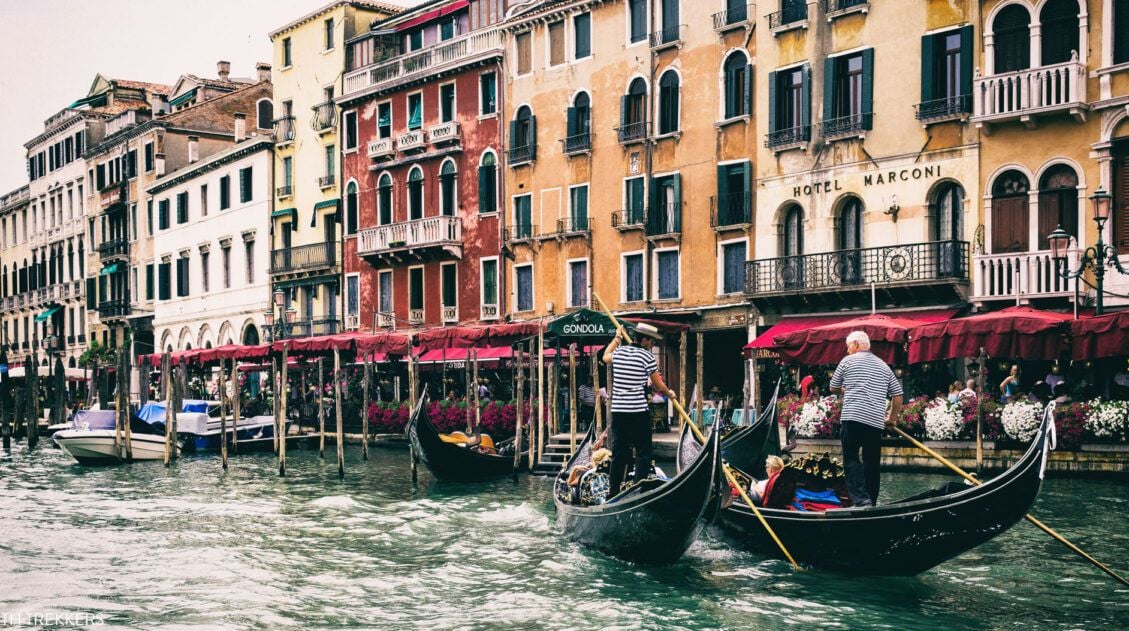
Where to Stay in Venice 2026: Best Hotels and Neighborhoods
Best places to stay in Venice, organized by location and budget.Frequently Asked Questions about Visiting Venice
How many days do you need in Venice?
Two to three days is enough to see Venice’s major sights and get comfortable finding your way around, without feeling rushed. If you only have one day in Venice, you can still hit the highlights: St. Mark’s Square, St. Mark’s Basilica, Doge’s Palace, and the Rialto Bridge, but you’ll want to move quickly and skip most of the day trips.
What is the best time of year to visit Venice?
April through June and September through October are the best months to visit Venice, with mild weather and noticeably thinner crowds than summer. July and August bring the heaviest crowds and the highest heat and humidity, while winter is quieter and atmospheric, but colder and more prone to flooding (acqua alta).
Is a gondola ride worth it in Venice?
A gondola ride is expensive and touristy, but most first-time visitors find it worth doing at least once. The experience is best on the smaller, quieter canals rather than the busy stretch of the Grand Canal, where you’ll get a better sense of the city at water level without competing with boat traffic.
What is the most famous landmark in Venice?
St. Mark’s Basilica is Venice’s most famous landmark, anchoring the eastern side of St. Mark’s Square with its Byzantine domes and gold mosaics. The Rialto Bridge and the Doge’s Palace are close behind as the city’s other must-see icons.
Do you have to pay a fee to visit Venice?
Venice charges a day-trip entry fee on select high-traffic days, mostly weekends and holidays in spring and summer. The fee only applies to day-trippers. Anyone staying overnight in Venice is exempt, though everyone needs to register their visit online in advance.
Are Murano and Burano worth visiting?
Murano and Burano are popular day trips from Venice, known for glassblowing and brightly painted houses, and many visitors count them among the best parts of their trip. Not every visitor is equally impressed, though, so if time is limited, prioritize Venice’s main sights first and treat these islands as a bonus rather than a must.
Planning Your Italy Itinerary
If you are still planning your Italy Itinerary, we have several great itineraries to share with you. All of these include Venice.
Our article 10 Days in Italy 5 Sample Itineraries has an overview of five different ways to plan a 10-day trip to Italy.
If you have 10 days in Italy and want to visit the top locations such as Rome, Florence, Venice and the Cinque Terre, you’ll love this 10 day Italy Itinerary.
If you have more time (lucky you!), check out our 14 Day Italy itinerary, which includes Rome, Florence, Venice, the Cinque Terre, and the Amalfi Coast.
Finally, this 10 day Northern Italy Itinerary starts in Venice, spends a nice chunk of time in the Dolomites, and ends with Verona, Milan, and Lake Como.
If you have any questions about the best things to do in Venice, let us know in the comment section below.
Plan Your Trip to Italy
We have TONS more information about Italy in our Italy Travel Guide, including Rome, Florence, Venice, Tuscany, the Dolomites, the Amalfi Coast, the Cinque Terre, Sicily, and Puglia.
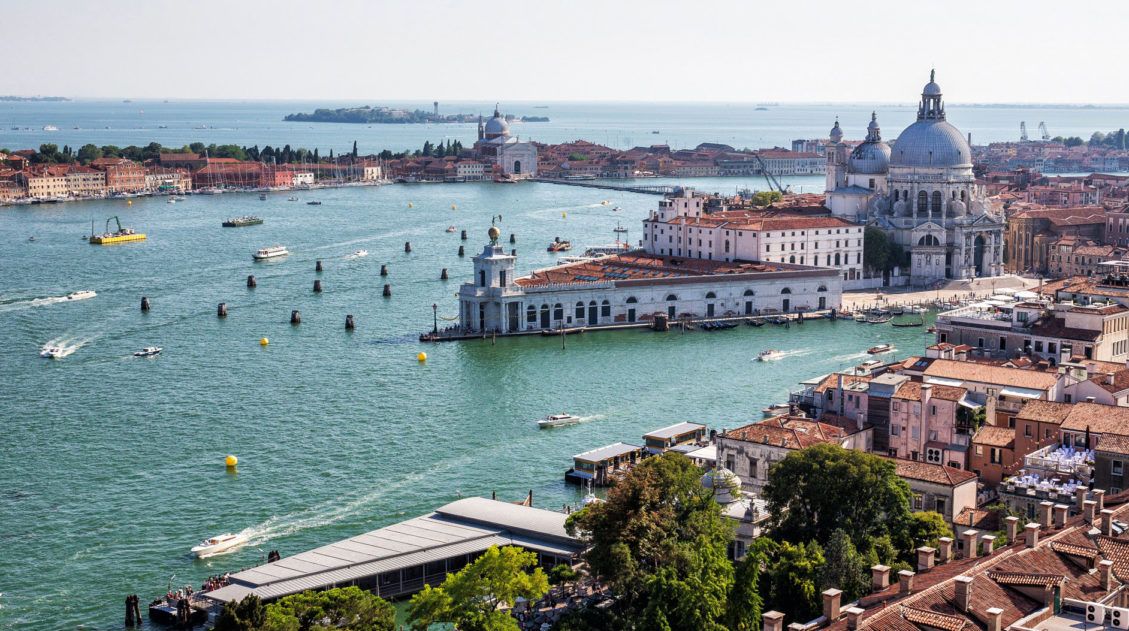
12 Beautiful Views of Venice (A Photographer’s Guide)
Venice is one of the most photogenic cities in Italy. Simply wander its canals and squares and you’ll come away with quite the compilation of photographs. But if you’re looking for elevated viewpoints and photography ideas, this guide has you covered. We’ve visited Venice three times: once as a young family traveling on a tight […]
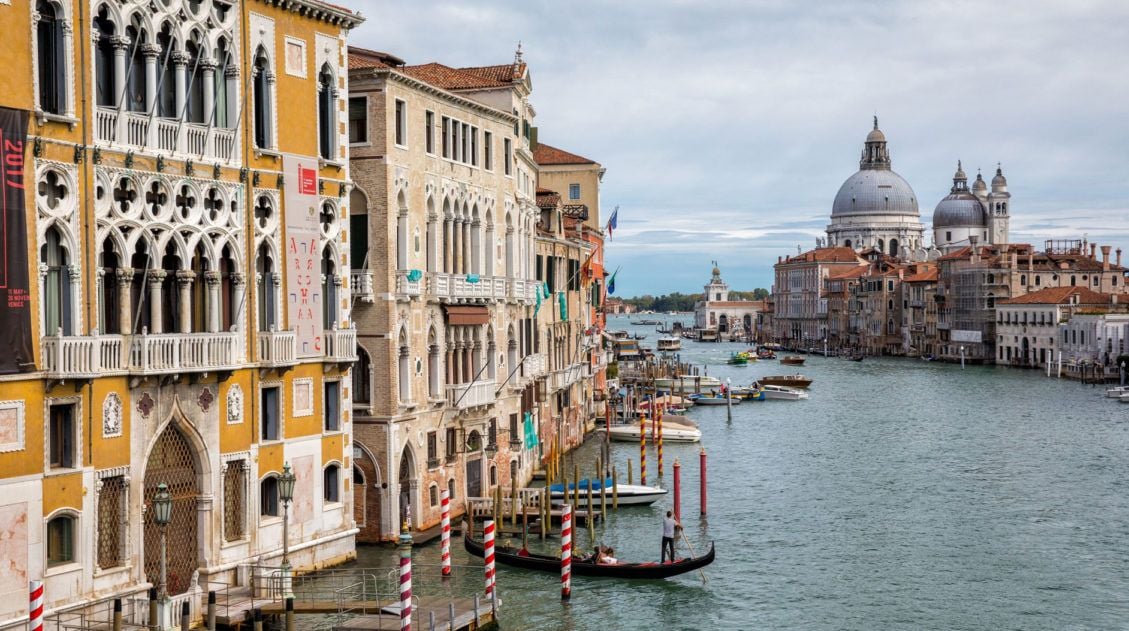
20 Photos That Will Make You Want to Visit Venice Italy
Venice is a photographer’s paradise. With its maze of canals, its colorful, crumbling facades, and gondolas silently drifting through the city, it’s hard to leave Venice without a memory card full of beautiful images. In this article, we display our 20 favorite photos of Venice, Italy. So far, we have visited Venice three times. The first […]
One Day in Venice: 3 Different Ways to Plan Your Itinerary
One day in Venice itinerary: 3 different ways to plan your time, whether you want the top sights, the quiet canals, or a mix of both. If you are planning to spend one day in Venice, there are several ways to do it. Do you want to spend the day visiting the top sights in […]
2 Days in Venice Itinerary: What 3 Trips Taught Us
Our 2-day Venice itinerary, refined over three visits and built for first-time visitors who want to see the highlights without wasting time in line. If you are planning your first trip to Venice, this itinerary is built for you. With 2 days in Venice, you have just enough time to visit the highlights of this […]

10 Day Northern Italy Itinerary (Dolomites, Venice & Lake Como)
This 10-day itinerary through Northern Italy features Venice, the Dolomites, Verona, Milan, and Lake Como, with hiking suggestions, hotel recommendations, and practical planning advice based on our numerous trips to Italy. We’ve visited Italy numerous times, exploring these destinations on separate trips over the years, hiking in the Dolomites, wandering the canals of Venice, strolling […]

Dolomites Itinerary: Mix-and-Match Daily Plans for 3 to 10 Days
Planning a Dolomites itinerary can feel overwhelming. With its towering peaks, storybook alpine villages, epic hikes, and scenic drives around every corner, how do you decide what’s worth your time? In this guide, we make it simple. We break the Dolomites into easy, day-by-day itineraries that you can mix and match to build your perfect […]
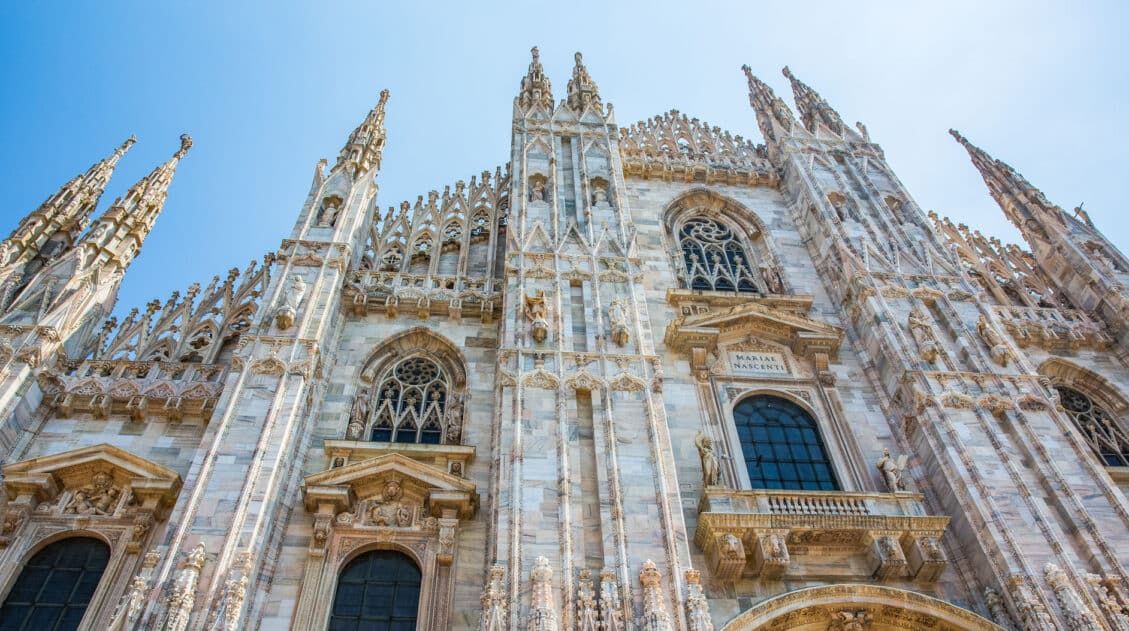
Milan Day Trip: One Day Itinerary from Florence, Venice & Cinque Terre
Milan makes a surprisingly easy and rewarding stop between Florence, Venice, and the Cinque Terre. With high-speed trains and compact sightseeing, you can see the Duomo, Leonardo da Vinci’s Last Supper, and stroll through the Galleria Vittorio Emanuele II, all in just a few hours. Milan also co-hosted the 2026 Winter Olympics, bringing the world […]
1 to 2 Days in Bologna: The Best Itinerary for First Timers
Bologna didn’t make it onto our Italy itinerary until our sixth trip. We’d visited Rome, Florence, Venice, the Amalfi Coast, Tuscany, and the Dolomites, and somehow kept skipping over this city in northern Italy. Once we finally arrived, Tim and I were instantly captivated: the busy, bustling Quadrilatero with its wine bars and shops overflowing […]
3 Days in Rome: The Ultimate Rome Itinerary
Visit the Colosseum, stroll through the historic heart of Rome, tour the Vatican Museums, climb to the top of the dome on St. Peters’ Basilica, cycle the Appian Way, have an aperitif with a spectacular view of Rome, dine on gelato and pizza by the slice…these are all things you can with 3 days in […]
Exactly How to Visit the Colosseum in 2026 (+ Best Tours)
The Colosseum is one of the most popular tourist attractions in the world. If you are planning your first trip to Rome, most likely the Colosseum is on your to-do list. In this guide, we cover what you need to know about how to visit the Colosseum, including what to do when you are here, […]
Best Florence Rooftop Bars with a View of the Duomo
There are a lot of ways to see Florence from above, from climbing the Duomo dome, walking up to Piazzale Michelangelo, or ducking into a museum rooftop café. But the best way, in our opinion, is from a rooftop bar in Florence at golden hour with a Negroni in hand. Tim and I have been […]
25 Best Places to Visit in Italy
After six trips to Italy, these are the 25 places to visit in Italy we keep recommending — the ones that reward first-timers and repeat visitors alike, from the iconic cities of Rome and Florence to lesser-known gems like Matera and Puglia. We’ve been to Italy six times over the past ten years, and we’re […]

Comments 109