
Planning a trip to Mount Rainier National Park and not sure how to structure your time? We’ve got you covered, and we’re speaking from experience.
We’ve visited Mount Rainier twice: once on a six-day trip where we hiked extensively through every corner of the park, from Paradise and Sunrise to the quieter trails of the Carbon River area, and again on a day trip from Seattle when we had just a few hours to work with. Both trips shaped how we think about planning time here and together they’re the foundation of every itinerary recommendation in this guide.
Here’s what those visits taught us: Mount Rainier rewards however much time you give it. Two days covers the highlights. Three days lets you breathe. Six days, like our first visit, leaves you wanting more. The park has a way of doing that.
In this guide we’ll help you build the perfect Mount Rainier itinerary based on your available time, whether you’re making a quick day trip from Seattle or settling in for a week of serious hiking. We cover the best things to do, when to visit, where to base yourself, and exactly how to sequence your days to get the most out of this extraordinary park.
For a complete overview of everything the park has to offer, start with our Mount Rainier National Park Travel Guide before diving into the itineraries below.
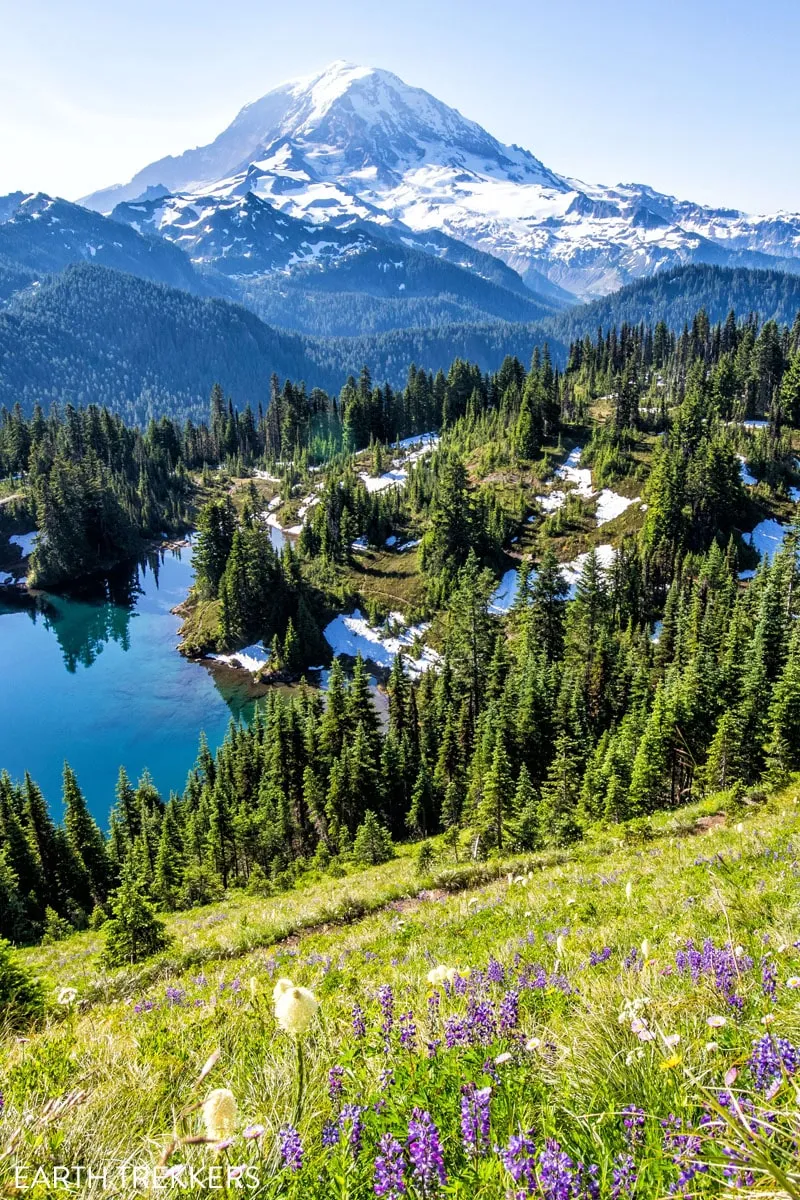
Mount Rainier Itinerary Overview
BEST FOR | First-time visitors
IDEAL TRIP LENGTH | 2 to 3 days
BEST MONTHS | July through September
TOP EXPERIENCES | Visit Sunrise and Paradise, hike the Skyline Trail Loop, see Reflection Lake, enjoy the view from Crystal Mountain
QUICK ITINERARY SUMMARY
- 1 Day: Paradise and Stevens Canyon Road
- 2 Days: Sunrise and Crystal Mountain
- 3 + Days: Add on more hikes and scenic drives
3 Things to Know about Mount Rainier in 2026
Timed Entry Permits
Timed entry permits will NOT be required for Mount Rainier in 2026. However, this could change in future years, so it’s still a good idea to check the National Park Service website before your visit.
Construction Project
There is a construction project planned for 2026 that may impact travel within the park, and some areas may have limited access. Ohanapecosh Campground is currently closed, which affects access to the Silver Falls Loop. It is expected to reopen in spring or early summer 2026. Before your visit, check the National Park Service website for the latest updates on road access and closures.
Mowich Lake Road Closure
Mowich Lake Road is closed to all vehicle, bicycle, and pedestrian traffic until further notice due to closure of the SR165/Fairfax Bridge. This is the road that leads into the Mowich Lake/Carbon River area of the park and the Tolmie Peak Fire Lookout.
This area of the park is inaccessible by car. The only way in is by backpacking the Wonderland Trail.
Check the official National Park Service website for the latest road status updates. You can also read about proposals to repair or replace the bridge on the WSDOTblog website.
Please practice the seven principles of Leave No Trace: plan ahead, stay on the trail, pack out what you bring to the hiking trail, leave areas as you found them, minimize campfire impacts, be considerate of other hikers, and do not approach or feed wildlife.
When is the Best Time to Visit Mount Rainier National Park?
The summer and early fall is the best time to visit Mount Rainier National Park. This is when all of the roads will be open and many hiking trails will be free of snow. During the summer months, the weather is also the warmest and driest of the year.
The wildflowers typically bloom from mid-July through mid-August. If you want to see Mount Rainier during the peak blooming season, plan your visit for early August.
In the spring and fall, the weather is damp and chilly. During the winter months, massive amounts of snow can fall in the park. It is not unusual for Paradise to get over 50 feet of snow each winter.
During the winter months, you can visit Paradise and go snow shoeing, sledding, skiing, and snowboarding. Snowmobiling is permitted in the southwest corner of the park.
In early fall, several main roads close in the park and don’t reopen to mid to late-spring, cutting off access to some of the best places to visit in Mount Rainier.
Road Openings & Closures in Mount Rainier National Park
Here are the opening and closing dates for the roads in the park:
- Stevens Canyon Road: open during the summer and early fall
- Sunrise Road: opens in late June or early July and closes in late September or early October
- Chinook Pass and Cayuse Pass: Chinook Pass and Cayuse Pass are generally open from Memorial Day through mid-November, depending on snowfall
For updates on road status, visit the National Park Service website.
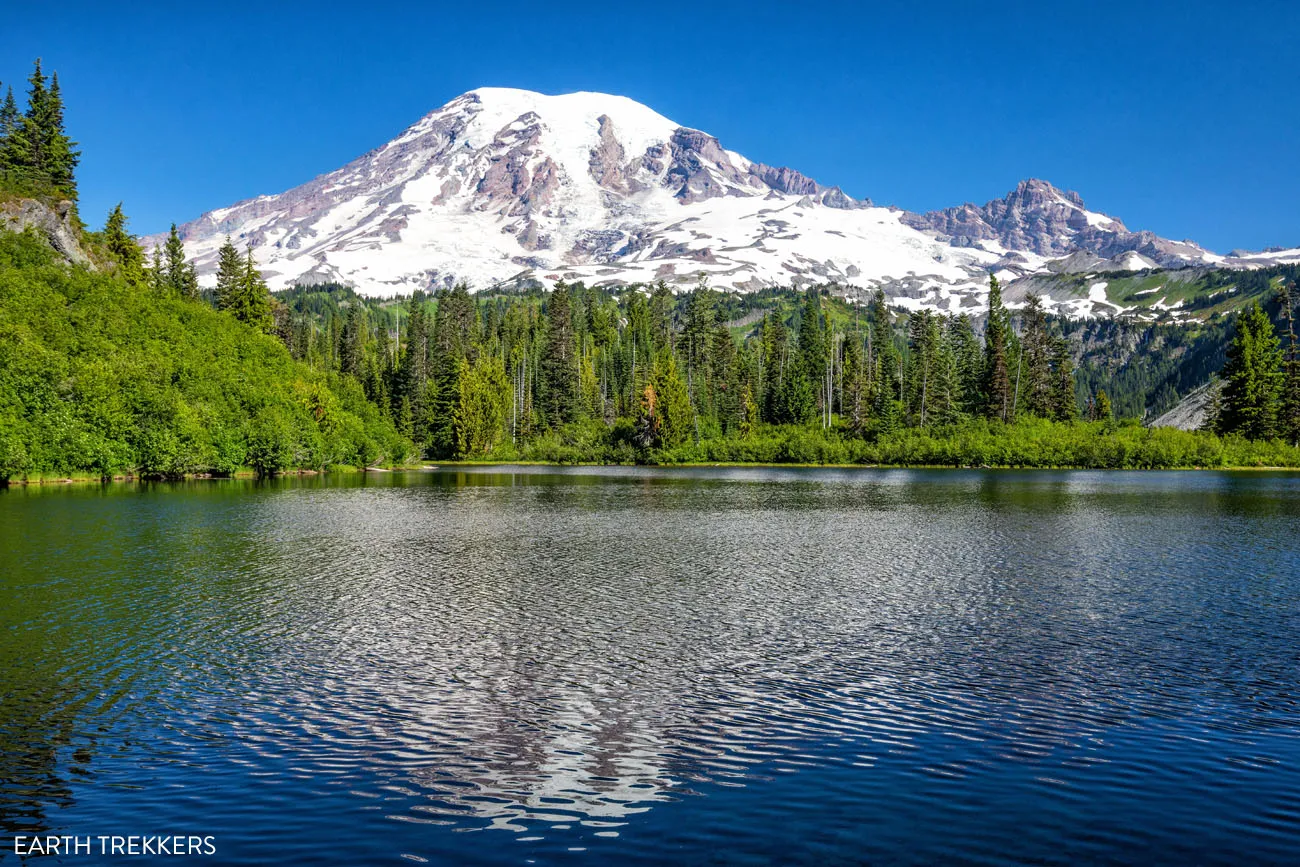
Bench Lake
How Many Days Do You Need in Mount Rainier?
I recommend spending a minimum of two days in Mount Rainier National Park (one day for Sunrise and one day for Paradise). When the Carbon River/Mowich Lake area reopens to car traffic, and third day is absolutely worth it, to explore this quiet corner of the park. Each extra day you can add gives you more time for hiking, for scenic drives and viewpoints, and some contingency time just in case you get bad weather.
We spent six days here and still could have used more time. The hikes are incredible and there are a lot to choose from.
Top Experiences in Mount Rainier National Park
Mount Rainier National Park is known for its alpine scenery, wildflower meadows, and outstanding hiking trails. While hiking is one of the best ways to experience the park, there are also scenic viewpoints, waterfalls, and beautiful drives that make it easy to enjoy the park even if you prefer shorter walks.
Here are the top experiences in the park:
- Visit Paradise and hike the Skyline Trail Loop or Myrtle Falls
- Visit Sunrise and hike the Sourdough Trail or Mount Fremont Lookout Trail
- Have brunch at the Paradise Inn
- Take a photo at Reflection Lake
- See Narada Falls
- Ride the gondola to Crystal Mountain
- Drive Cayuse Pass and Chinook Pass
- Hike another trail or two (or three…)
For a complete list of experiences, hiking recommendations, and detailed planning advice, see our guide to the Best Things to Do in Mount Rainier National Park ↓
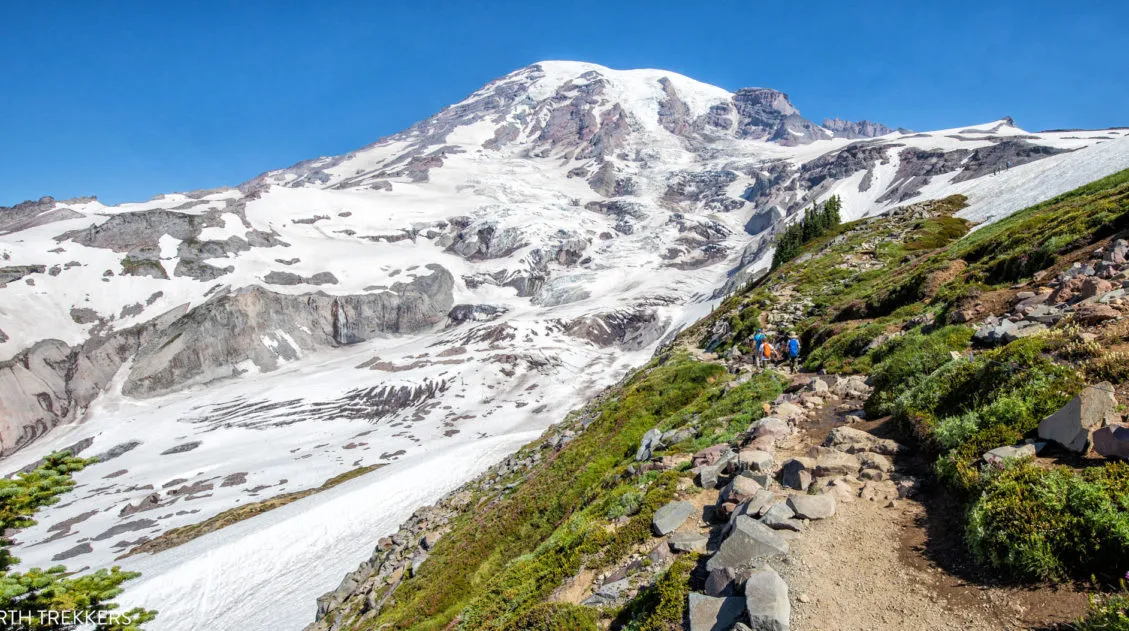
Best Things to Do in Mount Rainier National Park (2026 Guide)
Best things to do in Mount Rainier, from epic hikes to scenic drives and gorgeous viewpoints.2 Day Mount Rainier National Park Itinerary
This 2-day itinerary covers the essential Mount Rainier experiences, including Sunrise, Paradise, and Ohanapecosh. It also gives you a genuine feel for what makes this park so spectacular.
This 2-day itinerary is designed to be extended easily if you have more time, which we’ll cover in the next section.
We recommend basing yourself in Packwood, a small town near the southeastern corner of the park. It puts you within easy reach of both the Sunrise and Paradise corridors without the long drives you’d face staying further afield. Ashford is a solid alternative if you prefer being closer to the Nisqually entrance, and the Paradise Inn is the most atmospheric option if you want to sleep inside the park itself, just know that rooms book out months in advance.
These days can be done in either order. We start with Paradise, since that is the most popular area of the park to visit, and is the best way to visit Mount Rainier, if you only have one day.
2-Day Mount Rainier Itinerary Overview
Day 1: Paradise, Skyline Loop Trail, Reflection Lake, Stevens Canyon Road
Day 2: Sunrise, Crystal Mountain, and Ohanapecosh
Day 1: Paradise
On the Road: 60 miles, 2 hours
Today you will explore Paradise, the most famous area of Mount Rainier National Park. Known for its wildflower meadows, incredible views of Mount Rainier, and network of hiking trails, Paradise is one of the best places in the park to experience the mountain up close.
Plan to arrive early in the morning, especially during the summer months, since parking at Paradise can fill by mid-morning.
Morning: Paradise
Start your day in Paradise, one of the most scenic areas of Mount Rainier National Park. From here, numerous trails climb into the alpine meadows with spectacular views of Mount Rainier.
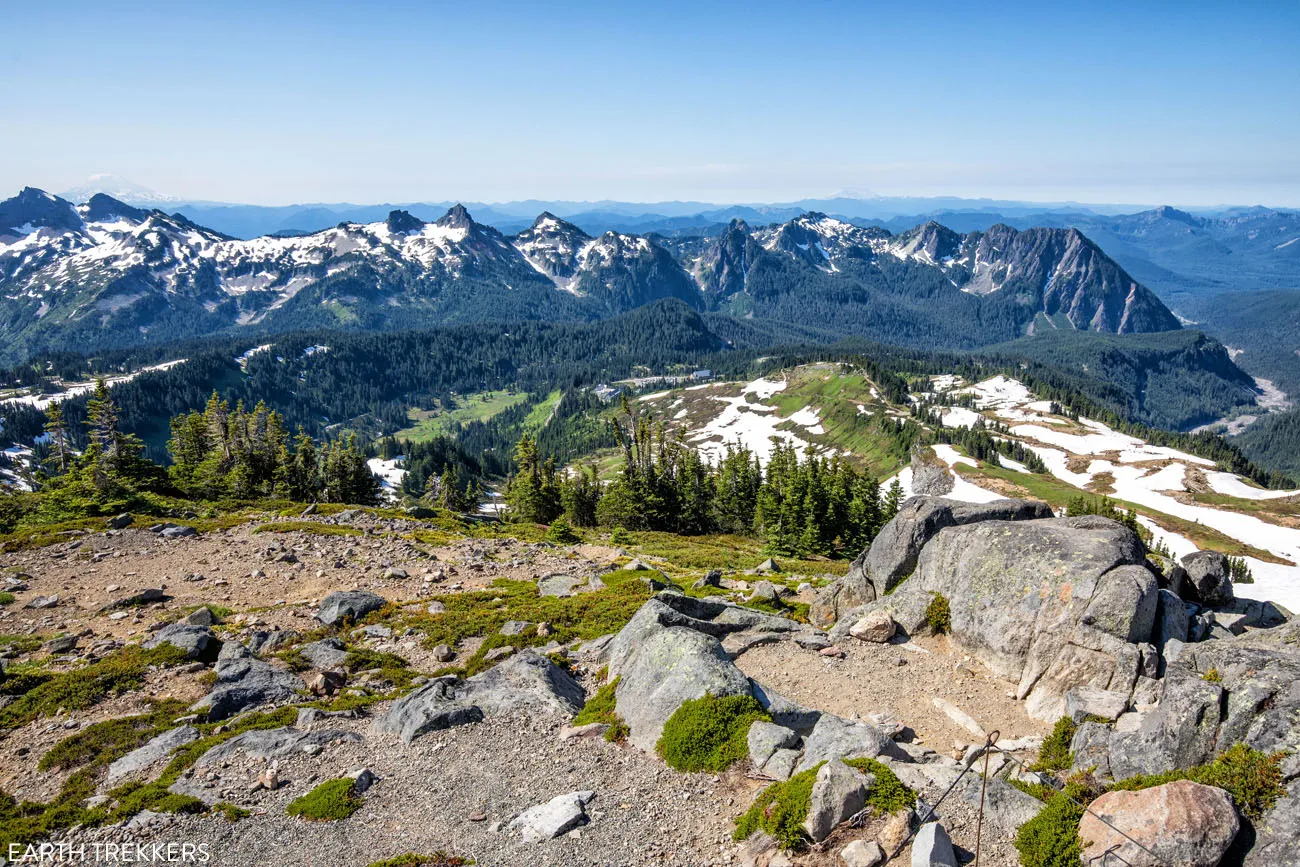
Overlooking Paradise from Panorama Point on the Skyline Trail.
If you enjoy hiking, the Skyline Trail Loop is one of the best hikes in the park. This 6-mile loop climbs to Panorama Point, where you get sweeping views of Mount Rainier, nearby glaciers, and the surrounding Cascade Range. Here’s how to do it ↓
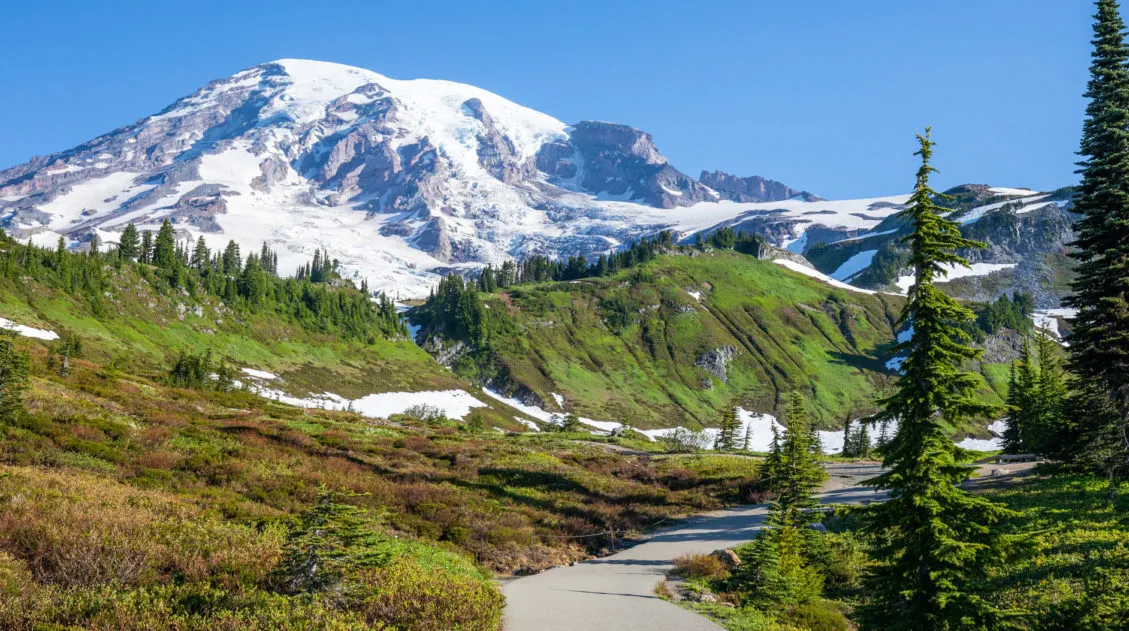
How to Hike the Skyline Trail Loop
Detailed hiking guide for the Skyline Trail Loop, plus the best direction to do this hike.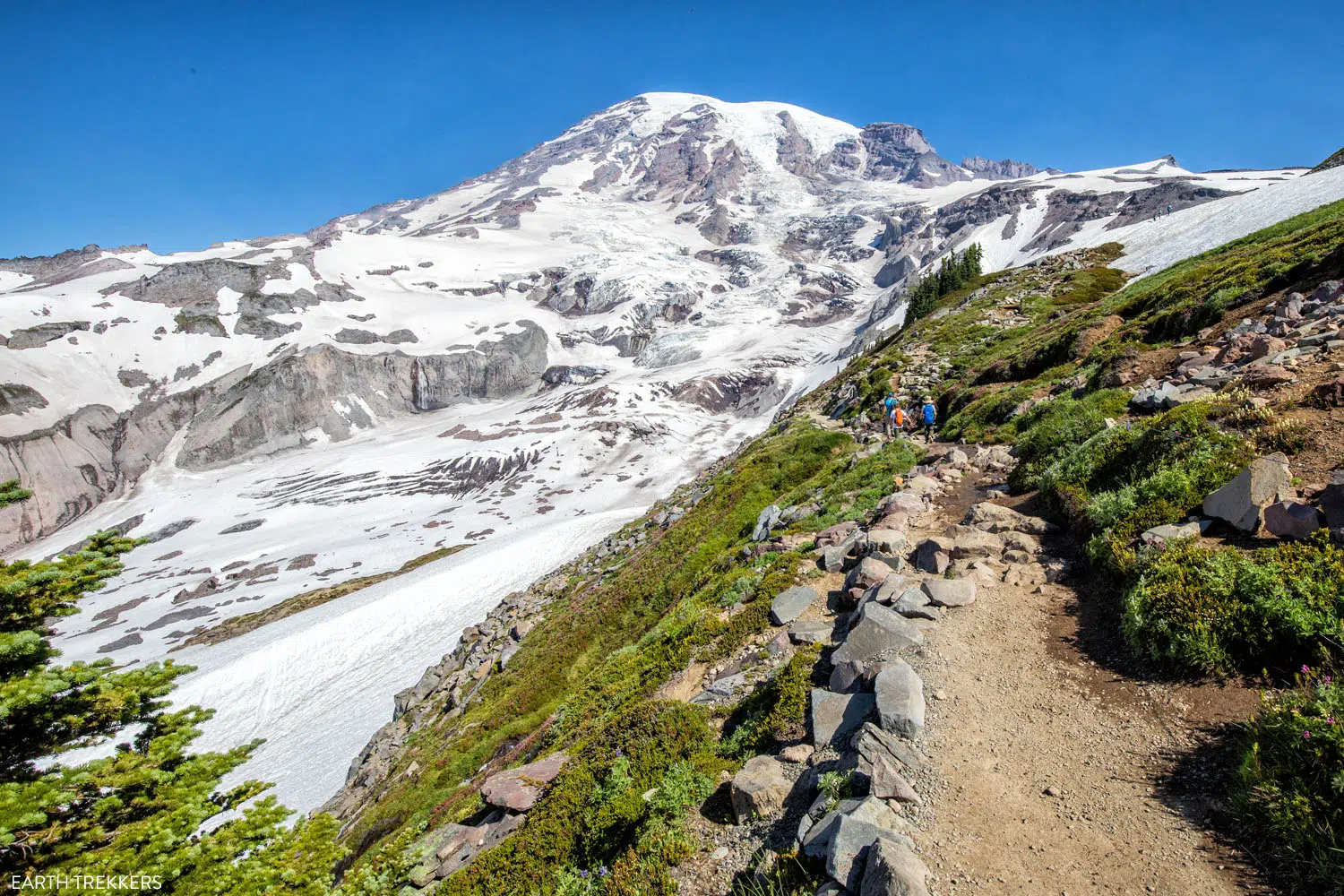
Skyline Trail Loop
If you prefer something easier, you can still enjoy the scenery with a short walk to Myrtle Falls, one of the prettiest waterfalls in the park. This easy, 1-mile walk offers fantastic views of Mount Rainier framed behind the waterfall.
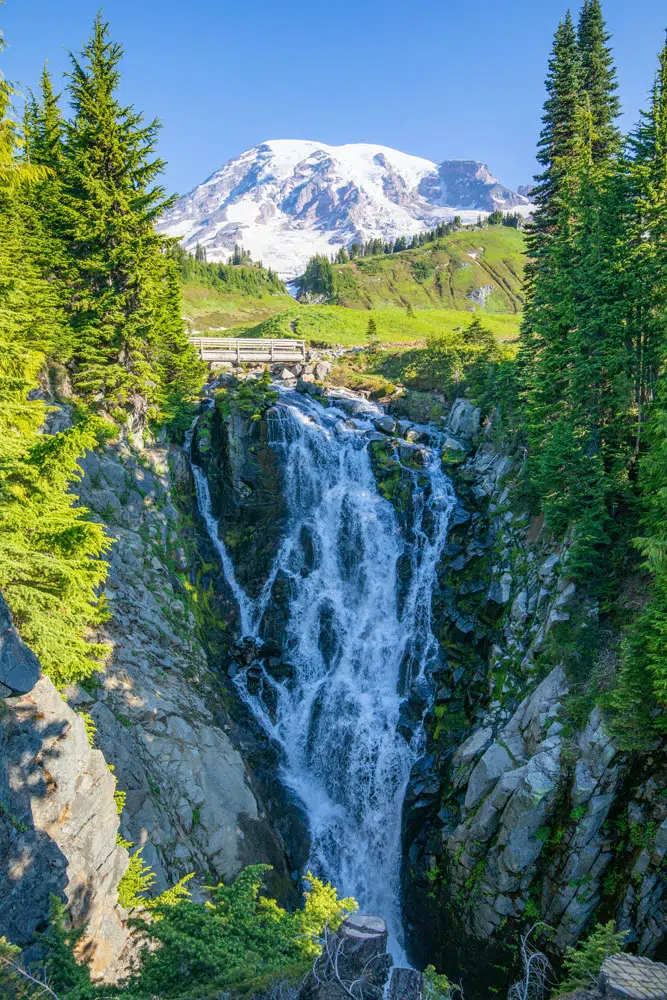
Myrtle Falls
Another relaxed option is to have breakfast or brunch at the Paradise Inn or visitor center café, followed by a short walk on one of the nearby viewpoint trails.
PRO TRAVEL TIP: Since this is one of the busiest areas of the park, plan on getting here early, ideally before 8 am, although even earlier is better. Parking fills fast and getting here early ensures you get a parking space, plus you can hit the trails before they get busy.
Afternoon: Reflection Lake & Stevens Canyon Road
After spending the morning in Paradise, see the sights along Stevens Canyon Road, one of the most scenic drives in the park.
Your first stop should be Reflection Lake, a small alpine lake that often provides one of the most famous photo views of Mount Rainier reflected in the water.
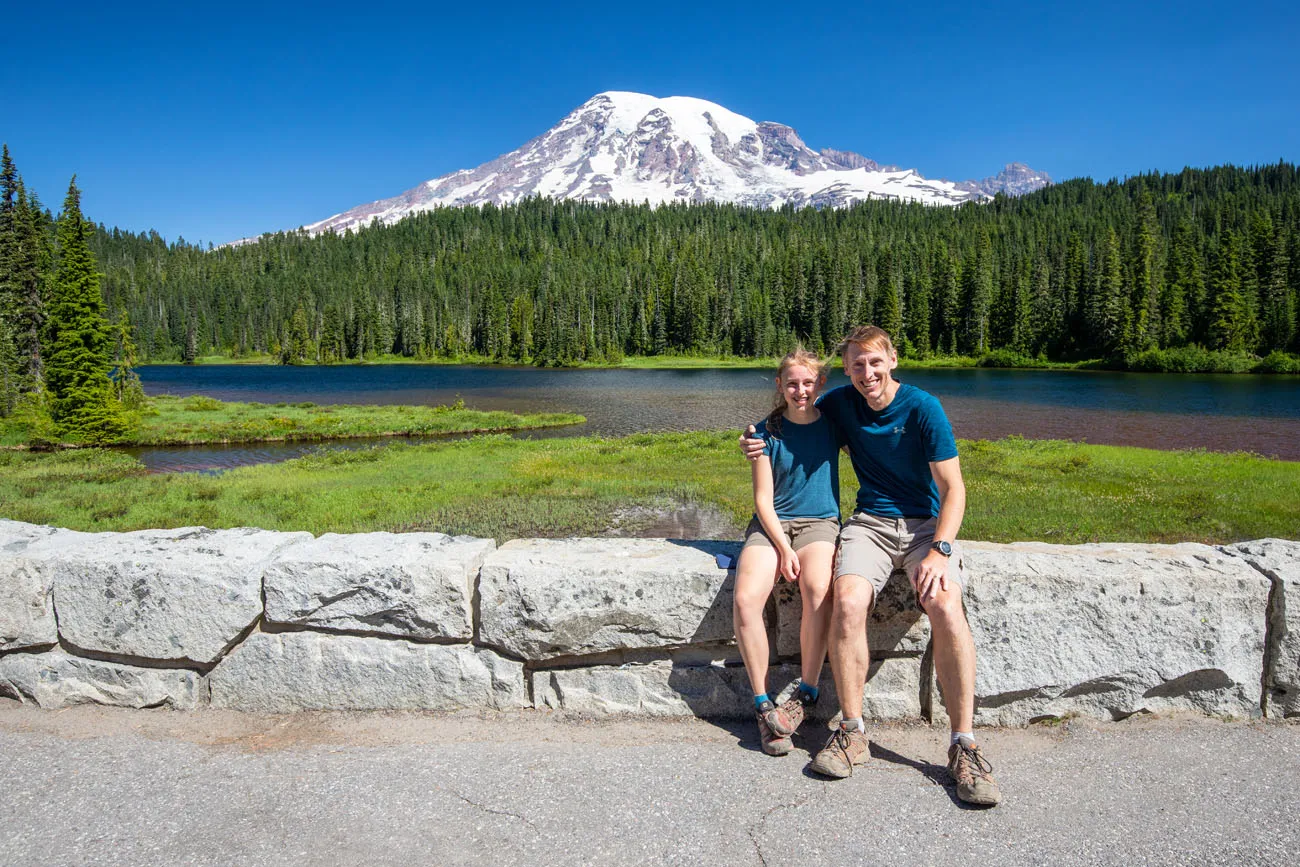
Reflection Lake
Next, stop at Narada Falls, one of the largest waterfalls in the park. A short paved path leads to an overlook where you can watch the powerful cascade plunge into the canyon below. As you continue along Stevens Canyon Road, keep an eye out for scenic viewpoints such as Ricksecker Point, which offers a sweeping view of Mount Rainier and the surrounding valleys.
If you are doing really good on time (and energy) you could add on the hikes to Snow and Bench Lakes, or the short hike to Comet Falls.
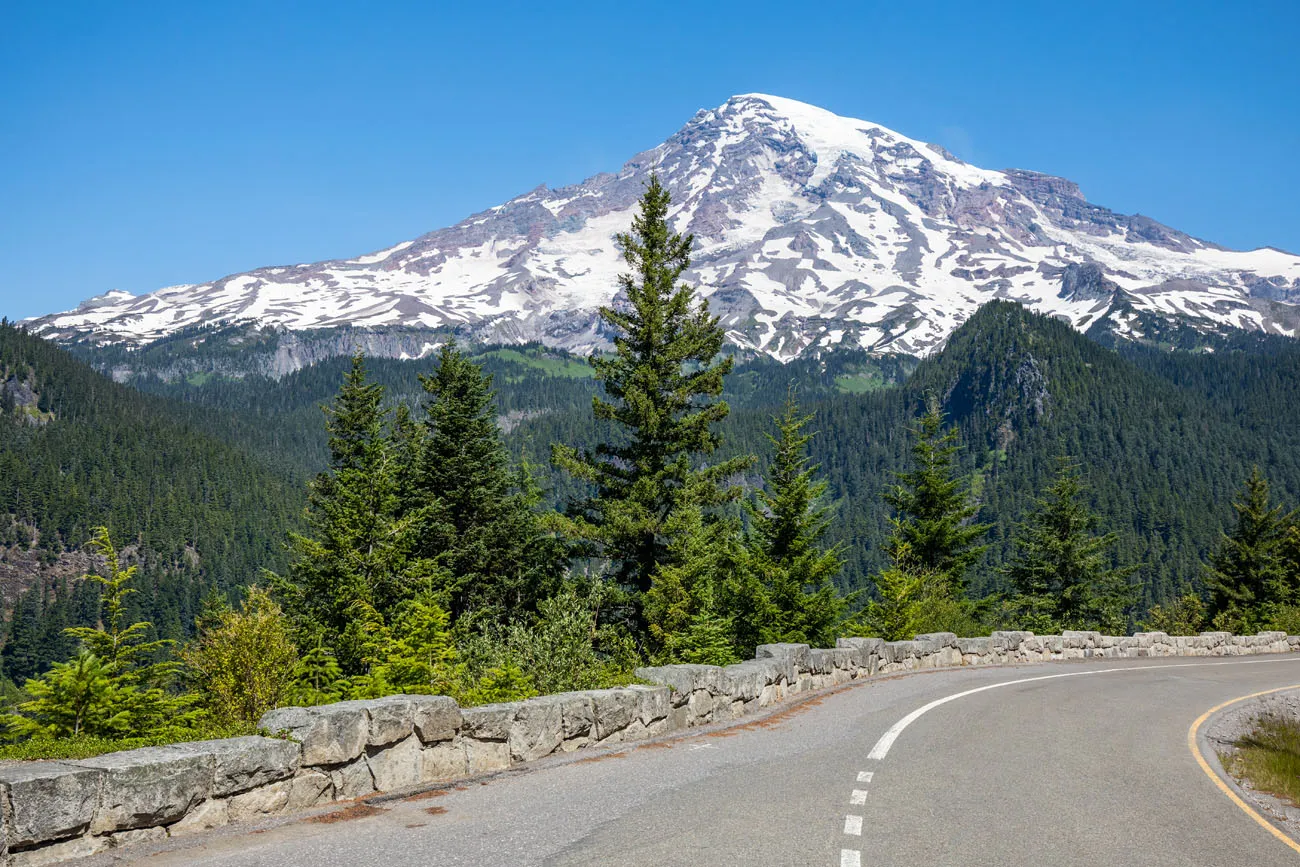
Ricksecker Point
End of Day
After exploring Stevens Canyon Road, return to Packwood or continue on to your next destination.
Day 2: Sunrise
On the Road (from Packwood): 110 miles, 3.5 hours
Today you will explore the Sunrise area, the highest point in Mount Rainier National Park that you can reach by car. Sitting at 6,400 feet, Sunrise offers some of the best panoramic views in the park, with Mount Rainier towering above you and the Cascade Range stretching into the distance.
Plan to spend the morning hiking and exploring the trails around Sunrise, then enjoy a scenic viewpoint and optional gondola ride at Crystal Mountain before returning to Packwood for the evening.
How to Use This Map: Click the tab in the top left corner of the map to see a list of the points of interest and to turn layers on/off. Click the icons on the map to get more information about each point of interest.
To take this map with you, click the star next to the title of the map which adds it to your Google account. Next, within your Google Maps app, select ‘Saved’ and then select ‘Maps’. This map title will now appear in your list.
Early Morning: Drive to Sunrise
Start your day early and drive to Sunrise, which sits on the northeast side of Mount Rainier. From Packwood, this 40 mile drive takes about one hour. The road climbs steadily through forests before opening to spectacular alpine views.
Before reaching the visitor center, make a quick stop at Sunrise Point. This overlook offers one of the best roadside views in the park, with Mount Rainier rising dramatically above the landscape.
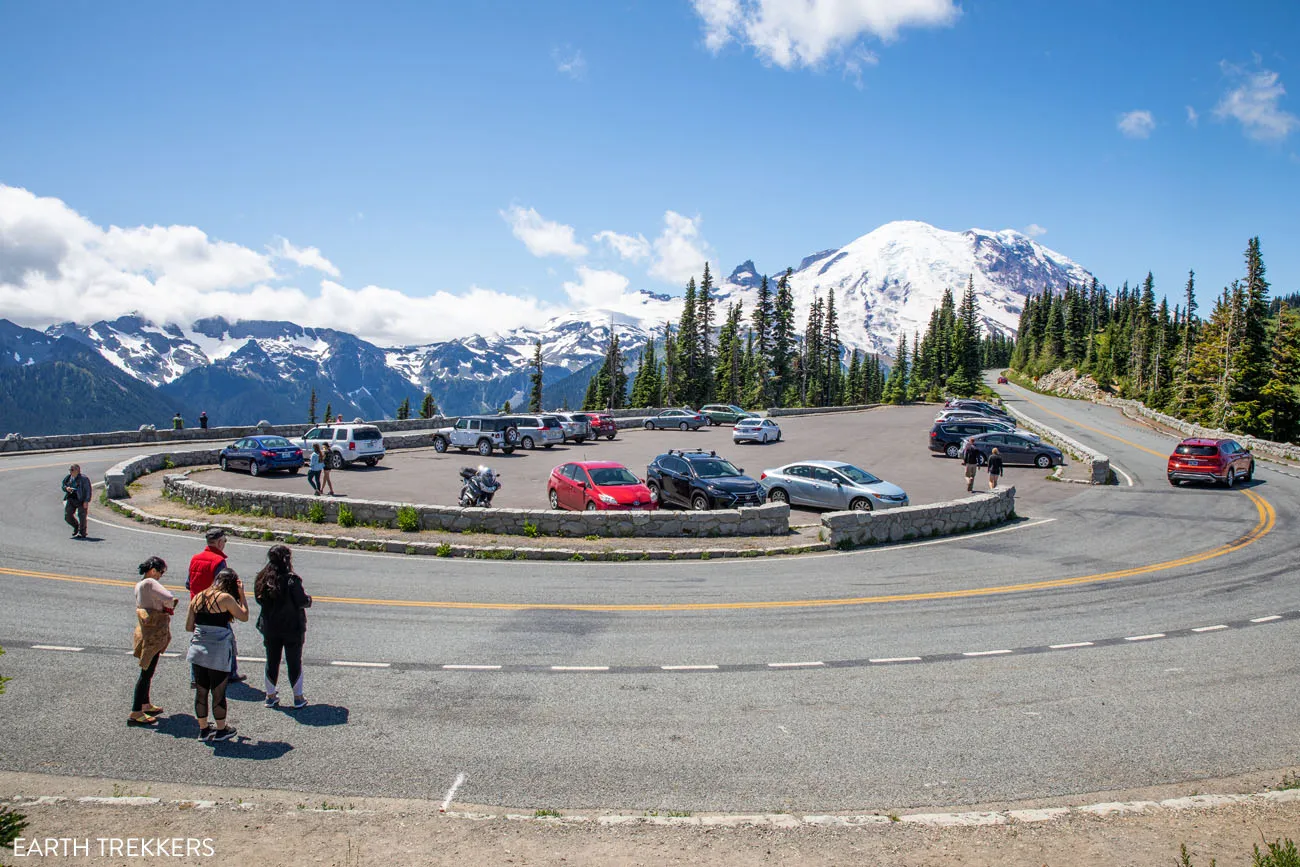
Sunrise Point
Morning: Go Hiking in Sunrise
Take your pick from the list of trails that start in Sunrise. Some are short and sweet and others are much more strenuous.
I recommend hiking the Sourdough Ridge Trail…the views of Mount Rainier are awesome. For the best experience, continue out to the Mount Fremont Fire Lookout for truly spectacular views (6 miles round trip). The Sunrise Nature Trail is also nice hike if you are looking for something shorter.
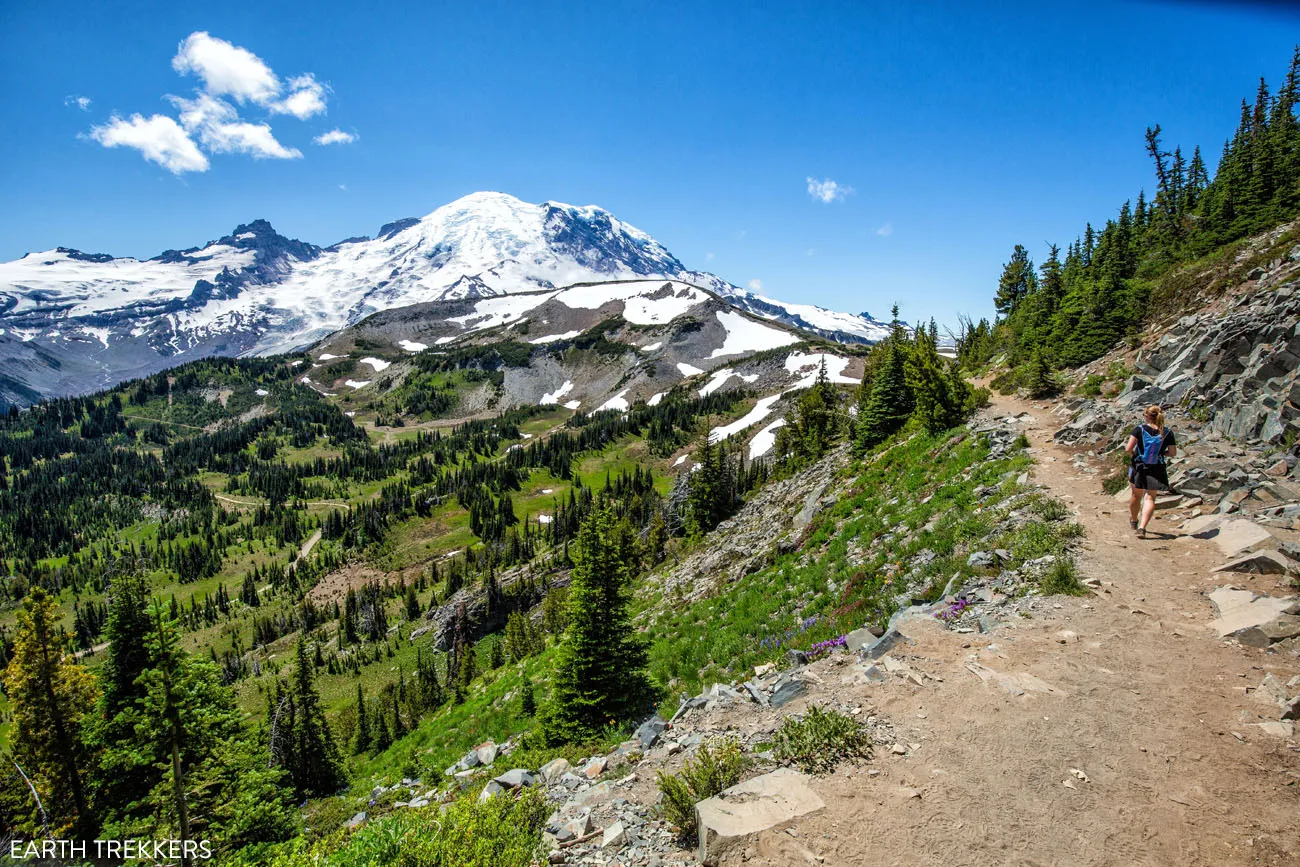
Sourdough Ridge Trail
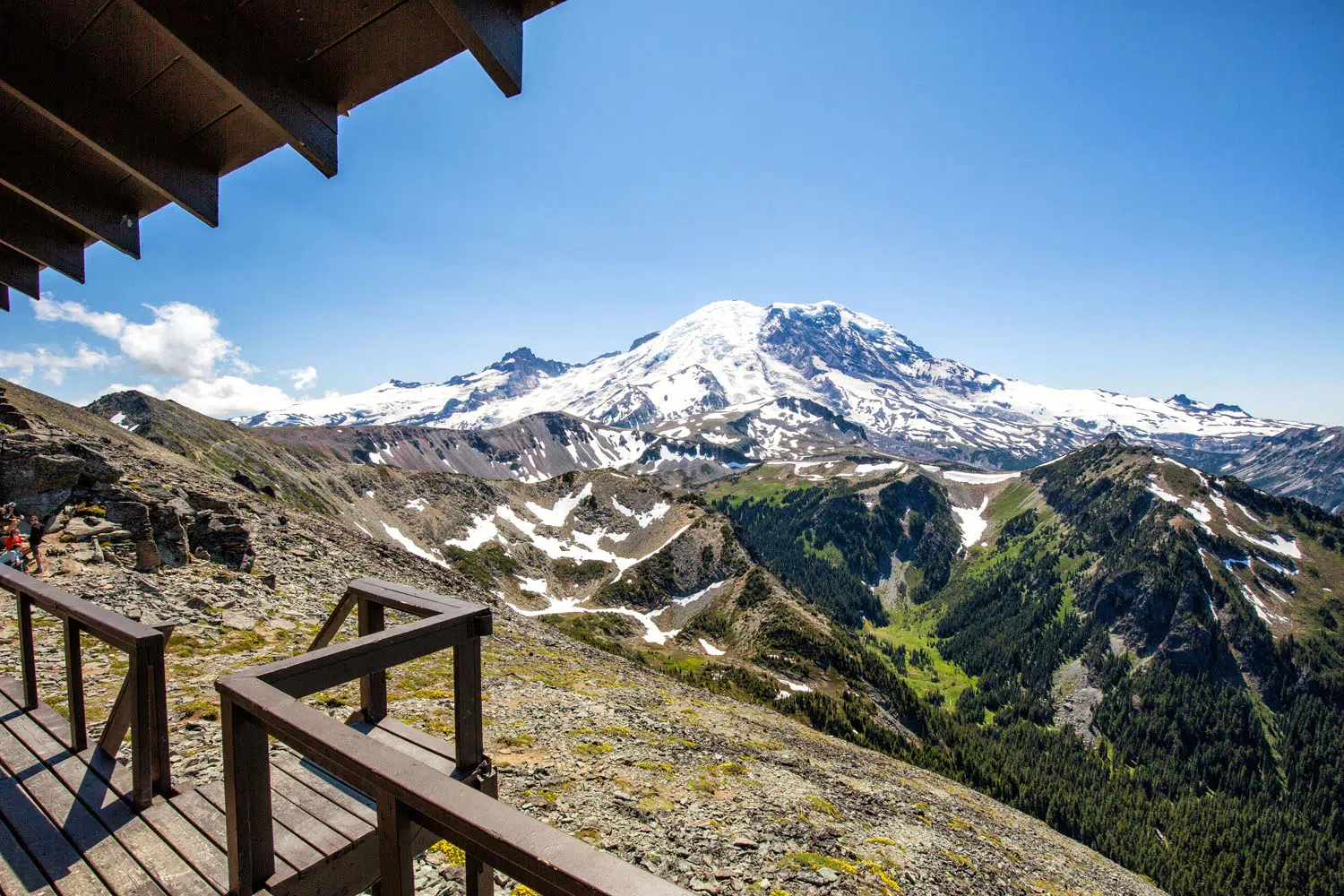
The view from the Mount Fremont Fire Lookout
PRO TRAVEL TIP: Sunrise Road is only open during the summer. The road opens in late June or early July and closes in late September or early October.
Afternoon: Crystal Mountain
Crystal Mountain is located northeast of Sunrise. It takes just under an hour to drive here from Sunrise but it is worth the detour.
From Crystal Mountain Resort, board the gondola up to the Summit House Restaurant, Washington’s highest elevation restaurant and one of the best views of Mount Rainier you’ll find anywhere.
Grab a table on the outdoor patio if the weather cooperates and plan to linger over lunch. Even on a warm summer day bring an extra layer. It’s significantly colder at the summit than in the valley. Check the official website for current gondola hours and pricing before you go.
Planning tip: Schedule this for a clear day if your itinerary allows any flexibility. Clouds can roll in quickly and obscure the mountain entirely. A clear day here is genuinely one of the best experiences in the entire park.
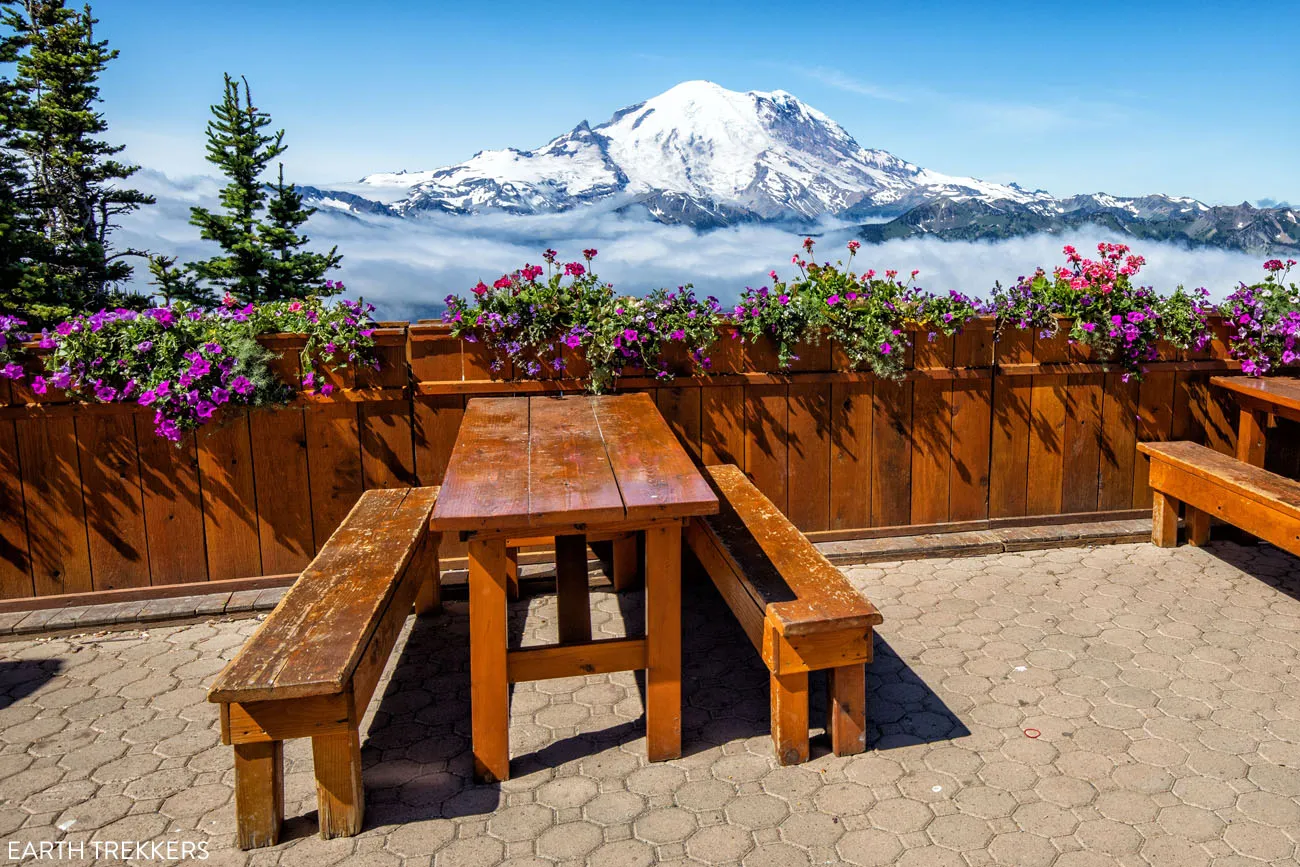
The outdoor patio at the Summit House Restaurant
Late Afternoon: Ohanapecosh
In the late afternoon, make your way to the Silver Falls Trail in Ohanapecosh. This 3-mile trail loops through old growth forests and ends at a stunning waterfall cascading over moss-covered rocks. It’s an easy, relatively flat trail that works well at the end of an active day when you want scenery without serious elevation gain.
The old growth trees along the river are enormous and the forest has a quiet, cathedral-like quality that feels completely different from the open alpine terrain of Sunrise earlier in the day.
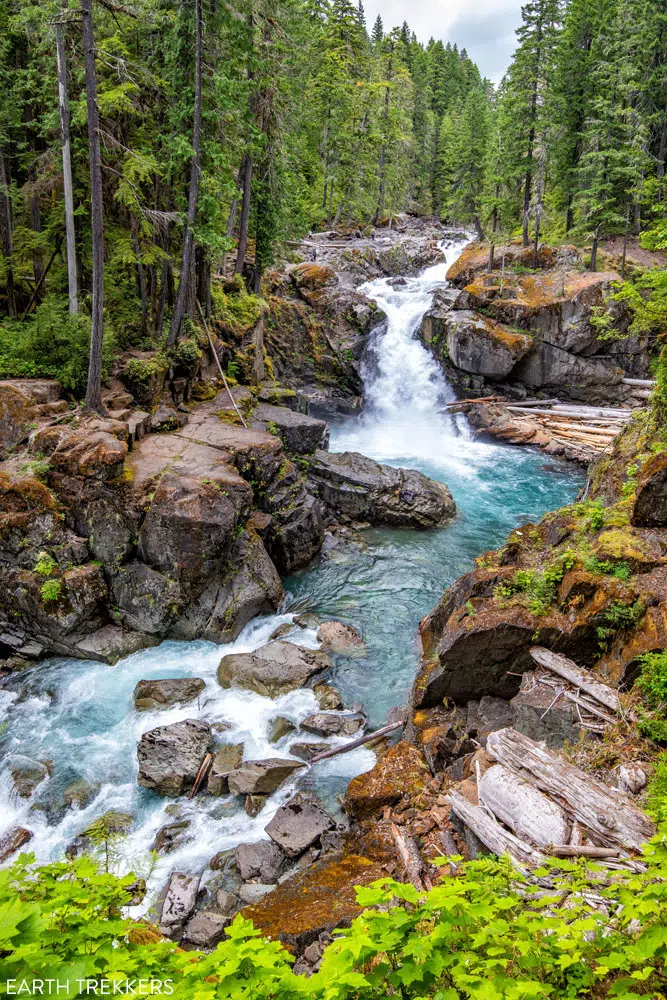
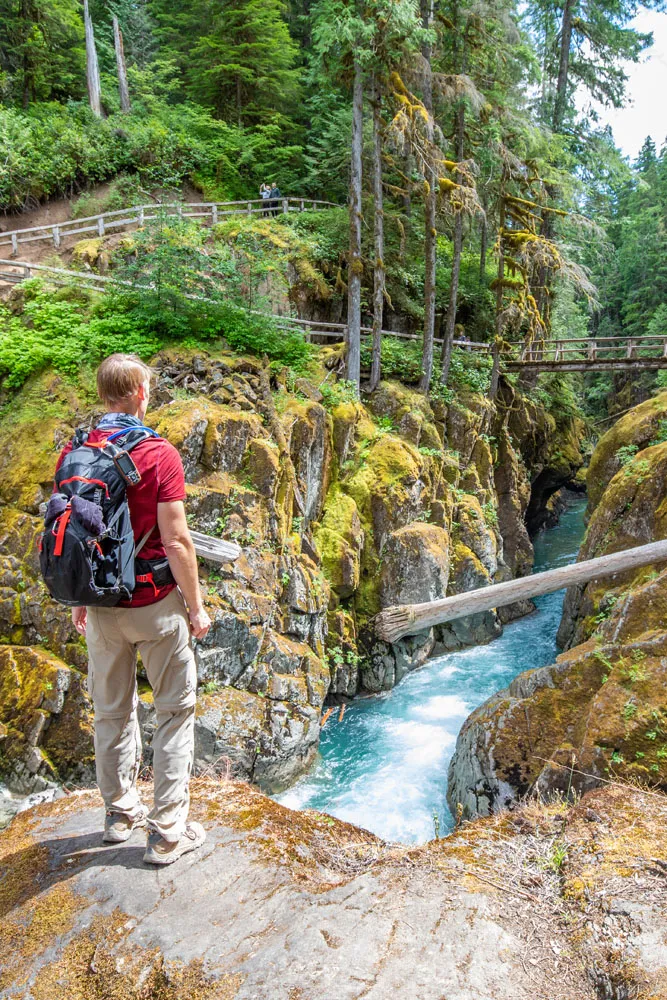
Silver Falls Trail
Note: The nearby Grove of the Patriarchs Trail remains closed due to flood damage to the suspension bridge, with no confirmed reopening date. Silver Falls is the best alternative in this area and well worth your time in its own right.
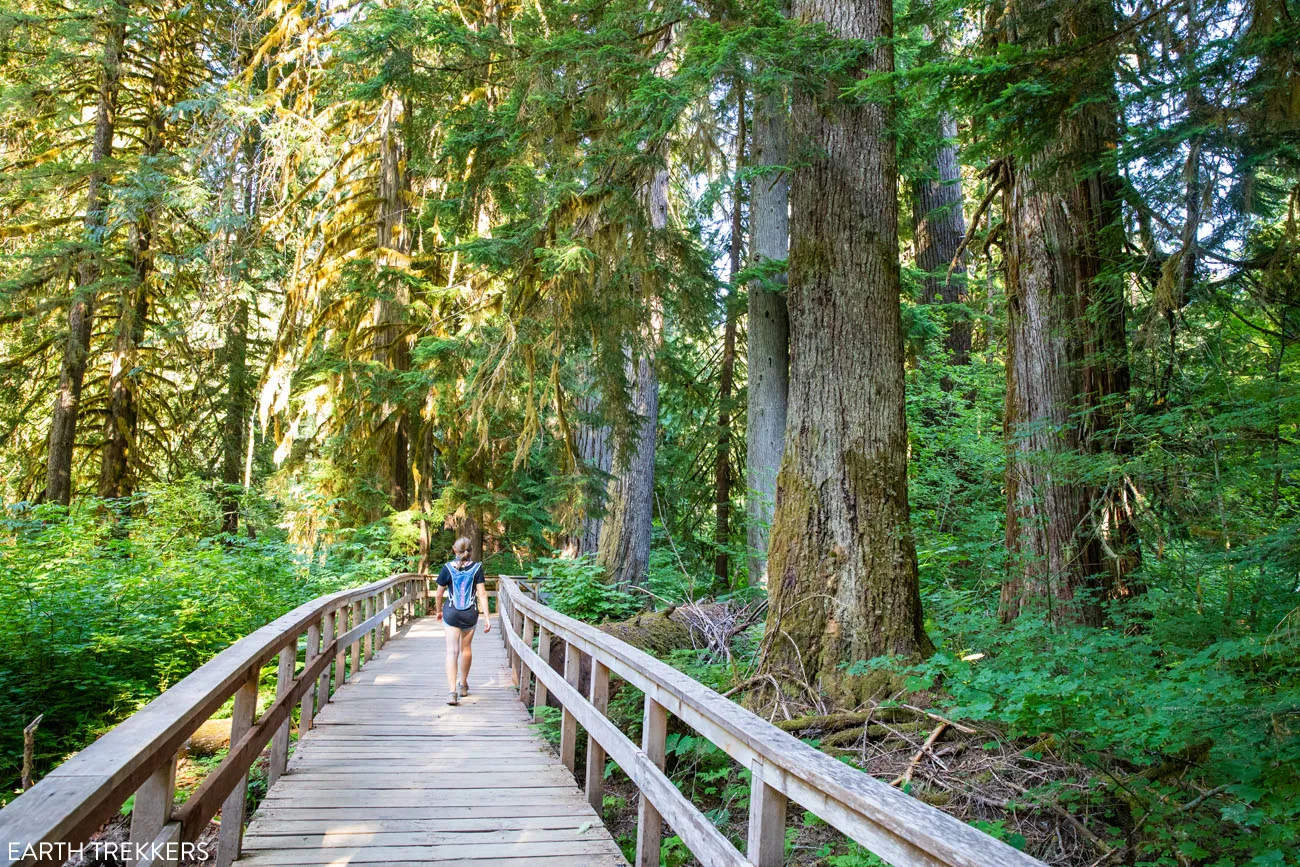
Grove of the Patriarchs
How to Extend This Mount Rainier Itinerary
If you have more than two days in Mount Rainier National Park, you have the opportunity to explore some of the park’s quieter areas and hike some of its longer, more scenic trails.
Below are a few ways to extend this itinerary with additional hikes and experiences. These suggestions fit naturally after the two-day itinerary above and can easily turn this trip into a three- to four-day visit.
Add One Day: Hike the Summerland Trail
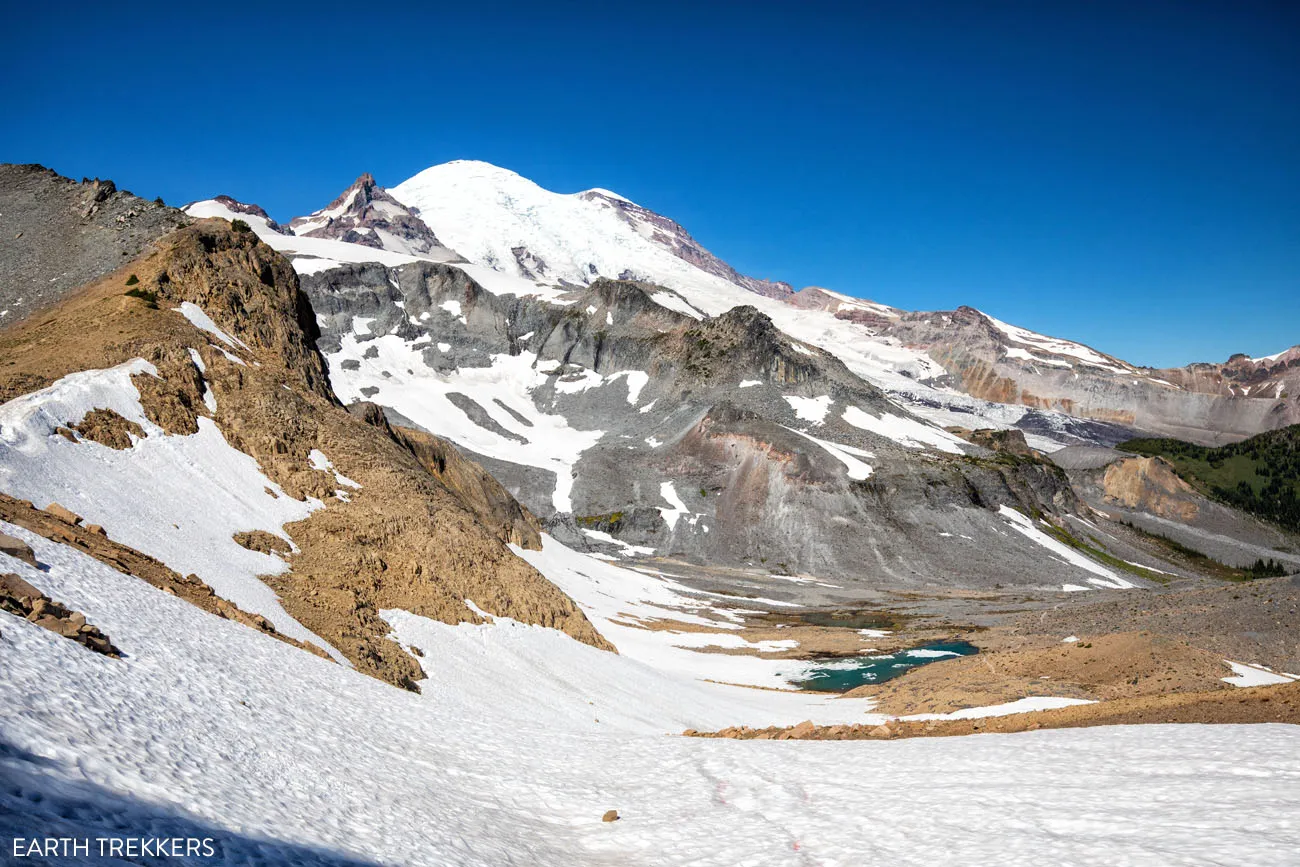
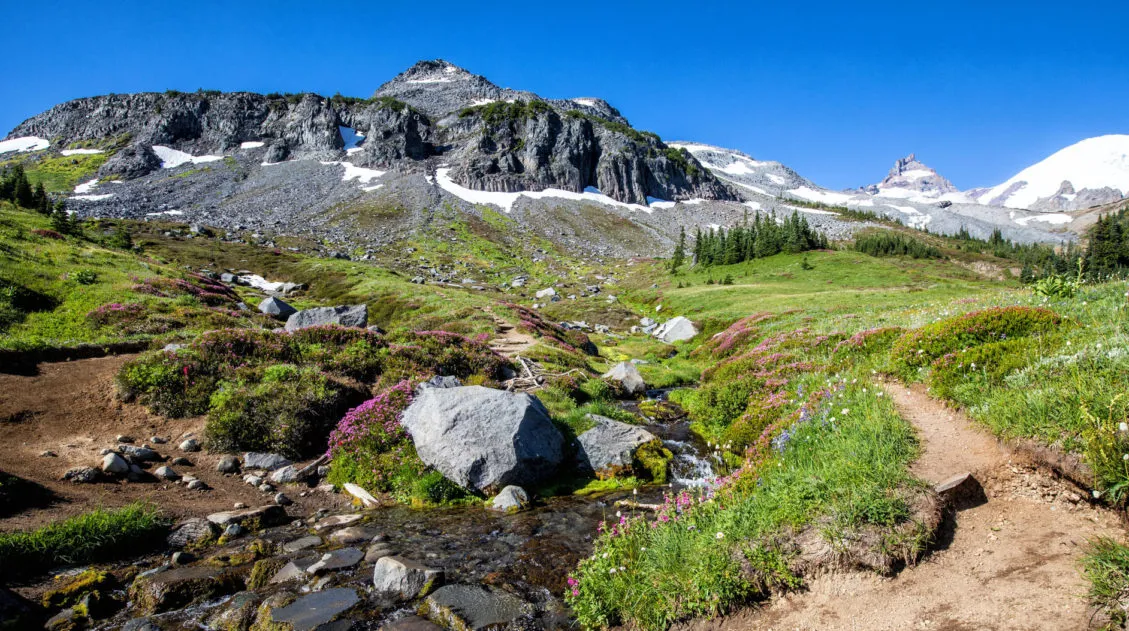
One of the best longer hikes in Mount Rainier National Park is the Summerland Trail to Panhandle Gap. This trail climbs through old-growth forests and wildflower meadows before reaching sweeping alpine views of Mount Rainier and the surrounding peaks.
This is a longer hike (about 12 miles round trip) and it takes 5 to 7 hours, but it showcases many of the landscapes that make Mount Rainier special, including wildlife sightings, glacier views, and high alpine terrain. It won’t take up a full day of your time, but most likely it will leave you feeling tired, so you could spend the rest of your day chilling at your hotel or campsite.
We really liked this hike, and it is a must-do for avid hikers visiting Mount Rainier.
For step-by-step trail details, see our Summerland Trail hiking guide ↓
How to Hike the Summerland Trail to Panhandle Gap
Step-by-step trail guide for the Summerland Trail to Panhandle Gap.Add One Day: Chinook Pass, Cayuse Pass, Naches Peak Loop
Since these are clustered together on the east side of the park, they make a great way to spend an additional day in Mount Rainier.
The Naches Peak Loop is one of the best moderate hikes in the park with beautiful views of Mount Rainier.
Chinook Pass and Cayuse Pass offer spectacular views of Mount Rainier and the surrounding Cascade Mountains. Along these roads you’ll find several scenic overlooks and trailheads that are worth a quick stop.
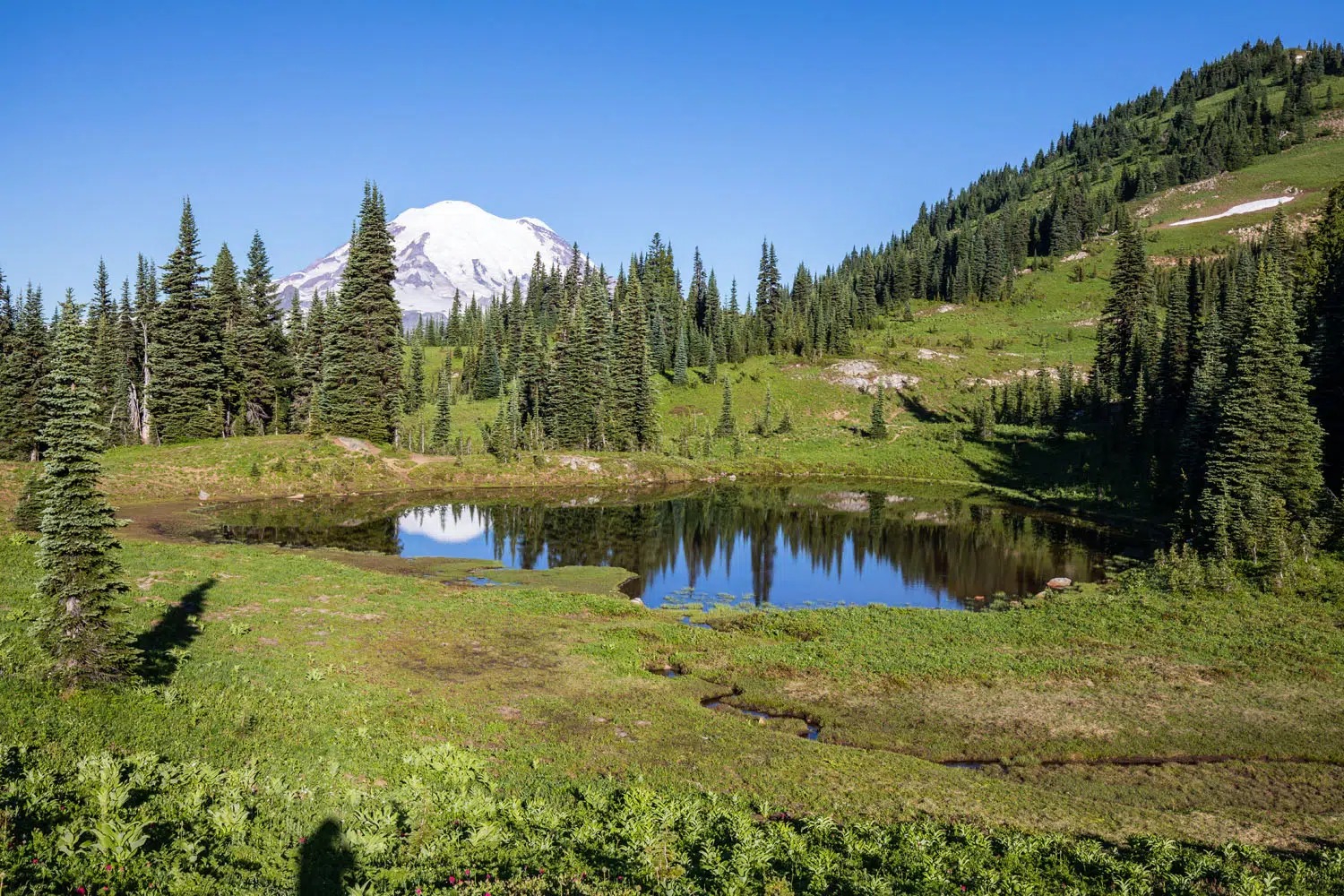
Naches Peak Loop
Carbon River Area & Tolmie Peak: Worth One Day, Once this Area Reopens
This was originally the 3rd day of our Mount Rainier itinerary.
The northwest corner of Mount Rainier National Park is the quietest and most remote section of the park. The hike to Tolmie Peak Fire Lookout is six miles round trip with spectacular views of Mount Rainier that rival anything in the park, and the Carbon River rainforest trail is unlike anything else here.
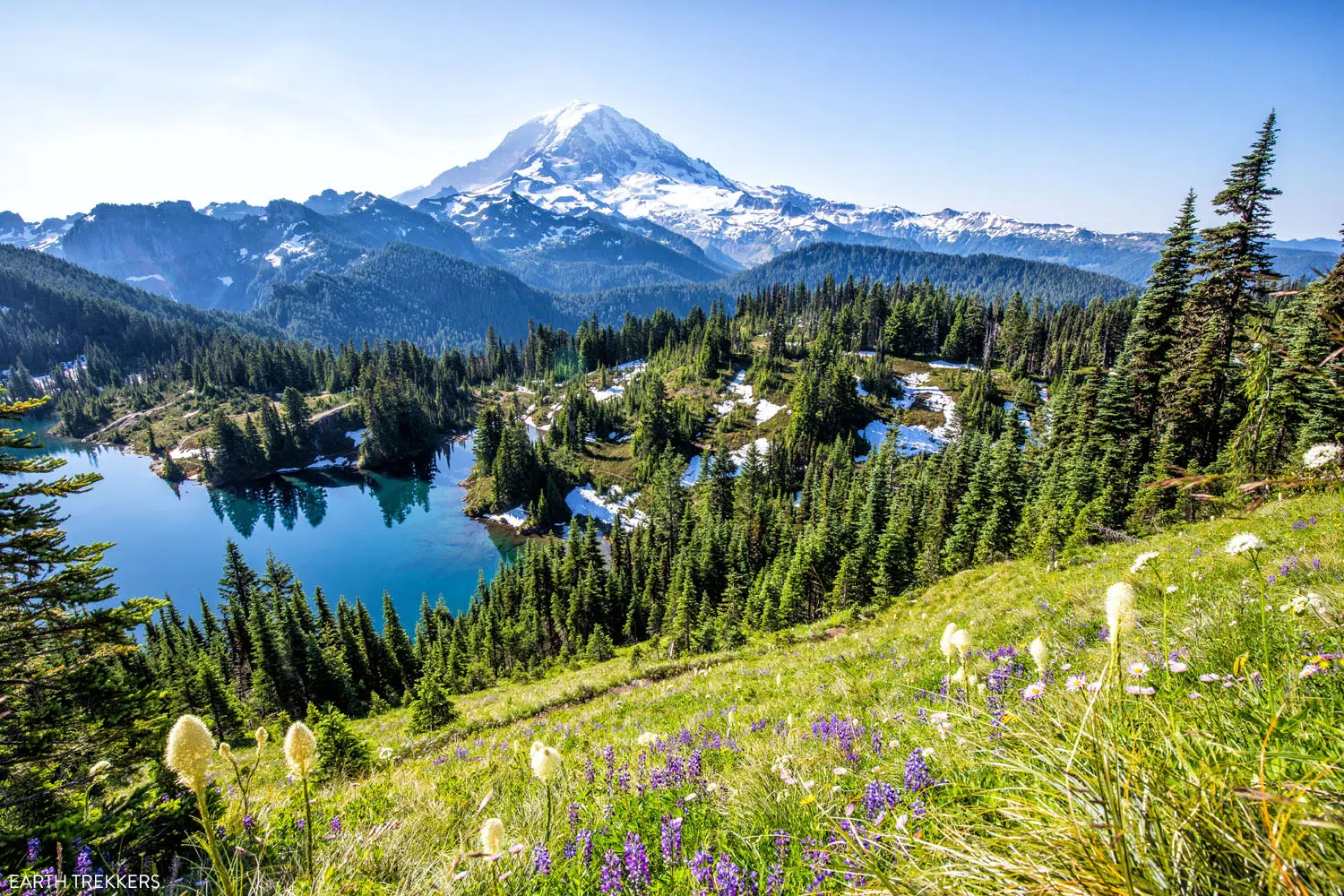
The view from the Tolmie Peak Fire Lookout
However, the Mowich Road closure currently makes this area inaccessible by car. Reaching Tolmie Peak now requires a significant backpacking approach that puts it beyond the scope of a standard day itinerary. We’re keeping this section here because the road closure is temporary — when it reopens, this area deserves a full day of your time. Check current road status on the National Park Service website before your visit.
Add a Day for Another Hike or Two
There are many great hikes to do in Mount Rainier. In Sunrise, hiking the Burroughs Mountain Trail is a spectacular day hike with epic views of Mount Rainier.
Eagle Peak is a quieter trail located near Paradise.
There are more short hikes to add on to your visit, such as the Bench and Snow Lakes Trail, also not far from Paradise.
For the ultimate experience, section hike the Wonderland Trail or summit Mount Rainier.
Pick out which hikes you want to add on to your itinerary with our Mount Rainier Hiking Guide ↓
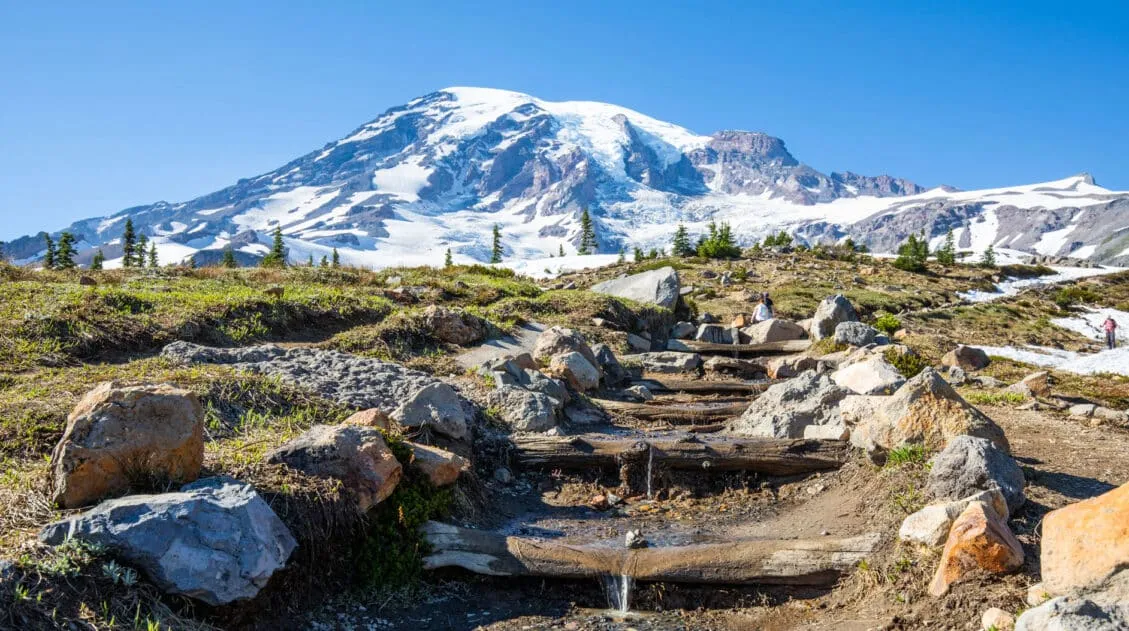
15 Best Hikes in Mount Rainier (Ranked by Difficulty & Area)
Here are 15 hikes in Mount Rainier National Park, ranging from short, easy trails to longer, full day efforts.6 Day Mount Rainier National Park Itinerary
Here is our exact 6 day itinerary for Mount Rainier National Park.
We visited Mount Rainier on a road trip through Washington. Just prior to our visit in Mount Rainier we were in Olympic National Park. From Mount Rainier, we traveled north to Leavenworth, the Enchantments, and North Cascades National Park.
Day 1: Morning: drive from Olympic National Park to Packwood. Midday an afternoon: Sunrise and the hike to Mount Fremont Lookout, Grove of the Patriarchs Trail. Sleep in Packwood.
Day 2: Hike to Sun Top Lookout (we found this hike to be boring and since we did this on a cloudy morning, we had zero visibility of Mount Rainier), Mount Rainier Gondola to Crystal Mountain, Silver Falls Loop Trail. Sleep in Packwood.
Day 3: Summerland Trail Hike. Sleep in Packwood.
Day 4: Naches Peak Loop hike. Bench and Snow Lakes hike. Reflection Lake. Paradise and the Nisqually Vista Trail. Narada Falls. Tim hiked the Skyline Trail in Paradise solo. Sleep in Ashford.
Day 5: Kara and I hiked the Skyline Trail together in the morning. Sleep in Ashford.
Day 6: Tolmie Peak Fire Lookout hike (this is currently inaccessible because of the Mowich Road closure). Sleep in Puyallup.
Tim had to work remotely on day 5, which is why he hiked the Skyline Trail solo on the evening of day 4 (he had a full time job outside of running this website). We also have some lighter days in this itinerary, since we need time to answer emails and comments on the website as we travel.
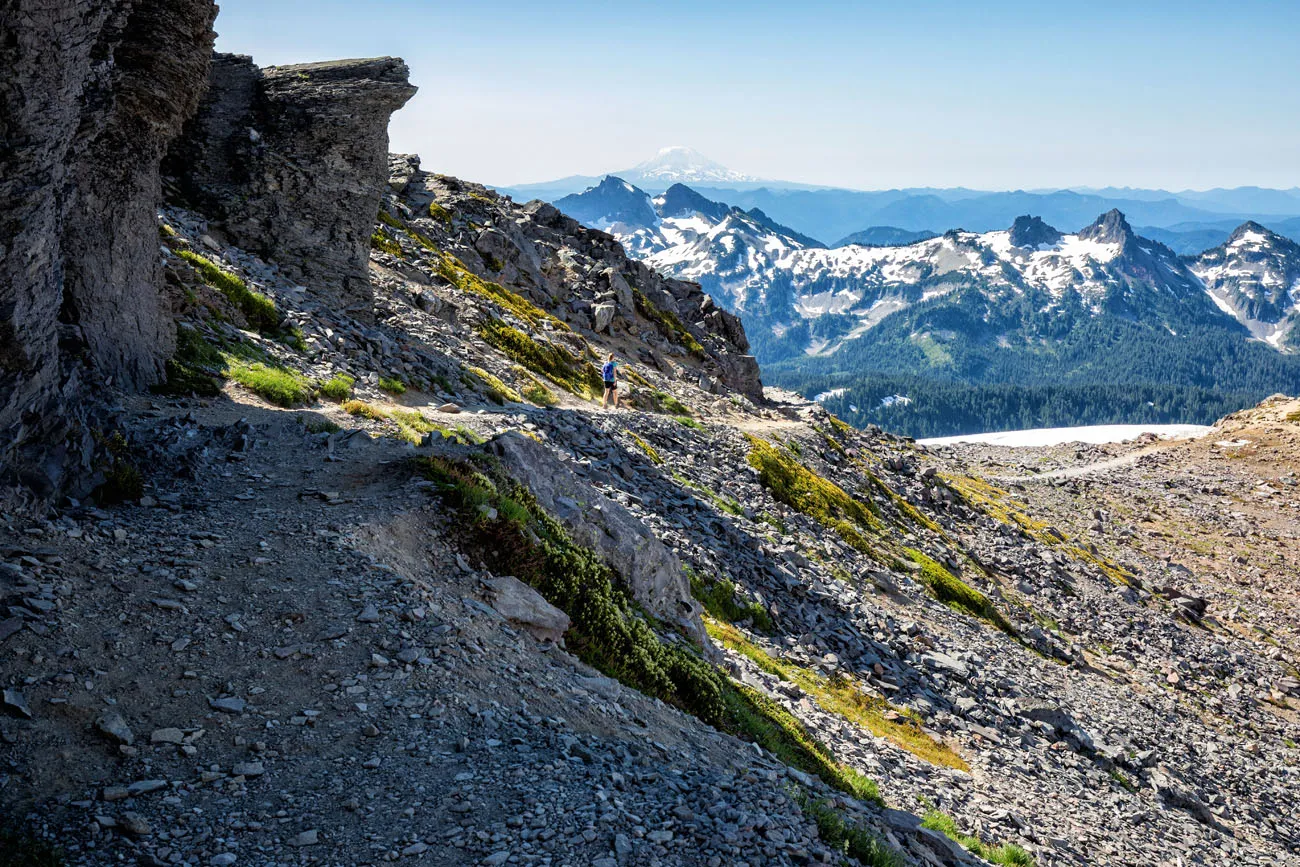
Skyline Trail
Where to Stay Near Mount Rainier
The best place to stay depends on which areas of the park you plan to visit. For this itinerary, Packwood makes an excellent base, since it sits between the Sunrise and Paradise areas of Mount Rainier National Park.
Packwood (Best for This Itinerary)
Packwood is a small town located near the southeast entrance of the park. From here, it’s easy to reach both Sunrise and Paradise, making it one of the most convenient places to stay for a multi-day visit.
Packwood also has several restaurants, grocery stores, and a handful of good lodging options.
During our visit, we stayed at Cowlitz River Lodge, a convenient lodge that gets decent reviews, just a short walk from restaurants in town.
Other good options include:
Ashford (Best for Paradise)
Ashford is located near the Nisqually entrance of Mount Rainier National Park and is the closest town to the Paradise area.
If you plan to spend most of your time around Paradise, Ashford can be a good option. We stayed at the Nisqually Lodge.
Popular lodging options include the Paradise Village Hotel and the Mountain Meadows Inn.
Inside the Park
For a unique experience, consider staying inside the park at the historic Paradise Inn. This lodge sits at the base of Mount Rainier and offers an unforgettable setting, though rooms can book up far in advance.
Practical Information for Visiting Mount Rainier National Park
Here are a few important things to know before following this Mount Rainier itinerary.
Park Hours: The park is open 24 hours a day, 365 days a year. Just be aware that large areas of the park will be closed due to road closures from winter weather.
Park Fee: $30 per vehicle, valid for 7 days. For a longer stay, purchase the Mount Rainier Annual Pass for $55 which gives you unlimited visits for one year.
If you plan to visit multiple national parks, purchase the America the Beautiful Pass ($80 and valid for all of the national parks for one year).
As you plan your trip and just before your visit, get updates on trail and road closures and park conditions on the National Park Service website.
Plan Your Visit to Mount Rainier National Park
Use these guides to go deeper on specific aspects of your trip:
- Mount Rainier Travel Guide — The best place to start if you’re still in the early planning stages. Covers park areas, entrance fees, where to stay, and what to know before you go.
- Best Things to Do in Mount Rainier — The full list of top experiences in the park, with detail on every area from Paradise to the Carbon River.
- Best Hikes in Mount Rainier — Every major trail ranked by difficulty and area, with photos and what to expect on each one.
- Skyline Trail Loop Guide — Step-by-step guide to the best hike in the park, including parking, trail conditions, and what to bring.
- Washington State Itinerary – a 7 to 14 day road trip itinerary that includes Mount Rainier, Olympic, and North Cascades National Parks, plus the Enchantments
If you have any questions about this Mount Rainier National Park itinerary, let us know in the comment section below.
If this is part of a bigger road trip through the USA, visit our United States Travel Guide and our Washington Travel Guide for more inspiration and travel planning tips.
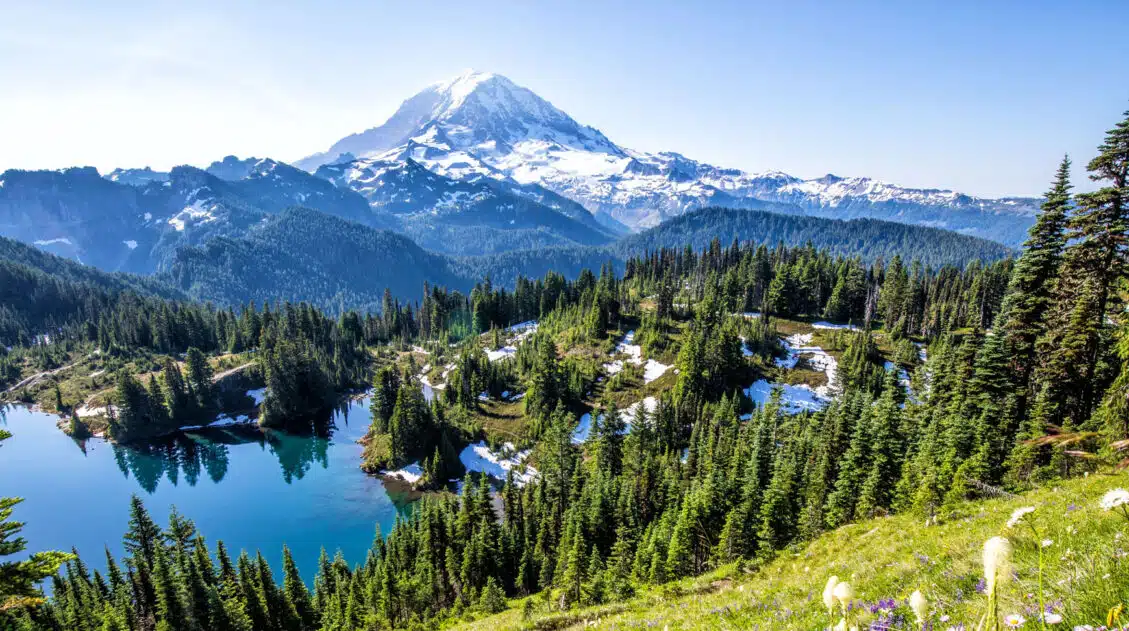
Mount Rainier National Park Travel Guide: How to Plan Your Visit
Pinterest Facebook Flipboard Mount Rainier National Park Mount Rainier National Park is an outstanding park to visit, whether you are an avid hiker, a family on a road trip through the USA, or someone who simply enjoys exploring the natural wonders of this beautiful country. Mount Rainier is a glacier-capped, active volcano that can be […]
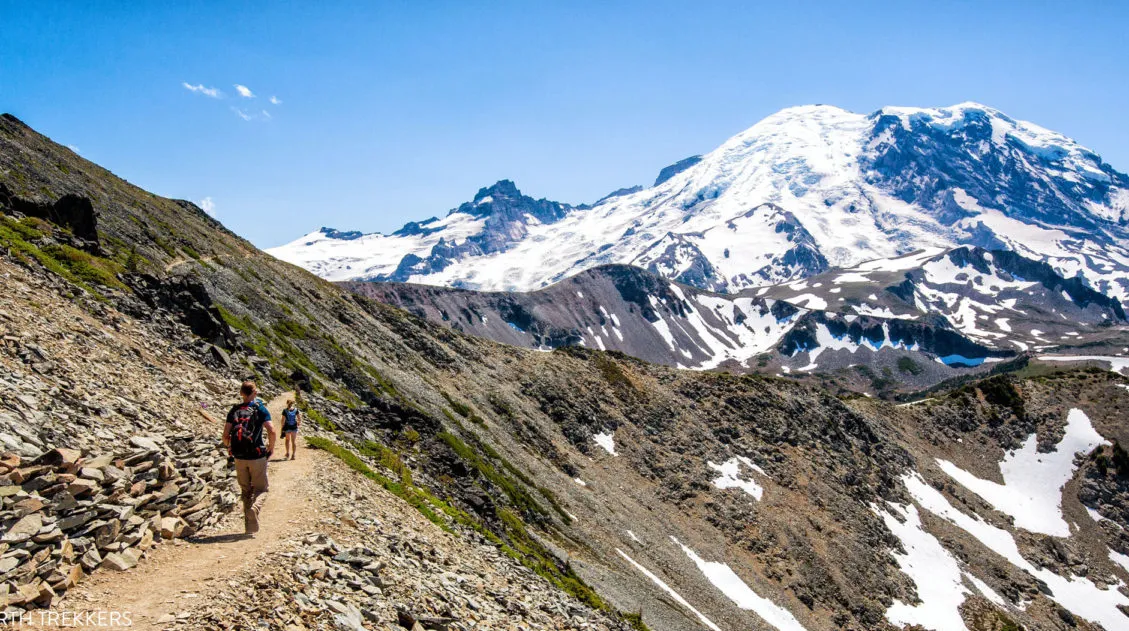
Mount Fremont Lookout Trail Guide | Mount Rainier National Park
Few hikes in Mount Rainier National Park deliver so much scenery for so little effort. The Mount Fremont Fire Lookout Trail offers nearly nonstop views of Mount Rainier, sweeping alpine landscapes, and the chance to stand on one of the park’s historic fire lookout towers. This was the very first hike we did in Mount […]
Summerland Trail to Panhandle Gap Hike | Mount Rainier National Park
The Summerland Trail to Panhandle Gap is a strenuous 12-mile adventure into the quieter side of Mount Rainier National Park. With panoramic views of Mount Rainier and fewer hikers than Paradise or Sunrise, it’s ideal for those craving a bigger, more rugged day on the trail. Hiking the Summerland Trail to Panhandle Gap is one […]
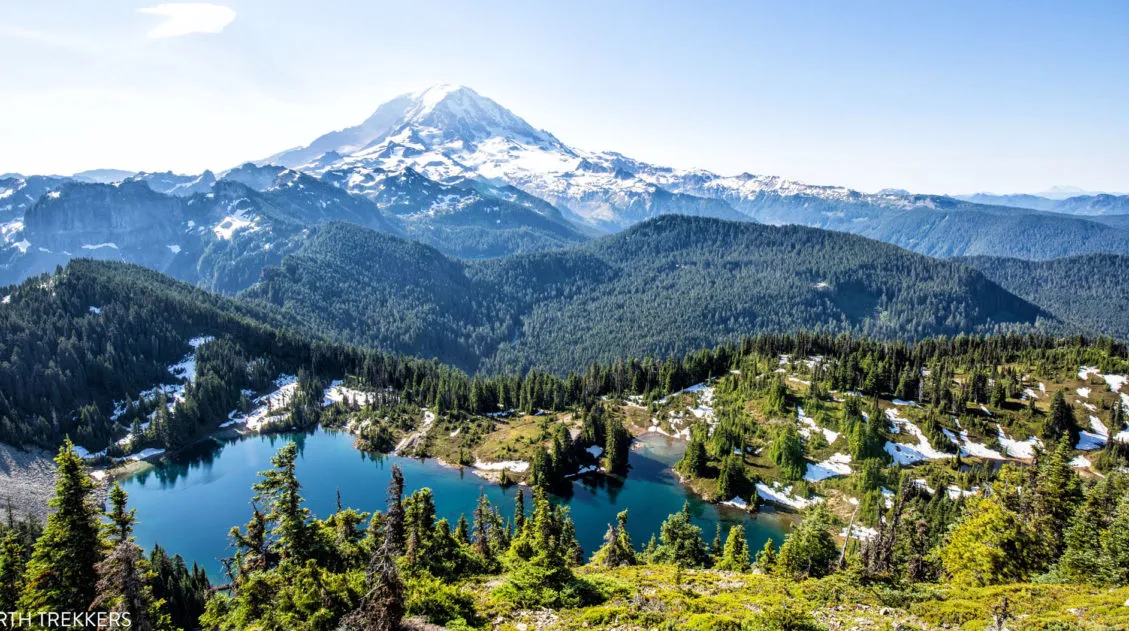
Tolmie Peak Lookout Hike & Its Jaw-Dropping View of Mount Rainier
One of the best views of Mount Rainier isn’t from Paradise or Sunrise, it’s from a small historic fire lookout high above Eunice Lake. The Tolmie Peak Lookout hike delivers one of the most spectacular perspectives of the mountain, from one of the quietest corners of the park. Tolmie Peak Lookout is one of our […]
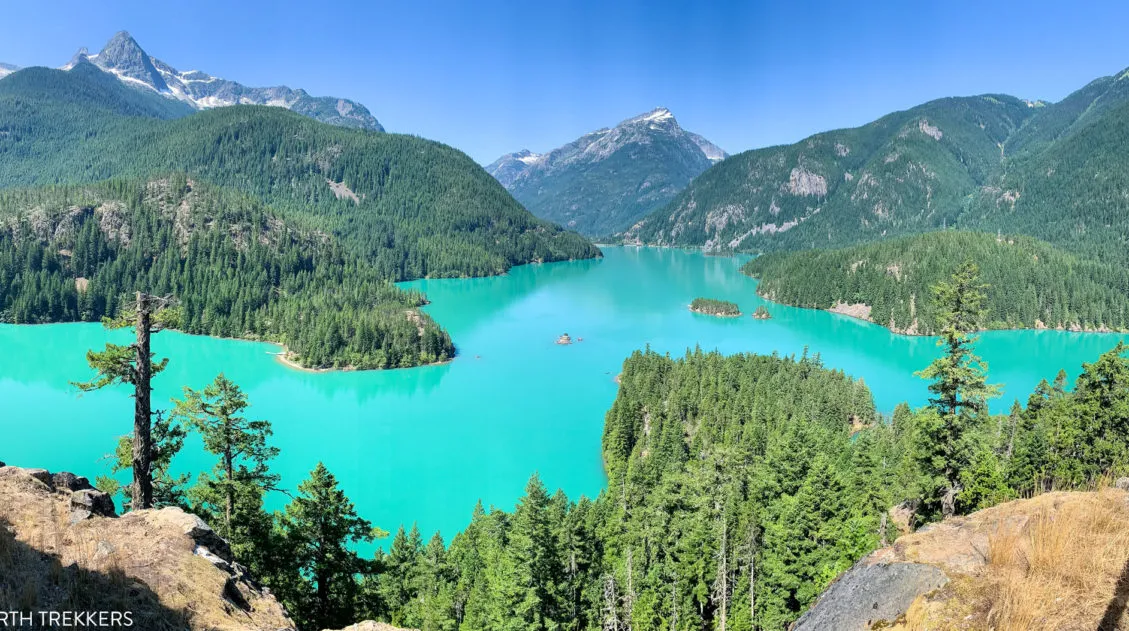
9 Amazing Things to Do in North Cascades National Park
Discover the best things to do in North Cascades National Park, from the stunning drive along Highway 20 to Diablo Lake, Washington Pass Overlook, and world-class hiking trails. North Cascades National Park gets a fraction of the visitors that flock to Olympic and Mount Rainier, and that’s exactly what makes it so good. We visited […]
US National Park Itineraries & Road Trip Ideas
National Park Itineraries The national parks are best experienced as a road trip and with 56 parks visited between us, we’ve done a lot of them. Whether you’re dreaming of a two-week American Southwest loop, a classic Yellowstone and Grand Teton combo, or a deep dive into Utah’s Mighty 5, we’ve put together detailed itineraries […]
Best Things to Do in Olympic National Park (2026 Guide)
Discover the best things to do in Olympic National Park, from Hurricane Ridge to the amazing Hoh Rainforest to the wild and rugged Pacific coast. Olympic National Park might be the most diverse national park in the United States. In a single visit, you can stand on a windswept alpine ridge looking out over snowcapped […]
The Ultimate Guide to the 63 US National Parks
Stretching from the South Pacific, across the United States to the Caribbean, are 63 national parks. These national treasures preserve iconic landscapes, majestic mountains, primordial forests, arid deserts, misty coastlines, immense canyons, wildlife, and historic landmarks. We have visited 56 of the 63 US national parks, from the towering granite walls of Yosemite and the […]
12 Amazing National Parks for Your Next Family Adventure
We’ve visited 56 of the 63 U.S. national parks and almost every single one would make a fantastic family destination. With 63 parks to choose from, the options can feel overwhelming. After years of exploring the national parks, we’ve narrowed it down to 12 that hit the sweet spot for families. These parks are easy […]
US National Parks that Require Reservations – 2026 Guide
Due to growing popularity and visitation, there are now eight National Parks and one National Monument that require a reservation in advance. This includes timed-entry reservations, vehicle reservations to drive a particular road, or hiking permit for select trails. This article was updated with new information from the National Park Service on February 23, 2026. […]
United States Travel Guide: Places to Visit in the USA
Plan your visit to the United States. Learn about the best things to do, how to plan your time, road trip ideas, and sample itineraries.
Best US National Parks to Visit Month-By-Month
Best National Parks to Visit Month-By-Month Most national park planning advice tells you the “best” month to visit a park without showing you the full picture. This guide does both. We’ve visited 56 of the 63 US national parks, many of them multiple times and in different seasons, and timing is consistently one of the […]


Comments 33