
Monument Valley is one of the most recognizable landscapes in the American Southwest, with massive sandstone buttes rising from a wide-open desert landscape along the Arizona–Utah border. You can drive the scenic Valley Drive on your own, hike around one of the iconic Mittens, join a Navajo-guided tour into areas that are otherwise off limits, and watch the landscape glow at sunrise and sunset.
We’ve visited Monument Valley twice, once on a dedicated trip when we had time to explore it in depth, and again as a shorter stop on a Southwest road trip. In this guide, we cover how to visit Monument Valley, including the Valley Drive, tours, hiking, entrance fees, how much time you need, where to stay, and the things we think are most worth doing on your first visit.
Our Experiences in Monument Valley
We’ve visited Monument Valley twice, in two very different seasons and two very different ways.
On our first visit, Tim and I spent several days here in May. We stayed at The View, drove the Valley Drive, took guided tours deeper into Monument Valley, visited Forrest Gump Point, and had plenty of time for sunrise, sunset, and photography.
A few years later, we returned in December with Tyler and Kara, who were teenagers at the time. We were driving from the Grand Canyon to Moab and didn’t have much time, but Monument Valley was one of those places we really wanted them to see. On that visit, we focused on just a few of the highlights.
Having visited both ways, we’ve learned that Monument Valley works surprisingly well as either a quick stop or a longer stay. But if you have the time, spending at least one night here gives you a much better experience.
Monument Valley at a Glance
LOCATION | Navajo Nation, on the Arizona–Utah border
BEST THING TO DO | Drive the 17-mile Monument Valley Scenic Drive
ENTRANCE FEE | $10 per person
VALLEY DRIVE FEE | $15 per vehicle
AMERICA THE BEAUTIFUL PASS | Not accepted
DO YOU NEED A TOUR? | No for the Valley Drive and Wildcat Trail; yes for most backcountry areas
DO YOU NEED 4WD? | No, but a higher-clearance vehicle is preferable and road conditions can vary
HOW MUCH TIME DO YOU NEED? | A half day at minimum; one full day and one night is better
BEST TIME TO VISIT | Spring and fall for milder temperatures
IMPORTANT TO KNOW | Monument Valley is on Navajo Nation land and observes Daylight Saving Time, unlike most of Arizona
September 2026 Valley Drive Update: Heavy rainfall recently caused significant erosion, washouts, and a sinkhole along Monument Valley’s 17-mile Valley Drive, forcing a temporary closure. The Valley Drive has since reopened, but road conditions can change quickly, especially after additional rain. Before your visit, check the Navajo Nation Parks & Recreation website for the latest road conditions and restrictions.
Why Isn’t Monument Valley a National Park?
Monument Valley is not a U.S. national park. It is part of the Navajo Nation and is officially known as Monument Valley Navajo Tribal Park. The park is managed by the Navajo Nation rather than the National Park Service, which is why National Park passes are not accepted and why some areas can only be visited with a Navajo guide.
How to Visit Monument Valley
For most first-time visitors, the easiest way to experience Monument Valley is to enter Monument Valley Navajo Tribal Park and drive the 17-mile Valley Drive. You can do this on your own, stopping at viewpoints such as the Mittens, John Ford’s Point, Artist’s Point, and North Window.
You do not need to take a guided tour to see the main sights along Valley Drive. However, guided tours can take you beyond the public road into areas of Monument Valley that you cannot visit independently. We did both on our first trip and think they offer very different experiences.
At a minimum, plan on several hours for Monument Valley. This is what we did on our second visit with our kids, and just wanted them to see the highlights. We saw the Mittens from the viewpoints near the View Hotel, drove Valley Drive, and took photos at Forrest Gump Point.
If you have a full day, you can combine the Valley Drive with the Wildcat Trail or a guided tour. Staying overnight is even better, particularly if you want to see Monument Valley at sunrise or sunset.
In the sections below, we cover how to drive Valley Drive, whether a guided tour is worth it, how much time you need, entrance fees and hours, and other important things to know before your visit.
Monument Valley Entrance Fees, Hours & Reservations
Monument Valley Navajo Tribal Park is managed by the Navajo Nation, not the National Park Service. Entrance fees, hours, and rules are therefore set by Navajo Nation Parks & Recreation.
Monument Valley Entrance Fees
As of 2026, the fees to visit Monument Valley are:
- Entrance fee: $10 per person, per day
- Valley Drive: An additional $15 per vehicle
For example, a family of four driving the Valley Drive would pay $55.
The America the Beautiful Pass and other National Park passes are not accepted at Monument Valley. Fees are subject to change, so we recommend confirming current prices on the Navajo Nation Parks & Recreation website before your visit.
Monument Valley Hours
Monument Valley is open year-round, but the hours for the Scenic Drive vary by season.
- Summer hours: 8 am to 7 pm, with the last vehicle allowed onto Valley Drive at 4:30 pm.
- Winter hours: 8 am to 5 pm, with the last vehicle allowed onto Valley Drive at 2:30 pm.
That last-entry time is important. You cannot arrive shortly before closing and expect to drive the loop. Since the Valley Drive typically takes 2 to 3 hours, plan to arrive well before the cutoff.
Monument Valley is closed on Thanksgiving Day, Christmas Day, and New Year’s Day. Hours can change, so check the Navajo Nation Parks & Recreation website for the current schedule before your visit.
Do You Need a Reservation for Monument Valley?
You do not need an advance reservation simply to enter Monument Valley or drive the Valley Drive. You can pay the entrance fee when you arrive. Navajo Nation Parks & Recreation also offers the option to purchase your Monument Valley entrance fee online in advance, which can save some time at the entrance during busy periods.
If you plan to take a guided tour, however, we recommend making a reservation in advance, particularly for sunrise or sunset tours and if you are visiting during the busier months. Some Navajo tour operators also accept walk-up bookings at Monument Valley, but availability is not guaranteed.

Driving the Monument Valley Scenic Drive
The 17-mile Valley Drive, also called the Tribal Park Loop, is the best way to see Monument Valley if this is your first visit. This unpaved road starts and ends near the Monument Valley Visitor Center and winds past many of the valley’s most recognizable buttes, mesas, and viewpoints.
Plan on about 2 to 3 hours to drive the loop, including stops for photos. You could drive it faster, but this is one place where you won’t want to rush.
You can drive Valley Drive on your own; a guided tour is not required. However, you must stay on the designated road. To travel deeper into Monument Valley and visit areas that are closed to independent visitors, you’ll need to join a Navajo-guided tour.
What is the Road Like?
Valley Drive is a dirt and gravel road with rough, bumpy sections and areas of deep sand. Four-wheel drive is not specifically required, but Navajo Nation Parks recommends using a vehicle that can handle rough terrain and states that an SUV or truck is preferable. We’ve done the drive twice in an SUV; one had 4WD and one did not, but the 4WD was not necessary.
Road conditions can change considerably with the weather. After heavy rain, the road can become muddy and much more difficult to drive. Vehicle restrictions also apply to the Valley Drive, so check the Navajo Nation Parks website for the latest rules before your visit.
If you are uncomfortable driving a rough dirt road, you can take a guided tour of Valley Drive instead. You’ll see the same major viewpoints while leaving the driving to a Navajo guide.
Don’t Miss the View from The View Hotel
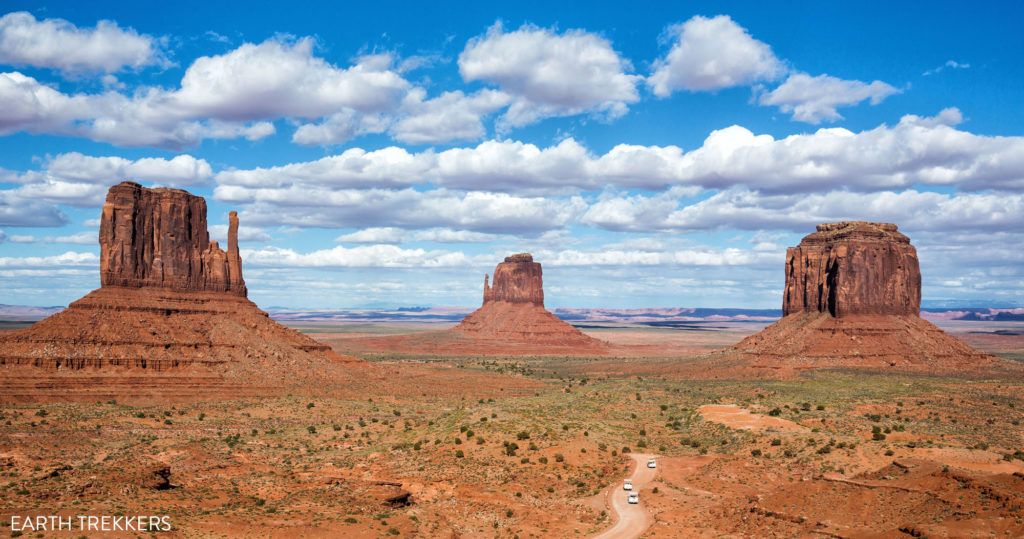
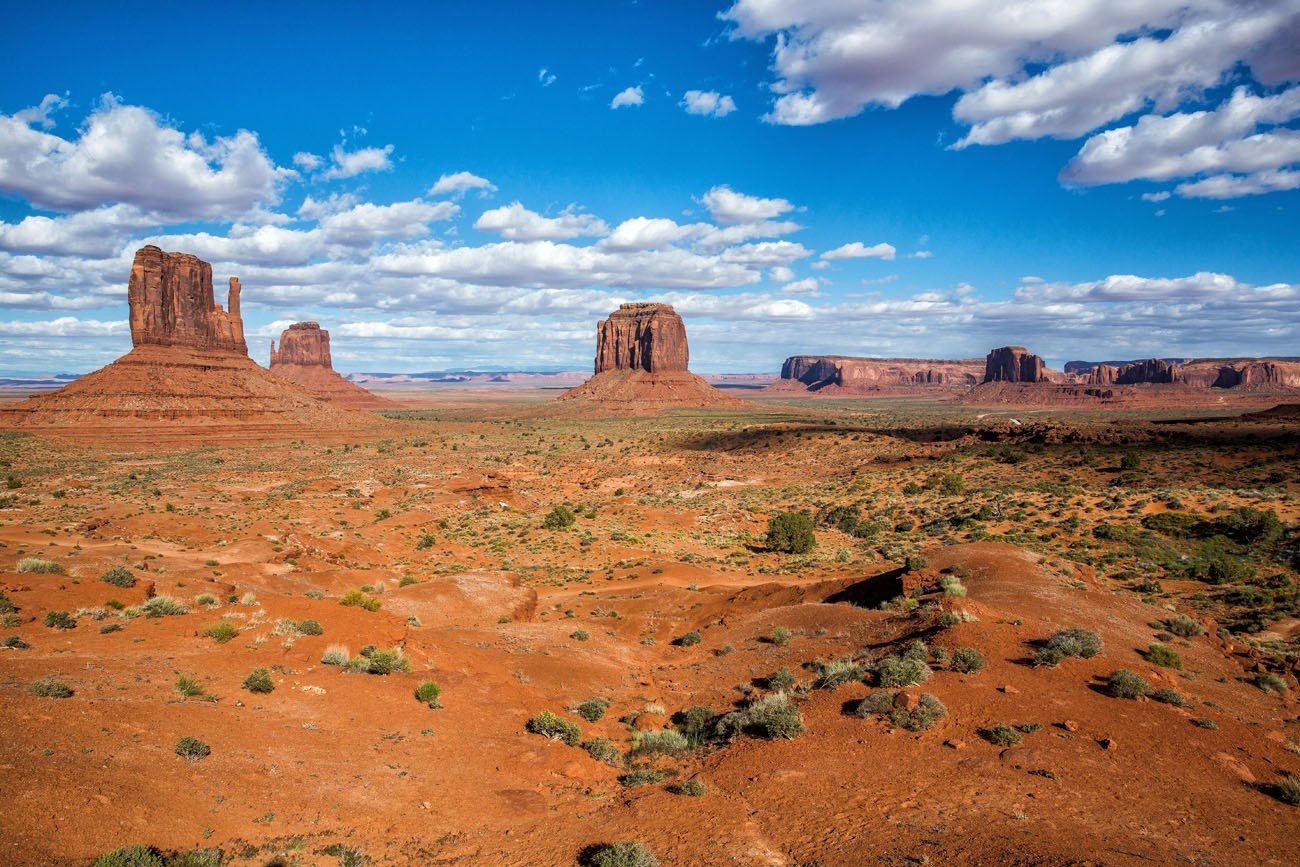
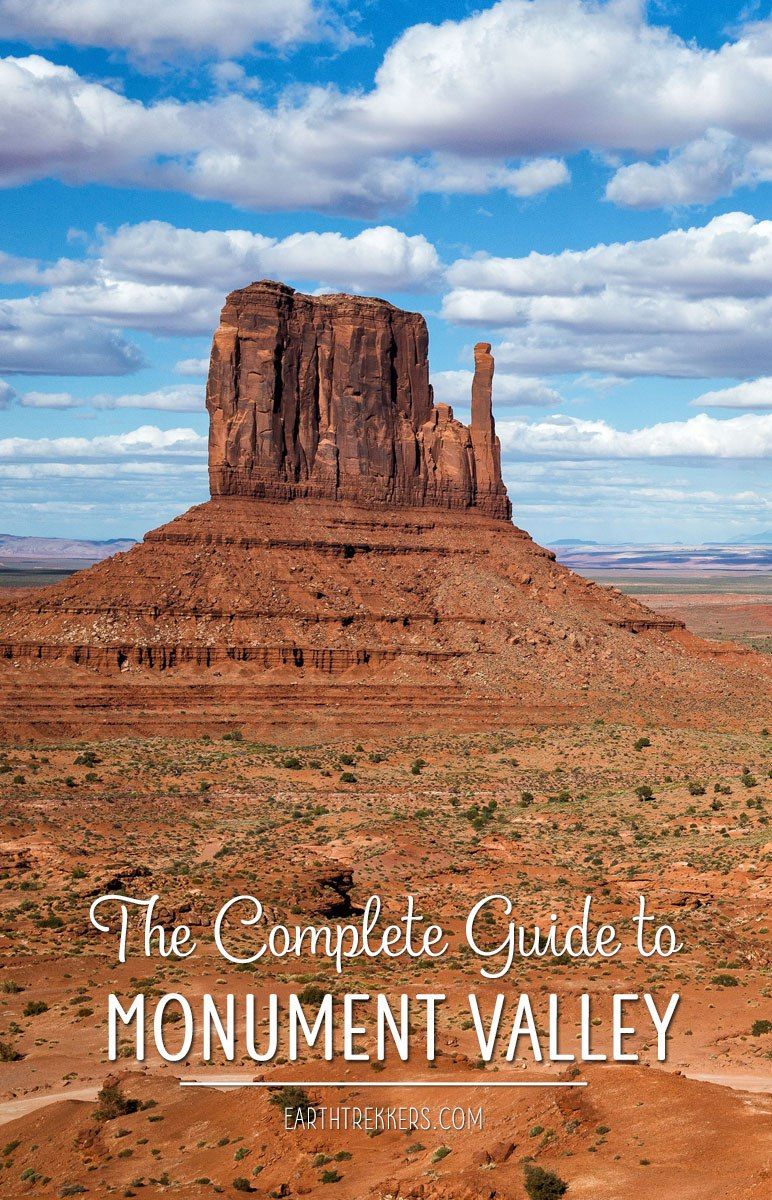
Before starting the Valley Drive, walk out to the viewpoint beside The View Hotel and Visitor Center. This is one of the classic Monument Valley views, looking straight across the valley to West Mitten Butte, East Mitten Butte, and Merrick Butte.
We’ve seen this view at several times of day, and it’s spectacular at sunrise and sunset. Even if you aren’t staying at The View, make sure you take a few minutes to enjoy this viewpoint before or after driving the Valley Drive.
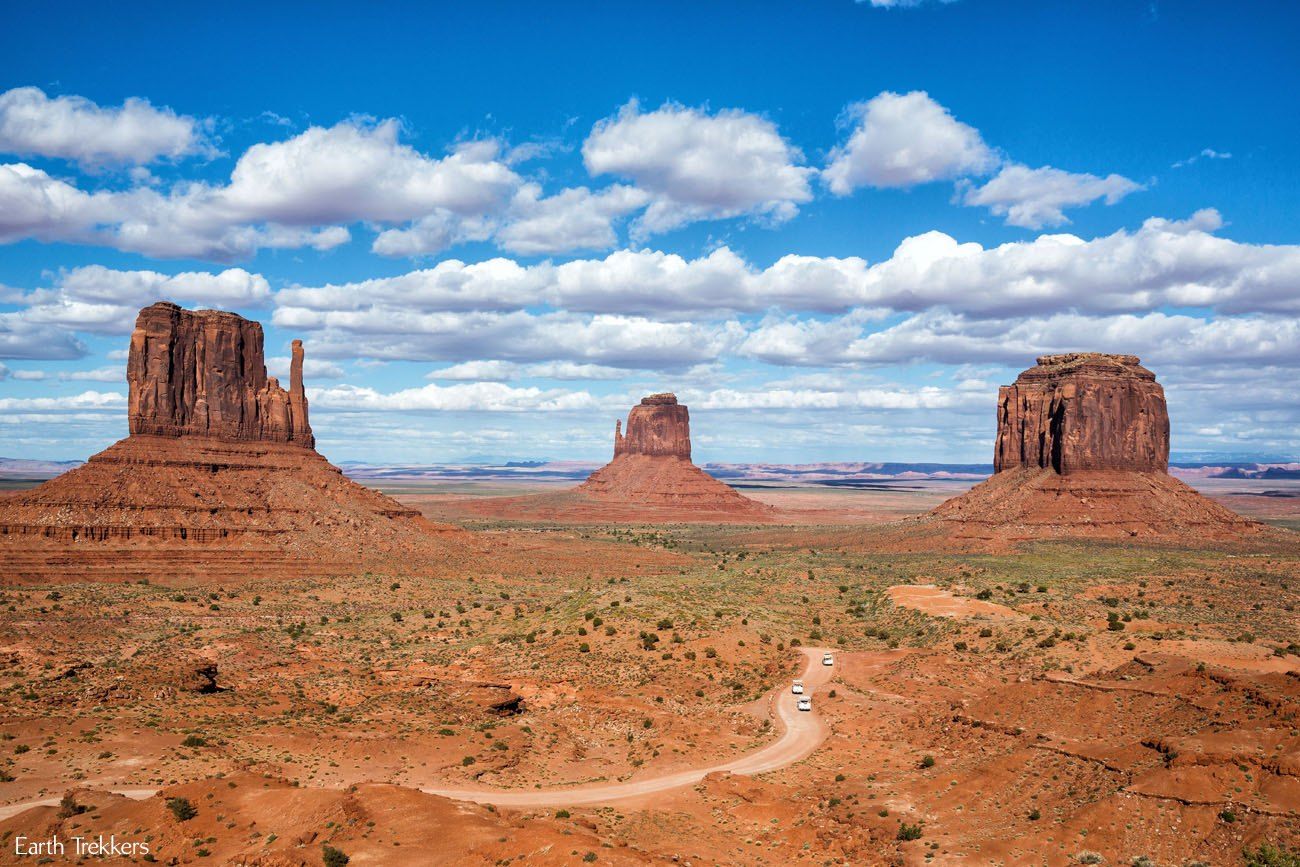
We took this photo next to the View Hotel. These are the Mittens and a view of the first part of Valley Drive.
Best Stops on the Valley Drive
There are numerous viewpoints along the loop. Some of the highlights include:
Elephant Butte | A massive sandstone formation that, from the right angle, resembles an elephant.
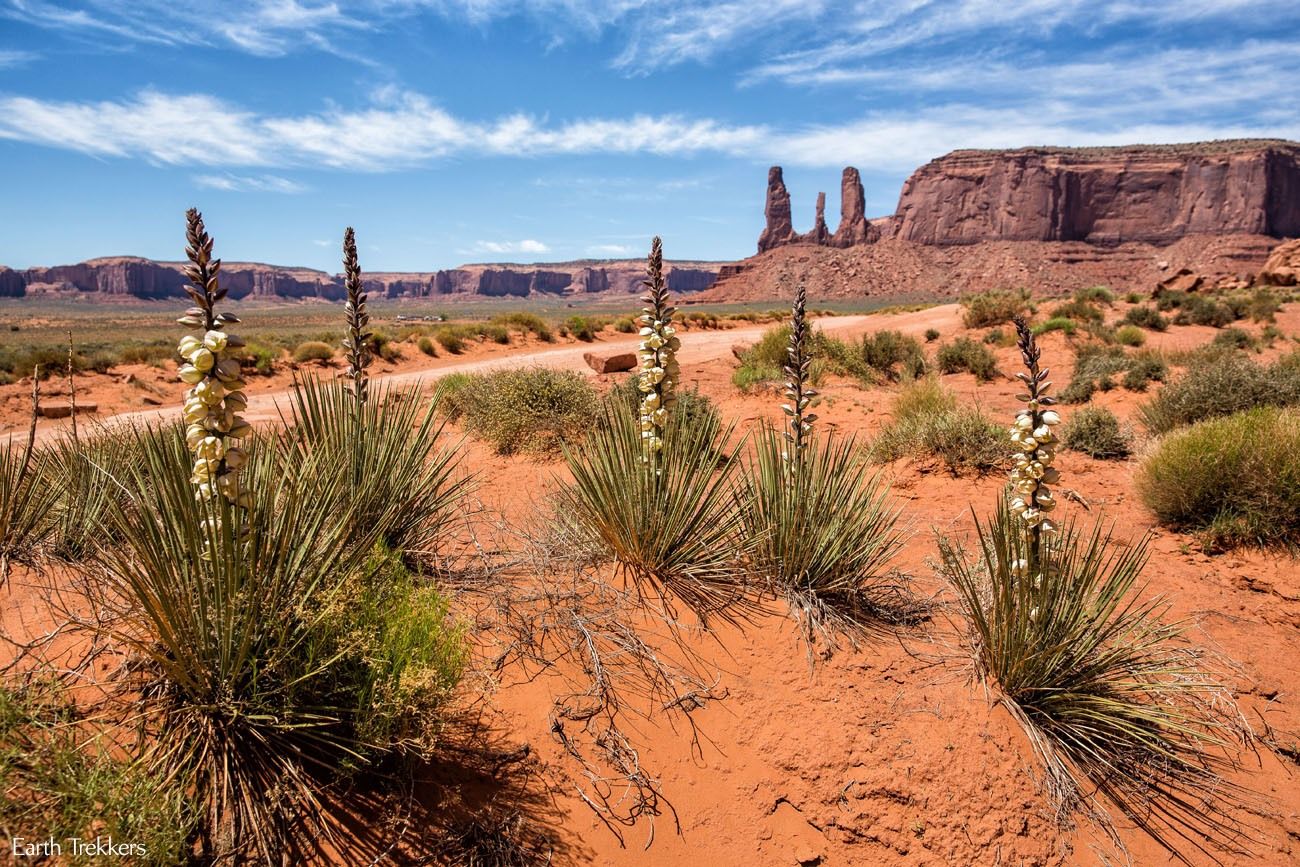
The Three Sisters | Three slender rock pinnacles standing next to a much larger butte.
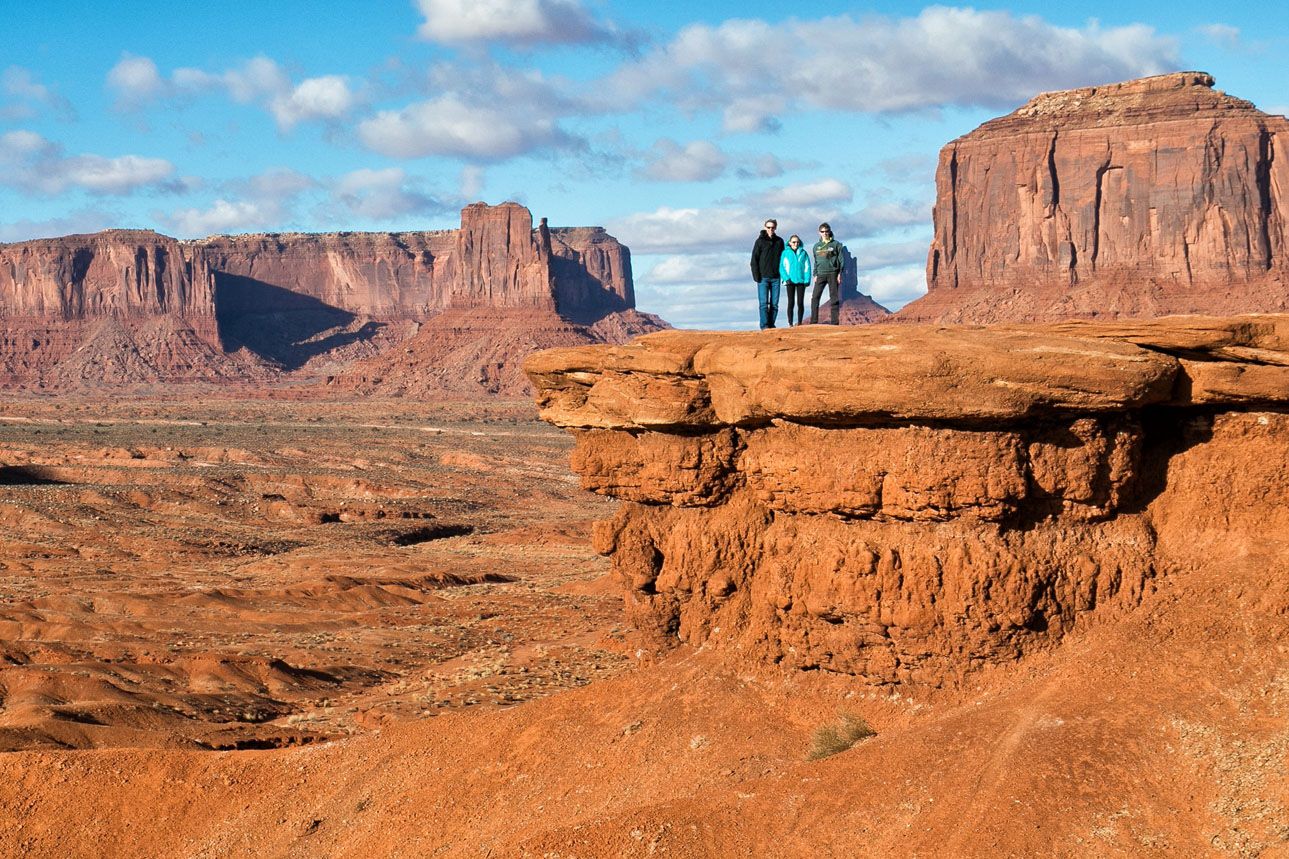
John Ford’s Point | One of the most famous viewpoints in Monument Valley, named for director John Ford, who filmed several Westerns here. This is one of our favorite stops along the drive, where you can take an iconic photo with the buttes and mesas in the distance.
Totem Pole & Yei Bi Chei | Some of the valley’s most distinctive slender rock formations.
Artist’s Point | A wide panoramic view across Monument Valley and another one of our favorite places along the drive.
North Window | Another beautiful panoramic viewpoint, framed by Elephant Butte and Cly Butte.
You don’t need to stop at every viewpoint. If you’re short on time, prioritize the Mittens, John Ford’s Point, Artist’s Point, and North Window.
OUR TAKE | If you only have a few hours in Monument Valley, make the Valley Drive your priority. We enjoyed the guided tours we took on our first visit, but we would not substitute one of those tours for the Valley Drive. Seeing the Mittens, John Ford’s Point, and the enormous sandstone formations from the valley floor is the quintessential Monument Valley experience.
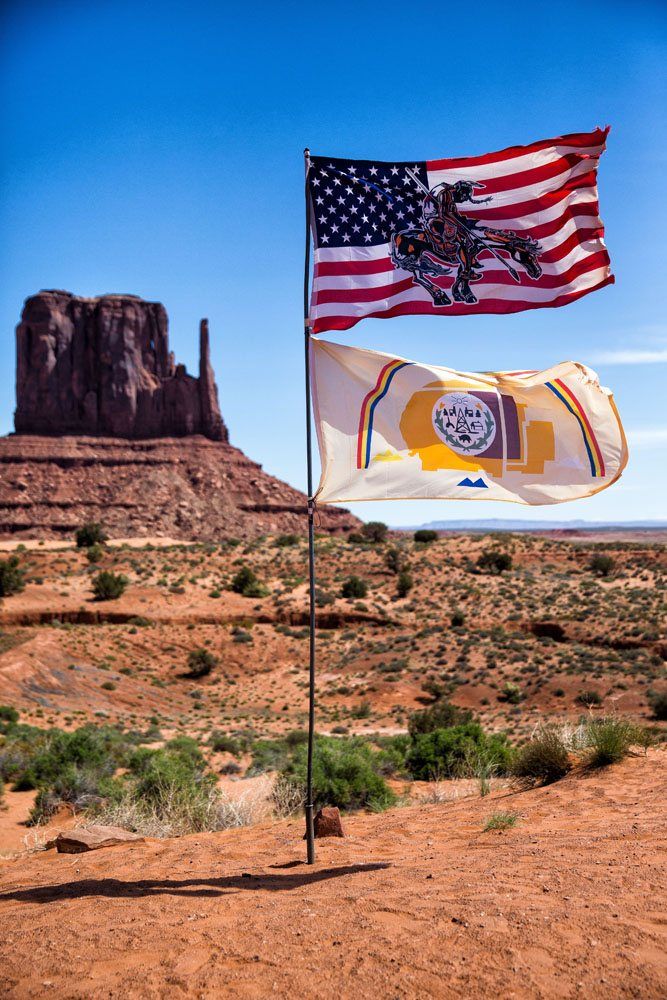
Here are some photos of what you will see on the drive.
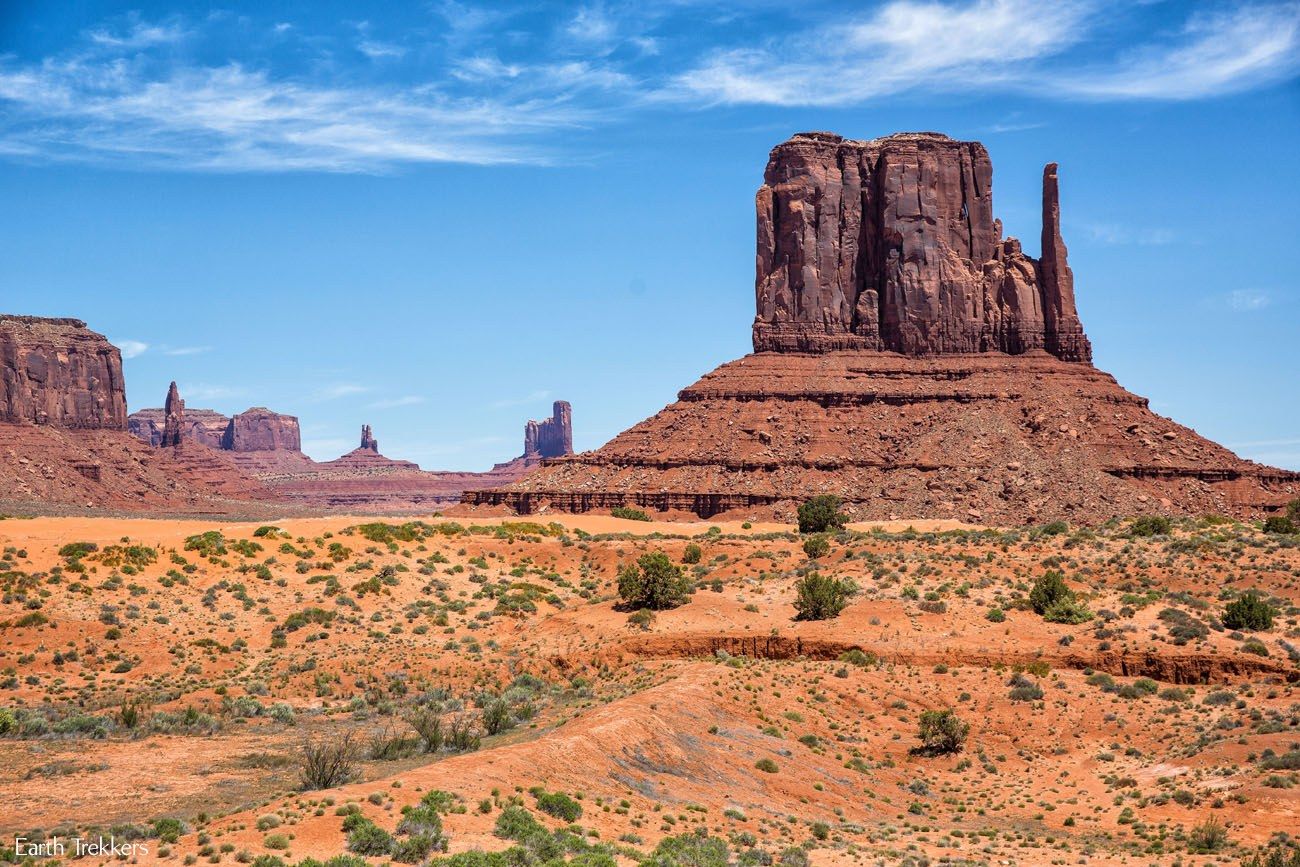
West Mitten Butte
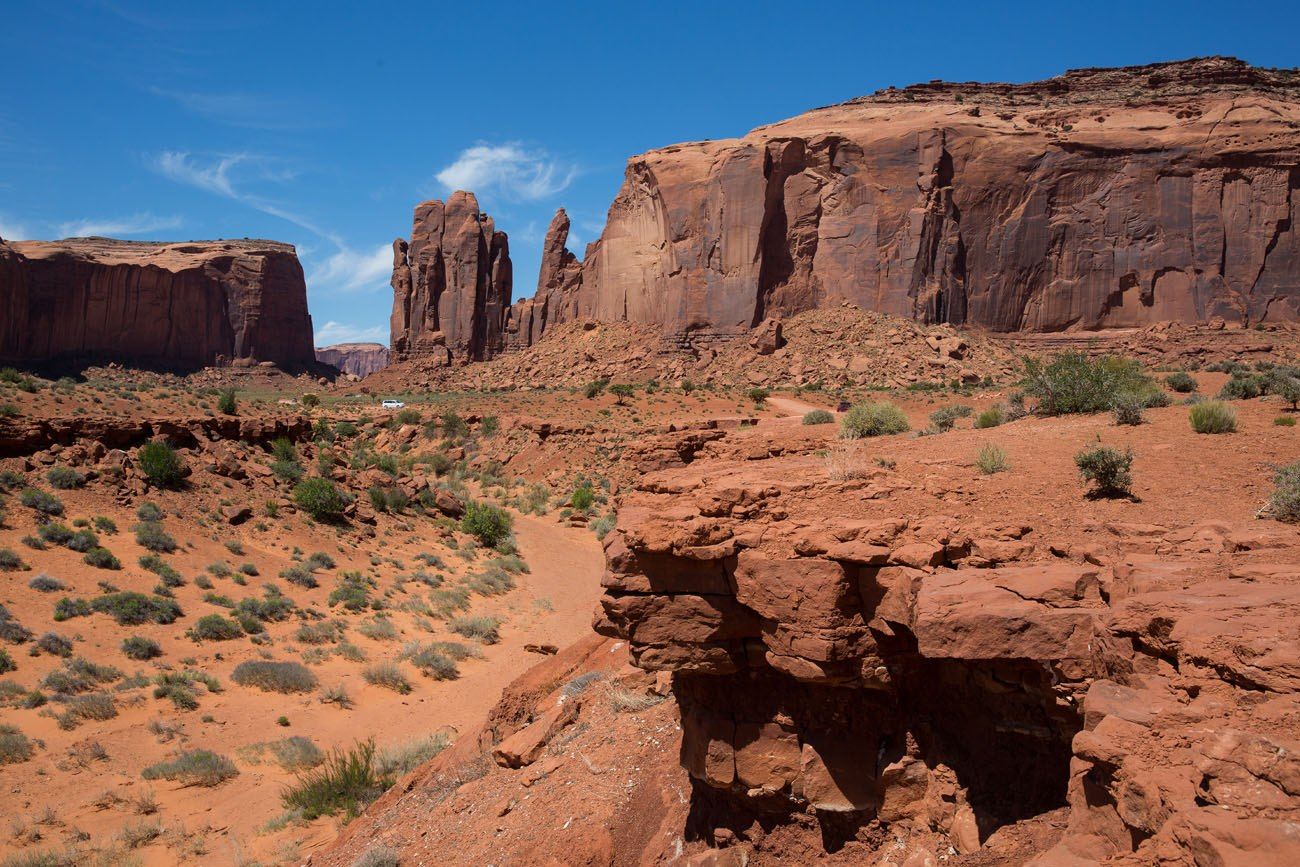
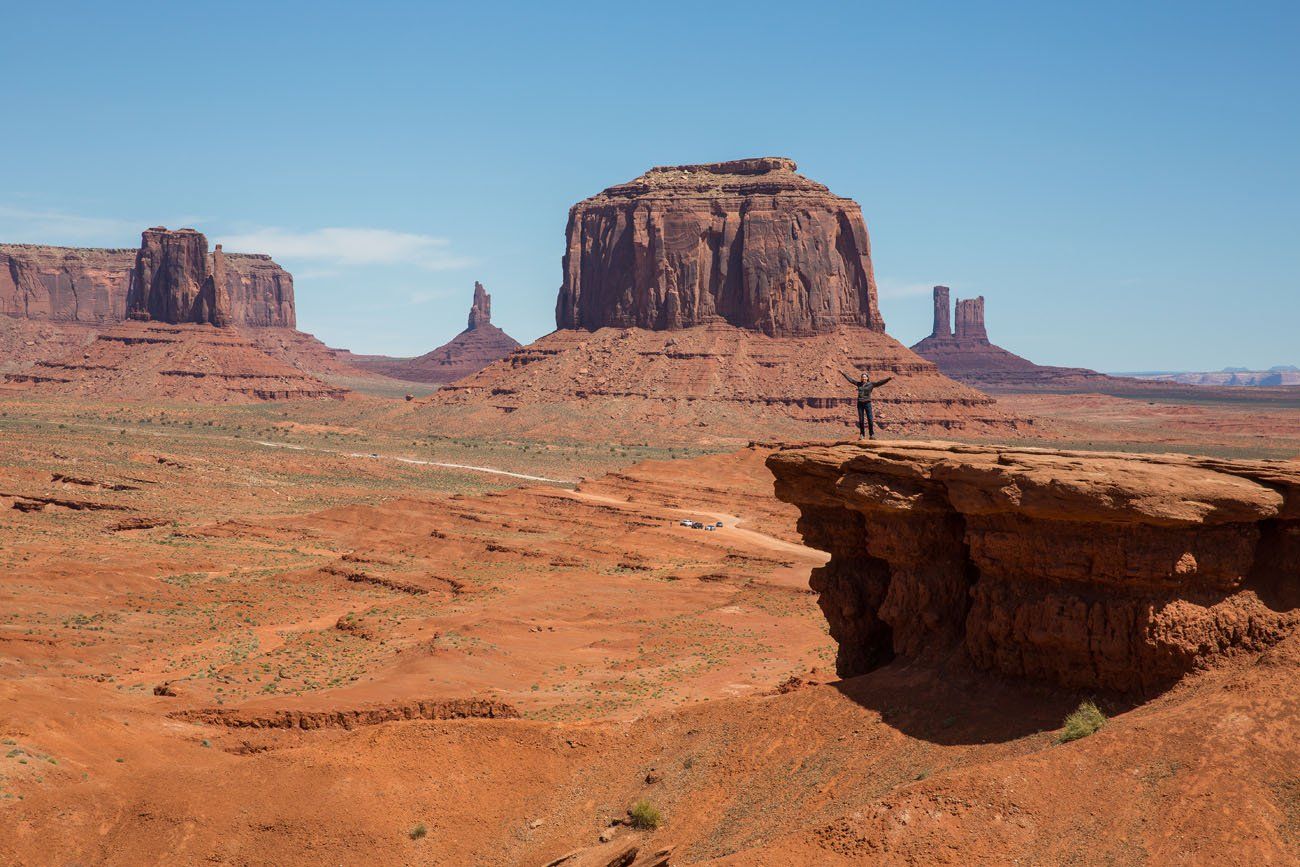
John Ford’s Point
Another view of John Ford’s point.
DID YOU KNOW? | Monument Valley in the Movies: Monument Valley became one of the most recognizable landscapes of the American West after appearing in numerous Hollywood films, particularly the Westerns of director John Ford. It has also appeared in movies such as Forrest Gump, National Lampoon’s Vacation, and Back to the Future Part III.
Best Monument Valley Tours
You do not need to take a tour to see Monument Valley. You can drive the Valley Drive and hike the Wildcat Trail independently. However, a guided tour gives you access to areas beyond the public Valley Drive and is one of the best ways to see more of the landscape and learn about Navajo history and culture.
On our first visit to Monument Valley, we took two very different tours: a sunrise photography tour into the backcountry and a tour to Teardrop Arch. We loved both, but for completely different reasons.
OUR TAKE | If photography is a priority, we recommend a sunrise or sunset photography tour. If you want something more off the beaten path, Teardrop Arch was one of the biggest surprises of our visit. And if you only have enough time for one experience in Monument Valley, we would still prioritize driving the Valley Drive before adding a tour.
Sunrise Photography Tour
We took a sunrise photography tour with Phillips Photography Tours, and it was one of the highlights of our first visit to Monument Valley.
The biggest advantage of this tour is that you get to venture beyond the public Valley Drive into areas you cannot visit independently. Our guide took us to beautiful photography locations as the sun rose over Monument Valley, giving us views and compositions we never would have found on our own.
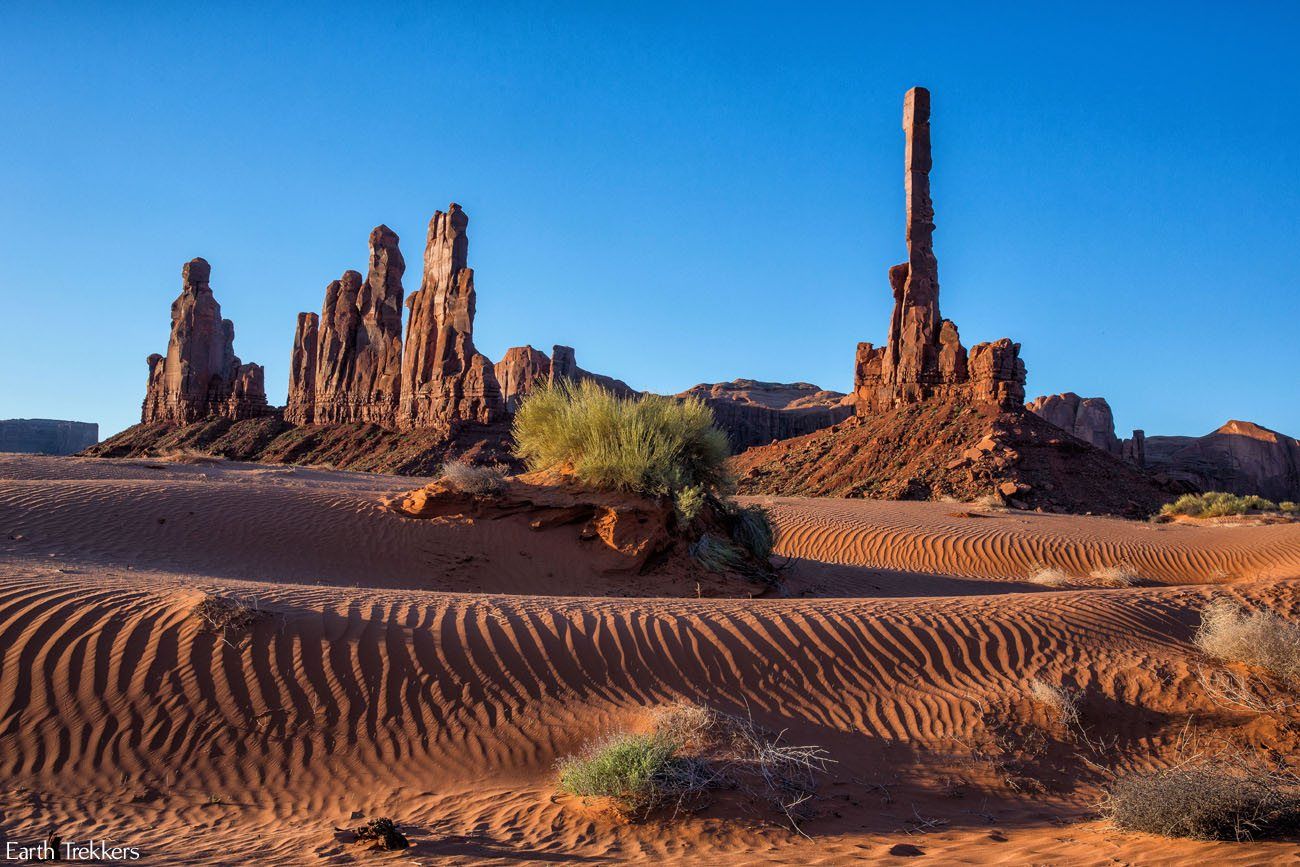
We took this photo of the Totem Pole on the sunrise photography tour.
You don’t have to be a serious photographer to enjoy this tour, but it is particularly worthwhile if photography is one of the reasons you are visiting Monument Valley.
There are two things to know before booking it. First, you have to get up very early. Tours leave before sunrise, so depending on the time of year, that can mean a painfully early start. Second, dress much warmer than you think you’ll need to. We did this tour in May and it was surprisingly cold before and around sunrise.
Even with the early wake-up and cold temperatures, we’d do it again. Watching the first light illuminate Monument Valley while photographing locations away from the main tourist route was an awesome experience.
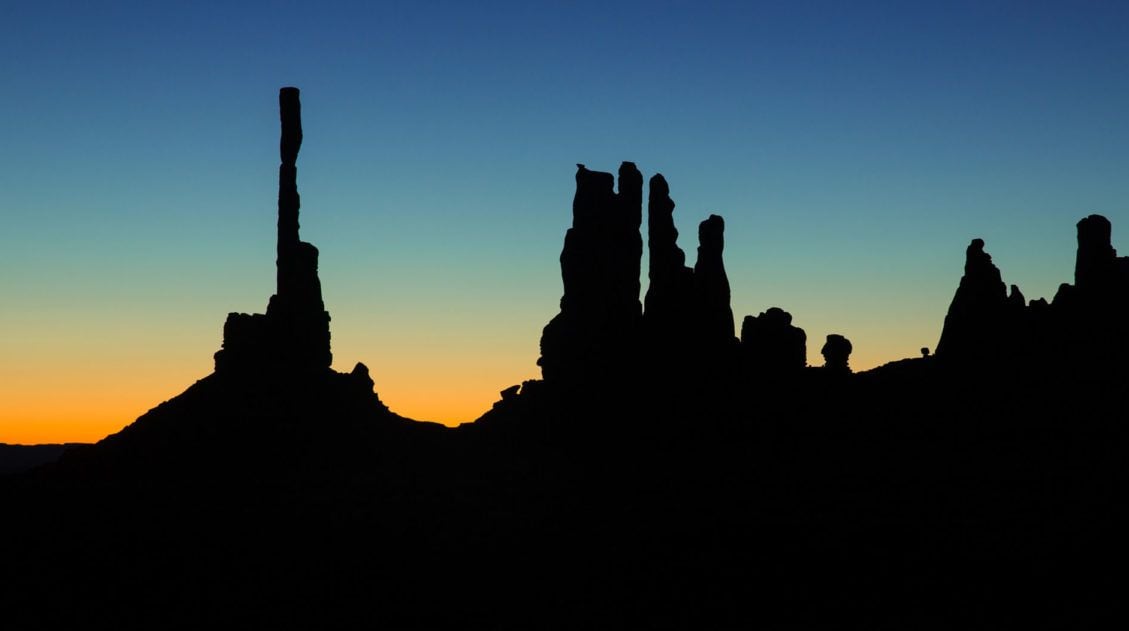
What to Expect on a Monument Valley Sunrise Tour
Our experience, and photos, from the sunrise photography tour we took in Monument Valley.Teardrop Arch Tour
For our second tour, we wanted to do something completely different, so we chose Teardrop Arch.
This turned out to be even better than we expected.
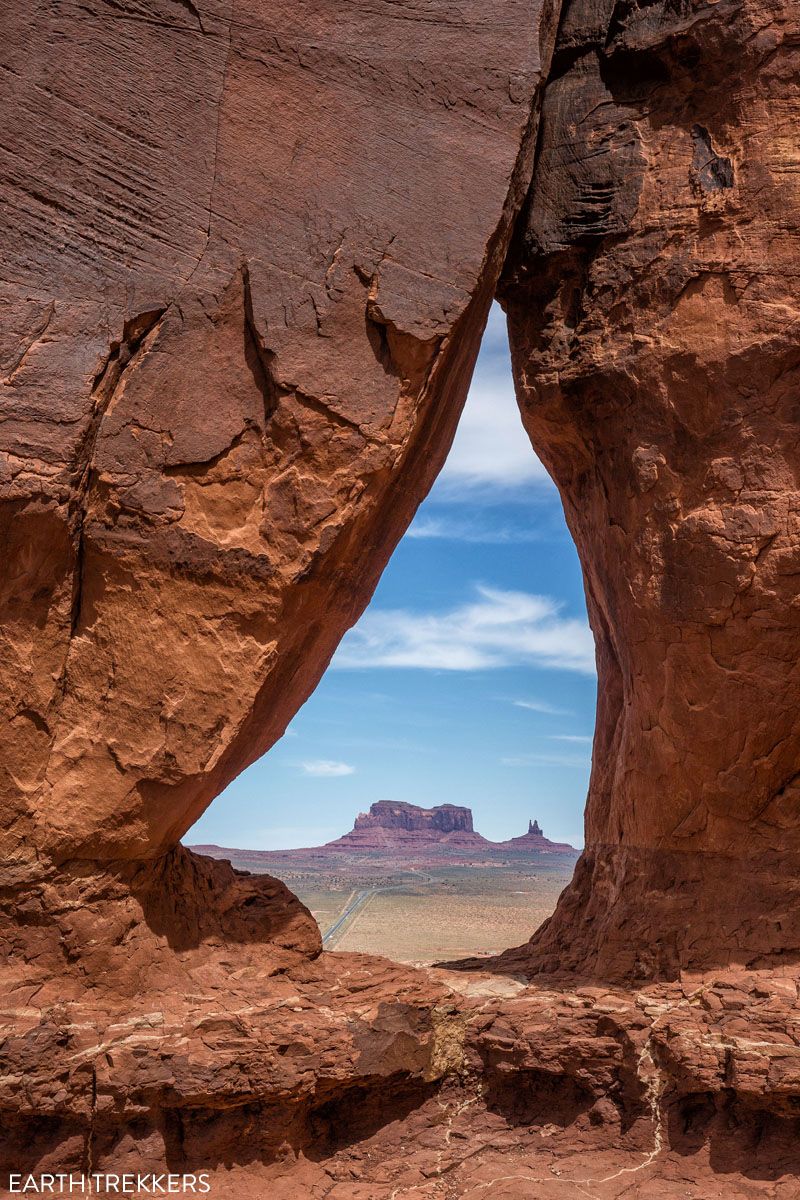
The experience combines a short, fun hike with Navajo history, panoramic views, and one of the most unique photo spots in Monument Valley. From Teardrop Arch, you get a view of the distant buttes framed by the arch.
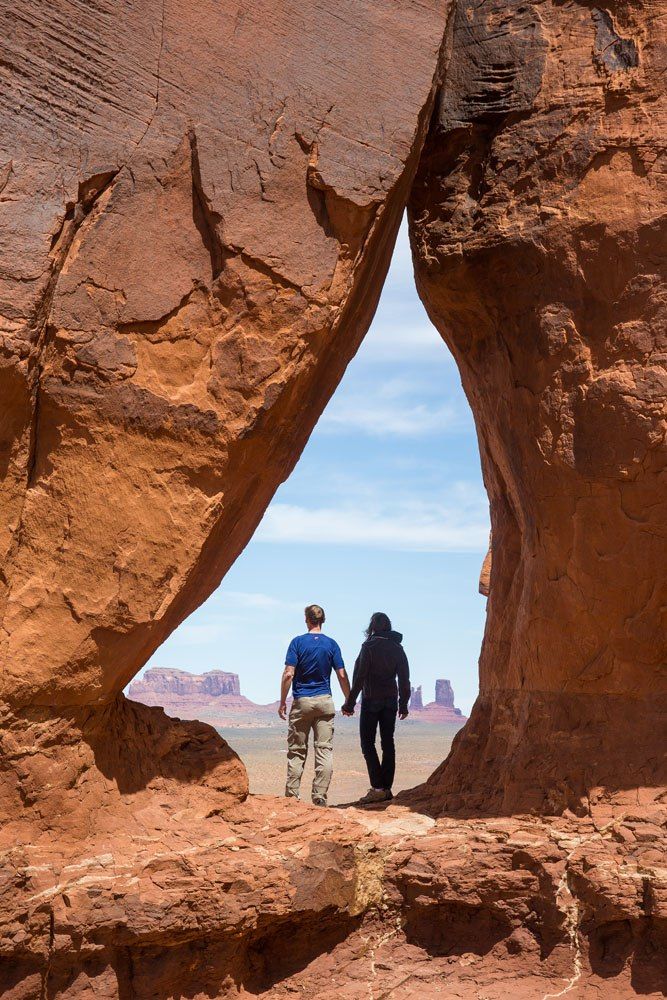
One of the things we loved most was how personal the experience felt. It was just Tim, me, and our guide, so we had plenty of time to hike, take photos, ask questions, and enjoy the scenery without a crowd.
If you like hiking, photography, or getting a little off the beaten path, this is the tour we recommend.
We took our Teardrop Arch tour with Navajo Spirit Tours. The current tour lasts roughly 2 to 2.5 hours and includes some moderate hiking on uneven terrain.
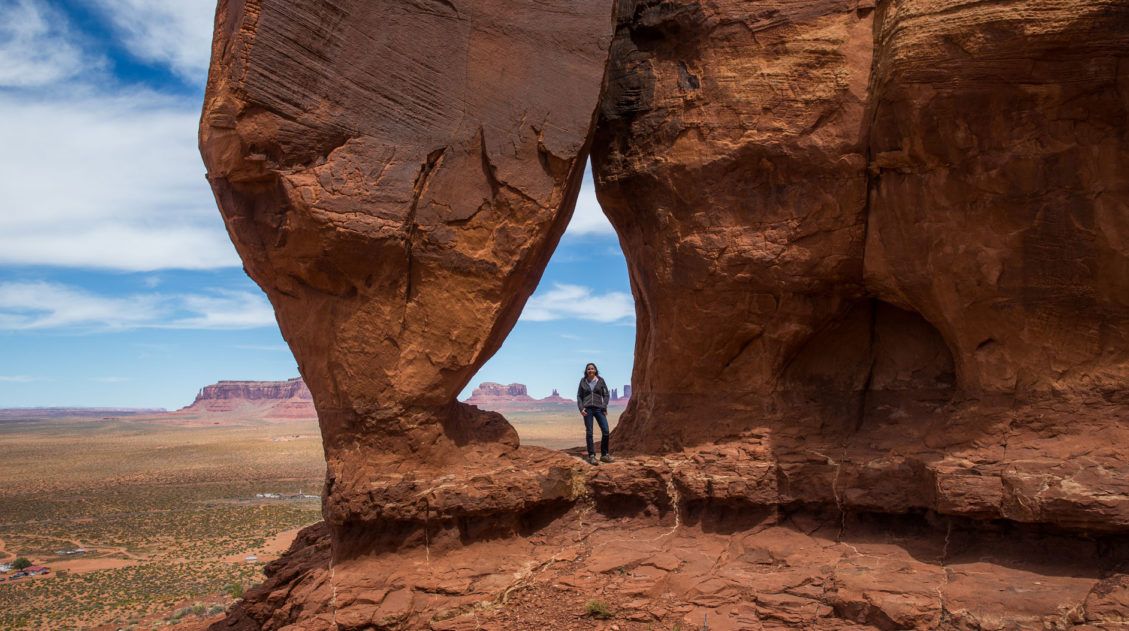
How to Visit Teardrop Arch & Is It Worth It?
Read more about our experience and whether or not it is worth it.Other Monument Valley Tours
There are several other guided experiences to choose from, so you can pick one based on your interests and how much time you have.
Valley Drive Tours | A good option if you don’t want to drive the rough dirt road yourself. You’ll visit many of the same viewpoints you can see on a self-drive, but with a Navajo guide providing context along the way.
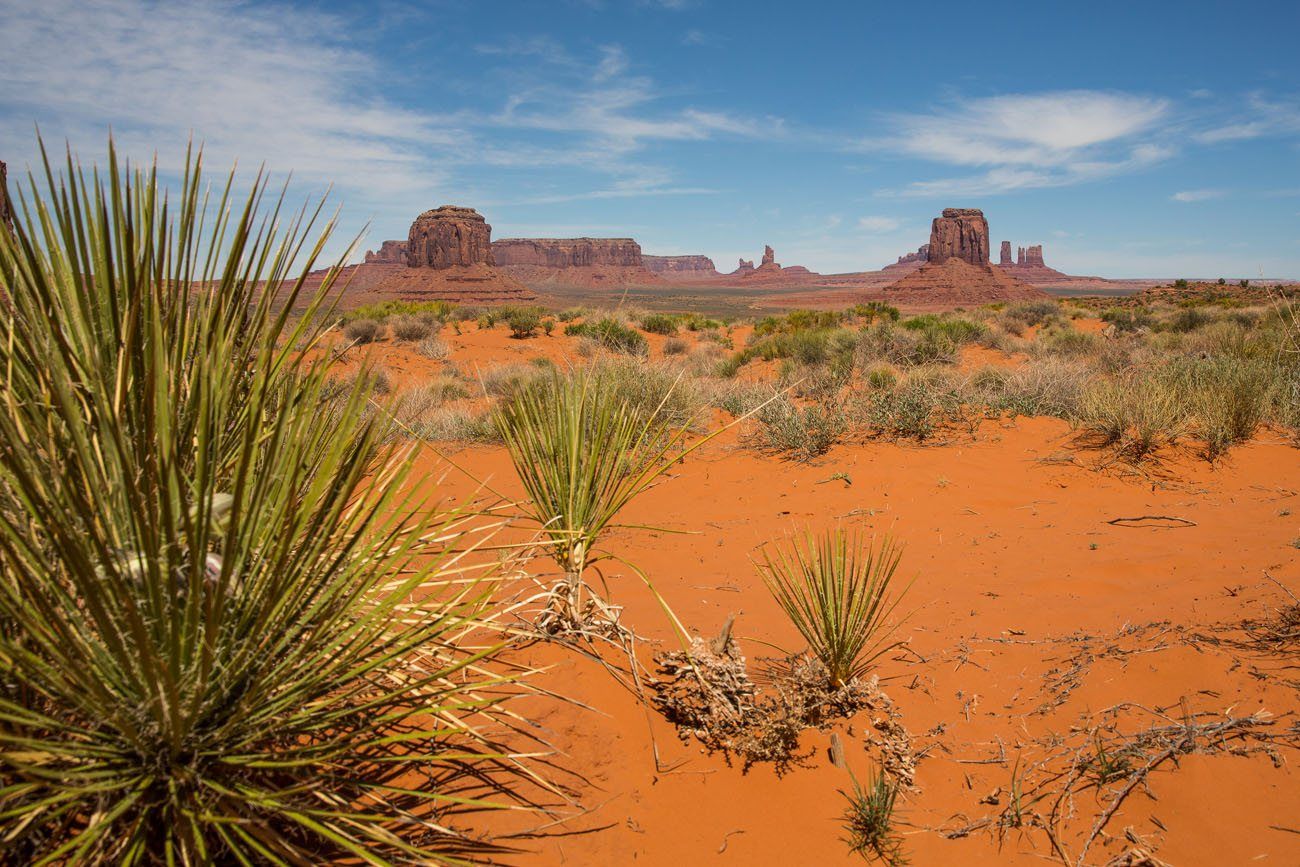
Lower Monument Valley | This tour goes beyond Valley Drive, to the Totem Pole and other rock formations and mesas you would miss if you only did the Valley Drive. We did it as a sunrise tour but it is offered throughout the day.
Mystery Valley | A good choice if you are particularly interested in history and archaeology. Tours visit rock art and ancestral sites as well as scenic locations away from the main Valley Drive.
Backcountry Access Tour | This 3.5 hour tour of Monument Valley includes the main highlights along Tribal Loop Road as well as backcountry sights that you can only visit with a Navajo guide. It ends with a visit to a Navajo Hogan, which is a traditional Navajo home, as well as a musical performance. This is a great tour to consider if you want to learn more about the culture and traditions of Navajo Nation from a local guide.
Hunt’s Mesa | One of the more adventurous, and usually more expensive, Monument Valley experiences. Hunt’s Mesa is known for its sweeping elevated views over Monument Valley and is particularly popular for sunset and photography.
Tour options, departure times, and prices vary by operator. We recommend booking directly with an authorized Navajo tour operator and reserving in advance if you have your heart set on a particular tour or sunrise/sunset time.
Hiking the Wildcat Trail
The Wildcat Trail is the only hiking trail in Monument Valley that you can hike without a Navajo guide. The trail circles West Mitten Butte, giving you up-close views of the Mittens, Merrick Butte, and the wide-open desert landscape.
The loop itself is 3.2 miles, but including the walk to and from the loop, plan on nearly 4 miles total. Most people need about 2 to 3 hours to complete the hike.
TIME: 2 to 3 hours | DIFFICULTY: Moderate | TRAILHEAD: Near the Monument Valley Visitor Center
Much of the trail is sandy and completely exposed to the sun, so bring plenty of water and sun protection. Spring and fall have the most comfortable hiking temperatures; summer can be extremely hot.
Navajo Nation Parks asks hikers to sign in and out when using designated hiking trails. The trail is open during Monument Valley Navajo Tribal Park’s operating hours, currently 8 am to 5 pm.
Don’t Miss Forrest Gump Point
Forrest Gump Point is one of the most iconic views of Monument Valley and, in our opinion, one of the must-see stops on a first visit.
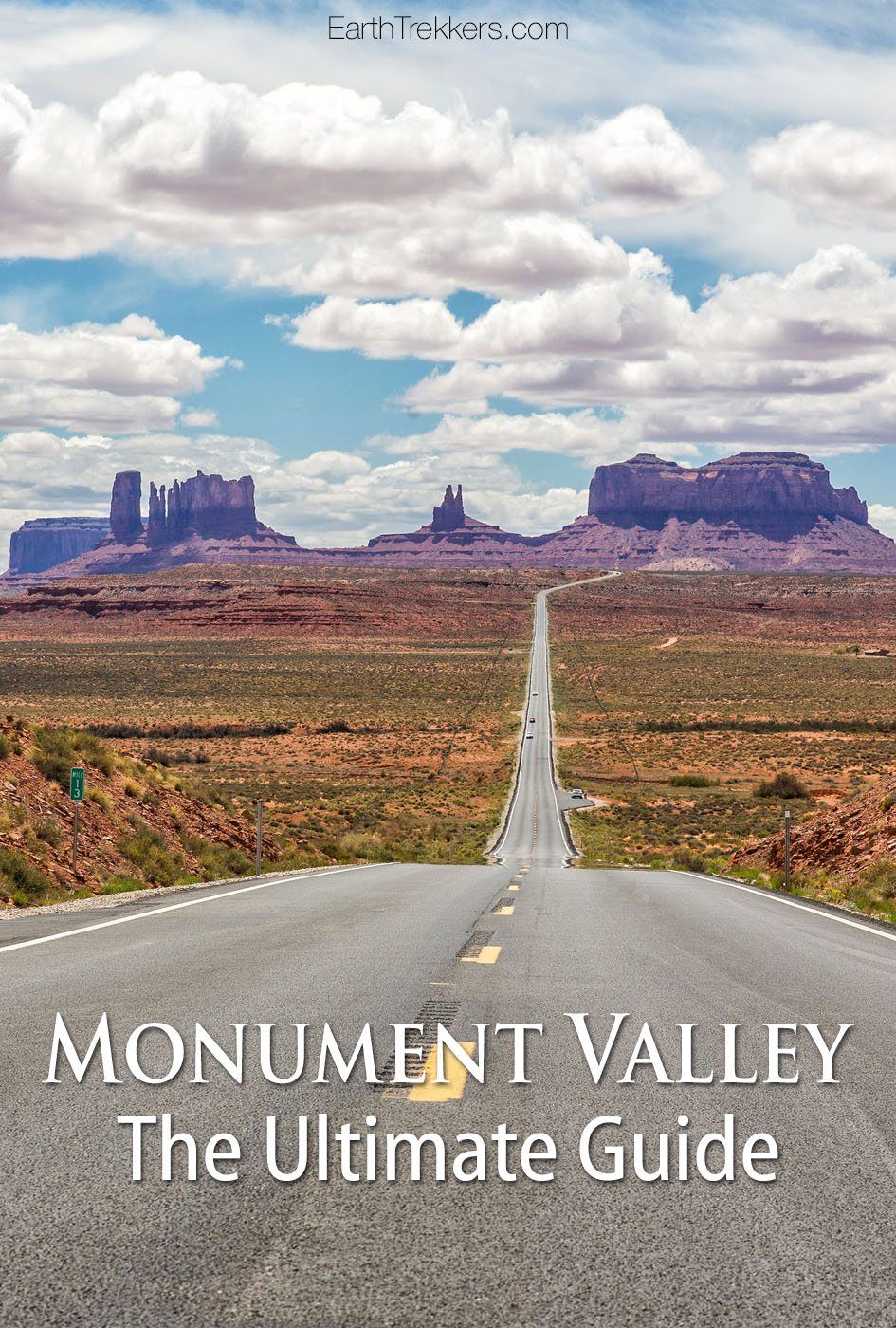
This viewpoint sits along US-163 in Utah, about a 20-minute drive north of the Monument Valley Visitor Center, near Mile Marker 13. This is where Forrest Gump suddenly stopped running in the movie Forrest Gump, but even if you aren’t a fan of the film, the view is spectacular. From here, US-163 rolls across the desert toward the buttes of Monument Valley.
We’ve visited this spot on both visits to Monument Valley. It doesn’t take long to visit, and this is one of our favorite views of Monument Valley.
LOCATION | US-163, near Mile Marker 13 in Utah
DRIVING TIME | About 20 minutes from the Monument Valley Visitor Center
GPS COORDINATES | 37.101393, -109.990973
TIME NEEDED | About 20 to 30 minutes, plus driving time
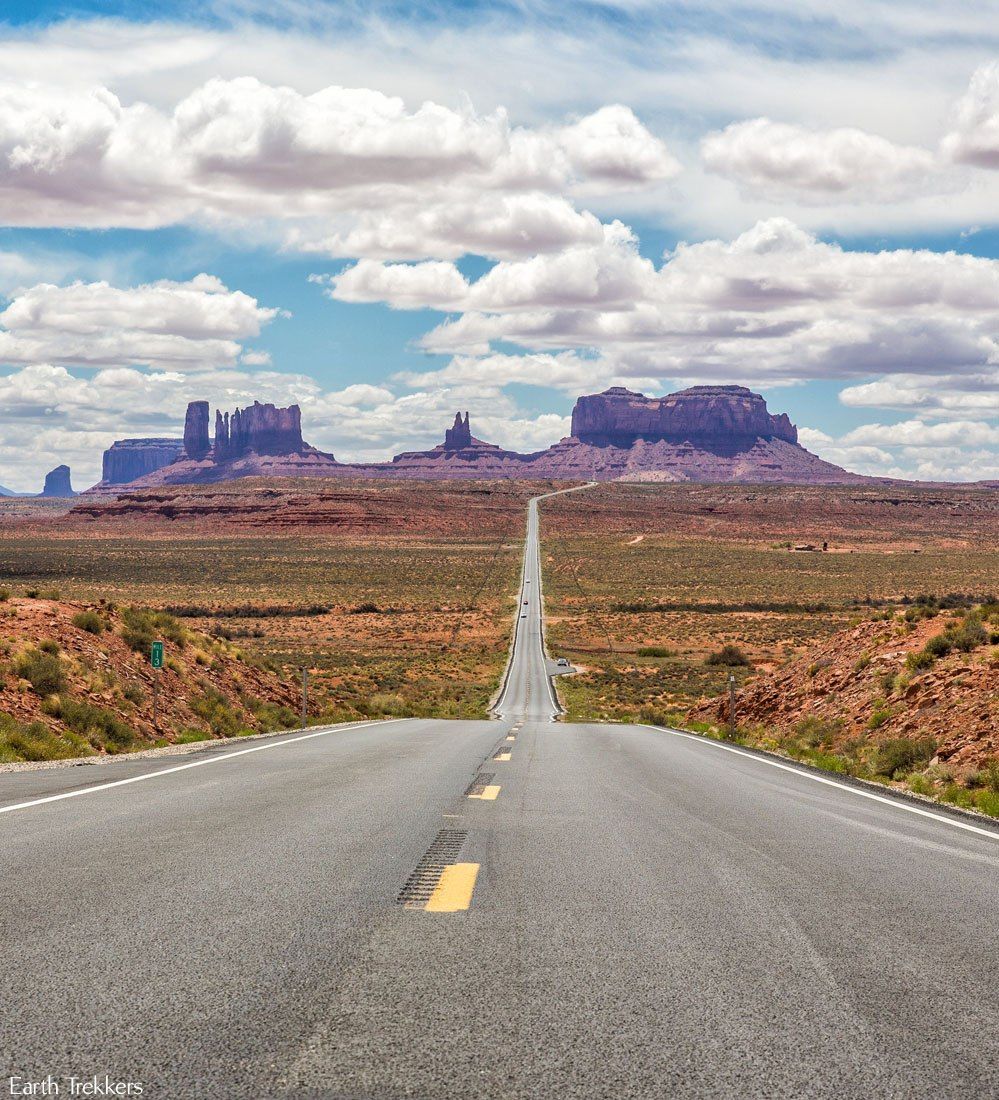
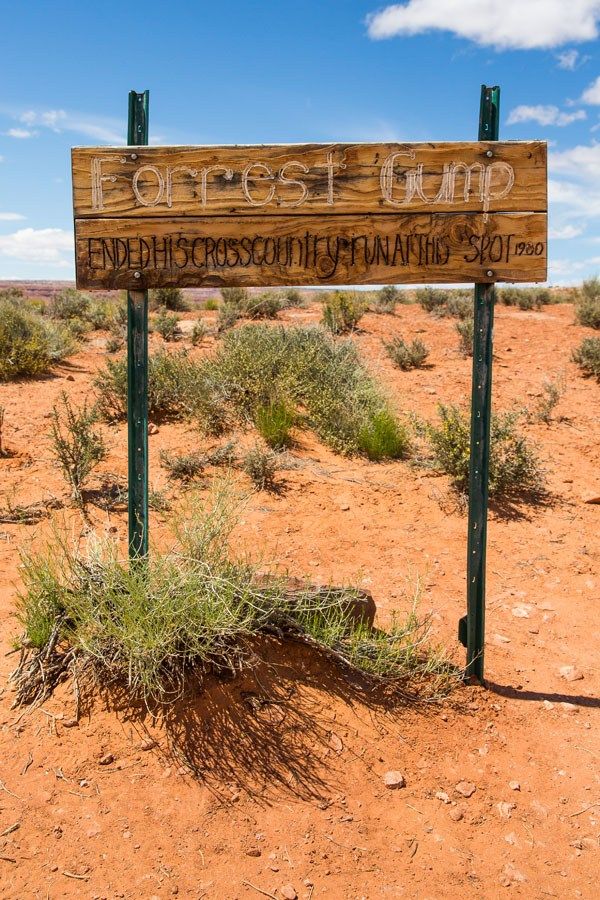
PRO TRAVEL TIP: The best time for photography is in the morning, midday, and early afternoon. In the late afternoon and early evening, you will be facing the sun. This creates a terrible sun glare. On our second visit, at the end of December, we were staring directly into the sun and we were here at 4 pm. Our photos were terrible. The photos above were taken in the early afternoon in May.
An Important Safety Note
US-163 is an active highway, not a pedestrian photo spot. Visit Utah specifically warns that injuries and fatalities have occurred here and asks visitors not to stand in the middle of the road for photos. Pull completely off the highway where it is safe to do so and take your photos from the shoulder.
You can still get a fantastic view of the road leading toward Monument Valley without standing in traffic.
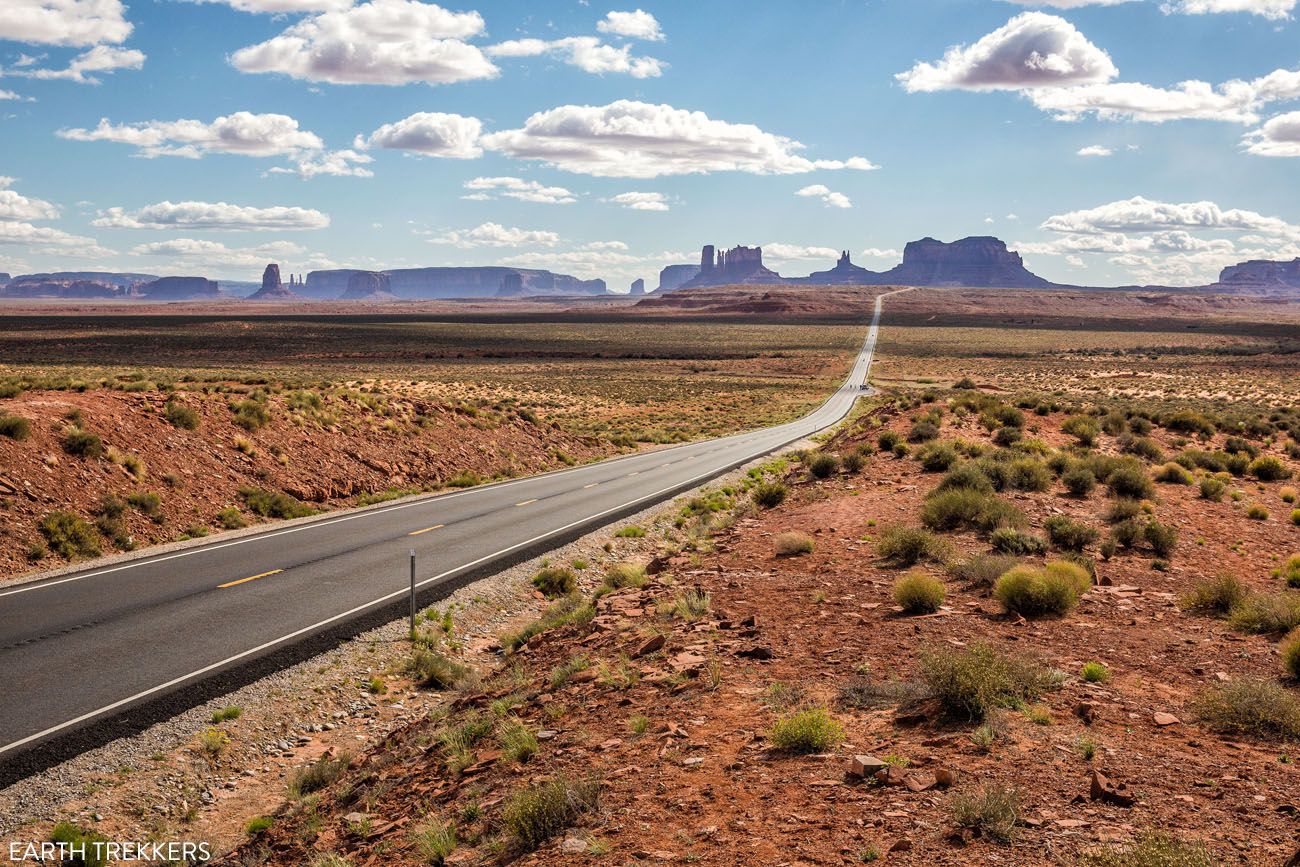
The view of Monument Valley from the Forrest Gump pull out.
How Much Time Do You Need in Monument Valley?
You can see the highlights of Monument Valley in half a day, but we recommend giving it one full day if possible. With one day, you have enough time to see the famous view of the Mittens, drive the Valley Drive, and visit Forrest Gump Point without feeling too rushed.
If you want to add a guided backcountry tour, hike the Wildcat Trail, or photograph Monument Valley at sunrise and sunset, plan on one night or two days.
We’ve visited Monument Valley both ways. On our first trip, Tim and I spent two days here and explored Monument Valley in depth. On our second visit, we were driving from the Grand Canyon to Moab with Tyler and Kara and had just a half day. Both worked well, but they were very different experiences.
If You Have Half a Day
With just a few hours, focus on the essentials (this is what we did):
- See the view of the Mittens from near The View Hotel and Visitor Center.
- Drive the 17-mile Valley Drive.
If your route takes you north on US-163, you can also stop at Forrest Gump Point on your way out of Monument Valley.
I would not try to squeeze the Wildcat Trail into a short visit. The hike alone takes about 2 to 3 hours, and the Valley Drive deserves several hours of its own.
One Day in Monument Valley
With a full day in Monument Valley, you can do much more than just the essential viewpoints and Valley Drive.
Start with the classic view of the Mittens near The View Hotel, then drive the 17-mile Valley Drive. With the rest of the day, you have time to add the Wildcat Trail, a guided tour, or even both if you plan your day well.
Good daytime tour options include:
- Teardrop Arch, for a short hike, unique views, and a more off-the-beaten-path experience
- Mystery Valley, for scenery, archaeology, and Navajo history
- Lower Monument Valley, for access to areas beyond the public Valley Drive
If you want to take a sunrise tour, plan to arrive in Monument Valley the night before. For a sunset tour, spend that night in Monument Valley so you don’t have to drive a long distance afterward.
OUR RECOMMENDATION | If Monument Valley is one of the main destinations on your trip, rather than just a quick stop on a road trip, give it a full day. That gives you enough time for the Valley Drive plus one or two additional experiences without rushing.
Two Days in Monument Valley: How We Did It
On our first trip to Monument Valley, Tim and I had two days, which gave us enough time to see the classic sights as well as some places that most visitors miss.
Day 1: We drove from Phoenix to Monument Valley, stopping in Kayenta for lunch at Amigo Café. That afternoon, we visited Forrest Gump Point, Valley of the Gods, and Mexican Hat. We returned to Monument Valley for dinner and watched the sunset over the Mittens.
Day 2: We started very early with our sunrise photography tour of Lower Monument Valley. After breakfast, we drove the Valley Drive, and that afternoon we took our Teardrop Arch tour. From Monument Valley, we continued to Page, Arizona.
This was a busy two days, but it gave us a much more in-depth experience than our return visit. If Monument Valley is one of the main destinations on your trip, rather than simply a stop between the Grand Canyon and Moab, this is the amount of time we’d recommend.
OUR RECOMMENDATION | For most first-time visitors, one full day is enough to see the essential sights. Spend a night if you can, since this gives you the chance to see Monument Valley at sunrise or sunset. If you want to take one or more guided tours and explore nearby places such as Valley of the Gods, two days is ideal.
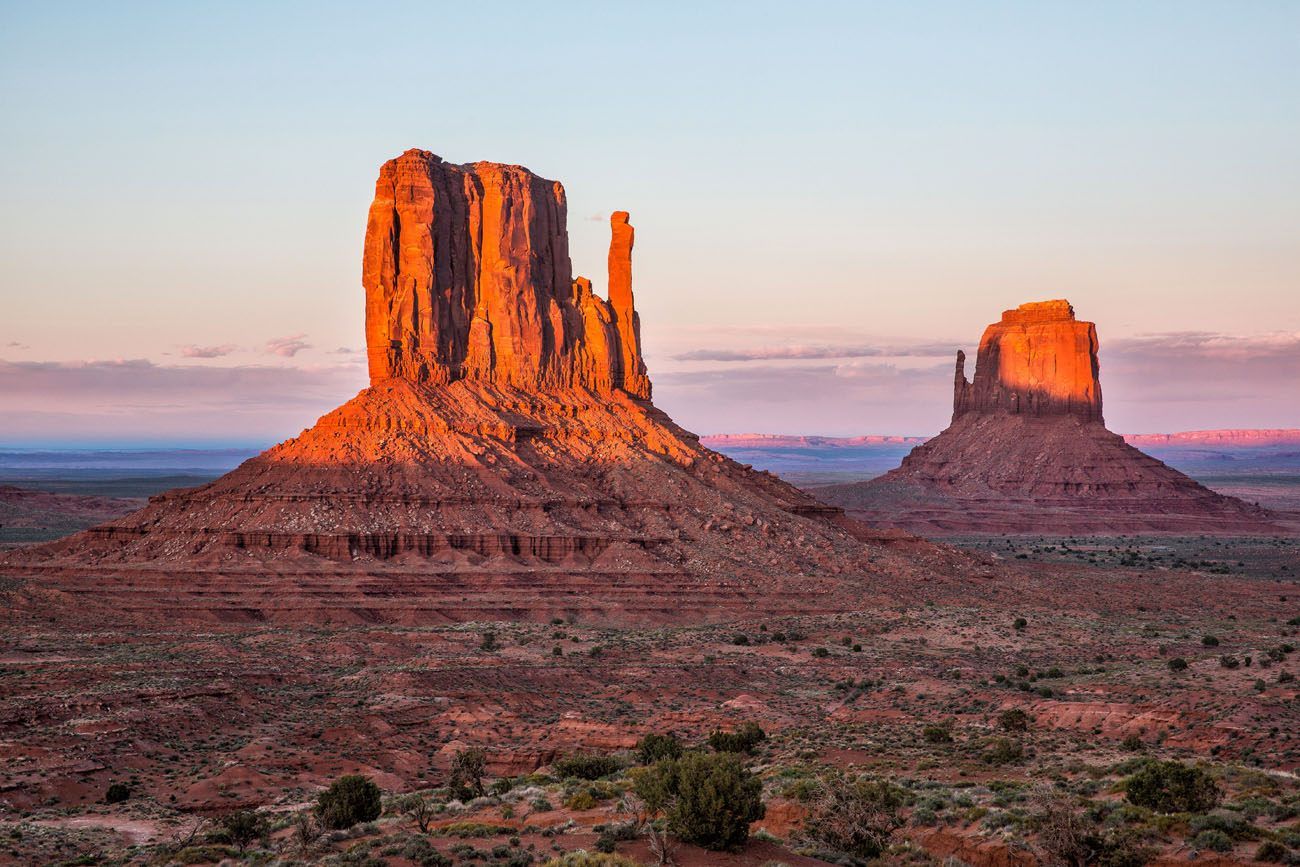
We took this sunset photo of the Mittens on our first visit to Monument Valley.
Best Time to Visit Monument Valley
The best times to visit Monument Valley are spring and fall, when daytime temperatures are generally comfortable for sightseeing, hiking, and guided tours. March through early June and September through October are especially good months to visit.
Spring
Spring is one of the best times to visit Monument Valley. Days are generally mild, although mornings can still be surprisingly cold.
Our first visit was in May, and overall the weather was excellent for exploring Monument Valley. However, our sunrise photography tour was much colder than we expected. If you are planning an early-morning tour, bring warm layers even in late spring.
Summer
Summer is the busiest season at Monument Valley, with peak visitation running roughly from May through September. It can also be very hot, with July and August temperatures reaching around 95°F (35°C). The Wildcat Trail is completely exposed, so hiking can be uncomfortable during the heat of the day.
Summer also overlaps with the Southwest monsoon season. Heavy rain can affect the unpaved Valley Drive, so check the weather and current road conditions if storms are in the forecast.
Fall
Fall is another excellent time to visit. September and October typically bring warm days, cooler nights, and some of the most stable weather of the year.
If we were choosing purely for weather, late September through October would be one of our top choices.
Winter
Winter is much quieter, but it can be cold and windy. Average daytime highs in December and January are around 42°F (5°C), with nighttime temperatures dropping below freezing. Snow is possible and can make Monument Valley especially beautiful.
We returned in December with Tyler and Kara. We were only here for a half day while driving from the Grand Canyon to Moab, and winter worked very well for a shorter visit. Just be prepared for cold temperatures and shorter Scenic Drive hours.
OUR RECOMMENDATION | For the best combination of comfortable temperatures and good conditions for hiking and sightseeing, visit Monument Valley in April, May, September, or October. But we wouldn’t rule out winter. If you don’t mind the cold, the smaller crowds and possibility of snow can make it a beautiful time to visit.
Important Things to Know Before Visiting Monument Valley
Here are a few things that are helpful to know before your visit.
Monument Valley follows Navajo Nation time. This is especially important if you are arriving from elsewhere in Arizona. The Navajo Nation observes Daylight Saving Time, while most of Arizona does not. From spring through fall, Monument Valley is therefore one hour ahead of the Grand Canyon, Page, and Phoenix. Utah observes Daylight Saving Time, so Monument Valley and Moab are on the same time during this period. Double-check the time before a scheduled tour, especially a sunrise tour.
Check the weather before driving the Valley Drive. The Valley Drive is an unpaved road, and heavy rain can make conditions much more difficult. Navajo Nation Parks may close the road when conditions are unsafe.
Stay on designated roads and trails. Monument Valley is Navajo land, and much of the park is not open to independent exploration. Unless you are on the Valley Drive or Wildcat Trail, you’ll generally need a Navajo guide to explore farther into the valley.
Drones are not allowed. Drone use is prohibited on Navajo Nation land, including Monument Valley. Rock climbing on the monuments is also prohibited.
Dogs are not permitted in Navajo Tribal Parks. Navajo Nation Parks currently states that dogs are prohibited at all tribal park locations.
Bring plenty of water. Monument Valley is a desert environment, and there is very little shade once you leave the Visitor Center area. This is particularly important if you plan to hike the Wildcat Trail or visit during the summer.
Respect the landscape and Navajo Nation rules. Do not climb the rock formations, remove rocks or artifacts, or travel onto closed roads. Monument Valley is not simply a scenic attraction; this landscape is part of the Navajo Nation and many places within it have cultural and spiritual significance.
How to Get to Monument Valley
Monument Valley is remote, so getting here usually involves a road trip. There is no public transportation to Monument Valley, and for most travelers, the easiest option is to fly into a nearby city, rent a car, and include Monument Valley as part of a larger road trip through Arizona and Utah.
The closest airports with commercial service are in Flagstaff, Arizona, and Farmington, New Mexico, but flight options are limited. Most travelers will have more choices, and often better prices, flying into Phoenix, Albuquerque, Las Vegas, or Salt Lake City.
Distances and Driving Times to Nearby Airports
- Phoenix – 320 miles, 5 hours
- Albuquerque – 324 miles, 5 hours
- Las Vegas – 400 miles, 6.5 hours
- Salt Lake City – 380 miles, 6.5 hours
On our first trip to Monument Valley, we flew into Phoenix, rented a car, and drove to Monument Valley, which took us about 5 hours.
Distances and Driving Times to Nearby Cities and National Parks
Monument Valley fits particularly well into a Southwest road trip because several popular destinations are within a few hours’ drive.
- Four Corners Monument: 105 miles, about 1.5 to 2 hours
- Page, Arizona: 125 miles, about 2 hours
- Grand Canyon South Rim: 170 to 180 miles, about 3 hours
- Moab, Utah: 150 miles, about 2.5 hours
- Mesa Verde National Park: About 120 miles, about 2 hours
- Canyon de Chelly: About 90 miles, about 1.5 hours
On our second visit, we stopped at Monument Valley while driving from the Grand Canyon to Moab. This is a great way to work Monument Valley into a larger Southwest road trip, and with a half day, you have enough time to see several of its biggest highlights.
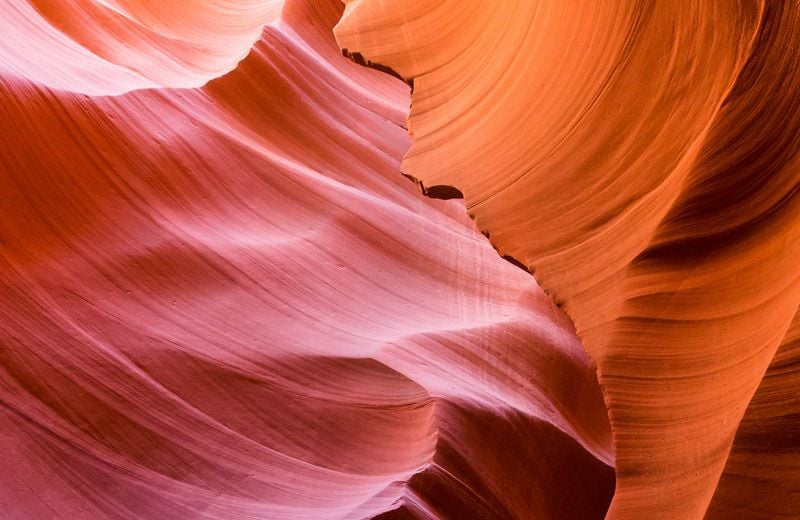
Where to Stay in Monument Valley
If you are spending the night in Monument Valley, staying as close to the park as possible makes it much easier to see the valley at sunrise and sunset and to take an early-morning tour.
The View Hotel
The View Hotel has the best location in Monument Valley. It is the only lodging located inside Monument Valley Navajo Tribal Park, right next to the Visitor Center and overlooking the Mittens and Merrick Butte.
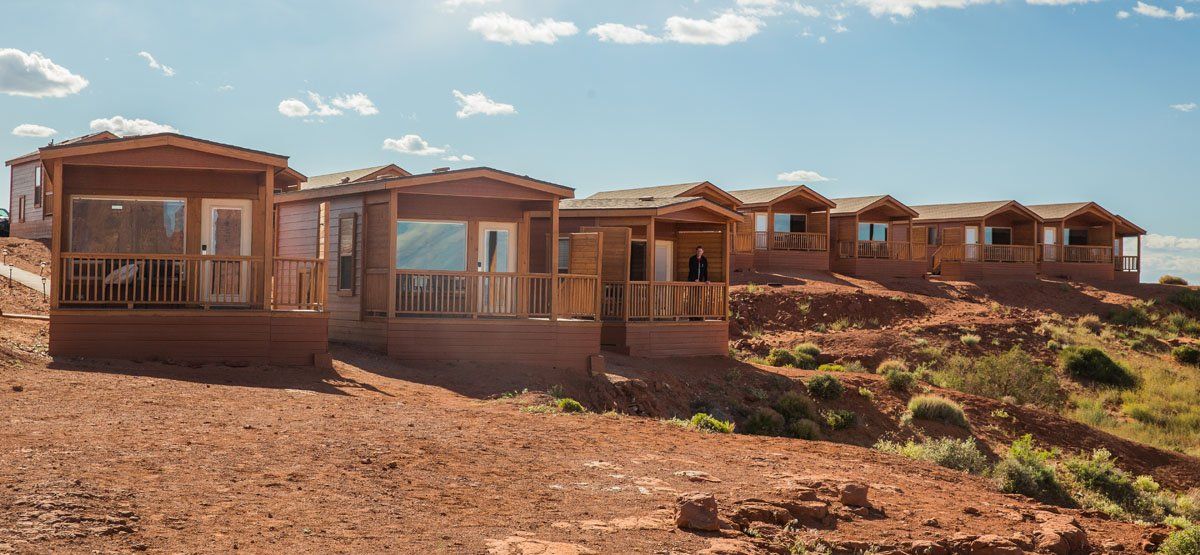
The View Hotel offers traditional hotel rooms as well as Premium Cabins and a campground with tent and RV sites. Most hotel rooms have private balconies overlooking the valley, while the cabins sit along the valley rim and offer more privacy.
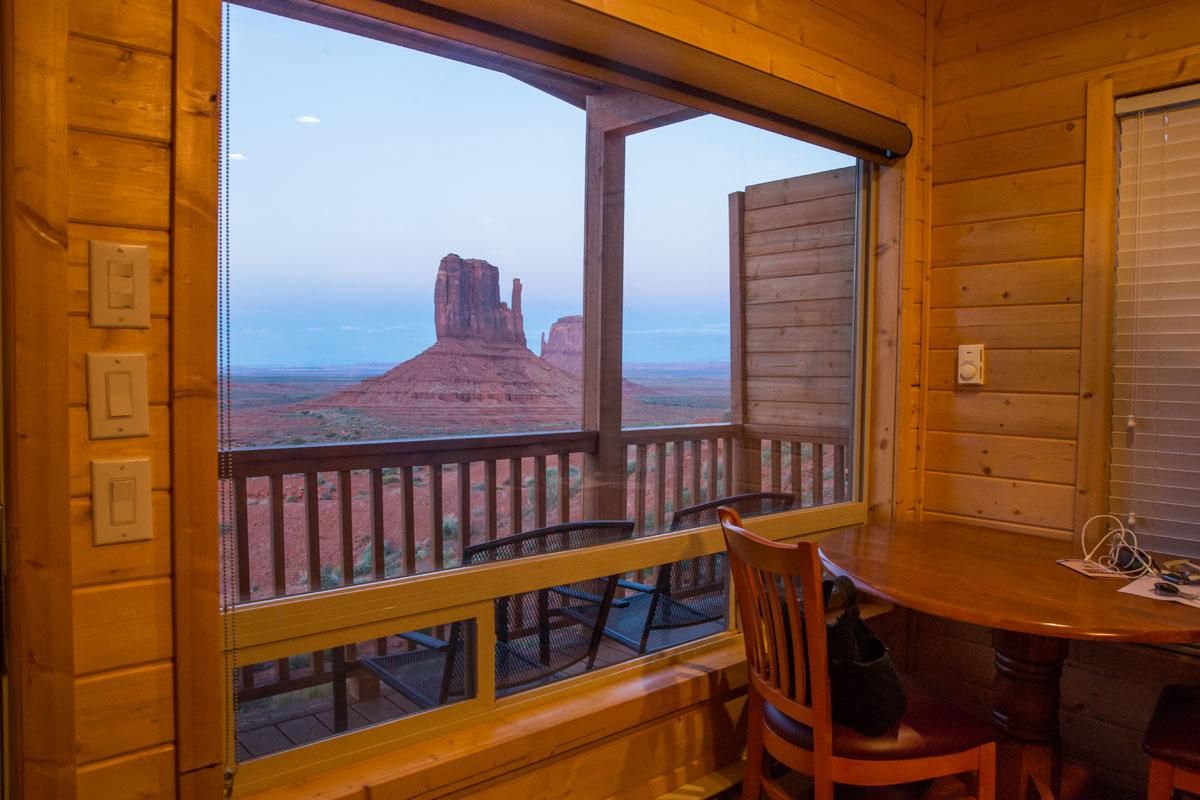
The Premium Cabins. These cabins overlook the Mittens and some have better views than others. We stayed in a cabin (in the front row) and loved it. We had a deck with a great view and we could lie in bed and look out at West Mitten Butte. The cabins are clean and warm (it got down into the low 30’s during our visit).
View from our cabin
Camping. There is a campground and RV parking. This is the cheapest option. The campground is located between the cabins and the hotel and the view is out to the Mittens. This is also a popular spot to watch sunrise and sunset.
More Options
Located just outside of the Monument Valley Tribal Park, Goulding’s Lodge offers rooms with a view and a campground. They also operate one of the only restaurants in the area.
Firetree B&B is a B&B located in Monument Valley that gets good reviews (you sleep in a Hogan). The next closest towns are Kayenta and Mexican Hat.
Where to Eat in Monument Valley
This is not a place you visit for the food. Expect overpriced, mediocre food in and around Monument Valley.
Goulding’s Stagecoach Dining Room. We ate dinner here one night. Entrees cost about $25 but the food is very mediocre. Tim and I dined on salads, which were nothing special, but they were a fraction of the cost of an entrée.
The View Restaurant. They offer breakfast, lunch, and dinner. Like Goulding’s Lodge, their prices are on the expensive side and the food is average. However, we did eat breakfast here after our sunrise photography tour, and we thought the food was pretty good.
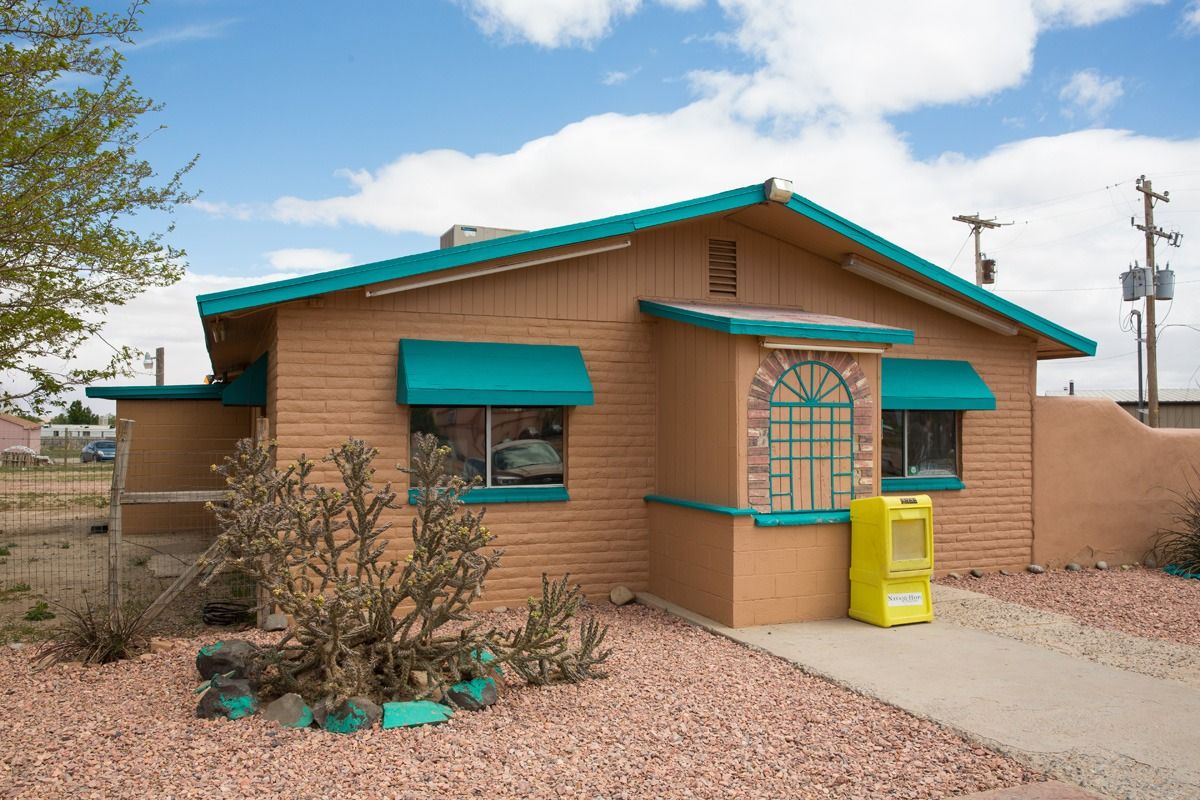
Amigo Café. This restaurant is located in Kayenta, a half hour drive from the Visitor Center. This is a cozy restaurant with a local feel that serves Mexican and Navajo food. I ordered the Navajo Taco, which was enormous. This is enough food for two adults. Navajo fry bread is similar to funnel cake or doughnut dough, although it is not sweet. It’s delicious! On top of the fry bread were beans, lettuce, tomato, cheese and onions. If you don’t mind the drive, consider making the trip down to Amigo Café. Ray, one of our guides, also recommends the Blue Coffee Pot in Kayenta.
Things to Do Near Monument Valley
If you have extra time, there are several beautiful places to visit near Monument Valley. Most are located north of Monument Valley in southeastern Utah, making them especially easy to add if you are traveling toward Moab.
On our first visit, we spent part of an afternoon exploring this area, visiting Valley of the Gods and Mexican Hat before returning to Monument Valley for sunset.
Valley of the Gods
TIME NEEDED | About 1.5 to 2 hours for the drive with photo stops
If you enjoy scenic drives, Valley of the Gods is our top pick near Monument Valley. The scenery is similar, with isolated sandstone buttes and mesas rising from the desert, but it feels much quieter and less developed.
A 17-mile unpaved road winds through the valley. In dry conditions, it can generally be driven in a regular passenger vehicle, although conditions can become much more difficult after rain. There are no services here, so bring water and anything else you need with you.
We visited Valley of the Gods on our first trip to Monument Valley and loved the solitude and scenery. It doesn’t have quite the same wow factor as Monument Valley, but that’s balanced by having far fewer people around.
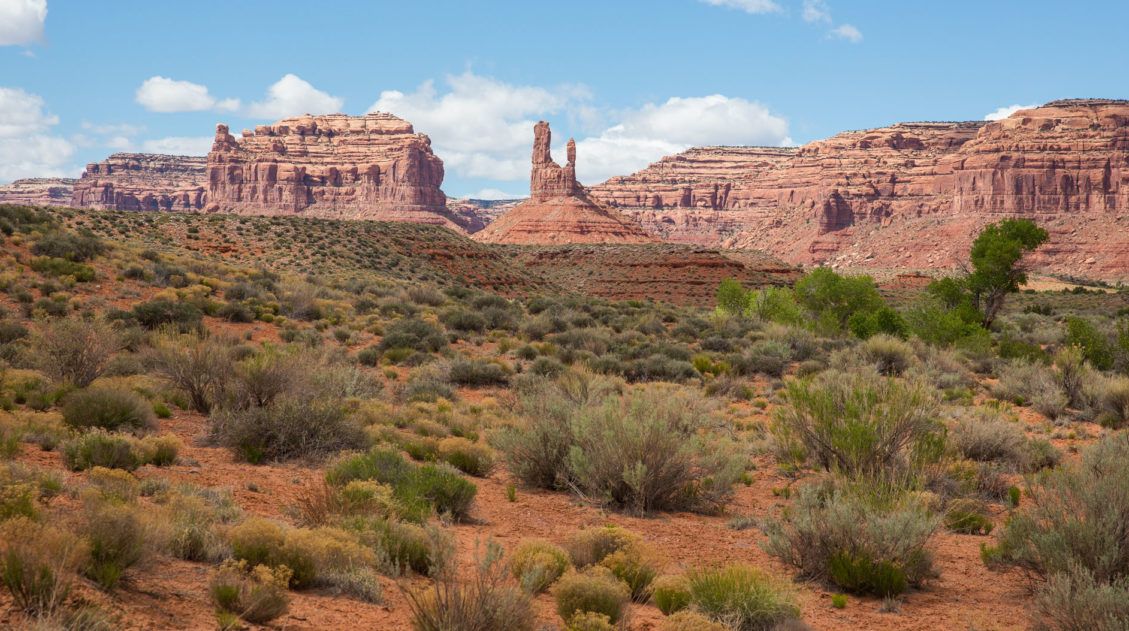
How to Visit the Valley of the Gods
Things to do and how to plan your visit to the Valley of the Gods.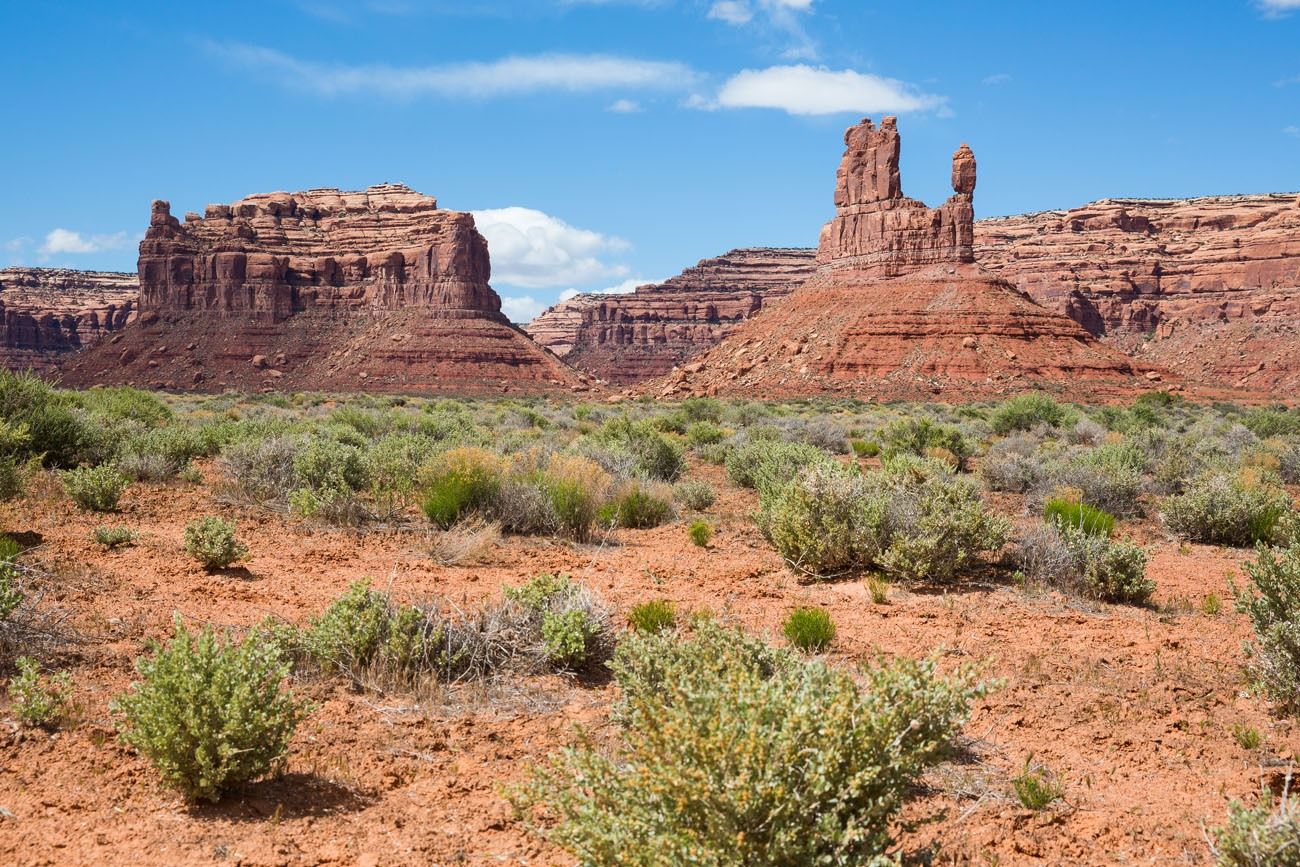
Mexican Hat
TIME NEEDED | About 10 to 20 minutes for a quick photo stop
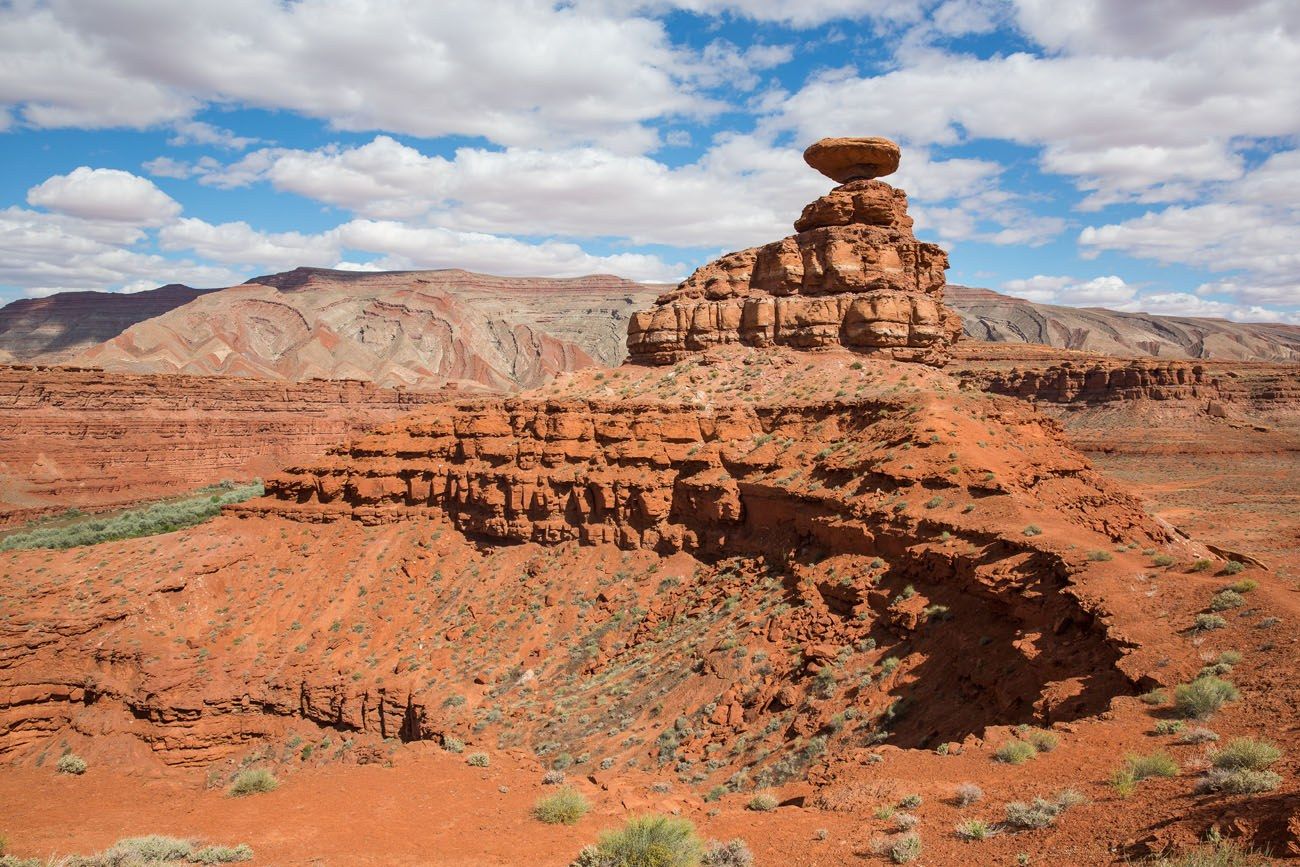
Mexican Hat is a distinctive rock formation that looks like an overturned sombrero balanced on a pedestal.
You can see it from the road, so this can be a very quick stop. Since it is located near Valley of the Gods, the two are easy to combine.
Goosenecks State Park
TIME NEEDED | About 30 minutes
ENTRANCE FEE | $5 per vehicle
At Goosenecks State Park, the San Juan River makes a series of tight bends through a deep canyon. From the viewpoint, you look down about 1,000 feet onto the river as it winds through the landscape.
This is another easy addition to a Valley of the Gods road trip. There isn’t much hiking to do here; the main reason to visit is the overlook.
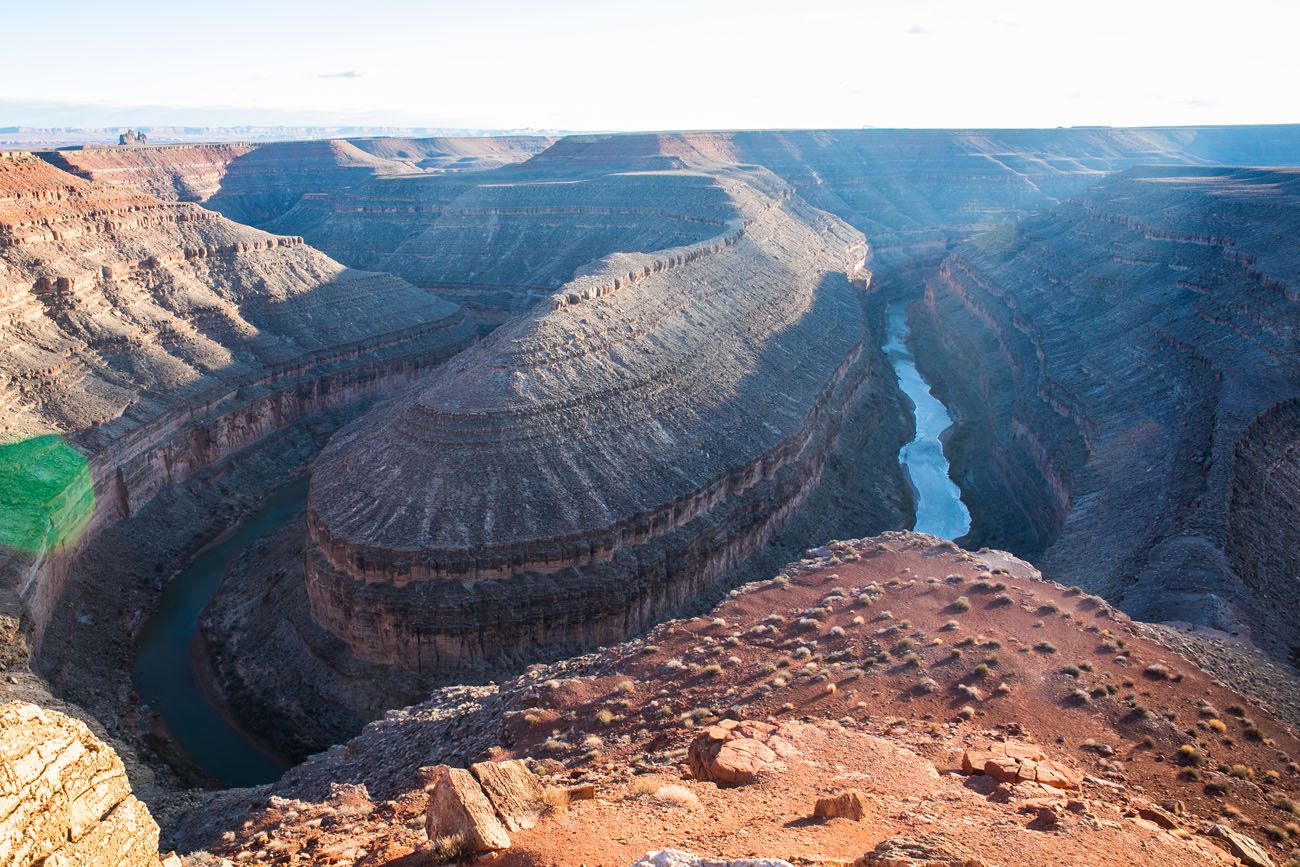
We took this photo in the afternoon in December, a tough time for photography, shooting into the sun.
Moki Dugway and Muley Point
TIME NEEDED | Allow at least 1 to 2 hours for the Moki Dugway and Muley Point, depending on how far you drive and how often you stop.
For even bigger views, continue to the Moki Dugway, a steep section of Utah Highway 261 that climbs the cliffs above Valley of the Gods through a series of tight, unpaved switchbacks.
From the road, you get sweeping views across southeastern Utah. If you have more time, once you reach the top of the Moki Dugway, take Muley Point Road to Muley Point for even more expansive views over the desert and the San Juan River canyon.
The Moki Dugway is not a drive for everyone. The road is steep, narrow in places, and has exposed switchbacks, so skip it if you are uncomfortable with heights or driving on this type of road.
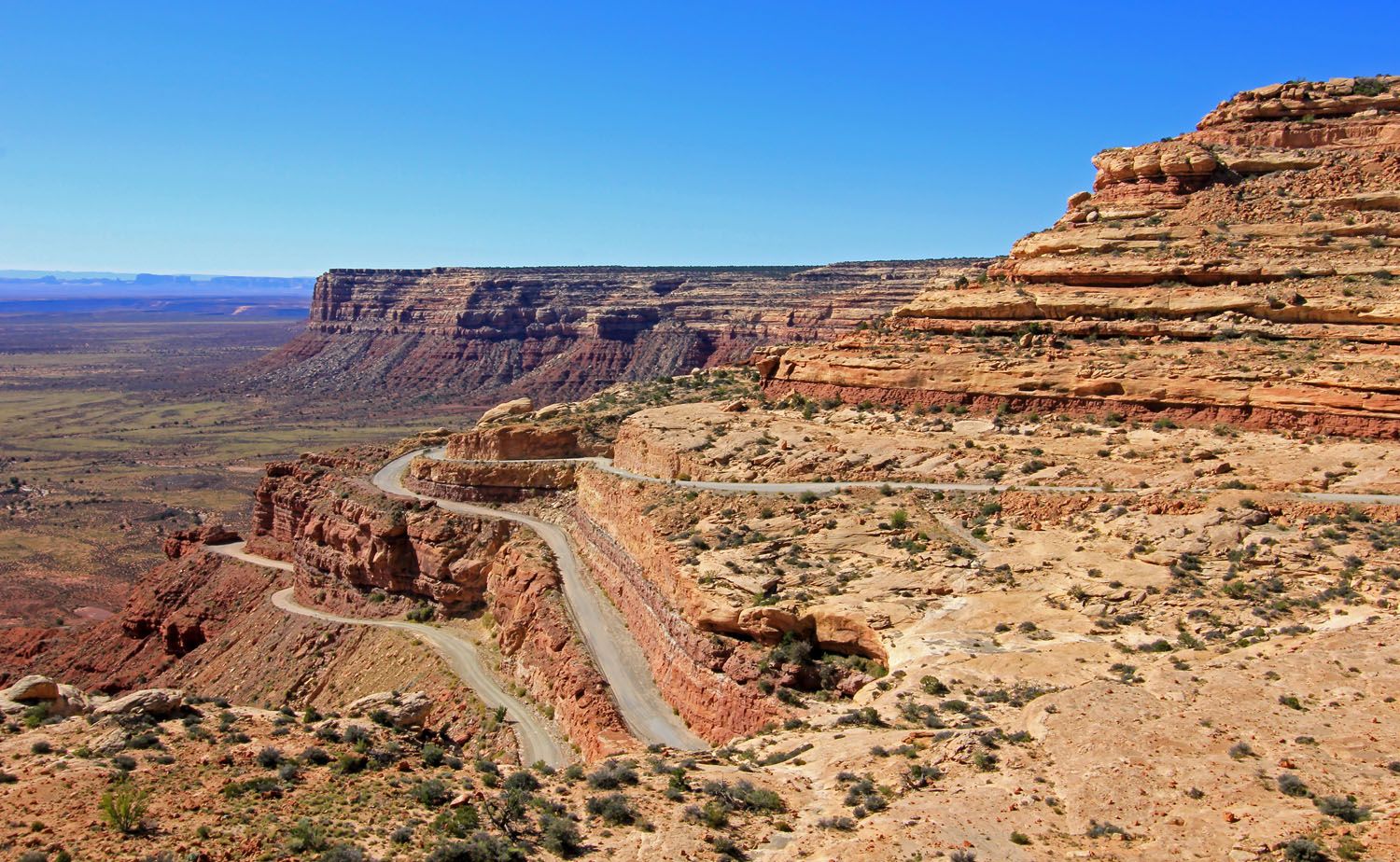
Moki Dugway | reisegraf.ch/shutterstock.com
Frequently Asked Questions
Can you drive through Monument Valley?
Yes. You can drive the 17-mile Valley Drive through Monument Valley Navajo Tribal Park without a guided tour. The unpaved road takes about 2 to 3 hours with stops, and you must stay on the designated route.
What are the best things to do in Monument Valley?
For a first visit, we recommend seeing the Mittens from the viewpoint near The View Hotel, driving the Valley Drive, and visiting Forrest Gump Point. With more time, add the Wildcat Trail or a Navajo-guided tour.
Do you need a 4WD vehicle for Monument Valley?
No, 4WD is not specifically required, but the Valley Drive is rough, unpaved, and sandy in places. Navajo Nation Parks recommends a vehicle that can handle rough terrain, and road conditions can worsen after rain.
Does the America the Beautiful Pass work at Monument Valley?
The view of the Mittens is one of the most iconic views in the USA. To look out across this landscape and drive and/or hike through a portion of it is one of the best things to do in the American Southwest, so Monument Valley is well worth your time.
Is Monument Valley worth visiting without taking a tour?
Yes. You can see the Mittens, drive the Valley Drive, hike the Wildcat Trail, and visit Forrest Gump Point without a tour. A guided tour is worth adding if you want to visit areas beyond the public road and learn more about Navajo history and culture.
Plan Your American Southwest Road Trip
- Want a ready-made Southwest itinerary? → Our 10-Day American Southwest Itinerary connects Monument Valley with Sedona, the Grand Canyon, Antelope Canyon, Bryce Canyon, Zion, and more.
- Exploring more of Arizona? → Our Arizona Road Trip Itinerary includes Monument Valley along with the Grand Canyon, Sedona, Antelope Canyon, Saguaro, and Petrified Forest.
- Heading to the Grand Canyon? → Our Grand Canyon National Park Travel Guide covers the best things to do, hikes, viewpoints, itineraries, and trip-planning advice.
- Visiting Page, Arizona? → Read our Upper vs. Lower Antelope Canyon guide to decide which canyon is right for you—or whether you should visit both.
- Adding Sedona to your trip? → Our Best Hikes in Sedona guide covers our favorite trails, from short hikes such as Cathedral Rock to longer adventures through Sedona’s red-rock landscape.
- Planning a bigger road trip? → Our Best USA Road Trips guide includes several routes through the American Southwest, including itineraries that visit Monument Valley.
If you have any questions about how to visit Monument Valley, let us know in the comment section below.
Explore More of the American Southwest
If this is part of a bigger road trip through the USA, visit our United States Travel Guide and our Arizona Travel Guide for more inspiration and travel planning tips.
Grand Canyon Road Trip: 5 Itineraries from Las Vegas
Pinterest Facebook Flipboard If you planning a trip to the Grand Canyon, there are many different ways to plan your perfect road trip, depending on how much time you have and your interests. The American Southwest is packed with stunning parks and landscapes, and it is easy to add on places like Antelope Canyon, Zion […]
11 EPIC Things to Do on the South Rim of the Grand Canyon
For millions of years, the Colorado River has carved its way through the Colorado Plateau, forming this expansive, awe-inspiring landscape that we call the Grand Canyon. And it certainly is grand. Words cannot describe what it is like to gaze across the Grand Canyon for the first time. On a visit to the Grand Canyon, […]
15 Amazing Things to Do in Sedona (Beyond Just Hiking the Trails)
What do you look for when picking the perfect vacation spot? Outdoor adventures? Shopping? Wineries? Great restaurants? Beautiful sunsets? A fun place to take the kids? What if I told you that you could get all of these in one place…Sedona, Arizona. In this article, learn about the best things to do in Sedona with […]
One Day in the Grand Canyon Itinerary: Things to Do, Map, Photos
If you only have one day in the Grand Canyon, what should you do? Grand Canyon National Park is enormous. With thousands of acres of land, four rims to visit, plus the option to hike below the rim, there is no way that you will get to everything in just one day. However, with one […]
Sedona Itinerary | Best Way to Spend 1 to 6 Days in Sedona
There are many different ways to piece together a Sedona itinerary. Your perfect itinerary depends on your traveling style. Whether you are an avid hiker, a family traveling with kids, or someone who wants to experience Sedona without spending time on the hiking trails, we have some great suggestions for you. In this guide, learn […]
Best Hikes in Zion: 15 Trails from Beginner to Advanced
Zion National Park is one of the best places in the United States to go hiking. From the awe-inspiring hike up Angels Landing to the family-friendly Riverside Walk to multi-day backpacking adventures, there is something here for everyone. In this guide, we cover the best hikes in Zion National Park, from popular trails to hidden gems. […]
One Perfect Day in Bryce Canyon National Park
Bryce Canyon National Park…a fantasyland of hoodoos, bizarre rock formations, and sandstone pillars. This is a crazy beautiful place, and its unique landscape sets it apart from other national parks. Although Bryce may not have the same sweeping, expansive vistas as the Grand Canyon, it’s still a breathtaking experience the first time you see this […]
12 Amazing National Parks for Your Next Family Adventure
We’ve visited 56 of the 63 U.S. national parks and almost every single one would make a fantastic family destination. With 63 parks to choose from, the options can feel overwhelming. After years of exploring the national parks, we’ve narrowed it down to 12 that hit the sweet spot for families. These parks are easy […]
Boynton Canyon Trail & the Subway Cave | One of Sedona’s Top Hikes
Boynton Canyon is one of Sedona’s top hikes. This is a relatively easy hike, as you walk on a mostly flat trail that is sheltered from the sun. The trail ends at the back of the canyon, where a short climb takes you up to a viewpoint, offering sweeping views of Boynton Canyon. Along the […]
One Day in Petrified Forest National Park: Our Itinerary & Best Stops
Petrified Forest National Park beat all of my expectations. I imagined a barren desert with a few colorful hills, some ancient, petrified stumps, and soaring temperatures in the early summer. Instead, we were treated to the colorful, uniquely beautiful hills of the Painted Desert, giant, petrified trees that puzzle the mind, and the chance to […]
10 Amazing Slot Canyons to Explore in the American Southwest
The American Southwest is a playground for hikers, photographers, and adventurers. Fun to explore and extremely photogenic, slot canyons provide a unique hiking experience. We have assembled a short list of some of the best slot canyons in Utah, Arizona, and Nevada. This is not an all-inclusive list, because there are tons of slot canyons […]
8 Amazing Things to Do in Saguaro National Park
Saguaro National Park is named for the Saguaro cactus, which grows only in the Sonoran Desert. This is an easy park to visit, with scenic drives and short walks among the towering cacti. A half day is all you need to see the highlights, but with more time you can tour the entire park, go […]

Comments 160