
If you’re trying to figure out where to stay in the Lofoten Islands, the first thing you need to know is this: the islands have their own iconic accommodation type, and it’s unlike anything else in the world.
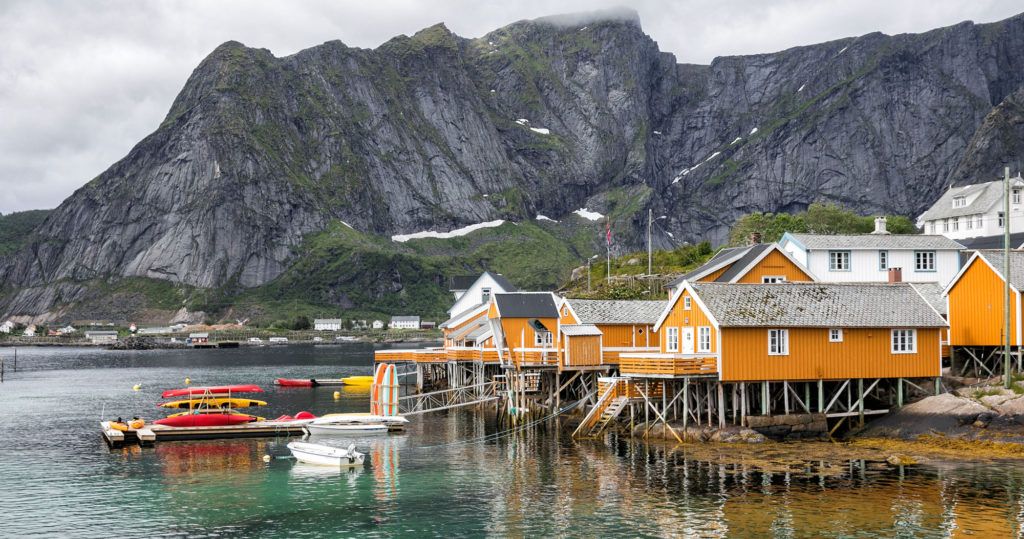
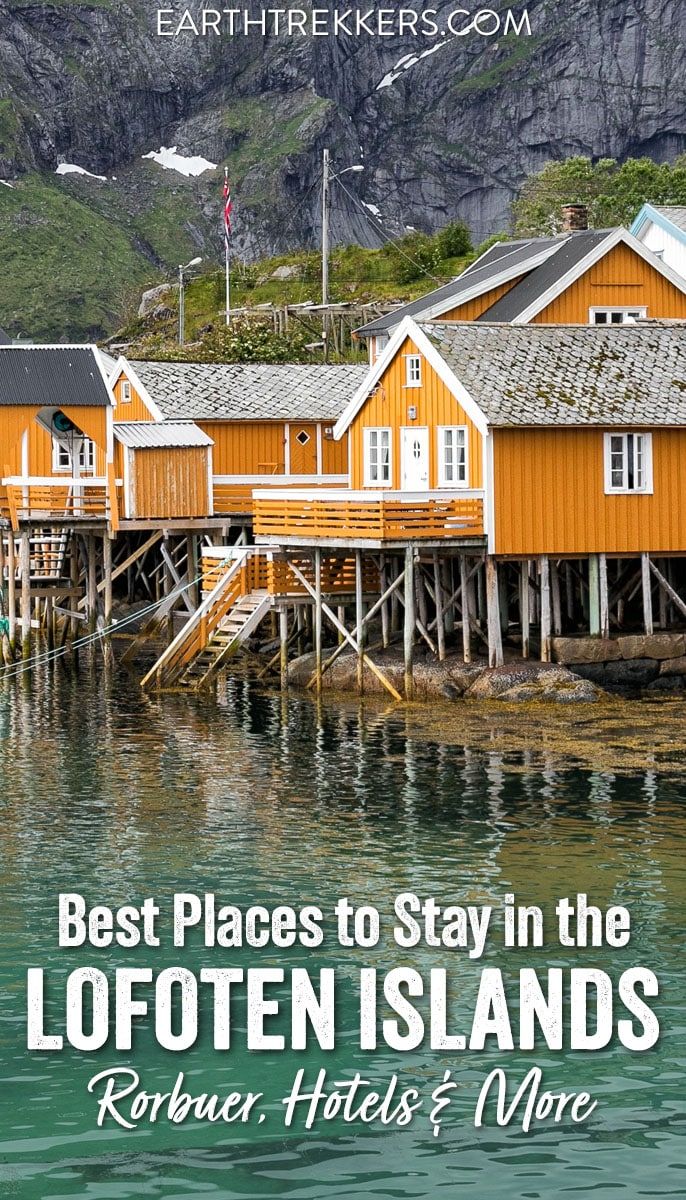
Rorbuer, traditional Norwegian fishermen’s cabins, typically perched on stilts over the water, are the reason so many travelers obsess over Lofoten long before they ever book a flight. Staying in one isn’t just a place to sleep. It’s waking up to a mountain reflected in still fjord water, stepping outside onto a wooden dock, and feeling like you’ve landed inside one of those photos you’ve been saving for years.
We stayed in two locations on our Lofoten trip, a rorbu in Kabelvåg and a waterfront cabin at Reinefjorden Sjøhus in Hamnøy, and both were memorable in completely different ways. We’d do it again in a heartbeat.
That said, rorbuer aren’t the only option, and they’re not right for every traveler or every budget. This guide covers the full picture: the best rorbuer across the islands, plus hotels and hostels for those who want something different. We’ve also organized everything by town, because in the Lofoten Islands, where you stay matters just as much as where you sleep.
The Quick Answer: Where to Stay in the Lofoten Islands
- Best iconic rorbu: Eliassen Rorbuer, Hamnøy
- Best waterfront rorbu: Reinefjorden Sjøhus, Hamnøy ⭐ We stayed here
- Best central rorbu: Lofoten Basecamp, Leknes
- Best classic rorbu: Nyvågar Rorbuhotell, Kabelvåg ⭐ We stayed here
- Best hotel: Lofoten Suiteapartments, Svolvaer
- Best budget: Sakrisøy Gjestegård, Reine
- Best hostel: Lofoten Å HI Hostel, Å
⚠️ Book early — rorbuer sell out months in advance, especially for summer.
What is a Rorbuer?
Rorbuer (singular: rorbu) are traditional Norwegian fishermen’s cabins, and they’re one of the most distinctive things about visiting the Lofoten Islands. The name combines the Norwegian words for “to row” and “to live,” a nod to their origins. Fishermen would row out to the islands each winter to fish for cod, and they needed somewhere to sleep.
The first rorbuer were built in 1120, commissioned by King Øystein to give visiting fishermen shelter. Originally, they were simple two-room structures set on stilts over the water, painted red with fish-oil paint because it was the cheapest option available. Basic doesn’t begin to cover it: some housed 20 or 30 fishermen at a time.
Today, rorbuer have been lovingly renovated into some of the most memorable accommodations in Norway. Some retain their rustic, historic character; others are fully modern with floor-to-ceiling windows, private terraces, and stunning fjord views. What they all share is that unmistakable setting, perched on the water’s edge, surrounded by mountains, in some of the most photogenic villages in the world.
If you visit the Lofoten Islands, staying in a rorbu at least one night is something we’d strongly recommend.
How to Choose Where to Stay in the Lofoten Islands
Before diving into specific properties, it’s worth thinking through a few things that will shape your decision, because in the Lofoten Islands, where you sleep genuinely affects how your days unfold.
Location Matters More Here than Almost Anywhere Else
The Lofoten Islands stretch over 100 miles from end to end, and it takes nearly two and a half hours to drive the full length without stopping. That’s before you factor in scenic detours, slow coastal roads, and the fact that you’ll want to stop every five minutes for photos. Choose a base at one extreme and you’ll spend a significant chunk of each day driving to reach the other end. That’s not necessarily a bad thing, because the drives are stunning, but it’s worth factoring into your decision.
The three main bases each have a different character.
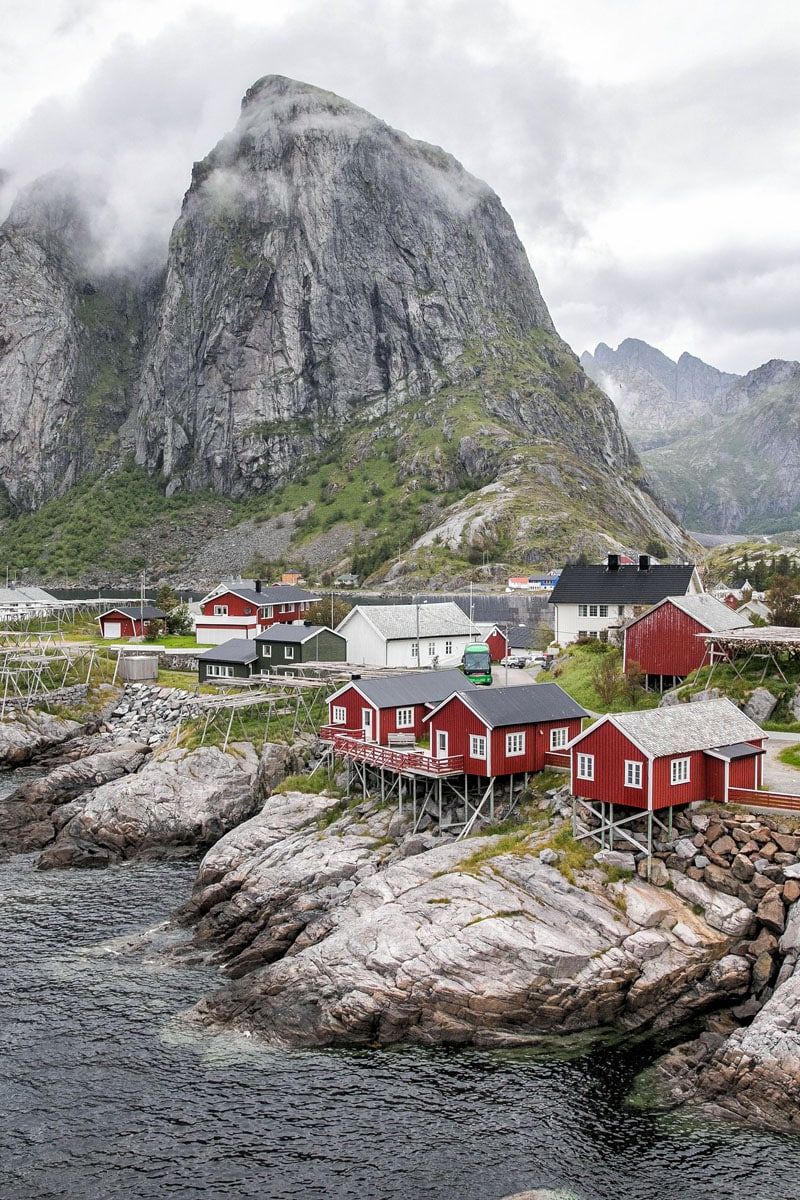
Reine and Hamnøy offer the most iconic scenery in the islands, with rorbuer perched right on the water and mountain views that look almost too dramatic to be real.
Leknes sits roughly in the center of the islands and is the most practical base if you want to reach both ends without too much driving.
Svolvaer, at the northeastern tip, is the largest town with the most restaurants, the easiest airport access, and the best selection of organized tours. It’s a good choice if you’re visiting in winter or prefer not to drive everywhere.
Should You Stay in One Place or Two?
For trips of three days or fewer, pick one centrally located base and day trip from there. Leknes is the practical choice. For four or more days, staying in two locations is genuinely worth the extra check-in. You’ll save driving time, experience two different parts of the islands, and get a much richer sense of what Lofoten is all about.
On our trip, we split our time between Kabelvåg, near Svolvaer in the north, and Hamnøy in the south, and it was the right call. Both felt completely different in character, and we would have missed a lot staying in just one place.
Our Honest Take on Hamnøy
If we had to choose just one place to stay in the Lofoten Islands, it would be Hamnøy without hesitation.
Yes, the scenery is extraordinary. It’s the view you’ve seen in every Lofoten photo. What really won us over was how it felt to actually be based there. The day-trippers arrive mid-morning and leave by late afternoon, and what’s left is something magical: quiet roads, the sound of seagulls, golden light over the fjord, and the feeling that you have the whole place to yourself. We’d walk to dinner, take our time, and just soak it all in.
Practically speaking, Hamnøy and Reine have more going for them than just scenery. There’s a grocery store in town, several good restaurants within easy reach, and the famous Reinebringen trailhead is right there. You won’t feel like you’re roughing it; you’ll just feel incredibly lucky to be there.
Book Early, Especially for the Rorbuer
This cannot be overstated. The best rorbuer properties in the Lofoten Islands sell out months in advance, particularly for summer travel. We booked in February for a July trip and several places we had our eye on were already gone. As soon as you know your dates, lock in your accommodation.
Best Places to Stay in the Lofoten Islands: By Location
The towns below are organized roughly north to south, following the natural flow of a Lofoten road trip. Each entry includes driving distances to help you gauge how central, or how remote, each location really is.
How to Use This Map: Click the tab in the top left corner of the map to see a list of the points of interest and to turn layers on/off. Click the icons on the map to get more information about each point of interest.
To take this map with you, click the star next to the title of the map which adds it to your Google account. Next, within your Google Maps app, select ‘Saved’ and then select ‘Maps’. This map title will now appear in your list.
Svolvaer
Svolvaer is the biggest town in the Lofoten Islands and the most convenient landing spot if you’re arriving by plane. It has more restaurants, shops, and organized tours than anywhere else on the islands, and it’s the best base for winter visits when icy roads make self-driving less appealing.
We didn’t base ourselves here, we were only passing through, but we’d recommend it without hesitation to anyone who wants maximum amenities, easy airport access, or prefers to book guided tours rather than drive everywhere independently. The tradeoff is that it sits at the northeastern tip of the islands, meaning Reine and the southern highlights are a two-hour drive away.
Driving Distances
- Svolvaer to Leknes: 70 km, 1.25 hours
- Svolvaer to Reine: 121 km, 2 hours
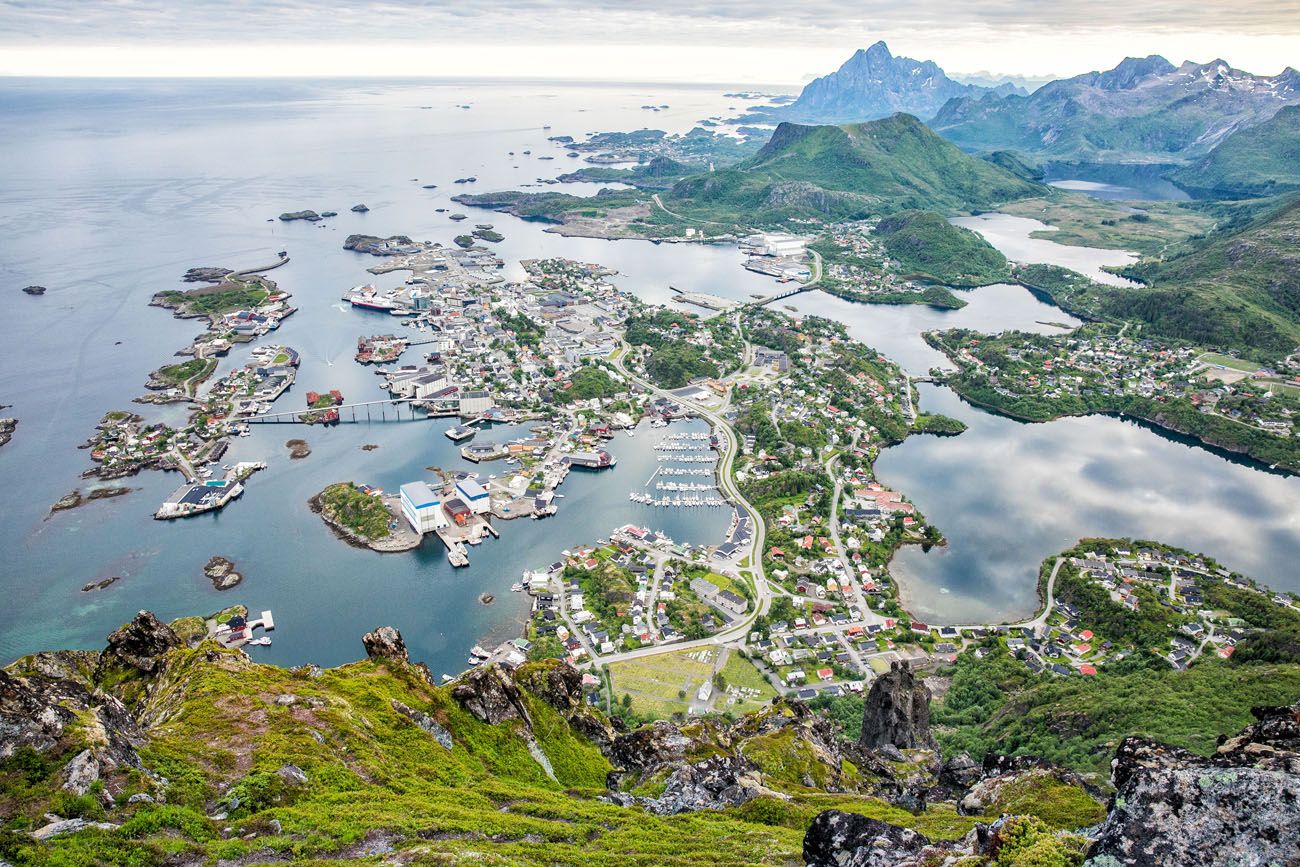
Svolvaer, seen from Fløya
Anker Brygge
Anker Brygge is a rorbu resort that offers 27 cabins and suites. Located on a small, man-made island, some rooms offer views of the town of Svolvaer. Take your pick from rorbu suites and rooms that accommodate between two and four people. All suites have a patio and a small kitchenette.
Svinøya Rorbuer
This is another property where you can stay in a traditional rorbu. Svinøya Rorbuer is located a short distance outside of Svolvaer, with a beautiful setting between the mountains and the ocean. Take your pick from one-bedroom cottages to a four-bedroom house that can accommodate up to eight people. People who stay here say the view is so beautiful that it is hard to leave.
Lofoten Suiteapartments
Stay in a gorgeous, modern apartment in the center of town. You will be within walking distance of most restaurants in Svolvaer and this property gets glowing reviews by prior guests. These apartments come equipped with a washing machine, a nice perk for those traveling for a long time or if you simply want to refresh your hiking clothes.
Hammerstad Camping
If you are traveling by camper van, plan on camping, or are looking for a highly rated budget accommodation, Hammerstad Camping is worth considering. This property offers a number of cabins that can accommodate two to nine people.
Kabelvåg
Kabelvåg is a small, quiet town just a few miles down the road from Svolvaer, and it’s where we spent our first nights in the Lofoten Islands. It has a different feel from Svolvaer. It’s smaller, more relaxed, and has a handful of restaurants and enough going on that you don’t feel isolated, but none of the bustle of a larger town.
If you like the idea of being close to Svolvaer’s amenities and airport without actually staying in a town, Kabelvåg is a great compromise. For us, it was the perfect introduction to the Lofoten Islands, and Nyvågar Rorbuhotell made it even better.
Nyvågar Rorbuhotell
This is where we stayed and we loved it! We spent one night in a rorbu. The first floor had a small kitchen, living area, and bathroom. On the second floor were two bedrooms with two twin beds. The rooms were clean, quiet, and gave us a lot of space to spread out. Onsite is a restaurant and breakfast is included.
Get prices, read reviews, and see photos on Booking.com.
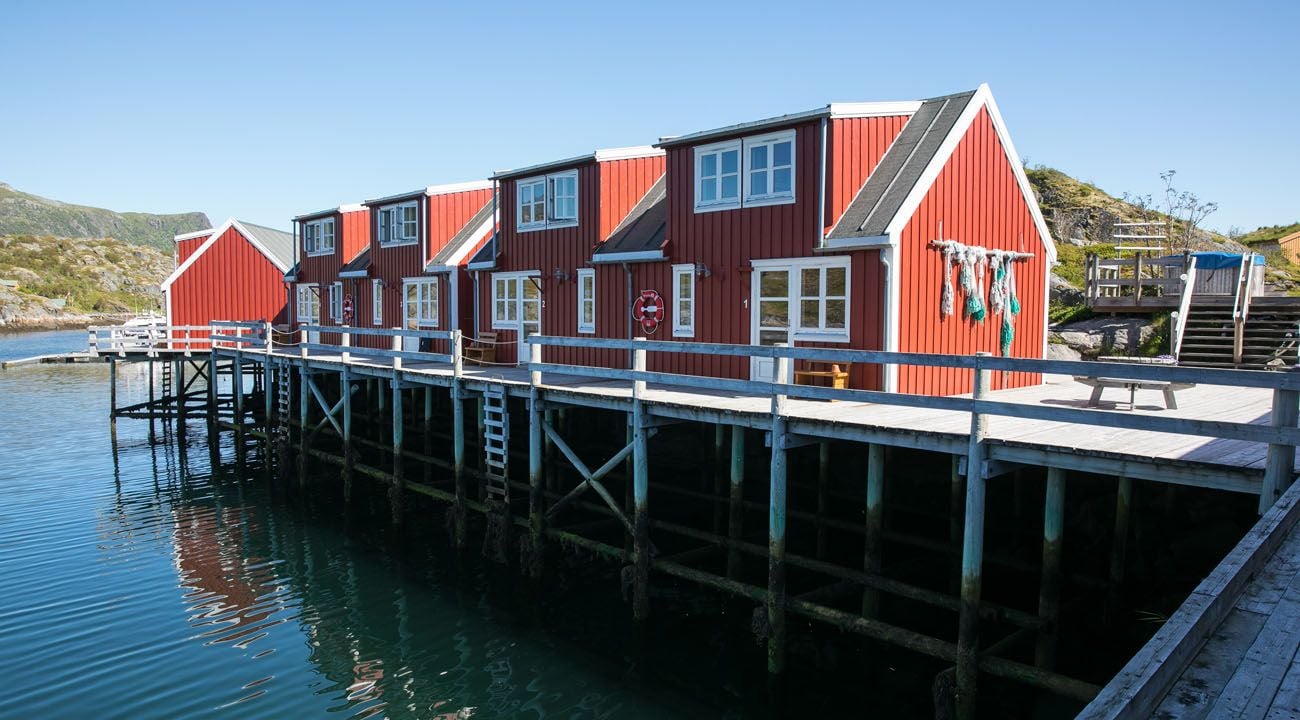
Nyvågar Rorbuhotell
Leknes
Leknes is centrally located in the Lofoten Islands. This is also one of the larger towns in the islands, so you will have all of the perks that come with that, such as restaurants, shopping, and even an airport.
This is one of the best places to stay in the Lofoten Islands if you want a central location. For those with a short stay in the Lofoten Islands (3 or less days) this is the location we recommend, since you can get to either end of the Lofoten Islands in around an hour of driving.
Driving Distances
- Leknes to Reine: 56 km, 1 hour
- Leknes to Svolvaer: 70 km, 1.25 hours
Lofoten Basecamp
This is a gorgeous property located just a few miles away from Leknes. Each villa has three bedrooms that can accommodate up to six people. Every unit comes with a kitchen, a washing machine, and a terrace with a beautiful sea view. This highly rated property tends to sell out fast, so if you’re interested, book it as soon as you know your dates.
Get prices, read reviews, and see photos on Booking.com.
Rorbu i Lofoten
With breathtaking views of the water, a full kitchen, four bedrooms that can accommodate up to 6 people, Rorbu i Lofoten is one of our top picks of best places to stay in the Lofoten Islands. This relatively new property gets exceptional reviews and you are essentially renting an entire house.
Get prices, read reviews, and see it in photos on Booking.com.
Scandic Leknes Lofoten
This hotel is located in the town of Leknes. Prices here are more budget friendly than staying in a rorbuer. Plus, this hotel is conveniently located near the airport, perfect if you are using the Leknes Airport to fly in or out of the Lofoten Islands.
Get prices, read reviews, and see photos on Booking.com.
PRO TRAVEL TIP: Accommodations tend to book up fast so make your reservations as soon as you know your dates. The busiest season to visit the Lofoten Islands are the summer months. We made our reservations in February for our stay in July and even then, many places were already sold out for our dates.
Nusfjord
Nusfjord is one of the best preserved fishing villages in the Lofoten Islands. It’s located a bit out of the way, which can be a good or a bad thing, depending upon your travel style.
Driving Distances
- Nusfjord to Reine: 41 km, 50 minutes
- Nusfjord to Leknes: 27 km, 30 minutes
- Nusfjord to Svolvaer: 92 km, 1.5 hours
Nusfjord Arctic Resort
Nusfjord Arctic Resort is more than just a collection of restored fisherman’s cabins. It’s a historic property, with a restaurant, a pub, and a small museum. This is a tourist attraction, so there will be people who visit the property during the daytime. If you don’t like the idea of having a bunch of tourists milling about outside your door, this isn’t the place for you. However, if you like the idea of staying on a historic property, check it out. If you choose not to stay here, you can still visit it during the daytime, like we did.
Stay in one of the renovated fisherman’s cabins that can accommodate up to four people. Nusfjord Rorbuer has a beautiful setting, tucked away on a fjord amidst the rocky mountains.
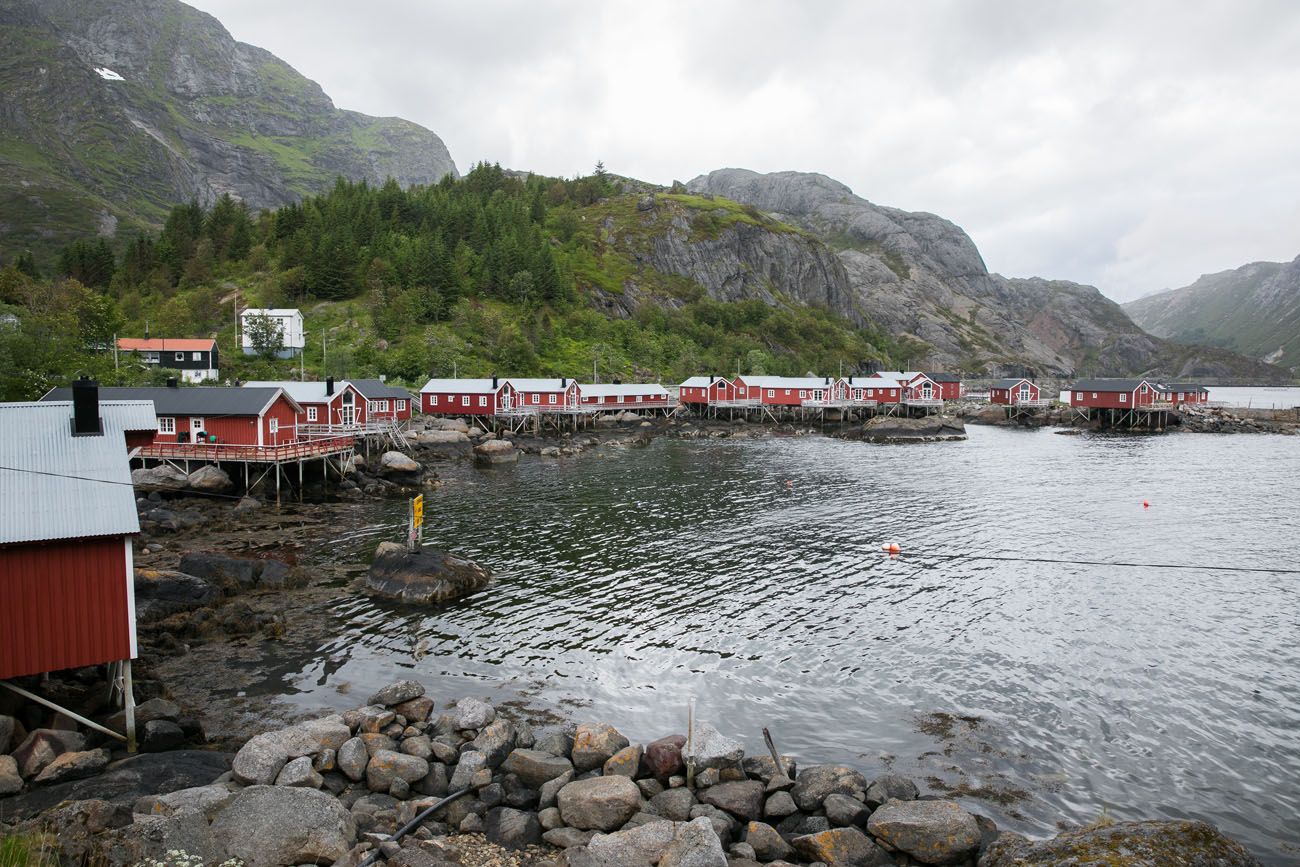
Nusfjord Arctic Resort
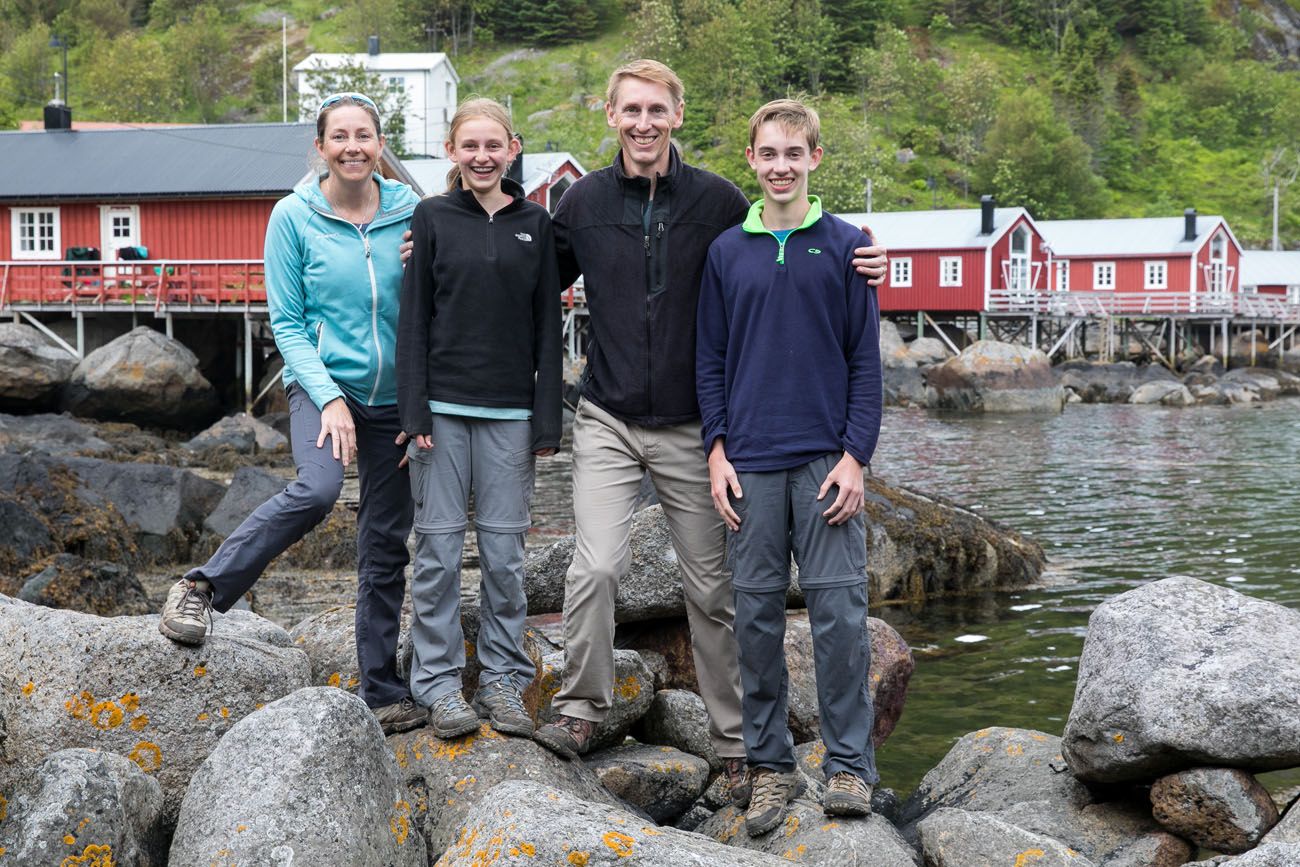
Reine & Hamnøy
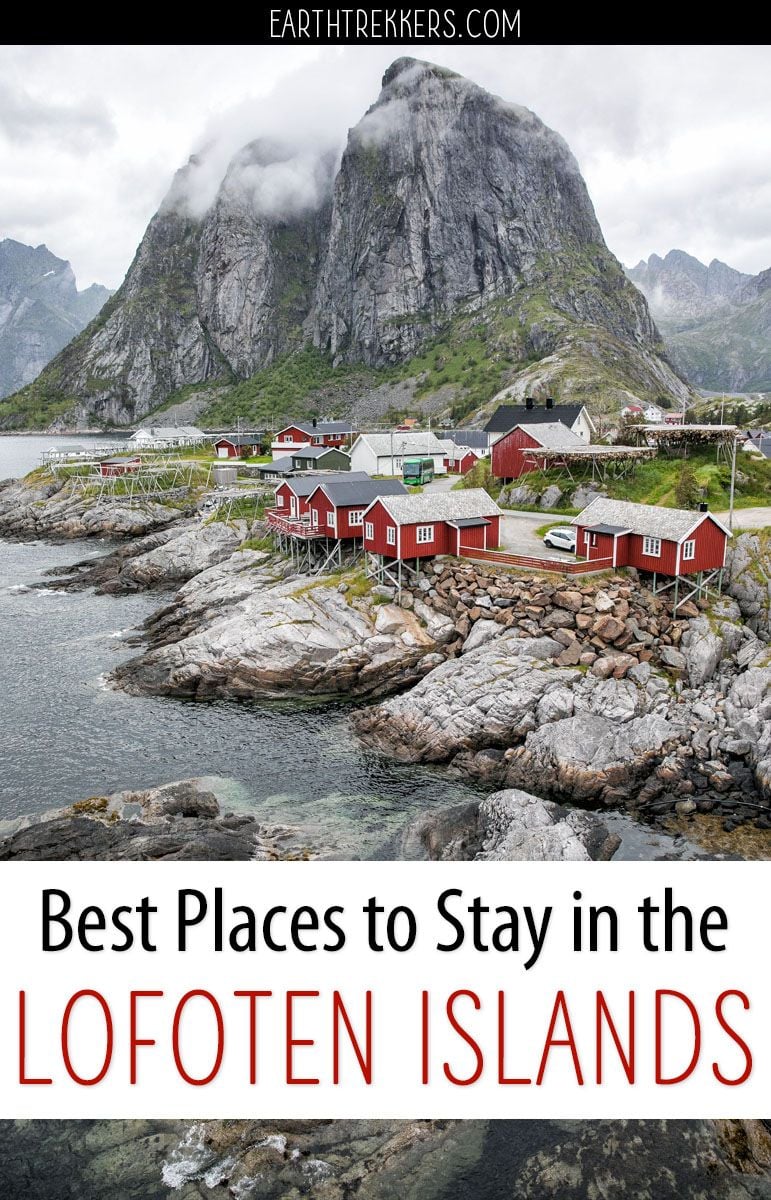
Reine is one of the most popular spots to visit in the Lofoten Islands. With its collection of red and yellow fishing cabins on the water and the backdrop of the Lofoten mountains, it is one of the most picturesque spots on the Lofoten Islands.
There are a lot of hotels to choose from, as well as several restaurants and there is a grocery store in town. If you plan to hike Reinebringen, staying in a property on the west side of town puts you within walking distance of the trailhead (parking for the Reinebringen hike can be challenging!).
Hamnøy is a small fishing village located right next to Reine. This is where we stayed and we had a wonderful experience.
Since everyone road trips down here at some point, Reine and Hamnøy can get very busy midday. But by 5 pm, most of the day-trippers are gone and Reine and Hamnøy are quiet again. So, another advantage of staying in these towns is enjoying the peacefulness and the views at the beginning and end of your days.
We loved it here. We loved how quiet and peaceful it felt in the evenings. It was wonderful walking to dinner, taking in the views, and hearing the seagulls (there are a lot of noisy seagulls here!).
Driving Distances
- Hamnøy/Reine to Leknes: 52 km, 1 hour
- Hamnøy/Reine to Svolvaer: 116 km, 2 hours
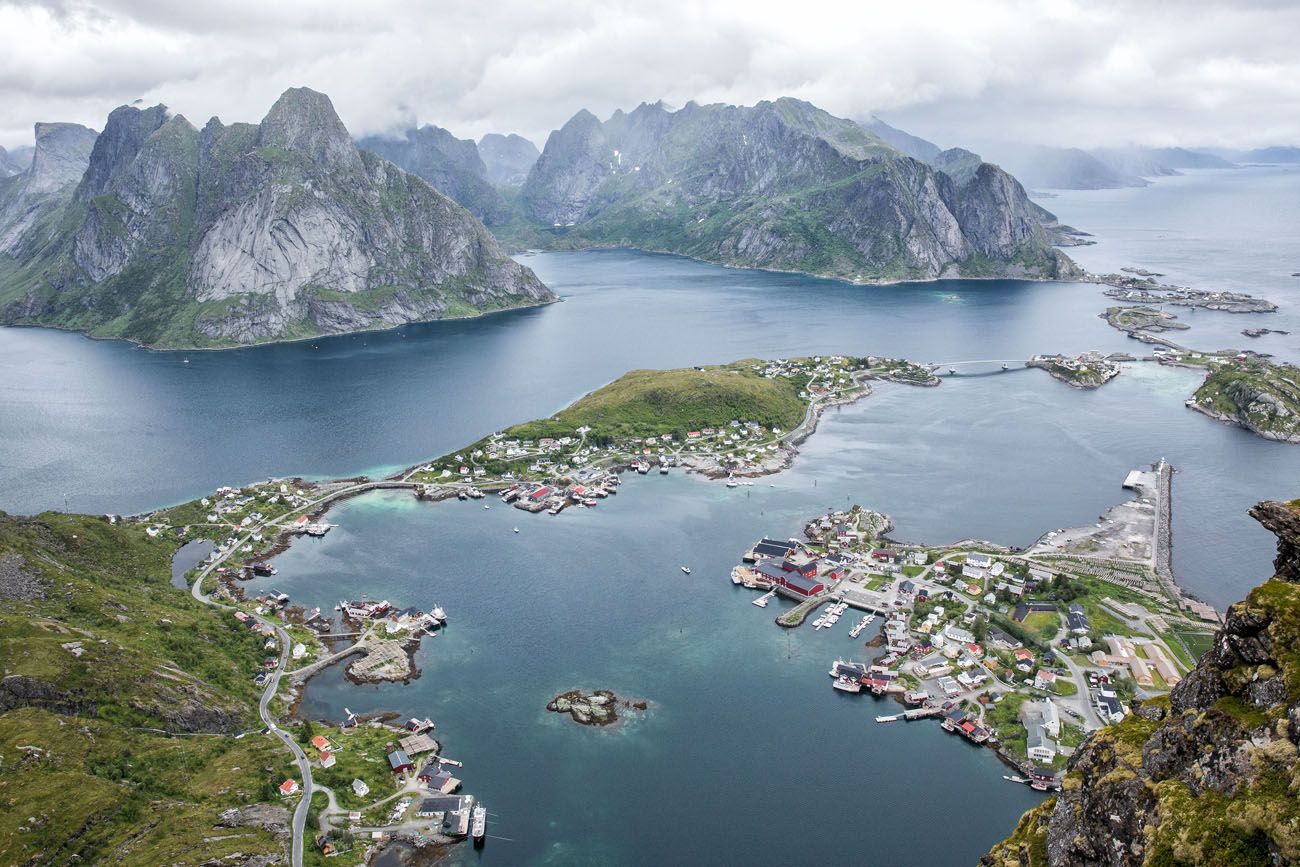
Reine and Hamnøy seen from Reinebringen
Reinefjorden Sjøhus
This is where we stayed and it was wonderful. We stayed in a two-bedroom apartment, which is really a two-level cabin with a kitchen and a living area. The view from the living room was AMAZING! We could look across the water to Sakrisøy and Reine and see Reinebringen in the background. My only complaint is that they do not have black out curtains, so with the midnight sun, I did find it difficult to sleep. That’s easy to fix by bringing along a sleeping mask. But without a doubt, we would stay here again.
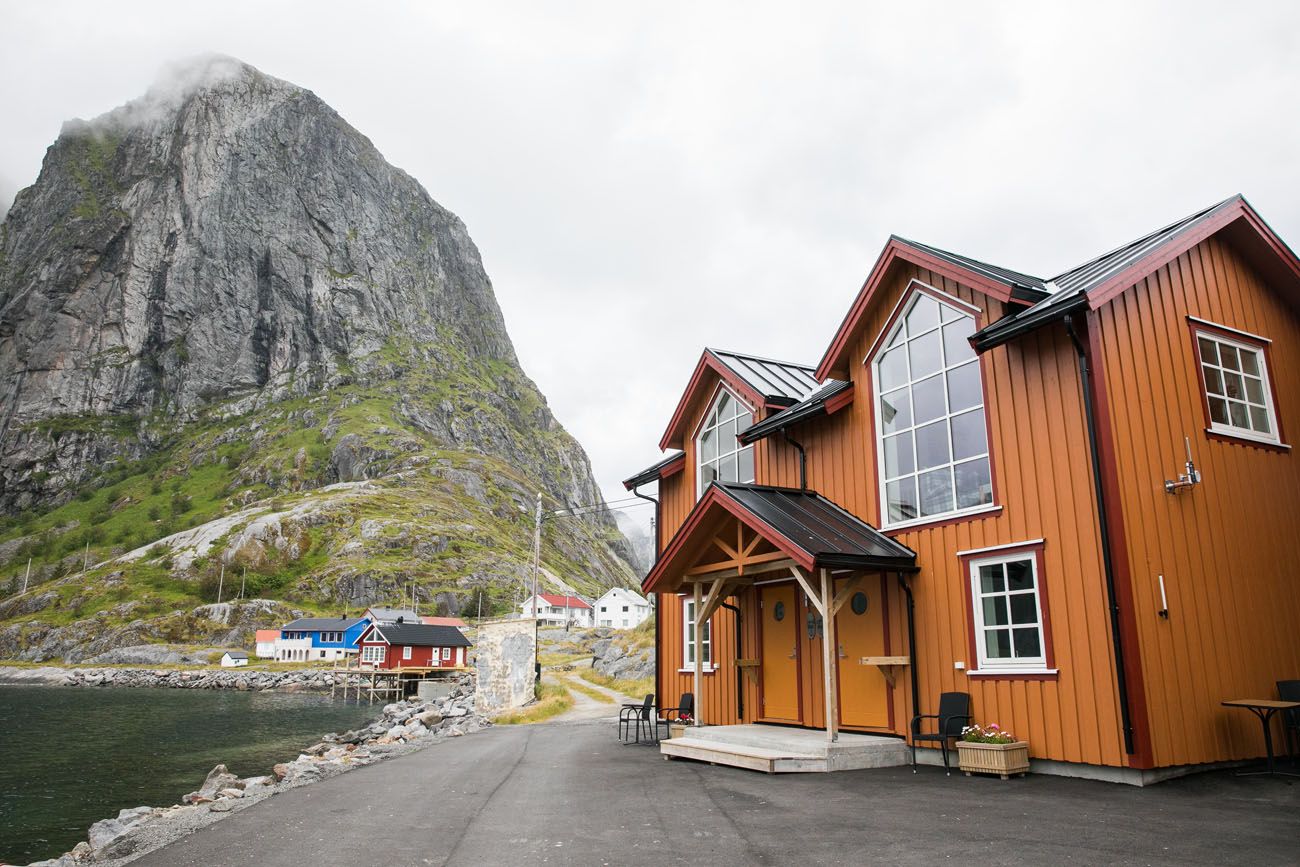
Reinefjorden Sjøhus
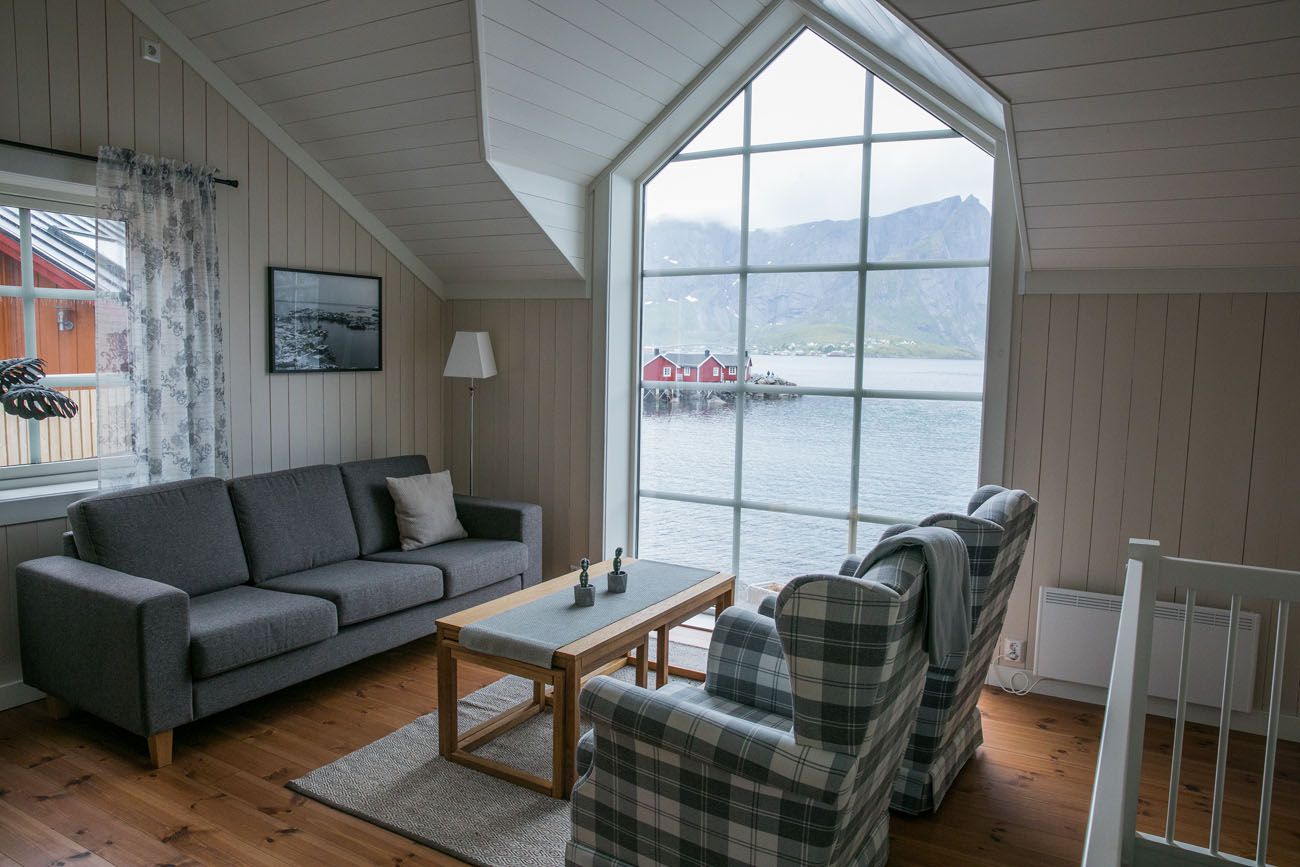
View from our room
Take your pick from a traditional hotel room, superior and standard apartments, a deluxe waterfron cabin, or a 6-bedroom house which can accommodate up to 12 people. We stayed in the ‘Superior Apartment with View.’
Get prices, read reviews, and see photos on Booking.com.
Eliassen Rorbuer
This is the most iconic property on the Lofoten Islands…the red fishing cabins set against a backdrop of Reinefjord and the Lofoten mountains. And guess what, you can stay here! Take your pick from 35 renovated fishing cabins. The cabins can accommodate two to four people and some offer a sea view.
Get prices, read reviews, and see photos on Booking.com.
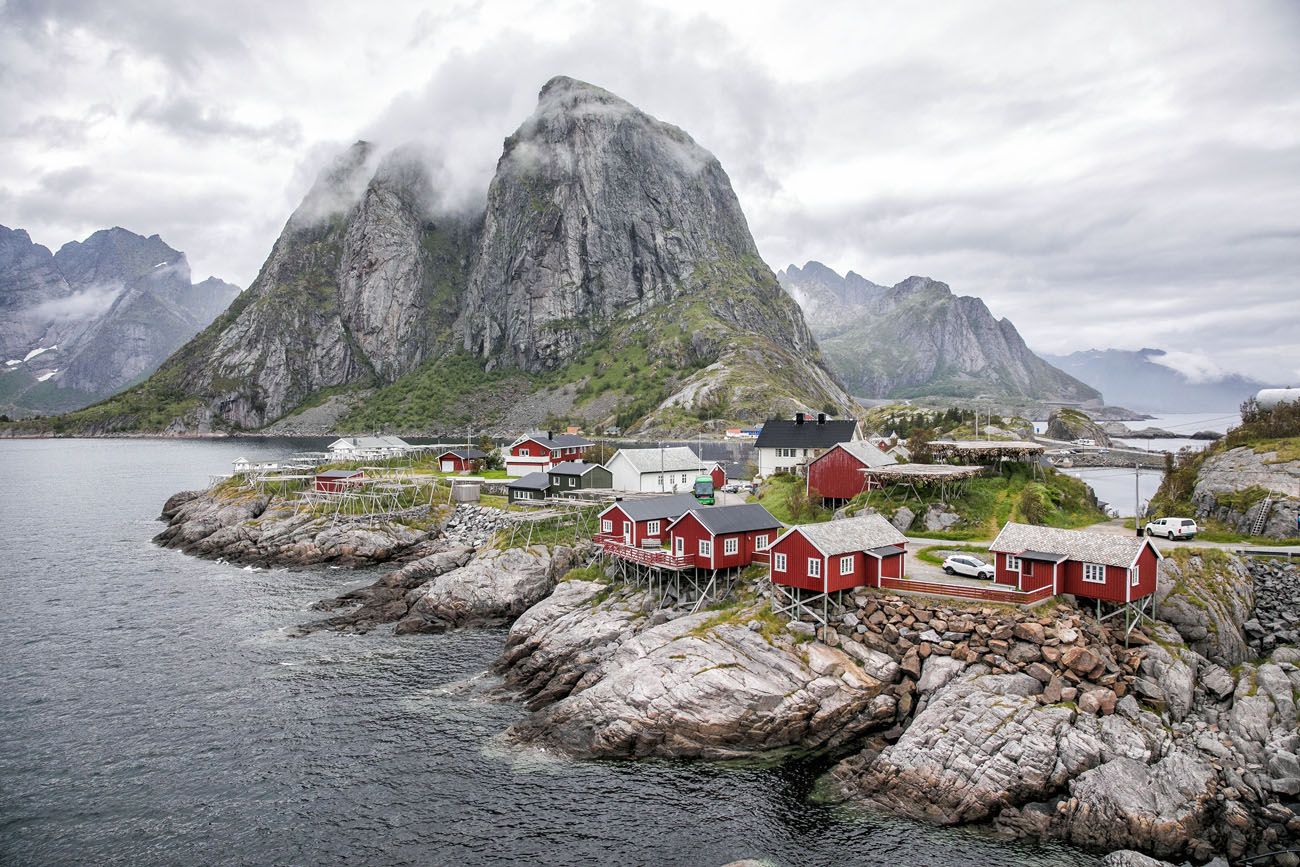
Eliasson Rorbuer
Reine Rorbuer
This is another classic rorbuer property located in Reine. Take your pick from one-bedroom, two-bedroom, and three-bedroom cottages. Onsite is Gammelbua, a restaurant that serves traditional Norwegian food.
Get prices, read reviews, and see photos on Booking.com.
Sakrisøy Rorbuer
This is another highly rated property that offers the classic rorbuer experience in the heart of Reine. One and two-bedroom cottages are available and the cottages offer a terrace overlooking the water. Sakrisøy Rorbuer tends to sell out fast so make your reservations as soon as you know your dates.
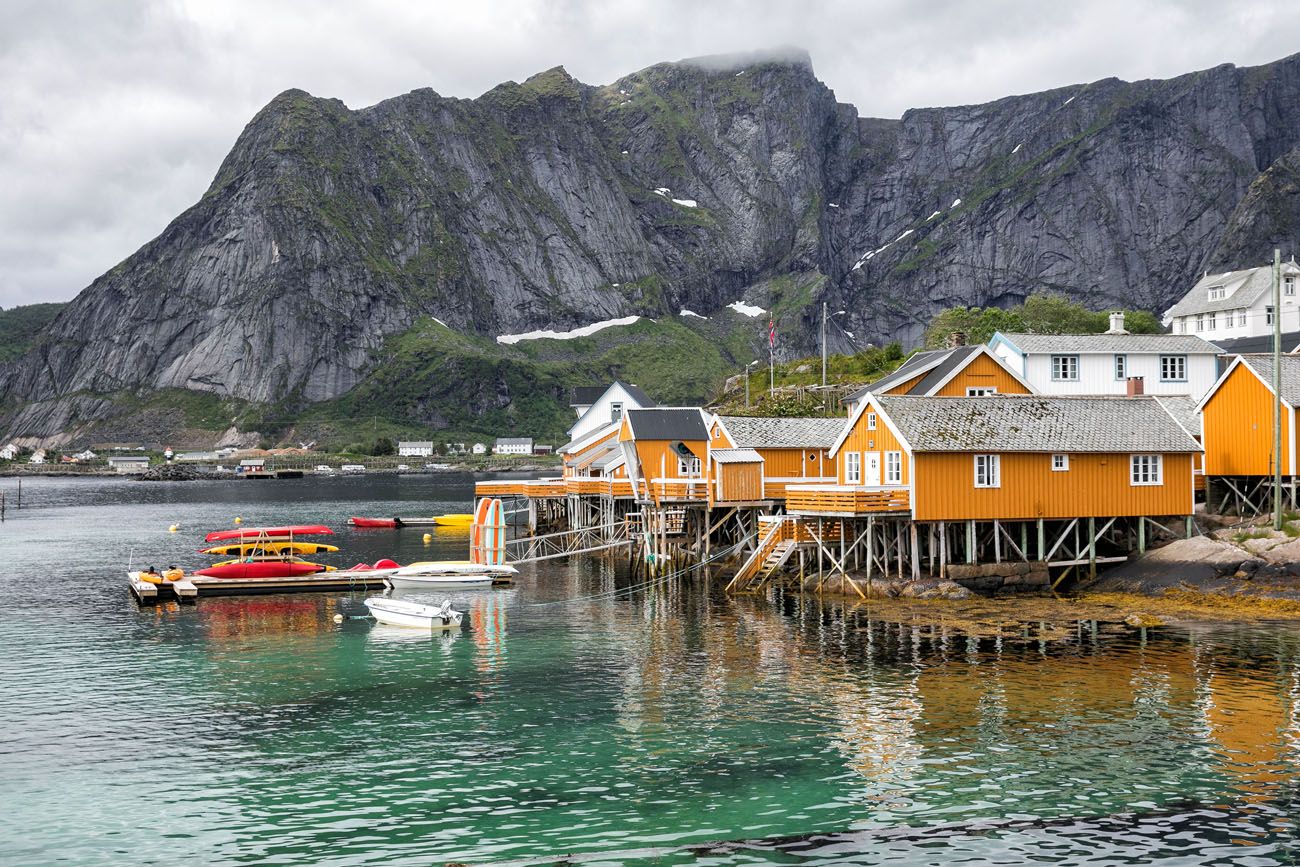
Sakrisøy Rorbuer
Sakrisøy Gjestegård
This is a restored manor house in Reine. The guesthouse has 10 rooms that share a living area and kitchen. Some rooms share a bathroom and the deluxe rooms have a private bathroom and flat screen TV’s.
Get prices, read reviews, and see photos on Booking.com.
A Few More Properties
Here is a short list of a few more small properties that get rave reviews:
- The Famous Yellow House (the whole, tiny house is yours!)
- Andøy Vest Rorbuer Reine (these deluxe waterfront cabins come with 4 bedrooms, perfect for families)
- Rostad Retro Rorbuer (take your pick between chalets, holiday homes, and 3-bedroom house)
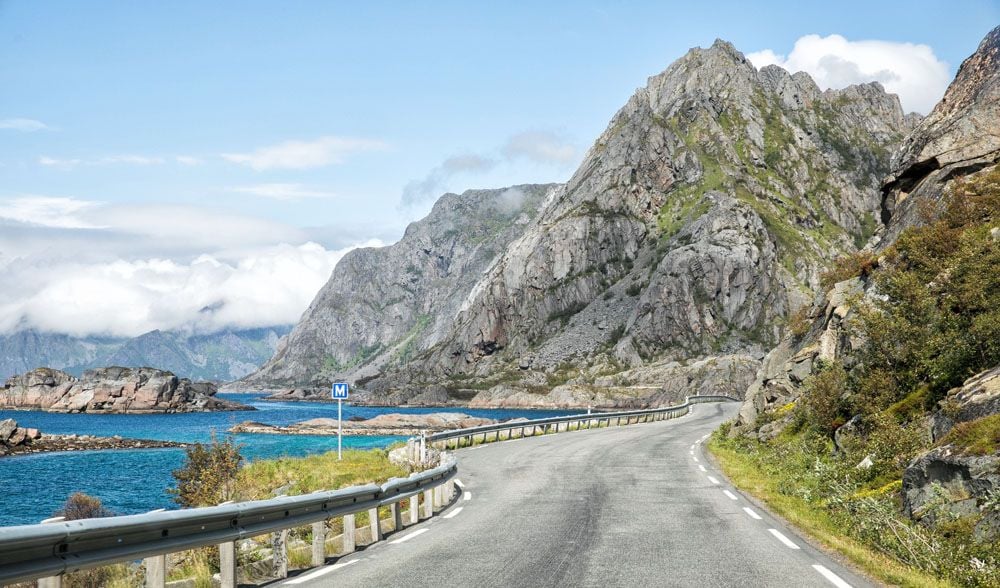
Å i Lofoten
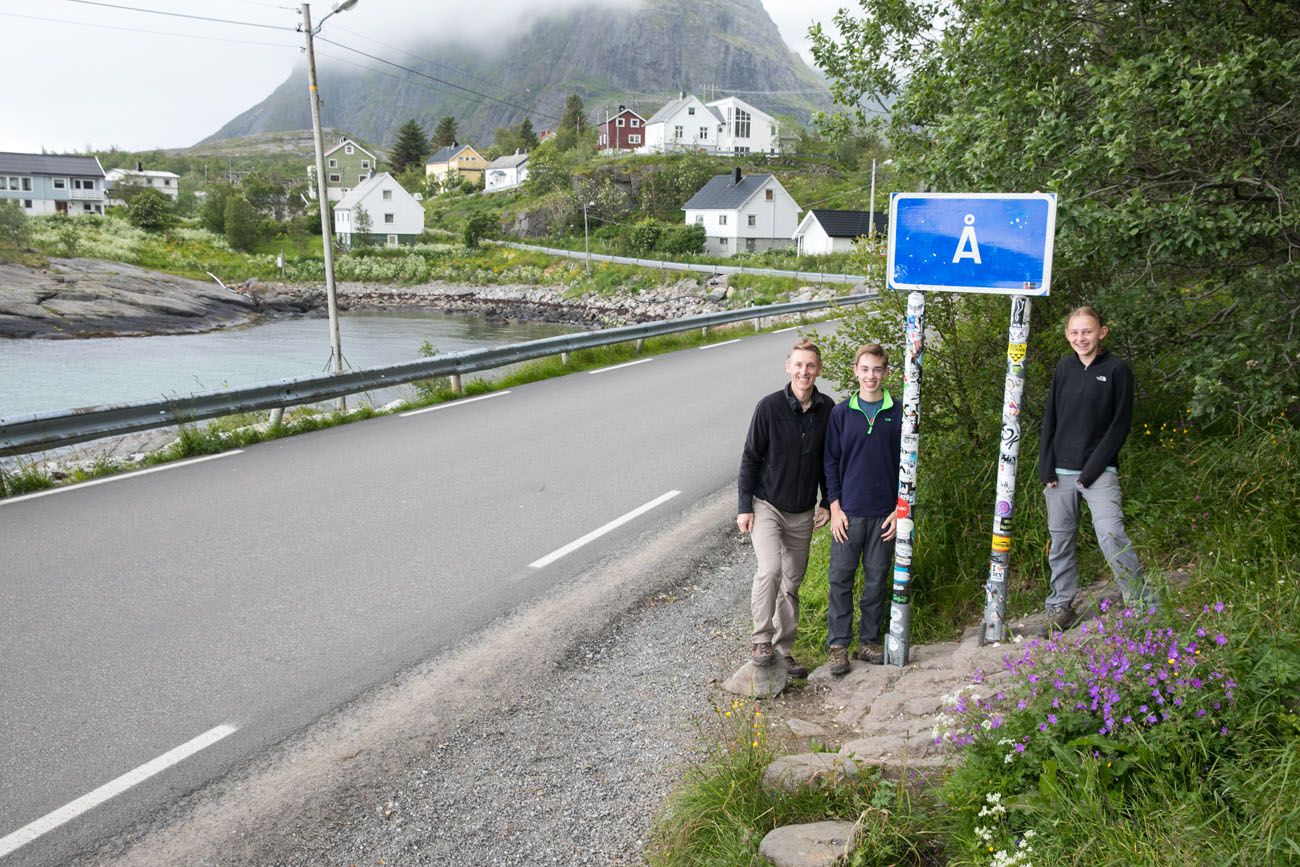
The tiny town of Å (pronounced aw) marks the southernmost point of the Lofoten Islands accessible by car, and it has a charm that’s entirely its own.
There’s not a lot here: a Norwegian fishing museum, a legendary bakery, a handful of houses, but that’s exactly the point. It’s one of the most authentically preserved fishing villages in the islands, and a few of the rorbuer here are still used by working fishermen today.
Å is best suited to travelers who are road tripping the full length of the islands, those arriving or departing via the Moskenes ferry, or anyone who simply wants to sleep at the end of the road and wake up feeling like they’ve found somewhere truly off the beaten path.
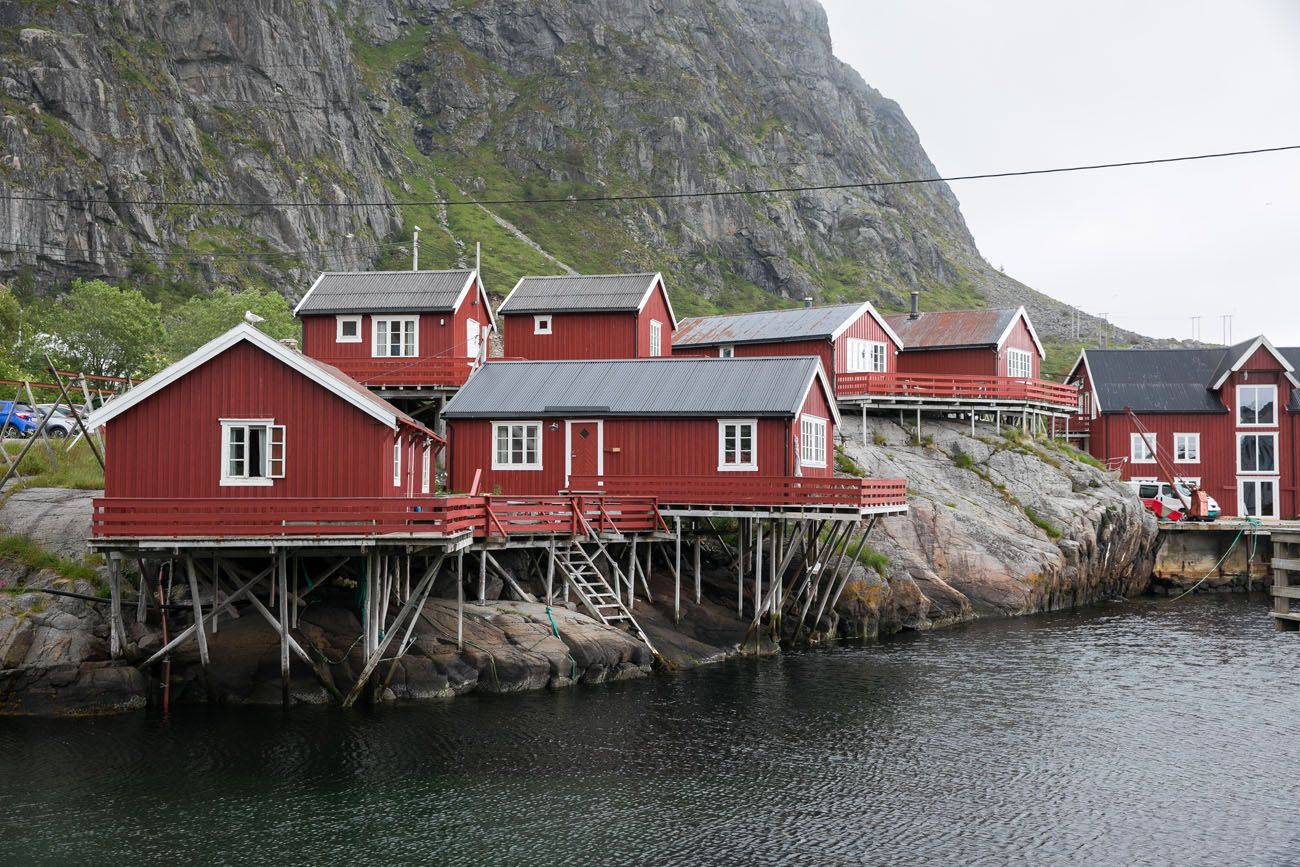
Rorbuers in Å
There are two rorbuers in Å that get exceptional reviews: Å Rorbuer and Å-Hamna Rorbuer. Both of these sit in the center town and have wonderful seaside views of the other rorbuers that sit on the water’s edge.
Hostels in Å
Traveling on a budget? The Lofoten Å HI Hostel offers dormitory style rooms plus private double rooms. Lofoten Budget Hostel is another option.
Small Property Near Å
Lofoten Planet – Boutique Hotel is a small property that gets exceptional reviews. It is located in Sørvågen, a short drive from Å.
Best Time to Visit the Lofoten Islands
We visited in July, and it was spectacular, but it came with one thing we weren’t fully prepared for: the midnight sun. We had just come from Svalbard, where sleeping had been genuinely difficult, and we were hoping Lofoten would be easier. Being farther south helped a little, and by mid-July we did have a few hours of actual darkness each night. But neither of our accommodations had blackout curtains, and between the lingering light and the excitement of being somewhere so beautiful, sleeping was a real challenge. If you’re visiting in summer, pack a sleep mask. It’s not optional; it’s essential.
Weather is the other thing worth flagging. We had four full days in Lofoten and one of them was a complete washout. That’s just the reality of this part of Norway. The weather can turn fast and the mountains create their own conditions. It didn’t ruin the trip, but it’s worth building flexibility into your plans rather than cramming every hike into a rigid schedule.
That said, July is still a wonderful time to visit. The days are endless, the hiking trails are in peak condition, the famous rorbuer are open and fully operational, and the scenery in good light is unlike anything else in Europe.
Quick seasonal guide:
- Summer (June–August): Peak season, best hiking conditions, midnight sun, warmest temperatures. Book rorbuer as early as possible, often months in advance.
- Autumn (September–October): Fewer crowds, dramatic moody skies, early chances of northern lights. A fantastic time to visit if you want the scenery without the summer rush.
- Winter (November–February): Northern lights, snow-covered mountains, and a completely different atmosphere. Best suited to those staying in Svolvaer or joining guided tours, as driving conditions can be challenging.
- Spring (March–May): Quieter than summer, improving light, and some of the best photography conditions. Rorbuer availability is easier to come by but confirm properties are open before booking.
Frequently Asked Questions
What is a rorbu?
A rorbu (plural: rorbuer) is a traditional Norwegian fisherman’s cabin, typically built on stilts over the water and painted red. They originated in the Lofoten Islands in the 12th century as basic shelter for visiting fishermen. Today, many have been renovated into comfortable, and in some cases, truly stunning, vacation accommodation. Staying in a rorbu is one of the most iconic experiences you can have in the Lofoten Islands.
How far in advance should I book a rorbu in Lofoten?
As early as possible, and we mean that seriously. The best rorbuer properties sell out months in advance, particularly for summer travel. We booked in February for a July trip and several places we had our eye on were already gone. If you have specific dates and a specific property in mind, don’t wait.
Is it better to stay in Reine or Leknes?
It depends on your priorities and the length of your trip. Reine and Hamnøy offer the most iconic scenery in the islands and are our personal first choice, but the location is remote, and you’ll be driving further to reach northern Lofoten. Leknes is centrally located and the better practical choice for short trips of three days or fewer. For longer trips, consider staying in both.
Do I need a car to get around the Lofoten Islands?
Yes, for the vast majority of visitors a car is essential. Public transport exists but is limited, and many of the best accommodation options, including most rorbuer, are in small villages with no realistic alternative to driving. The one exception is Svolvaer, where you can access organized tours, restaurants, and some activities on foot.
What is the best town to stay in for first-time visitors?
If you have four or more days, we’d recommend splitting your stay between Hamnøy or Reine in the south and either Kabelvåg or Svolvaer in the north. If you only have two or three days, base yourself in Leknes for its central location. And wherever you stay, book a rorbu for at least part of your trip. It’s one of those travel experiences that genuinely lives up to the hype.
Are rorbuer suitable for families?
Absolutely. Many rorbuer offer multi-bedroom cabins that can accommodate four to eight people, making them a great option for families. One thing to be aware of is that most rorbuer sit directly on the water’s edge with little or no fencing, so younger children will need to be supervised closely. Always check the specific cabin layout and location before booking.
More Lofoten Islands & Norway Inspiration
Planning more of your time in the Lofoten Islands or building a bigger Norway itinerary? These guides will help you plan the rest of your trip.
- New to the Lofoten Islands? → Our Lofoten Islands Itinerary walks you through the best way to structure your time, day by day, with recommendations for every type of traveler.
- Best things to do → Our Top Ten Things to Do in the Lofoten Islands covers the essential experiences, from iconic hikes to boat trips and scenic drives.
- Best hikes → The most popular hike in the islands is Reinebringen, with jaw-dropping views over Reine and Hamnøy. Our guide covers everything you need to know including where to park.
- Hiking near Svolvaer → Our guide to Svolvaer Fløya & Djevelporten covers one of the most rewarding hikes in northern Lofoten.
- A longer Norway road trip → Our 10 Day Northern Norway Itinerary takes you from Tromsø through Senja and the Vesterålen Islands before finishing in the Lofoten Islands.
- For all of our Norway content in one place → Visit our Norway Travel Guide.
If you are planning a trip to the Lofoten Islands and have questions about where to stay in the Lofoten Islands, let us know in the comment section below.
Explore More of Norway
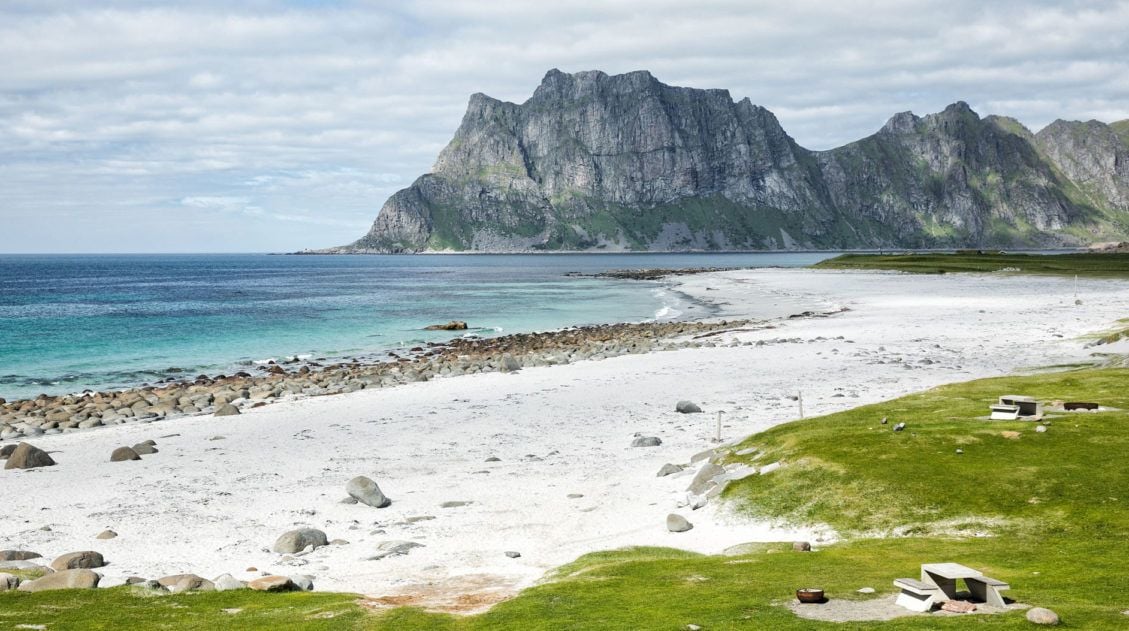
Lofoten Islands Itinerary: 4 to 5 Days in Norway’s Most Spectacular Islands
Pinterest Facebook Flipboard There are places that stop you in your tracks the moment you arrive. The Lofoten Islands are one of them. We pulled over constantly, not because we planned to, but because we couldn’t drive past another mountain plunging straight into the fjord, another stretch of white sand beach backed by jagged cliffs, […]
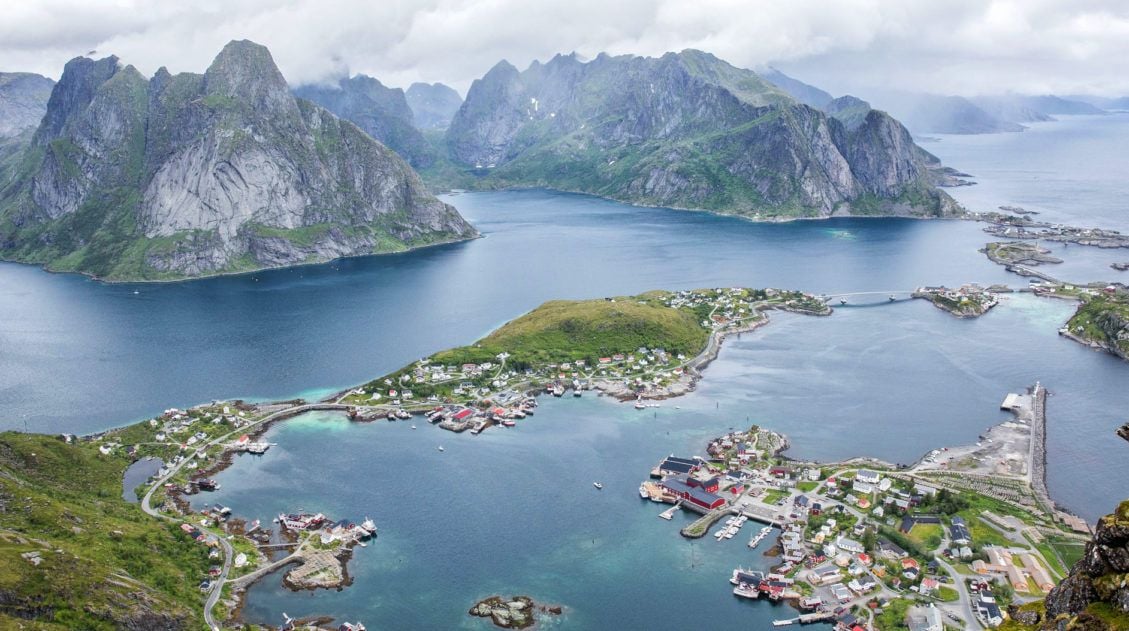
20 Best Things to Do in Norway: Fjords, Lofoten & Svalbard
Norway is one of our favorite countries in the world, and narrowing down the best things to do in Norway for this list was genuinely hard. There’s just so much worth doing. We’ve been twice so far, and we’re already dreaming about a third trip. Our first visit was a family trip with the kids […]
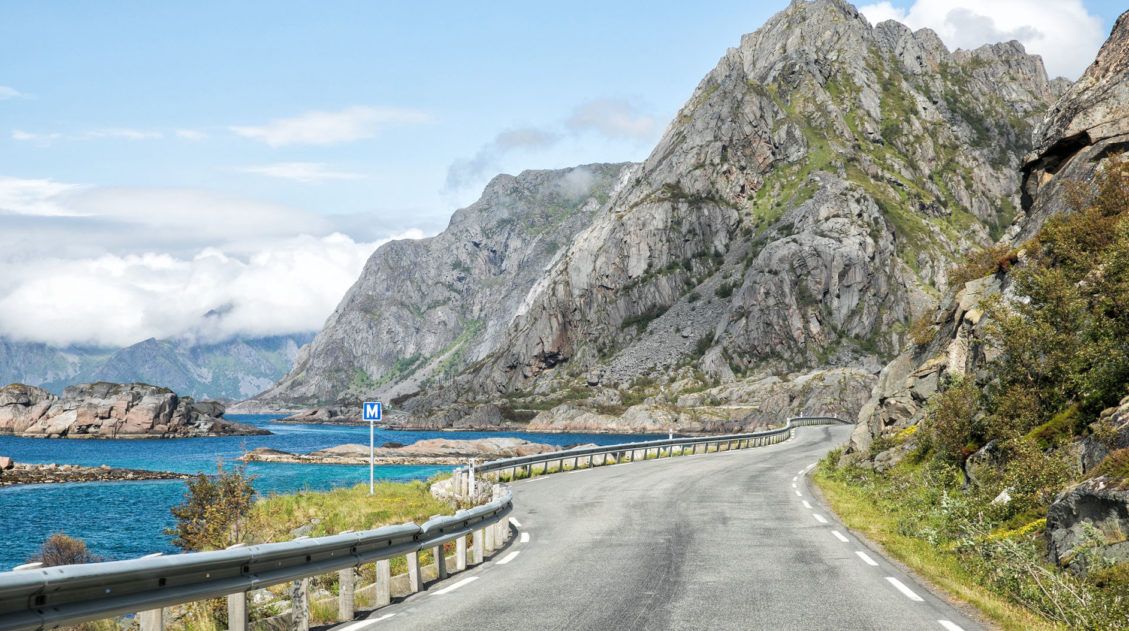
10 Days in Norway: How to Combine the Fjords and the Lofoten Islands
After two trips to Norway, one through the fjord region, one through the far north, we started getting the same question over and over in our comments: Can we combine both into one trip? How do we do the fjords AND the Lofoten Islands in 10 days? That’s exactly what this post is for. We’ve […]
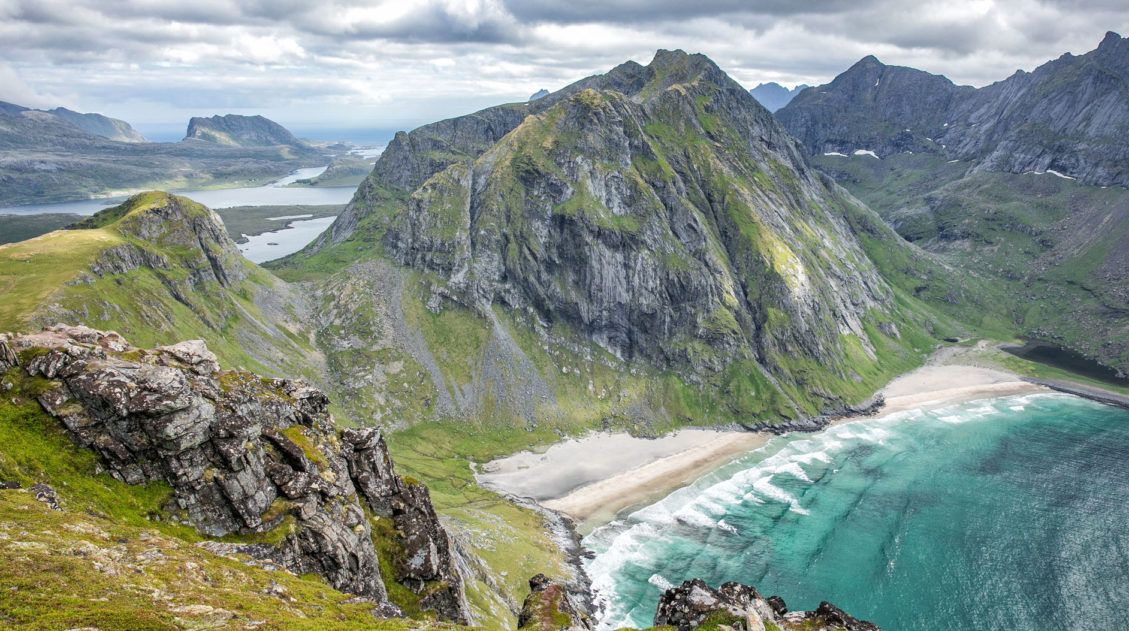
Hiking Ryten: Kvalvika Beach Views & Lofoten’s Mini-Trolltunga
The hike to Ryten has all of the ingredients of a perfect Lofoten Islands hike: sweeping vistas across the mountains and fjords, a fun but slightly strenuous hike to a mountain peak, and a breathtaking view of a white, sandy beach. The icing on the cake is a “mini Trolltunga,” an outcropping of rock where […]
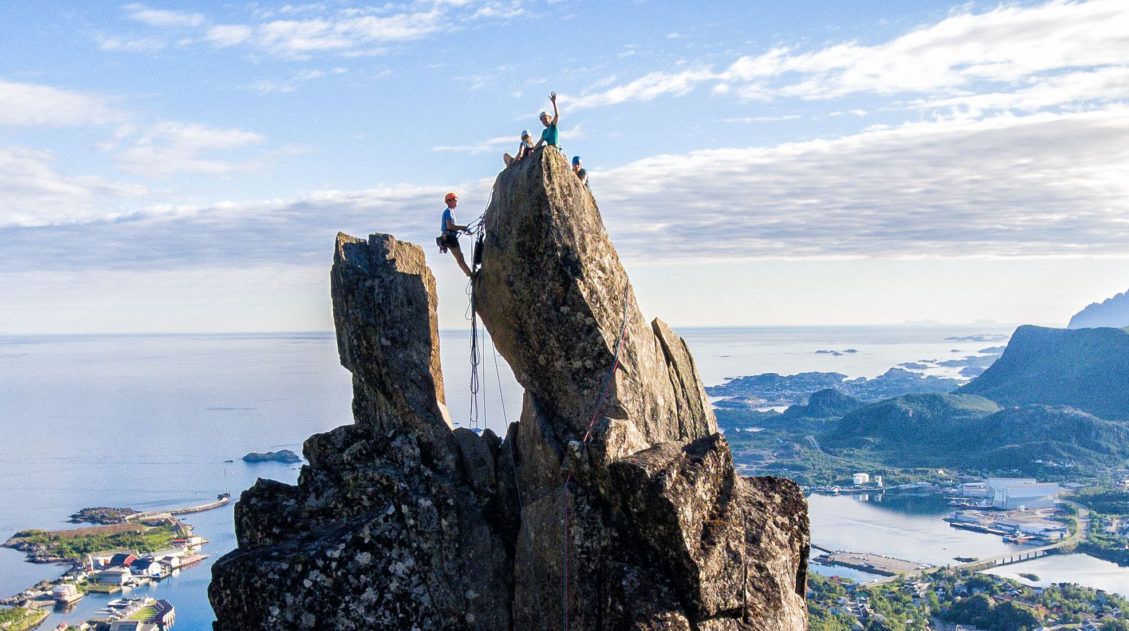
Complete Guide to Climbing Svolvaergeita in the Lofoten Islands
Svolvaergeita, also called “The Goat,” is a pinnacle of rock that is a popular rock climbing spot in the Lofoten Islands. It is named The Goat because of the two horns of rock that sit atop the rock. Those with a sense of adventure can climb to the top of Svolvaergeita and those who are […]
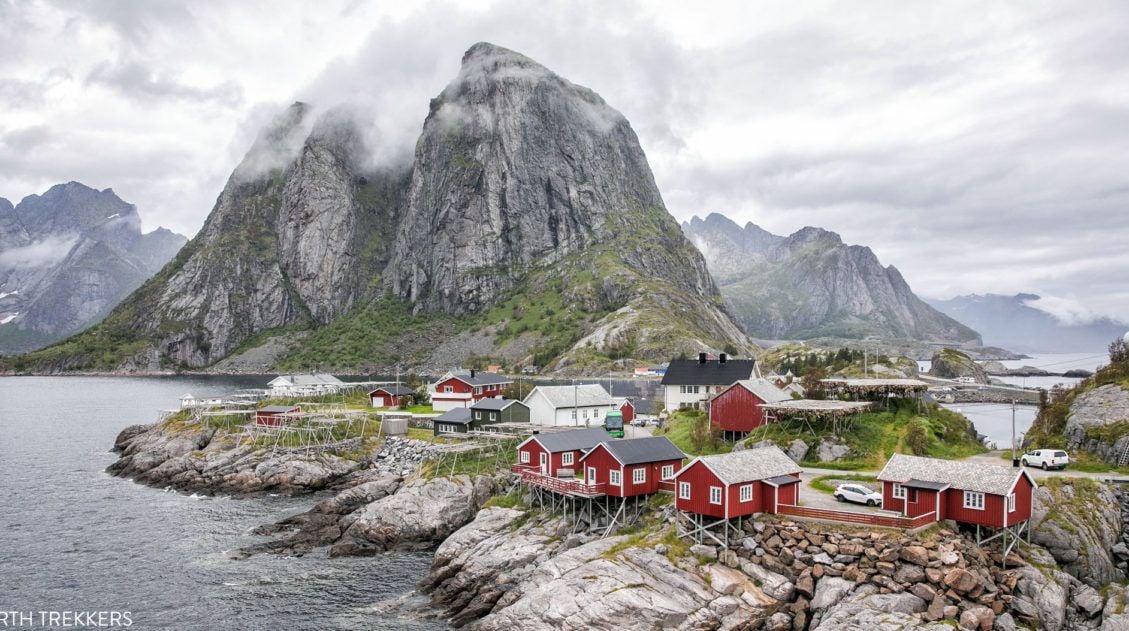
10-Day Northern Norway Itinerary: Tromsø to the Lofoten Islands
We’ve done a lot of road trips in Europe, through the Italian Dolomites, across the Scottish Highlands, and down into the fjord region of southern Norway. This Northern Norway itinerary is one of our all-time favorites. We drove this route in early July, starting in Tromsø and working our way south through Senja and the […]
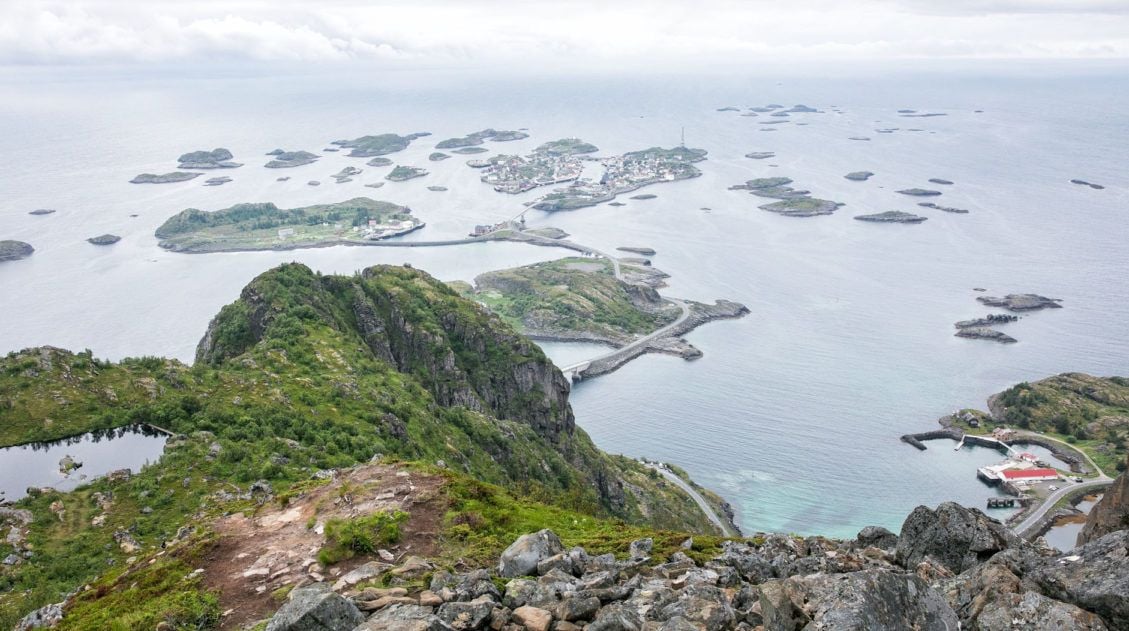
Hiking Festvågtind in the Lofoten Islands, Norway
From the top of Festvågtind, the views over the fishing village of Henningsvaer are breathtaking. This hike is very similar to Svolvaer Fløya and Reinebringen, in that it’s a steep, somewhat unexciting climb to an awesome viewpoint. It’s absolutely worth it on a clear day but consider skipping this hike on a cloudy, rainy day. […]
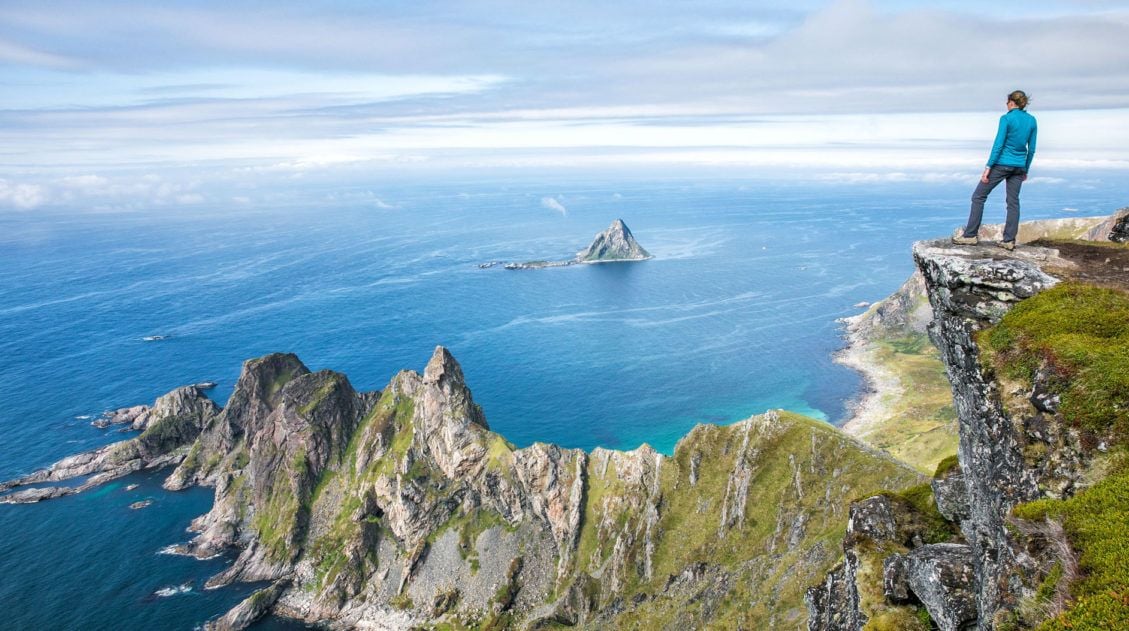
Hiking to Måtind on the Stave-Bleik Coastal Trail, Vesteralen, Norway
Norway has a way of exceeding every expectation, and the Stave-Bleik Coastal Trail on Vesteralen’s Andøya island is a perfect example. We hiked to Måtind in early July as part of a road trip from Tromsø to the Lofoten Islands, squeezing it in after a morning ferry crossing from Senja, and it turned out to […]
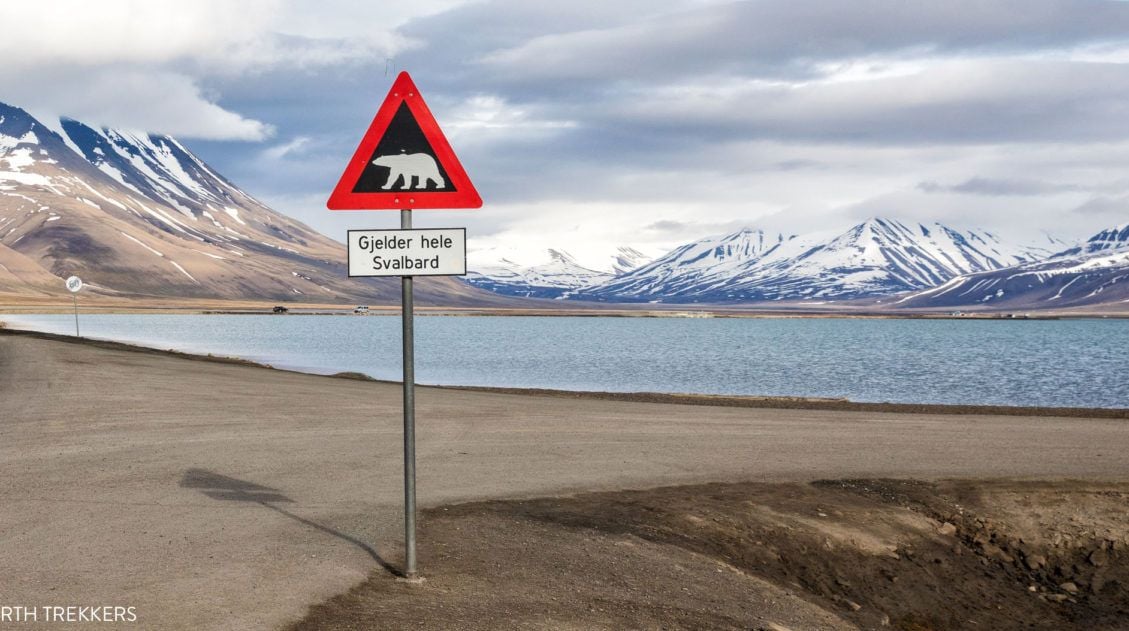
Svalbard Itinerary: 5 Days in the Arctic for First-Time Visitors
Svalbard. An Arctic playground where there are more polar bears than people, filled with glaciers, the Northern Lights, the midnight sun, and frozen tundra. It may look barren from a distance, but it is filled with arctic wildlife like reindeer, walrus, and polar bears. If you like the idea of exploring the great outdoors, your […]
Our Svalbard Budget: How Much Does it Cost to Visit Svalbard?
How much does it cost to visit Svalbard? The short answer: more than almost anywhere else we’ve traveled. We spent four days in Svalbard at the end of June 2018, cruising to an abandoned Russian mining town, kayaking past an active glacier, and hiking above Longyearbyen with a rifle-carrying guide (you can read our full […]
Norway Travel Guide: Fjords, Lofoten Islands & Svalbard
Norway Travel Guide There is nowhere quite like Norway. We’ve been to Norway twice, and both trips rank among the most spectacular we’ve ever taken. On our first visit, we road tripped through the fjord region in summer, hiking Trolltunga, Kjeragbolten, Pulpit Rock, and Romsdalseggen Ridge and cruising past some of the most dramatic scenery […]
Ørnfløya, A Short but Sweet Hike in Sommarøy, Norway
Sommarøy doesn’t get the attention it deserves. Most visitors drive straight past it on their way to Tromsø or the Lofoten Islands, never realizing what they’re missing. We visited it as part of a road trip through northern Norway, and it immediately became one of the highlights of that trip. The hike up Ørnfløya is […]
How to Hike Segla, An Iconic Peak in Senja, Norway
The hike up to the summit of Segla is one of Senja’s most popular hikes. And this was our main reason for visiting Senja. Many visitors skip past Senja, heading directly to the Lofoten Islands. But those people are missing out seeing a gorgeous part of Norway and some hidden gems. That’s fine…that means less […]


Comments 14