
After two trips to Norway, one through the fjord region, one through the far north, we started getting the same question over and over in our comments: Can we combine both into one trip? How do we do the fjords AND the Lofoten Islands in 10 days?
That’s exactly what this post is for.
We’ve put together two different 10-day itineraries that combine Norway’s fjord region with the Lofoten Islands: one geared toward hikers who want to tackle the big trails, and one for travelers who want to hit the major highlights without being on the trail every day.
A word of advice first: if there’s any chance you’ll return to Norway, and trust us, after one trip, you will be dreaming of coming back, we’d actually recommend skipping this post and focusing on just one region. Our 10-Day Fjord Region Itinerary covers Stavanger, Bergen, Geirangerfjord, Trolltunga, Kjeragbolten, and Pulpit Rock. Our Northern Norway Itinerary covers Tromsø, Senja, Vesterålen, and the Lofoten Islands. Each region deserves 10 days on its own. Splitting your time means giving things up.
But if this is your one shot at Norway, read on. Here’s how to make it work.
10 Days in Norway: At a Glance
| Itinerary #1: Hiker’s Itinerary | Itinerary #2: Fjord Highlights | |
| DESTINATIONS | Stavanger → Odda (Trolltunga) → Bergen → Lofoten Islands | Ålesund → Geirangerfjord → Flåm → Bergen → Lofoten Islands |
| START / END | Fly into Oslo (OSL) · Fly home from Lofoten (LKN or SVJ) | Fly into Oslo (OSL) · Fly home from Lofoten (LKN or SVJ) |
| BEST FOR | Hikers and adventure seekers | Sightseers and first-time visitors |
| GETTING AROUND | Rental car + internal flights | Rental car + internal flights |
| BEST TIME TO VISIT | June 1 – September 30 | June – October |
| LOFOTEN NIGHTS | 3 nights | 3–4 nights |
| KEY HIKES | Kjeragbolten, Pulpit Rock, Trolltunga + Lofoten hikes | Pulpit Rock + Lofoten hikes |
About These 10 Day Norway Itineraries
Best Time to Go to Norway
We visited southern Norway in August and northern Norway in late June and early July, and both trips delivered more sunny days than rainy ones. August in the fjord region felt warm and lively. Trails were busy but manageable with an early start, and we never had a single day that was a complete washout.
Up in the Lofoten Islands and Senja in late June, we experienced the midnight sun, which is as surreal and magical as it sounds, and hiking at 10 pm in full daylight never gets old. We did get some rain on Senja and in the Lofoten Islands, but nothing that derailed a full day.
One important timing note for Itinerary #1 (Epic Hikes): if you plan to hike Trolltunga independently, you must do this itinerary between June 1 and September 30. Outside of those dates, the trail requires a licensed guide, which adds significant cost.
Here’s a quick seasonal breakdown to help you choose when to go:
- November–May: Not recommended for these itineraries. Many hiking trails are snow-covered and dangerous without proper equipment, and some scenic roads, including Trollstigen, remain closed through late spring.
- June–July: The best overall window, especially for northern Norway. Expect the midnight sun above the Arctic Circle, relatively dry weather, and trails in good condition. June is particularly good for beating the peak crowds.
- August: Peak summer. Warm temperatures throughout Norway, all trails and roads open, but expect the highest crowds on popular hikes like Pulpit Rock and Trolltunga. Still an excellent time to go.
- September–early October: Fewer crowds and beautiful autumn colors, but weather becomes less predictable, some mountain roads begin to close, and days get shorter. Better suited to Itinerary #2 than Itinerary #1.
These Itineraries are Designed as a Road Trip
Renting a car gives you more flexibility than public transportation. It is possible to get around by public transportation, and if you want more information on how to do this, I recommend visiting the Visit Norway website.
Internal Flights
To visit both regions in 10 days, you’ll need at least two internal flights: one to get you into the fjord region (typically into Stavanger or Bergen) and one to get you from the fjord region to the Lofoten Islands.
Budget a full day for the travel between regions. Flying from southern Norway to the Lofoten Islands almost always requires at least one connection, either through Oslo or Bodø, and total travel time can easily run 5 to 7 hours depending on your routing.
Widerøe, SAS, and Norwegian all operate flights within Norway and we’ve flown all three without any issues. Widerøe is the only airline that we know of offering a direct flight from Oslo to Svolvaer. Flight costs from Oslo to the Lofoten Islands typically range from $150 to $400 USD per person during summer. Book as early as possible, as Lofoten flights sell out well in advance during peak season.
For full details on flying to and around the Lofoten Islands, including transfer options and timing tips, see our Lofoten Islands Itinerary ↓
Lofoten Islands Itinerary: 4 to 5 Days in Norway’s Most Spectacular Islands
How to plan your Lofoten Islands itinerary, with ideas ranging from 2 days to one week.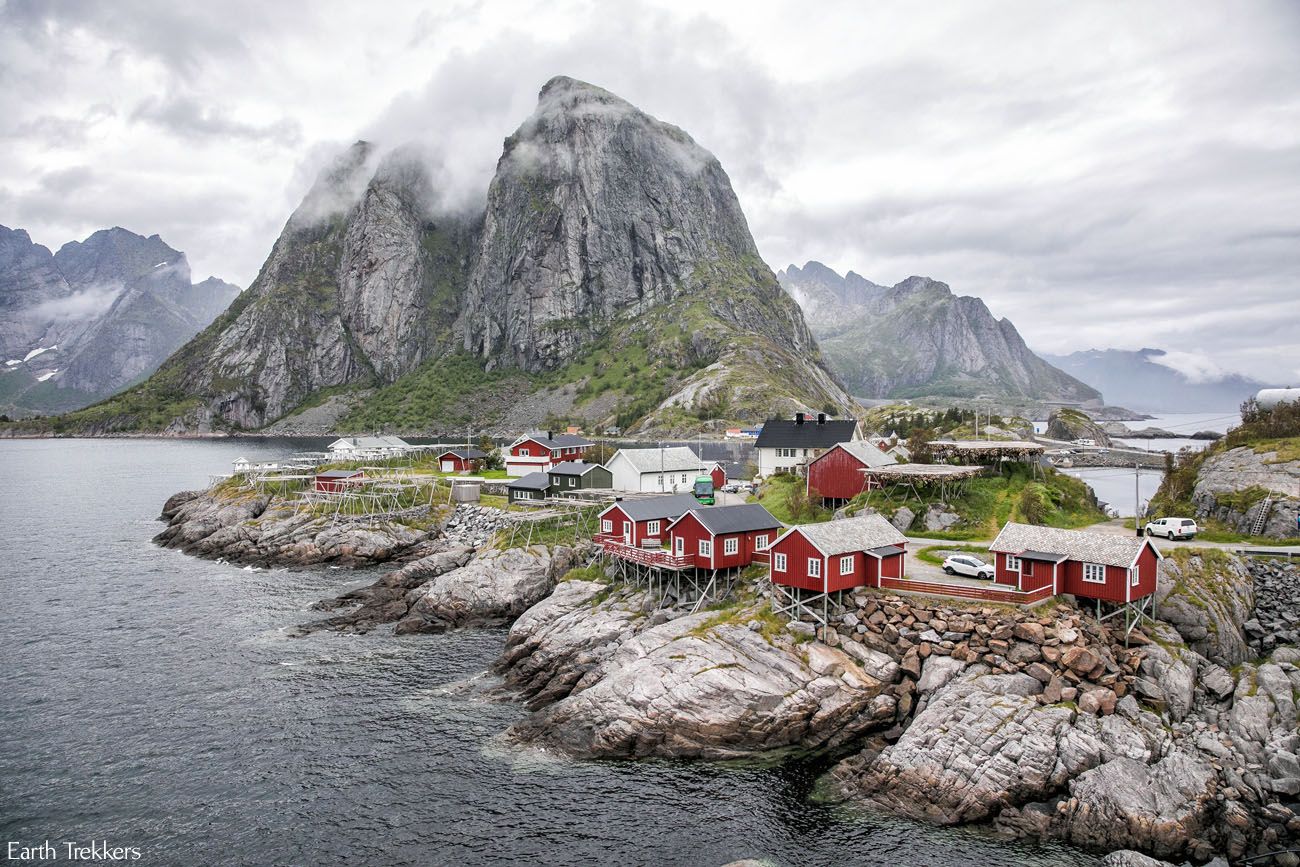
Lofoten Islands
Which Itinerary Is Right for You?
Choose the Hiker’s Itinerary if:
- Tackling Norway’s most iconic trails: Kjeragbolten, Pulpit Rock, and Trolltunga, is a priority
- You are comfortable with long, strenuous hikes and don’t mind spending the majority of your days on the trail
- You are traveling between June 1 and September 30, when Trolltunga is open for independent hiking
- You are okay with a faster-paced trip that skips some of the fjord region’s scenic drives and viewpoints
Choose the Highlights Itinerary if:
- You want a mix of hiking, scenic drives, and fjord experiences without committing to a big hike every day
- You are traveling in September or early October, when Trolltunga may no longer be accessible
- You prefer a slightly more relaxed pace with more flexibility built into each day
- You are visiting Norway for the first time and want to see a broader range of what the country offers
10 Days in Norway: Sample Itineraries
Itinerary #1: The Hiker’s Itinerary
On this itinerary, you’ll tackle three of Norway’s most iconic hikes: Kjeragbolten, Pulpit Rock, and Trolltunga, explore Stavanger and Bergen, and spend three days in the Lofoten Islands. It’s a fast-paced, hike-heavy trip, and to fit everything in, you’ll be skipping some of the fjord region’s other highlights, like Geirangerfjord and Ålesund. If that tradeoff works for you, this itinerary delivers some of the most thrilling days Norway has to offer.
Important: This itinerary must be done between June 1 and September 30. Outside of those dates, Trolltunga requires a licensed guide, which adds significant cost to the trip.
10 Days in Norway: Kjeragbolten, Trolltunga & the Lofoten Islands
Day 1: Arrive in Oslo, fly to Stavanger
Day 2: Hike Kjeragbolten
Day 3: Hike Pulpit Rock, drive to Trolltunga
Day 4: Hike Trolltunga
Day 5: Drive to Bergen, visit Bergen
Day 6: Fly to the Lofoten Islands
Day 7: Lofoten Islands
Day 8: Lofoten Islands
Day 9: Lofoten Islands
Day 10: Fly Home
How to Use This Map: Click the tab in the top left corner of the map to see a list of the points of interest and to turn layers on/off. Click the icons on the map to get more information about each point of interest.
To take this map with you, click the star next to the title of the map which adds it to your Google account. Next, within your Google Maps app, select ‘Saved’ and then select ‘Maps’. This map title will now appear in your list.
Day 1: Arrive in Stavanger
Most international flights arrive in Oslo. From here, catch a connecting flight to Stavanger and pick up your rental car at the airport, You’ll have it for the first several days of the trip.
Stavanger is primarily a base for the hikes ahead rather than a destination in its own right, but if you arrive with time to spare, the old town (Gamle Stavanger) and waterfront are worth a wander. We spent an afternoon walking through town and had a nice dinner outside. Just be prepared for Norwegian prices, which are high even by European standards.
Sleep in Stavanger. Here are a few recommended hotels:
- Hotel Victoria: This historic hotel is located on the waterfront in Stavanger.
- Home Again Apartments Kirkegata: One and two bedroom apartments in the heart of Stavanger, a great option for families or anyone wanting more space.
- Radisson Blu Atlantic Hotel and the Clarion Hotel are both located in downtown Stavanger and well reviewed.
- Central Stavanger Guesthouse is a solid budget option.
Day 2: Hike to Kjeragbolten
Total Driving Distance: 292 km (including the Lyseveggen Road detour)
Total Driving Time: 5.5 hours
Get an early start today. Have breakfast at your hotel and then drive to the trailhead for the Kjeragbolten hike. It takes two and a half hours to drive to Kjeragbolten (140 km) from Stavanger.
This is an incredible hike. In fact, it’s one of our favorite hikes, ever. Not only do you get to test how daring you are by standing on Kjerag, but the scenery from the trail is jaw-dropping. Even if you can’t get up the nerve to stand on the boulder, this is still an epic hike.
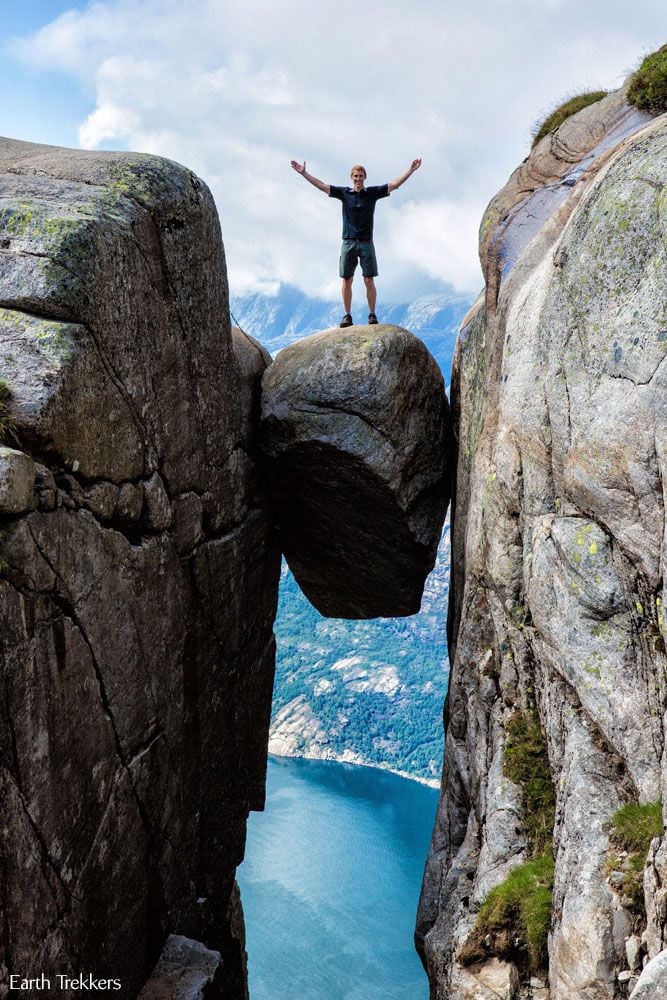
Kjeragbolten
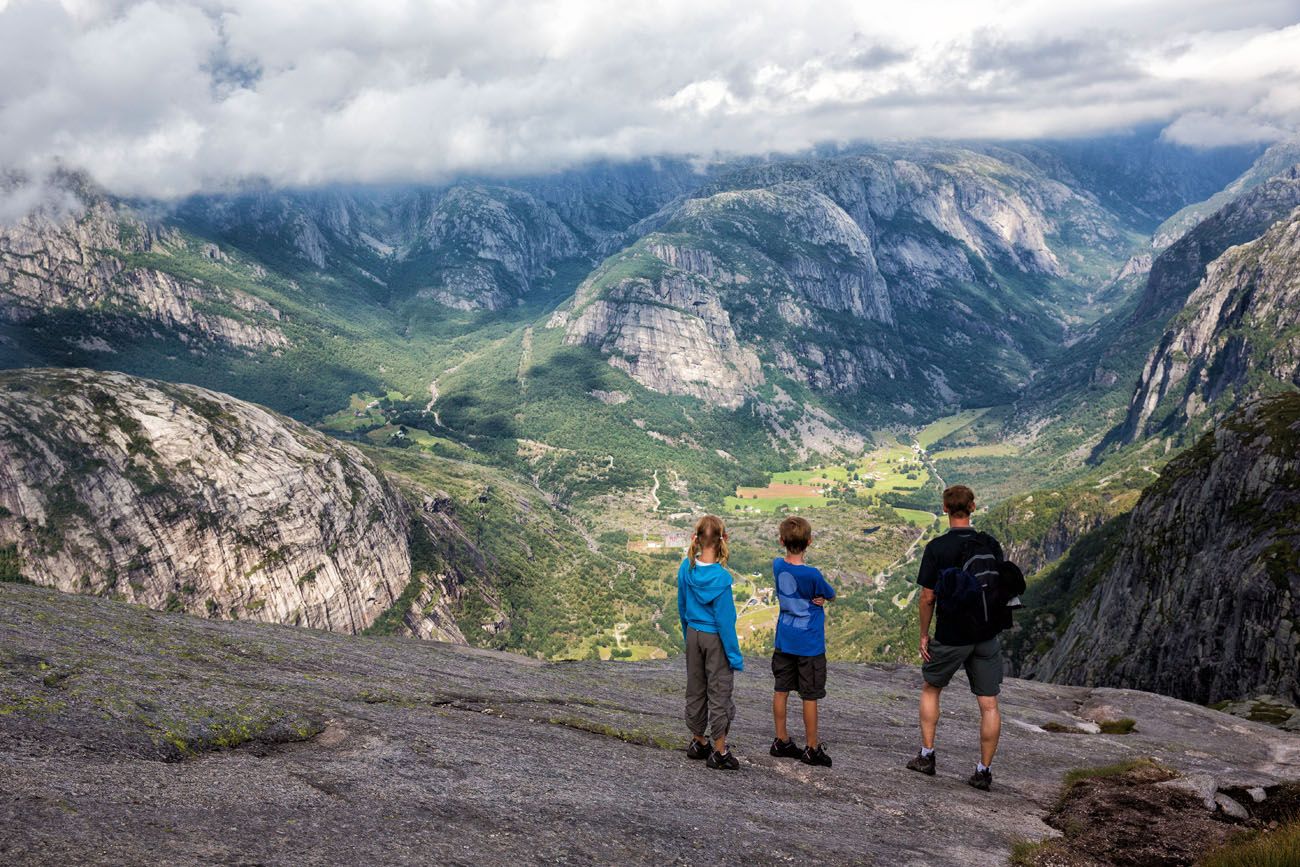
View from the trail to Kjeragbolten
The hike to Kjeragbolten is 12 km round trip and takes between 5 and 7 hours. Here’s how to do it ↓
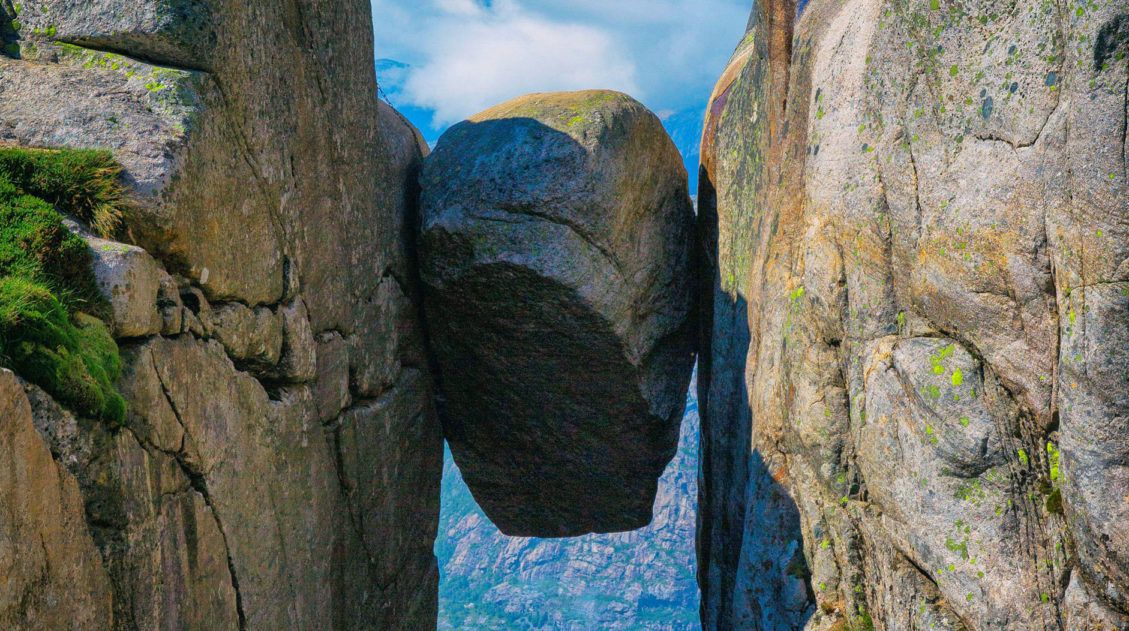
If you are doing great on time, consider this scenic detour. You can drive down (and then back up) Lyseveggen Road, a narrow road with 32 hairpin turns, an average gradient of 9.4%, and an elevation difference of more than 800 meters (2600 ft) over 5.8 km (3.6 miles). And if that isn’t crazy enough, there is a tunnel near the bottom than turns 340 degrees.
If you are up for this adventure, like we were, turn left when you pull out of the Kjerag parking lot and you will start going down this windy, switchback road almost right away. This road connects the Kjeragbolten car park with the town of Lysebotn.
Return to Stavanger.
Day 3: Hike to Pulpit Rock, Drive to Trolltunga
Total Driving Distance: 225 km
Total Driving Time: 4.5 hours
Day 3 is another long one, but the hike to Pulpit Rock is worth every minute. At 8 km (5 miles) round trip and four to five hours total, it’s the shortest hike on this itinerary, but standing on that flat slab of rock above the Lysefjord is one of those moments that stays with you.
Get an early start. Pulpit Rock is Norway’s most popular hike and crowds build quickly, especially in July and August. An early start means a quieter trail and more time for the drive to Trolltunga afterward.
The hike to Pulpit Rock is 8 km (5 miles) round trip and takes a total of four to five hours, less time if you are a fast hiker.
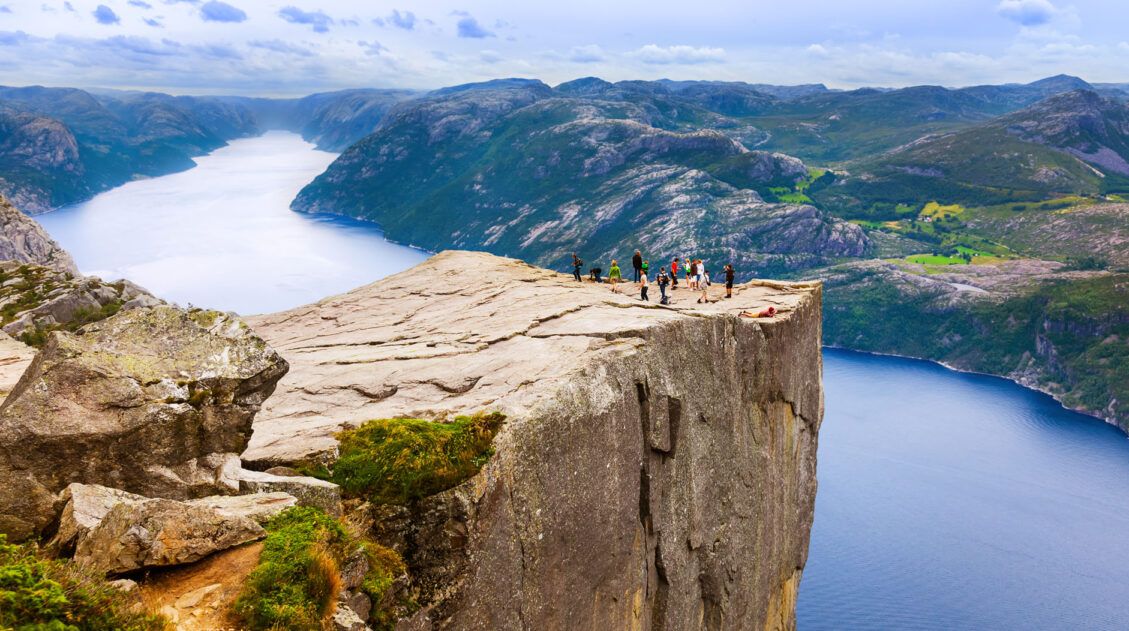
How to Do the Pulpit Rock Hike
Everything you need to know to hike to Pulpit Rock, including how to get here from Stavanger.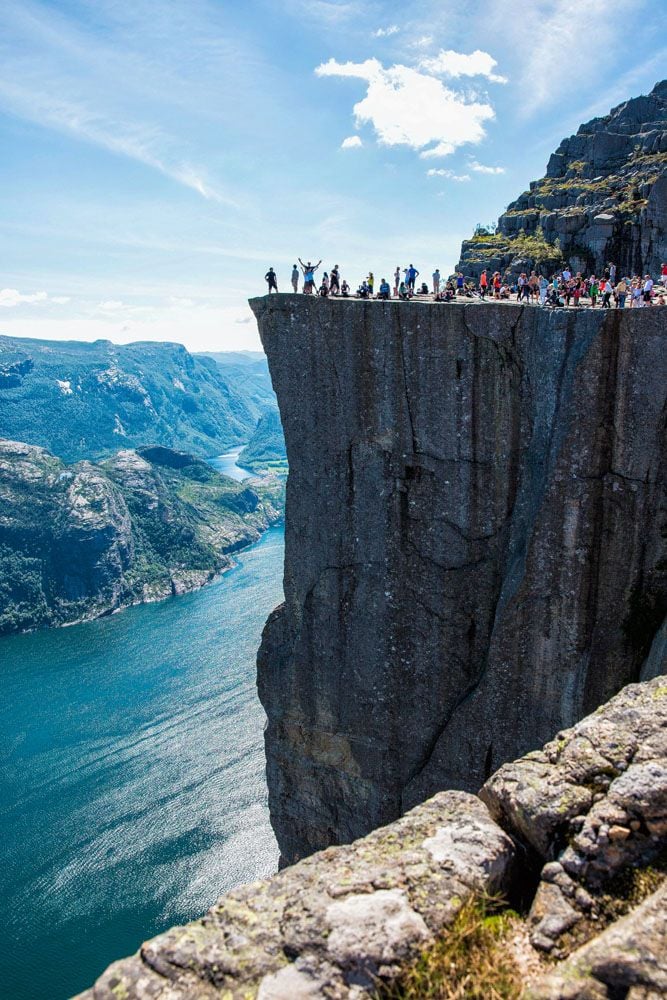
Pulpit Rock
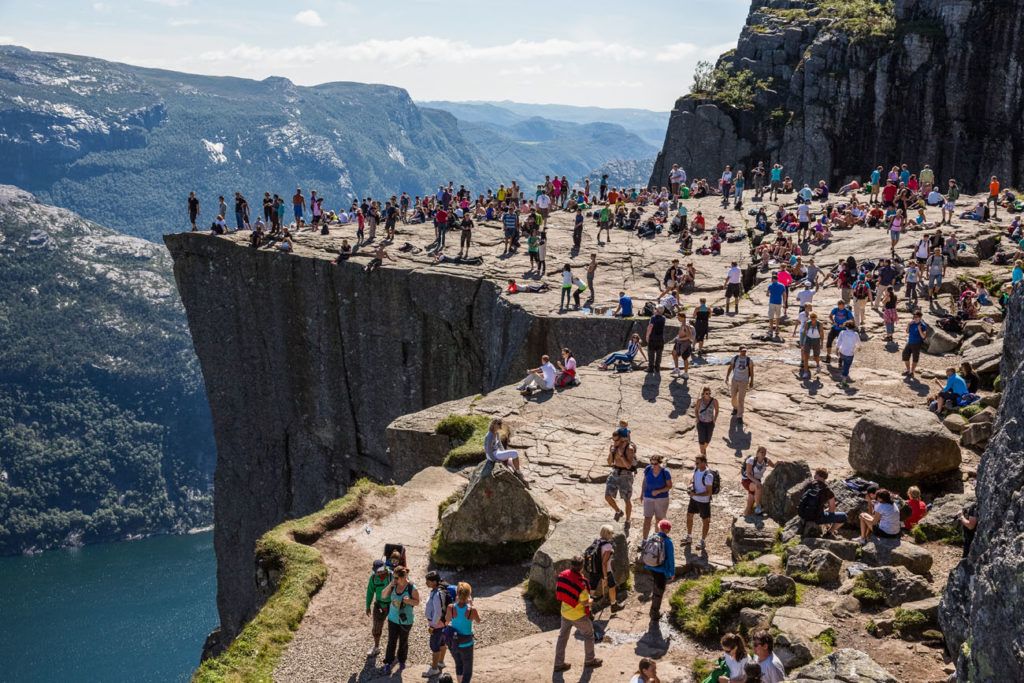
Midday crowds at Pulpit Rock in August
After the hike, drive to Odda or Tyssedal, the two towns closest to the Trolltunga trailhead, which are about 4 hours from the Pulpit Rock parking lot. For accommodation options, see our full guide: Where to Stay Near Trolltunga.
ITINERARY MODIFICATION: You can skip the Pulpit Rock hike and drive to Trolltunga. If you like this idea, spend the night in Lysebotn after hiking Kjeragbolten (on day 2) and drive to Odda or Tyssedal from here.
Day 4: Hike Trolltunga
Trolltunga is the crown jewel of this itinerary, a dramatic sliver of rock jutting out over Lake Ringedalsvatnet that has become one of Norway’s most iconic hiking destinations. Set aside the full day for this one.
We hiked Trolltunga as a family with our kids, who were 8 and 10 at the time, on a gorgeous sunny day, and it’s one of our all-time favorite hiking memories. The trail itself is stunning. This isn’t a hike where you suffer through unremarkable terrain just to reach the payoff. The scenery the entire way is breathtaking. And standing on the tongue at the end? Absolutely epic.
A funny note on perspective: a few days earlier, Tim and I had stood on Kjeragbolten, wedged over a 1,000-meter drop. After that, Trolltunga felt positively spacious. If you’re nervous about the tongue itself, just get Kjeragbolten under your belt first.
The full hike from the lower parking lot is 28 km (17.4 miles) round trip with 900 meters of elevation gain, a genuinely big day. If you park in the upper lot instead, you’ll save roughly 1.5 hours and cut out the steepest section. For full details on parking, costs, and what to expect on the trail, see our complete guide ↓
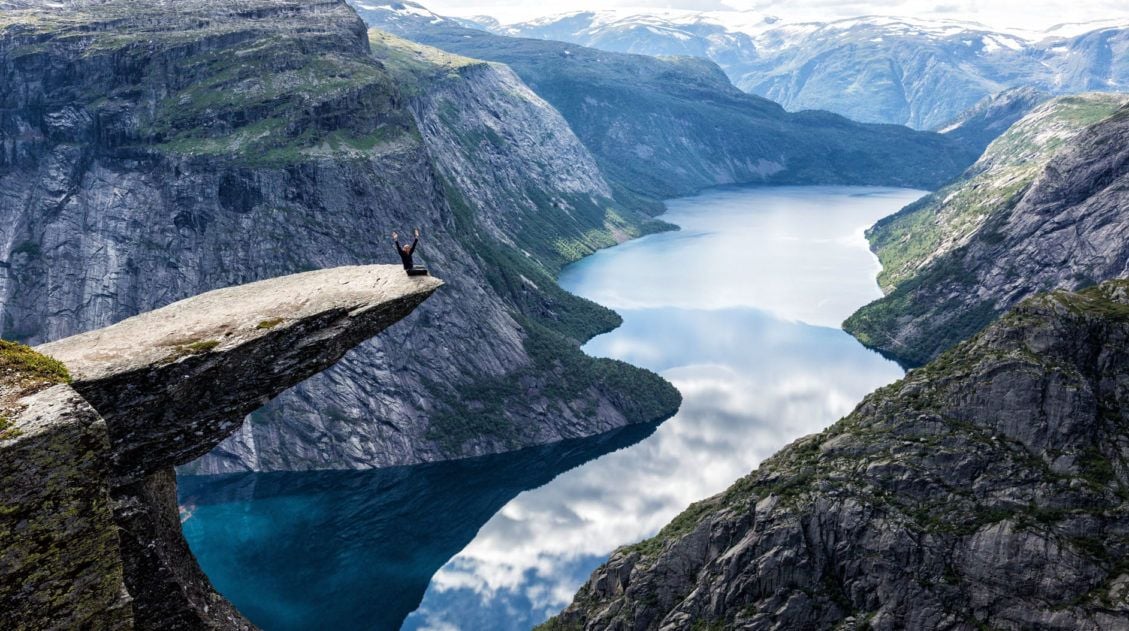
How to Hike Trolltunga: Everything You Need to Know
Everything you need to know to hike to Trolltunga.Here are a few photos from the hike.
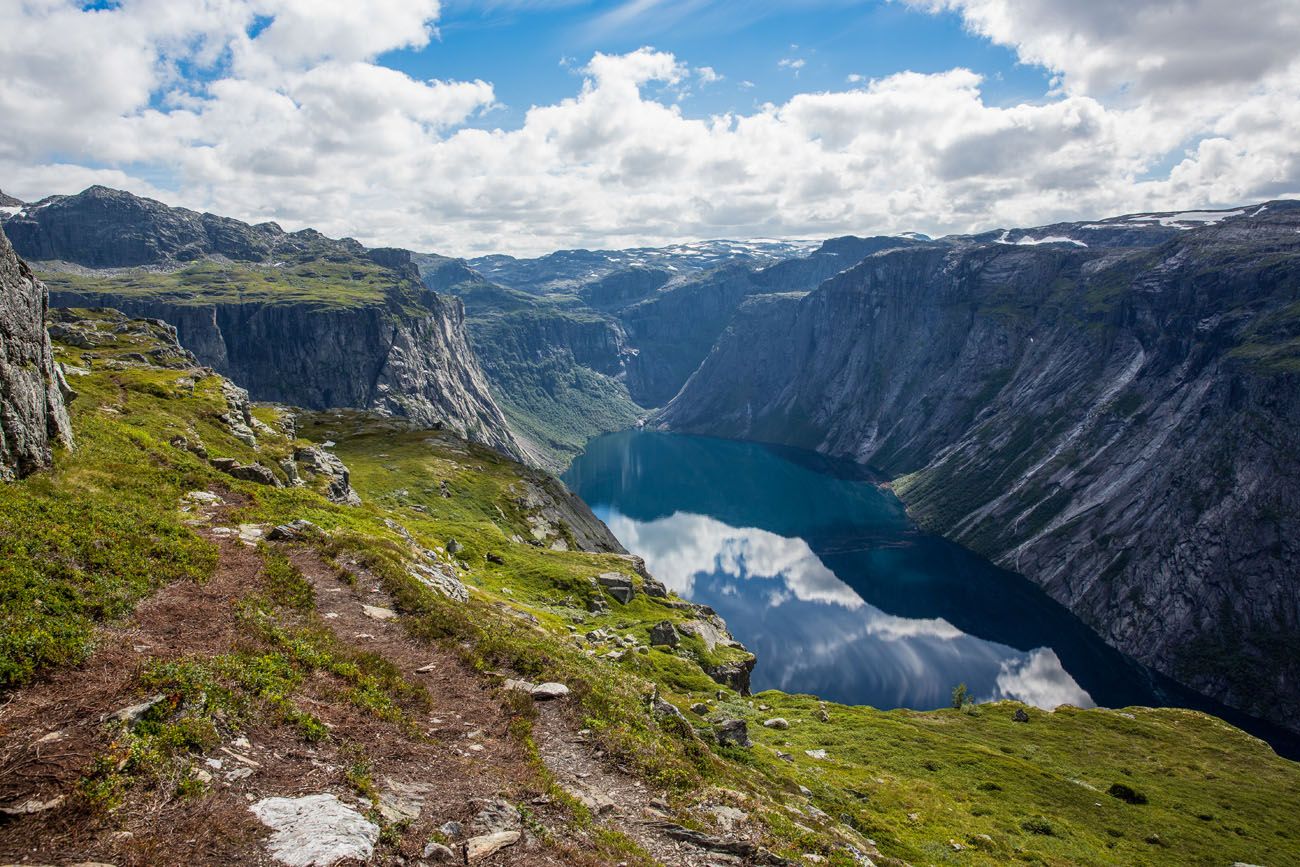
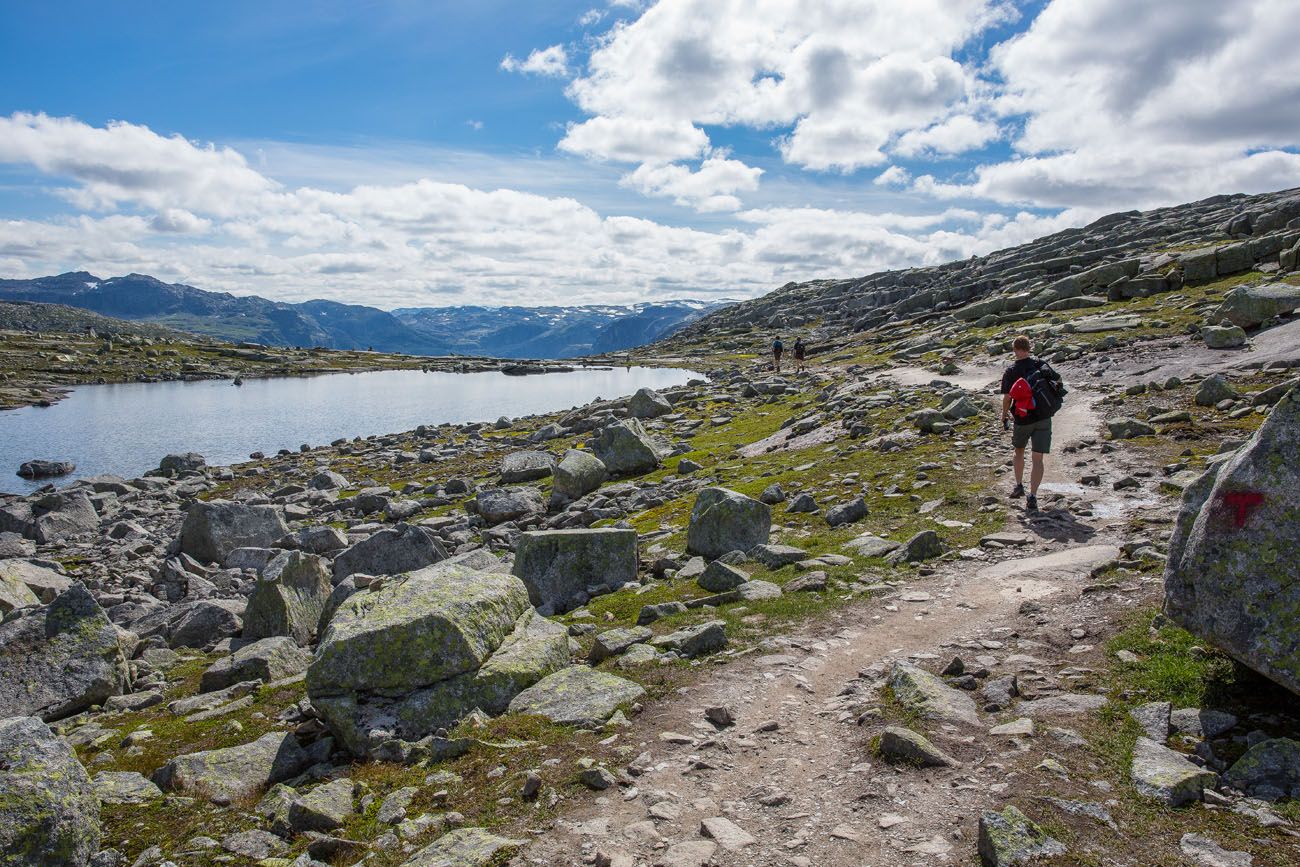
Trail to Trolltunga
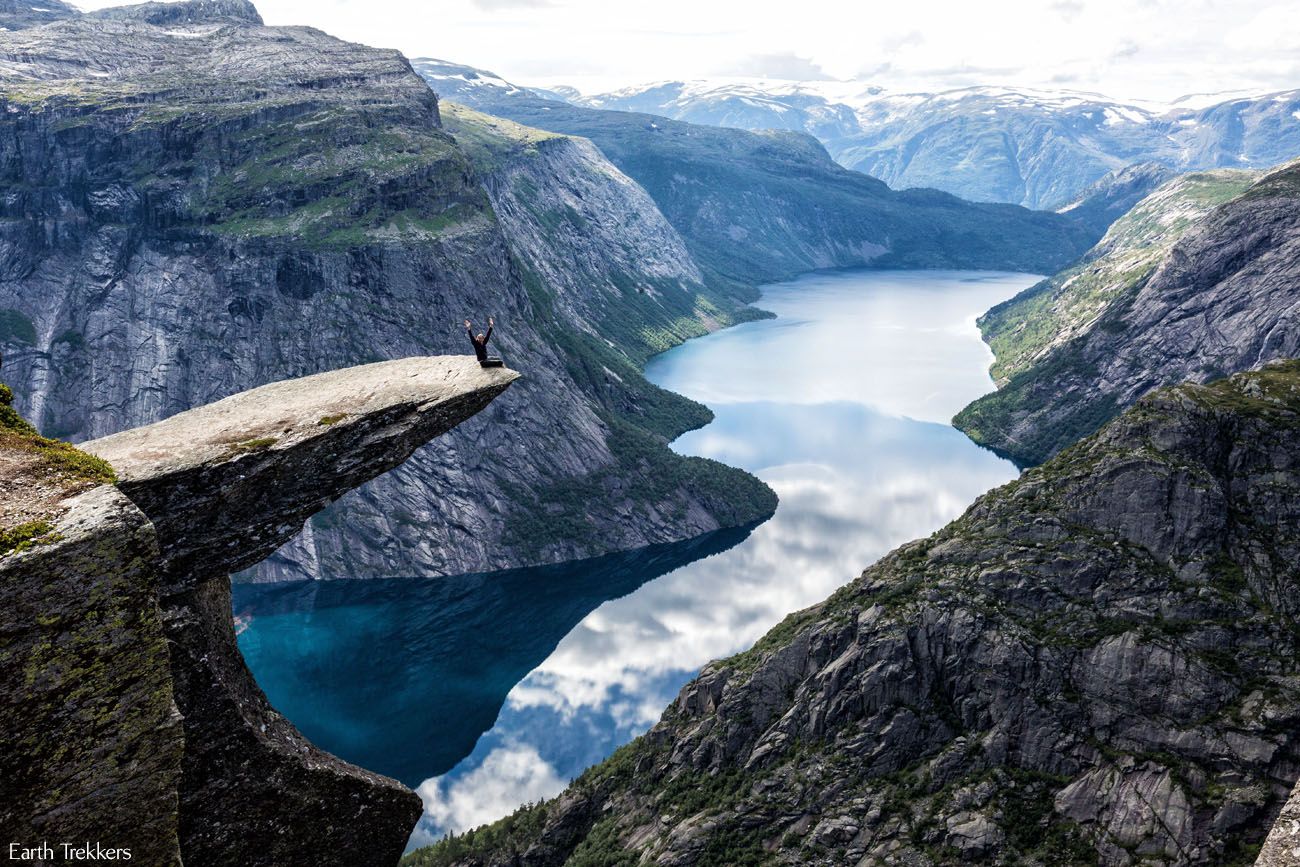
Trolltunga
Tonight, sleep in Odda or Tyssedal.
Day 5: Drive to Bergen, Visit Bergen
Total Driving Distance: 140 km
Total Driving Time: 3 hours
After two big hiking days, the drive to Bergen is a welcome change of pace. From Tyssedal it’s 140 km and takes about 3 hours, leaving a solid half day to explore one of Norway’s most beautiful cities.
Have lunch at the fish market, wander the cobblestoned streets, take the funicular up the hillside for sweeping views over the city, and spend time at Bryggen, the colorful row of Hanseatic wooden houses along the harbor that have become Bergen’s most iconic image.
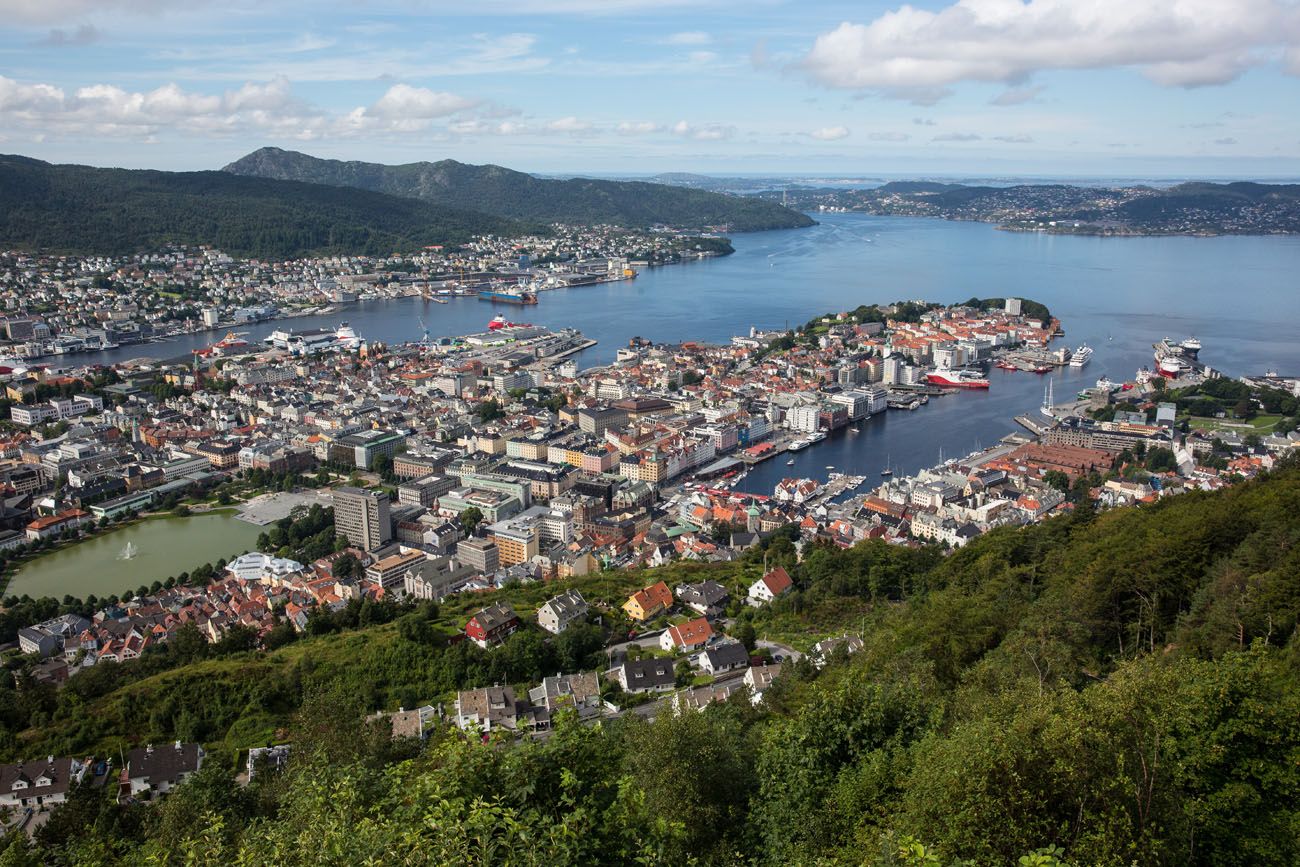
Bergen
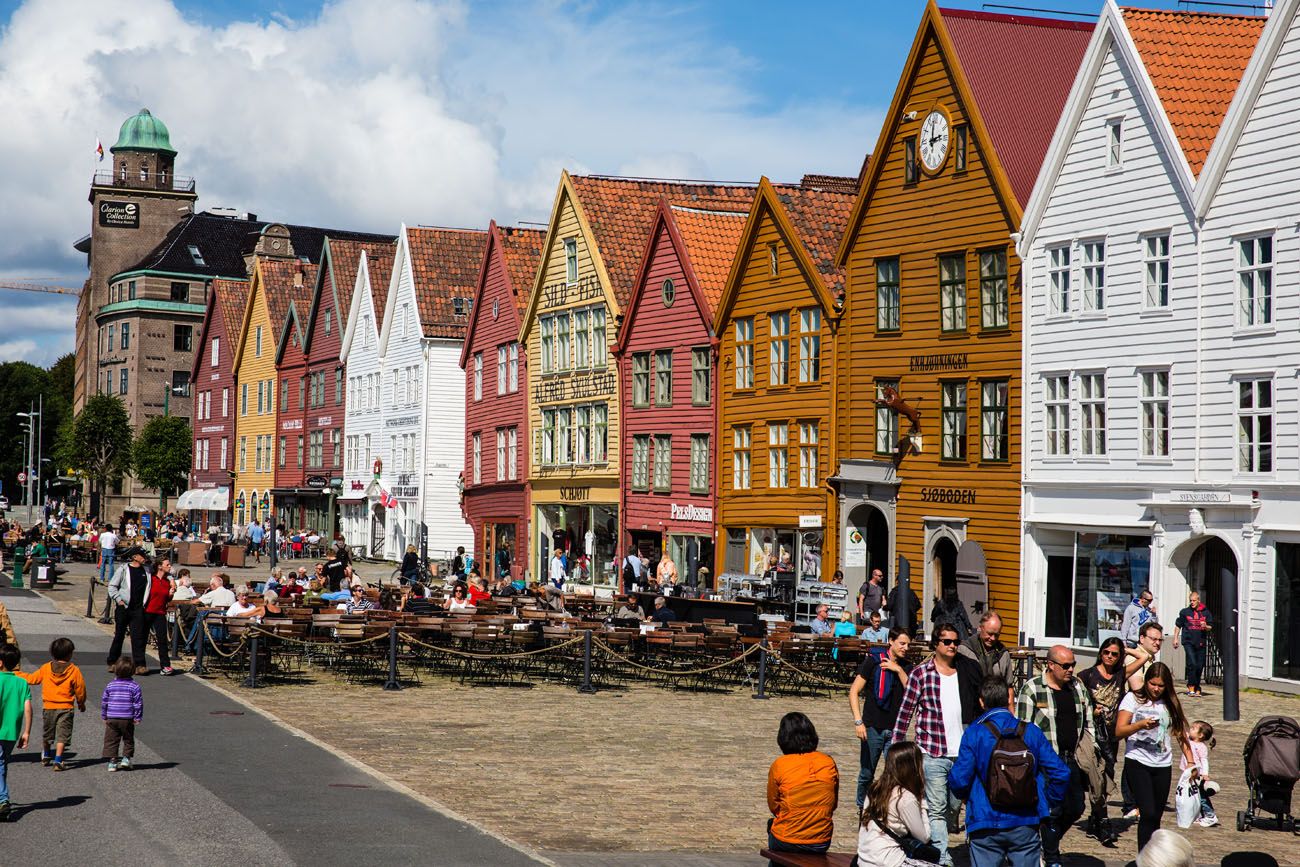
Bryggen
Where to Stay in Bergen:
- Opus XVI: A member of Small Luxury Hotels of the World and the top pick for those wanting an indulgent stay in Bergen.
- Hotel Park Bergen: A solid mid-range option in the city center, well located for exploring on foot.
- Høyegaarden: Spacious apartments with free WiFi, family rooms, and free private parking — sits slightly outside the city center but gets excellent reviews and is a great option for families.
Day 6: Fly to the Lofoten Islands
Today is a travel day. Fly from Bergen to the Lofoten Islands. Expect at least one connection, either through Oslo or Bodø, and total travel time of 3.5 to 5 hours depending on your routing. Budget the full day for this.
The Lofoten Islands have two airports: Leknes, which is centrally located, and Svolvaer, in the northern part of the islands. Flying into Leknes gives you more flexibility for exploring the islands over the next three days. Use Skyscanner or the Widerøe website to search flights. The Widerøe site will also show you options on Norwegian and SAS.
Once you land, pick up your rental car, get settled, and if time allows, take a drive to get your bearings. Your first full day in the Lofoten Islands is tomorrow.
For accommodation recommendations organized by location and budget, see our full guide ↓
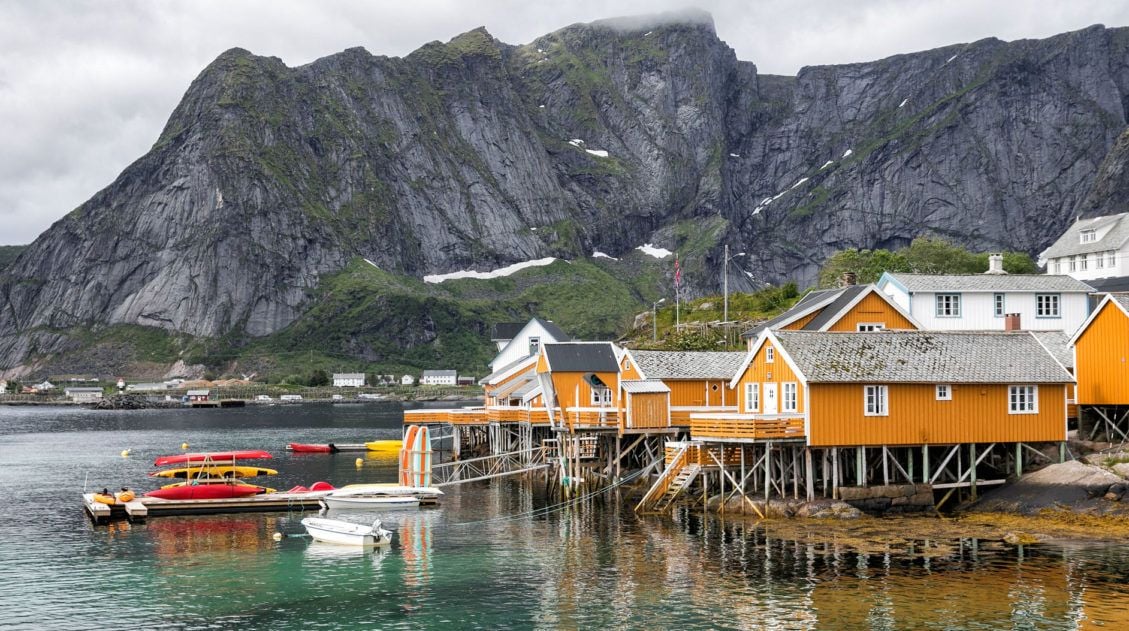
Where to Stay in the Lofoten Islands: Rorbuer, Hotels & More
Best places to stay in the Lofoten Islands, organized by location and budget.Day 7, 8 & 9: Lofoten Islands
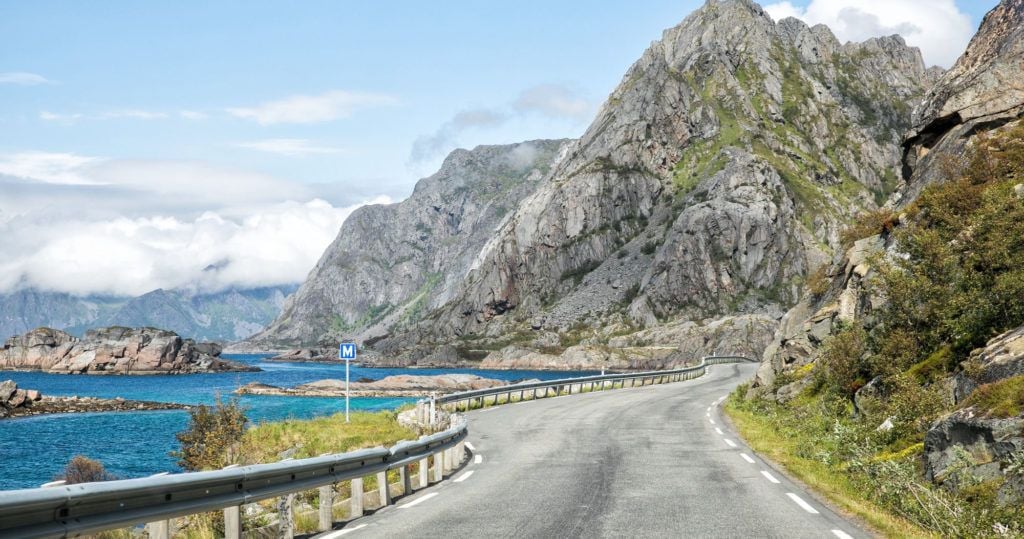
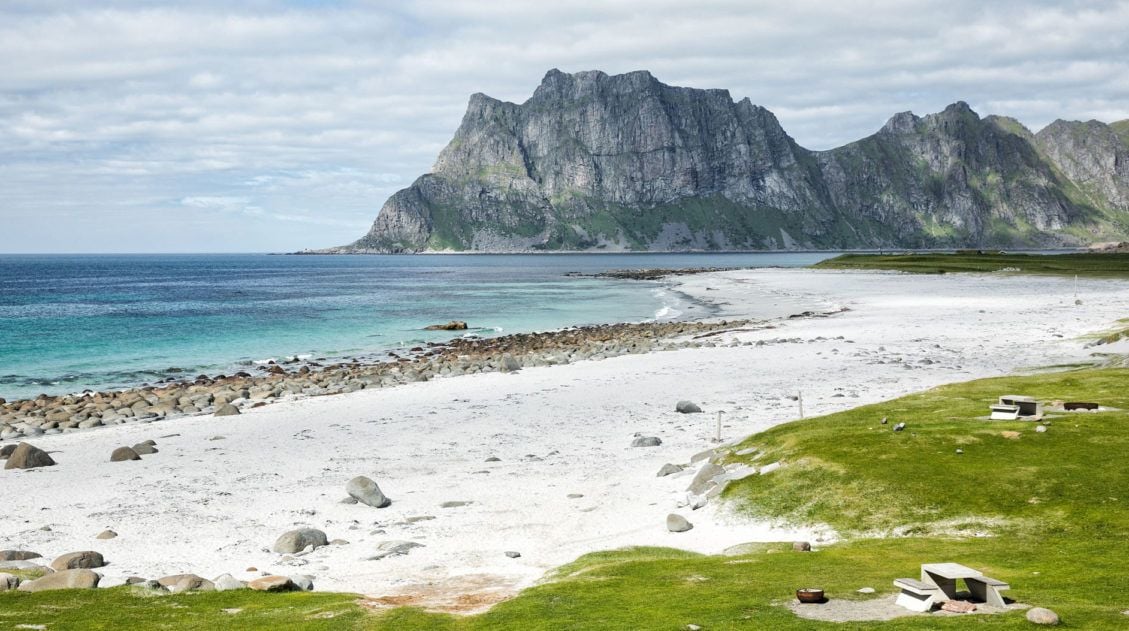
In the Lofoten Islands, the drives blew us away and we stopped constantly for photos. The tiny fishing villages, the curving roads hugging the coastline, the dramatic mountains dropping straight into the sea, the white sandy beaches with water so clear it looks Caribbean. The Lofoten Islands are one of the most beautiful places we’ve ever been in Europe, and we’ve seen a lot of Europe. It doesn’t look real.
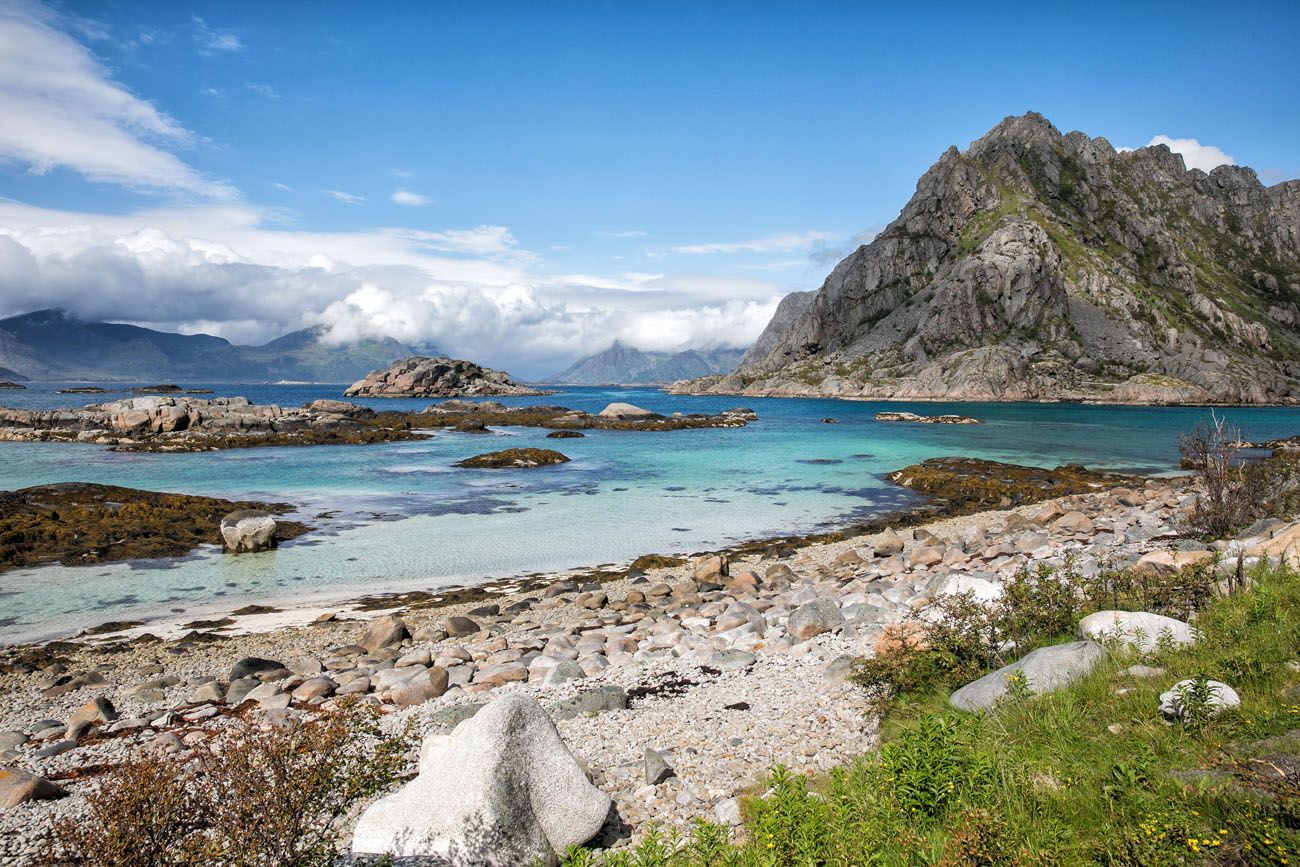
Lofoten Islands
The islands may look small on a map but there is a lot to do here, and it can take just over two hours to drive from one end to the other, from Svolvaer down to the tiny village of Å. That drive alone is worth the trip.
Despite being located above the Arctic Circle, the Lofoten Islands are warmer than you’d expect. The Gulf Stream keeps temperatures moderate, with summer highs ranging from 13 to 24°C (60 to 75°F). From late May to mid-July you’ll also experience the midnight sun. There is daylight around the clock, which makes for surreal late-evening hikes.
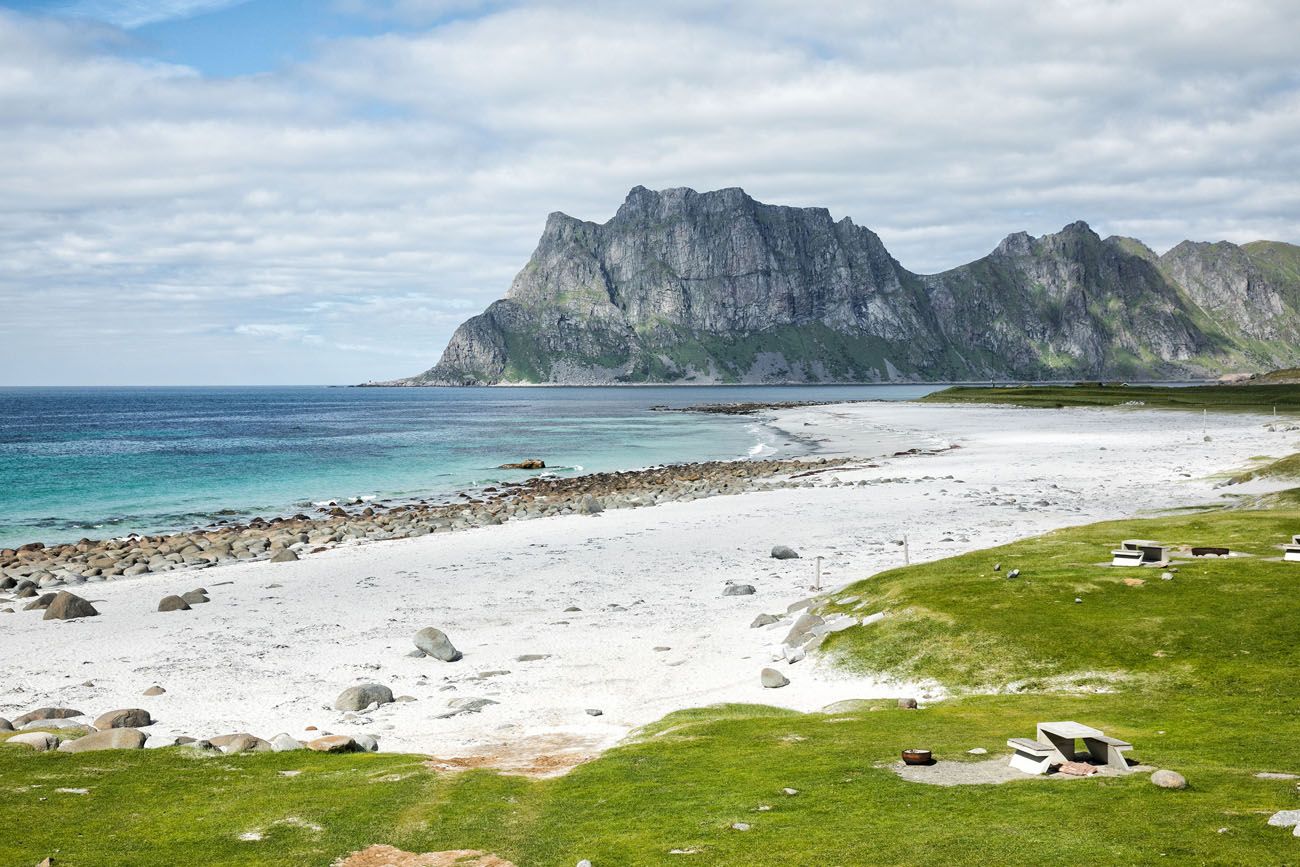
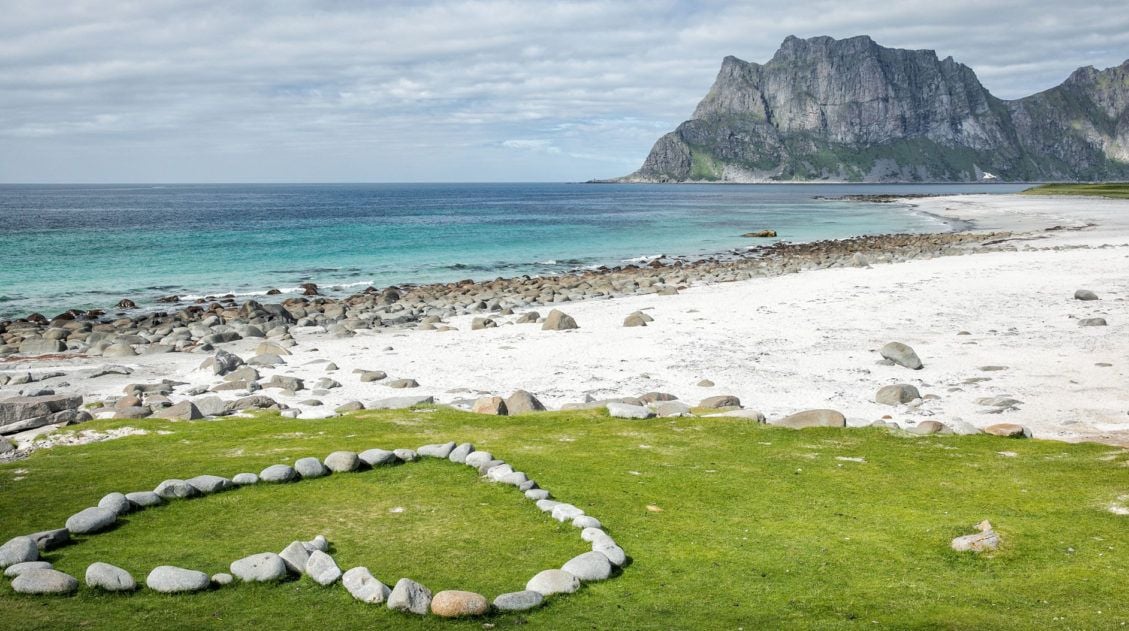
Uttakleiv Beach
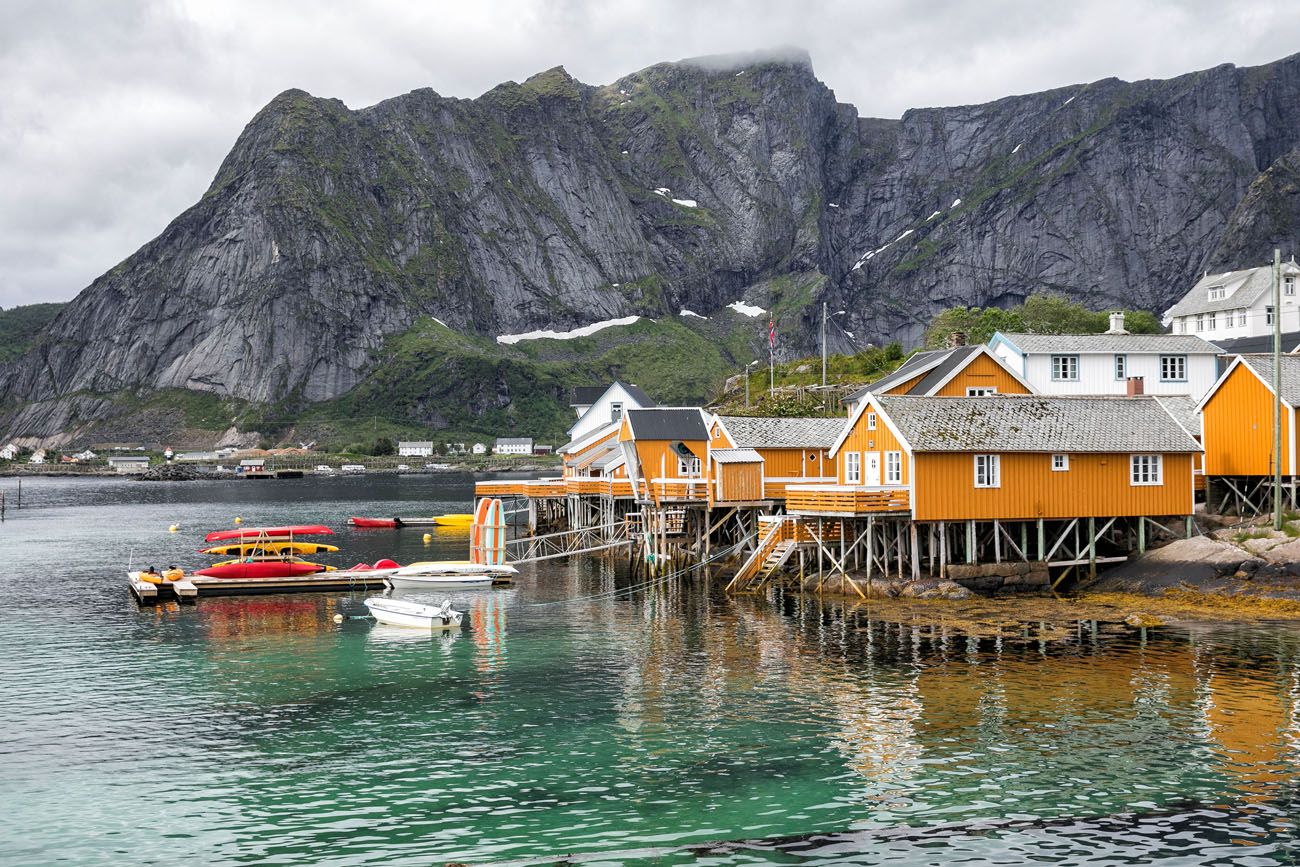
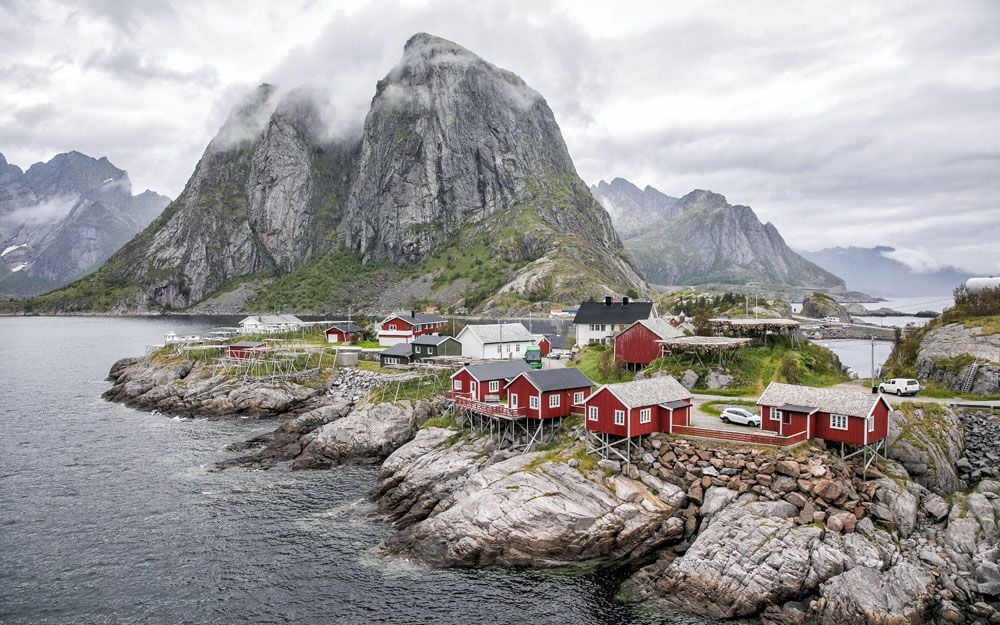
Rorbuers in the Lofoten Islands
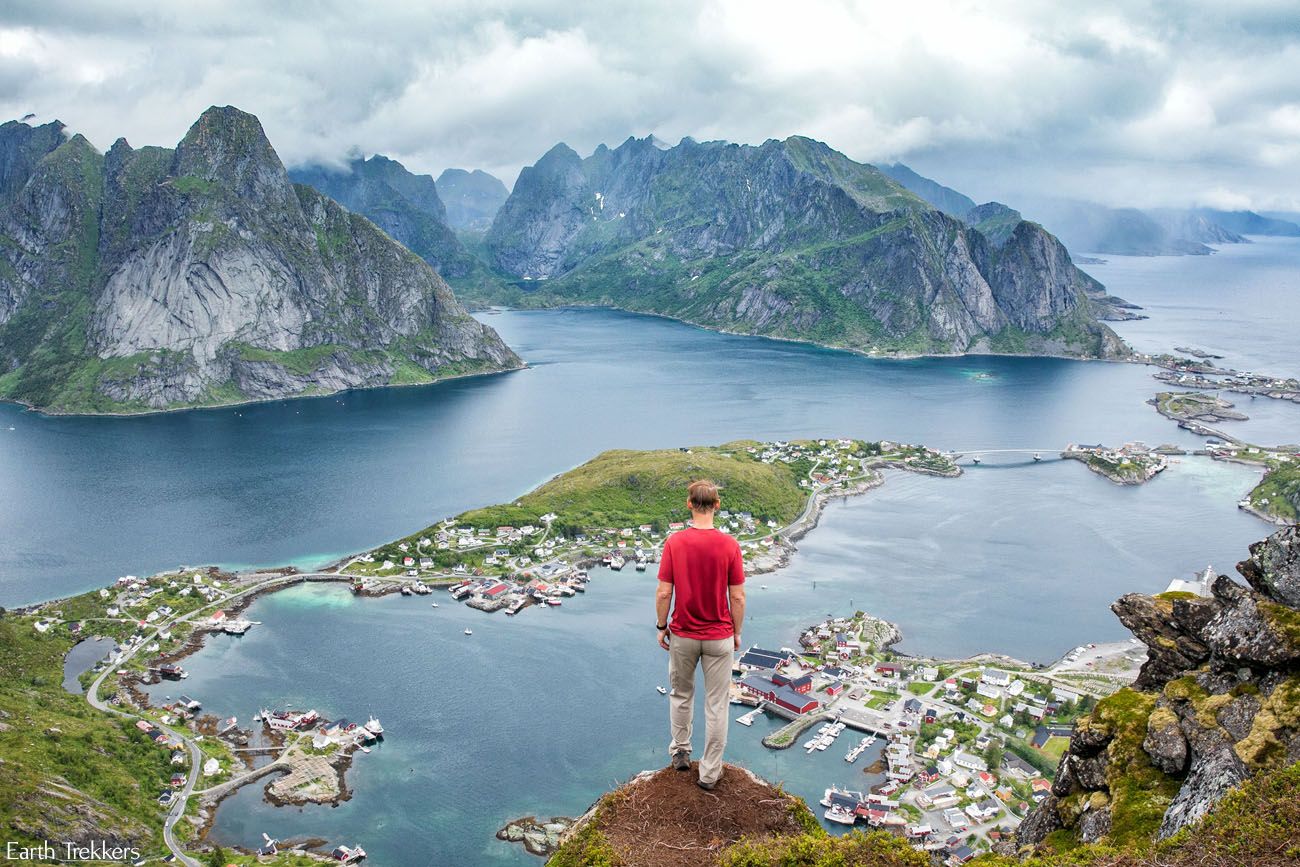
Reinebringen
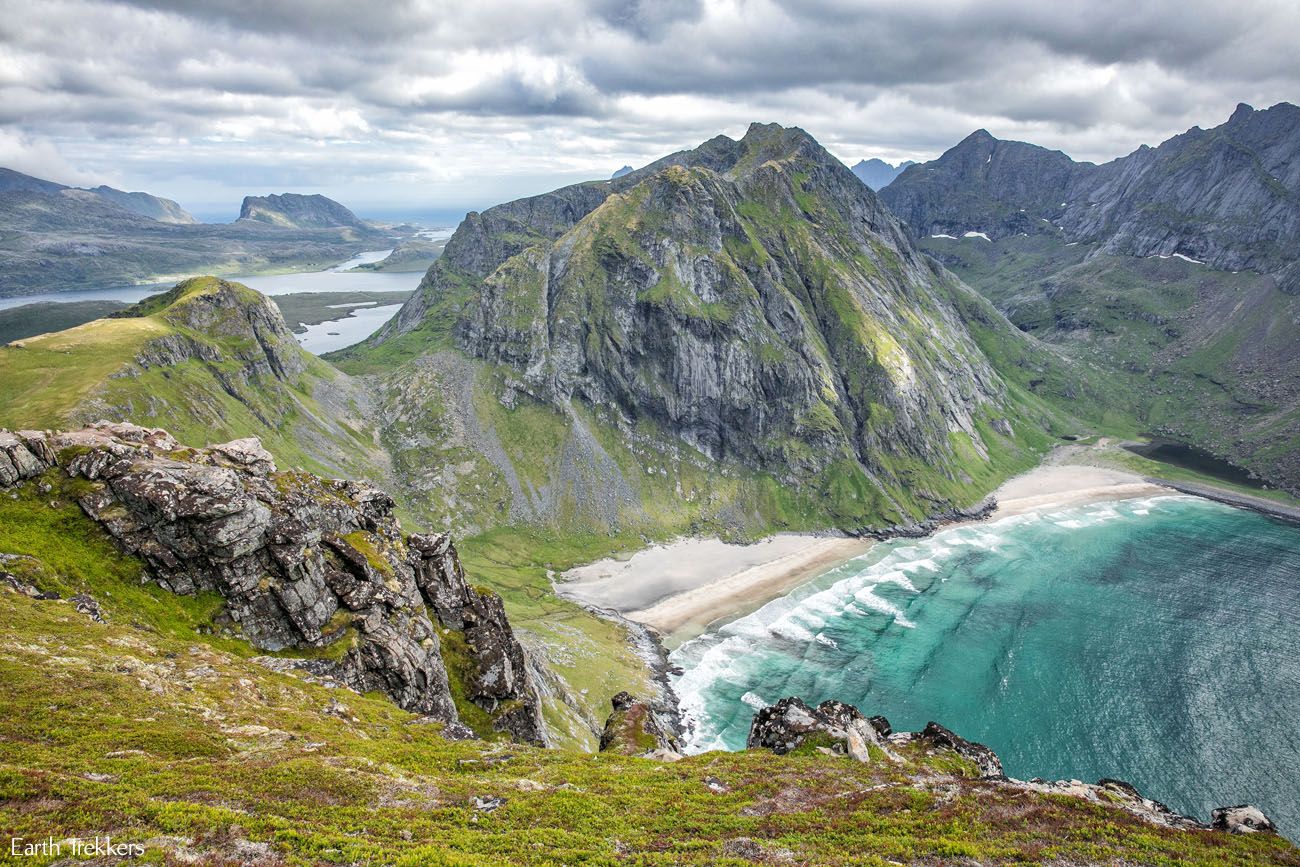
The view of Kvalvika Beach from Ryten
With three full days here, here’s one way to plan your time:
Day 7: Base yourself in Svolvaer. Hike Svolvaer Fløya for panoramic views over the town and islands, and if you’re up for a serious climbing adventure, Svolværgeita is one of the most exhilarating things you can do in Norway. Spend the afternoon exploring the charming fishing village of Henningsvær.
Day 8: Dedicate the day to hiking. Ryten and Reinebringen are both stunning. We did both and loved them. Fair warning: every hike in the Lofoten Islands involves a serious climb. The trails are short but steep, and the elevation gain is no joke. The views from the top, however, are absolutely worth it.
Day 9: Explore the southern end of the islands. Visit historic Nusfjord, one of Norway’s best-preserved fishing villages, stop at Uttakleiv and Haukland Beaches, and end the day in Hamnøy and Reine, two of the most photographed spots in all of Norway.
Lofoten Islands Guides
Best Things to Do in the Lofoten Islands: 16 Epic Experiences
Pinterest Facebook Flipboard We arrived in the Lofoten Islands after driving down from the Vesterålen Islands, and on our very first day, we climbed Svolvaergeita and hiked Svolvaer Fløya. It was a long, exhausting, unforgettable day, and somehow, it set exactly the right tone for everything that followed. By the time we left four days […]
Lofoten Islands Itinerary: 4 to 5 Days in Norway’s Most Spectacular Islands
There are places that stop you in your tracks the moment you arrive. The Lofoten Islands are one of them. We pulled over constantly, not because we planned to, but because we couldn’t drive past another mountain plunging straight into the fjord, another stretch of white sand beach backed by jagged cliffs, or another cluster […]
Day 10: Fly Home
To leave the Lofoten Islands, the best option is to fly from Leknes or Svolvaer to Oslo and then fly home from here. Alternatively, you can also take the ferry from Moskenes to Bodø and catch a flight from here. The ferry crossing takes 3 hours and it can be quite rough at times.
For those of you flying on to another destination other than Europe, you may not be able to travel from the Lofoten Islands to an international destination all in the same day. On day 9, you may need to travel to Oslo and on day 10, fly home (or continue your travels) from here. This is just something to keep in mind when looking at flights.
Itinerary #2: The Highlights Itinerary
This itinerary gives you three days in the Lofoten Islands and four days in the fjord region of Norway.
Rather than spending your time in the fjord region on the hiking trails, you visit Ålesund, drive Trollstigen, see beautiful Geirangerfjord, do Norway in a Nutshell, and visit Bergen. If you like the idea of doing a little bit of hiking, you can do so at Geirangerfjord, Åndalsnes, and in the Lofoten Islands.
10 Days in Norway: Geirangerfjord, Norway in a Nutshell, Bergen & the Lofoten Islands
Day 1: Arrive in Oslo, fly to Ålesund
Day 2: Tour Ålesund, drive to Geirangerfjord
Day 3: Geirangerfjord
Day 4: Drive to Flåm
Day 5: Norway in a Nutshell, drive to Bergen
Day 6: Fly to the Lofoten Islands
Day 7: Lofoten Islands
Day 8: Lofoten Islands
Day 9: Lofoten Islands
Day 10: Fly Home
Day 1: Arrive in Ålesund
Fly into Oslo and catch a connecting flight to Ålesund. If you arrive with time to spare, Ålesund is a genuinely lovely city to explore on foot. It’s known for its Art Nouveau architecture. The entire city was rebuilt in that style after a fire destroyed it in 1904 and wandering the streets in the evening light is a great way to ease into the trip.
Don’t miss the viewpoint from Aksla hill (the Fjellstua viewpoint). It’s the classic view over Ålesund, with the city spread out below and the surrounding islands and fjords stretching to the horizon. It’s a short climb and absolutely worth it.
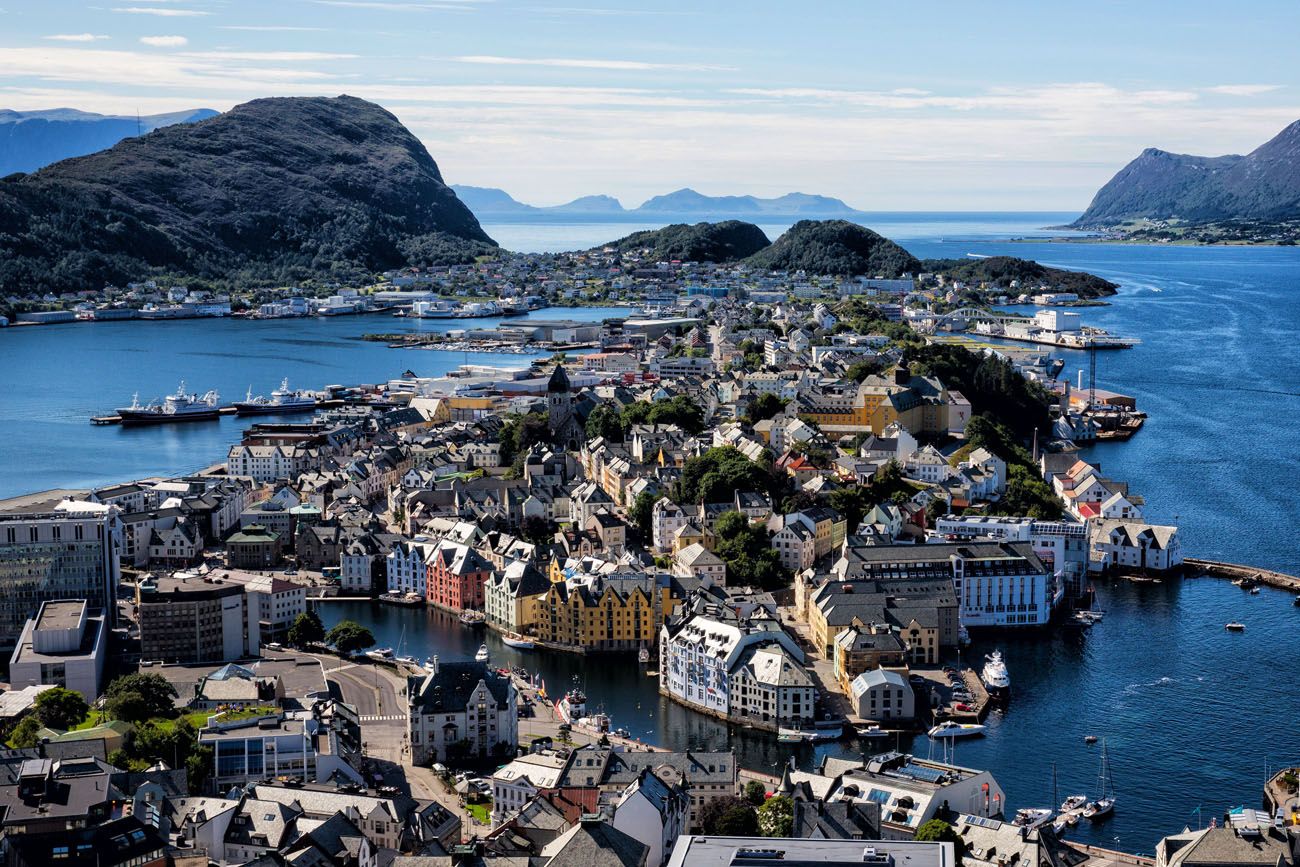
Ålesund
Where to Stay in Ålesund:
- Hotel 1904: A boutique hotel in the heart of Ålesund, built in 1904 and the city’s oldest hotel. The Art Nouveau styling makes it one of the most characterful places to stay in Norway.
- Hotel Noreg: A solid mid-range choice in the city center, well located for exploring on foot.
- Apartments in Ålesund: There is a very good selection of apartments for those wanting more space.
Day 2: Ålesund, Trollstigen, and Geirangerfjord
Total Driving Distance: 194 km
Total Driving Time: 3.5 hours
Start the morning with an hour or two finishing up Ålesund.
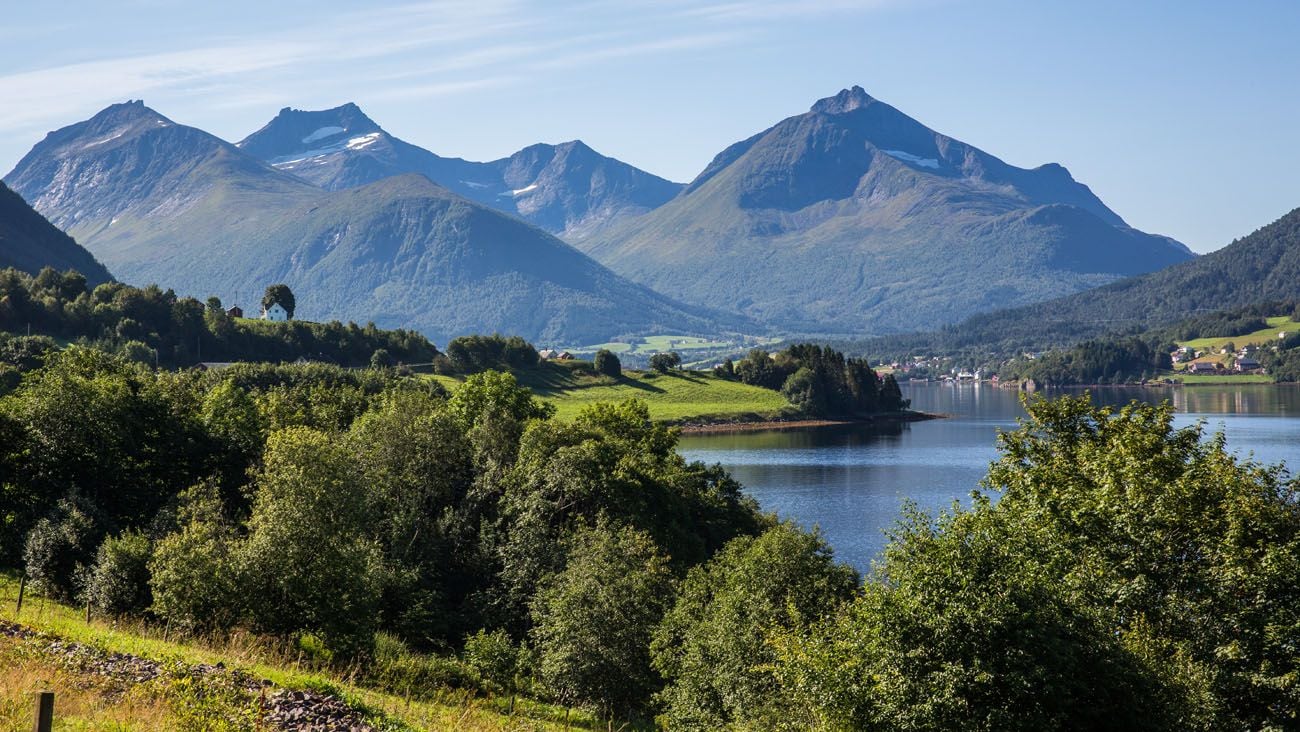
Scenery on the drive between Ålesund and Åndalsnes
From Ålesund, drive to Åndalsnes. Have lunch in town and consider making the climb up to the Rampestreken Viewpoint: 700 meters of elevation gain and about 3 hours round trip, but the views over the Romsdal valley on a clear day are stunning.
We hiked the full Romsdalseggen Ridge Trail that passes through here and it’s one of the best hikes in Norway.
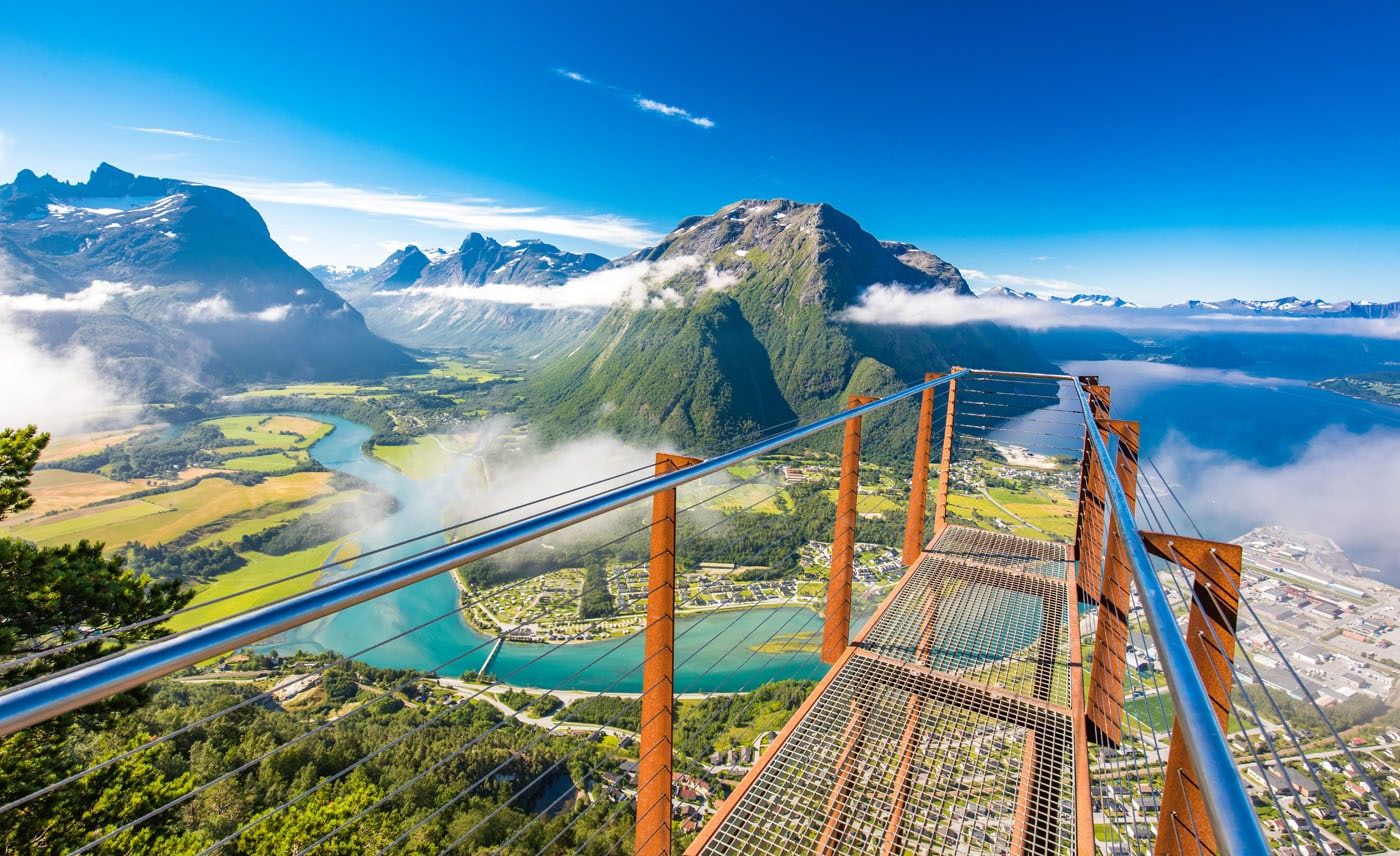
Rampestreken Viewpoint
From Åndalsnes, drive to Trollstigen. Known as the Troll’s Ladder, this famous switchback road is one of the most thrilling drives in Norway. Traveling in this direction you’ll drive up the switchbacks. Stop at the top to take in the view before continuing on.
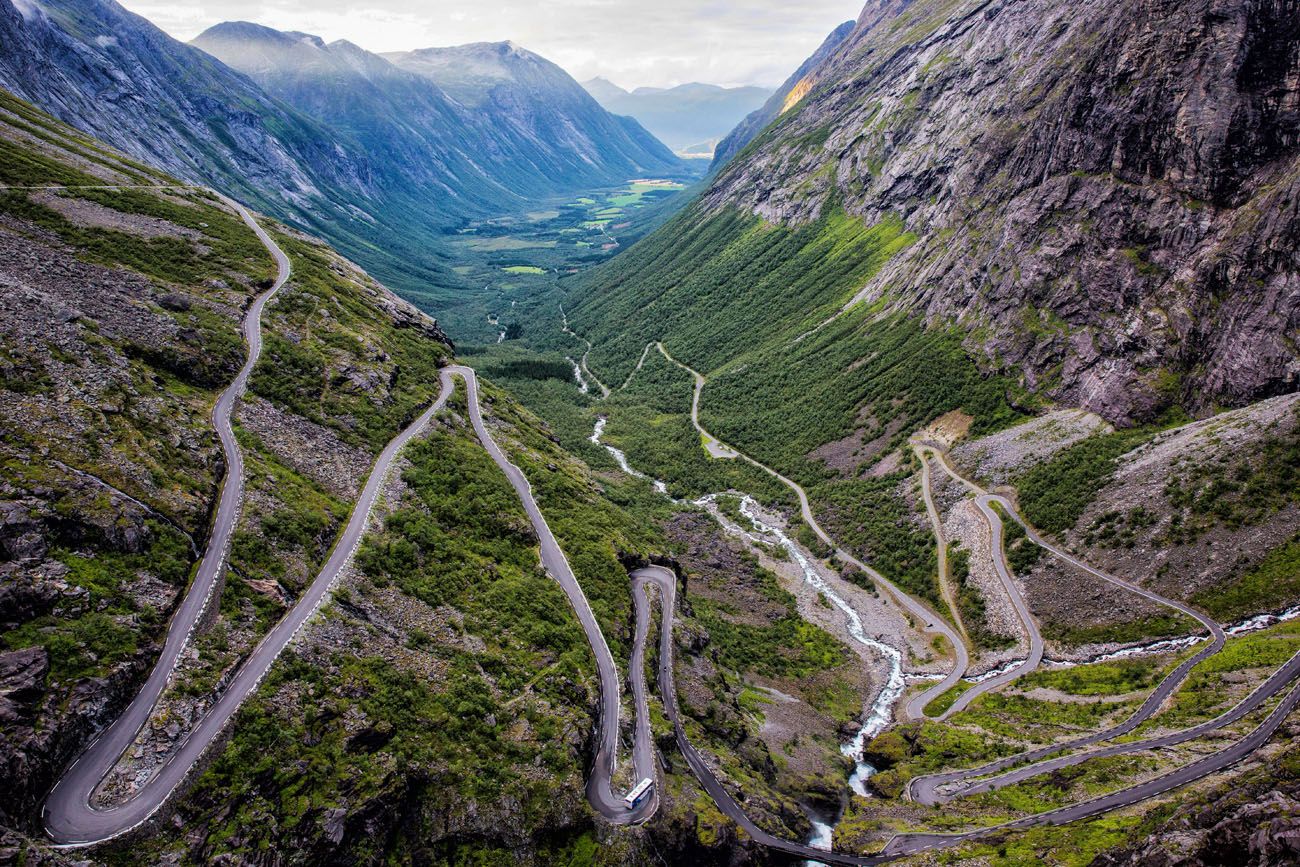
Trollstigen
Finally, drive to Geirangerfjord and check into your hotel. A word of advice: Norway’s weather is unpredictable and Geiranger is no exception. When we stayed here, it was wet and foggy and at times we could barely see the fjord from our hotel room. If that happens to you, don’t let it ruin the experience. Embrace it, find a good spot at the hotel bar, and hope for clearer skies tomorrow.
Where to Stay in Geiranger:
- Hotel Utsikten: We stayed here for the views over Geirangerfjord, which are spectacular on a clear day. The hotel is within walking distance of town, where you can rent kayaks, and we genuinely enjoyed our stay despite the weather working against us.
- Grande Fjord Hotel: A highly rated hotel right on the fjord, with rooms ranging from singles to studios and a panoramic 6th floor restaurant.
- Hotel Union Geiranger Resort & Spa: A beautiful spa hotel with rooftop garden, indoor and outdoor pools, and a children’s playground.
- Grande Hytteutleige og Camping: Waterfront one and two bedroom cottages for those wanting a more self-contained stay.
Day 3: Geirangerfjord
Geirangerfjord is a UNESCO World Heritage Site and one of the most dramatic landscapes in all of Norway, with steep cliffs, tumbling waterfalls, and fjord water stretching as far as you can see. Even in the rain, it’s stunning. And we say that from experience. Our visit was overcast and drizzly for most of the day, and we still loved it.
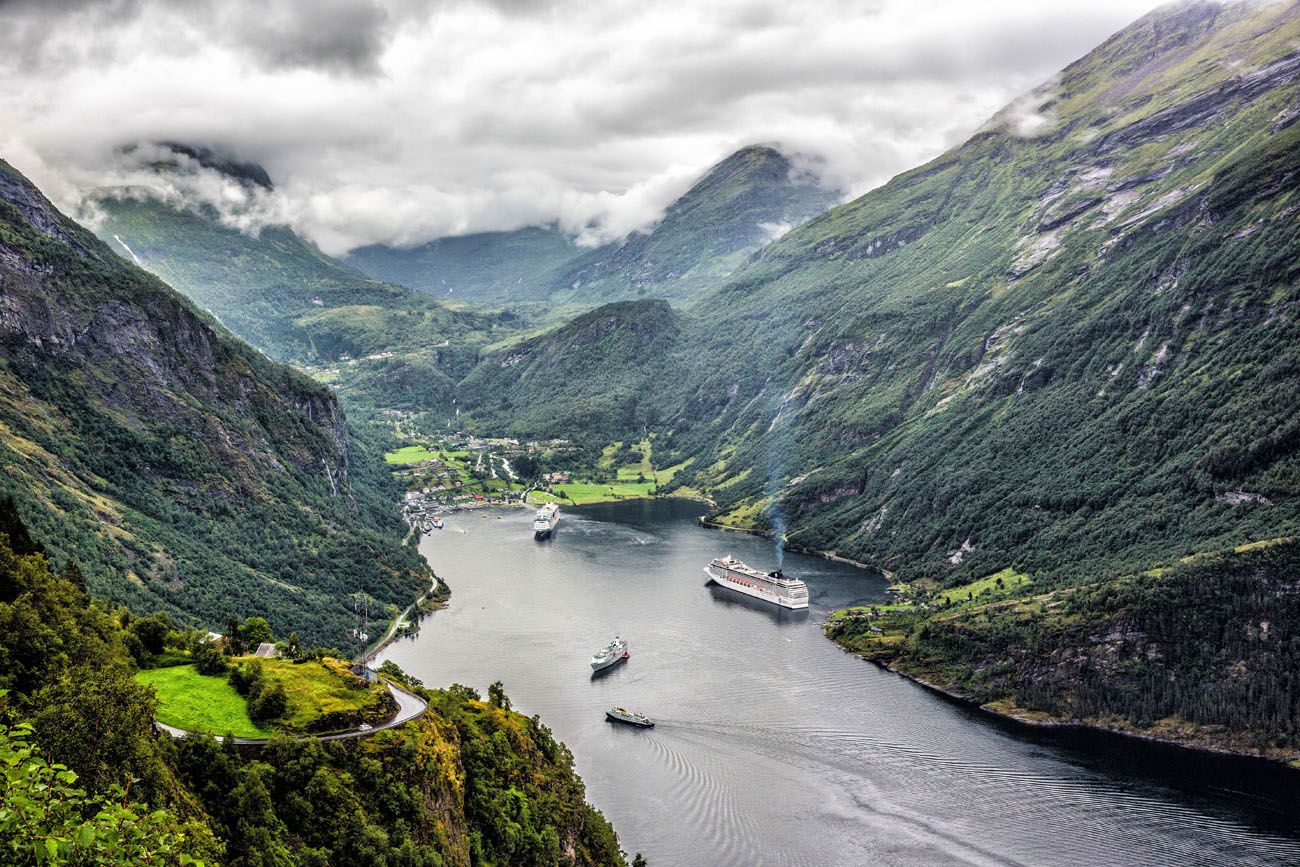
Geirangerfjord
Go kayaking if you can. We paddled the fjord in light drizzle and we spotted dolphins, which we absolutely did not expect. The waterfalls look incredible from water level in a way you simply can’t appreciate from the road.
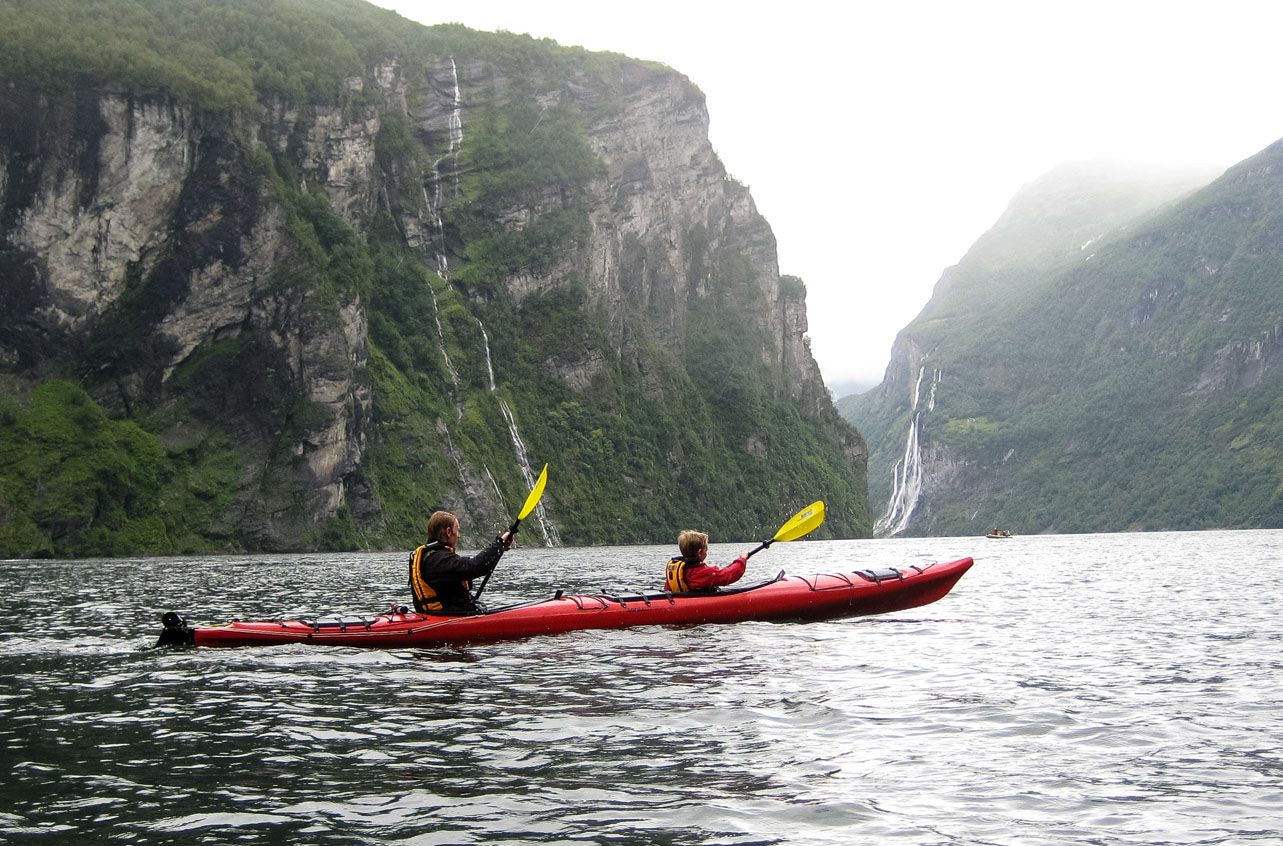
When you’re done on the water, visit the viewpoints. The three main ones around Geirangerfjord are Flydalsjuvet, Ørnesvingen (the Eagle’s Bend), which you’ll actually pass on your way into Geiranger if you drove in via Trollstigen, and Dalsnibba. Dalsnibba, billed as Europe’s highest fjord view accessible by road, is worth saving for tomorrow’s drive to Flåm.
Day 4: Drive to Flåm
Total Driving Distance: 280 km
Total Driving Time: 6 hours
Yes, it’s a lot of driving. But the route from Geiranger to Flåm is one of the most scenic in Norway, and there are a few worthwhile stops along the way to break it up.
Dalsnibba Viewpoint: Just south of Geiranger, this is Europe’s highest fjord viewpoint accessible by road, with sweeping views over Geirangerfjord from 1,500 meters above sea level. One important caveat: only stop here if the weather is clear. We made the drive up on a rainy day and saw nothing but clouds. Check conditions before committing to the detour.
Old Strynefjell Mountain Road and Buldrefossen: A scenic drive along a historic high mountain road with a quick stop at a waterfall. A nice way to stretch your legs mid-drive.
Jostedalsbreen National Park Center: Worth a stop to learn about Jostedalsbreen, the largest glacier in mainland Europe. Even if you don’t go inside, the landscape here is dramatic.
By the time you reach Flåm you’ll have earned a good dinner and a comfortable bed.
Where to Stay in Flåm:
- Svingen Guesthouse: A serene option with a garden and terrace and stunning panoramic fjord views; gets excellent reviews.
- Flåm Marina: Right next to the marina with magnificent views over the Sognefjord and free WiFi; a great base for exploring the area.
- Flåm Ferdaminne: Family rooms with balconies and terraces, ideal for those traveling with kids.
Day 5: Norway in a Nutshell and Bergen
Total Driving Distance: 167 km
Total Driving Time: 2.5 hours
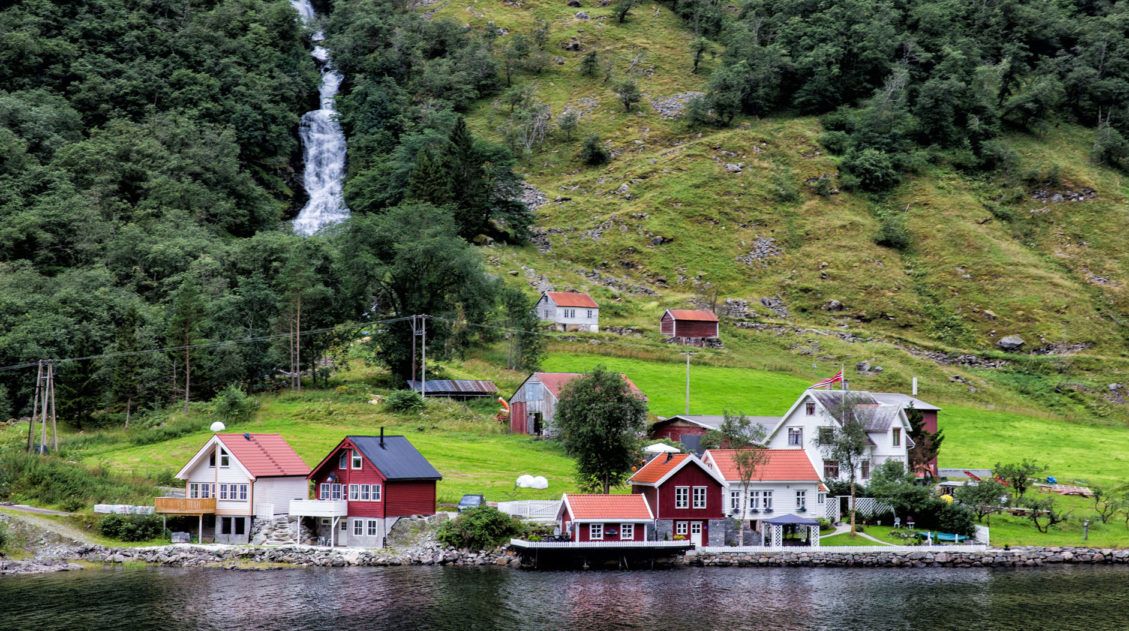
Norway in a Nutshell is one of the most popular excursions in the country for good reason. It combines a fjord cruise on Nærøyfjord (a UNESCO World Heritage Site and the narrowest fjord in Norway) and Aurlandsfjord with a ride on the Flåmsbana, one of the most scenic railway journeys in the world. It’s a classic first-timer experience that genuinely lives up to the hype.
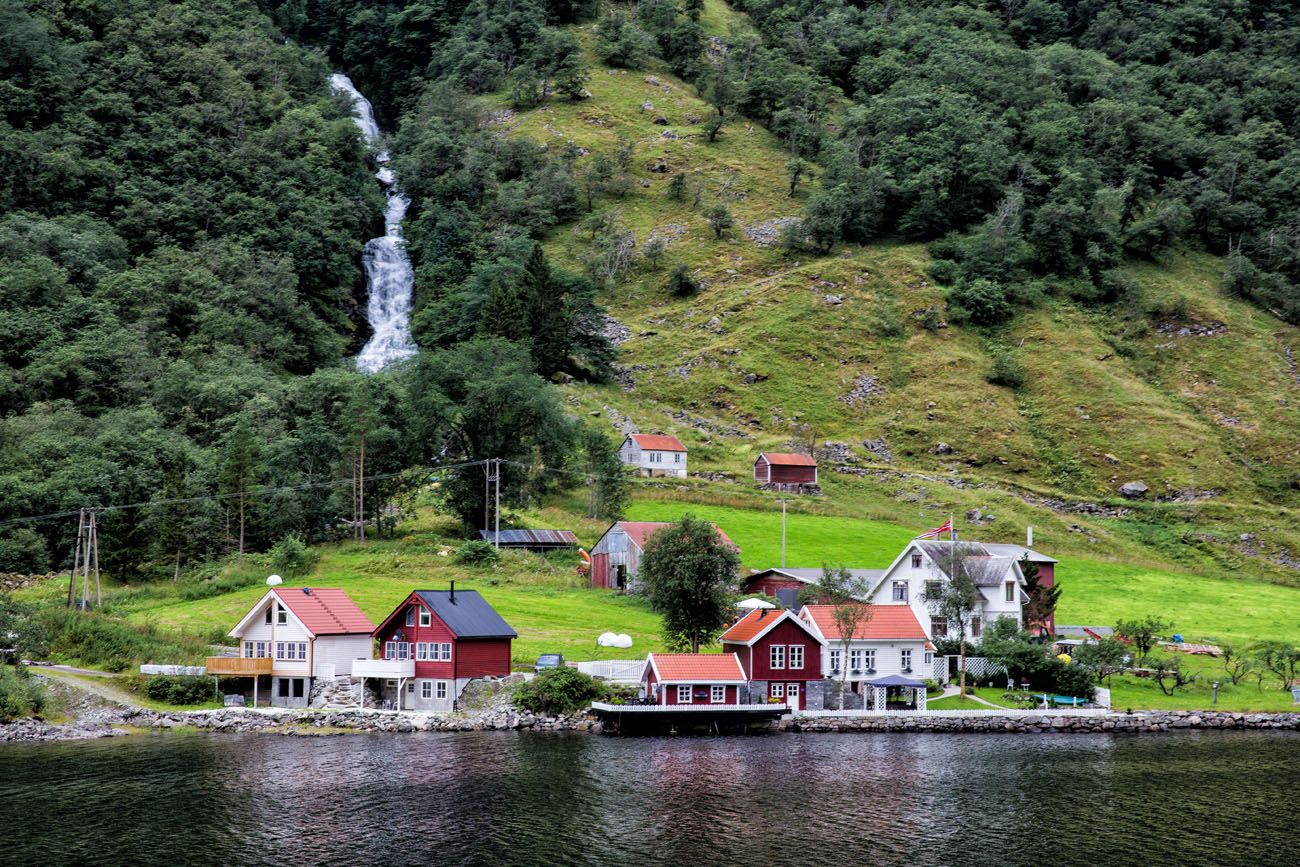
Naeroyfjord
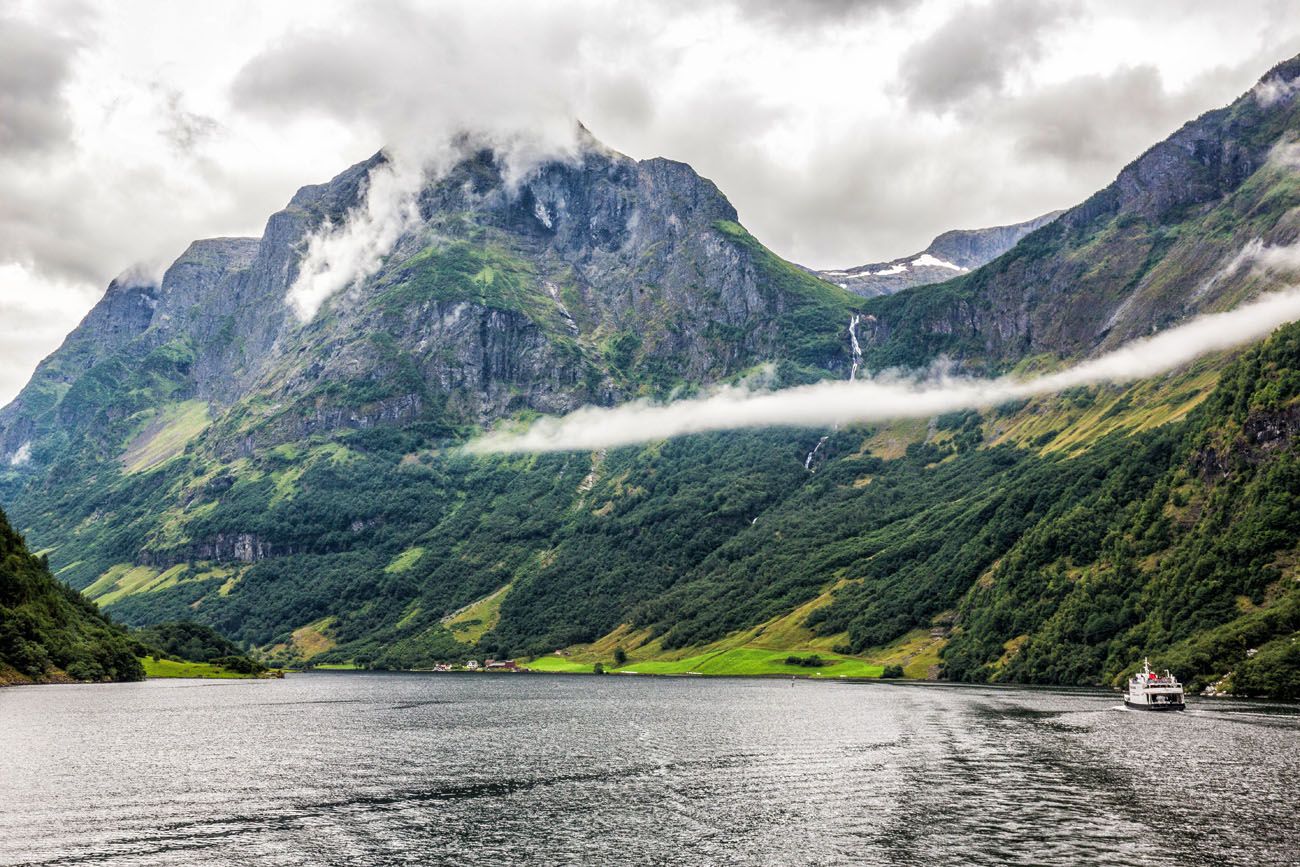
Since you have your own car, you don’t need to book the full packaged tour. You can piece it together yourself and save money in the process.
From Flåm, ride the Flåmsbana to Myrdal and back, about 2 hours round trip, and cruise Nærøyfjord and Aurlandsfjord by boat, returning to Flåm by bus in about 2.5 hours. You can do both or choose one depending on your time and budget.
For full details on how to book independently, including pricing and ticket links, see our guide ↓
How to Do Norway in a Nutshell on Your Own
Get all of the details on how to book your own tickets, including pricing and links to purchase your tickets.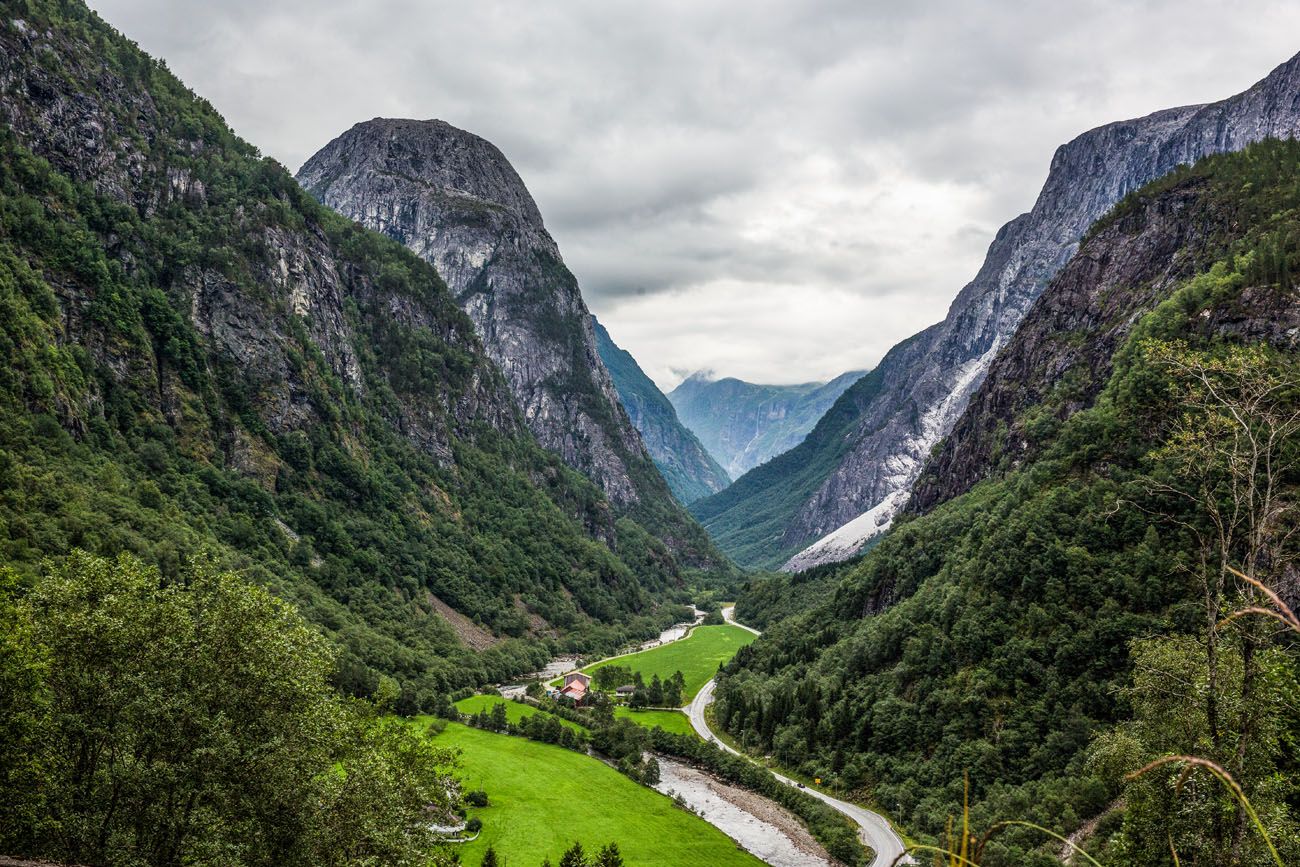
The view of Naeroydalen from the Stalheim Hotel
From Flåm, it’s a 2-hour drive to Bergen. Get settled into your hotel and spend the evening wandering the waterfront, grabbing dinner, and soaking in one of Norway’s most beautiful cities before tomorrow’s flight north.
Where to Stay in Bergen:
- Opus XVI: A member of Small Luxury Hotels of the World and the top pick for those wanting an indulgent stay in Bergen.
- Hotel Park Bergen: A solid mid-range option in the city center, well located for exploring on foot.
- Høyegaarden: Spacious apartments with free WiFi, family rooms, and free private parking — sits slightly outside the city center but gets excellent reviews and is a great option for families.
Day 6: Bergen, Fly to the Lofoten Islands
Spend the morning in Bergen. In the afternoon, fly to the Lofoten Islands and get settled into your hotel.
For more details, refer to day #6 in the Hiker’s Itinerary (itinerary #1).
Day 7, 8 & 9: Lofoten Islands
If the first half of this itinerary was about fjords, scenic drives, and iconic experiences, the Lofoten Islands are where you get your hiking fix. The trails here are short but steep, with jaw-dropping views from every summit, and the islands themselves are so beautiful that even the drives between trailheads feel like highlights.
Refer to the Hiker’s Itinerary for more details.
Day 10: Fly Home
Begin your journey home (or continue on to your next destination).
Planning Tips and Itinerary Modifications
Flight Delays To/From the Lofoten Islands
Bad weather can and does disrupt flights in the Lofoten Islands. This is not a rare occurrence, and it’s worth building some flexibility into your plans around departure day.
We experienced this firsthand. On the day we left Leknes, rainy weather cancelled our flight. We were bussed to Svolvaer, rerouted on a short hop to Bodø, and then took a second flight to Oslo before continuing to our next destination. It ended up being four flights in one day. We got lucky and made it on schedule, but just barely.
If you have a tight international connection out of Oslo on your final day, consider building in an extra buffer, either by flying to Oslo the evening before or by giving yourself a long layover in Oslo before your international flight.
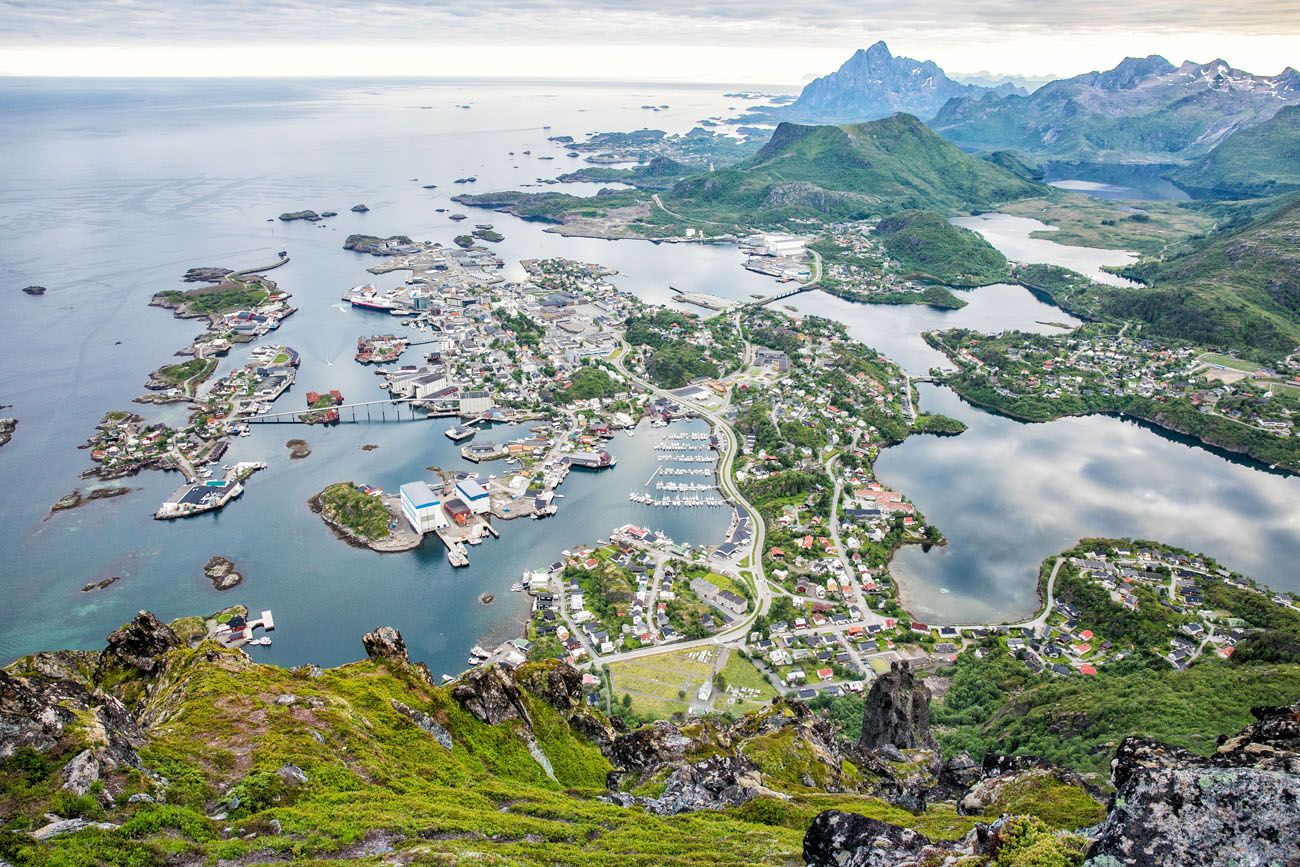
Overlooking Svolvaer from Svolvaer Fløya in the Lofoten Islands
How to Modify this Itinerary
With More Time
More time in the Lofoten Islands. We spent five days here and would have loved to have had more time. Extra days give you more time to go hiking and adds some “contingency time” if you have rainy days while you are here.
Tromsø. With two more days, you can drive from the Lofoten Islands to Tromsø and then spend one day in Tromsø.
Oslo. Add a day in Oslo at the beginning or end of the itinerary to tour the city.
The Atlantic Road. The Atlantic Road is another very scenic drive in Norway. On itinerary #2, you can add one day and drive the Atlantic Road from Ålesund.
Hike Romsdalseggen Ridge. On itinerary #2, you hike Romsdalseggen Ridge, a challenging but spectacular hike, from Åndalsnes. To do this, plan to stay overnight in Åndalsnes before and after the hike. Learn more in our article on how to hike Romsdalseggen Ridge.
With Less Time
I do not recommend doing this itinerary unless you have a full ten days.
There is a lot to see and do in the Lofoten Islands, and to make it worth the time and expense of flying here, I recommend that you have a full 3 days.
It’s almost impossible to shorten the fjord region of these itineraries without creating very long days filled with long drives and a packed hiking/sightseeing schedule.
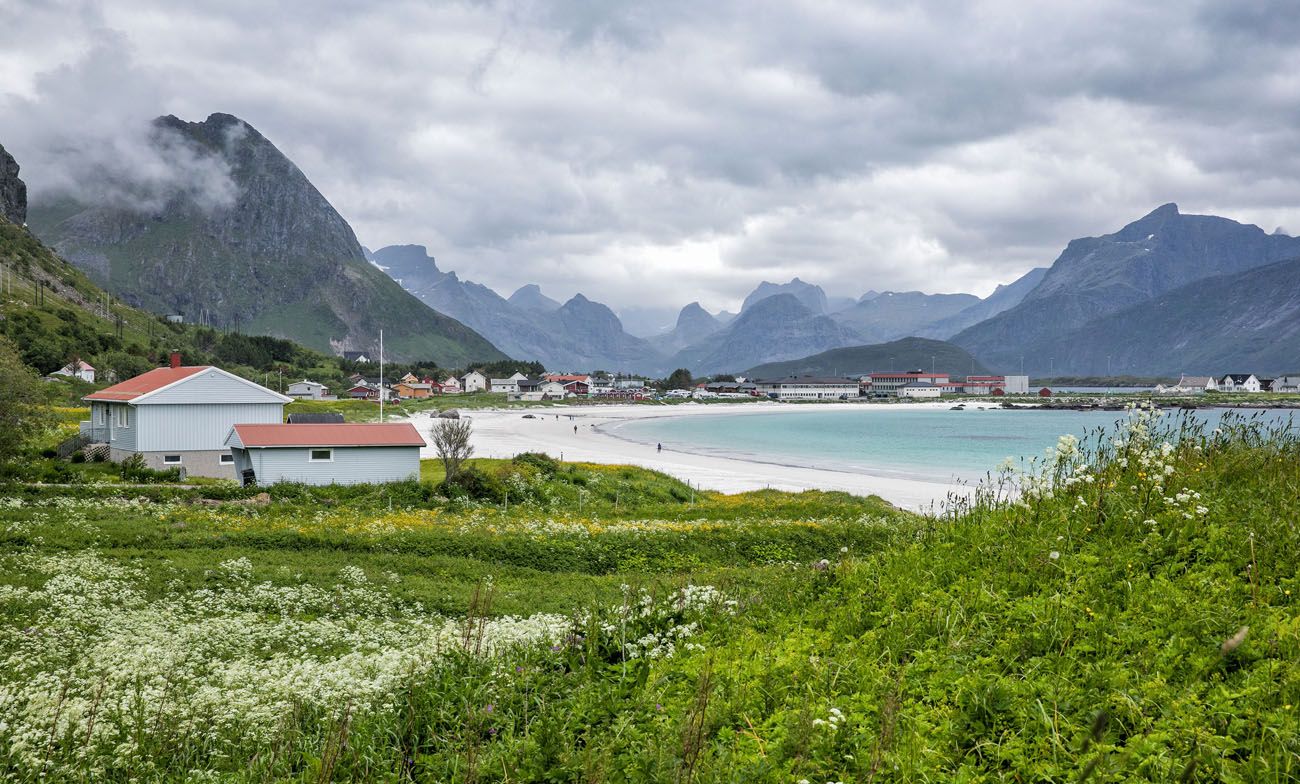
Ramberg Beach in the Lofoten Islands
Frequently Asked Questions
Can I do the Hiker’s Itinerary in reverse, starting in the Lofoten Islands and ending in Stavanger?
Yes, this works well logistically. Fly into Leknes or Svolvaer first, spend three days in the Lofoten Islands, then fly to Stavanger and work your way through the fjord region. The main advantage is that you get the long travel day out of the way early when you’re fresh, and you end the trip with the big hikes, which some people prefer.
Can I swap the order of the hikes on the Hiker’s Itinerary?
You can, but the order as written is logical for minimizing driving. Kjeragbolten and Pulpit Rock are both near Stavanger, while Trolltunga is on the way to Bergen. Rearranging the order would likely add significant driving time to already long days.
Is it possible to do these itineraries without a rental car?
It’s possible but not recommended. Public transportation connects major towns, but many of the trailheads and viewpoints on these itineraries are not well served by buses, especially outside peak season. A rental car gives you the flexibility these itineraries require. For more information on getting around Norway by public transport, visit the Visit Norway website.
How many internal flights will I need to book?
For both itineraries, plan on at least two internal flights: one to get into the fjord region and one to get from the fjord region to the Lofoten Islands. Depending on your routing, you may need additional connections. Book these as early as possible, particularly flights to and from the Lofoten Islands, which sell out well in advance during summer.
Can I add Oslo to either itinerary?
Yes, Oslo makes a natural add-on at the beginning or end of either itinerary. Most international flights arrive in Oslo anyway, so spending a day or two there before flying on to Stavanger or Ålesund is easy to arrange.
Is Norway expensive?
Norway is one of the most expensive countries in Europe. Expect to pay $30–$40 USD for a main course at dinner, $10+ for a beer, and significant costs for rental cars, internal flights, and accommodation. Budget accordingly, but in our experience, Norway is worth every penny.
Plan Your Trip to Norway
If these itineraries have you excited to start planning, here are the resources to help you go deeper into each part of the trip.
For the fjord region, our 10-day southern Norway itinerary covers the full fjord experience: Bergen, Stavanger, Geirangerfjord, and four incredible hikes, with much more detail than we can fit into a combo itinerary. If you ever make it back to Norway for a second trip, that’s the post to start with.
For the Lofoten Islands, our Lofoten Islands itinerary covers how to plan anywhere from two days to a full week on the islands, with recommendations organized by location. And if you want to go even deeper on northern Norway beyond the Lofoten Islands, our 10-day northern Norway itinerary covers the full road trip from Tromsø through Senja and the Vesterålen Islands.
For inspiration on what else to add to your trip, read our post about the best things to do in Norway, and our roundup of the best hikes in Norway is the perfect starting point if you want to go deeper on the trails beyond what these itineraries cover.
And for big-picture trip planning, how to get around, what to budget, when to go, and where to start, our Norway Travel Guide pulls together everything we’ve learned across multiple trips to the country.
Are you planning a trip to Norway? Comment below if you have any questions about these itineraries or how to spend 10 days in Norway.
More Places to Visit in Norway
Best Things to Do in the Lofoten Islands: 16 Epic Experiences
We arrived in the Lofoten Islands after driving down from the Vesterålen Islands, and on our very first day, we climbed Svolvaergeita and hiked Svolvaer Fløya. It was a long, exhausting, unforgettable day, and somehow, it set exactly the right tone for everything that followed. By the time we left four days later, we were […]
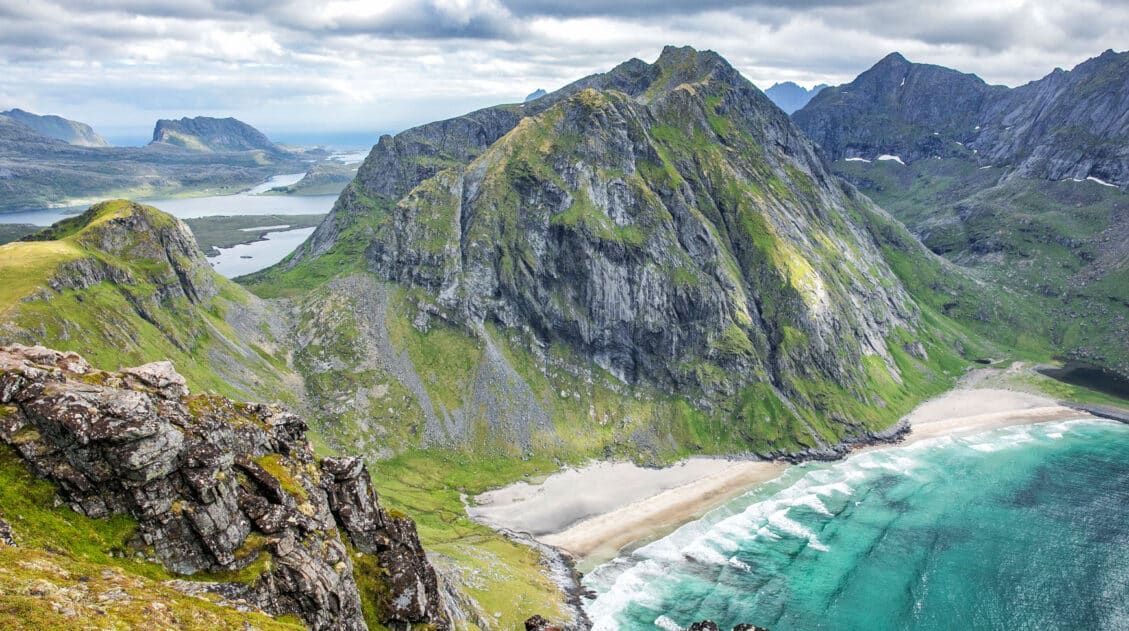
Norway Travel Guide: Fjords, Lofoten Islands & Svalbard
Norway Travel Guide There is nowhere quite like Norway. We’ve been to Norway twice, and both trips rank among the most spectacular we’ve ever taken. On our first visit, we road tripped through the fjord region in summer, hiking Trolltunga, Kjeragbolten, Pulpit Rock, and Romsdalseggen Ridge and cruising past some of the most dramatic scenery […]
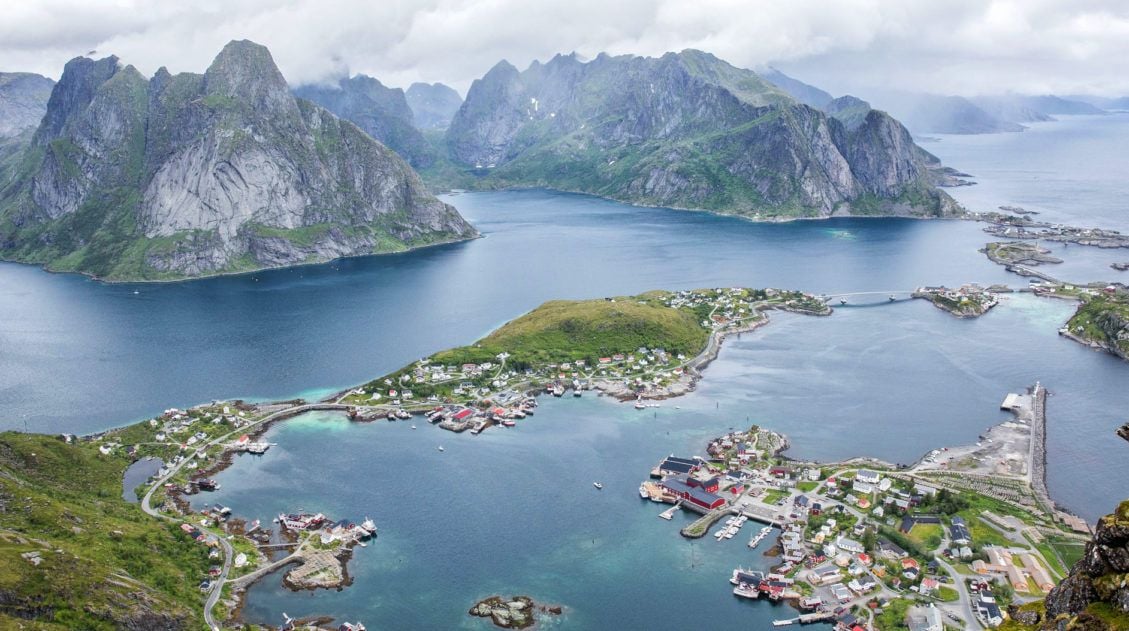
20 Best Things to Do in Norway: Fjords, Lofoten & Svalbard
Norway is one of our favorite countries in the world, and narrowing down the best things to do in Norway for this list was genuinely hard. There’s just so much worth doing. We’ve been twice so far, and we’re already dreaming about a third trip. Our first visit was a family trip with the kids […]
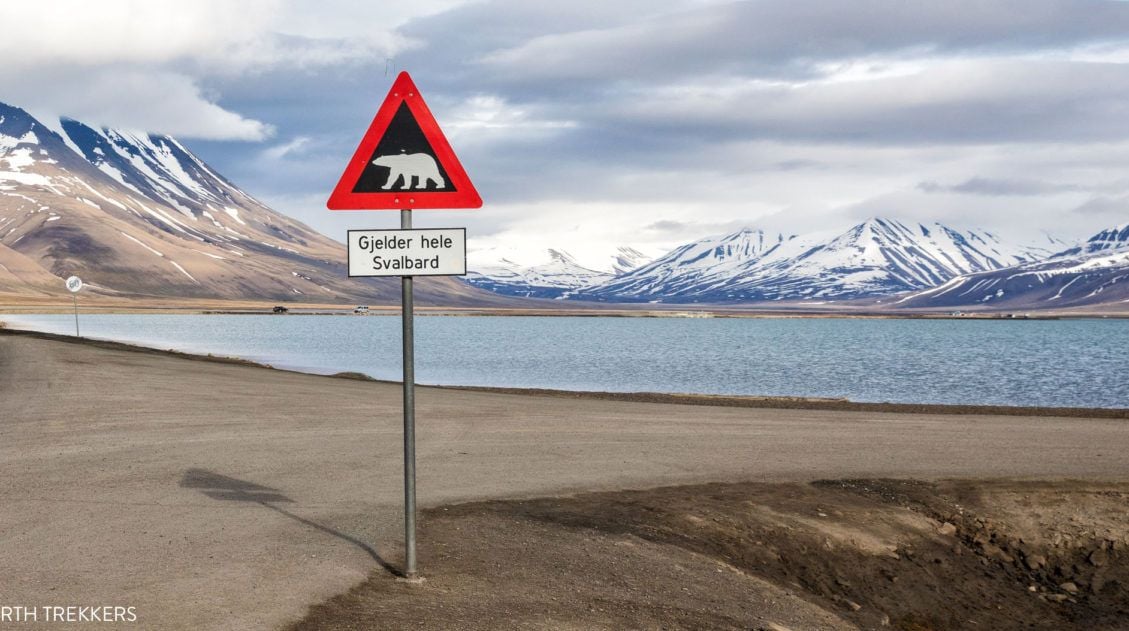
Svalbard Itinerary: 5 Days in the Arctic for First-Time Visitors
Svalbard. An Arctic playground where there are more polar bears than people, filled with glaciers, the Northern Lights, the midnight sun, and frozen tundra. It may look barren from a distance, but it is filled with arctic wildlife like reindeer, walrus, and polar bears. If you like the idea of exploring the great outdoors, your […]
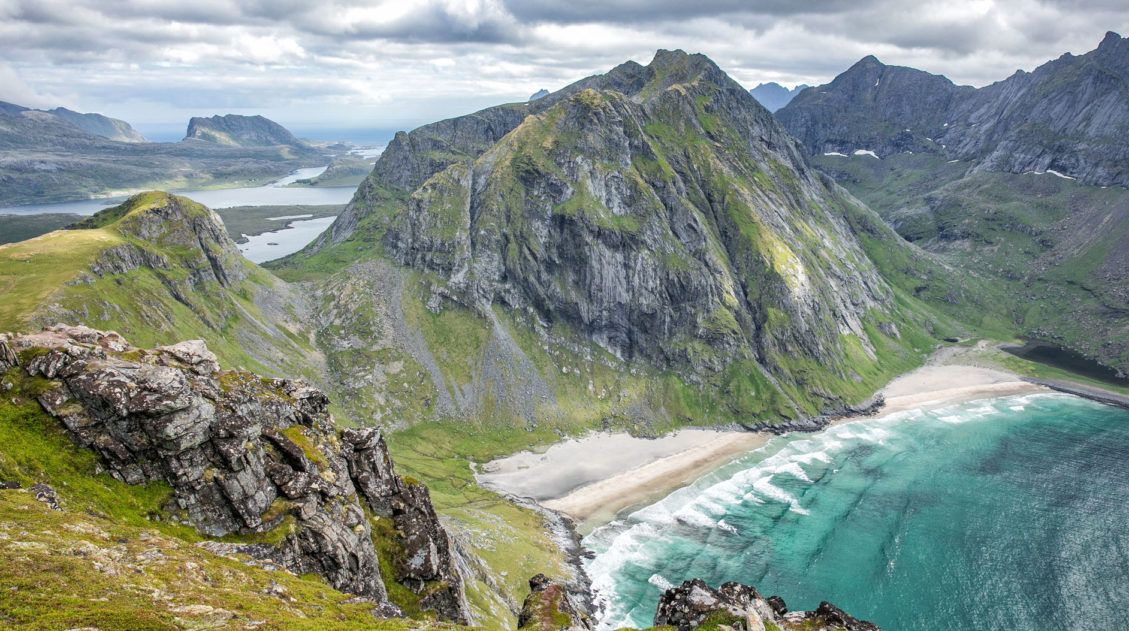
Hiking Ryten: Kvalvika Beach Views & Lofoten’s Mini-Trolltunga
The hike to Ryten has all of the ingredients of a perfect Lofoten Islands hike: sweeping vistas across the mountains and fjords, a fun but slightly strenuous hike to a mountain peak, and a breathtaking view of a white, sandy beach. The icing on the cake is a “mini Trolltunga,” an outcropping of rock where […]
Where to Stay in the Lofoten Islands: Rorbuer, Hotels & More
If you’re trying to figure out where to stay in the Lofoten Islands, the first thing you need to know is this: the islands have their own iconic accommodation type, and it’s unlike anything else in the world. Rorbuer, traditional Norwegian fishermen’s cabins, typically perched on stilts over the water, are the reason so many […]
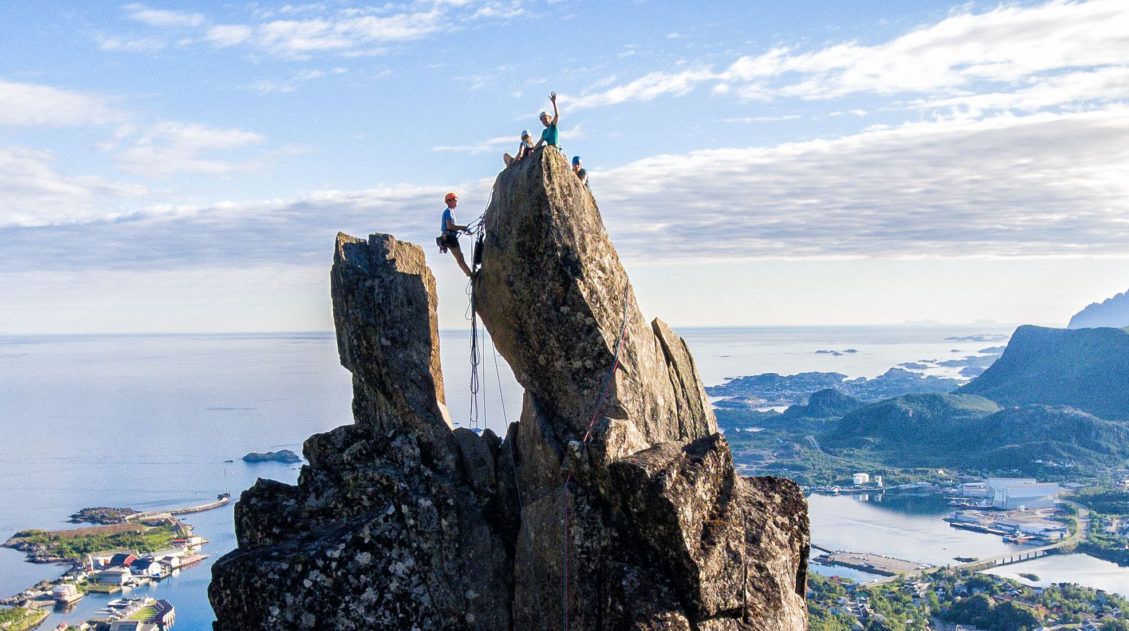
Complete Guide to Climbing Svolvaergeita in the Lofoten Islands
Svolvaergeita, also called “The Goat,” is a pinnacle of rock that is a popular rock climbing spot in the Lofoten Islands. It is named The Goat because of the two horns of rock that sit atop the rock. Those with a sense of adventure can climb to the top of Svolvaergeita and those who are […]
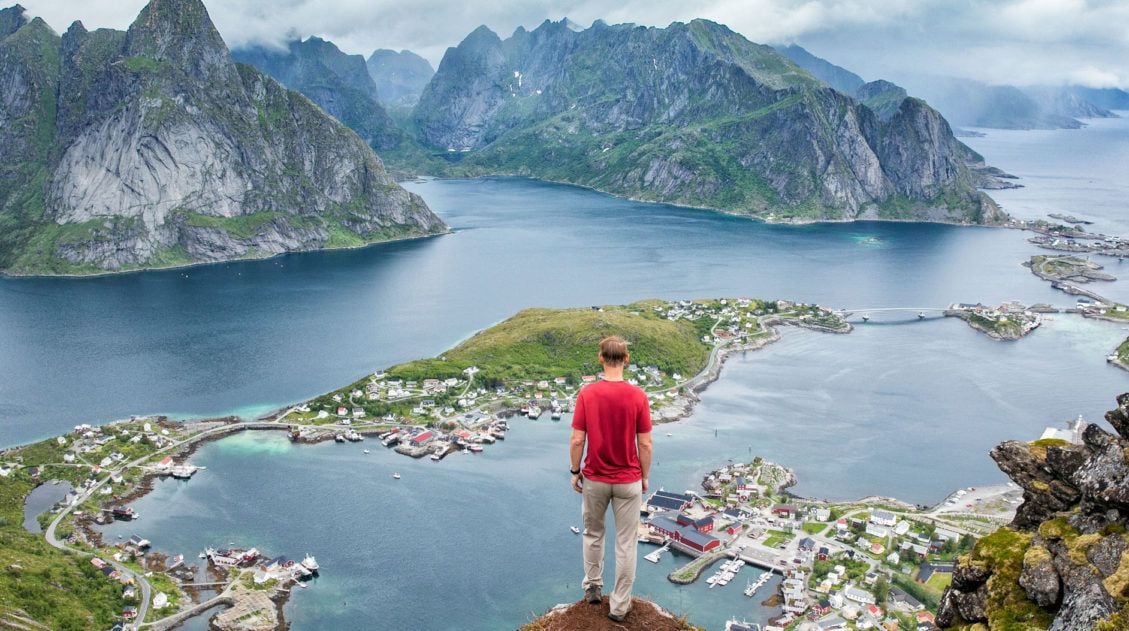
How to Hike Reinebringen (+ Where to Park)
Reinebringen, with its dazzling view over the fishing villages of Reine, Sakrisøy, and Hamnøy, is the most popular hike in the Lofoten Islands, and one look at the panorama from the top tells you exactly why. We hiked Reinebringen in 2018 with our kids, who were 13 and 15 at the time, before most of […]
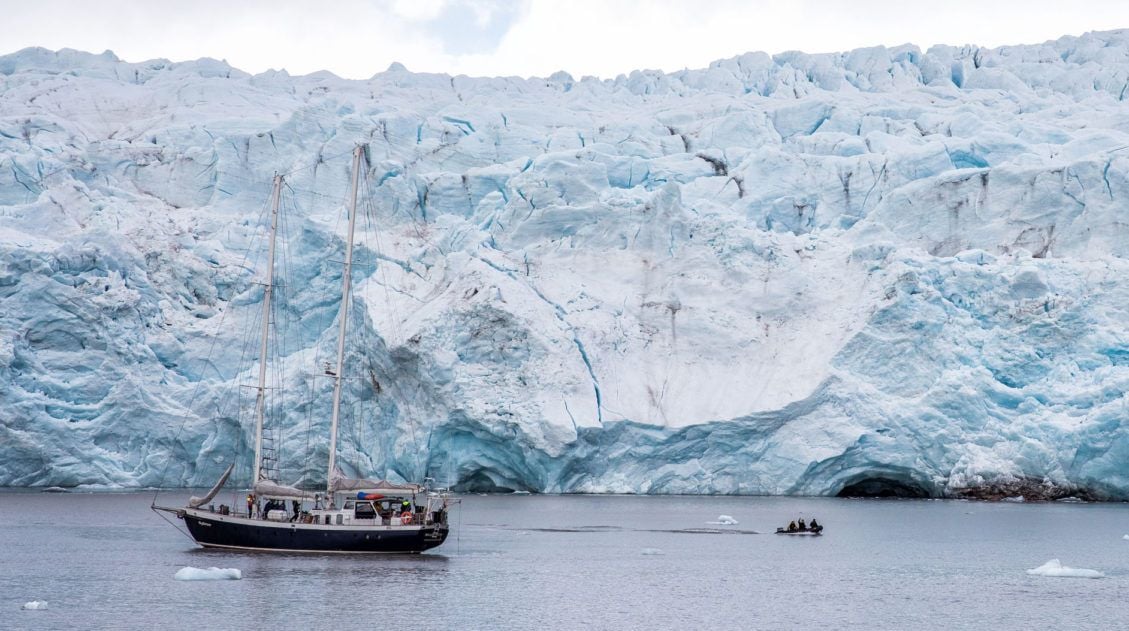
Our Svalbard Budget: How Much Does it Cost to Visit Svalbard?
How much does it cost to visit Svalbard? The short answer: more than almost anywhere else we’ve traveled. We spent four days in Svalbard at the end of June 2018, cruising to an abandoned Russian mining town, kayaking past an active glacier, and hiking above Longyearbyen with a rifle-carrying guide (you can read our full […]
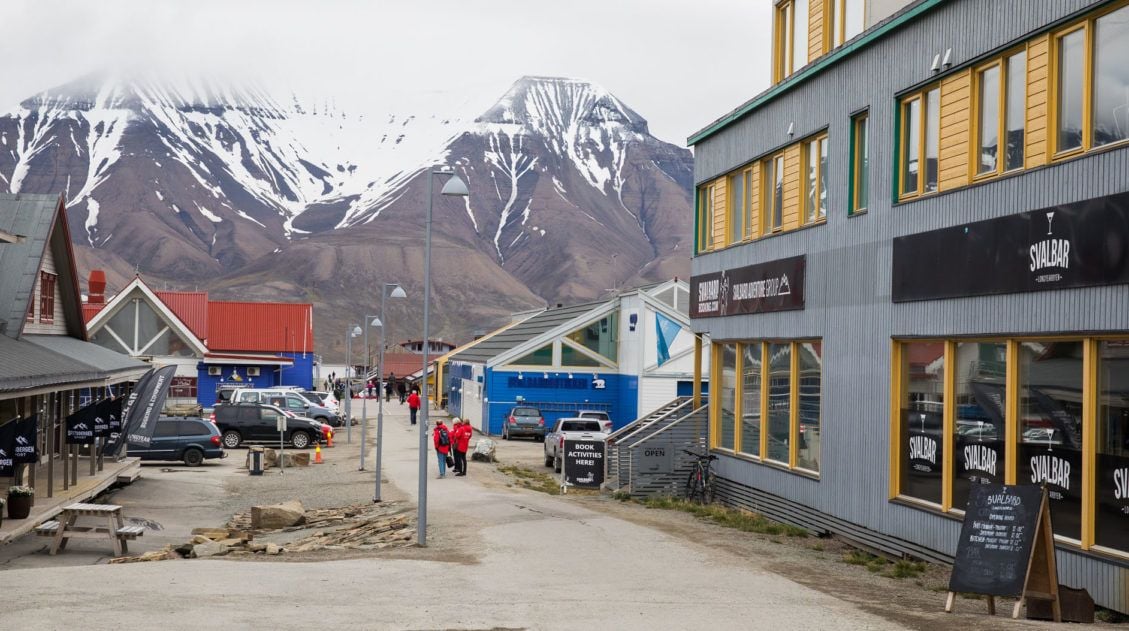
12 Best Things to Do in Longyearbyen, Svalbard
Longyearbyen is the world’s northernmost city. This is a town where the streets have no names, reindeer wander through town, and there are more snowmobiles than people. If you have plans to visit Svalbard, Longyearbyen is where you will eat, sleep, and fill your time in between arctic adventures. The best things to do in […]
15 Things You Should Know about Renting a Car in Europe
Some of the best moments of a European road trip happen spontaneously: a hilltop village you pulled over for on a whim, a coastal viewpoint you would have blown past on a train. Having your own car makes that possible. But before you hit the road, there are a few things about renting a car […]
Best Hikes in Europe: 25 Incredible Hikes for Every Level
From the dramatic cliffs of Norway to the jagged peaks of the Dolomites and the volcanic landscapes of Iceland, Europe is packed with some of the most unforgettable hikes in the world. In this guide, we share our favorite hikes in Europe, trails that stand out for their scenery, uniqueness, and overall experience from start […]
Travel Itineraries: Europe, Asia, Africa, Americas & Oceania
Let us take the guesswork out of planning your next trip. Here are sample itineraries from some of the most popular destinations around the world.


Comments 63