
Planning a Yellowstone itinerary can be challenging. The park is enormous, drive times are long, and wildlife sightings and traffic jams can throw even the best-planned day off schedule. In this guide, we provide Yellowstone itineraries for 1 to 5 days, with the sights grouped into logical driving routes to help you make the most of your time.
For most first-time visitors, we recommend spending 3 to 4 days in Yellowstone. This gives you enough time to see Old Faithful and the Upper Geyser Basin, Grand Prismatic Spring, the Grand Canyon of the Yellowstone, Mammoth Hot Springs, and the wildlife in Hayden and Lamar Valleys without spending every day racing from place to place.
But if you only have one day, don’t rule Yellowstone out. With an early start and a well-planned route, you can see a surprising amount of the park.
Our Yellowstone Experiences
We’ve visited Yellowstone four times, giving us the chance to experience the park in several very different ways. Two of our trips were multi-day stays, which gave us time to explore the geyser basins, hike, watch wildlife, and venture beyond the major sights. We’ve also visited Yellowstone twice with just one day: once on a day trip from Grand Teton National Park and once while driving through Yellowstone as part of a longer road trip.
Those trips have given us a good sense of what is realistic with one, two, three, four, or five days in Yellowstone, and which experiences are worth prioritizing when time is limited. We’ve also visited 56 of the 64 US national parks, so we’ve planned a lot of national park trips over the years, but Yellowstone remains one of the most complicated parks to plan well simply because of its size.
Below, you’ll find our recommended Yellowstone itineraries for 1 to 5 days, along with maps, where to stay, optional hikes and scenic stops, and tips we’ve learned from our visits. We’ll also cover how many days you need in Yellowstone, the best time to visit, and the practical information you need to plan your trip. All photos in this post are our own.
The Essentials
DON’T MISS | Old Faithful, Grand Prismatic Spring, wildlife sightings in Lamar and Hayden Valleys, Grand Canyon of the Yellowstone
HOW LONG | 3 to 5 days
WHEN TO GO | June through October
ENTRANCE FEE | $35; non-US residents 16 years or older pay an additional $100 fee
RESERVATION | Currently, no advance reservation or timed entry permit is necessary
October 2026 Update: In August, this itinerary received a major overhaul based on our most recent trips to Yellowstone. We expanded and reorganized the 2-, 3-, 4-, and 5-day itineraries, added new hikes, waterfalls, and scenic stops, and changed several daily routes to make them more efficient. In October, we changed the national park count from 63 to 64, with the addition of Chiricahua National Park.
Yellowstone Itinerary: At a Glance
| Time in Yellowstone | Best For | Our Take |
| 1 Day | Seeing Yellowstone’s biggest highlights | Fast-paced, but very doable with a good plan. You can see and do a surprising amount in one day. |
| 2 Days | A short trip focused on the must-see sights | Busy but rewarding. You’ll see many of Yellowstone’s top sights, but there won’t be much time for hiking or detours. |
| 3 Days | First-time visitors who want to see the major sights | The minimum we recommend for most visitors. Three days gives you time for the geyser basins, canyon, wildlife, and northern Yellowstone. |
| 4 Days | Most first-time visitors | Our top recommendation. Four days gives you a much better pace plus time for short hikes, waterfalls, and less-visited sights. |
| 5 Days | Travelers who want a deeper Yellowstone experience | Ideal if you have the time. You’ll have more flexibility for hiking, wildlife watching, scenic drives, and additional stops. |
About this Yellowstone Itinerary
This Yellowstone itinerary works best during the months of June through October. From early November through late-May, many of the park roads will be closed due to snowfall. It’s still possible to visit the park in the winter, but you will get around by snowmobile or snow coach, which of course will be a much different experience than the summer months. You can get the status of road openings and closures here, a good idea if you are contemplating a visit in May or October into November.
With that being said, you should know that crowds are huge during the summer months (especially July and August). In 2025, Yellowstone was the 3rd most visited park in the USA, receiving 4.8 million visitors.
If you plan to visit Yellowstone National Park for at least three days, we recommend staying in two different locations. Yes, it can be a hassle packing and unpacking, but Yellowstone is so large that switching accommodations can minimize travel time in the park. I give recommendations on where to stay in each itinerary. However, if you want to stay in one place for your entire visit, Canyon Village is the most centrally located village in Yellowstone.
Currently, you do not need an advance reservation to enter Yellowstone, but if you have plans to visit one of these other US National Parks, you will need to make a reservation in advance.
A Quick Geography Lesson
Yellowstone is the second largest US national park outside of Alaska. With over 2 million acres of land and 5 park entrances, this place is massive.
Yellowstone National Park is primarily located in Wyoming, although it does spill over, just a little bit, into Idaho and Montana.
If you look at the map of Yellowstone below, you will see that the network of roads inside the park forms a figure of eight. The main loop is called Grand Loop Road. Bisecting this loop, and making the park roads resemble a figure of eight, is Norris Canyon Road. The majority of sights you will visit are located on Grand Loop Road.
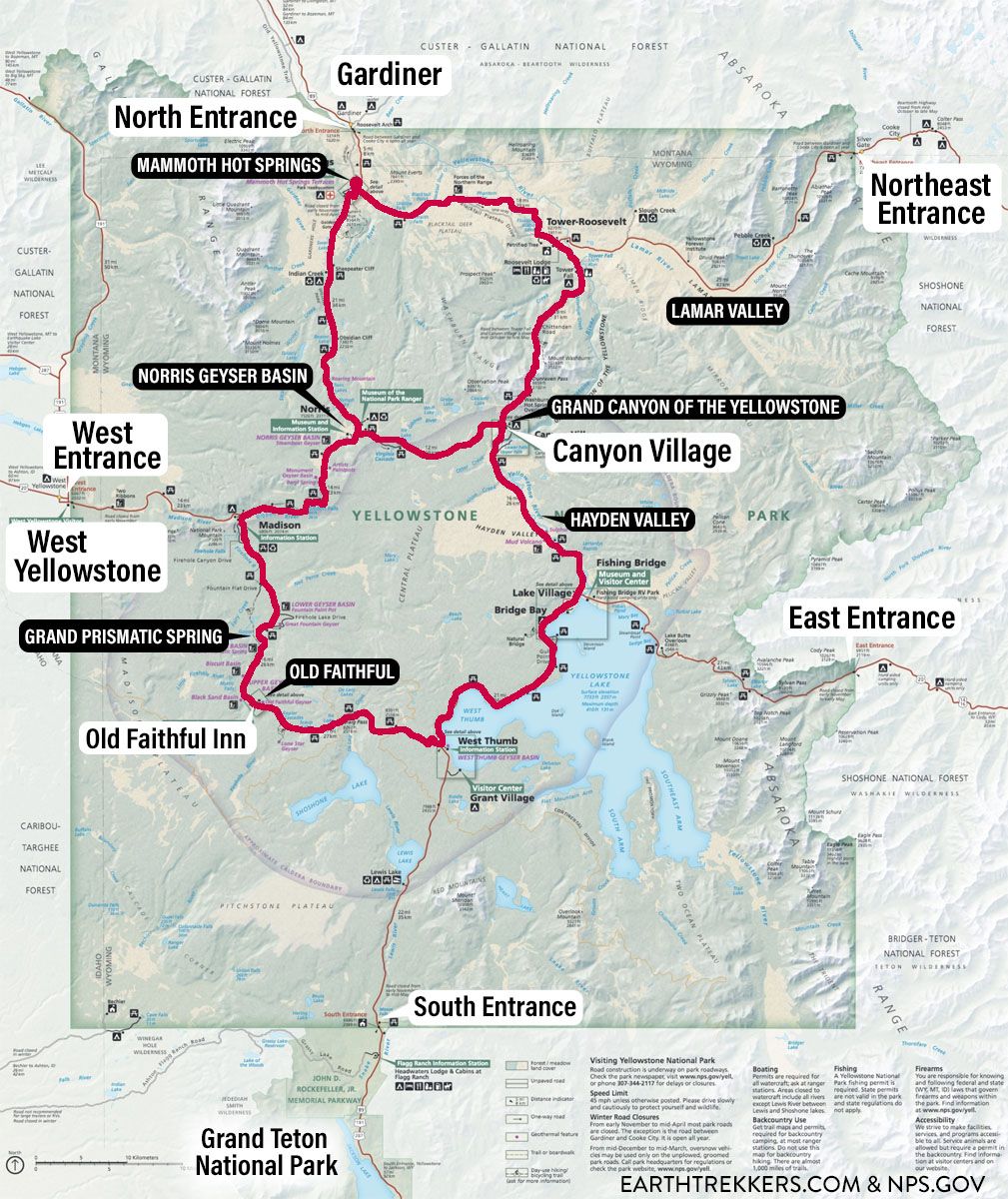
I modified this nps.gov map to highlight Grand Loop Road, the park entrances, and the main sights in Yellowstone. The pink lines are Grand Loop Road and Norris Canyon Road.
There are five park entrances, one on each side of the park (north, east, south, and west), with an additional entrance on the north side.
Here is an overview of where the top sites are located in Yellowstone:
Southwest: Old Faithful, Upper Geyser Basin, Grand Prismatic Spring
Northwest: Norris and Mammoth
Northeast: Lamar Valley and Tower
Central/east: Grand Canyon of the Yellowstone and Hayden Valley
South: Yellowstone Lake and West Thumb
Yellowstone Drive Times at a Glance
Yellowstone is enormous, and driving between the park’s major sights often takes longer than first-time visitors expect. For example, roughly 50 miles of road separates Old Faithful from the Grand Canyon of the Yellowstone.
Here are approximate drive times between some of the major areas in Yellowstone. These times assume normal driving conditions without sightseeing stops, wildlife jams, heavy traffic, or construction delays.
| Route | Approximate Drive Time |
| West Entrance → Madison Junction | 30 minutes |
| Madison Junction → Old Faithful | 35–45 minutes |
| West Entrance → Old Faithful | 1 hr 5 min–1 hr 15 min |
| Old Faithful → Grant Village/West Thumb area | about 40 minutes |
| Old Faithful → Canyon Village | about 1 hr 35 min–1 hr 45 min via Madison & Norris |
| Canyon Village → Norris Junction | 30 minutes |
| Norris Junction → Mammoth Hot Springs | 45 minutes |
| Canyon Village → Mammoth Hot Springs via Norris | about 1 hr 15 min |
| Canyon Village → Tower Junction | 50–60 minutes |
| Tower Junction → Mammoth Hot Springs | 40 minutes |
| Tower Junction → Northeast Entrance | 60 minutes |
| North Entrance/Gardiner → Mammoth Hot Springs | 15 minutes |
| South Entrance → Grant Village/West Thumb area | about 50 minutes |
PRO TRAVEL TIP: Treat these as minimum driving times. Bison in the road, wildlife sightings, crowded parking lots, road construction, and summer traffic can easily add time to your day. We’ve been caught in Yellowstone’s famous “animal traffic jams,” so we always build extra time into these itineraries.
Before your trip, check the current Yellowstone road conditions and construction delays. Roads can temporarily close because of weather, and construction projects may add significant delays.
How Many Days Do You Need in Yellowstone?
For most first-time visitors, we recommend spending 4 days in Yellowstone National Park. This gives you enough time to see the major geothermal areas, visit the Grand Canyon of the Yellowstone, look for wildlife in Hayden and Lamar Valleys, and add a few short hikes, waterfalls, or scenic stops without making every day feel rushed.
Three days is the minimum we recommend if Yellowstone is the main focus of your trip. With three full days, you can see nearly all of the park’s major highlights, but your days will be busy and there is less flexibility for hiking, longer wildlife stops, or unexpected delays.
If you have five days, even better. An extra day gives you more time to explore the Upper Geyser Basin, hike, revisit Lamar or Hayden Valley for wildlife, and add some of Yellowstone’s lesser-visited sights. It also gives you more flexibility if wildlife jams, road construction, or crowded parking lots slow you down.
Don’t skip Yellowstone just because you have limited time. We’ve visited the park twice with only one day, and with an early start and a well-planned route, you can see a surprising amount of Yellowstone in one day. You won’t see everything, but you can still visit several of the park’s most iconic places.
The itineraries below are designed so that each additional day adds new experiences rather than simply slowing down the previous itinerary.
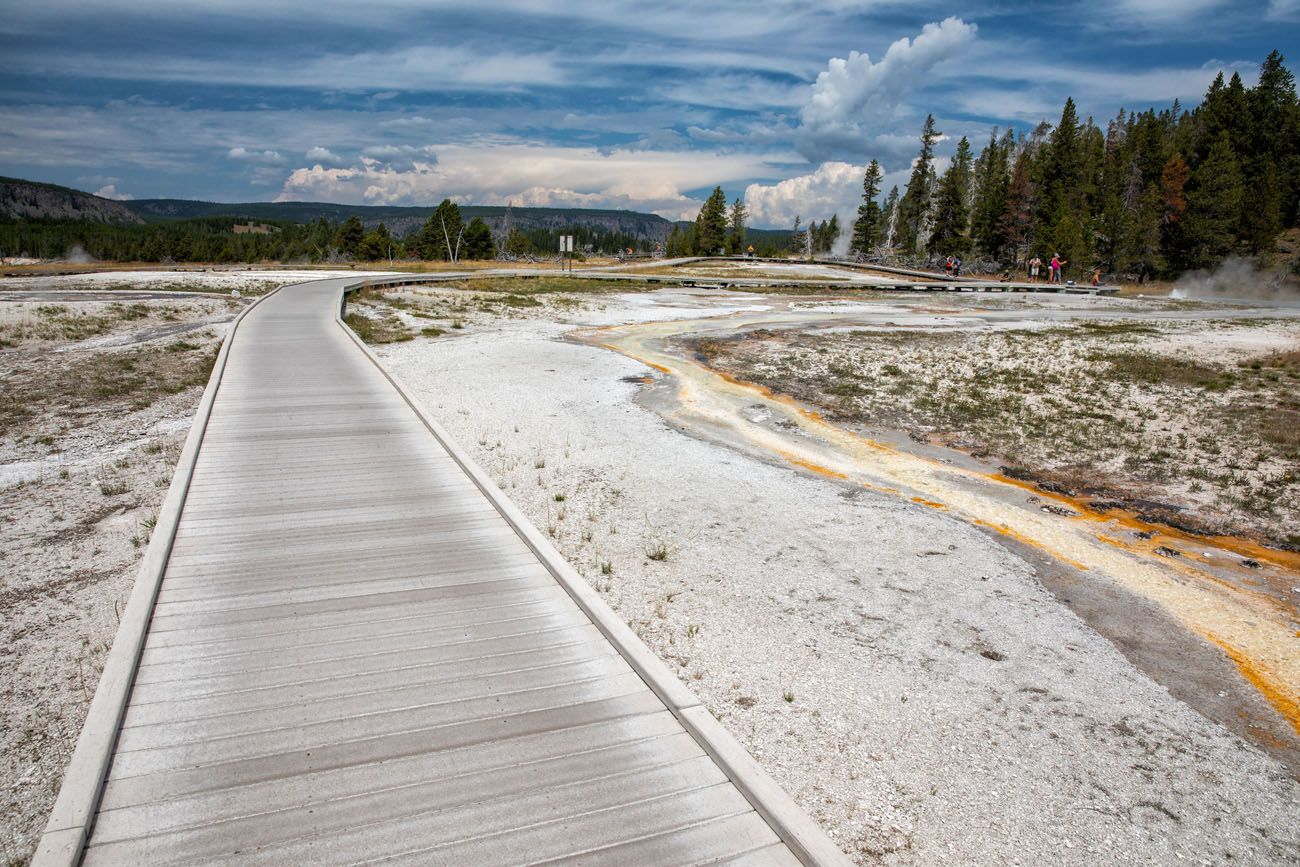
Boardwalk trail on the Upper Geyser Basin
One Day in Yellowstone
If you only have one day in Yellowstone, you can still see and do a surprising amount with an early start and a well-planned route. Your day will be busy, and you won’t see everything, but you can visit several of Yellowstone’s most iconic sights.
With one day, we recommend prioritizing Old Faithful and the Upper Geyser Basin, Grand Prismatic Spring, the Grand Canyon of the Yellowstone, and a drive through Hayden Valley. Exactly how you organize your day depends on where you enter and exit the park.
For a detailed plan, see our One Day in Yellowstone guide. It includes several one-day routes based on your starting and ending point, so you can choose the itinerary that works best for your trip.
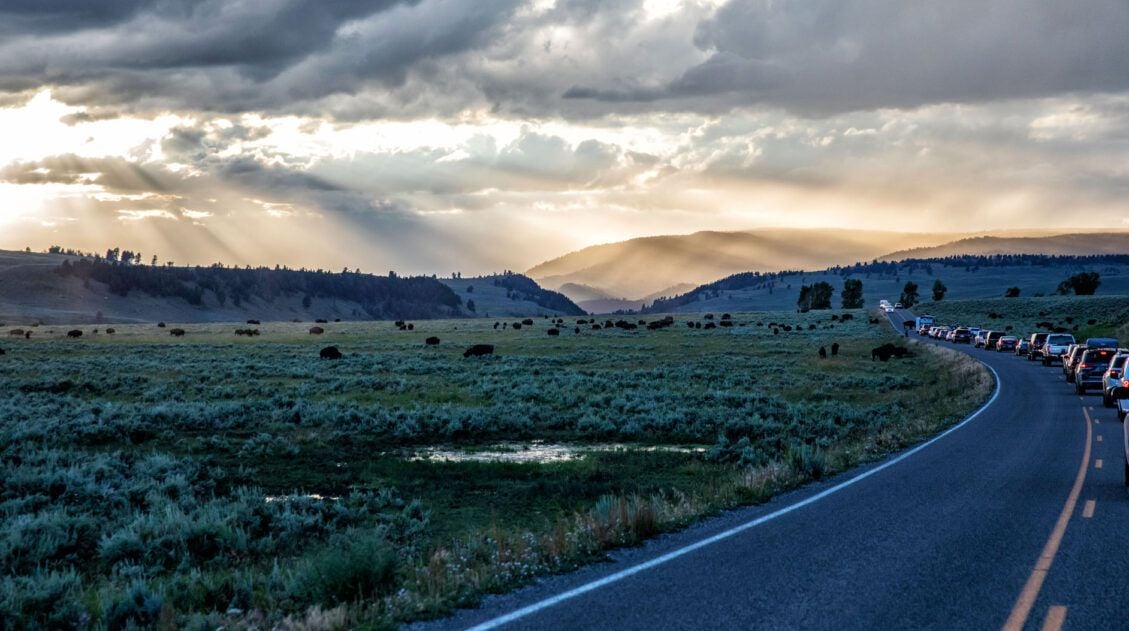
One Day in Yellowstone: 7 Epic Road Trip Itineraries
7 different ways to spend one day in Yellowstone, depending on your route through the park.If you are staying in Grand Teton National Park or Jackson, use our Yellowstone Day Trip from Grand Teton itinerary instead. This guide lays out the route we recommend for seeing Yellowstone’s highlights on a day trip from the south.
Our take: One day in Yellowstone is fast-paced, but it is absolutely worth doing if that is all the time you have. A good itinerary makes a huge difference.
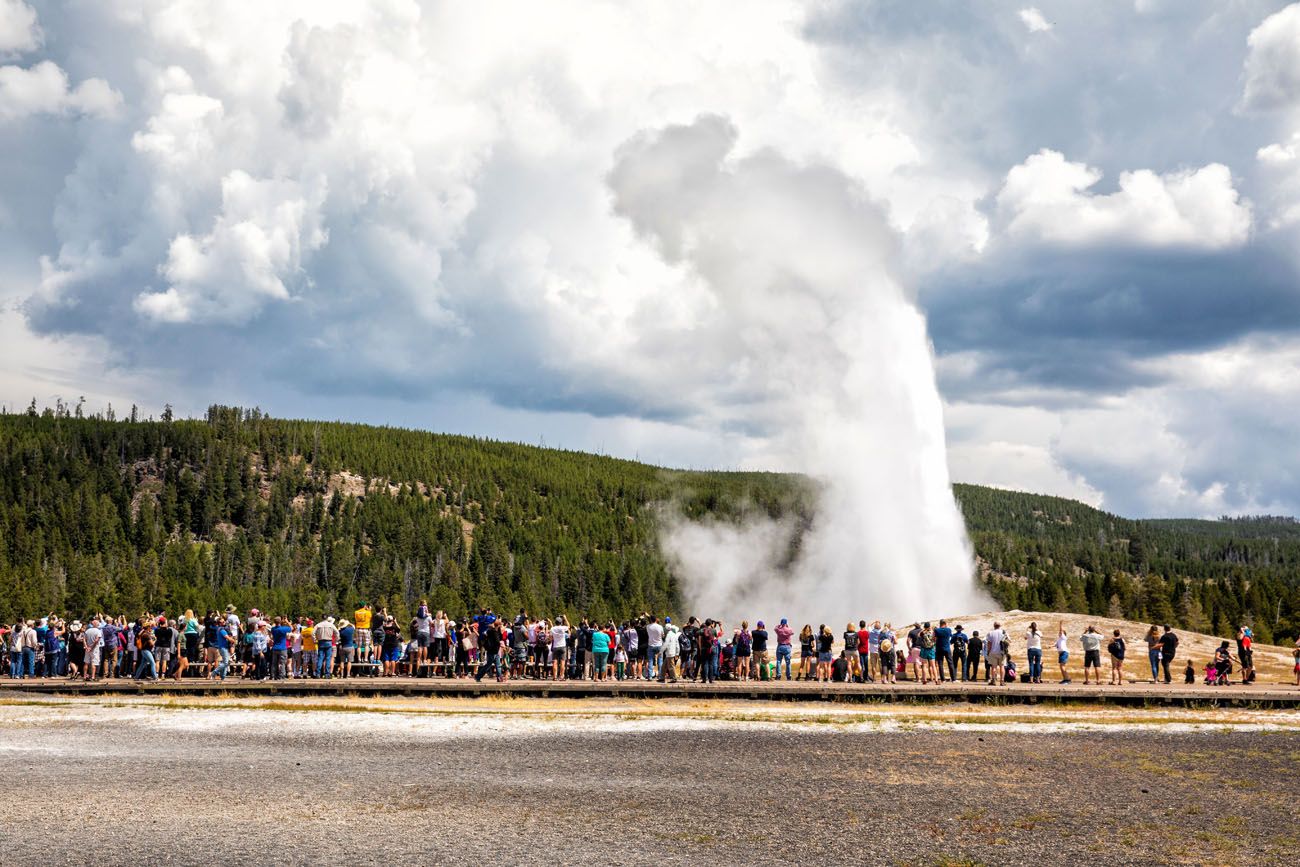
Old Faithful
Two Days in Yellowstone
With two days in Yellowstone, you can see many of the park’s must-see sights, but you will need an early start and a well-planned route. This itinerary covers Yellowstone’s major geothermal areas, the Grand Canyon of the Yellowstone, Hayden Valley, Norris Geyser Basin, and Mammoth Hot Springs, with a few scenic stops added along the way.
These two days are busy, but we think this itinerary gives first-time visitors an excellent overview of Yellowstone. If you prefer a slower pace or want to add several hikes, three or four days is a better choice.
This itinerary can also be done in reverse. Where you start each day will depend on where you are staying and which entrance you use.
Below is a map of this 2-day Yellowstone itinerary. Red markers show the sights for Day 1, and blue markers show the sights for Day 2. For Day 2, we include three driving routes—starting from Old Faithful, Canyon Village, or West Yellowstone—so you can follow the route that best matches where you stay after Day 1.
Day 1: Old Faithful, Grand Prismatic Spring & Geyser Country
Spend your first day exploring the highlights of Yellowstone’s geothermal areas.
Driving time: Plan on roughly 1½ to 2 hours of driving between the sights on today’s itinerary, not including the drive from your lodging or park entrance. Traffic, parking, and wildlife jams can add considerable time.
Best place to stay tonight: For the most efficient version of this itinerary, Old Faithful is the best place to stay in the park, followed by Canyon Village. West Yellowstone is another option, but since it is located outside of the park, you will do more driving. However, there are advantages to staying in West Yellowstone, with more hotel and restaurant options, and better WiFi and cellular service. When we visit Yellowstone, we stay outside of the park and drive in, and prefer this over park lodging, which can be dated, expensive, and lacking WiFi. We cover this in more detail in our Where to Stay in Yellowstone guide.
Old Faithful & the Upper Geyser Basin. Start early at Old Faithful. Watch an eruption and then spend some time exploring the Upper Geyser Basin. With only two days in Yellowstone, we wouldn’t walk all the way to Morning Glory Pool unless you are moving quickly and don’t mind a longer day. Instead, visit Old Faithful and several nearby thermal features before continuing north.
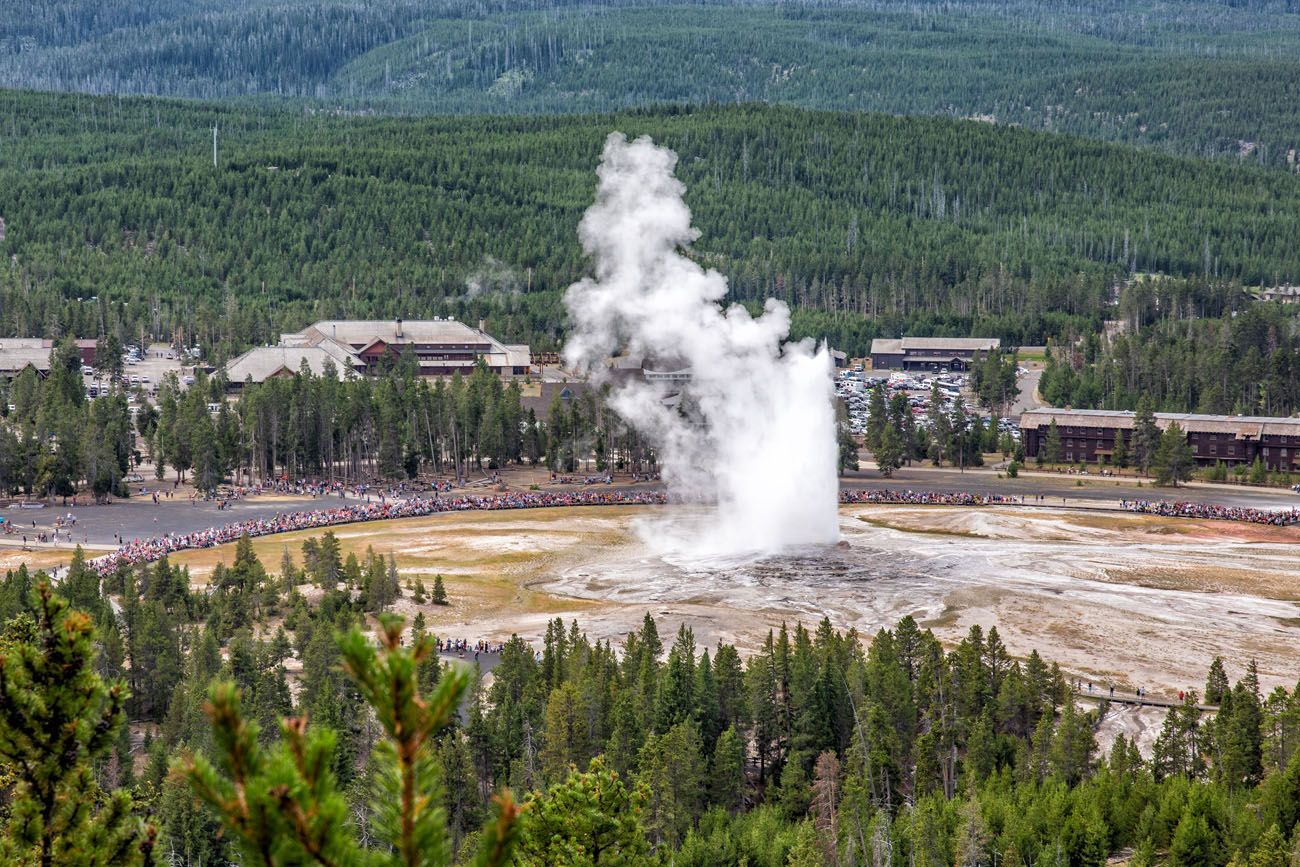
View of Old Faithful from Observation Point
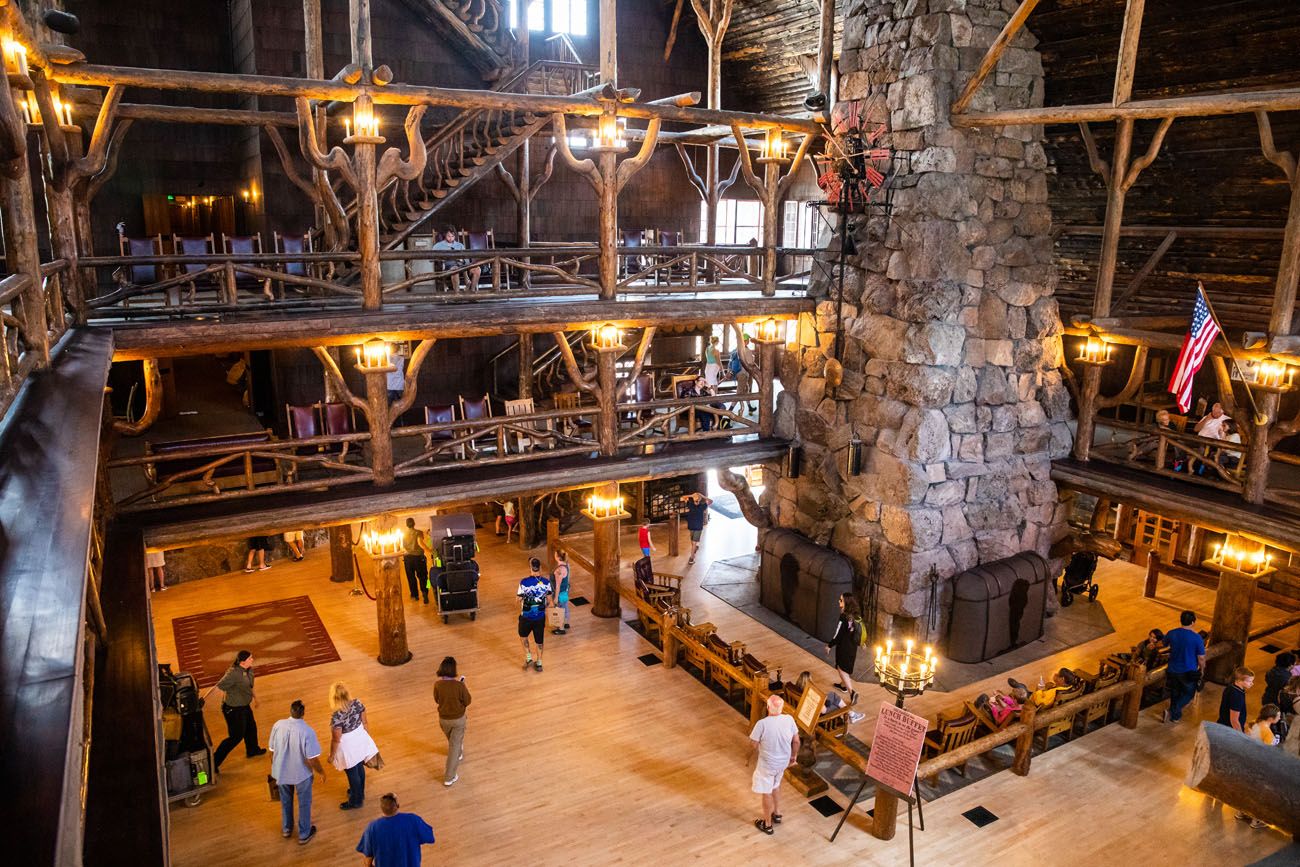
Old Faithful Inn
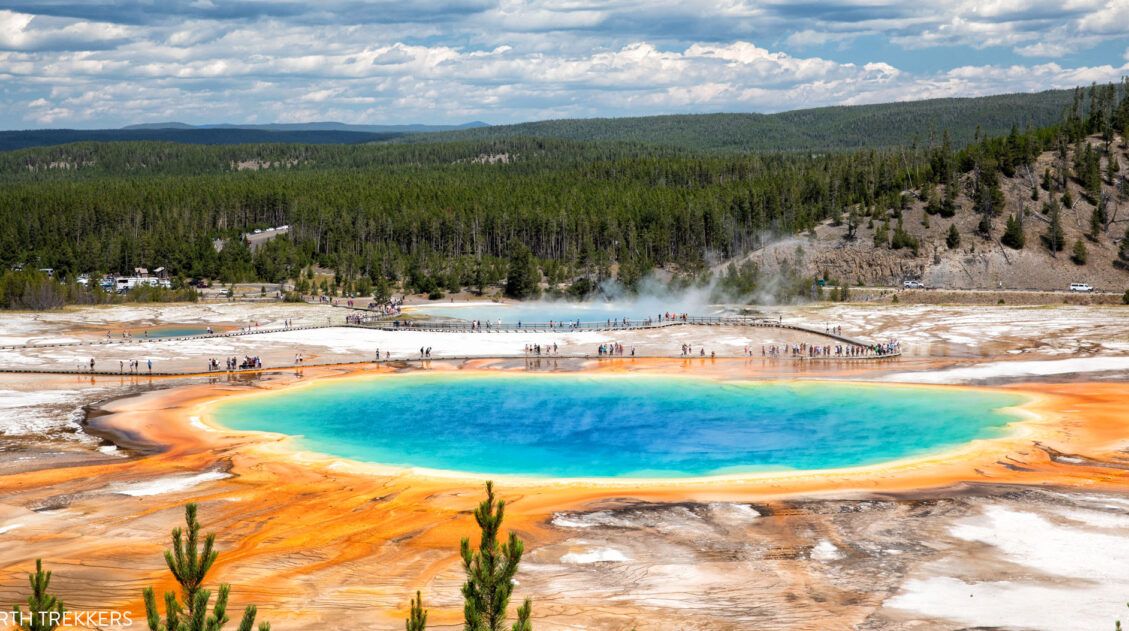
Grand Prismatic Spring Overlook. Next, drive to the Fairy Falls parking lot and hike to the Grand Prismatic Spring Overlook for the best view of Yellowstone’s enormous, brilliantly colored hot spring. Plan on roughly an hour for the walk and time at the viewpoint.
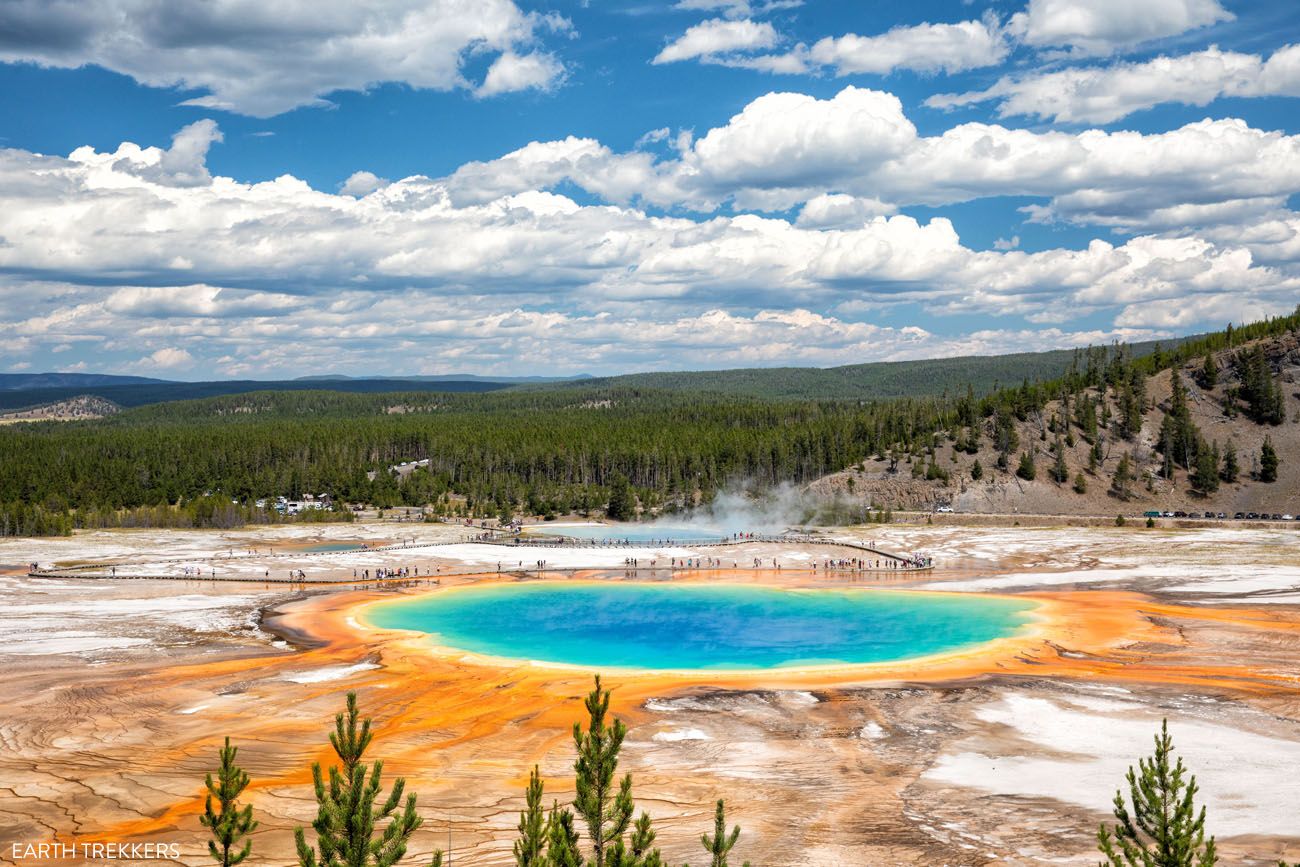
The view from Grand Prismatic Spring Overlook
Midway Geyser Basin. Drive a short distance to Midway Geyser Basin to walk the boardwalk past Grand Prismatic Spring and Excelsior Geyser. Seeing Grand Prismatic from the boardwalk and from the overlook are very different experiences, and we think both are worth doing if you have the time.
Fountain Paint Pot. Continue north to Fountain Paint Pot. This is a relatively quick stop and adds mudpots and fumaroles to the hot springs and geysers you’ve already seen today.
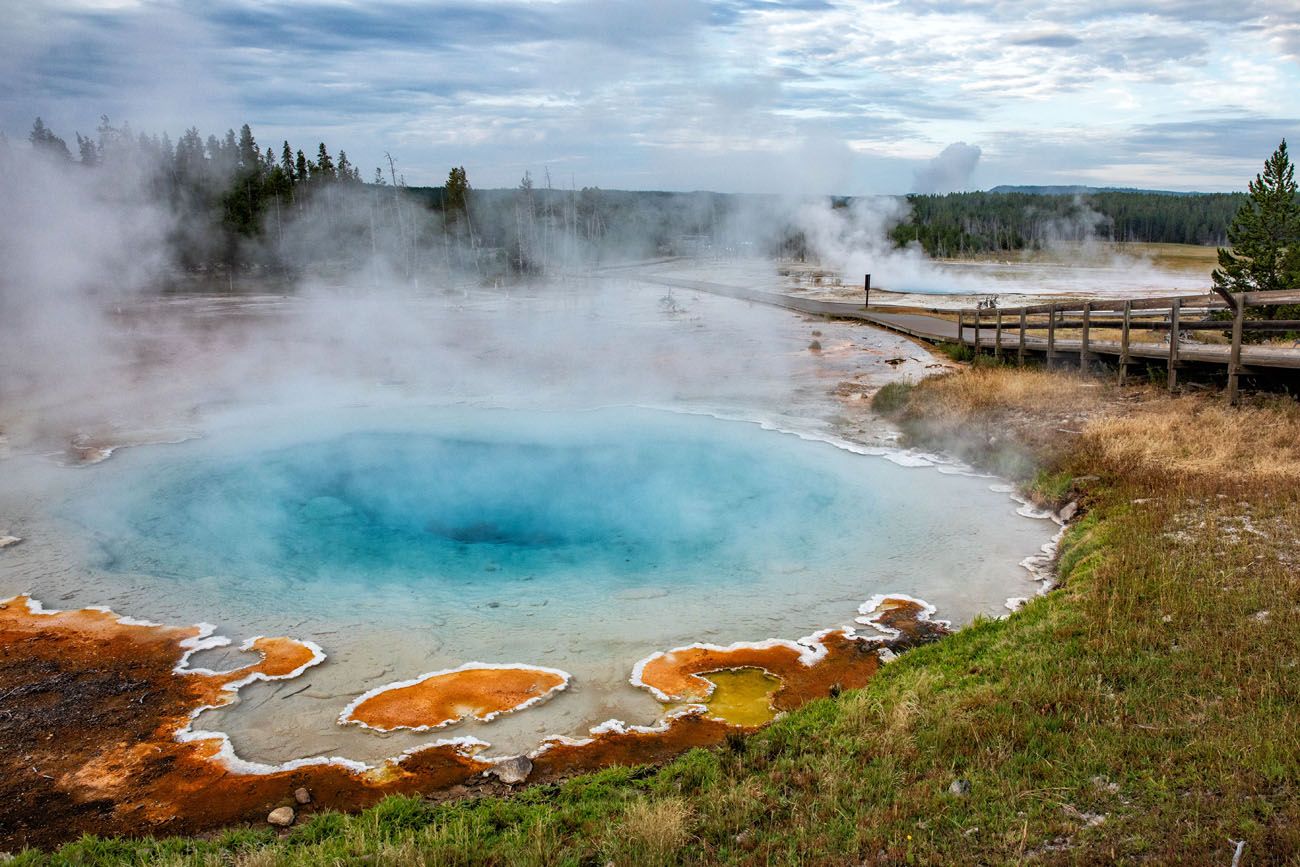
Fountain Paint Pot Trail
Firehole Canyon Drive & Firehole Falls. Finish your sightseeing with a drive through Firehole Canyon. This short scenic detour follows the Firehole River through the canyon and includes a viewpoint of Firehole Falls. If you are doing well on time, you also have the option to visit the Firehole Canyon Swimming Area, one of only two spots in the entire park where swimming is officially permitted.
If You Have Extra Time: Add Black Sand Basin near Old Faithful or Kepler Cascades, particularly if you are entering Yellowstone from the south. Both are relatively quick stops and are easy to work into this day’s route.
If You’re Running Behind: Skip Black Sand Basin and Kepler Cascades first. If you are still short on time, choose the Grand Prismatic Overlook over the Midway Geyser Basin boardwalk. We think the overlook provides the more memorable view of Grand Prismatic Spring.
Day 2: Hayden Valley, Grand Canyon, Norris & Mammoth
Get another early start today. This day combines wildlife watching, Yellowstone’s spectacular canyon, another geothermal basin, and the northern section of the park.
Driving time: Expect roughly 2 to 2½ hours of driving between the major sights, plus any drive to your lodging. Wildlife jams can dramatically increase this.
Best place to stay tonight: If you are finishing your Yellowstone visit in the north, stay at Mammoth Hot Springs or Gardiner. If your trip continues toward West Yellowstone, Grand Teton, or another part of the park, choose your lodging based on tomorrow’s route.
Hayden Valley. Start your morning in Hayden Valley. Wildlife tends to be more active early in the day, and this is one of Yellowstone’s best places to look for bison and other wildlife. Drive through the valley slowly and stop at the pullouts if you see wildlife activity.
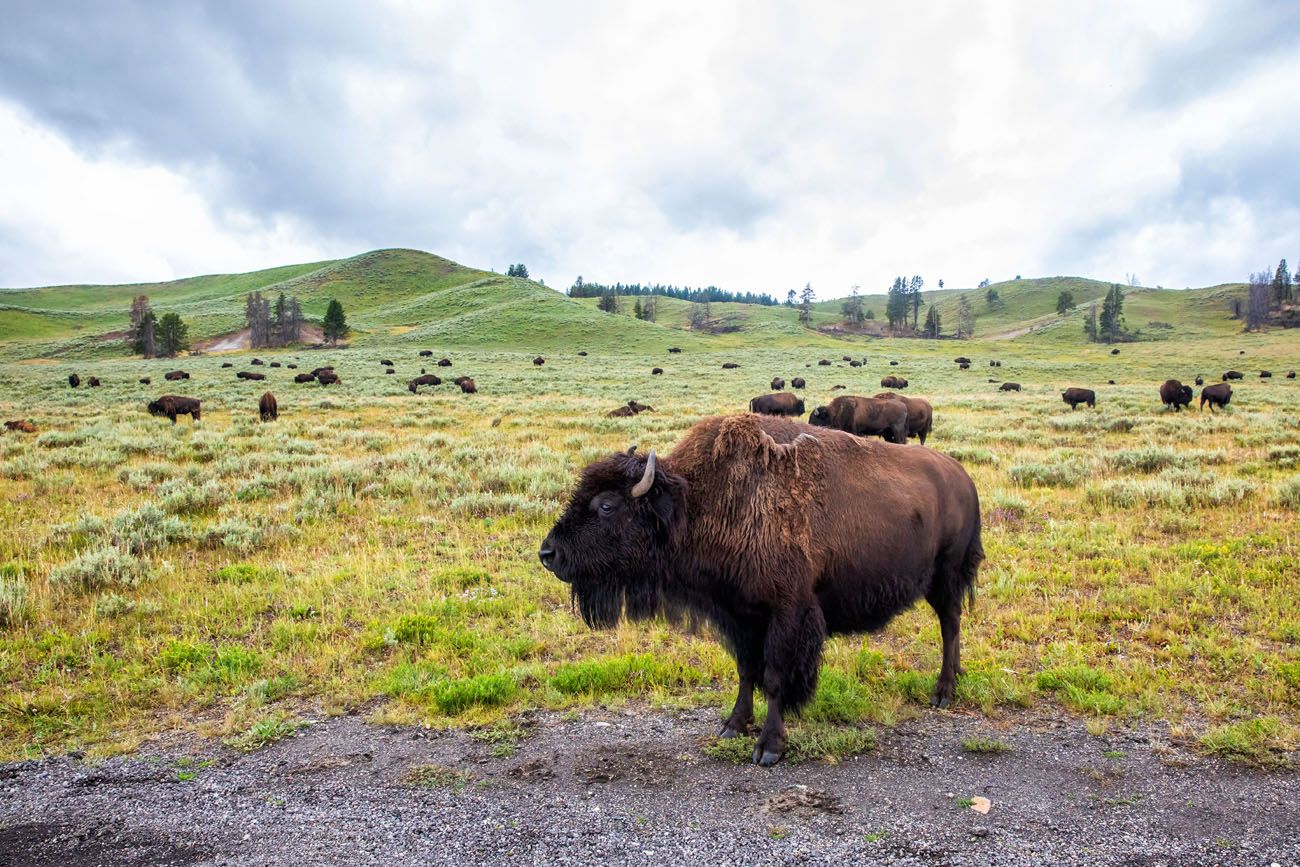
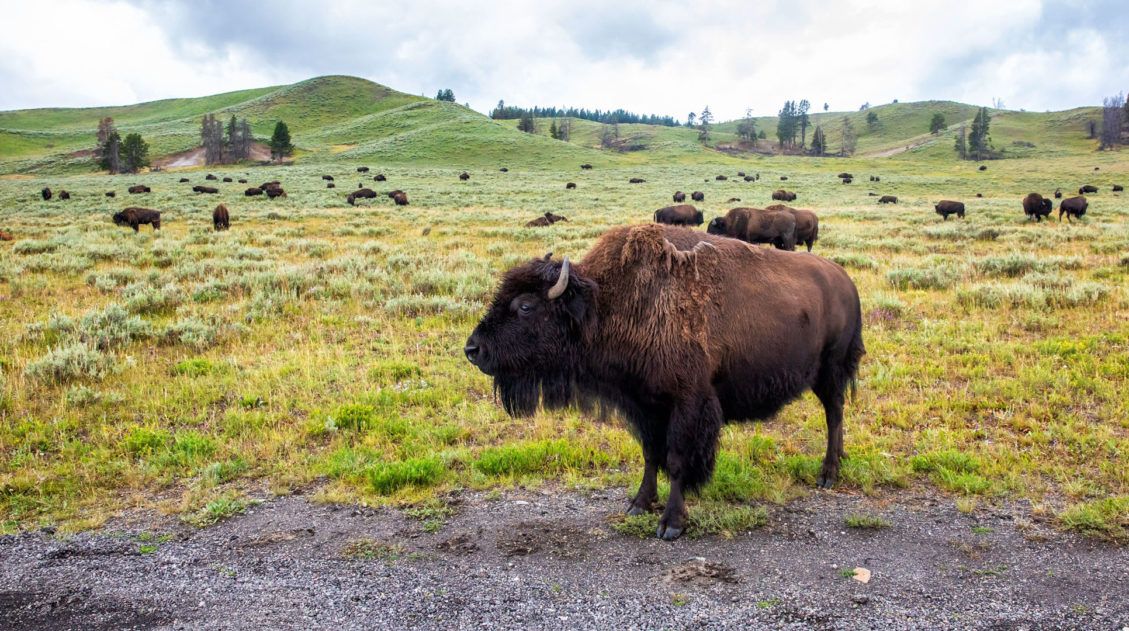
Bison in Hayden Valley
Grand Canyon of the Yellowstone. From Hayden Valley, drive north to the Grand Canyon of the Yellowstone. Visit viewpoints on both rims of the canyon, including Artist Point and views of the Upper and Lower Falls. If you are up for a little more walking, add one of the short trails that descends toward the brink of the falls. We love the view from Red Rock Point, but the Brink of Lower Falls gets you up close to the waterfall, which is a more thrilling experience. We cover exactly what to see and do in our guide to Grand Canyon of the Yellowstone.
Plan on spending at least two hours here. You could easily spend longer if you visit numerous viewpoints or hike one of the canyon trails.
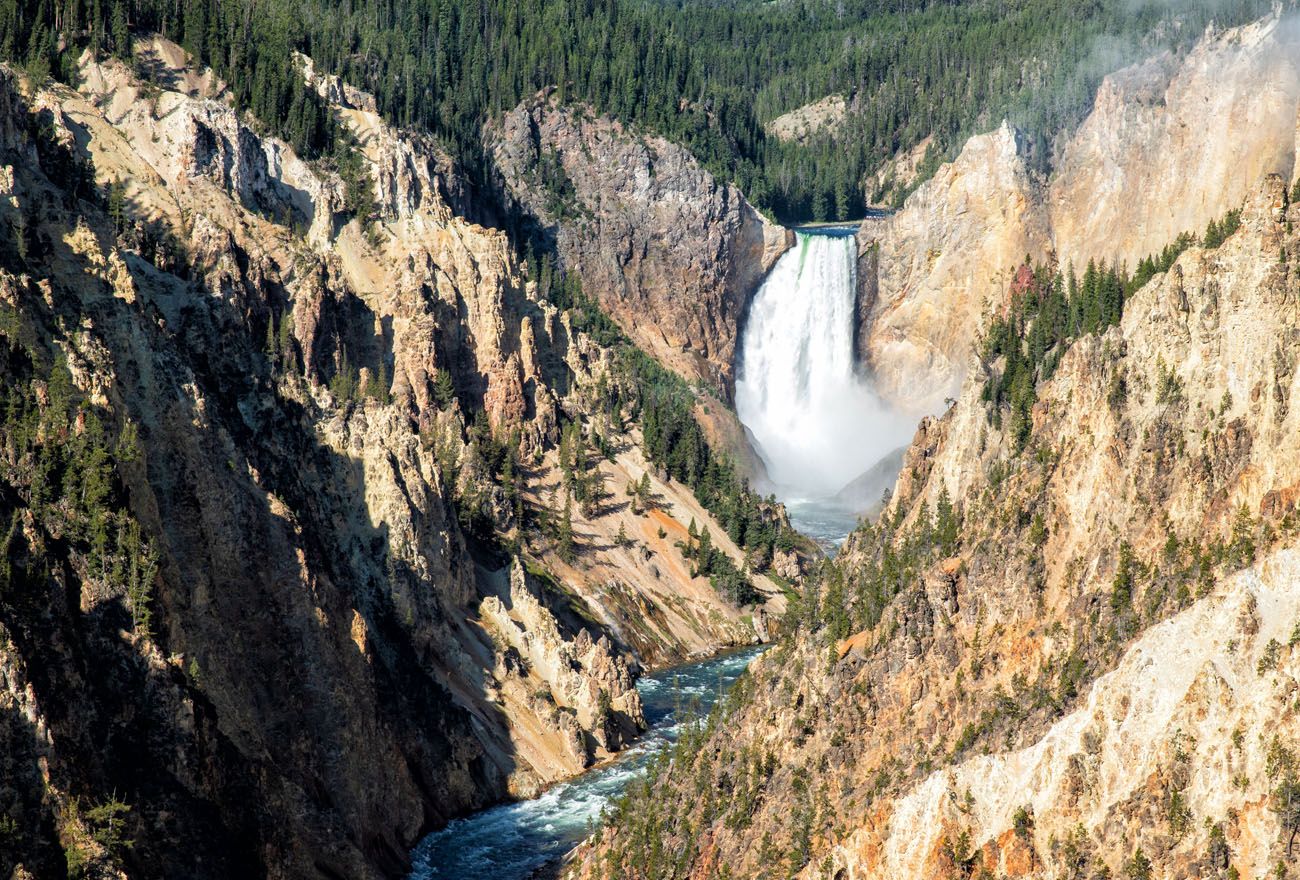
Artist Point, Grand Canyon of the Yellowstone
Norris Geyser Basin. Continue west to Norris Geyser Basin. With only two days, you don’t need to walk every trail here. Choose one of the main loops and spend about an hour exploring the basin before continuing north. Porcelain Basin is our favorite of the two loops, where you get to see noisy fumaroles and lots of multi-colored hot springs and thermal pools.
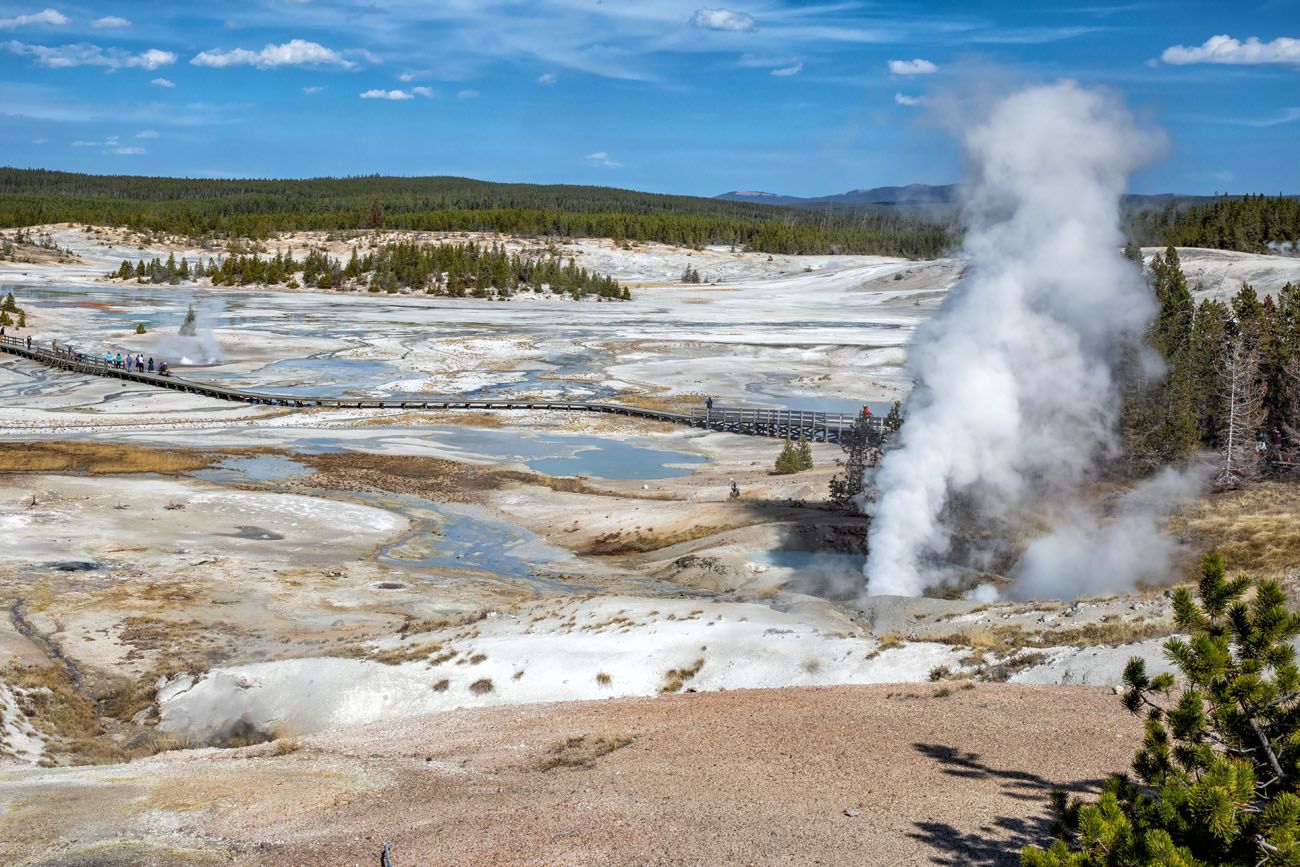
Porcelain Basin at Norris Geyser Basin
Mammoth Hot Springs. Finish your day at Mammoth Hot Springs. Walk the Lower Terrace boardwalks and, if time allows, drive Upper Terrace Drive.
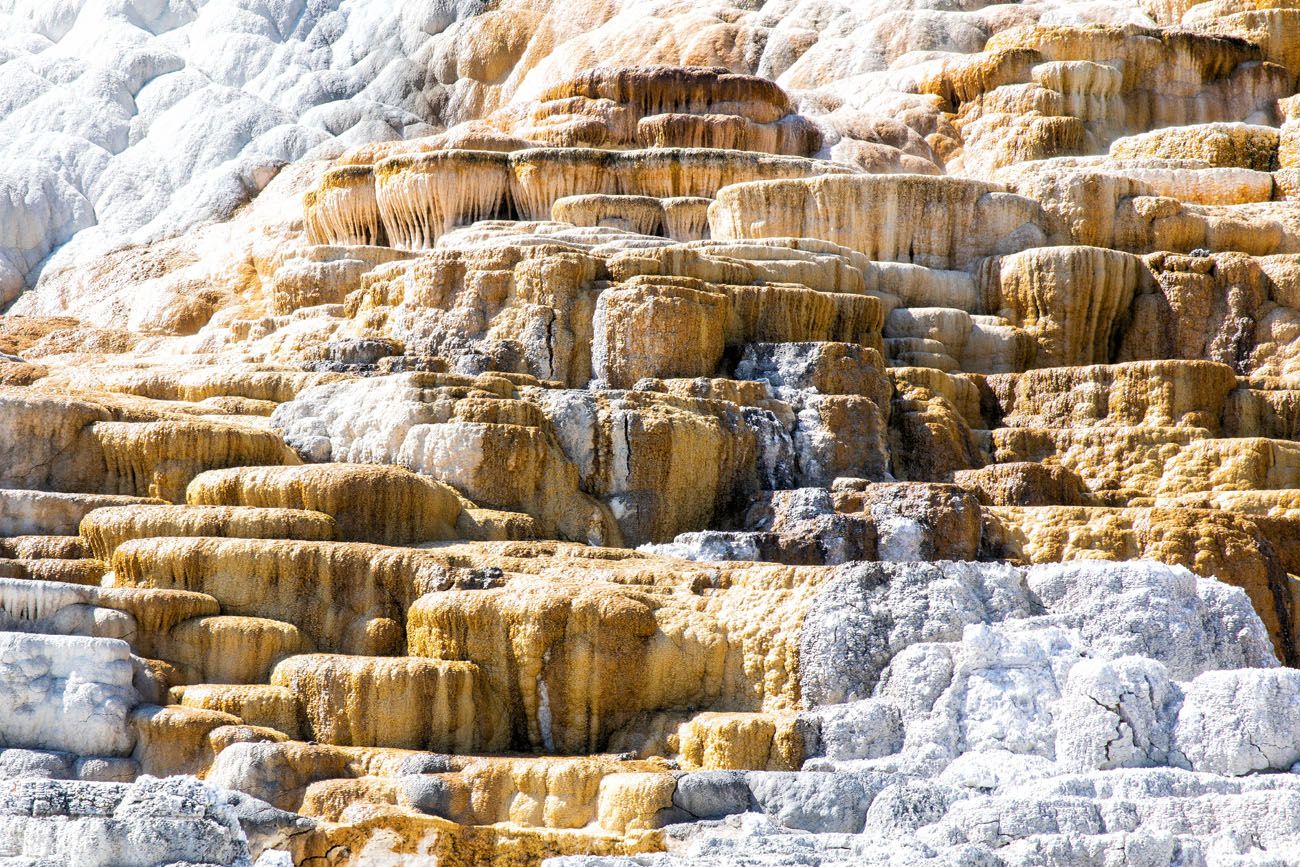
Mammoth Hot Springs
Roosevelt Arch: If you are near Mammoth Hot Springs, consider driving 10 minutes north to see Roosevelt Arch at Yellowstone’s North Entrance in Gardiner. President Theodore Roosevelt laid the cornerstone in 1903, and the 50-foot-tall stone arch remains one of Yellowstone’s most recognizable historic landmarks.
If You Have Extra Time
Which extra stop works best depends on your route.
If you are finishing the day near Mammoth or Gardiner, add Undine Falls, a short waterfall hike east of Mammoth.
If you are returning toward West Yellowstone, stop at Gibbon Falls on your drive back.
Three Days in Yellowstone
Three days is the minimum amount of time we recommend for most first-time visitors to Yellowstone. With three full days, you can see almost all of Yellowstone’s must-see sights, including Old Faithful, Grand Prismatic Spring, the Grand Canyon of the Yellowstone, Hayden and Lamar Valleys, Mammoth Hot Springs, and Norris Geyser Basin.
This is still a busy itinerary, but compared with our two-day itinerary, you’ll have more time to explore the Upper Geyser Basin, visit both rims of the Grand Canyon of the Yellowstone, and venture into Lamar Valley. We’ve also included several optional short hikes and scenic stops so you can customize each day.
Below is a map of this 3-day Yellowstone itinerary. Red markers show the sights for Day 1, blue markers show the sights for Day 2, and green markers show the sights for Day 3.
Day 1: Old Faithful, Grand Prismatic Spring & Geyser Country
Spend your first day exploring Yellowstone’s largest concentration of geysers and hot springs.
Driving time: Roughly 1½ to 2 hours between today’s major stops, plus the drive to and from your hotel. Parking delays and wildlife jams can add time.
Best place to stay tonight: Canyon Village. Staying here puts you just minutes from the Grand Canyon of the Yellowstone, which is where we recommend starting tomorrow morning. However, other options include the Old Faithful area, which will minimize driving today, or West Yellowstone, a good option outside of the park.
Old Faithful & the Upper Geyser Basin. Start early at Old Faithful. Watch an eruption and then explore the Upper Geyser Basin. With three days in Yellowstone, you have more time here than on our two-day itinerary.
At a minimum, we recommend exploring Geyser Hill and some of the thermal features near Old Faithful. If you enjoy walking, you can turn this into a much longer loop, visiting Observation Point, Solitary Geyser, Grand Geyser, Riverside Geyser, and Morning Glory Pool. We cover how to do this in our guide to Old Faithful.
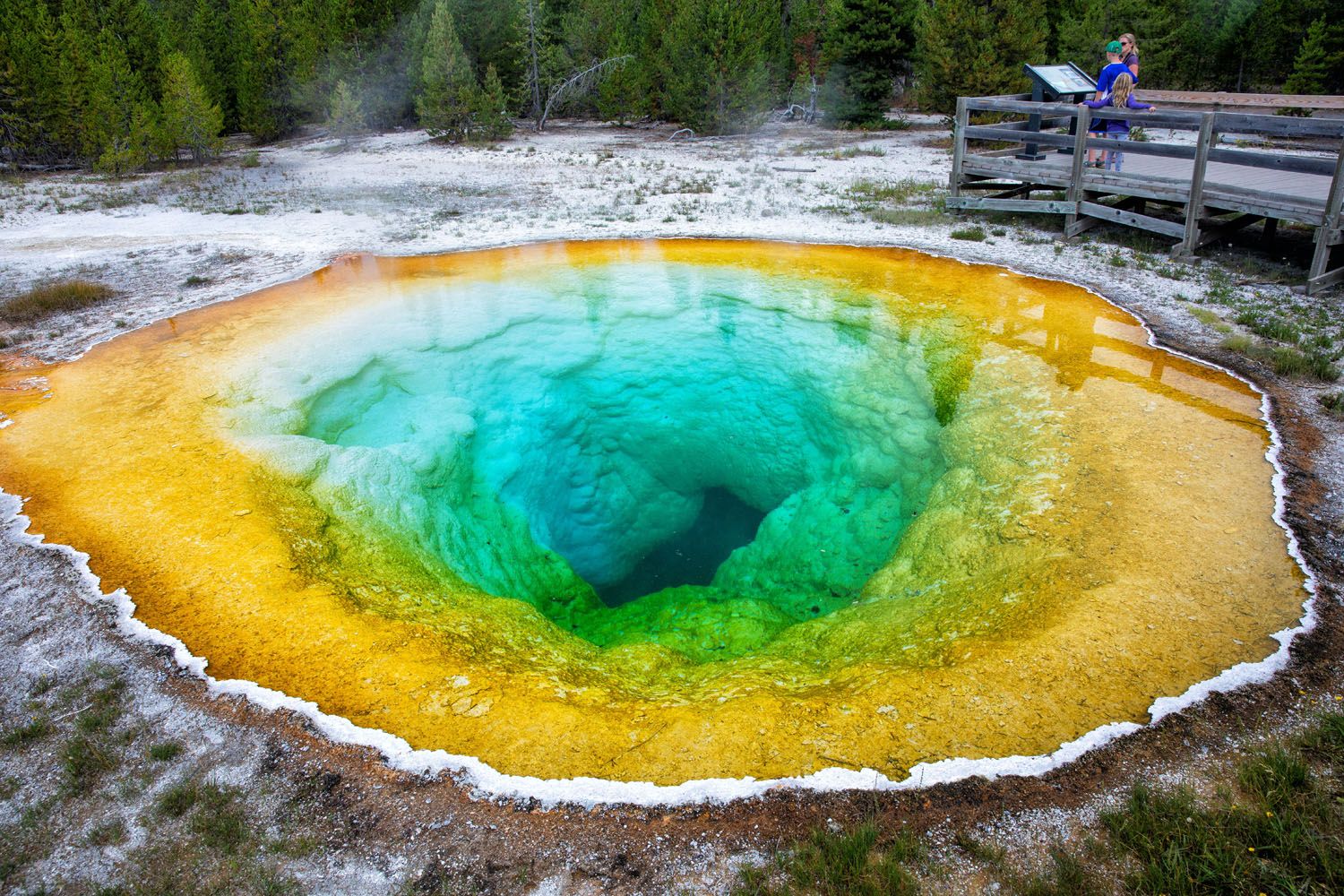
Morning Glory Pool
Black Sand Basin. From Old Faithful, make the short drive to Black Sand Basin. This is a relatively quick stop and one of our favorite smaller thermal areas near Old Faithful.
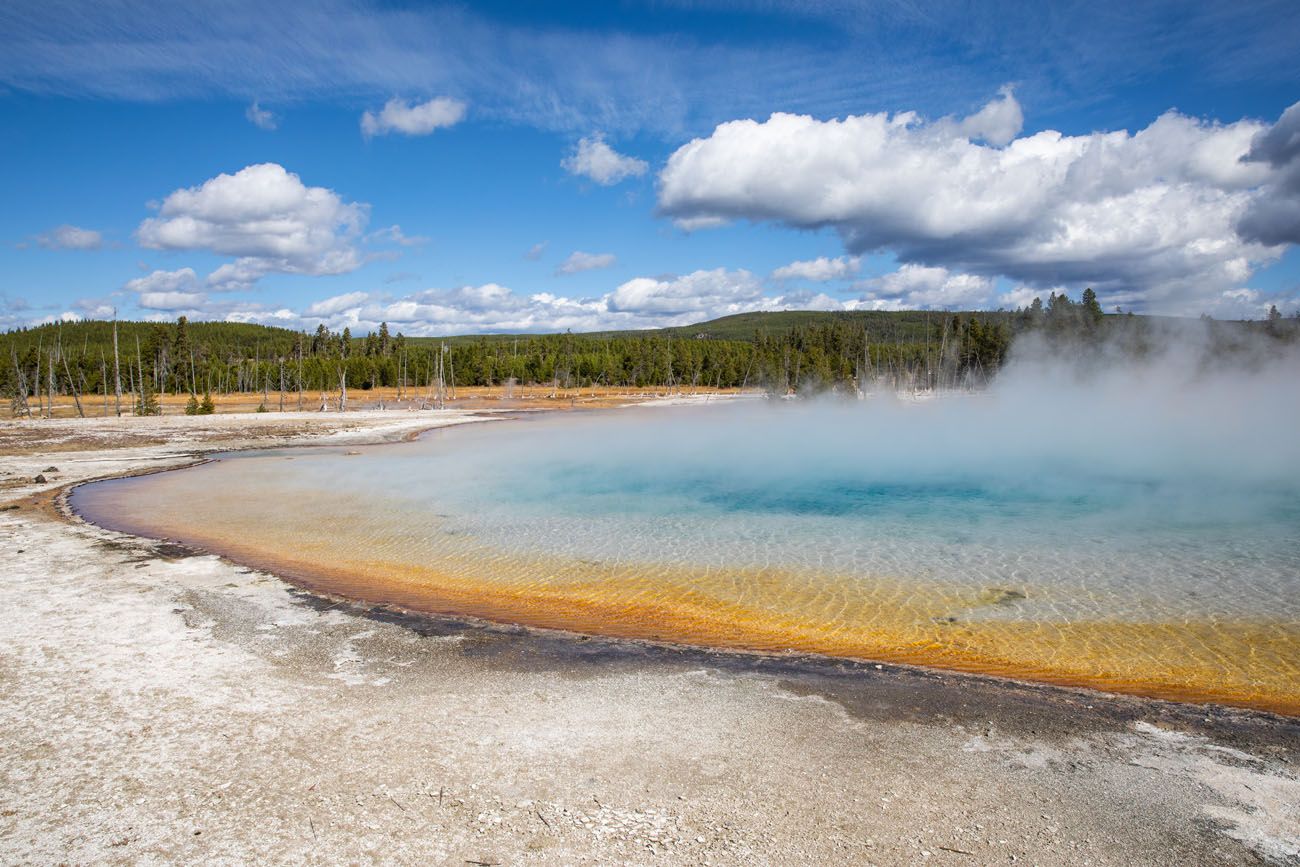
Black Sand Basin
Grand Prismatic Spring Overlook. Next, drive to the Fairy Falls parking lot and hike to the Grand Prismatic Spring Overlook. This is our favorite view of Grand Prismatic Spring and one of the must-see experiences in Yellowstone.
Midway Geyser Basin. After seeing Grand Prismatic from above, drive to Midway Geyser Basin and walk the boardwalk around Grand Prismatic Spring and Excelsior Geyser. We think it’s worth seeing Grand Prismatic from both viewpoints if you have the time.
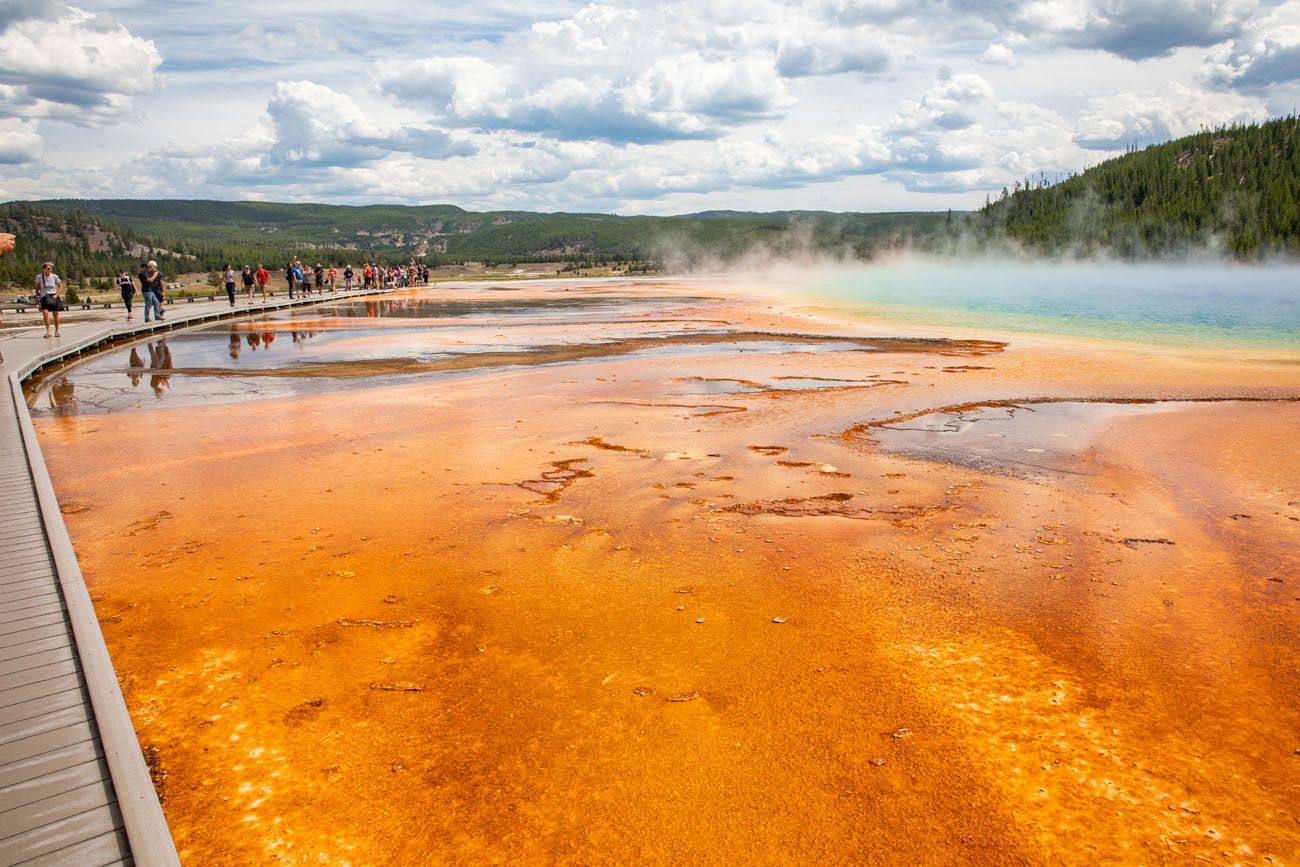
Midway Geyser Basin
Fountain Paint Pot. Continue north to Fountain Paint Pot, where a short boardwalk passes hot springs, geysers, fumaroles, and bubbling mudpots.
Firehole Canyon Drive & Firehole Falls. Finish the day with Firehole Canyon Drive. This short scenic road follows the Firehole River through the canyon and includes a viewpoint of Firehole Falls.
If you have extra time: Spend more time in the Upper Geyser Basin. Walking all the way to Morning Glory Pool takes time, but it is one of our favorite thermal features in Yellowstone. You can also add Kepler Cascades if your route takes you south of Old Faithful.
If you’re running behind: Skip Black Sand Basin first. You can also shorten your walk through the Upper Geyser Basin rather than skipping Old Faithful, Grand Prismatic Spring, or Firehole Canyon.
Day 2: Grand Canyon of the Yellowstone, Hayden Valley, Mud Volcano & West Thumb
Driving time: Plan on roughly 1½ to 2 hours of driving between today’s main areas, not including wildlife stops or the drive to your hotel.
Best place to stay tonight: Canyon Village works extremely well again. Staying here for two nights eliminates a hotel change and puts you in a good position to drive toward Lamar Valley early tomorrow morning. West Yellowstone is the best option outside of the park.
Start early today at the Grand Canyon of the Yellowstone. Of all the places in Yellowstone where an early start makes a difference, this is one of the big ones. We’ve visited the canyon at different times of day, and mornings have consistently given us smaller crowds, easier parking, and better light for photography.
Grand Canyon of the Yellowstone: North Rim
Start on the North Rim, ideally by 8 am.
Follow North Rim Drive to the canyon viewpoints. We recommend visiting Brink of the Lower Falls, Lookout Point, and Inspiration Point. Depending on how much walking you want to do, you can spend anywhere from about an hour to several hours on the North Rim.
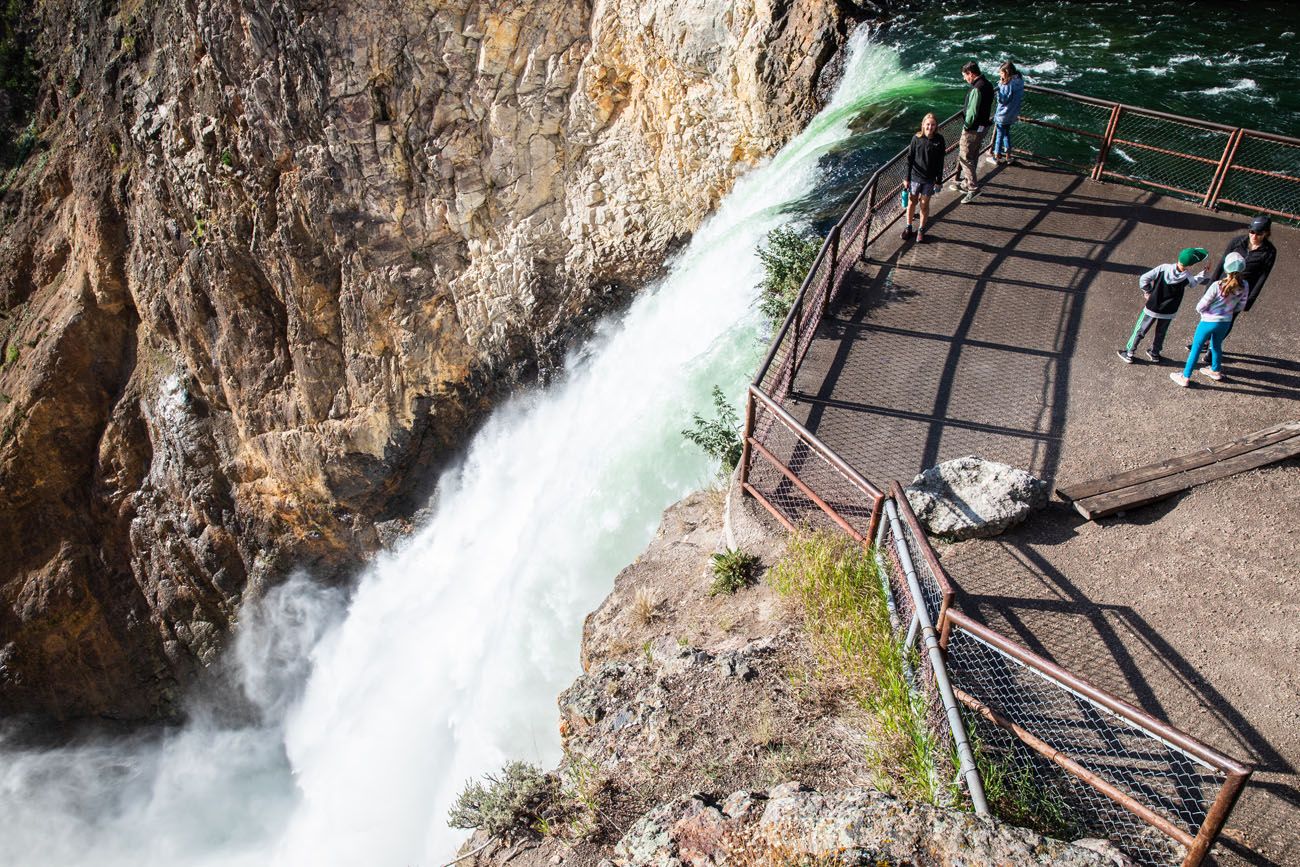
Brink of the Lower Falls
Grand Canyon of the Yellowstone: South Rim
Next, drive to the South Rim. The essential stop here is Artist Point, which has one of the classic views of Lower Falls and the Grand Canyon of the Yellowstone.
How much time you spend at the canyon depends on how much hiking you want to do:
- Quick visit: See the main viewpoints on the North and South Rims.
- Add a short hike: Hike the Brink of the Lower Falls Trail for an up-close view of Lower Falls.
- More hiking: Add a walk along one of the canyon rim trails.
For many first-time visitors, we recommend allowing 3 to 4 hours to see both rims of the canyon.
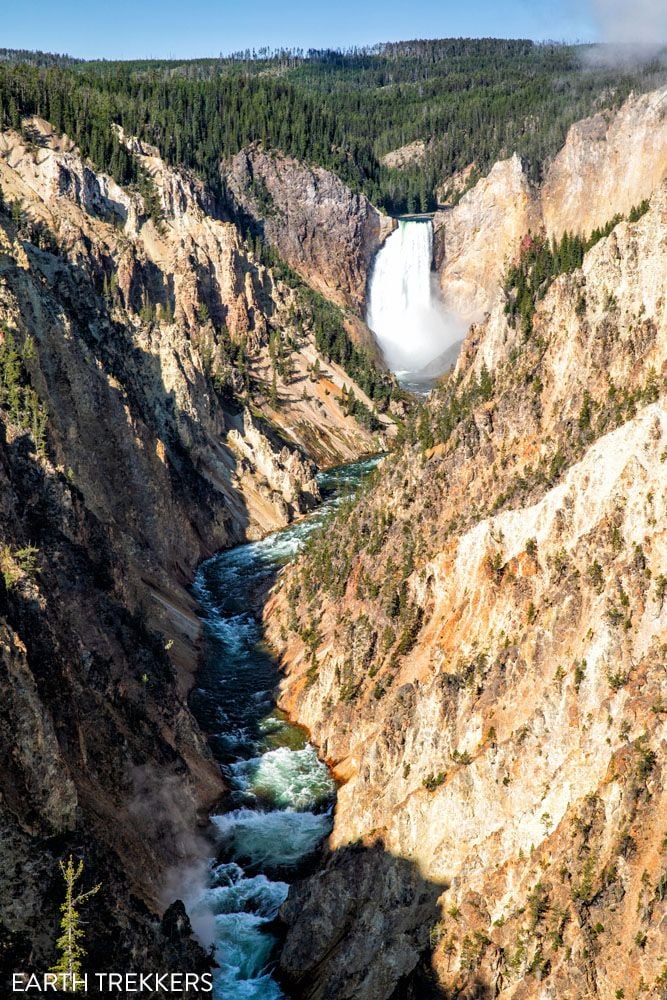
The view from Artist Point in Grand Canyon of the Yellowstone
Hayden Valley. From the canyon, drive south through Hayden Valley. This is one of Yellowstone’s premier wildlife areas, so keep an eye out for bison and other wildlife as you drive. Stop at the pullouts whenever something catches your eye.
Mud Volcano. Continue to the Mud Volcano area. This is a relatively compact geothermal area and a good addition to today’s route.
West Thumb Geyser Basin. Finish at West Thumb, where hot springs and other thermal features sit along the shore of Yellowstone Lake. The setting makes this geothermal basin very different from the ones you visited yesterday.
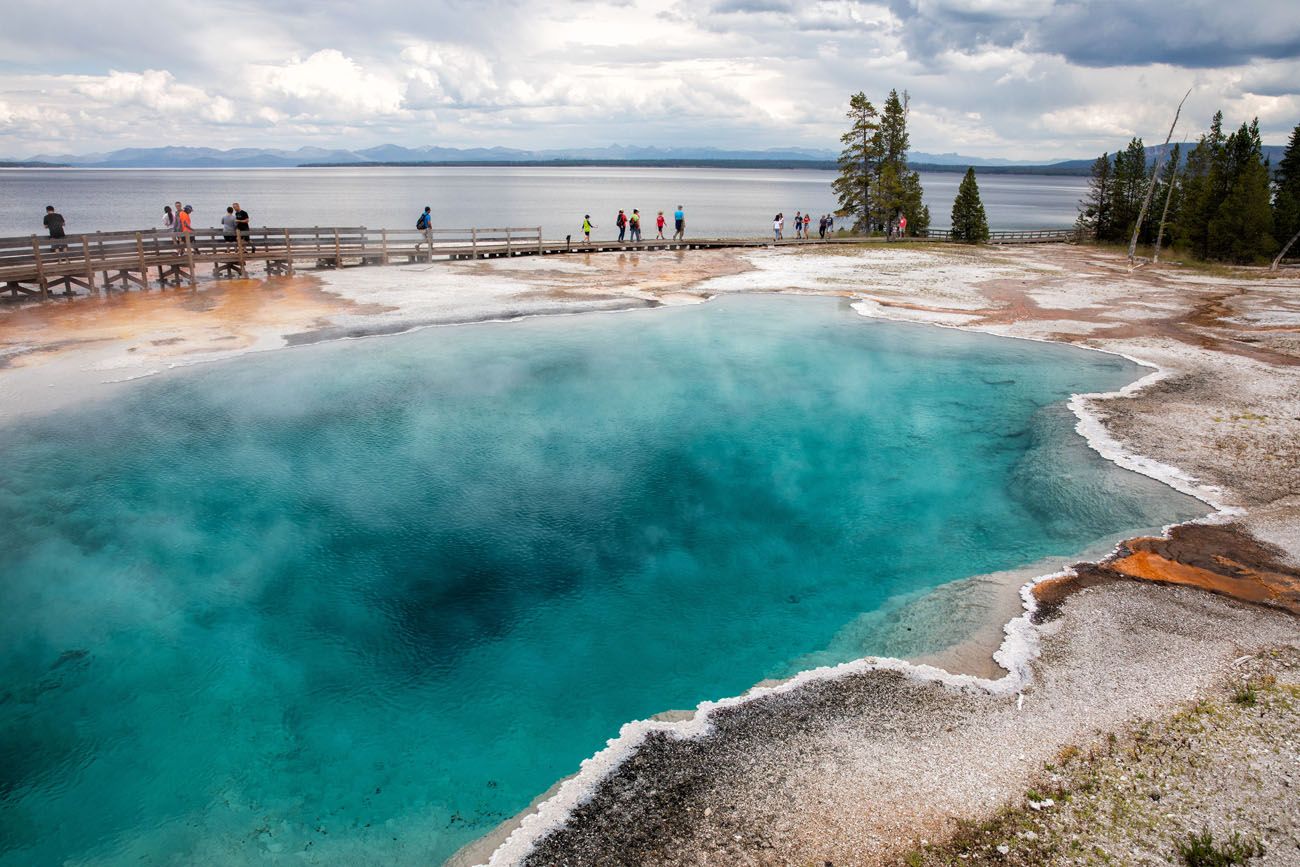
West Thumb Geyser Basin
If you have extra time: Add Storm Point if you’d like another hike. The trail travels through forest and meadows to the shore of Yellowstone Lake. This works best as an alternative to spending extra time hiking at the Grand Canyon rather than trying to squeeze both into an already full day.
If you’re running behind: Skip Storm Point and any longer canyon hikes first. See the major viewpoints on both rims, then continue through Hayden Valley to Mud Volcano and West Thumb.
Day 3: Lamar Valley, Tower Fall, Dunraven Pass, Norris & Mammoth
Driving time: This is the biggest driving day of the itinerary. Expect roughly 3 to 4 hours behind the wheel between the major areas, and potentially much more if you encounter wildlife jams in Lamar Valley.
Best place to stay tonight: Mammoth Hot Springs or Gardiner. Both make convenient places to end this point-to-point itinerary, particularly if you are leaving Yellowstone through the North Entrance the following morning.
Today is another early start, but for a very different reason: wildlife.
Lamar Valley. Drive to Lamar Valley at or near sunrise. Along with Hayden Valley, this is one of the best places in Yellowstone for wildlife watching. Take your time driving through the valley and stop at pullouts when you see wildlife activity.
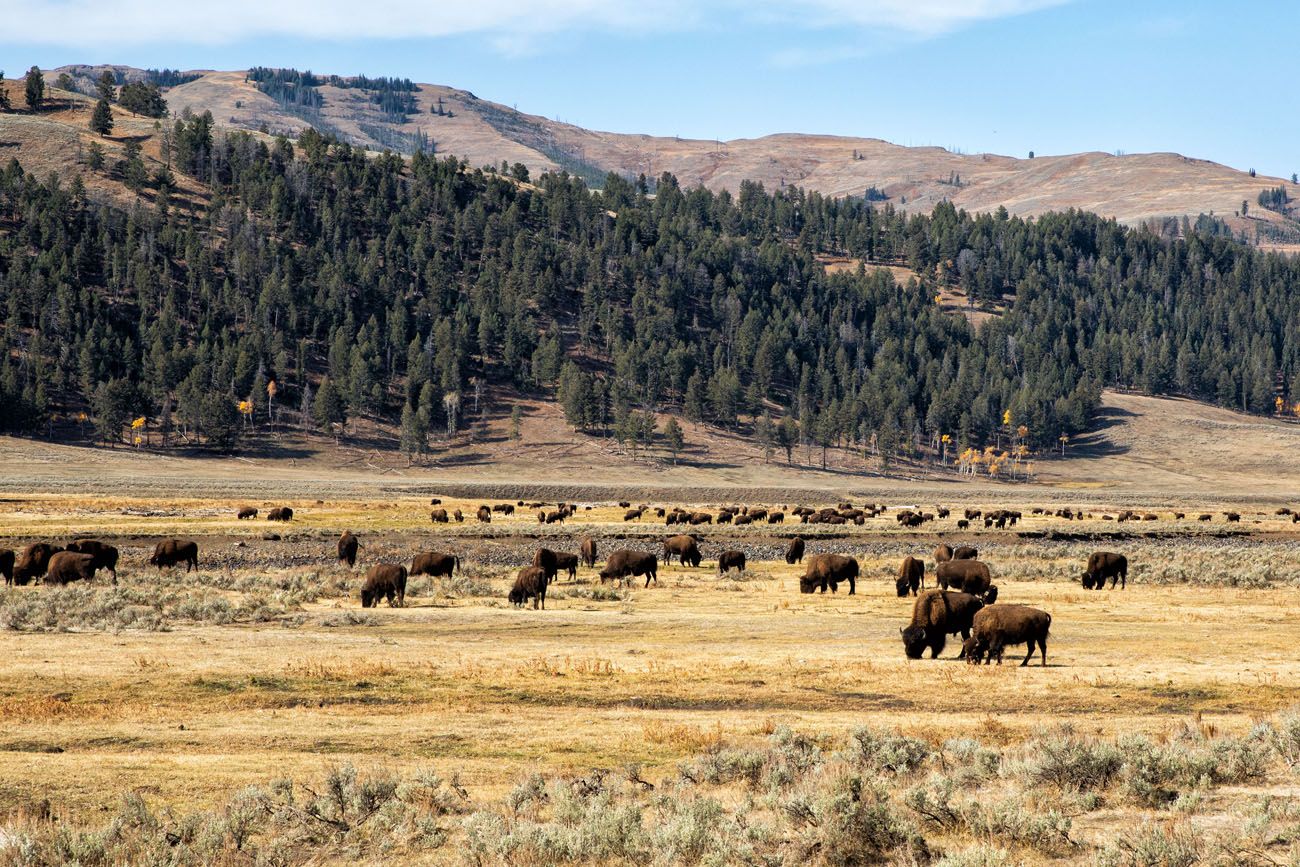
Bison in Lamar Valley in early October
Optional: Trout Lake. If you want to add a short hike, Trout Lake is a great choice. The trail climbs through the forest to a small lake surrounded by mountains. Allow roughly 1 to 2 hours. We did this hike in the evening and it’s beautiful. It’s another good spot in Yellowstone to see wildlife. Kara and I weren’t so lucky, but it was still worthwhile hiking to the lake.
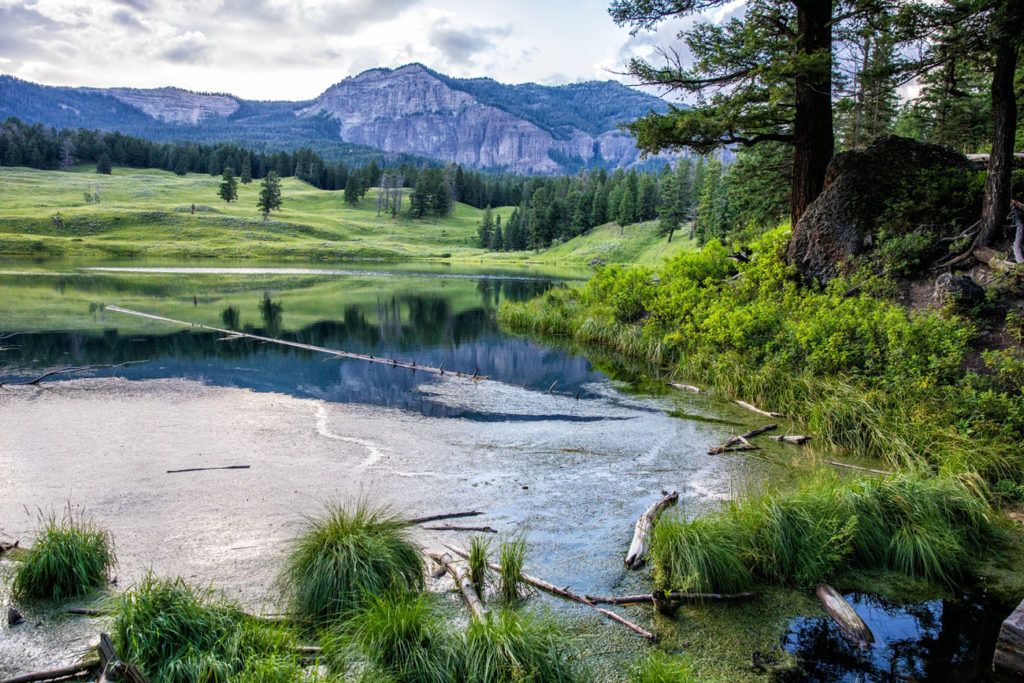
Trout Lake
Tower Fall. Next, drive to Tower Fall. The waterfall is a quick stop from the overlook, making it easy to include on a busy sightseeing day.
From Tower, continue south and drive over Dunraven Pass, one of the most scenic sections of Grand Loop Road.
Optional: Hike Mount Washburn. If hiking is a priority, you can hike Mount Washburn from Dunraven Pass. However, consider this an alternative itinerary rather than simply adding the hike to everything else listed today.
Mount Washburn takes several hours. If you hike it, plan to skip Norris Geyser Basin and potentially shorten your visit to Mammoth Hot Springs.
If you aren’t hiking Mount Washburn, continue over Dunraven Pass toward Canyon and then drive west to Norris.
Norris Geyser Basin. Spend the late afternoon exploring Norris Geyser Basin. Since you already saw several geothermal areas on Day 1, you don’t necessarily need to walk every trail here. Choose the portion of the basin that interests you most and then continue north. We recommend Porcelain Basin, if you only walk one loop.
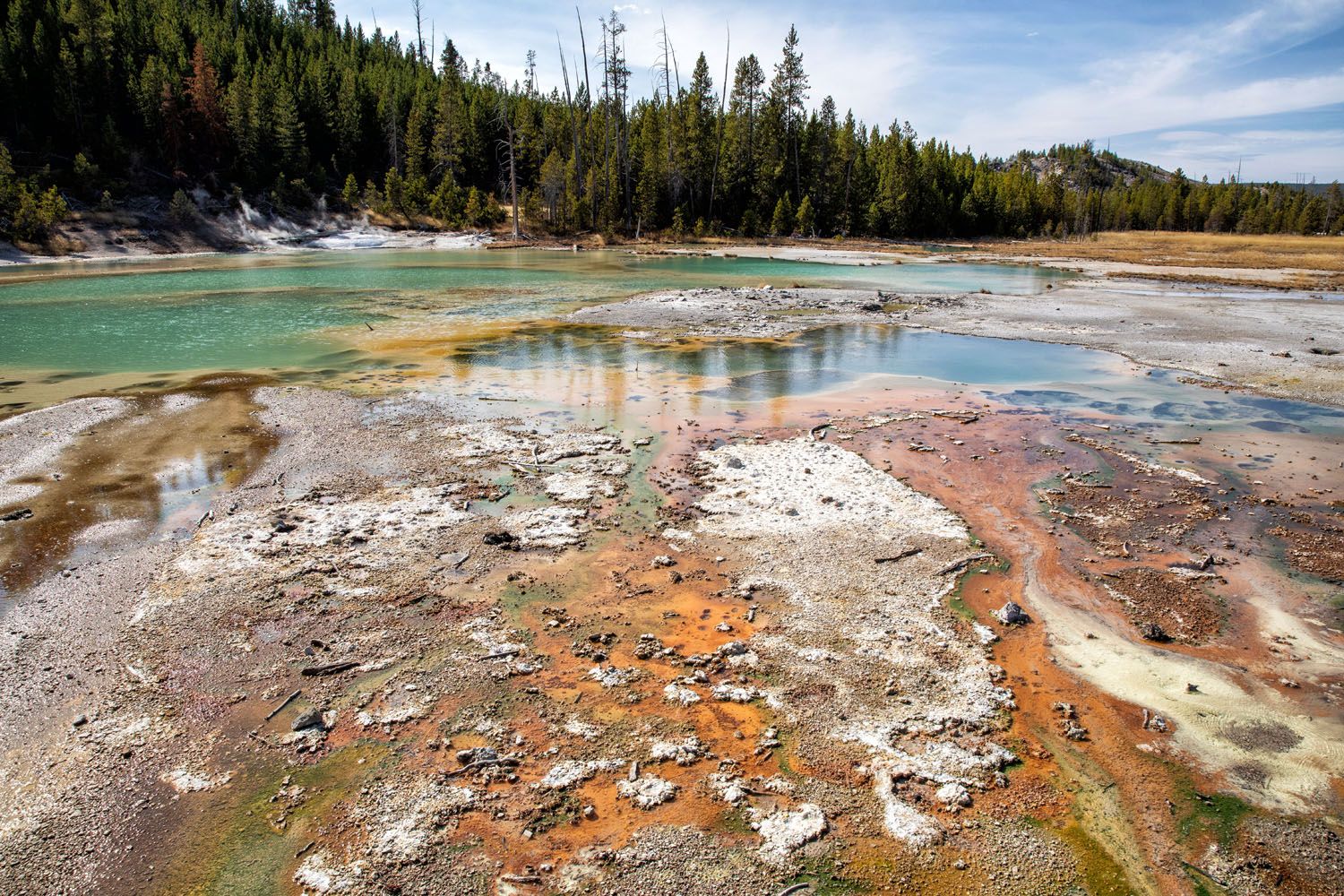
Porcelain Basin at Norris Geyser Basin
Mammoth Hot Springs. Finish your day at Mammoth Hot Springs. Walk the terraces and, if you still have time and energy, drive Upper Terrace Drive.
Roosevelt Arch: If you are near Mammoth Hot Springs, consider driving 10 minutes north to see Roosevelt Arch at Yellowstone’s North Entrance in Gardiner.
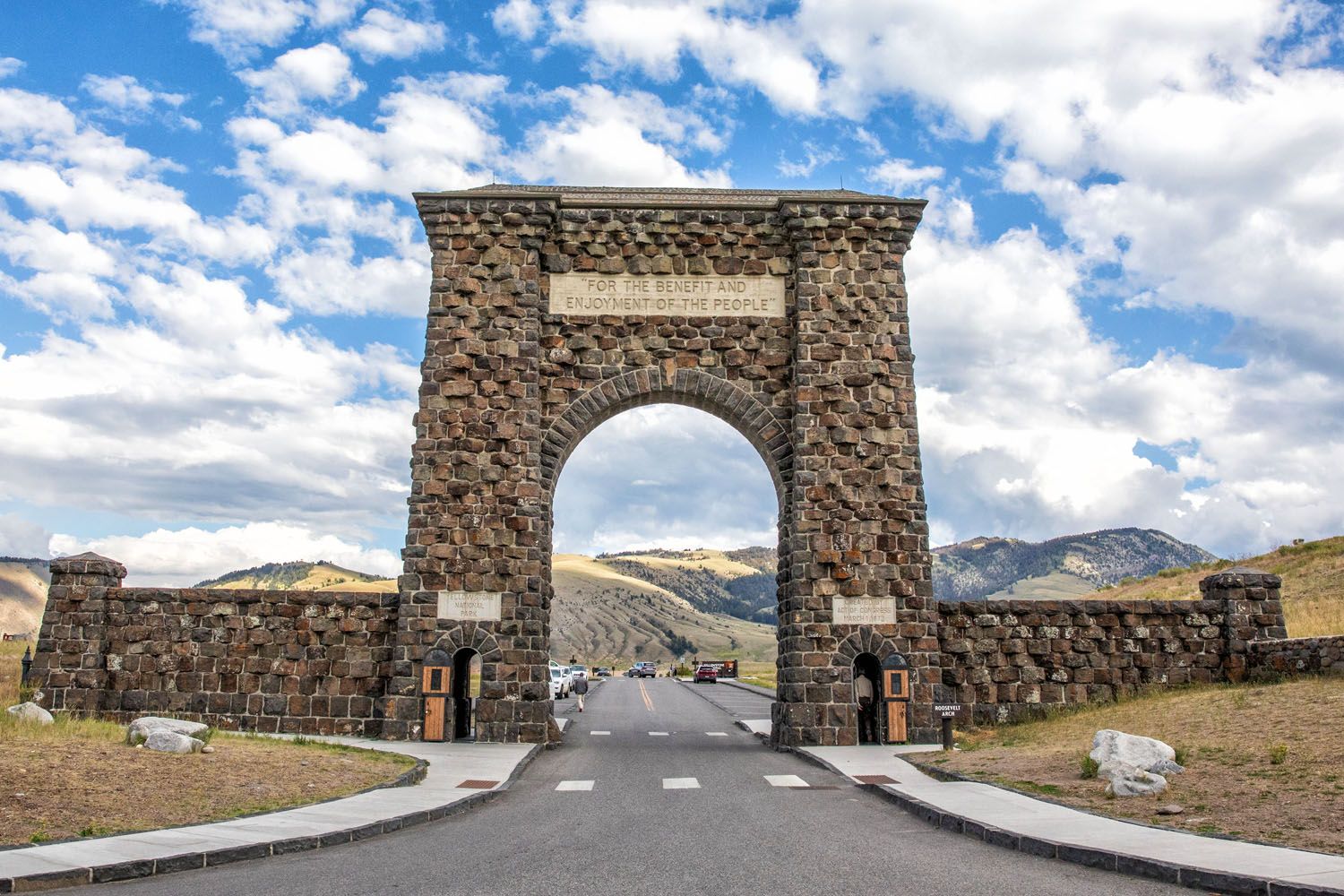
Roosevelt Arch
If You Have Extra Time
Undine Falls is our first choice. It’s a quick stop east of Mammoth and gives you another beautiful Yellowstone waterfall without requiring a hike.
If you have more time and want one final short walk, hike to Wraith Falls. Since Undine and Wraith Falls are relatively close to one another, you can visit both, but after three busy days in Yellowstone, we’d prioritize Undine.
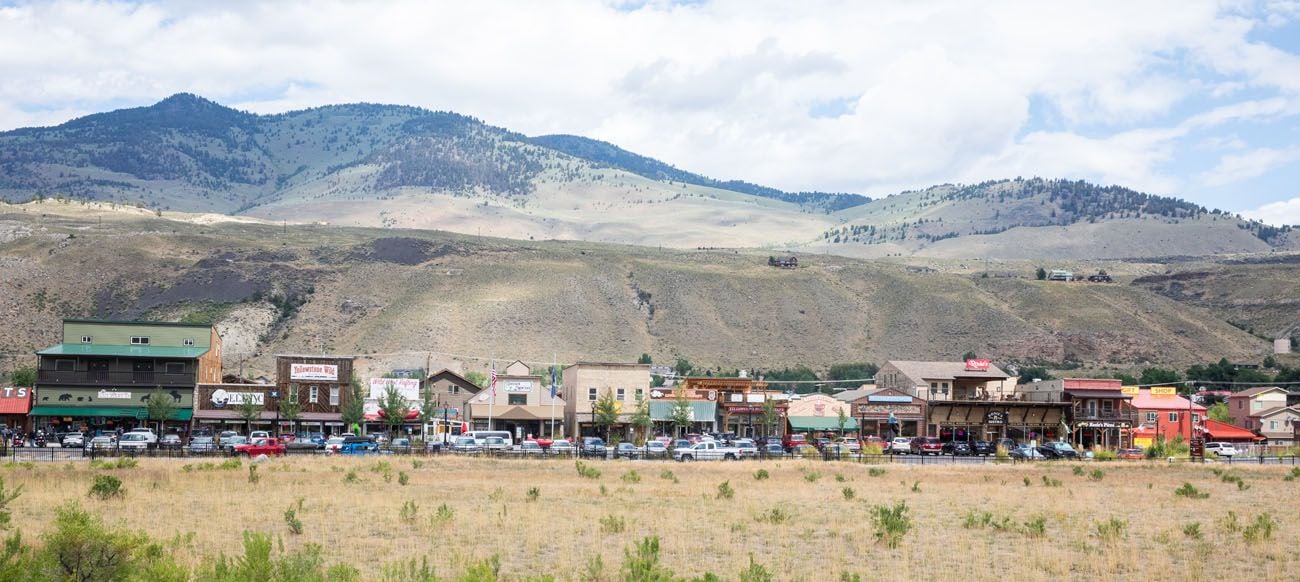
Gardiner, Montana
Four Days in Yellowstone
For most first-time visitors, we recommend spending four days in Yellowstone. This gives you enough time to see the park’s must-see sights, explore several of the smaller geothermal areas, look for wildlife in both Hayden and Lamar Valleys, and add a few short hikes, waterfalls, and scenic drives without cramming everything into three very busy days.
Below is a map of this 4-day Yellowstone itinerary. Red markers show the sights for Day 1, blue markers show the sights for Day 2, green markers for Day 3, and purple markers for Day 4.
Tip to Avoid the Crowds: Crowds are largest between 10 am and 4 pm in the summer months. If you have four or five days in Yellowstone, you have more time to work with, so it is possible to plan your days to avoid sightseeing at these crowded times. Start early, visit a site in the morning, relax in your lodge or have a leisurely picnic lunch midday, and then visit another site in the late afternoon.
On our visit in August, in order to avoid the crowds, we woke up very early and toured the park from 7 am to 11 am. We spent the middle part of the day at our hotel and then we went back out at 5 pm. It worked out very well. We saw most places with low crowds and we had a better chance to spot wildlife, since the animals are most active at dawn and dusk. The only downside is the extra driving.
Day 1: Old Faithful, Grand Prismatic Spring & Geyser Country
Today is devoted to Yellowstone’s geysers, hot springs, and colorful thermal basins. Grand Prismatic Spring is best around midday, so we intentionally save it until later in the morning.
Driving time: About 1 to 1½ hours between the major stops, not including your drive to and from your hotel.
Best place to stay tonight: Old Faithful is our first choice because it minimizes driving and gives you the opportunity to walk around the Upper Geyser Basin again in the evening. West Yellowstone is our second choice, followed by Canyon Village.
PRO TRAVEL TIP: Staying in two different locations helps minimize driving time. However, this itinerary still works well if you prefer to stay in one location. In that case, Canyon Village is the best location inside the park, and West Yellowstone is the best location outside the park.
Morning: Old Faithful & the Upper Geyser Basin
Start at Old Faithful. Watch an eruption and then spend several hours exploring the Upper Geyser Basin.
At a minimum, walk around Geyser Hill and see some of the thermal features near Old Faithful. If you enjoy walking, extend your route to Observation Point and Solitary Geyser, or continue along the boardwalks to Grand Geyser, Riverside Geyser, and Morning Glory Pool.
With four days in Yellowstone, you have enough time to really explore this area rather than simply watching Old Faithful erupt and moving on.
Midday: Grand Prismatic Spring
Next, drive to the Fairy Falls parking area and hike to the Grand Prismatic Spring Overlook. This is our favorite view of Grand Prismatic Spring.
After the overlook, drive to Midway Geyser Basin and walk the boardwalk past Grand Prismatic Spring and Excelsior Geyser.
If you want a longer hike today, continue from the Grand Prismatic Overlook to Fairy Falls. Doing this will take a few additional hours, so you’ll need to shorten some of the afternoon stops.
PRO TRAVEL TIP: The best time to visit Grand Prismatic Spring is around midday, when the sun is higher in the sky and the morning mist has usually burned off. This is one Yellowstone attraction where we recommend visiting during the middle of the day, even though crowds will be higher.
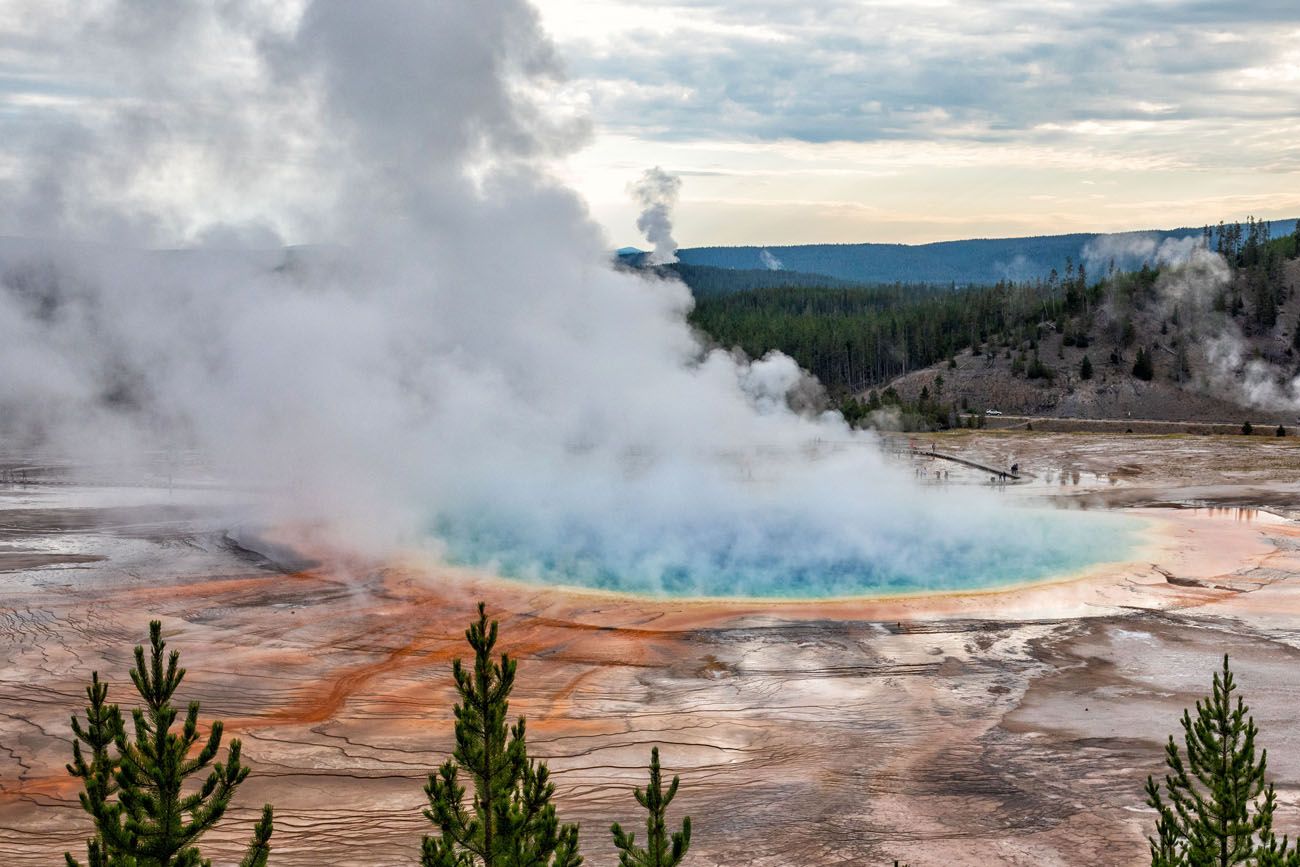
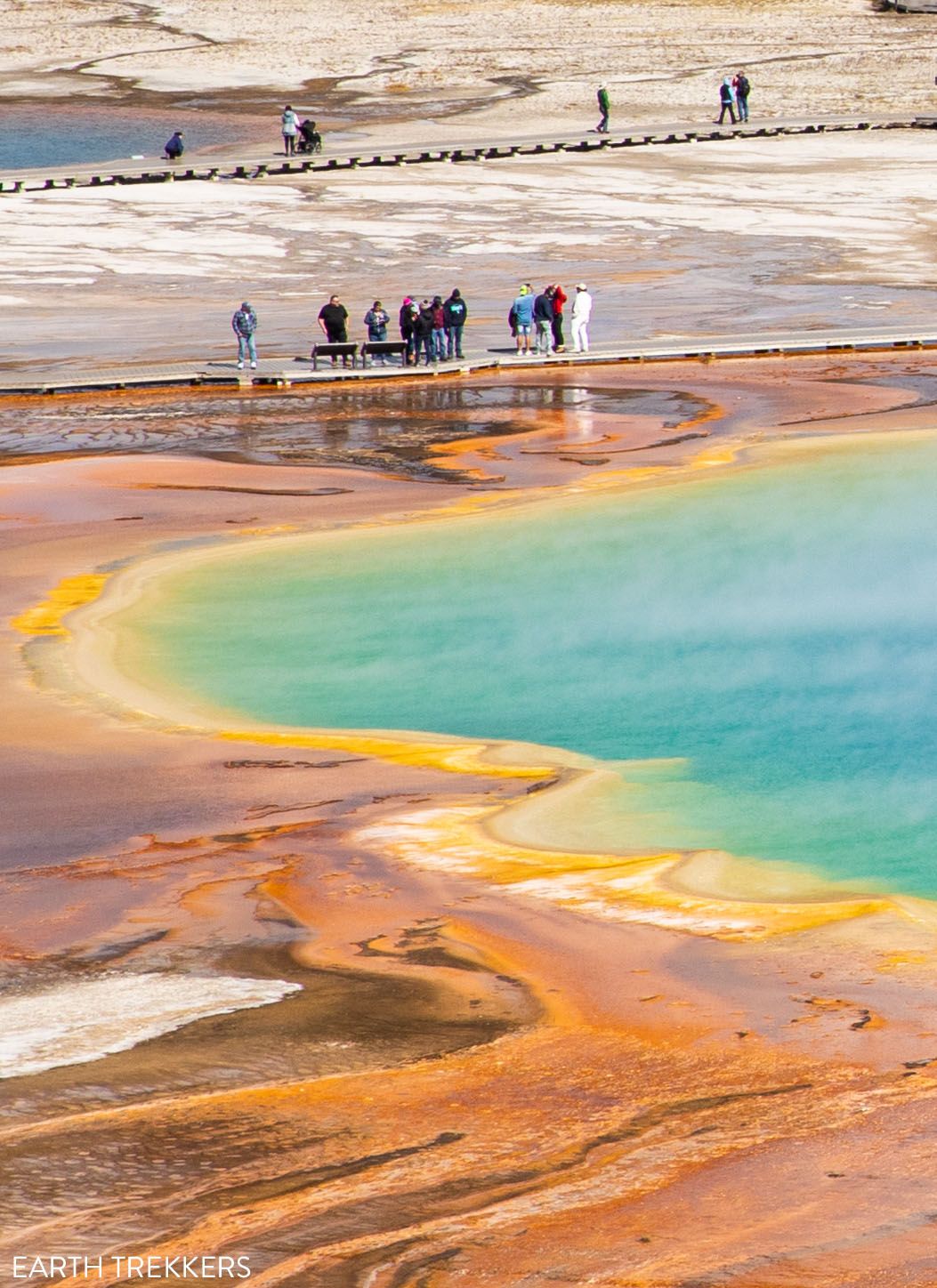
We took this photo around 7:30 am in August, when the Grand Prismatic Spring has a more misty appearance.
Afternoon: Smaller Geyser Basins & Waterfalls
Visit Black Sand Basin, one of our favorite smaller thermal areas near Old Faithful. We spent about 30 minutes here, so it’s one of the quicker stops in the area.
Next, walk the Fountain Paint Pot Trail, where you’ll see hot springs, mudpots, fumaroles, and geysers along a relatively short boardwalk.
If Firehole Lake Drive is open to vehicles during your visit, it is an easy addition from Fountain Paint Pot. Great Fountain Geyser and White Dome Geyser are among the highlights along this road.
You can also stop at Kepler Cascades, particularly if you are staying near Old Faithful or your route takes you south at the end of the day.
Day 2: Norris, Artists Paintpots & Firehole Canyon
Day 2 takes you through the western and central portion of Yellowstone, visiting another major geyser basin plus several smaller sights that don’t fit into the more condensed itineraries.
The order below works particularly well if you start near Old Faithful or West Yellowstone and finish at Canyon Village. If you are starting at Canyon, simply reverse the route.
Driving time: Roughly 2 hours between the major stops, plus your drive from your lodging. Allow additional time for traffic and parking.
Best place to stay tonight: Canyon Village is the best choice because you’ll start tomorrow morning at the Grand Canyon of the Yellowstone. West Yellowstone is our second choice, followed by Old Faithful.
Firehole Canyon Drive & Firehole Falls. Drive the one-way Firehole Canyon Drive along the Firehole River. Stop at the viewpoint for Firehole Falls, one of Yellowstone’s easily accessible waterfalls.
There is also a designated swimming area along Firehole Canyon Drive. If the Firehole River Swim Area is open during your visit and conditions are safe, you can stop here for a swim. Always check current park conditions first because the swimming area can remain closed due to high water, strong currents, or other conditions.
Gibbon Falls. Continue north and stop at Gibbon Falls. This is another quick waterfall stop and fits naturally along today’s route.
Artists Paintpots. Walk the roughly one-mile trail through Artists Paintpots. This smaller geothermal area contains colorful hot springs and bubbling mudpots and feels quite different from the large geyser basins you explored yesterday.
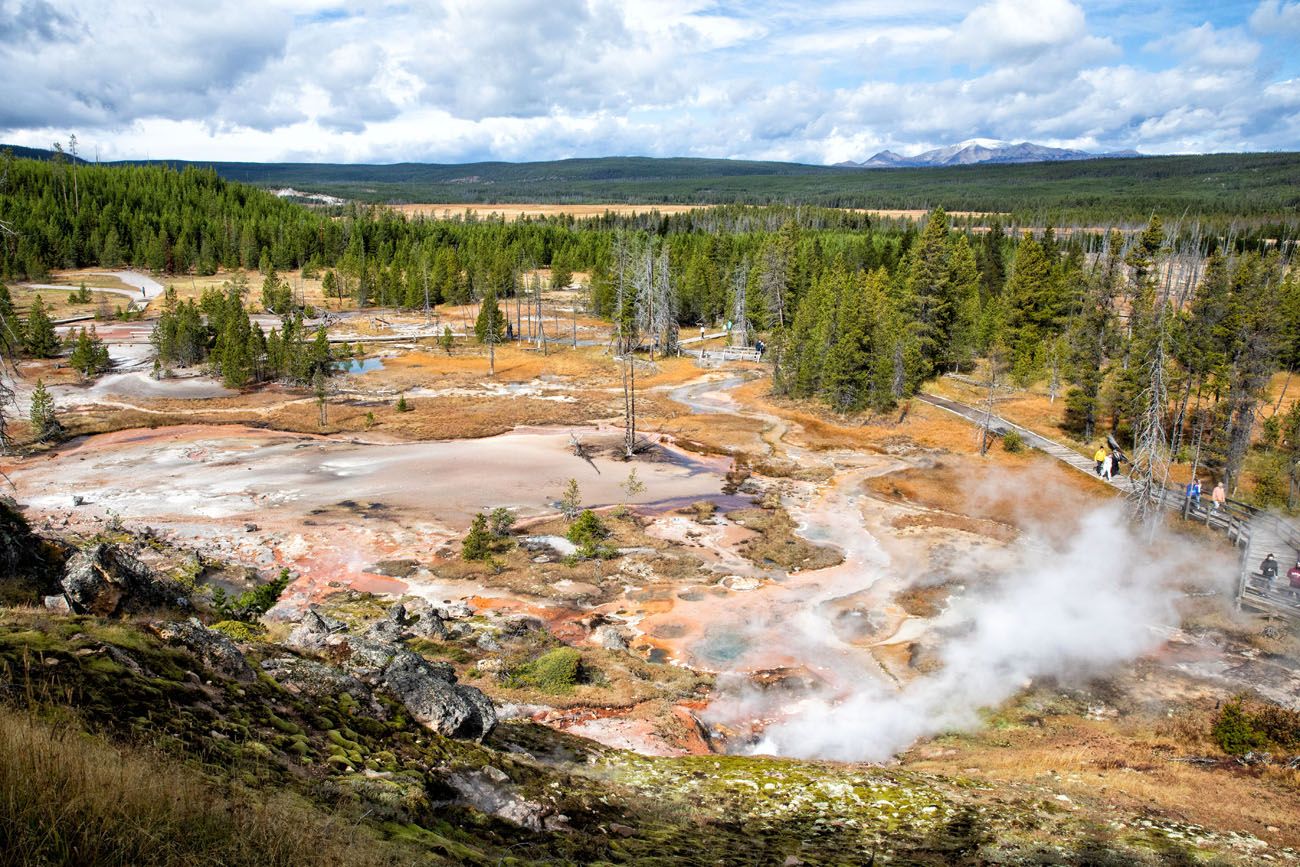
Artist Paintpots
Norris Geyser Basin. Finish the day’s sightseeing at Norris Geyser Basin, one of Yellowstone’s most dynamic geothermal areas. With four days in the park, you have time to explore more of Norris than we recommend on the shorter itineraries.
From Norris, drive east to Canyon Village if you are staying there tonight.
If you’re running behind: Skip the Firehole swimming stop first, followed by Gibbon Falls. We would prioritize Norris Geyser Basin and Artists Paintpots.
If you have extra time: Spend more time at Norris, or add another short roadside stop along your route rather than trying to squeeze in a longer hike.
Day 3: Grand Canyon of the Yellowstone, Hayden Valley, Mud Volcano & West Thumb
Get an early start today. We recommend arriving at the Grand Canyon of the Yellowstone early in the morning, when parking is easier and the viewpoints are much less crowded.
Driving time: Roughly 2 to 2½ hours between the major areas, plus wildlife stops and your drive to your hotel.
Best place to stay tonight: Canyon Village is our first choice because it puts you in the best position for tomorrow’s early drive to Lamar Valley. West Yellowstone also works, but you’ll have a much longer drive tomorrow morning.
Morning: Grand Canyon of the Yellowstone
Start on the North Rim.
Visit Brink of the Lower Falls, Lookout Point, Red Rock Point, and Inspiration Point before driving to the South Rim.
On the South Rim, don’t miss Artist Point, one of the classic views of Lower Falls and the Grand Canyon of the Yellowstone.
How long you spend here depends on how much hiking you want to do:
- Quick visit: Visit the main North and South Rim viewpoints.
- Short hike: Add the Brink of the Lower Falls Trail.
- More hiking: Add Red Rock Point and/or Brink of the Upper Falls.
We recommend allowing about 3 to 4 hours to see both rims without feeling rushed.
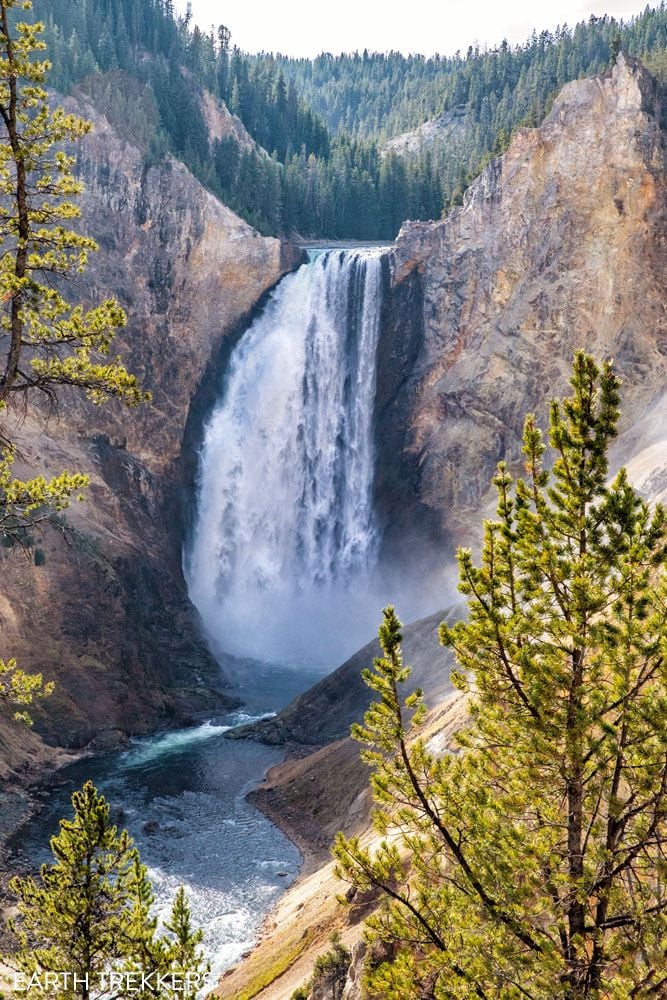
The view from Red Rock Point
Midday: Hayden Valley & Mud Volcano
From the canyon, drive south through Hayden Valley. Stop at the pullouts if you see wildlife activity, but don’t worry if the valley seems quiet. You’ll drive through it again later today, giving you a second chance for wildlife sightings.
Continue to Mud Volcano and walk the boardwalk through this small geothermal area.
Afternoon: West Thumb Geyser Basin
Drive south along Yellowstone Lake to West Thumb Geyser Basin. The thermal features here sit right along the lakeshore, giving West Thumb a very different setting from the geyser basins you visited earlier in your trip.
After visiting West Thumb, turn around and drive north.
Late Afternoon: Hayden Valley
Drive through Hayden Valley for a second time in the late afternoon or early evening. Wildlife activity can change dramatically throughout the day, and this gives you another opportunity to see bison and other animals.
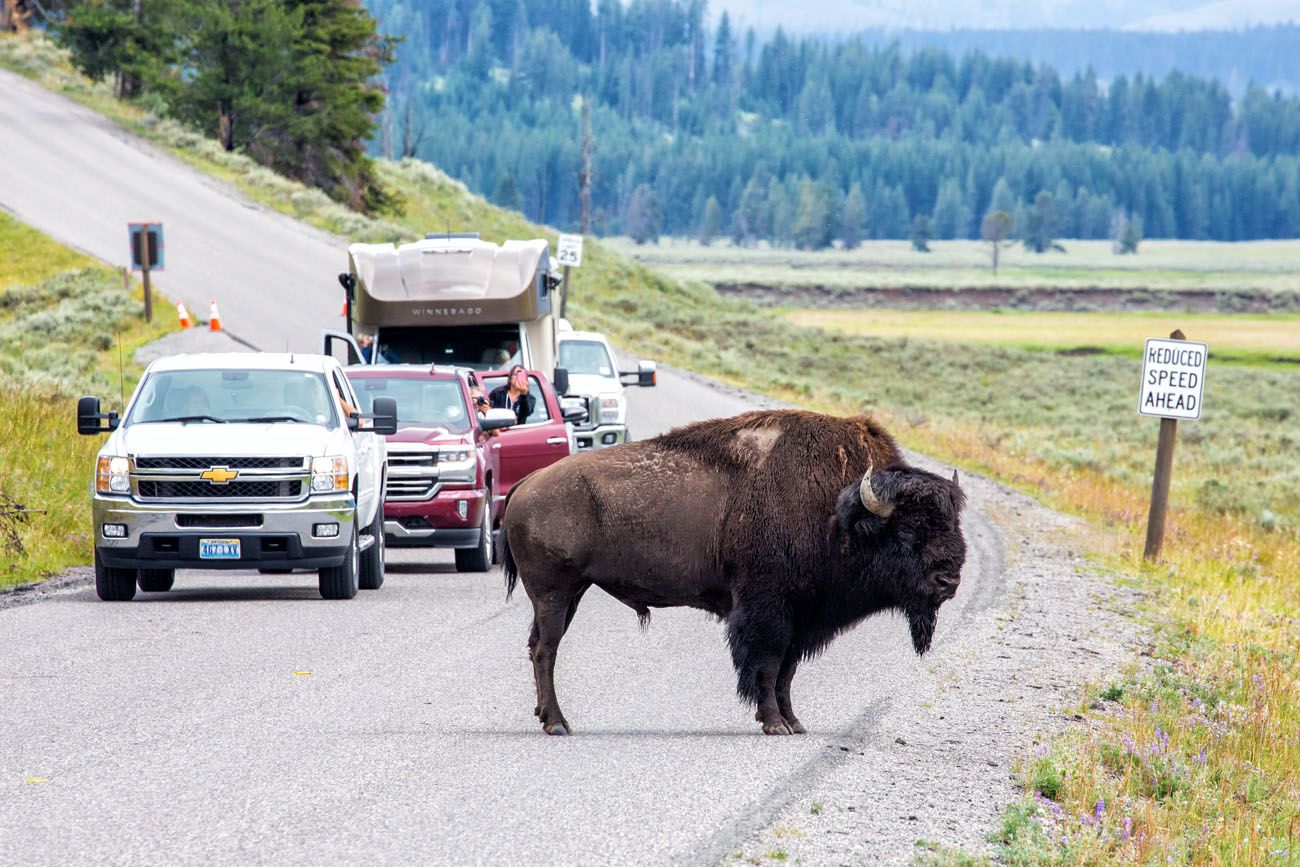
PRO TRAVEL TIP: When driving through Yellowstone, be prepared to drive slowly and to get stuck in “animal traffic jams.” Bison tend to stop smack in the middle of the road, blocking traffic in both directions, creating traffic jams.
Optional: Mount Washburn
If hiking is one of your priorities, Mount Washburn can be added to this itinerary, but we would treat it as a substitution rather than simply stacking it onto everything listed above.
The hike takes several hours and the trailhead is north of Canyon, in the opposite direction from Hayden Valley and West Thumb. If you hike Mount Washburn today, skip West Thumb or significantly shorten the rest of the day’s itinerary.
Day 4: Lamar Valley, Trout Lake, Tower Fall & Mammoth Hot Springs
Your final day starts early with one of Yellowstone’s best wildlife experiences.
Driving time: This is another big driving day. Plan on roughly 3 to 4 hours behind the wheel, plus whatever time you spend slowly driving and stopping for wildlife in Lamar Valley.
Best place to stay tonight: Mammoth Hot Springs or Gardiner are the most convenient choices. Staying here also sets you up nicely if you are heading to Glacier National Park next, as in our Grand Teton, Yellowstone, Glacier National Parks Itinerary. West Yellowstone or Canyon Village also work if your trip continues in that direction, but they add considerable driving at the end of the day.
Plan to arrive in Lamar Valley around sunrise. Drive slowly through the valley, stopping at pullouts whenever you see wildlife watchers gathered or animals in the distance.
If you stayed at Canyon Village, your early-morning drive takes you over Dunraven Pass and past Tower Junction on the way to Lamar Valley. You won’t see much of the scenery before sunrise, but this is the most efficient route.
Take your time in Lamar. Unlike a geyser basin or viewpoint, wildlife watching doesn’t work according to a strict schedule.
Optional: Trout Lake. As you leave Lamar Valley, hike to Trout Lake if you want a short hike. This is a good way to add some trail time without committing several hours to a longer Yellowstone hike.
Tower Fall. Continue to Tower and stop at Tower Fall. This is a quick addition to today’s route.
From Tower Junction, drive west toward Mammoth Hot Springs.
Blacktail Plateau Drive: If you are doing this itinerary in reverse, from Mammoth toward Lamar Valley, consider taking Blacktail Plateau Drive. This 6-mile, one-way unpaved road winds through forests and open meadows, offering beautiful scenery and another chance to spot wildlife. It is seasonal and typically opens later than many Yellowstone roads.
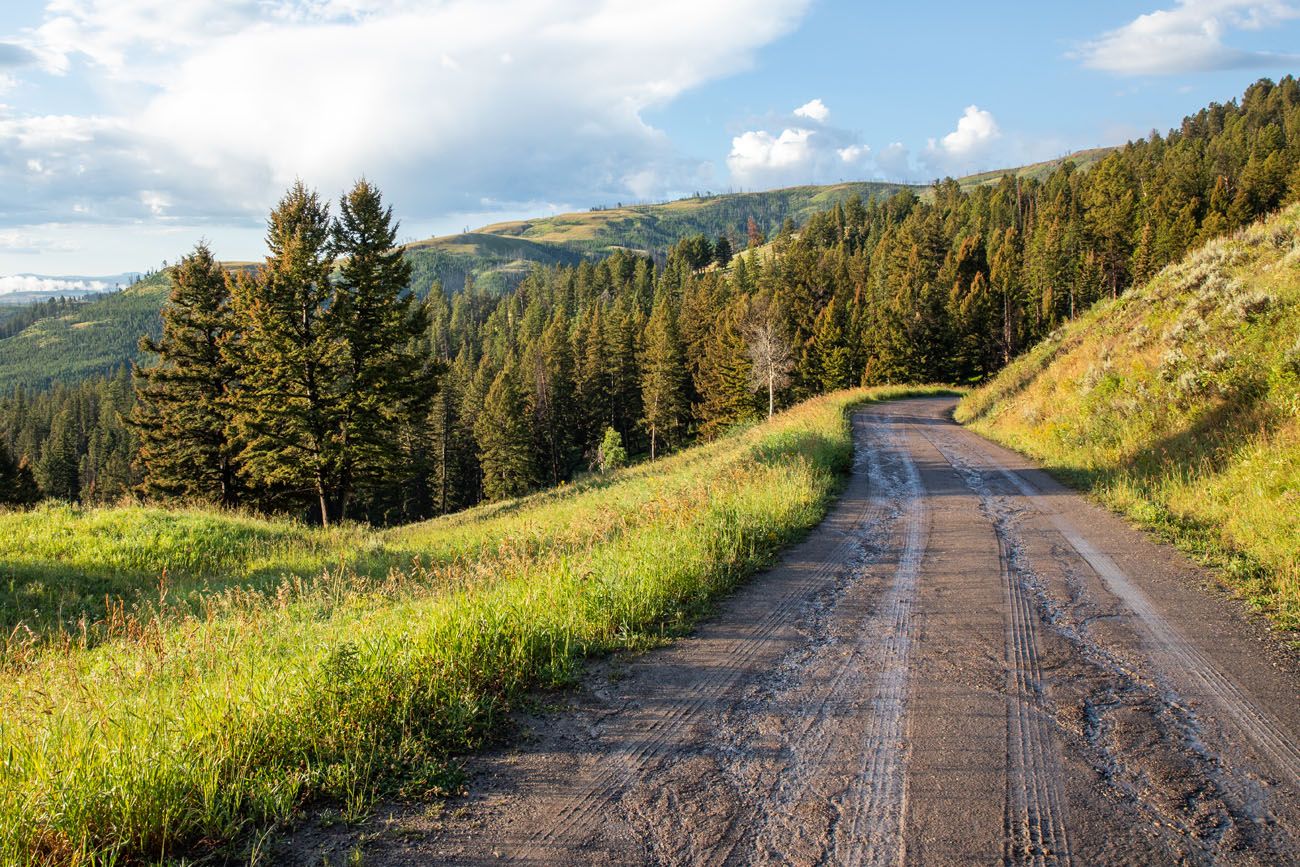
Blacktail Plateau Drive
Undine Falls & Wraith Falls. If you have time, stop at Undine Falls. We prefer this as the first waterfall addition because it requires very little time.
Mammoth Hot Springs. Finish your Yellowstone itinerary at Mammoth Hot Springs. Walk the Lower Terrace boardwalks and, if time permits, drive Upper Terrace Drive.
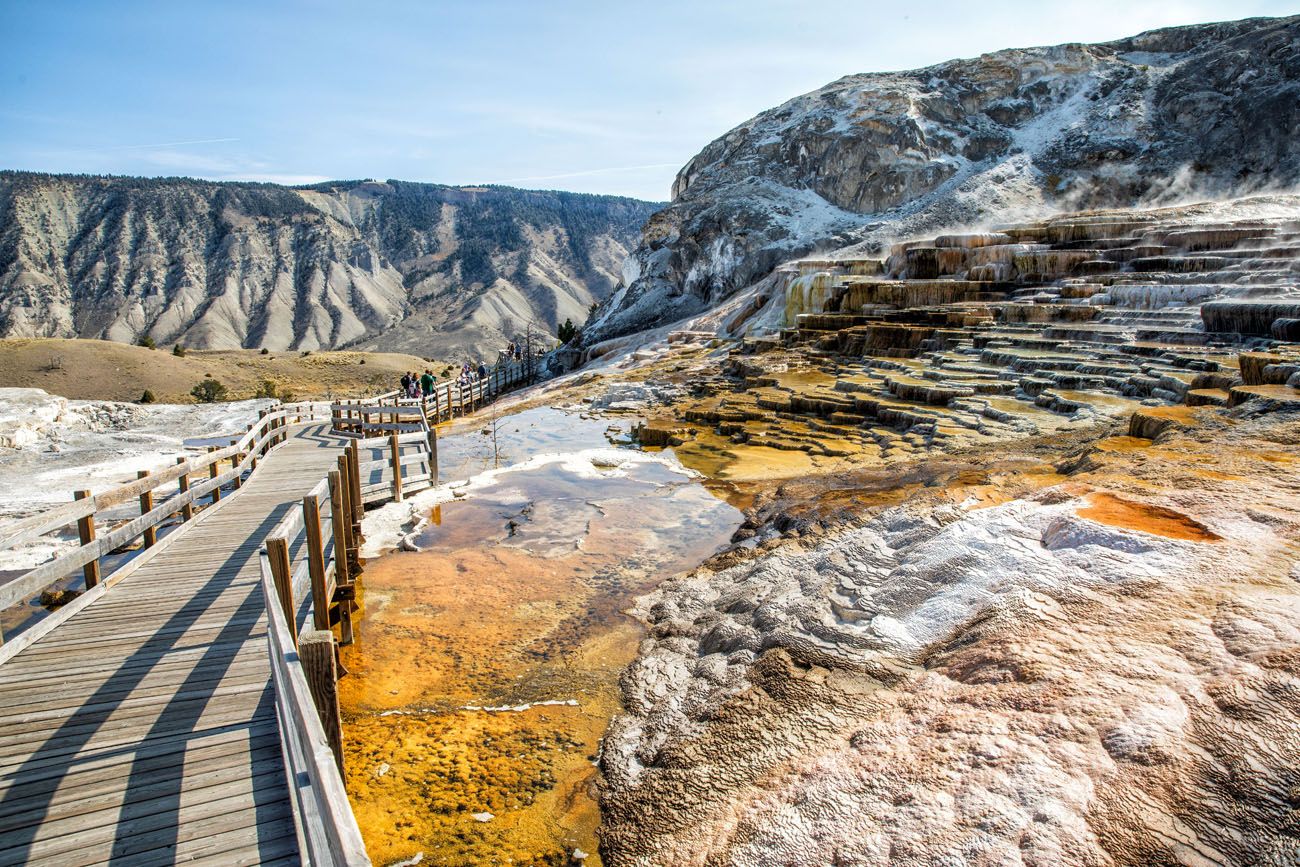
Mammoth Hot Springs
Roosevelt Arch: If you are near Mammoth Hot Springs, consider driving 10 minutes north to see Roosevelt Arch at Yellowstone’s North Entrance in Gardiner.
Five Days in Yellowstone
With five days in Yellowstone, follow our four-day Yellowstone itinerary above, then use Day 5 to customize your trip. By this point, you will have visited Yellowstone’s major geothermal areas, the Grand Canyon of the Yellowstone, Mammoth Hot Springs, and both Hayden and Lamar Valleys, along with several waterfalls and smaller sights.
Rather than filling your fifth day with another long list of attractions, we recommend choosing an experience that interests you most. Drive the Beartooth Highway, tackle one of Yellowstone’s best hikes, spend more time wildlife watching, or slow down and enjoy the park at a more relaxed pace.
Day 5 Option #1: Drive the Beartooth Highway
Over the years, one of the questions we get most often in the comments and by email is how to add the Beartooth Highway to a Yellowstone itinerary. If you have five days in Yellowstone, Day 5 is an excellent place to put it.
The Beartooth Highway (US-212) runs between Cooke City, just outside Yellowstone’s Northeast Entrance, and Red Lodge, Montana. The drive climbs high into the Beartooth Mountains, passing alpine lakes, mountain overlooks, and some spectacular high-elevation scenery.
The most efficient way to include the Beartooth Highway is to use it as your route into or out of Yellowstone. For example, after completing Day 4 in northern Yellowstone, stay in Cooke City or near the Northeast Entrance and drive the Beartooth Highway to Red Lodge the following day. If you need to return to Yellowstone afterward, you can still drive it as an out-and-back trip, but this turns it into a much longer day.
The Beartooth Highway is seasonal. It is generally open from Memorial Day weekend into mid-October, weather permitting, and temporary closures can occur even during summer because of snow and rapidly changing high-elevation weather. We cover what to see along the way, logistics, and photos in our guide to Beartooth Highway ↓
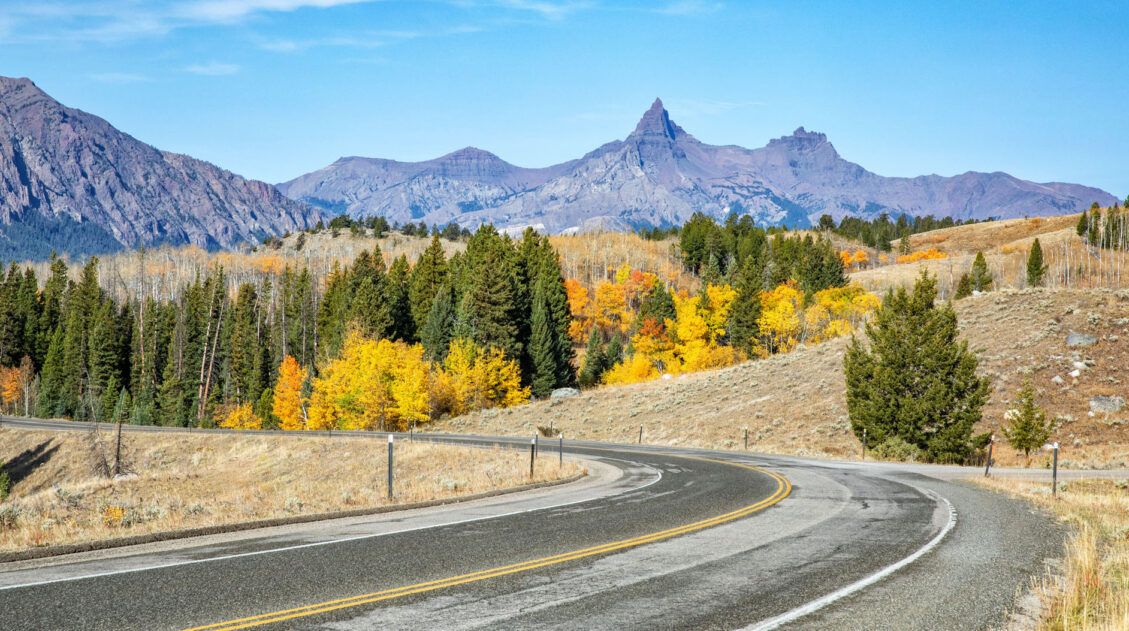
Beartooth Highway: Driving One of America’s Most Scenic Roads
Everything you need to know to drive Beartooth Highway.Best for: Scenic drives, mountain views, and road trips continuing east or northeast from Yellowstone.
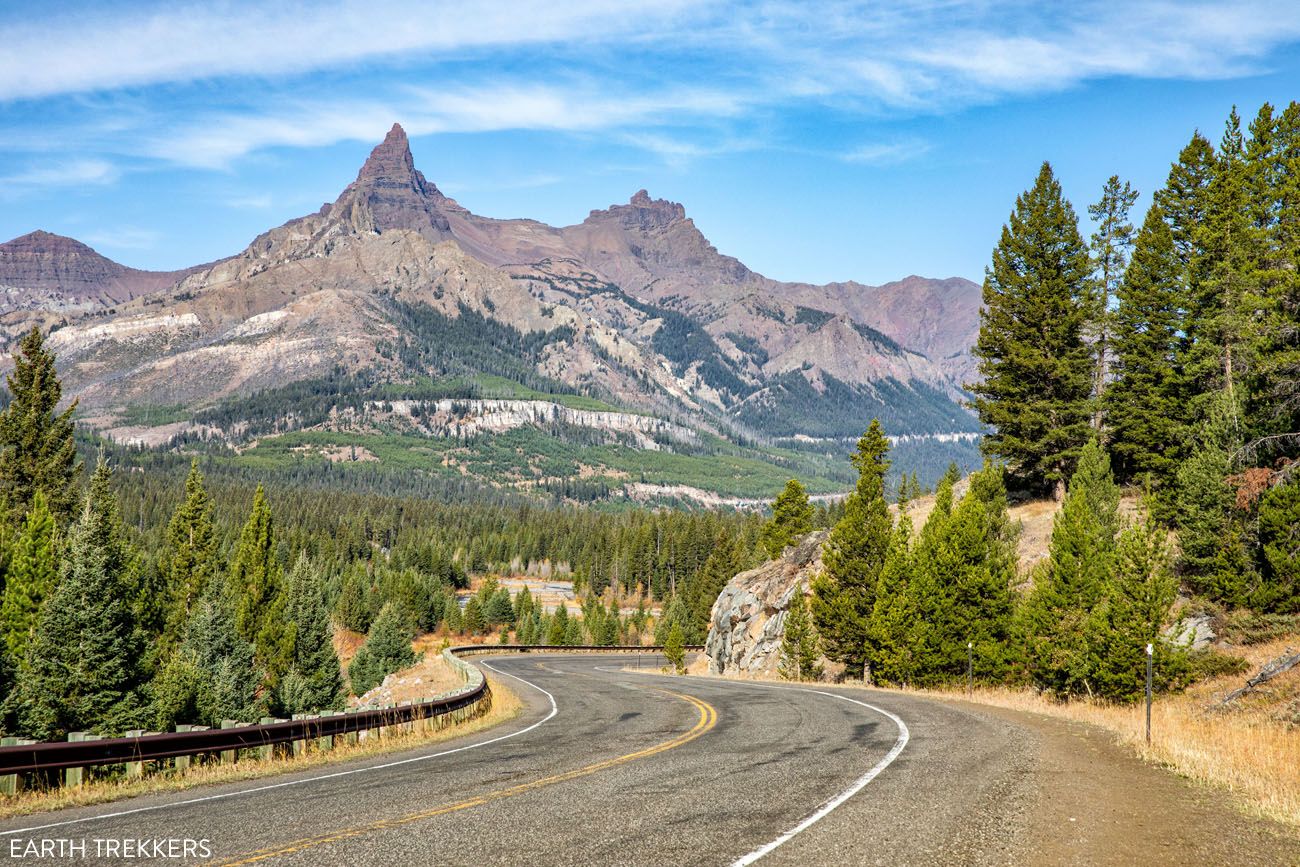
Beartooth Highway
Day 5 Option #2: Go Hiking
Use your fifth day for one of Yellowstone’s longer hikes:
Mount Washburn
6 miles | 3–6 hours | Strenuous
A classic Yellowstone summit hike with panoramic views from 10,219 feet. This is our top choice for a big mountain hike.
Bunsen Peak
4.6 miles | 2–3 hours | Moderately strenuous
A shorter summit hike with about 1,300 feet of climbing and wide-open views over northern Yellowstone. Its location near Mammoth makes it easy to combine with other northern sights.
Lone Star Geyser
4.8 miles | 2–3 hours | Easy
Hike or bike along the Firehole River to a backcountry geyser that typically erupts about every three hours. A great choice for an easier, quieter geothermal experience.
Avalanche Peak
4.4 miles | 3–4 hours | Strenuous
A steep climb of roughly 2,100 feet to an exposed alpine ridge overlooking Yellowstone Lake. Best for strong hikers and those traveling near the East Entrance.
Which should you choose? Pick Mount Washburn for the classic Yellowstone hike, Bunsen Peak for a shorter summit, Lone Star Geyser for an easier hike, and Avalanche Peak for the biggest challenge.
Day 5 Option #3: Spend a Day Wildlife Watching
If wildlife has been one of the highlights of your Yellowstone trip, use Day 5 for a second visit to Lamar Valley or Hayden Valley.
On the four-day itinerary, wildlife watching has to share your time with sightseeing. With an extra day, you have the luxury of slowing down and waiting to see what happens.
For a dedicated wildlife day, Lamar Valley would be our first choice. It is one of Yellowstone’s premier wildlife areas, with opportunities to see bison, bears, elk, pronghorn, wolves, and other animals.
Arrive around sunrise and spend the morning slowly driving through the valley and stopping at the wildlife pullouts. During the middle of the day, take a break or hike Trout Lake. Then return to Lamar Valley later in the day.
If you are staying at Canyon Village, Hayden Valley is the more convenient option. Drive through Hayden early in the morning, spend midday revisiting the Grand Canyon of the Yellowstone or another nearby area, and return to Hayden in the late afternoon or evening.
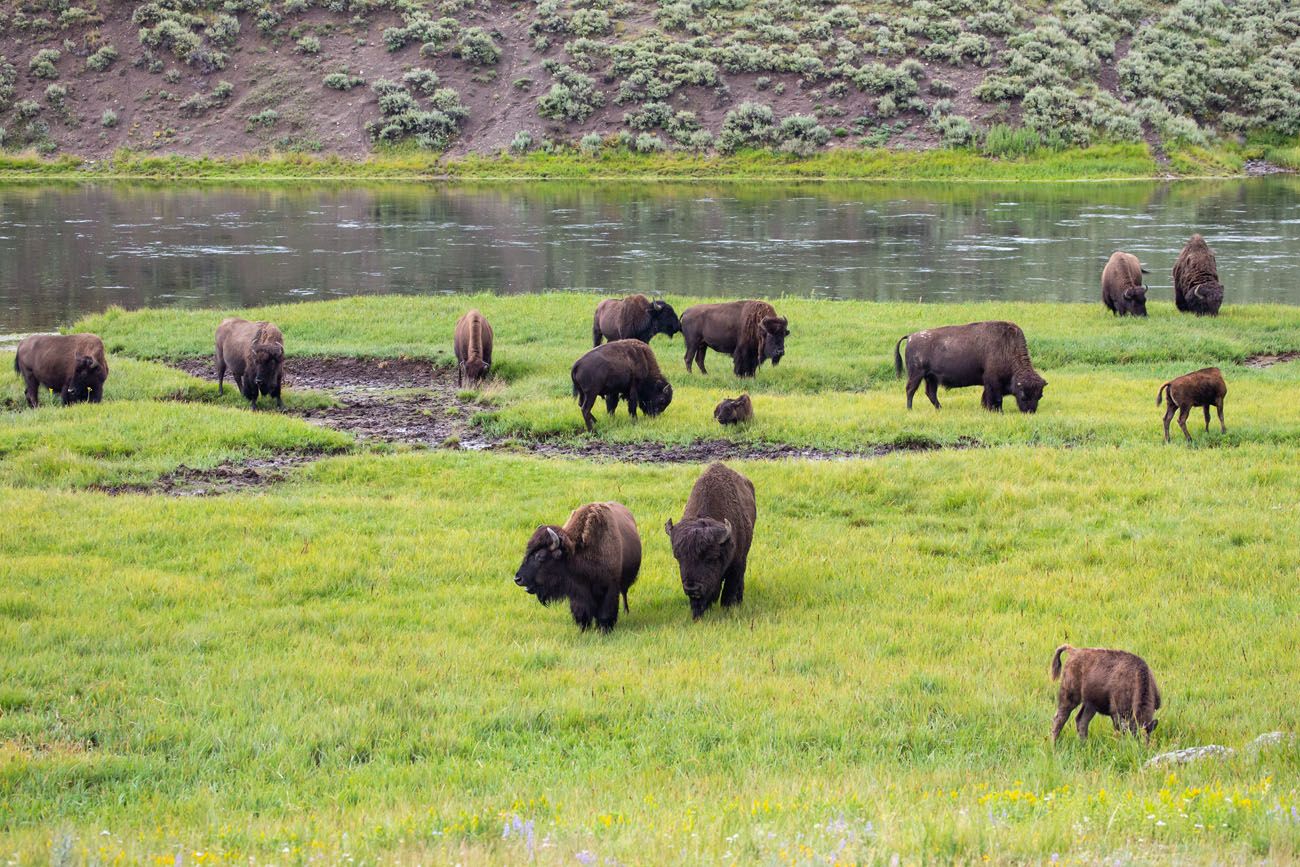
Bison in Hayden Valley
Day 5 Option #4: Slow Down & Enjoy Yellowstone
By Day 5, you may not want another long drive or a challenging hike. This is also a great opportunity to slow down and spend more time doing whatever you enjoyed most during your first four days.
Revisit a favorite place. Return to Grand Prismatic Spring if your first visit was cloudy or steamy. Spend another morning walking through the Upper Geyser Basin. Photograph the Grand Canyon of the Yellowstone in different light. Or make another early-morning trip to Lamar or Hayden Valley.
Join a ranger program. Ranger-led walks, talks, and other programs are typically offered from Memorial Day weekend through Labor Day. Check the current Yellowstone ranger schedule during your visit.
Go fishing. Fishing has a long history in Yellowstone and can be a wonderful way to experience the park at a slower pace. You can fish independently or hire an authorized guide, but Yellowstone has its own fishing regulations and seasonal restrictions, so check the current rules before you go.
Go horseback riding. A guided horseback ride gives you a completely different perspective on Yellowstone’s backcountry and is another good choice for a less sightseeing-intensive day. Guided horseback trips are available through authorized operators in and around the park.
Or simply leave the day partially unplanned. After four days in Yellowstone, you’ll probably have a good idea of where you would like to spend more time.
Which Day 5 Option Would We Choose?
If you’ve never driven the Beartooth Highway, that would be high on our list, particularly if you can use it as your route into or out of Yellowstone. Otherwise, we’d choose one of the hikes above or devote the extra day to wildlife watching.
The beauty of having five days in Yellowstone is that by Day 5, you’ve already seen the must-see sights. You can spend your final day doing more of what you’ve enjoyed most.
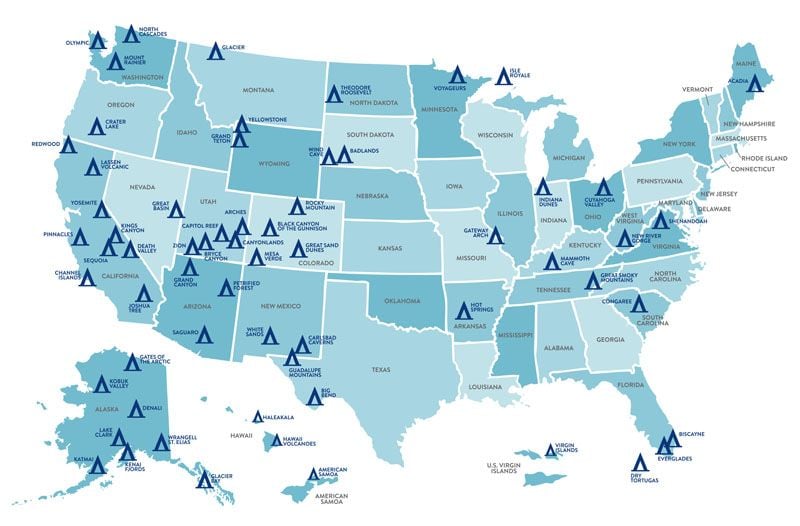
Wildlife in Yellowstone: What You’ll See and How to Stay Safe
Yellowstone ranks among the top places in the U.S. for observing wildlife in their natural environment. The park hosts the highest number of mammals in the lower 48 states and it is a favorite spot for photographers, nature enthusiasts, and families.
Here’s what you can see.
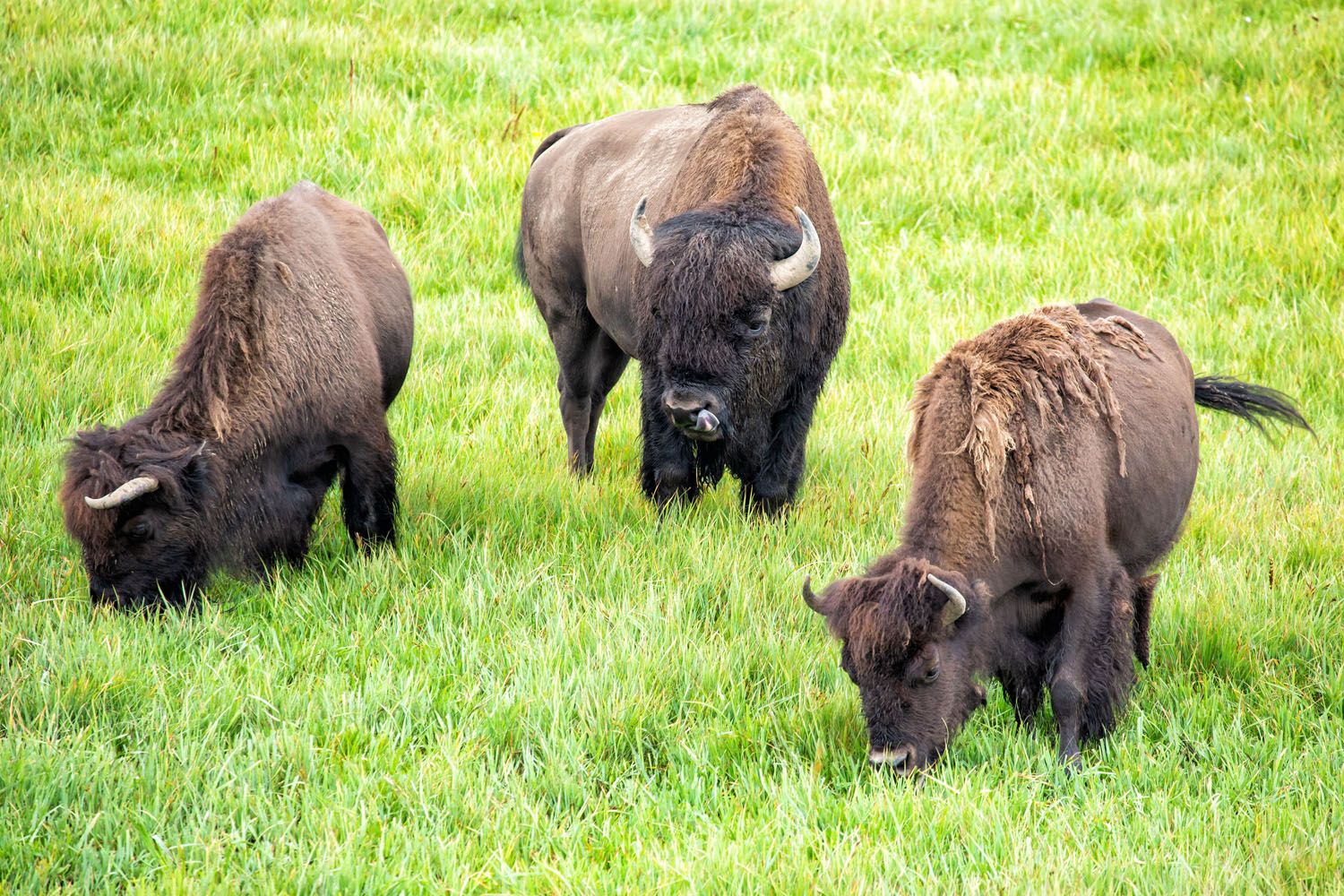
Bison: The symbol of Yellowstone, bison roam freely throughout the park. Bison are frequently seen in Lamar Valley and Hayden Valley, and sometimes even block traffic on the park roads.
Elk: One of the most commonly spotted animals, especially near Mammoth Hot Springs and in the Hayden Valley. In autumn, listen for the bugle of bull elk during the rutting season.
Bears: Both grizzly bears and black bears live in Yellowstone. Grizzlies are more commonly seen in the Lamar Valley and around Dunraven Pass, while black bears are often spotted in forested areas near Tower Junction. Bears are most active in spring and early summer but we’ve had the most luck spotting them in September.
Wolves: The reintroduction of wolves in the 1990s transformed Yellowstone’s ecosystem. Today, about a hundred wolves live in the park. Your best chance to see them is at dawn or dusk in the Lamar Valley.
Moose: Found near Canyon Village, Yellowstone Lake, and along the Bechler River, moose are more solitary and harder to find, but spotting one is a true treat.
How to Stay Safe
Yellowstone’s animals may look peaceful, but they’re wild and unpredictable. Each year, visitors are injured because they get too close. Follow these essential safety rules:
- Keep your distance: Stay at least 100 yards (91 m) away from bears and wolves, and 25 yards (23 m) away from all other wildlife.
- Never approach, feed, or touch animals. Feeding wildlife is illegal and can cause harm to both people and animals.
- Stay in your vehicle if animals are nearby, especially bison and bears.
- Carry bear spray and know how to use it.
- Hike in groups and make noise to avoid surprising wildlife on trails.
- Store food properly. Use bear-proof storage boxes at campsites and never leave food or scented items in your tent.
- Obey rangers and warning signs. They’re there for your safety and for the protection of the animals.
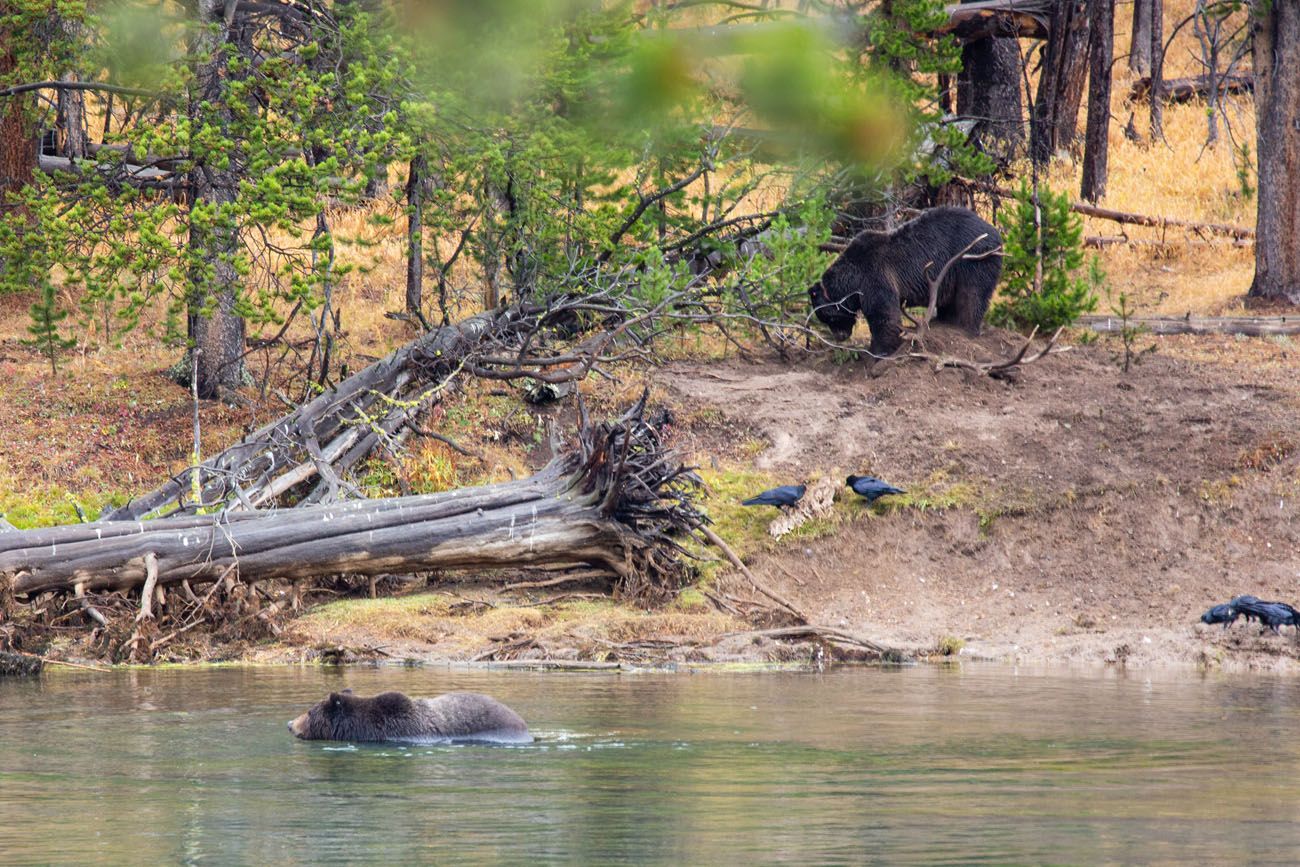
We took this photo of grizzlies in Yellowstone in September. They are guarding an elk carcass that is buried on the riverbank.
How to Get to Yellowstone
Yellowstone National Park is located in the northwest corner of Wyoming. Here are the distances and driving times from nearby airports:
- Idaho Falls Regional Airport, Idaho: 110 miles, 2 hours
- Bozeman Yellowstone International Airport, Montana: 80 miles, 1.5 hours
- Yellowstone Airport, West Entrance of Yellowstone: 3 miles, 10 minutes
- Yellowstone Regional Airport, Cody, Wyoming: 55 miles, 1.25 hours
- Jackson Hole Airport, Jackson, Wyoming: 70 miles, 1.5 hour
- Salt Lake City International Airport, Utah: 325 miles, 5 hours
- Rapid City Regional Airport, South Dakota: 440 miles, 7.5 hours
Both Yellowstone Airport and Yellowstone Regional Airport are very small airports, so your options will be limited. You might have better luck finding convenient and economical flights at Bozeman, Idaho Falls, and Jackson Hole. We usually fly into Salt Lake City and visit Grand Teton National Park on the drive up to Yellowstone.
Yellowstone is a very popular road trip destination. Here are nearby travel destinations which you can visit before or after Yellowstone:
- Grand Teton National Park: 60 miles, 1.5 hours
- Jackson, Wyoming: 80 miles, 2 hours
- Cody, Wyoming: 80 miles, 1.5 hours
- Devils Tower, Wyoming: 375 miles, 7 hours
- Mount Rushmore & Rapid City, South Dakota: 450 miles, 8 hours
- Glacier National Park: 380 miles, 6 hours
Note: This driving distances and times are estimates and will vary according to your starting/ending location inside of Yellowstone National Park.
If you have plans to visit Yellowstone National Park on a road trip with Devils Tower, Mount Rushmore and/or the Black Hills of South Dakota, you have several scenic drives to choose from that cross Wyoming. In our guide about how to drive from Yellowstone to Mount Rushmore, we cover the two routes that cross the Bighorn Mountians: Cloud Peak Skyway and Bighorn Scenic Byway.
When is the Best Time to Visit Yellowstone?
June through October is the best time to visit Yellowstone. During this time, the roads and park lodging are open, the weather is relatively warm, and the days are long.
July and August are the busiest months to visit Yellowstone. During this time, expect traffic delays, difficulty parking, and higher lodging rates.
Our favorite time to visit Yellowstone is mid-September. Crowds are beginning to thin, the weather is still predictable (no snow quite yet) and fall colors make an appearance.
To avoid the crowds and still visit when the roads are open, late September through mid-October are great (snow chances do increase the second half of October) and the very end of May can be nice, too.
From November through early May, much of the park is snow covered and the roads are closed to private vehicles.
Yellowstone is listed in our Best National Parks to Visit by Season as a great park to visit in June, August, September, and October.
Where is the Best Place to Stay in Yellowstone?
Throughout this itinerary, we’ve listed multiple locations to stay, both inside and outside of the park.
Staying inside of Yellowstone is the most convenient, as this minimizes driving times and avoids the wait to enter the park through a park entrance at the start of the day (lines can be quite long). However, some lodges are older in and in need of a renovation, and cellular and WiFi service is limited inside of the park.
We have always choosen to stay outside of the park, either in West Yellowstone, Gardiner, and even Jackson (for a day trip). This has worked very well for us, as driving times were still relatively short, and we start early in the day, avoiding traffic delays at entrance booths.
Some people stay farther from the park to save money (Island Park and Bozeman) but be aware driving times from these cities add on a lot of time to your day.
We have a detailed guide on Where to Stay in Yellowstone that goes into much more detail and lists recommended hotels, lodges, and glamping sites.
Road Trips that Include Yellowstone
Here are three road trip itineraries that include Yellowstone National Park:
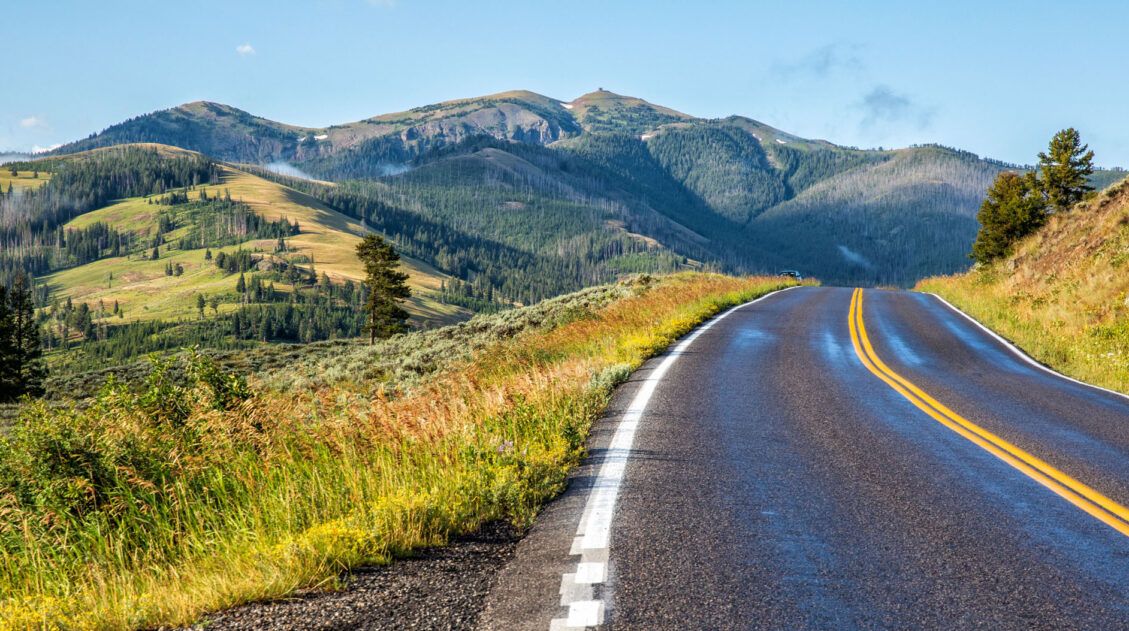
Grand Teton, Yellowstone and Glacier National Parks: 10 Day Road Trip Itinerary
Pinterest Facebook Flipboard Grand Teton, Yellowstone, and Glacier National Parks are three of the most spectacular parks in the United States, and with 10 days, you can visit all three on one unforgettable road trip. Start in Grand Teton, where the lakes and the jagged mountain range create a hiker’s and photographer’s paradise. Journey north […]
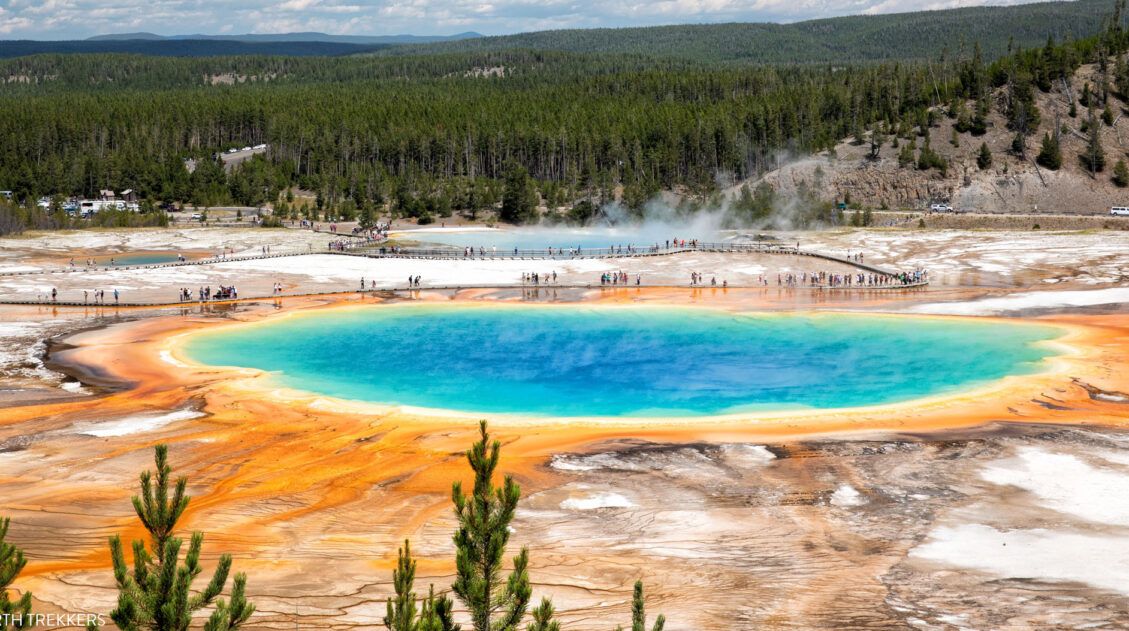
Yellowstone, Devils Tower, and Mount Rushmore: 10 Day Road Trip Itinerary
With 10 days, you can road trip from Grand Teton and Yellowstone all the way to Mount Rushmore, adding on Devils Tower, Badlands National Park, Wind Cave National Park, and Custer State Park along the way. That’s four national parks, two national monuments, one incredible state park, and some of the best scenic drives in […]
The Perfect Yellowstone & Grand Teton Itinerary for First-Timers
Yellowstone and Grand Teton sit side by side in northwest Wyoming, and together they make one of the best national park trips in the country. Spend your days watching Old Faithful erupt and geysers bubble across Yellowstone’s thermal basins, then drive an hour south to hike beneath the jagged Teton Range, paddle Jenny Lake, and […]
Fees, Links & Helpful Tips
Reserving Your Hotels/Lodges
If you want to stay within Yellowstone National Park, in one of the lodges or campgrounds, you need to make your reservation well in advance.
Reservations open one year in advance on the 5th of the month. For example, on May 5, 2025 reservations open for May 1 to 31, 2026. Lodges get fully booked one year in advance but cancellations are common, so keep checking back if you can’t reserve the lodge you want.
Yellowstone National Park Entrance Fee
It costs $35 per vehicle to enter the park and this is good for seven days. Non-US residents 16 years and older pay an additional $100 fee.
America the Beautiful Pass: If you have plans to visit Grand Teton, Yellowstone, and Glacier National Parks, it is worth it to purchase the America the Beautiful Pass. This annual park pass costs $80 ($250 for non-US residents) and is valid for one year. Not only will you save money on park fees for this trip, but you will also get free admission to any other national park or federal recreation sites that you visit within 365 days of purchasing this pass.
Traveling with an RV
We have not traveled with an RV, so we don’t have experience about what it is like to visit Yellowstone with an RV (but we have seen many RV’s on these roads). If you want more information, I recommend taking a look at this website, for an overview of what to expect in the park.
Official Yellowstone National Park Website
Check park conditions and road closures on the official Yellowstone National Park website. Over the years, roads in the park have closed due to floods, weather conditions, and road construction. It’s a good idea to check the official website as you are planning your trip and just before your visit.
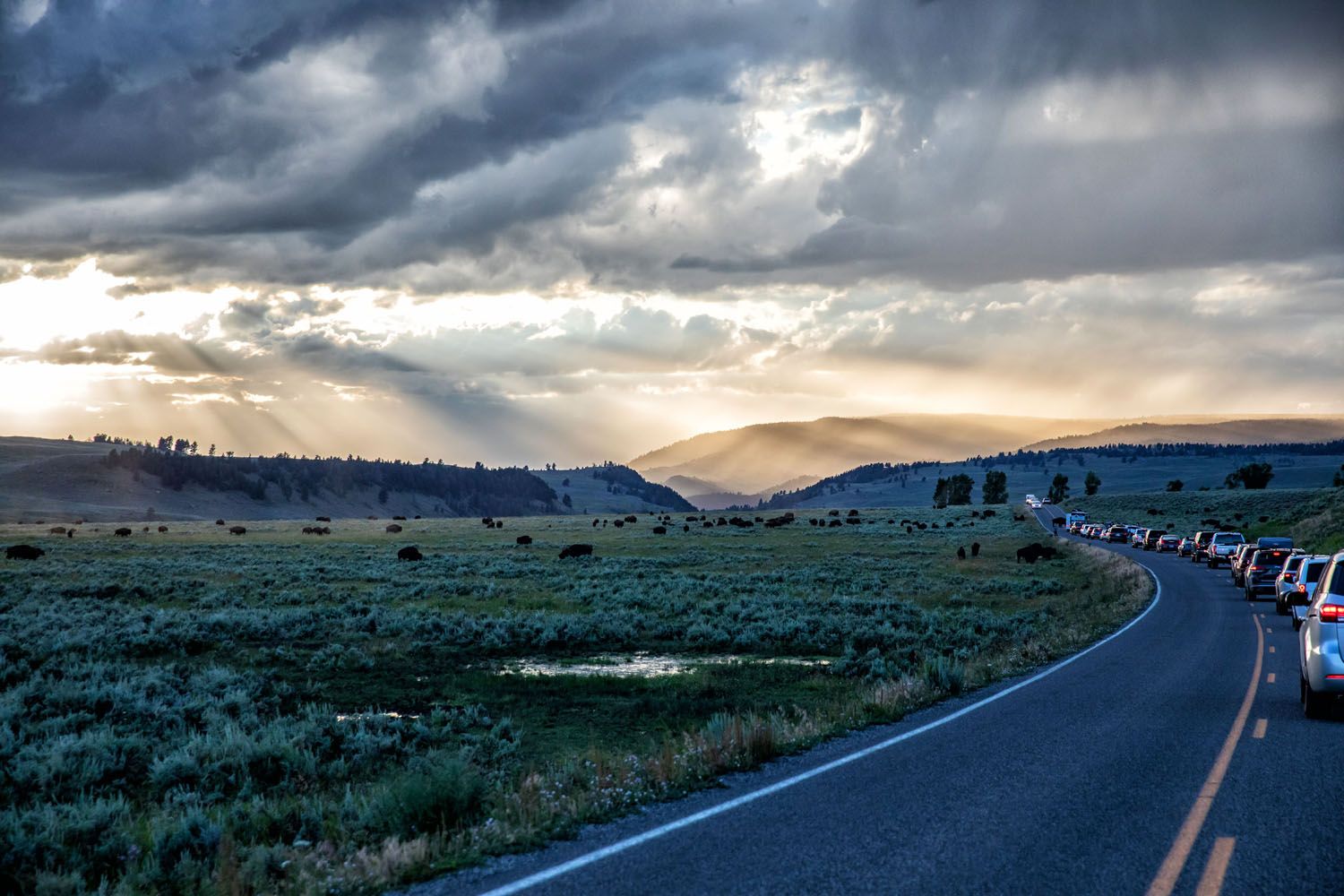
Lamar Valley at sunset
Plan Your Trip to Yellowstone
- Want the full picture before you go? → Our Yellowstone National Park Travel Guide covers trip planning, sample itineraries, and links to every article we’ve written about the park.
- Want to go deeper on Yellowstone’s geothermal features? → Our Guide to the Geyser Basins and Geysers in Yellowstone guide covers every major basin in the park, including several we didn’t have room to detail here.
- Figuring out where to base yourself? → Our Where to Stay in Yellowstone guide covers the best hotels and locations for every part of the park.
- Have more time and want to combine parks? → Our Grand Teton, Yellowstone and Glacier National Parks: 10 Day Road Trip Itinerary guide covers how to see all three in one epic trip.
- Deciding which national parks to visit next? → Our Ultimate Guide to the 64 US National Parks guide covers every park in the system, with tips on planning and prioritizing.
If you have any questions about this Yellowstone itinerary, let us know in the comment section below.
Explore Yellowstone & the National Parks
Read all of our articles about the United States in our United States Travel Guide.
23 Best Things to Do in Yellowstone National Park
Yellowstone National Park is a wonderland of geothermal activity, dramatic landscapes, and abundant wildlife. Steam hisses from the ground beside wooden boardwalks, bison bring traffic to a standstill on the park roads, and technicolor hot springs amaze even the most seasoned travelers. In this guide, we cover the best things to do in Yellowstone National […]
The Perfect Yellowstone & Grand Teton Itinerary for First-Timers
Yellowstone and Grand Teton sit side by side in northwest Wyoming, and together they make one of the best national park trips in the country. Spend your days watching Old Faithful erupt and geysers bubble across Yellowstone’s thermal basins, then drive an hour south to hike beneath the jagged Teton Range, paddle Jenny Lake, and […]
How to Visit Grand Prismatic Spring Overlook (+ Fairy Falls)
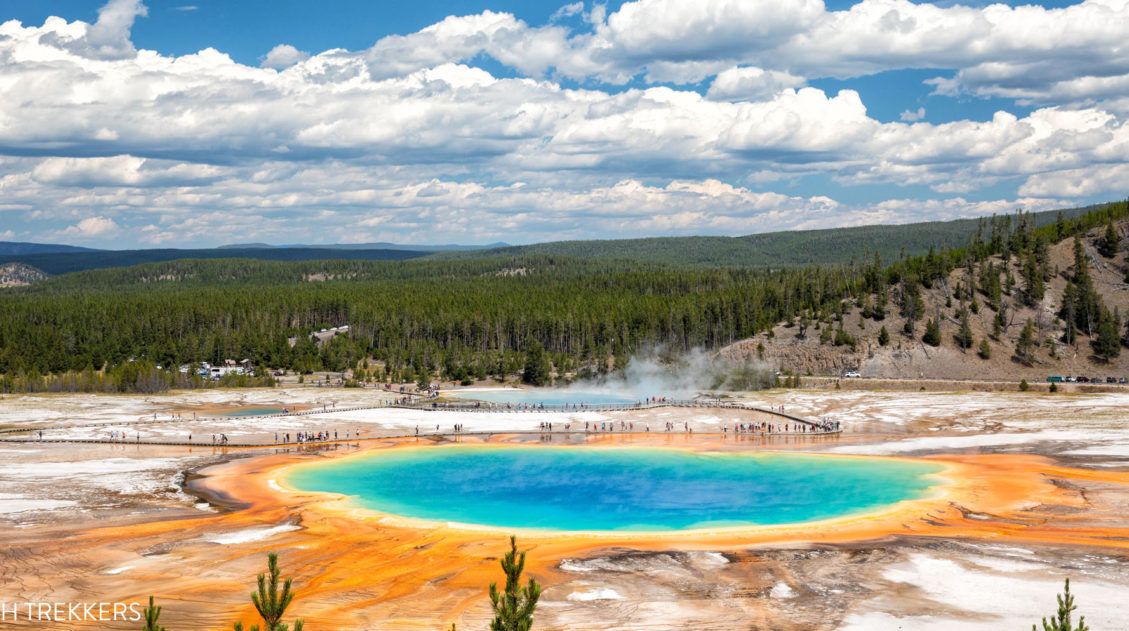
The Grand Prismatic Spring Overlook is one of our favorite photography spots in Yellowstone National Park. From above, you get the full kaleidoscope of colors in the spring, plus a great sense of scale, watching tiny people make their way along the boardwalks at Midway Geyser Basin. We’ve visited the overlook several times now, twice […]
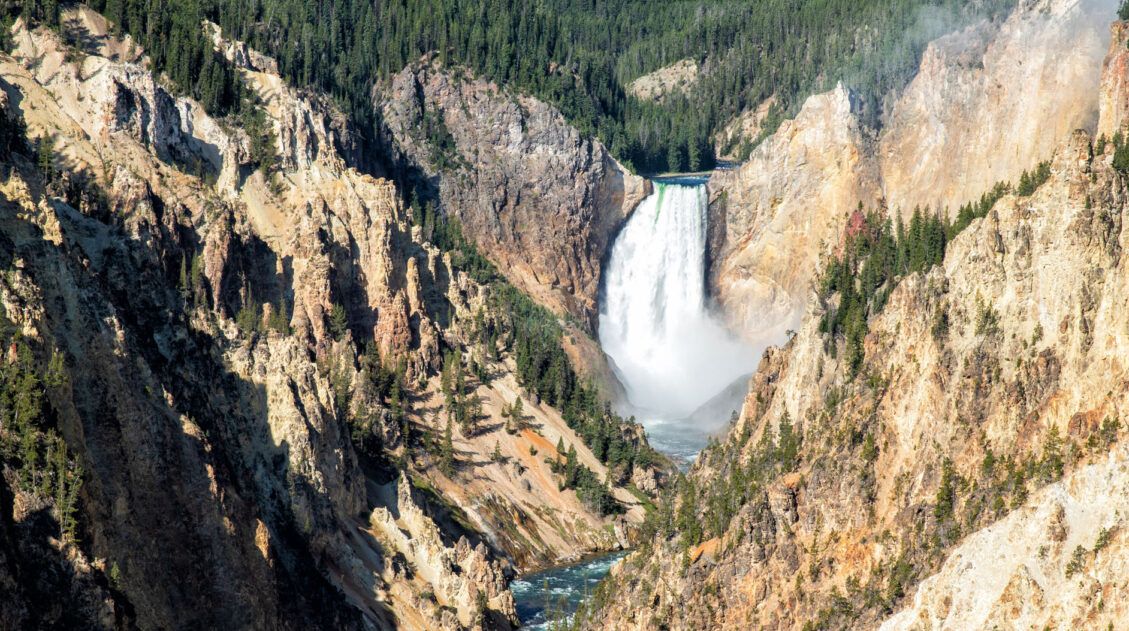
Exactly How to Visit the Grand Canyon of the Yellowstone
The Grand Canyon of the Yellowstone is a 24-mile, 1,200-foot-deep canyon carved by the Yellowstone River, with two waterfall, Upper Falls and the much larger, more famous Lower Fall, dropping into it. It’s one of the top attractions in Yellowstone National Park, with a series of overlooks along the North Rim, South Rim, and Brink […]
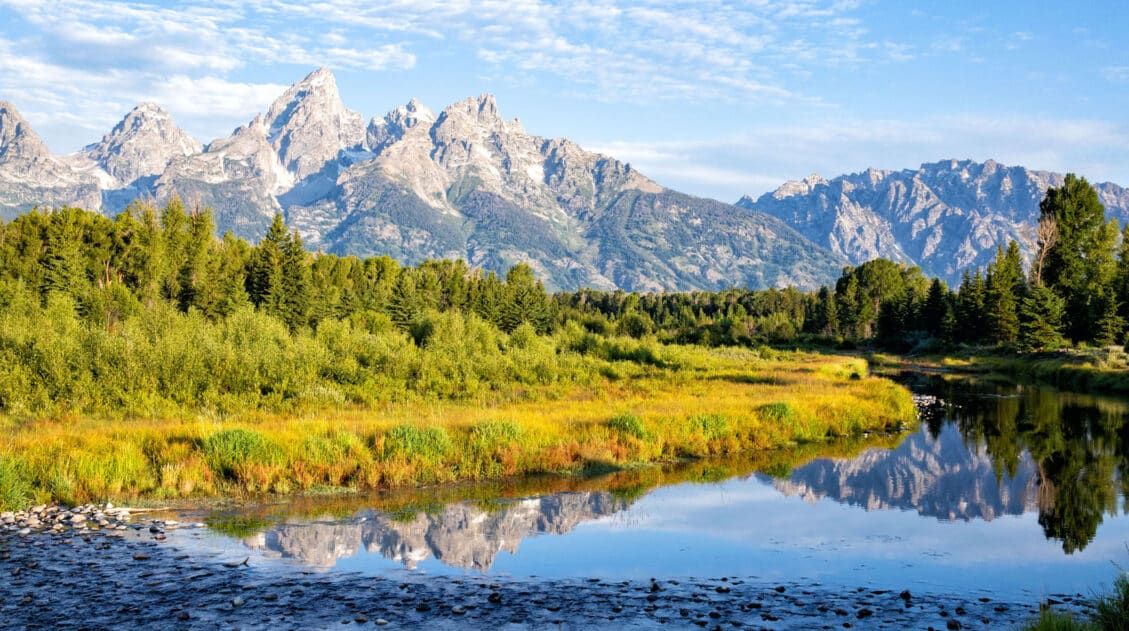
US National Park Itineraries & Road Trip Ideas
National Park Itineraries The national parks are best experienced as a road trip and with 56 parks visited between us, we’ve done a lot of them. Whether you’re dreaming of a two-week American Southwest loop, a classic Yellowstone and Grand Teton combo, or a deep dive into Utah’s Mighty 5, we’ve put together detailed itineraries […]
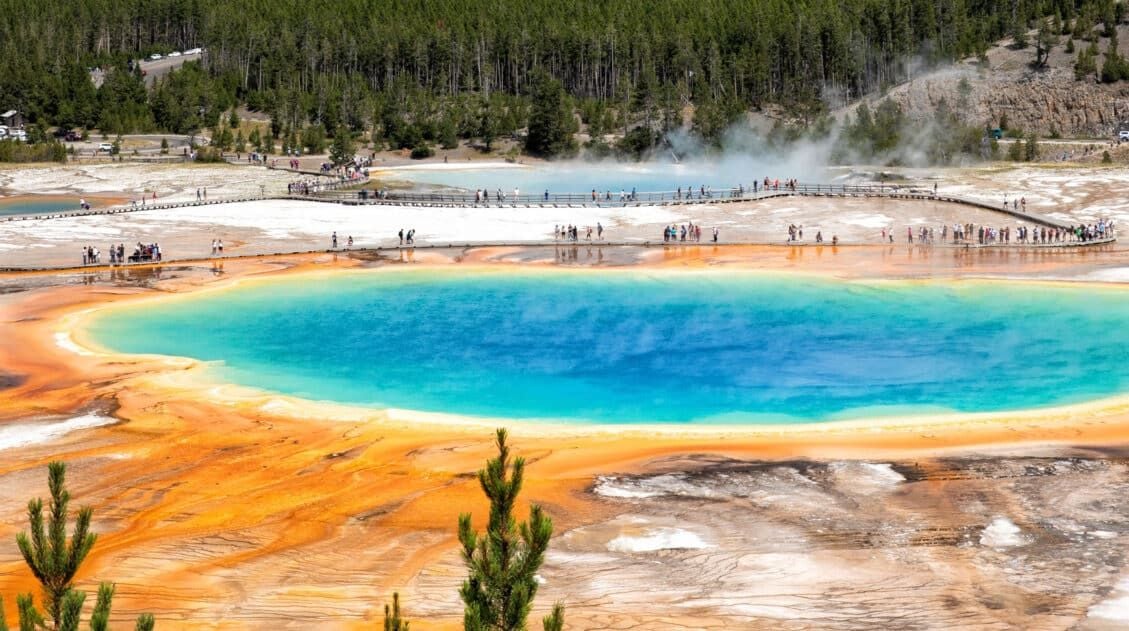
Yellowstone National Park Travel Guide: How to Plan Your Adventure
Yellowstone National Park Yellowstone National Park is a wonderland of geothermal activity, stunning landscapes, and abundant wildlife. Steam hisses out of the ground along walking trails, bison stop cars in their tracks on the main park road, and technicolor hot springs never fail to amaze even the most seasoned traveler. Yellowstone is the second largest […]
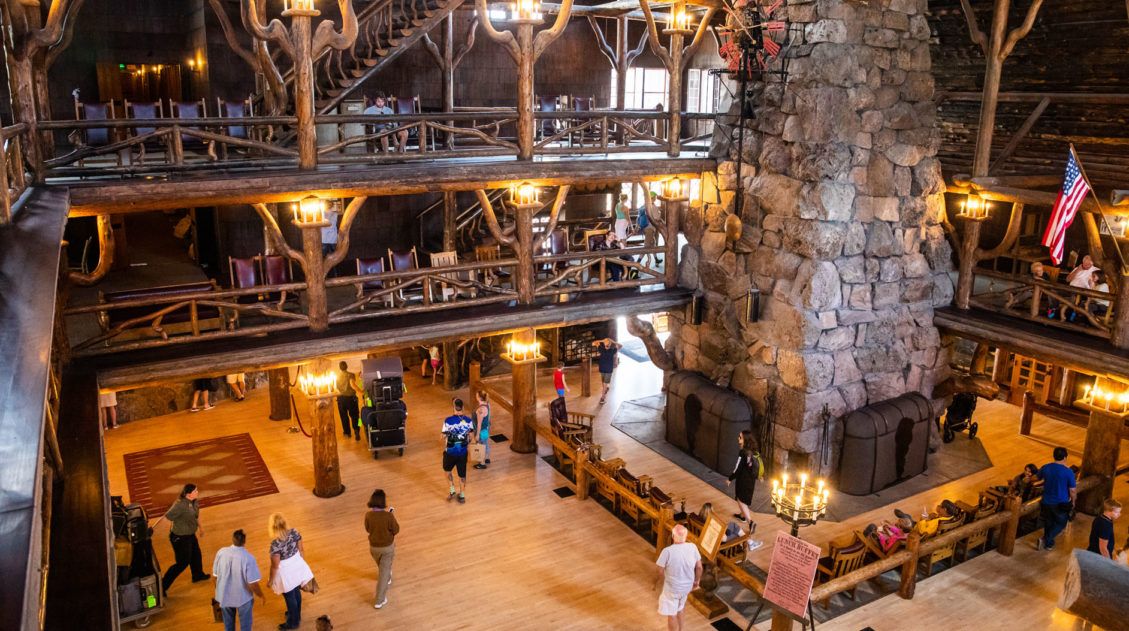
Where to Stay in Yellowstone: Best Hotels and Lodges By Area
We’ve visited Yellowstone four times, and where we stayed looked different nearly every trip. Our first visit was back in 2001, when we spent a few days exploring the park. Kara and I returned in 2019, but that time I planned the trip almost last minute (booking in June for an August visit), so in-park […]
18 Best Things to Do in Grand Teton National Park
Grand Teton National Park packs an incredible amount into a relatively small area. You can photograph the Teton Range reflected in mountain lakes, look for moose and bison, drive to iconic viewpoints, hike to waterfalls and alpine lakes, or spend an entire day on the trails high in the mountains. We have visited Grand Teton […]
One Perfect Day in Grand Teton National Park
Grand Teton National Park has something for everyone. Hikers will love the long list of trails that head into the Teton mountain range. Photographers will love capturing sunrise at Mormon Row and Oxbow Bend. Families will love the easy-to-visit overlooks, crossing Jenny Lake by boat, and spotting moose and elk as you drive through the […]
Yellowstone, Devils Tower, and Mount Rushmore: 10 Day Road Trip Itinerary
With 10 days, you can road trip from Grand Teton and Yellowstone all the way to Mount Rushmore, adding on Devils Tower, Badlands National Park, Wind Cave National Park, and Custer State Park along the way. That’s four national parks, two national monuments, one incredible state park, and some of the best scenic drives in […]
Our 15 Favorite US National Parks: A Few May Surprise You
Stretching from the South Pacific, across the United States and into the Caribbean, are 64 national parks. These national treasures are filled with scenic drives, hundreds of miles of hiking trails, wildlife, historic sites, and endless opportunities for adventure. In this guide, we cover 15 of the best national parks in the USA and what […]
Best US National Parks to Visit Month-By-Month
Best National Parks to Visit Month-By-Month Most national park planning advice tells you the “best” month to visit a park without showing you the full picture. This guide does both. We’ve visited 56 of the 64 US national parks, many of them multiple times and in different seasons, and timing is consistently one of the […]
15 Best US National Parks to Visit in August
Planning a trip to the US national parks in August and don’t know which ones to visit? August is a busy time to visit the national parks, but crowd levels aren’t quite at their peak (that typically happens in July for many parks). In this guide, we list some popular summertime parks to visit plus […]


Comments 205