
This two-week (14-day) Central Europe itinerary visits Munich, Salzburg, Hallstatt, Vienna, and Prague, combining historic cities with alpine scenery. It’s perfect for travelers seeking convenient train travel and day-trip options to fully immerse themselves in the region.
On this itinerary, you’ll travel from Bavaria, through the scenic landscapes of Austria, and end in the historic city of Prague. Along the way, visit storybook towns that feel straight out of a fairytale, Hallstatt and Český Krumlov, explore Berchtesgaden, one of Germany’s most beautiful alpine regions, and spend time in some of Europe’s most captivating cities, including Munich, Vienna, and Prague.
This route brings together several of our favorite places in Europe into one unforgettable trip.
We have visited both Vienna and Prague in May, when long, sunny days are perfect for sightseeing, and in winter, when Christmas markets and festive decorations transform the cities. Munich in December is especially magical, with Christmas markets scattered throughout the city. Berchtesgaden and Hallstatt are gorgeous in summer, though this is also the peak tourist season.
This itinerary can be done year-round. Spring and fall are ideal for good weather and manageable crowds. Summer is perfect for those who want warm days, but be prepared for larger crowds. If you like the idea of visiting Christmas markets in Europe, plan your trip for December.
Short on time? See our 10-day Central Europe Itinerary, which is a shorter itinerary that includes Budapest, Vienna, and Prague.
2 Week Central Europe Itinerary: At a Glance
DESTINATIONS | Munich → Salzburg → Hallstatt (day trip) → Vienna → Prague → Český Krumlov (day trip)
START / END | Fly into Munich (MUC) · Fly home from Prague (PRG)
BEST FOR | First-time Europe travelers, city lovers, and anyone who enjoys a mix of iconic cities and storybook towns
GETTING AROUND | Train travel throughout; no car needed
BEST TIME TO VISIT | Late April–June and mid-September–October
TRIP STYLE | Point-to-point city itinerary with alpine day trips
TOTAL NIGHTS | Munich (2) · Salzburg (3–4) · Hallstatt (optional 1) · Vienna (3) · Prague (4)
Is Two Weeks Enough for Central Europe?
Central Europe encompasses a fairly large area, which includes Germany, Austria, Switzerland, the Czech Republic, Poland, Hungary, Slovakia, and Slovenia. It would take months to just visit the main highlights of this region.
Two weeks is enough time to visit several major European cities and do a few day trips. This itinerary includes the southeast corner of Germany, several famous European cities, and concludes with a few days in Prague. We have traveled extensively through Central Europe (it’s taken us many trips over 10+ years), and this itinerary includes several of our favorite places.
On future trips, you could visit Switzerland, Poland, Slovenia, and more of Germany and Austria. We have itineraries for all of these, which you can see in our European Travel Itineraries guide.
Two Weeks Central Europe Itinerary Overview
Route Summary: Munich → Salzburg → Hallstatt → Vienna → Prague
Two Week Central Europe Itinerary
Day 1: Arrive in Munich
Day 2: Munich
Day 3: Munich, travel to Salzburg
Day 4: Salzburg
Day 5: Berchtesgaden
Day 6: Hallstatt
Day 7: Travel to Vienna
Day 8: Vienna
Day 9: Vienna
Day 10: Travel to Prague
Day 11: Prague
Day 12: Prague
Day 13: Český Krumlov day trip
Day 14: Fly home
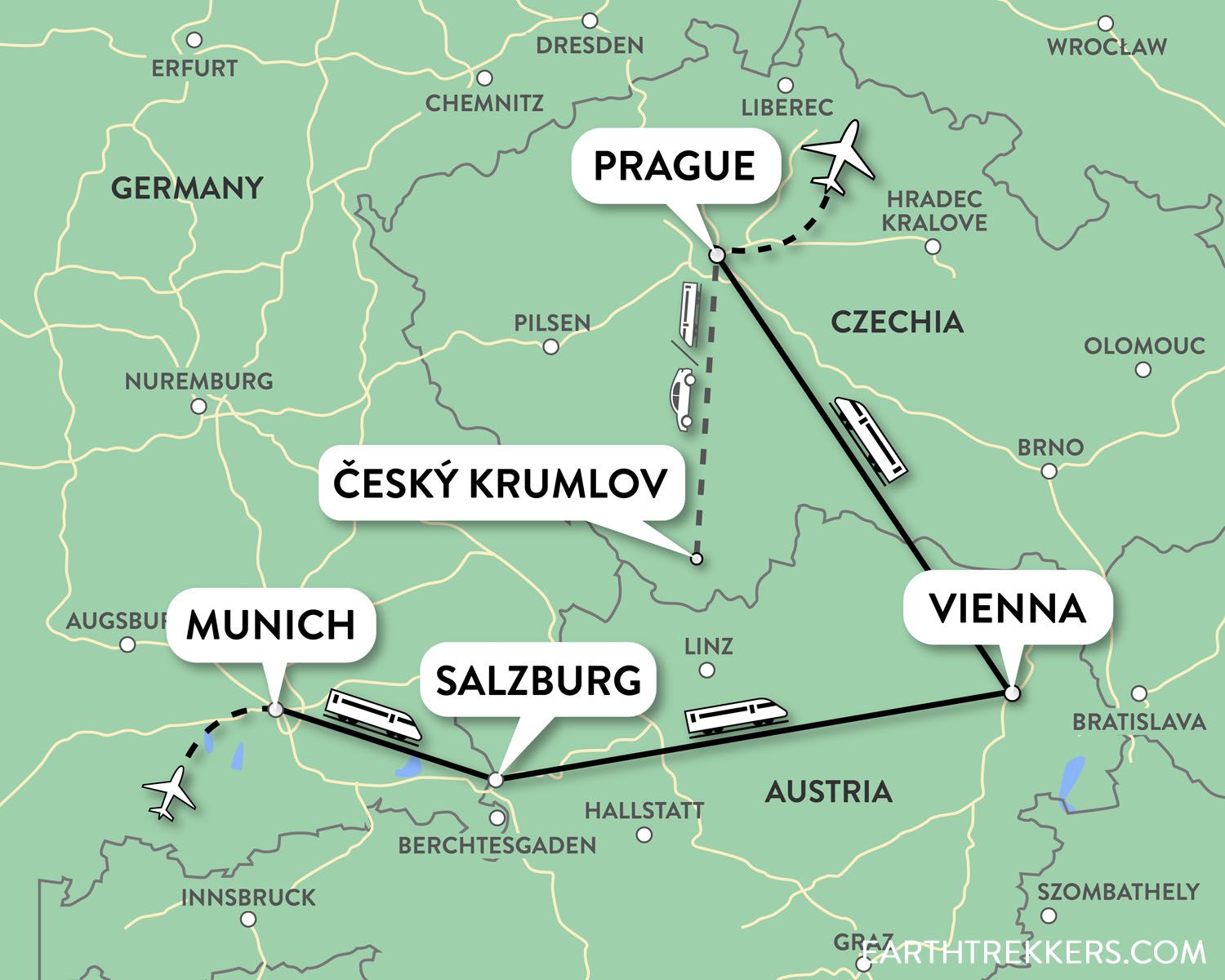
This itinerary is done point-to-point. It starts in Munich and ends in Prague, but it can just as easily be done in the opposite direction.
If you need to start and end in the same location (for example, if it is easier to find flights in and out of one airport), that can be done as well. You can travel from Prague to Munich by train; however, it will take most of the day, so consider adding an extra day to your itinerary.
Salzburg is a good home base for day trips to Berchtesgaden and Hallstatt.
Number of Nights in Each City
If you follow this itinerary, here are the number of nights you will spend in each city:
Munich: 2 nights
Salzburg: 4 nights*
Vienna: 3 nights
Prague: 4 nights
*You have the option to spend the night in Hallstatt, which would bring the number of nights in Salzburg down to three. There are advantages and disadvantages to doing this, which we discuss later in this itinerary.
Day 1: Arrive in Munich
If you will be arriving in Munich on a red-eye flight, this day could be tough. There is also the chance your flight won’t get in until midday, which will limit how much you can see and do. For those reasons, we typically keep the first day rather light on sightseeing.
Get settled in your hotel and take a nap if you desperately need one.
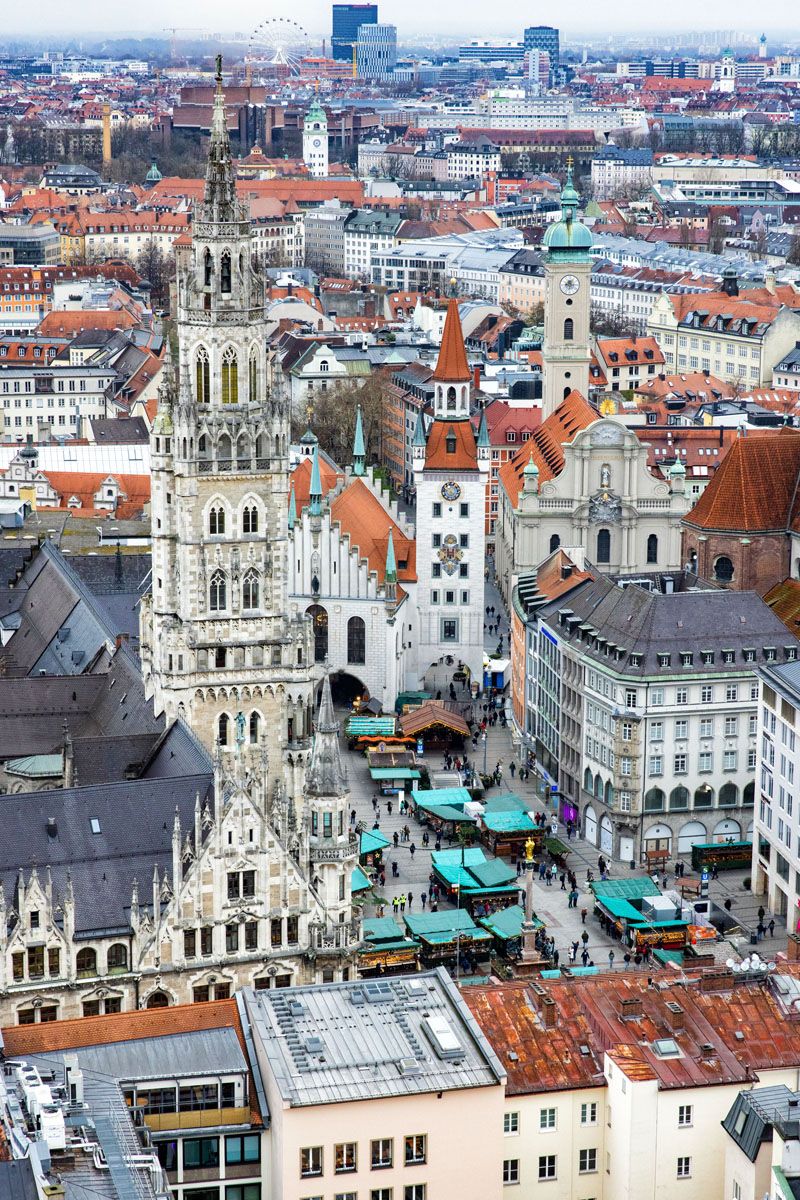
This afternoon is the perfect time to explore Munich’s old town, visiting Marienplatz, Frauenkirche, and riding the elevator to the top of the Rathaus tower for a stunning aerial view over the city. If you are really feeling ambitious, and you arrive in Munich in the morning, you could also tour Residenz Palace.
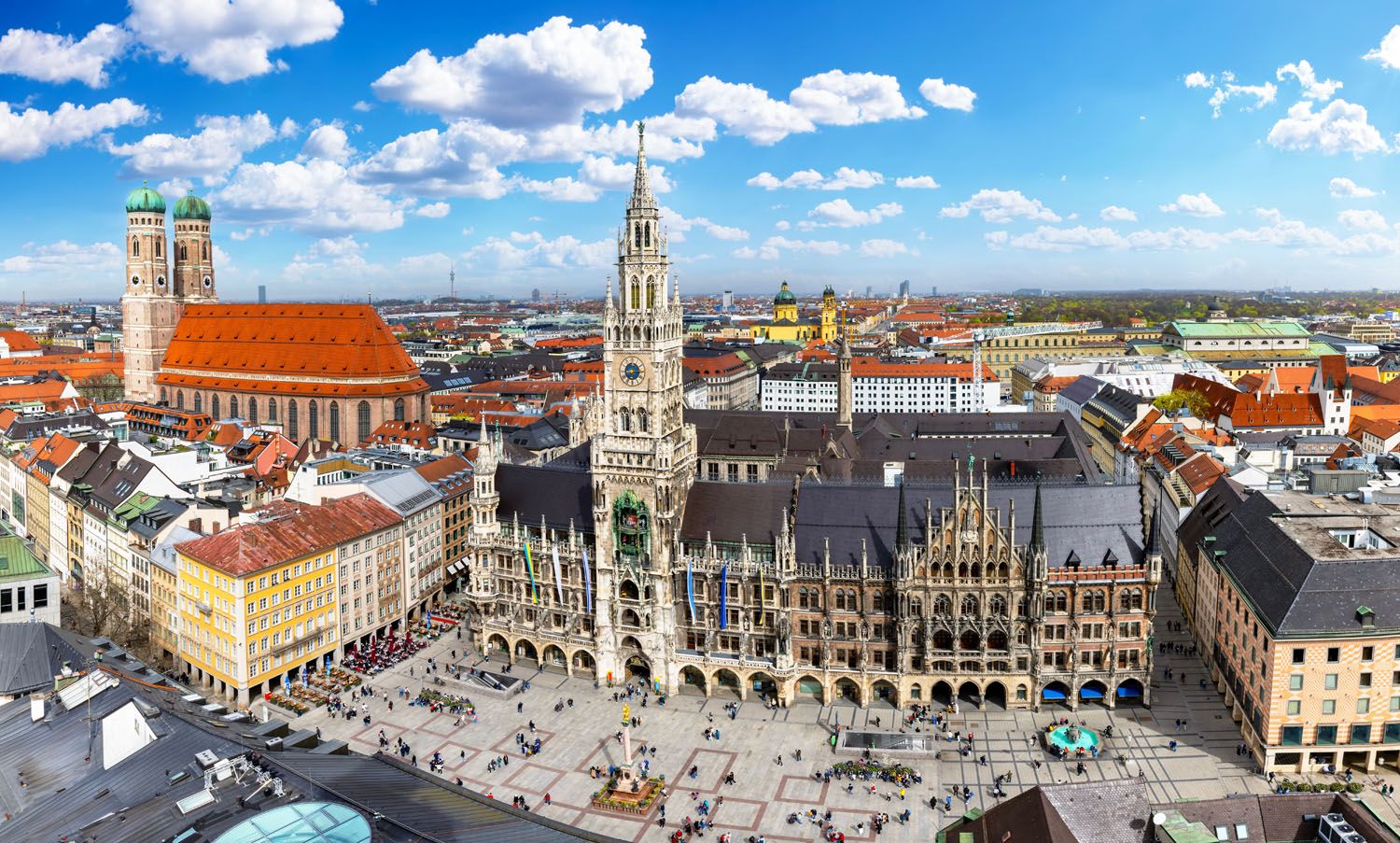
Marienplatz, Neues Rathaus, and Frauenkirche (photo taken from the tower of St. Peter’s Church)
How to Get from the Airport to the City Center
S-Bahn (the train): Lines S1 and S8 run from the airport to the city center, departing every 10 minutes with a travel time of 45 minutes. Tickets are purchased at ticket machines or on the MVV/MVG apps.
Lufthansa Express Bus: This airport bus runs every 20 minutes with a travel time of 45 minutes, running to Central Station (Hauptbahnhof).
Taxi, Uber, Lyft: This is more expensive than the train or bus, travel times are 30 to 45 minutes, depending on traffic, but the most convenient, as you will be dropped off at your hotel.
Private Transfer: Very convenient because it can be arranged in advance and you will be dropped off at your hotel, but it is usually the most expensive option.
Where to Stay in Munich
Number of Nights: 2
On our most recent trip to Munich, Kara and I stayed at the Cortiina Hotel and loved it. It is in the city center, 5-minutes from Marienplatz, giving it an unbeatable location. I would not hesitate to stay here again on a future trip to Munich.
Two mid-range hotels that are within easy walking distance of Marienplatz are Hotel Schlicker and Hotel Deutsche Eiche (this one is a bit farther away but gets slightly better reviews).
Hotel Torbräu and Platzl Hotel are two upscale hotels with an excellent location near Marienplatz.
If you are traveling on a budget, Hotel Falkenturm is a 2-star hotel with an excellent location that gets very good reviews.
For the ultimate in luxury, take a look at Rosewood Munich or the Mandarin Oriental.

Day 2: Munich
On this itinerary, you will have a full day in Munich today and a half day in Munich tomorrow.
Top Things to Do in Munich
Visit the Old Town (Altstadt)
The Old Town is Munich’s historic city center.
Marienplatz, which is the main square, is a sight to behold.
Sitting on this square are Neues Rathaus (New Town Hall), a neo-Gothic building that is home to Munich’s famous Rathaus-Glockenspiel. Ride the elevator to the top of the Rathaus tower for panoramic views of Munich. This is our favorite viewpoint in Munich and we’ve done it both during the day and in the evening, and both are wonderful. Plus, since an elevator takes you to the top, you aren’t going to have to tackle a huge stair climb.
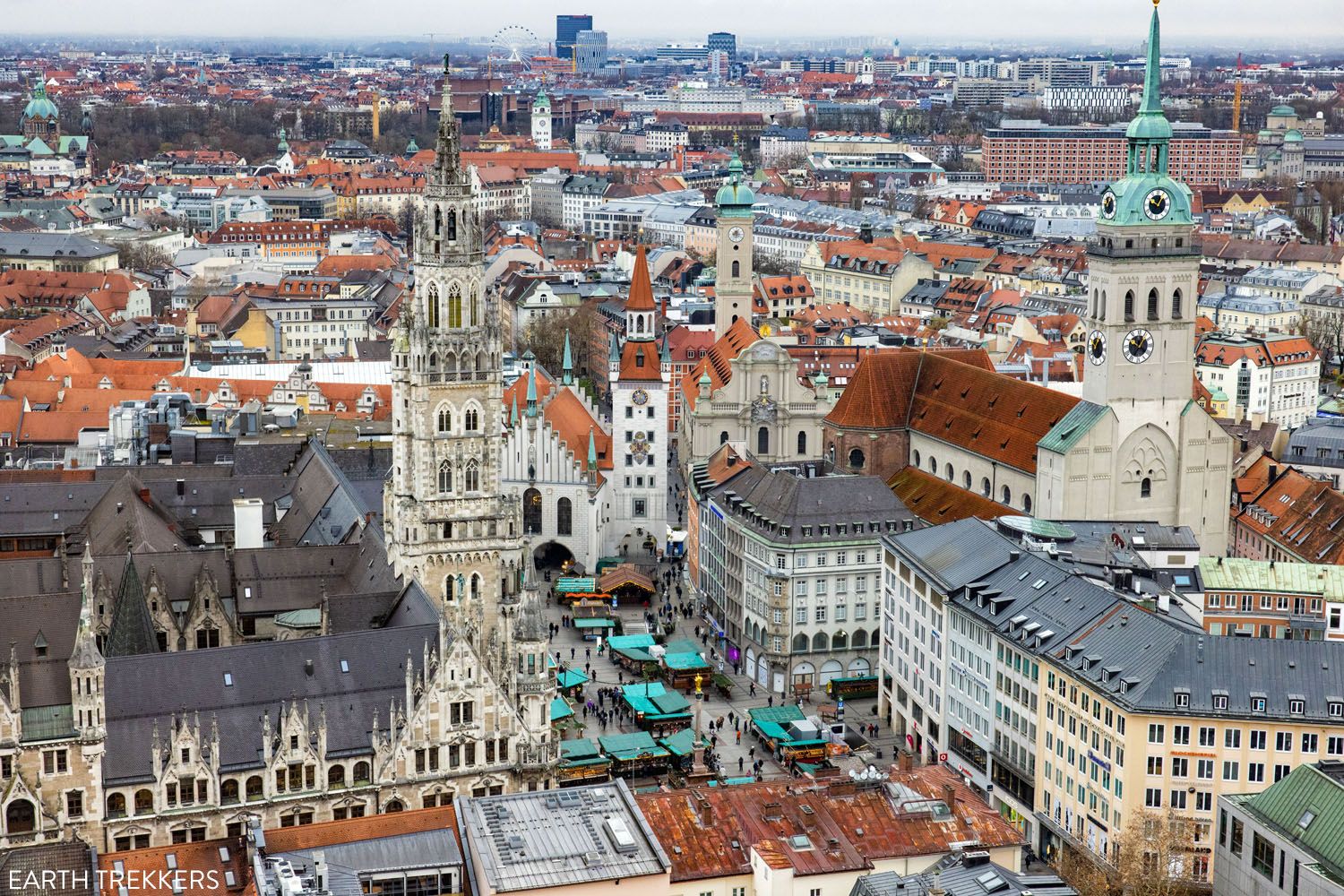
The view of Munich from Neues Rathaus
Also on Marienplatz is the Altes Rathaus (Old Town Hall) and the Mariensäule (Column of St. Mary).
A short walk from Marienplatz is the Frauenkirche (Münchner Dom). It is the largest church hall in the world. It is also famous for its two towers, each topped with a green dome, and the devil’s footstep, which can be seen near the entrance to the nave. To visit the tower, we purchased our tickets online in advance. It’s a climb up 89 steps and then an elevator ride to the observation deck.
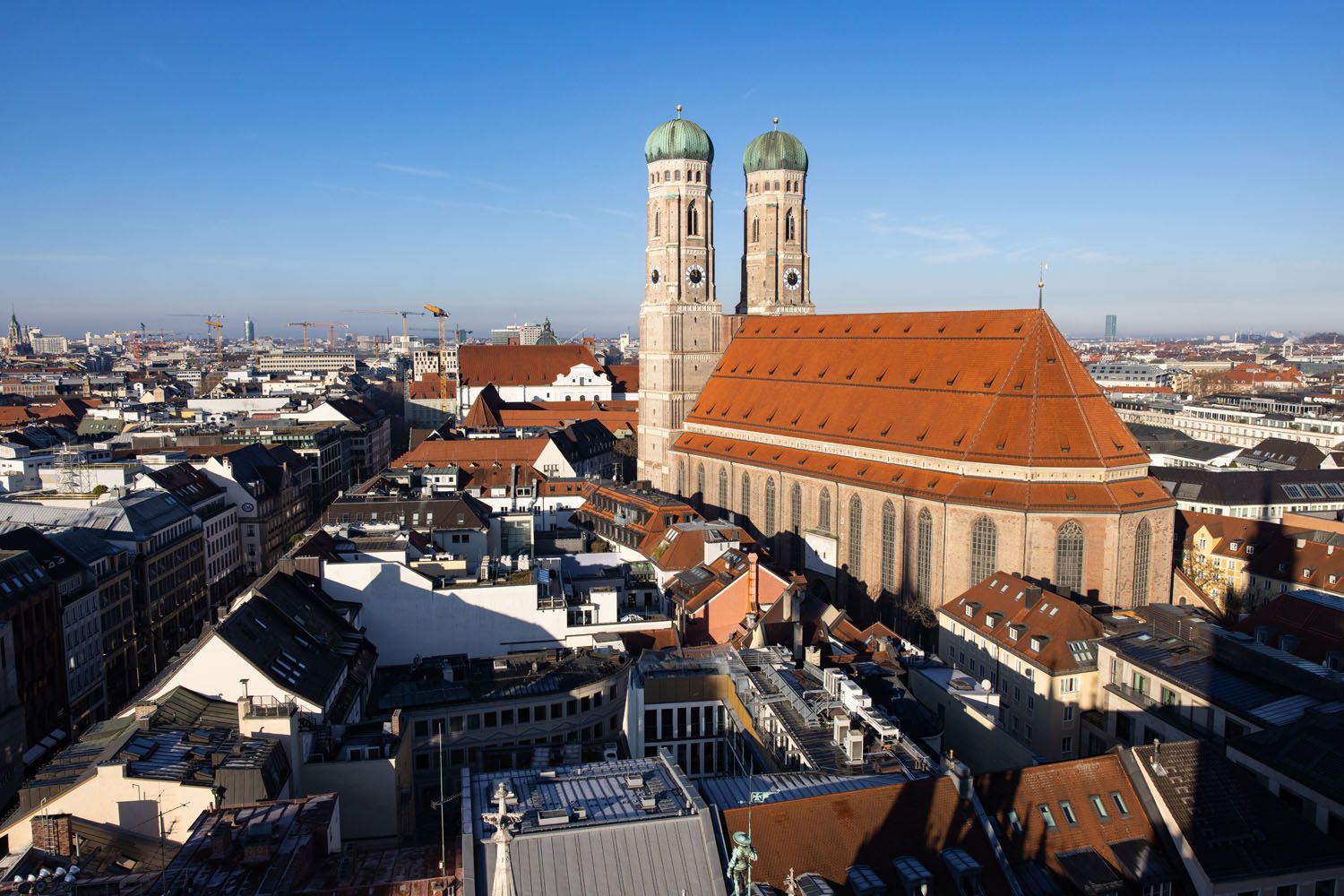
The Frauenkirche (view from Neues Rathaus)
Residenz Palace
This palace served as the seat of the Bavarian government and residence from 1508 to 1918. It has 130 rooms, each uniquely decorated with paintings, furnishings, colorful patterned walls, gold accents, and decorated floors. Art collections span from the Renaissance to the Baroque period to Neoclassicism.
The highlight of the Palace is the Antiquarium, a lavish Renaissance hall intricately painted and lined with antique sculptures. This is one of the oldest rooms in the palace, constructed in 1571, and was largely used for festivities and banquets.
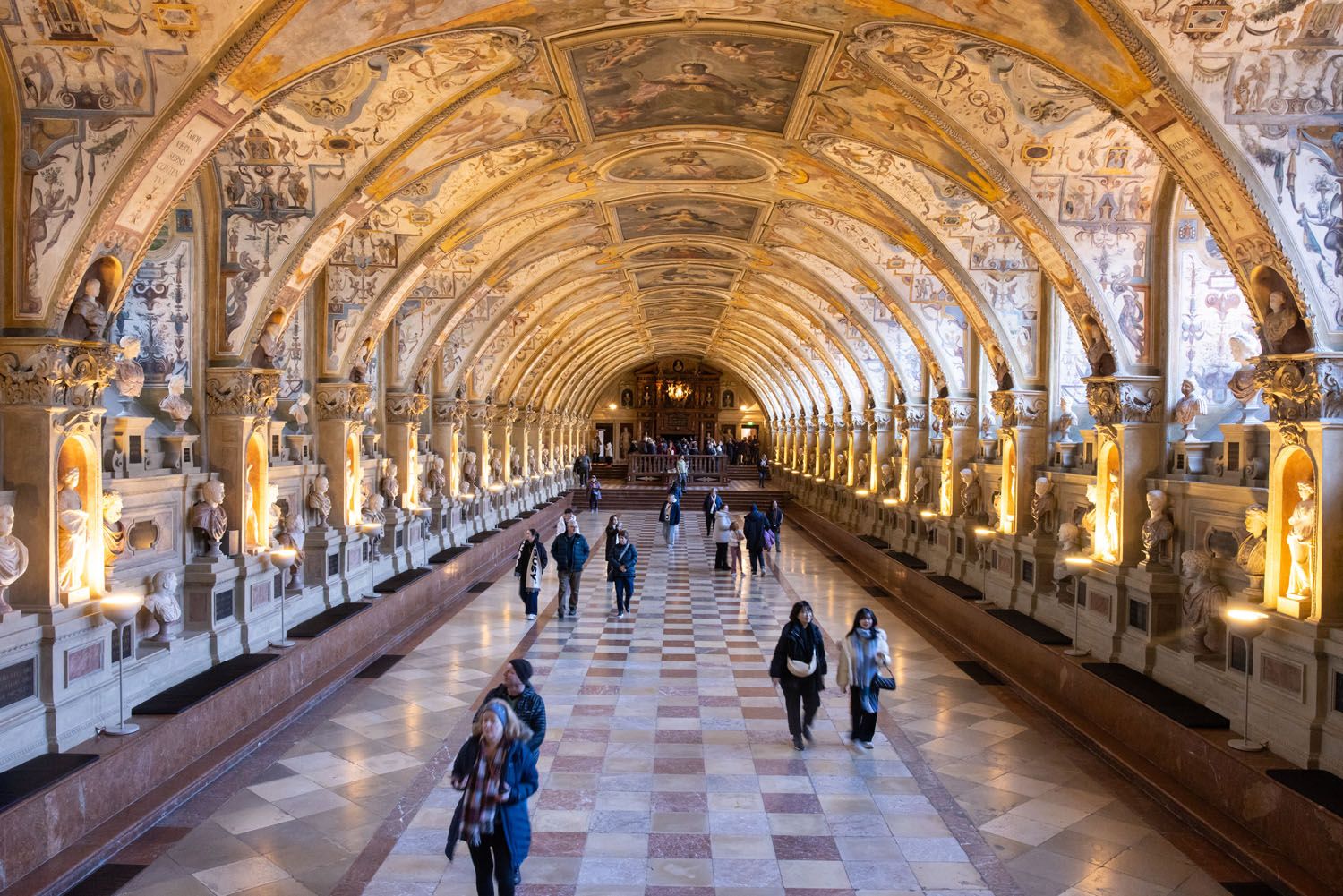
A visit lasts 30 minutes to 2 hours, depending on how long you linger in the rooms. Get hours, pricing, and see the various ticket options on the official website (we opted for the basic ticket, but you can also add on the Treasury).
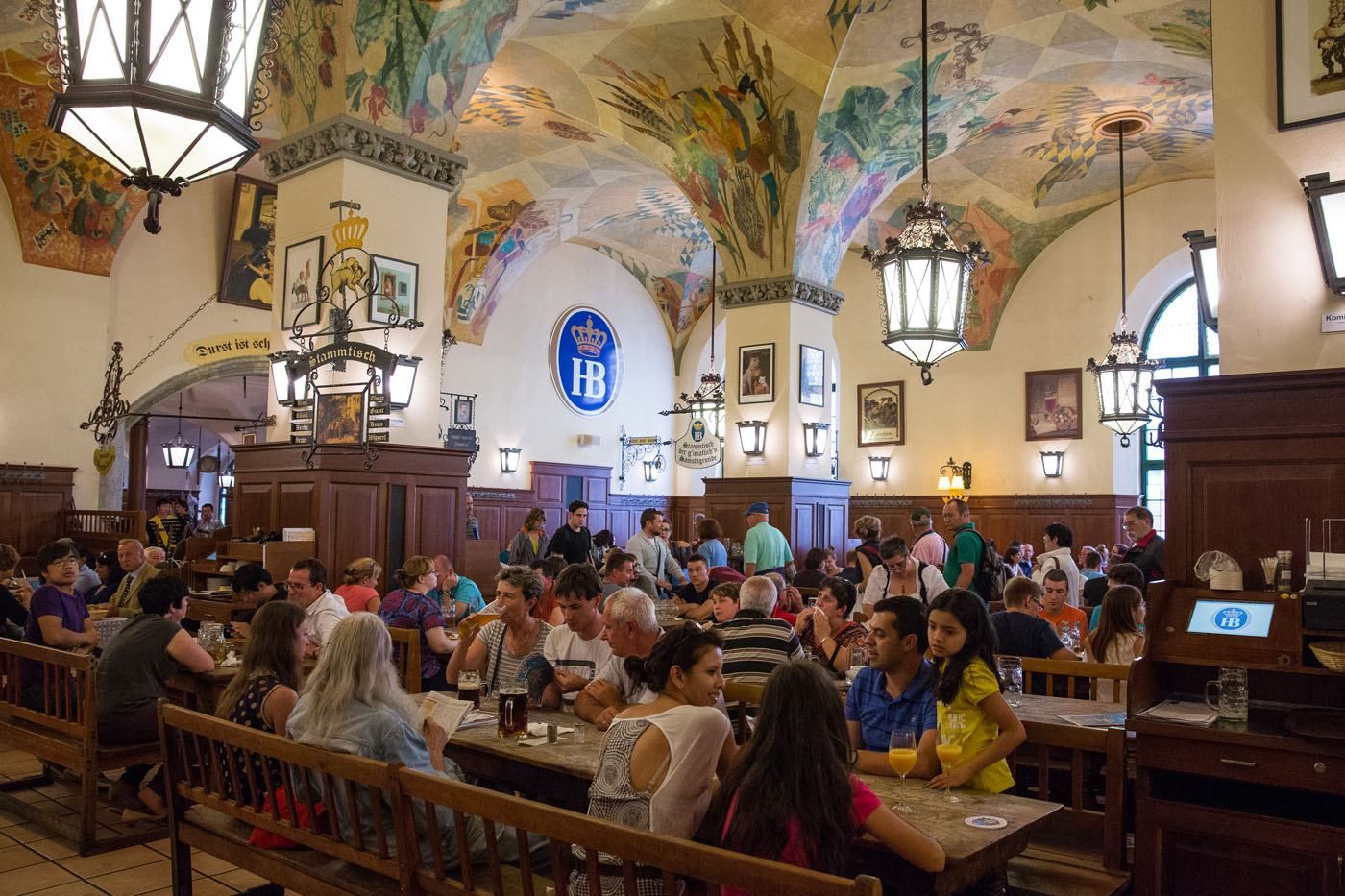
Hofbräuhaus
This is touristy, but it’s something we do on every visit to Munich. Dine in Bavarian cuisine (sausage, pork knuckle, schnitzel, potatoes, and sauerkraut) and wash it down with a liter of beer. And maybe plan for a quick nap in the afternoon…
If you like the idea of visiting a beer hall but want something less touristy, go to Augustiner Bräustuben or a local beer garden.
Dachau Concentration Camp Memorial Site
A visit to Dachau Concentration Camp is somber but worthwhile for those interested in World War II history.
It’s free to visit Dachau Concentration Camp but guided tours cost a few euros. It takes about 45 minutes to get here using public transportation. A visit here will take about half of a day, including transportation time.
We visited Dachau on our first visit to Munich. Read about our experience at Dachau Concentration Camp.
Englischer Garten (English Garden)
This public park is huge, bigger than Central Park in New York City. On our first visit here, we rented bikes and cycled around the gardens, the best way to see all of it, given its enormous size.
In the summer, this park is a popular place for sunbathing.
A beer garden sits in the center of the park, next to the Chinese Tower. In December, this is the site of one of Munich’s many Christmas markets.
On the south side of the park, don’t miss the Eisbach surfers, who ride waves on the river all year, even in December. Kara and I watched surfers face the frigid water and surf despite air temperatures below freezing.
Museums in Munich
BMW Museum & BMW Welt
Sitting north of Munich are two state of the art buildings that house exhibits about the history and engineering of the BMW brand, a must for car aficionados.
The BMW Museum has exhibits on the history of BMW, with vehicles and historical artifacts on display from the past 100 years. BMW Welt is an architectural masterpiece and on display are the latest models of BMW, MINI, and Rolls-Royce.
It takes about 20 minutes to get here using public transportation. Get pricing and hours on the official website.
Alte Pinakothek and Neue Pinakothek
The Alte Pinakothek has on display Old Master paintings from the 14th to 18th centuries, featuring art by Rubens, Rembrandt, and Dürer. The Neue Pinakothek contains 19th-century art, featuring art by Van Gogh, Manet, and Monet. Each museum takes about 2 hours to visit.
Deutsches Museum
The Deutsches Museum is the world’s largest museum of science and technology. It covers everything from aviation and space to physics, chemistry, energy, robotics, and transportation, with lots of hands-on exhibits. It takes 2 to 4 hours to visit this museum, and it is best for families, engineers, and tech lovers.
How to Plan Your Time Today
In the morning, visit the Dachau Concentration Camp Memorial Site if it made it onto your list of things to do in Munich. In the afternoon, explore the old town (if you didn’t do that yesterday), visit a museum, or go for a stroll or bike ride through the Englischer Garten.
If you prefer to visit Munich’s museums instead of Dachau, visit one of these in the morning and spend the afternoon in the old town or at the Englischer Garten.
If your visit will be in December, we have a 2-day Munich Itinerary that includes the highlights of Munich plus the best Christmas markets in the city
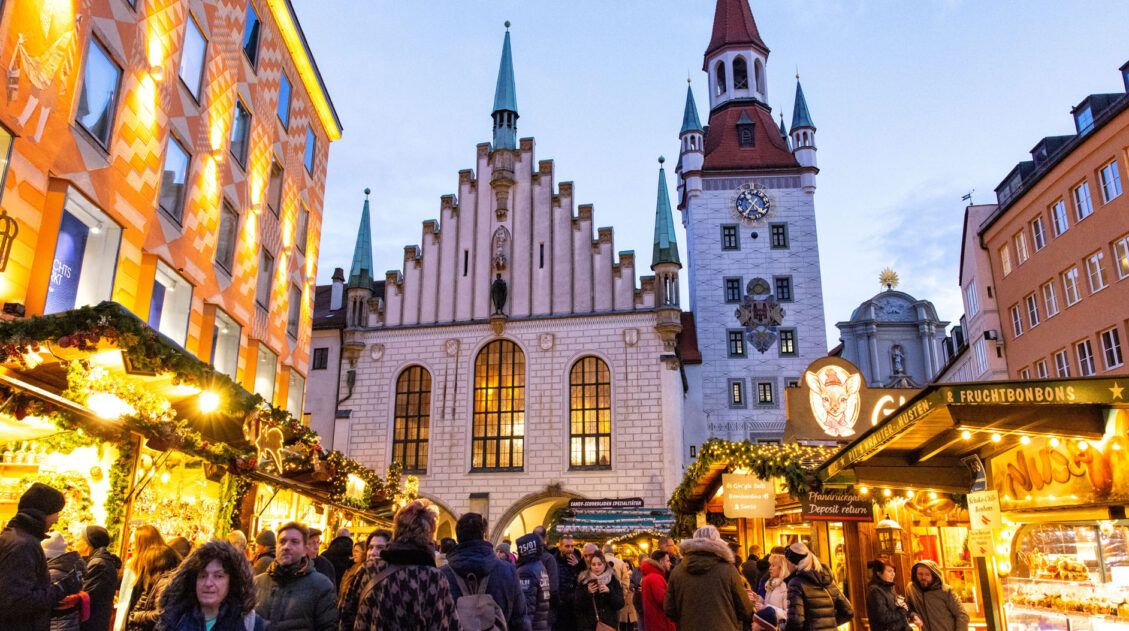
2 Days in Munich in December: Christmas Markets & Must-See Sights
Detailed 2-day itinerary, which includes our favorite Munich Christmas markets plus sites such as Residenz Palace and Altstadt.What is the Best Way to Get Around Munich?
Munich is relatively flat and very walkable. All of the sights in Altstadt (Marienplatz, Residenz Palace, Frauenkirche) are easy to walk between.
The U-Bahn (subway) is best for getting around the city quickly. Trams and buses are also helpful for short hops. Single and multi-day tickets are purchased on the MVV app. To get around Munich, we typically use a combination of walking, the U-Bahn, and the tram.
PRO TRAVEL TIP: Install the MVV app on your phone before your trip. You can also get real-time routes on the map.
Day 3: Munich in the Morning, Travel to Salzburg in the Afternoon
Today, spend the morning in Munich and in the afternoon, travel to Salzburg. Traveling to Salzburg today gives you three full days in Salzburg, plenty of time to see Salzburg and take two fantastic day trips.
Munich in the Morning
This morning, visit a museum, palace, or attraction that you didn’t have time for during the first two days in Munich.
As for what to do with your luggage, either request a late checkout and keep your luggage in your room, or have the front desk hold it for you. We do this quite frequently when we travel. However, you will need to stay in a hotel that has a front desk (this may not be possible with Airbnb).
How to Get to Salzburg
The best option is to take the train. Travel times are approximately 1 hour 40 minutes and leave at least once per hour. When booking tickets, depart from Munich Hauptbahnhof and arrive at Salzburg Hauptbahnhof.
Get fares, timetables, and book your tickets in advance on either the OBB website (the official website for the Austrian rail system) or the D-Bahn website (the official website for the German rail system). Both are very easy to use. Since you will also be booking train tickets to and from Vienna later in this trip, we recommend using the OBB website.
Where to Stay in Salzburg
Number of Nights: 4 if you choose to take a day trip to Hallstatt; 3 if you plan to spend one night in Hallstatt
Mid-range hotels located in or near the city center that get great reviews include Leonardo Boutique Hotel, the City-Center Apartments, Apartments Salzburg-Bergstraße, Hotel Wolf, and the Radisson Blu Hotel Altstadt.
Luxury and upscale hotels include Hotel Sacher Salzburg, Hotel Goldener Hirsch, Hotel Stein (adults only), Small Luxury Hotel Goldgasse.
If you are traveling on a budget, Stadtalm Naturfreundehaus is the highest-rated property in the city.
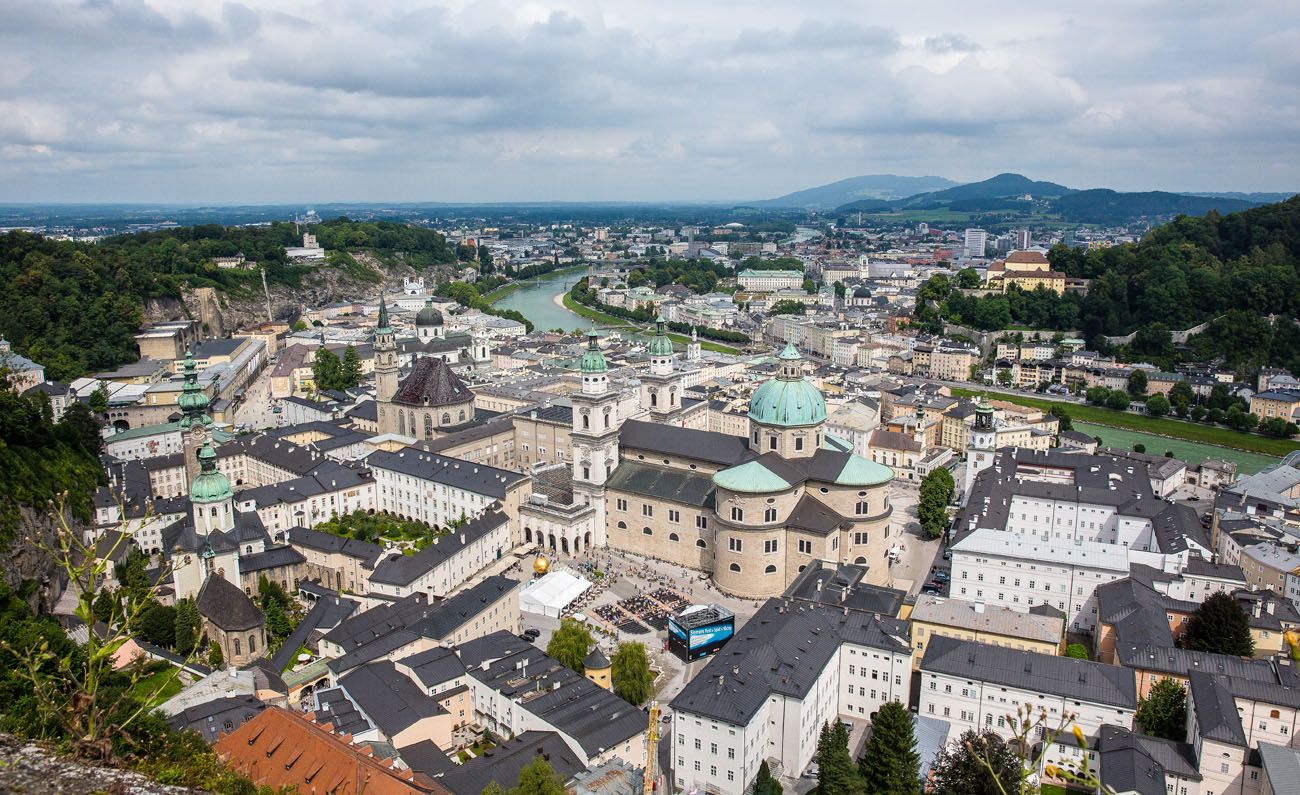
Salzburg
Day 4: Salzburg
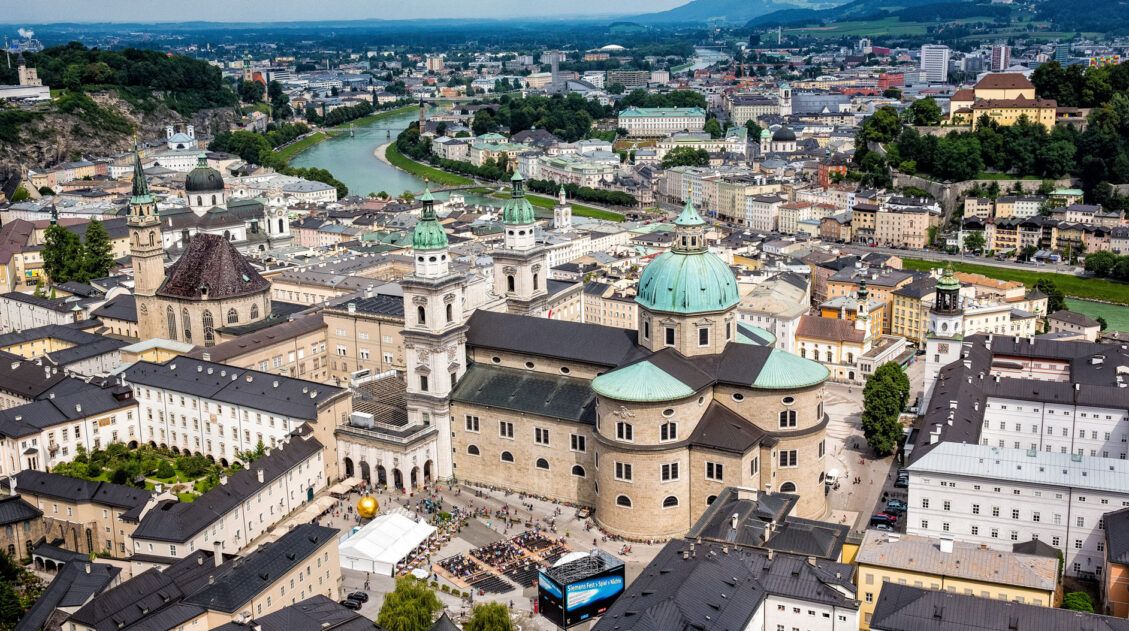
Salzburg is a small, beautiful, compact city in Austria. We’ve visited a few times, with the Hohensalzburg Fortress and the picturesque city center being highlights for us.
Today, you’ll have the entire day in Salzburg, which is plenty of time to see the main sights.
Top Things to Do in Salzburg
Hohensalzburg Fortress: Perched on a hill overlooking the city, this is Salzburg’s main attraction. A visit here lasts 1 to 2 hours. Enjoy the views of the city and tour the rooms of the fortress.
Altstadt: This is the old, historic city center. With its old buildings and picturesque streets, and scenic squares, it’s a joy to explore on foot.
Salzburg Cathedral: This cathedral sits in the center of Salzburg and it is where Mozart was baptized.
Mozart’s Birthplace: Tour the house where Wolfgang Amadeus Mozart was born and raised. Perfect for music and history lovers. Tyler and Kara, who played the violin around the time of our first visit, really enjoyed this small museum.
Getreidegasse: Take a walk down Salzburg’s prettiest street.
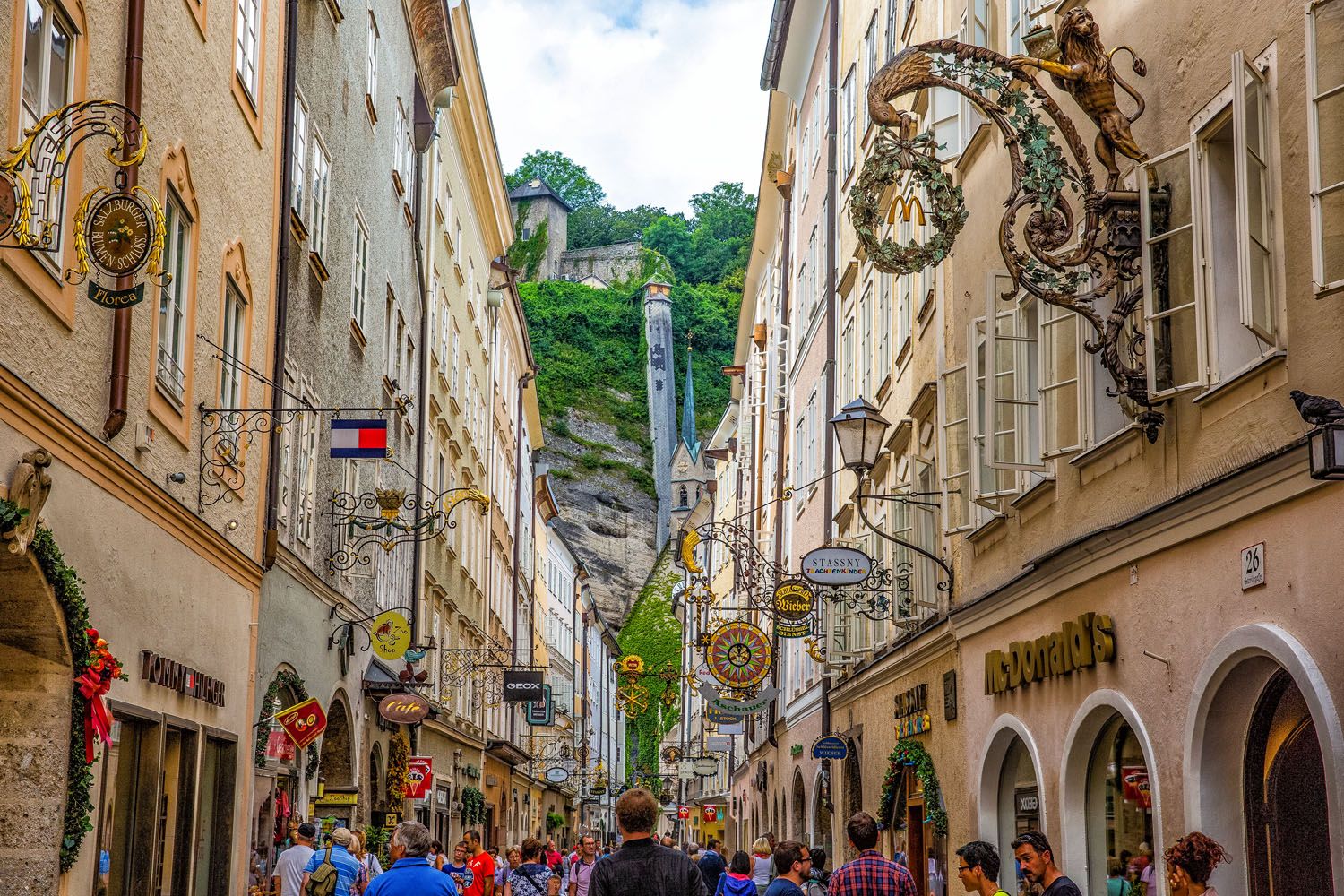
Getreidegasse
St. Peter’s Abbey: If you like visiting cemeteries, this is one of the prettiest that I’ve seen, with elaborately decorated gravestones. This is also a filming site for the Sound of Music.
Mirabell Palace and Gardens: Not to be missed for Sound of Music fans, go for a stroll through the gardens and tour the palace. You might even be lucky enough to attend a Mozart Concert.
How to Plan Your Time Today
We have a detailed One Day Salzburg Itinerary to help you plan your time, which you can see here
How to Spend One Day in Salzburg
Here is a one-day itinerary for visiting Salzburg, with money-saving tips.Basically, we recommend starting at Hohensalzburg Fortress, to get ahead of the crowds, followed by a midday stroll through the historic city center.
In the afternoon, you have the option to take a Sound of Music tour, or journey just outside of the city to visit Hellbrunn Palace (perfect for those who enjoy touring palaces, but you’ll also do this in Vienna) or Untersberg (perfect for hikers and those who prefer mountain views to city views).
Day 5: Berchtesgaden Day Trip from Salzburg
Today, cross back over the border into Germany. This is a gorgeous corner of Germany, with views of the Alps and small towns.
On one of our first trips to Europe, we spent three days in Berchtesgaden, taking day trips to Salzburg from there. We loved this area, with its blend of mountain views, German towns, and historical sites.
On this itinerary, I think it is better to stay in Salzburg, as it will be easier to get to Hallstatt and Vienna.
Things to Do in Berchtesgaden
Here is a list of things to do in Berchtesgaden. With one day, you have enough time to do two to three things on this list. The Eagle’s Nest and Lake Königsee are the most popular options. Salzbergwerk is perfect for families.
Berchtesgaden Salt Mines (Salzbergwerk): This was our kids’ favorite thing to do in Berchtesdgaden. Tour the salt mines and slide down a huge underground slide. You have the option to do something very similar in Hallstatt, so keep that in mind when choosing your activities. But if you are visiting with kids, this is a must-do!
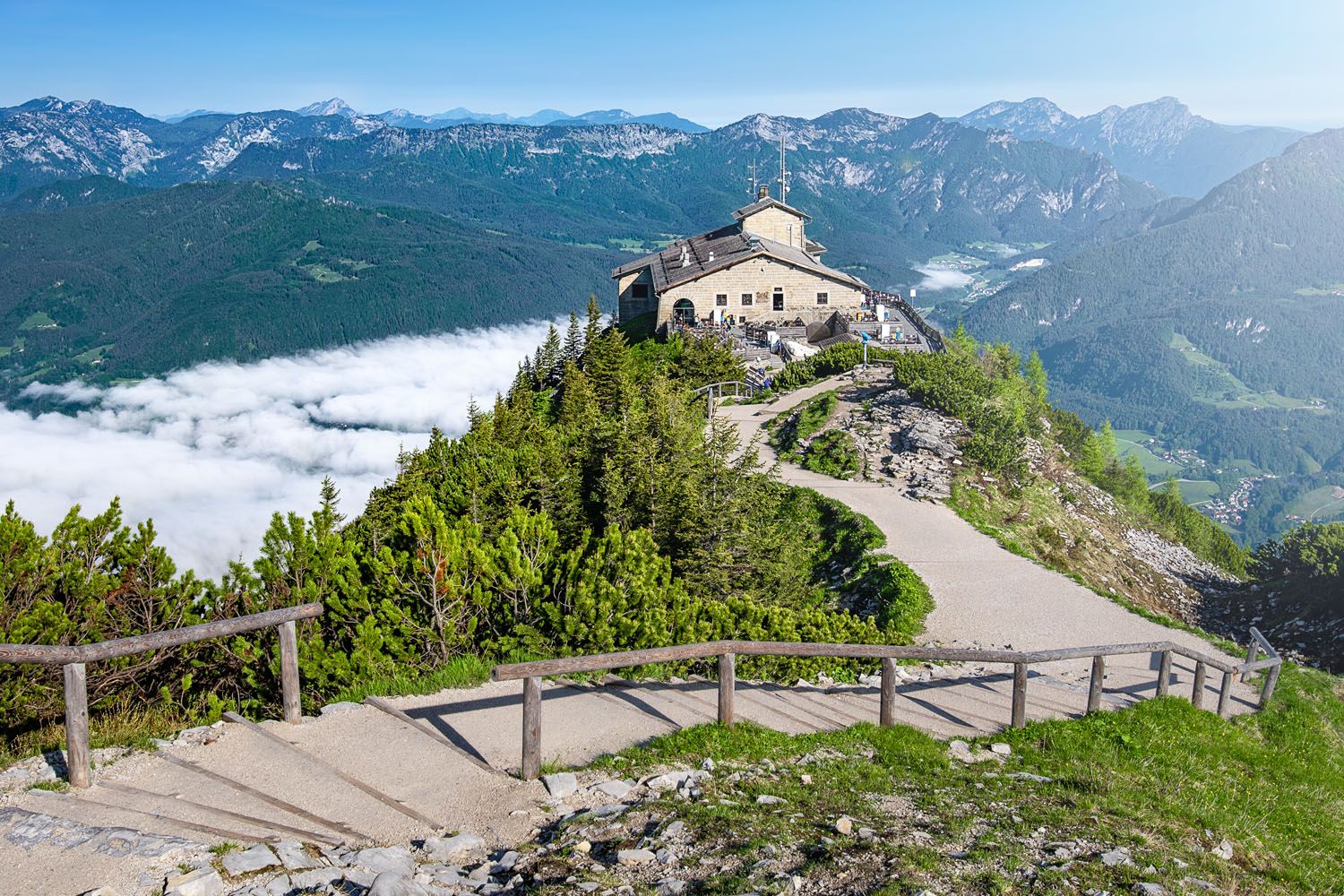
Visit the Eagle’s Nest (Kehlsteinhaus): Perched above Obersalzburg, this was one of Hitler’s command posts in WWII. The views are incredible and it’s well worth visiting, even if you don’t have an interest in history. The only way to get here is by bus, which leaves from the Documentation Center.
Dokumentationszentrum Obersalzburg (Documentation Center): A museum that explains the history of this area during WWII. Most of the information is in German, so we didn’t get much out of the museum portion, but seeing the underground bunkers was interesting. A must for those interested in history.
Königliches Schloss Berchtesgaden (Royal Castle): Tour the royal castle, which sits in the town center.
Haus der Berge (House of the Mountains): This museum has exhibits about the region’s wildlife and ecosystem.
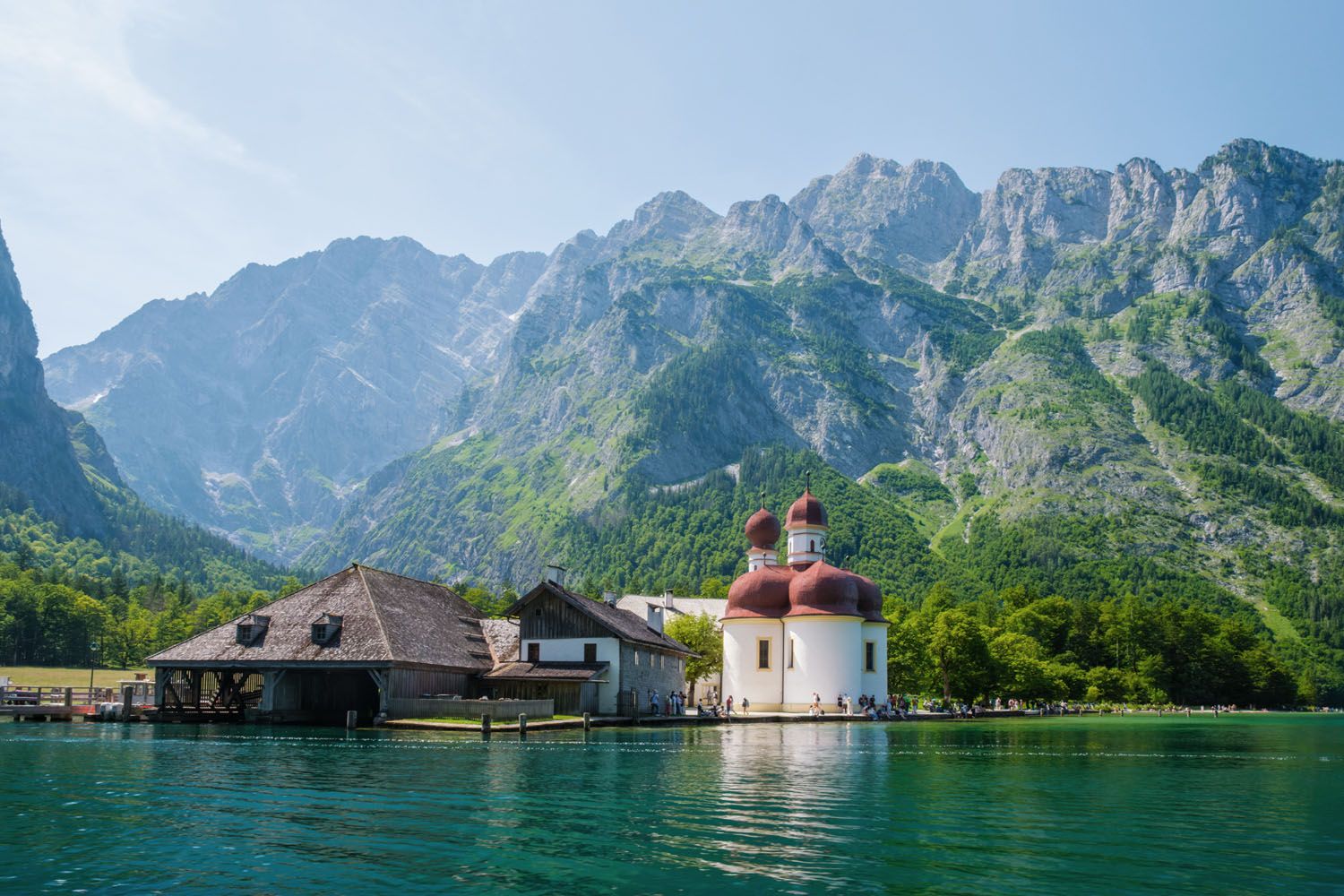
Visit Lake Königssee: Take a boat cruise across this emerald-green alpine lake. A highlight for all ages. In the summer, you can hike up to Obersee, a smaller nearby lake.
Lake Königssee
Jennerbahn: Ride the gondola up to Jenner Mountain for panoramic views.
Hike in Berchtesgaden National Park: If you like hiking, spend the day hiking in the foothills of the Alps.
How to Get to Berchtesgaden from Salzburg
By Train: Travel from Salzburg Hauptbahnhof to Berchtesgaden Hauptbahnhof in 40 to 50 minutes. Trains leave once per hour.
By Bus: Buses connect these two cities in about 45 minutes and leave several times per day.
By Car: Travel time is roughly 30 minutes. Having a car is not necessary, but the best option if you plan to hike in Berchtesgaden National Park.
By Tour: If you don’t want to arrange transportation and tickets on your own, there are day-trip tours from Salzburg to Berchtesgaden, like this half day tour which focuses on the Eagle’s Nest.
Do You Need a Car for Berchtesgaden?
No, a car is not necessary if you plan to visit the main sights (Lake Konigsee, the Eagle’s Nest, the Documentation Center, and the salt mine). These are all easily accessible from town. The only way to visit the Eagle’s Nest is on an official bus.
A car is worth it only if you plan to visit Berchtesgaden National Park or drive Rossfeld Panoramastraße.
Day 6: Hallstatt
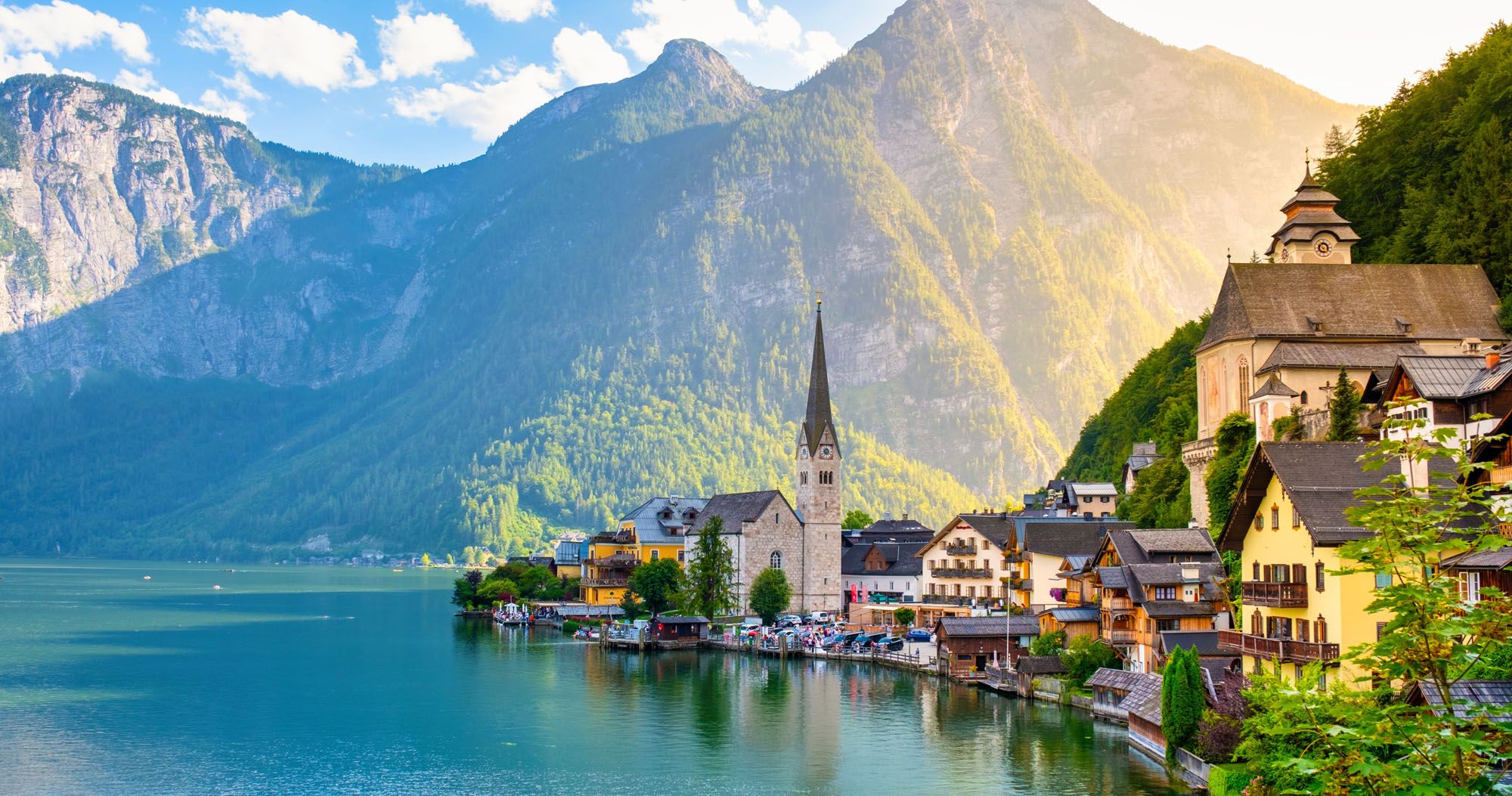
Hallstatt is a picture-perfect town near Salzburg. It is very small and takes only a few hours to visit.
Our visit was midday in the summer. Hallstatt was incredibly crowded, which took away from the overall experience. It’s best to get here early, if you like the idea of avoiding the crowds. We added on the trip to Dachstein Krippenstein, a high alpine region accessible by gondola, and for us, this was the highlight of our day.
What to Do in Hallstatt
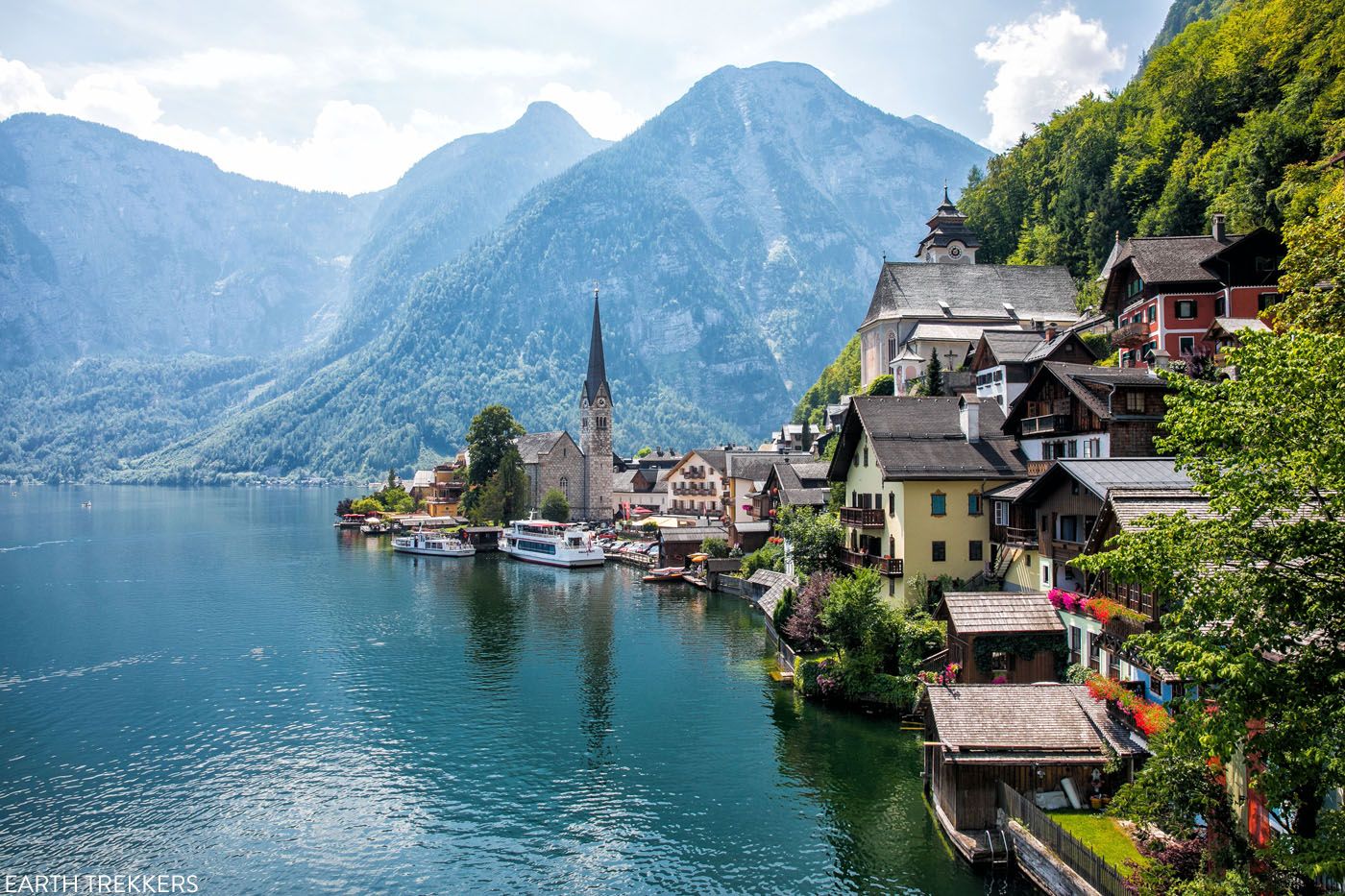
The best thing to do in Hallstatt is to explore the old town, which is compact and quick to do. Getting the postcard view of Hallstatt is a very popular thing to do.
For the best view over Hallstatt, ride the funicular up to the World Heritage Skywalk. You can also tour the salt mines, if you didn’t do that in Berchtesgaden.
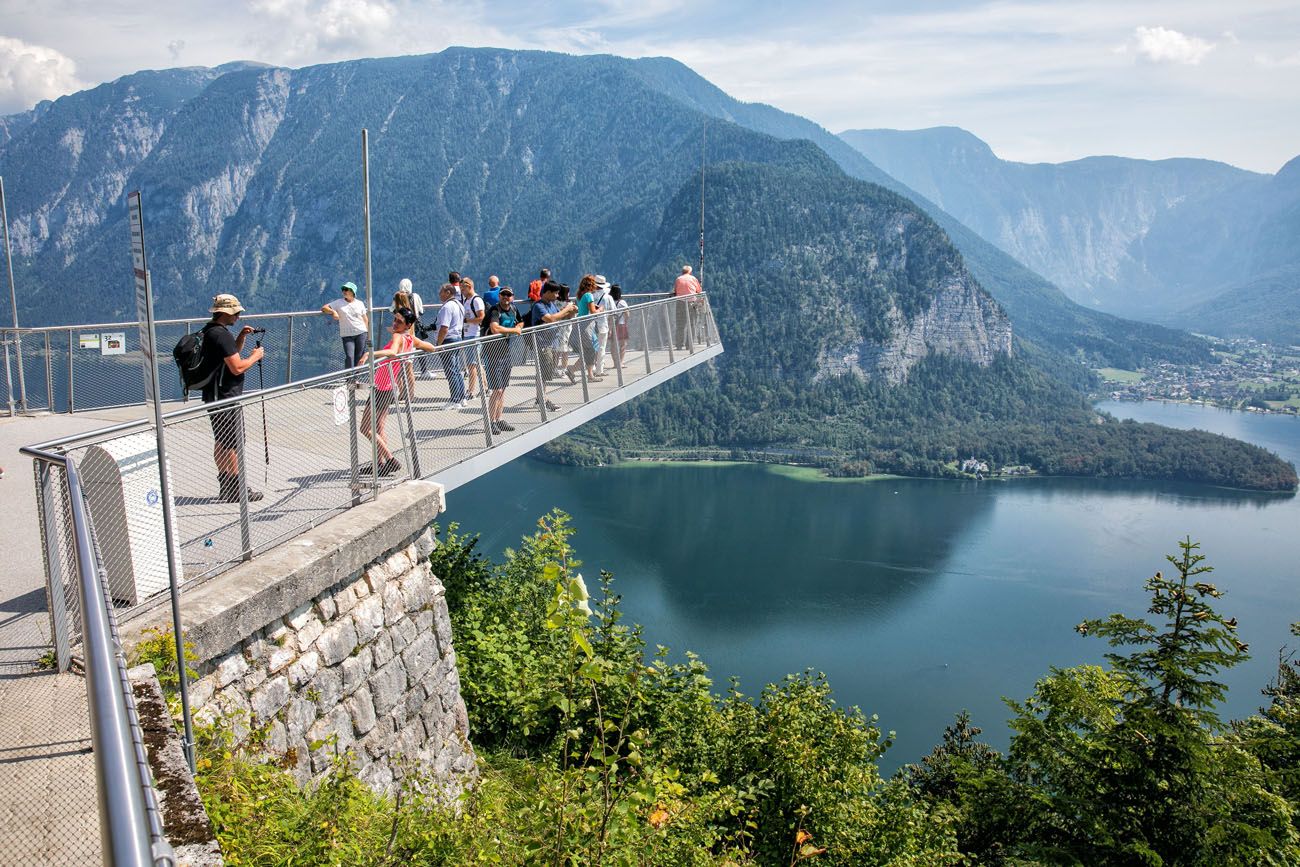
Hallstatt Skywalk
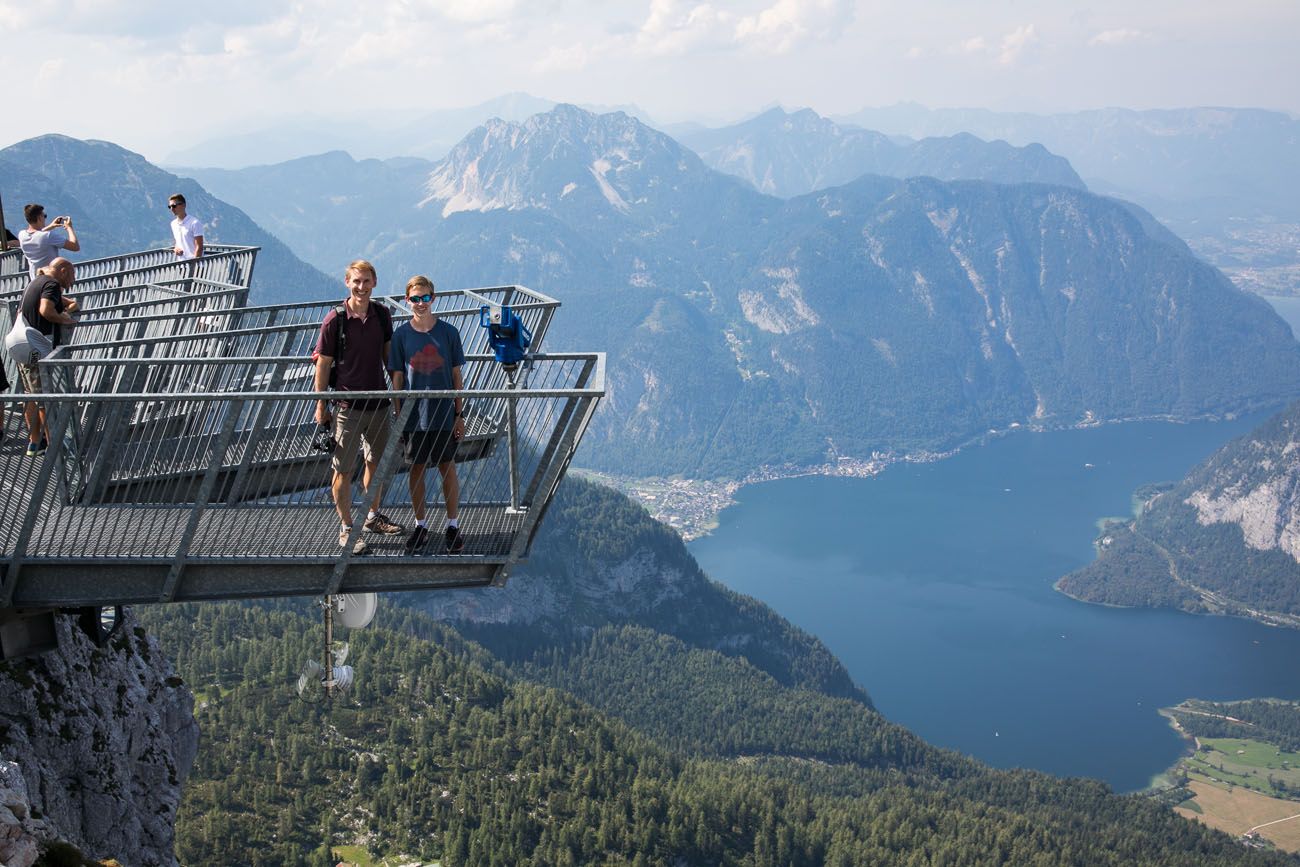
Tim and Tyler at Dachstein Krippenstein
Planning Your Time in Hallstatt
In our One Day in Hallstatt Itinerary, we cover the best things to do in Hallstatt, including how to visit Dachstein Krippenstein, with sample one day itineraries to help you plan your time.
How to Get to Hallstatt
Getting to Hallstatt is a bit tougher by public transportation than Berchtesgaden.
By bus, it takes about 2 hours 15 minutes (use bus 150, 542, or 543).
The train takes 2 to 2.5 hours, but the train station is located on the other side of the lake from Hallstatt (Hallstatt Bahnhof), so you will have to take a ferry to get to town.
This is a day when having a car is advantageous. By car, it takes an hour and a half to drive to Hallstatt. Parking is challenging. Parking P1 and P2 are located next to the old town. P3 is located 1 km south of the old town, roughly a 15-minute walk. These were all full on our visit (we arrived mid-morning) and the closest we found parking was at Parkplatz Landbettler, 2.2 km south of the old town (a 30-minute walk).
This half-day tour takes care of your transportation and you will have two and a half hours in Hallstatt, which is plenty of time to see the highlights.
Is It Worth Spending the Night in Hallstatt?
When planning your itinerary, you have the option to spend the night in Hallstatt.
The advantage of staying here is the opportunity to stroll the city streets in the evening, after the day trippers leave.
The disadvantages, and there are two, is that you will be adding an additional hotel to the itinerary, plus it takes a little longer to get to Vienna.
What you choose to do is really personal preference and one is not better than the other. I think it really comes down to whether or not you want to check in and out of an additional hotel and travel with your luggage from Salzburg to Hallstatt.
Where to Stay in Hallstatt
Number of Nights: 1
Haus Franziska and I da Mitt are two highly-rated properties in Hallstatt. The downside of staying in Hallstatt is getting your luggage to and from the train station (even if you take a bus to Hallstatt today, you will take a train to Vienna tomorrow).
It is better to stay in Obertraun, a small town on the opposite side of the lake from Hallstatt, since it has a train station, making it quicker and easier to transfer to Vienna tomorrow. When traveling from Salzburg, travel here first, drop off your luggage, then spend the day in Hallstatt.
In Obertraun, Haus Hepi and Haus Salzkammergut are two places we recommend.
Day 7: Travel to Vienna
On this day, travel to Vienna in the morning and spend the afternoon in Vienna. How you get to Vienna depends on your starting point.
How to Get to Vienna from Salzburg
The best way to get to Vienna is by train. Trains leave every 30 minutes with a journey time of two and a half hours on high-speed direct trains. The train will drop you right into Vienna’s main station (Vienna Hauptbahnhof), which has excellent U-Bahn (metro) connections.
Book your ticket on oebb.at, which is the official Austrian rail website.
PRO TRAVEL TIP: Seat reservations aren’t required but helpful in peak season. You’ll get cheaper fares if you book your tickets early.
How to Get to Vienna from Hallstatt
It takes longer to get to Vienna from Hallstatt, with one to two train transfers, something to consider when choosing to spend a night in Hallstatt.
If you have a car, it is a 300 km drive that takes 3.5 hours (on E60).
If You Spent the Night in Hallstatt
There is no train station in Hallstatt. The closest train station is Hallstatt Bahnhof, which sits on the opposite side of Hallstatter See from Hallstatt.
Take a ferry from Hallstatt to the train station. Trains from Hallstatt Bahnhof to Vienna take 4 to 4.5 hours with one to two transfers. The train will travel to Attnang-Puchheim, and then you will transfer to a high-speed Railjet or Westbahn train to Vienna.
Search Hallstatt → Wien Hbf on oebb.at.
If You Spent the Night in Obertraun
Obertraun has a train station (Obertraun-Dachsteinhöhlen), so it is a little bit faster to travel to Vienna today, as you get to skip the ferry ride. Travel times to Vienna are 3.5 to 4.5 hours. Again, you’ll go through Attnang-Puchheim and then transfer to a high-speed train to Vienna.
Search “Obertraun-Dachsteinhöhlen →Wien Hbf” on oebb.at.
Things to Do This Afternoon & Evening
Today is a low-key day. You will have two full days in Vienna, which is plenty of time to explore the city and venture out to Schönbrunn Palace.
This afternoon, I recommend walking through the historic city center (the Innere Stadt). Go for a stroll along Graben and try something sweet at Demel, a historic coffee house on Graben.
For dinner, we recommend Onyx, a sushi restaurant on top of the Do & CO Hotel. This is one of our favorite restaurants in Vienna. It has a spectacular view of St. Stephen’s Cathedral and the food is fantastic.
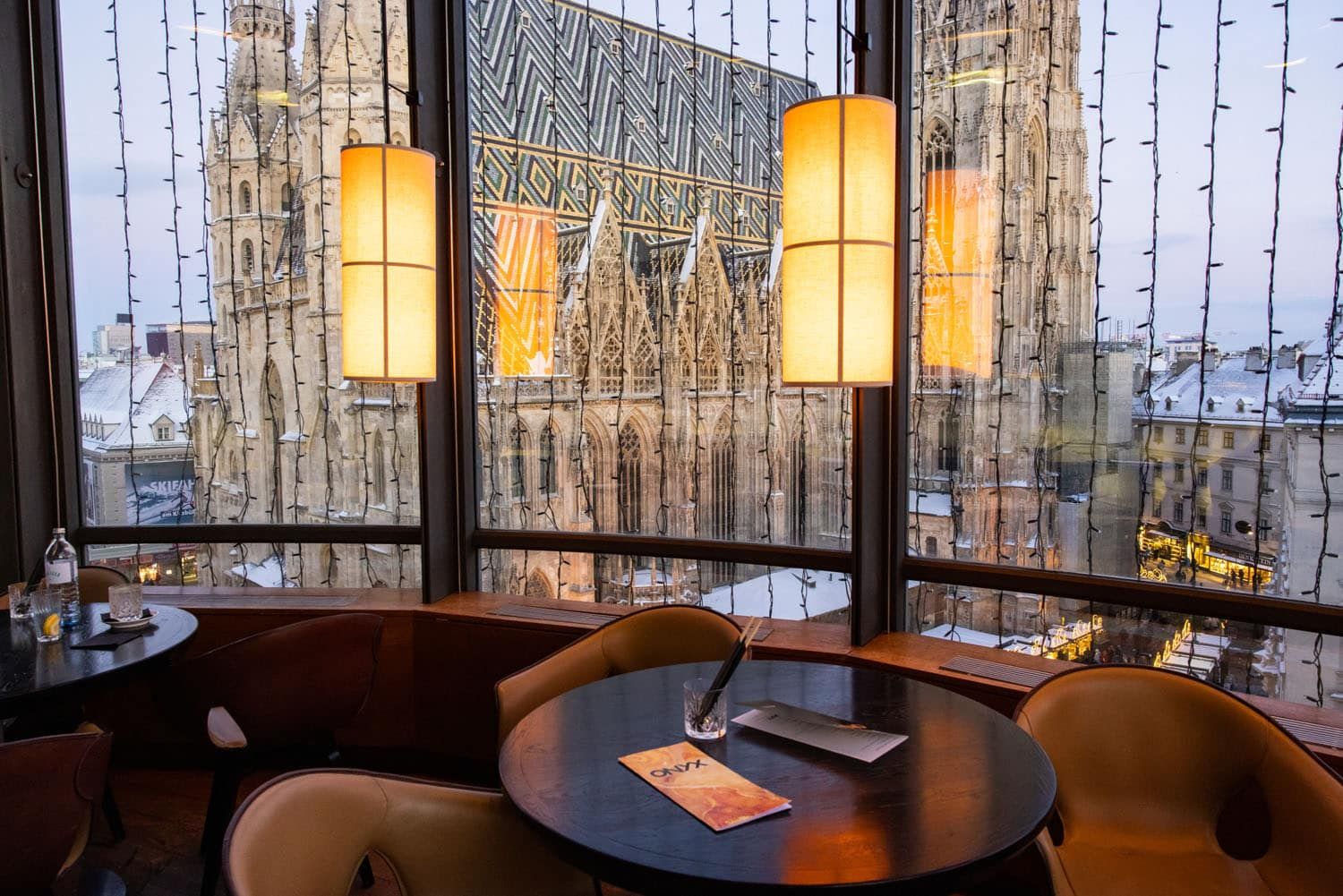
Onyx Restaurant
Where to Stay in Vienna
Number of Nights: 3
Our top picks are 7th Heaven Vienna Center Apartments (perfect for mid-range travelers), Vienna Boutique – Premium Hostel (the highest rated budget property we found in Vienna) and Hotel Sacher Wien (a historic, luxury property and the place to have the original Sacher-Torte).
We have a long list of hotel recommendations in our guide How to Plan a Trip to Vienna. This guide is very useful if planning your first trip to Vienna, as it also lists our favorite restaurants, money saving passes, and how to get around the city.
Vienna City Guides
Here are a few city guides on Vienna with more information about things to do, where to stay, and where to eat.
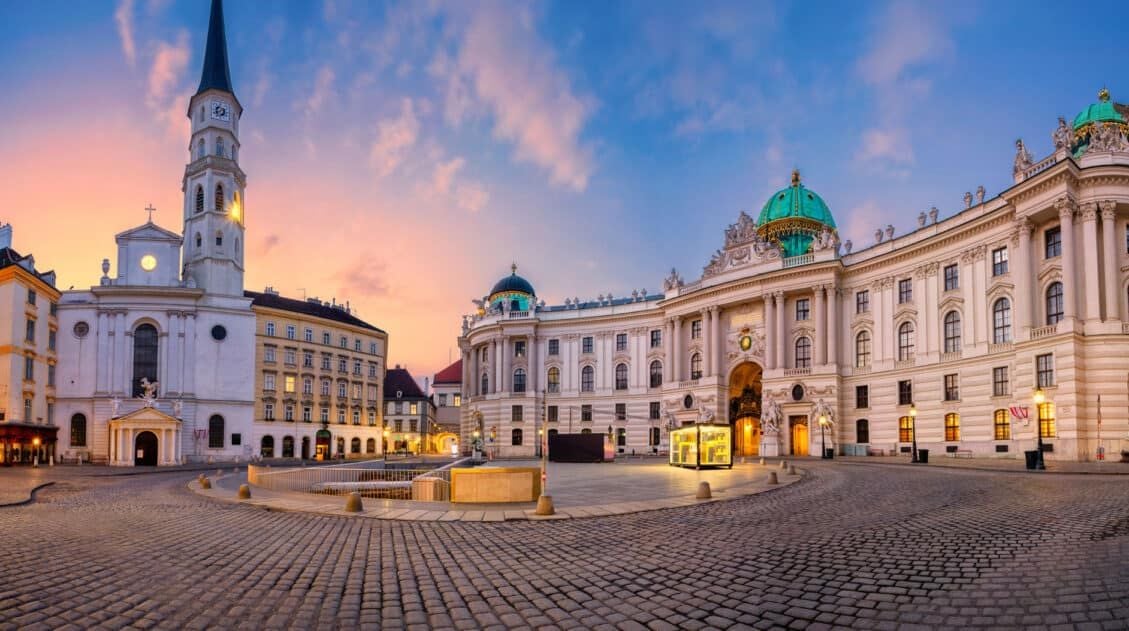
How to Plan a Trip to Vienna: A Guide for First Timers
Pinterest Facebook Flipboard The city of Vienna is renowned for its UNESCO-listed historic city center, café culture, world class museums, and opulent palaces. On a visit to Vienna, you can explore this city’s historical and cultural treasures, learn more about the Habsburg family as you tour Hofburg and Schönbrunn palaces, and indulge on pastries and […]
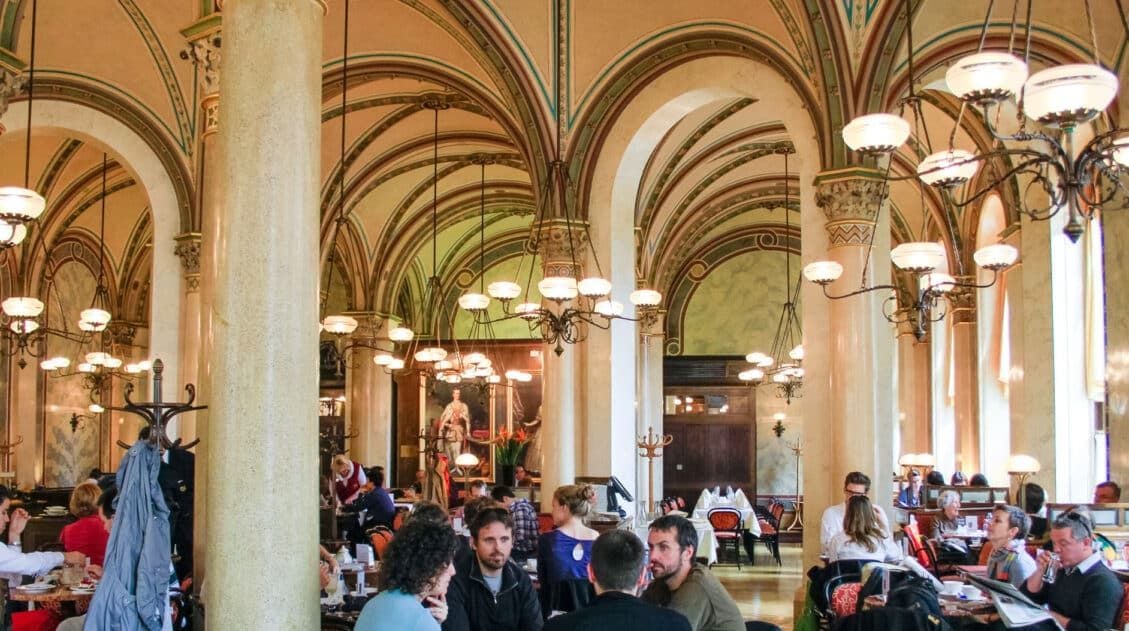
Best Cafés in Vienna: 10 Must-Visit Coffee Houses & Patisseries
Welcome to Vienna, a city of music, culture, and of course, charming cafés and coffee houses. Dining on elegant Viennese pastries paired with freshly brewed coffee is a quintessential experience for locals and visitors. Join us as we uncover the best cafés in Vienna, from iconic establishments to hidden gems. This guide starts with our […]
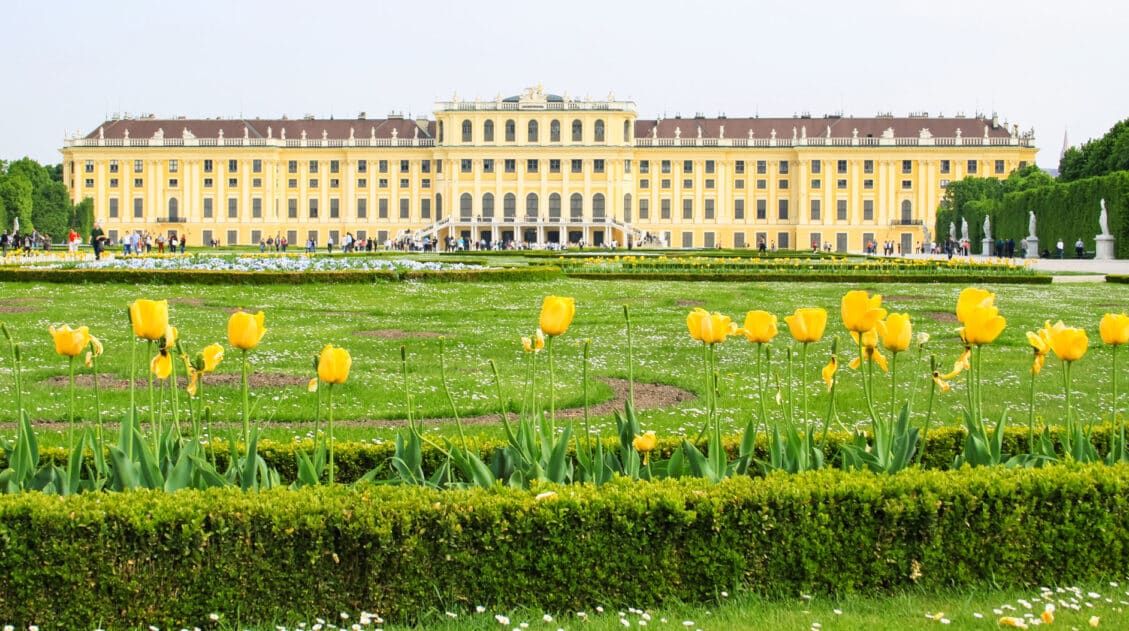
Vienna Bucket List: 25 Amazing Things to Do in Vienna
Dine at a Viennese café, visit the Hofburg Palace and Schönbrunn Palace, have a slice of Sacher Torte, stroll along Vienna’s bustling pedestrian streets, and ride the oldest Ferris wheel in the world…these top the list of things to do in Vienna. Vienna is the largest city and the capital of Austria. It sits on […]
Days 8 & 9: Vienna
Vienna is one of Europe’s great cities. It’s grand, cultured, and surprisingly livable for a place so steeped in imperial history. The city has a way of slowing you down, which is partly by design: the café culture practically demands that you sit, linger, and let the morning stretch out.
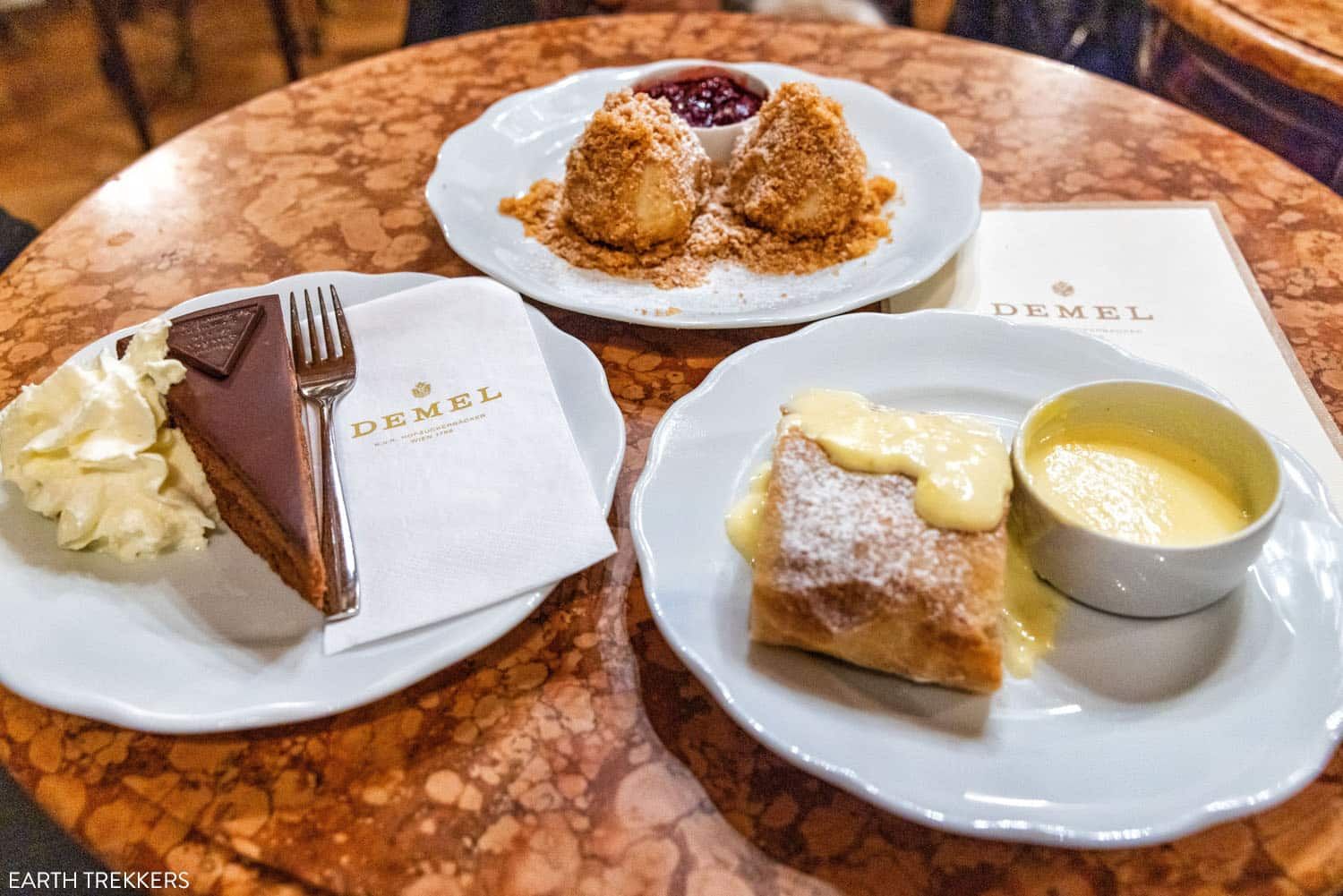
Sacher Torte and pastries at Demel
Speaking of which, don’t skip the cafés. We start our Vienna mornings with a long breakfast at one of the historic coffeehouses, and on our second visit, we made a point of trying Sacher-Torte at multiple places to settle, once and for all, which one was best. (We still haven’t reached a consensus.) It’s one of those small, silly trip rituals that ends up being one of the things you remember most.
Fair warning: this itinerary is heavy on museums and palaces. If that’s not usually your thing, we get it. It’s not always ours either. But Vienna has a way of entertaining even the most museum-averse traveler, because the buildings themselves are the attraction, with grand staircases, gilded ceilings, and elaborate frescoes. Even if you walked through without looking at a single exhibit, you’d leave impressed. The art and history inside are almost a bonus.
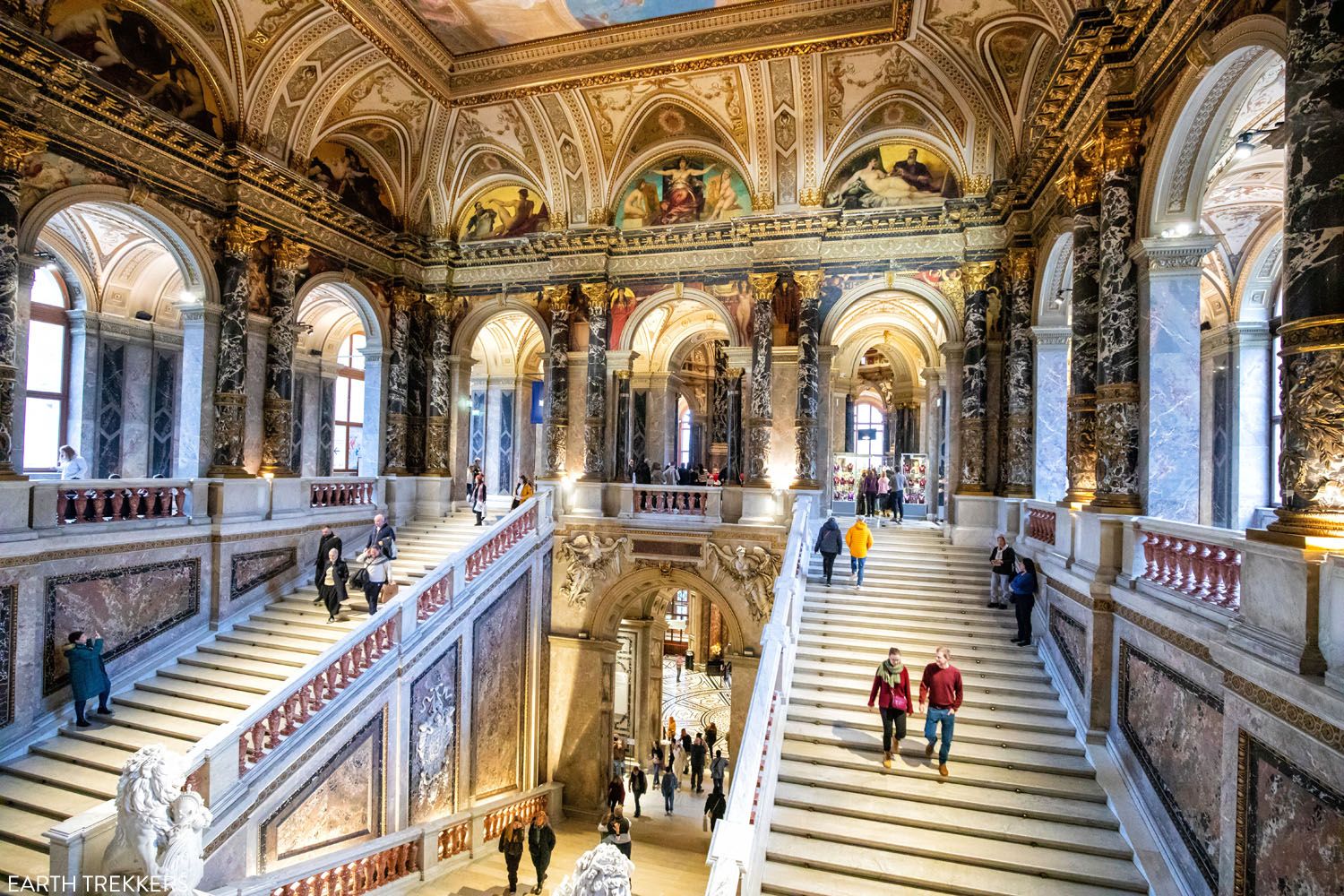
Kunsthistorisches Museum
We’ve visited Vienna twice, once in the spring and once in December, mainly to visit Vienna’s Christmas markets. Both are wonderful times to be here. If your visit is in December, don’t miss our guides on the Vienna Christmas Markets and our Christmas walking tour of Vienna.
What to Do in Vienna
Here is a quick overview of Vienna’s top experiences, which you will visit over the next two days.
- Historic heart of Vienna – the Old Town, which is a UNESCO World Heritage Site
- St. Stephen’s Cathedral – the centerpiece of the city; we love the view from its towers
- Schönbrunn Palace – an opulent palace, Vienna’s version of Versailles
- Dine at a Viennese café – the perfect place to start each day in Vienna
- Vienna State Opera – take a tour or watch an opera
- Hofburg Palace – a massive collection of museums and palace rooms
- Kunsthistorisches Museum – one of the most beautiful art museums in Europe
- Belvedere Palace – a gorgeous Baroque palace and the place to see Gustav Klimt’s The Kiss
- Austrian National Library – my favorite building in Vienna and the most beautiful library in Europe
There is a lot more to see and do in Vienna, including museums such as the Natural History Museum and the Albertina, visiting the Jesuit Church and St. Charles Church, strolling through Ferstel Passage, and touring the Imperial Crypt, which you can see in our article Best Things to Do in Vienna ↓
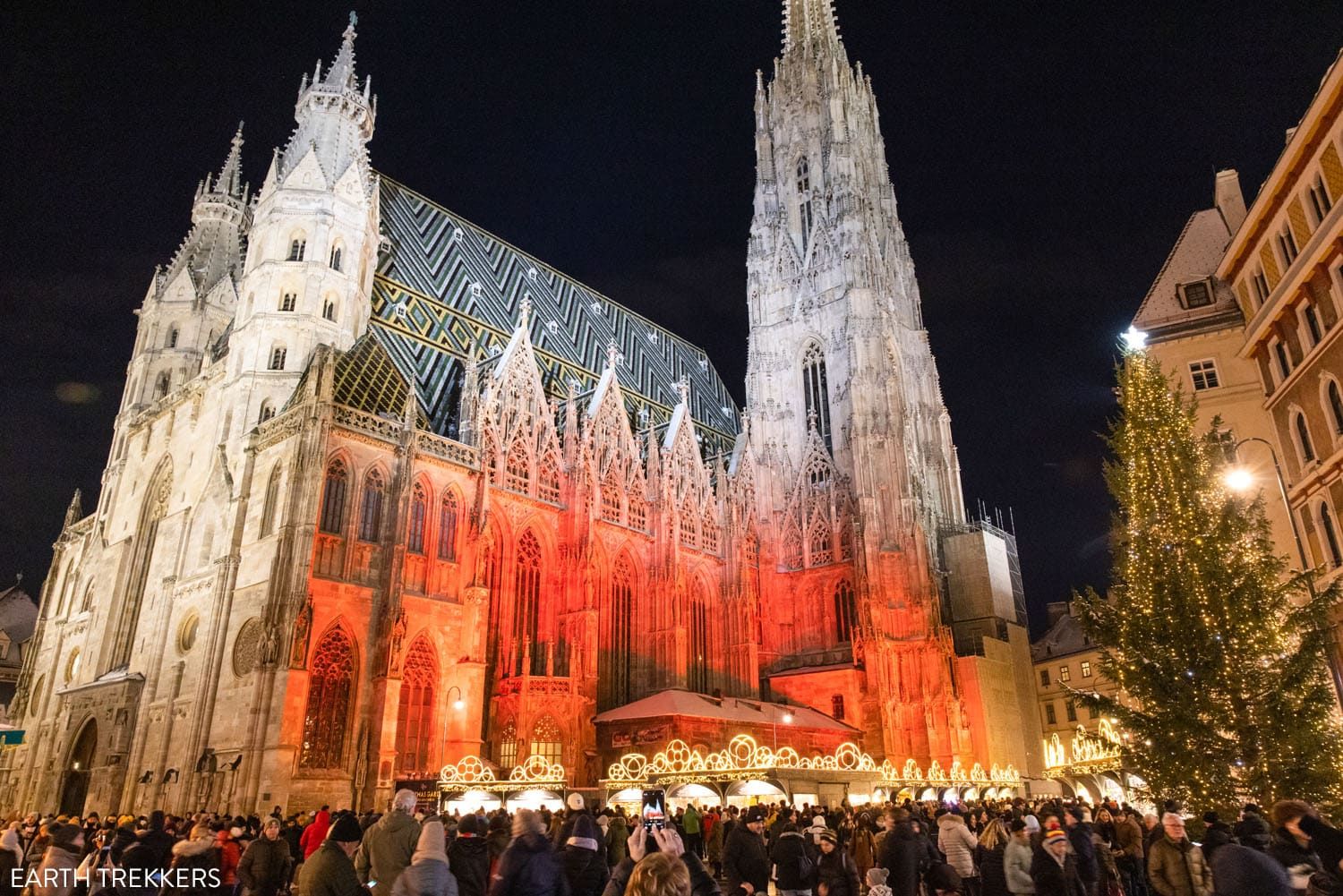
St. Stephen’s Cathedral (in December)
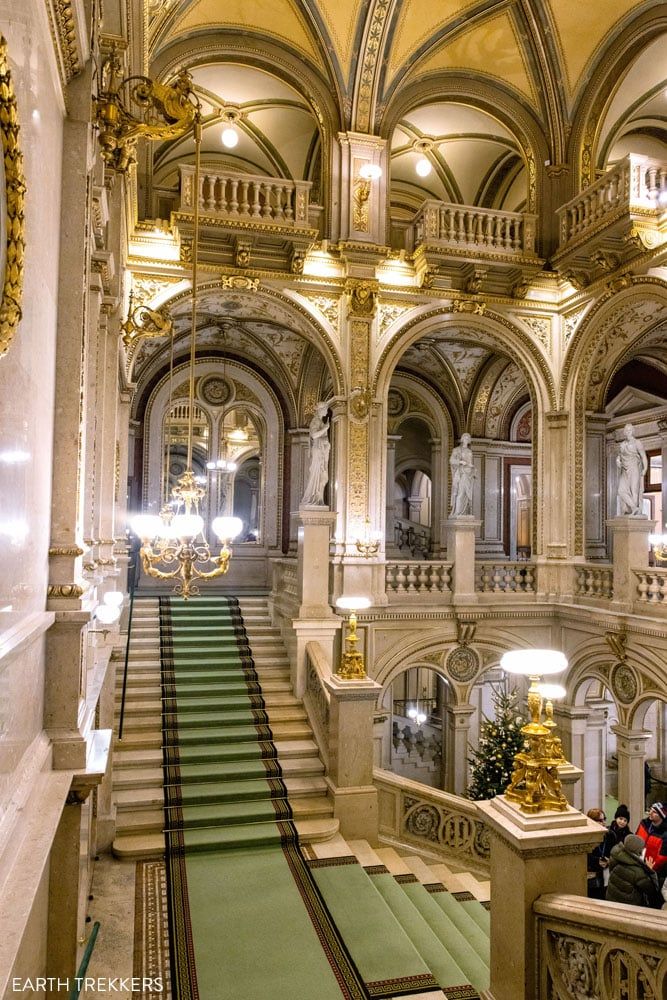
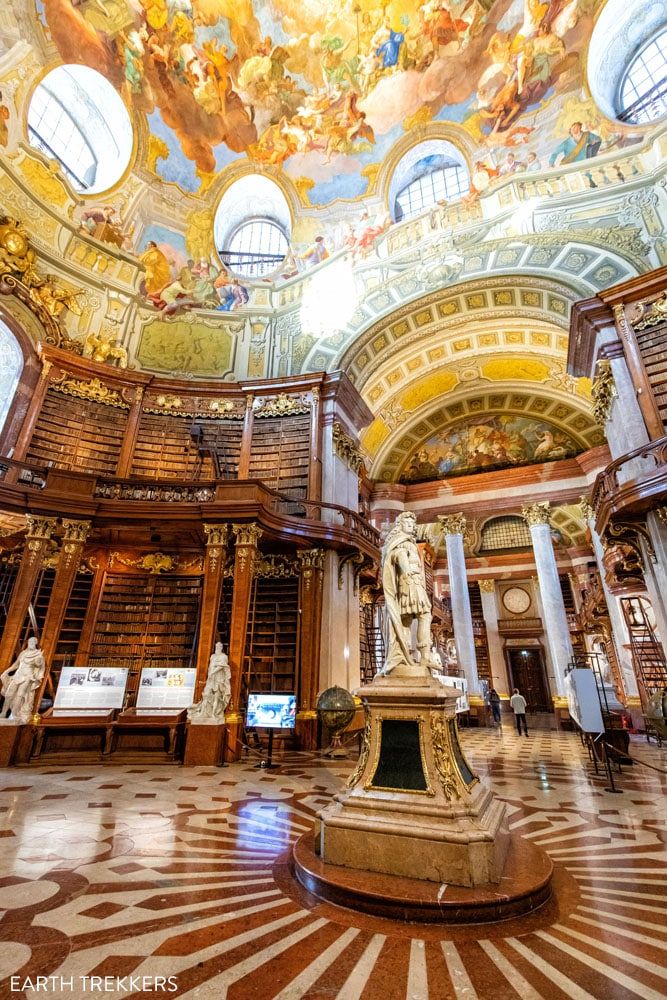
How to Plan Your Time in Vienna
Day 1: visit Hofburg Palace, have lunch at the Kunsthistorisches Museum (the café is amazing) and tour the museum, and in the afternoon visit St. Stephen’s Cathedral and spend more time in the old town.
Day 2: visit Schönbrunn Palace in the morning, have lunch, tour the Opera House, and then visit either Belvedere Palace or the Albertina and Imperial Crypt.
Plan your time with our 2 Day Vienna Itinerary, which has suggestions on exactly how to spend each day, complete with maps with walking routes, links to purchase your tickets, and suggestions on where to eat and drink ↓
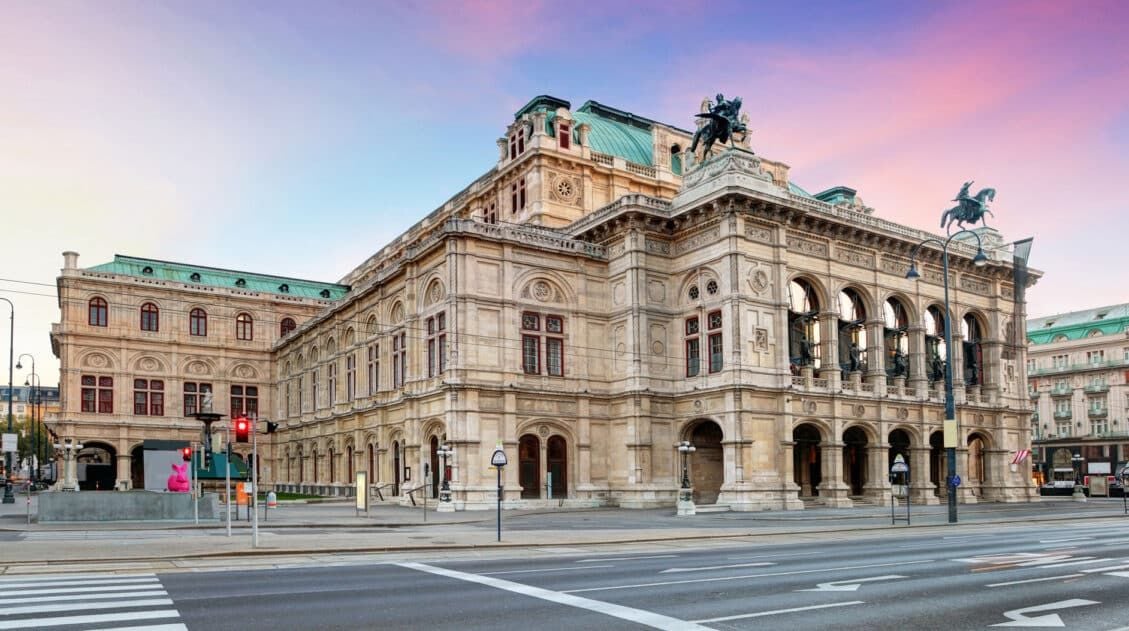
Day 10: Travel to Prague
By train, it takes about 4 hours to travel from Vienna to Prague.
You have the option to spend the morning in Vienna, traveling to Prague in the afternoon, the best option for those who want more time to visit museums or sites in Vienna.
But if you are ready to move on, travel to Prague this morning, which gives you the afternoon to start exploring Prague.
Visiting Český Krumlov Today
If you have a rental car, you have the option to visit Český Krumlov on the drive from Vienna to Prague. Tim and I did this the first time we did this trip, and it works great.
Český Krumlov (a fairytale town in the Czech Republic) is located along the drive and takes just a few hours to visit. Get an early start, drive to and visit Český Krumlov, checking into your hotel in Prague this evening. That will then give you three full days in Prague.
Another option is to hire a shuttle service. There are companies that will pick up you and your luggage from Vienna, drive to Český Krumlov and give you a few hours here, then continue to Prague. It is an expensive option, more so than visiting Český Krumlov on a day trip from Prague, but it could potentially save a day on this itinerary, allowing you to easily shorten it to 13 days, if you need to save time.
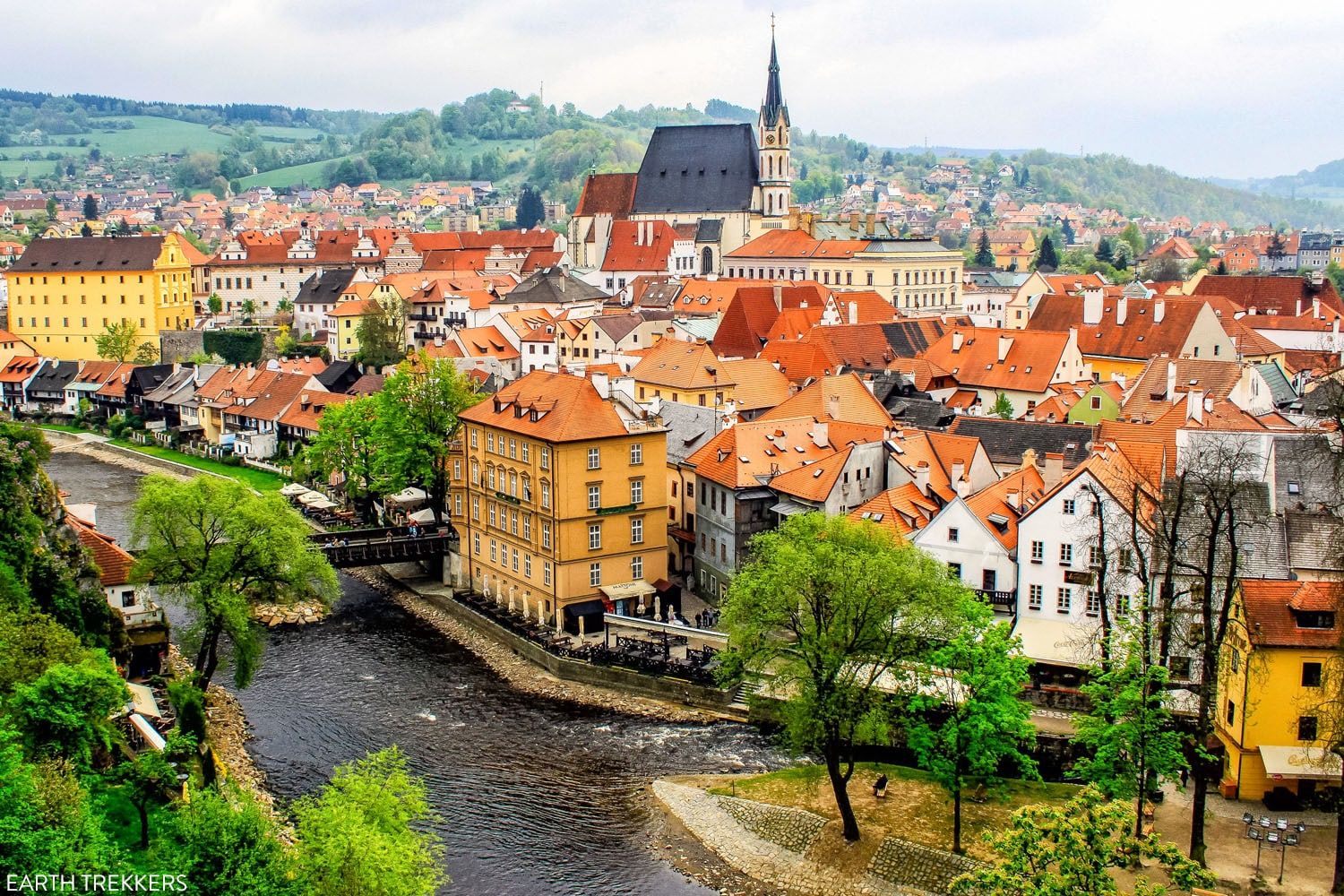
Český Krumlov
How to Get to Prague from Vienna
The best way to get to Prague is by train, which takes about 4 hours on high-speed direct trains. Book your train tickets on the OBB Railjet website. From the Prague train station, take a taxi or Uber/Bolt to your hotel.
Where to Stay in Prague
Number of Nights: 4
For mid-range travelers, we recommend Hotel Ikona (a hotel in Mala Strana that gets exceptional reviews and is located within walking distance of Prague Castle and the Old Town Square), Royal Road Residence (a small hotel in the Old Town that offers a variety of apartments, a great pick for families), and The Emerald (great location in the city center and a long list of apartments, some of which can accommodate up to 7 people).
On our first visit to Prague we stayed at Hotel Paris, a 5-star hotel in the Old Town. If you are looking for an upscale or luxury hotel, we also recommend the Four Seasons Hotel (we stayed here on our second visit and had a room with a view of Prague Castle; plus the hotel has a fantastic location in the Old Town, just a short walk to Charles Bridge) or The Julius Prague.
For budget travelers, we recommend the Roadhouse Prague (this hostel gets excellent reviews and has an amazing location in the center of Prague).
Our Guides on Prague
Here are a few city guides on Vienna with more information about things to do, where to stay, and where to eat.
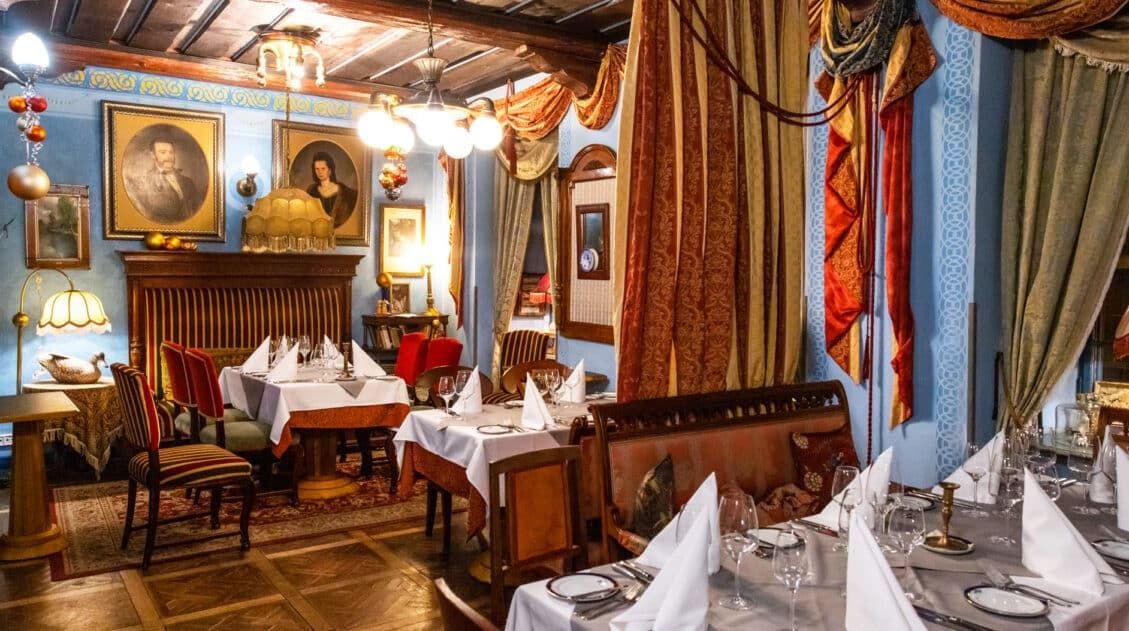
Best Prague Restaurants, Cocktail Bars & Beer Gardens
Many people visit Prague to visit its historic squares, climb the Gothic towers, stroll across the Charles Bridge, and tour its castle, but Prague is also home to many great restaurants and bars. In fact, one of the best things to do in Prague is to visit a beer hall. Whether you want to dine […]
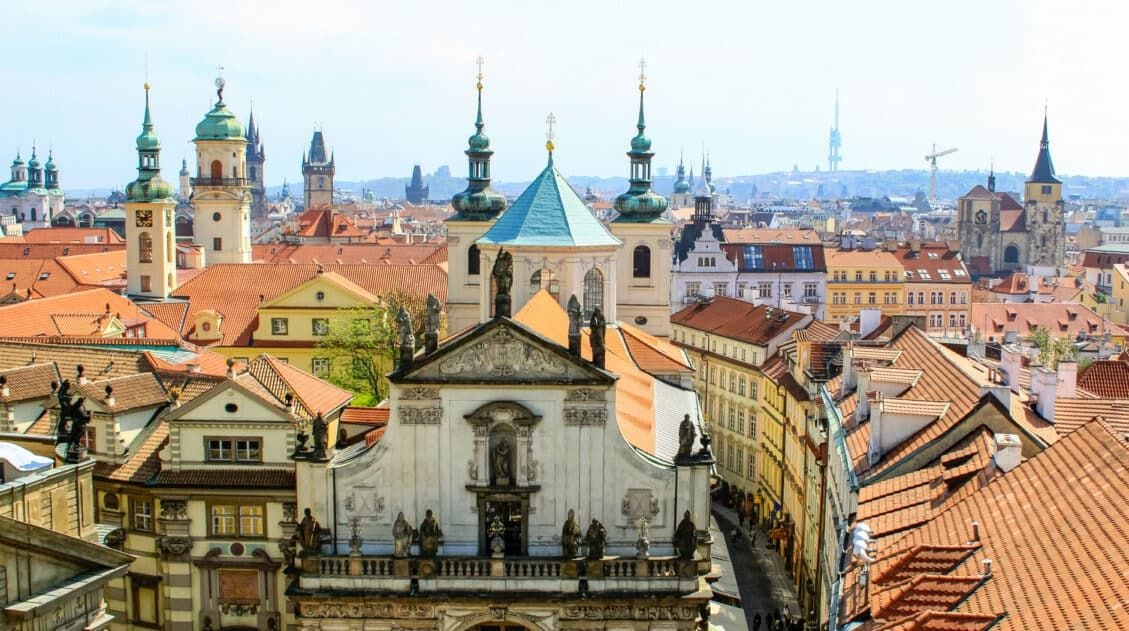
Best Views of Prague: 10 Iconic Photography Locations (+ Map & Photos)
With its stunning setting on the Vltava River, gothic towers, and elevated viewpoints, Prague is a gorgeous city to visit and photograph. One of the best things to do in this “city of a hundred spires” is to climb its towers for panoramic views. In this guide, we list the 10 best views of Prague, […]
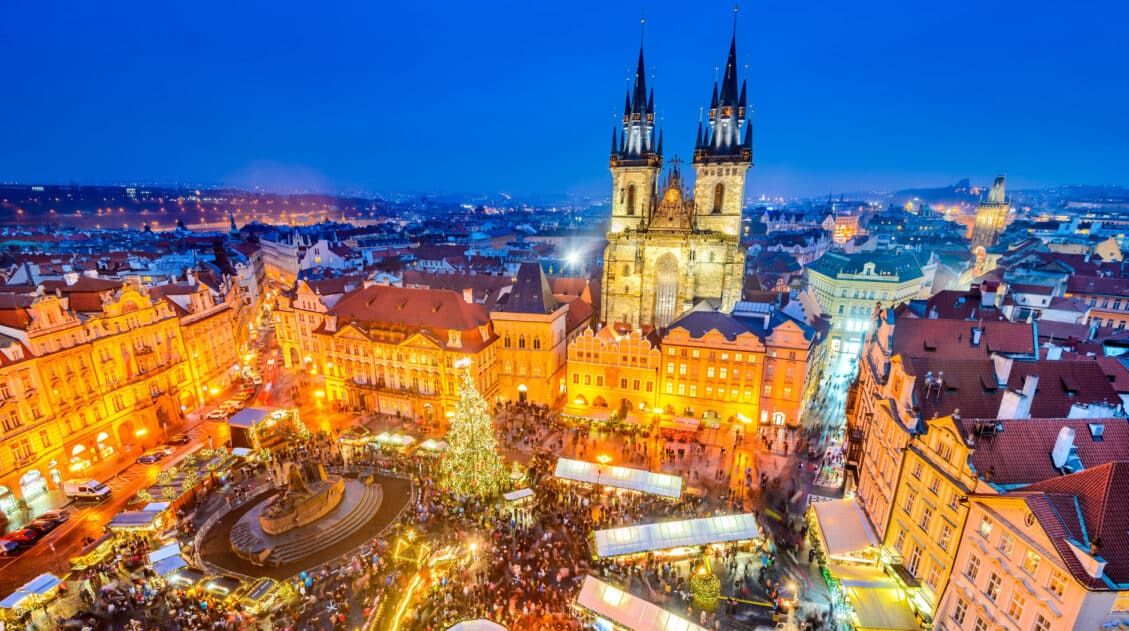
Prague Christmas Markets & Festive Things to Do (2026 Guide)
Prague is a magical place to visit at Christmas. In December, Christmas markets spring up around the city, shops and hotels are adorned with festive decorations, and add in a dusting of snow, and Prague becomes one of the best cities to visit in Europe during this holiday season. A year earlier, we spent a […]
Days 11 & 12: Prague
This itinerary ends with a few days in one of Europe’s most beautiful cities. Most of its original architecture remains intact, as it only suffered minor bombing in World War II, and its Gothic towers and churches still dot the city skyline.
We’ve visited Prague in May and in December, two very different times to be here. In the spring, the days are long, the weather is getting warm, and crowds aren’t at peak levels, making this a fantastic time to take this trip. In December, the days are very short, Christmas markets fill the squares, and snow is a possibility. We were lucky to be in Prague when it snowed, which you’ll see in some of our photos below.
On this itinerary, you have two days in Prague, the perfect amount of time to explore the historic city center.
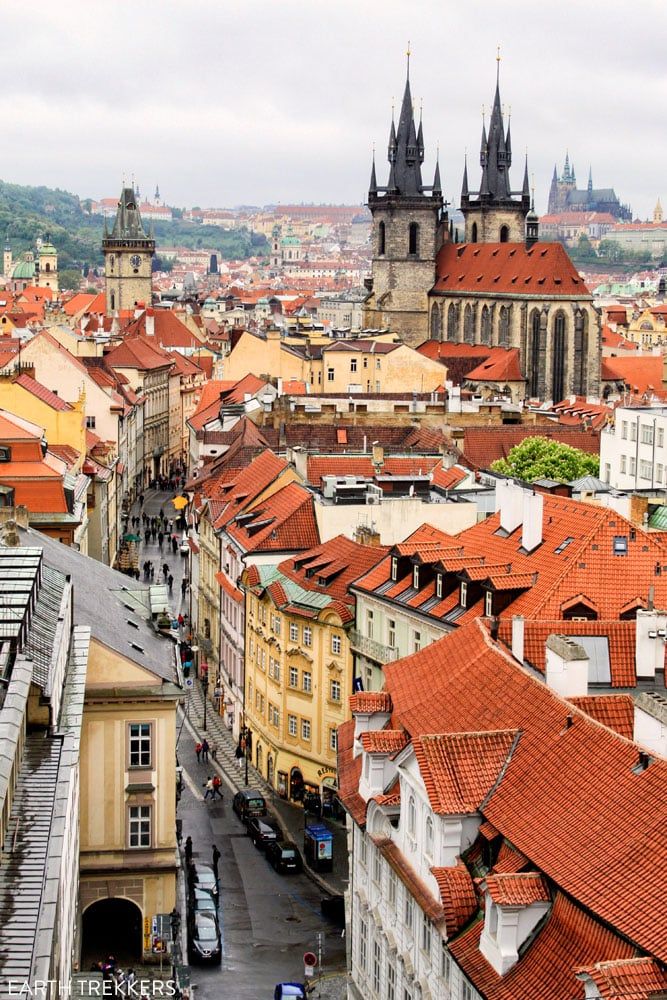
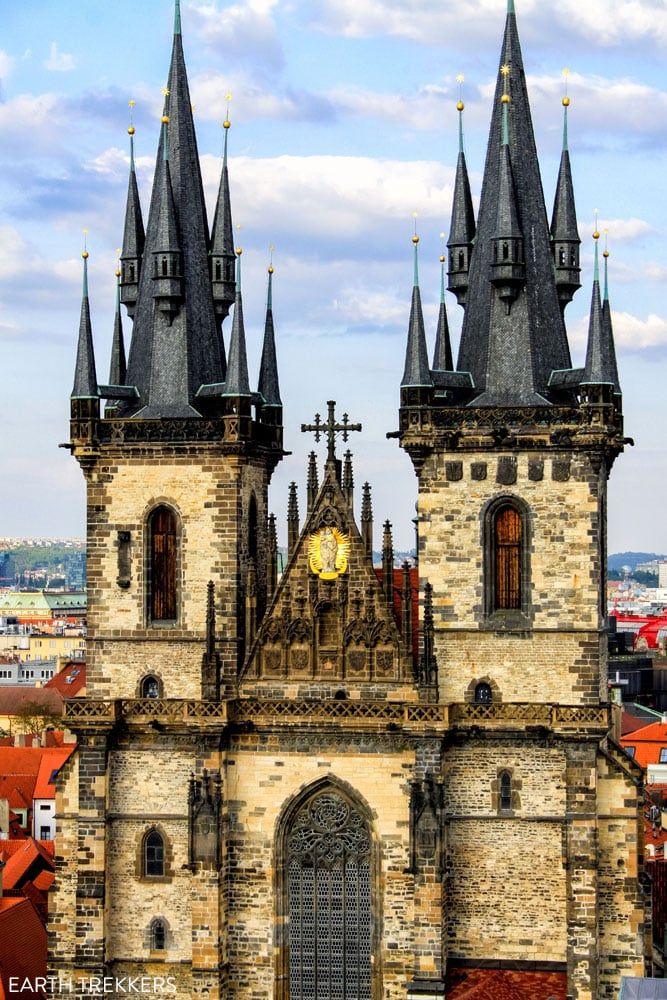
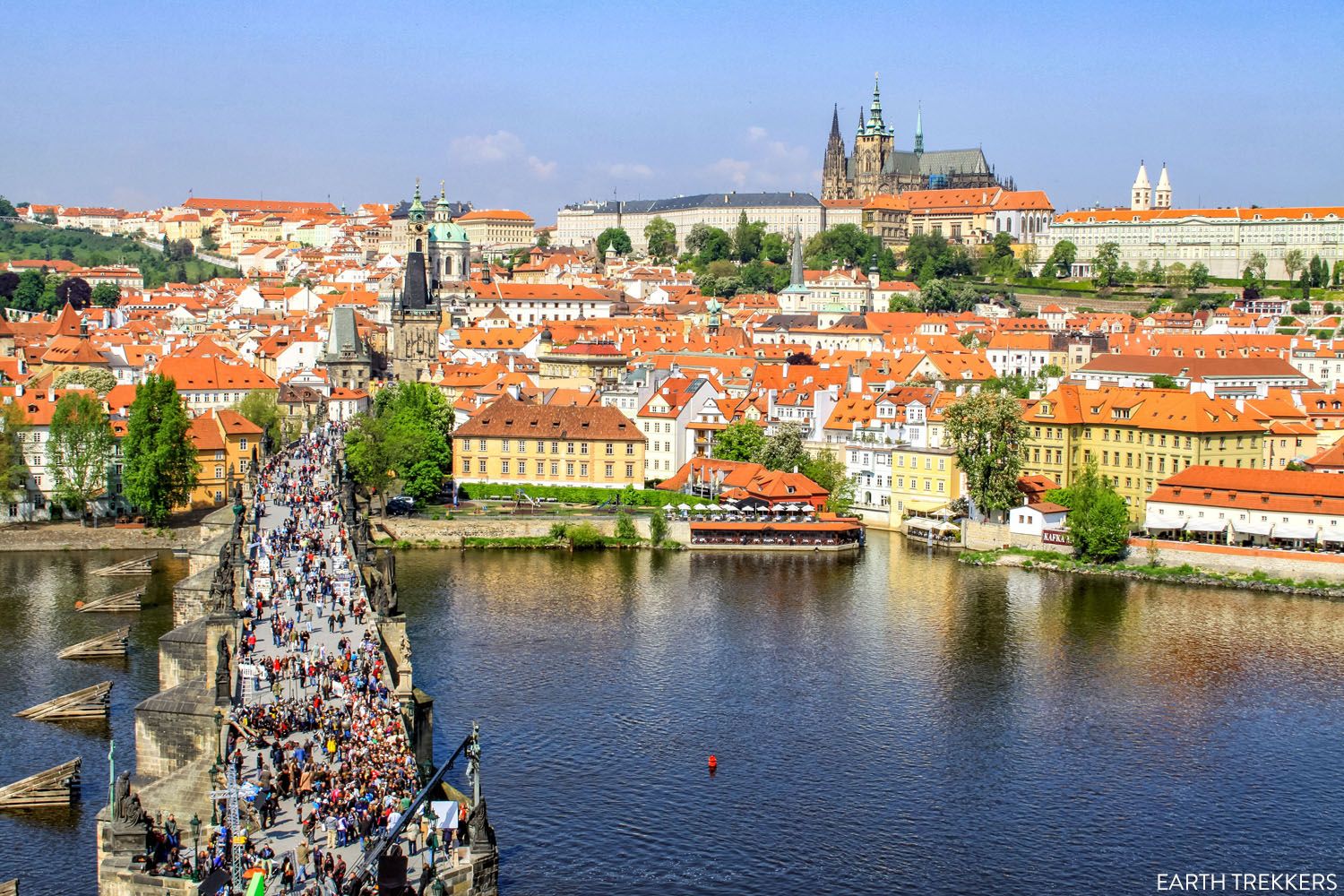
Highlights of Prague
Here is a quick overview of things to see and do in Prague, which you will visit over the next two days.
- Stroll across the Charles Bridge – one of the most famous pedestrian bridges in the world
- Explore the Old Town – Staroměstské náměstí (the main square) is not to be missed
- Climb the Towers of Prague – our favorites are the Old Town Hall Tower, the Old Town Bridge Tower, and the Lesser Town Bridge Tower
- Visit Prague Castle – a UNESCO World Heritage Site and the largest castle in the world
- St. Nicholas Church – the view from the bell tower is worth the climb
- The Jewish Quarter – visit Europe’s oldest active synagogue
- The Lennon Wall – a symbol of freedom in Prague
- Enjoy a Glass of Czech Beer – or visit a beer spa
- See the Dancing House – an iconic building in Prague; on the top floor is a bar and restaurant with more great views of the city
There is a lot more to see and do in Prague, including the Národní and Mucha Museums, the Jerusalem Synagogue, Petrin Tower, visiting the Strahov Monastery and its gorgeous library, visiting Lobkowicz Palace, which you can see in our article Best Things to Do in Prague ↓
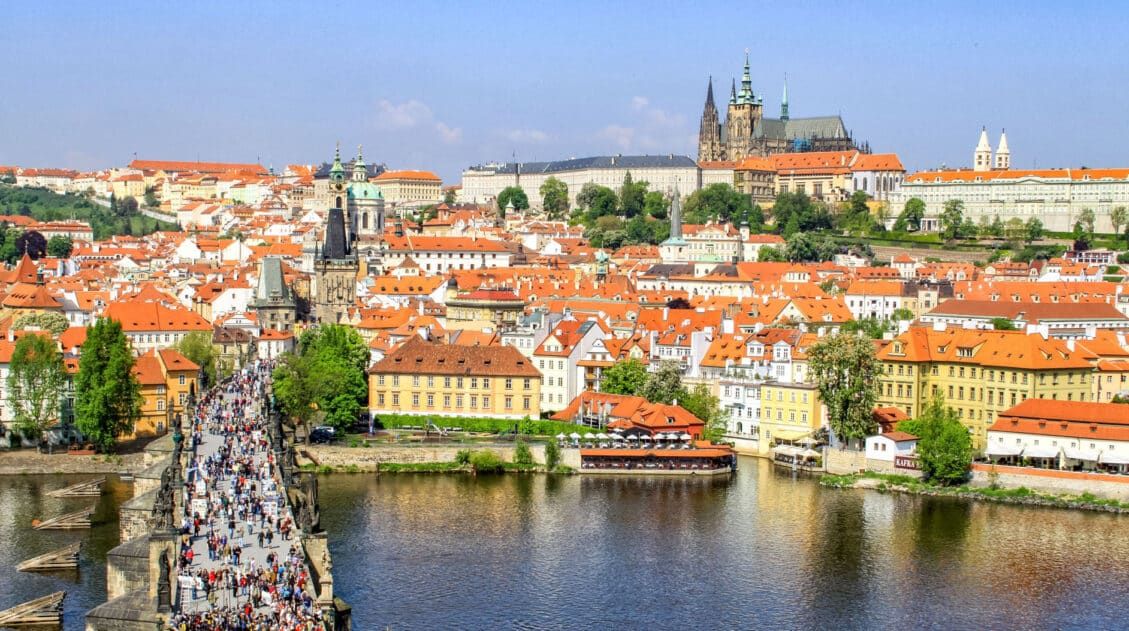
How to Plan Your Time in Prague
Day 1: Spend the morning in the Old Town, visiting the Old Town Square and climbing the Old Town Bridge Tower. Have lunch at Restaurant Mlýnec, a fine dining restaurant with a view of Charles Bridge. After lunch, visit the Jewish Quarter. For dinner we recommend Restaurant Zvonice, where you will dine at the top of a Gothic Tower.
Day 2: Stroll across the Charles Bridge and spend the morning touring Prague Castle. Have lunch in a medieval tavern then visit more sites in Mala Strana: St. Nicholas Church, the Lennon Wall, and Kampa Park. In the late afternoon, enjoy the view from Petrin Tower, climb the Lesser Town Bridge Tower, or take a tour of Prague.
Plan your time with our 2 Day Prague Itinerary, which has suggestions on exactly how to spend each day, complete with maps with walking routes, links to purchase your tickets, and suggestions on where to eat and drink.
If you visited Český Krumlov on the drive from Vienna to Prague, that gives you 3 days in the city. Take a look at our 3 Days in Prague Itinerary for recommendations on how to plan your time.
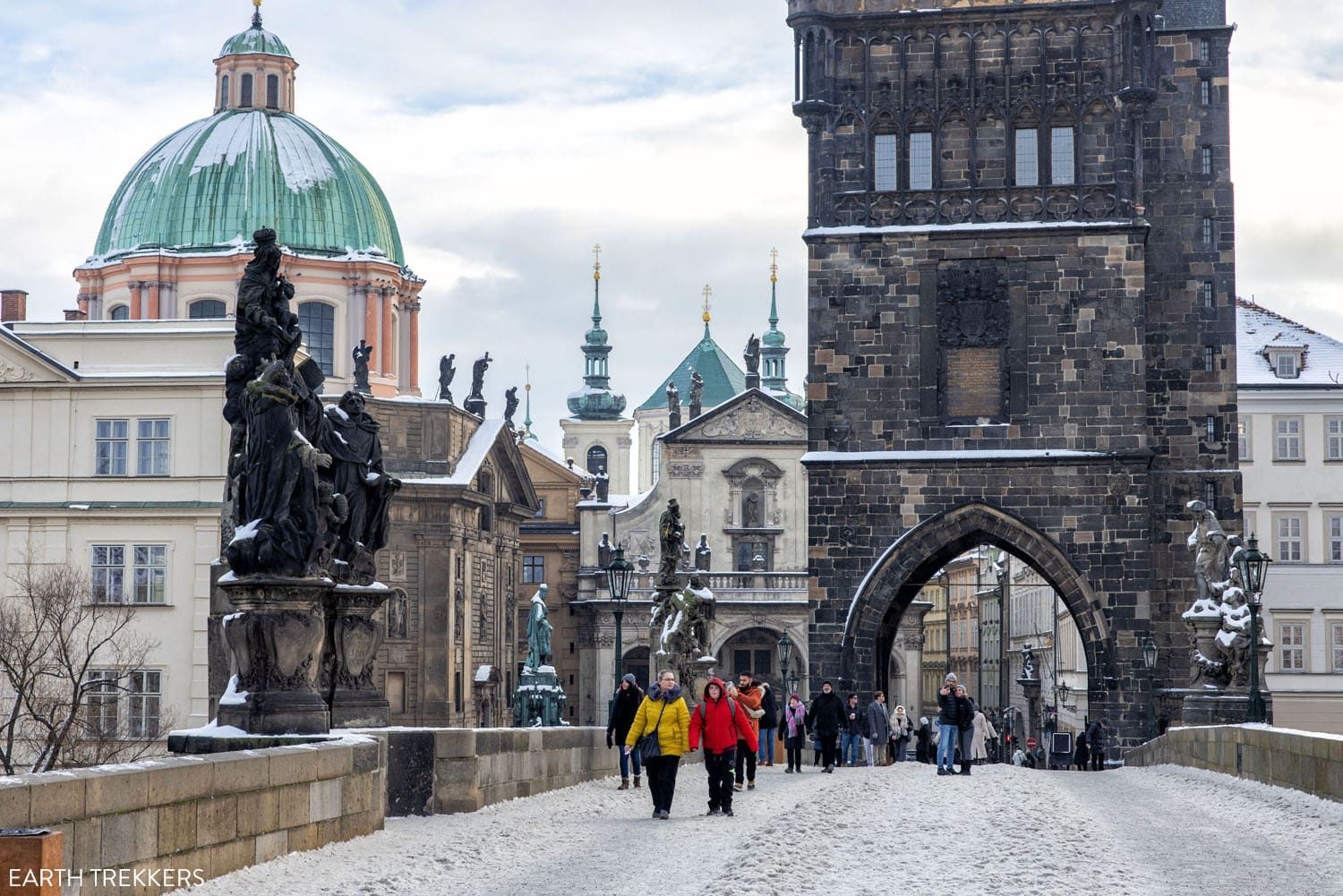
Charles Bridge
Day 13: Český Krumlov Day Trip from Prague
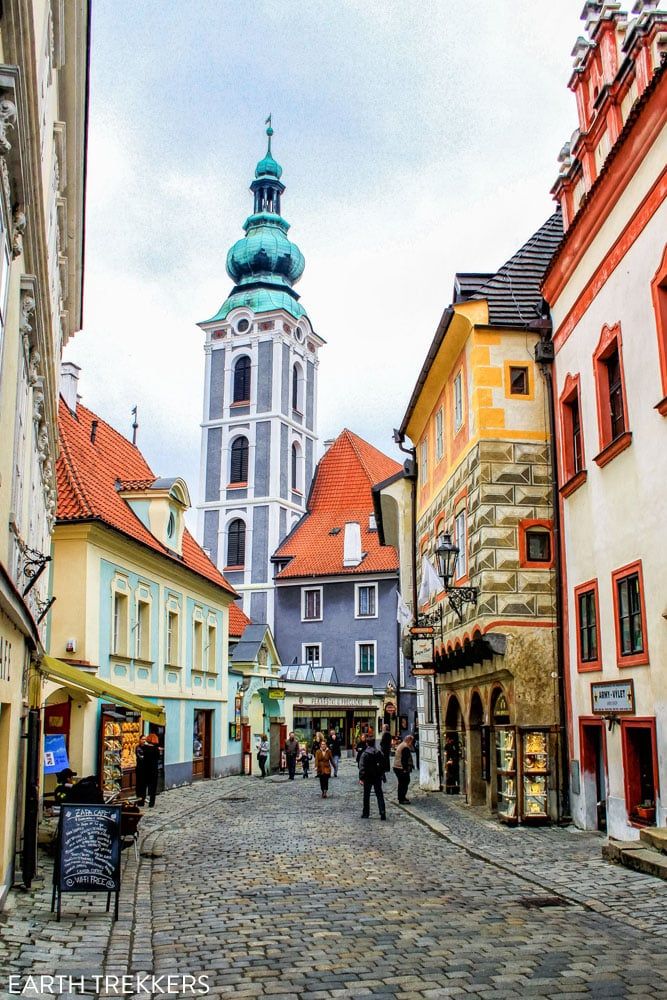
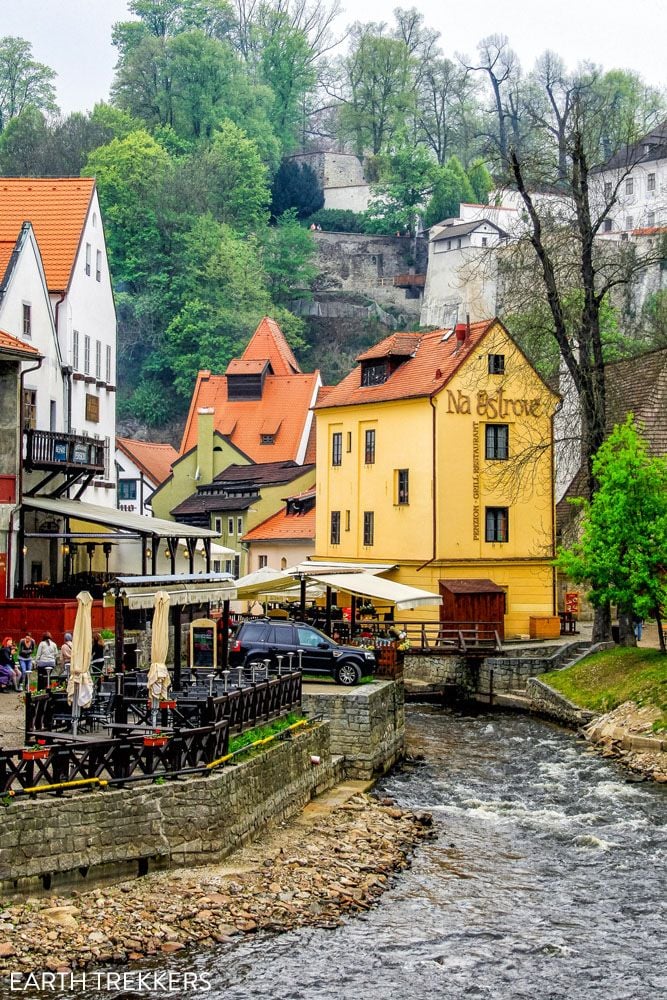
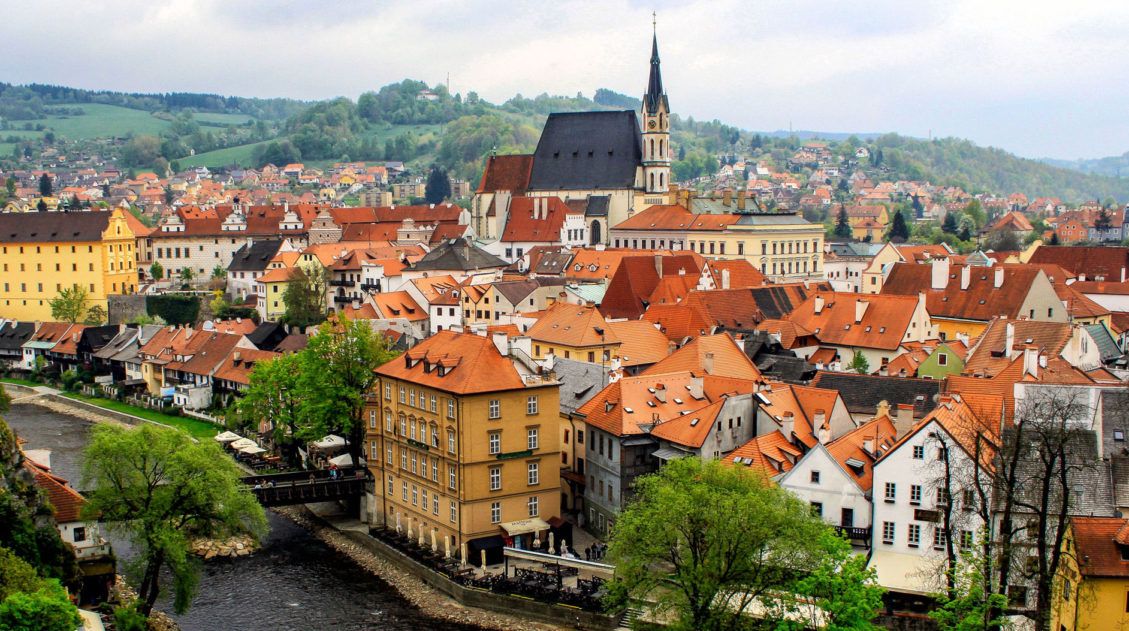
Český Krumlov is a small, fairytale town that escaped the bombings of World War II. It is also a UNESCO World Heritage Site.
We spent several hours strolling through this town in pure delight. With its cobblestoned streets, colorful buildings, and setting along a river, it almost seems too beautiful to be real. This is our favorite day trip from Prague.
How to Get to Český Krumlov
By Train
It takes two and a half hours to travel from Prague to Český Krumlov by train. Most journeys require a transfer in Ceske Budejovice although a direct train was recently added. The trains with transfers only take about 10 to 30 minutes longer than the direct train.
For a timetable and train tickets, visit the official website here. This is a good website to get the timetables and prices for the direct trains to and from Český Krumlov.
The train station is located outside of the heart of Český Krumlov. To get into town, you can walk (30 minutes) or take the local bus. Click here to learn more.
Self-Drive
If you have a car, it takes about two and a half hours (175 km) to drive to Český Krumlov. In Český Krumlov, there is parking near the city center.
By Tour
This is the most convenient option, as it takes away the hassle of booking train tickets or a rental car. This group tour gets great reviews and this private tour is a little more expensive but a good option for those who don’t want to visit Český Krumlov as part of a larger group.
Top Things to Do in Český Krumlov
The best thing to do in Český Krumlov is explore its old town, which is small and compact. You can also visit the castle, the castle gardens, and the Church of St. Vitus.
We have a detailed guide on How to Visit Český Krumlov, which covers things to do, where to eat, and a lot more photos ↓
Exactly How to Plan a Český Krumlov Day Trip from Prague and Vienna
Everything you need to know to plan a day trip to Český Krumlov.Day 14: Fly Home
Fly home or continue on to your next destination.
Can You Do This Itinerary in the Opposite Direction?
Yes, this itinerary can be done in the opposite direction. Here’s how to do it.
Day 1: Arrive in Prague
Day 2: Prague
Day 3: Prague
Day 4: Český Krumlov day trip from Prague
Day 5: Travel to Vienna
Day 6: Vienna
Day 7: Vienna
Day 8: Travel to Salzburg or Hallstatt
Day 9: Hallstatt day trip from Salzburg
Day 10: Berchtesgaden day trip from Salzburg
Day 11: Salzburg
Day 12: Travel to Munich
Day 13: Munich
Day 14: Fly home
How to Get Around Central Europe (Train vs. Car)
For this itinerary, there is no need to rent a car. It is very easy to travel between Munich, Salzburg, Vienna, and Prague by train. We also include day trips to Berchtesgaden, Hallstatt, and Cesky Krumlov, which can be done by public transportation.
If you choose to rent a car, there are several things to be aware of.
In Austria and the Czech Republic, you will need a vignette, a sticker that shows you have paid the highway tax. Read our guide Things to Know About Renting a Car in Europe to learn more.
If you pick up the car in Munich and drop it in Prague, there will be a large drop fee. I can’t give an estimate, because this varies quite a bit, but it will be on the order of hundreds of dollars.
You will also need to confirm with the rental car company that you can drive the vehicle in Germany, Austria, and the Czech Republic, as some companies have restrictions on where you may drive.
To avoid some of these hassles, you could rent a car just for a few days while in Salzburg, as it would make it easier to visit Berchtesgaden and Hallstatt.
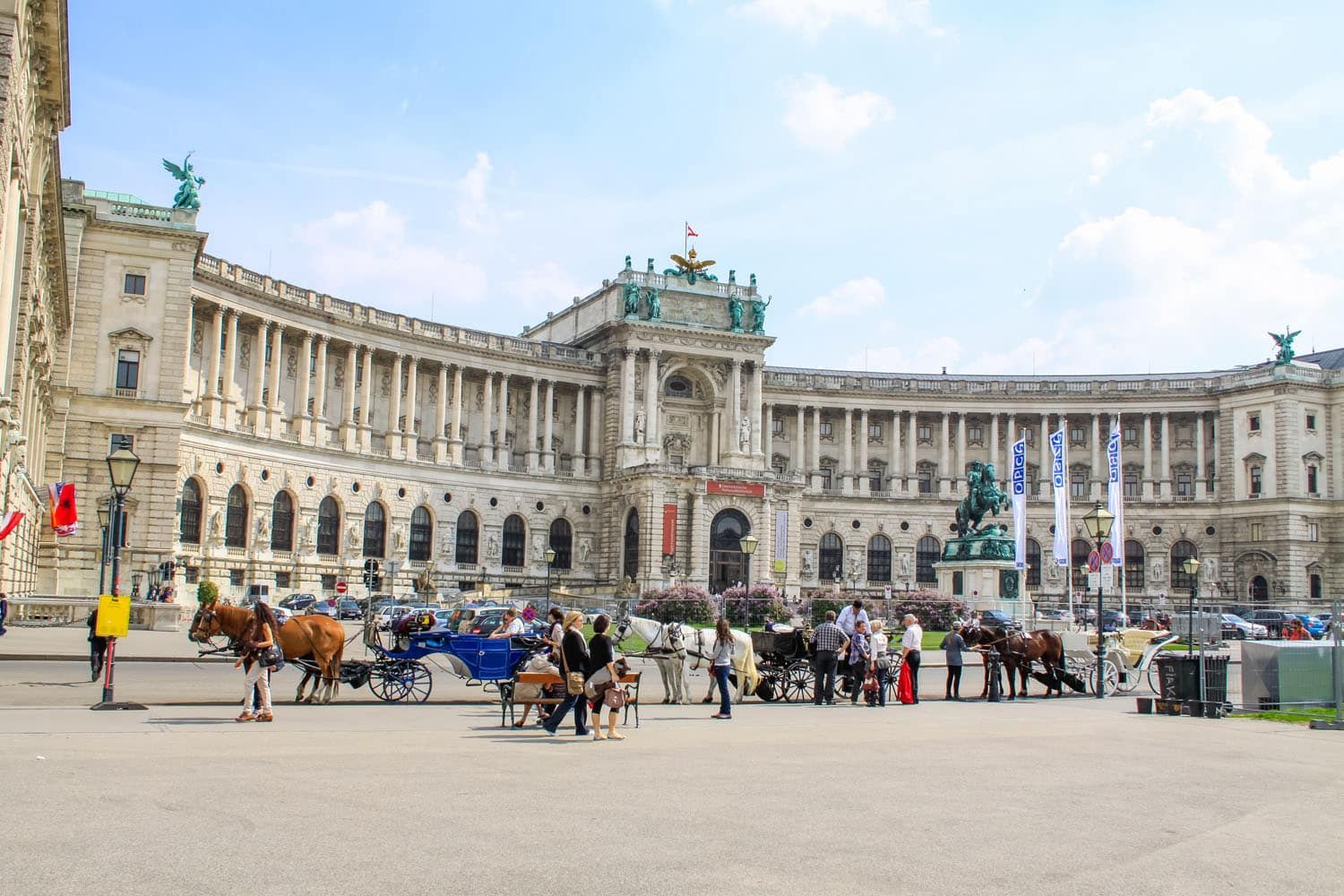
Hofburg Palace in Vienna
What to Know About Border Crossings & Currency
Germany, Austria, and the Czech Republic are all part of the Schengen Area, so there is no passport control at the borders. Spot checks can happen on trains and major highways, but this is rare. It’s a good idea to have your passport available on trains, just in case.
Germany and Austria use the Euro (€) and the Czech Republic uses the Czech koruna (CZK).
How This Two Week Central Europe Itinerary Compares with Our 10-Day Route
We have a shorter Central Europe itinerary, but it does have some major differences. Our 10-day Central Europe Itinerary is a point-to-point itinerary that starts in Budapest, continues to Vienna, and ends in Prague. It does not include Salzburg, Hallstatt, or Munich.
If you are looking for a shorter trip, you could follow the 10-day trip this time, and in the future, follow our 10-day Bavaria Itinerary, which includes Munich and Salzburg.
How Much Does this Two Week Central Europe Itinerary Cost?
For a mid-range traveler, assume about $200 per night for a 3-star (mid-range) hotel [$2,600], $250 to $400 for trains and local transit, $50 to $70 per day for food and drinks [$700 – 1,000], and $250 to $400 for activities. This totals $3800 to $4,400 per person, excluding flights. If traveling as a couple, per-person costs will be a little lower, since you will share the hotel room.
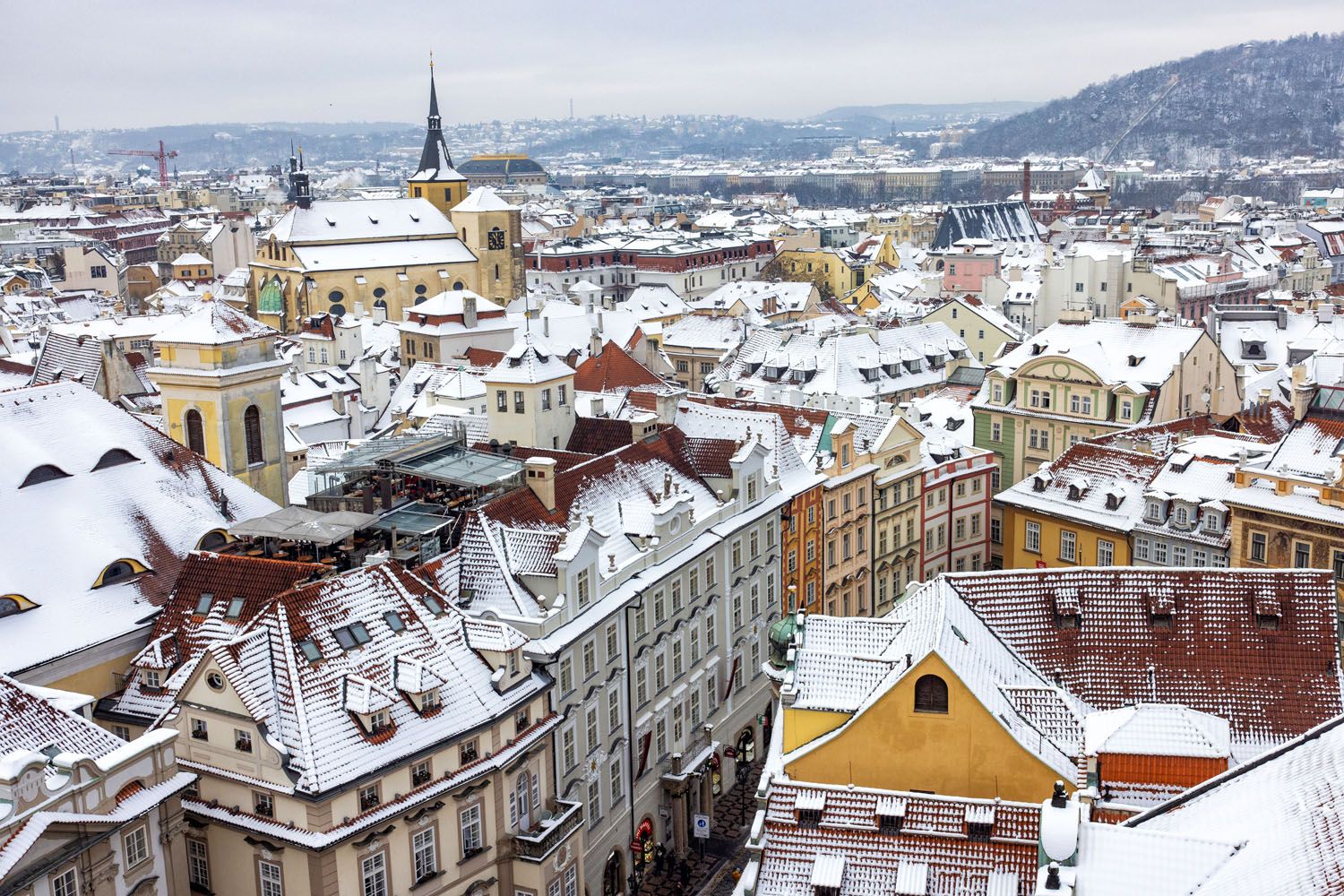
Prague in December
Best Time to Visit Central Europe
We’ve visited the cities on this itinerary across multiple seasons: Munich, Vienna, and Prague in December for the Christmas markets; Vienna and Prague in May, when the days were long and mostly sunny; and Munich, Salzburg, and Hallstatt in summer. Each season has its appeal, but they come with real tradeoffs worth knowing before you book.
Spring (late April through early June) and fall (mid-September through late October) are the sweet spots. On our May trip to Vienna and Prague, we had warm days, cool evenings, and crowds that were busy but manageable. Flowers were blooming, café terraces were open, and the light for photos was beautiful. If you have flexibility, this is when we’d go.
Summer brings the warmest weather and the longest days, but also the largest crowds and highest hotel prices. Hallstatt in particular gets extremely busy. We visited in summer and the crowds genuinely affected the experience. If you’re visiting in July or August, arrive at popular spots early in the morning.
Winter is cold, with snow possible from December through February, but it’s also magical if you time it right. Munich, Vienna, and Prague all have wonderful Christmas markets, and we’ve visited all three during the holiday season. Munich is especially festive, with markets spread across the city. Plan your trip from late November through Christmas Day to catch them. Outside of the market season, January and February are the quietest and cheapest months to visit, though some days will be gray and short.
- Spring (Apr–Jun): Best overall — good weather, manageable crowds, long days
- Summer (Jul–Aug): Warm and vibrant, but peak crowds and prices; book ahead
- Fall (Sep–Oct): A close second to spring; fewer crowds than summer
- Winter (Dec–Feb): Cold, but Christmas markets (late Nov–Dec) make it special
Frequently Asked Questions
Is Central Europe expensive to visit?
Cities in Germany and Austria (Munich, Vienna, and Salzburg) can be expensive to visit. Prague and the smaller German and Austrian towns are cheaper, which can help balance out costs. Day trips to cities like Hallstatt and Cesky Krumlov add additional costs to this itinerary, but they are beautiful places to include, in particular, Cesky Krumlov. Central Europe is cheaper than Switzerland, Scandinavia, the UK, and the large cities in Italy.
Do you need a car for this itinerary?
No, a car is not necessary for this itinerary. It is very easy to travel around Central Europe by train.
Is this a good itinerary for a first trip to Europe?
Yes, Munich, Salzburg, Vienna, and Prague make an excellent itinerary for a first trip to Europe because it combines iconic cities, short travel distances, and easy logistics. Trains between each city are fast and reliable, eliminating the need for a car or internal flights, and each destination offers a distinct experience. The route is compact and efficient, leaving more time for sightseeing and optional day trips, while also offering good value compared to more expensive first-timer routes like Switzerland or Western Europe. Overall, it’s a low-stress, confidence-building introduction to Europe that delivers variety, history, and culture without feeling rushed or overwhelming.
Plan Your Trip to Central Europe
- Best things to do in Vienna → Our Things to Do in Vienna covers the essential experiences, from palaces and museums to the café culture that makes the city so memorable.
- Best things to do in Prague → Our Things to Do in Prague covers everything from the Jewish Quarter to the Dancing House and the best viewpoints in the city.
- New to Salzburg? → Our One Day in Salzburg Itinerary covers the essential sights, including Hohensalzburg Fortress, the Altstadt, and tips for Sound of Music fans.
- Planning a day trip to Hallstatt? → Our One Day in Hallstatt guide covers how to get there, what to do, and whether it’s worth spending the night.
- Planning a bigger Europe trip? → Our Europe Itineraries page has point-to-point itineraries covering everything from Scandinavia to the Mediterranean.
- First time in Europe? → Our First Trip to Europe guide covers everything you need to know before you go, from logistics to packing to how to structure your time.
If you have any questions about this two-week Central Europe itinerary, let us know in the comment section below.
More Places to Visit in Europe
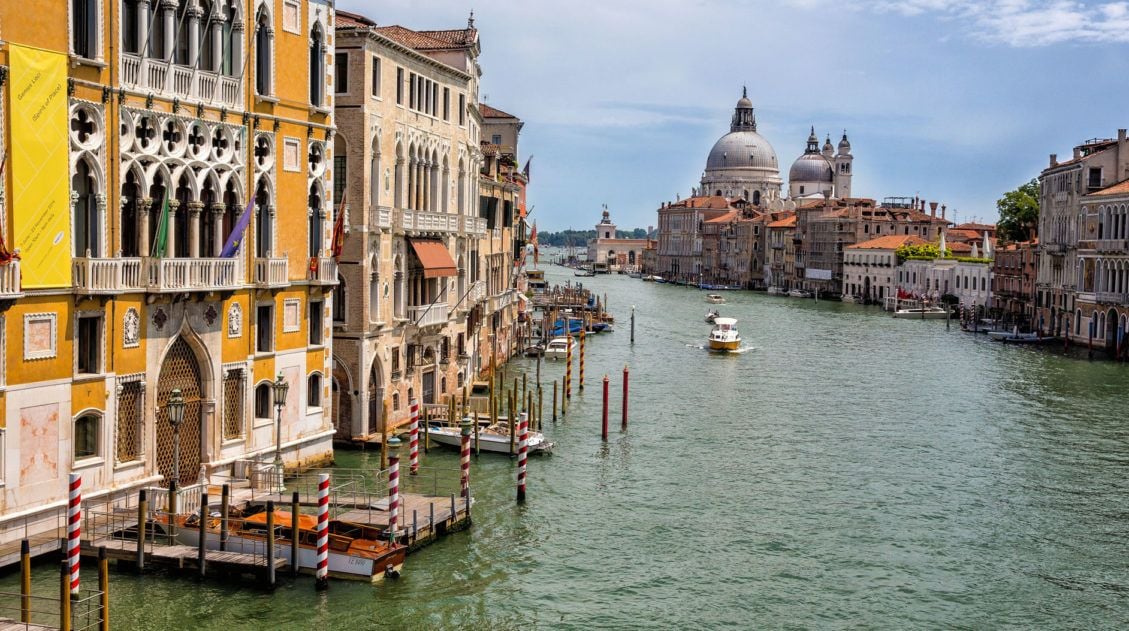
10 Days in Europe: 10 Amazing Itineraries for Your Next Trip
Europe is a joy to explore. With world-class cities, medieval towns, historical sites, the snowcapped Alps, gorgeous beaches, and some of the world’s most delicious food, you have the perfect ingredients for your next vacation. If you want to spend 10 days in Europe, we have ten amazing itineraries to share with you. In this […]
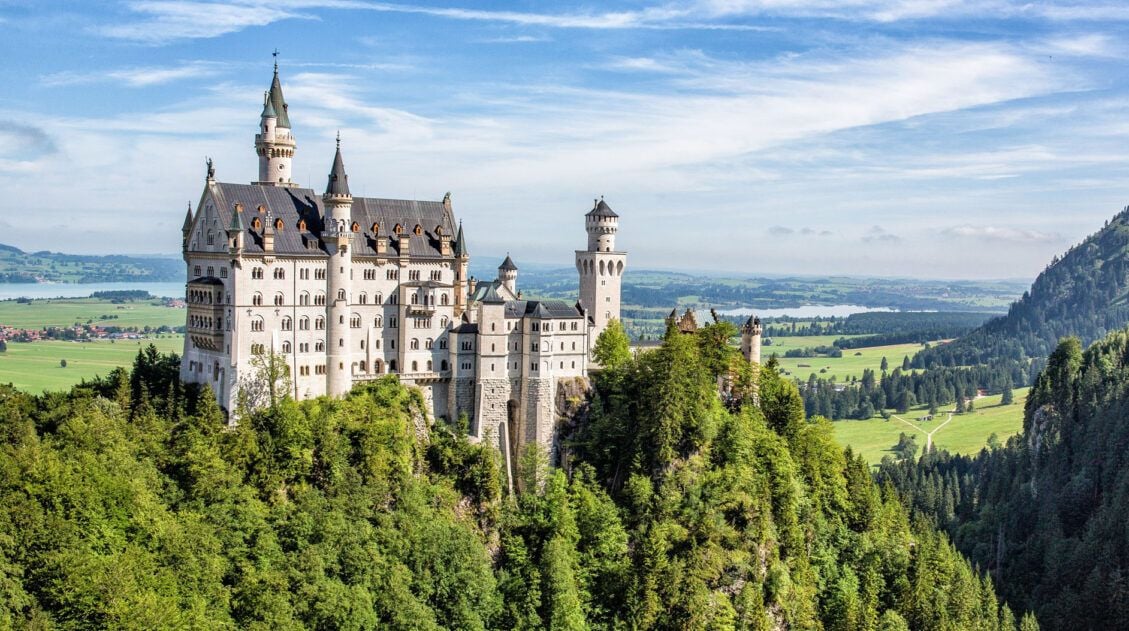
Germany Travel Guide | How to Plan a Trip to Germany
Travel advice for Germany. Visit Bavaria, Munich, Berlin, Berchtesgaden, and Neuschwanstein Castle. Get travel itineraries and learn where to stay and where to eat.
One Day in Bamberg: Top Things to Do & Bamberg’s Christmas Market
With its colorful timbered houses, medieval streets, and stunning setting on the Regnitz River, Bamberg is one of Germany’s most photogenic cities. This small town simply oozes charm. And come the month of December, add in a Christmas market and holiday decorations and Bamberg becomes a magical place to visit. Bamberg is listed as a […]
Austria Travel Guide: How to Plan a Trip to Austria
Austria Travel Guide Visit Austria… an enchanting country where renowned artists unearth their inspiration, and where ambitious adventurers dare to traverse the impressive Alps. Here, travelers can embark on a tour through the country’s opulent cities, each adorned with historic architecture and world-famous galleries. Or, step into the natural beauty of Austria’s countryside, dotted with […]
Travel Itineraries: Europe, Asia, Africa, Americas & Oceania
Let us take the guesswork out of planning your next trip. Here are sample itineraries from some of the most popular destinations around the world.
How to Visit Zugspitze from Germany and Austria
Zugspitze, Germany’s highest peak (2962 meters), is located in southern Germany on its border with Austria. Visiting Zugspitze is a fantastic half day excursion which can easily be accomplished from both Austria and Germany. How to Visit Zugspitze Austria or Germany? Since Zugspitze sits on the border between Austria and Germany, it can be accessed […]
How to Plan a Trip to Vienna: A Guide for First Timers
The city of Vienna is renowned for its UNESCO-listed historic city center, café culture, world class museums, and opulent palaces. On a visit to Vienna, you can explore this city’s historical and cultural treasures, learn more about the Habsburg family as you tour Hofburg and Schönbrunn palaces, and indulge on pastries and cakes at a […]
Czech Republic Travel Guide: How to Plan a Trip to the Czech Republic
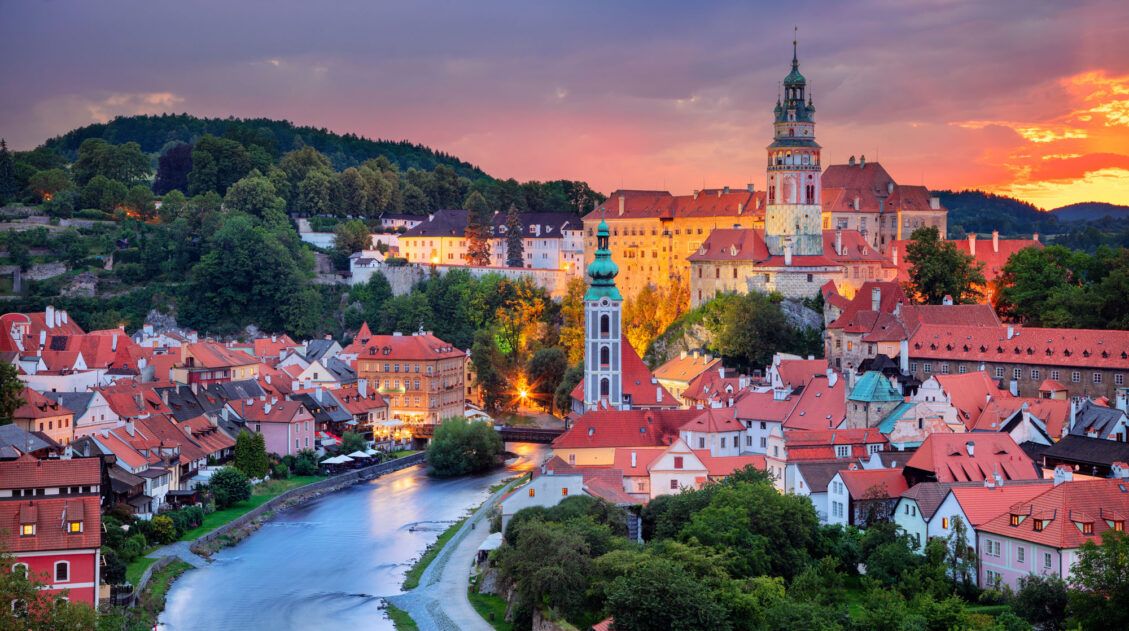
Czech Republic Travel Guide Visit the Czech Republic for its captivating blend of history, stunning architecture, and vibrant culture. From the fairytale charm of Prague, with its medieval streets and iconic castle, to the picturesque towns like Český Krumlov and Karlovy Vary, you’ll be surrounded by breathtaking sites. Explore centuries-old castles, sip world-renowned Czech beer, […]
Best Views of Prague: 10 Iconic Photography Locations (+ Map & Photos)
With its stunning setting on the Vltava River, gothic towers, and elevated viewpoints, Prague is a gorgeous city to visit and photograph. One of the best things to do in this “city of a hundred spires” is to climb its towers for panoramic views. In this guide, we list the 10 best views of Prague, […]
How to Visit the Europe Christmas Markets
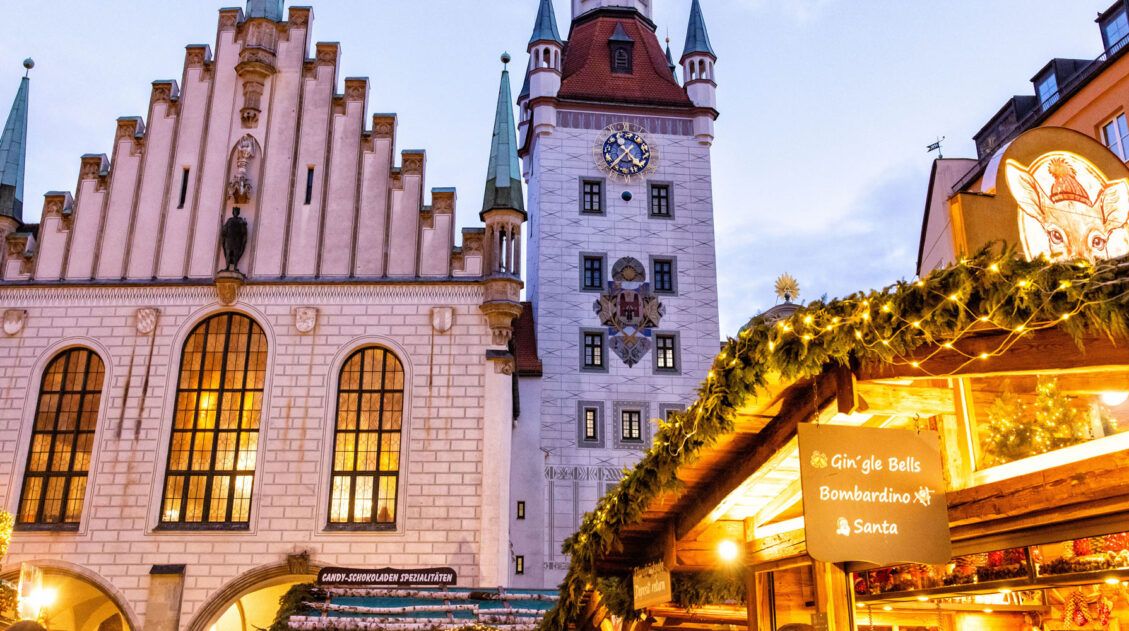
European Christmas Markets As the Christmas season approaches, cities and towns across Europe transform into winter wonderlands with twinkling lights, cozy wooden stalls, and the scent of mulled wine wafting through the air. Christmas markets, a cherished tradition that dates back centuries, spring up in cities throughout Europe. From the bustling squares of Vienna to […]
Prague Christmas Markets & Festive Things to Do (2026 Guide)
Prague is a magical place to visit at Christmas. In December, Christmas markets spring up around the city, shops and hotels are adorned with festive decorations, and add in a dusting of snow, and Prague becomes one of the best cities to visit in Europe during this holiday season. A year earlier, we spent a […]
The Perfect Bavaria Germany Christmas Market Itinerary
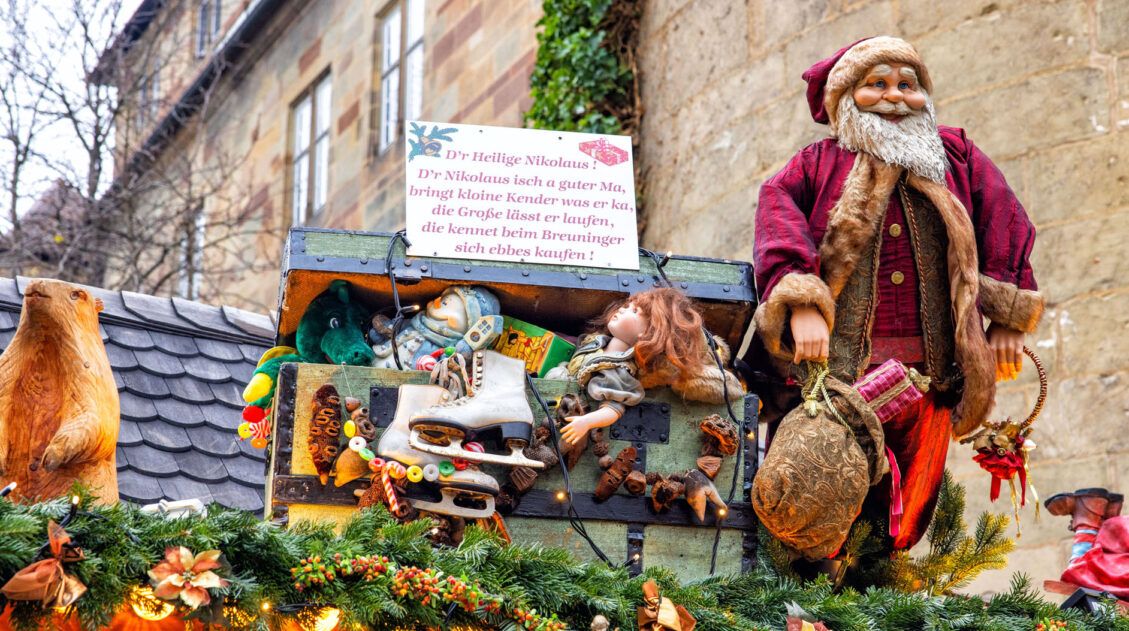
It’s no secret that Germany hosts some of the best Christmas markets in Europe. But unless you have tons of time, it’s best to concentrate on one region of Germany. This Christmas market itinerary focuses on southern Germany. Not only will you visit some of the most historic markets in Europe, but you will tour […]

Leave a Comment