
We arrived in the Lofoten Islands after driving down from the Vesterålen Islands, and on our very first day, we climbed Svolvaergeita and hiked Svolvaer Fløya. It was a long, exhausting, unforgettable day, and somehow, it set exactly the right tone for everything that followed. By the time we left four days later, we were already talking about coming back.
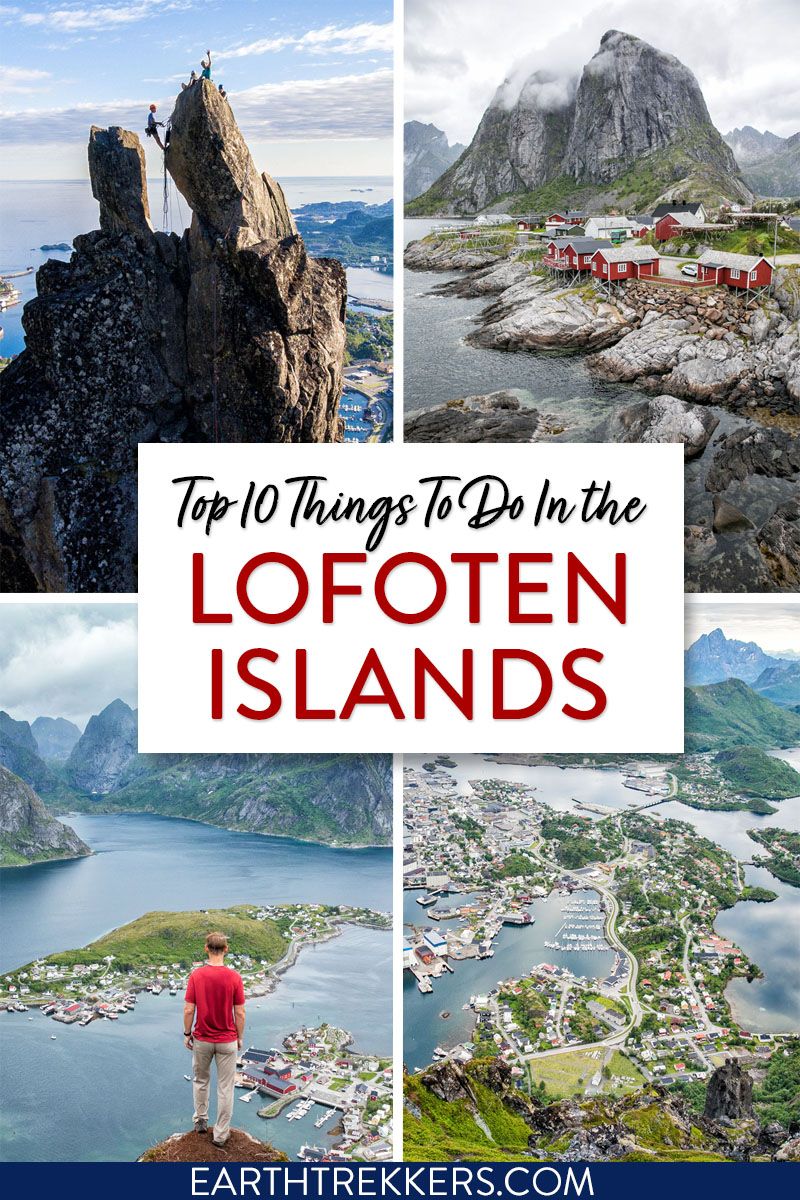
The Lofoten Islands are one of those places that exceed expectations even when your expectations are already sky-high. This remote Norwegian archipelago, located well above the Arctic Circle, is a world of jagged mountain peaks plunging into glassy fjords, white-sand beaches that look like they belong in the Caribbean, and tiny red fishing cabins perched on stilts above the water. The landscapes are almost absurdly photogenic. But what makes Lofoten truly special is that so much of it is accessible. You don’t need a guide or a permit or a helicopter. You need a car, a good pair of hiking boots, and a few days.
Tim, Tyler, Kara, and I spent four days here in early July, splitting our time between a base near Svolvaer in the north and the Reine area in the south. We had a mix of brilliant sunny days, moody overcast skies, and one complete washout that left us hunting for good coffee and a dry place to sit. Even that day had its charm.
What we didn’t have was enough time. We left with a full list of things we still wanted to do, and this guide reflects that. Where we’ve done it ourselves, we’ll tell you exactly what to expect. Where we haven’t, we’ll be honest about that too.
Whether you’re planning four days or a full week, here are the 16 best things to do in the Lofoten Islands.
The Essentials
LOCATION | Northern Norway, above the Arctic Circle
GETTING THERE | Fly into Svolvær (SVJ) or Harstad/Narvik (EVE), or arrive by ferry from Bodø
GETTING AROUND | A rental car is essential
HOW MUCH TIME | 4 to 5 days minimum; a full week is ideal
WHERE TO STAY | Split your time between the Svolvaer area (north) and the Reine/Hamnøy area (south)
BEST TIME TO VISIT | Late June through July for hiking and warm weather; September through April for the Northern Lights
CURRENCY | Norwegian Krone (NOK)
Our Top 5 Experiences in the Lofoten Islands
With 16 incredible things to do, it can be hard to know where to start. These are the five experiences we’d prioritize above everything else:
🥾 Hike Reinebringen — The view from the summit over Reinefjorden is one of the most iconic in all of Norway and absolutely lives up to the photos.
📸 Stop at the Hamnøy Viewpoint — The most photographed scene in the Lofoten Islands, and one we never tired of no matter how many times we walked down to it.
🏔️ Hike Ryten to Kvalvika Beach — A stunning summit view looking straight down over a pristine, remote beach that you can only reach on foot.
🏖️ Explore the Beaches — Uttakleiv, Ramberg, and Haukland are unlike any beaches you’ve seen — white sand, turquoise water, and jagged Arctic peaks as a backdrop.
🛏️ Stay in a Rorbu — The most uniquely Lofoten experience you can have, and the best way to feel truly connected to the islands and their fishing heritage.
🧗 Feeling Adventurous? Don’t Miss Svolvaergeita
If you’re looking to push yourself beyond the hiking trails, climbing Svolvaergeita, the iconic twin-pinnacled spire rising above Svolvaer, is in a category of its own. Done with a guide, it was one of the most exhilarating experiences of our entire trip to the Lofoten Islands. It’s not for everyone, but if there’s any part of you that’s curious, do it. You won’t regret it.
Best Things to Do in the Lofoten Islands
Below you’ll find our complete list of the best things to do in the Lofoten Islands, from iconic viewpoints and world-class hiking trails to remote beaches, historic fishing villages, and unforgettable boat trips. Use the map to get your bearings, then read on for everything you need to know about each experience.
How to Use This Map: Click the tab in the top left corner of the map to see a list of the points of interest and to turn layers on/off. Click the icons on the map to get more information about each point of interest.
To take this map with you, click the star next to the title of the map which adds it to your Google account. Next, within your Google Maps app, select ‘Saved’ and then select ‘Maps’. This map title will now appear in your list.
1. Take the Iconic Photo at the Hamnøy Viewpoint
If you’ve ever seen a photo of the Lofoten Islands and immediately started planning a trip, there’s a good chance it was taken from this spot.
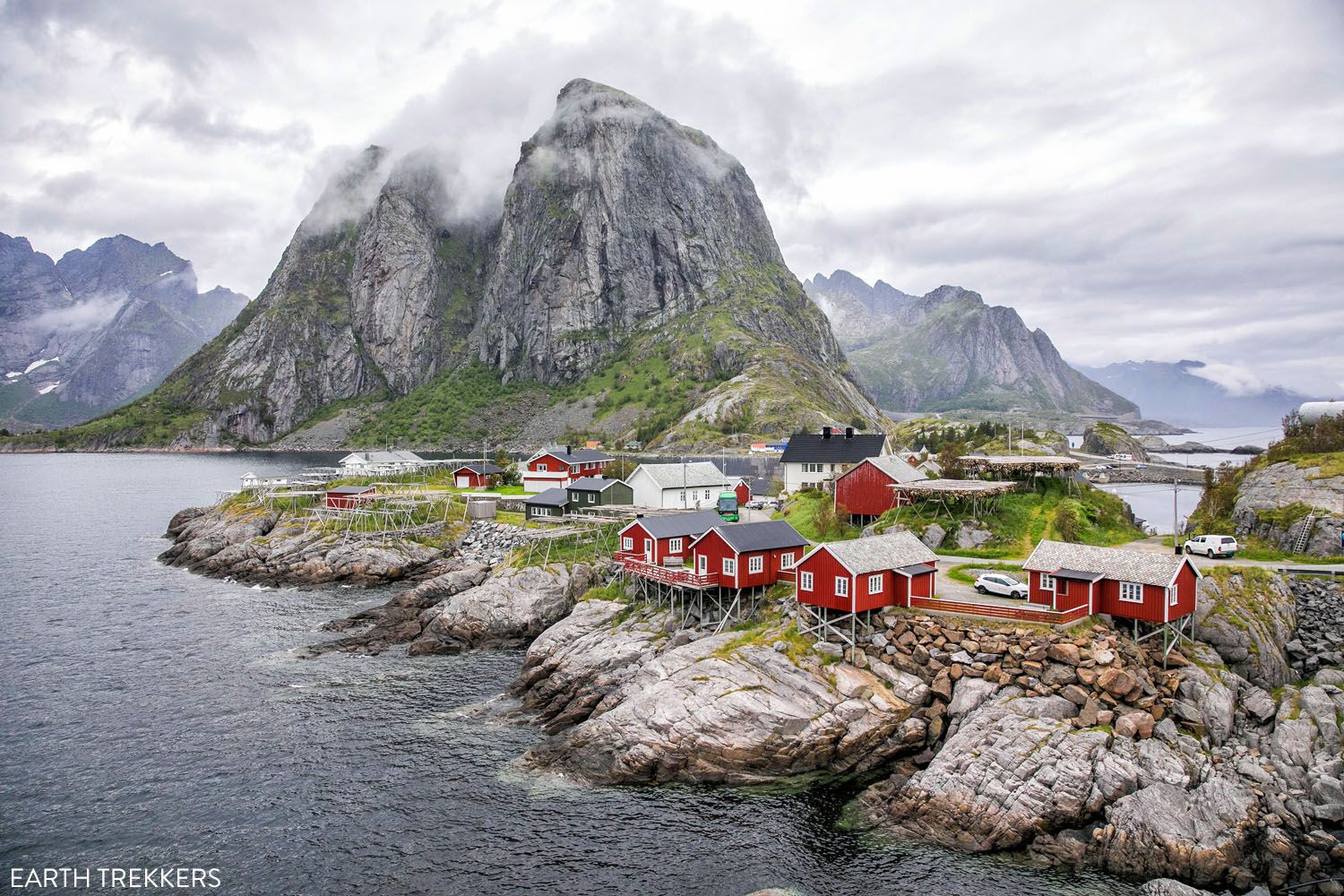
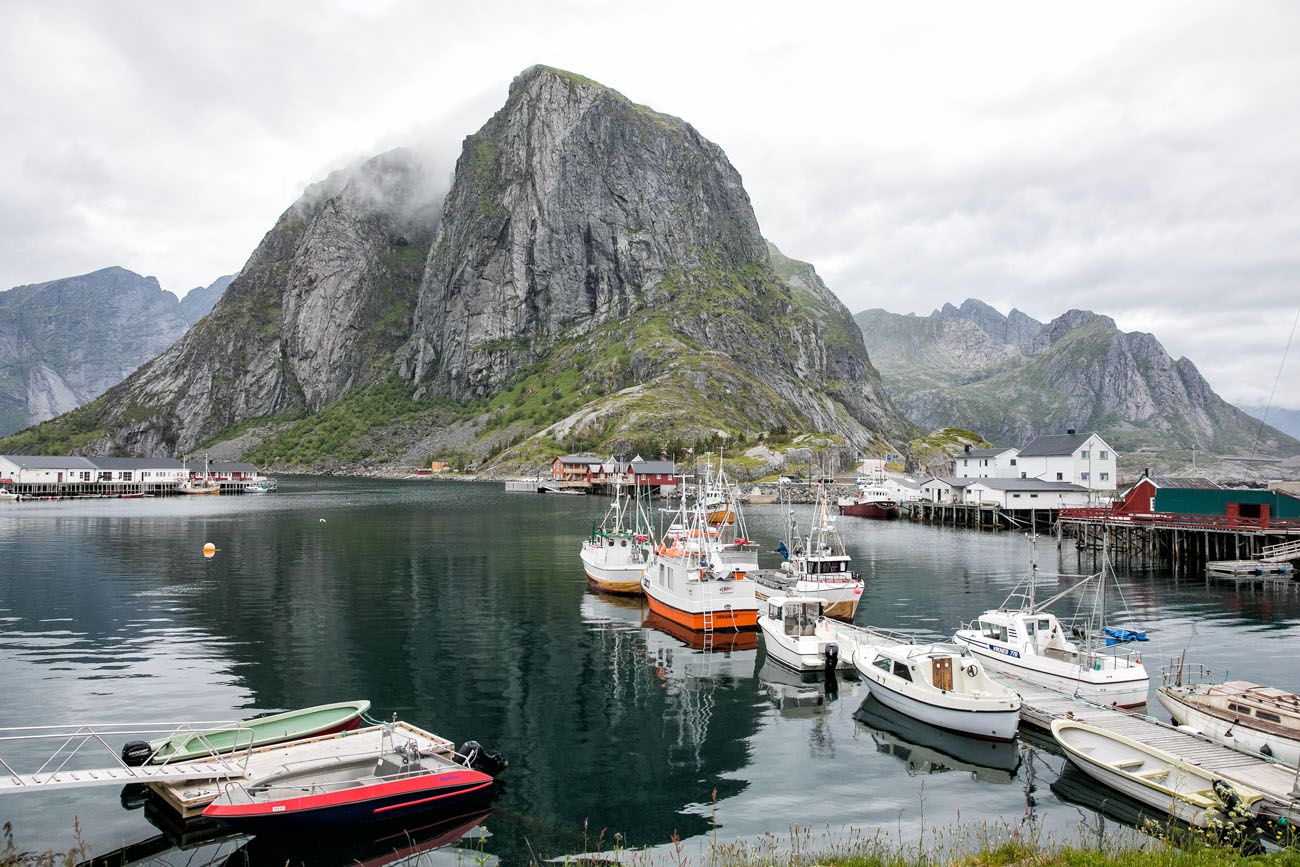
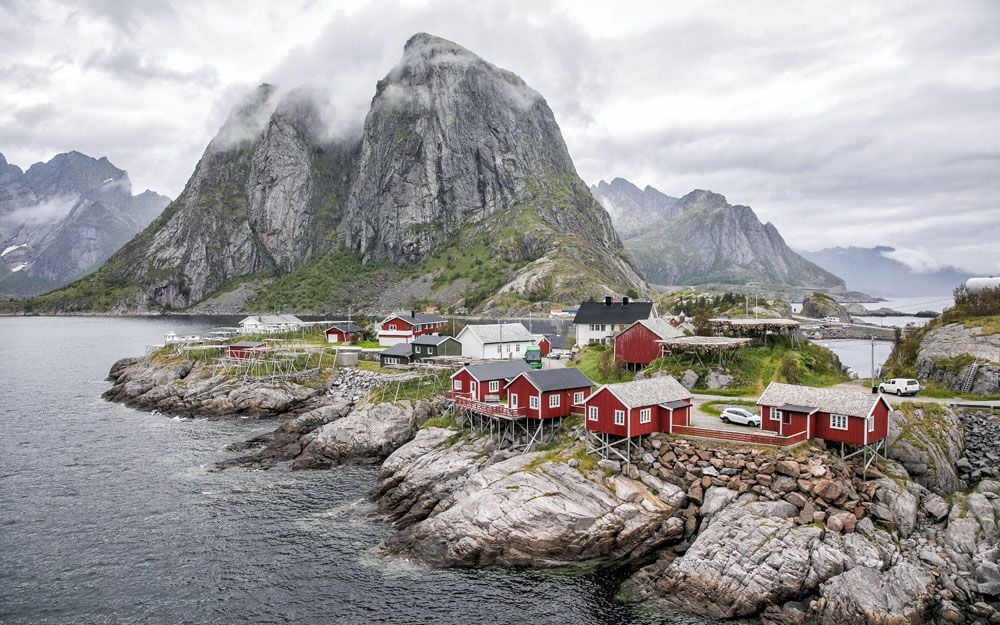
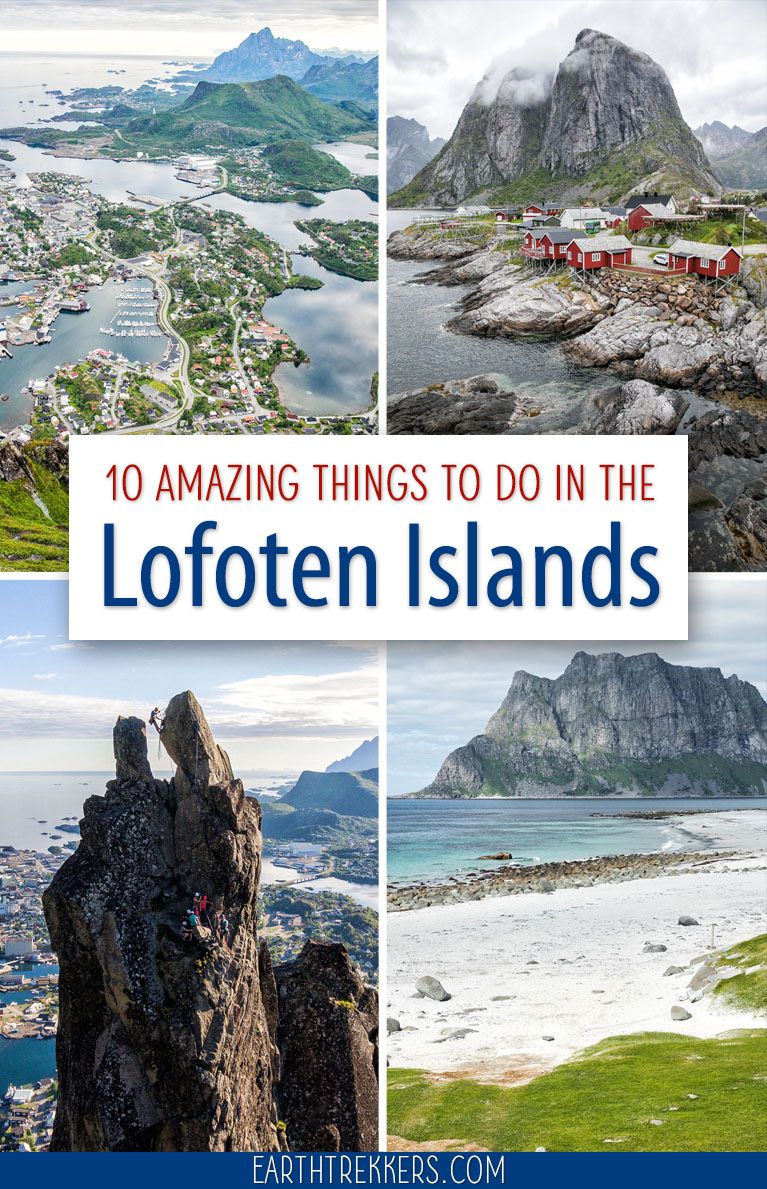
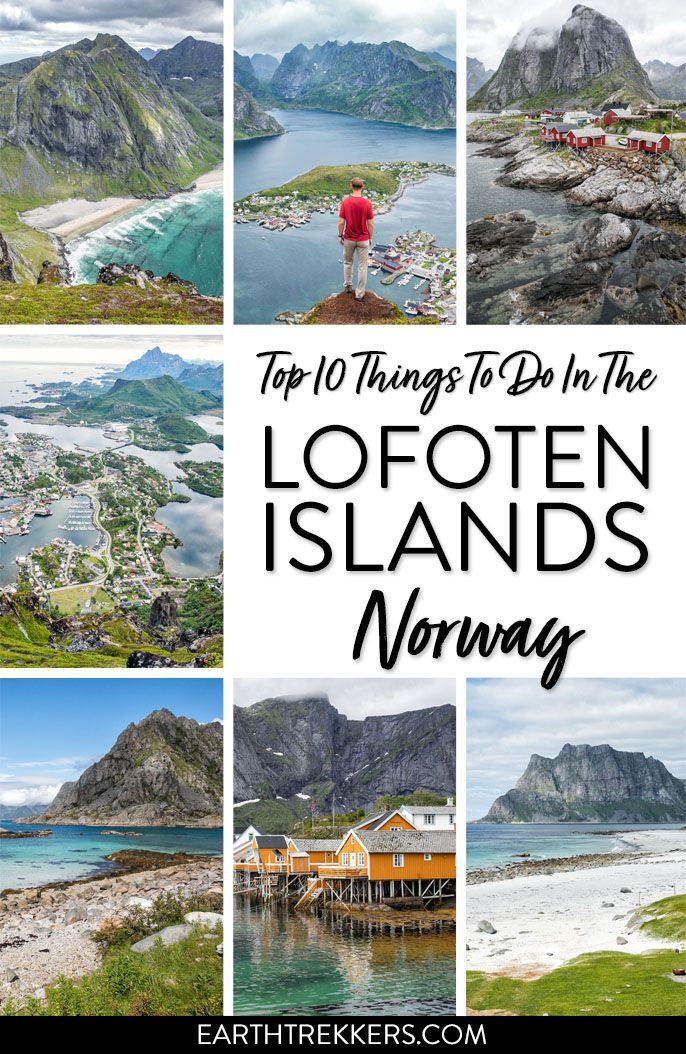
Hamnøy is home to the most iconic view in all of Lofoten: a cluster of traditional red rorbu cabins reflected in the still waters of the fjord, with the dramatic peaks of Reinefjorden rising sharply behind them.
You don’t need to hike or book a tour to see it. The best vantage point is right from the bridge on the main road (E10), and there’s a pedestrian walkway so you can stop safely.
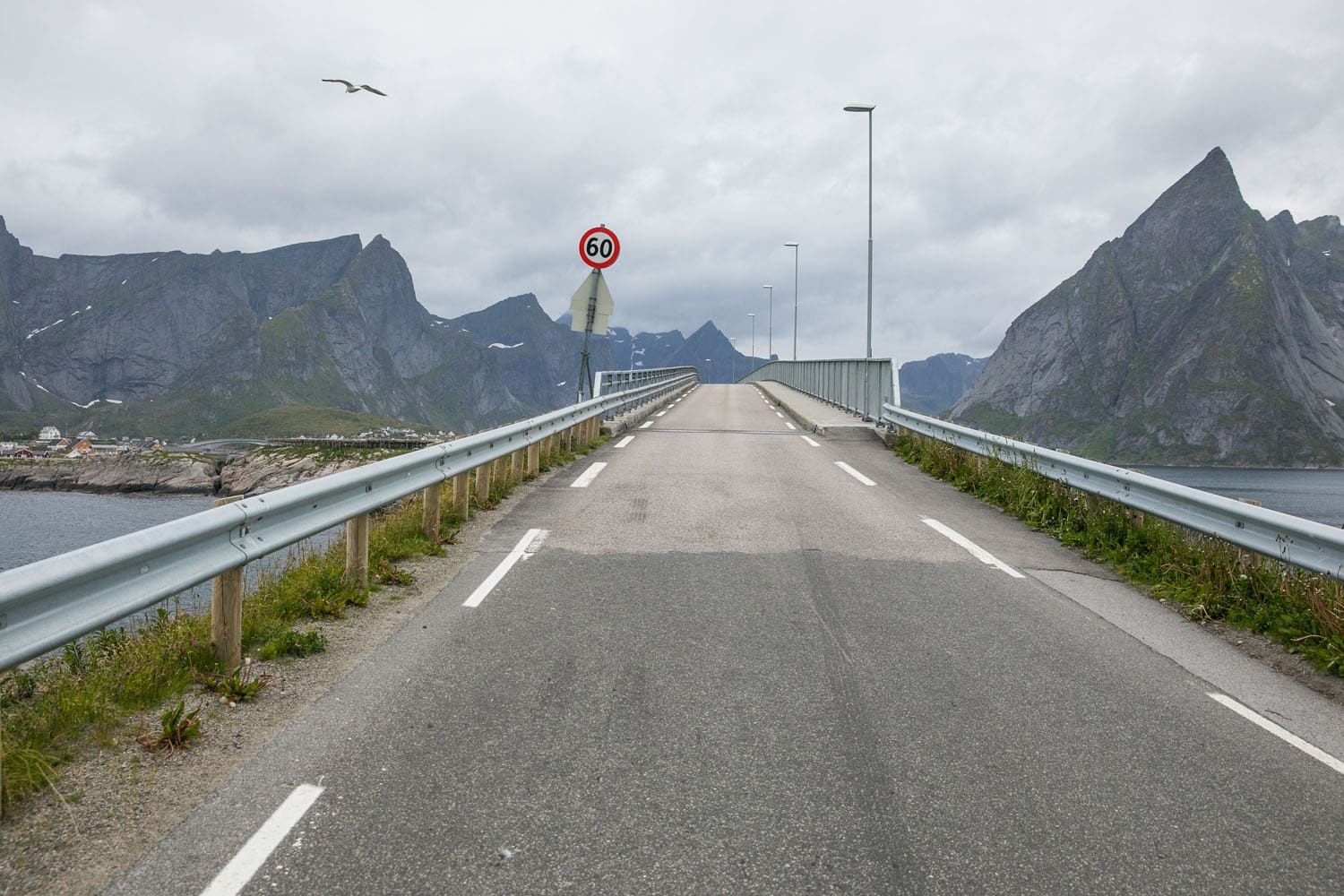
E10
We stayed nearby and found ourselves walking down to this viewpoint multiple times over the course of our visit, in the morning light, under overcast skies, and in the long golden hours of a July evening. With the light constantly shifting and clouds rolling through, it never got old.
2. Hike Reinebringen
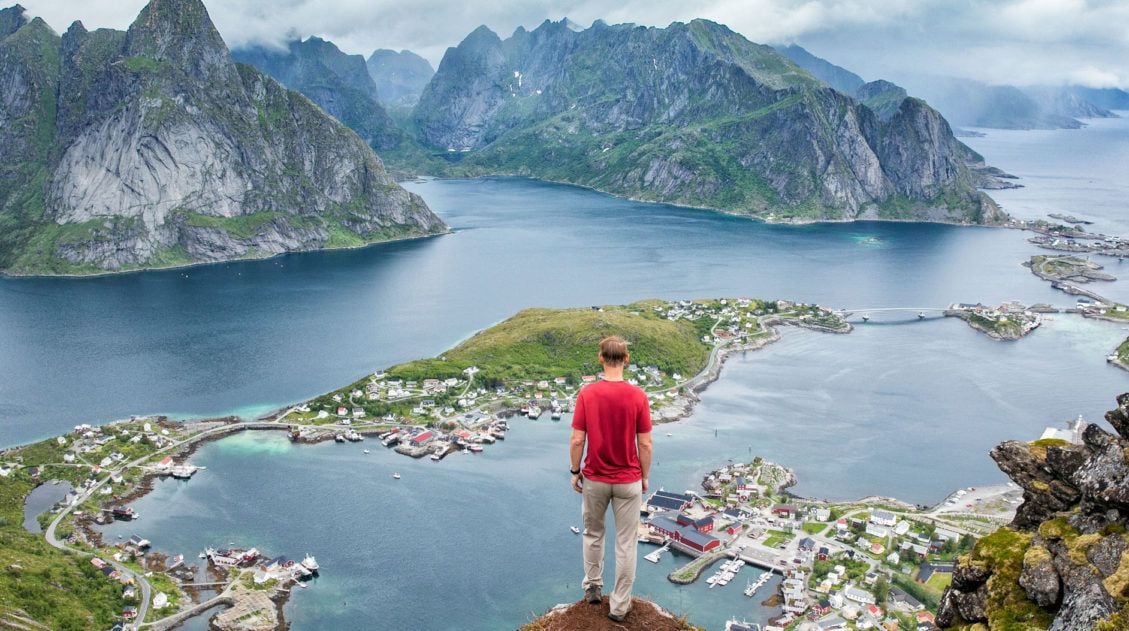
It was photos from the top of Reinebringen that first put the Lofoten Islands at the top of my travel list. Standing on that summit, looking out over the impossibly blue waters of Reinefjorden with jagged peaks in every direction, it is one of the most iconic views in all of Norway, and it lives up to every photo you’ve seen.
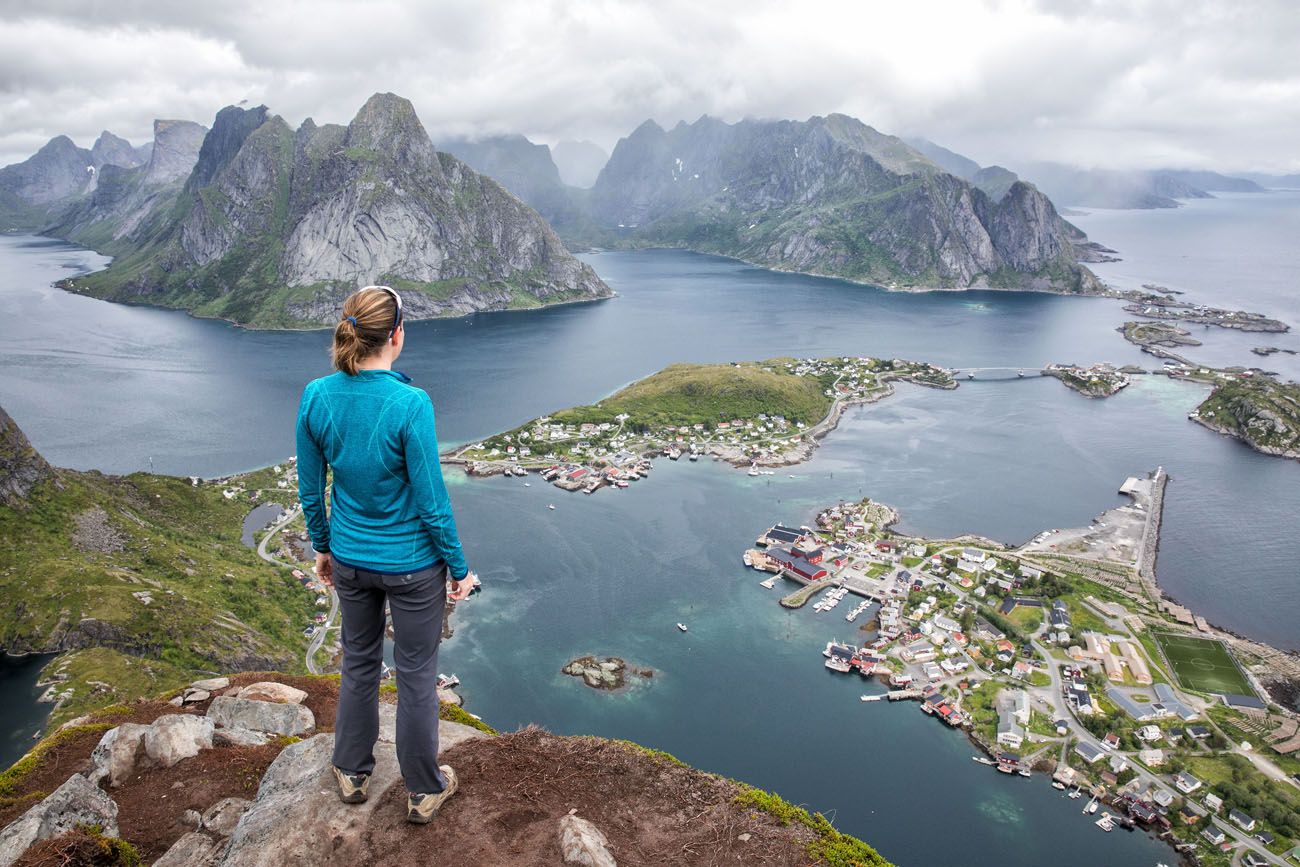
Getting there, however, is a different story. Reinebringen is less of a hike and more of a stair climb. Roughly 1,600 Sherpa-built stone steps that go almost straight up from the trailhead near Reine. There’s no gradual warmup, no flat sections to catch your breath. You just climb. Most people reach the summit in about an hour, but don’t let that fool you into thinking it’s easy. Your legs will feel it on the way down just as much as on the way up.
That said, it’s absolutely worth every step. The summit viewpoint at 448 meters offers a 360-degree panorama that you will not forget. If the weather is clear and you have any reasonable level of fitness, do it.
PRO TRAVEL TIP: The trailhead is located near the Reinebringen parking area just outside Reine. Arrive early in summer, because this is the most popular hike in Lofoten and the parking area fills up fast. Hiking poles are helpful on the descent.
For everything you need to know before you go, read our complete guide to hiking Reinebringen →
3. Take the Ferry to Bunes or Horseid Beach
Most of the Lofoten Islands can be explored by car, but a handful of the most spectacular beaches are completely inaccessible by road, and reaching them is half the adventure. The passenger ferry that departs from Reine crosses the stunning Reinefjorden and is itself one of the most scenic rides in the archipelago. Keep your eyes open on the water; orca sightings, while not guaranteed, do happen here.
The ferry departs from the guest harbor in Reine, near the Circle K gas station. It’s run by Nordland Fylkeskommune and operates several times a day in summer, with reduced service in spring and autumn. You can book tickets through the Reis Nordland app, which is worth doing in summer when the boat fills quickly.
Bunes Beach is the easier and more popular destination. The ferry drops you at Vindstad, after which an easy, well-worn trail leads over a small pass and down onto the beach, about a one-hour walk each way. The beach itself is vast and wild, with towering cliffs on all sides and white sand stretching 750 meters across. Most day-trippers catch the morning ferry and head back in the afternoon, which means if you linger into the evening, you may have the whole place nearly to yourself.
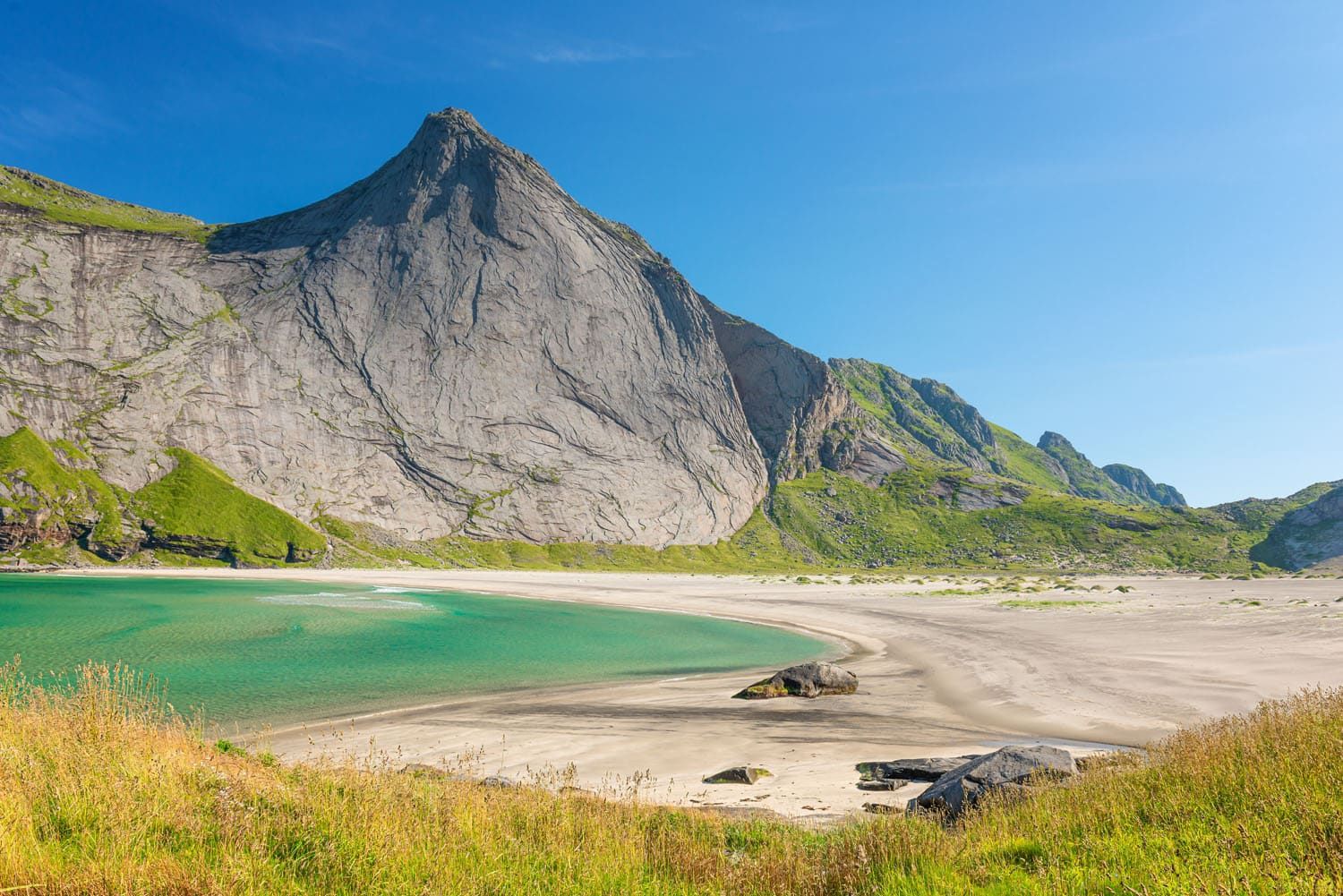
Bunes Beach | shutterstock.com
Horseid Beach is the more remote option. You take the same ferry from Reine but exit at Kjerkfjord rather than Vindstad, followed by a 2+ hour hike to reach the beach. The extra effort means far fewer visitors and a wilder, more dramatic setting. It’s best suited as an overnight camping trip rather than a day hike.
We didn’t make it on this visit, because the hiking trails kept us fully occupied, but the Horseheid ferry trip is high on our list for a return visit to Lofoten. Given how close it is to Reine, it’s an easy addition to any itinerary of four days or more.

4. Explore Historic Nusfjord
Nusfjord is one of the oldest and best-preserved fishing villages in Norway, and visiting feels like stepping back in time. Tucked at the end of a long, winding road through the mountains, the village is small enough to walk in 20 minutes, but it is worth spending an hour or two soaking in the atmosphere.
The village functions as a living open-air museum, and there is a small entrance fee to visit. Wander past traditional rorbu cabins dating back to the late 19th century, a working sawmill, an old general store, and a factory that once produced cod liver oil.
What hits you first, though, isn’t the history, it’s the smell. Wooden racks of drying stockfish line the waterfront, and the briny, pungent scent of them hangs in the air across the whole village. It’s one of those sensory memories that stays with you long after you leave, and it gives Nusfjord an authenticity that’s hard to manufacture.
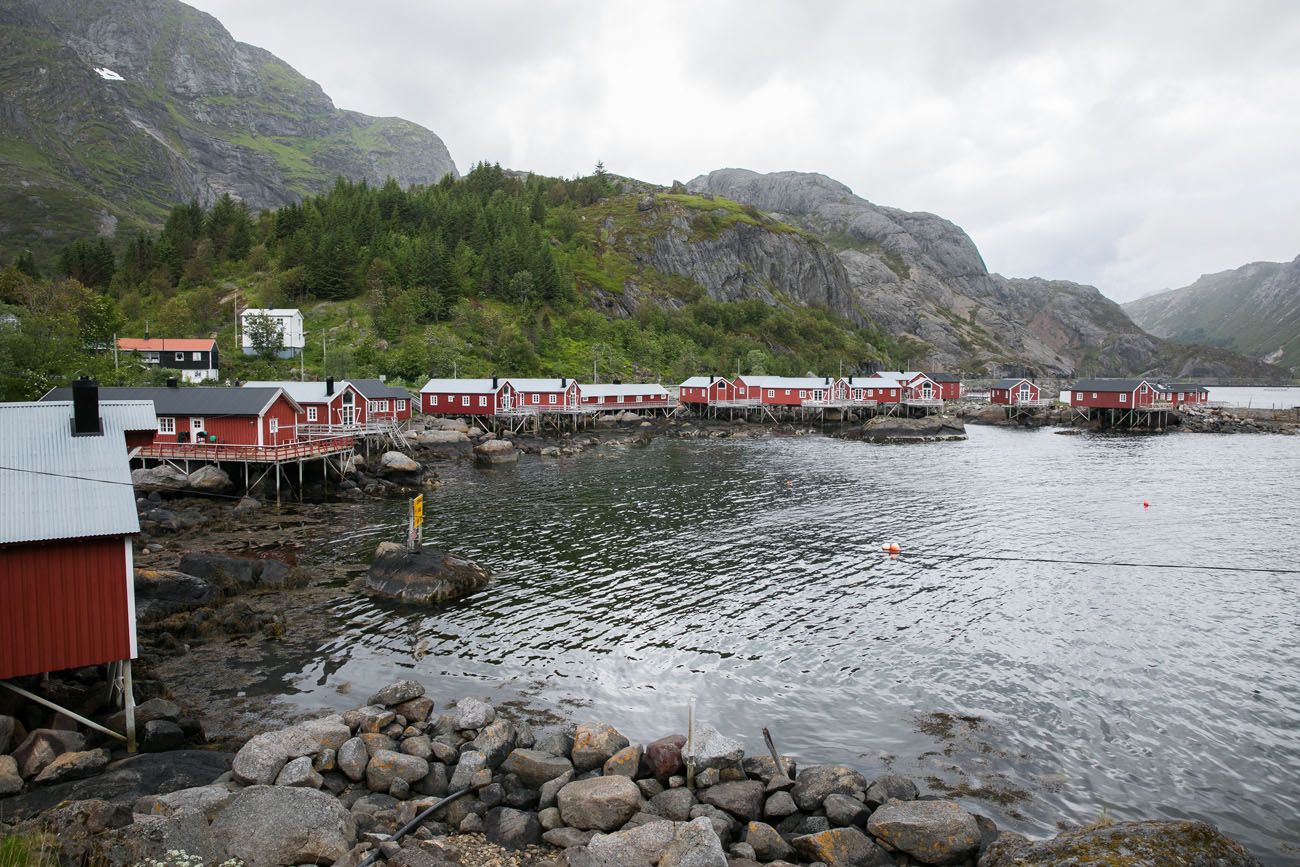
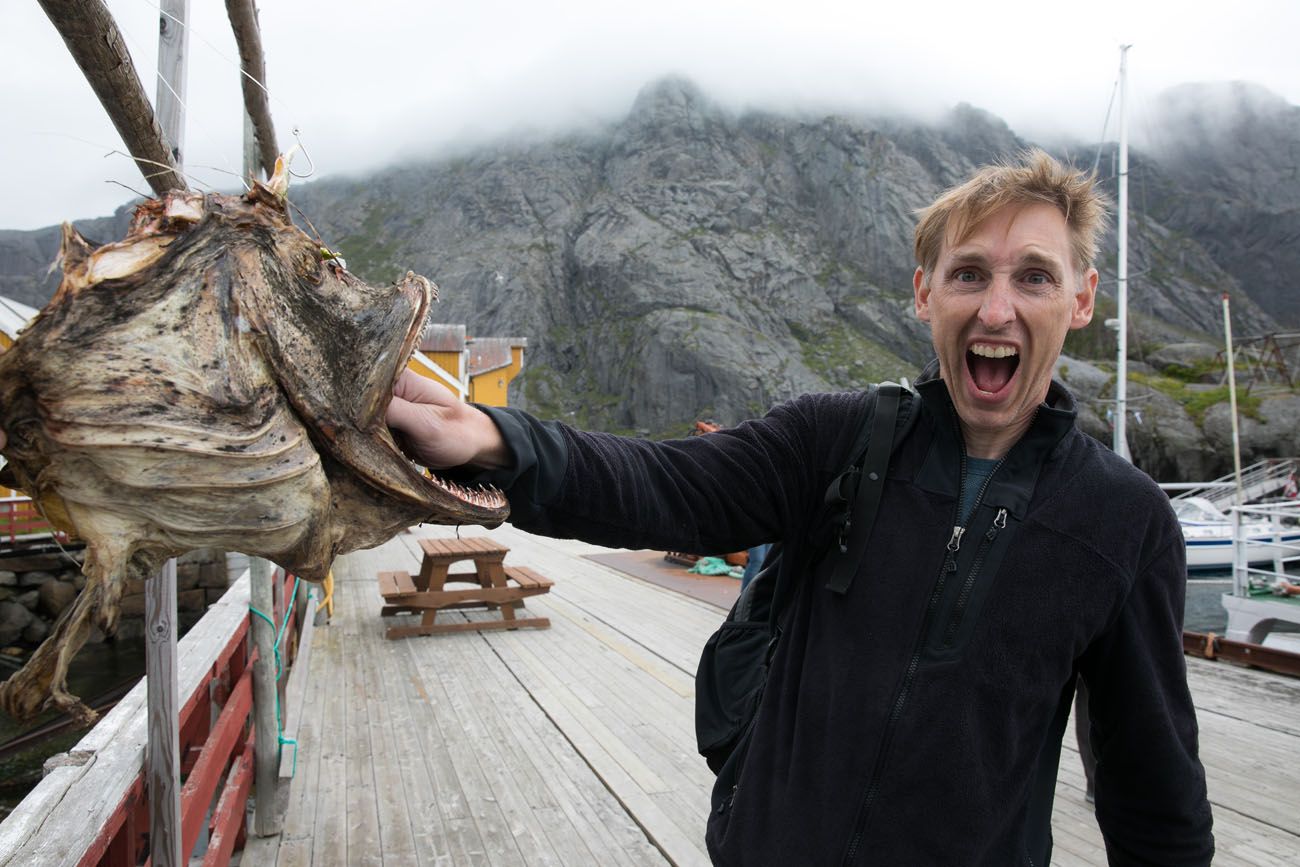
If you work up an appetite, the village bakery is worth a stop. There’s also a café and restaurant if you’re here around lunchtime.
PRO TRAVEL TIP: Parking is limited in summer, so aim to arrive early in the morning or later in the afternoon. For the best elevated view over the entire village, drive to the parking area at the top of the hill at the very end of the road before you head back.
5. Go to the Beach
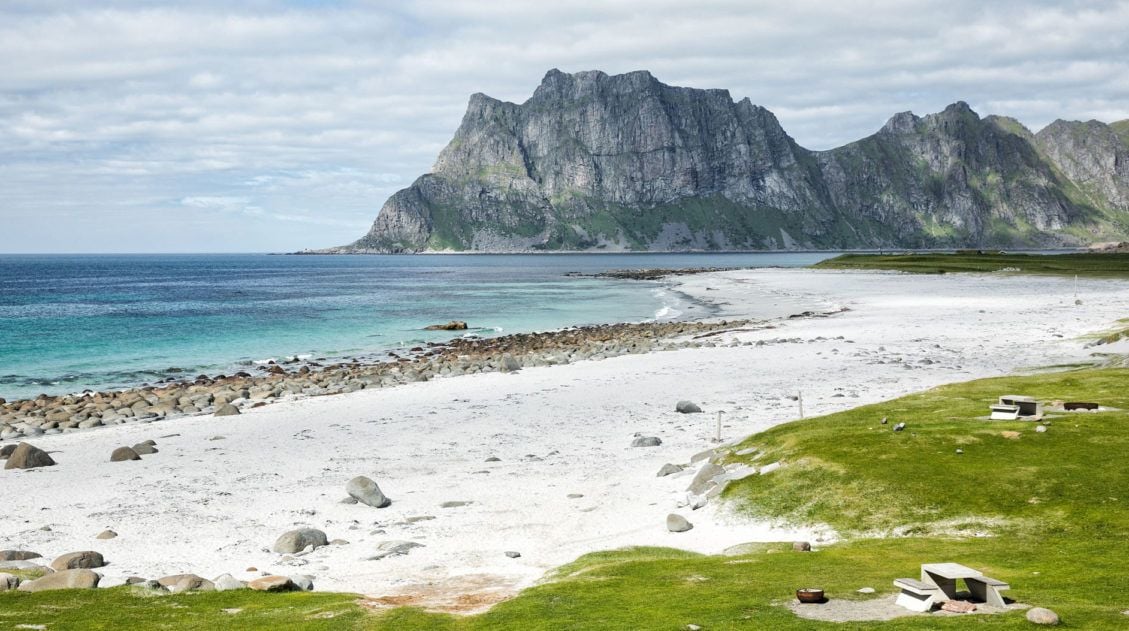
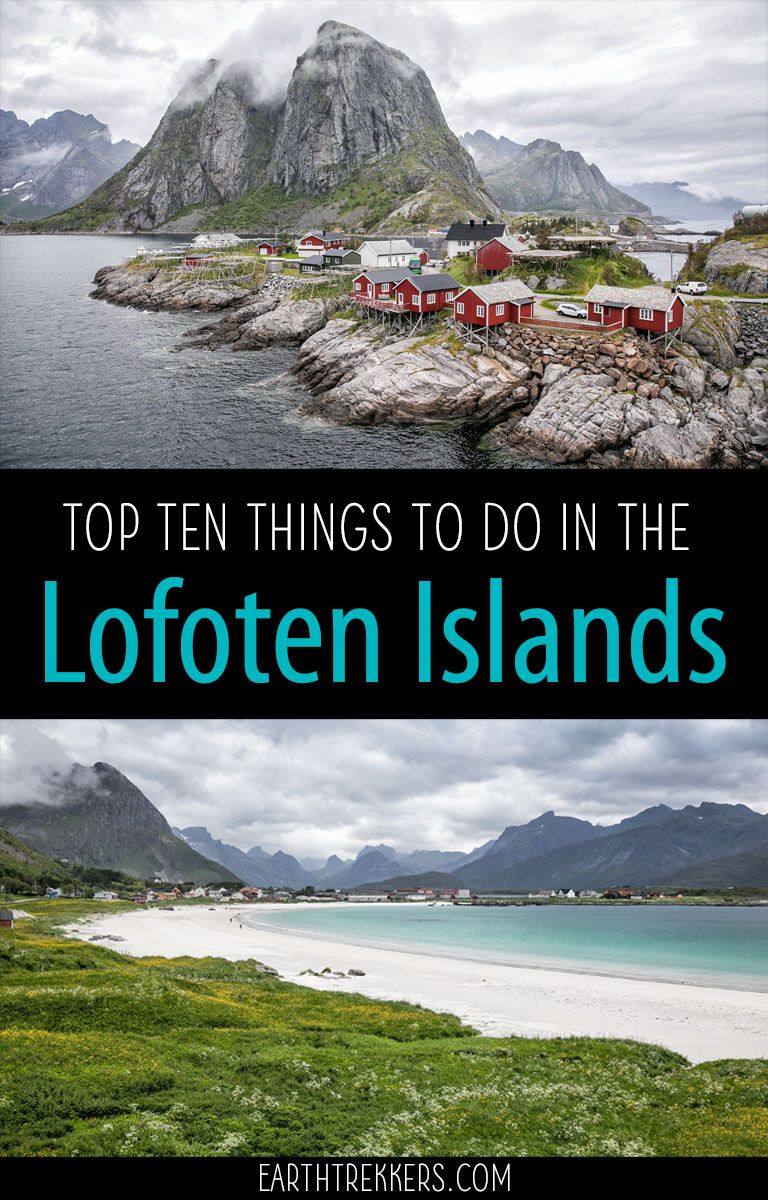
The Lofoten Islands are not a beach destination in the traditional sense, and that’s exactly what makes the beaches here so extraordinary. When you round a bend in the road and suddenly find yourself looking at a sweeping arc of white sand and crystal-clear turquoise water, with jagged mountain peaks rising straight out of the sea behind it, the effect is genuinely breathtaking. It looks Caribbean. It feels Arctic. There is nothing else quite like it.
Several of the best beaches are accessible directly by car, making them easy to work into a road trip day.
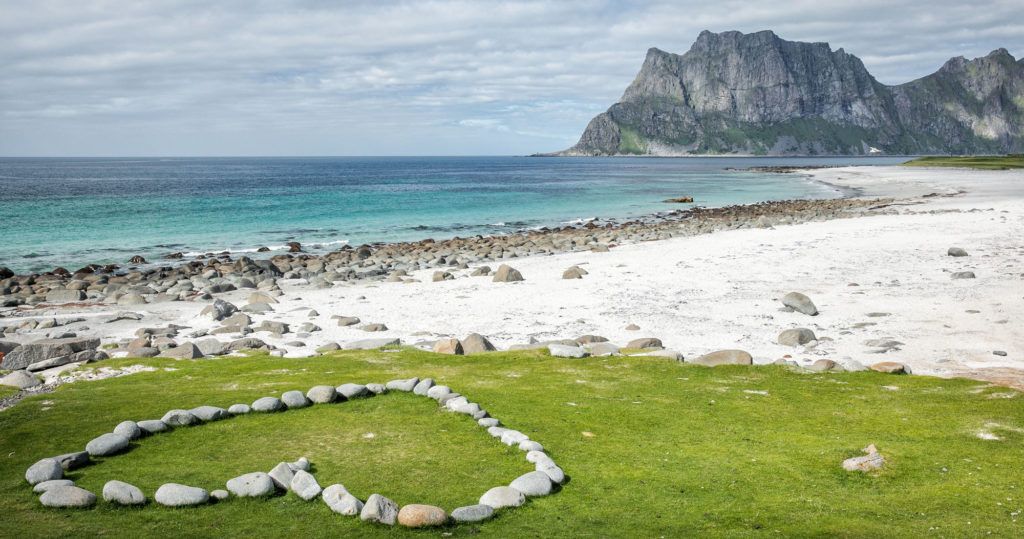
Uttakleiv Beach is our favorite. The drive out is scenic but winding, and when you arrive and walk down to the sand, the backdrop of dramatic cliffs rising directly from the shoreline is completely unexpected. It took our breath away. This is the one beach in Lofoten we’d call unmissable.
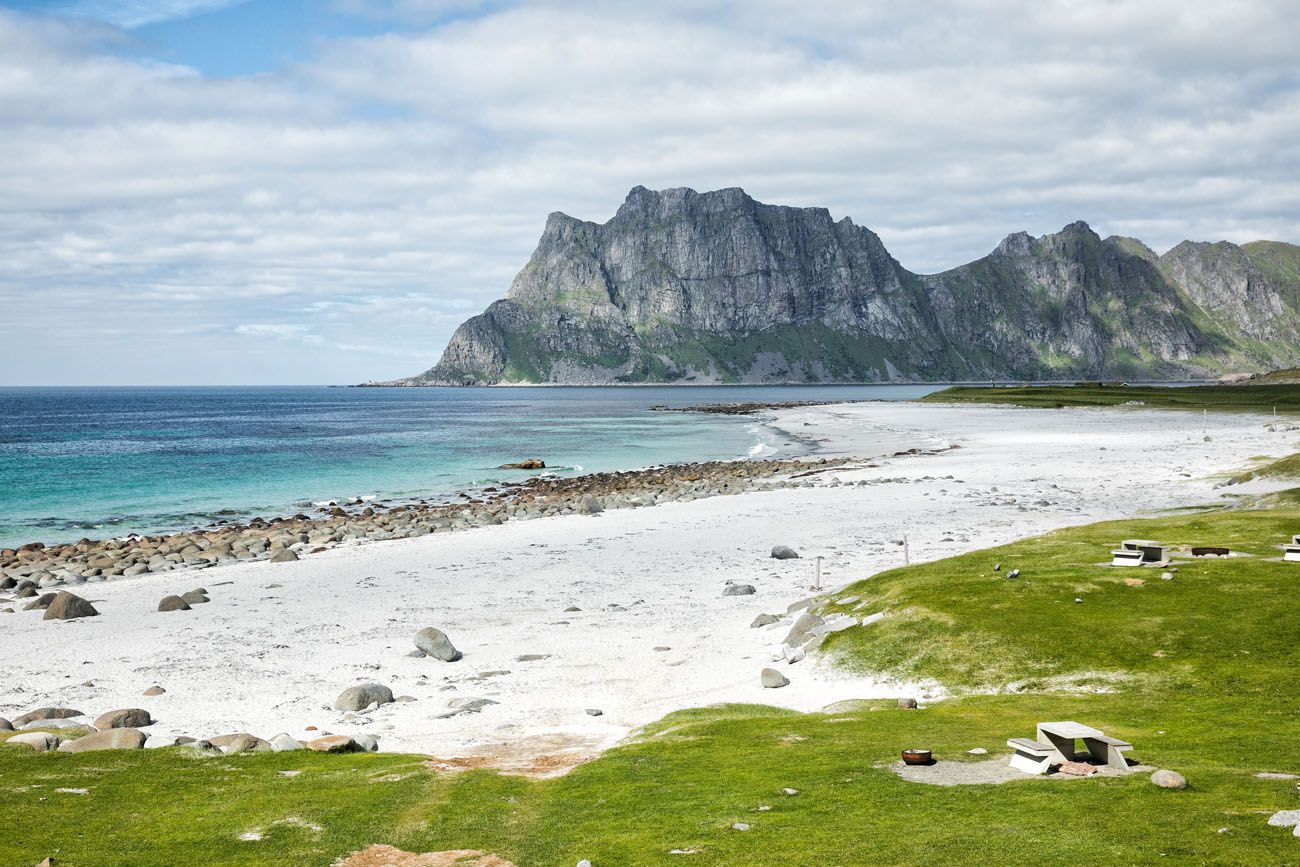
Uttakleiv Beach
Ramberg Beach is gorgeous in a different way. It sits closer to the main road and there are a handful of houses nearby, which actually adds to the charm rather than detracting from it. The jagged peaks rising behind the village and the long curve of white sand make for one of the most photogenic scenes on the islands.
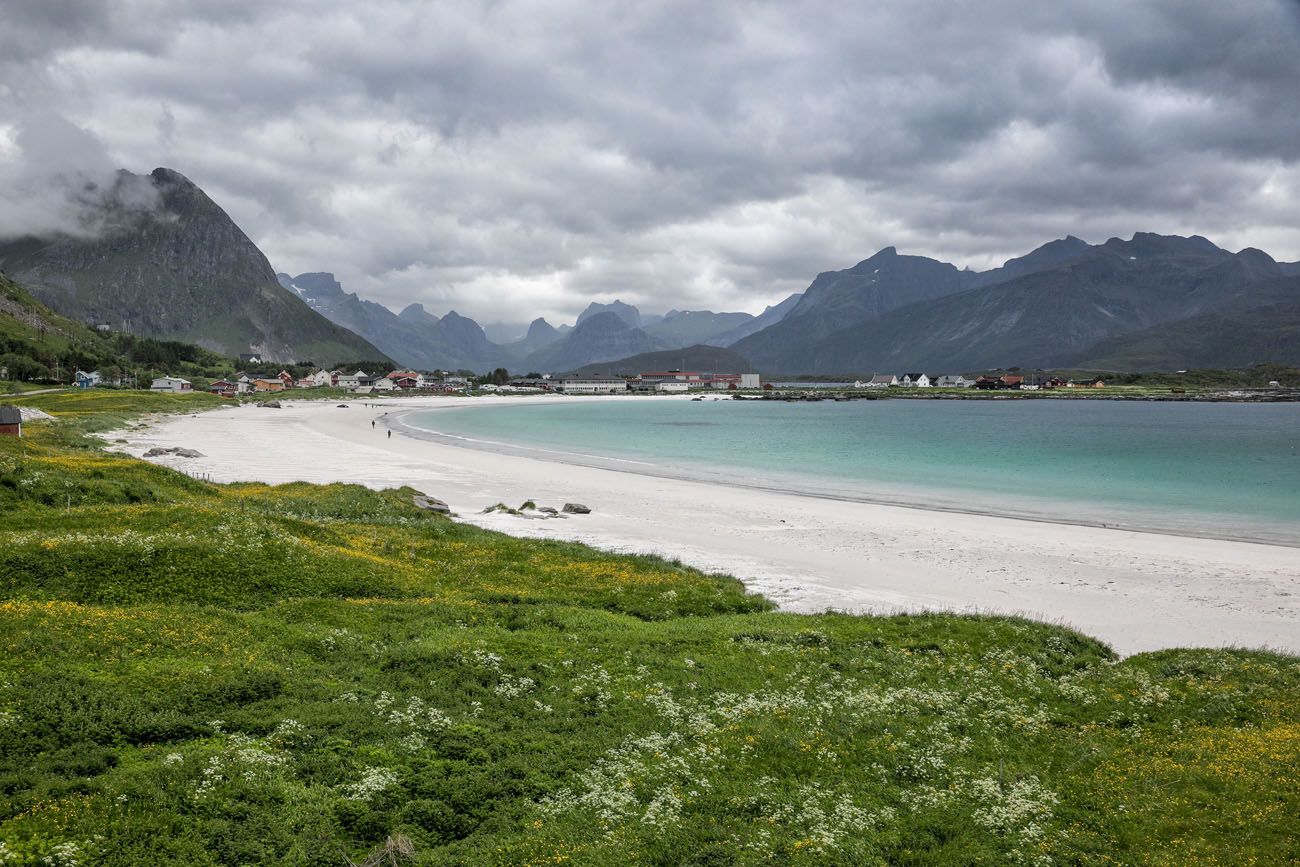
Ramberg Beach
Haukland Beach is beautiful and easy to reach, sitting just around the headland from Uttakleiv. It’s a lovely spot, though it doesn’t quite have the drama of its neighbor.
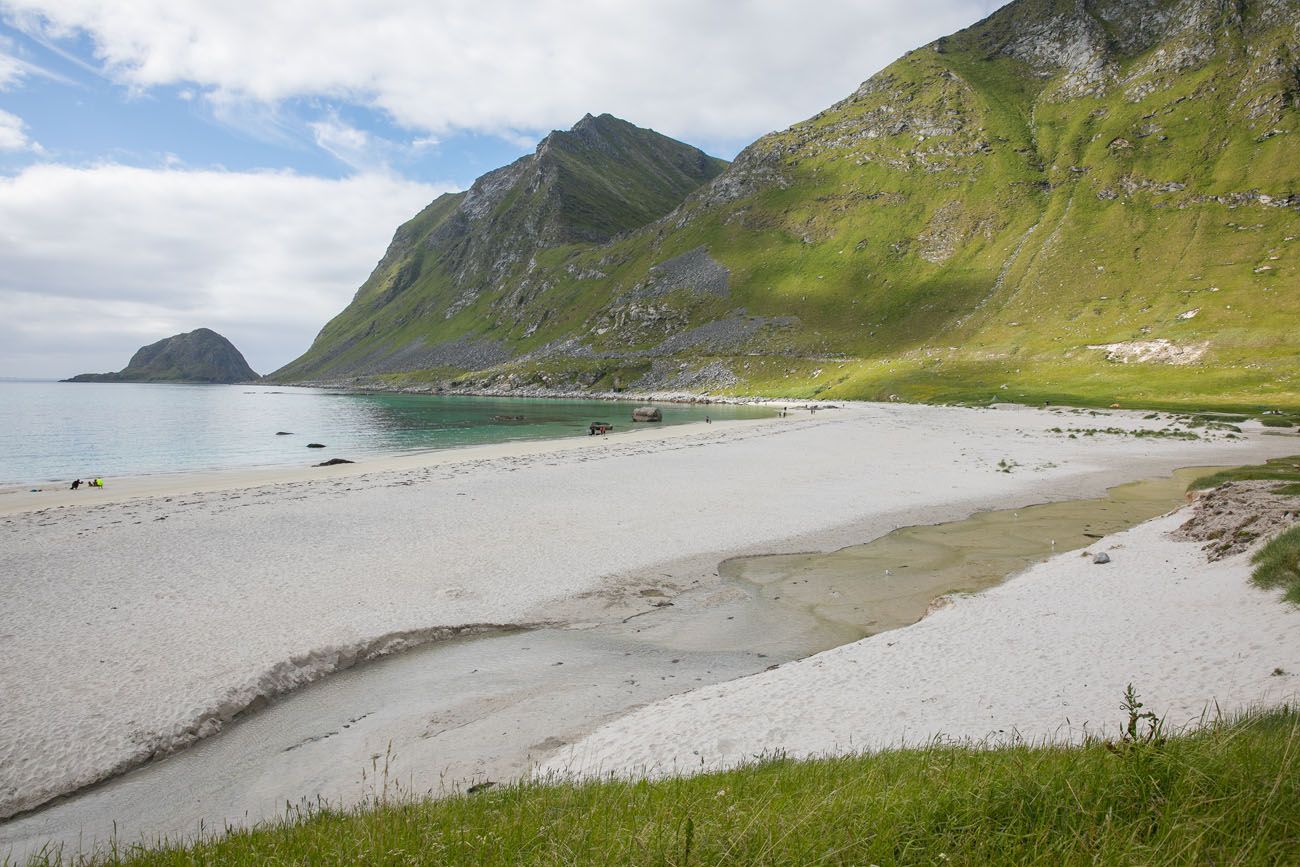
Haukland Beach
PRO TRAVEL TIP: Uttakleiv and Haukland share a parking area. In peak summer it fills up fast, so aim to arrive early in the morning or later in the evening.
6. Go Surfing at Unstad Beach
This might be the most surprising entry on this list. The Lofoten Islands are not a place most people associate with surfing, but Unstad Beach has quietly become one of the most unique surf destinations in the world, drawing wave riders from across Europe and beyond.
The appeal is the contrast. You’re surfing above the Arctic Circle, with snow-capped peaks rising behind the beach and water temperatures ranging from around 8°C to 14°C (46°F to 57°F) depending on the season.
The waves are strongest and most challenging during the winter months, making Unstad a bucket-list destination for experienced surfers chasing the thrill of Arctic swells. In summer, the waves are smaller and more forgiving, the water is slightly warmer, and the midnight sun means you can technically surf at any hour of the day or night.
We didn’t surf on our visit, but Unstad is worth the drive out even if you never set foot in the water. The beach itself is beautiful, the setting is dramatic, and watching surfers carve through waves with a mountain backdrop is a spectacle in its own right. If you want to give it a try, the Unstad Arctic Surf school offers lessons for all levels.
Good to know: Unstad Beach is located on the northwestern side of Vestvågøy and requires a short detour off the main E10 highway. The drive out is scenic and well worth it.
7. Hike to Ryten for Amazing Views of Kvalvika Beach
If Reinebringen is the most iconic hike in the Lofoten Islands, Ryten might be the most enjoyable. The trail has all the ingredients of a perfect Lofoten hike: sweeping mountain and fjord views, a satisfying climb to a summit, and a jaw-dropping finale. It’s a more pleasant experience underfoot than the relentless stair-climb of Reinebringen. By Lofoten standards, it’s relatively forgiving.
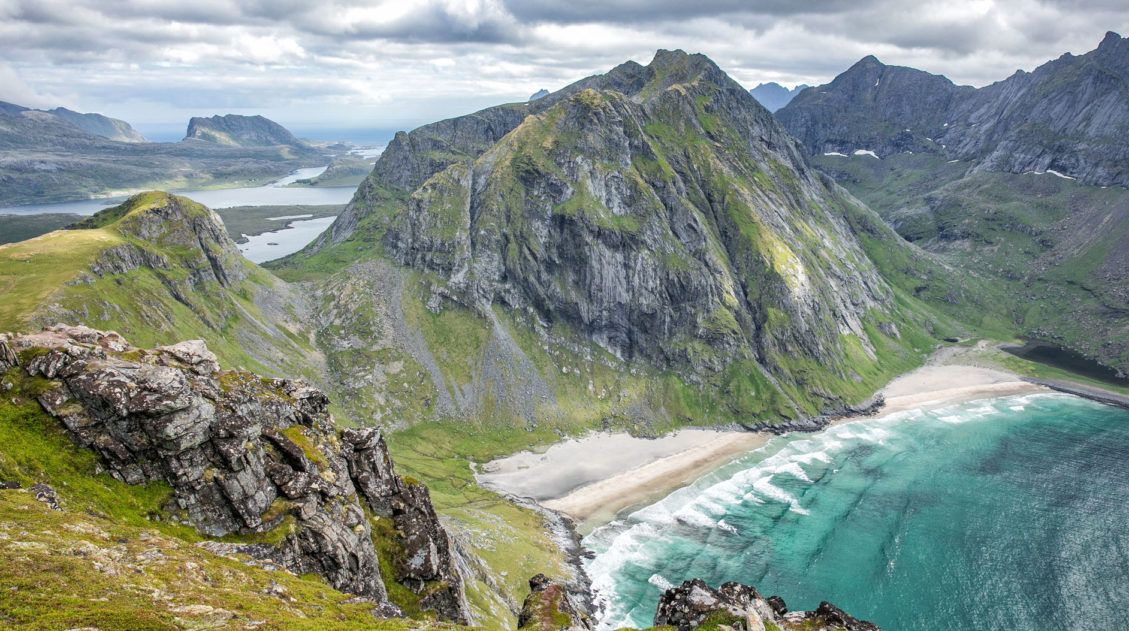
The payoff at the top is one of the best views in all of Norway. From the summit of Ryten, you look straight down over Kvalvika Beach, a pristine arc of white sand flanked by dark mountain walls, accessible only on foot. The contrast between the turquoise water and the rugged landscape below you is stunning.
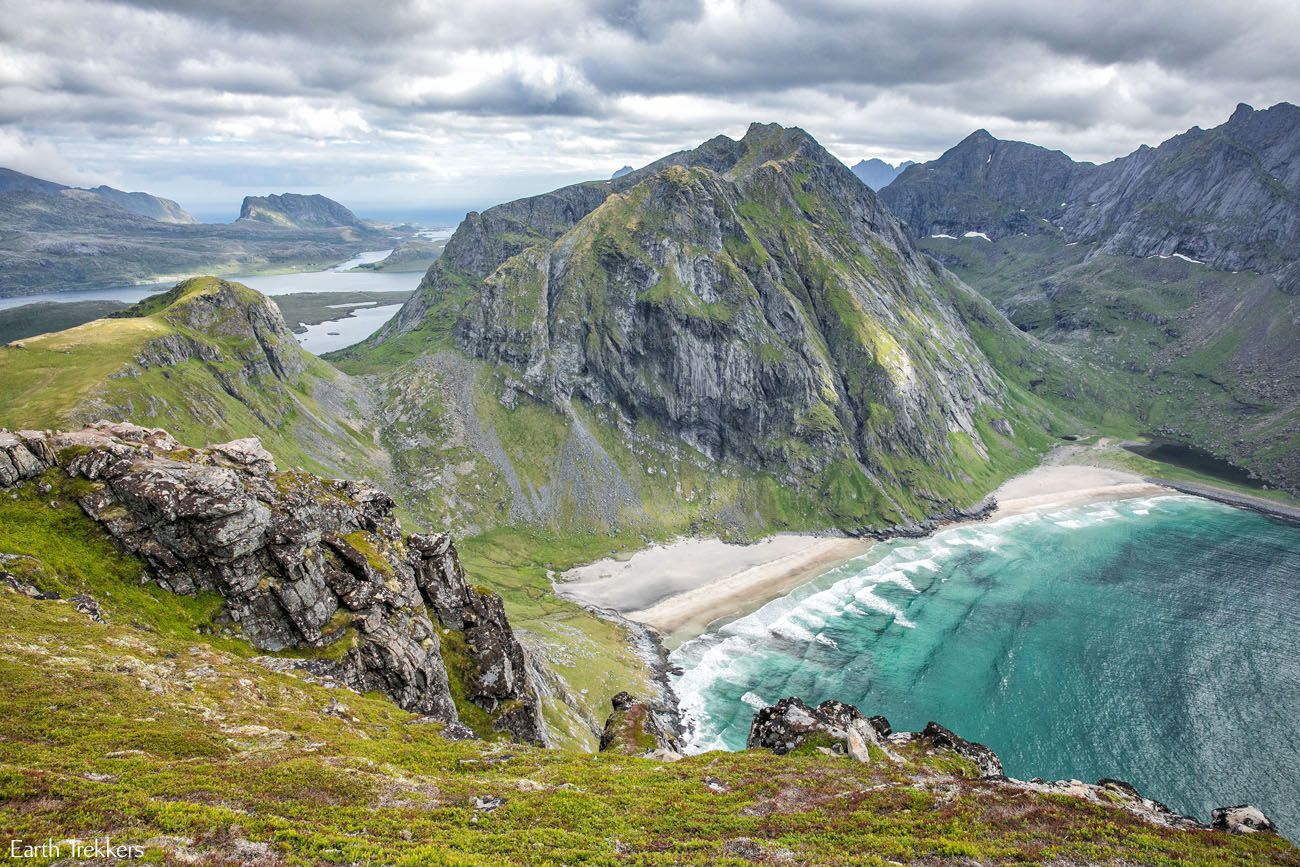
Kvalvika Beach
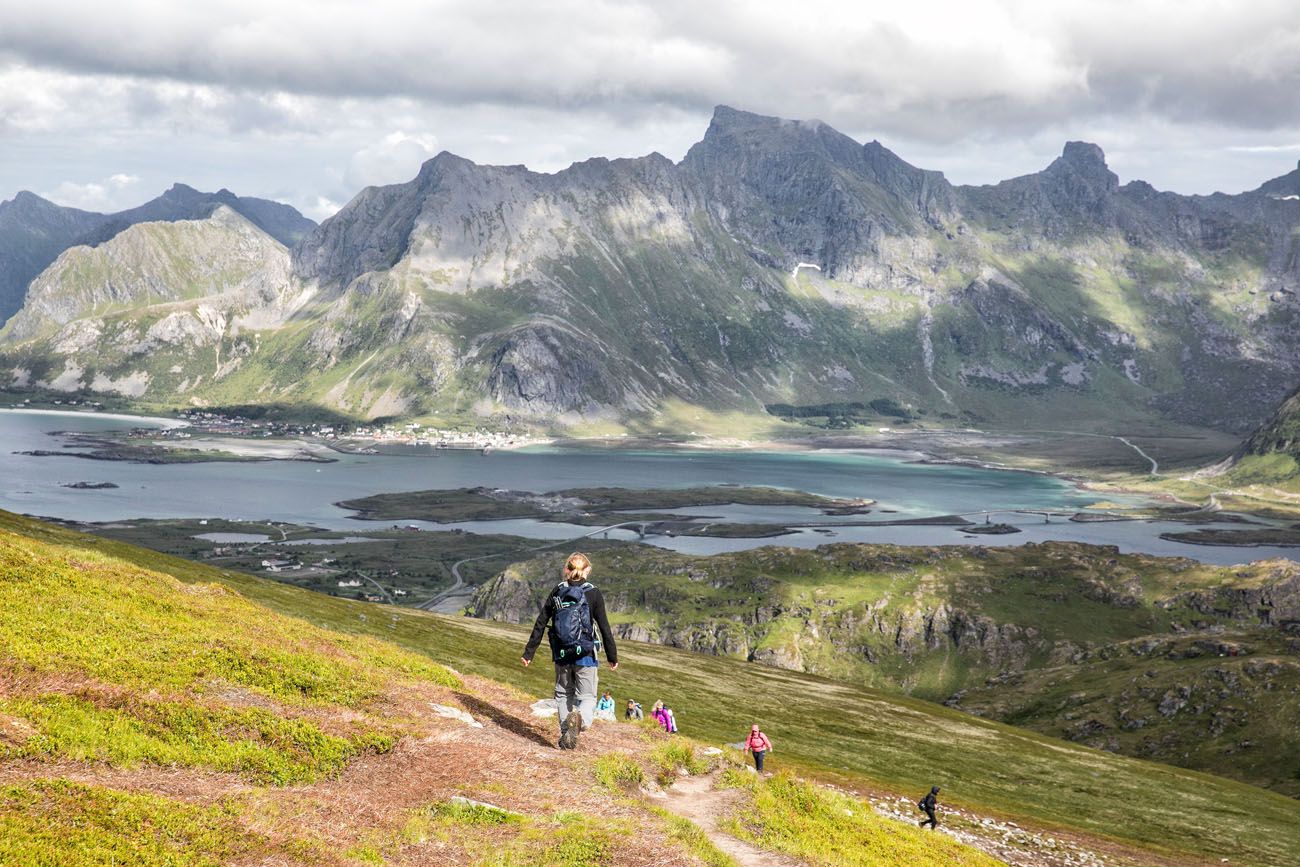
Another view from the Ryten hiking trail.
There’s also a “mini-Trolltunga,” a rocky outcropping near the summit that makes for a dramatic (and popular) photo spot.
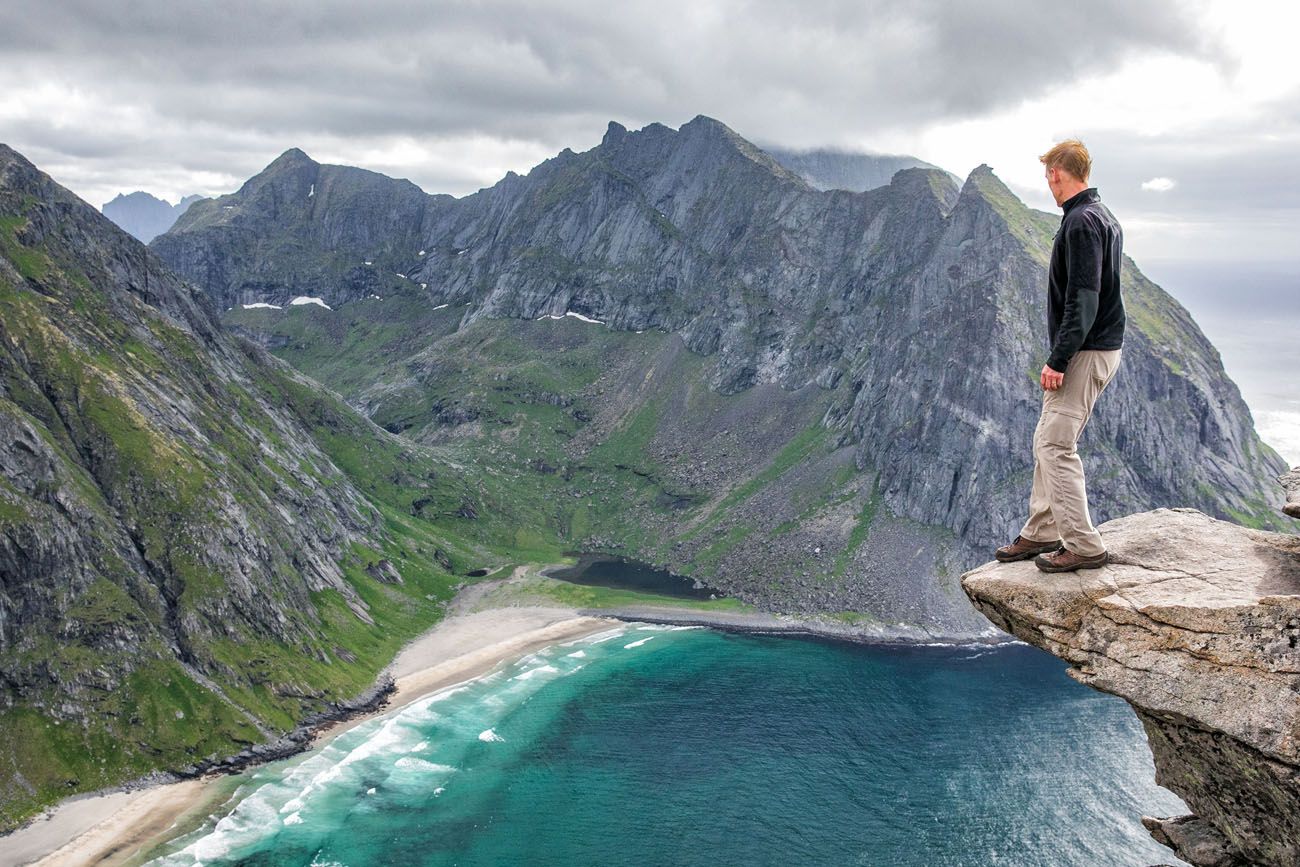
From the summit you can also descend to Kvalvika Beach itself, turning the hike into a longer adventure. The beach is wild and remote, and well worth the extra effort if your legs have anything left.
For everything you need to know before you go, read our complete guide to hiking Ryten →
How to Hike Ryten: Kvalvika Beach Views and the “Mini-Trolltunga”
Everything you need to know to hike Ryten.8. Drive the Scenic Road and Explore the Fishing Villages
The main road through the Lofoten Islands, the E10, runs from Å in the far south all the way to Fiskebøl in the north, where a ferry connects to the mainland. Driving it end to end takes about four hours without stops, but that would be missing the point entirely. This is one of the most beautiful drives in Europe, and almost every bend in the road reveals another view worth pulling over for.
We drove it north to south over several days, arriving into Svolvaer from the Vesterålen Islands and working our way down through the archipelago. Each section felt different. The northern stretch is more open and expansive, the southern end increasingly dramatic as the peaks grow taller and the fjords narrower.
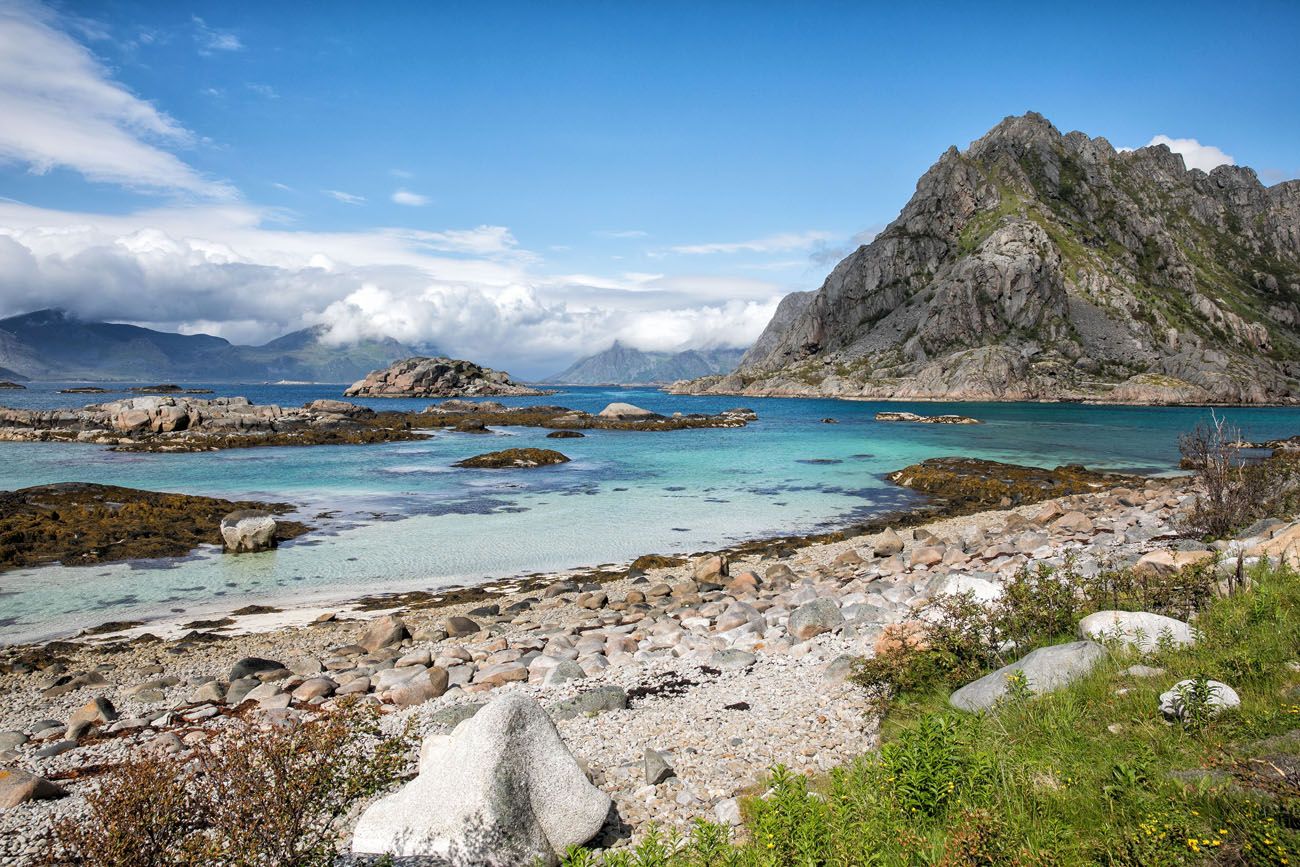
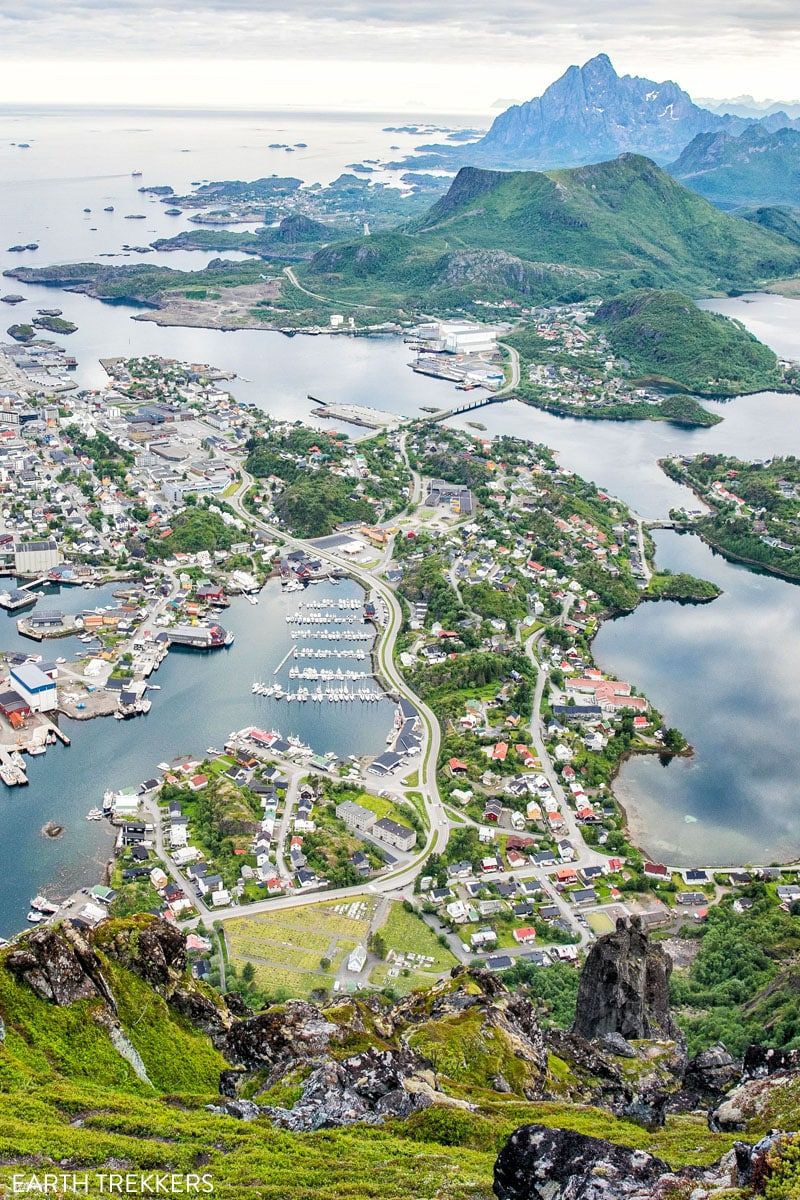
Svolvaer is the largest town in the Lofoten Islands and a natural base for exploring the north. It has an airport, a ferry terminal, a good selection of hotels and restaurants, and serves as the jumping-off point for several of the best hikes in the area. We didn’t linger long, but the town has a lively, energetic feel compared to the quieter villages further south.
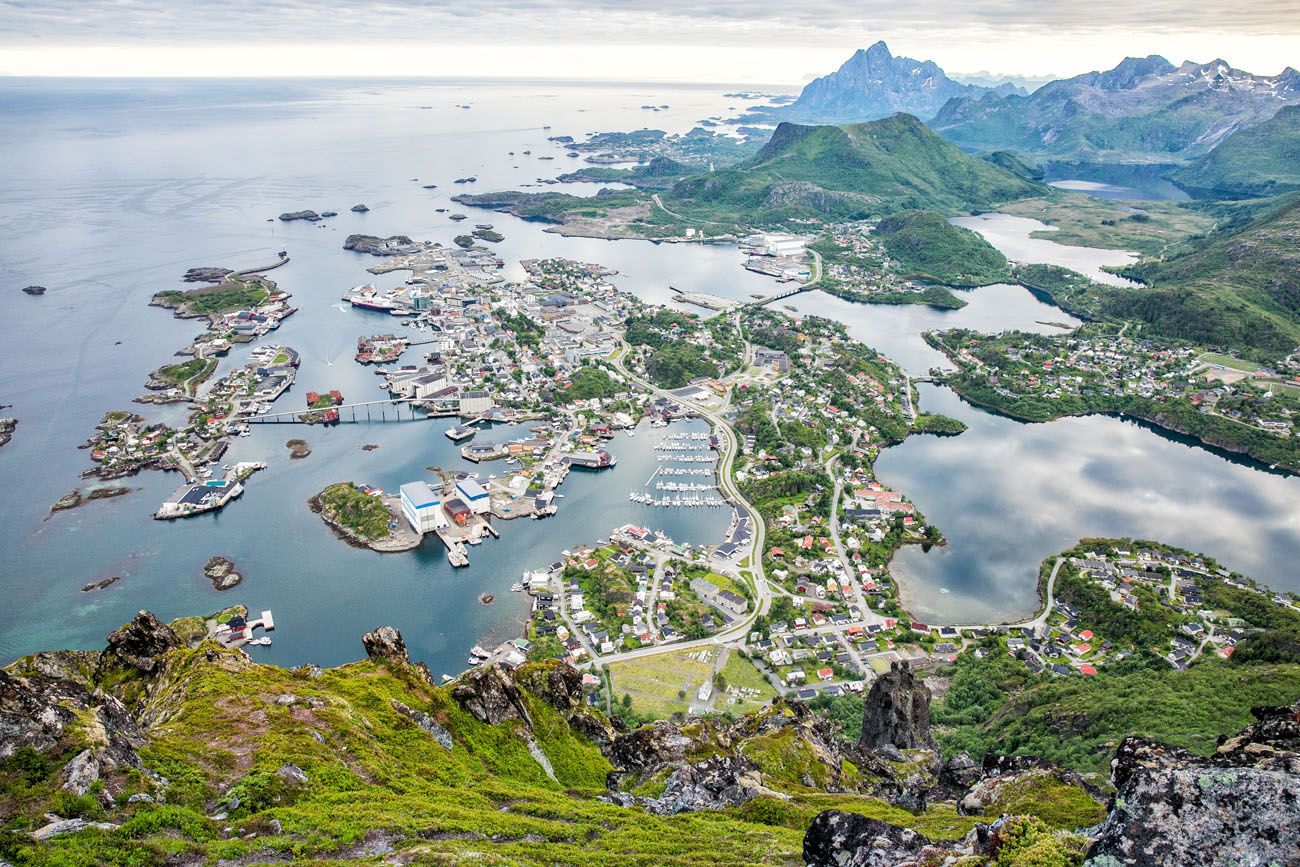
The town of Svolvaer seen from Svolvaer Fløya
Henningsvær deserves its own entry on this list (see #11), but every village between Svolvaer and Reine is worth a slow drive through.
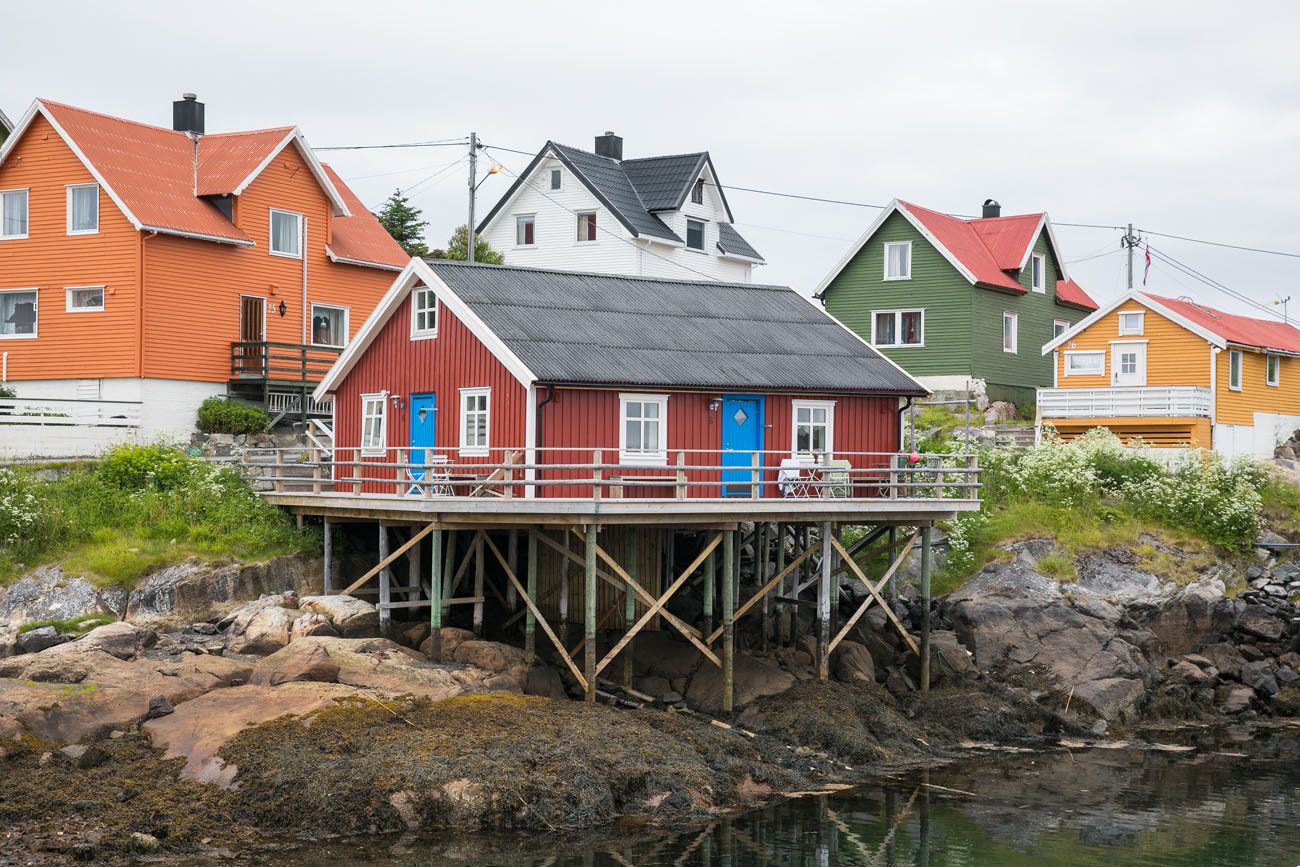
Reine and Hamnøy are the heart of the Lofoten Islands, and the cluster of tiny hamlets in this area, including the picturesque yellow cabins of Sakrisøy just across the bridge, are as close to picture-perfect as a place can get.
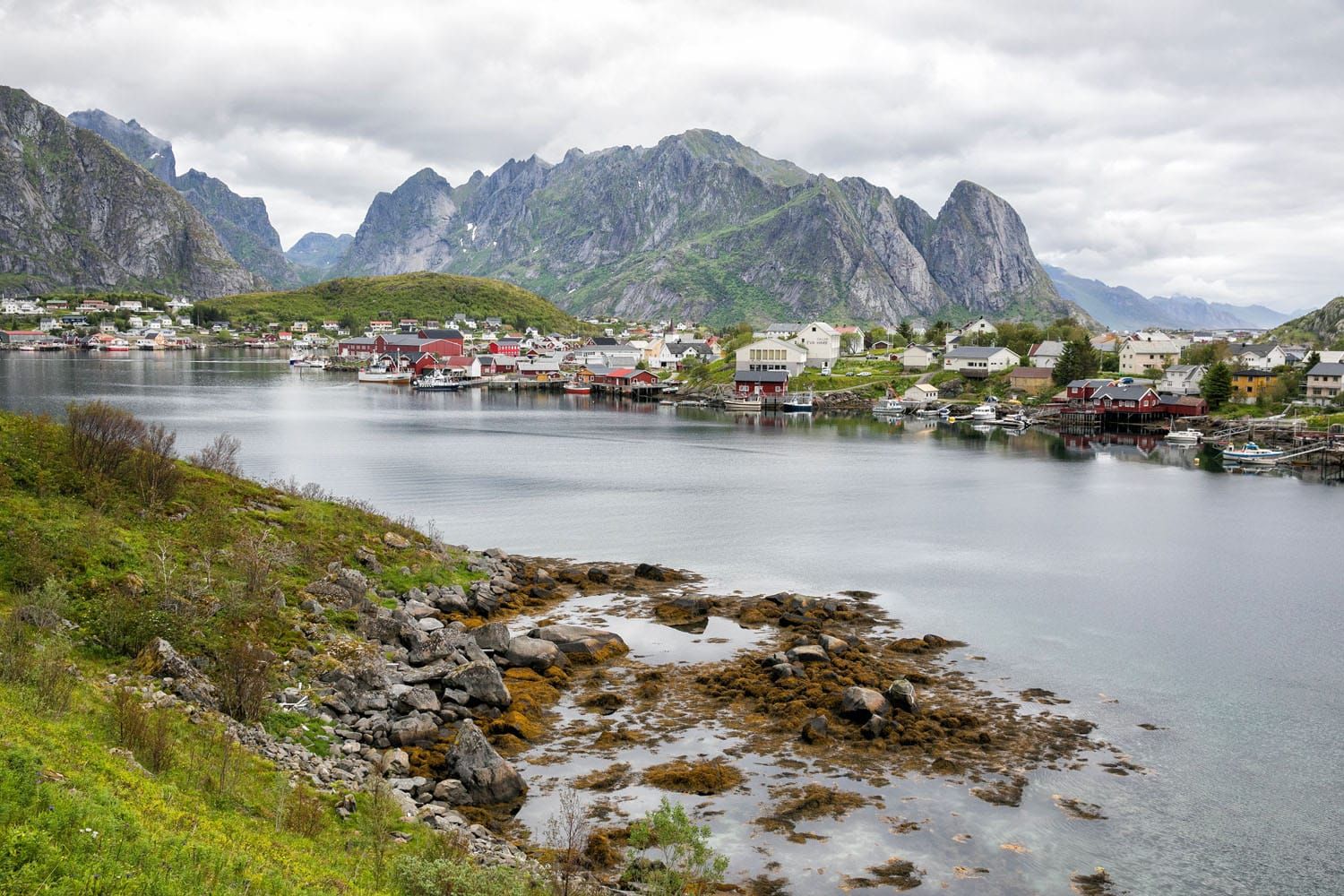
Reine
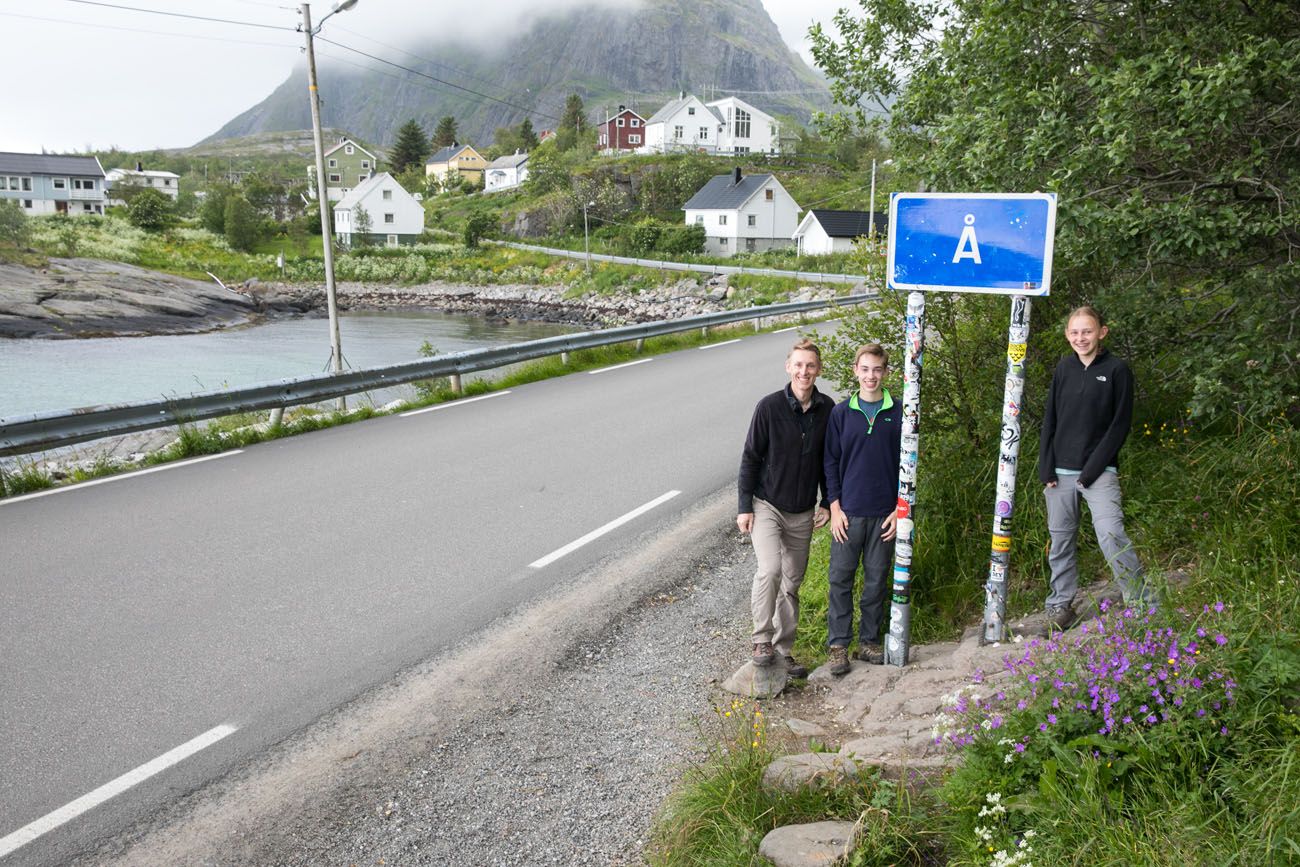
Å i Lofoten sits at the very end of the road, as far south as you can drive. It’s a quiet, almost sleepy little village, but there’s something satisfying about standing at the end of the line. We stopped at the local bakery and bought fresh bread to eat as a snack. While you’re here, the Lofoten Stockfish Museum and the Norwegian Fishing Village Museum are both worth a look.

PRO TRAVEL TIP: The E10 is well maintained but sections of it are narrow and winding, particularly in the south. Take your time, watch for oncoming traffic on the tighter stretches, and budget far more time than the map suggests.
9. Stay in a Rorbu
Staying in a rorbu is one of the most uniquely Lofoten experiences you can have, and we’d strongly recommend building at least a few nights in one into your trip.
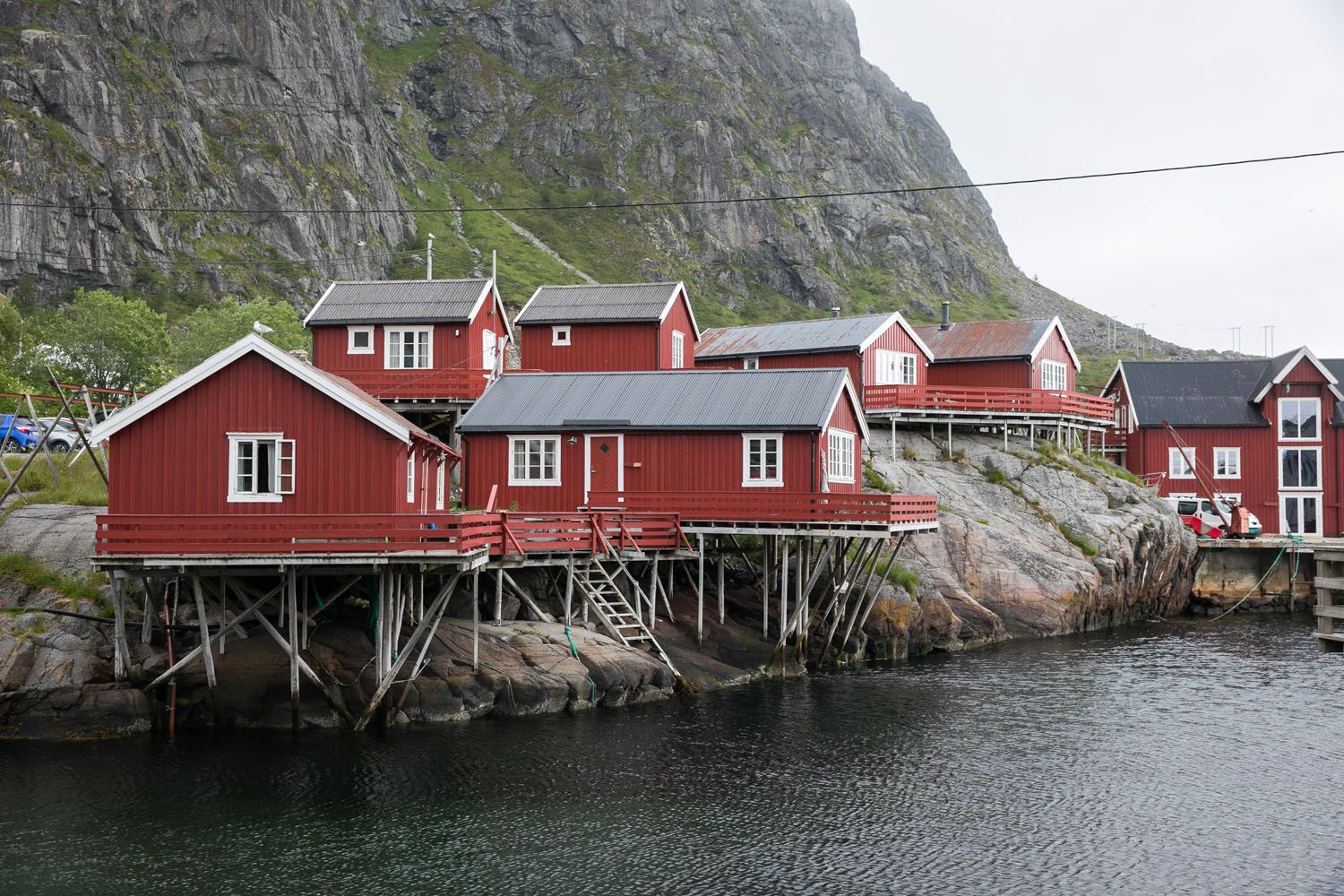
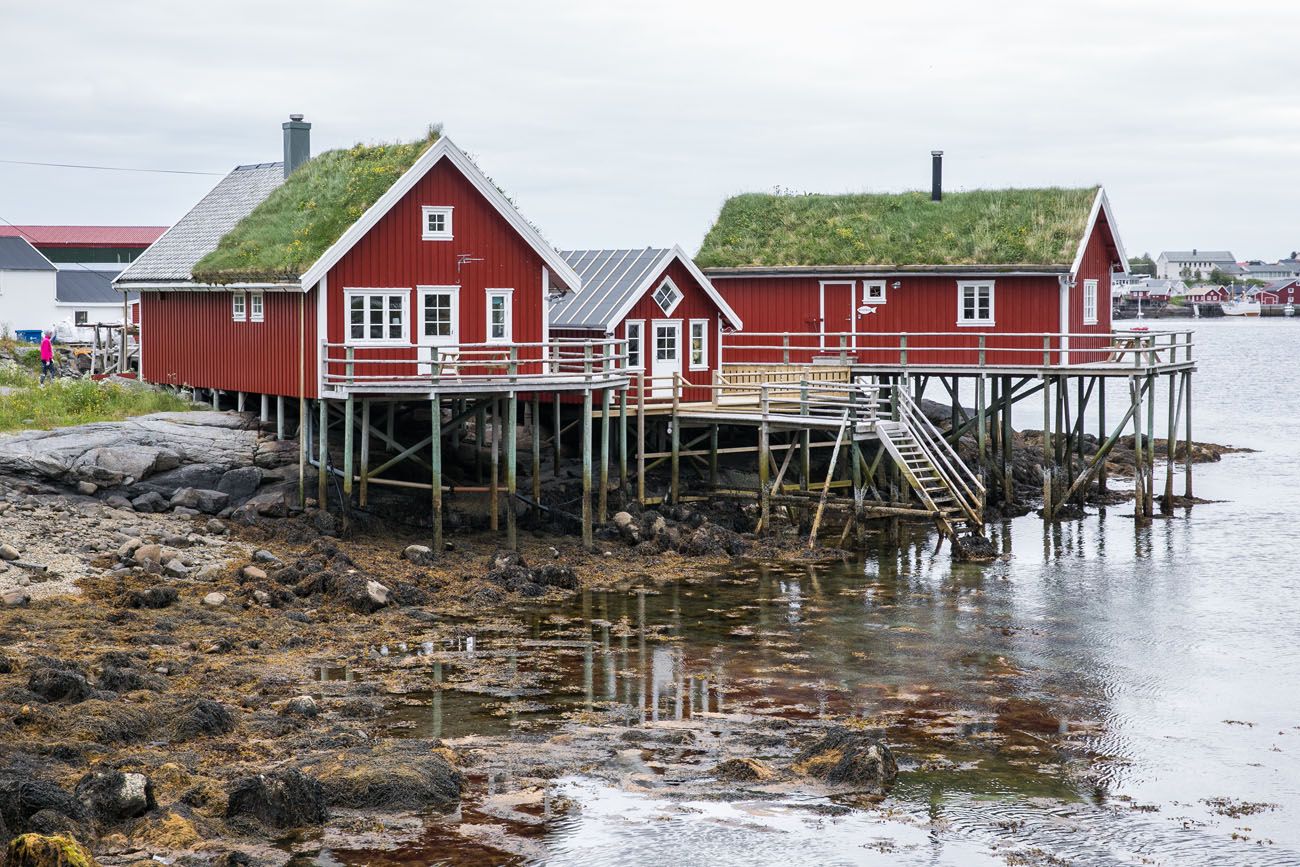
A rorbu (pronounced roughly “ror-boo”) is a traditional fisherman’s cabin that has been renovated into self-contained accommodation. Originally built on stilts over the water so that fishermen could roll out of bed and straight onto their boats, they now serve as some of the most characterful places to stay anywhere in Norway.
Think tiny house: a compact but fully functional space with a kitchenette, a small living area, a bathroom, and one or two bedrooms. They’re cozy rather than spacious, but that’s part of the appeal.
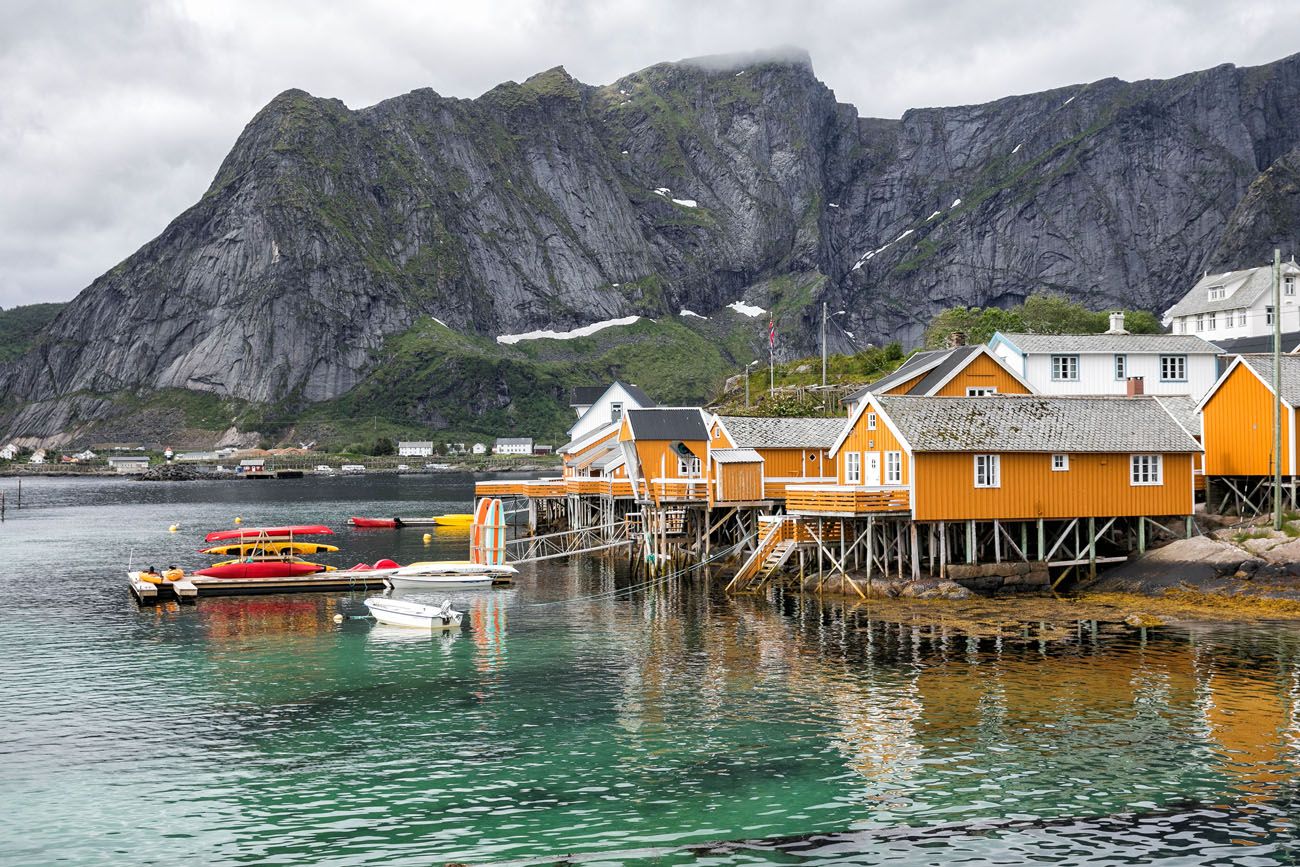
Rorbuers in Sakrisøy
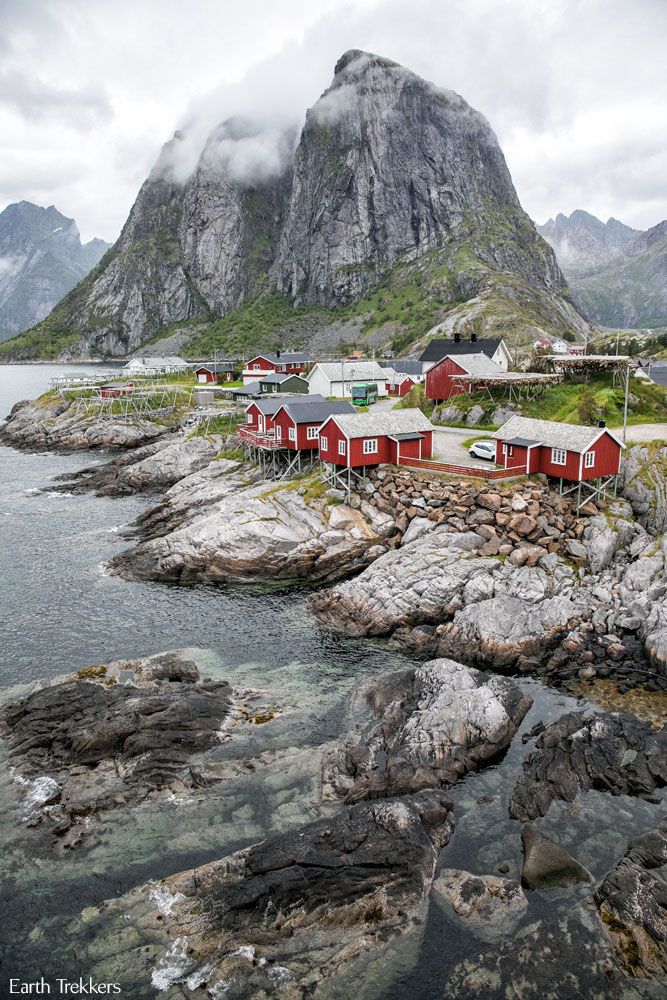
Rorbuers in Hamnøy
We stayed at Nyvågar Rorbu Hotel in Kabelvåg on our visit and loved it. For our family of four it worked perfectly, with two bedrooms, a kitchen for breakfast and snacks, and that unmistakable feeling of being perched out over the water with the fjord right outside the window. In Hamnøy, we opted for a small house rather than a rorbu simply to have a bit more room, but if space isn’t a concern a rorbu in the Hamnøy or Reine area would be our first choice. The setting there is unbeatable.
Rorbuer are scattered throughout the islands, from Svolvaer in the north to Reine and Å in the south. They range from rustic and traditional to beautifully renovated, and prices vary accordingly. Book well in advance for summer, because the best ones fill up months ahead.
For our full accommodation recommendations throughout the islands, read our guide to where to stay in the Lofoten Islands →
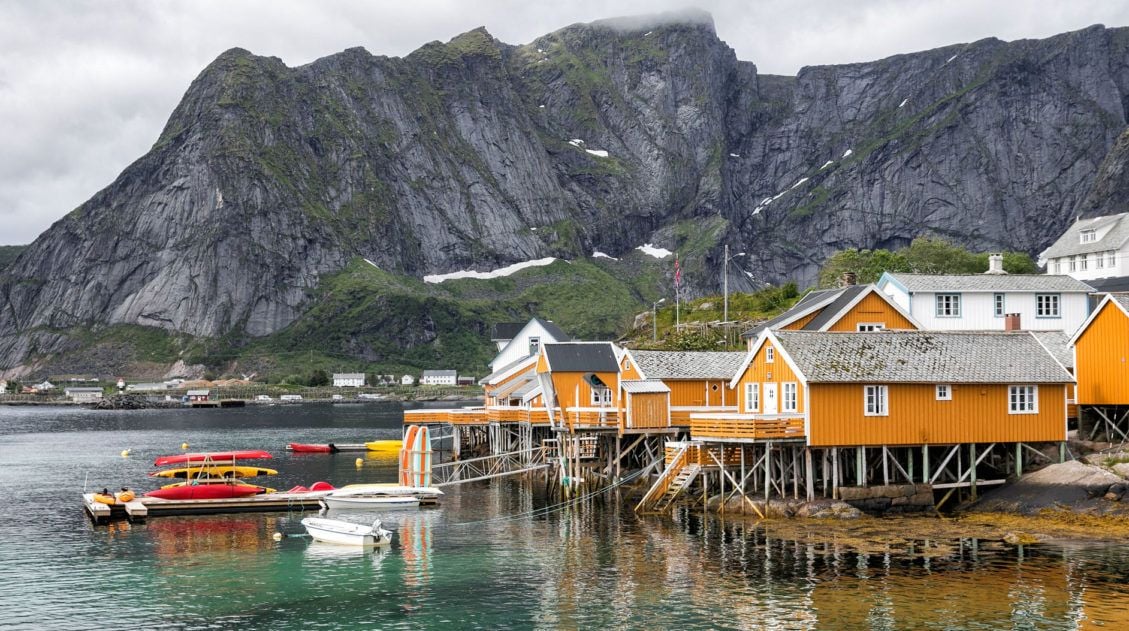
Where to Stay in the Lofoten Islands: Rorbuer, Hotels & More
The best rorbuer, hotels, apartments, and hostels in the Lofoten Islands.10. Eat the Local Cuisine
Dining in the Lofoten Islands is an experience in itself, and not just because of what’s on the plate. The restaurants here are small, rustic, and deeply cozy, exactly the kind of places you want to walk into after a long day on the hiking trails. Even in July, evenings in the Lofoten Islands carry a chill, and stepping into a warm, candlelit restaurant with the smell of fresh seafood in the air becomes something you genuinely look forward to each day.
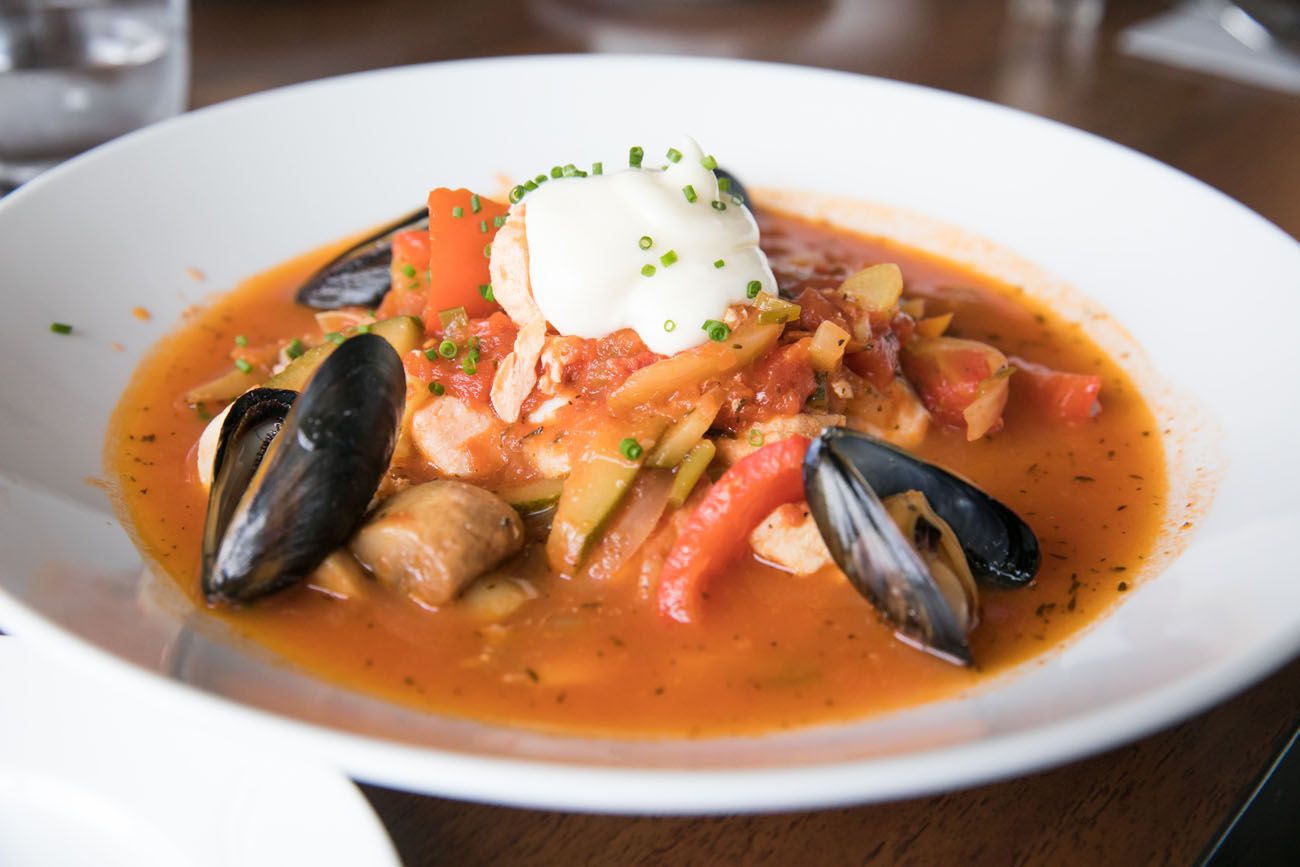
The food is defined by the sea. Lofoten is one of the most important fishing regions in all of Norway, and that heritage shows up on every menu. Stockfish, fresh cod, seafood stew, and fish sandwiches are staples. Order whatever is fresh and local and you won’t go wrong.
A few restaurants worth seeking out: Anita’s Sjømat in Sakrisøy is a Lofoten institution. It’s a tiny seafood shack with a loyal following and very reasonable prices by Norwegian standards, serving some of the best fish sandwiches you’ll find anywhere.
In Reine, Gammelbua is a lovely spot for dinner, with fish, seafood, and steak on the menu.
In Henningsvær, Fiskekrogen is a fantastic seafood restaurant and well worth booking ahead.
PRO TRAVEL TIP: Eating out in Norway is expensive, and the Lofoten Islands are no exception. Adding drinks will push the bill even higher. We balanced things out by picking up breakfast and lunch at local grocery stores and saving our restaurant budget for dinners.
11. Explore Henningsvær and Hike Festvågtind
Henningsvær is one of the most talked-about villages in the Lofoten Islands, and it’s easy to see why. Scattered across a cluster of small islands connected by narrow bridges, with colorful buildings lining the harbors and coastal views in every direction, it’s a genuinely charming place to spend a couple of hours. Walk the waterfront, have lunch at one of the handful of good restaurants here, and soak up the atmosphere.
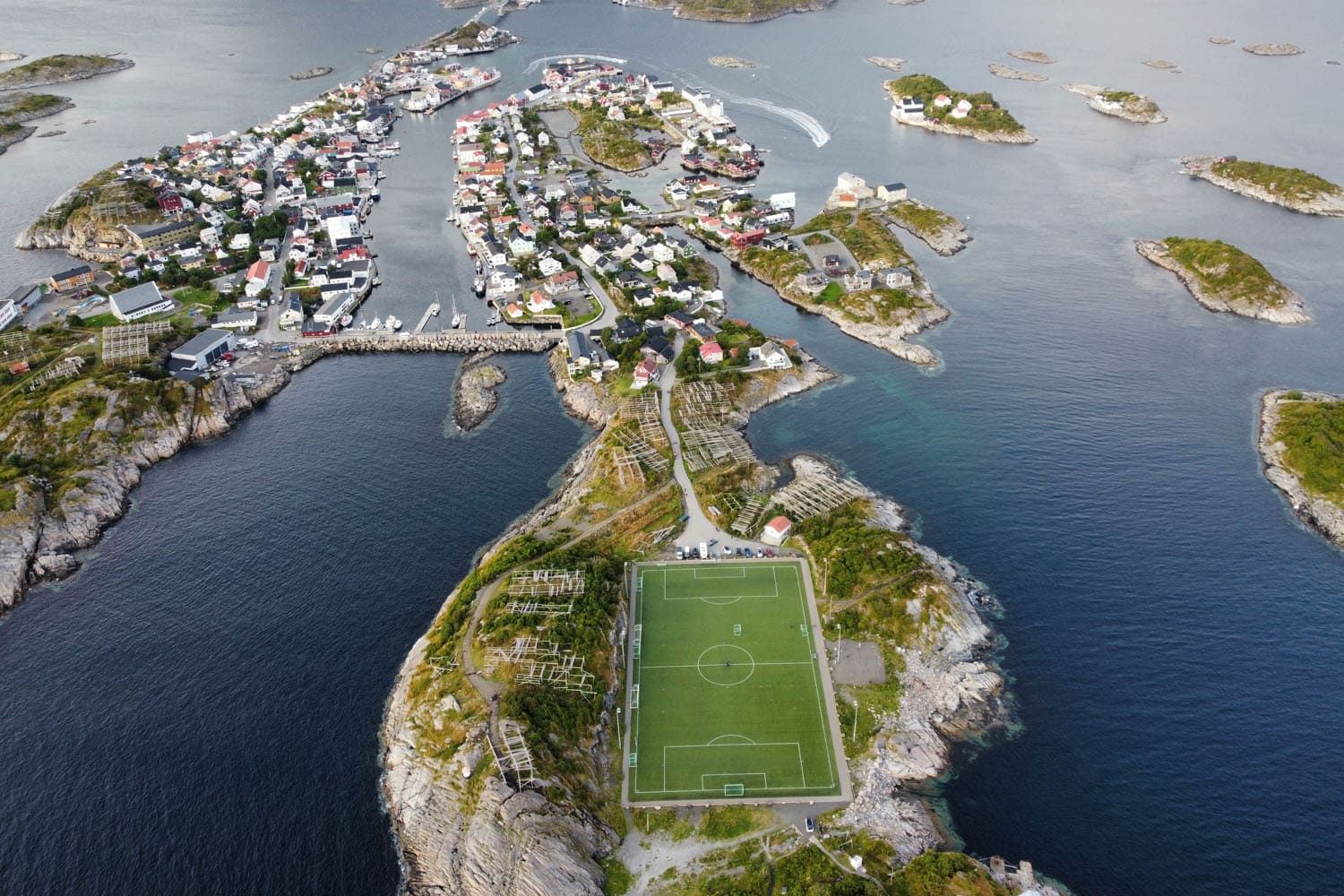
Aerial view of Henningsvaer | shutterstock.com
Henningsvær is a fairly small place that doesn’t take long to see. Walk through it, have a meal, enjoy it for what it is, but don’t rearrange your entire itinerary around it.
What is worth rearranging your itinerary for is the hike up Festvågtind, the mountain that rises directly above the village. From the summit, the views overlooking Henningsvær and the surrounding islands and fjords are breathtaking, and one of the best aerial perspectives in the Lofoten Islands. The hike is short at just 3 km (1.9 miles) round trip, but don’t let that fool you. It’s steep, it’s slippery in places, and it demands your full attention.
The critical caveat: this hike is only worth doing on a clear day. We attempted it with the summit clouded in and turned back without the views. It was a steep, slippery climb with nothing to show for it at the top. Save Festvågtind for a clear morning and it will absolutely deliver.
For everything you need to know, read our complete guide to hiking Festvågtind →
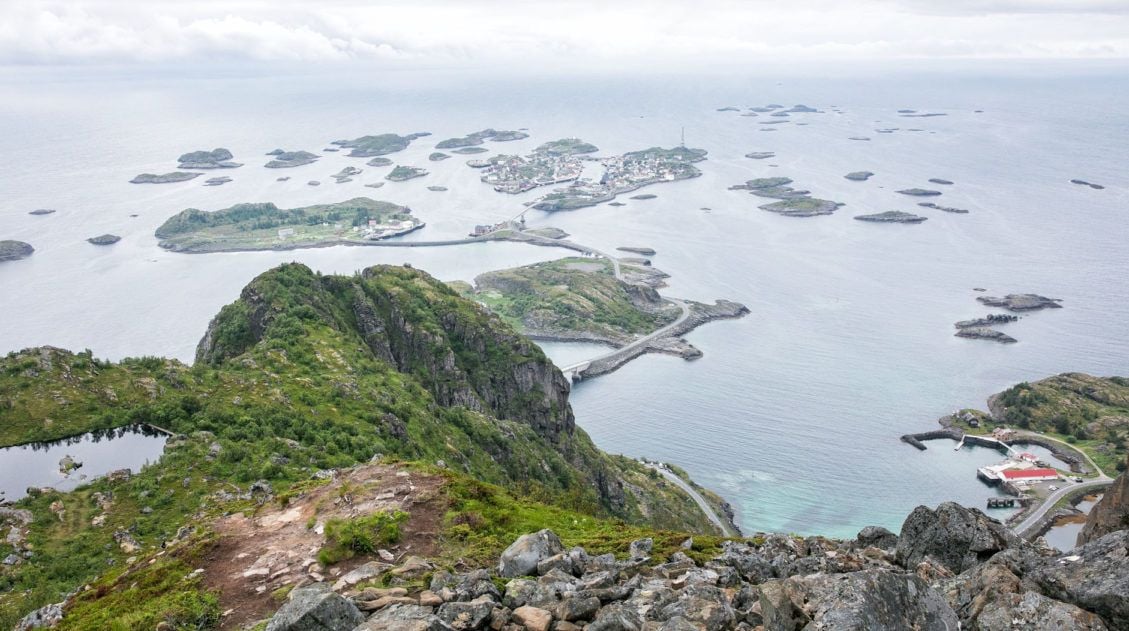
Hiking Festvågtind in the Lofoten Islands, Norway
Everything you need to know to hike Festvågtind.12. Don’t Miss the View from Svolvaer Fløya
Svolvaer Fløya is the mountain that looms directly above the town of Svolvaer, and hiking to its summit is one of the best ways to get your bearings in the Lofoten Islands. From the top, you look out over Svolvaer, the surrounding fjords, and on a clear day, the jagged peaks stretching south across the entire archipelago.
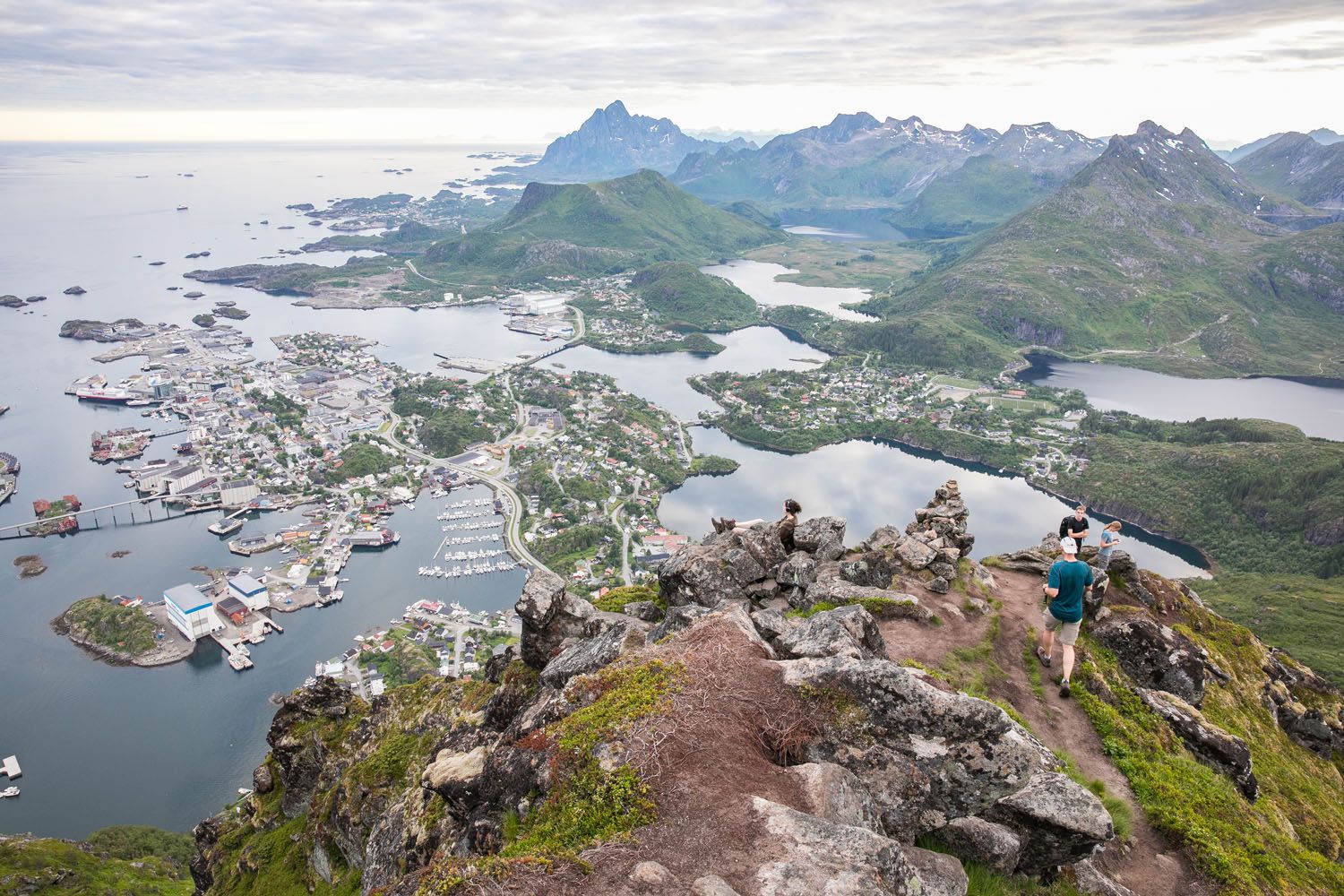
The hike itself is steep and fairly short, gaining significant elevation quickly before leveling out near the summit. Along the way you’ll pass through Djevelporten, the Devil’s Gate, a dramatic rock formation that frames a view down to the sea below. It’s one of the more memorable moments on the trail.
We hiked Fløya on our very first day in the Lofoten Islands, immediately after climbing Svolvaergeita (see #13). It was a long, physically demanding day, but the combination of the two made for one of the most memorable days of our entire trip.
Good to know: The Fløya trailhead is shared with the Svolvaergeita climbing route, making it easy to combine both in a single big day if your legs are up for it.
For everything you need to know before you go, read our complete guide to hiking Svolvaer Fløya →
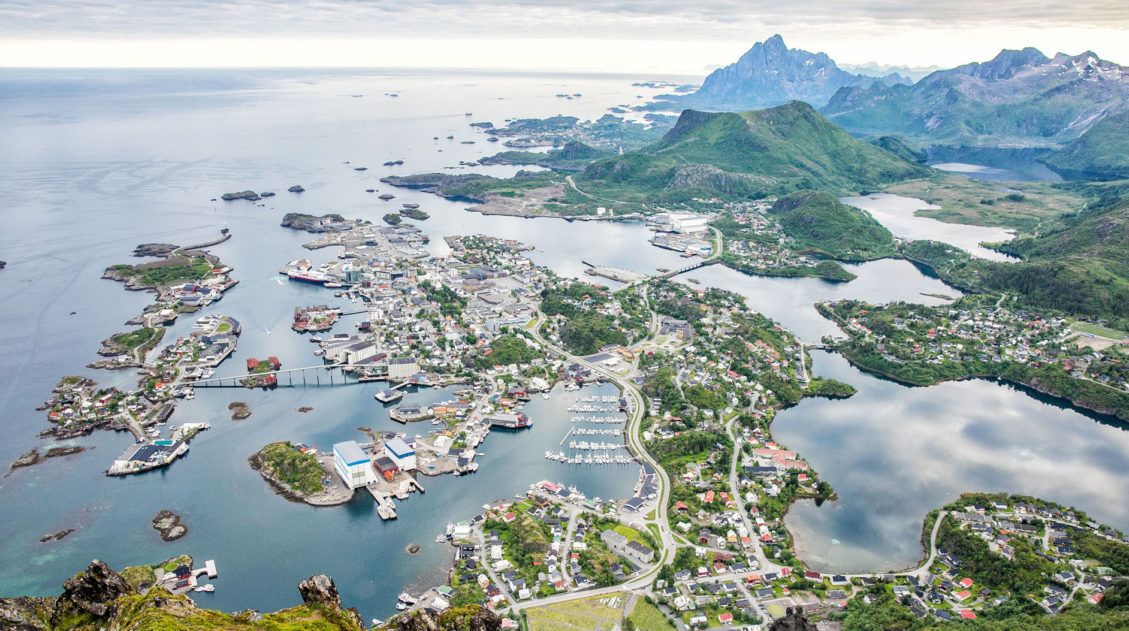
How to Hike Svolvaer Fløya & Djevelporten in the Lofoten Islands
Step-by-step trail guide for the hike to Svolvaer Fløya and Djevelporten.13. Climb Svolvaergeita
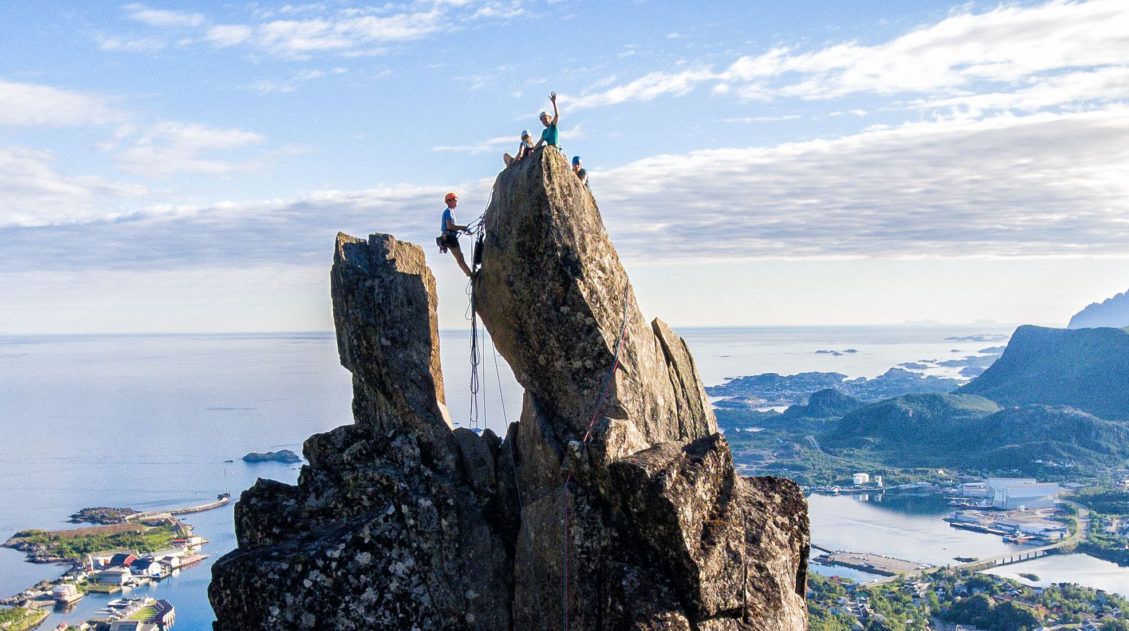
Svolvaergeita, also known as The Goat, is a twin-pinnacled spire of rock rising above Svolvaer, and climbing it was one of the best experiences of our entire visit to the Lofoten Islands.
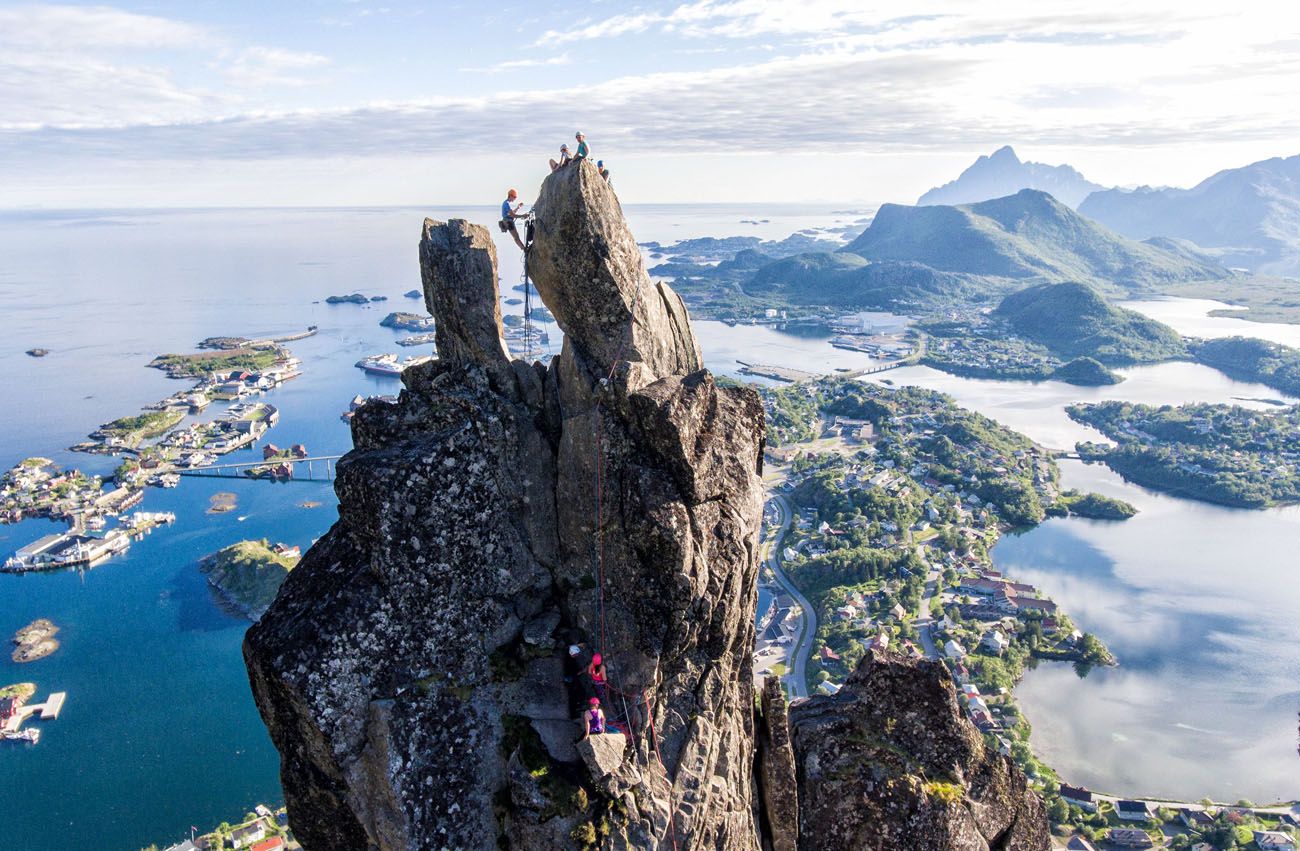
Kara and Julie on top of Svolvaergeita. Tim and Tyler descended before us, and Tyler shot this photo with our drone.
The climb is led by a guide and requires no prior rock-climbing experience, making it far more accessible than it looks from below. You’ll use ropes, harnesses, and your guide’s instruction to work your way up the rock face to the summit of one of the two horns. The exposure is real and the climb demands both physical effort and mental focus, but that’s precisely what makes reaching the top so rewarding.
We tackled Svolvaergeita on our very first day in the Lofoten Islands, arriving straight from the Vesterålen Islands and throwing ourselves straight into one of the most exhilarating things we’ve ever done. It set the tone for the entire trip perfectly.
For everything you need to know, read our complete guide to climbing Svolvaergeita →
Complete Guide to Climbing Svolvaergeita in the Lofoten Islands
Everything you need to know to climb Svolvaergeita.14. Take a Trollfjord Cruise
The Trollfjord is one of the most dramatic natural features in the Lofoten Islands. It’s a narrow, steep-sided fjord just two kilometers long but flanked by sheer rock walls that rise hundreds of meters straight out of the water. It’s genuinely breathtaking, and the only way to experience it properly is by boat.
Several cruise options depart from Svolvaer, and the experience is worth building into your itinerary even if outdoor activities are your main focus. White-tailed eagles nest in the cliffs above the fjord, and spotting one soaring overhead against the mountain walls is a highlight of many visitors’ trips.
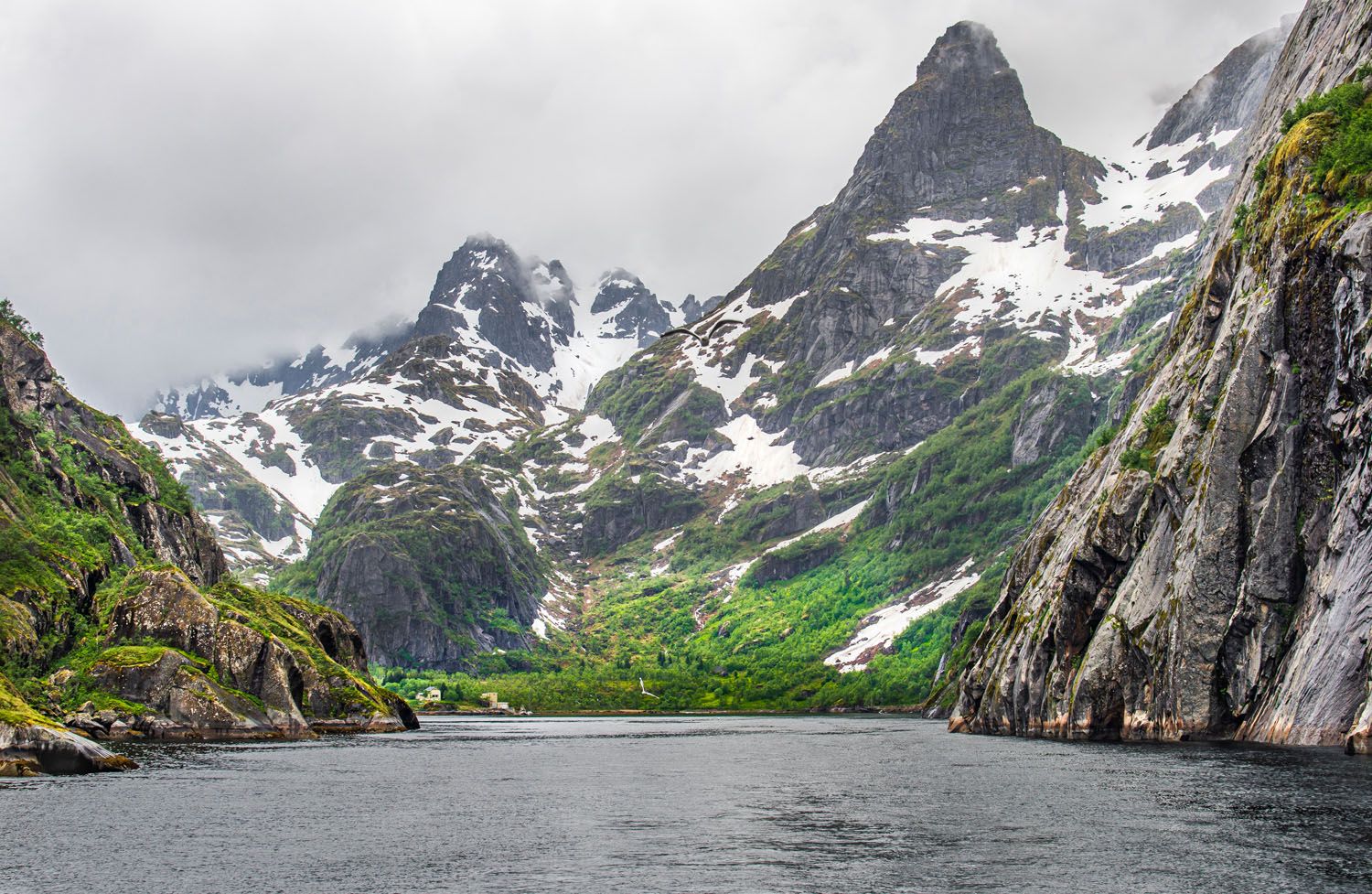
Trollfjord | shutterstock.com
We didn’t make it on our visit, with four days and a long list of hiking trails, the boat tours didn’t fit into our schedule, but the Trollfjord cruise is high on our list for a return trip. Based on the options we’ve seen, there are two very different ways to do it, depending on what kind of experience you’re after:
Silent Trollfjord Cruise by Electric Ship — This is the more relaxed option, aboard a purpose-built hybrid-electric boat that glides through the fjord in near silence. No engine noise, no rushing, just the cliffs, the wildlife, and the water. It’s a beautiful way to take it all in.
RIB Sea Eagle Safari and Trollfjord Cruise — For those who want speed and adrenaline, this RIB (rigid inflatable boat) tour combines the Trollfjord with a sea eagle safari. Fast, exhilarating, and a great option if you want to cover more water in less time.
PRO TRAVEL TIP: Both tours depart from Svolvaer, making them easy to combine with a night or two based in the north. Book in advance in summer because these tours fill up quickly.
15. Visit the Lofotr Viking Museum
The Lofoten Islands have a Viking history as dramatic as their landscapes, and the Lofotr Viking Museum in Borg is where that history comes to life.
In 1981, a farmer’s plough hit the ruins of an 83-meter-long dwelling of a powerful Viking chieftain , the largest building of its era ever discovered in Scandinavia. The museum was built around that discovery, and what makes it special is that you’re standing on the actual site where it happened.
The centerpiece is a full reconstruction of the Viking chieftain’s longhouse, alongside modern exhibition halls with archaeological artifacts and a short drama film about the discovery and excavation of Borg.
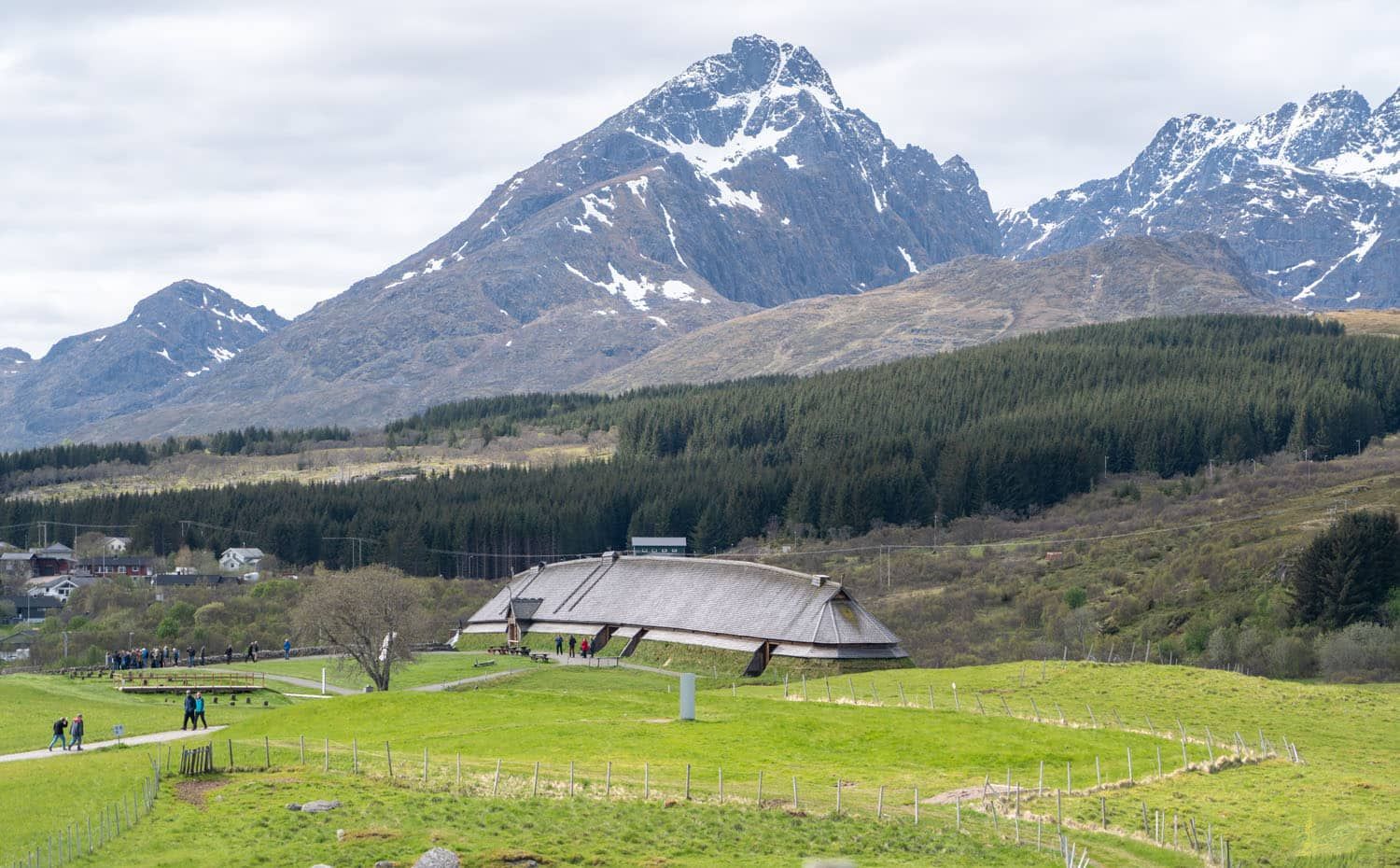
In summer, the Viking ship is moored at the seaside, a 20-minute walk from the chieftain’s house, and guests can participate in activities including rowing the Viking ship and trying their hand at archery and axe throwing. There’s also a banquet hall serving traditional Viking food, including hearty lamb stew, and plenty of mead if you’re feeling the spirit of the occasion.
It’s well suited for families or for a rainy day when the hiking trails aren’t calling.
PRO TRAVEL TIP: The museum is located 14km north of Leknes, right off the E10, making it an easy stop on a driving day between the north and south of the islands. Opening hours vary by season, so check the website before you go.
16. See the Northern Lights
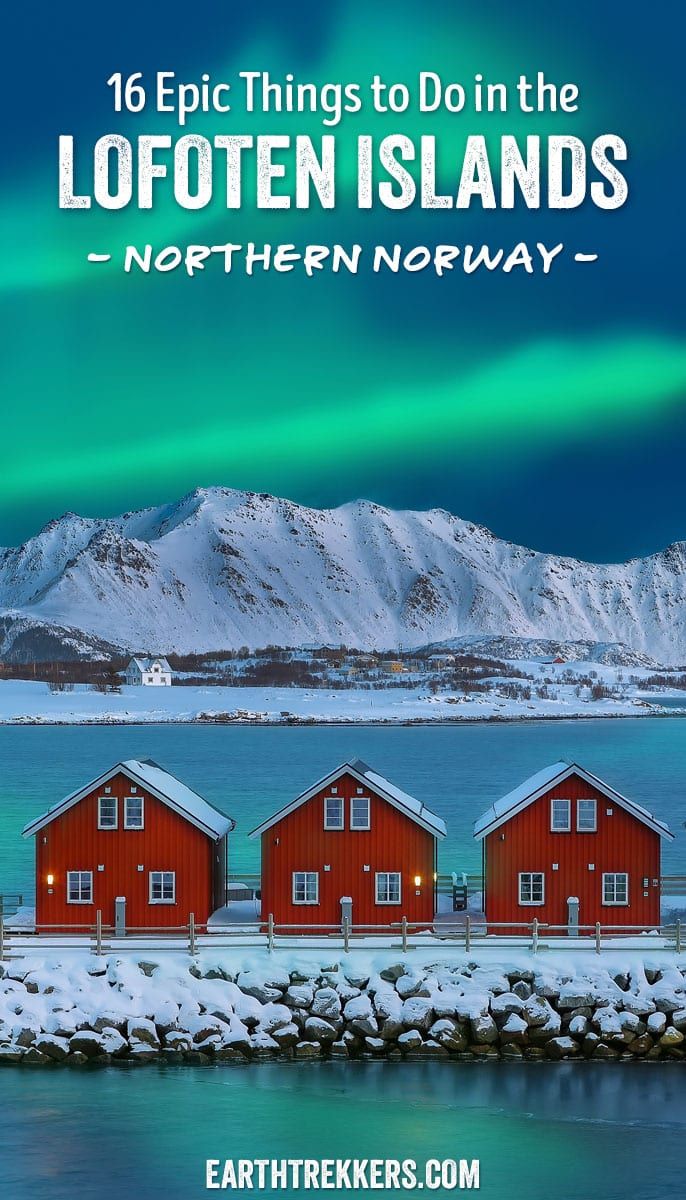
If there is one experience that draws people to the Lofoten Islands in the darker months, it’s this one. The Northern Lights are one of the most spectacular natural phenomena on the planet, and the Lofoten Islands are one of the best places in Europe to see them.
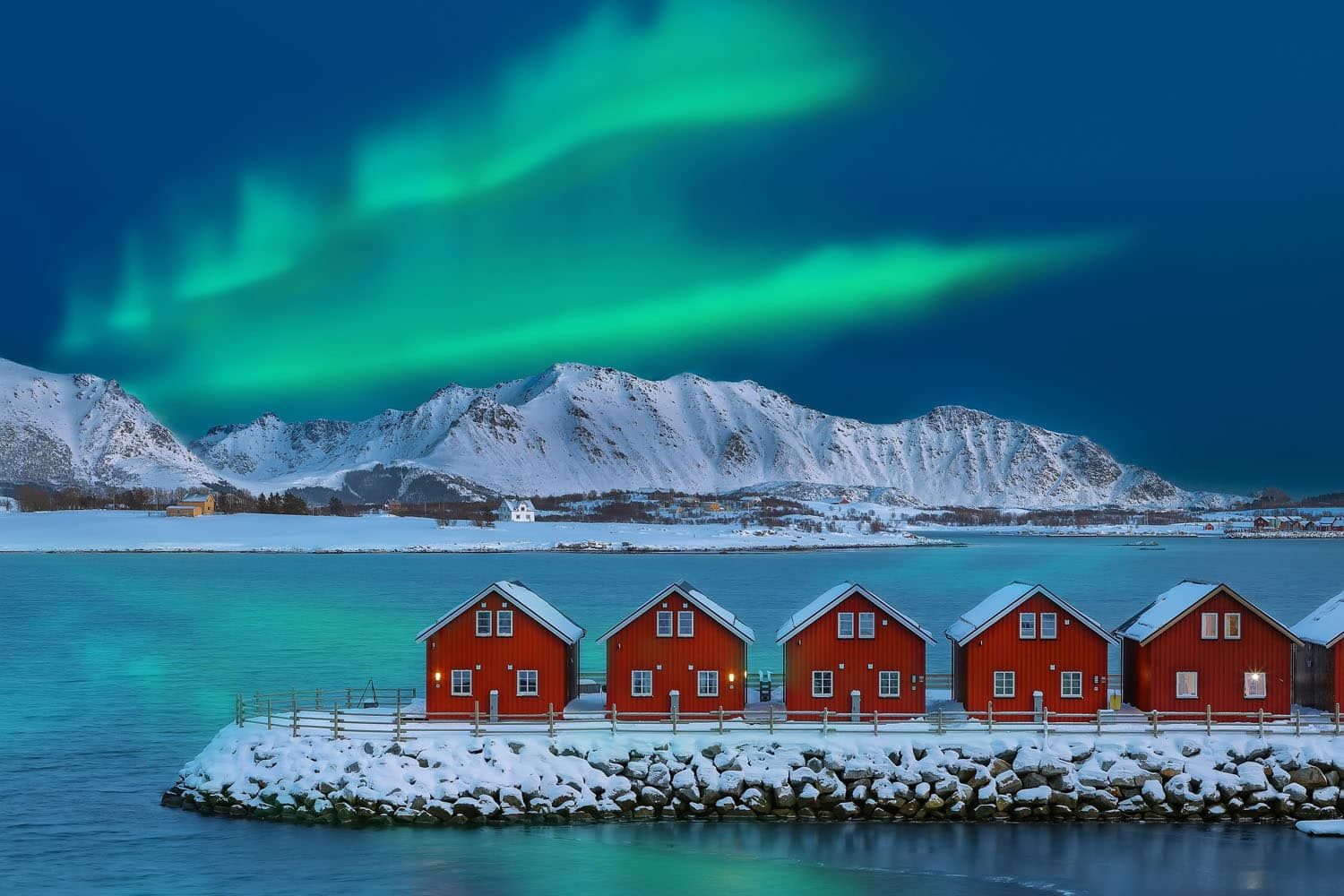
The islands sit squarely within the auroral zone, and the combination of their northern latitude, relatively low light pollution, and dramatic landscape backdrop makes for some of the most photogenic Northern Lights viewing anywhere in the world. When the sky is clear and the solar activity is strong, the lights can fill the entire sky in curtains of green, purple, and white, reflected in the still waters of the fjords below.
The season runs from late September through early April, with the darkest winter months offering the longest windows of darkness but also the coldest temperatures and shortest days. October and March tend to be popular sweet spots. There is enough darkness to see the lights, but not the full depth of a Norwegian winter. Summer visitors, ourselves included, trade the Northern Lights for the midnight sun, which is its own kind of magic.
PRO TRAVEL TIP: Northern Lights sightings are never guaranteed. Clear skies and strong solar activity both need to align. Apps like My Aurora Forecast can help you track conditions in real time. For the best views, get away from town lights and head to an open spot near the water or on higher ground.
How Many Days Do You Need on the Lofoten Islands?
If you factor in travel time and the cost to get to and from the Lofoten Islands, you should plan to spend at least several days here.
At a minimum, you should plan to spend at least two full days on the Lofoten Islands. That gives you just enough time to drive the length of the Lofoten Islands, hike a trail, and visit a few of the towns.
Each additional day that you add gives you the opportunity to explore more of this beautiful place, whether it is off-the-beaten-path beaches, more hiking trails, or exploring the fishing villages. Plus, having an extra day or two gives you some contingency time, just in case you get bad weather (which is a major possibility).
Ideally, plan to spend at least four days on the Lofoten Islands.
Learn how to plan your visit our in article How to Plan Your Lofoten Islands Itinerary ↓
Lofoten Islands Itinerary: 4 to 5 Days in Norway’s Most Spectacular Islands
Get suggestions on how to plan your visit to the Lofoten Islands, whether you have just a few days or a full week.Best Time to Go to the Lofoten Islands
We visited the Lofoten Islands in early July, and the timing couldn’t have been better for what we wanted to do. The days were long, almost absurdly so, and we made full use of every hour of light. Hiking trails were in perfect condition, the beaches were at their most inviting, and the landscape glowed in that soft, golden Arctic light that seems to last all evening. We did have one complete washout day, which is just the reality of Lofoten, because the weather here is famously unpredictable regardless of the season. But even with that, early July was ideal for our hiking-focused trip.
Here’s a quick breakdown of what to expect in each season:
SPRING: The days are getting longer and warmer. Into May, snow can still sit on hiking trails, making hiking difficult or impossible. If hiking is not on your to-do list, this can be a great time to visit the Lofoten Islands, with spectacular sunsets and low crowds. The midnight sun arrives on May 26.
SUMMER: During the summer months, daytime temperatures average around 13°C (60°F), but can reach beyond 24°C (75°F). Also, from late May to mid-July you will get to experience the midnight sun. Summer is peak season on the Lofoten Islands, so expect bigger crowds (but compared to other parts of Europe, it still feels delightfully empty here). Make your hotel reservations at least six months in advance. We visited the Lofoten Islands in early July and loved it.
AUTUMN: The days are getting shorter and cold temperatures return to the Lofoten Islands. The rainiest months of the year are September and October, and when the temperatures are cold enough, or up on the mountain peaks, this will fall as snow. The Northern Lights also make a reappearance at the end of September into early October.
WINTER: Brief days, the Northern Lights, and snow-covered landscapes are what you can expect during the winter months. December is the darkest month of the year, so don’t expect to see the sun during this month.
If hiking and outdoor activities are your priority, late June through early July is the best time to visit the Lofoten Islands.
Where to Stay
Rorbuer, apartments, hotels, and hostels are scattered throughout the Lofoten Islands. Where to stay depends on the length of time you will be visiting and your budget.
If you are here for a short period of time (2 or 3 days), consider staying in a centrally located accommodation, to minimize driving time. Nusfjord or near staying Leknes are nice options.
With four or more days, you have a lot of time, so spending extra time on the road is not a big deal. You can stay down in lovely Hamnøy or picturesque Reine, in one of the amazing rorbuer here.
You also have the option to split your stay into two different accommodations. Spend part of your time in or near Svolvaer and the remainder of your time in or near Reine. This is what we did and it worked very well for us.
For recommendations on where to stay throughout the Lofoten Islands, read our guide Best Places to Stay in the Lofoten Islands ↓
Where to Stay in the Lofoten Islands: Rorbuer, Hotels & More
Best places to stay in the Lofoten Islands, organized by location and budget.Frequently Asked Questions
When is the best time to visit the Lofoten Islands?
The best time to visit the Lofoten Islands is spring, summer, and fall. Winter is best avoided unless seeing the Northern Lights is your primary goal. The Lofoten Islands are located in the Arctic Circle, and December in particular has very little daylight. Summer offers the warmest weather and the longest days, with the midnight sun visible from late May to mid-July. Spring and fall are quieter and cooler, but both offer the possibility of seeing the Northern Lights. For hiking and outdoor activities, late June through early July is the sweet spot.
How long does it take to drive through the Lofoten Islands?
Without stops, it takes about 4 hours to drive through the Lofoten Islands, from north to south. However, this drive is one of the most beautiful in Norway, with stunning landscapes, rugged mountain peaks, white sandy beaches, and picturesque towns to visit along the way. For this drive, it’s best to give yourself one full day or break it up into multiple days, staying at the northern and southern areas of the Lofoten Islands.
What are the best beaches in the Lofoten Islands?
Uttakleiv Beach is our favorite.This stunning arc of white sand is backed by dramatic cliffs that genuinely takes your breath away. Ramberg Beach is another highlight, with a long curve of sand and jagged peaks as a backdrop. Haukland Beach is beautiful and easy to reach, sitting just around the headland from Uttakleiv. For the most remote beach experience, take the ferry from Reine to Bunes Beach.
Are the Lofoten Islands worth it?
Absolutely. The Lofoten Islands are one of the most beautiful places to visit in Europe. With rugged coastlines, small harbors filled with red fishing cabins, winding roads through the mountains, thrilling hiking trails, and beaches that look like they belong in the Caribbean, the Lofoten Islands are a delight to explore.
Are the Lofoten Islands expensive to visit?
Norway is one of the more expensive countries in Europe, and the Lofoten Islands are no exception. Dining out, accommodation, and activities add up quickly. That said, many of the best experiences here, including hiking, driving the scenic road, and visiting the beaches and viewpoints, are completely free. We kept costs down by buying breakfast and lunch at grocery stores and saving our restaurant budget for dinners. Booking accommodation well in advance also helps, especially in summer when prices rise and availability tightens.
Plan Your Trip to the Lofoten Islands
If you’re planning a visit to the Lofoten Islands, we have a full library of guides to help you put it all together. Our Lofoten Islands Itinerary covers how to structure your days whether you have three days or a full week, including how to get here and where to base yourself. For accommodation, our Where to Stay in the Lofoten Islands guide covers the best rorbuer, hotels, and locations across the archipelago.
If you’re building a broader Norway trip around a Lofoten visit, our 10-Day Northern Norway Itinerary covers the route from Tromsø through Senja and the Vesterålen Islands down to Lofoten — the exact road trip we did ourselves.
And for the full picture of Norway, our Norway Travel Guide is the place to start.
Do you have any questions about the best things to do in the Lofoten Islands? If you have any questions, or if you want to share your experience, let us know in the comment section below!
More Places to Visit in Norway and the Lofoten Islands
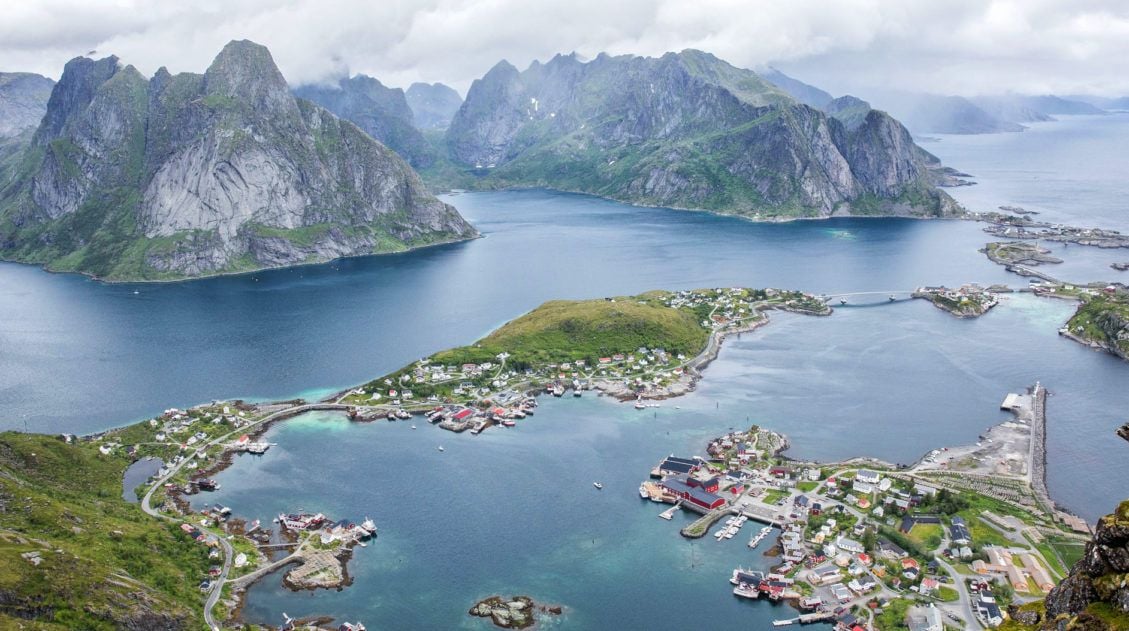
20 Best Things to Do in Norway: Fjords, Lofoten & Svalbard
Pinterest Facebook Flipboard Norway is one of our favorite countries in the world, and narrowing down the best things to do in Norway for this list was genuinely hard. There’s just so much worth doing. We’ve been twice so far, and we’re already dreaming about a third trip. Our first visit was a family trip […]
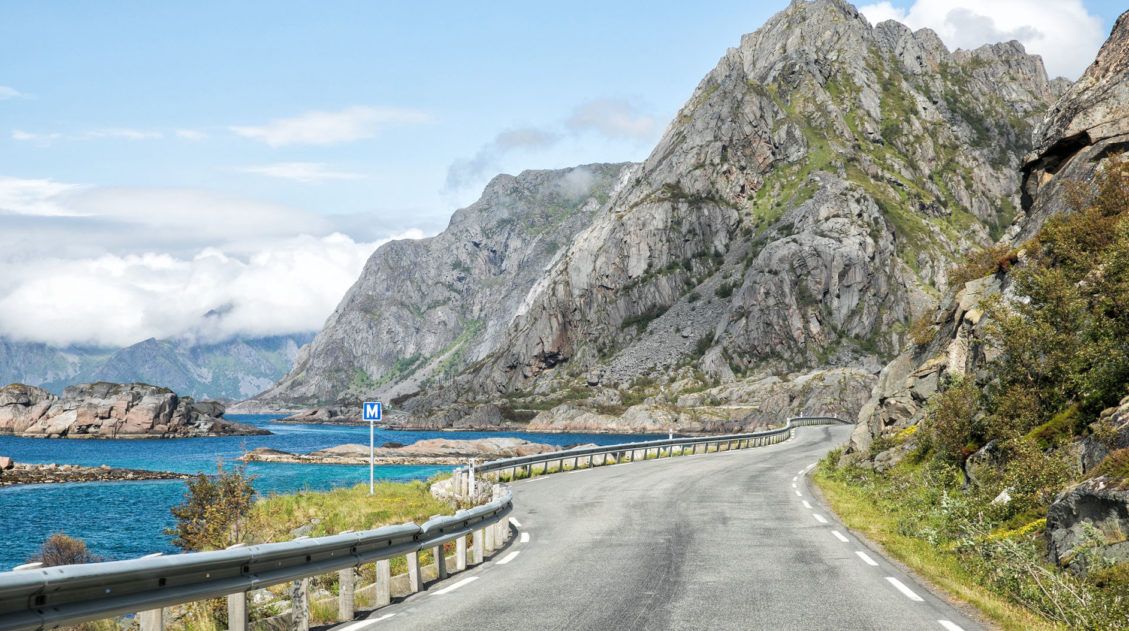
10 Days in Norway: How to Combine the Fjords and the Lofoten Islands
After two trips to Norway, one through the fjord region, one through the far north, we started getting the same question over and over in our comments: Can we combine both into one trip? How do we do the fjords AND the Lofoten Islands in 10 days? That’s exactly what this post is for. We’ve […]
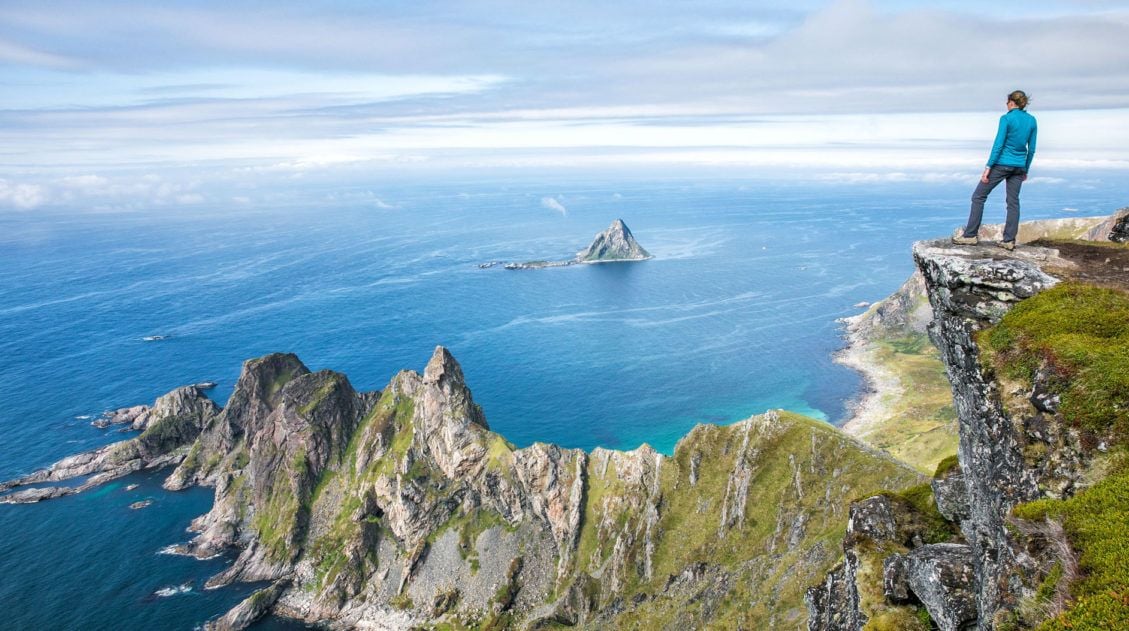
Hiking to Måtind on the Stave-Bleik Coastal Trail, Vesteralen, Norway
Norway has a way of exceeding every expectation, and the Stave-Bleik Coastal Trail on Vesteralen’s Andøya island is a perfect example. We hiked to Måtind in early July as part of a road trip from Tromsø to the Lofoten Islands, squeezing it in after a morning ferry crossing from Senja, and it turned out to […]
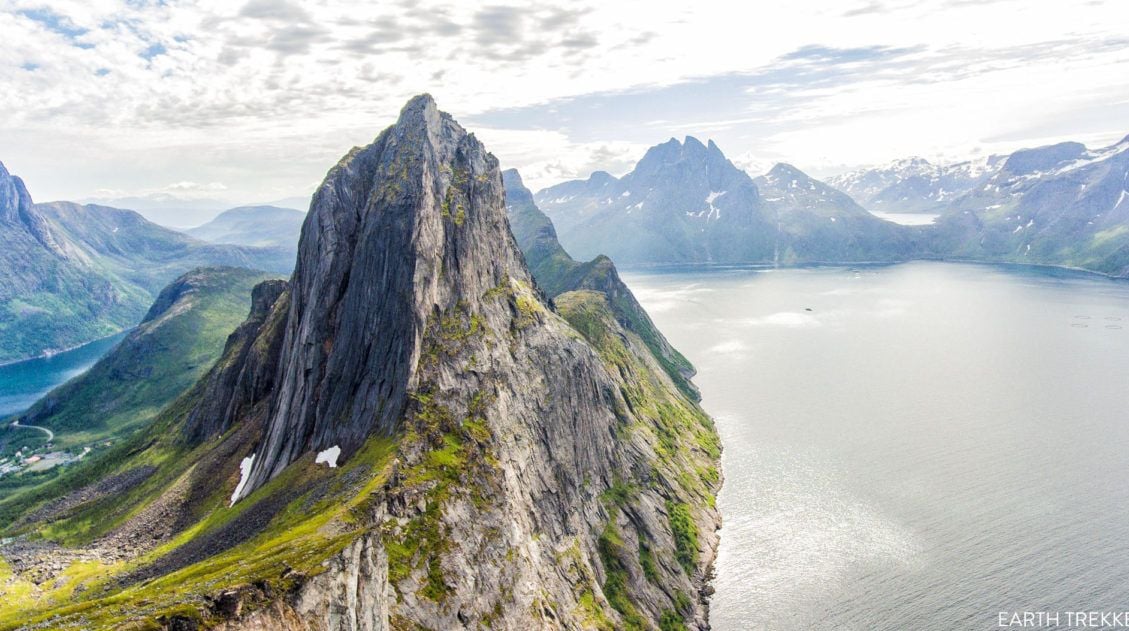
How to Hike Segla, An Iconic Peak in Senja, Norway
The hike up to the summit of Segla is one of Senja’s most popular hikes. And this was our main reason for visiting Senja. Many visitors skip past Senja, heading directly to the Lofoten Islands. But those people are missing out seeing a gorgeous part of Norway and some hidden gems. That’s fine…that means less […]
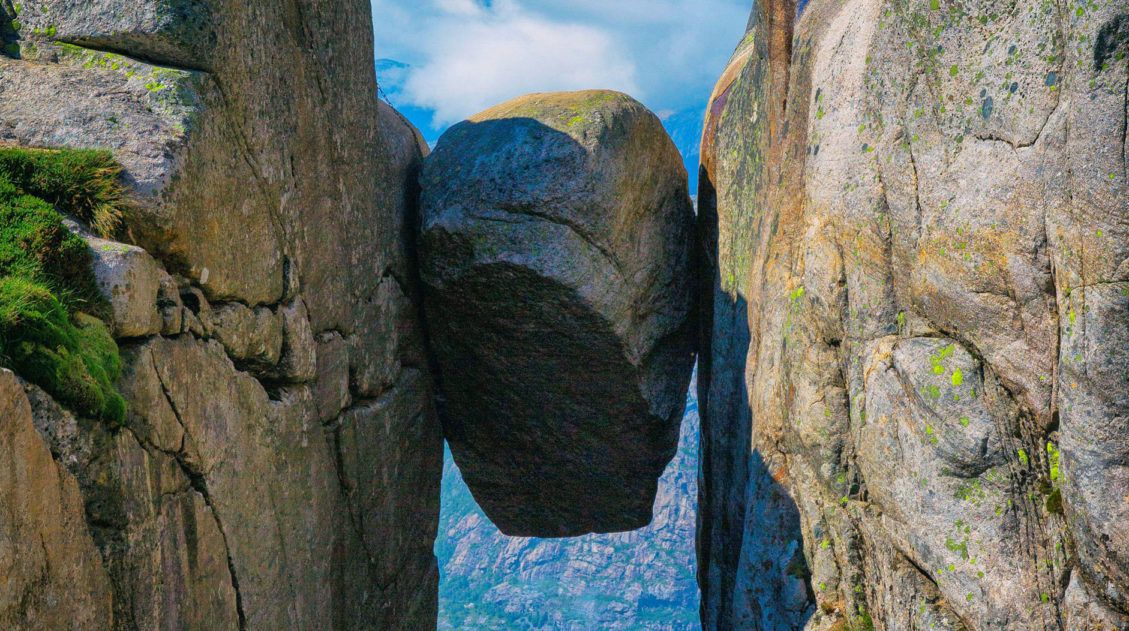
Kjeragbolten: Our Favorite Hike in Norway
Kjeragbolten is one of Norway’s most iconic and nerve-wracking hikes: a boulder wedged 1,000 meters above Lysefjord, reached by a strenuous 12 km trail from the Stavanger area. When Tim and I first researched Norway as a travel destination, we repeatedly saw photos of what looked to be crazy people standing on a boulder with […]
Best Hikes in Norway: 14 Epic Trails for Every Level
For hikers, few places in Europe can match Norway. The hikes in Norway are endlessly varied and genuinely world-class, from the fjords of southern Norway, the jagged peaks of the Lofoten Islands, and the remote coastline of Vesterålen and Senja. Alongside the Dolomites and the Swiss Alps, this is one of our absolute favorite places […]
12 Best Things to Do in Longyearbyen, Svalbard
Longyearbyen is the world’s northernmost city. This is a town where the streets have no names, reindeer wander through town, and there are more snowmobiles than people. If you have plans to visit Svalbard, Longyearbyen is where you will eat, sleep, and fill your time in between arctic adventures. The best things to do in […]
10 Day Norway Itinerary: The Ultimate Fjords and Hiking Road Trip
This 10-day itinerary through Norway’s fjord region features Stavanger, Bergen, Geirangerfjord, and Ålesund, with four bucket-list hikes — Pulpit Rock, Kjeragbolten, Trolltunga, and Romsdalseggen Ridge — plus hotel recommendations and practical planning advice based on our own road trip through Norway. This was the first road trip we ever did in Europe, but this is […]
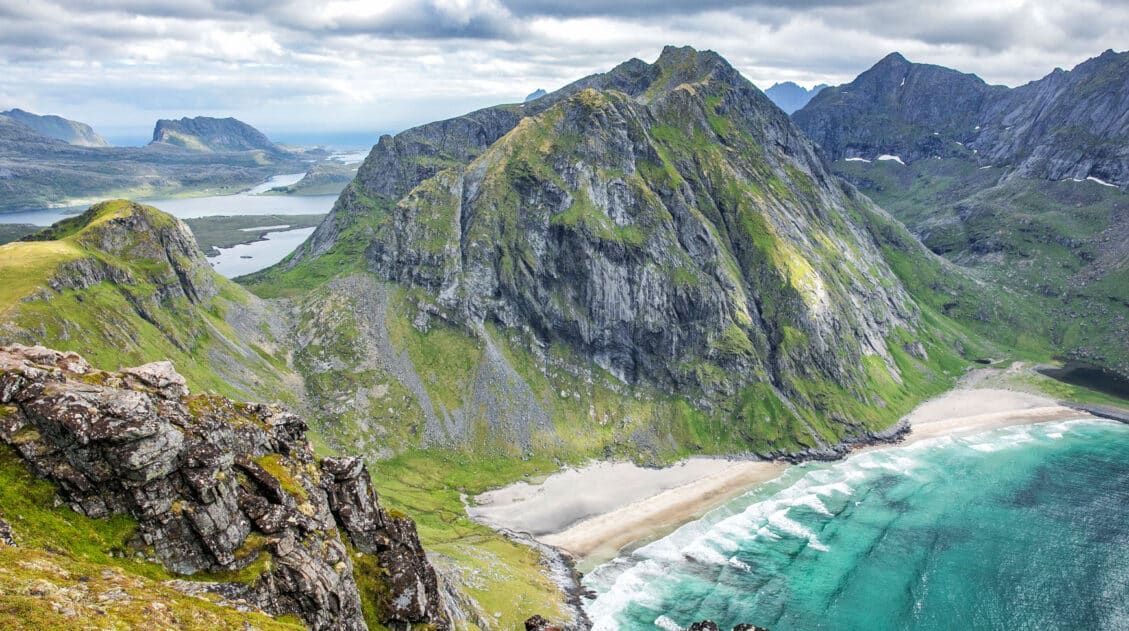
Norway Travel Guide: Fjords, Lofoten Islands & Svalbard
Norway Travel Guide There is nowhere quite like Norway. We’ve been to Norway twice, and both trips rank among the most spectacular we’ve ever taken. On our first visit, we road tripped through the fjord region in summer, hiking Trolltunga, Kjeragbolten, Pulpit Rock, and Romsdalseggen Ridge and cruising past some of the most dramatic scenery […]
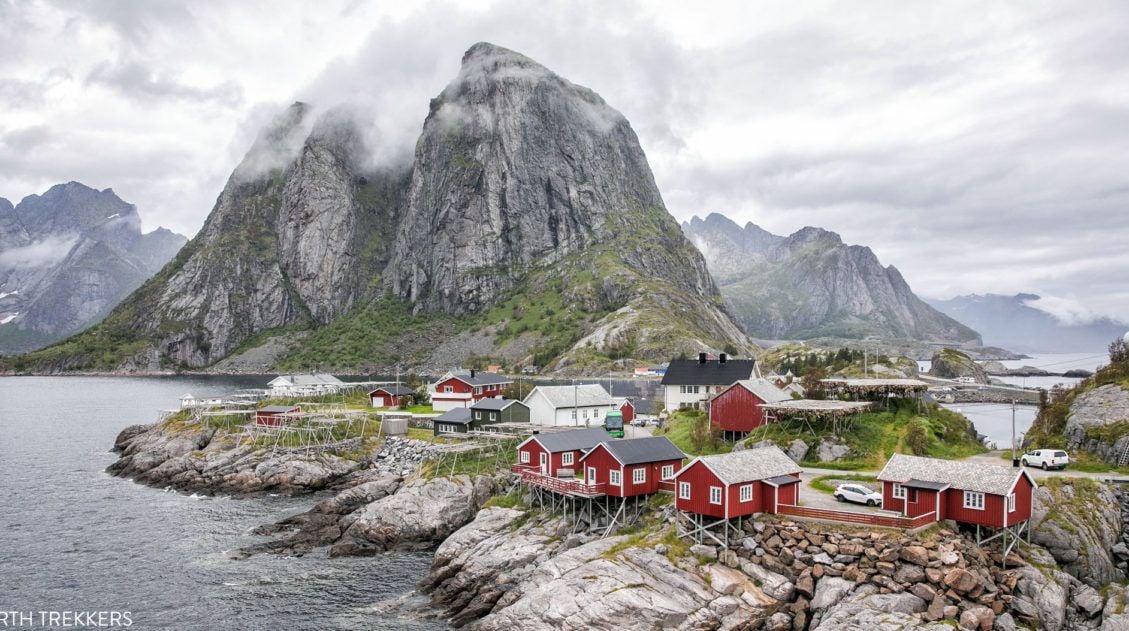
10-Day Northern Norway Itinerary: Tromsø to the Lofoten Islands
We’ve done a lot of road trips in Europe, through the Italian Dolomites, across the Scottish Highlands, and down into the fjord region of southern Norway. This Northern Norway itinerary is one of our all-time favorites. We drove this route in early July, starting in Tromsø and working our way south through Senja and the […]
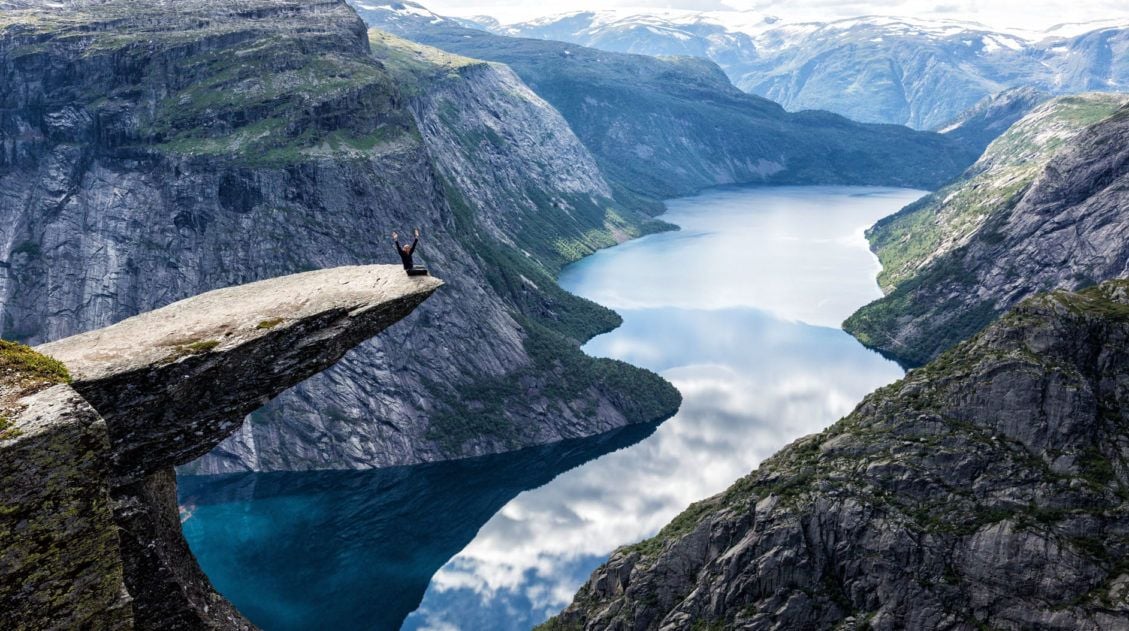
How to Hike Trolltunga: Everything You Need to Know
Trolltunga was the third hike on our first Norway trip, and by then we had a pretty good read on what Tyler and Kara could handle. They’d already done Pulpit Rock and Kjeragbolten, two hikes that would have been on most adults’ bucket lists, and they hadn’t complained once. Tyler was 10. Kara was 8. […]
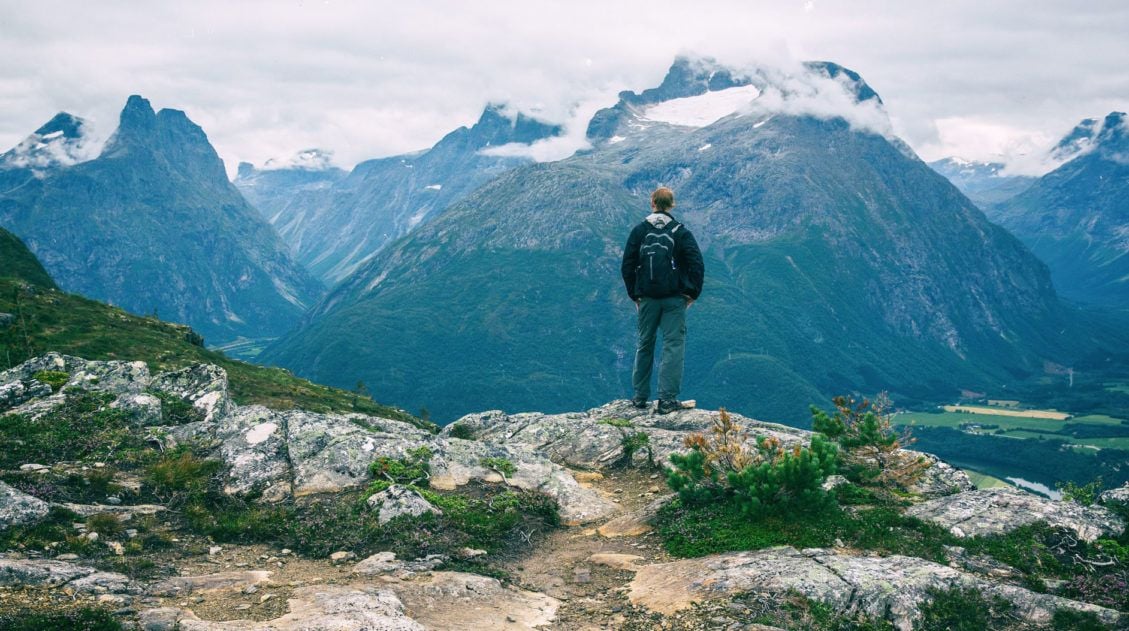
Hiking Romsdalseggen Ridge in Norway (+ Photos & Helpful Tips)
The Romsdalseggen hike is a point to point hike that traverses the Romsdalseggen Ridge, with views over the fjords, the town of Åndalsnes, and even out to the western coastline of Norway to the Atlantic Ocean. On our first trip to Norway, this was the hike that I was looking forward to the most. The […]

Comments 27