
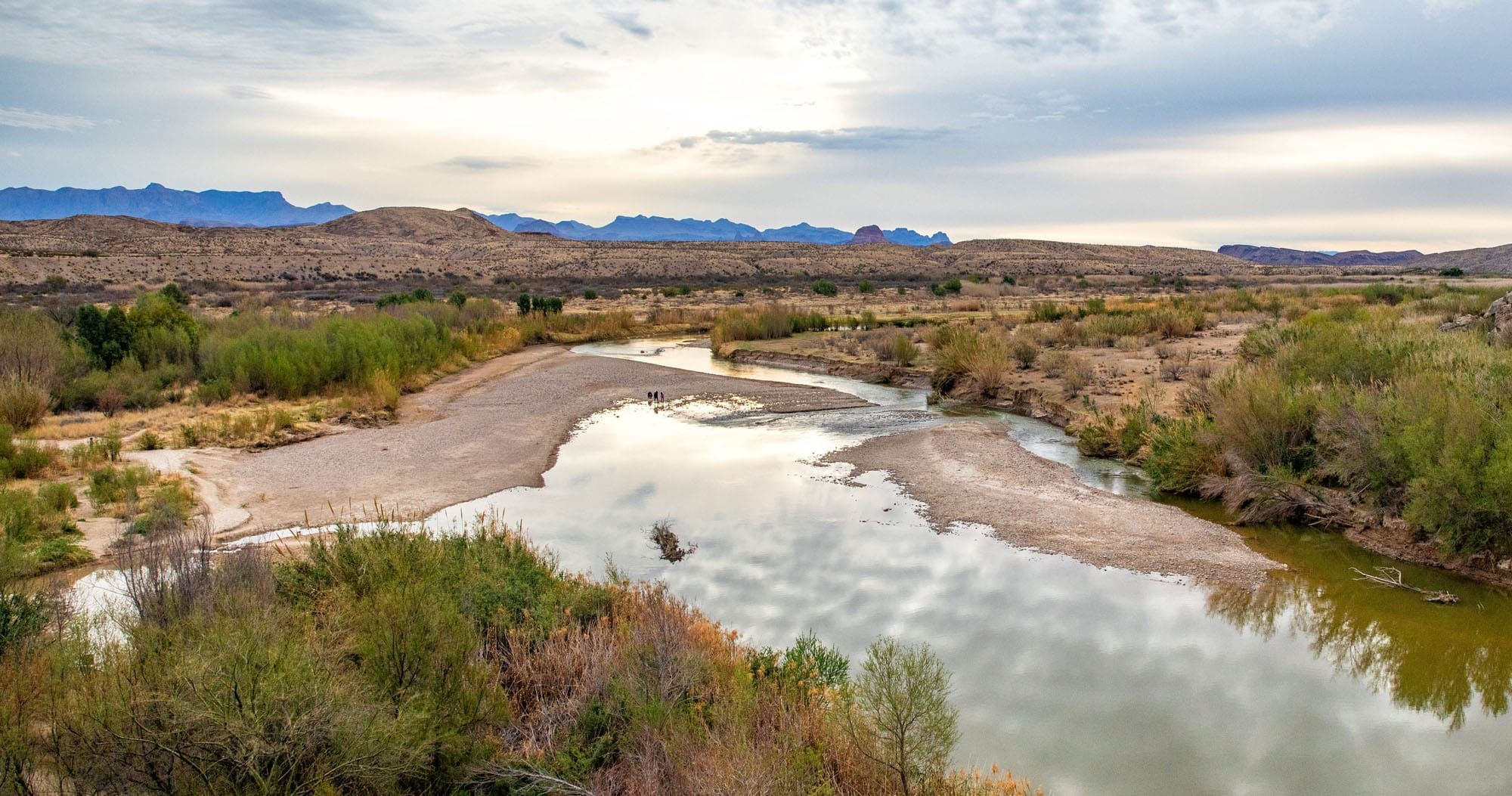
Discover the best things to do in Big Bend National Park, including the must-see highlights, unique experiences you won’t find anywhere else, and practical tips to help you plan your visit.
Big Bend National Park is one of those places that genuinely surprises you. Tim and I had heard it described as remote and rugged, but nothing quite prepares you for the scale of it — the sweeping Chihuahuan Desert, the jagged Chisos Mountains rising up from the valley floor, the Rio Grande carving its way along the border with Mexico.
In this guide, we cover the best things to do in Big Bend National Park, organized by the park’s three main areas: Ross Maxwell Scenic Drive, Chisos Basin, and Rio Grande Village. Whether you’re planning a short weekend trip or a full week of exploration, this guide will help you make the most of your time in one of the most extraordinary national parks in the United States.
If you’re planning a full trip, don’t miss our Big Bend National Park Travel Guide for itineraries, where to stay, and how to plan your visit.
Note: The proposed construction project in Chisos Basin for 2026 has been canceled.
Best Things to Do in Big Bend: Quick List
- Ross Maxwell Scenic Drive
- Santa Elena Canyon
- South Rim Trail
- Hike to Emory Peak
- Lost Mine Trail
- Balanced Rock
- Stargazing
- Cross into Boquillas, Mexico
- Hike Ernst Tinaja Trail
- Rio Grande Hot Springs
October 2026 Update: Rechecked park fees, trail and Chisos Basin access, and current requirements and prices for visiting Boquillas del Carmen.
Why Visit Big Bend National Park?
Big Bend is one of the largest and most remote national parks in the United States, covering over 800,000 acres of Chihuahuan Desert, rugged mountain terrain, and 118 miles of Rio Grande riverfront along the border with Mexico.
It is also one of the least visited. In 2025, just 570,000 people came here, compared to 5 million at Zion and 12 million at Great Smoky Mountains. If you’ve ever wanted to experience a national park without the crowds, Big Bend is it.
The park sits in the southwestern corner of Texas and gets its name from the prominent bend in the Rio Grande along its southern border. It officially became a national park on June 12, 1944, and in 2012 was designated an International Dark Sky Park. It’s home to the darkest skies in the lower 48 states. On a clear night, the Milky Way is visible with the naked eye.
What makes Big Bend special is the sheer variety of experiences it offers. In a single day you can hike through a slot canyon, soak in 105°F hot springs, drive one of the most scenic roads in the Southwest, and cross the Rio Grande into Mexico. The park rewards visitors who take their time. Three days in Big Bend is the minimum to do it justice, and more is always better.
Best Things to Do Along Ross Maxwell Scenic Drive
Ross Maxwell Scenic Drive is a 30-mile paved road through some of the most dramatic landscapes in Big Bend National Park. Even if you never get out of the car, this drive alone is worth the trip.
Plan at least half a day for Ross Maxwell Scenic Drive if you want to stop at the highlights. A full day gives you time to hike Santa Elena Canyon and still linger at the overlooks without feeling rushed.
1. Cruise down Ross Maxwell Scenic Drive
Best For: First-time visitors, families, and anyone who wants a scenic introduction to the park without committing to a long hike.
Ross Maxwell Scenic Drive winds through desert flats, past volcanic formations, and into the shadow of the Chisos Mountains. Scenic overlooks, hiking trails, and short strolls will keep you busy as you drive along this road.
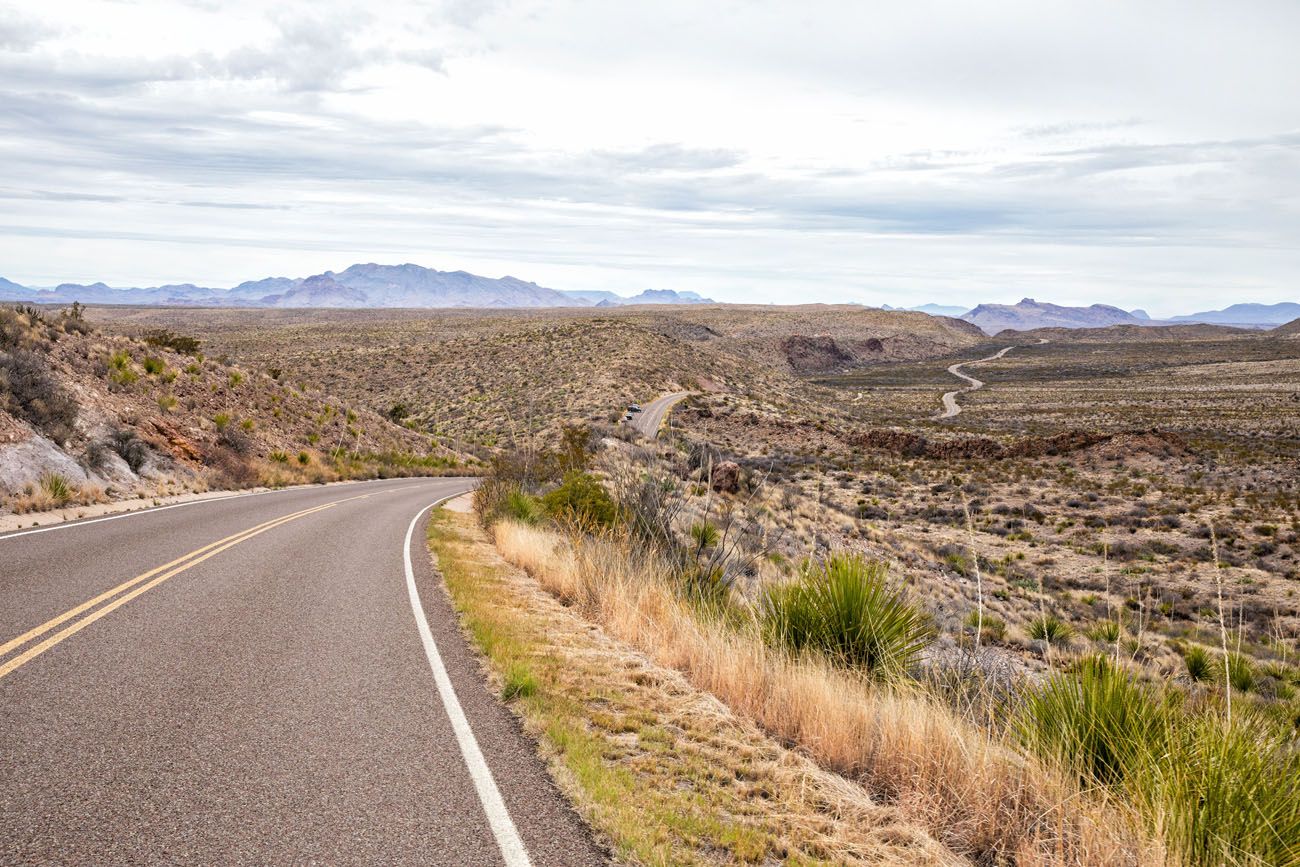
Ross Maxwell Scenic Drive
You can drive out and back along Ross Maxwell Scenic Drive or you can drive one direction along Old Maverick Road. This is a dirt road that connects Santa Elena Canyon with the Maverick Junction entrance into Big Bend National Park (the west entrance near Terlingua). Old Maverick Road can close due to flooding.
2. Hike Santa Elena Canyon
Distance: 1.7 miles | Difficulty: Easy | Time: 1 to 2 hours
Best For: Everyone. This is the single best short hike in Big Bend and the most dramatic up-close experience with the Rio Grande.
Santa Elena Canyon is one of the best short hikes in Big Bend National Park and an absolute must-do. The trail follows the edge of the Rio Grande deep into a canyon with 1,500-foot limestone walls rising on both sides — one side Texas, the other Mexico. There is one brief but steep climb early in the hike, and the views from the top are worth every step. The trail ends at a stunning view into the heart of the canyon.
This is the best up-close experience with the Rio Grande in the park. Don’t skip it.
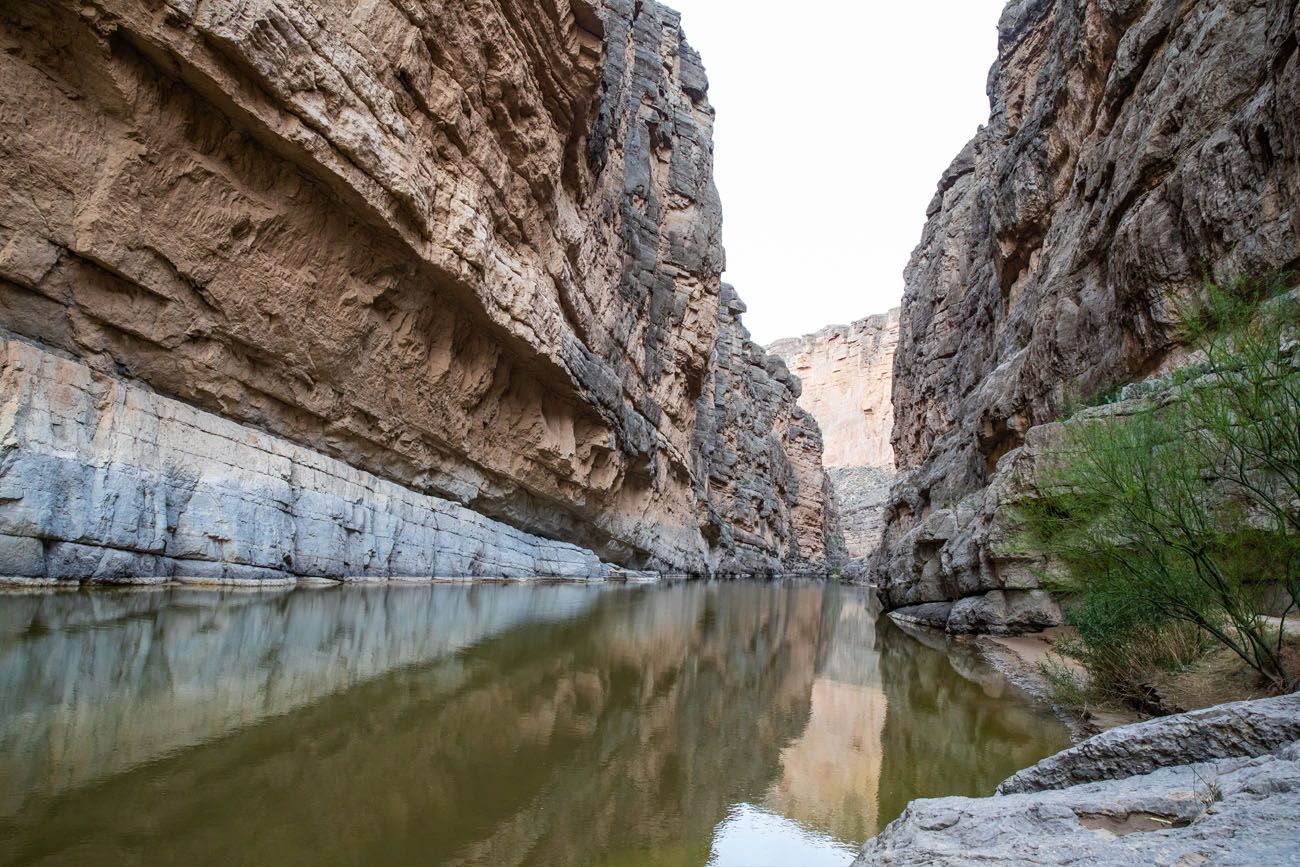
Santa Elena Canyon
3. Stop at the Santa Elena Canyon Overlook
Driving toward Santa Elena Canyon, you’ll pass this overlook on the right. It’s worth a two-minute stop if you’re curious, but it doesn’t come close to what you’ll see if you hike into the canyon itself. Think of it as a preview, not a substitute.
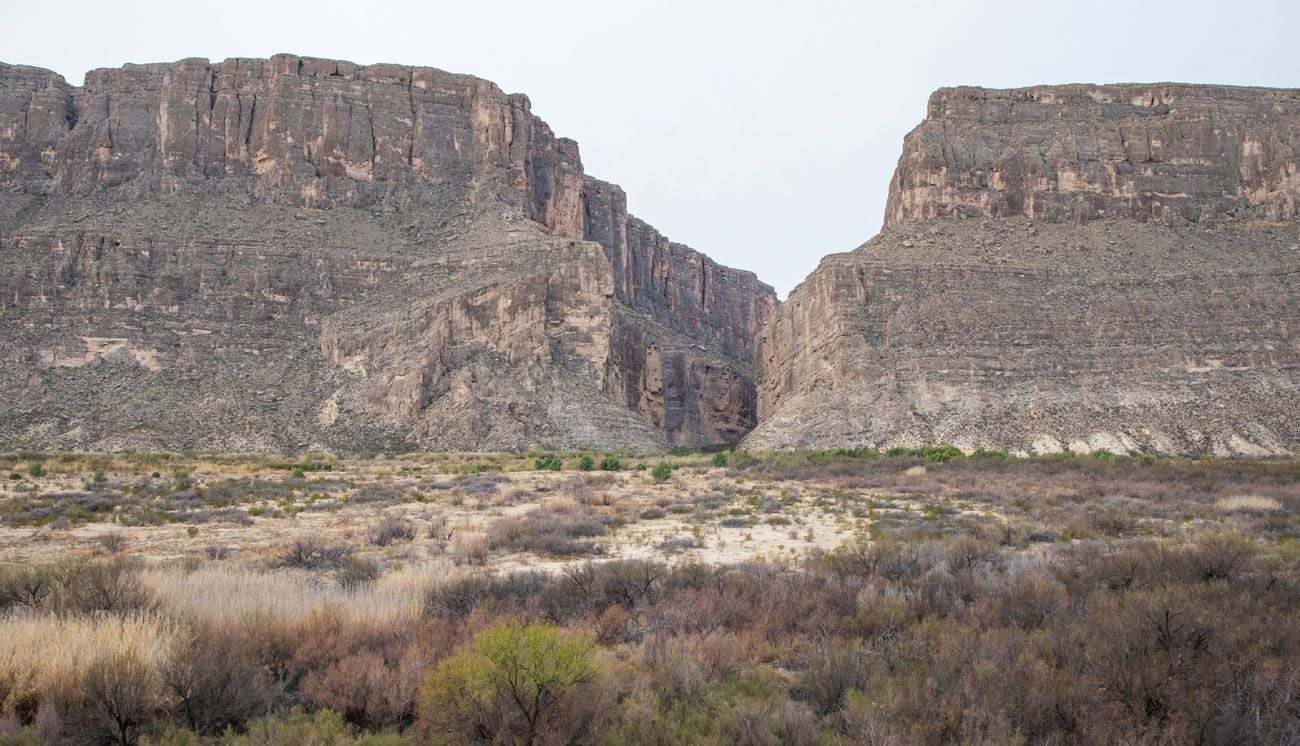
Santa Elena Canyon Overlook
4. Explore Tuff Canyon
Distance: 0.75 miles | Difficulty: Easy | Time: 30 minutes
A quick, easy loop with views down into Tuff Canyon, formed by ancient volcanic rock. You can walk the loop to the overlooks or take the spur trail down into the canyon itself. A good stop if you have time and want to stretch your legs between bigger attractions.
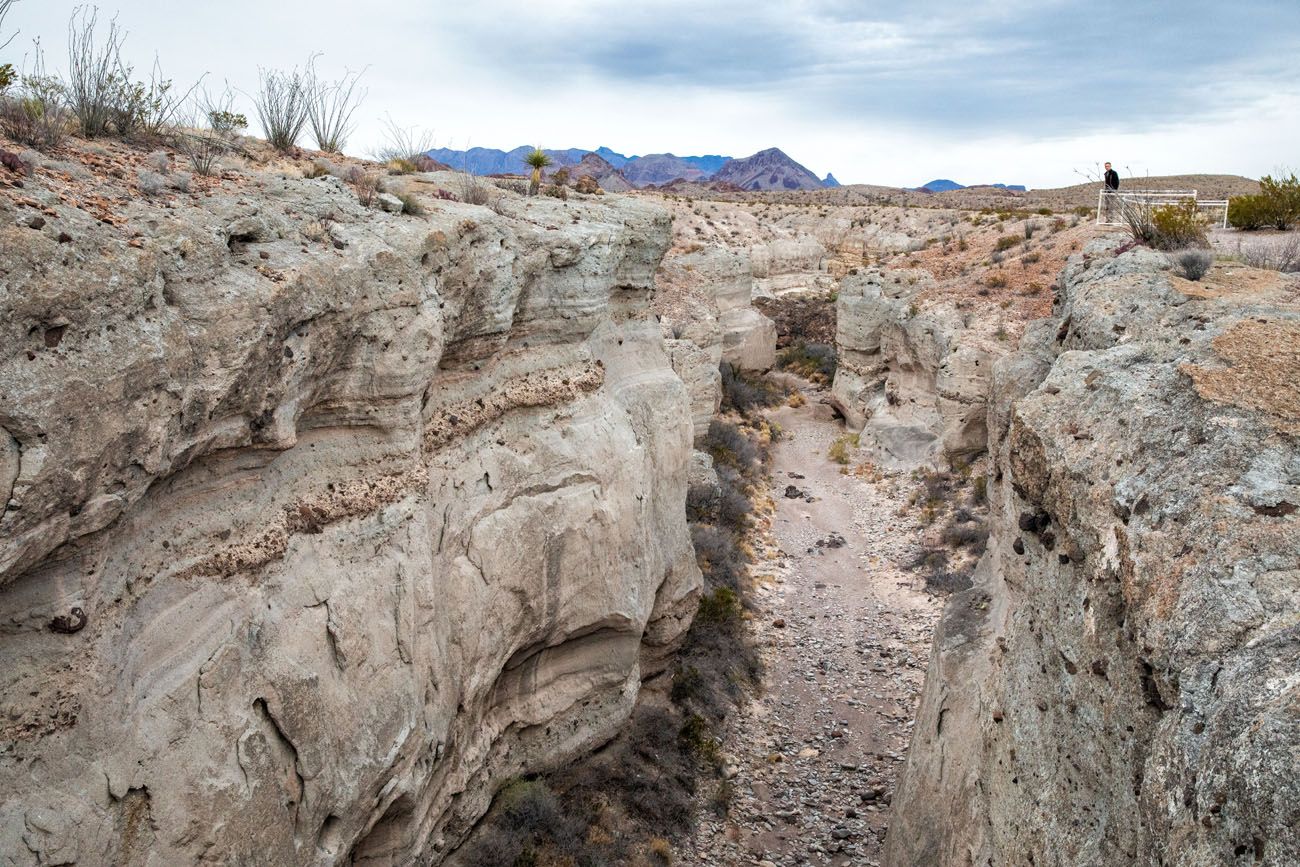
Tuff Canyon
5. Hike the Spring Trail to Mule Ears
Distance: 3.8 miles | Difficulty: Moderate | Time: 2 to 3 hours
Best For: Hikers looking for a moderate desert trail with iconic scenery and fewer crowds than the main Chisos Basin trails.
The Mule Ears are a pair of distinctive rock spires visible from an overlook along Ross Maxwell Scenic Drive. You’ll spot them long before you reach the trailhead.
For a closer look, hike the Spring Trail, which winds through the desert toward the base of the formation, ending at a spring. Note that the trail does not take you all the way to the Mule Ears themselves.
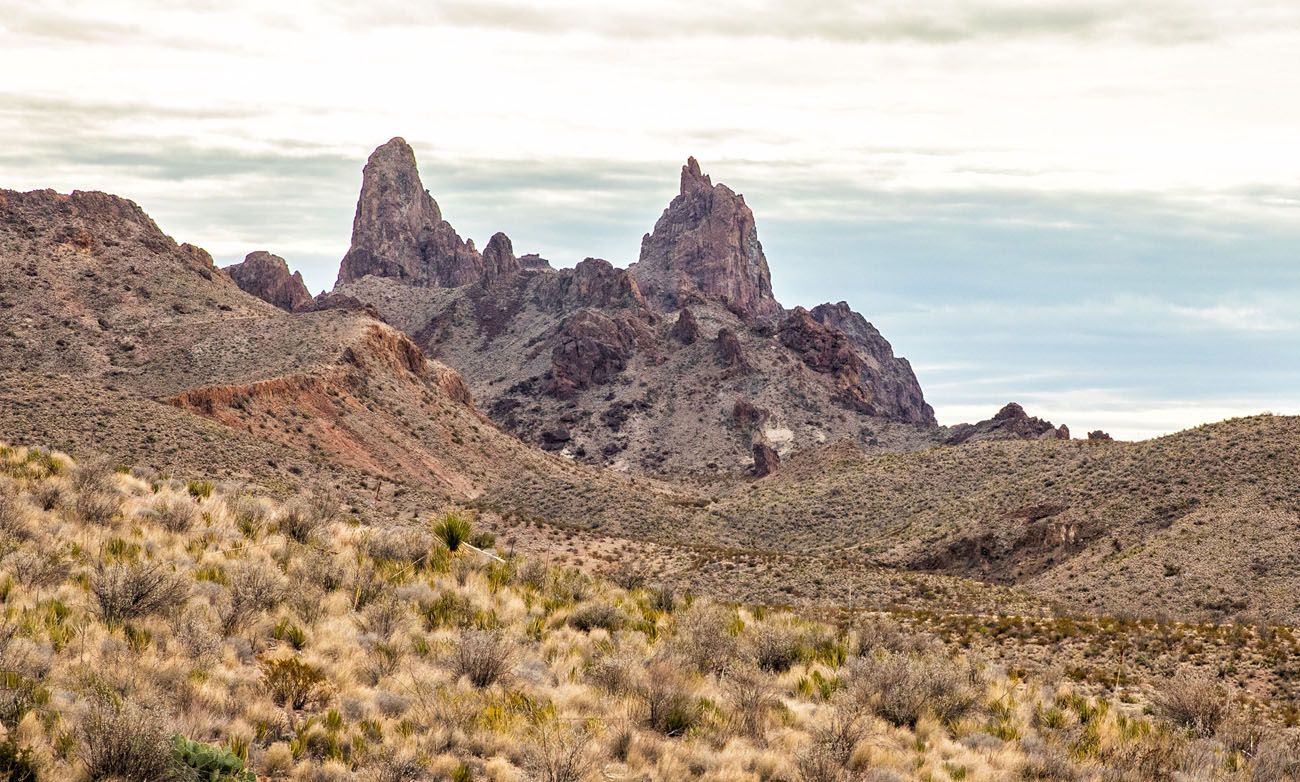
Mule Ears
6. Hike the Lower Burro Mesa Pour-Off
Distance: 1 mile | Difficulty: Easy | Time: Allow 45 minutes
One of the more underrated stops along Ross Maxwell Scenic Drive. The trail follows a wide gravel wash through a large canyon, ending at the base of a towering cliff where water pours off the edge during rainstorms. Even when dry, the scale of the canyon walls is impressive. Easy enough for most fitness levels and well worth the stop.
7. Stop at the Sotol Vista Overlook
A quick pull-off that earns its place on the itinerary. From here you get sweeping, near-panoramic views of the park, with Ross Maxwell Scenic Drive visible below as it curves through the desert toward the Chisos Mountains. One of the best viewpoints in the park that requires zero effort to reach.
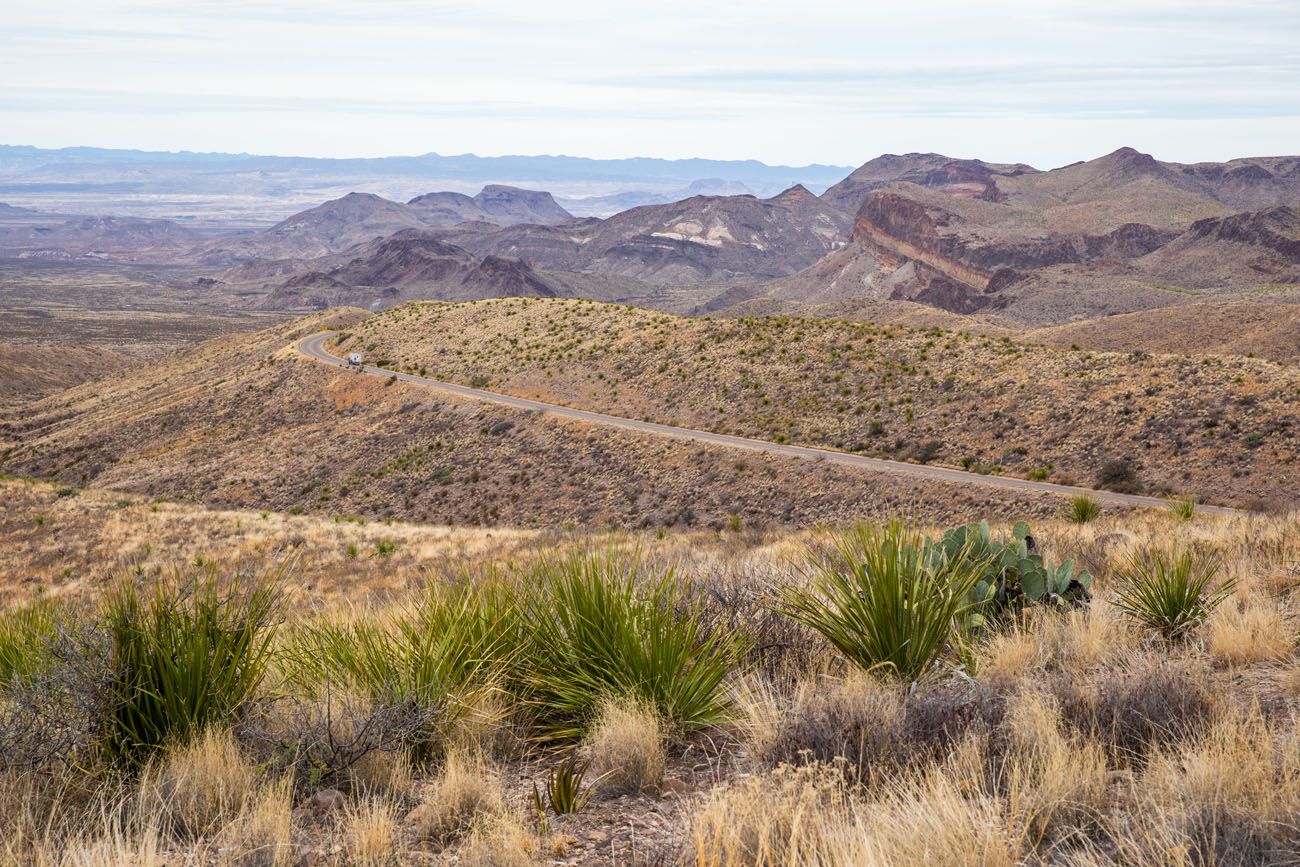
Sotol Vista Overlook
8. Go Birdwatching at Sam Nail Ranch
Distance: 0.5 miles | Difficulty: Easy | Time: 20 to 30 minutes
Best For: Birders and anyone interested in Big Bend’s human history. Also a great low-key stop for families with young kids.
Located at mile three of Ross Maxwell Scenic Drive, Sam Nail Ranch is an easy loop through the remains of an early 20th century homestead. You’ll see the ruins of the ranch house and two windmills, one of which still turns today. The cottonwood trees and water source make this one of the best birdwatching spots in the park, with nearly 200 species reported in the area. Even if you’re not a birder, it’s a peaceful and interesting stop.
Please practice the seven principles of Leave No Trace: plan ahead, stay on the trail, pack out what you bring to the hiking trail, leave areas as you found them, minimize campfire impacts, be considerate of other hikers, and do not approach or feed wildlife.
Best Things to Do in Chisos Basin
Chisos Basin was the highlight of our trip to Big Bend. Rugged, jagged mountains rise up dramatically from the desert floor, creating a landscape unlike anything else in the park. This is where you’ll find the most rewarding hiking trails in Big Bend, from short, accessible walks to full-day summit hikes with jaw-dropping panoramic views.
The basin sits at a higher elevation than the rest of the park, which means cooler temperatures and a completely different ecosystem. Oak, juniper, and Mexican pine replace the desert scrub of the lower elevations, and wildlife sightings, including black bear and mountain lion, are not uncommon.
Note that the Chisos Basin area requires a separate drive from both Ross Maxwell Scenic Drive and Rio Grande Village, so plan to dedicate at least one full day to this section of the park.
9. Watch the Sunset at the Window
Distance: 0.3 miles | Difficulty: Easy | Time: 20 minutes
Best For: Everyone. This is the easiest and most rewarding sunset spot in the park. A flat, paved walk with a payoff that punches well above its effort level.
The Window View Trail is one of the easiest and most rewarding walks in Big Bend. The trail is paved and flat, making it accessible for virtually everyone, and it leads to a viewpoint of the Window, a V-shaped opening in the Chisos mountain range that frames a stunning view of the desert below. At sunset, the light pours through the gap and the colors are extraordinary.
If you’re based in Chisos Basin for the day, this is the perfect way to end it. The trailhead is right at the Chisos Basin Visitor Center, so there’s no extra driving required.
10. Hike the Window Trail
Distance: 5.6 miles | Difficulty: Moderate | Time: 3 to 4 hours
Best For: Hikers who want a moderately challenging half-day hike with one of the most dramatic viewpoints in the Chisos Basin.
Not to be confused with the Window View Trail, the Window Trail is a proper hike that takes you all the way down to the Window itself, the same opening you admire from the viewpoint above. The trail descends through the Chisos Basin, winding through oak and juniper forest before narrowing into a rocky pour-off that ends at the Window’s edge. The views from here, looking out over the vast Chihuahuan Desert below, are some of the best in the park.
One thing to keep in mind: because the trail descends on the way out, you’ll be climbing on the way back. Plan your energy accordingly.
11. Hike the Lost Mine Trail
Distance: 4.8 miles | Difficulty: Moderate | Time: 2.5 to 3.5 hours
Best For: Hikers who want a rewarding summit view without the full commitment of Emory Peak or the South Rim. A great choice for first-timers in the Chisos Basin.
The Lost Mine Trail is one of the most popular hikes in Big Bend, and one of our personal favorites. We hiked it on our second morning, and despite cloud cover and a bit of light drizzle that muted the colors of the desert, we were struck by how interesting and varied the trail felt. On a clear day, we imagine the views are absolutely stunning.
The trail climbs steadily through the Chisos Mountains, with occasional views across the basin opening up as you gain elevation. The first half is a fairly unrelenting uphill walk, but once you reach the top, the payoff is significant, with a panoramic view over the mountains and valleys of Big Bend that stretches as far as the eye can see. In some ways the trail itself is even more visually interesting than the South Rim, with a more intimate feel as it winds through the mountains.
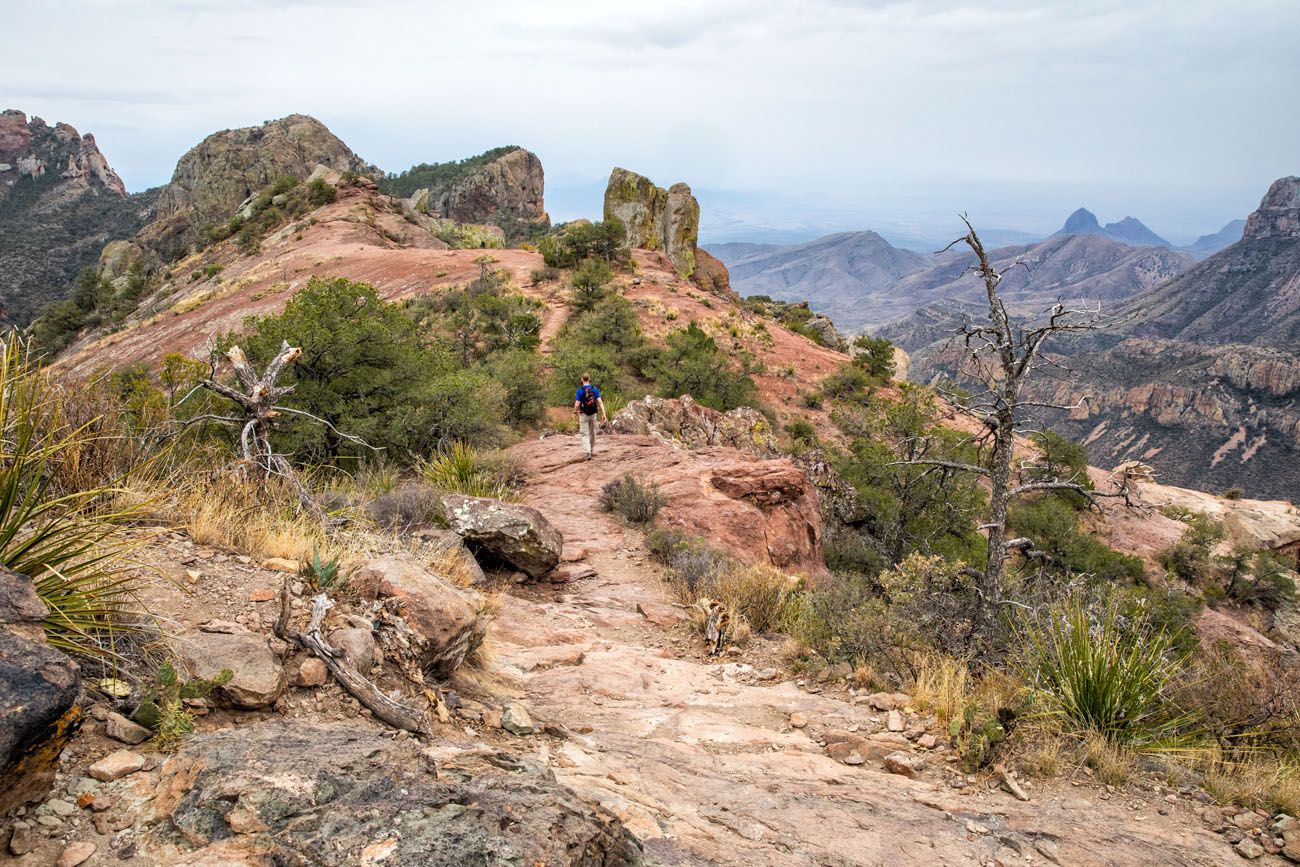
Lost Mine Trail
12. Hike the Chisos Basin Loop
Distance: 1.8 miles | Difficulty: Easy to moderate | Time: 1 to 2 hours
The Chisos Basin Loop is a great introduction to hiking in the basin. The trail winds through the valley floor, passing through a forest of oak, juniper, and Mexican pine with occasional views of the mountains that rise up on all sides. It’s not the most dramatic hike in the park, but it’s a pleasant walk that gives you a real feel for the Chisos Basin ecosystem.
This is also the starting trail for both the South Rim and Emory Peak hikes, so if you’re doing either of those, you’ll begin your day here regardless.
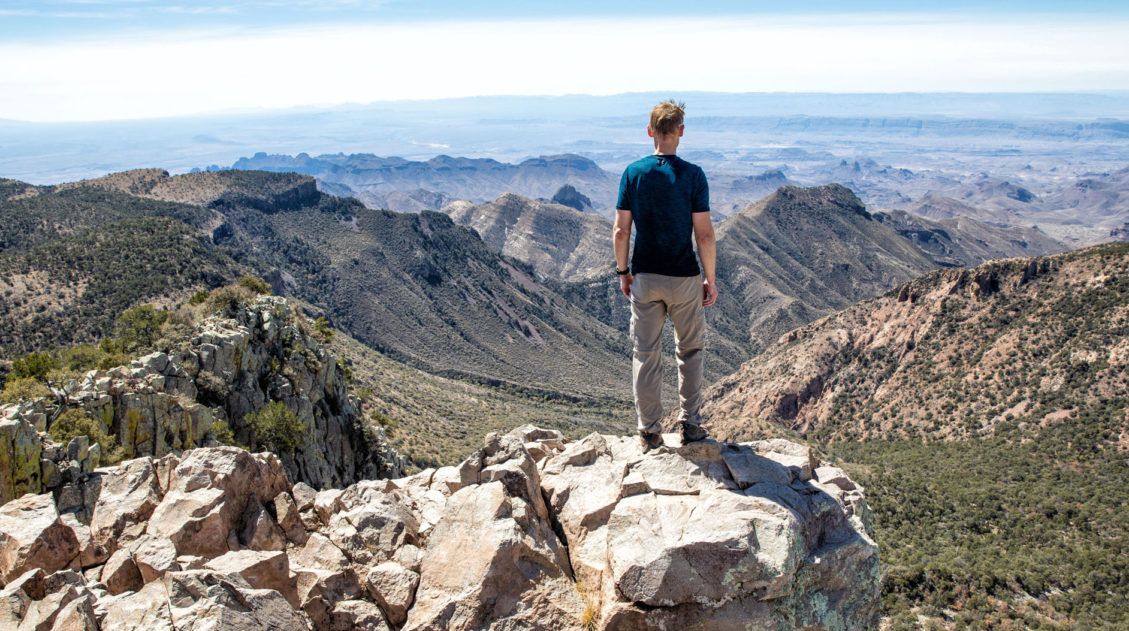
13. Emory Peak, the Highest Point in Big Bend
Distance: 10.4 miles | Difficulty: Strenuous | Time: 5 to 7 hours
Best For: Experienced hikers looking for the highest point in the park and the best panoramic view Big Bend has to offer.
Emory Peak is the highest point in Big Bend National Park, and the view from the summit is unmatched. Tim and I did this as part of a full day combining the South Rim Trail with the detour up to Emory Peak. The final push to the summit involves a short but exhilarating scramble, and the panoramic view over the Chihuahuan Desert from the top is something we won’t forget.
You can hike Emory Peak as a standalone out-and-back or combine it with the South Rim Trail for a full day adventure. We strongly recommend the latter if you have the fitness and the time.
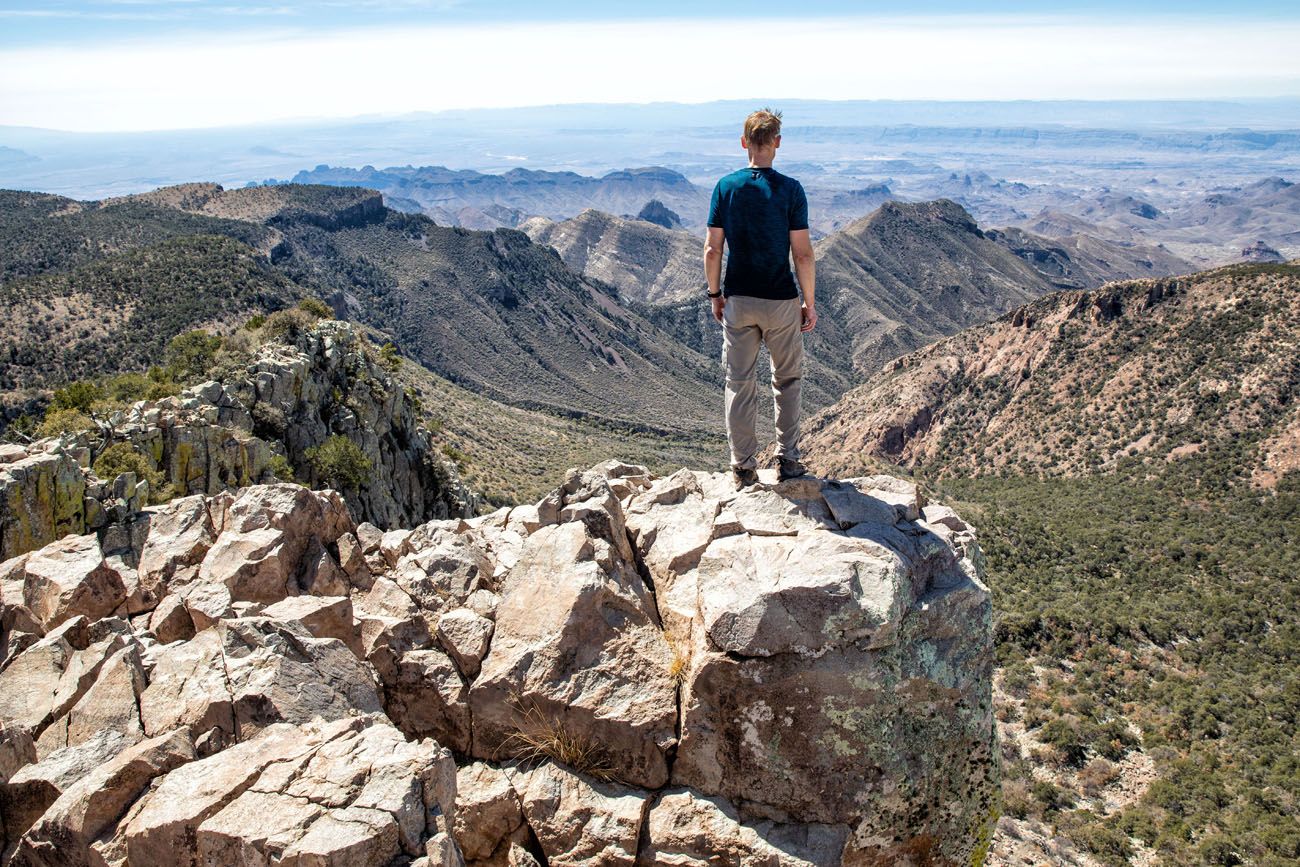
Emory Peak
There are two different ways to do this hike. The quickest and most direct way is to hike out-and-back to Emory Peak from the Chisos Basin Visitor Center. Option #2, a full day adventure, is to hike the South Rim Trail and add on the detour to Emory Peak.
14. Hike the South Rim Trail
Distance: 12.6 miles | Difficulty: Strenuous | Time: 6 to 8 hours
Best For: Anyone who wants the single best full-day hiking experience in Big Bend. If you can only do one hike in the park, make it this one.
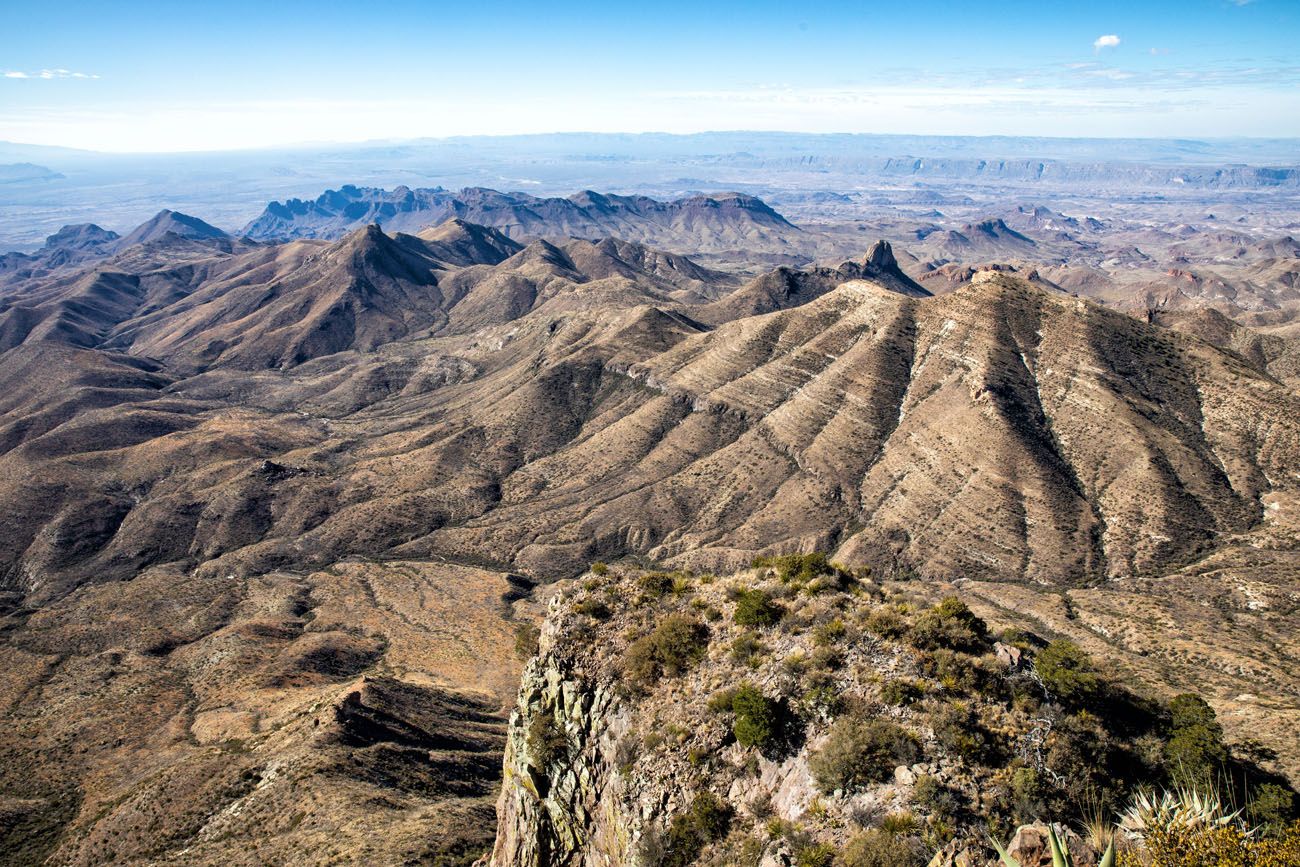
The South Rim Trail is the single best full-day hike in Big Bend National Park. The trail climbs steadily from Chisos Basin up to the South Rim, where the Chihuahuan Desert stretches out below you in every direction as far as you can see. It is one of those views that stops you in your tracks. Tim and I added on the detour to Emory Peak and consider the combination one of the greatest hiking days we’ve ever had.
This is a serious hike — the elevation gain is significant and the trail is long. Start early, bring plenty of water, and don’t underestimate it. But if you have the fitness for it, don’t miss it. Here’s how to do it ↓
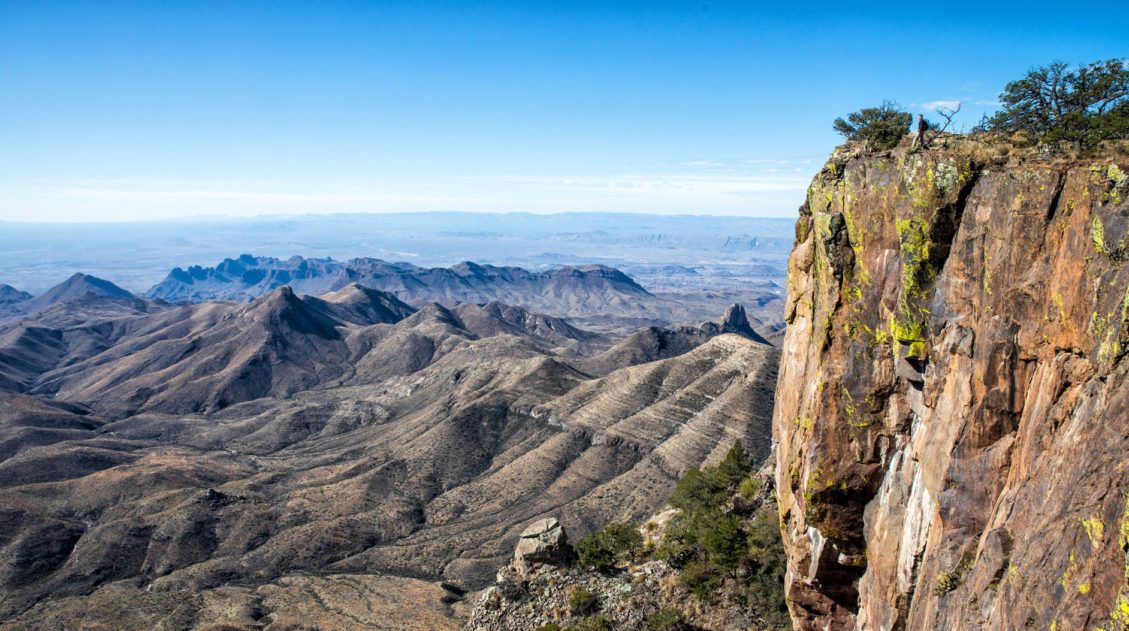
South Rim Trail Loop + Emory Peak | Complete Hiking Guide
Everything you need to know to hike the South Rim Trail Loop and add on Emory Peak.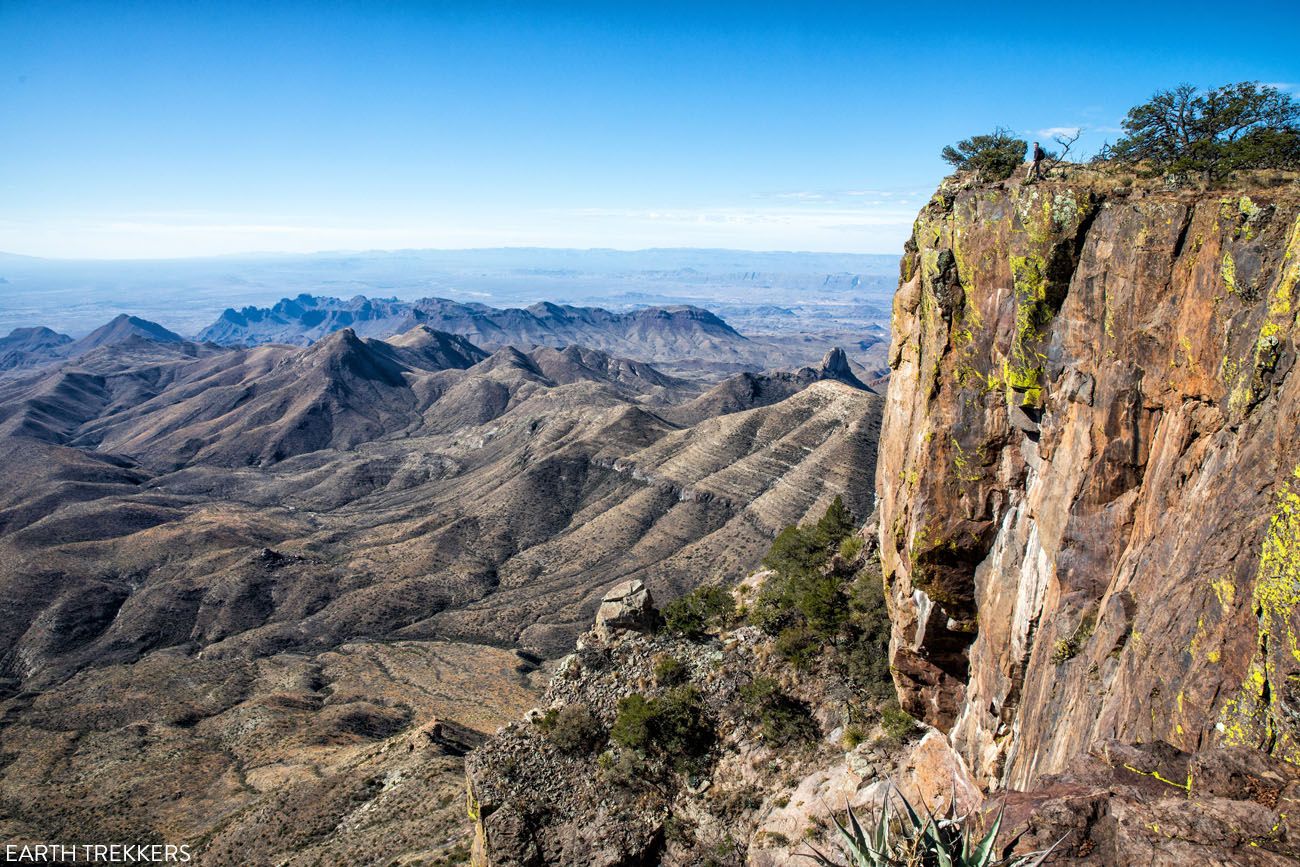
South Rim Trail
Best Things to Do Near Rio Grande Village
Rio Grande Village sits in the eastern section of Big Bend National Park, about an hour’s drive from Chisos Basin and roughly 45 minutes from the west entrance near Terlingua. It’s a distinct area worth dedicating a full half-day or more to. The hot springs, the river canyon hike, and the border crossing into Mexico are all here, and they’re among the most unique experiences in the park.
15. Rio Grande Hot Springs
Distance: 1 mile | Difficulty: Easy | Time: Allow 30 minutes for the hike, longer to relax in the hot springs
Best For: Everyone. A rare chance to combine a short, easy walk with one of the most memorable and relaxing experiences in the park.
The Rio Grande Hot Springs are one of the most popular stops in Big Bend, and rightfully so. A short, easy trail leads along the Rio Grande to a series of 105°F hot springs right at the river’s edge, with Mexico visible on the opposite bank. Along the way you’ll pass the ruins of an old resort, an early homestead, and pictographs left by the area’s earliest inhabitants.
16. Visit Boquillas del Carmen
Cross the Rio Grande into Mexico and visit the small town Boquillas del Carmen. This is a very popular thing to do in Big Bend National Park.
In order to do this, you will go through Border Control, so you must have your passport.
Park at the Boquillas Crossing Port of Entry. You will pass through the Port of Entry building and then walk a short distance along the Rio Grande to the river crossing. There are several men operating row boats to shuttle visitors back and forth across the river. Once on the Mexican side of the Rio Grande, you pay your fee ($5 per person, cash only, round trip), are given a ticket, and you will show this at the end of your visit, when you are ready to cross the Rio Grande again.
You will also pay a $7 entrance fee for the Maderas del Carmen Protected Area once you arrive in Mexico. Bring small U.S. bills for these fees. U.S. citizens can cross with a valid passport book or passport card.
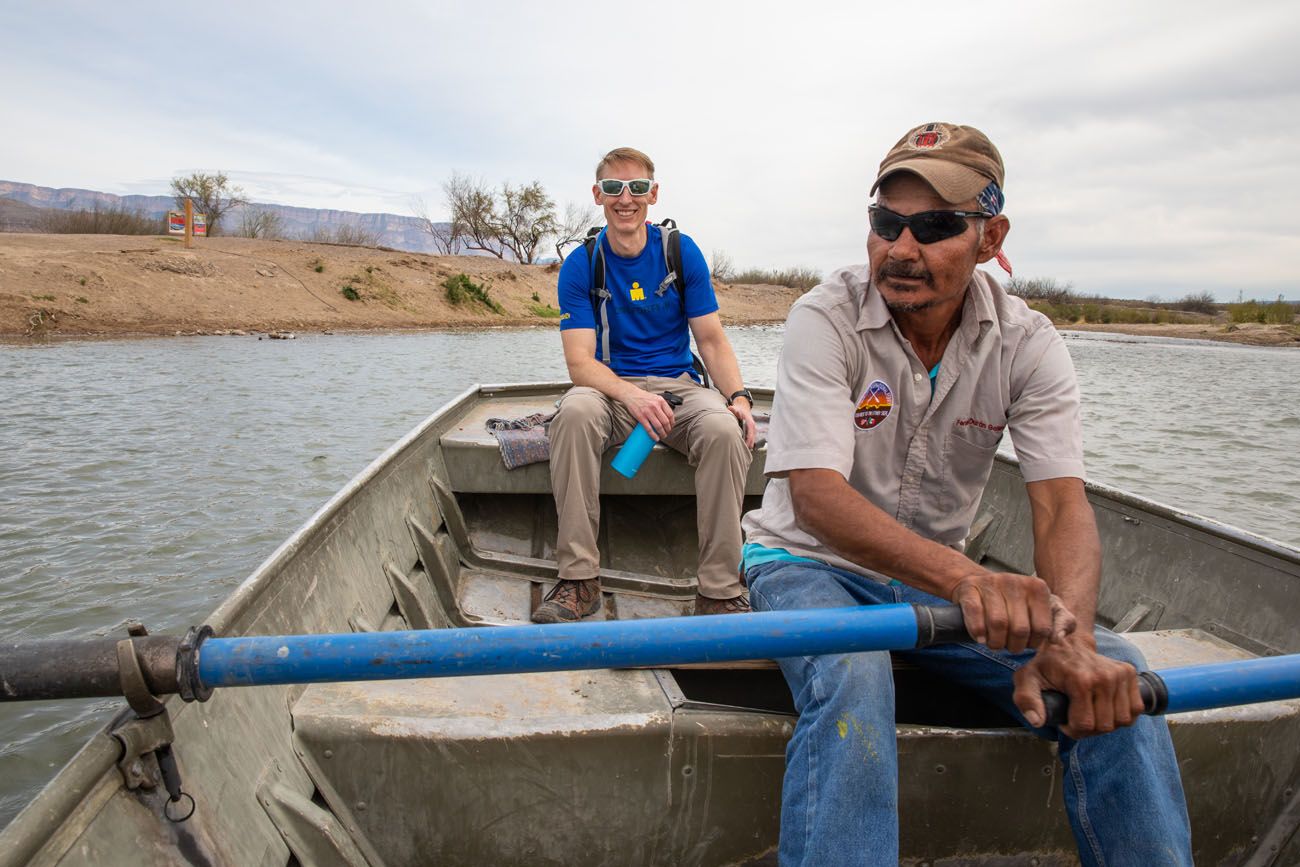
Crossing the Rio Grande
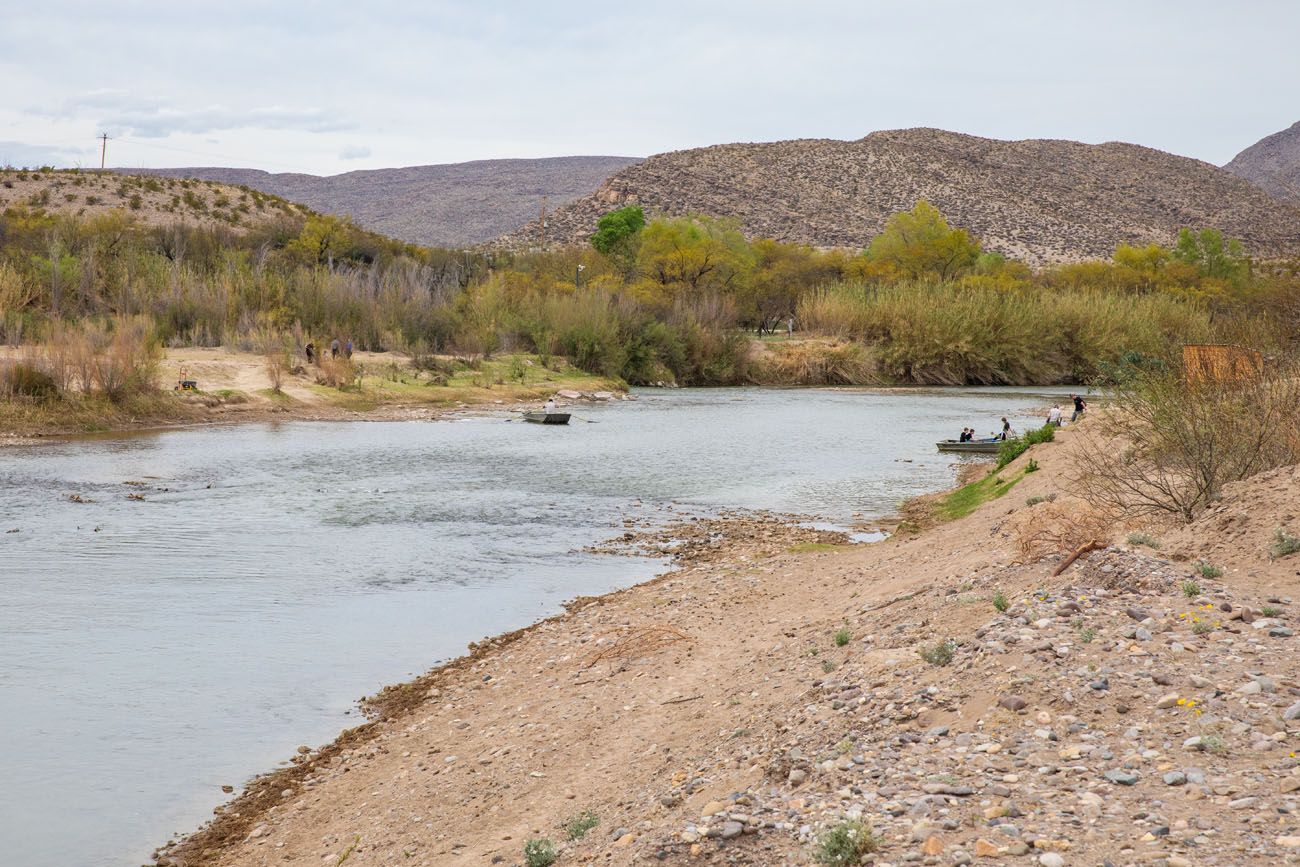
View of the rowboats on the Rio Grande, photo taken from Mexico
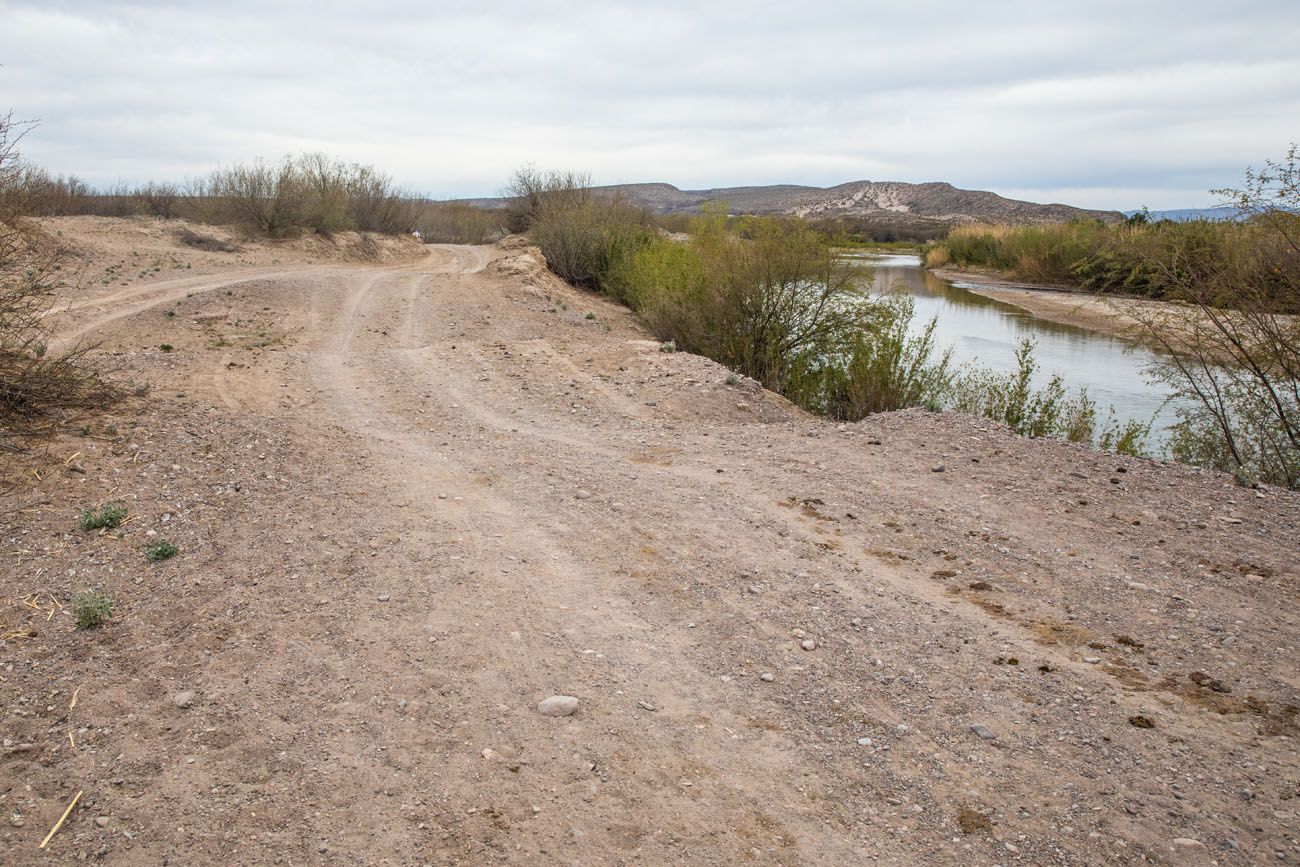
To get to Boquillas del Carmen, you can walk or you can ride a donkey or a horse. We chose to walk, and from what we saw, it takes about the same amount of time, since the donkeys and horses do not move very fast. It is a 0.6-mile walk along a sandy road. The road is covered with donkey poop and the trucks that drive back and forth kick up dust into the air, making this very unpleasant, whether you are walking or riding a donkey.
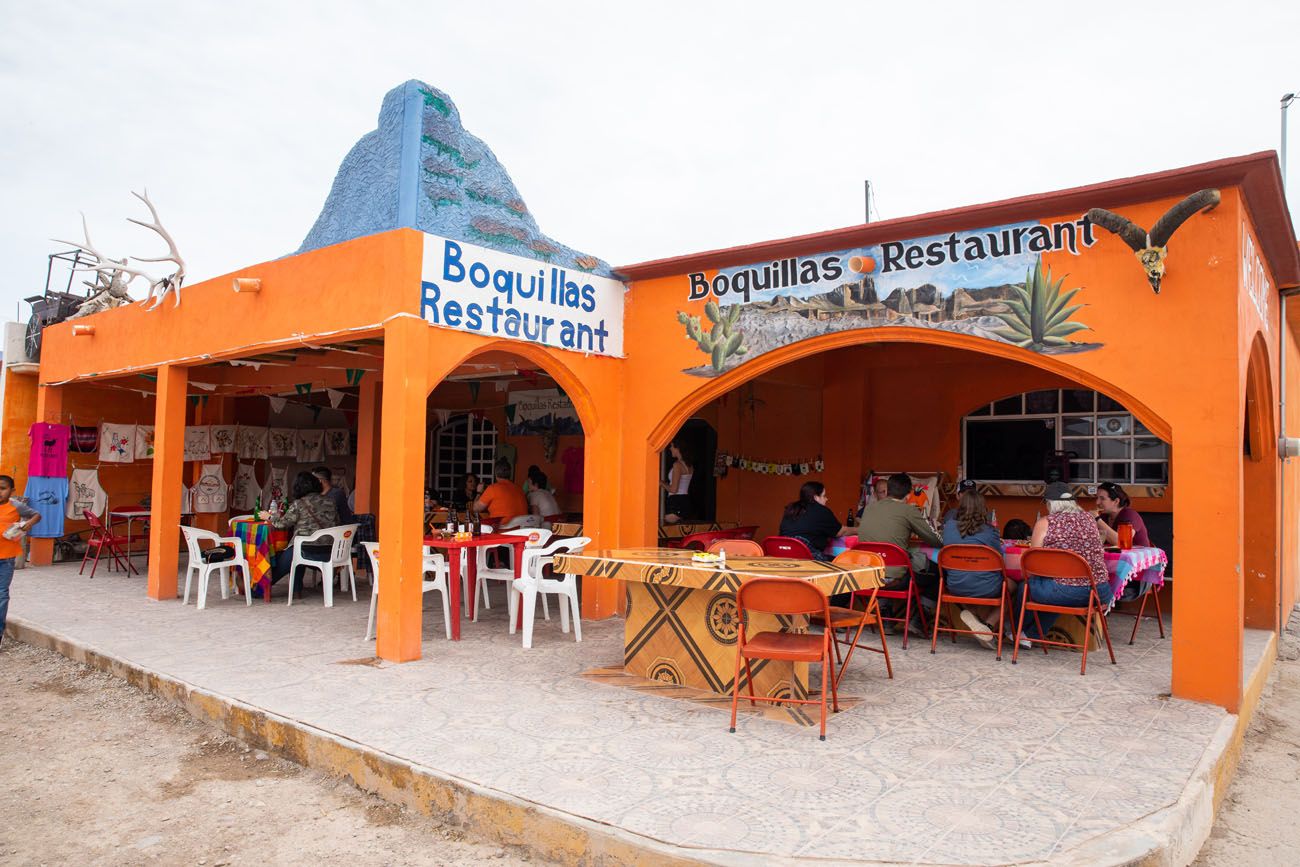
The small town has a few restaurants that have terraces with views of the Rio Grande. There are also several small souvenir shops. Many people who come here love hanging out at one of the restaurants, eating Mexican food, and having drinks.
Important Note: The Port of Entry closes at 4 pm so you cannot come here for dinner. You need to make sure you are back at the Port of Entry before closing time or you will be spending the night in Mexico. If you plan to spend the night in Mexico, you will need a temporary visa.
To get back into the park, return to the Rio Grande, cross the river by rowboat, and go through the Port of Entry. Your passport will be scanned and then you will be on your way.
The Port of Entry is open Friday through Monday from 9 am to 4 pm. Get updated hours on the National Park Service website.
Planning Your Visit: This will take about 4 hours of your time, if you do a little shopping and have lunch in town. The shops and restaurants accept US dollars and it is helpful to have small bills. Confirm the closing time of the Port of Entry so you know when you must cross back to the US side of the Rio Grande.
About Our Experience: This was one of our least favorite experiences in Big Bend. The walk to get to and from the town was annoying and the town was very touristy and lacked any real charm. I guess a few margaritas would have made it more worthwhile, but Big Bend National Park is such a beautiful place that we would rather explore the trails by day and have those drinks later, once the sun set.
17. Walk the Rio Grande Village Nature Trail
Distance: 0.75 miles | Difficulty: Easy | Time: 30 minutes
This short loop trail starts at the Rio Grande Village Campground and winds through a marshy wetland before climbing a small limestone hill with panoramic views of the Rio Grande, the Chisos Mountains, and the mountains of Mexico. The first section crosses a boardwalk through the wetland and is wheelchair accessible.
This is one of the best birdwatching spots in the park, with over 300 species reported in the area. Even if you’re not a birder, the sunset views from the top of the hill are worth the short climb.
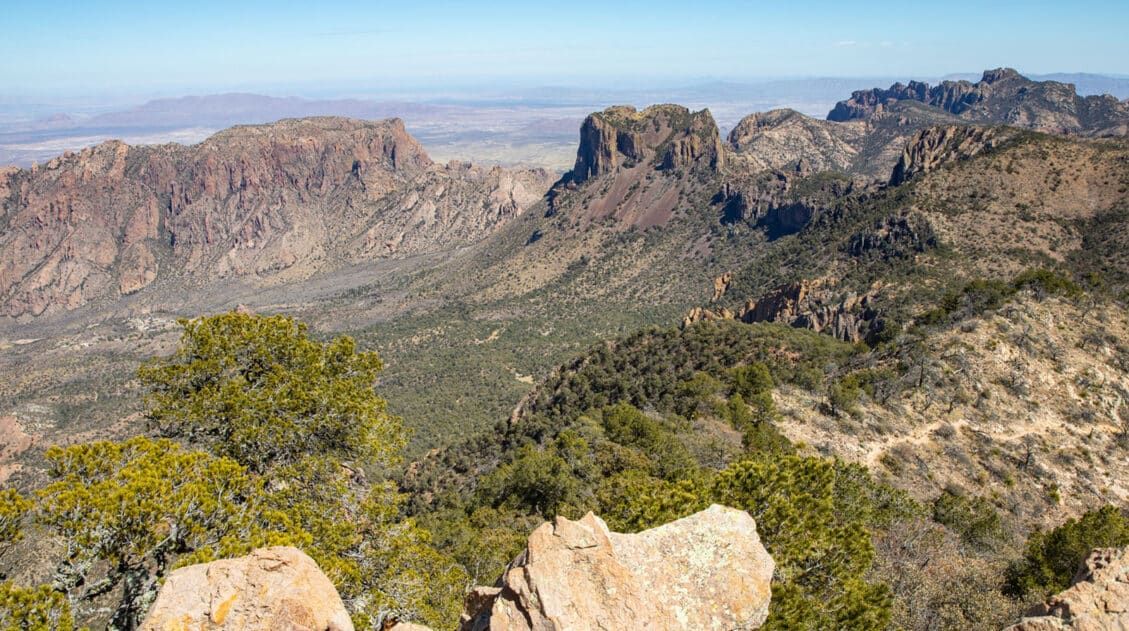
18. Hike the Boquillas Canyon Trail
Distance: 1.6 miles | Difficulty: Easy to moderate | Time: 1 to 1.5 hours
Best For: Hikers looking for a short but rewarding canyon walk with great river views and far fewer crowds than Santa Elena Canyon.
This trail is one of the more underrated hikes in Big Bend and one we really enjoyed. The hike starts with a brief but steep climb up and over a hill, and the views from the top are better than anything you’ll see at the nearby overlook. The trail then drops down to a mostly flat walk along the Rio Grande into Boquillas Canyon. The canyon walls rise dramatically on both sides as you follow the river deeper in, and the combination of towering cliffs and calm water is stunning.
If you’re already in the Rio Grande Village area for the hot springs or Boquillas crossing, don’t skip this one.
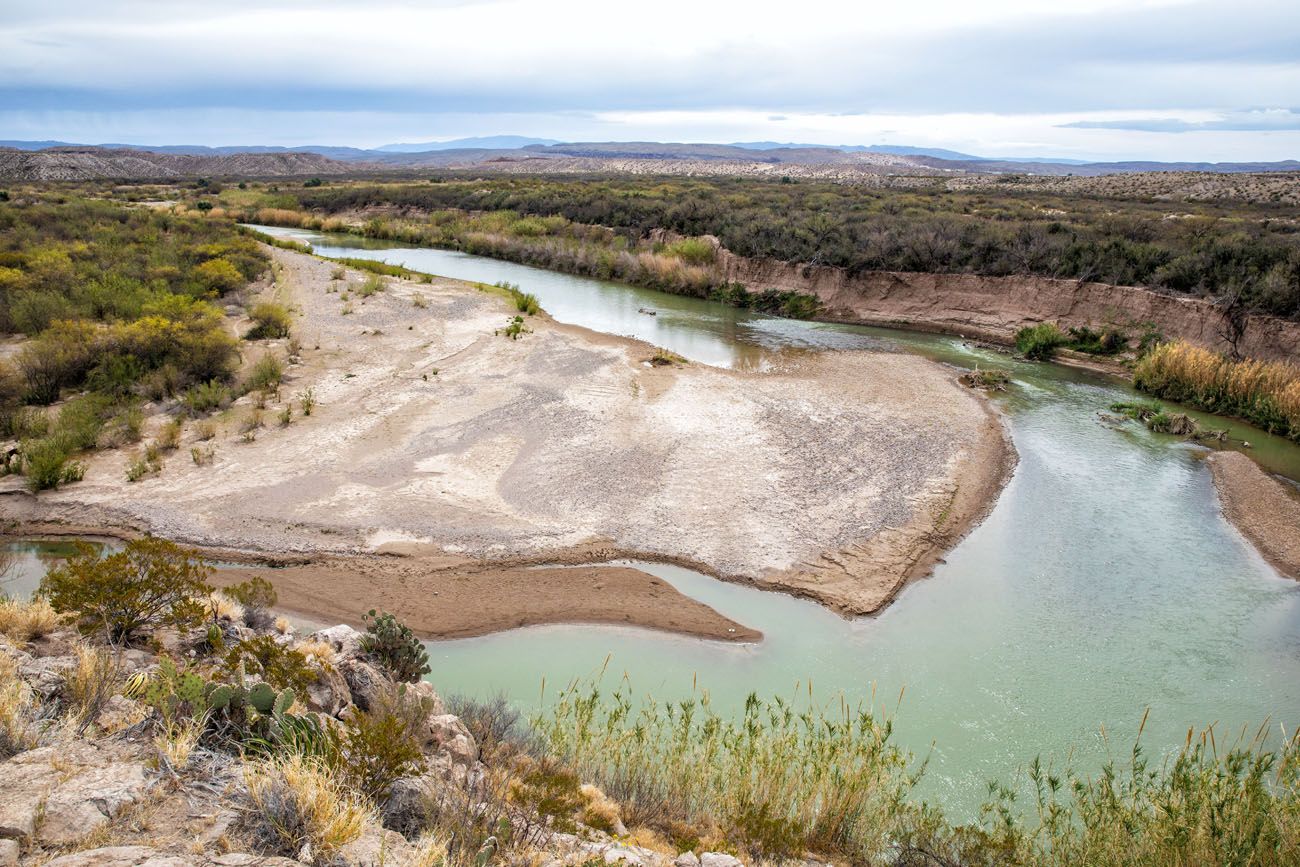
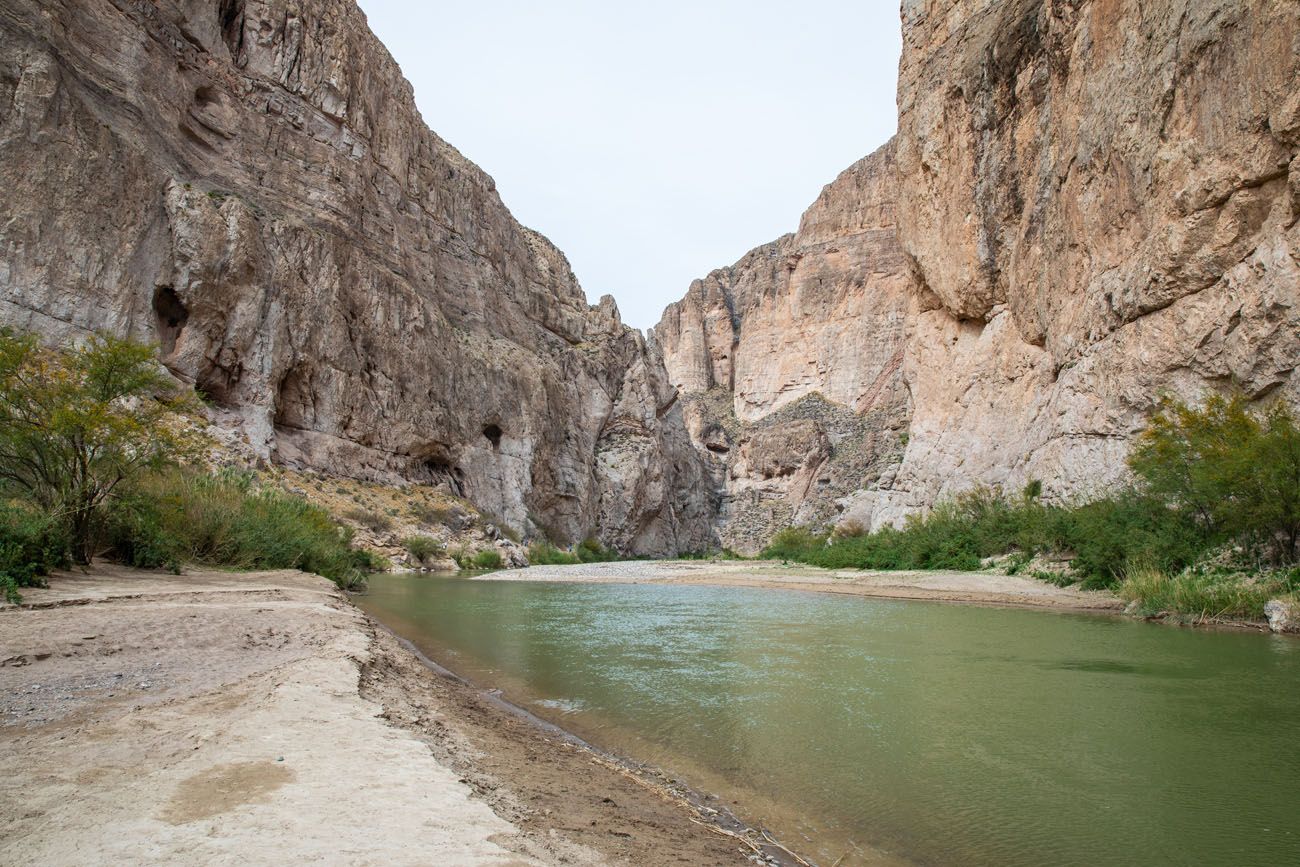
Boquillas Canyon
More Things to Do in Big Bend National Park
19. Hike the Ernst Tinaja Trail
Distance: 1.6 miles long | Difficulty: Easy to moderate | Time: 1 to 1.5 hours
Best For: Anyone with a 4WD vehicle who wants the most unique and memorable hiking experience in Big Bend. This is our top pick in the park.
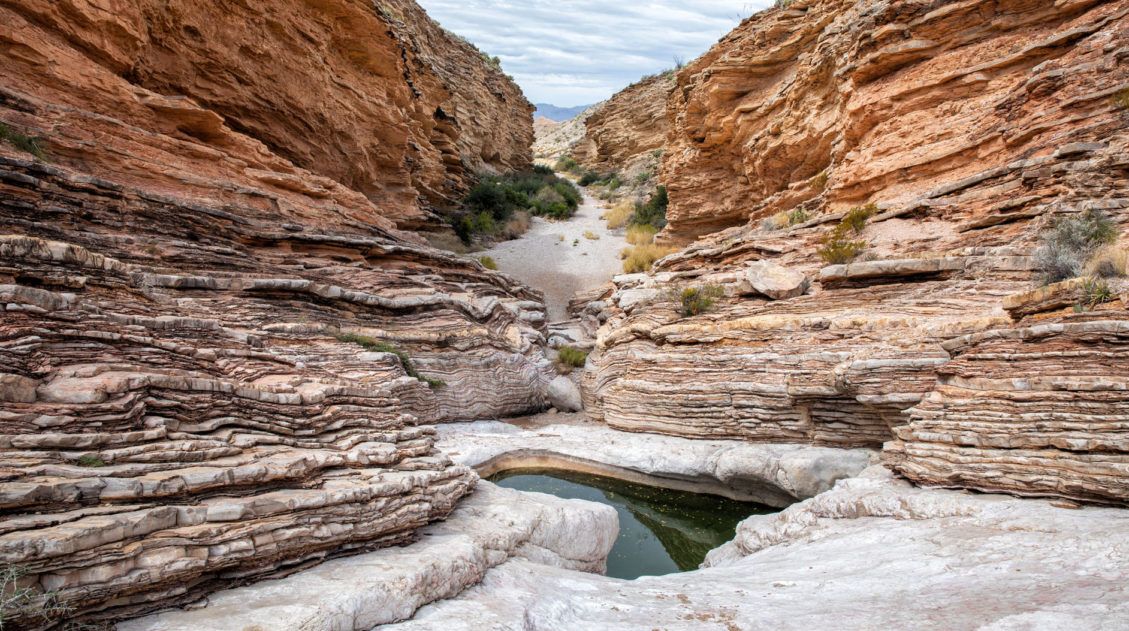
Ernst Tinaja was our favorite experience in all of Big Bend National Park.
This short trail winds through a narrow slot canyon, passing a series of stunning waterholes carved into colorful layers of limestone rock. It feels like a hidden world tucked away in the desert, and it sees a fraction of the crowds of the more well-known trails.
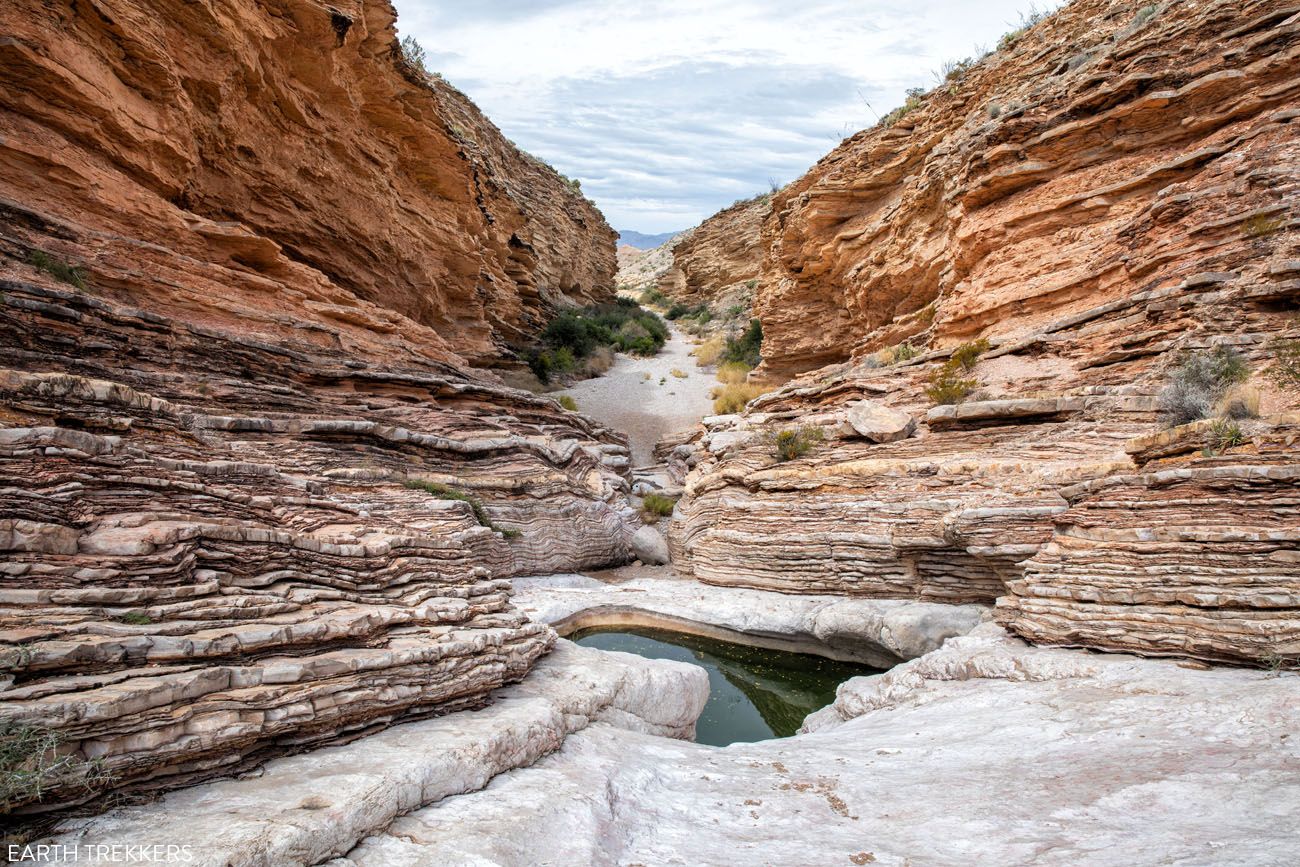
Ernst Tinaja
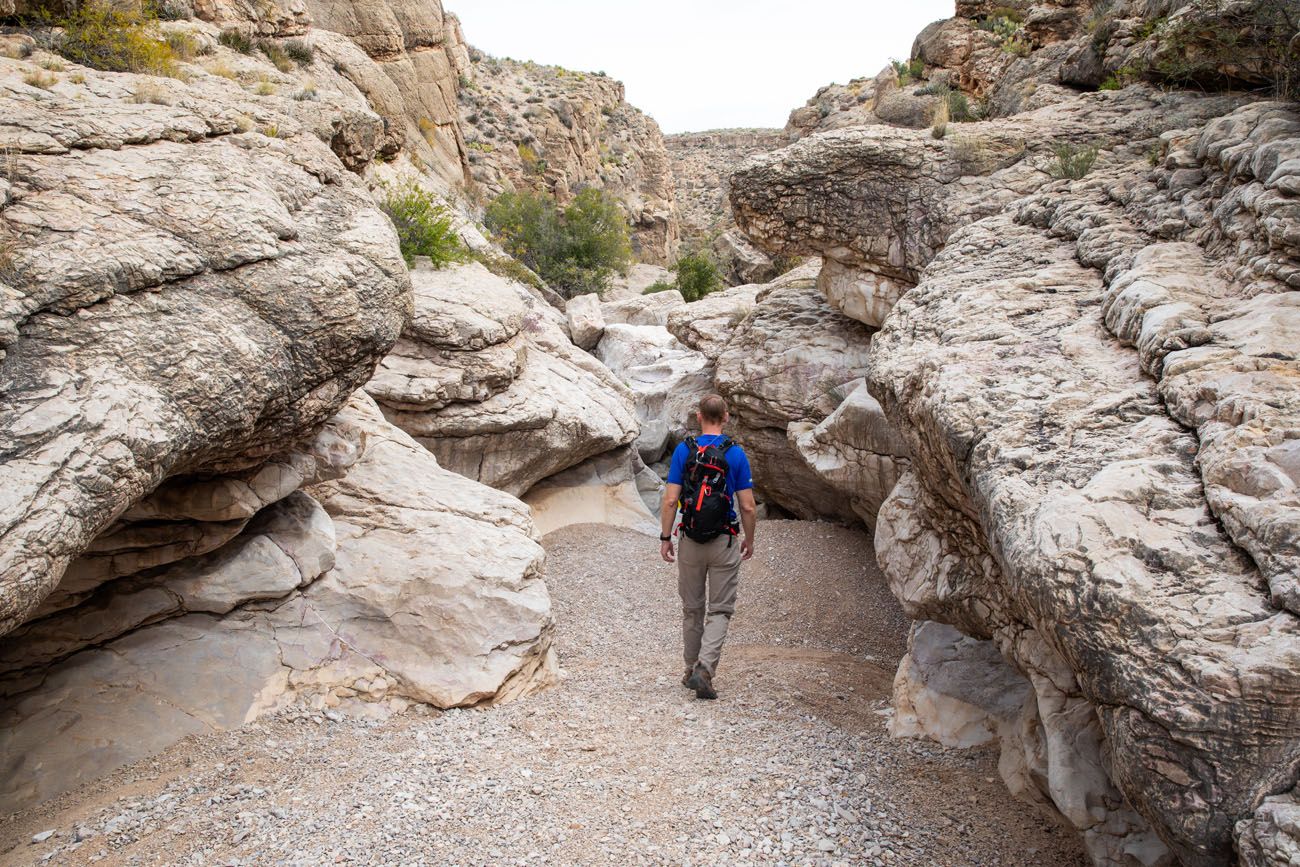
Getting here is part of the adventure. The trailhead sits on Old Ore Road, a rough gravel road that requires a high-clearance, four-wheel drive vehicle. If you have the right vehicle, do not skip this one.
Ernst Tinaja Trail: Big Bend’s Most Underrated Adventure
Everything you need to know to get to and hike the Ernst Tinaja Trail.20. Hike to Balanced Rock
Distance: 2.2 miles | Difficulty: Easy to moderate | Time: 1 to 2 hours
Best For: Everyone. One of the best short hikes in Big Bend, with a payoff that’s unlike anything else in the park. Great for families and casual hikers.
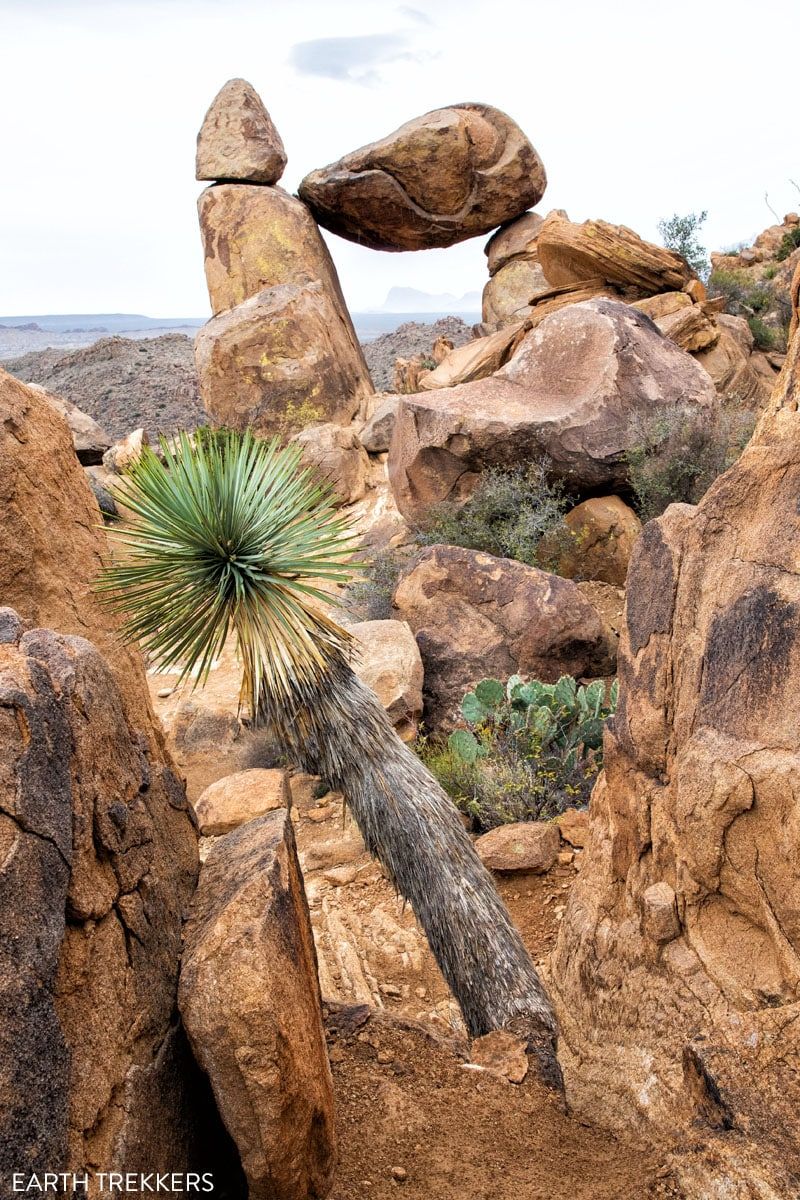
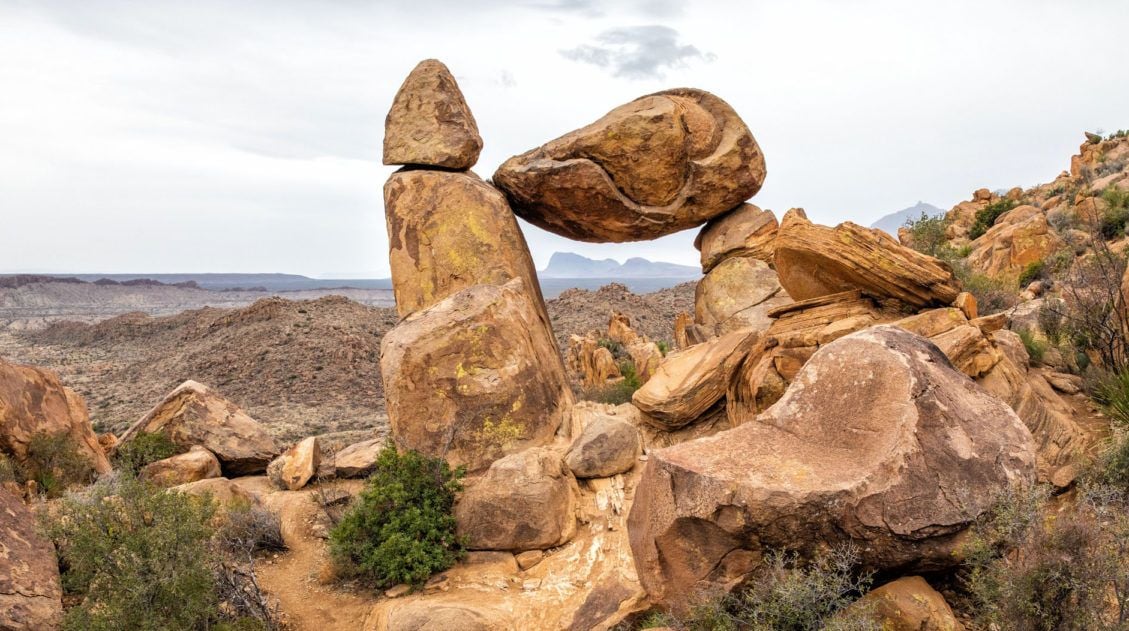
Balanced Rock is one of those sights that makes you stop and stare. A massive boulder sits perched impossibly on a narrow pedestal of rock, looking like it could topple at any moment — and yet there it sits, defying logic and gravity.
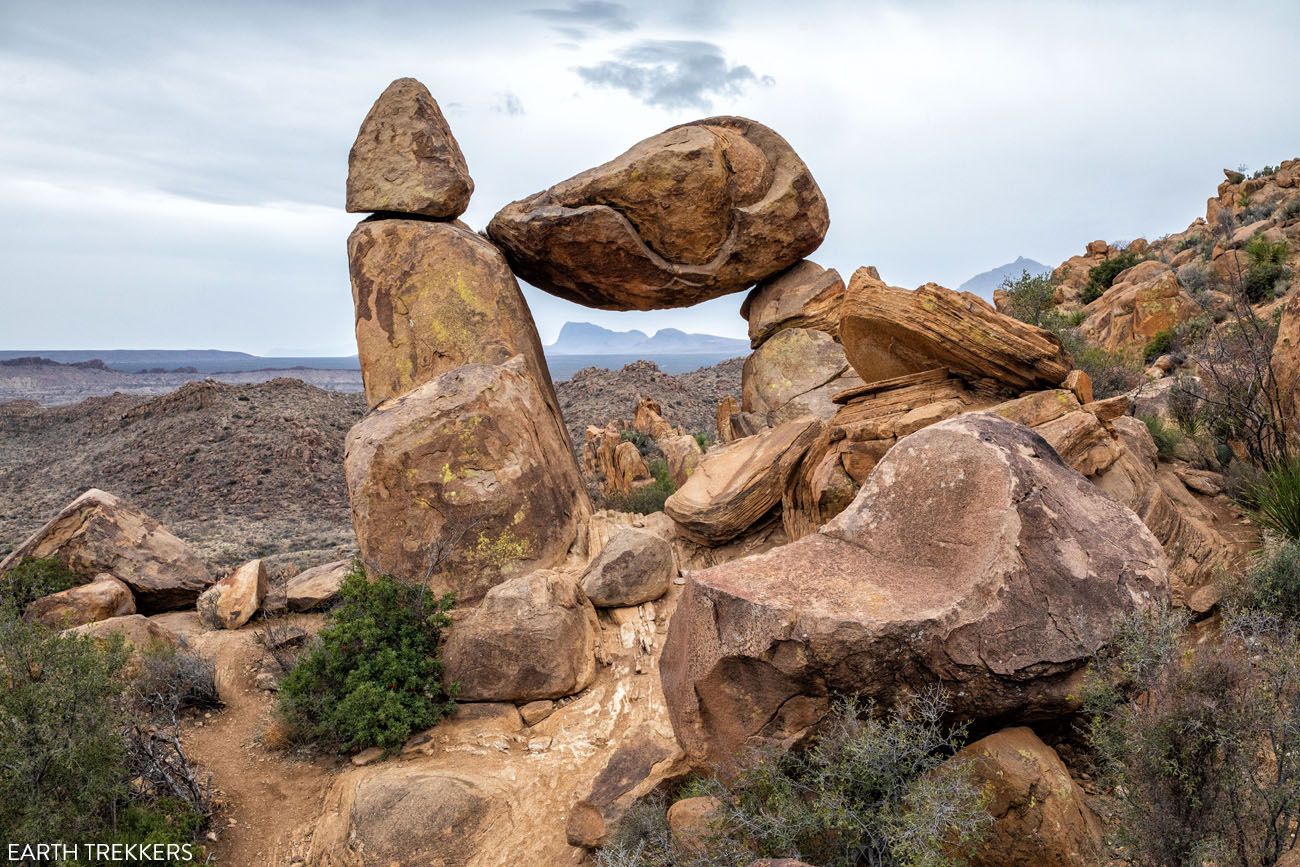
Balanced Rock
It’s one of the most unusual rock formations we’ve seen anywhere, and the hike to get there is genuinely fun, with a brief section of rock scrambling that adds a little adventure without being too challenging for most visitors.
To get here, drive 6.3 miles along Grapevine Hills Road, a well-maintained gravel road. This is an easy enough drive for most vehicles, unlike the road to Ernst Tinaja.
Balanced Rock Hike: A Short but Sweet Hike in Big Bend National Park
Detailed trail guide for Balanced Rock, a fun, short hike in Big Bend.21. Visit the Fossil Discovery Exhibit
If you have a curious mind or are traveling with kids, the Fossil Discovery Exhibit is worth an hour of your time. The outdoor exhibit takes you through 130 million years of geological history, with fossils of the sea creatures, dinosaurs, and early mammals that once inhabited this region. It’s a good reminder that the harsh desert landscape you’re driving through was once a very different place entirely.
22. Drive the Dagger Flat Auto Trail
Distance: 14 miles round trip | Time: Approximately 2 hours
The Dagger Flat Auto Trail is a dirt road that winds through a remote valley filled with giant dagger yuccas, which are dramatic, spiky plants that can grow up to 15 feet tall. In spring, when the yuccas bloom with tall white flower stalks, the drive is particularly spectacular.
This is a great option for visitors who want to explore a remote corner of the park without hiking, and it’s accessible to most vehicles in dry conditions.
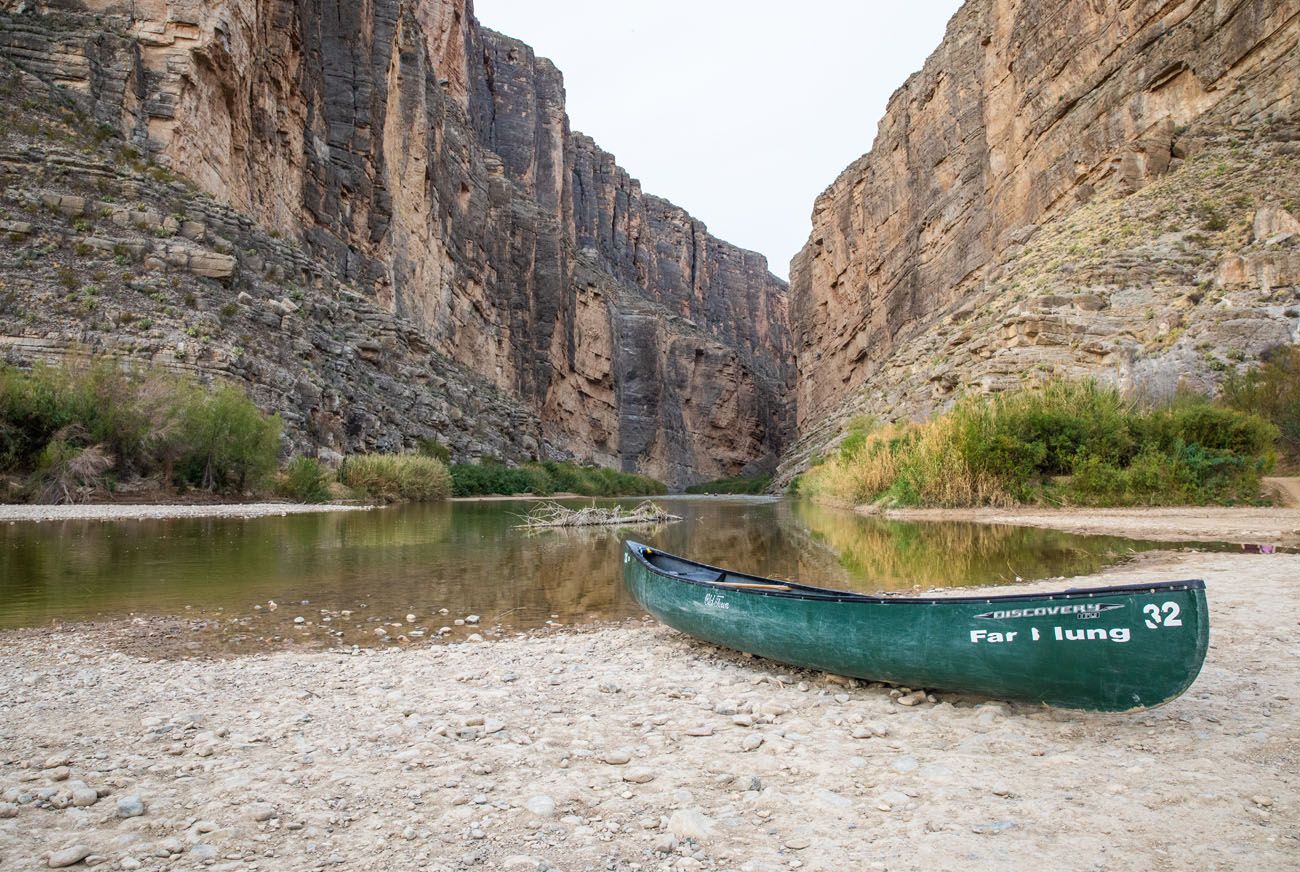
23. Go on a Rio Grande Canoe Trip
Best For: Paddlers and adventure seekers looking for a completely different perspective on the park.
Floating the Rio Grande is one of the most immersive ways to experience Big Bend. Options range from half-day paddles to multi-day expeditions through some of the most remote canyon country in the Southwest.
Santa Elena Canyon, Boquillas Canyon, and Mariscal Canyon are among the most popular routes.
If you’re not experienced with river trips, go with a guide. We didn’t get to do this on our visit, but it’s high on the list for a return trip. Learn more on the national park website.
24. Go Stargazing
Best For: Everyone, but especially first-time dark sky viewers. Clear nights in fall and winter offer the best conditions.
Big Bend has the darkest skies of any national park in the lower 48 states, and on a clear night the Milky Way is visible with the naked eye.
We experienced this firsthand from our yurt at the Local Chapter. Stepping outside in the middle of the night and looking up was genuinely one of the most memorable moments of the trip.
You don’t need to go anywhere special; simply getting away from any artificial light source is enough. A pull-off along any park road on a clear night will do the job.
25. Explore Terlingua Ghost Town
Best For: Visitors looking for a taste of local West Texas character after a day in the park.
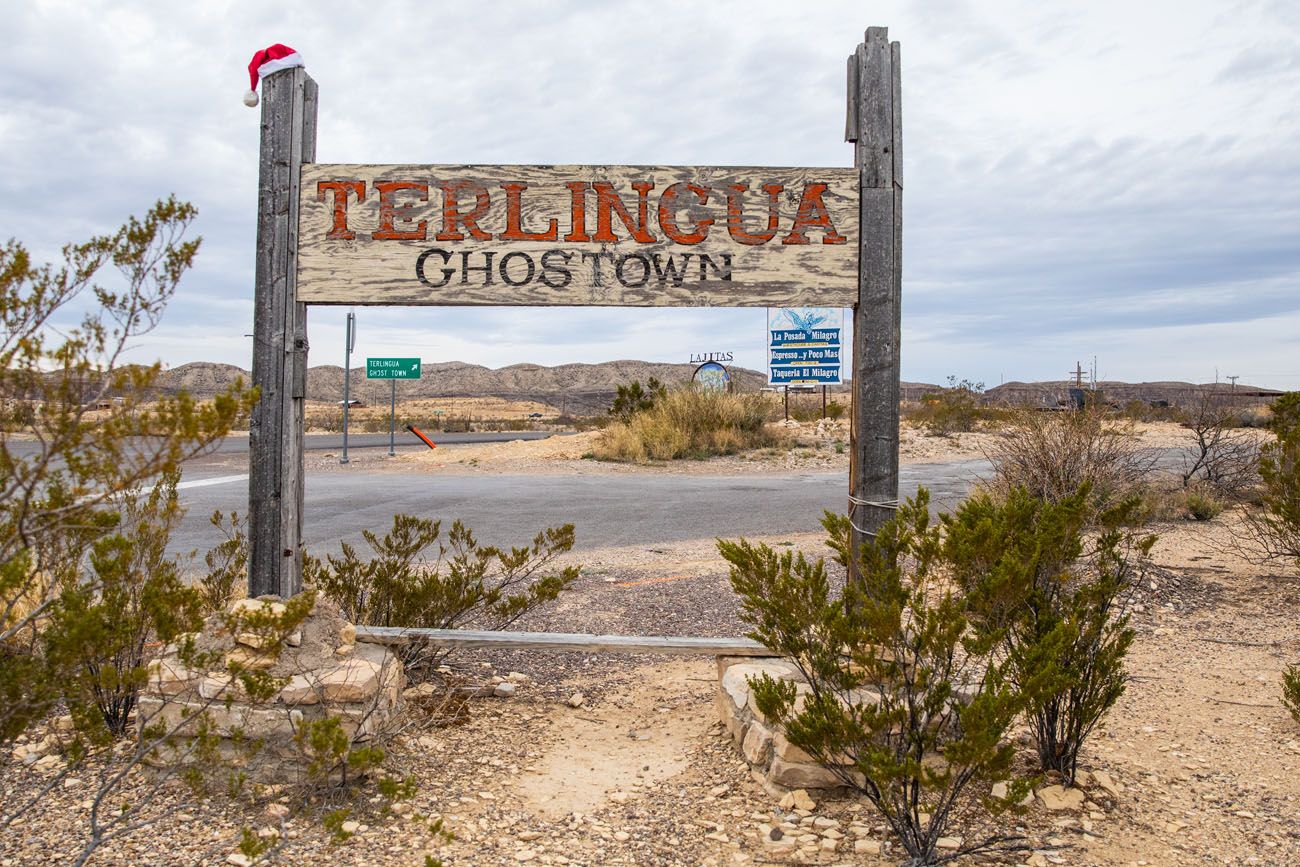
Located just outside the park boundary near the west entrance, Terlingua is a former mercury mining town that went bust in the mid-20th century and was largely abandoned. Today it has been partially revived as a quirky, characterful little community with an old graveyard, a handful of shops, and several restaurants and bars.
The Starlight Theatre Restaurant is the most famous dining spot in the area. Arrive early, as the wait for a table can be long. We weren’t able to get a table on our visit, but the atmosphere around the building alone is worth the stop. Even if you don’t eat here, Terlingua makes for an interesting hour of wandering, especially at sunset when the light hits the old ruins beautifully.
Don’t Miss Big Bend Ranch State Park
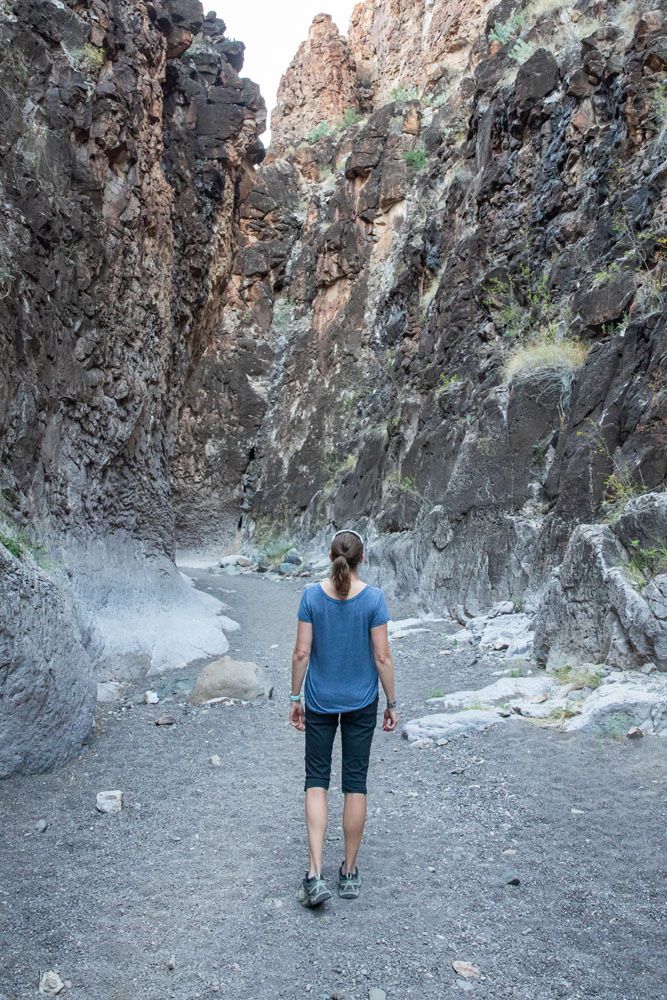
It might be hard to pull yourself away from the amazing hiking trails and landscapes in Big Bend National Park, but right around the corner is the just as beautiful and much less crowded Big Bend Ranch State Park. With short hiking trails, slot canyons, and another gorgeous scenic drive, this is worth at least a few hours of your time.
READ MORE: Big Bend Ranch State Park: Best Things to do with Limited Time
Closed Canyon Trail
Things to Do in Big Bend: On a Map
How to Use This Map: Click the tab in the top left corner of the map to see a list of the points of interest and to turn layers on/off. Click the icons on the map to get more information about each point of interest.
To take this map with you, click the star next to the title of the map which adds it to your Google account. Next, within your Google Maps app, select ‘Saved’ and then select ‘Maps’. This map title will now appear in your list.
How to Get to Big Bend National Park
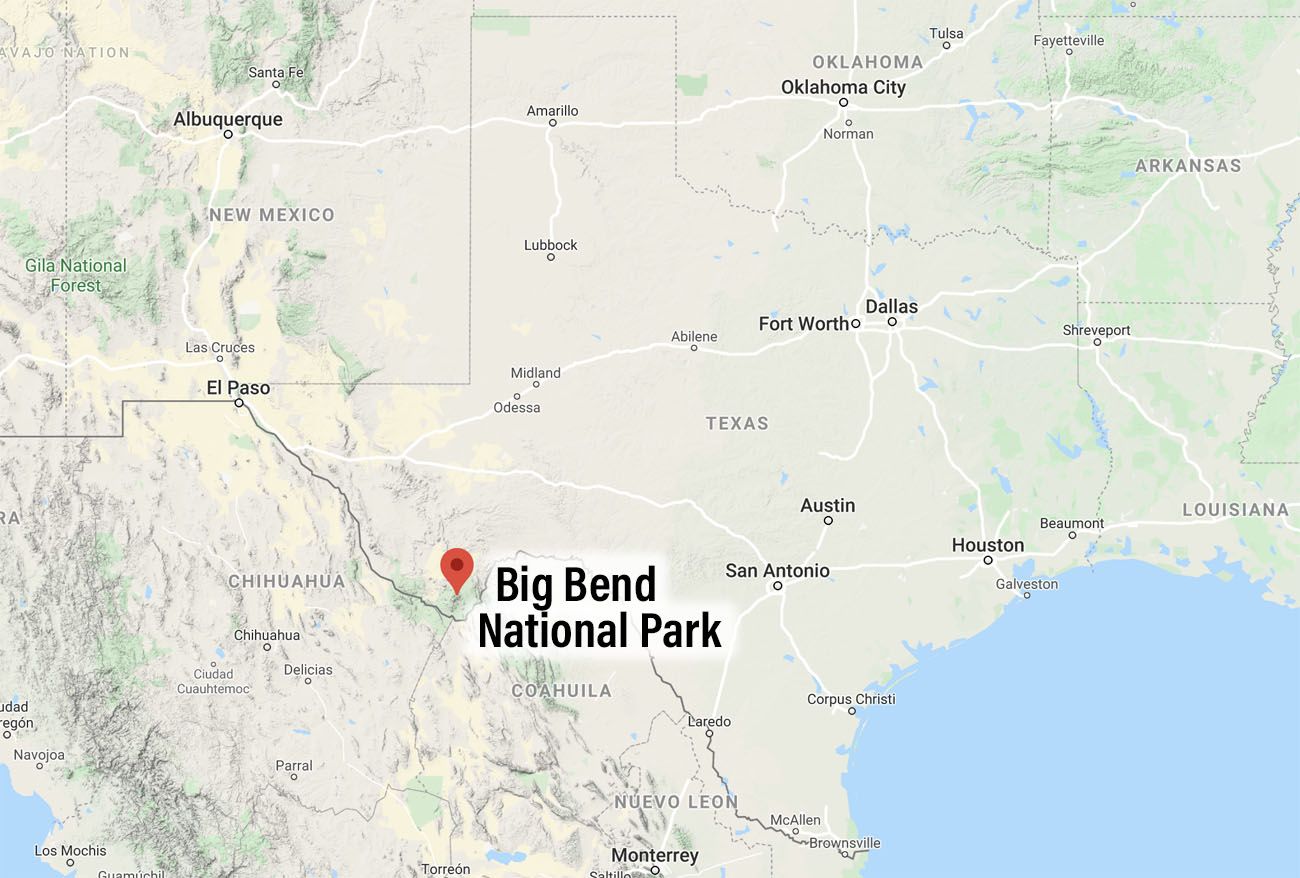
Big Bend has a very remote location. To get here, expect to do a lot of driving.
The closest airport is Midland International Air and Space Port in Midland-Odessa, Texas. It takes between 3.5 and 4 hours to drive to Big Bend, with a distance of 220 miles.
El Paso is a farther away but might be a better option, since it is a larger airport with more flight options. It takes 5 hours to drive to Big Bend, with a distance of 315 miles.
We flew into El Paso and drove to Big Bend National Park. It is somewhat of a monotonous drive, on a mix of multi-lane highways and two-lane roads. The speed limit is high (usually around 70 mph) so you can cover a lot of distance quickly.
San Antonio is another option. From here, it takes just over 6 hours to drive to Big Bend National Park.
Location of Big Bend
How Much Time Do You Need in Big Bend?
If you want to explore all three areas of the park (Chisos Basin, Rio Grande Village, and along the Ross Maxwell Scenic Drive), you will need a minimum of three days. More time is better, as this allows you to go on longer hikes, visit Big Bend Ranch State Park, and thoroughly explore the park without feeling too rushed.
Plan your trip to Big Bend with our 3 Days in Big Bend Itinerary.
Best Time to Visit Big Bend National Park
We visited Big Bend in early March. Two of our three days were mild and partly cloudy, with temperatures in the 70s, perfect for hiking. The first day caught us off guard though, climbing into the 90s and feeling genuinely hot on the trail. Locals told us it was a busy period, but after visiting parks like Zion and Arches, where crowds can feel overwhelming, Big Bend still felt refreshingly quiet. We saw people on trails and in parking lots, but never felt mobbed.
That said, March is one of the busiest months in the park, largely driven by spring break. If you want similar weather with fewer people, February is worth serious consideration. Temperatures are cooler and more consistent, and visitation is significantly lower.
Avoid summer if you can. Temperatures in the desert regularly exceed 100°F from June through August, making most hiking dangerous during daylight hours. Winter brings cold nights and occasionally freezing temperatures, though daytime highs can be pleasant for hiking.
Best Times to Visit Big Bend by Season:
- Spring (February – April): Best overall. Mild temperatures, wildflowers, and the most activity in the park. March brings the biggest crowds; February is the sweet spot.
- Summer (May – September): Extremely hot, especially at lower elevations. Not recommended for most visitors.
- Fall (October – November): Excellent. Temperatures drop, crowds thin, and the park is beautiful. November is a particularly good choice.
- Winter (December – January): Cold nights, mild days. The park is quiet and uncrowded, but come prepared for cold temperatures.
For more help planning when to visit, check out our Guide to the Best National Parks by Season, where you’ll find Big Bend featured in our recommended parks for February, March, and November.
Practical Information
Park Hours: Park entrances are open 24 hours a day, 365 days per year.
Park Fee: $30 per vehicle, valid for 7 days
Get updates on trail closures and park conditions on the National Park Service website as you plan your trip and just before your visit.
About Cellular Service
Cell service is extremely limited in the park. We had no service at the Rio Grande Village, near Santa Elena, and on the majority of the hiking trails. We did have a low signal near Panther Junction and Chisos Basin. Don’t rely on cellular service while you are in the park.
Outside of the park, cellular service is not much better. We could get a signal in Terlingua, but it wasn’t reliable. Outside of that, even in Lajitas and other small towns, we had very little cellular service. If you think you will need cellular service or an internet connection, stay in a hotel that offers reliable WiFi.
Where to Stay
We stayed at two different locations simply because there were two accommodations that looked great and we had a hard time deciding between the two.
Lajitas Golf Resort
Located just outside of Big Bend National Park, this 4-star hotel has a golf course, multiple onsite restaurants, and an equestrian center. Some rooms can accommodate up to four people.
We spent two nights here and really enjoyed our stay. The property offers free WiFi. It worked great around the main lobby and the Boardwalk area of the resort. However, farther out, near Calvary Post, we were not able to get a signal. If you think that you will need WiFi during your visit, request a room in the Lajitas Boardwalk area of the resort. By the way, there was very limited cellular service here so don’t depend on this as a back-up.
The Local Chapter
Like the idea of staying in a yurt? This is not any old yurt. This feels like a cross between staying in a 4-star hotel and camping in a remote location.
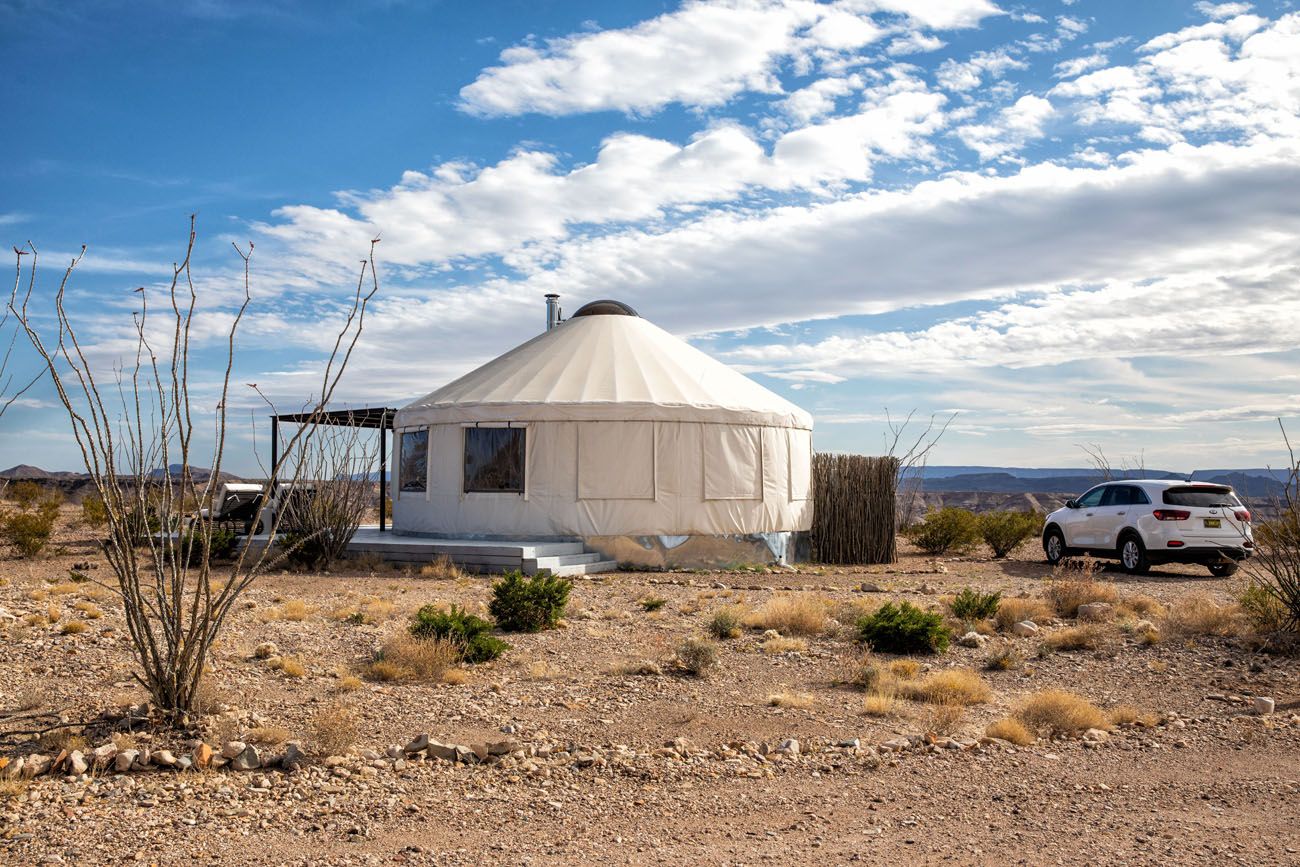
Three yurts, each one secluded from its neighbors, sit along a plateau and from here, you have outstanding views of Big Bend National Park. The owners went above and beyond, furnishing the room with plush towels, a very comfortable bed, and even a telescope to peer into the night sky. When you lay in bed, you can stare up at the stars through the skylight in the ceiling.
We loved staying in the yurt and we recommend it. However, our only complaint is that it can be noisy if it is a windy night. On our second night a storm rolled through the area and it sounded like the yurt would blow away. The noise of the wind rattling the yurt was so loud that we could not sleep until the storm passed. If you are a light sleeper, you might want to look elsewhere.
Learn more about the Local Chapter here.
Terlingua Ranch Lodge
If you are looking for a budget place, Terlingua Ranch Lodge gets decent reviews. It is a 45-minute drive (a portion of which is unpaved) to the center of Terlingua and the west entrance into Big Bend National Park. So, plan accordingly if you want to make use of the restaurants, grocery store, and gas station located in the heart of Terlingua.
In Marathon, Texas
Marathon, a small town that is about a 45-minute drive north of the north entrance of Big Bend National Park, also has several highly rated hotels to consider. The Gage Hotel is a historic and very highly rated hotel. It has received numerous accolades, such as the #1 Small Hotel in Texas, “Best Hotel Bar” in Texas, and it was voted the #1 hotel in Texas by the readers of Conde Nast Traveler.
Frequently Asked Questions About Big Bend National Park
Is Big Bend National Park worth visiting?
Absolutely. Big Bend is one of the most rewarding national parks in the United States, precisely because it demands a little effort to get to. The combination of desert landscapes, mountain hiking, river canyons, hot springs, and the darkest skies in the lower 48 states is unlike anything else in the national park system. The remote location keeps crowds low even at peak season, which makes the experience feel genuinely wild and unhurried. If you’re willing to make the drive, Big Bend will exceed your expectations.
Do you need a 4WD vehicle to visit Big Bend National Park?
Not for the majority of the park. The main paved roads — Ross Maxwell Scenic Drive, the road to Chisos Basin, and the road to Rio Grande Village — are all accessible by any standard vehicle. However, a high-clearance 4WD vehicle opens up some of the best experiences in the park, including the Ernst Tinaja Trail on Old Ore Road. If you don’t have a 4WD vehicle, you’ll still have an incredible trip, but you will miss a few of the more remote highlights.
Can you really cross into Mexico from Big Bend National Park?
Yes, and it’s one of the most unique things you can do in any national park in the United States. The Boquillas Port of Entry allows visitors to cross the Rio Grande by rowboat into the small village of Boquillas del Carmen, Mexico. You must have a valid passport to cross. The Port of Entry has limited hours and is not open every day, so check the National Park Service website before you visit. Our honest take: it’s a one-of-a-kind experience, but the town itself is very touristy. Many visitors love it; we were underwhelmed.
Is Big Bend National Park safe?
Yes, Big Bend is generally a safe park to visit. The park shares 118 miles of border with Mexico, which sometimes raises questions, but incidents involving visitors are rare. Border Patrol maintains a presence in and around the park. The bigger safety considerations are environmental. Summer heat can be genuinely dangerous, water sources are scarce on backcountry trails, and cell service is extremely limited throughout the park. Come prepared with plenty of water, a paper map, and a downloaded offline map on your phone.
How far is Big Bend from the nearest airport?
The closest airport is Midland International Air and Space Port in Midland-Odessa, Texas, about 220 miles and 3.5 to 4 hours from the park. El Paso International Airport is farther at 315 miles and approximately 5 hours, but offers significantly more flight options and is often the better choice. We flew into El Paso and found the drive straightforward, if long. San Antonio is another option at just over 6 hours. No matter where you fly in, plan for a serious road trip to get here and factor that driving time into your itinerary.
Plan Your Trip to Big Bend National Park
Ready to start planning? These guides cover everything you need to know before you visit.
- Big Bend National Park Travel Guide — The complete overview of Big Bend, with everything you need to plan your trip from start to finish.
- 3 Days in Big Bend National Park — Our recommended itinerary for a three-day visit, covering all three sections of the park.
- Best Hikes in Big Bend National Park — A deep dive into the top trails in the park, with difficulty ratings, distances, and firsthand tips.
- Big Bend Ranch State Park — Just outside the national park boundary, Big Bend Ranch State Park is an overlooked gem worth adding to your itinerary.
If you have any questions about the best things to do in Big Bend National Park, let us know in the comment section below!
Explore More of Big Bend & Texas
Ernst Tinaja Trail: Big Bend’s Most Underrated Adventure
Pinterest Facebook Flipboard The Ernst Tinaja Trail is one of the most unique hikes to do in Big Bend National Park. This is a short, easy trail through a slot canyon, featuring a series of waterholes located within colorful layers of limestone rock. Those looking for a little more adventure can continue the hike past the water-filled […]
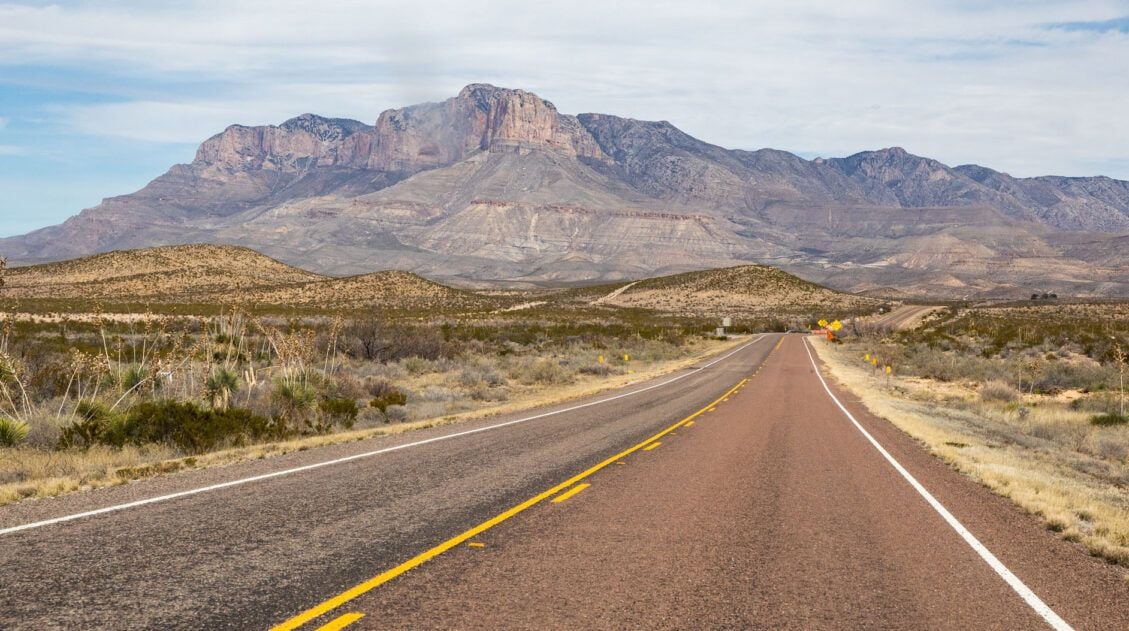
10 Day Texas New Mexico National Parks Road Trip Itinerary
On this 10-day Texas New Mexico road trip itinerary, you will visit four national parks plus make a quick detour to a gem of a state park that just might be one of the big highlights of the trip. Go hiking in Big Bend and Guadalupe Mountains, explore the underground wonderland of Carlsbad Caverns, and […]
Balanced Rock Hike: A Short but Sweet Hike in Big Bend National Park
The Balanced Rock hike is one of our favorite short hikes in Big Bend National Park and one of the most rewarding for the effort required. The trail is only 2.2 miles round trip, with just a brief stretch of rock scrambling near the end, making it accessible for most hikers and genuinely fun for […]
Emory Peak Trail, Big Bend: Everything You Need to Know
Emory Peak is the highest point in Big Bend National Park and the Chisos Mountains, and the hike to the summit is one of the best things you can do in the park. The 10.4-mile out-and-back gains nearly 2,500 feet of elevation and finishes with a short rock scramble to the top, where 360-degree views […]
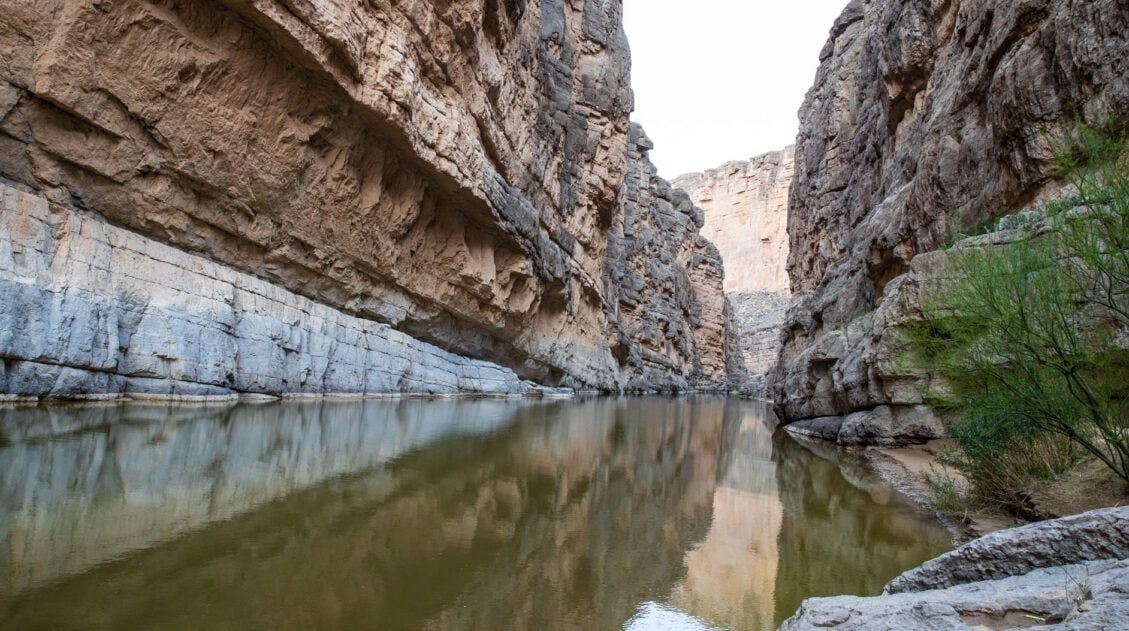
3 Days in Big Bend National Park: The Perfect Itinerary
Three days in Big Bend National Park is the ideal amount of time to experience all three regions of the park: the Ross Maxwell Scenic Drive, the Chisos Basin, and Rio Grande Village. We visited in early March and spent our days hiking slot canyons, crossing the border into Mexico, and standing at the edge […]
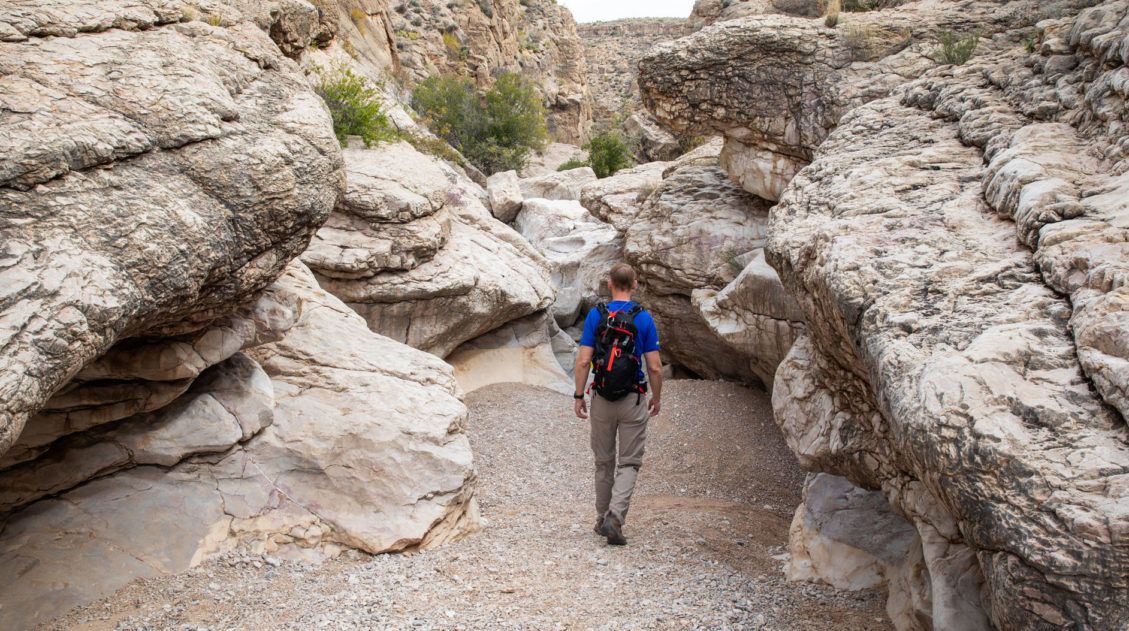
15 Best Hikes in Big Bend National Park (By Area & Difficulty)
Big Bend National Park is one of the most underrated hiking destinations in the United States. Tucked into the southwestern corner of Texas along the Rio Grande, it packs an extraordinary range of terrain into one park — slot canyons, volcanic rock formations, a full mountain range, and miles of river canyon trails. We visited […]
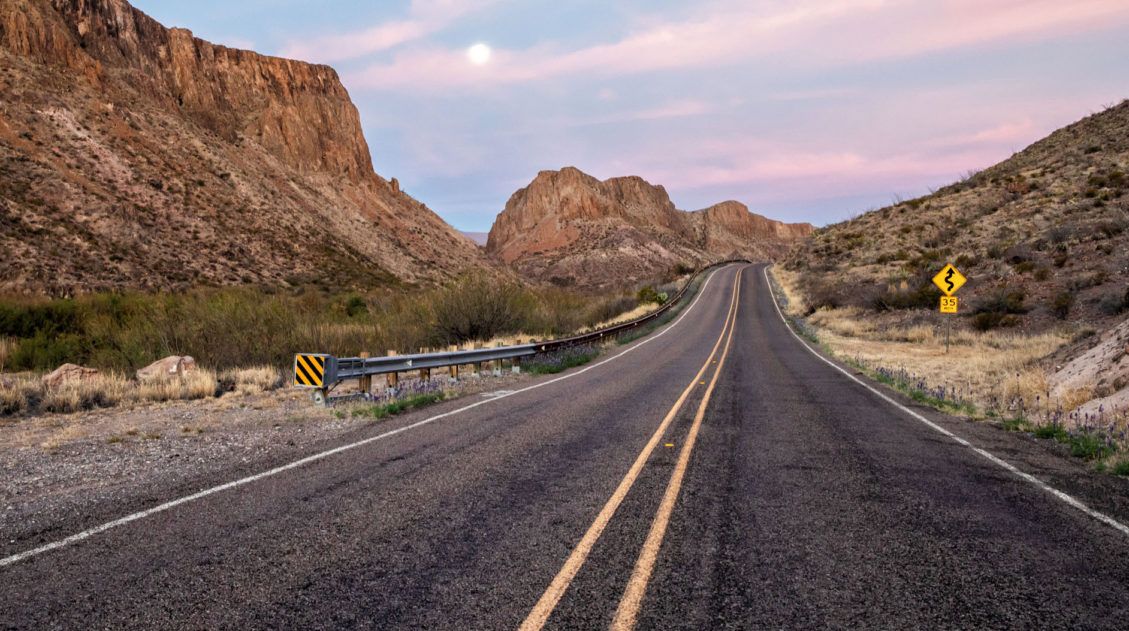
Big Bend Ranch State Park: Things to Do with Limited Time
Big Bend Ranch State Park is an overlooked gem in west Texas. Visitors come to this area to explore Big Bend National Park, but what many don’t know is that there is an amazing state park located right around the corner. Big Bend Ranch State Park is awesome. It has all of the ingredients of […]
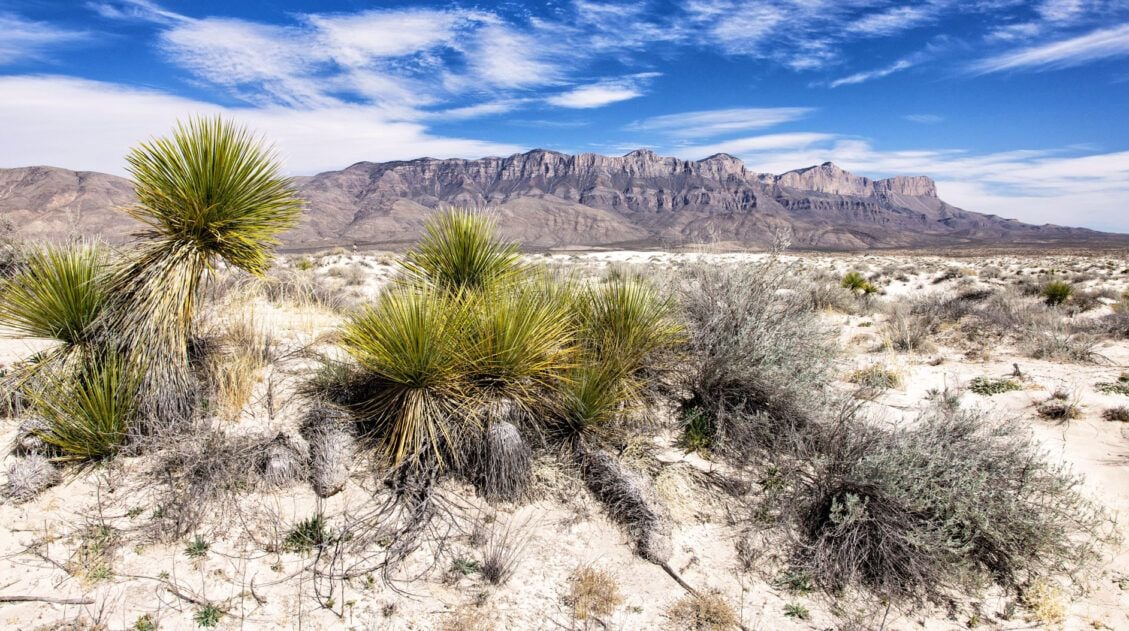
15 Best Things to Do in Guadalupe Mountains National Park
Tim and I have hiked a lot of national parks, and Guadalupe Mountains is one that genuinely surprised us. We expected a remote desert park with a few good trails. What we found instead was a place with incredible variety — a slot canyon, a fossilized coral reef trail with almost no one on it, […]
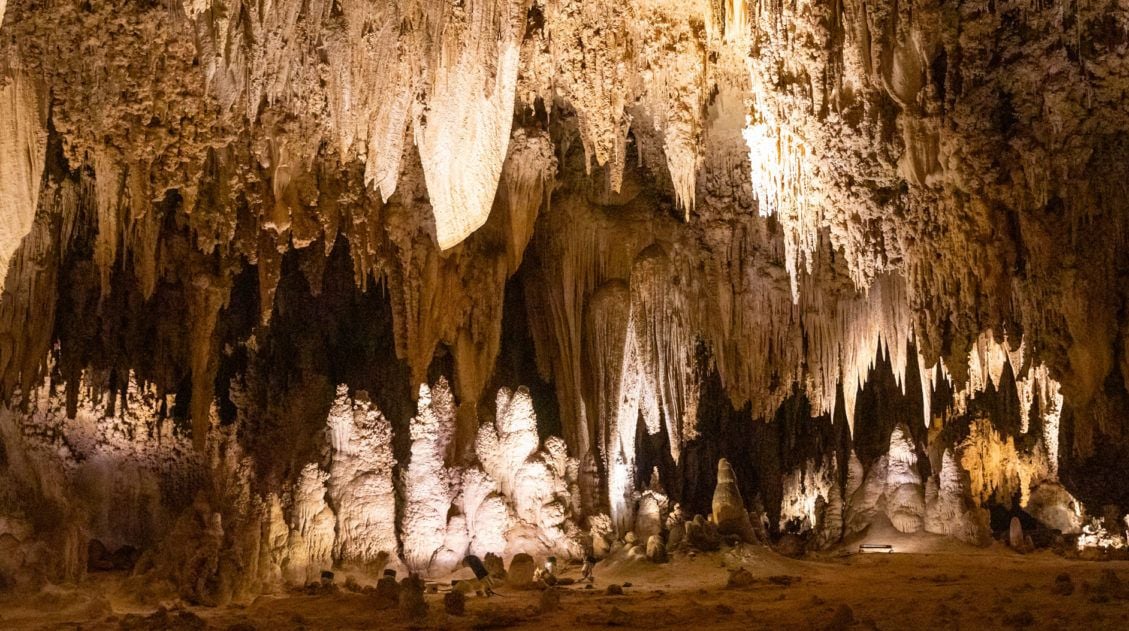
Best Things to Do in Carlsbad Caverns National Park
In this guide, we cover the best things to do in Carlsbad Caverns, tour options (both ranger-guided and self-guided), timed entry reservations, plus lots of helpful information. Located in the Guadalupe Mountains of New Mexico sits an underground fantasy land of limestone chambers, stalactites and stalagmites, and long, twisting tunnels. Carlsbad Caverns is breathtaking in […]
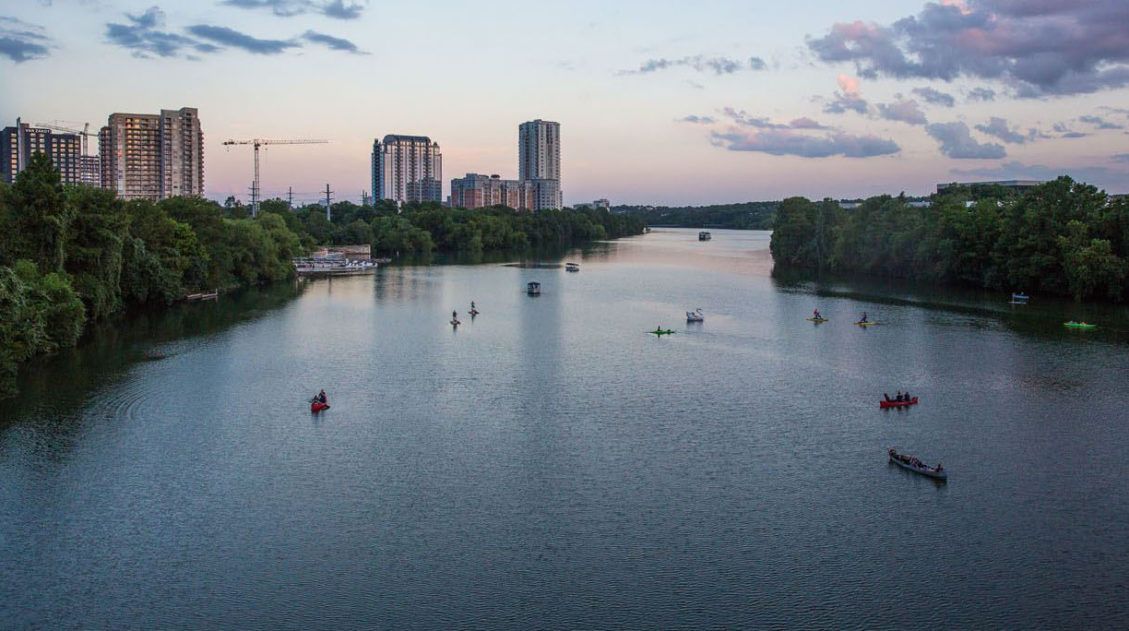
Best Things to Do in Austin, Texas (+ Where We Ate)
Austin surprised us. We went expecting live music and barbecue, and we got both, but what caught us off guard was how much fun the city itself is. There’s a loose, come-as-you-are energy here that makes it easy to just wander, eat, and stay out too late. Tim and I spent a long weekend here […]
The Best of San Antonio, Texas in 24 Hours
San Antonio is a fun city to visit in Texas, even if you have limited time. The River Walk and the Alamo are the highlights, but there are a few more great places to explore. If you have just one day in San Antonio, you have just enough time to tour the best spots in […]
Texas Travel Guide: How to Plan a Trip to Texas
Texas Travel Guide Texas is bigger than most people expect — and more varied. In the same trip, you can hike volcanic rock formations and slot canyons in Big Bend, stand at the highest point in the state in the Guadalupe Mountains, and eat your weight in barbecue in Austin. Tim and I have visited […]
United States Travel Guide: Places to Visit in the USA
Plan your visit to the United States. Learn about the best things to do, how to plan your time, road trip ideas, and sample itineraries.
The Ultimate Guide to the 63 US National Parks
Stretching from the South Pacific, across the United States to the Caribbean, are 63 national parks. These national treasures preserve iconic landscapes, majestic mountains, primordial forests, arid deserts, misty coastlines, immense canyons, wildlife, and historic landmarks. We have visited 56 of the 63 US national parks, from the towering granite walls of Yosemite and the […]


Comments 22